Acta Aeronautica et Astronautica Sinica ›› 2025, Vol. 46 ›› Issue (15): 231597.doi: 10.7527/S1000-6893.2025.31597
• Solid Mechanics and Vehicle Conceptual Design • Previous Articles
Xulong XI1,2,3,4, Xiaochuan LIU1,2,3( ), Chunyu BAI1,2,3, Hezhao HAN1,2,3, Xinyue ZHANG1,2,3, Xiaocheng LI1,2,3, Pu XUE4, Rangke MU1,2,3, Xianfeng YANG5
Received:2024-12-03
Revised:2025-01-10
Accepted:2025-01-17
Online:2025-02-06
Published:2025-02-06
Contact:
Xiaochuan LIU
E-mail:liuxiaochuan@cae.ac.cn
Supported by:CLC Number:
Xulong XI, Xiaochuan LIU, Chunyu BAI, Hezhao HAN, Xinyue ZHANG, Xiaocheng LI, Pu XUE, Rangke MU, Xianfeng YANG. Comparison of crash response between fuselage section and full-scale civil aircraft[J]. Acta Aeronautica et Astronautica Sinica, 2025, 46(15): 231597.
Fig.1
Full-scale crash test article
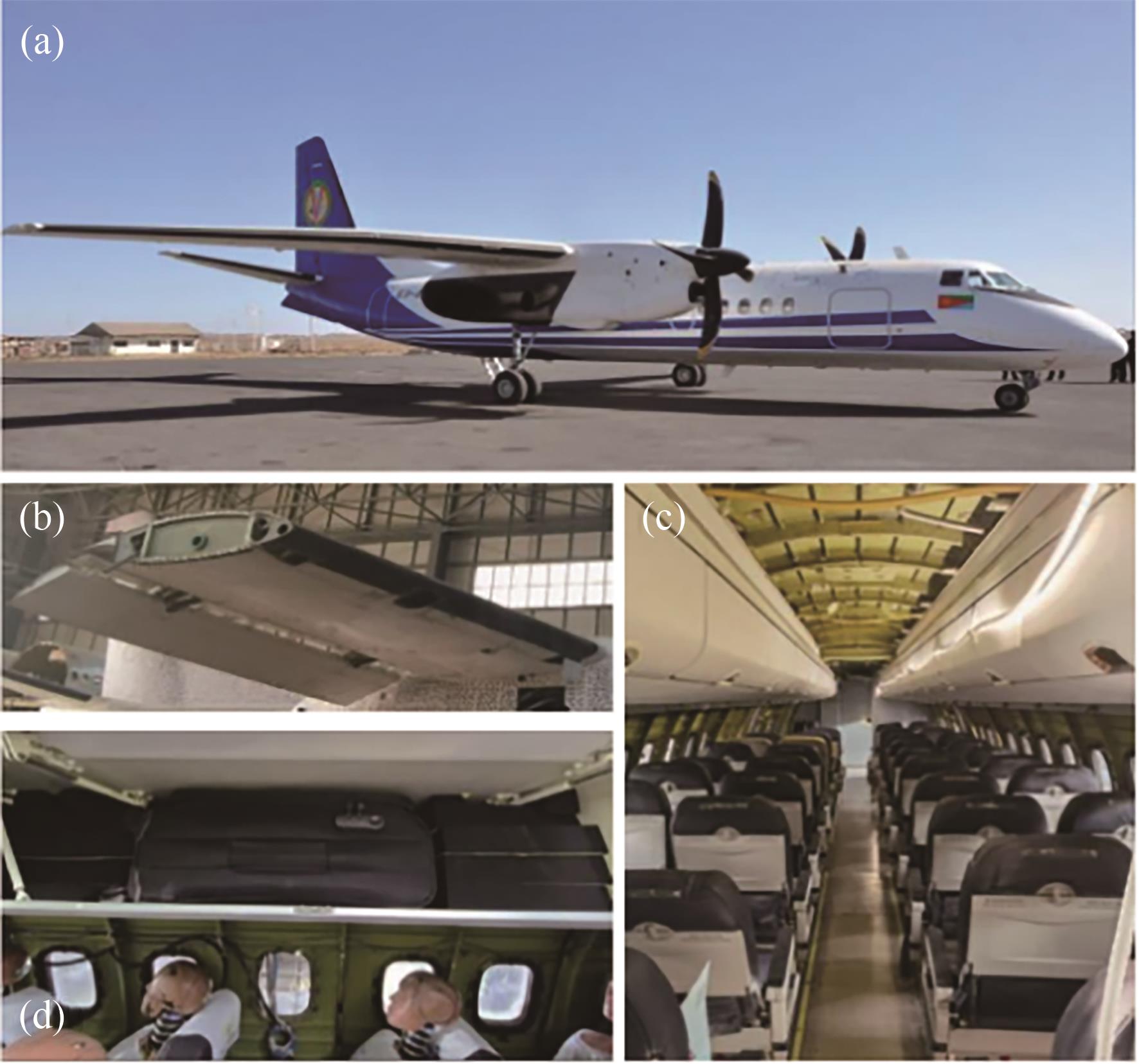
Fig.2
Schematic diagram of full-aircraft crash test system
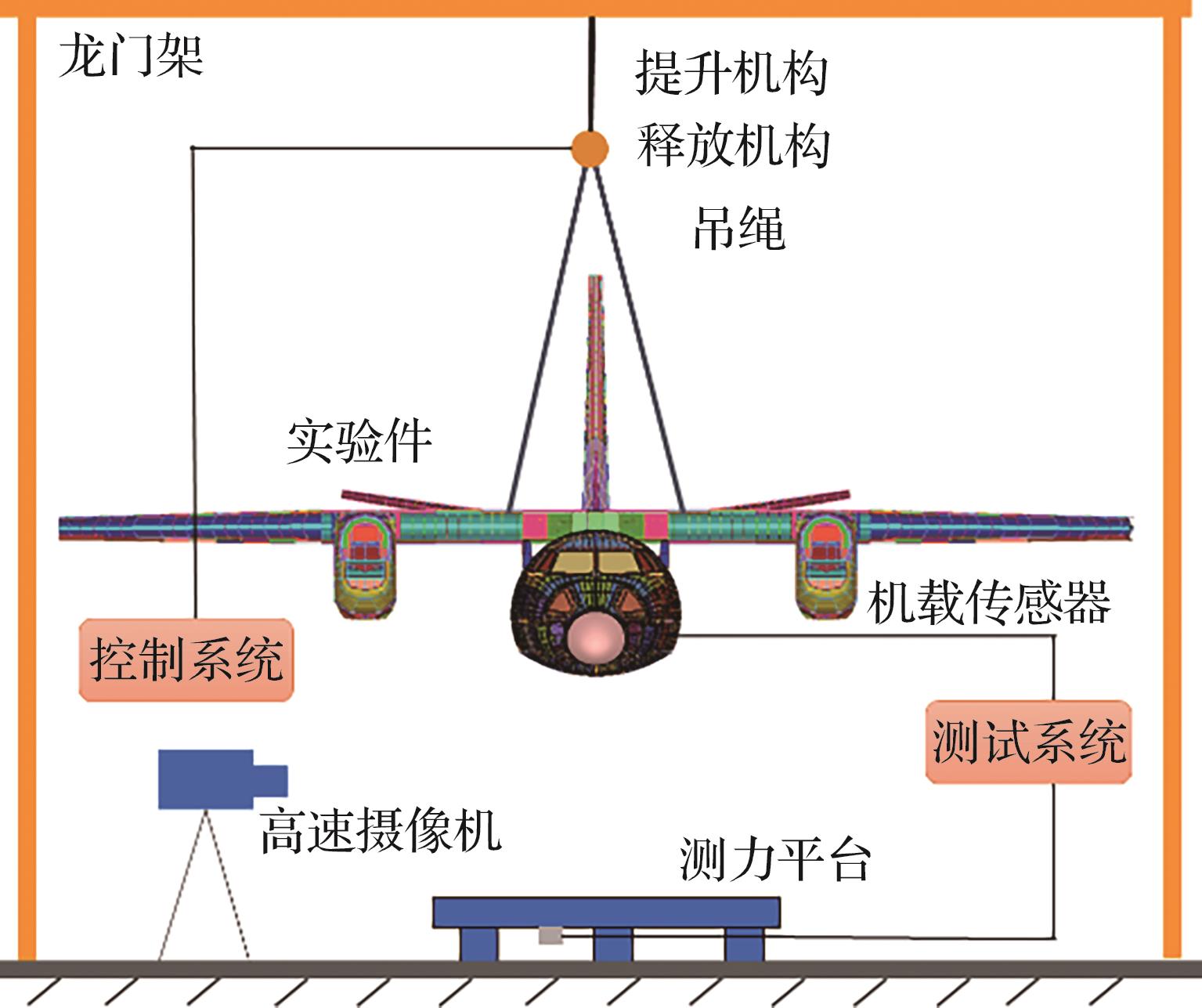
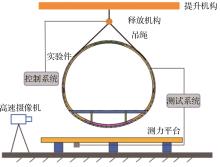
Fig.3
Loading scheme for fuselage section vertical drop test
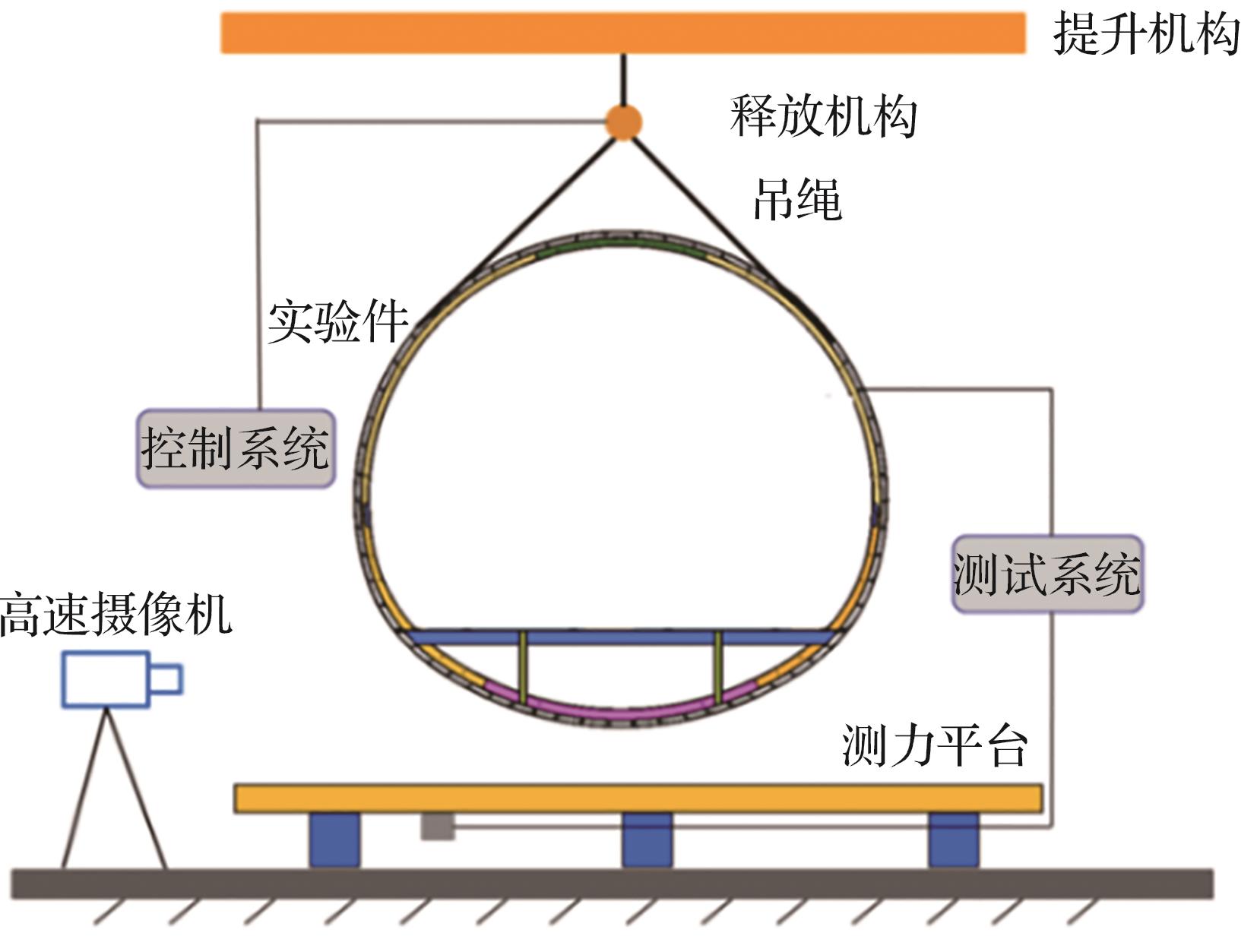
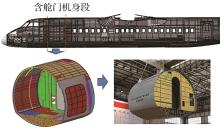
Fig.4
Crash test piece of fuselage section with cabin door
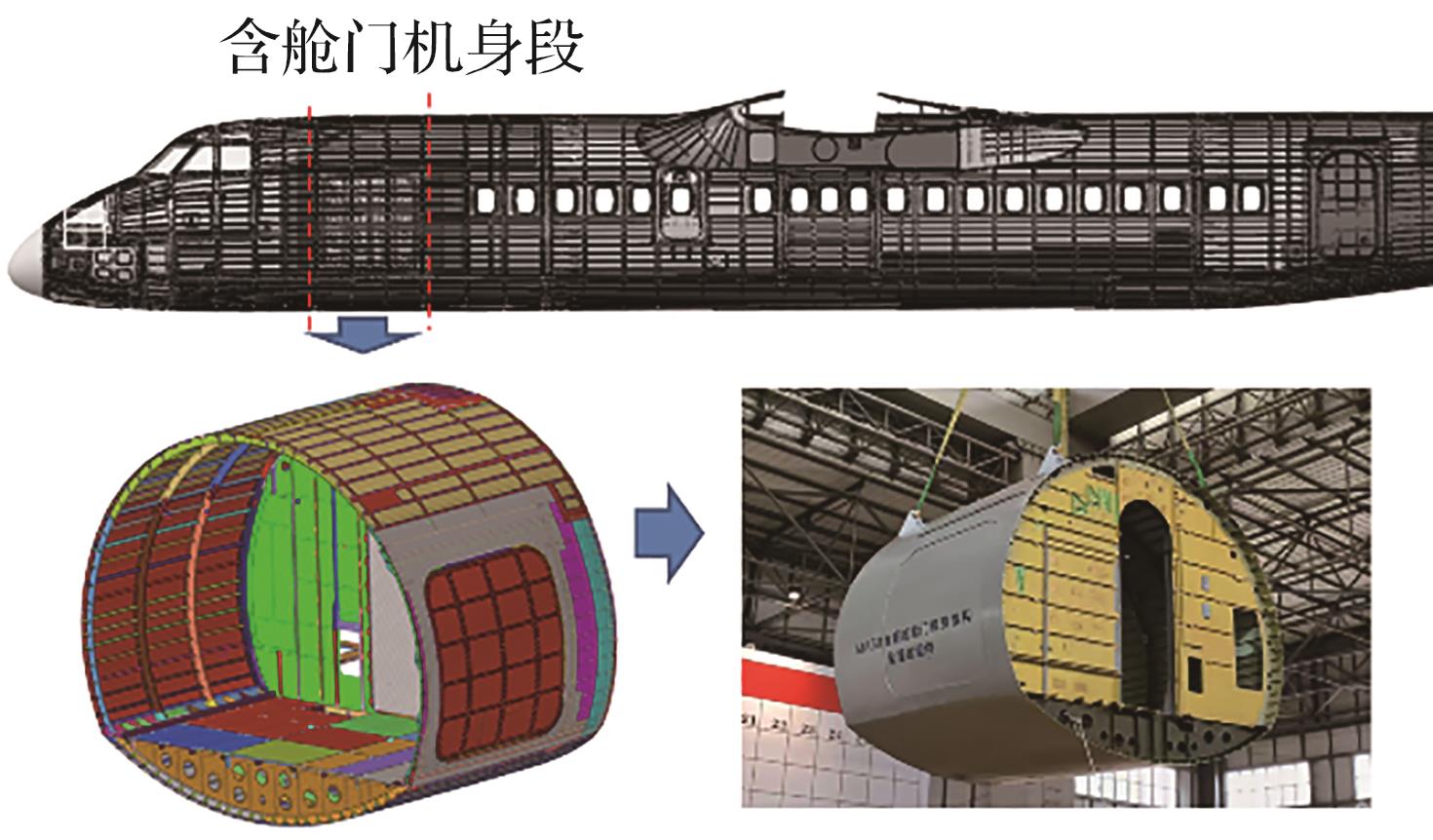
Fig.5
Layout location of marker point
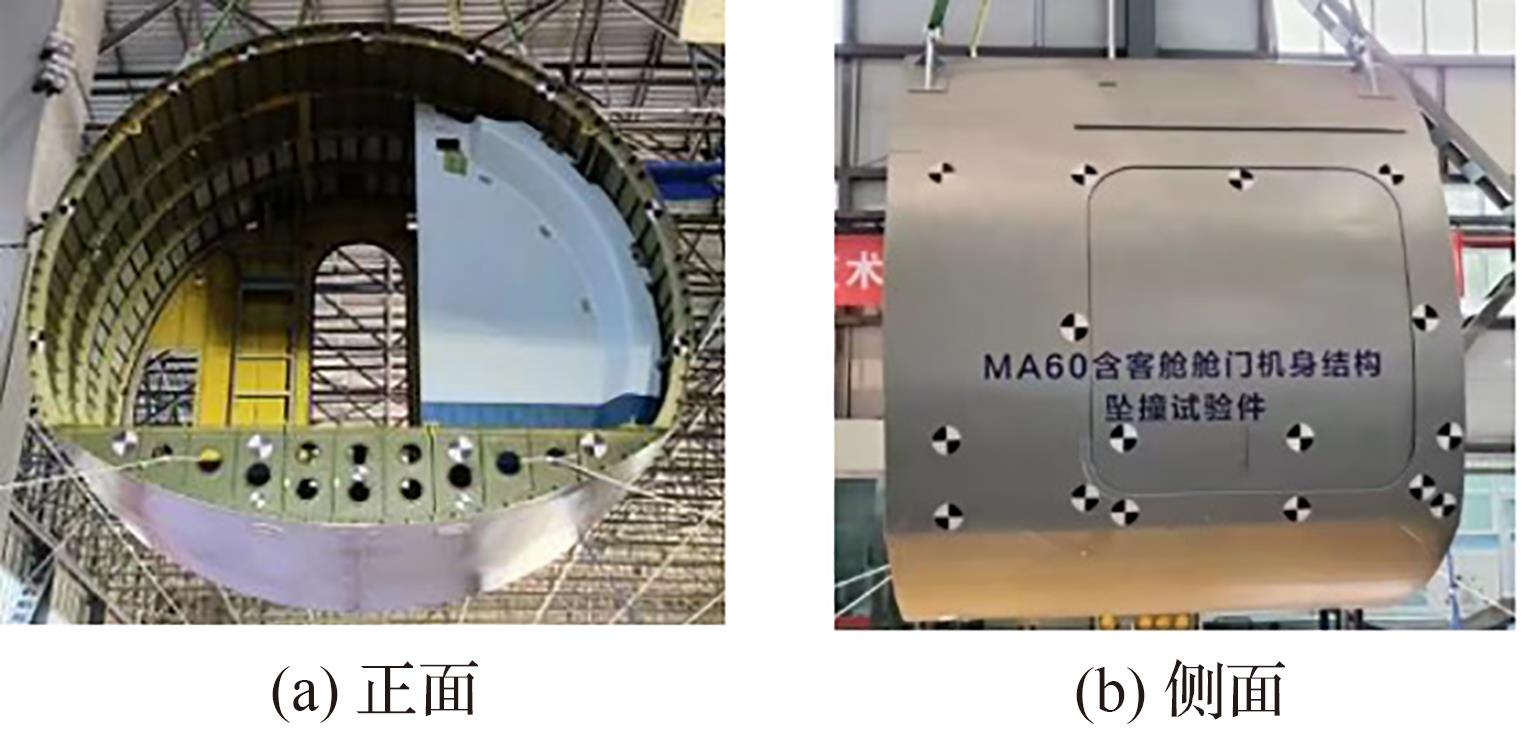
Fig.6
Layout location of acceleration sensor
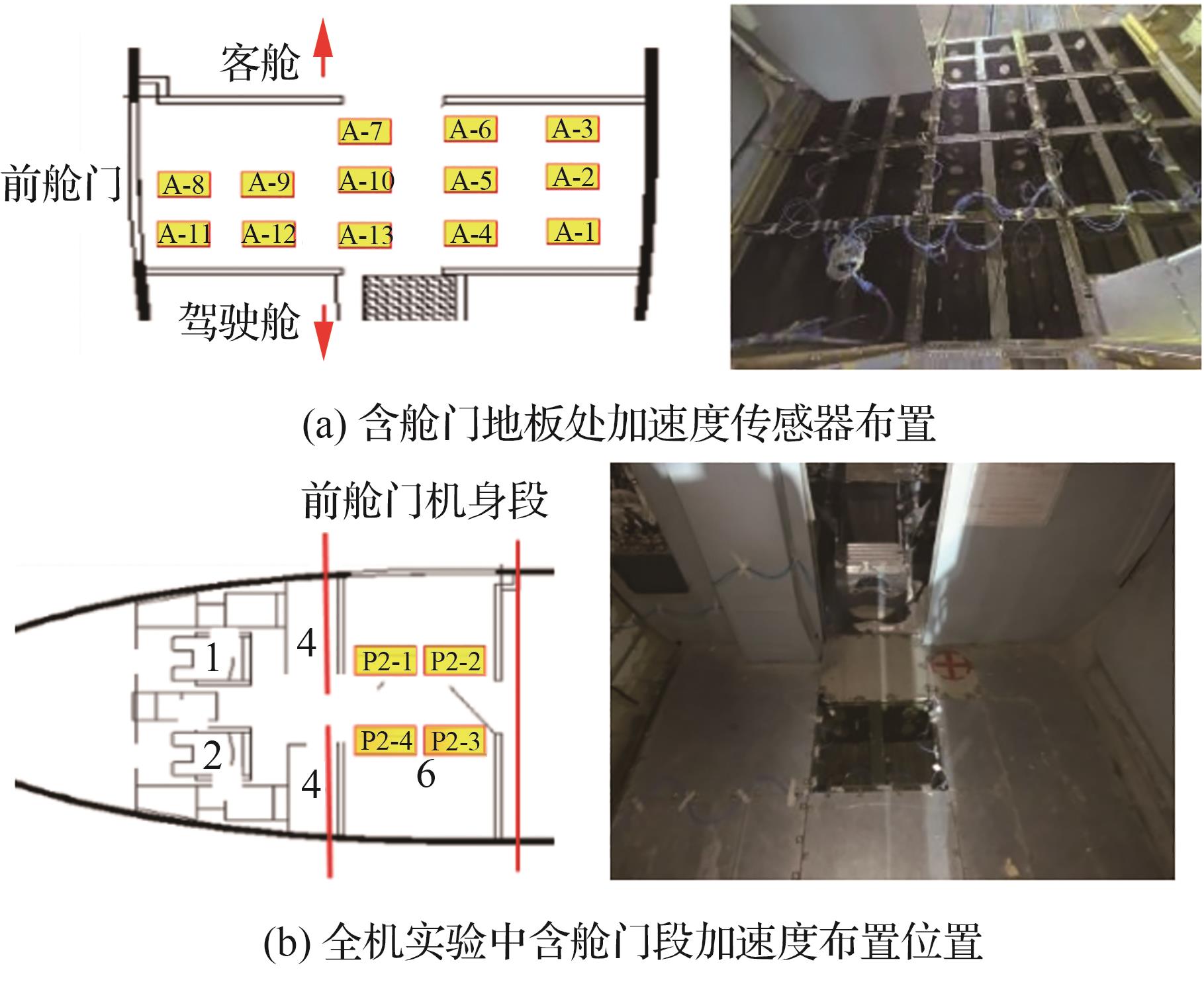
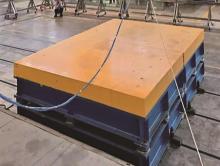
Fig.7
Force measurement platform for crash testing
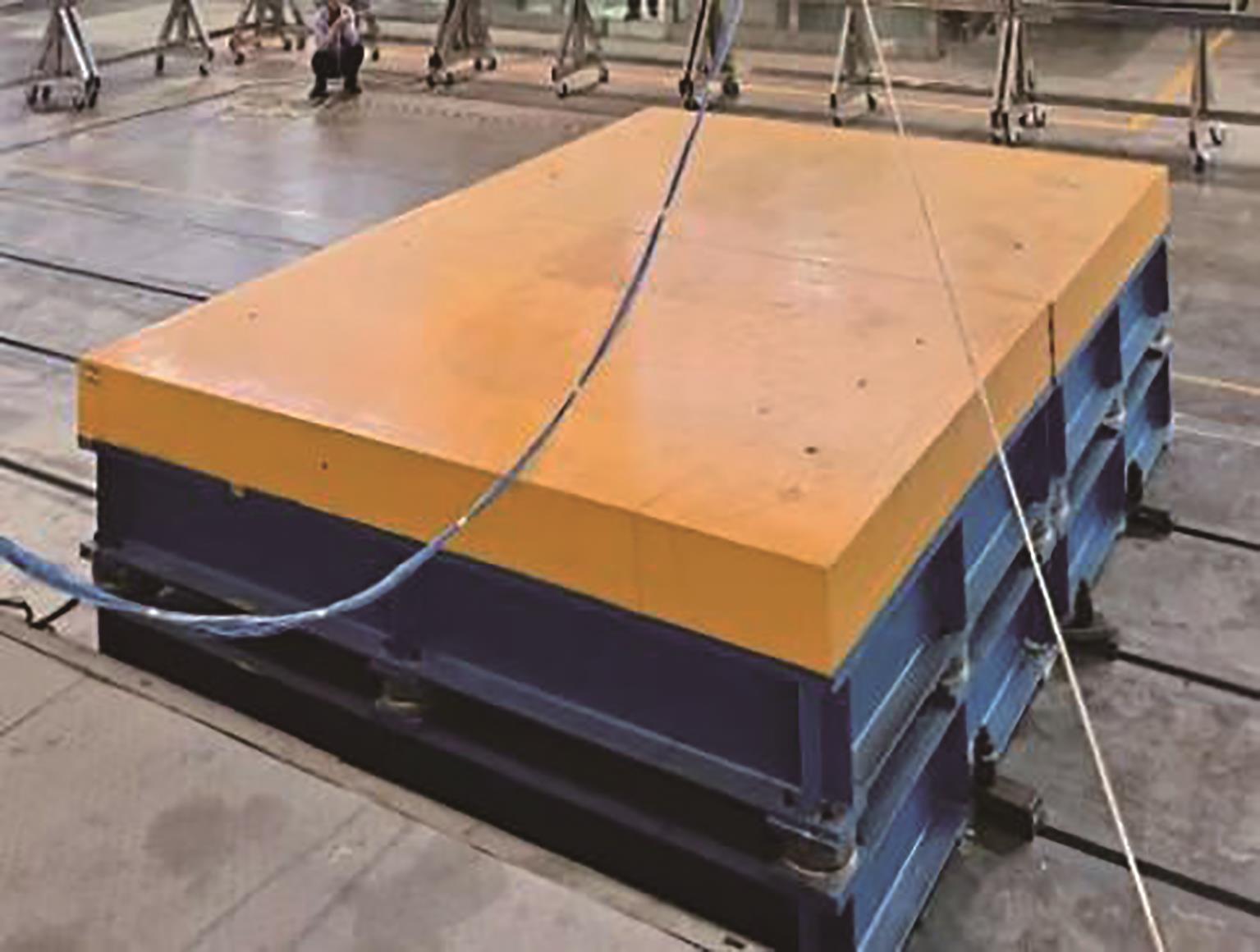
Fig.8
Layout location of high-speed cameras
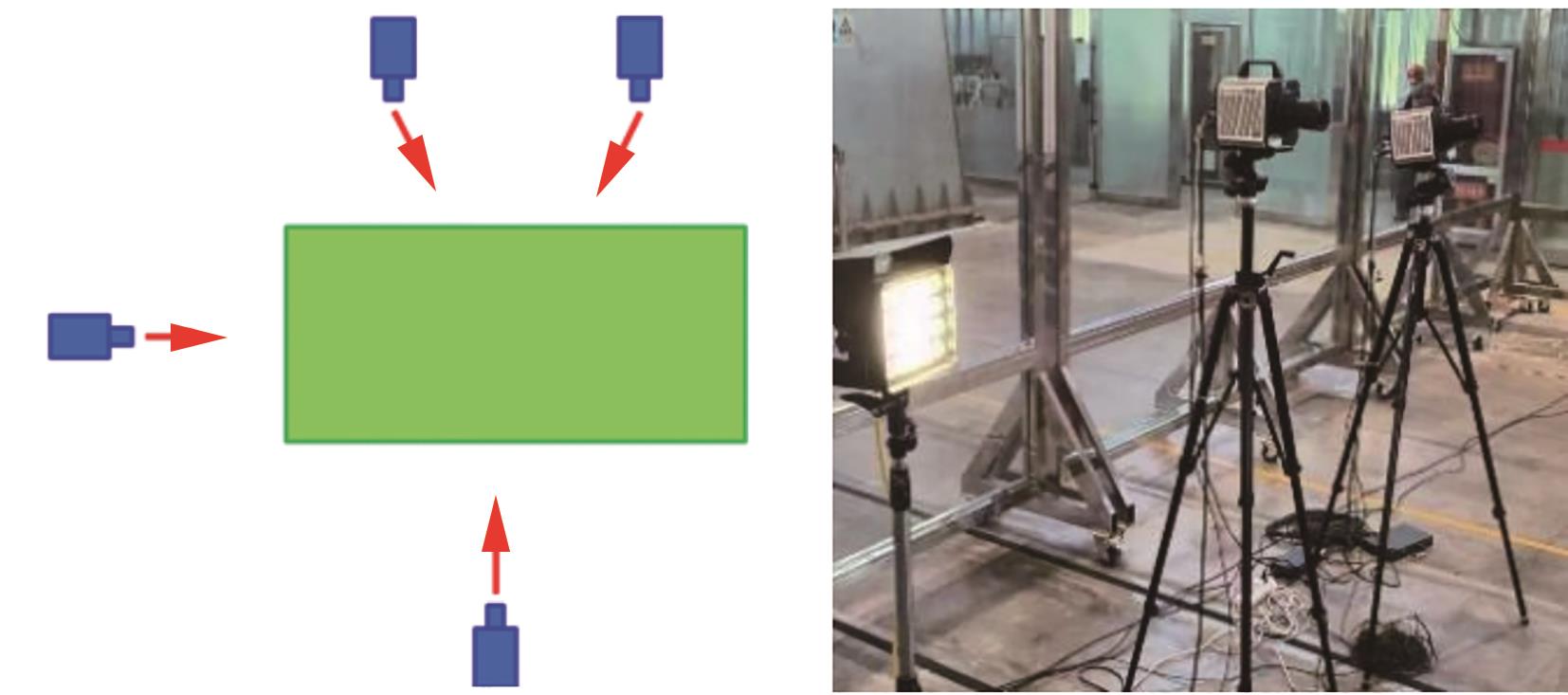

Table 1
Comparison of crash dynamics of the full aircraft and fuselage section with cabin door
| 时间/s | 框段正面 | 框段背面 | 框段侧面 | 全机结构 |
|---|---|---|---|---|
| 0 | 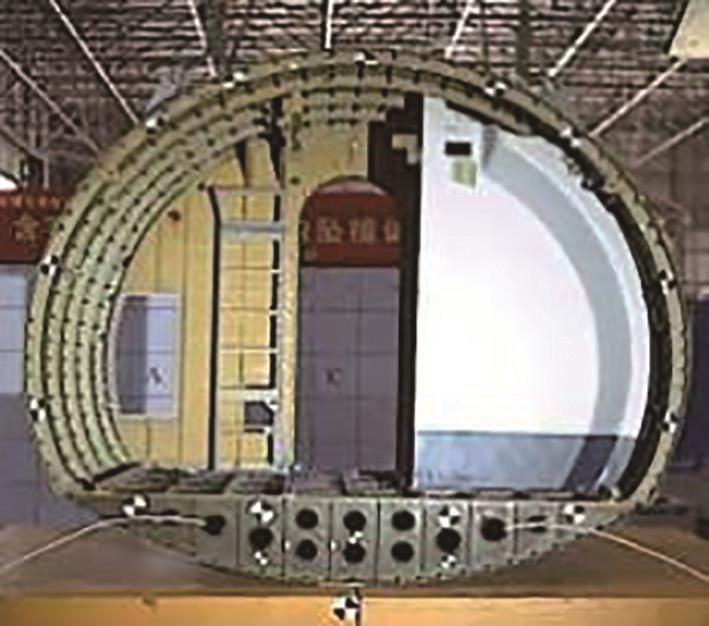 | 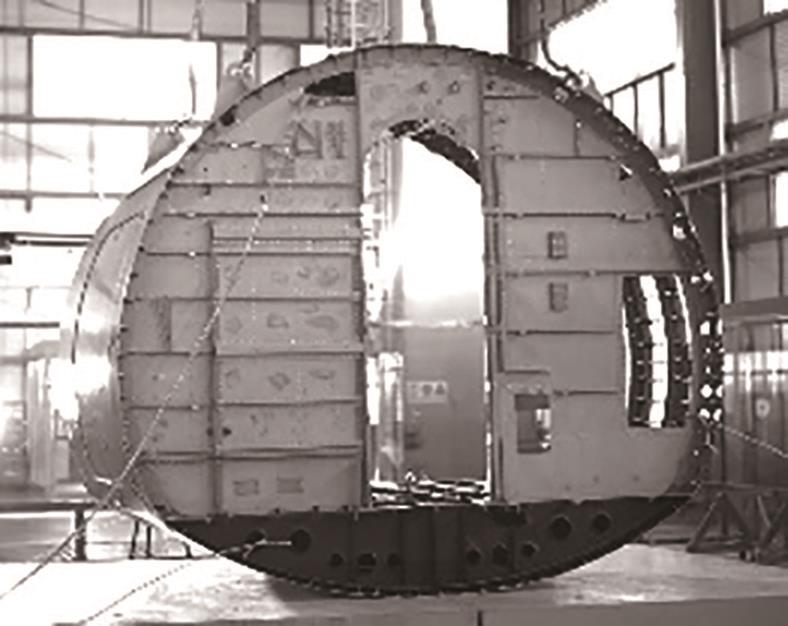 | 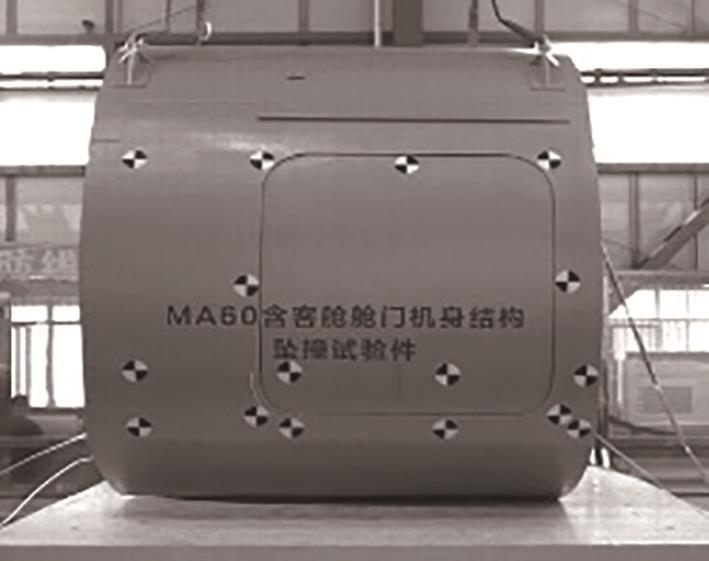 | 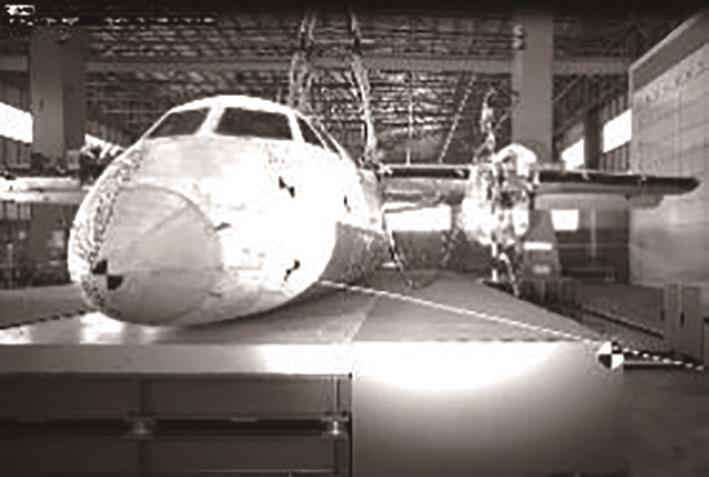 |
| 0.03 | 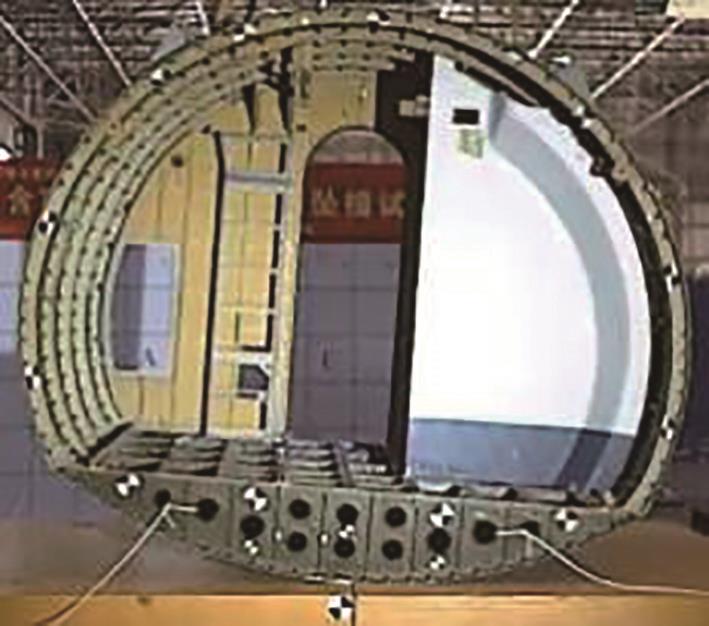 | 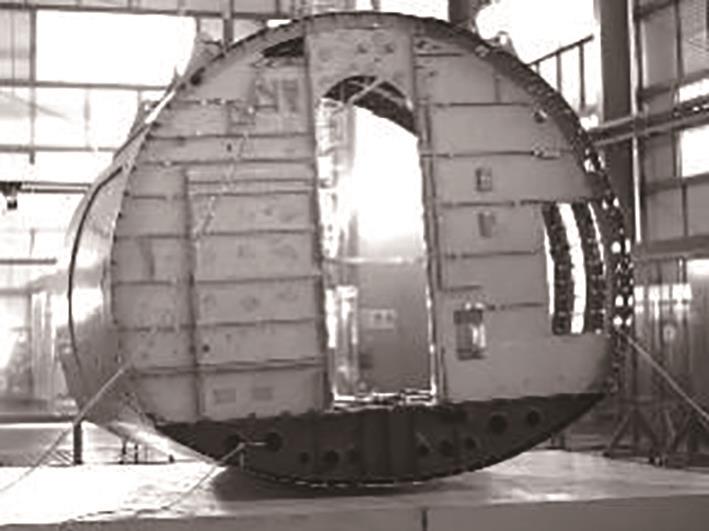 | 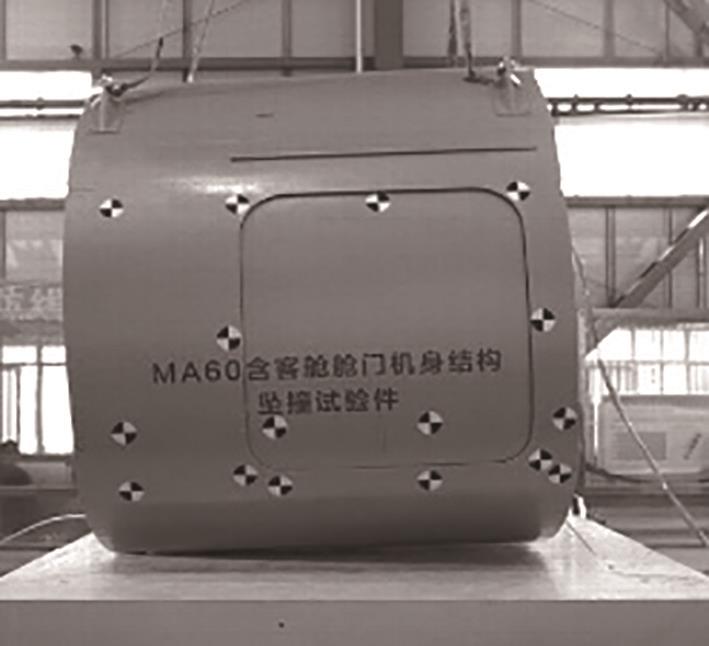 | 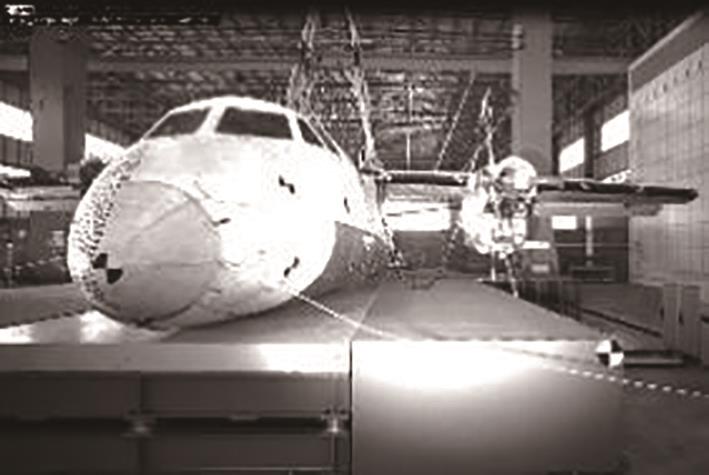 |
| 0.06 | 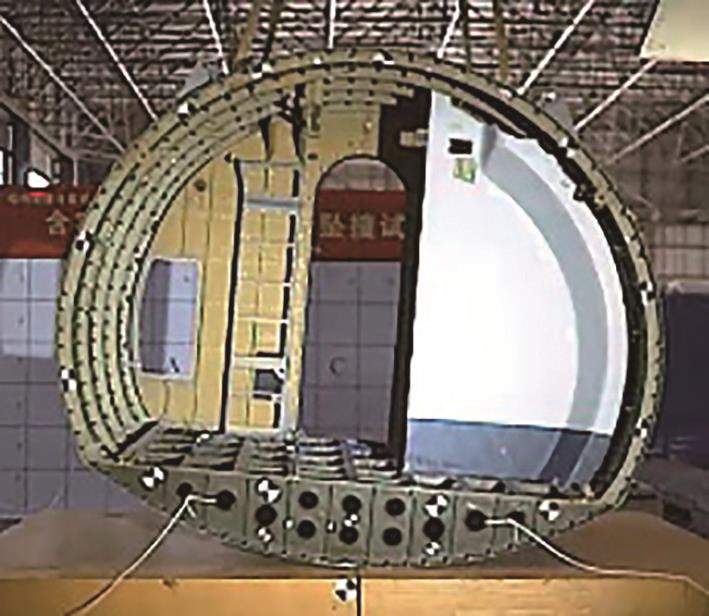 | 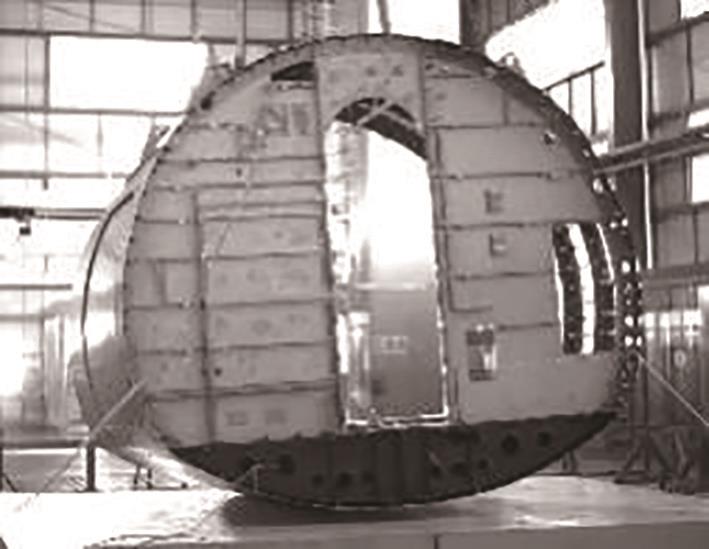 | 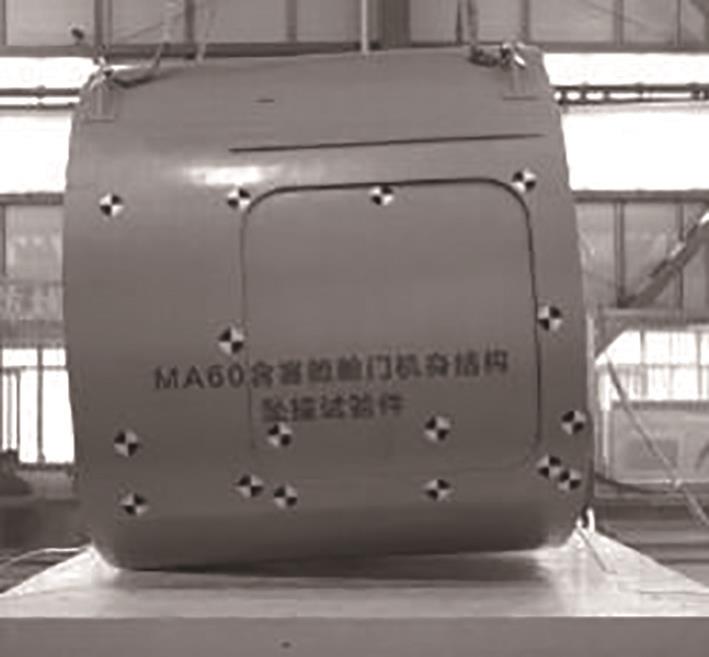 | 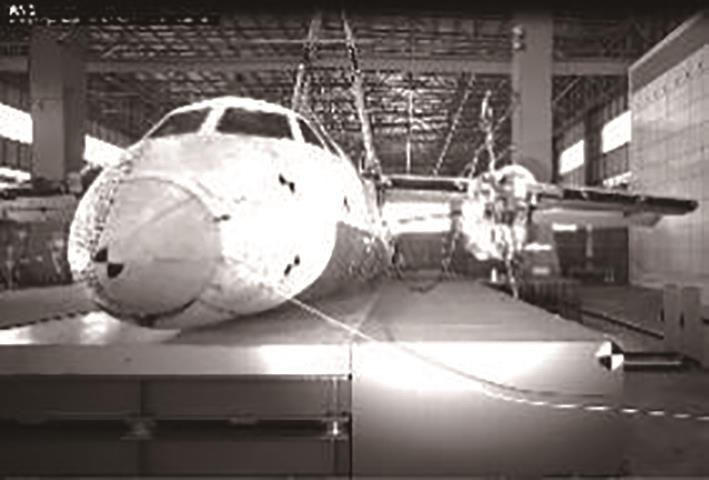 |
| 0.25 | 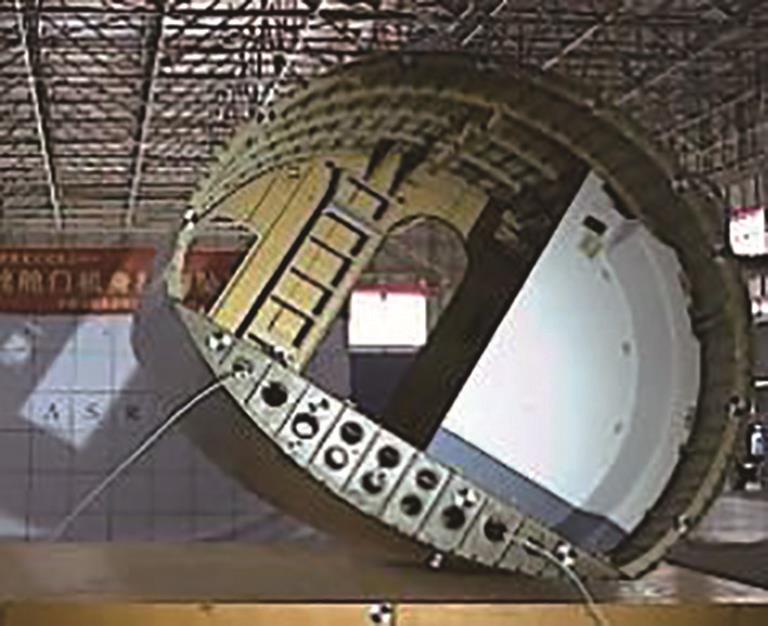 | 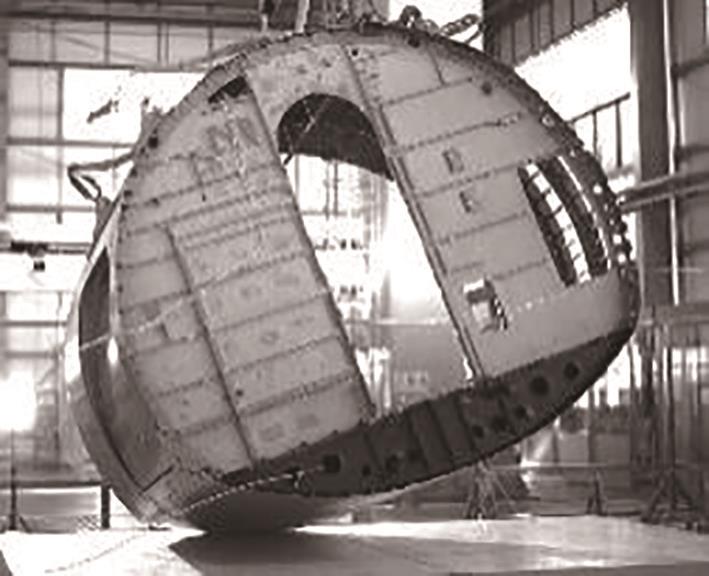 | 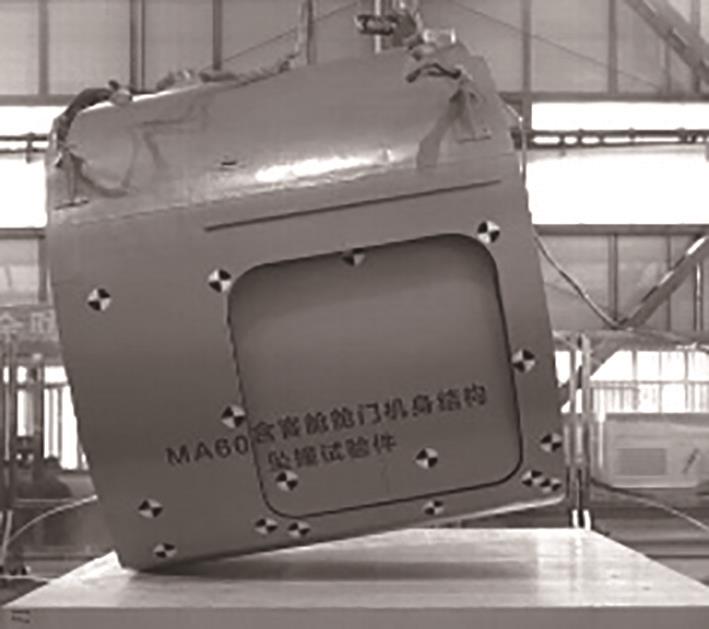 | 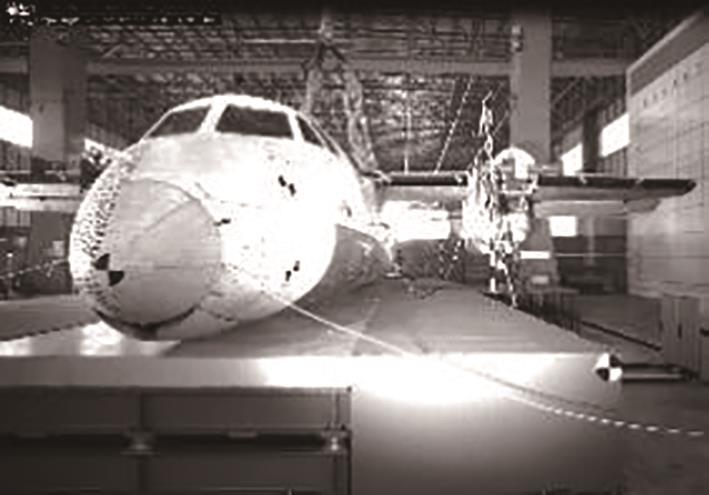 |
| 0.8 | 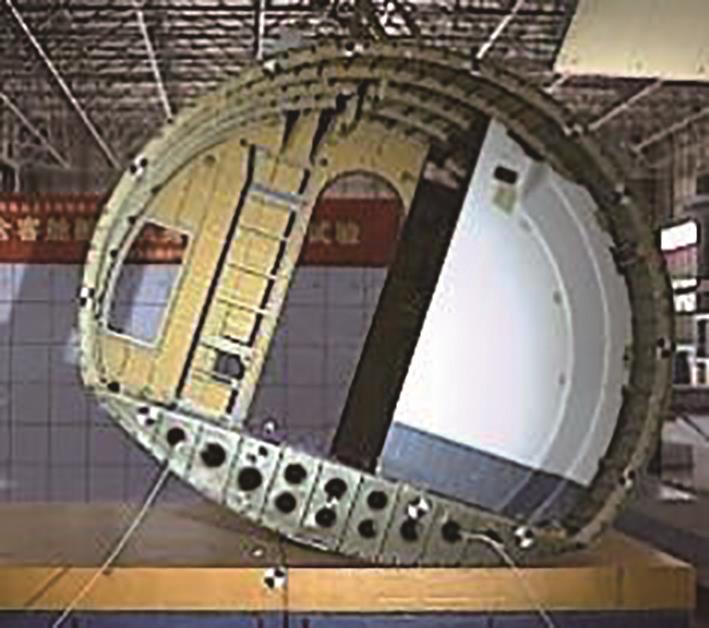 | 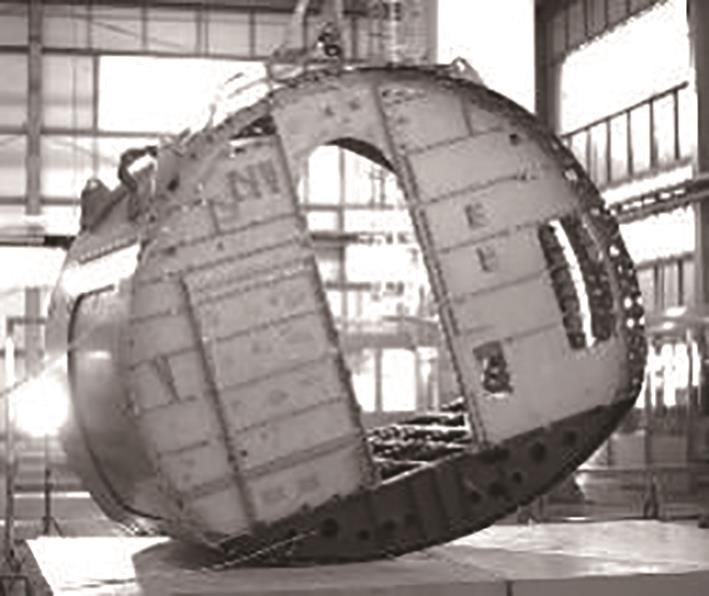 | 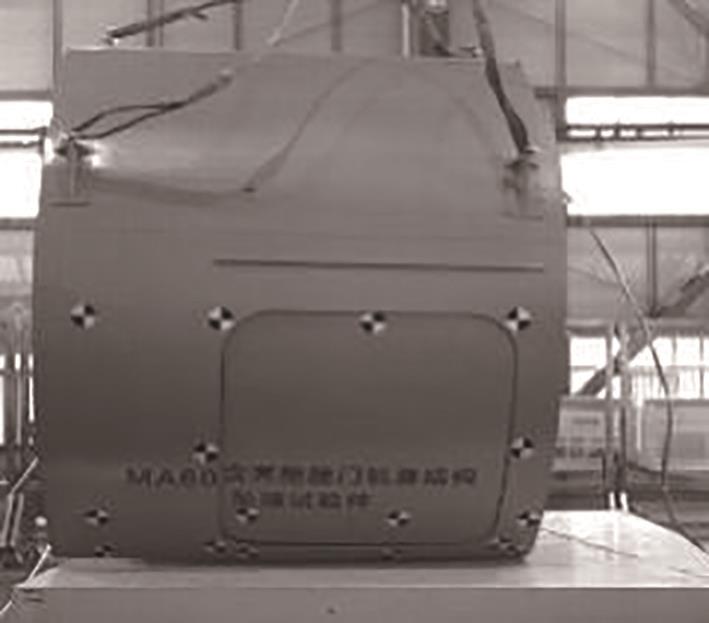 | 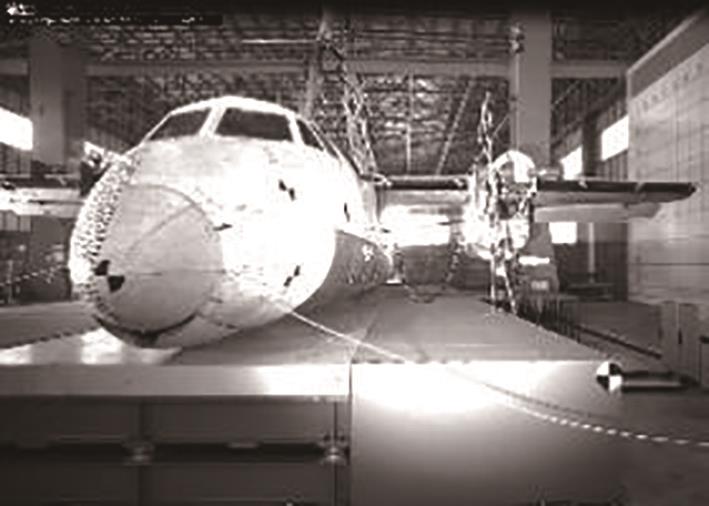 |
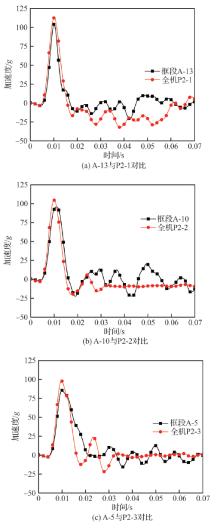
Fig.9
Comparison of acceleration curves between full-scale aircraft and frame section
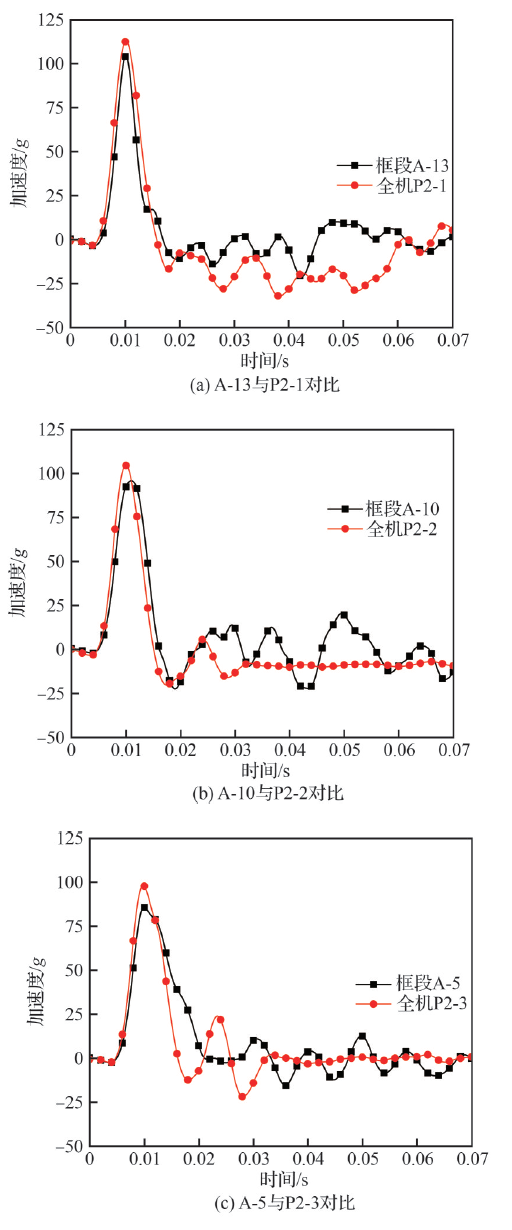
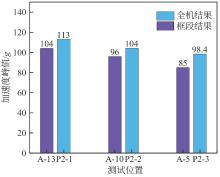
Fig.10
Comparison of acceleration peak values
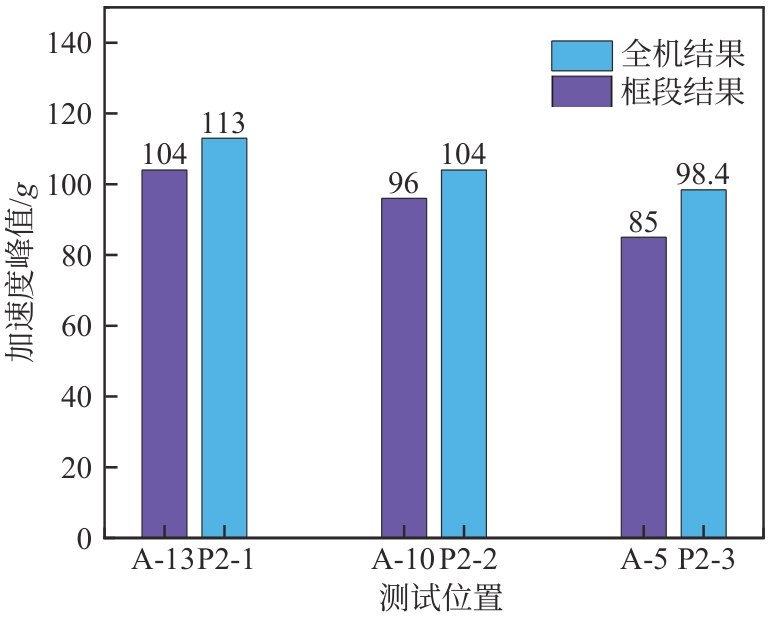
Table 2
Comparison of deformation and damage
| 位置 | 含舱门机身框段 | 全机结构 |
|---|---|---|
| 舱门结构 | 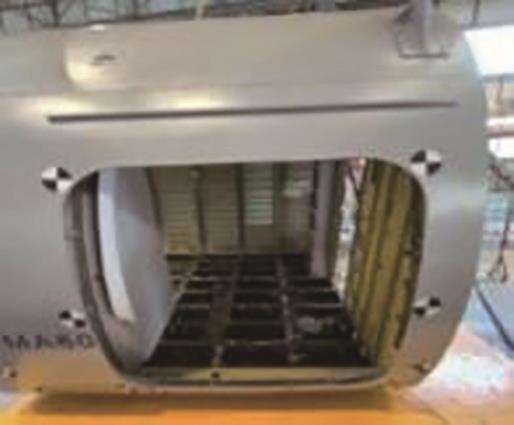 | 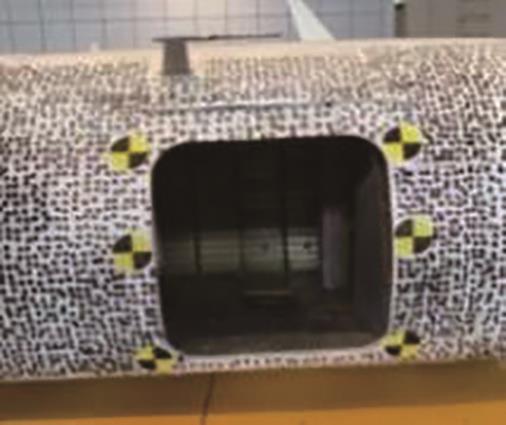 |
| 客舱前端内饰隔板 | 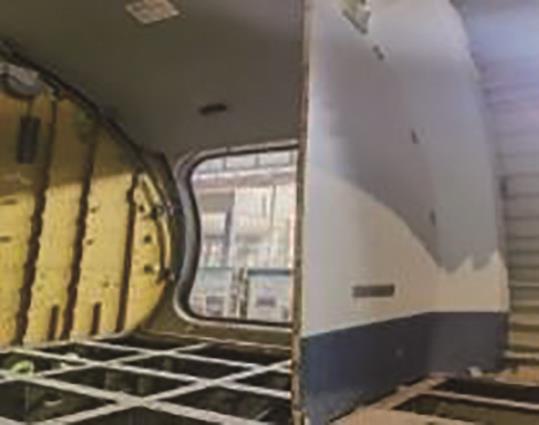 | 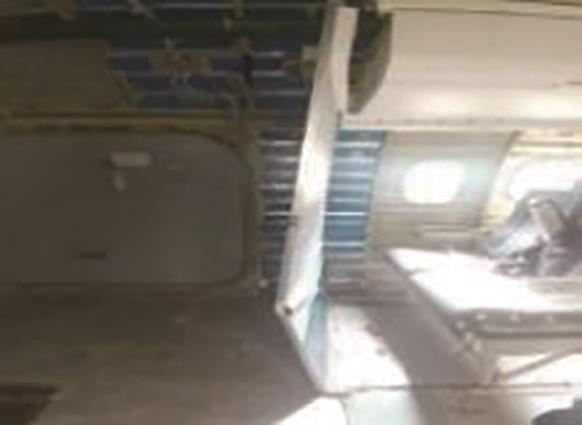 |
| 地板结构 | 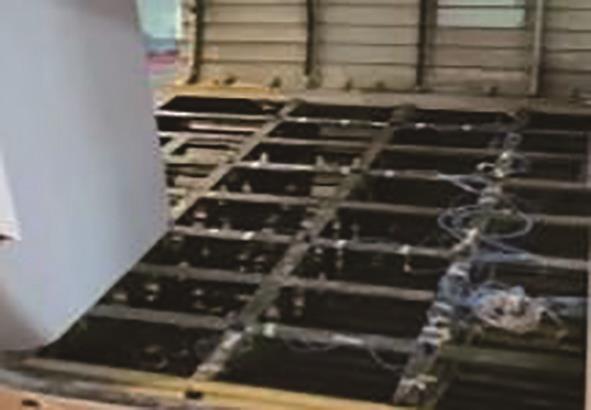 | 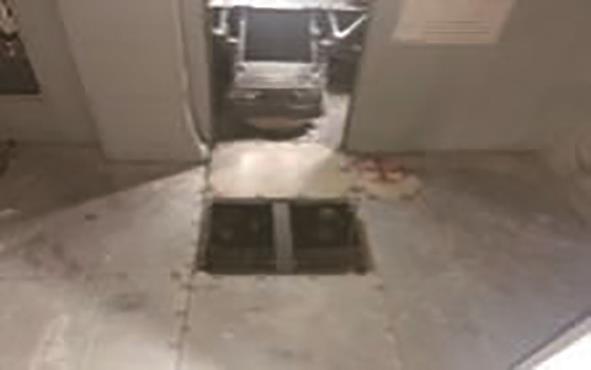 |
| 地板下部隔框 | 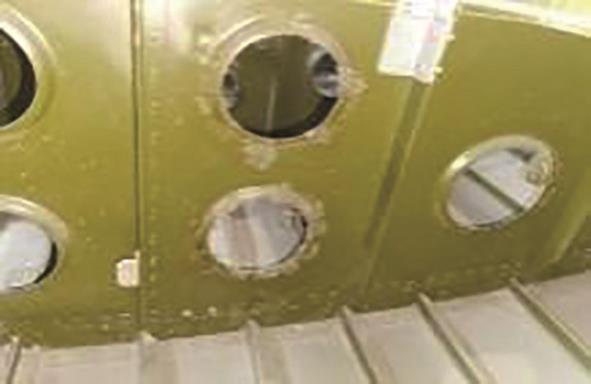 | 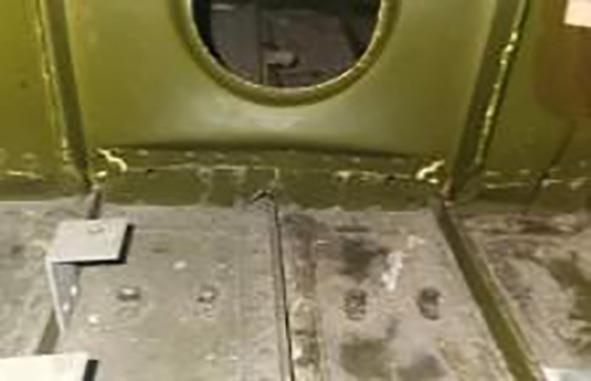 |
| 机身下部蒙皮 | 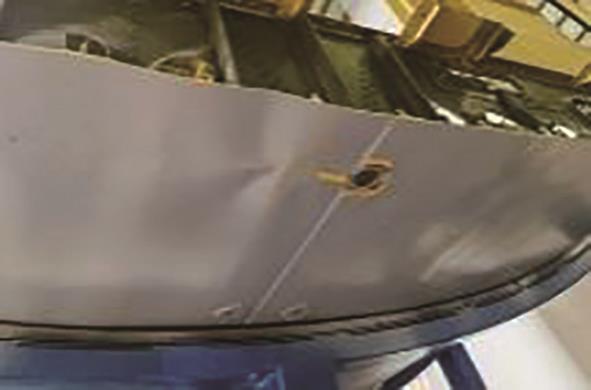 | 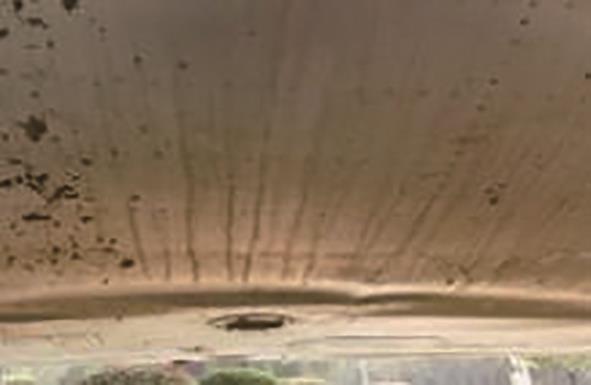 |
Fig.11
Full-scale geometric model of the aircraft
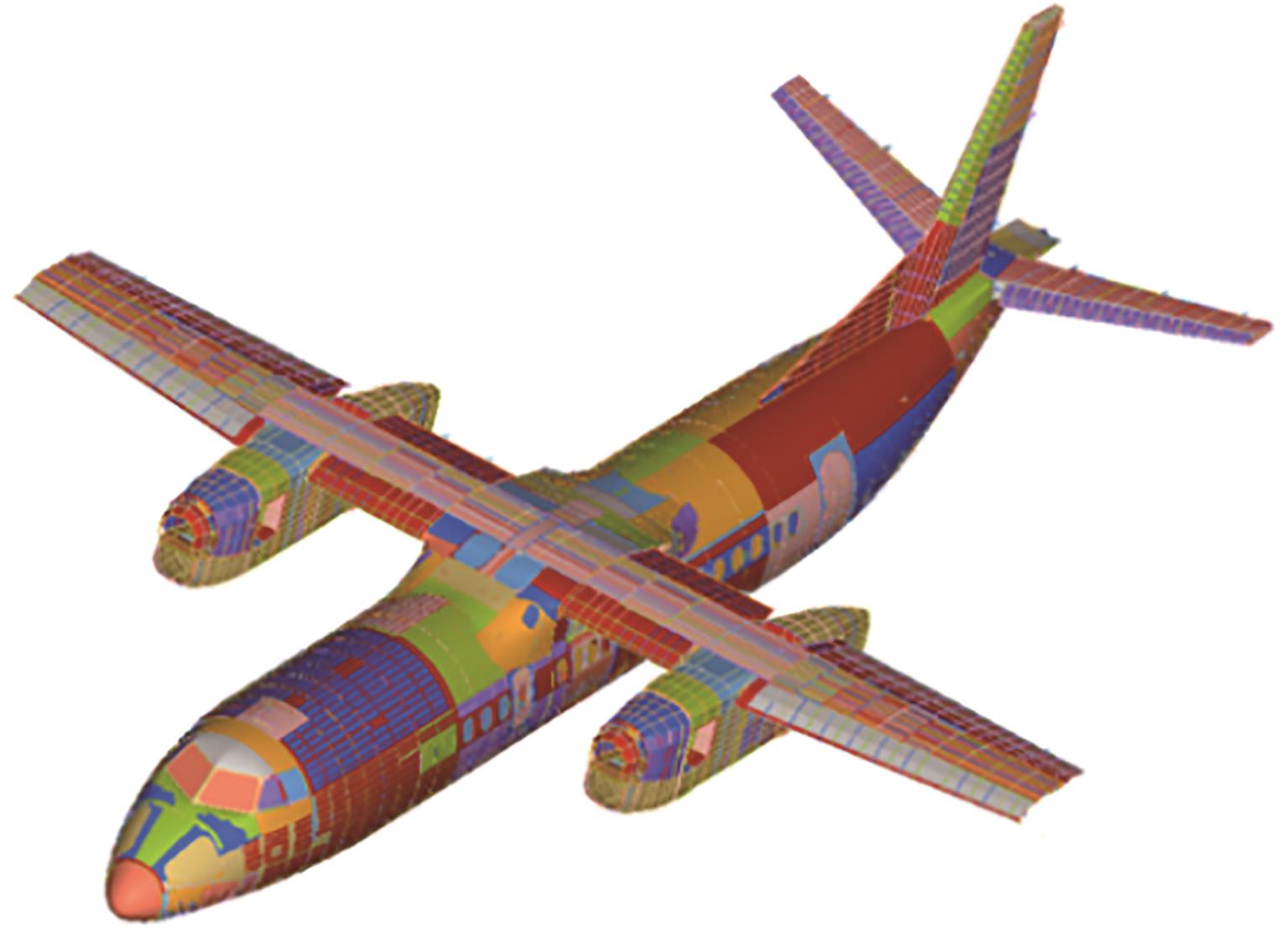
Table 3
Non-structural mass
| 非结构对象 | 前起落架 | 主起落架 | 发动机 | 乘员和座椅 | 外翼 | 行李配重 |
|---|---|---|---|---|---|---|
| 质量/kg | 190 | 1 288 | 2 218.5 | 4 524 | 452 | 1 260 |
Table 4
Mechanical properties parameters of materials
| 材料牌号 | 密度/(10-9 t∙mm-3) | 泊松比 | 屈服强度/MPa | 弹性模量/GPa | 硬化模量/MPa | 失效应变 |
|---|---|---|---|---|---|---|
| 2A12 | 2.77 | 0.33 | 370 | 72 | 830 | 0.15 |
| 2024 | 2.7 | 0.33 | 345 | 71 | 777 | 0.16 |
| 2A50 | 2.75 | 0.33 | 360 | 71 | 450 | 0.13 |
| 7A04 | 2.7 | 0.33 | 460 | 70 | 700 | 0.14 |
Fig.12
Equivalent simulation of cabin seat-crew systems
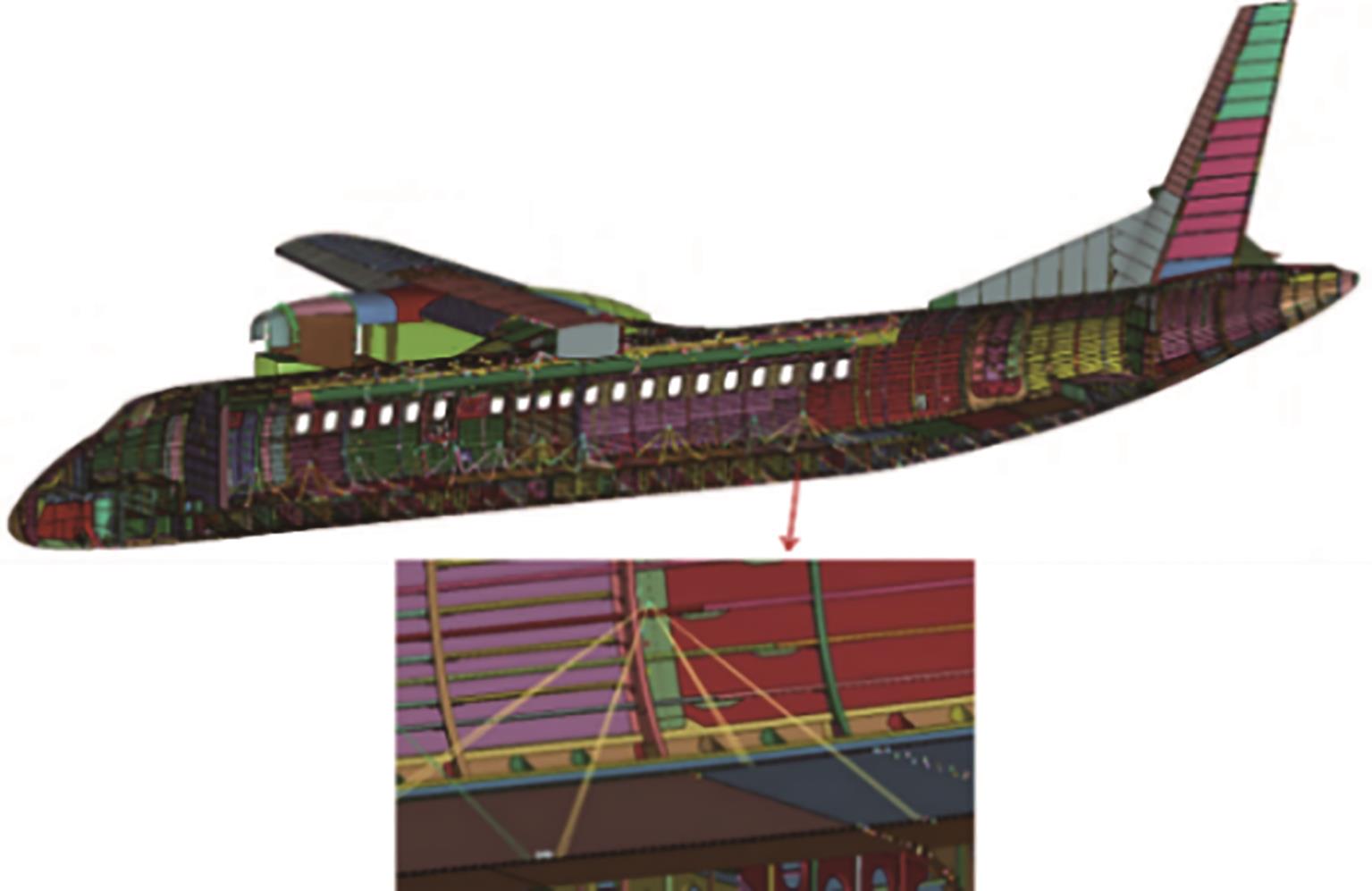
Fig.13
Crash finite element model of full-scale aircraft
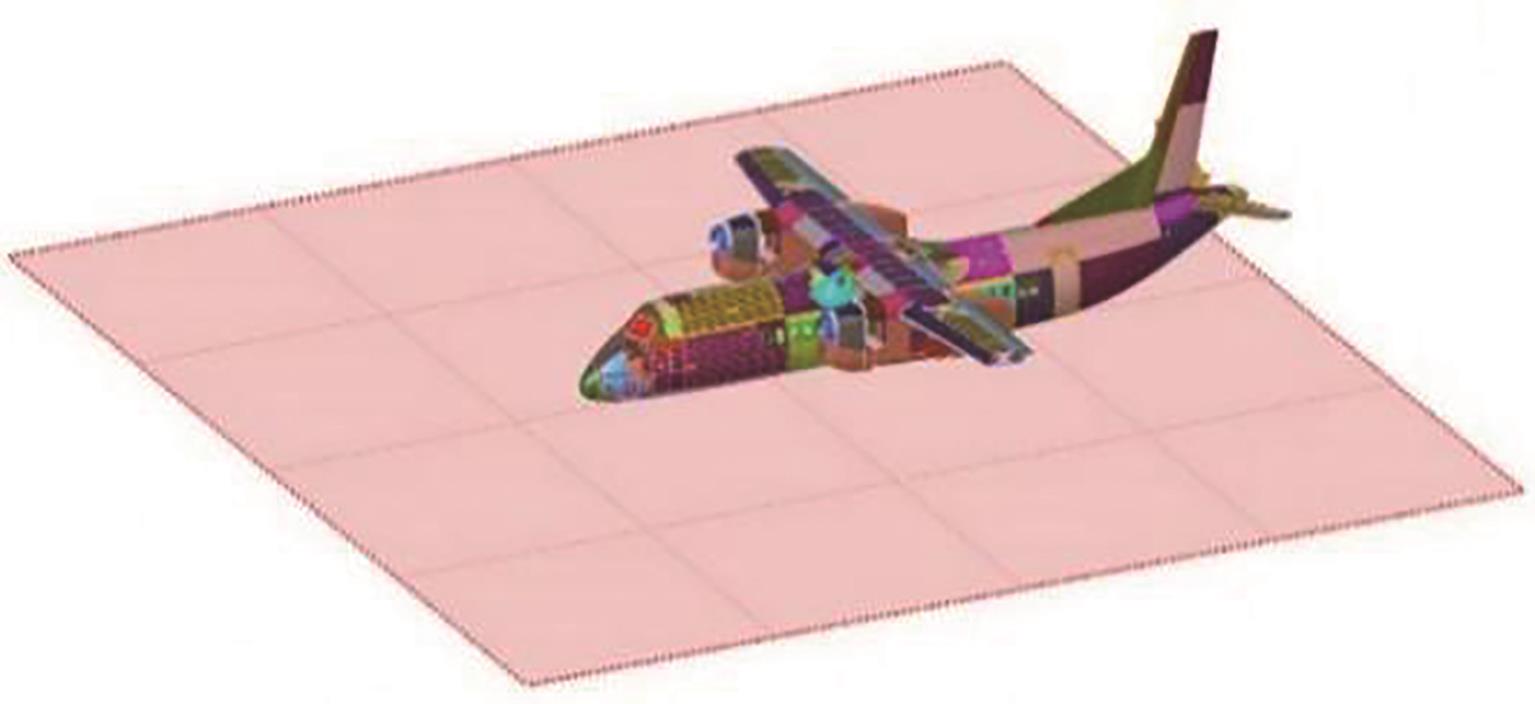
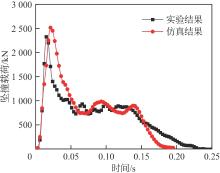
Fig.14
Comparison of simulation and experimental results
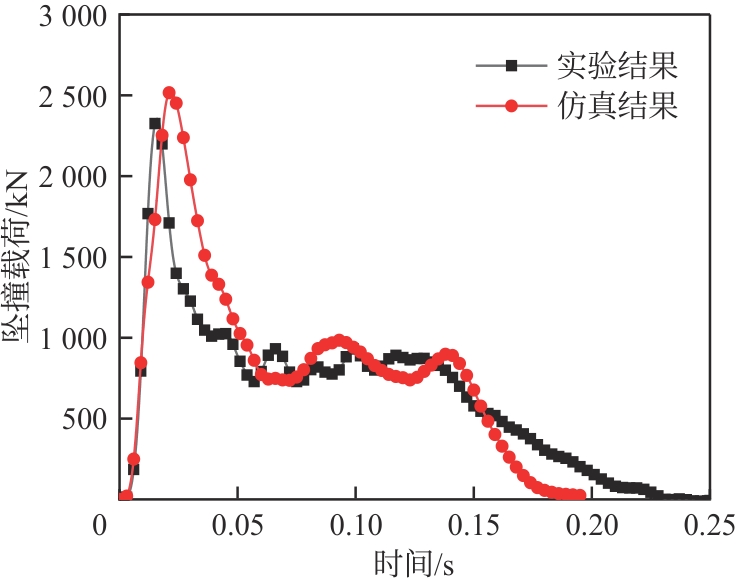
Table 5
Comparison results of crash load
| 关键参量 | 实验结果/kN | 仿真结果/kN | 误差/% |
|---|---|---|---|
| 初始载荷峰值 | 2 350 | 2 520 | 7.2 |
| 平台载荷均值 | 835 | 875 | 4.8 |
| 脉宽 | 225 | 200 | 11 |
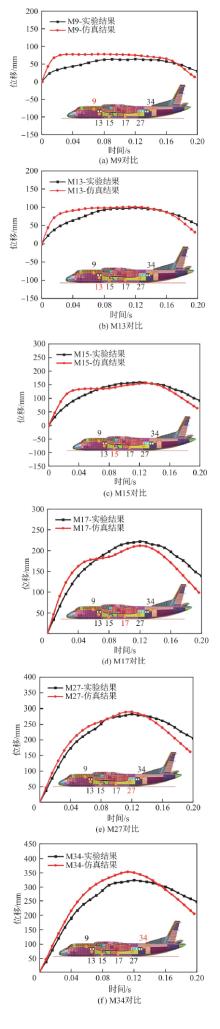
Fig.15
Comparison of vertical deformation at different positions on fuselage
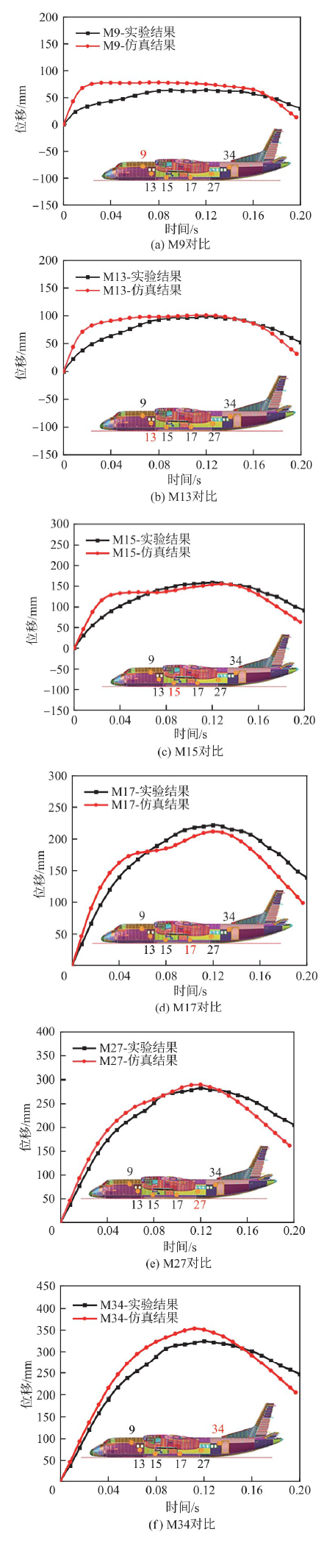
Table 6
Prediction error of vertical deformation at different locations on fuselage
| 测试点 | M9 | M13 | M15 | M17 | M27 | M34 |
|---|---|---|---|---|---|---|
| 实验变形量/mm | 76 | 101 | 154 | 212 | 290 | 353 |
| 仿真变形量/mm | 64 | 98 | 159 | 222 | 282 | 324 |
| 误差/% | 18.8 | 3.0 | 3.1 | 4.5 | 2.8 | 9.0 |
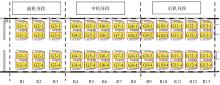
Fig.16
Layout location of cabin floor acceleration sensors
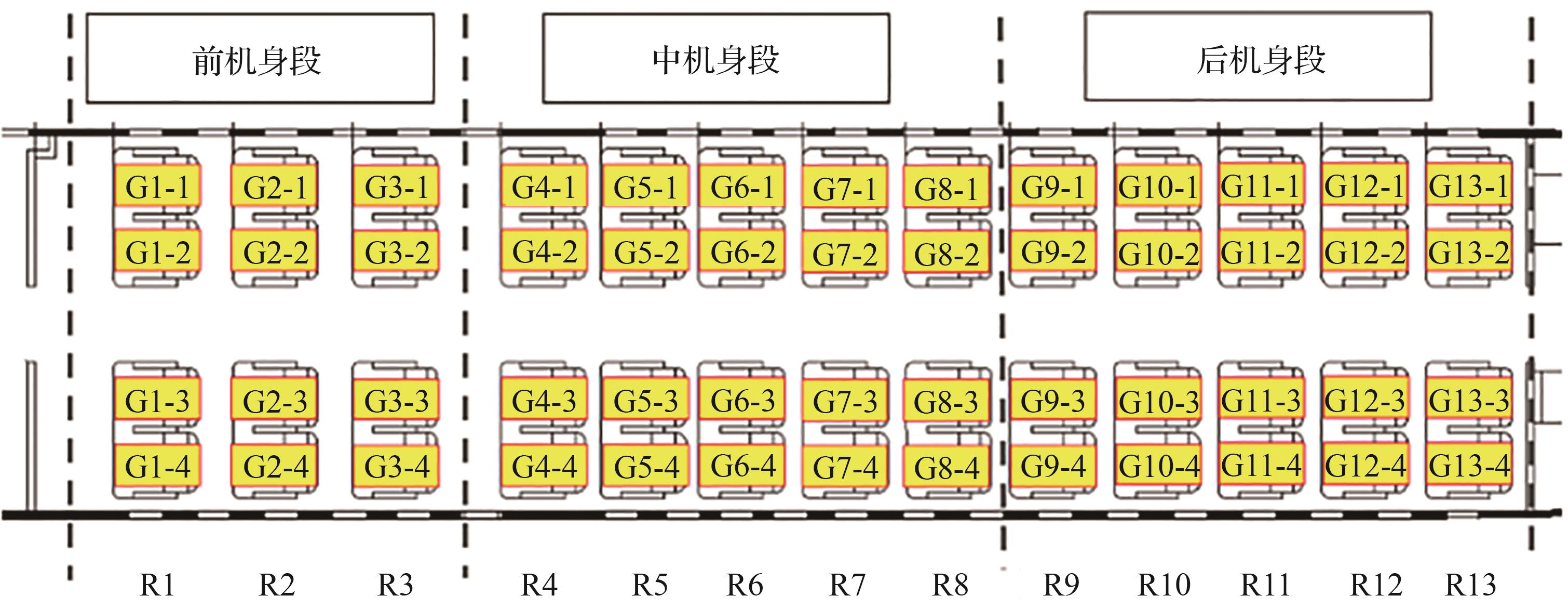
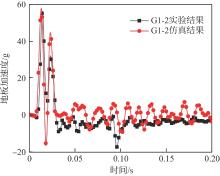
Fig.17
Comparison of acceleration curves at G1-2 measurement points
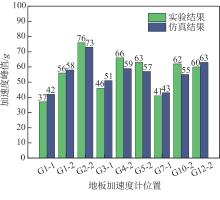
Fig.18
Comparison of acceleration peak values
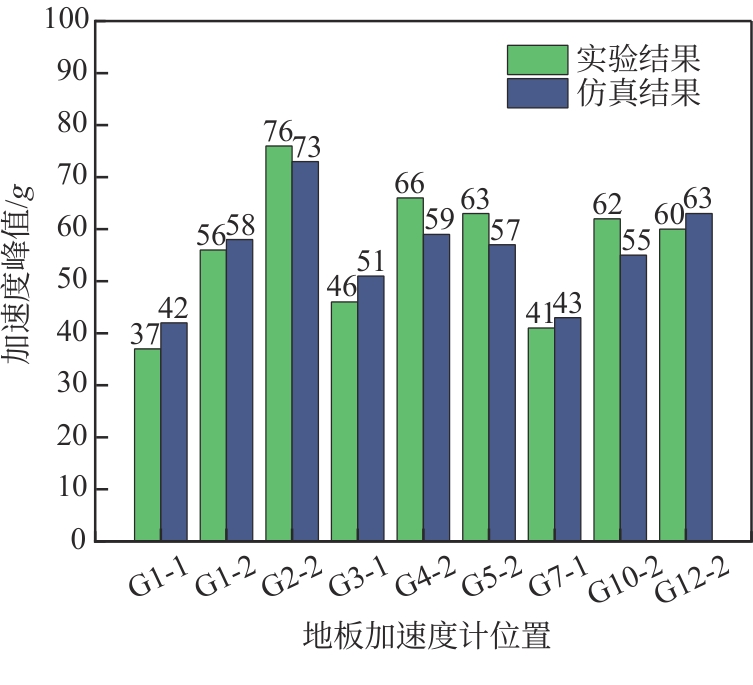
Table 7
Comparison results of crash deformation
| 时刻/s | 实验结果(侧视图) | 仿真结果(侧视图) | 仿真结果(仰视图) |
|---|---|---|---|
| 0 | 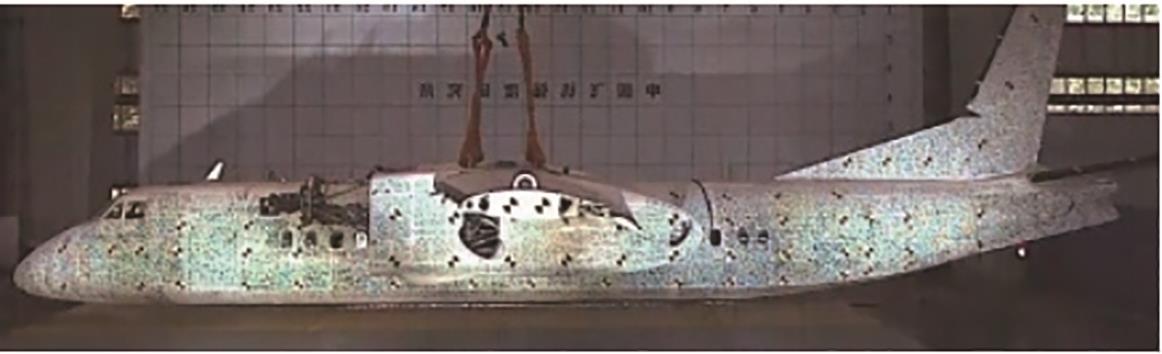 | 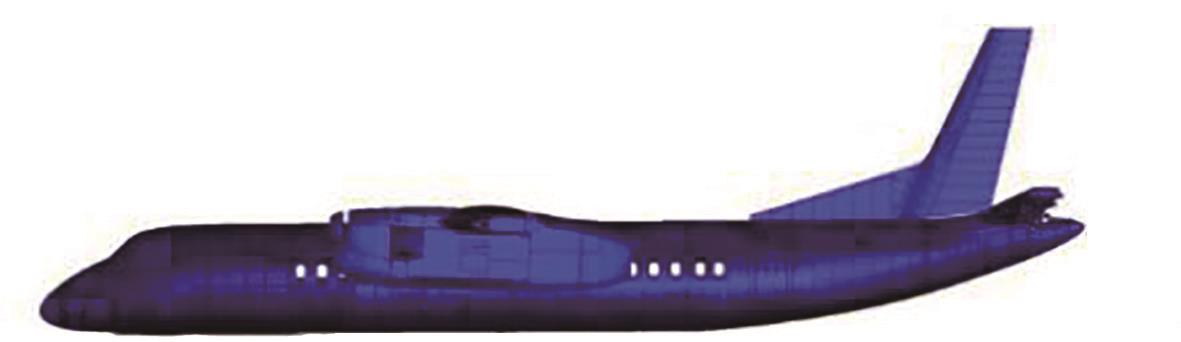 | 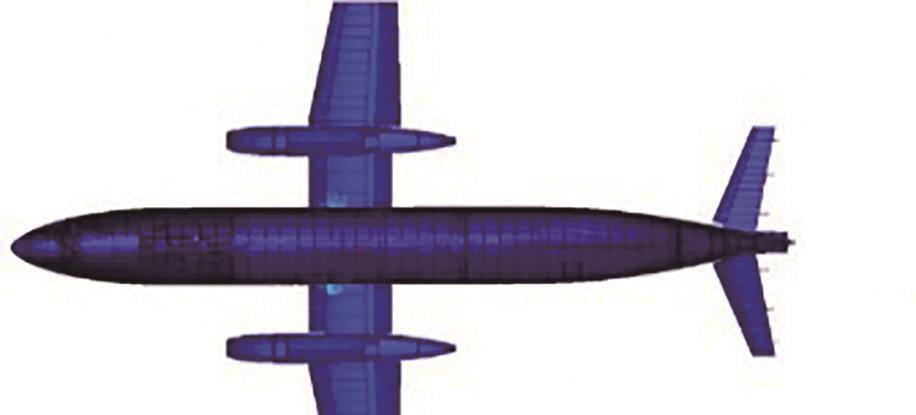 |
| 0.012 | 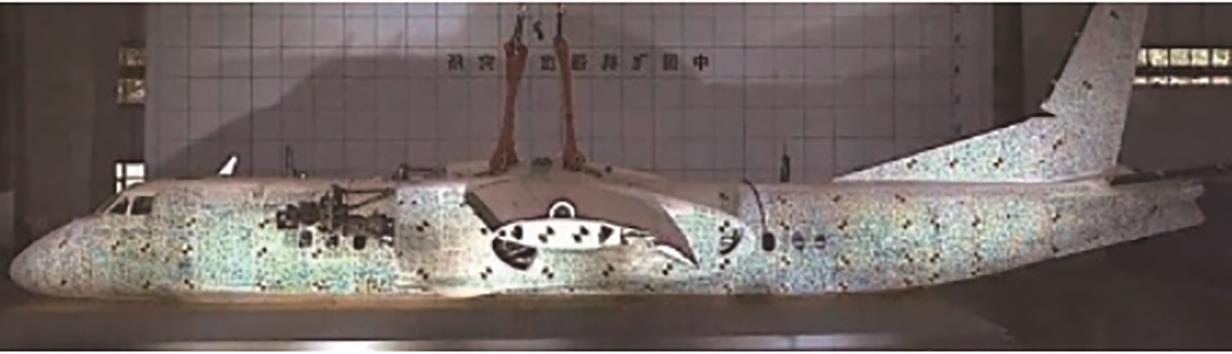 | 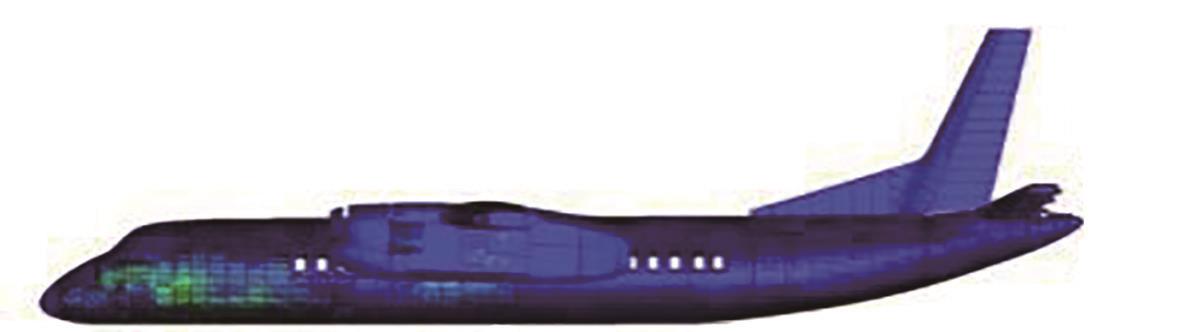 | 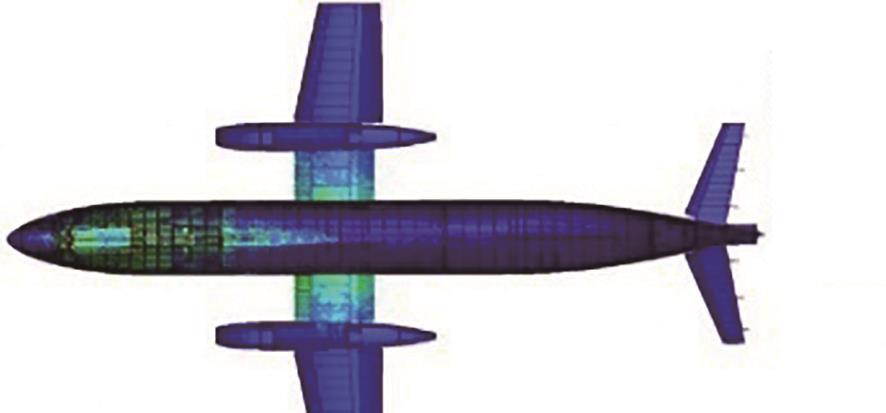 |
| 0.016 | 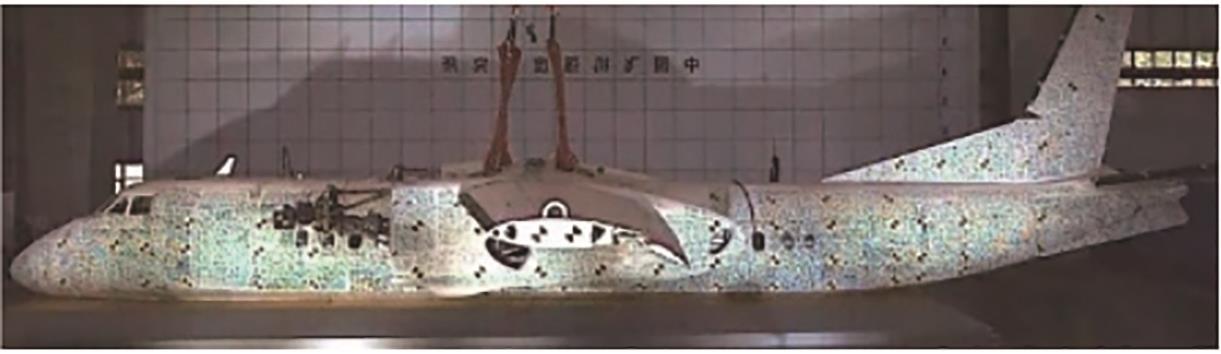 | 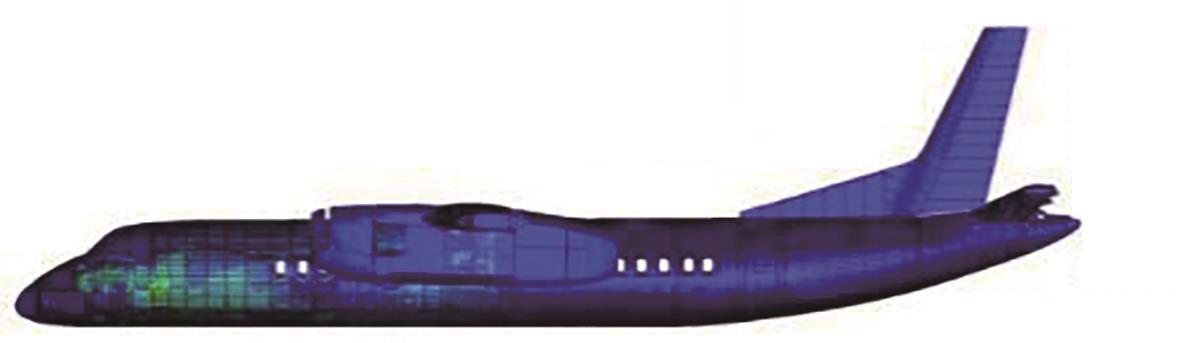 | 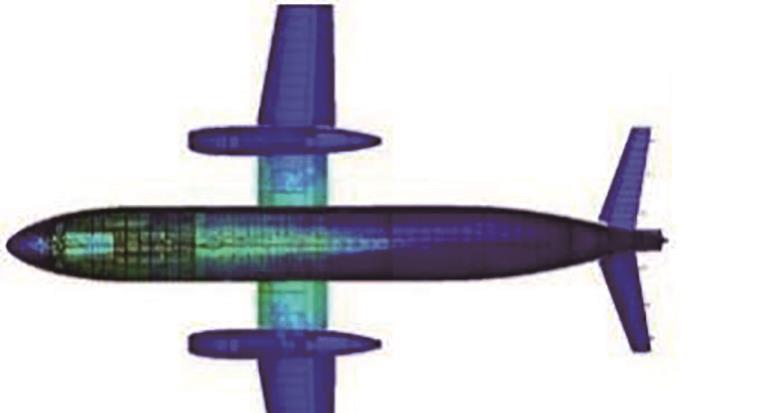 |
| 0.130 | 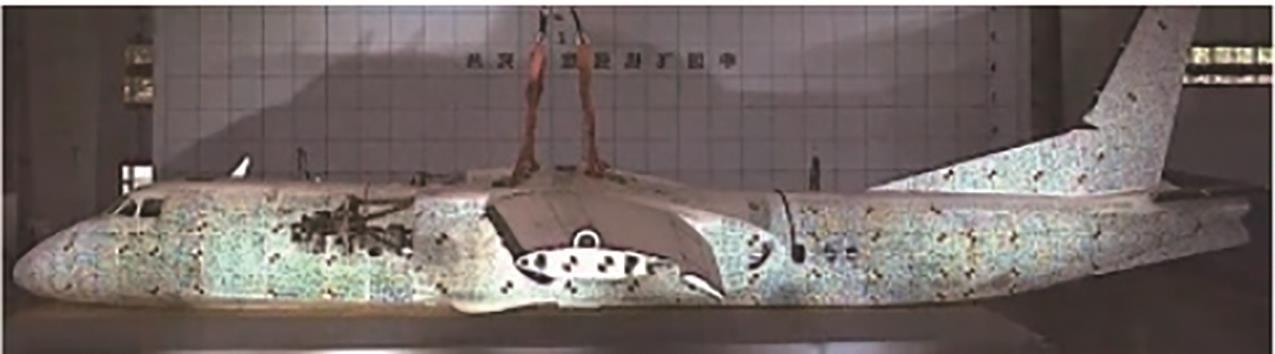 | 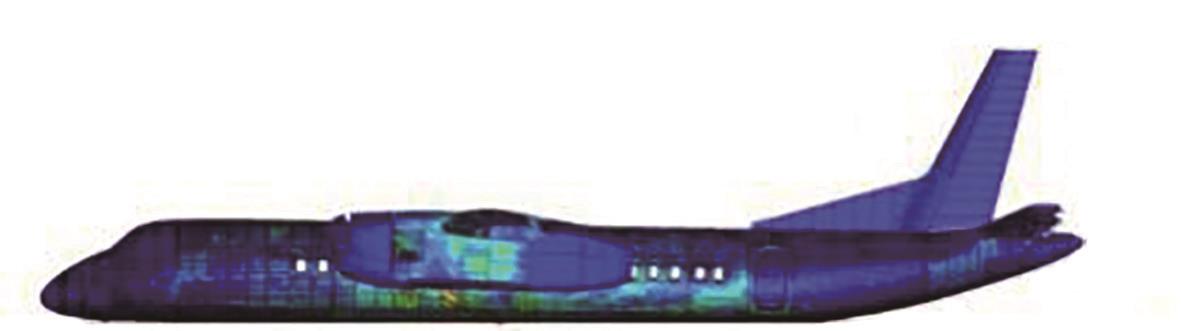 | 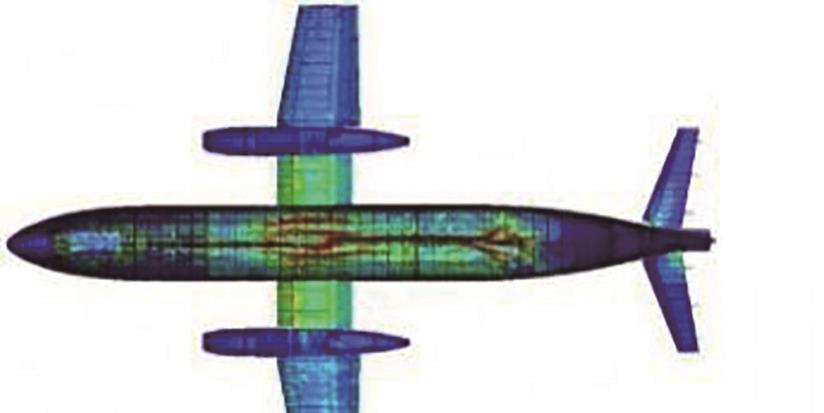 |
Table 8
Comparison for damage of lower part fuselage
| 机身位置 | 实验结果 | 仿真结果 |
|---|---|---|
| 驾驶舱段下部蒙皮 | 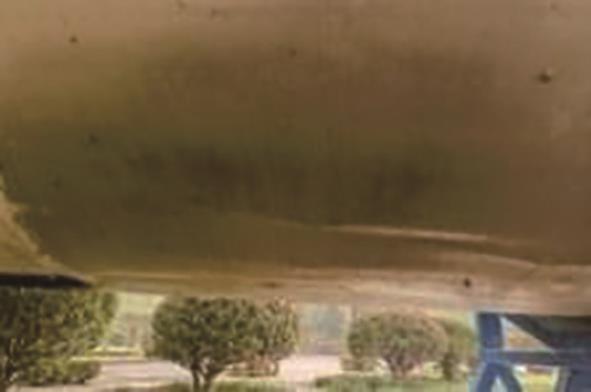 | 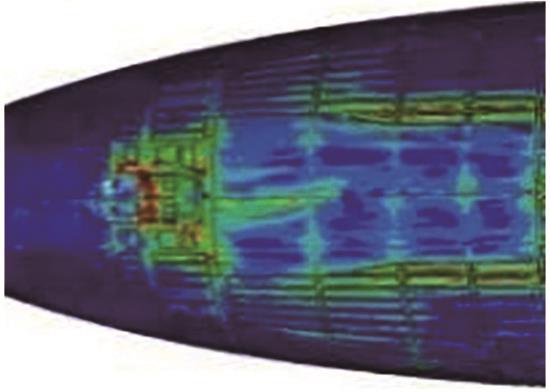 |
| 含舱门段下部蒙皮 | 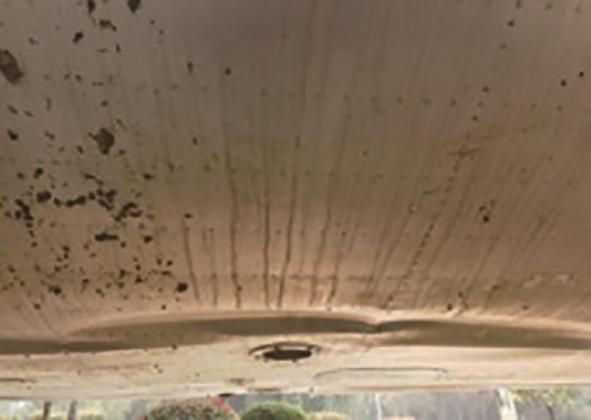 | 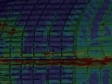 |
| 前机身等直段下部蒙皮 | 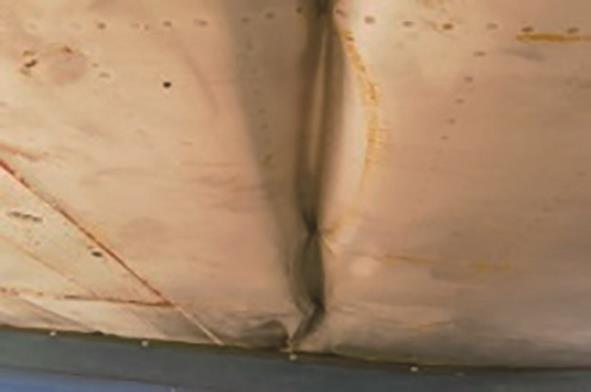 | 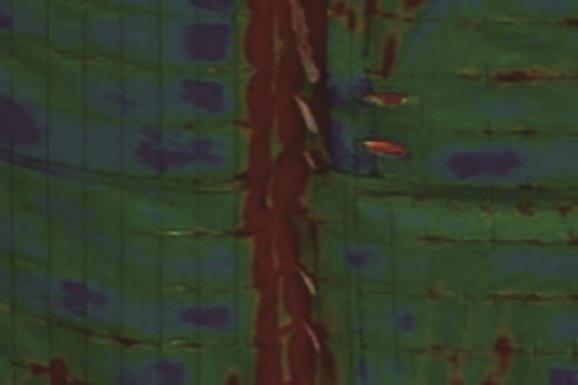 |
| 中央翼段下部蒙皮 | 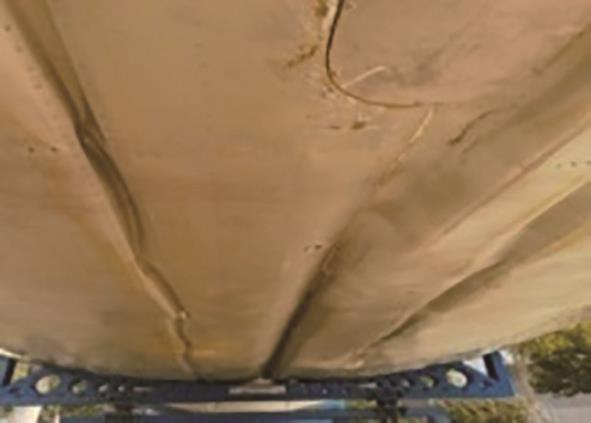 | 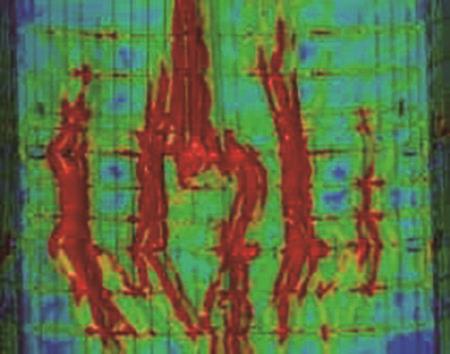 |
| 后机身等直段下部蒙皮 | 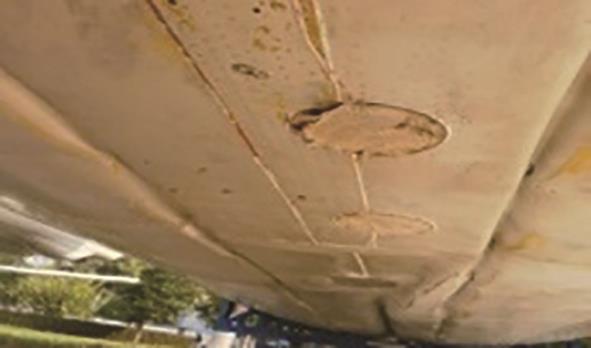 | 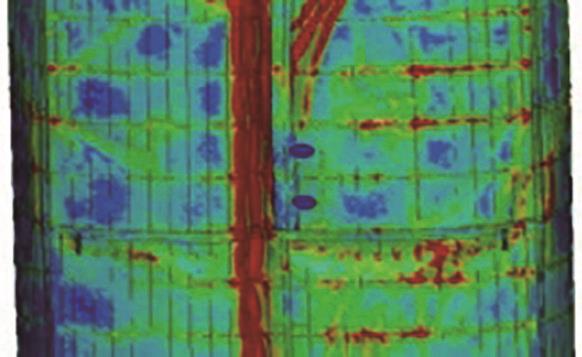 |
| 后舱门段下部蒙皮 | 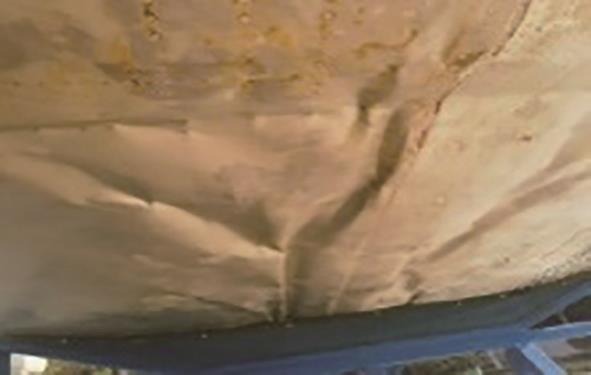 | 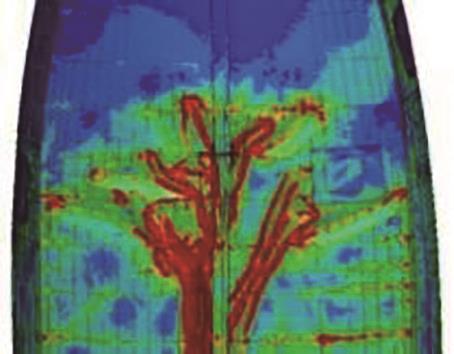 |
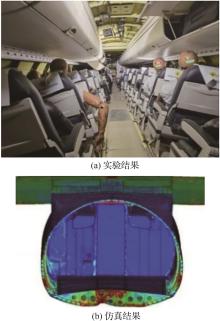
Fig.19
Deformation of aircraft’s internal floor
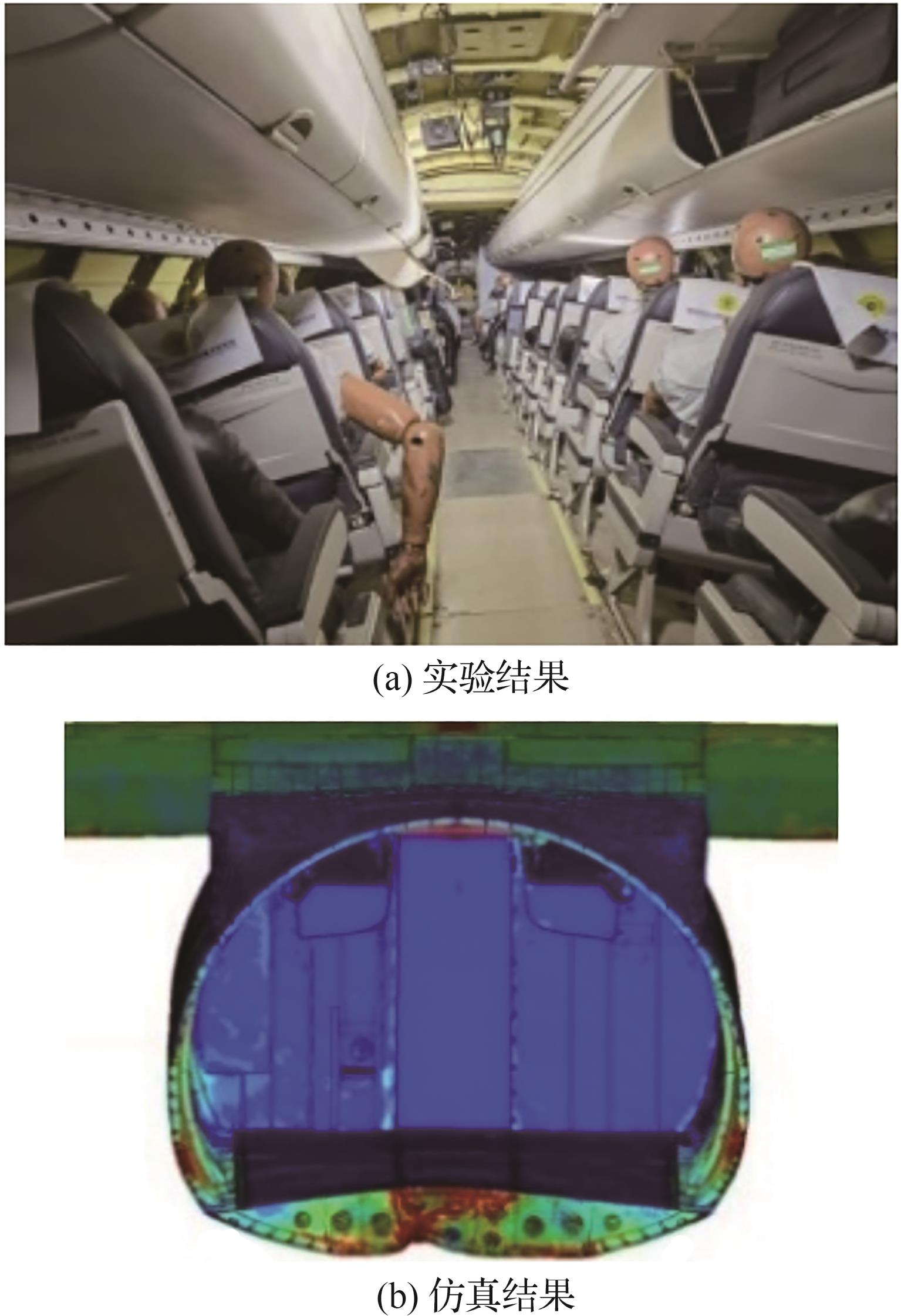
Fig.20
Crash dynamic models of fuselage frame segment
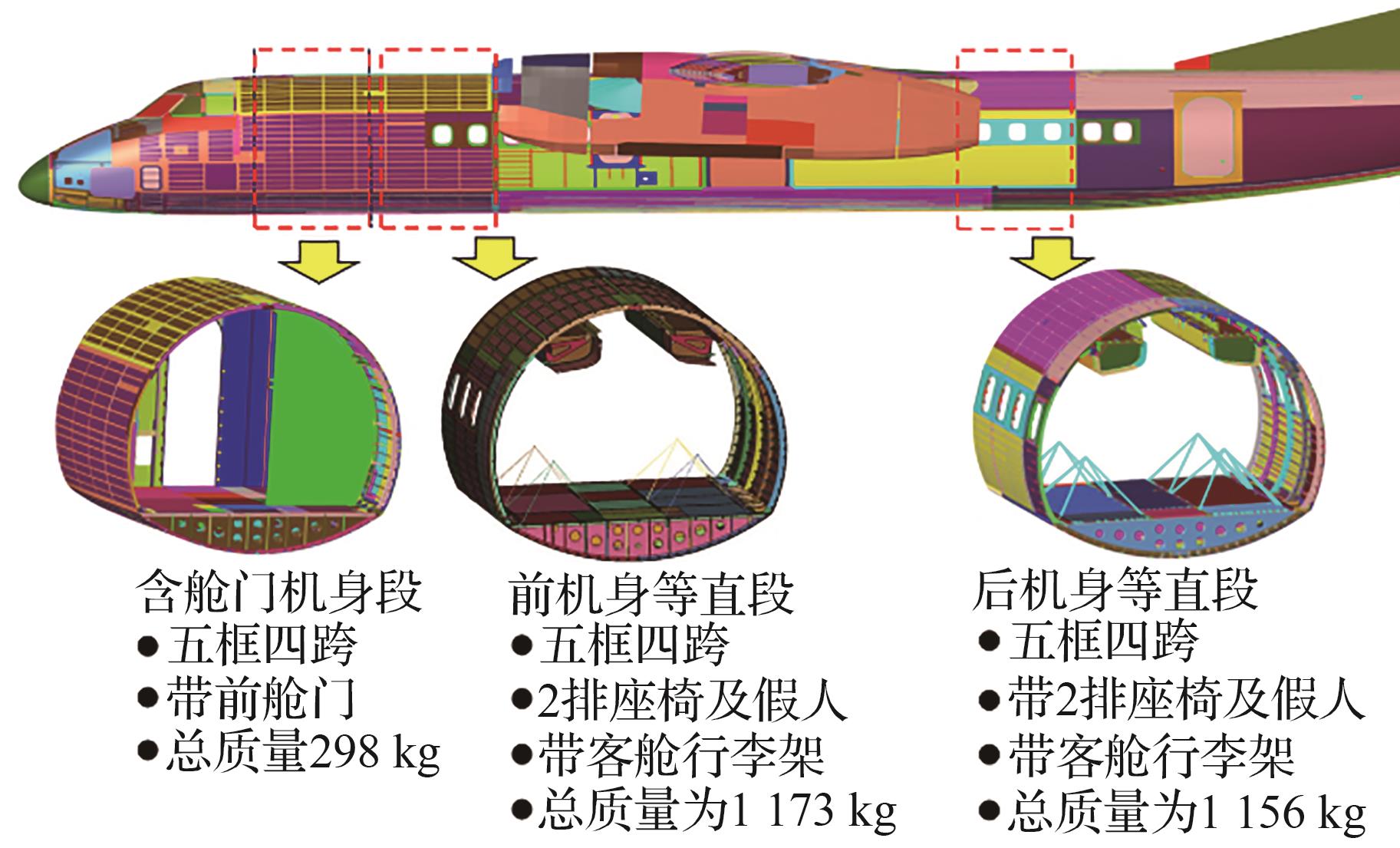
Fig.21
Comparison of simulation and experimental crash loads on fuselage section with cabin door
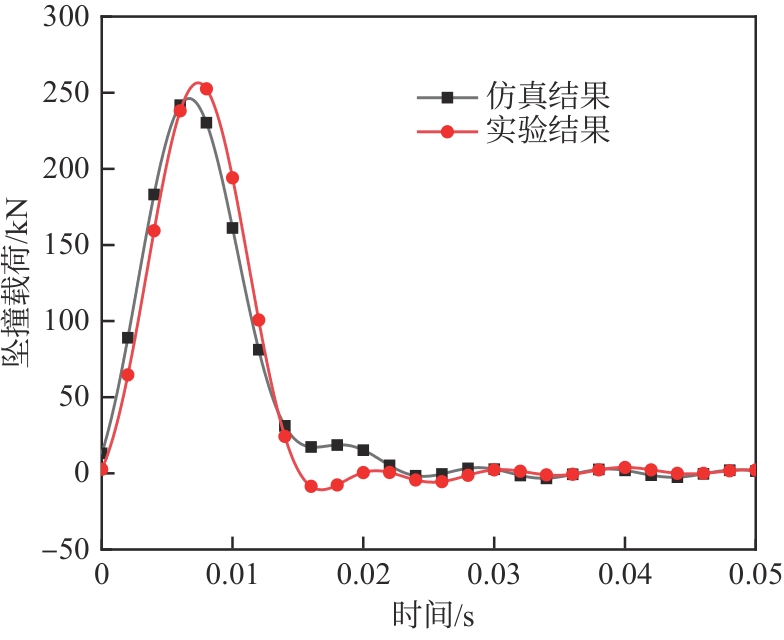
Table 9
Comparison of crash results on fuselage section with cabin door
| 时刻/s | 仿真结果 | 实验结果 |
|---|---|---|
| 0 | 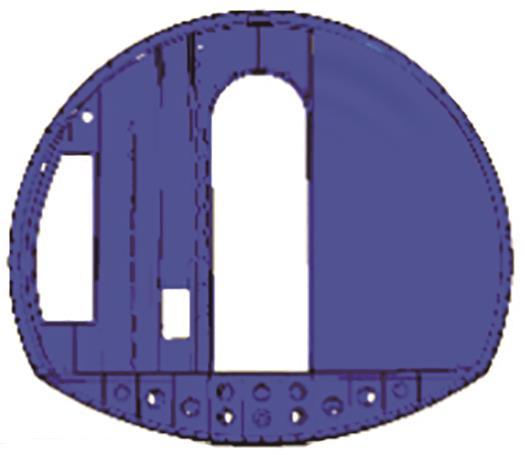 | 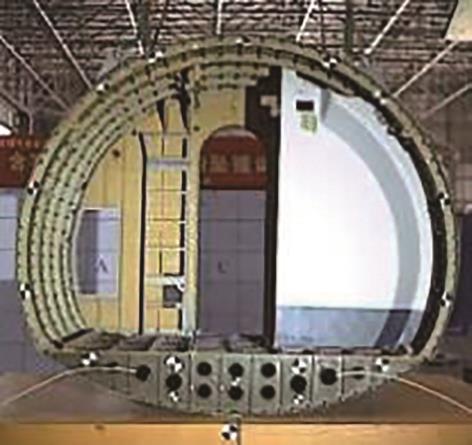 |
| 0.03 | 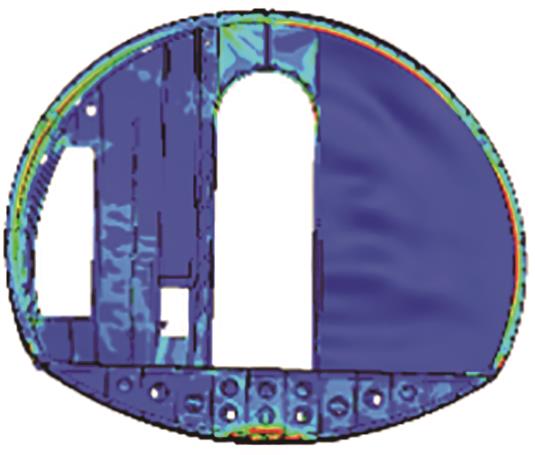 | 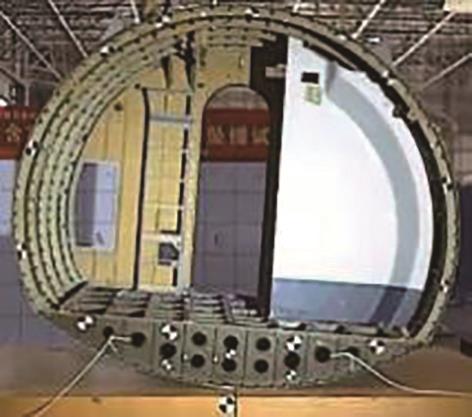 |
| 0.06 | 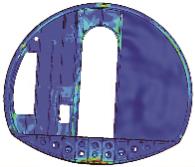 | 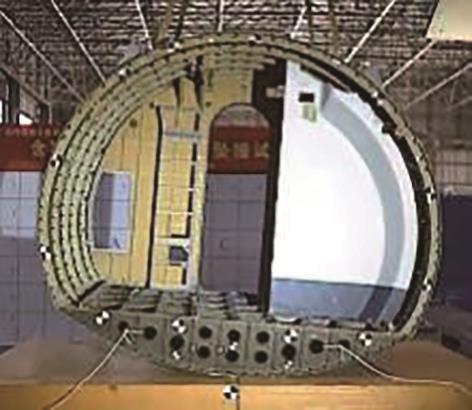 |
| 0.40 | 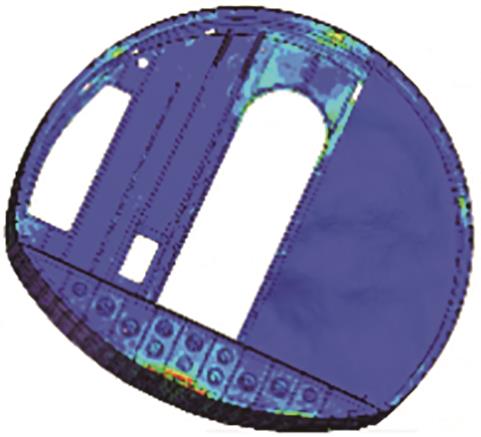 | 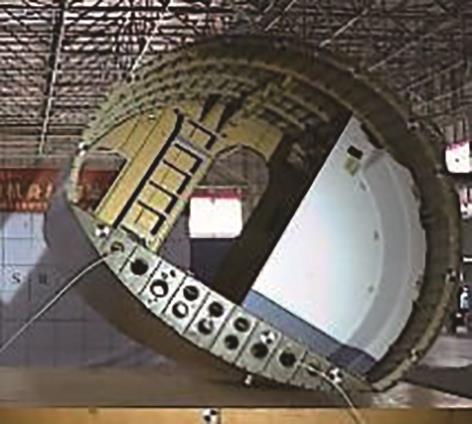 |
Table 10
Comparison of crash deformation on fuselage section with cabin door and full-scale aircraft
| 时刻/s | 舱段正面 | 全机正面 | 全机侧面 |
|---|---|---|---|
| 0 | 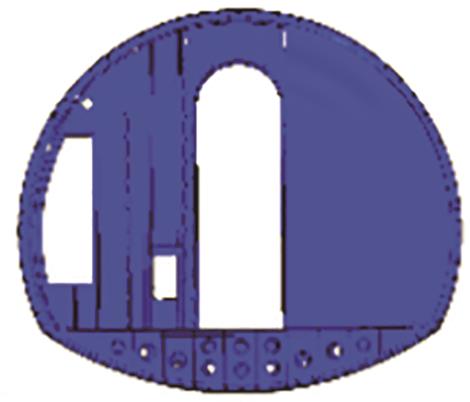 | 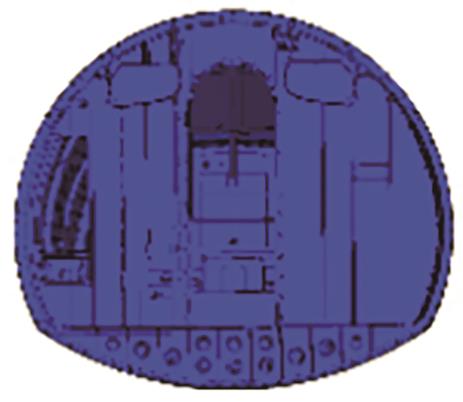 | 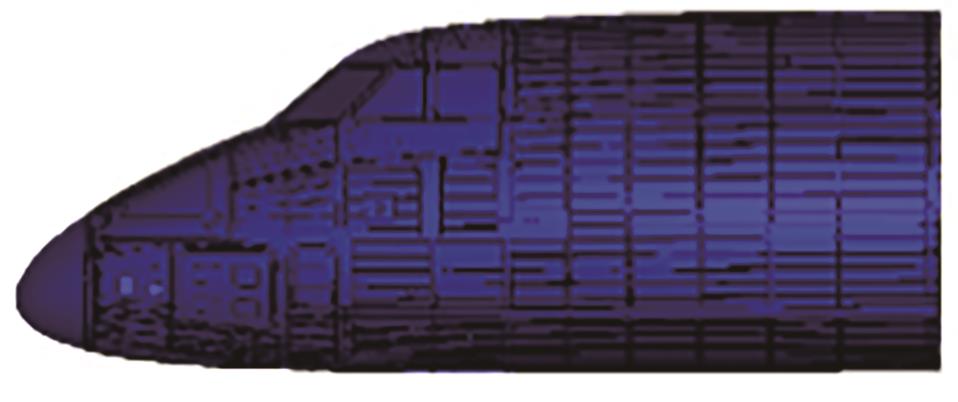 |
| 0.03 |  | 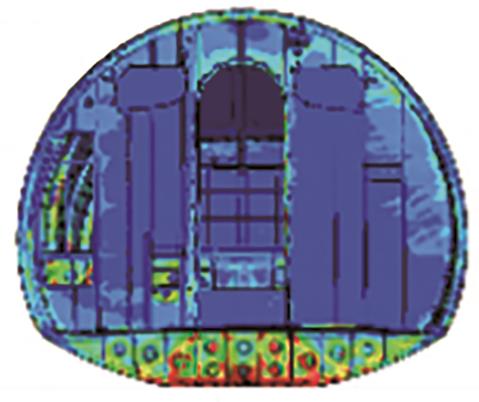 | 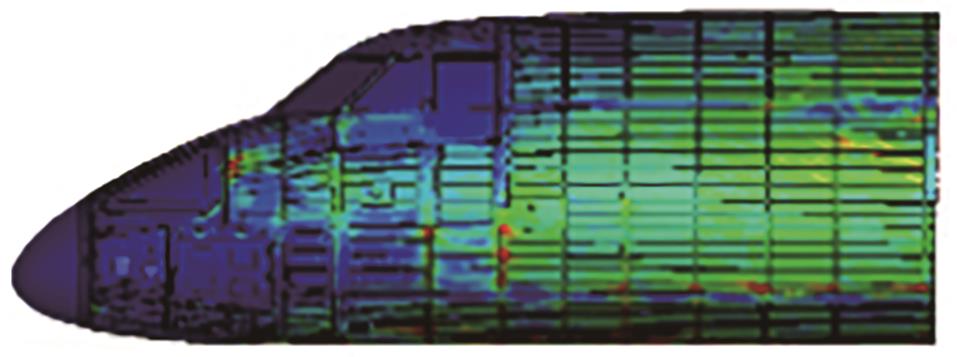 |
| 0.06 | 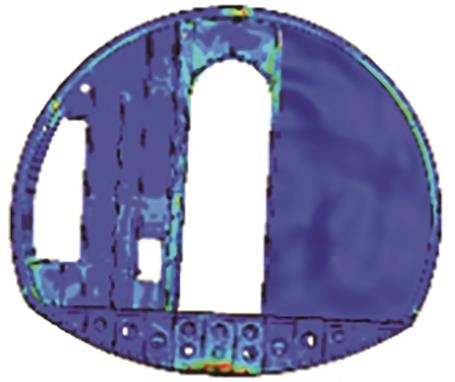 | 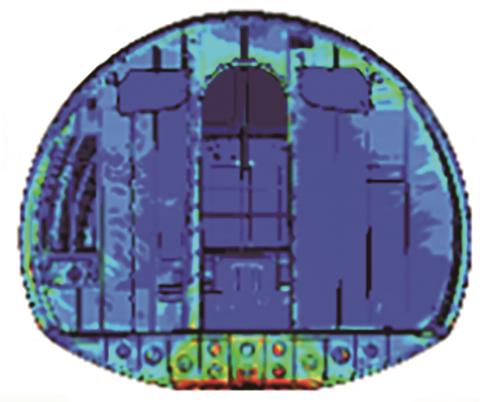 | 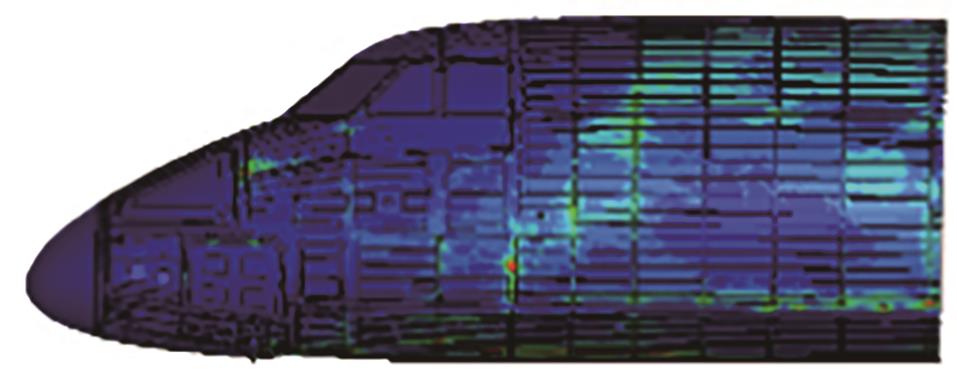 |
| 0.40 | 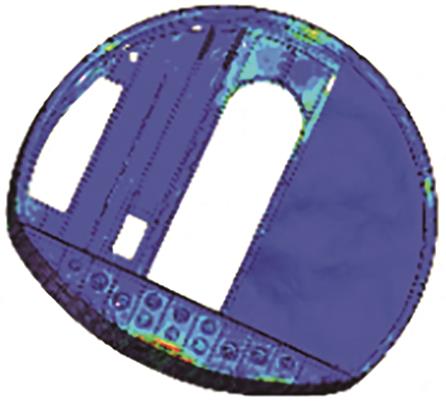 | 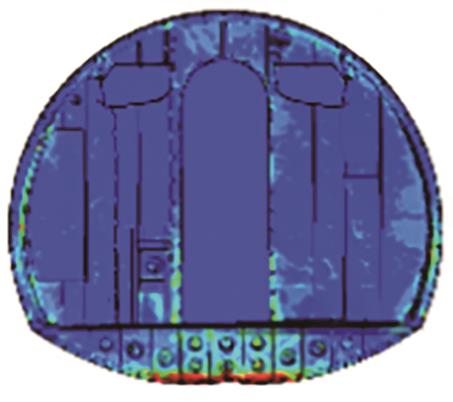 | 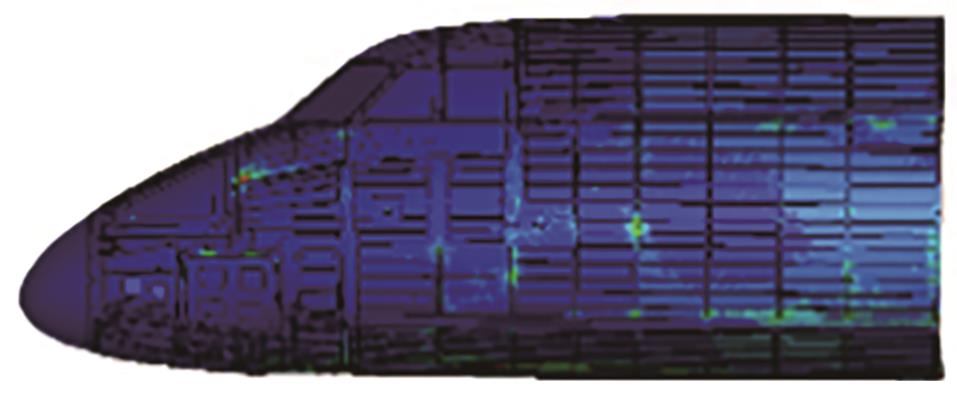 |
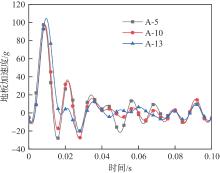
Fig.22
Accelerometer results for fuselage section
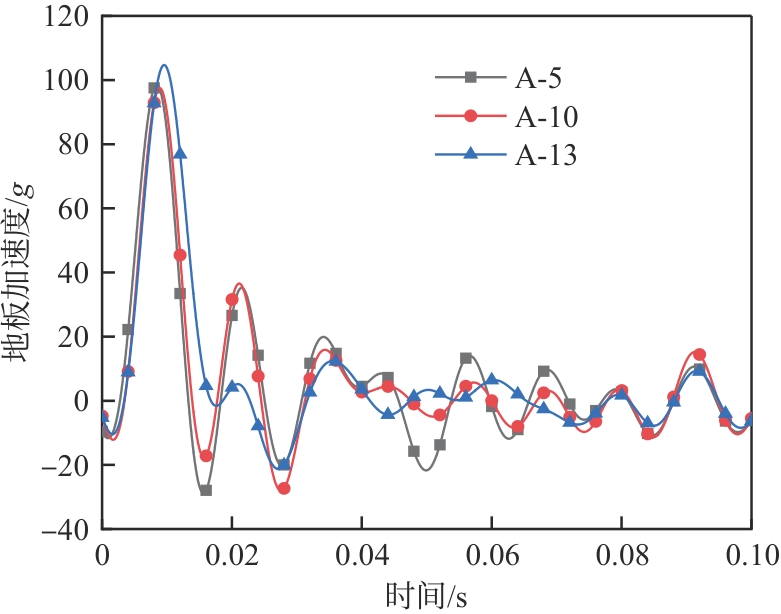
Fig.23
Comparison of simulation and experimental acceleration peak values
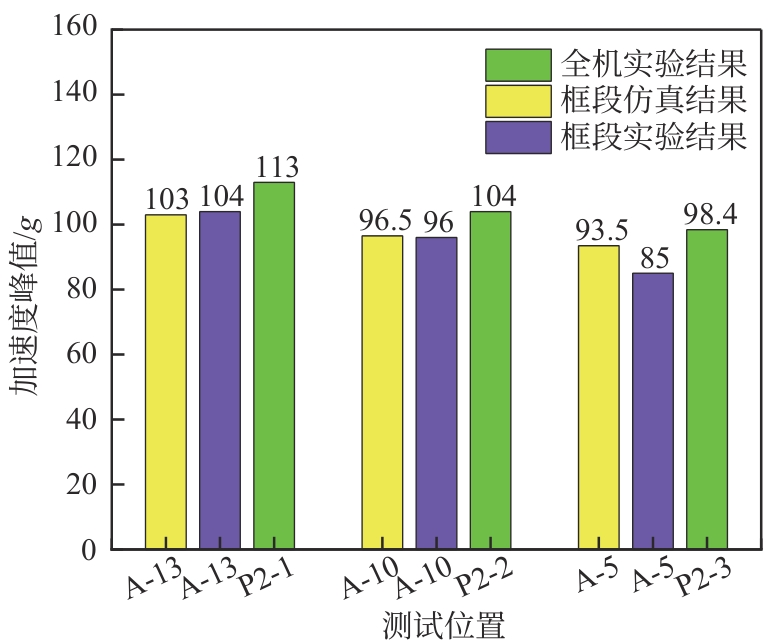
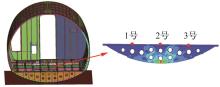
Fig.24
Testing points for vertical displacement of floor in fuselage section containing cabin door
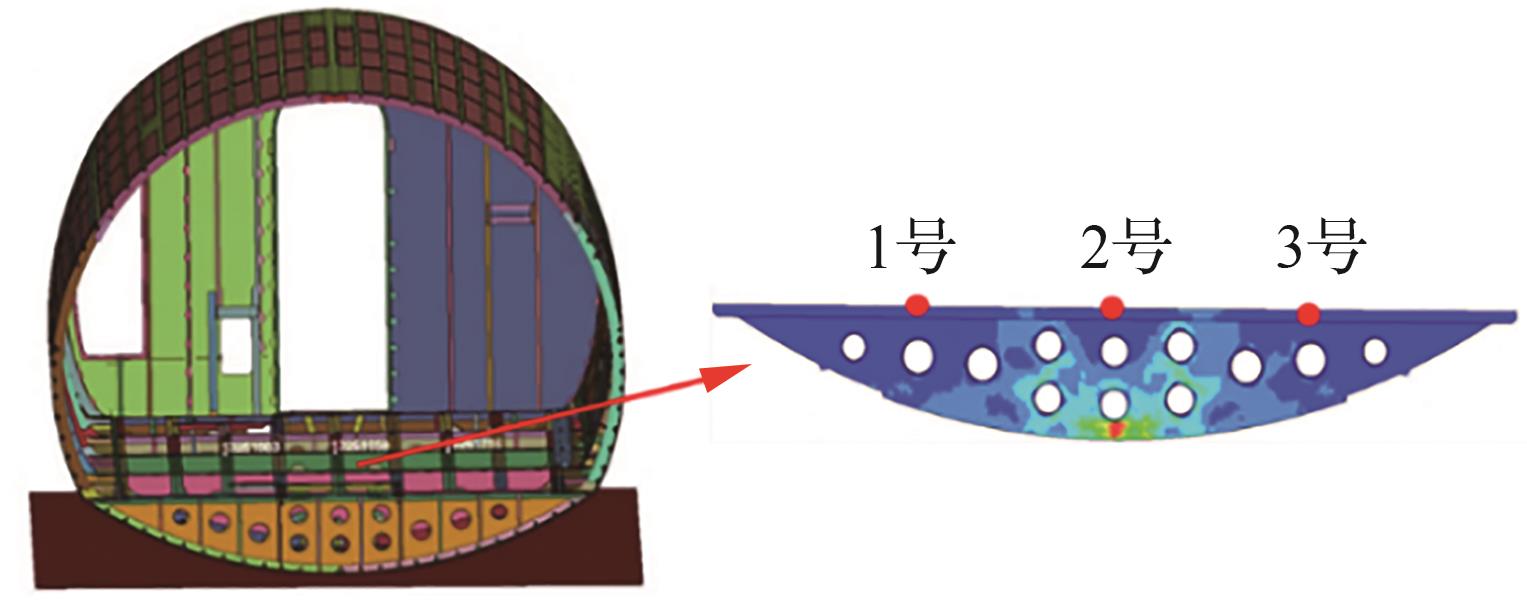
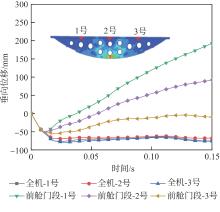
Fig.25
Comparison of vertical displacement
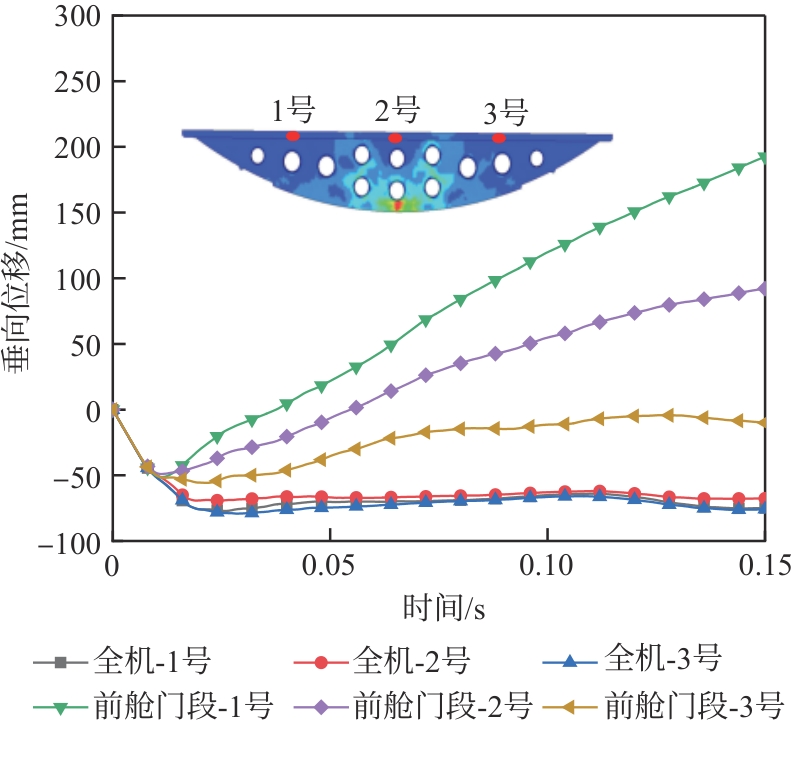
Table 11
Comparison of crash deformation of forward fuselage straight section with full-scale aircraft
| 时刻/s | 舱段正面 | 全机正面 | 舱段侧面 | 全机侧面 |
|---|---|---|---|---|
| 0 | 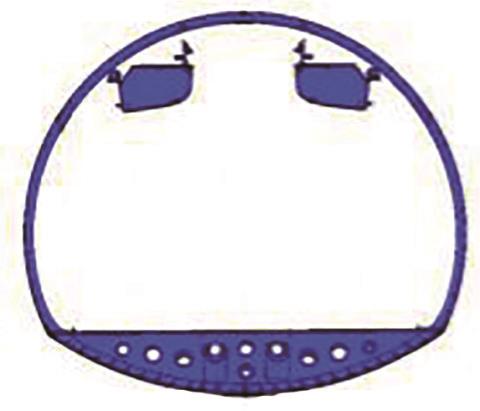 | 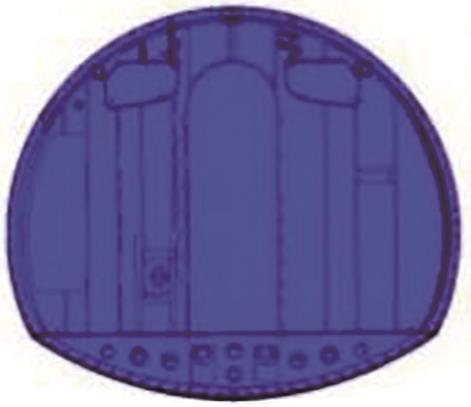 | 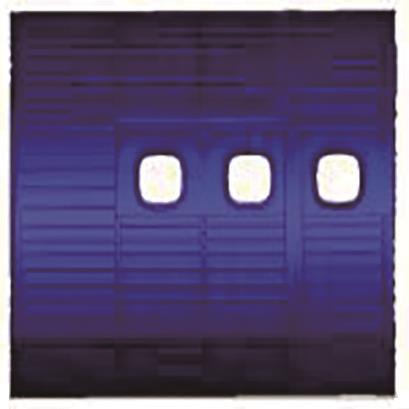 | 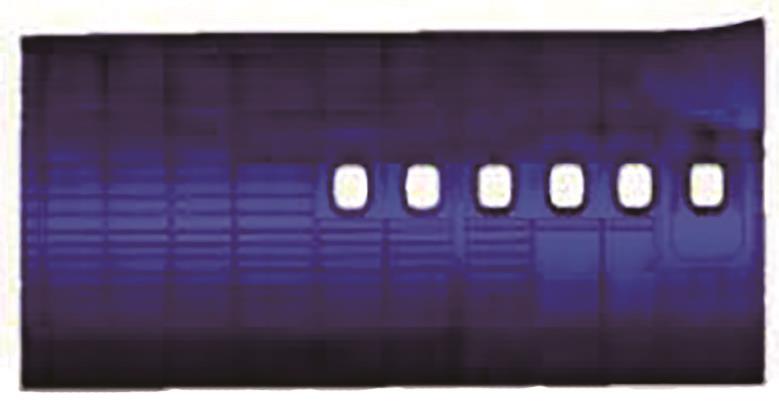 |
| 0.03 | 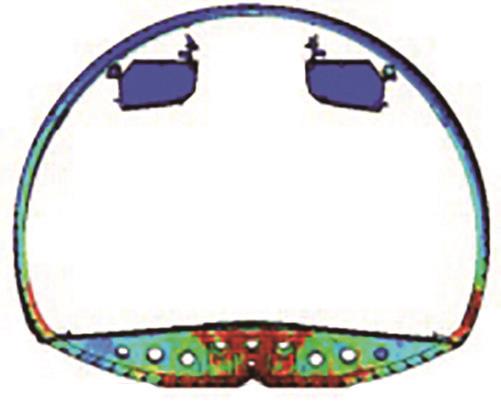 | 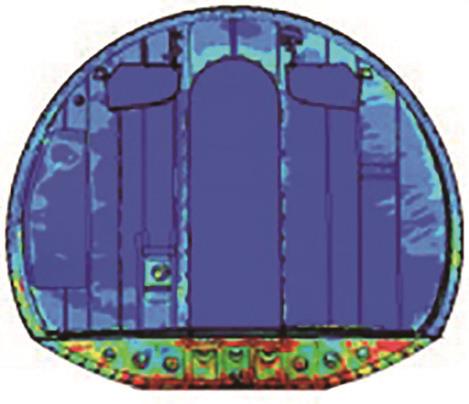 | 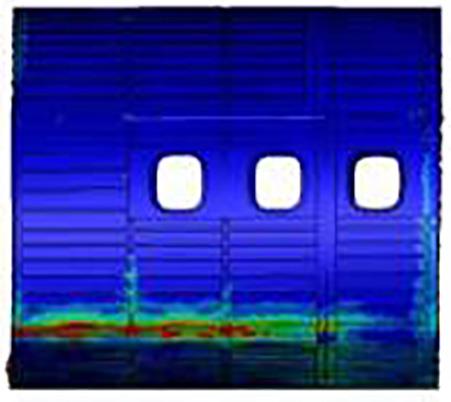 | 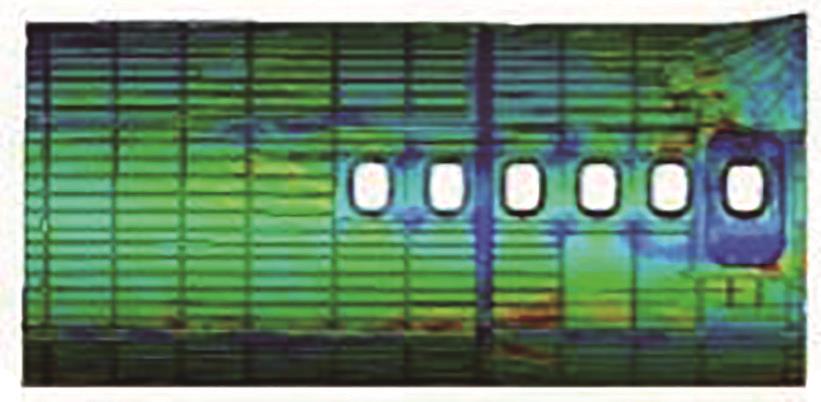 |
| 0.06 | 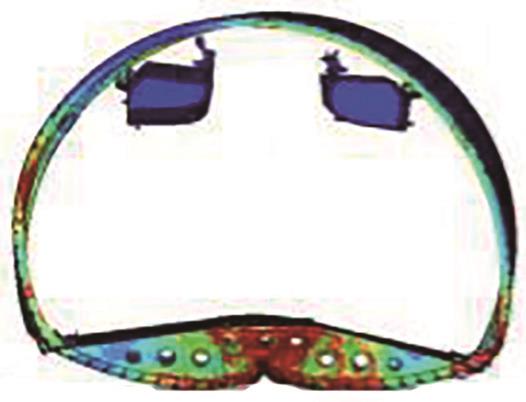 | 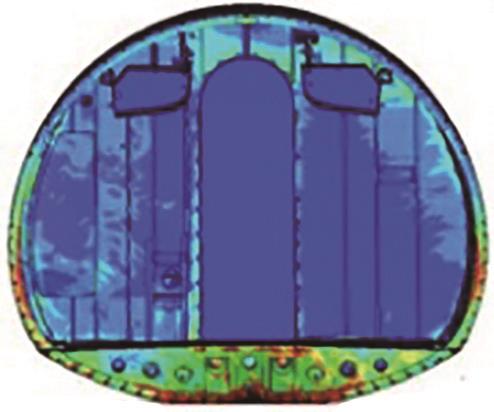 | 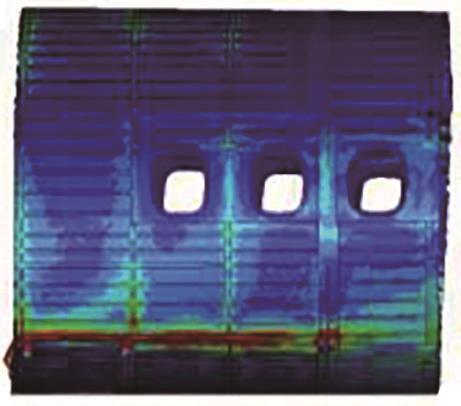 | 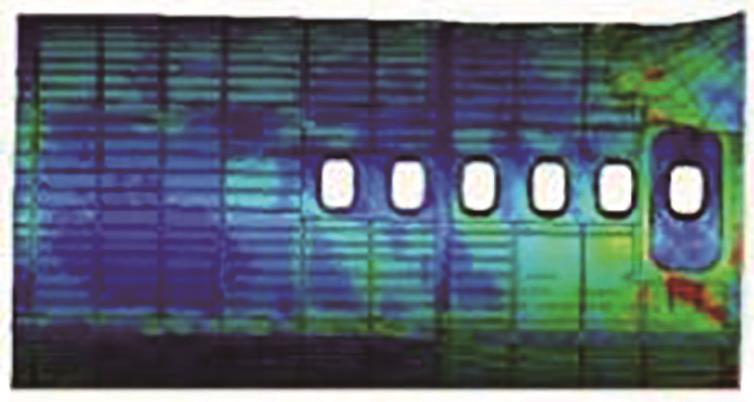 |
| 0.4 | 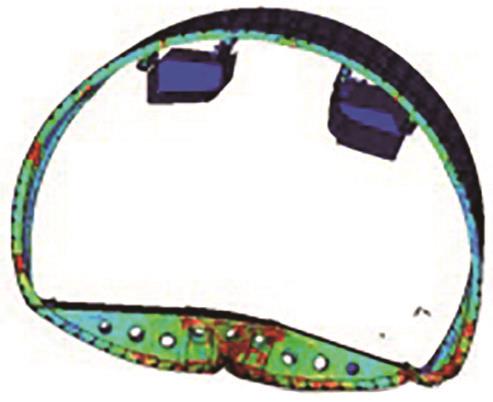 | 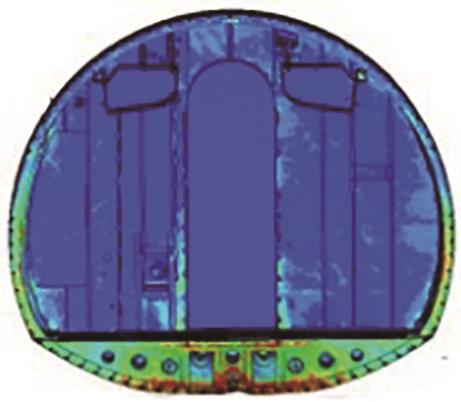 | 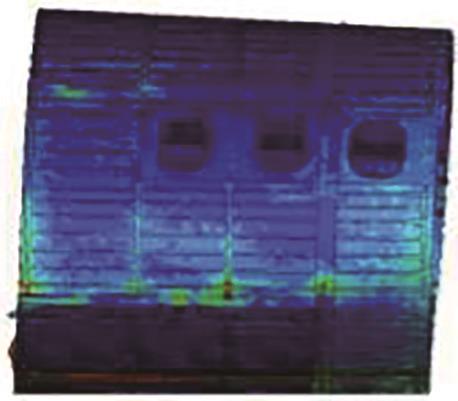 | 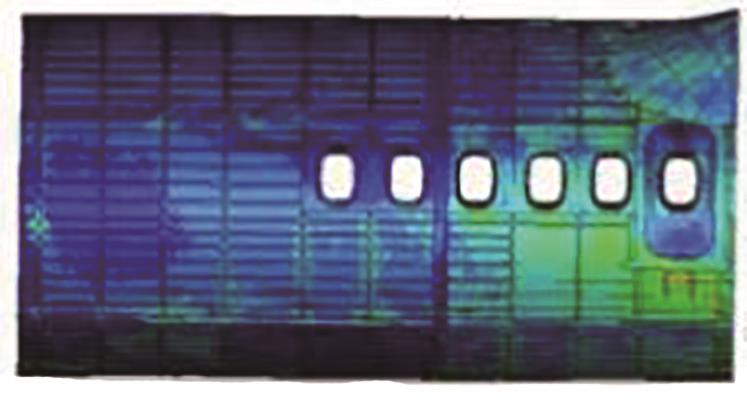 |
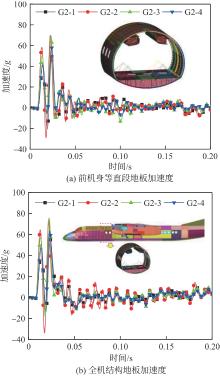
Fig.26
Comparison of floor acceleration between fuselage section and full-scale aircraft
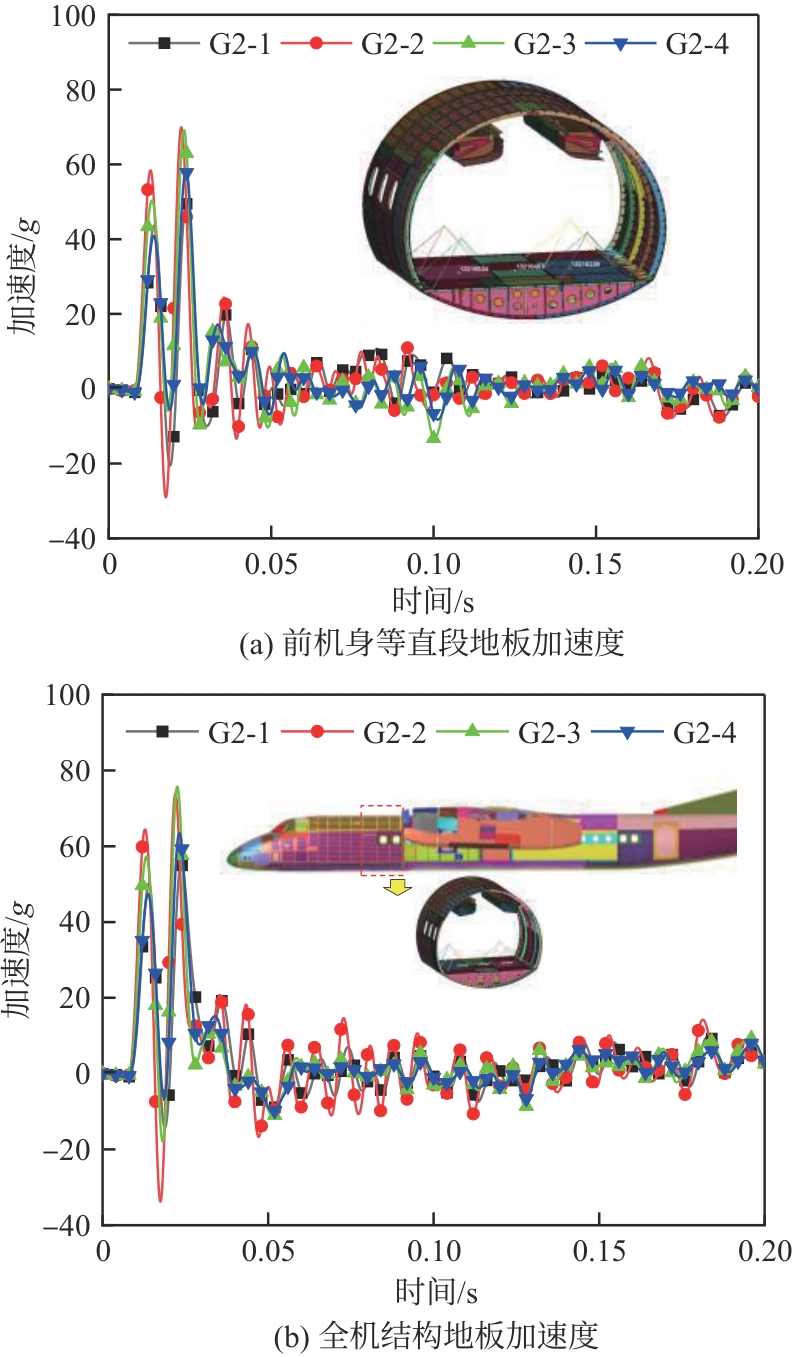
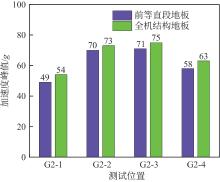
Fig.27
Comparison of acceleration peaks between full-scale aircraft and straight section of forward fuselage
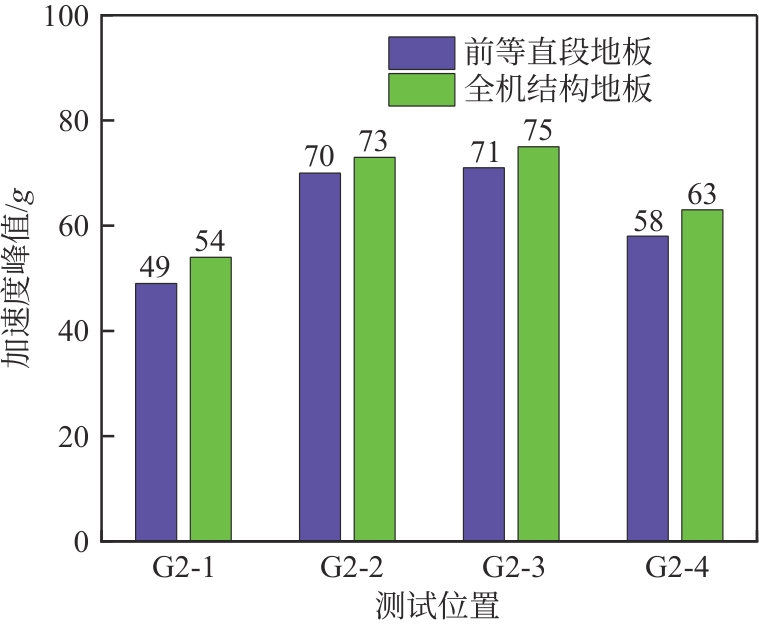
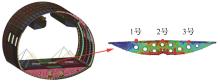
Fig.28
Vertical displacement test point of forward fuselage section floor
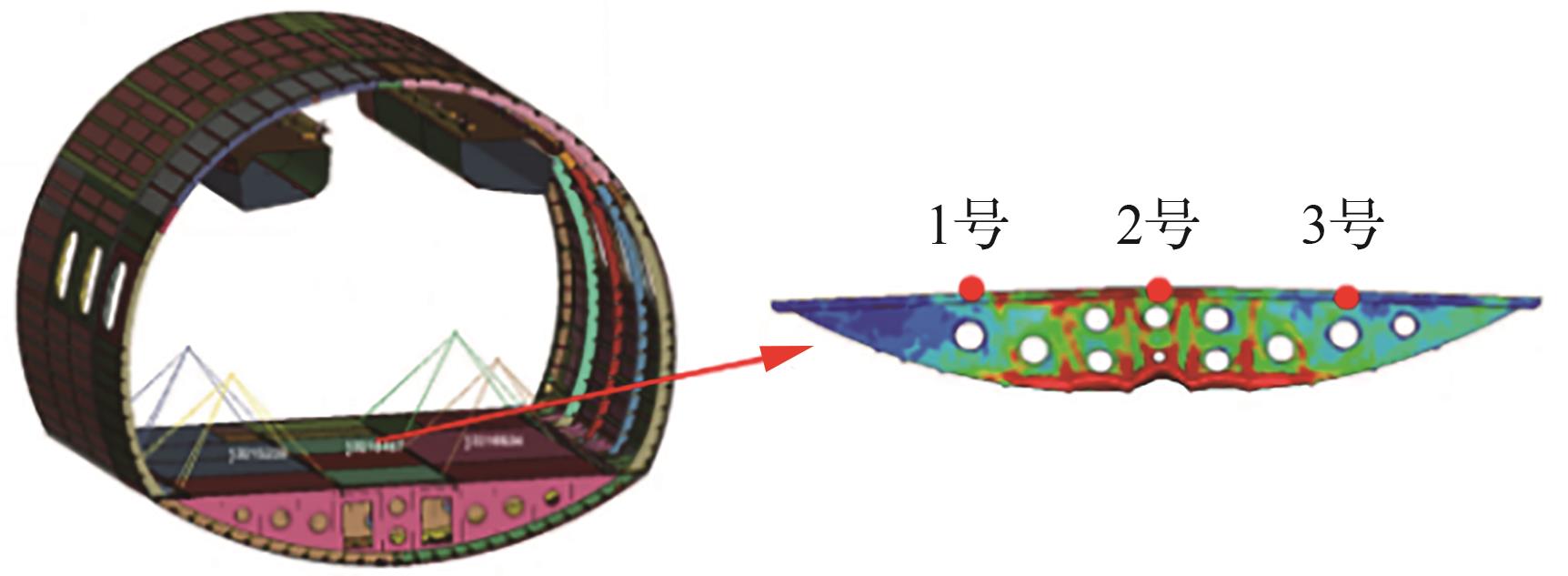
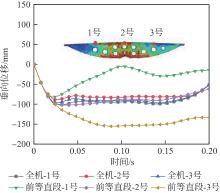
Fig.29
Comparison of vertical displacement between full-scale aircraft and straight section of forward fuselage
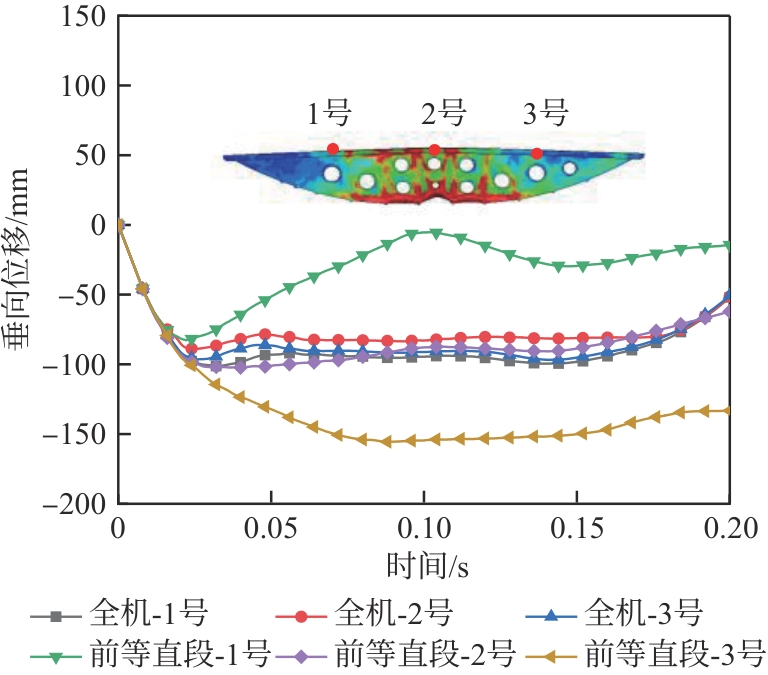
Table 12
Comparison of crash deformation of backward fuselage straight section with full-scale aircraft
| 时刻/s | 舱段正面 | 舱段侧面 | 全机正面 | 全机侧面 |
|---|---|---|---|---|
| 0 | 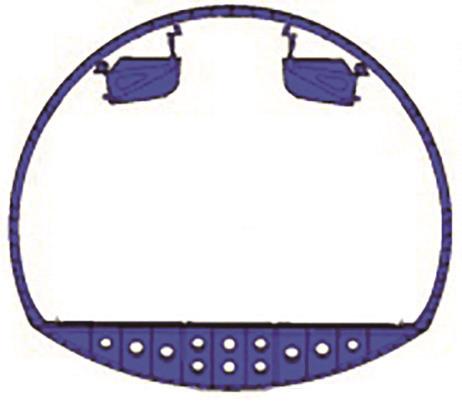 | 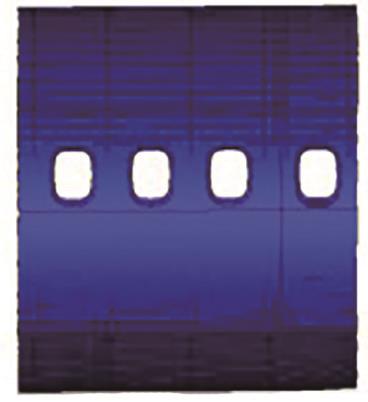 | 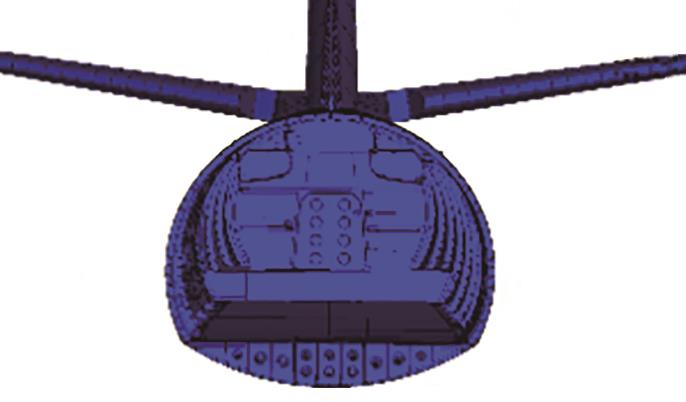 | 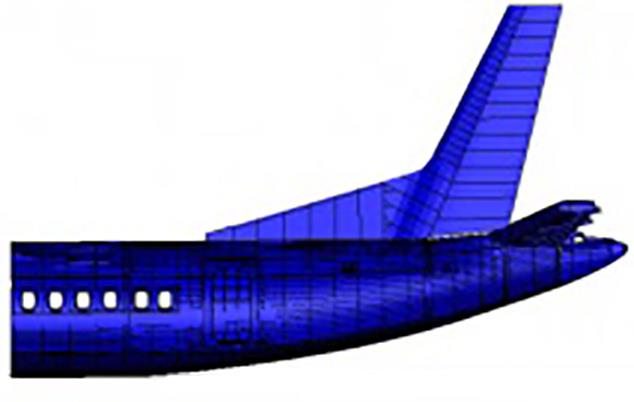 |
| 0.03 | 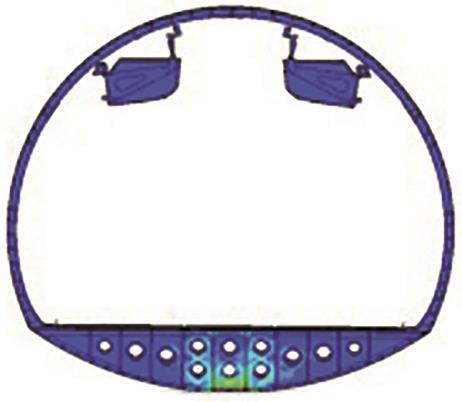 | 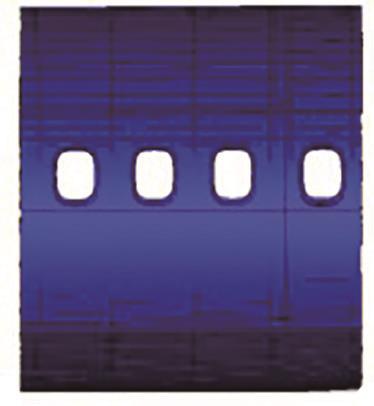 | 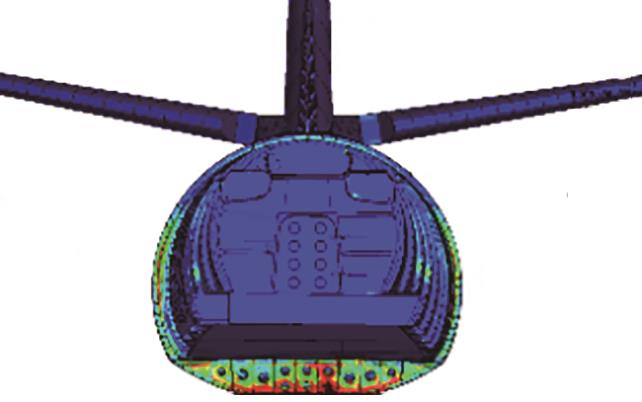 | 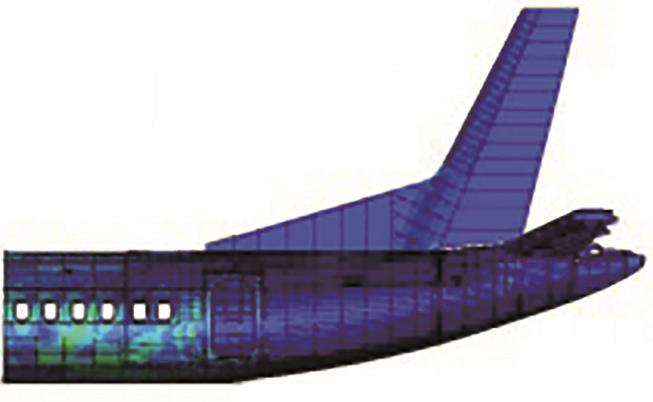 |
| 0.06 | 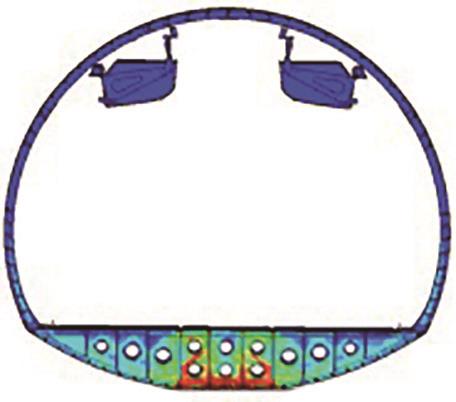 | 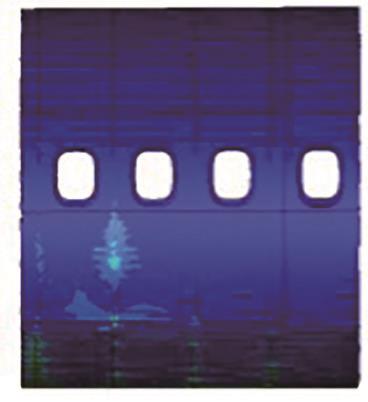 | 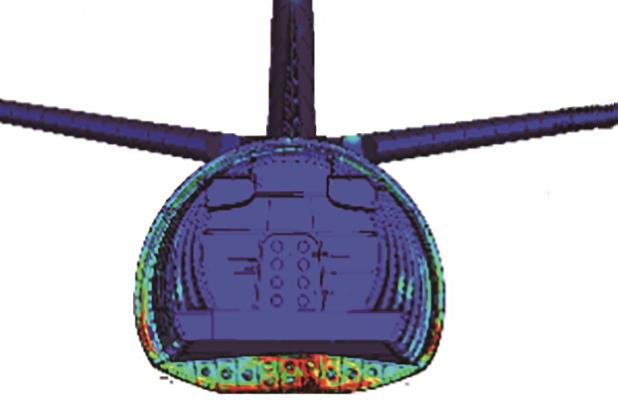 | 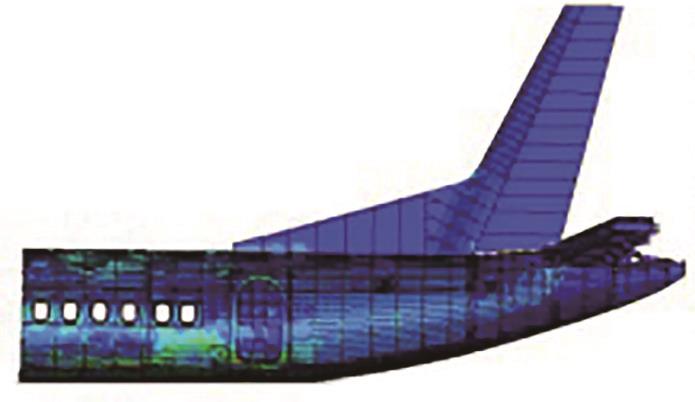 |
| 0.40 | 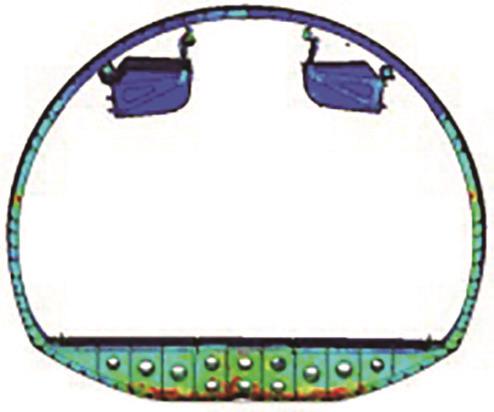 | 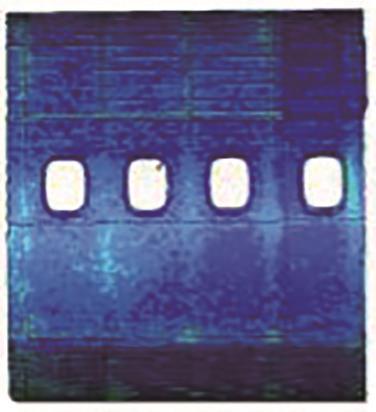 | 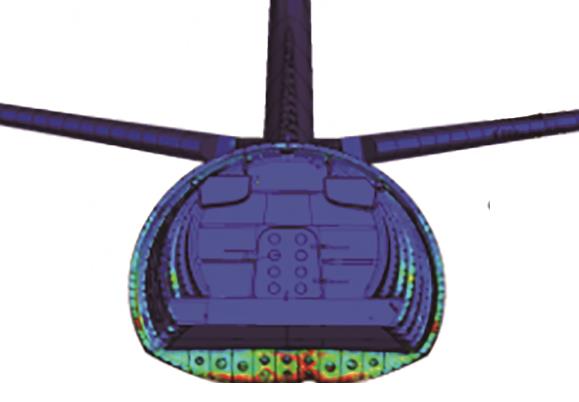 | 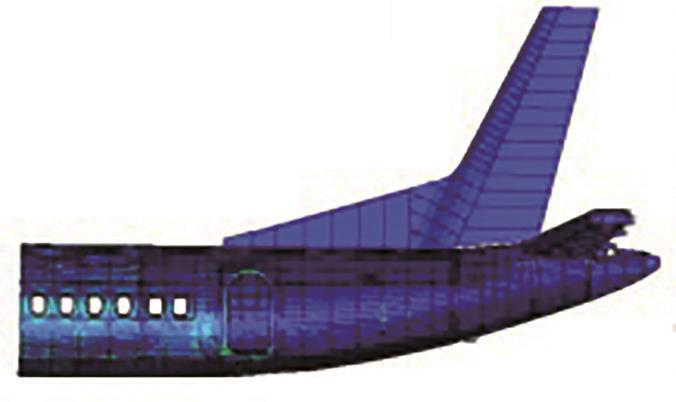 |
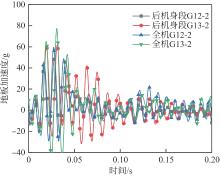
Fig.30
Comparison of floor acceleration between backward fuselage straight section and full-scale aircraft
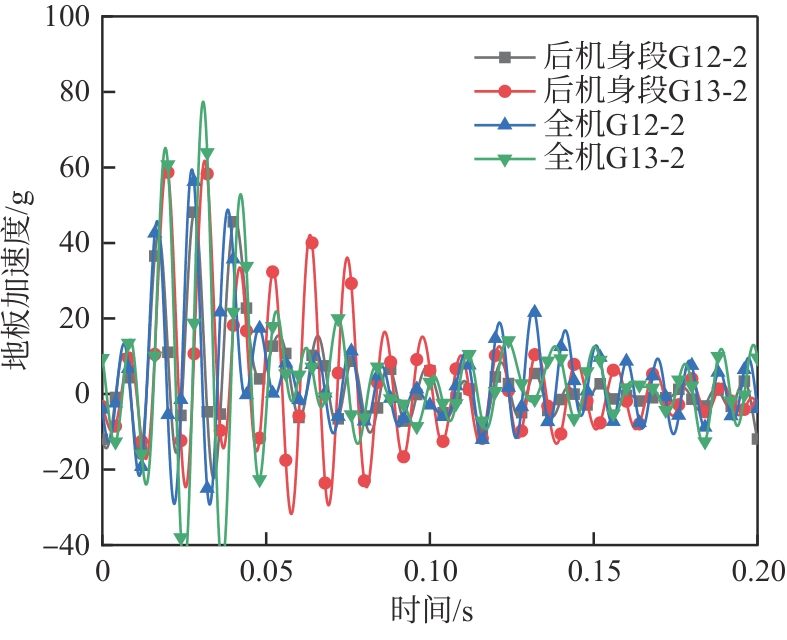
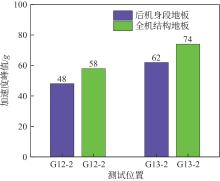
Fig.31
Comparison of acceleration peaks between full-scale aircraft and straight section of the backward fuselage
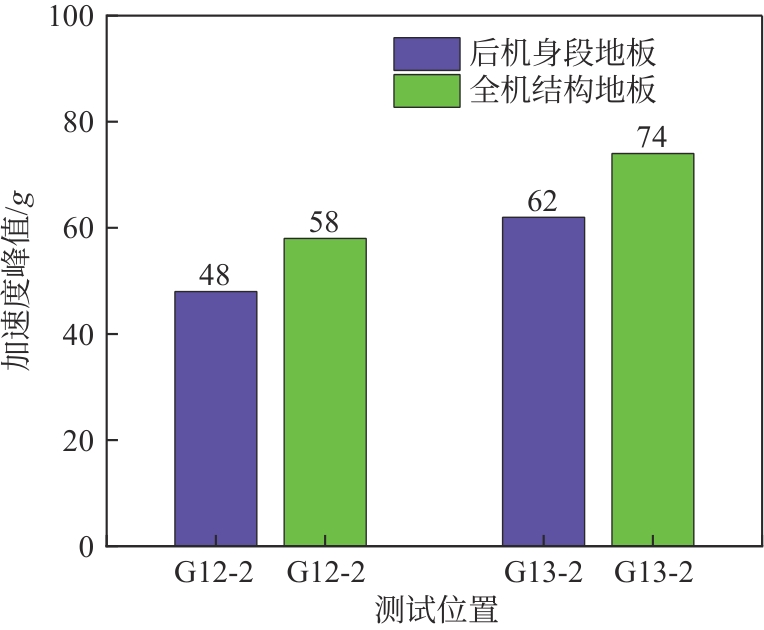
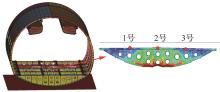
Fig.32
Vertical displacement test point of backward fuselage section floor
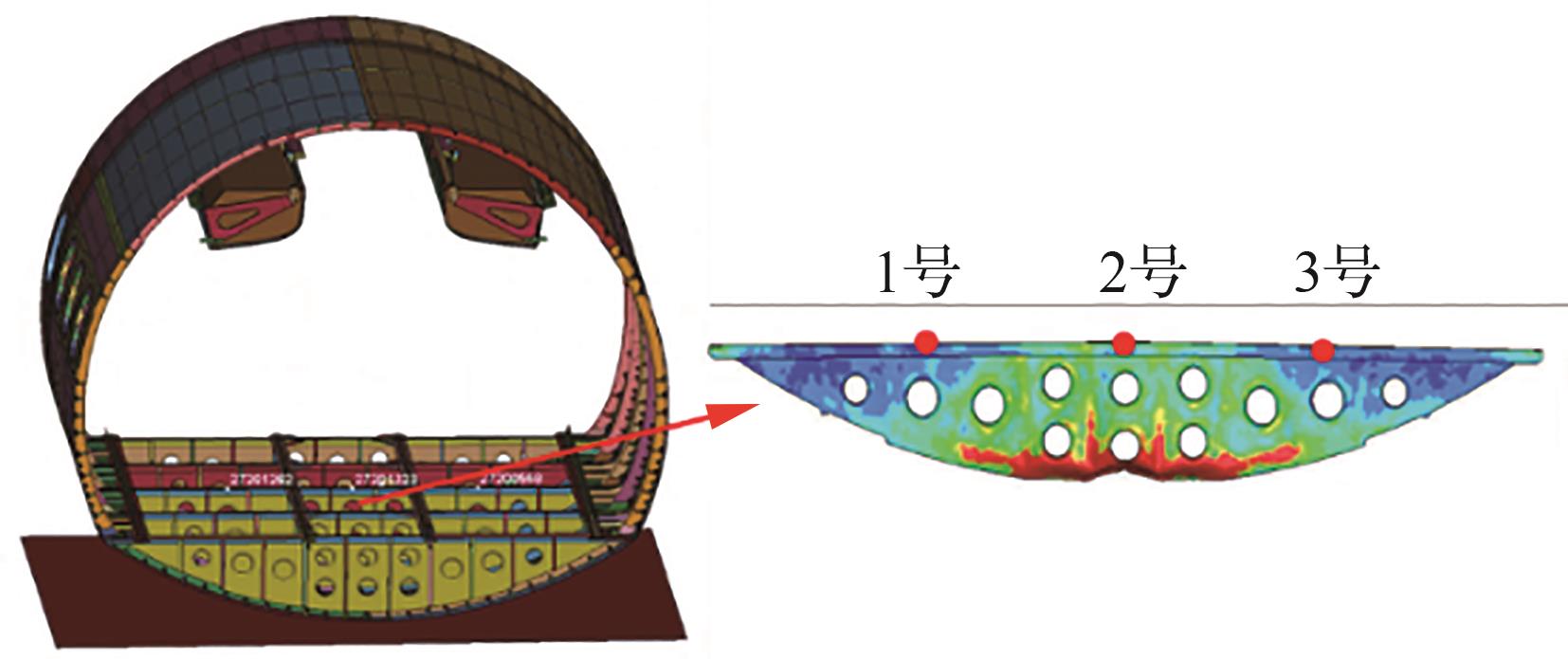
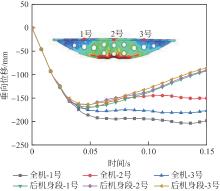
Fig.33
Comparison of vertical displacement between full-scale aircraft and straight section of the backward fuselage
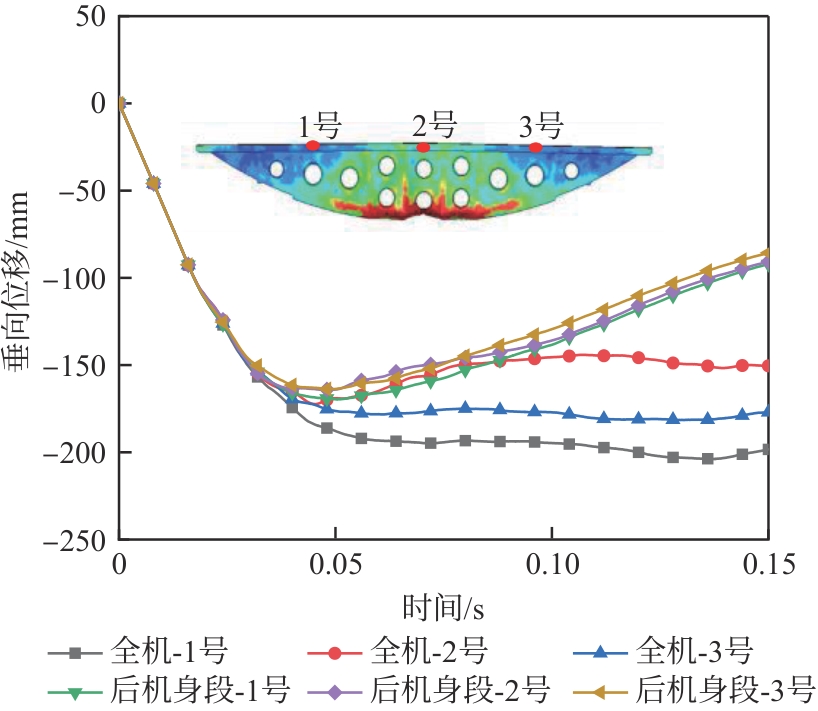
Table 13
Proposal of crash models for fuselage section and full-scale aircraft
| 建模方法 | 具体建议 |
|---|---|
| 模型简化 | 机体结构采用精细模型,座椅和假人可用集中质量模拟,发动机和起落架可采用集中质量模拟,需确保简化后有限元模型与实验件质量和惯量的一致。对于带有行李箱、辅助油箱、应急舱门等特殊机身段,需进行等效建模,确保其与机身连接刚度一致,附加质量相同。 |
| 边界条件 | 对机身段端框进行刚度等效模拟,通过机身段和全机仿真分析进行对比验证,确保端框处的变形模式一致。 |
| 数据处理 | 仿真分析模型的数据采样设置与坠撞实验的采样率保持一致,对加速度、坠撞载荷等动响应的滤波方法也保持一致。 |
| 模型验证 | 通过机身段坠撞实验数据对有限元模型进行验证,对比的动响应至少包括实验件运动过程、坠撞载荷、地板加速度、地板下部结构变形、局部结构的损伤破坏等。 |
| [1] | 刘小川, 白春玉, 惠旭龙, 等. 民机机身结构耐撞性研究的进展与挑战[J]. 固体力学学报, 2020, 41(4): 293-323. |
| LIU X C, BAI C Y, XI X L, et al. Progress and challenge of research on crashworthiness of civil airplane fuselage structures[J]. Chinese Journal of Solid Mechanics, 2020, 41(4): 293-323 (in Chinese). | |
| [2] | LOGUE T V, MCGUIRE R J, REINHARDT J W, et al.Vertical drop test of a narrow-body fuselage section with overhead stowage bins and auxiliary fuel tank system on board:DOT/FAA/CT-94/116[R].Washington,D.C.:FAA, 1995. |
| [3] | ABRAMOWITZ A, SMITH T G, VU T. Vertical drop test of a narrow-body transport fuselage section with a conformable auxiliary fuel tank onboard : DOT/FAA/AR-00/56[R]. Washington, D.C.: FAA, 2000. |
| [4] | 刘小川, 郭军, 孙侠生, 等. 民机机身段和舱内设施坠撞试验及结构适坠性评估[J]. 航空学报, 2013, 34(9): 2130-2140. |
| LIU X C, GUO J, SUN X S, et al. Drop test and structure crashworthiness evaluation of civil airplane fuselage section with cabin interiors[J]. Acta Aeronautica et Astronautica Sinica, 2013, 34(9): 2130-2140 (in Chinese). | |
| [5] | 张欣玥, 惠旭龙, 刘小川, 等. 典型金属民机机身结构坠撞特性试验[J]. 航空学报, 2022, 43(6): 526234. |
| ZHANG X Y, XI X L, LIU X C, et al. Experimental study on crash characteristics of typical metal civil aircraft fuselage structure[J]. Acta Aeronautica et Astronautica Sinica, 2022, 43(6): 526234 (in Chinese). | |
| [6] | 牟浩蕾, 解江, 冯振宇. 民机机身结构适坠性研究[J]. 交通运输工程学报, 2020, 20(3): 17-39. |
| MOU H L, XIE J, FENG Z Y. Research on crashworthiness of civil aircraft fuselage structures[J]. Journal of Traffic and Transportation Engineering, 2020, 20(3): 17-39 (in Chinese). | |
| [7] | KUMAKURA I, MINEGISHI M, IWASAKI K, et al. Summary of vertical drop tests of YS-11 transport fuselage sections[C]∥2003 SAE World Aviation Congress. 2003. |
| [8] | LIU X C, BAI C Y, XI X L, et al. Impact response and crashworthy design of composite fuselage structures: An overview[J]. Progress in Aerospace Sciences, 2024, 148: 101002. |
| [9] | MOU H L, XIE J, FENG Z Y. Research status and future development of crashworthiness of civil aircraft fuselage structures: An overview[J]. Progress in Aerospace Sciences, 2020, 119: 100644. |
| [10] | 刘小川, 张欣玥, 惠旭龙, 等. 结构修理对民机机身耐撞性的影响[J]. 航空学报, 2023, 44(10): 227517. |
| LIU X C, ZHANG X Y, XI X L, et al. Influence of structural repairs on crashworthiness of civil aircraft fuselage[J]. Acta Aeronautica et Astronautica Sinica, 2023, 44(10): 227517 (in Chinese). | |
| [11] | TANG H, ZHU S H, LIU X C, et al. Impact of crash environments on crashworthiness of fuselage section[J]. Transactions of Nanjing University of Aeronautics and Astronautics, 2022, 39(S01): 1-8. |
| [12] | 邹田春, 牟浩蕾, 任健, 等. 滚转角度对民机机身结构耐撞性能的影响[J]. 机械强度, 2014, 36(1): 139-143. |
| ZOU T C, MOU H L, REN J, et al. Effects of roll angles on civil aircraft fuselage crashworthiness[J]. Journal of Mechanical Strength, 2014, 36(1): 139-143 (in Chinese). | |
| [13] | 牟浩蕾, 谢威威, 解江, 等. 坠撞环境下乘员伤害分析及飞机适坠性评估[J]. 航空学报, 2024, 45(3): 228786. |
| MOU H L, XIE W W, XIE J, et al. Occupant injury analysis and aircraft crashworthiness evaluation under crash scenarios[J]. Acta Aeronautica et Astronautica Sinica, 2024, 45(3): 228786 (in Chinese). | |
| [14] | 石霄鹏, 钟欣言, 牟浩蕾, 等. 垂向冲击下的民机乘员腰椎载荷研究[J]. 航空学报, 2024, 45(8): 229108. |
| SHI X P, ZHONG X Y, MOU H L, et al. Lumbar load of seated occupant under vertical impact[J]. Acta Aeronautica et Astronautica Sinica, 2024, 45(8): 229108 (in Chinese). | |
| [15] | 施萌, 汪洋, 吴志斌, 等. 民机货舱下部复合材料结构抗坠撞吸能特性试验研究[J]. 复合材料科学与工程, 2021(9): 83-88. |
| SHI M, WANG Y, WU Z B, et al. Study on the anti-crash energy absorption characteristic of composite structure in the sub-cargo structure[J]. Composites Science and Engineering, 2021(9): 83-88 (in Chinese). | |
| [16] | XI X L, XUE P, LIU X C, et al. Energy absorption and failure modes of different composite open-section crush elements under axial crushing loading[J]. Materials, 2024, 17(13): 3197. |
| [17] | YU Z F, ZHOU X, ZHOU X, et al. Crashworthy subfloor structure of civil aircraft inclined inward-folding composite tubes[J]. Composites Part B: Engineering, 2020, 189: 107887. |
| [18] | 朱鲜飞, 冯蕴雯, 薛小锋, 等. 基于乘员响应的民机典型机身段结构适坠性分析与评估[J]. 机械强度, 2020, 42(3): 617-630. |
| ZHU X F, FENG Y W, XUE X F, et al. Analysis and evaluation fuselage section’s crashworthiness of typical civil airplane based on passenger response[J]. Journal of Mechanical Strength, 2020, 42(3): 617-630 (in Chinese). | |
| [19] | JACKSON K E, LITTELL J D, ANNETT M S, et al. Finite element simulations of two vertical drop tests of F-28 fuselage sections: NASA/TM-2018-219807[R].Washington, D.C.: NASA, 2018. |
| [20] | LITTELL J D. A summary of results from two full-scale F28 fuselage section drop tests: NASA/TM-2018-219829 [R]. Washington, D.C.: NASA, 2018. |
| [21] | KAREN E J, JACOB B P. Development of a full-scale finite element model of the fokker F28 fellowship aircraft and crash simulation predictions[C]∥Earth & Space Conference. 2018. |
| [22] | KAREN E J, JACOB B P.Simulation of a full-scale crash test of a fokker F28 fellowship aircraft: NASA/TM-2020-220435 [R]. Washington, D.C.: NASA, 2020. |
| [23] | ABRAMOWITZ A, SMITH T G, VU T, et al. Vertical drop test of an ATR42-300 airplane: DOT/FAA/AR-05/56 [R]. Washington, D.C.: FAA, 2006. |
| [24] | JACKSON K E, FASANELLA E L. Crash simulation of a vertical drop test of a commuter-class aircraft[J]. International Journal of Crashworthiness, 2005, 10(2): 173-182. |
| [25] | KAREN E J, EDWIN L F. Development of an LS-DYNA model of an ATR42-300 aircraft for crash simulation[C]∥ Proceedings of the Eighth International LS-DYNA Users Conference, 2004. |
| [26] | 刘小川, 惠旭龙, 张欣玥, 等. 典型民用飞机全机坠撞实验研究[J]. 航空学报, 2024, 45(5): 529664. |
| LIU X C, XI X L, ZHANG X Y, et al. Full-scale crash experimental study of typical civil aircraft[J]. Acta Aeronautica et Astronautica Sinica, 2024, 45(5): 529664 (in Chinese). |
| [1] | Junfu LI, Qing CHEN, Wei WANG, Zhonghua HAN, Yuting TAN, Yulin DING, Lu XIE, Jianling QIAO, Ke SONG, Junqiang AI. Design of low sonic boom high efficiency layout for advanced supersonic civil aircraft [J]. Acta Aeronautica et Astronautica Sinica, 2024, 45(6): 629613-629613. |
| [2] | Xiaochuan LIU, Xulong XI, Xinyue ZHANG, Chunyu BAI, Yabin YAN, Xiaocheng LI, Rangke MU. Full⁃scale crash experimental study of typical civil aircraft [J]. Acta Aeronautica et Astronautica Sinica, 2024, 45(5): 529664-529664. |
| [3] | Rui SI, Yong CHEN. Application trends of additive manufacturing technology for civil aircraft [J]. Acta Aeronautica et Astronautica Sinica, 2024, 45(5): 529677-529677. |
| [4] | Haolei MOU, Weiwei XIE, Jiang XIE, Zhenyu FENG, Lanhui LIN. Occupant injury analysis and aircraft crashworthiness evaluation under crash scenarios [J]. Acta Aeronautica et Astronautica Sinica, 2024, 45(3): 228786-228786. |
| [5] | Chengjun SHAN, Tianyu GONG, Lizhe YI, Haohui YANG, Yaosong LONG. High-efficiency and high-reliability sonic boom/aerodynamic multidisciplinary optimization method for supersonic civil aircraft [J]. Acta Aeronautica et Astronautica Sinica, 2024, 45(24): 630573-630573. |
| [6] | Meng LI, Xingyi CHEN, Jichang CHEN, Bin WU, Mingbo TONG. Numerical analysis of civil aircraft ditching performance in wave condition [J]. Acta Aeronautica et Astronautica Sinica, 2024, 45(2): 28-43. |
| [7] | Yongjie ZHANG, Jingpiao ZHOU, Lei SHI, Dong LI, Binqian ZHANG. Optimization design method of central fuselage spherical deficient surface frames in blended⁃wing⁃body civil aircraft based on PRSEUS structure [J]. Acta Aeronautica et Astronautica Sinica, 2024, 45(12): 229331-229331. |
| [8] | Chunpeng LI, Zhansen QIAN, Xiasheng SUN. Trailing edge deformation matrix aerodynamic design for long-range civil aircraft variable camber wing [J]. ACTA AERONAUTICAET ASTRONAUTICA SINICA, 2023, 44(7): 127335-127335. |
| [9] | Xuhan ZHANG, Yi CAO, Jingnan SUN, Shunzhi PAN. Comparative study on weight analysis methods of cabin air parameters in civil aircraft [J]. Acta Aeronautica et Astronautica Sinica, 2023, 44(20): 228480-228480. |
| [10] | Di WANG, Yan LENG, Long YANG, Zhonghua HAN, Zhansen QIAN. Atmospheric turbulence effects on sonic boom propagation based on augmented Burgers equation [J]. ACTA AERONAUTICAET ASTRONAUTICA SINICA, 2023, 44(2): 626318-626318. |
| [11] | Yunwen FENG, Xinyi LIN, Xiaofeng XUE, Xiang YANG, Jiaqi LIU. Design of civil aircraft explosion-proof structure for high reliable one-way blasting [J]. Acta Aeronautica et Astronautica Sinica, 2023, 44(18): 228297-228297. |
| [12] | Qing GUO, Deming GUAN. Human factor reliability prediction model for civil aircraft maintenance task analysis [J]. Acta Aeronautica et Astronautica Sinica, 2023, 44(16): 228051-228051. |
| [13] | Xiaochuan LIU, Xinyue ZHANG, Xulong XI, Yabin YAN, Juntai MA. Influence of structural repairs on crashworthiness of civil aircraft fuselage [J]. ACTA AERONAUTICAET ASTRONAUTICA SINICA, 2023, 44(10): 227517-227517. |
| [14] | Wenhao BI, Qiucen FAN, Delin LI, An ZHANG. Modeling approach for forward design of civil aircraft based on multiple perspectives [J]. ACTA AERONAUTICAET ASTRONAUTICA SINICA, 2023, 44(10): 227536-227536. |
| [15] | Xiong HUANG, Shiru QU, Heng ZHANG, Xiantiao CHEN. Stall performance of high-lift configuration of large civil aircraft with slat de-icing [J]. ACTA AERONAUTICAET ASTRONAUTICA SINICA, 2023, 44(1): 627077-627077. |
| Viewed | ||||||
|
Full text |
|
|||||
|
Abstract |
|
|||||
Address: No.238, Baiyan Buiding, Beisihuan Zhonglu Road, Haidian District, Beijing, China
Postal code : 100083
E-mail:hkxb@buaa.edu.cn
Total visits: 6658907 Today visits: 1341All copyright © editorial office of Chinese Journal of Aeronautics
All copyright © editorial office of Chinese Journal of Aeronautics
Total visits: 6658907 Today visits: 1341

 CJA
CJA
