Acta Aeronautica et Astronautica Sinica ›› 2026, Vol. 47 ›› Issue (6): 132575.doi: 10.7527/S1000-6893.2025.32575
• Fluid Mechanics and Flight Mechanics • Previous Articles
Shijun SUN1( ), Xiao XIE1, Kaifu MA2, Lihui SHEN2
Received:2025-07-16
Revised:2025-08-21
Accepted:2025-09-18
Online:2025-10-10
Published:2025-10-09
Contact:
Shijun SUN
E-mail:sunshijun@bit.edu.cn
Supported by:CLC Number:
Shijun SUN, Xiao XIE, Kaifu MA, Lihui SHEN. Vortex generator control mechanism and design for enhancing downstream high‑speed inlet flow capture[J]. Acta Aeronautica et Astronautica Sinica, 2026, 47(6): 132575.
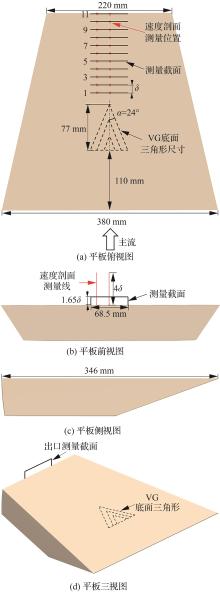
Fig.1
Three-view drawing of flat-plate model
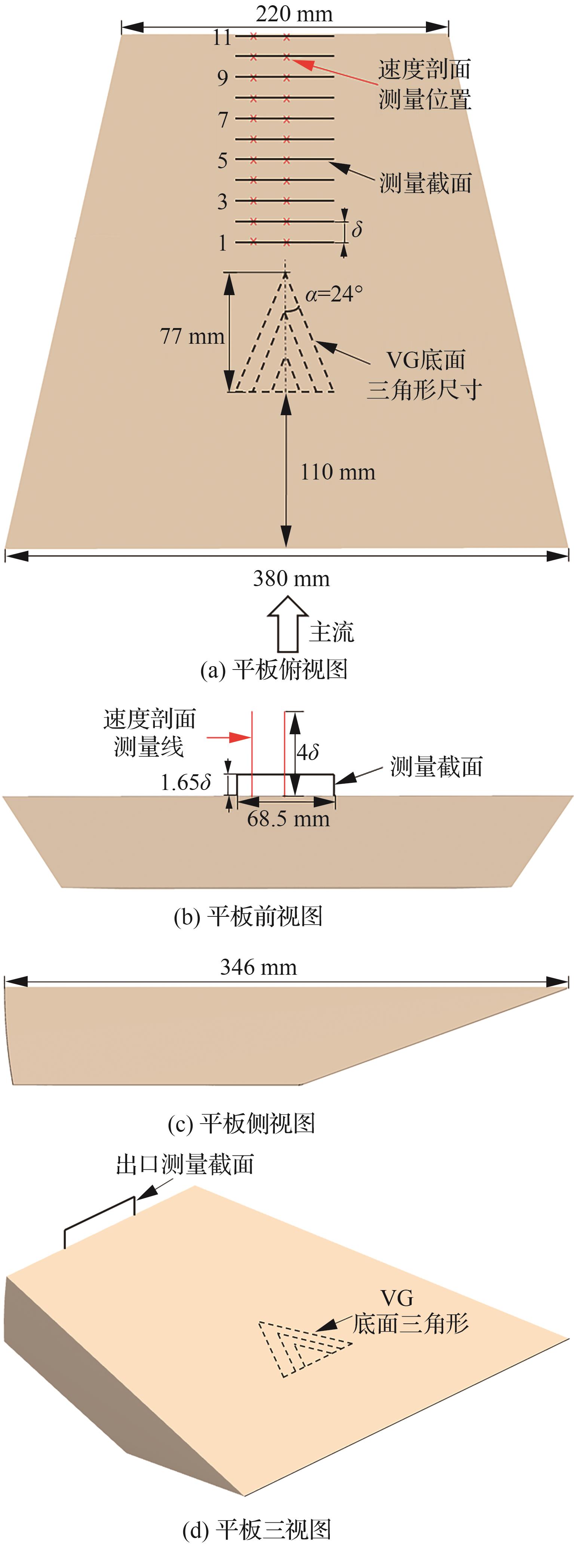
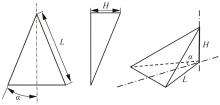
Fig.2
Schematic of ramp-type VG geometry
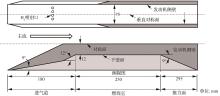
Fig.3
Schematic of the experimental Hyshot scramjet model
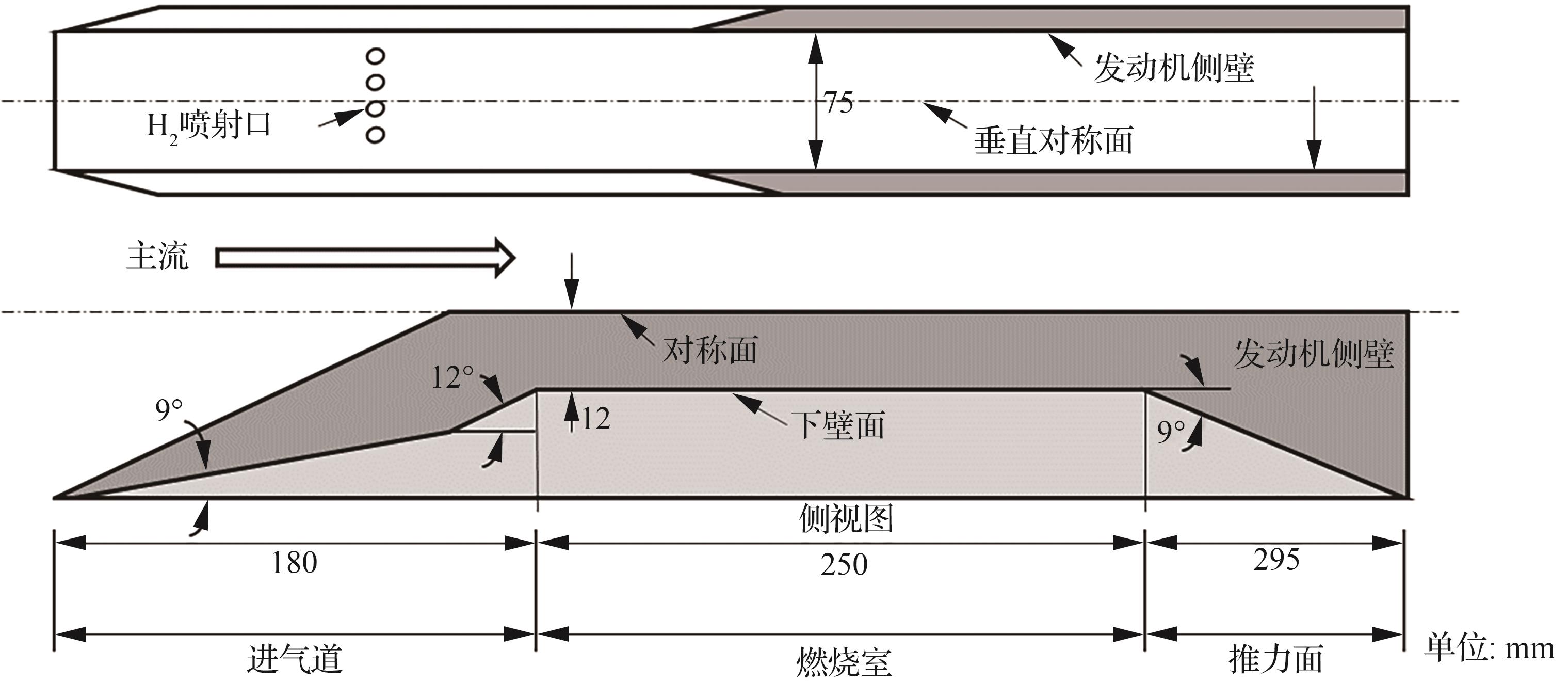

Table 1
Scramjet simulation conditions
| 来流参数 | 取值 |
|---|---|
| 马赫数Ma | 6.25 |
| 静压P/Pa | 10 230 |
| 静温T/K | 487 |
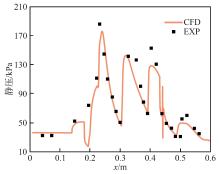
Fig.4
Comparison of static pressure distributions on wall surface of inlet
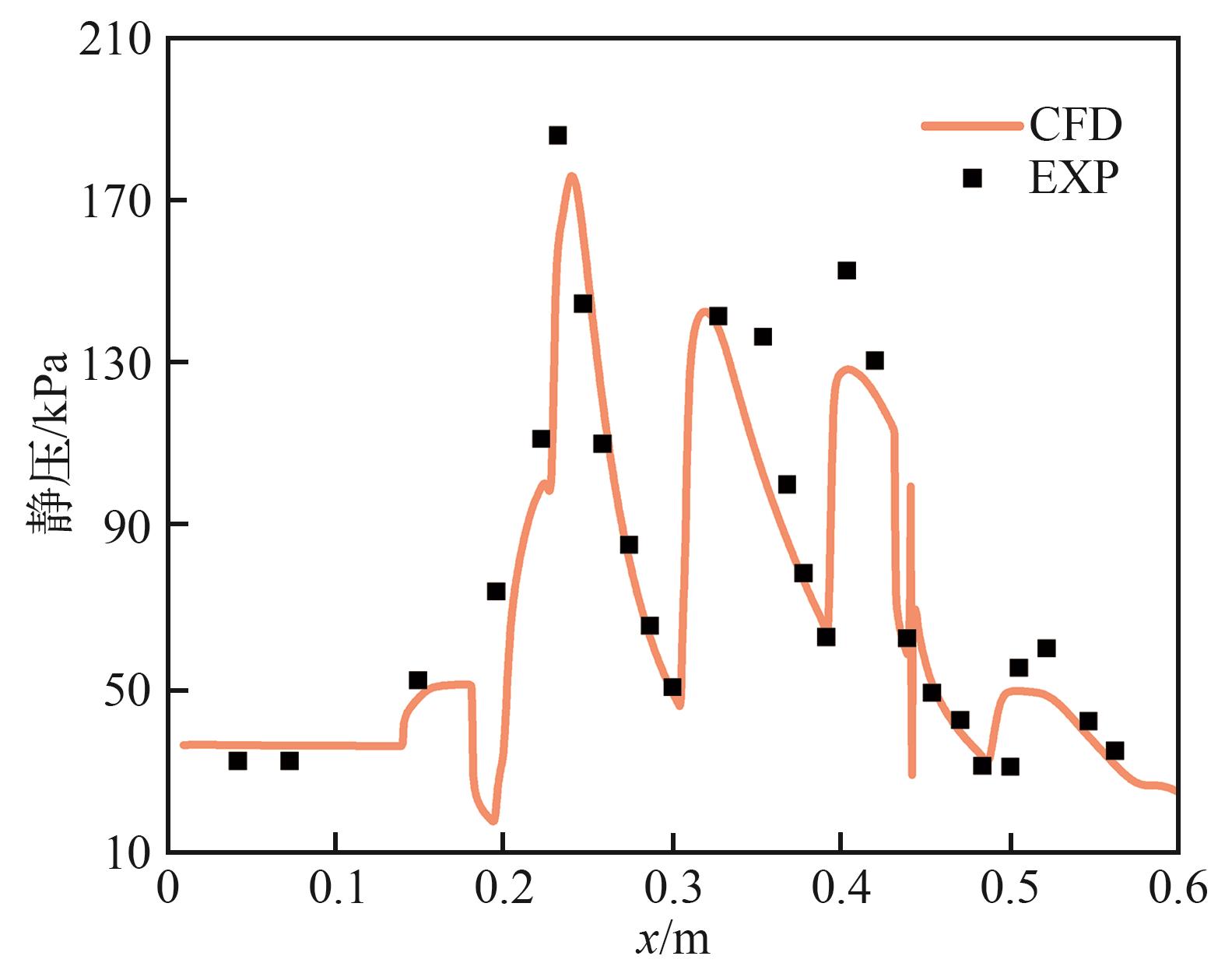
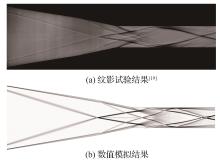
Fig.5
Comparison of measurement schlieren and numerical results in inlet
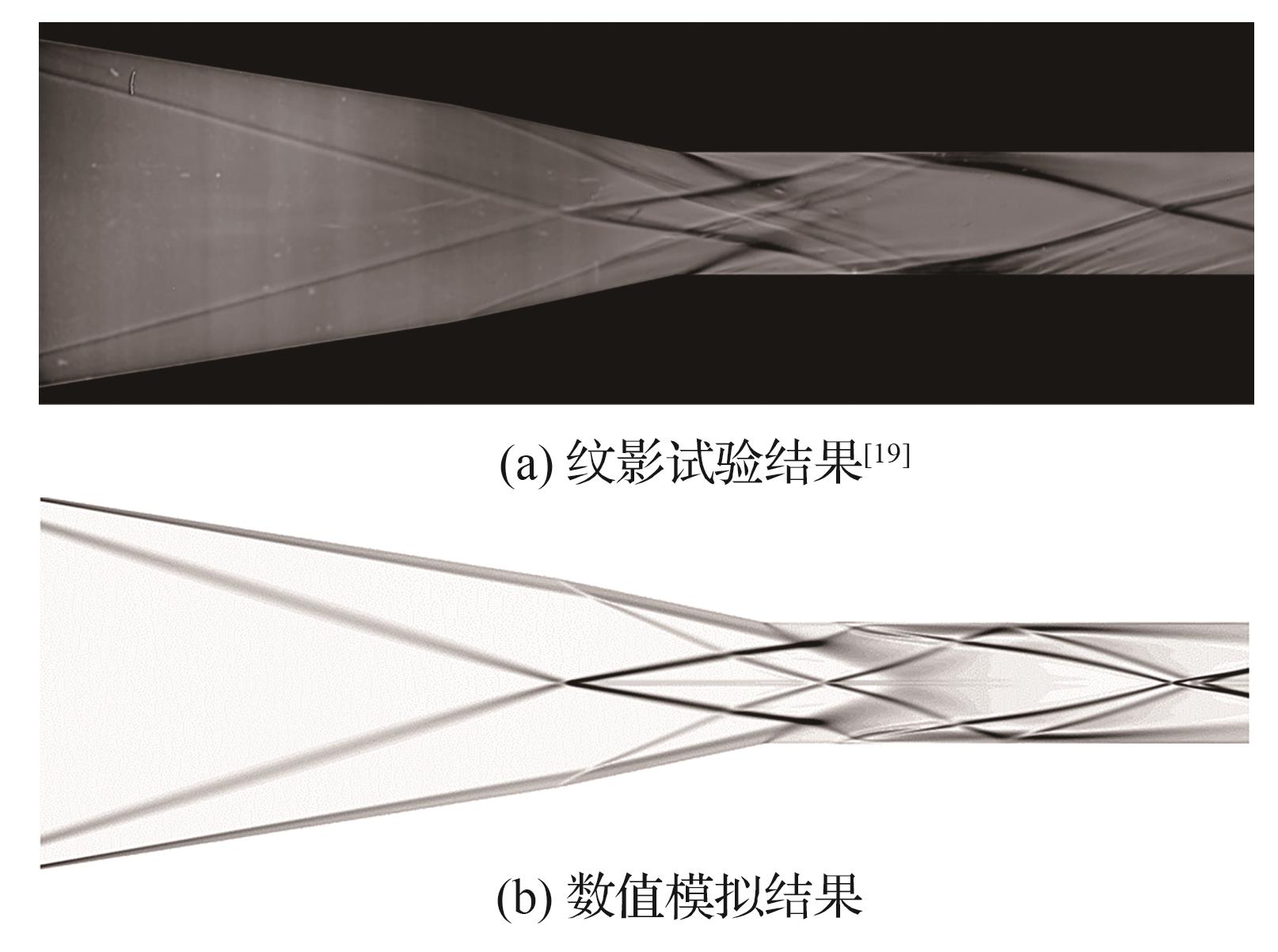
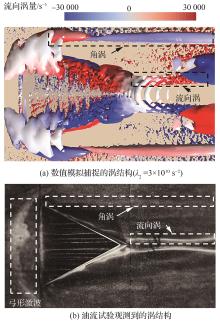
Fig.6
Vortex structures of VG in CFD and experiment
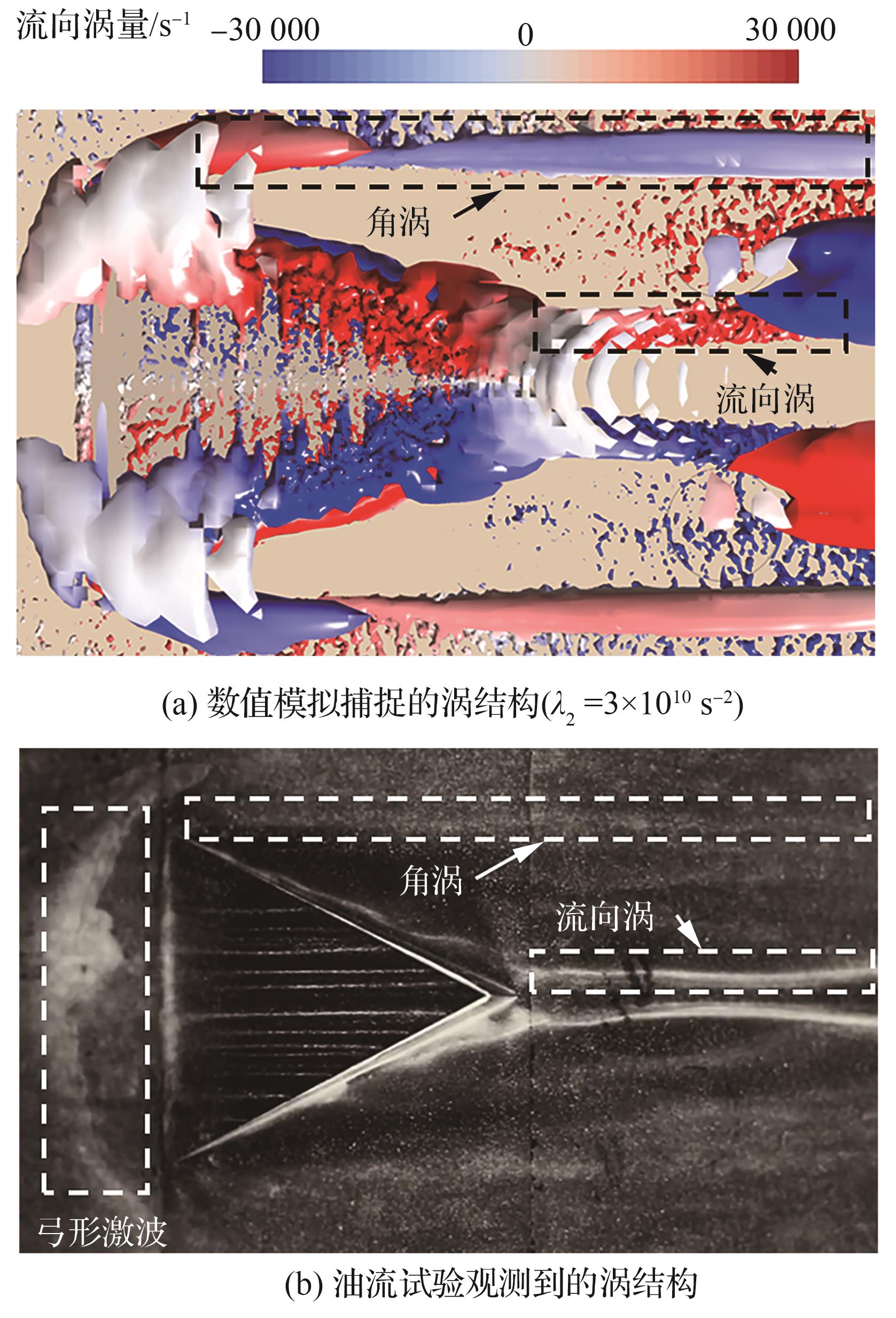
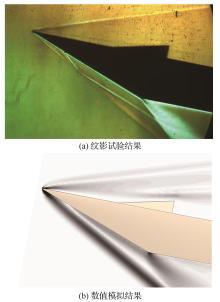
Fig.7
Comparison of measurement schlieren and numerical results over flat plate
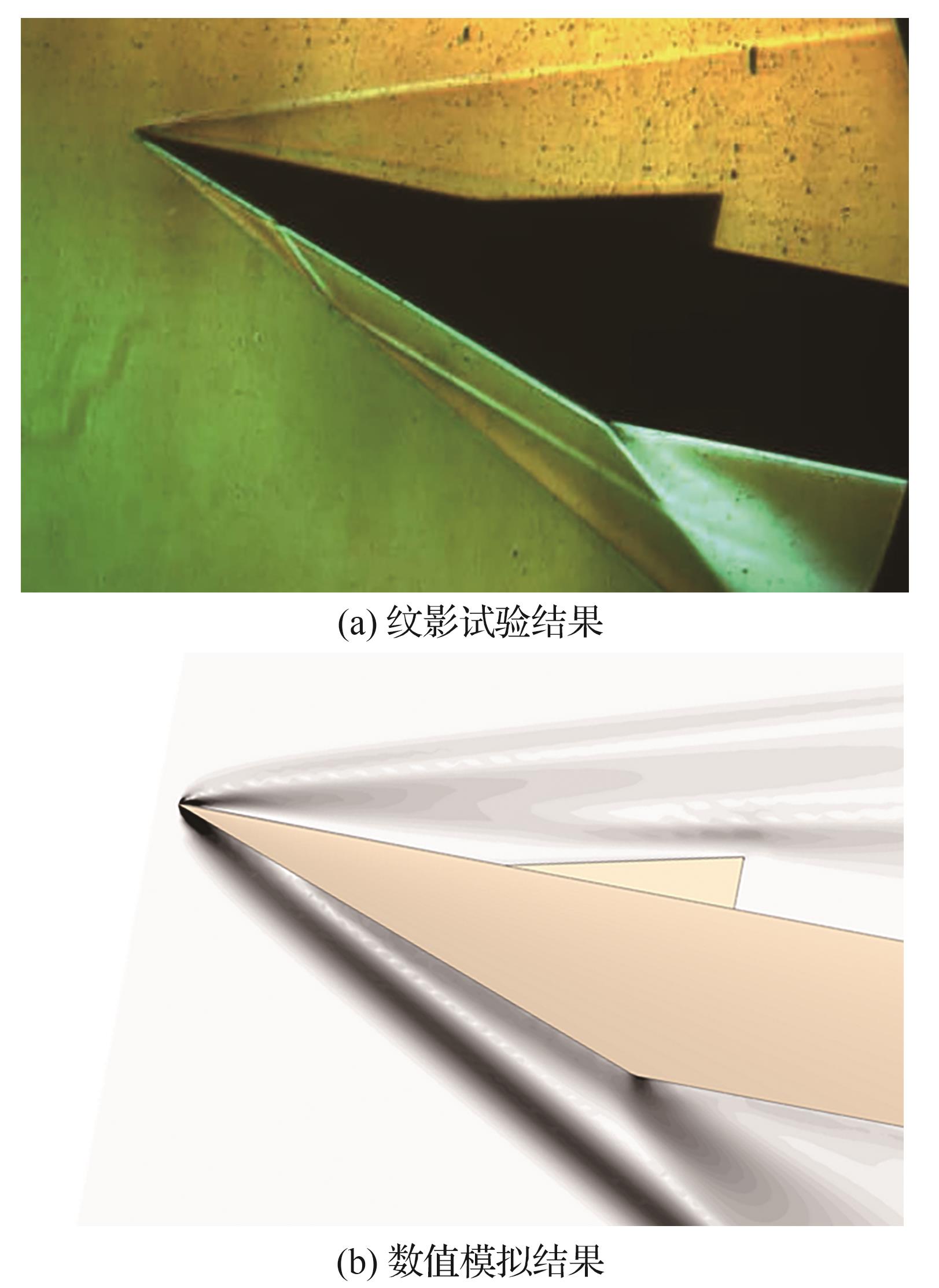
Table 2
Flat-plate model simulation conditions
| 来流参数 | 取值 |
|---|---|
| 马赫数Ma | 8 |
| 静压P/Pa | 10 230 |
| 静温T/K | 487 |
Table 3
Grid independence verification
| 网格数量 | 密流/(kg·m-2·s-1) |
|---|---|
| 580万 | 0.171 7 |
| 780万 | 0.163 9 |
| 1 010万 | 0.150 4 |
| 1 273万 | 0.152 8 |
| 1 511万 | 0.152 2 |
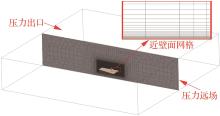
Fig.8
Boundary conditions and mesh topology
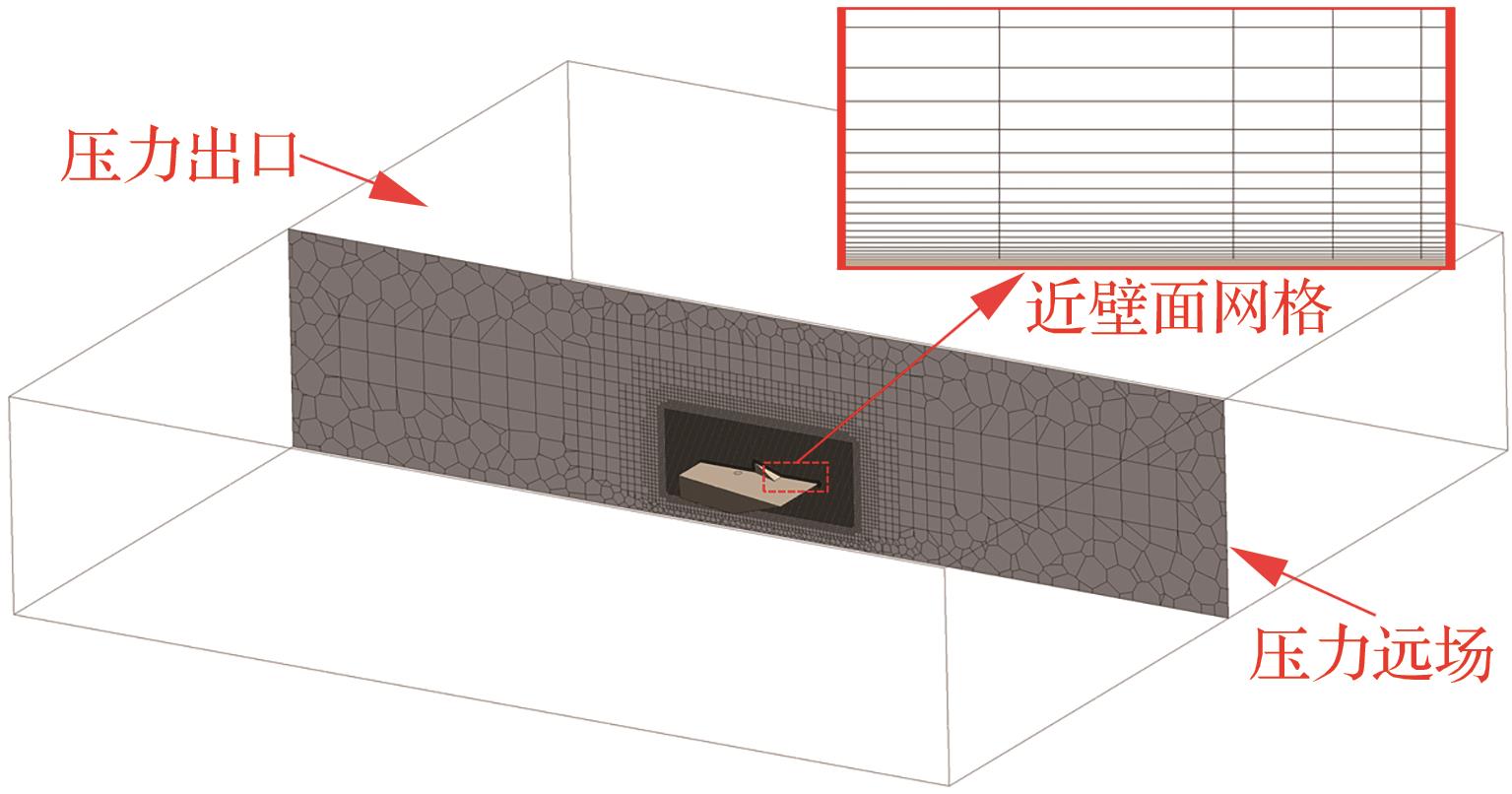
Table 4
Influence of base triangle area on velocity density
| 方案 | 底面三角形 斜边长L/mm | VG底面积/ mm2 | 密流/ (kg·m-2·s-1) |
|---|---|---|---|
| A | 28.02 | 289.6 | 9.260 |
| B | 56.04 | 1 158.3 | 9.268 |
| C | 84.28 | 2 639.5 | 9.278 |
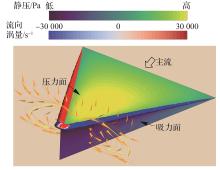
Fig.9
Static pressure distribution on VG surface and vortex structure(λ₂=-3×10¹⁰ s-2)
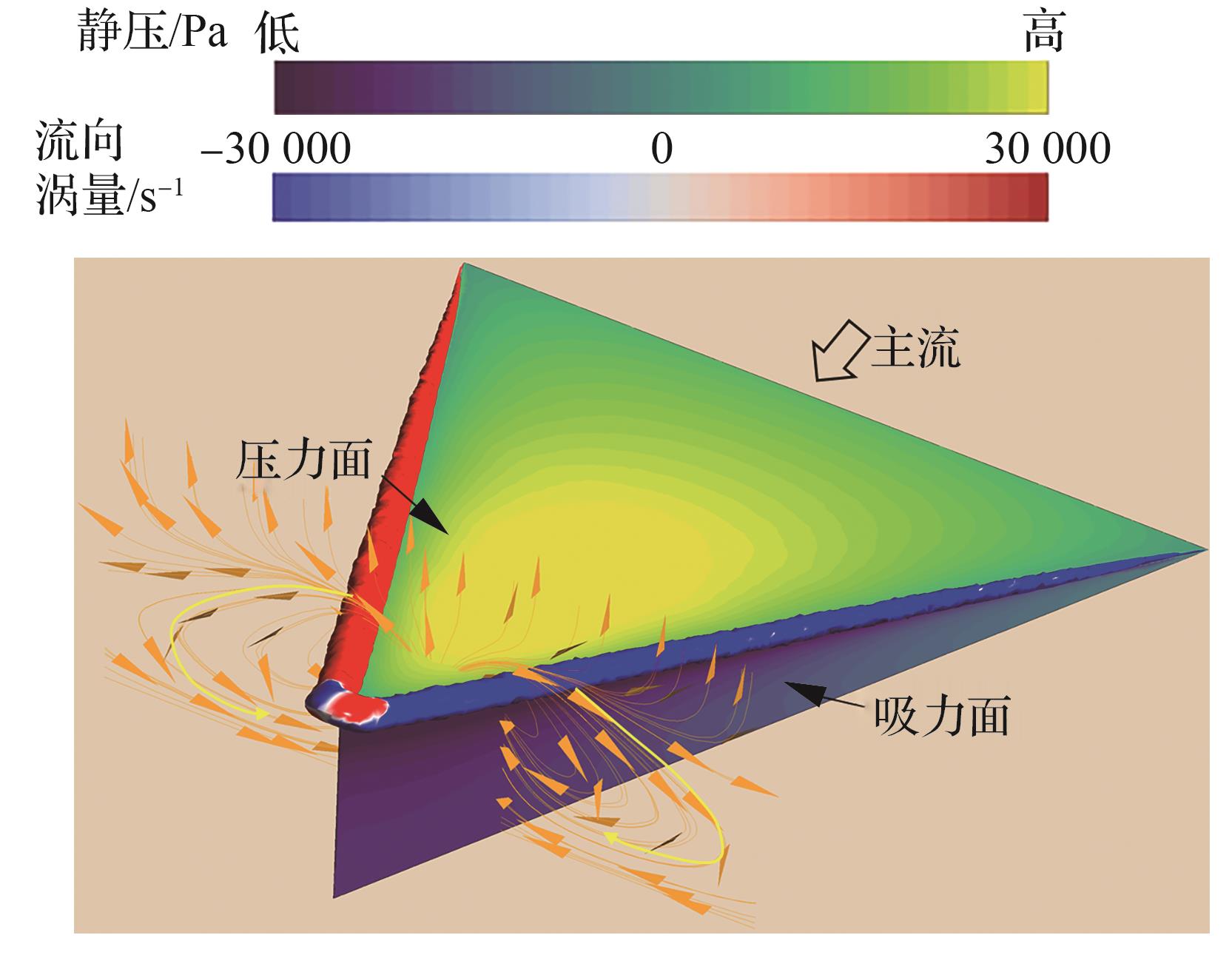
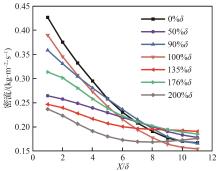
Fig.10
Streamwise distribution of velocity density at fixed geometric cross-section
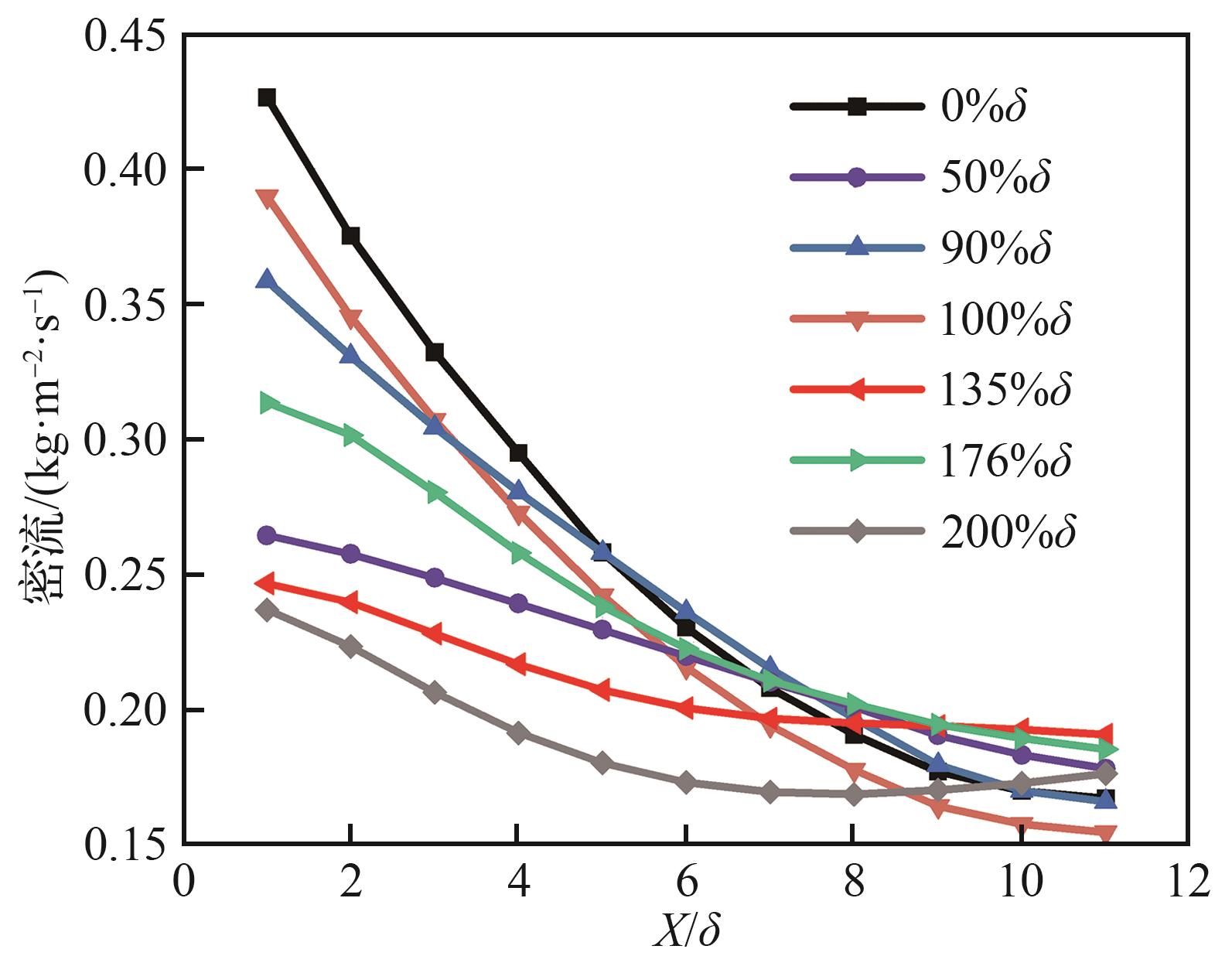
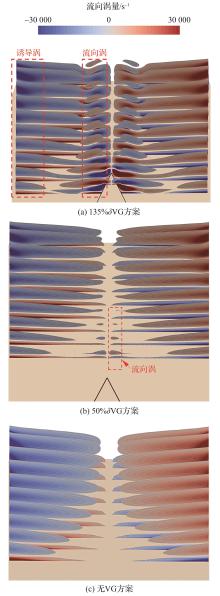
Fig.11
Streamwise vorticity distribution downstream of vortex generator
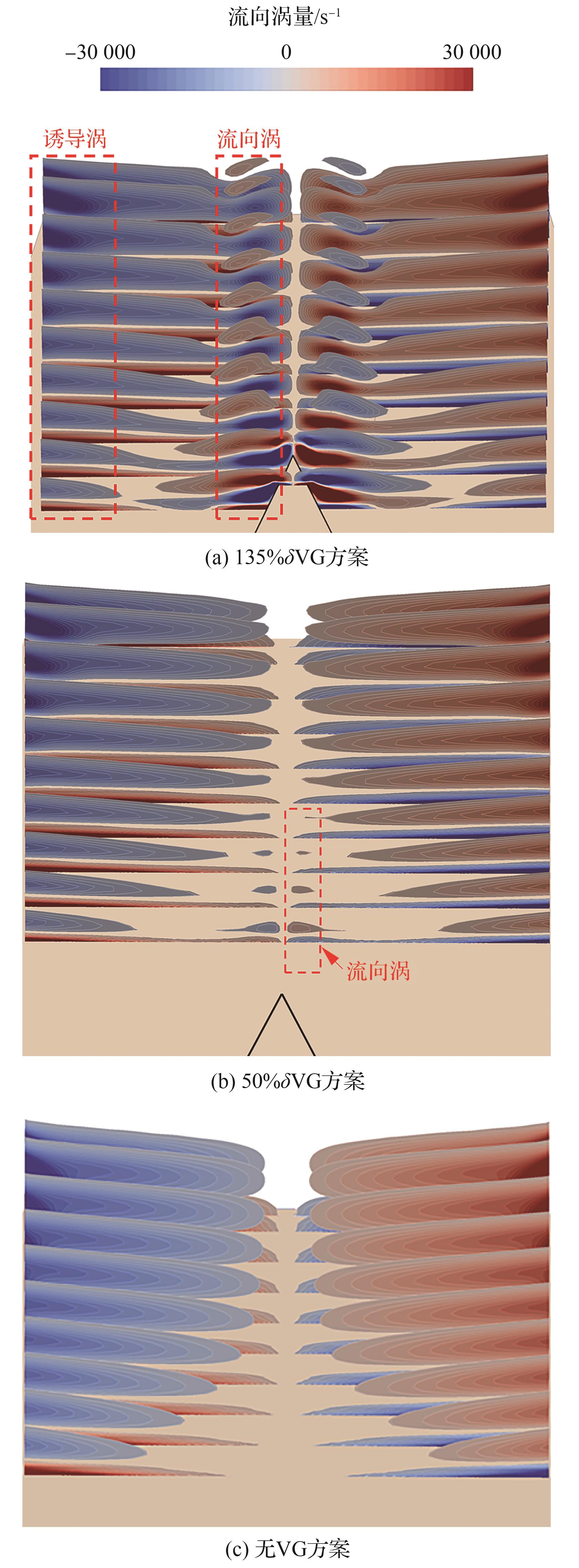
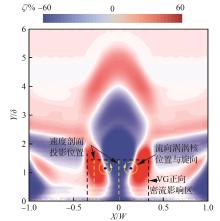
Fig.12
Percentage difference in outlet cross-sectional velocity density between VG of 135%δ height and no-VG
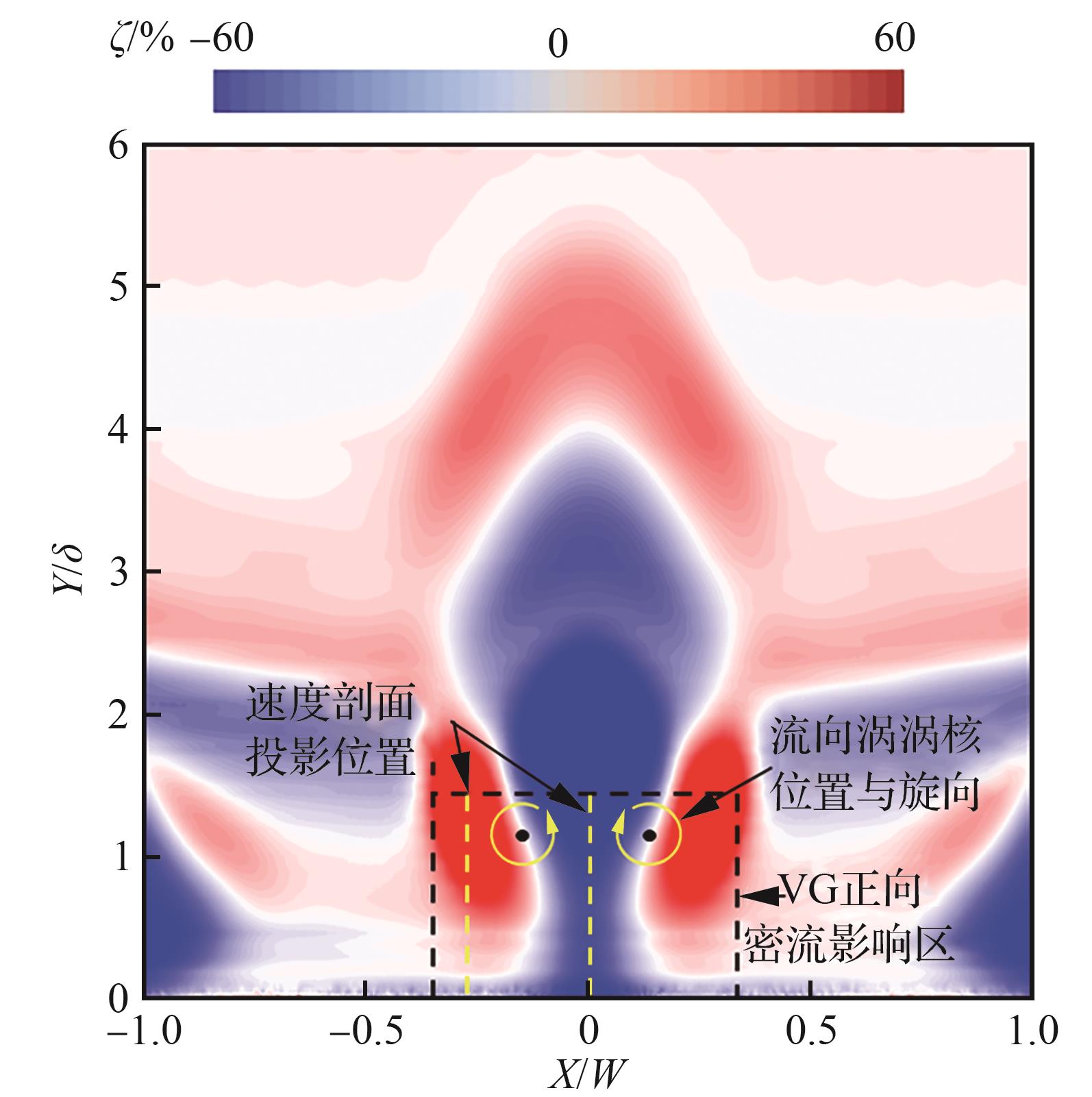
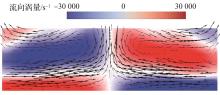
Fig.13
Velocity vectors and streamwise vorticity near outlet for ramp-type VG
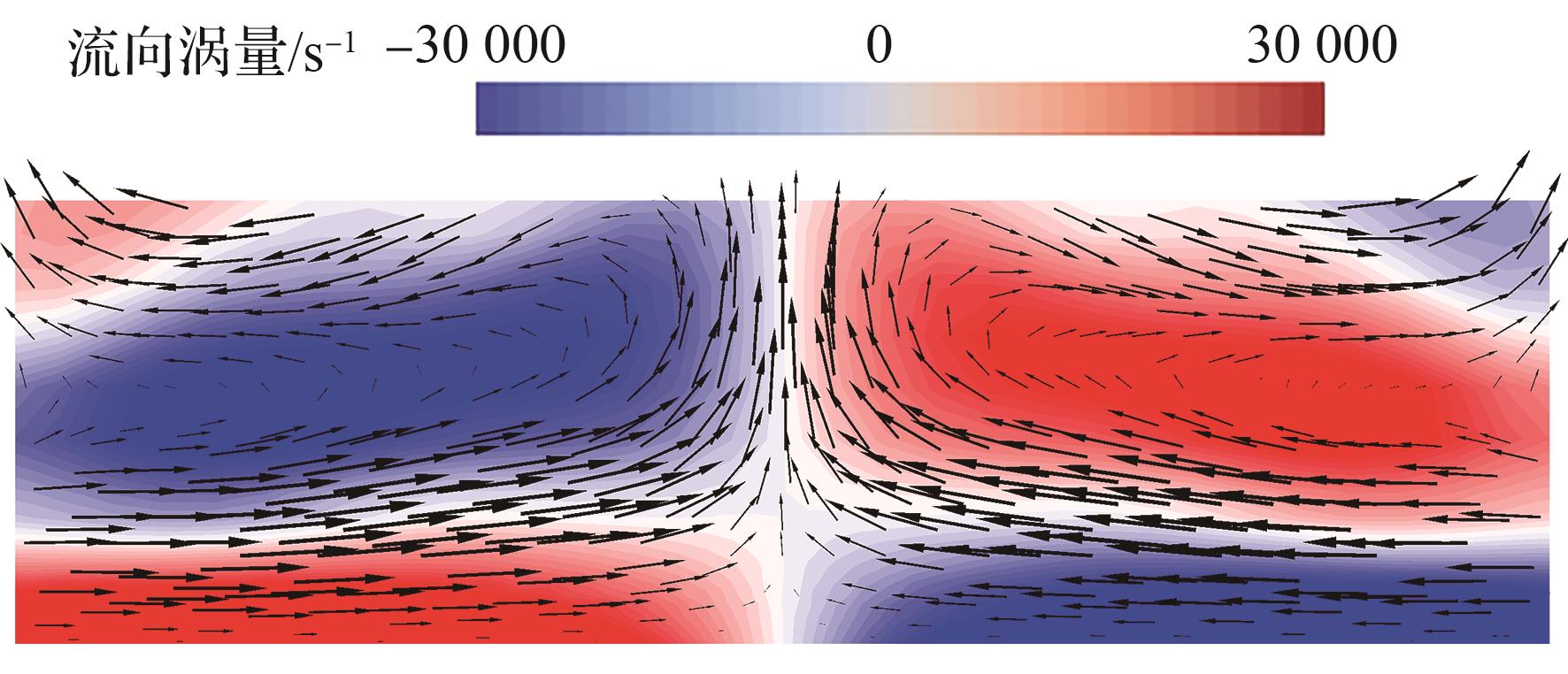
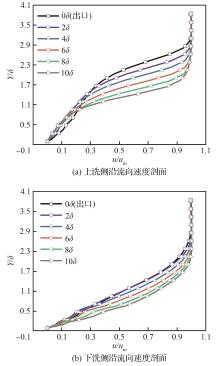
Fig.14
Velocity profile downstream of ramp-type VG
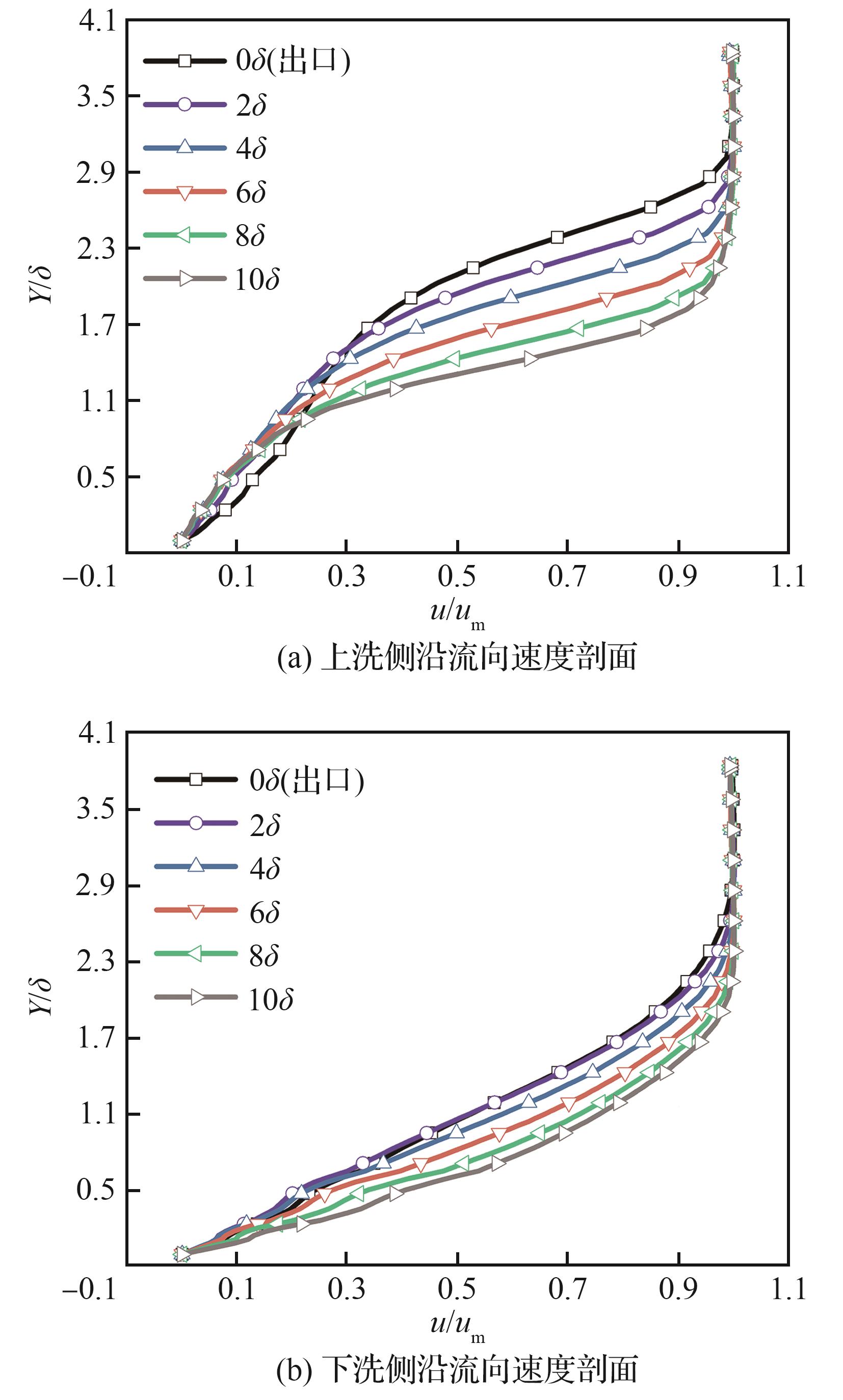
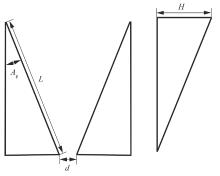
Fig.15
Schematic of opposed VG geometry
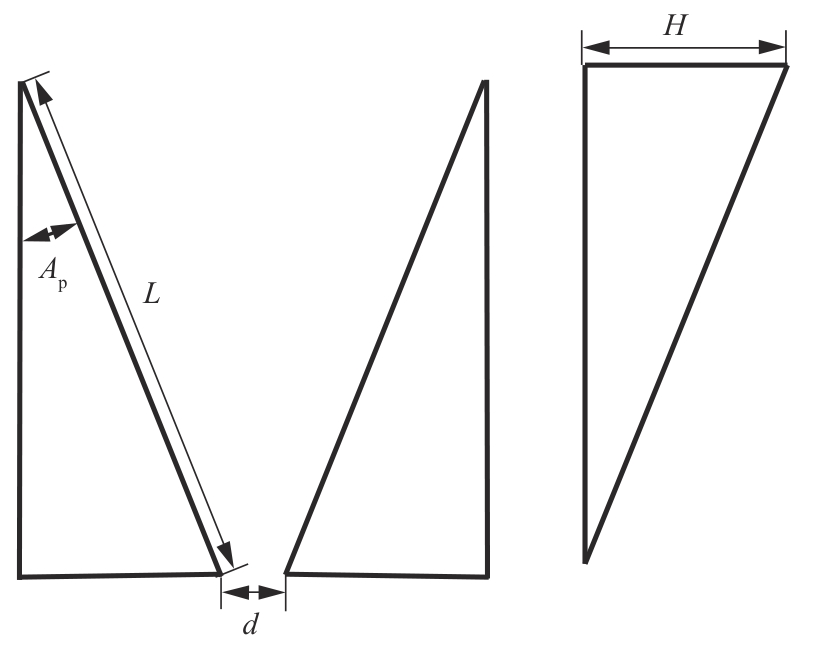
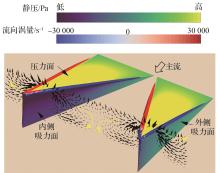
Fig.16
Static pressure distribution on opposed VG surface and vortex structure(λ₂=-3×1 010 s-2)
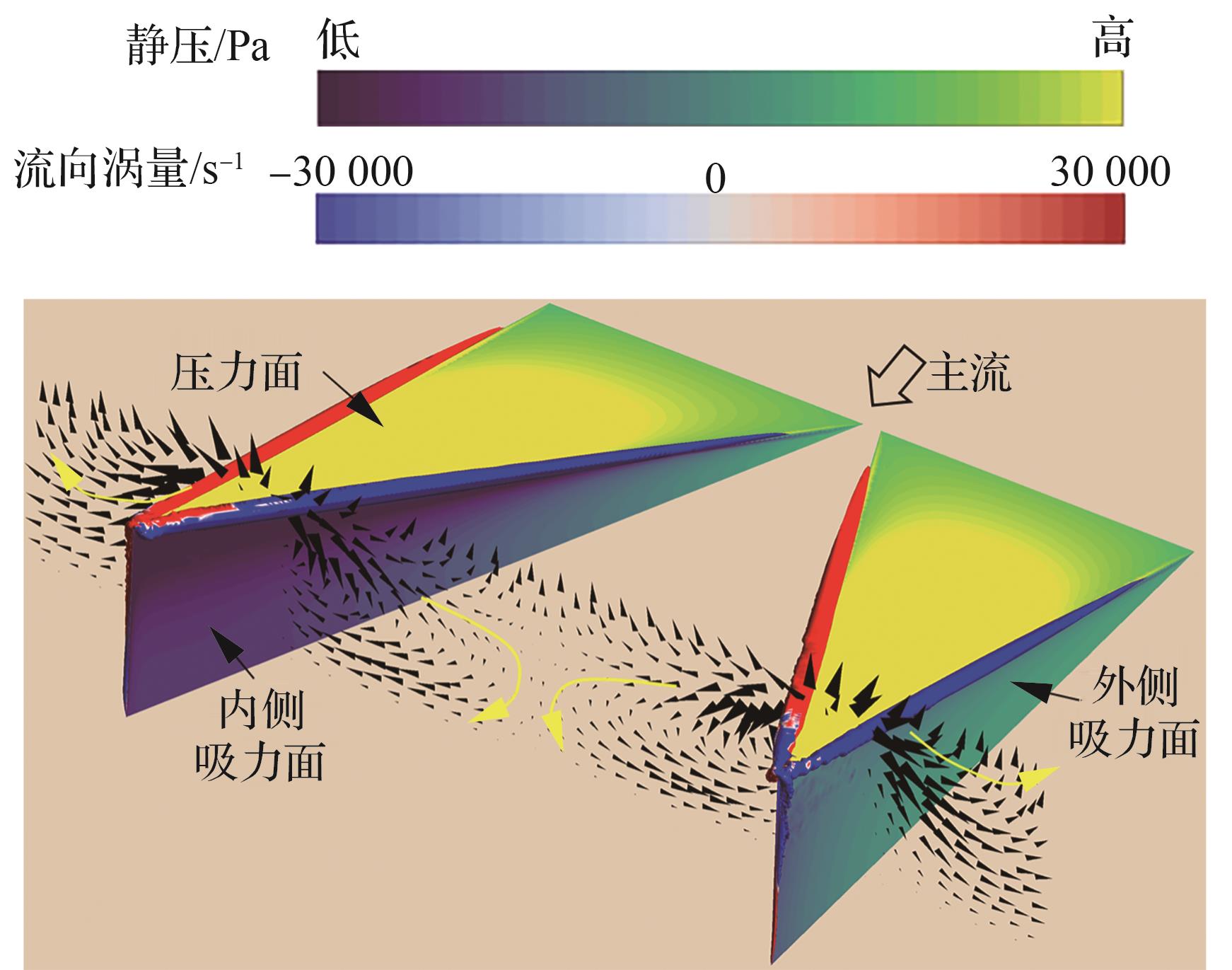
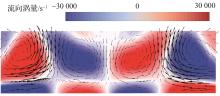
Fig.17
Velocity vectors on near-outlet cross-section of opposed VG
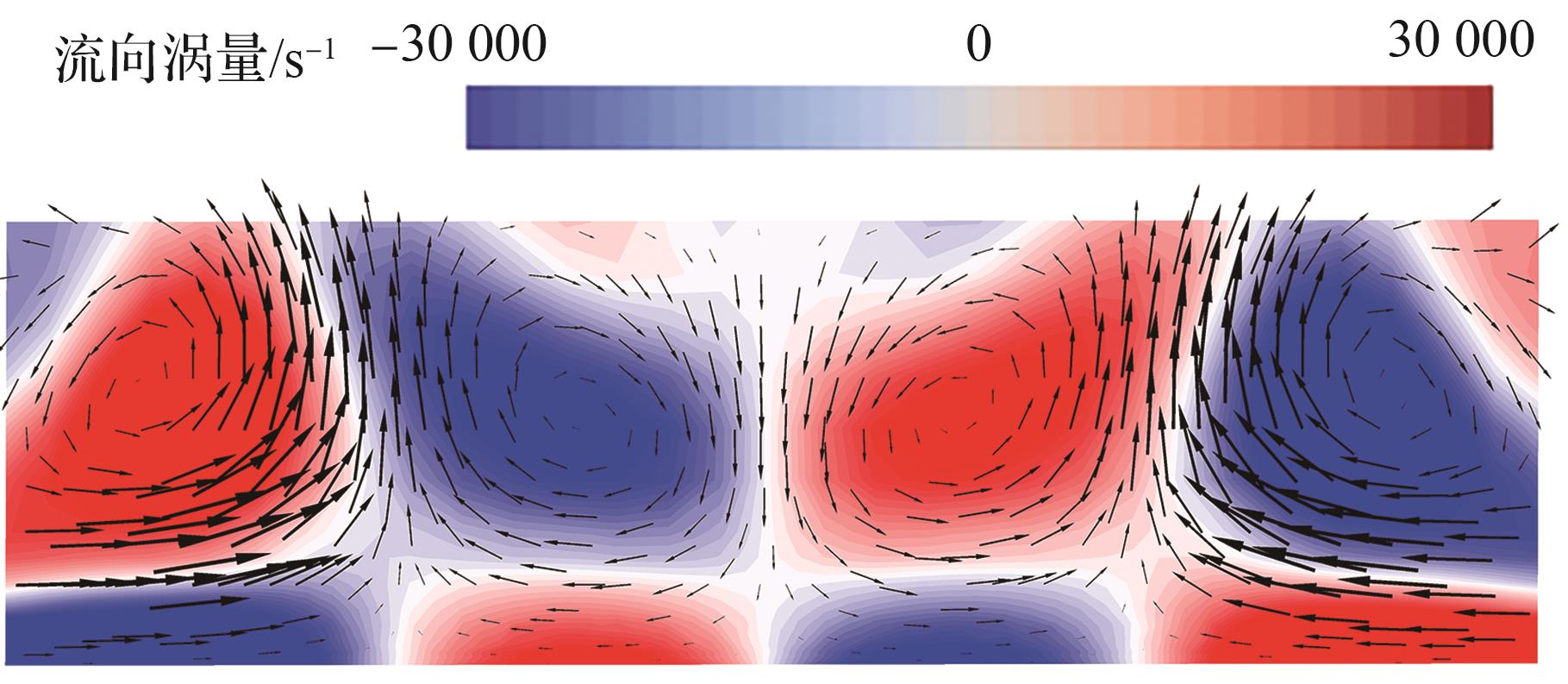
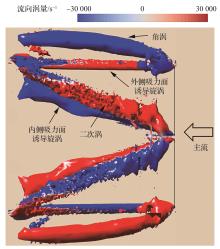
Fig.18
Vortex structure on opposed VG surface (λ₂=-3×10¹⁰ s-2)
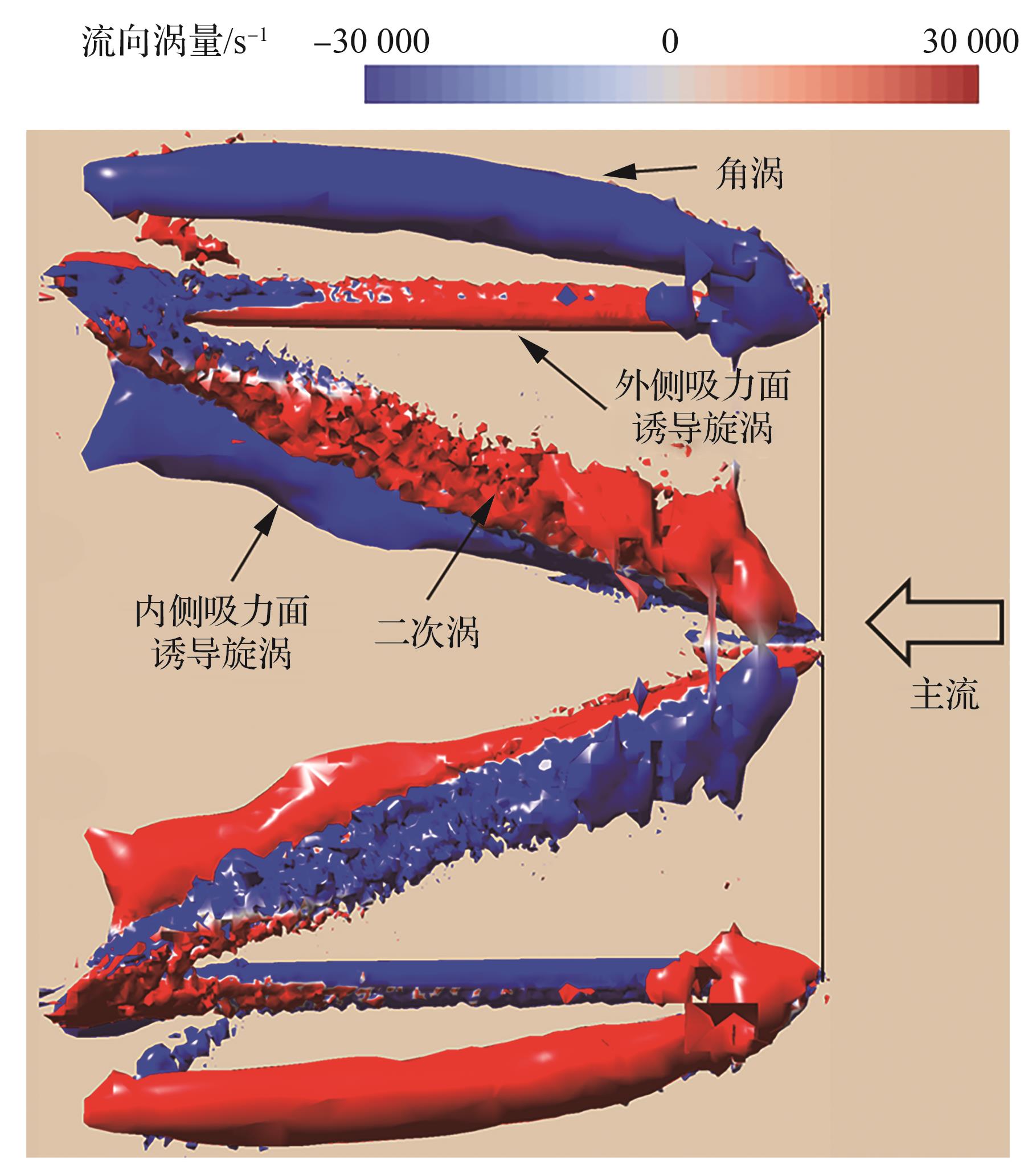
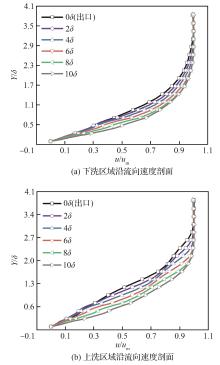
Fig.19
Velocity profile downstream of opposed VG
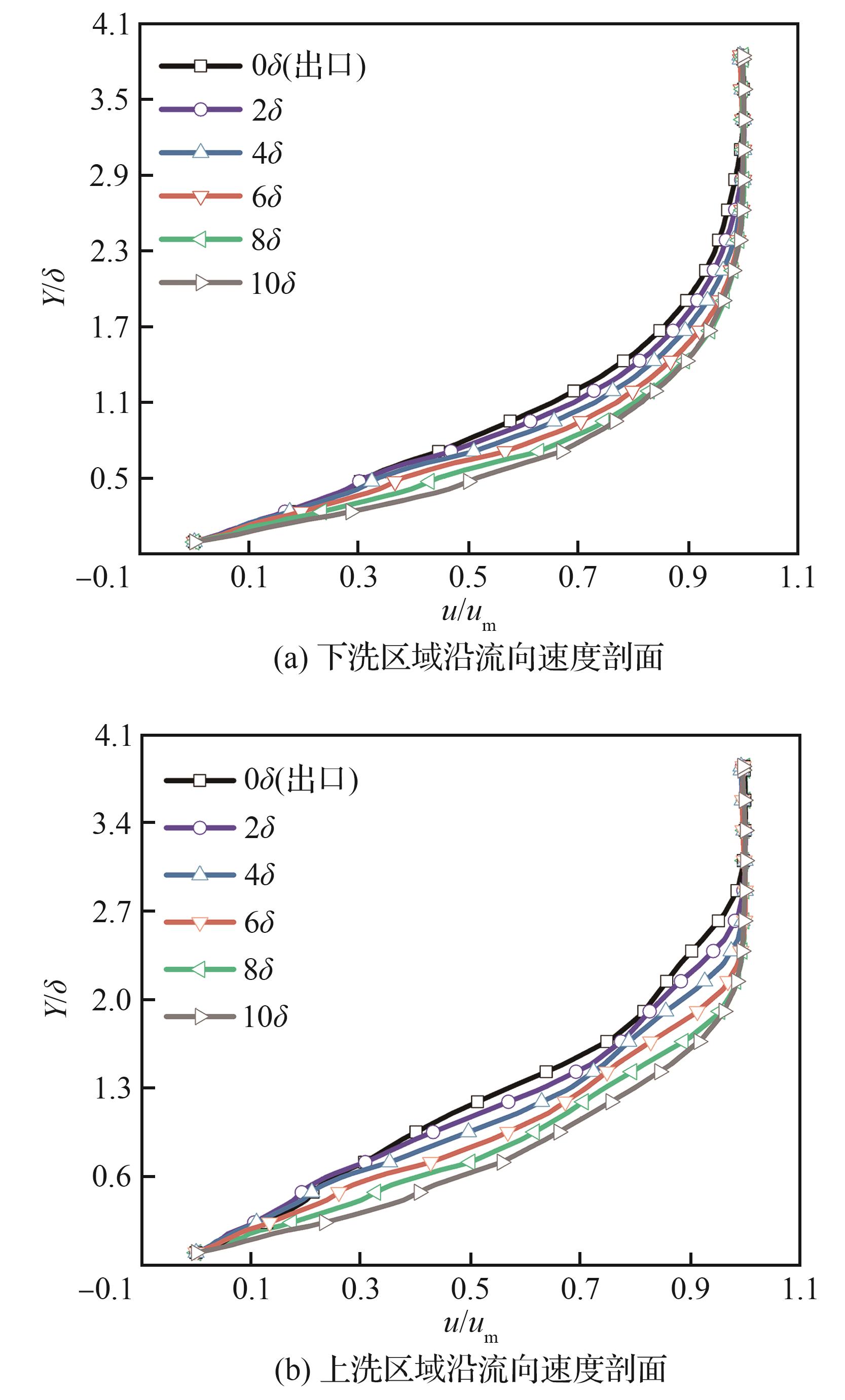
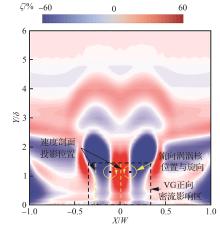
Fig.20
Percentage difference in outlet cross-sectional velocity density between opposed VG and configuration without VG
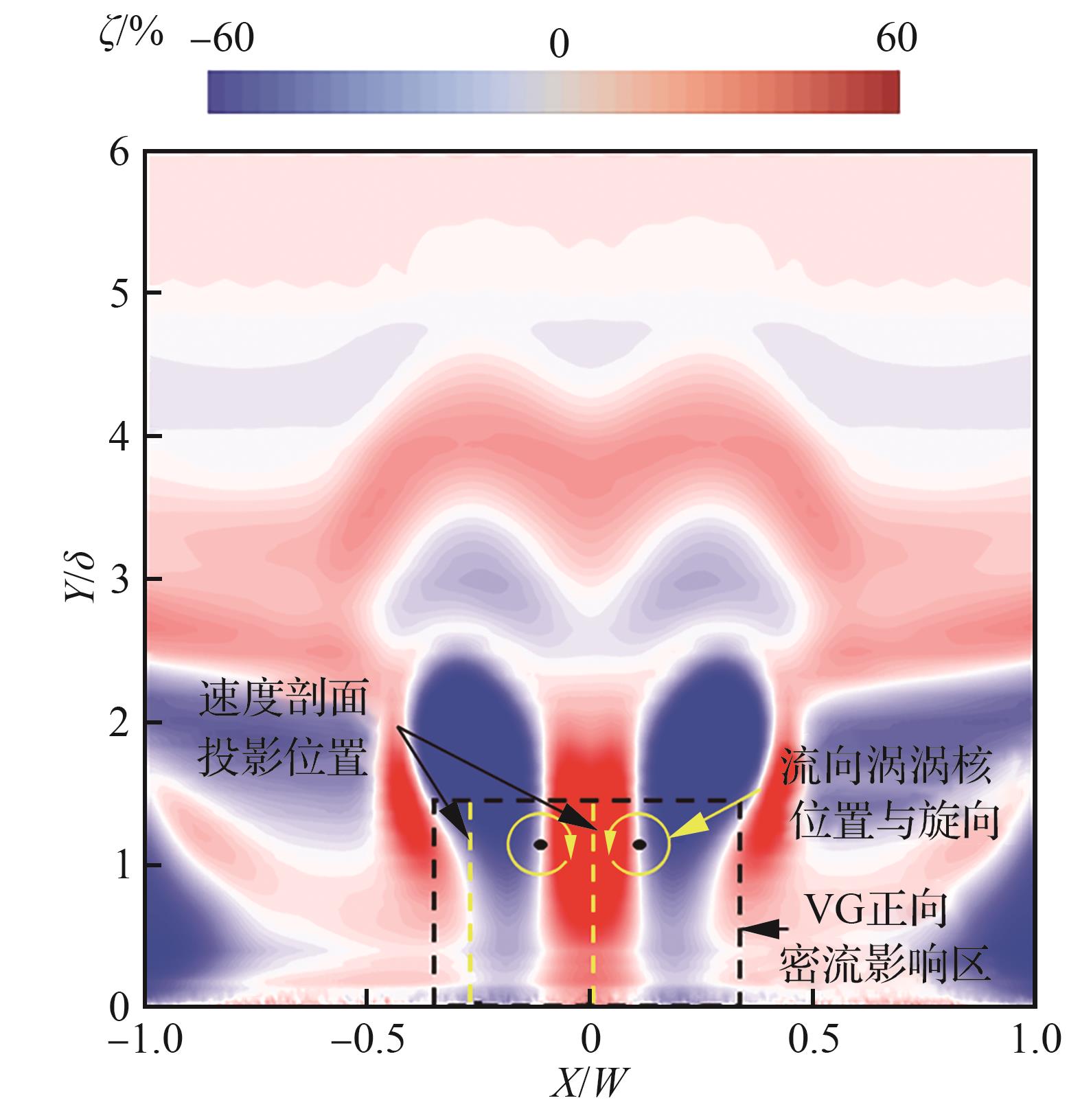
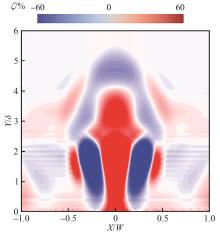
Fig.21
Percentage difference in outlet cross-sectional velocity density between opposed VG and ramp-type VG
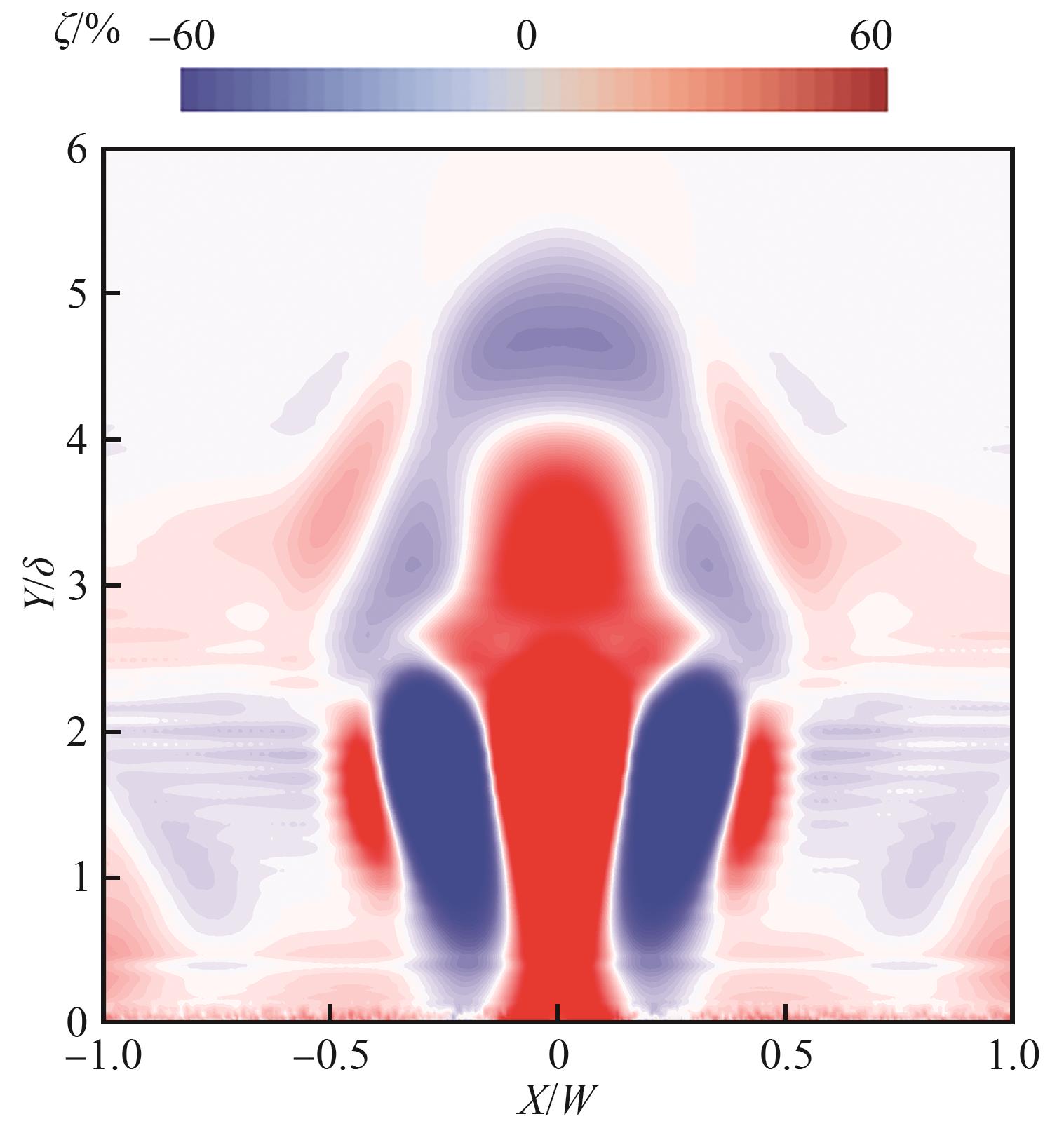
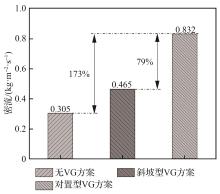
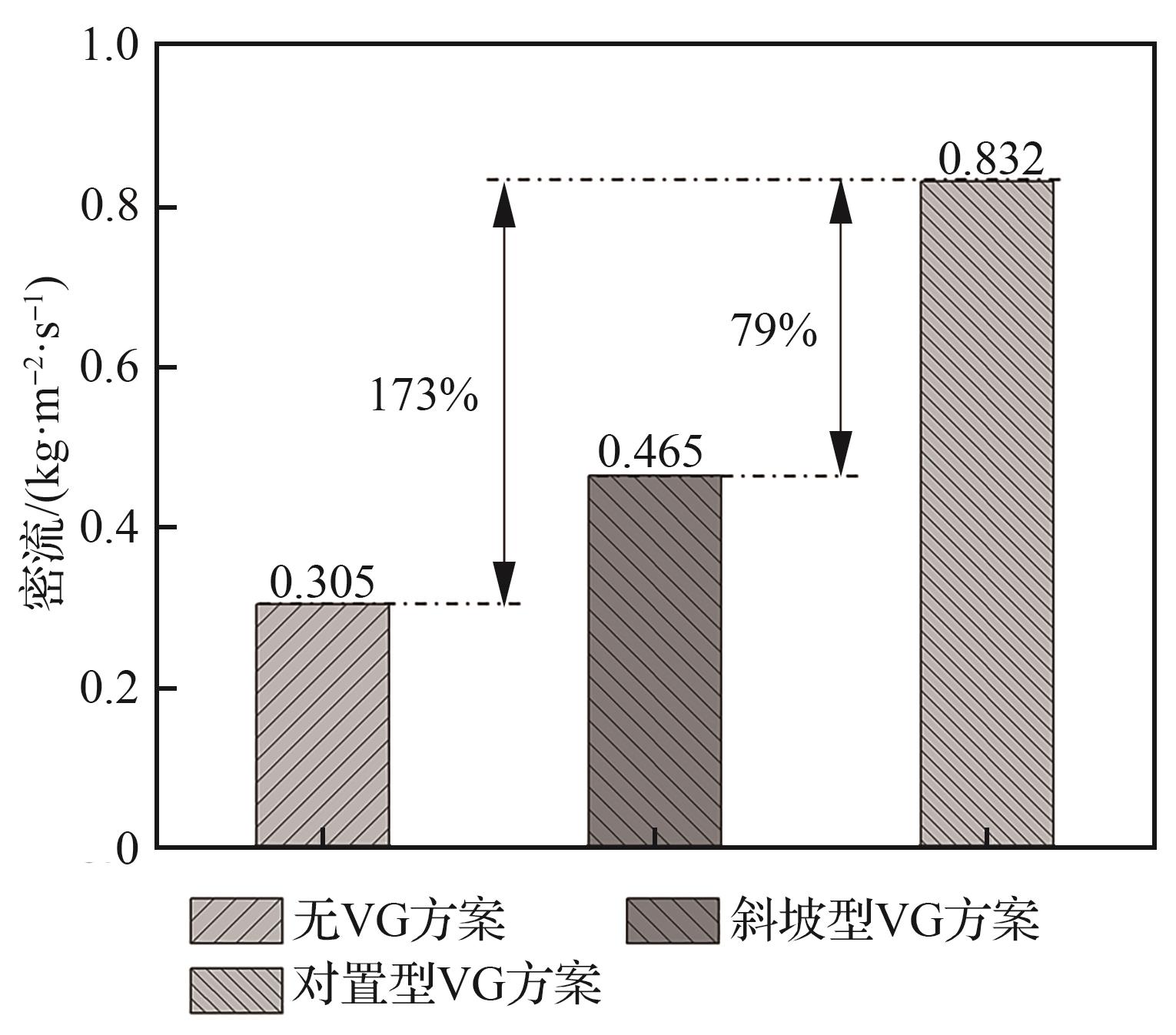
Fig.22
Comparison of velocity density under different configurations at a fixed geometric cross-section
| [1] | 易仕和, 丁浩林. 适用高超声速飞行环境的超声速气膜冷却光学窗口研究进展[J]. 空天防御, 2021, 4(4): 1-13. |
| YI S H, DING H L. Research progress of optical aperture with supersonic film cooling under hypersonic flight environment[J]. Air & Space Defense, 2021, 4(4): 1-13 (in Chinese). | |
| [2] | 罗飞腾, 渠镇铭, 李海涛, 等. 高超声速进气道预喷注技术研究进展与关键问题[J]. 航空学报, 2025, 46(8): 21-53. |
| LUO F T, QU Z M, LI H T, et al. Research progress and key issues of inlet pre-injection at hypersonic condition[J]. Acta Aeronautica et Astronautica Sinica, 2025, 46(8): 21-53 (in Chinese). | |
| [3] | 李俊红, 靳旭红, 刘春风, 等. 临近空间高速飞行器微量气动力试验及计算[J]. 航空学报, 2023, 44(6): 97-107. |
| LI J H, JIN X H, LIU C F, et al. Microaerodynamic experiment and computation of near space high speed vehicles[J]. Acta Aeronautica et Astronautica Sinica, 2023, 44(6): 97-107 (in Chinese). | |
| [4] | 屈峰, 王青, 程少文, 等. 基于气动/轨迹/控制耦合的飞/发一体高超声速飞机气动外形优化设计[J]. 航空学报, 2025, 46(4): 56-72. |
| QU F, WANG Q, CHENG S W, et al. Aerodynamic shape optimization design of airframe/propulsion integrated hypersonic aircraft with aerodynamics/trajectory/control coupling[J]. Acta Aeronautica et Astronautica Sinica, 2025, 46(4): 56-72 (in Chinese). | |
| [5] | CHEN L, ZHANG Y, ZHANG H, et al. Unsteady flow characteristics in an over-under TBCC inlet during mode transition under unthrottled and throttled conditions[J]. Chinese Journal of Aeronautics, 2024, 37(12): 275-295. |
| [6] | RAMETTE P, CORDE J C. Aircraft engine integration for the M88-RAFALE couple[R].New York: ASME, 1992. |
| [7] | FRICK C W, DAVIS W F, Randall L M. An experimental investigation of NACA submerged-duct entrances: NACA-MR-A5E23[R]. Washington, D.C.: NACA,1945. |
| [8] | PEAKE D, HENRY F, PEARCEY H. Viscous flow control with air-jet vortex generators: AIAA-1999-3175[R]. Reston: AIAA, 1999. |
| [9] | ANDERSON B, TINAPPLE J, SURBER L. Optimal control of shock wave turbulent boundary layer interactions using micro-array actuation: AIAA-2006-3197[R]. Reston: AIAA, 2006. |
| [10] | ANDERSON B H. Design of supersonic inlets by a computer program incorporating the method of characteristics: NASA-TND-4960[R].Washington, D.C.: NASA, 1969. |
| [11] | PECKHAM D H, ATKINSON S A. Preliminary results of low speed wind tunnel tests on a gothic wing of aspect ratio 1.0[C]∥Aeronautical Research Council Current Papers.London: Aeronautical Research Council, 1957: 508. |
| [12] | 王梦格, 何小明, 王娟娟, 等. 基于振荡式涡流发生器的激波/边界层干扰控制方法[J]. 航空学报, 2023, 44(20): 128503. |
| WANG M G, HE X M, WANG J J, et al. Shock wave/boundary layer interaction control method based on oscillating vortex generator[J]. Acta Aeronautica et Astronautica Sinica, 2023, 44(20): 128503 (in Chinese). | |
| [13] | FORD C P, BABINSKY H. Micro-ramp control for oblique shock wave/boundary layer interactions: AIAA-2007-4115[R]. Reston: 2007. |
| [14] | PAUL A R, JOSHI S, JINDAL A, et al. Experimental studies of active and passive flow control techniques applied in a twin air-intake[J]. The Scientific World Journal, 2013, 2013: 523759. |
| [15] | 李子亮, 于洋, 刘登丰. 基于SST k-ω的超声速气膜冷却湍流模型温度修正[J]. 载人航天, 2020, 26(1): 14-18. |
| LI Z L, YU Y, LIU D F. Temperature modification of supersonic film cooling turbulence model based on SST k-ω [J]. Manned Spaceflight, 2020, 26(1): 14-18 (in Chinese). | |
| [16] | GAO Z X, JIANG C W, PAN S W, et al. Combustion heat-release effects on supersonic compressible turbulent boundary layers[J]. AIAA Journal, 2015, 53(7): 1949-1968. |
| [17] | HUANG W, LIU W D, LI S B, et al. Influences of the turbulence model and the slot width on the transverse slot injection flow field in supersonic flows[J]. Acta Astronautica, 2012, 73: 1-9. |
| [18] | PENG W, SUN X K, JIANG P X, et al. Effect of continuous or discrete shock wave generators on supersonic film cooling[J]. International Journal of Heat and Mass Transfer, 2017, 108: 770-783. |
| [19] | SMART M K, HASS N E, PAULL A. Flight data analysis of the HyShot 2 scramjet flight experiment[J]. AIAA Journal, 2006, 44(10): 2366-2375. |
| [20] | ODDO R, HILL J L, REEDER M F, et al. Effect of surface cooling on second-mode dominated hypersonic boundary layer transition[J]. Experiments in Fluids, 2021, 62(7): 144. |
| [21] | 李辰, 孙东, 刘朋欣, 等. 等离子体激励超声速湍流边界层的直接数值模拟[J/OL]. 航空学报, (2025-05-20)[2025-08-21]. . |
| LI C, SUN D, LIU P X, et al. Direct numerical simulation of supersonic turbulent boundary layer excited by plasma[J/OL]. Acta Aeronautica et Astronautica Sinica, (2025-05-20)[2025-08-21]. (in Chinese). | |
| [22] | LI X K, YANG K, WANG X D. Experimental and numerical analysis of the effect of vortex generator height on vortex characteristics and airfoil aerodynamic performance[J]. Energies, 2019, 12(5): 959. |
| [1] | Mingsong DING, Yong XU, Tao JIANG, Qingzong LIU, Peng LI. Magnetohydrodynamics control of turbulent boundary layer separation with low electric field [J]. Acta Aeronautica et Astronautica Sinica, 2026, 47(6): 132481-132481. |
| [2] | Zhiming MA, Xin ZHANG. Flow field control over a high-aspect-ratio wing using a plasma actuator at low Reynolds number [J]. Acta Aeronautica et Astronautica Sinica, 2026, 47(5): 132359-132359. |
| [3] | Yakang KONG, Haohua ZONG, Cheng WANG, Jinping LI, Zhi SU, Yun WU, Min JIA, Hua LIANG. Multiphase-modulated arc matrix control of supersonic cavity flow fields [J]. Acta Aeronautica et Astronautica Sinica, 2026, 47(5): 132504-132504. |
| [4] | Liunan LI, Xiao QU, Yanfeng ZHANG, Xingen LU, Junqiang ZHU. Effect of end zone boundary layer skew on secondary flow in high-lift turbine [J]. Acta Aeronautica et Astronautica Sinica, 2026, 47(5): 132394-132394. |
| [5] | Jianxin SU, Yuxin LIAO, Weiping XU, Junyue TAN, Xing GAO. Adaptive optimal control for hypersonic morphing vehicles considering performance constraints [J]. Acta Aeronautica et Astronautica Sinica, 2026, 47(4): 332387-332387. |
| [6] | Hao ZHENG, Yahui LU, Kuanliang WANG, Shengjia TU, Shuzhen NIU. Oblique detonation initiation via energy deposition based ignition control [J]. Acta Aeronautica et Astronautica Sinica, 2026, 47(3): 132166-132166. |
| [7] | Jiaqi MI, Yongping JIANG, Ruxin GAO. A symplectic-wave-based method for random vibration analysis of orthotropic cylindrical shells [J]. Acta Aeronautica et Astronautica Sinica, 2026, 47(3): 232322-232322. |
| [8] | Yanfang LIU, Hongyue WANG, Yujia E, Naiming QI. A new paradigm of intelligence-driven active mass ejection drag and heat reduction research for hypersonic vehicle boundary layer [J]. Acta Aeronautica et Astronautica Sinica, 2026, 47(2): 132171-132171. |
| [9] | Jiaxin DUAN, Yuan LIU, Liangjie GAO, Zhansen QIAN. A novel wide-speed waverider design method with variable multi-parameter along spanwise direction [J]. Acta Aeronautica et Astronautica Sinica, 2026, 47(1): 632109-632109. |
| [10] | Chen LI, Dong SUN, Pengxin LIU, Qilong GUO, Xianxu YUAN. Direct numerical simulation of supersonic turbulent boundary layer with plasma actuation [J]. Acta Aeronautica et Astronautica Sinica, 2025, 46(S1): 732187-732187. |
| [11] | Guoliang RONG, Yifan YANG, Chuangchuang LI, Zhiyuan LI, Xueliang LI, Jiaquan ZHAO, Jie WU. Integrated design of homogeneous mixing and heating of flow based on dual-throat Ludwieg tube wind tunnel settling chamber [J]. Acta Aeronautica et Astronautica Sinica, 2025, 46(9): 130906-130906. |
| [12] | Xiaoxu ZHANG, Wei XIAO, Jun CAO, Wei LI, Hua ZHOU, Zhuyin REN. Review of mechanism and prediction model of boundary layer flashback in hydrogen-fueled combustor [J]. Acta Aeronautica et Astronautica Sinica, 2025, 46(9): 630952-630952. |
| [13] | Jianyu XU, Li ZHOU, Zhanxue WANG, Jie SHI, Hao SHI. Calculation method for hypersonic plume infrared radiation based on a fast line-by-line calculation model [J]. Acta Aeronautica et Astronautica Sinica, 2025, 46(8): 630778-630778. |
| [14] | Feiteng LUO, Zhenming QU, Haitao LI, Xinke LI, Dahao YAO, Wenjuan CHEN, Yaosong LONG, Baoxi WEI, Yanjin MAN, Fujiang YANG, Qiang CHENG, Wubin KONG. Research progress and key issues of inlet pre-injection at hypersonic condition [J]. Acta Aeronautica et Astronautica Sinica, 2025, 46(8): 631189-631189. |
| [15] | Lixiang WEI, Jinglei XU, Kuangshi CHEN, Shuai HUANG, Jianhui GE, Guangtao SONG. Scheme design and performance study of adjustable vector nozzle for wide-range hypersonic aircraft [J]. Acta Aeronautica et Astronautica Sinica, 2025, 46(8): 631086-631086. |
| Viewed | ||||||
|
Full text |
|
|||||
|
Abstract |
|
|||||
Address: No.238, Baiyan Buiding, Beisihuan Zhonglu Road, Haidian District, Beijing, China
Postal code : 100083
E-mail:hkxb@buaa.edu.cn
Total visits: 6658907 Today visits: 1341All copyright © editorial office of Chinese Journal of Aeronautics
All copyright © editorial office of Chinese Journal of Aeronautics
Total visits: 6658907 Today visits: 1341

 CJA
CJA
