龚玮诚1, 张一飞2, 陈天2( ), 刘东旭2, 祝明2
收稿日期:2026-01-07
修回日期:2026-03-17
接受日期:2026-06-09
出版日期:2026-06-17
发布日期:2026-06-16
通讯作者:
陈天
E-mail:chentian@buaa.edu.cn
基金资助:
Weicheng GONG1, Yifei ZHANG2, Tian CHEN2(), Dongxu LIU2, Ming ZHU2
Received:2026-01-07
Revised:2026-03-17
Accepted:2026-06-09
Online:2026-06-17
Published:2026-06-16
Contact:
Tian CHEN
E-mail:chentian@buaa.edu.cn
Supported by:摘要:
临近空间长航时飞行器集群在遥感监测、通信覆盖等领域极具应用价值,为提升其在临近空间复杂环境下的任务效能,亟需突破面向动态环境的集群协同控制关键技术。对临近空间长航时飞行器集群协同控制技术与应用的研究现状、应用范式、关键技术、主要挑战及发展方向进行了系统梳理与综述。首先,分析了临近空间长航时飞行器的平台特性,阐述了广域集群协同与跨域体系协同两类典型应用范式。其次,从协同自组网、任务决策分配、协同航迹规划与控制、跨域协同控制等方面,综述了关键技术的研究进展。然后,归纳了当前研究在时空大跨度环境适应、多目标多约束优化、跨域信息融合及网络安全等方面面临的核心挑战。最后,从跨域协同应用范式体系化、技术体系通用化以及决策控制智能化等方面,展望了临近空间飞行器集群协同控制技术的发展方向。
中图分类号:
龚玮诚, 张一飞, 陈天, 刘东旭, 祝明. 临近空间长航时飞行器协同控制技术与应用[J]. 航空学报, 2026, 47(20): 333337.
Weicheng GONG, Yifei ZHANG, Tian CHEN, Dongxu LIU, Ming ZHU. Cooperative control technology and applications for near-space long-endurance aircraft[J]. Acta Aeronautica et Astronautica Sinica, 2026, 47(20): 333337.
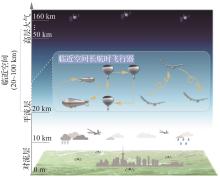
图 1
临近空间长航时飞行器典型高度及机动特征示意图
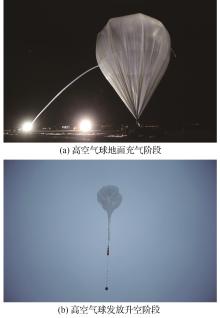
图 2
“鸿鹄专项”高空气球试验过程[29]
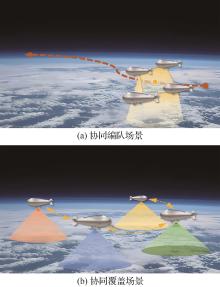
图 3
临近空间飞艇集群典型协同场景
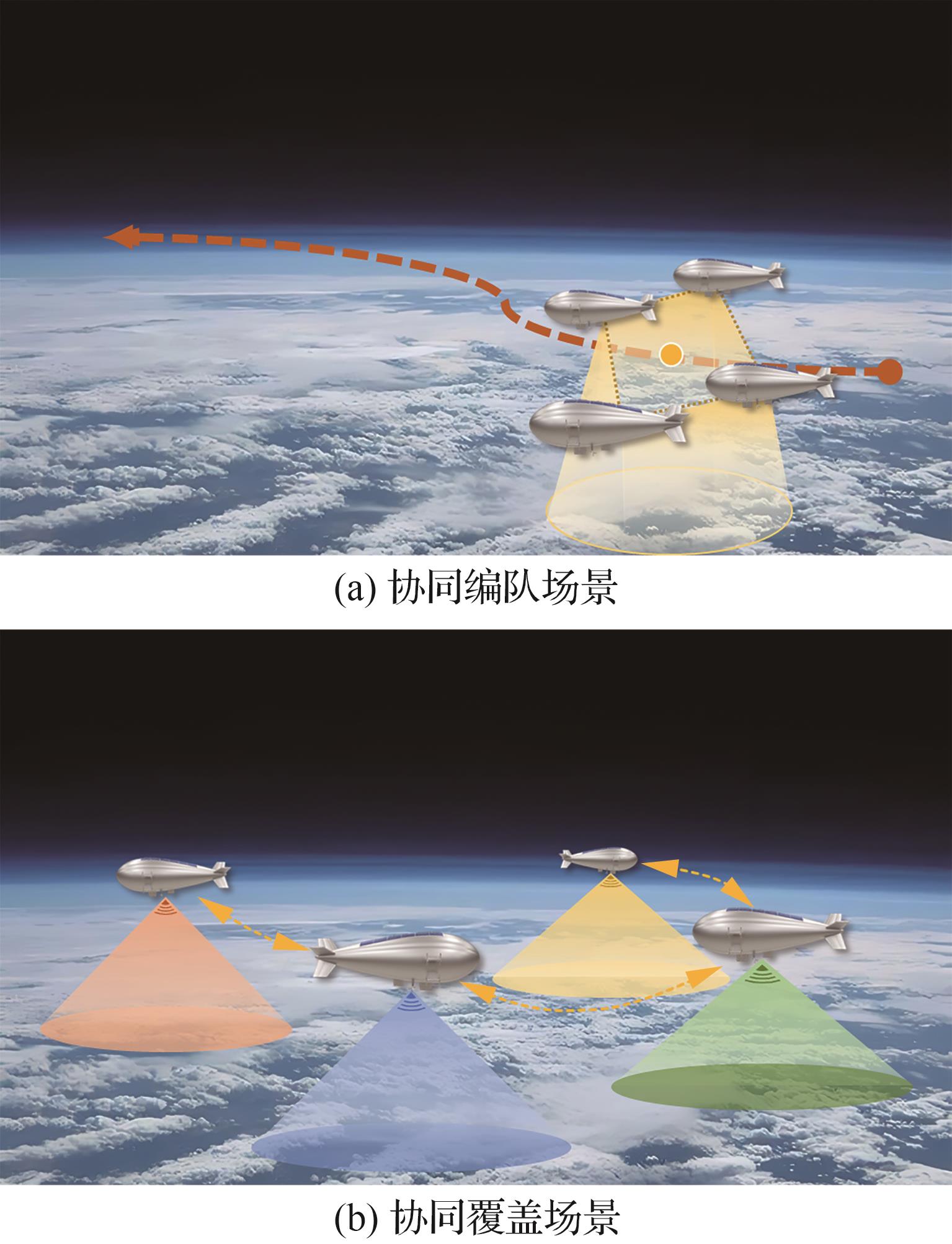
图 4
Thales Alenia Space飞艇集群概念示意图[44]
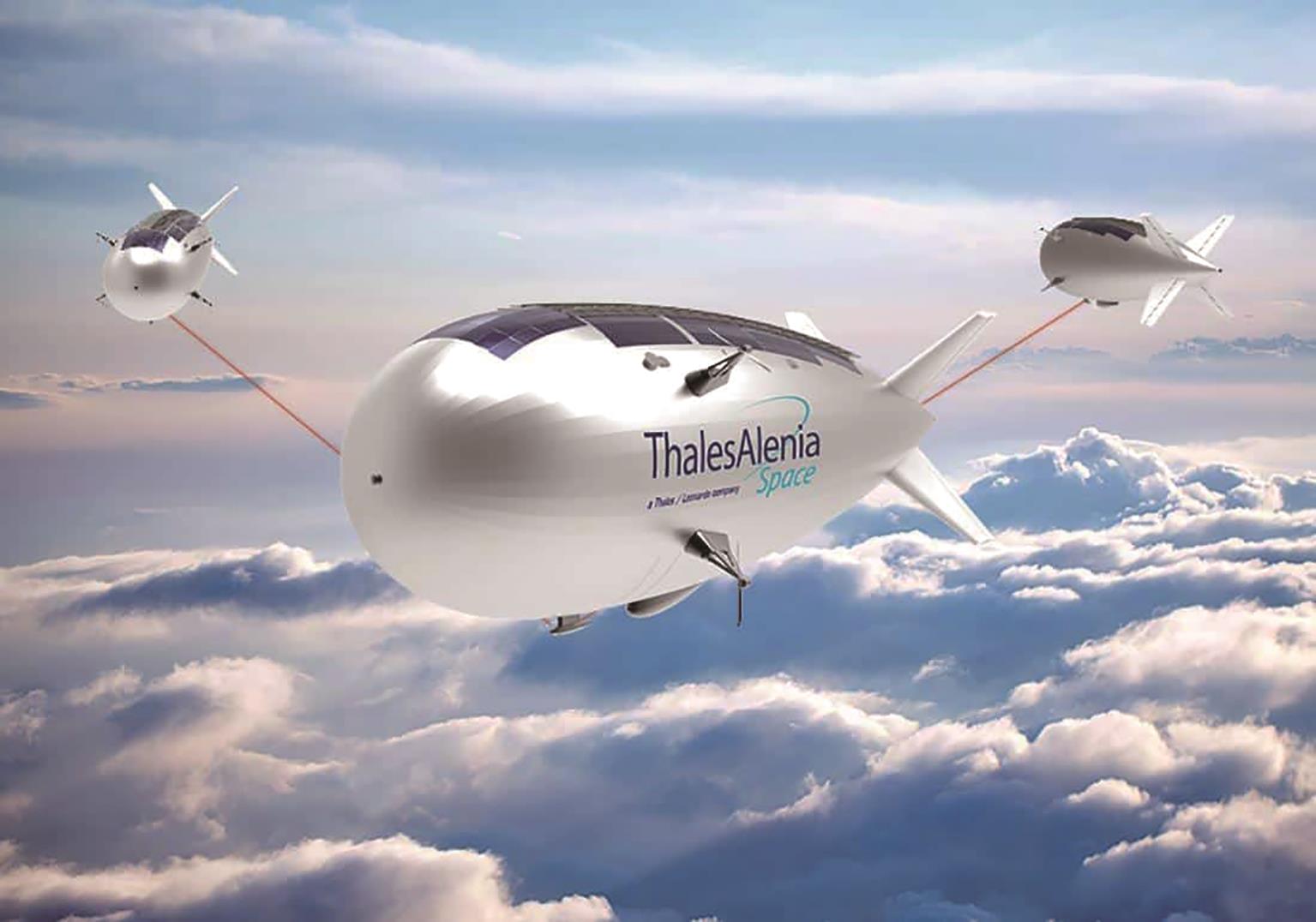
图 5
跨域通信中继场景示意图
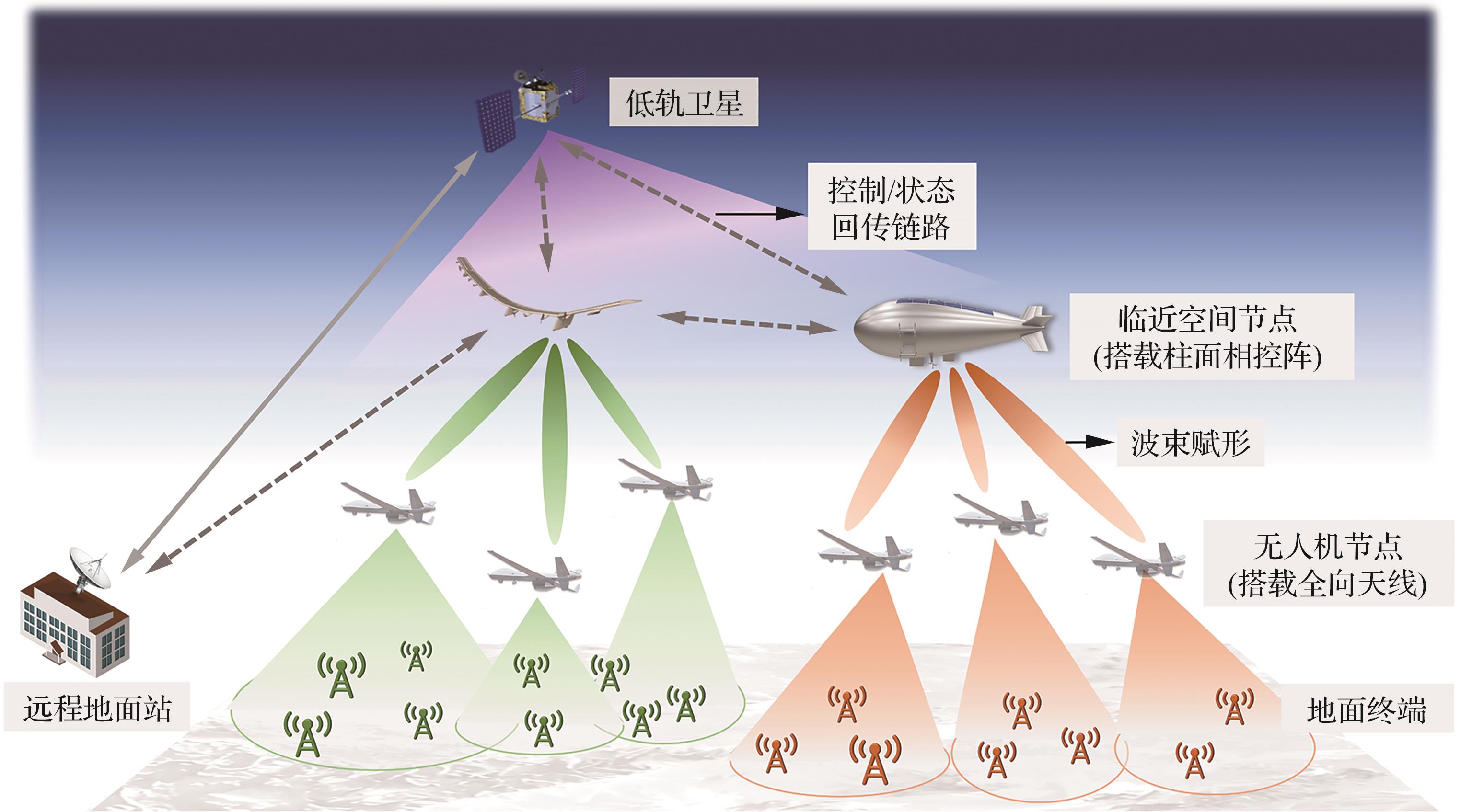
图 6
跨域协同观测场景示意图
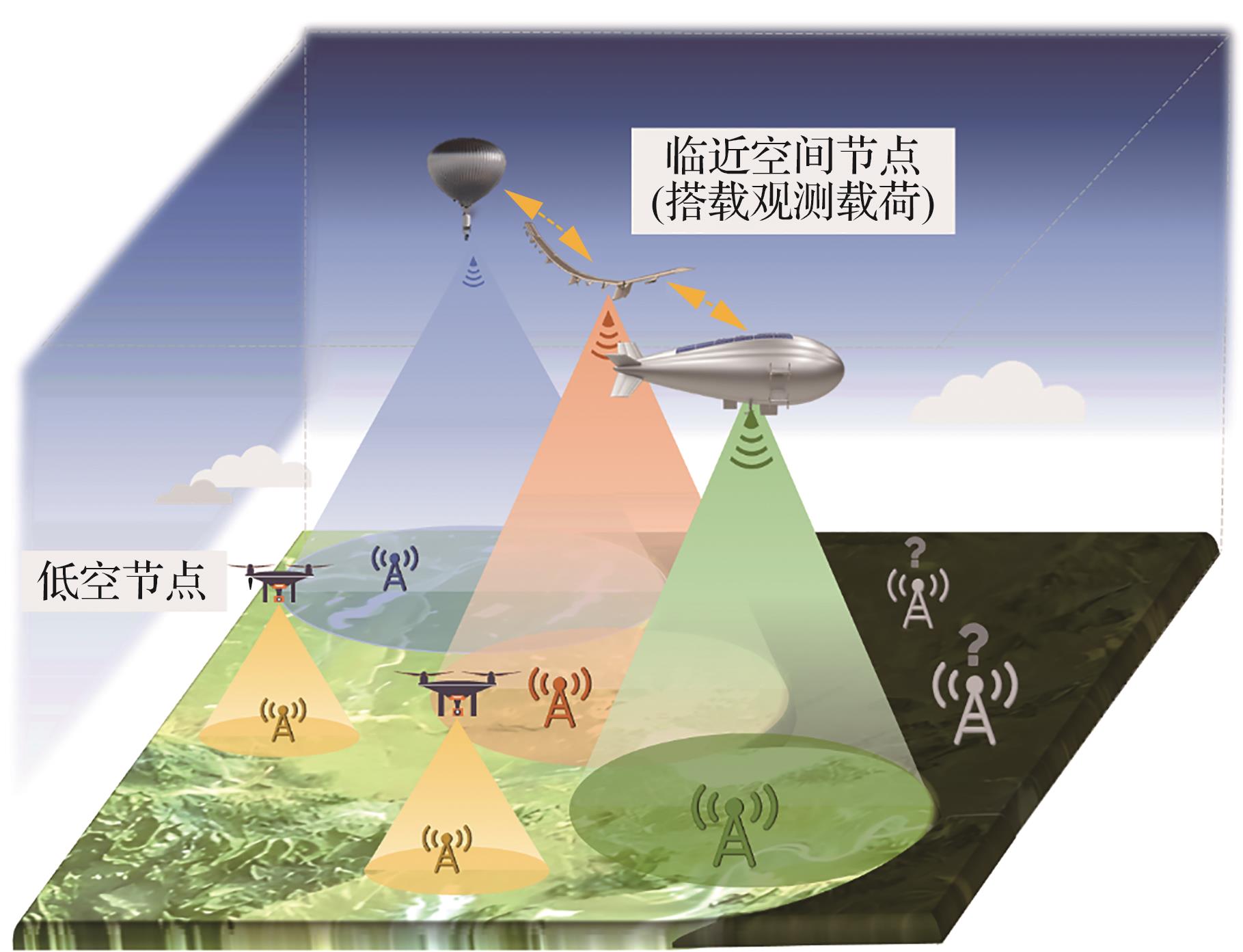
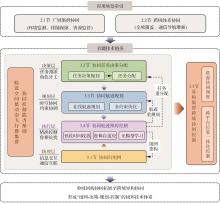
图 7
临近空间长航时飞行器协同控制关键技术
表1
集群任务分配方法汇总
| 问题类型 | 代表性方法 | 优点 | 局限性 | 文献 | |
|---|---|---|---|---|---|
| 离线任务分配方法 | 问题建模 | 混合整数规划问题 | 能同时处理连续与离散变量优化问题,适用于多约束条件下的优化问题 | 计算复杂度高,实时性差,难以适用于大规模动态场景 | [ |
| 背包问题 | 模型简洁,适用于资源受限条件下的任务选择与分配 | 通常假设任务独立,难以处理任务间的时序与空间耦合关系 | [ | ||
| 多旅行商问题 | 适用于多飞行器任务序列优化,能有效降低总航程或时间成本 | 存在尺度爆炸问题,求解难度随智能体数量增加呈指数增长 | [ | ||
| 求解方法 | 分布式优化算法 | 适应分布式系统结构,支持异步计算,具有良好的鲁棒性与可扩展性 | 收敛速度受通信质量影响,全局最优性难以保证 | [ | |
| 启发式与元启发式算法 | 计算效率高,适用于复杂约束与大规模问题,易嵌入问题特异性知识 | 通常不能保证最优解,参数调优依赖经验,理论分析困难 | [ | ||
| 基于图论的算法 | 直观表达任务与资源间的关系,支持快速匹配与路径搜索 | 对模型构建要求高,难以处理动态权重或拓扑变化频繁的场景 | [ | ||
| 在线任务分配方法 | 问题建模与求解方法 | 博弈理论 | 能刻画多智能体间的竞争与合作行为,适用于利益冲突与协调并存的场景 | 假设完全理性与信息对称,实际系统中难以完全满足 | [ |
| 市场机制 | 通过竞价与交易实现资源分配,支持分布式决策,灵活性高 | 可能收敛至局部均衡,市场设计复杂,通信开销大 | [ | ||
| 多智能体强化学习 | 能在未知或动态环境中自主学习策略,适应性强,支持长期收益优化 | 训练成本高,依赖于大量仿真或实际交互数据 | [ | ||
| [1] | LIU X H, GAO Z, et al. Toward near-space communication network in the 6G and beyond era[J]. Space: Science & Technology, 2025, 5: 337. |
| [2] | 江碧涛, 温广辉, 周佳玲, 等. 智能无人集群系统跨域协同技术研究现状与展望[J]. 中国工程科学, 2024, 26(1): 117-126. |
| JIANG B T, WEN G H, ZHOU J L, et al. Cross-domain cooperative technology of intelligent unmanned swarm systems: Current status and prospects[J]. Strategic Study of CAE, 2024, 26(1): 117-126 (in Chinese). | |
| [3] | CAO X B, SU X N, YANG P, et al. Survey on near-space information networks: Channel modeling, transmission, and networking perspectives[J]. IEEE Communications Surveys & Tutorials, 2026, 28: 672-715. |
| [4] | 邓小龙, 杨希祥, 朱炳杰, 等. 智能平流层浮空器Loon关键技术分析与仿真[J]. 航空学报, 2023, 44(8): 127412. |
| DENG X L, YANG X X, ZHU B J, et al. Simulation research and key technologies analysis of intelligent stratospheric aerostat Loon[J]. Acta Aeronautica et Astronautica Sinica, 2023, 44(8): 127412 (in Chinese). | |
| [5] | LIU H S, QIN T, GAO Z, et al. Near-space communications: The last piece of 6G space-air-ground-sea integrated network puzzle[J]. Space: Science & Technology, 2024, 4: 176. |
| [6] | 蔡培源, 徐国宁, 柯挚捷, 等. 临近空间飞行器分布式太阳电池发电分析及系统优化[J]. 北京航空航天大学学报, 2025, 51(8): 2757-2766. |
| CAI P Y, XU G N, KE Z J, et al. Distributed solar cell generation analysis and system optimization for near space vehicles[J]. Journal of Beijing University of Aeronautics and Astronautics, 2025, 51(8): 2757-2766 (in Chinese). | |
| [7] | 李广佳, 王红波, 张凯, 等. 临近空间太阳能无人机增升减阻技术综述[J]. 航空学报, 2024, 45(5): 029644. |
| LI G J, WANG H B, ZHANG K, et al. Lift enhancement and drag reduction technologies of solar powered unmanned aerial vehicles in near space: Review[J]. Acta Aeronautica et Astronautica Sinica, 2024, 45(5): 029644 (in Chinese). | |
| [8] | 杨希祥, 侯中喜, 郭正. 高空长航时太阳能飞机研究进展与技术挑战[J]. 国防科技大学学报, 2023, 45(6): 1-9. |
| YANG X X, HOU Z X, GUO Z. Development status and technology challenges of high-altitude long-endurance solar-powered aircraft[J]. Journal of National University of Defense Technology, 2023, 45(6): 1-9 (in Chinese). | |
| [9] | ZHOU D, SHENG M, LI J D, et al. Aerospace integrated networks innovation for empowering 6G: A survey and future challenges[J]. IEEE Communications Surveys & Tutorials, 2023, 25(2): 975-1019. |
| [10] | SHORINWA O, HALSTED T, YU J, et al. Distributed optimization methods for multi-robot systems: Part 1: A tutorial[J]. IEEE Robotics & Automation Magazine, 2024, 31(3): 121-138. |
| [11] | NING X R, ZENG M, HUA M, et al. Multiple reconfigurable intelligent surfaces aided vehicular edge computing networks: A MAPPO-based approach[J]. IEEE Transactions on Vehicular Technology, 2024, 73(11): 17496-17509. |
| [12] | 甘文彪, 庄俊杰, 向锦武, 等. 临近空间低动态飞行器螺旋桨流动控制研究进展[J]. 航空学报, 2024, 45(17): 530086. |
| GAN W B, ZHUANG J J, XIANG J W, et al. Research progress on flow control of propeller for low dynamic near⁃space vehicle[J]. Acta Aeronautica et Astronautica Sinica, 2024, 45(17): 530086 (in Chinese). | |
| [13] | 张志成, 李鹏, 左志强, 等. 临近空间太阳能飞行器能源系统控制综述[J]. 控制与决策, 2024, 39(6): 1761-1777. |
| ZHANG Z C, LI P, ZUO Z Q, et al. A survey of energy system control for near-space solar-powered aerial vehicles[J]. Control and Decision, 2024, 39(6): 1761-1777 (in Chinese). | |
| [14] | JONES N. High-altitude balloons: A scientists’ guide to what’s up there and why[J]. Nature, 2023, 614(7949): 606. |
| [15] | 周江华, 金伟城, 李智斌. 高空气球外形计算及通用算法设计[J]. 国防科技大学学报, 2021, 43(4): 17-23. |
| ZHOU J H, JIN W C, LI Z B. High-altitude balloon shape calculation and general algorithm design[J]. Journal of National University of Defense Technology, 2021, 43(4): 17-23 (in Chinese). | |
| [16] | 张远平, 姜鲁华, 宋林, 等. 临近空间高空气球囊体材料的蠕变试验和数值分析[J]. 国防科技大学学报, 2020, 42(4): 57-63. |
| ZHANG Y P, JIANG L H, SONG L, et al. Creep test and numerical analysis for near space aerostat’s envelope material[J]. Journal of National University of Defense Technology, 2020, 42(4): 57-63 (in Chinese). | |
| [17] | HE H, ZHANG Y S, SHEN Z P, et al. High-altitude long-duration latex balloon venting valves[J]. Advances in Space Research, 2024, 73(6): 3209-3221. |
| [18] | 苏一, 张向强, 刘强. 高空气球发放过程中的流固耦合动力学研究[J]. 计算机仿真, 2023, 40(7): 60-66. |
| SU Y, ZHANG X Q, LIU Q. Study on fluid-solid coupling dynamics during release of high altitude balloon[J]. Computer Simulation, 2023, 40(7): 60-66 (in Chinese). | |
| [19] | CHEN L, LIN J, SONG Z. Dynamic performance of high-altitude balloons during ascent and descent[C]∥ 2024 8th International Conference on Robotics, Control and Automation (ICRCA). Piscataway: IEEE Press, 2024: 325-329. |
| [20] | NI Z W, ZHU S R, DOU S N, et al. Predicting the ascent of high-altitude tethered spherical balloons[J]. Aerospace Science and Technology, 2026, 168: 111087. |
| [21] | TANG J W, PU S M, YU P X, et al. Research on trajectory prediction of a high-altitude zero-pressure balloon system to assist rapid recovery[J]. Aerospace, 2022, 9(10): 622. |
| [22] | 庄春雨, 徐国宁, 李兆杰, 等. 太阳电池高空气球标定测量不确定度[J]. 北京航空航天大学学报, 2025, 51(8): 2727-2734. |
| ZHUANG C Y, XU G N, LI Z J, et al. Uncertainty of solar cell calibration using a high-altitude balloon[J]. Journal of Beijing University of Aeronautics and Astronautics, 2025, 51(8): 2727-2734 (in Chinese). | |
| [23] | 曲艺, 王生, 冯慧, 等. 临地协同观测中的高空气球组网轨迹优化[J]. 北京航空航天大学学报, 2025, 51(9): 2955-2967. |
| QU Y, WANG S, FENG H, et al. Trajectory optimization of high-altitude balloon in nearspace-ground collaborative observation[J]. Journal of Beijing University of Aeronautics and Astronautics, 2025, 51(9): 2955-2967 (in Chinese). | |
| [24] | BELLEMARE M G, CANDIDO S, CASTRO P S, et al. Autonomous navigation of stratospheric balloons using reinforcement learning[J]. Nature, 2020, 588(7836): 77-82. |
| [25] | HAROON A, SCHULER T. Distributed area coverage with high altitude balloons using multi-agent reinforcement learning[DB/OL]. arXiv preprint: 2510.03823; 2025. |
| [26] | SERRANOP, GRAMAGLIAM, MANCINIF, et al. Balloons in the sky: Unveiling the characteristics and trade-offs of the google loon service[J]. IEEE Transactions on Mobile Computing, 2023, 22(6): 3165-3178. |
| [27] | HUTCHINSON T A, BRENNAN S, SUSHKO A. WindBorne global sounding balloons: Technological advances and dropsondes[C]∥105th Annual AMS Meeting 2025. |
| [28] | 蔡榕, 杨燕初, 姜鲁华, 等. 中国科学院高空科学气球研究进展[J]. 遥感学报, 2025, 29(6): 1502-1514. |
| CAI R, YANG Y C, JIANG L H, et al. Research progress of high-altitude scientific balloons in Chinese Academy of Sciences[J]. National Remote Sensing Bulletin, 2025, 29(6): 1502-1514 (in Chinese). | |
| [29] | 盖泰亨. 临近空间网络架构设计与资源优化问题研究[D]. 合肥: 中国科学技术大学, 2024. |
| GAI T H. Architecture design and resource optimization of near-space networks[D]. Hefei: University of Science and Technology of China, 2024 (in Chinese). | |
| [30] | 史智广, 杨玉洁, 左宗玉. 多囊体临近空间飞艇多要素耦合建模与仿真[J]. 航空学报, 2023, 44(16): 228451. |
| SHI Z G, YANG Y J, ZUO Z Y. Multi-element coupled modeling and simulation for multi-capsule near-space airships[J]. Acta Aeronautica et Astronautica Sinica, 2023, 44(16): 228451 (in Chinese). | |
| [31] | SONG K Y, LI Z J, ZHANG Y L, et al. A rule-based online energy management strategy for long-endurance stratospheric airships[J]. Aerospace Science and Technology, 2024, 151: 109266. |
| [32] | LIU S T, ZHOU S Y, MIAO J G, et al. Autonomous trajectory planning method for stratospheric airship regional station-keeping based on deep reinforcement learning[J]. Aerospace, 2024, 11(9): 753. |
| [33] | SUN Y, ZHU M, et al. Adaptive incremental backstepping control of stratospheric airships using time-delay estimation[J]. Electronic Research Archive, 2025, 33(5): 2925-2946. |
| [34] | ZHENG B J, ZHU M, GUO X, et al. Path planning of stratospheric airship in dynamic wind field based on deep reinforcement learning[J]. Aerospace Science and Technology, 2024, 150: 109173. |
| [35] | PRICE E, BLACK M J, AHMAD A. Viewpoint-driven formation control of airships for cooperative target tracking[J]. IEEE Robotics and Automation Letters, 2023, 8(6): 3653-3660. |
| [36] | 杨希祥, 张家实. 基于路径跟踪的平流层飞艇柔性编队控制[J]. 国防科技大学学报, 2018, 40(5): 40-44. |
| YANG X X, ZHANG J S. Flexible formation control of stratospheric airships based on path following[J]. Journal of National University of Defense Technology, 2018, 40(5): 40-44 (in Chinese). | |
| [37] | ZHANG Y F, ZHU M, CHEN T, et al. Distributed event-triggered fixed-time formation and trajectory tracking control for multiple stratospheric airships[J]. ISA Transactions, 2022, 130: 63-78. |
| [38] | YU Z Q, ZHANG Y M, JIANG B, et al. Distributed fractional-order intelligent adaptive fault-tolerant formation-containment control of two-layer networked unmanned airships for safe observation of a smart city[J]. IEEE Transactions on Cybernetics, 2022, 52(9): 9132-9144. |
| [39] | LIU X H, ZHU M, ZHANG Y F, et al. Adaptive Gaining-sharing knowledge region coverage planning for multi-stratospheric airships in complex environments[J]. Advances in Space Research, 2026, 77(3): 3732-3753. |
| [40] | ZHANG Y F, ZHU M, CHEN T, et al. Region coverage control for multiple stratospheric airships with combined self-/event-triggered mechanism[J]. Defence Technology, 2023, 24: 254-268. |
| [41] | FAN Y Q, DENG X L, YANG X X, et al. Coverage control with global connectivity maintenance for multiple stratospheric airships[J]. Control Engineering Practice, 2025, 165: 106544. |
| [42] | GONG W C, ZHANG Y F, ZHU M, et al. Dynamic control of multiple stratospheric airships in time-varying wind fields for communication coverage missions[J]. Aerospace Science and Technology, 2025, 166: 110514. |
| [43] | ZHENG B J, GUO X, OU J J, et al. Collaborative coverage trajectory planning for stratospheric airship via multi-agent reinforcement learning[J]. Aerospace Science and Technology, 2026, 168: 110736. |
| [44] | 杨希祥, 朱炳杰, 邓小龙, 等. Stratobus平流层飞艇项目研究进展与仿真分析[J]. 航空学报, 2021, 42(9): 224579. |
| YANG X X, ZHU B J, DENG X L, et al. Development status and simulation analysis of stratospheric airship Stratobus[J]. Acta Aeronautica et Astronautica Sinica, 2021, 42(9): 224579 (in Chinese). | |
| [45] | SHI W, LI G J, YI Z S, et al. Current status and prospect of solar-powered unmanned aerial vehicle application in near space[J]. Aerodynamic Missile Journal, 2022: 83-90. |
| [46] | 高明, 余伟臣, 王杉杉, 等. 太阳能无人机能源系统的多维耦合建模[J]. 航空学报, 2021, 42(7): 224461. |
| GAO M, YU W C, WANG S S, et al. Multidimensional coupled modeling for solar powered UAV energy system[J]. Acta Aeronautica et Astronautica Sinica, 2021, 42(7): 224461 (in Chinese). | |
| [47] | 高显忠, 邓小龙, 王玉杰, 等. 临近空间太阳能飞机能量最优飞行航迹规划方法展望[J]. 航空学报, 2023, 44(8): 1-22. |
| GAO X Z, DENG X L, WANG Y J, et al. General planning method for energy optimal flight path of solar-powered aircraft in near space[J]. Acta Aeronautica et Astronautica Sinica, 2023, 44(8): 1-22 (in Chinese). | |
| [48] | 王茜, 王翔宇, 焦俊, 等. 高空长航时太阳能无人机三维全覆盖航迹规划[J]. 北京航空航天大学学报, 2025, 51(8): 2735-2747. |
| WANG Q, WANG X Y, JIAO J, et al. Three-dimensional complete coverage flight path planning for high-altitude long-endurance solar-powered UAV[J]. Journal of Beijing University of Aeronautics and Astronautics, 2025, 51(8): 2735-2747 (in Chinese). | |
| [49] | 余子杰, 郑征, 李清东, 等. 基于深度强化学习的太阳能无人机航迹规划[J]. 航空学报, 2025, 46(12): 331420. |
| YU Z J, ZHENG Z, LI Q D, et al. Trajectory planning for solar-powered UAVs based on deep reinforcement learning[J]. Acta Aeronautica et Astronautica Sinica, 2025, 46(12): 331420 (in Chinese). | |
| [50] | 冒森, 张斌, 肖良华, 等. 太阳能无人机机翼颤振动力学建模与分析[J]. 计算机测量与控制, 2023, 31(9): 183-189. |
| MAO S, ZHANG B, XIAO L H, et al. Dynamic modeling and analysis of solar UAV wing flutter[J]. Computer Measurement & Control, 2023, 31(9): 183-189 (in Chinese). | |
| [51] | WANG B, ZHANG H, GAO Z H. Lateral attitude control of solar-powered UAV with high aspect ratio[J]. Journal of Northwestern Polytechnical University, 2022, 40(6): 1223-1232. |
| [52] | HOSSEINI S, MESBAHI M. Energy-aware aerial surveillance for a long-endurance solar-powered unmanned aerial vehicles[J]. Journal of Guidance, Control, and Dynamics, 2016, 39(9): 1980-1993. |
| [53] | AL-HRAISHAWI H, CHOUGRANI H, KISSELEFF S, et al. A survey on nongeostationary satellite systems: the communication perspective[J]. IEEE Communications Surveys & Tutorials, 2023, 25(1): 101-132. |
| [54] | 彭桂林, 万志强. 中国浮空器遥感遥测应用现状与展望[J]. 地球信息科学学报, 2019, 21(4): 504-511. |
| PENG G L, WAN Z Q. The present situation and prospect of aerostat applied to remote sensing and remote survey in China[J]. Journal of Geo-Information Science, 2019, 21(4): 504-511 (in Chinese). | |
| [55] | WU M H, GAO Z, WANG Z C, et al. Deep joint semantic coding and beamforming for near-space airship-borne massive MIMO network[J]. IEEE Journal on Selected Areas in Communications, 2025, 43(1): 260-278. |
| [56] | KIM G S, CHO Y, PARK S, et al. Quantum multiagent reinforcement learning for joint cube satellites and high-altitude long-endurance aerial vehicles in SAGIN[J]. IEEE Transactions on Aerospace and Electronic Systems, 2025, 61(4): 9490-9510. |
| [57] | JIA Z Y, SHENG M, LI J D, et al. Toward data collection and transmission in 6G space-air-ground integrated networks: cooperative HAP and LEO satellite schemes[J]. IEEE Internet of Things Journal, 2022, 9(13): 10516-10528. |
| [58] | JIA Z Y, WU Q H, DONG C, et al. Hierarchical aerial computing for Internet of Things via cooperation of HAPs and UAVs[J]. IEEE Internet of Things Journal, 2023, 10(7): 5676-5688. |
| [59] | AN P G, YANG P, CAO X B, et al. Energy-efficient URLLC service provision via a near-space information network[J]. IEEE Transactions on Wireless Communications, 2024, 23(8): 9839-9853. |
| [60] | GAO S J, YAN J, HUANG P Y, et al. Integrated sensing, communication, and computation for low-altitude networks towards seamless connectivity and connected intelligence[J]. IEEE Internet of Things Magazine, 2026, 9(3): 63-71. |
| [61] | ZHAO H, LUAN M G, LIYANAGE M, et al. Joint optimization of sensing, communication, and computing for collaborative multi-UAV edge computing system[J]. IEEE Transactions on Wireless Communications, 2026, 25: 1272-1286. |
| [62] | HAN Z, ZHENG G Q, LI C F, et al. Time-window-constrained computation offloading via cost-efficient multi-UAV scheduling in space-air-ground integrated networks[J]. Physical Communication, 2026, 75: 103042. |
| [63] | 李欣岐, 钟凯, 司新玉, 等. 临近空间大气风场激光雷达测量技术研究进展[J]. 航天器环境工程, 2025, 42(4): 347-361. |
| LI X Q, ZHONG K, SI X Y, et al. Progress in near-space atmospheric wind field measurement using lidar[J]. Spacecraft Environment Engineering, 2025, 42(4): 347-361 (in Chinese). | |
| [64] | CHENG X, JIANG R, SANG H R, et al. Joint optimization of multi-UAV deployment and user association via deep reinforcement learning for long-term communication coverage[J]. IEEE Transactions on Instrumentation and Measurement, 2024, 73: 5503613. |
| [65] | ZHAI C, ZHANG H T, XIAO G X. Cooperative coverage control of multi-agent systems and its applications[M]. Singapore: Springer Singapore, 2021: 27-117. |
| [66] | HAI X S, TAN L Y, FENG Q, et al. Replanning-oriented framework for efficient real-time decision-making in multi-UAV systems[J]. IEEE Transactions on Industrial Informatics, 2025, 21(7): 5127-5137. |
| [67] | ALSHAER H, GANAU A, BRILHANTE D, et al. Next-generation integrated communications, navigation, and surveillance services[C]∥ 2025 Integrated Communications, Navigation and Surveillance Conference (ICNS). Piscataway: IEEE Press, 2025: 1-10. |
| [68] | ZHANG X H, YANG Y H, YANG H C, et al. Performance of PPP and PPP-RTK with new-generation GNSS constellations and signals[J]. Satellite Navigation, 2025, 6(1): 17. |
| [69] | FANG X, XIE L H. Distributed formation maneuver control using complex Laplacian[J]. IEEE Transactions on Automatic Control, 2024, 69(3): 1850-1857. |
| [70] | LEWIS F L, ZHANG H W, HENGSTER-MOVRIC K, et al. Cooperative control of multi-agent systems: Optimal and adaptive design approaches[M]. London: Springer London, 2014: 142-143. |
| [71] | TOMASELLI C, GAMBUZZA L V, SORRENTINO F, et al. Control of multiconsensus in multi-agent systems based on eigenvector centrality[J]. Automatica, 2024, 164: 111638. |
| [72] | LI K, HUA C C, YOU X, et al. Distributed consensus control for nonlinear multiagent systems under directed graphs of dynamic frequency switches[J]. IEEE Transactions on Automatic Control, 2021, 66(2): 841-848. |
| [73] | WU Z H, PAN S R, CHEN F W, et al. A comprehensive survey on graph neural networks[J]. IEEE Transactions on Neural Networks and Learning Systems, 2021, 32(1): 4-24. |
| [74] | YE Y, JI S H. Sparse graph attention networks[J]. IEEE Transactions on Knowledge and Data Engineering, 2023, 35(1): 905-916. |
| [75] | ZHAO B C, HUO M Y, LI Z, et al. Graph-based multi-agent reinforcement learning for collaborative search and tracking of multiple UAVs[J]. Chinese Journal of Aeronautics, 2025, 38(3): 103214. |
| [76] | YE Z H, WANG K, CHEN Y N, et al. Multi-UAV navigation for partially observable communication coverage by graph reinforcement learning[J]. IEEE Transactions on Mobile Computing, 2023, 22(7): 4056-4069. |
| [77] | DU W, DING S F, ZHANG C L, et al. Multiagent reinforcement learning with heterogeneous graph attention network[J]. IEEE Transactions on Neural Networks and Learning Systems, 2023, 34(10): 6851-6860. |
| [78] | PU Z Q, WANG H M, LIU Z, et al. Attention enhanced reinforcement learning for multi agent cooperation[J]. IEEE Transactions on Neural Networks and Learning Systems, 2023, 34(11): 8235-8249. |
| [79] | CHIUN J, ZHANG S Z, WANG Y Z, et al. MARVEL: Multi-agent reinforcement learning for constrained field-of-view multi-robot exploration in large-scale environments[C]∥ 2025 IEEE International Conference on Robotics and Automation (ICRA). Piscataway: IEEE Press, 2025: 11392-11398. |
| [80] | KUNDU T, RAFAELI M, INDELMAN V. Multi-robot communication-aware cooperative belief space planning with inconsistent beliefs: An action-consistent approach[C]∥ 2024 IEEE/RSJ International Conference on Intelligent Robots and Systems (IROS). Piscataway: IEEE Press, 2024: 13221-13228. |
| [81] | ZHU D K, BU Q Y, ZHU Z P, et al. Advancing autonomy through lifelong learning: A survey of autonomous intelligent systems[J]. Frontiers in Neurorobotics, 2024, 18: 1385778. |
| [82] | LI S Y, LIU Y X, WEN Q S, et al. Assemble your crew: Automatic multi-agent communication topology design via autoregressive graph generation[J]. Proceedings of the AAAI Conference on Artificial Intelligence, 2026, 40(28): 23142-23150. |
| [83] | LI X R, WANG X L, BAI C J, et al. Exponential topology-enabled scalable communication in multi-agent reinforcement learning[DB/OL]. arXiv preprint: 2502.19717; 2025. |
| [84] | DOLAN S, NAYAK S, ALOOR J J, et al. Asynchronous cooperative multi-agent reinforcement learning with limited communication[J]. Proceedings of the Third International Joint Conference on Autonomous Agents and Multiagent Systems-Volume 1, 2025: 2496-2498. |
| [85] | 赵毓. 多智能体系统自主规避任务决策方法研究[D]. 哈尔滨: 哈尔滨工业大学, 2021. |
| ZHAO Y. Research on autonomous evasion task decision-making method for multi-agent system[D]. Harbin: Harbin Institute of Technology, 2021 (in Chinese). | |
| [86] | YUWONO S, SCHWUNG D, SCHWUNG A. Distributed Stackelberg strategies in state-based potential games for autonomous decentralized learning manufacturing systems[J]. IEEE Transactions on Systems, Man, and Cybernetics: Systems, 2025, 55(11): 8112-8125. |
| [87] | 梁晓龙, 王宁, 王维佳, 等. 海上跨域无人集群研究进展综述[J]. 空军工程大学学报, 2023, 24(5): 1-15. |
| LIANG X L, WANG N, WANG W J, et al. Progress in maritime cross-domain unmanned swarms[J]. Journal of Air Force Engineering University, 2023, 24(5): 1-15 (in Chinese). | |
| [88] | CALVO Á, CAPITÁN J. Heterogeneous multirobot task allocation for long-endurance missions in dynamic scenarios[J]. IEEE Transactions on Robotics, 2025, 41: 6494-6513. |
| [89] | DAI W H, RAI U, CHIUN J, et al. Heterogeneous multi-robot task allocation and scheduling via reinforcement learning[J]. IEEE Robotics and Automation Letters, 2025, 10(3): 2654-2661. |
| [90] | TIWARI V, PANDEY C, DAHAL A, et al. A knapsack-based metaheuristic for edge server placement in 5G networks with heterogeneous edge capacities[J]. Future Generation Computer Systems, 2024, 153: 222-233. |
| [91] | CHEN Q, ZHENG Z M, HU C, et al. On-edge multi-task transfer learning: Model and practice with data-driven task allocation[J]. IEEE Transactions on Parallel and Distributed Systems, 2020, 31(6): 1357-1371. |
| [92] | LU Z W, WANG Y C, DAI F, et al. A reinforcement learning-based optimization method for task allocation of agricultural multi-robots clusters[J]. Computers and Electrical Engineering, 2024, 120: 109752. |
| [93] | YANG R X, FAN C C. A hierarchical framework for solving the constrained multiple depot traveling salesman problem[J]. IEEE Robotics and Automation Letters, 2024, 9(6): 5536-5543. |
| [94] | JIANG Y C. A survey of task allocation and load balancing in distributed systems[J]. IEEE Transactions on Parallel and Distributed Systems, 2016, 27(2): 585-599. |
| [95] | YI X L, ZHANG S J, YANG T, et al. Zeroth-order algorithms for stochastic distributed nonconvex optimization[J]. Automatica, 2022, 142: 110353. |
| [96] | LI X X, XIE L H, HONG Y G. Distributed aggregative optimization over multi-agent networks[J]. IEEE Transactions on Automatic Control, 2022, 67(6): 3165-3171. |
| [97] | YIN P Y, YU S S, WANG P P, et al. Task allocation for maximizing reliability of a distributed system using hybrid particle swarm optimization[J]. Journal of Systems and Software, 2007, 80(5): 724-735. |
| [98] | ATTIYA G, HAMAM Y. Task allocation for maximizing reliability of distributed systems: A simulated annealing approach[J]. Journal of Parallel and Distributed Computing, 2006, 66(10): 1259-1266. |
| [99] | YAN F, CHU J, HU J W, et al. Cooperative task allocation with simultaneous arrival and resource constraint for multi-UAV using a genetic algorithm[J]. Expert Systems with Applications, 2024, 245: 123023. |
| [100] | FERREIRA B A, PETROVIĆ T, ORSAG M, et al. Distributed allocation and scheduling of tasks with cross-schedule dependencies for heterogeneous multi-robot teams[J]. IEEE Access, 2024, 12: 74327-74342. |
| [101] | ZHOU J, ZHENG L Y, FAN W. Multirobot collaborative task dynamic scheduling based on multiagent reinforcement learning with heuristic graph convolution considering robot service performance[J]. Journal of Manufacturing Systems, 2024, 72: 122-141. |
| [102] | BEIN L, MARTIN N, PUFAHL L. KRAFT-A knowledge-graph-based resource allocation framework[C]∥Business Process Management: Responsible BPM Forum, Process Technology Forum, Educators Forum. Cham: Springer, 2026: 137-152. |
| [103] | ZHANG Z, JIANG J, XU H Y, et al. Distributed dynamic task allocation for unmanned aerial vehicle swarm systems: A networked evolutionary game-theoretic approach[J]. Chinese Journal of Aeronautics, 2024, 37(6): 182-204. |
| [104] | YANG W Y, LIU X L, HE L, et al. Game-theoretic distributed approach for heterogeneous-cost task allocation with budget constraints[J]. Expert Systems with Applications, 2024, 255: 124721. |
| [105] | LI Y B, ZHANG Z T, HE Z Y, et al. A heuristic task allocation method based on overlapping coalition formation game for heterogeneous UAVs[J]. IEEE Internet of Things Journal, 2024, 11(17): 28945-28959. |
| [106] | DENG R L, YAN R, HUANG P N, et al. A distributed auction algorithm for task assignment with robot coalitions[J]. IEEE Transactions on Robotics, 2024, 40: 4787-4804. |
| [107] | FANG Q Y, ZHANG J L, WANG C, et al. Decentralized game-based auction algorithm for scheduling robotic chargers to service EVs with uncertain demands[J]. IEEE Transactions on Intelligent Vehicles, 2025, 10(2): 886-899. |
| [108] | TAN C R, LIU X. Improved two-stage task allocation of distributed UAV swarms based on an improved auction mechanism[J]. International Journal of Machine Learning and Cybernetics, 2024, 15(11): 5119-5128. |
| [109] | HADY M A, HU S Y, PRATAMA M, et al. Multi-agent reinforcement learning for resources allocation optimization: A survey[J]. Artificial Intelligence Review, 2025, 58(11): 354. |
| [110] | STEPANOV E P, SMELIANSKY R L, PLAKUNOV A V, et al. On fair traffic allocation and efficient utilization of network resources based on MARL[J]. Computer Networks, 2024, 250: 110540. |
| [111] | MA S, RUAN J Q, DU Y L, et al. An end-to-end deep reinforcement learning based modular task allocation framework for autonomous mobile systems[J]. IEEE Transactions on Automation Science and Engineering, 2025, 22: 1519-1533. |
| [112] | LEI C J, WU S H, YANG Y, et al. Joint partitioning, allocation, and transmission optimization for federated learning in satellite constellations via multi-task MARL[J]. IEEE Transactions on Mobile Computing, 2025, 24(10): 10345-10362. |
| [113] | LV Y, LEI J L, YI P. A local information aggregation-based multiagent reinforcement learning for robot swarm dynamic task allocation[J]. IEEE Transactions on Neural Networks and Learning Systems, 2025, 36(6): 10437-10449. |
| [114] | PARTHIBAN P, PRIYADARSHI P. Hybrid airship fuel optimization for various cruise modes[J]. Journal of Aircraft, 2022, 59(4): 1041-1053. |
| [115] | ZHENG Z, ZOU Y, CHEN T. Safe reinforcement learning control for adaptive station-keeping of a stratospheric airship in complex environments[J]. Engineering Applications of Artificial Intelligence, 2026, 180: 115178. |
| [116] | QI L L, YANG X X, BAI F C, et al. Stratospheric airship trajectory planning in wind field using deep reinforcement learning[J]. Advances in Space Research, 2025, 75(1): 620-634. |
| [117] | WANG T S, PENG Z Q, WANG Q B. Research on real-time trajectory optimization methods for stratospheric airships based on deep learning[J]. Aerospace Systems, 2024, 7(4): 771-789. |
| [118] | LIU C, LI X, MIAO J G, et al. Day-night energy-constrained path planning for stratospheric airships: A hybrid level-set particle swarm optimization (LS-PSO) framework in dynamic flows[J]. Aerospace, 2025, 12(5): 417. |
| [119] | LIN Z, WU K, SHEN R L, et al. An efficient and accurate A-star algorithm for autonomous vehicle path planning[J]. IEEE Transactions on Vehicular Technology, 2024, 73(6): 9003-9008. |
| [120] | ZHU D D, SUN J Q. A new algorithm based on dijkstra for vehicle path planning considering intersection attribute[J]. IEEE Access, 2021, 9: 19761-19775. |
| [121] | LUO Q C, SUN K W, CHEN T, et al. Trajectory planning of stratospheric airship for station-keeping mission based on improved rapidly exploring random tree[J]. Advances in Space Research, 2024, 73(1): 992-1005. |
| [122] | DING J, ZHOU Y X, HUANG X, et al. An improved RRT* algorithm for robot path planning based on path expansion heuristic sampling[J]. Journal of Computational Science, 2023, 67: 101937. |
| [123] | WAHAB M N AB, NAZIR A, KHALIL A, et al. Improved genetic algorithm for mobile robot path planning in static environments[J]. Expert Systems with Applications, 2024, 249: 123762. |
| [124] | HENG H, GHAZALI M H M, RAHIMAN W. Exploring the application of ant colony optimization in path planning for Unmanned Surface Vehicles[J]. Ocean Engineering, 2024, 311: 118738. |
| [125] | YU Z H, SI Z J, LI X B, et al. A novel hybrid particle swarm optimization algorithm for path planning of UAVs[J]. IEEE Internet of Things Journal, 2022, 9(22): 22547-22558. |
| [126] | WANG Z K, ZHAO X Q, ZHANG J K, et al. APF-CPP: An artificial potential field based multi-robot online coverage path planning approach[J]. IEEE Robotics and Automation Letters, 2024, 9(11): 9199-9206. |
| [127] | ZHANG Y F, YANG K J, CHEN T, et al. Integration of path planning and following control for the stratospheric airship with forecasted wind field data[J]. ISA Transactions, 2023, 143: 115-130. |
| [128] | CHEN P Z, PEI J A, LU W Q, et al. A deep reinforcement learning based method for real-time path planning and dynamic obstacle avoidance[J]. Neurocomputing, 2022, 497: 64-75. |
| [129] | CHU Z Z, WANG F L, LEI T J, et al. Path planning based on deep reinforcement learning for autonomous underwater vehicles under ocean current disturbance[J]. IEEE Transactions on Intelligent Vehicles, 2023, 8(1): 108-120. |
| [130] | SILVIRIANTI, NAROTTAMA B, SHIN S Y. UAV coverage path planning with quantum-based recurrent deep deterministic policy gradient[J]. IEEE Transactions on Vehicular Technology, 2024, 73(5): 7424-7429. |
| [131] | ZHANG Q F, MA W P, ZHENG Q C, et al. Path planning of mobile robot in dynamic obstacle avoidance environment based on deep reinforcement learning[J]. IEEE Access, 2024, 12: 189136-189152. |
| [132] | YIN H Q, WANG C, YAN C, et al. Deep reinforcement learning with multicritic TD3 for decentralized multirobot path planning[J]. IEEE Transactions on Cognitive and Developmental Systems, 2024, 16(4): 1233-1247. |
| [133] | XIAO H P, FU L J, SHANG C Y, et al. Multiobjective cooperative path planning of uncrewed surface vehicle based on deep reinforcement learning[J]. IEEE Internet of Things Journal, 2025, 12(8): 9743-9758. |
| [134] | ZHENG B J, GUO X, WANG Y F, et al. Deep-reinforcement-learning-based path planning method for stratospheric airships in spatiotemporally complex environments[J]. IEEE Transactions on Aerospace and Electronic Systems, 2025, 61(6): 17843-17857. |
| [135] | LV C, ZHU M, GUO X, et al. Hierarchical reinforcement learning method for long-horizon path planning of stratospheric airship[J]. Aerospace Science and Technology, 2025, 160: 110075. |
| [136] | 董希旺, 于江龙, 化永朝, 等. 集群系统智能协同IOODA技术体系架构与关键技术[J]. 航空学报, 2025, 46(4): 030911. |
| DONG X W, YU J L, HUA Y Z, et al. Architecture and key technologies of intelligent cooperative IOODA technology system for swarm systems[J]. Acta Aeronautica et Astronautica Sinica, 2025, 46(4): 030911 (in Chinese). | |
| [137] | ZHU Y C, WANG S W. Efficient aerial data collection with cooperative trajectory planning for large-scale wireless sensor networks[J]. IEEE Transactions on Communications, 2022, 70(1): 433-444. |
| [138] | YANG Q Y, AI Y F, TENG S Y, et al. Decoupled real-time trajectory planning for multiple autonomous mining trucks in unloading areas[J]. IEEE Transactions on Intelligent Vehicles, 2023, 8(10): 4319-4330. |
| [139] | CUI Y K, CHEN J B, LIN H, et al. Cooperative multi-AAV path planning for discovering and tracking multiple radio-tagged targets[J]. IEEE Transactions on Systems, Man, and Cybernetics: Systems, 2025, 55(4): 2463-2475. |
| [140] | PALLESCHI A, HAMAD M, ABDOLSHAH S, et al. Fast and safe trajectory planning: Solving the cobot performance/safety trade-off in human-robot shared environments[J]. IEEE Robotics and Automation Letters, 2021, 6(3): 5445-5452. |
| [141] | LUO X, ZHU M, CHEN T, et al. Affine formation maneuvering control for full-state error constrained and actuator saturation of multiple stratospheric airships[J]. Communications in Nonlinear Science and Numerical Simulation, 2026: 109859. |
| [142] | CAO M Q, CAO K, YUAN S H, et al. NEPTUNE: Nonentangling trajectory planning for multiple tethered unmanned vehicles[J]. IEEE Transactions on Robotics, 2023, 39(4): 2786-2804. |
| [143] | BASHIR N, BOUDJIT S, DAUPHIN G. A connectivity aware path planning for a fleet of UAVs in an urban environment[J]. IEEE Transactions on Intelligent Transportation Systems, 2023, 24(10): 10537-10552. |
| [144] | QUAN L, YIN L J, ZHANG T R, et al. Robust and efficient trajectory planning for formation flight in dense environments[J]. IEEE Transactions on Robotics, 2023, 39(6): 4785-4804. |
| [145] | ZUO Z Y, CHENG L, WANG X X, et al. Three-dimensional path-following backstepping control for an underactuated stratospheric airship[J]. IEEE Transactions on Aerospace and Electronic Systems, 2019, 55(3): 1483-1497. |
| [146] | SUN L R, SUN K W, GUO X, et al. Enhancing prescribed-time trajectory tracking control for a stratospheric airship with prescribed performance[J]. Chinese Journal of Aeronautics, 2025, 38(7): 103290. |
| [147] | LIU C, LI B Q, DAI F Z, et al. Asymptotic trajectory tracking of stratospheric airships based on RISE controllers under external uncertainties[J]. IEEE Transactions on Aerospace and Electronic Systems, 2025, 61(5): 11600-11612. |
| [148] | WASIM M, ALI A, AHMAD CHOUDHRY M, et al. Robust design of sliding mode control for airship trajectory tracking with uncertainty and disturbance estimation[J]. Journal of Systems Engineering and Electronics, 2024, 35(1): 242-258. |
| [149] | ZHANG C, WANG J, LI H Y. Adaptive trajectory tracking control for unmanned airships with input saturation and quantization[J]. International Journal of Robust and Nonlinear Control, 2025, 35(13): 5391-5401. |
| [150] | 赵新运, 解春雷. 平流层飞艇航迹跟踪鲁棒控制方法[J]. 系统工程与电子技术, 2025, 47(6): 2002-2014. |
| ZHAO X Y, XIE C L. Flight path following robust control method for stratospheric airship[J]. Systems Engineering and Electronics, 2025, 47(6): 2002-2014 (in Chinese). | |
| [151] | 《平流层飞艇技术》编写组. 平流层飞艇技术[M]. 北京: 科学出版社, 2019: 3-8. |
| The writing team of“Stratospheric Airship Technology”. Stratospheric airship technology[M]. Beijing: Science Press, 2019: 3-8 (in Chinese). | |
| [152] | ZHOU W X, ZHOU P F, WANG Y Y, et al. Station-keeping control of an underactuated stratospheric airship[J]. International Journal of Fuzzy Systems, 2019, 21(3): 715-732. |
| [153] | 张家实. 风场中平流层飞艇轨迹控制方法[D]. 长沙: 国防科技大学, 2017. |
| ZHANG J S. Trajectory control method for stratospheric airship in wind field[D]. Changsha: National University of Defense Technology, 2017 (in Chinese). | |
| [154] | WANG J, MENG X Y, WU G H. Path following of the autonomous airship with compensation of unknown wind and modeling uncertainties[J]. Aerospace Science and Technology, 2019, 93: 105349. |
| [155] | 杨晓伟. 风场中平流层飞艇轨迹智能控制方法[D]. 长沙: 国防科学技术大学, 2020. |
| YANG X W. Intelligent trajectory control methods for stratospheric airships in wind field[D]. Changsha: National University of Defense Technology, 2020 (in Chinese). | |
| [156] | GONG W C, ZHU M, ZHANG Y F, et al. Adaptive collaborative coverage control for multi-stratospheric airship within unknown non-uniform wind field[J]. Journal of the Franklin Institute, 2024, 361(17): 107244. |
| [157] | MAO T Q, ZHANG L Y, XIAO Z Y, et al. Terahertz-band near-space communications: From a physical-layer perspective[J]. IEEE Communications Magazine, 2024, 62(2): 110-116. |
| [158] | QIU J F, GRACE D, DING G R, et al. Air-ground heterogeneous networks for 5G and beyond via integrating high and low altitude platforms[J]. IEEE Wireless Communications, 2019, 26(6): 140-148. |
| [159] | NABI A, MOH S. Joint offloading decision, user association, and resource allocation in hierarchical aerial computing: Collaboration of UAVs and HAP[J]. IEEE Transactions on Mobile Computing, 2025, 24(8): 7267-7282. |
| [160] | LIU S S, DAHROUJ H, ALOUINI M S. Joint user association and beamforming in integrated satellite-HAPS-ground networks[J]. IEEE Transactions on Vehicular Technology, 2024, 73(4): 5162-5178. |
| [161] | WANG C, ZHANG P Y, KUMAR N, et al. GCWCN: 6G-based global coverage wireless communication network architecture[J]. IEEE Network, 2023, 37(3): 218-223. |
| [162] | YANG Y. Square-root higher-order unscented estimators for robust orbit determination[J]. IEEE Transactions on Aerospace and Electronic Systems, 2024, 60(6): 7820-7837. |
| [163] | WANG H L, YU D Z, LU L Y, et al. Adaptive data-driven coordinated control of UUVs for maritime search and rescue[J]. IEEE/CAA Journal of Automatica Sinica, 2025, 12(9): 1953-1955. |
| [164] | FENG Z K, WU D, HUANG M X, et al. Event-driven transformer-based reinforcement learning for trajectory design and channel assignment in multi-AAV assisted communication[J]. IEEE Transactions on Cognitive Communications and Networking, 2025, 11(6): 4254-4266. |
| [165] | 夏元清, 谢超, 高寒, 等. 天空地一体化网络环境下多运动体系统跨域协同控制与智能决策[J]. 控制与决策, 2023, 38(5): 1176-1199. |
| XIA Y Q, XIE C, GAO H, et al. Cross-domain cooperative control and intelligent decision-making of multi-dynamic agents in space-air-ground integrated network environment[J]. Control and Decision, 2023, 38(5): 1176-1199 (in Chinese). | |
| [166] | ABDERRAHIM W, AMIN O, SHIHADA B. Green quantum computing in the sky[J]. npj Wireless Technology, 2025, 1: 5. |
| [167] | 祝学军, 赵长见, 梁卓, 等. OODA智能赋能技术发展思考[J]. 航空学报, 2021, 42(4): 524332. |
| ZHU X J, ZHAO C J, LIANG Z, et al. Thoughts on technology development of OODA empowered with AI[J]. Acta Aeronautica et Astronautica Sinica, 2021, 42(4): 524332 (in Chinese). | |
| [168] | 李强. 政府工作报告——2025年3月5日在第十四届全国人民代表大会第三次会议上[R/OL]. (2025-03-12)[2026-01-07]. . |
| LI Q. Report on the work of the government—Delivered at the third session of the 14th National People’s Congress on March 5, 2025[R/OL]. (2025-03-12)[2026-01-07]. (in Chinese). | |
| [169] | 国务院. 关于深入实施“人工智能+”行动的意见[EB/OL]. (2025-08-27)[2026-01-07]. . |
| STATE COUNCIL OF THE PEOPLE’S REPUBLIC OF CHINA. Opinions of the State Council on deeply implementing the “AI +” initiative[EB/OL]. (2025-08-27)[2026-01-07]. (in Chinese). | |
| [170] | WANG J, WU Z, LI Y, et al. Large language models for robotics[J]. Journal of Automation and Intelligence, 2025, 4(1): 52-64. |
| [171] | CHEN Y C, ARKIN J, ZHANG Y, et al. Scalable multi-robot collaboration with large language models: centralized or decentralized systems?[C]∥ 2024 IEEE International Conference on Robotics and Automation (ICRA). Piscataway: IEEE Press, 2024: 4311-4317. |
| [172] | KANNAN S S, VENKATESH V L N, MIN B C. SMART-LLM: Smart multi-agent robot task planning using large language models[C]∥ 2024 IEEE/RSJ International Conference on Intelligent Robots and Systems (IROS). Piscataway: IEEE Press, 2024: 12140-12147. |
| [173] | LIU Y, CHEN W X, BAI Y J, et al. Aligning cyber space with physical world: A comprehensive survey on embodied AI[J]. IEEE/ASME Transactions on Mechatronics, 2025, 30(6): 7253-7274. |
| [174] | WANG L Y, ZHANG X X, SU H, et al. A comprehensive survey of continual learning: Theory, method and application[J]. IEEE Transactions on Pattern Analysis and Machine Intelligence, 2024, 46(8): 5362-5383. |
| [175] | WANG S H, CHEN M Z, YIN C C, et al. Federated learning for task and resource allocation in wireless high-altitude balloon networks[J]. IEEE Internet of Things Journal, 2021, 8(24): 17460-17475. |
| [176] | PIAO H, WU Y, WU D, et al. Federated continual learning via prompt-based dual knowledge transfer[C]∥Proceedings of the 41st International Conference on Machine Learning. Proceedings of Machine Learning Research, 2024, 235: 40725-40739. |
| [177] | XIANG M, IOANNIDIS S, YEH E, et al. Efficient federated learning against heterogeneous and non-stationary client unavailability[C]∥ Proceedings of the 38th International Conference on Neural Information Processing Systems. New York: ACM, 2024: 104281-104328. |
| [178] | SHEN L, TANG Z H, WU L J, et al. Hot-pluggable federated learning: bridging general and personalized FL via dynamic selection[C]∥ International Conference on Learning Representations. 2025. |
| [1] | 郭晋利, 陈谋. 高速飞行器编队有限时间逆优化复合控制[J]. 航空学报, 2026, 47(S1): 732952-732952. |
| [2] | 陈向勇, 李汶洁, 马骥, 牛奔, 邱建龙. 低空环境下无人系统协同控制前沿进展[J]. 航空学报, 2026, 47(S1): 732976-732976. |
| [3] | 杨彬, 卞俊, 章健淳, 郭克信, 杨懿. 多源风险因素下多无人机分布式安全协同控制[J]. 航空学报, 2026, 47(S1): 733010-733010. |
| [4] | 何有宸, 谭贤四, 曲智国, 侯铭. 多拓扑结构下空天防御装备协同动力学建模与理论分析[J]. 航空学报, 2026, 47(5): 332253-332253. |
| [5] | 董希旺, 于江龙, 化永朝, 吕金虎, 任章. 集群系统智能协同IOODA技术体系架构与关键技术[J]. 航空学报, 2025, 46(4): 30911-030911. |
| [6] | 贾永楠. 低空空域无人系统交通管理方案初探[J]. 航空学报, 2025, 46(11): 531399-531399. |
| [7] | 蔡云鹏, 周大鹏, 丁江川. 具有防撞安全约束的无人机集群智能协同控制[J]. 航空学报, 2024, 45(5): 529683-529683. |
| [8] | 何明, 陈浩天, 韩伟, 邓成, 段海滨. 无人机仿鸟群协同控制发展现状及关键技术[J]. 航空学报, 2024, 45(20): 29946-029946. |
| [9] | 刘海春, 李阳, 谢少军. 基于极性转换的航空交直流共地整流电源[J]. 航空学报, 2024, 45(13): 329539-329539. |
| [10] | 张清瑞, 刘赟韵, 孙慧杰, 朱波. 固定翼无人机紧密编队的鲁棒协同跟踪控制[J]. 航空学报, 2024, 45(1): 629233-629233. |
| [11] | 许闯, 吴宝林. 输入饱和下多航天器分布式固定时间输出反馈姿态协同控制[J]. 航空学报, 2023, 44(10): 327465-327465. |
| [12] | 刘雷, 刘大卫, 王晓光, 陈俊男, 刘东兴. 无人机集群与反无人机集群发展现状及展望[J]. 航空学报, 2022, 43(S1): 726908-726908. |
| [13] | 赵良玉, 李丹, 赵辰悦, 蒋飞. 无人机自主降落标识检测方法若干研究进展[J]. 航空学报, 2022, 43(9): 25882-025882. |
| [14] | 向锦武, 董希旺, 丁文锐, 索津莉, 沈林成, 夏辉. 复杂环境下无人集群系统自主协同关键技术[J]. 航空学报, 2022, 43(10): 527570-527570. |
| [15] | 叶结松, 龚柏春, 李爽, 都延丽, 郝明瑞. 基于相对方位信息和单间距测量的多智能体编队协同控制[J]. 航空学报, 2021, 42(7): 324610-324610. |
| 阅读次数 | ||||||
|
全文 |
|
|||||
|
摘要 |
|
|||||
版权所有 © 航空学报编辑部
版权所有 © 2011航空学报杂志社
主管单位:中国科学技术协会 主办单位:中国航空学会 北京航空航天大学

 CJA

