Acta Aeronautica et Astronautica Sinica ›› 2026, Vol. 47 ›› Issue (8): 432693.doi: 10.7527/S1000-6893.2025.32693
• Material Engineering and Mechanical Manufacturing • Previous Articles
Qi QI1,2, Jinhua ZHOU1,2,3( ), Junxue REN1,2, Zongyuan WANG4,5
Received:2025-08-18
Revised:2025-09-19
Accepted:2025-11-11
Online:2026-01-20
Published:2026-01-19
Contact:
Jinhua ZHOU
E-mail:zhoujinhua@mail.nwpu.edu.cn
Supported by:CLC Number:
Qi QI, Jinhua ZHOU, Junxue REN, Zongyuan WANG. Residual stress deformation control method of composite blade leading edge protection cap machining[J]. Acta Aeronautica et Astronautica Sinica, 2026, 47(8): 432693.
Fig.1
Composite blades for large commercial aircraft engines both domestic and international
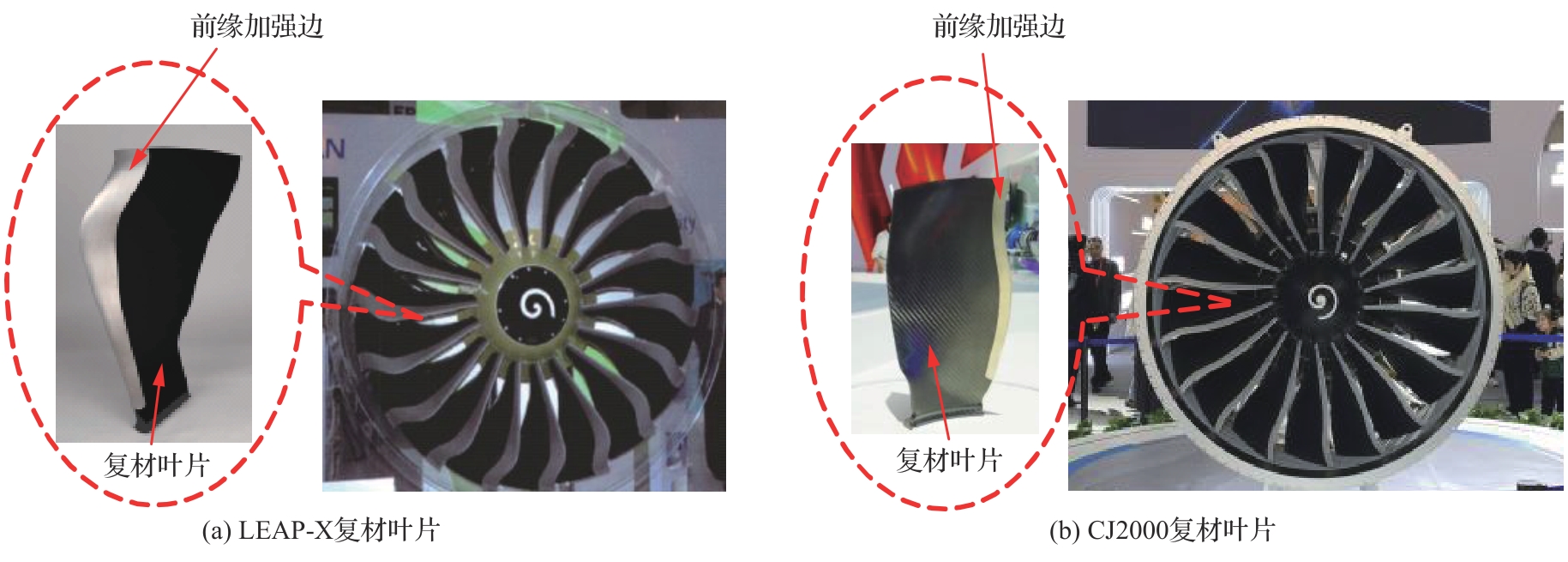
Fig.2
Leading edge protection cap structure of large composite blade
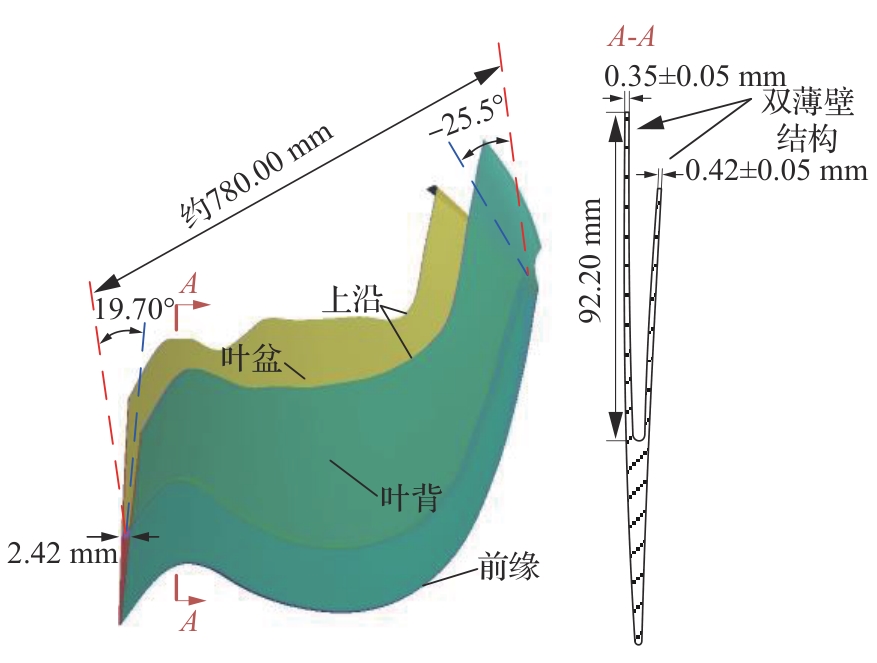
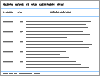
Table 1
Different values of tilt angle
| 编号 | 1 | 2 | 3 | 4 | 5 | 6 | 7 | 8 |
|---|---|---|---|---|---|---|---|---|
| θ/(°) | 45 | 55 | 60 | 65 | 70 | 75 | 80 | 85 |
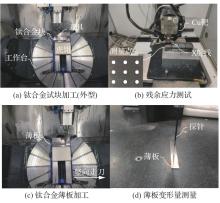
Fig.3
Machining and measuring site
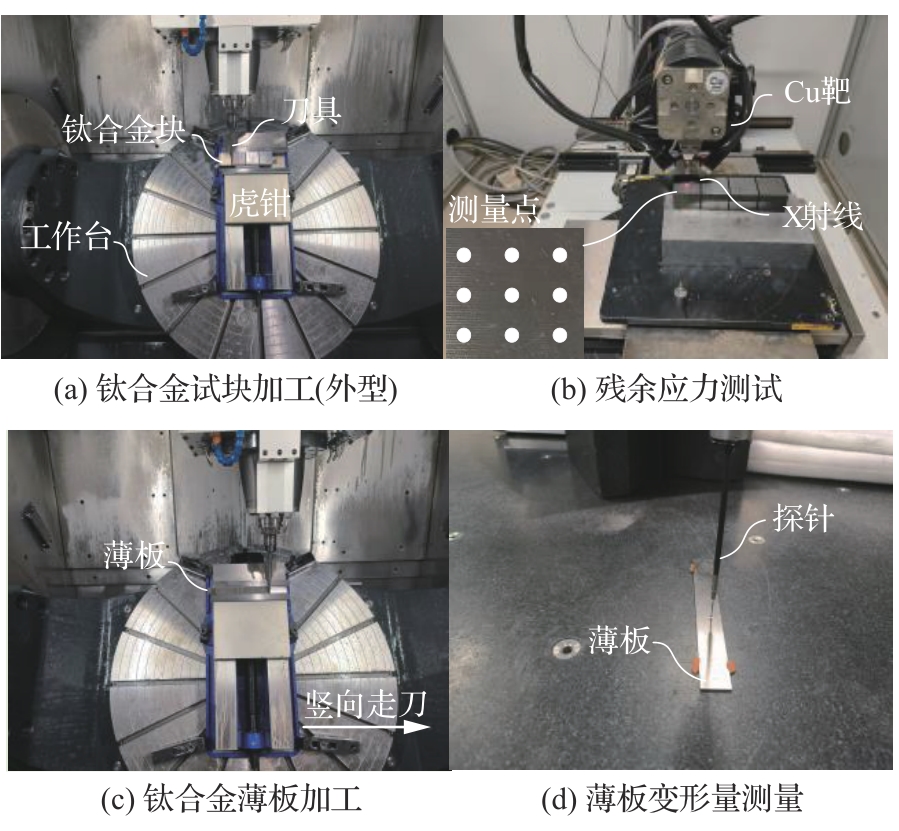
Table 2
Measured results of surface residual stress
| 编号 | 1 | 2 | 3 | 4 | 5 | 6 | 7 | 8 |
|---|---|---|---|---|---|---|---|---|
| σx /MPa | -172.39 | -136.04 | -129.54 | -125.46 | -126.72 | -133.81 | -142.48 | -152.68 |
| σy /MPa | -124.86 | -112.25 | -105.48 | -102.34 | -106.79 | -109.46 | -114.14 | -119.86 |
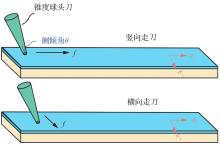
Fig.4
Schematic of two cutting paths
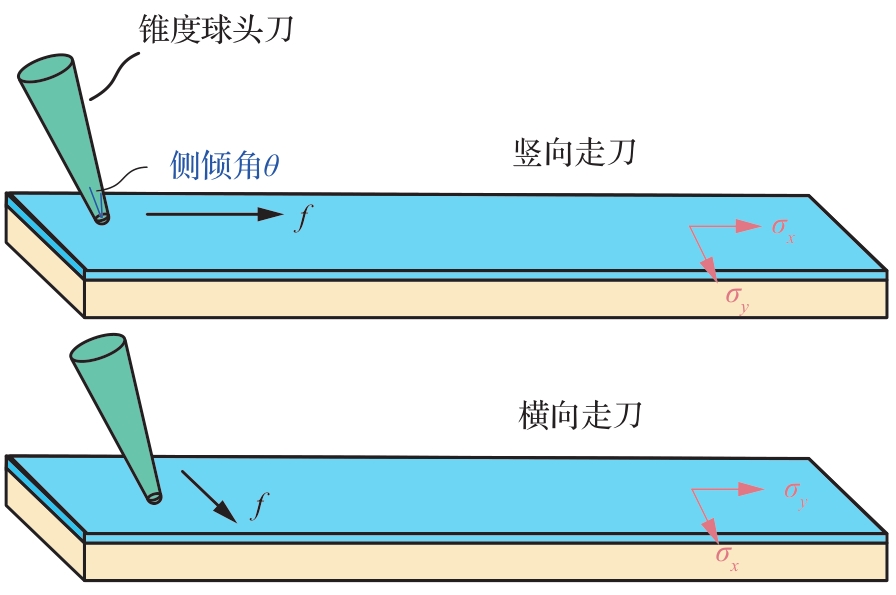
Table 3
Measured results of thin plate maximum deflection
| 实验编号 | 1 | 2 | 3 | 4 | 5 | 6 | 7 | 8 | 9 | 10 | 11 | 12 | 13 | 14 | 15 | 16 |
|---|---|---|---|---|---|---|---|---|---|---|---|---|---|---|---|---|
| θ/(°) | 45 | 45 | 55 | 55 | 60 | 60 | 65 | 65 | 70 | 70 | 75 | 75 | 80 | 80 | 85 | 85 |
| 走刀路径 | 竖 | 横 | 竖 | 横 | 竖 | 横 | 竖 | 横 | 竖 | 横 | 竖 | 横 | 竖 | 横 | 竖 | 横 |
| 最大挠度/mm | 0.126 | 0.079 | 0.091 | 0.071 | 0.084 | 0.065 | 0.080 | 0.063 | 0.081 | 0.067 | 0.087 | 0.068 | 0.095 | 0.071 | 0.104 | 0.075 |
Table 4
Model coefficients of outer profile residual stress
| 实验编号 | σx | σy | ||
|---|---|---|---|---|
| kx | ωx | ky | ωy | |
| 1 | 1.724 | 2.688 | 1.249 | 2.432 |
| 2 | 1.360 | 2.821 | 1.123 | 2.622 |
| 3 | 1.295 | 2.917 | 1.055 | 2.681 |
| 4 | 1.255 | 2.956 | 1.023 | 2.704 |
| 5 | 1.267 | 2.923 | 1.068 | 2.683 |
| 6 | 1.328 | 2.902 | 1.095 | 2.672 |
| 7 | 1.425 | 2.857 | 1.141 | 2.631 |
| 8 | 1.527 | 2.813 | 1.199 | 2.585 |
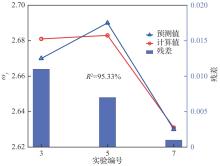
Fig.5
Comparison of calculated values and predicted values of model coefficients
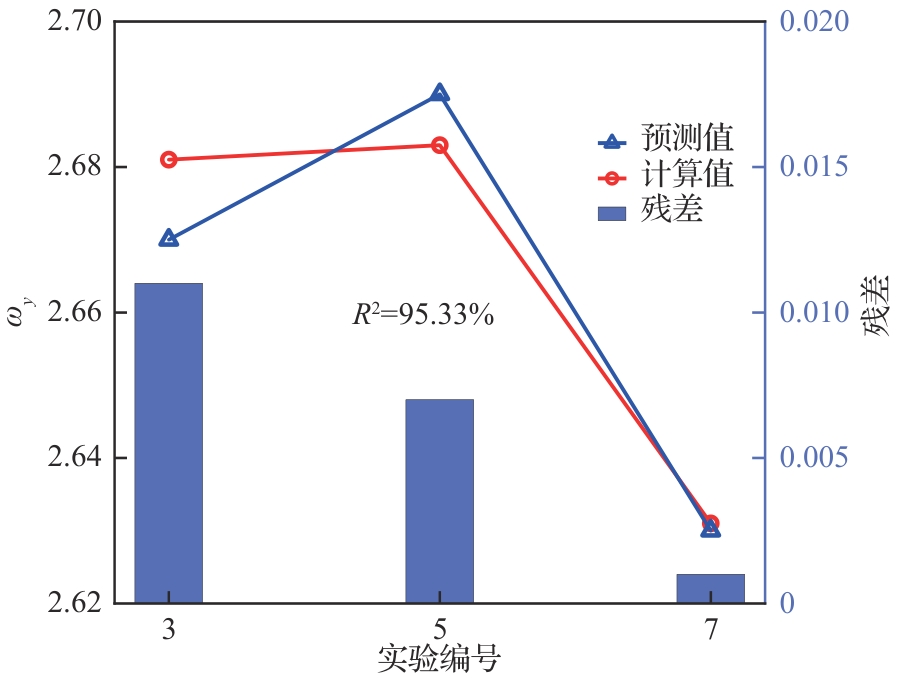
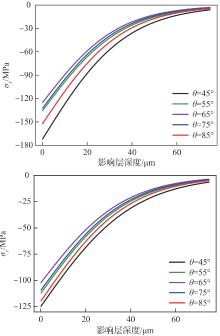
Fig.6
Residual stress gradient distribution curves with different tilt angles
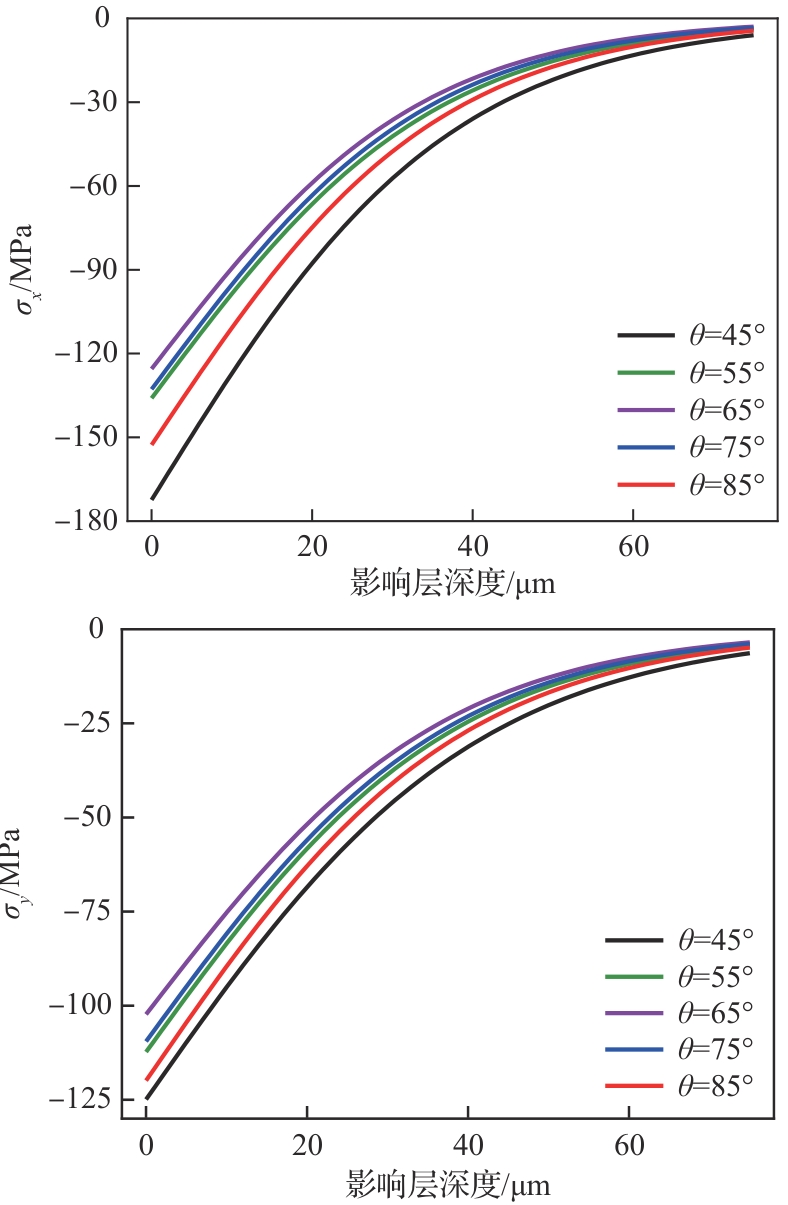
Table 5
Cutter specifications and process parameters of inner cavity machining
| 编号 | 刀具 型号 | θ/(°) | 切削速度/ (m∙min-1) | 每齿进给量/(mm∙z-1) | 切削深 度/mm |
|---|---|---|---|---|---|
| 1 | BR2.5C3.0 | 65 | 110 | 0.043 | 0.2 |
| 2 | BR2.0C2.8 | 70 | 88 | 0.032 | 0.2 |
| 3 | BR1.5C2.7 | 75 | 61 | 0.031 | 0.2 |
| 4 | BR1.2C2.0 | 80 | 42 | 0.027 | 0.2 |
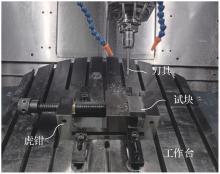
Fig.7
Machining site of titanium alloy block (inner cavity)
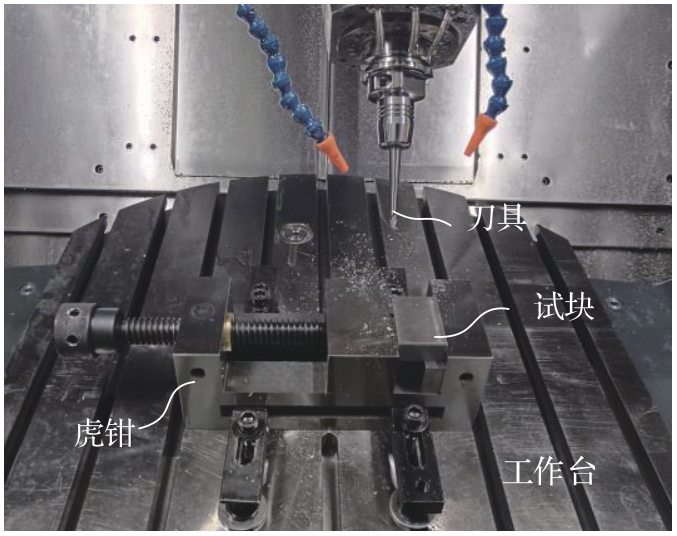
Table 6
Model coefficients of inner cavity residual stress
| 编号 | σx | σy | ||||
|---|---|---|---|---|---|---|
| kx | ωx | R2 | ky | ωy | R2 | |
| 1 | 1.84 | 6.38 | 0.985 2 | 1.35 | 4.58 | 0.952 6 |
| 2 | 2.11 | 4.26 | 0.963 2 | 2.28 | 3.88 | 0.947 3 |
| 3 | 1.96 | 5.14 | 0.974 4 | 2.97 | 7.21 | 0.956 8 |
| 4 | 4.33 | 4.07 | 0.993 1 | 4.83 | 6.25 | 0.935 7 |
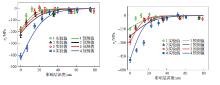
Fig.8
Residual stress gradient distribution curves of inner cavity
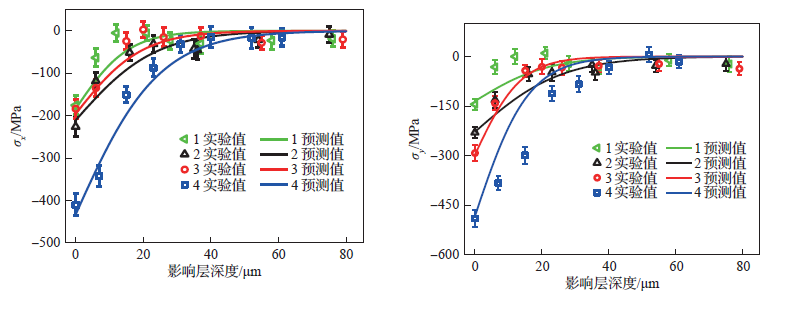
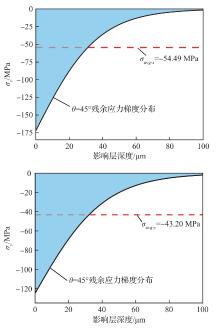
Fig.9
Schematic of equivalent residual stress for Group 1
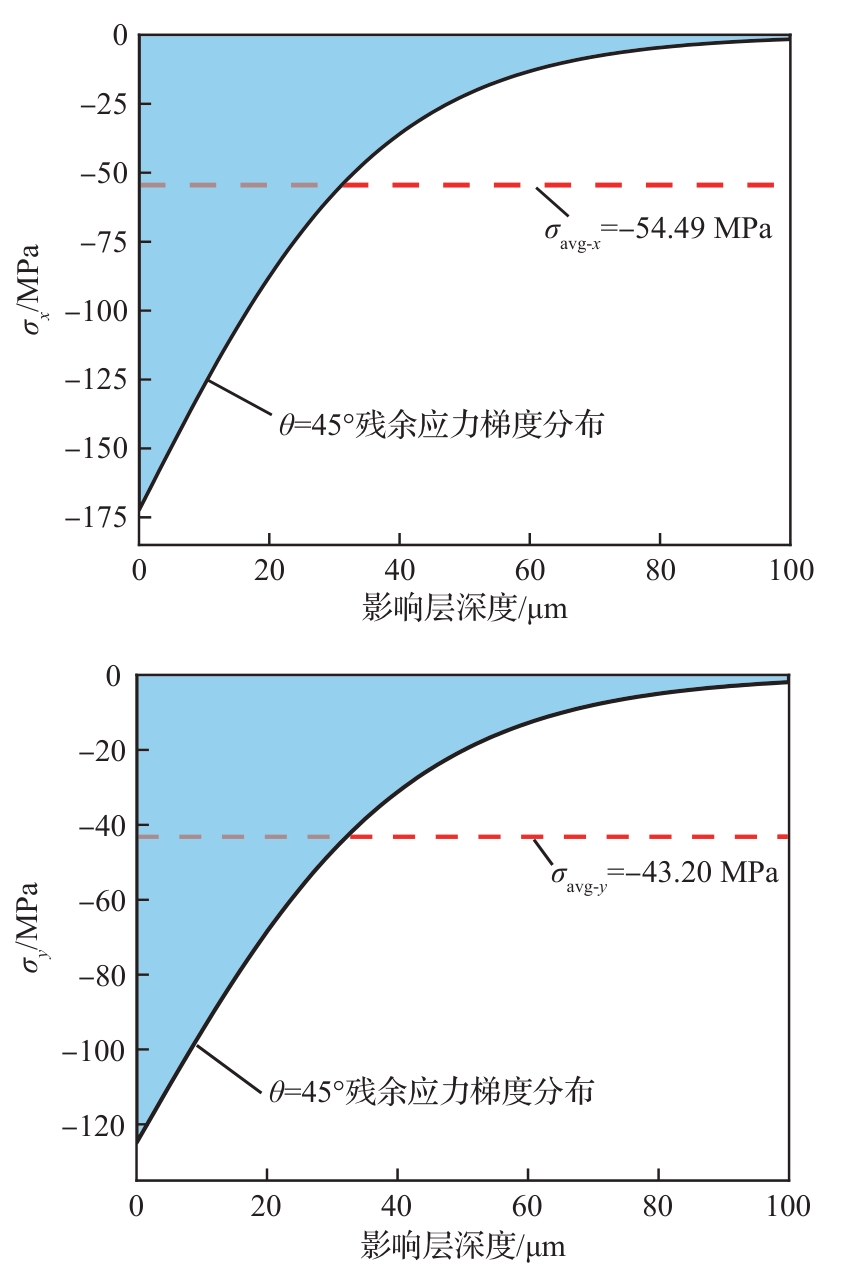
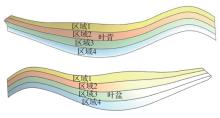
Fig.10
Division of inner cavity machining areas
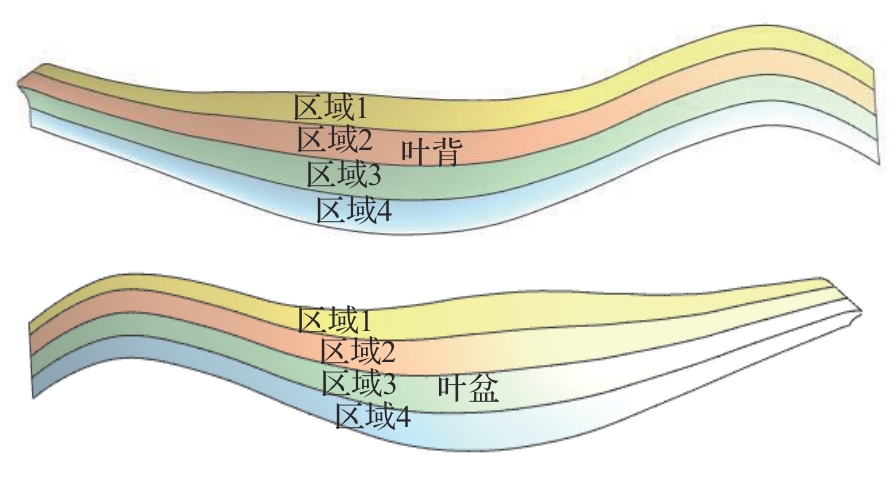
Table 7
Corresponding tilt angle for dividing areas
| 加强边位置 | θ/(°) | |||
|---|---|---|---|---|
| 区域1 | 区域2 | 区域3 | 区域4 | |
| 叶盆 | 65 | 70 | 75 | 80 |
| 叶背 | 65 | 70 | 75 | 80 |
Table 8
Equivalent residual stress corresponding to each area
| 编号 | 内腔和 外型 | 加强边 位置 | 区域 | 等效残余应力 | |
|---|---|---|---|---|---|
| σavg-x /MPa | σavg-y /MPa | ||||
| 1 | 内腔 | 叶盆 | 1 | -89.13 | -80.27 |
| 2 | 内腔 | 叶盆 | 2 | -81.80 | -95.38 |
| 3 | 内腔 | 叶盆 | 3 | -82.41 | -93.37 |
| 4 | 内腔 | 叶盆 | 4 | -174.30 | -132.62 |
| 5 | 内腔 | 叶背 | 1 | -89.13 | -80.27 |
| 6 | 内腔 | 叶背 | 2 | -81.80 | -95.38 |
| 7 | 内腔 | 叶背 | 3 | -82.41 | -93.37 |
| 8 | 内腔 | 叶背 | 4 | -174.30 | -132.62 |
| 9 | 外型 | 叶盆 | - | -36.32 | -32.18 |
| 10 | 外型 | 叶背 | - | -36.32 | -32.18 |
Fig.11
Simulation process of residual stress deformation
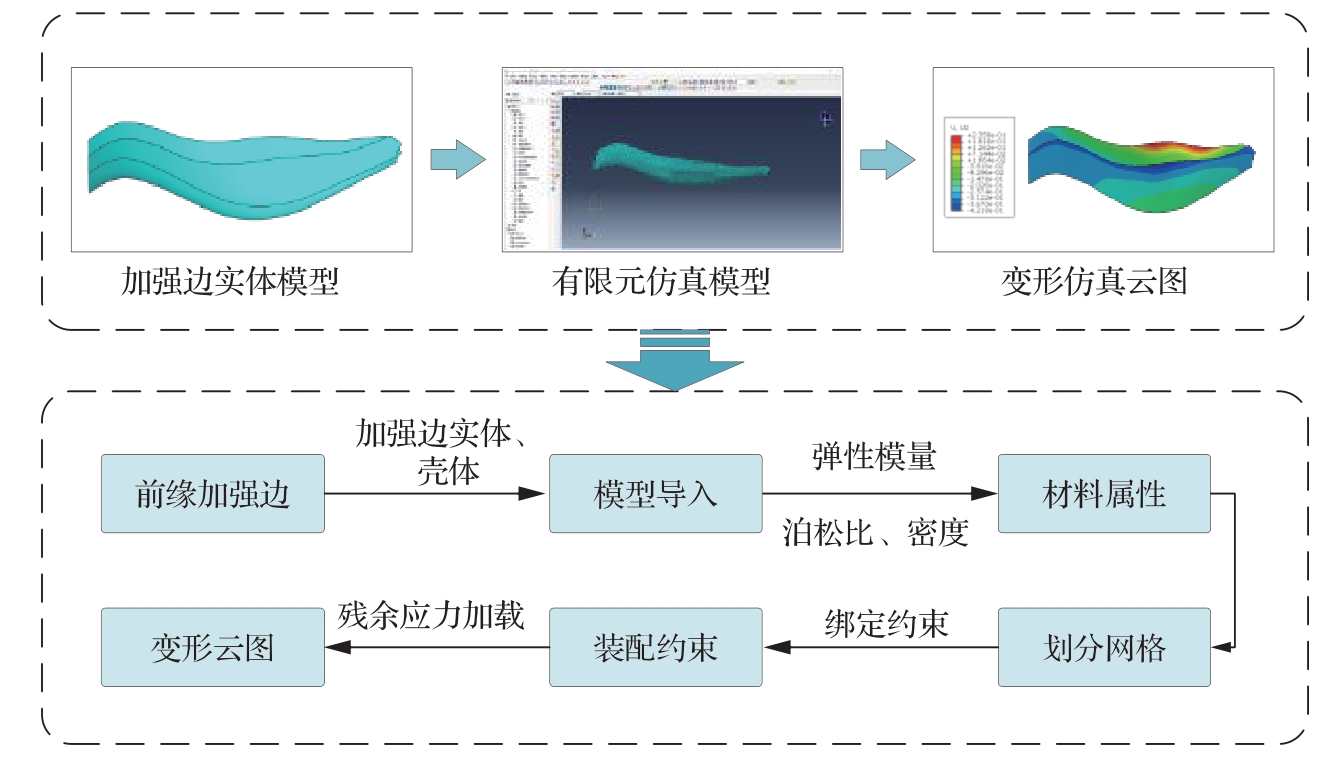
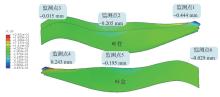
Fig.12
Deformation simulation of machining residual stress
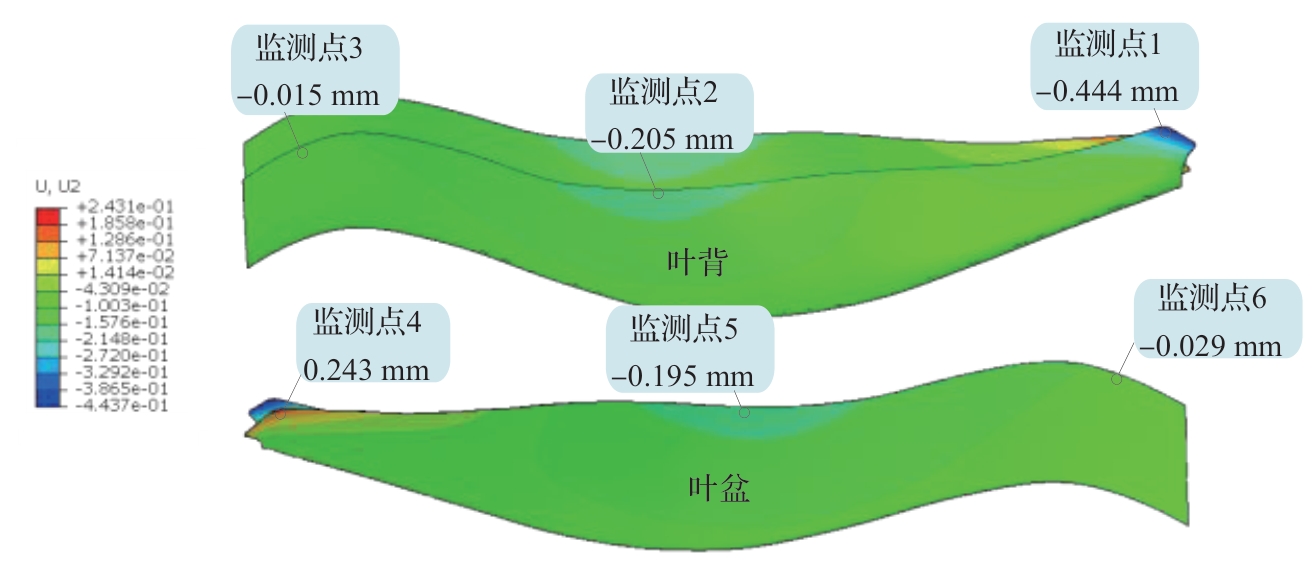
Fig.13
Machining of protection cap
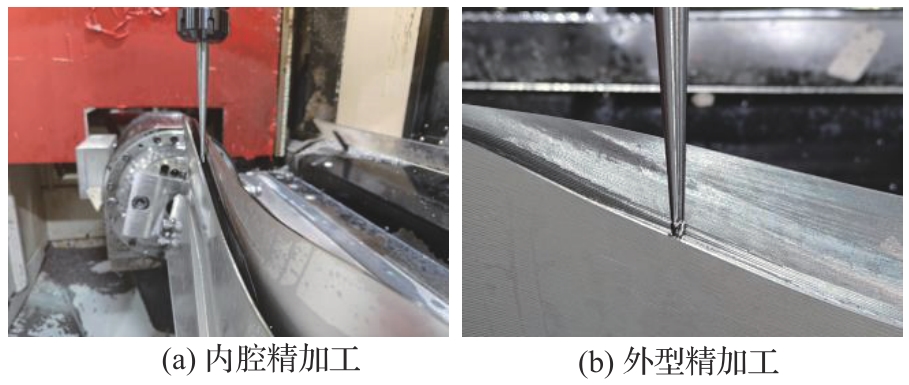
Fig.14
Blue light 3D scanning
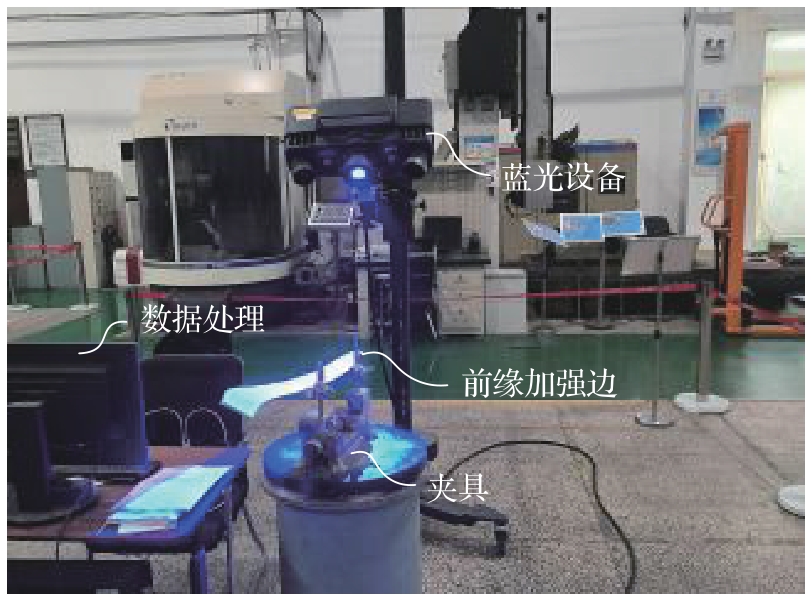
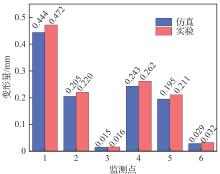
Fig.15
Simulated and experimental deformation of protection cap
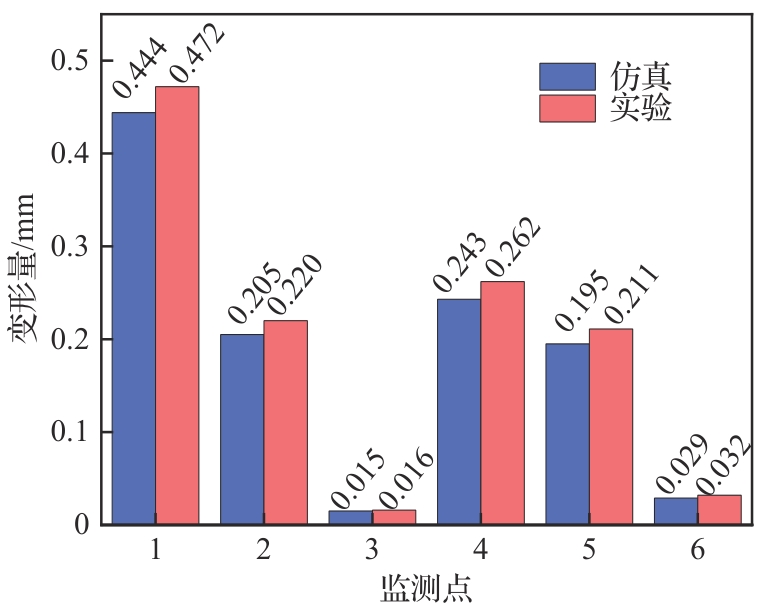
Table 9
Deformation simulation data of monitoring points
| 编号 | θ/(°) | 变形量/mm | |||||
|---|---|---|---|---|---|---|---|
| 监测点1 | 监测点2 | 监测点3 | 监测点4 | 监测点5 | 监测点6 | ||
| 1 | 45 | -0.310 | -0.275 | -0.025 | 0.198 | -0.265 | -0.061 |
| 2 | 55 | -0.422 | -0.213 | -0.017 | 0.236 | -0.211 | -0.032 |
| 3 | 65 | -0.444 | -0.205 | -0.015 | 0.243 | -0.195 | -0.029 |
| 4 | 75 | -0.430 | -0.211 | -0.016 | 0.239 | -0.205 | -0.031 |
| 5 | 85 | -0.344 | -0.258 | -0.021 | 0.210 | -0.239 | -0.056 |
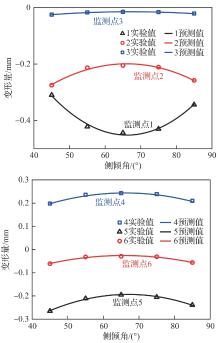
Fig.16
Effect of tilt angle on residual stress deformation
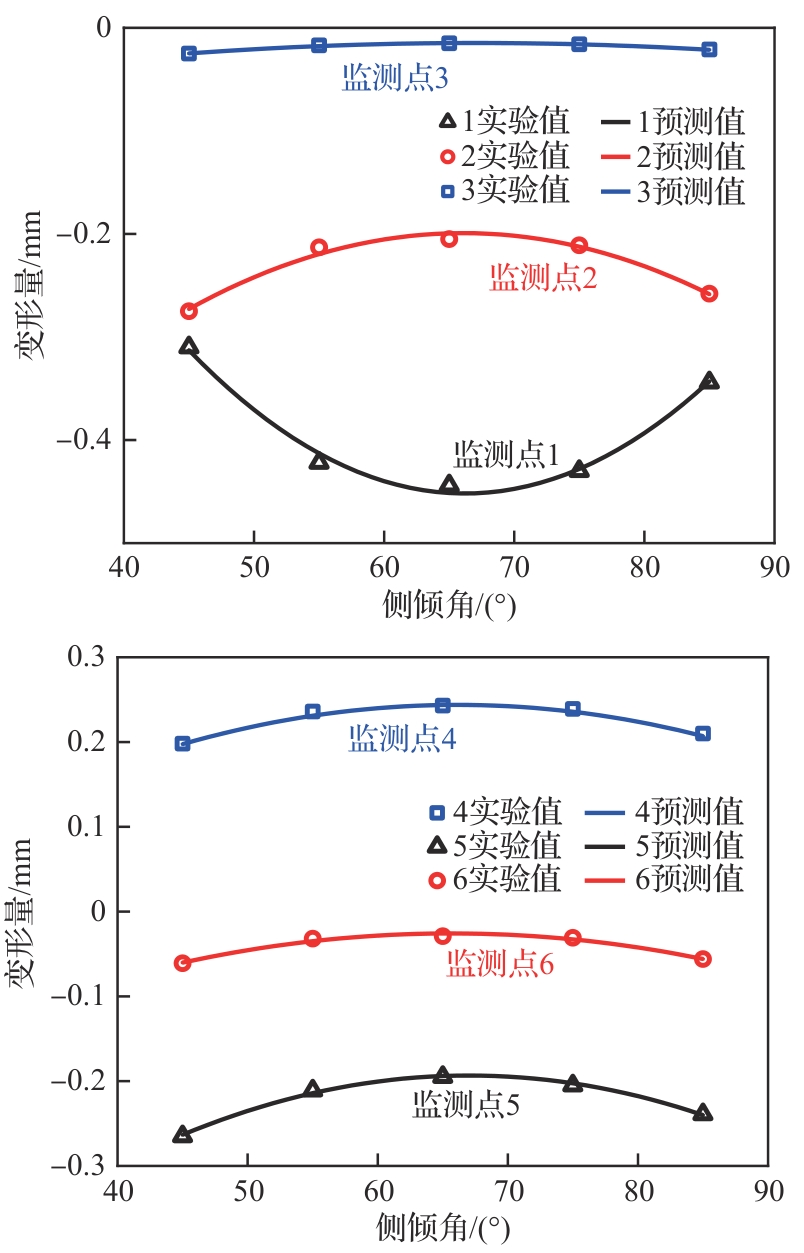
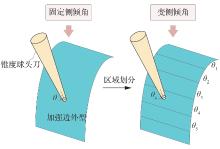
Fig.17
Schematic of two optimization schemes
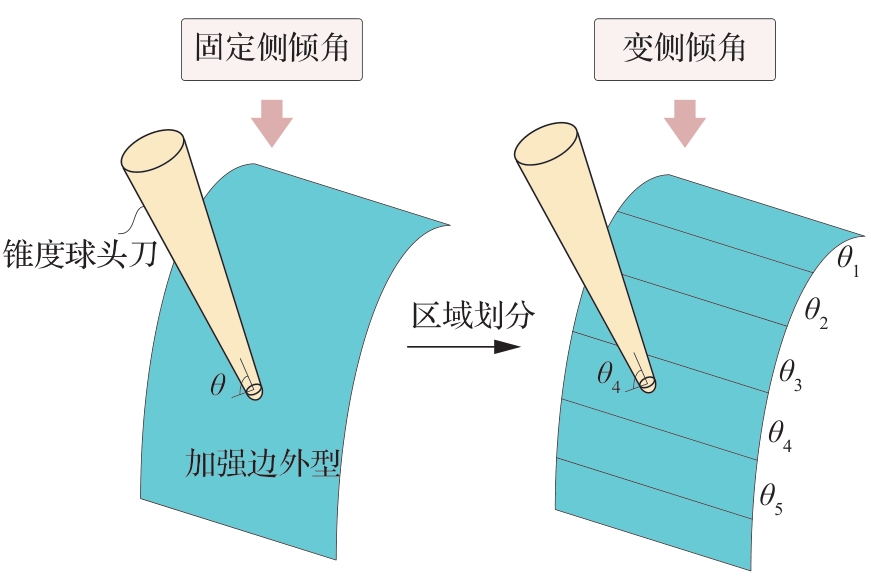
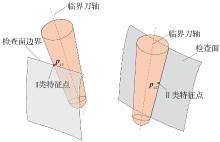
Fig.18
Feature points and critical cutter axis
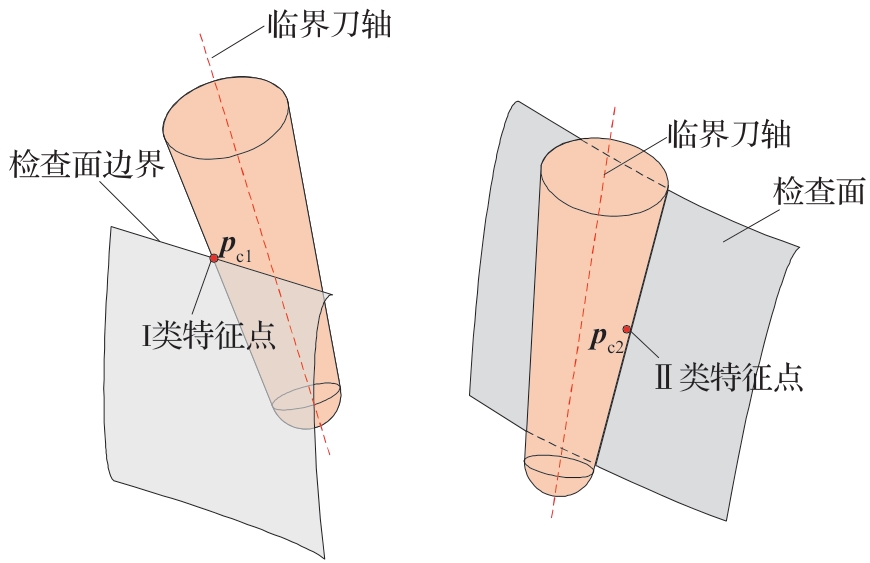
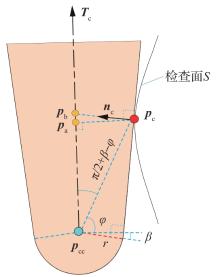
Fig.19
Geometric schematic for workpiece-type Ⅱ cutter interference
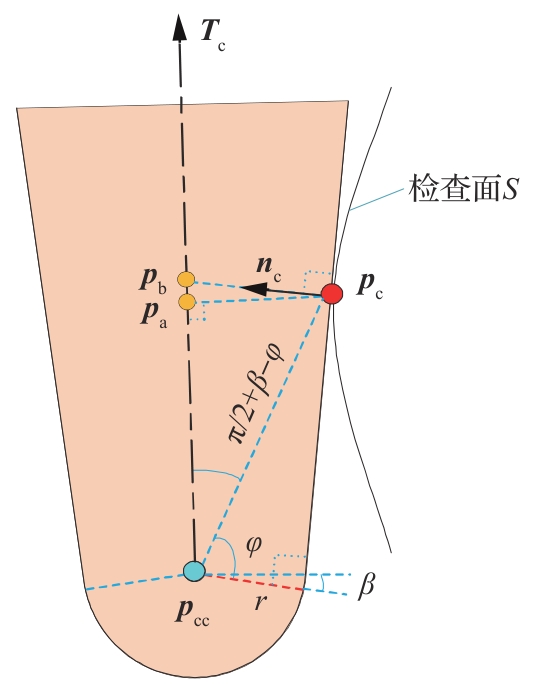
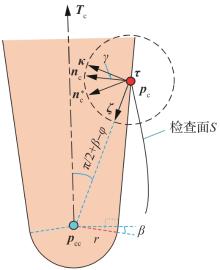
Fig.20
Geometric schematic for workpiece-type Ⅰ cutter- interference
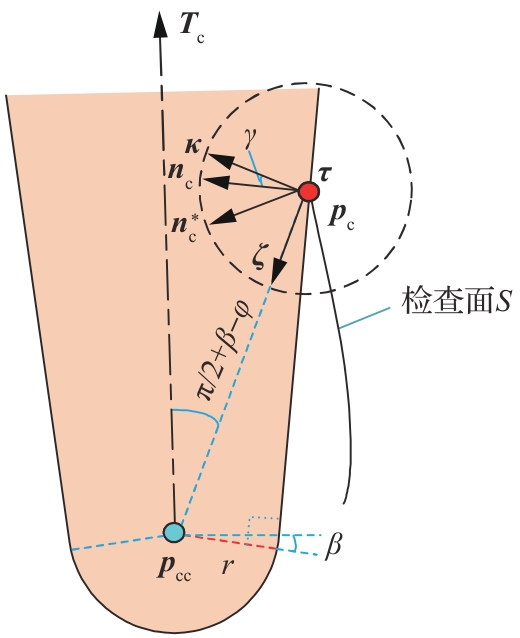
Table 10
Equivalent residual stress of outer profile after optimization
| 加强边位置 | 等效残余应力 | |
|---|---|---|
| σavg-x /MPa | σavg-y /MPa | |
| 叶盆 | -65.99 | -52.41 |
| 叶背 | -65.99 | -52.41 |
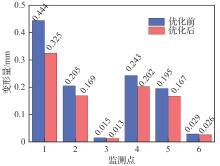
Fig.21
Deformation simulation data of protection cap before and after process optimization
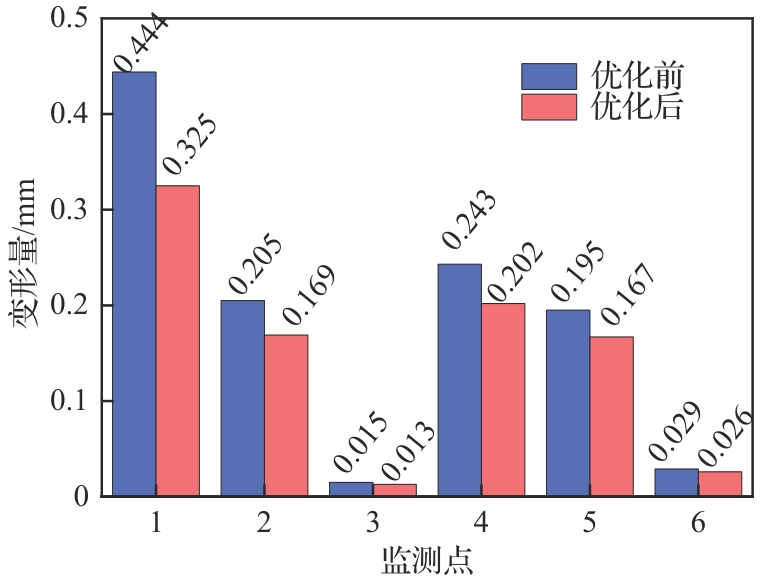
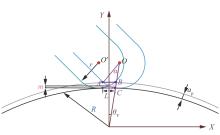
Fig.22
Schematic of cutter -workpiece contact area
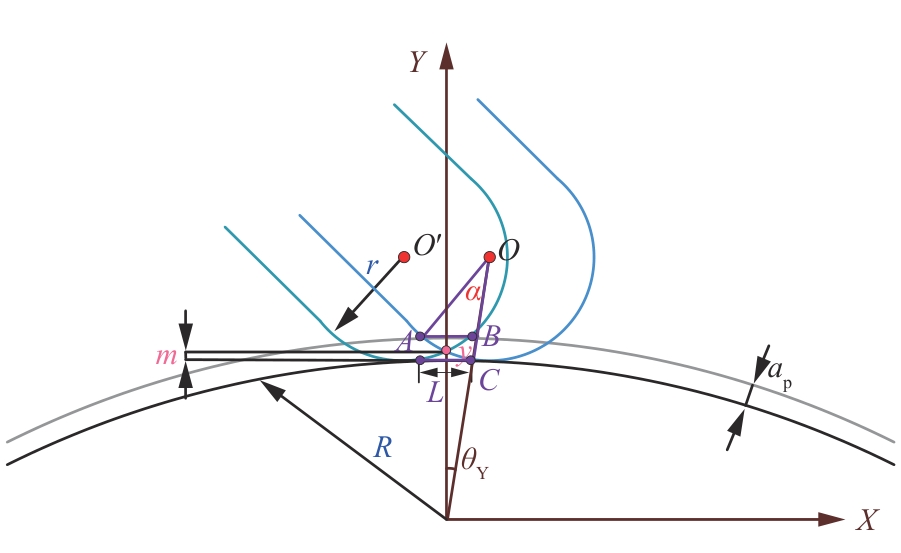
Table 11
Tilt angle and equivalent residual stress for different machining areas
| 加强边位置 | 区域 | θ/(°) | 等效残余应力 | |
|---|---|---|---|---|
| σavg-x /MPa | σavg-y /MPa | |||
| 叶盆 | 1 | 86.97 | -65.99 | -52.41 |
| 2 | 80.26 | -50.49 | -42.12 | |
| 3 | 73.55 | -37.83 | -32.60 | |
| 4 | 66.84 | -34.01 | -29.85 | |
| 5 | 60.13 | -37.04 | -31.87 | |
| 叶背 | 1 | 86.97 | -65.99 | -52.41 |
| 2 | 80.26 | -50.49 | -42.12 | |
| 3 | 73.55 | -37.83 | -32.60 | |
| 4 | 66.84 | -34.01 | -29.85 | |
| 5 | 60.13 | -37.04 | -31.87 | |
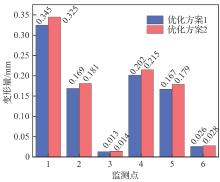
Fig.23
Deformation comparison between two optimization schemes
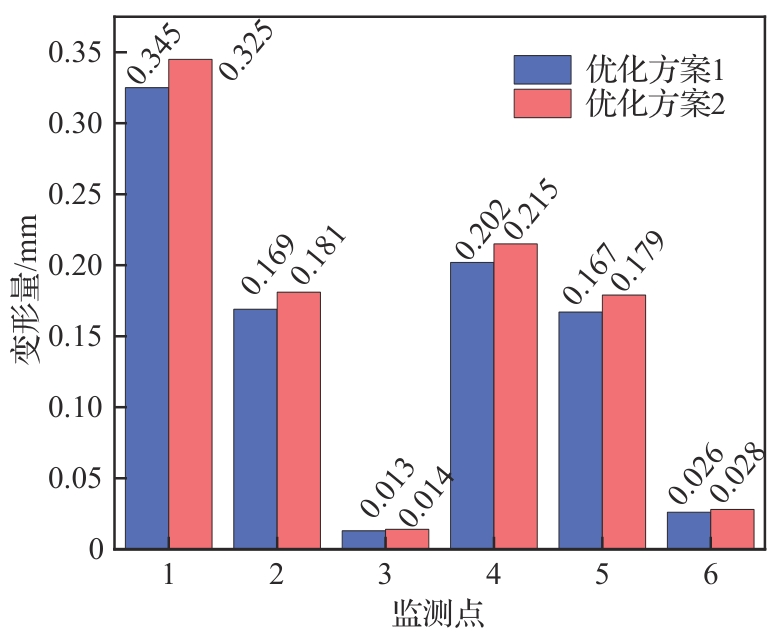
Table 12
Process parameters for machining of protection cap outer profile
| 区域 | f/(mm∙min-1) | n/(r∙min-1) | ap/mm | ae/mm | θ/(°) |
|---|---|---|---|---|---|
| 1 | 1 400 | 7 000 | 0.14 | 0.32 | 86.97 |
| 2 | 1 400 | 7 000 | 0.14 | 0.32 | 80.26 |
| 3 | 1 400 | 7 000 | 0.14 | 0.32 | 73.55 |
| 4 | 1 400 | 7 000 | 0.14 | 0.32 | 66.84 |
| 5 | 1 400 | 7 000 | 0.14 | 0.32 | 60.13 |
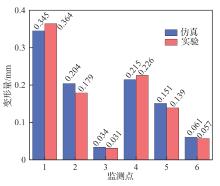
Fig.24
Simulated and experimental deformation with different tilt angles
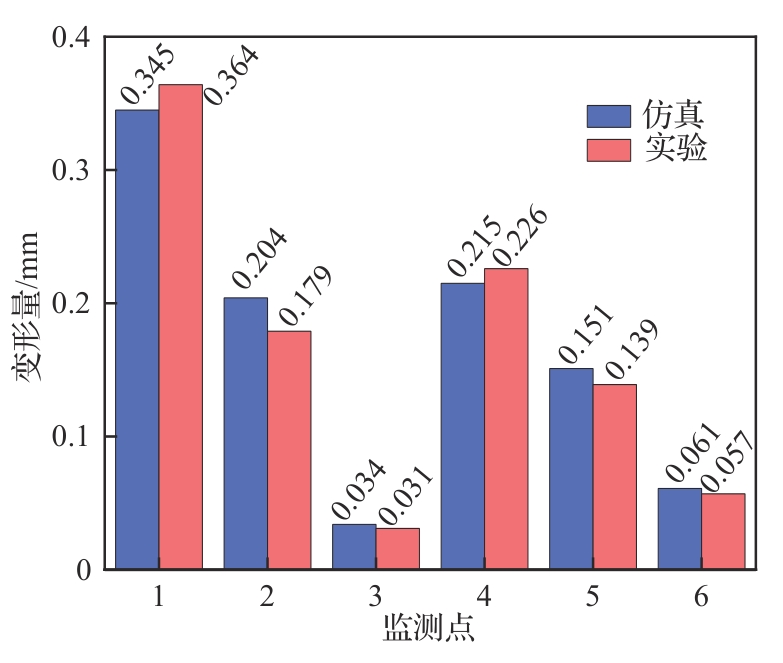
Fig.25
Experimental values of protection cap deformation before and after optimization
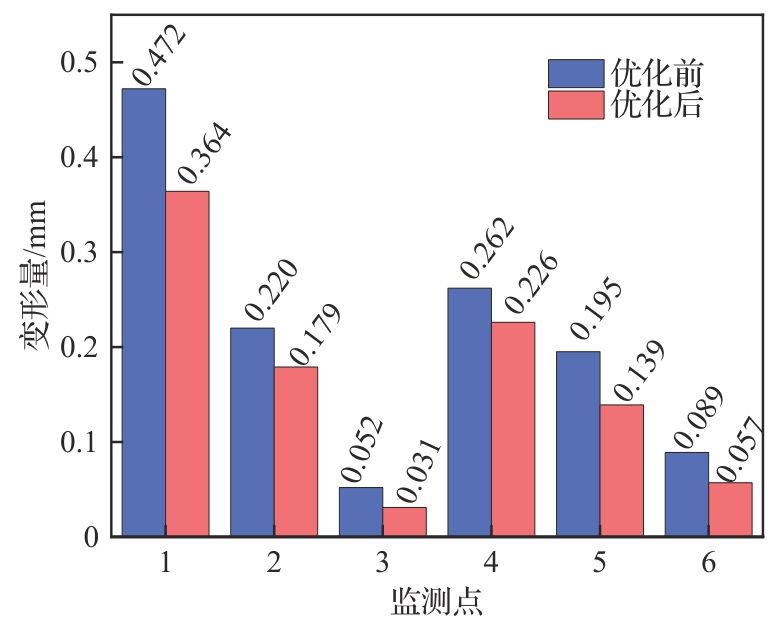
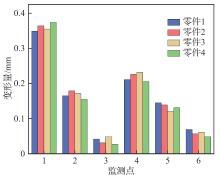
Fig.26
Deformation of four parts with the optimized process
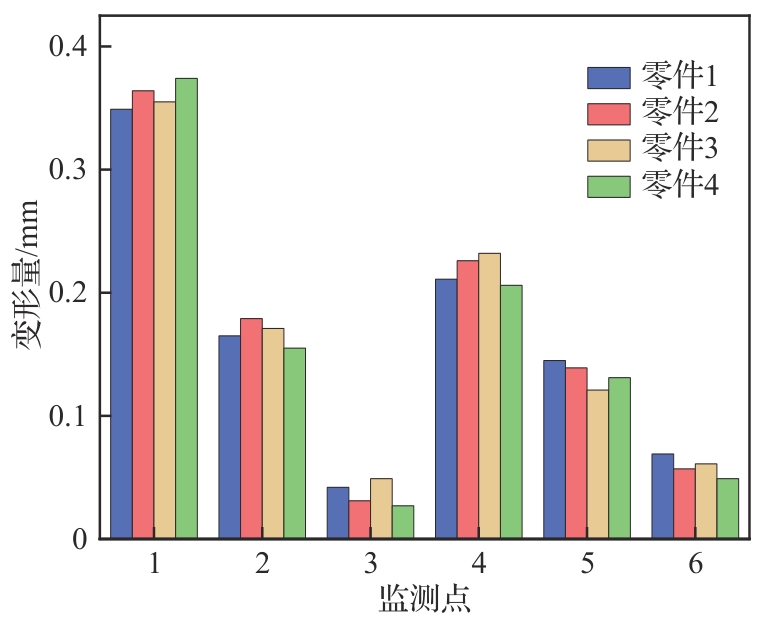
Table 13
Comparison of position, torsion angle and contour error at blade root cross-section
零件 编号 | 位置度误差/mm | 扭转角误差/(΄) | 轮廓度误差/mm | |||
|---|---|---|---|---|---|---|
| 优化前 | 优化后 | 优化前 | 优化后 | 优化前 | 优化后 | |
| 1 | 0.198 | 0.156 | 14.25 | 10.61 | 0.463 | 0.349 |
| 2 | 0.203 | 0.163 | 15.36 | 11.21 | 0.472 | 0.364 |
| 3 | 0.179 | 0.142 | 13.89 | 9.58 | 0.467 | 0.355 |
| 4 | 0.216 | 0.175 | 15.81 | 12.03 | 0.479 | 0.374 |
| [1] | LI X Y, REN J X, TANG K, et al. Optimization of cutter profile for achieving maximum stiffness in five-axis milling of deep and narrow channel parts[J]. Journal of Manufacturing Processes, 2019, 37: 541-555. |
| [2] | 任军学, 李祥宇, 周于轲, 等. 复材叶片前缘钛合金加强边内外同步对称铣加工方法: 中国, CN108176884[P]. 2019-01-11. |
| REN J X, LI X Y, ZHOU Y K, et al. Synchronous symmetrical milling method for the inner cavity and outer profile of the leading edge protection cap of composite blades with titanium alloy: China, CN108176884[P]. 2019-01-11 (in Chinese). | |
| [3] | 周金华, 王宗园, 任军学, 等. 前缘加强边外型精加工效率及残余应力变形协同优化方法: 中国,CN118798012[P]. 2024-12-27. |
| ZHOU J H, WANG Z Y, REN J X, et al. Cooperative optimization method for the outer profile of leading edge protection cap finishing efficiency and residual stress deformation: China, CN118798012[P]. 2024-12-27 (in Chinese). | |
| [4] | 周金华, 齐琪, 任军学, 等. 一种复材风扇叶片前缘金属加强边外型铣削方法: 中国,CN118682178[P]. 2024-11-01. |
| ZHOU J H, QI Q, REN J X, et al. A method for milling the outer profile of a leading edge metal protection cap of a composite fan blade: China, CN118682178[P]. 2024-11-01 (in Chinese). | |
| [5] | LI Z, DING P, YANG Y, et al. Research progress in machining technology of aerospace thin-walled parts[J]. Aeronautical Manufacturing Technology, 2024, 67(7): 38-53. |
| [6] | LI J G, WANG S Q. Distortion caused by residual stresses in machining aeronautical aluminum alloy parts: recent advances[J]. International Journal of Advanced Manufacturing Technology, 2017, 89(1-4): 997-1012. |
| [7] | 张瑞, 任军学, 张淑宁,等. 薄壁结构加工误差预测与控制研究进展[J]. 航空制造技术, 2024, 67(7): 77-95. |
| ZHANG R, REN J X, ZHANG S N, et al. Research progress on prediction and control of machining errors in thin-walled structures[J]. Aeronautical Manufacturing Technology, 2024, 67(7): 77-95 (in Chinese). | |
| [8] | ZHANG R, REN J X, ZHOU J H, et al. Collaborative optimization of multi-stage machining parameters for compressor blades[J]. Journal of Manufacturing Processes, 2025, 151: 214-233. |
| [9] | LI B Z, JIANG X H, YANG J G, et al. Effects of depth of cut on the redistribution of residual stress and distortion during the milling of thin-walled part[J]. Journal of Materials Processing Technology, 2015, 216: 223-233. |
| [10] | 丛靖梅, 莫蓉, 吴宝海,等. 薄壁件残余应力变形仿真预测与切削参数优化[J]. 机械科学与技术, 2019, 38(2): 205-210. |
| CONG J M, MO R, WU B H, et al. Prediction of deformation induced by residual stress in milling of thin-walled part and optimization of cutting parameters[J]. Mechanical Science and Technology for Aerospace Engineering, 2019, 38(2): 205-210 (in Chinese). | |
| [11] | ZHANG Z X, WANG L H, WANG S Q, et al. A novel deflection control method for the asymmetric thin-walled component by optimizing the feed rate of the finishing process[J]. International Journal of Advanced Manufacturing Technology, 2023, 127(7-8): 3385-3395. |
| [12] | YANG D, LIU Z Q, REN X P, et al. Hybrid modeling with finite element and statistical methods for residual stress prediction in peripheral milling of titanium alloy Ti-6Al-4V[J]. International Journal of Mechanical Sciences, 2016, 108: 29-38. |
| [13] | YI J, WANG X Y, ZHU Y C, et al. Deformation control in mesoscale micro-milling of curved thin-walled structures[J]. Materials, 2024, 17(20): 5071. |
| [14] | JIANG X H, HU F X, WU C J, et al. Deformation prediction model for milling residual stresses in complex thin-walled parts with variable curvature[J]. Journal of Manufacturing Processes, 2025, 139: 156-171. |
| [15] | ZHOU J H, ZHANG Z D, LIU C J, et al. Empirical modeling of residual stress profile for multi-axis milling GH4169G[J]. International Journal of Advanced Manufacturing Technology, 2025, 137(3-4): 1405-1420. |
| [16] | 黄涛, 刘志兵, 王西彬,等. 刀轴侧倾角对薄壁叶片加工变形的影响[J]. 兵工学报, 2018, 39(3): 577-583. |
| HUANG T, LIU Z B, WANG X B, et al. Effect of inclination angle of cutter shaft on machining deformation of thin-walled blade[J]. Acta Armamentarii, 2018, 39(3): 577-583 (in Chinese). | |
| [17] | WANG Z Y, ZHOU J H, REN J X, et al. Hybrid prediction model for residual stress profile induced by multi‑axis milling Ti‑6Al‑4V titanium alloy combined finite element with experiment[J]. The International Journal of Advanced Manufacturing Technology, 2023, 126: 4495-4511. |
| [18] | 吴宝海, 郑志阳, 张阳,等. 面向薄壁零件加工变形与振动控制的智能装夹技术研究进展[J]. 机械工程学报, 2021, 57(17): 21-34. |
| WU B H, ZHENG Z Y, ZHANG Y, et al. Intelligent clamping technology for machining deformation and vibration control of thin-wall parts: a review of recent progress[J]. Journal of Mechanical Engineering, 2021, 57(17): 21-34 (in Chinese). | |
| [19] | HAO X Z, LI Y G, HUANG C, et al. An allowance allocation method based on dynamic approximation via online inspection data for deformation control of structural parts[J]. Chinese Journal of Aeronautics, 2020, 33(12): 3495-3508. |
| [20] | ZHANG Z X, LUO M, TANG K, et al. A new in-processes active control method for reducing the residual stresses induced deformation of thin-walled parts[J]. Journal of Manufacturing Processes, 2020, 59: 316-325. |
| [21] | 郑志阳, 张阳, 张钊,等. 基于GA-SVR的薄壁叶片辅助支撑布局优化方法[J]. 航空学报, 2023, 44(4): 426805. |
| ZHENG Z Y, ZHANG Y, ZHANG Z, et al. Layout optimization of auxiliary support for thin-walled blade based on GA-SVR[J]. Acta Aeronautica et Astronautica Sinica, 2023, 44(4): 426805 (in Chinese). | |
| [22] | 岳彩旭, 张俊涛, 刘献礼,等. 薄壁件铣削过程加工变形研究进展[J]. 航空学报, 2022, 43(4): 525164. |
| YUE C X, ZHANG J T, LIU X L, et al. Research progress on machining deformation of thin-walled parts in milling process[J]. Acta Aeronautica et Astronautica Sinica, 2022, 43(4): 525164 (in Chinese). | |
| [23] | 贺旭东, 明伟伟, 郭国强,等. 走刀路径对多型腔薄壁件加工变形的影响[J]. 机械设计与制造, 2019(3): 106-109. |
| HE X D, MING W W, GUO G Q, et al. Influence of tool path on thin-wall parts’ deformation[J]. Machinery Design & Manufacture, 2019(3): 106-109 (in Chinese). | |
| [24] | LI Z L, ZHU L M. Compensation of deformation errors in five-axis flank milling of thin-walled parts via tool path optimization[J]. Precision Engineering-Journal of the International Societies for Precision Engineering and Nanotechnology, 2019, 55: 77-87. |
| [25] | HOU Y H, ZHANG D H, ZHANG Y, et al. The variable radial depth of cut in finishing machining of thin-walled blade based on the stable-state deformation field[J]. International Journal of Advanced Manufacturing Technology, 2021, 113(1-2): 141-158. |
| [26] | WANG Z H, WANG S B, ZHAO Z Y, et al. Machining deformation modeling method for thin-walled parts based on bi-axial and dual-source residual stresses[J]. Thin-Walled Structures, 2025, 216: 113649. |
| [27] | YANG D, YI L Y, CHEN L J. Influences of tool path on machining deformation of trapezoidal frame thin-walled parts[J]. Aeronautical Manufacturing Technology, 2022, 65(21): 128-134. |
| [28] | ZHOU J H, QI Q, LIU Q Q, et al. Determining residual stress profile induced by end milling from measured thin plate deformation[J]. Thin-Walled Structures, 2024, 200: 111862. |
| [29] | 张仲玺, 王帅钦, 赵慧娟,等. 薄壁零件残余应力演化机理及变形控制方法[J]. 航空学报, 2024, 45(13): 629365. |
| ZHANG Z X, WANG S Q, ZHAO H J, et al. Residual stresses evolution mechanism of thin⁃walled component and deformation control method[J]. Acta Aeronautica et Astronautica Sinica, 2024, 45(13): 629365 (in Chinese). | |
| [30] | LI X Y, REN J X, LV X M, et al. A novel method for solving shortest tool length based on compressing 3D check surfaces relative to tool postures[J]. Chinese Journal of Aeronautics, 2021, 34(2): 641-658. |
| [1] | Yingbo QIU, Weiyu KONG, Xiangping HE, Qian BAI. Effect of surface hardness and surface residual stress on fretting wear characteristics of FGH99 [J]. Acta Aeronautica et Astronautica Sinica, 2026, 47(4): 432129-432129. |
| [2] | Chunhao FAN, Junshan HU, Zhiyong YANG, Fusen HOU, Peilin CHEN, Wei TIAN. Effects of curing residual stress and deformation on tensile performance of CFRP single-sided patch-repaired titanium alloy damaged components [J]. Acta Aeronautica et Astronautica Sinica, 2026, 47(3): 431997-431997. |
| [3] | Baoshi YU, Yongjun LEI, Zhibin SHEN, Dapeng ZHANG. Review on analysis and control technology of curing residual stress in solid motor propellants [J]. Acta Aeronautica et Astronautica Sinica, 2025, 46(8): 31083-031083. |
| [4] | Jia WEI, Baoshi YU, Dapeng ZHANG, Zhibin SHEN, Yongjun LEI. Generation and release mechanism of residual stress and strain in solid rocket motor propellant grain with pressure cure [J]. Acta Aeronautica et Astronautica Sinica, 2025, 46(16): 431661-431661. |
| [5] | Shengnan ZHANG, Yingjie XU, Weihong ZHANG. Numerical study on curing residual stresses in compression of Z-pinned composites [J]. Acta Aeronautica et Astronautica Sinica, 2024, 45(20): 429966-429966. |
| [6] | Zheng CAO, Yan CHAI, Guangyu HE, Zhaolu ZHANG, Pu LI, Xiaohui ZHA. Effect of anti-erosion coatings on fatigue performance of titanium alloys in compressor blades [J]. Acta Aeronautica et Astronautica Sinica, 2024, 45(19): 429930-429930. |
| [7] | Zhenghua GUO, Zheng CHEN, Yida ZENG, Yiqian GUO, Zhenhua NIU, Zirui YANG, Zhiyong LI, Junwu WAN. Research status and prospects of refractory high-entropy alloys prepared by selective laser melting [J]. Acta Aeronautica et Astronautica Sinica, 2024, 45(14): 29518-029518. |
| [8] | Lizhuo DONG, Siqi ZHANG, Zhao ZHANG, Baohai WU. Prediction method of blade machining deformation driven by mechanism⁃data hybrid [J]. Acta Aeronautica et Astronautica Sinica, 2024, 45(13): 629037-629037. |
| [9] | Zhongxi ZHANG, Shuaiqin WANG, Huijuan ZHAO, Dinghua ZHANG, Longhao WANG. Residual stresses evolution mechanism of thin⁃walled component and deformation control method [J]. Acta Aeronautica et Astronautica Sinica, 2024, 45(13): 629365-629365. |
| [10] | Kun LI, Chunlin ZUO, Ruobing LIAO, Chen JI, Bin JIANG, Fusheng PAN. Current status and prospects of research on residual stress in additive manufacturing of Al alloys [J]. Acta Aeronautica et Astronautica Sinica, 2024, 45(12): 29380-029380. |
| [11] | Laixiao LU, Changguan XU, Jianhua LIU, Meizhen QIN, Yingbo LYU, Yuqin YAN. Influence of initial stress state on bilateral rolling process of thin⁃walled part [J]. ACTA AERONAUTICAET ASTRONAUTICA SINICA, 2023, 44(10): 427415-427415. |
| [12] | LIU Zhendong, ZHENG Xitao, FAN Wenjing, ZHANG Dongjian. Effect of process-induced residual stress on strength of UAV composite wing [J]. ACTA AERONAUTICAET ASTRONAUTICA SINICA, 2022, 43(6): 526117-526117. |
| [13] | LI Hui, LI Guangxian, GAO Ruilin, JIN Xin, LIU Lu, LI Chaojiang, Songlin DING. Research progress of post-processing of stainless steel additive manufacturing parts [J]. ACTA AERONAUTICAET ASTRONAUTICA SINICA, 2022, 43(4): 525847-525847. |
| [14] | SHANG Yong, FENG Yang, LIU Qiaomu, WANG Junwu, YANG Huijun, RU Yi, ZHANG Heng, ZHAO Wenyue, PEI Yanling, LI Shusuo, GONG Shengkai. Research and application of large scientific facility on high-temperature structural materials and coatings of aero-engine [J]. ACTA AERONAUTICAET ASTRONAUTICA SINICA, 2022, 43(10): 527481-527481. |
| [15] | WANG Lianqing, HU Ya'nan, CHE Zhigang, WU Shengchuan. Fatigue performance of laser shock processed fusion welded 7075 Al alloy [J]. ACTA AERONAUTICAET ASTRONAUTICA SINICA, 2021, 42(5): 524320-524320. |
| Viewed | ||||||
|
Full text |
|
|||||
|
Abstract |
|
|||||
Address: No.238, Baiyan Buiding, Beisihuan Zhonglu Road, Haidian District, Beijing, China
Postal code : 100083
E-mail:hkxb@buaa.edu.cn
Total visits: 6658907 Today visits: 1341All copyright © editorial office of Chinese Journal of Aeronautics
All copyright © editorial office of Chinese Journal of Aeronautics
Total visits: 6658907 Today visits: 1341

 CJA

