Acta Aeronautica et Astronautica Sinica ›› 2025, Vol. 46 ›› Issue (19): 531337.doi: 10.7527/S1000-6893.2025.31337
• Special Issue: Aircraft Digital Twin Technology • Previous Articles Next Articles
Fei LI, Fan LI( ), Xiaolong YANG, Jincheng ZHANG, Peibo LI, Hongbo WANG, Mingbo SUN
Received:2024-10-08
Revised:2024-11-21
Accepted:2025-01-27
Online:2025-02-13
Published:1900-01-01
Contact:
Fan LI
E-mail:lifan@nudt.edu.cn
Supported by:CLC Number:
Fei LI, Fan LI, Xiaolong YANG, Jincheng ZHANG, Peibo LI, Hongbo WANG, Mingbo SUN. Numerical simulation on mixing process of a liquid kerosene jet in a cavity-based supersonic combustor[J]. Acta Aeronautica et Astronautica Sinica, 2025, 46(19): 531337.
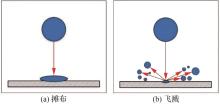
Fig.1
Two forms of droplets after impacting the wall
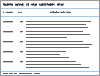
Table 1
Test inflow conditions
| 参数 | 数值 |
|---|---|
| 马赫数Ma | 2.0 |
| 总温 | 900 |
| 总压 | 1.0 |
| 密度 | 0.89 |
| 来流速度 | 896.4 |
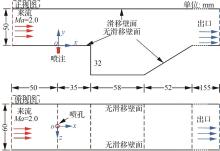
Fig.2
Schematic diagram of computational domain with boundaries
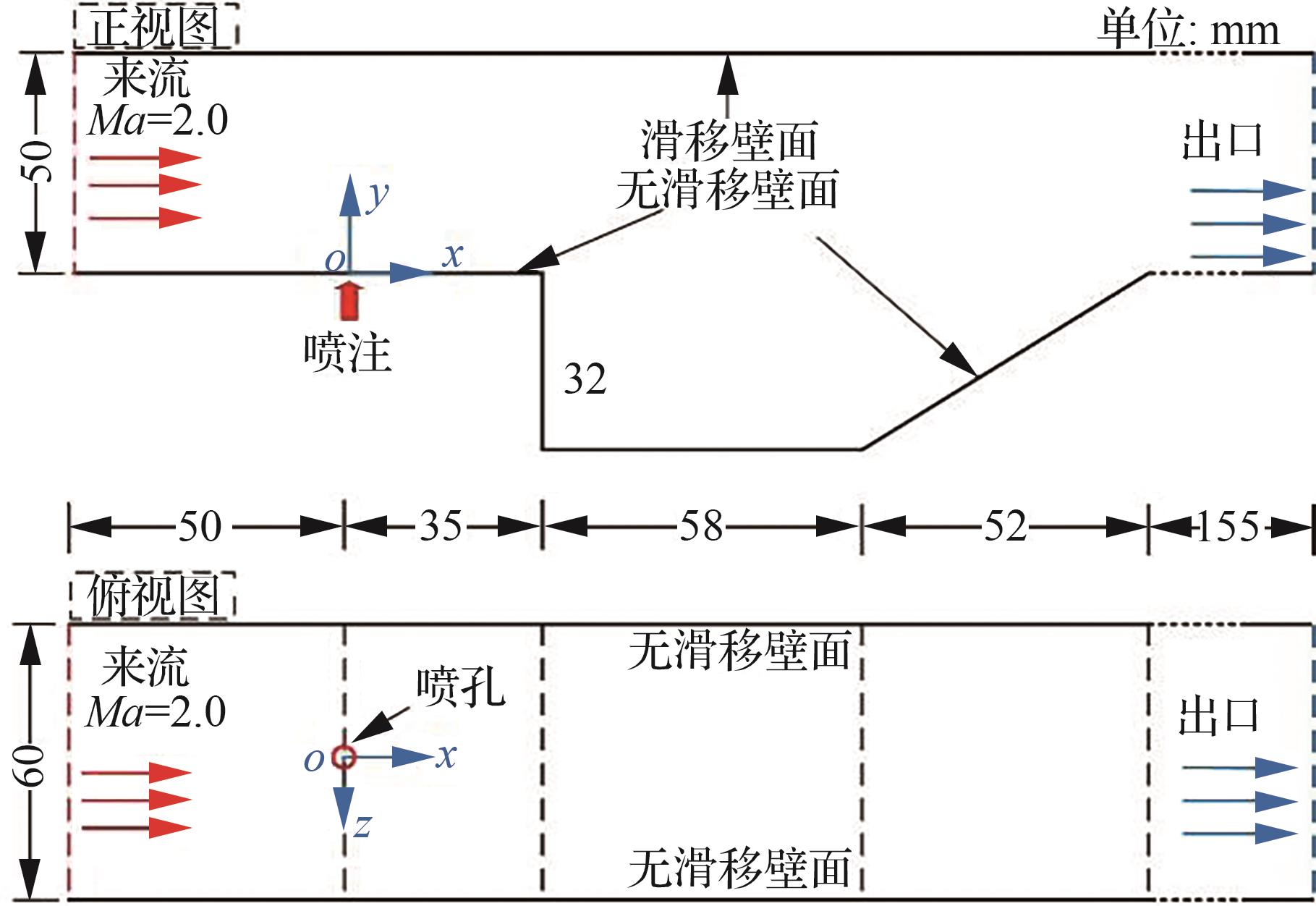
Fig.3
Comparison of simulated spray penetration with experiments in the central plane
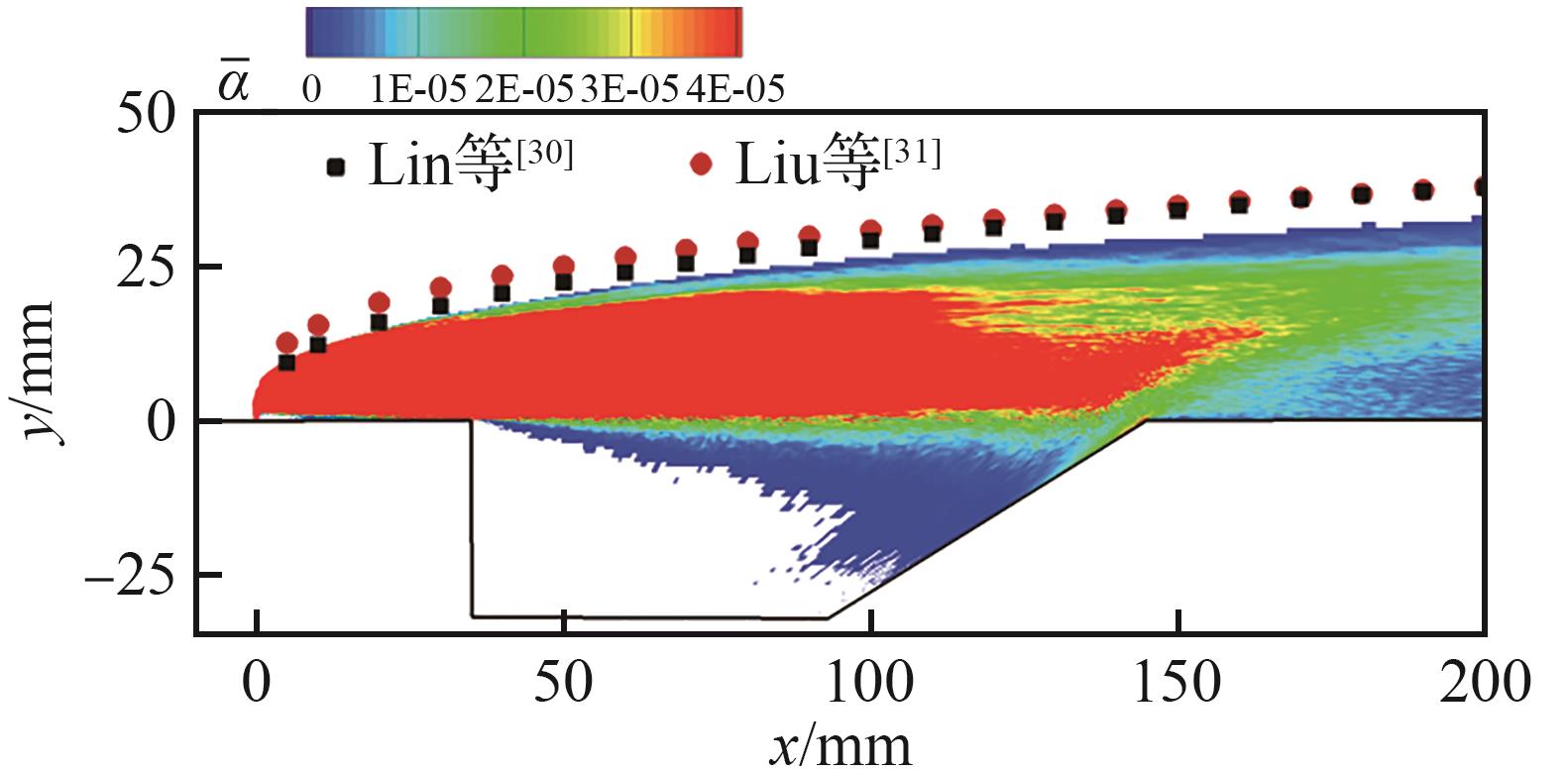
Fig.4
Three dimensional flow structure of gas-liquid two-phase in cavity-based supersonic combustor
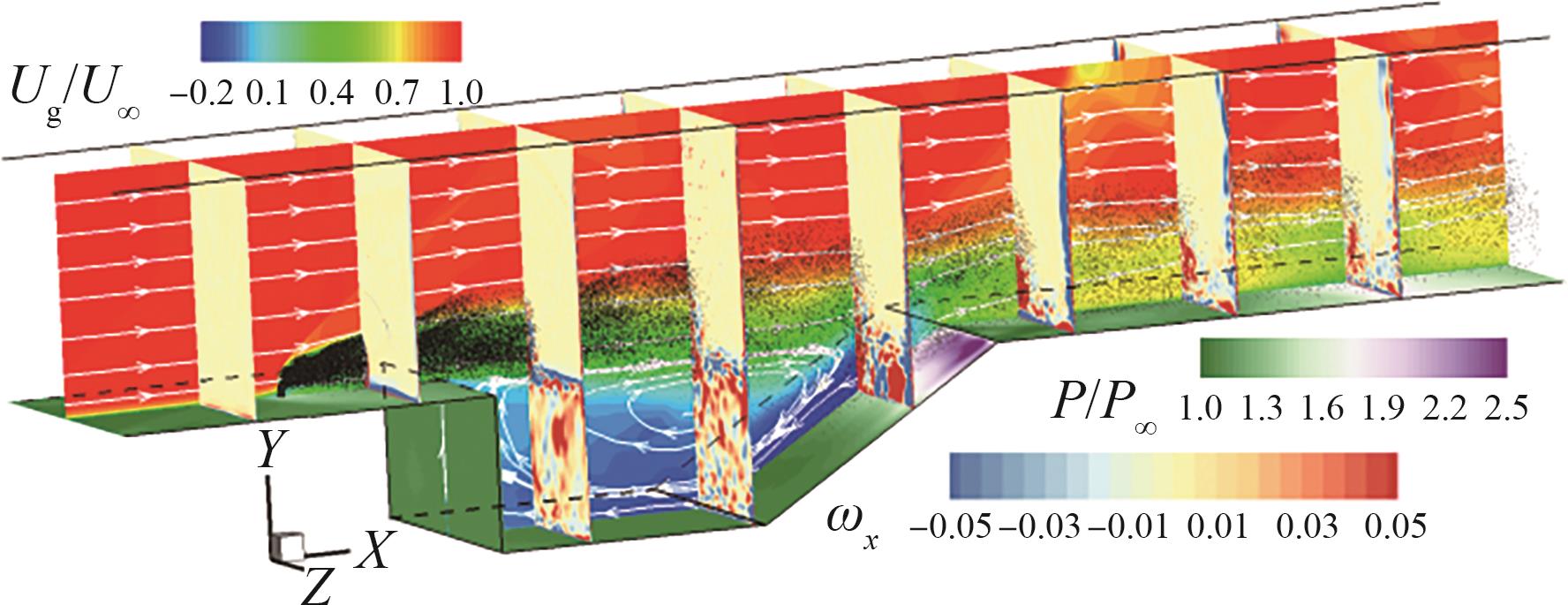
Fig.5
Streamlines and streamwise velocity contour of liquid phase in the central plane
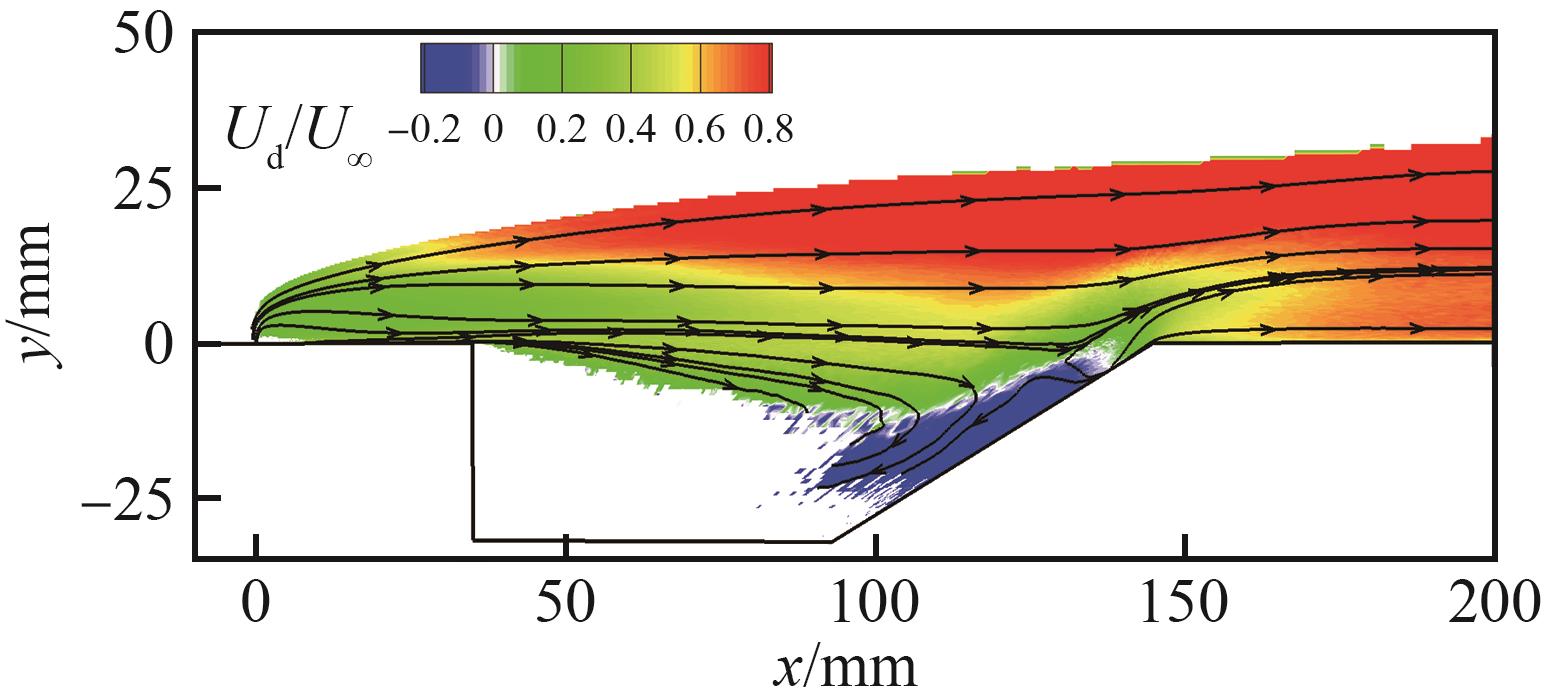
Fig.6
Time-averaged droplet streamwise velocity contours in different cross-sectional planes associated with 3D streamlines color-coded according to time-averaged droplet longitudinal velocity
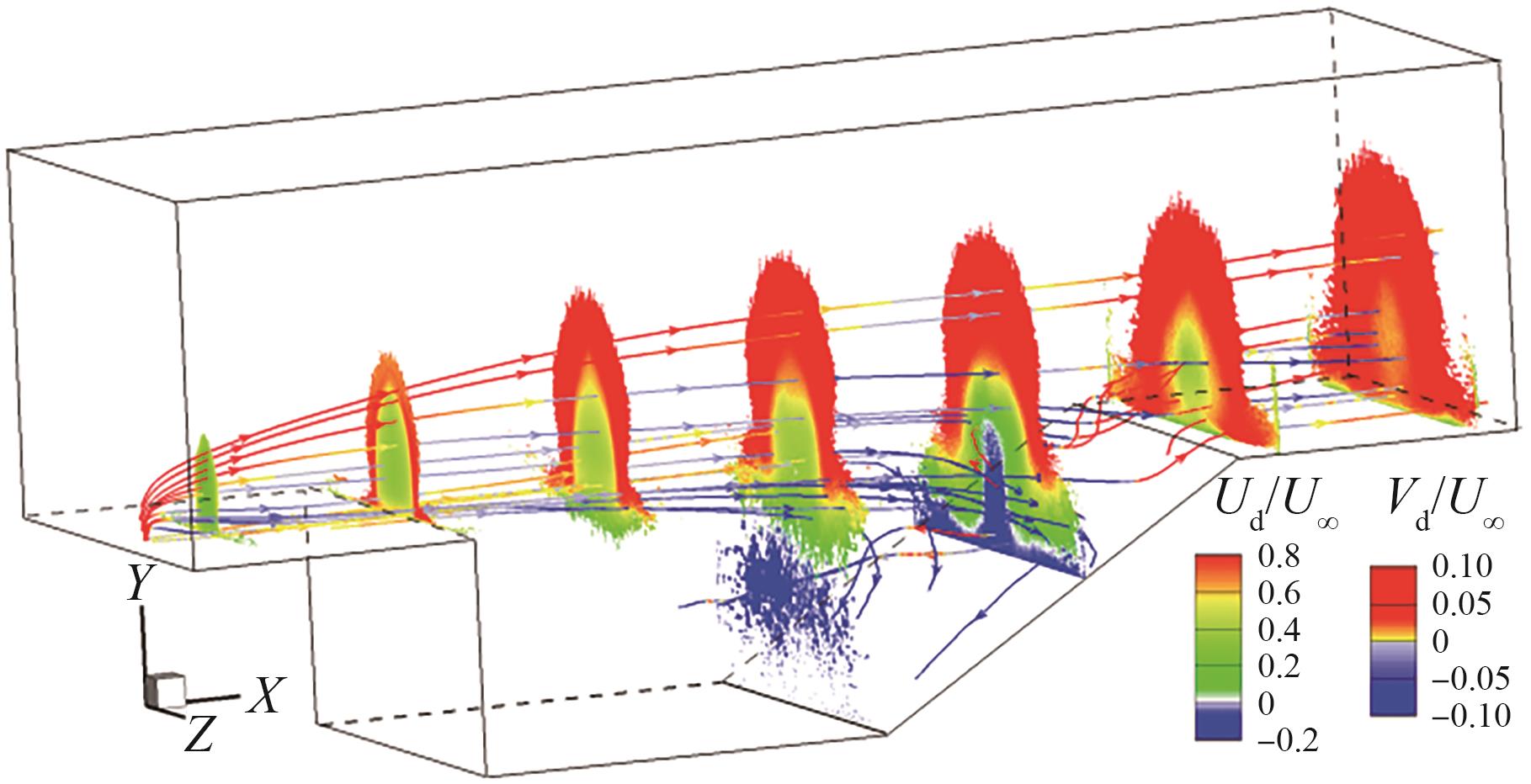
Fig.7
Instantaneous distribution of liquid spray in the central plane (the secondary splashed droplets are colored in red)
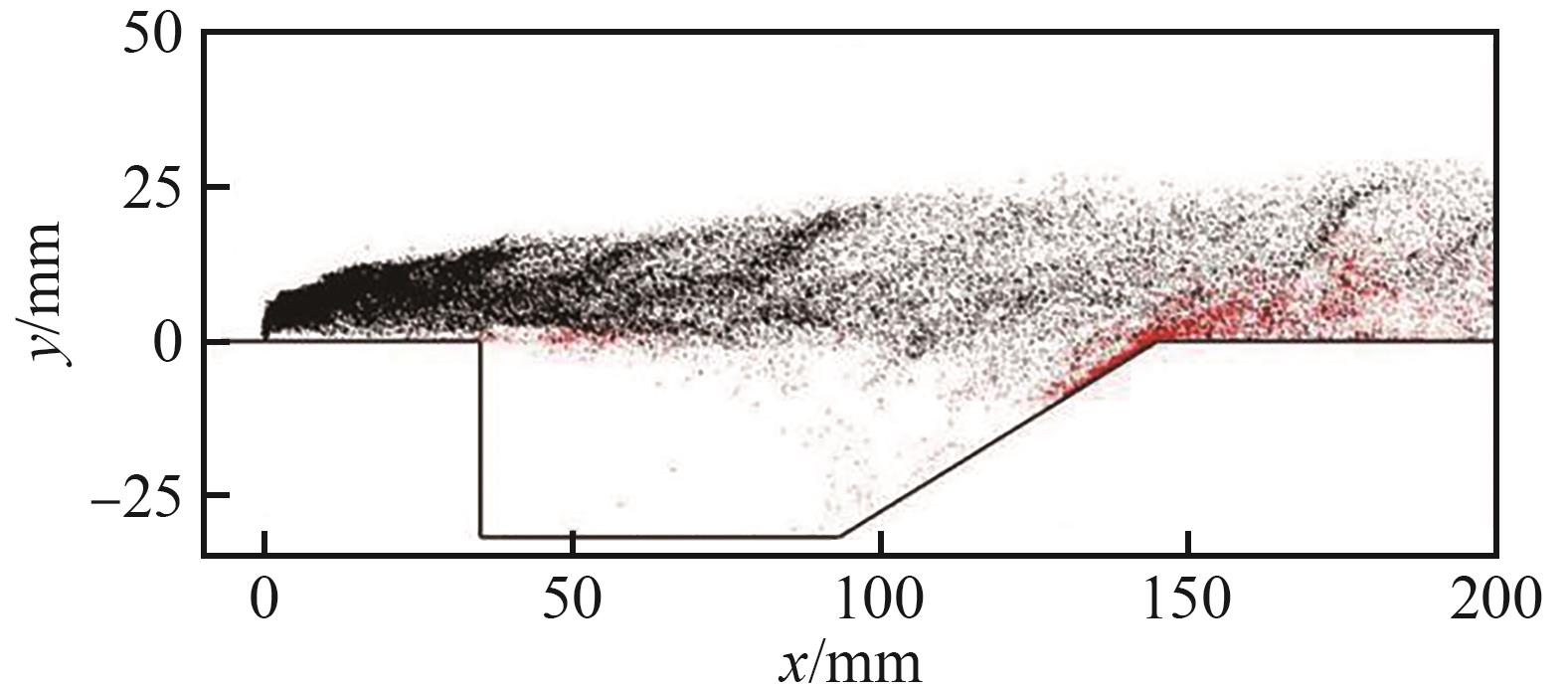
Fig.8
Spray concentration distribution expressed by average droplet volume fraction in different cross-sectional planes
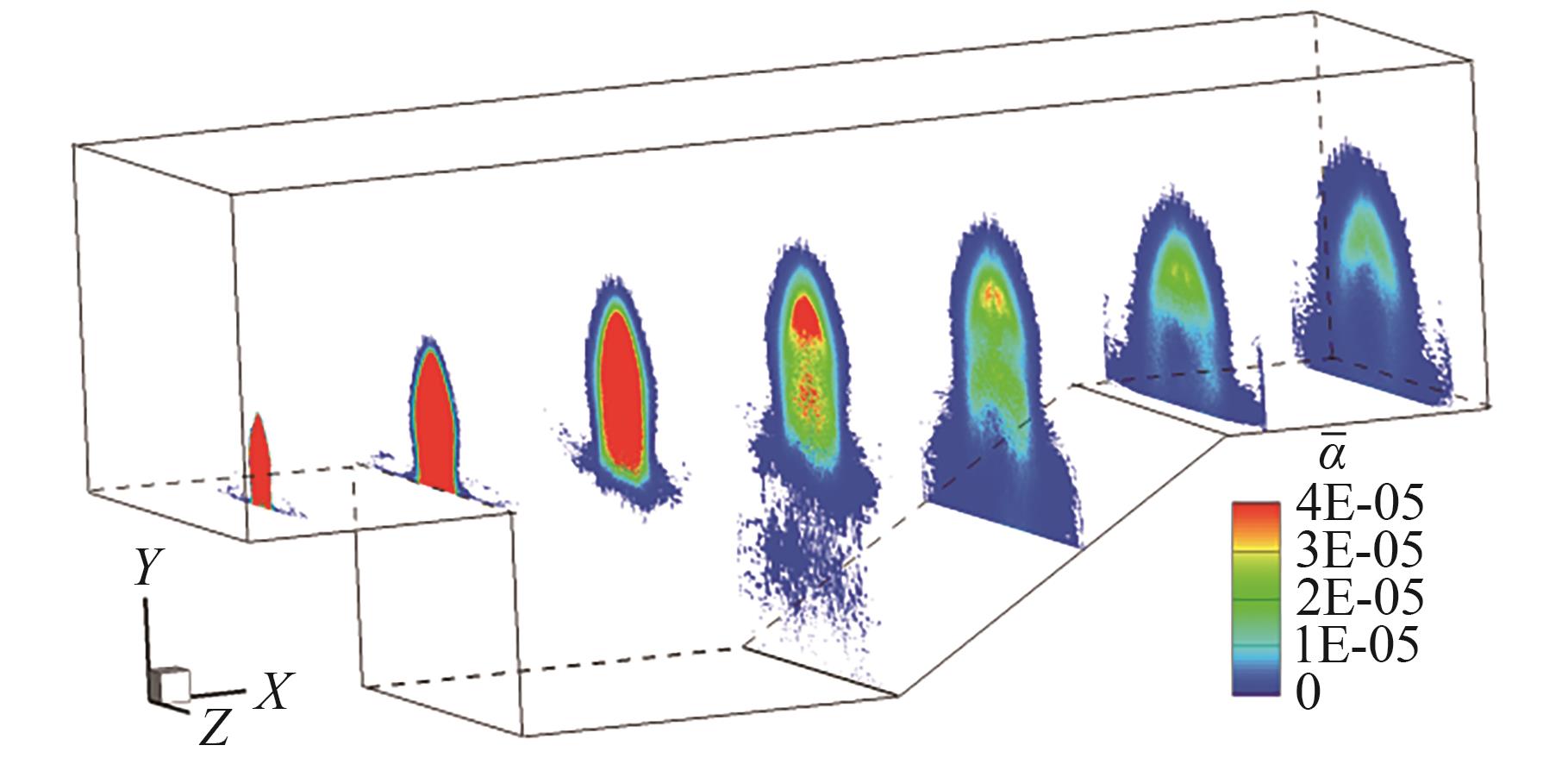
Fig.9
Time-averaged gas phase temperature distribution in the central plane
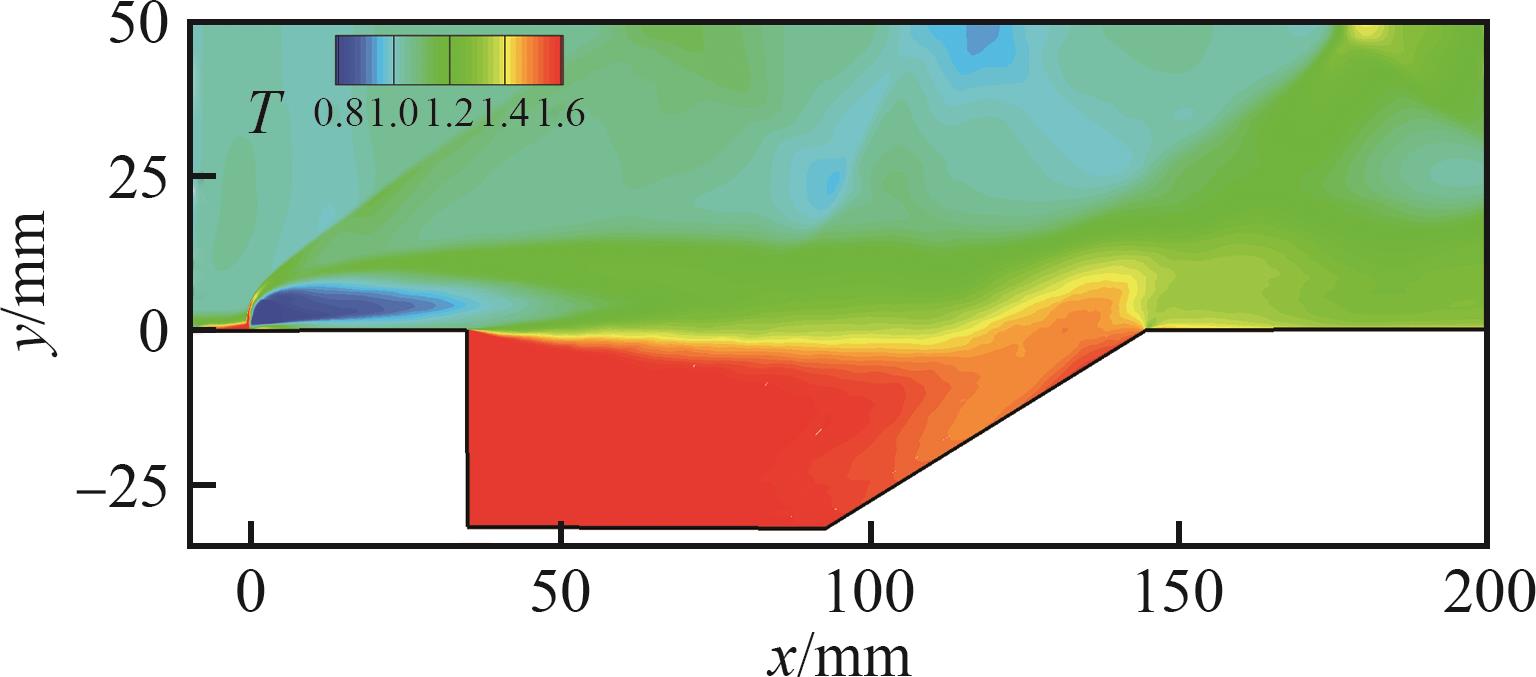
Fig.10
Droplet SMD distribution in the central plane
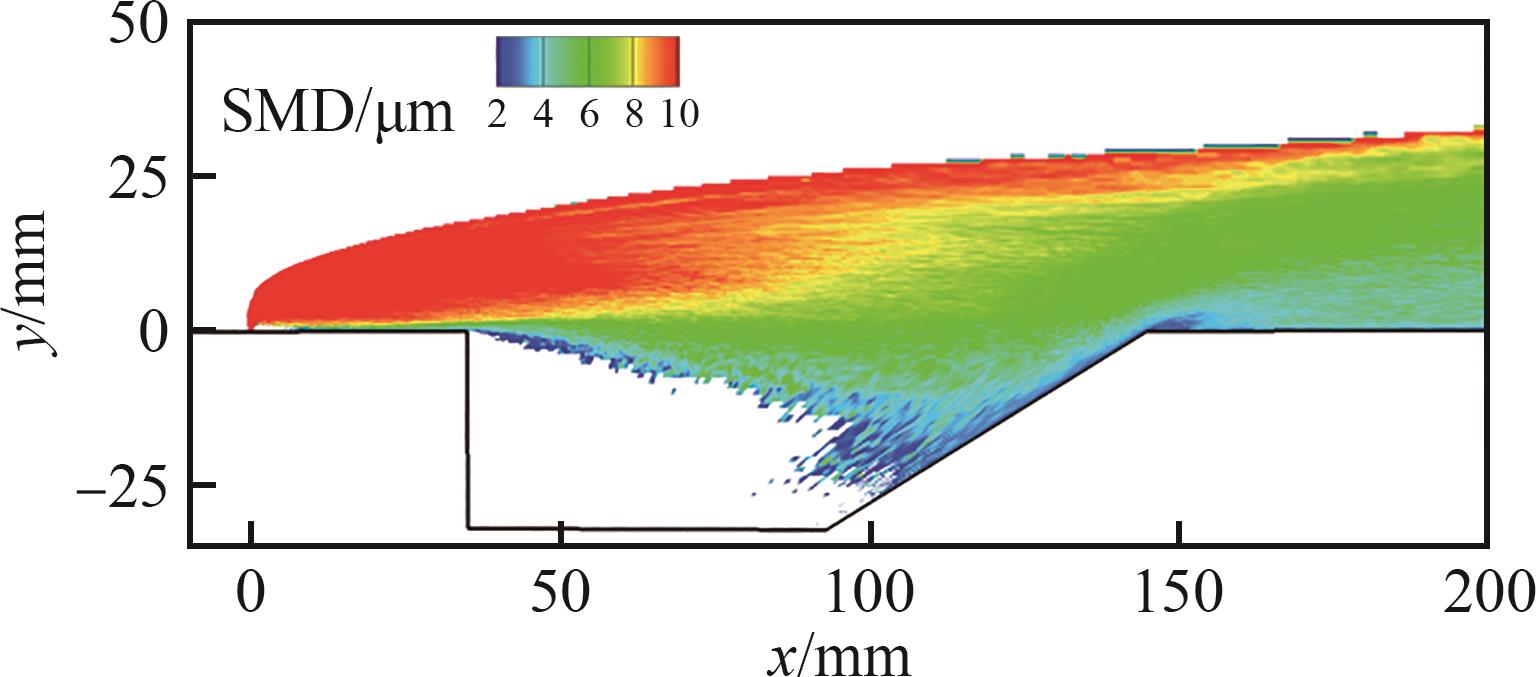
Fig.11
Proportion distribution of secondary splashed droplets in the central plane
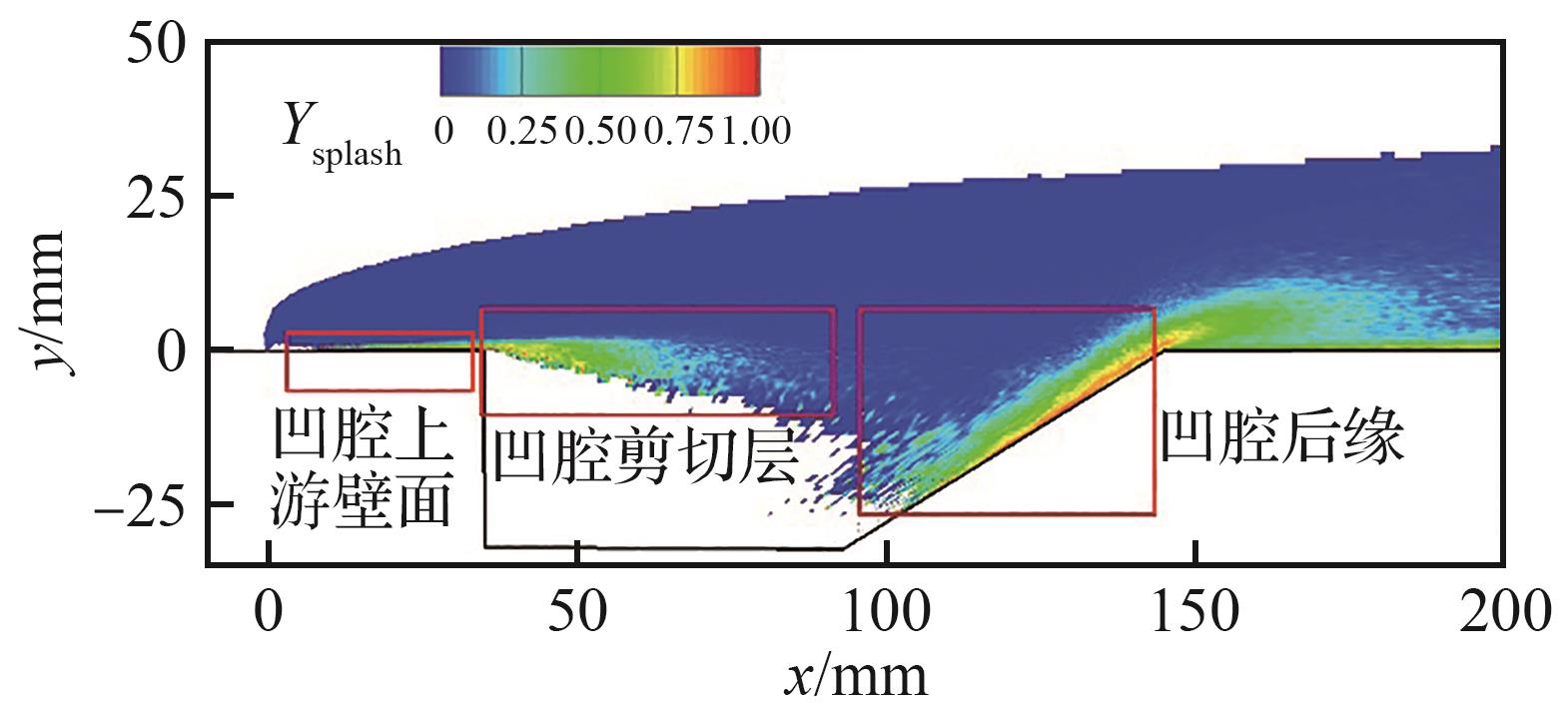
Fig.12
Proportion distribution of secondary splashed droplets in different cross-sectional planes
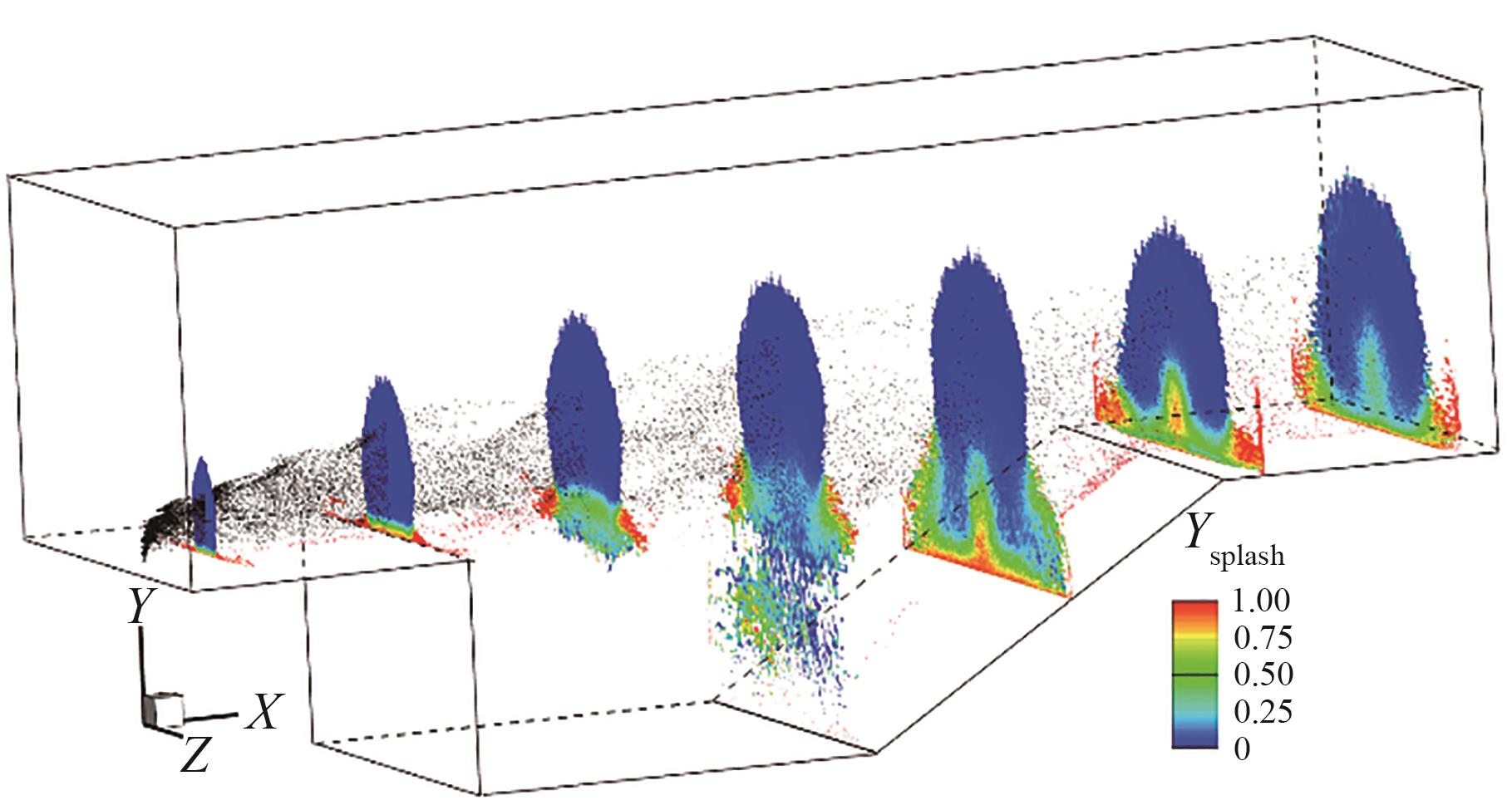
Fig.13
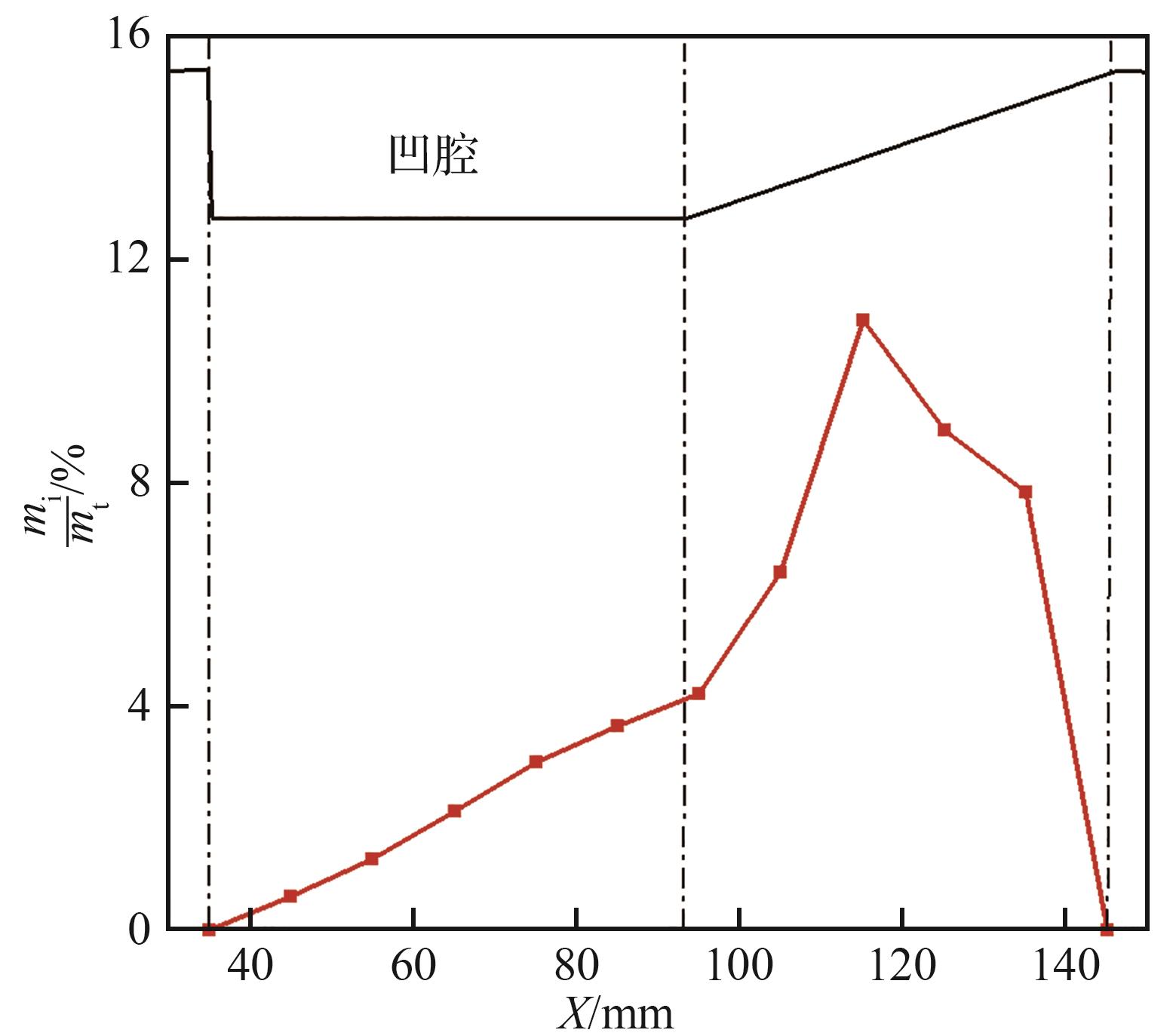
Proportional distribution of droplet mass inside cavity along flow direction
| [1] | ABDULRAHMAN G A Q, QASEM N A A, IMTEYAZ B, et al. A review of aircraft subsonic and supersonic combustors[J]. Aerospace Science and Technology, 2023, 132: 108067. |
| [2] | 唐浩然, 沈赤兵, 杜兆波, 等. 超燃冲压发动机燃料混合增强技术研究进展[J]. 航空兵器, 2023, 30(1): 80-94. |
| TANG H R, SHEN C B, DU Z B, et al. Research progress on fuel mixing enhancement technology of scramjet[J]. Aero Weaponry, 2023, 30(1): 80-94. | |
| [3] | 刘小勇, 王明福, 刘建文, 等. 超燃冲压发动机研究回顾与展望[J]. 航空学报, 2024, 45(5): 529878. |
| LIU X Y, WANG M F, LIU J W, et al. Review and prospect of research on scramjet[J]. Acta Aeronautica et Astronautica Sinica, 2024, 45(5): 529878.. | |
| [4] | HUANG W. Effect of jet-to-crossflow pressure ratio arrangement on turbulent mixing in a flowpath with square staged injectors[J]. Fuel, 2015, 144: 164-170. |
| [5] | 刘朝阳. 超声速气流中壁面燃料射流混合、点火及稳燃机制研究[D]. 长沙: 国防科技大学, 2019. |
| LIU C Y. Research on the mixing, ignition, and stable combustion mechanism of fuel jets on wall surfaces in supersonic gas flows[D]. Changsha: National University of Defense Technology, 2019 (in Chinese). | |
| [6] | 费立森, 徐胜利, 黄生洪, 等. 有/无凹槽通道内煤油超燃雾化的测量研究[J]. 推进技术, 2009, 30(1): 18-23. |
| FEI L S, XU S L, HUANG S H, et al. Measurements on kerosene atomization in supersonic flow in duct with and without cavity[J]. Journal of Propulsion Technology, 2009, 30(1): 18-23.. | |
| [7] | 费立森. 煤油在冷态超声速气流中喷射和雾化现象的初步研究[D]. 合肥: 中国科学技术大学, 2007. |
| FEI L S. Preliminary study on spray and atomization of kerosene in cold supersonic airflow[D]. Hefei: University of Science and Technology of China, 2007 (in Chinese). | |
| [8] | 徐宝剑, 刘维来, 徐胜利, 等. 基于PLIF/Mie图像测量煤油超雾化场数值特性[J]. 推进技术, 2018, 39(4): 905-911. |
| XU B J, LIU W L, XU S L, et al. Measurement of numerical characteristics of kerosene atomization field based on PLIF/Mie image measurement method[J]. Journal of Propulsion Technology, 2018, 39(4): 905-911. | |
| [9] | 徐宝剑. 基于Plif/Mie超声速煤油雾化场射流特性的研究[D]. 合肥: 中国科学技术大学, 2017. |
| XU B J. Study on jet characteristics of supersonic kerosene atomization field based on Plif/Mie[D]. Hefei: University of Science and Technology of China, 2017 (in Chinese). | |
| [10] | PAN Y, DAI J F, BAO H. Effect of scramjet combustor configuration on the distribution of transverse injection kerosene[J]. Journal of Mechanical Science and Technology, 2014, 28(12): 4997-5002. |
| [11] | LI F, YU X L, TONG Y G, et al. Plasma-assisted ignition for a kerosene fueled scramjet at Mach 1.8[J]. Aerospace Science and Technology, 2013, 28(1): 72-78. |
| [12] | 李西鹏. 超声速气流中煤油喷注混合及点火过程研究[D]. 长沙: 国防科技大学, 2018. |
| LI X P. Research on the mixing and ignition process of kerosene injection in supersonic gas flow[D]. Changsha: National University of Defense Technology, 2018 (in Chinese). | |
| [13] | LI X P, LIU W D, PAN Y, et al. Characterization of kerosene distribution around the ignition cavity in a scramjet combustor[J]. Acta Astronautica, 2017, 134: 11-16. |
| [14] | LI X P, LIU W D, YANG L C, et al. Experimental investigation on fuel distribution in a scramjet combustor with dual cavity[J]. Journal of Propulsion and Power, 2018, 34(2): 552-556. |
| [15] | YANG L C, PENG J B, LI X H, et al. Planar laser-induced fluorescence imaging of kerosene injection in supersonic flow[J]. Journal of Visualization, 2019, 22(4): 751-760. |
| [16] | 李晨阳. 超声速来流凹腔燃烧室中液体射流喷雾特性研究[D]. 长沙: 国防科技大学, 2021. |
| LI C Y. Study on spray characteristics of liquid jets in supersonic airflow in cavity-based combustor[D]. Changsha: National University of Defense Technology, 2021 (in Chinese). | |
| [17] | LI P B, WANG H B, SUN M B, et al. Numerical study on the mixing and evaporation process of a liquid kerosene jet in a scramjet combustor[J]. Aerospace Science and Technology, 2021, 119: 107095. |
| [18] | 杨恺. 超声速气流中气化煤油点火及燃烧特性研究[D]. 长沙: 国防科技大学, 2021. |
| YANG K. Study on the ignition and combustion characteristics of vaporized kerosene in supersonic gas flow [D]. Changsha: National University of Defense Technology, 2021 (in Chinese). | |
| [19] | ZHOU Y Z, CAI Z, LI Q L, et al. Characteristics of penetration and distribution of a liquid jet in a divergent cavity-based combustor[J]. Chinese Journal of Aeronautics, 2023, 36(12): 139-150. |
| [20] | OMBRELLO T, OKHOVAT N S, RHOBY M R. Measurements of scramjet fueling conditions: AIAA-2018-1360[R]. Reston: AIAA,2018. |
| [21] | 汪洪波. 超声速气流中凹腔稳定的射流燃烧模式及振荡机制研究 [D]. 长沙: 国防科技大学, 2012. |
| WANG H B. Research on the stable jet combustion mode and oscillation mechanism in supersonic gas flow [D]. Changsha: National University of Defense Technology, 2012 (in Chinese). | |
| [22] | WANG H B, WANG Z G, SUN M B, et al. Numerical study on supersonic mixing and combustion with hydrogen injection upstream of a cavity flameholder[J]. Heat and Mass Transfer, 2014, 50(2): 211-223. |
| [23] | LIU C Y, ZHAO Y H, WANG Z G, et al. Dynamics and mixing mechanism of transverse jet injection into a supersonic combustor with cavity flameholder[J]. Acta Astronautica, 2017, 136: 90-100. |
| [24] | LIU C Y, ZHANG J C, LI X, et al. Lift-off behaviors of the partially-premixed jet flame in a supersonic vitiated coflow[J]. Aerospace Science and Technology, 2023, 132: 108021. |
| [25] | MILLER R S, HARSTAD K, BELLAN J. Evaluation of equilibrium and non-equilibrium evaporation models for many-droplet gas-liquid flow simulations[J]. International Journal of Multiphase Flow, 1998, 24(6): 1025-1055. |
| [26] | 李佩波. 超声速气流中横向喷雾的混合及燃烧过程数值模拟[D]. 长沙: 国防科技大学, 2019. |
| LI P B. Numerical simulation of the mixing and combustion process of transverse jets in supersonic gas flow[D]. Changsha: National University of Defense Technology, 2019 (in Chinese). | |
| [27] | LI F, WANG Z G, LI P B, et al. The spray distribution of a liquid jet in supersonic crossflow in the near-wall region[J]. Physics of Fluids, 2022, 34(6): 063301. |
| [28] | MUNDO C, SOMMERFELD M, TROPEA C. Droplet-wall collisions: Experimental studies of the deformation and breakup process[J]. International Journal of Multiphase Flow, 1995, 21(2): 151-173. |
| [29] | YARIN A L, WEISS D A. Impact of drops on solid surfaces: Self-similar capillary waves, and splashing as a new type of kinematic discontinuity[J]. Journal of Fluid Mechanics, 1995, 283: 141-173. |
| [30] | LIN K C, KENNEDY P, JACKSON T. Structures of water jets in a Mach 1.94 supersonic crossflow:AIAA-2004-971[R]. Reston: AIAA, 2004. |
| [31] | LIU J, WANG L, ZHANG J, et al. Experimental and numerical simulation of atomization of liquid jet in supersonic crossflow[J]. Journal of Aerospace Power, 2008, 23 (4): 724-729. |
| [1] | Feiteng LUO, Zhenming QU, Haitao LI, Xinke LI, Dahao YAO, Wenjuan CHEN, Yaosong LONG, Baoxi WEI, Yanjin MAN, Fujiang YANG, Qiang CHENG, Wubin KONG. Research progress and key issues of inlet pre-injection at hypersonic condition [J]. Acta Aeronautica et Astronautica Sinica, 2025, 46(8): 631189-631189. |
| [2] | Lingling CHEN, Yang ZHANG, Yongqiang SHI, Qingzhen YANG. Film cooling performance/nozzle performance/infrared radiation characteristics of a vector nozzle [J]. Acta Aeronautica et Astronautica Sinica, 2025, 46(8): 631139-631139. |
| [3] | Jiajian ZHU, Tiangang LUO, Yifu TIAN, Minggang WAN, Mingbo SUN. Enhanced ignition method with synergy of multi-channel gliding arc plasma and fuel injection in a scramjet [J]. Acta Aeronautica et Astronautica Sinica, 2025, 46(7): 131037-131037. |
| [4] | Fan LI, Mingjiang LIU, Mingbo SUN, Guoyan ZHAO, Guangwei MA, Chenxiang ZHAO. Sensitive factors of ethylene combustion heat release under different combustion modes in scramjet engine [J]. Acta Aeronautica et Astronautica Sinica, 2025, 46(4): 130944-130944. |
| [5] | Tao LIANG, Wanwu XU, Zhiyan LI, Saiqiang ZHANG, Gang LI, Dongdong ZHANG. Starting and operating characteristics of precooled supersonic ejector [J]. Acta Aeronautica et Astronautica Sinica, 2025, 46(2): 130701-130701. |
| [6] | Xu WANG, Jiaxun LIU, Yongqi LIU, Suyi DOU, Qingyu LI, Xu XU, Qingchun YANG. Secondary combustion of magnesium powder to enhance kerosene-fueled scramjet thrust [J]. Acta Aeronautica et Astronautica Sinica, 2025, 46(18): 131786-131786. |
| [7] | Xianju WU, Zhijun WEI, Yunhui WANG, Ling ZHOU, Ying FENG. Combustion enhancement effect of dual combustor ramjet engines on boron-based propellants [J]. Acta Aeronautica et Astronautica Sinica, 2025, 46(18): 131788-131788. |
| [8] | Chaolong LI, Zhixun XIA, Lei BAO, Xianzhong GAO, Zhengtao GUO, Guobin ZHANG, Likun MA, Zhenbing LUO, Shuai SHAO, Xiangyue HE. Research progress on combustion organization technology of scramjet fueled by solid propellant [J]. Acta Aeronautica et Astronautica Sinica, 2025, 46(18): 131752-131752. |
| [9] | Jie TIAN, Jinglei XU, Junfei ZHOU, Le CAI, Shun LIU. Experimental verification of PIV-based measurement for reconstructing thrust performance of supersonic nozzles [J]. Acta Aeronautica et Astronautica Sinica, 2025, 46(17): 131114-131114. |
| [10] | Hongyu WANG, Gang WANG, Tao LI, Zhenhou CHAO, Feng GAO. Transverse jet mixing based on energy deposition control via pulsed discharge [J]. Acta Aeronautica et Astronautica Sinica, 2025, 46(14): 131520-131520. |
| [11] | Wenhui LING, Chunhui MU, Lingcong NIE, Xian DU, Ximing SUN. Improved DDPG-based multipoint pressure distribution control of variable geometry scramjet combustor at wide range velocities [J]. Acta Aeronautica et Astronautica Sinica, 2025, 46(12): 131092-131092. |
| [12] | Lulu JIANG, Xin PAN, Wei JIANG, Rui FENG, Gang CHEN. Optimization shape design of capsule-supersonic parachute system based on fusion surrogate strategy [J]. Acta Aeronautica et Astronautica Sinica, 2025, 46(1): 630471-630471. |
| [13] | He JIA, Wei JIANG, Wenlong BAO, Xin XU, Wei RONG, Li YU. Transonic/supersonic aerodynamic characteristics and fluid-structure interaction mechanism of flexible parachutes for planetary exploration [J]. Acta Aeronautica et Astronautica Sinica, 2025, 46(1): 630369-630369. |
| [14] | Xiaopeng XUE, He JIA, Wei RONG, Wei JIANG, Wenlong BAO, Zhen WANG, Tianqi ZOU, Yurou DAI, Yiwei ZHOU. Review of high-speed flexible aerodynamic decelerators key technologies [J]. Acta Aeronautica et Astronautica Sinica, 2025, 46(1): 631677-631677. |
| [15] | Hongwei QIAO, Jianhan LIANG, Lin ZHANG, Mingbo SUN, Yuqiao CHEN. Research progress of probability density function approach in supersonic combustion [J]. Acta Aeronautica et Astronautica Sinica, 2024, 45(8): 28802-028802. |
| Viewed | ||||||
|
Full text |
|
|||||
|
Abstract |
|
|||||
Address: No.238, Baiyan Buiding, Beisihuan Zhonglu Road, Haidian District, Beijing, China
Postal code : 100083
E-mail:hkxb@buaa.edu.cn
Total visits: 6658907 Today visits: 1341All copyright © editorial office of Chinese Journal of Aeronautics
All copyright © editorial office of Chinese Journal of Aeronautics
Total visits: 6658907 Today visits: 1341

 CJA
CJA
