Acta Aeronautica et Astronautica Sinica ›› 2025, Vol. 46 ›› Issue (19): 531295.doi: 10.7527/S1000-6893.2025.31295
• Special Issue: Aircraft Digital Twin Technology • Previous Articles Next Articles
Yinxuan ZHANG1,2( ), Qi ZHANG1,2, Zhenyong XU1,2, Linshu MENG1,2
Received:2024-09-30
Revised:2024-10-29
Accepted:2025-02-10
Online:2025-03-07
Published:2025-03-06
Contact:
Yinxuan ZHANG
E-mail:16715028@qq.com
Supported by:CLC Number:
Yinxuan ZHANG, Qi ZHANG, Zhenyong XU, Linshu MENG. Predicting method of aircraft mechanical response based on residual neural networks[J]. Acta Aeronautica et Astronautica Sinica, 2025, 46(19): 531295.
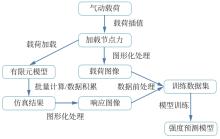
Fig.1
Mechanics response intelligent prediction process
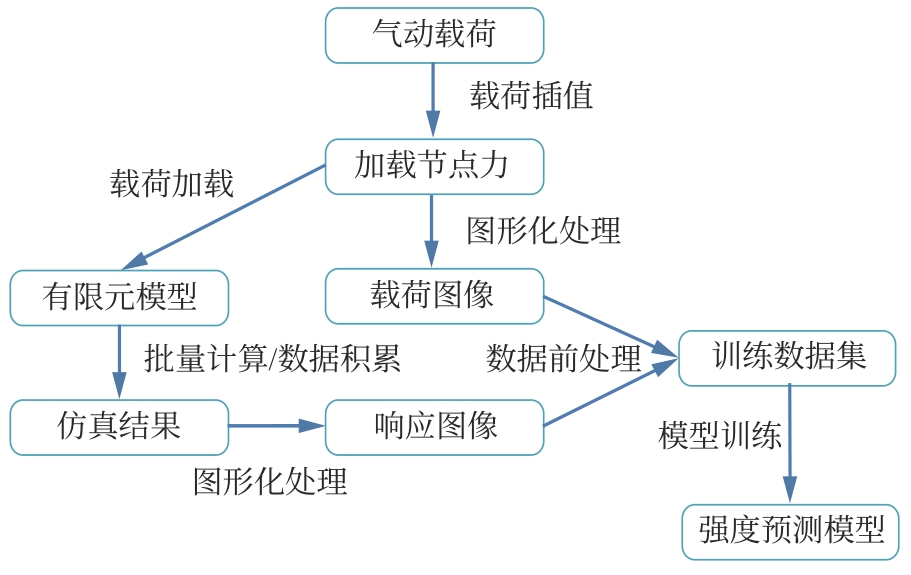
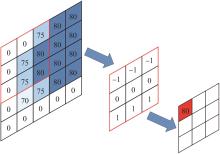
Fig.2
Convolutional neural network diagram
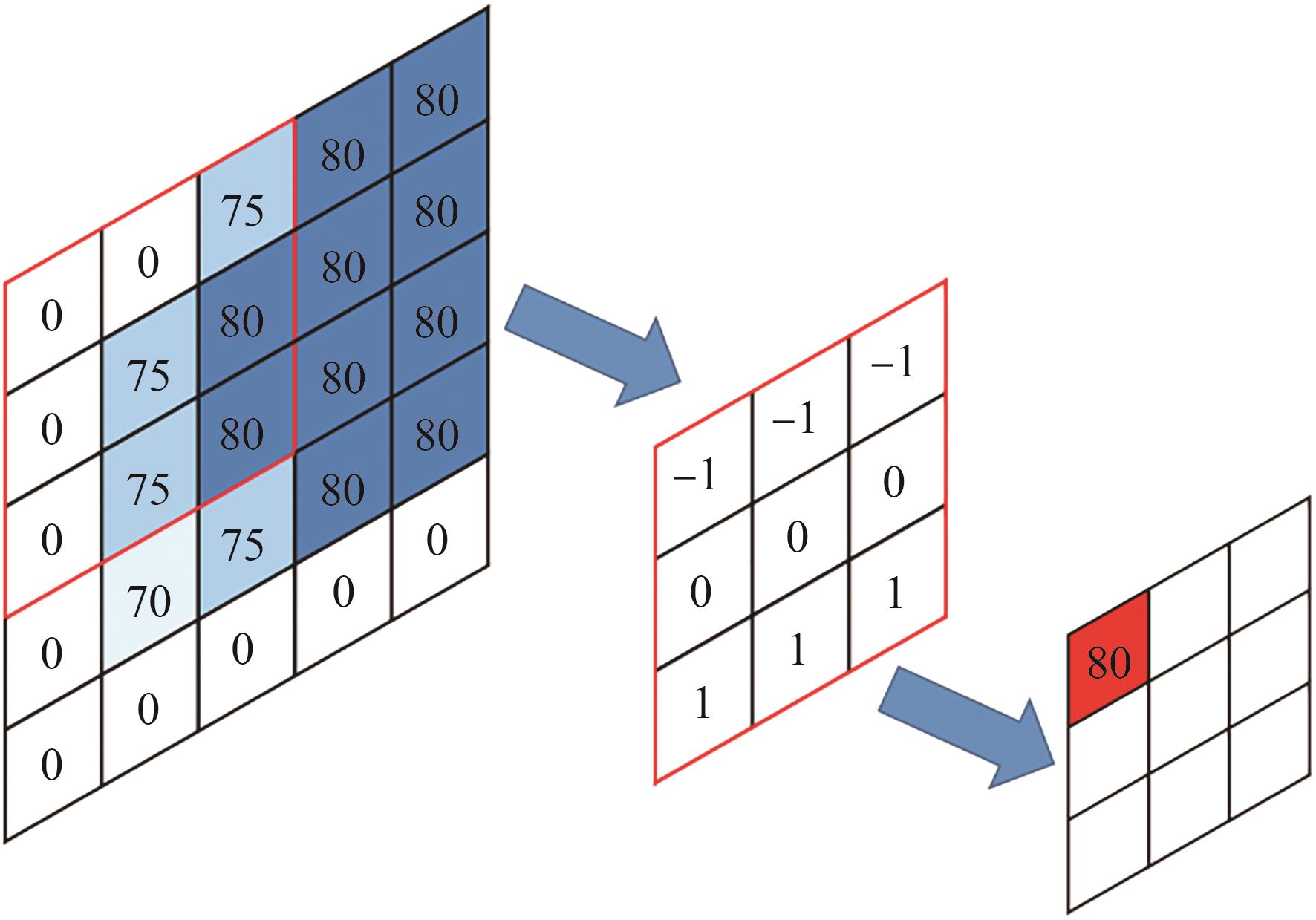
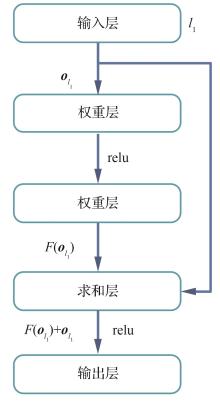
Fig.3
Cross-layer connection mechanism in residual neural networks[22]
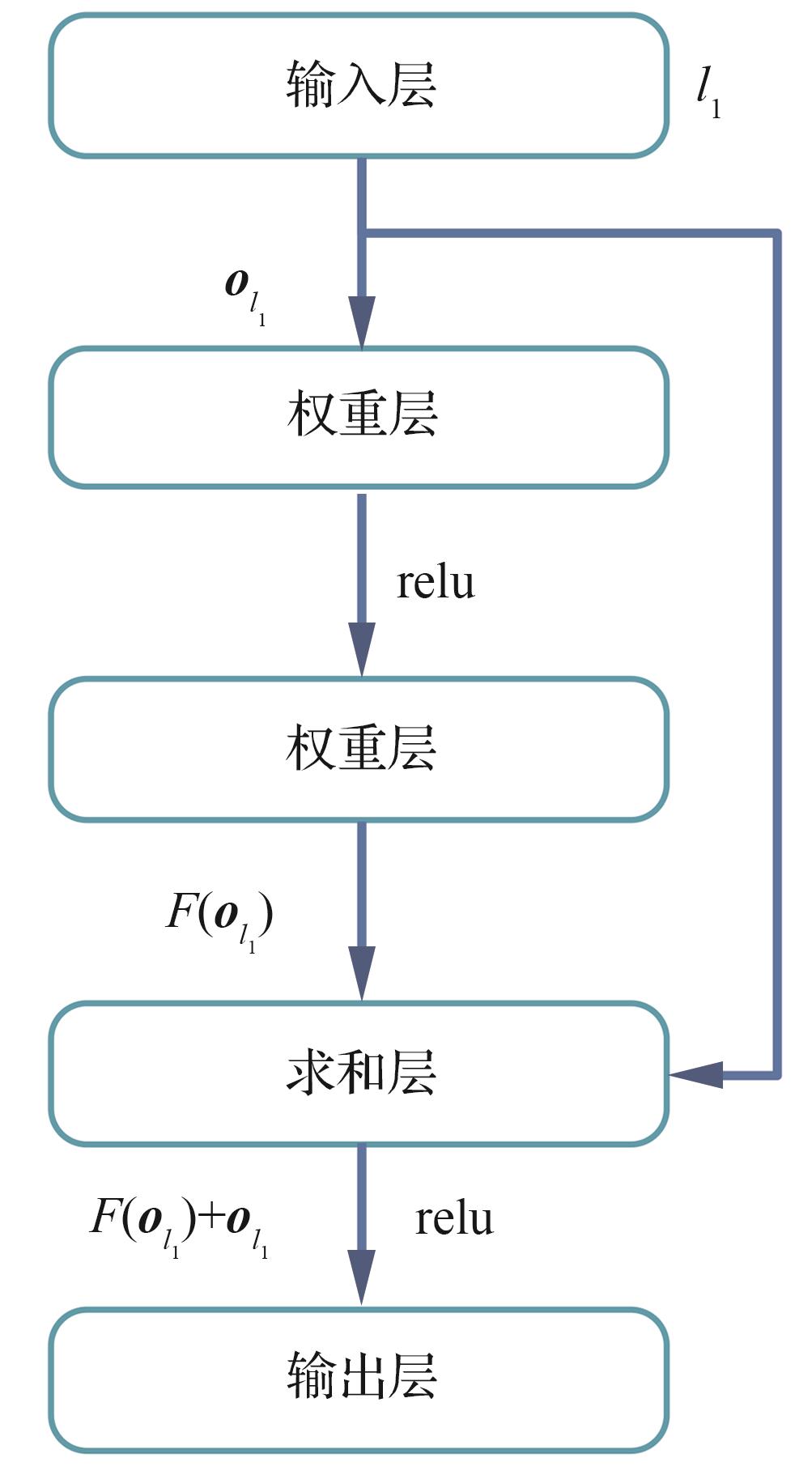
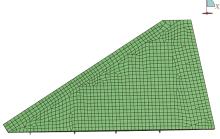
Fig.4
Finite element mesh of wing
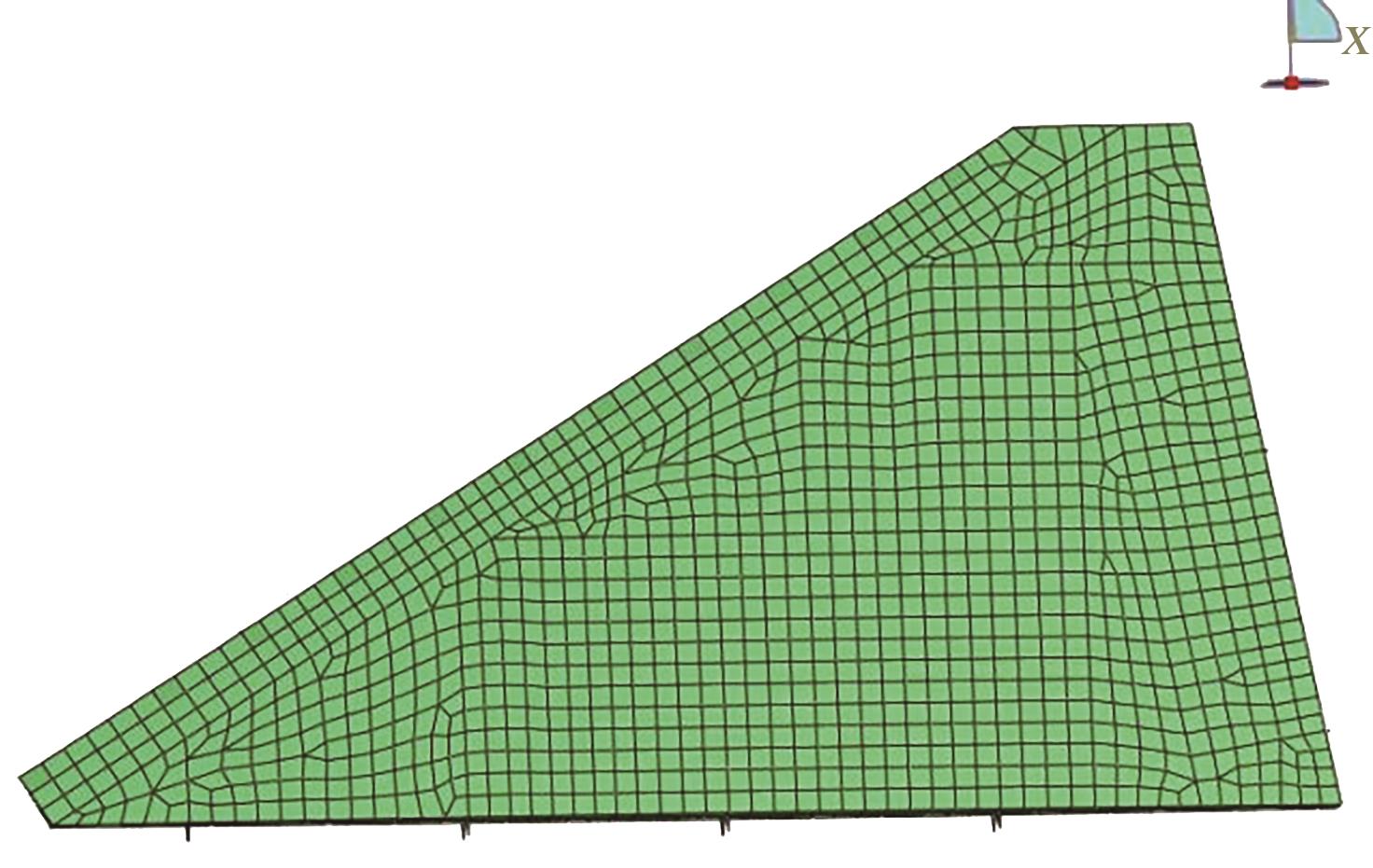
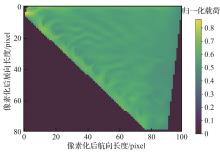
Fig.5
Load characterization image
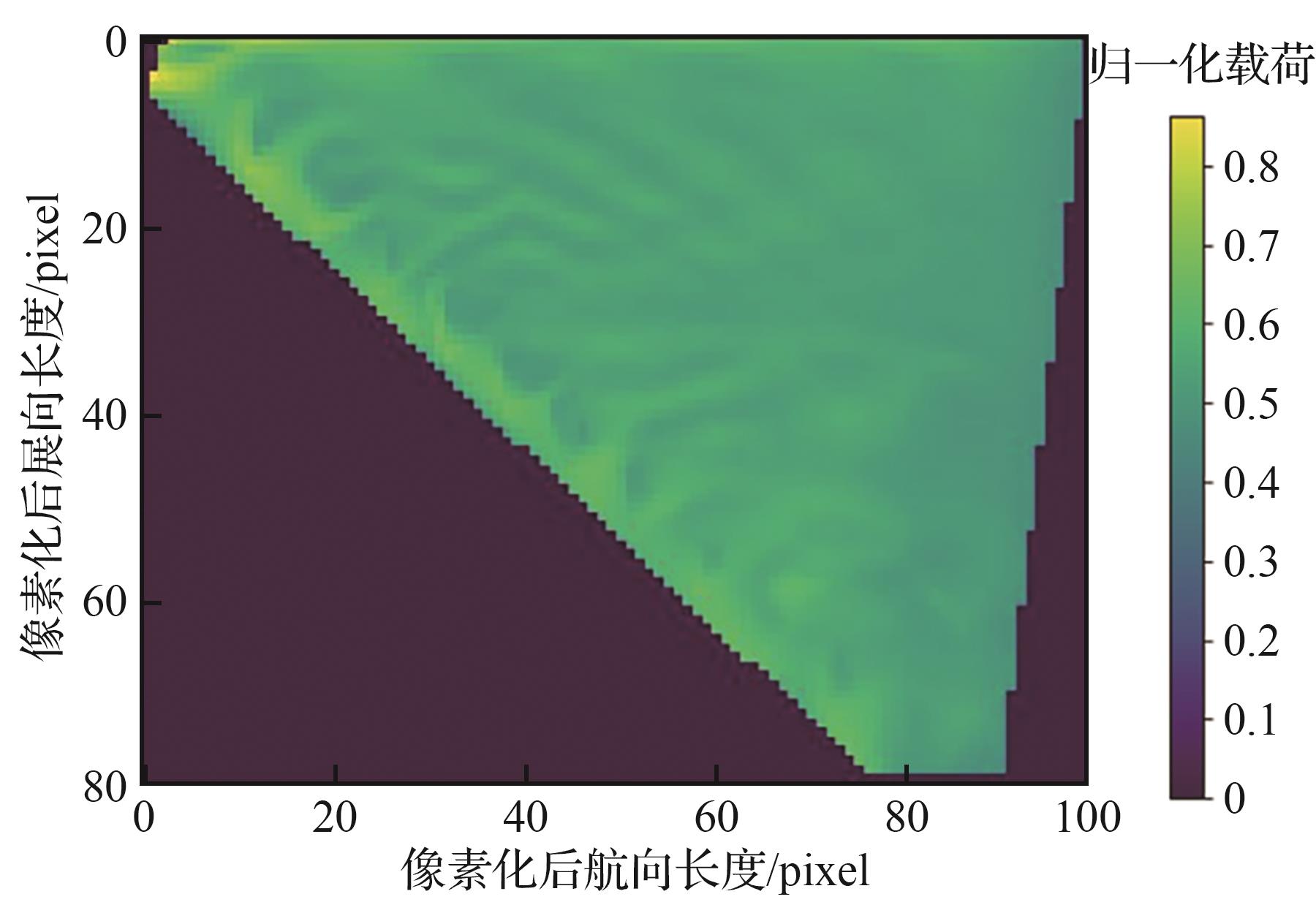
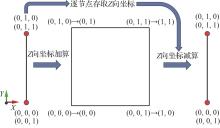
Fig.6
Method for transforming coordinates of occluded spatial region
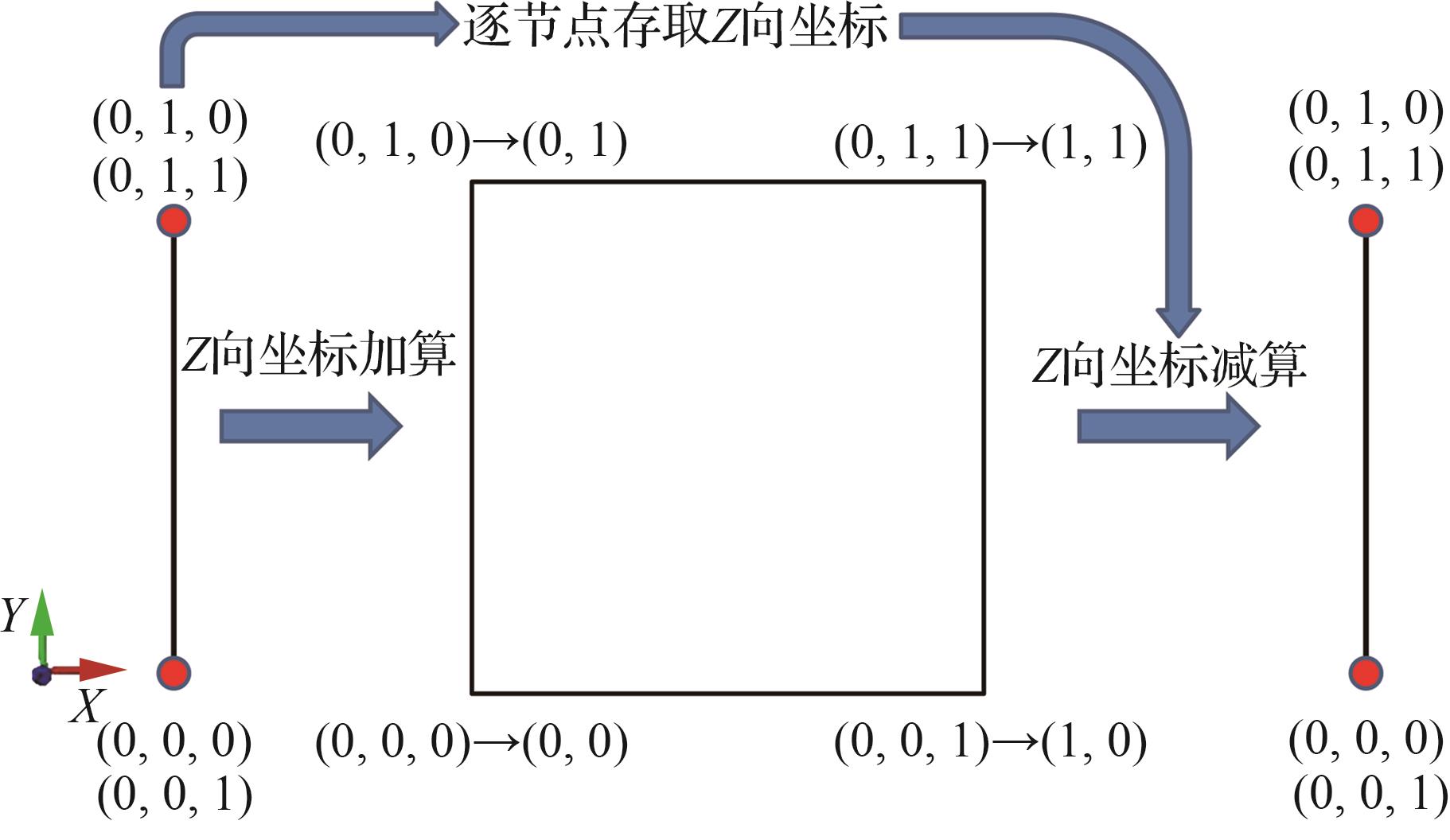
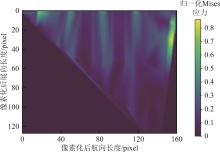
Fig.7
Beam response characterization image
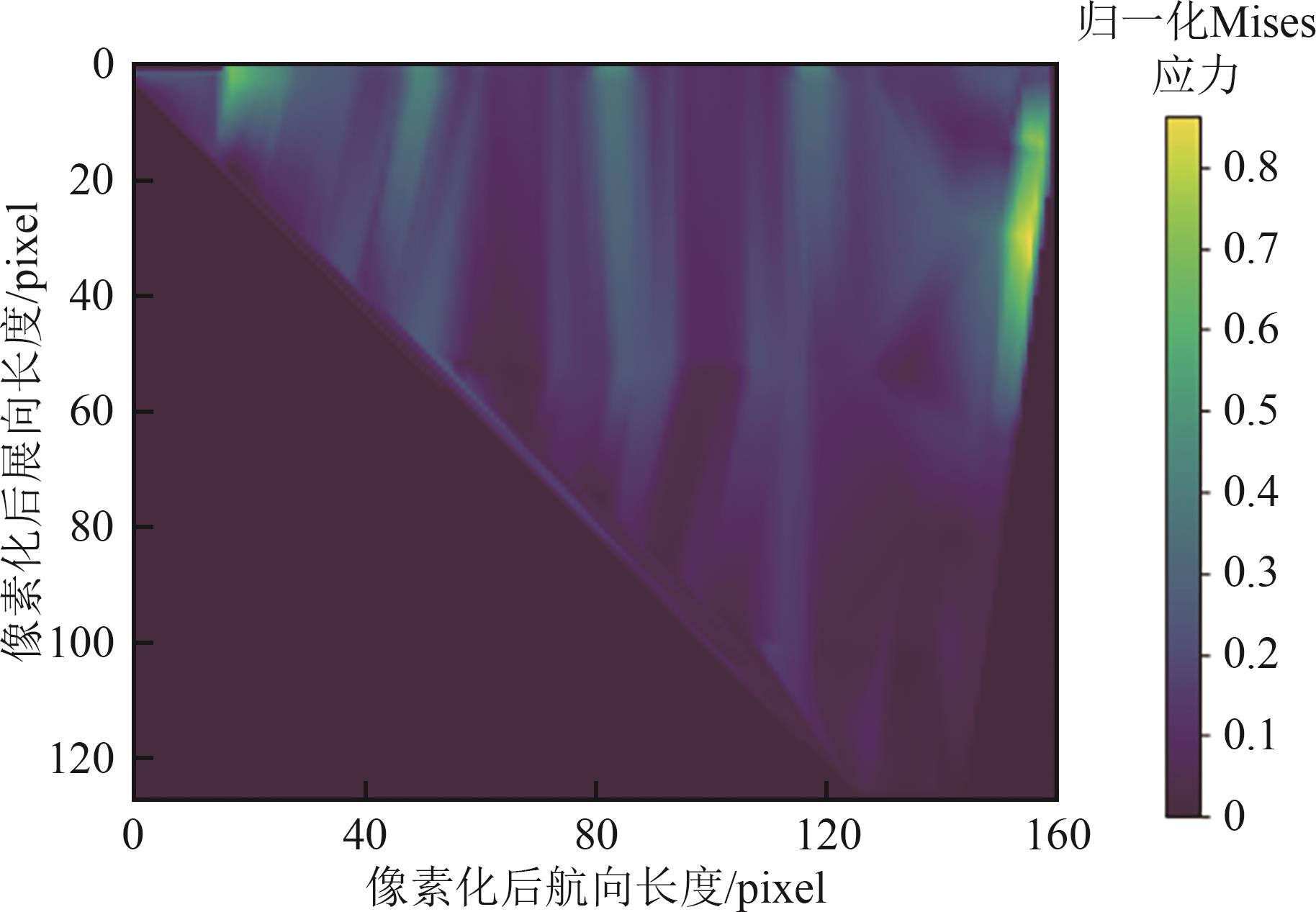
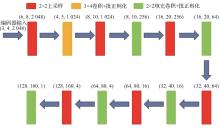
Fig.8
Decoder network architecture
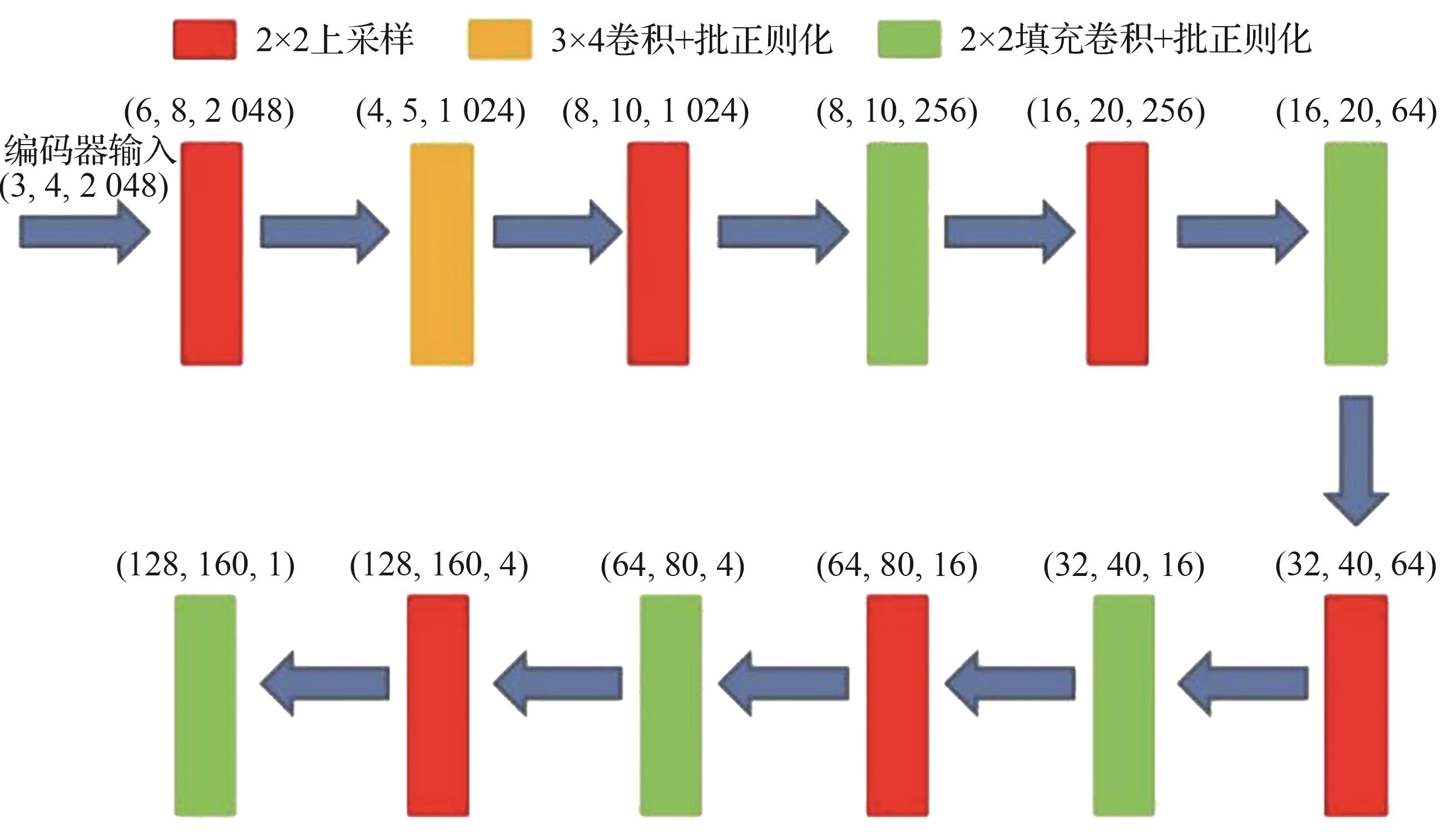
Table 1
Model loss comparison
| 预测结构 | 设计模型训练损失/10-5 | 设计模型预测损失/10-5 | 对比模型训练损失/10-5 | 对比模型预测损失/10-5 |
|---|---|---|---|---|
| 上翼面 | 2.61 | 3.01 | 5.40 | 6.970 |
| 下翼面 | 6.78 | 8.77 | 5.17 | 0.104 |
| 肋 | 2.87 | 3.75 | 5.32 | 5.300 |
| 梁 | 4.48 | 5.32 | 7.47 | 8.350 |
Table 2
Model error comparison
| 预测结构 | 设计模型最大误差 | 设计模型平均误差/10-3 | 对比模型最大误差 | 对比模型平均误差/10-3 |
|---|---|---|---|---|
| 上翼面 | 0.180 | 2.25 | 0.408 | 3.28 |
| 下翼面 | 0.209 | 3.66 | 0.229 | 4.27 |
| 肋 | 0.174 | 2.38 | 0.214 | 4.31 |
| 梁 | 0.149 | 2.87 | 0.210 | 3.26 |
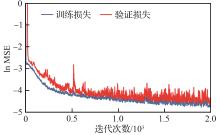
Fig.9
Convergence curves of training loss function of designed model
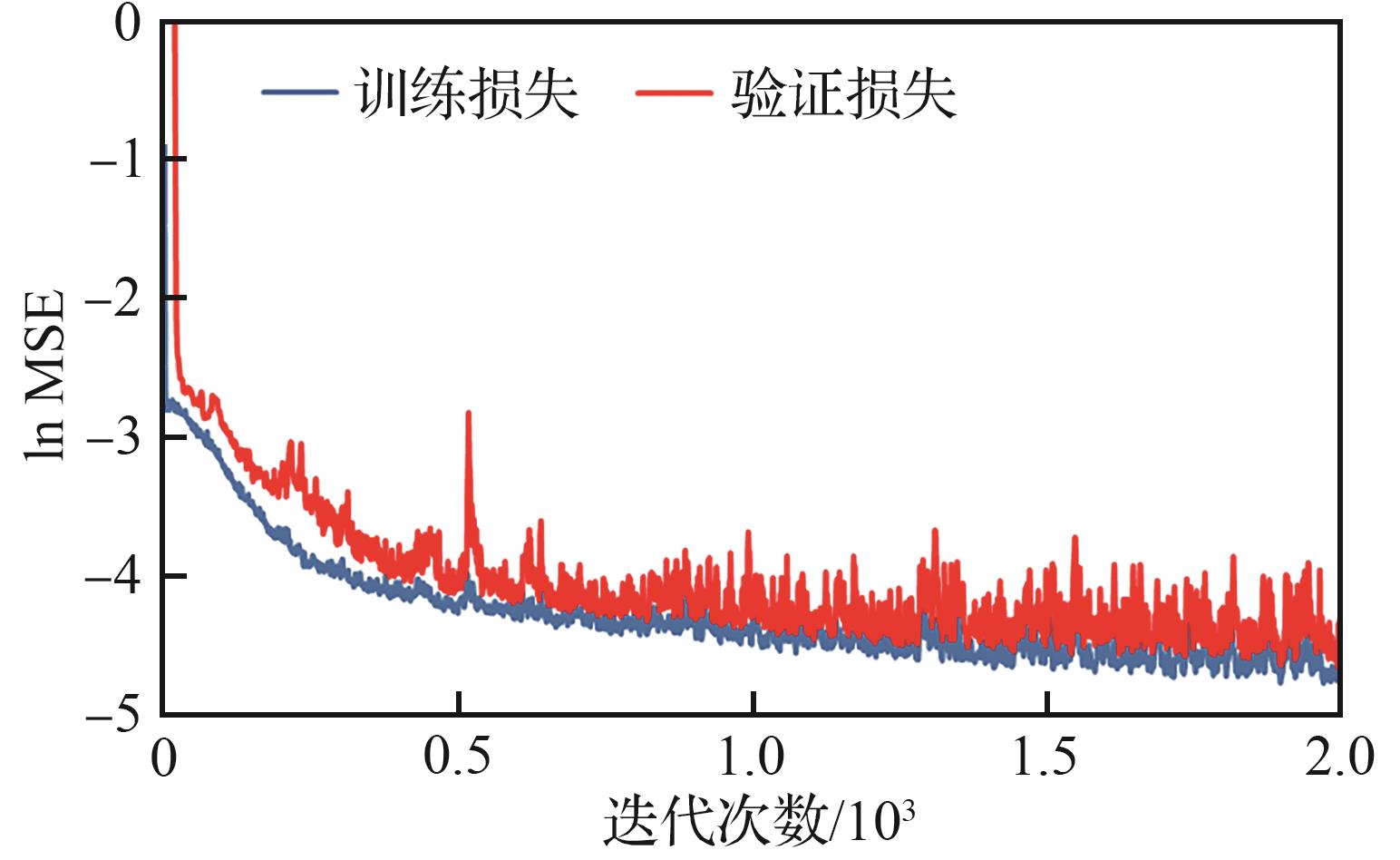
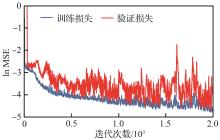
Fig.10
Convergence curves of training loss function of comparative model
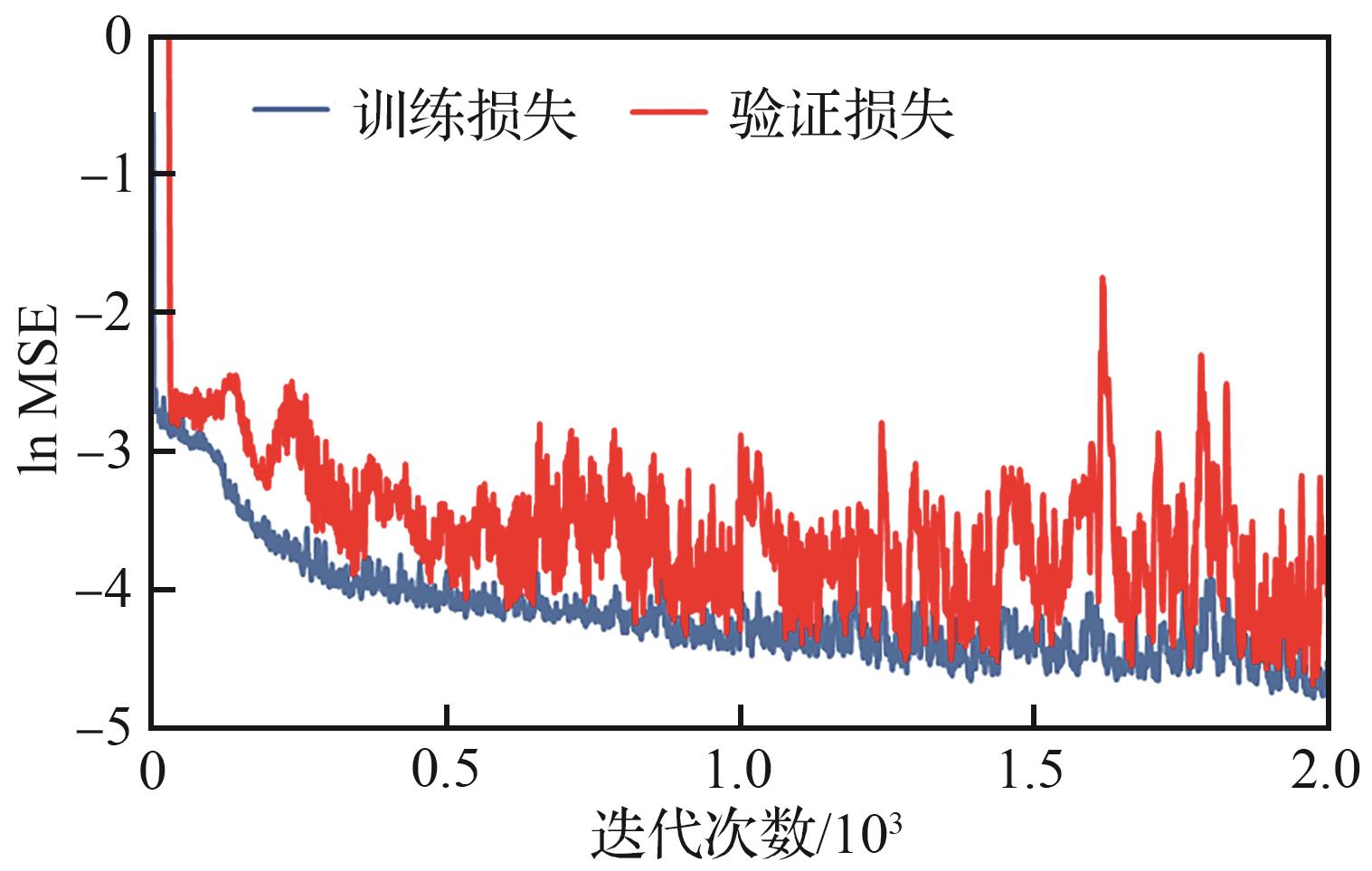
Fig.11
Comparison of predicted normalized Mises stress cloud map with simulation results
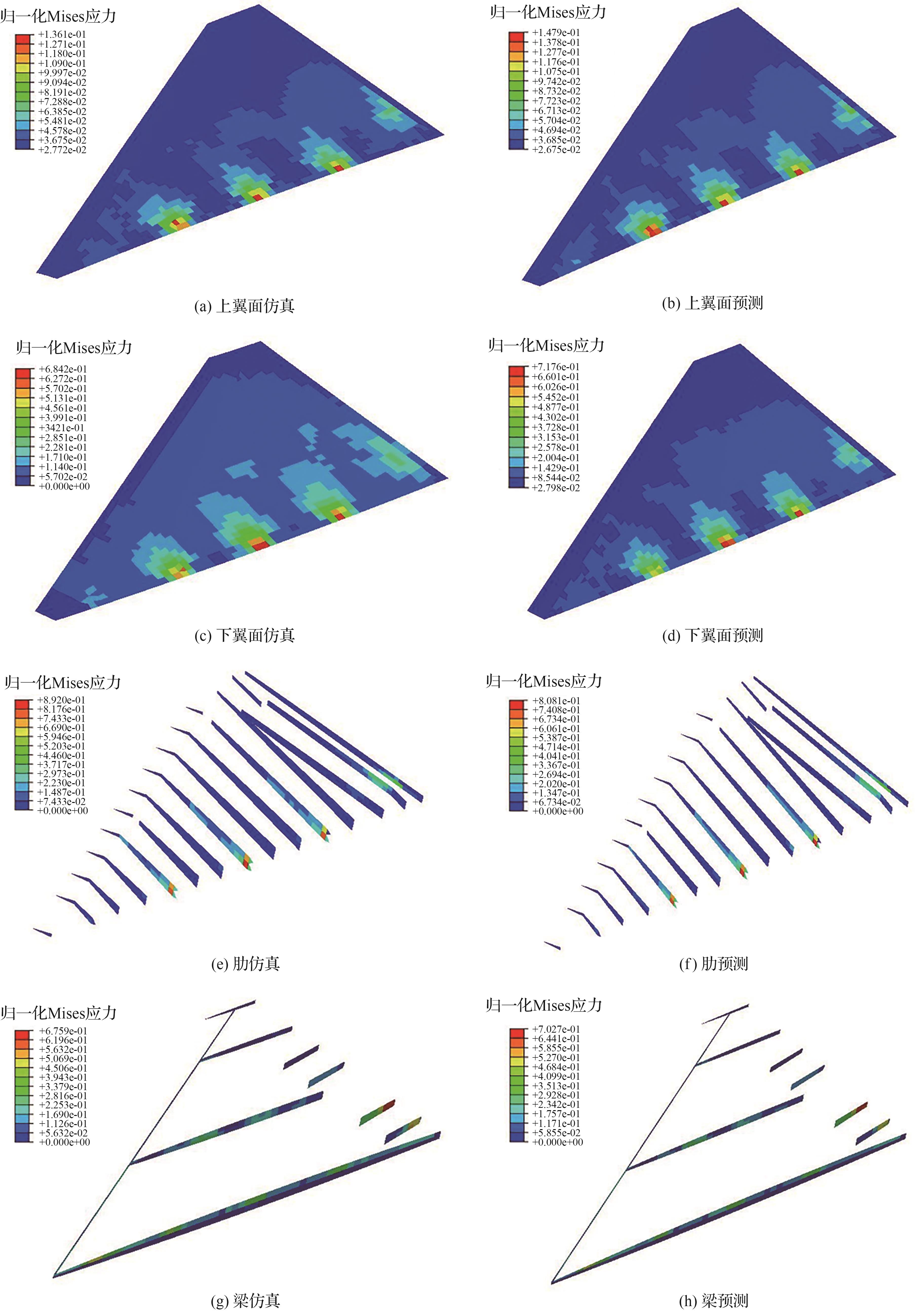
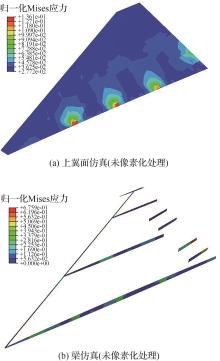
Fig.12
Original normalized simulation stress cloud map
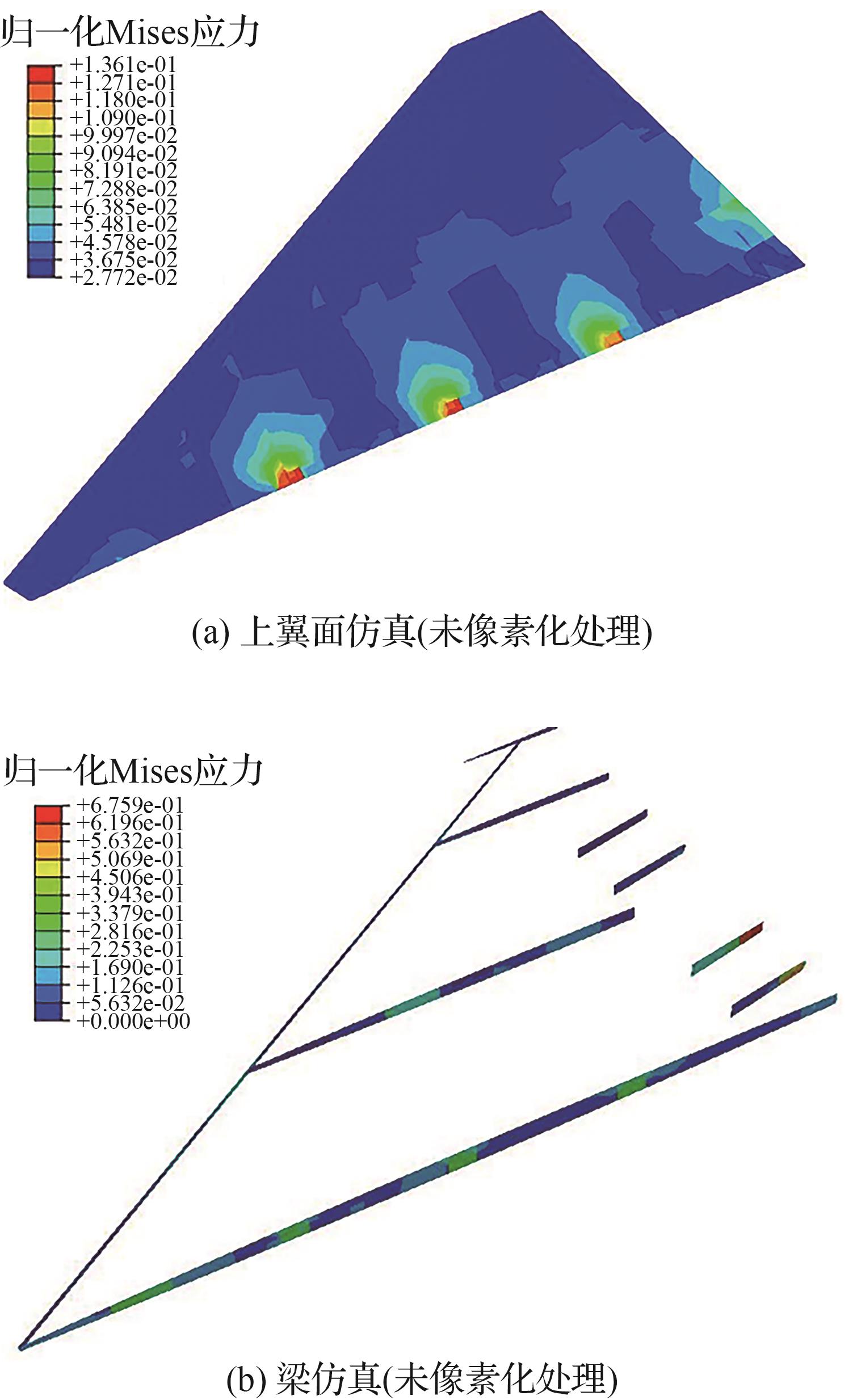
Table 3
Prediction time comparison
| 预测方法 | 单次总时长/s | 单次净时长/s |
|---|---|---|
| 传统有限元仿真 | 41.8 | 37.2 |
| 残差神经网络模型 | 2.9 | 0.4 |
| [1] | BURGESS N. Advances in numerical methods for CREATE-AV analysis tools[C]∥ 52nd Aerospace Sciences Meeting. Reston: AIAA, 2014. |
| [2] | HALLISSY B P, HINE D, LAIOSA J P, et al. CREATE-AV quality assurance: best practices for validating and supporting computation-based engineering software[C]∥ 52nd Aerospace Sciences Meeting. Reston: AIAA, 2014. |
| [3] | KRAFT E. HPCMP CREAT-AV and the air force digital thread[C]∥ 53rd AIAA Aerospace Sciences Mee-ting. Reston: AIAA, 2015. |
| [4] | FALLON T, MAHAL D, HEBDEN I. F-35 Joint strike fighter structural prognostics and health management: An overview[C]∥ The 25th Symposium of the International Committee on Aeronautical Fatigue. Rotterdam: The National Aerospace Laboratory (NLR), 2009: 1215. |
| [5] | 张宝珍, 王萍. 飞机PHM技术发展近况及在F-35应用中遇到的问题及挑战[J]. 航空科学技术, 2020, 31(7): 18-26. |
| ZHANG B Z, WANG P. Recent development of aircraft PHM technology and problems and challenges encountered in the application on F-35[J]. Aeronautical Science & Technology, 2020, 31(7): 18-26 (in Chinese). | |
| [6] | HEBDEN I G, CROWLEY A M, BLACK W. Overview of the F-35 structural prognostics and health management system[C]∥ The 9th European Workshop on SHM. Manchester: University of Manchester, 2018: 10-13. |
| [7] | LIN M X, GUO S J, HE S, et al. Structure health monitoring of a composite wing based on flight load and strain data using deep learning method[J]. Composite Structures, 2022, 286: 115305. |
| [8] | SPILIOTOPOULOS P E, FERA F T, SARAMANTAS I E, et al. Development and experimental validation of a prototype system for machine learning based SHM in composite aerostructures[J]. Journal of Physics: Conference Series, 2024, 2692(1): 012025. |
| [9] | JEONG S H, LEE K B, HAM J H, et al. Estimation of maximum strains and loads in aircraft landing using artificial neural network[J]. International Journal of Aeronautical and Space Sciences, 2020, 21(1): 117-132. |
| [10] | REZAEI M, SHIRAZI K H, KHODAPARAST H H. Uncertainty quantification of aeroelastic wings flutter using an optimized machine learning approach[J]. Proceedings of the Institution of Mechanical Engineers, Part G: Journal of Aerospace Engineering, 2022, 236(15): 3167-3185. |
| [11] | 柳家齐, 陈荣钱, 楼锦华, 等. 基于深度学习的高速直升机旋翼翼型气动优化设计[J]. 航空学报, 2024, 45(9): 529828. |
| LIU J Q, CHEN R Q, LOU J H, et al. Aerodynamic shape optimization of high-speed helicopter rotor airfoil based on deep learning[J]. Acta Aeronautica et Astronautica Sinica, 2024, 45(9): 529828 (in Chinese). | |
| [12] | 田阔, 孙志勇, 李增聪. 面向结构静力试验监测的高精度数字孪生方法[J]. 航空学报, 2024, 45(7): 429134. |
| TIAN K, SUN Z Y, LI Z C. High-precision digital twin method for structural static test monitoring[J]. Acta Aeronautica et Astronautica Sinica, 2024, 45(7): 429134 (in Chinese). | |
| [13] | 高天贺, 田阔, 黄蕾, 等. 数据驱动的曲面构件形状-拓扑协同优化方法[J]. 航空学报, 2024, 45(2): 428806. |
| GAO T H, TIAN K, HUANG L, et al. Data-driven shape-topology optimization method for curved shells[J]. Acta Aeronautica et Astronautica Sinica, 2024, 45(2): 428806 (in Chinese). | |
| [14] | 常辉, 朱靖, 安朝, 等. 应用前馈神经网络的大柔性机翼阵风响应分析[J]. 计算机测量与控制, 2022, 30(8): 236-244. |
| CHANG H, ZHU J, AN C, et al. Aeroelastic analysis of large flexile wing based on machine learning algorithm[J]. Computer Measurement & Control, 2022, 30(8): 236-244 (in Chinese). | |
| [15] | HUANG W B, WANG R, ZHANG M C, et al. The research on deep learning-driven dimensionality reduction and strain prediction techniques based on flight parameter data[J]. Applied Sciences, 2024, 14(9): 3938. |
| [16] | ZHANG Y J, CAO S C, WANG B T, et al. A flight parameter-based aircraft structural load monitoring method using a genetic algorithm enhanced extreme learning machine[J]. Applied Sciences, 2023, 13(6): 4018. |
| [17] | LI H Q, ZHANG Q H, CHEN X Q. Deep learning-based surrogate model for flight load analysis[J]. Computer Modeling in Engineering & Sciences, 2021, 128(2): 605-621. |
| [18] | 赵燕, 宋江涛, 唐宁. 某机翼的安全预测载荷模型建立[J]. 航空学报, 2020, 41(10): 223852. |
| ZHAO Y, SONG J T, TANG N. Construction of safety-predicting load model on certain wing[J]. Acta Aeronautica et Astronautica Sinica, 2020, 41(10): 223852 (in Chinese). | |
| [19] | 金鑫, 殷建业, 王健志. 基于深度学习的飞行载荷测试与反演方法研究[J]. 航空工程进展, 2020, 11(6): 887-893. |
| JIN X, YIN J Y, WANG J Z. Research on deep-learning-based flight load test and estimation method[J]. Advances in Aeronautical Science and Engineering, 2020, 11(6): 887-893 (in Chinese). | |
| [20] | ZHANG W, DOI K, GIGER M L, et al. An improved shift-invariant artificial neural network for computerized detection of clustered microcalcifications in digital mammograms[J]. Medical Physics, 1996, 23(4): 595-601. |
| [21] | GOODFELLOW I, BENGIO Y, COURVILLE A. Deep learning[M]. Massachusetts: MIT Press, 2016: 413-417. |
| [22] | HE K M, ZHANG X Y, REN S Q, et al. Deep residual learning for image recognition[C]∥ 2016 IEEE Confe-rence on Computer Vision and Pattern Recognition (CVPR). Piscataway: IEEE Press, 2016: 770-778. |
| [23] | IOFFE S, SZEGEDY C. Batch normalization: accelerating deep network training by reducing internal covariate shift[C]∥ International Conference on Machine Lear-ning. Lille: International Machine Learning Society, 2015: 448-456. |
| [24] | PASCANU R, MIKOLOV T, BENGIO Y. On the difficulty of training recurrent neural networks[C]∥ International Conference on Machine Learning. Atlanta: International Machine Learning Society, 2013: 1310-1318. |
| [25] | CHARLES R Q, HAO S, MO K C, et al. PointNet: deep learning on point sets for 3D classification and segmentation[C]∥ 2017 IEEE Conference on Computer Vision and Pattern Recognition (CVPR). Piscataway: IEEE Press, 2017: 77-85. |
| [26] | 韩冰, 张鑫云, 任爽. 基于三维点云的卷积运算综述[J]. 计算机研究与发展, 2023, 60(4): 873-902. |
| HAN B, ZHANG X Y, REN S. Survey of convolution operations based on 3D point clouds[J]. Journal of Computer Research and Development, 2023, 60(4): 873-902 (in Chinese). |
| [1] | Yiwei HUANG, Yibin GENG, Tianhe GAO, Xuanwei HU, Yuan WANG, Hongyan MA, Kuo TIAN. Digital twin driven high precision reconstruction method for full-field deformation of structure [J]. Acta Aeronautica et Astronautica Sinica, 2025, 46(19): 530967-530967. |
| [2] | Dingqiang DAI, Xuan ZHOU, Leiting DONG, Xiasheng SUN. Research progress and prospects of digital engineering and digital twin in field of aeronautical fatigue and structural integrity [J]. Acta Aeronautica et Astronautica Sinica, 2025, 46(19): 531022-531022. |
| [3] | Shangyu LI, Hang FENG, Junquan CHEN, Bin CHEN, Dan MEI. A design architecture and conceptual modeling approach for digital twins [J]. Acta Aeronautica et Astronautica Sinica, 2025, 46(19): 531118-531118. |
| [4] | Junqi LEI, Yuehua CHENG, Bin JIANG, Cheng XU, Guili XU, Tianyu SUN. Digital-twin’s modelling and dynamic adjustment mechanism of rudder-loop-system under fault conditions [J]. Acta Aeronautica et Astronautica Sinica, 2025, 46(19): 531273-531273. |
| [5] | Liang CHEN, Lei HUANG, Yuxuan GU, Cong GUO, Kexin LIN, Yu GUAN, Jian SONG. Twinning technology of key part load based on flight parameters [J]. Acta Aeronautica et Astronautica Sinica, 2025, 46(19): 531292-531292. |
| [6] | Yuxuan GU, Cong GUO, Lei HUANG, Yifei DONG, Hongda DONG, Zhilun DENG. Refined management of fleet life driven by digital twins [J]. Acta Aeronautica et Astronautica Sinica, 2025, 46(19): 531290-531290. |
| [7] | Ruoyao XIAO, Lianyu ZHENG, Jian ZHOU, Siru ZHAO, Jieru ZHANG, Yuwu CHEN. Online optimization method for positioning accuracy in cylindrical components aligning based on digital twins [J]. Acta Aeronautica et Astronautica Sinica, 2025, 46(19): 531978-531978. |
| [8] | Jialiang HU, Jiangpeng WU, Sixu HUO, Yidi GAO, Hua ZHENG. Modal parameter estimation based on reconstruction of digital twin sweep data in flutter flight test [J]. Acta Aeronautica et Astronautica Sinica, 2025, 46(19): 531602-531602. |
| [9] | Pengfei WANG, Lifang ZENG, Xueming SHAO, Jun LI. Multi-source data fusion modeling method for aerodynamic load of aircraft wing based on pre-training and fine-tuning [J]. Acta Aeronautica et Astronautica Sinica, 2025, 46(19): 532297-532297. |
| [10] | Yifei WANG, Geyong CAO, Yang CAO, Xiaojun WANG. Uncertainty technologies in aircraft digital strength twins [J]. Acta Aeronautica et Astronautica Sinica, 2025, 46(19): 532408-532408. |
| [11] | Liang CHEN, Fanxing MENG, Chengbo WANG, Yinxuan ZHANG, Linshu MENG. Development and application of digital twins technology in aircraft strength design [J]. Acta Aeronautica et Astronautica Sinica, 2025, 46(19): 532252-532252. |
| [12] | Ran ZHUO, Chuliang YAN. A key component in digital twin of aircraft structures: Multi-dimensional flight parameter measurements [J]. Acta Aeronautica et Astronautica Sinica, 2025, 46(19): 532375-532375. |
| [13] | Lin LIN, Shiwei SUO, Dan LIU, Yinxuan ZHANG, Lingyu YUE, Sihao ZHANG, Yikun LIU, Song FU. A deep feature fusion network based on multi-scale kernel construction for filling wing stress field data [J]. Acta Aeronautica et Astronautica Sinica, 2025, 46(19): 532343-532343. |
| [14] | Kuo TIAN, Zhiyong SUN, Zengcong LI. High-precision digital twin method for structural static test monitoring [J]. Acta Aeronautica et Astronautica Sinica, 2024, 45(7): 429134-429134. |
| [15] | Weina HUANG, Fangjuan LI, Hongbin QI. Preliminary investigation and thoughts on aero-engine digital engineering development [J]. Acta Aeronautica et Astronautica Sinica, 2024, 45(5): 529693-529693. |
| Viewed | ||||||
|
Full text |
|
|||||
|
Abstract |
|
|||||
Address: No.238, Baiyan Buiding, Beisihuan Zhonglu Road, Haidian District, Beijing, China
Postal code : 100083
E-mail:hkxb@buaa.edu.cn
Total visits: 6658907 Today visits: 1341All copyright © editorial office of Chinese Journal of Aeronautics
All copyright © editorial office of Chinese Journal of Aeronautics
Total visits: 6658907 Today visits: 1341

 CJA
CJA
