Acta Aeronautica et Astronautica Sinica ›› 2026, Vol. 47 ›› Issue (1): 632054.doi: 10.7527/S1000-6893.2025.32054
• Special Topic: The 27th Annual Meeting of the China Association for Science and Technology • Previous Articles Next Articles
Yang LIU, Yongjie SHI( ), Guohua XU
Received:2025-04-01
Revised:2025-05-07
Accepted:2025-06-24
Online:2025-06-30
Published:2025-06-27
Contact:
Yongjie SHI
E-mail:shiyongjie@nuaa.edu.cn
Supported by:CLC Number:
Yang LIU, Yongjie SHI, Guohua XU. Wind tunnel test of rotor aerodynamic interference characteristics in complex low-altitude wind fields[J]. Acta Aeronautica et Astronautica Sinica, 2026, 47(1): 632054.
Table 1
Parameters of model rotor
| 外形参数 | 数值 |
|---|---|
| 旋翼翼型 | NACA63A312 |
| 桨叶片数 | 4 |
| 旋转方向 | 俯视逆时针 |
| 桨毂半径/m | 0.135 |
| 桨叶弦长/m | 0.063 |
| 桨叶半径/m | 0.411 |
| 桨叶扭转 | 9°线性负扭 |
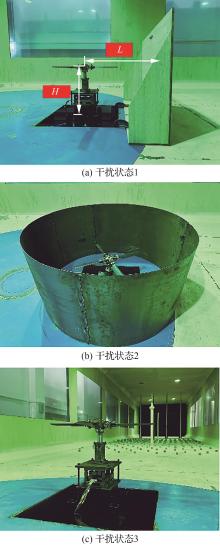
Fig.1
Wind tunnel test configurations
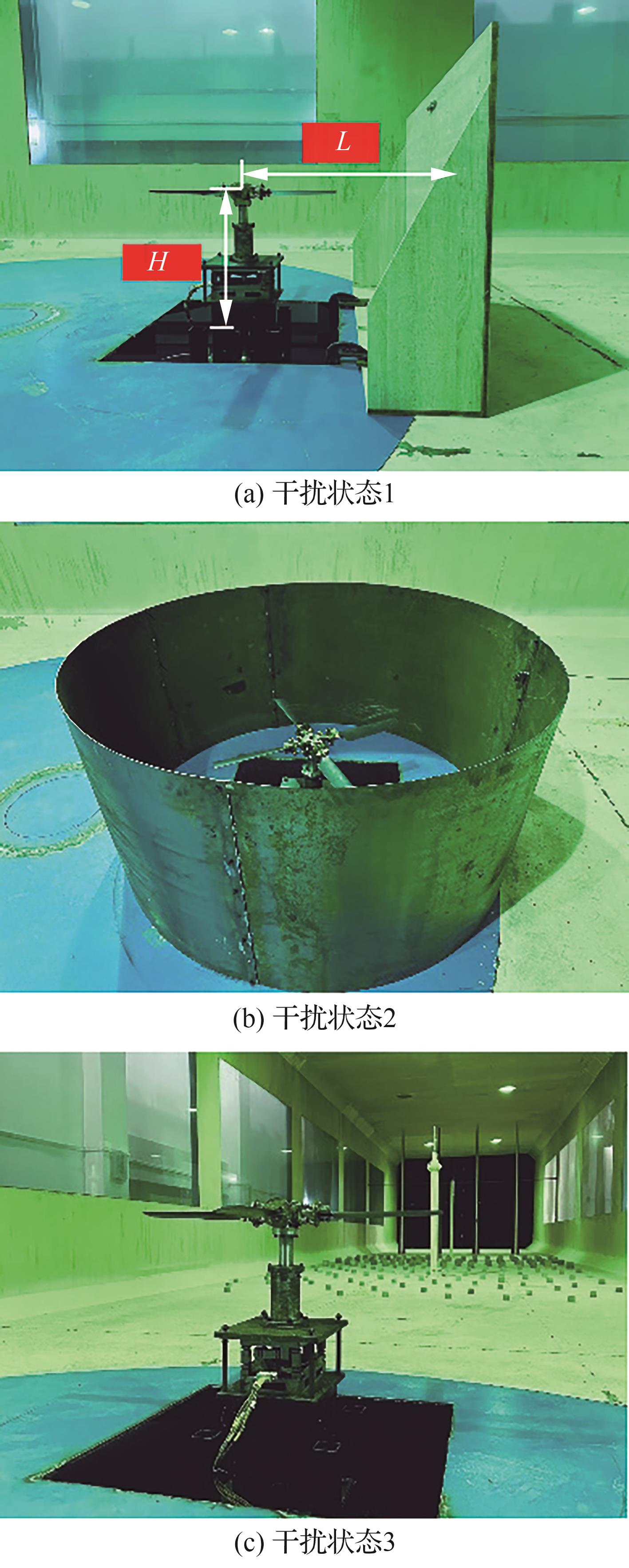
Table 2
Parameters of test states
| 状态 | 干扰物 | 风洞入口风速 | 试验点 |
|---|---|---|---|
| 1 | 平面扰流板 | V=0,10 m/s | L=0.8 m; H=0.4,0.6,0.8,1 m |
H=0.6 m; L=0.6,0.8,1,1.2 m | |||
| 2 | 围合式障碍 | V=0,10 m/s | L=0 m; H=0.4,0.5,0.6,0.7,0.8 m |
| 3 | 尖劈、粗糙元 | V=0,10 m/s | L=0 m; H=0.4,0.6,0.8,1 m |
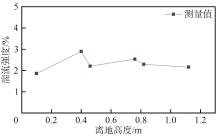
Fig.2
Turbulence intensity
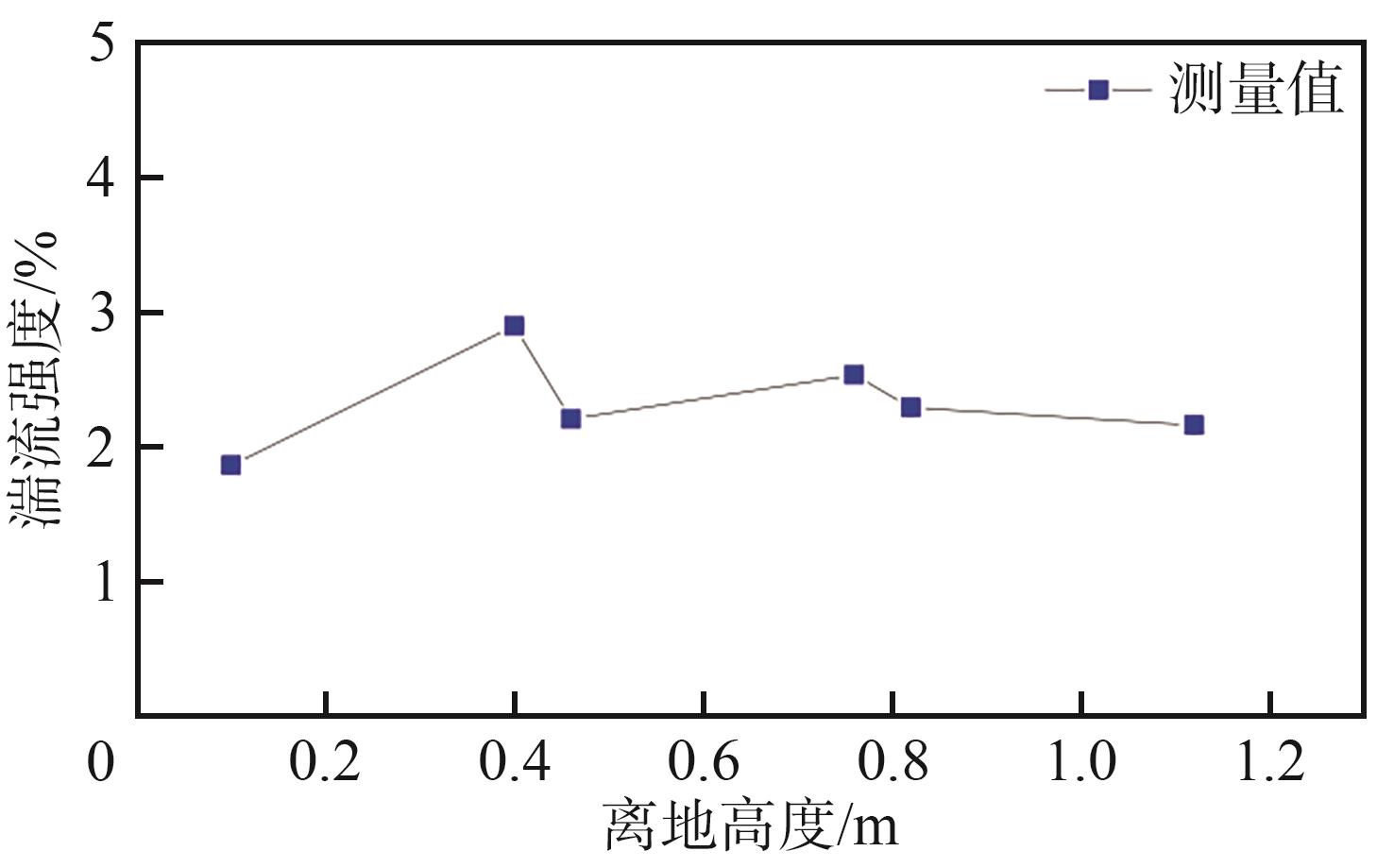
Fig.3
Comparison of original signal and filtered rotor thrust data
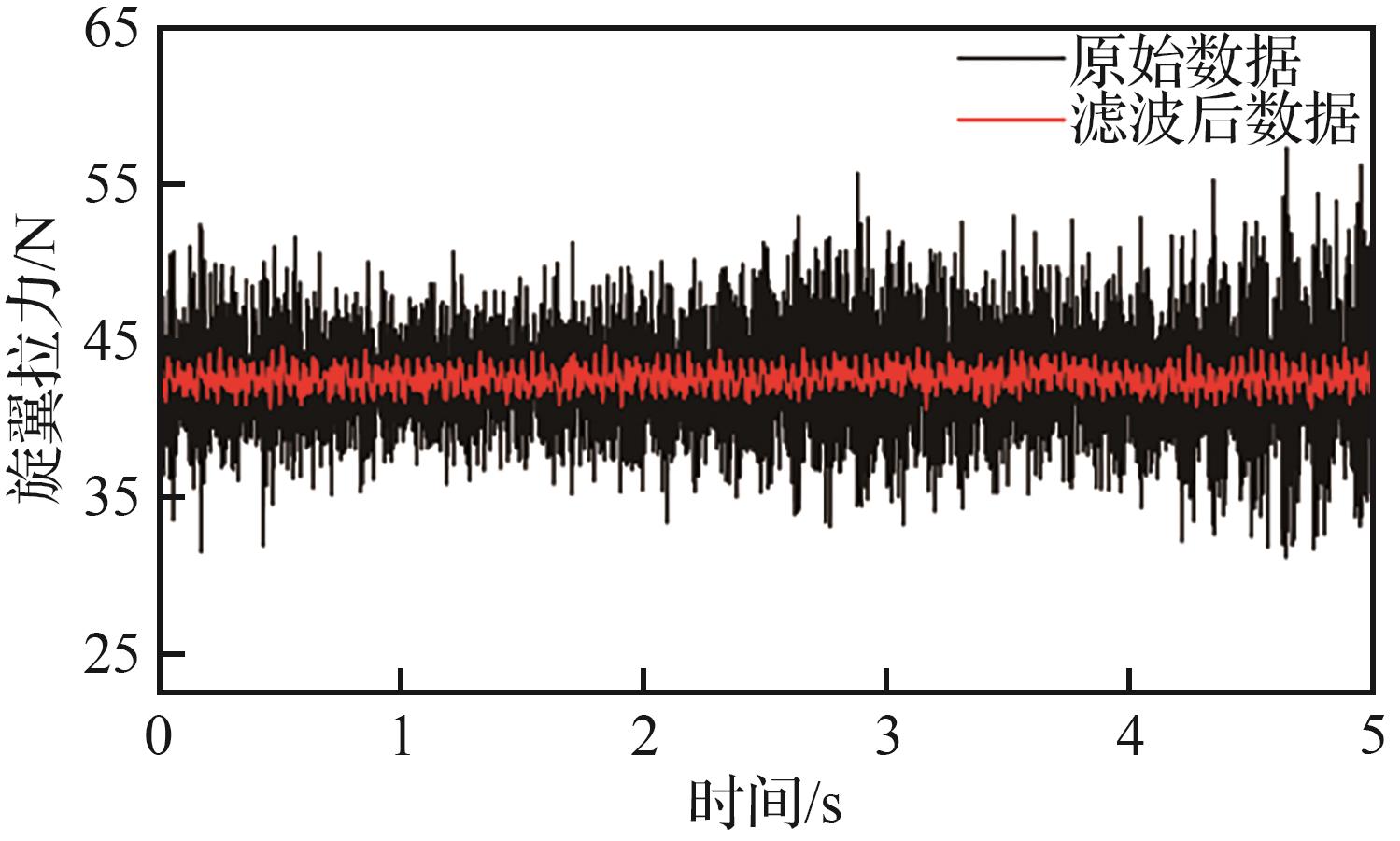
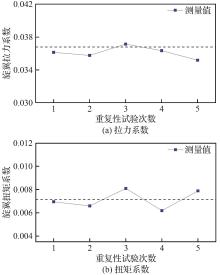
Fig.4
Results of repeatability test
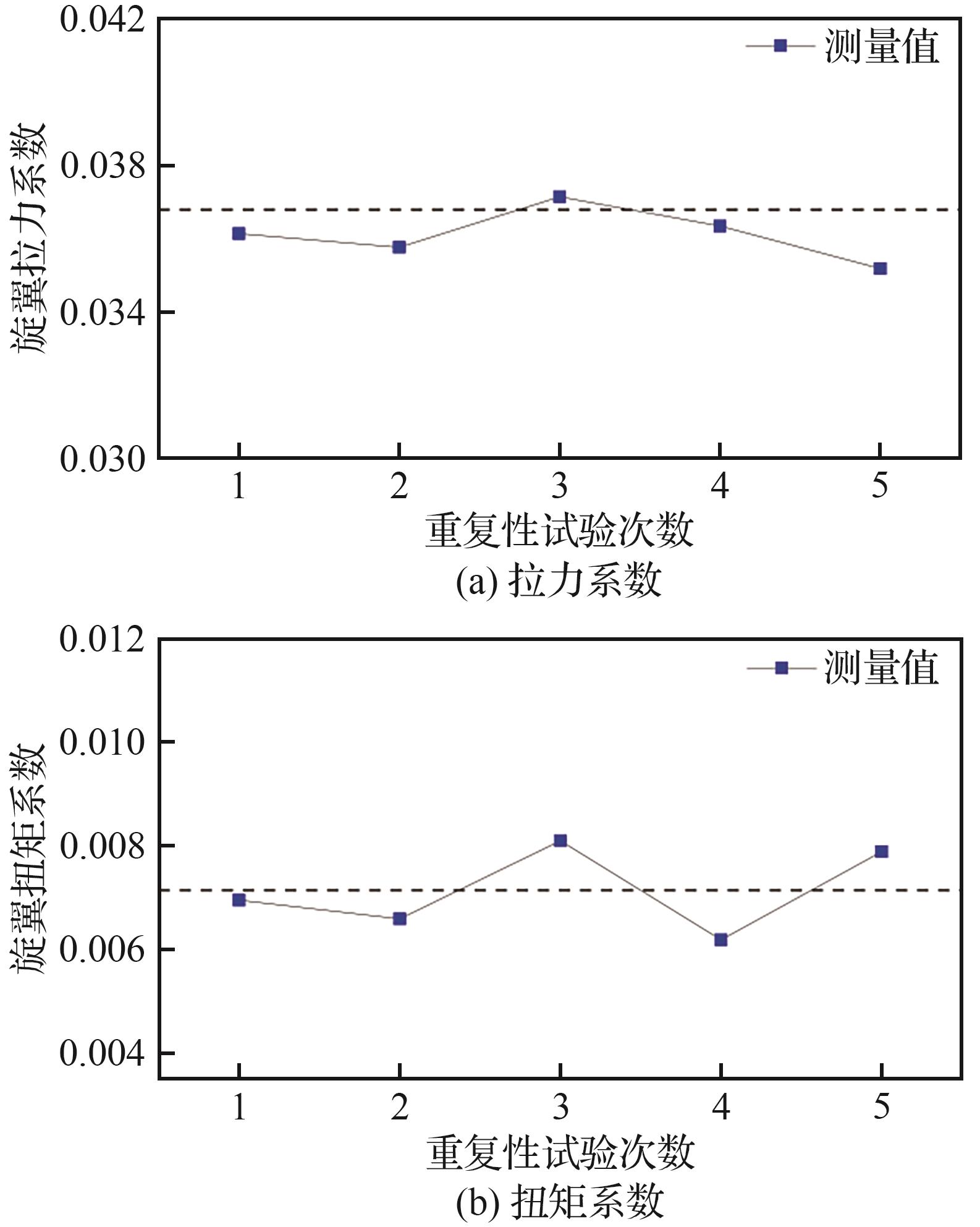
Table 3
Comparison of measured and calculated CT/CT,OGE in interference conditions
| 状态 | 坐标(L,H) m | |||
|---|---|---|---|---|
| 计算值 | 试验值 | 误差/% | ||
| 1 | 0.8,0.4 | 0.841 | 0.853 | 1.407 |
| 0.8,0.6 | 0.864 | 0.901 | 4.107 | |
| 2 | 0,0.4 | 0.737 | 0.783 | 5.875 |
| 0,0.6 | 0.779 | 0.780 | 0.128 | |
| 3 | 0,0.6 | 1.158 | 1.157 | 0.086 |
| 0,0.8 | 1.166 | 1.178 | 1.019 | |
Fig.5
Impact of altitude on rotor aerodynamic performance (case 1)
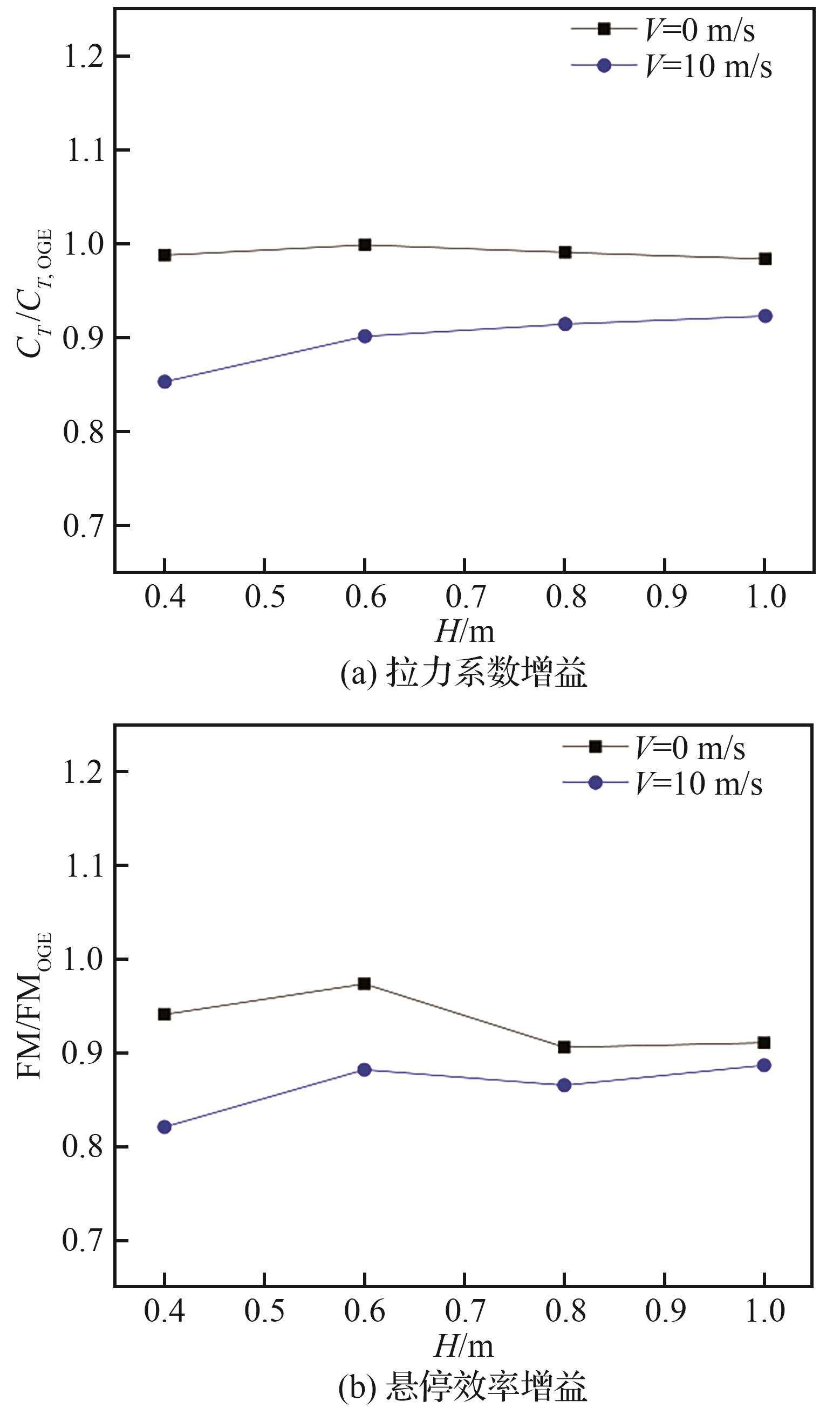
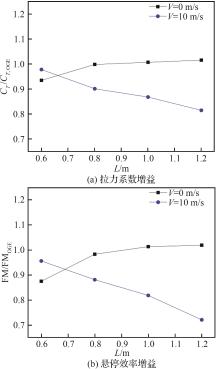
Fig.6
Impact of horizontal distance to obstacle on rotor aerodynamic performance (case 1)
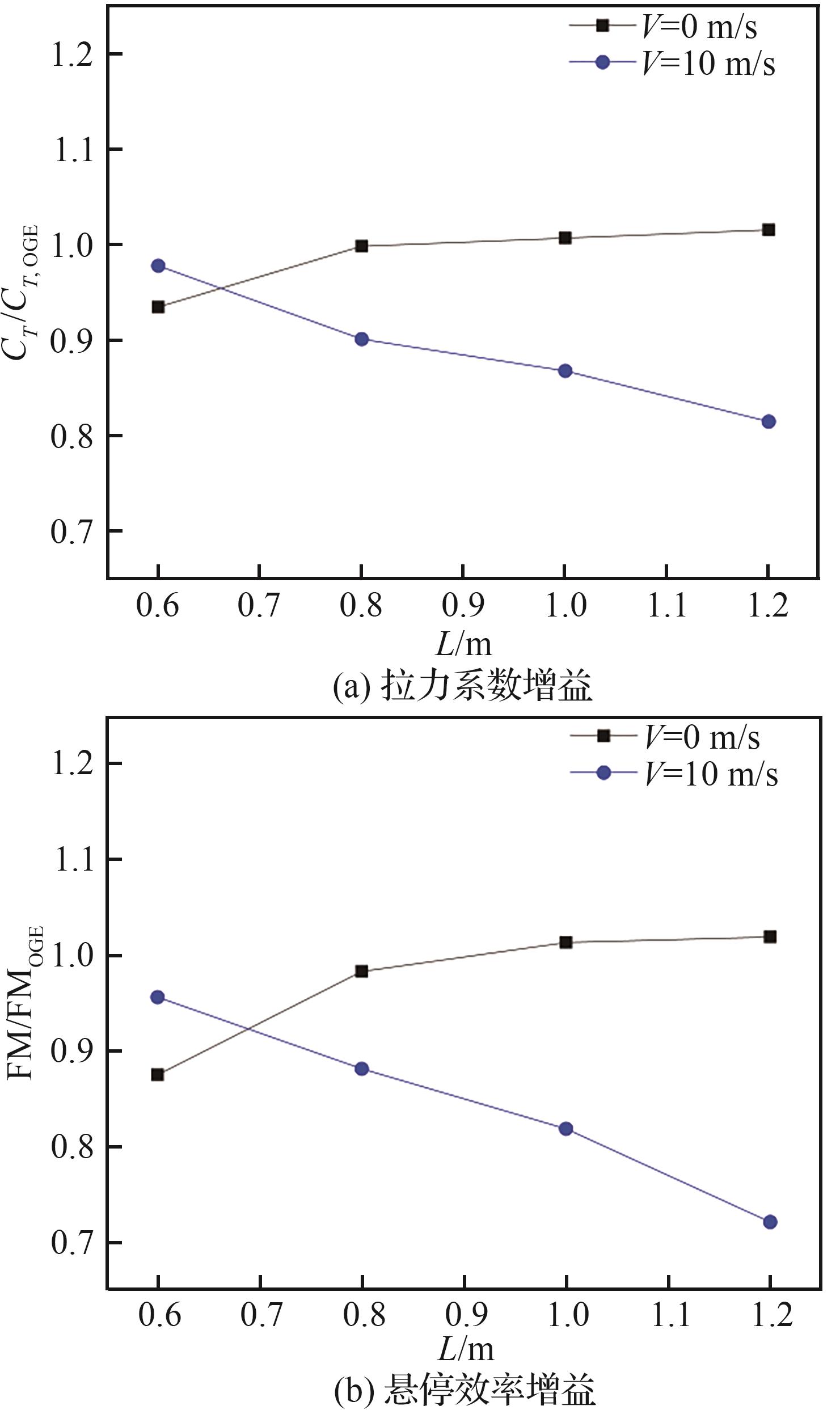
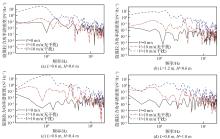
Fig.7
PSD of rotor thrust under interference from flat plate
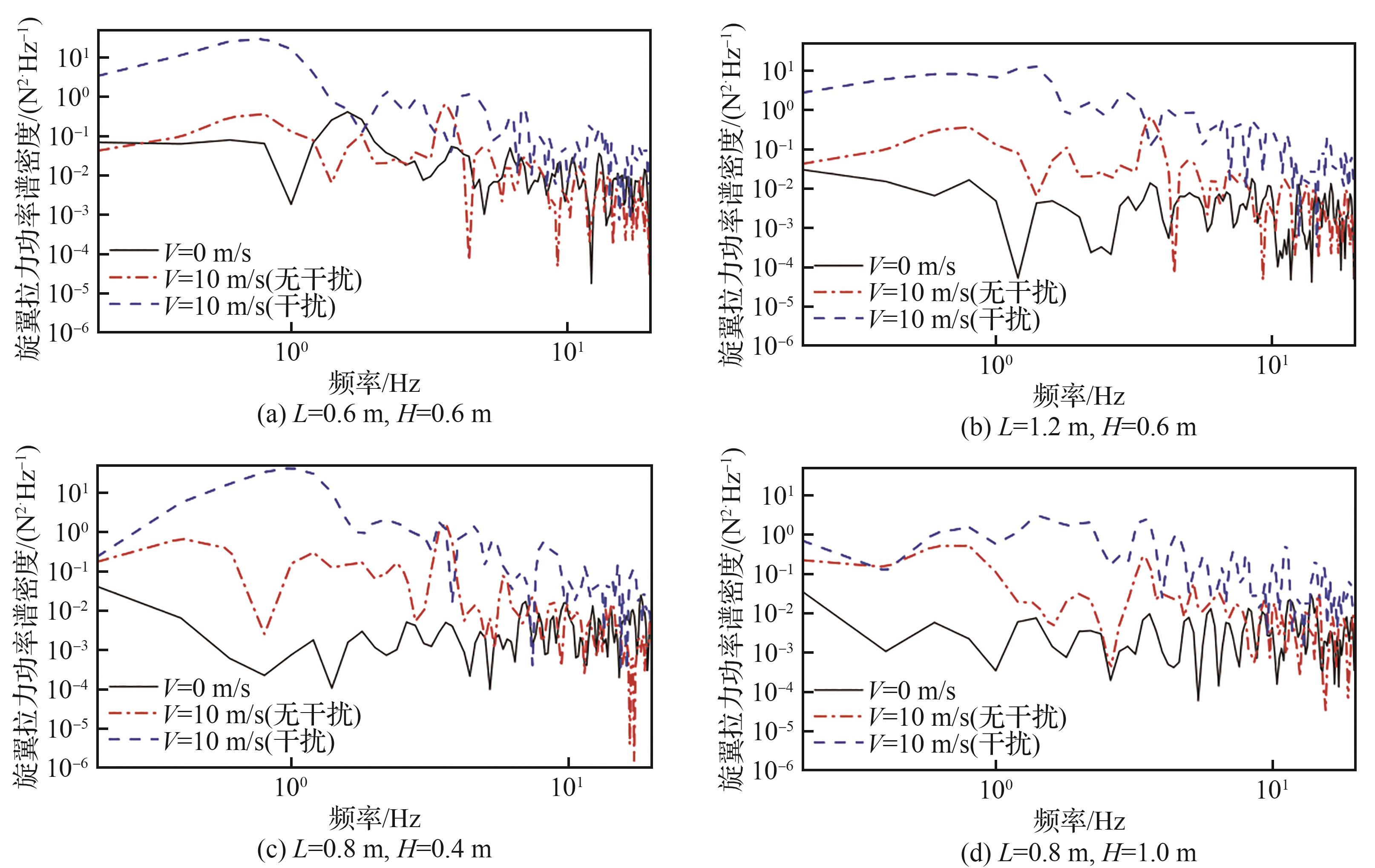
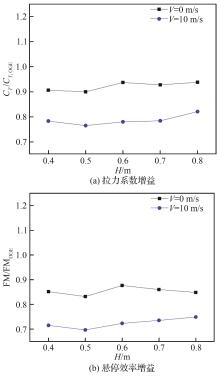
Fig.8
Impact of altitude on rotor aerodynamic performance (case 2)
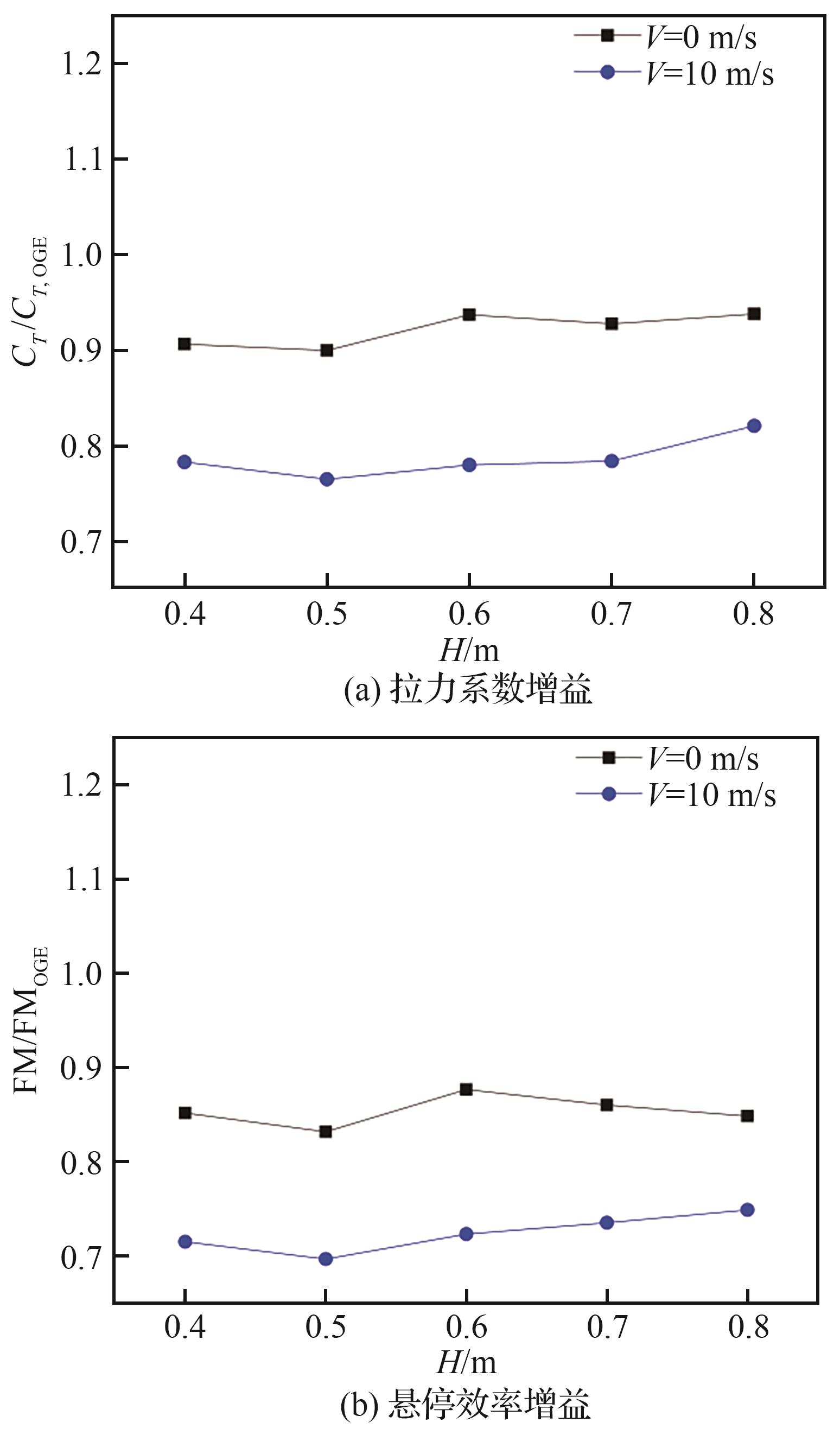
Fig.9
PSD of rotor thrust under interference from enclosure obstacle
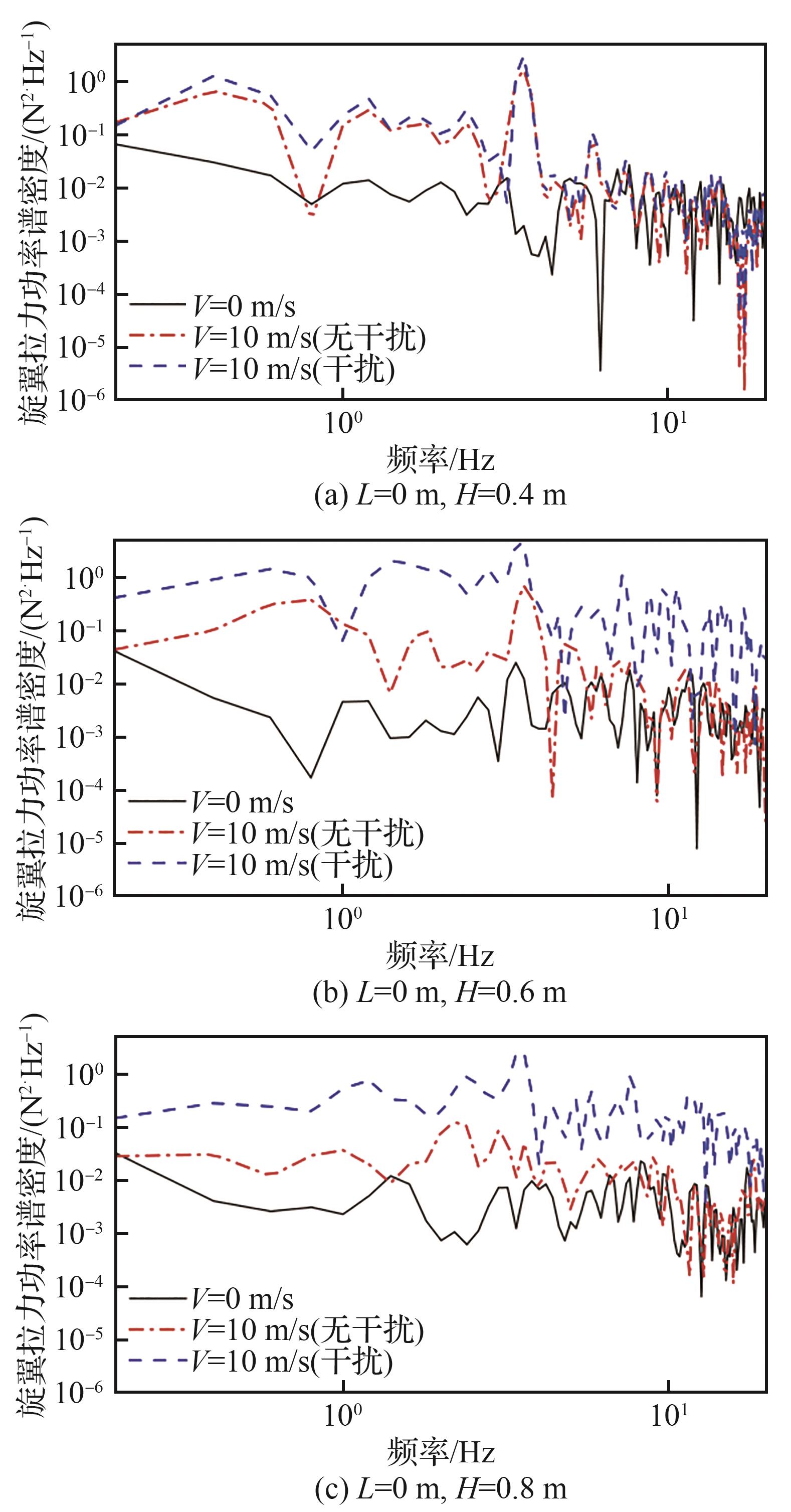
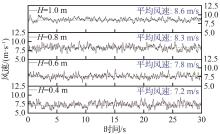
Fig.10
Time history of wind speed in turbulent wind field
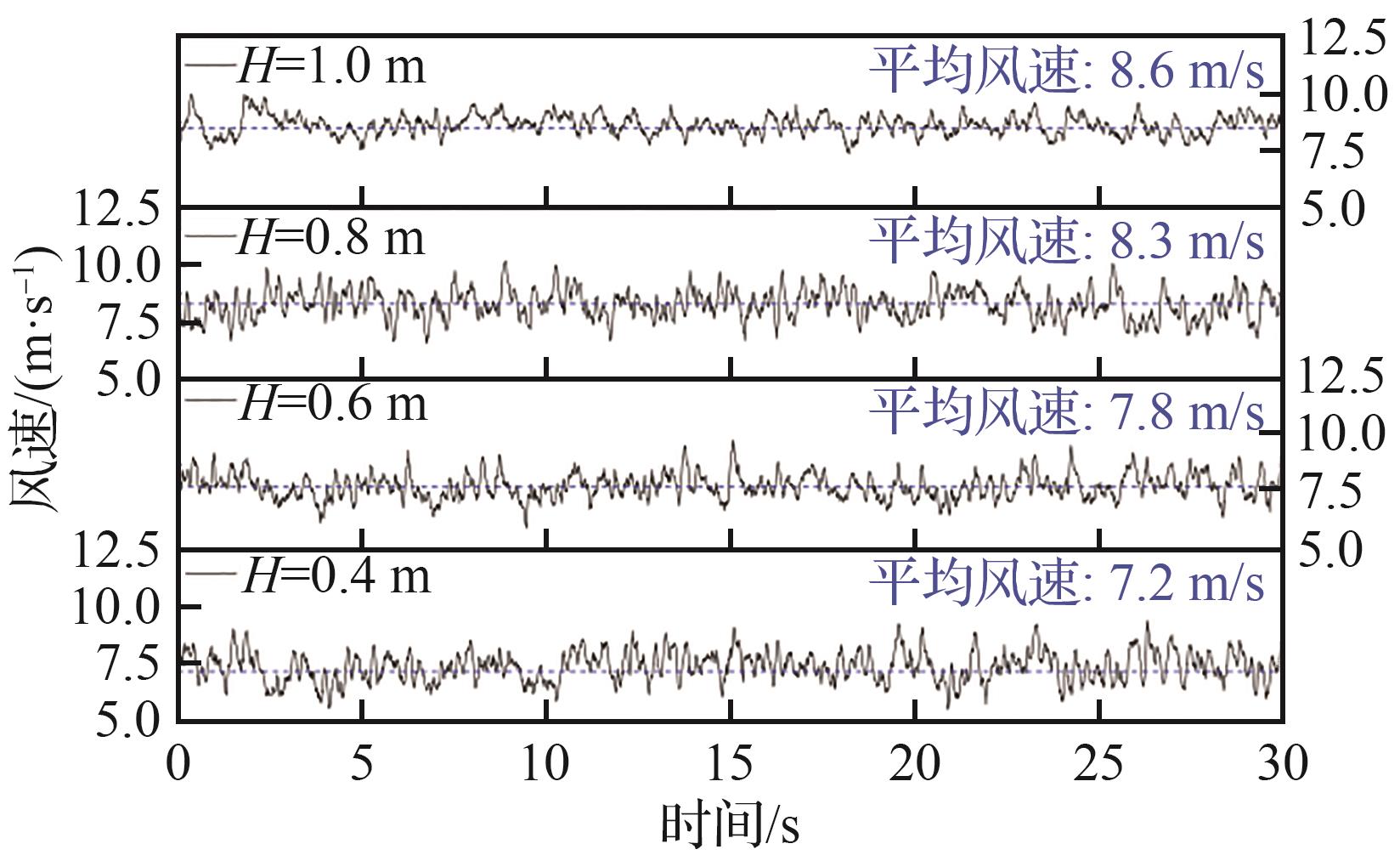
Fig.11
Wind profile and impact of altitude on rotor aerodynamic performance (case 3)
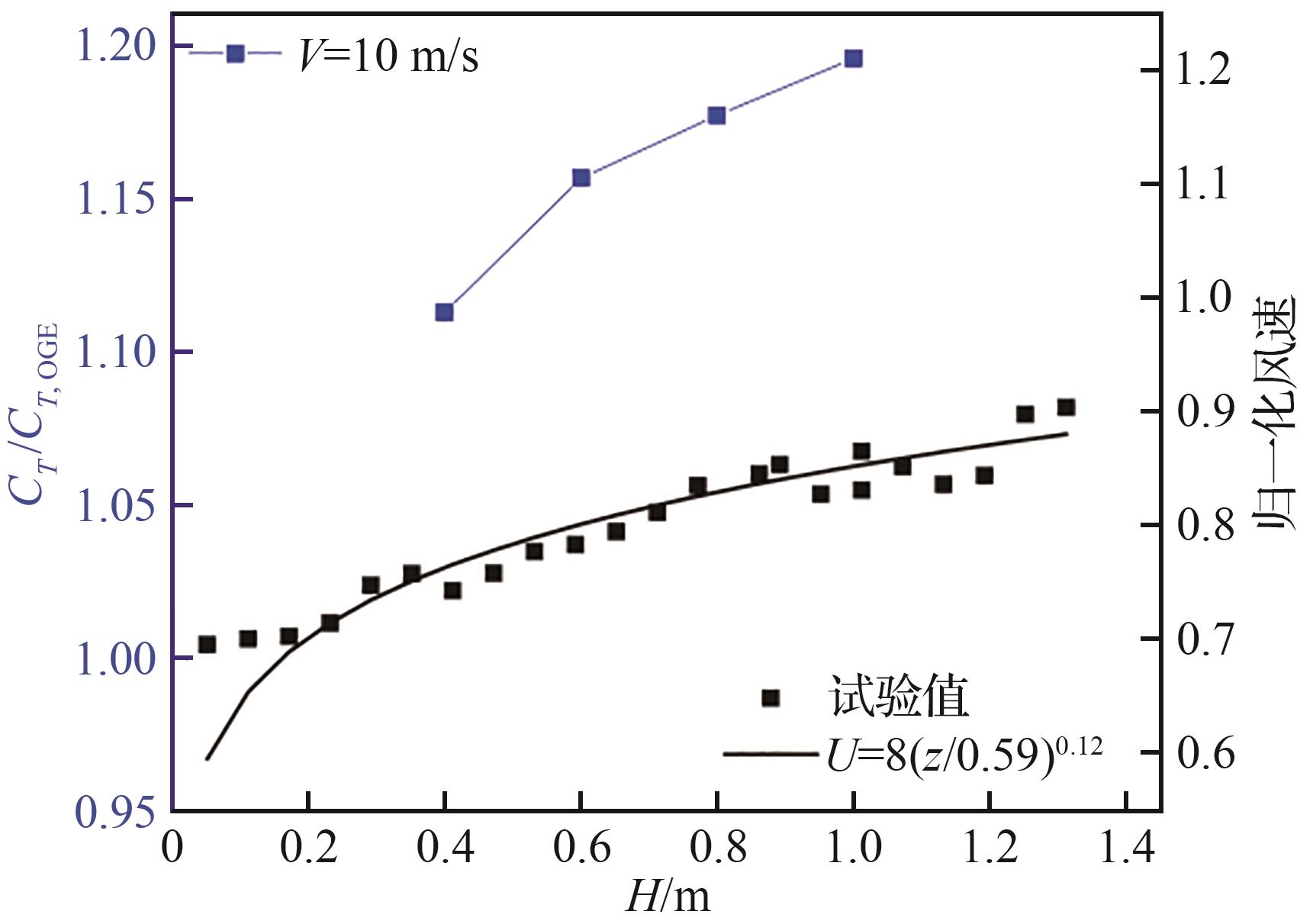
Table 4
Turbulence intensity and integral length scale characteristics at different heights above ground in turbulent wind field
| 参数 | 风向 | H=0.4 m | H=0.6 m | H=0.8 m |
|---|---|---|---|---|
| 湍流强度 | 水平方向 | 0.063 3 | 0.056 7 | 0.049 2 |
| 侧向 | 0.758 9 | 0.687 9 | 0.461 8 | |
| 竖向 | 0.602 9 | 0.667 4 | 0.667 3 | |
| 积分尺度/m | 水平方向 | 1.049 3 | 1.452 9 | 1.549 4 |
| 侧向 | 0.011 5 | 0.058 8 | 0.058 5 | |
| 竖向 | 0.068 8 | 0.052 2 | 0.039 1 |
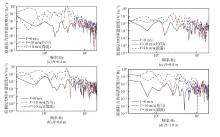
Fig.12
PSD of rotor thrust under interference from random turbulence
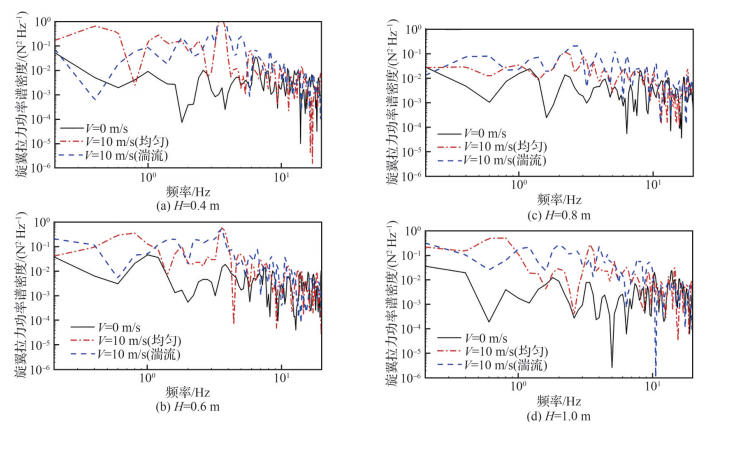
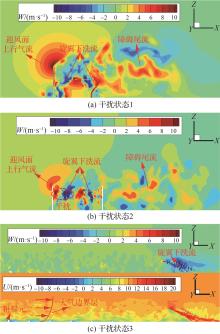
Fig.13
Flow field velocity distribution under different interference conditions
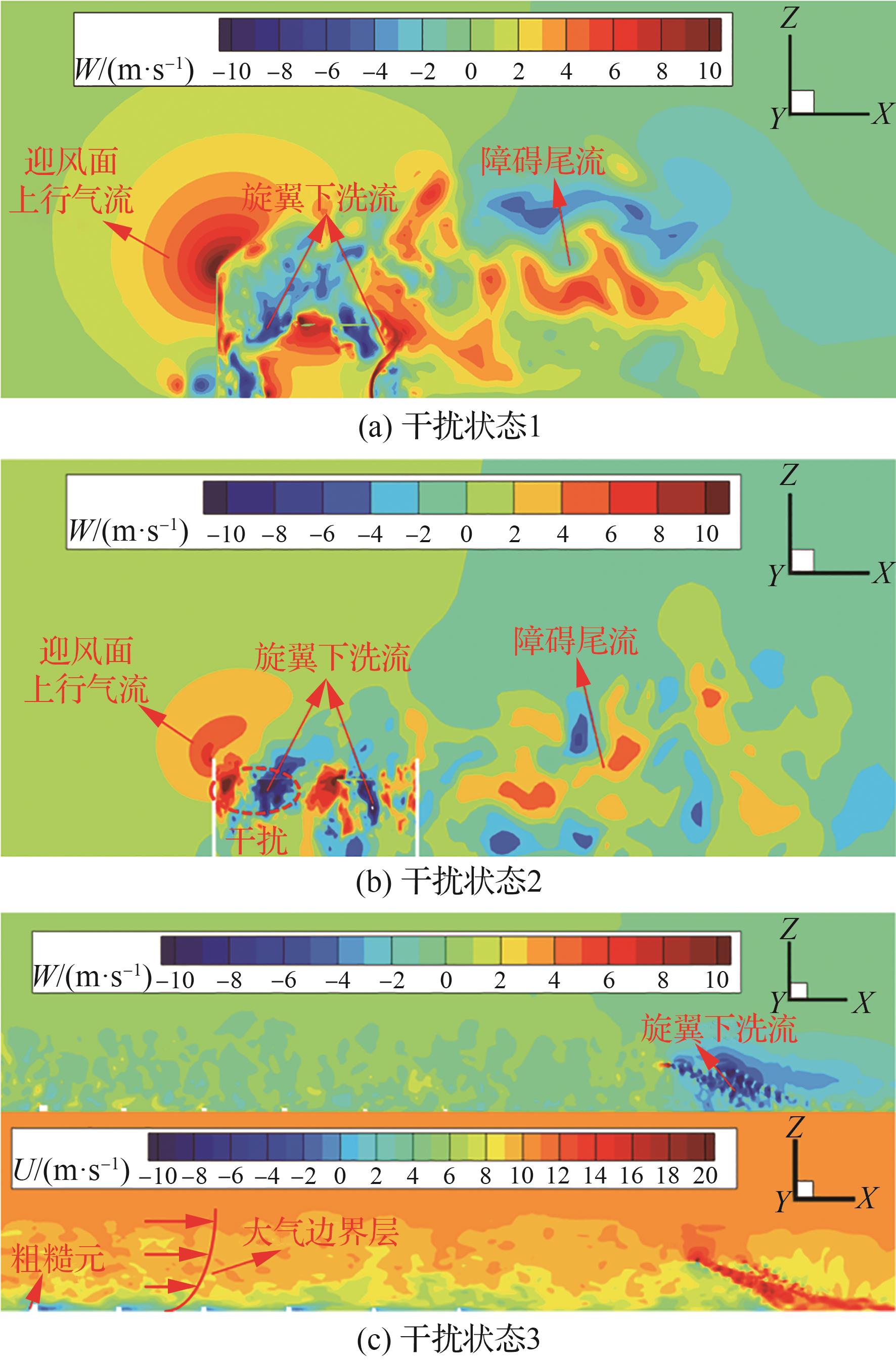
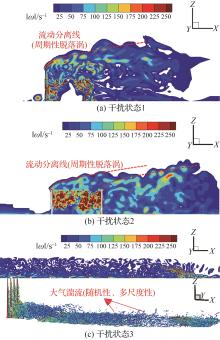
Fig.14
Flow field vorticity magnitude distribution under different interference conditions
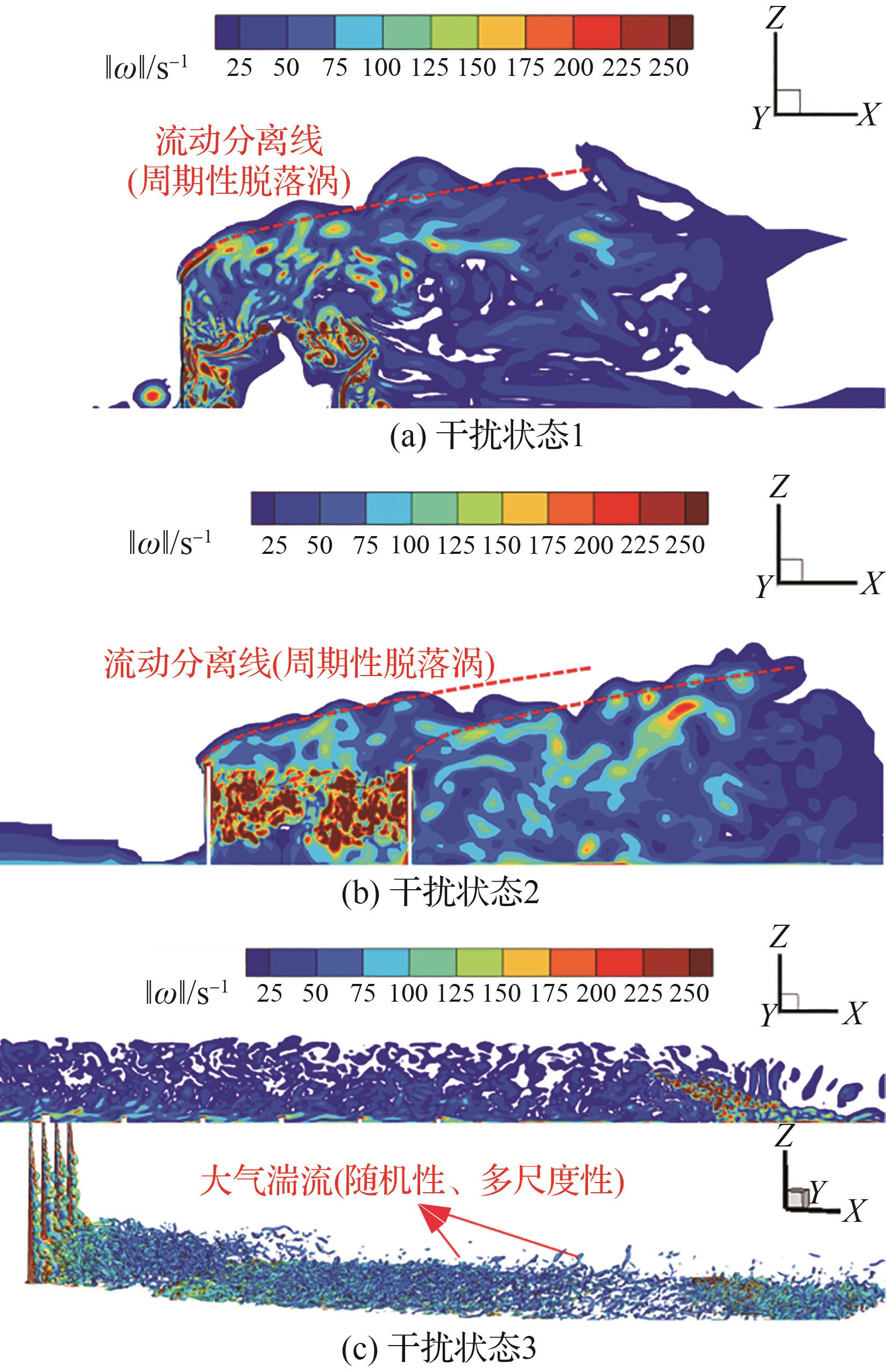
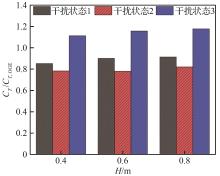
Fig.15
Comparison of time-averaged rotor thrust under three types of interference
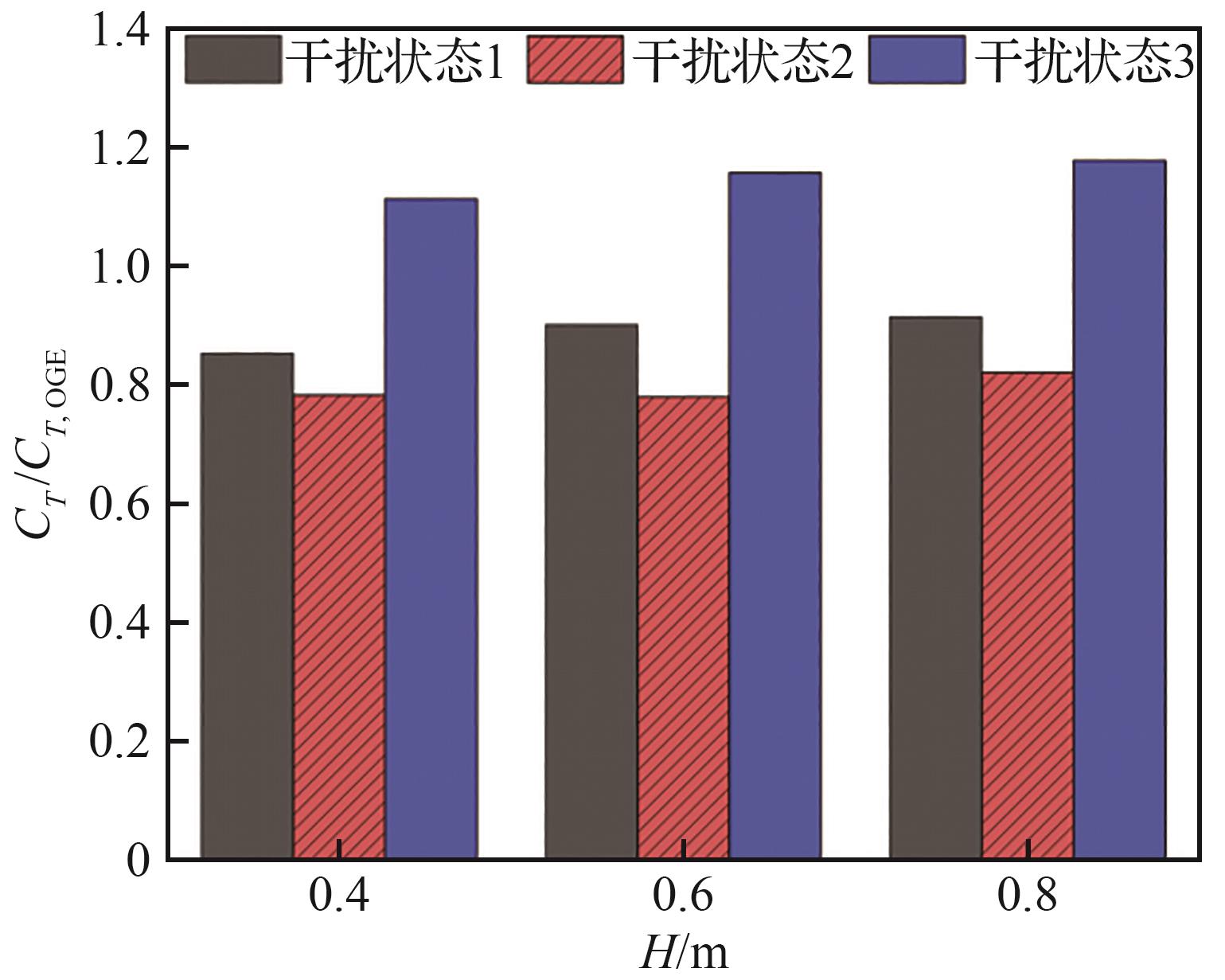
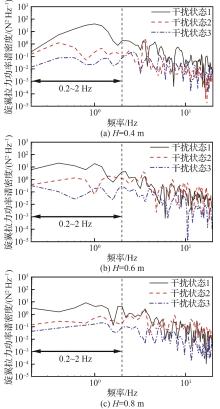
Fig.16
Comparison of PSD of rotor thrust under three types of interference
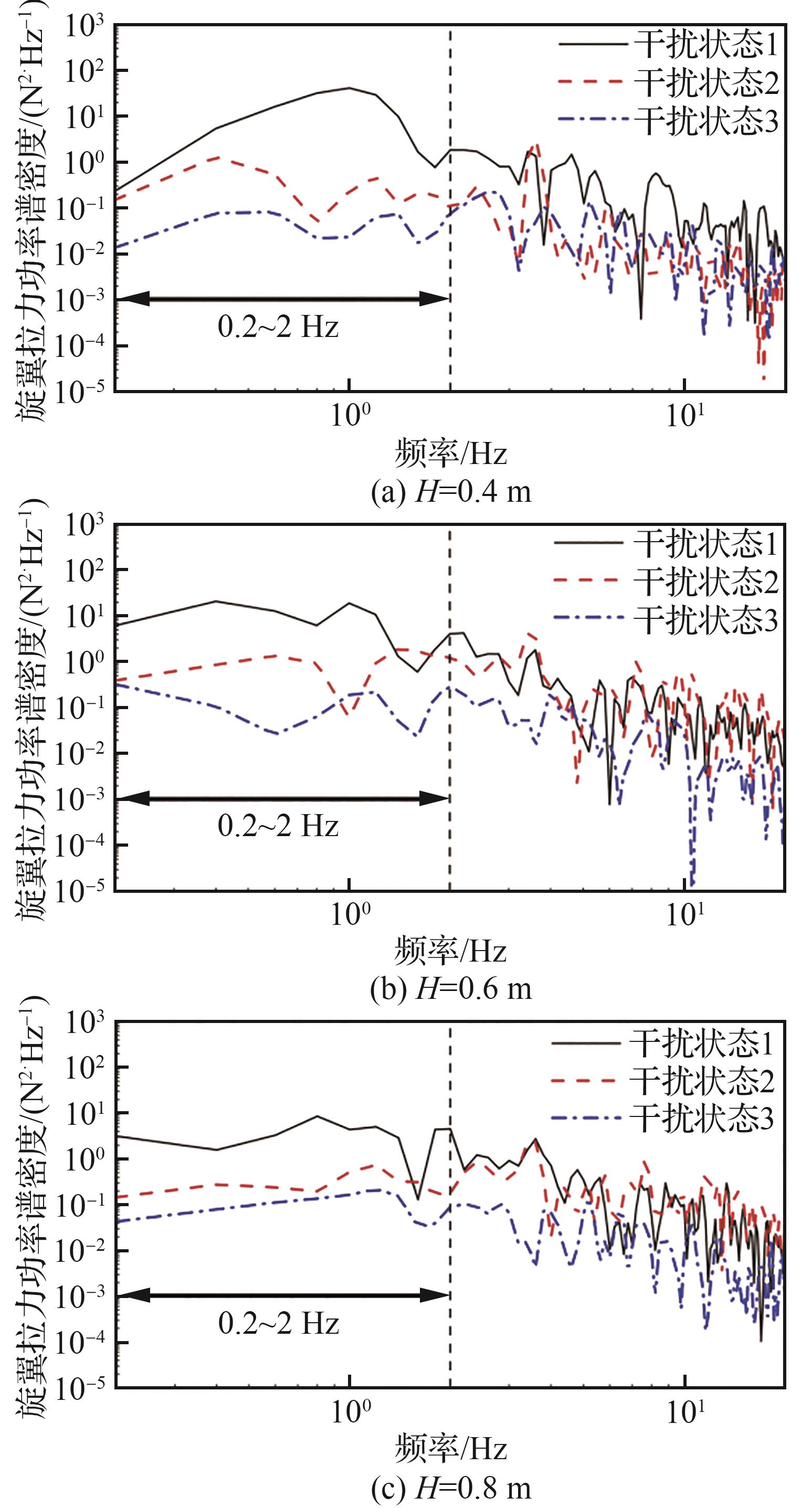
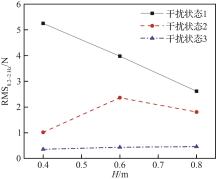
Fig.17
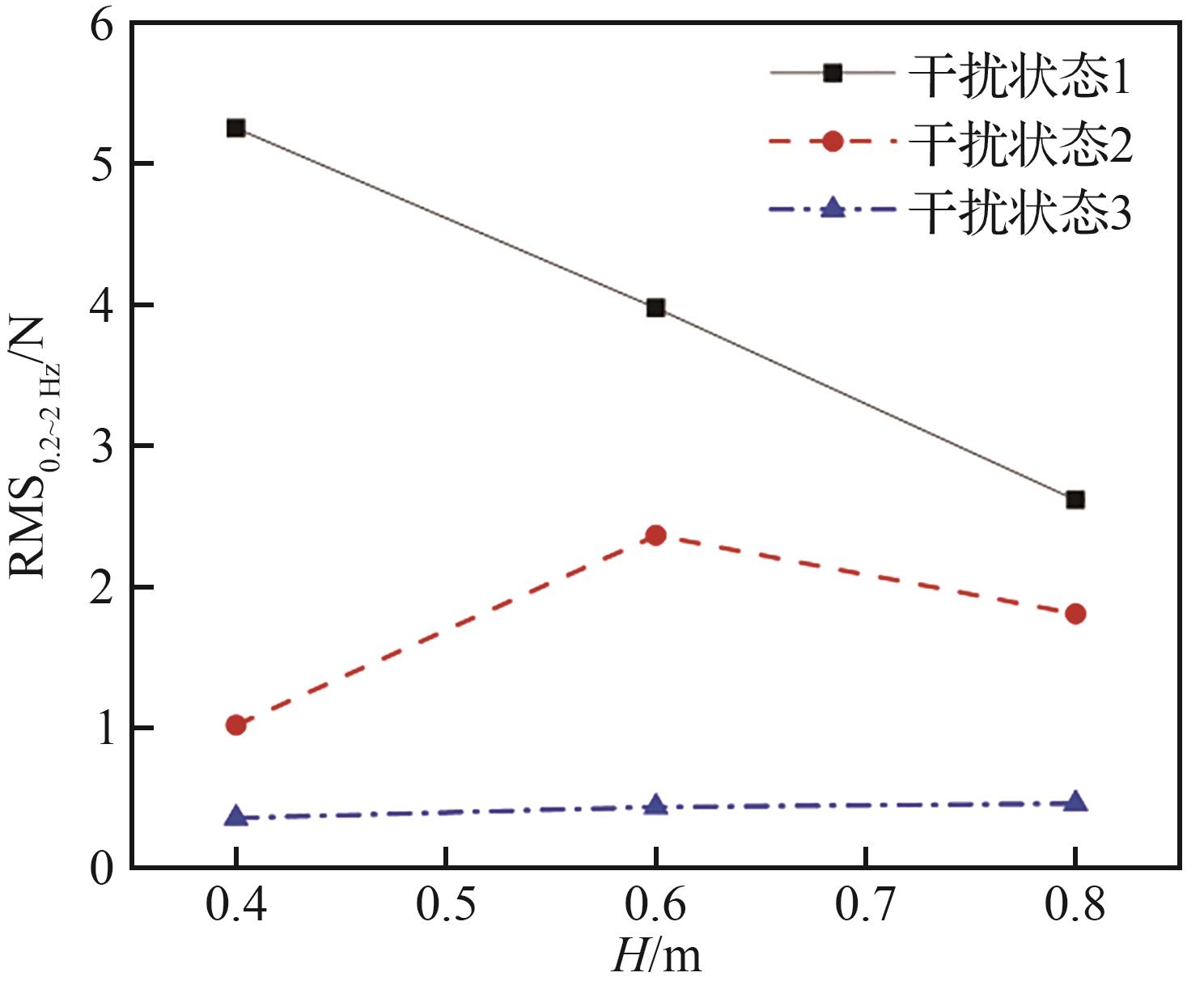
Comparison of RMS of rotor thrust under three types of interference
| [1] | BLOCKEN B. LES over RANS in building simulation for outdoor and indoor applications: A foregone conclusion?[J]. Building Simulation, 2018, 11(5): 821-870. |
| [2] | ZHOU T, YANG Q S, YAN B W, et al. Detached eddy simulation of turbulent flow fields over steep hilly terrain[J]. Journal of Wind Engineering and Industrial Aerodynamics, 2022, 221: 104906. |
| [3] | SHI Y J, HE X, XU Y, et al. Numerical study on flow control of ship airwake and rotor airload during helicopter shipboard landing[J]. Chinese Journal of Aeronautics, 2019, 32(2): 324-336. |
| [4] | 赵燕勤, 陈仁良. 低空风切变系统建模及其对直升机飞行安全威胁定性分析[J]. 航空学报, 2020, 41(7): 123413. |
| ZHAO Y Q, CHEN R L. Systematical modelling of low-altitude windshear and its qualitative threat analysis to helicopter flight safety[J]. Acta Aeronautica et Astronautica Sinica, 2020, 41(7): 123413 (in Chinese). | |
| [5] | 余莎莎, 陈星雨. 城市空中交通领域关键技术创新与挑战[J]. 航空学报, 2024, 45(S1): 730657. |
| YU S S, CHEN X Y. Key technological innovations and challenges in urban air mobility [J]. Acta Aeronautica et Astronautica Sinica.2024,45(S1): 730657 (in Chinese). | |
| [6] | TIMM G K. Obstacle-induced flow recirculation[J]. Journal of Sound and Vibration, 1966, 4(3): 490-506. |
| [7] | IBOSHI N, ITOGA N, PRASAD J V R, et al. Ground effect of a rotor hovering above a confined area[J]. Frontiers in Aerospace Engineering, 2014, 3(1): 7-16. |
| [8] | ŁUSIAK T, DZIUBIŃSKI A, SZUMAŃSKI K. Interference between helicopter and its surroundings, experimental and numerical analysis[J]. Task Quarterly, 2009, 13(4): 379-392. |
| [9] | VISINGARDI A, DE GREGORIO F, SCHWARZ T, et al. Forces on obstacles in rotor wake-A GARTEUR Action Group[C]∥Proceedings of the 43rd European Rotorcraft Forum. 2017. |
| [10] | GIBERTINI G, GRASSI D, PAROLINI C, et al. Experimental investigation on the aerodynamic interaction between a helicopter and ground obstacles[J]. Proceedings of the Institution of Mechanical Engineers, Part G: Journal of Aerospace Engineering, 2015, 229(8): 1395-1406. |
| [11] | DI MILANO P, ZAGAGLIA D, GIUNI M, et al. Rotor-obstacle aerodynamic interaction in hovering flight: An experimental survey[C]∥Proceedings of the Vertical Flight Society 72nd Annual Forum. 2016: 1-9. |
| [12] | TERESA Q. Rotor performance in the wake of a large structure[C]∥Proceedings of the American Helicopter Society 65th Annual Forun. 2009: 27-29. |
| [13] | ZAGAGLIA D, ZANOTTI A, GIBERTINI G. Analysis of the loads acting on the rotor of a helicopter model close to an obstacle in moderate windy conditions[J]. Aerospace Science and Technology, 2018, 78: 580-592. |
| [14] | GIBERTINI G, DROANDI G, ZAGAGLIA D, et al. CFD assessment of the helicopter and ground obstacles aerodynamic interference[C]∥42nd European Rotorcraft Forum. 2016: 573-585. |
| [15] | LIU Y, SHI Y J, AZIZ A, et al. Numerical study on rotor-building coupled flow field and its influence on rotor aerodynamic performance under an atmospheric boundary layer[J]. Aerospace, 2024, 11(7): 521. |
| [16] | 张伟, 李国强, 高钟谱, 等. 高原山谷对直升机悬停旋翼的气动干扰[J/OL]. 空气动力学学报, (2025-04-17)[2025-04-22]. . |
| ZHANG W, LI G Q, GAO Z P, et al. Study on aerodynamic interference between helicopter hovering rotor and plateau complex terrain[J/OL]. Acta Aerodynamica Sinica, (2025-04-17)[2025-04-22]. (in Chinese). | |
| [17] | OO N L, ZHAO D, SELLIER M, et al. Experimental investigation on turbulence effects on unsteady aerodynamics performances of two horizontally placed small-size UAV rotors[J]. Aerospace Science and Technology, 2023, 141: 108535. |
| [18] | YUAN H Y, SU T Y, LI G Q, et al. Numerical simulation investigation on aerodynamic characteristics of rotor in plateau environment[J]. Aerospace Science and Technology, 2024, 155: 109628. |
| [19] | LEE R G, ZAN S J. Unsteady aerodynamic loading on a helicopter fuselage in a ship airwake[J]. Journal of the American Helicopter Society, 2004, 49(2): 149-159. |
| [20] | LEE R G, ZAN S J. Wind tunnel testing of a helicopter fuselage and rotor in a ship airwake[J]. Journal of the American Helicopter Society, 2005, 50(4): 326-337. |
| [21] | TAYMOURTASH N, QUARANTA G. Turbulent airwake estimation from helicopter-ship wind-tunnel data[J]. Journal of Aircraft, 2024, 61(4): 1293-1302. |
| [22] | TAYMOURTASH N, ZANOTTI A, GIBERTINI G, et al. Unsteady load assessment of a scaled-helicopter model in a ship airwake[J]. Aerospace Science and Technology, 2022, 129: 107583. |
| [23] | IRWIN H P A H. The design of spires for wind simulation[J]. Journal of Wind Engineering and Industrial Aerodynamics, 1981, 7(3): 361-366. |
| [24] | QUINLIVEN T A. Rotor blade performance in the wake of a large structure[D]. San Luis Obispo: California Polytechnic State University, 2008: 43-47. |
| [25] | RAJAGOPALAN G, NIAZI S, WADCOCK A J, et al. Experimental and computational study of the interaction between a tandem-rotor helicopter and a ship[C]∥Annual Forum Proceedings-American Helicopter Society. 2005: 729. |
| [26] | SHI Y J, LI G Y, SU D C, et al. Numerical investigation on the ship/multi-helicopter dynamic interface[J]. Aerospace Science and Technology, 2020, 106: 106175. |
| [27] | 中华人民共和国住房和城乡建设部. 建筑结构荷载规范: [S]. 北京: 中国建筑工业出版社, 2012. |
| Ministry of Housing and Urban-Rural Development of the People’s Republic of China. Load code for the design of building structures: [S]. Beijing: China Architecture & Building Press, 2012 (in Chinese). |
| [1] | Feihang NIU, Qiaozhi YIN, Xiaohui WEI, Weihua LIANG, Hong NIE. Buffering method of bio-inspired landing gear based on active compliance control [J]. Acta Aeronautica et Astronautica Sinica, 2026, 47(1): 632001-632001. |
| [2] | Linbo WU, Shu MENG, Wei ZHANG, Jianfeng TAN. Parameters of rotor arrangement for sand suppression in helicopter near-earth flight [J]. Acta Aeronautica et Astronautica Sinica, 2026, 47(1): 632003-632003. |
| [3] | Lixiong ZHENG, Zhe CHEN, Xin WANG, Qijun ZHAO. Prediction of whirl flutter boundary for tiltrotor aircraft based on BPNN with adaptive data [J]. Acta Aeronautica et Astronautica Sinica, 2025, 46(S1): 732159-732159. |
| [4] | Wangqing ZHU, Chenkai CAO, Guoqing ZHAO, Qinghua ZHU, Haoyu HU. Aerodynamic interference of scissor tail rotor and influence of unconventional layout parameters [J]. Acta Aeronautica et Astronautica Sinica, 2025, 46(S1): 732181-732181. |
| [5] | Jiong HE, Binwu REN, Siliang DU, Yousong XU, Bo WANG. Adaptive attitude control for tilt-quadrotor UAV based on ADRC-RBF [J]. Acta Aeronautica et Astronautica Sinica, 2025, 46(S1): 732189-732189. |
| [6] | Xiayang ZHANG, Bin LUO, Xi CHEN, Tao YANG. Optimization design of high-efficiency and low-noise rotor layout for quad-tiltrotor aircraft [J]. Acta Aeronautica et Astronautica Sinica, 2025, 46(S1): 732183-732183. |
| [7] | Zhicheng LIU, Feng LIAO, Chenkai CAO, Wangqing ZHU, Guoqing ZHAO, Qijun ZHAO, Haoyu HU. Aerodynamic influence study of ducted tail rotor geometry and configuration parameters [J]. Acta Aeronautica et Astronautica Sinica, 2025, 46(S1): 732224-732224. |
| [8] | Kelei WANG, Zhou ZHOU, Minghao LI. Research and experimental validation of loose coupling design method for propulsion wing unit [J]. Acta Aeronautica et Astronautica Sinica, 2025, 46(9): 212-229. |
| [9] | Lixiang WEI, Jinglei XU, Kuangshi CHEN, Shuai HUANG, Jianhui GE, Guangtao SONG. Scheme design and performance study of adjustable vector nozzle for wide-range hypersonic aircraft [J]. Acta Aeronautica et Astronautica Sinica, 2025, 46(8): 631086-631086. |
| [10] | Dongfei ZHANG, Junhui GAO. High-precision numerical simulation of fan rotor-stator interaction pure tone [J]. Acta Aeronautica et Astronautica Sinica, 2025, 46(7): 130884-130884. |
| [11] | Yifan YANG, Xiao WANG. Enhanced hybrid vortex particle method for aerodynamic analysis of tiltrotor rotor/wing interactions [J]. Acta Aeronautica et Astronautica Sinica, 2025, 46(7): 131040-131040. |
| [12] | Xian YI, Jinghao REN, Qingren LAI, Yu LIU, Qiang WANG. Icing characteristics of full-scale multi-element configurations of large aircraft: Computation and experiment [J]. Acta Aeronautica et Astronautica Sinica, 2025, 46(5): 531575-531575. |
| [13] | Zhiqiang WAN, Shanshan ZHANG, Xiaozhe WANG, Liang MA, Ao XU, Zhigang WU, Chao YANG. Maneuver load analysis and alleviation technology of flexible aircraft: Review [J]. Acta Aeronautica et Astronautica Sinica, 2025, 46(3): 30279-030279. |
| [14] | Bin LIANG, Junbo ZHAO, Zengliang FU, Jiajian ZHOU, Ping ZHOU, Shiyu ZHANG, Weiqi SUN. Effect of gas mass injection on pitching characteristics of blunt cone [J]. Acta Aeronautica et Astronautica Sinica, 2025, 46(3): 130822-130822. |
| [15] | Weizhen CHENG, Zefeng WANG, Lisong GENG, Jiahong ZHENG, Shuaike JIAO, Kang LI. Flight test measurement for structural load of rotor blade based on fiber Bragg grating [J]. Acta Aeronautica et Astronautica Sinica, 2025, 46(24): 231863-231863. |
| Viewed | ||||||
|
Full text |
|
|||||
|
Abstract |
|
|||||
Address: No.238, Baiyan Buiding, Beisihuan Zhonglu Road, Haidian District, Beijing, China
Postal code : 100083
E-mail:hkxb@buaa.edu.cn
Total visits: 6658907 Today visits: 1341All copyright © editorial office of Chinese Journal of Aeronautics
All copyright © editorial office of Chinese Journal of Aeronautics
Total visits: 6658907 Today visits: 1341

 CJA
CJA
