谢睿轩, 章子洋, 李锦烨, 包晗, 陆方寒, 王祁旻, 吴大卫( )
)
收稿日期:2024-11-30
修回日期:2024-12-26
接受日期:2025-02-17
出版日期:2025-03-14
发布日期:2025-02-28
通讯作者:
吴大卫
E-mail:Supersonic_Sadri@163.com
基金资助:
Ruixuan XIE, Ziyang ZHANG, Jinye LI, Han BAO, Fanghan LU, Qimin WANG, Dawei WU()
Received:2024-11-30
Revised:2024-12-26
Accepted:2025-02-17
Online:2025-03-14
Published:2025-02-28
Contact:
Dawei WU
E-mail:Supersonic_Sadri@163.com
Supported by:摘要:
随着全球航空出行需求的增长以及科学技术的进步,超声速客机研发重新受到关注。为拓展市场并实现商业化成功,新一代超声速客机气动方案不仅要具备低声爆特性,还要满足客机的实际工程需求。验证了近场流动与远场声爆数值计算方法,构建了基于目标近场信号的低声爆气动设计流程;根据超声速客机商业运营中遇到的工程问题,确定了以座级、航程、声爆水平为核心的主要设计指标,开展了一种远程超声速客机的概念设计,运用基于目标截面积的反设计方法获得了一种初始方案;运用基于目标近场信号的低声爆反设计方法,引入中机身反弯设计以及静音锥和静音鼓包,进一步改进了初始方案的气动外形,有效减小了地面声爆。对改进方案的气动特性评估发现,方案可满足座级航程指标,同时识别出纵向气动力非线性强、大迎角工况航向静稳定性减弱、大侧滑角工况进气畸变强等在未来研制过程中需要关注的问题,为兼顾低声爆与工程约束的超声速客机设计提供了可行的技术路径。
中图分类号:
谢睿轩, 章子洋, 李锦烨, 包晗, 陆方寒, 王祁旻, 吴大卫. 远程超声速客机低声爆气动设计及评估[J]. 航空学报, 2025, 46(20): 531589.
Ruixuan XIE, Ziyang ZHANG, Jinye LI, Han BAO, Fanghan LU, Qimin WANG, Dawei WU. Low-boom aerodynamic design and assessment of long-range supersonic passenger aircraft[J]. Acta Aeronautica et Astronautica Sinica, 2025, 46(20): 531589.
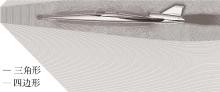
图 1
C608飞机的网格拓扑结构
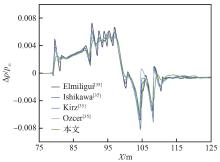
图 2
C608飞机近场超压信号的计算结果
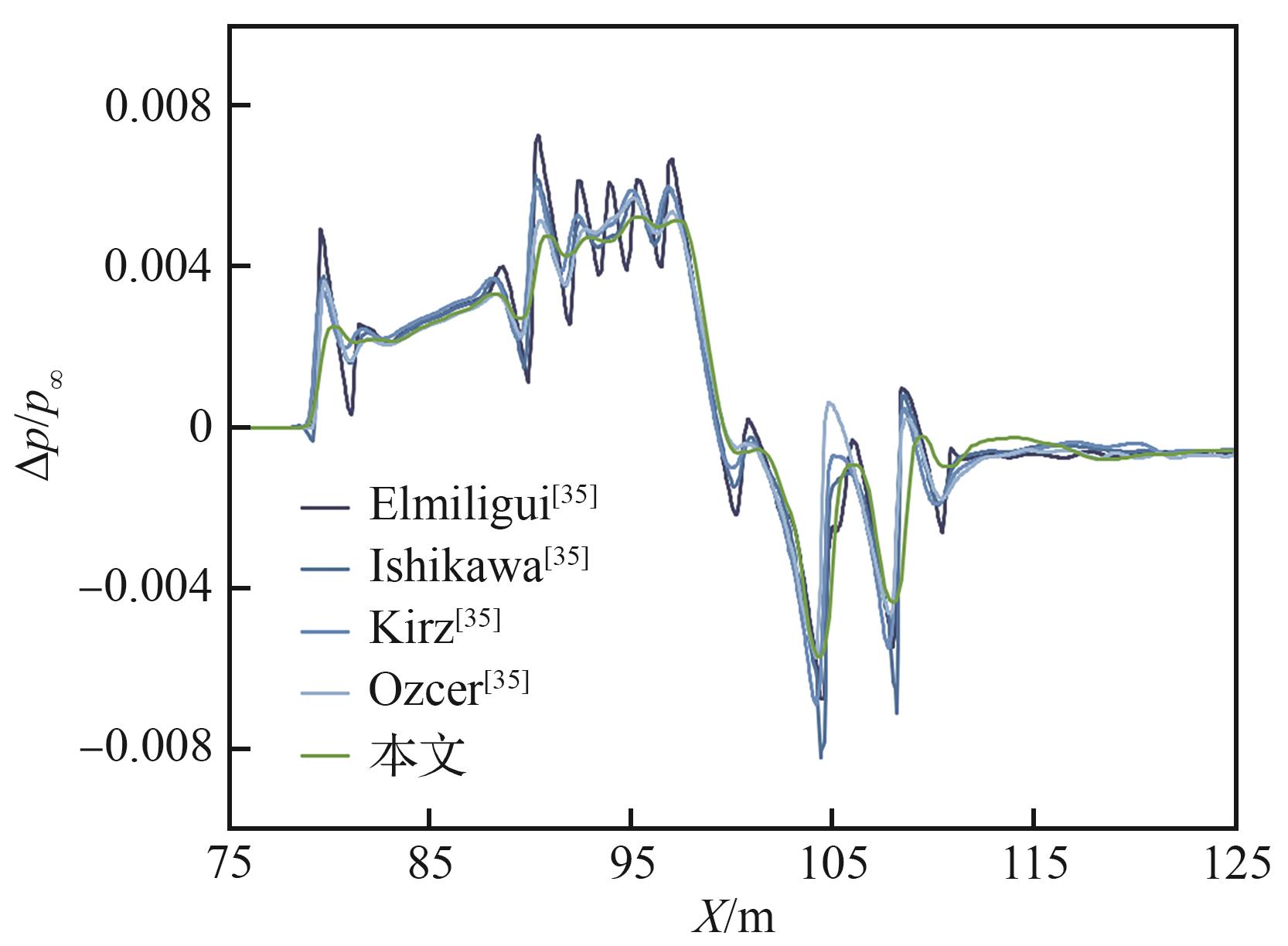
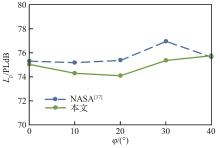
图 3
C609飞机地面感觉声压级预测结果
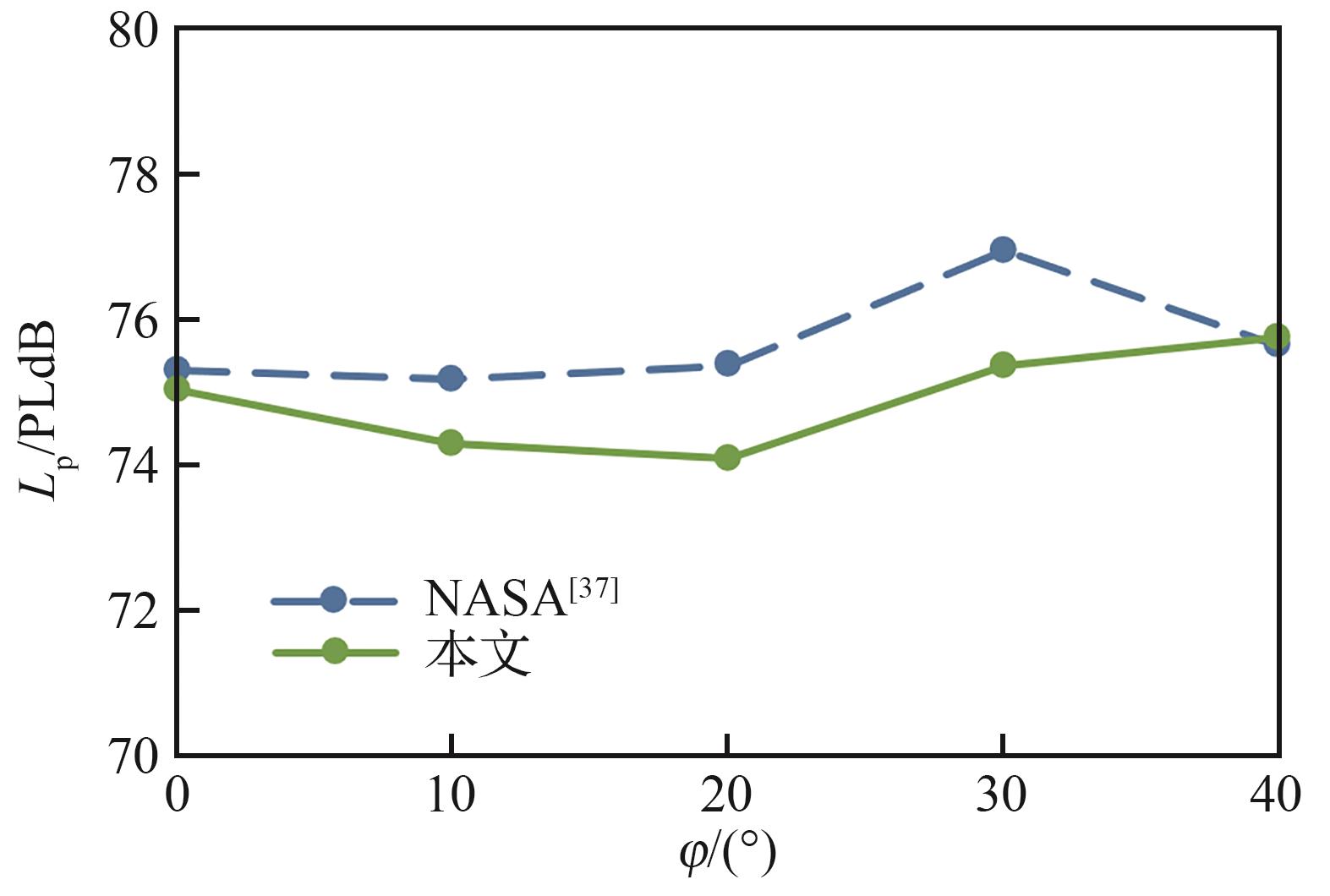
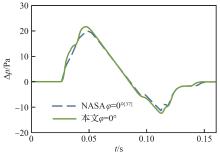
图 4
C609飞机地面超压信号预测结果
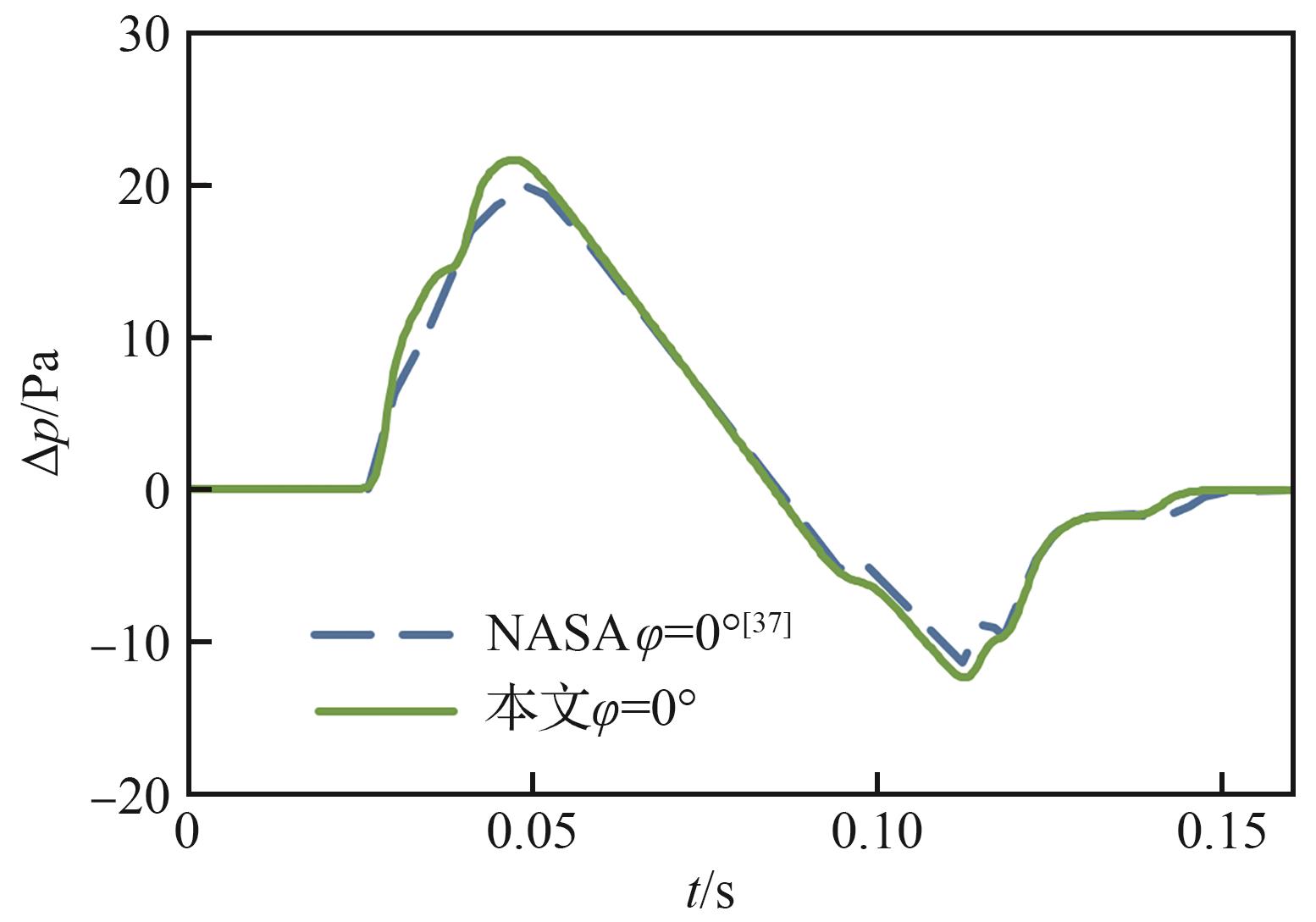
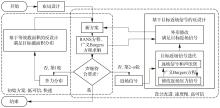
图 5
低声爆气动设计流程示意图
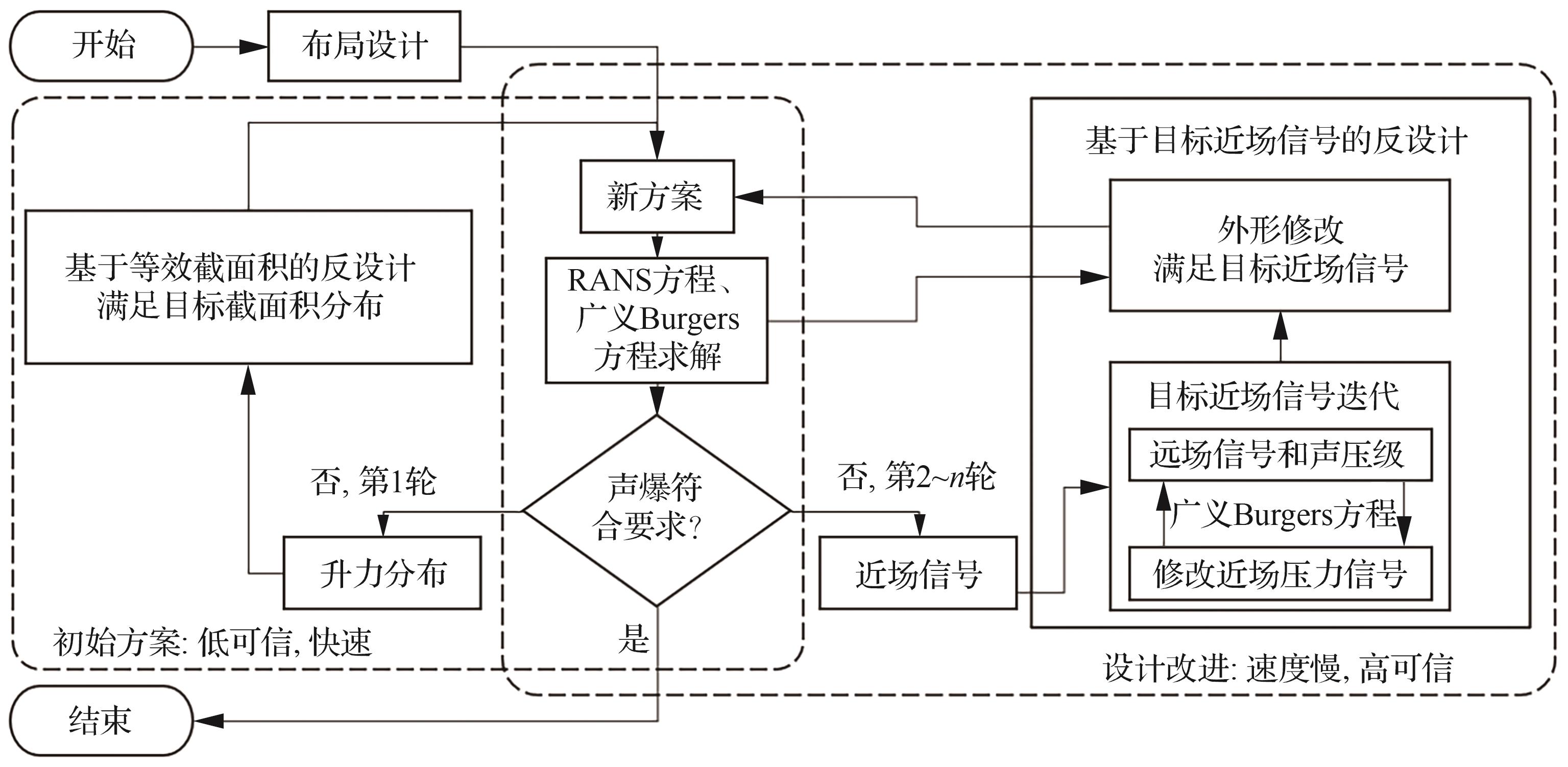
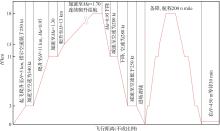
图 6
远程超声速客机典型任务剖面
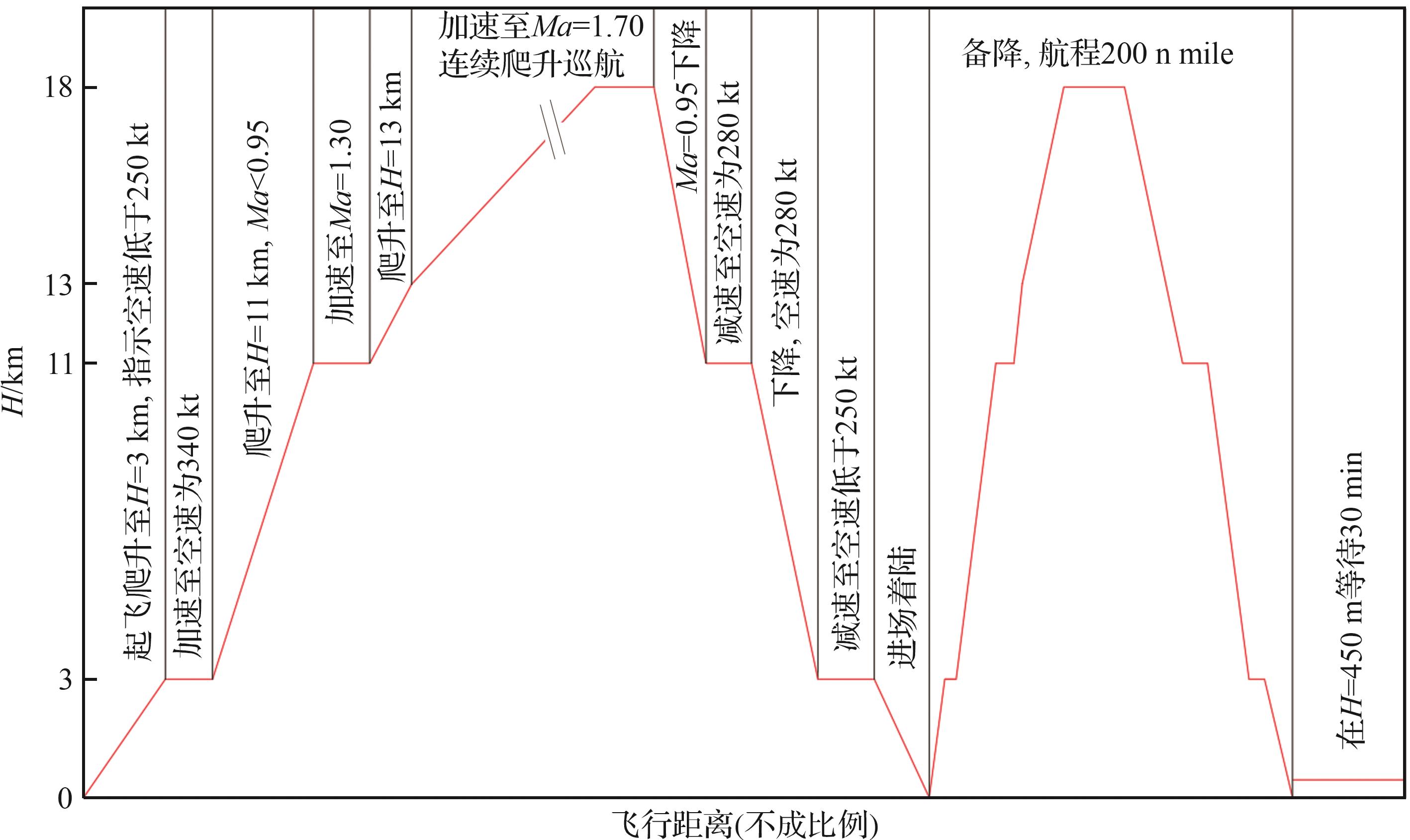

表1
客机DTO数据(ISA海平面,无风,干跑道,WMTO)
| 机型 | 气温/℃ | DTO/m |
|---|---|---|
| 协和[ | 24 | 4 000 |
| A350-900[ | 30 | 3 000 |
| B787-9[ | 40 | 4 200 |
表2
远程超声速客机设计指标
| 项目 | 指标 |
|---|---|
| 最大起飞质量 | WMTO<79 000 kg |
| 最大着陆质量 | WML=使用空重+最大商载+备份油质量×1.5 |
| 起落架,机尾形状 | 擦地角大于15° |
| 低声爆巡航马赫数 | MaLBC=1.6 |
| 正下方地面声爆 | Lp<85 PLdB, H=16 000 m, MaLBC |
| 风扇压比 | RFP<1.9, 正常起飞 |
| 商载 | 标准28人, 最大48人, 100 kg/人 |
| 标准航程 | Ra>11 000 km, 标准商载 |
| 机身尺寸 | 满足客舱截面和长度 |
| 燃料种类 | Jet A-1, 可持续燃油, ρ=785 kg/m3 |
| 巡航高度限制 | H<18 000 m |
| 超声速高度 | H>11 000 m |
| 起飞场长 | DTO<4 000 m,35 ℃ |
| 经济巡航马赫数 | MaECC=1.7 |
| 进场速度 | VREF<150 kt, WML |
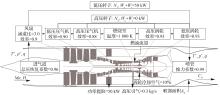
图 7
发动机模型示意图和主要参数
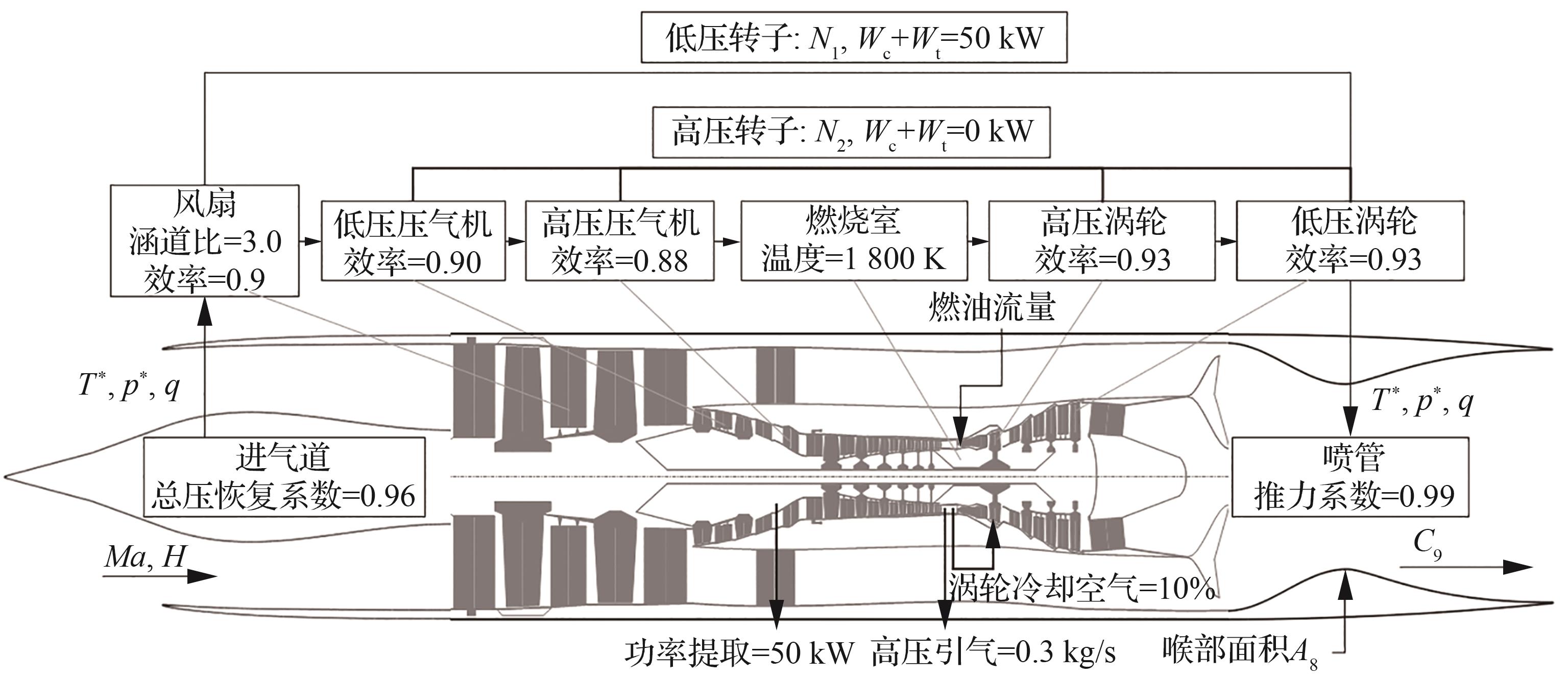
表3
当前小涵道比发动机参数与本文方案参数
| 方案 | 核心机空气流量/(kg·s-1) | 总增压比 | 燃油流量/(kg·s-1) | 涡轮前温度/K |
|---|---|---|---|---|
| F119(推测[ | 96.9 | 26.1 | 2.452 | 1 860 |
| 本文 | 80.0~100.0 | 20.0 | 1.800~2.300 | 1 800 |
表4
典型工况发动机性能
| 工况 | H/m | Ma | 比推力/(N·kg-1) | 比油耗/(kg·N-1·s-1) |
|---|---|---|---|---|
| 起飞-正常 | 0 | 0 | 398.2 | 0.011 3 |
| 起飞-单发 | 0 | 0 | 474.3 | 0.013 0 |
| 跨声速 | 11 000 | 1.0 | 303.9 | 0.020 1 |
| 巡航 | 16 000 | 1.7 | 274.4 | 0.023 9 |
| 等待 | 450 | 0.4 | 102.3 | 0.016 0 |
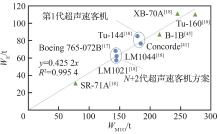
图 8
超声速飞机质量数据
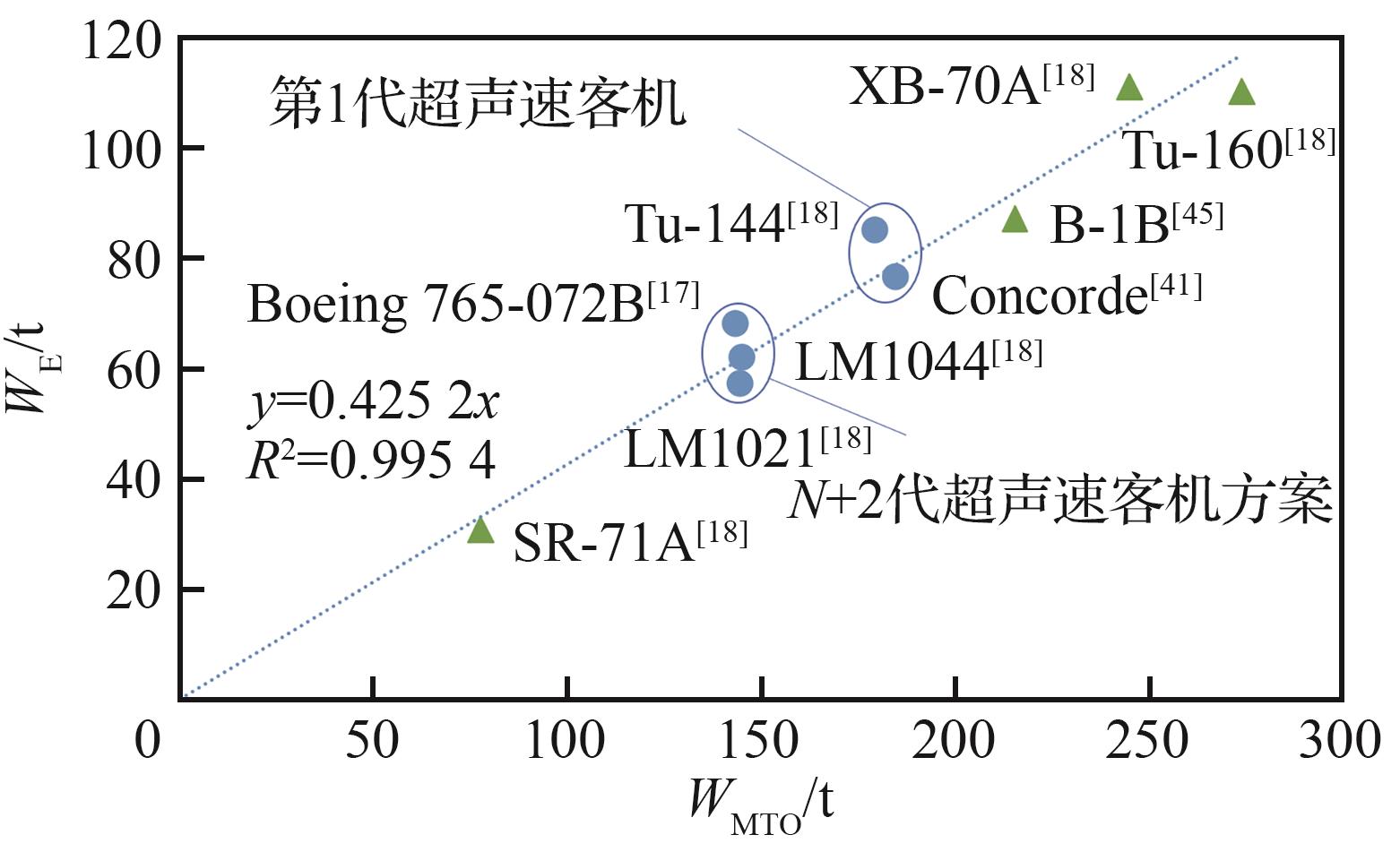
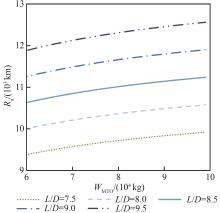
图 9
不同升阻比下标准航程与最大起飞质量的关系
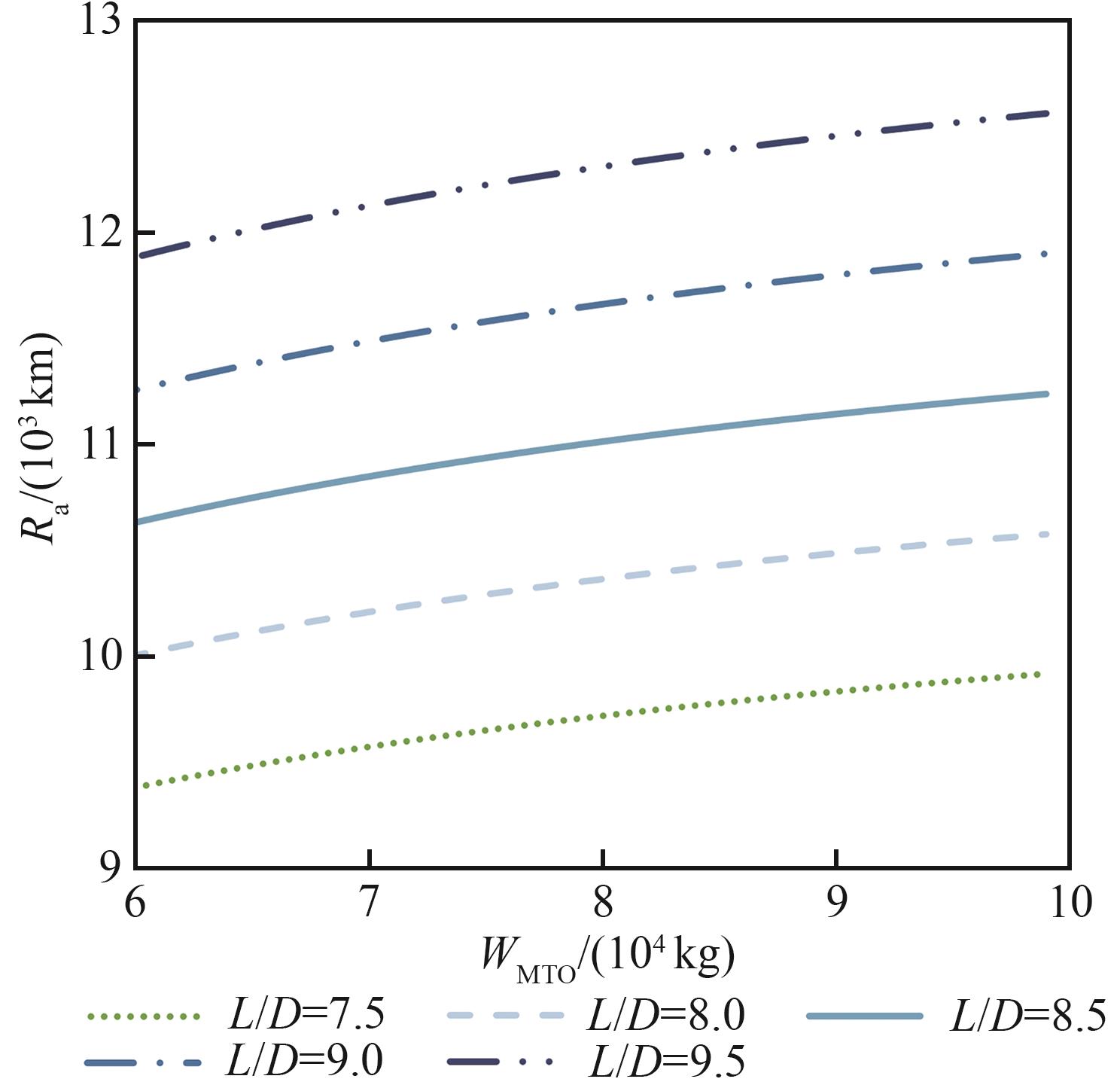
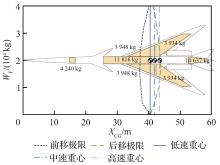
图 10
燃油箱分布和重心移动范围
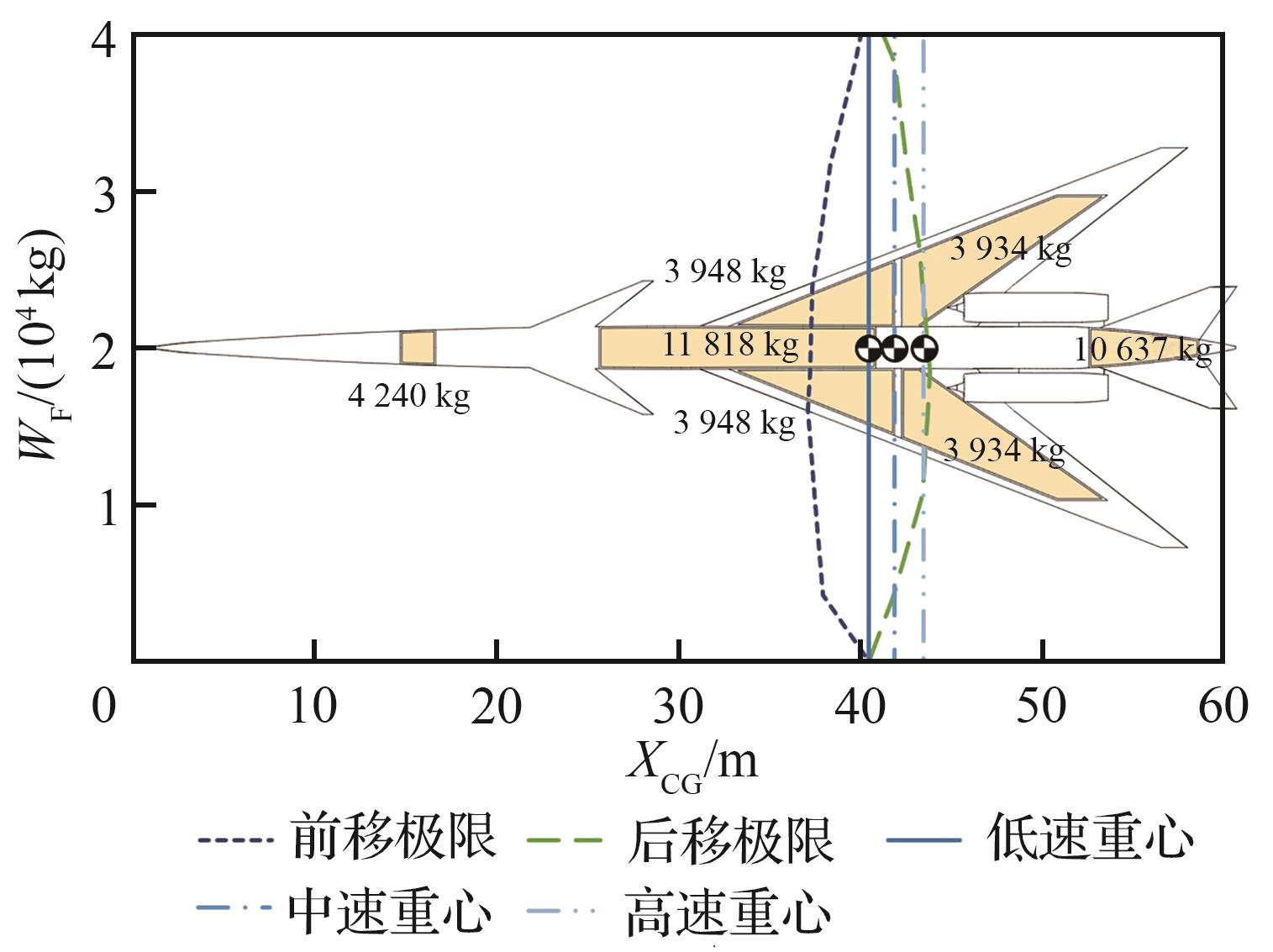
表5
用于布局设计的气动特性取值
| 工况 | α/(°) | CL | L/D |
|---|---|---|---|
| 起飞爬升 | 7 | 0.450 | 7.3 |
| 进场 | 10 | 0.700 | 5.3 |
| 巡航 | 0.195 | 8.5 |
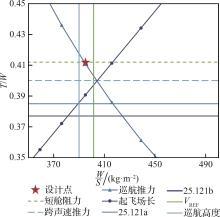
图 11
翼载荷、推重比的限制与选择
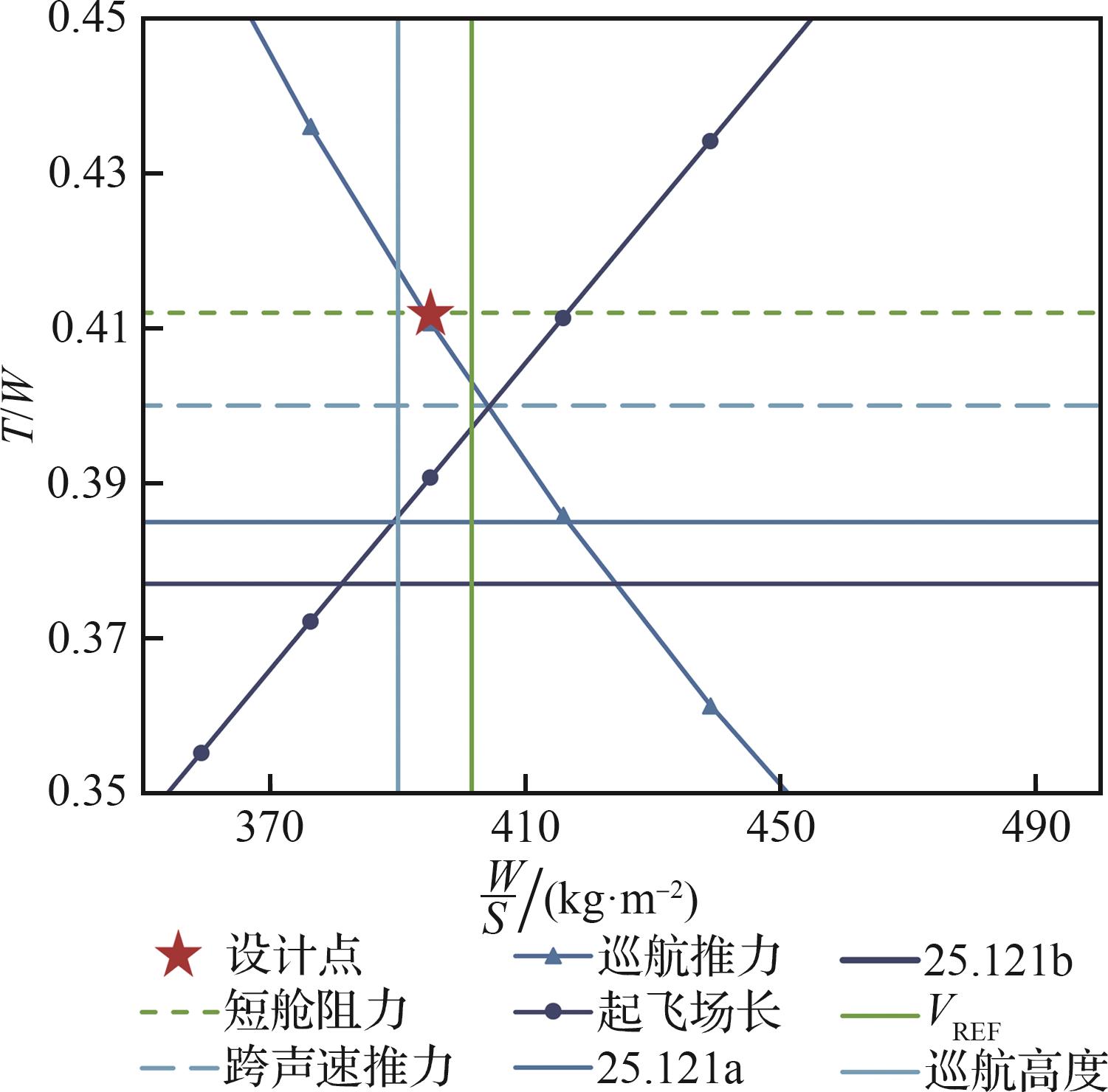
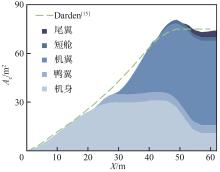
图 12
方案A等效截面积分布(Ma=1.6)
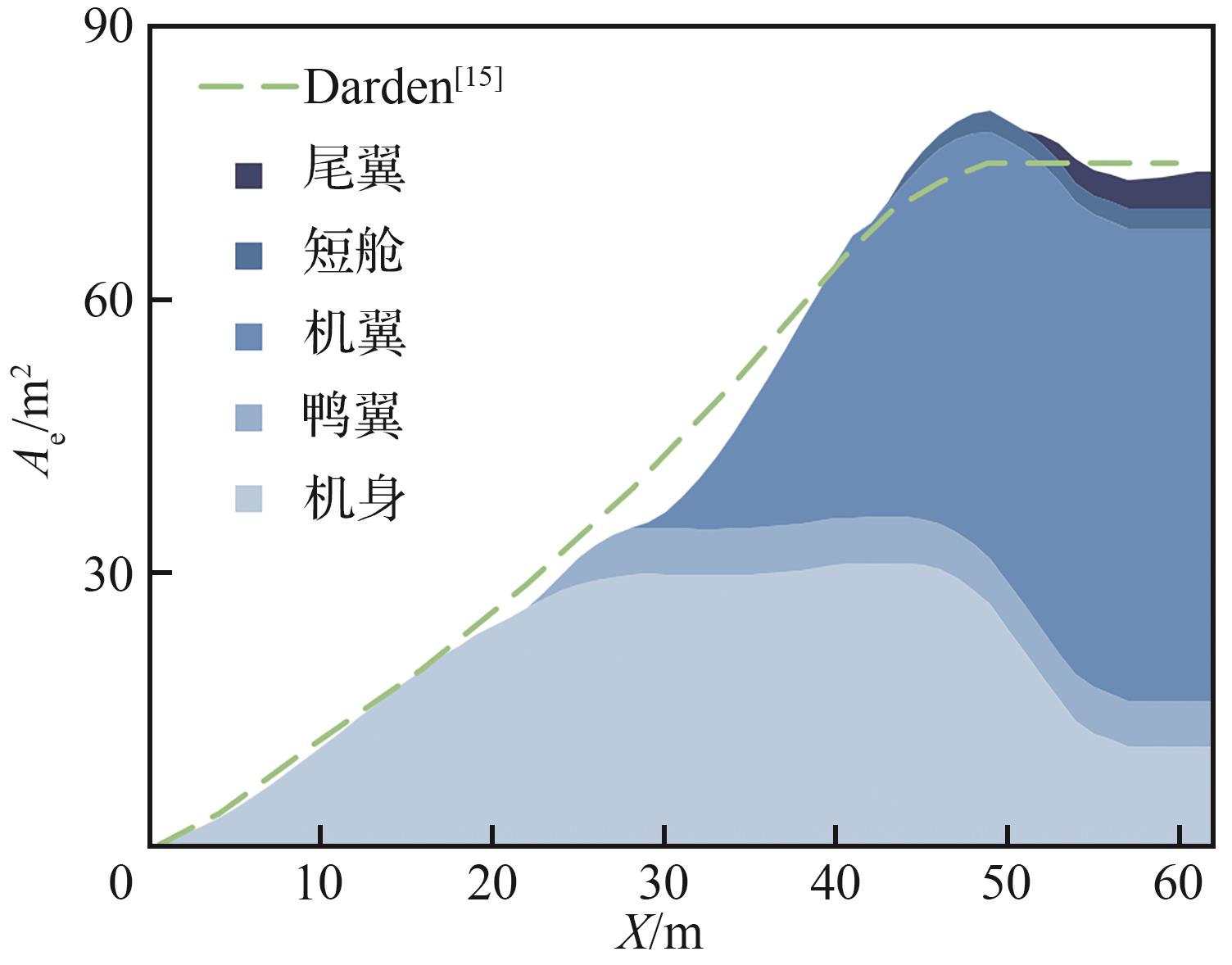
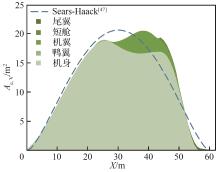
图 13
方案A体积等效截面积分布(Ma=1.0)
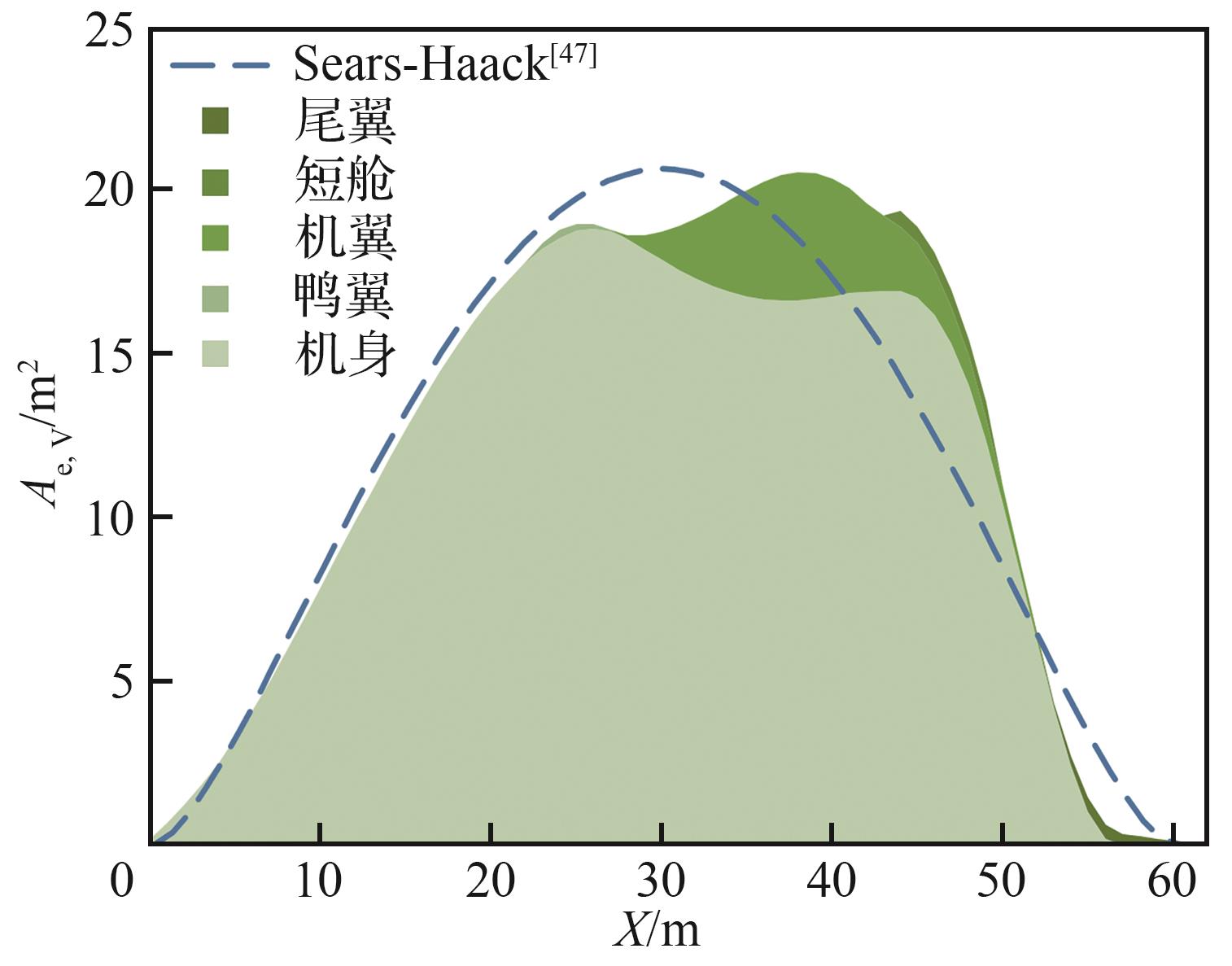
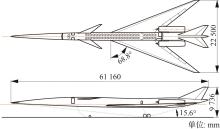
图 14
方案A平面形状
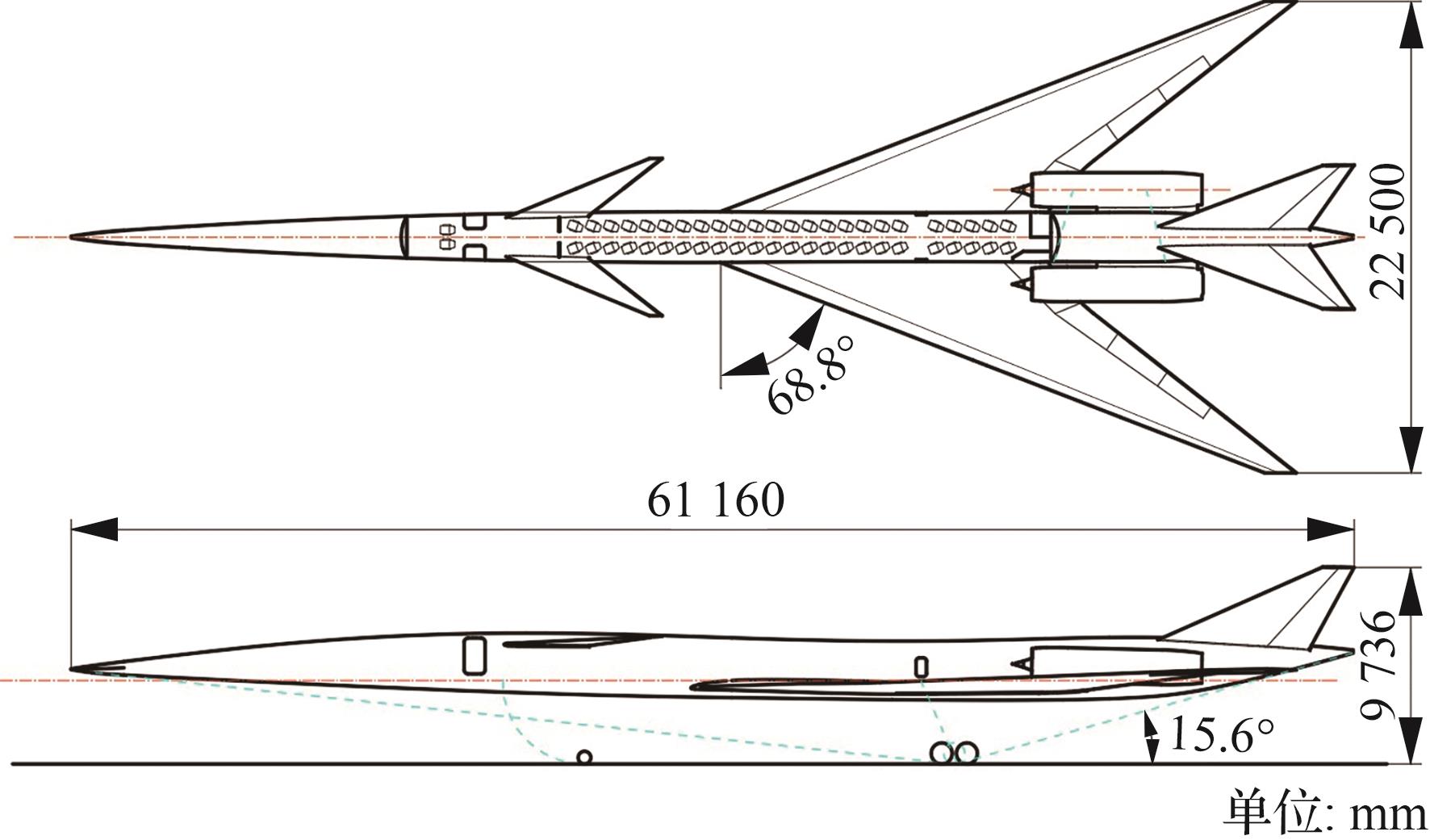
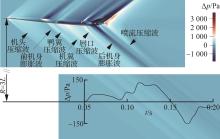
图 15
方案A对称面波系分布
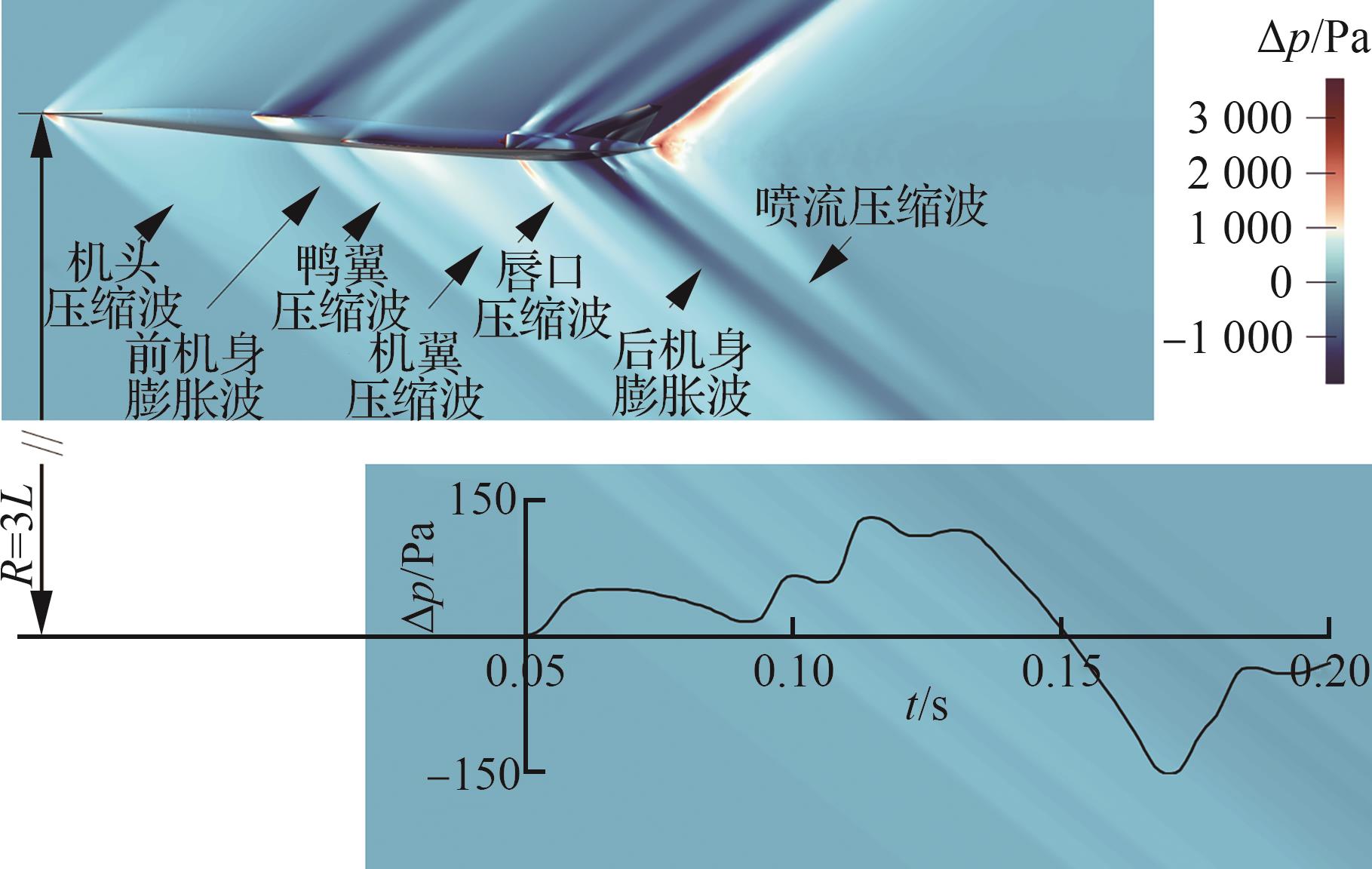
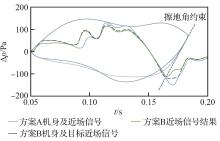
图 16
目标近场信号和机身改进方案
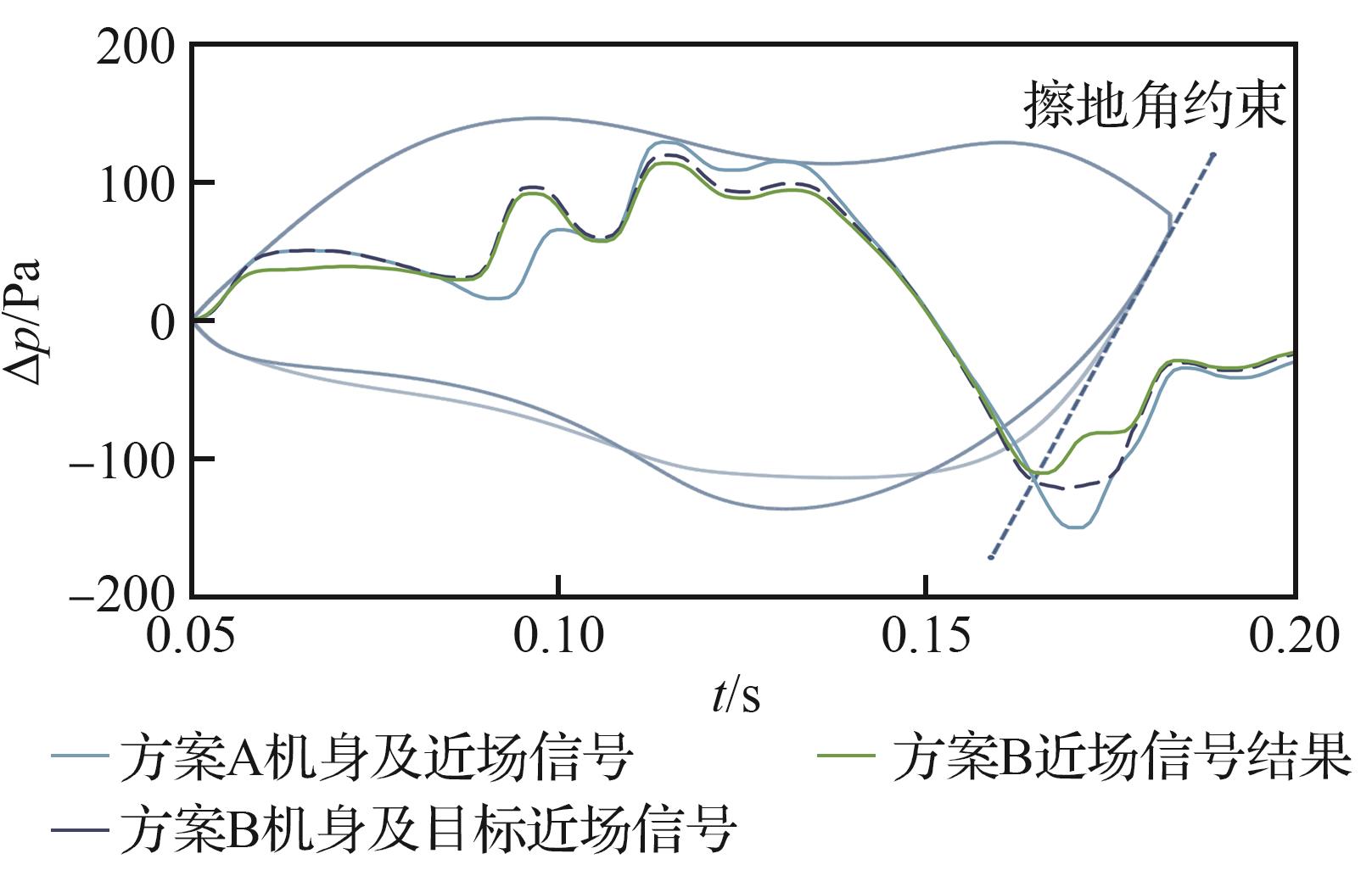
图 17
方案A与方案B超压信号传播过程
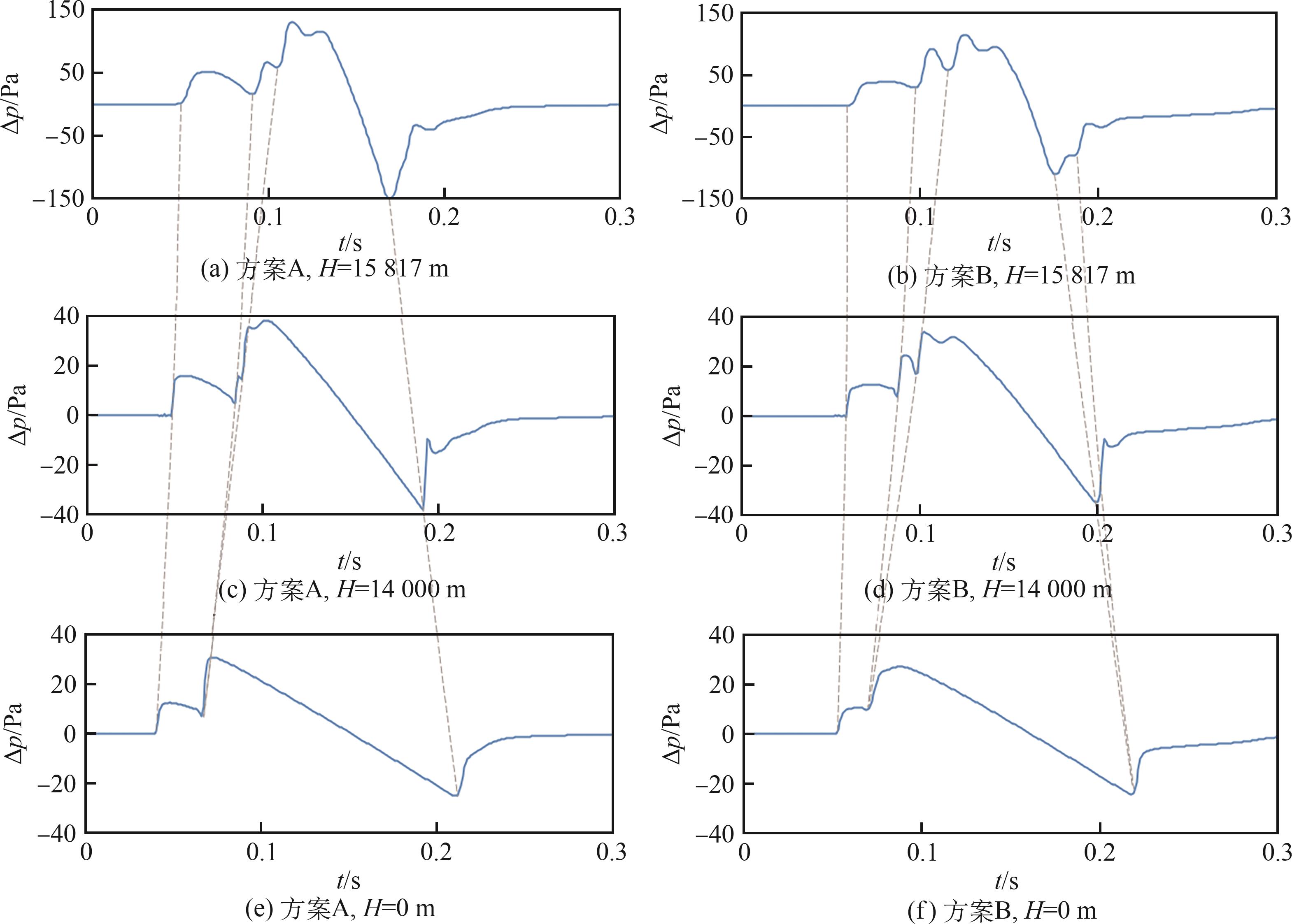
图 18
方案C近场超压信号
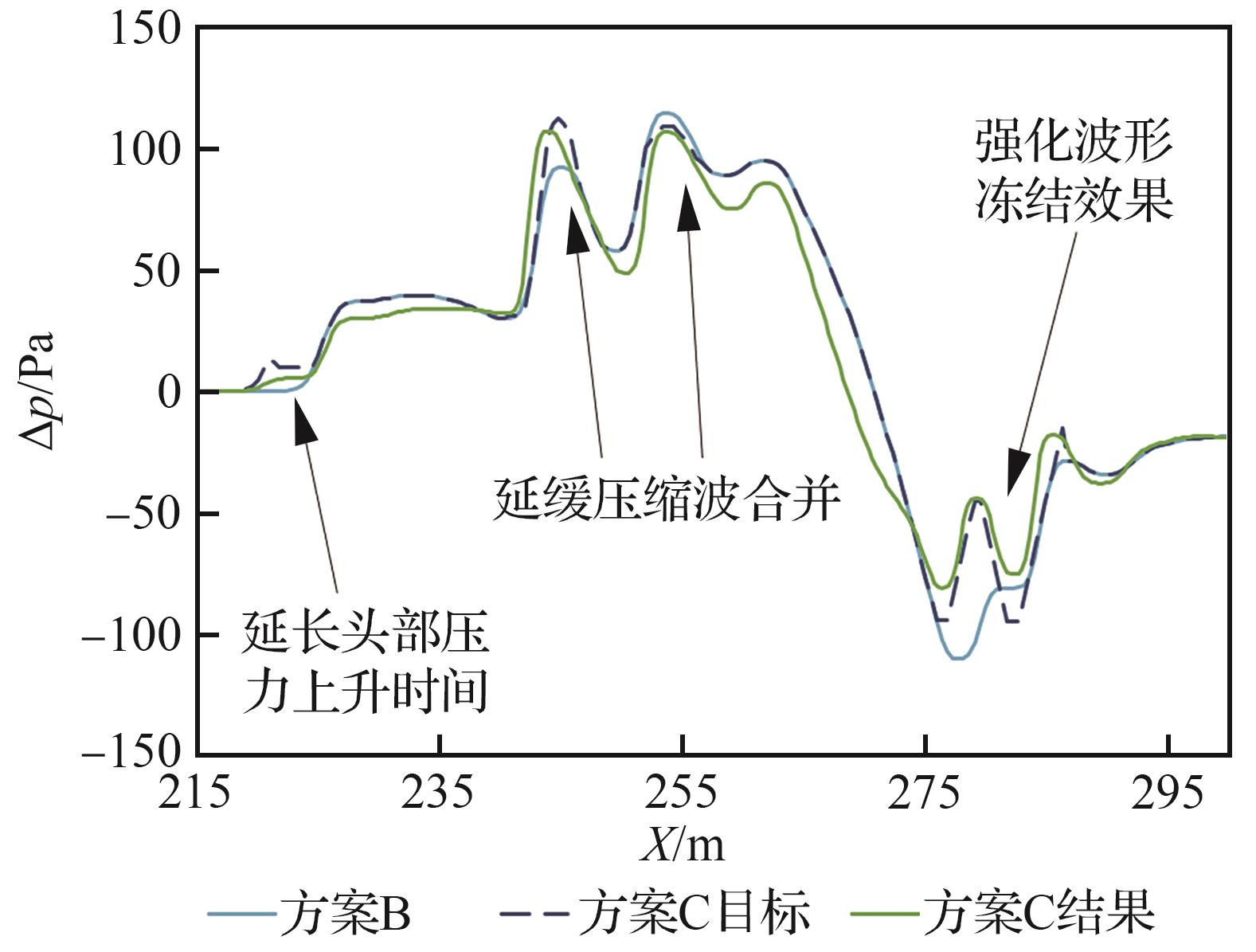
图 19
方案C静音鼓包和静音锥外形
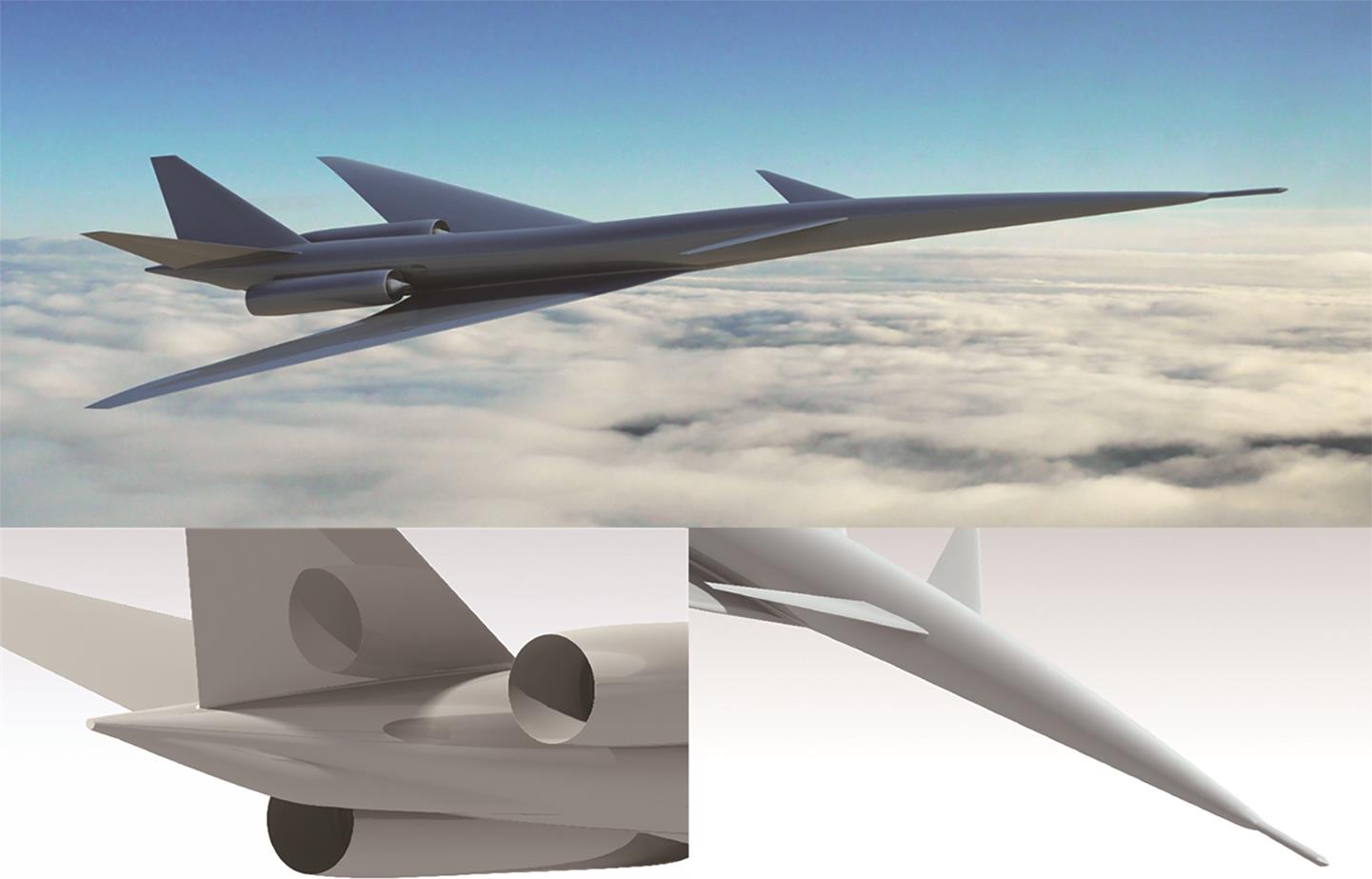
图 20
方案B和方案C对称面波系分布
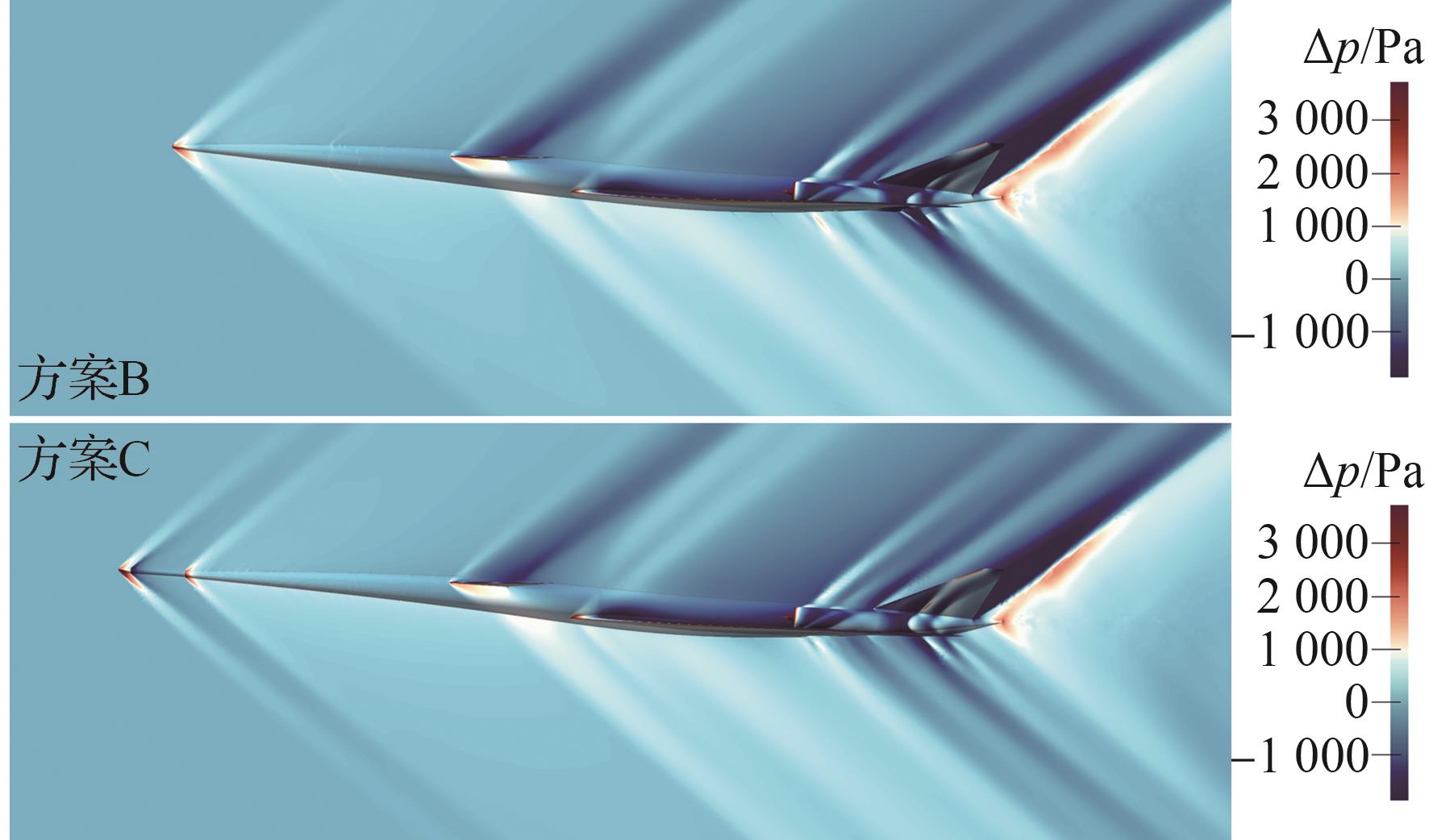
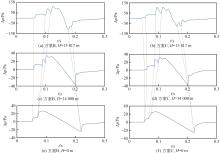
图 21
方案B与方案C超压信号传播过程
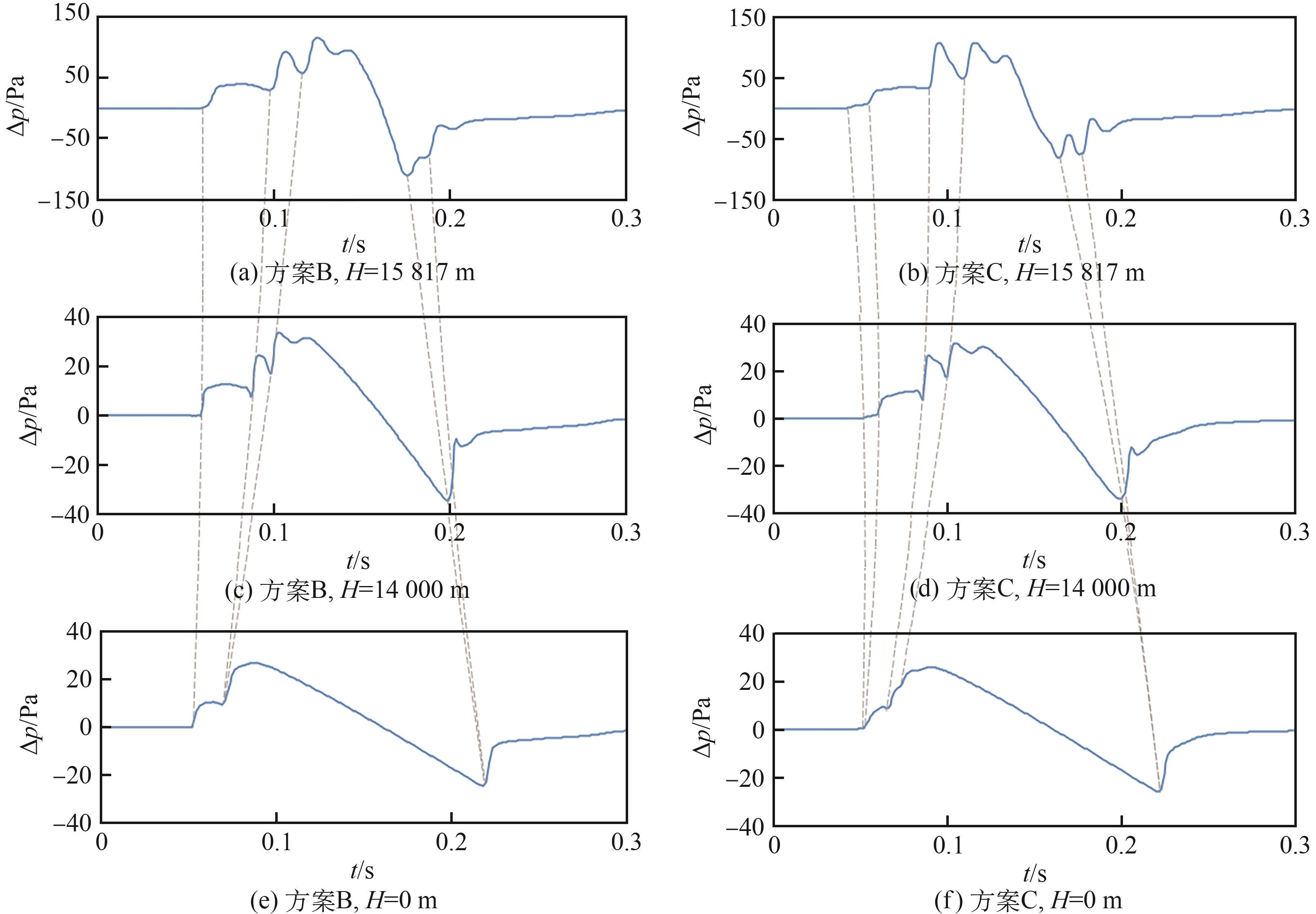
表6
本文研究方案地面声爆对比
| 对比项目 | Lp/PLdB | ||
|---|---|---|---|
| 方案A | 方案B | 方案C | |
| 目标信号 | 93.0 | 83.8 | |
| 设计结果 | 105.2 | 93.5 | 83.9 |
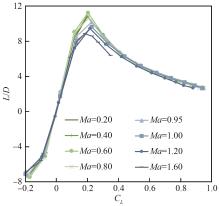
图 22
方案C在不同马赫数下的升阻比
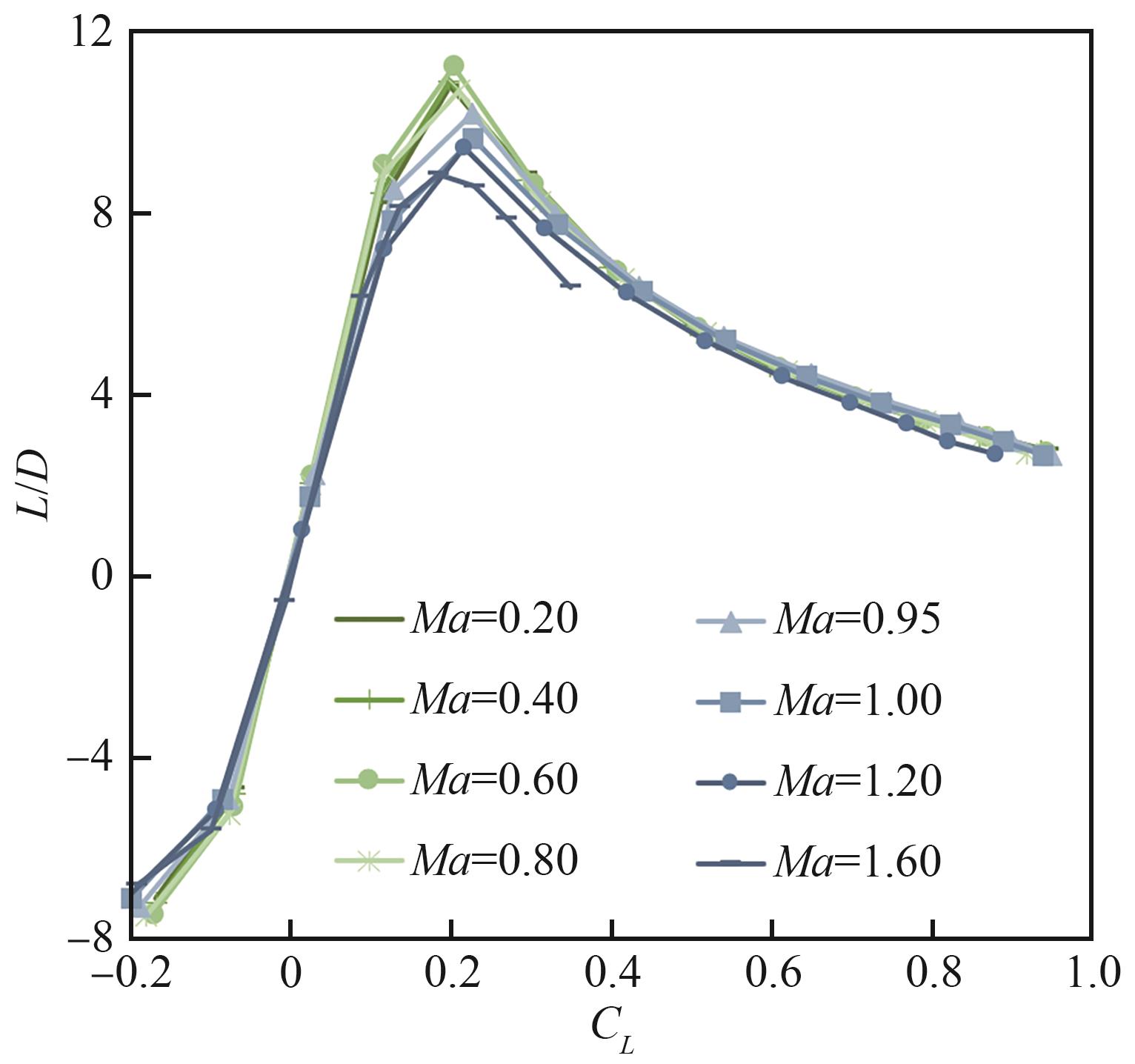
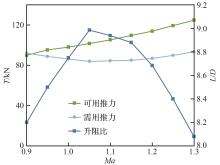
图 23
可用推力、需用推力、升阻比与马赫数关系
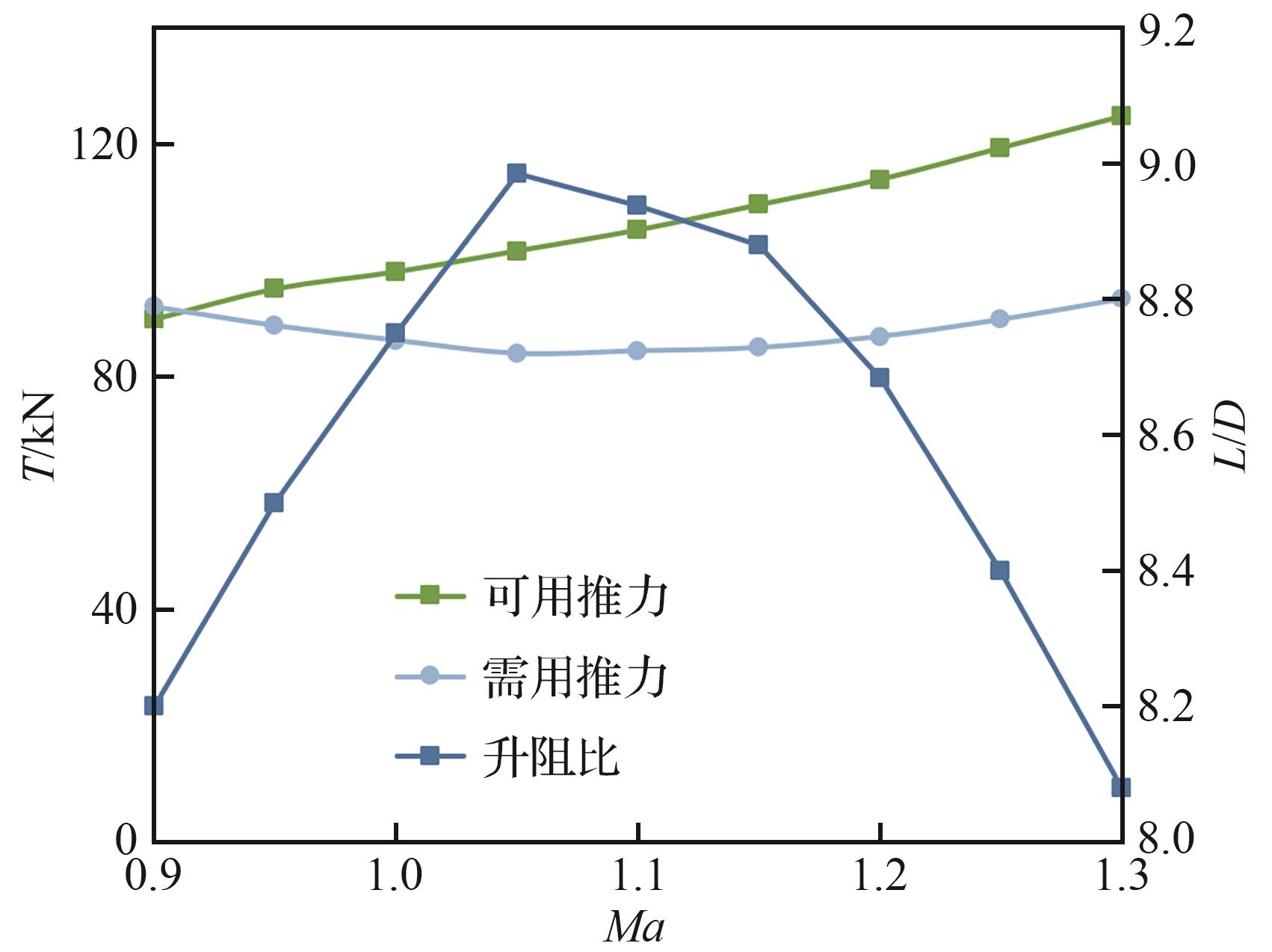
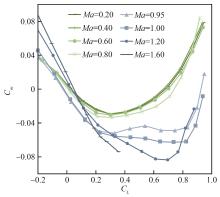
图 24
方案C在不同马赫数下的俯仰力矩系数
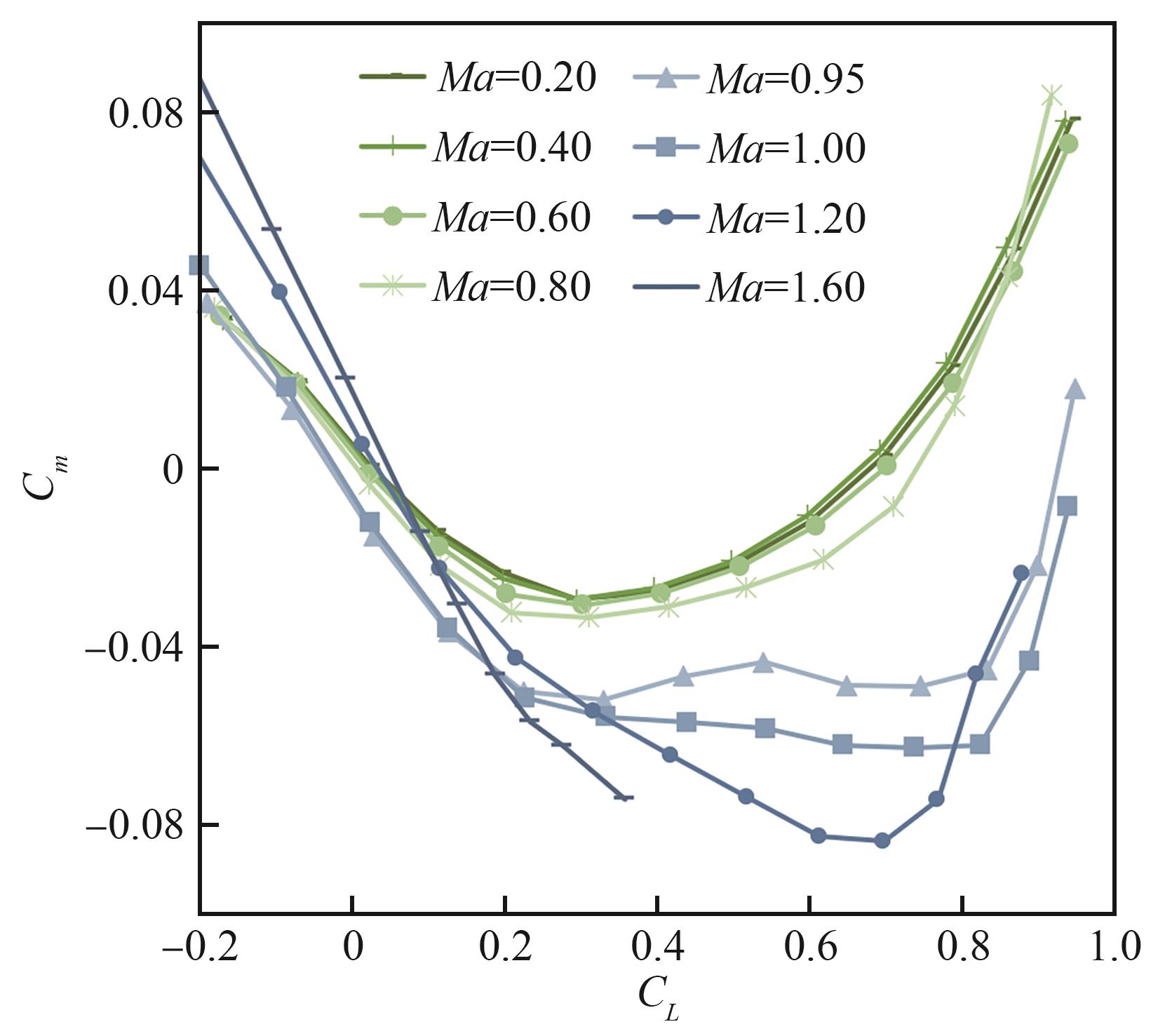
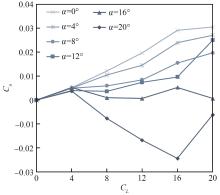
图 25
不同迎角下方案C的偏航力矩系数
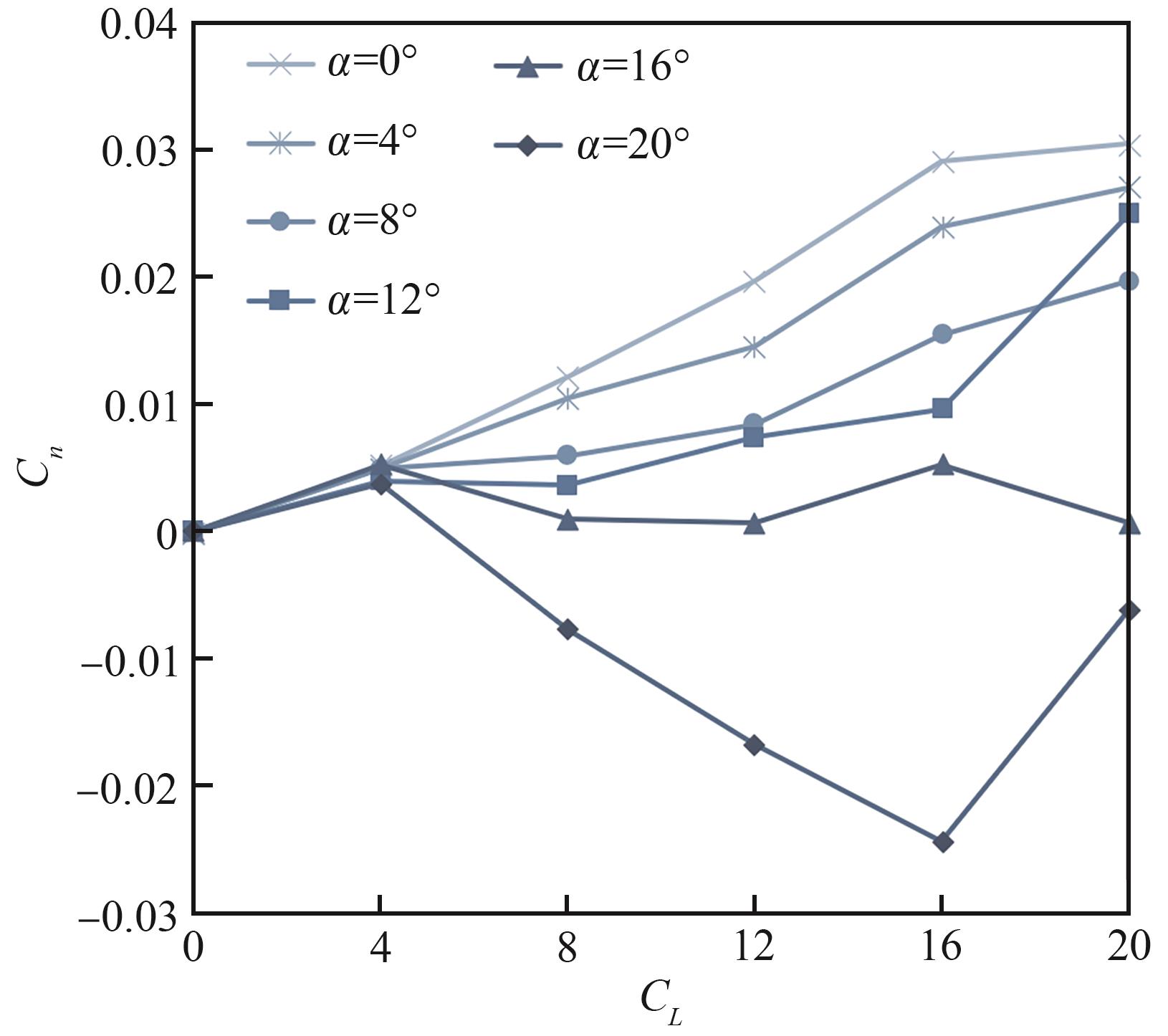
图 26
巡航工况发动机进气迹线
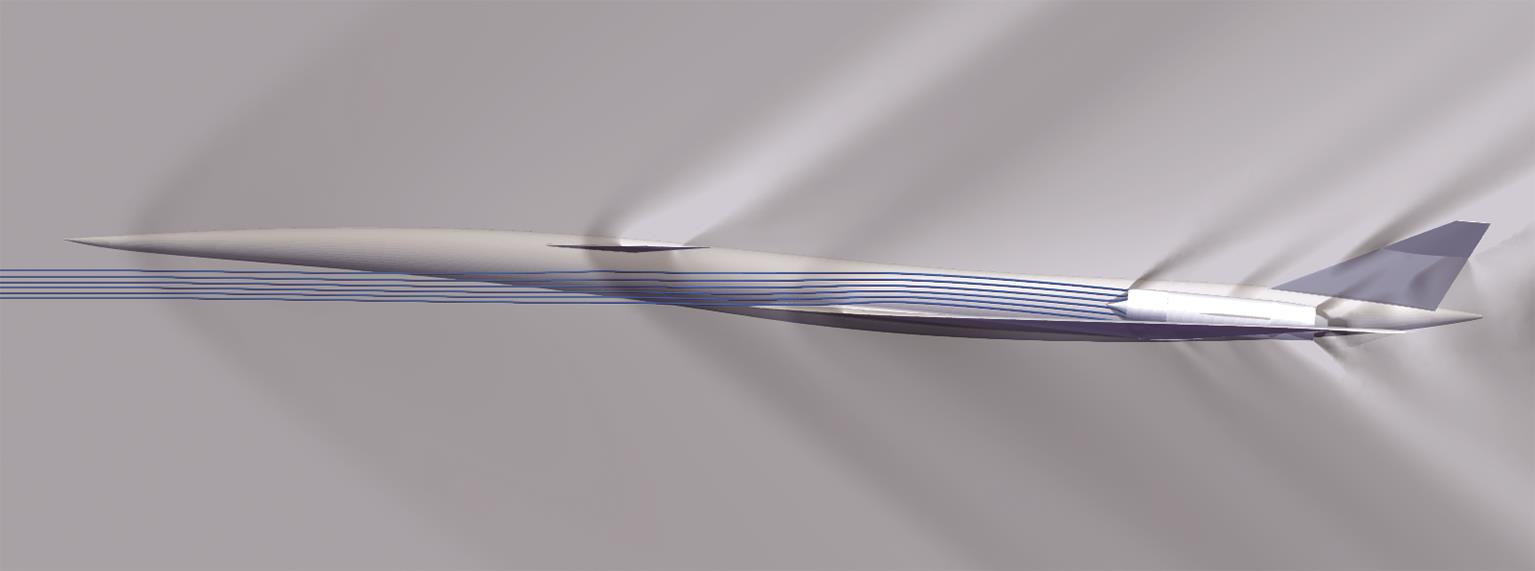
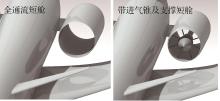
图 27
全通流短舱和带进气锥及支撑短舱外形
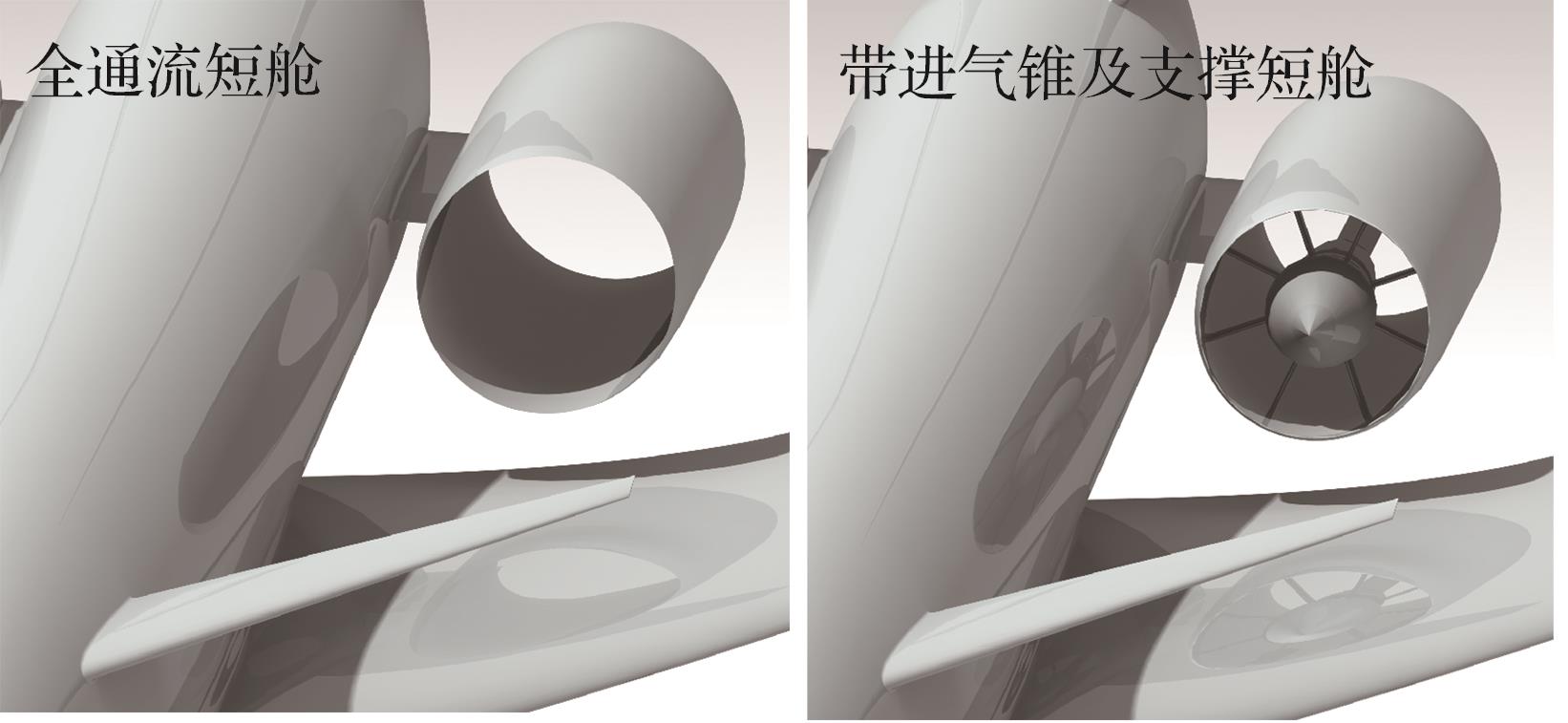
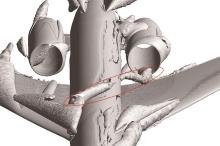
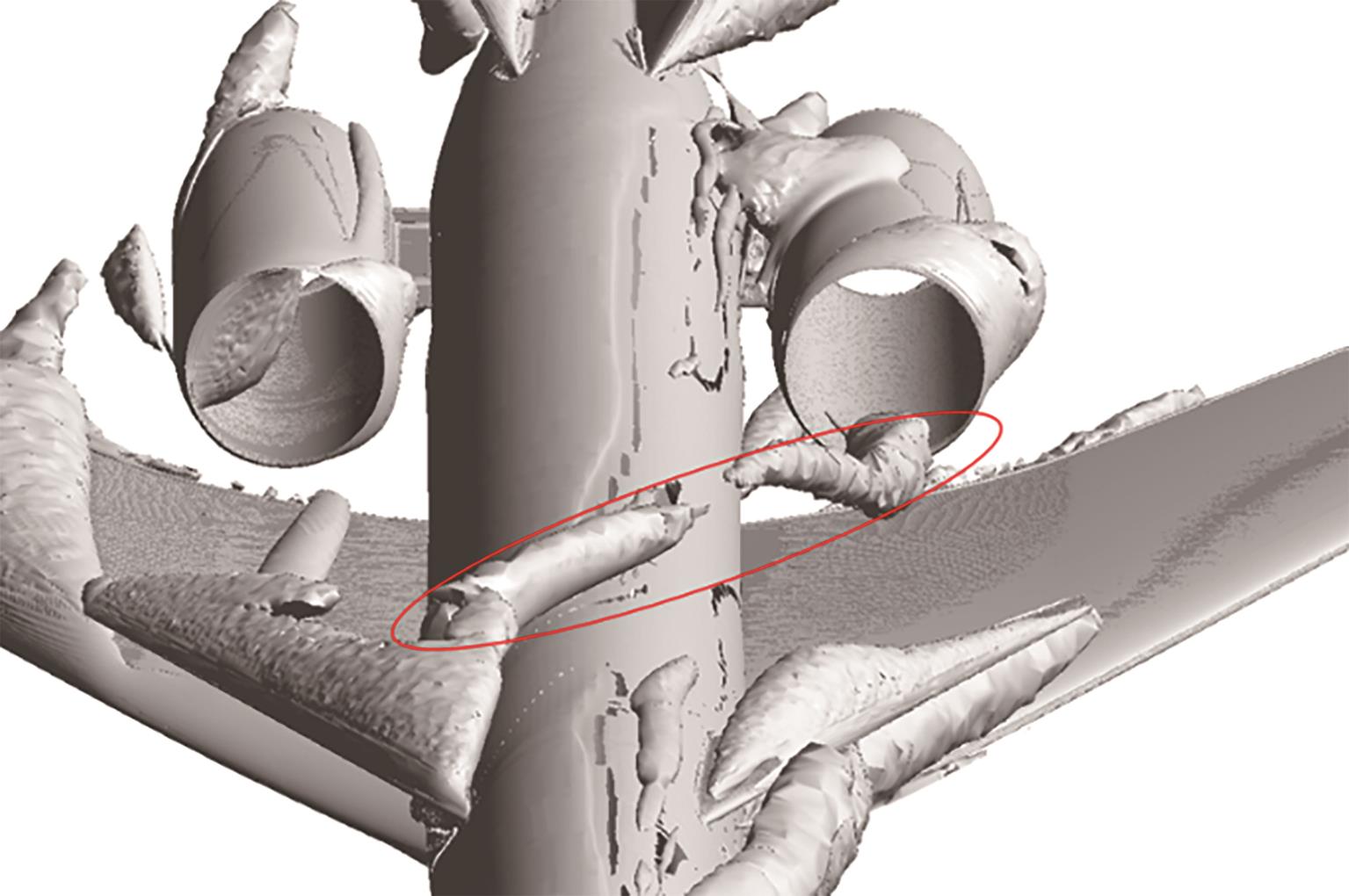
图 28
机身涡的位置示意图
| [1] | BEA. Accident on 25 July 2000 at La Patte d’Oie in Gonesse (95) to the Concorde registered F-BTSC operated by Air France[R]. Paris: BEA, 2000. |
| [2] | ICAO. 2019 ICAO annual report[R]. Montreal: ICAO, 2020. |
| [3] | WELGE H, NELSON C, BONET J. Supersonic vehicle systems for the 2020 to 2035 timeframe[C]∥ 28th AIAA Applied Aerodynamics Conference. Reston: AIAA, 2010. |
| [4] | WHITHAM G B. The flow pattern of a supersonic projectile[J]. Communications on Pure and Applied Mat-hematics, 1952, 5(3): 301-348. |
| [5] | WALKDEN F. The shock pattern of a wing-body combination, far from the flight path[J]. Aeronautical Quarterly, 1958, 9(2): 164-194. |
| [6] | PIERCE A D, SMITH P W. Acoustics: an introduction to its physical principles and applications[J]. Physics Today, 1981, 34(12): 56-57. |
| [7] | CLEVELAND R O. Propagation of sonic booms through a real, stratified atmosphere[M]. Austin: The University of Texas at Austin, 1995. |
| [8] | 张绎典, 黄江涛, 高正红. 基于增广Burgers方程的音爆远场计算及应用[J]. 航空学报, 2018, 39(7): 122039. |
| ZHANG Y D, HUANG J T, GAO Z H. Far field simulation and applications of sonic boom based on augmented Burgers equation[J]. Acta Aeronautica et Astronautica Sinica, 2018, 39(7): 122039 (in Chinese). | |
| [9] | 乔建领, 韩忠华, 丁玉临, 等. 基于广义Burgers方程的超声速客机远场声爆高精度预测方法[J]. 空气动力学学报, 2019, 37(4): 663-674. |
| QIAO J L, HAN Z H, DING Y L, et al. Sonic boom prediction method for supersonic transports based on augmented Burgers equation[J]. Acta Aerodynamica Sinica, 2019, 37(4): 663-674 (in Chinese). | |
| [10] | 王迪, 钱战森, 冷岩. 广义Burgers方程声爆传播模型高阶格式离散[J]. 航空学报, 2022, 43(1): 124916. |
| WANG D, QIAN Z S, LENG Y. High-order scheme discretization of sonic boom propagation model based on augmented Burgers equation[J]. Acta Aeronautica et Astronautica Sinica, 2022, 43(1): 124916 (in Chinese). | |
| [11] | 张力文, 宋文萍, 韩忠华, 等. 声爆产生、传播和抑制机理研究进展[J]. 航空学报, 2022, 43(12): 025649. |
| ZHANG L W, SONG W P, HAN Z H, et al. Recent progress of sonic boom generation, propagation, and mitigation mechanism[J]. Acta Aeronautica et Astronautica Sinica, 2022, 43(12): 025649 (in Chinese). | |
| [12] | JONES L B. Lower bounds for the pressure jump of the bow shock of a supersonic transport[J]. Aeronautical Quarterly, 1970, 21(1): 1-17. |
| [13] | SEEBASS R. Minimum sonic boom shock strengths and overpressures[J]. Nature, 1969, 221(5181): 651-653. |
| [14] | GEORGE A R. Lower bounds for sonic booms in the midfield[J]. AIAA Journal, 1969, 7(8): 1542-1545. |
| [15] | DARDEN C M. Sonic-boom minimization with nose-bluntness relaxation: NASA-TP-1348[R]. Washington, D. C.: NASA, 1979. |
| [16] | JUNG T P, STARKEY R P, ARGROW B. Lobe ba-lancing design method to create frozen sonic booms using aircraft components[J]. Journal of Aircraft, 2012, 49(6): 1878-1893. |
| [17] | WELGE H R, BONET J, MAGEE T, et al. N+2 supersonic concept development and systems integration: NASA/CR-2010-216842[R]. Washington, D.C.: NASA, 2010. |
| [18] | MORGENSTERN J, BUONANNO M, YAO J, et al. Advanced concept studies for supersonic commercial transports entering service in the 2018-2020 period phase 2: NASA/CR-2015-218719[R]. Washington, D.C.: NASA, 2015. |
| [19] | 张启军, 李明. 洛马静音超声速客机方案分析[J]. 航空动力, 2019(4): 11-14. |
| ZHANG Q J, LI M. Analysis of lockheed Martin’s quiet supersonic airliner concept[J]. Aerospace Power, 2019(4): 11-14 (in Chinese). | |
| [20] | CARTER M B, ELMILIGUI A A, PARK M A, et al. Experimental and computational study of the X-59 wind tunnel model at Glenn Research Center 8-by 6-foot supersonic wind tunnel: NASA/TM-2022-0011496[R]. Washington, D. C.: NASA, 2022. |
| [21] | 冯晓强, 李占科, 宋笔锋. 超声速客机低音爆布局反设计技术研究[J]. 航空学报, 2011, 32(11): 1980-1986. |
| FENG X Q, LI Z K, SONG B F. A research on inverse design method of a lower sonic boom supersonic aircraft configuration[J]. Acta Aeronautica et Astronautica Sinica, 2011, 32(11): 1980-1986 (in Chinese). | |
| [22] | ZHANG Y D, HUANG J T, GAO Z H, et al. Inverse design of low boom configurations using proper orthogonal decomposition and augmented Burgers equation[J]. Chinese Journal of Aeronautics, 2019, 32(6): 1380-1389. |
| [23] | 李占科, 刘秧, 丁玉临, 等. 静音锥对超声速民机低声爆效果的影响[J]. 西北工业大学学报, 2019, 37(1): 203-210. |
| LI Z K, LIU Y, DING Y L, et al. Influence of quiet spike on supersonic transport for low boom effect[J]. Journal of Northwestern Polytechnical University, 2019, 37(1): 203-210 (in Chinese). | |
| [24] | 韩阳, 冷岩, 杨龙, 等. 一类超声速长航程民用客机的气动设计和性能评估[J]. 航空科学技术, 2019, 30(9): 25-32. |
| HAN Y, LENG Y, YANG L, et al. Aerodynamic design and evaluation of a type of supersonic long-range civil transport[J]. Aeronautical Science & Technology, 2019, 30(9): 25-32 (in Chinese). | |
| [25] | DING Y L, HAN Z H, QIAO J L, et al. Inverse design method for low-boom supersonic transport with lift constraint[J]. AIAA Journal, 2023, 61(7): 2840-2853. |
| [26] | 李军府, 陈晴, 王伟, 等. 一种先进超声速民机低声爆高效气动布局设计研究[J]. 航空学报, 2024, 46(6): 115-133. |
| LI J F, CHEN Q, WANG W, et al. Research on the design of an advanced supersonic civil aircraft with high aerodynamic efficiency and low sound explosion[J]. Acta Aeronautica et Astronautica Sinica, 2024, 46(6): 115-133 (in Chinese). | |
| [27] | 郝璇, 张青青, 苏诚, 等. 考虑配平特性的超声速客机低声爆气动布局优化研究[J]. 航空工程进展, 2024, 15(1): 38-50. |
| HAO X, ZHANG Q Q, SU C, et al. The low sonic boom and aerodynamic optimization with trim constraint of supersonic jet[J]. Advances in Aeronautical Science and Engineering, 2024, 15(1): 38-50 (in Chinese). | |
| [28] | 顾奕然, 黄江涛, 陈树生, 等. 基于逆向增广Burgers方程的声爆反演技术[J]. 航空学报, 2023, 44(2): 626258. |
| GU Y R, HUANG J T, CHEN S S, et al. Sonic boom inversion technology based on inverse augmented Bur-gers equation[J]. Acta Aeronautica et Astronautica Sinica, 2023, 44(2): 626258 (in Chinese). | |
| [29] | WANG S K, ZHAO H, GAN K Y, et al. Sparse polynomial chaos-based sonic boom uncertainty quantification and aerodynamic/sonic boom robust design optimization under multi-parameter uncertainties[C]∥ 34th Congress of ICAS. Florence: ICAS, 2024. |
| [30] | 邵琳涛, 别大卫, 丁梦龙, 等. 一种低声爆高升阻比超声速公务机构型: CN118811070A[P]. 2024-10-22. |
| SHAO L T, BIE D W, DING M L, et al. A low-sound high-lift-to drag-ration supersonic business jet configuration: CN118811070A[P]. 2024-10-22 (in Chinese). | |
| [31] | 陈晴, 韩忠华, 杨瀚, 等. 机翼上反角对超声速民机全声爆毯声爆特性影响研究[J]. 气动研究与试验, 2024(1): 50-58. |
| CHEN Q, HAN Z H, YANG H, et al. Research on the effect of wing dihedral on full-carpet sonic boom[J]. Aerodynamic Research & Experiment, 2024(1): 50-58 (in Chinese). | |
| [32] | 郑可风, 宋文萍, 聂晗, 等. 考虑全机声爆特性的超声速自然层流机翼设计方法[J/OL]. 航空学报, 2025: 1-18. (2025-01-10). . |
| ZHENG K F, SONG W P, NIE H, et al. Natural laminar flow wing design method for supersonic transport aircraft considering low sonic-boom requirement[J/OL]. Acta Aeronautica et Astronautica Sinica, 2025: 1-18. (2025-01-10). (in Chinese). | |
| [33] | ECONOMON T D, PALACIOS F, COPELAND S R, et al. SU2: an open-source suite for multiphysics simulation and design[J]. AIAA Journal, 2015, 54(3): 828-846. |
| [34] | SACHDEVA A. Implementation and application of AUSM+-up and AUSM+-UP2 schemes in open-source CFD code SU2[C]∥ 21st Annual CFD Symposium. Reston: AIAA, 2019. |
| [35] | PARK M A, CARTER M B. Low-boom demonstrator near-field summary for the third AIAA sonic boom prediction workshop[J]. Journal of Aircraft, 2021, 59(3): 563-577. |
| [36] | RALLABHANDI S K, LOUBEAU A. Summary of propagation cases of the third AIAA sonic boom prediction workshop[C]∥ AIAA Scitech 2021 Forum. Reston: AIAA, 2021. |
| [37] | SPURLOCK W M, AFTOSMIS M J, NEMEC M. Cartesian mesh simulations for the third AIAA sonic boom prediction workshop[J]. Journal of Aircraft, 2021, 59(3): 708-724. |
| [38] | 中国民用航空局. CCAR-121大型飞机公共航空运输承运人运行合格审定规则 [S]. 北京: 中国民用航空局, 2024. |
| Civil Aviation Administration of China. CCAR-121 certification rules for operation qualification of large aircraft public air transport carriers [S]. Beijing: Civil Aviation Administration of China, 2024 (in Chinese). | |
| [39] | 杨李. 基于客户价值的宽体客机典型航线选择[J]. 民用飞机设计与研究, 2017(4): 20-24. |
| YANG L. Typical routes selection for wide body civil aircraft based on the customer value[J]. Civil Aircraft Design & Research, 2017(4): 20-24 (in Chinese). | |
| [40] | BERTON J J, HUFF D L, GEISELHART K, et al. Supersonic technology concept aeroplanes for environmental studies[C]∥ AIAA Scitech 2020 Forum. Reston: AIAA, 2020. |
| [41] | Airways British. Aerodromes & performance British Airways: concorde performance manual[M]. London: British Airways, 1996. |
| [42] | Airbus S.A.S. Airbus commercial aircraft AC A350-900-1000[M]. Toulouse: Airbus S. A.S, 2023. |
| [43] | Boeing. 787 airport compatibility planning guide[M]. Arlington: Boeing, 2023. |
| [44] | 陈仲光, 张志舒, 李德旺, 等. F119发动机总体性能特点分析与评估[J]. 航空科学技术, 2013, 24(3): 39-42. |
| CHEN Z G, ZHANG Z S, LI D W, et al. Analysis and evaluation of F119 engine overall performance[J]. Aeronautical Science & Technology, 2013, 24(3): 39-42 (in Chinese). | |
| [45] | Airforce U.S.. B-1B“lancer”strategic bomber[EB/OL]. [2025-02-15]. . |
| [46] | 中国民用航空局. CCAR-25运输类飞机适航标准 [S]. 北京: 中国民用航空局, 2011. |
| Civil Aviation Administration of China. CCAR-25 airworthiness standards for transport category aircraft [S]. Beijing: Civil Aviation Administration of China, 2011 (in Chinese). | |
| [47] | SEARS W R. On projectiles of minimum wave drag[J]. Quarterly of Applied Mathematics, 1947, 4(4): 361-366. |
| [48] | International SAE. Gas turbine engine inlet flow distortion guidelines: ARP1420C [S]. Warrendale: SAE International, 2017. |
| [49] | International SAE. A methodology for assessing inlet swirl distortion: AIR5686 [S]. Warrendale: SAE International, 2022. |
| [1] | 纪宇晗, 曾凡苍, 王翔宇, 王元元. 氢燃料电池支线飞机概念设计与性能分析[J]. 航空学报, 2025, 46(9): 630613-630613. |
| [2] | 宋歌, 韩鹏飞, 罗钰翔, 潘卫军. 基于随机深度网络的航迹分类与异常检测[J]. 航空学报, 2025, 46(4): 330883-330883. |
| [3] | 李旭东, 钟伟, 王震, 王同光, 李金龙. 涵道螺旋桨桨盘推力占总推力比值规律研究[J]. 航空学报, 2025, 46(4): 230829-230829. |
| [4] | 杨超, 谭玉婷, 王伟, 赵彦, 余雄庆. 融入低声爆设计的超声速民机概念方案多学科优化[J]. 航空学报, 2025, 46(20): 531457-531457. |
| [5] | 李沅锴, 杨承潘, 朱峰. 航空VHF频段高铁弓网电弧电磁发射特性[J]. 航空学报, 2025, 46(17): 331455-331455. |
| [6] | 顾奕然, 黄江涛, 陈树生, 刘德园, 高正红. 基于逆向增广Burgers方程的声爆反演技术[J]. 航空学报, 2023, 44(2): 626258-626258). |
| [7] | 郑和超, 王建辉, 胡紫阳, 张忠海, 何广平. 仿鸟扑翼飞行器气动力学建模精度测试[J]. 航空学报, 2023, 44(10): 127525-127525. |
| [8] | 宋威, 艾邦成. 多体分离动力学研究进展[J]. 航空学报, 2022, 43(9): 25950-025950. |
| [9] | 郑覃, 杨小贺, 叶俊, 冯锦璋. 内涵工况对风扇增压级双涵匹配的影响[J]. 航空学报, 2022, 43(7): 125477-125477. |
| [10] | 阎超. 航空CFD四十年的成就与困境[J]. 航空学报, 2022, 43(10): 526490-526490. |
| [11] | 王海峰. 战斗机推力矢量关键技术及应用展望[J]. 航空学报, 2020, 41(6): 524057-524057. |
| [12] | 卢风顺, 陈波, 江雄. 量子计算及其在空气动力学中的应用前景综述[J]. 航空学报, 2020, 41(4): 23508-023508. |
| [13] | 范中允, 周洲, 祝小平, 郭佳豪. 翼上螺旋桨构型耦合气动特性及翼型优化设计[J]. 航空学报, 2019, 40(8): 122777-122777. |
| [14] | 陈海昕, 邓凯文, 李润泽. 机器学习技术在气动优化中的应用[J]. 航空学报, 2019, 40(1): 522480-522480. |
| [15] | 张绎典, 黄江涛, 高正红. 基于增广Burgers方程的音爆远场计算及应用[J]. 航空学报, 2018, 39(7): 122039-122039. |
| 阅读次数 | ||||||
|
全文 |
|
|||||
|
摘要 |
|
|||||
版权所有 © 航空学报编辑部
版权所有 © 2011航空学报杂志社
主管单位:中国科学技术协会 主办单位:中国航空学会 北京航空航天大学

 CJA
CJA
