刘太秋1,2( ), 季路成1
收稿日期:2025-07-28
修回日期:2025-08-19
接受日期:2025-12-04
出版日期:2026-01-02
发布日期:2025-12-23
通讯作者:
刘太秋
E-mail:taiqiuliu@163.com
基金资助:
Taiqiu LIU1,2(), Lucheng JI1
Received:2025-07-28
Revised:2025-08-19
Accepted:2025-12-04
Online:2026-01-02
Published:2025-12-23
Contact:
Taiqiu LIU
E-mail:taiqiuliu@163.com
Supported by:摘要:
压气机作为航空发动机的核心部件,其气动设计方法的持续完善始终是推动发动机性能跃升的关键动力。回顾了压气机气动设计方法80余年的技术演进,系统梳理了气动设计技术发展的关键特征,指出了气动设计方法革新与发动机性能突破、计算技术迭代升级之间的协同进化关系。在当前算力与算法效率实现量级提升的背景下,压气机气动设计新方法不断涌现,正加速向智能筛选、多学科耦合方向演进。与此同时,传统低维度经验方法则借助智能算法构建的通用模型库,可实现参数范围内的快速评估。在航空发动机行业数字化转型的大背景下,未来压气机气动设计体系将呈现经验模型、数值仿真与智能算法优势互补的组合式发展路径,兼具融合创新与工程效率提升的协同演化范式。
中图分类号:
刘太秋, 季路成. 压气机气动设计方法演化[J]. 航空学报, 2026, 47(12): 132631.
Taiqiu LIU, Lucheng JI. Evolution of compressor aerodynamic design methods[J]. Acta Aeronautica et Astronautica Sinica, 2026, 47(12): 132631.
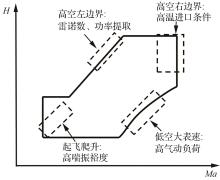
图 1
战斗机飞行包线[2]
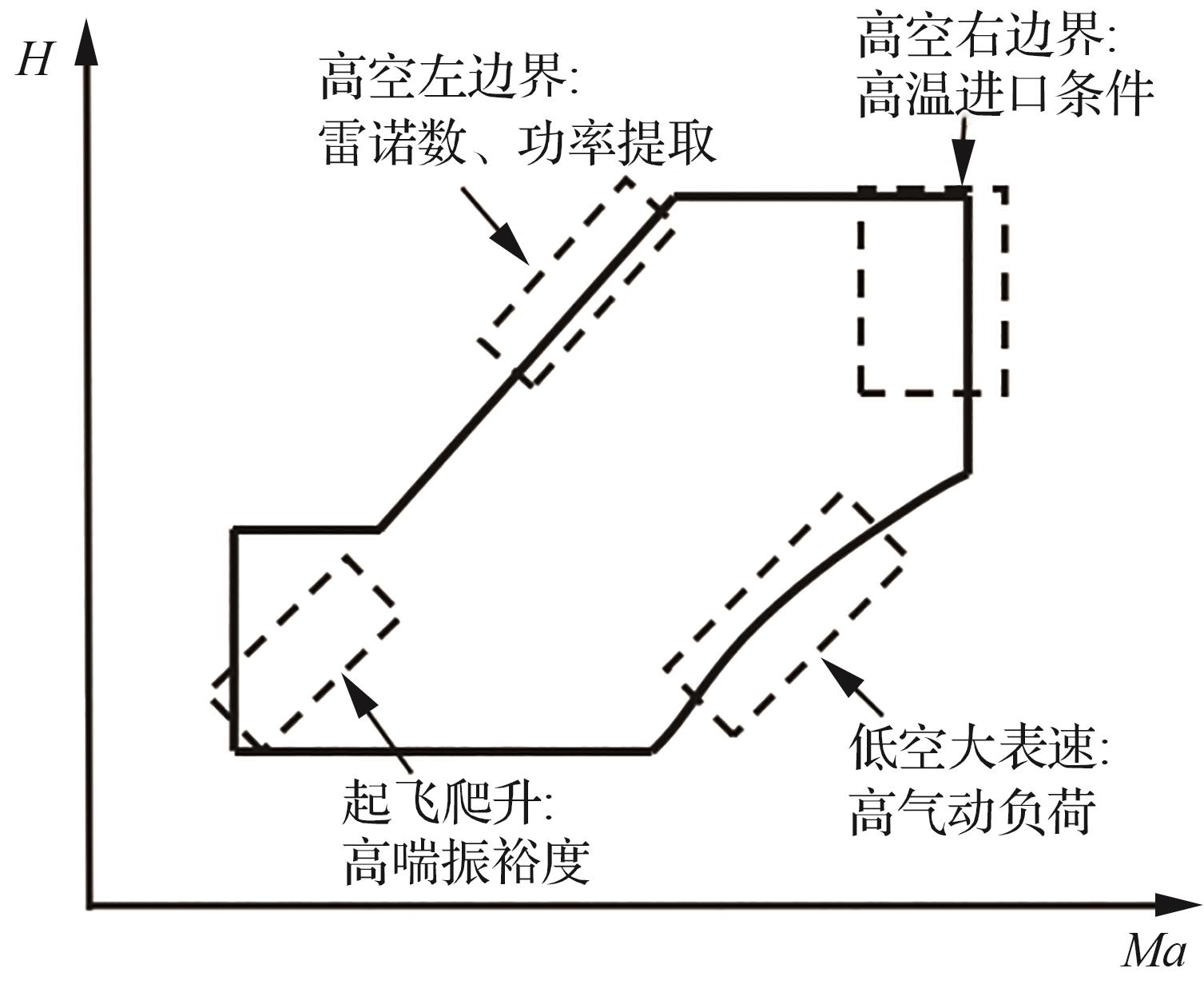
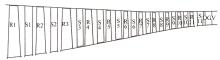
图 2
J93压气机示意图[3]
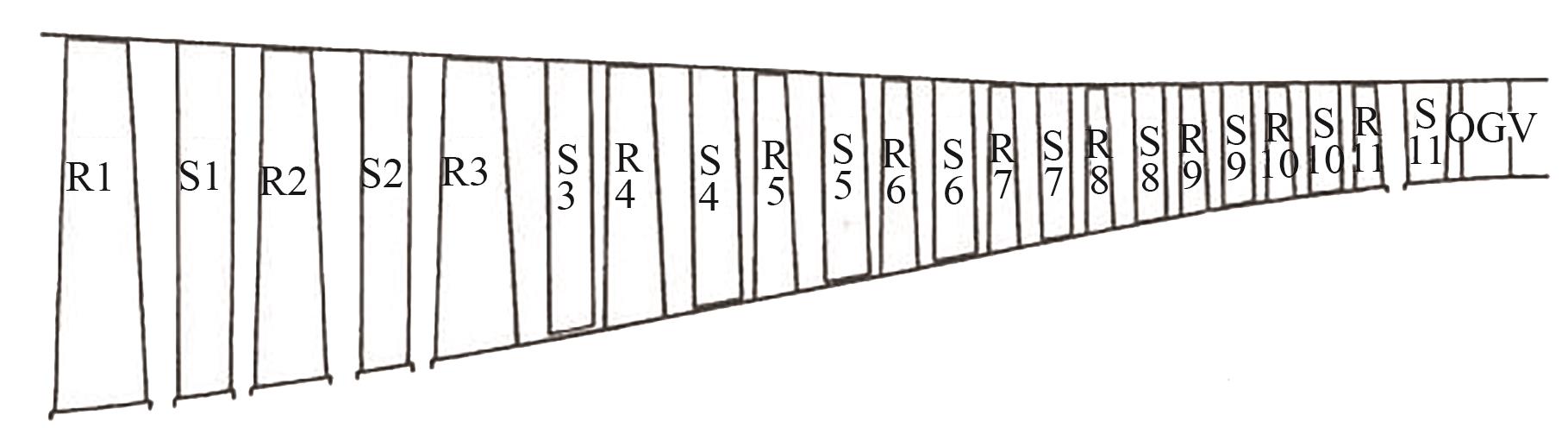
图 3
GE公司压气机设计体系的演化过程AMAC—Advanced Multistage Axial Compressor
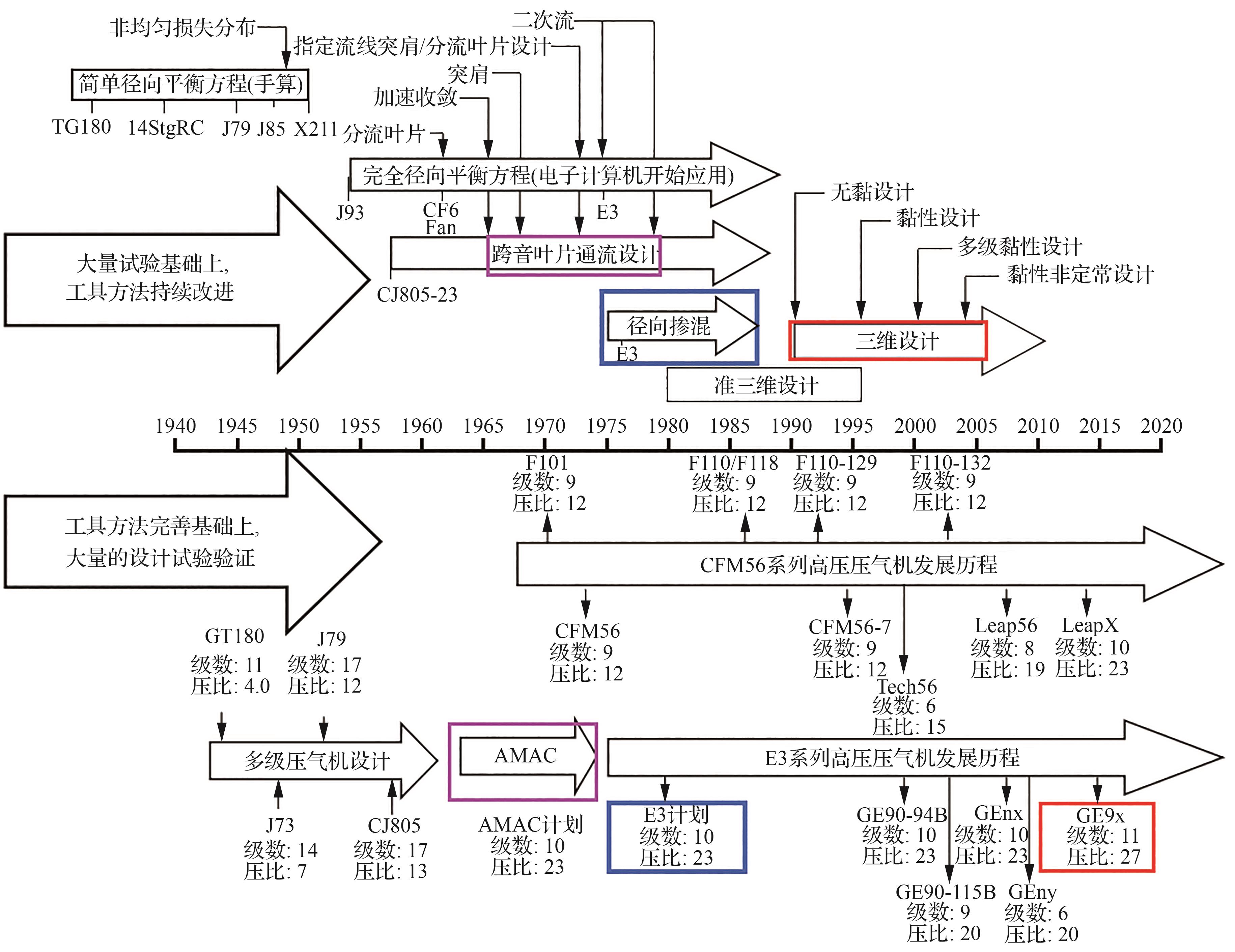
图 4
设计方法与工具体系发展[18]
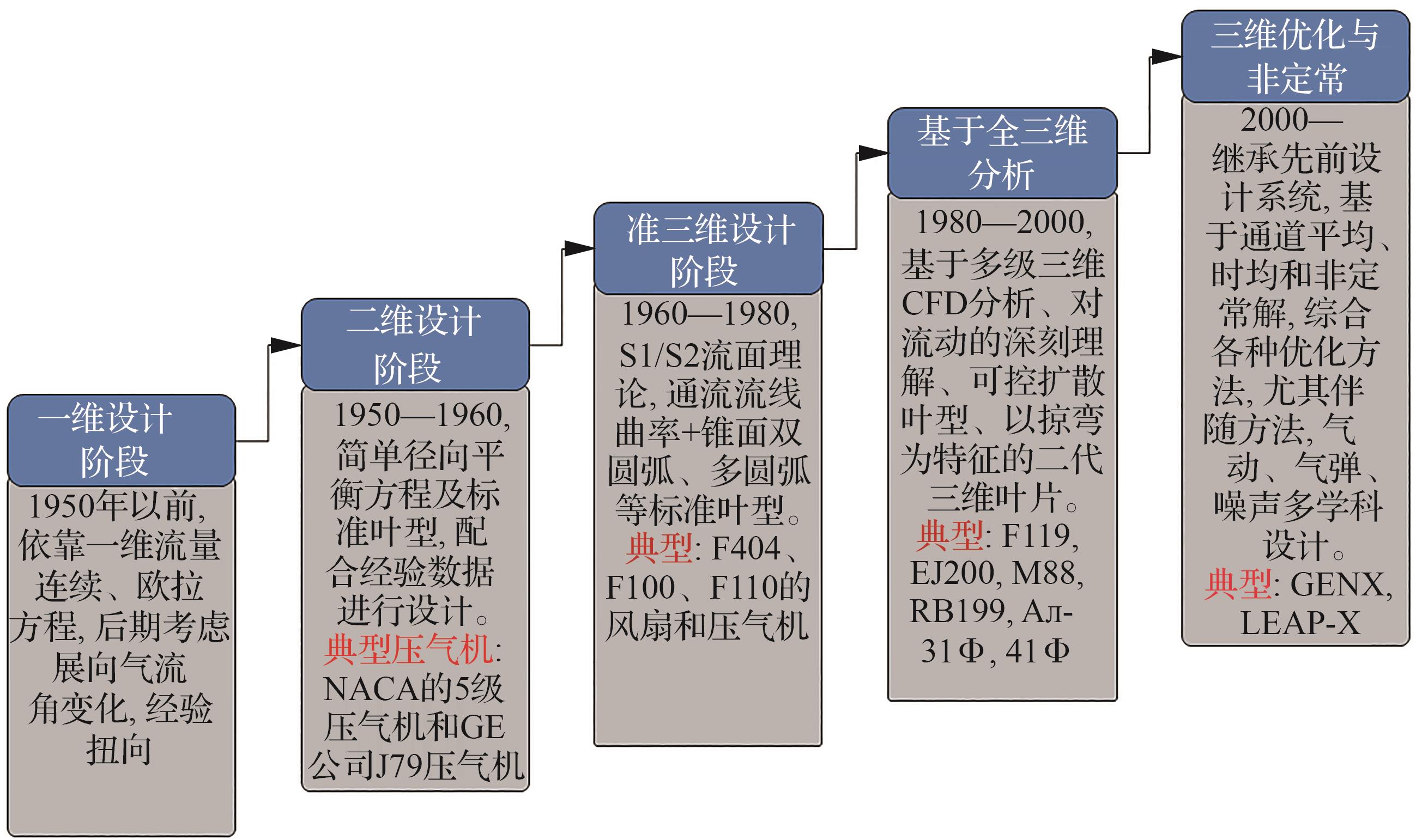
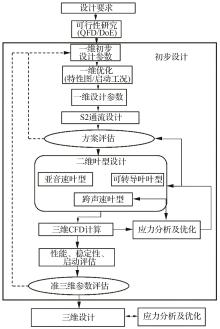
图 5
ALSTOM 压气机设计流程[19]
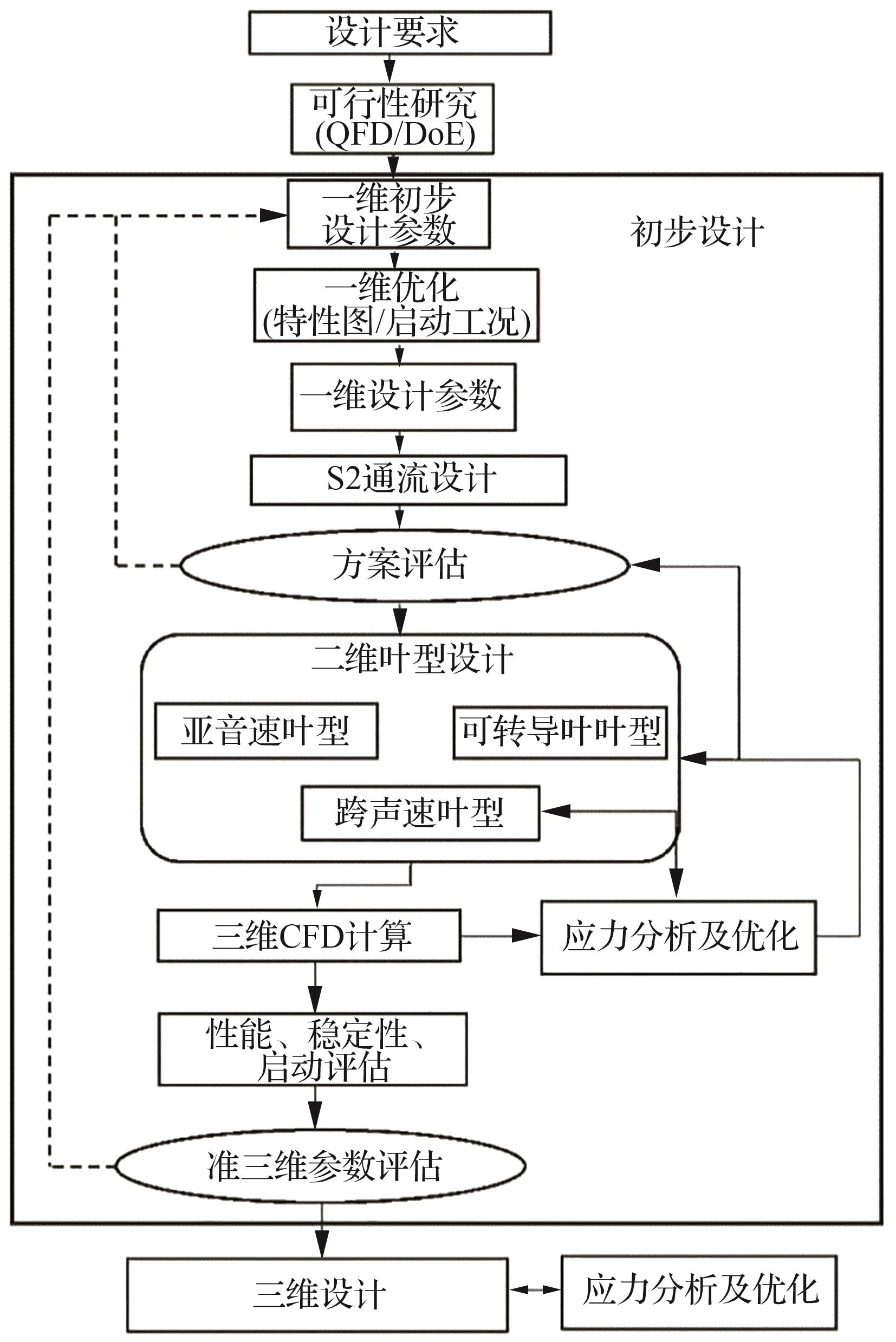
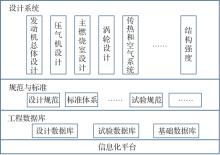
图 6
发动机设计体系框架图[25]
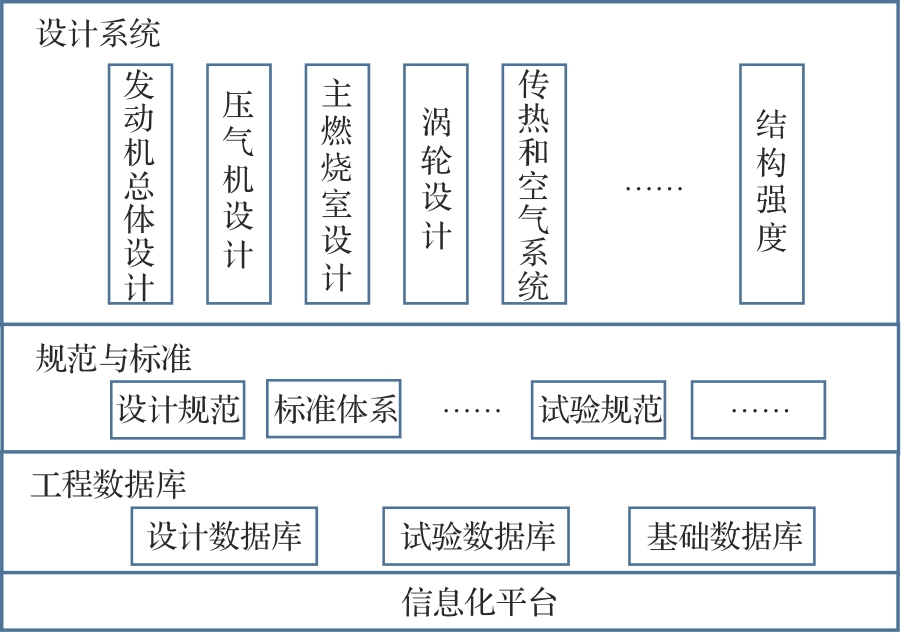
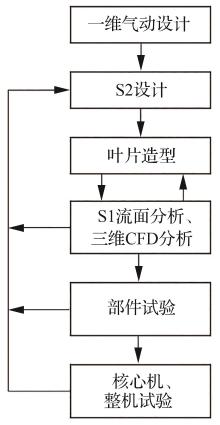
图 7
商发公司压气机设计体系[26]
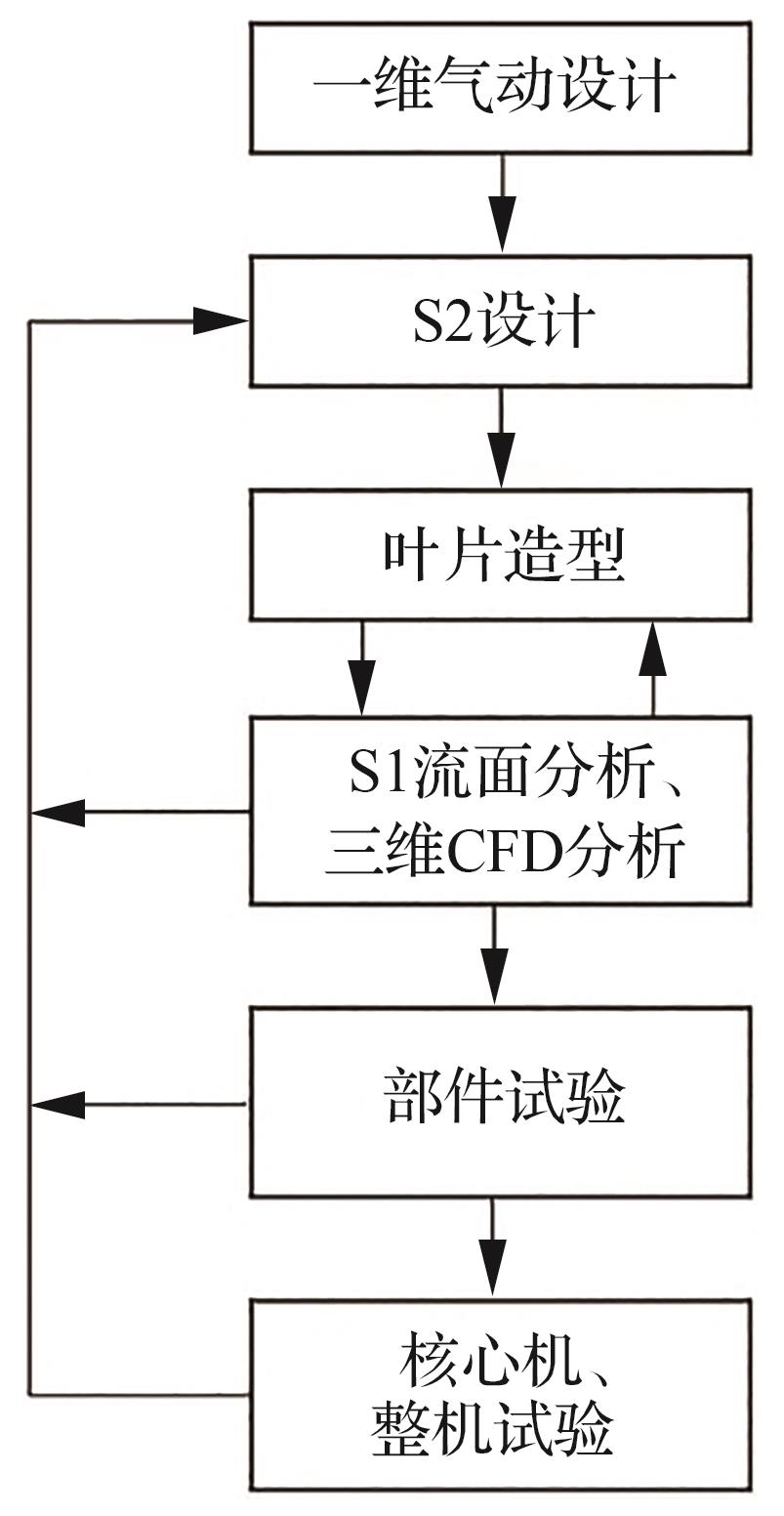
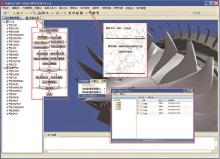
图 8
压气机气动设计系统界面[30]
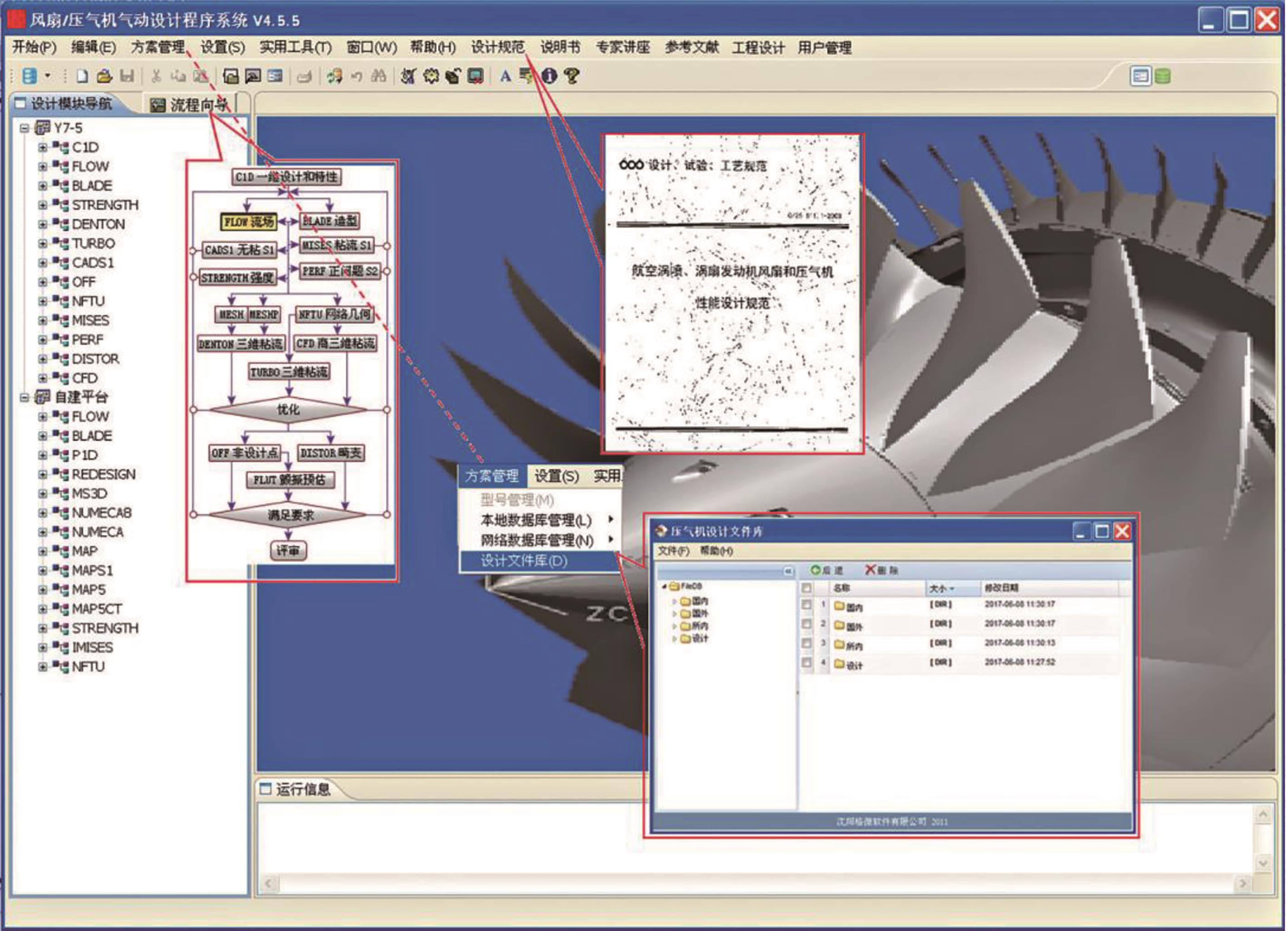
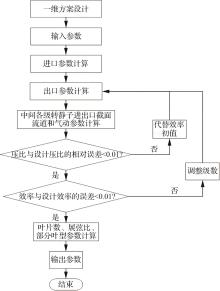
图 9
压气机一维气动设计流程
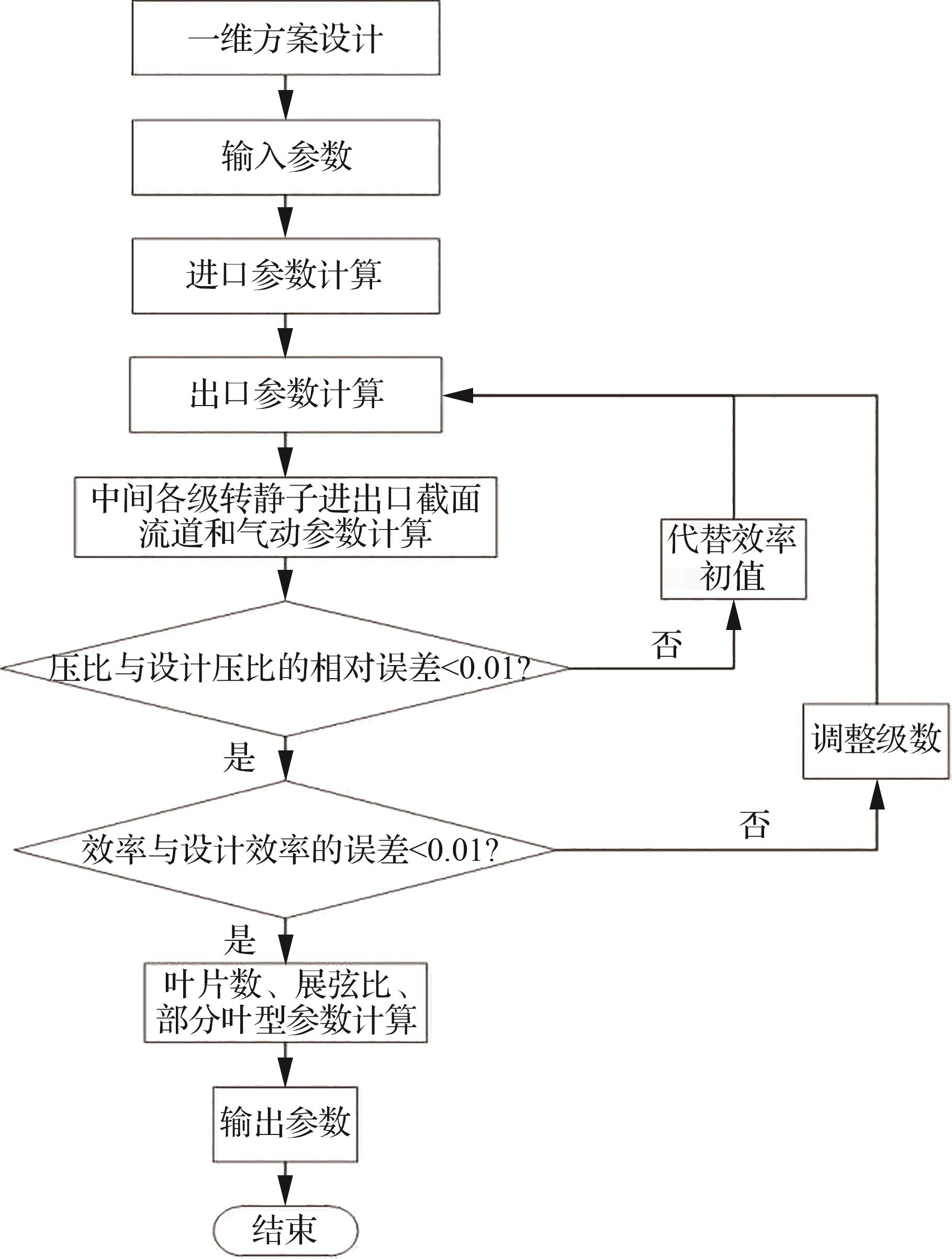
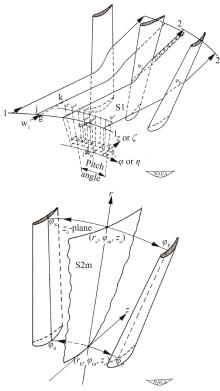
图 10
S1和S2流面示意图[8]
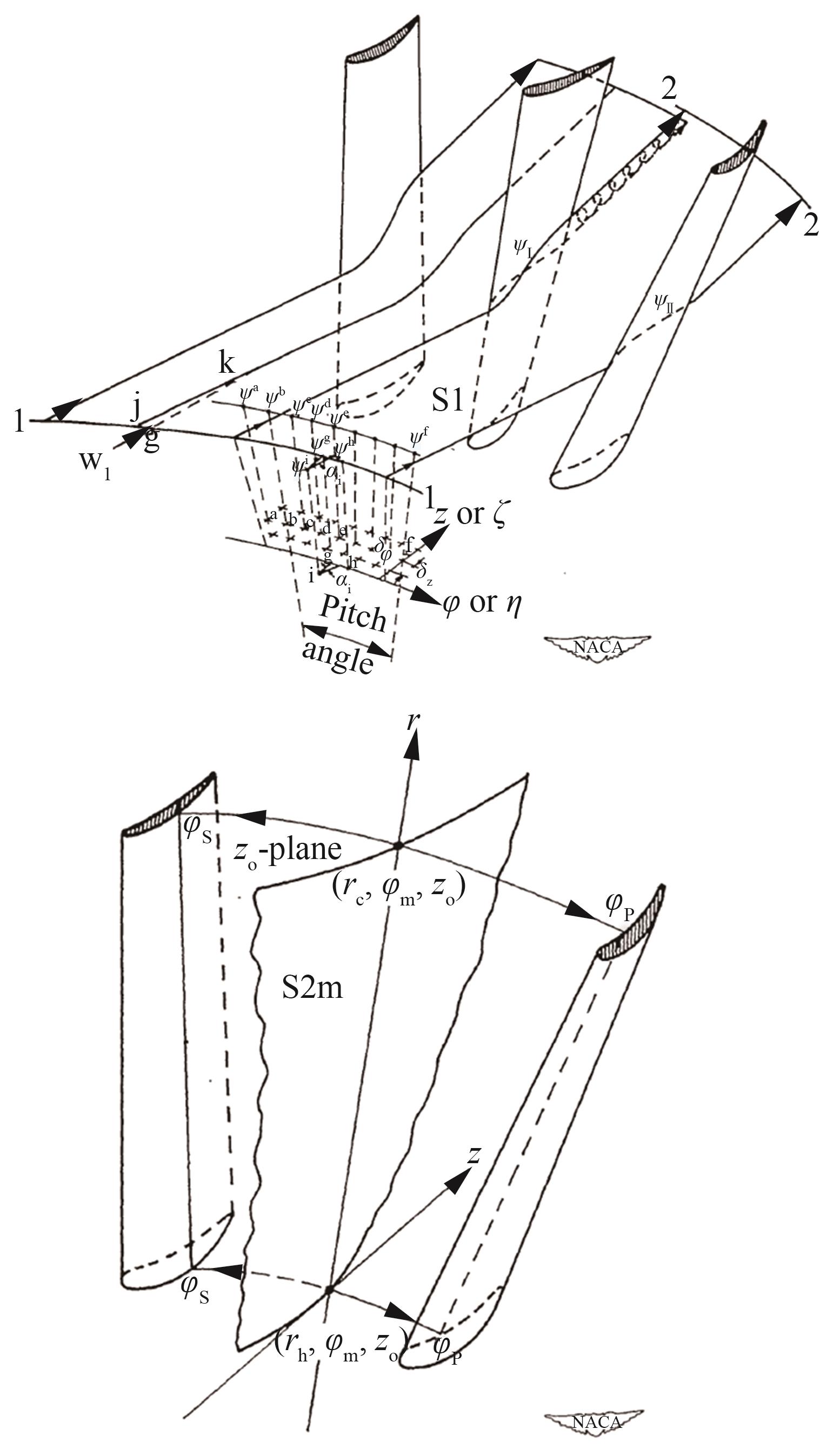
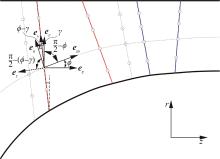
图 11
子午流面上单位矢量和角度示意图
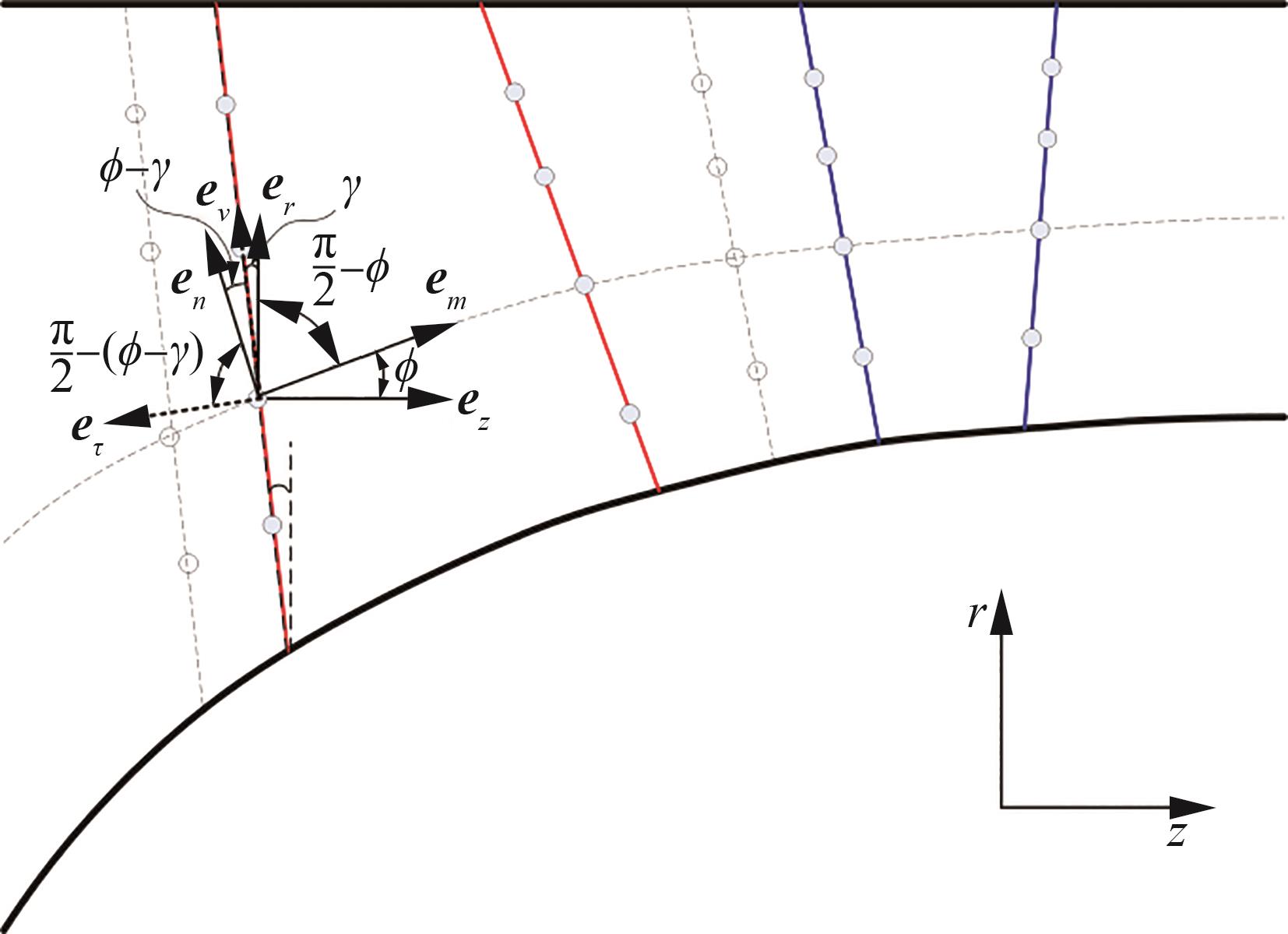
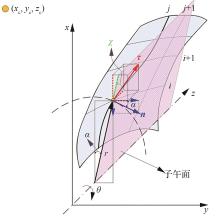
图 12
叶片力倾角χ相关示意图
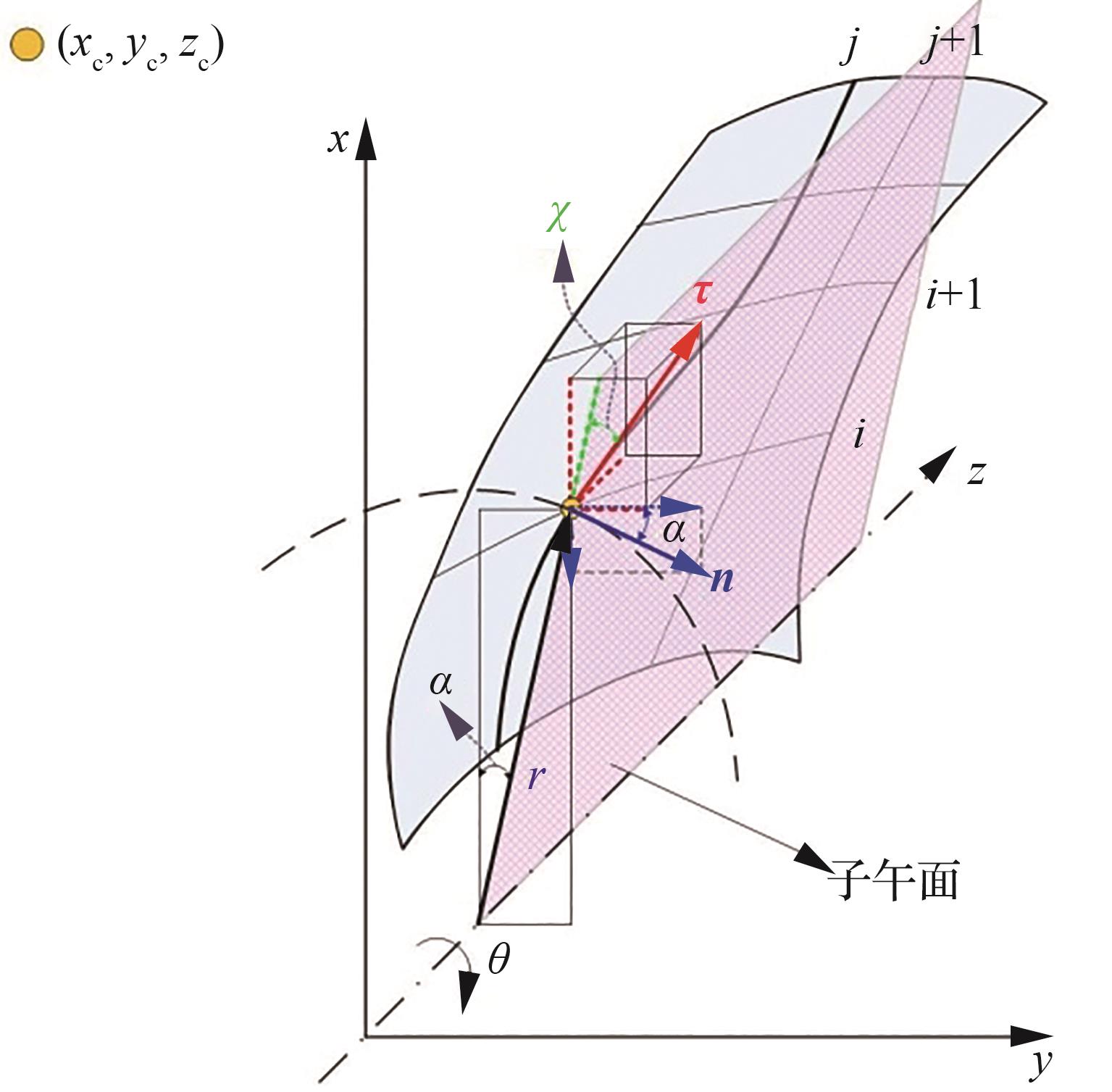
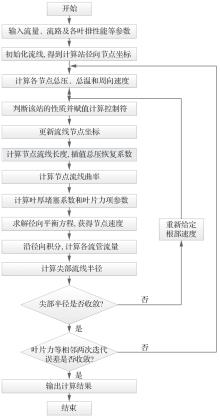
图 13
压气机通流设计流程[31]
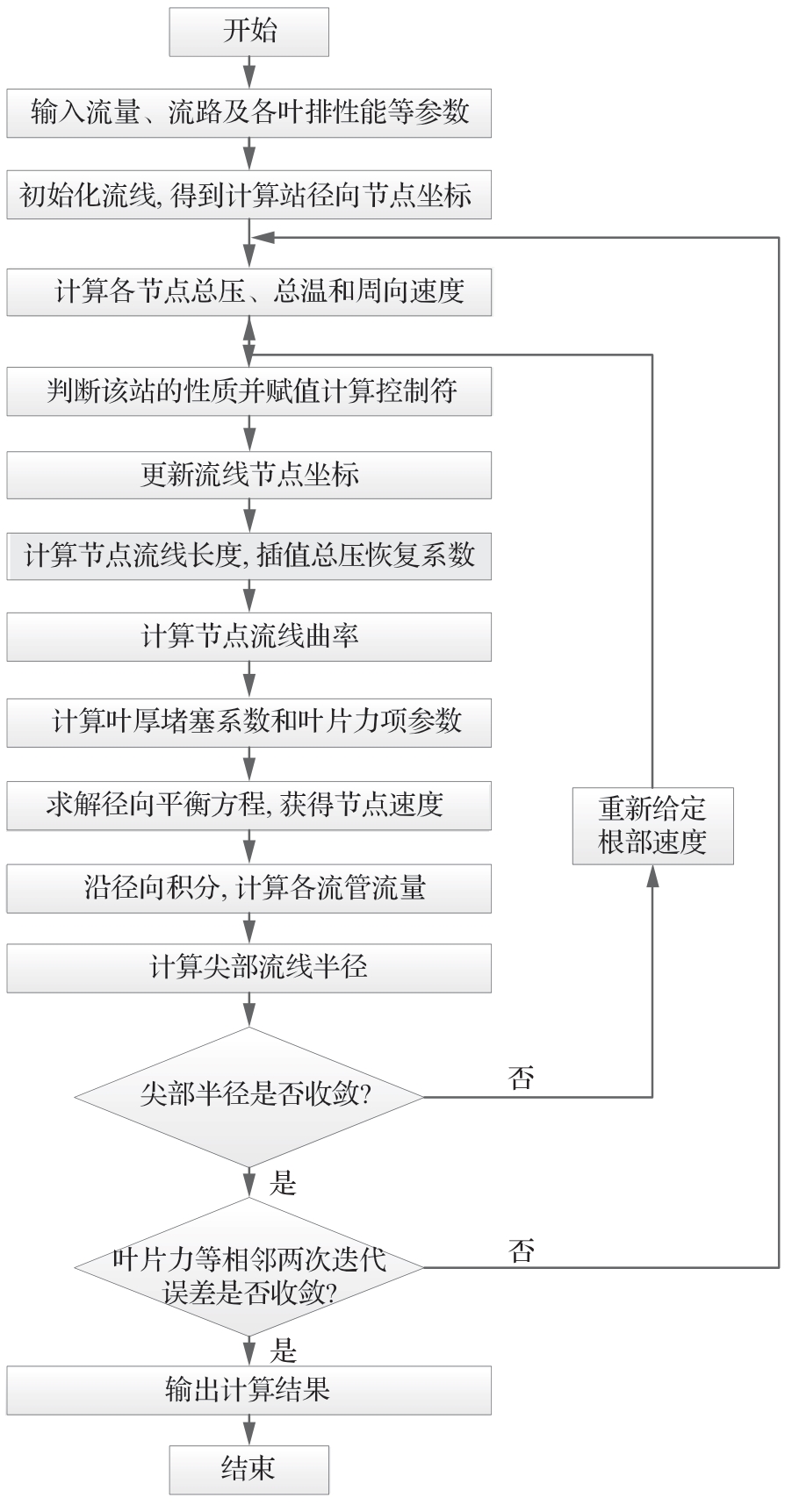
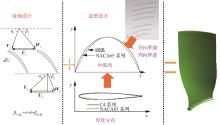
图 14
压气机叶片造型设计过程
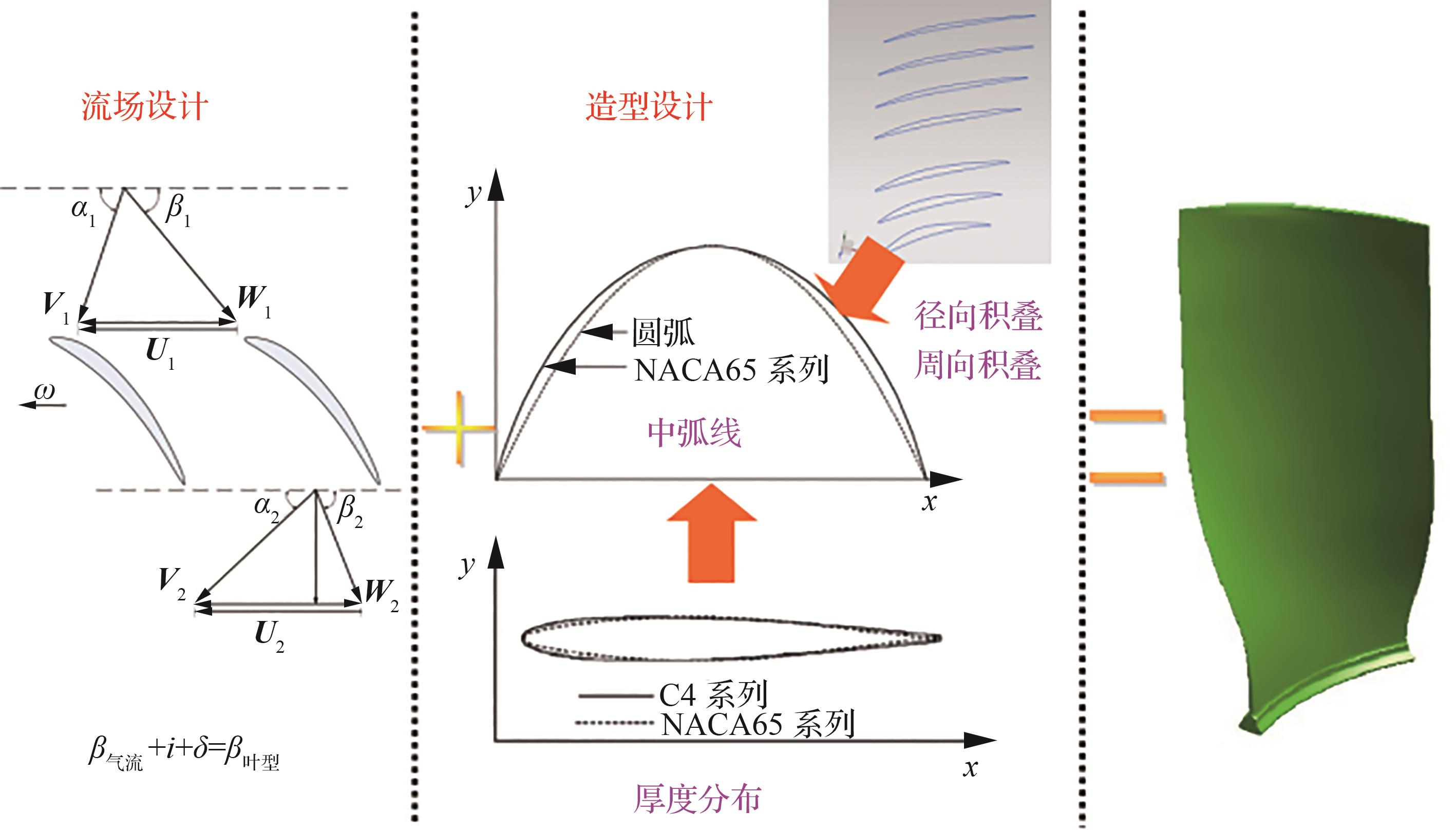
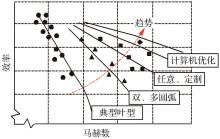
图 15
叶型的发展[18]
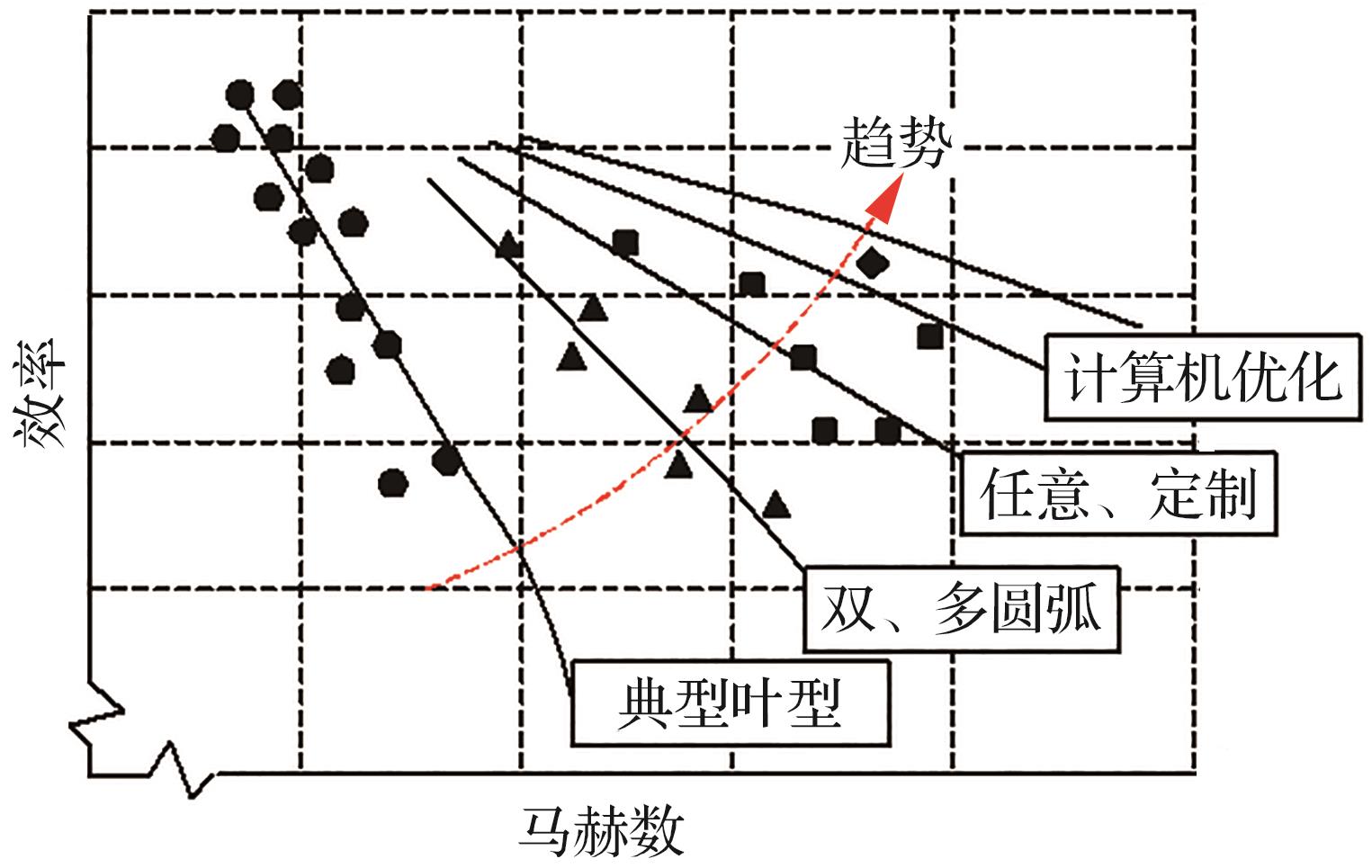
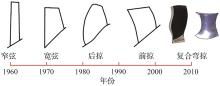
图 16
三维叶片的发展[18]
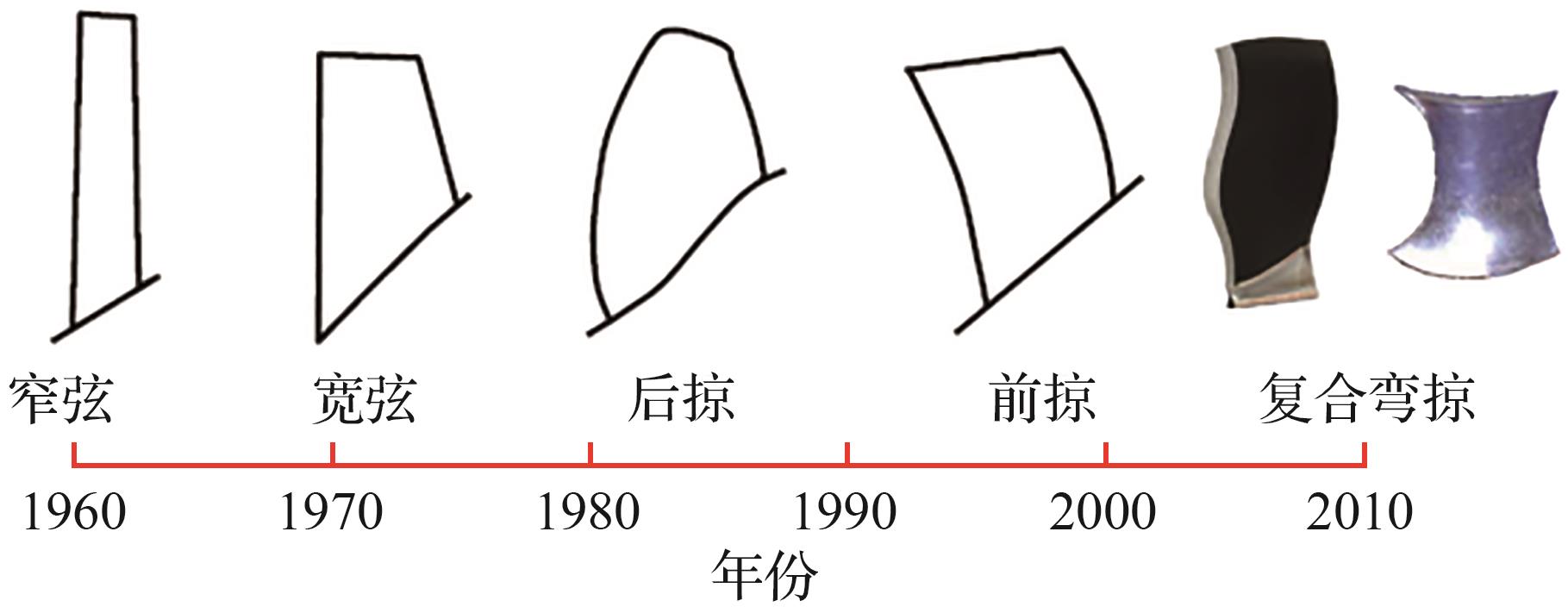
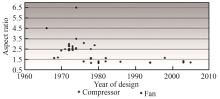
图 17
展弦比的发展[38]
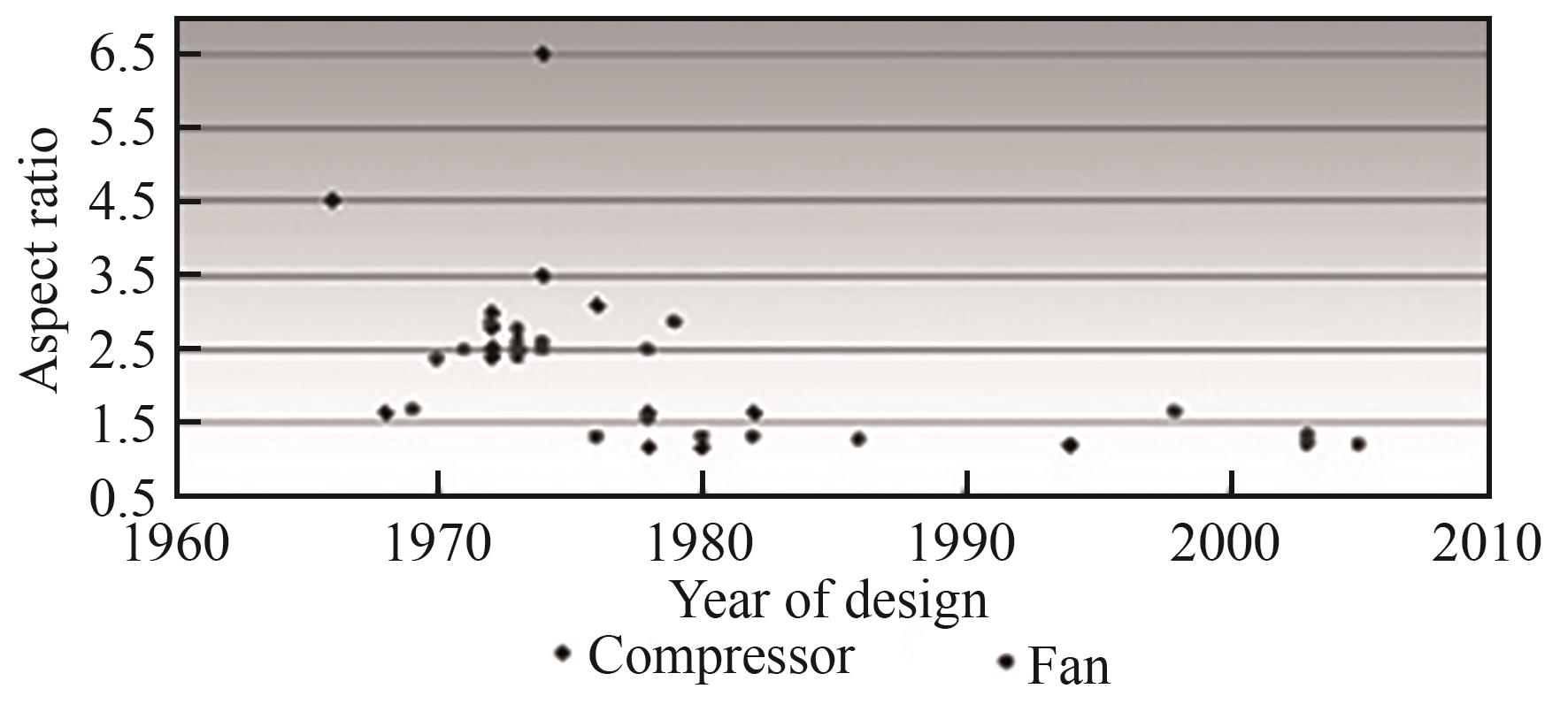
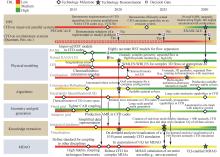
图 18
CFD技术发展路线图[55]HPC—High Performance Computing; MDAO—Multidisciplinary Analysis and Optimization;MDA—Multidisciplinary Analysis
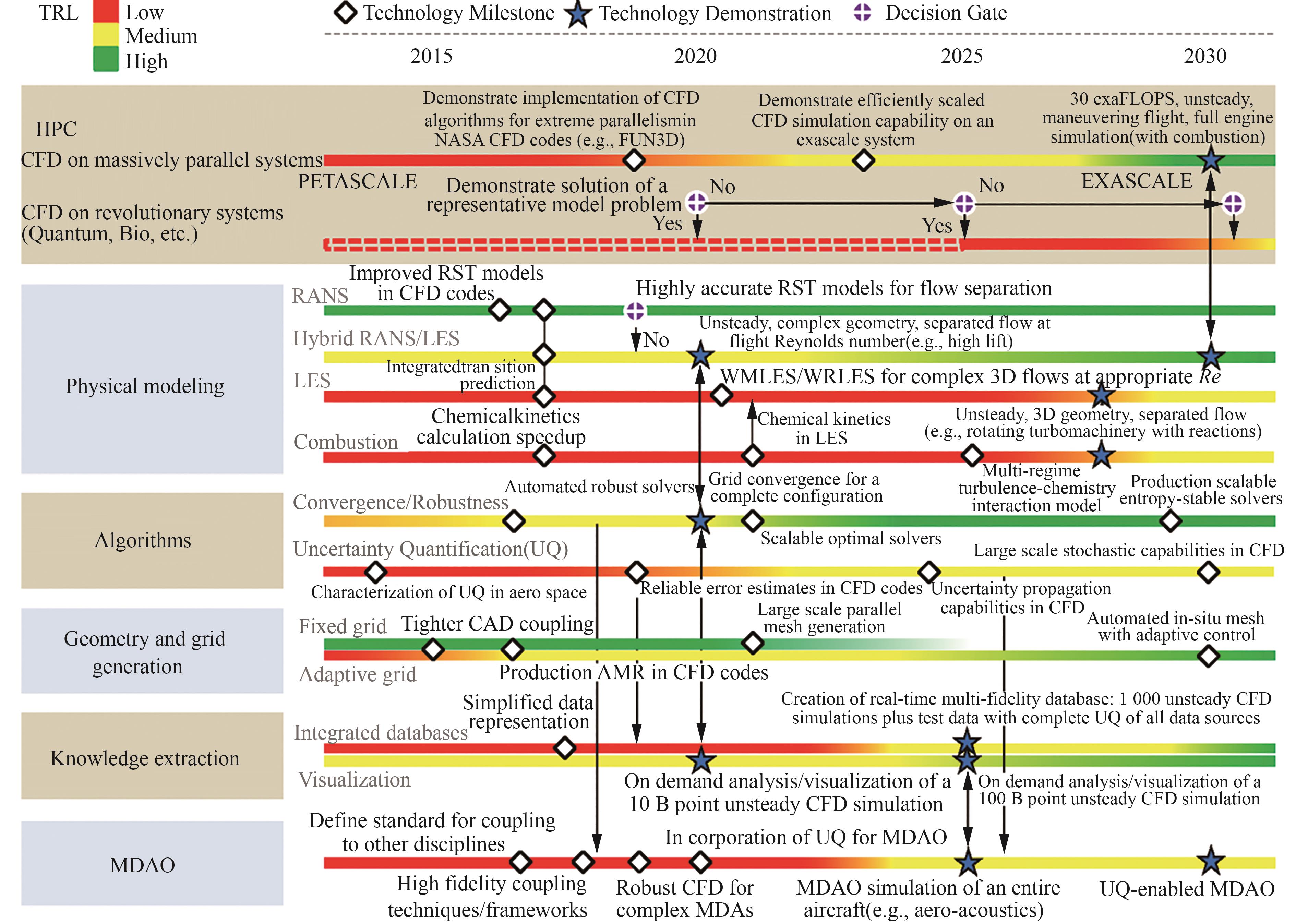
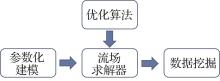
图 19
典型优化框架[61]
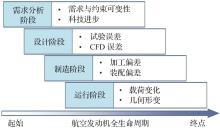
图 20
航空发动机不同阶段不确定性来源[93]
图 21
确定性设计体系和不确定性设计体系要素对比[93]
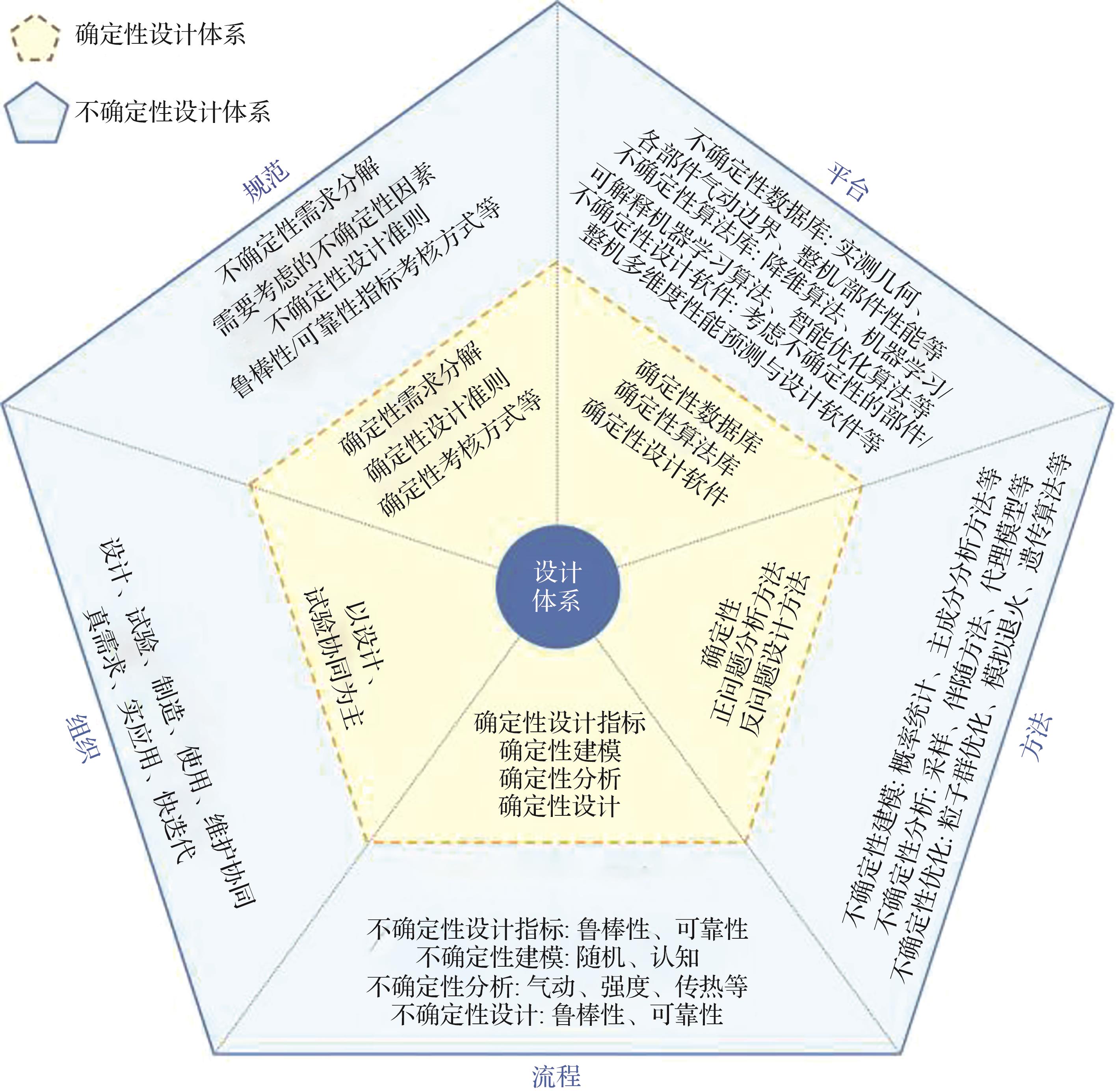
图 22
集成研发系统建设内容[113]
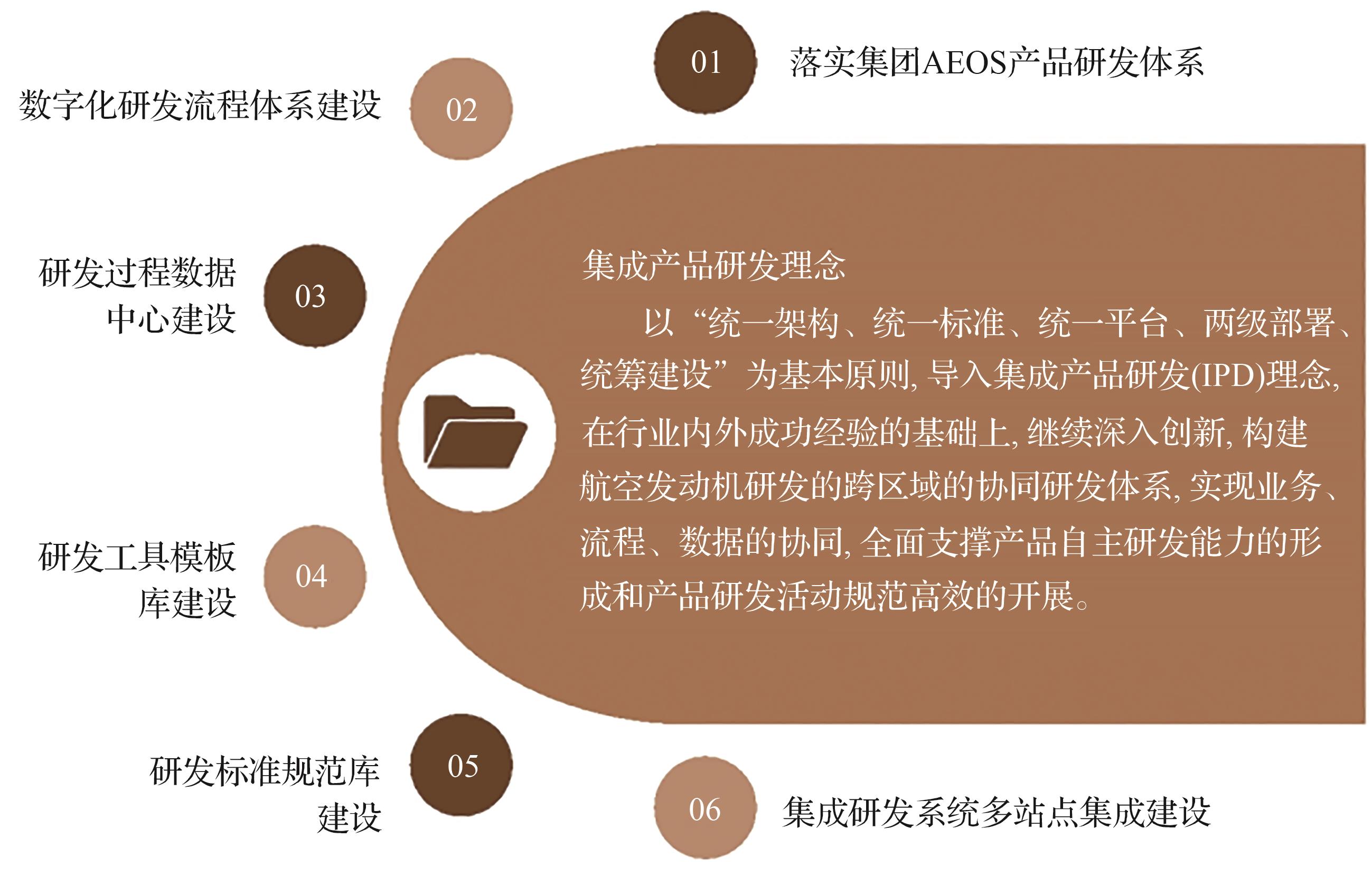
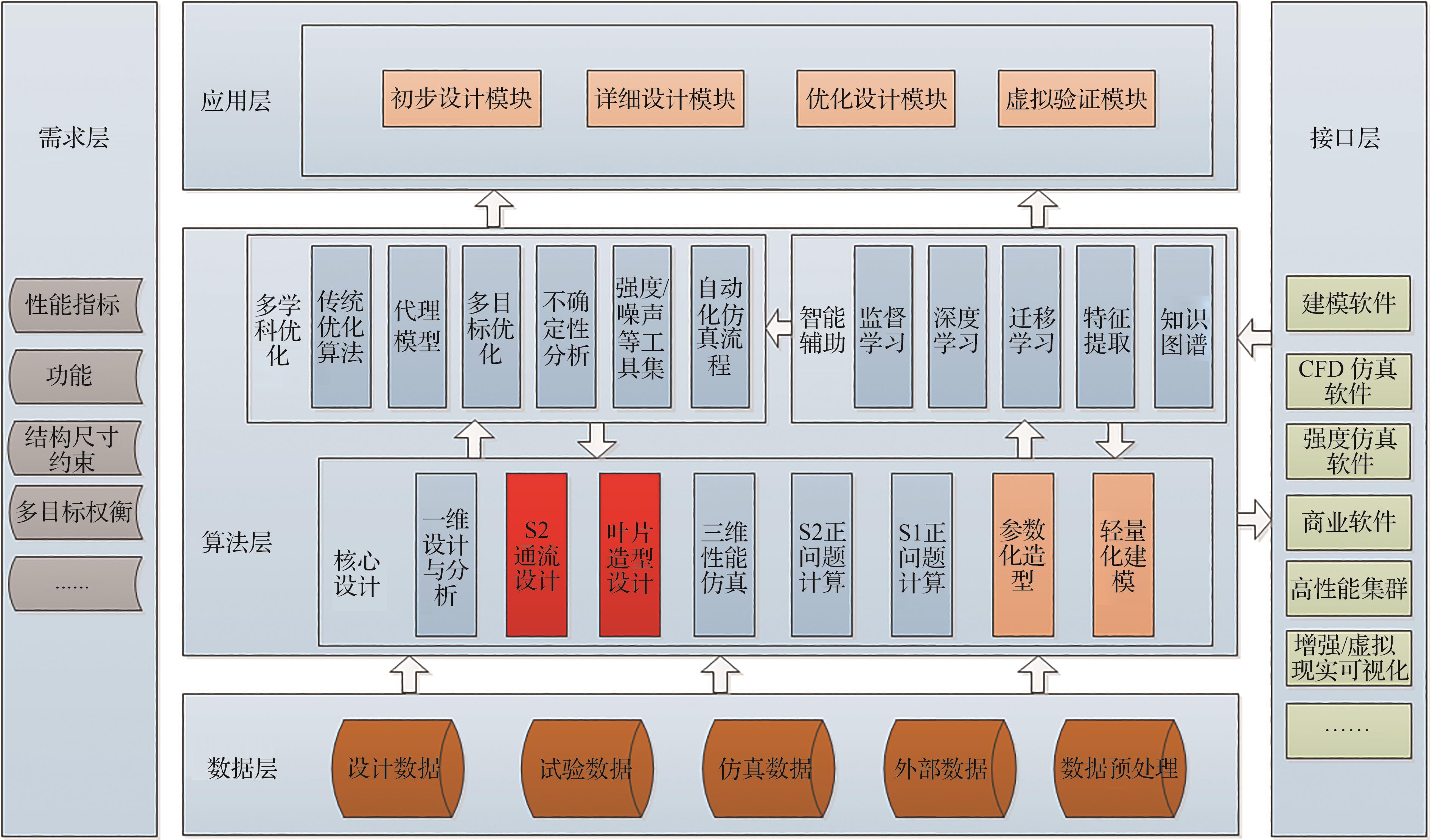
图 23
压气机气动设计平台架构
| [1] | 中国航空发动机集团新闻中心. 皇冠上的明珠: 航空发动机[M]. 北京: 航空工业出版社, 2021. |
| News Center of Aero Engine Corporation of China. The jewel on the crown: Aero-engine[M]. Beijing: Aviation Industry Press, 2021 (in Chinese). | |
| [2] | 程荣辉, 张军, 王东, 等. 基于航空发动机产品需求的压气机技术研究[J]. 航空发动机, 2024, 50(2): 1-10. |
| CHENG R H, ZHANG J, WANG D, et al. Compressor research based on aeroengine product requirements[J]. Aeroengine, 2024, 50(2): 1-10 (in Chinese). | |
| [3] | SMITH L H. Axial compressor aerodesign evolution at General Electric[J]. Journal of Turbomachinery, 2002, 124(3): 321-330. |
| [4] | 陈懋章. 风扇/压气机技术发展和对今后工作的建议[J]. 航空动力学报, 2002, 17(1): 1-15. |
| CHEN M Z. Development of fan/compressor techniques and suggestions on further researches[J]. Journal of Aerospace Power, 2002, 17(1): 1-15 (in Chinese). | |
| [5] | WILSER D C, KOCH C C, SMITH L H. Preliminary design study advanced multistage axial flow core compressors: NASA-CR-135133[R]. Washington, D.C.: NASA, 1977. |
| [6] | 蒋浩兴. 国外发展风扇/压气机设计体系的一些经验和启示[J]. 航空发动机, 2001, 27(2): 45-51, 57. |
| JIANG H X. Some experiences and insights on the development of fan/compressor design systems abroad[J]. Aeroengine, 2001, 27(2): 45-51, 57 (in Chinese). | |
| [7] | ROBBINS W H, DUGAN J F. Prediction of off-design performance of multistage compressors: NASA-SP-36 [R]. Washington, D.C.: NASA, 1965. |
| [8] | WU C H. A general theory of three-dimensional flow in subsonic and supersonic turbomachines of axial, radial, and mixed-flow types[J]. Journal of Fluids Engineering, 1952, 74(8): 1363-1380. |
| [9] | 余春华, 阙晓斌, 吴宏. 重型燃气轮机压气机技术发展趋势[J]. 动力工程学报, 2024, 44(9): 1317-1327, 1360. |
| YU C H, QUE X B, WU H. Technology development trend of heavy-duty gas turbine compressor[J]. Journal of Chinese Society of Power Engineering, 2024, 44(9): 1317-1327, 1360 (in Chinese). | |
| [10] | DENTON J D. The calculation of three-dimensional viscous flow through multistage turbomachines[J]. Journal of Turbomachinery, 1992, 114(1): 18-26. |
| [11] | DENTON J D, DAWES W N. Computational fluid dynamics for turbomachinery design[J]. Proceedings of the Institution of Mechanical Engineers, Part C: Journal of Mechanical Engineering Science, 1998, 213(2): 107-124. |
| [12] | JAMESON A, SCHMIDT W, TURKEL E. Numerical solution of the Euler equations by finite volume methods using Runge Kutta time stepping schemes[C]∥14th Fluid and Plasma Dynamics Conference. Reston: AIAA, 1981. |
| [13] | DAWES W N. Toward improved throughflow capability: The use of three-dimensional viscous flow solvers in a multistage environment[J]. Journal of Turbomachinery, 1992, 114(1): 8-17. |
| [14] | RHIE D M, GLEIXNER A J, FISCHBERG C J, et al. Development and application of a multistage Navier-Stokes solver Part 1: Multistage modeling using body forces and deterministic stresses: ASME 95-GT-342[R]. New York: ASME, 1995. |
| [15] | LEJAMBRE C R, ZACHARIAS R M, BIEDERMAN B P, et al. Development and application of a multistage navier-stokes flow solver: Part Ⅱ—Application to a high pressure compressor design: 95-GT-343[R]. New York: ASME, 1995. |
| [16] | ADAMCZYK J J. Aerodynamic analysis of multistage turbomachinery flows in support of aerodynamic design[J]. Journal of Turbomachinery, 2000, 122(2): 189-217. |
| [17] | DENTON J D. Some limitations of turbomachinery CFD: GT2010-22540[R]. New York: ASME, 2010. |
| [18] | 刘永泉, 刘太秋, 季路成. 航空发动机风扇/压气机技术发展的若干问题与思考[J]. 航空学报, 2015, 36(8): 2563-2576. |
| LIU Y Q, LIU T Q, JI L C. Some problems and thoughts in the development of aero-engine fan/compressor[J]. Acta Aeronautica et Astronautica Sinica, 2015, 36(8): 2563-2576 (in Chinese). | |
| [19] | 陈禹田, 姜玉廷, 洪青松, 等. 多级轴流压气机气动设计体系的国内外研究进展[J]. 热能动力工程, 2021, 36(11): 1-12. |
| CHEN Y T, JIANG Y T, HONG Q S, et al. Research progress on aerodynamic design systems of multistage axial compressors at home and abroad[J]. Journal of Engineering for Thermal Energy and Power, 2021, 36(11): 1-12 (in Chinese). | |
| [20] | WELLBORN S R, DELANEY R A. Redesign of a 12-stage axial-flow compressor using multistage CFD: 2001-GT-0351[R]. New York: ASME, 2001. |
| [21] | LEJAMBRE C R, ZACHARIAS R M, BIEDERMAN B P, et al. Development and application of a multistage Navier-Stokes flow solver: Part Ⅱ—Application to a high pressure compressor design[C]∥ASME 1995 International Gas Turbine and Aeroengine Congress and Exposition. New York: ASME, 1995. |
| [22] | 程荣辉. 普·惠公司的压气机设计系统[J]. 燃气涡轮试验与研究, 1997, 10(2): 53-59. |
| CHENG R H. Compressor design system of Pratt Whitney company[J]. Gas Turbine Experiment and Research, 1997, 10(2): 53-59 (in Chinese). | |
| [23] | DAVID J. Progress and potential in agile engineering for turbomachinery[C]∥ASME 2001 Fluids Engineering Division Summer Meeting. New York: ASME, 2001. |
| [24] | MOROZ L, GOVORUSHCHENKO Y, PAGUR P, et al. Integrated environment for gas turbine preliminary design[C]∥Proceedings of 10th International Gas Turbine Congress-IGTC, 2011: 1-7. |
| [25] | 王永明, 卫刚, 兰发祥, 等. 航空发动机设计体系的建设与发展[J]. 燃气涡轮试验与研究, 2007, 20(3): 1-7. |
| WANG Y M, WEI G, LAN F X, et al. Constructing and developing of aeroengine design system[J]. Gas Turbine Experiment and Research, 2007, 20(3): 1-7 (in Chinese). | |
| [26] | 曹传军, 刘天一, 朱伟, 等. 民用大涵道比涡扇发动机高压压气机技术进展[J]. 航空学报, 2023, 44(12): 027824. |
| CAO C J, LIU T Y, ZHU W, et al. Technology development in high pressure compressor of civil high bypass-ratio turbofan engine[J]. Acta Aeronautica et Astronautica Sinica, 2023, 44(12): 027824 (in Chinese). | |
| [27] | 李孝堂, 崔英俊. 基于设计体系的高性能多级压气机综合设计技术[J]. 航空发动机, 2013, 39(4): 5-8, 25. |
| LI X T, CUI Y J. Integrated design technique of high performance multistage compressors based on design system[J]. Aeroengine, 2013, 39(4): 5-8, 25 (in Chinese). | |
| [28] | 刘太秋, 郭捷. QC185燃气轮机低压压气机设计[J]. 航空发动机, 2007, 33(1): 16-17, 33. |
| LIU T Q, GUO J. Low pressure compressor design for QC185 gas turbine[J]. Aeroengine, 2007, 33(1): 16-17, 33 (in Chinese). | |
| [29] | 杜辉, 陈葆实, 胡国荣, 等. 风扇/压气机气动设计系统建设初探[J]. 航空动力学报, 2007, 22(3): 454-459. |
| DU H, CHEN B S, HU G R, et al. Preliminary development of fan and compressor aerodynamic design system[J]. Journal of Aerospace Power, 2007, 22(3): 454-459 (in Chinese). | |
| [30] | 杨琳, 赵勇, 蒋永松. 压气机设计系统建设及型号应用[J]. 航空动力, 2018(4): 79-82. |
| YANG L, ZHAO Y, JIANG Y S. Development and application of compressor design system[J]. Aerospace Power, 2018(4): 79-82 (in Chinese). | |
| [31] | 程荣辉, 桂幸民. 航空发动机风扇压气机设计[M]. 北京: 科学出版社, 2022. |
| CHENG R H, GUI X M. Design of aero-engine fans and compressors[M]. Beijing: Science Press, 2022 (in Chinese). | |
| [32] | 刘杰. 基于数据驱动的轴流压气机一维气动设计方法研究[D]. 北京: 中国航空研究院, 2024. |
| LIU J. Research on a one-dimensional aerodynamic design method for axial compressors based on data-driven approaches[D]. Beijing: Chinese Aeronautical Establishment, 2024 (in Chinese). | |
| [33] | 胡国荣. 航空发动机风扇/压气机气动设计[M]. 沈阳: 中国航发沈阳发动机研究所, 2018. |
| HU G R. Aerodynamic design of aircraft engine fans/compressors[M]. Shenyang: AECC Shenyang Engine Research Institute, 2018 (in Chinese). | |
| [34] | NOVAK R A. Streamline curvature computing procedures for fluid-flow problems[J]. Journal of Engineering for Power, 1967, 89(4): 478-490. |
| [35] | SMITH L H. The radial-equilibrium equation of turbomachinery[J]. Journal of Engineering for Power, 1966, 88(1): 1-12. |
| [36] | FROST D H. A streamline curvature through-flow computer program for analysing the flow through axial-flow turbomachines: R. M. No. 3687[R]. London: Her Majesty’s Stationery Office, 1972. |
| [37] | JAMES E, DAVID C, RICHARD E. A computer program for composing compressor blading from simulated circular-ARC elements on conical surfaces: NASA TN D-5437[R]. Washington, D.C.: NASA, 1969. |
| [38] | BIOLLO R, BENINI E. Recent advances in transonic axial compressor aerodynamics[J]. Progress in Aerospace Sciences, 2013, 56: 1-18. |
| [39] | LAKSHMINARAYANA B, SITARAM N, ZHANG J, et al. End-wall and profile losses in a low-speed axial flow compressor rotor[J]. Journal of Engineering for Gas Turbines and Power, 1986, 108(1): 22-31. |
| [40] | WADIA A R, SZUCS P N, CRALL D W. Inner workings of aerodynamic sweep[J]. Journal of Turbomachinery, 1998, 120(4): 671-682. |
| [41] | LUCAS J, WOODWARD R, MACKINNON M. Acoustic evaluation of a novel swept-rotor fan[C]∥11th Fluid and Plasma Dynamics Conference. Reston: AIAA, 1978. |
| [42] | GALLIMORE S J, BOLGER J J, CUMPSTY N A, et al. The use of sweep and dihedral in multistage axial flow compressor blading: Part Ⅰ—University research and methods development: GT-2002-30328[R]. New York: ASME, 2002. |
| [43] | 季路成, 陈江, 林峰. 轴流压气机设计中“掠”的另类认识——Ⅰ: 回顾与另类认识[C]∥中国工程热物理学会热机气动分会会议论文集. 北京: 中国工程热物理学会, 2004. |
| JI L C, CHEN J, LIN F. An alternative understanding of “sweep” in axial flow compressor design, part Ⅰ: Review and alternative understanding[C]∥Proceedings of the Aerodynamic Branch Conference of the Chinese Society of Engineering Thermophysics. Beijing: Chinese Society of Engineering Thermophysics, 2004 (in Chinese). | |
| [44] | 季路成, 陈江, 林峰. 轴流压气机设计中“掠”的另类认识——Ⅱ: 关于某转子“掠”的分析[C]∥中国工程热物理学会热机气动分会会议论文集. 北京: 中国工程热物理学会, 2004. |
| JI L C, CHEN J, LIN F. An alternative understanding of “sweep” in axial flow compressor design, part Ⅱ: “sweep” analysis of a rotor[C]∥Proceedings of the Aerodynamic Branch Conference of the Chinese Society of Engineering Thermophysics. Beijing: Chinese Society of Engineering Thermophysics, 2004 (in Chinese). | |
| [45] | 曹建国. 航空发动机仿真技术研究现状、挑战和展望[J]. 推进技术, 2018, 39(5): 961-970. |
| CAO J G. Status, challenges and perspectives of aero-engine simulation technology[J]. Journal of Propulsion Technology, 2018, 39(5): 961-970 (in Chinese). | |
| [46] | 刘宝杰, 邹正平, 严明, 等. 叶轮机计算流体动力学技术现状与发展趋势[J]. 航空学报, 2002, 23(5): 394-404. |
| LIU B J, ZOU Z P, YAN M, et al. Present status and future development of CFD in turbomachinery[J]. Acta Aeronautica et Astronautica Sinica, 2002, 23(5): 394-404 (in Chinese). | |
| [47] | 阎超. 航空CFD四十年的成就与困境[J]. 航空学报, 2022, 43(10): 526490. |
| YAN C. Achievements and predicaments of CFD in aeronautics in past forty years[J]. Acta Aeronautica et Astronautica Sinica, 2022, 43(10): 526490 (in Chinese). | |
| [48] | VAN LEER B. CFD education-Past, present, future[C]∥37th Aerospace Sciences Meeting and Exhibit. Reston: AIAA, 1999. |
| [49] | ROE P L. Approximate Riemann solvers, parameter vectors, and difference schemes[J]. Journal of Computational Physics, 1997, 135(2): 250-258. |
| [50] | VAN LEER B. Flux-vector splitting for the Euler equations[C]∥Eighth International Conference on Numerical Methods in Fluid Dynamics. Berlin, Heidelberg: Springer, 1982: 507-512. |
| [51] | JONES W P, LAUNDER B E. The prediction of laminarization with a two-equation model of turbulence[J]. International Journal of Heat and Mass Transfer, 1972, 15(2): 301-314. |
| [52] | WILCOX D C. Reassessment of the scale-determining equation for advanced turbulence models[J]. AIAA Journal, 1988, 26(11): 1299-1310. |
| [53] | SPALART P, ALLMARAS S. A one-equation turbulence model for aerodynamic flows[C]∥30th Aerospace Sciences Meeting and Exhibit. Reston: AIAA, 1992. |
| [54] | MENTER F R. Two-equation eddy-viscosity turbulence models for engineering applications[J]. AIAA Journal, 1994, 32(8): 1598-1605. |
| [55] | SLOTNICK J P, KHODADOUST A, ALONSO J J, et al. CFD vision 2030 study: A path to revolutionary computational aerosciences: NASA/CR-2014-218178[R]. Washington, D.C.: NASA, 2014. |
| [56] | 王子维, 范召林, 李彬, 等. 压气机整机超大规模非定常模拟关键技术[J]. 航空学报, 2024, 45(18): 129865. |
| WANG Z W, FAN Z L, LI B, et al. Key technologies for massive unsteady simulation of whole compressor[J]. Acta Aeronautica et Astronautica Sinica, 2024, 45(18): 129865 (in Chinese). | |
| [57] | HE L. Fourier methods for turbomachinery applications[J]. Progress in Aerospace Sciences, 2010, 46(8): 329-341. |
| [58] | ASHCROFT G, FREY C, HEITKAMP K, et al. Advanced numerical methods for the prediction of tonal noise in turbomachinery—Part Ⅰ: Implicit Runge-Kutta schemes[J]. Journal of Turbomachinery, 2014, 136(2): 021002. |
| [59] | FREY C, ASHCROFT G, KERSKEN H P, et al. Advanced numerical methods for the prediction of tonal noise in turbomachinery—Part Ⅱ: Time-linearized methods[J]. Journal of Turbomachinery, 2014, 136(2): 021003. |
| [60] | 黄松, 王鹏, 汪洋冰. 压气机叶片几何气动性能优化设计方法综述[J]. 推进技术, 2024, 45(4): 2211068. |
| HUANG S, WANG P, WANG Y B. Review of optimization design methods for compressor blade geometry and aerodynamic performance[J]. Journal of Propulsion Technology, 2024, 45(4): 2211068 (in Chinese). | |
| [61] | LI Z H, ZHENG X Q. Review of design optimization methods for turbomachinery aerodynamics[J]. Progress in Aerospace Sciences, 2017, 93: 1-23. |
| [62] | SANGER N L. The use of optimization techniques to design-controlled diffusion compressor blading[J]. Journal of Engineering for Power, 1983, 105(2): 256-264. |
| [63] | 周正贵. 压气机/风扇叶片自动优化设计的研究现状和关键技术[J]. 航空学报, 2008, 29(2): 257-266. |
| ZHOU Z G. Current situations and key techniques of automatic aerodynamic-design of compressor/fan blades[J]. Acta Aeronautica et Astronautica Sinica, 2008, 29(2): 257-266 (in Chinese). | |
| [64] | 刘源泉. 轴流压气机叶片综合参数化及气动优化研究[D]. 大连: 大连理工大学, 2021. |
| LIU Y Q. Research on comprehensive parameterization and aerodynamic optimization for axial compressor blades[D]. Dalian: Dalian University of Technology, 2021 (in Chinese). | |
| [65] | 施恒涛, 刘宝杰, 于贤君. 基于多项式的曲率连续前缘造型方法及应用[J]. 航空动力学报, 2020, 35(2): 397-409. |
| SHI H T, LIU B J, YU X J. Polynomial-based continuous-curvature leading edge design method and its application[J]. Journal of Aerospace Power, 2020, 35(2): 397-409 (in Chinese). | |
| [66] | JHA R, CHATTOPADHYAY A, RAJADAS J. Optimization of turbomachinery airfoil shape for improved performance[C]∥39th AIAA/ASME/ASCE/AHS/ASC Structures, Structural Dynamics, and Materials Conference and Exhibit. Reston: AIAA, 1998. |
| [67] | BÜCHE D, GUIDATI G, STOLL P. Automated design optimization of compressor blades for stationary, large-scale turbomachinery: GT2003-38421[R]. New York: ASME, 2003. |
| [68] | KULFAN B M, BUSSOLETTI J E. Fundamental parametric geometry representations for aircraft component shapes: AIAA-2006-6948[R]. Reston: AIAA, 2006. |
| [69] | KULFAN B M. A universal parametric geometry representations method-CST: AIAA-2007-0062[R]. Reston: AIAA, 2007. |
| [70] | 李俊, 刘波, 杨小东, 等. 基于CST方法的吸附式压气机叶型及抽吸方案耦合优化设计[J]. 推进技术, 2015, 36(1): 9-16. |
| LI J, LIU B, YANG X D, et al. Coupling optimization design for aspirated compressor airfoil and aspirated scheme based on CST method[J]. Journal of Propulsion Technology, 2015, 36(1): 9-16 (in Chinese). | |
| [71] | SIDDAPPAJI K, TURNER M G, DEY S, et al. Optimization of a 3-stage booster, part 2: The parametric 3D blade geometry modeling tool[C]∥ASME 2011 Turbo Expo: Turbine Technical Conference and Exposition. New York: ASME, 2012: 1431-1443. |
| [72] | BURGUBURU S, LE PAPE A. Improved aerodynamic design of turbomachinery bladings by numerical optimization[J]. Aerospace Science and Technology, 2003, 7(4): 277-287. |
| [73] | DRELA M. Two-dimensional transonic aerodynamic design and analysis using the Euler equations[D]. Cambridge: Massachusetts Institute of Technology, 1986. |
| [74] | HAROLD Y G. Analysis and design of transonic cascades with splitter vanes[D]. Cambridge: Massachusetts Institute of Technology, 1991. |
| [75] | FORREST S. Genetic algorithms[J]. ACM Computing Surveys, 1996, 28(1): 77-80. |
| [76] | SAMAD A, KIM K Y. Shape optimization of an axial compressor blade by multi-objective genetic algorithm[J]. Proceedings of the Institution of Mechanical Engineers, Part A: Journal of Power and Energy, 2008, 222(6): 599-611. |
| [77] | 金东海, 桂幸民. 混合遗传算法的研究及其在压气机叶型优化设计中的应用[J]. 航空学报, 2006, 27(1): 29-32. |
| JIN D H, GUI X M. Design optimization of compressor blades by hybrid genetic algorithm[J]. Acta Aeronautica et Astronautica Sinica, 2006, 27(1): 29-32 (in Chinese). | |
| [78] | YANG B, XU Q, HE L, et al. A novel global optimization algorithm and its application to airfoil optimization[J]. Journal of Turbomachinery, 2015, 137(4): 041011. |
| [79] | DORIGO M, MANIEZZO V, COLORNI A. Ant system: Optimization by a colony of cooperating agents[J]. IEEE Transactions on Systems, Man, and Cybernetics Part B, Cybernetics, 1996, 26(1): 29-41. |
| [80] | LIU J, HAN Z H, SONG W P. Efficient Kriging-based aerodynamic design of transonic airfoils: Some key issues[C]∥50th AIAA Aerospace Sciences Meeting Including the New Horizons Forum and Aerospace Exposition. Reston: AIAA, 2012. |
| [81] | LI D K, QIU L, TAO K H, et al. Artificial intelligence aided design of film cooling scheme on turbine guide vane[J]. Propulsion and Power Research, 2020, 9(4): 344-354. |
| [82] | 杜周, 徐全勇, 宋振寿, 等. 基于深度学习的压气机叶型气动特性预测[J]. 航空动力学报, 2023, 38(9): 2251-2260. |
| DU Z, XU Q Y, SONG Z S, et al. Prediction of aerodynamic characteristics of compressor blade profile based on deep learning[J]. Journal of Aerospace Power, 2023, 38(9): 2251-2260 (in Chinese). | |
| [83] | 茅晓晨, 焦英辰, 陈璇, 等. 基于POD和多层感知器的跨声速压气机叶型精细优化设计方法[J]. 海军航空大学学报, 2024, 39(6): 715-725. |
| MAO X C, JIAO Y C, CHEN X, et al. Precise optimization method of transonic compressor airfoil based on POD and multilayer perceptron[J]. Journal of Naval Aviation University, 2024, 39(6): 715-725 (in Chinese). | |
| [84] | 赵天铭, 柳阳威, 唐雨萌. 基于机器学习的压气机叶型优化设计[J]. 工程热物理学报, 2023, 44(4): 914-921. |
| ZHAO T M, LIU Y W, TANG Y M. Optimization of compressor blade based on machine learning[J]. Journal of Engineering Thermophysics, 2023, 44(4): 914-921 (in Chinese). | |
| [85] | SMITH T E. A Review of turbomachinery blade-row interaction research: NASA CR-182211[R]. Washington, D. C.: NASA, 1988. |
| [86] | JI L C, CHEN J, XU J Z. Numerical investigations about the aerodynamic performance of the cascade in unsteady environment[C]∥ASME Turbo Expo 2003, Collocated with the 2003 International Joint Power Generation Conference. New York: ASME, 2003. |
| [87] | JI L C, Li W, XU J Z, et al. A new freedom for turbomachinery design-Edge matching technique[C]∥XVI International Symposium on Air Breathing Engines, 2003. |
| [88] | 季路成, 陈江. 叶轮机非定常气动设计的缘线匹配(Ⅰ)理论与实施方法[J]. 推进技术, 2005, 26(4): 307-312. |
| JI L C, CHEN J. Edge matching for unsteady design of turbomachinery(Ⅰ) Theory and implementation[J]. Journal of Propulsion Technology, 2005, 26(4): 307-312 (in Chinese). | |
| [89] | 陈江, 季路成. 叶轮机非定常气动设计的缘线匹配(Ⅱ)数值研究[J]. 推进技术, 2005, 26(4): 313-318. |
| CHEN J, JI L C. Edge matching for unsteady design of turbomachinery (Ⅱ) Numerical investigations[J]. Journal of Propulsion Technology, 2005, 26(4): 313-318 (in Chinese). | |
| [90] | 程荣辉. 轴流压气机设计技术的发展[J]. 燃气涡轮试验与研究, 2004, 17(2): 1-8. |
| CHENG R H. Development of design technology for axial compressor[J]. Gas Turbine Experiment and Research, 2004, 17(2): 1-8 (in Chinese). | |
| [91] | 蒋永松, 郑文涛, 赵航, 等. 风扇出口导向叶片低噪声设计Ⅰ: 方法与优化[J]. 航空学报, 2019, 40(10): 122955. |
| JIANG Y S, ZHENG W T, ZHAO H, et al. Low noise design of fan outlet guide vane, part Ⅰ: Method and optimization[J]. Acta Aeronautica et Astronautica Sinica, 2019, 40(10): 122955 (in Chinese). | |
| [92] | 郑文涛, 蒋永松, 赵航, 等. 风扇出口导向叶片低噪声设计Ⅱ: 数值验证[J]. 航空学报, 2019, 40(10): 122956. |
| ZHENG W T, JIANG Y S, ZHAO H, et al. Low noise design of fan outlet guide vane, part Ⅱ: Numerical verifications[J]. Acta Aeronautica et Astronautica Sinica, 2019, 40(10): 122956 (in Chinese). | |
| [93] | 郑新前, 王钧莹, 黄维娜, 等. 航空发动机不确定性设计体系探讨[J]. 航空学报, 2023, 44(7): 027099. |
| ZHENG X Q, WANG J Y, HUANG W N, et al. Uncertainty-based design system for aeroengines[J]. Acta Aeronautica et Astronautica Sinica, 2023, 44(7): 027099 (in Chinese). | |
| [94] | ZANG T A, HEMSCH M J, HILBURGER M W, et al. Needs and opportunities for uncertainty-based multidisciplinary design methods for aerospace vehicle: NASA/TM-2002-211462[R]. Hampton: NASA Langley Research Center, 2002. |
| [95] | HIRSCH C, WUNSCH D, SZUMBARSKI J, et al. Uncertainty management for robust industrial design in aeronautics[M]. Cham: Springer, 2019:1-50. |
| [96] | 刘太秋, 赵月振, 王咏梅, 等. 负荷系数0.5的高负荷单级轴流压气机设计及试验研究[J]. 航空发动机, 2022, 48(5): 1-39. |
| LIU T Q, ZHAO Y Z, WANG Y M, et al. Design and experimental investigation of a highly loaded single-stage axial compressor with loading coefficient of 0.5[J]. Aeroengine, 2022, 48(5): 1-39 (in Chinese). | |
| [97] | GARZON V E, DARMOFAL D L. Impact of geometric variability on axial compressor performance[J]. Journal of Turbomachinery, 2003, 125(4): 692-703. |
| [98] | KUMAR A, KEANE A J, NAIR P B, et al. Robust design of compressor fan blades against erosion[J]. Journal of Mechanical Design, 2006, 128(4): 864-873. |
| [99] | DOW E A, WANG Q Q. The implications of tolerance optimization on compressor blade design[J]. Journal of Turbomachinery, 2015, 137(10): 101008. |
| [100] | 高丽敏, 蔡宇桐, 曾瑞慧, 等. 叶片加工误差对压气机叶栅气动性能的影响[J]. 推进技术, 2017, 38(3): 525-531. |
| GAO L M, CAI Y T, ZENG R H, et al. Effects of blade machining error on compressor cascade aerodynamic performance[J]. Journal of Propulsion Technology, 2017, 38(3): 525-531 (in Chinese). | |
| [101] | 高丽敏, 杨光, 王浩浩, 等. 波纹对高亚音叶型气动敏感位置和宽度研究[J]. 工程热物理学报, 2023, 44(1): 78-85. |
| GAO L M, YANG G, WANG H H, et al. Research on the aerodynamic sensitive position and width of waviness on the high subsonic profile[J]. Journal of Engineering Thermophysics, 2023, 44(1): 78-85 (in Chinese). | |
| [102] | 高丽敏, 杨光, 王浩浩, 等. 波纹度偏差对高负荷压气机叶型的影响[J]. 西安交通大学学报, 2023, 57(3): 117-128. |
| GAO L M, YANG G, WANG H H, et al. Effect of waviness deviation on the blade profile of the high-load compressor[J]. Journal of Xi’an Jiaotong University, 2023, 57(3): 117-128 (in Chinese). | |
| [103] | 高丽敏, 王浩浩, 黄维娜, 等. 压气机叶片加工偏差的不确定性效应研究进展[J]. 航空学报, 2024, 45(19): 630386. |
| GAO L M, WANG H H, HUANG W N, et al. Research progress on uncertainty effect of compressor blade machining deviation[J]. Acta Aeronautica et Astronautica Sinica, 2024, 45(19): 630386 (in Chinese). | |
| [104] | 于贤君, 李明志, 安广丰, 等. 高压压气机出口级叶型加工偏差影响的相关性分析[J]. 工程热物理学报, 2022, 43(4): 929-938. |
| YU X J, LI M Z, AN G F, et al. Correlation analysis on the influence of manufacture deviation for the compressor blade airfoils of a high-pressure compressor outlet stage[J]. Journal of Engineering Thermophysics, 2022, 43(4): 929-938 (in Chinese). | |
| [105] | 刘佳鑫, 于贤君, 孟德君, 等. 高压压气机出口级叶型加工偏差特征及其影响[J]. 航空学报, 2021, 42(2): 423796. |
| LIU J X, YU X J, MENG D J, et al. State and effect of manufacture deviations of compressor blade in high-pressure compressor outlet stage[J]. Acta Aeronautica et Astronautica Sinica, 2021, 42(2): 423796 (in Chinese). | |
| [106] | 郑似玉, 滕金芳, 羌晓青. 叶片加工超差对高压压气机性能影响和敏感性分析[J]. 机械工程学报, 2018, 54(2): 216-224. |
| ZHENG S Y, TENG J F, QIANG X Q. Sensitivity analysis of manufacturing variability on high-pressure compressor performance[J]. Journal of Mechanical Engineering, 2018, 54(2): 216-224 (in Chinese). | |
| [107] | 庄皓琬, 滕金芳, 朱铭敏, 等. 考虑加工公差的叶片对压气机气动性能的影响[J]. 上海交通大学学报, 2020, 54(9): 935-942. |
| ZHUANG H W, TENG J F, ZHU M M, et al. Impacts of blades considering manufacturing tolerances on aerodynamic performance of compressor[J]. Journal of Shanghai Jiao Tong University, 2020, 54(9): 935-942 (in Chinese). | |
| [108] | 孟德君, 史文斌, 刘佳鑫, 等. 几何偏差对可控扩散叶型性能影响规律及机理[J]. 航空学报, 2024, 45(19): 630565. |
| MENG D J, SHI W B, LIU J X, et al. Influence of geometric variation on aerodynamic performance of controlled diffusion airfoil[J]. Acta Aeronautica et Astronautica Sinica, 2024, 45(19): 630565 (in Chinese). | |
| [109] | 孟德君, 史文斌, 张皓光, 等. 加工误差对多级压气机性能影响的不确定性分析[J]. 航空动力学报, 2025, 40(8): 20240553. |
| MENG D J, SHI W B, ZHANG H G, et al. Uncertainty analysis on the impact of manufacturing errors on the performance of multi-stage compressors[J]. Journal of Aerospace Power, 2025, 40(8): 20240553 (in Chinese). | |
| [110] | MA C, GAO L M, CAI Y T, et al. Robust optimization design of compressor blade considering machining error[C]∥ASME Turbo Expo 2017: Turbomachinery Technical Conference and Exposition. New York: ASME, 2017. |
| [111] | 李智慧. 考虑微小几何形变的高负荷压气机叶片端部鲁棒性优化设计研究[D]. 北京: 北京理工大学, 2018. |
| LI Z H. A study on robust optimization of highly loaded compressor blade-end considering fine-scale geometry deformations[D]. Beijing: Beijing Institute of Technology, 2018 (in Chinese). | |
| [112] | 黄维娜, 黎方娟, 祁宏斌. 航空发动机数字工程初步研究与发展思考[J]. 航空学报, 2024, 45(5): 529693. |
| HUANG W N, LI F J, QI H B. Preliminary investigation and thoughts on aero-engine digital engineering development[J]. Acta Aeronautica et Astronautica Sinica, 2024, 45(5): 529693 (in Chinese). | |
| [113] | 张彪, 李嘉欣, 于硕, 等. 中国航发集成研发系统建设方案概述[J]. 航空动力, 2021(6): 63-67. |
| ZHANG B, LI J X, YU S, et al. Development scheme for aero engine collaborative design management system[J]. Aerospace Power, 2021(6): 63-67 (in Chinese). | |
| [114] | 赵永宣, 张彪. 建设集成研发系统支撑AEOS运行[J]. 航空动力, 2021(6): 62. |
| ZHAO Y X, ZHANG B. Building collaborative design management system for AEOS operation[J]. Aerospace Power, 2021(6): 62 (in Chinese). | |
| [115] | 张彪, 谭旭刚, 赵靖宇, 等. 航空发动机集成研发系统需求分析[J]. 航空动力, 2021(6): 68-71. |
| ZHANG B, TAN X G, ZHAO J Y, et al. Demand analysis of aero engine collaborative design management system[J]. Aerospace Power, 2021(6): 68-71 (in Chinese). | |
| [116] | 肖宜轩, 王丽, 杨怡, 等. 基于流程驱动的商用发动机集成研发系统建设与应用[J]. 航空动力, 2021(6): 76-79. |
| XIAO Y X, WANG L, YANG Y, et al. Commercial aero engine collaborative design management system based on process driven[J]. Aerospace Power, 2021(6): 76-79 (in Chinese). | |
| [117] | 崔一辉. 人工智能技术在航空发动机中的应用探索[J]. 航空动力, 2019(4): 15-17. |
| CUI Y H. The application of artificial intelligence in aero engine[J]. Aerospace Power, 2019(4): 15-17 (in Chinese). |
| [1] | 张煜寒, 付磊, 刘若阳, 马宁, 张明, 董旭, 李真宇, 孙大坤, 孙晓峰. 一种斜切口进气道对压气机性能的影响[J]. 航空学报, 2026, 47(7): 632676-632676. |
| [2] | 刘雷, 张钊睿, 汪昆, 王志豪, 朱晨, 谭慧俊, 黄河峡. 边界层吸入式进气道气动设计及流动控制技术研究进展[J]. 航空学报, 2026, 47(7): 632973-632973. |
| [3] | 李概奇, 赵尊盛, 马东阳, 贺丹, 刘建新, 刘少戎, 吴楠. 新研民用涡轴发动机防冰设计技术[J]. 航空学报, 2026, 47(11): 633025-633025. |
| [4] | 张阳, 韩忠华, 张科施, 宋科, 宋文萍. 考虑升力匹配的高超飞行器气动布局优化设计[J]. 航空学报, 2026, 47(1): 632064-632064. |
| [5] | 吴光辉, 王景, 谢海润, 马涂亮, 苗强, 向纪鑫, 张淼. 数据与知识联合赋能的民机智能气动设计[J]. 航空学报, 2025, 46(5): 531485-531485. |
| [6] | 薛飞, 秦宇奇, 刘汶东, 王掩刚. 进气畸变条件下对转压气机失速初始扰动特征试验[J]. 航空学报, 2025, 46(2): 130474-130474. |
| [7] | 蔡明, 高丽敏, 李瑞宇, 欧阳波, 刘波. 亚声速压气机平面叶栅风洞标准模型建立[J]. 航空学报, 2025, 46(2): 130547-130547. |
| [8] | 李瑞宇, 蔡明, 欧阳波, 高丽敏, 刘波, 刘宝杰. 典型高负荷大弯角压气机叶型的标准叶栅试验[J]. 航空学报, 2025, 46(16): 131651-131651. |
| [9] | 周晗, 陈芊, 汪虹余, 史昊蓝, 魏鹏轩, 李嘉诚, 张天宏, 盛汉霖. 含失稳模拟的高通流双变循环发动机动态模型[J]. 航空学报, 2025, 46(14): 131436-131436. |
| [10] | 李广佳, 王红波, 张凯, 仪志胜. 临近空间太阳能无人机增升减阻技术综述[J]. 航空学报, 2024, 45(5): 529644-529644. |
| [11] | 吴跃腾, 巴顿, 杜娟, 李云飞, 常军涛. 基于深度注意力网络的压气机流场重构方法[J]. 航空学报, 2024, 45(24): 630580-630580. |
| [12] | 杨晓飞, 孙太璐, 孟德君, 尹海宝, 王咏梅. 兼顾多模式的核心机驱动风扇级气动设计方法[J]. 航空学报, 2024, 45(2): 128625-128625. |
| [13] | 姬田园, 楚武利, 张皓光, 郭正涛, 孟德君. 基于数据驱动的扭转度偏差对压气机性能的影响[J]. 航空学报, 2024, 45(19): 629938-629938. |
| [14] | 庄皓琬, 曹传军, 王琰, 滕金芳, 朱铭敏, 羌晓青. 基于NIPC的非轴对称安装角不确定性分析[J]. 航空学报, 2024, 45(19): 630145-630145. |
| [15] | 李灿灿, 肖左利, 罗佳奇. 进出口边界压力扰动对多级轴流压气机气动不确定性影响[J]. 航空学报, 2024, 45(19): 630168-630168. |
| 阅读次数 | ||||||
|
全文 |
|
|||||
|
摘要 |
|
|||||
版权所有 © 航空学报编辑部
版权所有 © 2011航空学报杂志社
主管单位:中国科学技术协会 主办单位:中国航空学会 北京航空航天大学

 CJA
CJA
