杨超1, 谭玉婷2, 王伟2, 赵彦2, 余雄庆1( )
)
收稿日期:2024-10-29
修回日期:2024-12-03
接受日期:2025-02-19
出版日期:2025-02-28
发布日期:2025-02-28
通讯作者:
余雄庆
E-mail:yxq@nuaa.edu.cn
Chao YANG1, Yuting TAN2, Wei WANG2, Yan ZHAO2, Xiongqing YU1()
Received:2024-10-29
Revised:2024-12-03
Accepted:2025-02-19
Online:2025-02-28
Published:2025-02-28
Contact:
Xiongqing YU
E-mail:yxq@nuaa.edu.cn
摘要:
针对超声速民机概念方案快速分析和优化的需求,提出了一种融入低声爆设计的多学科分析优化策略。该方法主要包括3个步骤:确定目标反向等效面积,旨在为多学科优化提供一个低声爆反向等效面积的目标;在多学科优化框架下,以机翼、尾翼总体参数为设计变量,获得最大起飞重量轻、目标反向等效面积匹配度高的最优解集;基于多学科优化结果,小幅调整机身外形、尾翼参数,进一步逼近目标反向等效面积。在该多学科方法流程中,声爆特性分析仅涉及反向等效面积的计算,计算量大幅度降低,有利于将高精度的声爆预测方法应用于概念设计的多学科优化,而且该方法的架构与现有飞机多学科优化架构相兼容,易于实施。应用本方法对某中型超声速民机概念方案进行了优化设计,结果表明,该方法能以较少的计算量获得多目标的最优解集;从最优解集中筛选出一个目标反向等效面积匹配度高且最大起飞重量轻的优选方案,相比基准方案,该优选方案最大起飞重量减少了3.6%,声爆降低了6.62 PLdB。
中图分类号:
杨超, 谭玉婷, 王伟, 赵彦, 余雄庆. 融入低声爆设计的超声速民机概念方案多学科优化[J]. 航空学报, 2025, 46(20): 531457.
Chao YANG, Yuting TAN, Wei WANG, Yan ZHAO, Xiongqing YU. Multidisciplinary optimization with low-boom design for supersonic civil aircraft conceptual design[J]. Acta Aeronautica et Astronautica Sinica, 2025, 46(20): 531457.
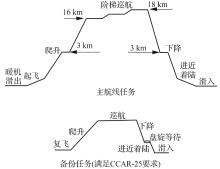
图 1
超声速民机任务剖面
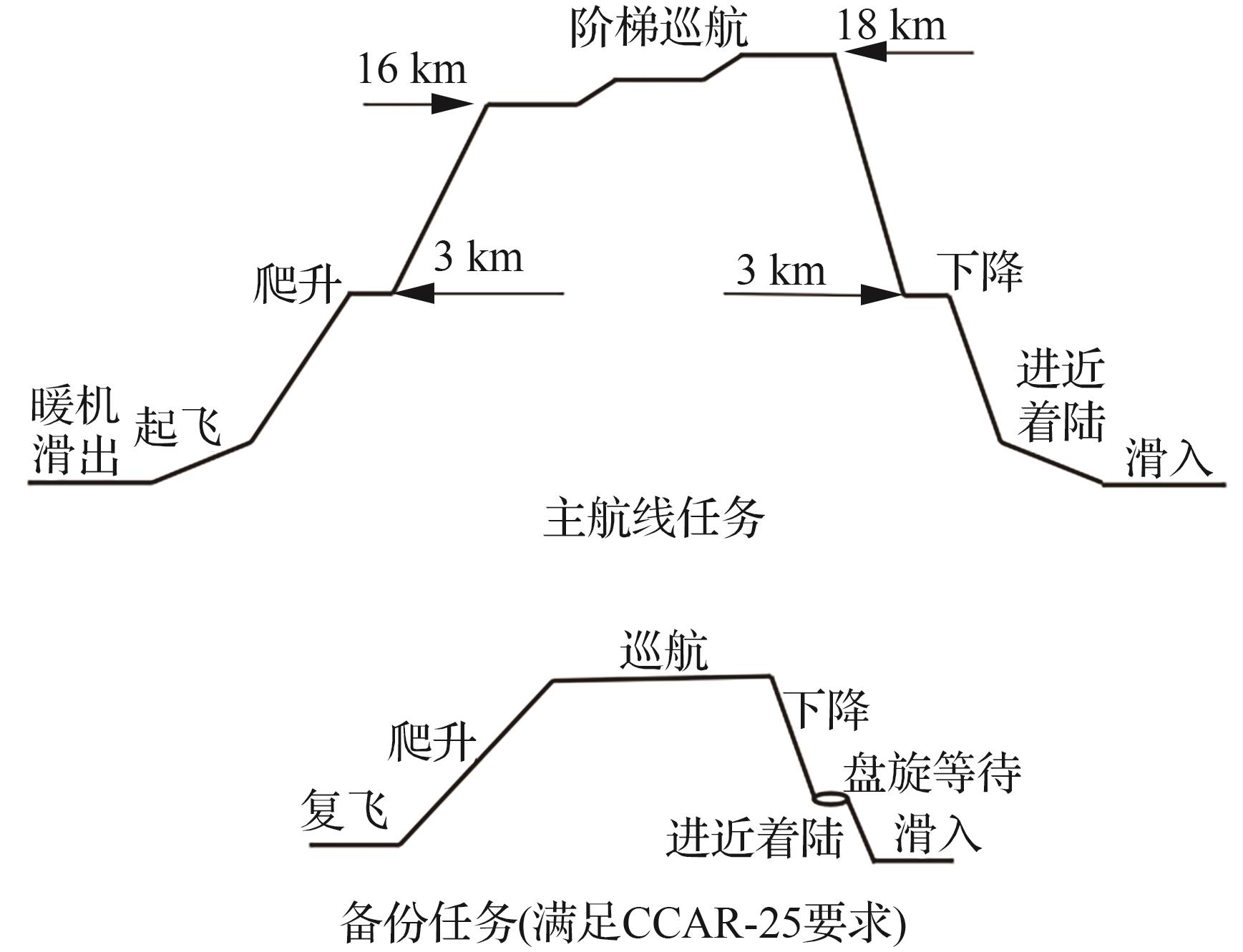
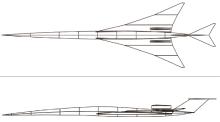
图 2
超声速民机布局方案示意图
表1
基准方案的主要外形尺寸
| 部件参数 | 数值 |
|---|---|
| 机身长度/m | 66 |
| 机翼展长/m | 22.4 |
| 机翼前缘后掠角/(°) | 76.6,71.5,66.0 |
| 机翼面积/m2 | 280 |
| 垂尾面积/m2 | 31.8 |
| 平尾面积/m2 | 32 |
| 短舱长度/m | 6.7 |
表2
设计变量
| 部件 | 设计变量 |
|---|---|
| 机翼 | 内段上反角、中段上反角、外段上反角 |
| 内段后掠角、中段后掠角、外段后掠角 | |
| 中段半展长、外段半展长 | |
| 平尾 | 后掠角 |
| 梢根比 | |
| 垂尾 | 展长 |
| 机身 | 上轮廓线控制点z坐标 |
| 下轮廓线控制点z坐标 | |
| 右轮廓线控制点y坐标 |
表3
设计约束
| 约束变量 | 下限 | 上限 |
|---|---|---|
| 航程/km | 6 000 | |
| 起飞场长/m | 1 800 | |
| 着陆场长/m | 1 800 | |
| 单发失效第二爬升段爬升率/% | 2.4 | |
| 纵向力矩系数导数 | 0 | |
| 滚转力矩系数导数 | 0 | |
| 偏航力矩系数导数 | 0 | |
| 客舱长度/m | 14.0 | 15.4 |
| 客舱高度/m | 2.65 | 2.90 |
| 客舱宽度/m | 2.8 | 3.1 |
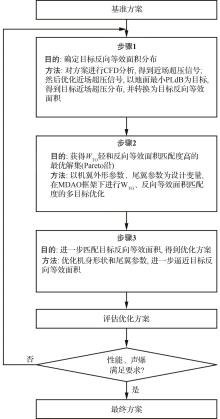
图 3
融入低声爆设计的多学科优化流程
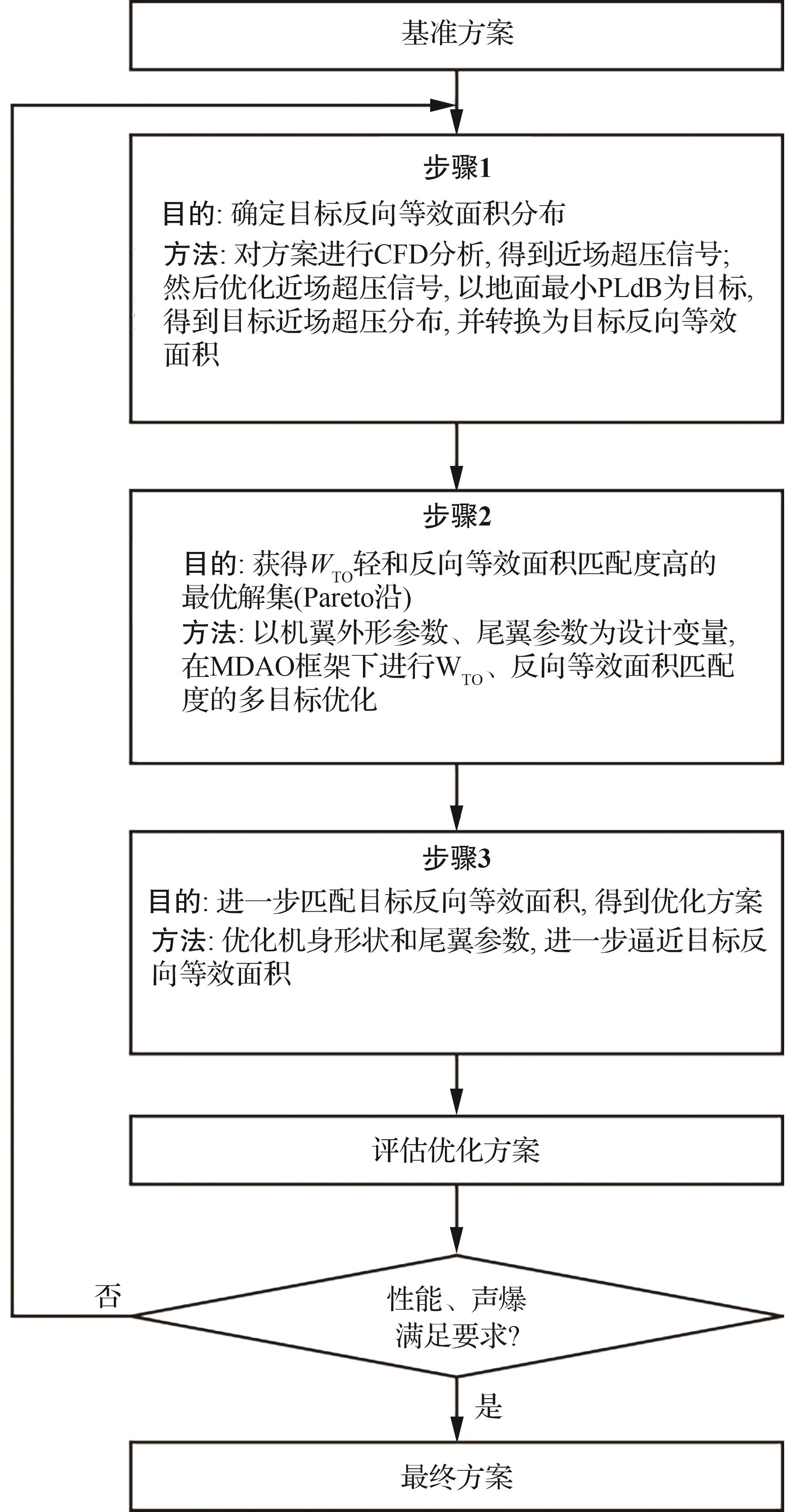
图 4
笛卡尔网格旋转示意图
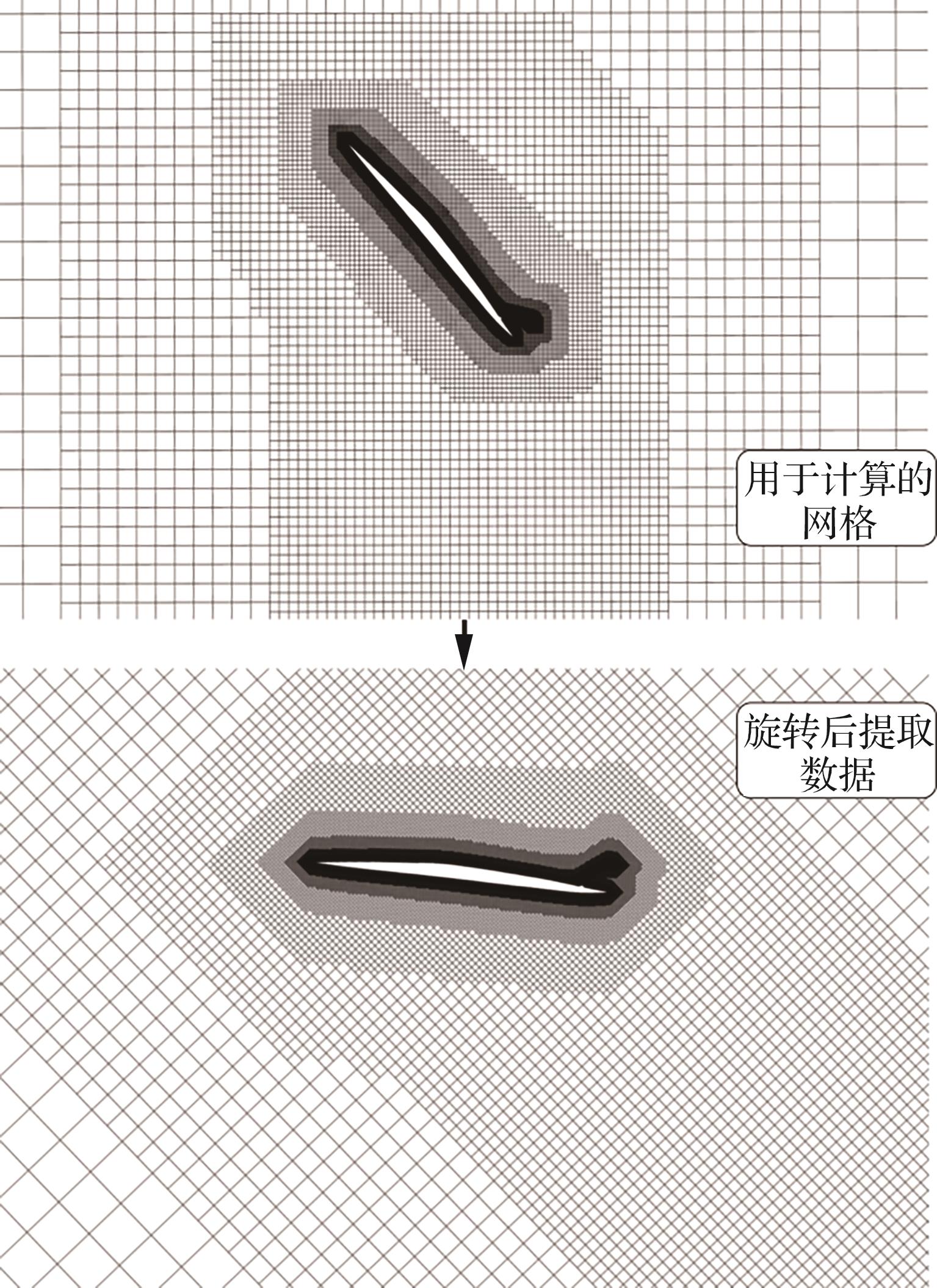
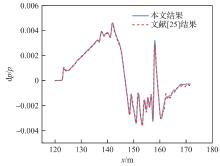
图 5
近场超压分布对比(BL=2.55)
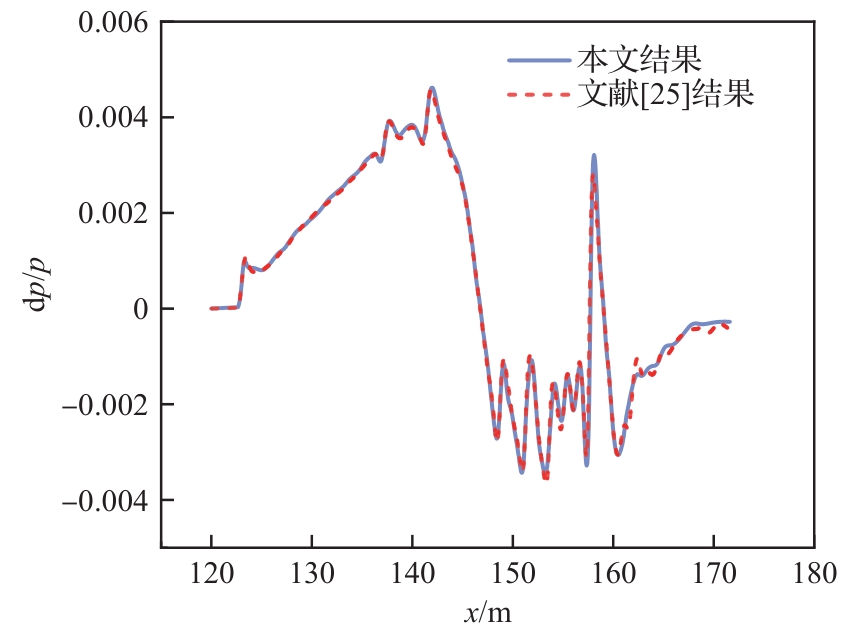
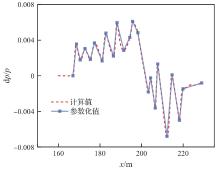
图 6
参数化dp/p示意图
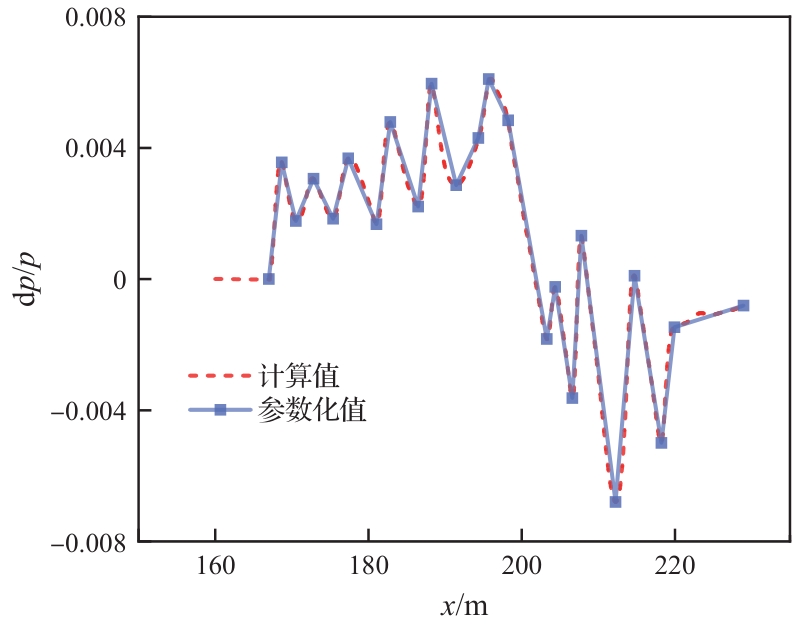
图 7
近场超压分布传播至地面的波形对比
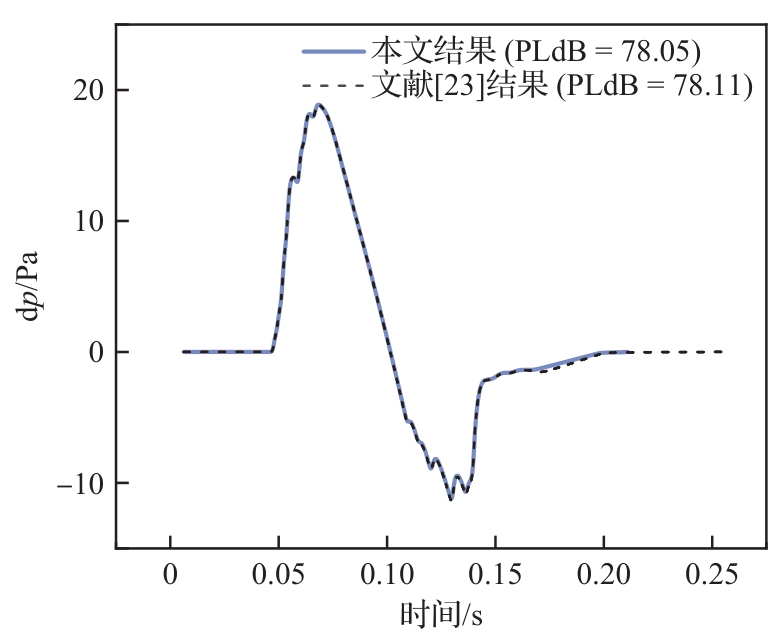
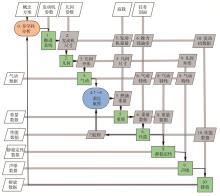
图 8
多学科分析的架构
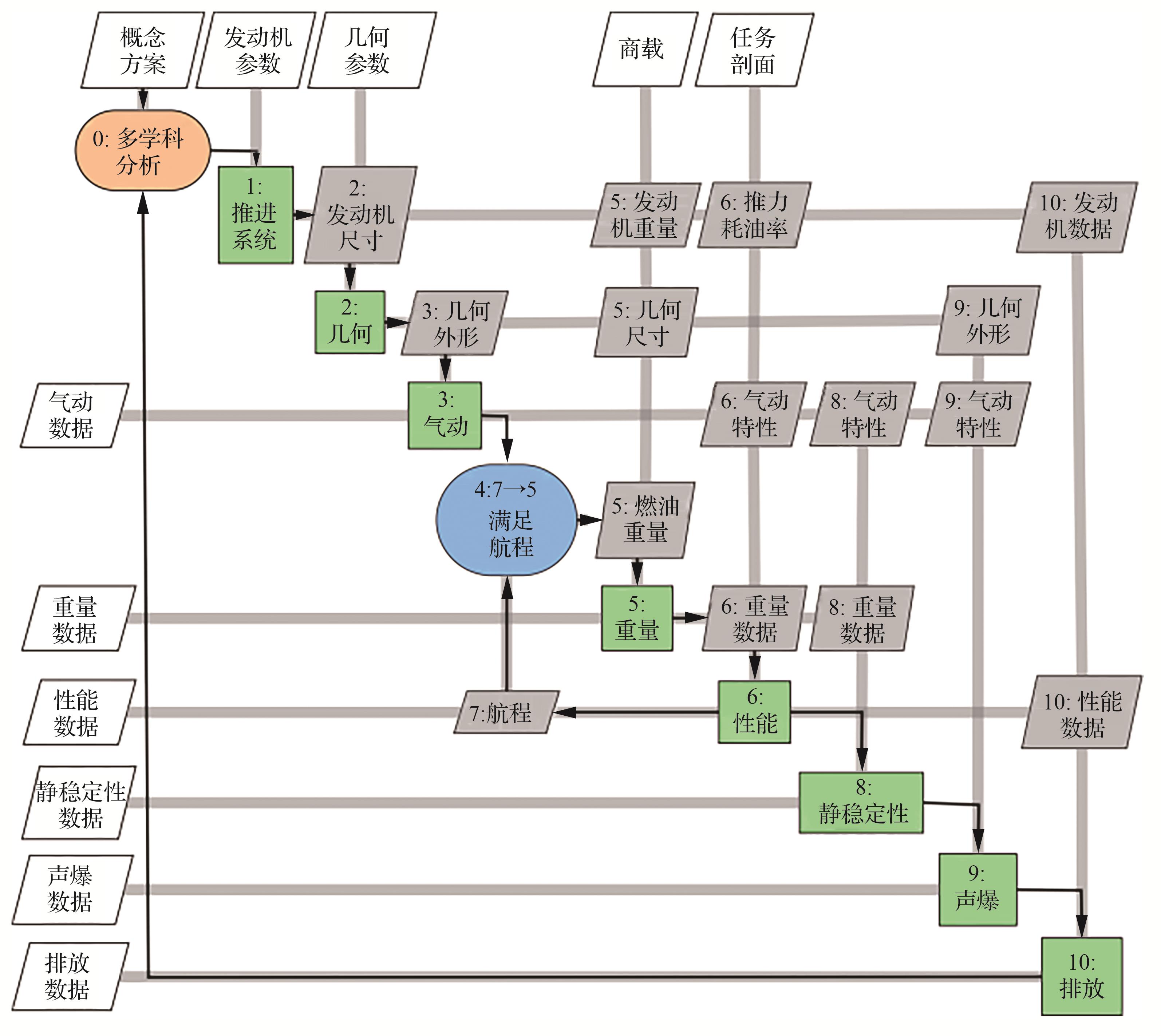
图 9
机身建模过程
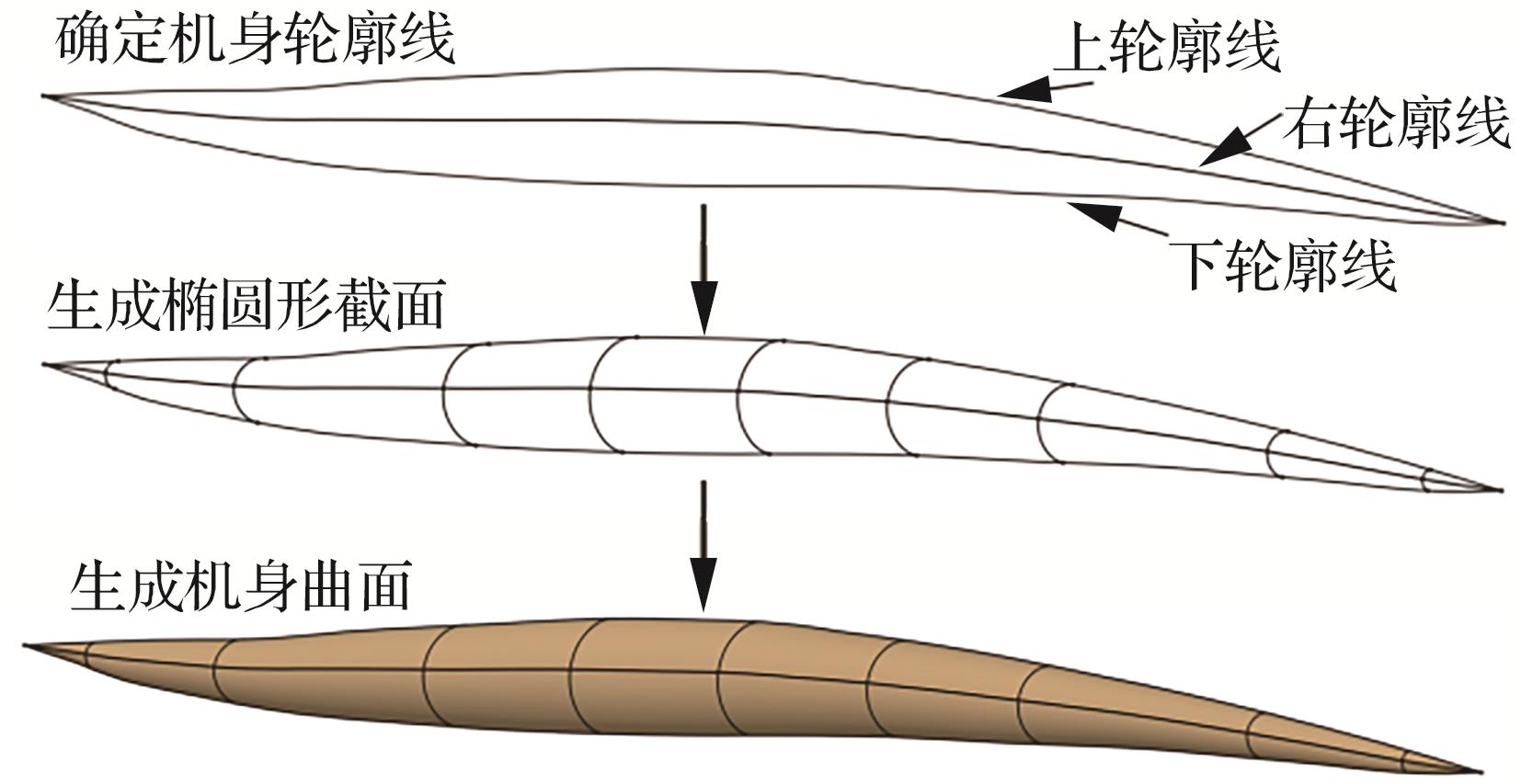
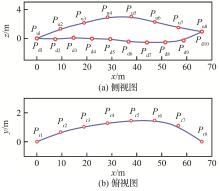
图 10
机身轮廓线控制点示意图
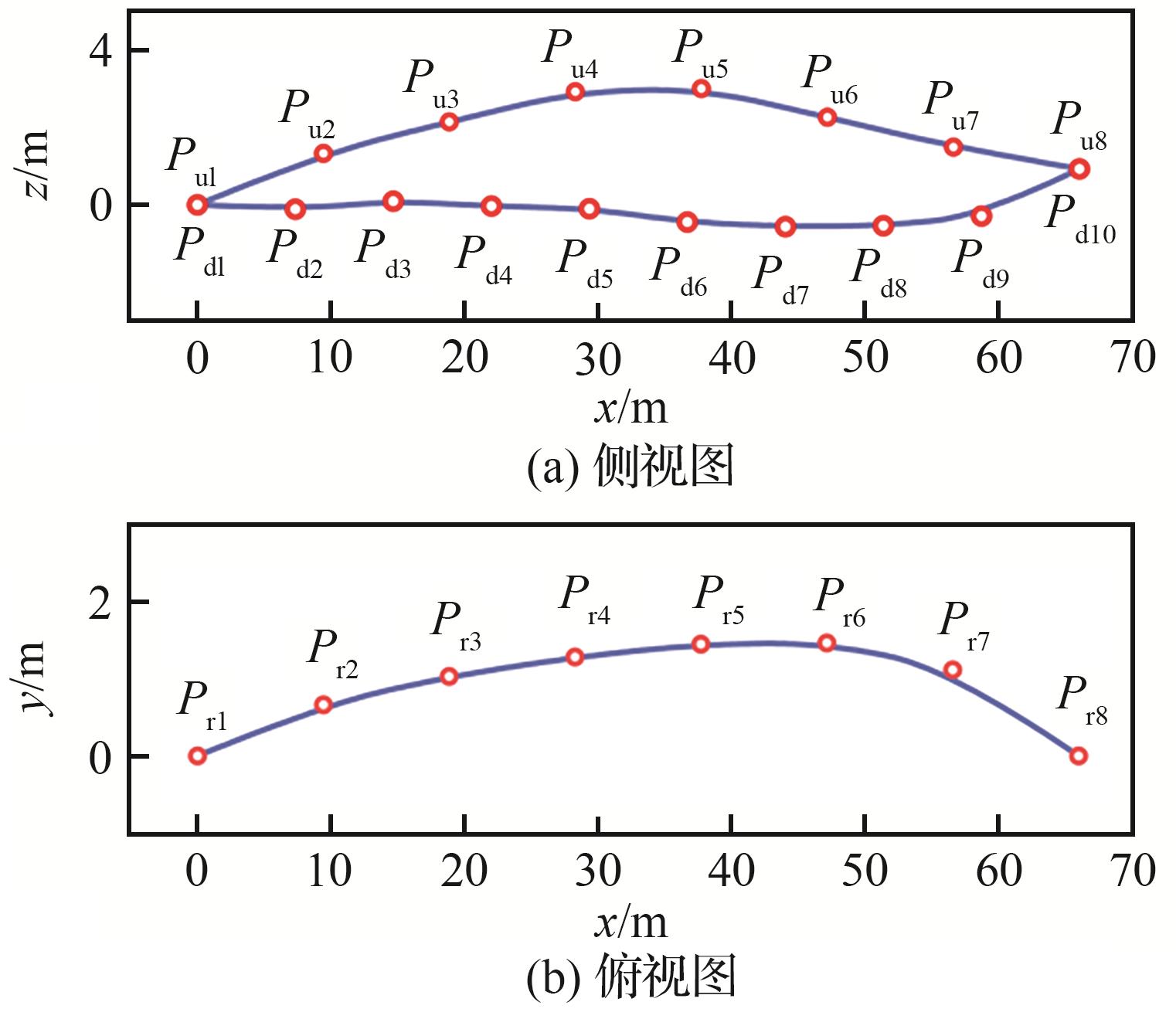
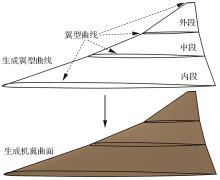
图 11
机翼建模过程
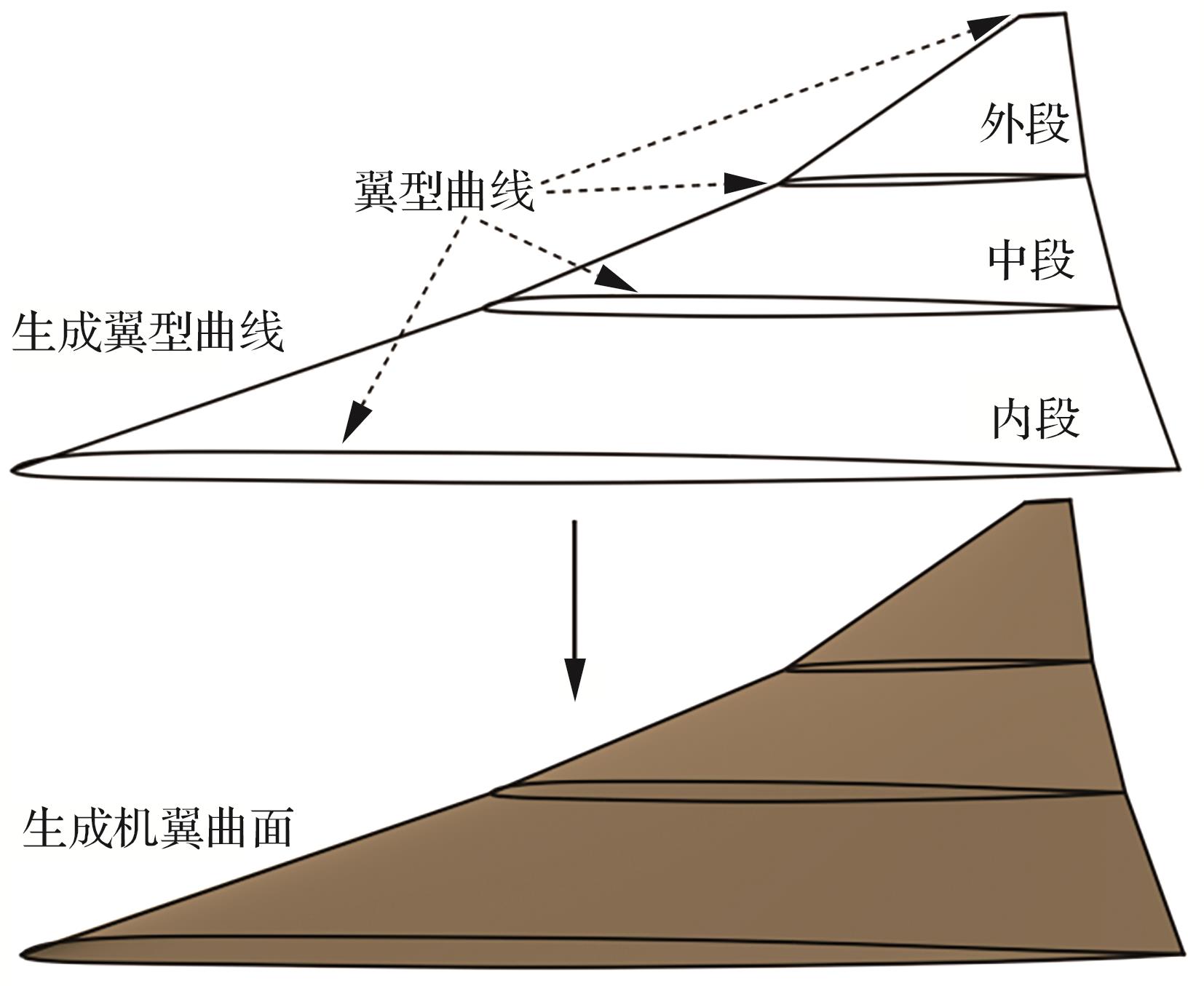
图 12
几何模块生成的飞机三维模型
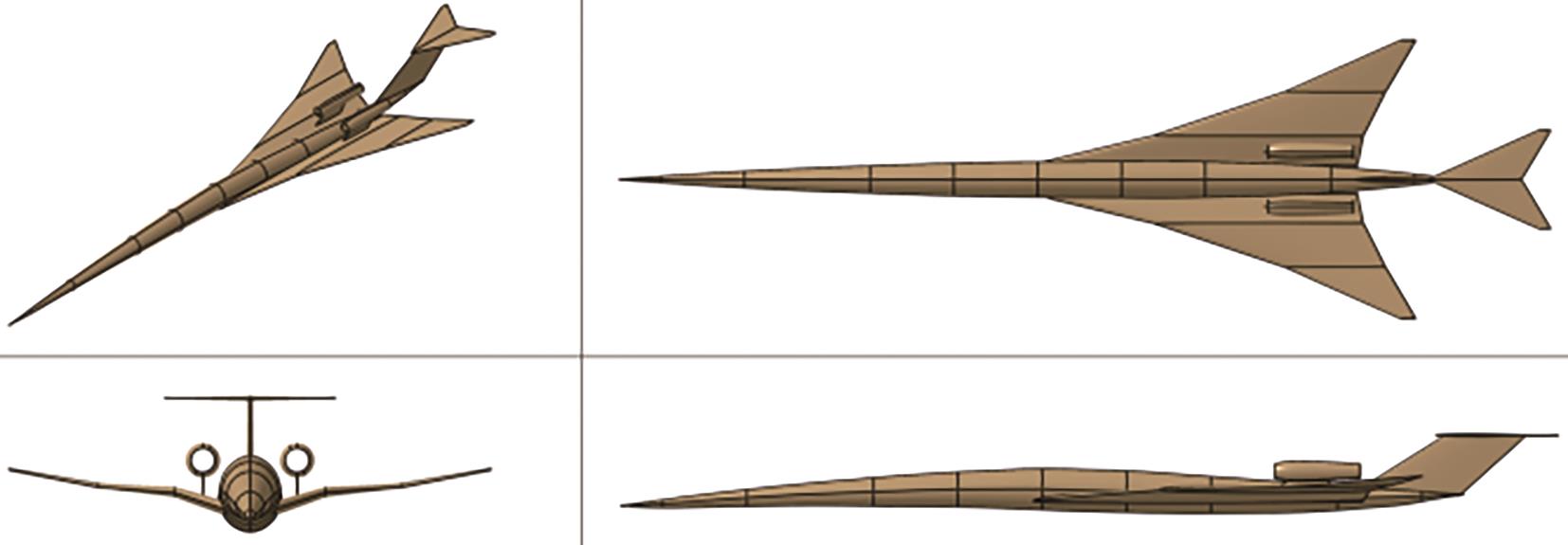
图 13
升阻比计算结果对比
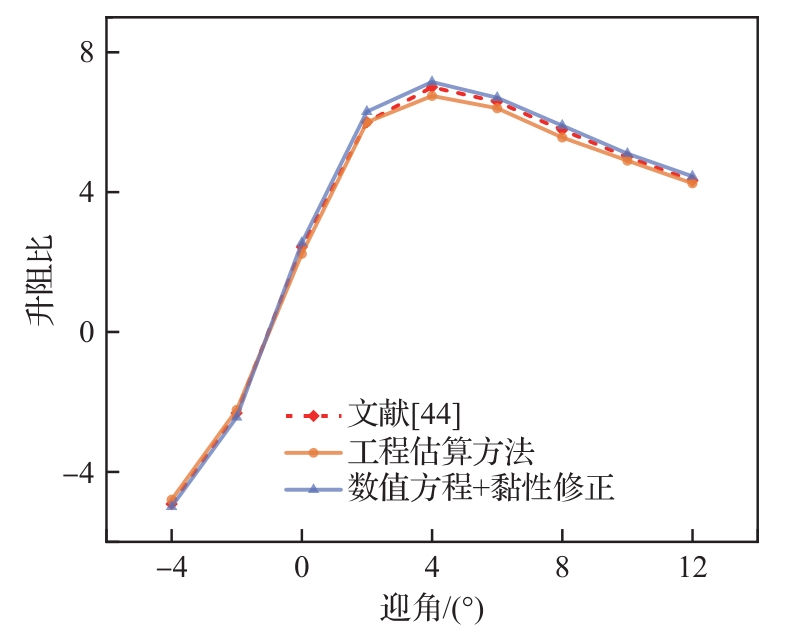
表4
反向等效面积关键截面的约束
| 截面位置xi (i=1,2,…,5)/m | 下限/m2 | 上限/m2 |
|---|---|---|
| 1.80 | 0.016 7 | 0.020 4 |
| 30.00 | 6.280 0 | 6.940 0 |
| 37.00 | 9.960 0 | 10.650 0 |
| 44.00 | 14.380 0 | 15.890 0 |
| 85.56 | 27.650 0 | 27.650 0 |
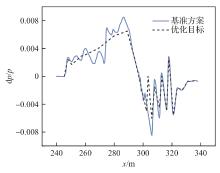
图 14
目标近场超压分布与基准方案近场超压分布对比
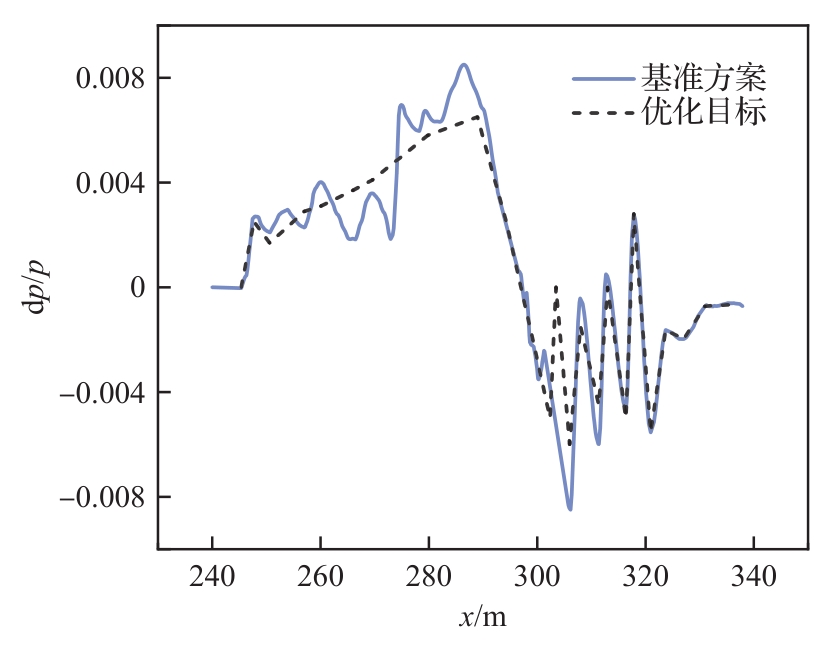
图 15
目标远场波形与基准方案远场波形对比
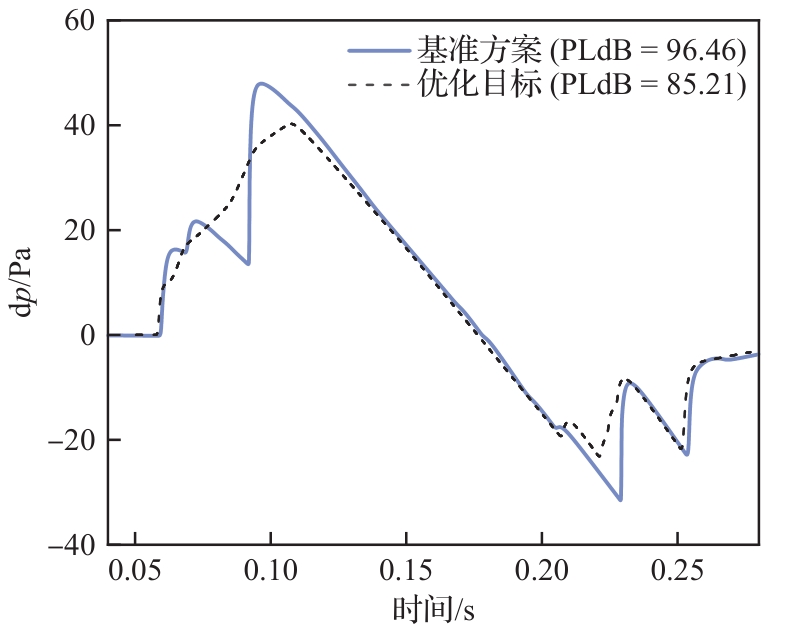
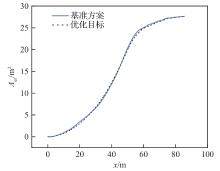
图 16
目标反向等效面积与基准方案反向等效面积对比
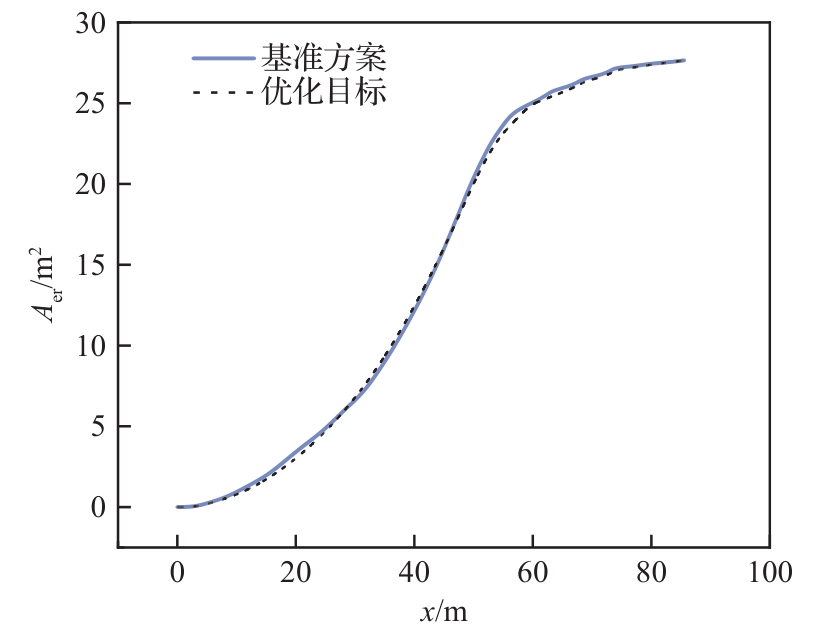
表5
多学科优化设置与结果
| 类别 | 参数 | 初始值 | 下限 | 上限 | 优化结果 |
|---|---|---|---|---|---|
| 目标 | min WTO /t | 80.16 | 77.29 | ||
| min F1 | 0.644 | 0.401 | |||
| 变量 | 机翼内段上反角/(°) | 18.3 | 12.0 | 20.0 | 17.3 |
| 机翼中段上反角/(°) | 4.0 | 0 | 7.0 | 5.1 | |
| 机翼外段上反角/(°) | 11.0 | 7.0 | 15.0 | 12.2 | |
| 机翼内段后掠角/(°) | 76.6 | 74.0 | 78.0 | 77.5 | |
| 机翼中段后掠角/(°) | 71.5 | 69.0 | 73.0 | 70.6 | |
| 机翼外段后掠角/(°) | 66.0 | 62.0 | 68.0 | 67.7 | |
| 机翼中段展长/m | 6.96 | 6.60 | 7.30 | 7.13 | |
| 机翼外段展长/m | 8.29 | 7.80 | 8.60 | 8.11 | |
| 平尾后掠角/(°) | 66.0 | 62.0 | 70.0 | 68.1 | |
| 平尾梢根比 | 0.12 | 0.08 | 0.20 | 0.145 | |
| 垂尾展长/m | 4.7 | 4.0 | 5.5 | 4.48 | |
| 约束 | 航程/km | 6 000 | 6 000 | 6 000 | |
| 起飞场长/m | 1 723 | 1 800 | 1 702 | ||
| 着陆场长/m | 1 690 | 1 800 | 1 660 | ||
| 单发失效第二爬升段爬升率/% | 4.11 | 2.40 | 4.19 | ||
| 纵向力矩系数导数 | -0.018 7 | 0 | -0.017 1 | ||
| 滚转力矩系数导数 | -0.002 8 | 0 | -0.002 2 | ||
| 偏航力矩系数导数 | 0.018 3 | 0 | 0.016 9 | ||
| 客舱长度/m | 14.2 | 14.0 | 15.4 | 14.0 | |
| 客舱高度/m | 2.50 | 2.45 | 2.70 | 2.47 | |
| 客舱宽度/m | 2.83 | 2.80 | 3.10 | 2.81 |
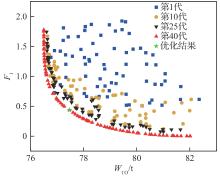
图 17
多目标优化Pareto沿
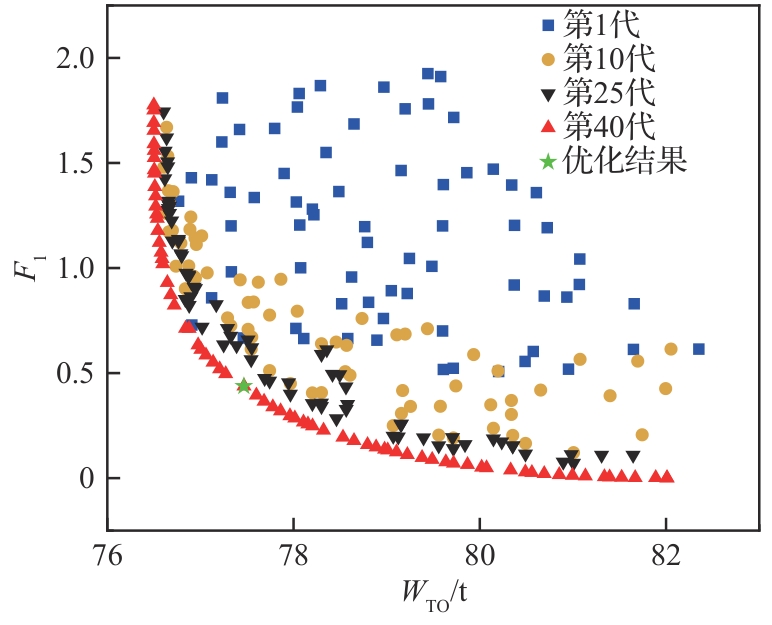
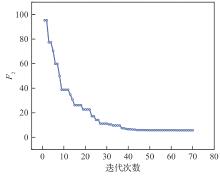
图 18
目标函数F2的收敛过程
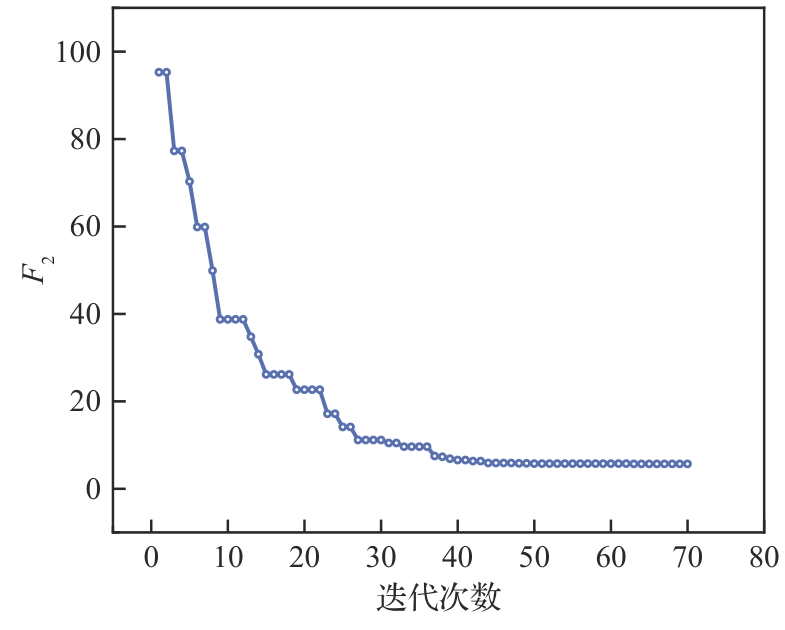
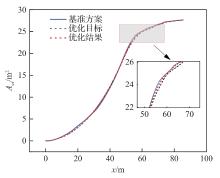
图 19
优化方案与基准方案的反向等效面积对比
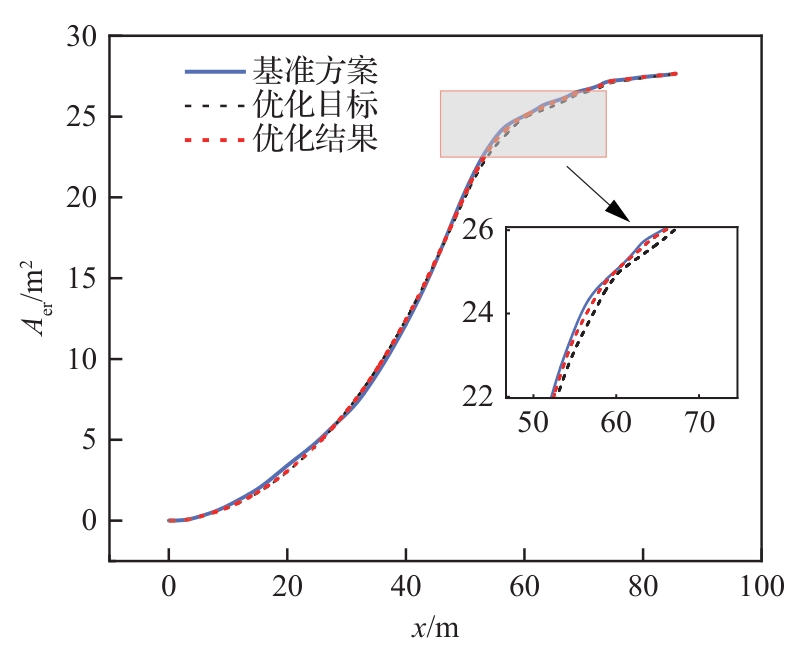
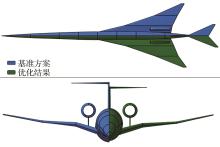
图 20
优化方案与基准方案几何模型对比
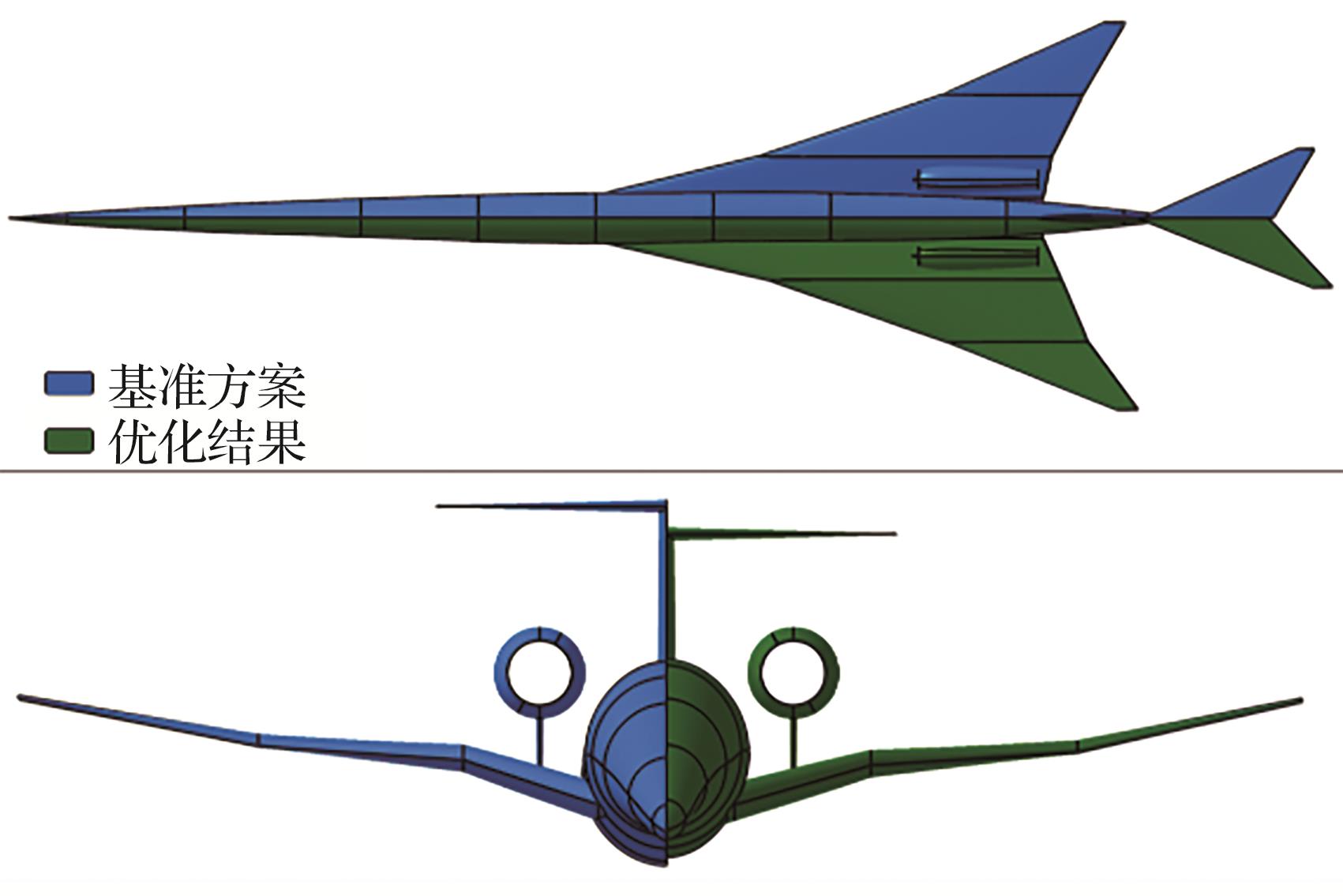
图 21
优化方案与基准方案机身轮廓对比
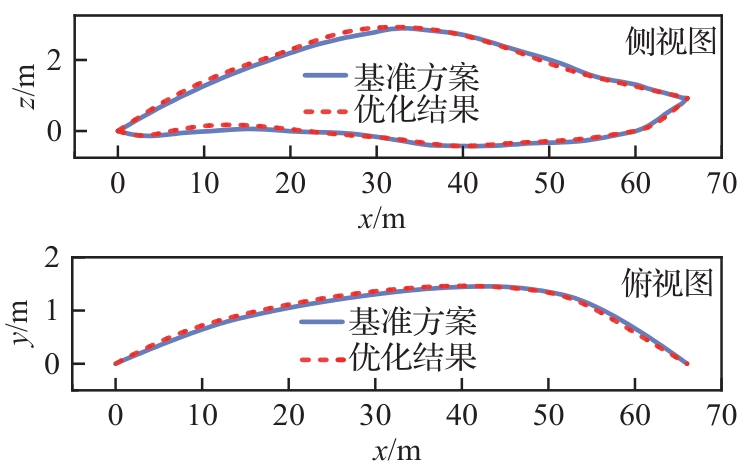
图 22
优化方案与基准方案升阻比特性对比
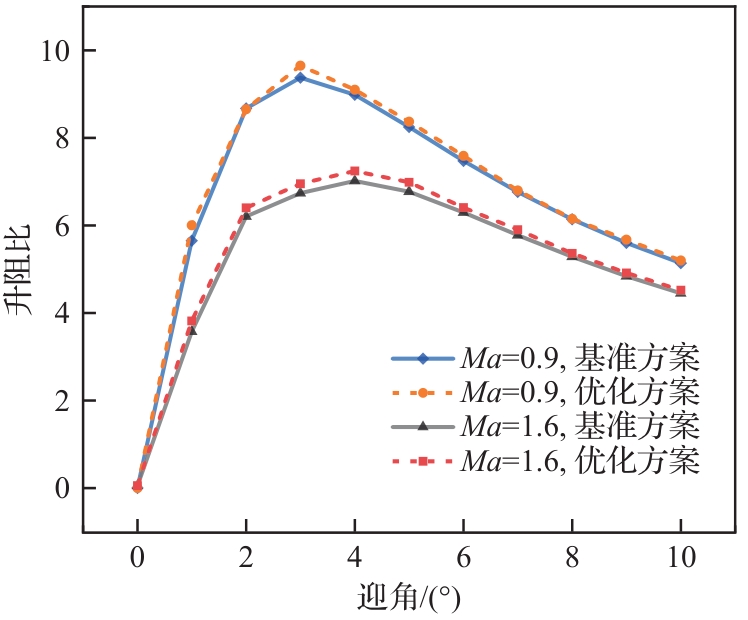
表6
优化方案与基准方案部件质量对比
| 部件参数 | 基准方案 | 优化方案 |
|---|---|---|
| 燃油质量/kg | 39 518 | 37 769 |
| 机翼质量/kg | 10 982 | 10 145 |
| 机身质量/kg | 6 092 | 5 969 |
| 尾翼质量/kg | 2 164 | 2 122 |
| 起落架质量/kg | 3 046 | 2 937 |
| 系统和其他质量/kg | 6 573 | 6 573 |
| 推进系统质量/kg | 6 012 | 6 012 |
| 使用项目质量/kg | 960 | 960 |
| 有效载荷质量/kg | 4 800 | 4 800 |
| 总质量/kg | 80 147 | 77 287 |
表7
优化方案与基准方案飞行性能对比
| 项目 | 基准方案 | 优化结果 |
|---|---|---|
| 起飞失速速度/(m·s-1) | 75.8 | 74.6 |
| 起飞场长/m | 1 722.9 | 1 701.6 |
| 进场速度/(m·s-1) | 68.61 | 67.1 |
| 着陆场长/m | 1 689.6 | 1 659.8 |
| 航程/km | 6 000 | 6 000 |
表8
优化方案与基准方案静稳定性对比
| 项目 | 基准方案 | 优化结果 | 稳定性 |
|---|---|---|---|
| Cmα/((°)-1) | -0.018 7 | -0.017 1 | 纵向静稳定 |
| Cnβ/((°)-1) | 0.018 3 | 0.016 9 | 航向静稳定 |
| Clβ/((°)-1) | -0.002 8 | -0.002 2 | 横向静稳定 |
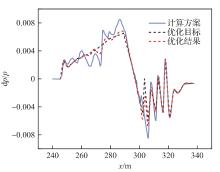
图 23
优化方案与基准方案近场超压分布对比
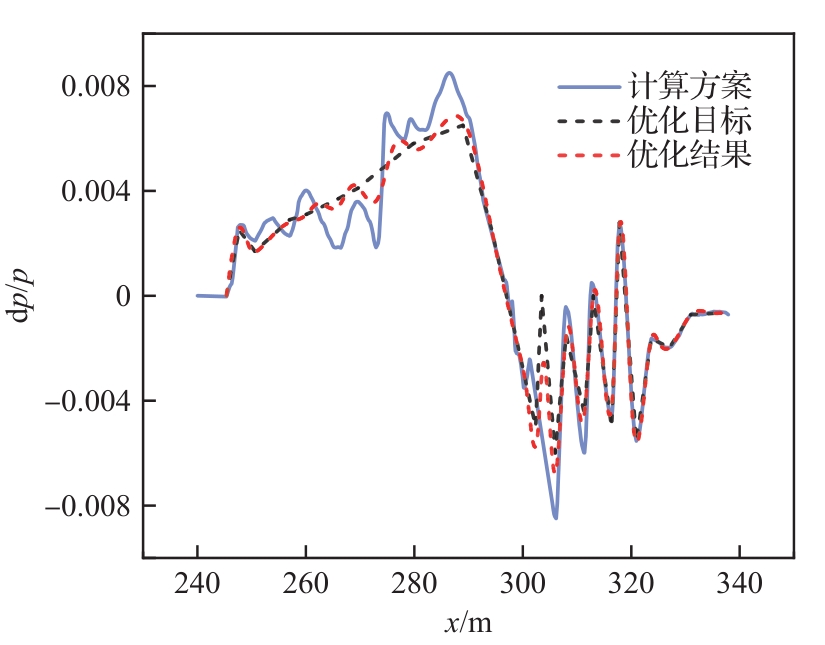
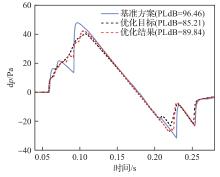
图 24
优化方案与基准方案远场声爆波形对比
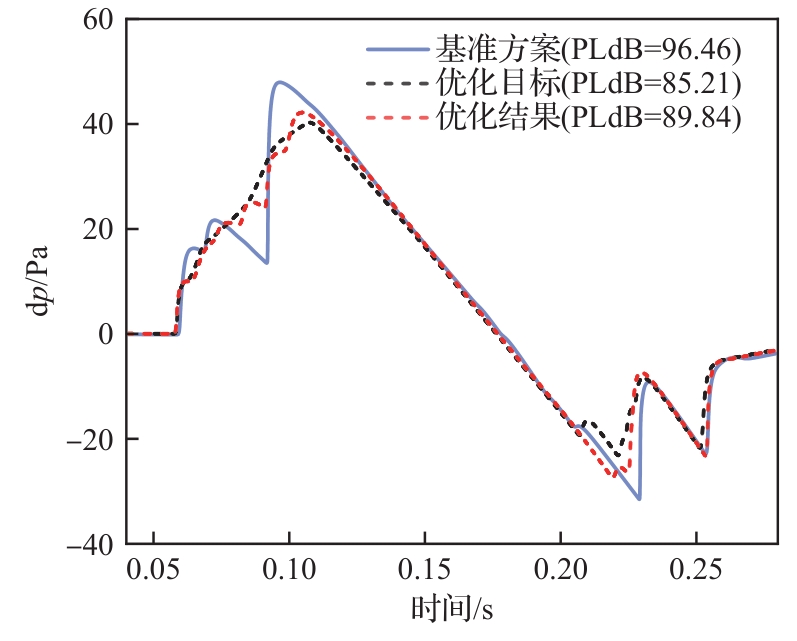
表9
优化方案与基准方案NO x 排放量对比
| 航段名称 | NO x 排放量/kg | |
|---|---|---|
| 基准方案 | 优化结果 | |
| 滑跑、起飞 | 18.310 | 17.873 |
| 爬升 | 87.429 | 84.671 |
| 巡航 | 417.193 | 399.117 |
| 下降 | 0.675 | 0.641 |
| 进近着陆 | 0.104 | 0.101 |
| 全航线 | 523.711 | 502.403 |
| [1] | SUN Y C, SMITH H. Review and prospect of supersonic business jet design[J]. Progress in Aerospace Sciences, 2017, 90: 12-38. |
| [2] | 余雄庆. 飞机总体多学科设计优化的现状与发展方向[J]. 南京航空航天大学学报, 2008, 40(4): 417-426. |
| YU X Q. Multidisciplinary design optimization for aircraft conceptual and preliminary design: Status and directions[J]. Journal of Nanjing University of Aeronautics & Astronautics, 2008, 40(4): 417-426 (in Chinese). | |
| [3] | WALSH J, TOWNSEND J, SALAS A, et al. Multidisciplinary high-fidelity analysis and optimization of aerospace vehicles, Part 1: Formulation[C]∥38th Aerospace Sciences Meeting and Exhibit. Reston: AIAA, 2000. |
| [4] | WALSH J, WESTON R, SAMAREH J, et al. Multidisciplinary high-fidelity analysis and optimization of aerospace vehicles, Part 2: Preliminary results[C]∥38th Aerospace Sciences Meeting and Exhibit. Reston: AIAA, 2000. |
| [5] | KROO I, MANNING V. Collaborative optimization-status and directions[C]∥8th Symposium on Multidisciplinary Analysis and Optimization. Reston: AIAA, 2000. |
| [6] | MANNING V M. Large-scale design of supersonic aircraft via collaborative optimization[D]. Stanford: Stanford University, 1999: 22-32. |
| [7] | MACMILLIN P, GOLOVIDOV O, MASON W, et al. An MDO investigation of the impact of practical constraints on an HSCT configuration[C]∥35th Aerospace Sciences Meeting and Exhibit. Reston: AIAA, 1997. |
| [8] | HOSDER S, WATSON L T, GROSSMAN B, et al. Polynomial response surface approximations for the multidisciplinary design optimization of a high speed civil transport[J]. Optimization and Engineering, 2001, 2(4): 431-452. |
| [9] | FENWICK S, HARRIS J, DEAN S. Multi-disciplinary optimisation to assess the impact of cruise speed on HSCT performance[C]∥10th AIAA/ISSMO Multidisciplinary Analysis and Optimization Conference. Reston: AIAA, 2004. |
| [10] | LABAN M, HERRMANN U. Multi-disciplinary analysis and optimisation applied to supersonic aircraft part 1: analysis tools[C]∥48th AIAA/ASME/ASCE/AHS/ASC Structures, Structural Dynamics, and Materials Conference. Reston: AIAA, 2007. |
| [11] | SCHUERMANN M, GAFFURI M, HORST P. Multidisciplinary pre-design of supersonic aircraft[J]. CEAS Aeronautical Journal, 2015, 6(2): 207-216. |
| [12] | CHOI S, ALONSO J J, KROO I M, et al. Multifidelity design optimization of low-boom supersonic jets[J]. Journal of Aircraft, 2008, 45(1): 106-118. |
| [13] | BREZILLON J, CARRIER G, LABAN M. Multidisciplinary optimization of supersonic aircraft including low-boom considerations[J]. Journal of Mechanical Design, 2011, 133(10): 105001. |
| [14] | SUN Y C, SMITH H. Low-boom low-drag optimization in a multidisciplinary design analysis optimization environment[J]. Aerospace Science and Technology, 2019, 94: 105387. |
| [15] | LI W, RALLABHANDI S. Inverse design of low-boom supersonic concepts using reversed equivalent-area targets[J]. Journal of Aircraft, 2014, 51(1): 29-36. |
| [16] | LI W, GEISELHART K. Multidisciplinary design optimization of low-boom supersonic aircraft with mission constraints[J]. AIAA Journal, 2020, 59(1): 165-179. |
| [17] | LI W, GEISELHART K. Multi-objective, multidisciplinary optimization of low-boom supersonic transports using multifidelity models[J]. Journal of Aircraft, 2022, 59(5): 1137-1151. |
| [18] | 丁玉临, 韩忠华, 乔建领, 等. 超声速民机总体气动布局设计关键技术研究进展[J]. 航空学报, 2023, 44(2): 626310. |
| DING Y L, HAN Z H, QIAO J L, et al. Research progress in key technologies for conceptual-aerodynamic configuration design of supersonic transport aircraft[J]. Acta Aeronautica et Astronautica Sinica, 2023, 44(2): 626310 (in Chinese). | |
| [19] | 张力文, 宋文萍, 韩忠华, 等. 声爆产生、传播和抑制机理研究进展[J]. 航空学报, 2022, 43(12): 025649. |
| ZHANG L W, SONG W P, HAN Z H, et al. Recent progress of sonic boom generation, propagation, and mitigation mechanism[J]. Acta Aeronautica et Astronautica Sinica, 2022, 43(12): 025649 (in Chinese). | |
| [20] | DING Y L, HAN Z H, QIAO J L, et al. Inverse design method for low-boom supersonic transport with lift constraint[J]. AIAA Journal, 2023, 61(7): 2840-2853. |
| [21] | CASTNER R. Analysis of exhaust plume effects on sonic boom for a 59-degree wing body model[C]∥49th AIAA Aerospace Sciences Meeting Including the New Horizons Forum and Aerospace Exposition. Reston: AIAA, 2011. |
| [22] | KIRZ J. DLR TAU simulations for the third AIAA sonic boom prediction workshop near-field cases[C]∥AIAA Scitech 2021 Forum. Reston: AIAA, 2021. |
| [23] | PARK M A, NEMEC M. Nearfield summary and statistical analysis of the second AIAA sonic boom prediction workshop[J]. Journal of Aircraft, 2018, 56(3): 851-875. |
| [24] | ANDERSON G R, AFTOSMIS M J, NEMEC M. Cart3D simulations for the second AIAA sonic boom prediction workshop[J]. Journal of Aircraft, 2018, 56(3): 896-911. |
| [25] | SEEBASS R. Minimum sonic boom shock strengths and overpressures[J]. Nature, 1969, 221(5181): 651-653. |
| [26] | 顾奕然, 黄江涛, 陈树生, 等. 基于逆向增广Burgers方程的声爆反演技术[J]. 航空学报, 2023, 44(2): 626258. |
| GU Y R, HUANG J T, CHEN S S, et al. Sonic boom inversion technology based on inverse augmented Burgers equation[J]. Acta Aeronautica et Astronautica Sinica, 2023, 44(2): 626258 (in Chinese). | |
| [27] | WHITHAM G B. The flow pattern of a supersonic projectile[J]. Communications on Pure and Applied Mathematics, 1952, 5(3): 301-348. |
| [28] | JONES L B. Lower bounds for sonic bangs[J]. The Aeronautical Journal, 1961, 65(606): 433-436. |
| [29] | GEORGE A R. Lower bounds for sonic booms in the midfield[J]. AIAA Journal, 1969, 7(8): 1542-1545. |
| [30] | DARDEN C M. Sonic-boom minimization with nose bluntness relaxation: NASA TP-1348[R]. Washington, D. C.: NASA, 1979. |
| [31] | PLOTKIN K, RALLABHANDI S, LI W. Generalized formulation and extension of sonic boom minimization theory for front and aft shaping[C]∥47th AIAA Aerospace Sciences Meeting including The New Horizons Forum and Aerospace Exposition. Reston: AIAA, 2009. |
| [32] | CLEVELAND R O. Propagation of sonic booms through a real, stratified atmosphere[D]. Austin: The University of Texas at Austin, 1995: 75-117. |
| [33] | STEVENS S S. Perceived level of noise by mark Ⅶ and decibels(E)[J]. The Journal of the Acoustical Society of America, 1972, 51(2B): 575-601. |
| [34] | RALLABHANDI S K. Advanced sonic boom prediction using the augmented Burgers equation[J]. Journal of Aircraft, 2011, 48(4): 1245-1253. |
| [35] | FORRESTER A, SOBESTER A, KEANE A. Engineering design via surrogate modelling: A practical guide[M]. Chichester: John Wiley & Sons, 2008: 33-59. |
| [36] | BOOKER A J, DENNIS J E, FRANK P D, et al. A rigorous framework for optimization of expensive functions by surrogates[J]. Structural Optimization, 1999, 17(1): 1-13. |
| [37] | JONES D R, SCHONLAU M, WELCH W J. Efficient global optimization of expensive black-box functions[J]. Journal of Global Optimization, 1998, 13(4): 455-492. |
| [38] | DEB K, PRATAP A, AGARWAL S, et al. A fast and elitist multiobjective genetic algorithm: NSGA-Ⅱ[J]. IEEE Transactions on Evolutionary Computation, 2002, 6(2): 182-197. |
| [39] | 范周伟. 基于模型的客机需求定义与概念设计一体化研究[D]. 南京: 南京航空航天大学, 2022: 99-100. |
| FAN Z W. Model-based integration of requirements definition and conceptual design for commercial aircraft[D]. Nanjing: Nanjing University of Aeronautics and Astronautics, 2022: 99-100 (in Chinese). | |
| [40] | MATTINGLY J D, HEISER W H, DALEY D H. Air-craft engine design[M]. 2nd ed. Reston: AIAA, 2002: 38-39. |
| [41] | 高永, 朱飞翔, 李冰, 等. 改进CST方法在翼型优化设计中的应用[J]. 海军航空工程学院学报, 2017, 32(5): 426-430. |
| GAO Y, ZHU F X, LI B, et al. Application of improved CST parametric method in airfoil design[J]. Journal of Naval Aeronautical and Astronautical University, 2017, 32(5): 426-430 (in Chinese). | |
| [42] | RAYMER D P. Aircraft design: A conceptual approach [M]. 6th ed. Reston: AIAA, 2018: 389-452. |
| [43] | JONES R T. Theory of Wing-Body Drag at Supersonic Speeds: NACA-TR-1284[R]. Washington, D. C.: NASA, 1956. |
| [44] | 韩阳, 冷岩, 杨龙, 等. 一类超声速长航程民用客机的气动设计和性能评估[J]. 航空科学技术, 2019, 30(9): 25-32. |
| HAN Y, LENG Y, YANG L, et al. Aerodynamic design and evaluation of a type of supersonic long-range civil transport[J]. Aeronautical Science & Technology, 2019, 30(9): 25-32 (in Chinese). | |
| [45] | HOWE D. Aircraft conceptual design synthesis[M]. London: Professional Engineering Pub, 2000: 153-164. |
| [46] | WELGE H R, BONET J, MAGEE T, et al. N+3 Ad-vanced Concept Studies for Supersonic Commercial Transport Aircraft Entering Service in the 2030-2035 Period: NASA/CR-2011-217084[R]. Reston AIAA, 2011. |
| [47] | JENKINSON L R, SIMPKIN P, RHODES D. Civil jet aircraft design[M]. Washington, D. C.: American Institute of Aeronautics and Astronautics, 1999: 147-148. |
| [48] | 张帅, 余雄庆. 客机航线性能分析的分段解析方法[J]. 飞行力学, 2012, 30(6): 502-506. |
| ZHANG S, YU X Q. Piecewise analytic model for en-route performance of airliners[J]. Flight Dynamics, 2012, 30(6): 502-506 (in Chinese). | |
| [49] | SCHULTE P, SCHLAGER H, ZIEREIS H, et al. NO x emission indices of subsonic long-range jet aircraft at cruise altitude: In situ measurements and predictions[J]. Journal of Geophysical Research: Atmospheres, 1997, 102(D17): 21431-21442. |
| [50] | FUSARO R, VIOLA N, GALASSINI D. Sustainable supersonic fuel flow method: An evolution of the Boeing fuel flow method for supersonic aircraft using sustainable aviation fuels[J]. Aerospace, 2021, 8(11): 331. |
| [1] | 屈峰, 王青, 程少文, 王开强. 基于气动/轨迹/控制耦合的飞/发一体高超声速飞机气动外形优化设计[J]. 航空学报, 2025, 46(4): 130874-130874. |
| [2] | 郑可风, 宋文萍, 聂晗, 丁玉临, 乔建领, 陈晴, 王奕衡, 宋科, 张科施. 考虑全机声爆特性的超声速自然层流机翼设计方法[J]. 航空学报, 2025, 46(20): 531214-531214. |
| [3] | 李军府, 陈晴, 王伟, 韩忠华, 谭玉婷, 丁玉临, 谢露, 乔建领, 宋科, 艾俊强. 一种先进超声速民机低声爆高效气动布局设计[J]. 航空学报, 2024, 45(6): 629613-629613. |
| [4] | 单程军, 贡天宇, 易理哲, 杨浩辉, 龙垚松. 超声速民机高效高可信度声爆/气动多学科优化方法[J]. 航空学报, 2024, 45(24): 630573-630573. |
| [5] | 黎明, 陈娇娇, 周海, 陈颖闻, 白俊强. 基于伴随方法的无人机气动隐身优化设计[J]. 航空学报, 2024, 45(17): 530010-530010. |
| [6] | 何程, 童玉奇, 夏兴禄, 陈刚. 面向货运任务的混电垂直起降无人机能量管理策略和任务路径综合优化[J]. 航空学报, 2024, 45(14): 229606-229606. |
| [7] | 王迪, 冷岩, 杨龙, 韩忠华, 钱战森. 基于广义Burgers方程的声爆传播特性大气湍流影响[J]. 航空学报, 2023, 44(2): 626318-626318. |
| [8] | 丁玉临, 韩忠华, 乔建领, 聂晗, 宋文萍, 宋笔锋. 超声速民机总体气动布局设计关键技术研究进展[J]. 航空学报, 2023, 44(2): 626310-626310. |
| [9] | 顾奕然, 黄江涛, 陈树生, 刘德园, 高正红. 基于逆向增广Burgers方程的声爆反演技术[J]. 航空学报, 2023, 44(2): 626258-626258). |
| [10] | 乔建领, 韩忠华, 丁玉临, 宋文萍, 宋笔锋. 分层大气湍流场对远场声爆传播的影响[J]. 航空学报, 2023, 44(2): 626350-626350. |
| [11] | 张力文, 宋文萍, 韩忠华, 钱战森, 宋笔锋. 声爆产生、传播和抑制机理研究进展[J]. 航空学报, 2022, 43(12): 25649-025649. |
| [12] | 袁吉森, 孙爵, 李玲玉, 于晟浩, 聂晗, 高亮杰, 韩忠华, 钱战森. 超声速飞机层流布局设计与评估技术进展[J]. 航空学报, 2022, 43(11): 526316-526316. |
| [13] | 聂晗, 宋文萍, 韩忠华, 陈坚强, 段茂昌, 万兵兵. 面向超声速民机层流机翼设计的转捩预测方法[J]. 航空学报, 2022, 43(11): 526342-526342. |
| [14] | 王迪, 钱战森, 冷岩. 广义Burgers方程声爆传播模型高阶格式离散[J]. 航空学报, 2022, 43(1): 124916-124916. |
| [15] | 黄江涛, 刘刚, 高正红, 周铸, 陈作斌, 江雄. 飞行器多学科耦合伴随体系的现状与发展趋势综述[J]. 航空学报, 2020, 41(5): 623404-623404. |
| 阅读次数 | ||||||
|
全文 |
|
|||||
|
摘要 |
|
|||||
版权所有 © 航空学报编辑部
版权所有 © 2011航空学报杂志社
主管单位:中国科学技术协会 主办单位:中国航空学会 北京航空航天大学

 CJA
CJA
