Acta Aeronautica et Astronautica Sinica ›› 2025, Vol. 46 ›› Issue (20): 531923.doi: 10.7527/S1000-6893.2025.31923
• Special Issue: Key Technologies for Supersonic Civil Aircraft • Previous Articles
Yayun SHI1,2( ), Xinze JI3,4, Tihao YANG3,4, Pengfei WU3,4, Lu XIE5, Junqiang BAI6,7, Kaixuan FENG1,2
Received:2025-03-03
Revised:2025-03-24
Accepted:2025-04-07
Online:2025-05-20
Published:2025-05-19
Contact:
Yayun SHI
E-mail:yayunshi@xjtu.edu.cn
CLC Number:
Yayun SHI, Xinze JI, Tihao YANG, Pengfei WU, Lu XIE, Junqiang BAI, Kaixuan FENG. Transition prediction and uncertainty analysis of self-developed benchmark models for supersonic laminar wings[J]. Acta Aeronautica et Astronautica Sinica, 2025, 46(20): 531923.
Fig.1
Schematic diagram of supersonic transition prediction method based on linear stability theory
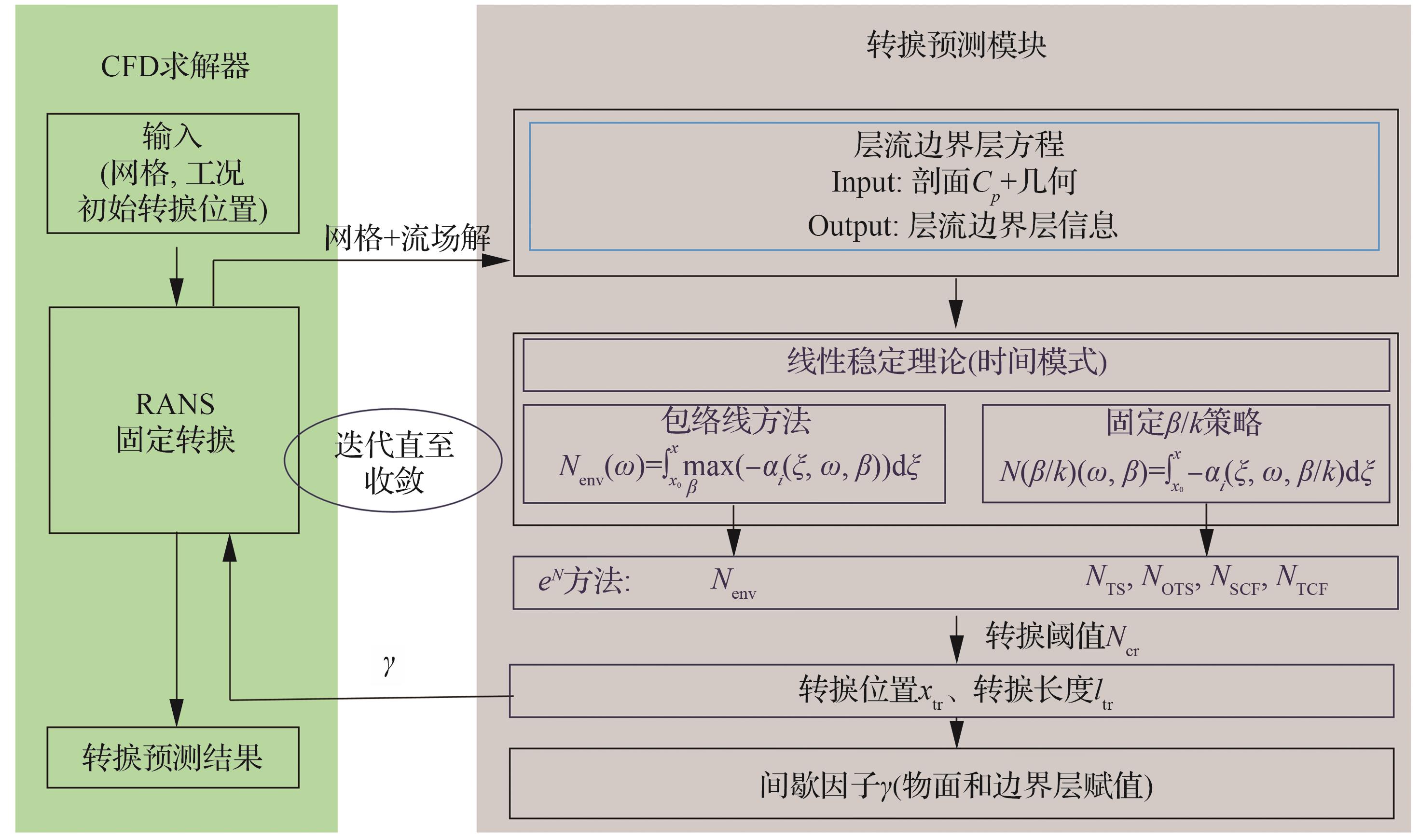
Fig.2
Schematic diagram of transition mechanisms in supersonic transition
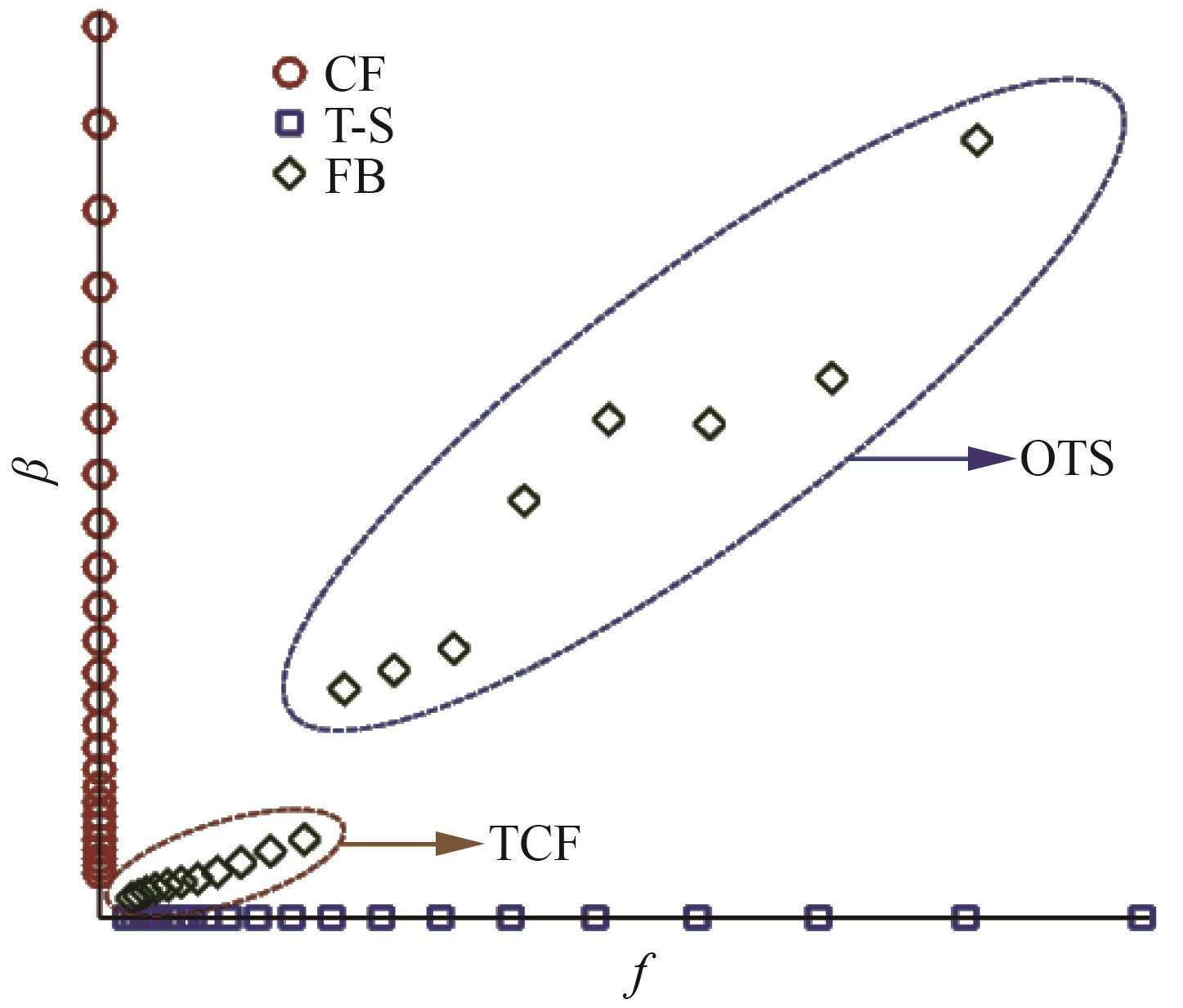
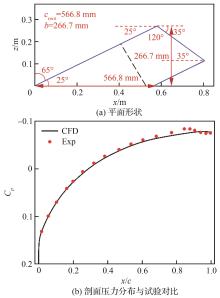
Fig.3
Schematic diagram of supersonic laminar wing designed by NASA
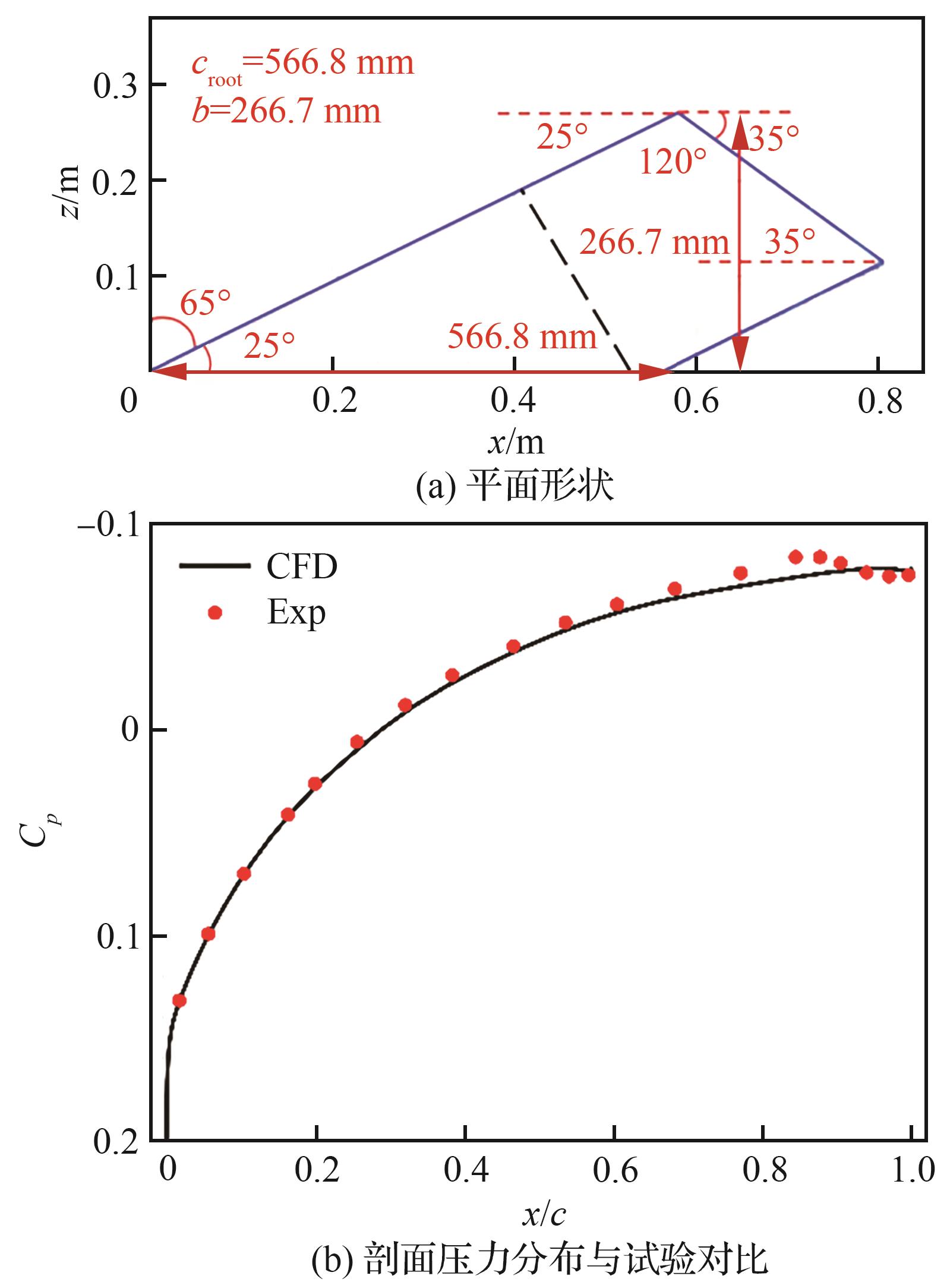
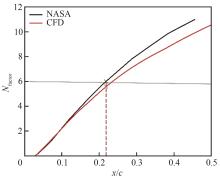
Fig.4
Comparison of disturbance growth curves induced by stationary CF wave and transition location on a specific section
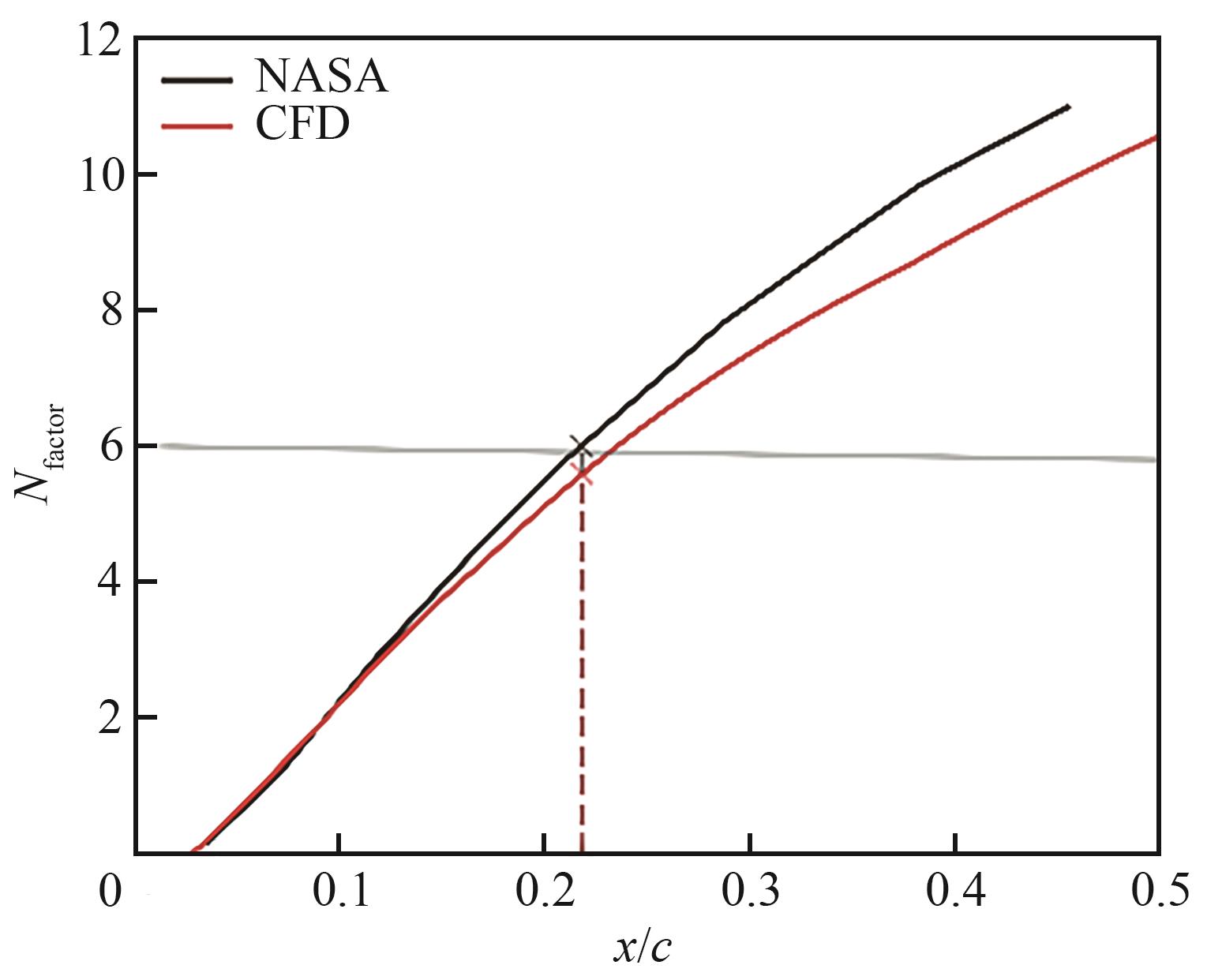
Fig.5
Comparison of disturbance growth curves induced by traveling CF wave and transition location on a specific section
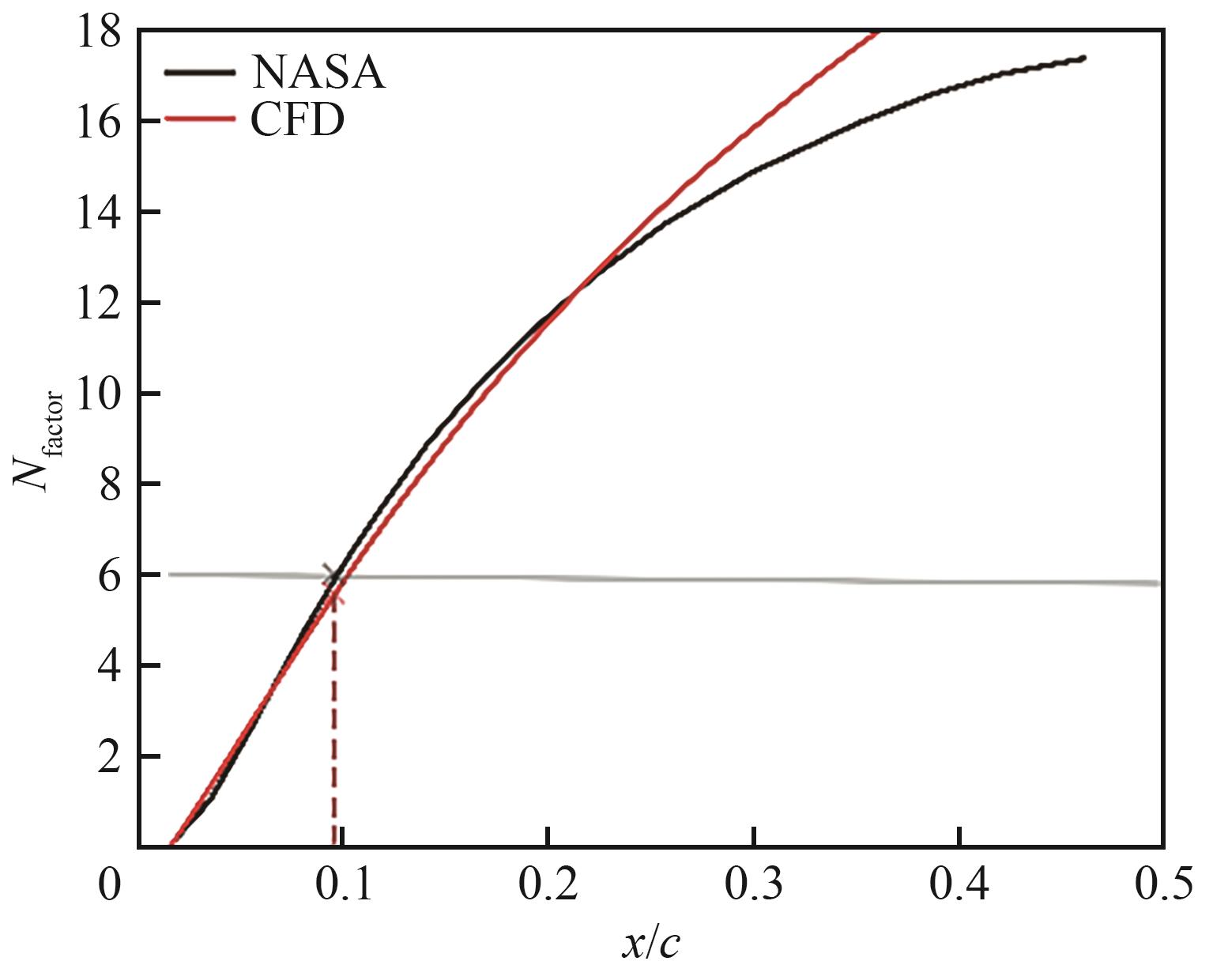
Fig.6
Schematic diagram of 2 m×2 m supersonic wind tunnel contour
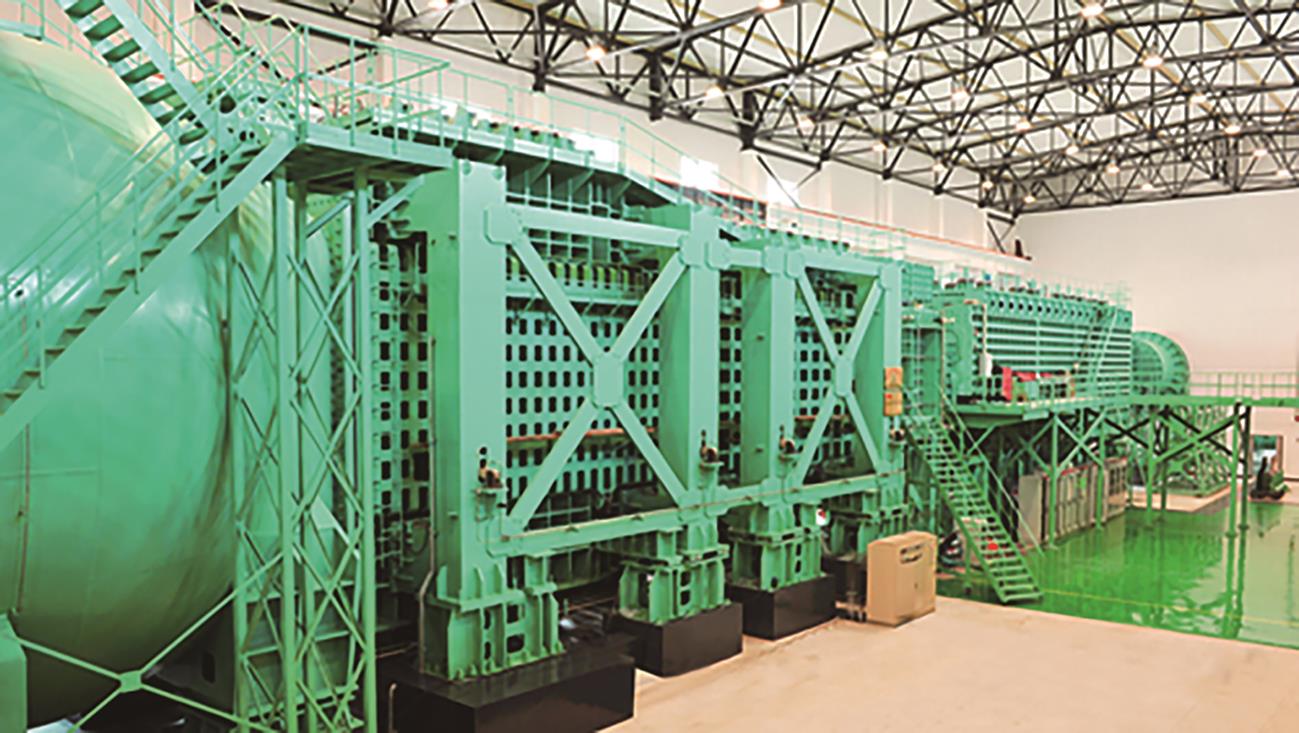
Fig.7
Schematic diagram of supersonic and subsonic leading-edge laminar flow wing models and wind tunnel installation
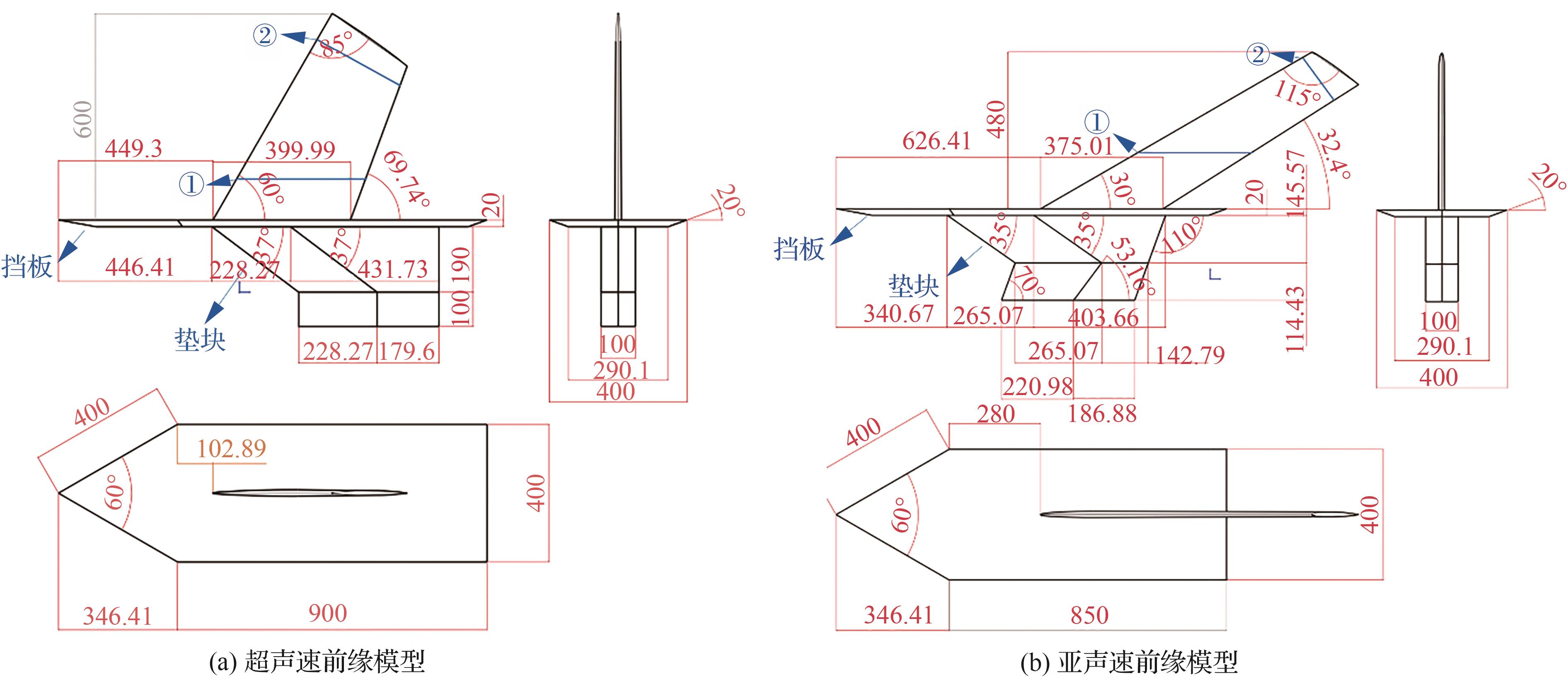
Fig.8
Flow field of laminar wing under subsonic leading-edge conditions with and without a flap (subsonic leading-edge model)
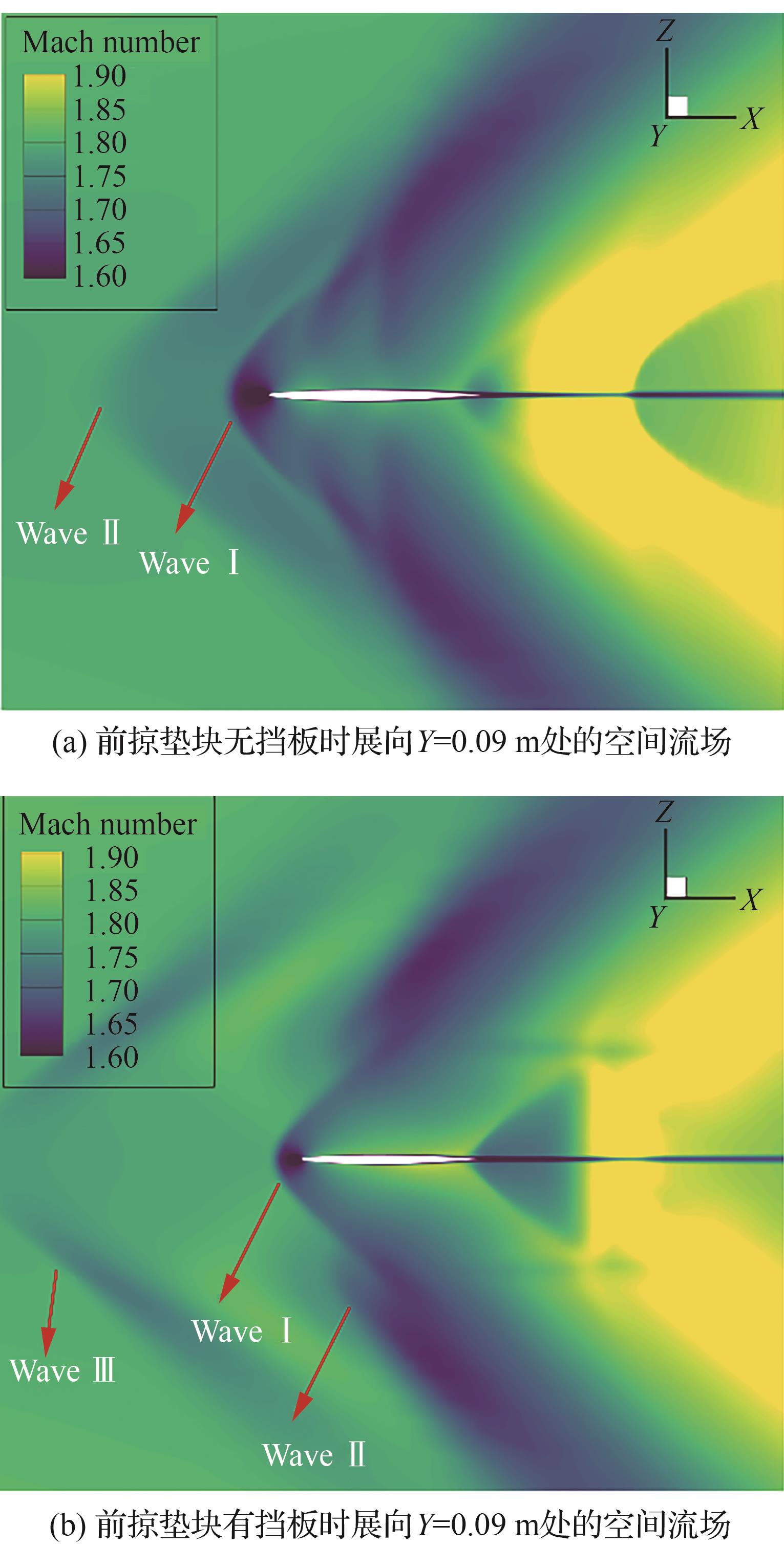
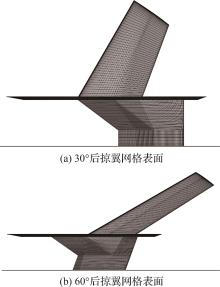
Fig.9
Grid of supersonic/subsonic leading-edge model
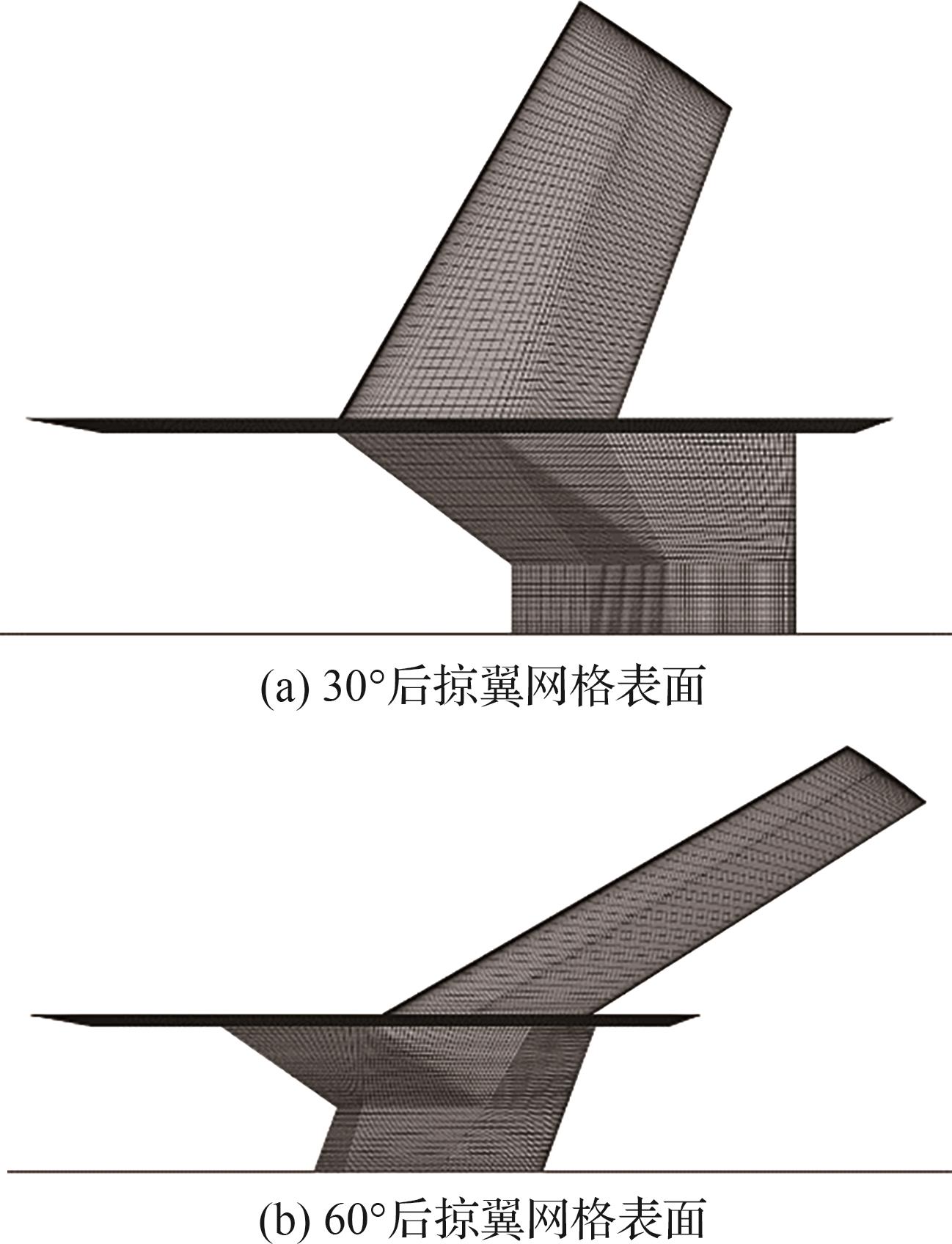
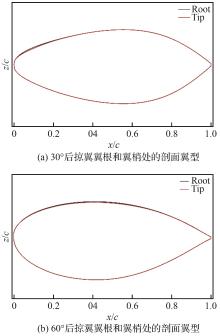
Fig.10
Schematic diagram of typical airfoil profiles for supersonic/subsonic leading-edge model
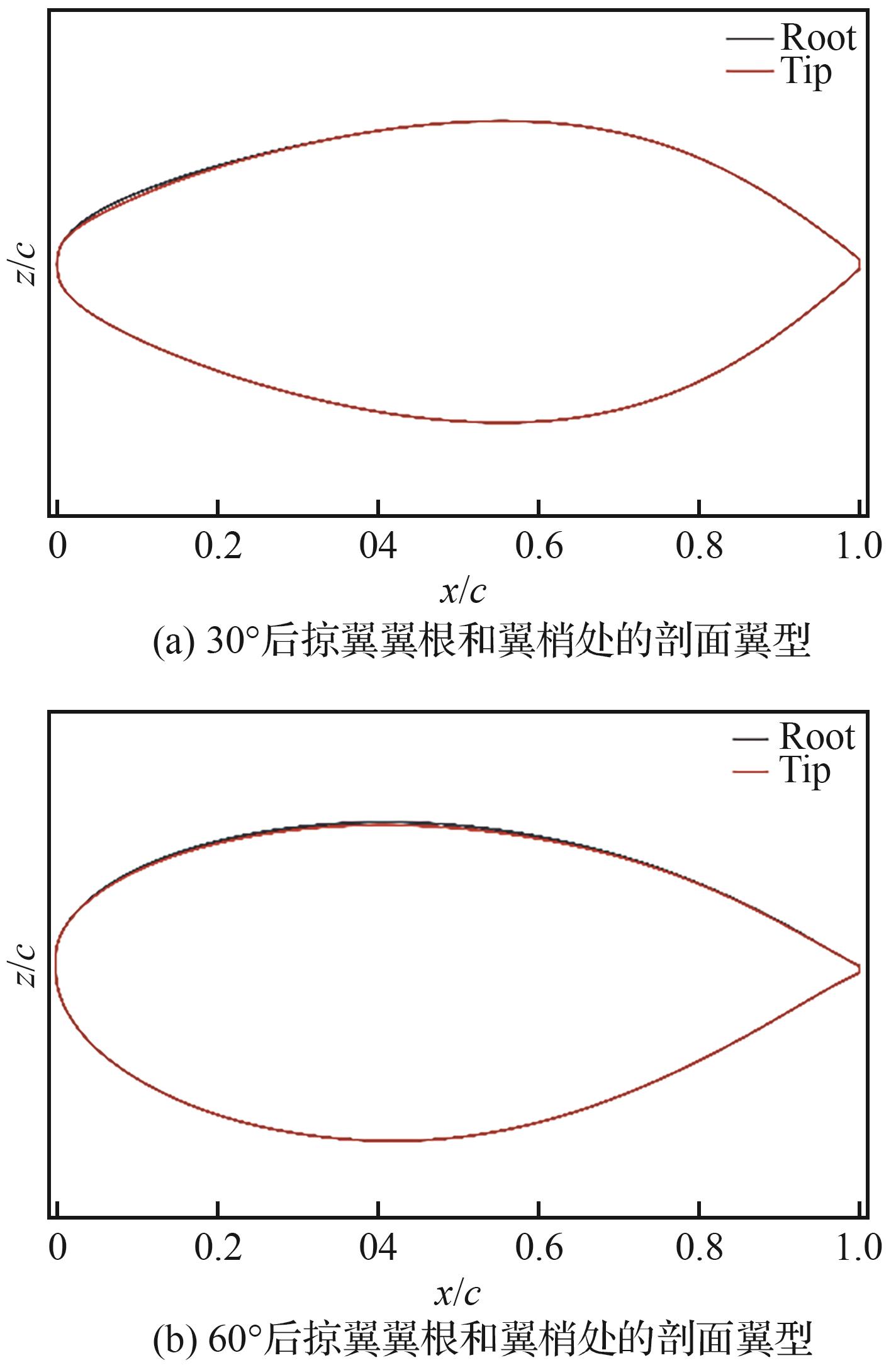

Table 1
Typical experimental conditions of self-developed supersonic laminar flow wing models
| 序号 | 后掠角/(°) | 攻角/(°) | 马赫数 | 雷诺数/106 |
|---|---|---|---|---|
| 1 | 30 | 0.0 | 1.6 | 8.0 |
| 2 | 30 | 2.0 | 1.6 | 8.0 |
| 3 | 60 | 2.0 | 1.9 | 4.0 |
| 4 | 60 | 2.5 | 1.9 | 4.0 |
| 5 | 60 | 0.0 | 1.9 | 8.0 |
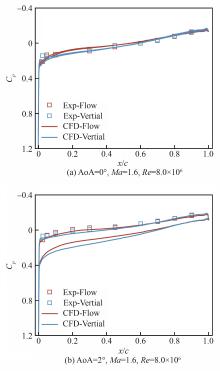
Fig.11
Comparison of experimental pressure distribution and numerical simulation for supersonic leading-edge configuration
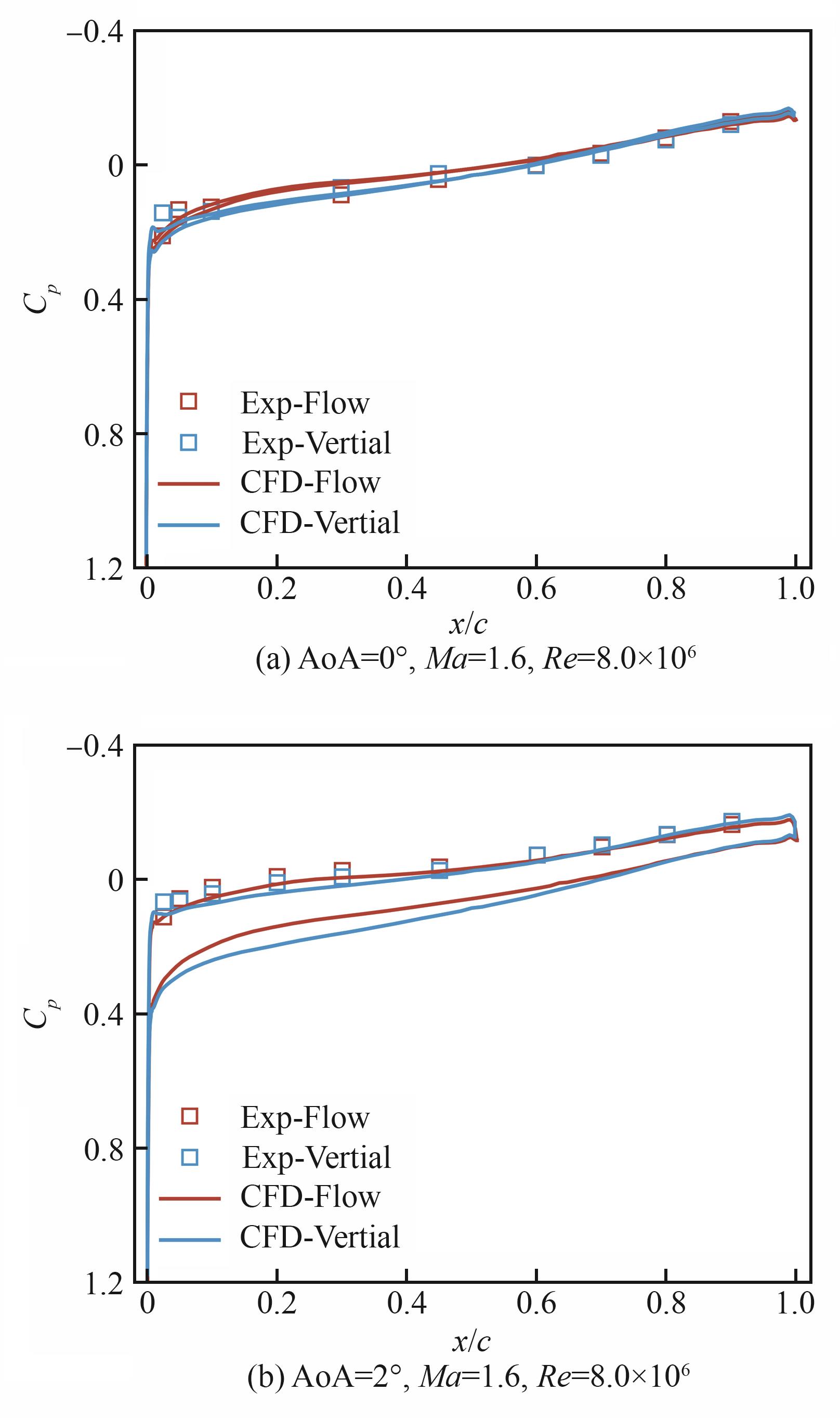
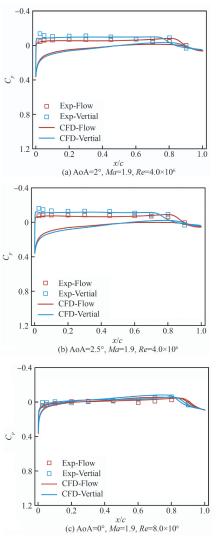
Fig.12
Comparison of experimental pressure distribution and numerical simulation for subsonic leading-edge configuration
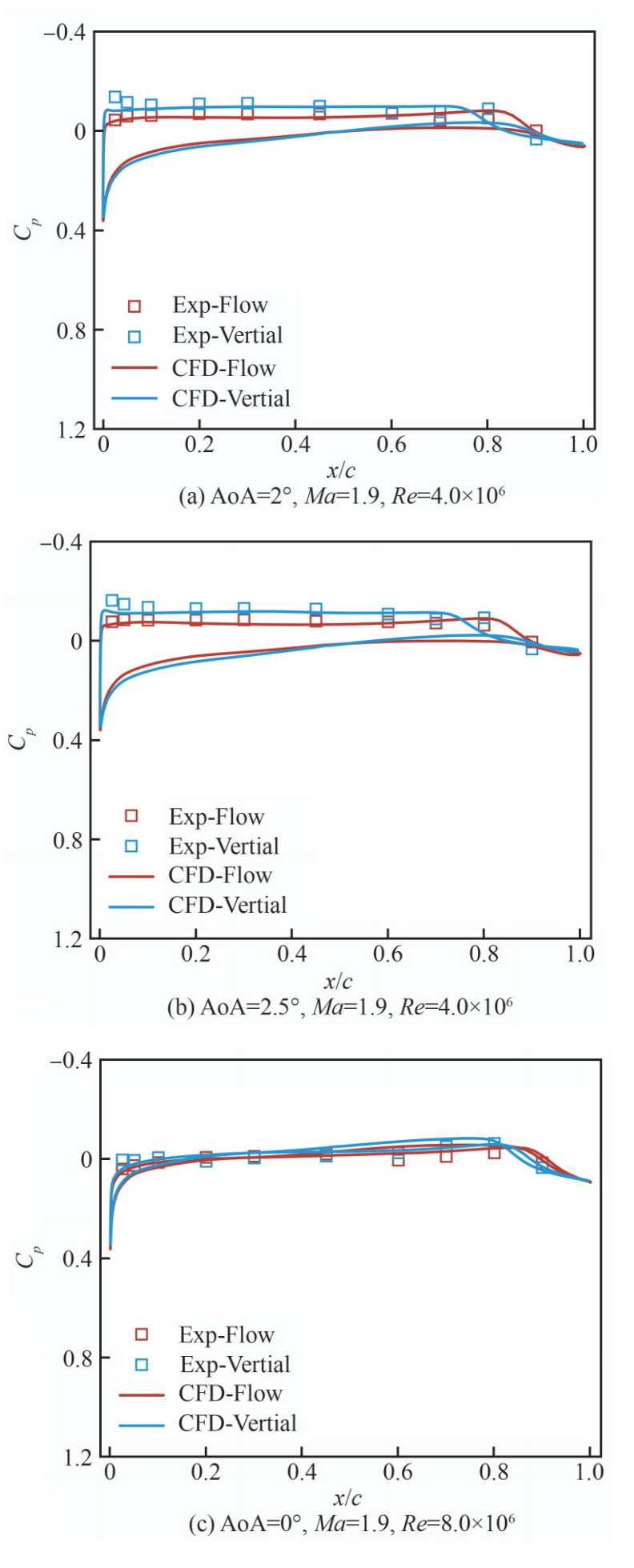
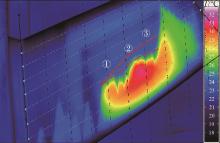
Fig.13
Comparison of experimental and numerical transition locations for supersonic leading-edge at AoA=0°,Ma=1.6,Re=8.0×10⁶
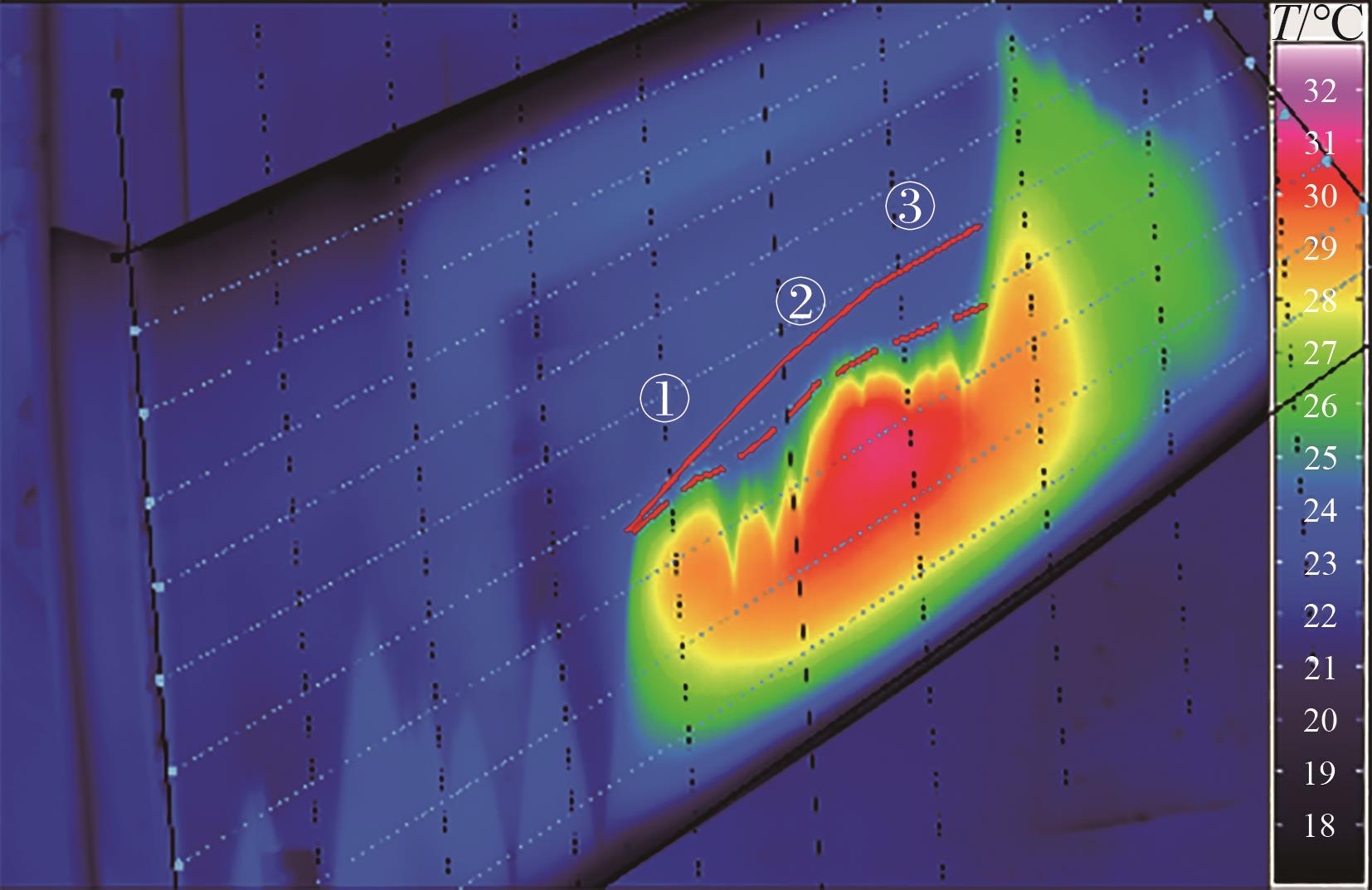
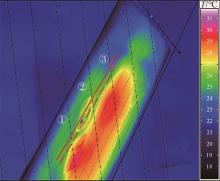
Fig.14
Comparison of experimental and numerical transition locations for subsonic leading-edge at AoA=2°,Ma=1.9,Re=4.0×10⁶
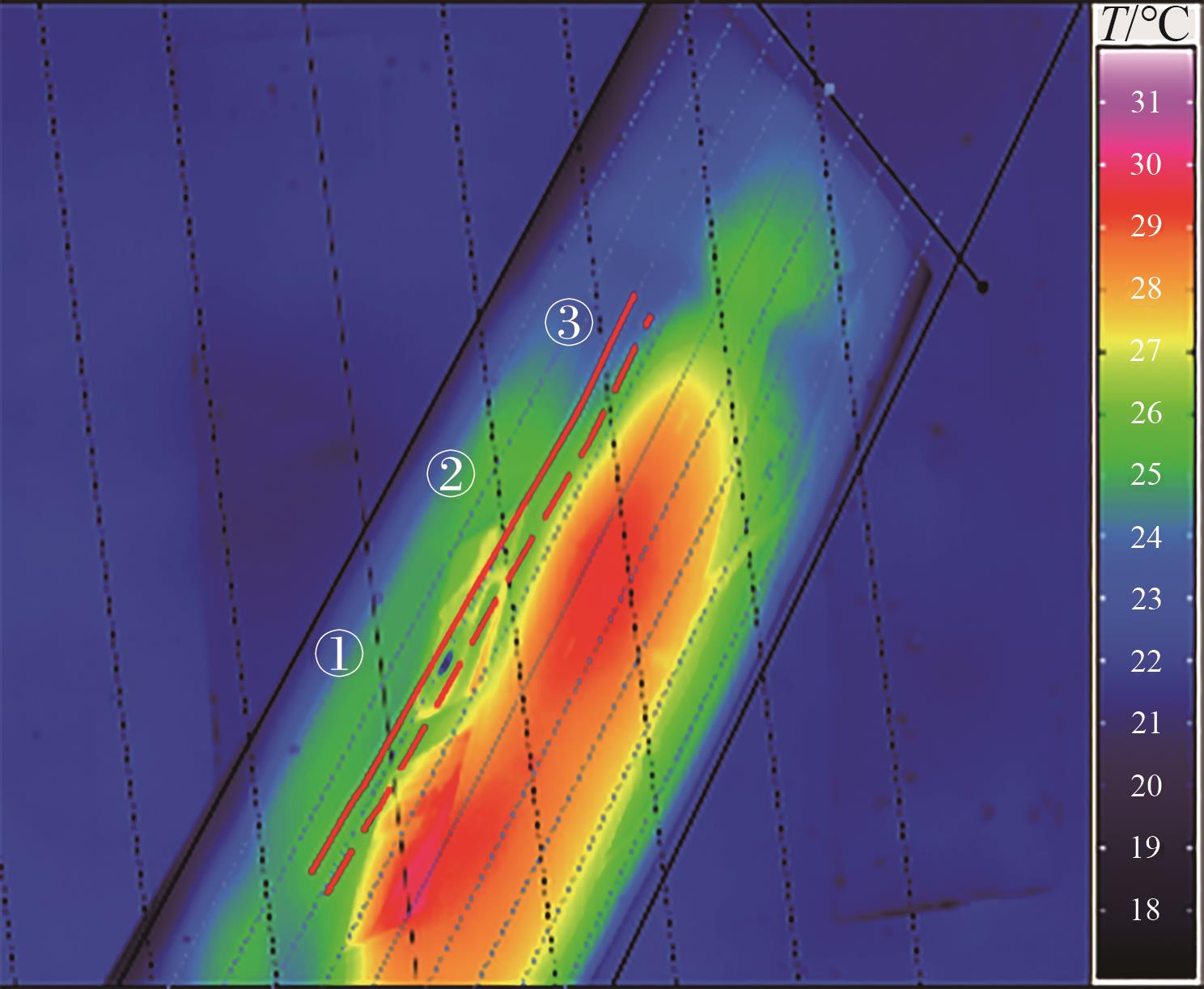
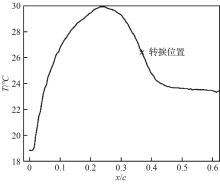
Fig.15
Temperature variation at station ② under supersonic leading-edge conditions with AoA=0°,Ma=1.6,Re=8.0×10⁶
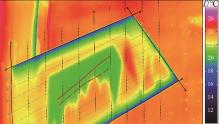
Fig.16
Comparison of experimental and numerical transition locations for supersonic leading-edge at AoA=2°,Ma=1.6,Re=8.0×10⁶
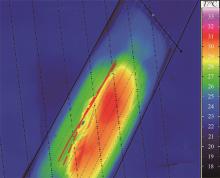
Fig.17
Comparison of experimental and numerical transition locations for subsonic leading-edge at AoA=2.5°,Ma=1.9,Re=4.0×10⁶
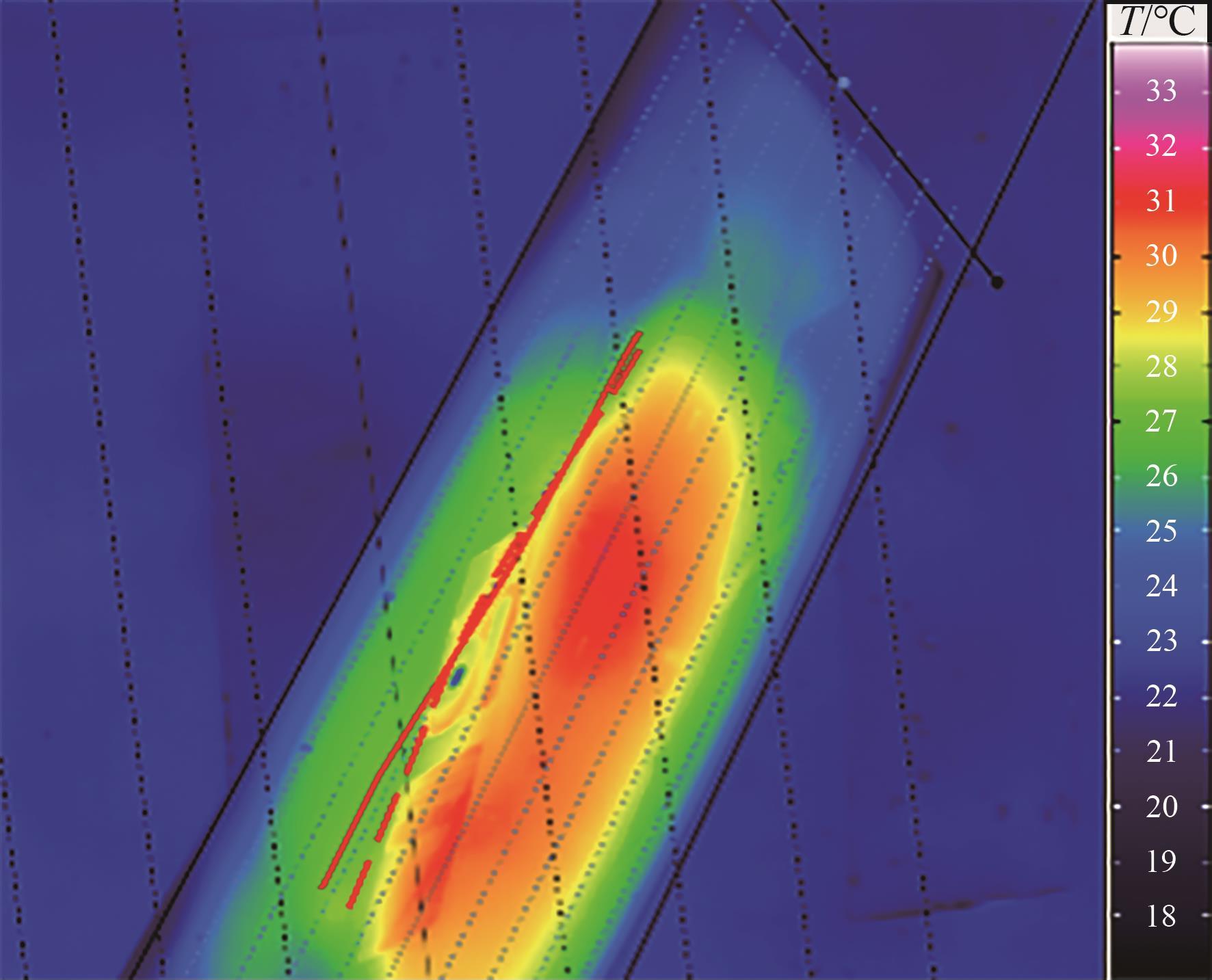
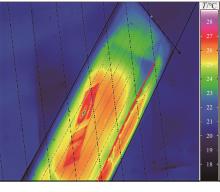
Fig.18
Comparison of experimental and numerical transition locations for subsonic leading-edge at AoA=0°,Ma=1.9,Re=8.0×10⁶
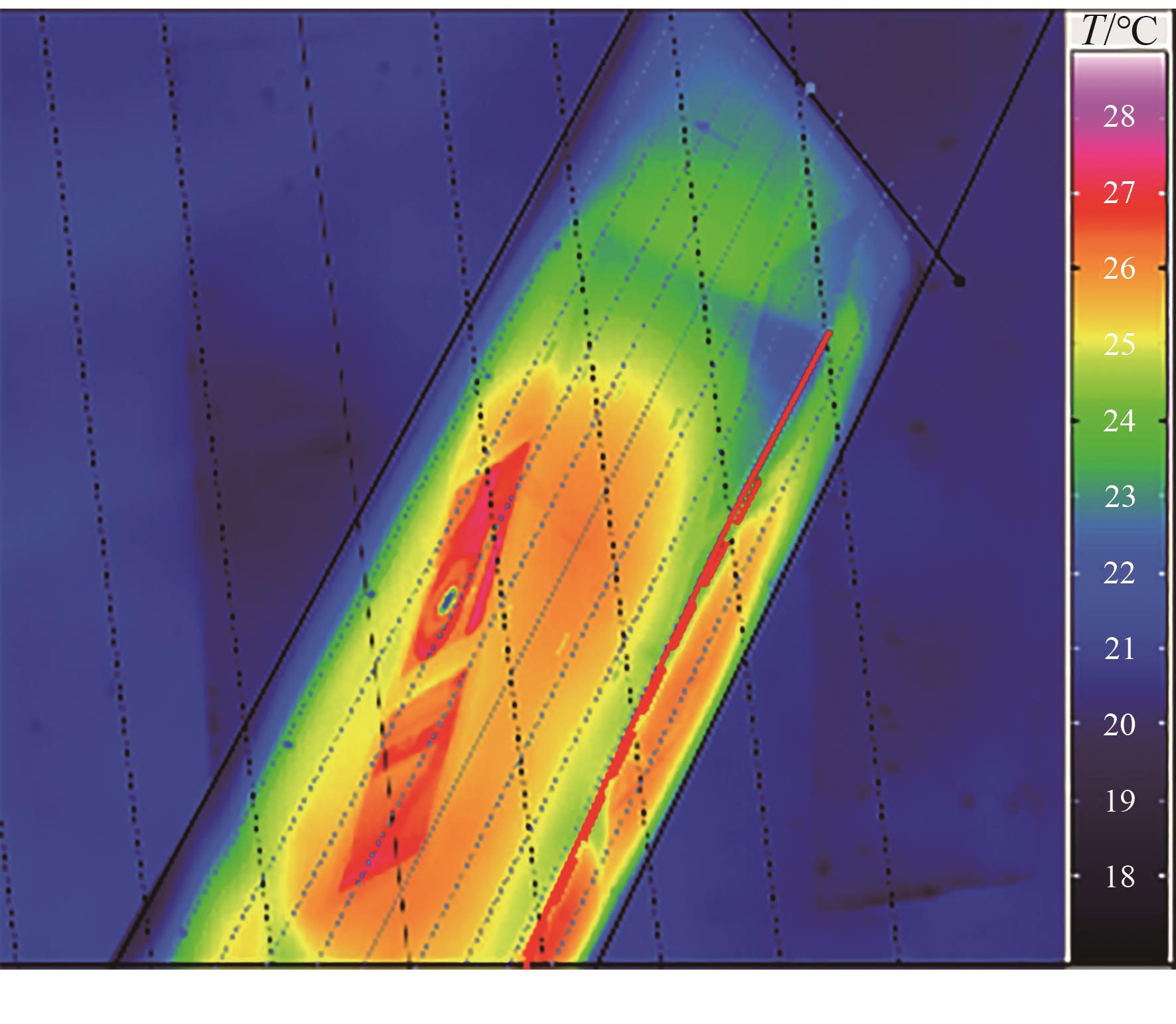
Fig.19
Disturbance growth curves at station ② of supersonic leading-edge configuration
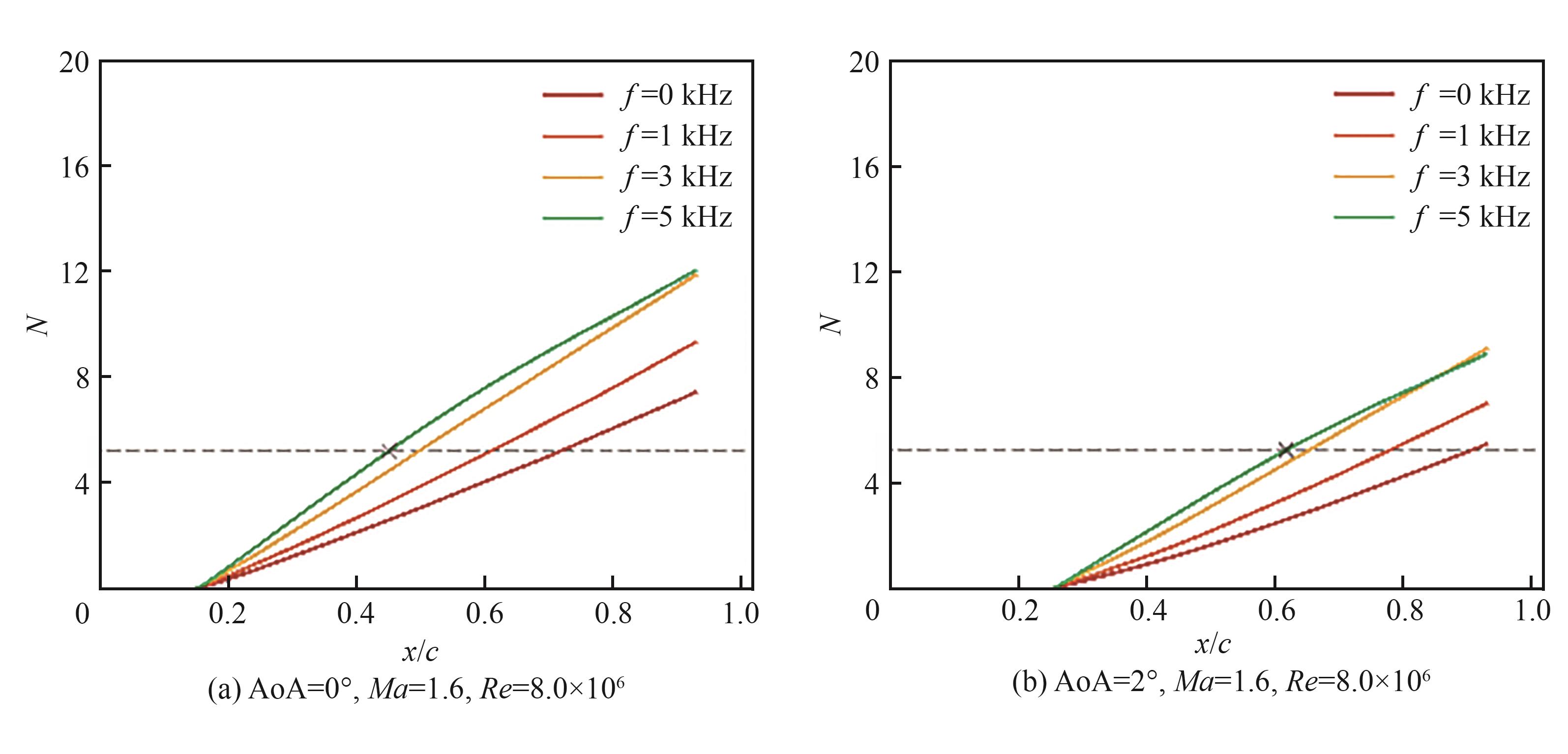
Fig.20
Disturbance growth curves at station ② of subsonic leading-edge configuration
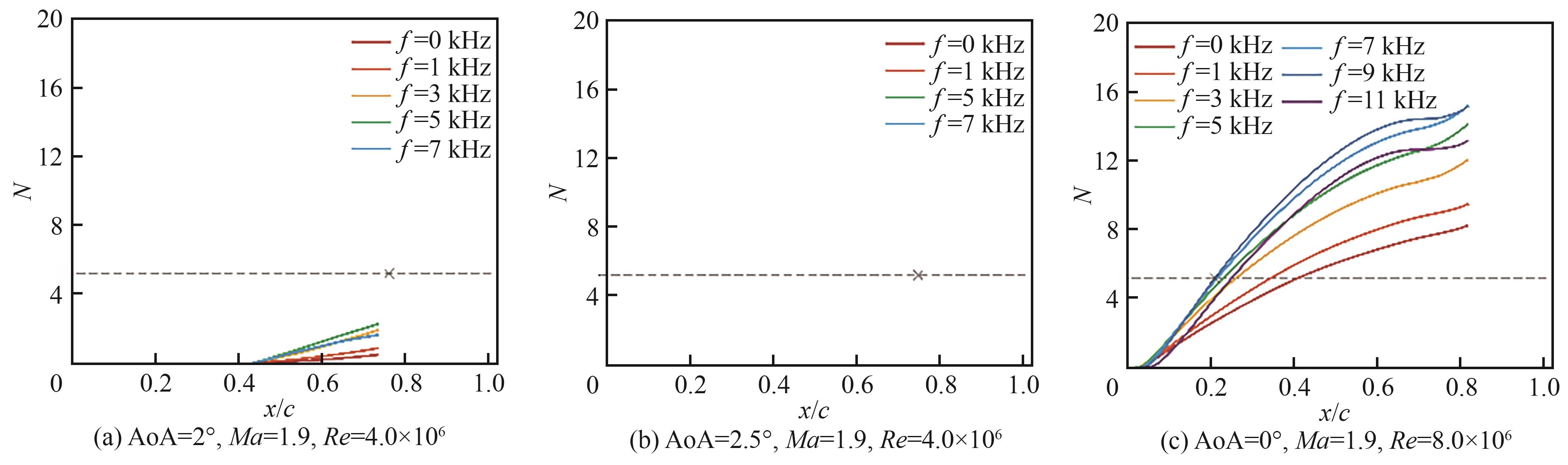
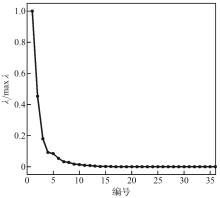
Fig.21
Relative variation in geometric disturbance eigenvalue modes of 30° swept model
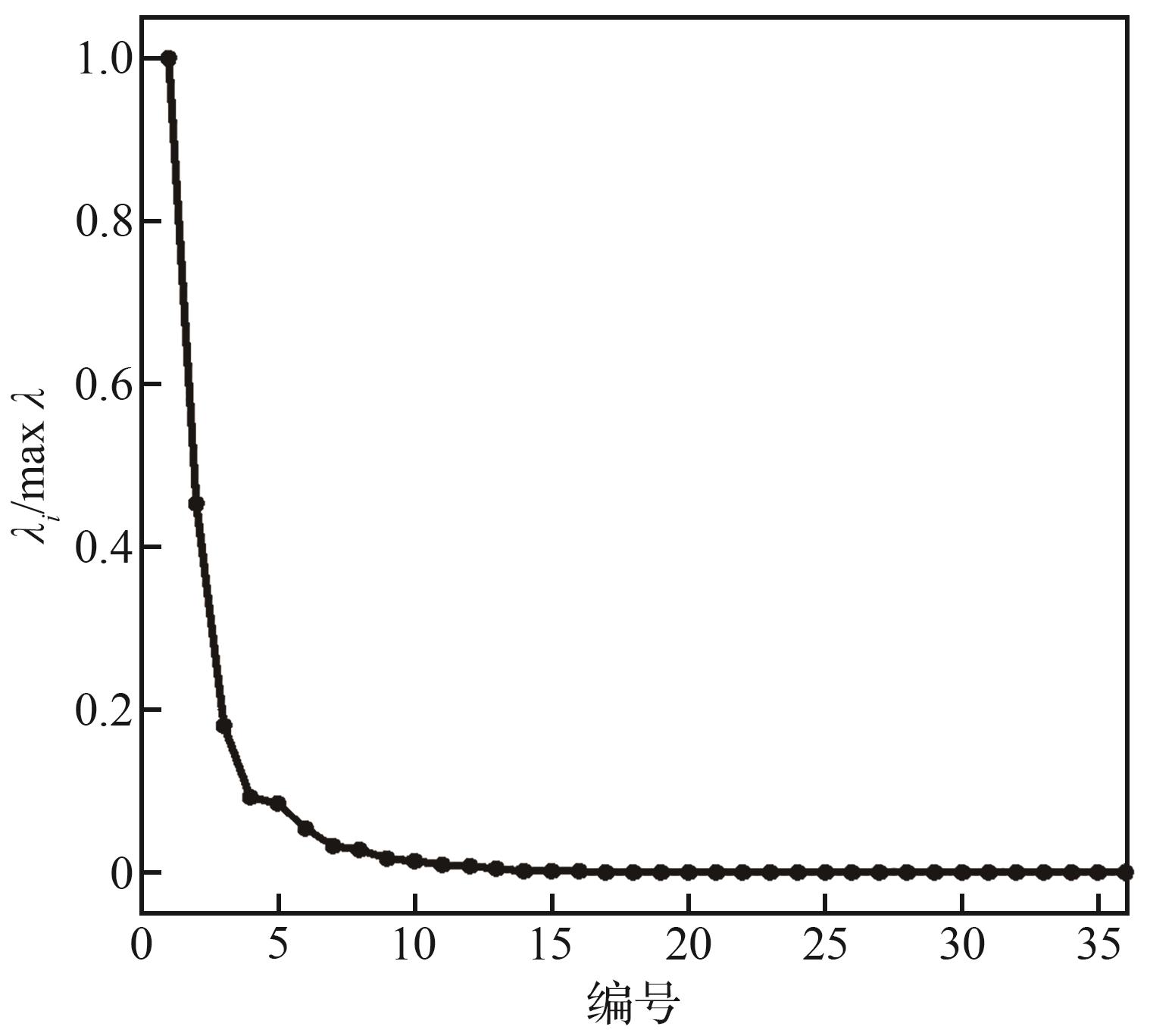
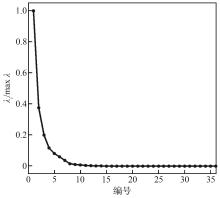
Fig.22
Relative variation in geometric disturbance eigenvalue modes of 60° swept model
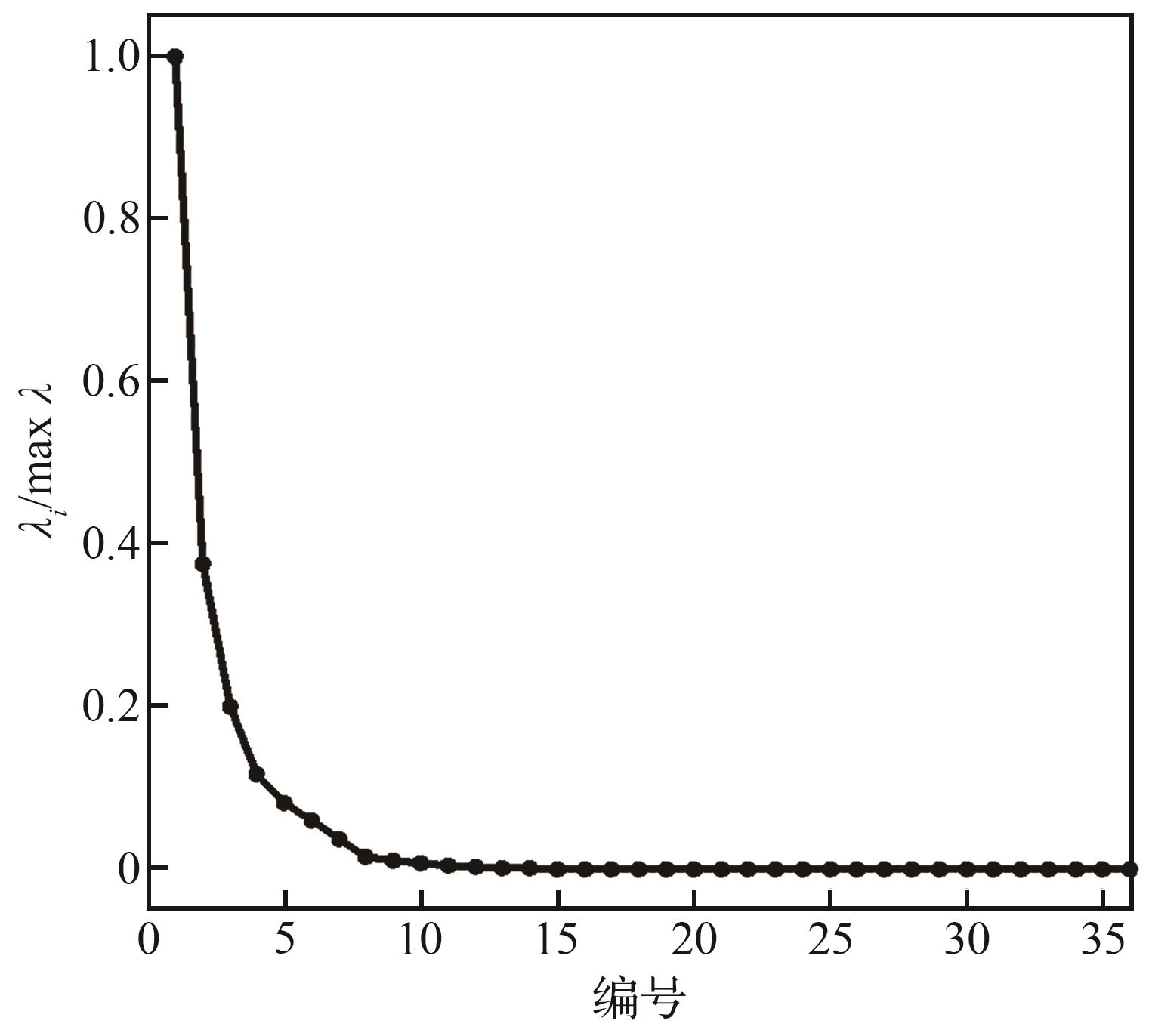
Table 2
Deterministic results of self-developed benchmark models of supersonic laminar flow wing
| 后掠角/(°) | 展向站位 | 马赫数 | 转捩区长/当地弦长 |
|---|---|---|---|
| 30 | 40% | 1.6 | 0.399 0 |
| 50% | 1.6 | 0.456 0 | |
| 60% | 1.6 | 0.490 4 | |
| 60 | 50% | 1.9 | 0.198 5 |
| 60% | 1.9 | 0.215 8 | |
| 70% | 1.9 | 0.220 2 |
Table 3
Uncertainty-based results of self-developed benchmark models of supersonic laminar flow wing
| 后掠角/(°) | 展向站位 | 马赫数 | 转捩位置期望 | 转捩位置 标准差 |
|---|---|---|---|---|
| 30 | 40% | 1.6 | 0.370 1 | 0.036 5 |
| 50% | 1.6 | 0.420 4 | 0.040 2 | |
| 60% | 1.6 | 0.452 1 | 0.039 3 | |
| 60 | 50% | 1.9 | 0.216 2 | 0.041 5 |
| 60% | 1.9 | 0.235 6 | 0.044 3 | |
| 70% | 1.9 | 0.236 9 | 0.038 4 |
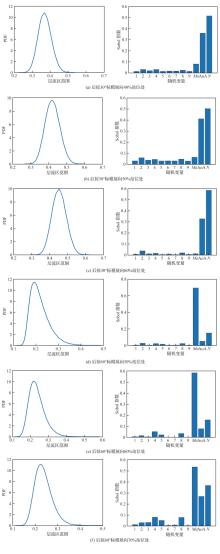
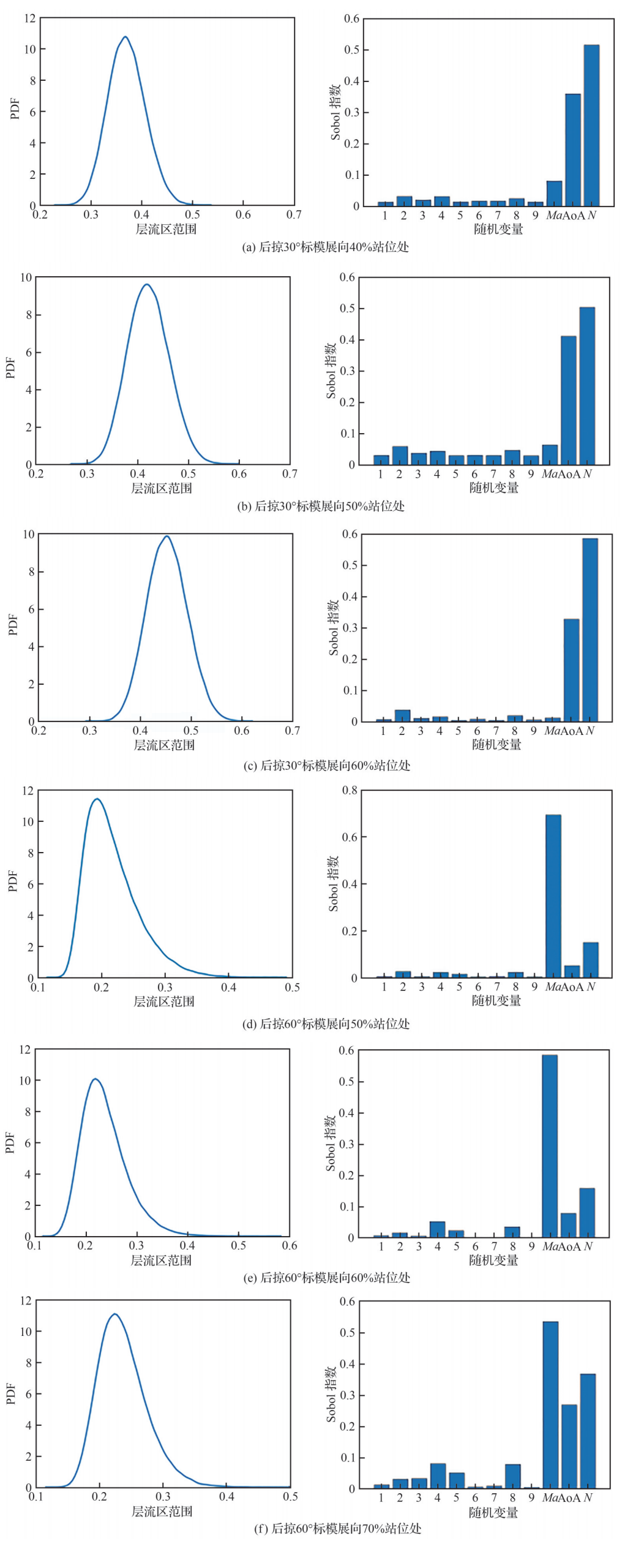
Fig.23
Probability distribution of laminar region and the Sobol indices of various random input variables
| [1] | LYNDE M N, CAMPBELL R L. Expanding the natural laminar flow boundary for supersonic transports[C]∥34th AIAA Applied Aerodynamics Conference. Reston:AIAA, 2016. |
| [2] | 徐悦, 韩忠华, 尤延铖, 等. 新一代绿色超声速民机的发展现状与挑战[J]. 科学通报, 2020, 65(2):127-133. |
| XU Y, HAN Z H, YOU Y C, et al. Progress and challenges of next generation green supersonic civil aircraft[J]. Chinese Science Bulletin, 2020, 65(2):127-133 (in Chinese). | |
| [3] | 丁玉临, 韩忠华, 乔建领, 等. 超声速民机总体气动布局设计关键技术研究进展[J]. 航空学报, 2023, 44(2): 626310. |
| DING Y L, HAN Z H, QIAO J L, et al. Research progress in key technologies for conceptual-aerodynamic configuration design of supersonic transport aircraft[J]. Acta Aeronautica et Astronautica sinica, 2023, 44(2): 626310 (in Chinese). | |
| [4] | DING Y L, HAN Z H, QIAO J L, et al. Inverse design method for low-boom supersonic transport with lift constraint[J]. AIAA Journal, 2023, 61(7): 2840-2853. |
| [5] | MUNGUÍA B C, ECONOMON T D, ALONSO J J. A Discrete adjoint framework for low-boom supersonic aircraft shape optimization[C]∥18th AIAA/ISSMO Multidisciplinary Analysis and Optimization Conference. Reston: AIAA, 2017. |
| [6] | ISHIKAWA H, UEDA Y, TOKUGAWA N. Natural laminar flow Wing design for a low-boom supersonic aircraft[C]∥55th AIAA Aerospace Sciences Meeting. Reston: AIAA, 2017. |
| [7] | 李军府, 陈晴, 王伟, 等. 一种先进超声速民机低声爆高效气动布局设计[J]. 航空学报, 2024, 45(6): 629613. |
| LI J F, CHEN Q, WANG W, et al. Design of low sonic boom high efficiency layout for advanced supersonic civil aircraft[J]. Acta Aeronautica et Astronautica Sinica, 2024, 45(6): 629613 (in Chinese). | |
| [8] | 单程军, 贡天宇, 易理哲, 等. 超声速民机高效高可信度声爆/气动多学科优化方法[J]. 航空学报, 2024, 45(24): 630573. |
| SHAN C J, GONG T Y, YI L Z, et al. High-efficiency and high-reliability sonic boom/aerodynamic multidisciplinary optimization method for supersonic civil aircraft[J]. Acta Aeronautica et Astronautica Sinica, 2024, 45(24): 630573 (in Chinese). | |
| [9] | 袁吉森, 孙爵, 李玲玉, 等. 超声速飞机层流布局设计与评估技术进展[J]. 航空学报, 2022, 43(11): 526316. |
| YUAN J S, SUN J, LI L Y, et al. Progress of supersonic aircraft laminar flow layout design and evaluation technologies[J]. Acta Aeronautica et Astronautica Sinica, 2022, 43(11): 526316 (in Chinese). | |
| [10] | VERMEERSCH O, YOSHIDA K, UEDA Y, et al. Natural laminar flow wing for supersonic conditions: Wind tunnel experiments, flight test and stability computations[J]. Progress in Aerospace Sciences, 2015, 79: 64-91. |
| [11] | UEDA Y, YOSHIDA K, MATSUSHIMA K, et al. Supersonic natural-laminar-flow wing-design concept at high-Reynolds-number conditions[J]. AIAA Journal, 2014, 52(6): 1294-1306. |
| [12] | NORRIS G. Picture: Boeing plans plain grey natural laminar flow nacelles for 787s in bid to reduce fuel burn[EB/OL]. (2006-6-12)[2025-1-13]. . |
| [13] | Union European. Hybrid laminar flow control on tails & sing[EB/OL].(2025-1-13)[2025-03-01]. . |
| [14] | SCHRAUF G, VON GEYR H. Hybrid laminar flow control on A320 fin: Retrofit design and sample results[J]. Journal of Aircraft, 2021, 58(6): 1272-1280. |
| [15] | KRISHNAN K S G, BERTRAM O, SEIBEL O. Review of hybrid laminar flow control systems[J]. Progress in Aerospace Sciences, 2017, 93: 24-52. |
| [16] | SCHRAUF G. Large-scale laminar flow tests evaluated with linear stability theory[J]. Journal of Aircraft, 2004, 41(2): 224-230. |
| [17] | SHI Y Y, CAO T S, YANG T H, et al. Estimation and analysis of hybrid laminar flow control on a transonic experiment[J]. AIAA Journal, 2020, 58(1): 118-132. |
| [18] | SHI Y Y, YANG T H, BAI J Q, et al. Research of transition criterion for semi-empirical prediction method at specified transonic regime[J]. Aerospace Science and Technology, 2019, 88: 95-109. |
| [19] | YANG T H, CHEN Y F, SHI Y Y, et al. Stochastic investigation on the robustness of laminar-flow wings for flight tests[J]. AIAA Journal, 2022, 60(4): 2266-2286. |
| [20] | YANG T H, ZHONG H, CHEN Y F, et al. Transition prediction and sensitivity analysis for a natural laminar flow wing glove flight experiment[J]. Chinese Journal of Aeronautics, 2021, 34(8): 34-47. |
| [21] | STREIT T, WEDLER S, KRUSE M. DLR natural and hybrid transonic laminar wing design incorporating new methodologies[J]. The Aeronautical Journal, 2015, 119(1221): 1303-1326. |
| [22] | SHI Y Y, MADER C A, HE S C, et al. Natural laminar-flow airfoil optimization design using a discrete adjoint approach[J]. AIAA Journal, 2020, 58(11): 4702-4722. |
| [23] | 杨体浩, 王一雯, 王雨桐, 等. 基于离散伴随的层流翼优化设计方法[J]. 航空学报, 2022, 43(12): 126132. |
| YANG T H, WANG Y W, WANG Y T, et al. Discrete adjoint-based optimization approach for laminar flow wings[J]. Acta Aeronautica et Astronautica Sinica, 2022, 43(12): 126132 (in Chinese). | |
| [24] | CHEN Y F, RAO H Y, XIONG N, et al. Adjoint-based robust optimization design of laminar flow airfoil under flight condition uncertainties[J]. Aerospace Science and Technology, 2023, 140: 108465. |
| [25] | CHEN Y F, RAO H Y, DENG Y J, et al. Adjoint-based robust optimization design of laminar flow wing under flight condition uncertainties[J]. Chinese Journal of Aeronautics, 2023, 36(6): 19-34. |
| [26] | BARKLAGE A, RÖMER U, BERTRAM A, et al. Analysis and uncertainty quantification of a hybrid laminar flow control system[J]. AIAA Journal, 2022, 60(10): 5735-5749. |
| [27] | SABATER C, BEKEMEYER P, GÖRTZ S. Robust design of transonic natural laminar flow wings under environmental and operational uncertainties[C]∥ AIAA Scitech 2021 Forum. Reston: AIAA, 2021. |
| [28] | OWENS L R, BEELER G, KING R, et al. Supersonic traveling crossflow wave characteristics in ground and flight tests[C]∥AIAA Scitech 2020 Forum. Reston: AIAA, 2020. |
| [29] | BARKLAGE A, RÖMER U, SEITZ A, et al. Validation of suction velocity analysis for active laminar flow control with uncertainties[J]. AIAA Journal, 2023, 61(9): 3910-3922. |
| [30] | YANG T H, WANG Y W, SHI Y Y, et al. Transition prediction for hybrid laminar flow control flight test considering geometric uncertainties[J]. Journal of Aerospace Engineering, 2022, 35(6): 04022100. |
| [31] | ZHENG X H, YAO W, GONG Z Q, et al. Learnable quantile polynomial chaos expansion: An uncertainty quantification method for interval reliability analysis[J]. Reliability Engineering & System Safety, 2024, 245: 110036. |
| [32] | 赵超帆, 袁修开, 陈敬强. 结构全局失效概率函数估计的自适应增强线抽样方法[J]. 西北工业大学学报, 2023, 41(1): 105-114. |
| ZHAO C F, YUAN X K, CHEN J Q. Structural global failure probability function estimation based on adaptive augmented line sampling method[J]. Journal of Northwestern Polytechnical University, 2023, 41(1): 105-114 (in Chinese). | |
| [33] | CHEN Y G, ZHONG R, WANG Q S, et al. Uncertain stochastic vibration characteristic analysis of composite laminated rectangular plate based on improved Kriging model[J]. Composite Structures, 2024, 340: 118180. |
| [34] | ZHANG W, ZHAO Z Y, XU H W, et al. AK-Gibbs: An active learning Kriging model based on Gibbs importance sampling algorithm for small failure probabilities[J]. Computer Methods in Applied Mechanics and Engineering, 2024, 426: 116992. |
| [35] | 韦新鹏, 姚中洋, 宝文礼, 等. 一种基于主动学习克里金模型的证据理论可靠性分析方法[J]. 机械工程学报, 2024, 60(2): 356-368. |
| WEI X P, YAO Z Y, BAO W L, et al. Evidence-theory-based reliability analysis method using active-learning Kriging model[J]. Journal of Mechanical Engineering, 2024, 60(2): 356-368 (in Chinese). | |
| [36] | CEBECI T. Stability and transition: Theory and application: Efficient numerical methods with computer programs[M]. Cham:Springer, 2004. |
| [37] | ARNAL D. Boundary layer transition: Predictions based on linear theory[J]. AGARD, 1994. |
| [38] | UEDA Y, YOSHIDA K, MATSUSHIMA K, et al. Supersonic natural-laminar-flow wing-design concept at high-Reynolds-number conditions[J]. AIAA Journal, 2014, 52(6): 1294-1306. |
| [39] | OWENS L R, BEELER G, KING R, et al. Supersonic crossflow transition control in ground and flight tests[C]∥2019 AIAA SciTech Forum and Exposition. Reston: AIAA, 2019. |
| [40] | ECHARD B, GAYTON N, LEMAIRE M. AK-MCS: An active learning reliability method combining Kriging and Monte Carlo simulation[J]. Structural Safety, 2011, 33(2): 145-154. |
| [41] | FENG K X, LU Z Z, WANG L. A novel dual-stage adaptive Kriging method for profust reliability analysis[J]. Journal of Computational Physics, 2020, 419: 109701. |
| [42] | GARZON V E, DARMOFAL D L. Impact of geometric variability on axial compressor performance[J]. Journal of Turbomachinery, 2003, 125(4): 692-703. |
| [43] | KENWAY G, KENNEDY G, MARTINS J R R A. A CAD-free approach to high-fidelity aerostructural optimization[C]∥13th AIAA/ISSMO Multidisciplinary Analysis Optimization conference. Reston: AIAA, 2010. |
| [44] | LIU D S, LITVINENKO A, SCHILLINGS C, et al. Quantification of airfoil geometry-induced aerodynamic uncertainties: Comparison of approaches[J]. ASA Journal on Uncertainty Quantification, 2017, 5(1): 334-352. |
| [45] | ADLER R J, TAYLOR J E. Random fields and geometry[M]. Cham: Springer, 2009. |
| [1] | Hua YANG, Shusheng CHEN, Zhenghong GAO, Quanfeng JIANG, Wei ZHANG. Rotor aerodynamic data fusion based on Bayesian framework [J]. Acta Aeronautica et Astronautica Sinica, 2024, 45(8): 128960-128960. |
| [2] | Yue DAN, Limin GAO, Huawei YU, Ruiyu LI, Qiusheng LUO, Yuyang HAO. Uncertainty quantification of leading-edge radius machining error of compressor cascade considering statistical characteristics of skewness and kurtosis [J]. Acta Aeronautica et Astronautica Sinica, 2024, 45(19): 630366-630366. |
| [3] | Yifu CHEN, Yuhang MA, Qingsheng LAN, Weiping SUN, Yayun SHI, Tihao YANG, Junqiang BAI. Uncertainty analysis and gradient optimization design of airfoil based on polynomial chaos expansion method [J]. ACTA AERONAUTICAET ASTRONAUTICA SINICA, 2023, 44(8): 127446-127446. |
| [4] | Xinqian ZHENG, Junying WANG, Weina HUANG, Yu FU, Ronghui CHENG, Hongyang XIONG. Uncertainty⁃based design system for aeroengines [J]. ACTA AERONAUTICAET ASTRONAUTICA SINICA, 2023, 44(7): 27099-027099. |
| [5] | TANG Songxiang, LI Jie, ZHANG Heng, NIU Xiaotian. Stall separation optimization and analysis of middle wing section on specially configured laminar flight [J]. ACTA AERONAUTICAET ASTRONAUTICA SINICA, 2022, 43(11): 526765-526765. |
| [6] | JIANG Lihong, RAO Hanyue, LAN Xiayu, YANG Tihao, GENG Jianzhong, BAI Junqiang. Aerodynamic design and comprehensive benefit impact of hybrid laminar flow wing [J]. ACTA AERONAUTICAET ASTRONAUTICA SINICA, 2022, 43(11): 526791-526791. |
| [7] | NIE Han, SONG Wenping, HAN Zhonghua, CHEN Jianqiang, DUAN Maochang, WAN Bingbing. Automatic transition prediction for natural-laminar-flow wing design of supersonic transports [J]. ACTA AERONAUTICAET ASTRONAUTICA SINICA, 2022, 43(11): 526342-526342. |
| [8] | CHEN Yifu, WANG Yiwen, DENG Yiju, WANG Bo, BAI Junqiang, LU Lei. Experiment and numerical simulation of natural laminar flow wing glove [J]. ACTA AERONAUTICAET ASTRONAUTICA SINICA, 2022, 43(11): 526793-526793. |
| [9] | CAO Fan, ZHANG Meifang, HU Xiao, TANG Zhili. Natural laminar flow optimization and transition sensitivity analysis of axisymmetric nacelle [J]. ACTA AERONAUTICAET ASTRONAUTICA SINICA, 2022, 43(11): 527330-527330. |
| [10] | HUANG Jiangtao, LIU Gang, GAO Zhenghong, ZHOU Zhu, CHEN Zuobin, JIANG Xiong. Current situation and development trend of multidisciplinary coupled adjoint system for aircraft [J]. ACTA AERONAUTICAET ASTRONAUTICA SINICA, 2020, 41(5): 623404-623404. |
| [11] | ZHOU Suting, LYU Zhenzhou, LING Chunyan, WANG Yanping. Meta-IS-AK algorithm for estimating global reliability sensitivity [J]. ACTA AERONAUTICAET ASTRONAUTICA SINICA, 2020, 41(1): 223088-223088. |
| [12] | SHI Zhaoyin, LYU Zhenzhou, LI Luyi, WANG Yanping. Cross-entropy importance sampling method based on adaptive Kriging model [J]. ACTA AERONAUTICAET ASTRONAUTICA SINICA, 2020, 41(1): 223123-223123. |
| [13] | ZHU Zhen, SONG Wenping, HAN Zhonghua. Automatic transition prediction for wing-body configurations using dual eN method [J]. ACTA AERONAUTICAET ASTRONAUTICA SINICA, 2018, 39(2): 121707-121707. |
| [14] | SONG Fuqiang, YAN Chao, MA Baofeng, JU Shengjun. Uncertainty analysis of aerodynamic characteristics for cone-derived waverider configuration [J]. ACTA AERONAUTICAET ASTRONAUTICA SINICA, 2018, 39(2): 121519-121519. |
| [15] | HAN Zhonghua, WANG Shaonan, HAN Li, LIU Fangliang, XU Jianhua, SONG Wenping. A novel method for automatic transition prediction of flows over airfoils based on dynamic mode decomposition [J]. ACTA AERONAUTICAET ASTRONAUTICA SINICA, 2017, 38(1): 120034-120034. |
| Viewed | ||||||
|
Full text |
|
|||||
|
Abstract |
|
|||||
Address: No.238, Baiyan Buiding, Beisihuan Zhonglu Road, Haidian District, Beijing, China
Postal code : 100083
E-mail:hkxb@buaa.edu.cn
Total visits: 6658907 Today visits: 1341All copyright © editorial office of Chinese Journal of Aeronautics
All copyright © editorial office of Chinese Journal of Aeronautics
Total visits: 6658907 Today visits: 1341

 CJA
CJA
