Acta Aeronautica et Astronautica Sinica ›› 2025, Vol. 46 ›› Issue (20): 531920.doi: 10.7527/S1000-6893.2025.31920
• Special Issue: Key Technologies for Supersonic Civil Aircraft • Previous Articles
Zuotai LI1,2, Shusheng CHEN1,2( ), Shiyi JIN1,2, Zhenghong GAO1,2, Weiguo ZHOU2,3
Received:2025-03-03
Revised:2025-04-01
Accepted:2025-05-18
Online:2025-05-28
Published:2025-05-27
Contact:
Shusheng CHEN
E-mail:sshengchen@nwpu.edu.cn
CLC Number:
Zuotai LI, Shusheng CHEN, Shiyi JIN, Zhenghong GAO, Weiguo ZHOU. Optimization design and data mining for supersonic civil aircraft based on sonic boom efficient prediction[J]. Acta Aeronautica et Astronautica Sinica, 2025, 46(20): 531920.
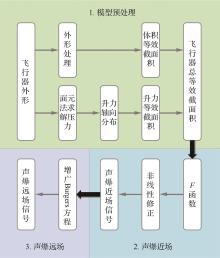
Fig.1
Flow diagram of sonic boom efficient prediction method
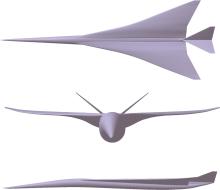
Fig.2
Geometry of base configuration
Table 1
Geometrical parameters of base configuration
| 参数 | 机身参考长度/m | 半展长/m | 参考面积/m2 |
|---|---|---|---|
| 数值 | 71.117 3 | 12.795 | 200.397 |
Table 2
Flight condition of base configuration
| 参数 | 马赫数 | 飞行高度/m | 迎角/(°) |
|---|---|---|---|
| 数值 | 1.6 | 16 764 | 2.1 |
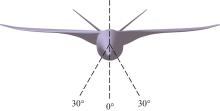
Fig.3
Schematic diagram of propagation angle of sonic boom signature
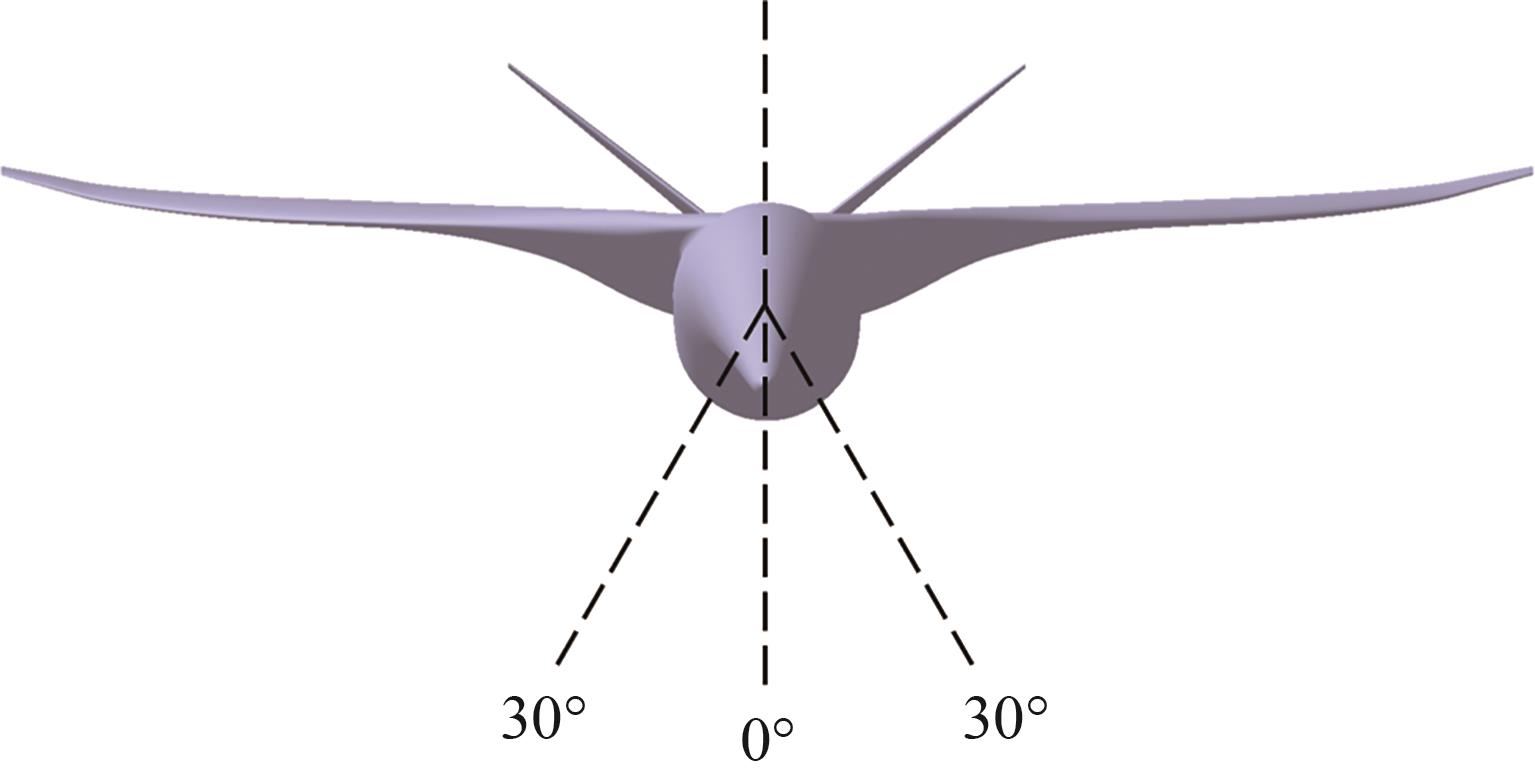
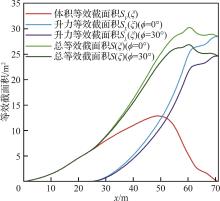
Fig.4
Equivalent cross-sectional areas of base configuration
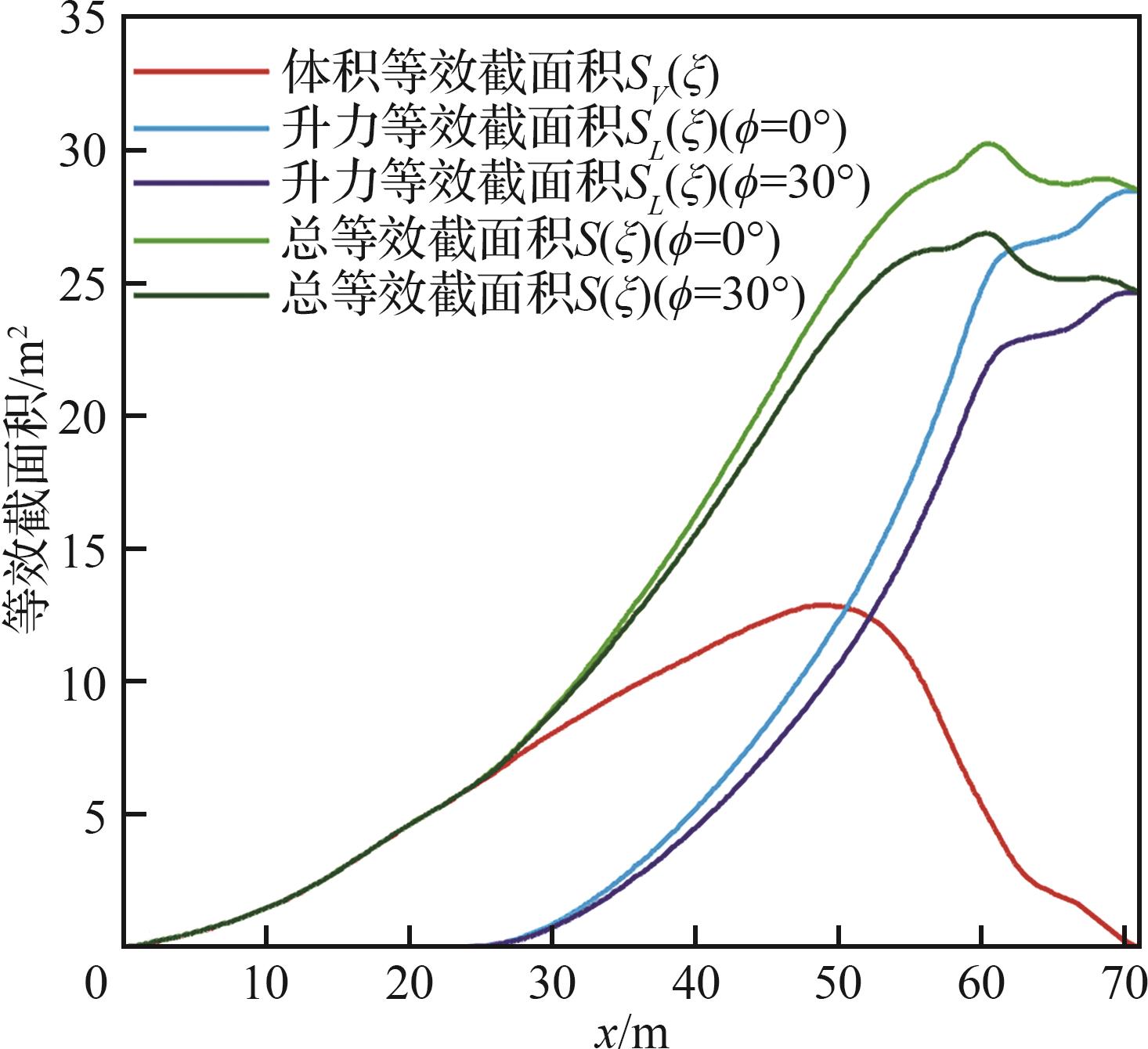
Fig.5
Comparison of near-field and far-field signatures of base configuration in ϕ=0°
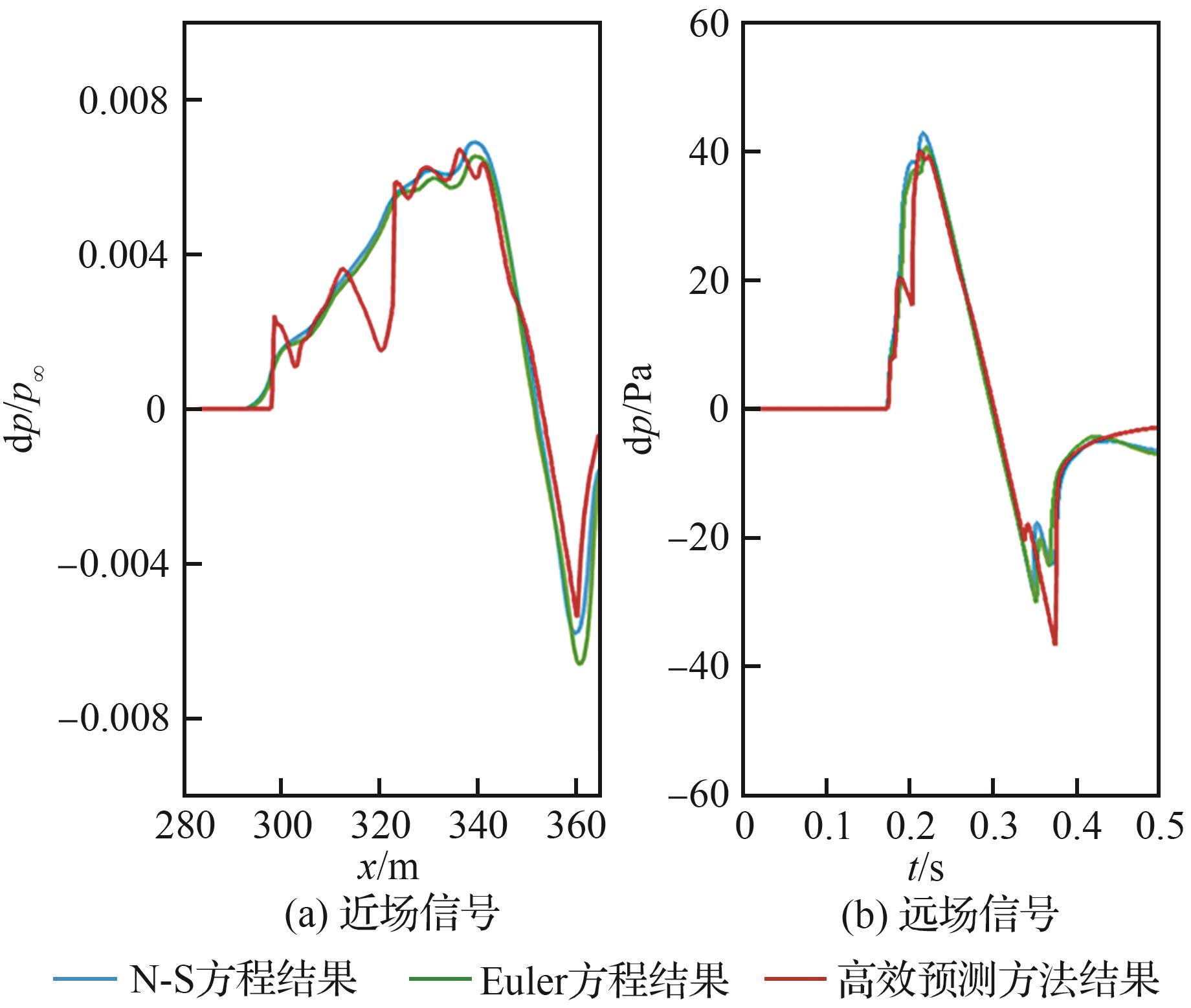
Fig.6
Comparison of near-field and far-field signatures of base configuration in ϕ=30°
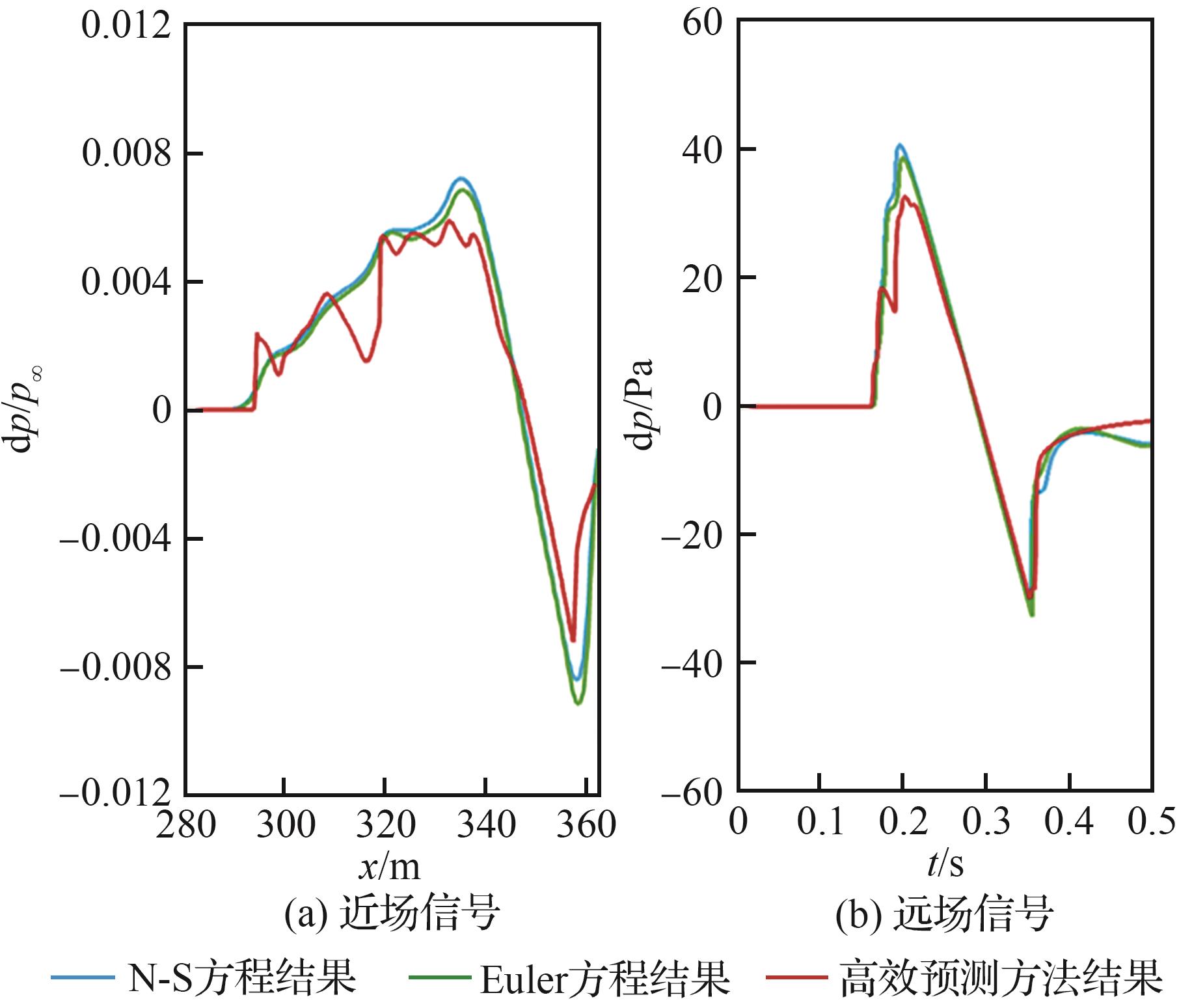
Table 3
Comparison of elapsed time
| 计算环节 | 计算耗时/s | ||
|---|---|---|---|
| 高效预测方法 | CFD+增广Burgers方程 | ||
| Euler | N-S | ||
| 近场计算 | 241 | 24 915 | 53 665 |
| 远场计算 | 220 | 228 | 214 |
| 求和 | 461 | 25 143 | 53 879 |
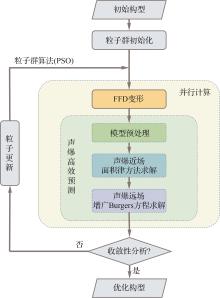
Fig.7
Framework of low sonic boom optimization based on efficient prediction method
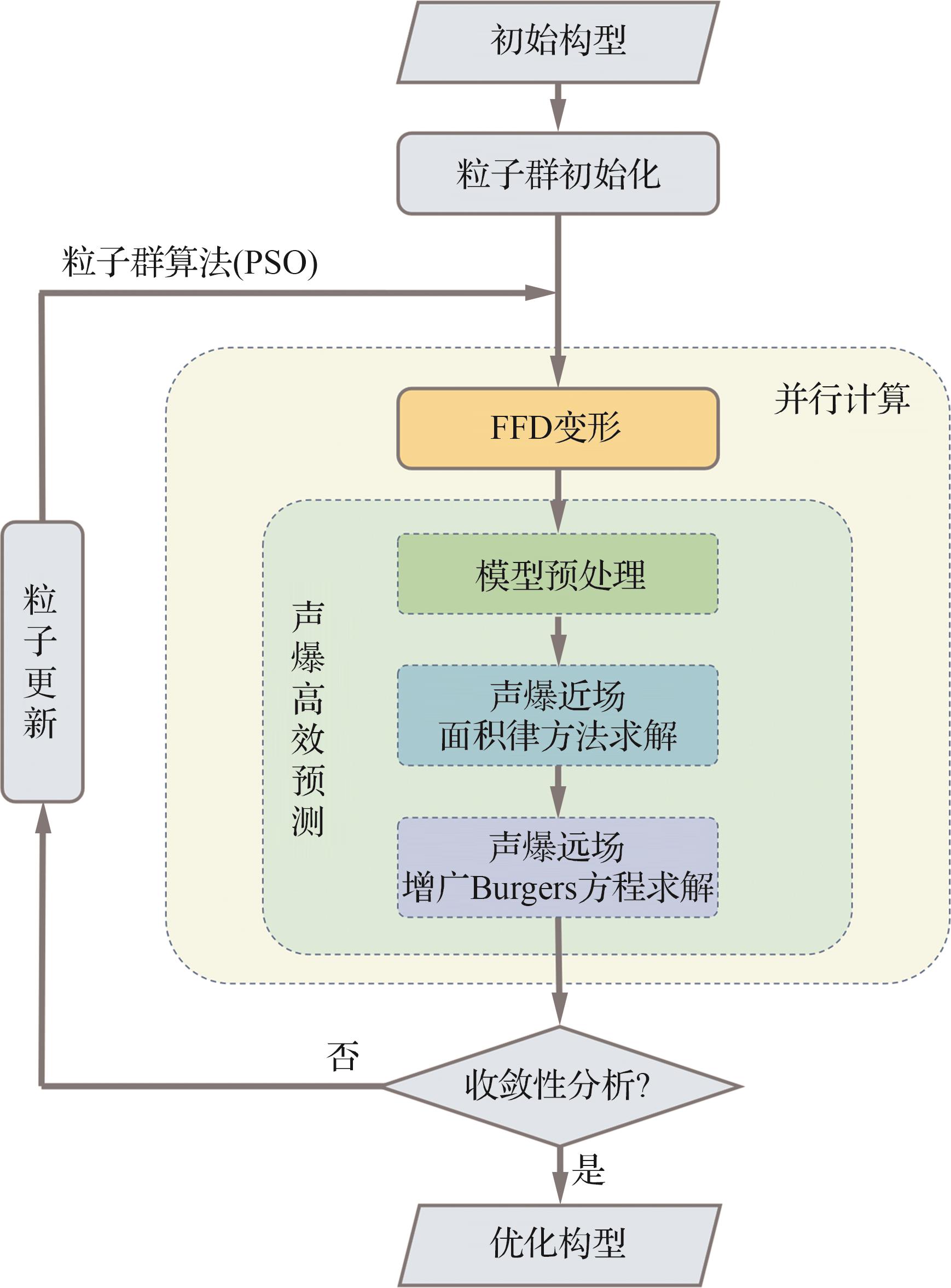
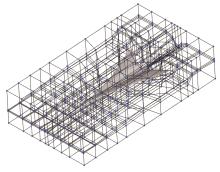
Fig.8
FFD control points layout
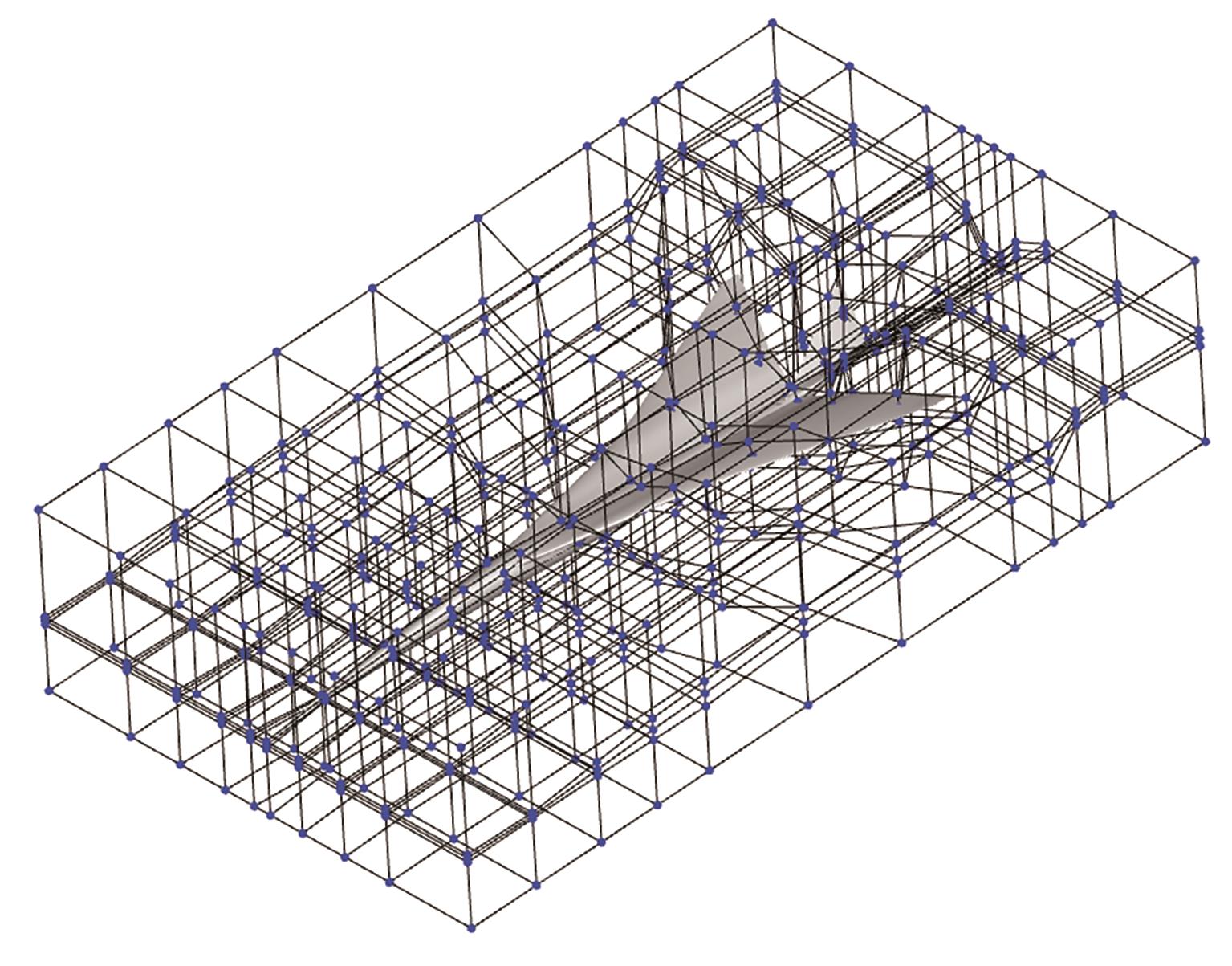
Fig.9
Comparison of geometries between base and Opt1 configurations
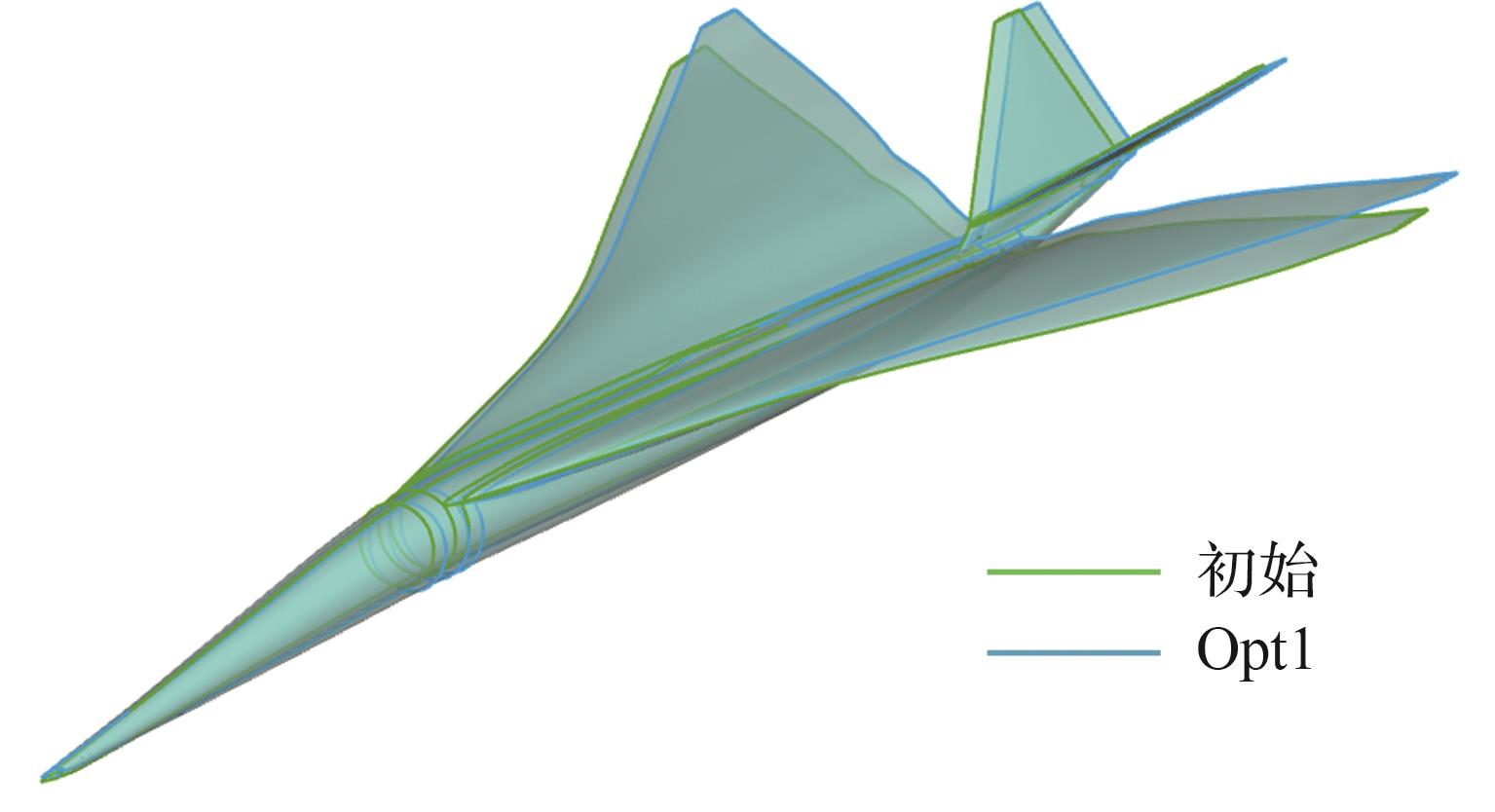
Fig.10
Local comparisons of geometries between base and Opt1 configurations
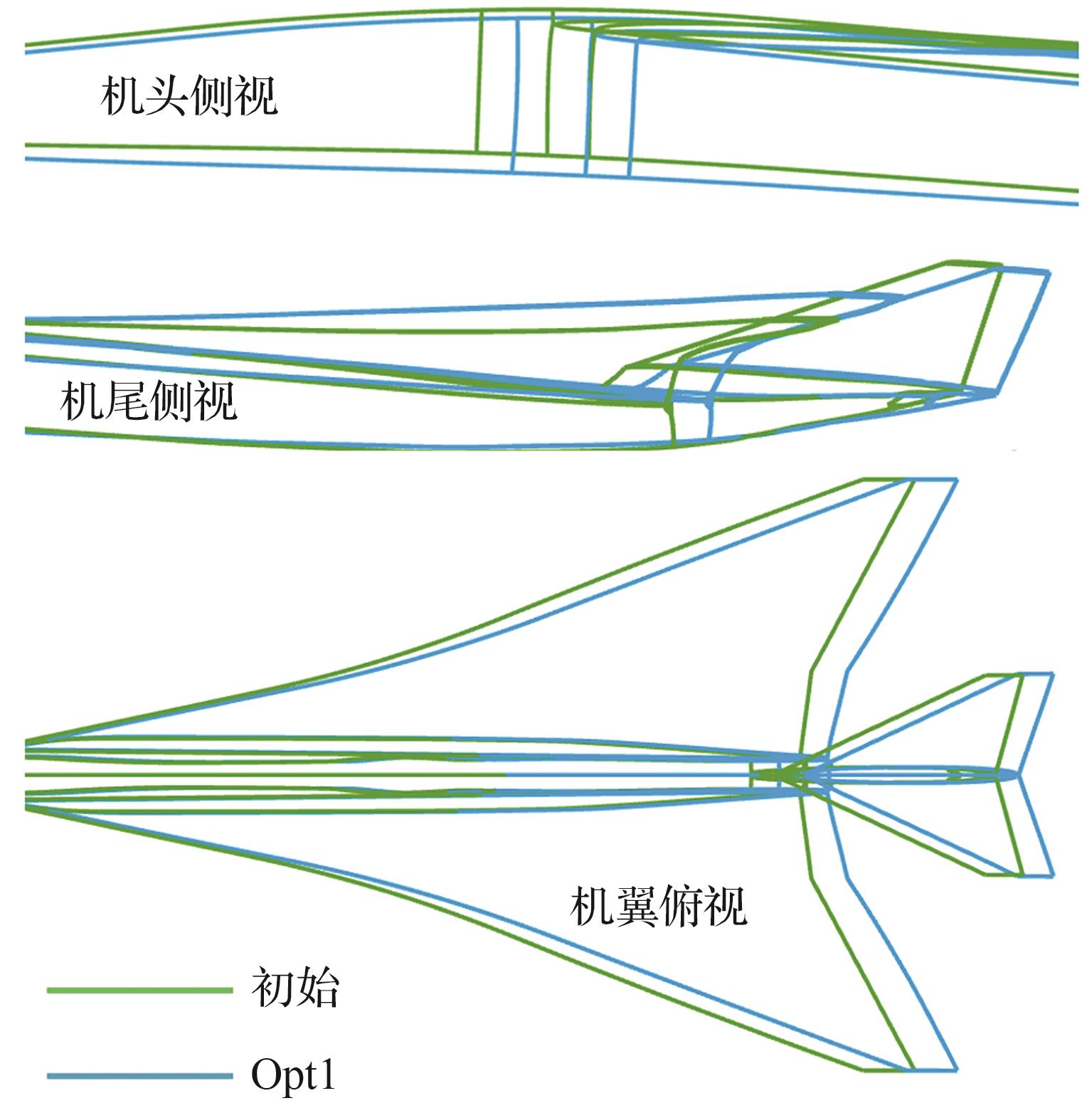
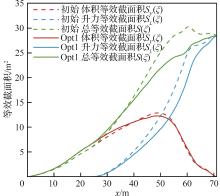
Fig.11
Comparison of equivalent cross-sectional areas between base and Opt1 configurations
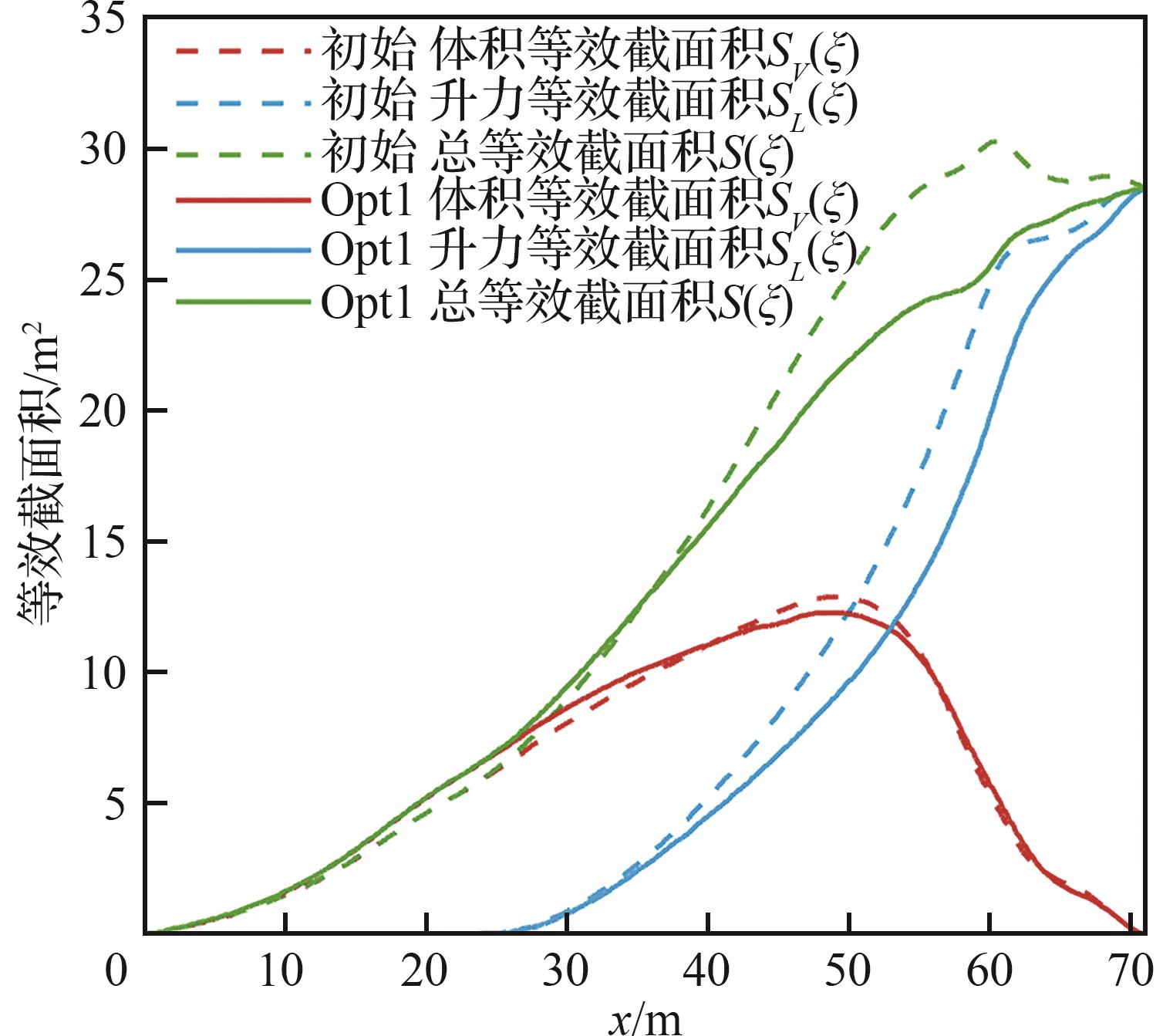
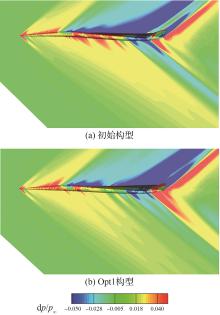
Fig.12
Comparison of near-field flow fields on symmetry plane between base and Opt1 configurations
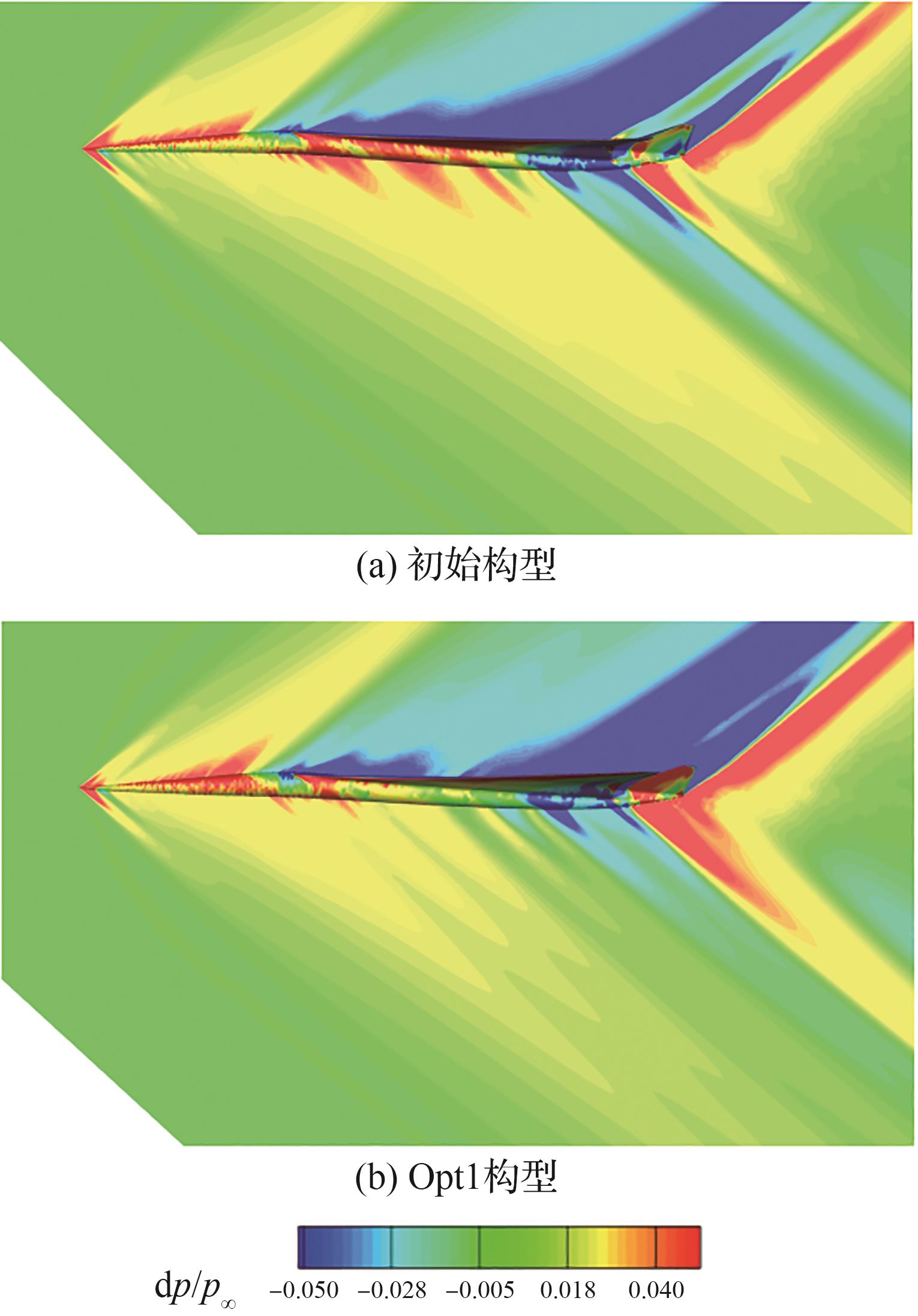
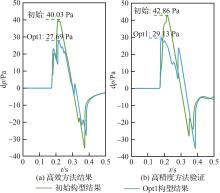
Fig.13
Comparison of far-field signatures between base and Opt1 configurations
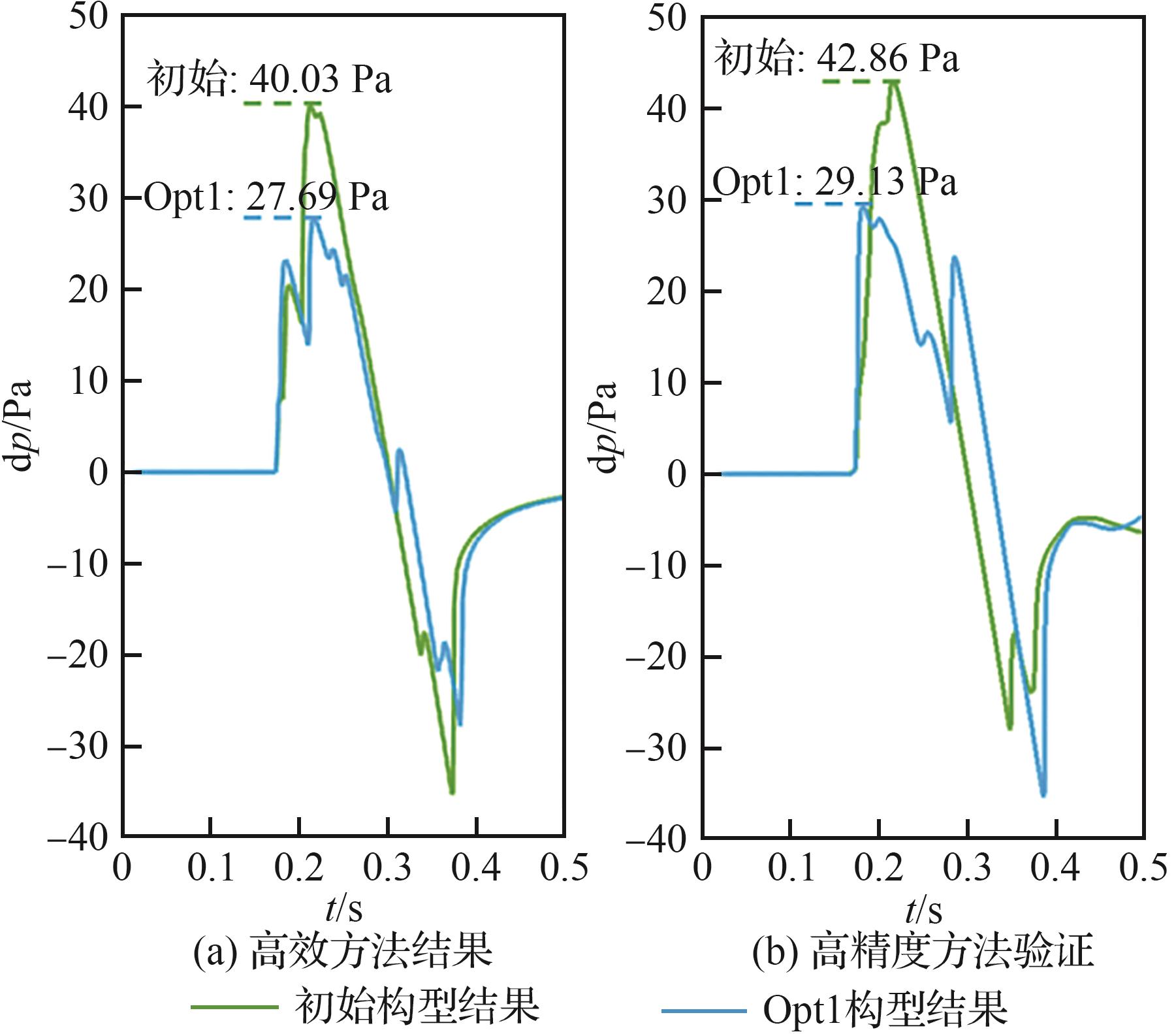
Table 4
Comparison of maximum overpressures of high-precision verification in far field between base and Opt1 configurations
| 最大过压/Pa | 变化量/% | |
|---|---|---|
| 初始构型 | Opt1构型 | |
| 42.86 | 29.13 | -32.03 |
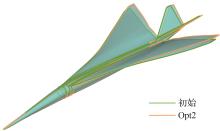
Fig.14
Comparison of geometries between base and Opt2 configurations
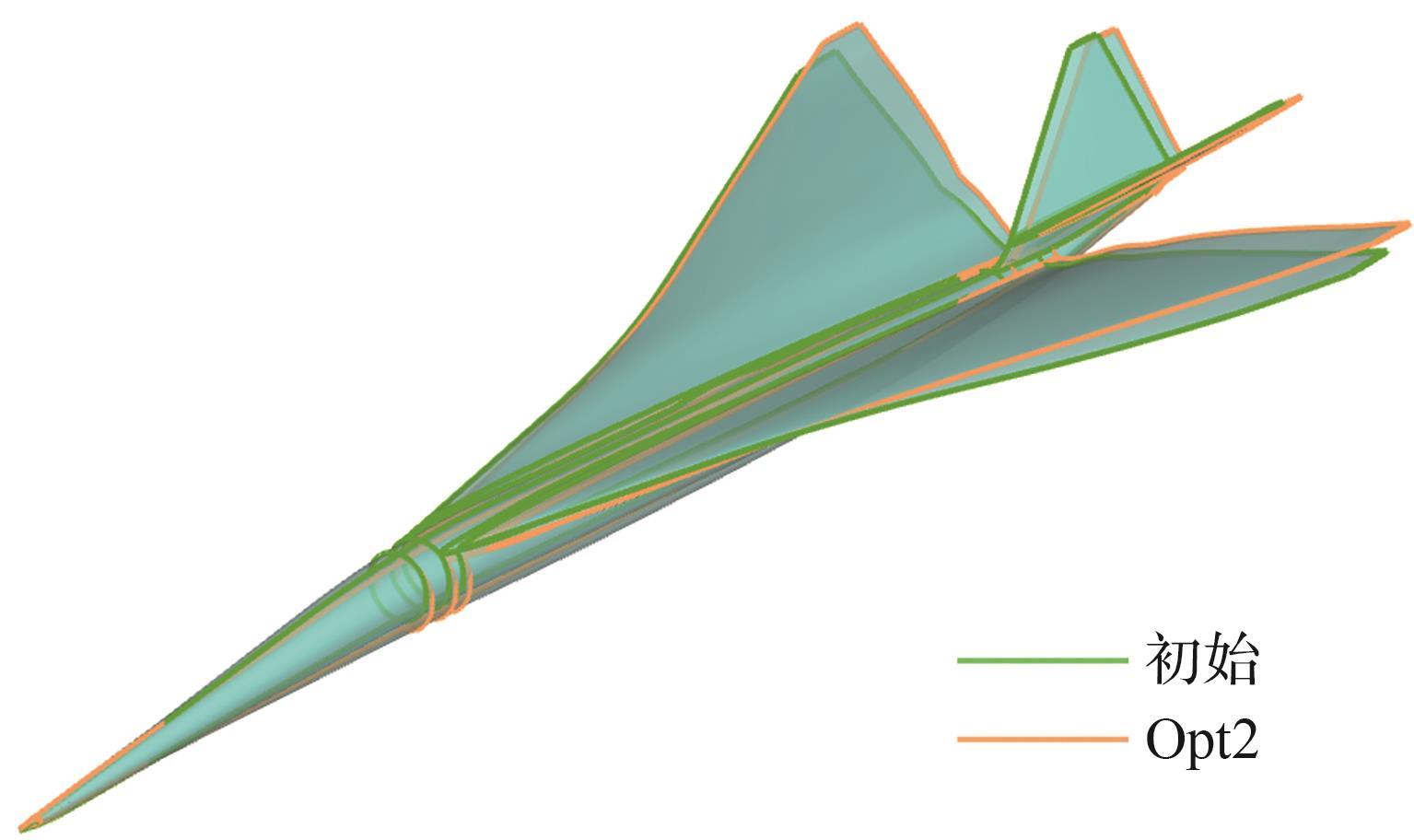
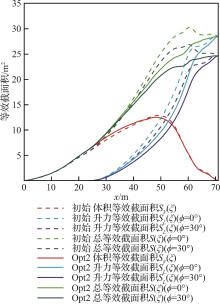
Fig.15
Comparison of equivalent cross-sectional areas between base and Opt2 configurations
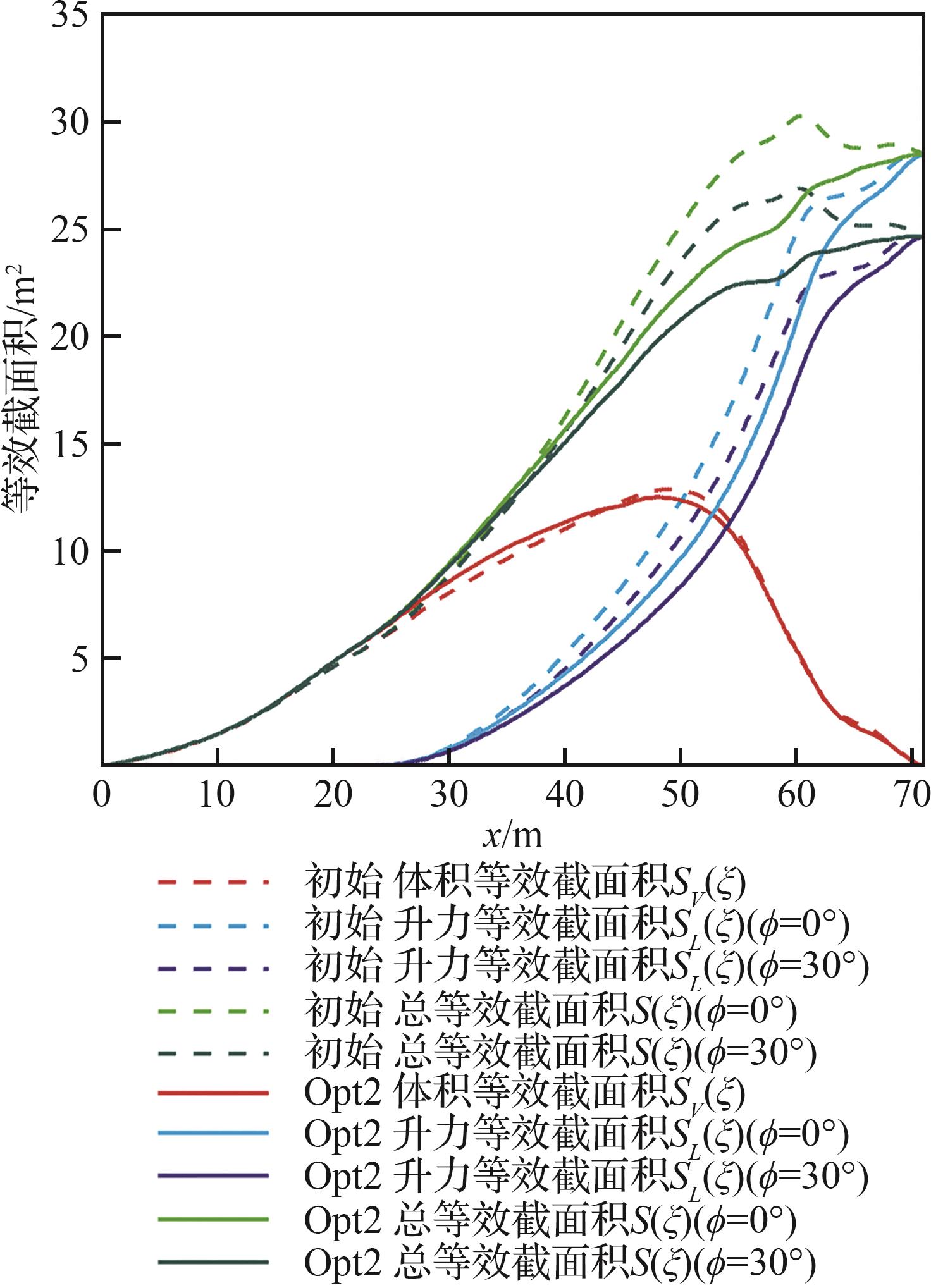
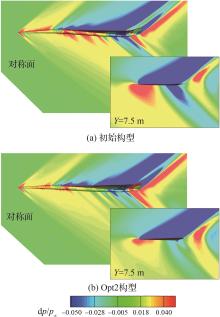
Fig.16
Comparison of near-field flow fields between base and Opt2 configurations
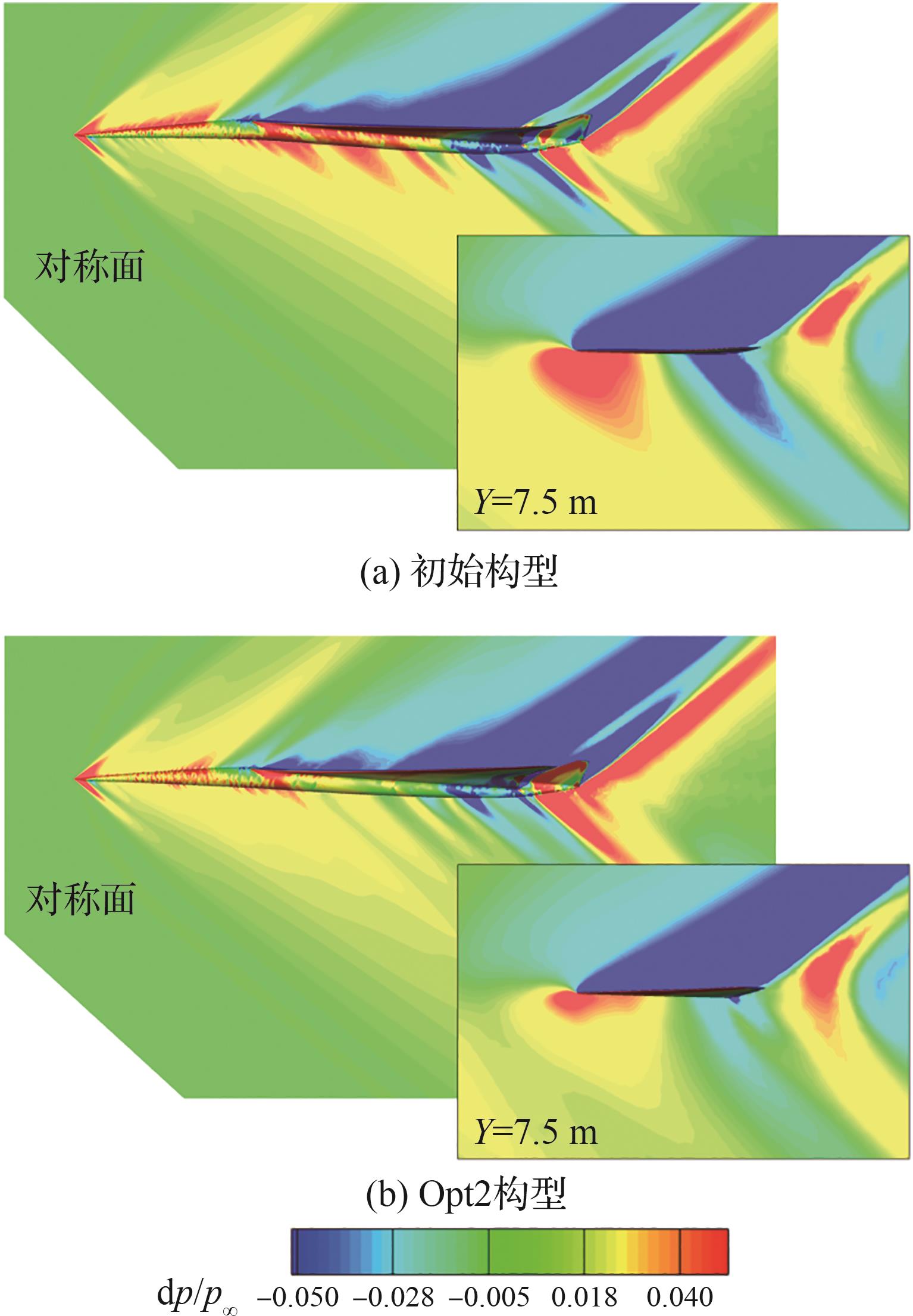
Fig.17
Comparison of far-field signatures at 0° propagation angle between base and Opt2 configurations
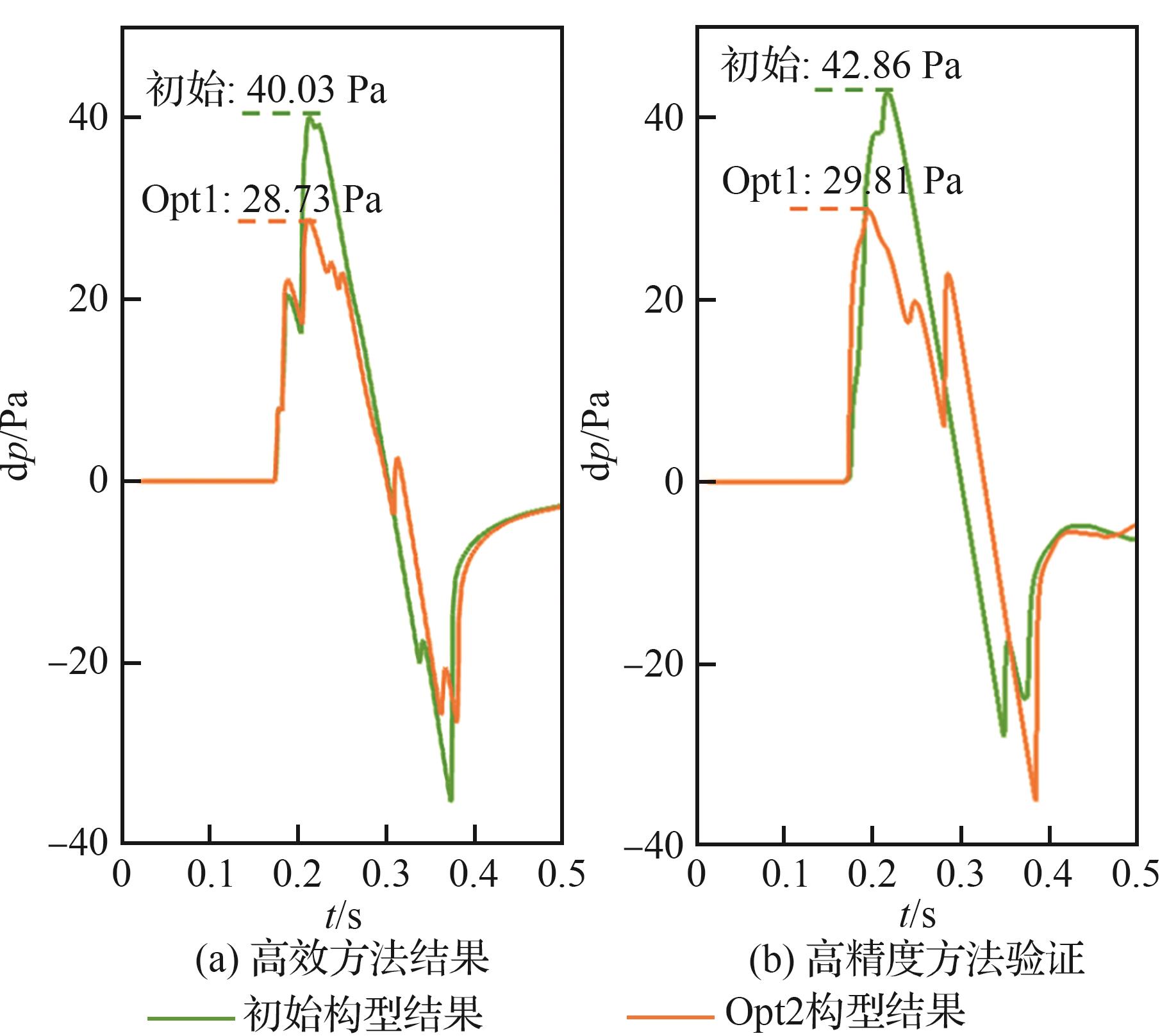
Fig.18
Comparison of far-field signatures at 30° propagation angle between base and Opt2 configurations
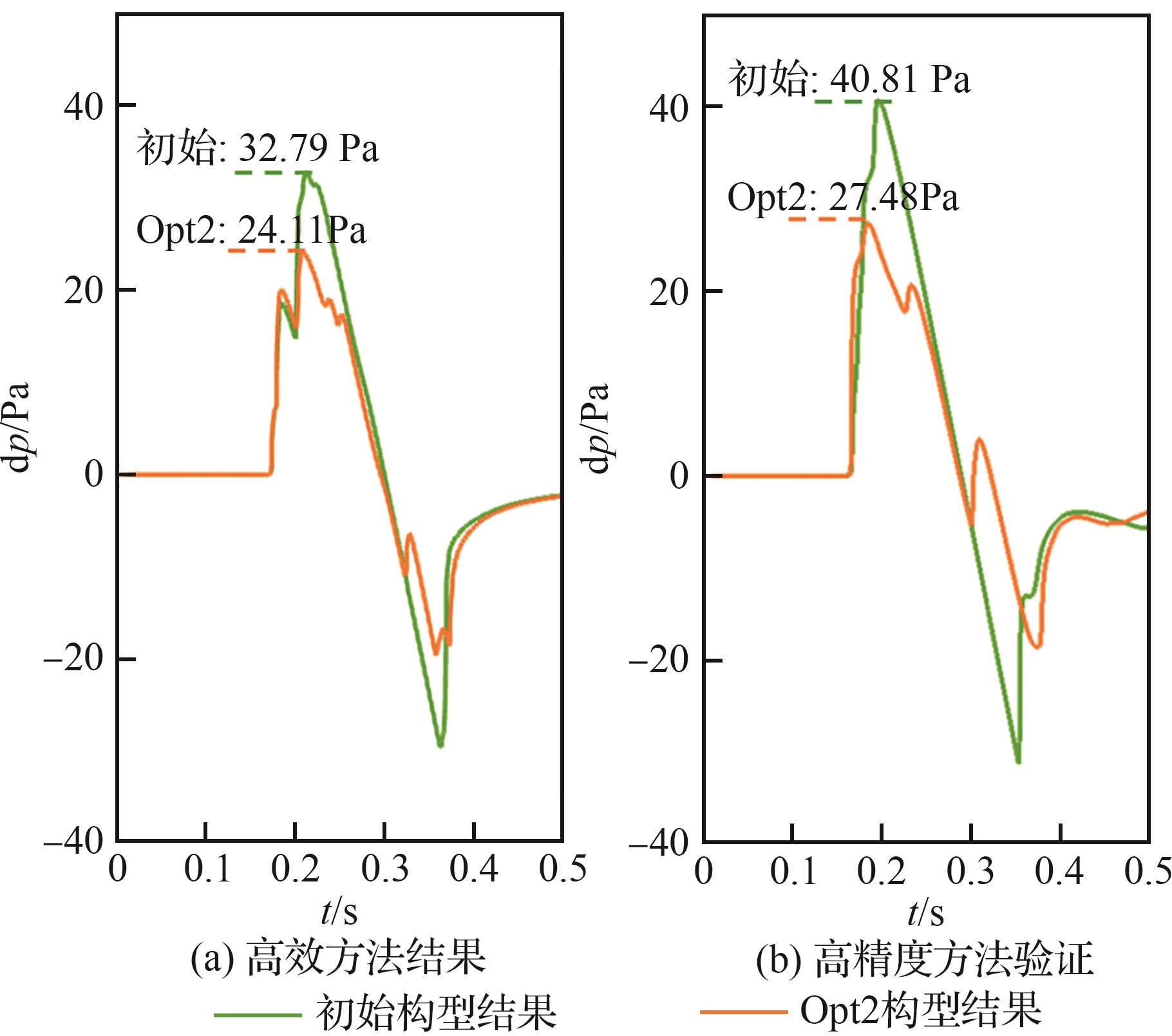
Table 5
Comparison of maximum overpressures of high-precision verification in far field between base and Opt2 configurations
| 传播角/(°) | 最大过压/Pa | 变化量/% | |
|---|---|---|---|
| 初始构型 | Opt2构型 | ||
| 0 | 42.86 | 29.81 | -30.45 |
| 30 | 40.81 | 27.48 | -32.66 |
Fig.19
Distribution of some independent variables in sonic boom dataset
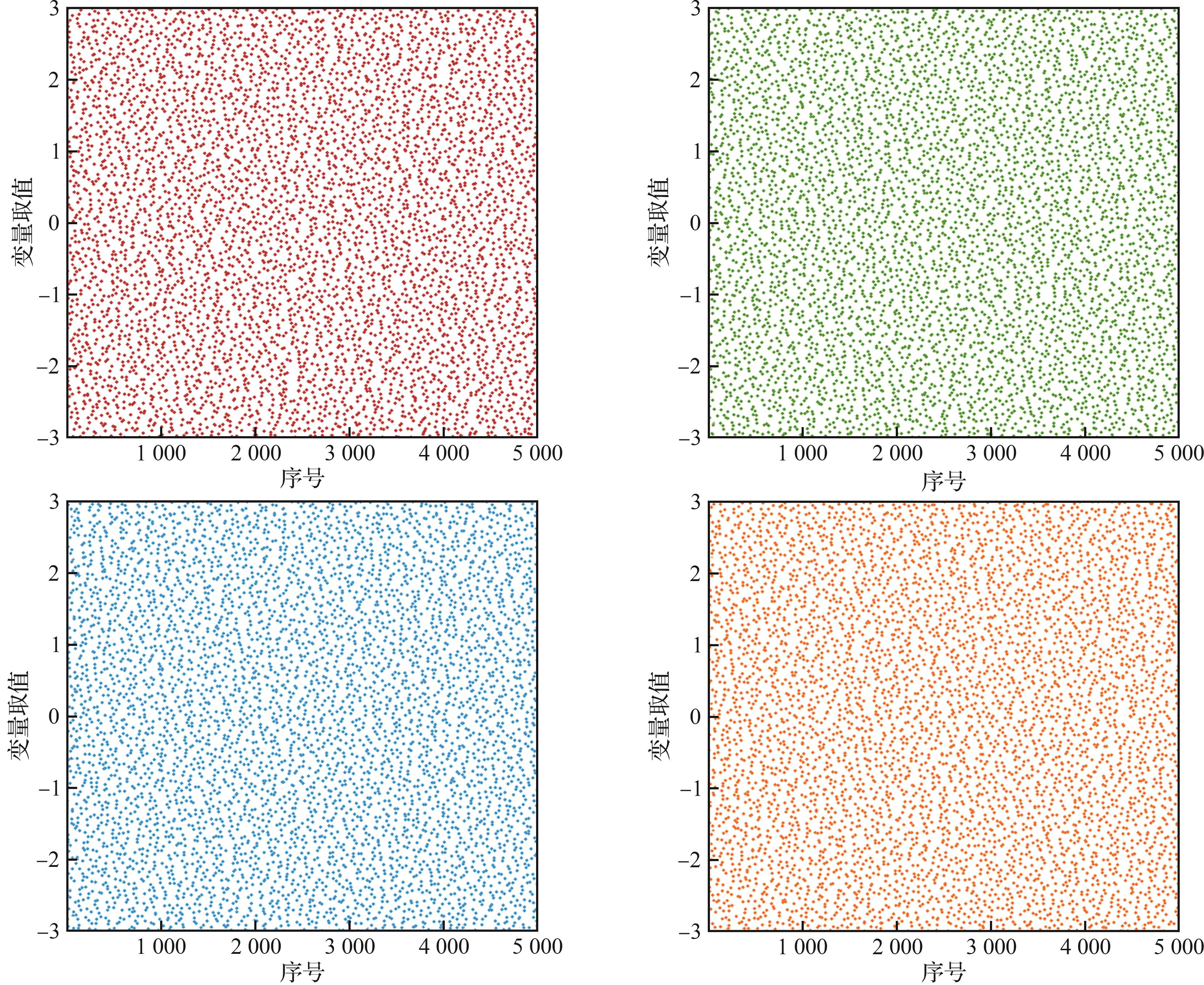
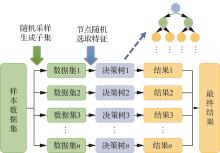
Fig.20
Schematic diagram of random forest algorithm
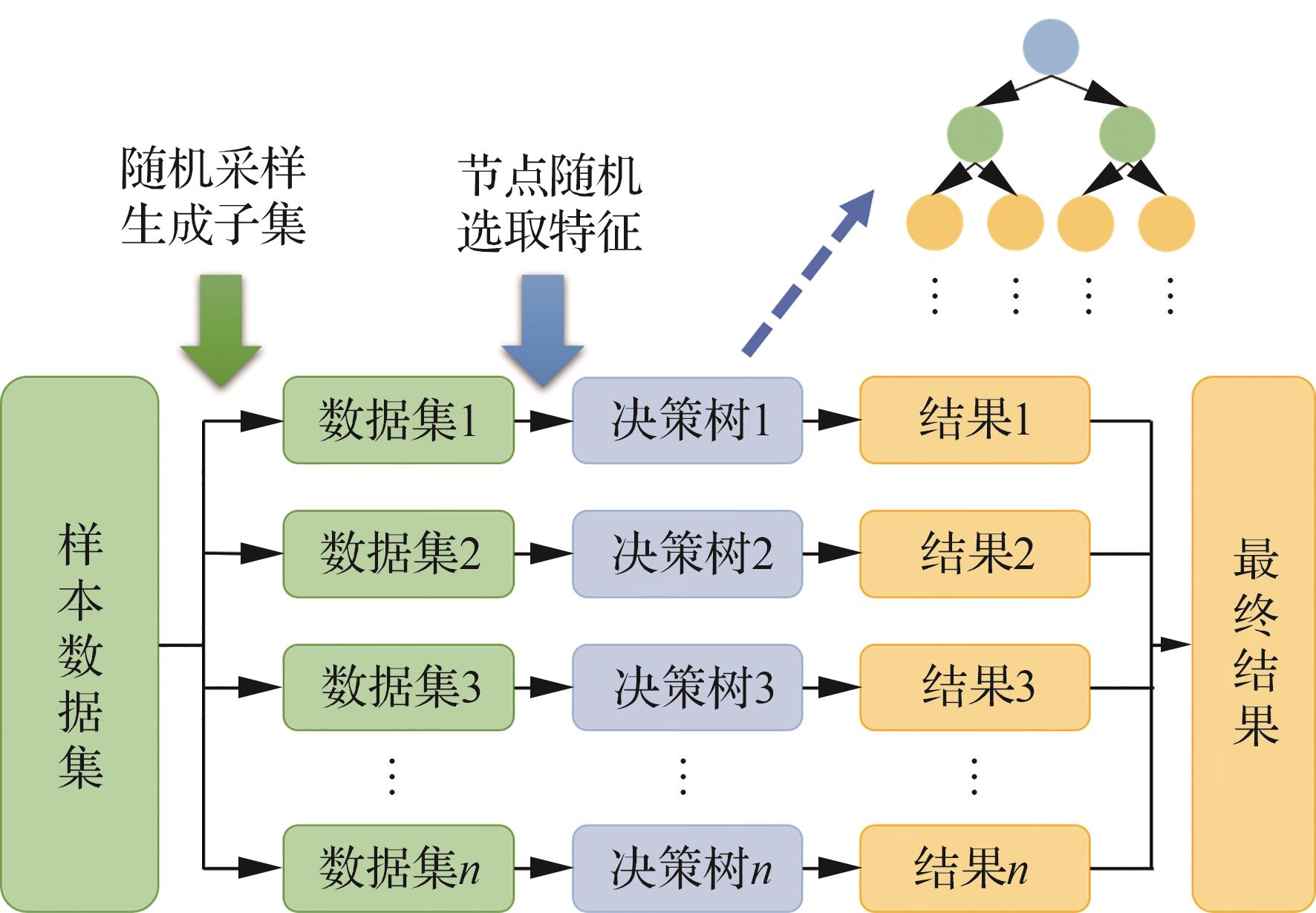
Fig.21
Schematic diagram of AdaBoost algorithm
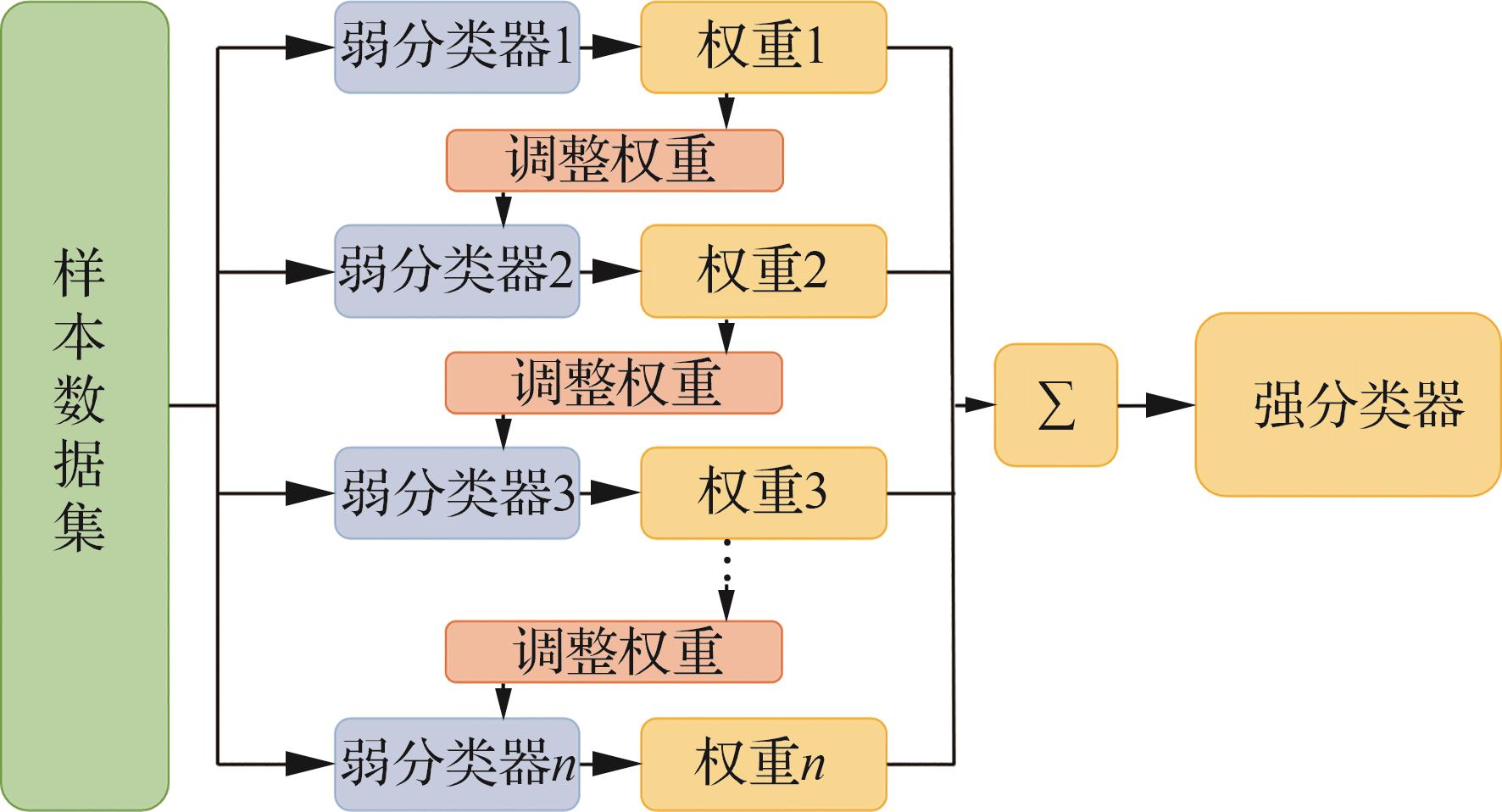
Table 6
Parameters and accuracy scores of data mining models
| 算法 | 参数 | 准确率得分 |
|---|---|---|
| 随机森林 | 决策树数:800 最大深度:不限 | 0.902 |
| 自适应增强 | 弱分类器数:1 000 学习率:1 | 0.946 |
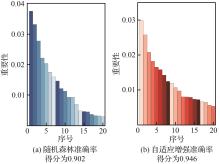
Fig.22
Sonic boom critical design variables and importances
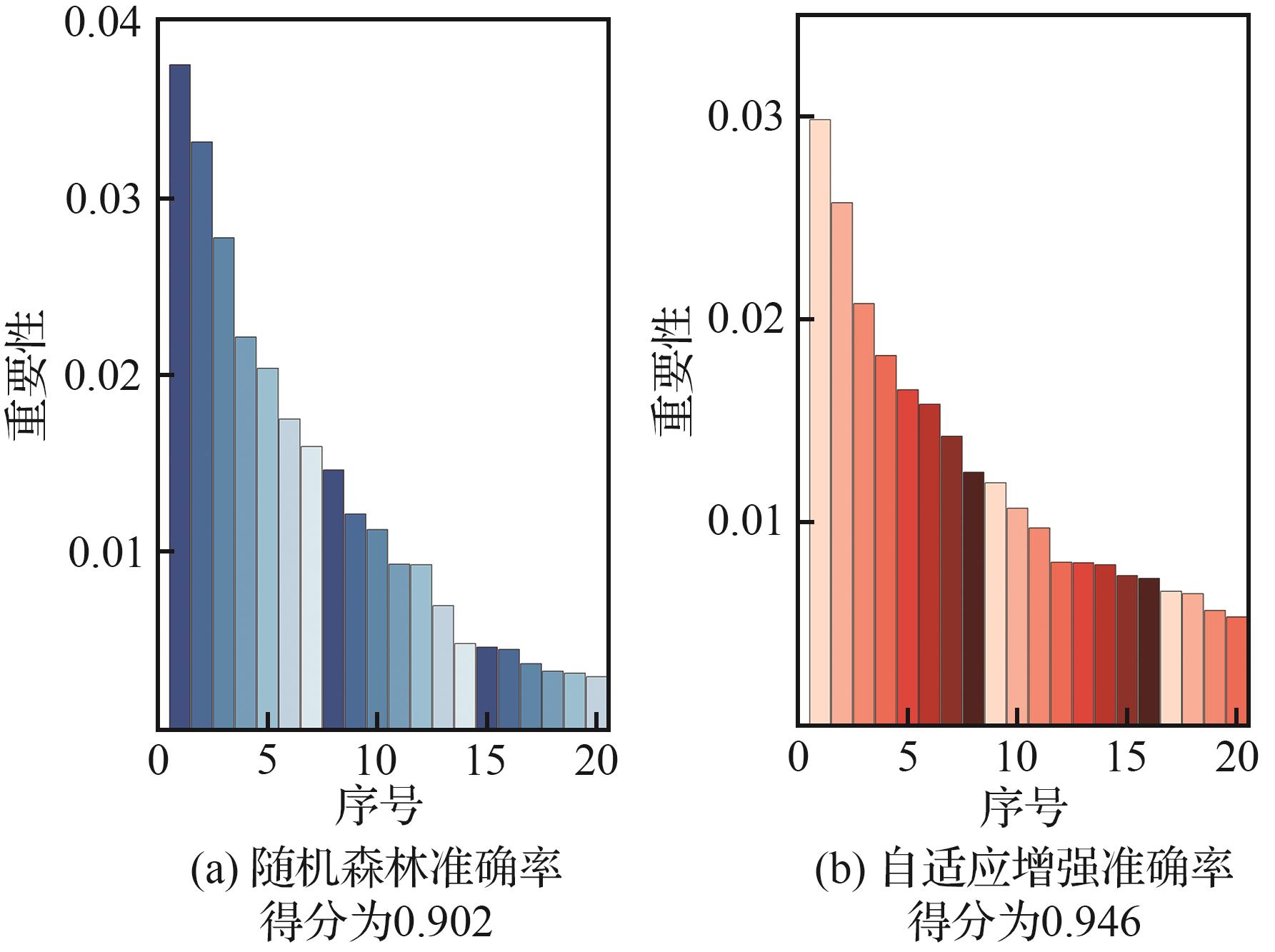
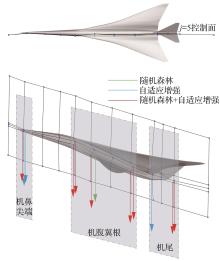
Fig.23
Positions of sonic boom critical design variables
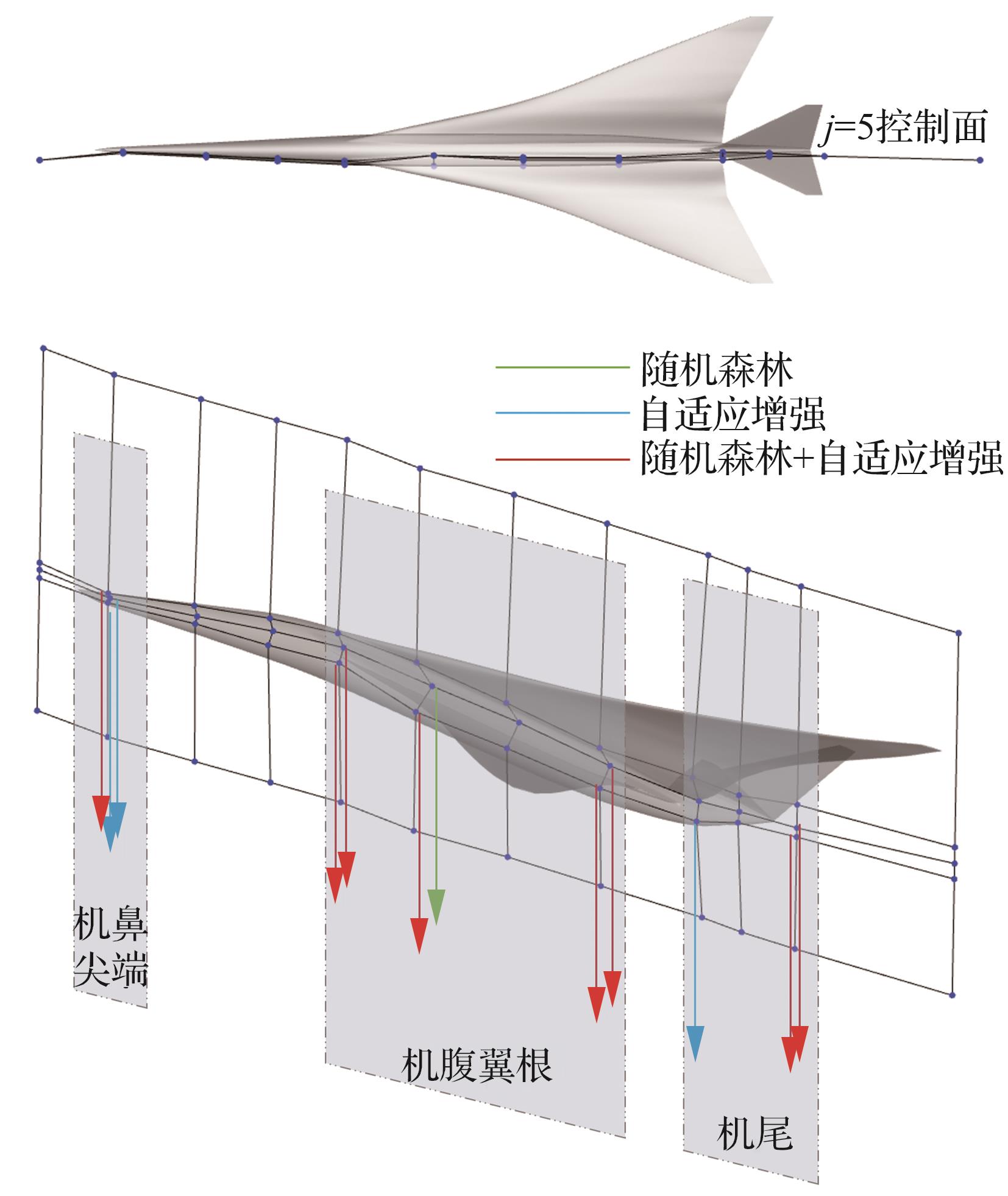
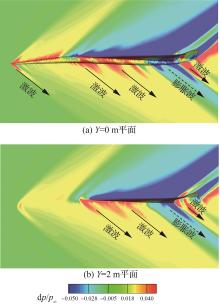
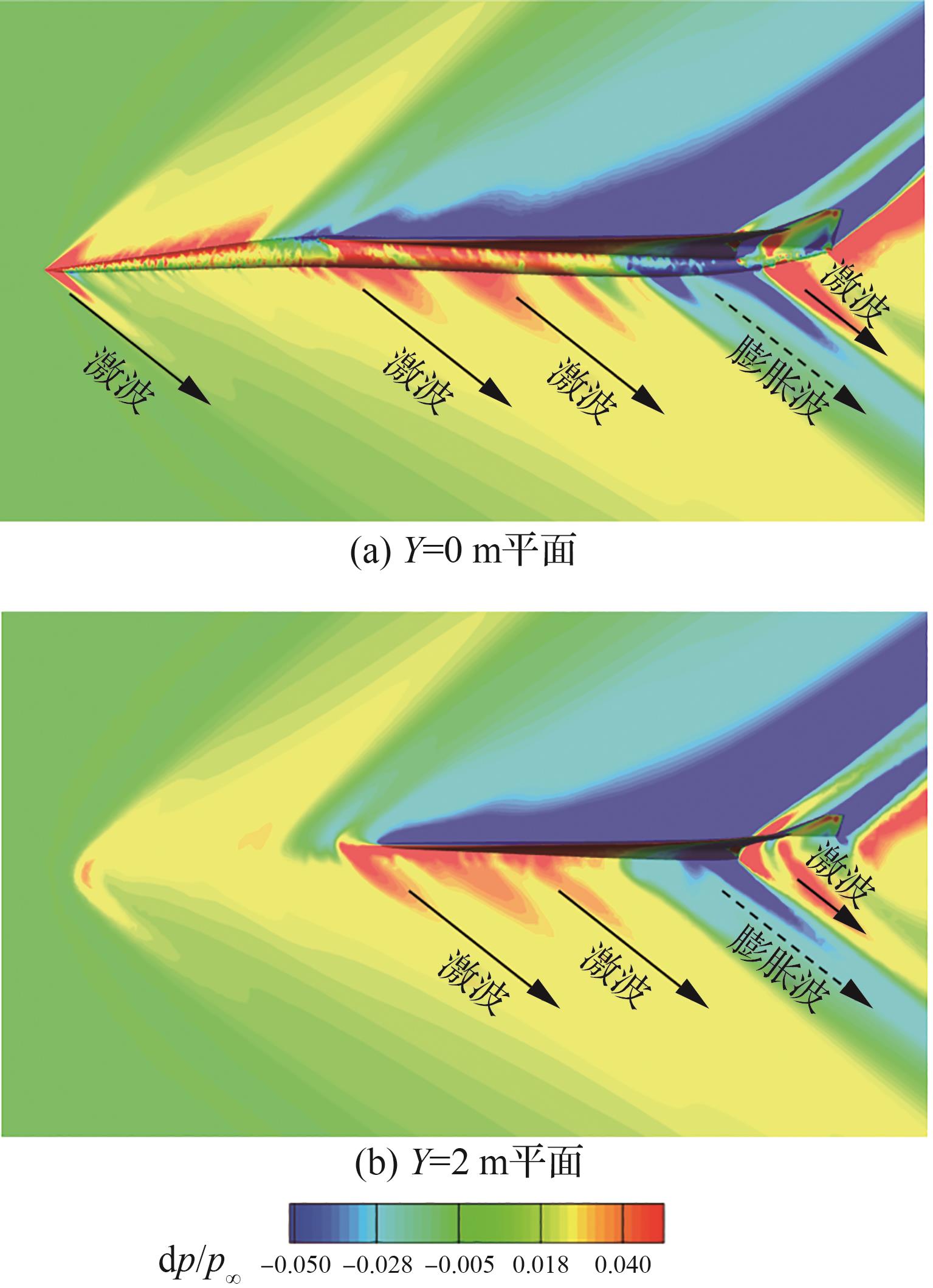
Fig.24
Overpressure contours on Y plane of base configuration in near field
| [1] | CANDEL S. Concorde and the future of supersonic transport[J]. Journal of Propulsion and Power, 2004, 20(1): 59-68. |
| [2] | 朱自强, 兰世隆. 超声速民机和降低音爆研究[J]. 航空学报, 2015, 36(8): 2507-2528. |
| ZHU Z Q, LAN S L. Study of supersonic commercial transport and reduction of sonic boom[J]. Acta Aeronautica et Astronautica Sinica, 2015, 36(8): 2507-2528 (in Chinese). | |
| [3] | 丁玉临, 韩忠华, 乔建领, 等. 超声速民机总体气动布局设计关键技术研究进展[J]. 航空学报, 2023, 44(2): 626310. |
| DING Y L, HAN Z H, QIAO J L, et al. Research progress in key technologies for conceptual-aerodynamic configuration design of supersonic transport aircraft[J]. Acta Aeronautica et Astronautica Sinica, 2023, 44(2): 626310 (in Chinese). | |
| [4] | 韩忠华, 乔建领, 丁玉临, 等. 新一代环保型超声速客机气动相关关键技术与研究进展[J]. 空气动力学学报, 2019, 37(4): 620-635. |
| HAN Z H, QIAO J L, DING Y L, et al. Key technologies for next-generation environmentally-friendly supersonic transport aircraft: A review of recent progress[J]. Acta Aerodynamica Sinica, 2019, 37(4): 620-635 (in Chinese). | |
| [5] | RICHWINE D, BRANDON J. Quiet supersonic technology (QueSST) aircraft preliminary design status and low-boom flight demonstration (LBFD) project update: NF1676L-28931[R]. Washington, D.C.: NASA, 2018. |
| [6] | 兰世隆. 超声速民机声爆理论、预测和最小化方法概述[J]. 空气动力学学报, 2019, 37(4): 646-654, 645. |
| LAN S L. Overview of sonic boom theory, prediction and minimization methods for supersonic civil aircraft[J]. Acta Aerodynamica Sinica, 2019, 37(4): 646-654, 645 (in Chinese). | |
| [7] | WHITHAM G B. The flow pattern of a supersonic projectile[J]. Communications on Pure and Applied Mathematics, 1952, 5(3): 301-348. |
| [8] | THOMAS C L. Extrapolation of sonic boom pressure signatures by the waveform parameter method: NASA-TN-D-6832[R]. Washington, D.C.: NASA, 1972. |
| [9] | 王刚, 马博平, 雷知锦, 等. 典型标模音爆的数值预测与分析[J]. 航空学报, 2018, 39(1): 121458. |
| WANG G, MA B P, LEI Z J, et al. Simulation and analysis for sonic boom on several benchmark cases[J]. Acta Aeronautica et Astronautica Sinica, 2018, 39(1): 121458 (in Chinese). | |
| [10] | ISHIKAWA H, TANAKA K, MAKINO Y, et al. Sonic-boom prediction using Euler CFD codes with structured/unstructured overset method[C]∥ 27th Congress of International Council of the Aeronautical Sciences. 2010: 2010-2012. |
| [11] | 黄江涛, 张绎典, 高正红, 等. 基于流场/声爆耦合伴随方程的超声速公务机声爆优化[J]. 航空学报, 2019, 40(5): 122505. |
| HUANG J T, ZHANG Y D, GAO Z H, et al. Sonic boom optimization of supersonic jet based on flow/sonic boom coupled adjoint equations[J]. Acta Aeronautica et Astronautica Sinica, 2019, 40(5): 122505 (in Chinese). | |
| [12] | 单程军, 贡天宇, 易理哲, 等. 超声速民机高效高可信度声爆/气动多学科优化方法[J]. 航空学报, 2024, 45(24): 51-68. |
| SHAN C J, GONG T Y, YI L Z, et al. High-efficiency and high-reliability sonic boom/aerodynamic multidisciplinary optimization method for supersonic civil aircraft[J]. Acta Aeronautica et Astronautica Sinica, 2024, 45(24): 51-68 (in Chinese). | |
| [13] | WALKDEN F. The shock pattern of a wing-body combination, far from the flight path[J]. Aeronautical Quarterly, 1958, 9(2): 164-194. |
| [14] | LIGHTHILL M J. Supersonic flow past slender bodies of revolution the slope of whose meridian section is discontinuous[J]. The Quarterly Journal of Mechanics and Applied Mathematics, 1948, 1(1): 90-102. |
| [15] | BLACKSTOCK D T. Thermoviscous attenuation of plane, periodic, finite-amplitude sound waves[J]. The Journal of the Acoustical Society of America, 1964, 36(3): 534-542. |
| [16] | CARLTON T W, BLACKSTOCK D T. Propagation of plane sound waves of finite amplitude in inhomogeneous fluids[J]. The Journal of the Acoustical Society of America, 1974, 56(S1): S42. |
| [17] | PIERCE A D. Acoustics: An introduction to its physical principles and applications[M]. Gewerbesraße: Springer Cham, 2019: 56-57. |
| [18] | CLEVELAND R O. Propagation of sonic booms through a real, stratified atmosphere[D]. Austin: The University of Texas, 1995. |
| [19] | 张绎典, 黄江涛, 高正红. 基于增广Burgers方程的音爆远场计算及应用[J]. 航空学报, 2018, 39(7): 122039. |
| ZHANG Y D, HUANG J T, GAO Z H. Far field simulation and applications of sonic boom based on augmented Burgers equation[J]. Acta Aeronautica et Astronautica Sinica, 2018, 39(7): 122039 (in Chinese). | |
| [20] | 顾奕然, 黄江涛, 陈树生, 等. 基于逆向增广Burgers方程的声爆反演技术[J]. 航空学报, 2023, 44(2): 626258. |
| GU Y R, HUANG J T, CHEN S S, et al. Sonic boom inversion technology based on inverse augmented Burgers equation[J]. Acta Aeronautica et Astronautica Sinica, 2023, 44(2): 626258 (in Chinese). | |
| [21] | CHEN S S, QIU J Y, YANG H, et al. Deep learning for inverse design of low-boom supersonic configurations[J]. Advances in Aerodynamics, 2023, 5(1): 13. |
| [22] | PARK M A, MORGENSTERN J M. Summary and statistical analysis of the first AIAA sonic boom prediction workshop[J]. Journal of Aircraft, 2016, 53(2): 578-598. |
| [23] | MELISSA C. Lockheed Martin 1021 full configuration (2014 optional)[EB/OL]. (2018-12-21)[2024-10-28]. . |
| [24] | BUONANNO M, CHAI S, MARCONI F, et al. Overview of sonic boom reduction efforts on the Lockheed Martin N+2 supersonic validations program[C]∥32nd AIAA Applied Aerodynamics Conference. Reston: AIAA, 2014: 2138. |
| [25] | PLOTKIN K. Review of sonic boom theory[C]∥12th Aeroacoustic Conference. 1989: 1105. |
| [26] | PARK M A, CAMPBELL R L, ELMILIGUI A A, et al. Specialized CFD grid generation methods for near-field sonic boom prediction[C]∥52nd Aerospace Sciences Meeting. Reston: AIAA, 2014: 0115. |
| [27] | PLOTKIN K, MAGLIERI D. Sonic boom research: History and future[C]∥33rd AIAA Fluid Dynamics Conference and Exhibit. Reston: AIAA, 2003: 3575. |
| [28] | SEDERBERG T W, PARRY S R. Free-form deformation of solid geometric models[C]∥Proceedings of the 13th Annual Conference on Computer Graphics and Interactive Techniques. 1986: 151-160. |
| [29] | LEE C, KOO D, ZINGG D W. Comparison of B-spline surface and free-form deformation geometry control for aerodynamic optimization[J]. AIAA Journal, 2016, 55(1): 228-240. |
| [30] | KENNEDY J, EBERHART R. Particle swarm optimization[C]∥Proceedings of ICNN’95-International Conference on Neural Networks. Piscataway: IEEE Press, 1995: 1942-1948. |
| [31] | MIRJALILI S, SONG DONG J, LEWIS A, et al. Particle swarm optimization: Theory, literature review, and application in airfoil design[M]. Gewerbesraße: Springer Cham, 2020: 167-184. |
| [32] | 张力文, 宋文萍, 韩忠华, 等. 声爆产生、传播和抑制机理研究进展[J]. 航空学报, 2022, 43(12): 025649. |
| ZHANG L W, SONG W P, HAN Z H, et al. Recent progress of sonic boom generation, propagation, and mitigation mechanism[J]. Acta Aeronautica et Astronautica Sinica, 2022, 43(12): 025649 (in Chinese). | |
| [33] | BAN N, YAMAZAKI W, KUSUNOSE K. Low-boom/low-drag design optimization of innovative supersonic transport configuration[J]. Journal of Aircraft, 2017, 55(3): 1071-1081. |
| [34] | PLOTKIN K, SIZOV N, MORGENSTERN J. Examination of sonic boom minimization experienced indoors[C]∥46th AIAA Aerospace Sciences Meeting and Exhibit. Reston: AIAA, 2008: 57. |
| [35] | JEONG S, CHIBA K, OBAYASHI S. Data mining for aerodynamic design space[J]. Journal of Aerospace Computing, Information, and Communication, 2005, 2(11): 452-469. |
| [36] | NUNEZ M, GUENOV M D. Design-exploration framework for handling changes affecting conceptual design[J]. Journal of Aircraft, 2013, 50(1): 114-129. |
| [37] | 张伟伟, 寇家庆, 刘溢浪. 智能赋能流体力学展望[J]. 航空学报, 2021, 42(4): 524689. |
| ZHANG W W, KOU J Q, LIU Y L. Prospect of artificial intelligence empowered fluid mechanics[J]. Acta Aeronautica et Astronautica Sinica, 2021, 42(4): 524689 (in Chinese). | |
| [38] | 金世轶,陈树生,杨华,等. 基于数据挖掘的翼型气动隐身多学科分析[J]. 航空动力学报, 2025, 40(8): 20230435. |
| JIN S Y, CHEN S S, YANG H, et al. Multi-disciplinary analysis of aerodynamics stealth of airfoil based on data mining[J]. Journal of Aerospace Power, 2025, 40(8): 20230435 (in Chinese). | |
| [39] | BIAU G, SCORNET E. A random forest guided tour[J]. TEST, 2016, 25(2): 197-227. |
| [40] | SCORNET E. On the asymptotics of random forests[J]. Journal of Multivariate Analysis, 2016, 146: 72-83. |
| [41] | ALTMAN N, KRZYWINSKI M. Ensemble methods: Bagging and random forests[J]. Nature Methods, 2017, 14: 933-934. |
| [42] | HU W M, HU W, MAYBANK S. AdaBoost-based algorithm for network intrusion detection[J]. IEEE Transactions on Systems, Man, and Cybernetics Part B, Cybernetics, 2008, 38(2): 577-583. |
| [43] | PANDEY P, PRABHAKAR R. An analysis of machine learning techniques (J48 & AdaBoost)-for classification[C]∥2016 1st India International Conference on Information Processing (IICIP). Piscataway: IEEE Press, 2016: 1-6. |
| [44] | HOWE D, SIMMONS III F, FREUND D. Development of the gulfstream quiet spike TM for sonic boom minimization[C]∥46th AIAA Aerospace Sciences Meeting and Exhibit. Reston: AIAA, 2008. |
| [1] | Yihao XU, Pengcheng DONG, Junchao ZHENG, Chunqing TAN, Hailong TANG. Overall performance optimization method of adaptive cycle propulsion system [J]. Acta Aeronautica et Astronautica Sinica, 2025, 46(7): 130987-130987. |
| [2] | Kefeng ZHENG, Wenping SONG, Han NIE, Yulin DING, Jianling QIAO, Qing CHEN, Yiheng WANG, Ke SONG, Keshi ZHANG. Natural laminar flow wing design method for supersonic civil aircraft considering full-aircraft sonic-boom characteristics [J]. Acta Aeronautica et Astronautica Sinica, 2025, 46(20): 531214-531214. |
| [3] | Chao YANG, Yuting TAN, Wei WANG, Yan ZHAO, Xiongqing YU. Multidisciplinary optimization with low-boom design for supersonic civil aircraft conceptual design [J]. Acta Aeronautica et Astronautica Sinica, 2025, 46(20): 531457-531457. |
| [4] | Linxuan YANG, Huicai MA, Liping PANG. Design and performance simulation of environmental control system for supersonic civil aircraft [J]. Acta Aeronautica et Astronautica Sinica, 2025, 46(20): 531585-531585. |
| [5] | Tianyu GONG, Chengjun SHAN, Lizhe YI, Yaosong LONG, Zhongtao CHENG. Impact of engine geometric parameters on sonic boom characteristics of supersonic civil aircraft [J]. Acta Aeronautica et Astronautica Sinica, 2025, 46(20): 531592-531592. |
| [6] | Qing CHEN, Zhonghua HAN, Keshi ZHANG, Jianling QIAO, Yulin DING, Wenping SONG. A full-carpet design optimization method for low-boom supersonic civil aircraft configuration [J]. Acta Aeronautica et Astronautica Sinica, 2025, 46(20): 531909-531909. |
| [7] | Zhenrong LIAO, Junfu LI, Bowen ZHAO, Ming ZHANG, Lu XIE, Zhonghua HAN, Mengqi AI. Broad-speed-range wing design of supersonic civil aircraft based on engineering [J]. Acta Aeronautica et Astronautica Sinica, 2025, 46(20): 531915-531915. |
| [8] | Fulin LI, Min CHEN, Hailong TANG, Jiyuan ZHANG, Yue ZHOU, Jing MA. Control law design for variable cycle engine considering environmental indicators [J]. Acta Aeronautica et Astronautica Sinica, 2025, 46(16): 231624-231624. |
| [9] | Ruitao ZHANG, Cong WANG, Jun TAO, Liyue WANG, Gang SUN. Airfoil parameterization method based on latent diffusion model [J]. Acta Aeronautica et Astronautica Sinica, 2025, 46(10): 631180-631180. |
| [10] | Lulu JIANG, Xin PAN, Wei JIANG, Rui FENG, Gang CHEN. Optimization shape design of capsule-supersonic parachute system based on fusion surrogate strategy [J]. Acta Aeronautica et Astronautica Sinica, 2025, 46(1): 630471-630471. |
| [11] | Yanyan LUO, Shuo YANG, Xiaosong PAN, Xuhuai ZHAO, Li ZHANG. Signal reflection suppression and optimized design of high⁃speed connectors for aerospace applications [J]. Acta Aeronautica et Astronautica Sinica, 2024, 45(7): 328937-328937. |
| [12] | Jinzhao DAI, Haixin CHEN. Optimization design method of three⁃dimensional wave cancellation biplane derived by shock⁃wave morphology [J]. Acta Aeronautica et Astronautica Sinica, 2024, 45(6): 628942-628942. |
| [13] | Junfu LI, Qing CHEN, Wei WANG, Zhonghua HAN, Yuting TAN, Yulin DING, Lu XIE, Jianling QIAO, Ke SONG, Junqiang AI. Design of low sonic boom high efficiency layout for advanced supersonic civil aircraft [J]. Acta Aeronautica et Astronautica Sinica, 2024, 45(6): 629613-629613. |
| [14] | Shusheng CHEN, Muliang JIA, Yanxu LIU, Zhenghong GAO, Xinghao XIANG. Deformation modes and key technologies of aerodynamic layout design for morphing aircraft: Review [J]. Acta Aeronautica et Astronautica Sinica, 2024, 45(6): 629595-629595. |
| [15] | Chengjun SHAN, Tianyu GONG, Lizhe YI, Haohui YANG, Yaosong LONG. High-efficiency and high-reliability sonic boom/aerodynamic multidisciplinary optimization method for supersonic civil aircraft [J]. Acta Aeronautica et Astronautica Sinica, 2024, 45(24): 630573-630573. |
| Viewed | ||||||
|
Full text |
|
|||||
|
Abstract |
|
|||||
Address: No.238, Baiyan Buiding, Beisihuan Zhonglu Road, Haidian District, Beijing, China
Postal code : 100083
E-mail:hkxb@buaa.edu.cn
Total visits: 6658907 Today visits: 1341All copyright © editorial office of Chinese Journal of Aeronautics
All copyright © editorial office of Chinese Journal of Aeronautics
Total visits: 6658907 Today visits: 1341

 CJA
CJA
