Acta Aeronautica et Astronautica Sinica ›› 2025, Vol. 46 ›› Issue (15): 431439.doi: 10.7527/S1000-6893.2024.31439
• Material Engineering and Mechanical Manufacturing • Previous Articles
Riming YANG1,2, Xiuli SHEN1,2, Shaojing DONG1,2( )
)
Received:2024-10-23
Revised:2024-12-23
Accepted:2025-02-05
Online:2025-02-20
Published:2025-02-18
Contact:
Shaojing DONG
E-mail:dongshaojing@buaa.edu.cn
Supported by:CLC Number:
Riming YANG, Xiuli SHEN, Shaojing DONG. Influence of hydrogen on microstructure and mechanical properties of TC4ELI titanium alloy welded joints[J]. Acta Aeronautica et Astronautica Sinica, 2025, 46(15): 431439.

Table 1
Comparison of chemical composition between TC4ELI and standard TC4
| 材料 | 含量/wt% | ||||||
|---|---|---|---|---|---|---|---|
| Ti | Al | V | Fe | C | N | O | |
| TC4ELI | Bal. | 6.12 | 4.21 | 0.125 | 0.016 | 0.015 | 0.095 |
| 标准TC4 | Bal. | 5.5~6.8 | 3.5~4.5 | ≤0.30 | ≤0.10 | ≤0.05 | ≤0.20 |
Fig.1
Processing flow chart of welding TC4ELI tensile, fatigue and nanoindentation test pieces
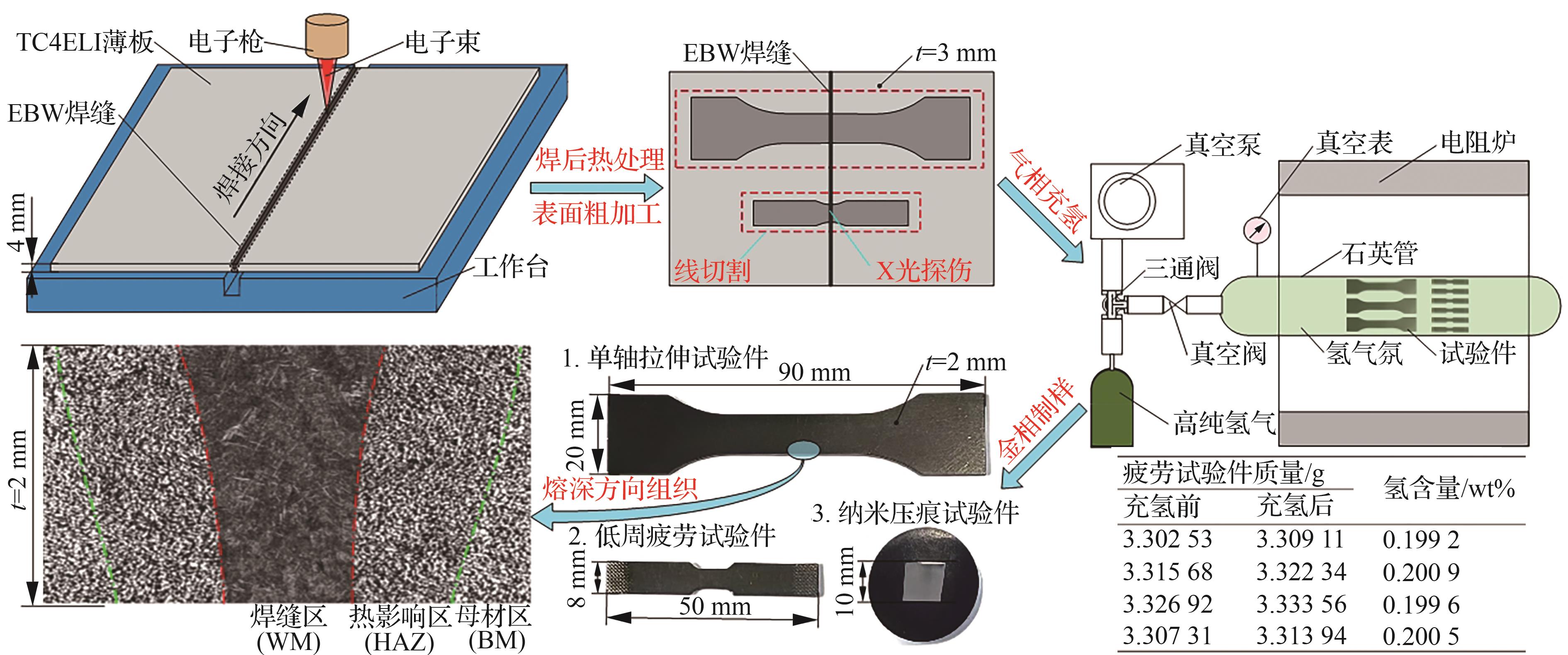
Fig.2
EDS analysis of unhydrogen-charged TC4ELI weld metal
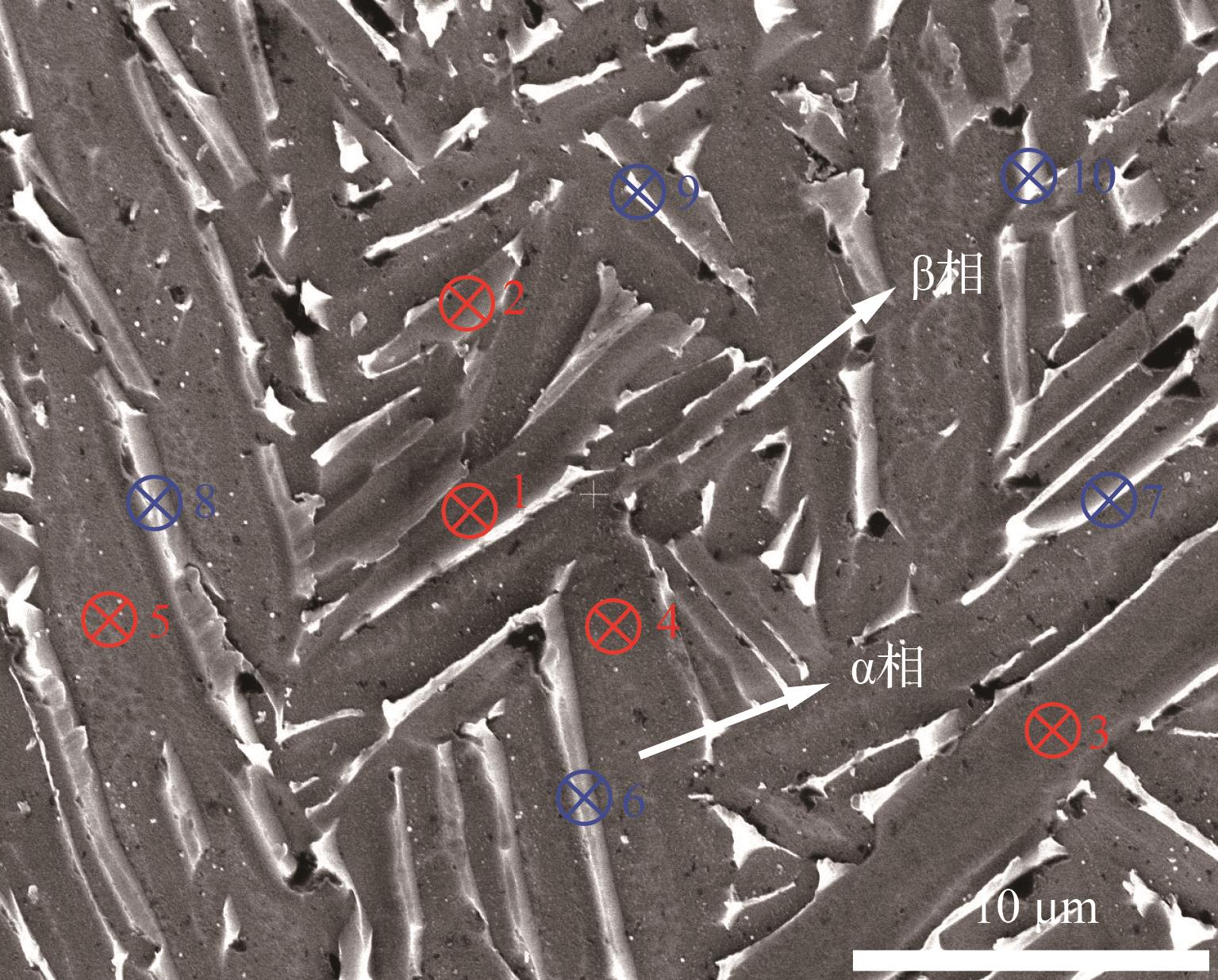
Table 2
Elemental content results of EDS analysis of unhydrogen-charged TC4ELI weld metal
| 区域 | 含量/wt% | 相 | ||
|---|---|---|---|---|
| Ti | Al | V | ||
| 点扫谱1 | 91.67 | 5.96 | 2.36 | α |
| 点扫谱2 | 91.83 | 5.92 | 2.25 | α |
| 点扫谱3 | 91.99 | 5.84 | 2.17 | α |
| 点扫谱4 | 91.55 | 5.81 | 2.63 | α |
| 点扫谱5 | 90.97 | 6.06 | 2.96 | α |
| 点扫谱6 | 86.54 | 4.71 | 8.75 | β |
| 点扫谱7 | 86.09 | 4.53 | 9.38 | β |
| 点扫谱8 | 87.01 | 4.48 | 8.51 | β |
| 点扫谱9 | 87.51 | 4.43 | 8.05 | β |
| 点扫谱10 | 86.53 | 4.44 | 9.03 | β |
Table 3
Comparison of EDS analysis of unhydrogen-charged and hydrogen-charged TC4ELI welded joints
| 区域 | β相V含量平均值/wt% | 下降比例/% |
|---|---|---|
| 未充氢WM | 8.74 | |
| 未充氢HAZ | 14.56 | |
| 未充氢BM | 15.72 | |
| 充氢WM | 6.00 | 31.4 |
| 充氢HAZ | 6.79 | 53.4 |
| 充氢BM | 6.85 | 56.4 |
Fig.3
Comparison of SEM photographs of unhydrogen-charged and hydrogen-charged TC4ELI welded joints
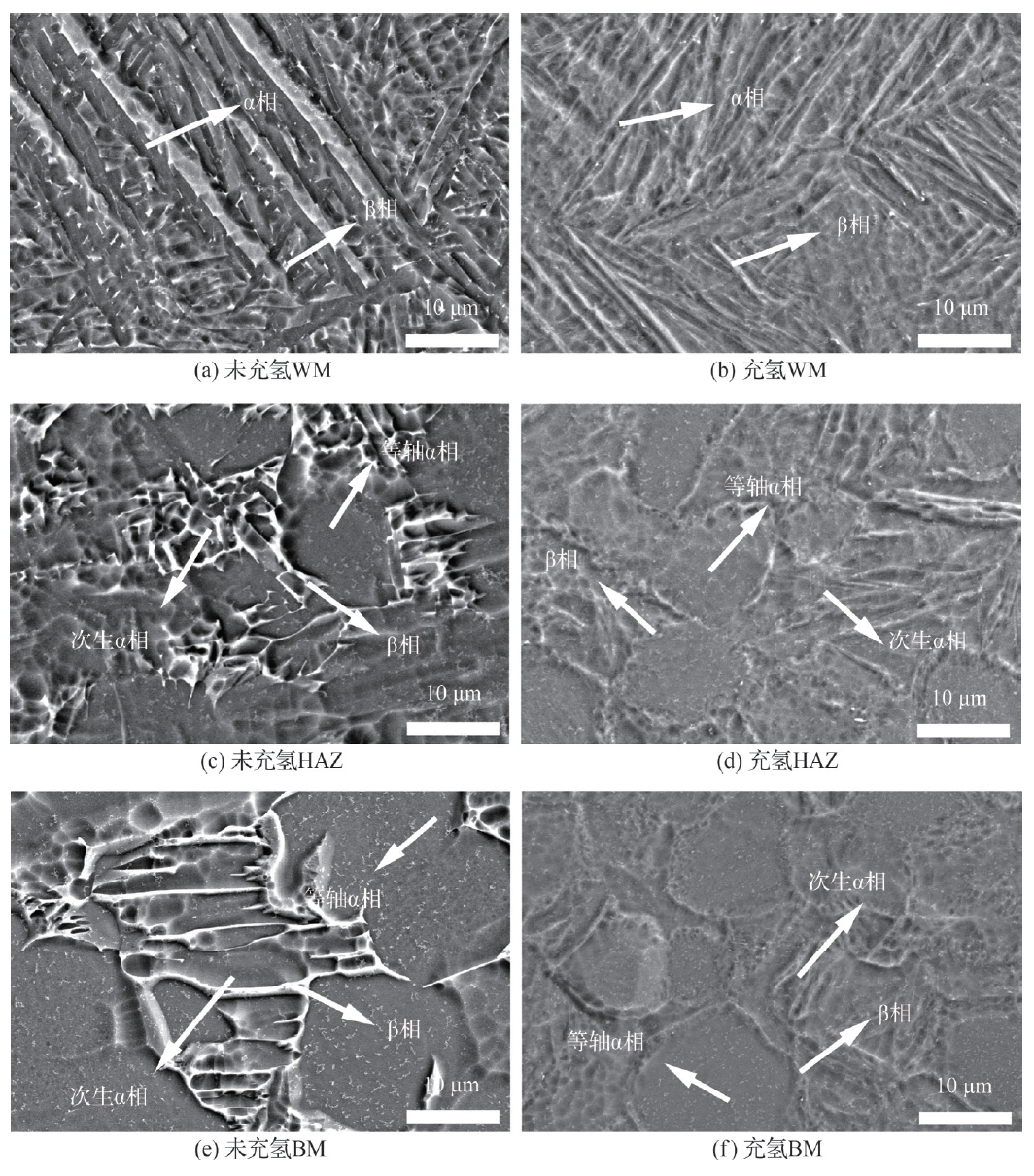
Fig.4
Comparison of XRD analysis of unhydrogen-charged and hydrogen-charged TC4ELI welded joints
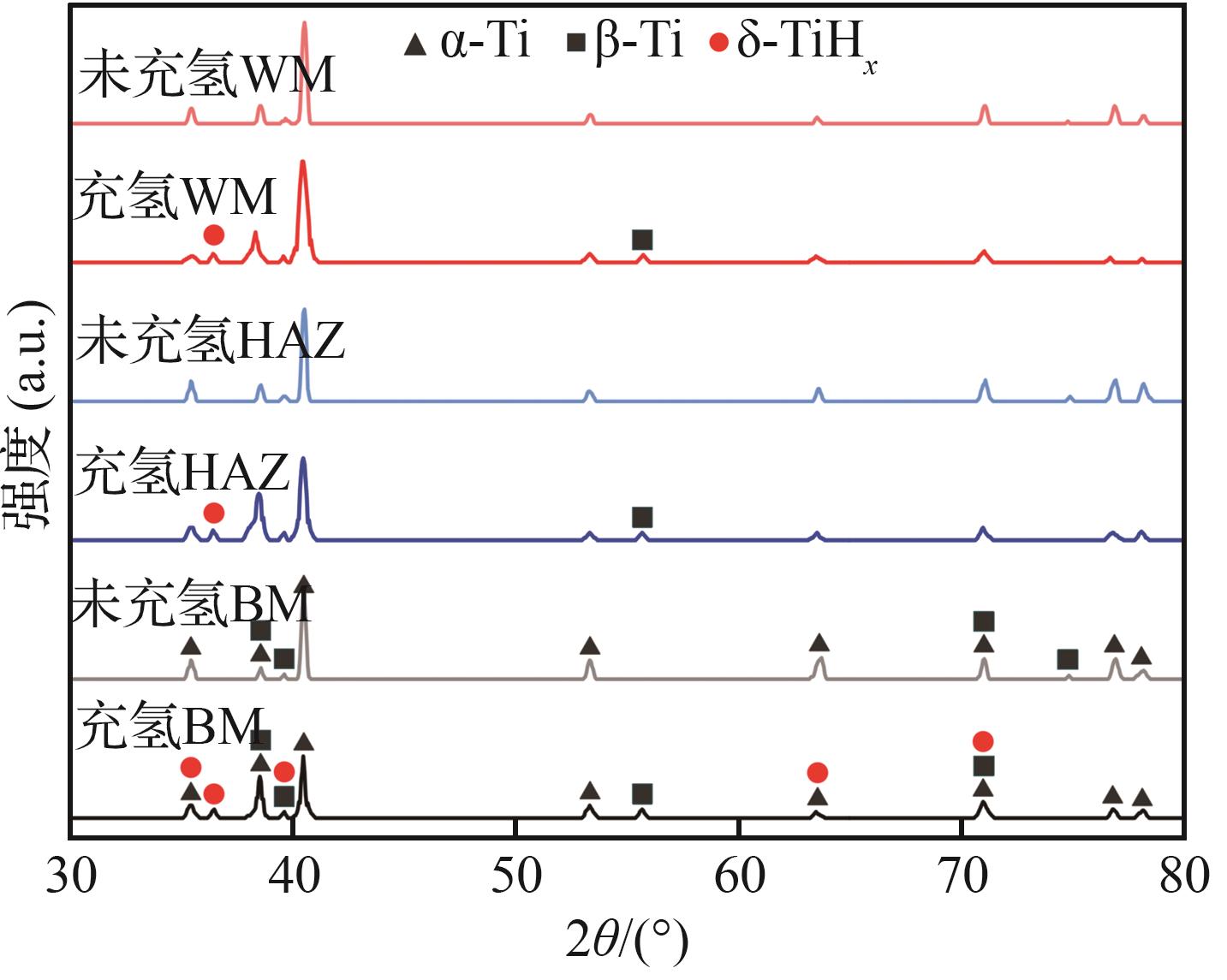
Fig.5
Schematic diagram of cell structure of δ hydride
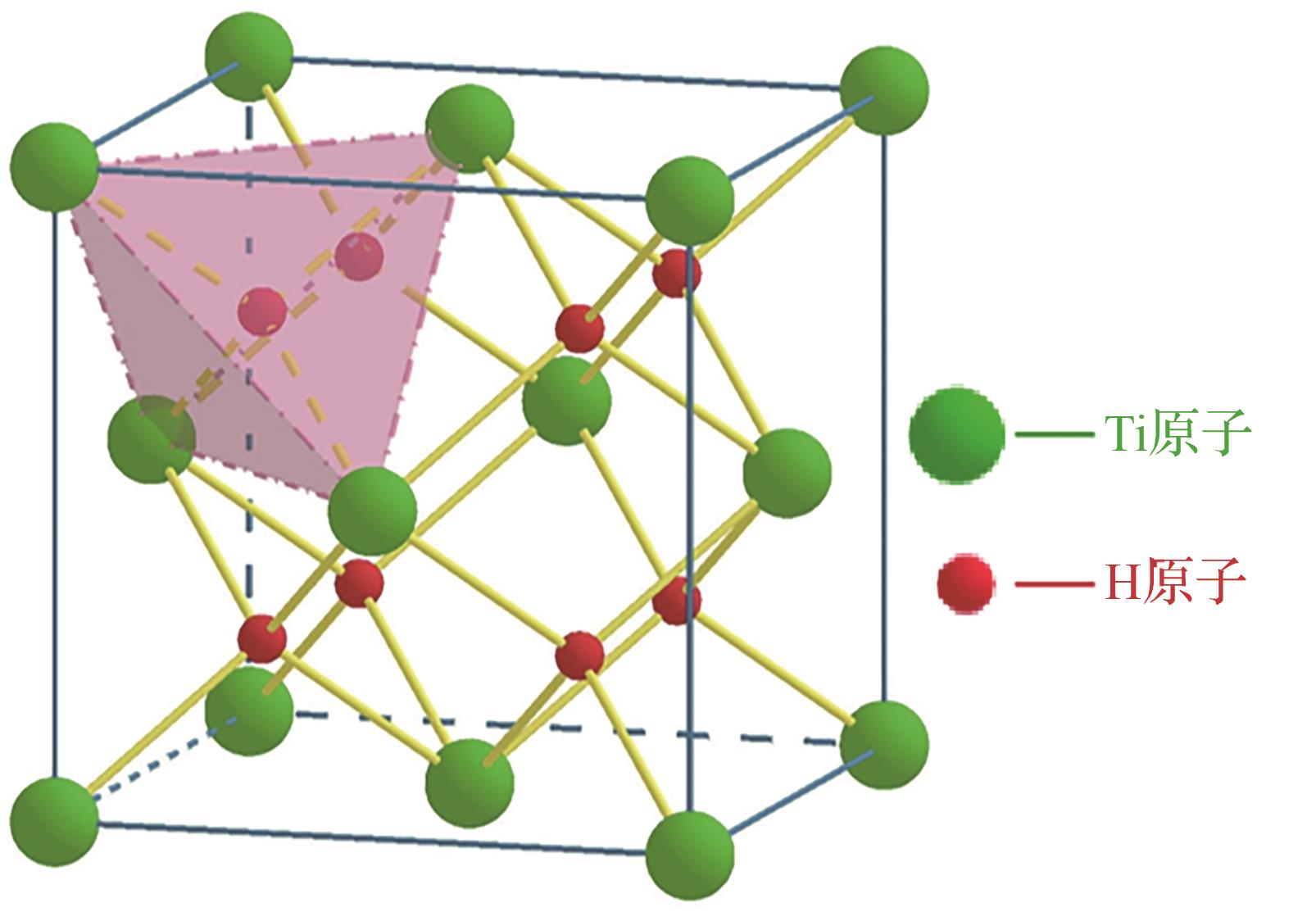
Fig.6
Comparison of SIMS analysis of unhydrogen-charged and hydrogen-charged TC4ELI welded joints
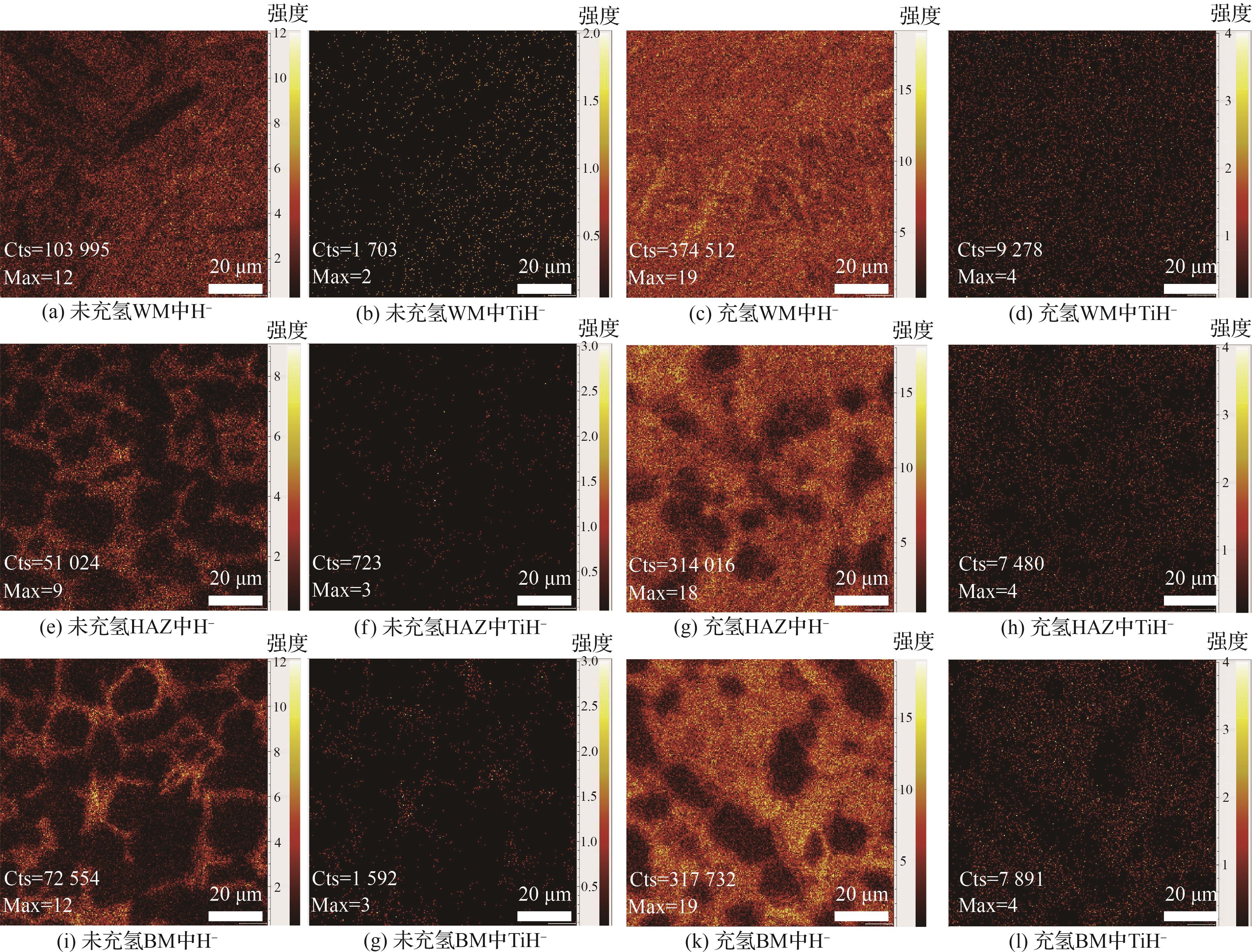
Table 4
H- and TiH- strength comparison of SIMS analysis of unhydrogen-charged and hydrogen-charged TC4ELI welded joints
| 区域 | H- | TH- | ||
|---|---|---|---|---|
| Cts | Max | Cts | Max | |
| 未充氢WM | 103 995 | 12 | 1 703 | 2 |
| 未充氢HAZ | 51 024 | 9 | 723 | 3 |
| 未充氢BM | 72 554 | 12 | 1 592 | 3 |
| 充氢WM | 374 512 | 19 | 9 278 | 4 |
| 充氢HAZ | 314 016 | 18 | 7 480 | 4 |
| 充氢BM | 317 732 | 19 | 7 891 | 4 |
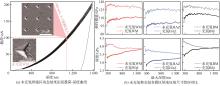
Fig.7
Dynamic response of nanoindentation on unhydrogen-charged and hydrogen-charged TC4ELI welded joints
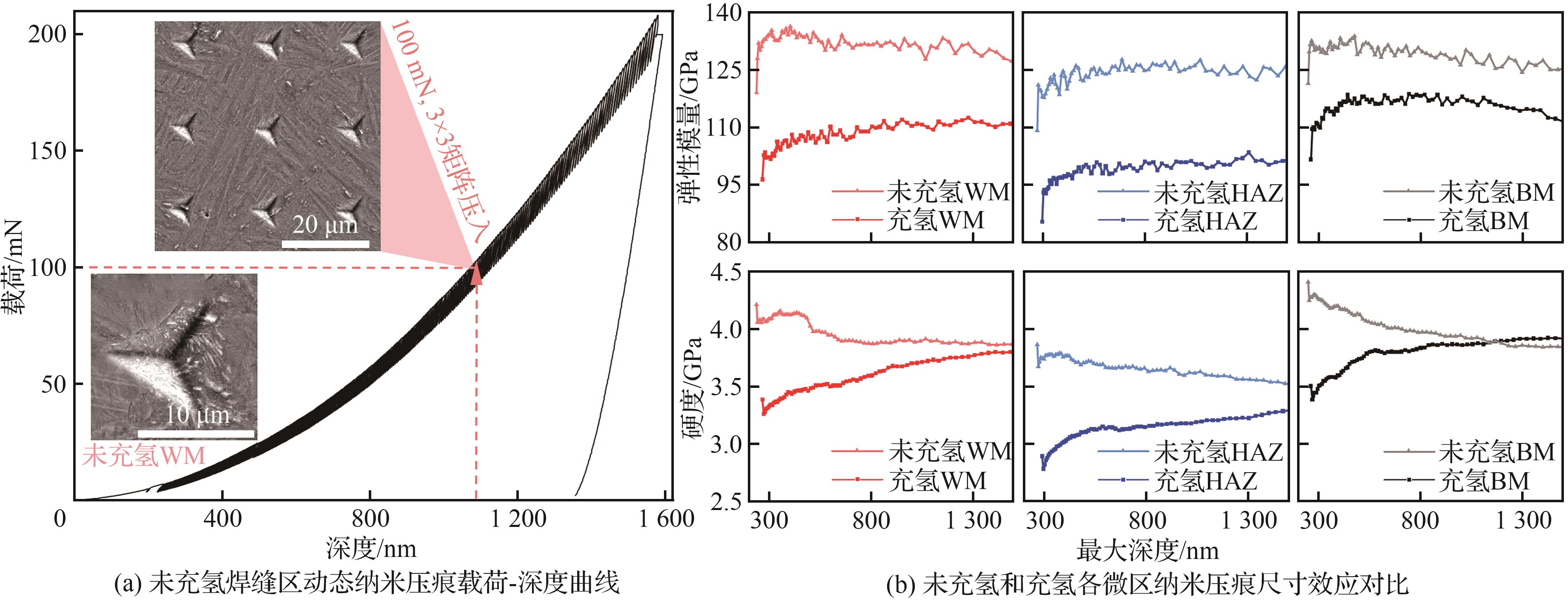
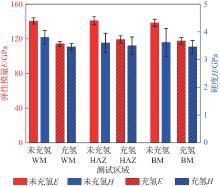
Fig.8
Comparison of elastic modulus and hardness of nanoindentation on unhydrogen-charged and hydrogen-charged TC4ELI welded joints
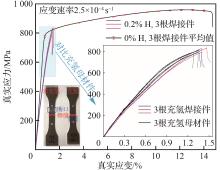
Fig.9
Uniaxial tensile stress-strain curves of unhydrogen-charged and 0.2% hydrogen-charged TC4ELI welds
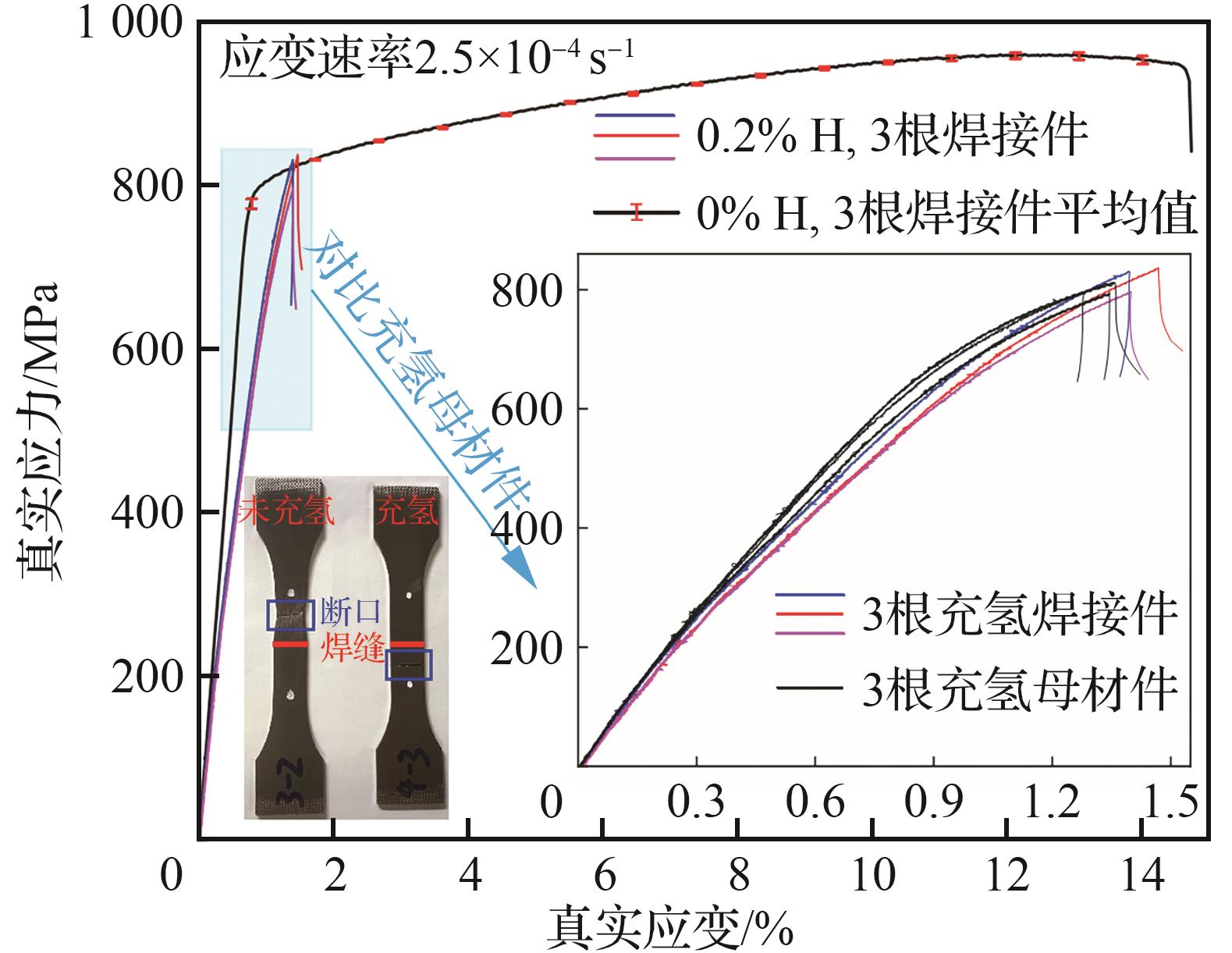
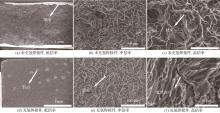
Fig.10
Fracture morphology of unhydrogen-charged and 0.2% hydrogen-charged TC4ELI welds after uniaxial tensile
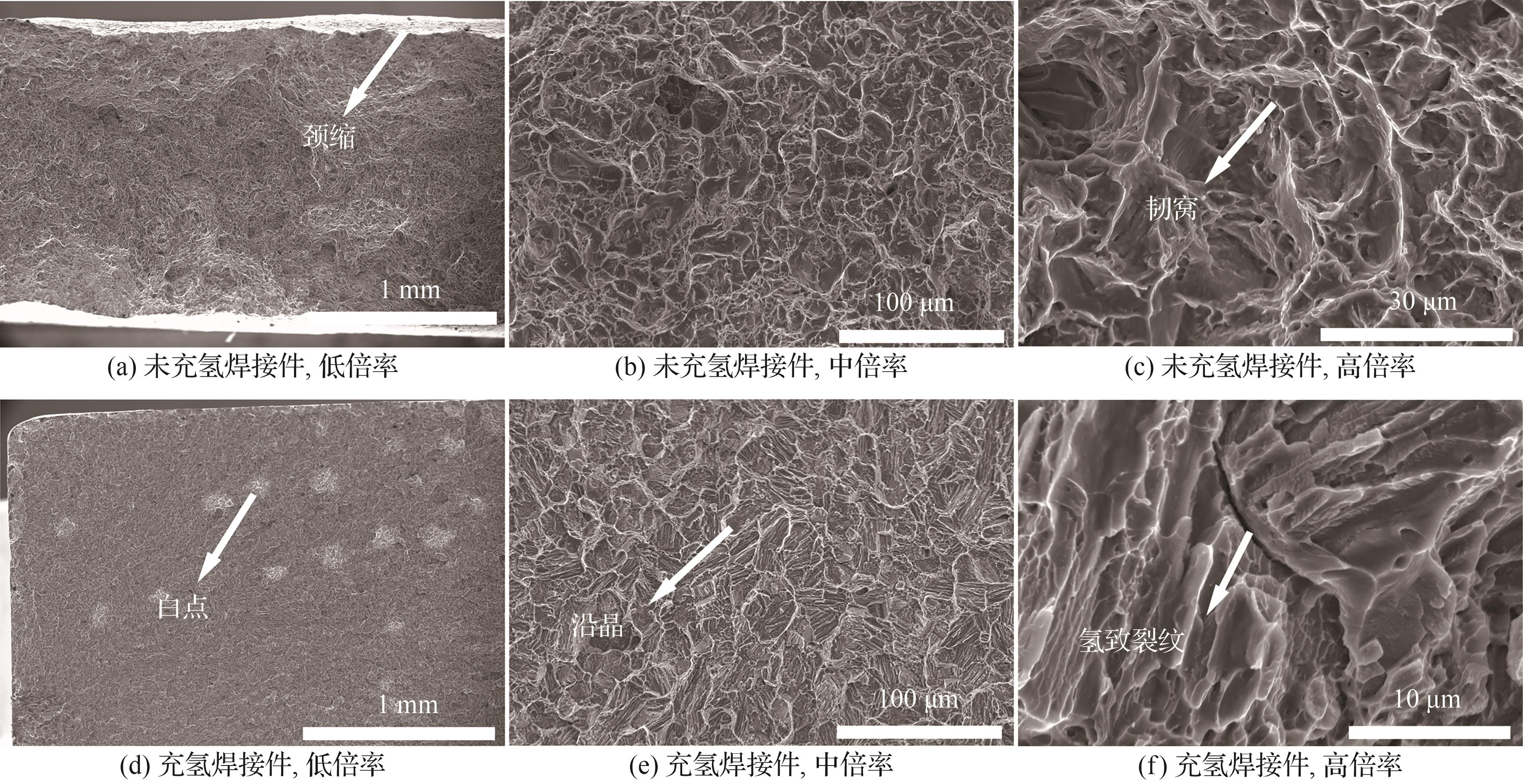
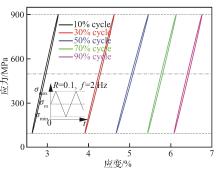
Fig.11
Hysteresis loop of unhydrogen-charged TC4ELI welds under low cycle fatigue at 900 MPa
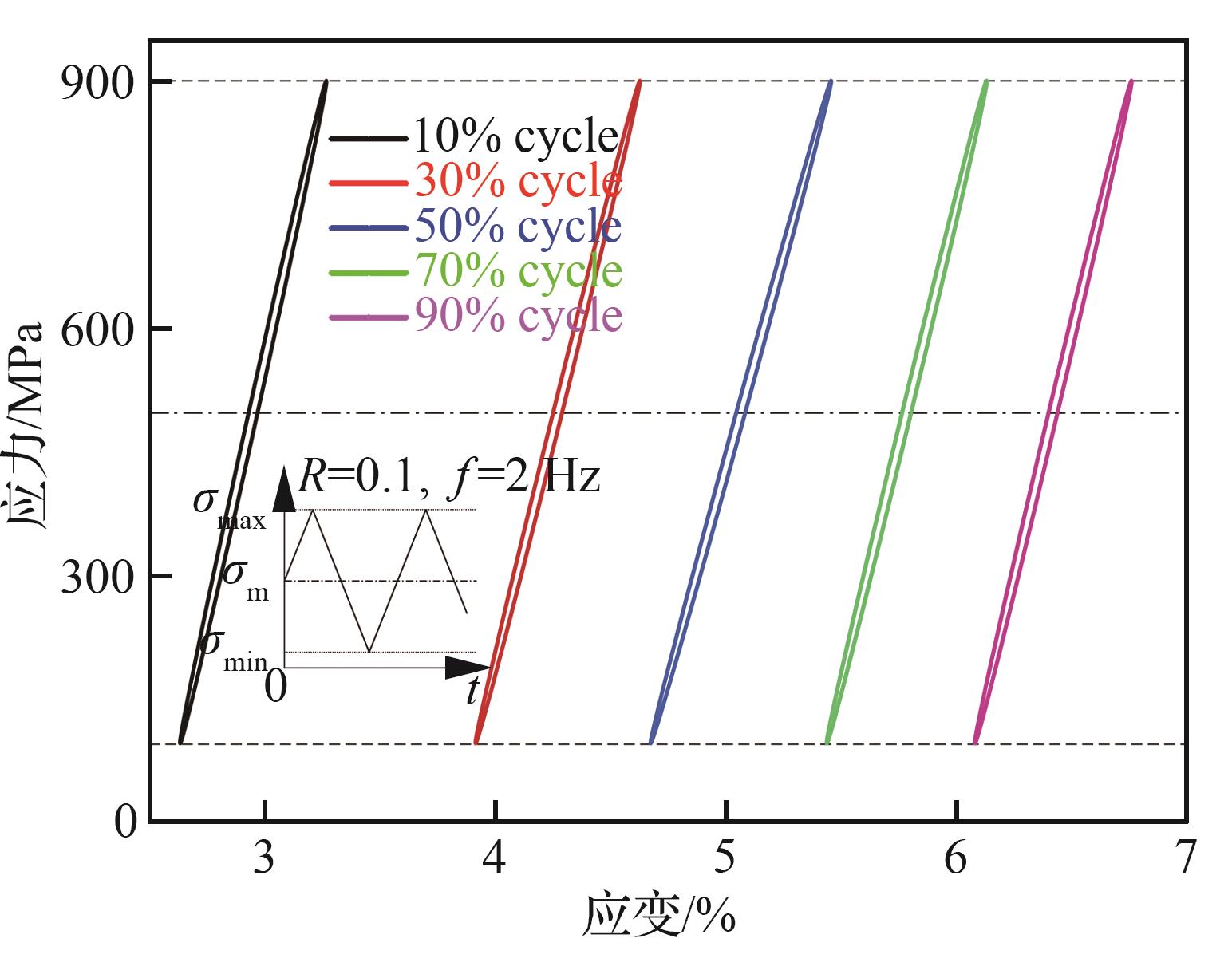
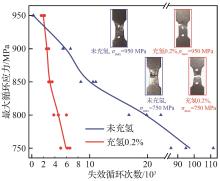
Fig.12
Comparison of fatigue life of unhydrogen-charged and 0.2% hydrogen-charged TC4ELI welds at different stress levels
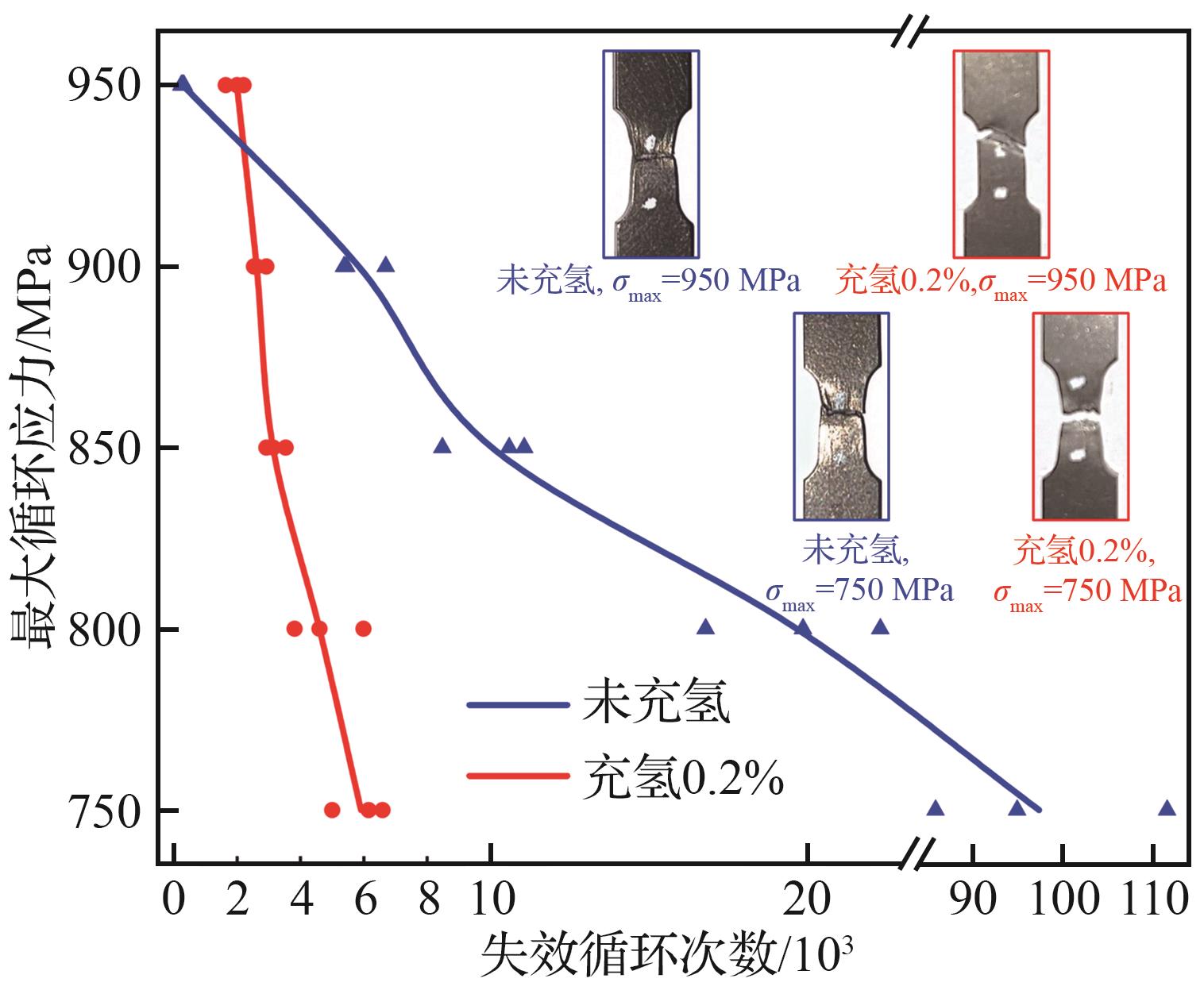
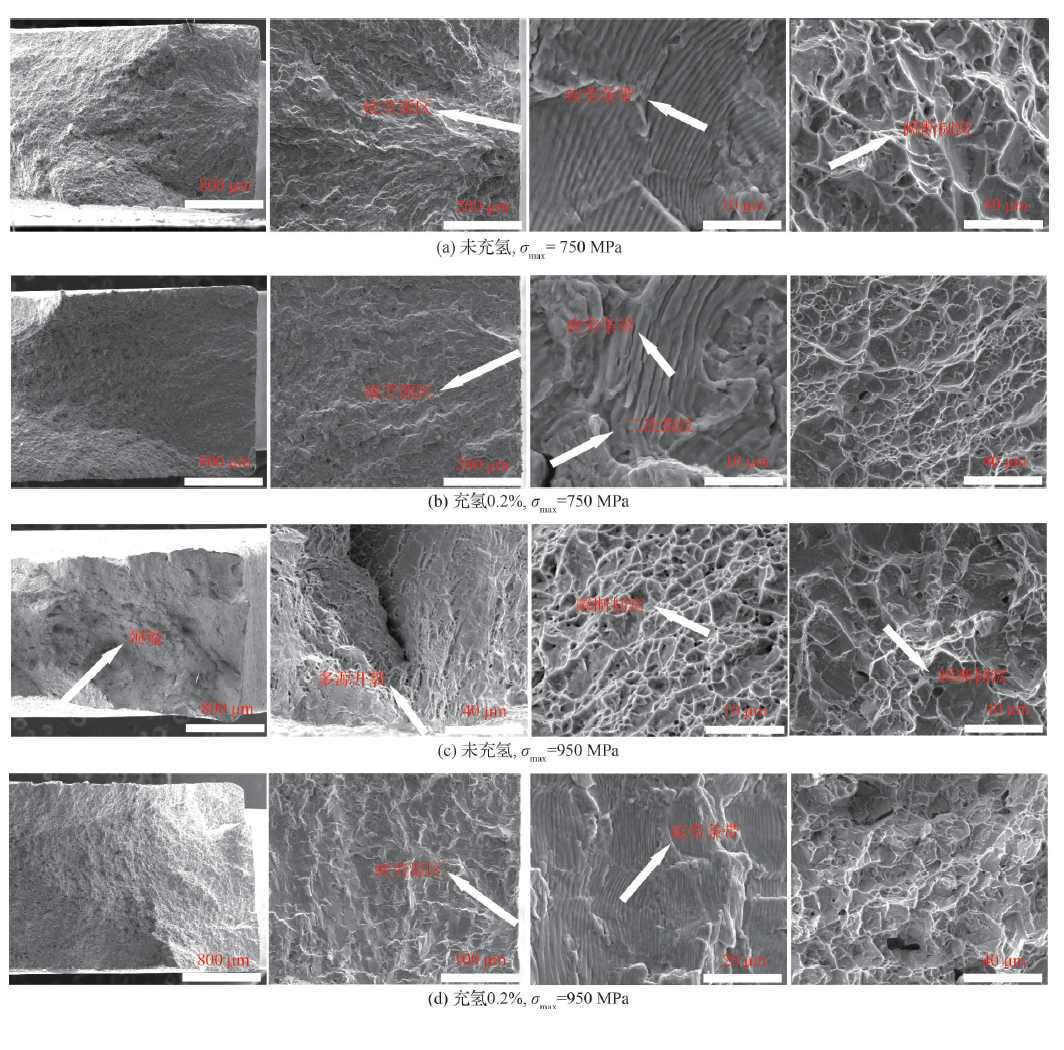
Fig.13
Fracture morphology of unhydrogen-charged and 0.2% hydrogen-charged TC4ELI welds after low cycle fatigue at 750 MPa and 950 MPa
| [1] | 曹冠杰, 王业辉, 孙小金. 氢能航空发展现状分析[J]. 航空动力, 2022(2): 29-33. |
| CAO G J, WANG Y H, SUN X J. Development status of hydrogen in aviation[J]. Aerospace Power, 2022(2): 29-33 (in Chinese). | |
| [2] | 李维, 曹俊, 肖为. 氢燃料发动机技术及发展趋势[J]. 航空动力, 2022(2): 39-42. |
| LI W, CAO J, XIAO W. Technology and development trend of hydrogen gas turbine[J]. Aerospace Power, 2022(2): 39-42 (in Chinese). | |
| [3] | 褚武扬, 乔利杰, 李金许, 等. 氢脆和应力腐蚀—基础部分[M]. 北京: 科学出版社, 2013: 116-210. |
| CHU W Y, QIAO L J, LI J X, et al. Hydrogen embrittlement and stress corrosion—Basic part[M]. Beijing: Science Press, 2013: 116-210 (in Chinese). | |
| [4] | 李丛, 赵雷, 徐连勇, 等. 掺氢/纯氢环境下燃气轮机的氢致损伤研究进展[J]. 材料导报, 2025, 39(9): 126-135. |
| LI C, ZHAO L, XU L Y, et al. Research advances in hydrogen induced damage of hydrogen-doped/pure-hydrogen gas turbines[J]. Materials Review, 2025, 39(9): 126-135 (in Chinese). | |
| [5] | 王佳, 刘晓勇, 高灵清, 等. 钛合金氢致损伤机理的研究现状[J]. 材料保护, 2020, 53(11): 98-105. |
| WANG J, LIU X Y, GAO L Q, et al. A review on mechanisms of hydrogen embrittlement of titanium alloys[J]. Materials Protection, 2020, 53(11): 98-105 (in Chinese). | |
| [6] | 聂鹏, 杨世源, 郭永强, 等. 氢环境下金属材料的疲劳寿命预测:从裂纹的角度[J]. 长沙理工大学学报(自然科学版), 2024, 21(4): 44-67. |
| NIE P, YANG S Y, GUO Y Q, et al. Fatigue life prediction of metal materials in hydrogen environment: From the perspective of crack[J]. Journal of Changsha University of Science & Technology (Natural Science), 2024, 21(4): 44-67 (in Chinese). | |
| [7] | 许爱军, 万海峰, 梁春祖, 等. 低温钛合金材料应用现状及发展趋势[J]. 精密成形工程, 2020, 12(6): 145-156. |
| XU A J, WAN H F, LIANG C Z, et al. Application status and development trend of cryogenic titanium alloy[J]. Journal of Netshape Forming Engineering, 2020, 12(6): 145-156 (in Chinese). | |
| [8] | 吕志阳, 熊峻江, 赵延广, 等. Ti-6Al-4V/ELI钛合金250 ℃裂纹扩展性能[J]. 航空材料学报, 2018, 38(4): 123-129. |
| LYU Z Y, XIONG J J, ZHAO Y G, et al. Experimental investigation of high-temperature crack propagation behaviors for Ti-6Al-4V/ELI at 250 ℃[J]. Journal of Aeronautical Materials, 2018, 38(4): 123-129 (in Chinese). | |
| [9] | 胡世威, 梁浩, 徐兵. 某航天器输氢管道系统结构完整性评估[J]. 航空学报, 2019, 40(8): 422796. |
| HU S W, LIANG H, XU B. Assessment procedure for structural integrity of hydrogen pipeline system for spacecraft[J]. Acta Aeronautica et Astronautica Sinica, 2019, 40(8): 422796 (in Chinese). | |
| [10] | 黄鑫, 齐红宇, 李少林, 等. 焊接接头裂纹扩展行为研究评述与展望[J/OL]. 工程力学, (2023-10-27) [2025-03-20]. . |
| HUANG X, QI H Y, LI S L, et al. Review and prospect of research on crack propagation behavior of welded joints[J/OL]. Engineering Mechanics, (2023-10-27) [2025-02-02]. (in Chinese). | |
| [11] | ZHANG H B, LEYGRAF C, WEN L, et al. The formation of hydride and its influence on Ti-6Al-4V alloy fracture behavior[J]. International Journal of Hydrogen Energy, 2023, 48(92): 36169-36184. |
| [12] | BROSH E, NAVI N U, ROSEN B A, et al. Microvoids in electrochemically hydrogenated titanium-based alloys[J]. International Journal of Hydrogen Energy, 2021, 46(53): 27234-27242. |
| [13] | LIU X Z, HAN E H, SONG Y W, et al. Hydrogen damage process of dual-phase Ti-6Al-4V alloy: From surface passive film to the interior substrate[J]. Electrochimica Acta, 2023, 464: 142916. |
| [14] | NGUYEN T D, SINGH C, LEE D H, et al. Deciphering hydrogen embrittlement mechanisms in Ti6Al4V alloy: Role of solute hydrogen and hydride phase[J]. Materials, 2024, 17(5): 1178. |
| [15] | MURAVEV V I, BAKHMATOV P V, GRIGOREV V V, et al. Features of the hydrogen distribution in a weld seam made by electron beam welding of titanium alloys[J]. Welding International, 2021, 35(10-12): 459-464. |
| [16] | FENG X D, SHI Y, ZHANG W Z, et al. Hydrogen embrittlement failure behavior of fatigue-damaged welded TC4 alloy joints[J]. Crystals, 2023, 13(3): 512. |
| [17] | DONG Y C, HUANG S, WANG Y Y, et al. Stress corrosion cracking of TC4ELI alloy with different microstructure in 3.5% NaCl solution[J]. Materials Characterization, 2022, 194: 112357. |
| [18] | 杨日明, 申秀丽, 董少静. 氢对TC4ELI钛合金微观组织和力学性能影响[J/OL]. 航空动力学报, (2025-02-21) [2025-03-20]. . |
| YANG R M, SHEN X L, DONG S J. Influence of hydrogen on the microstructure and mechanical properties of TC4ELI titanium alloy[J]. Journal of Aerospace Power, (2025-02-21) [2025-03-20]. (in Chinese). | |
| [19] | 杨日明, 申秀丽, 董少静. 氢对TC4ELI钛合金疲劳裂纹扩展行为影响[J/OL]. 材料导报, (2024-11-01) [2025-03-20]. . |
| YANG R M, SHEN X L, DONG S J. Influence of hydrogen on fatigue crack growth behavior of TC4ELI titanium alloy[J]. Materials Reports, (2024-11-01) [2025-03-20]. (in Chinese). | |
| [20] | 刘全明. 钛合金板氩弧焊接接头氢致裂纹扩展行为研究[D]. 西安: 西安建筑科技大学, 2018. |
| LIU Q M. Hydrogen induced crack propagation in TIG welded joints of titanium alloy plates[D]. Xi’an: Xi’an University of Architecture and Technology, 2018 (in Chinese). | |
| [21] | 龚江宏. 准静态纳米压痕的理论基础与数据分析[J]. 陶瓷学报, 2021, 42(2): 181-245. |
| GONG J H. Theoretical foundation and data analyses of quasi-static nanoindentation[J]. Journal of Ceramics, 2021, 42(2): 181-245 (in Chinese). | |
| [22] | OLIVER W C, PHARR G M. An improved technique for determining hardness and elastic modulus using load and displacement sensing indentation experiments[J]. Journal of Materials Research, 1992, 7(6): 1564-1583. |
| [23] | 韩鹏, 毛智勇, 付鹏飞, 等. 焊后热处理对TC4-DT钛合金电子束焊接接头组织性能的影响[J]. 航空制造技术, 2013, 56(16): 93-96. |
| HAN P, MAO Z Y, FU P F, et al. Effect of post-weld heat treatment on microstructure and mechanical properties in TC4-DT EB joint[J]. Aeronautical Manufacturing Technology, 2013, 56(16): 93-96 (in Chinese). | |
| [24] | GAO K, LIU Z Y, SHEN X L, et al. Integration of nanoindentation and finite element method for interpretable tensile properties: A cross-scale calculation method of uneven joints[J]. Chinese Journal of Aeronautics, 2023, 36(6): 233-248. |
| [25] | HONG Y J, ZHOU C S, ZHENG Y Y, et al. Hydrogen effect on the deformation evolution process in situ detected by nanoindentation continuous stiffness measurement[J]. Materials Characterization, 2017, 127: 35-40. |
| [26] | BIRNBAUM H K, SOFRONIS P. Hydrogen-enhanced localized plasticity: A mechanism for hydrogen-related fracture[J]. Materials Science and Engineering: A, 1994, 176(1-2): 191-202. |
| [27] | CHEN C Q, LI S X, ZHENG H, et al. An investigation on structure, deformation and fracture of hydrides in titanium with a large range of hydrogen contents[J]. Acta Materialia, 2004, 52(12): 3697-3706. |
| [1] | Baoshi YU, Yongjun LEI, Zhibin SHEN, Dapeng ZHANG. Review on analysis and control technology of curing residual stress in solid motor propellants [J]. Acta Aeronautica et Astronautica Sinica, 2025, 46(8): 31083-031083. |
| [2] | Qulong WEI, Lihong JIANG, Zheng LIU, Lin ZHU, Lianhai FAN, Guangang WANG, Mingjie ZHAO, Zhenghua GUO. Lattice structure and mechanical properties of TPMS prepared by selective laser melting [J]. Acta Aeronautica et Astronautica Sinica, 2025, 46(3): 430593-430593. |
| [3] | Meng WU, Duosheng LI, Yin YE, Xuyong LI, Xueyuan XU, Jiawei CHEN. Laser cleaning of C919 aircraft Al-Li alloy skin coating [J]. Acta Aeronautica et Astronautica Sinica, 2025, 46(14): 431414-431414. |
| [4] | Shiqi PEI, Jinhua JIANG, Nanliang CHEN, Kai WANG. Influence of space environment on mechanical properties and structure of high-performance fibres [J]. Acta Aeronautica et Astronautica Sinica, 2025, 46(1): 630997-630997. |
| [5] | Zheming FAN, Weizhu YANG, Yan ZENG, Zhenan ZHAO, Lei LI. Anisotropic tensile properties of GH4169 alloy repaired by laser direct energy deposition [J]. Acta Aeronautica et Astronautica Sinica, 2024, 45(8): 429129-429129. |
| [6] | Junfei TENG, Jiahao LI, Huiyan ZHOU, Dawei WU, Haitao XU, Tiesong LIN, Yongde HUANG. Effect of TLP diffusion welding process parameters on microstructure and mechanical properties of GH5188 superalloy joint [J]. Acta Aeronautica et Astronautica Sinica, 2024, 45(8): 429205-429205. |
| [7] | Xin WANG, Haibo JI, Zhen LI, Bingyang LI, Qi ZHANG, Rui ZHANG, Xiang XU, Han MENG, Pengfei WANG, Tianjian LU. Recent advances in mechanical properties of fibre-reinforced composites with bio-inspired helicoidal lay-ups [J]. Acta Aeronautica et Astronautica Sinica, 2024, 45(19): 29987-029987. |
| [8] | Mingjie ZHAO, Liang HUANG, Chaoyuan SUN, Xiuliang LIU, Jianjun LI, Zhenghua GUO. In-situ analysis on microstructure evolution of 300M steel during static holding process [J]. Acta Aeronautica et Astronautica Sinica, 2024, 45(18): 429734-429734. |
| [9] | Weiqing HUANG, Ning LI, Kailin LIU, Zhizhong FU, Pengfei JI, Shengliang ZHANG, Liwei DONG, Yantao SUN. Damage state evaluation method of service turbine blades based on MAML-LSTM [J]. Acta Aeronautica et Astronautica Sinica, 2024, 45(18): 429547-429547. |
| [10] | Wenyu WANG, Feng LI, Feixiang REN, Xingyu WEI, Jian XIONG. Research progress on structural design methods and mechanical properties of lightweight high⁃strength composite lattice stiffened shell structure [J]. Acta Aeronautica et Astronautica Sinica, 2024, 45(17): 530001-530001. |
| [11] | Zhenghua GUO, Zheng CHEN, Yida ZENG, Yiqian GUO, Zhenhua NIU, Zirui YANG, Zhiyong LI, Junwu WAN. Research status and prospects of refractory high-entropy alloys prepared by selective laser melting [J]. Acta Aeronautica et Astronautica Sinica, 2024, 45(14): 29518-029518. |
| [12] | Suigeng DU, Hongyi HU, Ke DING. Microstructure of γ⁃TiAl and Ti2AlNb linear friction welding joint [J]. Acta Aeronautica et Astronautica Sinica, 2024, 45(13): 629347-629347. |
| [13] | Yunchao XIA, Jian DENG, Zengxian WANG, Qiang LIU, Tianjian LU. Mechanical behavior of aerostat envelope and constitutive modeling [J]. Acta Aeronautica et Astronautica Sinica, 2024, 45(13): 229588-229588. |
| [14] | Jiawei FU, Zefei YANG, Yahui CAI, Xiangfan NIE, Lehua QI. Identification method for anisotropic and high strain rate plasticity of sheet metals based on heterogeneous highspeed inertial impact and principle of virtual work [J]. Acta Aeronautica et Astronautica Sinica, 2024, 45(10): 229221-229221. |
| [15] | Fengqi WANG, Zhongqi YU, Yehui MENG, Tian GAN, Yixi ZHAO. Deformation mechanism and recrystallization microstructure evolution of aluminum stiffened cylinder during hot flow spinning based on numerical simulation [J]. ACTA AERONAUTICAET ASTRONAUTICA SINICA, 2023, 44(9): 627341-627341. |
| Viewed | ||||||
|
Full text |
|
|||||
|
Abstract |
|
|||||
Address: No.238, Baiyan Buiding, Beisihuan Zhonglu Road, Haidian District, Beijing, China
Postal code : 100083
E-mail:hkxb@buaa.edu.cn
Total visits: 6658907 Today visits: 1341All copyright © editorial office of Chinese Journal of Aeronautics
All copyright © editorial office of Chinese Journal of Aeronautics
Total visits: 6658907 Today visits: 1341

 CJA
CJA
