Acta Aeronautica et Astronautica Sinica ›› 2026, Vol. 47 ›› Issue (16): 132983.doi: 10.7527/S1000-6893.2025.32983
• Fluid Mechanics and Flight Mechanics • Previous Articles
Huizhu XIN1,2, Chen LI3, Weimin SANG1,2( ), Liang HOU1,2
Received:2025-10-28
Revised:2025-11-17
Accepted:2025-12-15
Online:2025-12-29
Published:2025-12-29
Contact:
Weimin SANG
E-mail:sangweimin@nwpu.edu.cn
Supported by:CLC Number:
Huizhu XIN, Chen LI, Weimin SANG, Liang HOU. Airfoil icing and aerodynamic characteristics prediction based on multi-task learning[J]. Acta Aeronautica et Astronautica Sinica, 2026, 47(16): 132983.
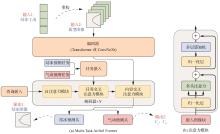
Fig.1
Structure of MTAF model
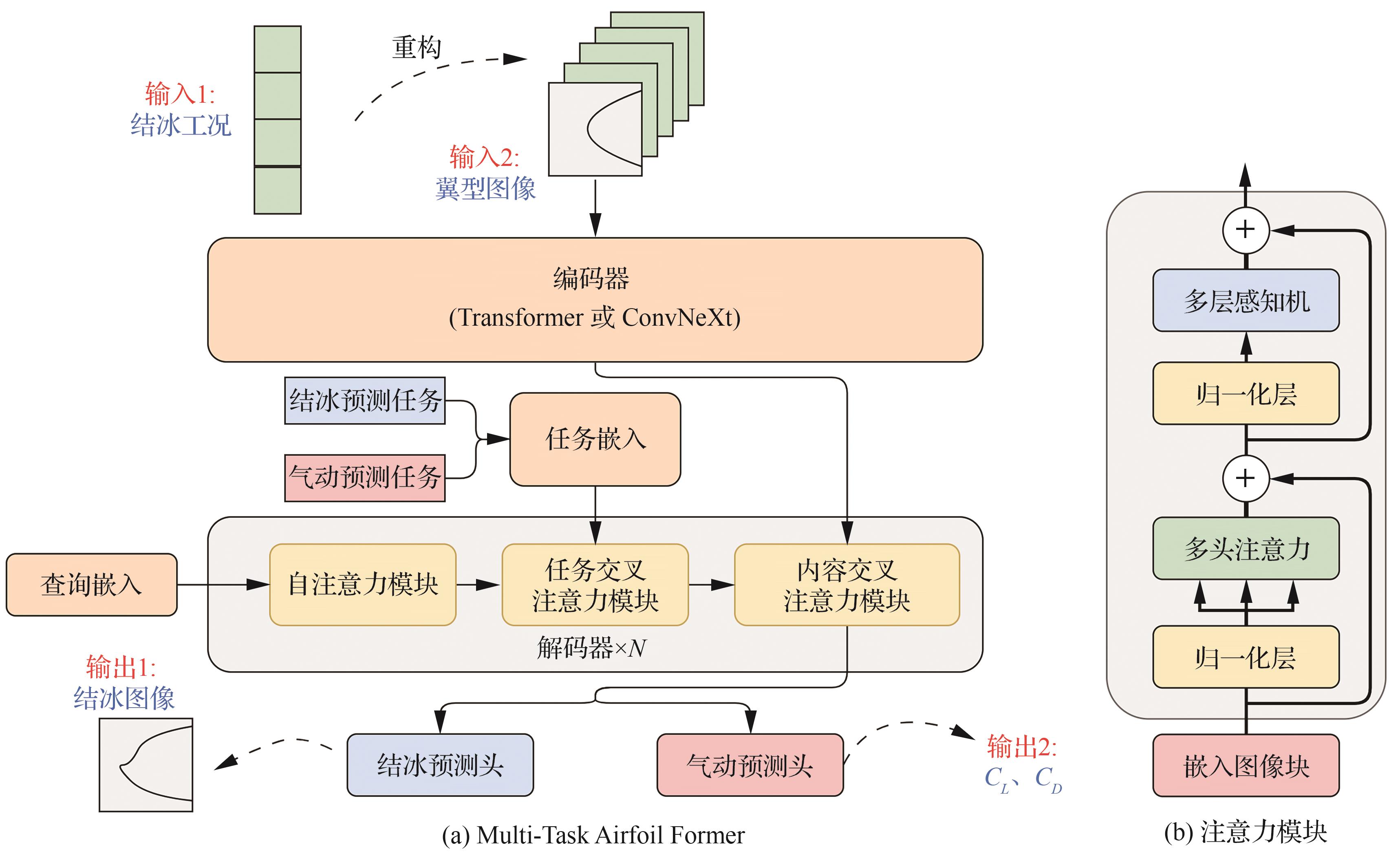
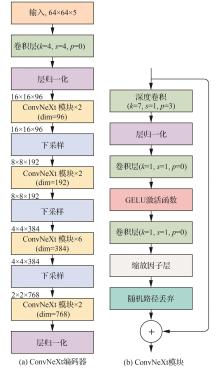
Fig.2
Structure of ConvNeXt encoder
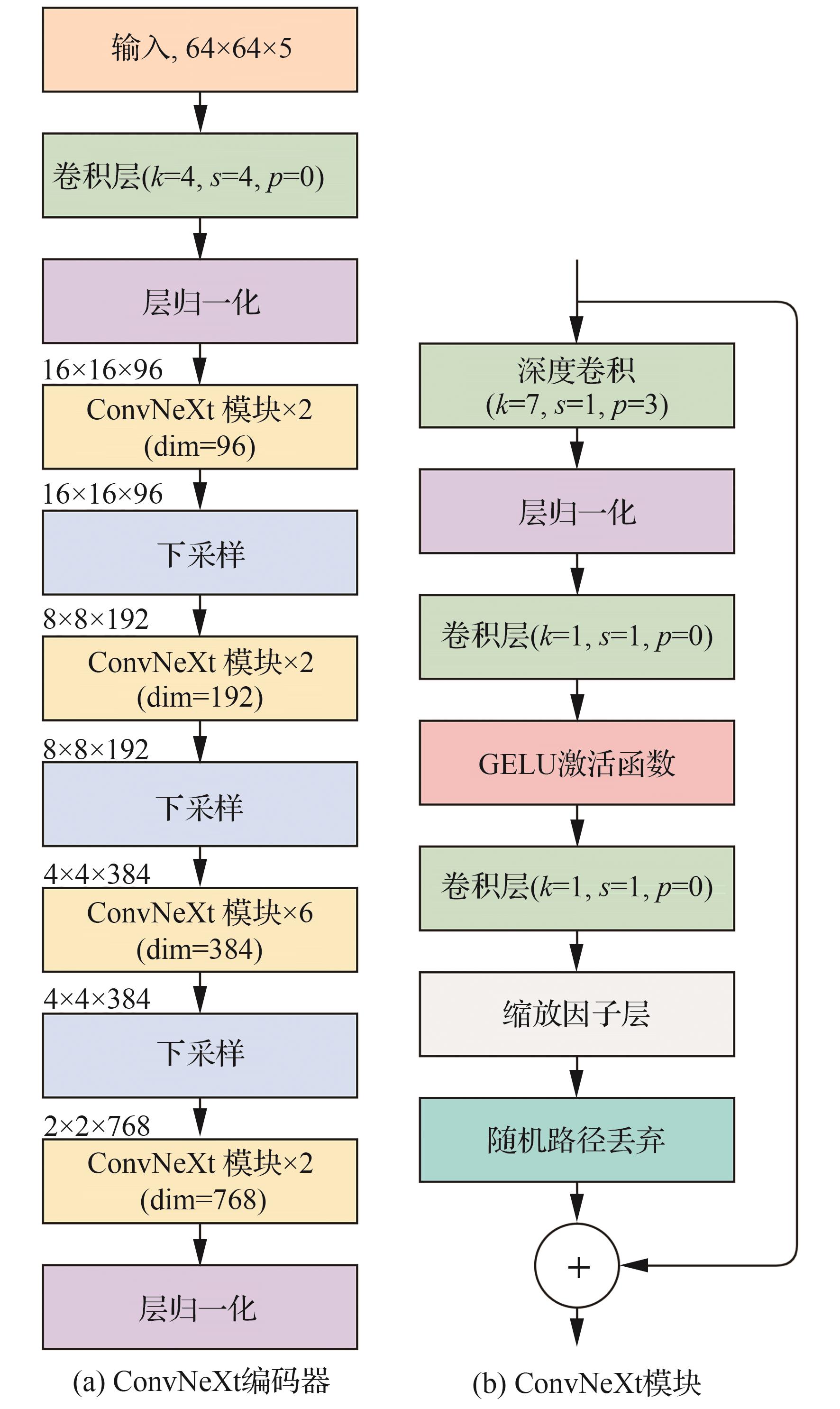
Table 1
Icing condition of verification cases
| 参数 | Case 1 | Case 2 |
|---|---|---|
| 飞行速度/(m·s-1) | 67.05 | 67.05 |
| 环境温度/℃ | -28.4 | -6.1 |
| 液态水含量/(g·m-3) | 1.0 | 1.0 |
| 水滴平均直径/μm | 20 | 20 |
| 结冰时长/s | 360 | 360 |
| 飞行迎角/(°) | 4 | 4 |
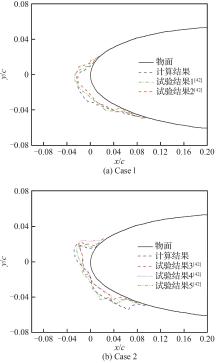
Fig.3
Comparison of ice shape between computational results and wind tunnel test data[42]
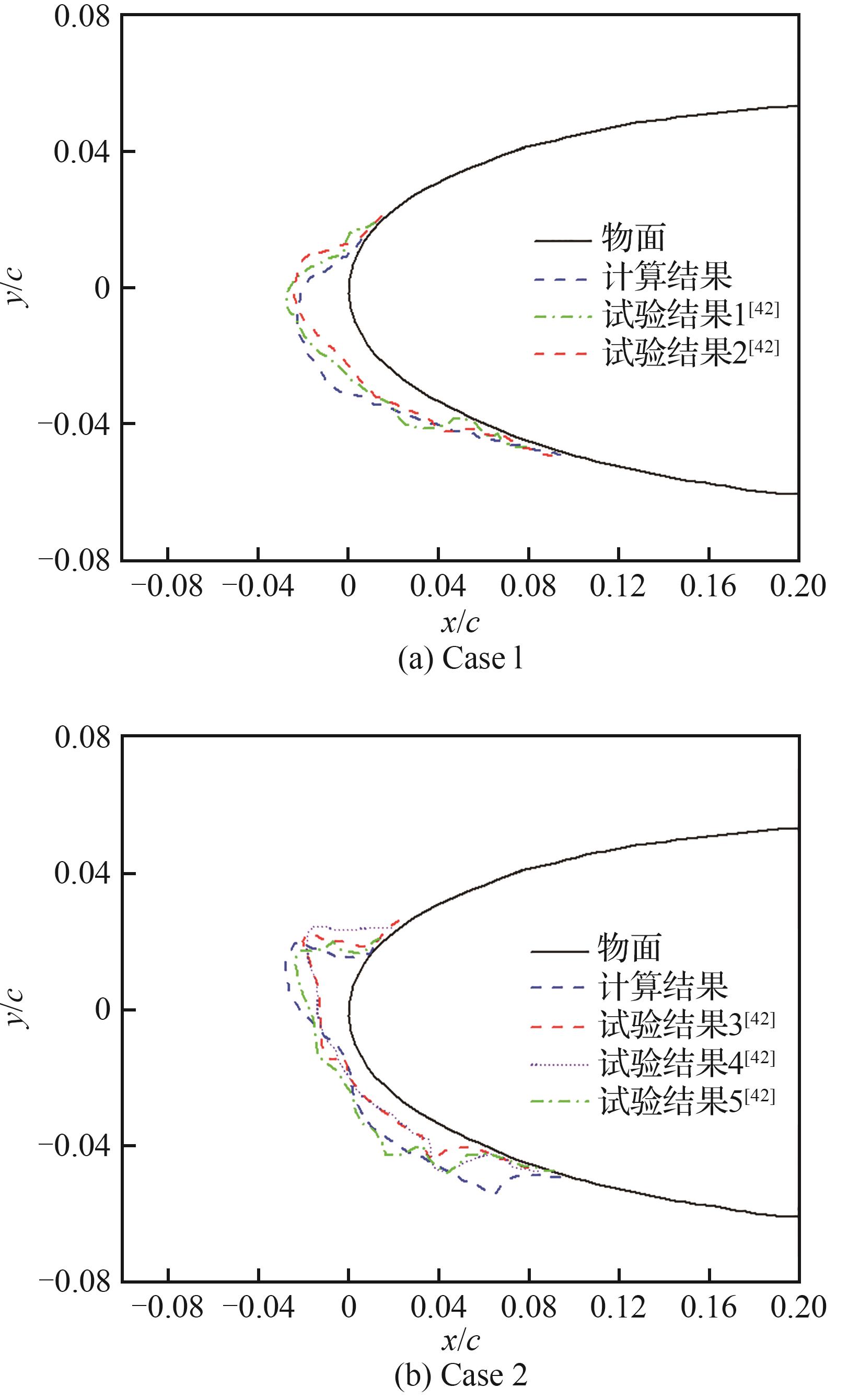
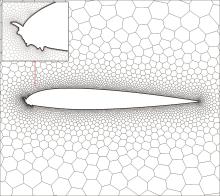
Fig.4
Iced airfoil and computational grid
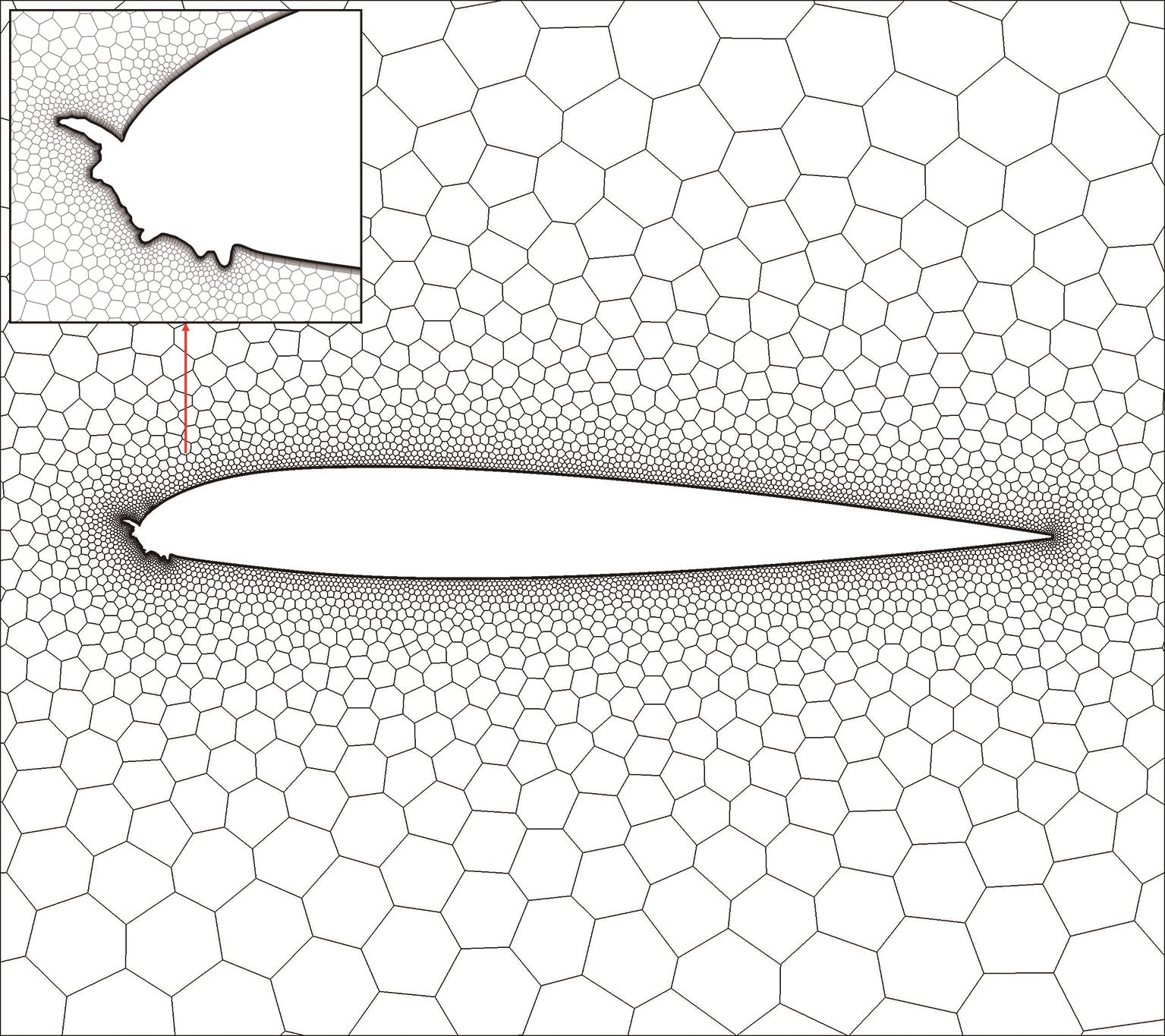
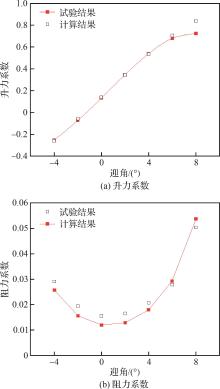
Fig.5
Comparison of lift coefficient and drag coefficient between computational results and wind tunnel test data
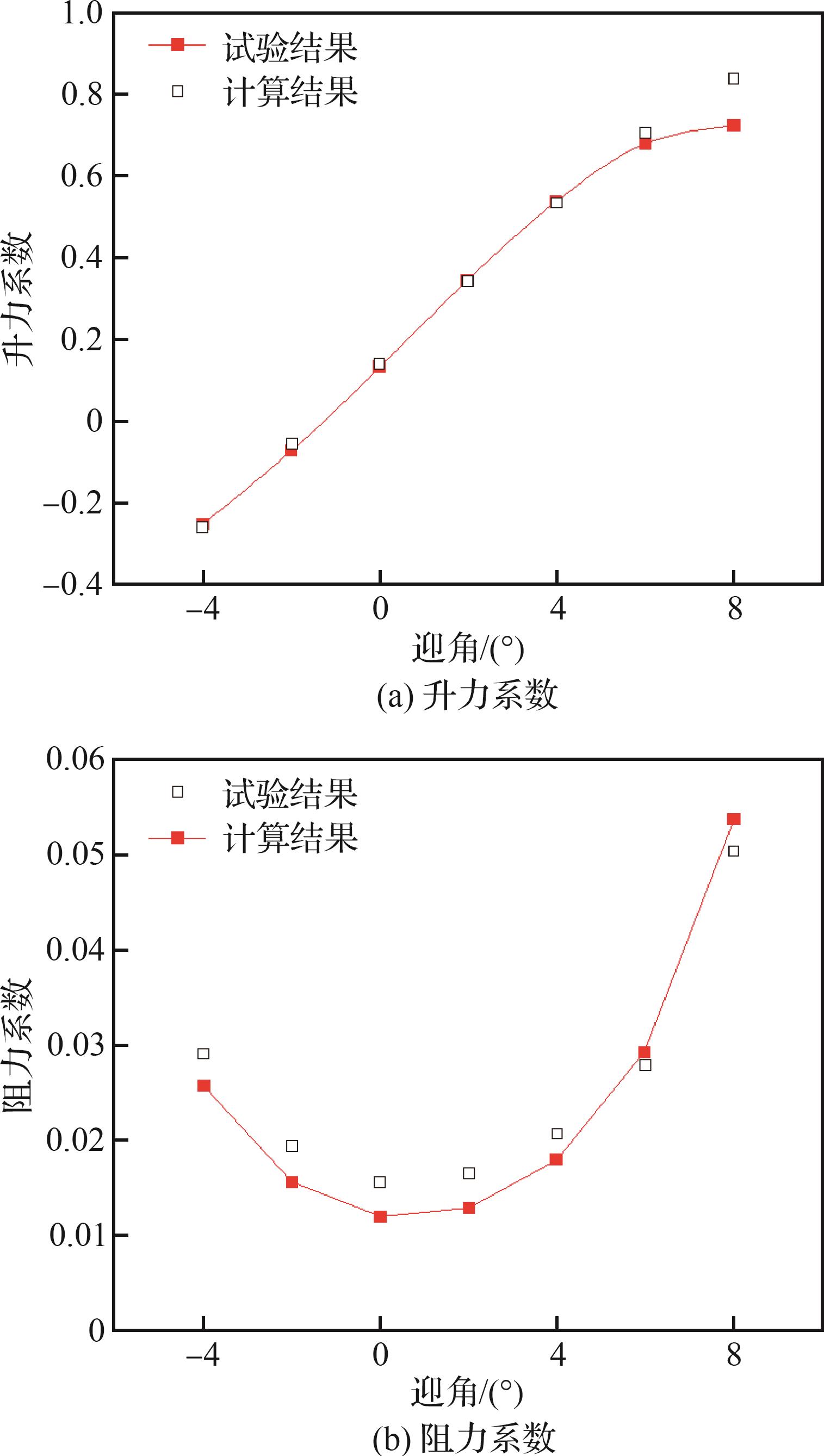
Table 2
Parameter values for icing conditions
| 参数 | 数值 |
|---|---|
| 水滴平均直径/μm | 20, 25, 30, 35, 40 |
| 液态水含量/(g·m-3) | 0.2, 0.4, 0.5, 0.6, 0.8 |
| 环境温度/K | 261, 264, 265, 266, 268 |
| 飞行速度/(m·s-1) | 30, 40, 50, 60, 70 |
| 飞行迎角/(°) | 2 |
| 结冰时长/s | 1 080 |
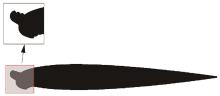
Fig.6
Schematic diagram of ice shape image data
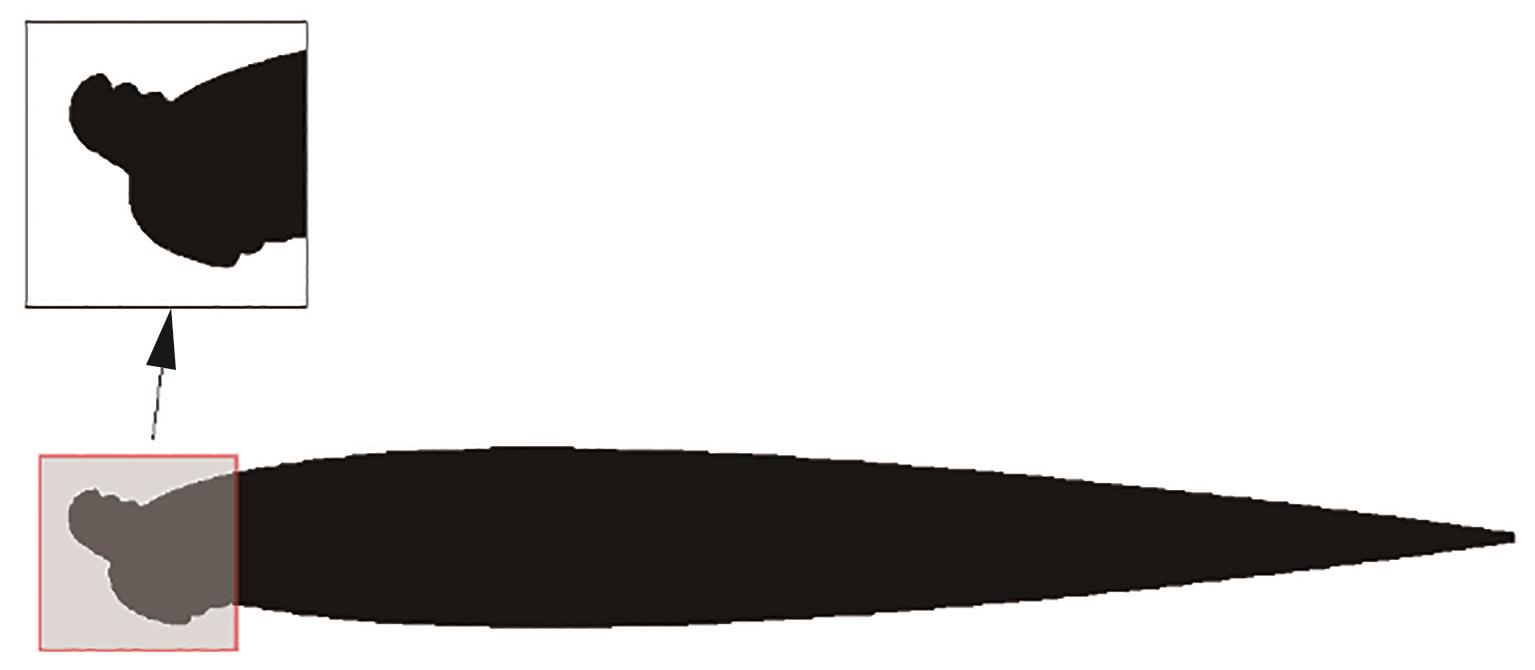
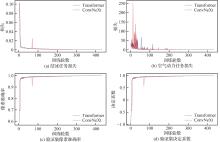
Fig.7
Change of validation set loss and performance index evolution during training process of MTAF models using different backbone networks
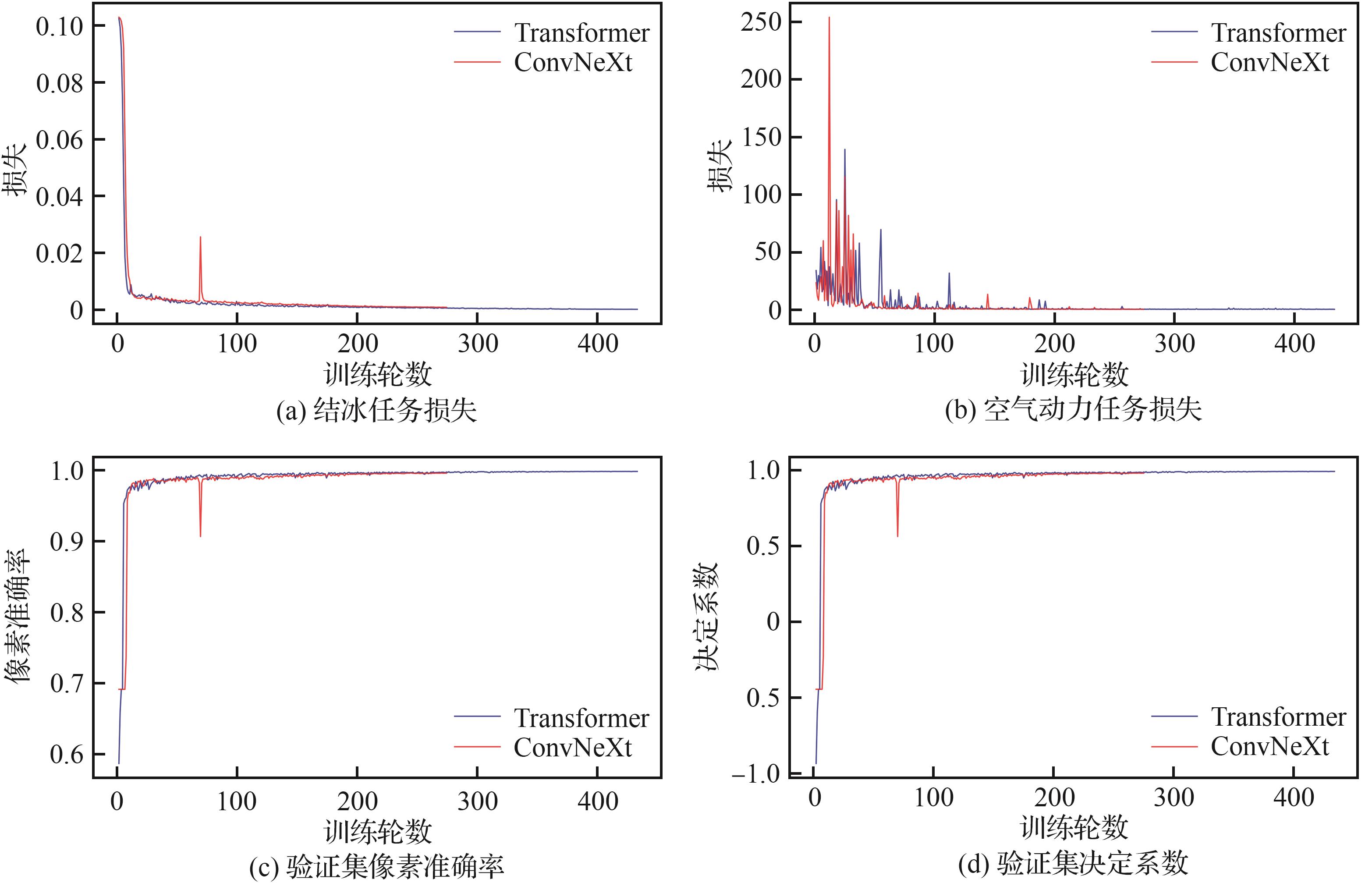
Table 3
MTAF model validation set results for different backbone networks
| 参数 | Transformer | ConvNeXt |
|---|---|---|
| 结冰任务PA/% | 99.84 | 99.62 |
| 结冰任务R2 | 0.992 4 | 0.982 1 |
| 升力系数R2 | 0.930 7 | 0.937 0 |
| 阻力系数R2 | 0.993 8 | 0.993 6 |
| 训练时长/s | 349.72 | 324.11 |
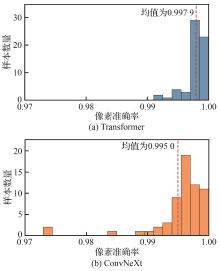
Fig.8
Distribution characteristics of pixel accuracy
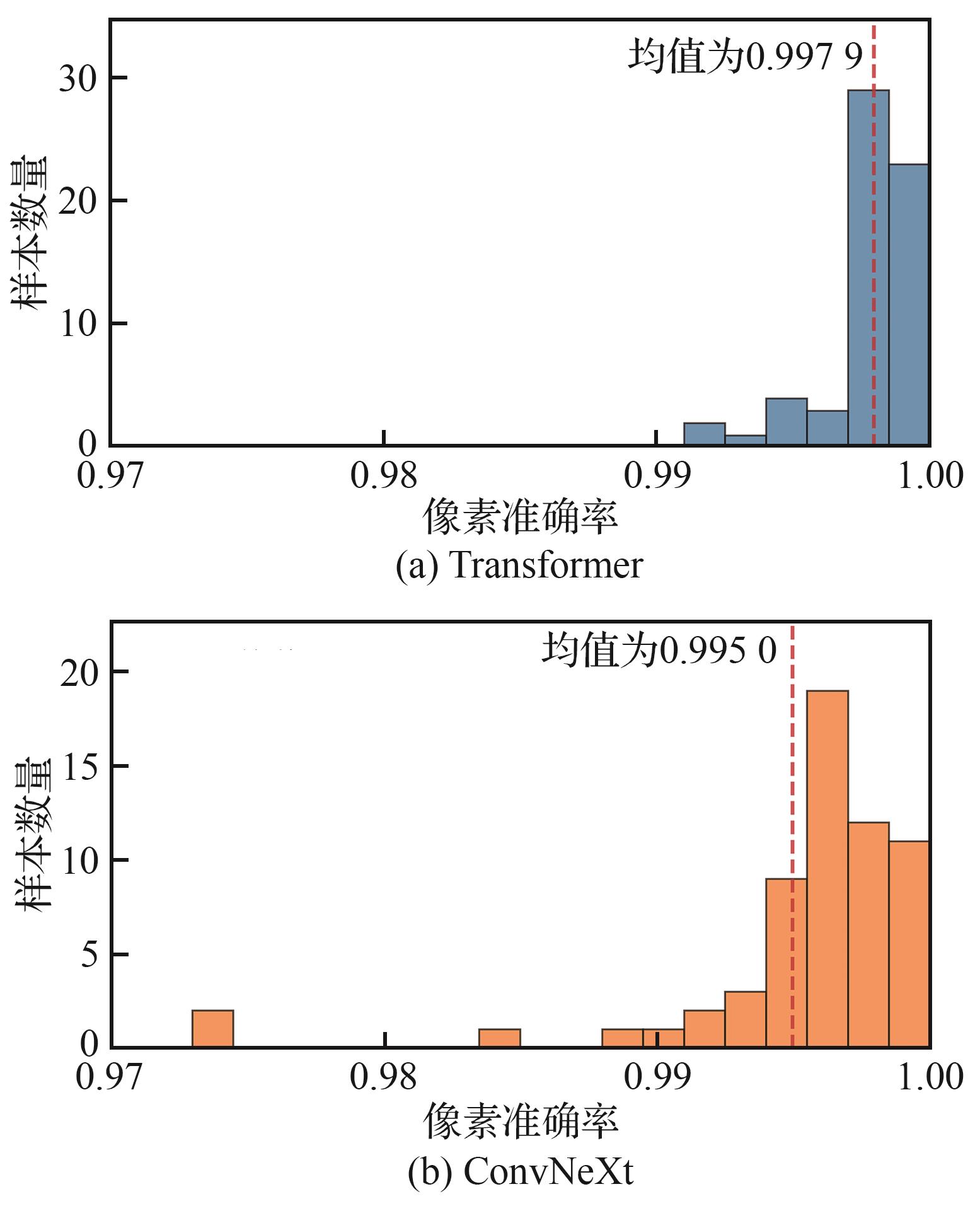
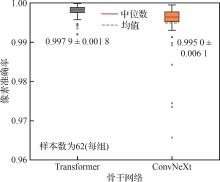
Fig.9
Box plot of pixel accuracy
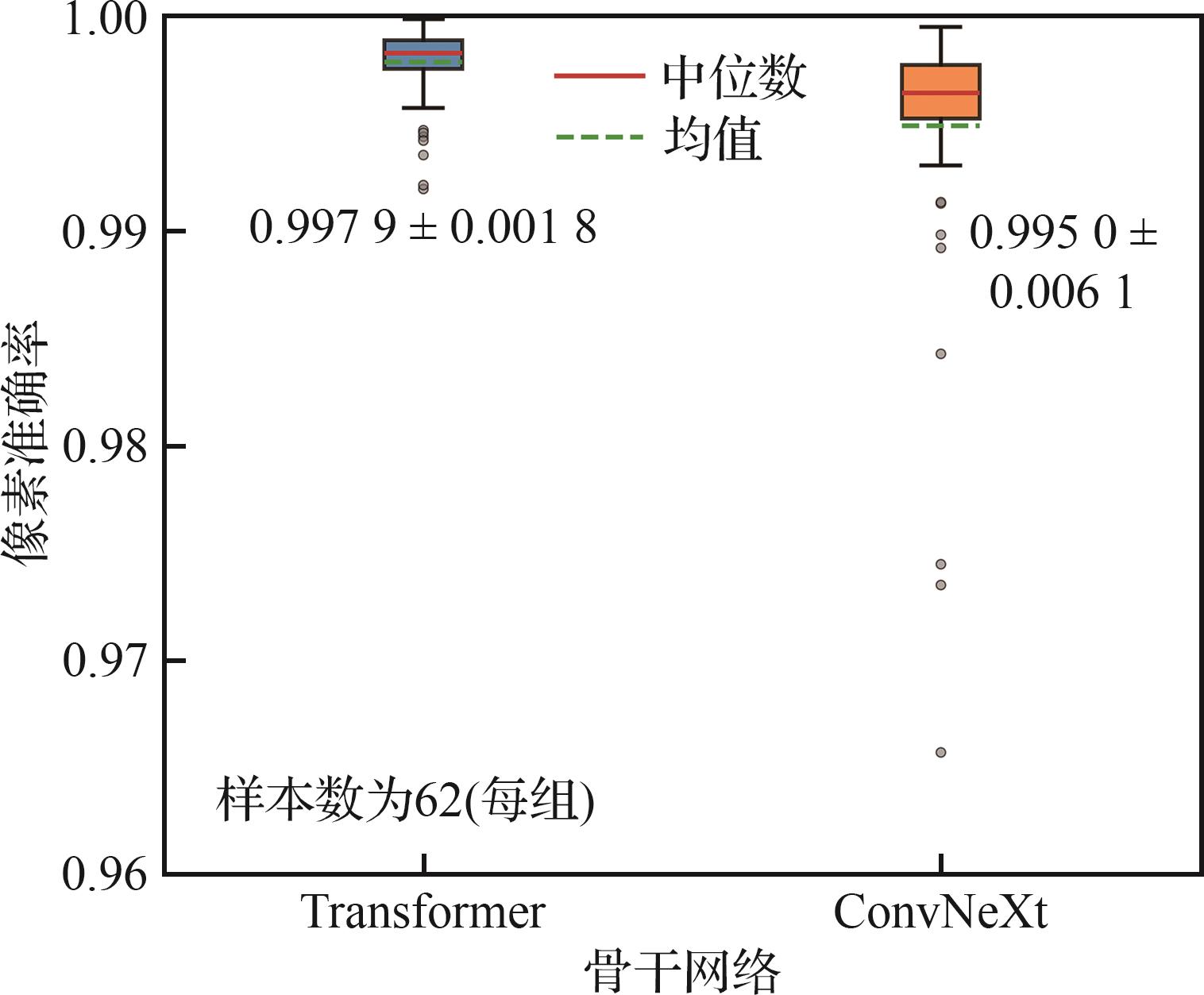
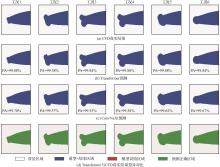
Fig.10
Comparison of icing images and pixel accuracy for MTAF with different backbone architectures under typical conditions
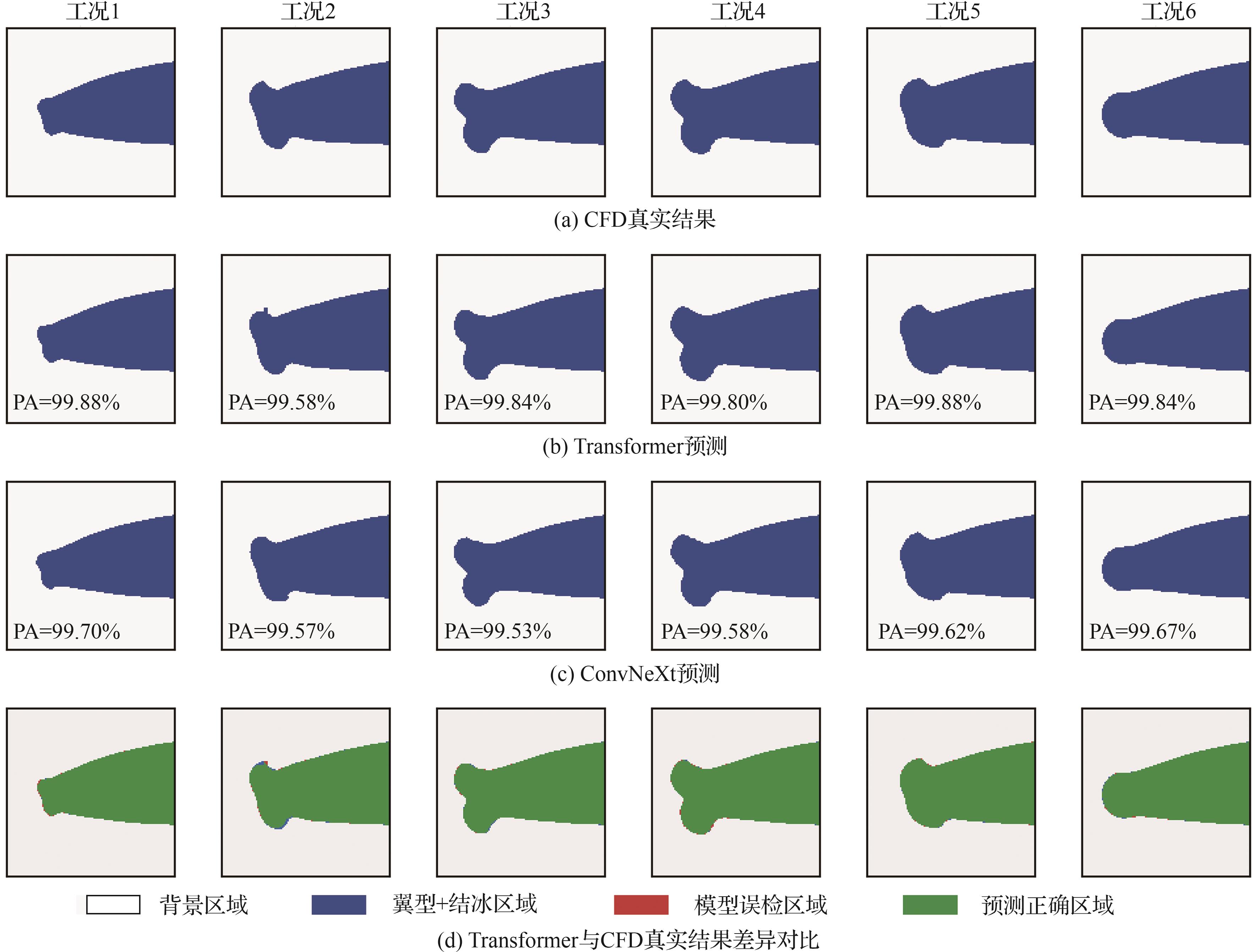
Table 4
Icing prediction results for 100 external test cases
| 参数 | Transformer | ConvNeXt |
|---|---|---|
| 像素准确率/% | 99.82 | 99.58 |
| R2 | 0.986 7 | 0.972 9 |
Table 5
Error statistics results of predicted icing geometric characteristic parameters
| 几何参数 | 测试集 | ConvNeXt | Transformer | ||
|---|---|---|---|---|---|
| RMSE | R2 | RMSE | R2 | ||
| 冰形面积Sice | 62 | 8.22×10⁻⁵ | 0.891 4 | 2.24×10⁻⁵ | 0.991 9 |
| 100 | 5.05×10⁻⁵ | 0.895 5 | 1.95×10⁻⁵ | 0.984 5 | |
| 驻点冰形高度hsp | 62 | 8.75×10⁻⁴ | 0.981 4 | 5.55×10⁻⁴ | 0.992 5 |
| 100 | 8.18×10⁻⁴ | 0.978 6 | 6.24×10⁻⁴ | 0.987 6 | |
| 上冰角高度hu | 62 | 8.70×10⁻⁴ | 0.968 9 | 3.09×10⁻⁴ | 0.996 1 |
| 100 | 1.23×10⁻³ | 0.934 1 | 6.46×10⁻⁴ | 0.981 9 | |
| 下冰角高度hl | 62 | 8.90×10⁻⁴ | 0.978 6 | 5.46×10⁻⁴ | 0.992 0 |
| 100 | 8.42×10⁻⁴ | 0.975 5 | 6.69×10⁻⁴ | 0.984 5 | |
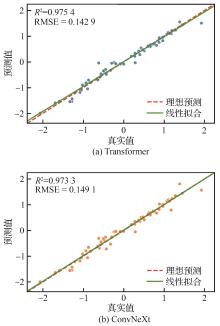
Fig.11
Comparison of lift coefficient prediction scatter plots
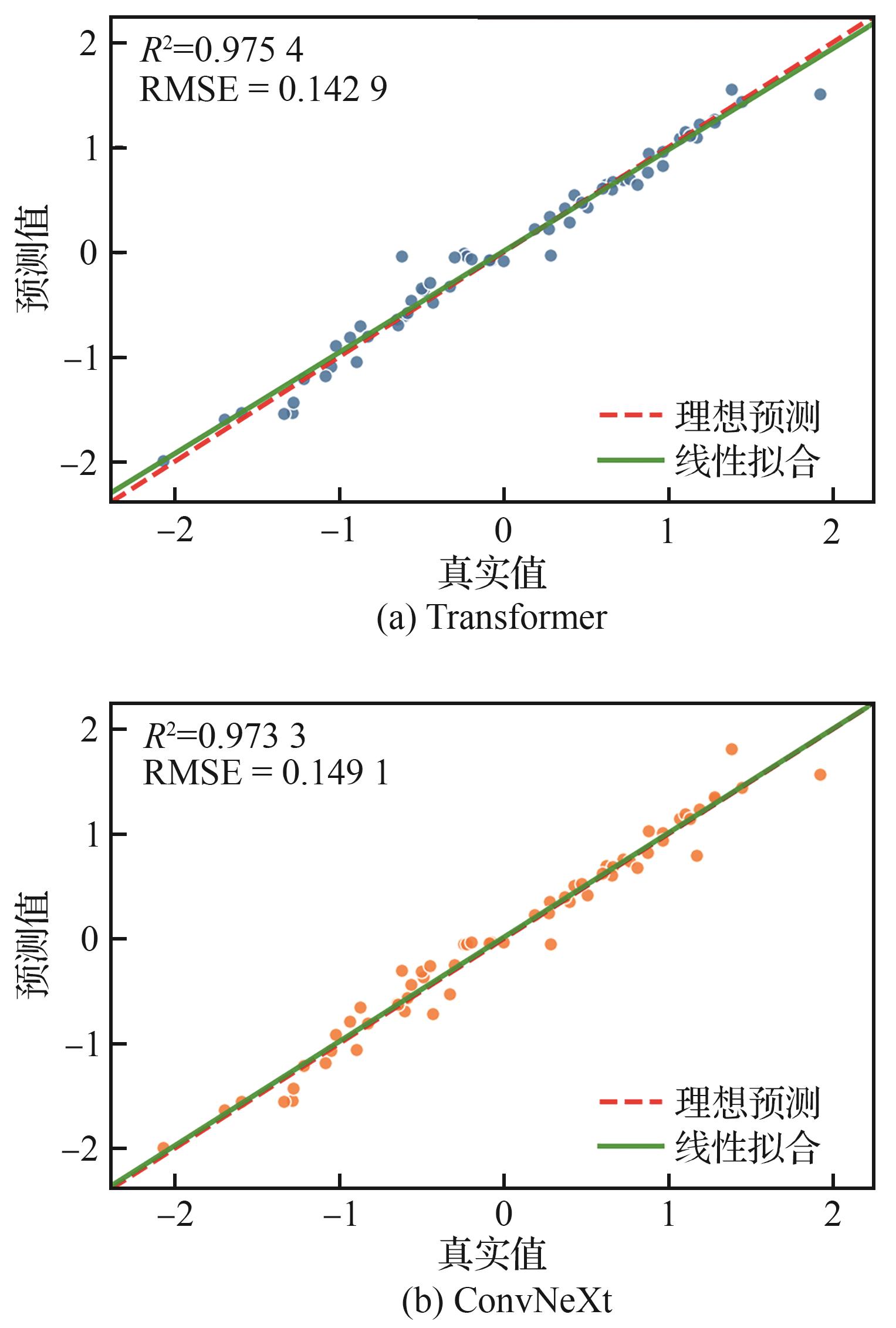
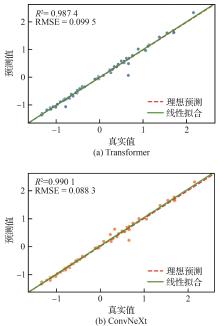
Fig.12
Comparison of drag coefficient prediction scatter plots
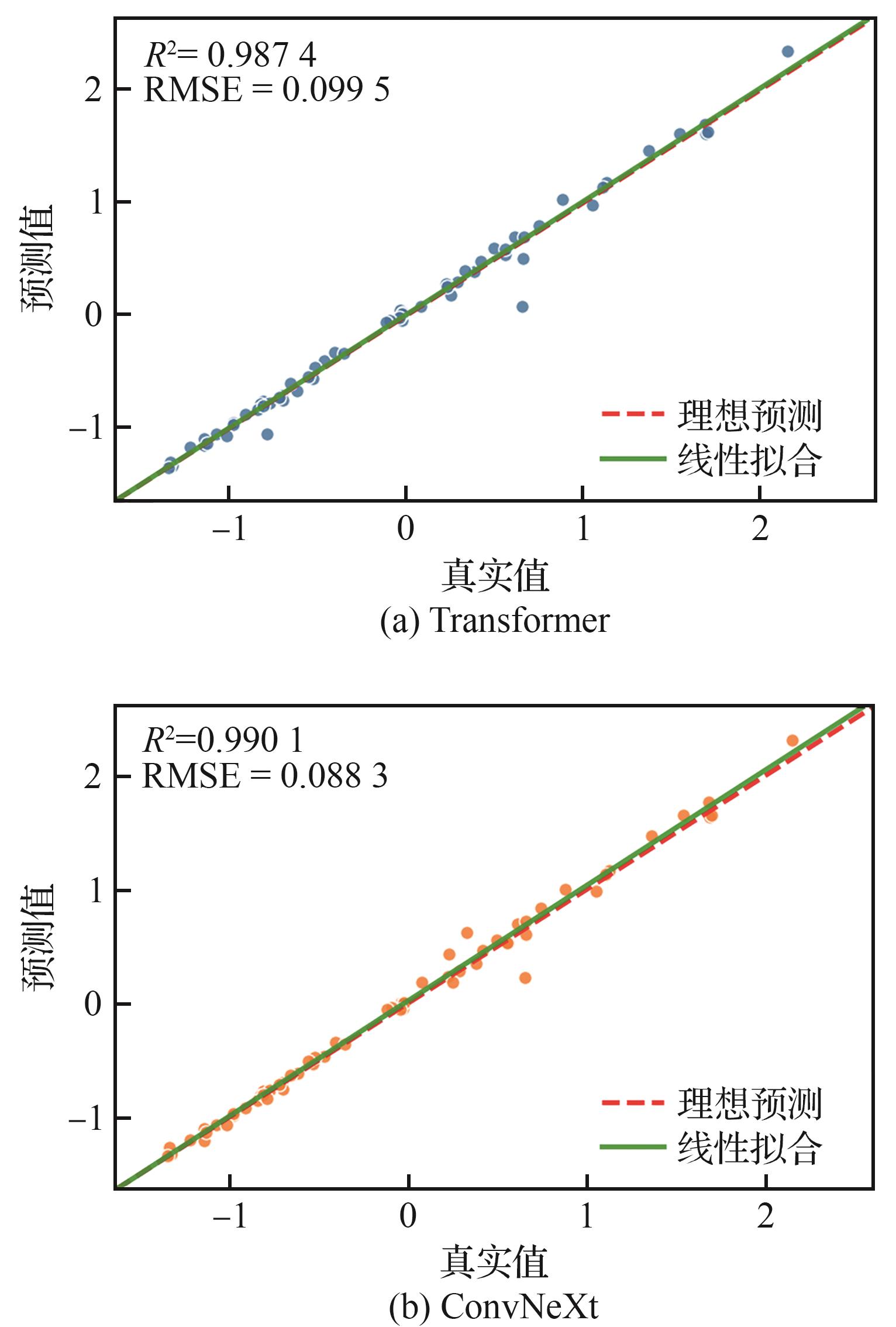
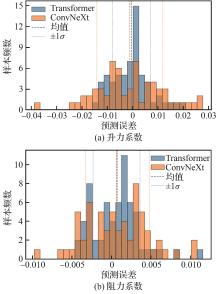
Fig.13
Comparison of lift coefficient and drag coefficient prediction error distributions
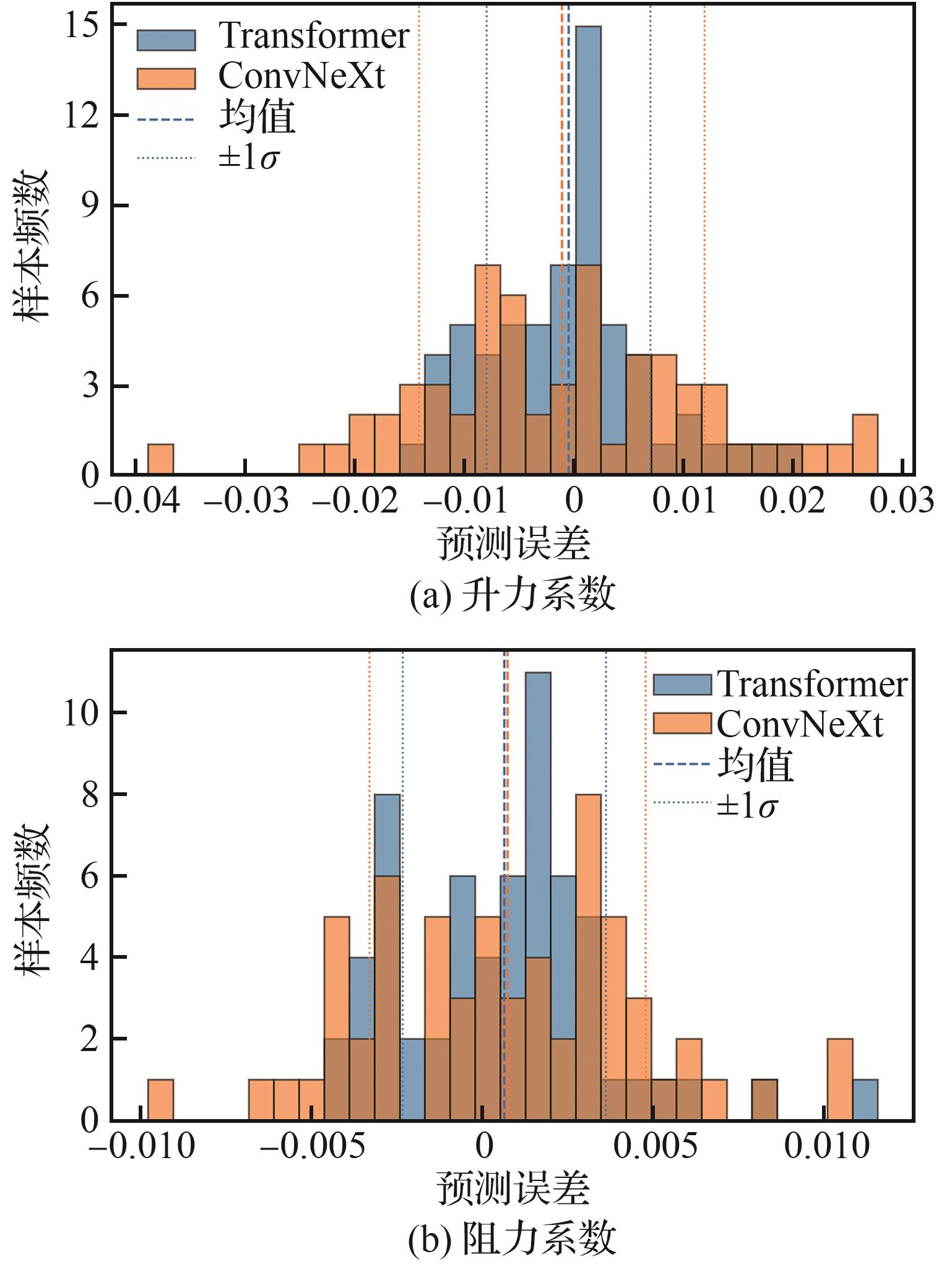
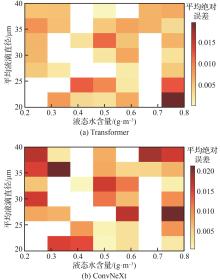
Fig.14
Relationship between prediction errors of lift coefficient as well as drag coefficient and flight conditions
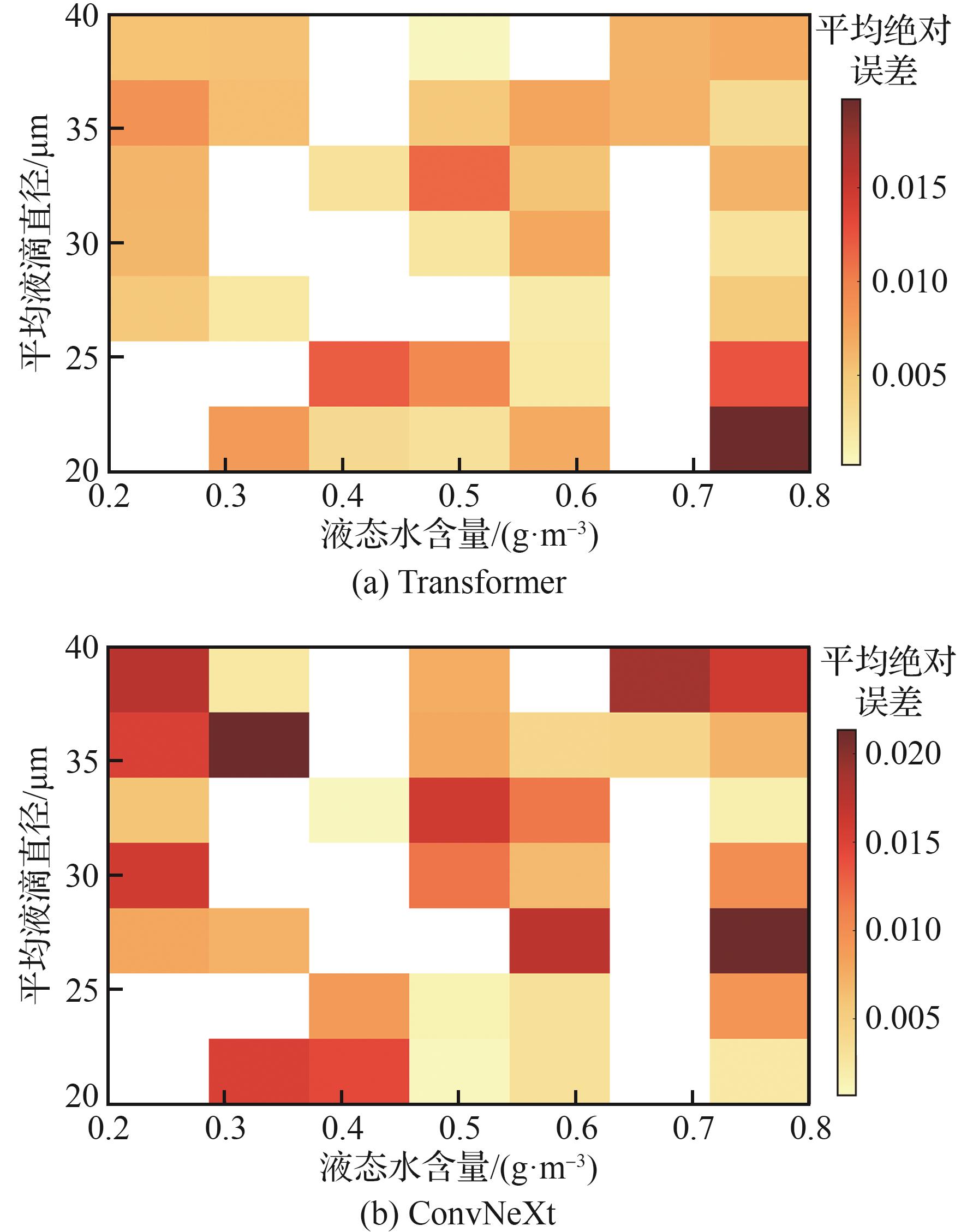
Table 6
Prediction results of lift and drag coefficients on 100 external samples
| 模型 | CL | CD | ||
|---|---|---|---|---|
| RMSE | R2 | RMSE | R2 | |
| Transformer | 0.004 1 | 0.958 1 | 0.001 3 | 0.970 1 |
| ConvNext | 0.003 9 | 0.961 6 | 0.001 2 | 0.973 4 |
| [1] | 张强, 高正红. 基于神经网络的翼型积冰预测[J]. 飞行力学, 2011, 29(2): 6-9. |
| ZHANG Q, GAO Z H. Prediction of ice accretions based on the neural net[J]. Flight Dynamics, 2011, 29(2): 6-9 (in Chinese). | |
| [2] | REEHORST A, ADDY H, COLANTONIO R. Examination of icing induced loss of control and its mitigations[C]∥ AIAA Guidance, Navigation, and Control Conference. Reston: AIAA, 2010. |
| [3] | 李哲, 徐浩军, 薛源, 等. 结冰对飞机飞行安全的影响机理与防护研究[J]. 飞行力学, 2016, 34(4): 10-14. |
| LI Z, XU H J, XUE Y, et al. Research on flight safety effect mechanism and protection for aircraft icing[J]. Flight Dynamics, 2016, 34(4): 10-14 (in Chinese). | |
| [4] | 孙瑞山, 吴迪. 机翼结霜和薄冰的危险性分析[J]. 航空计算技术, 2017, 47(4): 10-13. |
| SUN R S, WU D. Risk analysis of frost and ice on wing[J]. Aeronautical Computing Technique, 2017, 47(4): 10-13 (in Chinese). | |
| [5] | 何磊, 钱炜祺, 易贤, 等. 基于转置卷积神经网络的翼型结冰冰形图像化预测方法[J]. 国防科技大学学报, 2021, 43(3): 98-106. |
| HE L, QIAN W Q, YI X, et al. Graphical prediction method of airfoil ice shape based on transposed convolution neural networks[J]. Journal of National University of Defense Technology, 2021, 43(3): 98-106 (in Chinese). | |
| [6] | LYNCH F T, KHODADOUST A. Effects of ice accretions on aircraft aerodynamics[J]. Progress in Aerospace Sciences, 2001, 37(8): 669-767. |
| [7] | BRAGG M. Aircraft aerodynamic effects due to large droplet ice accretions[C]∥ 34th Aerospace Sciences Meeting and Exhibit. Reston: AIAA, 1996. |
| [8] | 易贤, 朱国林, 王开春, 等. 翼型积冰的数值模拟[J]. 空气动力学学报, 2002, 20(4): 428-433. |
| YI X, ZHU G L, WANG K C, et al. Numerically simulating of ice accretion on airfoil[J]. Acta Aerodynamica Sinica, 2002, 20(4): 428-433 (in Chinese). | |
| [9] | HINTON G E, SALAKHUTDINOV R R. Reducing the dimensionality of data with neural networks[J]. Science, 2006, 313(5786): 504-507. |
| [10] | 柴聪聪. 基于深度学习的翼型结冰及其气动特性预测[D]. 成都: 电子科技大学, 2021: 23-41. |
| CHAI C C. Prediction of airfoil ice accretion and aerodynamic characteristics based on deep learning[D]. Chengdu: University of Electronic Science and Technology of China, 2021: 23-41 (in Chinese). | |
| [11] | 何磊, 钱炜祺, 董康生, 等. 基于卷积神经网络的结冰翼型气动特性建模[J]. 航空学报, 2023, 44(5): 126434. |
| HE L, QIAN W Q, DONG K S, et al. Aerodynamic characteristics modeling of iced airfoil based on convolution neural networks[J]. Acta Aeronautica et Astronautica Sinica, 2023, 44(5): 126434 (in Chinese). | |
| [12] | 李小龙, 洪冠新. 一种基于神经网络的机翼结冰冰型预测方法[C]∥ 中国航空学会飞行力学学术交流会论文集. 北京: 国防工业出版社, 2006: 98-103. |
| LI X L, HONG G X. A neural network-based prediction method for wing icing shape[C]∥ Proceedings of the Annual Conference of Academic Exchanges on Flight Mechanics and Flight Tests. Beijing: National Defense Industry Press, 2006: 98-103 (in Chinese). | |
| [13] | OGRETIM E, HUEBSCH W, SHINN A. Aircraft ice accretion prediction based on neural networks[J]. Journal of Aircraft, 2006, 43(1): 233-240. |
| [14] | CHANG S N, LENG M Y, WU H W, et al. Aircraft ice accretion prediction using neural network and wavelet packet transform[J]. Aircraft Engineering and Aerospace Technology, 2016, 88(1): 128-136. |
| [15] | YI X, WANG Q, CHAI C C, et al. Prediction model of aircraft icing based on deep neural network[J]. Transactions of Nanjing University of Aeronautics and Astronautics, 2021, 38(4): 535-544. |
| [16] | STRIJHAK S, RYAZANOV D, KOSHELEV K, et al. Neural network prediction for ice shapes on airfoils using iceFoam simulations[J]. Aerospace, 2022, 9(2): 96. |
| [17] | 屈经国, 王强, 彭博, 等. 基于多模态融合的任意对称翼型结冰预测方法[J]. 航空动力学报, 2024, 39(1): 49-56. |
| QU J G, WANG Q, PENG B, et al. Icing prediction method for arbitrary symmetric airfoil using multimodal fusion[J]. Journal of Aerospace Power, 2024, 39(1): 49-56 (in Chinese). | |
| [18] | 屈经国, 彭博, 易贤, 等. 基于深度神经网络的任意翼型结冰预测方法[J]. 空气动力学学报, 2023, 41(7): 48-55. |
| QU J G, PENG B, YI X, et al. Icing prediction method for arbitrary airfoil using deep neural networks[J]. Acta Aerodynamica Sinica, 2023, 41(7): 48-55 (in Chinese). | |
| [19] | 柴聪聪, 易贤, 郭磊, 等. 基于BP神经网络的冰形特征参数预测[J]. 实验流体力学, 2021, 35(3): 16-21. |
| CHAI C C, YI X, GUO L, et al. Prediction of ice shape characteristic parameters based on BP nerual network[J]. Journal of Experiments in Fluid Mechanics, 2021, 35(3): 16-21 (in Chinese). | |
| [20] | YU D H, HAN Z R, ZHANG B, et al. A fused super-resolution network and a vision transformer for airfoil ice accretion image prediction[J]. Aerospace Science and Technology, 2024, 144: 108811. |
| [21] | YU D H, HAN Z R, ZHANG B, et al. A multi-autoencoder fusion network for fast image prediction of aircraft ice accretion[J]. Physics of Fluids, 2022, 34(7): 076107. |
| [22] | YU J, DAI Y T, LIU X K, et al. Unleashing the power of multi-task learning: A comprehensive survey spanning traditional, deep, and pretrained foundation model eras[EB/OL]. arXiv preprint: 2404.18961, 2024. |
| [23] | CRAWSHAW M. Multi-task learning with deep neural networks: A survey[EB/OL]. arXiv preprint: 2009.09796, 2020. |
| [24] | VASWANI A, SHAZEER N, PARMAR N, et al. Attention is all you need[C]∥ Proceedings of the 31st International Conference on Neural Information Processing Systems. New York: ACM, 2017: 6000-6010. |
| [25] | LIU Z, MAO H Z, WU C Y, et al. A ConvNet for the 2020s[C]∥ 2022 IEEE/CVF Conference on Computer Vision and Pattern Recognition (CVPR). Piscataway: IEEE Press, 2022: 11966-11976. |
| [26] | DOSOVITSKIY A, BEYER L, KOLESNIKOV A, et al. An image is worth 16x16 words: Transformers for image recognition at scale[C]∥ 9th International Conference on Learning Representations. Appleton: ICLR, 2021. |
| [27] | LIU Z, LIN Y T, CAO Y, et al. Swin Transformer: Hierarchical vision transformer using shifted windows[C]∥ 2021 IEEE/CVF International Conference on Computer Vision (ICCV). Piscataway: IEEE Press, 2021: 9992-10002. |
| [28] | XIE E Z, WANG W H, YU Z D, et al. SegFormer: Simple and efficient design for semantic segmentation with transformers[C]∥ 35th Annual Conference on Neural Information Processing Systems (NeurIPS). 2021: 12077-12090. |
| [29] | CHENG B W, SCHWING A G, KIRILLOV A. Per-pixel classification is not all you need for semantic segmentation[C]∥ Proceedings of the 35th International Conference on Neural Information Processing Systems. New York: ACM, 2021: 17864-17875. |
| [30] | JAIN J, LI J C, CHIU M, et al. OneFormer: One transformer to rule universal image segmentation[C]∥ 2023 IEEE/CVF Conference on Computer Vision and Pattern Recognition (CVPR). Piscataway: IEEE Press, 2023: 2989-2998. |
| [31] | HENDRYCKS D, GIMPEL K. Gaussian error linear units (GELUs)[EB/OL]. arXiv preprint: 1606.08415, 2016. |
| [32] | XIONG R B, YANG Y C, HE D, et al. On layer normalization in the transformer architecture[C]∥ Proceedings of the 37th International Conference on Machine Learning. New York: ACM, 2020: 10524-10533. |
| [33] | HE K M, ZHANG X Y, REN S Q, et al. Deep residual learning for image recognition[C]∥ 2016 IEEE Conference on Computer Vision and Pattern Recognition (CVPR). Piscataway: IEEE Press, 2016: 770-778. |
| [34] | MURPHY K, SCHÖLKOPF B, SRIVASTAVA N, et al. Dropout: A simple way to prevent neural networks from overfitting[C]∥ New York: ACM, 2014: 1929-1958. |
| [35] | HOWARD A G, ZHU M L, CHEN B, et al. MobileNets: Efficient convolutional neural networks for mobile vision applications[EB/OL]. arXiv preprint: 1704.04861, 2017. |
| [36] | BA J L, KIROS J R, HINTON G E. Layer normalization[EB/OL]. arXiv preprint: 1607.06450, 2016. |
| [37] | LARSSON G, MAIRE M, SHAKHNAROVICH G. FractalNet: Ultra-deep neural networks without residuals[C]∥ 5th International Conference on Learning Representations. Toulon: ICLR, 2017. |
| [38] | CARION N, MASSA F, SYNNAEVE G, et al. End-to-end object detection with transformers[C]∥ Computer Vision—ECCV 2020. Cham: Springer, 2020: 213-229. |
| [39] | ZEILER M D, FERGUS R. Visualizing and understanding convolutional networks[M]∥ Computer Vision—ECCV 2014. Cham: Springer, 2014: 818-833. |
| [40] | LIN T Y, GOYAL P, GIRSHICK R, et al. Focal loss for dense object detection[J]. IEEE Transactions on Pattern Analysis and Machine Intelligence, 2020, 42(2): 318-327. |
| [41] | RASCHKA S, MIRJALILI V. Python machine learning: Machine learning and deep learning with Python, scikit-learn, and TensorFlow 2[M]. Birmingham: Packt Publishing Ltd, 2019: 20-23. |
| [42] | SHIN J, BOND T. Results of an icing test on a NACA 0012 airfoil in the NASA Lewis Icing Research Tunnel[C]∥ 30th Aerospace Sciences Meeting and Exhibit. Reston: AIAA, 1992. |
| [43] | BROEREN A P, WHALEN E A, BUSCH G T, et al. Aerodynamic simulation of runback ice accretion[J]. Journal of Aircraft, 2010, 47(3): 924-939. |
| [44] | FAA. Part 25—Airworthiness standards: Transport category airplanes Appendix C: 4080-29-FR-18291[R]. Washington, D.C.: Federal Aviation Administration, 1970. |
| [45] | LOSHCHILOV I, HUTTER F. SGDR: Stochastic gradient descent with warm restarts[C]∥ 5th International Conference on Learning Representations. Toulon: ICLR, 2017. |
| [46] | LOSHCHILOV I, HUTTER F. Decoupled weight decay regularization[C]∥ 7th International Conference on Learning Representations. New Orleans: ICLR, 2019. |
| [47] | Aircraft Icing Technology Committee. Icing wind tunnel interfacility comparison tests: AIR5666A [S]. Warrendale: SAE International, 2018. |
| [1] | Xiangyu WANG, Xianyun CHEN, Mengqi LIU, Zhenping FENG. Influence of vibration on aerothermal characteristics of turbine blade tips under maneuvering loads [J]. Acta Aeronautica et Astronautica Sinica, 2026, 47(8): 132710-132710. |
| [2] | Jiayi LI, Haiqing SI, Hao DONG, Jingxuan QIU, Tianyu XIA. Verification and validation of deep dynamic stall numerical simulation method [J]. Acta Aeronautica et Astronautica Sinica, 2026, 47(6): 132671-132671. |
| [3] | Tianhao GUO, Lei ZHANG, Xuefeng DUAN, Zhitao LIU, Fan LIU, Renyu ZHU. Aerodynamic and flight control characteristics evaluation of a flying boom based on wind tunnel tests [J]. Acta Aeronautica et Astronautica Sinica, 2026, 47(16): 132934-132934. |
| [4] | Xiaobin SHEN, Zekun YE, Jingyu ZHAO, Jietao GUO, Guiping LIN. A three-dimensional surface water droplet impingement characterization method based on Eulerian streamlines [J]. Acta Aeronautica et Astronautica Sinica, 2026, 47(11): 632751-632751. |
| [5] | Kaiqiang CAO, Pan CHENG, Xiangrong JING, Zhenbing LUO, Tianxiang GAO, Wenjie FENG, Yan ZHOU, Wenqiang PENG. Mechanism and experiment on de-icing by plasma synthetic jet actuator with oblique jet outlet [J]. Acta Aeronautica et Astronautica Sinica, 2026, 47(11): 633381-633381. |
| [6] | Wangqing ZHU, Chenkai CAO, Guoqing ZHAO, Qinghua ZHU, Haoyu HU. Aerodynamic interference of scissor tail rotor and influence of unconventional layout parameters [J]. Acta Aeronautica et Astronautica Sinica, 2025, 46(S1): 732181-732181. |
| [7] | Lingling CHEN, Yang ZHANG, Yongqiang SHI, Qingzhen YANG. Film cooling performance/nozzle performance/infrared radiation characteristics of a vector nozzle [J]. Acta Aeronautica et Astronautica Sinica, 2025, 46(8): 631139-631139. |
| [8] | Lei WANG, Qiuxuan YE, Jin ZHANG. Spectrum sensing method for DME using combined wavelet transform and deep convolutional neural network [J]. Acta Aeronautica et Astronautica Sinica, 2025, 46(24): 332044-332044. |
| [9] | Dong GAO, Pujian LAI, Shilei WANG, Gong CHENG. RGB-T UAV object tracking based on feature-cooperative reconstruction [J]. Acta Aeronautica et Astronautica Sinica, 2025, 46(23): 632017-632017. |
| [10] | Jiaxin LI, Shuaishuai LYU, Yezi WANG, Yu YANG, Ziyue LI. Transformer-based intelligent tracking method of aviation structure surface cracks [J]. Acta Aeronautica et Astronautica Sinica, 2025, 46(21): 532355-532355. |
| [11] | Jiakun FAN, Junqiang AI, Ningjuan DONG, Jiakuan XU, Lei QIAO, Junqiang BAI. Stationary crossflow induced transition prediction method for supersonic swept-wing based on convolutional neural networks [J]. Acta Aeronautica et Astronautica Sinica, 2025, 46(20): 532012-532012. |
| [12] | Yinxuan ZHANG, Qi ZHANG, Zhenyong XU, Linshu MENG. Predicting method of aircraft mechanical response based on residual neural networks [J]. Acta Aeronautica et Astronautica Sinica, 2025, 46(19): 531295-531295. |
| [13] | Yao LU, Zihao LI, Zhunga LIU, Yanbo YANG. Intelligent data association and tracking of different types of multiple targets based on Transformer [J]. Acta Aeronautica et Astronautica Sinica, 2025, 46(17): 331643-331643. |
| [14] | He JIA, Wei JIANG, Wenlong BAO, Xin XU, Wei RONG, Li YU. Transonic/supersonic aerodynamic characteristics and fluid-structure interaction mechanism of flexible parachutes for planetary exploration [J]. Acta Aeronautica et Astronautica Sinica, 2025, 46(1): 630369-630369. |
| [15] | Liping WANG, Fuxin WANG, Hong LIU. Research progress on simulation methods of drop diameter distribution in supercooled large drop icing conditions [J]. Acta Aeronautica et Astronautica Sinica, 2024, 45(S1): 730570-730570. |
| Viewed | ||||||
|
Full text |
|
|||||
|
Abstract |
|
|||||
Address: No.238, Baiyan Buiding, Beisihuan Zhonglu Road, Haidian District, Beijing, China
Postal code : 100083
E-mail:hkxb@buaa.edu.cn
Total visits: 6658907 Today visits: 1341All copyright © editorial office of Chinese Journal of Aeronautics
All copyright © editorial office of Chinese Journal of Aeronautics
Total visits: 6658907 Today visits: 1341

 CJA
CJA
