Acta Aeronautica et Astronautica Sinica ›› 2026, Vol. 47 ›› Issue (12): 232789.doi: 10.7527/S1000-6893.2025.32789
• Solid Mechanics and Vehicle Conceptual Design • Previous Articles
Lingang ZHU1,2, Puhui CHEN1( )
)
Received:2025-09-16
Revised:2025-10-10
Accepted:2025-10-20
Online:2025-10-28
Published:2025-10-24
Contact:
Puhui CHEN
E-mail:phchen@nuaa.edu.cn
CLC Number:
Lingang ZHU, Puhui CHEN. Multi-source data driven optimization technology for airframe structural operation and maintenance[J]. Acta Aeronautica et Astronautica Sinica, 2026, 47(12): 232789.
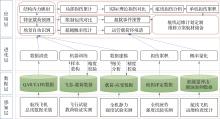
Fig.1
Architecture of line maintenance system for airframe structures of large commerical aircraft
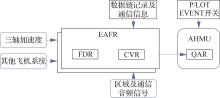
Fig.2
Architecture of enhanced airborne flight recorder
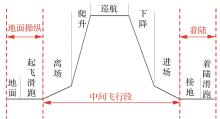
Fig.3
Scenario segmentation of flight mission profile
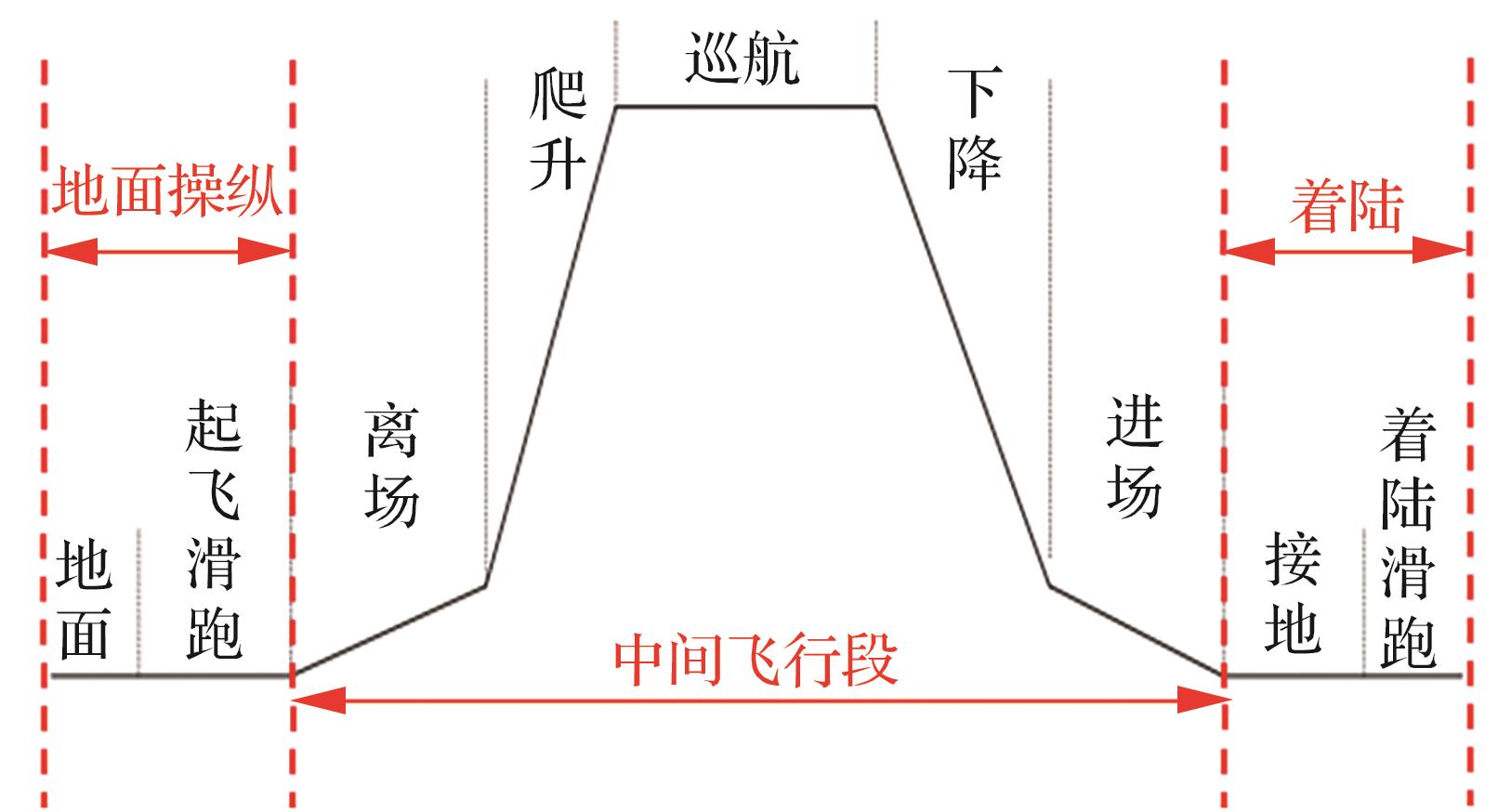
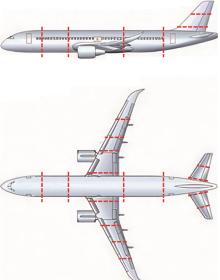
Fig.4
Schematic diagram of load identification profile at station
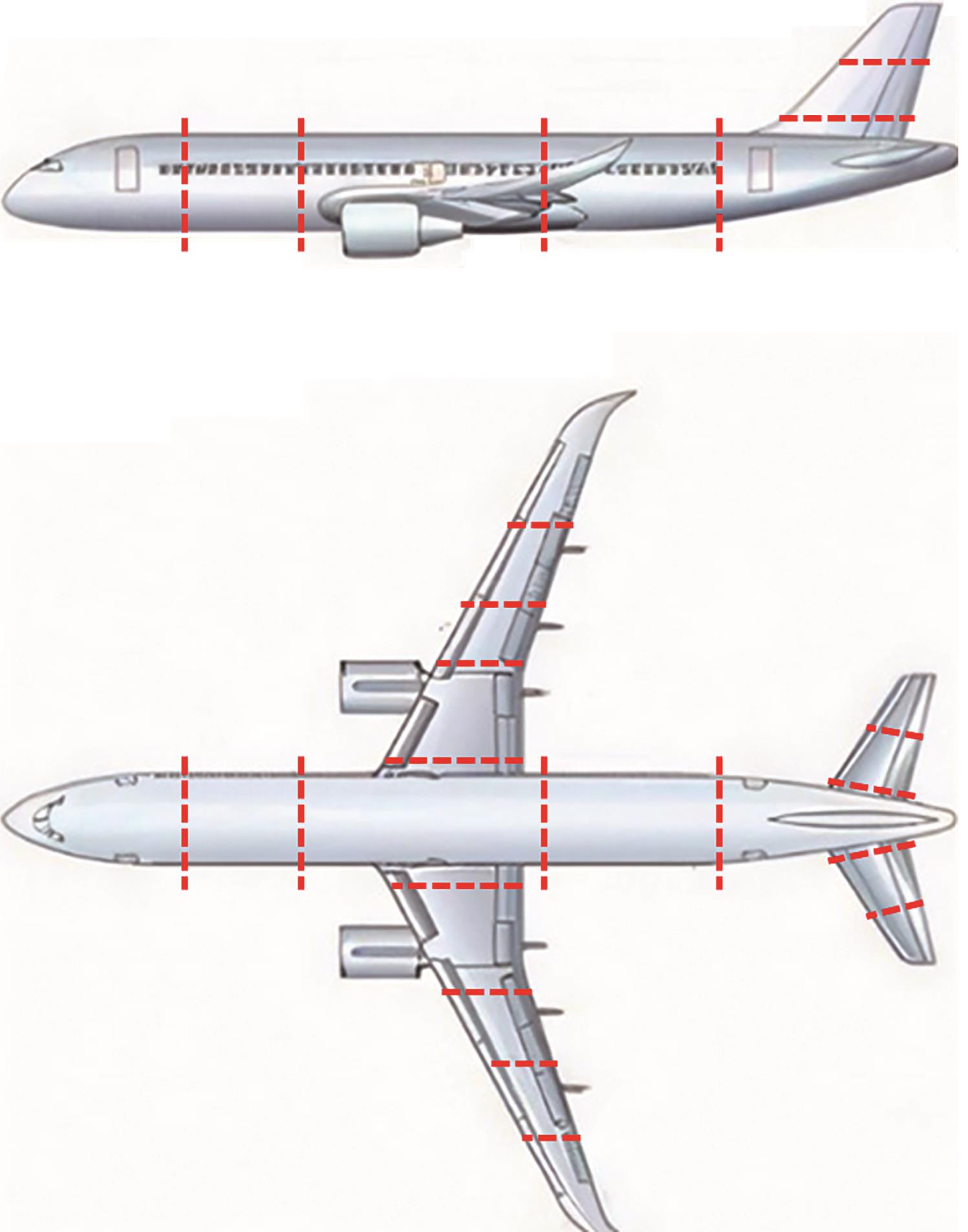
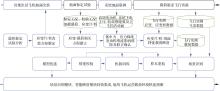
Fig.5
Flight parameters-characteristic loads intelligent mapping data modeling process
Table 1
Flight parameters for scene recognition and sample reconstruction
| 大气数据 | 推力及起落架 | 飞行控制 | 姿态角 | 重量状态 |
|---|---|---|---|---|
| 高度 | 左发推力转速 | 襟翼(2) | 俯仰角 | 总重量 |
| 空速 | 右发推力转速 | 缝翼(2) | 滚转角 | 重心 |
| 马赫数 | 反推控制状态 | 平尾 | 侧滑角 | 左机翼燃油重量 |
| 总压 | 起落架收放状态 | 升降舵(2) | 迎角 | 右机翼燃油重量 |
| 静压 | 起落架接地状态(3) | 方向舵 | 俯仰角速率 | 中央翼燃油重量 |
| 总温 | 前轮转弯角度 | 副翼(2) | 滚转角速率 | |
| 刹车控制指令 | 多功能扰流板(8) | |||
| 地面扰流板(2) | ||||
| 侧杆指令(4) | ||||
| 脚蹬指令(2) |
Table 2
Comparison of machine training results of flight parameter-load
| 建模方法 | 满足精度 要求占比 | 训练时间 | 单架次预测时间/s | 模型大小 |
|---|---|---|---|---|
| 多重回归 | 0.9 | 10 min | 0.5 | 10 M |
| 神经网络 | 0.92 | 2 h | 5 | 3 G |
| 随机森林 | 0.95 | 6 h | 30 | 30 G |
| 极端随机树 | 0.98 | 95 s | 5 | 1.8 G |
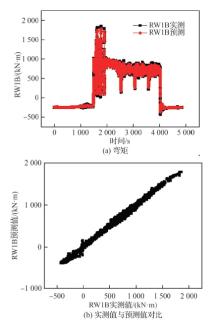
Fig.6
Comparison between prediction and measured results of the bending moment of 1# typical characteristic profile of the right-wing root (RW1B)
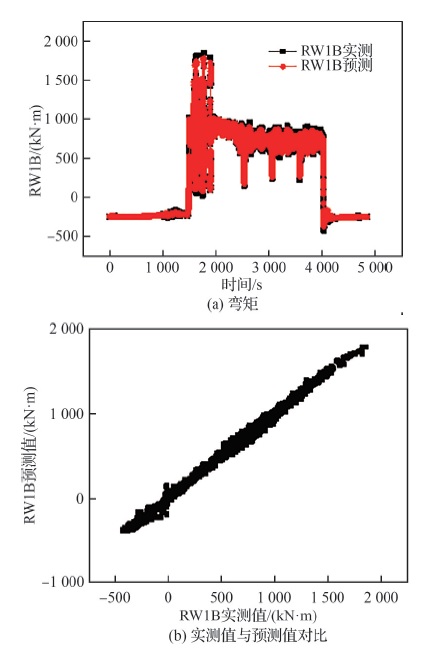
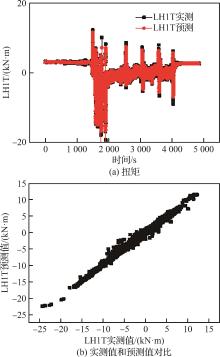
Fig.7
Comparison between prediction and measured results of the bending moment of 1# typical characteristic profile of the left horizontal stabilizer root (LH1T)
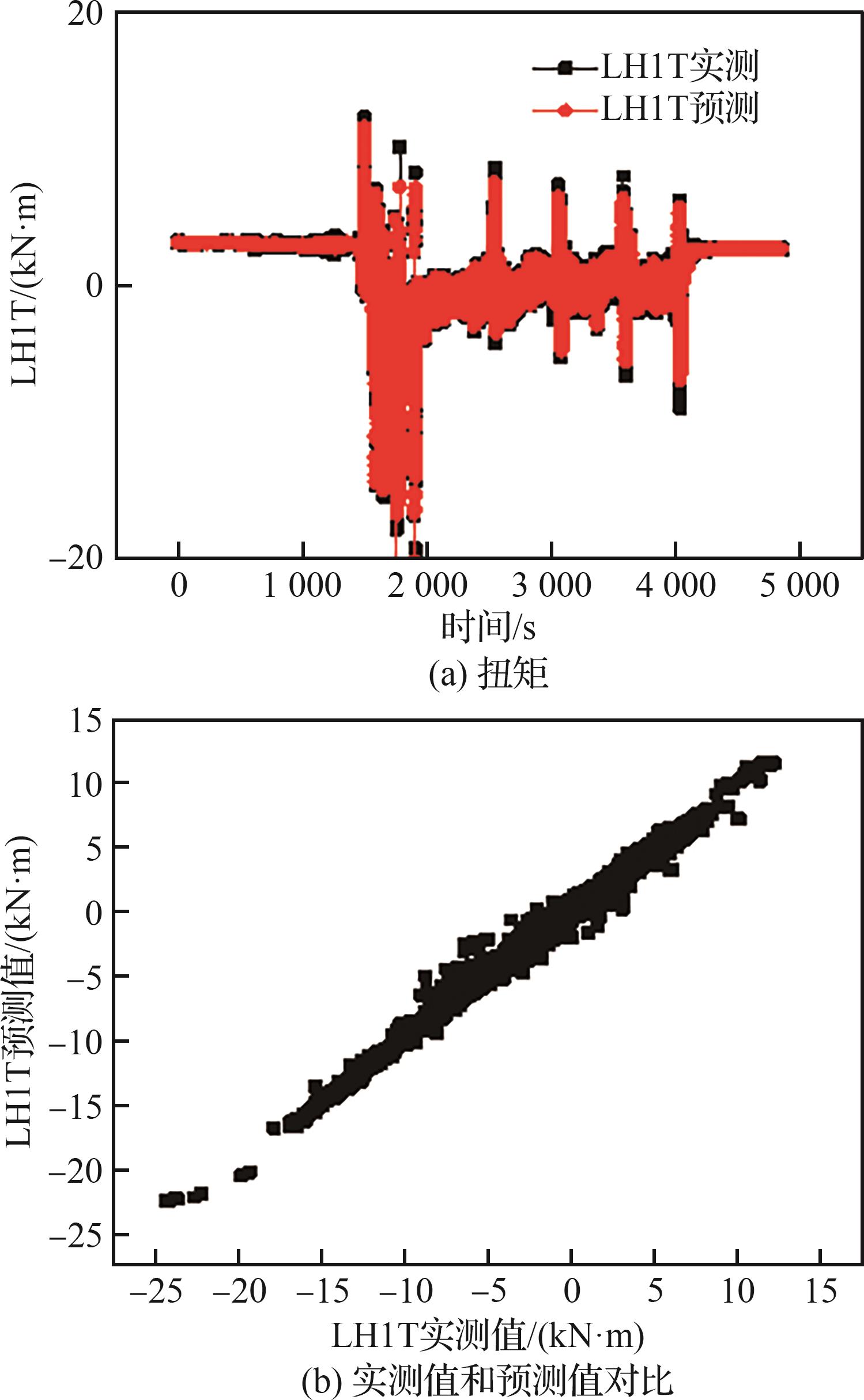
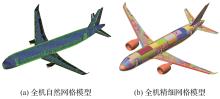
Fig.8
Global finite element model of a large commerical aircraft
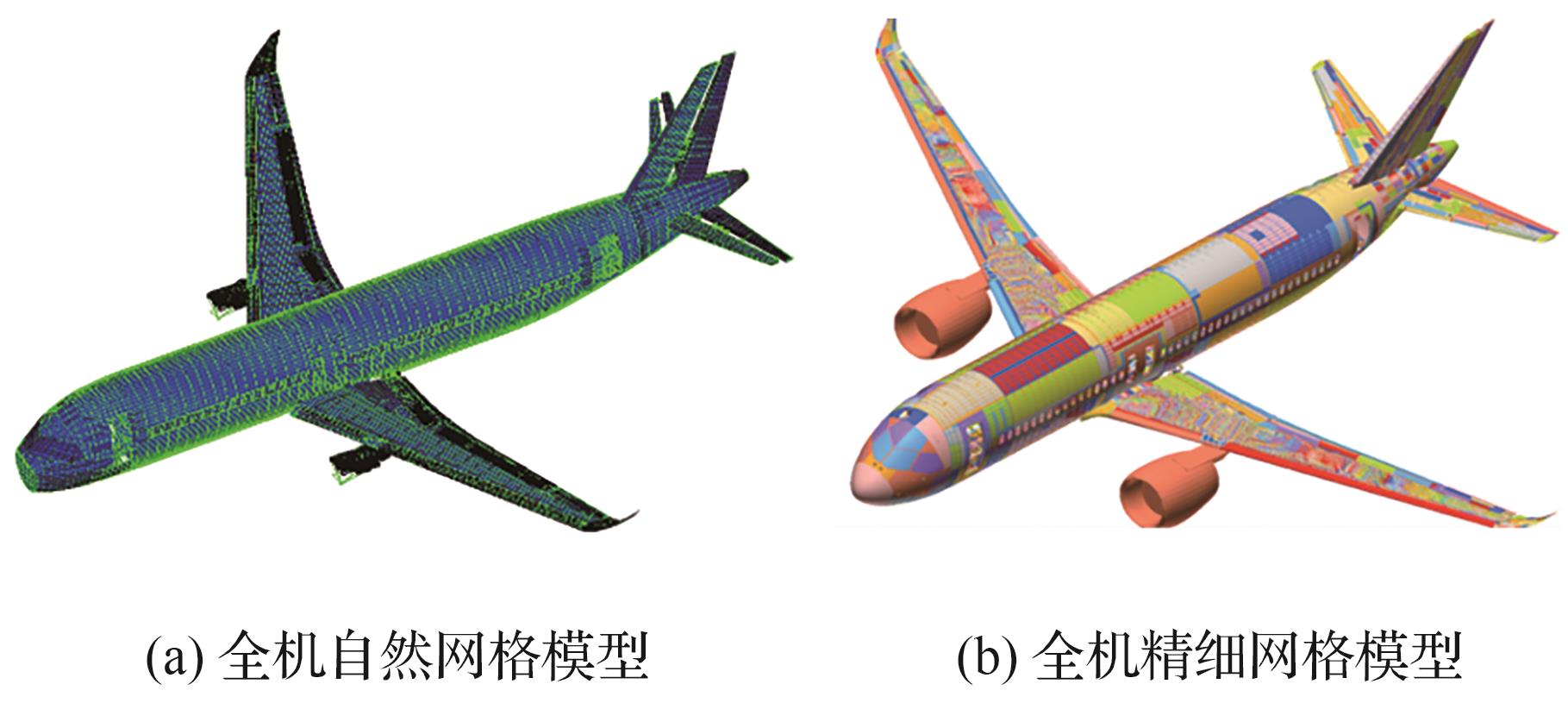
Fig.9
Characteristic section load-risked structure internal force data modeling process
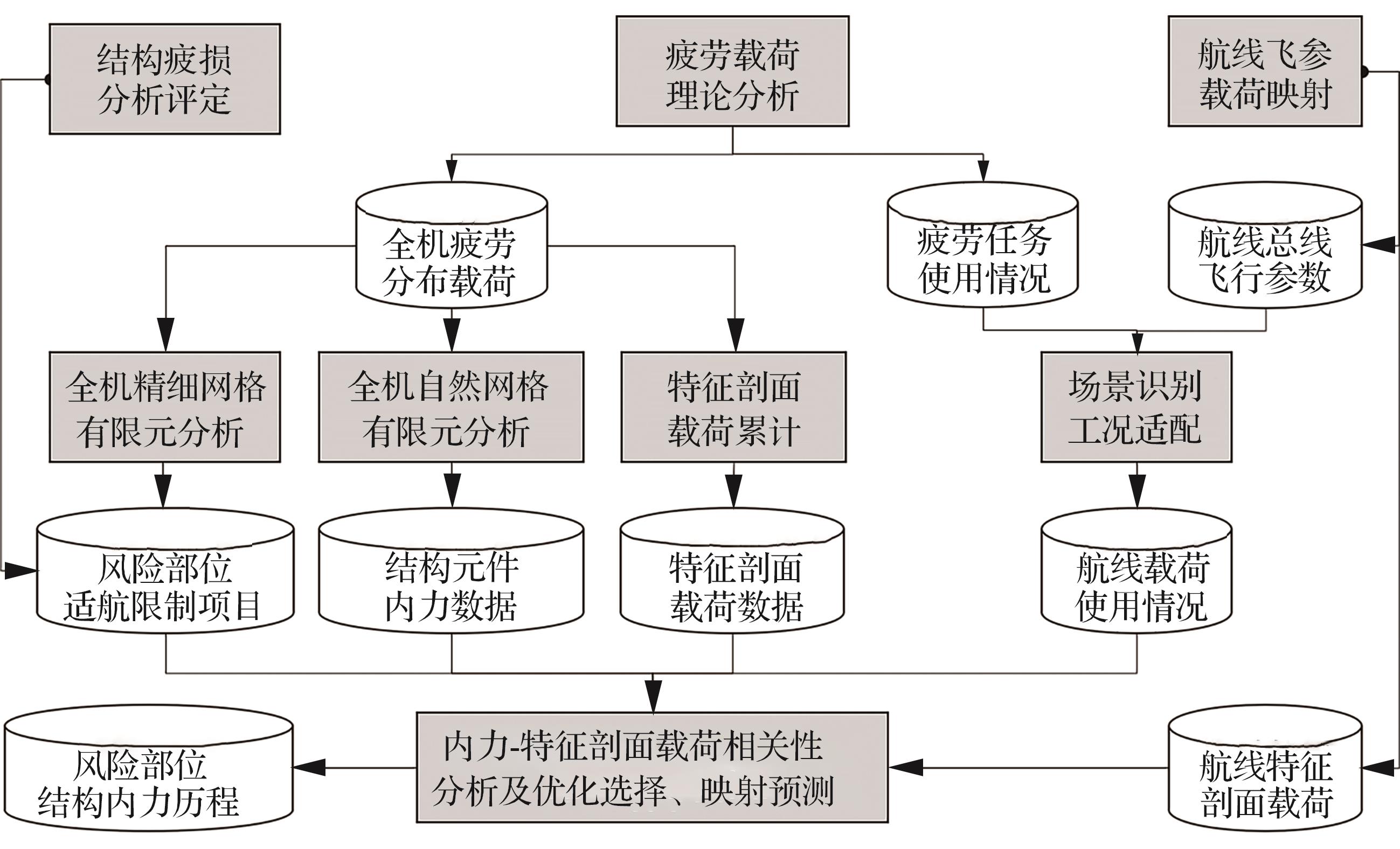
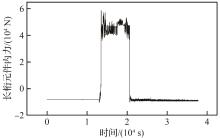
Fig.10
Internal axial force history of associated stringer element of a detailed part of structural fatigue damage
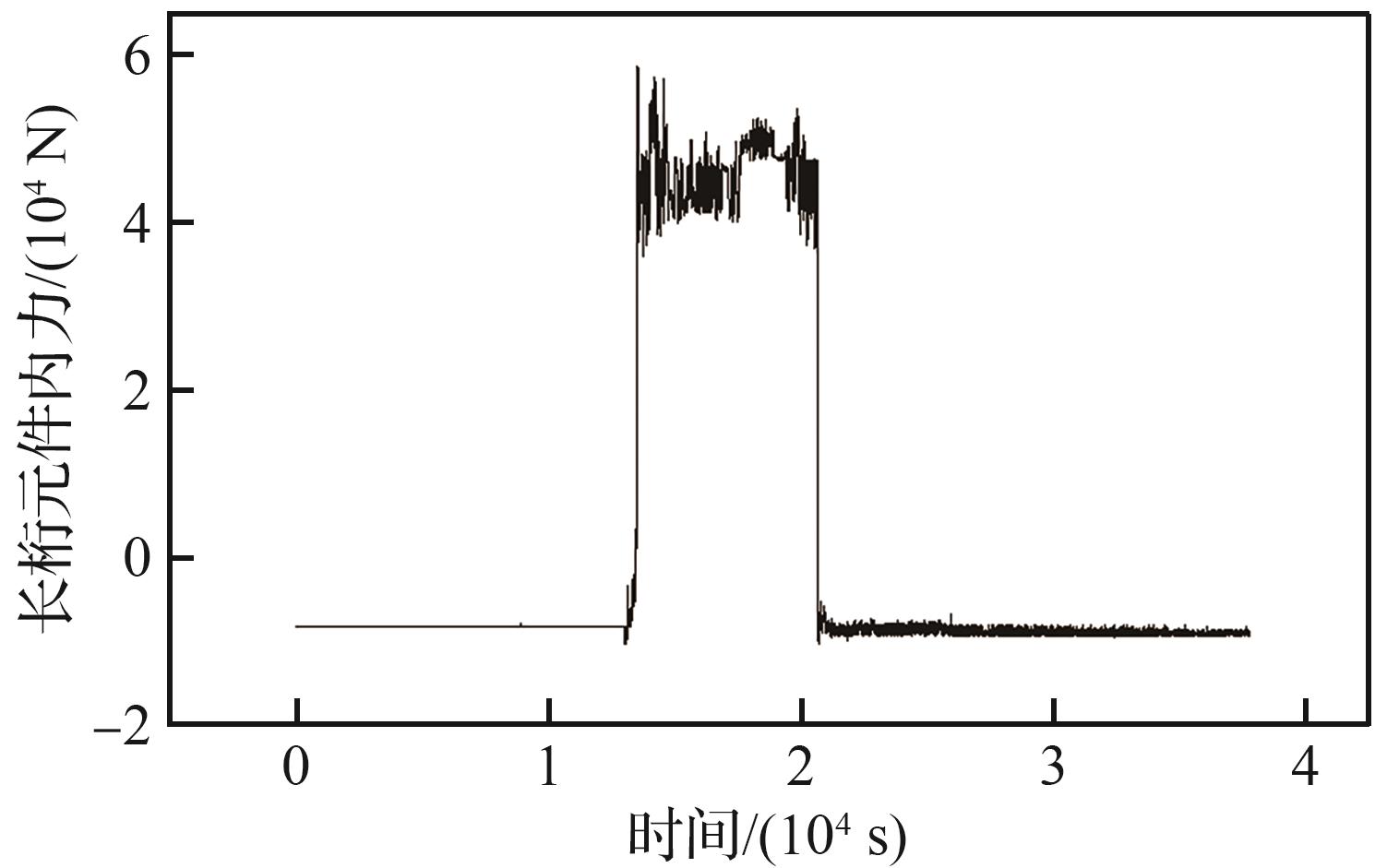
Fig.11
History of internal shear force per unit width for associated skin element of a detailed part of structural fatigue damage
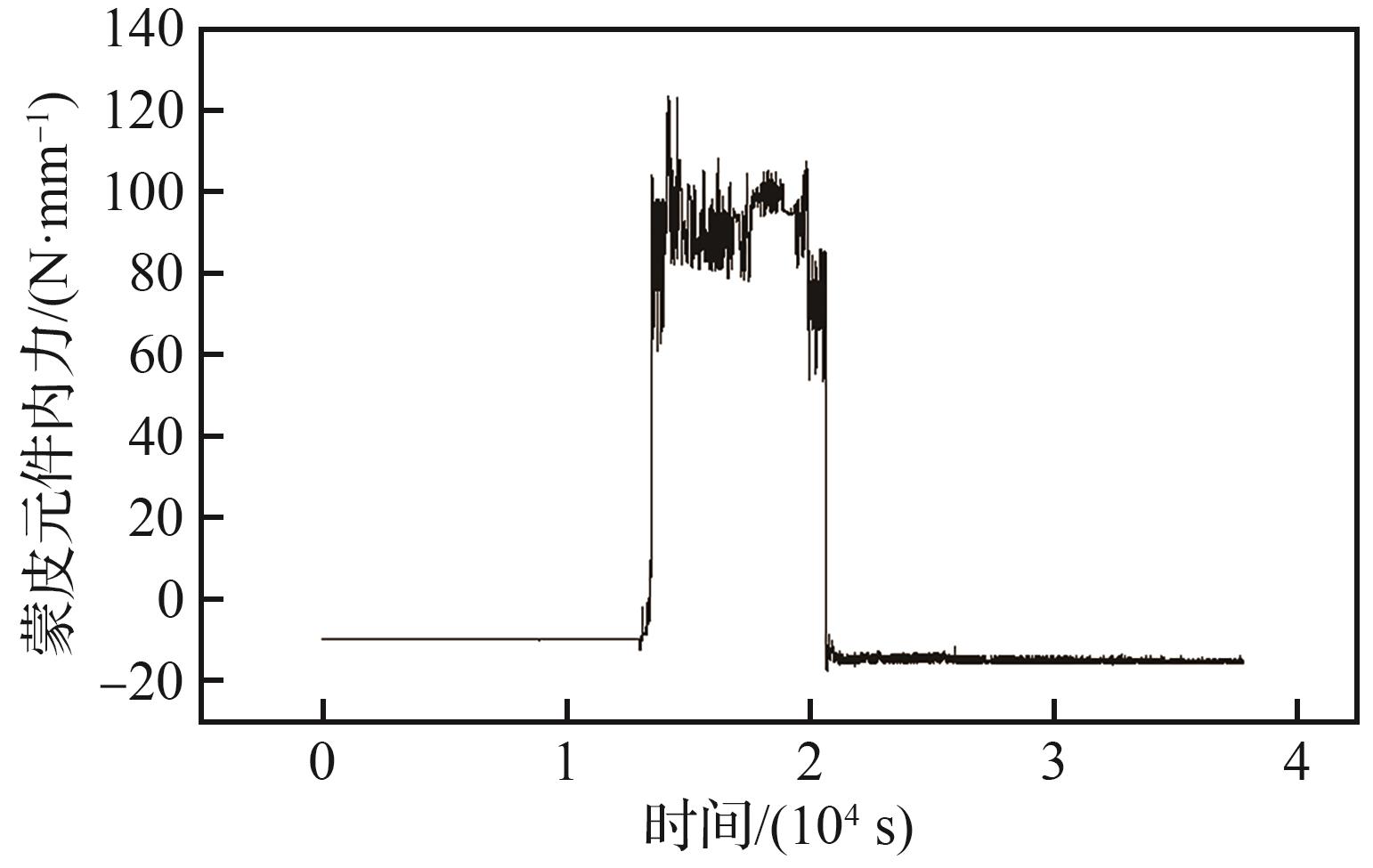
Table 3
Fatigue life Weibull distribution shape parameters
| 材料 | |
|---|---|
| 铝合金 | 4.0 |
| 中强钢和钛合金 | 3.0 |
| 高强钢 | 2.2 |
Table 4
S-N curve slope parameters
| 材料 | q |
|---|---|
| 铝合金 | 4.0 |
| 钛合金 | 6.5 |
| 钢 | 7.5 |
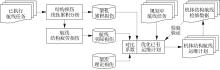
Fig.12
Structural maintenance planning optimizes customization processes
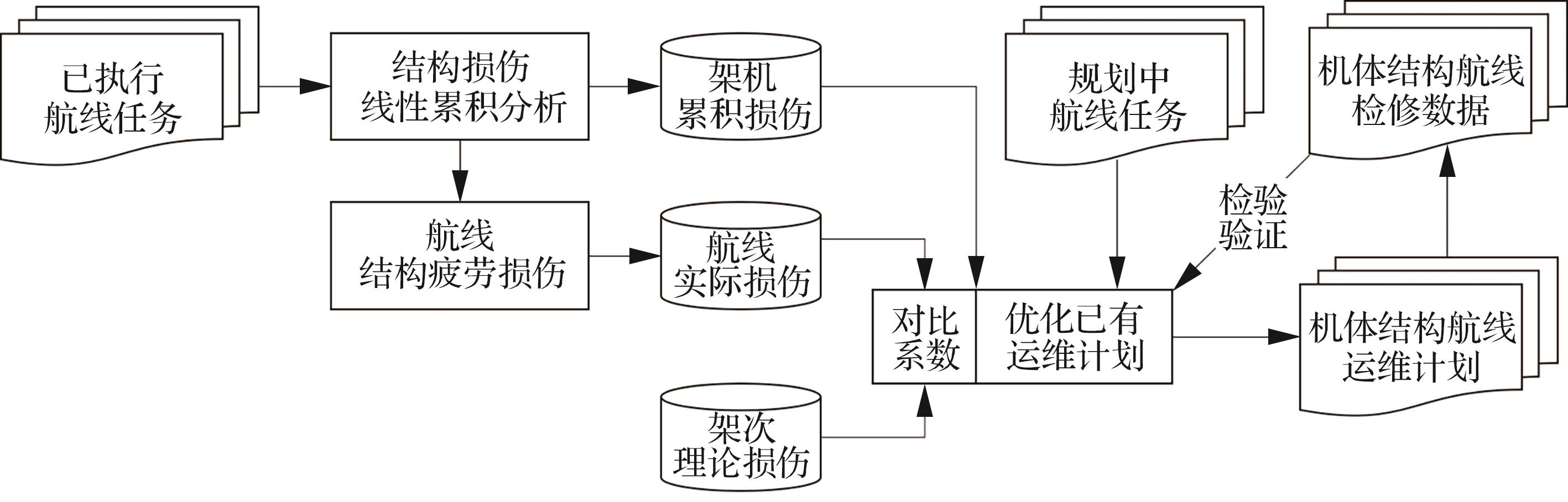
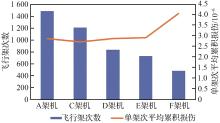
Fig.13
Average cumulative damage to a structure part on different aircraft
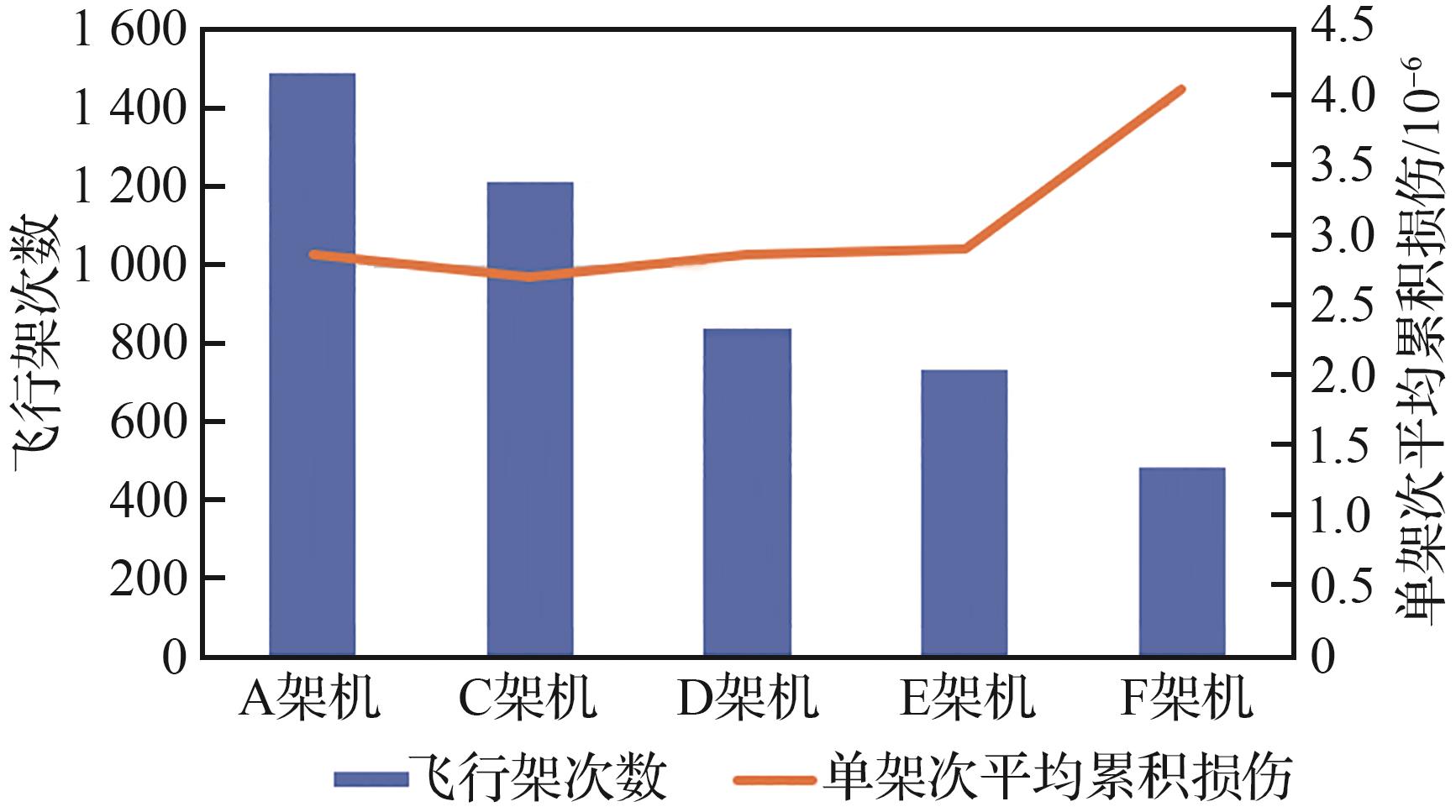
Fig.14
Cumulative damage to a structure part on different routes and range
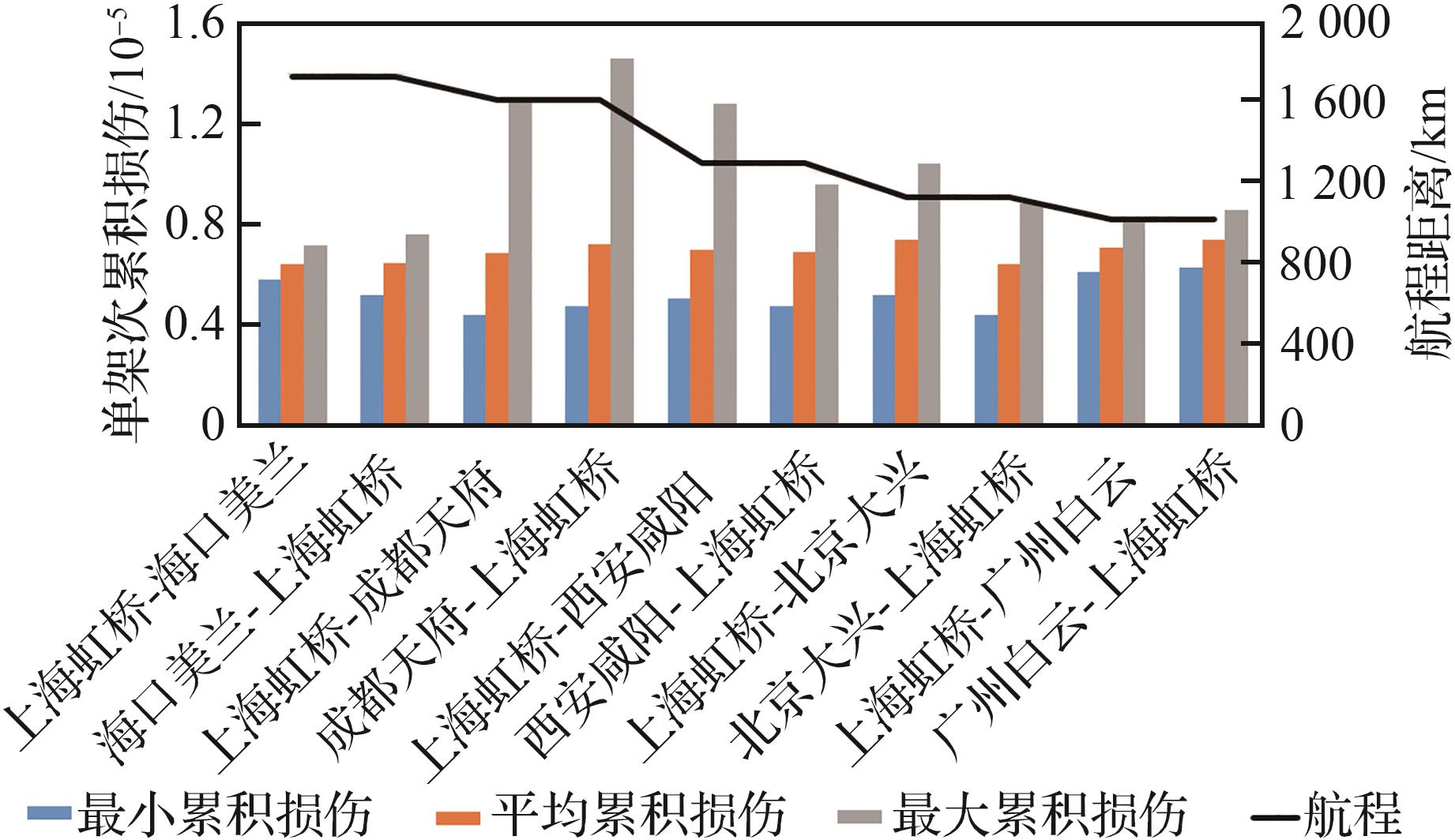
Fig.15
Exceeded number of cumulative damages of wing stinger
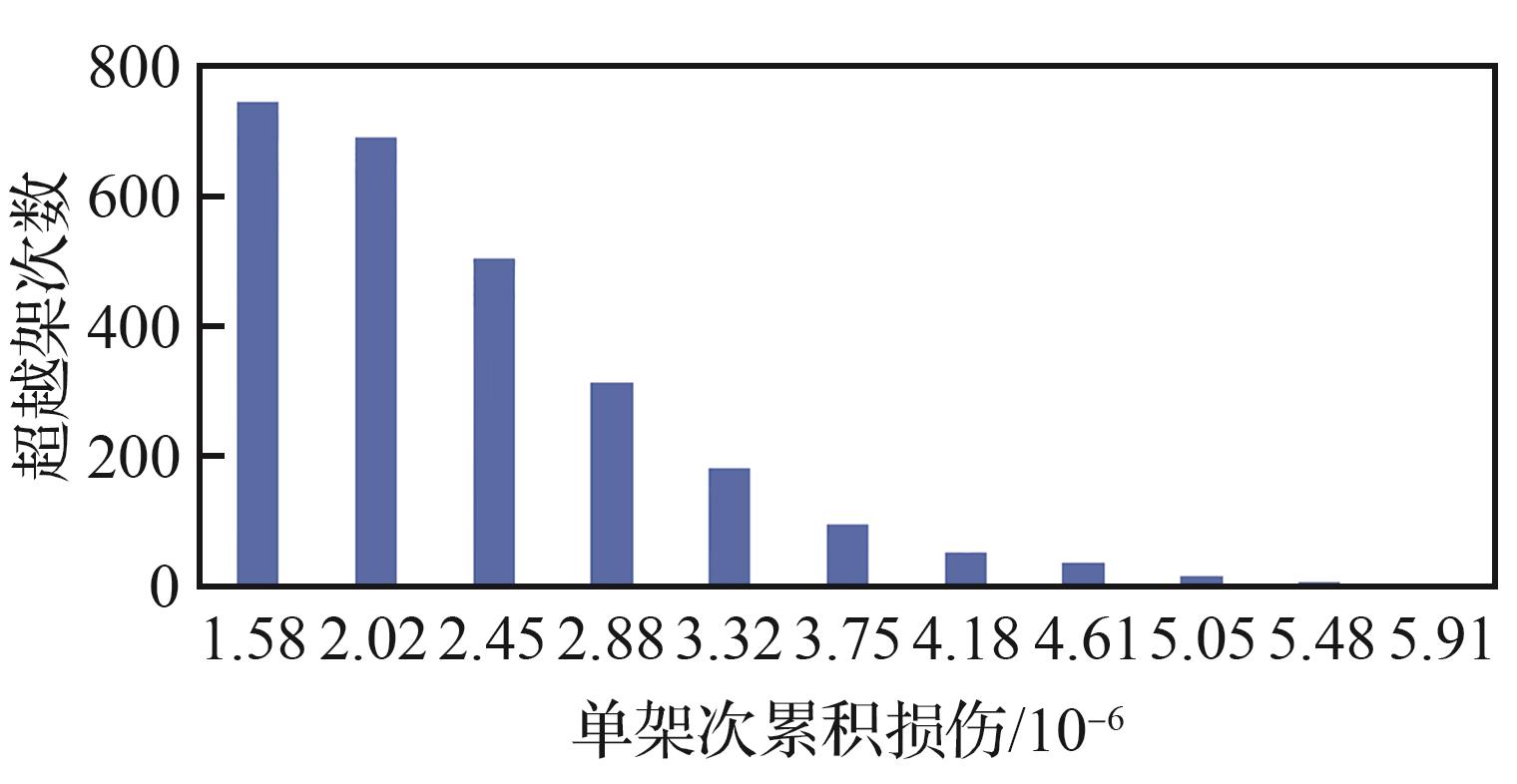
Table 5
Inspection requirements before and after adjusting a structural part according to the damage ratio
| 检查对象 | 初始检查间隔/架次 | 优化检查间隔/架次 | ||
|---|---|---|---|---|
| 蒙皮孔边 | 检查门槛 | 11 000 | 检查门槛 | 17 799 |
| 高频涡流重复检查间隔 | 5 500 | 高频涡流重复检查间隔 | 8 900 | |
| 详细目视重复检查间隔 | 详细目视重复检查间隔 | |||
| 长桁孔边 | 检查门槛 | 9 900 | 检查门槛 | 16 019 |
| 高频涡流重复检查间隔 | 5 000 | 高频涡流重复检查间隔 | 8 091 | |
| 详细目视重复检查间隔 | 1 800 | 详细目视重复检查间隔 | 2 913 | |
| [1] | 季芮. 我国大型客机企业竞争战略研究[D]. 南京: 南京航空航天大学, 2012. |
| JI R. Research on competitive strategy of China’s largepassenger aircraft manufacturer[D]. Nanjing: Nanjing University of Aeronautics and Astronautics, 2012 (in Chinese). | |
| [2] | 任斌. 基于NASA95法的大型客机直接维修成本目标值预测研究[J]. 科技信息, 2014(4): 37. |
| REN B. Research on the target prediction of direct maintenance cost of large passenger aircraft based on NASA95 method[J]. Science Technology Information, 2014(4): 37 (in Chinese). | |
| [3] | 陈青, 张观海, 刘琪. 飞机预测与健康管理体系结构浅析[J]. 飞机设计, 2011, 31(2): 51-58. |
| CHEN Q, ZHANG G H, LIU Q. The architecture analysis of the prognostics and health management(PHM) system[J]. Aircraft Design, 2011, 31(2): 51-58 (in Chinese). | |
| [4] | STEINWEG D, HORNUNG M. Cost and benefit of SHM in commercial aviation[C]∥Proceedings of the 13th International Workshop on Structural Health Monitoring. 2022. |
| [5] | 蔡禹舜, 朱昊, 卿新林. 复合材料冲击损伤检测维护对SHM技术需求分析[J]. 航空制造技术, 2018, 61(7): 78-82. |
| CAI Y S, ZHU H, QING X L. Composite material impact damage detection and maintenance requirement analysis to SHM technology[J]. Aeronautical Manufacturing Technology, 2018, 61(7): 78-82 (in Chinese). | |
| [6] | IANNONE M. Algorithms for flaw detection by SHM with static sensors approach[J]. Macromolecular Symposia, 2022, 405(1): 2100301. |
| [7] | QIU L, YUAN S F, BAO Q, et al. Crack propagation monitoring in a full-scale aircraft fatigue test based on guided wave-Gaussian mixture model[J]. Smart Materials and Structures, 2016, 25(5): 055048. |
| [8] | BERGER U, HAYO T. Onboard-SHM system using fibre optical sensor and lamb wave technology for life time prediction and damage detection on aircraft structure[C]∥7th European Workshop on Structural Health Monitoring.2014. |
| [9] | DORNELES L, OLIVEIRA H, CLARKE T R, et al. Reliability of lamb wave SHM systems: Influence of hydrostatic pressure, mechanical loading and fatigue on the value of a damage index[C]∥Structural Health Monitoring 2019. 2019. |
| [10] | ERLINGER T, KRALOVEC C, SCHAGERL M. Acoustic emission-based structural health monitoring concept for corrosion of aluminum aircraft structures[J]. e-Journal of Nondestructive Testing, 2023, 28(1):1-9. |
| [11] | 曾旭, 邓德双, 杨红娟, 等. 航空结构低速冲击监测技术研究进展[J]. 航空学报, 2024, 45(23): 030368. |
| ZENG X, DENG D S, YANG H J, et al. Research progress in low-velocity impact monitoring technology for aircraft structures[J]. Acta Aeronautica et Astronautica Sinica, 2024, 45(23): 030368 (in Chinese). | |
| [12] | 邱雷. 基于压电阵列的飞机结构监测与管理系统研究[D]. 南京: 南京航空航天大学, 2011. |
| QIU L. Research on aircraft structure monitoring and management system based on piezoelectric array[D]. Nanjing: Nanjing University of Aeronautics and Astronautics, 2011 (in Chinese). | |
| [13] | DATTA A, AUGUSTIN M J, GADDIKERI K M, et al. Damage detection in composite aircraft wing-like test-box using distributed fiber optic sensors[J]. Optical Fiber Technology, 2021, 66: 102651. |
| [14] | MICHAL D, ARTUR K, PIOTR R, et al. Application of operational load monitoring system for fatigue estimation of main landing gear attachment frame of an aircraft[J]. Materials, 2021, 14(21): 6564. |
| [15] | NTOURMAS G, MEISSNER R, SPITAS V. Dynamics-based loads monitoring algorithm for onboard commercial aircraft usage[J]. Journal of Aircraft, 2020, 57(6): 1229-1233. |
| [16] | PREISIGHE VIANA M V. In-flight evaluation of multipoint loads model for flexible aircraft loads monitoring[C]∥AIAA Scitech 2025 Forum. Reston: AIAA, 2025. |
| [17] | IELE A, LEONE M, CONSALES M, et al. Load monitoring of aircraft landing gears using fiber optic sensors[J]. Sensors and Actuators A: Physical, 2018, 281: 31-41. |
| [18] | JAIN S, AUGUSTIN M J, VENKATESH S, et al. Load monitoring of composite aircraft wing using fibre Bragg grating sensors[C]∥Recent Advances in Composites Engineering and Research. Singapore: Springer, 2024: 195-210. |
| [19] | CANDON M J, ESPOSITO M, LEVINSKI O, et al. On the application of a long-short-term memory deep learning architecture for aircraft transonic buffet loads monitoring[C]∥AIAA Scitech 2020 Forum. Reston: AIAA, 2020. |
| [20] | PENG H, WANG B T, NING Y, et al. Strain gauge location optimization for operational load monitoring of an aircraft wing using an improved correlation measure[J]. Applied Sciences, 2024, 14(19): 9078. |
| [21] | 黄勇. 基于光纤传感的襟翼操纵载荷试飞技术[J]. 航空学报, 2020, 41(4): 223213. |
| HUANG Y. Flight test technic for flap operation load with optical fiber sensing[J]. Acta Aeronautica et Astronautica Sinica, 2020, 41(4): 223213 (in Chinese). | |
| [22] | DENG K L, OMPUSUNGGU A P, XU Y G, et al. A review of material-related mechanical failures and load monitoring-based structural health monitoring (SHM) technologies in aircraft landing gear[J]. Aerospace, 2025, 12(3): 266. |
| [23] | 贾宝惠, 谭楚懿, 高源, 等. 基于GRNN的前起落架液压收放系统健康评估方法[J]. 北京航空航天大学学报, 2025, 51(12): 4052-4060. |
| JIA B H, TAN C Y, GAO Y, et al. Health assessment method of nose landing gear hydraulic retraction/extension system based on GRNN[J]. Journal of Beijing University of Aeronautics and Astronautics, 2025, 51(12): 4052-4060 (in Chinese). | |
| [24] | 萧冠华. 基于健康管理的飞机起落架舱门故障诊断与预测研究[D]. 哈尔滨: 哈尔滨工程大学, 2023. |
| XIAO G H. Research on fault diagnosis and prediction of aircraft landing gear door based on health management[D]. Harbin: Harbin Engineering University, 2023 (in Chinese). | |
| [25] | 郭丞皓, 于劲松, 宋悦, 等. 基于数字孪生的飞机起落架健康管理技术[J]. 航空学报, 2023, 44(11): 227629. |
| GUO C H, YU J S, SONG Y, et al. Application of digital twin-based aircraft landing gear health management technology[J]. Acta Aeronautica et Astronautica Sinica, 2023, 44(11): 227629 (in Chinese). | |
| [26] | 陈望. 基于数字孪生的起落架减震系统状态监测与故障诊断技术研究[D]. 广汉: 中国民用航空飞行学院, 2025. |
| CHEN W. Research on condition monitoring and fault diagnosis technology of landing gear damping system based on digital twinning[D]. Guanghan: Civil Aviation Flight University of China, 2025 (in Chinese). | |
| [27] | 谭楚懿. 数字孪生支持下的起落架收放系统健康评估方法研究[D]. 天津: 中国民航大学, 2024. |
| TAN C Y. Research on health assessment method of landing gear retraction system supported by digital twinning[D]. Tianjin: Civil Aviation University of China, 2024 (in Chinese). | |
| [28] | CANDON M, ESPOSITO M, FAYEK H, et al. Advanced multi-input system identification for next generation aircraft loads monitoring using linear regression, neural networks and deep learning[J]. Mechanical Systems and Signal Processing, 2022, 171: 108809. |
| [29] | PARK E G, HWANG I K, LEE H J, et al. Development of a machine learning-based load monitoring system for aircraft fatigue life management[J]. International Journal of Aeronautical and Space Sciences, 2026, 27(2): 1392-1411. |
| [30] | ZHANG Y J, CAO S C, WANG B T, et al. A flight parameter-based aircraft structural load monitoring method using a genetic algorithm enhanced extreme learning machine[J]. Applied Sciences, 2023, 13(6): 4018. |
| [31] | DZIENDZIKOWSKI M, ZIELIŃSKI W, OBRYCKI Ł, et al. Predictive models for transient loads of the vertical stabilizer of an aircraft developed using canonican correlation analision[J]. Fatigue of Aircraft Structures, 2015, 2015(7): 41-46. |
| [32] | CANDON M J, FAYEK H, LEVINSKI O, et al. Recent developments in the implementation of a bidirectional LSTM deep neural network for aircraft operational loads monitoring[C]∥AIAA Scitech 2022 Forum. Reston: AIAA, 2022. |
| [33] | LU Q, HE C J, ZHU L G, et al. Research on loads rapid prediction for individual aircraft structural health monitoring[C]∥2023 IEEE 11th International Conference on Information, Communication and Networks (ICICN). Piscataway: IEEE Press, 2024: 564-569. |
| [34] | JIA X, GONG C, LI C. Sparse reconstruction of surface loads on aircraft using pod and rbfnn[C]∥34th Congress of the International Council of the Aeronautical Sciences, 2024. |
| [35] | 何超杰, 朱林刚, 黄勇, 等. 基于双隐藏层BP网络的民用飞机载荷监测方法研究[J]. 机械设计与制造工程, 2024, 53(2): 79-82. |
| HE C J, ZHU L G, HUANG Y, et al. Research on civil aircraft load monitoring method based on double-hidden-layer BP neural network[J]. Machine Design and Manufacturing Engineering, 2024, 53(2): 79-82 (in Chinese). | |
| [36] | 孙侠生, 肖迎春, 白生宝, 等. 民用飞机复合材料结构健康监测技术研究[J]. 航空科学技术, 2020, 31(7): 53-63. |
| SUN X S, XIAO Y C, BAI S B, et al. Research on structural health monitoring technology of civil aircraft composites[J]. Aeronautical Science and Technology, 2020, 31(7): 53-63 (in Chinese). | |
| [37] | 尚德广, 夏禹, 薛龙, 等. 飞机结构单机疲劳寿命监控技术研究综述[J]. 北京工业大学学报, 2020(6): 556-570. |
| SHANG D G, XIA Y, XUE L, et al. Review on fatigue life monitoring technology for individual aircraft structure[J]. Journal of Beijing University of Technology, 2020(6): 556-570 (in Chinese). | |
| [38] | 王彬文, 肖迎春, 白生宝, 等. 飞机结构健康监测与管理技术研究进展和展望[J]. 航空制造技术, 2022, 65(3): 30-41. |
| WANG B W, XIAO Y C, BAI S B, et al. Research progress and prospect of aircraft structural health monitoring and management technology[J]. Aeronautical Manufacturing Technology, 2022, 65(3): 30-41 (in Chinese). | |
| [39] | SAITO N, YARI T, HOTATE K, al et, Developmental status of SHM applications for aircraft structures using distributed optical fiber[C]∥9th International Workshop on Structural Health Monitoring: A Roadmap to Intelligent Structures, 2013. |
| [40] | D’AMORE A, GRASSIA L, IANNONE M. Flaw detection by SHM with static sensors approach: State of the art and perspectives[J]. Macromolecular Symposia, 2024, 413(4): 2300257. |
| [41] | 熊泽涛, 邱雷, 刘彬. 飞机结构PHM及其关键技术[C]∥2012年航空试验测试技术峰会暨学术交流会论文集. 2012: 206-209, 213. |
| XIONG Z T, QIU L, LIU B. The prognostic and health management of aircraft structure and its key technologies[C]∥Proceedings of the 2012 Summit and Academic Exchange Conference on Aviation Test and Measurement Technology, 2012: 206-209, 213 (in Chinese). | |
| [42] | 宋恩鹏, 周丽君, 陈亮, 等. 飞机结构健康管理的工程应用研究[J]. 飞机设计, 2014, 34(4): 27-30, 45. |
| SONG E P, ZHOU L J, CHEN L, et al. Applying researcher of the aircraft structure health manage technology[J]. Aircraft Design, 2014, 34(4): 27-30, 45 (in Chinese). | |
| [43] | 刘雪蓉, 曹贺, 张宝珍. 飞机结构健康监测技术发展研究[J]. 计测技术, 2024, 44(2): 13-24. |
| LIU X R, CAO H, ZHANG B Z. Research on the development of aircraft structural health monitoring technology[J]. Metrology Measurement Technology, 2024, 44(2): 13-24 (in Chinese). | |
| [44] | DUVNJAK I, EREIZ S, GORICANEC J, et al. Improving the identification of dynamic parameters of bridges by UAV: Approach for SHM[J]. e-Journal of Nondestructive Testing, 2024, 29(7): 1-8. |
| [45] | IÑESTA D, CAFFYN P, ALONSO J G. Usage and structural health monitoring systems in military tactical transport aircraft[J]. e-Journal of Nondestructive Testing, 2024, 29(7): 1-6. |
| [46] | 韩春阳, 王宁. 航空故障预测与健康管理技术[J]. 电子世界, 2015(13): 184-186. |
| HAN C Y, WANG N. Aviation fault prediction and health management technology[J]. Electronics World, 2015(13): 184-186 (in Chinese). | |
| [47] | 黄蕾, 郭聪, 张小波, 等. 基于飞参-载荷-寿命数字孪生模型的飞机结构健康管理方法[J]. 航空学报, 2025, 46(21): 532382. |
| HUANG L, GUO C, ZHANG X B, et al. Aircraft structural health management method based on flight parameter-load-life digital twin models[J]. Acta Aeronautica et Astronautica Sinica, 2025, 46(21): 532382 (in Chinese). | |
| [48] | 茹常剑, 景博, 张劼, 等. 直升机健康管理系统体系结构研究[J]. 计算机测量与控制, 2011, 19(9): 2252-2255. |
| RU C J, JING B, ZHANG J, et al. Research on architecture of helicopter’s HUMS[J]. Computer Measurement Control, 2011, 19(9): 2252-2255 (in Chinese). |
| [1] | Xiangyu LIU, Gang WANG, Siyuan WANG, Zhuowen CHEN. A data-knowledge dual-driven method for formation target intention recognition [J]. Acta Aeronautica et Astronautica Sinica, 2026, 47(2): 332170-332170. |
| [2] | Yanfang LIU, Hongyue WANG, Yujia E, Naiming QI. A new paradigm of intelligence-driven active mass ejection drag and heat reduction research for hypersonic vehicle boundary layer [J]. Acta Aeronautica et Astronautica Sinica, 2026, 47(2): 132171-132171. |
| [3] | Zhen ZHANG, Jianfeng TAN, Jinglong ZHAO, Linhai CHEN, Yuze YAN, Changliang LIN. Rapid prediction method of bullet damage morphology of helicopter aluminum alloy fuselage [J]. Acta Aeronautica et Astronautica Sinica, 2026, 47(1): 232015-232015. |
| [4] | Yuequn LUO, Dali DING, Mulai TAN, Yidong LIU, Huan ZHOU. A review of autonomous maneuver decision methods for unmanned combat aerial vehicle [J]. Acta Aeronautica et Astronautica Sinica, 2025, 46(7): 30877-030877. |
| [5] | Guanghui WU, Jing WANG, Hairun XIE, Tuliang MA, Qiang MIAO, Jixin XIANG, Miao ZHANG. Data and knowledge-enabled intelligent aerodynamic design for civil aircraft [J]. Acta Aeronautica et Astronautica Sinica, 2025, 46(5): 531485-531485. |
| [6] | Shuming YANG, Jianjun WU, Changlin XIE, Yuqiang CHENG, Biao WANG. Application issues of data-driven intelligent fault diagnosis technologies for liquid rocket engines [J]. Acta Aeronautica et Astronautica Sinica, 2025, 46(15): 131427-131427. |
| [7] | Haotian ZHAO, Shi QIU, Ming LIU, Qichao GAI, Xibin CAO. Degradation evaluation method for communication satellite traveling wave tubes based on full life cycle data [J]. Acta Aeronautica et Astronautica Sinica, 2025, 46(12): 331376-331376. |
| [8] | Yu ZENG, Hongbo WANG, Chengyue LIAN, Yixin YANG, Dapeng XIONG, Mingbo SUN, Weidong LIU. Applicability analysis of two improved methods of SST turbulence model [J]. Acta Aeronautica et Astronautica Sinica, 2024, 45(S1): 730574-730574. |
| [9] | Guirong ZHOU, Jianyuan XU, Shaobo MA, Junyao ZONG, Jinqing SHEN, Haijie ZHU. Review of key technologies for avionics systems integration on large passenger aircraft [J]. Acta Aeronautica et Astronautica Sinica, 2024, 45(5): 529956-529956. |
| [10] | Rongke YU, Kun ZHAO, Heying FENG, Rongping ZHANG, Yimeng LI. Rapid prediction method for airfoil trailing edge scattering noise in both water and air based on pulse pressure wavenumber-frequency spectrum [J]. Acta Aeronautica et Astronautica Sinica, 2024, 45(23): 630295-630295. |
| [11] | Qi WANG, Long WU, Zhen LIU, Jianxia LIU, Liang XIA. Topology optimization design of thermoelastic multi-configuration gradient lattice structures [J]. Acta Aeronautica et Astronautica Sinica, 2024, 45(23): 230367-230367. |
| [12] | Jie SHI, Li ZHOU, Jingwei SHI, Zhanxue WANG. Rapid prediction model for tail infrared radiation characteristics of serpentine nozzles [J]. Acta Aeronautica et Astronautica Sinica, 2024, 45(14): 129639-129639. |
| [13] | Lizhuo DONG, Siqi ZHANG, Zhao ZHANG, Baohai WU. Prediction method of blade machining deformation driven by mechanism⁃data hybrid [J]. Acta Aeronautica et Astronautica Sinica, 2024, 45(13): 629037-629037. |
| [14] | Ximing CUI, Zhipeng QIU, Jia WEI, Chi ZHANG, Kai SONG, Zhe LI, Shupeng WANG. Data-driven method for characterization of structural steel surface stress of magnetic Barkhausen noise [J]. ACTA AERONAUTICAET ASTRONAUTICA SINICA, 2023, 44(8): 427237-427237. |
| [15] | Guotao YANG, Zhenjiang YUE, Li LIU. Rapid prediction of global hypersonic vehicle aerothermodynamics based on adaptive sampling [J]. ACTA AERONAUTICAET ASTRONAUTICA SINICA, 2023, 44(6): 127391-127391. |
| Viewed | ||||||
|
Full text |
|
|||||
|
Abstract |
|
|||||
Address: No.238, Baiyan Buiding, Beisihuan Zhonglu Road, Haidian District, Beijing, China
Postal code : 100083
E-mail:hkxb@buaa.edu.cn
Total visits: 6658907 Today visits: 1341All copyright © editorial office of Chinese Journal of Aeronautics
All copyright © editorial office of Chinese Journal of Aeronautics
Total visits: 6658907 Today visits: 1341

 CJA
CJA
