Acta Aeronautica et Astronautica Sinica ›› 2026, Vol. 47 ›› Issue (1): 332106.doi: 10.7527/S1000-6893.2025.32106
• Electronics and Electrical Engineering and Control • Previous Articles Next Articles
Ye TAO( ), Jinhui TANG, Zhen YAN, Chen ZHOU, Chong WANG
Received:2025-04-11
Revised:2025-05-15
Accepted:2025-07-24
Online:2025-09-11
Published:2025-08-28
Contact:
Ye TAO
E-mail:taoyedlmu@163.com
Supported by:CLC Number:
Ye TAO, Jinhui TANG, Zhen YAN, Chen ZHOU, Chong WANG. A trajectory imputation method integrating representation transformation and pattern regression[J]. Acta Aeronautica et Astronautica Sinica, 2026, 47(1): 332106.

Table 1
Conventional representation of civil aviation trajectories
| 序号 | 经度/(°) | 维度/(°) | 高度/m | 时间戳/s |
|---|---|---|---|---|
| 1 | Lon0 | Lat0 | Alt0 | 0 |
| 2 | Lon | Lat | Alt | |
| 3 | null | null | null | null |
| N-1 | null | null | null | null |
| N | Lon N-1 | Lat N-1 | Alt N-1 |
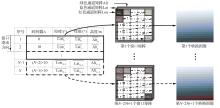
Fig.1
Framework of image representation conversion
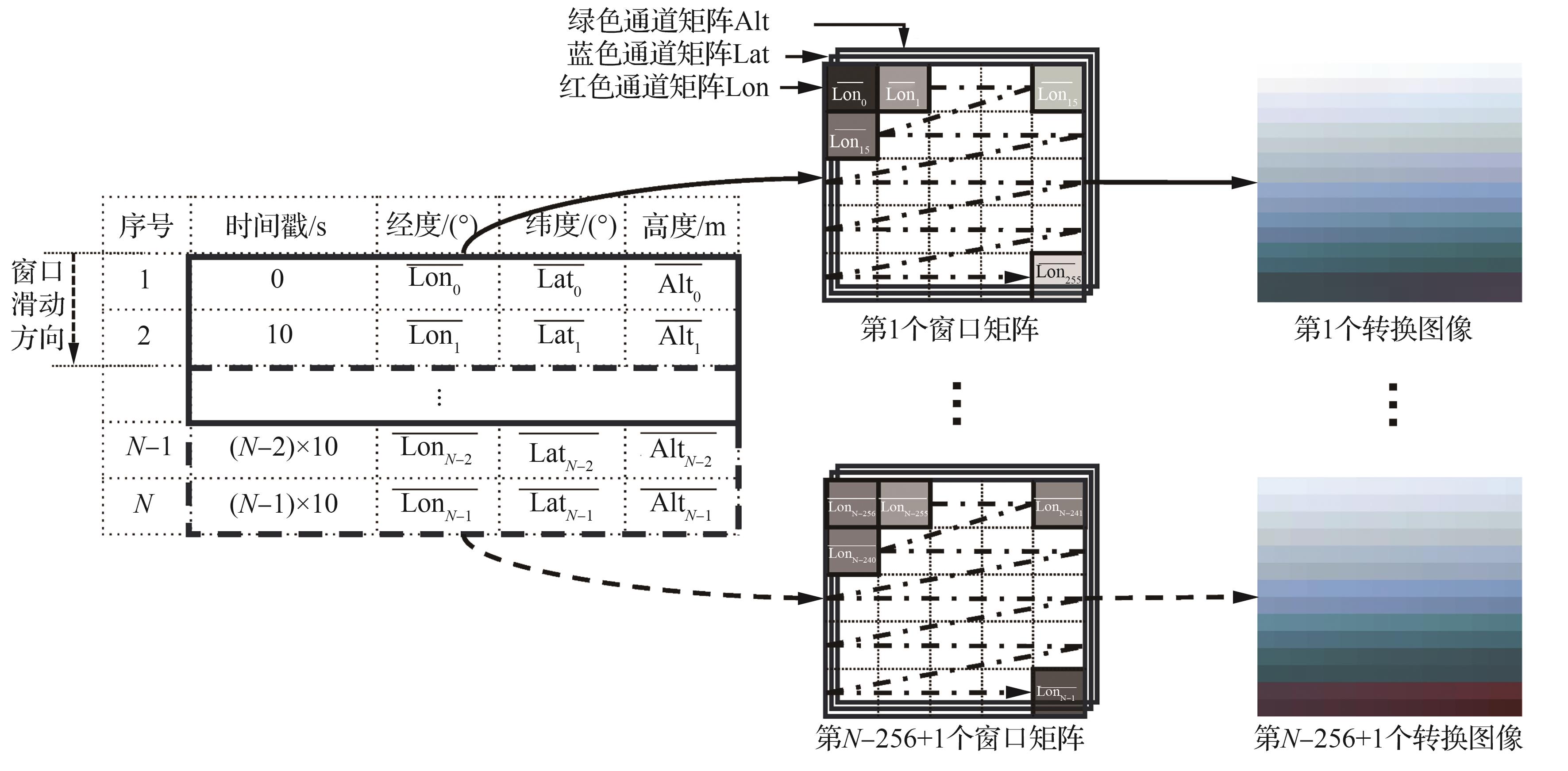
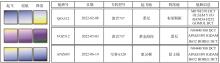
Fig.2
Trajectory-transformed color images andthe corresponding information
Fig.3
Framework of the proposed multi-scale regression model integrating hybrid attention mechanism
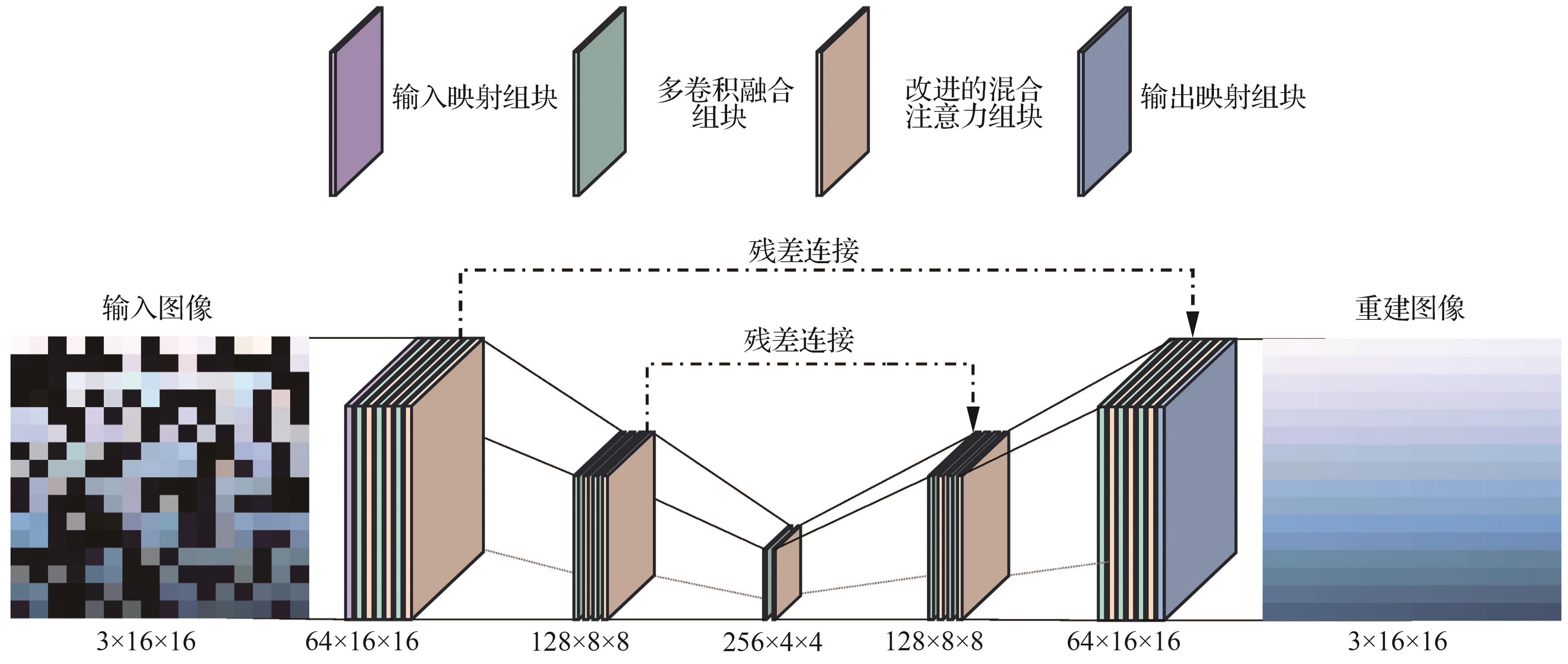
Fig.4
Structure of MKF module
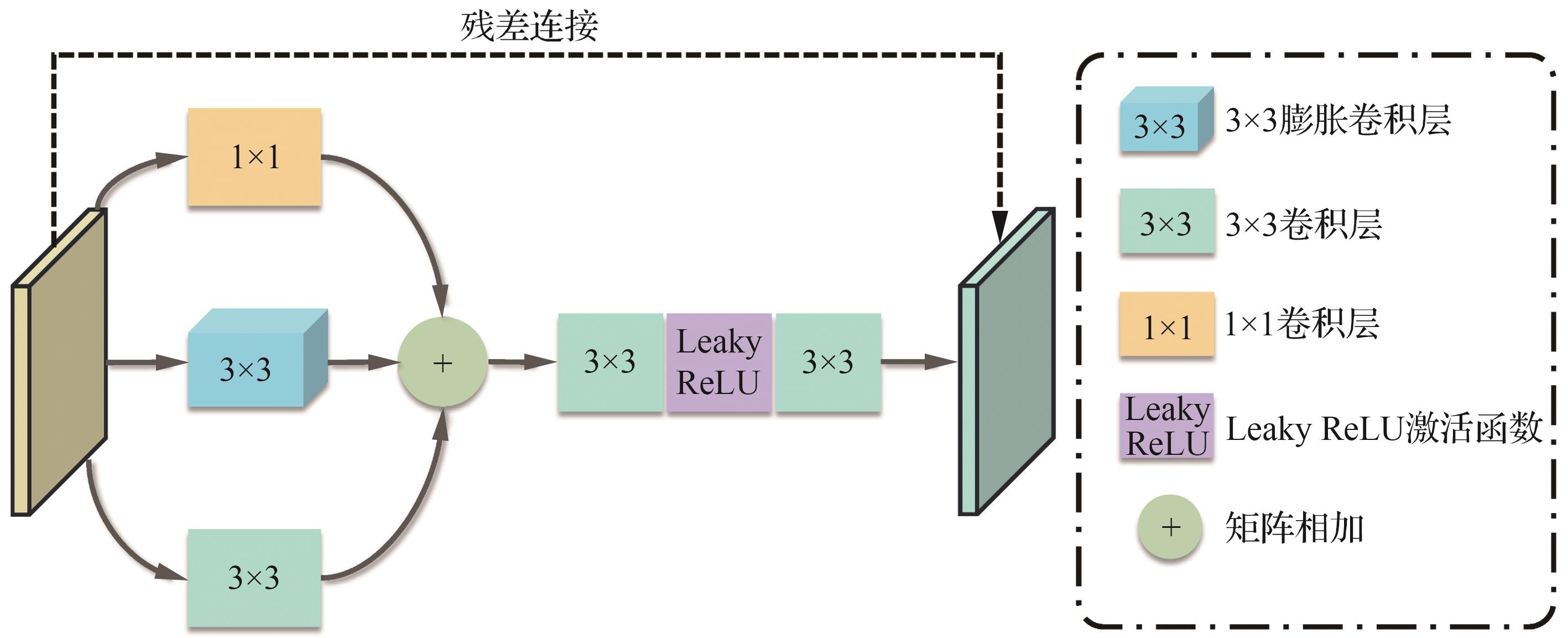
Fig.5
Structure of IHA module
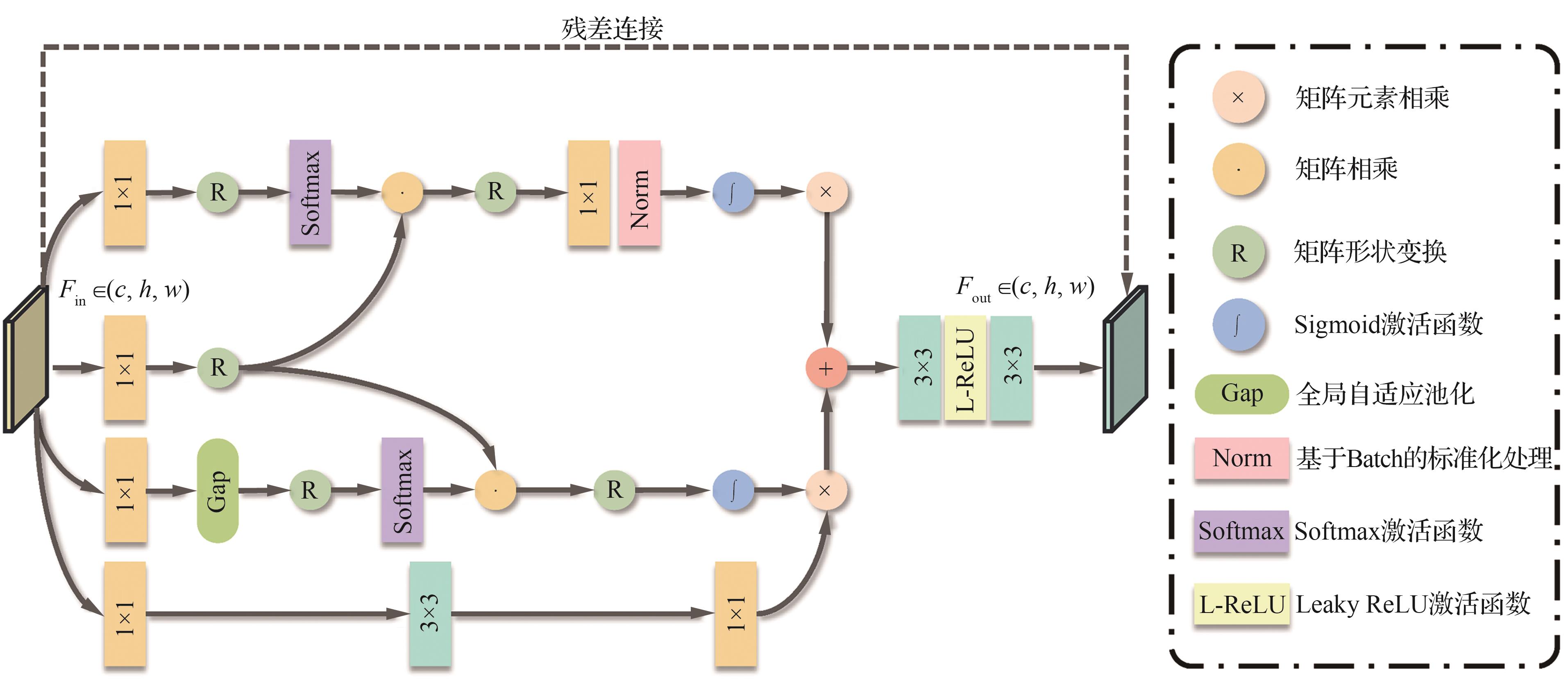
Table 2
Detailed information of different processing layers in IHA module
| 分支名称 | 输入特征尺寸 | 处理层名称 | 输出特征图尺寸 |
|---|---|---|---|
| 通道注意力处理信息流 | |||
| 矩阵形状变换 | |||
| Softmax 激活函数 | |||
| 矩阵相乘 | |||
| 矩阵形状变换 | |||
| 基于Batch的标准化处理 | |||
| Sigmoid 激活函数 | |||
| 矩阵元素相乘 | |||
| 共享的辅助信息流 | |||
| 矩阵形状变换 | |||
| 空间注意力处理信息流(上分支) | |||
| 全局自适应池化 | |||
| 矩阵形状变换 | |||
| Softmax激活函数 | |||
| 矩阵相乘 | |||
| 矩阵形状变换 | |||
| Sigmoid激活函数 | |||
| 矩阵元素相乘 | |||
| 空间注意力处理信息流(下分支) | |||
Fig.6
Schematic representation of the training strategy
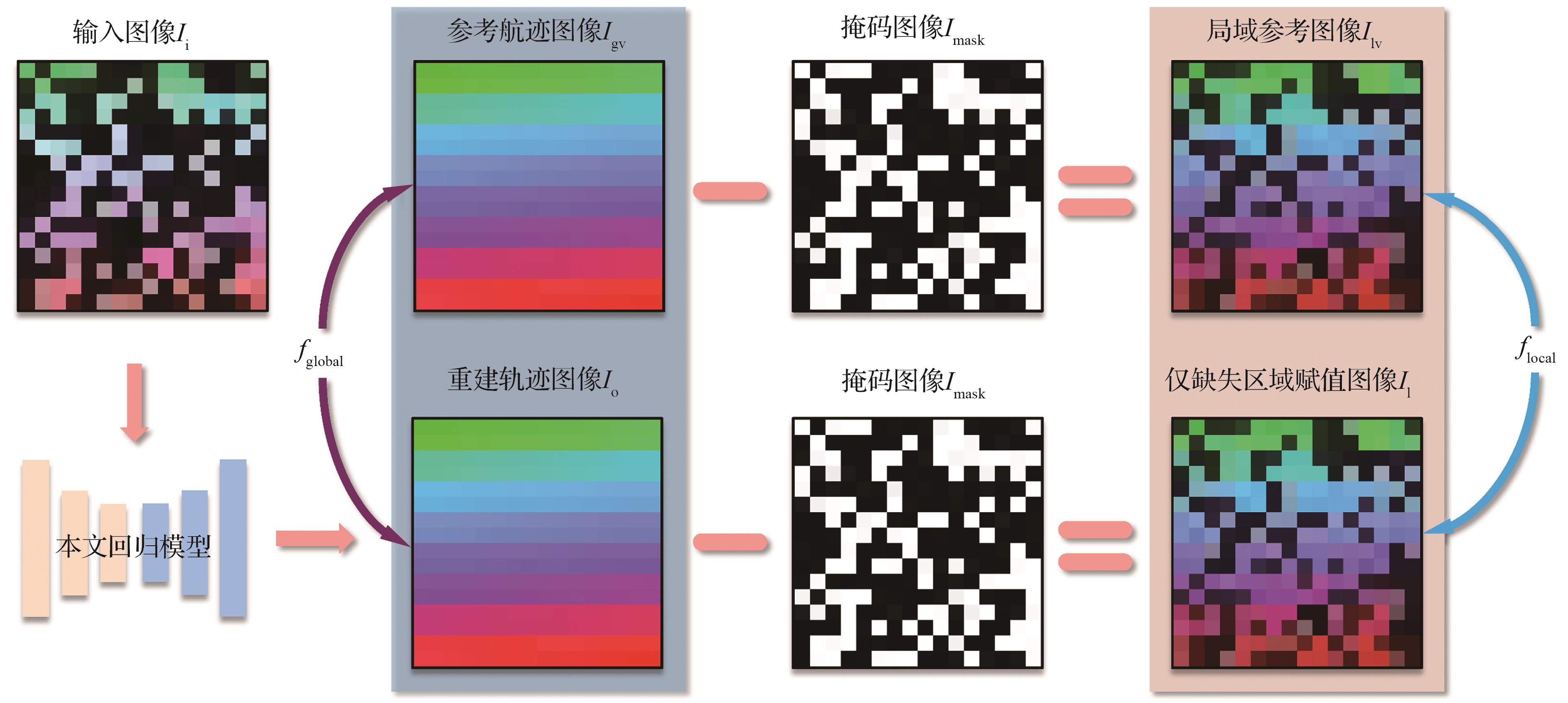
Table 3
Detailed information contained in each downloaded trajectory point
| 数据类型 | 数据示例 |
|---|---|
| Unix时间戳/s | 1 609 725 600 |
| ICAO航空器识别号 | 45ce55 |
| 经度/(°) | 50.675 17 |
| 纬度/(°) | 6.738 18 |
| 水平速度/(km·h-1) | 141.197 77 |
| 航向/(°) | 86.857 05 |
| 垂直速度/(km·h-1) | -3.251 20 |
| 通信呼号 | SRR7 881 |
| 航空器处于地面标识 | False |
| 告警状态 | False |
| 二次代码 | 1 155 |
| 气压高/m | 3 398.52 |
| 最后更新Unix时间戳 | 1 609 725 598.995 |
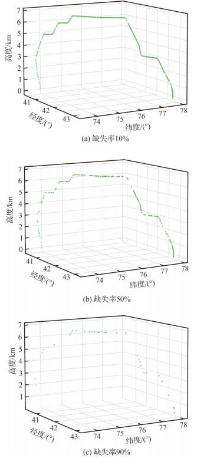
Fig.7
Visualization of flight JBU486 trajectories under varying missing data rates (10%, 50%, and 90%)
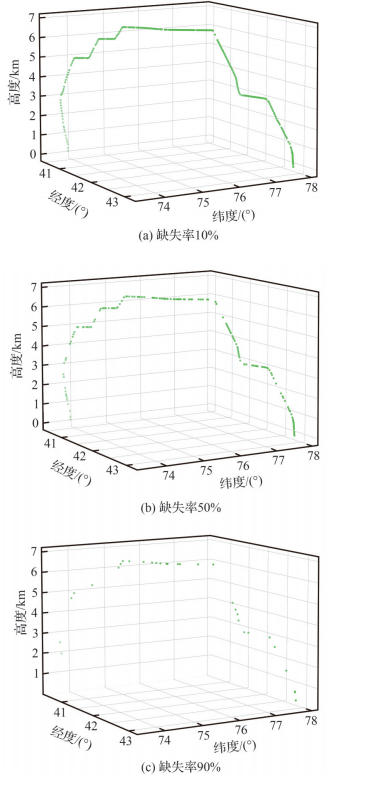
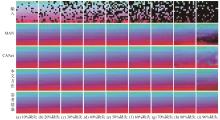
Fig.8
Comparison of reconstructed JST 724’s flight trajectory obtained from different methods
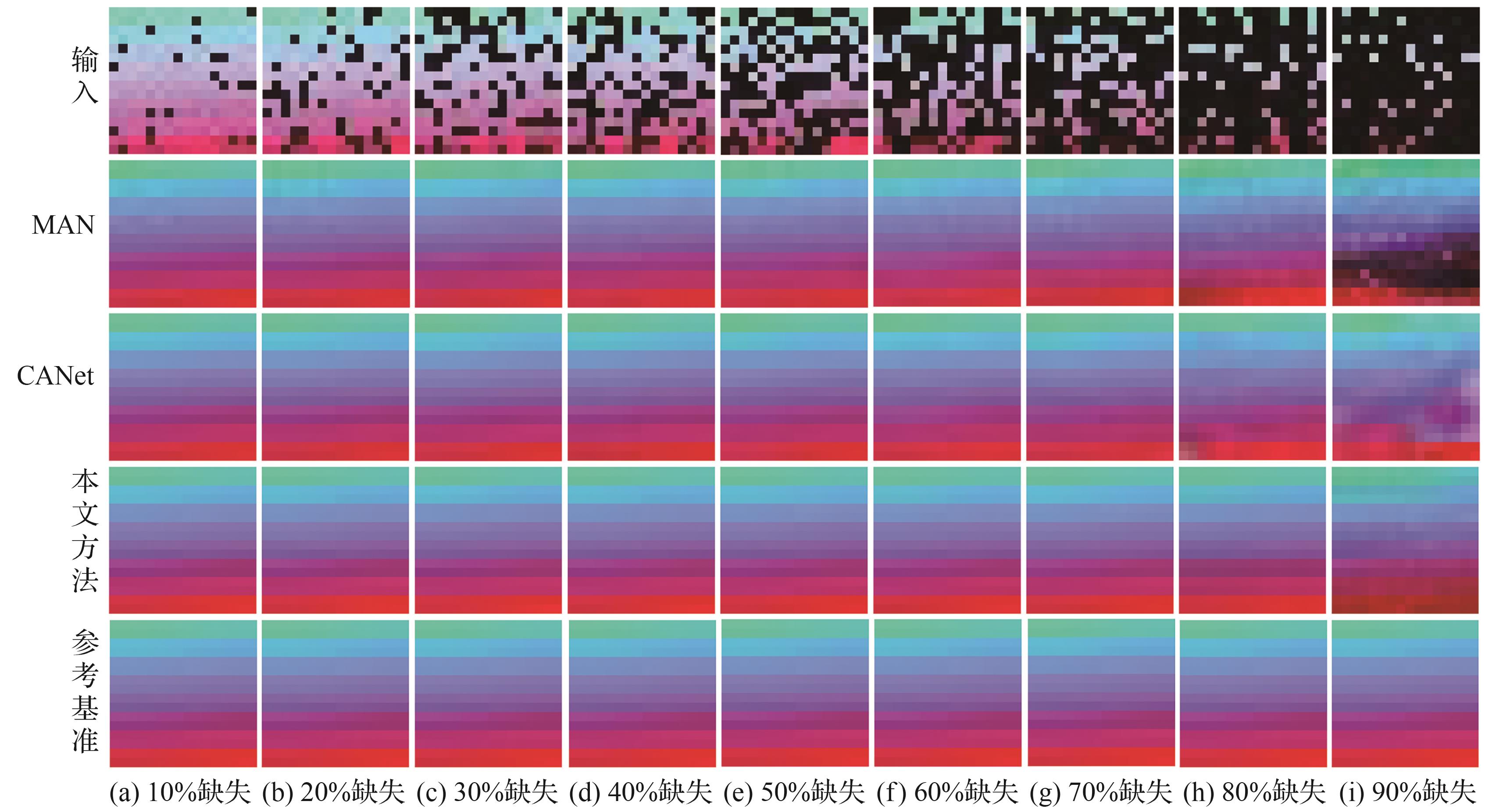
Table 4
Quantitative comparison of reconstructed trajectory images based on SSIM and PSNR metrics
| 子集类型 | 图像数量 | 输入图像 | MAN重建图像 | CANet重建图像 | 本文方法重建图像 | ||||
|---|---|---|---|---|---|---|---|---|---|
| SSIM | PSNR/dB | SSIM | PSNR/dB | SSIM | PSNR/dB | SSIM | PSNR/dB | ||
| 10%缺失率 | 11 259 | 0.648 7 | 27.375 8 | 0.921 2 | 35.635 7 | 0.982 1 | 39.337 0 | 0.999 8 | 48.503 4 |
| 20%缺失率 | 11 259 | 0.599 5 | 26.869 0 | 0.906 7 | 32.278 4 | 0.980 0 | 38.954 2 | 0.999 7 | 48.496 4 |
| 30%缺失率 | 11 259 | 0.554 1 | 24.551 1 | 0.894 7 | 32.038 0 | 0.959 8 | 37.088 8 | 0.999 2 | 48.166 2 |
| 40%缺失率 | 11 259 | 0.511 3 | 23.001 9 | 0.864 7 | 30.829 5 | 0.927 8 | 35.685 7 | 0.999 1 | 47.539 0 |
| 50%缺失率 | 11 259 | 0.462 4 | 21.200 2 | 0.840 5 | 29.826 4 | 0.901 0 | 32.181 5 | 0.999 0 | 47.141 4 |
| 60%缺失率 | 11 259 | 0.407 0 | 19.244 4 | 0.789 2 | 28.883 8 | 0.886 7 | 31.020 0 | 0.992 0 | 42.735 6 |
| 70%缺失率 | 11 259 | 0.358 3 | 16.871 2 | 0.752 1 | 28.060 4 | 0.857 0 | 29.773 4 | 0.983 6 | 38.921 6 |
| 80%缺失率 | 11 259 | 0.317 7 | 15.401 6 | 0.694 7 | 27.998 6 | 0.805 3 | 29.266 2 | 0.902 4 | 32.668 9 |
| 90%缺失率 | 11 259 | 0.293 9 | 13.134 8 | 0.659 7 | 27.560 8 | 0.767 8 | 28.003 4 | 0.851 2 | 29.605 9 |
Fig.9
Comparative analysis of trajectory imputation results for UAL 1667 under varying missing data rates (40%, 80%), recorded on July 25, 2022
Table 5
Comparison of different methods for reconstructing trajectories with multiple missing data rates (10%-90%) in the test set
| 方法名称 | 评价指标 | 缺失率 | ||||||||
|---|---|---|---|---|---|---|---|---|---|---|
| 10% | 20% | 30% | 40% | 50% | 60% | 70% | 80% | 90% | ||
| CSI | 0.201 | 0.202 | 0.202 | 0.203 | 0.203 | 0.204 | 0.209 | 0.211 | 0.243 | |
| 0.206 | 0.207 | 0.208 | 0.208 | 0.209 | 0.210 | 0.214 | 0.218 | 0.254 | ||
| 243.6 | 244.1 | 224.9 | 246.0 | 247.5 | 249.9 | 259.1 | 274.7 | 352.8 | ||
| 18 826.9 | 18 844.1 | 18 890.9 | 18 931.5 | 19 023.6 | 19 084.1 | 19 509.7 | 19 870.2 | 23 037.8 | ||
| 0.095 | 0.099 | 0.102 | 0.106 | 0.110 | 0.117 | 0.143 | 0.147 | 0.249 | ||
| 0.097 | 0.100 | 0.104 | 0.108 | 0.112 | 0.119 | 0.145 | 0.154 | 0.265 | ||
| 217.0 | 219.7 | 223.4 | 227.3 | 233.0 | 243.2 | 286.6 | 325.5 | 530.8 | ||
| 8 782.5 | 9 091.6 | 9 435.5 | 9 758.2 | 10 151.7 | 10 789.1 | 13 215.9 | 13 879.9 | 23 859.5 | ||
| SA-AEGAN | 0.026 | 0.046 | 0.064 | 0.081 | 0.102 | 0.131 | 0.183 | 0.329 | 0.717 | |
| 0.028 | 0.050 | 0.069 | 0.088 | 0.110 | 0.141 | 0.203 | 0.365 | 0.780 | ||
| 53.3 | 81.9 | 105.0 | 130.6 | 164.3 | 214.7 | 345.3 | 795.6 | 2 259.5 | ||
| 2 587.9 | 4 596.9 | 6 344.1 | 8 080.4 | 10 086.1 | 12 992.9 | 18 676.8 | 33 614.4 | 73 064.9 | ||
| 0.095 | 0.118 | 0.131 | 0.142 | 0.152 | 0.174 | 0.228 | 0.361 | 0.615 | ||
| 0.101 | 0.127 | 0.140 | 0.152 | 0.164 | 0.187 | 0.248 | 0.395 | 0.656 | ||
| 204.7 | 227.5 | 237.6 | 250.9 | 274.4 | 319.4 | 458.2 | 845.9 | 1 641.4 | ||
| 9 040.6 | 11 230.4 | 12 420.3 | 13 446.8 | 14 456.4 | 16 458.3 | 21 649.7 | 33 971.6 | 54 604.6 | ||
| MTSIT | 0.012 | 0.018 | 0.023 | 0.027 | 0.033 | 0.044 | 0.075 | 0.187 | 0.626 | |
| 0.014 | 0.022 | 0.028 | 0.035 | 0.045 | 0.061 | 0.095 | 0.195 | 0.589 | ||
| 32.9 | 56.3 | 76.1 | 97.5 | 121.4 | 159.8 | 239.5 | 481.65 | 2 051.1 | ||
| 1 586.6 | 2 671.3 | 3 621.3 | 4 649.1 | 5 695.8 | 7 320.5 | 11 343.2 | 25 583.9 | 59 708.4 | ||
| 0.051 | 0.059 | 0.061 | 0.067 | 0.074 | 0.089 | 0.144 | 0.247 | 0.548 | ||
| 0.057 | 0.066 | 0.069 | 0.077 | 0.088 | 0.104 | 0.150 | 0.259 | 0.579 | ||
| 134.7 | 166.2 | 182.3 | 198.9 | 215.5 | 246.1 | 328.9 | 570.7 | 1 530.1 | ||
| 5 788.9 | 6 832.0 | 7 541.7 | 8 796.2 | 9 168.1 | 10 352.2 | 14 622.6 | 28 356.5 | 51 858.8 | ||
| DTIN | 0.007 | 0.013 | 0.018 | 0.023 | 0.028 | 0.041 | 0.066 | 0.138 | 0.453 | |
| 0..007 | 0.013 | 0.020 | 0.025 | 0.032 | 0.046 | 0.073 | 0.146 | 0.471 | ||
| 18.1 | 35.7 | 51.8 | 67.7 | 87.2 | 115.5 | 163.7 | 369.1 | 1 557.5 | ||
| 962.7 | 1 710.6 | 2 364.9 | 3 224.6 | 4 310.9 | 5 943.3 | 9 478.2 | 18 854.4 | 47 973.4 | ||
| 0.028 | 0.041 | 0.048 | 0.057 | 0.070 | 0.100 | 0.143 | 0.241 | 0.522 | ||
| 0.031 | 0.045 | 0.053 | 0.065 | 0.077 | 0.105 | 0.146 | 0.236 | 0.523 | ||
| 78.6 | 110.1 | 129.6 | 144.7 | 165.4 | 202.1 | 268.6 | 401.1 | 1 589.9 | ||
| 3 556.4 | 4 534.4 | 5 189.1 | 6 576.9 | 8 079.0 | 9 845.1 | 13 125.6 | 24 944.0 | 46 023.7 | ||
| 本文方法 | 0.006 | 0.012 | 0.017 | 0.021 | 0.026 | 0.033 | 0.048 | 0.100 | 0.392 | |
| 0.006 | 0.013 | 0.019 | 0.024 | 0.030 | 0.038 | 0.051 | 0.095 | 0.400 | ||
| 14.8 | 28.6 | 41.7 | 54.0 | 68.2 | 88.3 | 128.3 | 255.7 | 991.8 | ||
| 658.7 | 1 226.1 | 1 722.3 | 2 186.3 | 2 680.7 | 3 422.7 | 4 846.8 | 9 449.4 | 38 429.4 | ||
| 0.027 | 0.036 | 0.041 | 0.045 | 0.049 | 0.055 | 0.071 | 0.125 | 0.410 | ||
| 0.029 | 0.039 | 0.045 | 0.050 | 0.054 | 0.061 | 0.077 | 0.128 | 0.428 | ||
| 63.6 | 84.5 | 98.7 | 109.1 | 119.9 | 140.1 | 195.6 | 393.5 | 1 405.1 | ||
| 2 632.1 | 3 435.4 | 3 918.1 | 4 368.7 | 4 692.9 | 5 284.5 | 6 661.8 | 11 406.7 | 37 849.8 | ||
Fig.10
Comparison of trajectory imputation results: PWA 631 and FD 286 with 70% data loss
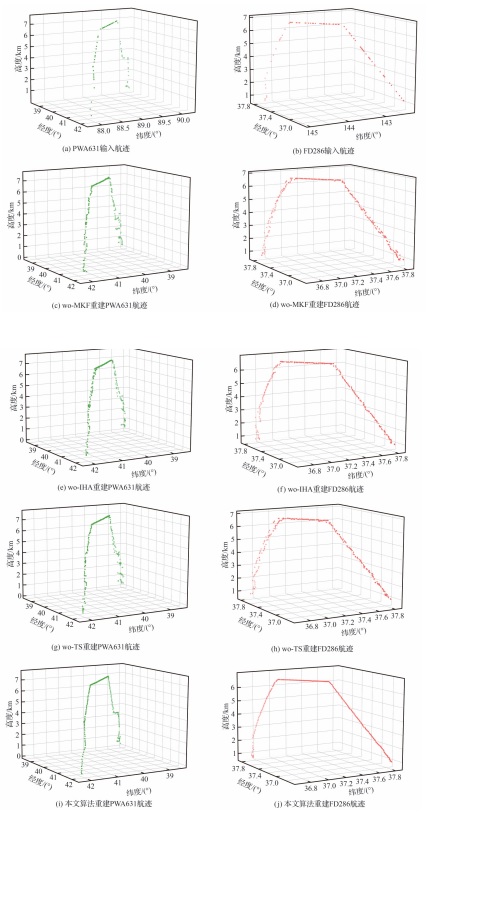
Table 6
Mean-values comparison of SSIM, PSNR, MEAN, and SD for reconstructed trajectories across all test sets under different model configurations
| 模型配置 | 数据数量 | 模块/策略选用 | 重建航迹图像Traj-images | 重建轨迹 | ||||
|---|---|---|---|---|---|---|---|---|
| MKF | IHA | TS | ||||||
| wo-MKF | 112 590 | × | √ | √ | 0.955 9 | 39.651 3 | 10 690.20 | 16 438.19 |
| wo-IHA | 112 590 | √ | × | √ | 0.937 6 | 37.063 1 | 13 334.36 | 18 957.75 |
| wo-TS | 112 590 | √ | √ | × | 0.831 5 | 30.819 5 | 14 892.19 | 16 840.29 |
| 本文方法 | 112 590 | √ | √ | √ | 0.969 5 | 42.419 8 | 7 187.27 | 8 916.67 |
| [1] | 陈志杰, 汤锦辉, 王冲, 等. 人工智能赋能空域系统,提升空域分层治理能力[J]. 航空学报, 2021, 42(4): 525018. |
| CHEN Z J, TANG J H, WANG C, et al. Using artificial intelligence in airspace system to improve airspace hierarchical governance capability[J]. Acta Aeronautica et Astronautica Sinica, 2021, 42(4): 525018 (in Chinese). | |
| [2] | 陈雨童, 胡明华, 杨磊, 等. 受限航路空域自主航迹规划与冲突管理技术[J]. 航空学报, 2020, 41(9): 324045. |
| CHEN Y T, HU M H, YANG L, et al. Autonomous trajectory planning and conflict management technology in restricted airspace[J]. Acta Aeronautica et Astronautica Sinica, 2020, 41(9): 324045 (in Chinese). | |
| [3] | 崔亚奇, 熊伟, 何友. 不确定航迹自适应预测模型[J]. 航空学报, 2019, 40(5): 322557. |
| CUI Y Q, XIONG W, HE Y. Adaptive forecast model for uncertain track[J]. Acta Aeronautica et Astronautica Sinica, 2019, 40(5): 322557 (in Chinese). | |
| [4] | 王飞, 韩翔宇. 基于分形插值的空中交通流量短期预测[J]. 航空学报, 2022, 43(9): 325585. |
| WANG F, HAN X Y. Short-term prediction of air traffic flow based on fractal interpolation[J]. Acta Aeronautica et Astronautica Sinica, 2022, 43(9): 325585 (in Chinese). | |
| [5] | 隋东, 蔡向嵘. 智能飞行冲突解脱算法的持续学习机制[J]. 系统工程与电子技术, 2025, 47(10): 3300-3312. |
| SUI D, CAI X R. Continual learning mechanism for intelligent flight conflict resolution algorithm[J]. Systems Engineering and Electronics, 2025,47(10): 3300-3312 (in Chinese). | |
| [6] | ZHANG Z, GUO D Y, ZHOU S Z, et al. Flight trajectory prediction enabled by time-frequency wavelet transform[J]. Nature Communications, 2023, 14: 5258. |
| [7] | 霍丹, 余付平, 沈堤, 等. 基于深度强化学习的多机冲突解决方法的研究[J]. 计算机科学, 2025, 52(7): 271-278. |
| HUO D, YU F P, SHEN D, et al. Research on multi-machine conflict resolution based on deep reinforcement learning[J]. Computer Science, 2025, 52(7): 271-278 (in Chinese). | |
| [8] | 李萌. TBO模式下航空器四维航迹规划技术[D]. 唐山: 华北理工大学, 2022: 9-17. |
| LI M. 4D trajectory planning technology of aircraft in TBO mode[D]. Tangshan: North China University of Science and Technology, 2022: 9-17 (in Chinese). | |
| [9] | CHANDAR B S, RANGANATHAN P, SEMKE W. Imputing ADS-B/GPS dropouts using machine learning models[C]∥2024 IEEE 14th Annual Computing and Communication Workshop and Conference (CCWC). Piscataway: IEEE Press, 2024: 63-72. |
| [10] | 王培晓. 时空视图学习支持的城市交通数据缺失补全与短期预测[J]. 测绘学报, 2024, 53(10): 2037. |
| WANG P X. Missing imputation and short-term prediction of urban traffic flow based on spatiotemporal view learning[J]. Acta Geodaetica et Cartographica Sinica, 2024, 53(10): 2037 (in Chinese). | |
| [11] | XU Y, BAZARJANI A, CHI H G, et al. Uncovering the missing pattern: Unified framework towards trajectory imputation and prediction[C]∥2023 IEEE/CVF Conference on Computer Vision and Pattern Recognition (CVPR). Piscataway: IEEE Press, 2023. |
| [12] | MA Q L, LI S, COTTRELL G W. Adversarial joint-learning recurrent neural network for incomplete time series classification[J]. IEEE Transactions on Pattern Analysis and Machine Intelligence, 2022, 44(4): 1765-1776. |
| [13] | 赵永梅, 董云卫. 低秩张量补全的时空交通数据预测[J]. 交通运输工程学报, 2024, 24(4): 243-258. |
| ZHAO Y M, DONG Y W. Spatio-temporal traffic data prediction based on low-rank tensor completion[J]. Journal of Traffic and Transportation Engineering, 2024, 24(4): 243-258 (in Chinese). | |
| [14] | LIN Y, LI Q, GUO D Y, et al. Tensor completion-based trajectory imputation approach in air traffic control[J]. Aerospace Science and Technology, 2021, 114: 106754. |
| [15] | ZHAO J Q, RONG C T, DANG X, et al. QAR data imputation using generative adversarial network with self-attention mechanism[J]. Big Data Mining and Analytics, 2024, 7(1): 12-28. |
| [16] | 胡中华, 许昕, 陈中. 无人机三维航迹非均匀三次B样条平滑算法[J]. 控制工程, 2020, 27(7): 1259-1266. |
| HU Z H, XU X, CHEN Z. Non-uniform cubic B-spline curves interpolation for UAV 3-D track smoothing[J]. Control Engineering of China, 2020, 27(7): 1259-1266 (in Chinese). | |
| [17] | SCHÄFER M, STROHMEIER M, LENDERS V, et al. Bringing up OpenSky: A large-scale ADS-B sensor network for research[C]∥IPSN-14 Proceedings of the 13th International Symposium on Information Processing in Sensor Networks. Piscataway: IEEE Press, 2014: 83-94. |
| [18] | ZHANG X L, QIAN B Y, LI Y, et al. Context-aware and time-aware attention-based model for disease risk prediction with interpretability[J]. IEEE Transactions on Knowledge and Data Engineering, 2023, 35(4): 3551-3562. |
| [19] | SCARSELLI F, GORI M, TSOI A C, et al. The graph neural network model[J]. IEEE Transactions on Neural Networks, 2009, 20(1): 61-80. |
| [20] | 杨燕, 沈汪良. 多尺度细节增强与分层抑噪的图像去雾算法[J/OL]. 吉林大学学报(工学版), (2024-05-15) [2024-08-12]. . |
| YANG Y, SHEN W L. Multi-scale detail enhancement and layered noise suppression algorithm for image dehazing[J/OL]. Journal of Jilin University (Engineering and Technology Edition), (2024-05-15) [2024-08-12]. (in Chinese). | |
| [21] | WU X P, YANG H Y, CHEN H, et al. Long-term 4D trajectory prediction using generative adversarial networks[J]. Transportation Research Part C: Emerging Technologies, 2022, 136: 103554. |
| [22] | QUAN W Z, CHEN J X, LIU Y L, et al. Deep learning-based image and video inpainting: A survey[J]. International Journal of Computer Vision, 2024, 132(7): 2367-2400. |
| [23] | WANG N, MA S H, LI J Y, et al. Multistage attention network for image inpainting[J]. Pattern Recognition, 2020, 106: 107448. |
| [24] | DENG Y, HUI S Q, ZHOU S P, et al. Context adaptive network for image inpainting[J]. IEEE Transactions on Image Processing, 2023, 32: 6332-6345. |
| [25] | NILSSON J, UNGER J. Swedish civil air traffic control dataset[J]. Data in Brief, 2023, 48: 109240. |
| [26] | 陈蜀喆, 王子威, 龚彪. 基于滑动窗口算法的船舶避碰转向点数据挖掘模型[J]. 中国航海, 2025, 48(1): 124-131. |
| CHEN S Z, WANG Z W, GONG B. Data mining model of ship collision avoidance turning points based on sliding window algorithm[J]. Navigation of China, 2025, 48(1): 124-131 (in Chinese). | |
| [27] | 郭树强, 黄蕊, 李卿. 改进加权朴素贝叶斯的软件缺陷预测算法[J]. 控制工程, 2021, 28(3): 600-605. |
| GUO S Q, HUANG R, LI Q. A software defect prediction algorithm using improved weighted naive Bayesian[J]. Control Engineering of China, 2021, 28(3): 600-605 (in Chinese). | |
| [28] | 李强, 马超, 黄民. 基于注意力的多尺度残差卷积网络轴承故障诊断[J]. 电子测量技术, 2025, 48(9): 19-26. |
| LI Q, MA C, HUANG M. Attention-based multi-scale residual convolutional network for bearing fault diagnosis[J]. Electronic Measurement Technology, 2025, 48(9): 19-26 (in Chinese). | |
| [29] | TAO Y, TANG J H, ZHAO X W, et al. Multi-scale network with attention mechanism for underwater image enhancement[J]. Neurocomputing, 2024, 595: 127926. |
| [30] | CHEN G, ZHANG G P, YANG Z G, et al. Multi-scale patch-GAN with edge detection for image inpainting[J]. Applied Intelligence, 2023, 53(4): 3917-3932. |
| [31] | YAO C, XIAO J M, TILLO T, et al. Depth map down-sampling and coding based on synthesized view distortion[J]. IEEE Transactions on Multimedia, 2016, 18(10): 2015-2022. |
| [32] | PAN J S, SUN D Q, ZHANG J W, et al. Dual convolutional neural networks for low-level vision[J]. International Journal of Computer Vision, 2022, 130(6): 1440-1458. |
| [33] | KHAN S, NASEER M, HAYAT M, et al. Transformers in vision: A survey[J]. ACM Computing Surveys, 2022, 54(10s): 1-41. |
| [34] | LI X, WANG W H, HU X L, et al. Selective kernel networks[C]∥2019 IEEE/CVF Conference on Computer Vision and Pattern Recognition (CVPR). Piscataway: IEEE Press, 2019: 510-519. |
| [35] | HU H G, YU C H, ZHOU Q W, et al. HDConv: Heterogeneous kernel-based dilated convolutions[J]. Neural Networks, 2024, 179: 106568. |
| [36] | OYEDOTUN O K, ISMAEIL K AL, AOUADA D. Training very deep neural networks: Rethinking the role of skip connections[J]. Neurocomputing, 2021, 441: 105-117. |
| [37] | HU J, SHEN L, ALBANIE S, et al. Squeeze-and-excitation networks[J]. IEEE Transactions on Pattern Analysis and Machine Intelligence, 2019, 42(8): 2011-2023. |
| [38] | ZENG X F, PAN Y S, ZHANG H, et al. Unpaired salient object translation via spatial attention prior[J]. Neurocomputing, 2021, 453: 718-730. |
| [39] | LIU H J, LIU F Q, FAN X Y, et al. Polarized self-attention: Towards high-quality pixel-wise mapping[J]. Neurocomputing, 2022, 506: 158-167. |
| [40] | ZHU M H, JIAO L C, LIU F, et al. Residual spectral–spatial attention network for hyperspectral image classification[J]. IEEE Transactions on Geoscience and Remote Sensing, 2020, 59(1): 449-462. |
| [41] | WANG N, ZHANG Y P, ZHANG L F. Dynamic selection network for image inpainting[J]. IEEE Transactions on Image Processing, 2021, 30: 1784-1798. |
| [42] | 王超学, 王磊. 融合多尺度特征和双分支并行的肺结节图像分割网络[J]. 计算机系统应用, 2025, 34(4): 166-174. |
| WANG C X, WANG L. Pulmonary nodule image segmentation network integrating multi-scale features and dual-branch parallelism[J]. Computer Systems and Applications, 2025, 34(4): 166-174 (in Chinese). | |
| [43] | 申秋慧, 张宏军, 徐有为, 等. 知识图谱嵌入模型中的损失函数研究综述[J]. 计算机科学, 2023, 50(4): 149-158. |
| SHEN Q H, ZHANG H J, XU Y W, et al. Comprehensive survey of loss functions in knowledge graph embedding models[J]. Computer Science, 2023, 50(4): 149-158 (in Chinese). | |
| [44] | LI C Y, ANWAR S, HOU J H, et al. Underwater image enhancement via medium transmission-guided multi-color space embedding[J]. IEEE Transactions on Image Processing, 2021, 30: 4985-5000. |
| [45] | LI Y, FANG A Q, GUO Y M, et al. Smooth fusion of multi-spectral images via total variation minimization for traffic scene semantic segmentation[J]. Engineering Applications of Artificial Intelligence, 2024, 130: 107741. |
| [46] | 徐雯, 于瓅. 基于迭代收缩阈值与深度学习的压缩感知图像重构网络[J]. 计算机工程与科学, 2025, 47(3): 485-493. |
| XU W, YU L. A compressive sensing image reconstruction network based on iterative shrinkage thresholding and deep learning[J]. Computer Engineering & Science, 2025, 47(3): 485-493 (in Chinese). | |
| [47] | 王成, 刘坤, 杜砾. 全参考图像质量指标评价分析[J]. 现代电子技术, 2023, 46(21): 39-43. |
| WANG C, LIU K, DU L. Evaluation and analysis of full reference image quality indicators[J]. Modern Electronics Technique, 2023, 46(21): 39-43 (in Chinese). | |
| [48] | SUN Z Y, LI H Z, WANG W H, et al. DTIN: dual transformer-based imputation nets for multivariate time series emitter missing data[J]. Knowledge-Based Systems, 2024, 284: 111270. |
| [49] | YıLDıZ A Y, KOÇ E, KOÇ A. Multivariate time series imputation with transformers[J]. IEEE Signal Processing Letters, 2022, 29: 2517-2521. |
| [50] | 孟庆成, 万达, 吴浩杰, 等. 基于卷积神经网络的混凝土裂缝图像识别方法[J]. 沈阳建筑大学学报(自然科学版), 2021, 37(5): 832-840. |
| MENG Q C, WAN D, WU H J, et al. Image recognition method of concrete cracks based on convolutional neural network[J]. Journal of Shenyang Jianzhu University (Natural Science), 2021, 37(5): 832-840 (in Chinese). |
| [1] | Jianyu XU, Li ZHOU, Zhanxue WANG, Jie SHI, Hao SHI. Calculation method for hypersonic plume infrared radiation based on a fast line-by-line calculation model [J]. Acta Aeronautica et Astronautica Sinica, 2025, 46(8): 630778-630778. |
| [2] | Lingjie MENG, Hongguang LI, Xinjun LI. SAR image simulation method guided by geomorphic category information [J]. Acta Aeronautica et Astronautica Sinica, 2025, 46(7): 331003-331003. |
| [3] | Zhihao ZHAO, Zhaohua YANG, Yun WU, Yuanjin YU. Single-photon counting imaging denoising method based on deep learning in low-light environment [J]. Acta Aeronautica et Astronautica Sinica, 2025, 46(3): 630531-630531. |
| [4] | Yiquan WU, Kang TONG. Research advances on deep learning-based small object detection in UAV aerial images [J]. Acta Aeronautica et Astronautica Sinica, 2025, 46(3): 30848-030848. |
| [5] | Zijian XIANG, Zhenyu MA, Xixiang YANG. Inversion of structural performance parameters of composite materials based on deep learning [J]. Acta Aeronautica et Astronautica Sinica, 2025, 46(24): 231877-231877. |
| [6] | Tianqi FAN, Zhengxia ZOU, Zhenwei SHI. Typical remote sensing target detection with data synthesis based on reinforcement learning [J]. Acta Aeronautica et Astronautica Sinica, 2025, 46(23): 631955-631955. |
| [7] | Kui LIU, Hao SUN, Han WU, Kefeng JI, Gangyao KUANG. Dynamic brightness reconstruction for UAV visible-infrared fusion object detection [J]. Acta Aeronautica et Astronautica Sinica, 2025, 46(23): 631968-631968. |
| [8] | Bo PENG, Jikang BAI, Weiwen CHEN, Xiangtao ZHENG, Jianjun LEI, Xiaoqiang LU. Research progress for UAV search and rescue methods based on deep learning [J]. Acta Aeronautica et Astronautica Sinica, 2025, 46(23): 632761-632761. |
| [9] | Jinlun ZHOU, Honghai ZHANG, Wenqing LI. Key technologies and deployment routes for advancing autonomous operations in civil aviation [J]. Acta Aeronautica et Astronautica Sinica, 2025, 46(22): 331998-331998. |
| [10] | Xiaowei JIANG, Yiquan WU. Research progress of UAV aerial image mosaic methods [J]. Acta Aeronautica et Astronautica Sinica, 2025, 46(17): 331799-331799. |
| [11] | Lin CHEN, Xiwen GU, Zhiying CHEN, Zhuo ZHANG, Xiaoliang SUN. High-precision monocular vision pose measurement for large distance span in carrier landing guidance [J]. Acta Aeronautica et Astronautica Sinica, 2025, 46(15): 331568-331568. |
| [12] | Bin SUN, Hang YOU, Wenbo LI, Xiangrui LIU, Jiayi MA. Dual-band payload image fusion and its applications in low-altitude remote sensing [J]. Acta Aeronautica et Astronautica Sinica, 2025, 46(11): 531343-531343. |
| [13] | Fan PU, Zhijie CHEN, Yang LIU, Xin GENG, Yongwen ZHU, Kejin REN. Air traffic management technologies for digital low-altitude integrated operations [J]. Acta Aeronautica et Astronautica Sinica, 2025, 46(11): 531331-531331. |
| [14] | Fanteng MENG, Yong QIN, Jing CUI, Yunpeng WU, Zicheng ZHANG, Shaowei WEI. Unknown risk detection in external environment of railroad using UAV images [J]. Acta Aeronautica et Astronautica Sinica, 2025, 46(11): 531262-531262. |
| [15] | Weishi CHEN, Hongchuang NIU, Xin WANG, Jian WAN, Xianfeng LU, Jie ZHANG, Qingbin WANG. Review on multi-source detection technologies for birds and drones in airport clearance area [J]. Acta Aeronautica et Astronautica Sinica, 2025, 46(10): 31251-031251. |
| Viewed | ||||||
|
Full text |
|
|||||
|
Abstract |
|
|||||
Address: No.238, Baiyan Buiding, Beisihuan Zhonglu Road, Haidian District, Beijing, China
Postal code : 100083
E-mail:hkxb@buaa.edu.cn
Total visits: 6658907 Today visits: 1341All copyright © editorial office of Chinese Journal of Aeronautics
All copyright © editorial office of Chinese Journal of Aeronautics
Total visits: 6658907 Today visits: 1341

 CJA
CJA
