Acta Aeronautica et Astronautica Sinica ›› 2026, Vol. 47 ›› Issue (8): 432663.doi: 10.7527/S1000-6893.2025.32663
• Material Engineering and Mechanical Manufacturing • Previous Articles
Yu DING1,2,3, Guoao NING1,2, Kaixin JIN2, Bo SUN2, Huai LI2, Xuanyuan SU1( )
)
Received:2025-08-06
Revised:2025-08-27
Accepted:2025-10-22
Online:2025-11-26
Published:2025-11-25
Contact:
Xuanyuan SU
E-mail:suxuanyuan@buaa.edu.cn
Supported by:CLC Number:
Yu DING, Guoao NING, Kaixin JIN, Bo SUN, Huai LI, Xuanyuan SU. Fault data generation for electromechanical systems based on hierarchical Digital Twin[J]. Acta Aeronautica et Astronautica Sinica, 2026, 47(8): 432663.

Table 1
Comparisons of current existing fault diagnosis methods based on Digital Twin
| 方法 | 对象层级 | 生成方式 | 信息模态 |
|---|---|---|---|
| 提出方法 | 系统级 | 数据-模型融合 | 知识、数据、逻辑 |
| 文献[ | 转子-滚动体轴承:组件级 | 动力学模型:模型驱动 | 知识 |
| 文献[ | 滚动轴承:组件级 | 数据-模型融合 | 知识、数据 |
| 文献[ | 转子系统:子系统级 | 有限元:模型驱动 | 知识 |
| 文献[ | 三缸泵:子系统级 | Simscape模型:模型驱动 | 知识 |
| 文献[ | 变速箱:子系统级 | 动力学模型:模型驱动 | 知识 |
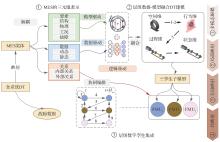
Fig.1
Total procedure of developing the hierarchical collaborative Digital Twin for MES
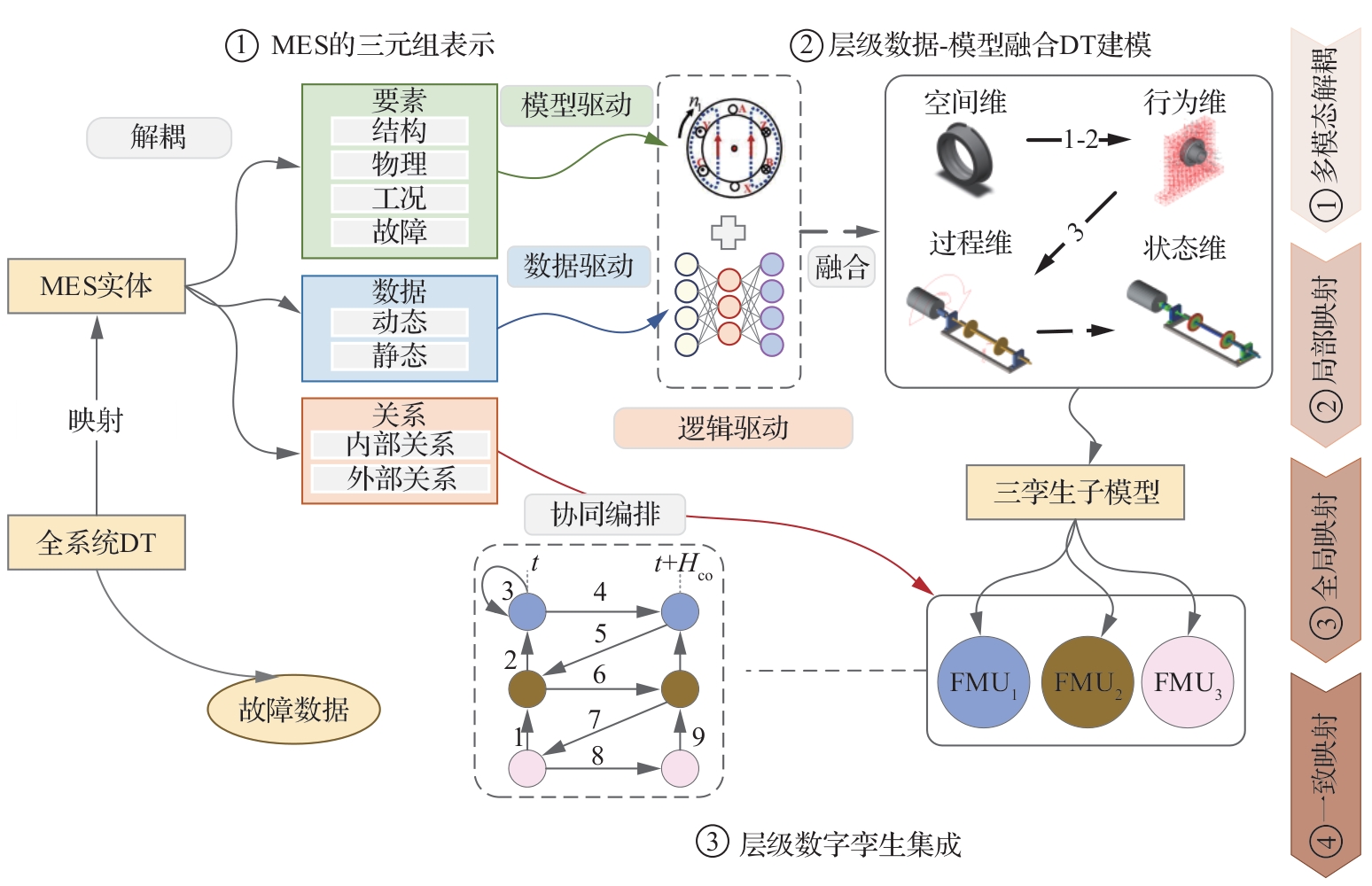
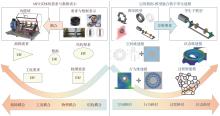
Fig.2
Hierarchical data-model combined Digital Twin modeling based on element and data representation
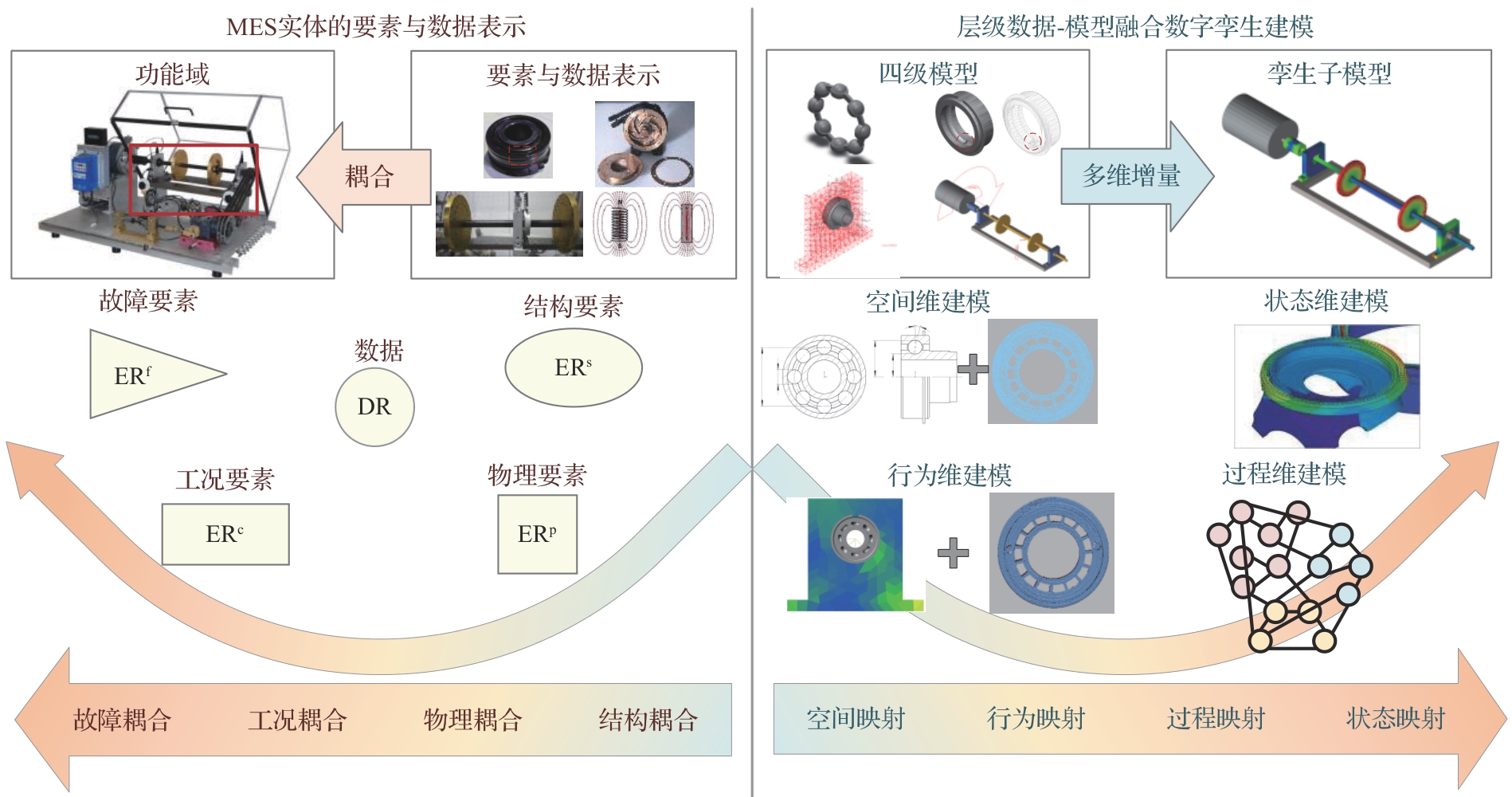
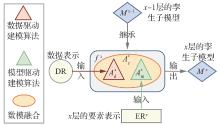
Fig.3
Model architecture of x-level driven by data-model combined technique
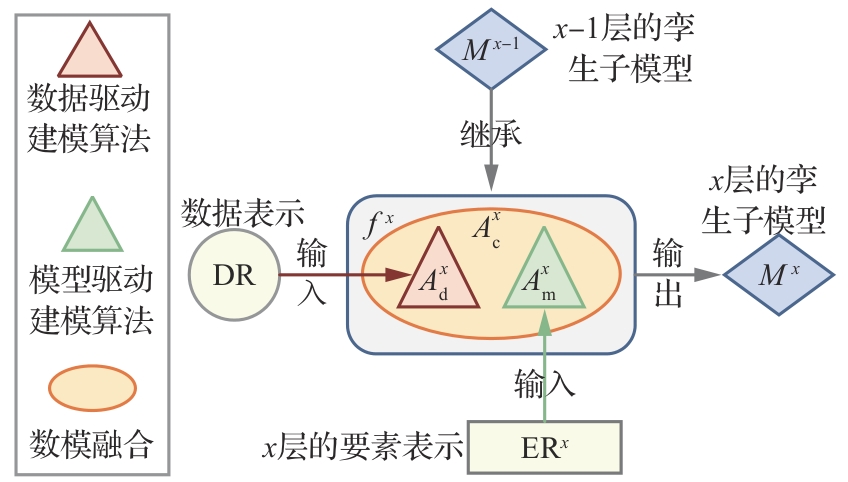
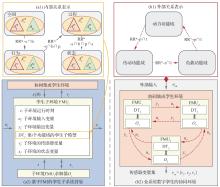
Fig.4
FMI-based sub-Digital Twin encapsulation under collaborative integration environment
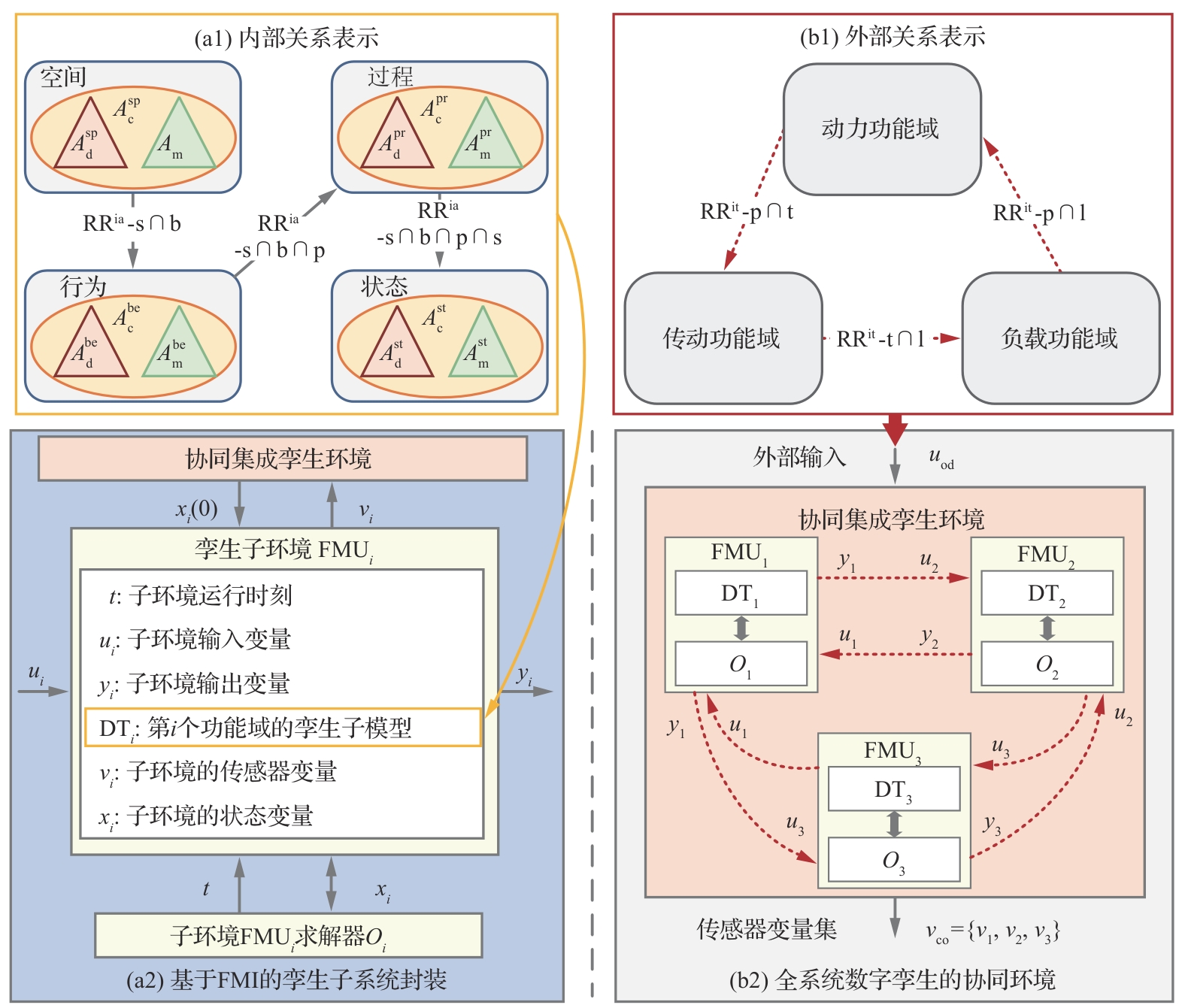
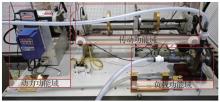
Fig.5
MFS test bench with multi-coupling characteristics
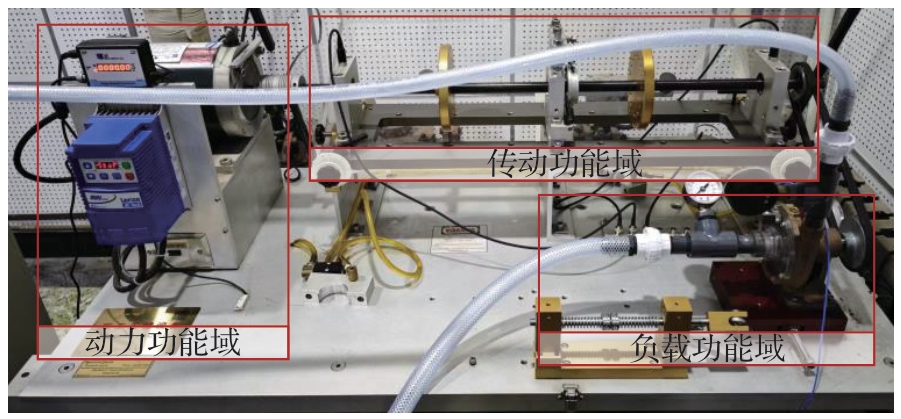
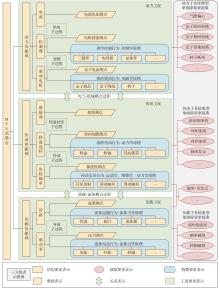
Fig.6
Triplet representation of MFS test bench
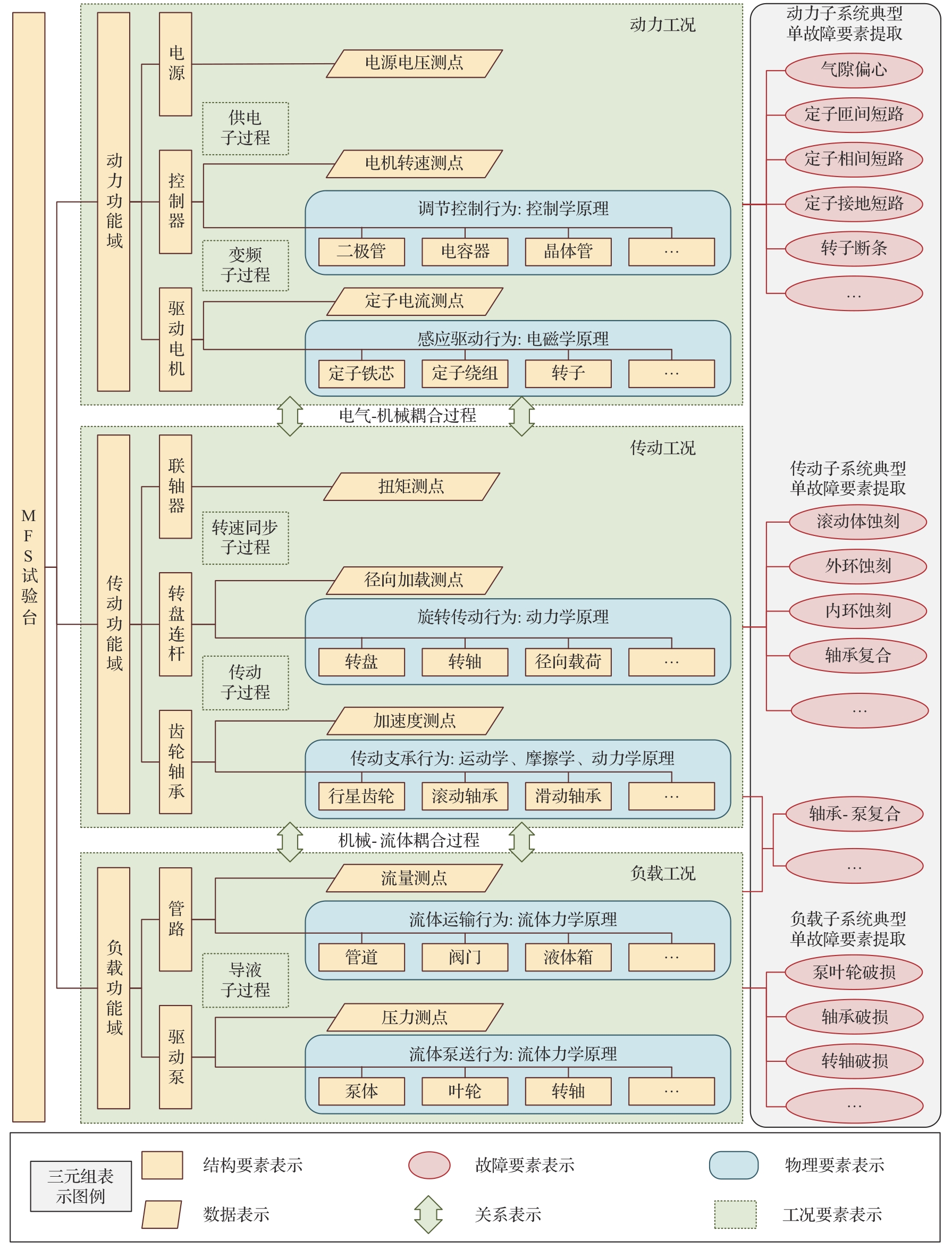
Table 2
Key parameters of data-model combined power sub-Digital Twin model
| 参数 | 模型驱动值 | 数据驱动值 | 算法 |
|---|---|---|---|
| 额定功率、电压(线电压)、频率 | [948.17,460.00,60.000] | [948.17,460.00,60.000] | |
| 定子电阻和电感 | [12.010, 0.023 000] | [12.070, 0.023 400] | |
| 转子电阻和电感 | [6.350 0, 0.023 000] | [6.362 0, 0.023 400] | |
| 互感 | [0.109 00] | [0.109 70] |
Table 3
Key parameters of data-model combined transmission sub-Digital Twin model
| 模型驱动参数 | 数值 | 数据驱动参数 | 数值 | 融合机制 |
|---|---|---|---|---|
| 刚度/(N∙mm-1) | 1.0×10⁵ | 编码器维度 | 32 | |
| 指数 | 1.5 | 解码器维度 | 32 | |
| 阻尼/(N∙s∙mm-1) | 50 | 特征维度 | 8 | |
| 最大变形量/mm | 1.0×10⁻² | 激活函数 | ReLU | |
| 静摩擦系数 | 3.0×10⁻¹ | 学习率e | 1.0×10⁻³ | |
| 动摩擦系数 | 2.0×10⁻¹ | 丢弃率 | 1.0×10⁻¹ |
Table 4
Key parameters of data-model combined load sub-Digital Twin model
| 类型 | 模型驱动值 | 数据驱动值 | 算法 |
|---|---|---|---|
泵-管道 模型参数集 | [6.00×10⁻², 8.76, 9.04×10⁻⁵, 1.62×10⁻⁶, 8.20×10⁻¹] | [6.00×10⁻², 8.70, 9.10×10⁻⁵, 1.69×10⁻⁶, 8.50×10⁻¹] | 基于最小二乘法的数据驱动优化[ |
Table 5
Interaction relationship among three types of sub-Digital Twin model
| 模型名称 | 变量名称 | 变量方向 | 变量类型 |
|---|---|---|---|
| 动力子模型 | 电机转速 | 输出 | 交互变量 |
| 电机转角 | 输出 | 交互变量 | |
| 电机扭矩 | 输入 | 交互变量 | |
| 三相定子电流 | 输出 | 状态变量 | |
| 传动子模型 | 驱动转角 | 输入 | 交互变量 |
| 驱动扭矩 | 输出 | 交互变量 | |
| 负载扭矩 | 输入 | 交互变量 | |
| 传动转速 | 输出 | 交互变量 | |
| 近端轴承振动 | 输出 | 状态变量 | |
| 远端轴承振动 | 输出 | 状态变量 | |
| 负载子模型 | 负载转速 | 输入 | 交互变量 |
| 泵出口流量 | 输出 | 状态变量 | |
| 泵压差 | 输出 | 状态变量 |
Fig.7
Three-phase current data of full-system Digital Twin and entity under ITSC fault
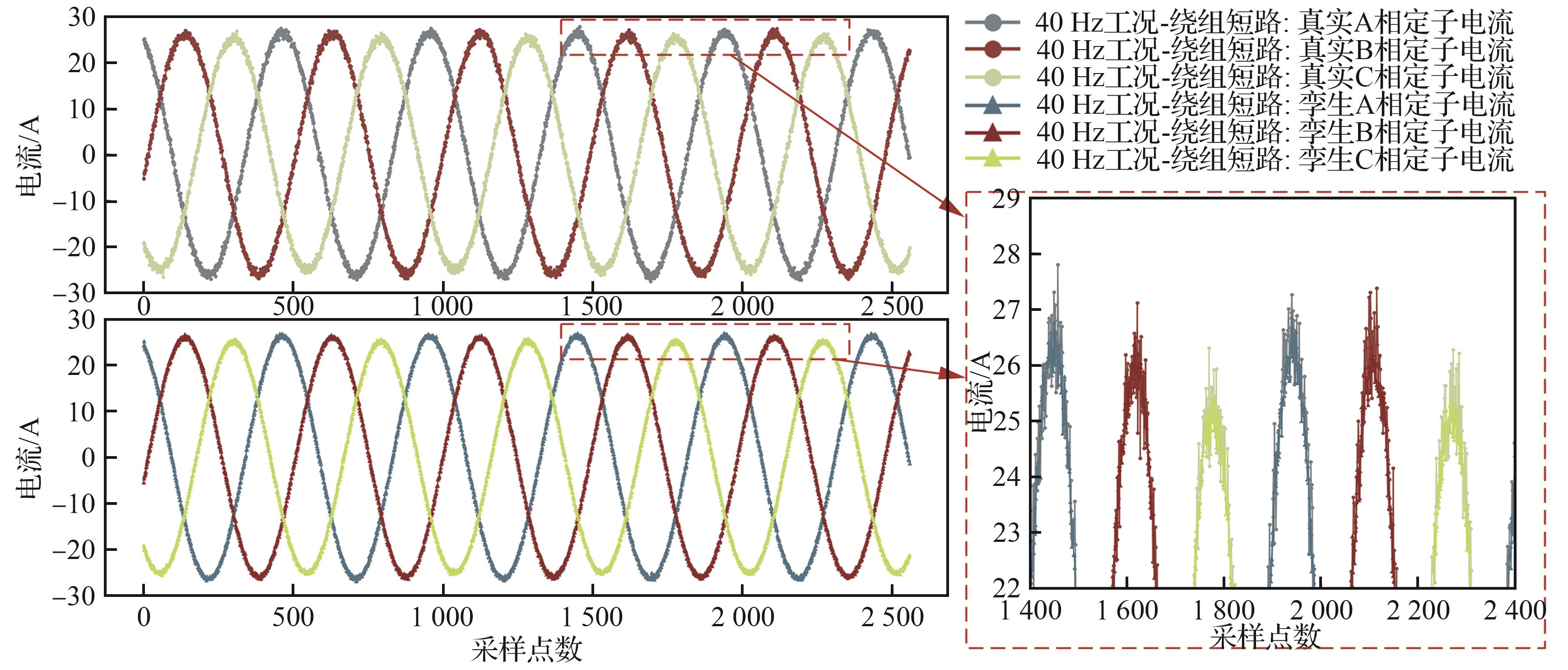
Fig.8
Flow and pressure data of full-system Digital Twin and entity under pump impeller fault
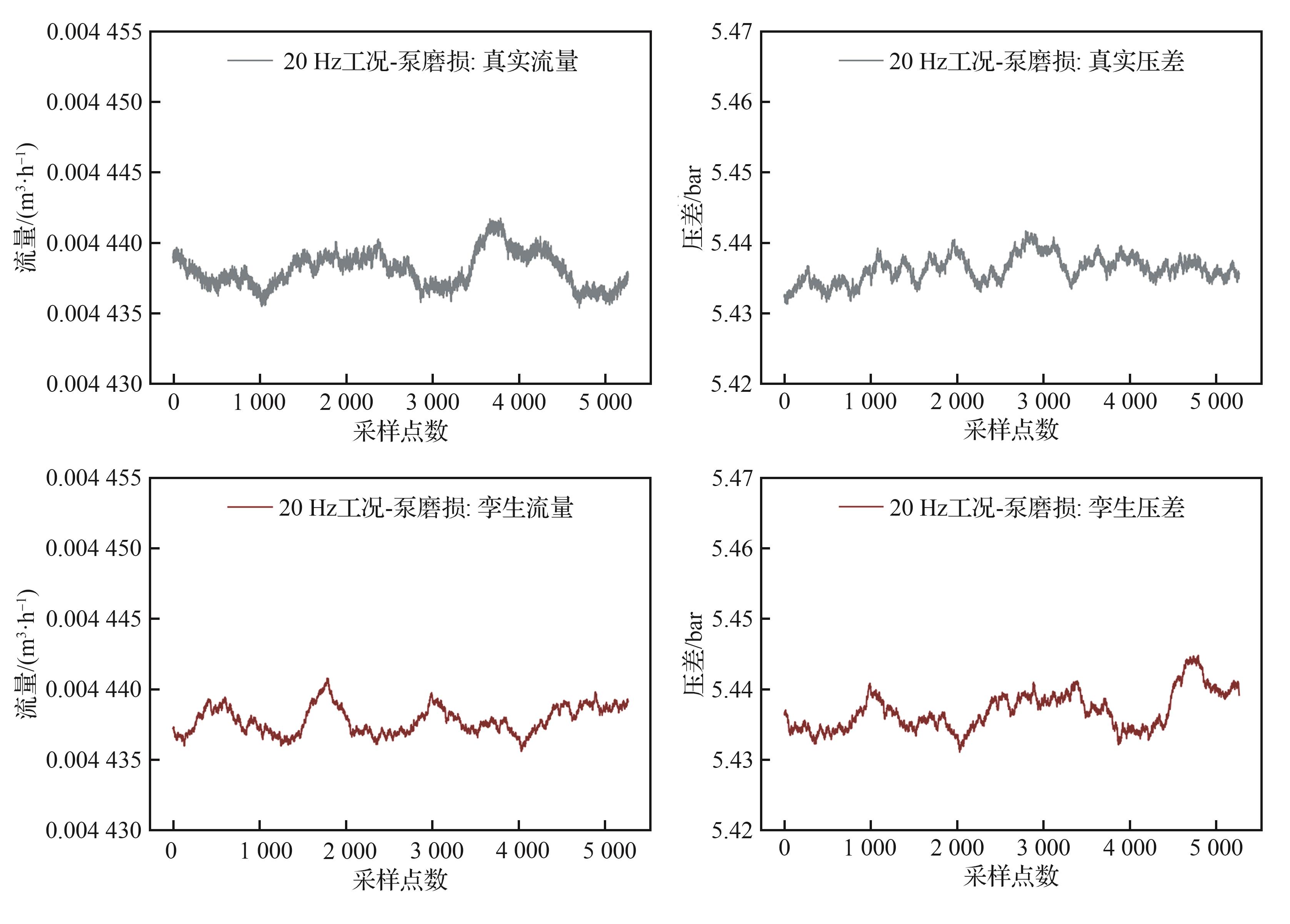
Fig.9
Vibration data of full-system Digital Twin and entity under four statuses
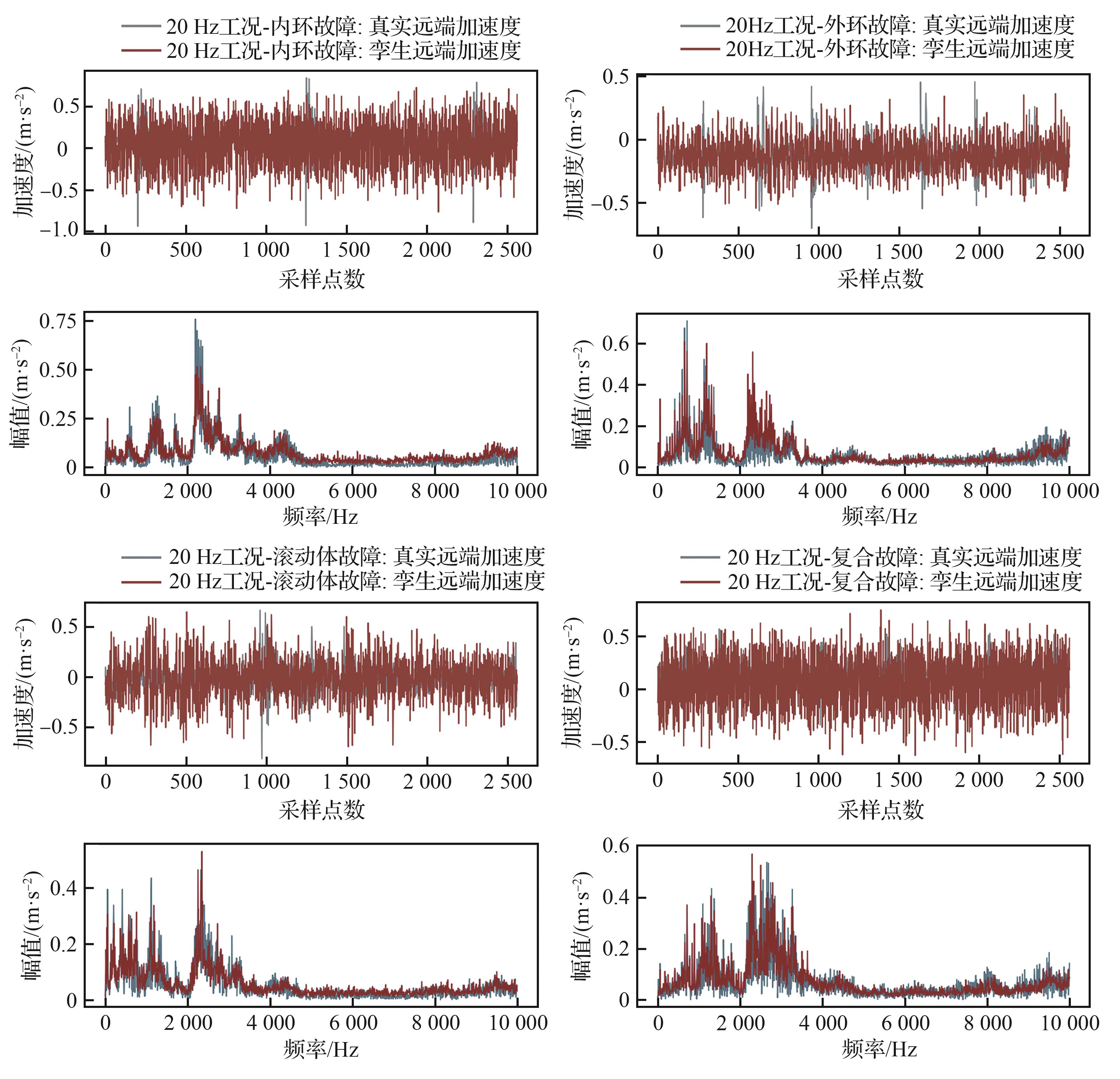
Table 6
Details of real entity dataset and Digital Twin generated dataset
| 数据集 | 故障类型 | 工况 | 训练集规模 | 测试集规模 |
|---|---|---|---|---|
真实实体 数据集 | 正常, 匝间短路(ITSC), 断条(BR), 滚动体故障(BF), 内环故障(IF), 外环故障(OF), 复合故障(CF), 叶轮磨损(IW), BF-IW复合故障, IF-IW 复合故障, OF-IW复合故障 | 20、 30、 40 Hz | 30个实体样本/故障 类型&工况 | 共计6 359个样本 |
数字孪生 生成数据集 | 正常, ITSC, BR, BF, IF, OF, CF, IW, BF-IW 复合故障, IF-IW复合故障, OF-IW复合故障 | 20、 30、 40 Hz | 30个实体样本+1 000个数字孪生生成样本故障类型&工况 | 共计6 359个样本 |
Table 7
Comparison of fault diagnosis under two types of datasets
| 类型 | 真实实体数据集 | 数字孪生生成数据集 |
|---|---|---|
| 精确率/% | 75.58±2.85 | 87.53±1.47 |
| 召回率/% | 75.21±2.82 | 87.36±1.44 |
| F1分数/% | 74.63±2.79 | 87.30±1.43 |
Fig.10
Confusion matrix heatmap
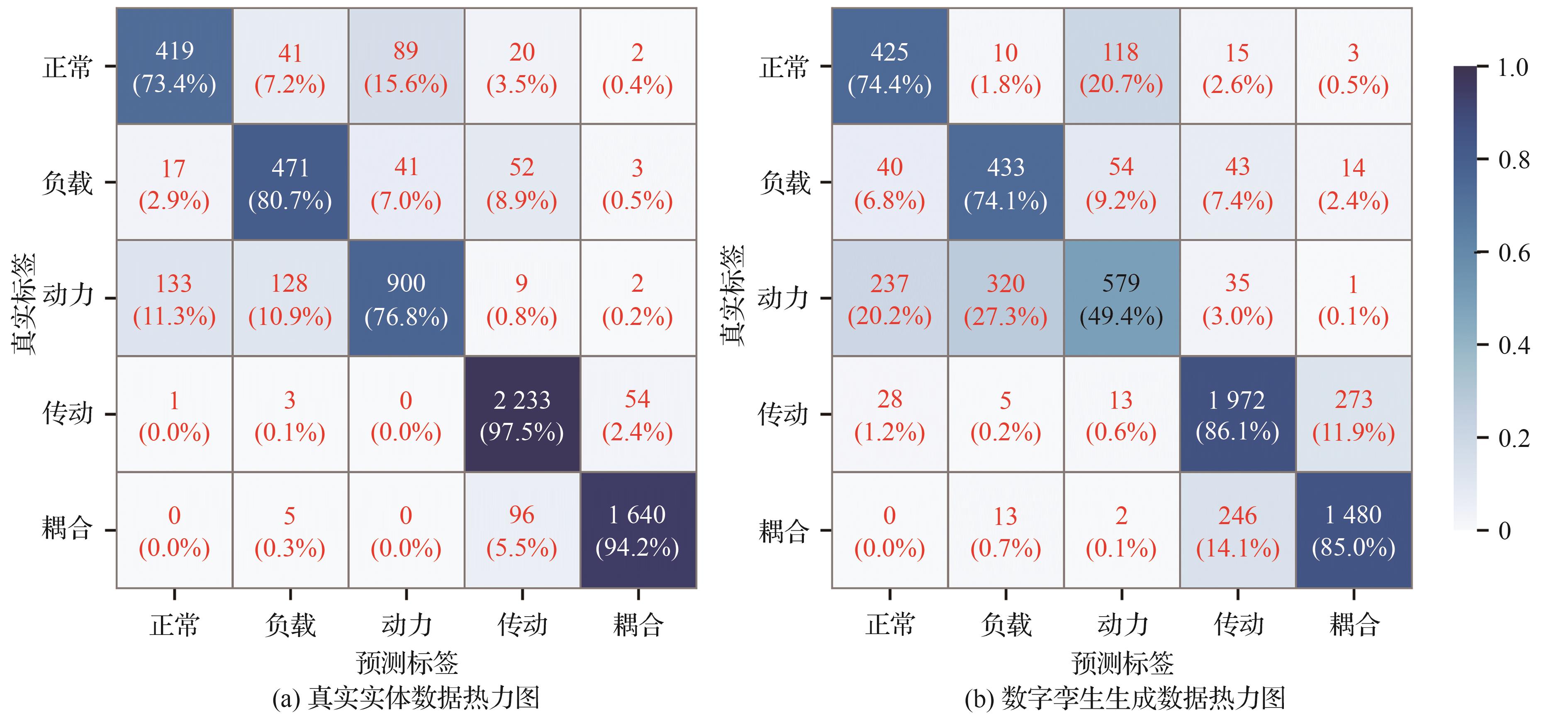
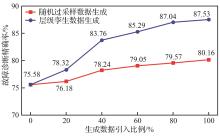
Fig.11
Impact of different generation data ratios on fault diagnosis precision
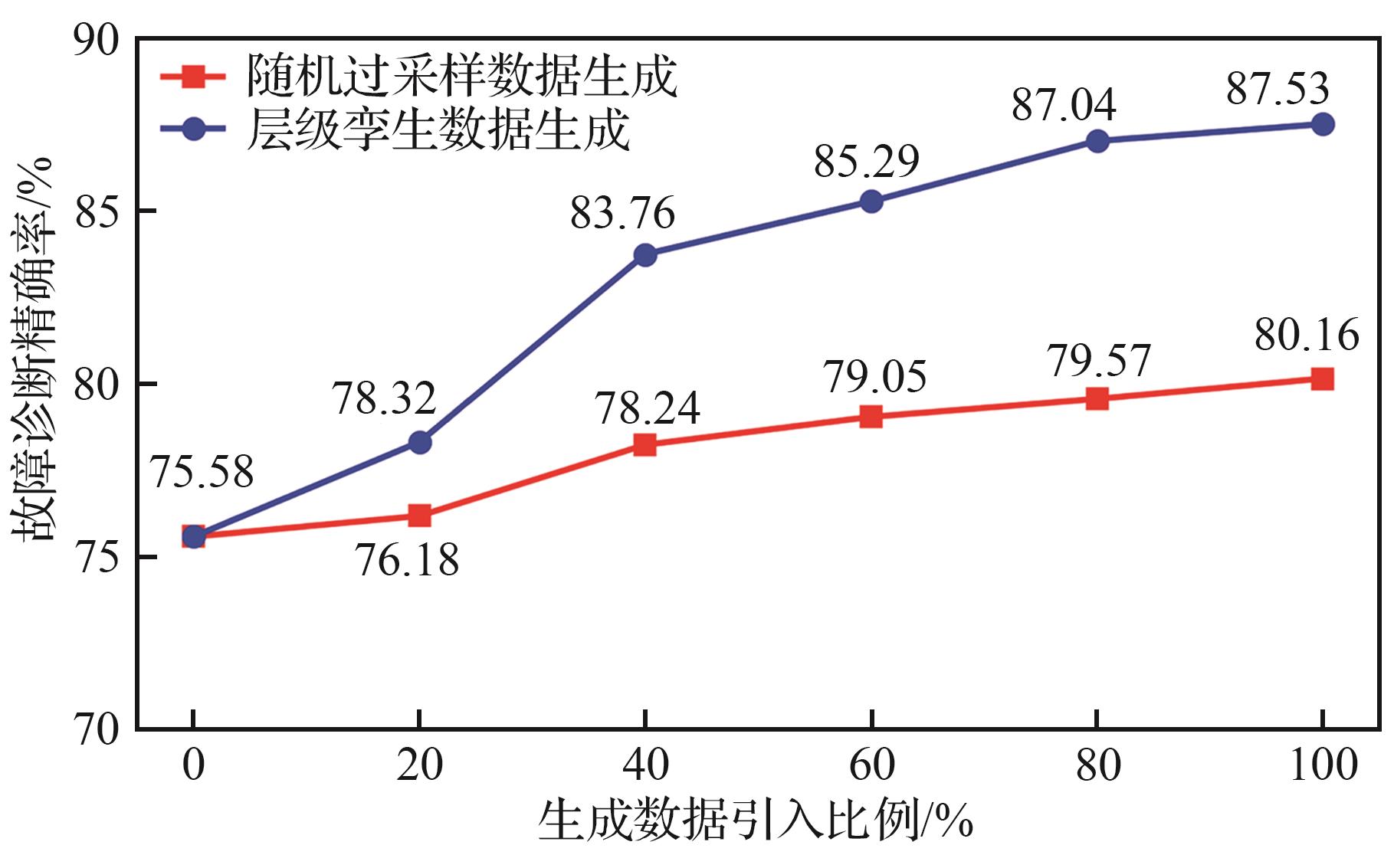
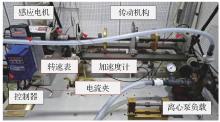
Fig.A1
Sensor layout of MFS test bench
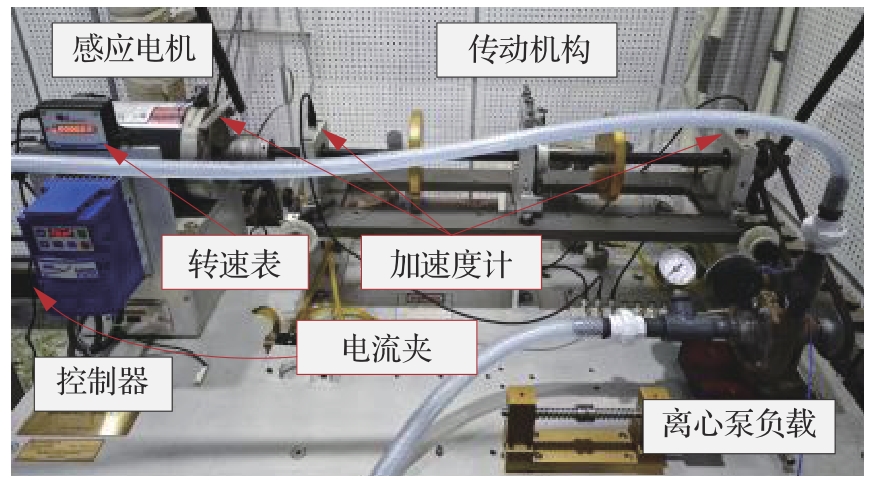
Table A1
Detailed information of sensors
| 传感器 | 传感器模型 | 安装位置 | 信号名称 |
|---|---|---|---|
| 电流夹 | FLUKE i400E | 电动机母线 | A相定子电流 |
| B相定子电流 | |||
| C相定子电流 | |||
| 加速度计 | Hansford HS-100 | 电机端盖 | 电机Z向加速度 |
| 近端轴承座 | 近端轴承Z向加速度 | ||
| 远端轴承座 | 远端轴承Z向加速度 | ||
| 转速表 | SQI | 转速表 | 电机转速 |
Fig.A2
Data acquisition system with type of INV3020C
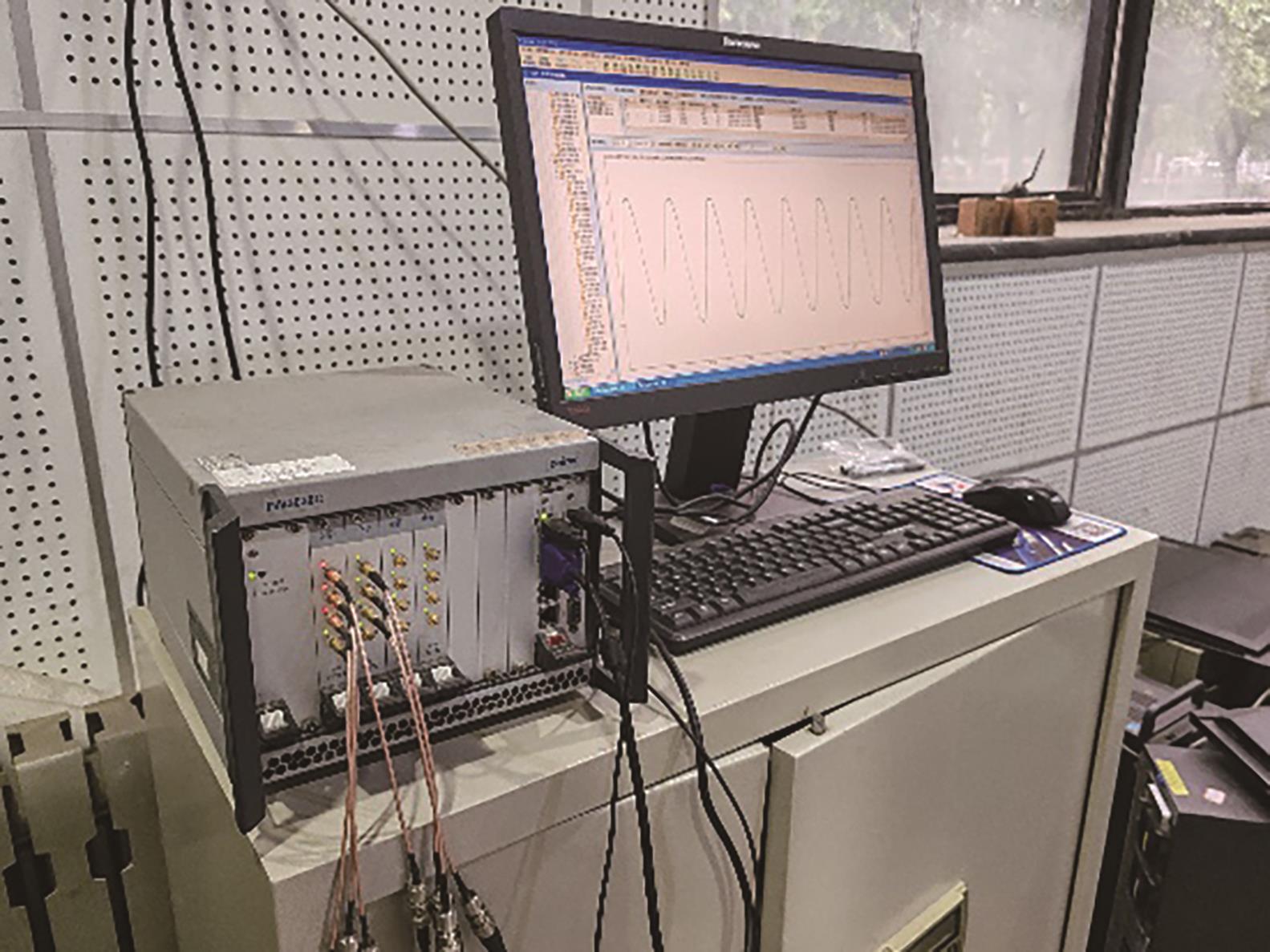
Table A2
Detailed information of signal acquisition and calibration
| 序号 | 信号类型 | 单位 | 校准值 |
|---|---|---|---|
| 1 | A相定子电流 | mA | 1 |
| 2 | B相定子电流 | mA | 1 |
| 3 | C相定子电流 | mA | 1 |
| 4 | 电机Z向加速度 | m/s2 | 100 |
| 5 | 近端轴承Z向加速度 | m/s2 | 100 |
| 6 | 远端轴承Z向加速度 | m/s2 | 100 |
| 7 | 电机转速 | mV | 1 |
Fig.A3
Replaceable faulty components of faulty bearings and faulty motors
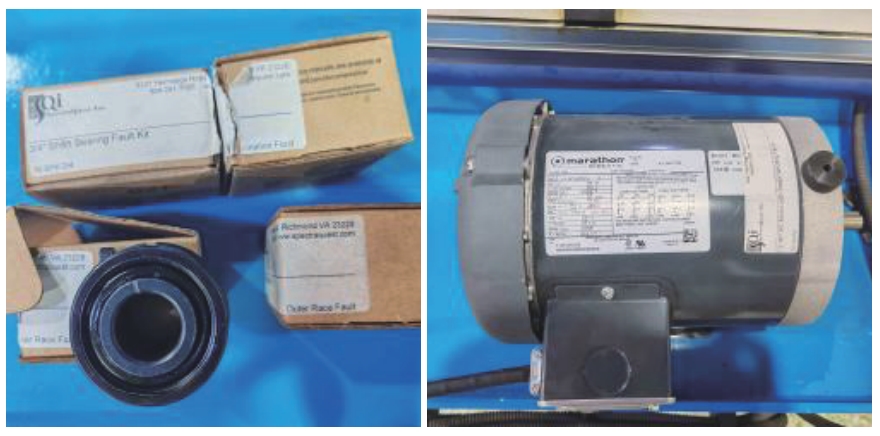
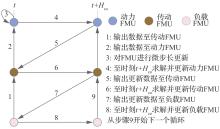
Fig.B1
Collaborative orchestration algorithm based on Gauss-Seidel mechanism
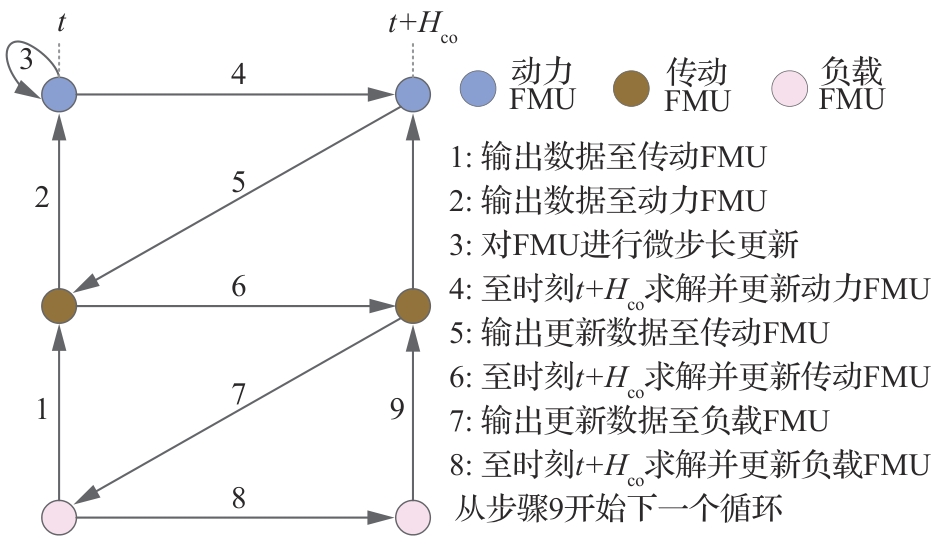
Table C1
Confusion matrix and accuracy of limited real data
| 参数 | 正常 | 负载 | 动力 | 传动 | 耦合 | |||||||
|---|---|---|---|---|---|---|---|---|---|---|---|---|
| normal | pump | ITSC | BR | comb | ball | inner | outer | ball-pump | inner-pump | outer-pump | Acc | |
| Average Acc | 0.752 1 | |||||||||||
| normal | 425 | 10 | 62 | 56 | 0 | 15 | 0 | 0 | 3 | 0 | 0 | 0.744 3 |
| pump | 40 | 433 | 16 | 38 | 0 | 43 | 0 | 0 | 14 | 0 | 0 | 0.741 4 |
| ITSC | 101 | 282 | 177 | 10 | 0 | 23 | 1 | 0 | 1 | 0 | 0 | 0.297 5 |
| BR | 136 | 38 | 34 | 358 | 0 | 11 | 0 | 0 | 0 | 0 | 0 | 0.620 5 |
| comb | 0 | 0 | 0 | 0 | 532 | 0 | 10 | 5 | 0 | 31 | 1 | 0.918 8 |
| ball | 28 | 5 | 3 | 10 | 0 | 391 | 0 | 5 | 118 | 14 | 3 | 0.677 6 |
| inner | 0 | 0 | 0 | 0 | 17 | 1 | 465 | 1 | 1 | 88 | 0 | 0.811 5 |
| outer | 0 | 0 | 0 | 0 | 3 | 2 | 0 | 540 | 3 | 0 | 14 | 0.960 9 |
| ball-pump | 0 | 13 | 0 | 2 | 0 | 134 | 0 | 0 | 428 | 3 | 0 | 0.737 9 |
| inner-pump | 0 | 0 | 0 | 0 | 38 | 6 | 66 | 1 | 22 | 438 | 2 | 0.764 4 |
| outer-pump | 0 | 0 | 0 | 0 | 0 | 0 | 0 | 1 | 0 | 0 | 587 | 0.998 3 |
Table C2
Confusion matrix and accuracy of limited real data (Classified by functional domain)
| 类型 | 正常 | 负载 | 动力 | 传动 | 耦合 | Acc |
|---|---|---|---|---|---|---|
| 正常 | 425 | 10 | 118 | 15 | 3 | 0.744 3 |
| 负载 | 40 | 433 | 54 | 43 | 14 | 0.741 4 |
| 动力 | 237 | 320 | 579 | 35 | 1 | 0.494 0 |
| 传动 | 28 | 5 | 13 | 1 972 | 273 | 0.860 8 |
| 耦合 | 0 | 13 | 2 | 246 | 1 480 | 0.850 1 |
Table C3
Confusion matrix and accuracy of Digital Twin generated data
| 参数 | 正常 | 负载 | 动力 | 传动 | 耦合 | |||||||
|---|---|---|---|---|---|---|---|---|---|---|---|---|
| normal | pump | ITSC | BR | comb | ball | inner | outer | ball-pump | inner-pump | outer-pump | Acc | |
| Average Acc | 0.873 6 | |||||||||||
| normal | 419 | 41 | 51 | 38 | 0 | 20 | 0 | 0 | 2 | 0 | 0 | 0.733 8 |
| pump | 17 | 471 | 36 | 5 | 0 | 52 | 0 | 0 | 3 | 0 | 0 | 0.806 5 |
| ITSC | 38 | 116 | 421 | 9 | 0 | 9 | 0 | 0 | 2 | 0 | 0 | 0.707 6 |
| BR | 95 | 12 | 55 | 415 | 0 | 0 | 0 | 0 | 0 | 0 | 0 | 0.719 2 |
| comb | 0 | 0 | 0 | 0 | 554 | 0 | 1 | 0 | 0 | 23 | 1 | 0.956 8 |
| ball | 1 | 3 | 0 | 0 | 0 | 521 | 2 | 24 | 26 | 0 | 0 | 0.902 9 |
| inner | 0 | 0 | 0 | 0 | 7 | 0 | 561 | 1 | 1 | 1 | 2 | 0.979 1 |
| outer | 0 | 0 | 0 | 0 | 0 | 0 | 0 | 562 | 0 | 0 | 0 | 1.000 0 |
| ball-pump | 0 | 5 | 0 | 0 | 0 | 48 | 0 | 0 | 526 | 1 | 0 | 0.906 9 |
| inner-pump | 0 | 0 | 0 | 0 | 12 | 0 | 32 | 3 | 7 | 518 | 1 | 0.904 0 |
| outer-pump | 0 | 0 | 0 | 0 | 1 | 0 | 0 | 0 | 2 | 1 | 584 | 0.993 2 |
Table C4
Confusion matrix and accuracy of Digital Twin generated data(Classified by functional domain)
| 类型 | 正常 | 负载 | 动力 | 传动 | 耦合 | Acc |
|---|---|---|---|---|---|---|
| 正常 | 419 | 41 | 89 | 20 | 2 | 0.733 8 |
| 负载 | 17 | 471 | 41 | 52 | 3 | 0.806 5 |
| 动力 | 133 | 128 | 900 | 9 | 2 | 0.767 9 |
| 传动 | 1 | 3 | 0 | 2 233 | 54 | 0.974 7 |
| 耦合 | 0 | 5 | 0 | 96 | 1 640 | 0.942 0 |
Table D1
Updatable parameters of power sub-DT
| 层级 | 可更新参数 |
|---|---|
| 空间维 | 定子匝数,定子外径,铁芯截面积,定子长度, 转子长度 |
| 行为维 | 互感、定子电感、转子电感 |
| 过程维 | 电压斜率中的磁通量及频率 |
| 状态维 | 定子绕组短路匝数(ITSC故障)、转子条断裂电阻 增益系数(BR故障) |
Table D2
Details of data-driven consistency update of power sub-DT
| 层级 | 优化器 | 实体数据 |
|---|---|---|
| 空间维 | 逆向工程 | |
| 行为维 | 序列二次规划 | 稳定状态下的正常数据 |
| 过程维 | 变速条件下的正常数据 | |
| 状态维 | ITSC和BR故障下数据 |
| [1] | XIA W F, WANG Y H, HAO Y C, et al. Reliability analysis for complex electromechanical multi-state systems utilizing universal generating function techniques[J]. Reliability Engineering & System Safety, 2024, 244: 109911. |
| [2] | DIAMOUTENE A, KAMSU-FOGUEM B, NOUREDDINE F, et al. Prediction of US general aviation fatalities from extreme value approach[J]. Transportation Research Part A: Policy and Practice, 2018, 109: 65-75. |
| [3] | HU Y, MIAO X W, SI Y, et al. Prognostics and health management: a review from the perspectives of design, development and decision[J]. Reliability Engineering & System Safety, 2022, 217: 108063. |
| [4] | REN Z J, GAO D W, ZHU Y S, et al. Generative adversarial networks driven by multi-domain information for improving the quality of generated samples in fault diagnosis[J]. Engineering Applications of Artificial Intelligence, 2023, 124: 106542. |
| [5] | MA L, DING Y, WANG Z L, et al. An interpretable data augmentation scheme for machine fault diagnosis based on a sparsity-constrained generative adversarial network[J]. Expert Systems with Applications, 2021, 182: 115234. |
| [6] | GUAN S, YANG H Q, WU T Y. Transformer fault diagnosis method based on TLR-ADASYN balanced dataset[J]. Scientific Reports, 2023, 13(1): 23010. |
| [7] | HAO W, LIU F. Imbalanced data fault diagnosis based on an evolutionary online sequential extreme learning machine[J]. Symmetry-Basel, 2020, 12(8): 1204. |
| [8] | GOODFELLOW I, POUGET-ABADIE J, MIRZA M, et al. Generative adversarial networks[J]. Communications of the ACM, 2020, 63(11): 139-144. |
| [9] | LI Z X, ZHENG T S, WANG Y, et al. A novel method for imbalanced fault diagnosis of rotating machinery based on generative adversarial networks[J]. IEEE Transactions on Instrumentation and Measurement, 2021, 70: 3500417. |
| [10] | GUO Z, PU Z Q, DU W L, et al. Improved adversarial learning for fault feature generation of wind turbine gearbox[J]. Renewable Energy, 2022, 185: 255-266. |
| [11] | TONG Q B, LU F Y, FENG Z W, et al. A novel method for fault diagnosis of bearings with small and imbalanced data based on generative adversarial networks[J]. Applied Sciences-Basel, 2022, 12(14): 7346. |
| [12] | AHMAD T, CHEN H X, GUO Y B, et al. A comprehensive overview on the data driven and large scale based approaches for forecasting of building energy demand: A review[J]. Energy and Buildings, 2018, 165: 301-320. |
| [13] | GAWDE S, PATIL S, KUMAR S, et al. Multi-fault diagnosis of industrial rotating machines using data-driven approach: a review of two decades of research[J]. Engineering Applications of Artificial Intelligence, 2023, 123: 106139. |
| [14] | RITURAJ R, VACCA A. Investigation of flow through curved constrictions for leakage flow modelling in hydraulic gear pumps[J]. Mechanical Systems and Signal Processing, 2021, 153: 107503. |
| [15] | WITKOWSKI K, KUDRA G, AWREJCEWICZ J. A new discontinuous impact model with finite collision duration[J]. Mechanical Systems and Signal Processing, 2022, 166: 108417. |
| [16] | ZHAO X R, VACCA A. Multi-domain simulation and dynamic analysis of the 3D loading and micromotion of continuous-contact helical gear pumps[J]. Mechanical Systems and Signal Processing, 2022, 163: 108116. |
| [17] | ZHANG Y Q, LI Z K, HAO R, et al. High-fidelity time-series data synthesis based on finite element simulation and data space mapping[J]. Mechanical Systems and Signal Processing, 2023, 200: 110630. |
| [18] | WANG J J, LI Y L, GAO R X, et al. Hybrid physics-based and data-driven models for smart manufacturing: modelling, simulation, and explainability[J]. Journal of Manufacturing Systems, 2022, 63: 381-391. |
| [19] | TAO F, XIAO B, QI Q L, et al. Digital twin modeling[J]. Journal of Manufacturing Systems, 2022, 64: 372-389. |
| [20] | HU C H, ZHANG Z M, LI C Y, et al. A state of the art in digital twin for intelligent fault diagnosis[J]. Advanced Engineering Informatics, 2025, 63: 102963. |
| [21] | CUI Z X, YANG X L, YUE J G, et al. A review of digital twin technology for electromechanical products: Evolution focus throughout key lifecycle phases[J]. Journal of Manufacturing Systems, 2023, 70: 264-287. |
| [22] | MAO B M, ZHOU X M, LIU J J, et al. Digital twin satellite networks toward 6G: motivations, challenges, and future perspectives[J]. IEEE Network, 2024, 38(1): 54-60. |
| [23] | WANG D S, ZHANG Z G, ZHANG M, et al. The role of digital twin in optical communication: fault management, hardware configuration, and transmission simulation[J]. IEEE Communications Magazine, 2021, 59(1): 133-139. |
| [24] | SHI J Y, WANG X, ZHANG Z N, et al. Optimization of energy flow in thermal management of electric vehicles based on real vehicle testing and digital twin simulation[J]. Case Studies in Thermal Engineering, 2024, 60: 104607. |
| [25] | LEI Z C, ZHOU H, HU W S, et al. Toward a web-based digital twin thermal power plant[J]. IEEE Transactions on Industrial Informatics, 2022, 18(3): 1716-1725. |
| [26] | CHIA J W Y, VERHAGEN W J C, SILVA J M, et al. A review and outlook of airframe digital twins for structural prognostics and health management in the aviation industry[J]. Journal of Manufacturing Systems, 2024, 77: 398-417. |
| [27] | XIE X Y, YANG Z C, WU W H, et al. Fault diagnosis method for bearing based on digital twin[J]. Mathematical Problems in Engineering, 2022, 2022(1): 2982746. |
| [28] | YU J B, WANG S Y, WANG L, et al. Gearbox fault diagnosis based on a fusion model of virtual physical model and data-driven method[J]. Mechanical Systems and Signal Processing, 2023, 188: 109980. |
| [29] | HU W Y, WANG T Y, CHU F L. Novel ramanujan digital twin for motor periodic fault monitoring and detection[J]. IEEE Transactions on Industrial Informatics, 2023, 19(12): 11564-11572. |
| [30] | DONG Y T, JIANG H K, WU Z H, et al. Digital twin-assisted multiscale residual-self-attention feature fusion network for hypersonic flight vehicle fault diagnosis[J]. Reliability Engineering & System Safety, 2023, 235: 109253. |
| [31] | WU X T, LIAN W B, ZHOU M, et al. A digital twin-based fault diagnosis framework for bogies of high-speed trains[J]. IEEE Journal of Radio Frequency Identification, 2023, 7: 203-207. |
| [32] | QIN Y, LIU H Y, WANG Y, et al. Inverse physics-informed neural networks for digital twin-based bearing fault diagnosis under imbalanced samples[J]. Knowledge-Based Systems, 2024, 292: 111641. |
| [33] | LI N, XIE G, ZHANG X H, et al. Six-dimensional digital twin modeling and software platform design for complex industrial systems[J]. Journal of Intelligent Manufacturing, 2026, 37: 737-758. |
| [34] | JIANG Z Y, ZHAO T D, WANG S H, et al. A novel risk assessment and analysis method for correlation in a complex system based on multi-dimensional theory[J]. Applied Sciences-Basel, 2020, 10(9): 3007. |
| [35] | LEV D, MYERS R M, LEMMER K M, et al. The technological and commercial expansion of electric propulsion[J]. Acta Astronautica, 2019, 159: 213-227. |
| [36] | PORNET C, ISIKVEREN A T. Conceptual design of hybrid-electric transport aircraft[J]. Progress in Aerospace Sciences, 2015, 79: 114-135. |
| [37] | CAI M, MAHSEREDJIAN J, KARAAGAC U, et al. Functional mock-up interface based parallel multistep approach with signal correction for electromagnetic transients simulations[J]. IEEE Transactions on Power Systems, 2019, 34(3): 2482-2484. |
| [38] | FARHAT M H, CHIEMENTIN X, CHAARI F, et al. Digital twin-driven machine learning: ball bearings fault severity classification[J]. Measurement Science and Technology, 2021, 32(4): 044006. |
| [39] | QIN Y, WU X G, LUO J. Data-model combined driven digital twin of life-cycle rolling bearing[J]. IEEE Transactions on Industrial Informatics, 2022, 18(3): 1530-1540. |
| [40] | XU Y, SUN Y M, LIU X L, et al. A digital-twin-assisted fault diagnosis using deep transfer learning[J]. IEEE Access, 2019, 7: 19990-19999. |
| [41] | XIA M, SHAO H D, WILLIAMS D, et al. Intelligent fault diagnosis of machinery using digital twin-assisted deep transfer learning[J]. Reliability Engineering & System Safety, 2021, 215: 107938. |
| [42] | XIA J Y, CHEN Z Y, CHEN J X, et al. A digital twin-driven approach for partial domain fault diagnosis of rotating machinery[J]. Engineering Applications of Artificial Intelligence, 2024, 131: 107848. |
| [43] | LI G C, SUN J, LI J F. Process modeling of end mill groove machining based on boolean method[J]. International Journal of Advanced Manufacturing Technology, 2014, 75: 959-966. |
| [44] | MAJEED A, ABBAS M, QAYYUM F, et al. Geometric modeling using new cubic trigonometric B-spline functions with shape parameter[J]. Mathematics, 2020, 8(12): 2102. |
| [45] | HAN X F, LAGA H, BENNAMOUN M. Image-based 3D object reconstruction: state-of-the-art and trends in the deep learning era[J]. IEEE Transactions on Pattern Analysis and Machine Intelligence, 2021, 43(5): 1578-1604. |
| [46] | WANG B, ZHAO Z S, CHEN Y, et al. A novel robust point cloud fitting algorithm based on nonlinear gauss-helmert model[J]. IEEE Transactions on Instrumentation and Measurement, 2023, 72: 1002012. |
| [47] | ZONG Y L, LIANG J, PAI W Y, et al. A high-efficiency and high-precision automatic 3D scanning system for industrial parts based on a scanning path planning algorithm[J]. Optics and Lasers in Engineering, 2022, 158: 107176. |
| [48] | YAN L, GUAN L Y, WANG D, et al. Application and prospect of wear simulation based on ABAQUS: a review[J]. Lubricants, 2024, 12(2): 57. |
| [49] | WU Z J, TANG H S, LI Y M, et al. Simulation and experimental analysis of rotor-bearing system with rolling element bearing fault in axial piston pump under churning condition[J]. Proceedings of the Institution of Mechanical Engineers Part K-Journal of Multi-Body Dynamics, 2023, 237(1): 98-113. |
| [50] | ZHANG X S, SUN P W, QIU L L, et al. Transfer function modeling and simulation of HPR1000[J]. Annals of Nuclear Energy, 2022, 166: 108689. |
| [51] | DING F. Least squares parameter estimation and multi-innovation least squares methods for linear fitting problems from noisy data[J]. Journal of Computational and Applied Mathematics, 2023, 426: 115107. |
| [52] | ZHAI W D, TAO D W, BAO Y Q. Parameter estimation and modeling of nonlinear dynamical systems based on runge-kutta physics-informed neural network[J]. Nonlinear Dynamics, 2023, 111(22): 21117-21130. |
| [53] | DARYAEI M, KHAJEHODDIN S A, MASHREGHI J, et al. A new approach to steady-state modeling, analysis, and design of power converters[J]. IEEE Transactions on Power Electronics, 2021, 36(11): 12746-12768. |
| [54] | GONZALEZ-AVALOS G, GALLEGOS N B, AYALA-JAIMES G, et al. Modeling and simulation in multibond graphs applied to three-phase electrical systems[J]. Applied Sciences-Basel, 2023, 13(10): 5880. |
| [55] | TESSITORE M L, SAMÀ M, D’ARIANO A, et al. A simulation-optimization framework for traffic disturbance recovery in metro systems[J]. Transportation Research Part C: Emerging Technologies, 2022, 136: 103525. |
| [56] | SURYAWANSHI S, SUNDAR S. Nonlinear dynamics of system with combined rolling-sliding contact and clearance[J]. Nonlinear Dynamics, 2023, 111(6): 5023-5045. |
| [57] | CHEN K K, HUANGFU Y F, ZHAO Z F, et al. Dynamic modeling of the gear-rotor systems with spatial propagation crack and complicated foundation structure[J]. Mechanism and Machine Theory, 2022, 172: 104827. |
| [58] | ZHANG F L, ZHANG Y W, GUAN J Y, et al. Fault dynamic modeling and characteristic parameter simulation of rolling bearing with inner ring local defects[J]. Shock and Vibration, 2021, 2021: 5077366. |
| [59] | DAI Z L, ZHAO L P, WANG K, et al. Generative adversarial network to alleviate information insufficiency in intelligent fault diagnosis by generating continuations of signals[J]. Applied Soft Computing, 2023, 147: 110784. |
| [60] | ZHAO K, JIANG H K, LIU C Q, et al. A new data generation approach with modified wasserstein auto-encoder for rotating machinery fault diagnosis with limited fault data[J]. Knowledge-Based Systems, 2022, 238: 107892. |
| [61] | ZHAO D F, LIU S L, GU D, et al. Enhanced data-driven fault diagnosis for machines with small and unbalanced data based on variational auto-encoder[J]. Measurement Science and Technology, 2019, 31(3): 035004. |
| [62] | SRIVATSAN B, VENKATESH S N, ARAVINTH S, et al. Fault diagnosis of air compressors using transfer learning: A comparative study of pre-trained networks and hyperparameter optimization[J]. Journal of Low Frequency Noise Vibration and Active Control, 2024, 43(4): 1877-1894. |
| [63] | KUANG J C, XU G H, TAO T F, et al. Class-imbalance adversarial transfer learning network for cross-domain fault diagnosis with imbalanced data[J]. IEEE Transactions on Instrumentation and Measurement, 2022, 71: 3501111. |
| [64] | LIU Y, JIANG X L, GU C Q. On maximum residual block and two-step gauss-seidel algorithms for linear least-squares problems[J]. Calcolo, 2021, 58(2): 13. |
| [65] | DJAGAROV N, ENCHEV G, DJAGAROVA J. Simulating a inter turn fault by asymmetric induction motor model[C]∥2022 International Conference on Diagnostics in Electrical Engineering (Diagnostika). 2022: 1-8. |
| [66] | CUI L L, LI W J, WANG X, et al. A novel quantitative diagnosis method for rolling bearing faults based on digital twin model[J]. ISA Transactions, 2025, 157: 381-391. |
| [67] | OJAGHI M, SABOURI M, FAIZ J. Performance analysis of squirrel-cage induction motors under broken rotor bar and stator inter-turn fault conditions using analytical modeling[J]. IEEE Transactions on Magnetics, 2018, 54(11): 8203705. |
| [68] | RUBIO J D. Stability analysis of the modified levenberg-marquardt algorithm for the artificial neural network training[J]. IEEE Transactions on Neural Networks and Learning Systems, 2021, 32(8): 3510-3524. |
| [69] | YANG K, ZHANG G, WANG Y W, et al. Finite element analysis on contact stress of high-speed railway bearings[C]∥2nd International Workshop on Materials Science and Mechanical Engineering (IWMSME). 2018: 012073. |
| [70] | MISHRA C, SAMANTARAY A K, CHAKRABORTY G. Ball bearing defect models: a study of simulated and experimental fault signatures[J]. Journal of Sound and Vibration, 2017, 400: 86-112. |
| [71] | WANG Z B, LIU K, LI J, et al. Various frameworks and libraries of machine learning and deep learning: a survey[J]. Archives of Computational Methods in Engineering, 2024, 31(1): 1-24. |
| [72] | GONZALEZ-PEREZ I, ISERTE J L, FUENTES A. Implementation of hertz theory and validation of a finite element model for stress analysis of gear drives with localized bearing contact[J]. Mechanism and Machine Theory, 2011, 46(6): 765-783. |
| [73] | BERAHMAND K, DANESHFAR F, SALEHI E S, et al. Autoencoders and their applications in machine learning: a survey[J]. Artificial Intelligence Review, 2024, 57(2): 28. |
| [74] | MATLAKALA M E, KALLON D V V, MOGAPI K E, et al. Influence of impeller diameter on the performance of centrifugal pumps[C]∥Conference of the South African Advanced Materials Initiative (CoSAAMI). 2019: 012009. |
| [75] | TAN M G, LU Y D, WU X F, et al. Investigation on performance of a centrifugal pump with multi-malfunction[J]. Journal of Low Frequency Noise Vibration and Active Control, 2021, 40(2): 740-752. |
| [76] | CUI T, DING F. Highly computationally efficient parameter estimation algorithms for a class of nonlinear multivariable systems by utilizing the state estimates[J]. Nonlinear Dynamics, 2023, 111(9): 8477-8496. |
| [77] | DING F. State filtering and parameter estimation for state space systems with scarce measurements[J]. Signal Processing, 2014, 104: 369-380. |
| [78] | TELER K, SKOWRON M, ORLOWSKA-KOWALSKA T. Implementation of MLP-based classifier of current sensor faults in vector-controlled induction motor drive[J]. IEEE Transactions on Industrial Informatics, 2024, 20(4): 5702-5713. |
| [1] | Liang HAN, Xiaofan HE. Dynamic risk assessment of metallic lap-joint structures based on diagnosis and prognosis [J]. Acta Aeronautica et Astronautica Sinica, 2026, 47(7): 232500-232500. |
| [2] | Guowang CHEN, Qian TANG, Liu HE. Fault diagnosis method of helicopter tail transmission systems based on graph domain generalization [J]. Acta Aeronautica et Astronautica Sinica, 2026, 47(7): 232642-232642. |
| [3] | Donghuan WANG, Hai JIN, Dongkai WAN, Jun WANG, Hong XIAO. Real-time monitoring and evaluation method for aero-engine performance degradation based on performance digital twin [J]. Acta Aeronautica et Astronautica Sinica, 2026, 47(5): 132459-132459. |
| [4] | Zhaoqin PENG, Qicong LI, Haini ZHANG, Hong WU, Yunpeng MA. Improved ACGAN for fault diagnosis based on GRU and convolutional block attention module [J]. Acta Aeronautica et Astronautica Sinica, 2026, 47(2): 431929-431929. |
| [5] | Ronghai KOU, Wenbo LI, Qingqing DANG, Jinjin XIE. Fault diagnosis of spacecraft attitude control system driven by data and model [J]. Acta Aeronautica et Astronautica Sinica, 2025, 46(S1): 732259-732259. |
| [6] | Qing GUO, Xiaoyang LIU, Junfeng FAN, Yu FU, Hongfu ZUO. Adaptive gas path fault diagnosis method of civil aviation engine fusing prior information [J]. Acta Aeronautica et Astronautica Sinica, 2025, 46(4): 230871-230871. |
| [7] | Yuqian ZHANG, Yongge LI, Xiaochuan LIU, Yong XU. Digital-twin-driven reliability domain analysis for aircraft landing gear systems [J]. Acta Aeronautica et Astronautica Sinica, 2025, 46(24): 632256-632256. |
| [8] | Lei HUANG, Cong GUO, Xiaobo ZHANG, Liangchen SUN, Yinghui ZUO, Bo WANG, Kuo TIAN. Aircraft structural health management method based on flight parameter-load-life digital twin models [J]. Acta Aeronautica et Astronautica Sinica, 2025, 46(21): 532382-532382. |
| [9] | Yiwei HUANG, Yibin GENG, Tianhe GAO, Xuanwei HU, Yuan WANG, Hongyan MA, Kuo TIAN. Digital twin driven high precision reconstruction method for full-field deformation of structure [J]. Acta Aeronautica et Astronautica Sinica, 2025, 46(19): 530967-530967. |
| [10] | Dingqiang DAI, Xuan ZHOU, Leiting DONG, Xiasheng SUN. Research progress and prospects of digital engineering and digital twin in field of aeronautical fatigue and structural integrity [J]. Acta Aeronautica et Astronautica Sinica, 2025, 46(19): 531022-531022. |
| [11] | Shangyu LI, Hang FENG, Junquan CHEN, Bin CHEN, Dan MEI. A design architecture and conceptual modeling approach for digital twins [J]. Acta Aeronautica et Astronautica Sinica, 2025, 46(19): 531118-531118. |
| [12] | Junqi LEI, Yuehua CHENG, Bin JIANG, Cheng XU, Guili XU, Tianyu SUN. Digital-twin’s modelling and dynamic adjustment mechanism of rudder-loop-system under fault conditions [J]. Acta Aeronautica et Astronautica Sinica, 2025, 46(19): 531273-531273. |
| [13] | Liang CHEN, Lei HUANG, Yuxuan GU, Cong GUO, Kexin LIN, Yu GUAN, Jian SONG. Twinning technology of key part load based on flight parameters [J]. Acta Aeronautica et Astronautica Sinica, 2025, 46(19): 531292-531292. |
| [14] | Yuxuan GU, Cong GUO, Lei HUANG, Yifei DONG, Hongda DONG, Zhilun DENG. Refined management of fleet life driven by digital twins [J]. Acta Aeronautica et Astronautica Sinica, 2025, 46(19): 531290-531290. |
| [15] | Yinxuan ZHANG, Qi ZHANG, Zhenyong XU, Linshu MENG. Predicting method of aircraft mechanical response based on residual neural networks [J]. Acta Aeronautica et Astronautica Sinica, 2025, 46(19): 531295-531295. |
| Viewed | ||||||
|
Full text |
|
|||||
|
Abstract |
|
|||||
Address: No.238, Baiyan Buiding, Beisihuan Zhonglu Road, Haidian District, Beijing, China
Postal code : 100083
E-mail:hkxb@buaa.edu.cn
Total visits: 6658907 Today visits: 1341All copyright © editorial office of Chinese Journal of Aeronautics
All copyright © editorial office of Chinese Journal of Aeronautics
Total visits: 6658907 Today visits: 1341

 CJA
CJA
