Acta Aeronautica et Astronautica Sinica ›› 2026, Vol. 47 ›› Issue (6): 132588.doi: 10.7527/S1000-6893.2025.32588
• Fluid Mechanics and Flight Mechanics • Previous Articles
Yaobing ZHANG1,2, Ming LI1, Jian ZHANG1( ), Naichun ZHOU1,2, Xiaoquan GONG1
Received:2025-07-17
Revised:2025-08-06
Accepted:2025-08-15
Online:2025-08-29
Published:2025-08-28
Contact:
Jian ZHANG
E-mail:zhangjian@cardc.cn
Supported by:CLC Number:
Yaobing ZHANG, Ming LI, Jian ZHANG, Naichun ZHOU, Xiaoquan GONG. An improved line-implicit BLU-SGS iteration algorithm for unstructured hybrid grids[J]. Acta Aeronautica et Astronautica Sinica, 2026, 47(6): 132588.
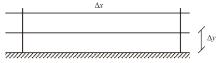
Fig.1
Grids with large aspect ratio near wall
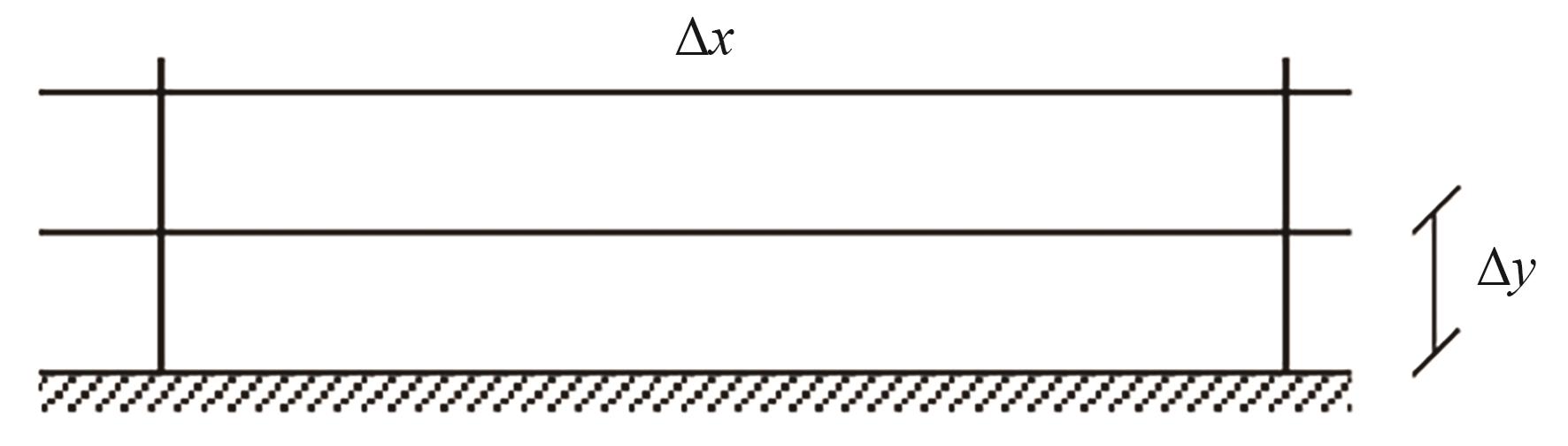
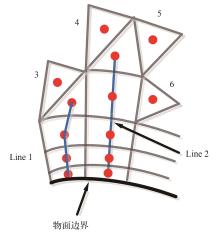
Fig.2
Implicit lines of cells near wall
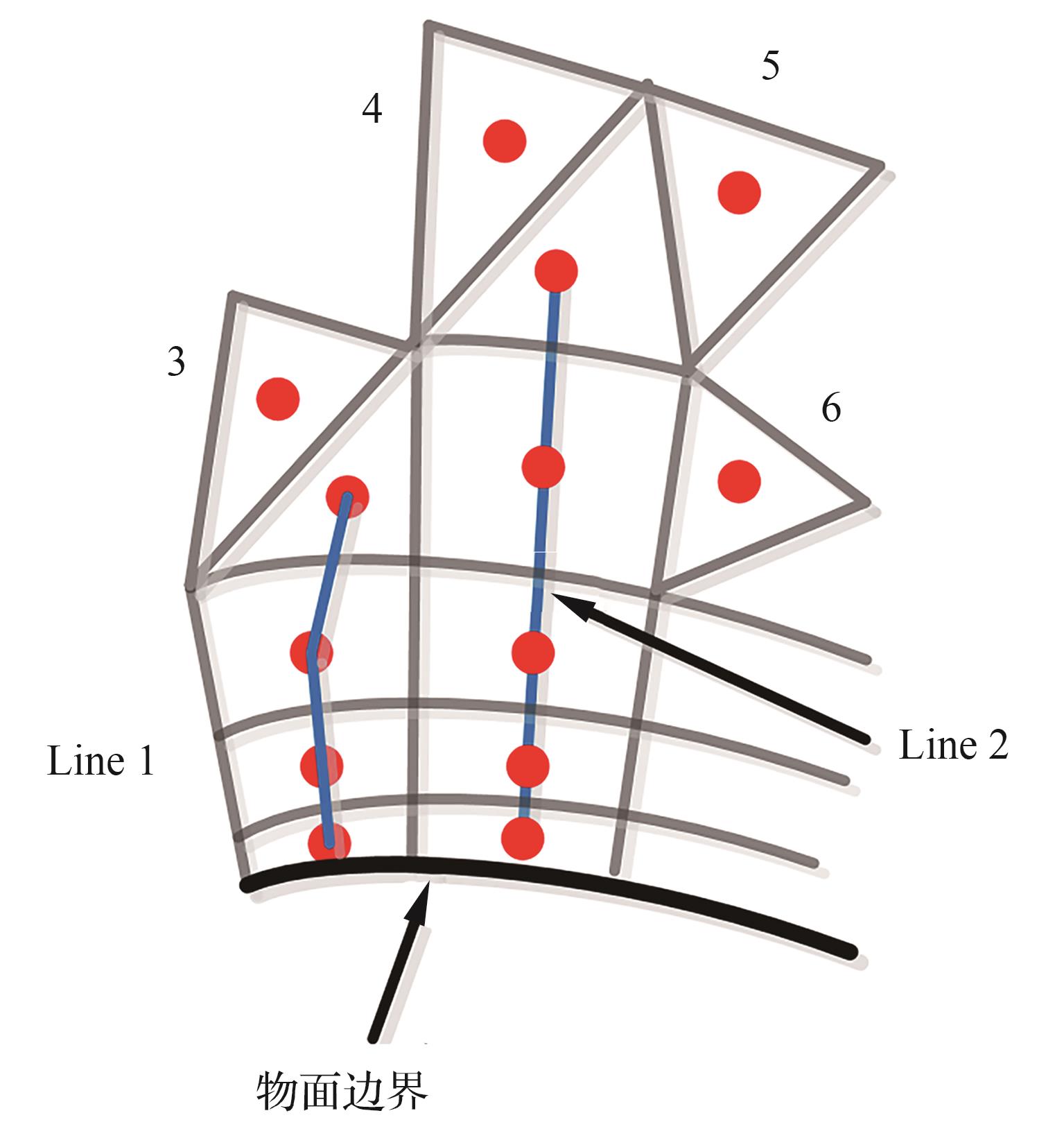
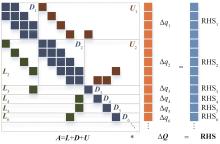
Fig.3
Linear system of line implicit method
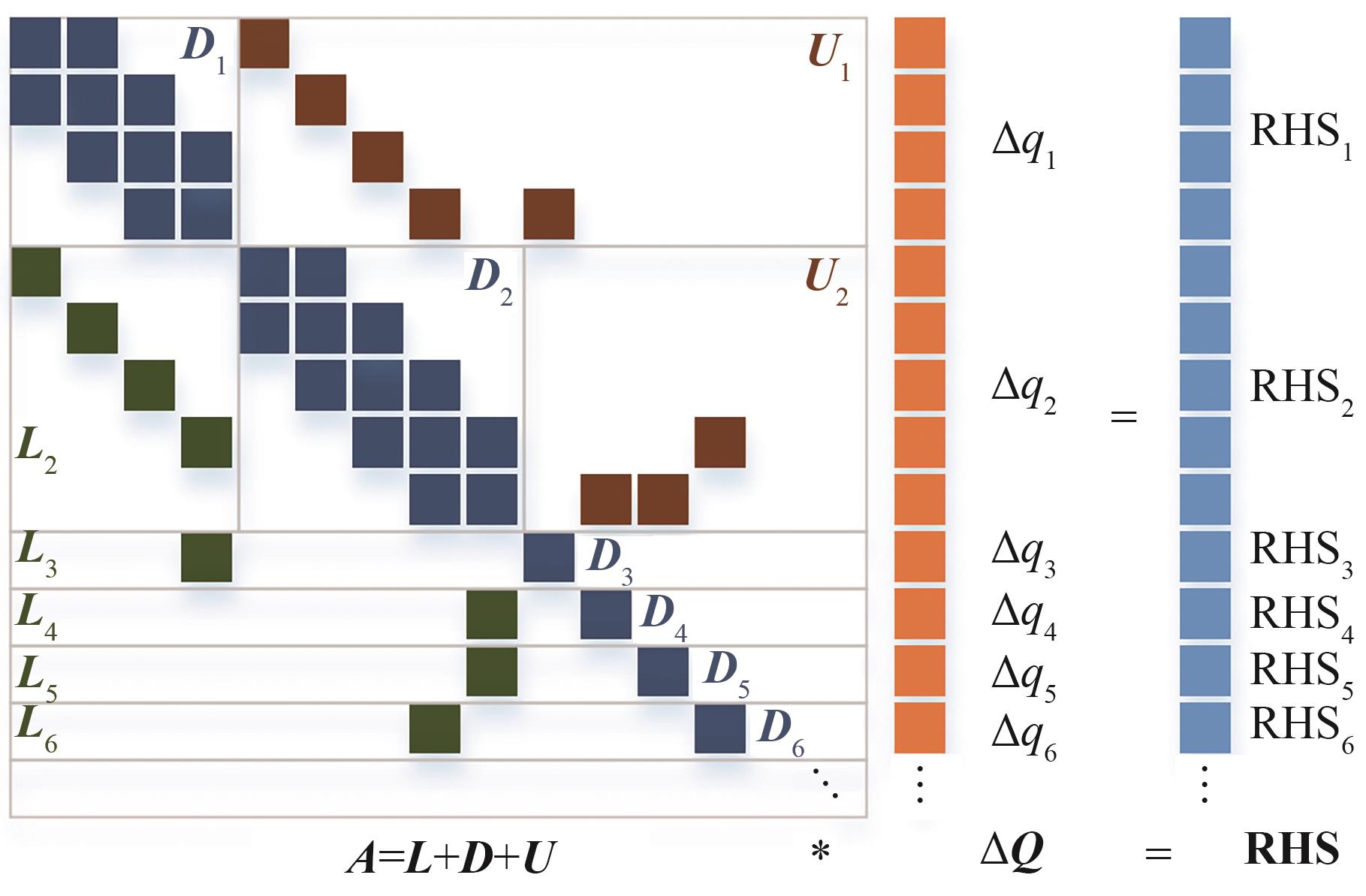
Fig.4
Implicit-line search direction of boundary layer grid
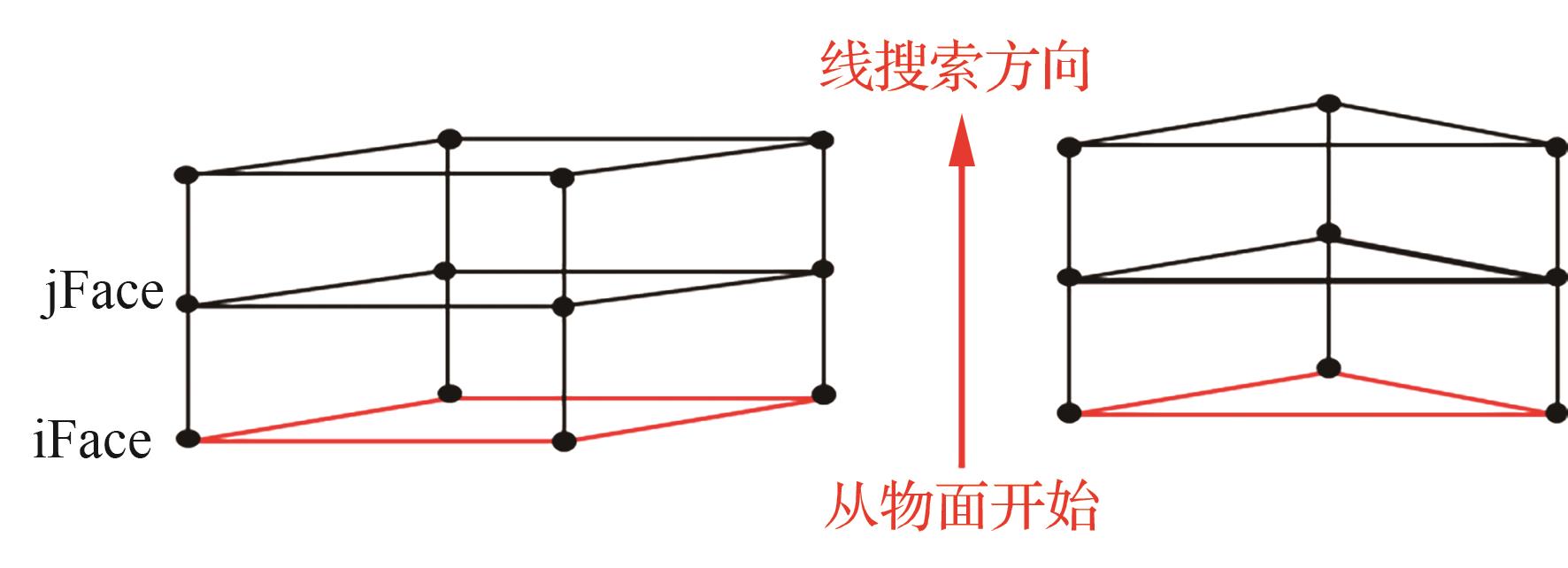
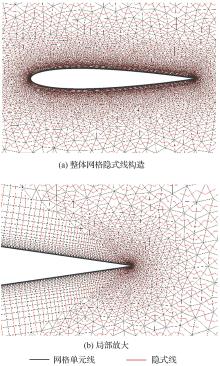
Fig.5
Implicit-line construction example for a 2D airfoil mesh
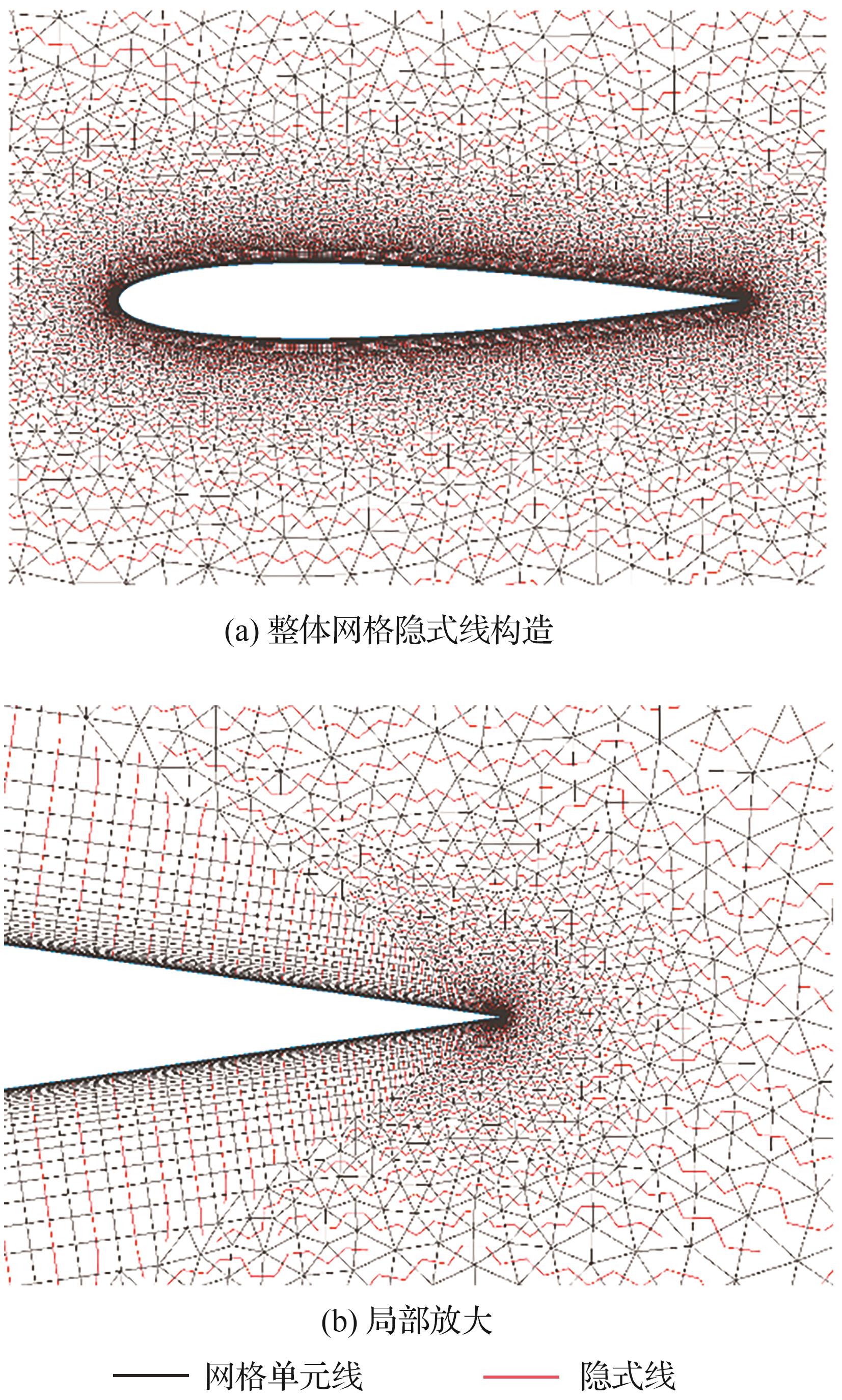
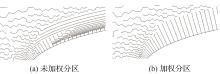
Fig.6
Influence of parallel partitioning on implicit line construction
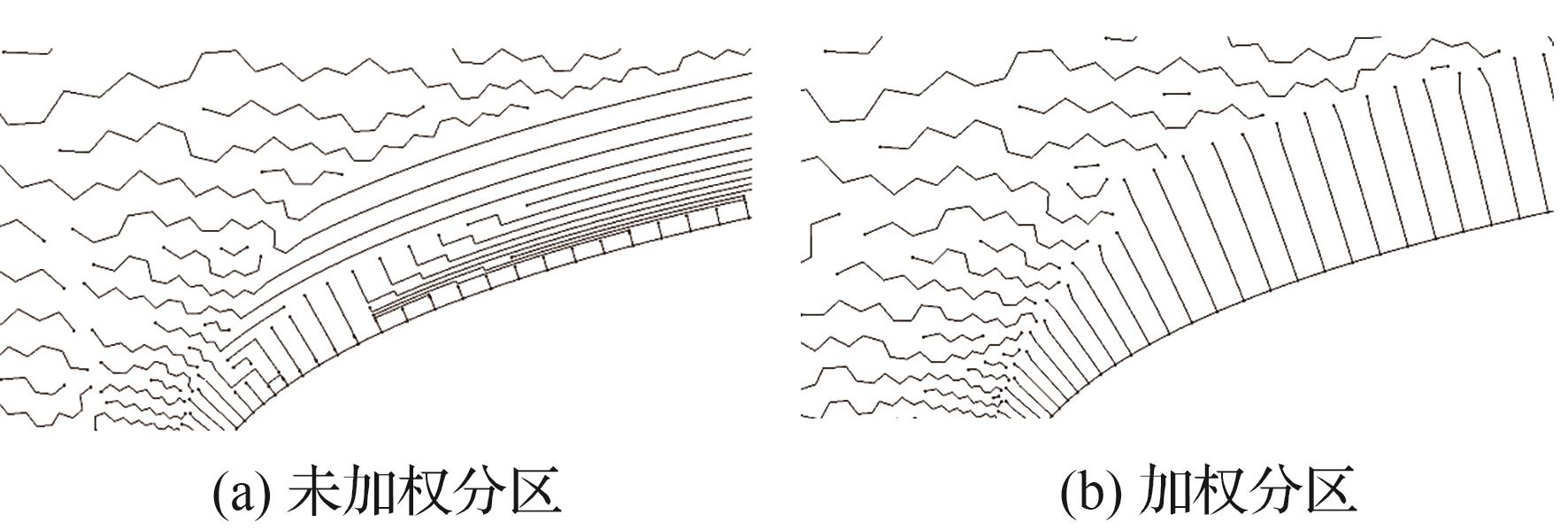
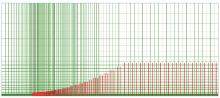
Fig.7
Flat plate grid and implicit lines for boundary layer
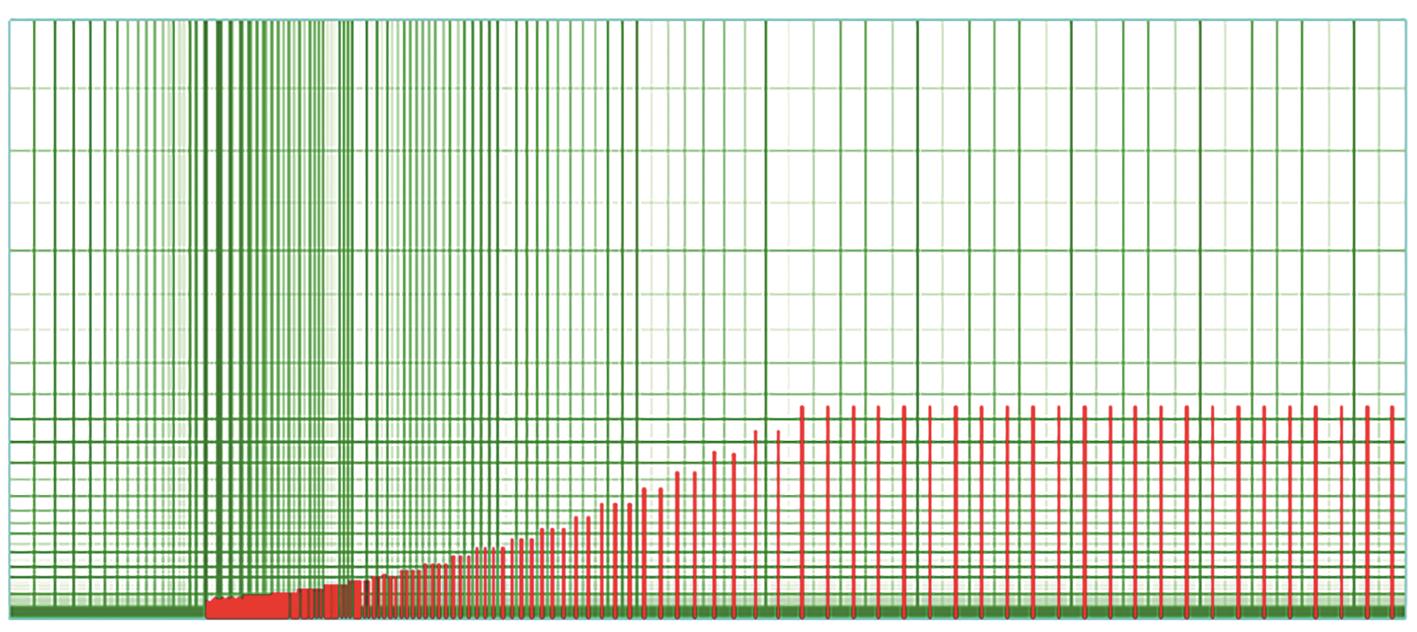
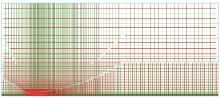
Fig.8
Flat plate grid and implicit lines for full flowfield
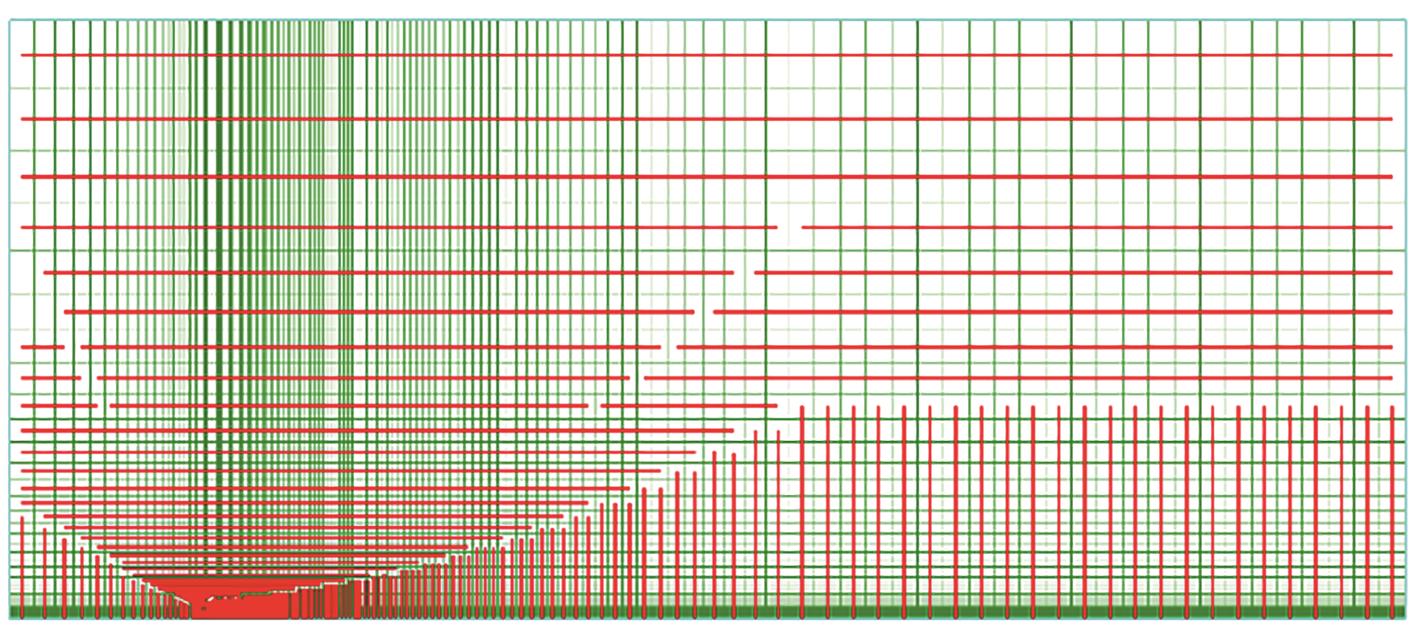
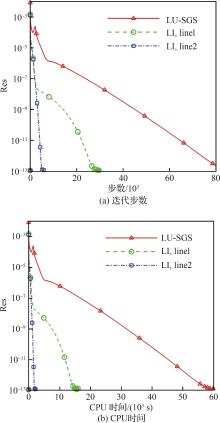
Fig.9
Comparison of density residual convergence (flat plate)
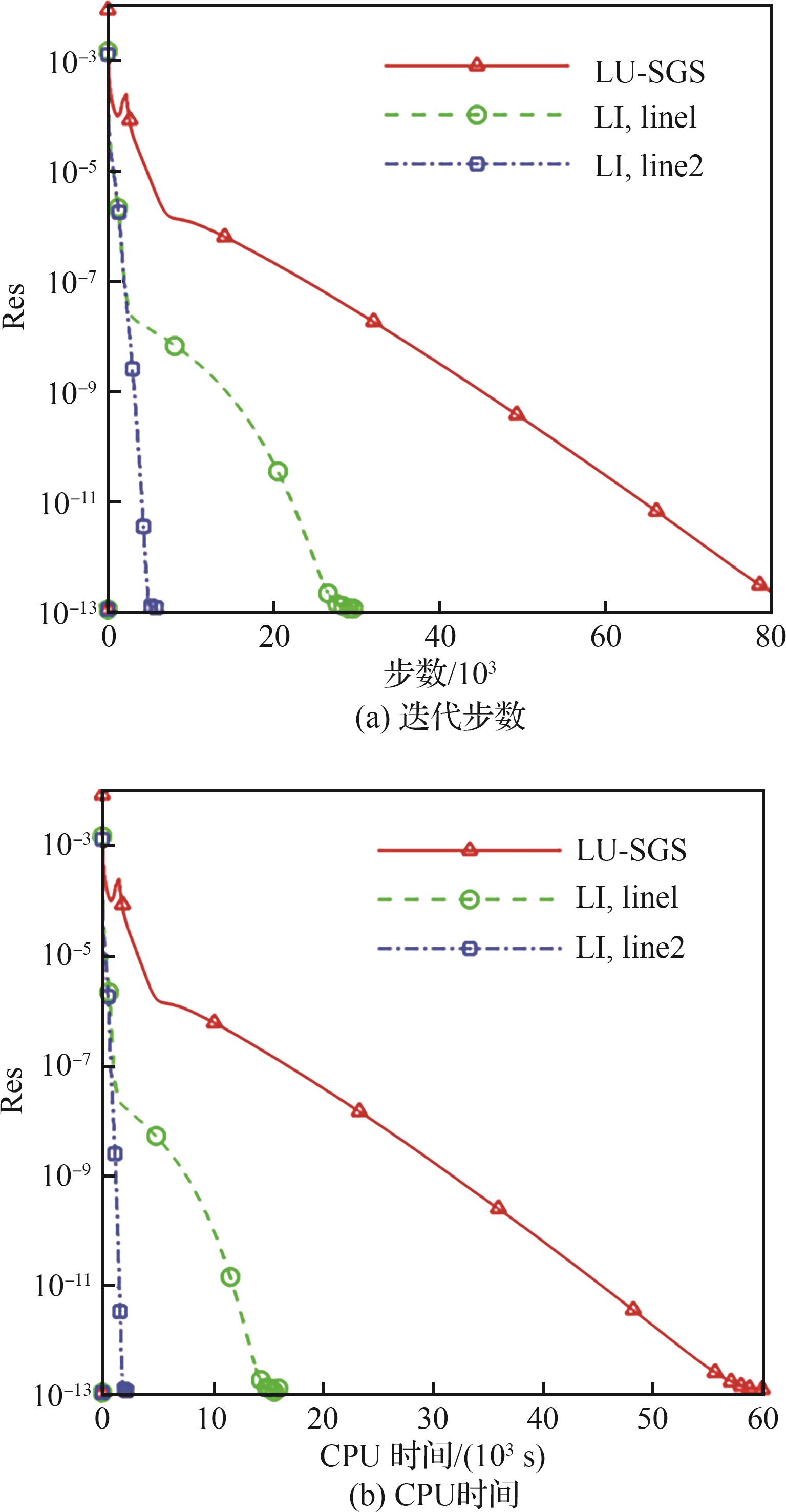

Table 1
Comparison of iteration steps and CPU time(flat plate)
| 迭代方法 | 迭代步数 | CPU时间/s | 加速比 |
|---|---|---|---|
| LU-SGS | 73 770 | 51 731.5 | |
| LI, line1 | 24 775 | 13 257.9 | 3.9 |
| LI, line2 | 4 525 | 1 710.13 | 30.3 |
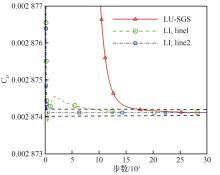
Fig.10
Comparison of drag coefficient convergence
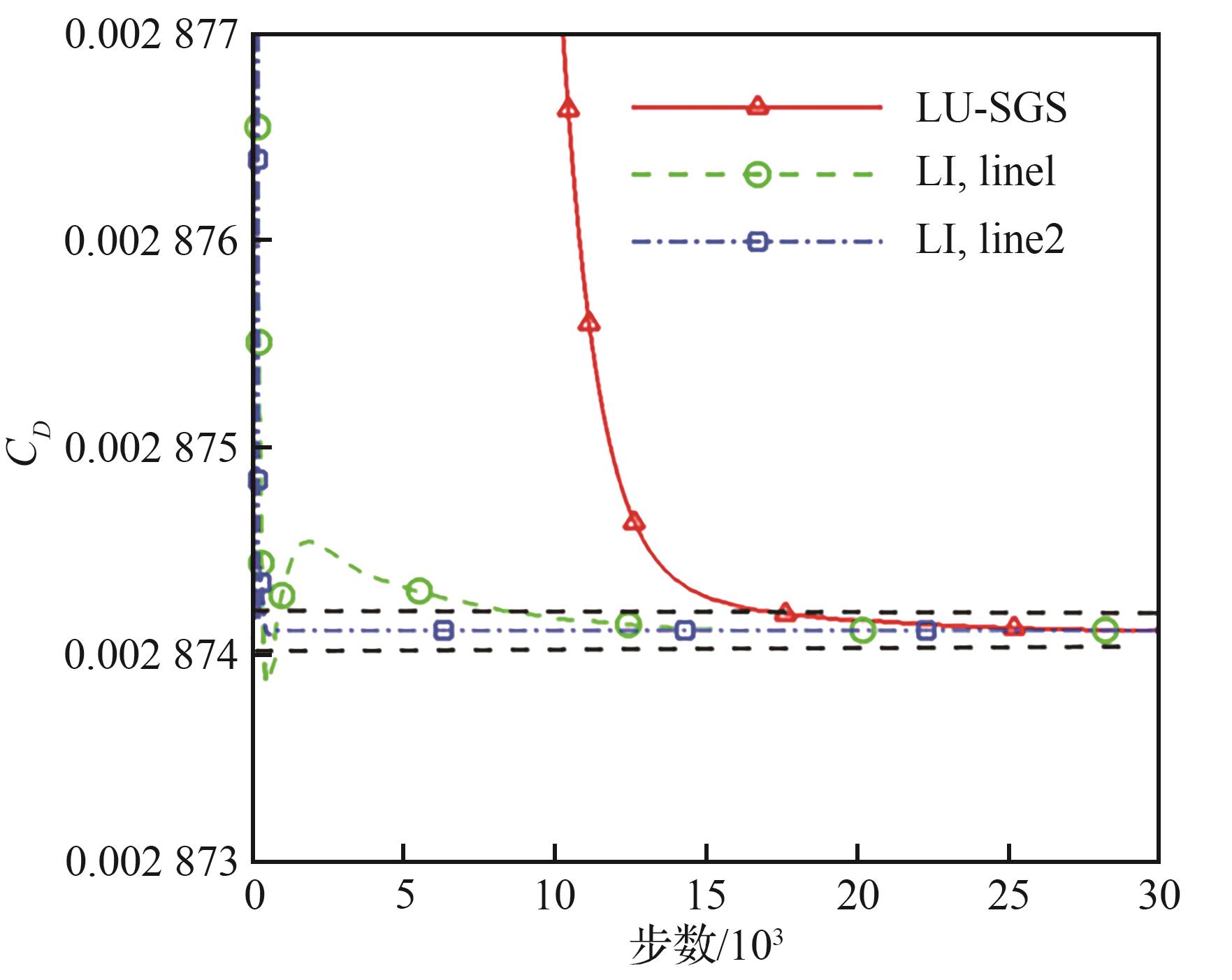
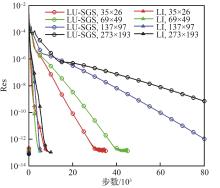
Fig.11
Comparison of density residual convergence for different grids
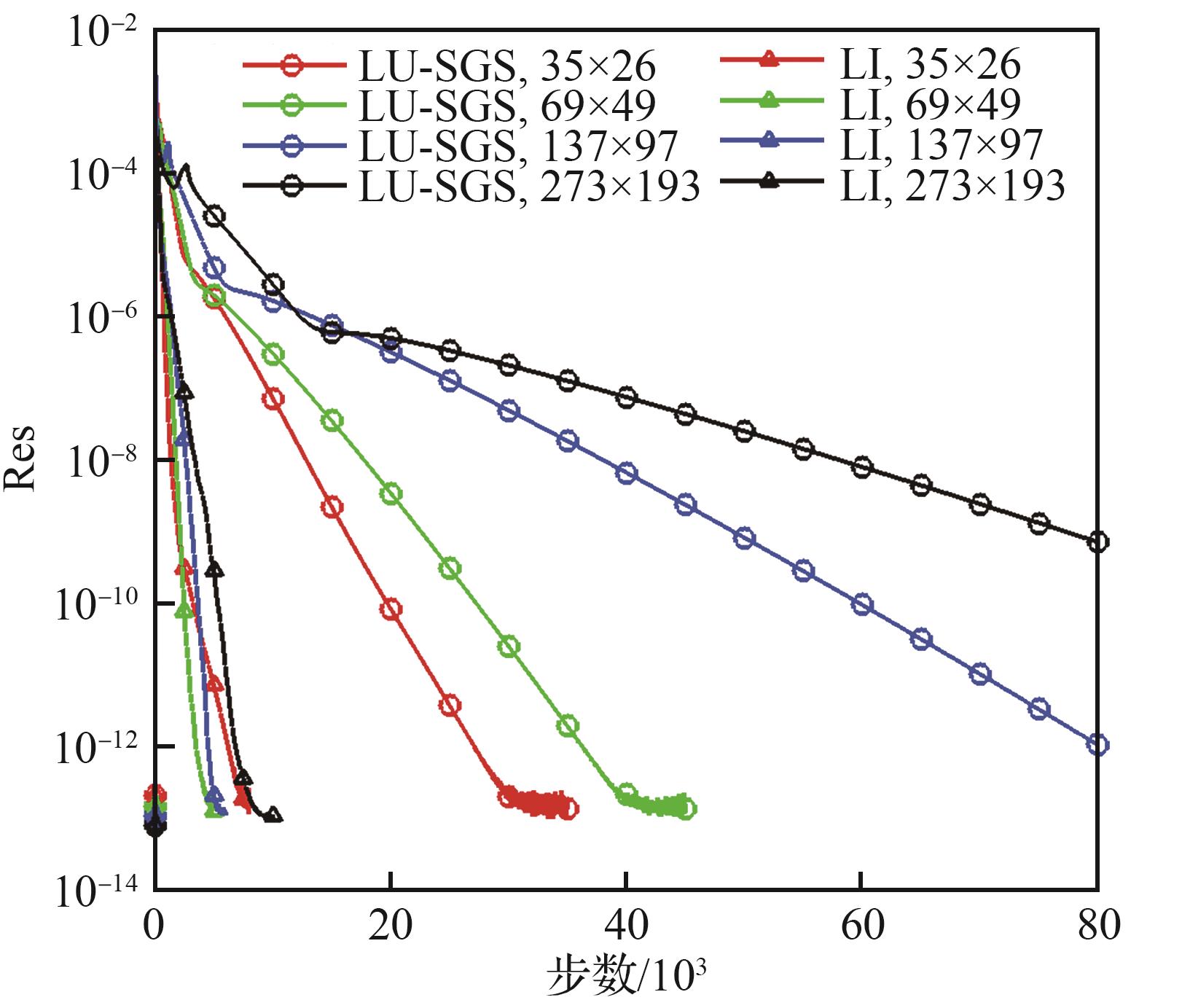
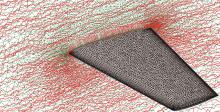
Fig.12
Computational grid and implicit lines of ONERA-M6 wing
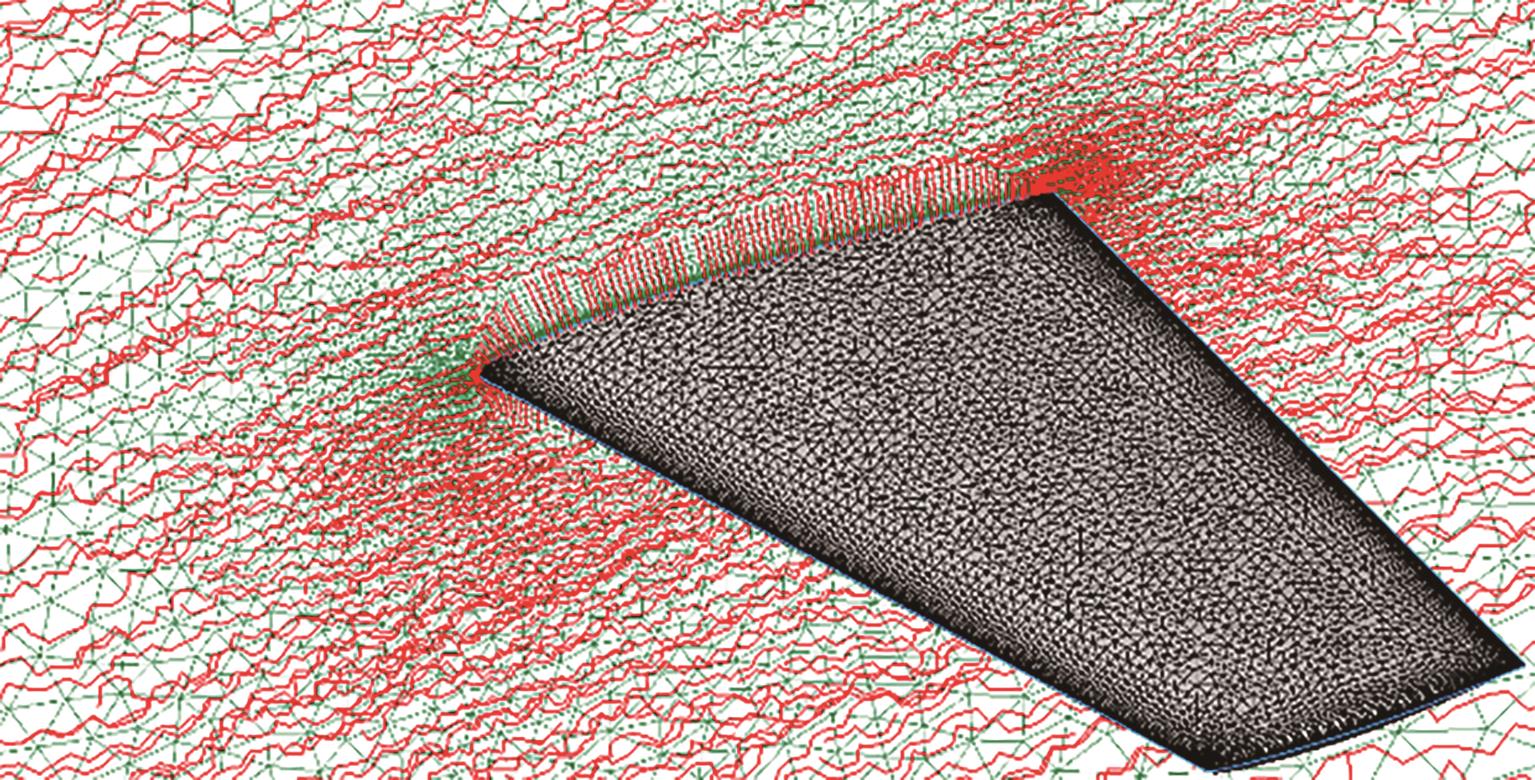
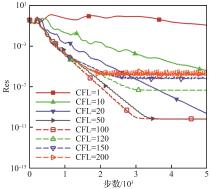
Fig.13
Comparison of density residual convergence for different CFL number
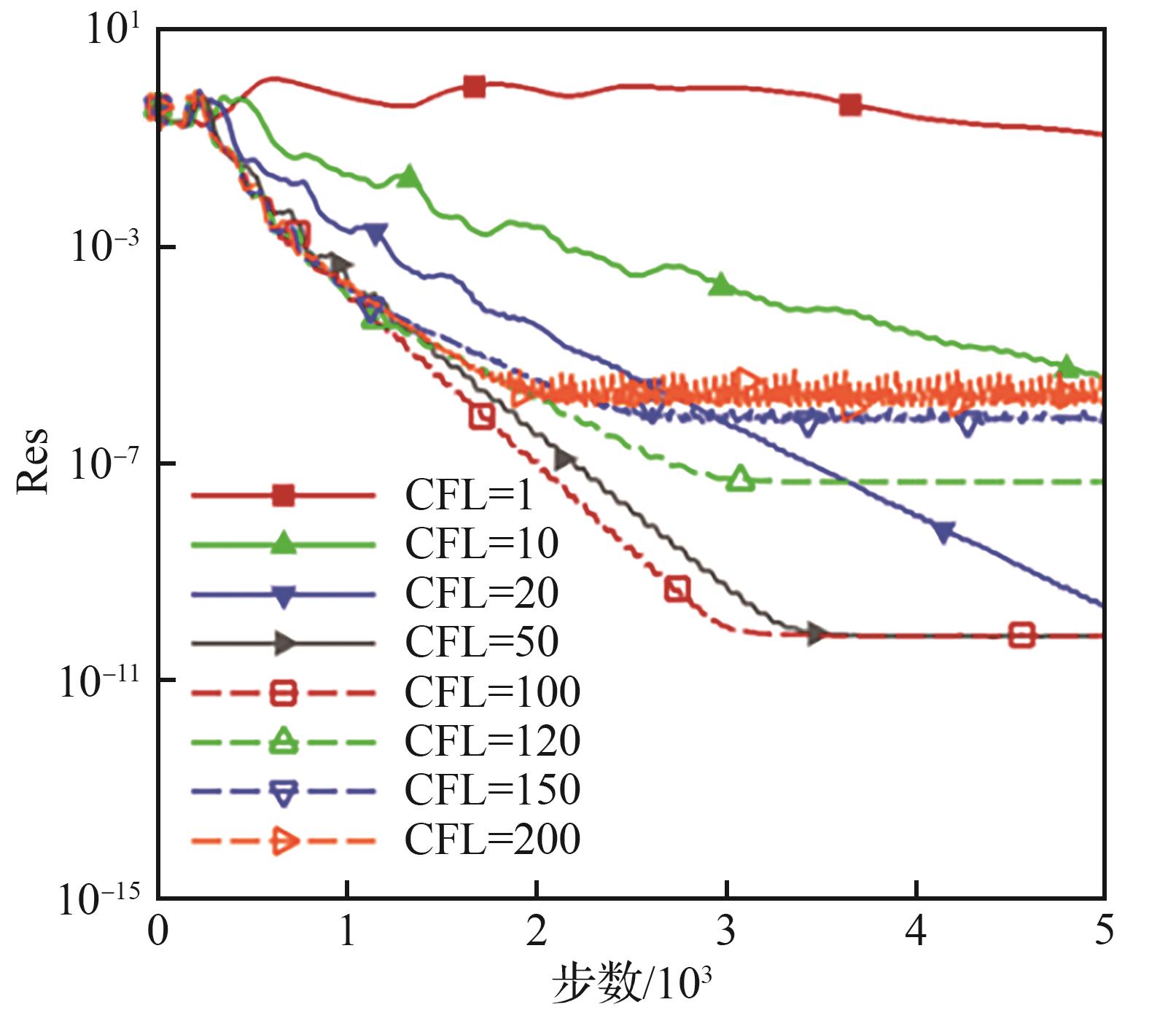
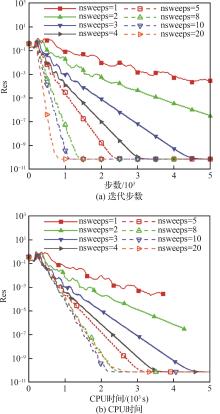
Fig.14
Sweeps’ influence on residual convergence
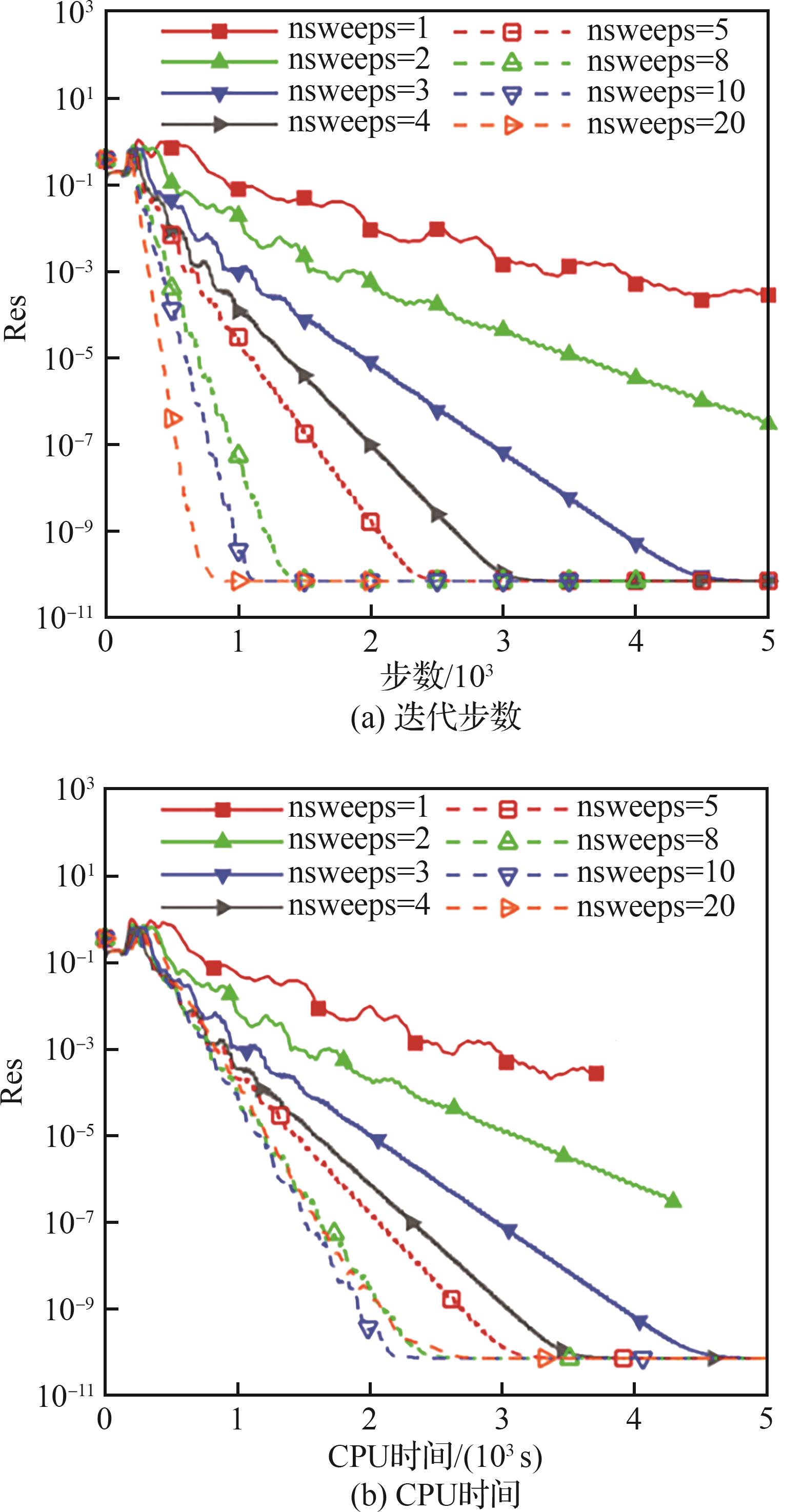
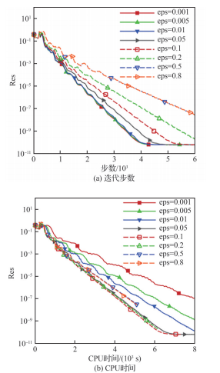
Fig.15
eps influence on residual convergence
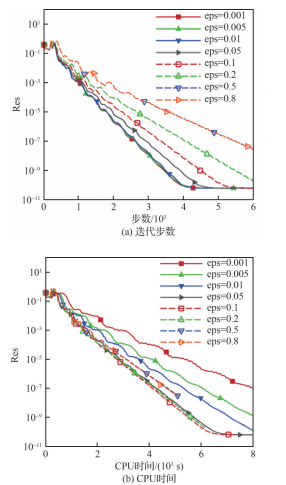
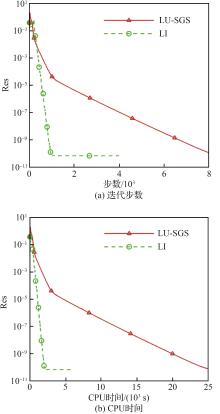
Fig.16
Comparison of residual convergence for line-implicit and LU-SGS methods (M6 wing)
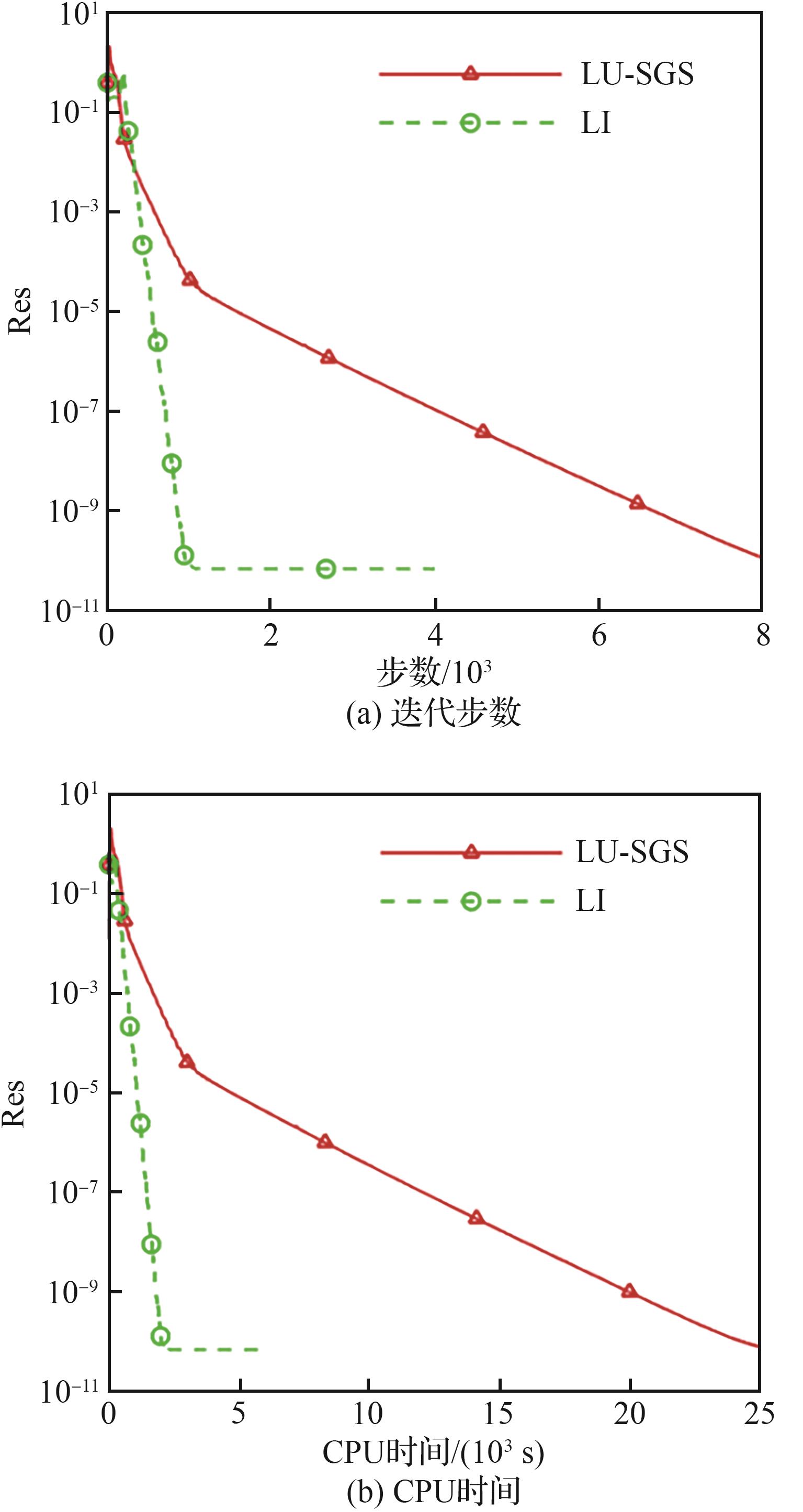
Table 2
Comparison of iteration steps and CPU time (M6 wing)
| 迭代方法 | 迭代步数 | CPU时间/s | 加速比 | |
|---|---|---|---|---|
| LU-SGS | 8 120 | 24 272.3 | ||
| LI | 955 | 2 009.5 | 12.1 |
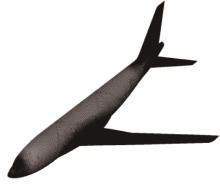
Fig.17
Computational grid of CHN-T1 model
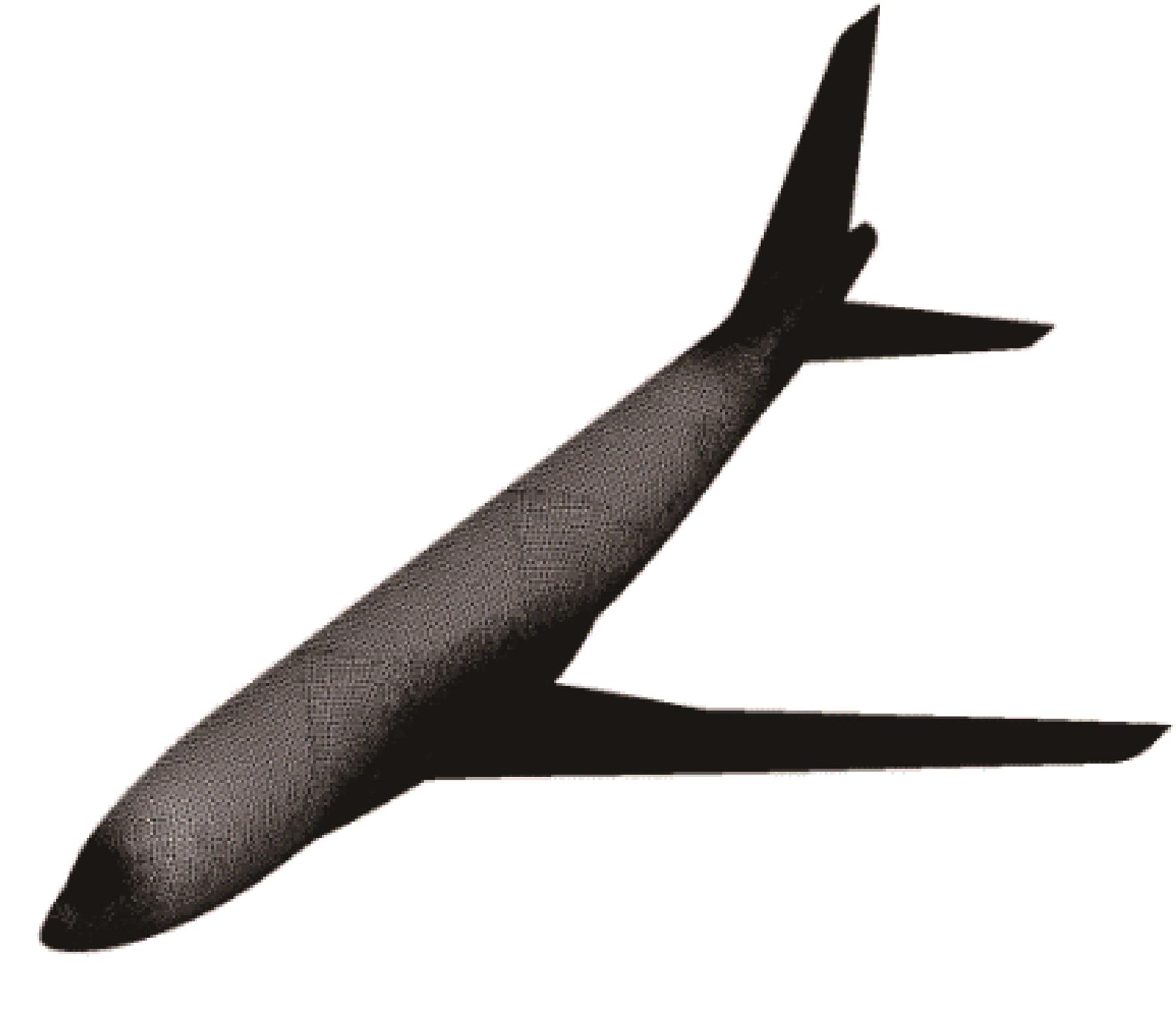
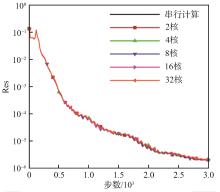
Fig.18
Comparison of density residual convergence with different processor number
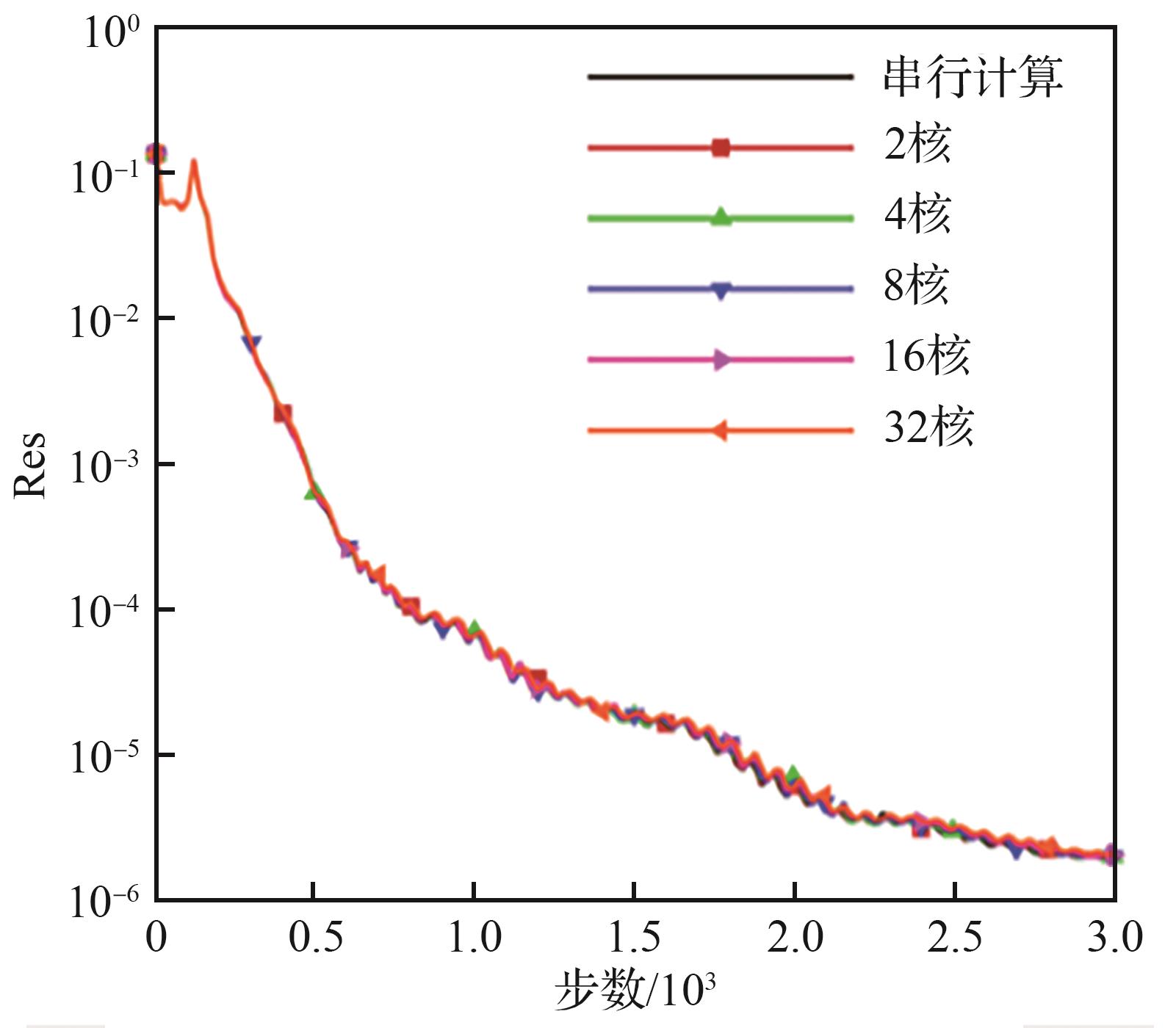
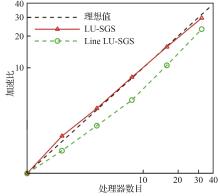
Fig.19
Speed-up ratio for different processor numbers
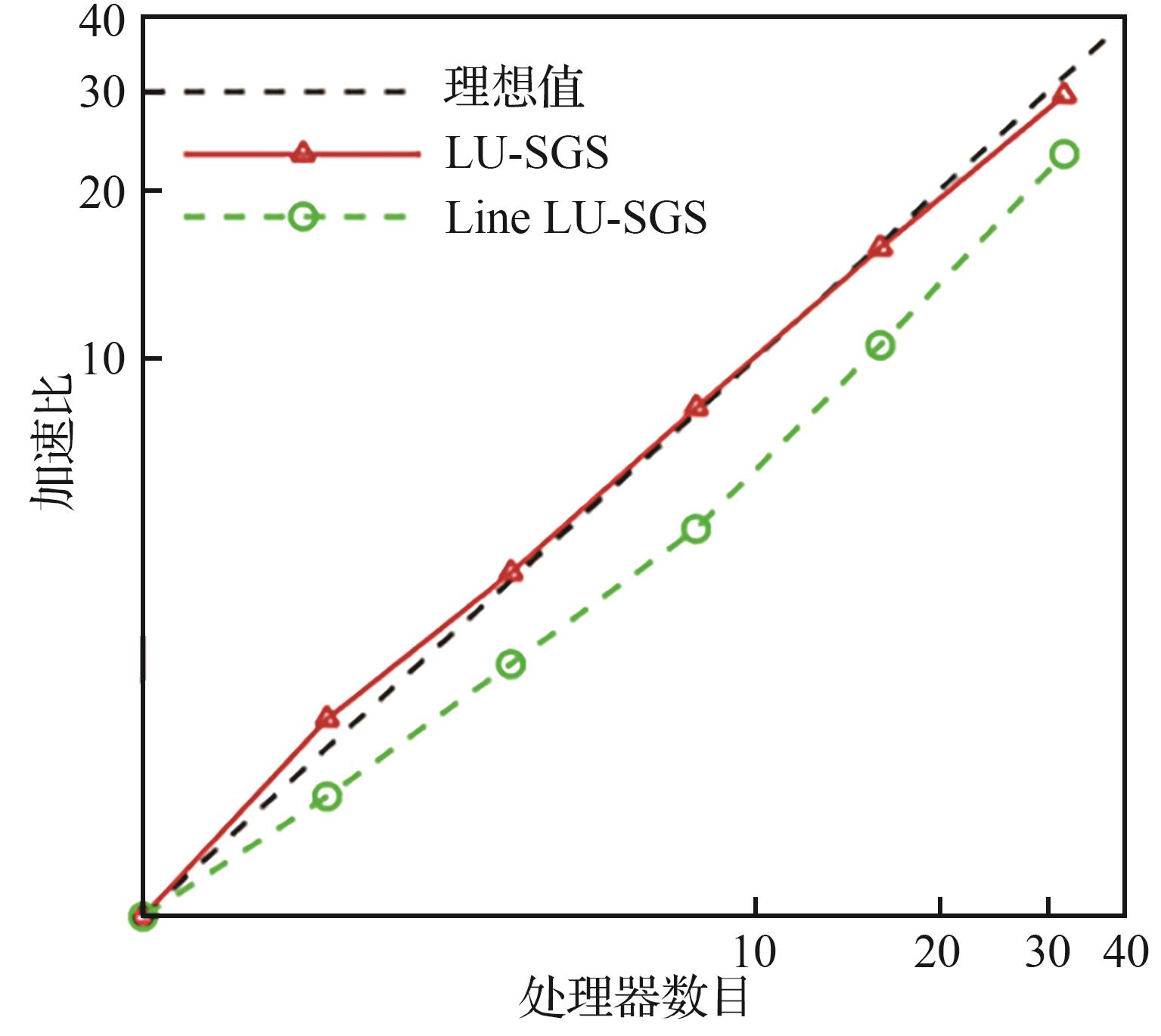
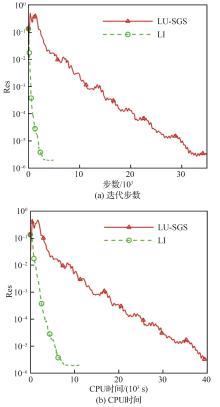
Fig.20
Comparison of residual convergence for line-implicit and LU-SGS methods (CHN-T1 model)
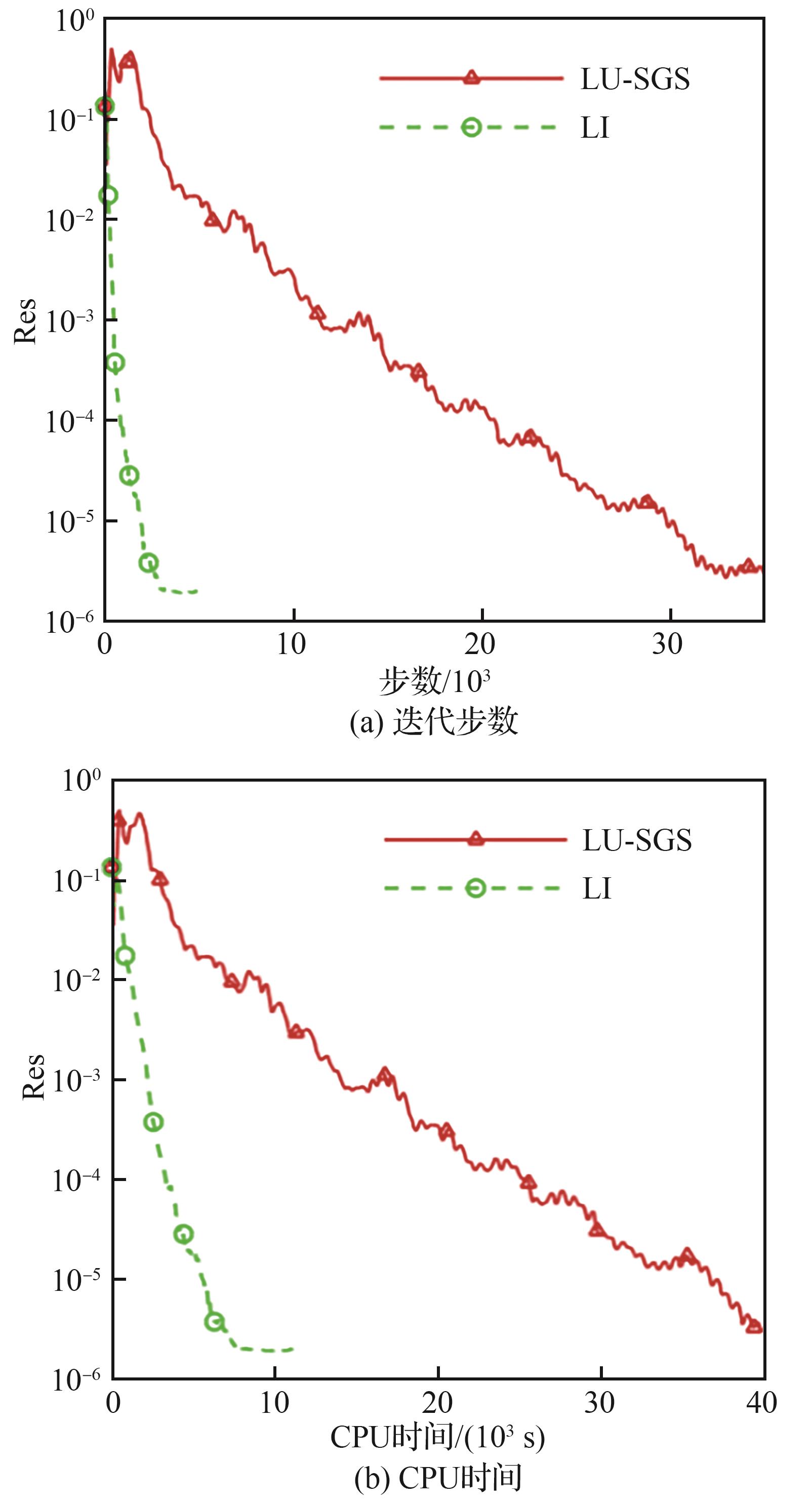
Table 3
Comparison of iteration steps and CPU time (CHN-T1 model)
| 迭代方法 | 迭代步数 | CPU时间/s | 加速比 |
|---|---|---|---|
| LU-SGS | 36 080 | 44 247.0 | |
| LI | 3 020 | 7 667.5 | 5.8 |
| [1] | SLOTNICK J, KHODADOUST A, ALONSO J, et al. CFD Vision 2030 Study: A path to revolutionary computational aerosciences: NASA/CR-2014-218178[R]. Washington, D.C.: NASA. 2014. |
| [2] | WANG G, JIANG Y W, YE Z Y. An improved LU-SGS implicit scheme for high Reynolds number flow computations on hybrid unstructured mesh[J]. Chinese Journal of Aeronautics, 2012, 25(1): 33-41. |
| [3] | JAMESON A, YOON S. Lower-upper implicit schemes with multiple grids for the Euler equations[J]. AIAA Journal, 1987, 25(7): 929-935. |
| [4] | MAVRIPLIS D J. On convergence acceleration techniques for unstructured meshes[C]∥29th AIAA, Fluid Dynamics Conference. Reston: AIAA, 1998. |
| [5] | 洪俊武, 李伟, 岳皓, 等. 超大规模结构网格CFD数值模拟初步研究[J]. 航空学报, 2024, 45(20): 129866. |
| HONG J W, LI W, YUE H, et al. A pilot study on CFD numerical simulation of ultra-large-scale structured grid[J]. Acta Aeronautica et Astronautica Sinica, 2024, 45(20): 129866 (in Chinese). | |
| [6] | 张健, 李瑞田, 邓亮, 等. 面向多核CPU/众核GPU架构的非结构CFD共享内存并行计算技术[J]. 航空学报, 2024, 45(7): 128888. |
| ZHANG J, LI R T, DENG L, et al. Shared-memory parallelization technology of unstructured CFD solver for multi-core CPU/many-core GPU architecture[J]. Acta Aeronautica et Astronautica Sinica, 2024, 45(7): 128888 (in Chinese). | |
| [7] | MAVRIPLIS D J. Multigrid strategies for viscous flow solvers on anisotropic unstructured meshes[J]. Journal of Computational Physics, 1998, 145(1): 141-165. |
| [8] | 曹文博, 刘溢浪, 张伟伟. 基于降阶模型和梯度优化的流场加速收敛方法[J]. 航空学报, 2023, 44(6): 127090. |
| CAO W B, LIU Y L, ZHANG W W. Accelerated convergence method for fluid dynamics solvers based on reduced-order model and gradient optimization[J]. Acta Aeronautica et Astronautica Sinica, 2023, 44(6): 127090 (in Chinese). | |
| [9] | 胡姝瑶, 蒋崇文, 李椿萱. 可压缩流动模拟的多重网格-扰动域推进方法[J]. 航空学报, 2023, 44(11): 127649. |
| HU S Y, JIANG C W, LEE C H. Disturbance region update method with multigrid for compressible flows[J]. Acta Aeronautica et Astronautica Sinica, 2023, 44(11): 127649 (in Chinese). | |
| [10] | 陈龙, 夏健, 田书玲. 适用于非定常流模拟的分布式并行GMRES方法[J]. 空气动力学学报, 2019, 37(5): 834-843. |
| CHEN L, XIA J, TIAN S L. A GMRES method on distributed parallel computers for unsteady flow simulation[J]. Acta Aerodynamica Sinica, 2019, 37(5): 834-843 (in Chinese). | |
| [11] | ZHANG J, DENG L, LI R T, et al. Achieving high performance and portable parallel GMRES algorithm for compressible flow simulations on unstructured grids[J]. The Journal of Supercomputing, 2023, 79(17): 20116-20140. |
| [12] | PANDYA M J, DISKIN B, THOMAS J L, et al. Improved convergence and robustness of USM3D solutions on mixed-element grids[J]. AIAA Journal, 2016, 54(9): 2589-2610. |
| [13] | PANDYA M J, DISKIN B, THOMAS J L, et al. Assessment of USM3D hierarchical adaptive nonlinear method preconditioners for three-dimensional cases[J]. AIAA Journal, 2017, 55(10): 3409-3424. |
| [14] | PANDYA M J, JESPERSEN D C, DISKIN B, et al. Efficiency of mixed-element USM3D for benchmark three-dimensional flows[J]. AIAA Journal, 2021, 59(8): 2997-3011. |
| [15] | KALKOTE N, ASSAM A, ESWARAN V. Acceleration of later convergence in a density-based solver using adaptive time stepping[J]. AIAA Journal, 2019, 57(1): 352-364. |
| [16] | 阎超. 航空CFD四十年的成就与困境[J]. 航空学报, 2022, 43(10): 526490. |
| YAN C. Achievements and predicaments of CFD in aeronautics in past forty years[J]. Acta Aeronautica et Astronautica Sinica, 2022, 43(10): 526490 (in Chinese). | |
| [17] | 黄宇, 阎超, 袁武. 适用于混合网格的改进雅可比迭代法及其应用[J]. 北京航空航天大学学报, 2016, 42(3): 551-561. |
| HUANG Y, YAN C, YUAN W. Improved Jacobi iterative method for hybrid grid and its application[J]. Journal of Beijing University of Aeronautics and Astronautics, 2016, 42(3): 551-561 (in Chinese). | |
| [18] | LANGER S. Application of a line implicit method to fully coupled system of equations for turbulent flow problems[J]. International Journal of Computational Fluid Dynamics, 2013, 27(3): 131-150. |
| [19] | OTERO E, ELIASSON P. Acceleration on stretched meshes with line-implicit LU-SGS in parallel implementation[J]. International Journal of Computational Fluid Dynamics, 2015, 29(2): 133-149. |
| [20] | REMPKE A. Parallel line identification for line-implicit-solvers[J]. BIT Numerical Mathematics, 2023, 63(4): 44. |
| [21] | CHEN R F, WANG Z J. Fast, block lower-upper symmetric Gauss-seidel scheme for arbitrary grids[J]. AIAA Journal, 2000, 38(12): 2238-2245. |
| [22] | LIU J, CHEN J Q, YANG Y F, et al. Improvements for matrix-type implicit temporal scheme regarding entropy fix and local time step[J]. Chinese Journal of Aeronautics, 2024, 37(11): 138-146. |
| [23] | NIVED M R, REDDY P P K, ESWARAN V. Time-accurate solution of unsteady flows in an implicit solver using block LUSGS method[J]. International Journal of Computational Fluid Dynamics, 2023, 37(3): 218-233. |
| [24] | 陈坚强, 吴晓军, 张健, 等. FlowStar: 国家数值风洞(NNW)工程非结构通用CFD软件[J]. 航空学报, 2021, 42(9): 625739. |
| CHEN J Q, WU X J, ZHANG J, et al. FlowStar: General unstructured-grid CFD software for National Numerical Windtunnel (NNW) project[J]. Acta Aeronautica et Astronautica Sinica, 2021, 42(9): 625739 (in Chinese). | |
| [25] | SHAROV D, NAKAHASHI K, SHAROV D, et al. Reordering of 3-D hybrid unstructured grids for vectorized LU-SGS Navier-Stokes computations[C]∥13th Computational Fluid Dynamics Conference. Reston: AIAA, 1997: 2102. |
| [26] | 冯选燕, 燕振国, 朱华君, 等. 非精确Newton方法中线性迭代收敛判据研究[J]. 空气动力学学报, 2023, 41(12): 28-36. |
| FENG X Y, YAN Z G, ZHU H J, et al. Study on the convergence criterion of linear iteration in inexact Newton methods[J]. Acta Aerodynamica Sinica, 2023, 41(12): 28-36 (in Chinese). | |
| [27] | 德)吉瑞·布拉泽克. 计算流体力学原理和应用[M]. 张耀冰, 陈江涛, 陈喜兰, 等, 译. 3版. 北京: 国防工业出版社, 2023: 92-95. |
| JIRI. Computational fluid dynamics: Principles and applications[M]. ZHANG Y B, CHEN J T, CHEN X L, et al, trans. Beijing: National Defense Industry Press, 2023: 92-95 (in Chinese). | |
| [28] | NASA Langley Research Center. VERIF/2DZP: 2D zero pressure gradient flat plate verification case—Intro page[EB/OL]. (2021-03-24)[2025-06-10] . |
| [29] | SAXENA S, NAIR M. Implementation and testing of Spalart-Allmaras model in a multi-block code[C]∥40th AIAA Aerospace Sciences Meeting & Exhibit. Reston: AIAA, 2002. |
| [30] | SCHMITT V, CHARPIN F. Pressure distributions on the onera-m6 wing at transonic mach numbers, experimental data base for computer program assessment: AGARD AR138, 1979. |
| [31] | WANG Q Z, STEVEN J M, KHALED S. Implementation of advanced two equation turbulence models in the USM3D unstructured flow solver: NASA CR-210202[R]. Washington, D.C.: NASA, 2000. |
| [32] | 余永刚, 周铸, 黄江涛, 等. 单通道客机气动标模CHN-T1设计[J]. 空气动力学学报, 2018, 36(3): 505-513. |
| YU Y G, ZHOU Z, HUANG J T, et al. Aerodynamic design of a standard model CHN-T1for single-aisle passenger aircraft[J]. Acta Aerodynamica Sinica, 2018, 36(3): 505-513 (in Chinese). | |
| [33] | 张耀冰, 唐静, 陈江涛, 等. 基于非结构混合网格的CHN-T1标模气动特性预测[J]. 空气动力学学报, 2019, 37(2): 262-271. |
| ZHANG Y B, TANG J, CHEN J T, et al. Aerodynamic characteristics prediction of CHN-T1 standard model with unstructured grid[J]. Acta Aerodynamica Sinica, 2019, 37(2): 262-271 (in Chinese). |
| [1] | Kai CUI, Zesen WANG, Yao XIAO, Zhongwei TIAN, Guangli LI, Siyuan CHANG. A novel wide-speed-range configuration based on high-pressure capturing wing concept and its transonic aerodynamic characteristics [J]. Acta Aeronautica et Astronautica Sinica, 2026, 47(1): 632102-632102. |
| [2] | Xiaofeng YANG, Xingkao CAI, Lei LIU, Dong WEI, Guangming XIAO, Yanxia DU, Yewei GUI. Coupling simulation of aircraft aerothermodynamics regulated by gradient characteristics of thermal protection structure and its experimental verification [J]. Acta Aeronautica et Astronautica Sinica, 2025, 46(9): 130888-130888. |
| [3] | Binwen WANG, Qiaozhi SONG, Haoyu CHEN. Body freedom flutter ground test of flying wing aircraft [J]. Acta Aeronautica et Astronautica Sinica, 2025, 46(21): 532758-532758. |
| [4] | Liwen ZHANG, Zhonghua HAN, Keshi ZHANG, Ke SONG, Wenping SONG. High-fidelity numerical simulation of near-/mid-field sonic boom propagation using a space-marching method for supersonic civil aircraft [J]. Acta Aeronautica et Astronautica Sinica, 2025, 46(20): 531935-531935. |
| [5] | Tingyu GUO, Ming YAN, Chunlei XIE. Aerodynamic characteristics of aggregation-separation aircraft [J]. Acta Aeronautica et Astronautica Sinica, 2024, 45(S1): 730596-730596. |
| [6] | Qi LIU, Yongjie SHI, Zhiyuan HU, Guohua XU. Parameter effects analysis on aerodynamic and aeroacoustic characteristics of coaxial rigid rotor [J]. Acta Aeronautica et Astronautica Sinica, 2024, 45(9): 528856-528856. |
| [7] | Chengjun SHAN, Tianyu GONG, Lizhe YI, Haohui YANG, Yaosong LONG. High-efficiency and high-reliability sonic boom/aerodynamic multidisciplinary optimization method for supersonic civil aircraft [J]. Acta Aeronautica et Astronautica Sinica, 2024, 45(24): 630573-630573. |
| [8] | Mingqi LIU, Zhonghua HAN, Tao DU, Chenzhou XU, Han ZENG, Keshi ZHANG, Wenping SONG. Optimal control efficiency characteristics and wide-speed-range aerodynamic design optimization method for grid fins of launch vehicle [J]. Acta Aeronautica et Astronautica Sinica, 2024, 45(20): 129887-129887. |
| [9] | Li LI, Yihua LIANG, Yong YANG, Junsheng WU. WiseCFD V2023: A software framework with open architecture to support verification and validation and credibility assessment of CFD software [J]. Acta Aeronautica et Astronautica Sinica, 2024, 45(20): 630440-630440. |
| [10] | Fengxia LU, Kun WEI, Chunlei WANG, Heyun BAO, Rupeng ZHU. Accessibility of metal particles in three-phase flow of helicopter intermediate gearbox [J]. Acta Aeronautica et Astronautica Sinica, 2024, 45(1): 128524-128524. |
| [11] | Jiong REN, Gang WANG, Guodong HU, Xiaolu SHI. Adaptive finite volume method with Walsh basis functions [J]. ACTA AERONAUTICAET ASTRONAUTICA SINICA, 2023, 44(8): 127444-127444. |
| [12] | Wenbo CAO, Yilang LIU, Weiwei ZHANG. Accelerated convergence method for fluid dynamics solvers based on reduced⁃order model and gradient optimization [J]. ACTA AERONAUTICAET ASTRONAUTICA SINICA, 2023, 44(6): 127090-127090. |
| [13] | Sihua LIU, Zhanying WANG, Lijian LI, Mindi ZHANG. Influence of nose shapes on high-speed water entry stability of projectile [J]. Acta Aeronautica et Astronautica Sinica, 2023, 44(21): 528437-528437. |
| [14] | Yuxiang FAN, Rui ZHAO, Zhengxuan ZUO, Guang YANG, Yu LI. Gas⁃injection effects on wall heat flux and skin⁃friction of vehicles [J]. Acta Aeronautica et Astronautica Sinica, 2023, 44(21): 528587-528587. |
| [15] | Jianling QIAO, Zhonghua HAN, Yulin DING, Wenping SONG, Bifeng SONG. Effects of stratified atmospheric turbulence on farfield sonic boom propagation [J]. ACTA AERONAUTICAET ASTRONAUTICA SINICA, 2023, 44(2): 626350-626350. |
| Viewed | ||||||
|
Full text |
|
|||||
|
Abstract |
|
|||||
Address: No.238, Baiyan Buiding, Beisihuan Zhonglu Road, Haidian District, Beijing, China
Postal code : 100083
E-mail:hkxb@buaa.edu.cn
Total visits: 6658907 Today visits: 1341All copyright © editorial office of Chinese Journal of Aeronautics
All copyright © editorial office of Chinese Journal of Aeronautics
Total visits: 6658907 Today visits: 1341

 CJA
CJA
