Acta Aeronautica et Astronautica Sinica ›› 2025, Vol. 46 ›› Issue (21): 532758.doi: 10.7527/S1000-6893.2025.32758
• Special Issue: 60th Anniversary of Aircraft Strength Research Institute of China • Previous Articles
Binwen WANG( ), Qiaozhi SONG, Haoyu CHEN
Received:2025-09-08
Revised:2025-09-19
Accepted:2025-10-09
Online:2025-10-20
Published:2025-10-30
Contact:
Binwen WANG
E-mail:asriwbw@vip.163.com
Supported by:CLC Number:
Binwen WANG, Qiaozhi SONG, Haoyu CHEN. Body freedom flutter ground test of flying wing aircraft[J]. Acta Aeronautica et Astronautica Sinica, 2025, 46(21): 532758.
Fig.1
Test object configuration
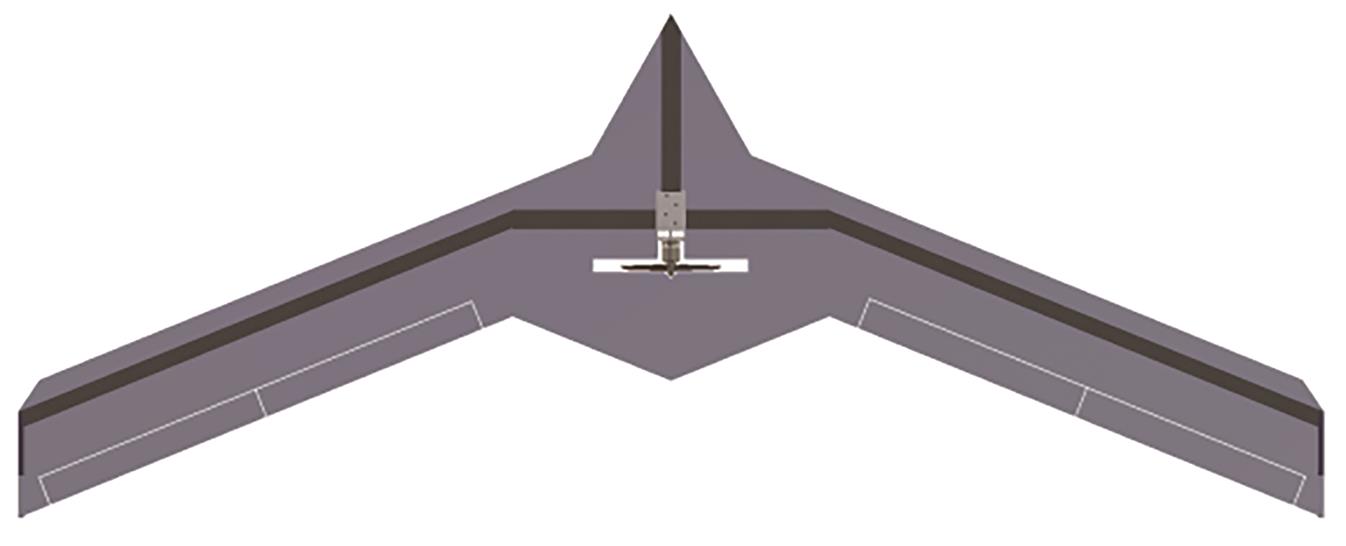
Fig.2
The first two symmetric mode shapes of test object
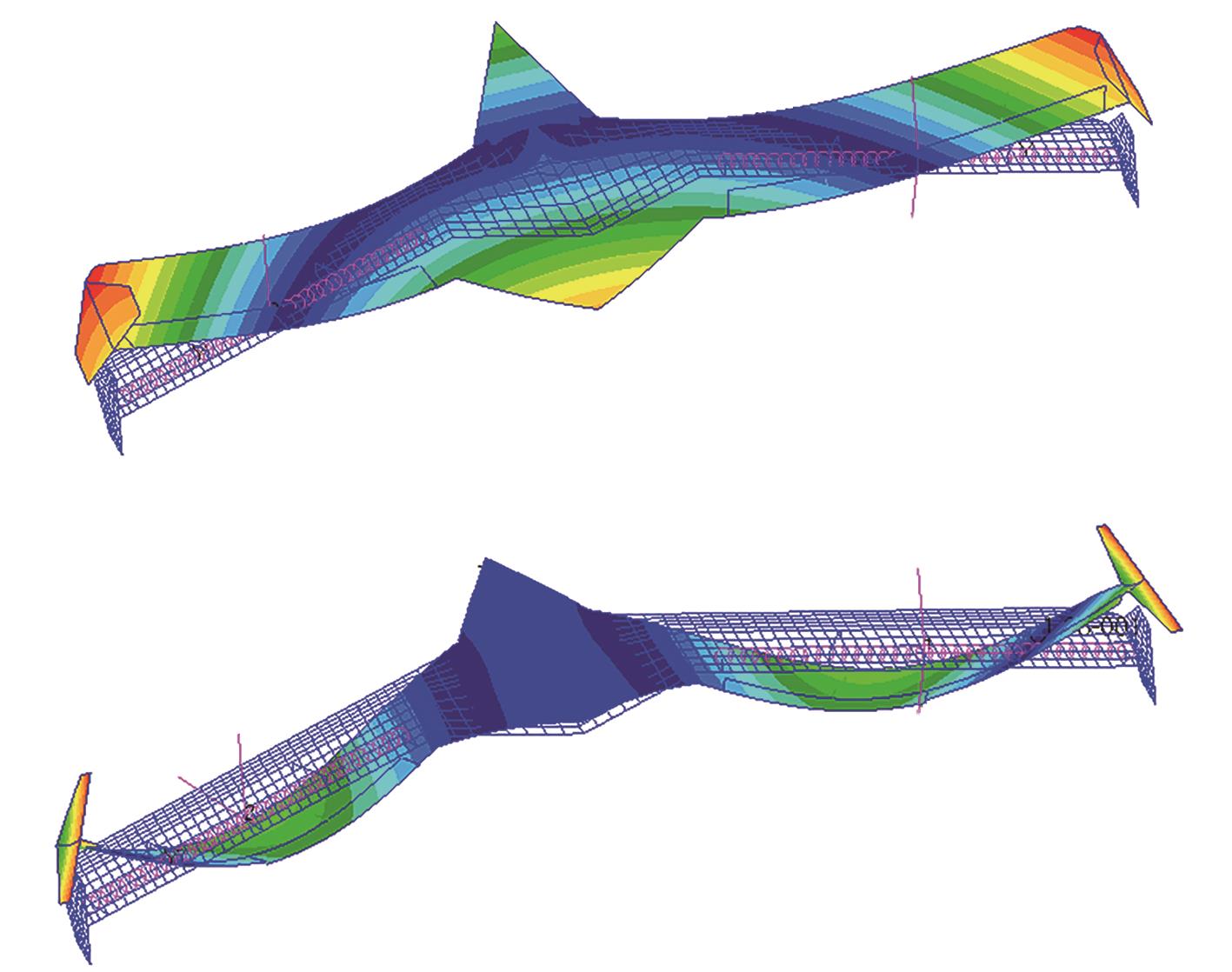
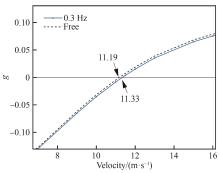
Fig.3
V-g curves of body freedom flutter
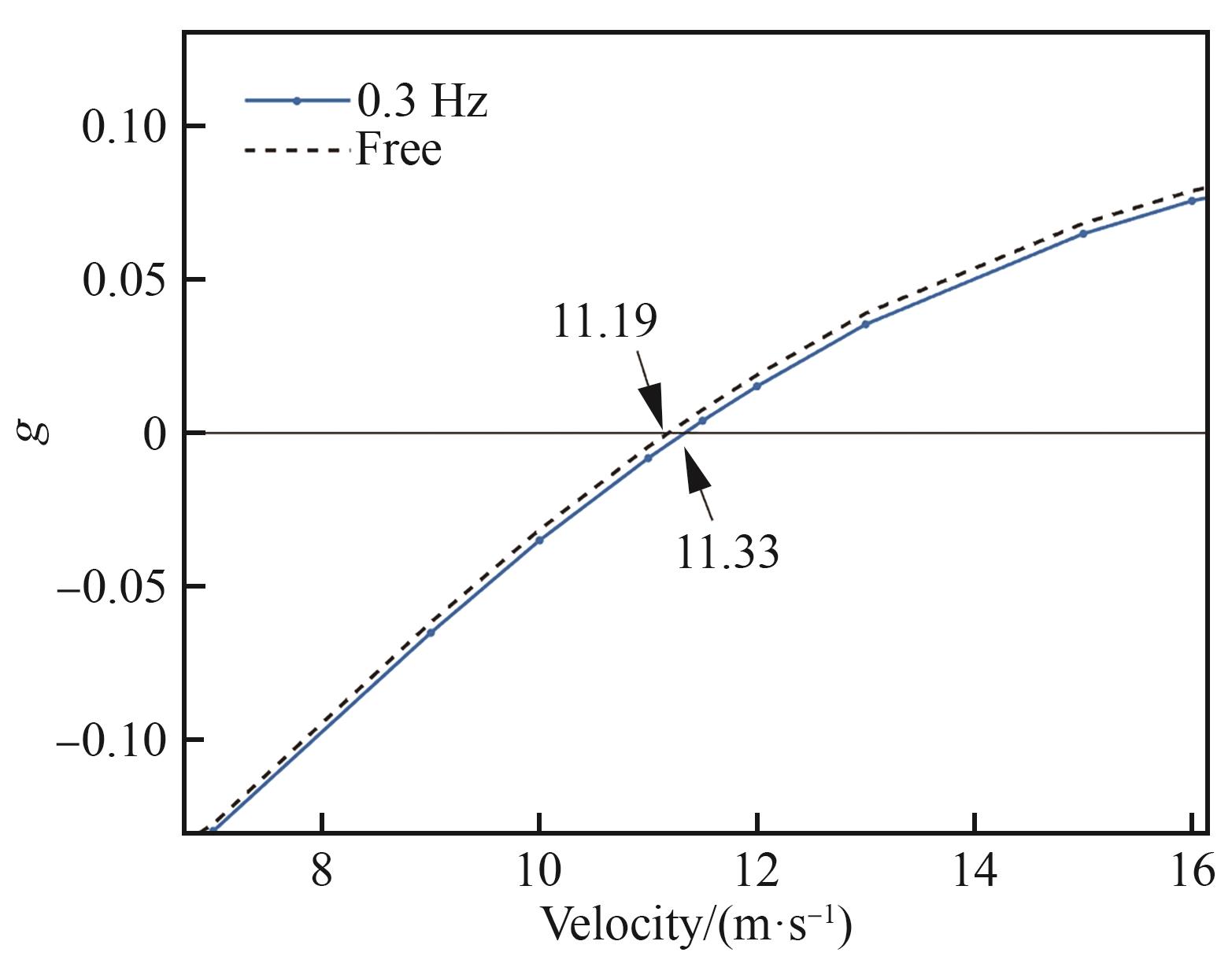
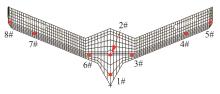
Fig.4
Position of equivalent condensation point
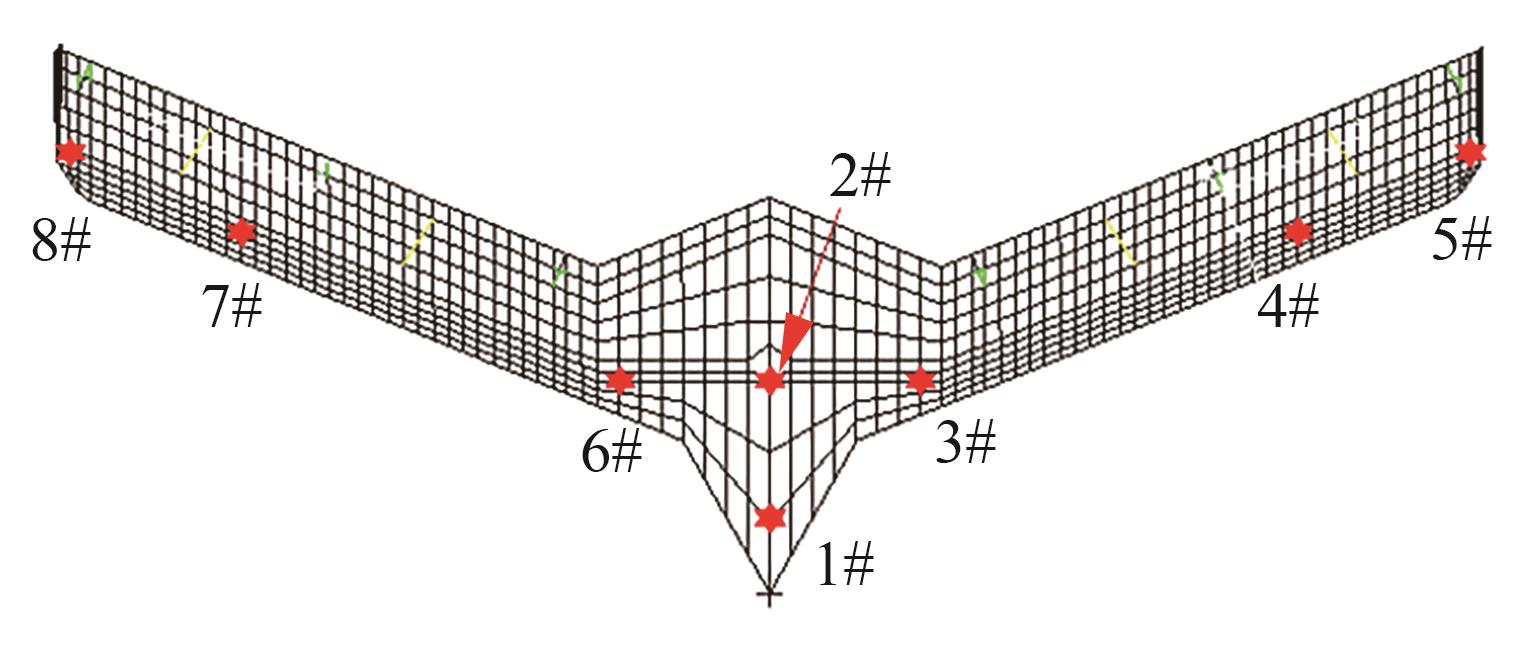
Fig.5
CFD analysis mesh
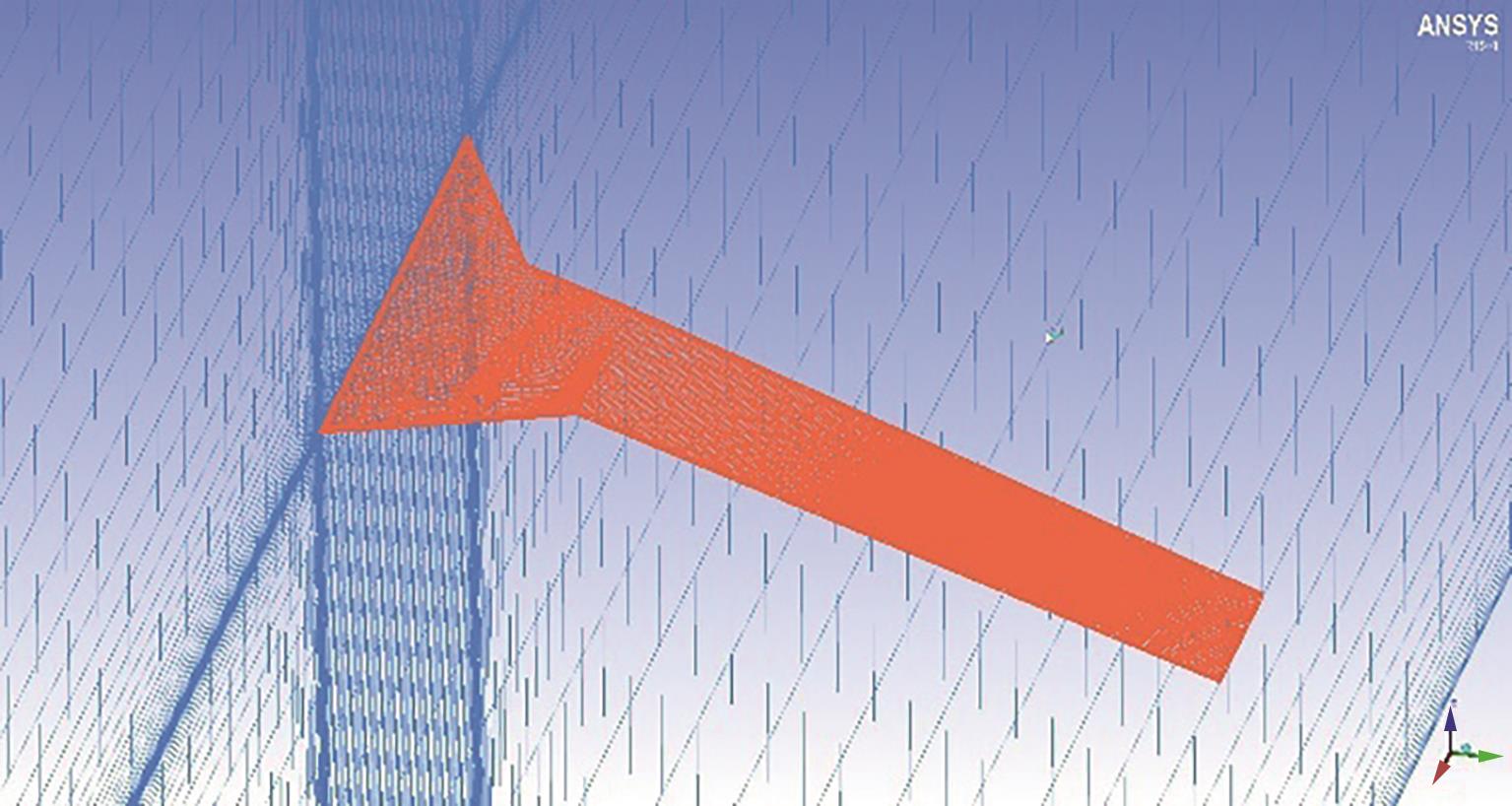
Fig.6
Modal aerodynamic force
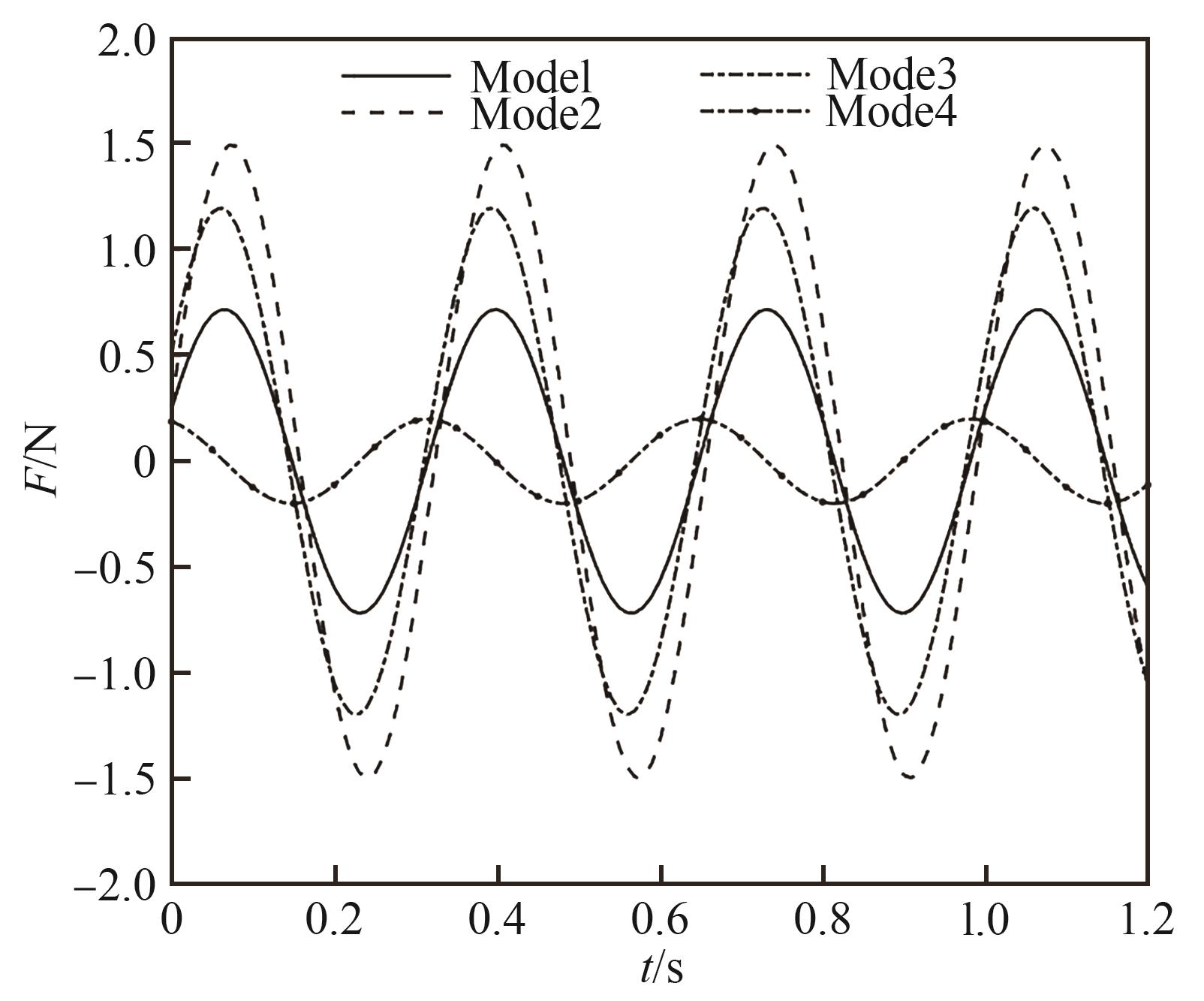

Table 1
Comparison of FEM results with flight test
| 数据类型 | 颤振速度/ (m·s-1) | 相对误差/ % | 颤振频率/ Hz | 相对误差/ % |
|---|---|---|---|---|
| 飞行试验 | 11.9 | 3.1 | ||
数值分析 (面元法) | 11.2 | 5.9 | 3.4 | 9.7 |
数值分析 (本文方法) | 11.4 | 4.2 | 3.2 | 3.2 |
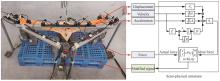
Fig.7
Ground test of rigid-flexible coupling flutter for fly-wing aircraft
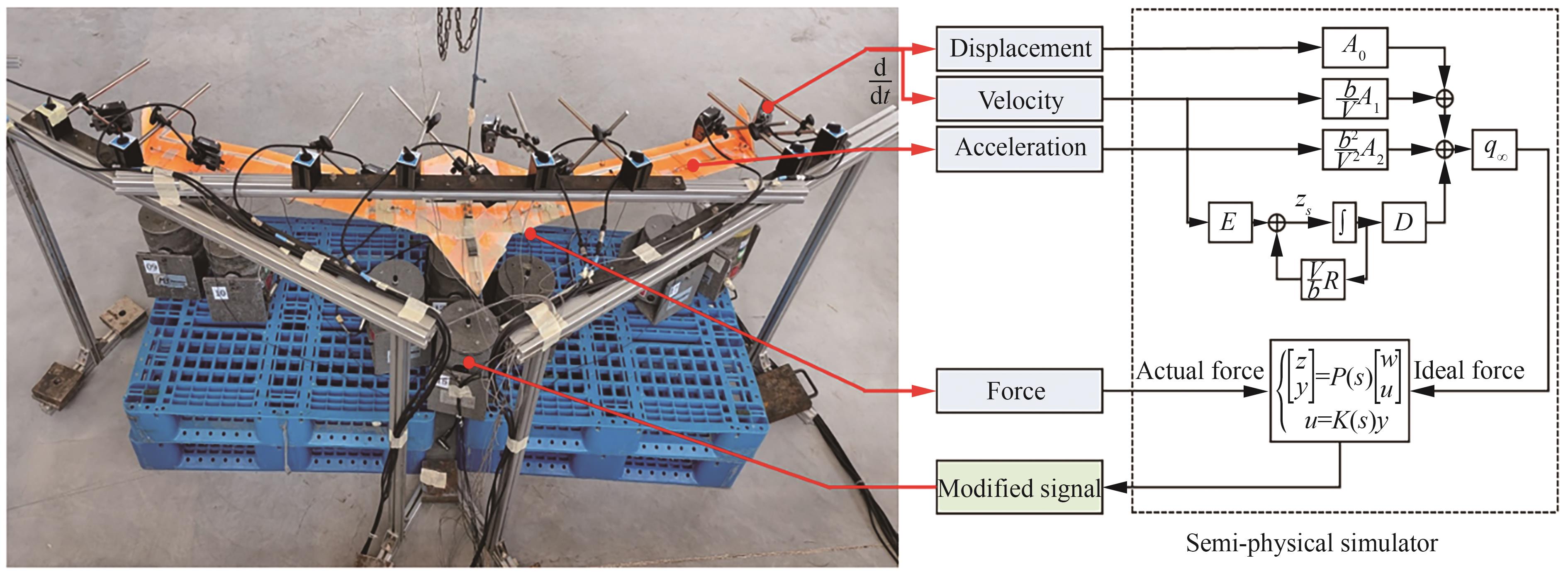
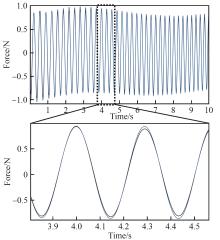
Fig.8
Comparison of two symmetrical channels’ signal
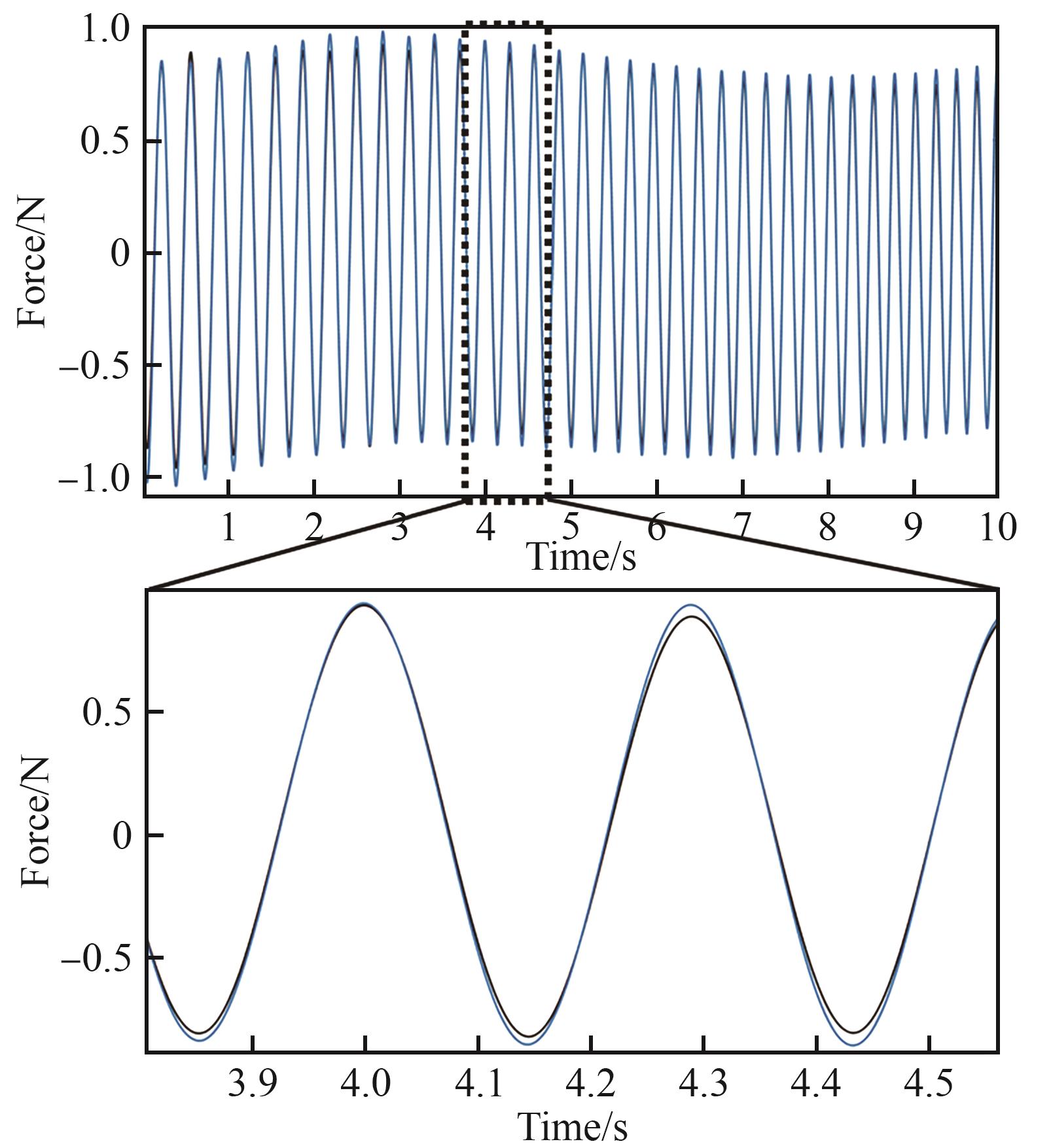
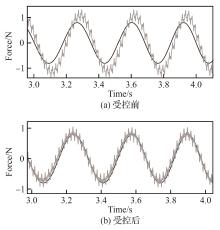
Fig.9
Comparison of channel force before and after control
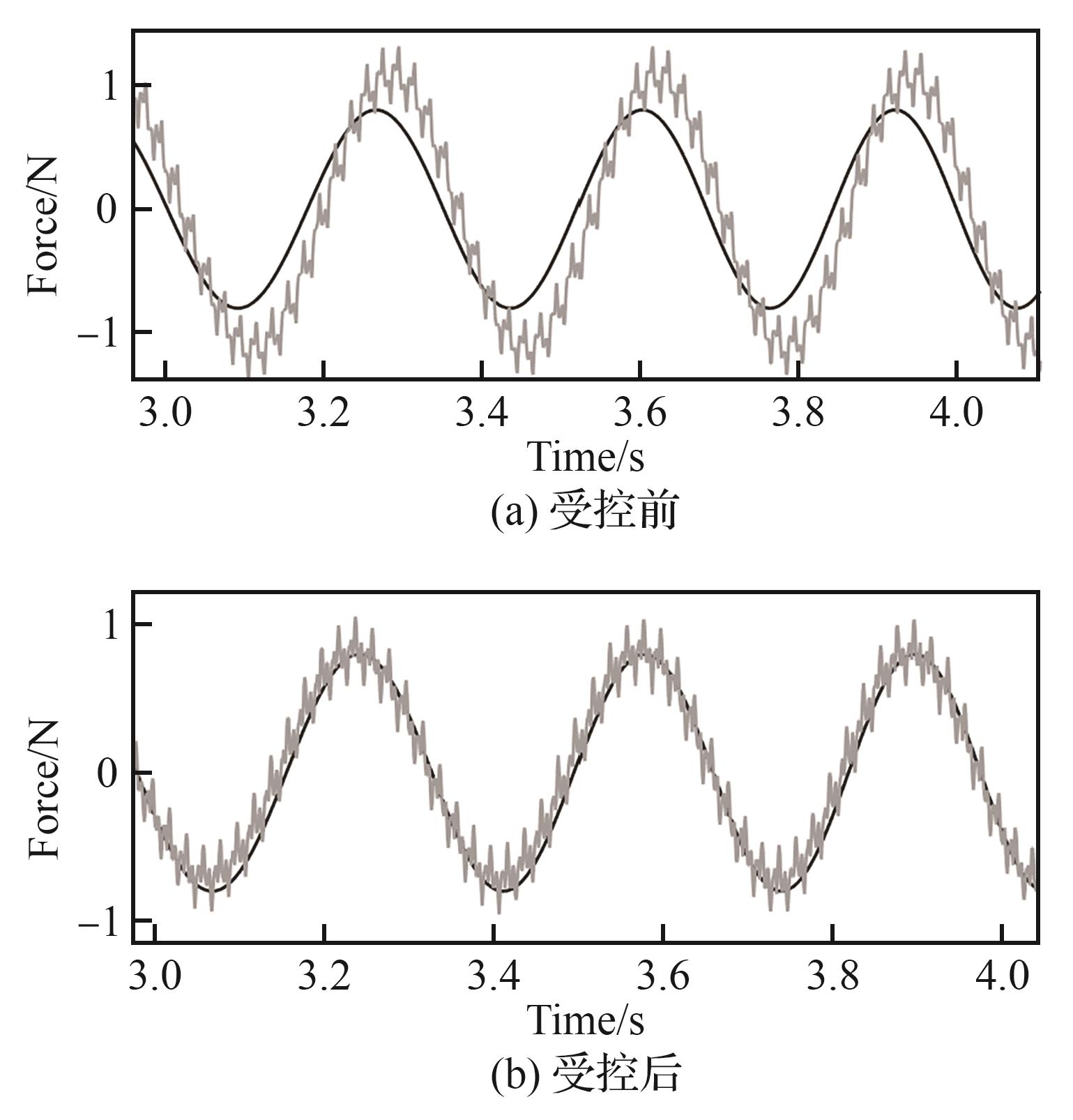
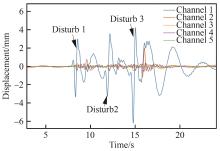
Fig.10
Response signal of subcritical state
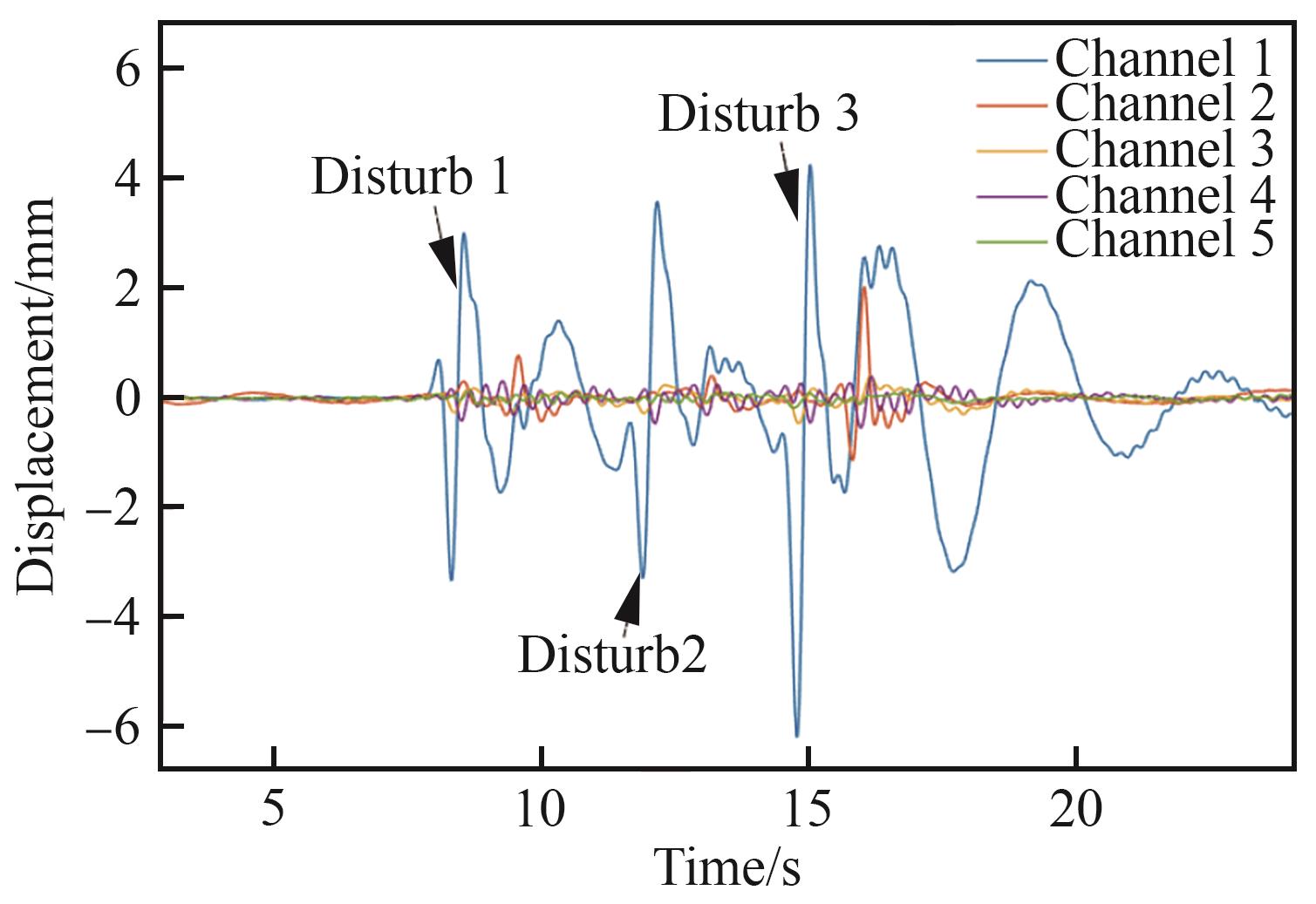
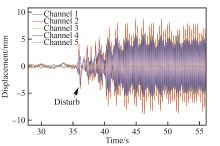
Fig.11
Response signal of supercritical state
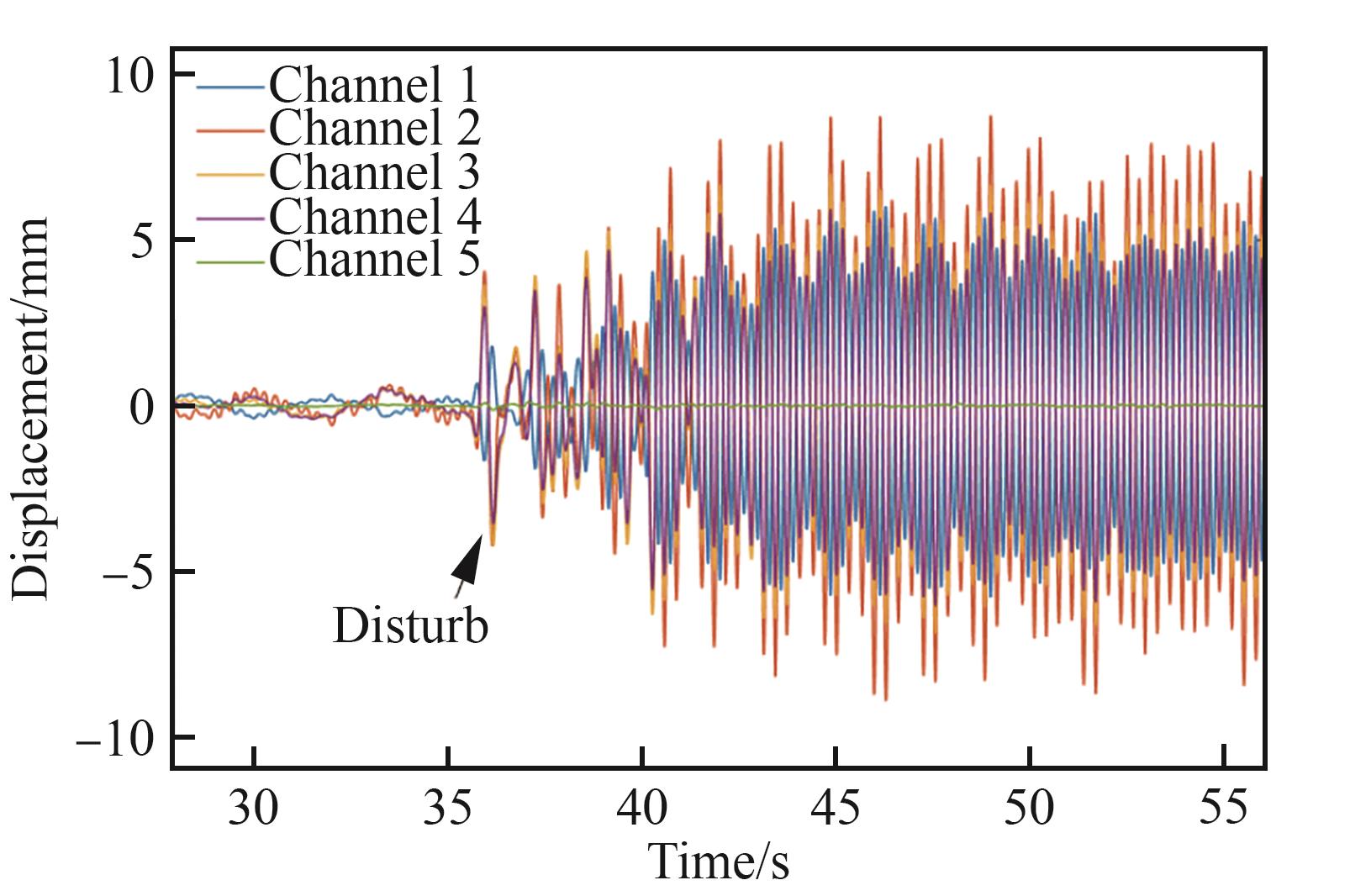
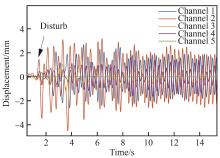
Fig.12
Response signal of critical state
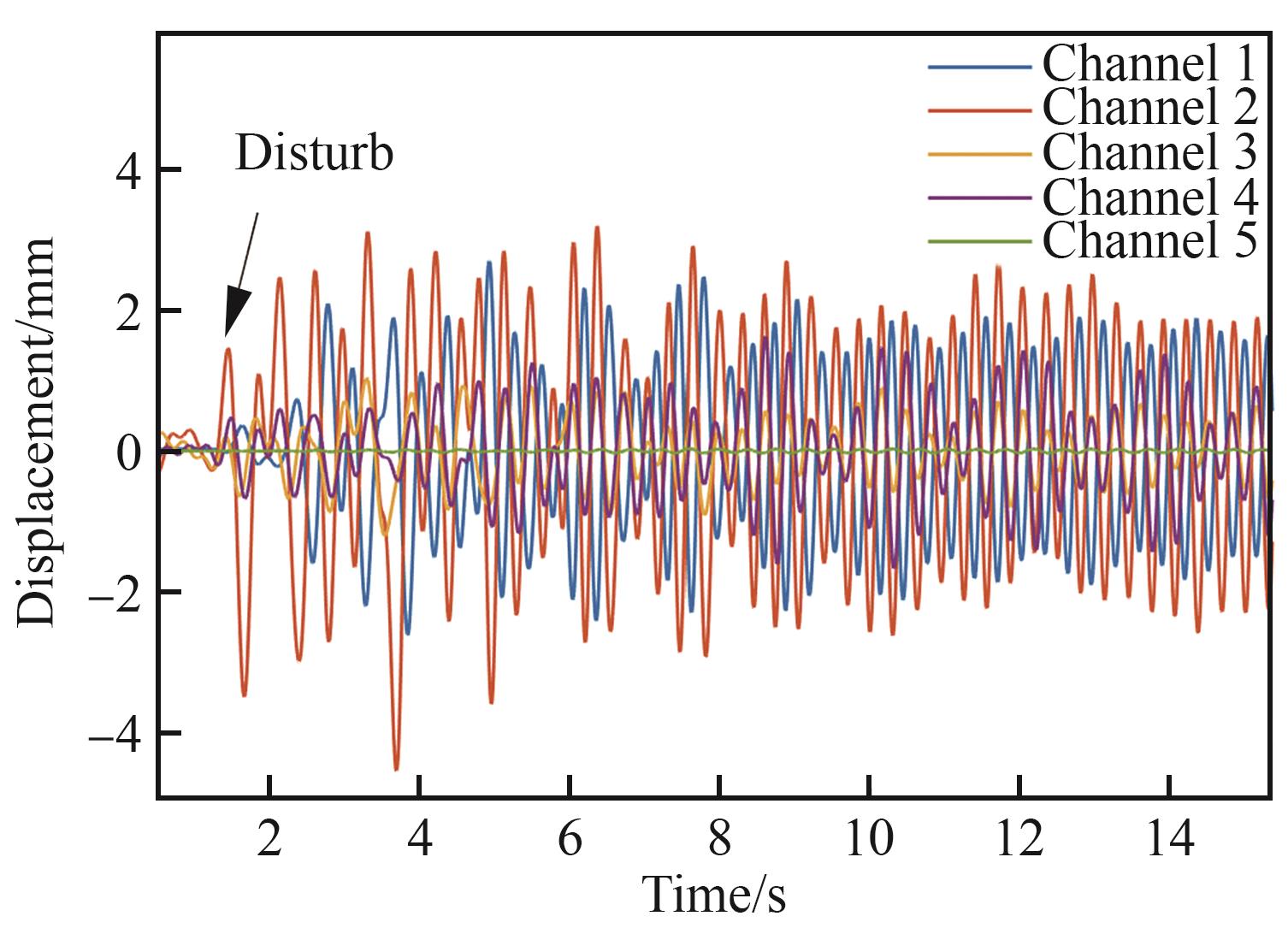
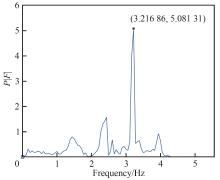
Fig.13
Fast Fourier Transform(FFT) of the response signal
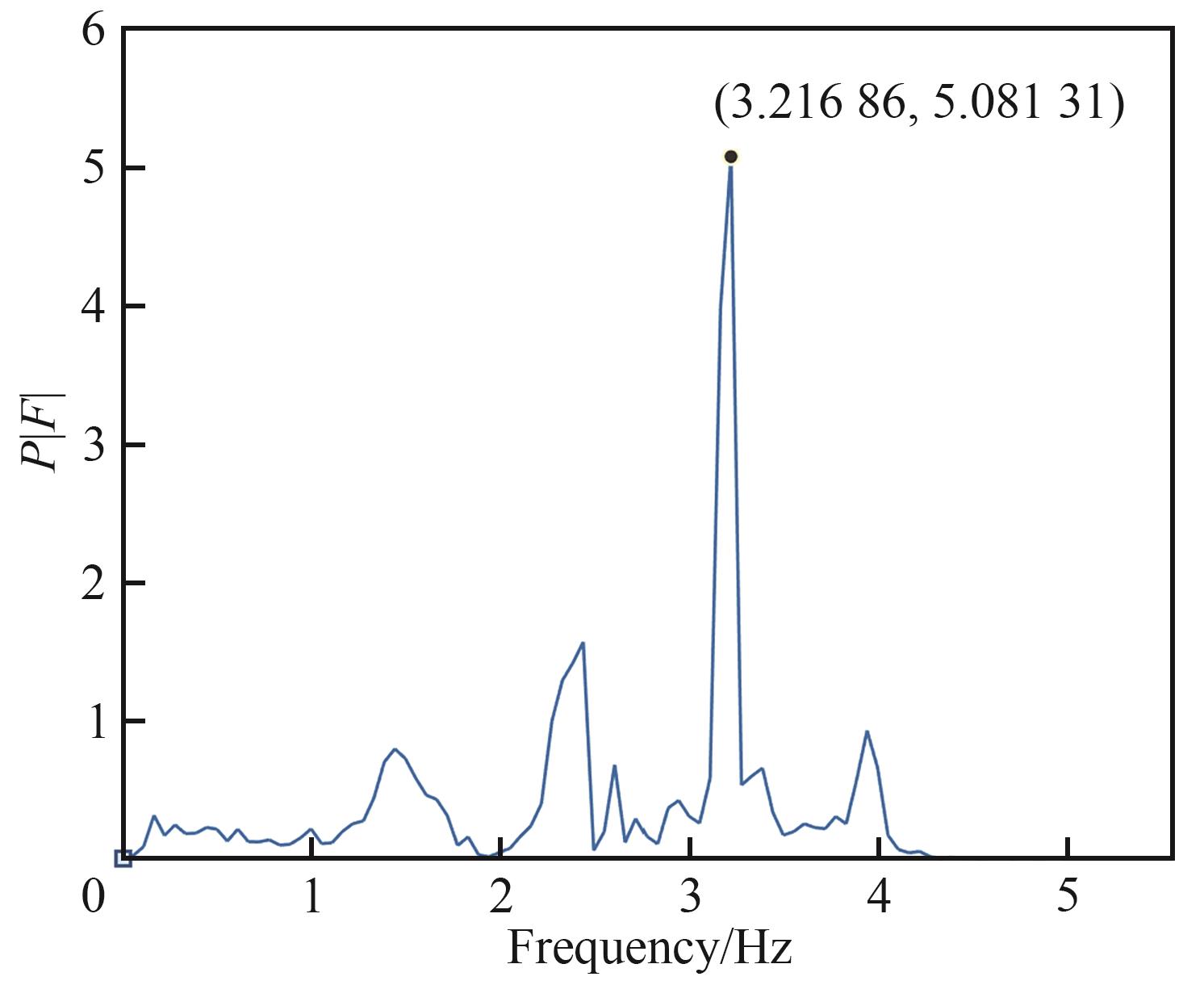
Table 2
Comparison of ground flutter test with flight test
| 试验类型 | 颤振速度/ (m·s-1) | 相对误差/ % | 颤振频率/ Hz | 相对误差/ % |
|---|---|---|---|---|
| 飞行试验 | 11.9 | 3.1 | ||
| 地面试验 | 11.3 | 5.0 | 3.2 | 3.2 |
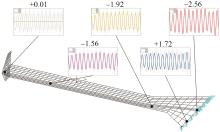
Fig.14
Response signals of 5 channels in critical state
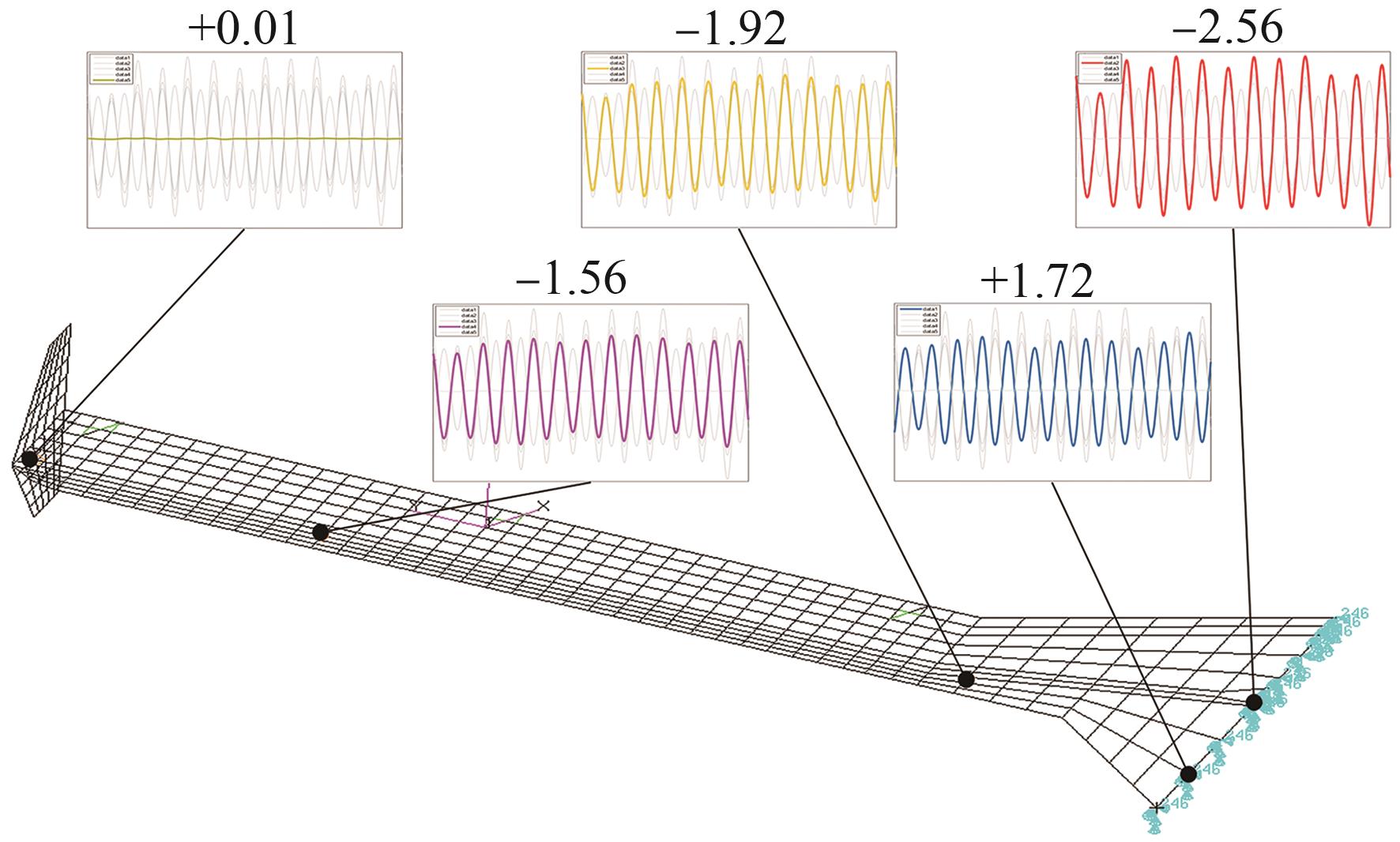
Fig.15
Vibration pattern constructed from monitoring point
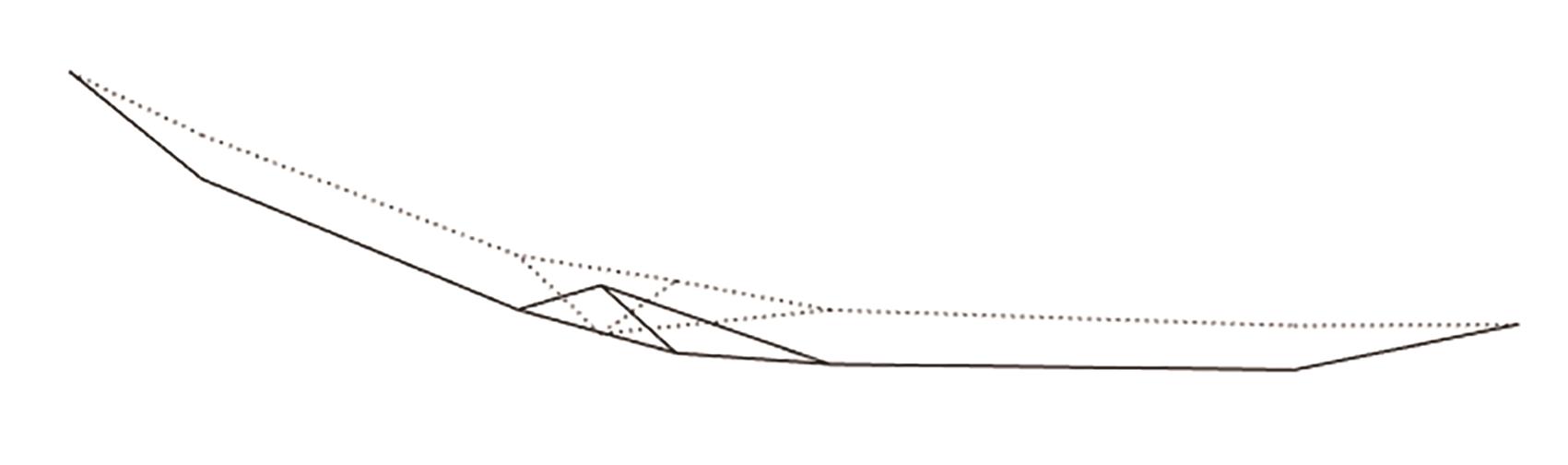
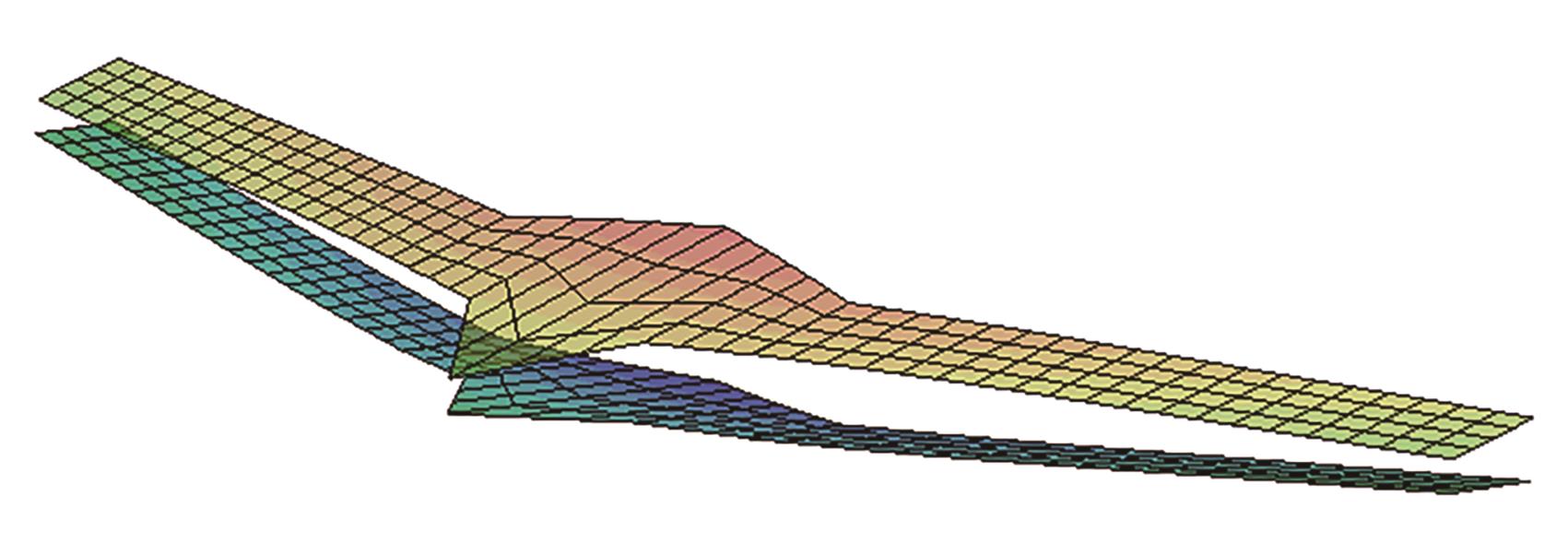
Fig.16
Flutter pattern from simulation
| [1] | WU Z G, YANG C. Flight loads and dynamics of flexible air vehicles[J]. Chinese Journal of Aeronautics, 2004, 17(1): 17-22. |
| [2] | SU W H, CESNIK C E S. Nonlinear aeroelasticity of a very flexible blended-wing-body aircraft[J]. Journal of Aircraft, 2010, 47(5): 1539-1553. |
| [3] | 王立波, 唐矗, 杨超. 大展弦比飞翼刚弹耦合运动稳定性分析[J]. 西北工业大学学报, 2017, 35(6): 1096-1104. |
| WANG L B, TANG C, YANG C. Dynamic stability analysis of a flying wing considering the rigid-elastic coupling effects[J]. Journal of Northwestern Polytechnical University, 2017, 35(6): 1096-1104 (in Chinese). | |
| [4] | 陈洋, 王正杰, 郭士钧. 柔性翼飞行器刚柔耦合动态特性研究[J]. 北京理工大学学报, 2017, 37(10): 1061-1066. |
| CHEN Y, WANG Z J, GUO S J. Analysis of rigid-flexible coupling dynamic characteristics of flexible wing aircraft[J]. Transactions of Beijing Institute of Technology, 2017, 37(10): 1061-1066 (in Chinese). | |
| [5] | SALTARI F, RISO C, DE MATTEIS G, et al. Finite-element-based modeling for flight dynamics and aeroelasticity of flexible aircraft[J]. Journal of Aircraft, 2017, 54(6): 2350-2366. |
| [6] | RICHARDS P W, YAO Y, HERD R A, et al. Effect of inertial and constitutive properties on body-freedom flutter for flying wings[J]. Journal of Aircraft, 2016, 53(3): 756-767. |
| [7] | 岑飞, 聂博文, 刘志涛, 等. 低速风洞带动力模型自由飞试验[J]. 航空学报, 2017, 38(10): 121214. |
| CEN F, NIE B W, LIU Z T, et al. Free flight test with dynamic model in low speed wind tunnel[J]. Acta Aeronautica et Astronautica Sinica, 2017, 38(10): 121214 (in Chinese). | |
| [8] | PENNING K, LOVE M, ZINK P, et al. GLA and flutter suppression for a SensorCraft class concept using system identification[C]∥26th AIAA Applied Aerodynamics Conference. Reston: AIAA, 2008. |
| [9] | 麻越垠, 陈万华, 王元兴, 等. 风洞模型支撑系统振动主动控制试验研究[J]. 机械强度, 2015, 37(2): 232-236. |
| MA Y Y, CHEN W H, WANG Y X, et al. Active vibration control experimental investigation on wind tunnel model support system[J]. Journal of Mechanical Strength, 2015, 37(2): 232-236 (in Chinese). | |
| [10] | 刘基海, 谷迎松, 杨智春. 支撑刚度对飞翼模型固有模态和体自由度颤振特性的影响[J]. 振动工程学报, 2018, 31(5): 727-733. |
| LIU J H, GU Y S, YANG Z C. Influence of support stiffness on natural mode and body freedom flutter characteristics of a flying wing model[J]. Journal of Vibration Engineering, 2018, 31(5): 727-733 (in Chinese). | |
| [11] | REGAN C D, TAYLOR B R. mAEWing1: Design, build, test-invited[C]∥AIAA Atmospheric Flight Mechanics Conference. Reston: AIAA, 2016. |
| [12] | REGAN C D. mAEWing2: Conceptual design and system test[C]∥AIAA Atmospheric Flight Mechanics Conference. Reston AIAA, 2017. |
| [13] | BERANEK J, NICOLAI L, BUONANNO M, et al. Conceptual design of a multi-utility aeroelastic demonstrator[C]∥13th AIAA/ISSMO Multidisciplinary Analysis Optimization Conference. Reston: AIAA, 2010. |
| [14] | BURNETT E, ATKINSON C, BERANEK J, et al. NDOF simulation model for flight control development with flight test correlation[C]∥AIAA Modeling and Simulation Technologies Conference. Reston: AIAA, 2010. |
| [15] | 石鹏涛. 翼身融合飞翼的体自由度颤振飞行试验研究[D]. 西安: 西北工业大学, 2020. |
| SHI P T. Body freedom flutter flight test study of BWB flying wing[D]. Xi’an: Northwestern Polytechnical University, 2020 (in Chinese). | |
| [16] | 张桂玮, 刘召庆, 朱镭, 等. 地面颤振模拟试验技术研究进展[J]. 航空学报, 2024, 45(10): 029229. |
| ZHANG G W, LIU Z Q, ZHU L, et al. Research progress of ground flutter simulation test technology[J]. Acta Aeronautica et Astronautica Sinica, 2024, 45(10): 029229 (in Chinese). | |
| [17] | 宋巧治. 基于鲁棒控制的多点激励力控制系统设计[D]. 西安: 西北工业大学, 2014. |
| SONG Q Z. Multipoint exciting force control system design based on robust control[D]. Xi’an: Northwestern Polytechnical University, 2014 (in Chinese). | |
| [18] | WANG B W, FAN X L. Ground flutter simulation test based on reduced order modeling of aerodynamics by CFD/CSD coupling method[J]. International Journal of Applied Mechanics, 2019, 11(1): 1950008. |
| [19] | 李秋彦, 李刚, 魏洋天, 等. 先进战斗机气动弹性设计综述[J]. 航空学报, 2020, 41(6): 523430. |
| LI Q Y, LI G, WEI Y T, et al. Review of aeroelasticity design for advanced fighter[J]. Acta Aeronautica et Astronautica Sinica, 2020, 41(6): 523430 (in Chinese). | |
| [20] | 许云涛, 吴志刚, 杨超. 地面颤振模拟试验中的非定常气动力模拟[J]. 航空学报, 2012, 33(11): 1947-1957. |
| XU Y T, WU Z G, YANG C. Simulation of the unsteady aerodynamic forces for ground flutter simulation test[J]. Acta Aeronautica et Astronautica Sinica, 2012, 33(11): 1947-1957 (in Chinese). | |
| [21] | 贺顺, 杨智春, 谷迎松. 机翼跨音速颤振特性的频域分析[J]. 中国科学: 物理学 力学 天文学, 2014, 44(3): 285-292. |
| HE S, YANG Z C, GU Y S. Frequency domain analysis for wing transonic flutter[J]. Scientia Sinica (Physica, Mechanica & Astronomica), 2014, 44(3): 285-292 (in Chinese). | |
| [22] | 宋巧治, 王彬文, 李晓东. 基于CFD的地面颤振模拟试验非定常气动力重构方法研究[J]. 振动与冲击, 2022, 41(10): 40-46. |
| SONG Q Z, WANG B W, LI X D. Unsteady aerodynamic model reproduction method for ground flutter simulation test based on CFD[J]. Journal of Vibration and Shock, 2022, 41(10): 40-46 (in Chinese). |
| [1] | Xiaofeng YANG, Xingkao CAI, Lei LIU, Dong WEI, Guangming XIAO, Yanxia DU, Yewei GUI. Coupling simulation of aircraft aerothermodynamics regulated by gradient characteristics of thermal protection structure and its experimental verification [J]. Acta Aeronautica et Astronautica Sinica, 2025, 46(9): 130888-130888. |
| [2] | Liwen ZHANG, Zhonghua HAN, Keshi ZHANG, Ke SONG, Wenping SONG. High-fidelity numerical simulation of near-/mid-field sonic boom propagation using a space-marching method for supersonic civil aircraft [J]. Acta Aeronautica et Astronautica Sinica, 2025, 46(20): 531935-531935. |
| [3] | Tingyu GUO, Ming YAN, Chunlei XIE. Aerodynamic characteristics of aggregation-separation aircraft [J]. Acta Aeronautica et Astronautica Sinica, 2024, 45(S1): 730596-730596. |
| [4] | Qi LIU, Yongjie SHI, Zhiyuan HU, Guohua XU. Parameter effects analysis on aerodynamic and aeroacoustic characteristics of coaxial rigid rotor [J]. Acta Aeronautica et Astronautica Sinica, 2024, 45(9): 528856-528856. |
| [5] | Chengjun SHAN, Tianyu GONG, Lizhe YI, Haohui YANG, Yaosong LONG. High-efficiency and high-reliability sonic boom/aerodynamic multidisciplinary optimization method for supersonic civil aircraft [J]. Acta Aeronautica et Astronautica Sinica, 2024, 45(24): 630573-630573. |
| [6] | Mingqi LIU, Zhonghua HAN, Tao DU, Chenzhou XU, Han ZENG, Keshi ZHANG, Wenping SONG. Optimal control efficiency characteristics and wide-speed-range aerodynamic design optimization method for grid fins of launch vehicle [J]. Acta Aeronautica et Astronautica Sinica, 2024, 45(20): 129887-129887. |
| [7] | Li LI, Yihua LIANG, Yong YANG, Junsheng WU. WiseCFD V2023: A software framework with open architecture to support verification and validation and credibility assessment of CFD software [J]. Acta Aeronautica et Astronautica Sinica, 2024, 45(20): 630440-630440. |
| [8] | Fengxia LU, Kun WEI, Chunlei WANG, Heyun BAO, Rupeng ZHU. Accessibility of metal particles in three-phase flow of helicopter intermediate gearbox [J]. Acta Aeronautica et Astronautica Sinica, 2024, 45(1): 128524-128524. |
| [9] | Haoyu CHEN, Binwen WANG, Qiaozhi SONG, Xiaodong LI. Thermal flutter ground simulation test [J]. ACTA AERONAUTICAET ASTRONAUTICA SINICA, 2023, 44(8): 227295-227295. |
| [10] | Jiong REN, Gang WANG, Guodong HU, Xiaolu SHI. Adaptive finite volume method with Walsh basis functions [J]. ACTA AERONAUTICAET ASTRONAUTICA SINICA, 2023, 44(8): 127444-127444. |
| [11] | Wenbo CAO, Yilang LIU, Weiwei ZHANG. Accelerated convergence method for fluid dynamics solvers based on reduced⁃order model and gradient optimization [J]. ACTA AERONAUTICAET ASTRONAUTICA SINICA, 2023, 44(6): 127090-127090. |
| [12] | Sihua LIU, Zhanying WANG, Lijian LI, Mindi ZHANG. Influence of nose shapes on high-speed water entry stability of projectile [J]. Acta Aeronautica et Astronautica Sinica, 2023, 44(21): 528437-528437. |
| [13] | Yuxiang FAN, Rui ZHAO, Zhengxuan ZUO, Guang YANG, Yu LI. Gas⁃injection effects on wall heat flux and skin⁃friction of vehicles [J]. Acta Aeronautica et Astronautica Sinica, 2023, 44(21): 528587-528587. |
| [14] | Jianling QIAO, Zhonghua HAN, Yulin DING, Wenping SONG, Bifeng SONG. Effects of stratified atmospheric turbulence on farfield sonic boom propagation [J]. ACTA AERONAUTICAET ASTRONAUTICA SINICA, 2023, 44(2): 626350-626350. |
| [15] | Shengye WANG, Xiaogang DENG, Yidao DONG, Dongfang WANG, Jiahong CAI. High-order numerical methods for engineering turbulence simulation [J]. Acta Aeronautica et Astronautica Sinica, 2023, 44(15): 528728-528728. |
| Viewed | ||||||
|
Full text |
|
|||||
|
Abstract |
|
|||||
Address: No.238, Baiyan Buiding, Beisihuan Zhonglu Road, Haidian District, Beijing, China
Postal code : 100083
E-mail:hkxb@buaa.edu.cn
Total visits: 6658907 Today visits: 1341All copyright © editorial office of Chinese Journal of Aeronautics
All copyright © editorial office of Chinese Journal of Aeronautics
Total visits: 6658907 Today visits: 1341

 CJA
CJA
