Acta Aeronautica et Astronautica Sinica ›› 2026, Vol. 47 ›› Issue (1): 632007.doi: 10.7527/S1000-6893.2025.32007
• Special Topic: The 27th Annual Meeting of the China Association for Science and Technology • Previous Articles Next Articles
Pinggen LUO1, Bin LI1, Huaji WANG1( ), Xingping LI1, Wenqing XIA2
Received:2025-03-20
Revised:2025-04-07
Accepted:2025-05-22
Online:2025-06-05
Published:2025-05-30
Contact:
Huaji WANG
E-mail:wanghj002@avic.com
Supported by:CLC Number:
Pinggen LUO, Bin LI, Huaji WANG, Xingping LI, Wenqing XIA. New waste heat recovery thermal management configurations and applications for helicopters[J]. Acta Aeronautica et Astronautica Sinica, 2026, 47(1): 632007.
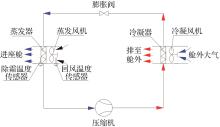
Fig.1
Working principle of evaporative cycle refrigeration system[22-23]
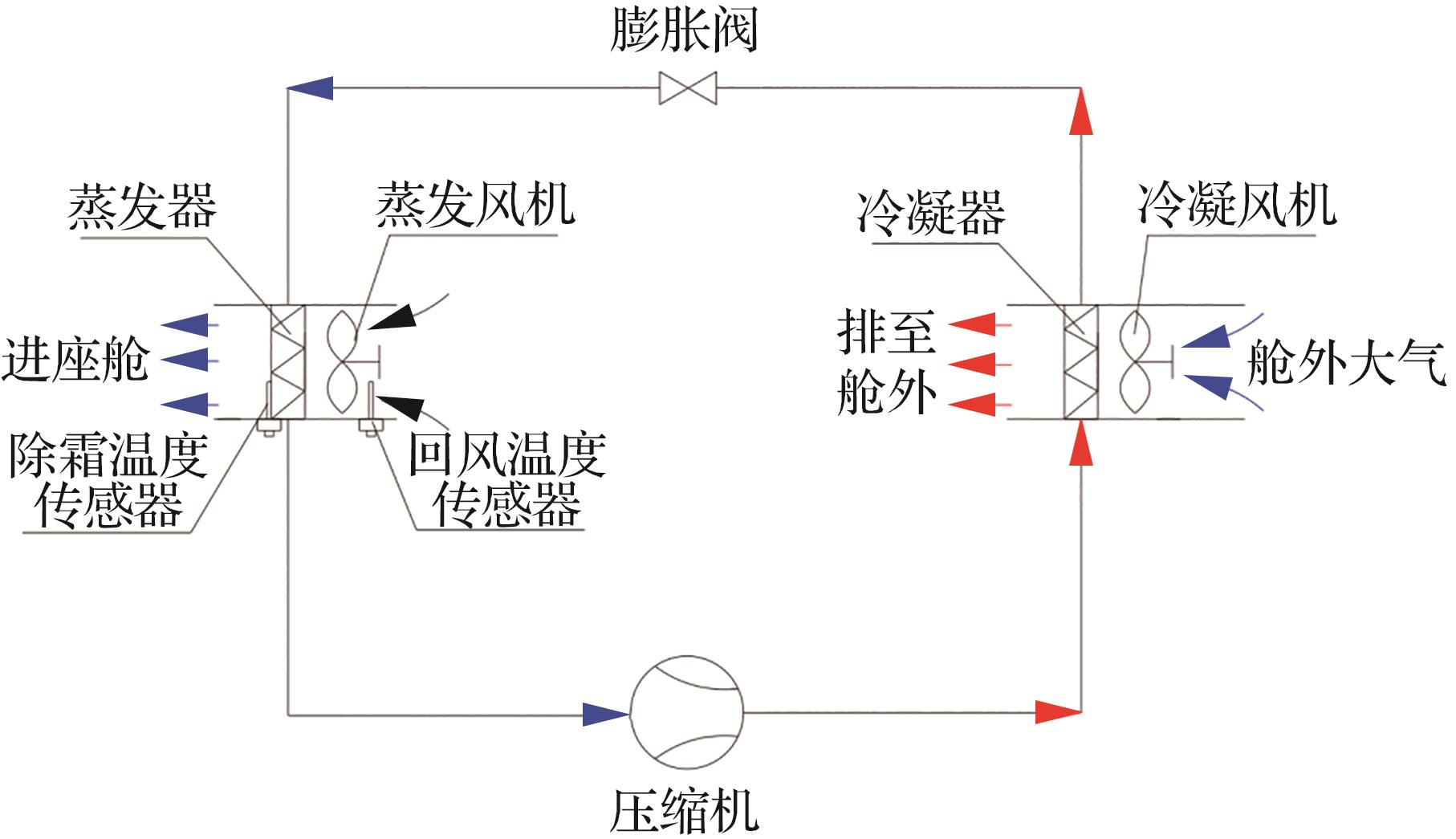
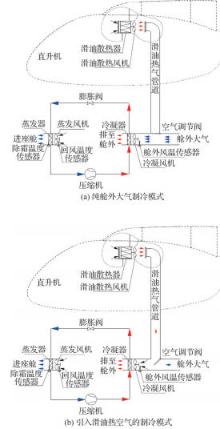
Fig.2
Working principle of single-cooling and frost-free thermal management system
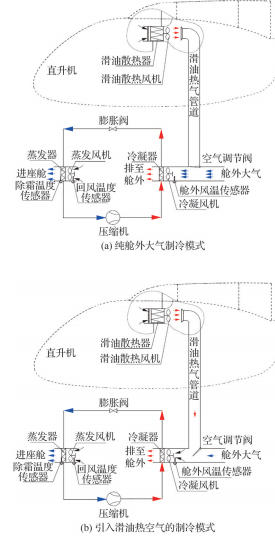
Fig.3
Working principle of wide temperature range frost-free thermal management system
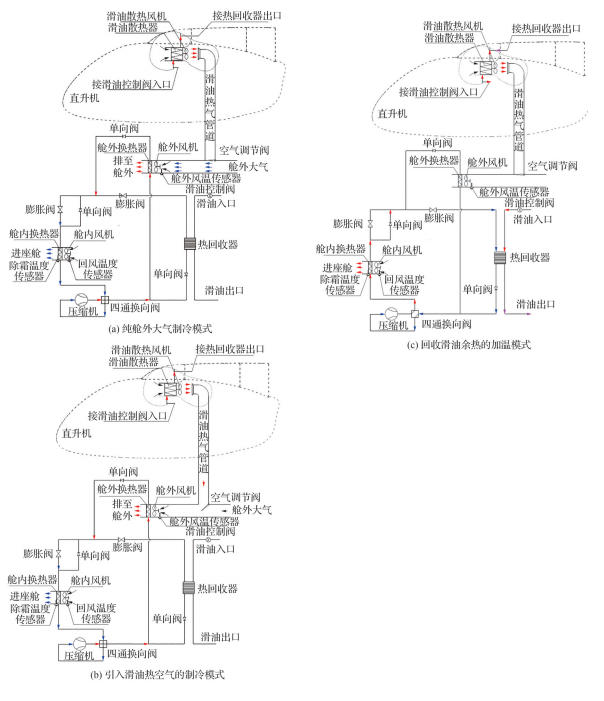
Fig.4
Typical flight profile of helicopter[34]
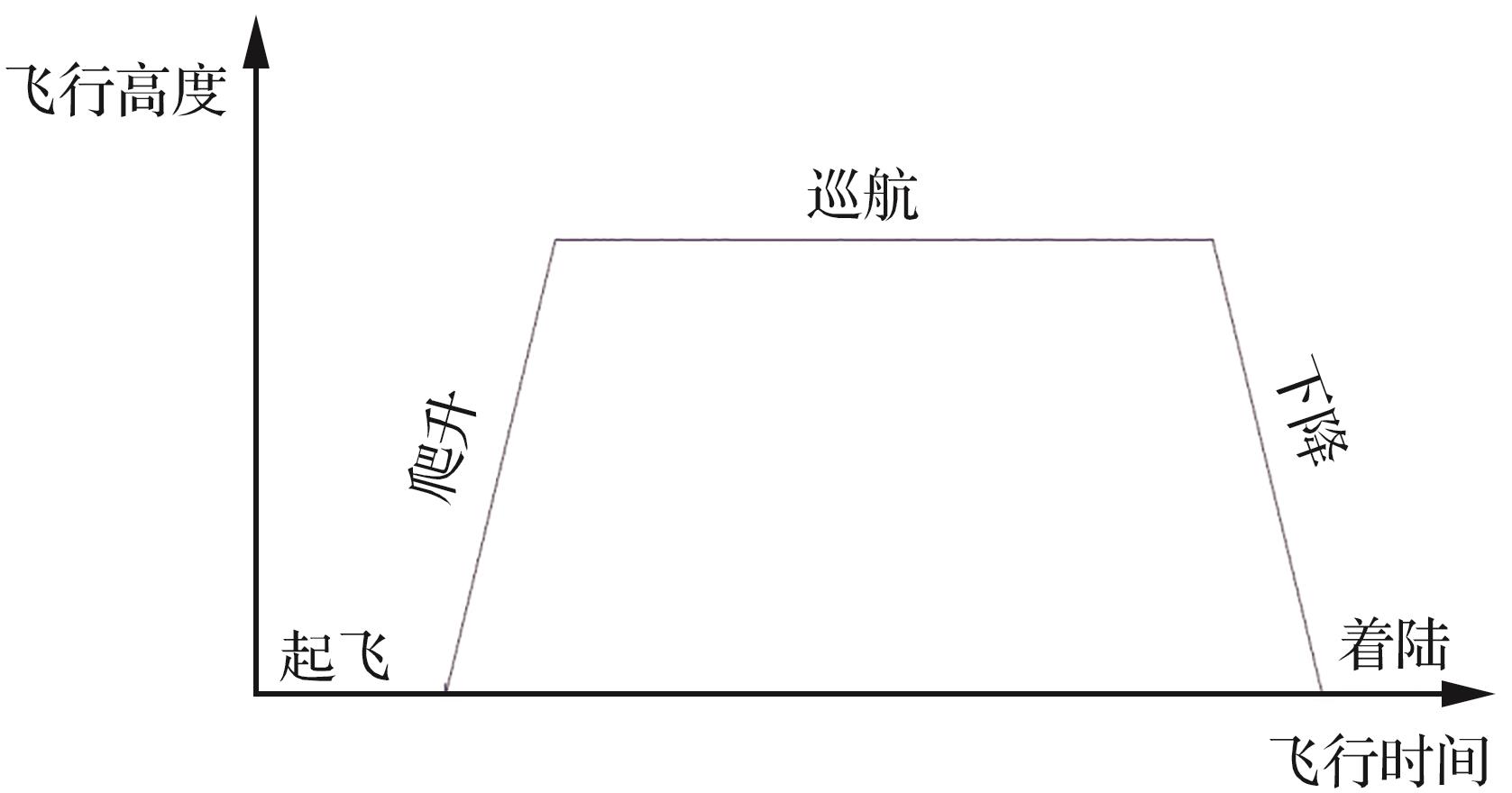

Table 1
Ground test conditions of variable external atmospheric temperature
| 参数 | 工况1 | 工况2 |
|---|---|---|
| 舱外大气温度/℃ | 10~40 | 10~40 |
| 舱内回风温度/℃ | 22 | 22 |
| 舱内回风相对湿度/% | 85 | 46 |
| 舱内换热风量/(m3·h-1) | 60~600 | 60~600 |
| 压缩机转速/(r·min-1) | 3 500 | 3 500 |
| 舱外换热风量/(m3·h-1) | 3 000 | 3 000 |
Table 2
Ground test conditions of variable compressor speed
| 参数 | 工况1 | 工况2 |
|---|---|---|
| 舱外大气温度/℃ | 22 | 22 |
| 舱内回风温度/℃ | 22 | 22 |
| 舱内空气相对湿度/% | 85 | 46 |
| 舱内换热风量/(m3·h-1) | 600 | 600 |
| 压缩机转速/(r·min-1) | 3 000~3 500 | 3 000~3 500 |
| 舱外换热风量/(m3·h-1) | 3 000 | 3 000 |
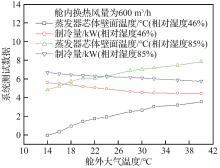
Fig.5
Performance curves of system at different outside temperatures without frost
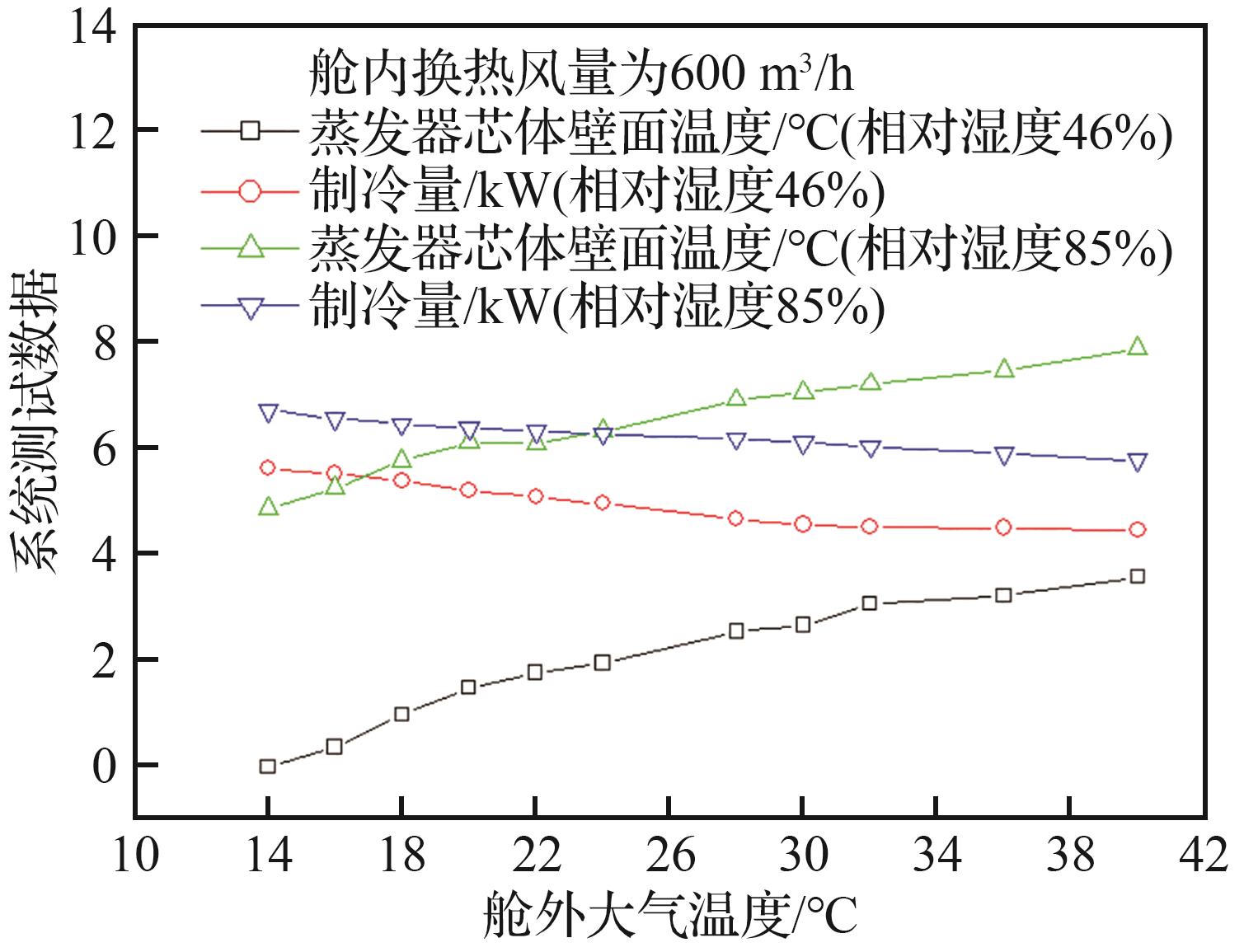
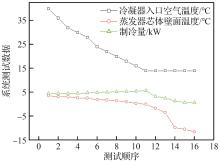
Fig.6
Performance curves of system during frosting conditions
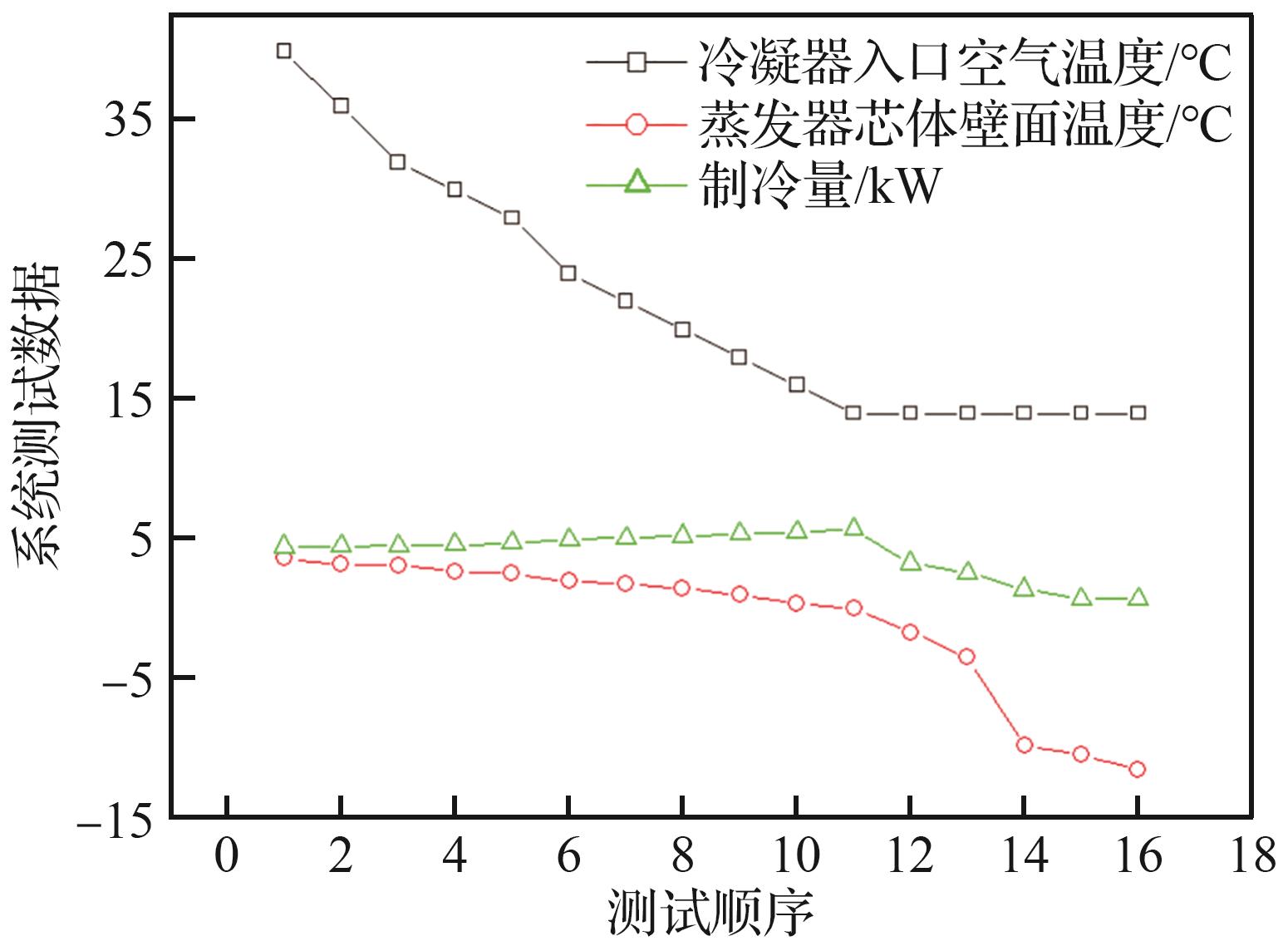
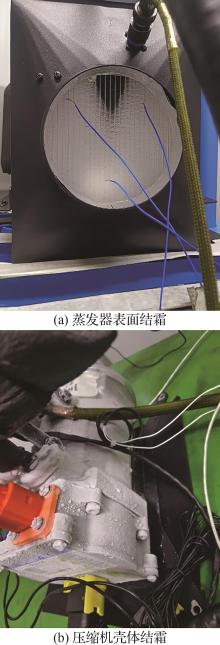
Fig.7
Frosting conditions of evaporator and compressor during frost refrigeration
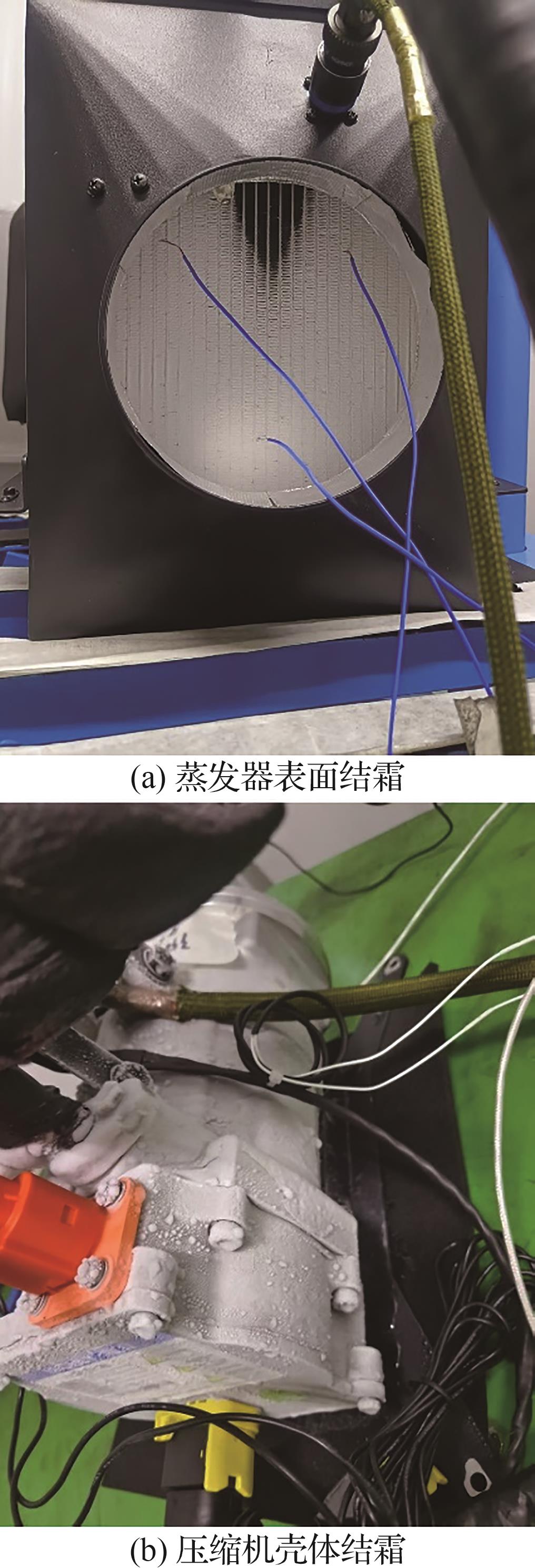
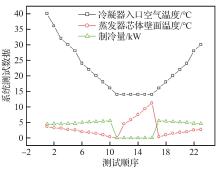
Fig.8
Performance curves of system defrosting and recovering waste heat from lubricating oil
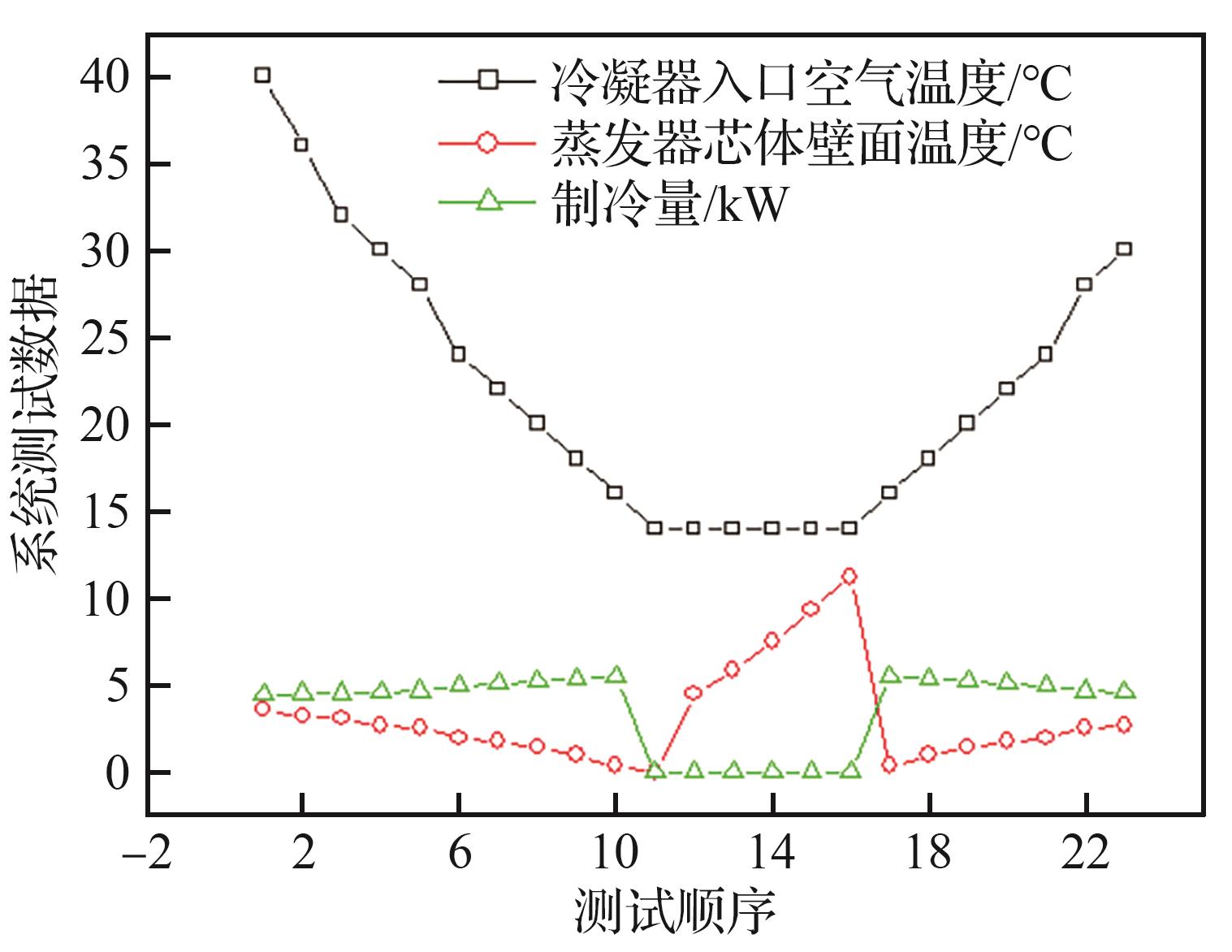
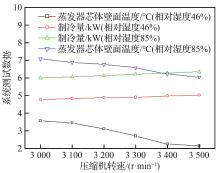
Fig.9
Variation curve of system performance with compressor speed
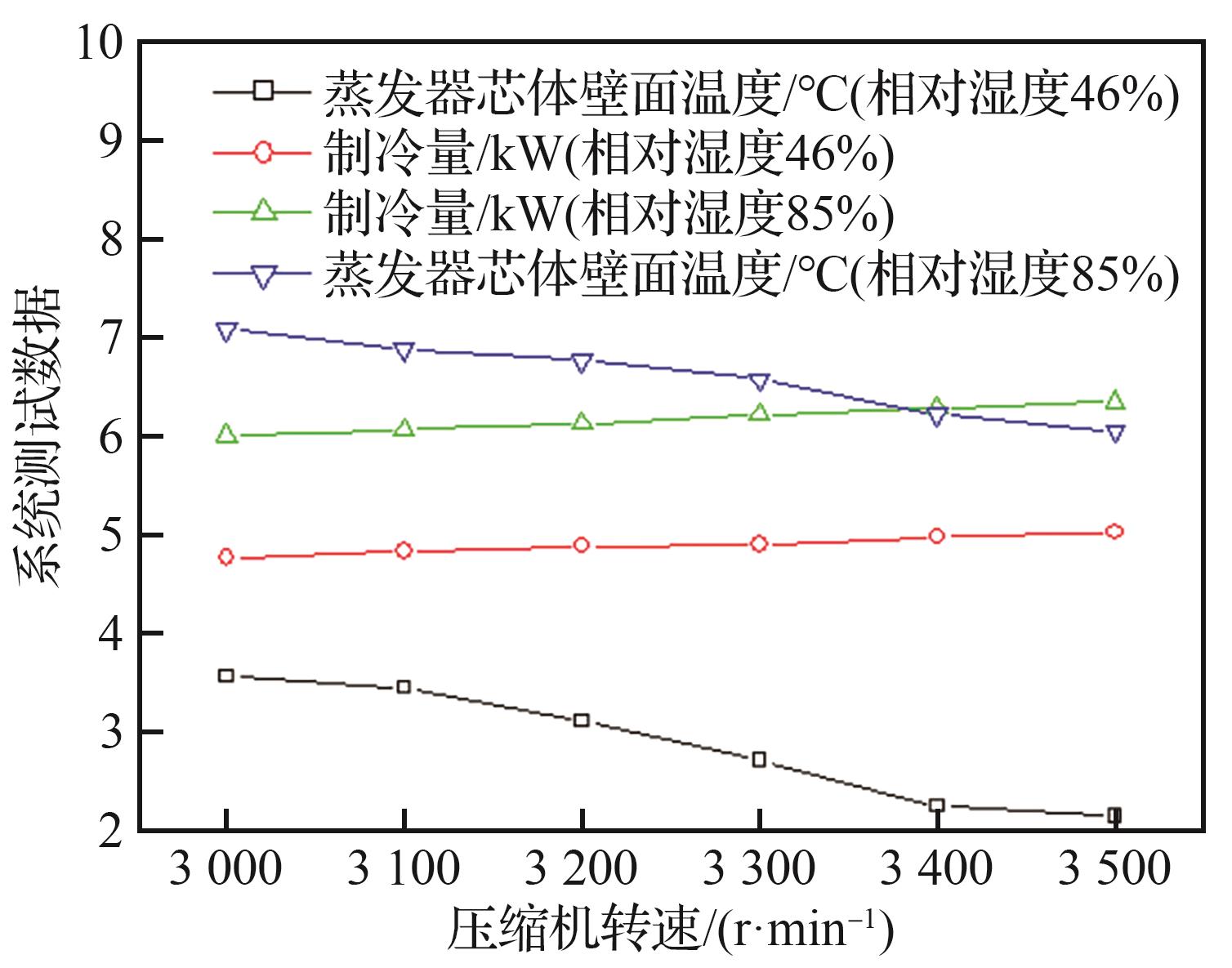
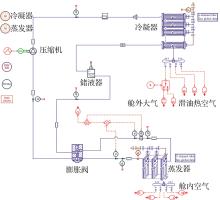
Fig.10
Simulation model of single-cooling and frost-free thermal management system
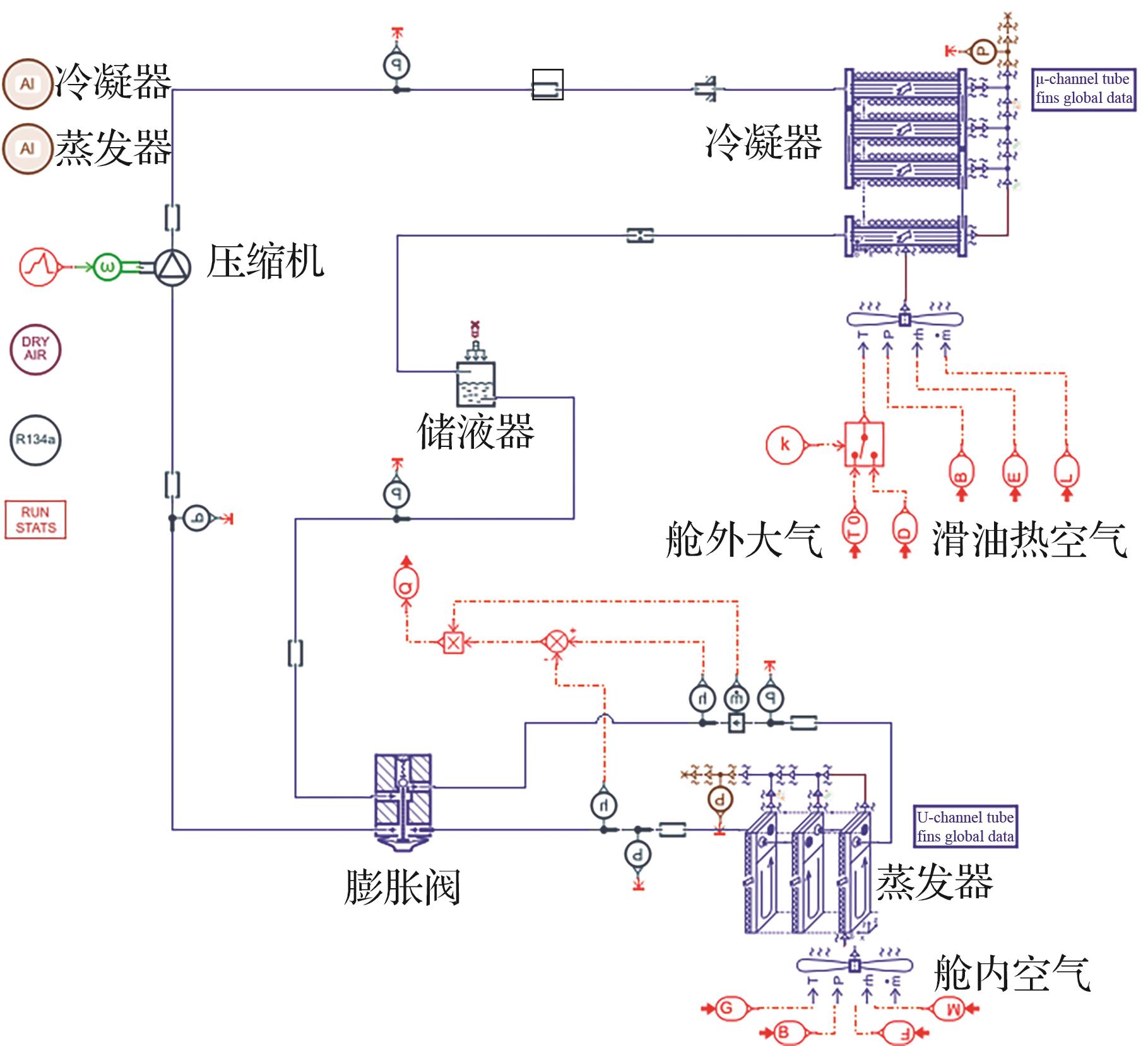
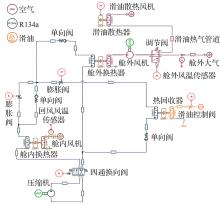
Fig.11
Simulation model of wide temperature range frost-free thermal management system
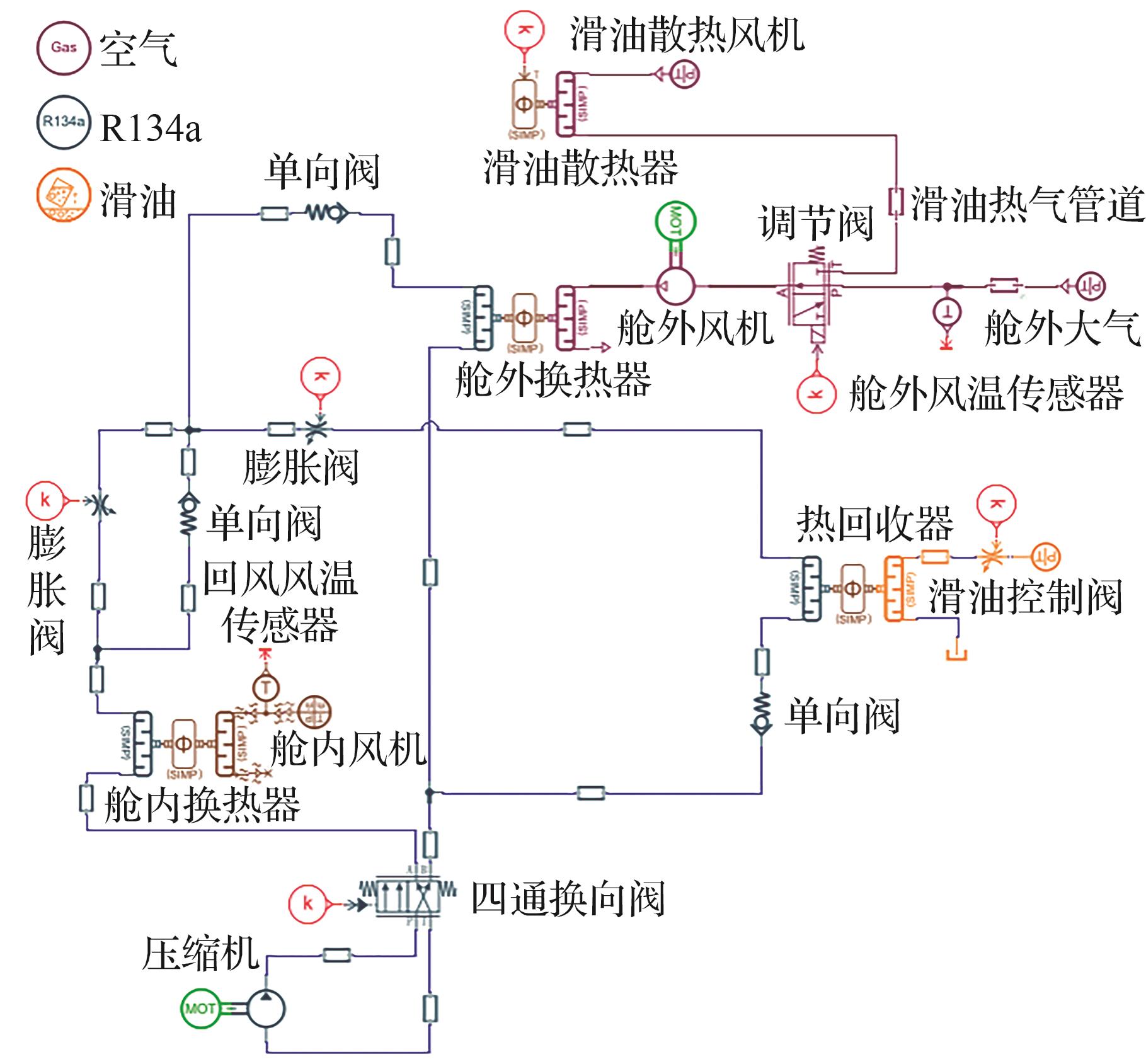
Table 3
System performance parameters under variable external atmospheric temperature (ground state)
| 舱内空气相对湿度 | 舱外大气温度/℃ | 舱内换热器芯体壁面温度/℃ | 制冷量/kW | ||||
|---|---|---|---|---|---|---|---|
| 实验值 | 仿真值 | 误差/% | 实验值 | 仿真值 | 误差/% | ||
| 85% | 40 | 7.89 | 8.52 | 7.98 | 5.78 | 5.51 | 4.67 |
| 36 | 7.47 | 8.09 | 8.30 | 5.91 | 5.63 | 4.74 | |
| 32 | 7.22 | 7.66 | 6.09 | 6.04 | 5.75 | 4.80 | |
| 30 | 7.06 | 7.44 | 5.38 | 6.11 | 5.81 | 4.91 | |
| 28 | 6.92 | 7.22 | 4.34 | 6.19 | 5.86 | 5.33 | |
| 24 | 6.33 | 6.75 | 6.64 | 6.28 | 5.96 | 5.10 | |
| 22 | 6.09 | 6.51 | 6.90 | 6.33 | 6.01 | 5.06 | |
| 20 | 6.12 | 6.26 | 2.29 | 6.38 | 6.04 | 5.33 | |
| 18 | 5.77 | 5.98 | 3.64 | 6.46 | 6.24 | 3.41 | |
| 16 | 5.25 | 5.47 | 4.19 | 6.57 | 6.36 | 3.2 | |
| 46% | 40 | 3.57 | 3.89 | 8.96 | 4.45 | 4.39 | 1.35 |
| 36 | 3.21 | 3.46 | 7.79 | 4.5 | 4.5 | 0 | |
| 32 | 3.07 | 3.02 | -1.63 | 4.52 | 4.62 | -2.21 | |
| 30 | 2.66 | 2.8 | 5.26 | 4.57 | 4.67 | -2.19 | |
| 28 | 2.54 | 2.57 | 1.18 | 4.67 | 4.72 | -1.07 | |
| 24 | 1.94 | 2.1 | 8.25 | 4.96 | 4.81 | 3.02 | |
| 22 | 1.76 | 1.86 | 5.68 | 5.08 | 4.86 | 4.33 | |
| 20 | 1.47 | 1.55 | 5.44 | 5.21 | 4.96 | 4.80 | |
| 18 | 0.97 | 1.02 | 5.15 | 5.38 | 5.19 | 3.53 | |
| 16 | 0.35 | 0.38 | 8.57 | 5.52 | 5.46 | 2.90 | |
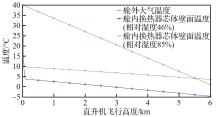
Fig.12
Variation curves of system performance with flight altitude
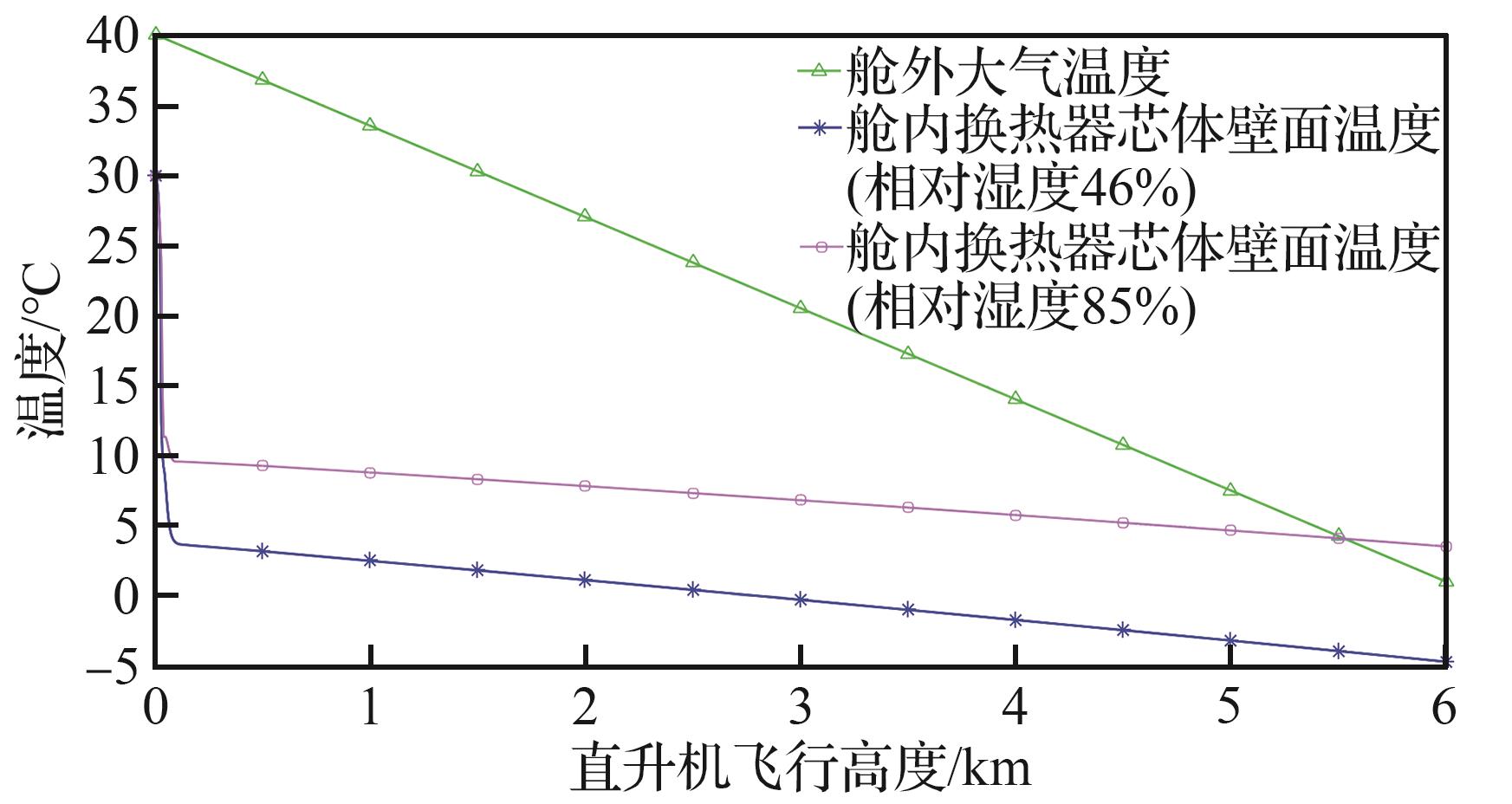
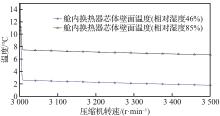
Fig.13
Variation curves of system performance with compressor speed
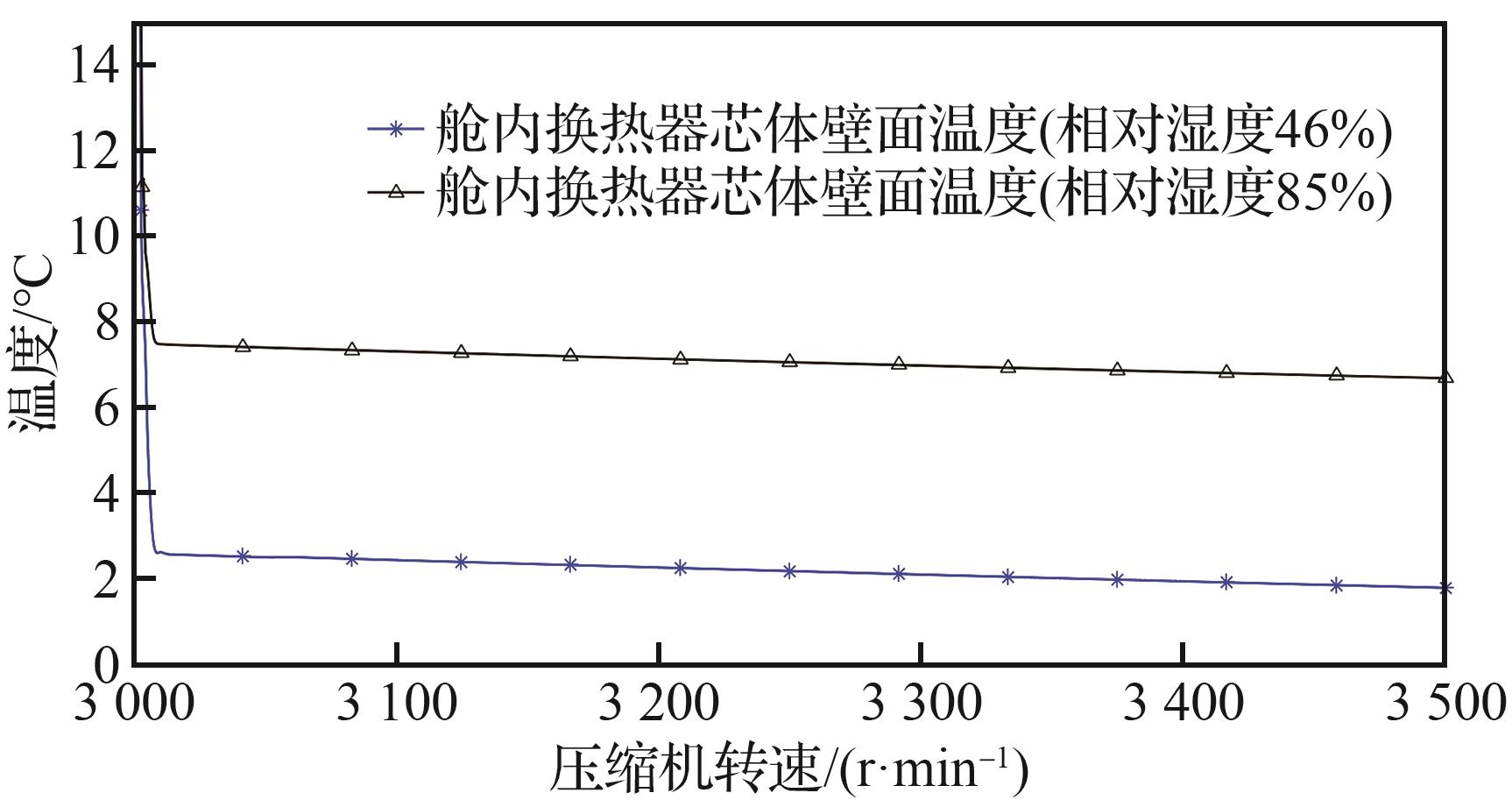
Table 4
Simulation conditions of introducing lubricating oil hot air
| 参数 | 数值 |
|---|---|
| 飞行高度/m | 0~6 000 |
| 舱内回风温度/℃ | 22 |
| 舱内回风相对湿度/% | 46 |
| 舱内换热风量/(m3·h-1) | 600 |
| 压缩机转速/(r·min-1) | 3 500 |
| 舱外换热风量/(m3·h-1) | 3 000 |
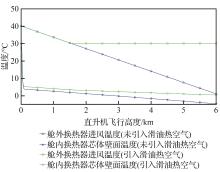
Fig.14
Performance simulation of thermal management system with lubricating oil hot air introduced
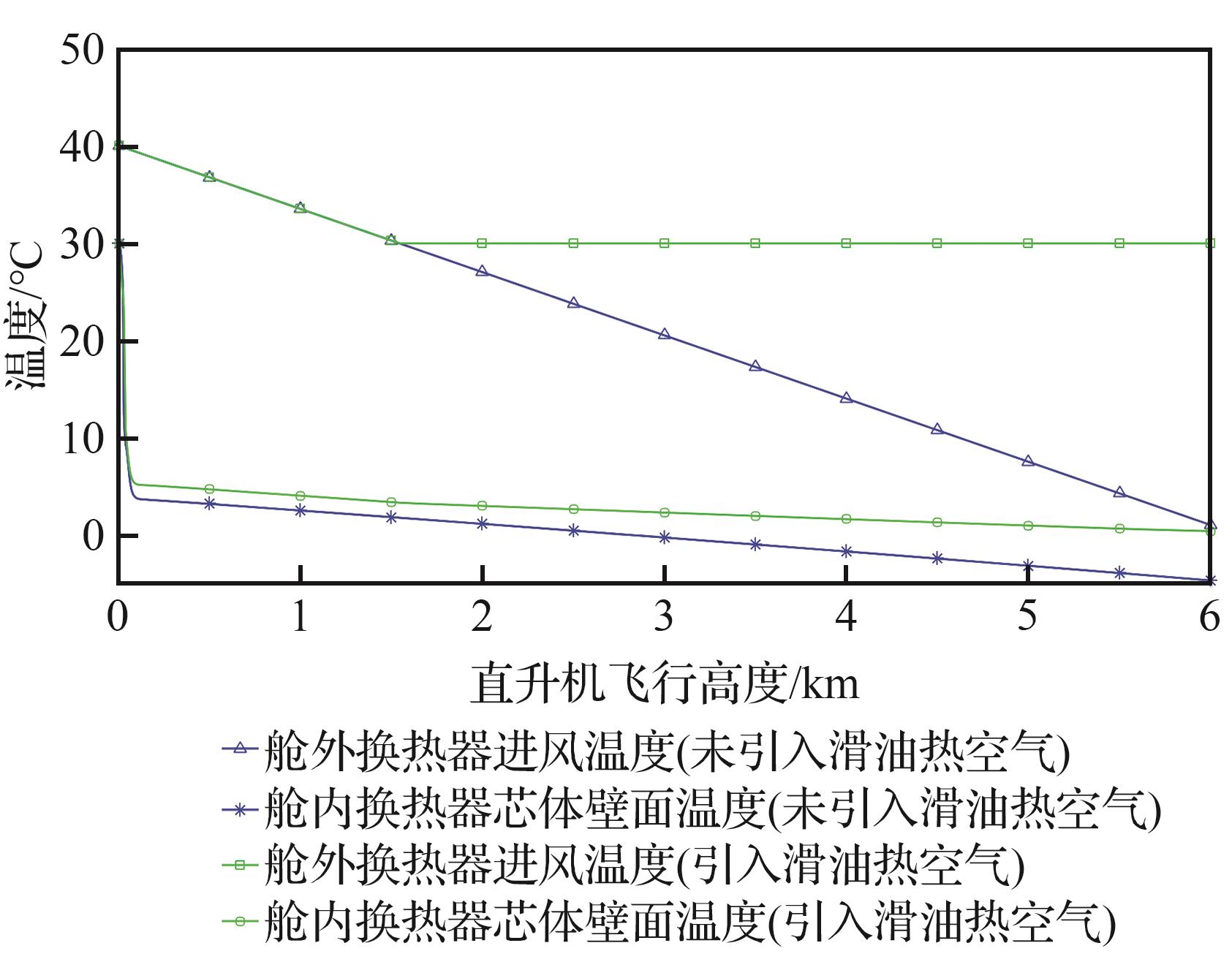
Table 5
Simulation conditions for waste heat recovery of lubricating oil in extremely cold environment
| 舱外大气温度/℃ | 舱内回风温度/℃ | 滑油温度/℃ | 滑油流量/(L·min-1) | 舱内换热风量/(m3·h-1) | 压缩机转速/(r·min-1) |
|---|---|---|---|---|---|
| -40 | -40 | 40 | 10~20 | 300~500 | 3 000~8 000 |
| -40 | -40 | 70 | 10~20 | 300~500 | 3 000~8 000 |
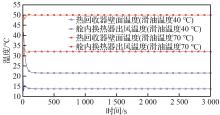
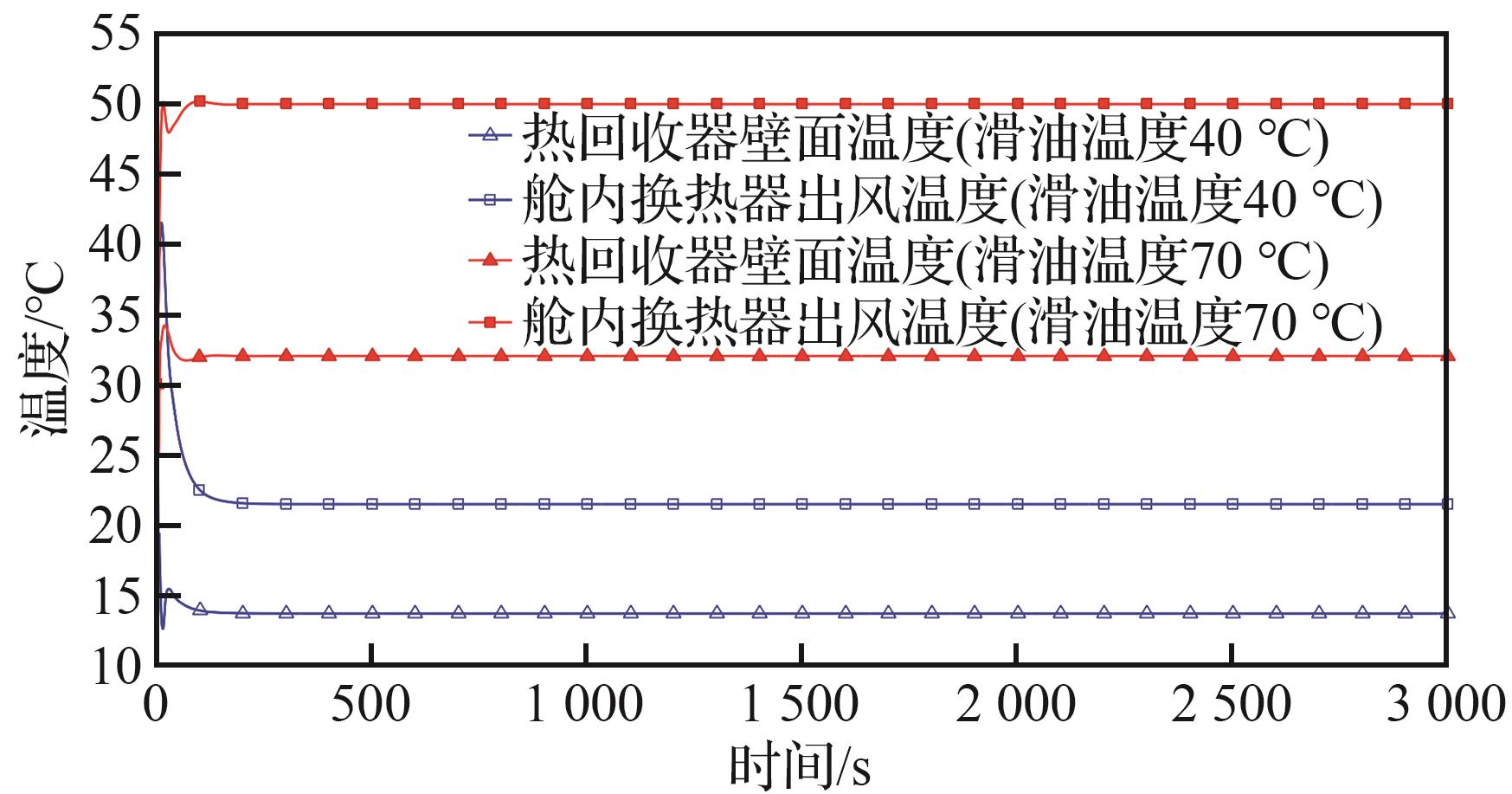
Fig.15
Temperature variation curves of air outlet from cabin heat exchanger and wall surface of heat recovery device
| [1] | 屠敏, 袁耿民, 薛飞, 等. 综合热管理在先进战斗机系统研制中的应用[J]. 航空学报, 2020, 41(6): 523629. |
| TU M, YUAN G M, XUE F, et al. Application of integrated thermal management in development of advanced fighter system[J]. Acta Aeronautica et Astronautica Sinica, 2020, 41(6): 523629 (in Chinese). | |
| [2] | LUO P G, SUN Z C, YUAN J Q, et al. Study on the application of dual-mode vapour compression cycle system in helicopter cabin thermal management[J]. IET Conference Proceedings, 2025, 2024(13): 29-34. |
| [3] | 李言青, 宣益民. 直升机热管理与红外辐射特性耦合分析方法[J]. 航空学报, 2021, 42(3): 124270. |
| LI Y Q, XUAN Y M. Coupling analysis method for helicopter thermal management and infrared radiation characteristics[J]. Acta Aeronautica et Astronautica Sinica, 2021, 42(3): 124270 (in Chinese). | |
| [4] | 滕润航, 贺克伦, 赵甜, 等. 飞行器能源与热管理系统中多能流统一建模与分析方法[J]. 航空学报, 2023, 44(19): 128427. |
| TENG R H, HE K L, ZHAO T, et al. Unified modeling and analysis method of multi-energy flow for aircraft energy and thermal management system[J]. Acta Aeronautica et Astronautica Sinica, 2023, 44(19): 128427 (in Chinese). | |
| [5] | PANG L P, LUO K, YUAN Y P, et al. Thermal performance of helicopter air conditioning system with lube oil source (LOS) heat pump[J]. Energy, 2020, 190: 116446. |
| [6] | PANG L P, MAO X D, LUO K. A novel oil source heat pump air-conditioning system for military helicopters: CN201910612601[P]. 2023-01-17. |
| [7] | PANG L P, MA D S, LUO K, et al. Performance of an integrated thermal management system for helicopter[J]. Energy, 2022, 239: 122292. |
| [8] | 邱君君, 张小松, 李玮豪. 无霜空气源热泵系统冬季除湿性能初步实验[J]. 化工学报, 2019, 70(4): 1605-1613. |
| QIU J J, ZHANG X S, LI W H. Experimental research on a novel frost-free air source heat pump system[J]. CIESC Journal, 2019, 70(4): 1605-1613 (in Chinese). | |
| [9] | 邱君君, 张小松, 李玮豪. 无霜空气源热泵系统冬季再生性能初步实验[J]. 制冷学报, 2019, 40(5): 26-31. |
| QIU J J, ZHANG X S, LI W H. Experimental research on a frost-free air source heat pump[J]. Journal of Refrigeration, 2019, 40(5): 26-31 (in Chinese). | |
| [10] | 李玮豪, 张小松. 无霜空气源热泵系统夏季运行性能初步实验[J]. 化工学报, 2018, 69(9): 3975-3982. |
| LI W H, ZHANG X S. Experimental research on a new type of frost-free air source heat pump system[J]. CIESC Journal, 2018, 69(9): 3975-3982 (in Chinese). | |
| [11] | 董雅洁, 李强, 张雪. 平流层电子设备温度特征的仿真与试验研究[J]. 南京理工大学学报, 2019, 43(1): 86-93. |
| DONG Y J, LI Q, ZHANG X. Numerical simulation and experiment for thermal behavior of stratospheric electronic equipment[J]. Journal of Nanjing University of Science and Technology, 2019, 43(1): 86-93 (in Chinese). | |
| [12] | 王瑜, 牛潜, 康娜, 等. 高空机载电子设备冷却方法综述与优选[J]. 科学技术与工程, 2021, 21(34): 14459-14470. |
| WANG Y, NIU Q, KANG N, et al. Comparison and optimization of cooling methods for airborne electronic equipment in high-altitude environment[J]. Science Technology and Engineering, 2021, 21(34): 14459-14470 (in Chinese). | |
| [13] | 王丽娟, 刘艳峰, 刘加平, 等. 空气温度与辐射温度不同时对人体散热的影响[J]. 暖通空调, 2019, 49(9): 78-81. |
| WANG L J, LIU Y F, LIU J P, et al. Effects of temperature differences between air and radiation on human thermal loss[J]. Heating Ventilating & Air Conditioning, 2019, 49(9): 78-81 (in Chinese). | |
| [14] | 鲍和云, 侯潇男, 陆凤霞, 等. 重型直升机前飞和悬停状态下主减速器舱流场与通风散热分析[J]. 中南大学学报(自然科学版), 2021, 52(5): 1473-1481. |
| BAO H Y, HOU X N, LU F X, et al. Analysis of flow field and ventilation and heat dissipation of main reducer cabin under condition of forward flight and hovering of heavy helicopter[J]. Journal of Central South University (Science and Technology), 2021, 52(5): 1473-1481 (in Chinese). | |
| [15] | 鲍和云, 范永, 朱如鹏, 等. 无人直升机主减舱散热性能分析[J]. 机械科学与技术, 2019, 38(9): 1327-1334. |
| BAO H Y, FAN Y, ZHU R P, et al. Analysis of heat dissipation performance of main reducer cabin for an unmanned helicopter[J]. Mechanical Science and Technology for Aerospace Engineering, 2019, 38(9): 1327-1334 (in Chinese). | |
| [16] | 罗坤, 毛晓东, 庞丽萍. 新型直升机热泵空调系统驾驶舱热控性能[J]. 化工学报, 2020, 71(): 187-193. |
| LUO K, MAO X D, PANG L P. Cockpit thermal control performance of new helicopter heat pump air conditioning system[J]. CIESC Journal, 2020, 71(Sup 1): 187-193 (in Chinese). | |
| [17] | 刘青青, 余延顺, 贺宇. 空气源热泵双蒸发器液体制冷剂交替除霜的可行性研究[J]. 暖通空调, 2020, 50(12): 97-103. |
| LIU Q Q, YU Y S, HE Y. Feasibility study on double-evaporator air-source heat pump systems for alternate defrosting with liquid refrigerant[J]. Heating Ventilating & Air Conditioning, 2020, 50(12): 97-103 (in Chinese). | |
| [18] | 汪琳琳, 焦鹏飞, 王伟 等. 新能源电动汽车低温热泵型空调系统研究[J]. 汽车工程, 2020, 42(12): 1744-1750. |
| WANG L L, JIAO P F, WANG W, et al. Research on low temperature heat pump air conditioning system in new energy electric vehicle[J]. Automotive Engineering, 2020, 42(12): 1744-1750 (in Chinese). | |
| [19] | 李萍, 谷波, 缪梦华. 废热回收型纯电动汽车热泵系统试验研究[J]. 上海交通大学学报, 2019, 53(4): 468-472. |
| LI P, GU B, MIAO M H. Experimental research on waste-heat recovery heat pump system in electric vehicles[J]. Journal of Shanghai Jiao Tong University, 2019, 53(4): 468-472 (in Chinese). | |
| [20] | 邵月月, 马国远, 王月月, 等. 多联式热泵驱动热管复合供热装置的实验研究[J]. 制冷学报, 2020, 41(4): 32-36, 67. |
| SHAO Y Y, MA G Y, WANG Y Y, et al. Experimental study on multi-connected heat pump/heat pipe heating device[J]. Journal of Refrigeration, 2020, 41(4): 32-36, 67 (in Chinese). | |
| [21] | 杨艺菲, 庄大伟, 丁国良, 等. 翅片表面涂层对结化霜除灰特性的影响[J]. 制冷学报, 2020, 41(5): 23-28, 41. |
| YANG Y F, ZHUANG D W, DING G L, et al. Effect of fin coating on dust removal via a frosting-defrosting process[J]. Journal of Refrigeration, 2020, 41(5): 23-28, 41 (in Chinese). | |
| [22] | 彭孝天, 冯诗愚, 李超越, 等. 制冷剂类型对机载蒸发循环系统性能影响[J]. 南京航空航天大学学报, 2020, 52(3): 478-484. |
| PENG X T, FENG S Y, LI C Y, et al. Performance of helicopter’s vapor refrigeration system with different refrigerants[J]. Journal of Nanjing University of Aeronautics & Astronautics, 2020, 52(3): 478-484 (in Chinese). | |
| [23] | 吴业正. 制冷与低温技术原理[M]. 北京: 高等教育出版社, 2004. |
| WU Y Z. Principles of refrigeration and cryogenic technology[M]. Beijing: Higher Education Press, 2004 (in Chinese). | |
| [24] | 罗平根, 曾曼成, 陈政, 等. 直升机发动机引气限流及温降特性研究[J]. 南京航空航天大学学报(自然科学版), 2025, 57(2): 236-242. |
| LUO P G, ZENG M C, CHEN Z, et al. Research on characteristics of helicopter engine bleed airflow limitation and temperature drop[J]. Journal of Nanjing University of Aeronautics & Astronautics (Natural Science Edition), 2025, 57(2): 236-242 (in Chinese). | |
| [25] | 盛健, 张华, 吴兆林, 等. 飞机环境控制系统制冷空调技术现状[J]. 制冷学报, 2020, 41(2): 22-33. |
| SHENG J, ZHANG H, WU Z L, et al. Present situation of refrigeration and air conditioning technology in aircraft environmental control system[J]. Journal of Refrigeration, 2020, 41(2): 22-33 (in Chinese). | |
| [26] | 肖晓劲, 袁修干. 直升机空气循环制冷系统方案比较[J]. 制冷学报, 2004, 25(3): 56-59. |
| XIAO X J, YUAN X G. Scheme comparison of air cycle refrigeration system on helicopter[J]. Refrigeration Journal, 2004, 25(3): 56-59 (in Chinese). | |
| [27] | 吴希明, 牟晓伟. 直升机关键技术及未来发展与设想[J]. 空气动力学学报, 2021, 39(3): 1-10. |
| WU X M, MU X W. A perspective of the future development of key helicopter technologies[J]. Acta Aerodynamica Sinica, 2021, 39(3): 1-10 (in Chinese). | |
| [28] | 朱虹, 常莉, 王辉. AC311直升机主减滑油温度偏高故障分析与改进[J]. 直升机技术, 2015(3): 39-44. |
| ZHU H, CHANG L, WANG H. Failure analysis and improvement of AC311 helicopter main gear box oil temperature on the high side[J]. Helicopter Technique, 2015(3): 39-44 (in Chinese). | |
| [29] | 杨颖, 宋岩, 陈春茂. 直升机主减速器润滑油研究进展[J]. 石油化工高等学校学报, 2020, 33(4): 14-21. |
| YANG Y, SONG Y, CHEN C M. An overview on the development of lubricating oil for helicopter’s main reducer[J]. Journal of Petrochemical Universities, 2020, 33(4): 14-21 (in Chinese). | |
| [30] | 李林蔚, 高红霞, 余建祖, 等. 某直升机主减速器滑油冷却系统设计[J]. 直升机技术, 2008(4): 37-41. |
| LI L W, GAO H X, YU J Z, et al. Design of one helicopter decelerator oil cooling system[J]. Helicopter Technique, 2008(4): 37-41 (in Chinese). | |
| [31] | 徐折贵, 艾欣. 温控阀对直升机主减速器散热系统性能的影响[J]. 直升机技术, 2022(1): 36-39. |
| XU Z G, AI X. Analysis on temperature control of helicopter main gearbox cooling system by thermostat[J]. Helicopter Technique, 2022(1): 36-39 (in Chinese). | |
| [32] | 陶文铨. 传热学[M]. 6版. 北京: 高等教育出版社, 2024. |
| TAO W Q. Heat transfer[M]. 6th ed. Beijing: Higher Education Press, 2024 (in Chinese). | |
| [33] | 寿荣中, 何慧姗. 飞行器环境控制[M]. 北京: 北京航空航天大学出版社, 2004. |
| SHOU R Z, HE H S. Spacecraft optimal control theory and method[M]. Beijing: Beijing University of Aeronautics & Astronautics Press, 2004 (in Chinese). | |
| [34] | 雷涛, 闵志豪, 付红杰, 等. 燃料电池无人机混合电源动态平衡能量管理策略[J]. 航空学报, 2020, 41(12): 324048. |
| LEI T, MIN Z H, FU H J, et al. Dynamic balanced energy management strategies for fuel-cell hybrid power system of unmanned air vehicle[J]. Acta Aeronautica et Astronautica Sinica, 2020, 41(12): 324048 (in Chinese). |
| [1] | Zhen ZHANG, Jianfeng TAN, Jinglong ZHAO, Linhai CHEN, Yuze YAN, Changliang LIN. Rapid prediction method of bullet damage morphology of helicopter aluminum alloy fuselage [J]. Acta Aeronautica et Astronautica Sinica, 2026, 47(1): 232015-232015. |
| [2] | Ying WANG, Yang LI, Chaoqian CHENG, Zongxia JIAO. Thermal load analysis for aeroengine oil system with extended flight profile [J]. Acta Aeronautica et Astronautica Sinica, 2026, 47(1): 632005-632005. |
| [3] | Linbo WU, Shu MENG, Wei ZHANG, Jianfeng TAN. Parameters of rotor arrangement for sand suppression in helicopter near-earth flight [J]. Acta Aeronautica et Astronautica Sinica, 2026, 47(1): 632003-632003. |
| [4] | Tao ZHANG, Pan LI, Zixu WANG, Zhenhua ZHU. Design of reward functions for helicopter attitude control in reinforcement learning [J]. Acta Aeronautica et Astronautica Sinica, 2025, 46(S1): 732184-732184. |
| [5] | Jianfeng TAN, Yuze YAN, Weiguo ZHANG, Yakui LIU, Tianshuang SHAO. Analysis method of helicopter blade erosion in brownout condition [J]. Acta Aeronautica et Astronautica Sinica, 2025, 46(9): 431012-431012. |
| [6] | Haiwang LI, Shenghan GAO, Gang XIE, Mingxing YU, Xunan HE. Multiple heat sink matching and regulation strategies for distributed thermal management system of hydrogen hybrid power system [J]. Acta Aeronautica et Astronautica Sinica, 2025, 46(9): 630951-630951. |
| [7] | Xiangyu YU, Wen LI, Jie YAN, Shizhe LIANG. Simulation research on thermal management system of fuel cell for liquid hydrogen powered UAV [J]. Acta Aeronautica et Astronautica Sinica, 2025, 46(9): 630964-630964. |
| [8] | Boyi ZHANG, Hong GUO, Jinquan XU, Longxian XUE, Zhongbing MA, Junxiang CHEN. Bidirectional transient interference suppression methodology in aviation HVDC electric power system [J]. Acta Aeronautica et Astronautica Sinica, 2025, 46(7): 330930-330930. |
| [9] | Zhuoran ZHANG, Jian ZHANG, Guangyuan HU, Han XUE, Hanqi LI, Li YU. Thermal management technologies of high-power-density high-efficiency electric machine systems for more electric aircraft [J]. Acta Aeronautica et Astronautica Sinica, 2025, 46(6): 531380-531380. |
| [10] | Ruicong ZHANG, Tianyu WANG, Yurong HE, Jiaqi ZHU, Jiecai HAN. Research progress and application perspectives on smart window scattering control technology [J]. Acta Aeronautica et Astronautica Sinica, 2025, 46(6): 531844-531844. |
| [11] | Shiyu YANG, Haiyu YU, Yuanfang LIN, Xingang LIANG. Performance analysis and optimization of fuel thermal management system with expendable heat sink [J]. Acta Aeronautica et Astronautica Sinica, 2025, 46(4): 130897-130897. |
| [12] | Weizhen CHENG, Zefeng WANG, Lisong GENG, Jiahong ZHENG, Shuaike JIAO, Kang LI. Flight test measurement for structural load of rotor blade based on fiber Bragg grating [J]. Acta Aeronautica et Astronautica Sinica, 2025, 46(24): 231863-231863. |
| [13] | Yong LIANG, Weiguo ZHANG, Binghui CHE, Honggang YUAN, Chunhua WEI, Ningmeng YANG. Wind tunnel tests of aeroacoustic characteristic for helicopter aircraft model [J]. Acta Aeronautica et Astronautica Sinica, 2025, 46(24): 132072-132072. |
| [14] | Luofeng WANG, Renliang CHEN, Rui FENG. Cross-medium rigid-flexible coupled modeling and trim analysis of helicopter mine-clearing system [J]. Acta Aeronautica et Astronautica Sinica, 2025, 46(22): 231900-231900. |
| [15] | Yu WU, Linke HE, Ruizhen LI, Zirui LIU, Zixiao XU, Weilin LI. Energy management strategy of hybrid aircraft based on stability [J]. Acta Aeronautica et Astronautica Sinica, 2025, 46(22): 331937-331937. |
| Viewed | ||||||
|
Full text |
|
|||||
|
Abstract |
|
|||||
Address: No.238, Baiyan Buiding, Beisihuan Zhonglu Road, Haidian District, Beijing, China
Postal code : 100083
E-mail:hkxb@buaa.edu.cn
Total visits: 6658907 Today visits: 1341All copyright © editorial office of Chinese Journal of Aeronautics
All copyright © editorial office of Chinese Journal of Aeronautics
Total visits: 6658907 Today visits: 1341

 CJA
CJA
