李思远1, 韩德强1( ), DEZERT Jean2, 杨艺3
收稿日期:2025-10-16
修回日期:2025-11-06
接受日期:2025-12-02
出版日期:2025-12-09
发布日期:2025-12-08
通讯作者:
韩德强
E-mail:deqhan@xjtu.edu.cn
基金资助:
Siyuan LI1, Deqiang HAN1(), Jean DEZERT2, Yi YANG3
Received:2025-10-16
Revised:2025-11-06
Accepted:2025-12-02
Online:2025-12-09
Published:2025-12-08
Contact:
Deqiang HAN
E-mail:deqhan@xjtu.edu.cn
Supported by:摘要:
Dempster-Shafer证据理论是一种用于不确定性建模与推理的理论框架,其中证据建模是关键环节之一。现有证据建模方法各有优劣,如能综合利用则有望达到更优的建模效果。显式地使用多种证据建模方法再融合的效率较低,因此提出了一种基于深度学习的多方法联合端到端证据建模方法。通过训练一个深度网络,学习从训练样本特征到作为广义训练标签的融合证据函数的映射关系,以此实现多方法联合端到端证据建模。在UCI数据集、遥感图像数据集上的实验结果表明:提出的证据建模方法相比于对比的单一证据建模方法,可以达到更优的分类性能。
中图分类号:
李思远, 韩德强, DEZERT Jean, 杨艺. 利用学习机制的多方法融合端到端证据建模[J]. 航空学报, 2026, 47(12): 332927.
Siyuan LI, Deqiang HAN, Jean DEZERT, Yi YANG. Learning-based BBA modeling approach with multi-method fusion[J]. Acta Aeronautica et Astronautica Sinica, 2026, 47(12): 332927.
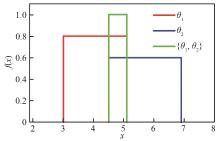
图 1
用区间数对不同类别进行表征
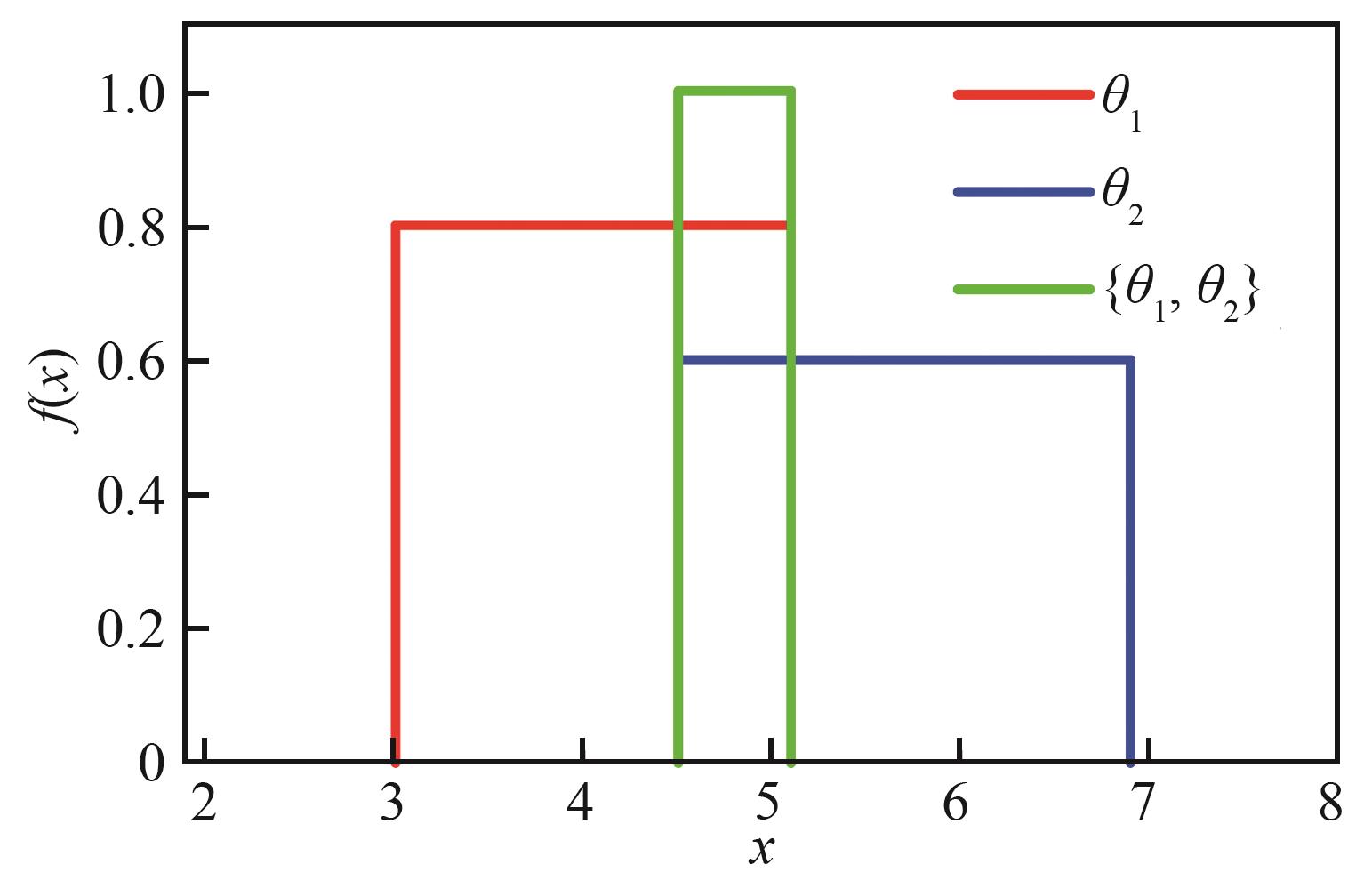
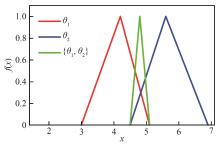
图 2
用三角模糊数对不同类别进行表征
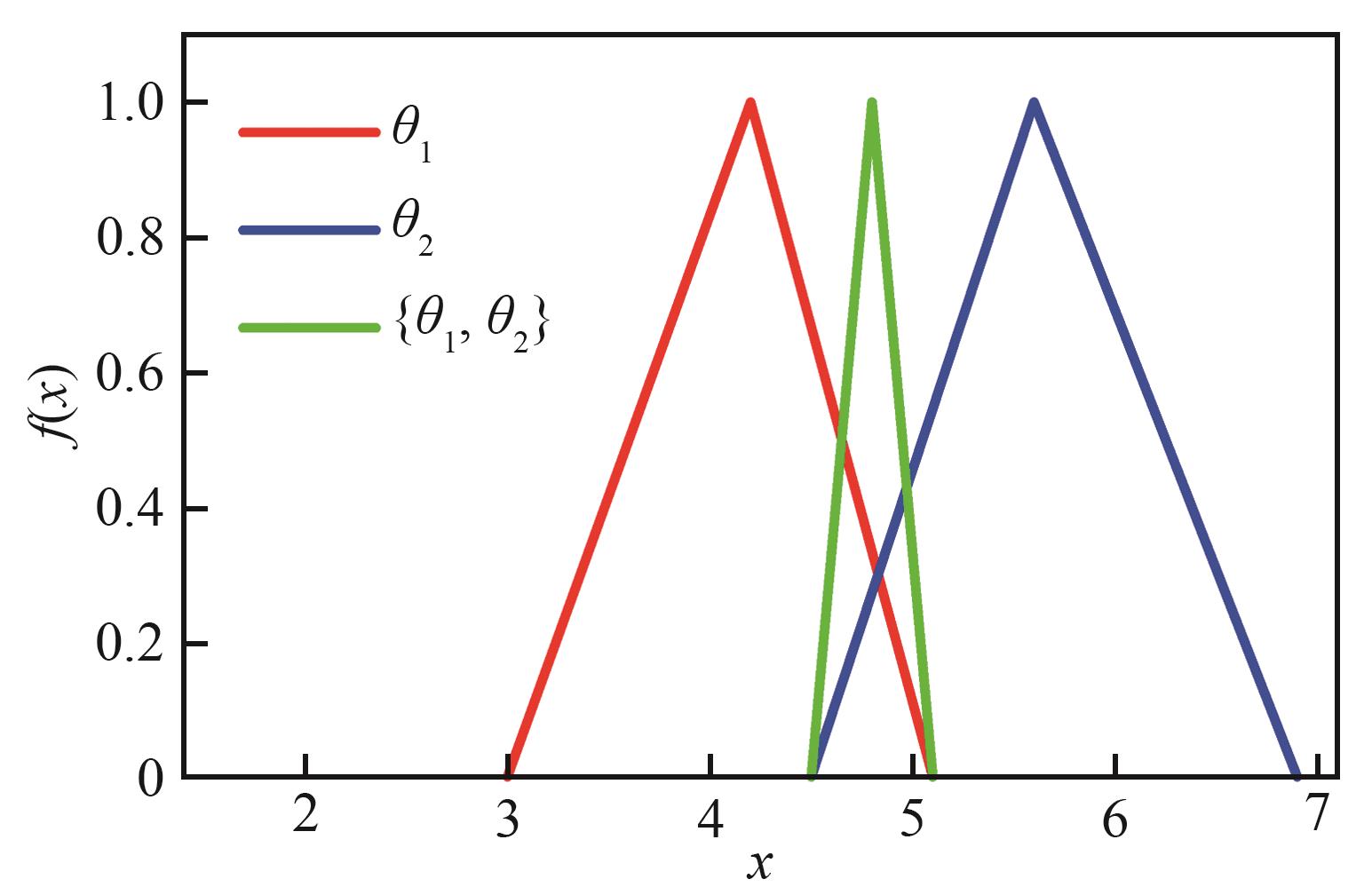
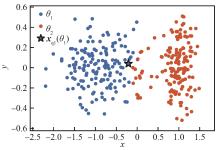
图 3
类别θ1样本高斯分布、类别θ2样本偏态分布的数据
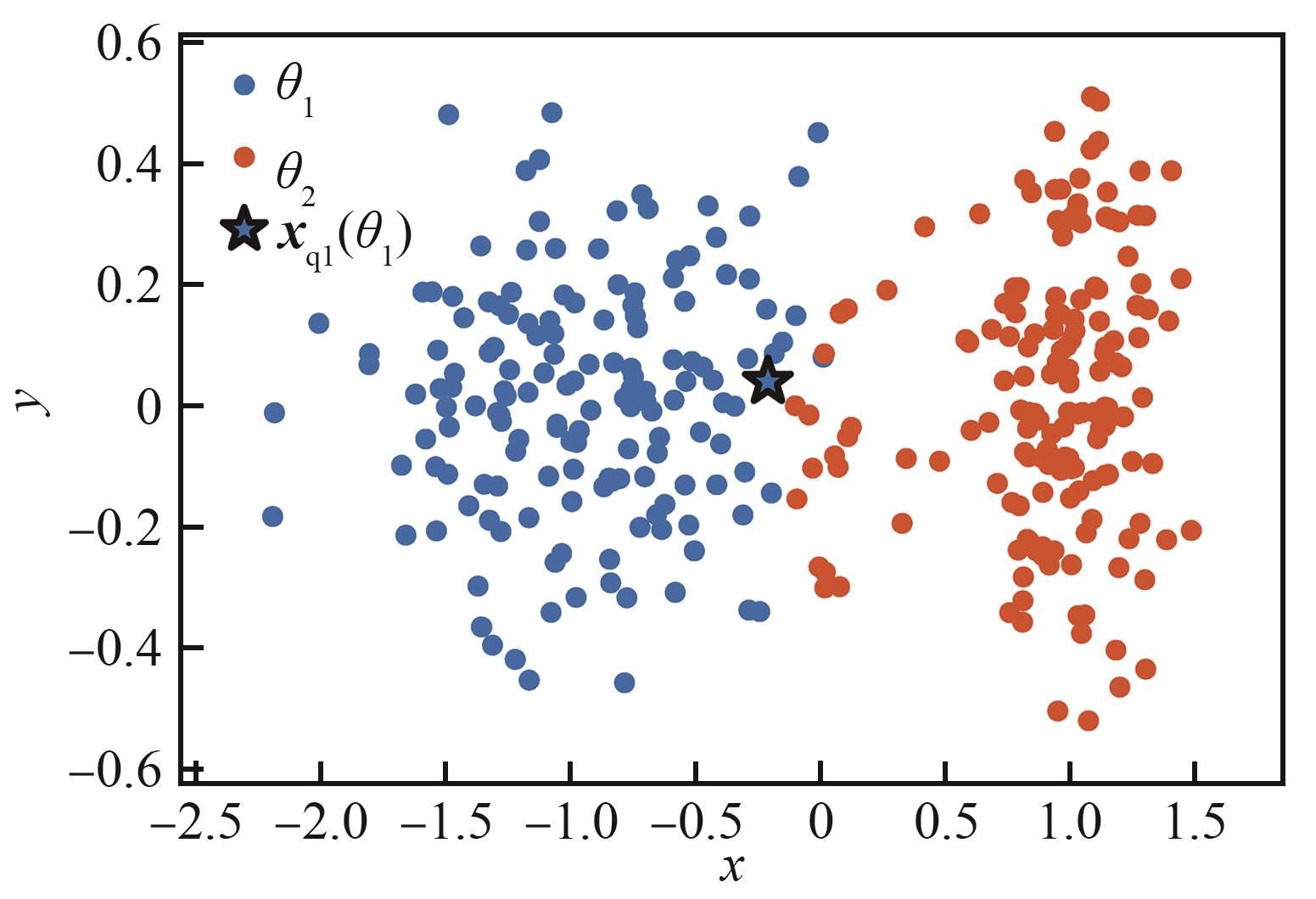
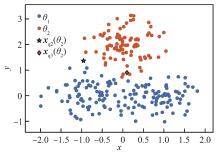
图 4
类别θ1样本双峰分布、类别θ2样本高斯分布的数据
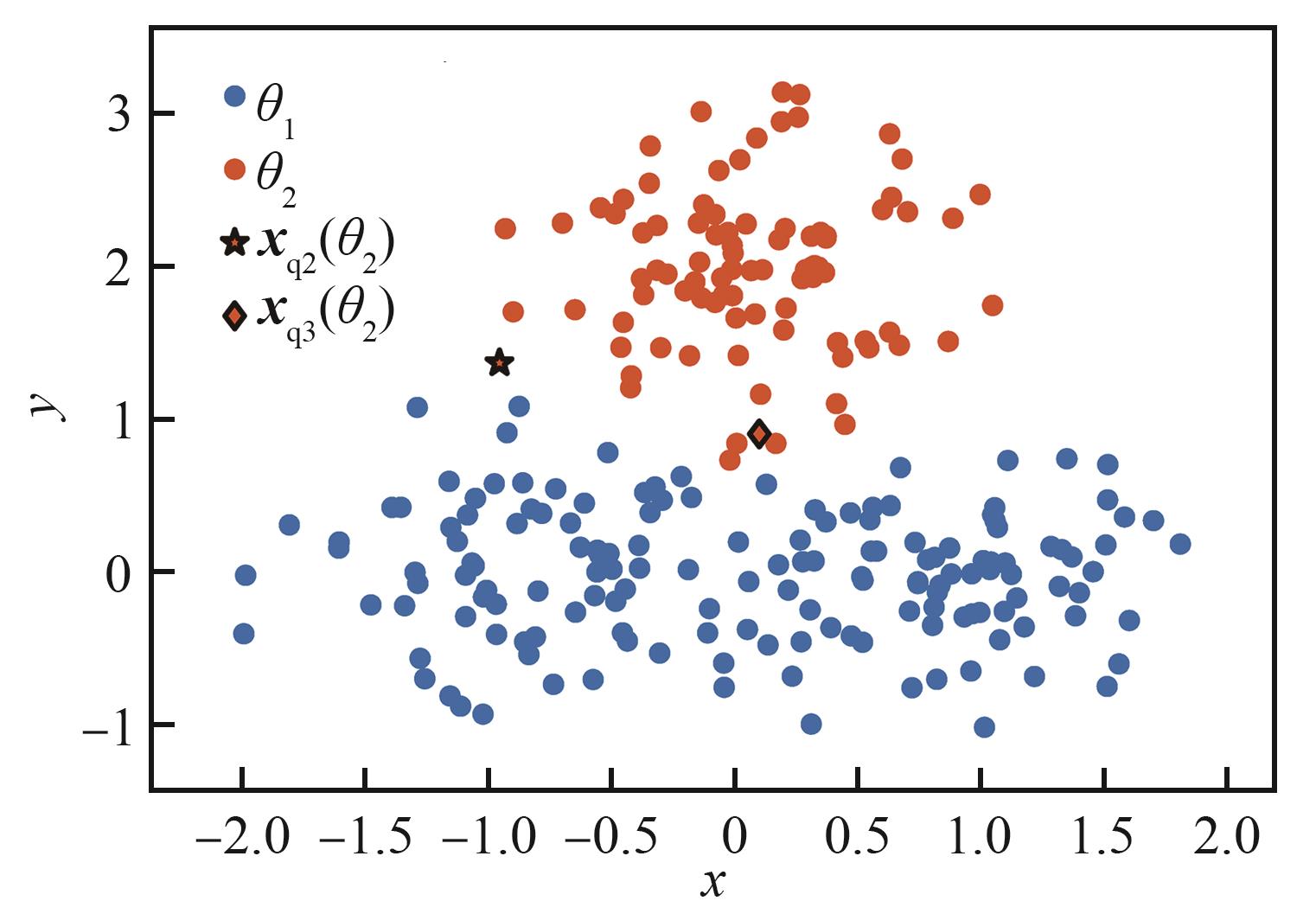
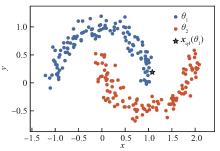
图 5
月牙形数据集
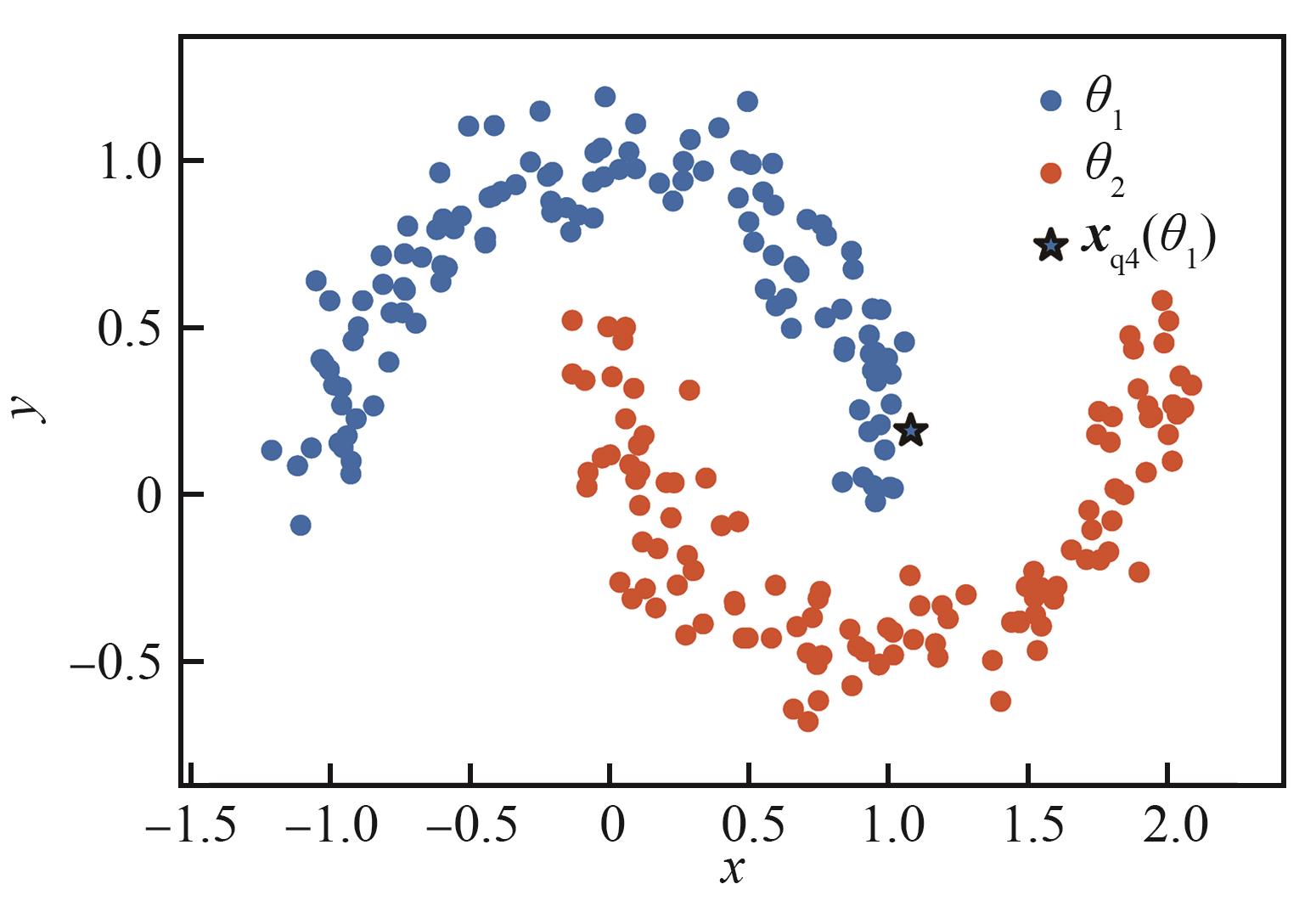
表1
4种证据建模方法对不同样本的建模结果
| 样本坐标 | 证据建模结果 | 分类决策 | |
|---|---|---|---|
| xq1(类别 | m m m m m m m | [0.495, 0.505] [0.515, 0.485] [0.527, 0.473] [0.999, 0.001] [0.880, 0.120] [0.999, 0.001] [0.634, 0.366] | 错误 正确 正确 正确 正确 正确 正确 |
| xq2(类别 | m m m m m m m | [0.455, 0.545] [0.448, 0.552] [0.381, 0.619] [0.550, 0.450] [0.437, 0.563] [0.389, 0.611] [0.459, 0.541] | 正确 正确 正确 错误 正确 正确 正确 |
| xq3(类别 | m m m m m m m | [0.487, 0.513] [0.502, 0.498] [0.503, 0.497] [0, 1] [0.133, 0.867] [0, 1] [0.373, 0.627] | 正确 错误 错误 正确 正确 正确 正确 |
| xq4(类别 | m m m m m m m | [0.425, 0.575] [0.3945, 0.6055] [0.1205, 0.8795] [1,0] [0.545, 0.455] [0.999, 0.001] [0.485, 0.515] | 错误 错误 错误 正确 正确 正确 正确 |
表2
不同证据建模方法特点对比
| 方法 | 表征方式 | 优势 | 局限 |
|---|---|---|---|
| 基于区间数的证据建模 | 区间数 | 适用于分布均匀的数据 | 对偏态分布表征能力较弱 |
| 基于三角模糊数的证据建模 | 三角模糊数 | 适用于单峰分布的数据 | 多峰分布下建模能力不足 |
| 证据c均值 | 聚类质心 | 对于超球体分布的数据建模效果较好 | 不适用于非超球体(如月牙形、螺旋形)数据分布 |
| 证据k近邻 | 邻域样本分布 | 可建模部分非超球体分布的数据 | 损失全局信息,可能影响建模效果 |
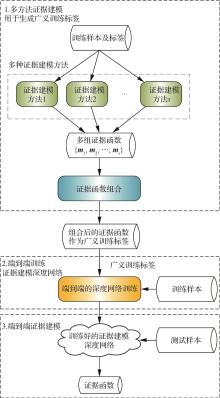
图 6
本方法中证据建模的3个阶段
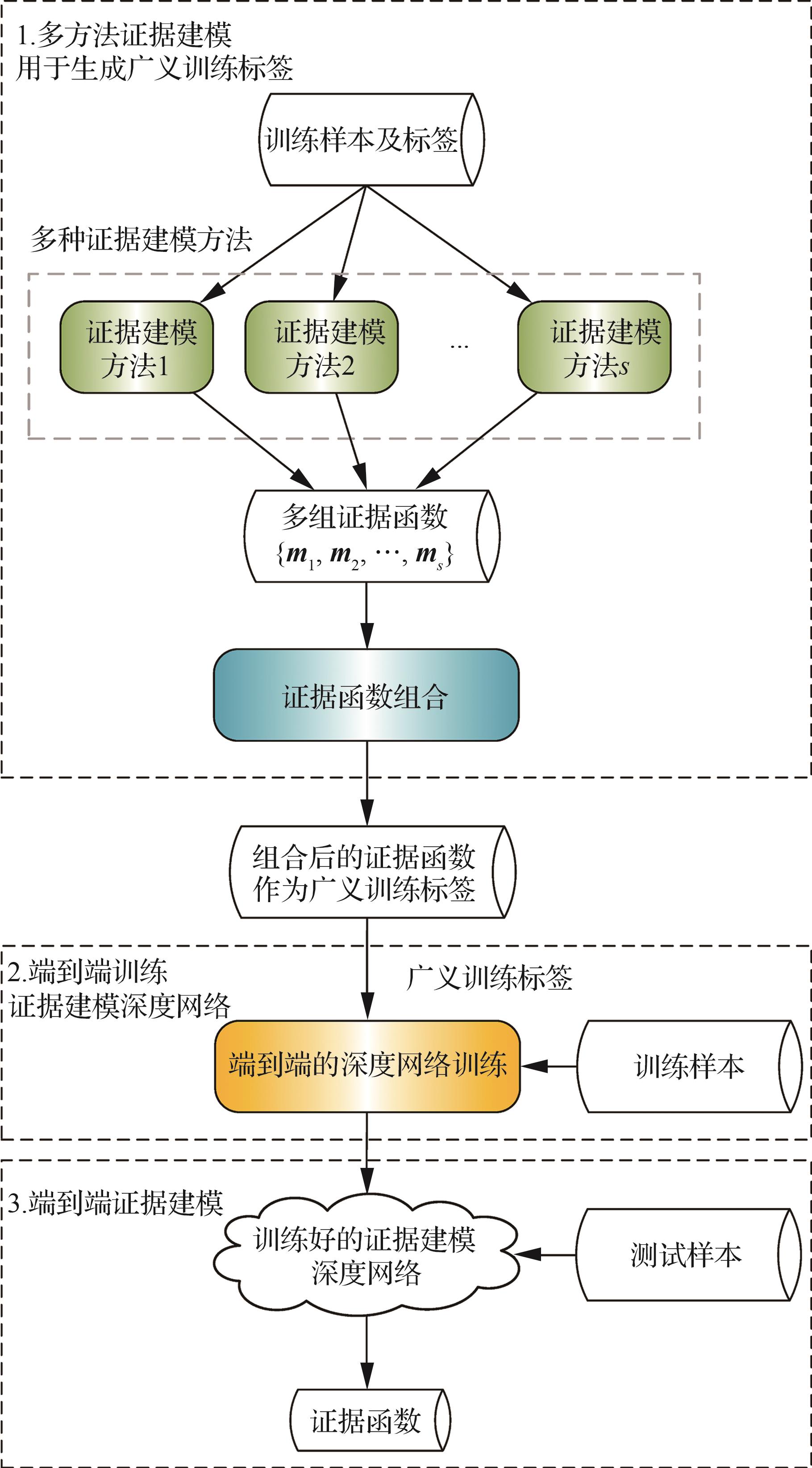
表3
使用4种证据建模方法分别对xi 进行建模
| 证据建模方法 | m | m | m |
|---|---|---|---|
| 基于区间数的证据建模 | 0.8 | 0.1 | 0.1 |
| 基于三角模糊数的证据建模 | 0.7 | 0.2 | 0.1 |
| 证据c均值 | 0.5 | 0.1 | 0.4 |
| 证据k近邻 | 0.4 | 0.4 | 0.2 |
表4
不同证据组合规则融合对xi 的多方法证据建模结果
| 证据组合规则 | m | m | m |
|---|---|---|---|
| 平均组合 | 0.600 | 0.200 | 0.200 |
| Dempster组合 | 0.956 | 0.042 | 0.020 |
| PCR6组合 | 0.807 | 0.131 | 0.062 |
表5
仿真实验中使用的数据集信息
| 方法 | 简写 |
|---|---|
利用学习机制的多方法融合端到端证据建模 使用PCR6组合规则 | LBMMF PCR6 |
利用学习机制的多方法融合端到端证据建模 使用Dempster组合规则 | LBMMF Demp |
利用学习机制的多方法融合端到端证据建模 使用平均组合规则 | LBMMF Ave |
| 证据c均值 | ECM |
| 证据k近邻 | EKNN |
| 基于区间数的证据建模方法 | BBA IN |
| 基于三角模糊数的证据建模方法 | BBA TN |
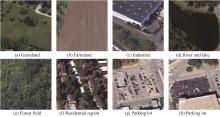
图 7
RSSCN7航空遥感图像数据集
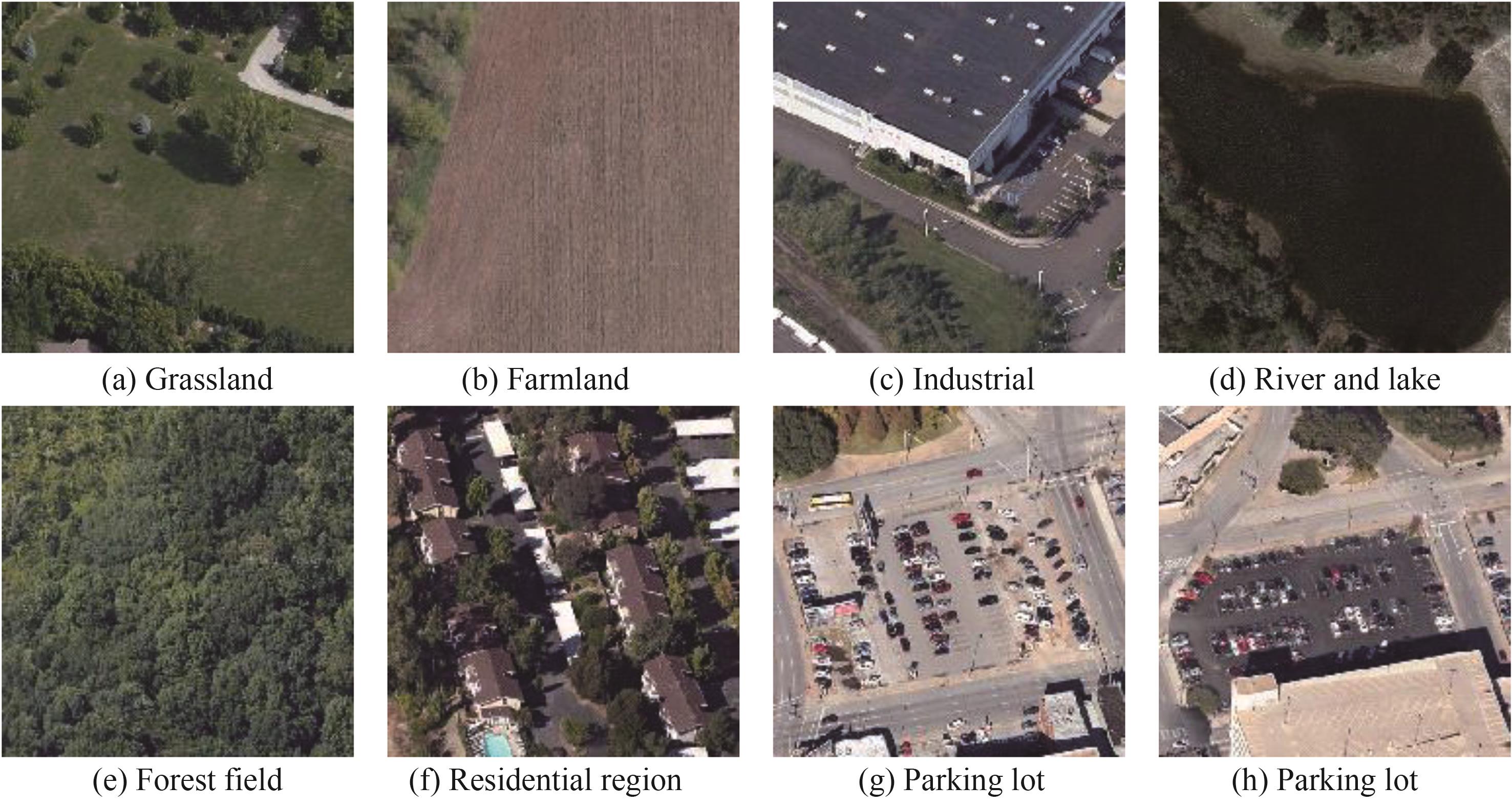
表6
本文使用的数据集信息
| 序号 | 数据集 | 样本数量 | 类别数量 |
|---|---|---|---|
| 1 | Balancescale | 625 | 3 |
| 2 | Banana | 500 | 2 |
| 3 | CIFAR-10 | 24 000 | 4 |
| 4 | Haberman | 306 | 2 |
| 5 | Ionosphere | 351 | 2 |
| 6 | Liver | 345 | 2 |
| 7 | Pima | 768 | 2 |
| 8 | RSSCN7 | 1 200 | 3 |
| 9 | Thyroid | 215 | 3 |
| 10 | Vertebral | 310 | 3 |
| 11 | Waveform | 5 000 | 3 |
| 12 | Weather | 1 125 | 4 |
| 13 | Wine | 178 | 3 |
表7
属于类别θu的样本分类混淆矩阵
| 真实标签 | 预测标签 | |
|---|---|---|
| 属于类别 | 不属于类别 | |
| 属于类别 | ||
| 不属于类别 | ||
表8
使用不同建模方法获取的证据函数在分类任务上的表现 (%)
| 数据集 | 评估指标 | LBMMF PCR6 | LBMMF Demp | LBMMF Ave | ECM | EKNN | BBA IN | BBA TN |
|---|---|---|---|---|---|---|---|---|
| Balancescale | Accuracy | 89.32±1.89 | 85.56±2.71 | 88.76±1.56 | 80.92±2.06 | 82.84±1.71 | 69.84±2.09 | 77.96±1.85 |
| Precision | 71.90±3.74 | 67.65±3.68 | 69.89±3.44 | 72.79±1.86 | 59.32±1.57 | 61.93±1.70 | 67.50±1.67 | |
| Recall | 67.42±2.00 | 64.11±1.90 | 66.56±2.06 | 80.27±2.62 | 59.82±1.44 | 61.13±2.40 | 69.94±2.25 | |
| F1-score | 67.07±2.45 | 63.05±2.13 | 65.96±2.41 | 71.37±2.21 | 59.46±1.35 | 57.94±1.71 | 65.75±1.91 | |
| Banana | Accuracy | 82.95±2.02 | 85.65±1.98 | 79.60±1.93 | 77.05±1.95 | 84.55±1.70 | 74.25±2.03 | 77.55±1.95 |
| Precision | 84.83±2.17 | 86.72±2.27 | 82.57±2.16 | 80.81±2.48 | 85.31±2.17 | 79.36±2.54 | 80.76±2.42 | |
| Recall | 82.13±2.44 | 85.96±2.24 | 77.65±2.26 | 74.13±2.21 | 85.59±2.20 | 69.35±2.37 | 75.35±2.21 | |
| F1-score | 83.36±2.15 | 86.22±2.02 | 79.94±2.03 | 77.19±2.09 | 85.29±1.78 | 73.84±2.17 | 77.84±2.10 | |
| CIFAR-10 | Accuracy | 93.72±0.72 | 95.30±0.82 | 93.42±0.72 | 92.54±0.82 | 91.53±0.67 | 90.08±0.74 | 90.08±0.78 |
| Precision | 94.85±0.74 | 96.01±0.83 | 94.44±0.77 | 93.50±0.87 | 90.14±0.61 | 92.50±0.74 | 87.15±0.71 | |
| Recall | 88.21±0.65 | 91.39±0.84 | 87.75±0.65 | 86.16±0.85 | 88.51±0.65 | 80.42±0.71 | 87.11±0.75 | |
| F1-score | 91.29±0.73 | 93.54±0.83 | 90.86±0.81 | 89.59±0.80 | 89.21±0.68 | 85.89±0.69 | 86.97±0.78 | |
| Haberman | Accuracy | 74.35±2.31 | 74.44±2.05 | 73.31±2.27 | 72.98±2.15 | 69.68±1.99 | 67.74±2.60 | 65.97±2.91 |
| Precision | 54.94±3.65 | 53.99±3.71 | 52.48±3.39 | 49.96±3.36 | 39.11±3.45 | 42.17±3.38 | 41.74±3.05 | |
| Recall | 37.66±3.42 | 36.48±3.59 | 37.20±3.35 | 46.04±3.64 | 31.66±2.87 | 34.56±3.23 | 51.52±3.64 | |
| F1-score | 43.72±3.36 | 42.62±3.48 | 42.48±3.12 | 47.24±3.37 | 37.43±2.99 | 36.28±2.71 | 44.92±2.97 | |
| Ionosphere | Accuracy | 83.59±1.90 | 82.11±2.37 | 80.70±2.74 | 80.99±2.50 | 81.48±2.65 | 71.20±2.71 | 75.28±2.36 |
| Precision | 80.62±2.20 | 79.52±2.47 | 78.84±2.78 | 85.36±2.02 | 79.36±2.79 | 69.76±2.47 | 79.72±2.07 | |
| Recall | 97.82±1.34 | 97.51±1.70 | 96.88±2.30 | 84.35±3.12 | 97.24±1.88 | 96.87±2.40 | 82.02±3.19 | |
| F1-score | 88.29±1.66 | 87.43±1.91 | 86.58±2.17 | 84.59±2.48 | 87.09±2.10 | 80.96±2.29 | 80.46±2.33 | |
| Liver | Accuracy | 60.22±1.95 | 59.64±2.88 | 56.67±2.50 | 56.30±1.92 | 58.48±2.45 | 51.67±2.48 | 54.42±2.41 |
| Precision | 62.50±2.48 | 65.14±2.97 | 64.08±2.73 | 64.36±2.90 | 66.13±2.82 | 62.43±3.72 | 61.51±3.14 | |
| Recall | 70.10±2.59 | 54.34±3.98 | 47.78±3.99 | 46.78±2.67 | 50.36±3.85 | 30.20±3.83 | 43.03±3.69 | |
| F1-score | 65.73±2.05 | 58.41±3.52 | 53.27±3.41 | 53.72±2.35 | 55.94±3.17 | 38.74±3.69 | 49.72±3.38 | |
| Pima | Accuracy | 74.71±1.94 | 75.49±1.90 | 74.55±1.95 | 73.96±1.75 | 73.86±1.81 | 72.11±2.07 | 70.13±2.28 |
| Precision | 65.08±2.67 | 67.01±2.68 | 64.52±2.48 | 61.20±2.19 | 65.42±2.39 | 62.41±2.80 | 56.11±2.66 | |
| Recall | 60.33±2.79 | 59.23±2.94 | 60.15±2.82 | 69.30±2.29 | 53.58±2.69 | 50.79±3.19 | 66.03±2.83 | |
| F1-score | 62.28±2.46 | 62.50±2.53 | 62.05±2.51 | 64.90±2.09 | 58.64±2.38 | 55.50±2.86 | 60.57±2.67 | |
| RSSCN7 | Accuracy | 86.35±1.46 | 87.92±1.95 | 82.98±1.43 | 80.88±2.38 | 84.35±1.46 | 83.38±2.14 | 84.06±1.58 |
| Precision | 86.43±1.45 | 88.67±1.83 | 83.23±1.49 | 83.50±2.40 | 84.43±1.45 | 83.57±2.11 | 84.14±1.62 | |
| Recall | 86.35±1.47 | 87.95±1.87 | 82.93±1.41 | 80.73±2.27 | 84.35±1.47 | 83.25±2.03 | 84.01±1.61 | |
| F1-score | 86.31±1.45 | 87.76±1.97 | 82.83±1.49 | 84.72±2.63 | 84.31±1.45 | 82.12±2.12 | 83.83±1.61 | |
| Thyroid | Accuracy | 95.23±1.58 | 95.23±1.67 | 90.81±2.40 | 92.56±1.93 | 93.84±1.72 | 72.56±4.20 | 70.70±3.85 |
| Precision | 97.04±1.69 | 96.73±1.74 | 93.36±2.98 | 96.75±1.26 | 96.82±1.33 | 71.07±3.99 | 70.54±3.11 | |
| Recall | 90.67±2.22 | 90.93±2.33 | 82.44±3.05 | 84.45±2.69 | 87.50±2.50 | 82.77±2.98 | 83.52±2.61 | |
| F1-score | 93.16±1.88 | 93.15±1.99 | 85.68±3.01 | 88.90±2.34 | 90.90±2.17 | 70.35±4.08 | 69.26±3.78 | |
| Vertebral | Accuracy | 78.23±2.17 | 80.40±2.17 | 74.60±2.41 | 74.92±2.27 | 78.55±2.08 | 69.84±2.41 | 70.32±2.44 |
| Precision | 75.11±2.33 | 77.09±2.44 | 72.05±2.74 | 72.02±2.46 | 74.35±2.45 | 68.52±2.35 | 68.00±2.47 | |
| Recall | 76.37±2.25 | 78.62±2.32 | 72.68±2.54 | 73.29±2.41 | 74.19±2.45 | 70.51±2.43 | 69.09±2.36 | |
| F1-score | 74.43±2.32 | 76.93±2.42 | 70.10±2.71 | 71.23±2.45 | 73.43±2.51 | 65.73±2.65 | 65.25±2.61 | |
| Waveform | Accuracy | 80.90±1.45 | 82.55±1.28 | 78.49±1.68 | 79.19±1.02 | 77.24±1.09 | 65.22±2.36 | 65.83±2.47 |
| Precision | 82.20±1.29 | 83.13±1.22 | 80.17±1.54 | 83.17±0.88 | 77.23±1.09 | 67.98±2.56 | 66.88±2.66 | |
| Recall | 81.04±1.42 | 82.63±1.27 | 78.65±1.66 | 79.47±0.96 | 77.27±1.09 | 65.53±2.36 | 66.08±2.47 | |
| F1-score | 80.50±1.51 | 82.36±1.31 | 77.89±1.77 | 77.80±1.06 | 77.21±1.09 | 62.91±2.50 | 64.39±2.52 | |
| Weather | Accuracy | 92.55±1.10 | 92.17±1.14 | 91.58±1.10 | 90.31±1.06 | 90.46±0.99 | 89.26±1.89 | 90.18±1.33 |
| Precision | 92.00±1.76 | 90.97±1.78 | 91.02±1.76 | 89.08±1.54 | 88.41±1.59 | 87.09±1.70 | 88.96±1.64 | |
| Recall | 89.88±1.78 | 89.79±1.63 | 87.96±1.88 | 88.15±1.71 | 89.27±1.51 | 84.08±3.02 | 86.72±2.09 | |
| F1-score | 91.35±1.37 | 90.33±1.41 | 89.38±1.38 | 90.56±1.26 | 88.80±1.24 | 85.71±2.49 | 87.73±1.65 | |
| Wine | Accuracy | 93.89±2.00 | 97.36±1.50 | 91.25±2.25 | 95.56±1.72 | 96.67±1.86 | 83.47±3.24 | 86.11±3.07 |
| Precision | 93.51±2.15 | 97.06±1.57 | 91.34±2.30 | 95.45±1.82 | 96.53±1.89 | 85.91±2.72 | 87.37±2.75 | |
| Recall | 94.42±1.98 | 97.74±1.38 | 92.03±2.11 | 95.96±1.62 | 97.12±1.67 | 85.85±2.78 | 87.84±2.73 | |
| F1-score | 93.50±2.16 | 97.22±1.52 | 90.90±2.32 | 95.37±1.78 | 96.52±1.87 | 82.13±3.43 | 85.24±3.19 | |
| 分类准确率平均排名 | 1.962 | 1.423 | 4.000 | 4.462 | 3.538 | 6.577 | 6.038 | |
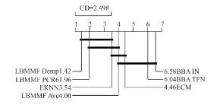
图 8
各方法的平均排名以及Friedman检验结果
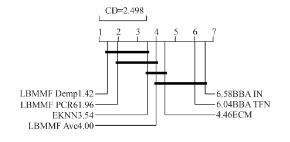
表9
样本平均证据建模时间
| 数据集 | 建模时间/ms | ||||||
|---|---|---|---|---|---|---|---|
| LBMMF PCR6 | LBMMF Demp | LBMMF Ave | ECM | EKNN | BBA IN | BBA TN | |
| Balancescale | 1.39 | 1.50 | 1.41 | 1.94 | 43.27 | 10.14 | 12.13 |
| Banana | 1.52 | 1.53 | 1.64 | 1.60 | 41.37 | 3.57 | 4.72 |
| CIFAR-10 | 6.72 | 6.59 | 6.57 | 7.34 | 338.27 | 14.98 | 19.07 |
| Haberman | 1.67 | 1.43 | 1.08 | 1.68 | 37.07 | 4.49 | 7.63 |
| Ionosphere | 2.52 | 2.11 | 2.42 | 1.36 | 40.34 | 11.77 | 15.53 |
| Liver | 1.91 | 1.46 | 1.46 | 1.49 | 40.02 | 12.20 | 17.80 |
| Pima | 1.42 | 1.65 | 1.01 | 1.65 | 51.89 | 11.23 | 16.07 |
| RSSCN7 | 1.48 | 1.45 | 1.42 | 1.48 | 61.27 | 17.18 | 19.62 |
| Thyroid | 2.12 | 2.76 | 2.51 | 2.09 | 33.12 | 18.14 | 19.90 |
| Vertebral | 1.77 | 1.79 | 1.69 | 1.83 | 34.75 | 28.26 | 31.92 |
| Waveform | 2.99 | 2.51 | 2.48 | 1.46 | 274.15 | 25.47 | 27.05 |
| Weather | 6.82 | 6.54 | 6.50 | 7.08 | 168.86 | 29.11 | 30.95 |
| Wine | 1.33 | 1.71 | 1.80 | 1.87 | 33.67 | 16.36 | 21.02 |
| [1] | SHAFER G. A Mathematical theory of evidence[M]. Princeton: Princeton University Press, 1976. |
| [2] | 尹东亮,黄晓颖, 吴艳杰, 等 . 基于云模型和改进D-S证据理论的目标识别决策方法[J].航空学报, 2021,42(12): 324768. |
| YIN D L, HUANG X Y, WU Y J, et al. Target recognition decision method based on cloud model and improved D-S evidence theory[J]. Acta Aeronautica et Astronautica Sinica, 2021, 42(12): 324768 (in Chinese). | |
| [3] | LV Y, ZHANG B F, YUE X D, et al. Selecting reliable instances based on evidence theory for transfer learning[J]. Expert Systems with Applications, 2024, 250: 123739. |
| [4] | BELMAHDI F, LAZRI M, OUALLOUCHE F, et al. Application of Dempster-Shafer theory for optimization of precipitation classification and estimation results from remote sensing data using machine learning[J]. Remote Sensing Applications: Society and Environment, 2023, 29: 100906. |
| [5] | DU S J, DU S H, LIU B, et al. Incorporating DeepLabv3+ and object-based image analysis for semantic segmentation of very high resolution remote sensing images[J]. International Journal of Digital Earth, 2021, 14(3): 357-378. |
| [6] | GARG H, LIMBOO B, DUTTA P. Multi-criteria group decision-making process using convex combination of q-rung orthopair basic probability assignment with application to medical diagnosis[J]. Engineering Applications of Artificial Intelligence, 2024, 133: 108421. |
| [7] | LI T, SUN J Y, FEI L G. Dempster-Shafer theory in emergency management: A review[J]. Natural Hazards, 2025, 121(6): 6413-6440. |
| [8] | MORADI M, KORDESTANI M, JALALI M, et al. Sensor and decision fusion-based intrusion detection and mitigation approach for connected autonomous vehicles[J]. IEEE Sensors Journal, 2024, 24(13): 20908-20919. |
| [9] | CHEN X Z, QIU W C, CHEN L X, et al. Fast and practical intrusion detection system based on federated learning for VANET[J]. Computers Security, 2024, 142: 103881. |
| [10] | WANG C, SONG Z K, FAN H R. Novel evidence theory-based reliability analysis of functionally graded plate considering thermal stress behavior[J]. Aerospace Science and Technology, 2024, 146: 108936. |
| [11] | SU X Y, HUANG X Y, PAN X L, et al. A dependence assessment method based on quantum model of mass function in human reliability analysis[J]. Expert Systems with Applications, 2026, 299: 129992. |
| [12] | 韩德强, 杨艺, 韩崇昭. DS证据理论研究进展及相关问题探讨[J]. 控制与决策, 2014, 29(1): 1-11. |
| HAN D Q, YANG Y, HAN C Z. Advances in DS evidence theory and related discussions[J]. Control and Decision, 2014, 29(1): 1-11 (in Chinese). | |
| [13] | SELZER F, GUTFINGER D. LADAR and FLIR based sensor fusion for automatic target classification[J]. Sensor Fusion: Spatial Reasoning and Scene Interpretation, 1989, 1003: 236. |
| [14] | VALENTE F, HERMANSKY H. Combination of acoustic classifiers based on Dempster-Shafer theory of evidence[C]∥2007 IEEE International Conference on Acoustics, Speech and Signal Processing - ICASSP ’07. Piscataway: IEEE Press, 2007: IV-1129-IV-1132. |
| [15] | HAN D Q, DEZERT J, TACNET J M, et al. A fuzzy-cautious OWA approach with evidential reasoning[C]∥2012 15th International Conference on Information Fusion. Piscataway: IEEE Press, 2012: 278-285. |
| [16] | 邱望仁, 刘晓东. 基于证据理论的模糊时间序列预测模型[J]. 控制与决策, 2012, 27(1): 99-103. |
| QIU W R, LIU X D. Fuzzy time series model for forecasting based on Dempster-Shafer theory[J]. Control and Decision, 2012, 27(1): 99-103 (in Chinese). | |
| [17] | MASSON M H, DENŒUX T. ECM: An evidential version of the fuzzy c-means algorithm[J]. Pattern Recognition, 2008, 41(4): 1384-1397. |
| [18] | 康兵义, 李娅, 邓勇, 等. 基于区间数的基本概率指派生成方法及应用[J]. 电子学报, 2012, 40(6): 1092-1096. |
| KANG B Y, LI Y, DENG Y, et al. Determination of basic probability assignment based on interval numbers and its application[J]. Acta Electronica Sinica, 2012, 40(6): 1092-1096 (in Chinese). | |
| [19] | ZHANG Z, HAN D Q, DEZERT J, et al. Determination of basic belief assignment using fuzzy numbers[C]∥ 2017 20th International Conference on Information Fusion (Fusion). Piscataway: IEEE Press, 2017: 1-6. |
| [20] | TANG Y C, WU D D, LIU Z J. A new approach for generation of generalized basic probability assignment in the evidence theory[J]. Pattern Analysis and Applications, 2021, 24(3): 1007-1023. |
| [21] | LI W, HAN D Q, DEZERT J, et al. Basic belief assignment determination based on radial basis function network[J]. Chinese Journal of Information Fusion, 2024, 1(3): 175-182. |
| [22] | JIANG W, ZHUANG M Y, XIE C H. A reliability-based method to sensor data fusion[J]. Sensors, 2017, 17(7): 1575. |
| [23] | FLOREA M C, JOUSSELME A L, GRENIER D, et al. Approximation techniques for the transformation of fuzzy sets into random sets[J]. Fuzzy Sets and Systems, 2008, 159(3): 270-288. |
| [24] | HAN D Q, HAN C Z, DENG Y. Novel approaches for the transformation of fuzzy membership function into basic probability assignment based on uncertainty optimization[J]. International Journal of Uncertainty, Fuzziness and Knowledge-Based Systems, 2013, 21(2): 289-322. |
| [25] | ZOU Q, NI L H, ZHANG T, et al. Deep learning based feature selection for remote sensing scene classification[J]. IEEE Geoscience and Remote Sensing Letters, 2015, 12(11): 2321-2325. |
| [26] | MURPHY C K. Combining belief functions when evidence conflicts[J]. Decision Support Systems, 2000, 29(1): 1-9. |
| [27] | SMARANDACHE F, DEZERT J. On the consistency of PCR6 with the averaging rule and its application to probability estimation[C]∥Proceedings of the 16th International Conference on Information Fusion. Piscataway: IEEE Press, 2013: 1119-1126. |
| [28] | YAGER R R. On the Dempster-Shafer framework and new combination rules[J]. Information Sciences, 1987, 41(2): 93-137. |
| [29] | YAN H L, HAN D Q, DONG B, et al. Evidence combination based on belief interval[C]∥2021 International Conference on Control, Automation and Information Sciences (ICCAIS). Piscataway: IEEE Press, 2021: 936-941. |
| [30] | SMETS P, KENNES R. The transferable belief model[J]. Artificial Intelligence, 1994, 66(2): 191-234. |
| [31] | SUDANO J J. Pignistic probability transforms for mixes of low-and high-probability events[DB/OL]. arXiv preprint: 1505.07751, 2015. |
| [32] | DENŒUX T, KANJANATARAKUL O, SRIBOONCHITTA S. EK-NNclus: A clustering procedure based on the evidential K-nearest neighbor rule[J]. Knowledge-Based Systems, 2015, 88: 57-69. |
| [33] | JOUSSELME A L, GRENIER D, BOSSÉ É. A new distance between two bodies of evidence[J]. Information Fusion, 2001, 2(2): 91-101. |
| [34] | JOUSSELME A L, LIU C S, GRENIER D, et al. Measuring ambiguity in the evidence theory[J]. IEEE Transactions on Systems, Man, and Cybernetics-Part A: Systems and Humans, 2006, 36(5): 890-903. |
| [35] | ASUNCION A, NEWMAN D. UCI machine learning repository[EB/OL]. (2007-11-01)[2025-09-10]. . |
| [36] | ZHOU S S, CHEN Q C, WANG X L. Convolutional deep networks for visual data classification[J]. Neural Processing Letters, 2013, 38(1): 17-27. |
| [37] | GBEMINIYI A. Multi-class weather dataset for image classification[J]. Mendeley Data, 2018, 6: 15-23. |
| [38] | FRIEDMAN M. The use of ranks to avoid the assumption of normality implicit in the analysis of variance[J]. Journal of the American Statistical Association, 1937, 32(200): 675-701. |
| [39] | DEMŠAR J. Statistical comparisons of classifiers over multiple data sets[J]. Journal of Machine Learning Research, 2006, 7: 1-30. |
| [1] | 马宇卓, 任侃, 李涛, 陈钱. 基于距离损失提升航空图像语义分割研究[J]. 航空学报, 2026, 47(8): 332780-332780. |
| [2] | 黄俊, 张菁, 翁世倩. 机载光电目标识别算法综述[J]. 航空学报, 2026, 47(6): 332601-332601. |
| [3] | 李乐言, 杨任农, 郭安新, 宋祺, 左家亮. 基于全域火力场的超视距空战威胁预测及动态逃逸方法[J]. 航空学报, 2026, 47(4): 332205-332205. |
| [4] | 冯子成, 张文龙, 刘冬辉, 于起峰. 复杂背景下反无人机红外目标鲁棒跟踪算法[J]. 航空学报, 2026, 47(4): 332264-332264. |
| [5] | 刘祥雨, 王刚, 王思远, 陈卓文. 数据-知识双驱动的编队目标意图识别方法[J]. 航空学报, 2026, 47(2): 332170-332170. |
| [6] | 刘延芳, 王洪悦, 鄂羽佳, 齐乃明. 迈向智能驱动的高超声速飞行器边界层主动质量引射减阻降热研究新范式[J]. 航空学报, 2026, 47(2): 132171-132171. |
| [7] | 朱林刚, 陈普会. 基于多源数据驱动的机体结构运维优化技术[J]. 航空学报, 2026, 47(12): 232789-232789. |
| [8] | 任若天, 赵理君, 赵旭阳, 张正, 李宏益, 薛新华, 唐娉. 知识引导下的遥感影像智能解译方法综述[J]. 航空学报, 2026, 47(10): 632103-632103. |
| [9] | 段韶华, 张淳杰, 刘传凯, 郑晓龙, 张济韬. 自回归与反馈驱动的自适应矩形卷积全色锐化网络[J]. 航空学报, 2026, 47(10): 532432-532432. |
| [10] | 李杰潘, 贺威, 唐明豪, 熊进. 灾前建筑物掩码引导的航天遥感建筑物受损变化检测方法[J]. 航空学报, 2026, 47(10): 532845-532845. |
| [11] | 舒世灏, 孟偲, 白相志, 史振威. 基于光照控制的月球表面精确着陆点定位算法[J]. 航空学报, 2026, 47(10): 532874-532874. |
| [12] | 陶冶, 汤锦辉, 闫震, 周臣, 王冲. 融合表征转换与模式回归的航迹插补方法[J]. 航空学报, 2026, 47(1): 332106-332106. |
| [13] | 徐建宇, 周莉, 王占学, 是介, 史毫. 基于快速逐线计算模型的高超声速羽流红外辐射计算方法[J]. 航空学报, 2025, 46(8): 630778-630778. |
| [14] | 罗越群, 丁达理, 谭目来, 刘屹东, 周欢. 无人作战飞机自主机动决策方法综述[J]. 航空学报, 2025, 46(7): 30877-030877. |
| [15] | 孟令捷, 李红光, 李新军. 基于地貌类别信息指导的SAR图像仿真方法[J]. 航空学报, 2025, 46(7): 331003-331003. |
| 阅读次数 | ||||||
|
全文 |
|
|||||
|
摘要 |
|
|||||
版权所有 © 航空学报编辑部
版权所有 © 2011航空学报杂志社
主管单位:中国科学技术协会 主办单位:中国航空学会 北京航空航天大学

 CJA
CJA
