李佳忆1, 司海青2, 董昊1( ), 仇静轩2, 夏天宇1
收稿日期:2025-08-11
修回日期:2025-09-16
接受日期:2025-10-22
出版日期:2025-11-03
发布日期:2025-10-30
通讯作者:
董昊
E-mail:donghao@nuaa.edu.cn
基金资助:
Jiayi LI1, Haiqing SI2, Hao DONG1(), Jingxuan QIU2, Tianyu XIA1
Received:2025-08-11
Revised:2025-09-16
Accepted:2025-10-22
Online:2025-11-03
Published:2025-10-30
Contact:
Hao DONG
E-mail:donghao@nuaa.edu.cn
Supported by:摘要:
动态失速是旋翼飞行器与风力机械工作过程中常见的非定常气动工况,其数值模拟结果在工程预测与机理分析中具有重要价值。然而当前多数研究仅通过单一模拟结果与试验数据进行比对,对各种数值参数导致的差异缺乏深入剖析,导致模拟结果的可靠性边界模糊,限制了计算流体力学(CFD)方法从复现走向预测的能力。针对NACA0012翼型在深度动态失速状态下的俯仰振荡流动,评估并量化了由关键建模选择所引入的认知不确定性的影响。系统性地考察了网格类型、湍流模型、压力速度耦合方式和边界条件等关键参数所导致的模拟结果差异,并通过时间历程曲线、迟滞环图谱等方式评估了数值模拟与试验数据的一致性。结果表明,在合理配置建模参数的前提下,模拟结果可进一步逼近试验数据,尤其是在关键的失速涡演化阶段表现出更高的可信度。通过系统的参数组合与对比分析,总结出了一套具有较高稳定性和精度的数值模拟建模参考方案,并利用区间度量方法,为该基准算例的气动力系数确立了不确定度带,为后续动态失速问题的数值模拟研究提供了实践依据。
中图分类号:
李佳忆, 司海青, 董昊, 仇静轩, 夏天宇. 深度动态失速数值模拟方法验证与确认[J]. 航空学报, 2026, 47(6): 132671.
Jiayi LI, Haiqing SI, Hao DONG, Jingxuan QIU, Tianyu XIA. Verification and validation of deep dynamic stall numerical simulation method[J]. Acta Aeronautica et Astronautica Sinica, 2026, 47(6): 132671.
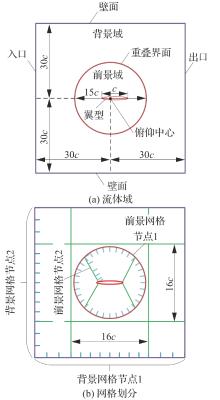
图 1
重叠网格流体域与网格划分
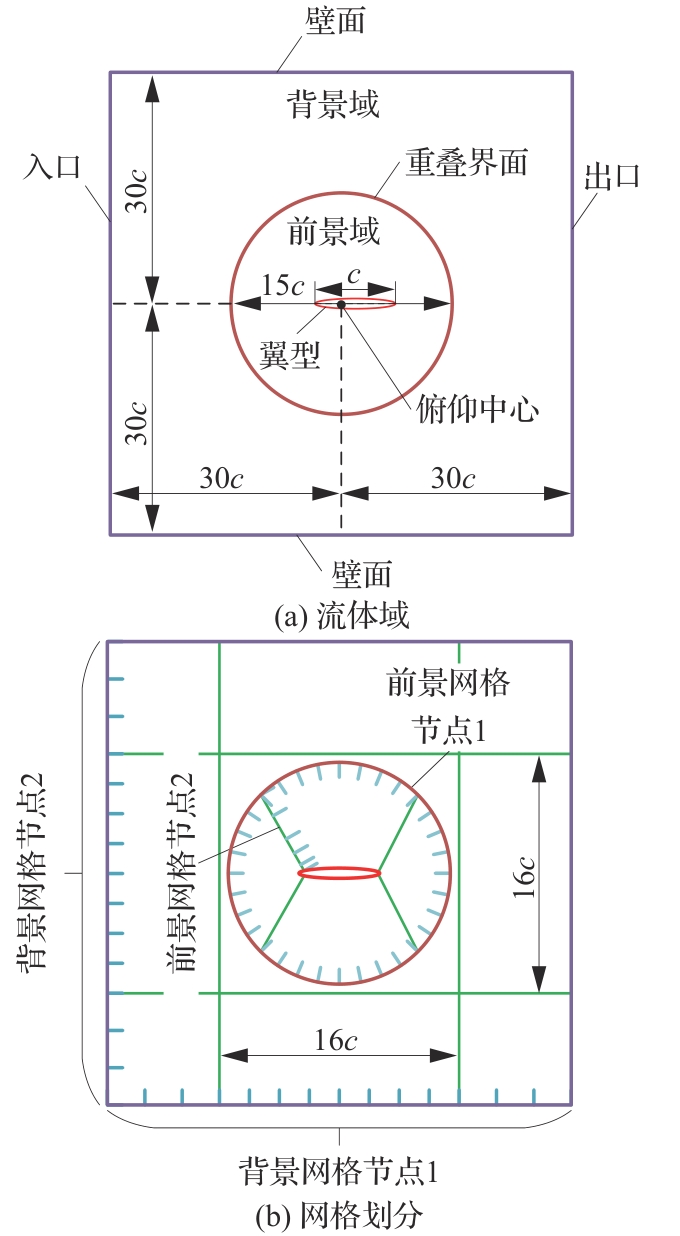

表1
算例网格参数
| 网格 | 背景网格 节点数 | 前景网格 节点数 | 网格单元 数/104 | 重叠处网 格面积比 |
|---|---|---|---|---|
| G1 | 234×234 | 437×110 | 10.18 | 1.001 6 |
| G2 | 285×285 | 481×148 | 15.12 | 1.003 5 |
| G3 | 351×351 | 589×180 | 22.78 | 0.998 2 |
| G4 | 432×432 | 777×205 | 34.41 | 1.002 9 |
| G5 | 529×529 | 949×250 | 51.48 | 1.001 6 |
| G6 | 651×651 | 1 153×309 | 77.73 | 1.002 3 |
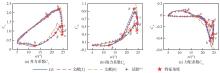
图 2
计算结果与文献结果对比
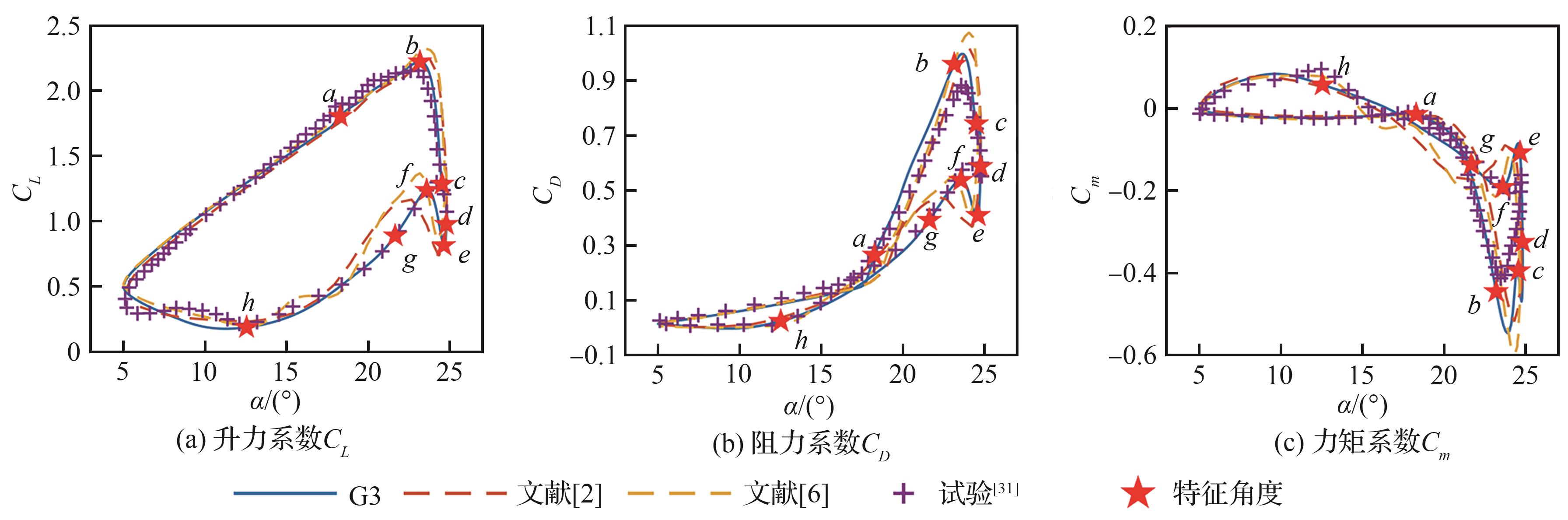
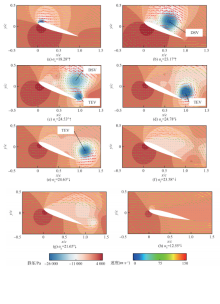
图 3
NACA0012翼型深度动态失速的静压分布和速度矢量云图
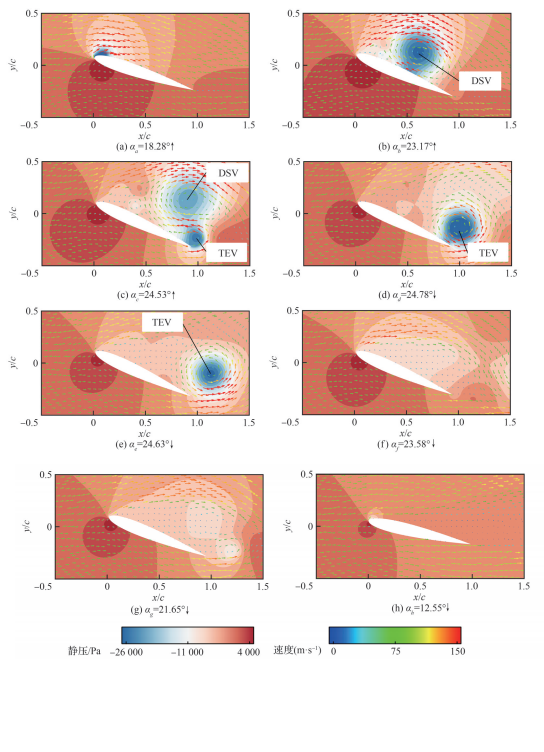
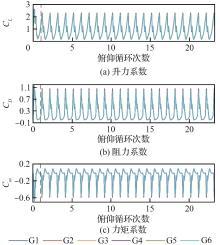
图 4
不同网格的气动力系数计算结果
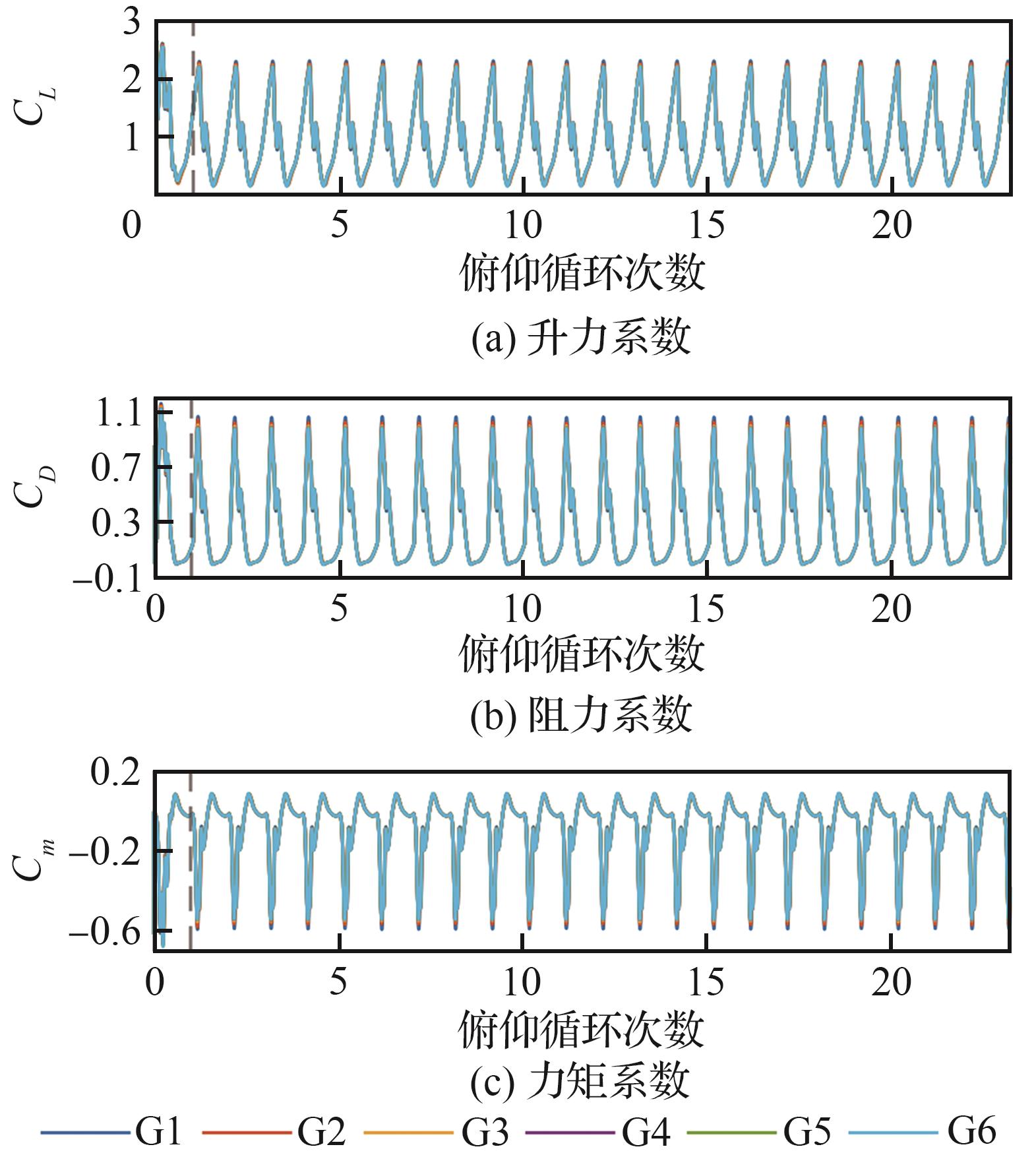
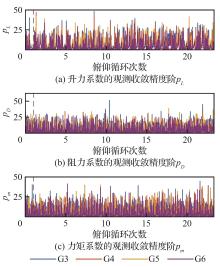
图 5
气动力系数的观测收敛精度阶
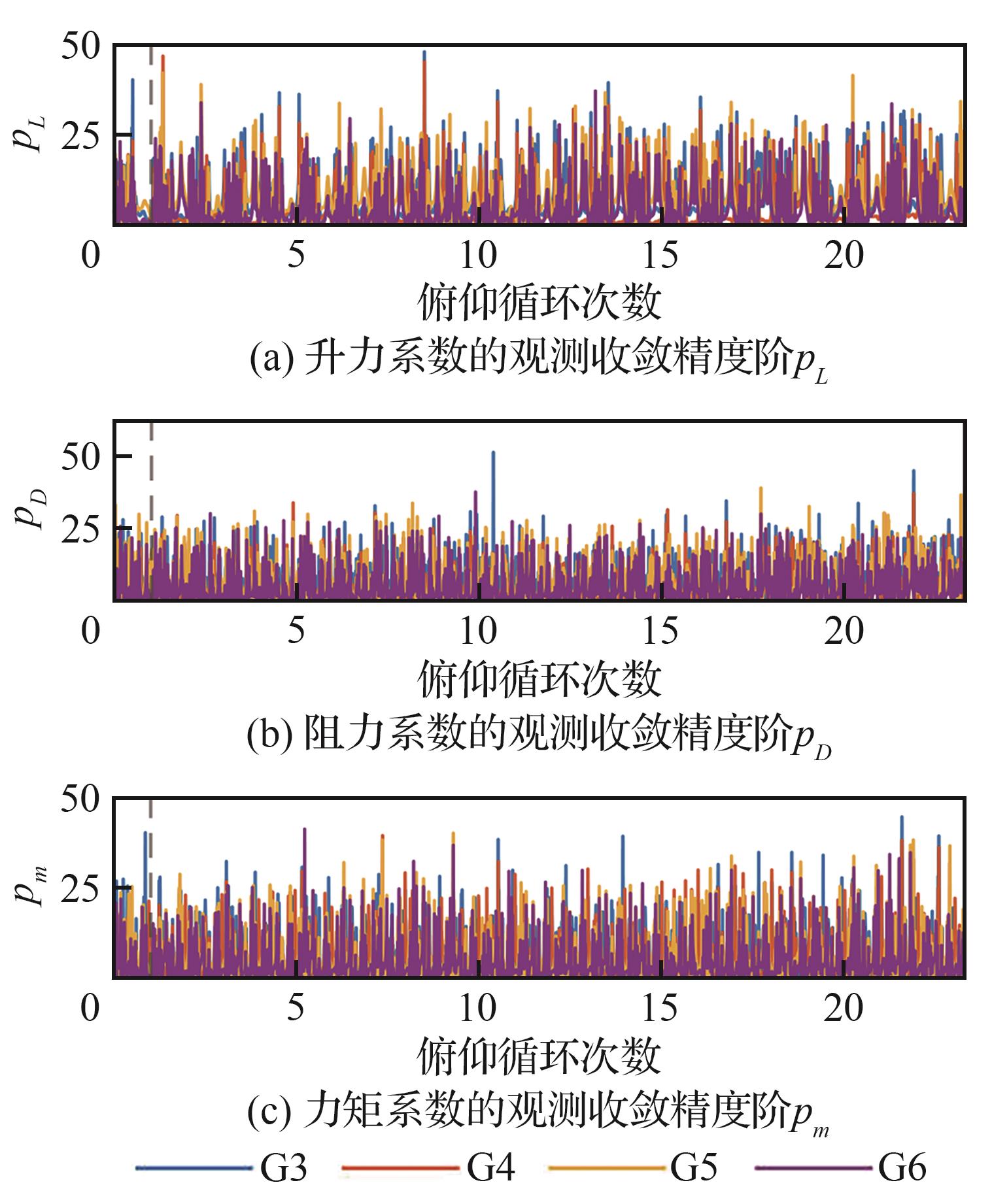
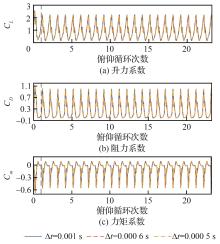
图 6
不同时间步长的气动力系数监测结果
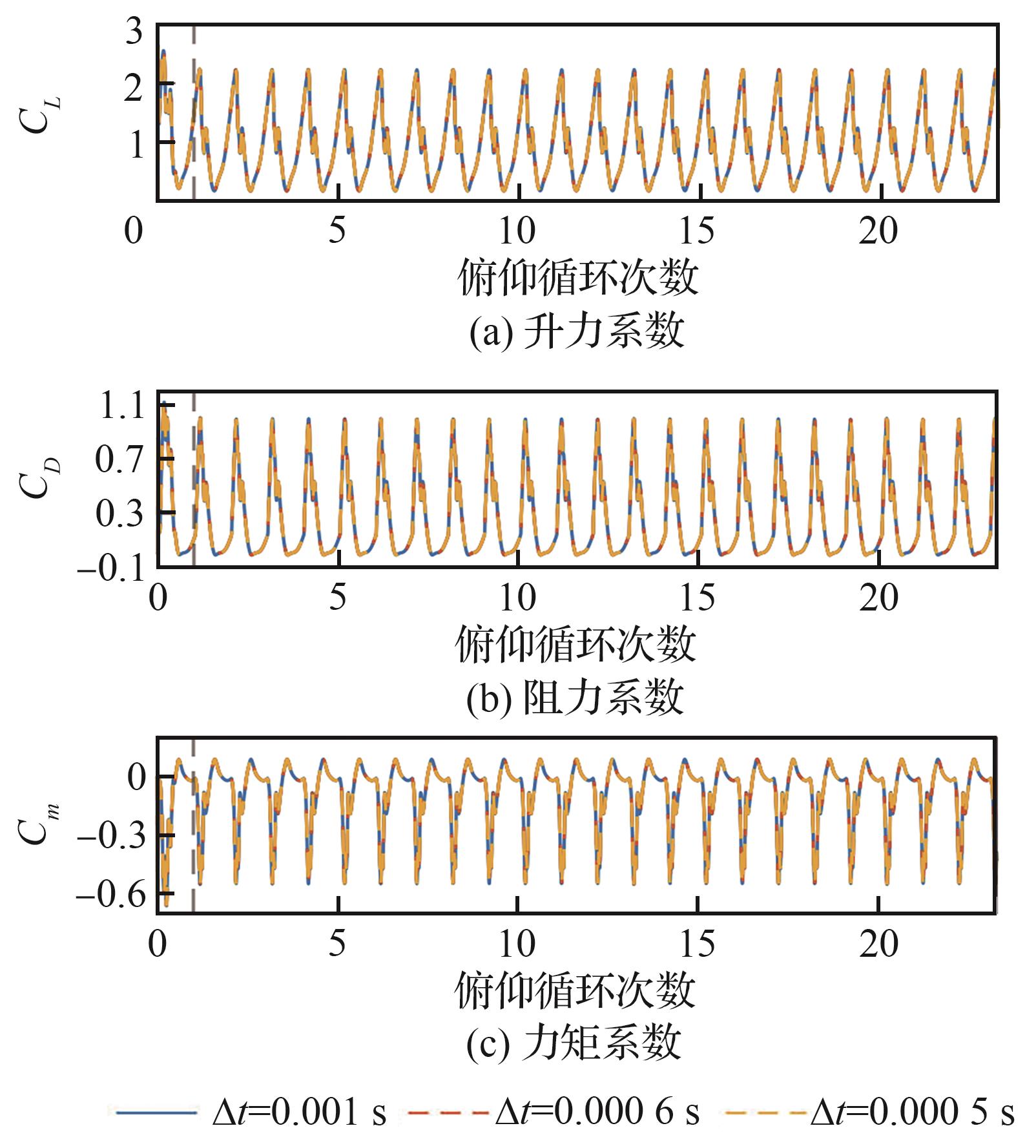
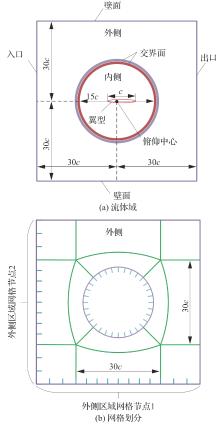
图 7
滑移网格流体域与网格划分
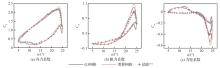
图 8
网格方案基准用例验证
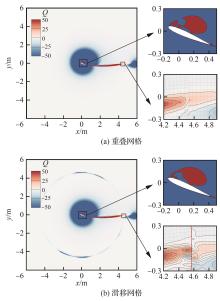
图 9
α=23.17°↑处的Q准则涡结构云图
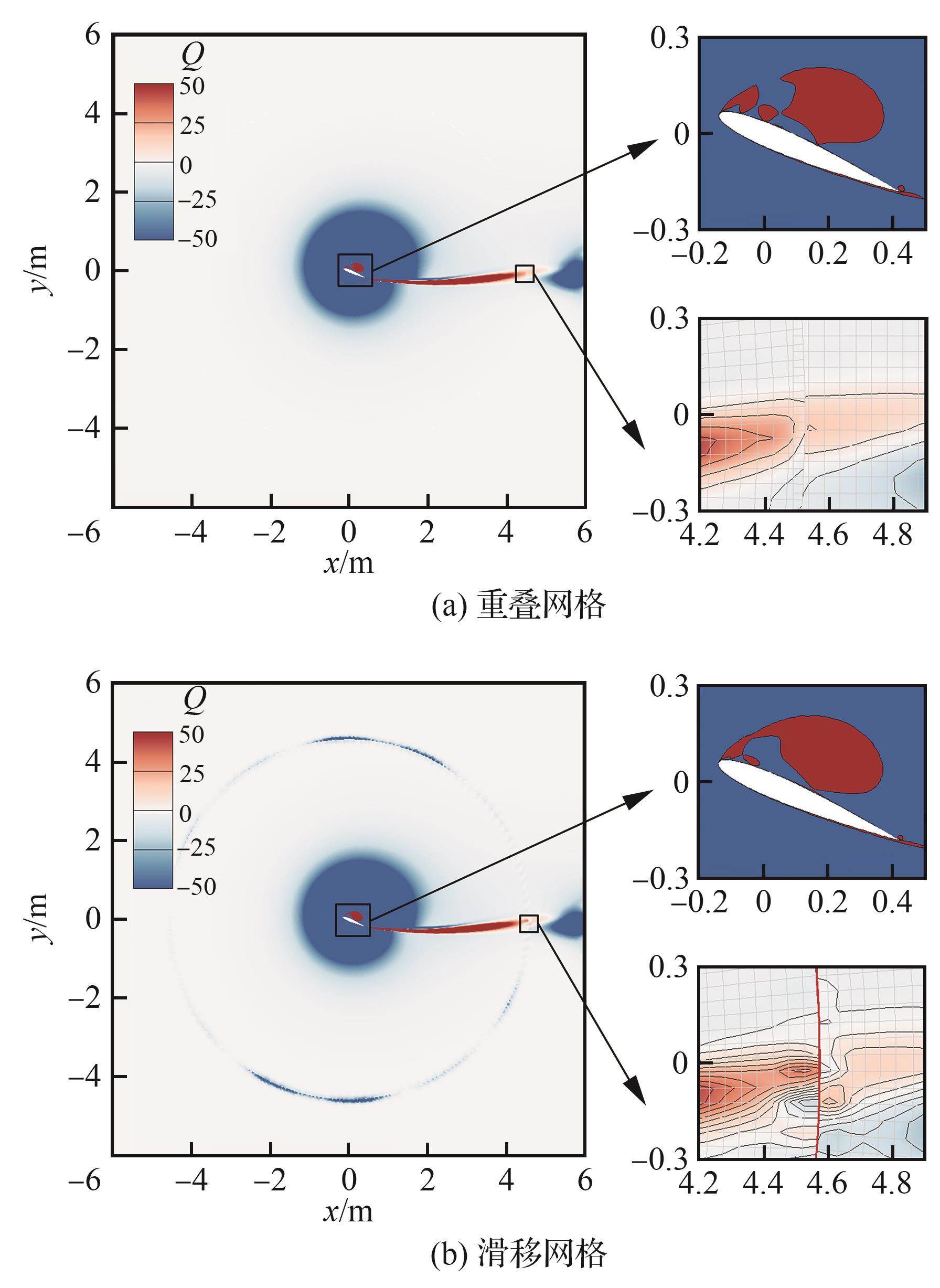
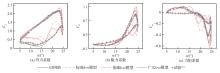
图 10
k-ω湍流模型基准用例验证
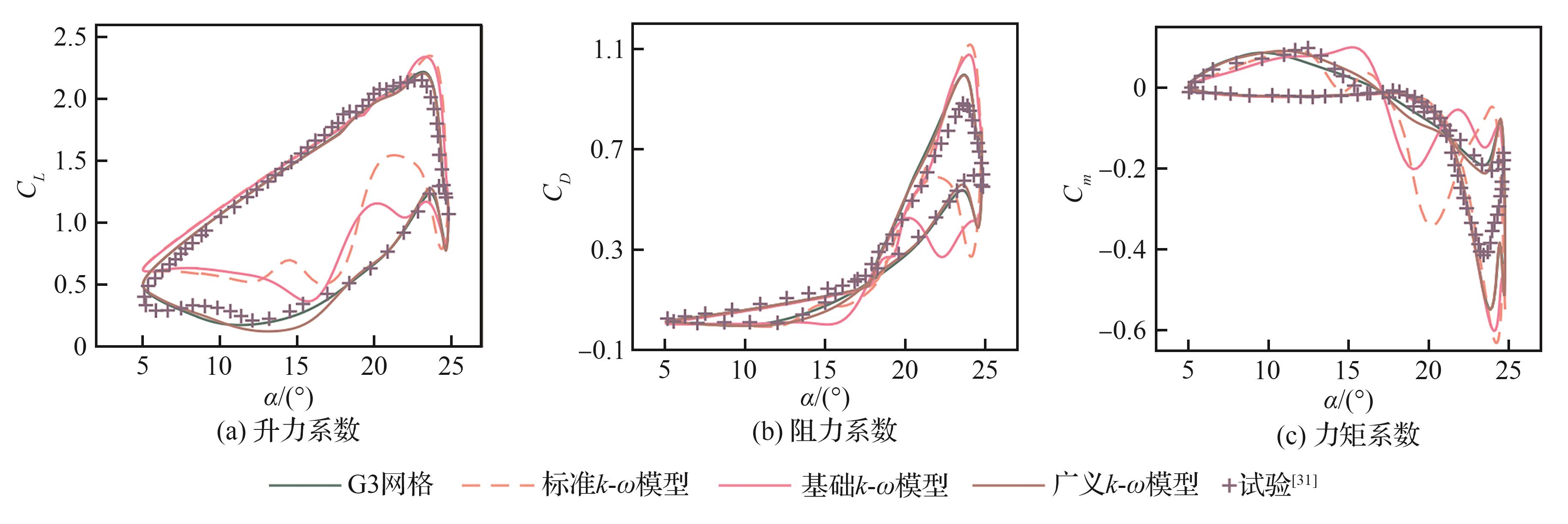
图 11
标准 k-ε湍流模型不同壁面函数基准用例验证
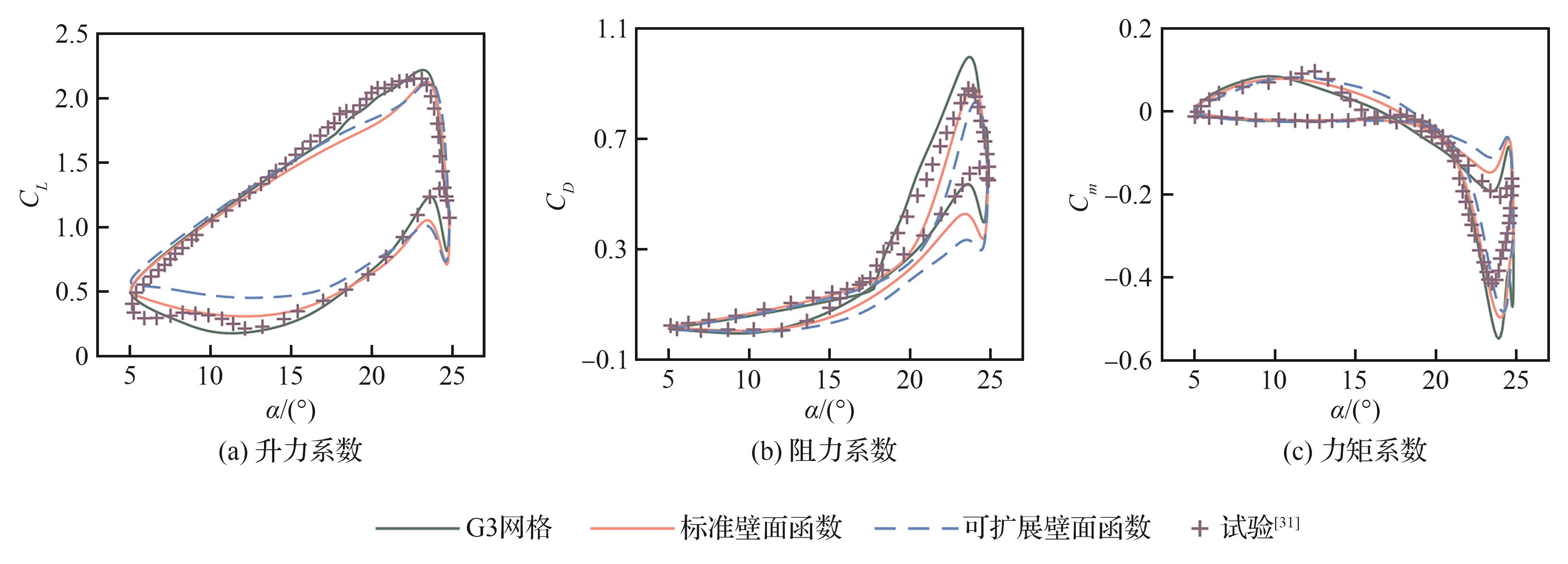
图 12
RNG k-ε湍流模型不同壁面函数基准用例验证
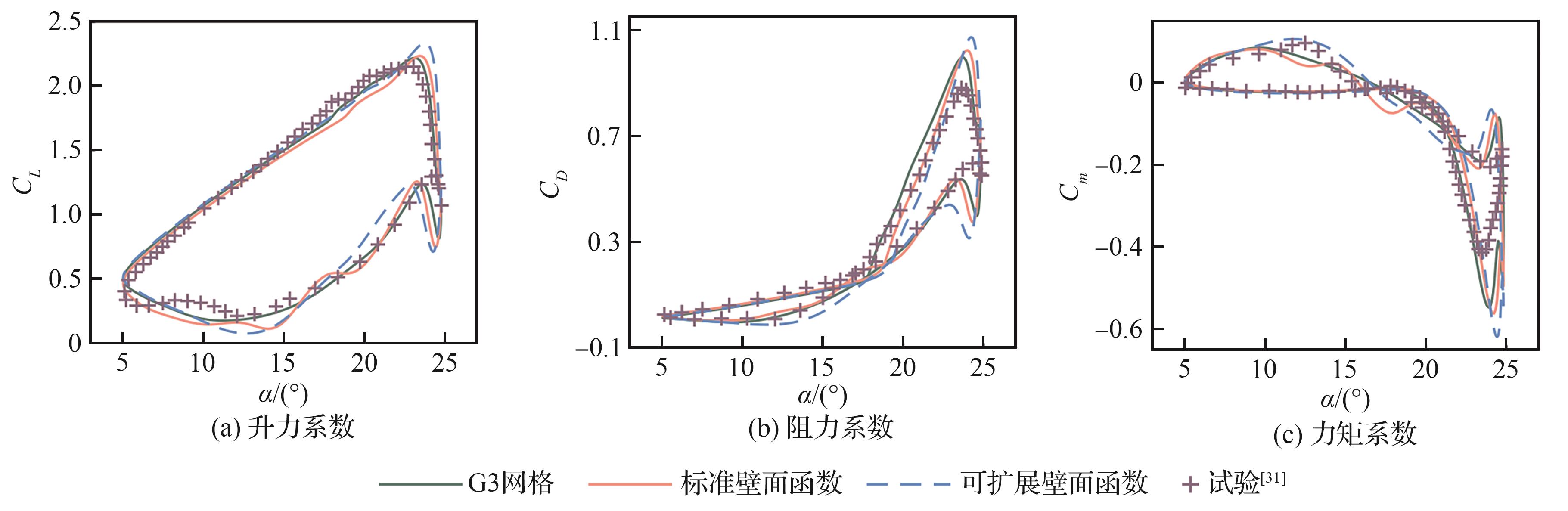
图 13
可实现 k-ε湍流模型不同壁面函数基准用例验证
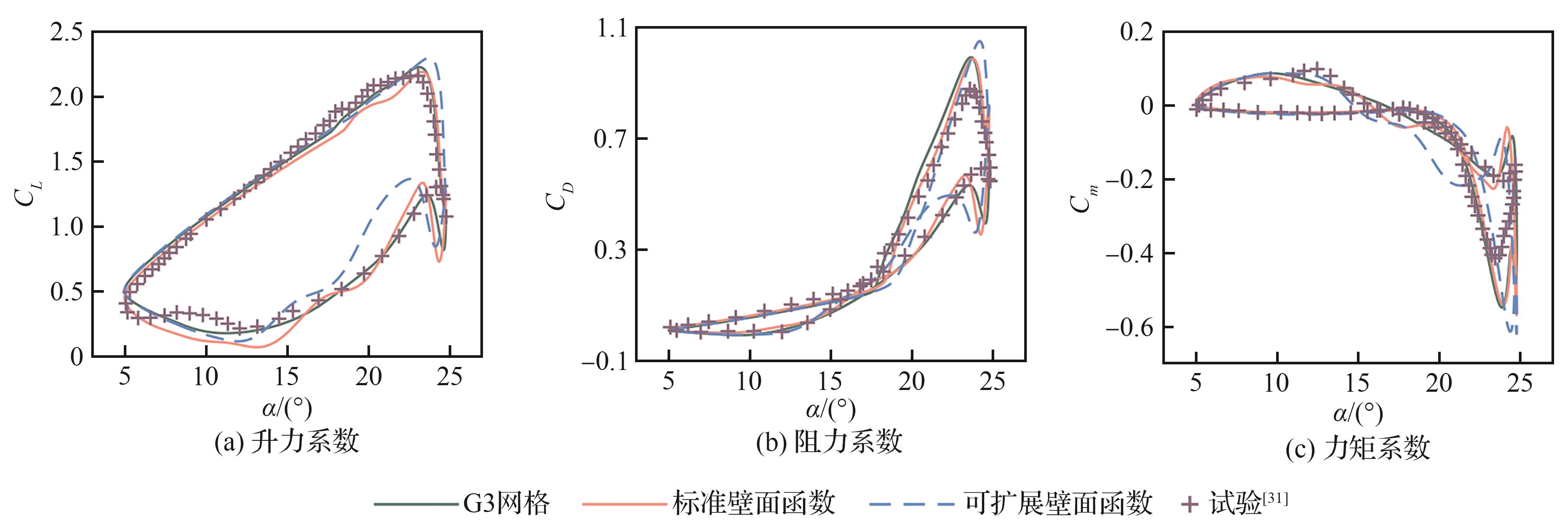
图 14
k-ε湍流模型基准用例验证
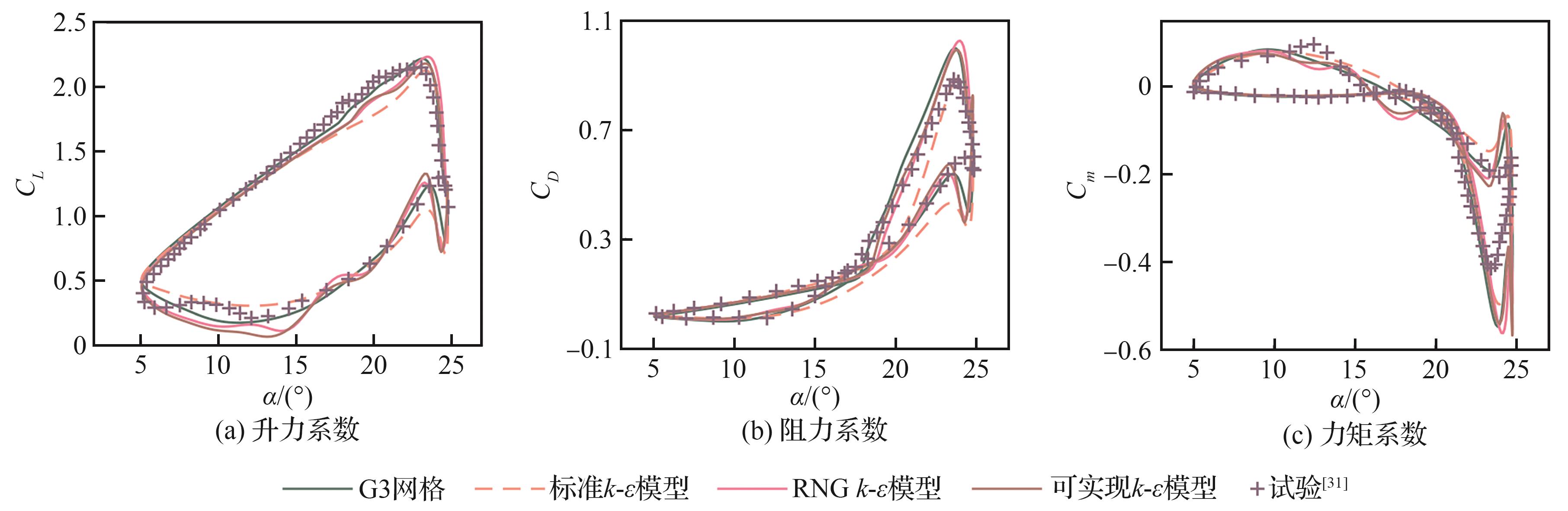
图 15
湍流模型基准用例验证
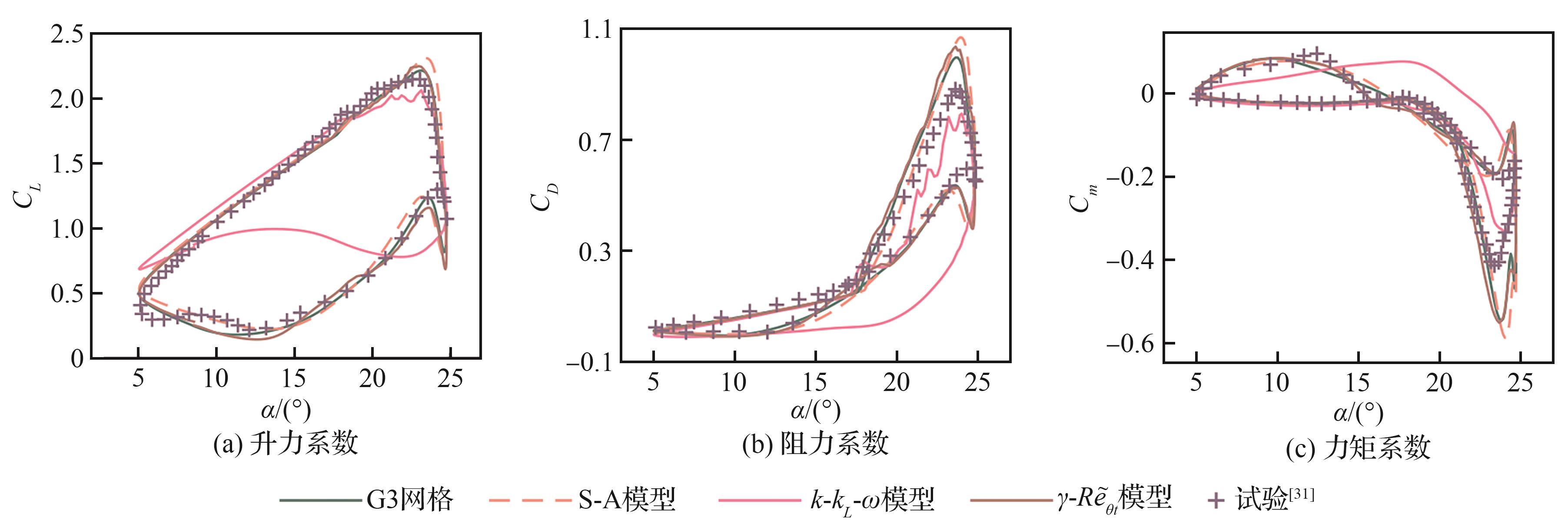
图 16
压力速度耦合方法基准用例验证
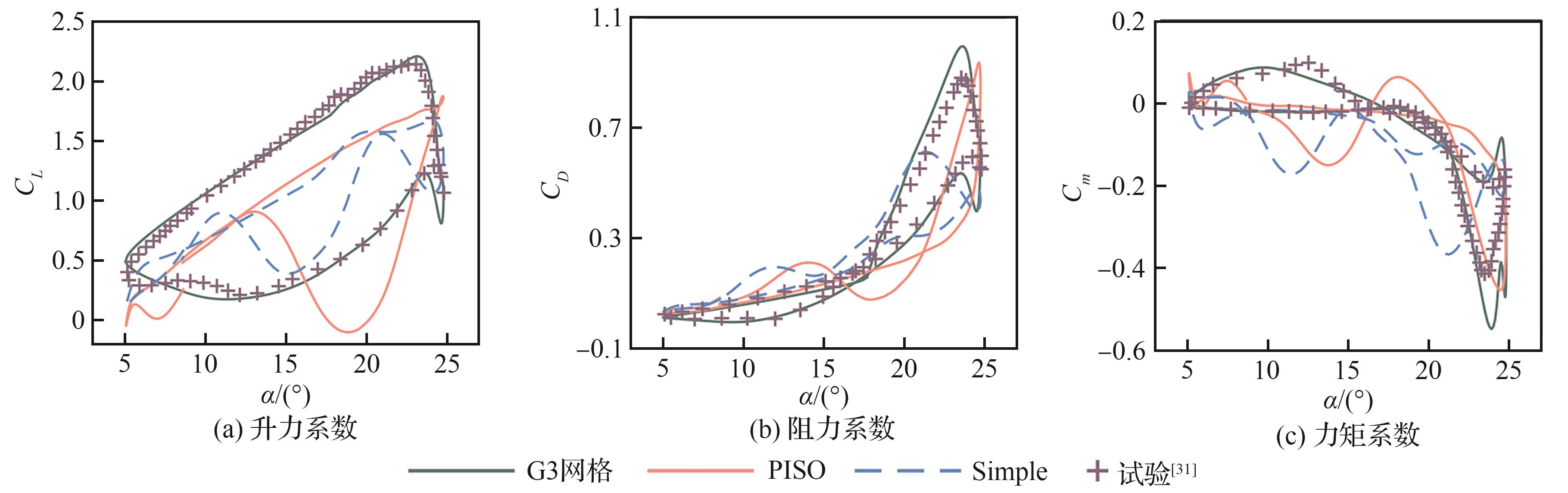
图 17
湍流强度基准用例验证
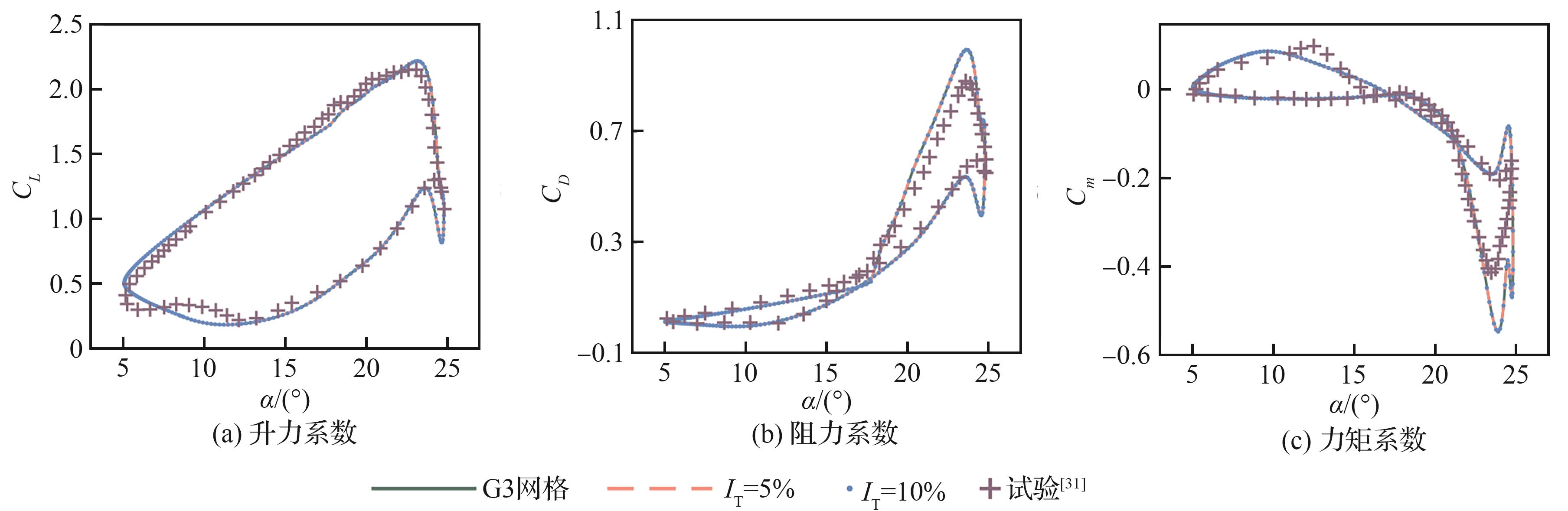
图 18
边界条件基准用例验证
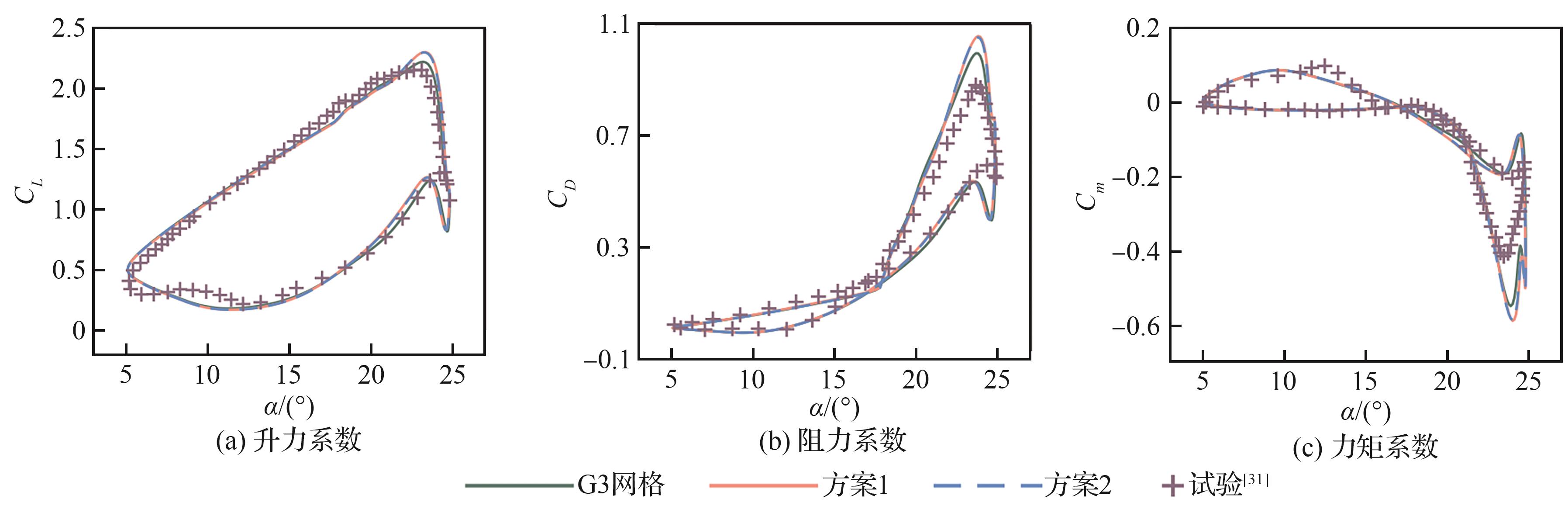
图 19
各相位下的气动力系数
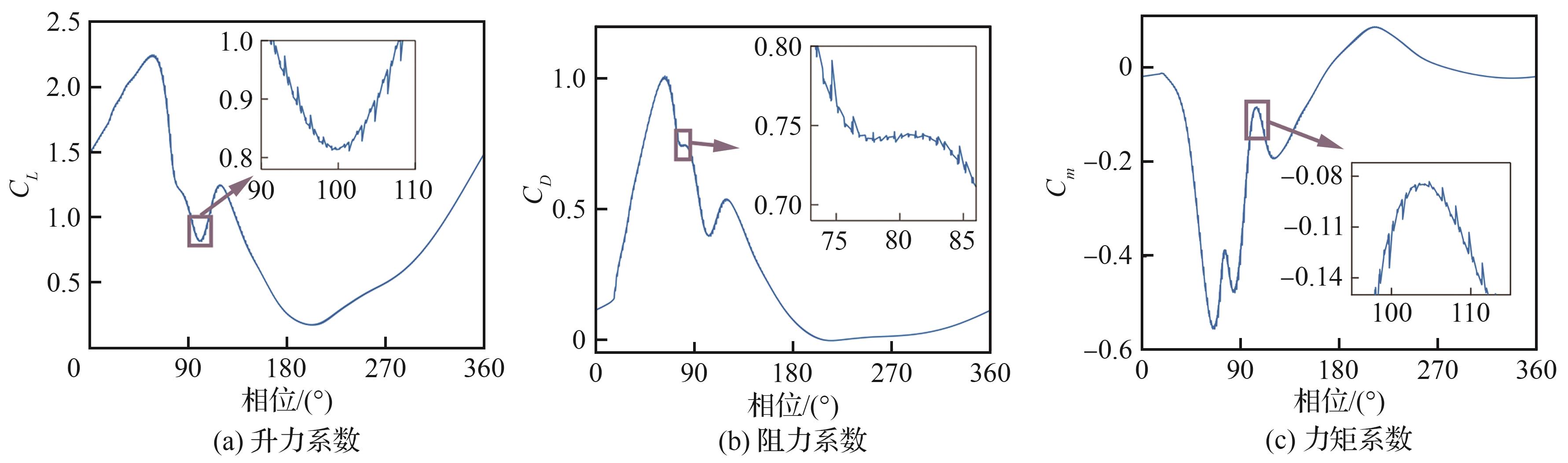
图 20
气动力系数拟合结果
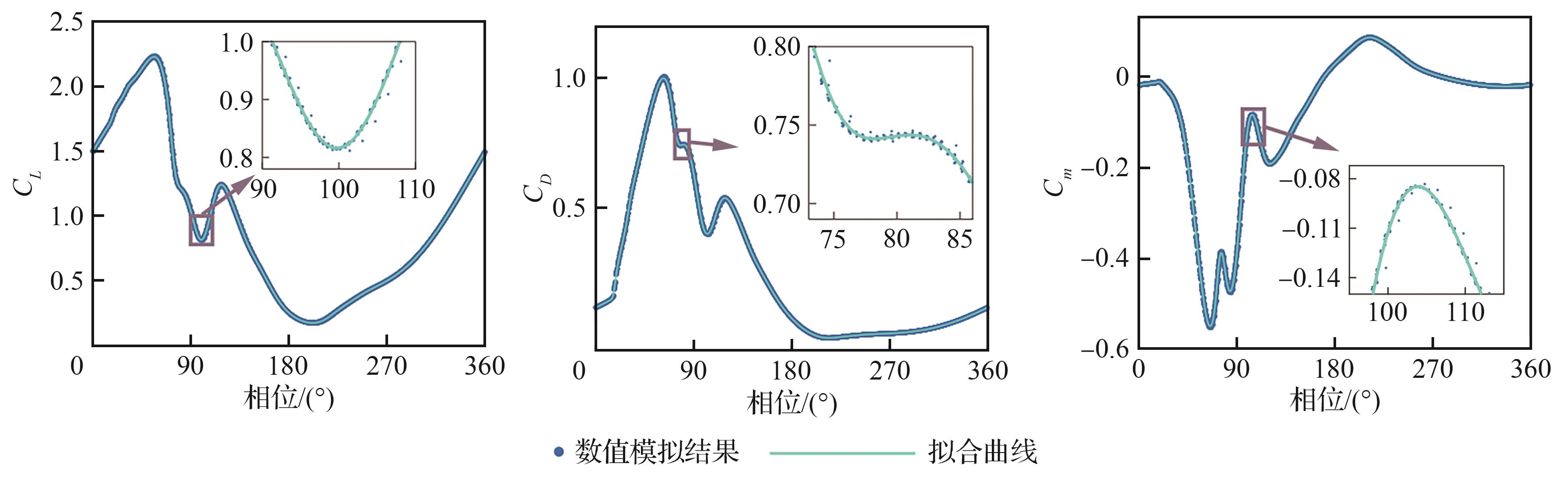
表2
数值模拟结果的周期性波动与拟合误差
| 统计量 | RMSE/ | 绝对误差上限/ | 绝对误差下限/ | 绝对误差平均值/ |
|---|---|---|---|---|
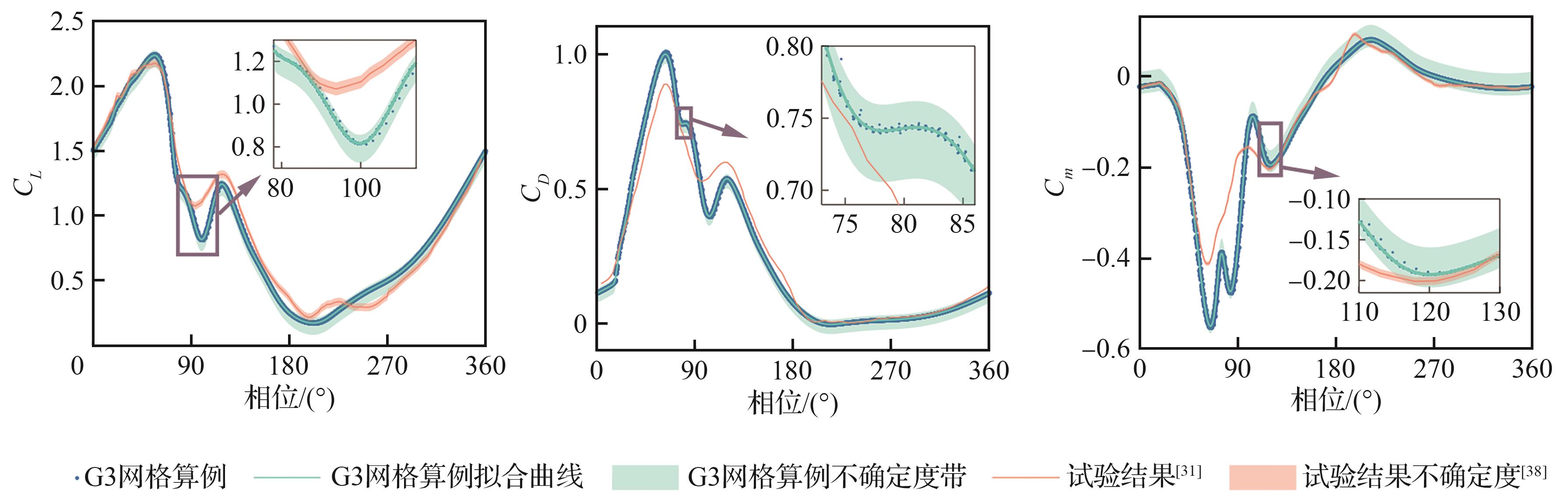
图 21
气动力系数的数值模拟与试验的不确定度带比较
| [1] | CHEN B, ZHANG Z L, HUA X G, et al. Enhancement of flutter stability in wind turbines with a new type of passive damper of torsional rotation of blades[J]. Journal of Wind Engineering and Industrial Aerodynamics, 2018, 173: 171-179. |
| [2] | 井思梦, 赵国庆, 招启军, 等. 翼型动态失速气动力二次峰值数值模拟研究[J]. 南京航空航天大学学报(自然科学版), 2022, 54(2): 191-202. |
| JING S M, ZHAO G Q, ZHAO Q J, et al. Numerical research on secondary peak of aerodynamic forces of airfoil under dynamic stall[J]. Journal of Nanjing University of Aeronautics and Astronautics (Natural Science Edition), 2022, 54(2): 191-202 (in Chinese). | |
| [3] | 招启军, 井思梦, 赵国庆, 等. 旋翼翼型动态失速机理及非定常设计研究进展[J]. 空气动力学学报, 2021, 39(6): 70-84. |
| ZHAO Q J, JING S M, ZHAO G Q, et al. Review of research progress on dynamic stall mechanism and unsteady design of rotor airfoils[J]. Acta Aerodynamica Sinica, 2021, 39(6): 70-84 (in Chinese). | |
| [4] | 张卫国, 李国强, 李栋, 等. 旋翼翼型动态风洞试验技术研究[J]. 实验流体力学, 2023, 37(2): 78-93. |
| ZHANG W G, LI G Q, LI D, et al. Research on dynamic wind tunnel test technology of rotor airfoil[J]. Journal of Experiments in Fluid Mechanics, 2023, 37(2): 78-93 (in Chinese). | |
| [5] | LEISHMAN J G, NGUYEN K Q. State-space representation of unsteady airfoil behavior[J]. AIAA Journal, 1990, 28(5): 836-844. |
| [6] | 张夏阳, 高陈诚, 招启军, 等. 前飞状态可变弯度翼型/旋翼气动特性[J]. 航空学报, 2024, 45(24): 630609. |
| ZHANG X Y, GAO C C, ZHAO Q J, et al. Aerodynamic characteristics of variable-camber airfoil/rotor in forward flight[J]. Acta Aeronautica et Astronautica Sinica, 2024, 45(24): 630609 (in Chinese). | |
| [7] | 井思梦, 招启军, 杨柳青, 等. 直升机旋翼动态失速研究新进展[J]. 南京航空航天大学学报(自然科学版), 2025, 57(2): 205-225. |
| JING S M, ZHAO Q J, YANG L Q, et al. New progress in research on dynamic stall of helicopter rotors[J]. Journal of Nanjing University of Aeronautics and Astronautics (Natural Science Edition), 2025, 57(2): 205-225 (in Chinese). | |
| [8] | 王清. 旋翼动态失速力学机理及气动外形优化研究[D]. 南京: 南京航空航天大学, 2017. |
| WANG Q. Investigations on dynamic stall mechanism and aerordynamic shape optimization of rotor[D]. Nanjing: Nanjing University of Aeronautics and Astronautics, 2017 (in Chinese). | |
| [9] | 井思梦. 旋翼动态失速流动机理及翼型非定常设计研究[D]. 南京: 南京航空航天大学, 2024. |
| JING S M. Research on dynamic stall flow physics of rotor and unsteady design of rotor airfoil[D]. Nanjing: Nanjing University of Aeronautics and Astronautics, 2024 (in Chinese). | |
| [10] | JING S M, LU F, MA L, et al. Dynamic stall mechanisms of pitching airfoil: IDDES study across different Mach numbers[J]. Applied Sciences, 2025, 15(13): 7309. |
| [11] | JING S M, ZHAO G Q, GAO Y, et al. Effects of leading edge radius on stall characteristics of rotor airfoil[J]. Aerospace, 2024, 11(6): 470. |
| [12] | 卞威. 旋翼非定常气动特性高精度模拟方法及桨/涡干扰机理研究[D]. 南京: 南京航空航天大学, 2024. |
| BIAN W. Investigations on high-precision numerical simulation method of rotor unsteady aerodynamic characteristics and blade vortex interaction mechanism[D]. Nanjing: Nanjing University of Aeronautics and Astronautics, 2024 (in Chinese). | |
| [13] | 招启军, 赵国庆, 王清, 等. 先进旋翼设计空气动力学[M]. 北京: 科学出版社, 2020. |
| ZHAO Q J, ZHAO G Q, WANG Q, et al. Advanced rotor design aerodynamics[M]. Beijing: Science Press, 2020 (in Chinese). | |
| [14] | 李游. 基于介质阻挡放电等离子体的旋翼流动分离主动控制研究[D]. 南京: 南京航空航天大学, 2023. |
| LI Y. Active control study of rotor flow separation based on dielectric barrier discharge plasma[D]. Nanjing: Nanjing University of Aeronautics and Astronautics, 2023 (in Chinese). | |
| [15] | 罗楠. 基于气动力代理模型的后缘襟翼旋翼振动载荷分析[D]. 南京: 南京航空航天大学, 2023. |
| LUO N. Aerodynamic surrogate modeling approach for trailing-edge flaps rotor vibration analysis[D]. Nanjing: Nanjing University of Aeronautics and Astronautics, 2023 (in Chinese). | |
| [16] | CAMACHO E A R, SILVA A R R, MARQUES F D. Predicting airfoil dynamic stall loads using neural networks[J]. Aerospace Science and Technology, 2025, 165: 110466. |
| [17] | RAUL V, LEIFSSON L. Multifidelity aerodynamic shape optimization for airfoil dynamic stall mitigation using manifold mapping[J]. Journal of Computational Science, 2024, 75: 102213. |
| [18] | LUO D H, LU B X, GENG H C, et al. Dynamic stall control of an offshore wind turbine airfoil using a leading-edge microcylinder[J]. Ocean Engineering, 2024, 313: 119695. |
| [19] | GONG J Y, PENG W Q, LUO Z B, et al. Comparison of aerodynamic characteristics of wing dynamic stall under three typical jets control[J]. Chinese Journal of Aeronautics, 2025, 38(6): 103284. |
| [20] | 梁霄, 张培红, 王瑞利, 等. PBX9502冲击Hugoniot曲线的参数标定和不确定度量化[J]. 弹道学报, 2024, 36(1): 104-110. |
| LIANG X, ZHANG P H, WANG R L, et al. Parameter calibration and uncertainty quantification of shock Hugoniot curve of PBX9502[J]. Journal of Ballistics, 2024, 36(1): 104-110 (in Chinese). | |
| [21] | 段于辉, 张建新, 冯春早, 等. 虑及认知不确定性的曲线加筋壁板承载性能智能预测方法[J]. 兵器装备工程学报, 2025, 46(8): 259-266. |
| DUAN Y H, ZHANG J X, FENG C Z, et al. Intelligent prediction method for load-carrying of curvilinearly stiffened panel considering epistemic uncertainty[J]. Journal of Ordnance Equipment Engineering, 2025, 46(8): 259-266 (in Chinese). | |
| [22] | 杨懿宸, 郑友琦, 朱庆福, 等. 基于启明星临界实验装置的小型铅堆确定论中子学计算方法研究及验证[J]. 原子能科学技术, 2025, 59(3): 644-655. |
| YANG Y C, ZHENG Y Q, ZHU Q F, et al. Deterministic neutronics calculation method of small lead-cooled reactor based on Venus-Ⅱ criticality experimental facility and its verification[J]. Atomic Energy Science and Technology, 2025, 59(3): 644-655 (in Chinese). | |
| [23] | 陈江涛, 肖维, 赵炜, 等. 计算流体力学验证与确认研究进展[J]. 力学进展, 2023, 53(3): 626-660. |
| CHEN J T, XIAO W, ZHAO W, et al. Advances in verification and validation in computational fluid dynamics[J]. Advances in Mechanics, 2023, 53(3): 626-660 (in Chinese). | |
| [24] | National Research Council, Division on Engineering and Physical Sciences, Board on Mathematical Sciences and Their Applications, et al. Assessing the reliability of complex models: Mathematical and statistical foundations of verification, validation, and uncertainty quantification[M]. Washington, D.C.: National Academies Press, 2012. |
| [25] | 李耀. 基于民机真实飞行数据的CFD验证与确认研究[D]. 南京: 南京航空航天大学, 2022. |
| LI Y. CFD verification and validation research based on real flight data of civil aircraft[D]. Nanjing: Nanjing University of Aeronautics and Astronautics, 2022 (in Chinese). | |
| [26] | AIAA. Recommended practice for code verification in computational fluid dynamics :AIAA R-141-2021[S]. Reston: AIAA, 2021. |
| [27] | GHIA U, BAYYUK S, HABCHI S, et al. The AIAA code verification project: Test cases for CFD code verification[C]∥ 48th AIAA Aerospace Sciences Meeting Including the New Horizons Forum and Aerospace Exposition. Reston: AIAA, 2010. |
| [28] | 夏侯唐凡, 陈江涛, 邵志栋, 等. 随机和认知不确定性框架下的CFD模型确认度量综述[J]. 航空学报, 2022, 43(8): 25716. |
| XIAHOU T F, CHEN J T, SHAO Z D, et al. Model validation metrics for CFD numerical simulation under aleatory and epistemic uncertainty[J]. Acta Aeronautica et Astronautica Sinica, 2022, 43(8): 25716 (in Chinese). | |
| [29] | 熊芬芬, 李泽贤, 刘宇, 等. 基于数值模拟的工程设计中参数不确定性表征方法研究综述[J]. 航空学报, 2023, 44(22): 28611. |
| XIONG F F, LI Z X, LIU Y, et al. A review of characterization methods for parameter uncertainty in engineering design based on numerical simulation[J]. Acta Aeronautica et Astronautica Sinica, 2023, 44(22): 28611 (in Chinese). | |
| [30] | 李原, 尹凡夫, 高伟, 等. 基于改进LB动态失速模型的翼型非线性气弹分析[J]. 太阳能学报, 2023, 44(7): 402-408. |
| LI Y, YIN F F, GAO W, et al. Nonlinear aeroelastic analysis of 2D airfoil based on modified LB dynamic stall model[J]. Acta Energiae Solaris Sinica, 2023, 44(7): 402-408 (in Chinese). | |
| [31] | MCALISTER K W, PUCCI S L, MCCROSKEY W J, et al. An experimental study of dynamic stall on advanced airfoil section. Volume 2: Pressure and force data: USAAVRADCOM-TR-82-A-8-VOL-2[R]. Washington D.C.: NASA, 1982. |
| [32] | MANI M R, DORGAN A J. A perspective on the state of aerospace computational fluid dynamics technology[J]. Annual Review of Fluid Mechanics, 2023, 55: 431-457. |
| [33] | 王年华, 常兴华, 马戎, 等. HyperFLOW软件非结构网格亚跨声速湍流模拟的验证与确认[J]. 力学学报, 2019, 51(3): 813-825. |
| WANG N H, CHANG X H, MA R, et al. Verification and validation of HyperFLOW solver for subsonic and transonic turbulent flow simulations on unstructured/hybrid grids[J]. Chinese Journal of Theoretical and Applied Mechanics, 2019, 51(3): 813-825 (in Chinese). | |
| [34] | CELIK I B, GHIA U, ROACHE P J, et al. Procedure for estimation and reporting of uncertainty due to discretization in CFD applications[J]. Journal of Fluids Engineering, 2008, 130(7): 1-4. |
| [35] | 刘超群. Liutex-涡定义和第三代涡识别方法[J]. 空气动力学学报, 2020, 38(3): 413-431. |
| LIU C Q. Liutex-third generation of vortex definition and identification methods[J]. Acta Aerodynamica Sinica, 2020, 38(3): 413-431 (in Chinese). | |
| [36] | 李朋华, 邱明, 公平, 等. 保持架间隙对角接触球轴承气帘效应的影响[J/OL]. 航空动力学报, (2025-02-18)[2025-08-11]. . |
| LI P H, QIU M, GONG P, et al. Influence of cage clearance on air curtain effect of angular contact ball bearing[J/OL]. Journal of Aerospace Power, (2025-02-18)[2025-08-11]. (in Chinese). | |
| [37] | 验证、确认和不确定性量化数学基础委员会,数学科学及其应用委员会,工程和物理科学部, 等. 复杂模型的可靠性评估: 验证、确认和不确定度量化的数学与统计基础[M]. 陈坚强, 吴晓军, 赵炜, 等 译. 北京: 国防工业出版社, 2023. |
| Committee on Mathematical Foundations of Verification, Validation, and Quantification Uncertainty, Board on Mathematical Sciences and Their Applications, Division on Engineering and Physical Sciences, et al. Assessing the reliability of complex models: Mathematical and statistical foundations of verification, validation, and uncertainty quantification[M]. CHEN J Q, WU X J, ZHAO W, et al, translated. Beijing: National Defense Industry Press, 2023 (in Chinese). | |
| [38] | MCCROSKEY W J, MCALISTER K W, CARR L W, et al. An experimental study of dynamic stall on advanced airfoil sections. Volume 1: Summary of the experiment: USAAVRADCOM-TR-82-A-8-VOL-1[R]. Washington D.C.: NASA, 1982. |
| [1] | 张耀冰, 李明, 张健, 周乃春, 龚小权. 适用于非结构混合网格的改进线隐式BLU-SGS迭代算法[J]. 航空学报, 2026, 47(6): 132588-132588. |
| [2] | 牛飞航, 尹乔之, 魏小辉, 梁伟华, 聂宏. 基于主动柔顺控制的仿生起落架缓冲方法[J]. 航空学报, 2026, 47(1): 632001-632001. |
| [3] | 崔凯, 王泽森, 肖尧, 田中伟, 李广利, 常思源. 宽速域高压捕获翼气动构型及其跨声速气动特性[J]. 航空学报, 2026, 47(1): 632102-632102. |
| [4] | 朱王清, 曹宸恺, 赵国庆, 朱清华, 胡浩宇. 剪刀尾桨气动干扰与非常规布局参数影响[J]. 航空学报, 2025, 46(S1): 732181-732181. |
| [5] | 杨肖峰, 蔡兴考, 刘磊, 魏东, 肖光明, 杜雁霞, 桂业伟. 防热结构梯度特性对飞行器气动热载调控的耦合模拟与实验验证[J]. 航空学报, 2025, 46(9): 130888-130888. |
| [6] | 杨芃芊, 陈禹彤, 刘俊辉, 杨杰豪, 单家元, 孙士珺. 串列翼货运无人机大攻角气动与操稳特性[J]. 航空学报, 2025, 46(9): 131056-131056. |
| [7] | 陈玲玲, 张杨, 施永强, 杨青真. 气膜冷却矢量喷管冷却/气动/红外辐射特性[J]. 航空学报, 2025, 46(8): 631139-631139. |
| [8] | 王彬文, 宋巧治, 陈浩宇. 飞翼布局飞行器体自由度颤振地面试验[J]. 航空学报, 2025, 46(21): 532758-532758. |
| [9] | 张力文, 韩忠华, 张科施, 宋科, 宋文萍. 面向超声速民机近/中场声爆传播的空间推进高精度数值模拟方法[J]. 航空学报, 2025, 46(20): 531935-531935. |
| [10] | 王梓旭, 李攀, 沈俊彪, 朱振华, 陈仁良. 加/减速状态下倾转旋翼飞行器动态过渡走廊[J]. 航空学报, 2025, 46(11): 531377-531377. |
| [11] | 王冶平, 吉洪蕾, 康清宇, 邓皓轩, 王畅. 集成多旋翼气动干扰的UAM飞行动力学模型[J]. 航空学报, 2025, 46(11): 531280-531280. |
| [12] | 贾贺, 蒋伟, 包文龙, 徐欣, 荣伟, 余莉. 行星探测用柔性降落伞跨/超声速气动特性及耦合机理[J]. 航空学报, 2025, 46(1): 630369-630369. |
| [13] | 邹天琪, 薛晓鹏, 赵党军, 杨德贵, 梁步阁. 透气性对盘帆伞充气性能和气动特性的影响[J]. 航空学报, 2025, 46(1): 630373-630373. |
| [14] | 薛晓鹏, 贾贺, 荣伟, 蒋伟, 包文龙, 王臻, 邹天琪, 代雨柔, 周一苇. 高速柔性气动减速器关键技术研究进展[J]. 航空学报, 2025, 46(1): 631677-631677. |
| [15] | 李广宁, 雷坤鹏, 安效民, 徐敏, 许勇. 跨声速穿越的翼型变马赫数效应虚拟飞行仿真[J]. 航空学报, 2024, 45(S1): 730875-730875. |
| 阅读次数 | ||||||
|
全文 |
|
|||||
|
摘要 |
|
|||||
版权所有 © 航空学报编辑部
版权所有 © 2011航空学报杂志社
主管单位:中国科学技术协会 主办单位:中国航空学会 北京航空航天大学

 CJA
CJA
