王悦1,2, 王志祥1,3( ), 李道奎1,2, 雷勇军1,2,4
收稿日期:2025-01-02
修回日期:2025-02-10
接受日期:2025-04-08
出版日期:2025-04-17
发布日期:2025-04-17
通讯作者:
王志祥
E-mail:wangzhixiang14@nudt.edu.cn
基金资助:
Yue WANG1,2, Zhixiang WANG1,3(), Daokui LI1,2, Yongjun LEI1,2,4
Received:2025-01-02
Revised:2025-02-10
Accepted:2025-04-08
Online:2025-04-17
Published:2025-04-17
Contact:
Zhixiang WANG
E-mail:wangzhixiang14@nudt.edu.cn
Supported by:摘要:
为提高复合材料加筋圆柱壳后屈曲分析和优化效率,提出了一种融合样本分簇和改进K折交叉验证的增广径向基函数(ARBF)快速近似建模方法。采用K-means聚类算法确定了样本最优分簇,基于样本局部密度确定了样本的基准形状参数,各分簇均引入缩放系数自适应调整形状参数,有效兼顾了优化形状参数的效率和精度。通过样本子集建立ARBF辅助近似模型,进而建立了基于偏差-方差分解的ARBF辅助近似模型泛化性能评估准则,解决了传统K折交叉验证样本信息利用不足的难题;基于分块矩阵求逆技术推导了ARBF辅助近似模型的高阶系数矩阵快速求逆方法,提出了基于改进K折交叉验证的缩放系数优化方法,大幅降低了确定最优形状参数的计算复杂度,提升了ARBF近似建模效率和精度。数值和工程算例表明,样本最优分簇和快速交叉验证对近似建模效率和精度有显著增益,降低了建模效率对样本规模和问题维度的敏感性,且相同训练样本数量下,该方法建模精度显著优于其他典型方法,验证了该方法的有效性和先进性,具有一定的工程应用价值。
中图分类号:
王悦, 王志祥, 李道奎, 雷勇军. 样本分簇增强的快速近似建模方法及应用[J]. 航空学报, 2025, 46(22): 231755.
Yue WANG, Zhixiang WANG, Daokui LI, Yongjun LEI. A fast approximate modeling method and application for sample cluster enhancement[J]. Acta Aeronautica et Astronautica Sinica, 2025, 46(22): 231755.

表1
测试函数
| 编号 | 函数名 | 数学表达式 | 变量取值范围 | 维数 | 样本点个数 |
|---|---|---|---|---|---|
| 1 | 10-Ellipsoid | 200 | |||
| 2 | 12-Griewank | 240 | |||
| 3 | 20-Ellipsoid | 400 | |||
| 4 | 30-Dixo-Price | 600 |
表2
近似模型精度评估准则
| 精度准则 | 表达式 | 表征的近似能力 |
|---|---|---|
| 复相关系数 | 全局近似能力 | |
| 均方根误差 | 全局近似能力 | |
| 相对最大绝对误差 | 局部近似能力 |
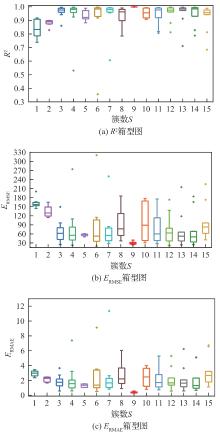
图 1
20m时20维Ellipsoid函数的近似精度箱型图
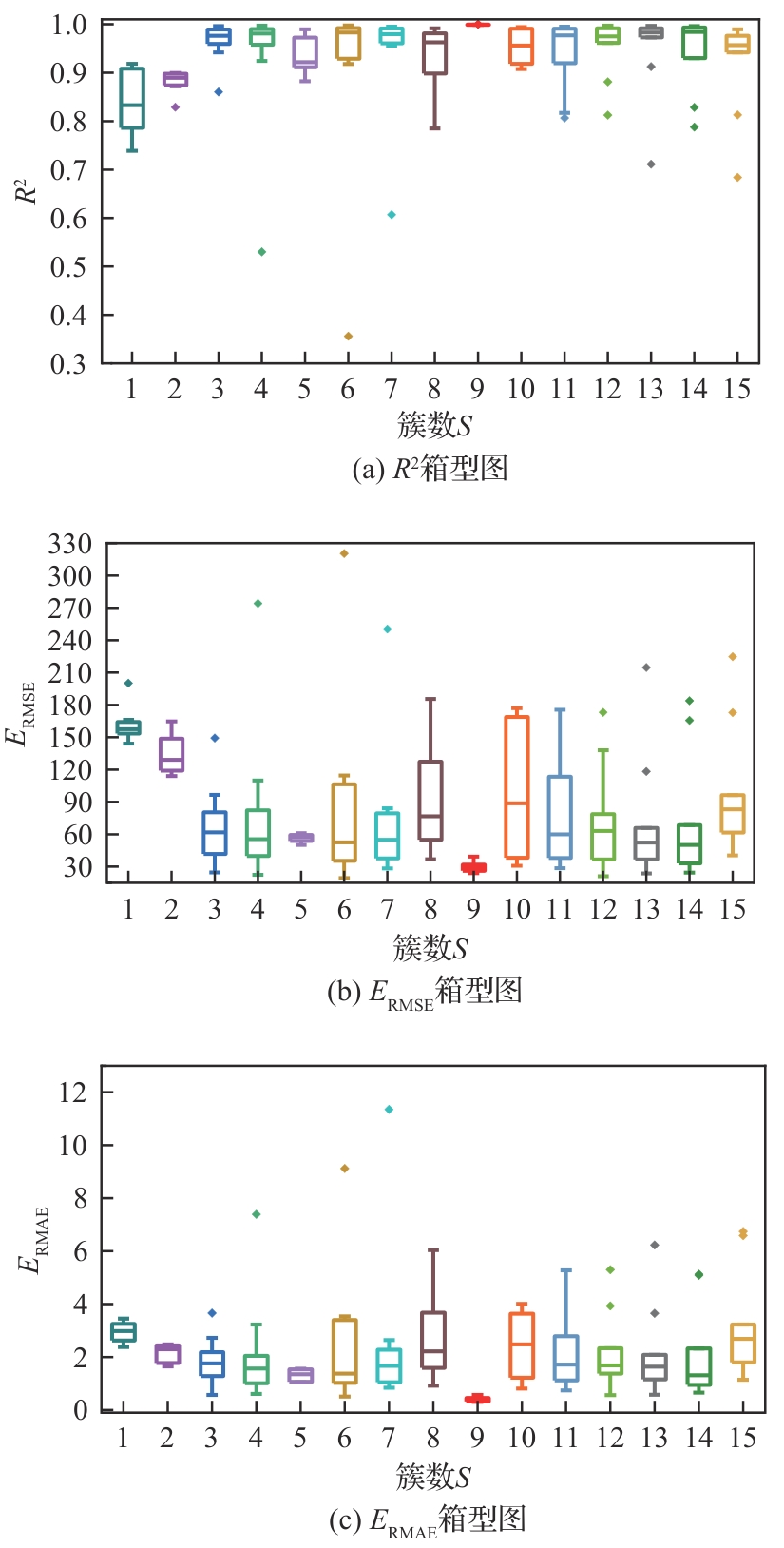
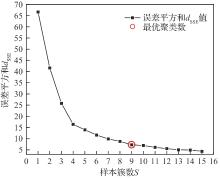
图 2
样本簇数S与样本的误差平方和dSSE的关系
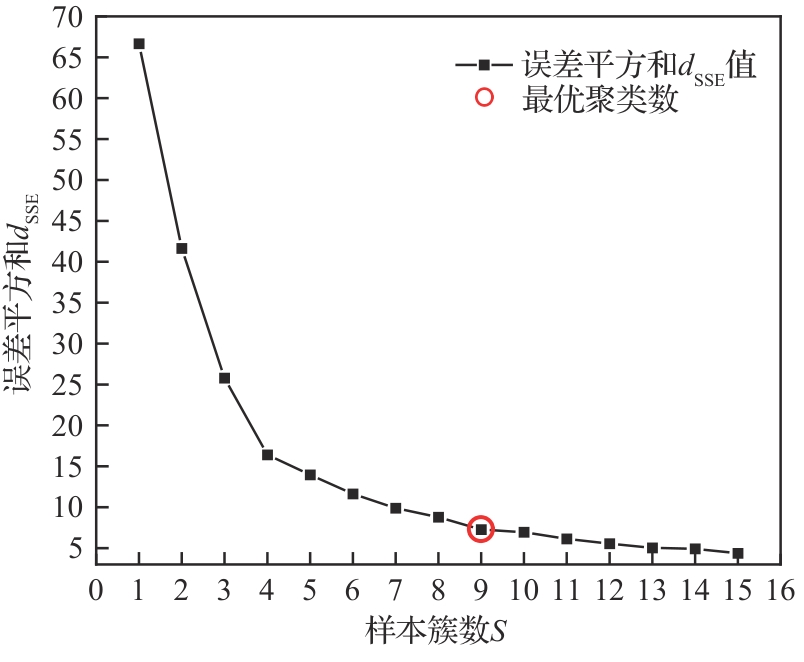
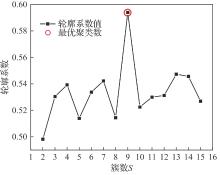
图 3
样本簇数S与轮廓系数的关系
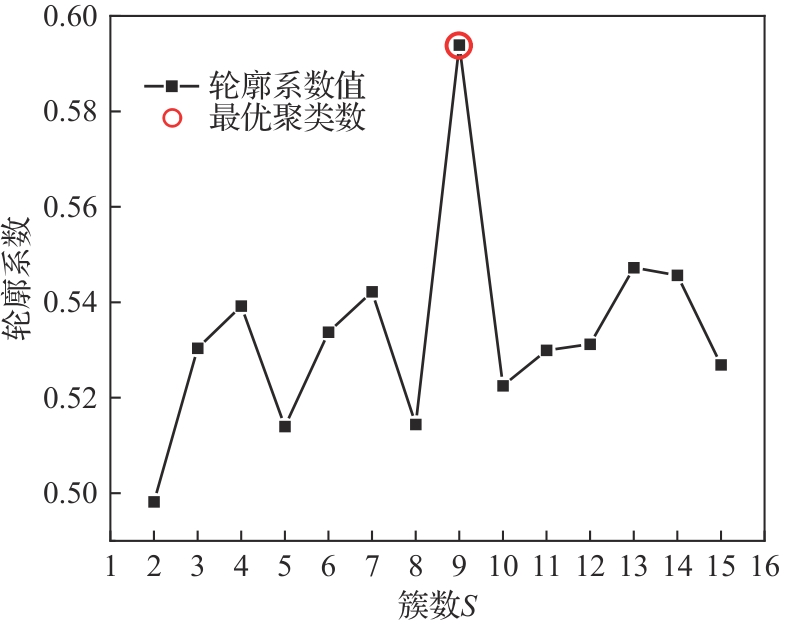
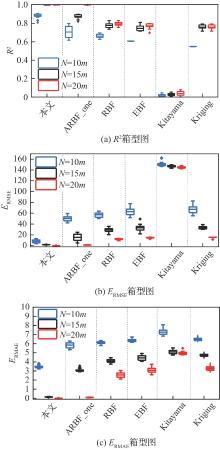
图 4
10维Ellipsoid函数的近似精度箱型图
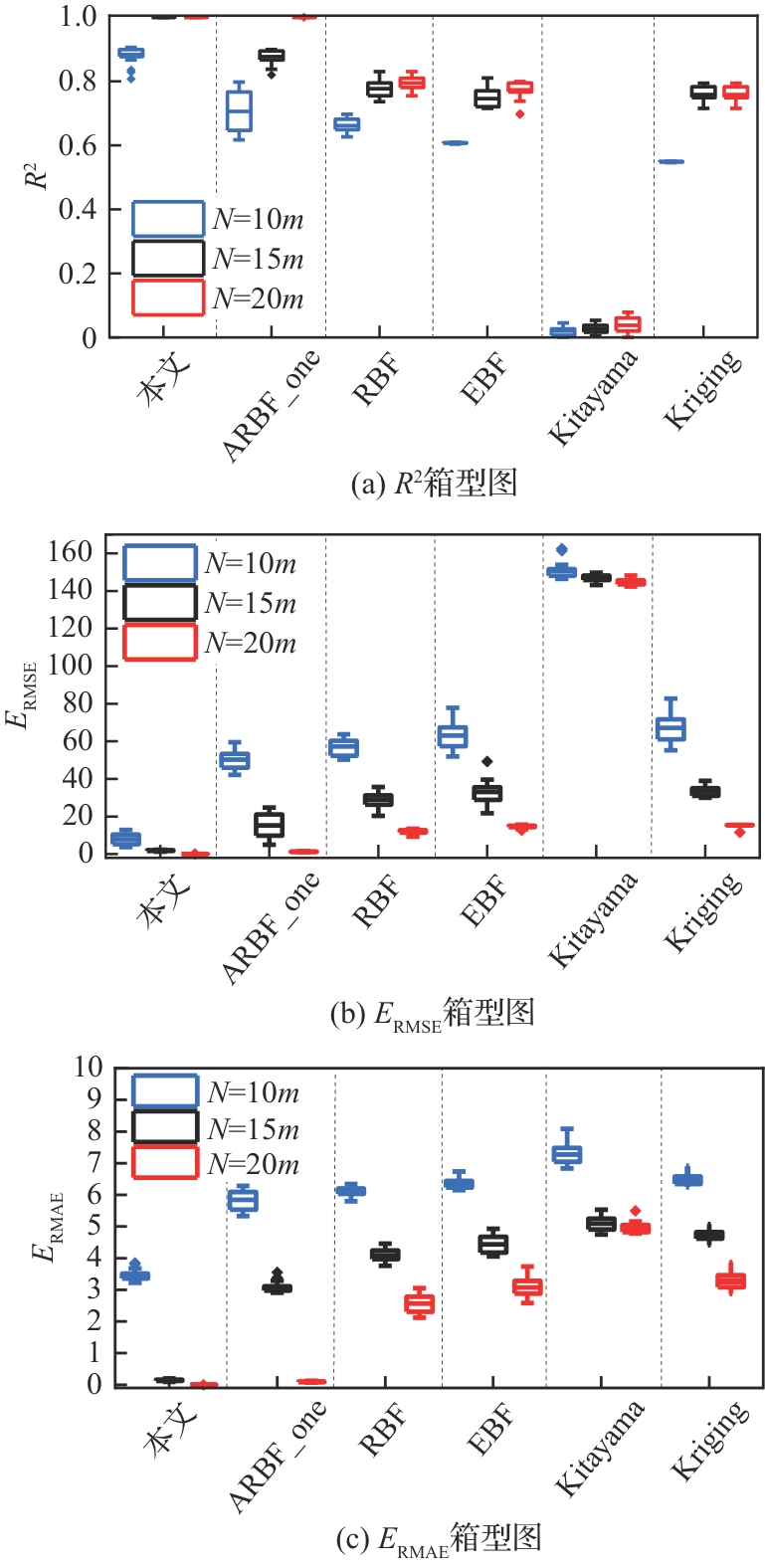
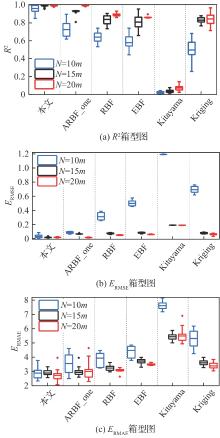
图 5
12维Griewank函数的近似精度箱型图
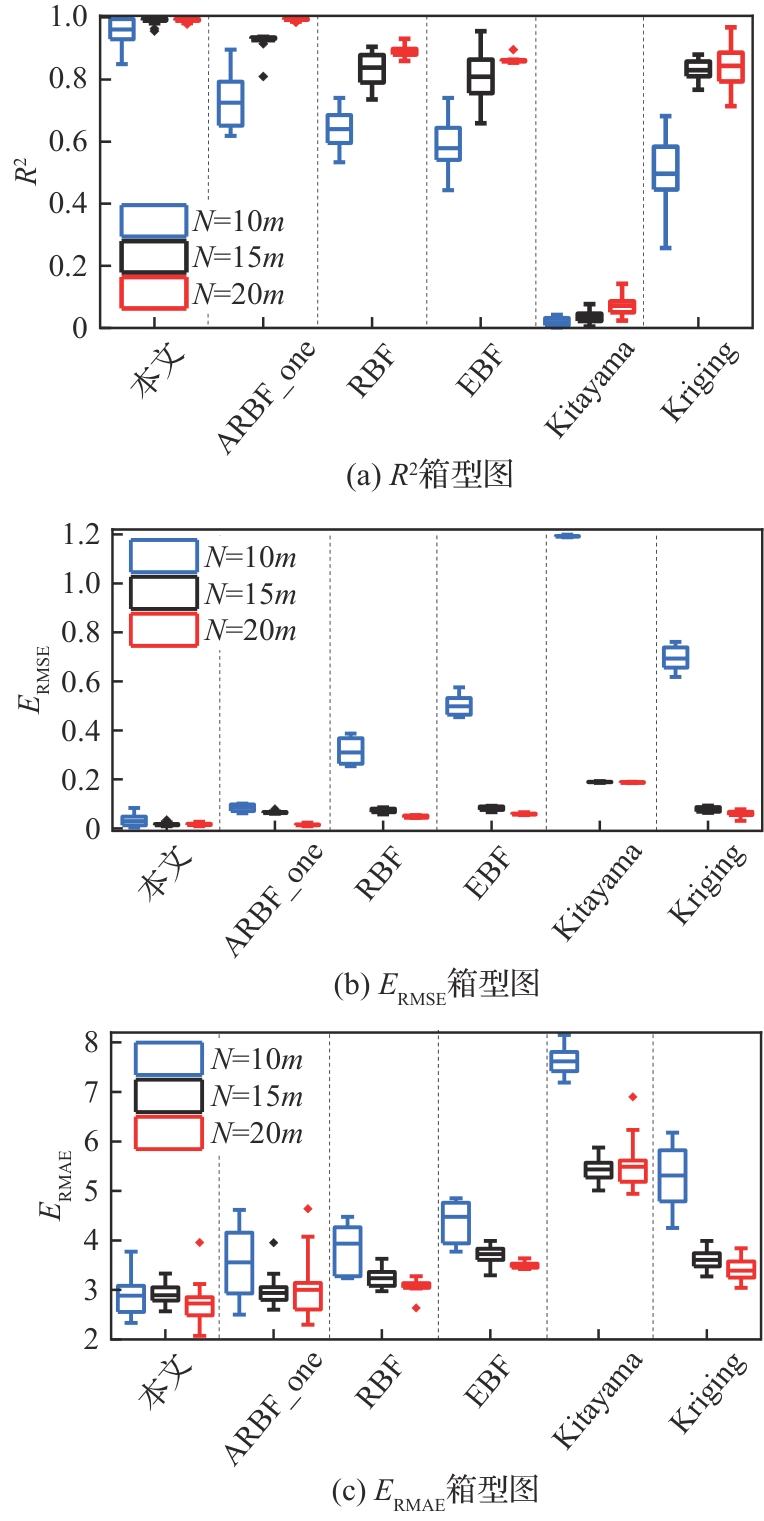
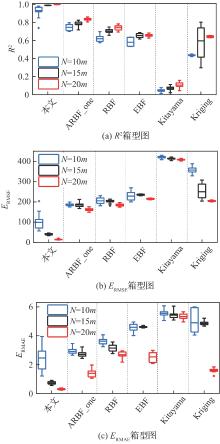
图 6
20维Ellipsoid函数的近似精度箱型图
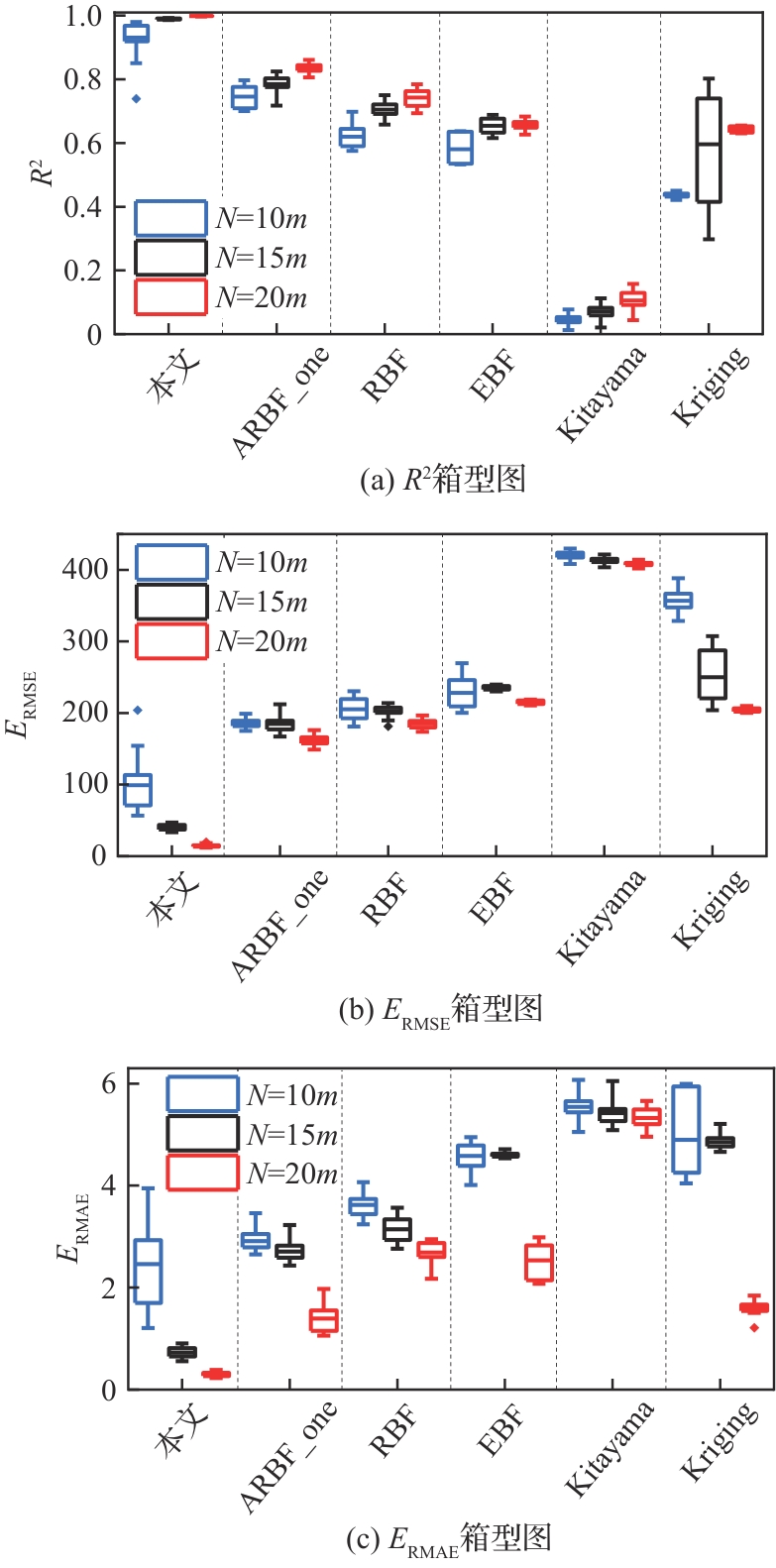
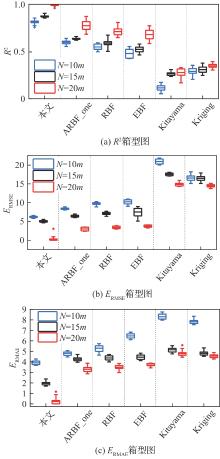
图 7
30维Dixo-Price函数的近似精度箱型图
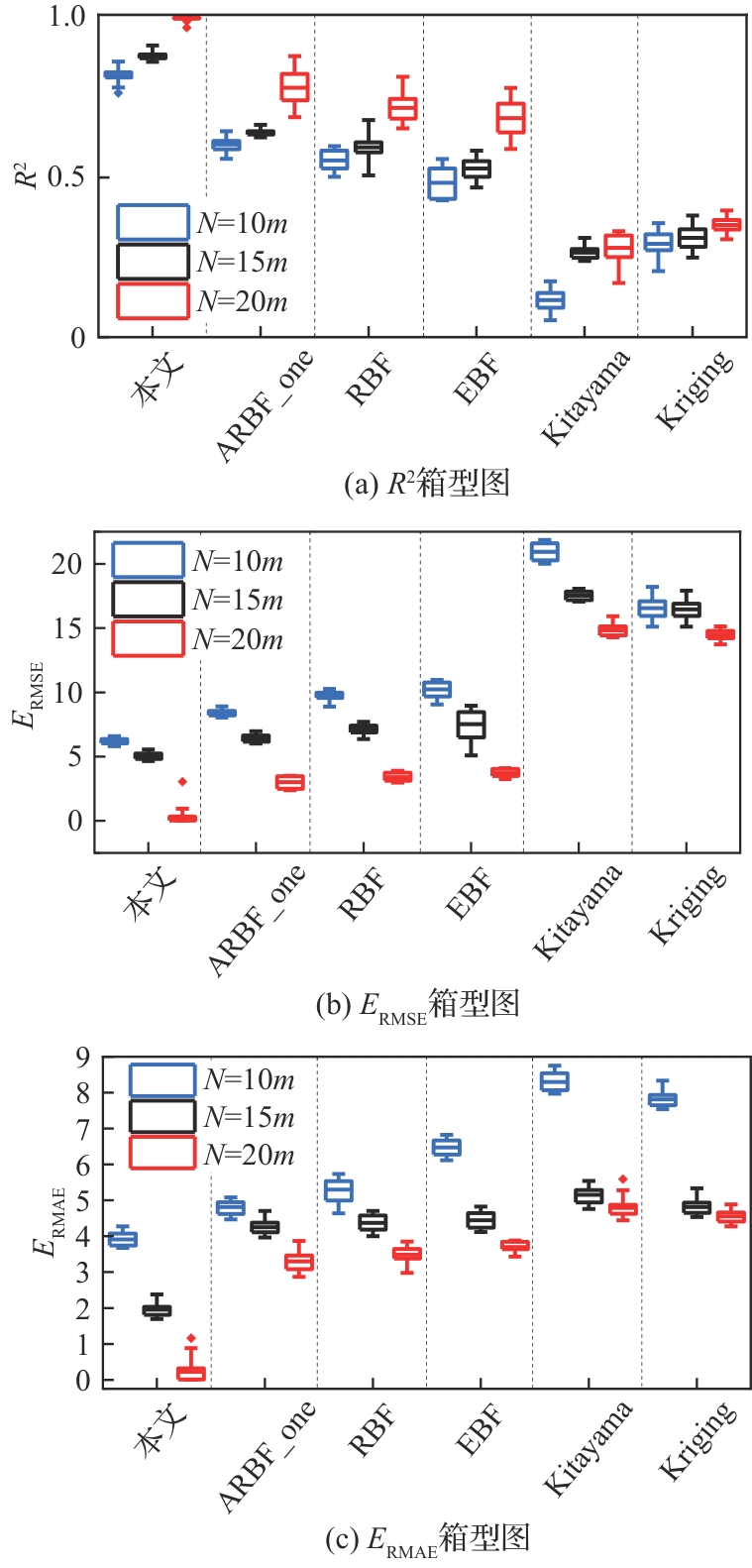
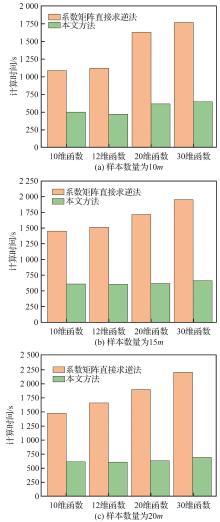
图 8
本文方法和系数矩阵直接求逆法的时间成本对比
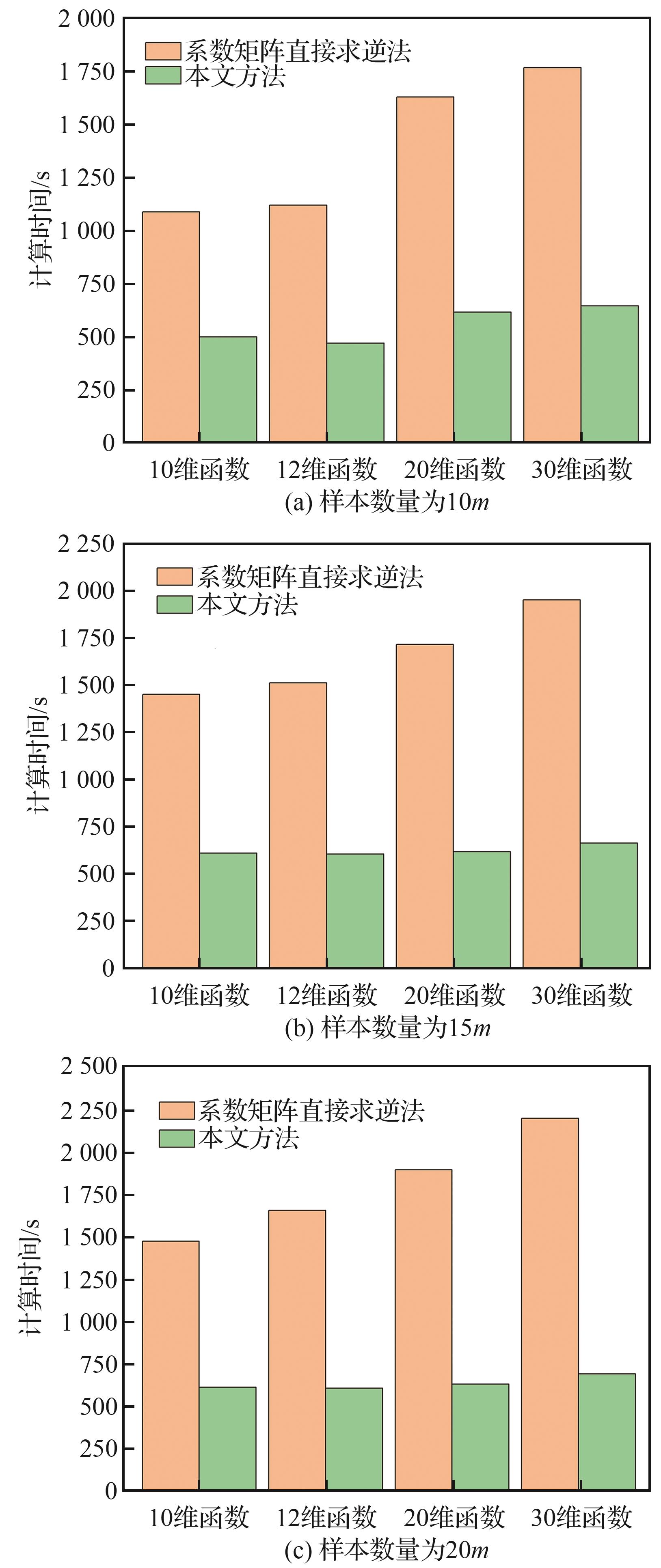
表3
本文方法计算耗时占比
| 函数类型 | 样本数量 | 本文方法计算耗时占比/% |
|---|---|---|
| 10维Ellipsoid函数 | 10m | 46.0 |
| 15m | 42.0 | |
| 20m | 41.4 | |
| 12维Griewank函数 | 10m | 42.0 |
| 15m | 40.0 | |
| 20m | 36.6 | |
| 20维Ellipsoid函数 | 10m | 37.9 |
| 15m | 36.0 | |
| 20m | 33.2 | |
| 30维Dixo-Price函数 | 10m | 36.6 |
| 15m | 34.0 | |
| 20m | 28.0 |
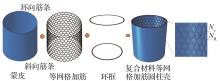
图 9
复合材料加筋圆柱壳结构示意图
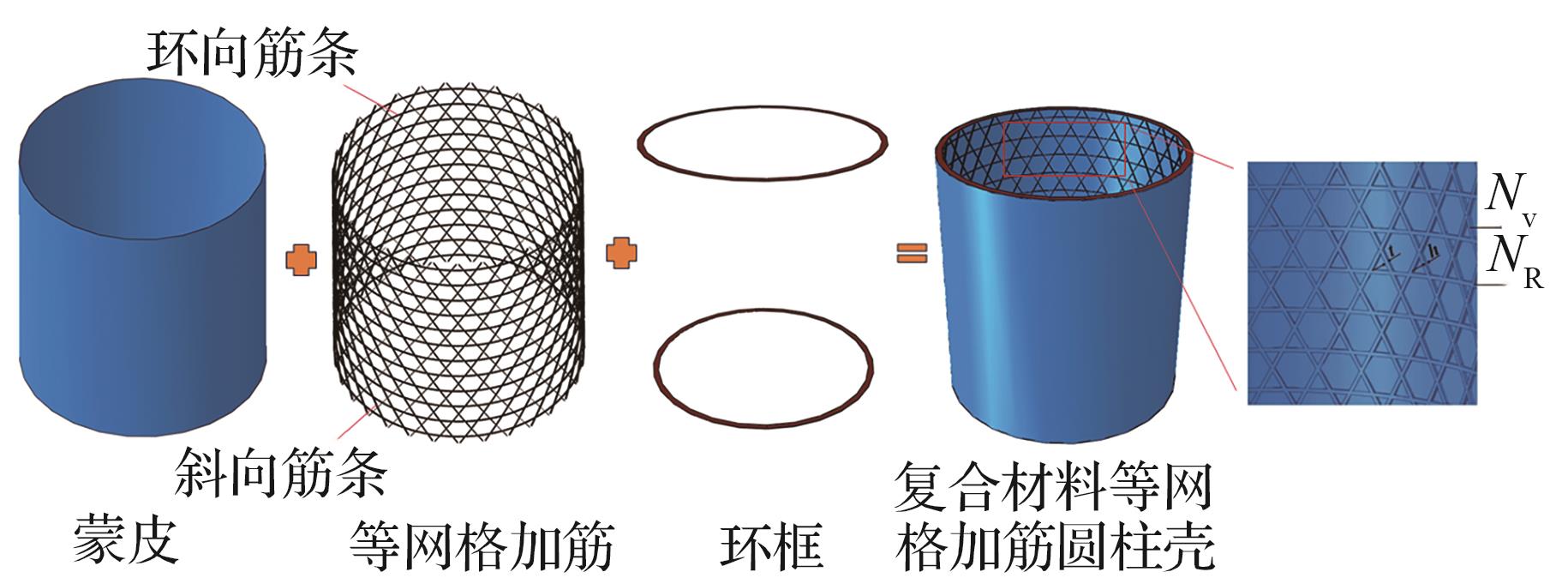
表4
设计变量取值范围
| 变量 | 范围 | 初始取值 | 变量 | 范围 | 初始取值 |
|---|---|---|---|---|---|
| 62 | 12 | ||||
| h/mm | 6.818 | t/mm | 4.162 | ||
表5
T700/BMI碳纤维增强复合材料的材料属性
| 参数 | 数值 | 参数 | 数值 |
|---|---|---|---|
| 纵向弹性模量/MPa | 145 000 | 横向弹性模量/MPa | 10 100 |
| 面内剪切模量/MPa | 5 200 | 面内剪切强度/MPa | 46 |
| 纵向抗拉强度/MPa | 1 730 | 纵向抗压强度/MPa | 916 |
| 横向抗拉强度/MPa | 24 | 横向抗压强度/MPa | 169 |
| 密度 | 1.6×10³ | 泊松比 | 0.28 |
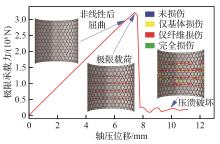
图 10
复合材料加筋圆柱壳结构轴压位移-载荷曲线与损伤形式
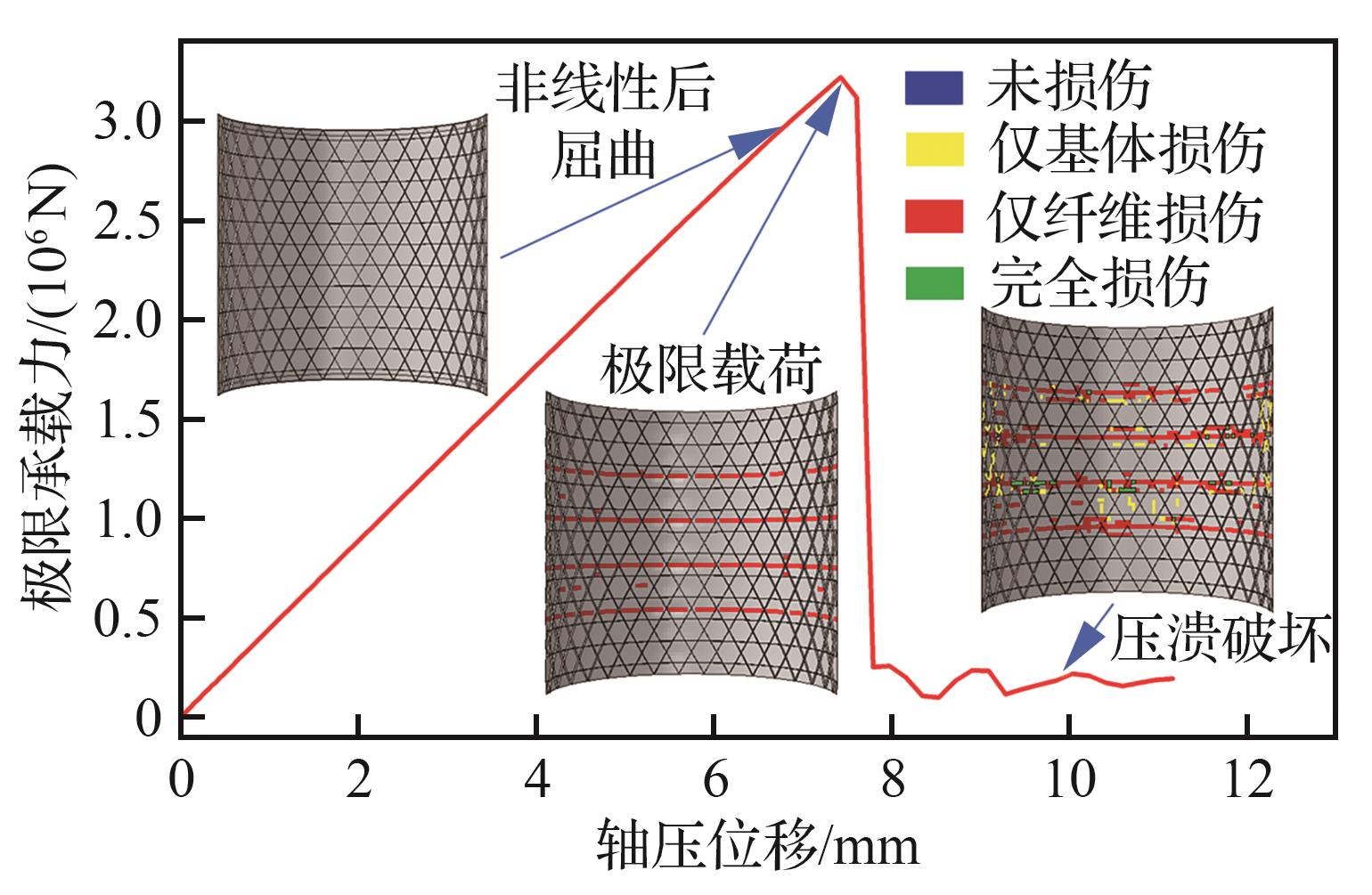
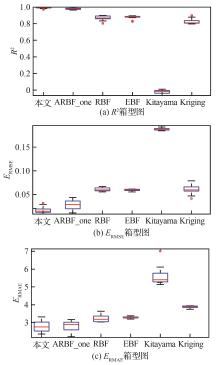
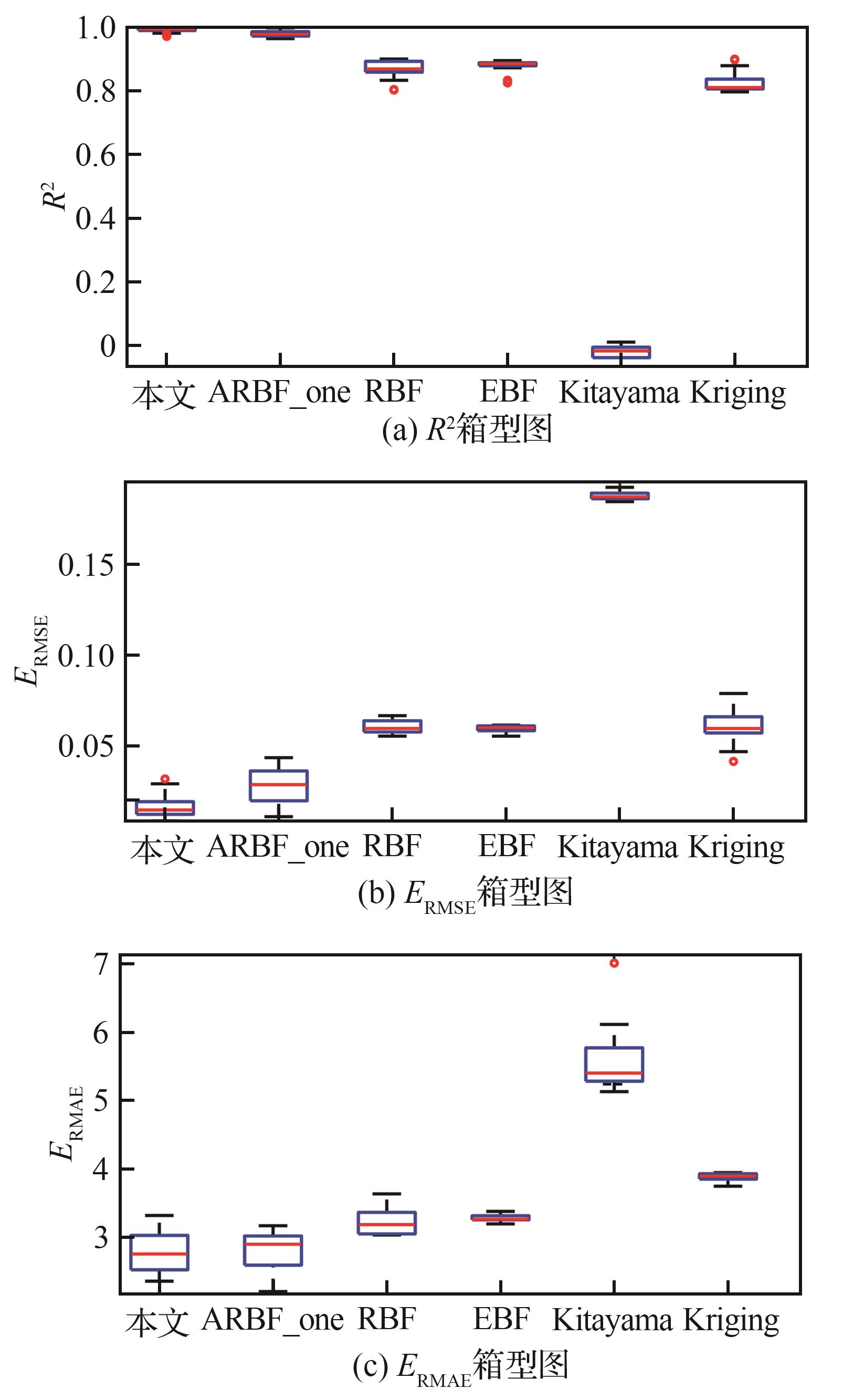
图 11
复合材料加筋圆柱壳结构的极限载荷近似精度箱型图
| [1] | 熊健, 李志彬, 刘惠彬, 等. 航空航天轻质复合材料壳体结构研究进展[J]. 复合材料学报, 2021, 38(6): 1629-1650. |
| XIONG J, LI Z B, LIU H B, et al. Advances in aerospace lightweight composite shell structure[J]. Acta Materiae Compositae Sinica, 2021, 38(6): 1629-1650 (in Chinese). | |
| [2] | 王博, 郝鹏, 田阔. 加筋薄壳结构分析与优化设计研究进展[J]. 计算力学学报, 2019, 36(1): 1-12. |
| WANG B, HAO P, TIAN K. Recent advances in structural analysis and optimization of stiffened shells[J]. Chinese Journal of Computational Mechanics, 2019, 36(1): 1-12 (in Chinese). | |
| [3] | LI M, ZHU H Y, LAI C L, et al. Recent progresses in lightweight carbon fibre reinforced lattice cylindrical shells[J]. Progress in Aerospace Sciences, 2022, 135: 100860. |
| [4] | 张超, 曹勇, 赵振强, 等. 树脂基复合材料在民用航空发动机中的应用与关键技术研究进展[J]. 航空学报, 2024, 45(2): 028556. |
| ZHANG C, CAO Y, ZHAO Z Q, et al. Applications and key challenges of polymer composites in civil aero-engines: State-of-art review[J]. Acta Aeronautica et Astronautica Sinica, 2024, 45(2): 028556 (in Chinese). | |
| [5] | ZHANG L, HE W P, ZHU S Y, et al. Hierarchical lattice stiffened cylindrical shell: Design, high-order vibration theory and composite parameter identification[J]. Composite Structures, 2024, 328: 117725. |
| [6] | YAZDANI M, SHARIFLOO S, REZAEI M. Buckling behavior and energy absorption of grid-stiffened composite cylinders under low-velocity axial impact[J]. Polymer Composites, 2024, 45(3): 2474-2484. |
| [7] | 陈向明, 李新祥, 柴亚南, 等. 复合材料壁板后屈曲设计与分析技术研究进展[J]. 复合材料学报, 2024, 41(9): 4673-4700. |
| CHEN X M, LI X X, CHAI Y N, et al. Research progress in post-buckling design and analysis techniques for composite stiffened panel[J]. Acta Materiae Compositae Sinica, 2024, 41(9): 4673-4700 (in Chinese). | |
| [8] | LI M, ZHANG L, TAO Y M, et al. Two-level homogenization and multi-failure analyses of hierarchical lattice stiffened cylinder[J]. Composite Structures, 2023, 323: 117487. |
| [9] | ZHANG L W, ZHAO L Y, PAN L, et al. Research progress of composite cylindrical shells[J]. Polymer Composites, 2023, 44(11): 7298-7316. |
| [10] | 张志峰, 陈浩然, 李煊, 等. 先进复合材料格栅圆柱壳优化设计的混合遗传算法[J]. 复合材料学报, 2005, 22(2): 166-171. |
| ZHANG Z F, CHEN H R, LI X, et al. Hybrid genetic algorithm for optimum design of advanced grid composite circular cylinders[J]. Acta Materiae Compositae Sinica, 2005, 22(2): 166-171. | |
| [11] | 王文煜, 李锋, 任飞翔, 等. 轻质高强复合材料网格加筋壳体结构设计方法及力学性能研究进展[J]. 航空学报, 2024, 45(17): 530001. |
| WANG W Y, LI F, REN F X, et al. Research progress on structural design methods and mechanical properties of lightweight high-strength composite lattice stiffened shell structure[J]. Acta Aeronautica et Astronautica Sinica, 2024, 45(17): 530001 (in Chinese). | |
| [12] | 李增聪, 田阔, 黄蕾, 等. 面向变刚度复合材料筒壳高效屈曲分析的变保真度迁移学习模型[J]. 复合材料学报, 2022, 39(5): 2430-2440. |
| LI Z C, TIAN K, HUANG L, et al. Variable-fidelity transfer learning model for efficient buckling analysis of variable stiffness composite cylindrical shells[J]. Acta Materiae Compositae Sinica, 2022, 39(5): 2430-2440 (in Chinese). | |
| [13] | 韩忠华, 许晨舟, 乔建领, 等. 基于代理模型的高效全局气动优化设计方法研究进展[J]. 航空学报, 2020, 41(5): 623344. |
| HAN Z H, XU C Z, QIAO J L, et al. Recent progress of efficient global aerodynamic shape optimization using surrogate-based approach[J]. Acta Aeronautica et Astronautica Sinica, 2020, 41(5): 623344 (in Chinese). | |
| [14] | 文谦, 杨家伟, 武泽平, 等. 快速交叉验证改进的运载火箭近似建模方法[J]. 航空学报, 2022, 43(9): 225967. |
| WEN Q, YANG J W, WU Z P, et al. An approximation modeling method of launch vehicles improved by fast cross-validation[J]. Acta Aeronautica et Astronautica Sinica, 2022, 43(9): 225967 (in Chinese). | |
| [15] | 胡嘉欣, 芮姝, 高瑞朝, 等. 飞行器结构布局与尺寸混合优化方法[J]. 航空学报, 2022, 43(5): 225363. |
| HU J X, RUI S, GAO R C, et al. Hybrid optimization method for structural layout and size of flight vehicles[J]. Acta Aeronautica et Astronautica Sinica, 2022, 43(5): 225363 (in Chinese). | |
| [16] | CAVORETTO R, DE ROSSI A, MUKHAMETZHANOV M S, et al. On the search of the shape parameter in radial basis functions using univariate global optimization methods[J]. Journal of Global Optimization, 2021, 79(2): 305-327. |
| [17] | 谢志超. 高斯径向基函数形状参数选取方法研究[D]. 唐山: 华北理工大学, 2023. |
| XIE Z C. Study on shape parameter selection method of Gaussian radial basis function[D]. Tangshan: North China University of Science and Technology, 2023 (in Chinese). | |
| [18] | DU W Y, MA J, YUE P, et al. An efficient reliability method with multiple shape parameters based on radial basis function[J]. Applied Sciences, 2022, 12(19): 9689. |
| [19] | CHEN C S, NOORIZADEGAN A, YOUNG D L, et al. On the selection of a better radial basis function and its shape parameter in interpolation problems[J]. Applied Mathematics and Computation, 2023, 442: 127713. |
| [20] | KITAYAMA S, YAMAZAKI K. Simple estimate of the width in Gaussian kernel with adaptive scaling technique[J]. Applied Soft Computing, 2011, 11(8): 4726-4737. |
| [21] | YAO W, CHEN X Q, ZHAO Y, et al. Concurrent subspace width optimization method for RBF neural network modeling[J]. IEEE Transactions on Neural Networks and Learning Systems, 2012, 23(2): 247-259. |
| [22] | ZHANG Y W, GONG C L, FANG H, et al. An efficient space division-based width optimization method for RBF network using fuzzy clustering algorithms[J]. Structural and Multidisciplinary Optimization, 2019, 60(2): 461-480. |
| [23] | YANG C, WANG Z, OH S K, et al. Ensemble fuzzy radial basis function neural networks architecture driven with the aid of multi-optimization through clustering techniques and polynomial-based learning[J]. Fuzzy Sets and Systems, 2022, 438: 62-83. |
| [24] | WU Z P, WANG D H, PATRICK OKOLO N, et al. Unified estimate of Gaussian kernel width for surrogate models[J]. Neurocomputing, 2016, 203: 41-51. |
| [25] | YANG J W, WU Z P, WANG Z X, et al. Enhanced anisotropic radius basis function metamodel based on recursive evolution Latin hypercube design and fast K-fold cross-validation[J]. Structural and Multidisciplinary Optimization, 2023, 66(7): 169. |
| [26] | 王志祥, 武泽平, 王婕, 等. 大型运载火箭加筋柱壳近似建模方法[J]. 宇航学报, 2020, 41(10): 1267-1279. |
| WANG Z X, WU Z P, WANG J, et al. Approximation modeling method for cylindrical stiffened shells in large launch vehicles[J]. Journal of Astronautics, 2020, 41(10): 1267-1279 (in Chinese). | |
| [27] | 张杰, 李国盛, 文谦, 等. 基于改进增广径向基的固体姿轨控发动机推力快速预示[J]. 推进技术, 2023, 44(8): 206-214. |
| ZHANG J, LI G S, WEN Q, et al. Fast thrust prediction method for solid divert and attitude control system based on improved augmented radial basis functions[J]. Journal of Propulsion Technology, 2023, 44(8): 206-214 (in Chinese). | |
| [28] | ARLOT S, CELISSE A. A survey of cross-validation procedures for model selection[J]. Statistics Surveys, 2010, 4: 40-79. |
| [29] | LI H X, WANG X L. Cross validation based model averaging for varying-coefficient models with response missing at random[J]. Journal of Applied Mathematics and Physics, 2024, 12(3): 764-777. |
| [30] | LILAND K H, SKOGHOLT J, INDAHL U G. A new formula for faster computation of the K-fold cross-validation and good regularisation parameter values in ridge regression[J]. IEEE Access, 2024, 12: 17349-17368. |
| [31] | 王志祥. 重型运载火箭加筋圆柱壳舱段结构优化与试验[D]. 长沙: 国防科技大学, 2021. |
| WANG Z X. Optimization design and experiment of stiffened cylindrical shells in heavy-lift launch vehicle[D]. Changsha: National University of Defense Technology, 2021 (in Chinese). | |
| [32] | ZHOU X J, MA Y Z, LI X F. Ensemble of surrogates with recursive arithmetic average[J]. Structural and Multidisciplinary Optimization, 2011, 44(5): 651-671. |
| [33] | JIANG G X, WANG W J. Error estimation based on variance analysis of K-fold cross-validation[J]. Pattern Recognition, 2017, 69: 94-106. |
| [34] | YE Y F, WANG Z X, ZHANG X B. An optimal pointwise weighted ensemble of surrogates based on minimization of local mean square error[J]. Structural and Multidisciplinary Optimization, 2020, 62(2): 529-542. |
| [35] | LI J. Asymptotics of K-fold cross validation[J]. Journal of Artificial Intelligence Research, 2023, 78: 491-526. |
| [36] | HASTIE T, FRIEDMAN J, TIBSHIRANI R. The elements of statistical learning[M]. New York: Springer New York, 2001 |
| [37] | 武泽平. 基于数值模拟的序列近似优化方法研究[D]. 长沙: 国防科技大学, 2018. |
| WU Z P. Study on numerical simulation based sequential approximate optimization[D]. Changsha: National University of Defense Technology, 2018 (in Chinese). | |
| [38] | WANG Z X, LEI Y J, CUI H R, et al. Enhanced RBF neural network metamodelling approach assisted by sliced splitting-based K-fold cross-validation and its application for the stiffened cylindrical shells[J]. Aerospace Science and Technology, 2022, 124: 107534. |
| [39] | 杨俊闯, 赵超. K-means聚类算法研究综述[J]. 计算机工程与应用, 2019, 55(23): 7-14, 63. |
| YANG J C, ZHAO C. Survey on K-means clustering algorithm[J]. Computer Engineering and Applications, 2019, 55(23): 7-14, 63 (in Chinese). | |
| [40] | EZUGWU A E, IKOTUN A M, OYELADE O O, et al. A comprehensive survey of clustering algorithms: State-of-the-art machine learning applications, taxonomy, challenges, and future research prospects[J]. Engineering Applications of Artificial Intelligence, 2022, 110: 104743. |
| [41] | SHI C M, WEI B T, WEI S L, et al. A quantitative discriminant method of elbow point for the optimal number of clusters in clustering algorithm[J]. EURASIP Journal on Wireless Communications and Networking, 2021, 2021(1): 31. |
| [42] | 王建仁, 马鑫, 段刚龙. 改进的K-means聚类k值选择算法[J]. 计算机工程与应用, 2019, 55(8): 27-33. |
| WANG J R, MA X, DUAN G L. Improved K-means clustering k-value selection algorithm[J]. Computer Engineering and Applications, 2019, 55(8): 27-33 (in Chinese). | |
| [43] | SELVIDA D, ZARLIS M, SITUMORANG Z. Analysis of the effect early cluster centre points on the combination of K-means algorithms and sum of squared error on k centroid[J]. IOP Conference Series: Materials Science and Engineering, 2020, 725(1): 012089. |
| [44] | KOHAVI R. A study of cross-validation and bootstrap for accuracy estimation and model selection[C]∥Proceedings of the 14th International Joint Conference on Artificial Intelligence-Volume 2. New York: ACM, 1995: 1137-1143. |
| [45] | 李正良, 彭思思, 王涛. 基于K-fold交叉验证的代理模型序列采样方法[J]. 计算力学学报, 2022, 39(2): 244-249. |
| LI Z L, PENG S S, WANG T. A sequential sampling method of surrogate model based on K-fold cross validation[J]. Chinese Journal of Computational Mechanics, 2022, 39(2): 244-249 (in Chinese). | |
| [46] | LUO J C, CHEN Q X, ZHENG J, et al. An elliptical basis function network for classification of remote sensing images[J]. Journal of Geographical Systems, 2004, 6(3): 219-236. |
| [47] | SIMPSON T W, MAUERY T M, KORTE J J, et al. Kriging models for global approximation in simulation-based multidisciplinary design optimization[J]. AIAA Journal, 2001, 39(12): 2233-2241. |
| [48] | ROUSSEEUW P J. Silhouettes: A graphical aid to the interpretation and validation of cluster analysis[J]. Journal of Computational and Applied Mathematics, 1987, 20: 53-65. |
| [49] | BAGIROV A M, ALIGULIYEV R M, SULTANOVA N. Finding compact and well-separated clusters: Clustering using silhouette coefficients[J]. Pattern Recognition, 2023, 135: 109144. |
| [50] | LI M, FAN H L. Multi-failure analysis of composite Isogrid stiffened cylinders[J]. Composites Part A: Applied Science and Manufacturing, 2018, 107: 248-259. |
| [51] | HASHIN Z. Fatigue failure criteria for unidirectional fiber composites[J]. Journal of Applied Mechanics, 1981, 48(4): 846-852. |
| [52] | 耿发贵, 李强, 宋薛思, 等. 基于冲击损伤的复合材料气瓶铺层顺序优化设计[J]. 复合材料学报, 2022, 39(2): 777-787. |
| GENG F G, LI Q, SONG X S, et al. Optimal design of laying sequence of composite gas cylinders based on impact damage[J]. Acta Materiae Compositae Sinica, 2022, 39(2): 777-787 (in Chinese). |
| [1] | 沈君贤, 杨雅惠, 袁慎芳. 空天多层异构结构压电导波传播特性仿真[J]. 航空学报, 2025, 46(21): 532366-532366. |
| [2] | 常楠, 范帅杰, 刘伟先, 陈振勇. 反曲加筋壁板筋条终止端承载能力研究[J]. 航空学报, 2025, 46(21): 532391-532391. |
| [3] | 张宇, 李达诚, 刘小川, 李玉龙. 预载作用下2A12铝合金高能激光毁伤失效研究[J]. 航空学报, 2025, 46(21): 532358-532358. |
| [4] | 王祎, 刘华, 杨嘉陵, 杨先锋. 3D打印高拉伸负泊松比超材料设计及力学行为[J]. 航空学报, 2025, 46(21): 532361-532361. |
| [5] | 刘清漪, 杨旭, 张宇, 严鹏, 陈彦飞, 闫楚良. 碳纤维编织复合材料激光烧蚀多场耦合建模[J]. 航空学报, 2025, 46(21): 532372-532372. |
| [6] | 骆丽, 孙远驰, 邹学锋, 赵奉同. 高速气流下C/SiC薄板热声耦合响应特性计算与分析[J]. 航空学报, 2025, 46(21): 532353-532353. |
| [7] | 刘冲冲 刘小川 许勇 李霄 刘胜利. 起落架系统的分岔特性与参数耦合影响规律[J]. 航空学报, 0, (): 1-0. |
| [8] | 郭程洁, 徐典, 李进宝, 程超宇, 郭硕昌, 李锐. 基于数据融合-知识迁移方法的高温数字图像相关试验应力表征[J]. 航空学报, 2025, 46(19): 531574-531574. |
| [9] | 施英杰, 刘斌超, 鲁嵩嵩, 陈亮, 尚海, 鲍蕊. 融合试验-仿真标定数据的机翼应变载荷关系神经网络模型[J]. 航空学报, 2025, 46(19): 530921-530921. |
| [10] | 黄熠玮, 耿一斌, 高天贺, 胡轩玮, 王圆, 马红艳, 田阔. 数字孪生驱动的结构全场变形高精度反演方法[J]. 航空学报, 2025, 46(19): 530967-530967. |
| [11] | 司俊岭, 杨胜奇, 张颖. 一种新型整体与局部高阶层合梁模型[J]. 航空学报, 2025, 46(18): 231719-231719. |
| [12] | 马润博 张峻鸣 许英杰 王文智. 航空复合材料自动铺丝工艺缺陷检测、表征与工艺优化研究进展[J]. 航空学报, 0, (): 1-0. |
| [13] | 王超凡 周焕林 王选. 基于RBF增强直接概率积分法的板壳结构随机屈曲分析[J]. 航空学报, 0, (): 1-0. |
| [14] | 王立刚 徐润泽 刘志鹏 黄宇超 王可. 无网格VDQ法分析非规则薄板热-振耦合特性[J]. 航空学报, 0, (): 1-0. |
| [15] | 程超宇 徐典 郭程洁 李进宝 李锐. 基于辛叠加方法与迁移学习的功能梯度任意四边形开孔板自由振动问题求解[J]. 航空学报, 0, (): 1-0. |
| 阅读次数 | ||||||
|
全文 |
|
|||||
|
摘要 |
|
|||||
版权所有 © 航空学报编辑部
版权所有 © 2011航空学报杂志社
主管单位:中国科学技术协会 主办单位:中国航空学会 北京航空航天大学

 CJA
CJA
