Acta Aeronautica et Astronautica Sinica ›› 2025, Vol. 46 ›› Issue (20): 531589.doi: 10.7527/S1000-6893.2025.31589
• Special Issue: Key Technologies for Supersonic Civil Aircraft • Previous Articles
Ruixuan XIE, Ziyang ZHANG, Jinye LI, Han BAO, Fanghan LU, Qimin WANG, Dawei WU( )
)
Received:2024-11-30
Revised:2024-12-26
Accepted:2025-02-17
Online:2025-03-14
Published:2025-02-28
Contact:
Dawei WU
E-mail:Supersonic_Sadri@163.com
Supported by:CLC Number:
Ruixuan XIE, Ziyang ZHANG, Jinye LI, Han BAO, Fanghan LU, Qimin WANG, Dawei WU. Low-boom aerodynamic design and assessment of long-range supersonic passenger aircraft[J]. Acta Aeronautica et Astronautica Sinica, 2025, 46(20): 531589.
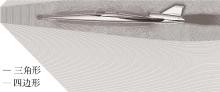
Fig.1
Mesh topology of C608 aircraft
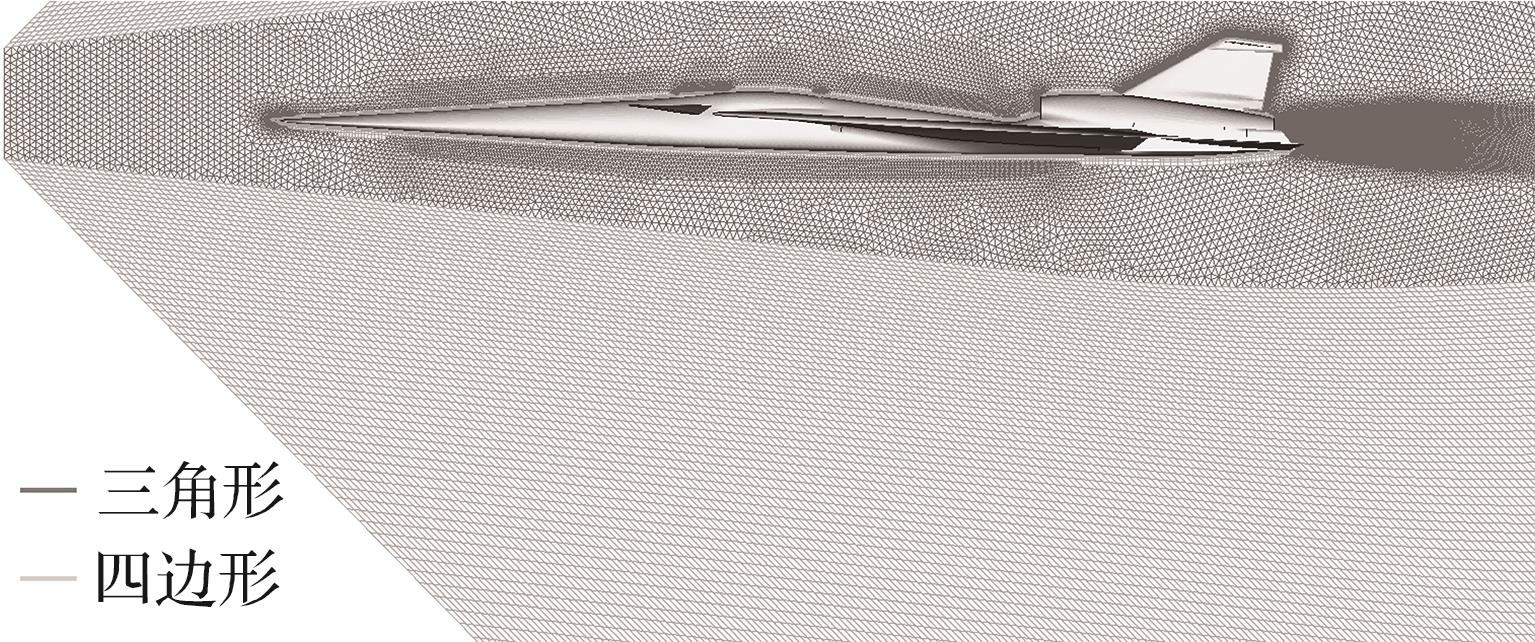
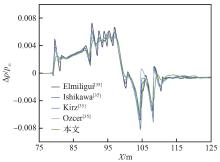
Fig.2
C608 aircraft nearfield overpressure signal calculation results
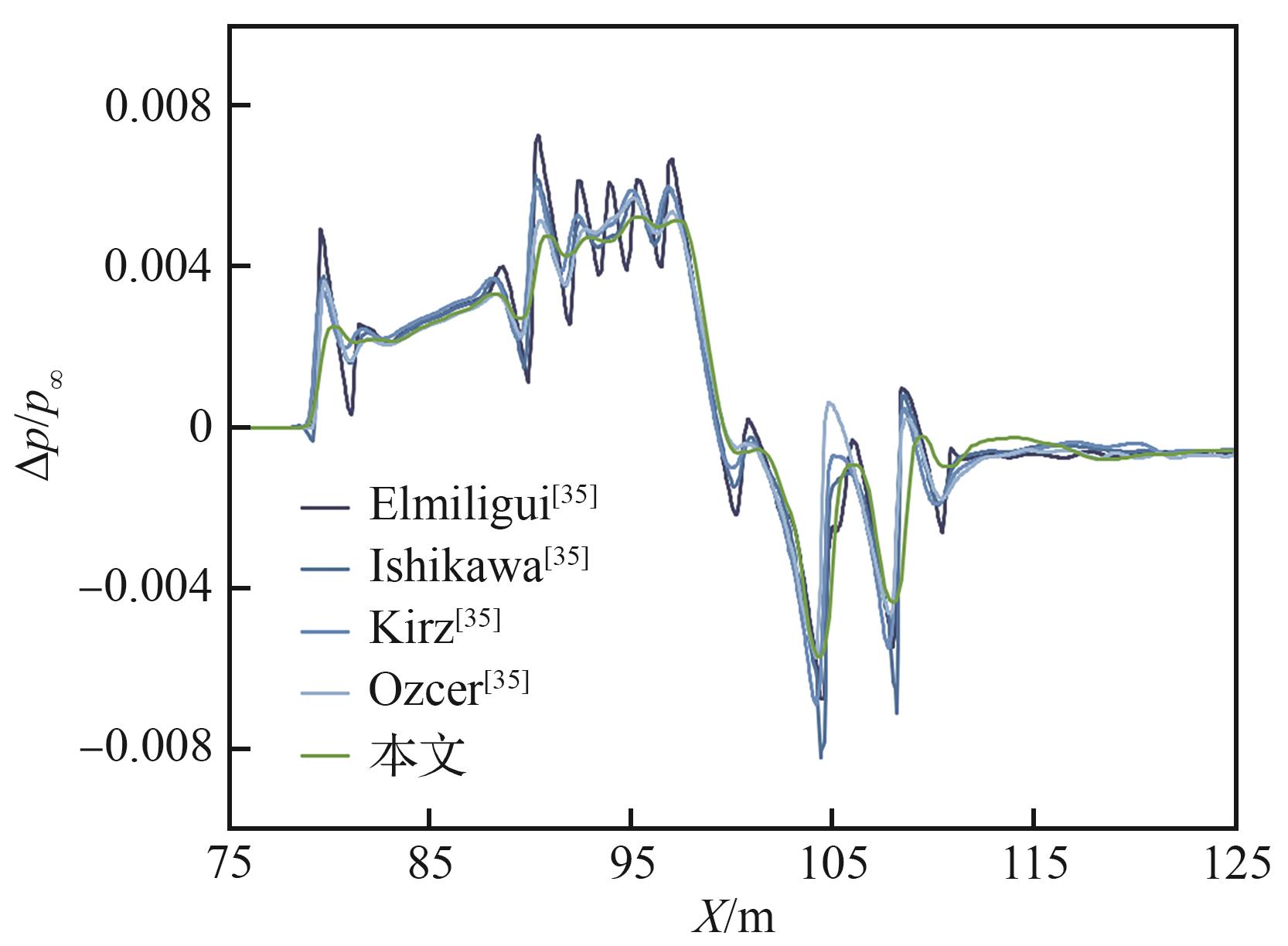
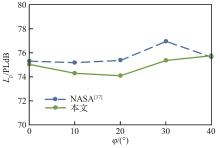
Fig.3
Predictions of ground perceived sound level of C609 aircraft
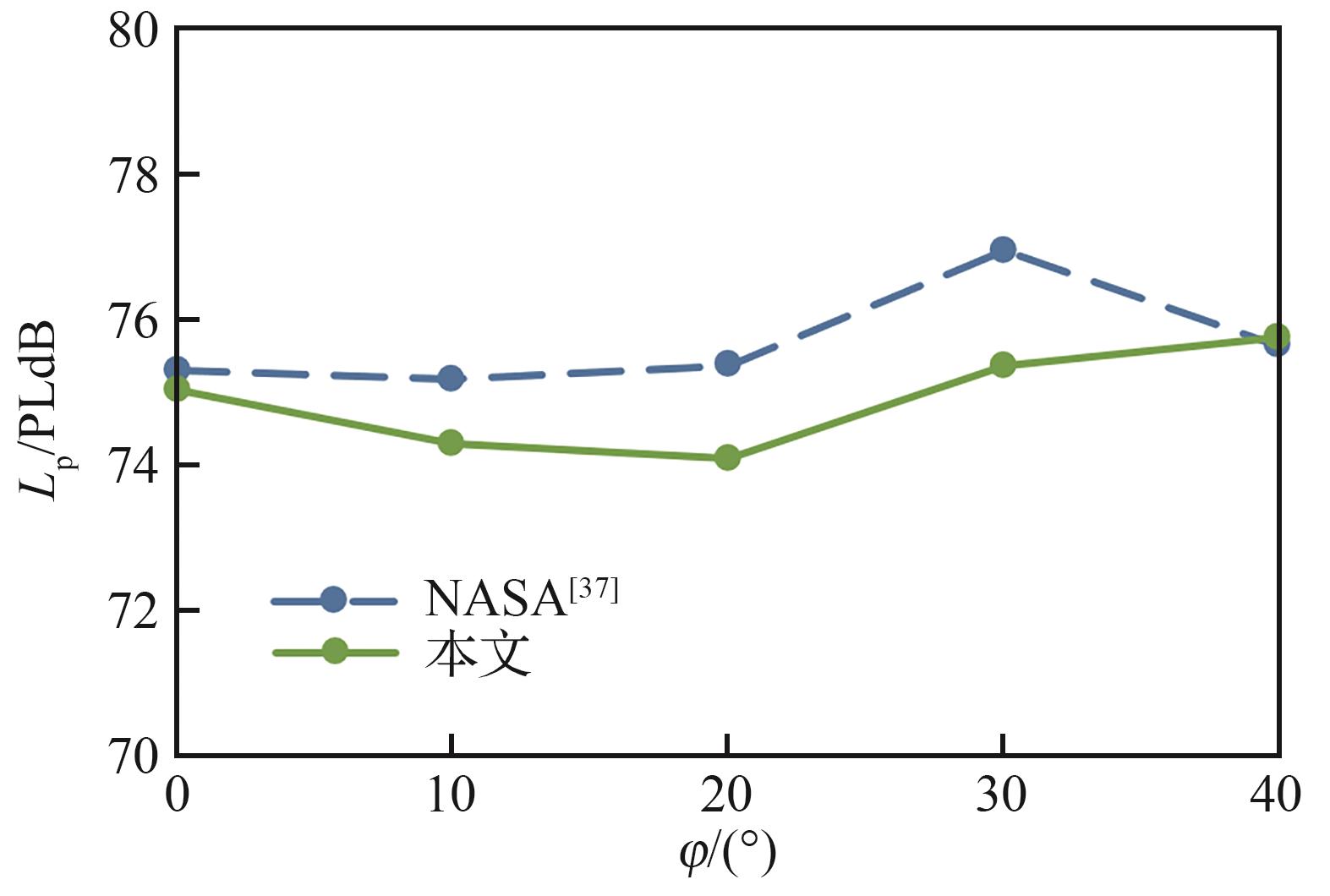
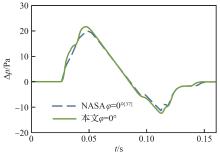
Fig.4
Predictions of ground overpressure signal of C609 aircraft
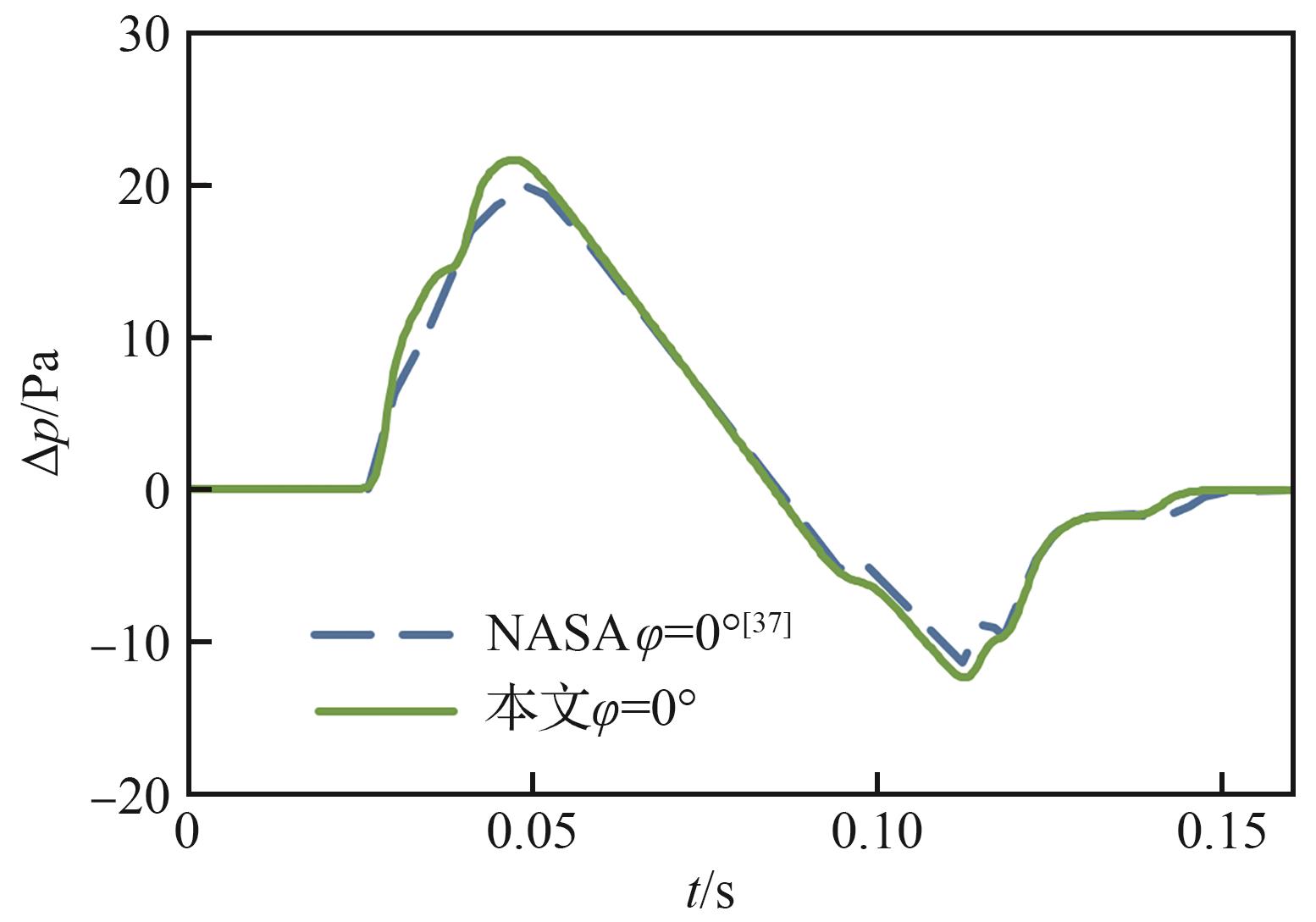
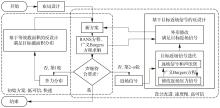
Fig.5
Schematic of low-boom aerodynamic design process
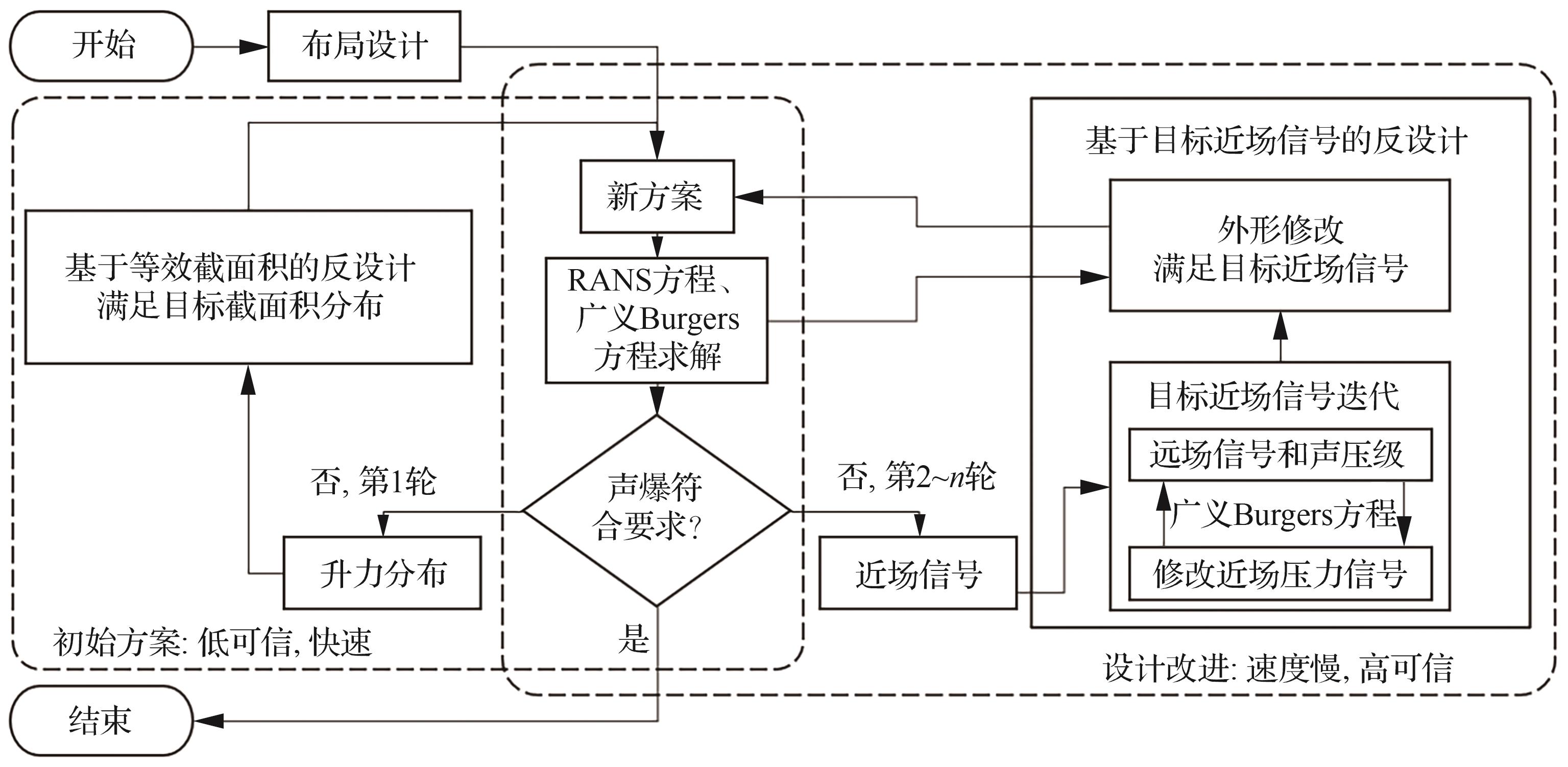
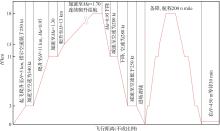
Fig.6
Typical mission profile for long-range supersonic airliner

Table 1
DTO of airliners (at ISA sea level, calm wind, dry runway, WMTO)
| 机型 | 气温/℃ | DTO/m |
|---|---|---|
| 协和[ | 24 | 4 000 |
| A350-900[ | 30 | 3 000 |
| B787-9[ | 40 | 4 200 |
Table 2
Design requirements for long-range supersonic airliner
| 项目 | 指标 |
|---|---|
| 最大起飞质量 | WMTO<79 000 kg |
| 最大着陆质量 | WML=使用空重+最大商载+备份油质量×1.5 |
| 起落架,机尾形状 | 擦地角大于15° |
| 低声爆巡航马赫数 | MaLBC=1.6 |
| 正下方地面声爆 | Lp<85 PLdB, H=16 000 m, MaLBC |
| 风扇压比 | RFP<1.9, 正常起飞 |
| 商载 | 标准28人, 最大48人, 100 kg/人 |
| 标准航程 | Ra>11 000 km, 标准商载 |
| 机身尺寸 | 满足客舱截面和长度 |
| 燃料种类 | Jet A-1, 可持续燃油, ρ=785 kg/m3 |
| 巡航高度限制 | H<18 000 m |
| 超声速高度 | H>11 000 m |
| 起飞场长 | DTO<4 000 m,35 ℃ |
| 经济巡航马赫数 | MaECC=1.7 |
| 进场速度 | VREF<150 kt, WML |
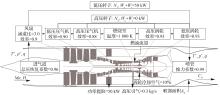
Fig.7
Sketch of engine model with main parameters
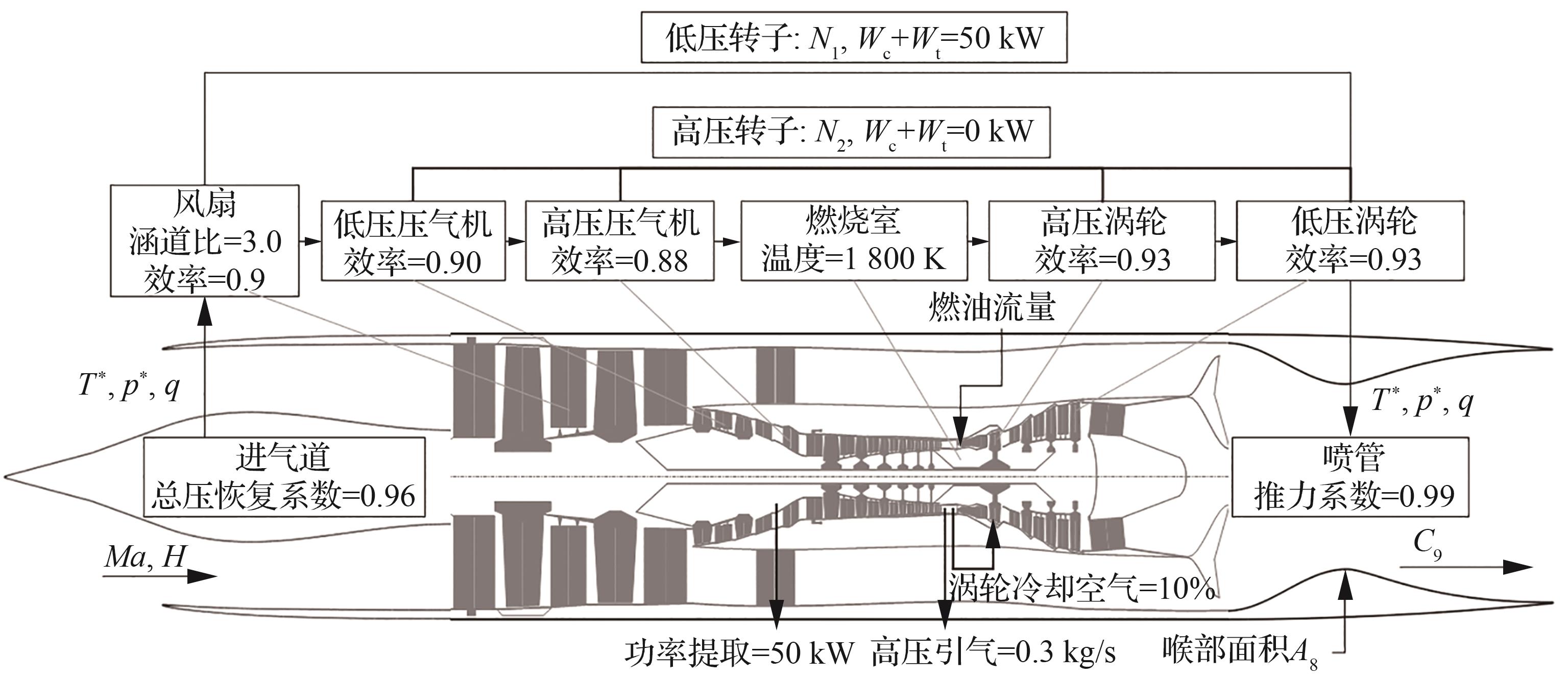
Table 3
Parameters of a modern low-bypass engine and present engine
| 方案 | 核心机空气流量/(kg·s-1) | 总增压比 | 燃油流量/(kg·s-1) | 涡轮前温度/K |
|---|---|---|---|---|
| F119(推测[ | 96.9 | 26.1 | 2.452 | 1 860 |
| 本文 | 80.0~100.0 | 20.0 | 1.800~2.300 | 1 800 |
Table 4
Engine performance under typical conditions
| 工况 | H/m | Ma | 比推力/(N·kg-1) | 比油耗/(kg·N-1·s-1) |
|---|---|---|---|---|
| 起飞-正常 | 0 | 0 | 398.2 | 0.011 3 |
| 起飞-单发 | 0 | 0 | 474.3 | 0.013 0 |
| 跨声速 | 11 000 | 1.0 | 303.9 | 0.020 1 |
| 巡航 | 16 000 | 1.7 | 274.4 | 0.023 9 |
| 等待 | 450 | 0.4 | 102.3 | 0.016 0 |
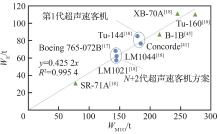
Fig.8
Weight data of supersonic aircrafts
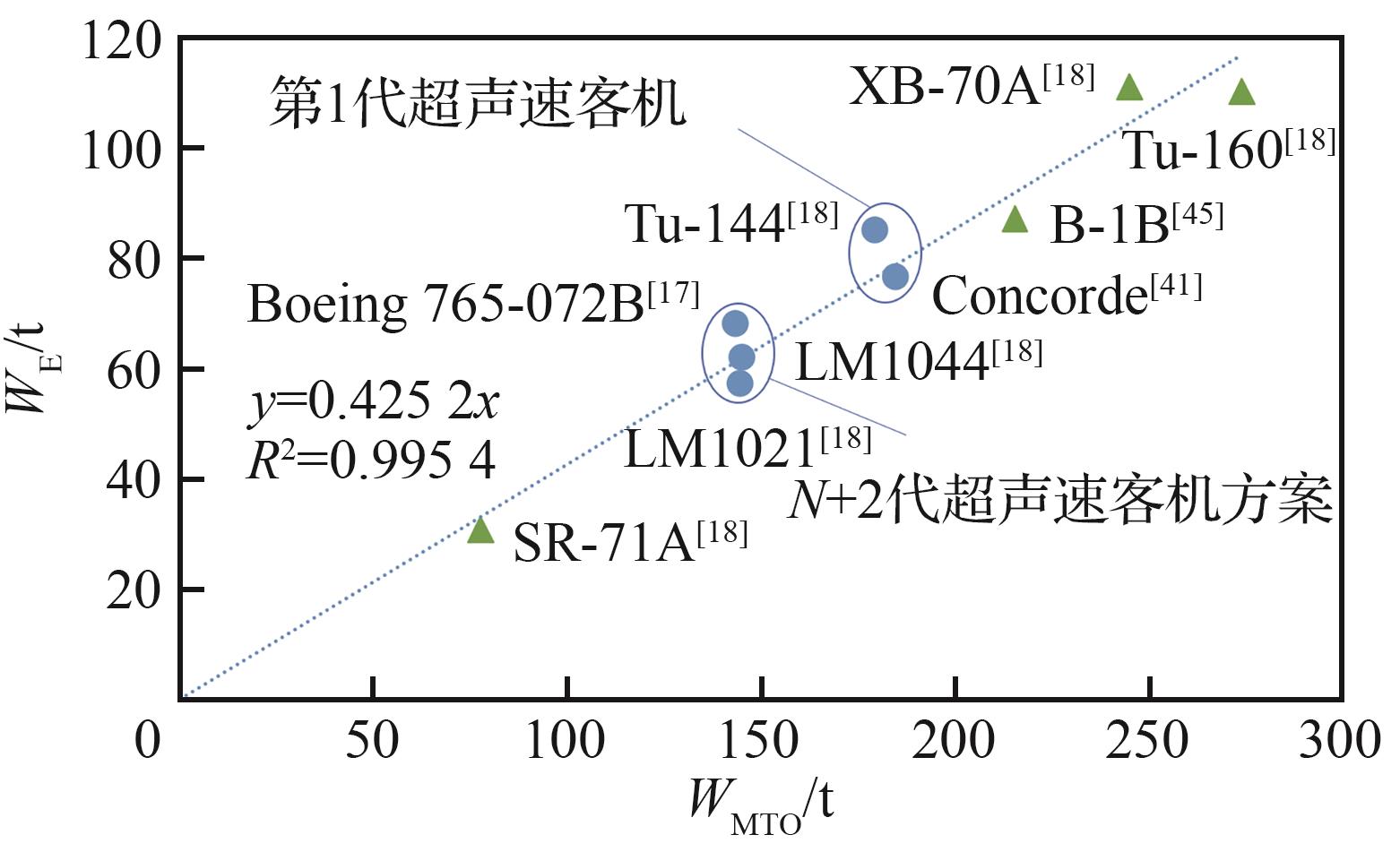
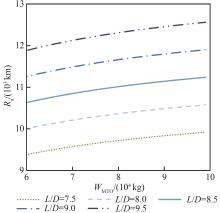
Fig.9
Relationship between standard range and maxmium takeoff mass for various lift-to-drag ratios
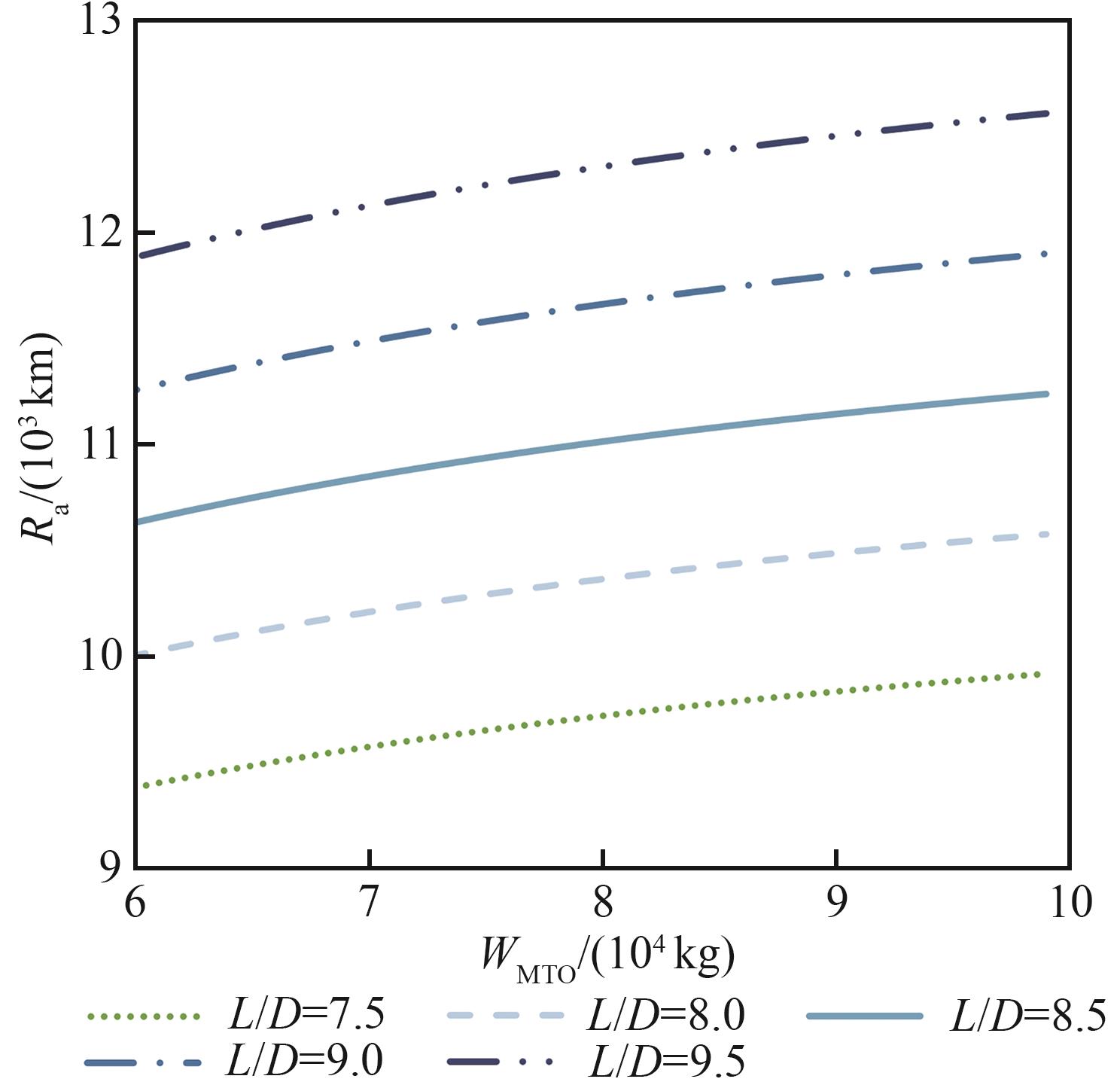
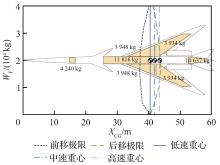
Fig.10
Distribution of fuel tanks and center of gravity shift range
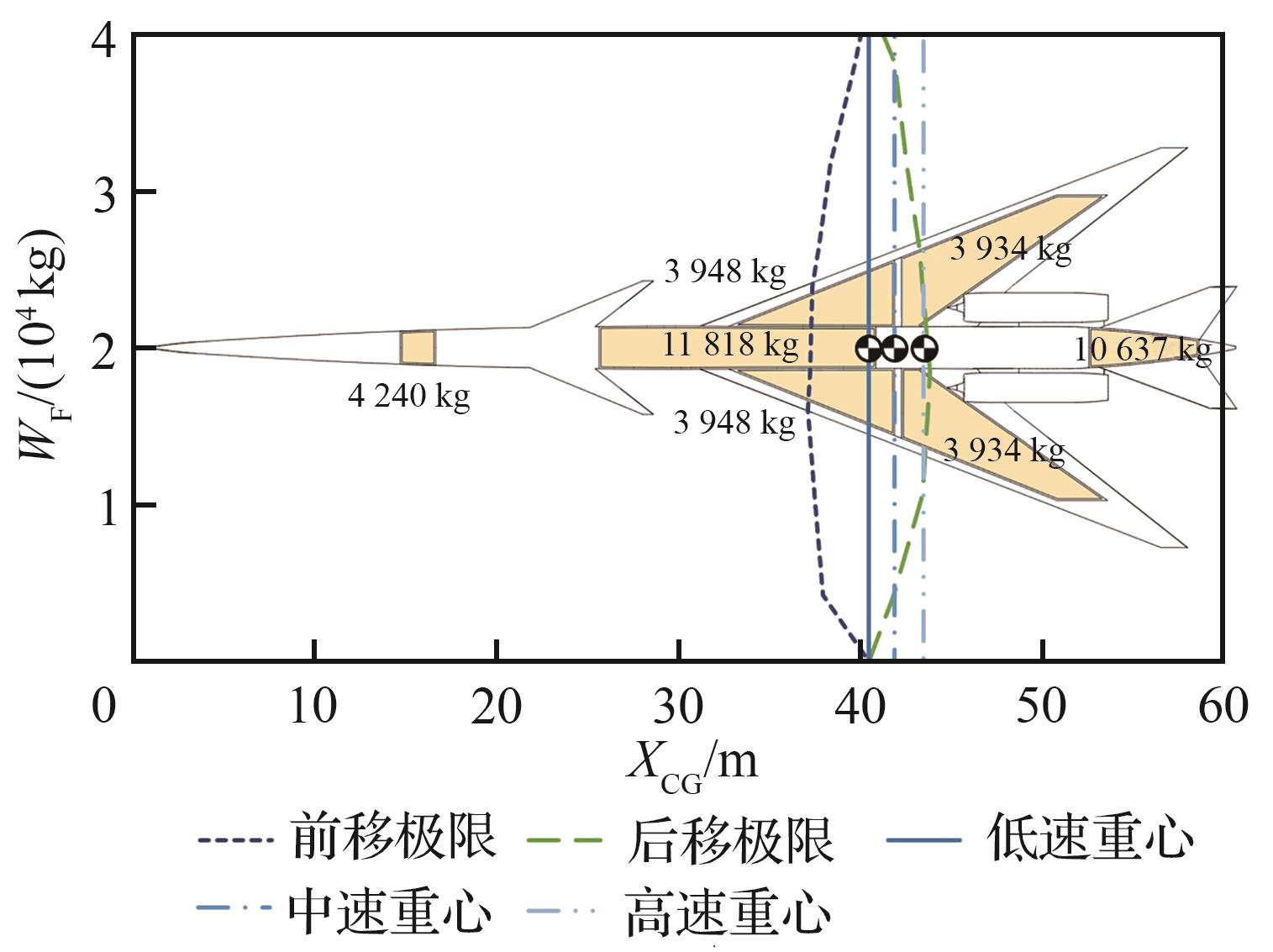
Table 5
Aerodynamic parameter values for layout design
| 工况 | α/(°) | CL | L/D |
|---|---|---|---|
| 起飞爬升 | 7 | 0.450 | 7.3 |
| 进场 | 10 | 0.700 | 5.3 |
| 巡航 | 0.195 | 8.5 |
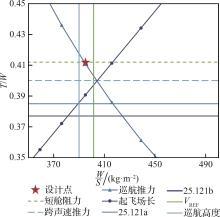
Fig.11
Limitations and selection of wing loading and thrust-to-weight ratio
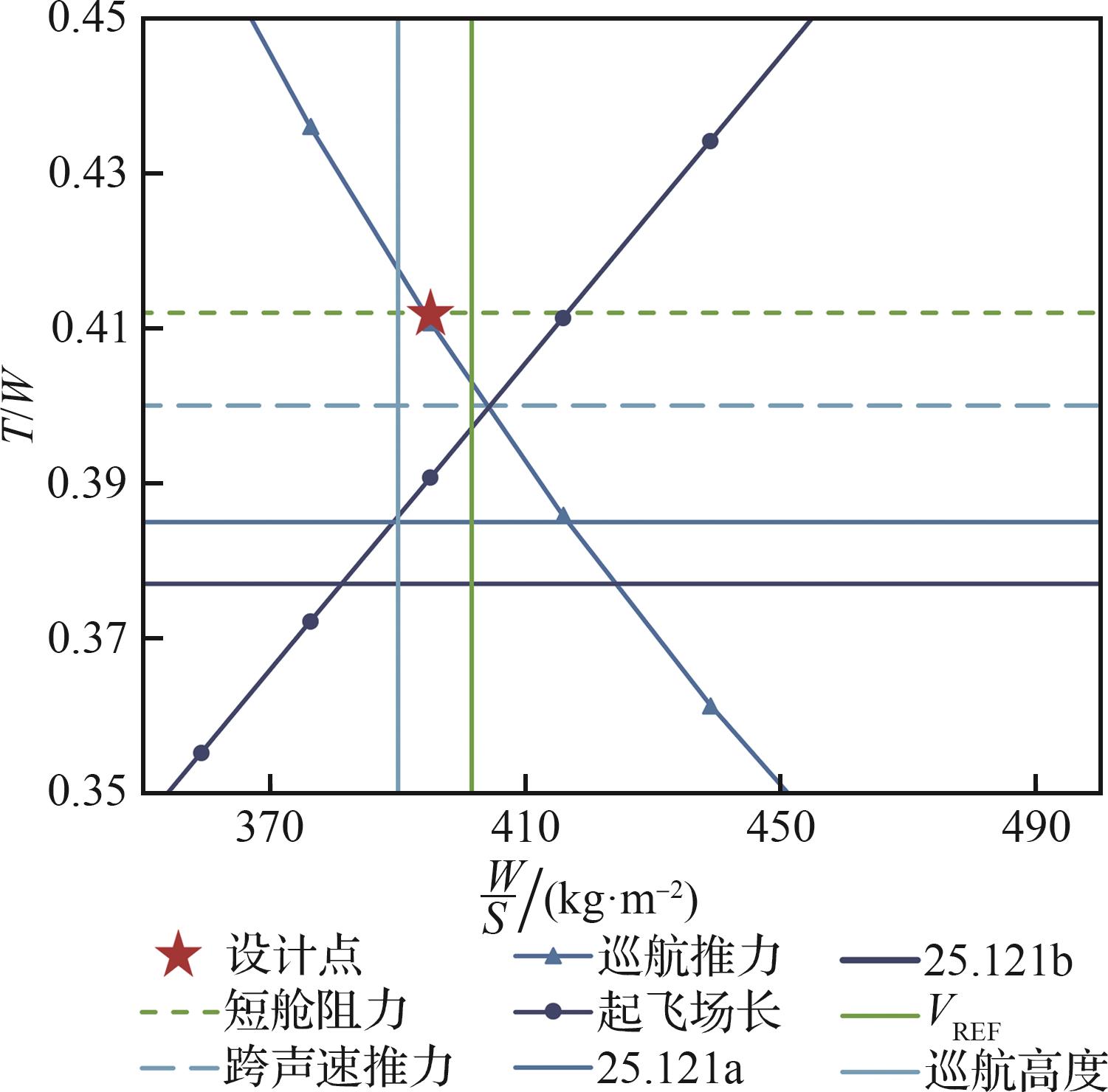
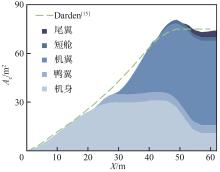
Fig.12
Equivalent area distribution of Configuration A(Ma=1.6)
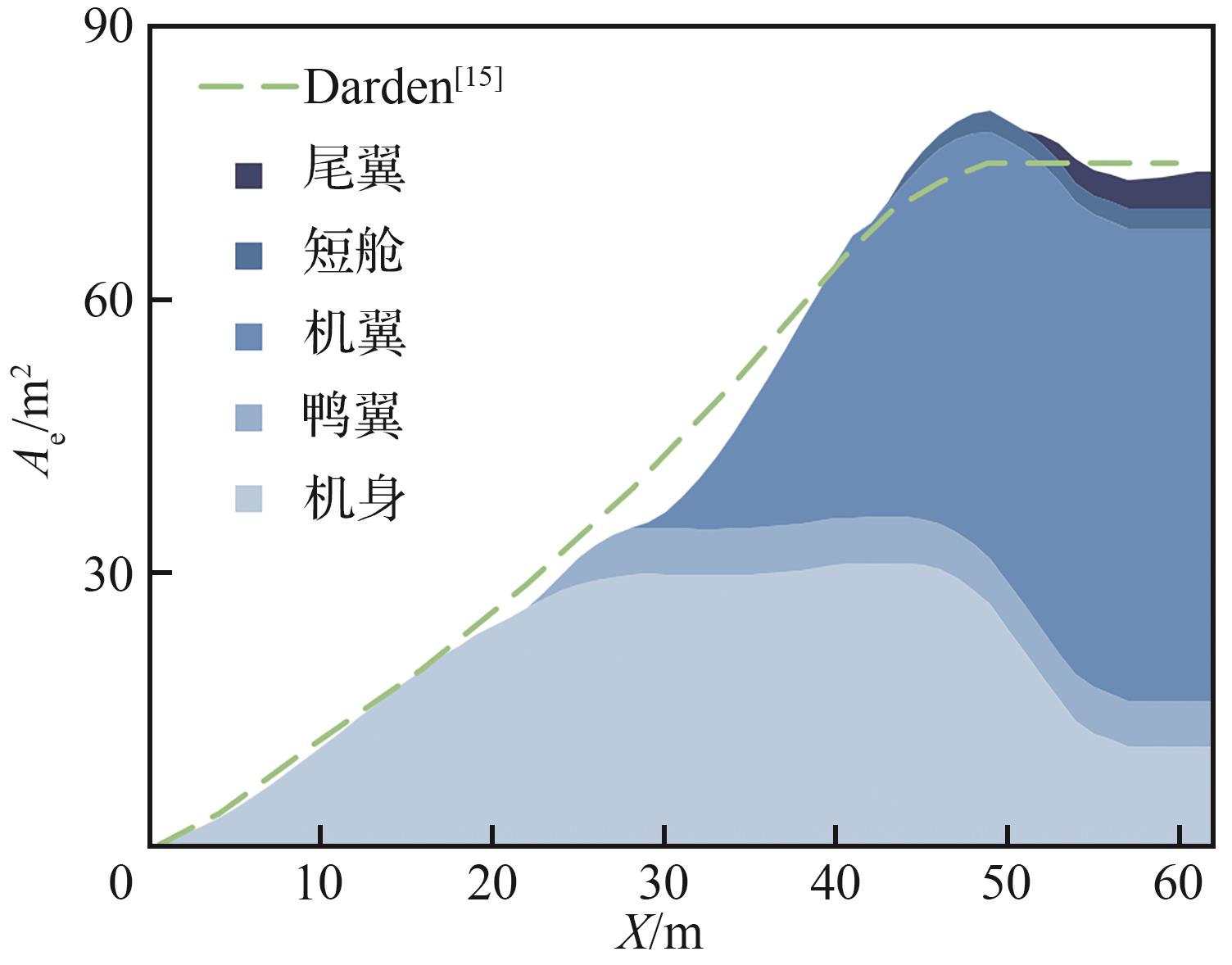
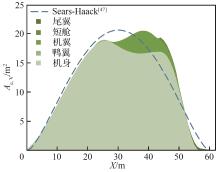
Fig.13
Volumetric equivalent area distribution of configuration A (Ma=1.0)
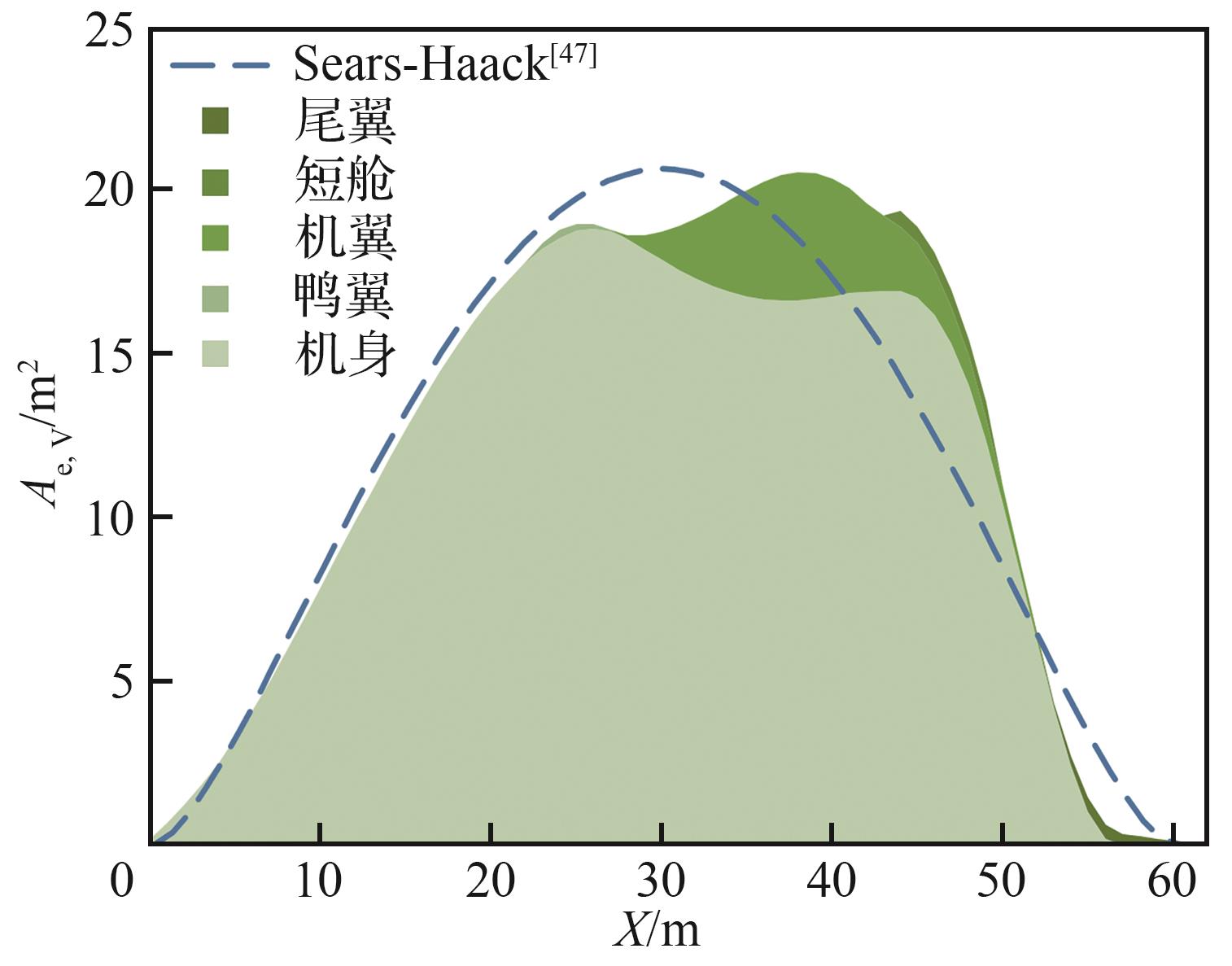
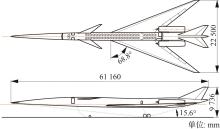
Fig.14
Plan views of Configuration A
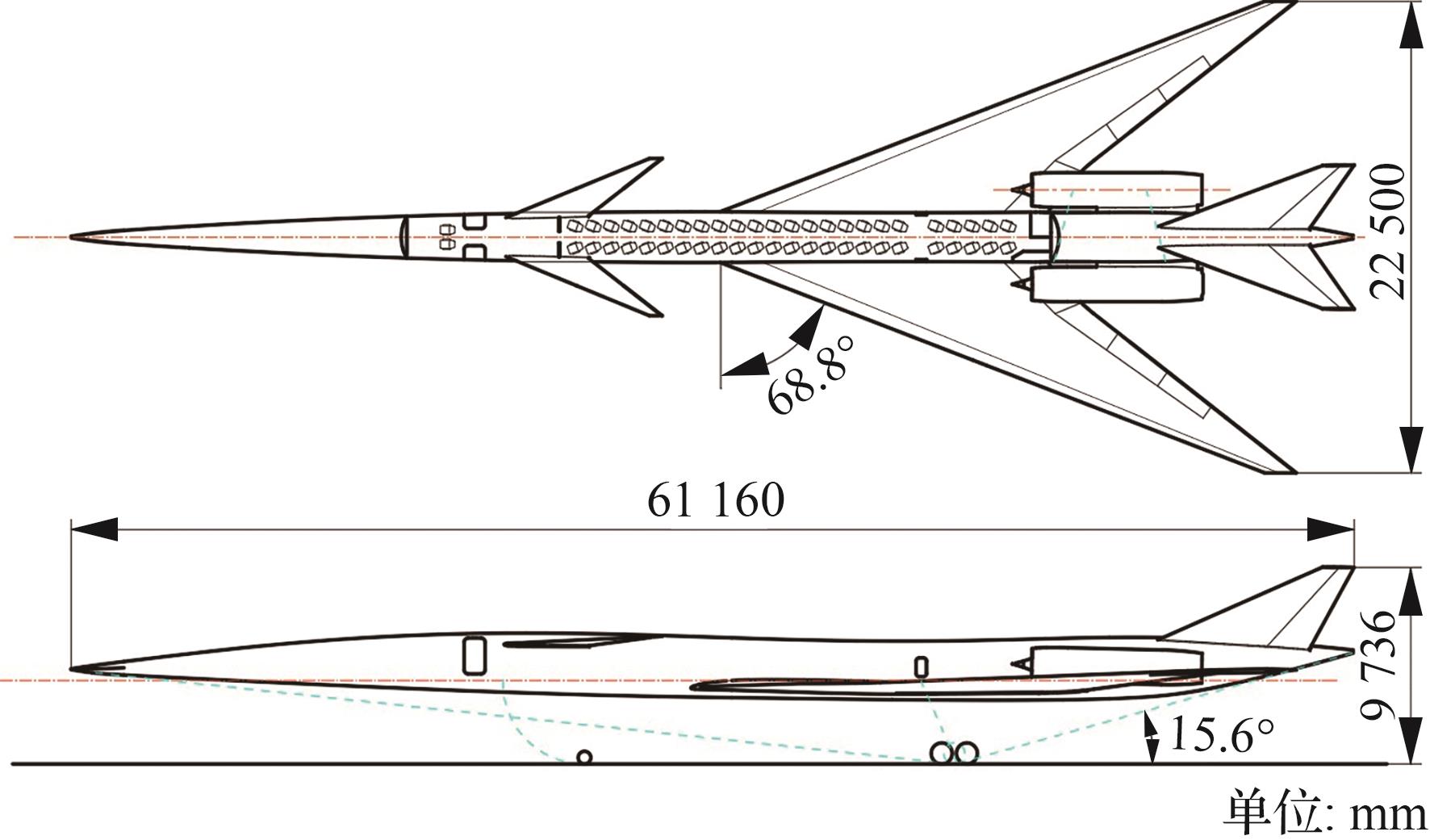
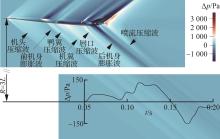
Fig.15
Wave distributions in symmetry plane of Configuration A
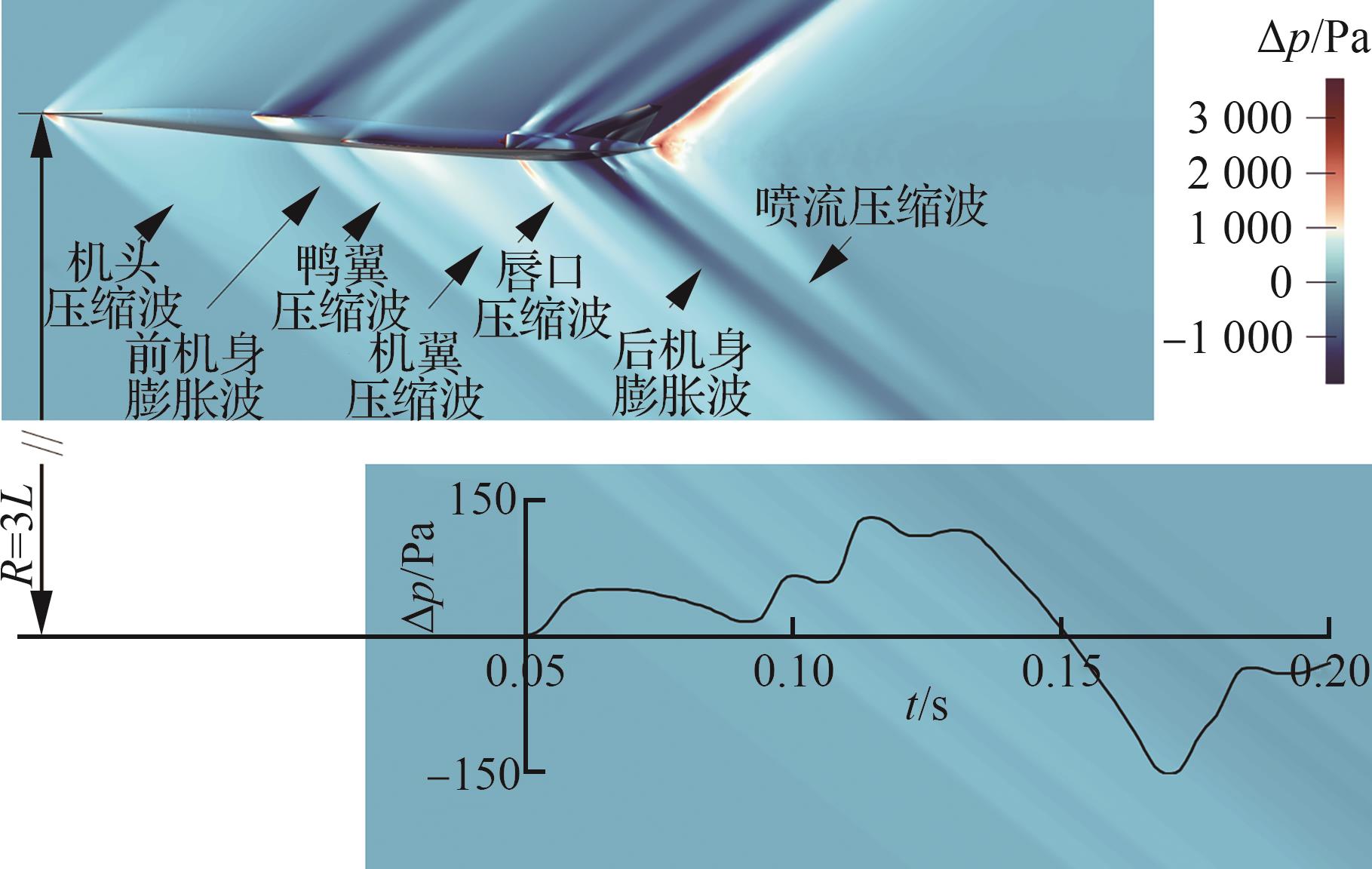
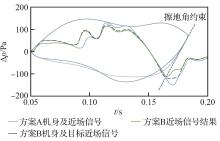
Fig.16
Near-field signal of target and improvement scheme of fuselage
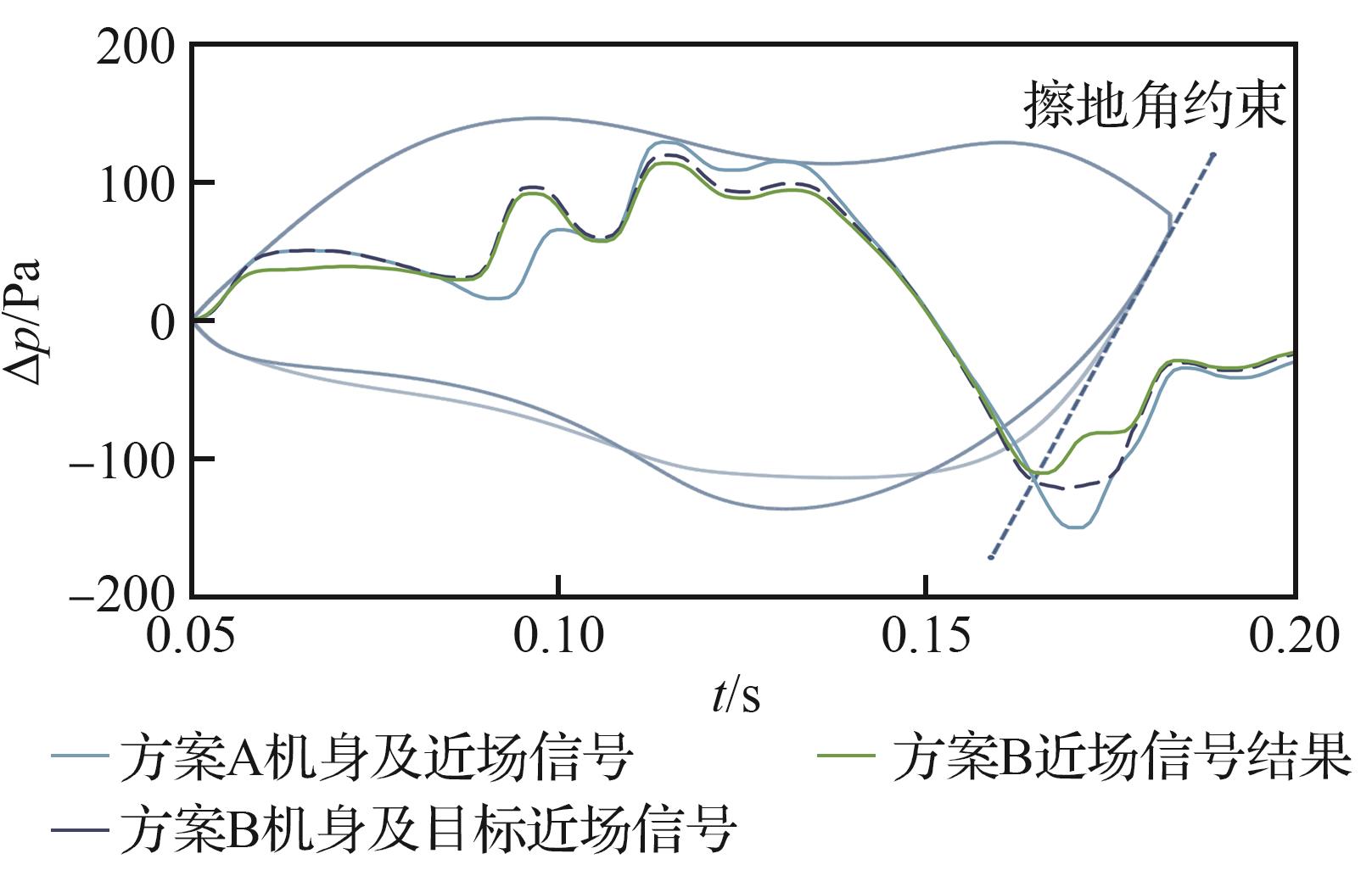
Fig.17
Propagation of overpressure signal of Configurations A and B
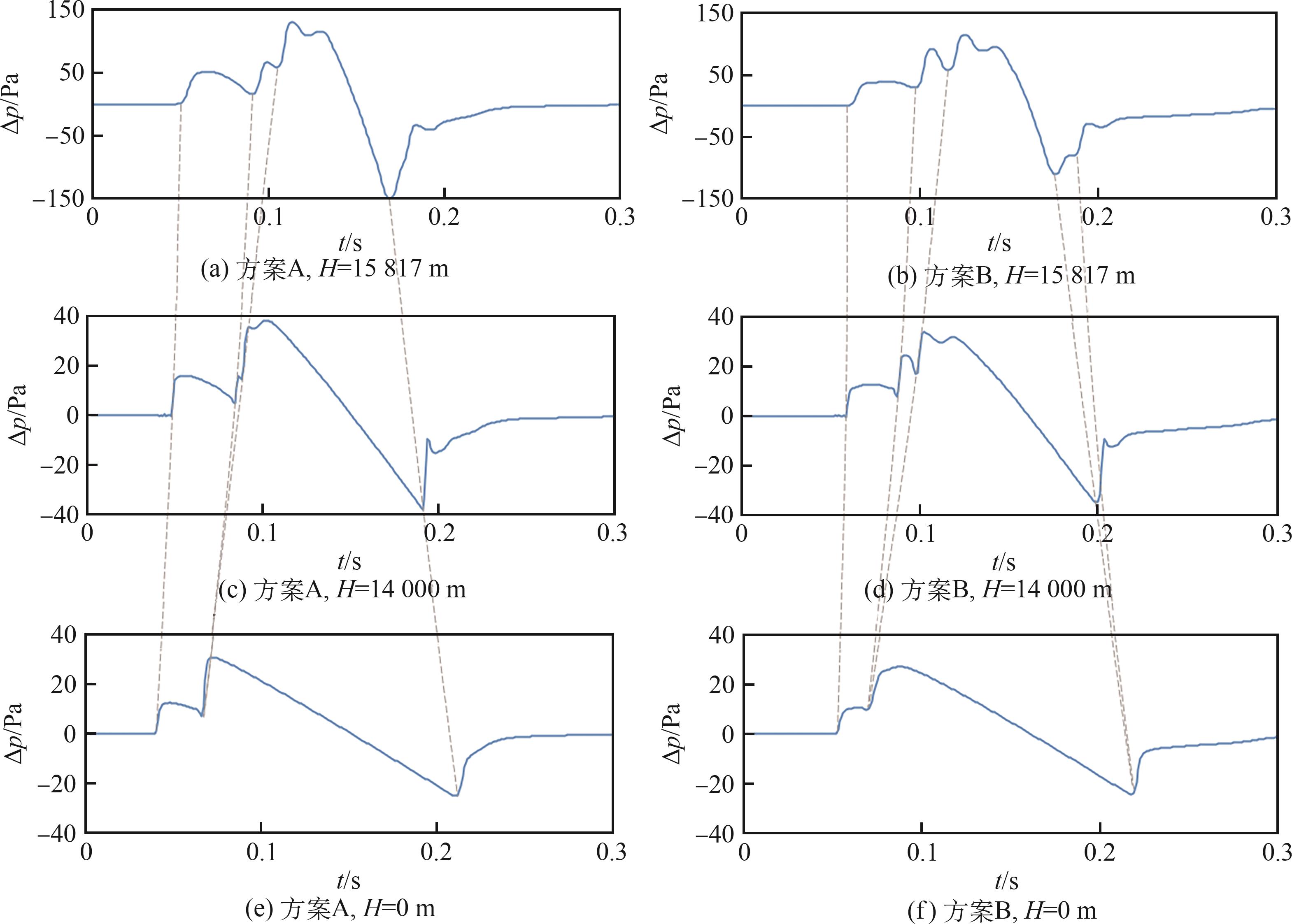
Fig.18
Nearfield overpressure signals of Configuration C
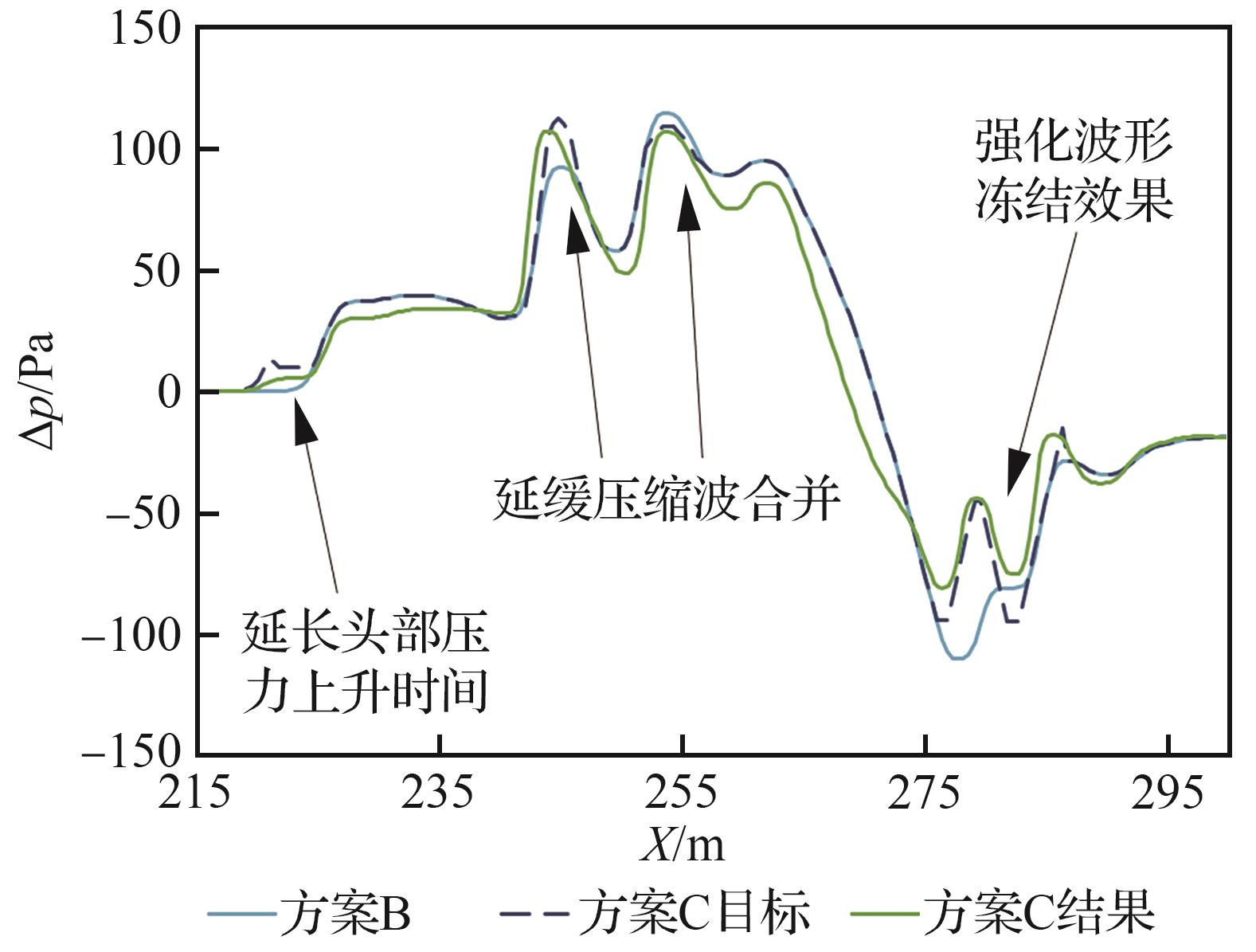
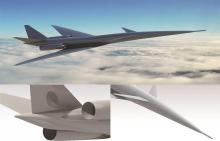
Fig.19
Geometry of tail bump and quiet spike of Configuration C
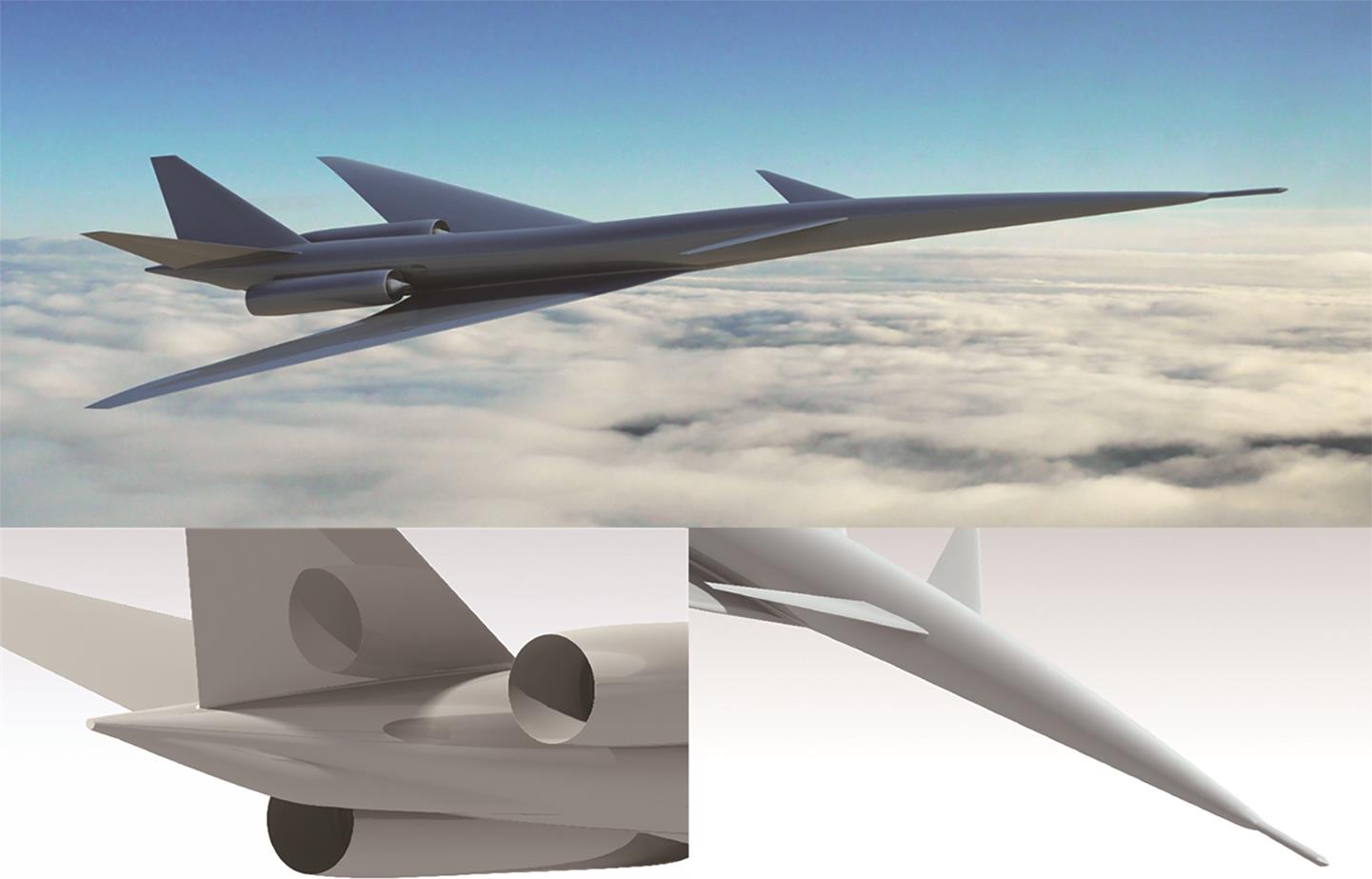
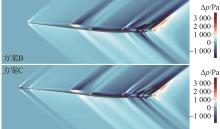
Fig.20
Wave distributions in symmetry plane of Configurations B and C
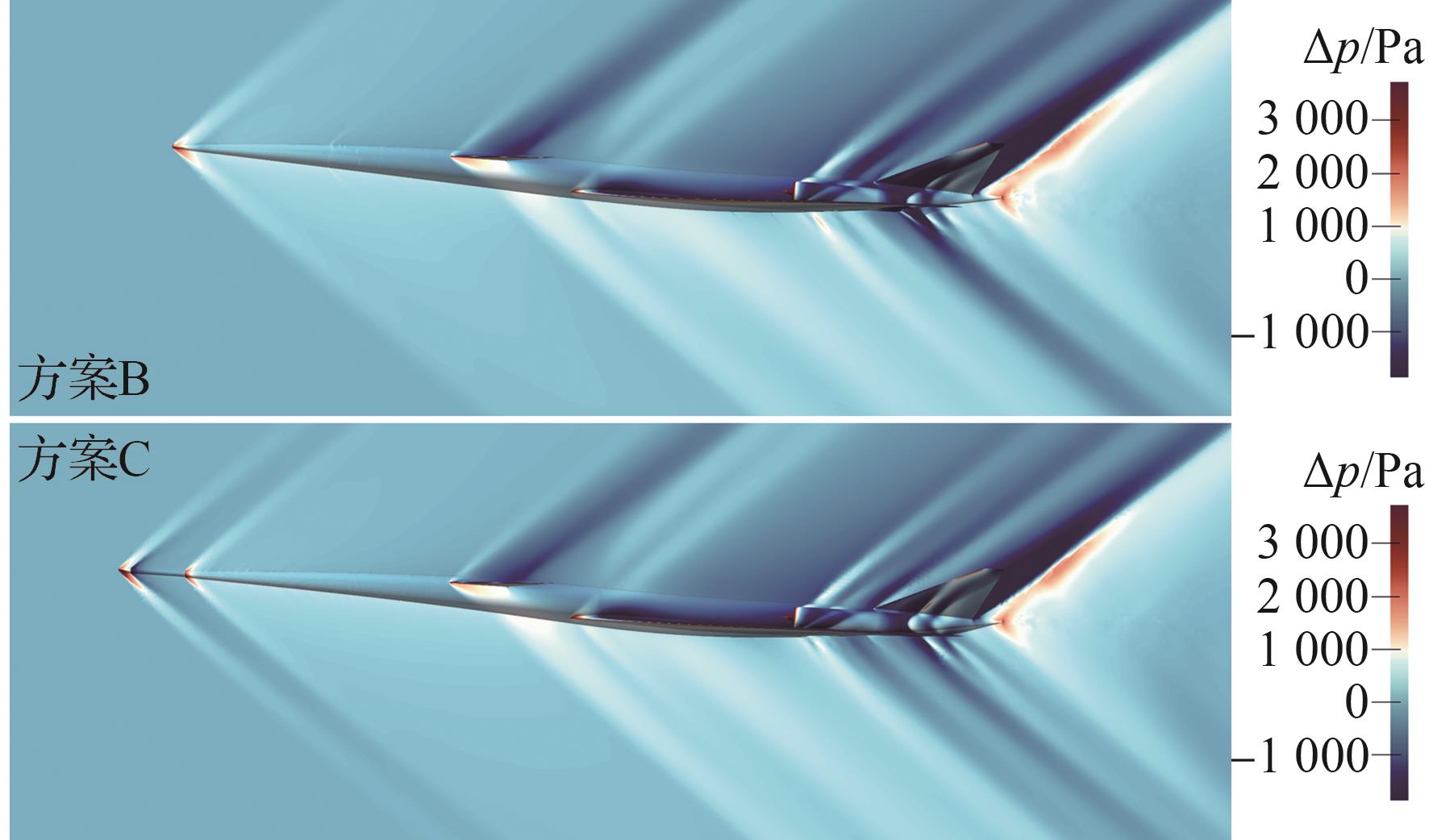
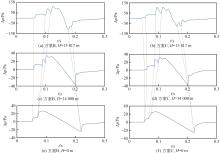
Fig.21
Propagation of overpressure signal of Configurations B and C
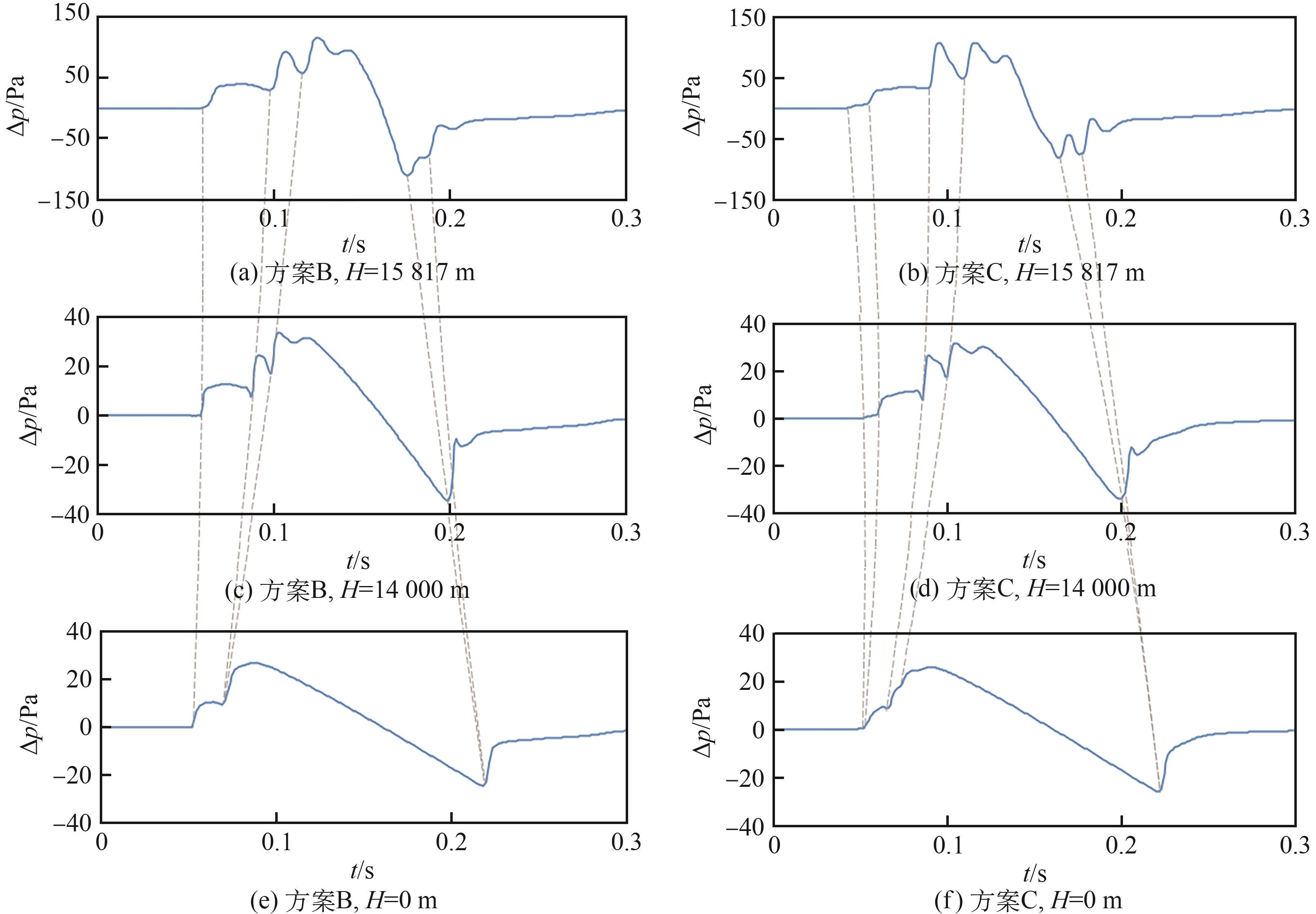
Table 6
Ground perceived level of present configurations
| 对比项目 | Lp/PLdB | ||
|---|---|---|---|
| 方案A | 方案B | 方案C | |
| 目标信号 | 93.0 | 83.8 | |
| 设计结果 | 105.2 | 93.5 | 83.9 |
Fig.22
Lift-dray ratios of Configuration C at various Mach numbers
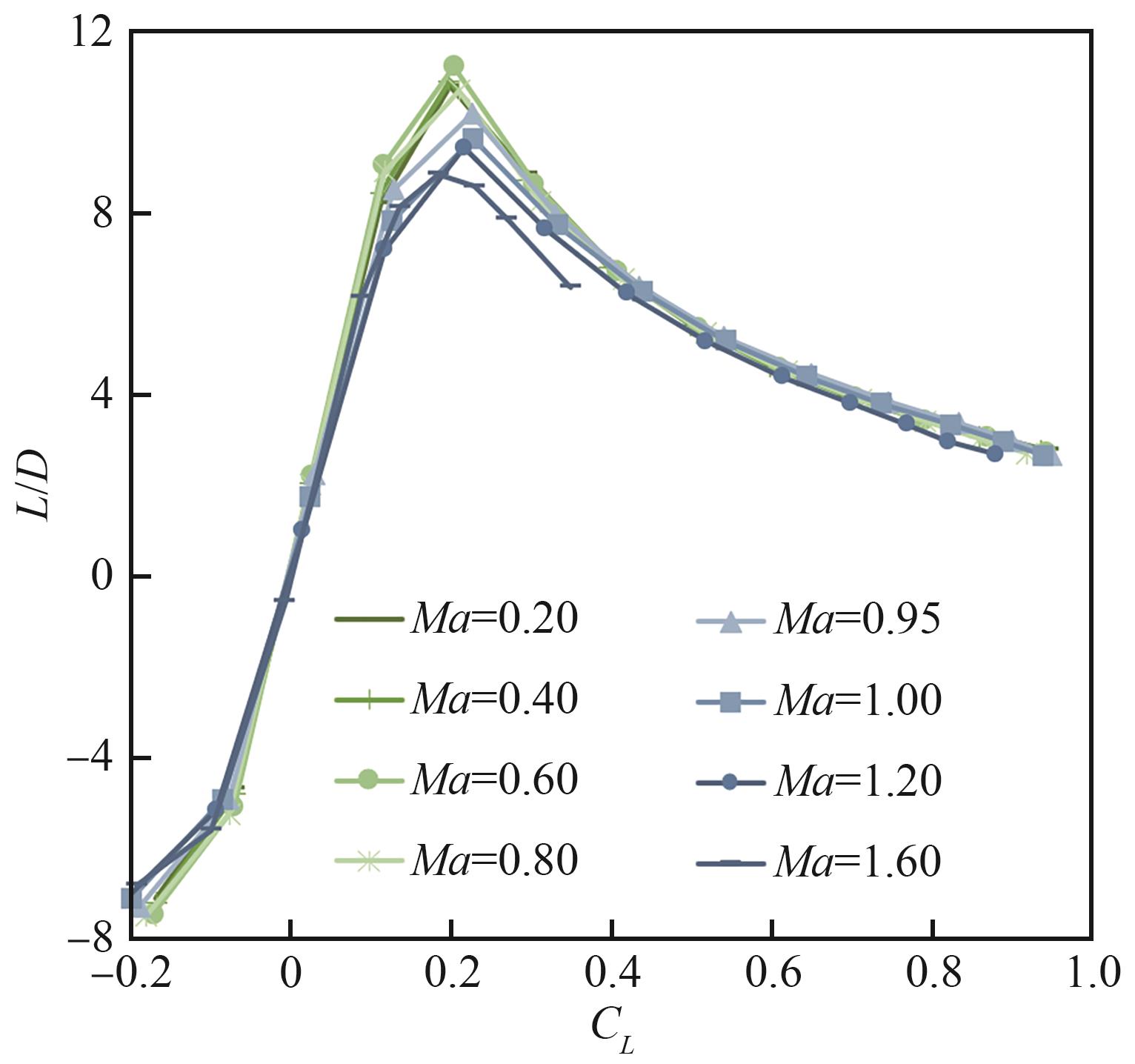
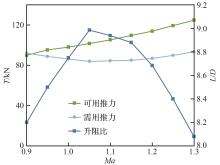
Fig.23
Thrust available, required thrust, lift-drag ratio vs Mach number
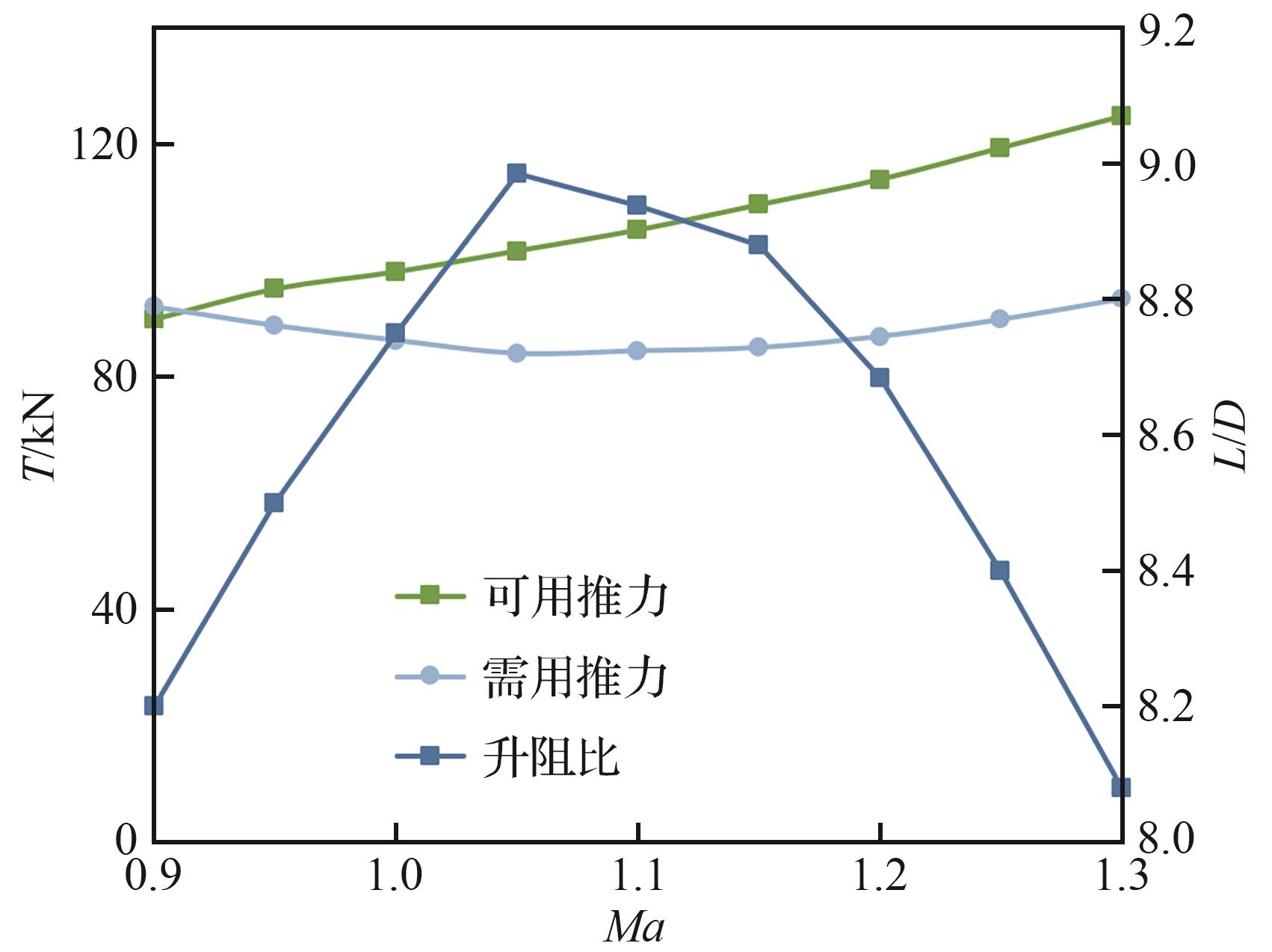
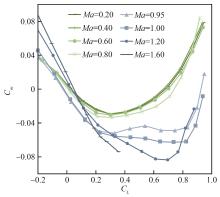
Fig.24
Pitch moment coefficients of Configuration C at various March numbers
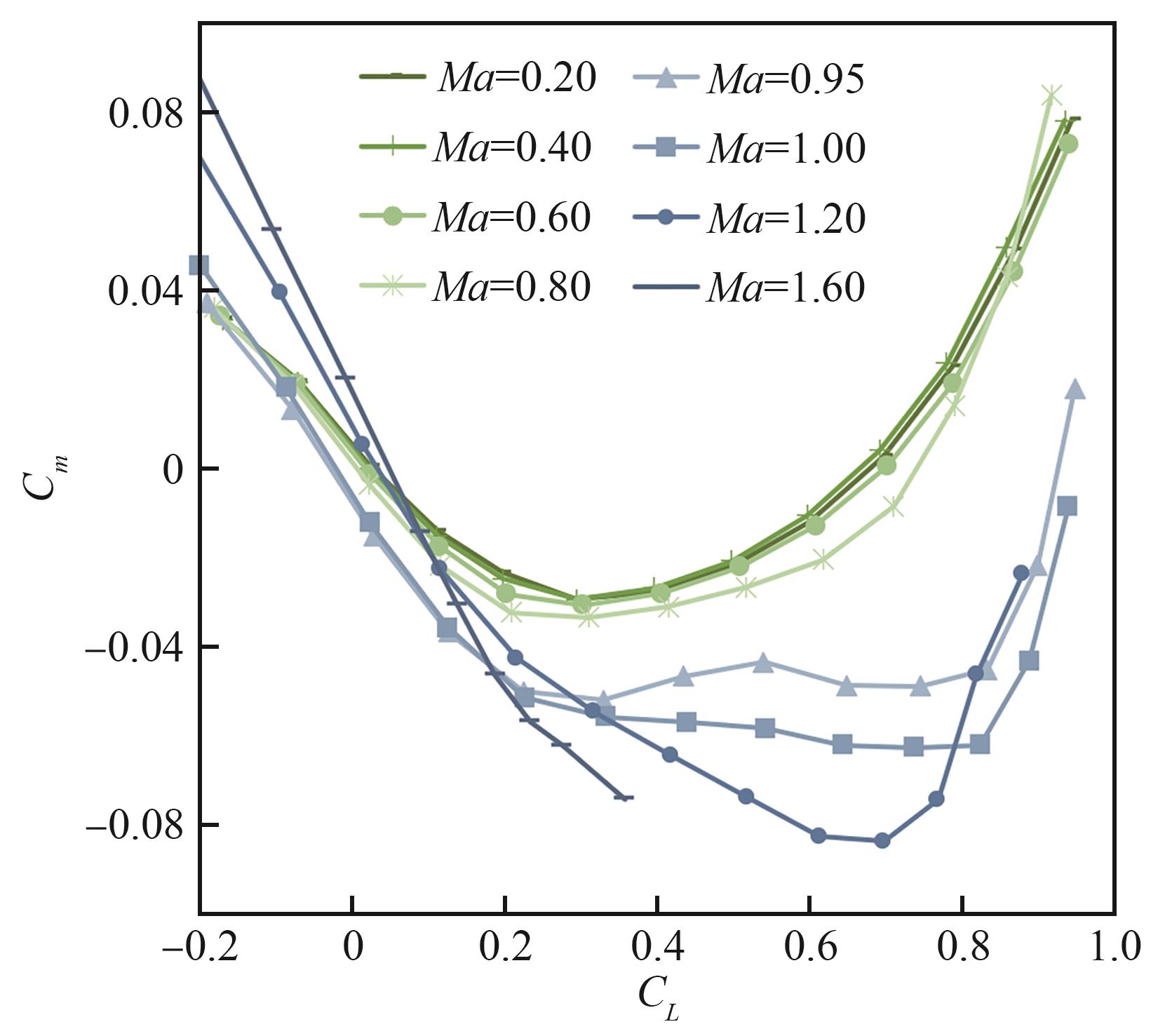
Fig.25
Yaw moment coefficients of Configuration C at various angles of attack
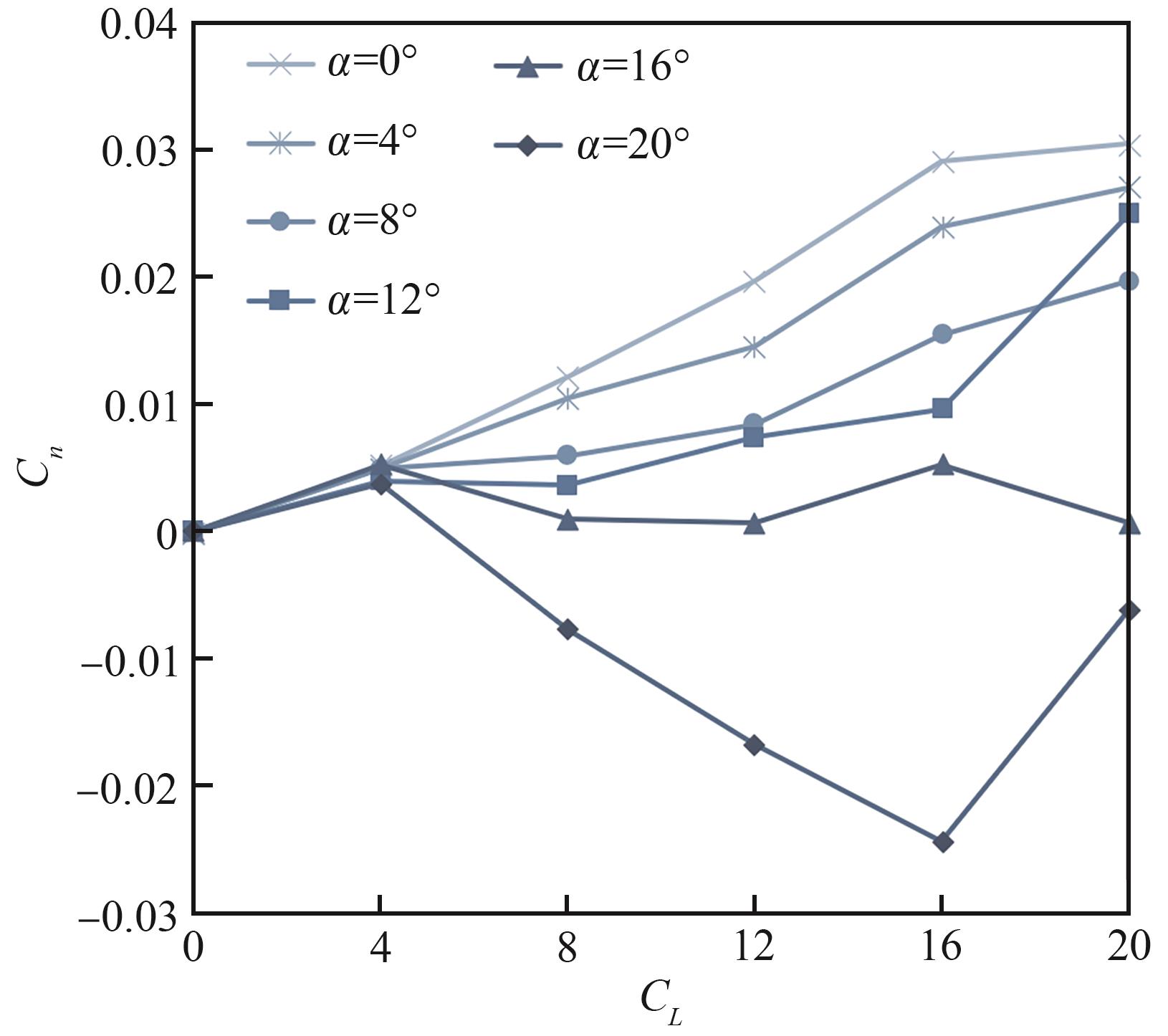
Fig.26
Pathlines of engine intake at cruise condition
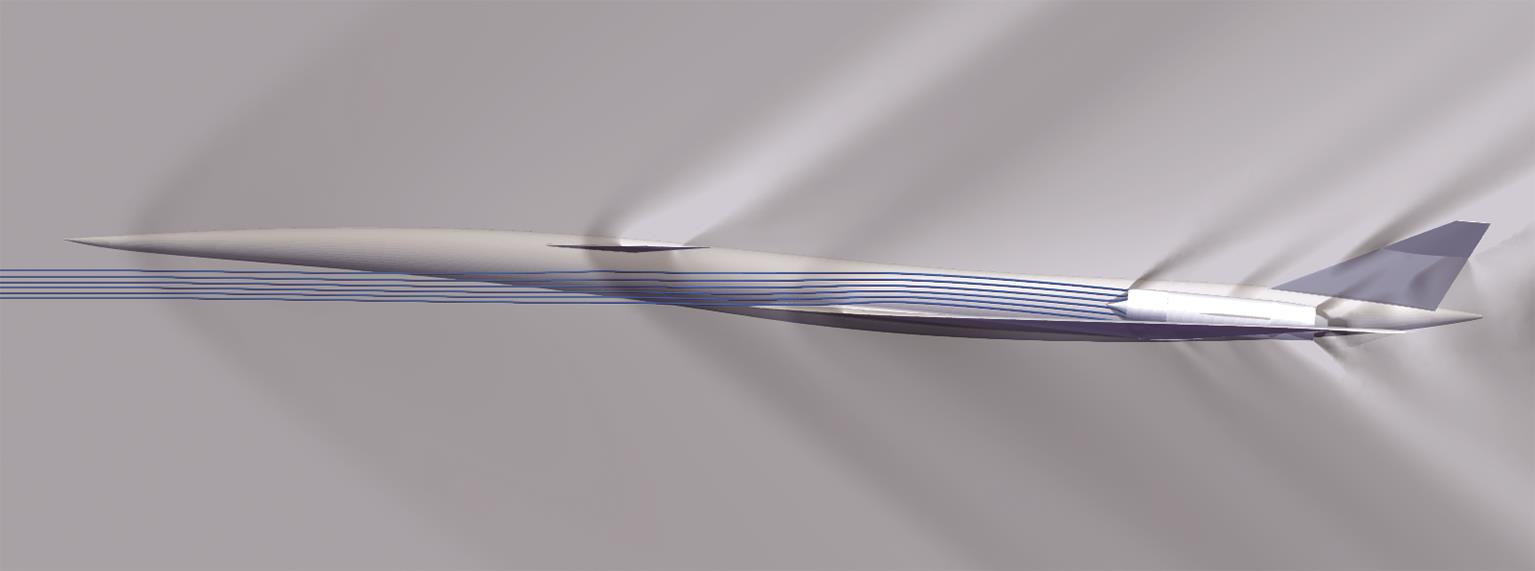
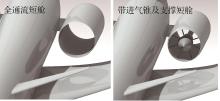
Fig.27
Geometry of through-flow nacelle and nacelle with an inlet cone and its supports
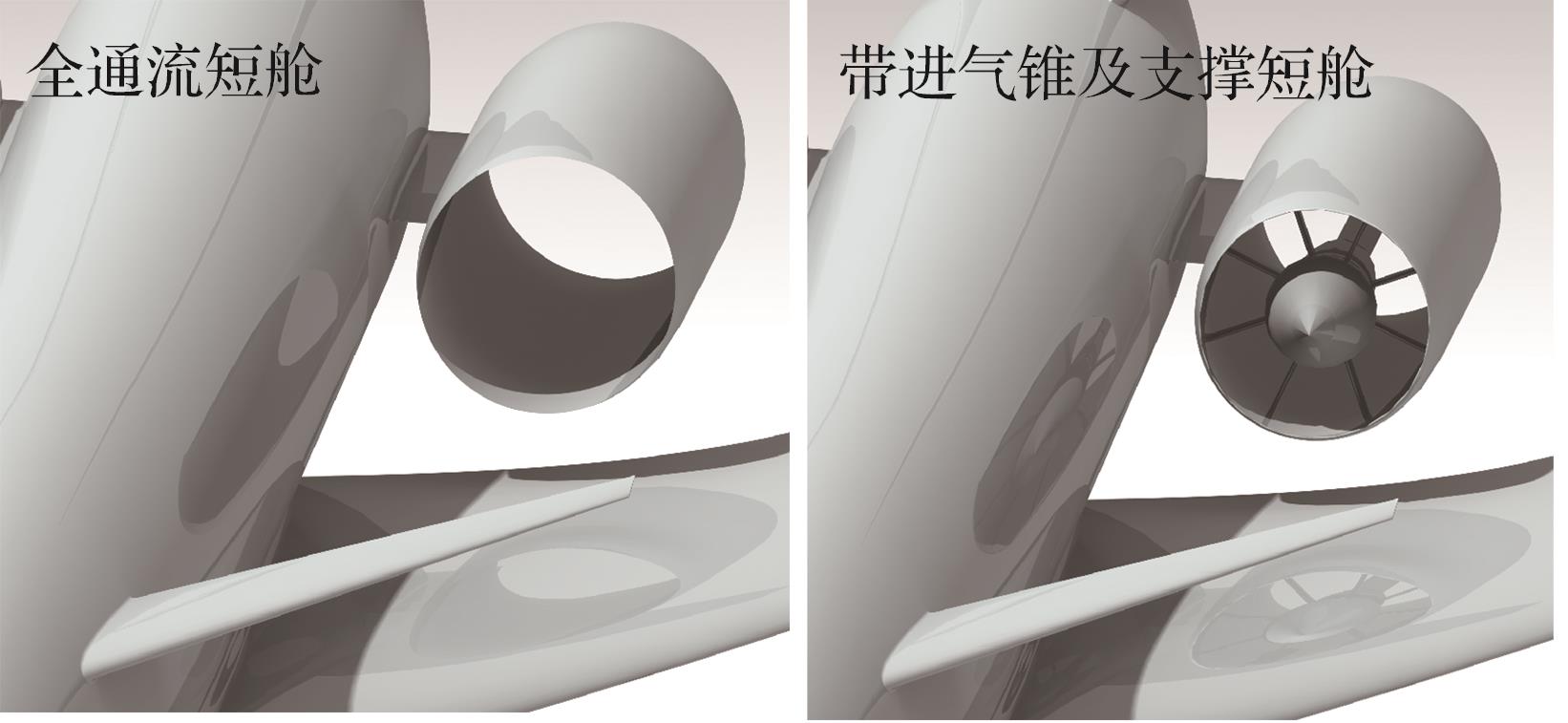
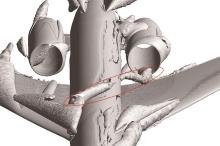
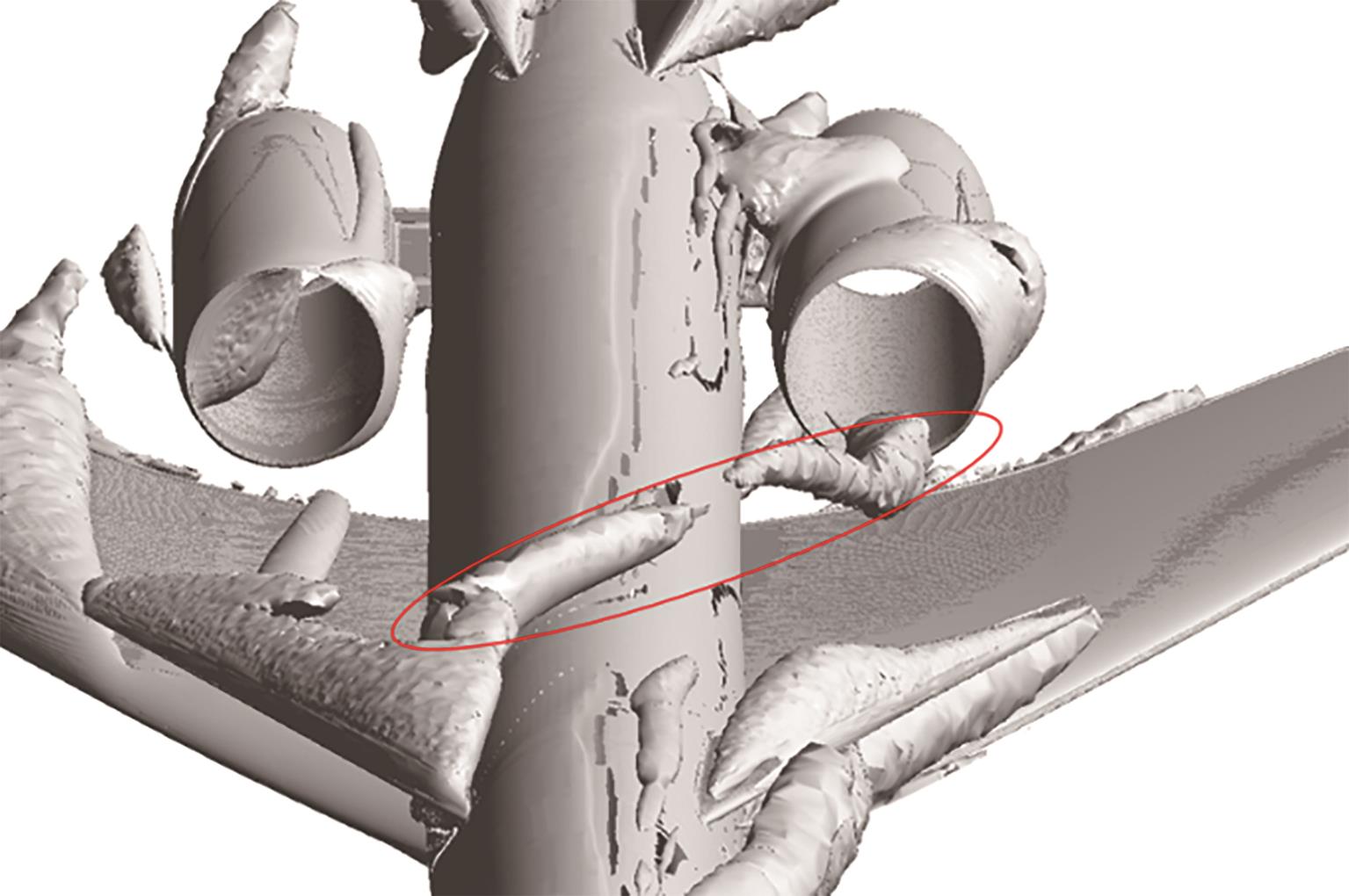
Fig.28
Demonstration of fuselage vortex location
| [1] | BEA. Accident on 25 July 2000 at La Patte d’Oie in Gonesse (95) to the Concorde registered F-BTSC operated by Air France[R]. Paris: BEA, 2000. |
| [2] | ICAO. 2019 ICAO annual report[R]. Montreal: ICAO, 2020. |
| [3] | WELGE H, NELSON C, BONET J. Supersonic vehicle systems for the 2020 to 2035 timeframe[C]∥ 28th AIAA Applied Aerodynamics Conference. Reston: AIAA, 2010. |
| [4] | WHITHAM G B. The flow pattern of a supersonic projectile[J]. Communications on Pure and Applied Mat-hematics, 1952, 5(3): 301-348. |
| [5] | WALKDEN F. The shock pattern of a wing-body combination, far from the flight path[J]. Aeronautical Quarterly, 1958, 9(2): 164-194. |
| [6] | PIERCE A D, SMITH P W. Acoustics: an introduction to its physical principles and applications[J]. Physics Today, 1981, 34(12): 56-57. |
| [7] | CLEVELAND R O. Propagation of sonic booms through a real, stratified atmosphere[M]. Austin: The University of Texas at Austin, 1995. |
| [8] | 张绎典, 黄江涛, 高正红. 基于增广Burgers方程的音爆远场计算及应用[J]. 航空学报, 2018, 39(7): 122039. |
| ZHANG Y D, HUANG J T, GAO Z H. Far field simulation and applications of sonic boom based on augmented Burgers equation[J]. Acta Aeronautica et Astronautica Sinica, 2018, 39(7): 122039 (in Chinese). | |
| [9] | 乔建领, 韩忠华, 丁玉临, 等. 基于广义Burgers方程的超声速客机远场声爆高精度预测方法[J]. 空气动力学学报, 2019, 37(4): 663-674. |
| QIAO J L, HAN Z H, DING Y L, et al. Sonic boom prediction method for supersonic transports based on augmented Burgers equation[J]. Acta Aerodynamica Sinica, 2019, 37(4): 663-674 (in Chinese). | |
| [10] | 王迪, 钱战森, 冷岩. 广义Burgers方程声爆传播模型高阶格式离散[J]. 航空学报, 2022, 43(1): 124916. |
| WANG D, QIAN Z S, LENG Y. High-order scheme discretization of sonic boom propagation model based on augmented Burgers equation[J]. Acta Aeronautica et Astronautica Sinica, 2022, 43(1): 124916 (in Chinese). | |
| [11] | 张力文, 宋文萍, 韩忠华, 等. 声爆产生、传播和抑制机理研究进展[J]. 航空学报, 2022, 43(12): 025649. |
| ZHANG L W, SONG W P, HAN Z H, et al. Recent progress of sonic boom generation, propagation, and mitigation mechanism[J]. Acta Aeronautica et Astronautica Sinica, 2022, 43(12): 025649 (in Chinese). | |
| [12] | JONES L B. Lower bounds for the pressure jump of the bow shock of a supersonic transport[J]. Aeronautical Quarterly, 1970, 21(1): 1-17. |
| [13] | SEEBASS R. Minimum sonic boom shock strengths and overpressures[J]. Nature, 1969, 221(5181): 651-653. |
| [14] | GEORGE A R. Lower bounds for sonic booms in the midfield[J]. AIAA Journal, 1969, 7(8): 1542-1545. |
| [15] | DARDEN C M. Sonic-boom minimization with nose-bluntness relaxation: NASA-TP-1348[R]. Washington, D. C.: NASA, 1979. |
| [16] | JUNG T P, STARKEY R P, ARGROW B. Lobe ba-lancing design method to create frozen sonic booms using aircraft components[J]. Journal of Aircraft, 2012, 49(6): 1878-1893. |
| [17] | WELGE H R, BONET J, MAGEE T, et al. N+2 supersonic concept development and systems integration: NASA/CR-2010-216842[R]. Washington, D.C.: NASA, 2010. |
| [18] | MORGENSTERN J, BUONANNO M, YAO J, et al. Advanced concept studies for supersonic commercial transports entering service in the 2018-2020 period phase 2: NASA/CR-2015-218719[R]. Washington, D.C.: NASA, 2015. |
| [19] | 张启军, 李明. 洛马静音超声速客机方案分析[J]. 航空动力, 2019(4): 11-14. |
| ZHANG Q J, LI M. Analysis of lockheed Martin’s quiet supersonic airliner concept[J]. Aerospace Power, 2019(4): 11-14 (in Chinese). | |
| [20] | CARTER M B, ELMILIGUI A A, PARK M A, et al. Experimental and computational study of the X-59 wind tunnel model at Glenn Research Center 8-by 6-foot supersonic wind tunnel: NASA/TM-2022-0011496[R]. Washington, D. C.: NASA, 2022. |
| [21] | 冯晓强, 李占科, 宋笔锋. 超声速客机低音爆布局反设计技术研究[J]. 航空学报, 2011, 32(11): 1980-1986. |
| FENG X Q, LI Z K, SONG B F. A research on inverse design method of a lower sonic boom supersonic aircraft configuration[J]. Acta Aeronautica et Astronautica Sinica, 2011, 32(11): 1980-1986 (in Chinese). | |
| [22] | ZHANG Y D, HUANG J T, GAO Z H, et al. Inverse design of low boom configurations using proper orthogonal decomposition and augmented Burgers equation[J]. Chinese Journal of Aeronautics, 2019, 32(6): 1380-1389. |
| [23] | 李占科, 刘秧, 丁玉临, 等. 静音锥对超声速民机低声爆效果的影响[J]. 西北工业大学学报, 2019, 37(1): 203-210. |
| LI Z K, LIU Y, DING Y L, et al. Influence of quiet spike on supersonic transport for low boom effect[J]. Journal of Northwestern Polytechnical University, 2019, 37(1): 203-210 (in Chinese). | |
| [24] | 韩阳, 冷岩, 杨龙, 等. 一类超声速长航程民用客机的气动设计和性能评估[J]. 航空科学技术, 2019, 30(9): 25-32. |
| HAN Y, LENG Y, YANG L, et al. Aerodynamic design and evaluation of a type of supersonic long-range civil transport[J]. Aeronautical Science & Technology, 2019, 30(9): 25-32 (in Chinese). | |
| [25] | DING Y L, HAN Z H, QIAO J L, et al. Inverse design method for low-boom supersonic transport with lift constraint[J]. AIAA Journal, 2023, 61(7): 2840-2853. |
| [26] | 李军府, 陈晴, 王伟, 等. 一种先进超声速民机低声爆高效气动布局设计研究[J]. 航空学报, 2024, 46(6): 115-133. |
| LI J F, CHEN Q, WANG W, et al. Research on the design of an advanced supersonic civil aircraft with high aerodynamic efficiency and low sound explosion[J]. Acta Aeronautica et Astronautica Sinica, 2024, 46(6): 115-133 (in Chinese). | |
| [27] | 郝璇, 张青青, 苏诚, 等. 考虑配平特性的超声速客机低声爆气动布局优化研究[J]. 航空工程进展, 2024, 15(1): 38-50. |
| HAO X, ZHANG Q Q, SU C, et al. The low sonic boom and aerodynamic optimization with trim constraint of supersonic jet[J]. Advances in Aeronautical Science and Engineering, 2024, 15(1): 38-50 (in Chinese). | |
| [28] | 顾奕然, 黄江涛, 陈树生, 等. 基于逆向增广Burgers方程的声爆反演技术[J]. 航空学报, 2023, 44(2): 626258. |
| GU Y R, HUANG J T, CHEN S S, et al. Sonic boom inversion technology based on inverse augmented Bur-gers equation[J]. Acta Aeronautica et Astronautica Sinica, 2023, 44(2): 626258 (in Chinese). | |
| [29] | WANG S K, ZHAO H, GAN K Y, et al. Sparse polynomial chaos-based sonic boom uncertainty quantification and aerodynamic/sonic boom robust design optimization under multi-parameter uncertainties[C]∥ 34th Congress of ICAS. Florence: ICAS, 2024. |
| [30] | 邵琳涛, 别大卫, 丁梦龙, 等. 一种低声爆高升阻比超声速公务机构型: CN118811070A[P]. 2024-10-22. |
| SHAO L T, BIE D W, DING M L, et al. A low-sound high-lift-to drag-ration supersonic business jet configuration: CN118811070A[P]. 2024-10-22 (in Chinese). | |
| [31] | 陈晴, 韩忠华, 杨瀚, 等. 机翼上反角对超声速民机全声爆毯声爆特性影响研究[J]. 气动研究与试验, 2024(1): 50-58. |
| CHEN Q, HAN Z H, YANG H, et al. Research on the effect of wing dihedral on full-carpet sonic boom[J]. Aerodynamic Research & Experiment, 2024(1): 50-58 (in Chinese). | |
| [32] | 郑可风, 宋文萍, 聂晗, 等. 考虑全机声爆特性的超声速自然层流机翼设计方法[J/OL]. 航空学报, 2025: 1-18. (2025-01-10). . |
| ZHENG K F, SONG W P, NIE H, et al. Natural laminar flow wing design method for supersonic transport aircraft considering low sonic-boom requirement[J/OL]. Acta Aeronautica et Astronautica Sinica, 2025: 1-18. (2025-01-10). (in Chinese). | |
| [33] | ECONOMON T D, PALACIOS F, COPELAND S R, et al. SU2: an open-source suite for multiphysics simulation and design[J]. AIAA Journal, 2015, 54(3): 828-846. |
| [34] | SACHDEVA A. Implementation and application of AUSM+-up and AUSM+-UP2 schemes in open-source CFD code SU2[C]∥ 21st Annual CFD Symposium. Reston: AIAA, 2019. |
| [35] | PARK M A, CARTER M B. Low-boom demonstrator near-field summary for the third AIAA sonic boom prediction workshop[J]. Journal of Aircraft, 2021, 59(3): 563-577. |
| [36] | RALLABHANDI S K, LOUBEAU A. Summary of propagation cases of the third AIAA sonic boom prediction workshop[C]∥ AIAA Scitech 2021 Forum. Reston: AIAA, 2021. |
| [37] | SPURLOCK W M, AFTOSMIS M J, NEMEC M. Cartesian mesh simulations for the third AIAA sonic boom prediction workshop[J]. Journal of Aircraft, 2021, 59(3): 708-724. |
| [38] | 中国民用航空局. CCAR-121大型飞机公共航空运输承运人运行合格审定规则 [S]. 北京: 中国民用航空局, 2024. |
| Civil Aviation Administration of China. CCAR-121 certification rules for operation qualification of large aircraft public air transport carriers [S]. Beijing: Civil Aviation Administration of China, 2024 (in Chinese). | |
| [39] | 杨李. 基于客户价值的宽体客机典型航线选择[J]. 民用飞机设计与研究, 2017(4): 20-24. |
| YANG L. Typical routes selection for wide body civil aircraft based on the customer value[J]. Civil Aircraft Design & Research, 2017(4): 20-24 (in Chinese). | |
| [40] | BERTON J J, HUFF D L, GEISELHART K, et al. Supersonic technology concept aeroplanes for environmental studies[C]∥ AIAA Scitech 2020 Forum. Reston: AIAA, 2020. |
| [41] | Airways British. Aerodromes & performance British Airways: concorde performance manual[M]. London: British Airways, 1996. |
| [42] | Airbus S.A.S. Airbus commercial aircraft AC A350-900-1000[M]. Toulouse: Airbus S. A.S, 2023. |
| [43] | Boeing. 787 airport compatibility planning guide[M]. Arlington: Boeing, 2023. |
| [44] | 陈仲光, 张志舒, 李德旺, 等. F119发动机总体性能特点分析与评估[J]. 航空科学技术, 2013, 24(3): 39-42. |
| CHEN Z G, ZHANG Z S, LI D W, et al. Analysis and evaluation of F119 engine overall performance[J]. Aeronautical Science & Technology, 2013, 24(3): 39-42 (in Chinese). | |
| [45] | Airforce U.S.. B-1B“lancer”strategic bomber[EB/OL]. [2025-02-15]. . |
| [46] | 中国民用航空局. CCAR-25运输类飞机适航标准 [S]. 北京: 中国民用航空局, 2011. |
| Civil Aviation Administration of China. CCAR-25 airworthiness standards for transport category aircraft [S]. Beijing: Civil Aviation Administration of China, 2011 (in Chinese). | |
| [47] | SEARS W R. On projectiles of minimum wave drag[J]. Quarterly of Applied Mathematics, 1947, 4(4): 361-366. |
| [48] | International SAE. Gas turbine engine inlet flow distortion guidelines: ARP1420C [S]. Warrendale: SAE International, 2017. |
| [49] | International SAE. A methodology for assessing inlet swirl distortion: AIR5686 [S]. Warrendale: SAE International, 2022. |
| [1] | Yuhan JI, Fancang ZENG, Xiangyu WANG, Yuanyuan WANG. Concept design and performance analysis of hydrogen fuel cell regional aircraft [J]. Acta Aeronautica et Astronautica Sinica, 2025, 46(9): 630613-630613. |
| [2] | Zhouwei FAN, Chuihuan KONG, Ming LIU, Zhaoguang TAN. Sensitivity analysis on key parameters of hybrid hydrogen fuel cell commercial aircraft [J]. Acta Aeronautica et Astronautica Sinica, 2025, 46(9): 631066-631066. |
| [3] | Pengqian YANG, Yutong CHEN, Junhui LIU, Jiehao YANG, Jiayuan SHAN, Shijun SUN. Aerodynamic and operational characteristics analysis for tandem wing cargo UAV at high angle of attack [J]. Acta Aeronautica et Astronautica Sinica, 2025, 46(9): 131056-131056. |
| [4] | Zhenbing LUO, Hao WANG, Zhijie ZHAO. Theory of dual synthetic jets and its empowerment of advancements in aeronautical technology [J]. Acta Aeronautica et Astronautica Sinica, 2025, 46(5): 531821-531821. |
| [5] | Haixin CHEN, Liangtao FENG, Yuyu DUAN, Yukun GUO, Yue FU, Chenliang PAN, Yishan ZHOU. Aerodynamics-driven monoplane-biplane morphing aircraft [J]. Acta Aeronautica et Astronautica Sinica, 2025, 46(5): 531905-531905. |
| [6] | Qing GUO, Xiaoyang LIU, Junfeng FAN, Yu FU, Hongfu ZUO. Adaptive gas path fault diagnosis method of civil aviation engine fusing prior information [J]. Acta Aeronautica et Astronautica Sinica, 2025, 46(4): 230871-230871. |
| [7] | Ge SONG, Pengfei HAN, Yuxiang LUO, Weijun PAN. Trajectory classification and anomaly detection based on stochastic depth ResNet [J]. Acta Aeronautica et Astronautica Sinica, 2025, 46(4): 330883-330883. |
| [8] | Xudong LI, Wei ZHONG, Zhen WANG, Tongguang WANG, Jinlong LI. Ratio of propeller thrust to total thrust of ducted propellers [J]. Acta Aeronautica et Astronautica Sinica, 2025, 46(4): 230829-230829. |
| [9] | Chao YANG, Yuting TAN, Wei WANG, Yan ZHAO, Xiongqing YU. Multidisciplinary optimization with low-boom design for supersonic civil aircraft conceptual design [J]. Acta Aeronautica et Astronautica Sinica, 2025, 46(20): 531457-531457. |
| [10] | Yuankai LI, Chengpan YANG, Feng ZHU. Electromagnetic emission characteristics of high speed railway pantograph-catenary arcs in aviation VHF frequency band [J]. Acta Aeronautica et Astronautica Sinica, 2025, 46(17): 331455-331455. |
| [11] | Jie LIN, Zhigong TANG, Weiqi QIAN, Yueqing WANG, Peng ZHANG, Weixia XU, Jie LIU. Research progress and prospects of aircraft aerodynamic design based on generative models [J]. Acta Aeronautica et Astronautica Sinica, 2025, 46(10): 631679-631679. |
| [12] | Chao AN, Guixi HUO, Yang MENG, Changchuan XIE, Chao YANG. Aerodynamic modeling methods and influence of layout parameters for wingtip⁃hinged multi⁃body combined UAV [J]. Acta Aeronautica et Astronautica Sinica, 2024, 45(6): 629587-629587. |
| [13] | Jinghui DENG. Technical status and development of electric vertical take⁃off and landing aircraft [J]. Acta Aeronautica et Astronautica Sinica, 2024, 45(5): 529937-529937. |
| [14] | Chengpeng LIU, Wenping SONG, Changhao GAO, Shaoqiang HAN, Yue WANG, Zhonghua HAN. Air-to-air missile post-stall flip backward launch method [J]. Acta Aeronautica et Astronautica Sinica, 2024, 45(20): 129880-129880. |
| [15] | Dong XUE, Ziwen ZHU, Bifeng SONG. Key technologies of bird inspired flapping-wing micro aerial vehicles: Review [J]. Acta Aeronautica et Astronautica Sinica, 2024, 45(17): 529984-529984. |
| Viewed | ||||||
|
Full text |
|
|||||
|
Abstract |
|
|||||
Address: No.238, Baiyan Buiding, Beisihuan Zhonglu Road, Haidian District, Beijing, China
Postal code : 100083
E-mail:hkxb@buaa.edu.cn
Total visits: 6658907 Today visits: 1341All copyright © editorial office of Chinese Journal of Aeronautics
All copyright © editorial office of Chinese Journal of Aeronautics
Total visits: 6658907 Today visits: 1341

 CJA
CJA
