Acta Aeronautica et Astronautica Sinica ›› 2025, Vol. 46 ›› Issue (10): 331304.doi: 10.7527/S1000-6893.2024.31304
• Electronics and Electrical Engineering and Control • Previous Articles
Shuyi GAO1, Defu LIN1, Duo ZHENG1( ), Cheng XU2
Received:2024-09-30
Revised:2024-10-29
Accepted:2024-12-04
Online:2024-12-10
Published:2024-12-10
Contact:
Duo ZHENG
E-mail:zhengduohello@126.com
Supported by:CLC Number:
Shuyi GAO, Defu LIN, Duo ZHENG, Cheng XU. Intelligent maneuvering penetration guidance strategies for aerial vehicles considering interceptor detection capability limitations[J]. Acta Aeronautica et Astronautica Sinica, 2025, 46(10): 331304.
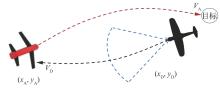
Fig.1
Aircraft penetration game scenario
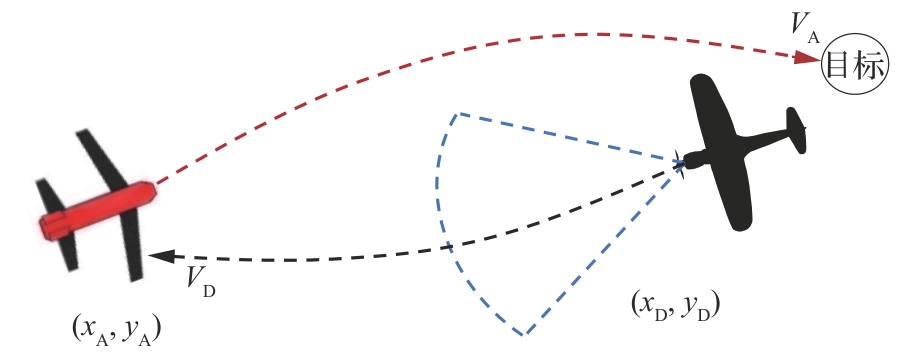
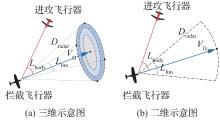
Fig.2
Interceptor radar detection range
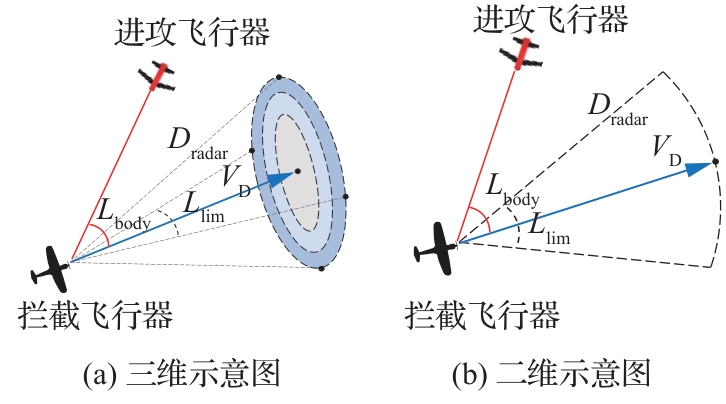
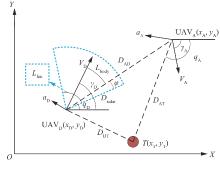
Fig.3
Relation of attack-target-interceptor relative motion
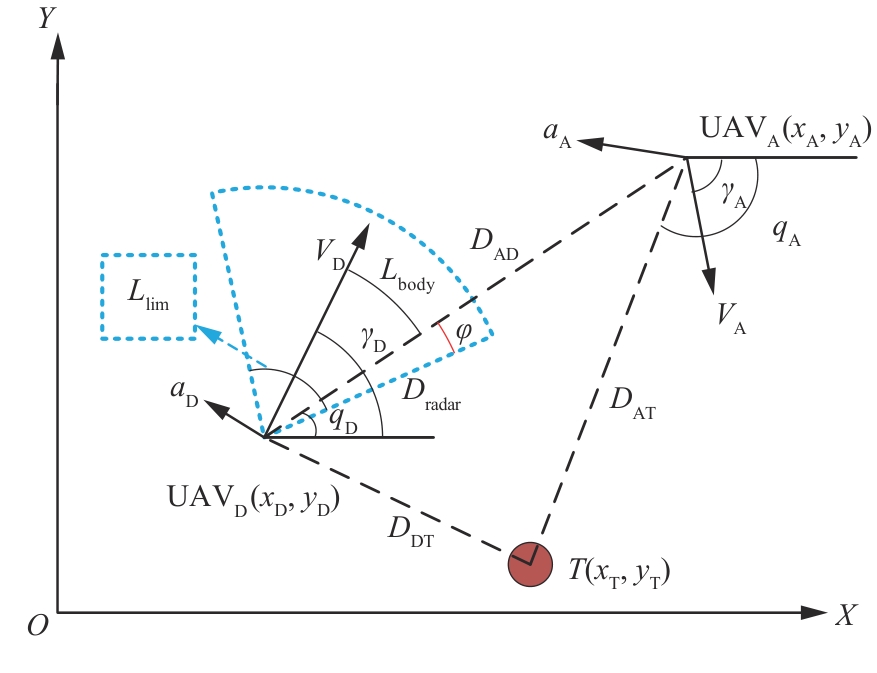
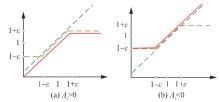
Fig.4
clip algorithm model
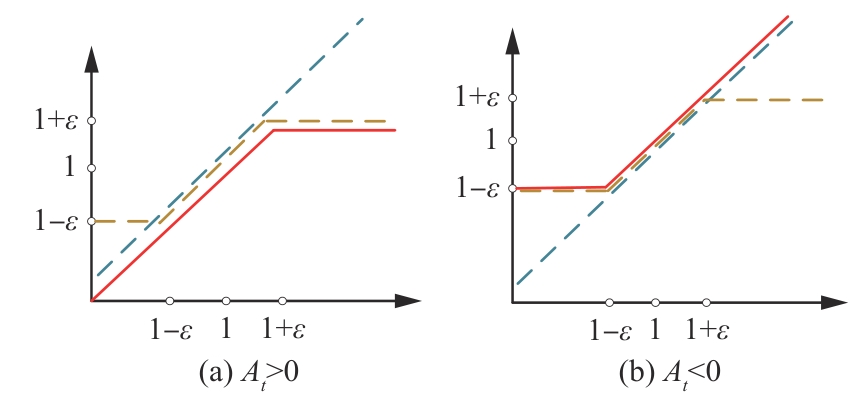
Fig.5
Intelligent penetration maneuver algorithm architecture of aircraft
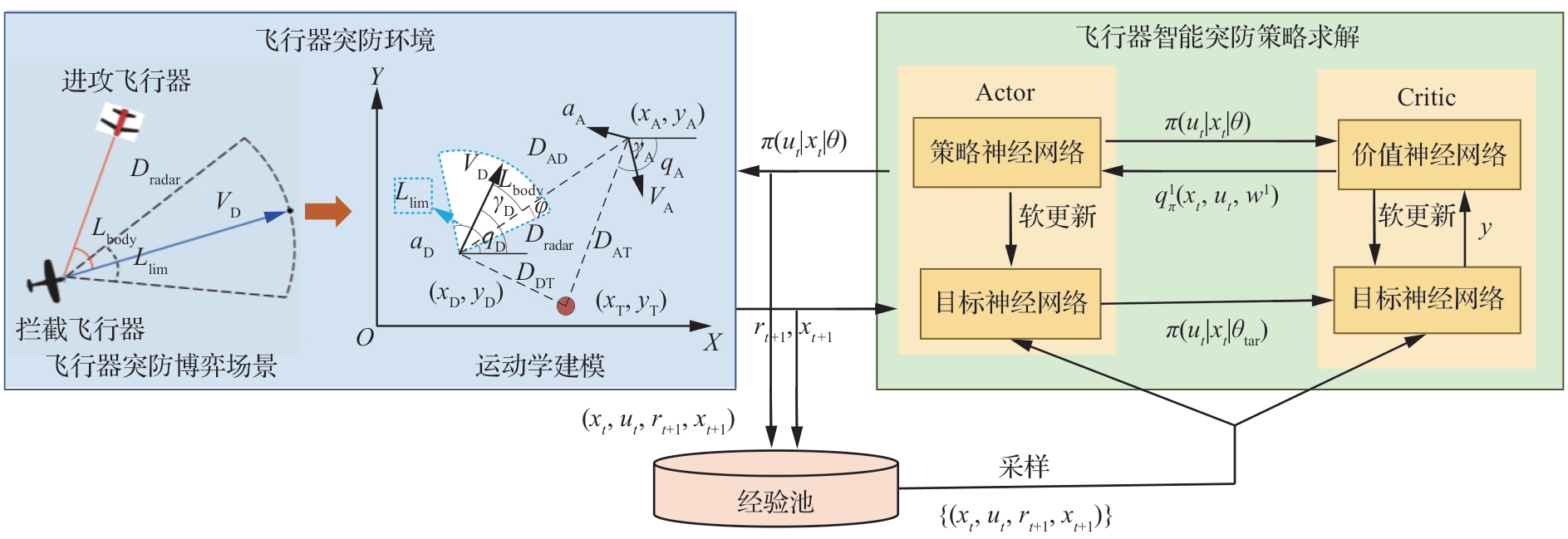
Fig.6
Structure diagram of strategy neural network
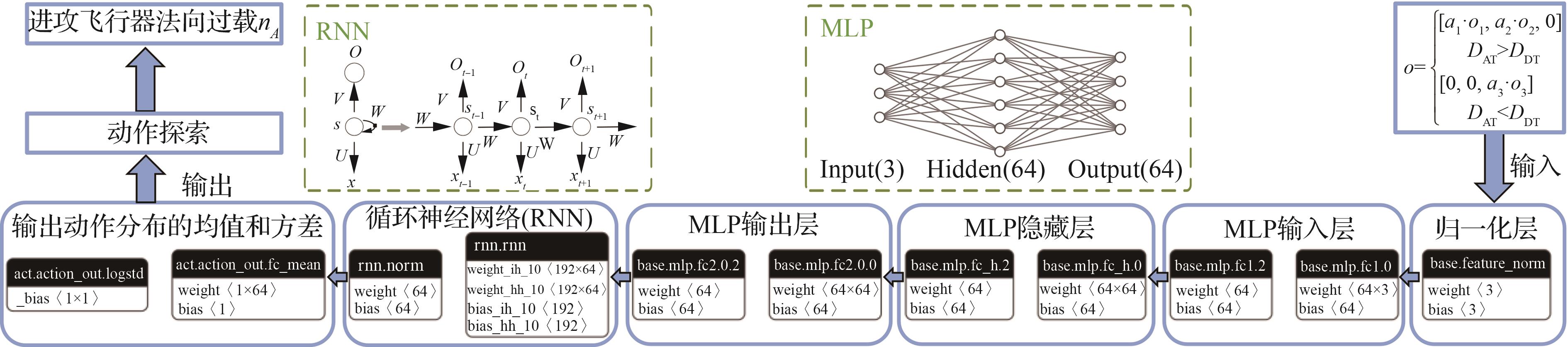

Table 1
Algorithm training parameter settings
| 参数 | 数值 |
|---|---|
| PPO裁剪系数 | 0.2 |
| 熵奖励系数 | 0.02 |
| GAE参数 | 0.98 |
| 衰减因子 | 0.998 |
| 神经网络优化器 | Adam |
| 学习率 | 2×10⁻⁴ |
Table 2
Comparison of maneuvering ability between attack and defense
| 飞行器类型 | 速度/(m·s-1) | 过载能力/g |
|---|---|---|
| 拦截器 | 70 | [-3,3] |
| 进攻飞行器 | 65 | [-1.5,1.5] |
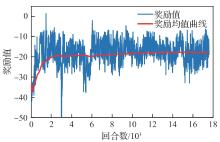
Fig.7
Penetration scenario reward function curves
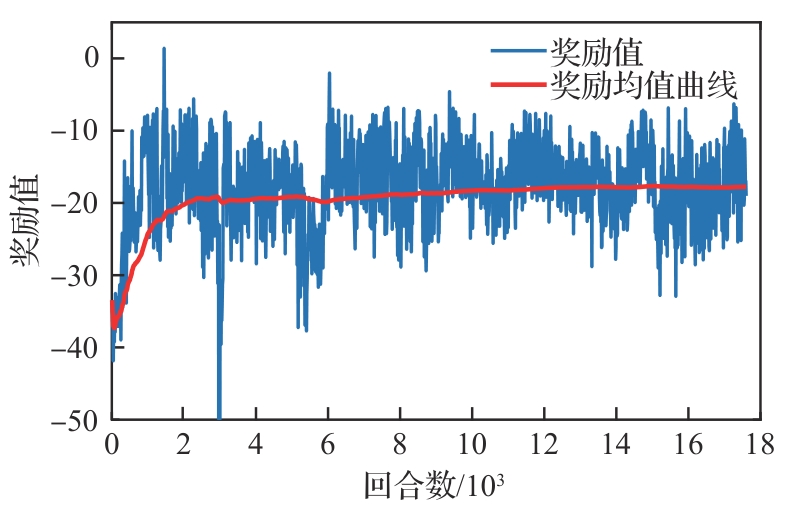
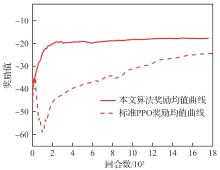
Fig.8
Comparison of reward value between standard PPO algorithm and the algorithm proposed in this paper
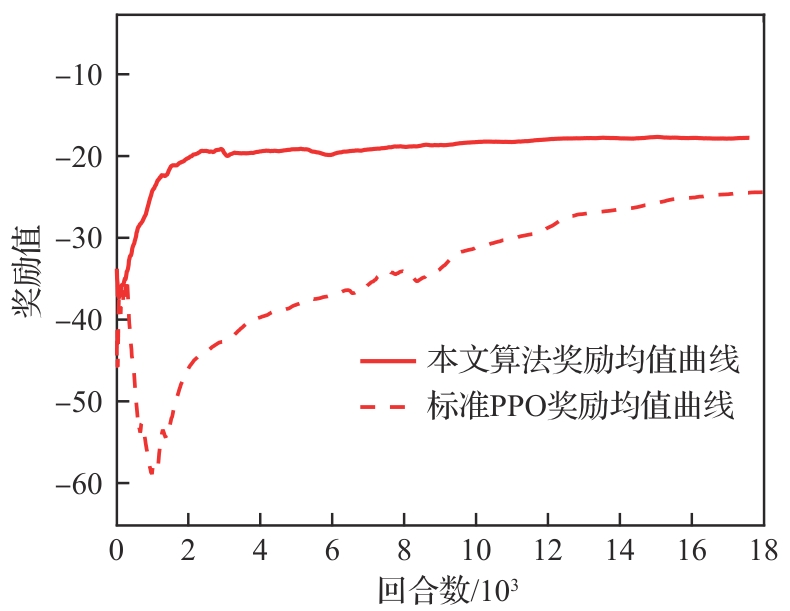
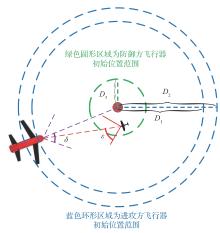
Fig.9
Initialization settings of simulation scenarios
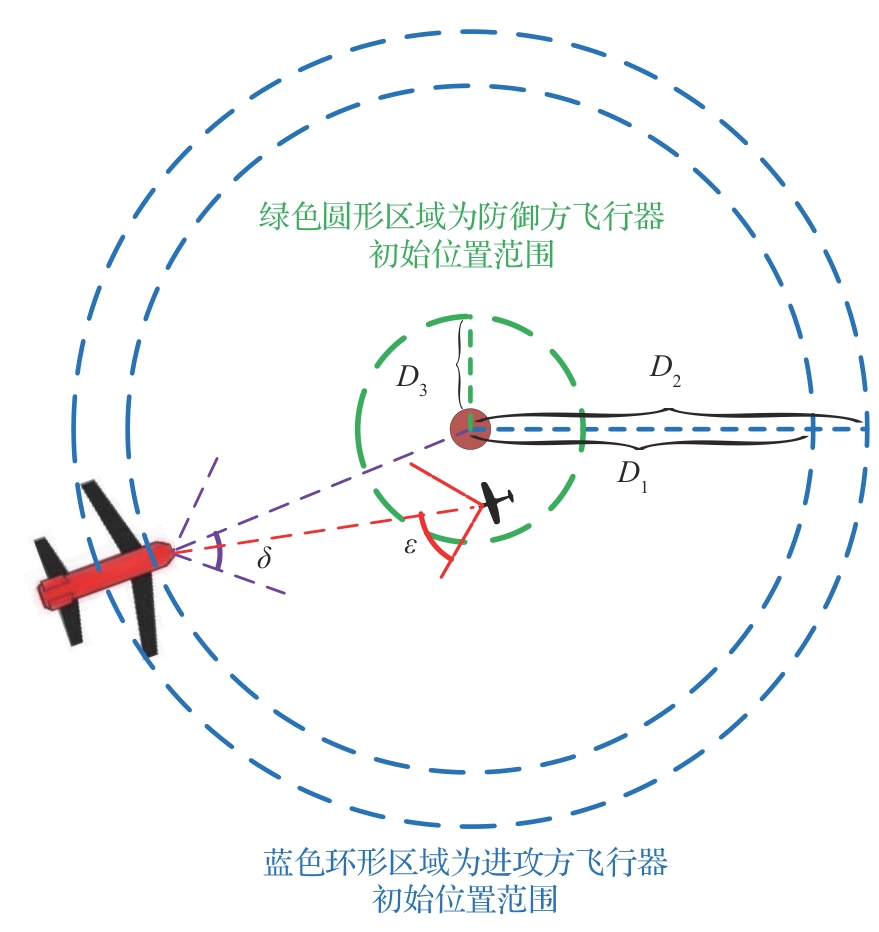
Table 3
Comparison of maneuvering ability between attack and defense sides(same atility)
| 飞行器类型 | 速度/(m·s-1) | 过载能力/g |
|---|---|---|
| 拦截器 | 70 | [-1.5,1.5] |
| 进攻飞行器 | 65 | [-1.5,1.5] |
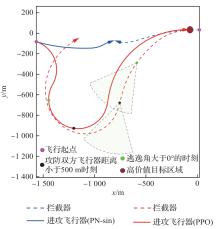
Fig.10
Position curves of attack and defense (same ability)
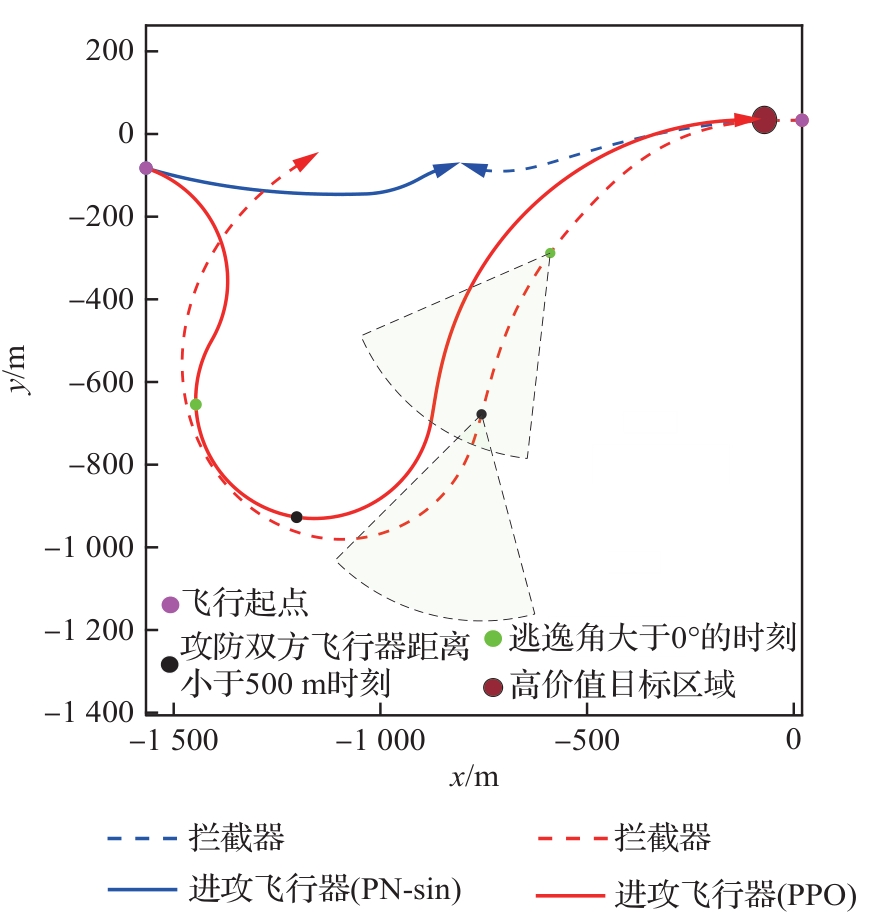
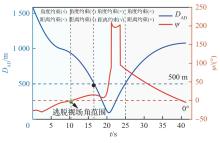
Fig.11
Comparison curve of distance and escape angle between attack and defense (PPO, same ability)
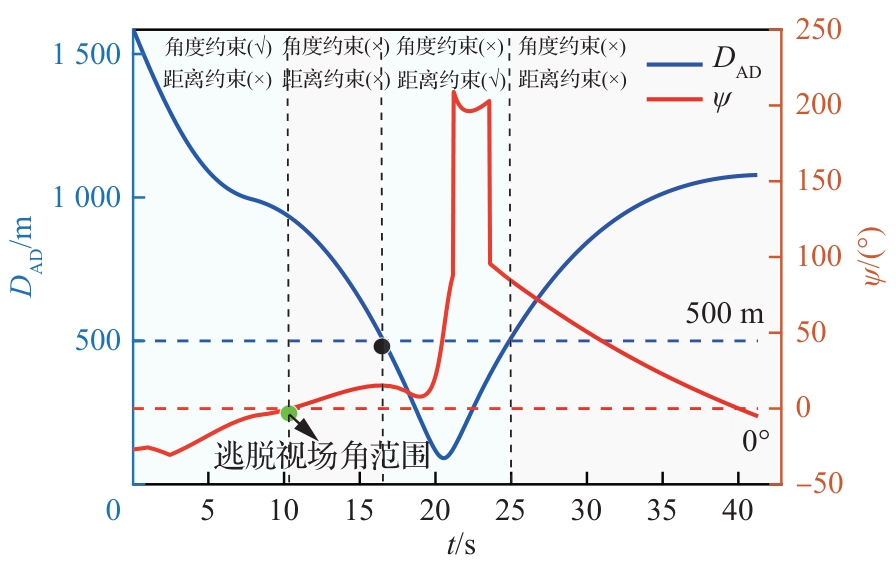
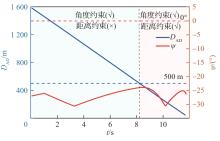
Fig.12
Comparison curve of distance and escape angle between attack and defense (PN-sin, same ability)
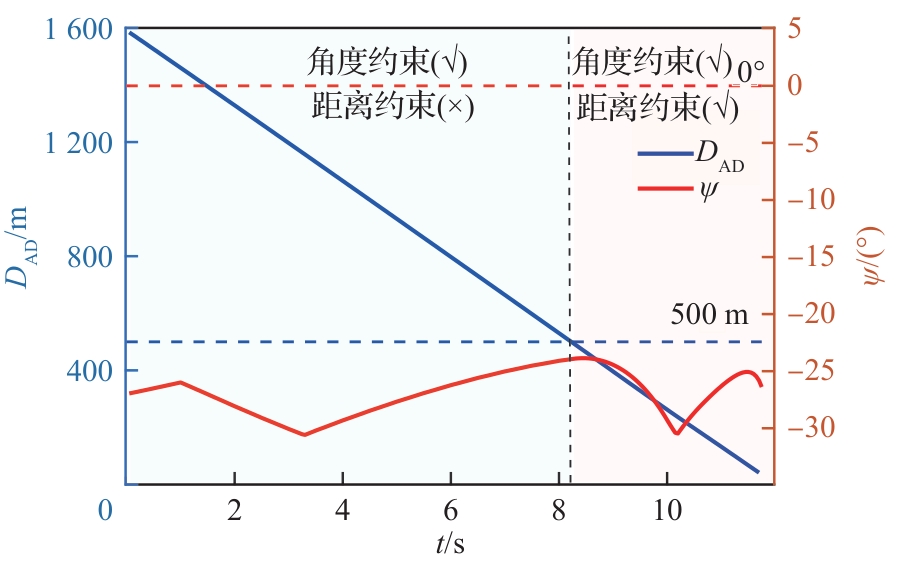
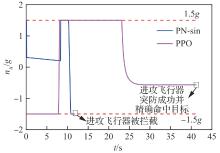
Fig.13
Normal overload of attacking aircraft (same ability)
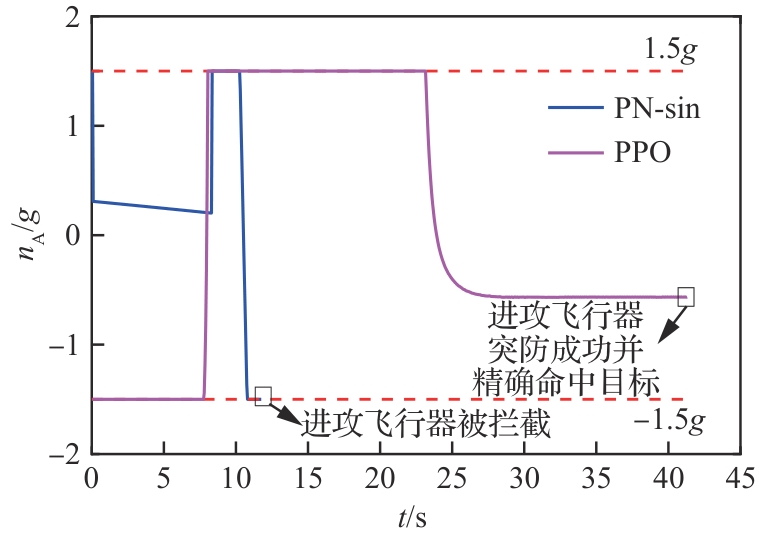
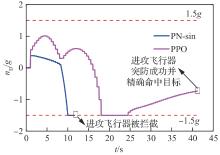
Fig.14
Interceptor normal overload (same ability)
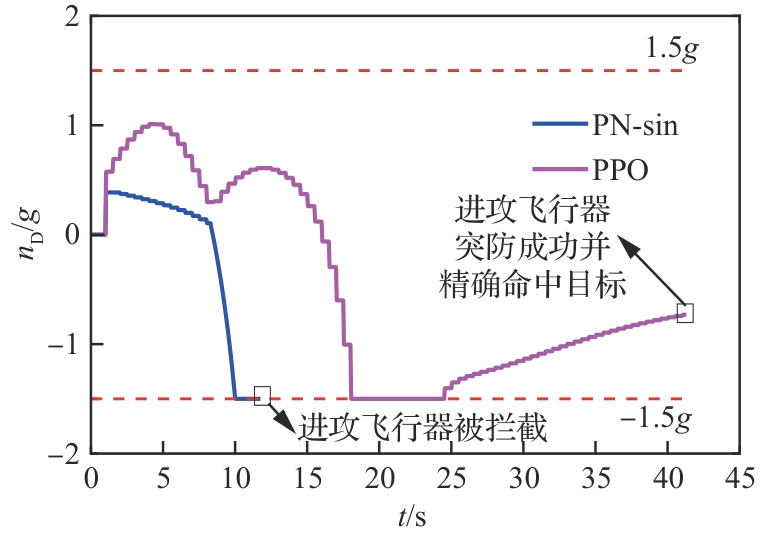
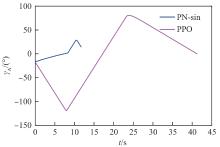
Fig.15
Heading angle of attacking aircraft (same ability)
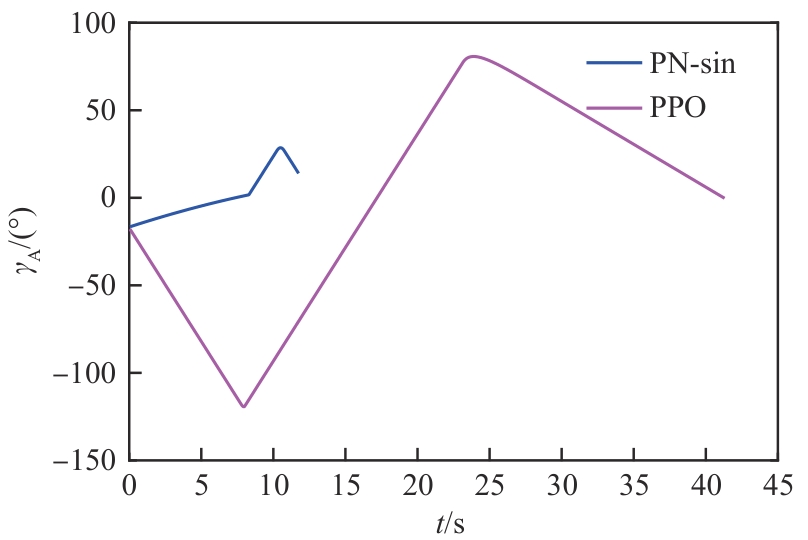
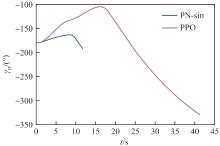
Fig.16
Interceptor heading angle (same ability)
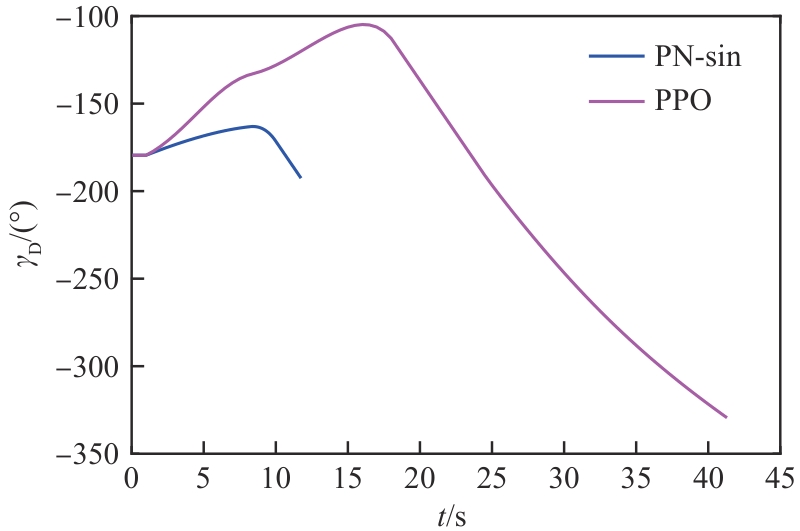
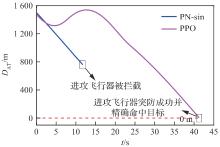
Fig.17
Distance of attacking aircraft and target (same ability)
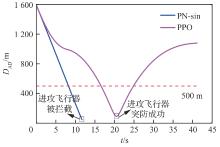
Fig.18
Distance of attacking and defending aircraft (same ability)
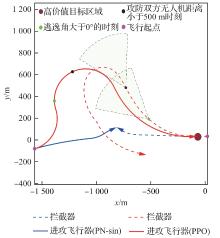
Fig.19
Position curves of attackand defense sides (attacker<interceptor)
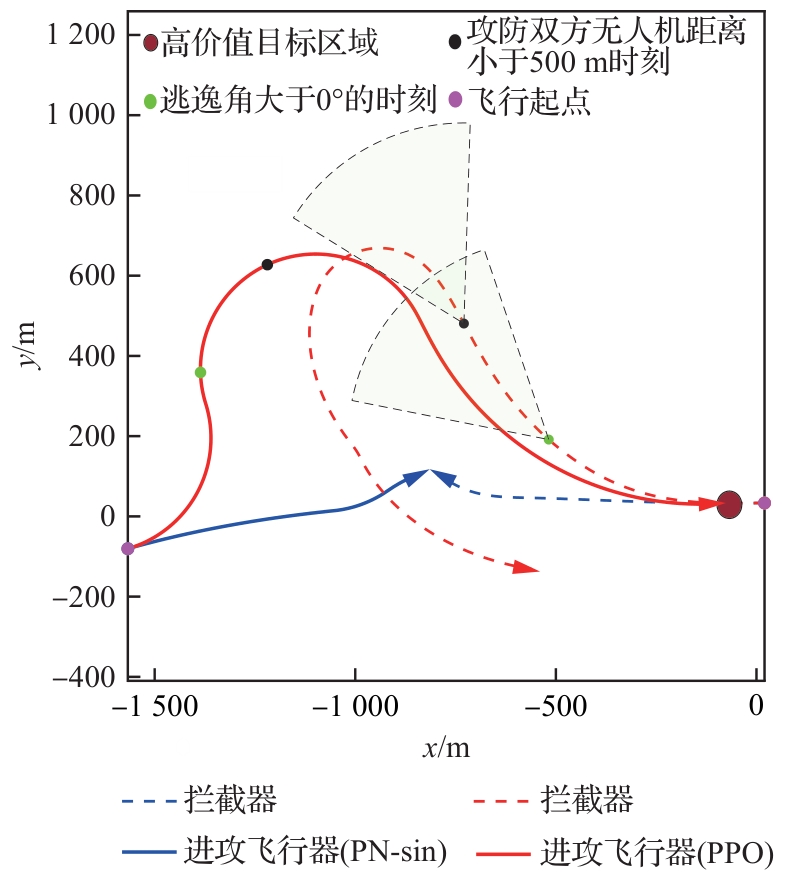
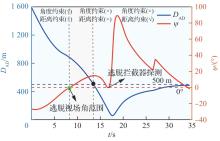
Fig.20
Comparison curve of distance and escape angle between attack and defense (attacker<interceptor,PPO)
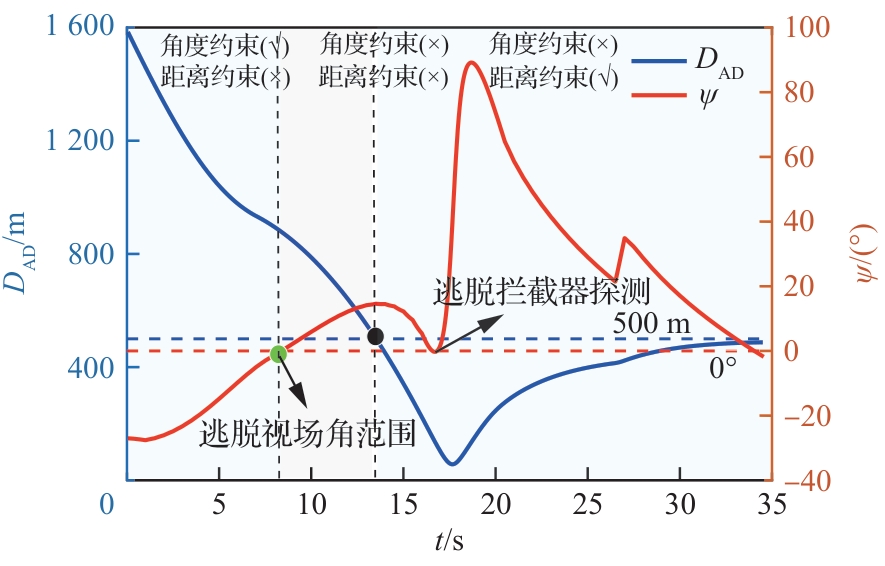
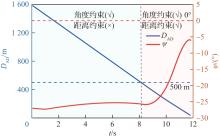
Fig.21
Comparison curve of distance and escape angle between attack and defense (attacker<interceptor,PN-sin)
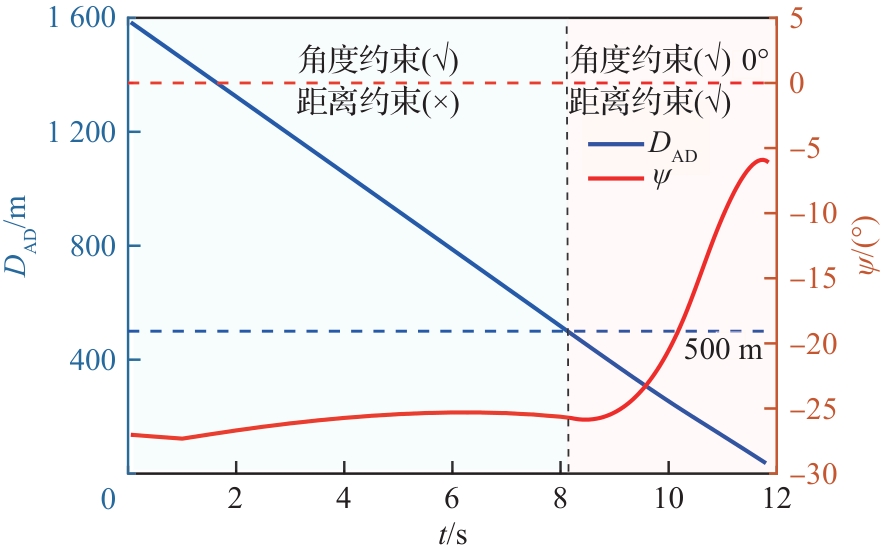
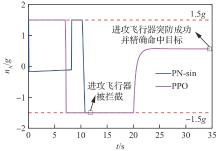
Fig.22
Normal overload of attacking aircraft (attacker<interceptor)
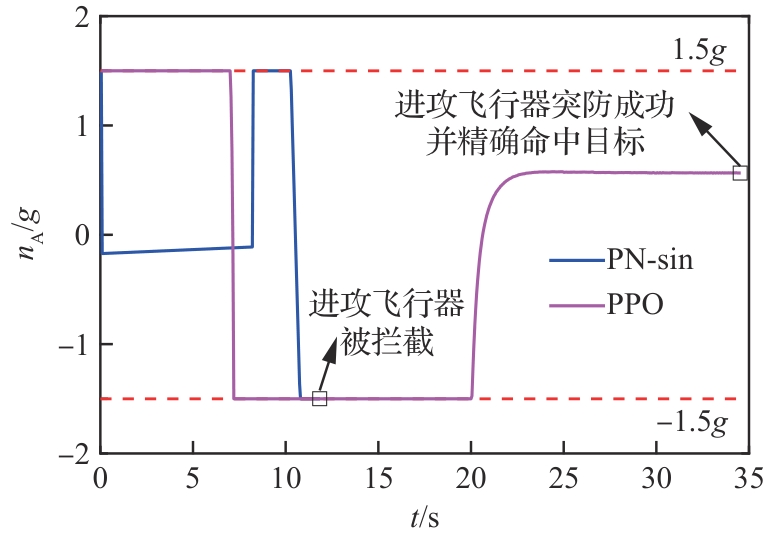
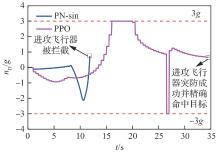
Fig.23
Interceptor normal overload (attacker<interceptor)
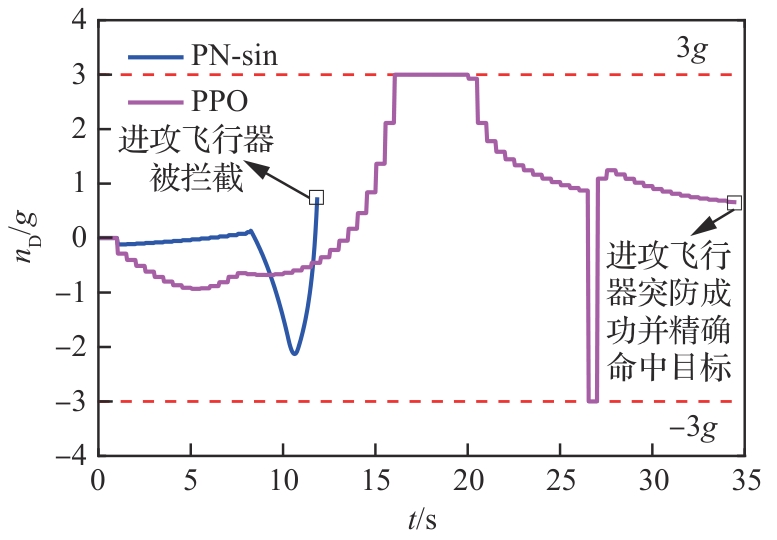
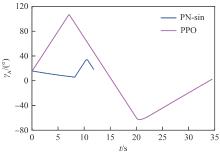
Fig.24
Heading angle of attacking aircraft (attacker<interceptor)
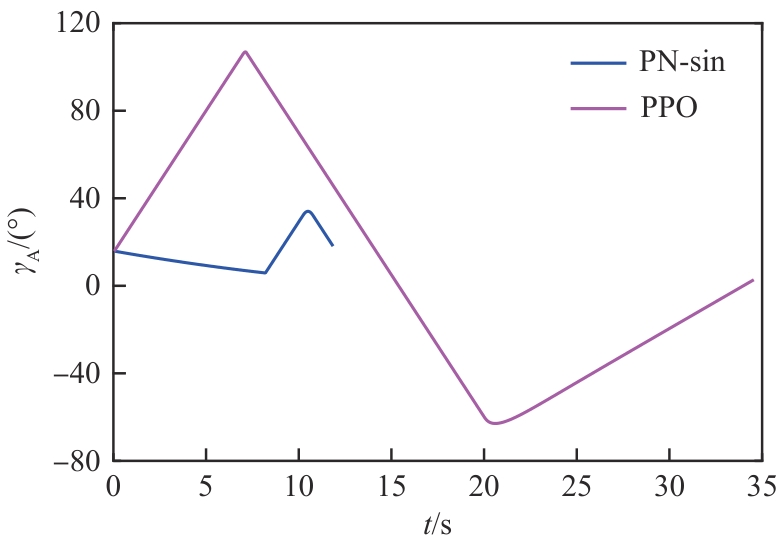
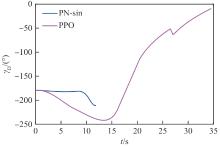
Fig.25
Interceptor heading angle (attacker<interceptor)
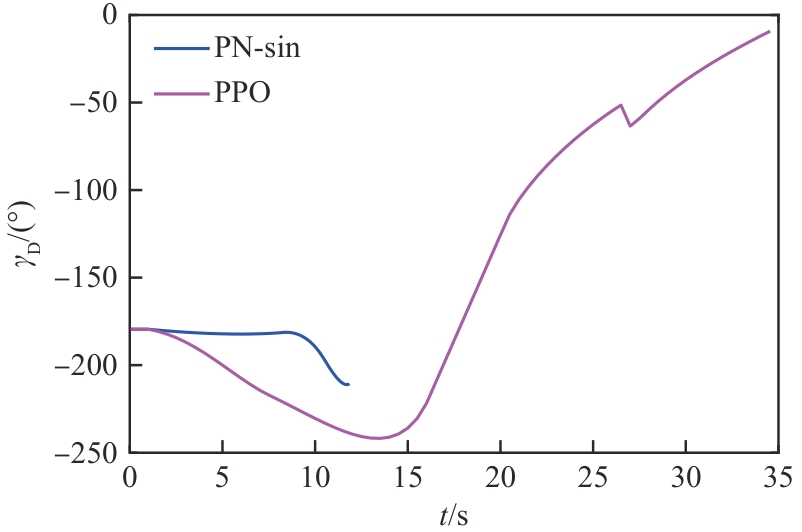
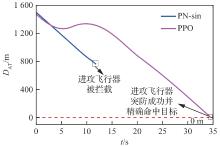
Fig.26
Distance of attacking aircraft (attacker<interceptor)
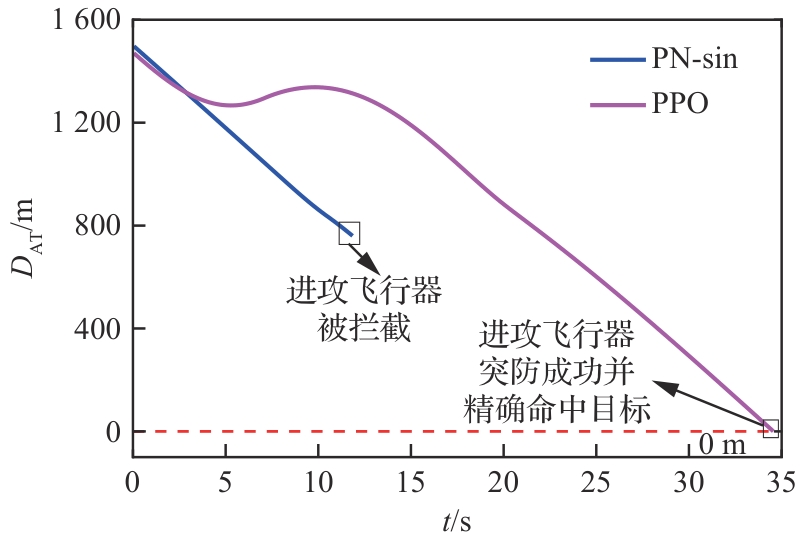
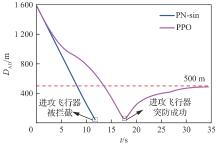
Fig.27
Distance of attacking and defending aircraft (attacker<interceptor)
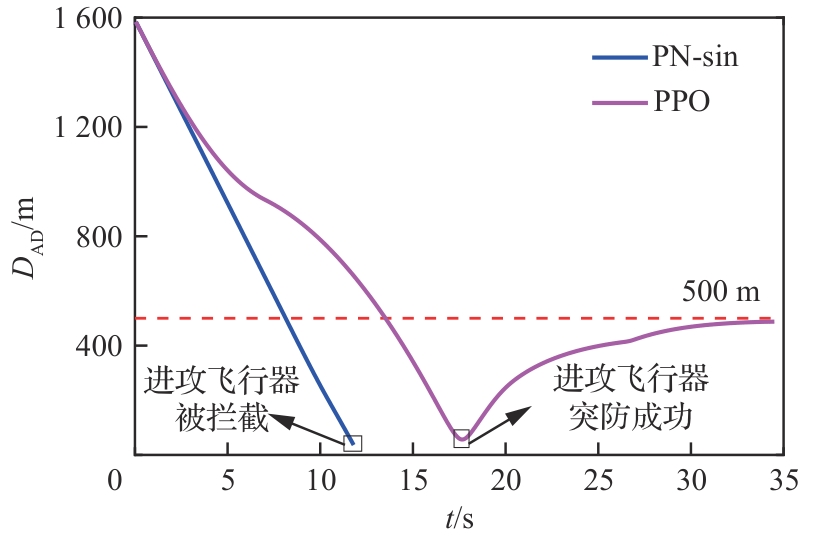
Table 4
Comparison of maneuvering ability between attack and defense (attacker>interceptor)
| 飞行器类型 | 速度/(m·s-1) | 过载能力/g |
|---|---|---|
| 拦截器 | 70 | [-1,1] |
| 进攻飞行器 | 65 | [-1.5,1.5] |
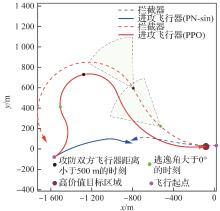
Fig.28
Position curves of attack and defensive sides(attacker>interceptor)
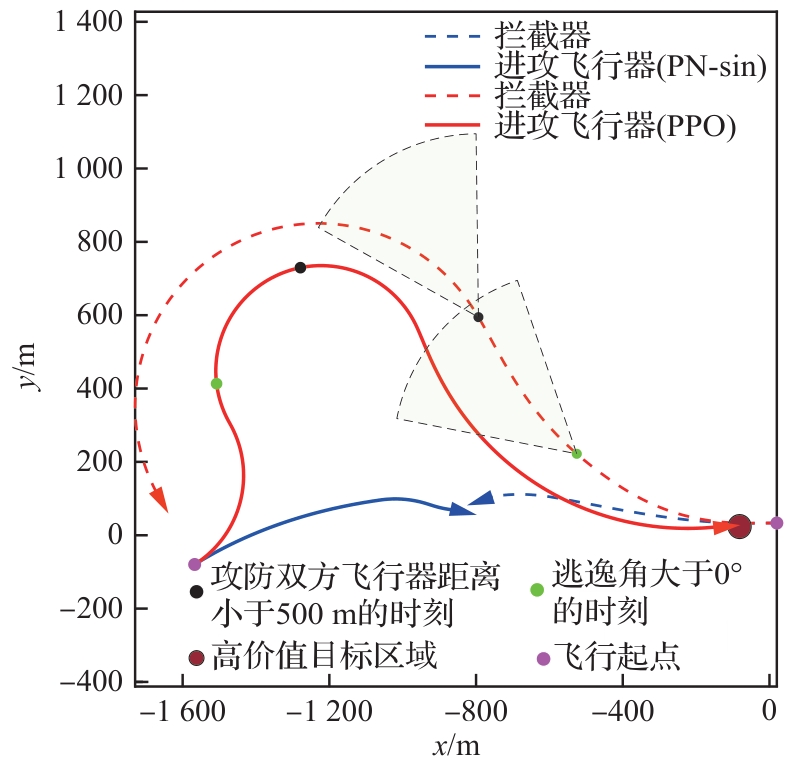
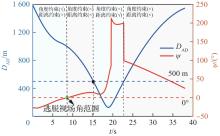
Fig.29
Comparison curve of distance and escape angle between attack and defense (attacker>interceptor,PPO)
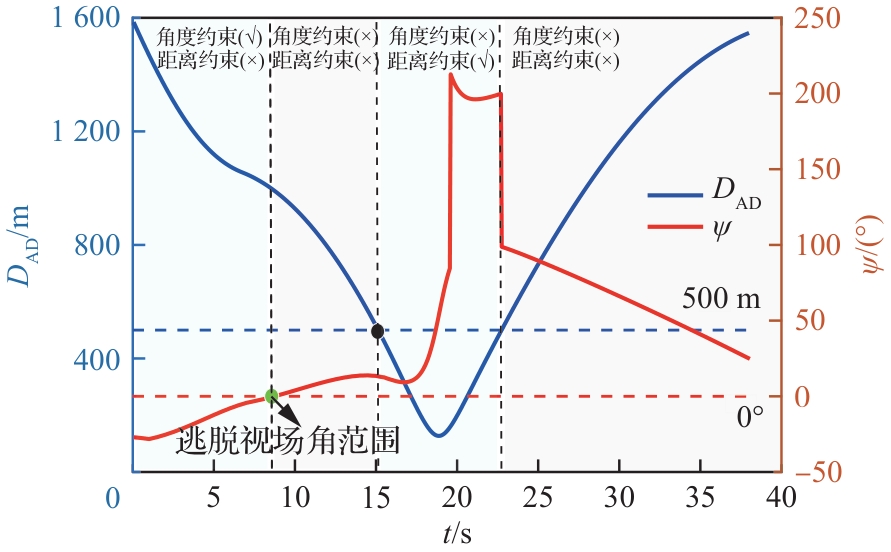
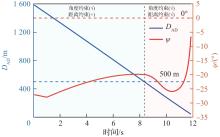
Fig.30
Comparison curve of distance and escape angle between attack and defense (attacker>interceptor,PN-sin)
Fig.31
Normal overload of attacking aircraft (attacker>interceptor)
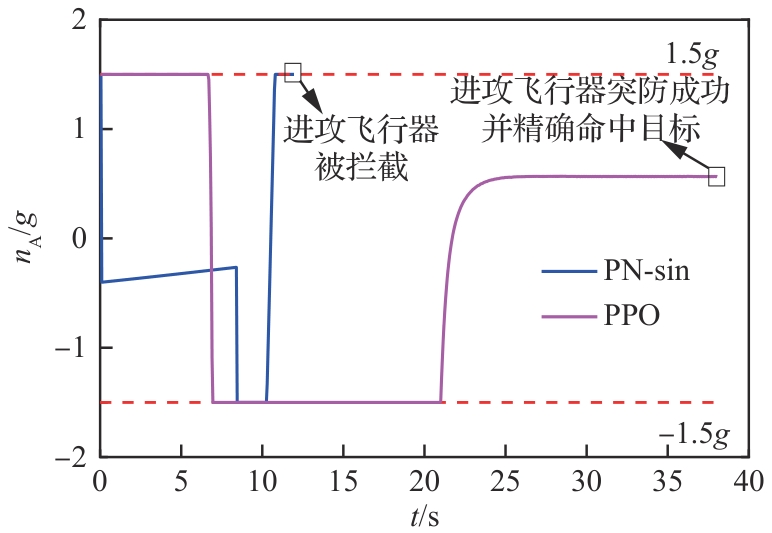
Fig.32
Interceptor normal overload (attacker>interceptor)
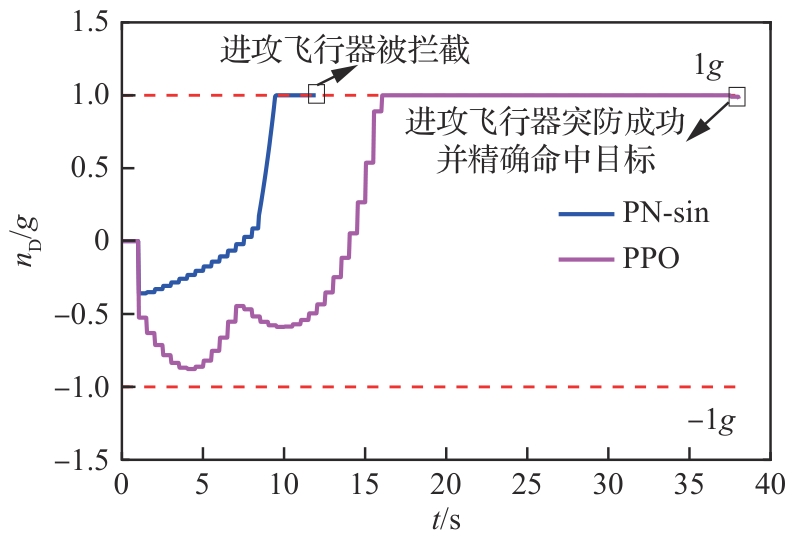
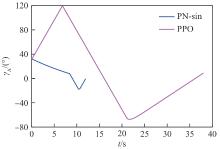
Fig.33
Heading angle of attacking aircraft (attacker>interceptor)
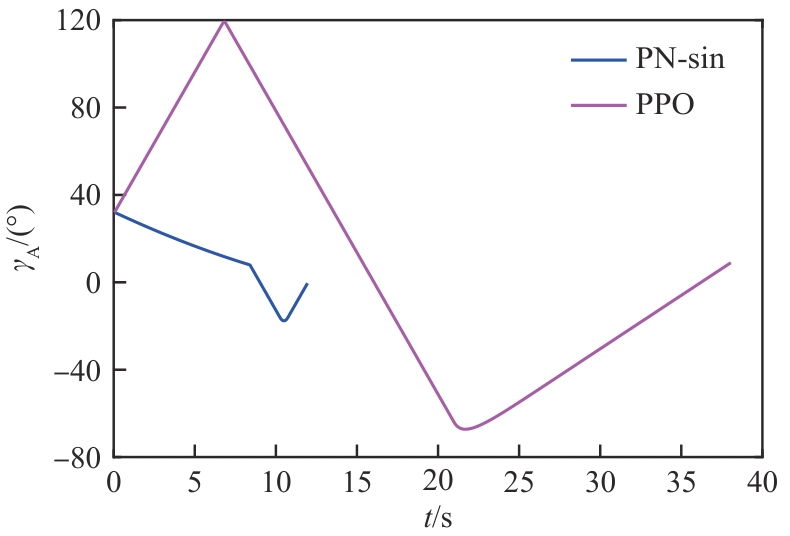
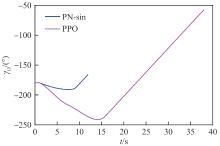
Fig.34
Interceptor heading angle (attacker>interceptor)
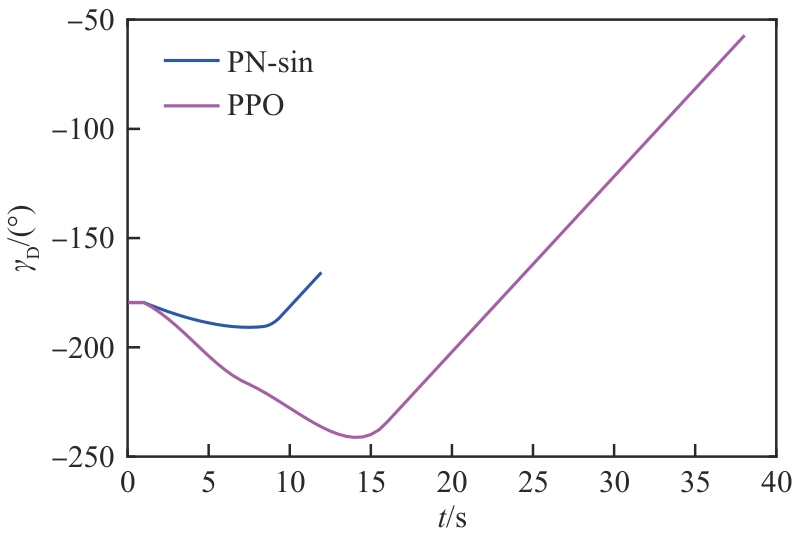
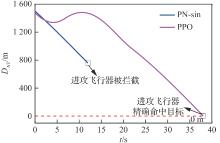
Fig.35
Distance of attacking aircraft and target (attacker>interceptor)
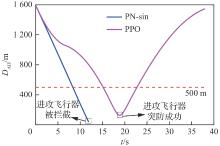
Fig.36
Distance of attacking and defending aircraft (attacker>interceptor)
Table 5
Statistics of penetration success rate of attacking aircraft under different mission scenarios
| 场景编号 | 任务编号 | 拦截器 | 进攻飞行器 | PPO制导突 防成功率/% | PN-sin制导突防 成功率/% | ||
|---|---|---|---|---|---|---|---|
| 速度/(m·s-1) | 过载能力/g | 速度/(m·s-1) | 过载能力/g | ||||
| ① | 1 | 60 | [-1.5,1.5] | 65 | [-1.5,1.5] | 99.4 | 79.6 |
| 2 | 65 | [-1.5,1.5] | 99.2 | 79.1 | |||
| 3 | 70 | [-1.5,1.5] | 98.7 | 76.2 | |||
| 4 | 75 | [-1.5,1.5] | 92.3 | 72.9 | |||
| 5 | 80 | [-1.5,1.5] | 86.1 | 68.7 | |||
| 6 | 85 | [-1.5,1.5] | 51.2 | 60.5 | |||
| ② | 7 | 65 | [-3,3] | 65 | [-1.5,1.5] | 96.7 | 0 |
| 8 | 65 | [-4.5,4.5] | 34.9 | 0 | |||
| 9 | 65 | [-6,6] | 0 | 0 | |||
| 10 | 70 | [-3,3] | 93.9 | 0 | |||
| 11 | 60 | [-3,3] | 96.9 | 0 | |||
| ③ | 12 | 60 | [-1,1] | 65 | [-1.5,1.5] | 100 | 100 |
| 13 | 65 | [-1,1] | 99.2 | 91.7 | |||
| 14 | 70 | [-1,1] | 92.4 | 89.7 | |||
| 1 | LAYNO S B. A model of the ABM-vs.-RV engagement with imperfect RV discrimination[J]. Operations Research, 1971, 19(6): 1502-1517. |
| 2 | HE L, YAN X D. Adaptive terminal guidance law for spiral-diving maneuver based on virtual sliding targets[J]. Journal of Guidance, Control, and Dynamics, 2018, 41(7): 1591-1601. |
| 3 | ZARCHAN P. Proportional navigation and weaving targets[J]. Journal of Guidance, Control, and Dynamics, 1995, 18(5): 969-974. |
| 4 | 吴炎烜, 陆胥坛, 王正杰. 基于滑模控制的飞行器螺旋机动、制导与控制一体化设计研究[J]. 北京理工大学学报, 2022, 42(5): 523-529. |
| WU Y X, LU X T, WANG Z J. Research on integrated design of aircraft spiral maneuver, guidance and control based on sliding mode control[J]. Transactions of Beijing Institute of Technology, 2022, 42(5): 523-529 (in Chinese). | |
| 5 | FONOD R, SHIMA T. Multiple model adaptive evasion against a homing missile[J]. Journal of Guidance, Control, and Dynamics, 2016, 39(7): 1578-1592. |
| 6 | 黄鲁豫, 曲鑫, 凡永华, 等. 多约束下的导弹螺旋机动制导控制一体化设计[J]. 宇航学报, 2021, 42(9): 1108-1118. |
| HUANG L Y, QU X, FAN Y H, et al. Integrated guidance and control design for spiral maneuvering missile with multiple constraints[J]. Journal of Astronautics, 2021, 42(9): 1108-1118 (in Chinese). | |
| 7 | ZHAO D J, SONG Z Y. Reentry trajectory optimization with waypoint and no-fly zone constraints using multiphase convex programming[J]. Acta Astronautica, 2017, 137: 60-69. |
| 8 | AKDAG R, ALTILAR D. Modeling evasion tactics of a fighter against missiles in three dimensions: AIAA-2006-6604[R]. Reston: AIAA, 2006. |
| 9 | EXARCHOS I, TSIOTRAS P, PACHTER M. UAV collision avoidance based on the solution of the suicidal pedestrian differential game: AIAA-2016-2100[R]. Reston: AIAA, 2016. |
| 10 | YU P, SHTESSEL Y B, EDWARDS C. Adaptive continuous higher order sliding mode control of air breathing hypersonic missile for maximum target penetration: AIAA-2015-2003[R]. Reston: AIAA, 2015. |
| 11 | 武天才, 王宏伦, 任斌, 等. 考虑规避与突防的高超声速飞行器智能容错制导控制一体化设计[J]. 航空学报, 2024, 45(15): 329607. |
| WU T C, WANG H L, REN B, et al. Learning-based integrated fault-tolerant guidance and control for hypersonic vehicles considering avoidance and penetration[J]. Acta Aeronautica et Astronautica Sinica, 2024, 45(15): 329607 (in Chinese). | |
| 12 | BARES P, LAZARUS S, TSOURDOS A, et al. Adaptive guidance for UAV based on dubins path: AIAA-2013-5181[R]. Reston: AIAA, 2013. |
| 13 | KIM Y H, RYOO C K, TAHK M J. Guidance synthesis for evasive maneuver of anti-ship missiles against close-in weapon systems[J]. IEEE Transactions on Aerospace and Electronic Systems, 2010, 46(3): 1376-1388. |
| 14 | HOU L, WANG J, KUANG M, et al. Practical implementation of optimal bang-bang evasive guidance[J]. Journal of Guidance, Control, and Dynamics, 2024: 1-7. |
| 15 | 邱潇颀, 高长生, 荆武兴, 拦截大气层内机动目标的深度强化学习制导律 [J]. 宇航学报, 2022. 43(5): 685-695. |
| QIU X X, GAO C S, JING W X. (2022). Deep reinforcement learning guidance law for intercepting maneuvering targets within the atmosphere[J]. Journal of Astronautics, 43(5), 685-695 (in Chinese). | |
| 16 | HE S M, SHIN H S, TSOURDOS A. Computational missile guidance: A deep reinforcement learning approach[J]. Journal of Aerospace Information Systems, 2021, 18(8): 571-582. |
| 17 | WU M Y, HE X J, QIU Z M, et al. Guidance law of interceptors against a high-speed maneuvering target based on deep Q-Network[J]. Transactions of the Institute of Measurement and Control, 2022, 44(7): 1373-1387. |
| 18 | MERKULOV G, ICELAND E, MICHAELI S, et al. Reinforcement learning based decentralized weapon-target assignment and guidance: AIAA-2024-0125[R]. Reston: AIAA, 2024. |
| 19 | 肖柳骏, 李雅轩, 刘新福. 基于强化学习的高超声速滑翔飞行器自适应末制导[J]. 兵工学报, 2025, 46(02): 57-66. |
| XIAO L J, LI Y X, LIU X F. Adaptive terminal guidance for hypersonic gliding vehicle based on reinforcement learning[J]. Acta Armamentarii, 2025,46(02):57-66. (in Chinese). | |
| 20 | SINHA A, WHITE D, CAO Y C. Deep reinforcement learning-based optimal time-constrained intercept guidance: AIAA-2024-2206[R]. Reston: AIAA, 2006. |
| 21 | FEDERICI L, BENEDIKTER B, ZAVOLI A. Deep learning techniques for autonomous spacecraft guidance during proximity operations[J]. Journal of Spacecraft and Rockets, 2021, 58(6): 1774-1785. |
| 22 | CHEN W X, GAO C S, JING W X. Proximal policy optimization guidance algorithm for intercepting near-space maneuvering targets[J]. Aerospace Science and Technology, 2023, 132: 108031. |
| 23 | 惠俊鹏, 汪韧, 郭继峰, 基于强化学习的禁飞区绕飞智能制导技术 [J]. 航空学报, 2023. 44(11): 327416. |
| HUI J P, WANG R, GUO J F. Intelligent guidance technology for bypassing no-fly zones based on reinforcement learning[J]. Acta Aeronautica et Astronautica Sinica, 2023, 44(11): 327416 (in Chinese). | |
| 24 | 高树一, 林德福, 郑多, 等. 针对集群攻击的飞行器智能协同拦截策略[J]. 航空学报, 2023, 44(18): 328301. |
| GAO S Y, LIN D F, ZHENG D, et al. Intelligent cooperative interception strategy of aircraft against cluster attack[J]. Acta Aeronautica et Astronautica Sinica, 2023, 44(18): 328301 (in Chinese). | |
| 25 | SCHULMAN J, WOLSKI F, DHARIWAL P, et al. Proximal policy optimization algorithms[DB/OL]. arxiv preprint: 1707.06347; 2017. |
| 26 | DENG T B, HUANG H, FANG Y W, et al. Reinforcement learning-based missile terminal guidance of maneuvering targets with decoys[J]. Chinese Journal of Aeronautics, 2023, 36(12): 309-324. |
| 27 | 王雨琪, 宁国栋, 王晓峰, 等. 基于微分对策的临近空间飞行器机动突防策略[J]. 航空学报, 2020, 41(S2): 724276. |
| WANG Y Q, NING G D, WANG X F, et al. Maneuvering penetration strategy of near space vehicle based on differential game[J]. Acta Aeronautica et Astronautica Sinica, 2020, 41(S2): 724276 (in Chinese). |
| [1] | Kaifang WAN, Zhilin WU, Yunhui WU, Haozhi QIANG, Yibo WU, Bo LI. Cooperative location of multiple UAVs with deep reinforcement learning in GPS-denied environment [J]. Acta Aeronautica et Astronautica Sinica, 2025, 46(8): 331024-331024. |
| [2] | Lingfeng JIANG, Xinkai LI, Hai ZHANG, Hanwei LI, Hongli ZHANG. Mapless navigation of UAVs in dynamic environments based on an improved TD3 algorithm [J]. Acta Aeronautica et Astronautica Sinica, 2025, 46(8): 331035-331035. |
| [3] | Min YANG, Guanjun LIU, Ziyuan ZHOU. Control of lunar landers based on secure reinforcement learning [J]. Acta Aeronautica et Astronautica Sinica, 2025, 46(3): 630553-630553. |
| [4] | Honglin ZHANG, Jianjun LUO, Weihua MA. Spacecraft game decision making for threat avoidance of space targets based on machine learning [J]. Acta Aeronautica et Astronautica Sinica, 2024, 45(8): 329136-329136. |
| [5] | Yunpeng CAI, Dapeng ZHOU, Jiangchuan DING. Intelligent collaborative control of UAV swarms with collision avoidance safety constraints [J]. Acta Aeronautica et Astronautica Sinica, 2024, 45(5): 529683-529683. |
| [6] | Shengzhe SHAN, Weiwei ZHANG. Air combat intelligent decision-making method based on self-play and deep reinforcement learning [J]. Acta Aeronautica et Astronautica Sinica, 2024, 45(4): 328723-328723. |
| [7] | Bing GAO, Zhejie ZHANG, Qijie ZOU, Zhiguo LIU, Xiling ZHAO. Multi-agent communication cooperation based on deep reinforcement learning and information theory [J]. Acta Aeronautica et Astronautica Sinica, 2024, 45(18): 329862-329862. |
| [8] | Zuolong LI, Jihong ZHU, Minchi KUANG, Jie ZHANG, Jie REN. Hierarchical decision algorithm for air combat with hybrid action based on deep reinforcement learning [J]. Acta Aeronautica et Astronautica Sinica, 2024, 45(17): 530053-530053. |
| [9] | Tiancai WU, Honglun WANG, Bin REN, Yiheng LIU, Xingyu WU, Guocheng YAN. Learning-based integrated fault-tolerant guidance and control for hypersonic vehicles considering avoidance and penetration [J]. Acta Aeronautica et Astronautica Sinica, 2024, 45(15): 329607-329607. |
| [10] | Xuejian WANG, Yongming WEN, Xiaorong SHI, Ningning ZHANG, Jiexi LIU. Design of hybrid intelligent decision framework for multi⁃agent and multi⁃coupling tasks [J]. Acta Aeronautica et Astronautica Sinica, 2023, 44(S2): 729770-729770. |
| [11] | Xizhen GAO, Liang TANG, Huang HUANG. Deep reinforcement learning in autonomous manipulation for celestial bodies exploration: Applications and challenges [J]. ACTA AERONAUTICAET ASTRONAUTICA SINICA, 2023, 44(6): 26762-026762. |
| [12] | Pan ZHOU, Jiangtao HUANG, Sheng ZHANG, Gang LIU, Bowen SHU, Jigang TANG. Intelligent air combat decision making and simulation based on deep reinforcement learning [J]. ACTA AERONAUTICAET ASTRONAUTICA SINICA, 2023, 44(4): 126731-126731. |
| [13] | Xiangwei ZHU, Dan SHEN, Kai XIAO, Yuexin MA, Xiang LIAO, Fuqiang GU, Fangwen YU, Kefu GAO, Jingnan LIU. Mechanisms, algorithms, implementation and perspectives of brain⁃inspired navigation [J]. Acta Aeronautica et Astronautica Sinica, 2023, 44(19): 28569-028569. |
| [14] | Shuyi GAO, Defu LIN, Duo ZHENG, Xinyu HU. Intelligent cooperative interception strategy of aircraft against cluster attack [J]. Acta Aeronautica et Astronautica Sinica, 2023, 44(18): 328301-328301. |
| [15] | Lei DONG, Hongbing CHEN, Xi CHEN, Changxiao ZHAO. Distributed multi-agent coalition task allocation strategy for single pilot operation mode based on DQN [J]. Acta Aeronautica et Astronautica Sinica, 2023, 44(13): 327895-327895. |
| Viewed | ||||||
|
Full text |
|
|||||
|
Abstract |
|
|||||
Address: No.238, Baiyan Buiding, Beisihuan Zhonglu Road, Haidian District, Beijing, China
Postal code : 100083
E-mail:hkxb@buaa.edu.cn
Total visits: 6658907 Today visits: 1341All copyright © editorial office of Chinese Journal of Aeronautics
All copyright © editorial office of Chinese Journal of Aeronautics
Total visits: 6658907 Today visits: 1341

 CJA
CJA
