Acta Aeronautica et Astronautica Sinica ›› 2026, Vol. 47 ›› Issue (6): 232628.doi: 10.7527/S1000-6893.2025.32628
• Solid Mechanics and Vehicle Conceptual Design • Previous Articles
Wei WANG, Zhihao YU( ), Weidong YANG, Shanji YE
Received:2025-07-28
Revised:2025-08-23
Accepted:2025-10-14
Online:2025-10-28
Published:2025-10-24
Contact:
Zhihao YU
E-mail:zhihao@nuaa.edu.cn
Supported by:CLC Number:
Wei WANG, Zhihao YU, Weidong YANG, Shanji YE. Influence of trailing-edge flap deflection patterns on vibration reduction of a smart rotor[J]. Acta Aeronautica et Astronautica Sinica, 2026, 47(6): 232628.
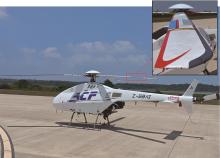
Fig.1
Trailing-edge flap rotor UAV
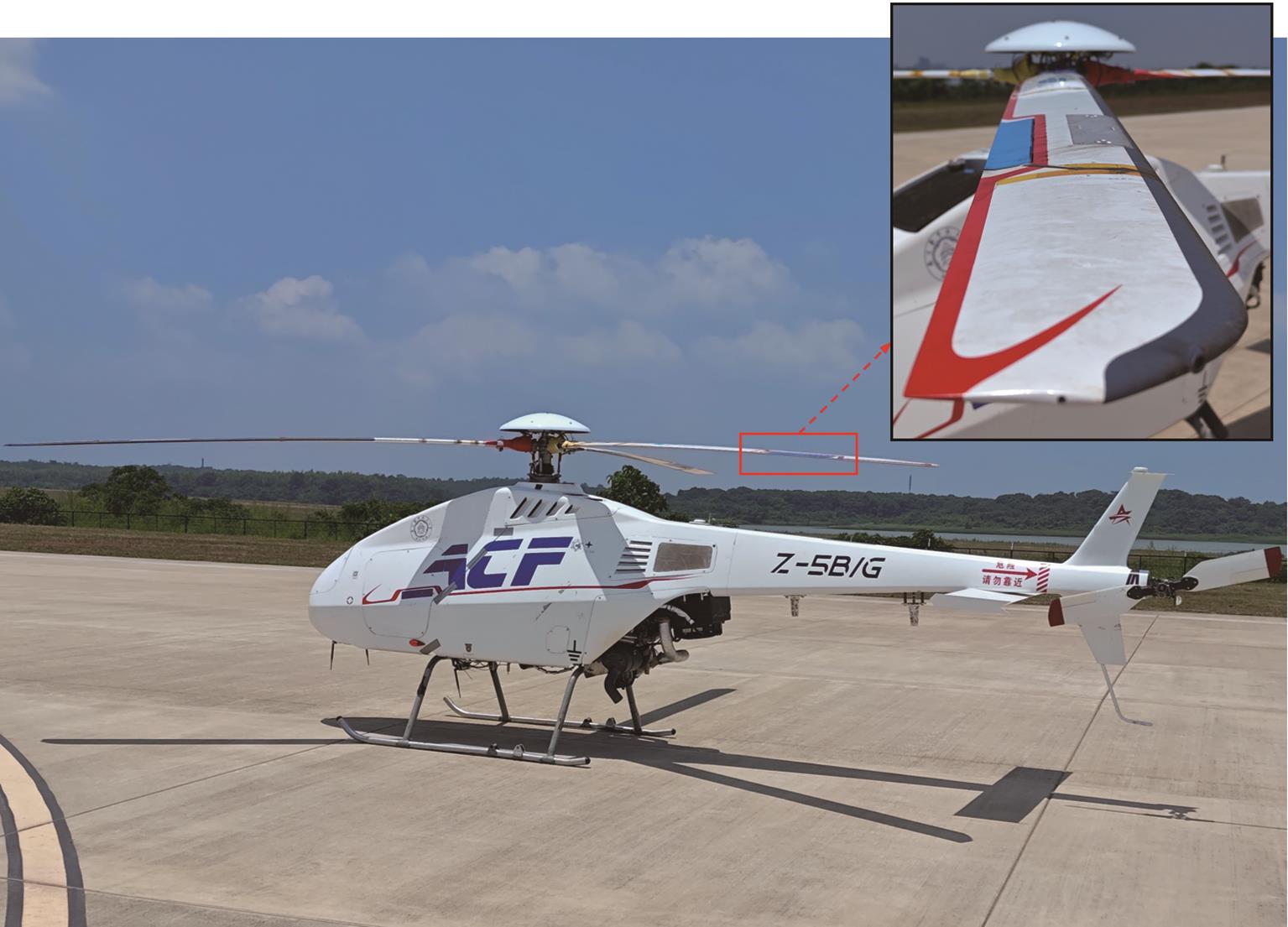
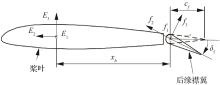
Fig.2
Trailing-edge flap deflection coordinate system
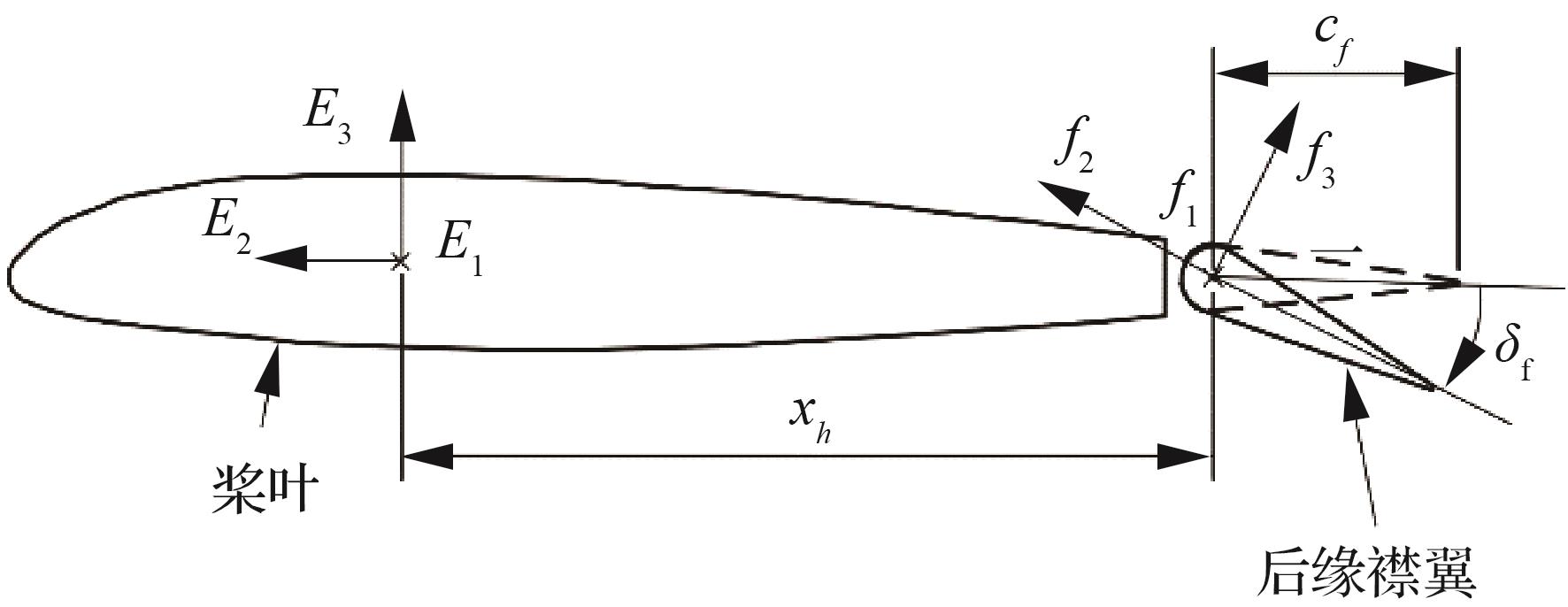
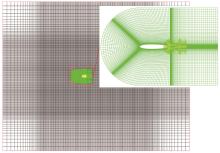
Fig.3
Schematic of moving airfoil with overset grids
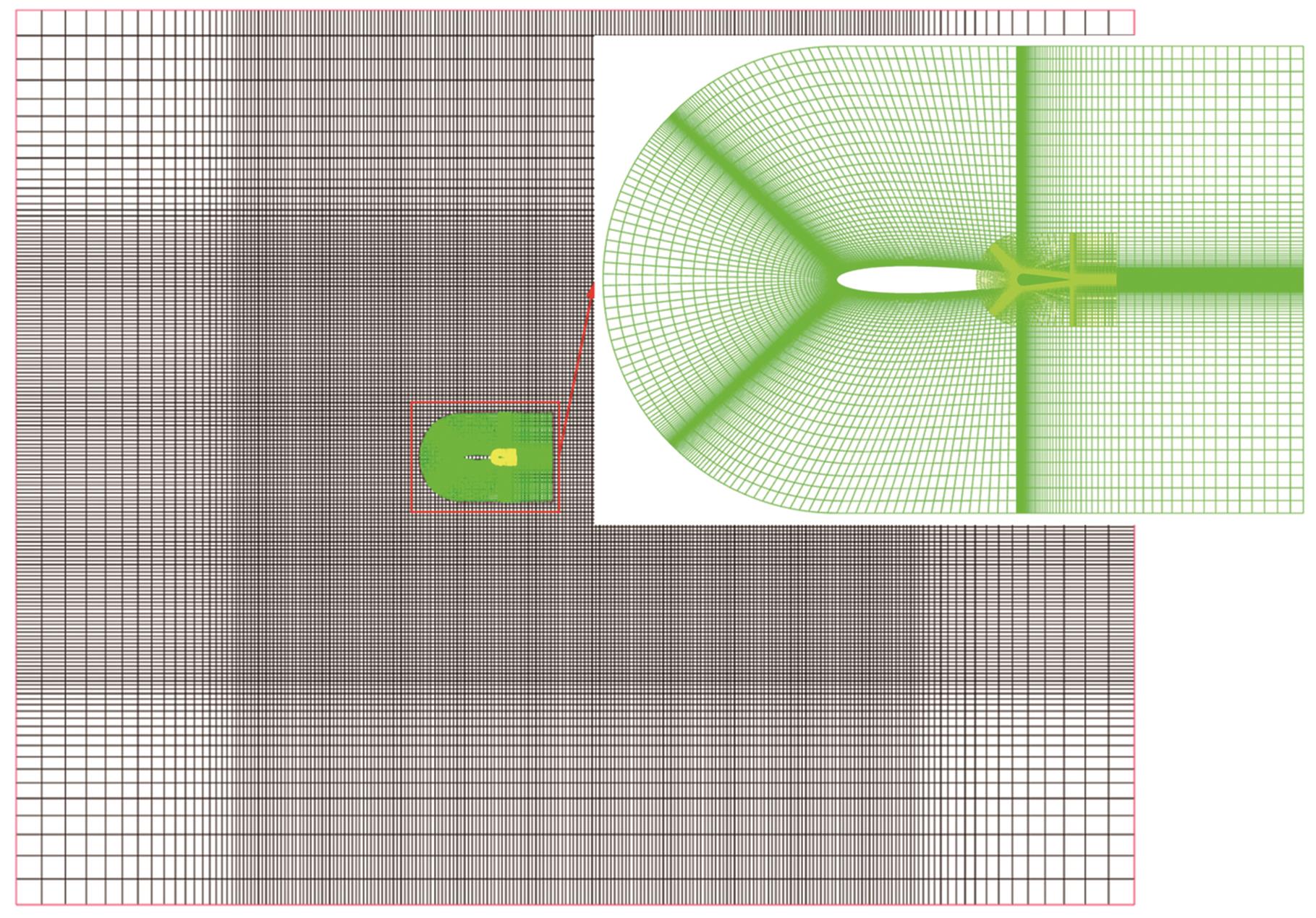

Table 1
Parameters of airfoil with trailing-edge flap
| 参数 | 数值 |
|---|---|
| 翼型 | NACA0012 |
| 弦长c/m | 0.18 |
| 主翼俯仰轴到前缘 | 0.35c |
| 襟翼偏转轴到前缘 | 0.8c |
| 主翼与襟翼间缝隙/mm | 0.5 |
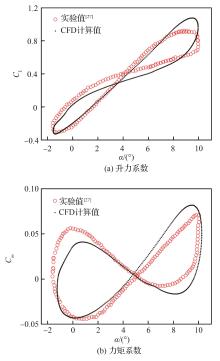
Fig.4
Comparison of aerodynamic coefficients
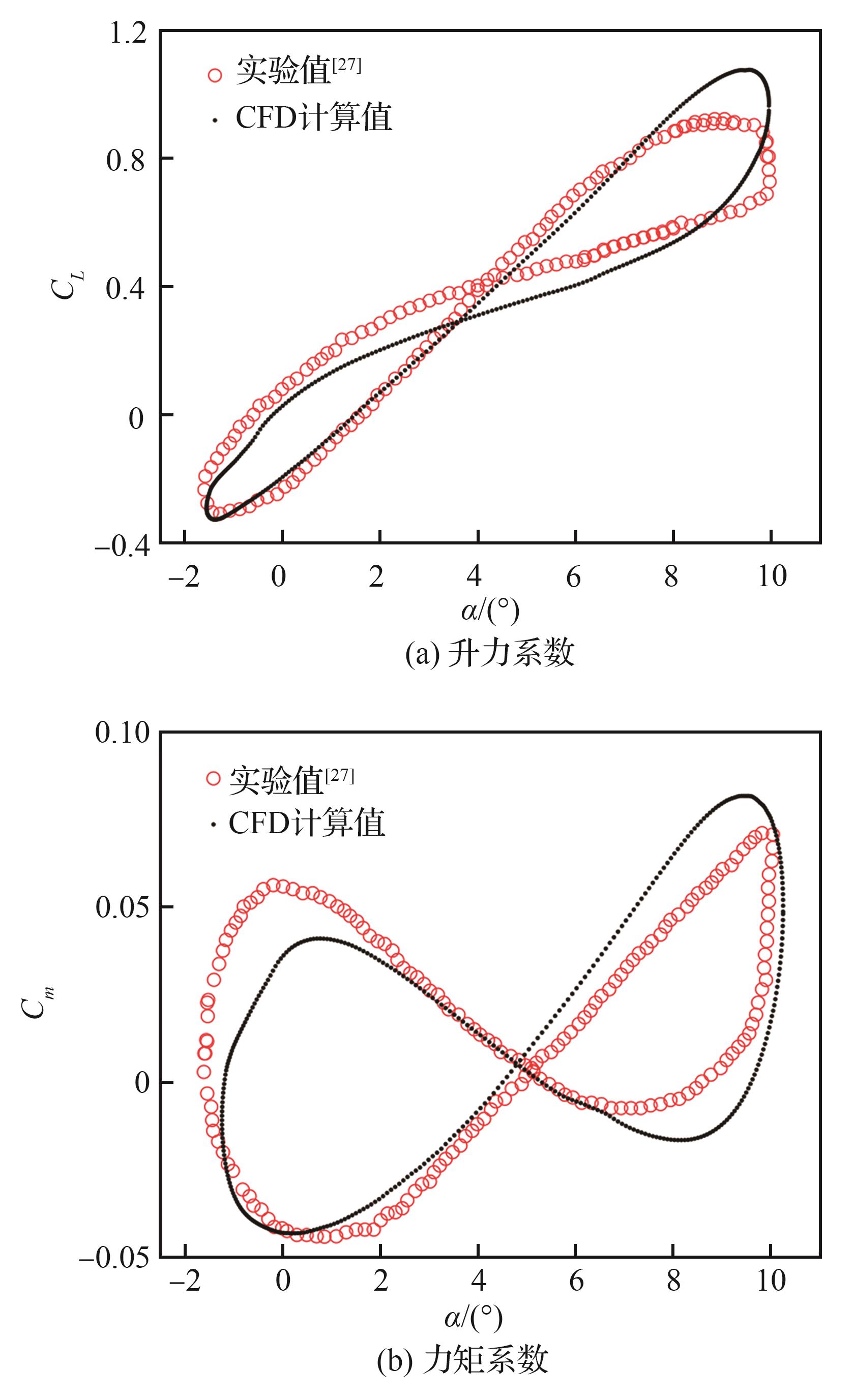
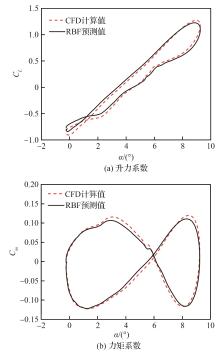
Fig.5
Comparison of predicted values of RBF surrogate model with CFD
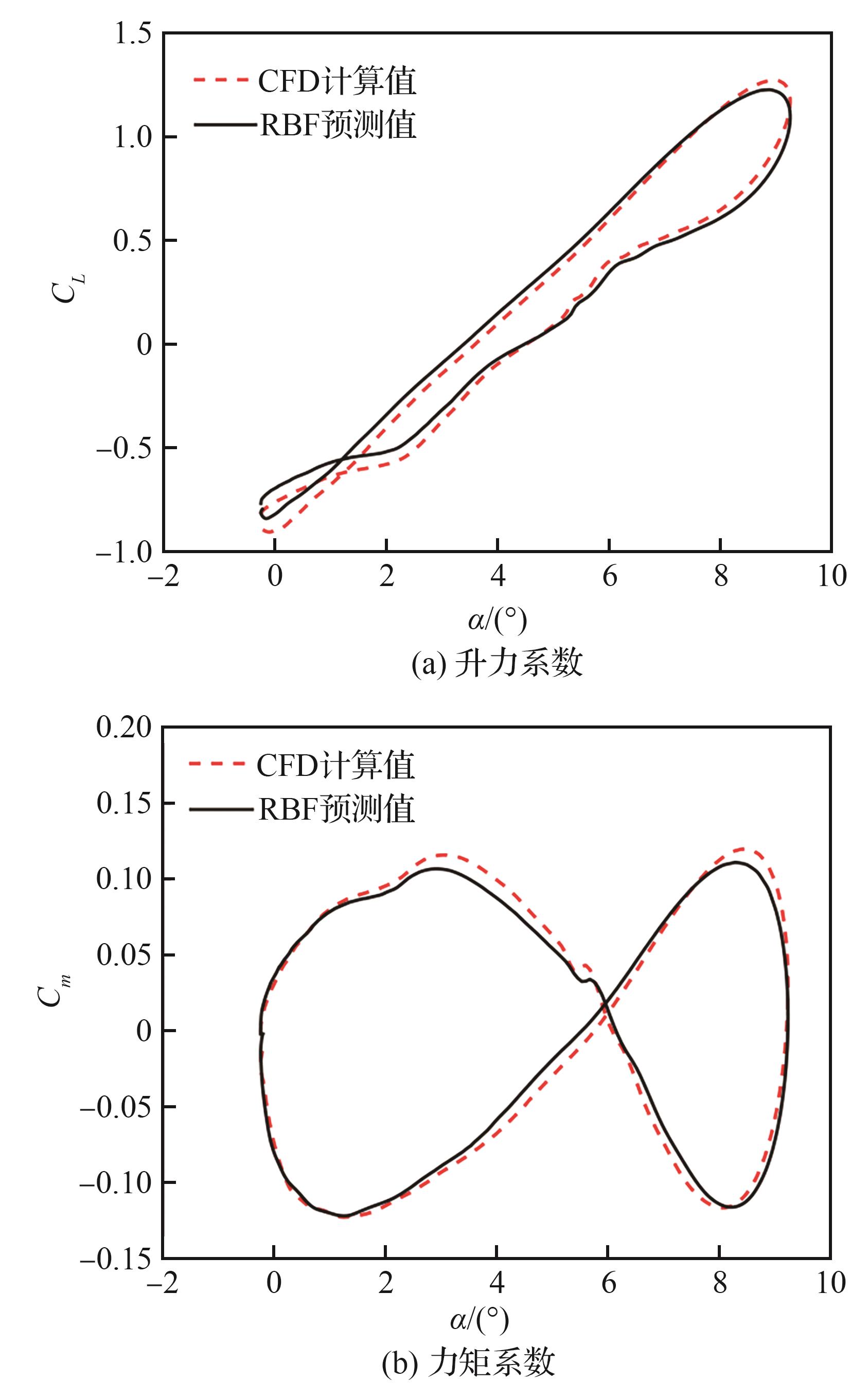
Table 2
Parameters of BO105 rotor
| 参数 | 数值 |
|---|---|
| 翼型 | NACA23012 |
| 桨叶半径R/m | 4.91 |
| 桨叶片数 | 4 |
| 翼型弦长c/m | 0.27 |
| 转速/(r·min-1) | 425 |
| 扭转/(°) | -8 |
| 桨叶根切 | 0.22R |
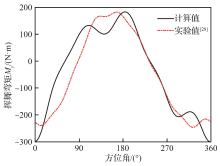
Fig.6
Flapwise bending moment at 0.144R blade section
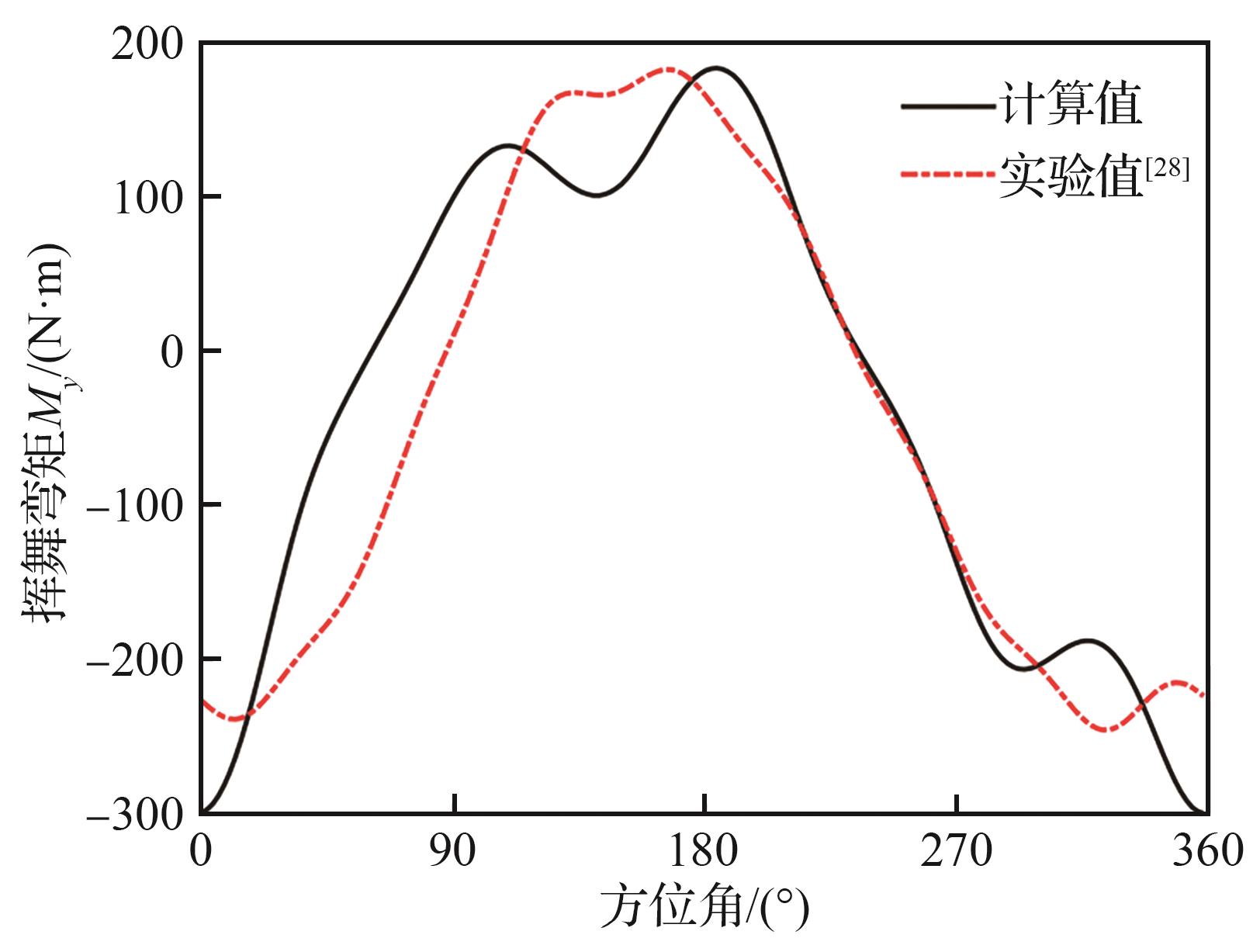
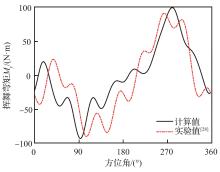
Fig.7
Flapwise bending moment at 0.570R blade section
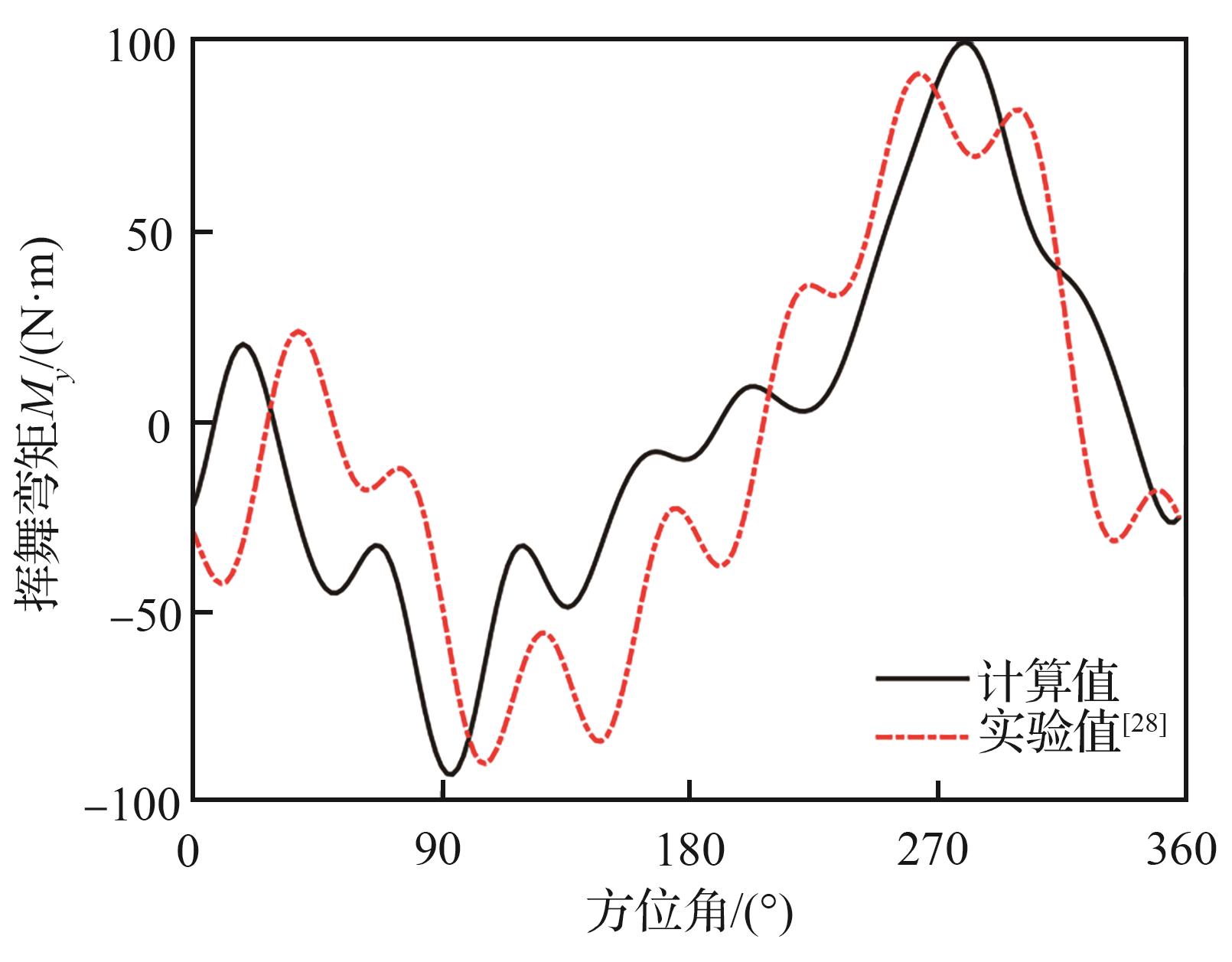
Table 3
Parameters of rotorcraft UAV
| 参数 | 数值 |
|---|---|
| 旋翼直径D/m | 6 |
| 桨叶片数 | 3 |
| 弦长c/m | 0.18 |
| 转速/(r·min-1) | 662 |
| 扭转/(°) | -8 |
| 预锥角/(°) | 1.5 |
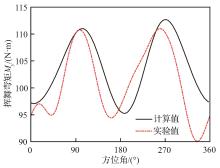
Fig.8
Flapwise bending moment at 0.139 7R blade section
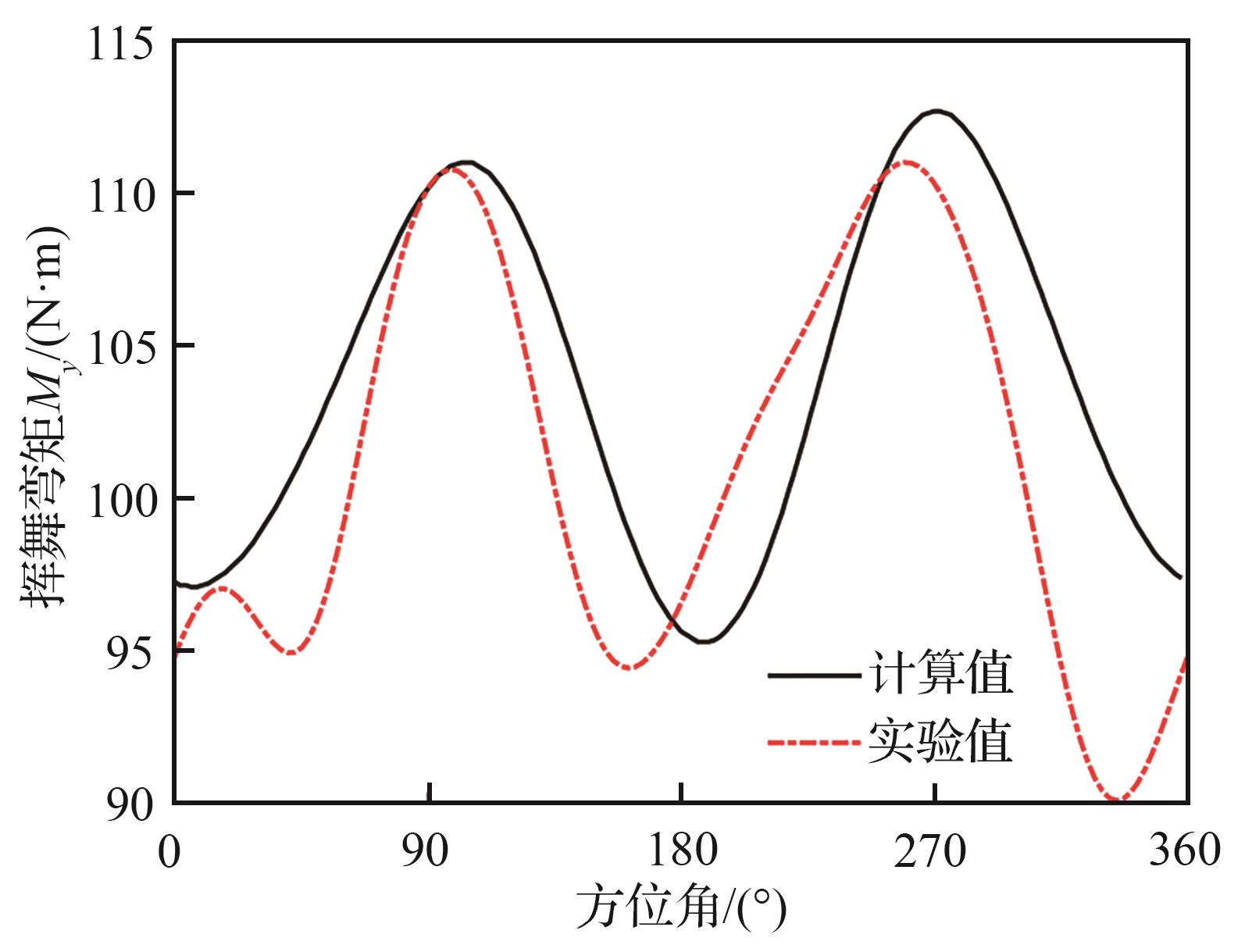
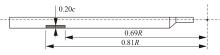
Fig.9
Parameters of trailing-edge flap
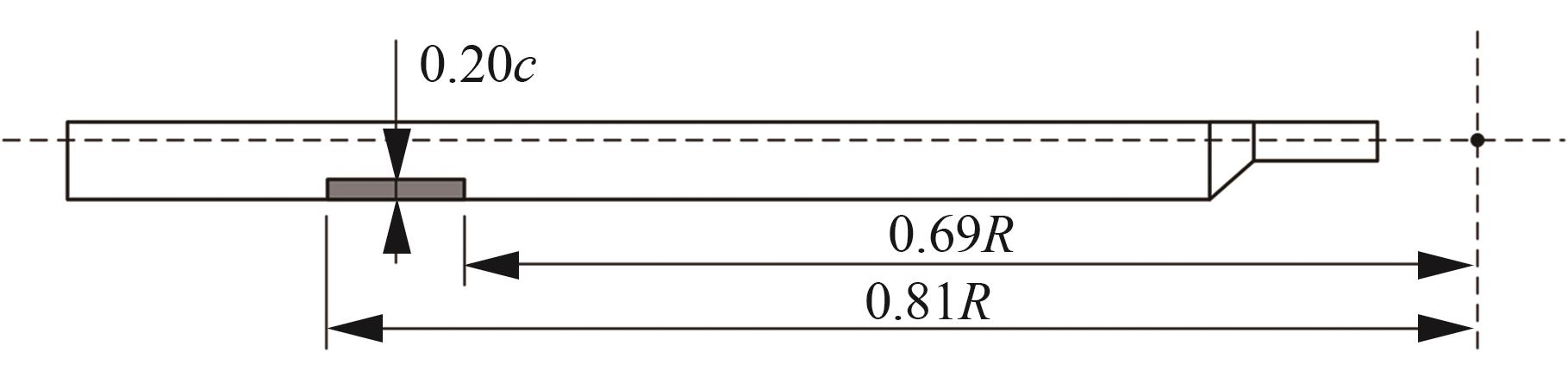
Table 4
Flight conditions and control parameters
| 参数 | 数值 |
|---|---|
| 前进比 | 0.197 |
| 旋翼轴前倾角/(°) | 4.80 |
| 总距/(°) | 8.23 |
| 横向周期变距/(°) | 1.37 |
| 纵向周期变距/(°) | -1.55 |
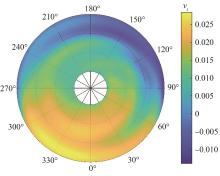
Fig.10
Induced inflow distribution over rotor disk
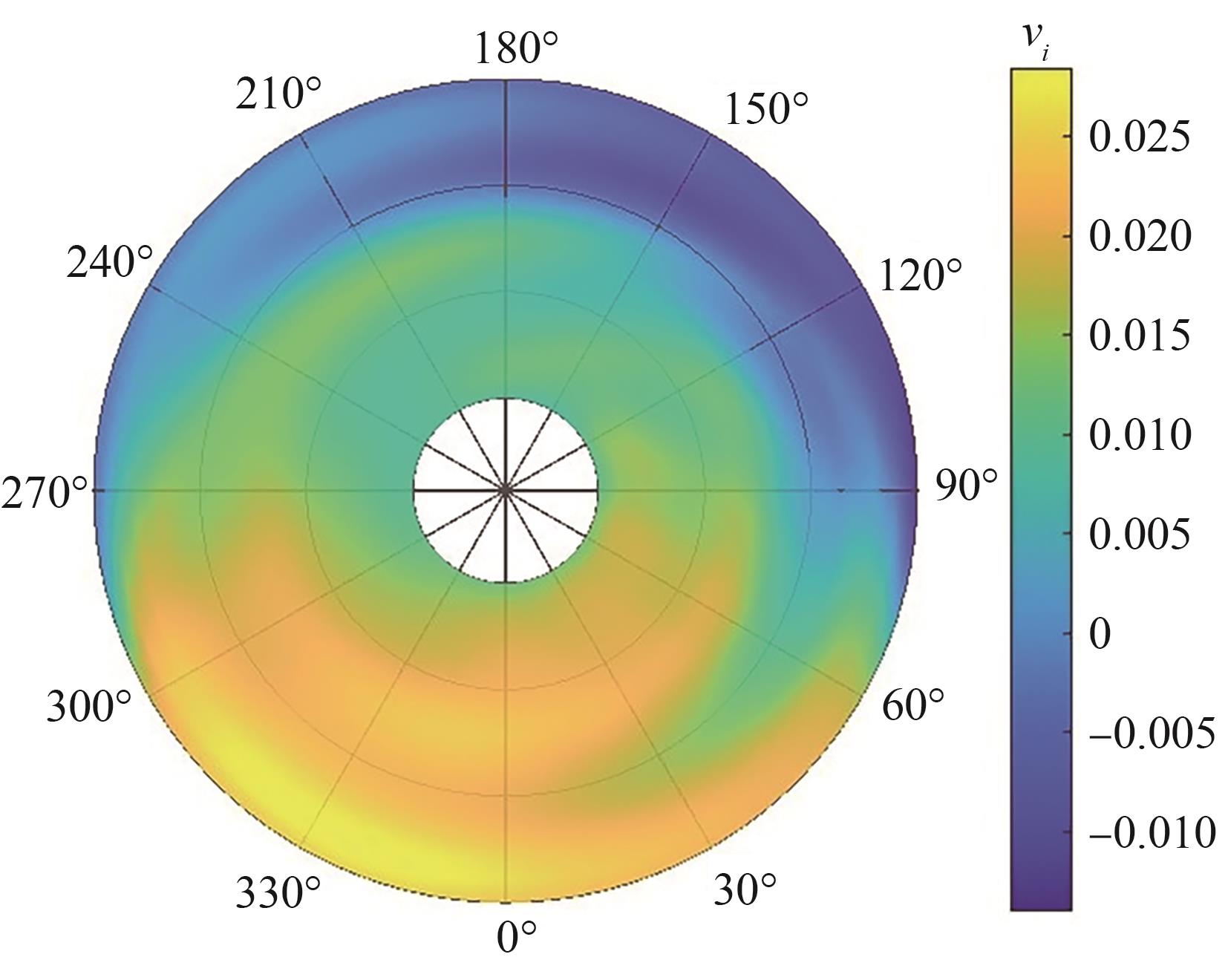
Table 5
Amplitude-phase sweep cases at single frequency deflection
| 工况 | 偏转频率/rev | 偏转幅值/(°) |
|---|---|---|
| 1 | 3 | 2,4,6 |
| 2 | 4 | 2,4,6 |
| 3 | 5 | 2,4,6 |
| 4 | 6 | 2,4,6 |
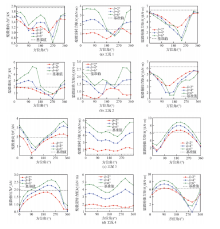
Fig.11
Effect of single frequency deflection on 4/rev hub vibration
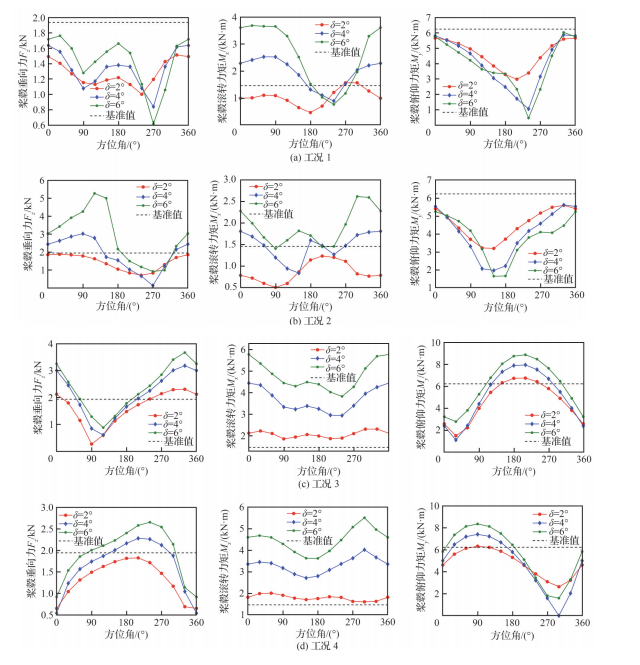
Table 6
Amplitude-phase sweep cases at combined frequ-ency deflection
| 工况 | 偏转频率/rev | 偏转幅值/(°) |
|---|---|---|
| 5 | 3+4 | 2,4 |
| 6 | 4+5 | 2,4 |
| 7 | 5+6 | 2,4 |
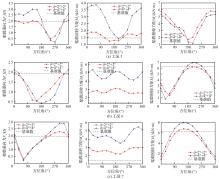
Fig.12
Effect of combined frequency deflection on 4/rev hub vibration
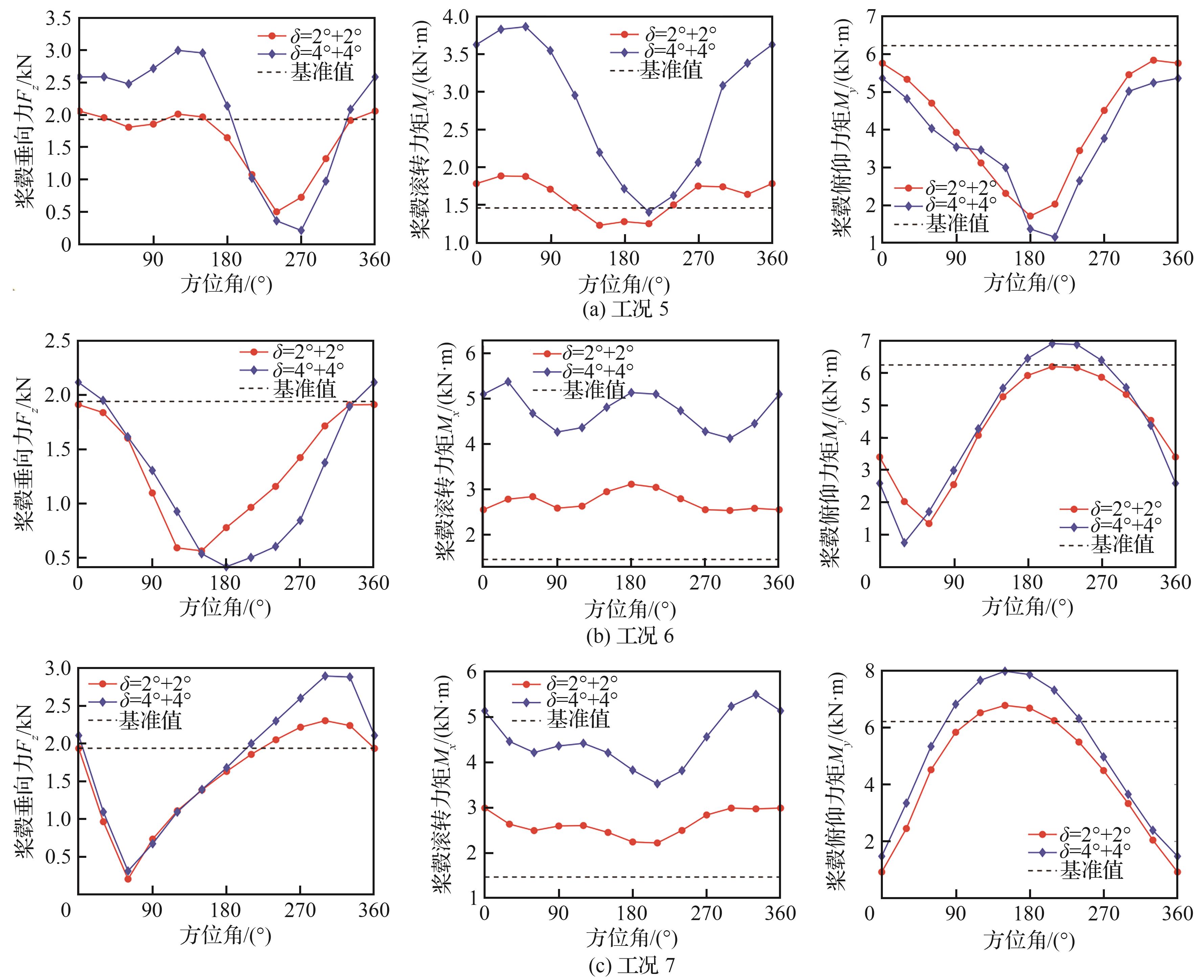
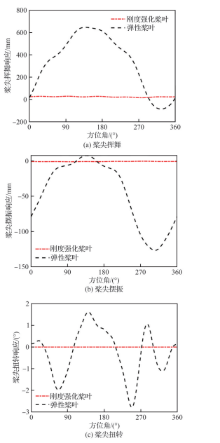
Fig.13
Comparison of elastic and stiffness enhanced blade responses
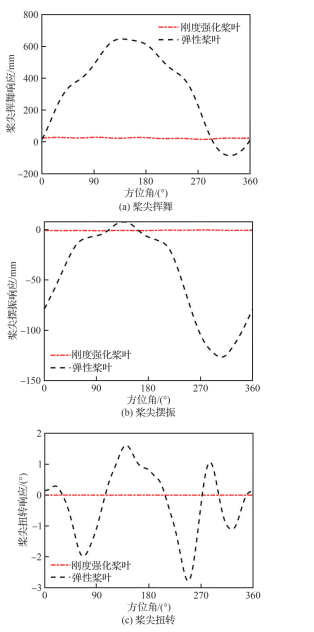
Table 7
Stiffness enhanced blade amplitude-phase sweep cases at single frequency deflection
| 工况 | 偏转频率/rev | 偏转幅值/(°) |
|---|---|---|
| 8 | 3 | 2,4,6 |
| 9 | 4 | 2,4,6 |
| 10 | 5 | 2,4,6 |
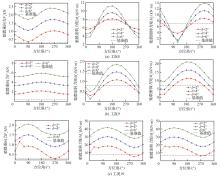
Fig.14
Effect of stiffness enhanced blade single frequency deflection on 4/rev hub vibration
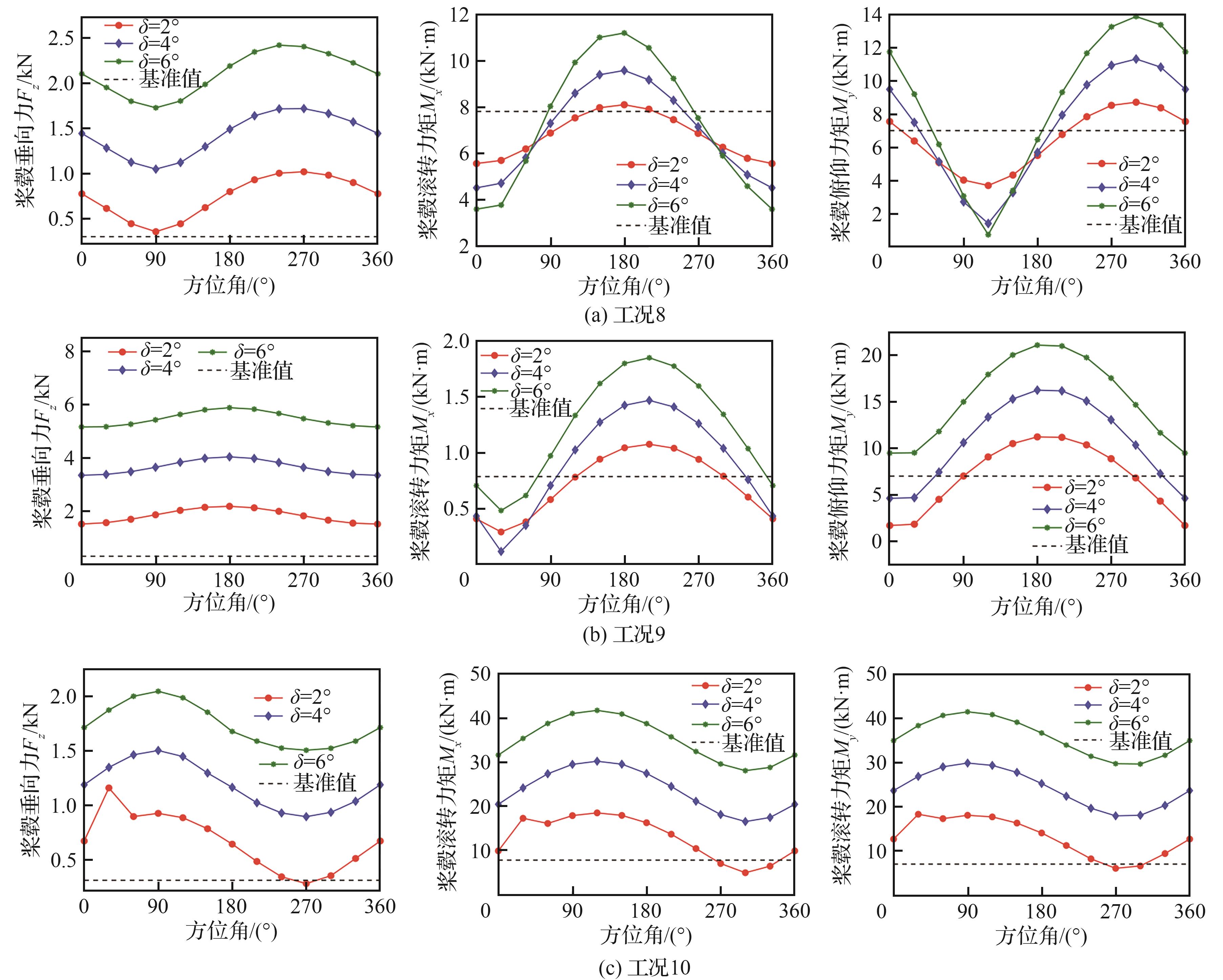
Table 8
Amplitude-phase sweep cases at 4/rev flap deflec tion
| 工况 | 桨叶类型 | 偏转频率/rev | 偏转幅值/(°) |
|---|---|---|---|
| 11 | 挥舞柔软 | 4 | 2,4,6 |
| 12 | 扭转柔软 | 4 | 2,4,6 |
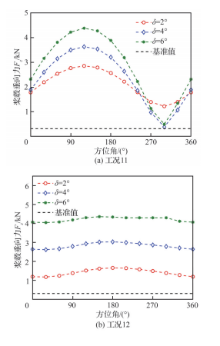
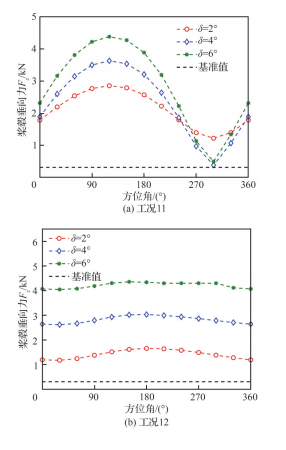
Fig.15
Effect of flap 4/rev deflection on vertical vibration
| [1] | 刘孝辉, 徐新喜, 白松, 等. 军用直升机振动与噪声控制技术[J]. 直升机技术, 2013(1): 67-72. |
| LIU X H, XU X X, BAI S, et al. Vibration and noise control technology on military helicopters[J]. Helicopter Technique, 2013(1): 67-72 (in Chinese). | |
| [2] | 邓景辉, 余智豪, 周云, 等. 复杂三维外形旋翼气弹稳定性分析[J]. 西北工业大学学报, 2023, 41(1): 209-215. |
| DENG J H, YU Z H, ZHOU Y, et al. Aeroelastic stability analysis of rotor with complex three-dimensional shape[J]. Journal of Northwestern Polytechnical University, 2023, 41(1): 209-215 (in Chinese). | |
| [3] | CHOPRA I. Status of application of smart structures technology to rotorcraft systems[J]. Journal of the American Helicopter Society, 2000, 45(4): 228-252. |
| [4] | MILGRAM J, CHOPRA I. Helicopter vibration reduction with trailing edge flaps[C]∥36th Structures, Structural Dynamics and Materials Conference. Reston: AIAA, 1995. |
| [5] | FRIEDMANN P P, DE TERLIZZI M, MYRTLE T F. New developments in vibration reduction with actively controlled trailing edge flaps[J]. Mathematical and Computer Modelling, 2001, 33(10-11): 1055-1083. |
| [6] | ROGET B, CHOPRA I. Wind-tunnel testing of rotor with individually controlled trailing-edge flaps for vibration reduction[J]. Journal of Aircraft, 2008, 45(3): 868-879. |
| [7] | KODAKKATTU S K, JOY M L, PRABHAKARAN NAIR K. Vibration reduction of helicopter with trailing-edge flaps at various flying conditions[J]. Proceedings of the Institution of Mechanical Engineers, Part G: Journal of Aerospace Engineering, 2017, 231(4): 770-784. |
| [8] | FRIEDMANN P P, MILLOTT T A. Vibration reduction in rotorcraft using active control-A comparison of various approaches[J]. Journal of Guidance, Control, and Dynamics, 1995, 18(4): 664-673. |
| [9] | WALZ C, CHOPRA I. Design and testing of a helicopter rotor model with smart trailing edge flaps[C]∥Adaptive Structures Forum. Reston: AIAA, 1994. |
| [10] | SPENCER B T, CHOPRA I. Design and testing of a helicopter trailing edge flap with piezoelectric stack actuators[C]∥Smart Structures and Materials 1996: Smart Structures and Integrated Systems. 1996, 2717: 120-131. |
| [11] | LEE T, CHOPRA I. Design of piezostack-driven trailing-edge flap actuator for helicopter rotors[J]. Smart Materials and Structures, 2001, 10(1): 15-24. |
| [12] | FULTON M V, ORMISTON R A. Hover testing of a small-scale rotor with on-blade elevons[J]. Journal of the American Helicopter Society, 2001, 46: 96-106. |
| [13] | FULTON M V, ORMISTON R A. Small-scale rotor experiments with on-blade elevons to reduce blade vibratory loads in forward flight[C]∥Proceedings of the 54th Annual Forum of the American Helicopter Society. 1998: 433-451. |
| [14] | HALL S R, TZIANETOPOULOU T, STRAUB F K, et al. Design and testing of a double X-frame piezoelectric actuator[J]. Smart Structures and Materials 2000: Smart Structures and Integrated Systems, 2000, 3985: 26. |
| [15] | STRAUB F K, KENNEDY D K, STEMPLE A D, et al. Development and whirl tower test of the SMART active flap rotor[C]∥Smart Structures and Materials 2004: Industrial and Commercial Applications of Smart Structures Technologies. 2004, 5388: 202. |
| [16] | LAU B H, STRAUB F, ANAND V R, et al. SMART rotor development and wind-tunnel test[C]∥35th European Rotorcraft Forum. 2009. |
| [17] | JÄNKER P, HERMLE F, LORKOWSKI T, et al. Development and evaluation of advanced flap control technology utilizing piezoelectric actuators[C]∥25th European Rotorcraft Forum. 1999: 14-16. |
| [18] | ENENKL B, KLÖPPEL V, PREIßLER D, et al. Full scale rotor with piezoelectric actuated blade flaps[C]∥28th European Rotorcraft Forum. 2002: 17-19. |
| [19] | ROTH D, ENENKL B, DIETERICH O. Active rotor control by flaps for vibration reduction-full scale demonstrator and first flight test results[C]∥32th European Rotorcraft Forum. 2006: 12-14. |
| [20] | DIETERICH O, ENENKL B, ROTH D. Trailing edge flaps for active rotor control aeroelastic characteristics of the ADASYS rotor system[C]∥62th Annual Forum of the American Helicopter Society. 2006. |
| [21] | 张柱, 杨卫东.基于双X驱动机构的智能旋翼模型试验[J].直升机技术, 2007(3): 88-91. |
| ZHANG Z, YANG W D. Test of smart rotor model based on the double-X actuator[J]. Helicopter Tech- nique, 2007(3):88-91 (in Chinese). | |
| [22] | 周金龙, 董凌华, 杨卫东, 等. 基于加权最小二乘法辨识的后缘襟翼智能旋翼振动载荷闭环控制仿真研究[J]. 振动与冲击, 2019, 38(4): 237-244. |
| ZHOU J L, DONG L H, et al. Closed-loop vibration control simulation of a helicopter active rotor with trailing-edge flaps based on the weighted-least-squares-error identification method [J]. Journal of Vibration and Shock, 2019, 38(4): 237-244 (in Chinese). | |
| [23] | 周子宣, 田嘉劲, 唐敏, 等. 主动后缘襟翼对旋翼桨毂振动载荷控制的机理与风洞试验[J]. 机械工程学报, 2023, 59(14): 254-263. |
| ZHOU Z X, TIAN J J, TANG M, et al. Mechanism and wind tunnel experiment of active controlled flap on vibration load control of rotor hub[J]. Journal of Mechanical Engineering, 2023, 59(14): 254-263 (in Chinese). | |
| [24] | 朱棣文, 胡和平. ACF旋翼主动控制技术的现状与发展[J]. 科技与创新, 2024(1): 15-18. |
| ZHU D W, HU H P. State of the art and prospectives of active control technology for smart rotor [J]. Science and Technology & Innovation, 2024(1): 15-18 (in Chinese). | |
| [25] | 王华龙, 张夏阳, 赵国庆, 等. 基于CFD/CSD耦合的TEF旋翼气弹特性高精度模拟[J]. 航空学报, 2024, 45(18): 229904. |
| WANG H L, ZHANG X Y, ZHAO G Q, et al. High-precision simulation of aeroelastic characteristics of TEF rotor based on CFD/CSD coupling[J]. Acta Aeronautica et Astronautica Sinica, 2024, 45(18): 229904 (in Chinese). | |
| [26] | 谭剑锋, 孙义鸣, 王浩文, 等.共轴刚性双旋翼非定常气动干扰载荷分析[J].北京航空航天大学学报, 2018, 44(1): 50-62. |
| TAN J F, SUN Y M, WANG H W, et al. Analysis of rigid coaxial rotor unsteady interactional aerodynamic loads[J]. Journal of Beijing University of Aeronautics and Astronautics, 2018, 44(1): 50-62 (in Chinese). | |
| [27] | KRZYSIAK A, NARKIEWICZ J. Aerodynamic loads on airfoil with trailing-edge flap pitching with different frequencies[J]. Journal of Aircraft, 2006, 43(2): 407-418. |
| [28] | PETERSON, RANDALL L. Full-scale hingeless rotor performance and loads: NASA-TM-110356[R]. Washington, D.C.: NASA, 1995. |
| [1] | Chuanda WANG, Kunjian JIN, Guorui YU, Guoke HUANG, Gang WANG, Haijun PENG. Closed-loop control and experimental study of rotor vibration considering track constraints [J]. Acta Aeronautica et Astronautica Sinica, 2026, 47(2): 232096-232096. |
| [2] | Xin WANG, Xiayang ZHANG, Lixiong ZHENG, Jinwu XIANG. High-efficiency and high-precision aeroelastic full coupling method of rotor [J]. Acta Aeronautica et Astronautica Sinica, 2025, 46(S1): 732161-732161. |
| [3] | Xin WANG, Xiayang ZHANG, Qijun ZHAO, Jinwu XIANG. Aeroelastic loads of rotor during collective pitch ramp increase in hovering state based on VVPM/GEBT coupling method [J]. Acta Aeronautica et Astronautica Sinica, 2025, 46(16): 231628-231628. |
| [4] | Xiping KOU, Kaichun ZENG, Tao MA, Bo LU, Zhichun YANG. Model vibration mechanism and active control in wind tunnel test: Review [J]. Acta Aeronautica et Astronautica Sinica, 2025, 46(1): 30467-030467. |
| [5] | ZENG Kaichun, KOU Xiping, YANG Xinghua, YU Li, ZHA Jun. Optimization of active vibration damping structure for transonic wind tunnel test model [J]. ACTA AERONAUTICAET ASTRONAUTICA SINICA, 2022, 43(2): 224944-224944. |
| [6] | HE Pu, WANG Xiaodong, JI Hongli, QIU Jinhao, CHENG Li. Full-band vibration control of box-type structure with acoustic black hole [J]. ACTA AERONAUTICAET ASTRONAUTICA SINICA, 2020, 41(4): 223350-223350. |
| [7] | ZHOU Jinlong, DONG Linghua, YANG Weidong. Hysteresis modeling and suppression of piezoelectric actuator for helicopter trailing-edge flaps [J]. ACTA AERONAUTICAET ASTRONAUTICA SINICA, 2020, 41(4): 223384-223384. |
| [8] | WEN Zhuoqun, WANG Pengfei, ZHANG Yan, JIANG Yanfen. Vibration reduction technology of mechanical metamaterials presented to large scale structures [J]. ACTA AERONAUTICAET ASTRONAUTICA SINICA, 2018, 39(S1): 721651-721651. |
| [9] | MA Yiyang, ZHAO Qijun. Control mechanism and parameter analyses of aerodynamic characteristics of rotor via trailing-edge flap [J]. ACTA AERONAUTICAET ASTRONAUTICA SINICA, 2018, 39(5): 121671-121671. |
| [10] | WANG Enmei, WU Shu'nan, WANG Xiaoming, WU Zhigang. Distributed vibration control for large satellite solar panels [J]. ACTA AERONAUTICAET ASTRONAUTICA SINICA, 2018, 39(1): 221479-221479. |
| [11] | MA Yiyang, ZHAO Qijun, ZHAO Guoqing. Dynamic stall control of rotor airfoil via trailing-edge flap [J]. ACTA AERONAUTICAET ASTRONAUTICA SINICA, 2017, 38(3): 120312-120312. |
| [12] | MENG Han, HUANG Hai, HUANG Zhou. Multi-degree-of-freedom non-Gaussian random vibration control [J]. ACTA AERONAUTICAET ASTRONAUTICA SINICA, 2017, 38(2): 220458-220465. |
| [13] | LU Weishuang, TIAN Yun, LIU Peiqing, WANG Tao, ZHANG Liangfu. Aerodynamic performance of GAW-1 airfoil leading-edge and trailing-edge variable camber [J]. ACTA AERONAUTICAET ASTRONAUTICA SINICA, 2016, 37(2): 437-450. |
| [14] | WANG Rong, ZHANG Hongjun, WANG Guidong, CHEN Guangqiang, BAI Peng, ZHANG Zhenming, LI Xiaodong, FU Jianming. Multidisciplinary integrated design optimization for an airbreathing air-to-air missile shape [J]. ACTA AERONAUTICAET ASTRONAUTICA SINICA, 2016, 37(1): 207-215. |
| [15] | MENG Guang, ZHOU Xubin. Progress review of satellite micro-vibration and control [J]. ACTA AERONAUTICAET ASTRONAUTICA SINICA, 2015, 36(8): 2609-2619. |
| Viewed | ||||||
|
Full text |
|
|||||
|
Abstract |
|
|||||
Address: No.238, Baiyan Buiding, Beisihuan Zhonglu Road, Haidian District, Beijing, China
Postal code : 100083
E-mail:hkxb@buaa.edu.cn
Total visits: 6658907 Today visits: 1341All copyright © editorial office of Chinese Journal of Aeronautics
All copyright © editorial office of Chinese Journal of Aeronautics
Total visits: 6658907 Today visits: 1341

 CJA
CJA
