Acta Aeronautica et Astronautica Sinica ›› 2026, Vol. 47 ›› Issue (5): 132394.doi: 10.7527/S1000-6893.2025.32394
• Fluid Mechanics and Flight Mechanics • Previous Articles
Liunan LI1, Xiao QU1( ), Yanfeng ZHANG2,3, Xingen LU2,3, Junqiang ZHU2,3
Received:2025-06-09
Revised:2025-07-25
Accepted:2025-08-25
Online:2025-09-08
Published:2025-09-05
Contact:
Xiao QU
E-mail:quxiao@bit.edu.cn
Supported by:CLC Number:
Liunan LI, Xiao QU, Yanfeng ZHANG, Xingen LU, Junqiang ZHU. Effect of end zone boundary layer skew on secondary flow in high-lift turbine[J]. Acta Aeronautica et Astronautica Sinica, 2026, 47(5): 132394.
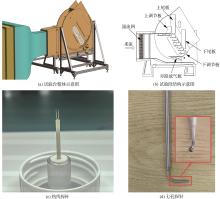
Fig.1
Schematic diagram of test rig
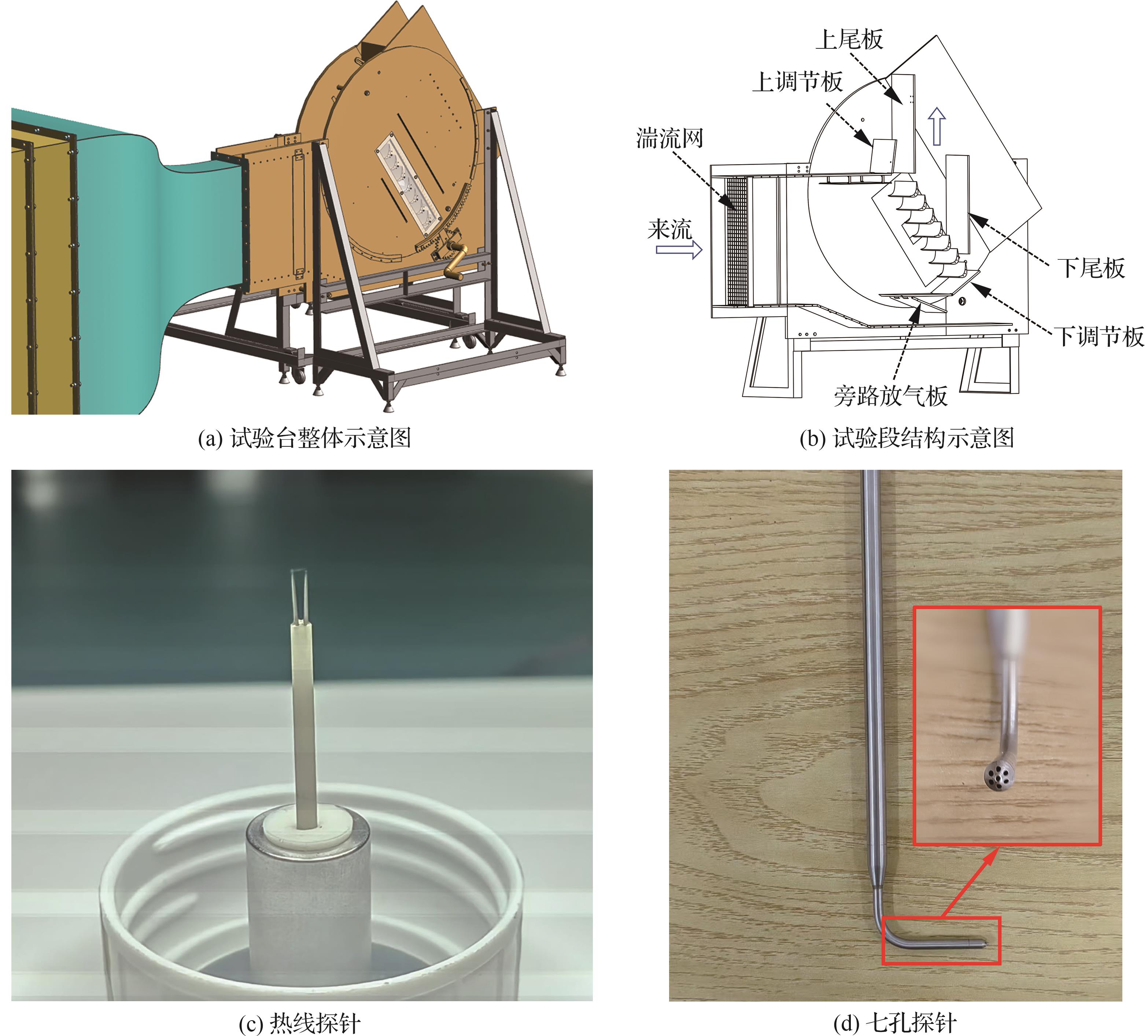
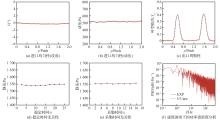
Fig.2
Experimental measurement results at the inlet and outlet positions
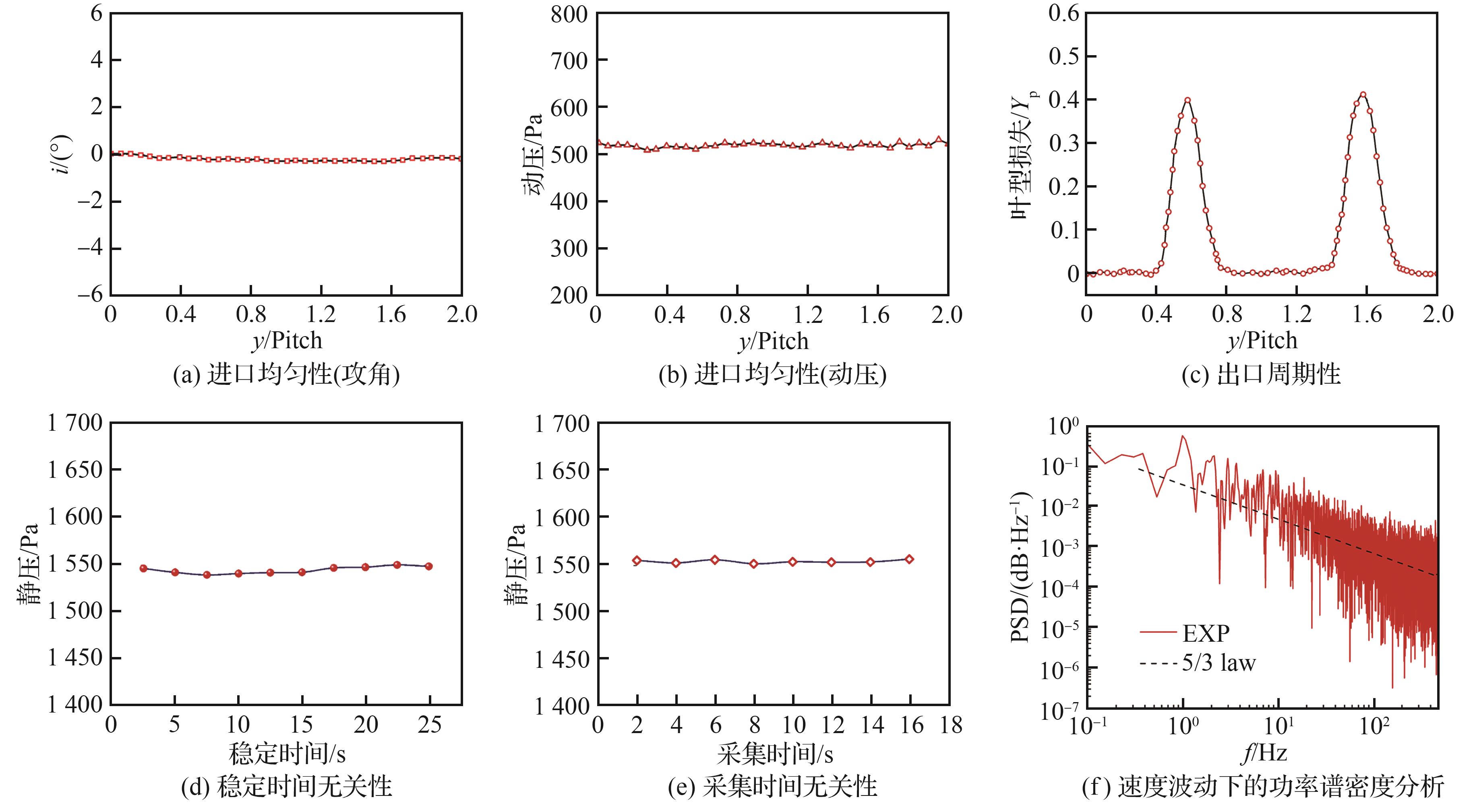
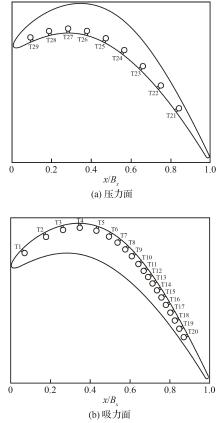
Fig.3
Distribution of static pressure holes on blade surface
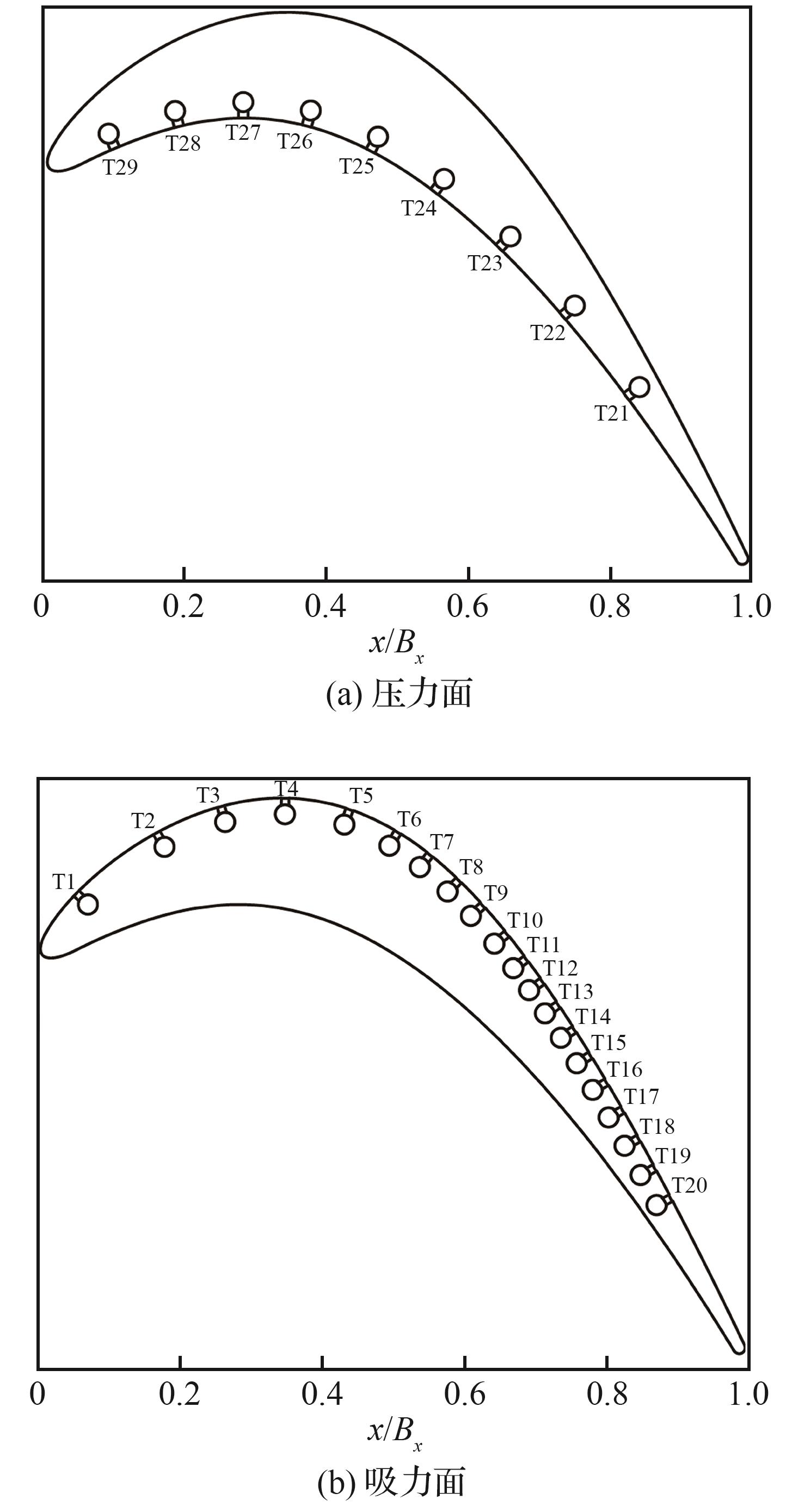

Table 1
Main parameters of blade
| 叶型参数 | 数值 |
|---|---|
| 弦长/mm | 86.2 |
| 轴向弦长/mm | 75.4 |
| 栅距/mm | 66.8 |
| 叶高/mm | 200 |
| 几何进气角/(°) | 40.5 |
| 几何出气角/(°) | 61.3 |
| 载荷系数(Zw) | 1.1 |
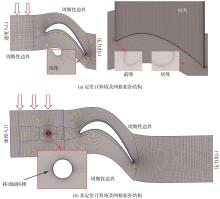
Fig.4
Computational domain model and mesh topology structure
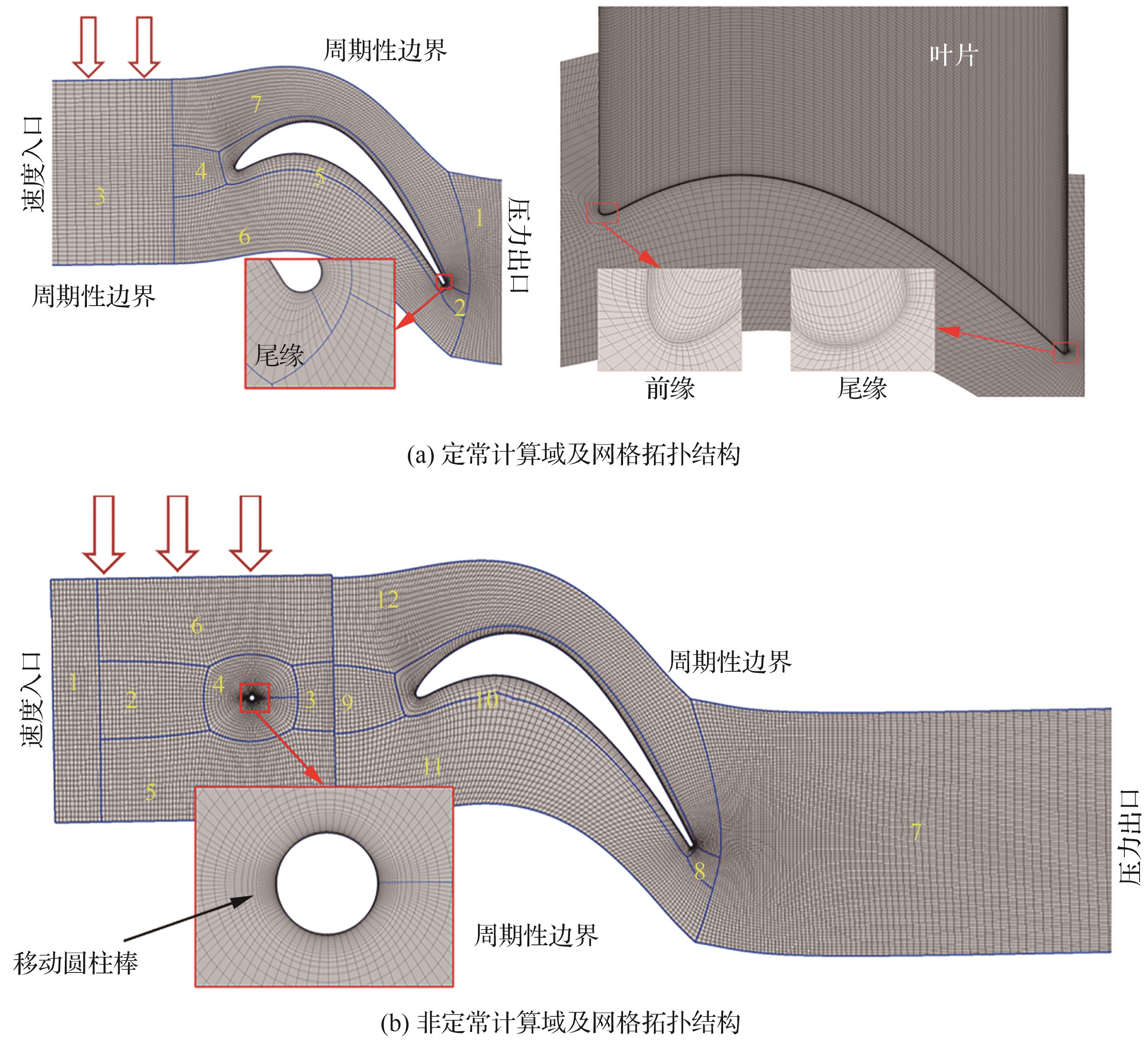
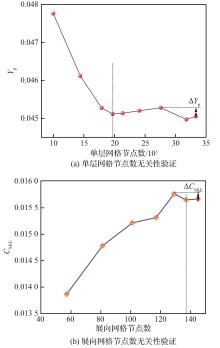
Fig.5
Analysis of grid independence
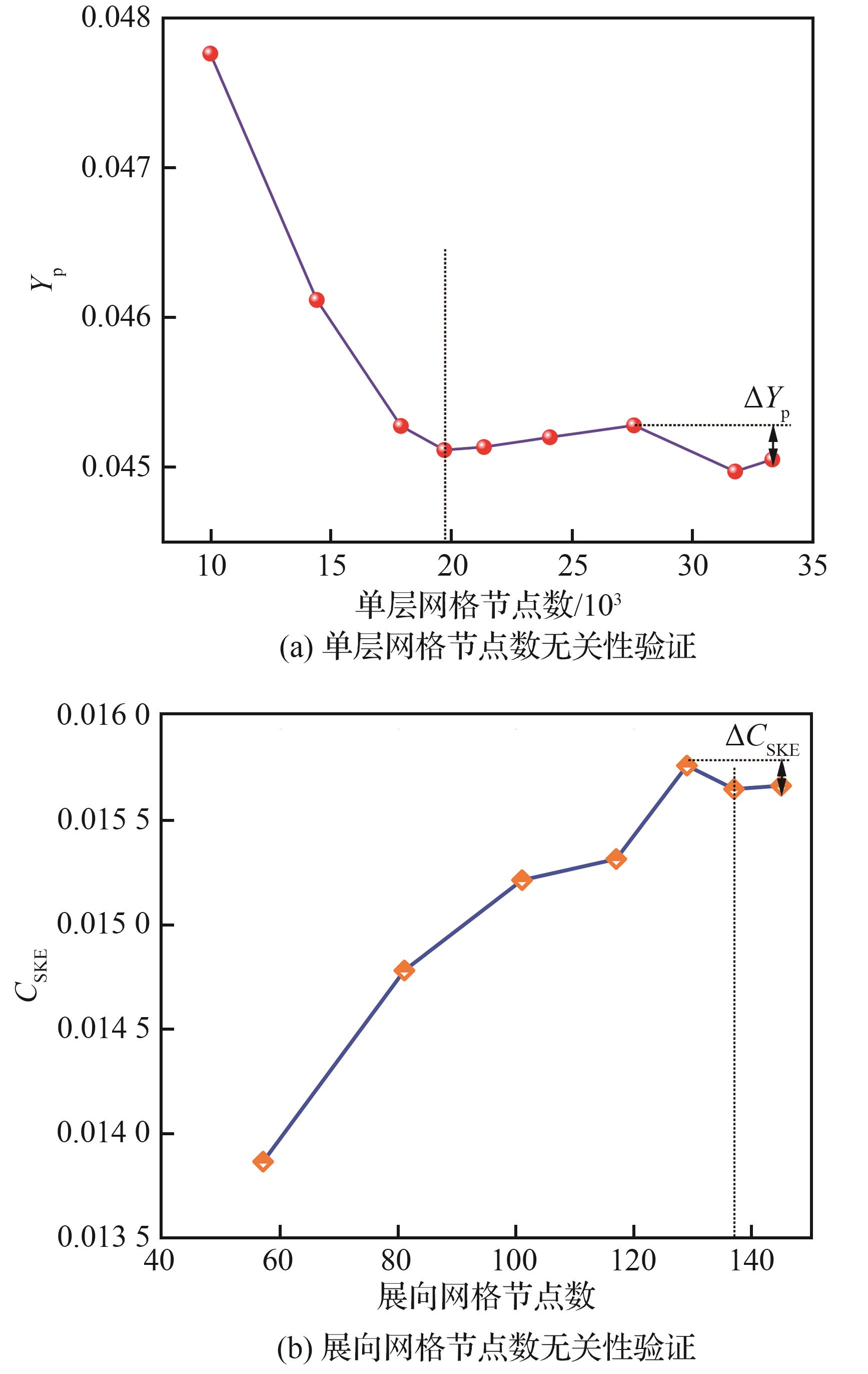
Table 2
Grid node parameters of computational domain
| 块 | 网格节点数 | |
|---|---|---|
| 定常计算域 | 非定常计算域 | |
| 1 | 97×77 | 49×13 |
| 2 | 17×17 | 17×29 |
| 3 | 49×37 | 17×13 |
| 4 | 17×17 | 49×97 |
| 5 | 17×289 | 17×73 |
| 6 | 17×121 | 17×73 |
| 7 | 17×185 | 93×85 |
| 8 | 17×17 | |
| 9 | 17×17 | |
| 10 | 17×261 | |
| 11 | 17×109 | |
| 12 | 17×169 | |
| Total | 19 975 | 26 232 |
| Y | 0. 502 | 0.456 |
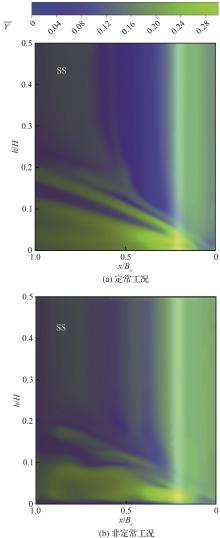
Fig.6
Distribution of Y+¯ along suction surface of blade
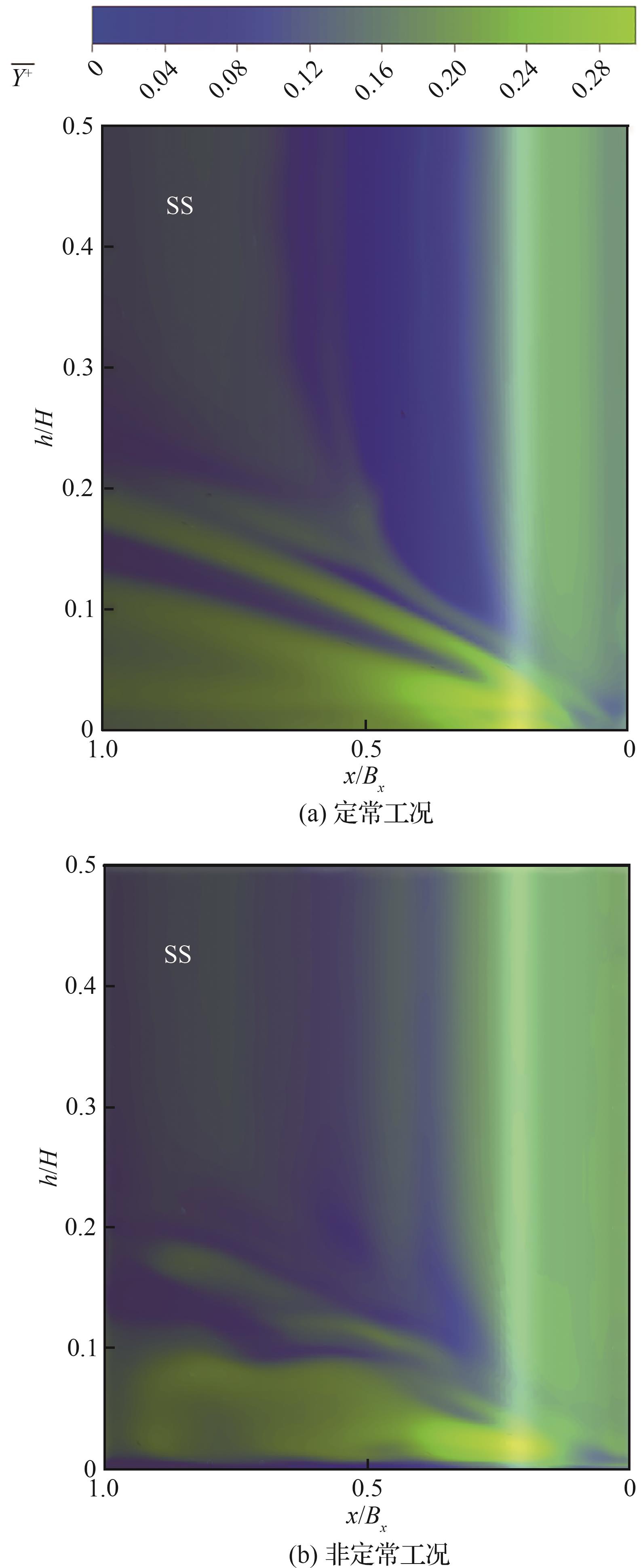
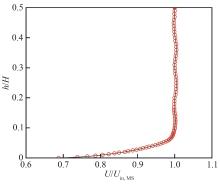
Fig.7
Inlet velocity distribution of blade along spanwise direction
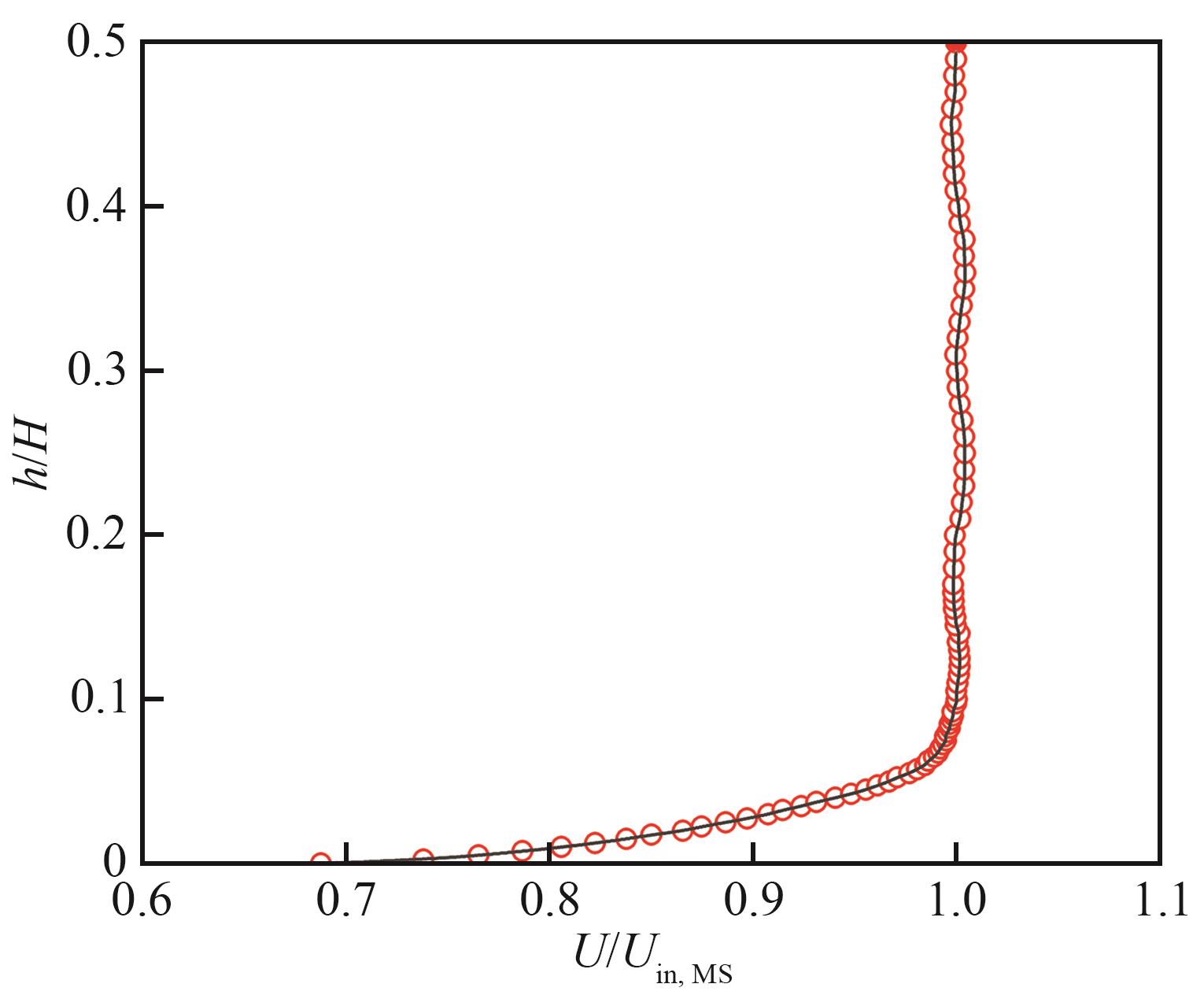
Table 3
Independence verification of time step
| 物理时间步 | 时间步长/(10-5 s) | 叶型损失Yp | 绝对误差ΔYp |
|---|---|---|---|
| 30 | 9.08 | 0.041 160 | |
| 50 | 5.45 | 0.044 318 | 3.16×10⁻³ |
| 60 | 4.54 | 0.045 116 | 7.98×10⁻⁴ |
| 80 | 3.41 | 0.045 244 | 1.28×10⁻⁴ |
| 100 | 2.73 | 0.044 798 | -4.46×10⁻⁴ |
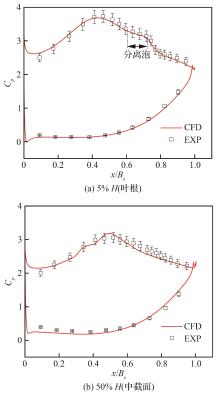
Fig.8
Comparison of static pressure coefficient distribution of blade by experiment and CFD (Baseline)
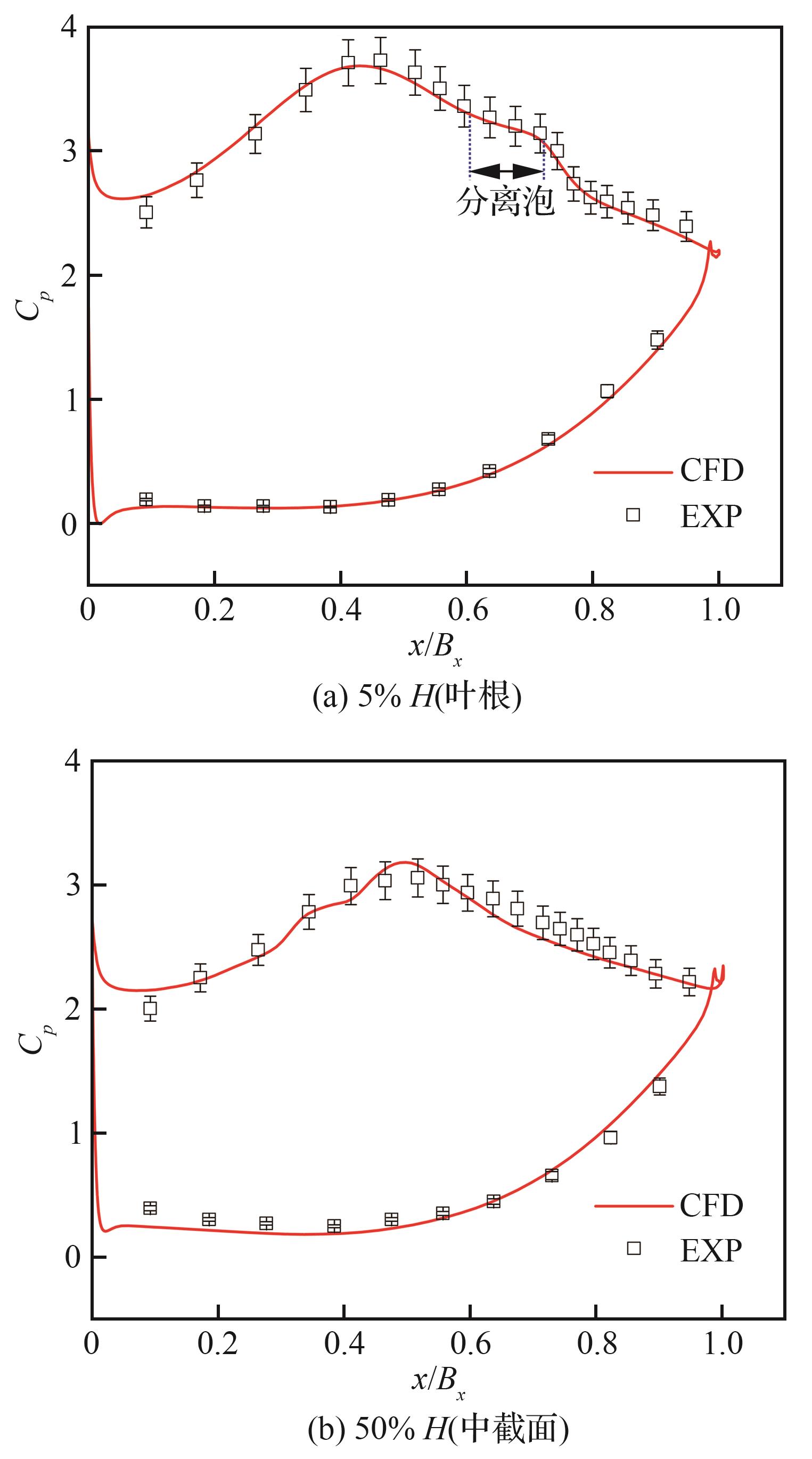
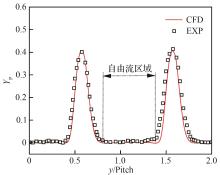
Fig.9
Comparison of blade profile loss distribution at cascade exit by experiment and CFD (at midspan)
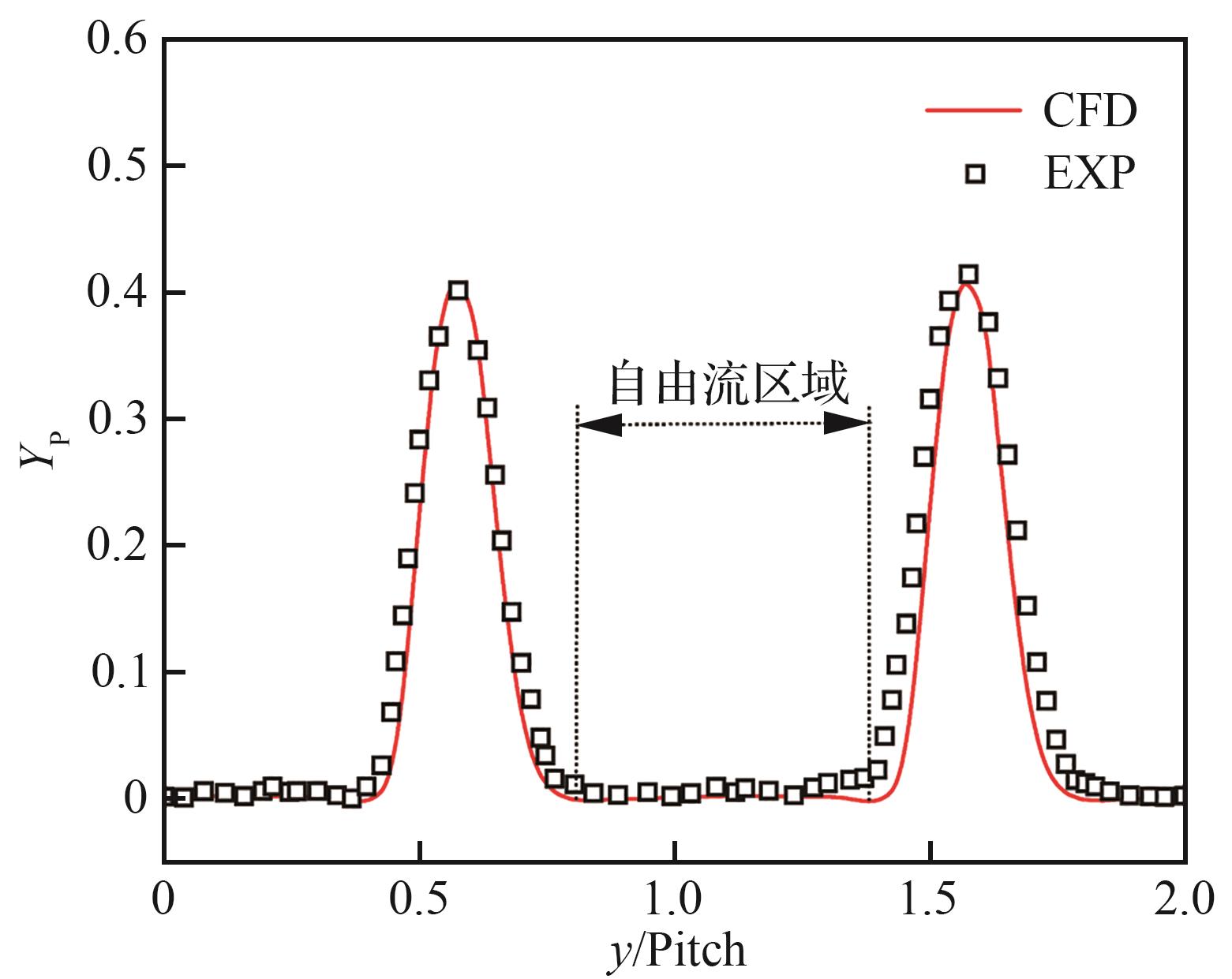
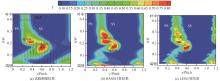
Fig.10
Comparison of contour maps for total pressure loss by experiment and CFD
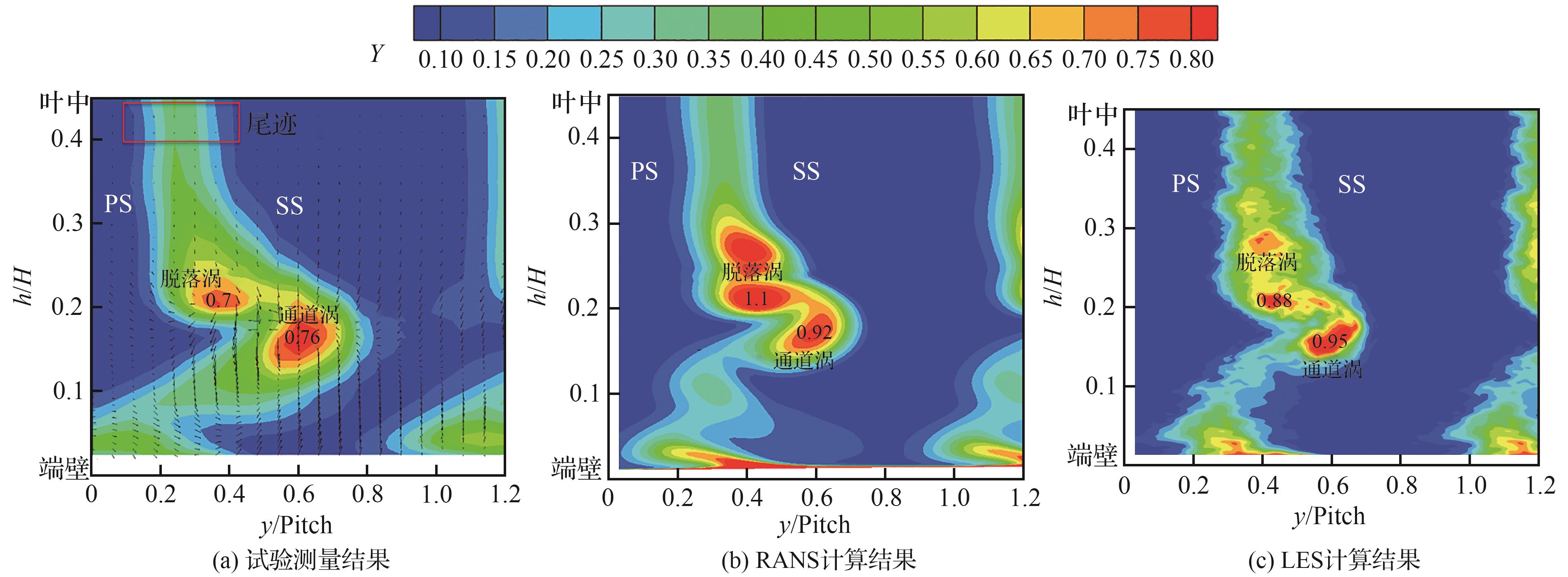
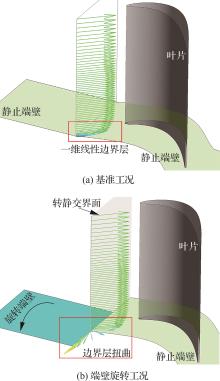
Fig.11
Inlet velocity vector along radial direction (CFD)
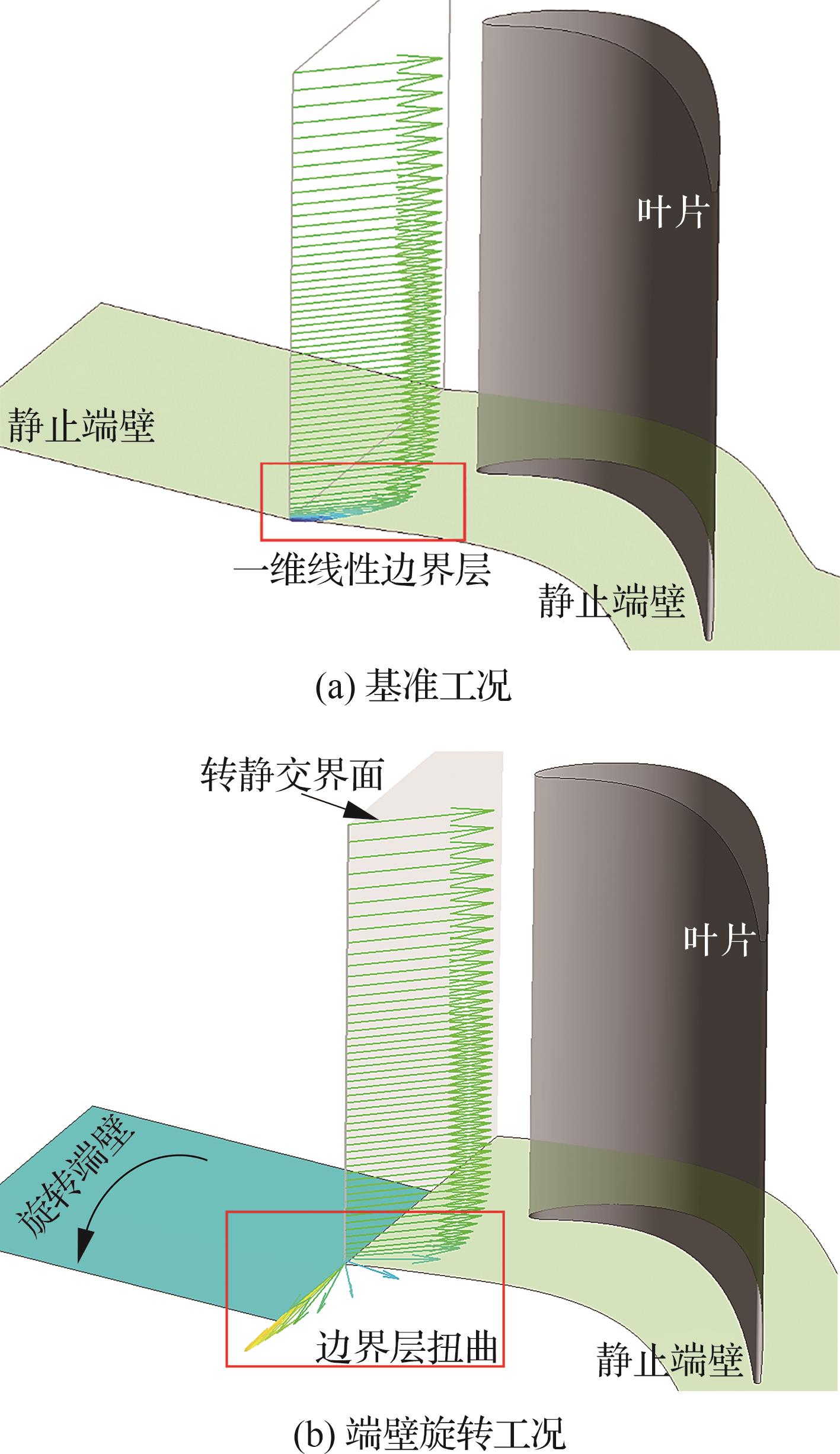
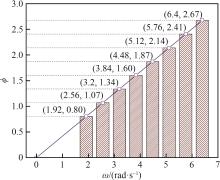
Fig.12
Distribution of skew coefficient at midspan in the inlet (CFD)
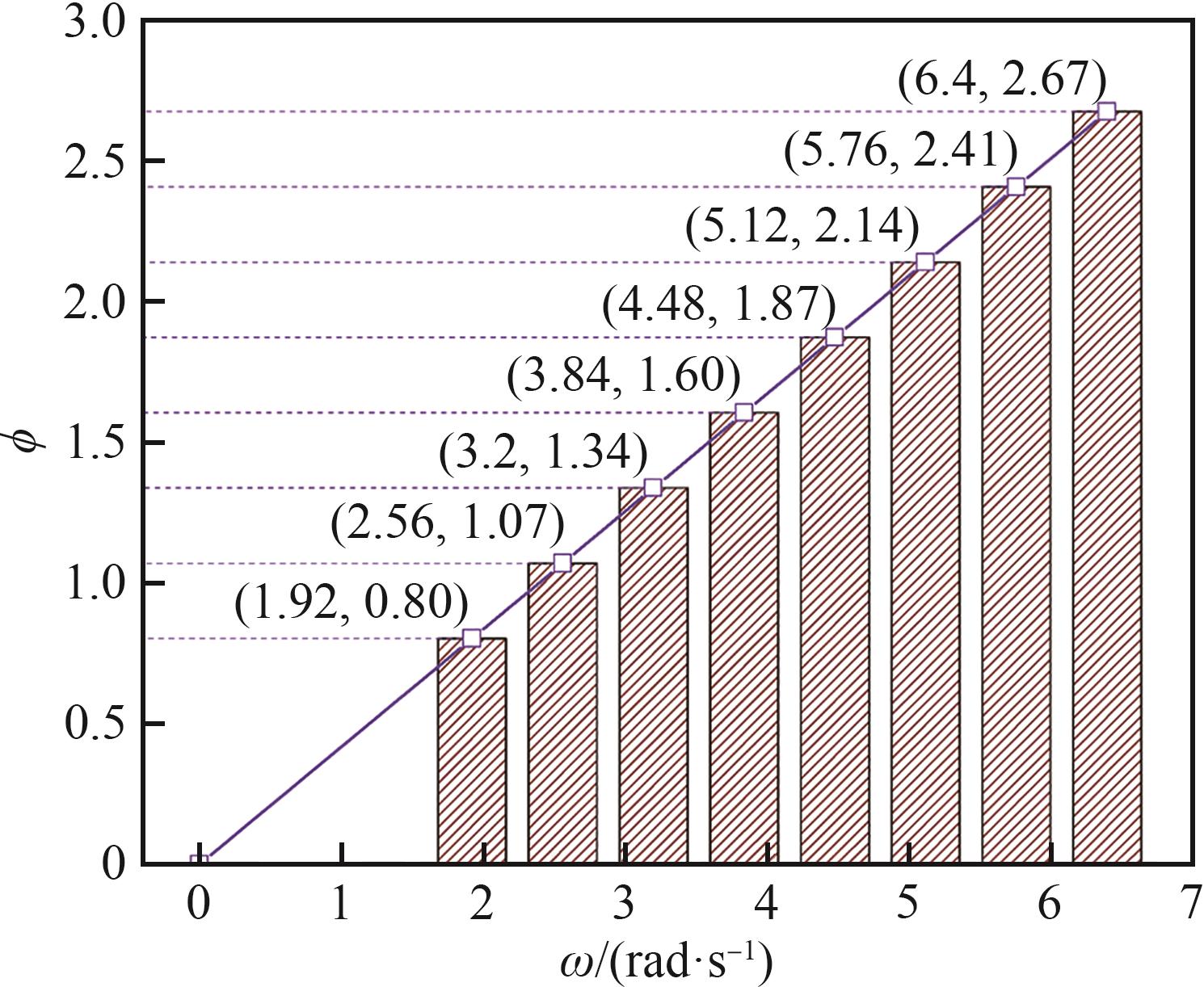
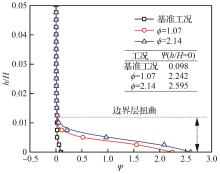
Fig.13
Spanwise distribution of boundary layer skew (CFD)
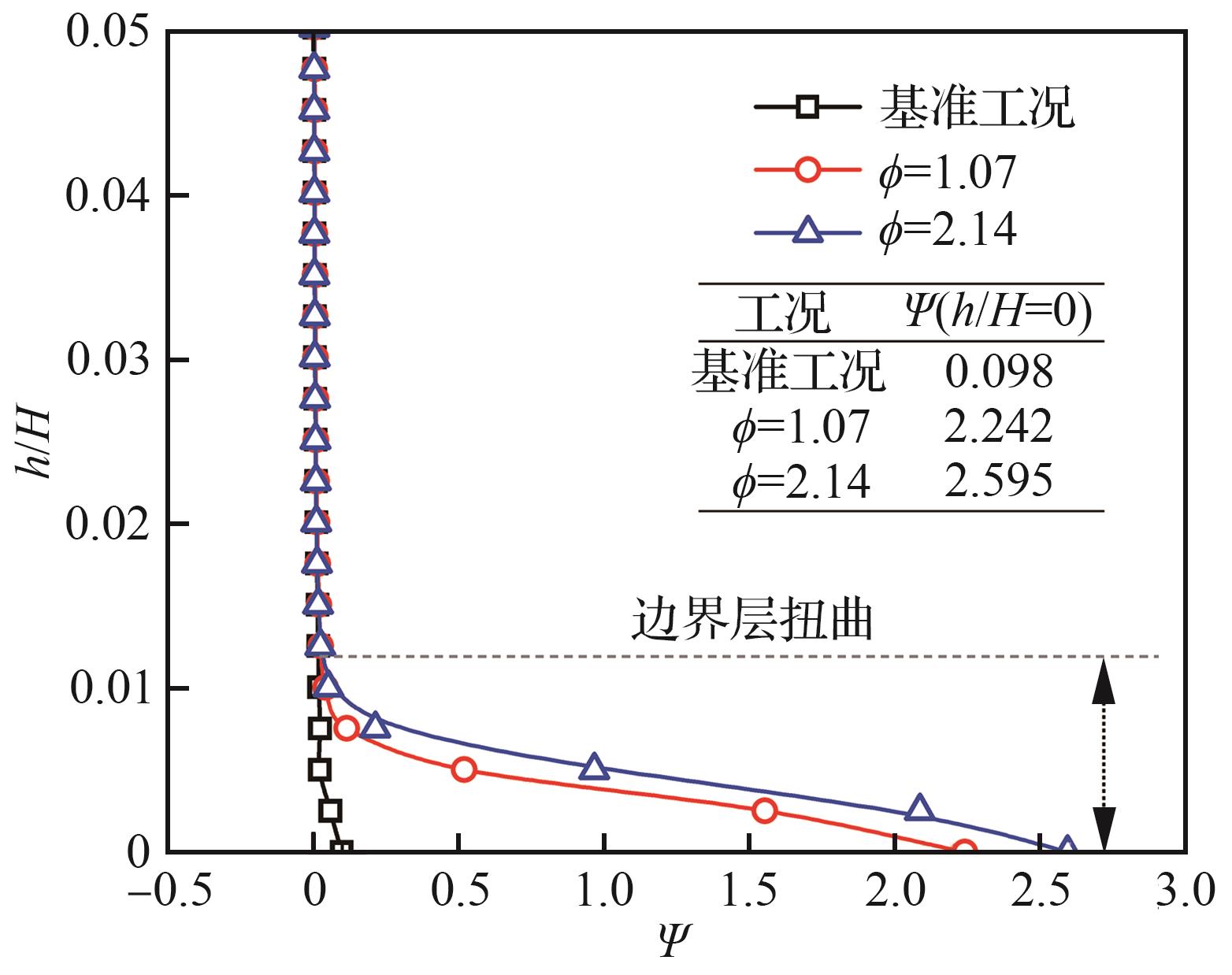
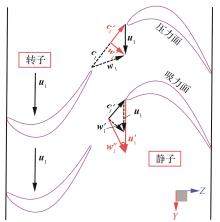
Fig.14
Velocity triangle analysis of cascade leading-edge inlet
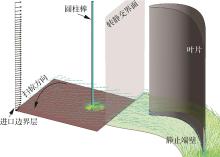
Fig.15
Computational domain model under wake sweeping (CFD)
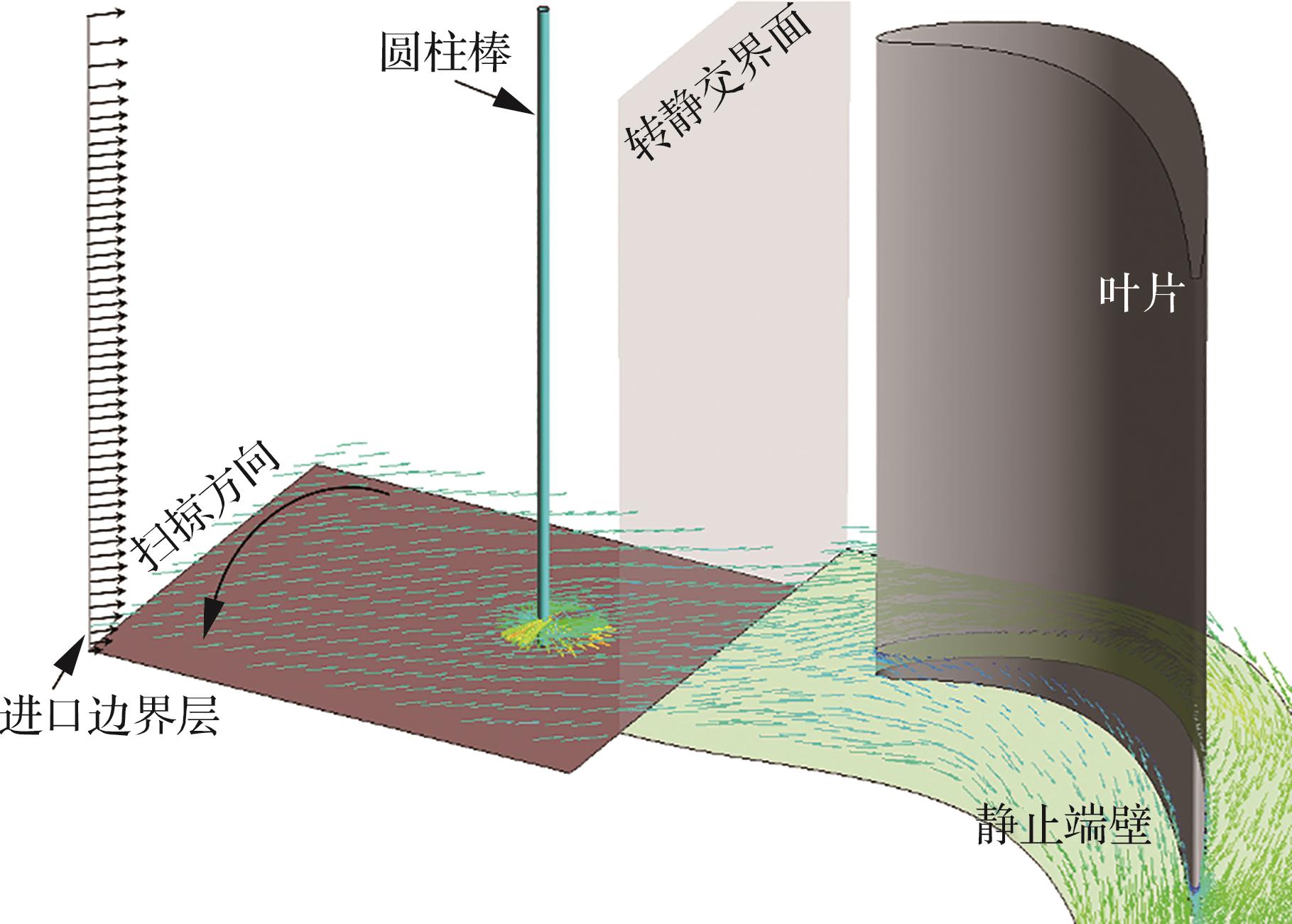
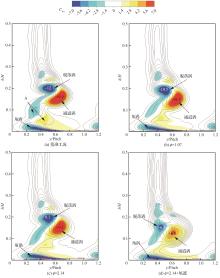
Fig.16
Contour maps for total pressure loss coefficient and streamwise vorticity coefficient at cascade exit (CFD)
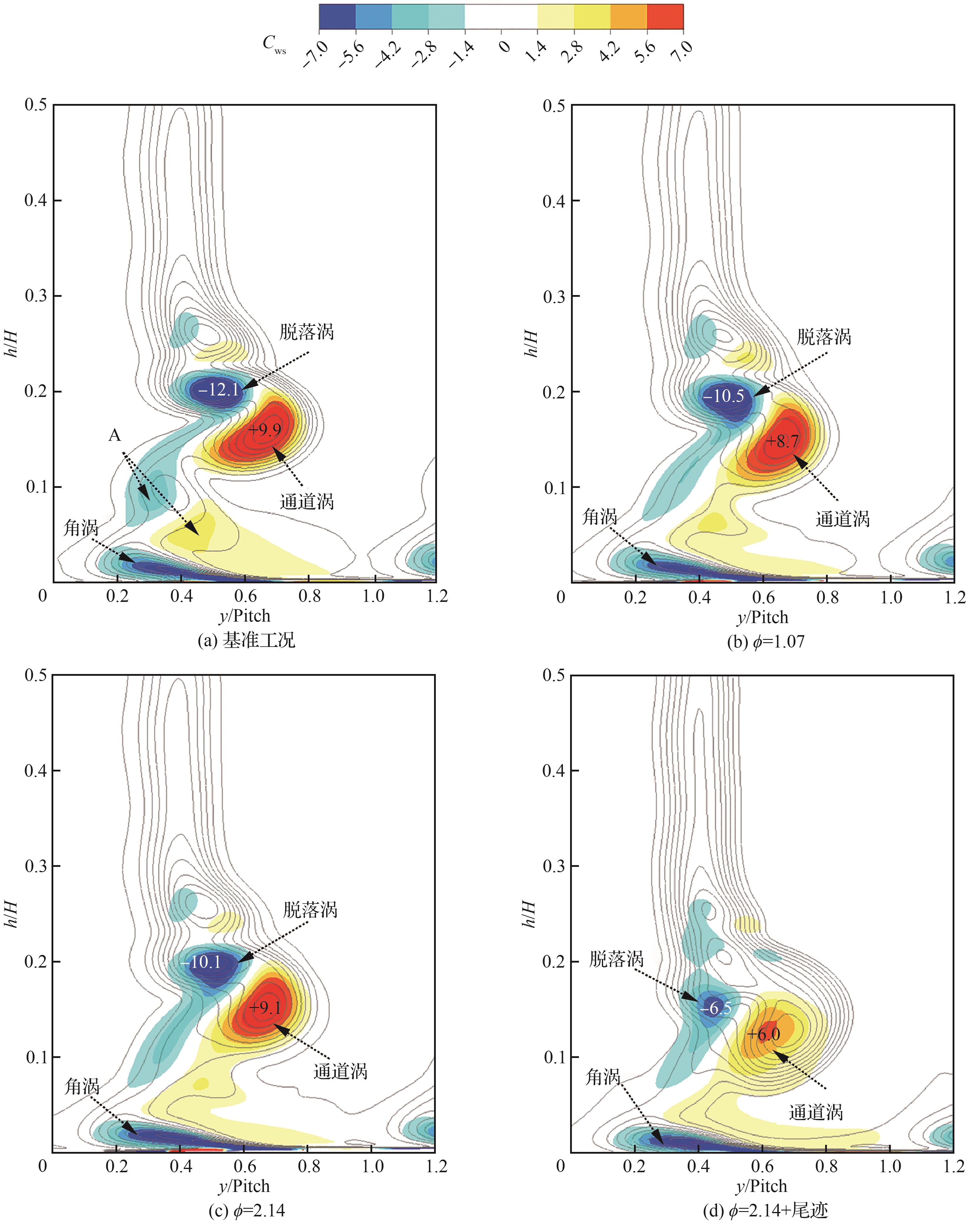
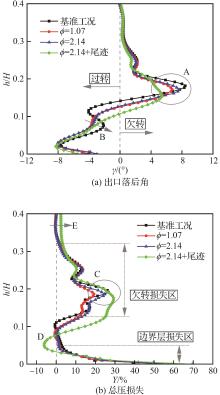
Fig.17
Spanwise distribution of outlet deviation angle and total pressure loss at cascade exit (CFD)
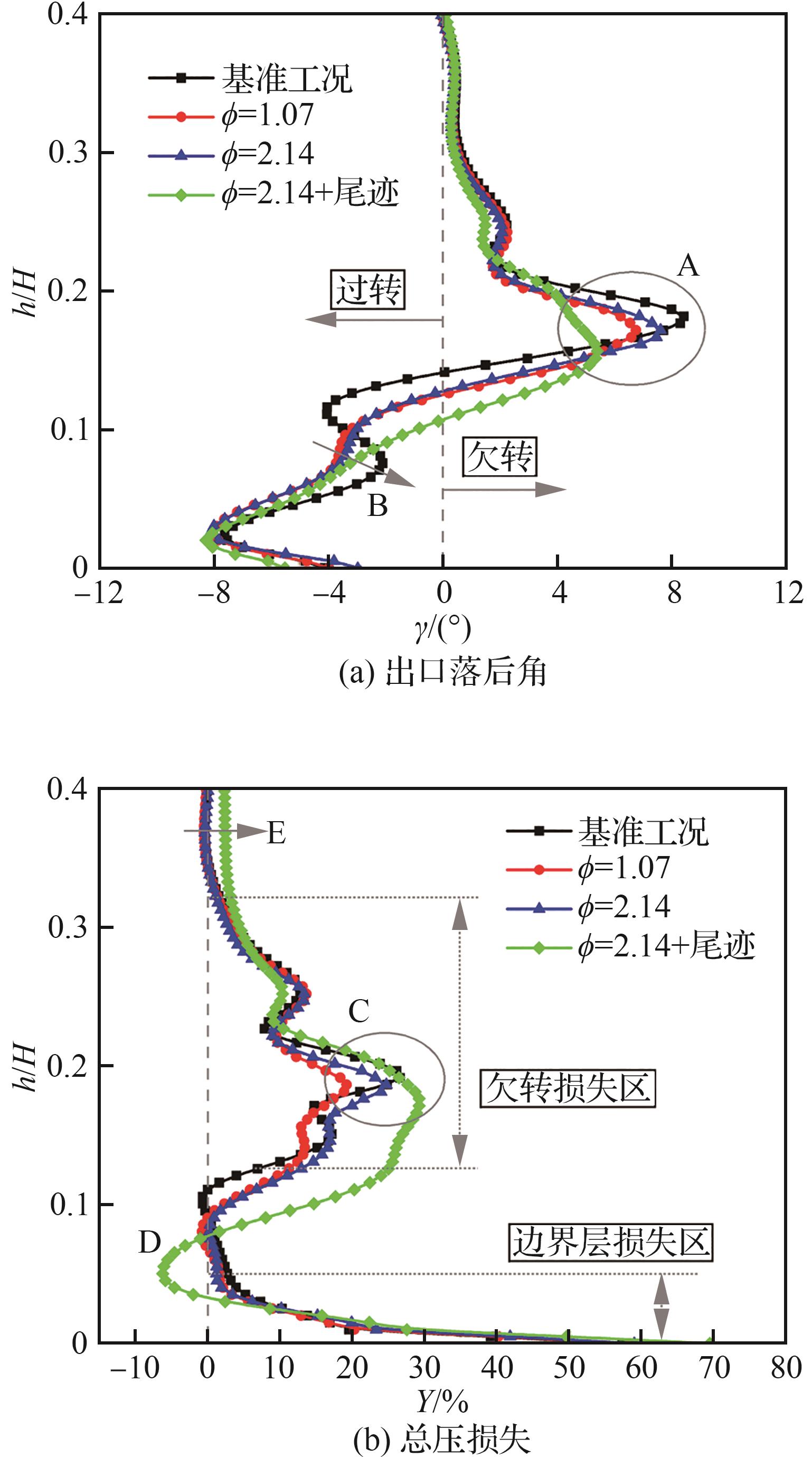
Table 4
Variation law of total pressure loss at cascade exit (CFD)
| 工况 | Y | ΔY/% |
|---|---|---|
| 基准工况 | 0.116 | |
| ϕ=1.07 | 0.112 | -3.45 |
| ϕ=1.34 | 0.114 | 1.78 |
| ϕ=1.60 | 0.117 | 2.63 |
| ϕ=2.14 | 0.119 | 1.71 |
| ϕ=2.14+尾迹 | 0.131 | 10.08 |
Table 5
Inlet boundary layer parameters of blade leading edge (CFD)
| 参数 | 基准 工况 | ϕ=1.07 | ϕ=2.14 | ϕ=2.14+尾迹 |
|---|---|---|---|---|
| 边界层厚度/mm | 20.6 | 23.7 | 24.9 | 21.3 |
| 位移厚度/mm | 2.27 | 2.31 | 2.44 | 2.07 |
| 动量厚度/mm | 1.49 | 1.71 | 1.78 | 1.49 |
| 形状因子 | 1.52 | 1.35 | 1.37 | 1.39 |
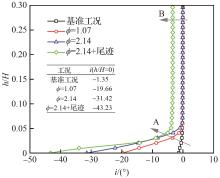
Fig.18
Spanwise distribution of inlet angle of attack at the leading edge of cascade (CFD)
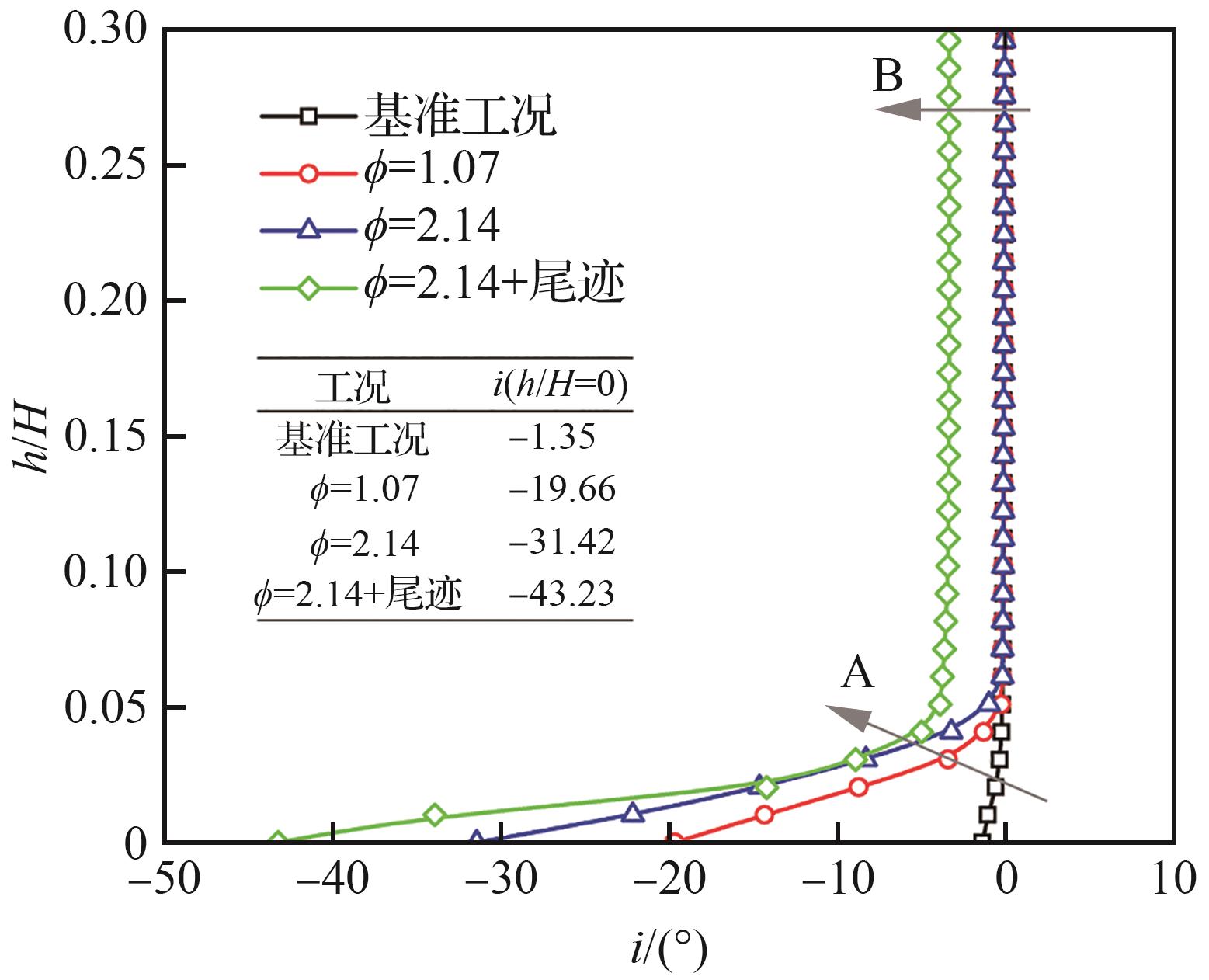
Fig.19
Total pressure loss and 3D streamline distribution in cascade passage (CFD)
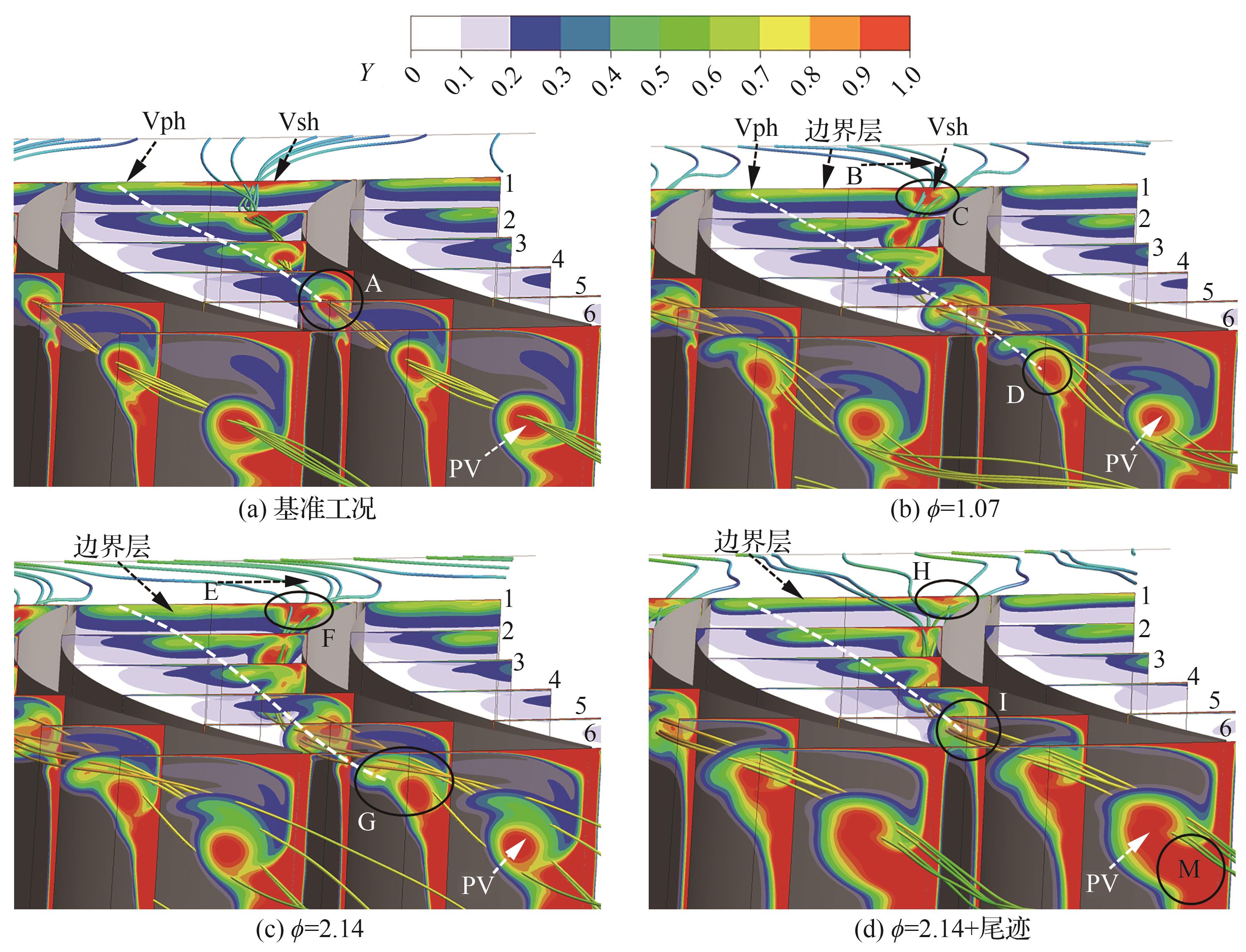
Fig.20
Pressure distribution on the blade surface in the near end zone (5%H,CFD)
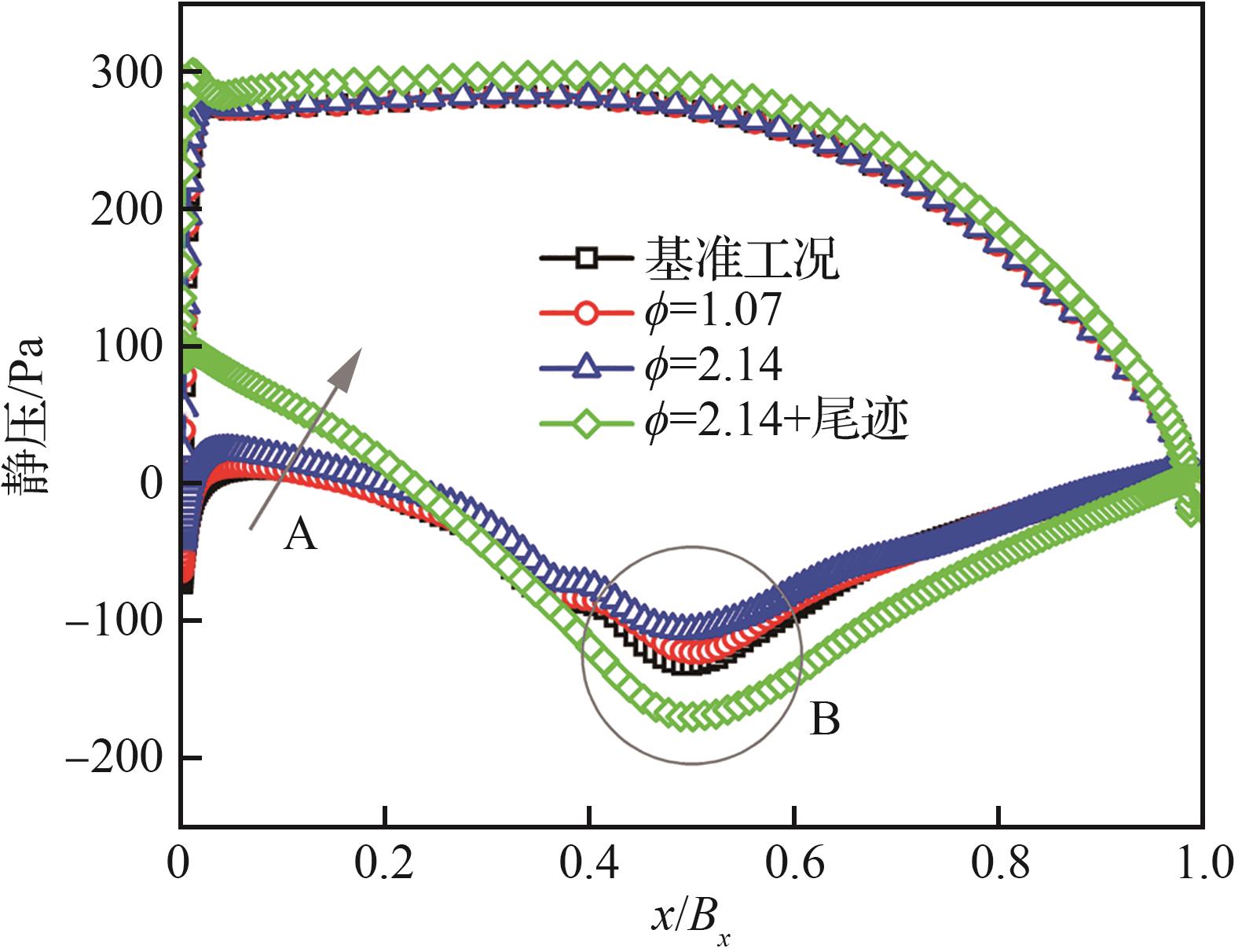
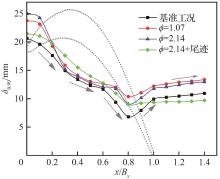
Fig.21
Boundary layer thickness distribution within the cascade passage (CFD)
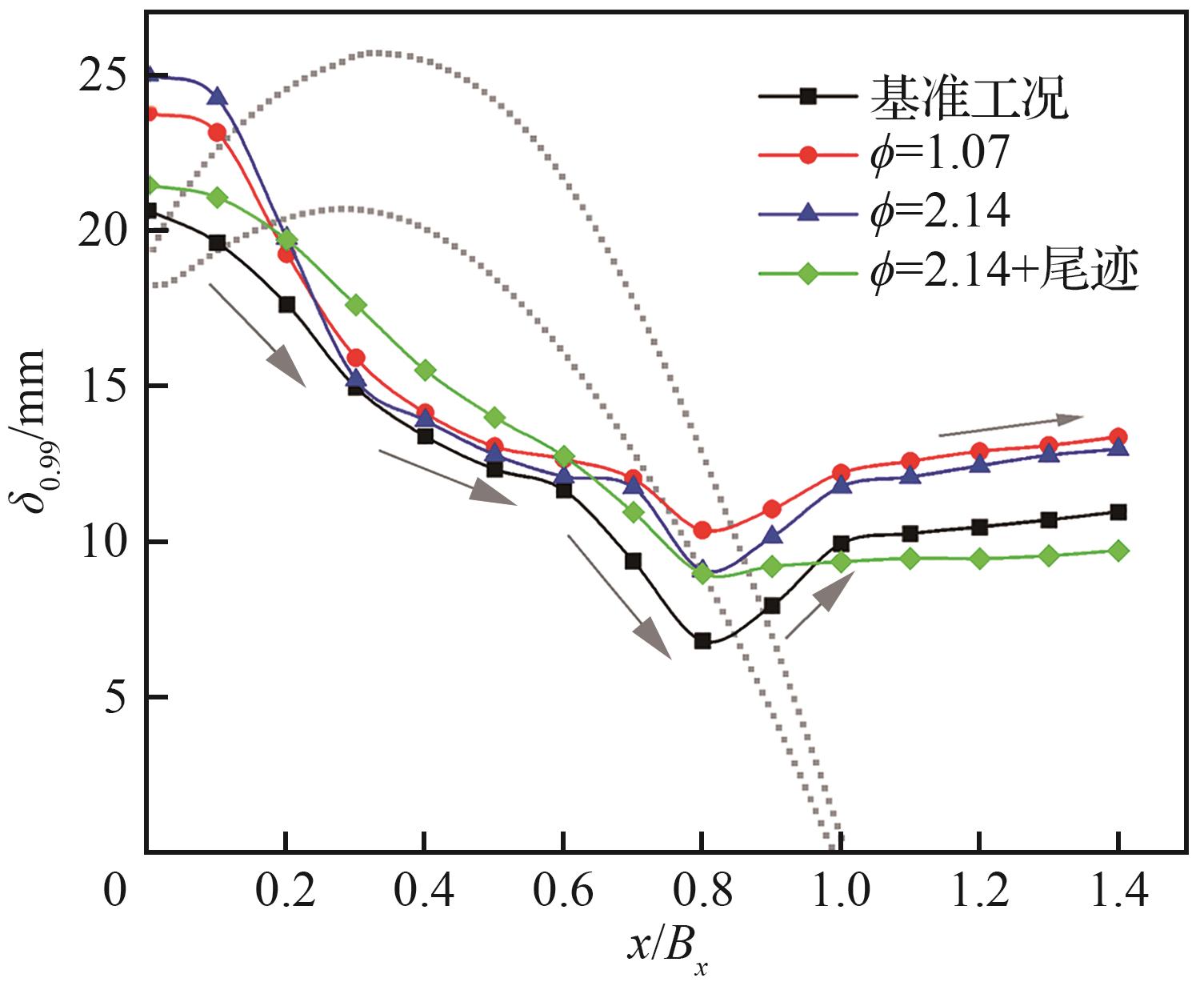
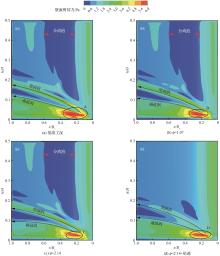
Fig.22
Contour maps for wall shear stress at blade suction surface (CFD)
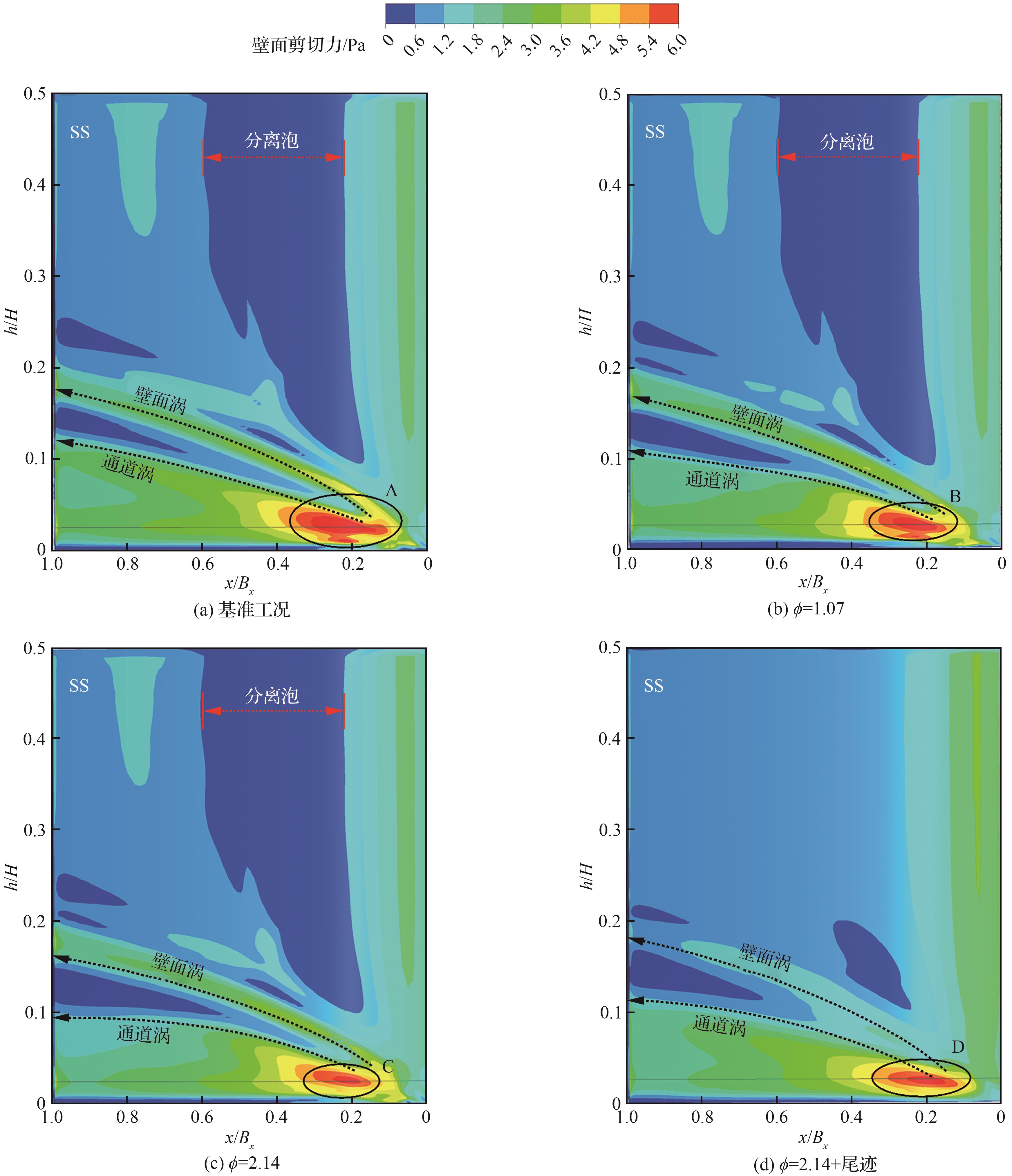
Fig.23
Distribution of endwall vortex structures identified using the Q-criterion (CFD)
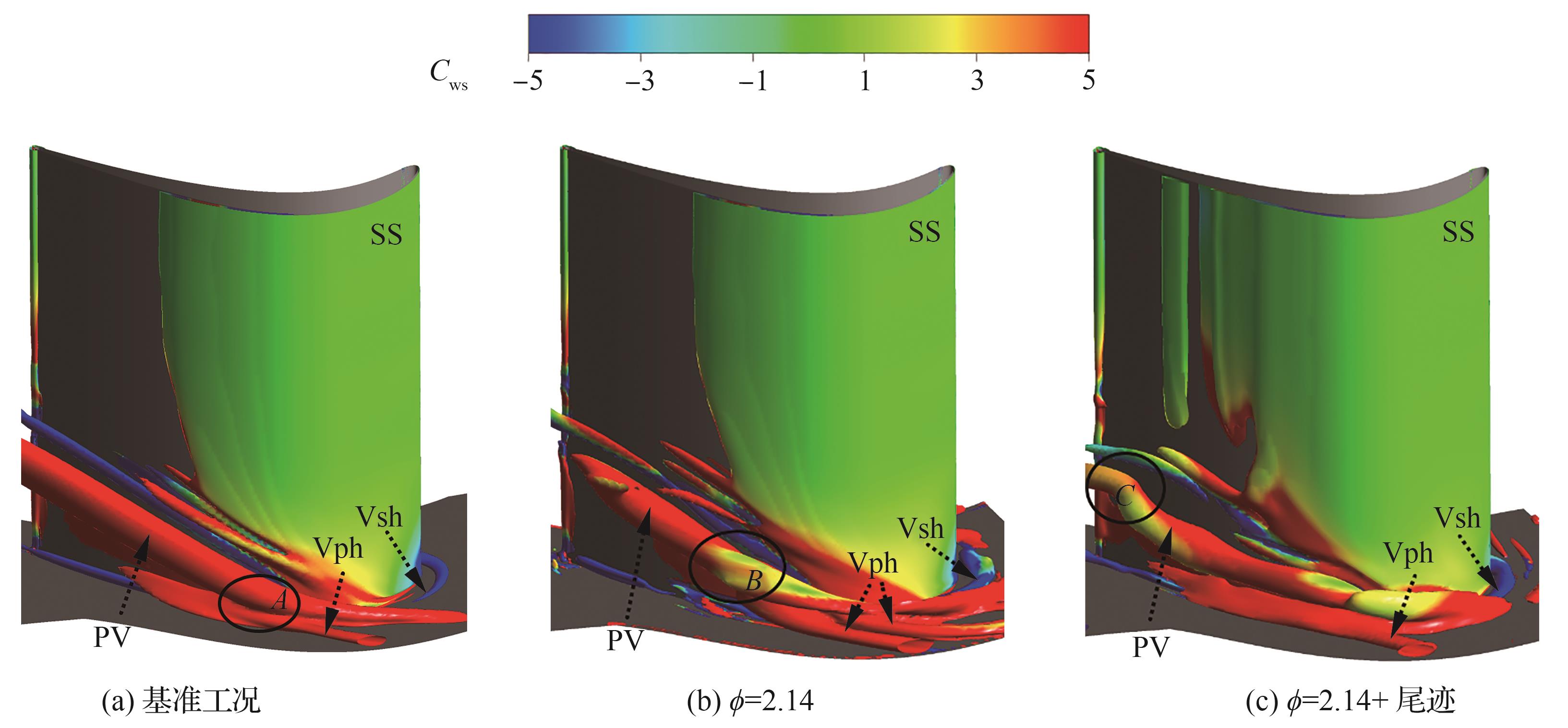
Table 6
Dimensionless locations of probes
| 监测点 | h/Bx | y/Bx | z/Bx |
|---|---|---|---|
| 1 | 0.021 | 0.239 | -0.199 |
| 2 | 0.021 | 0.060 | -0.040 |
| 3 | 0.050 | -0.225 | 0.531 |
| 4 | 0.289 | 0.332 | 0.968 |
Fig.24
Distribution of probes in cascade channel
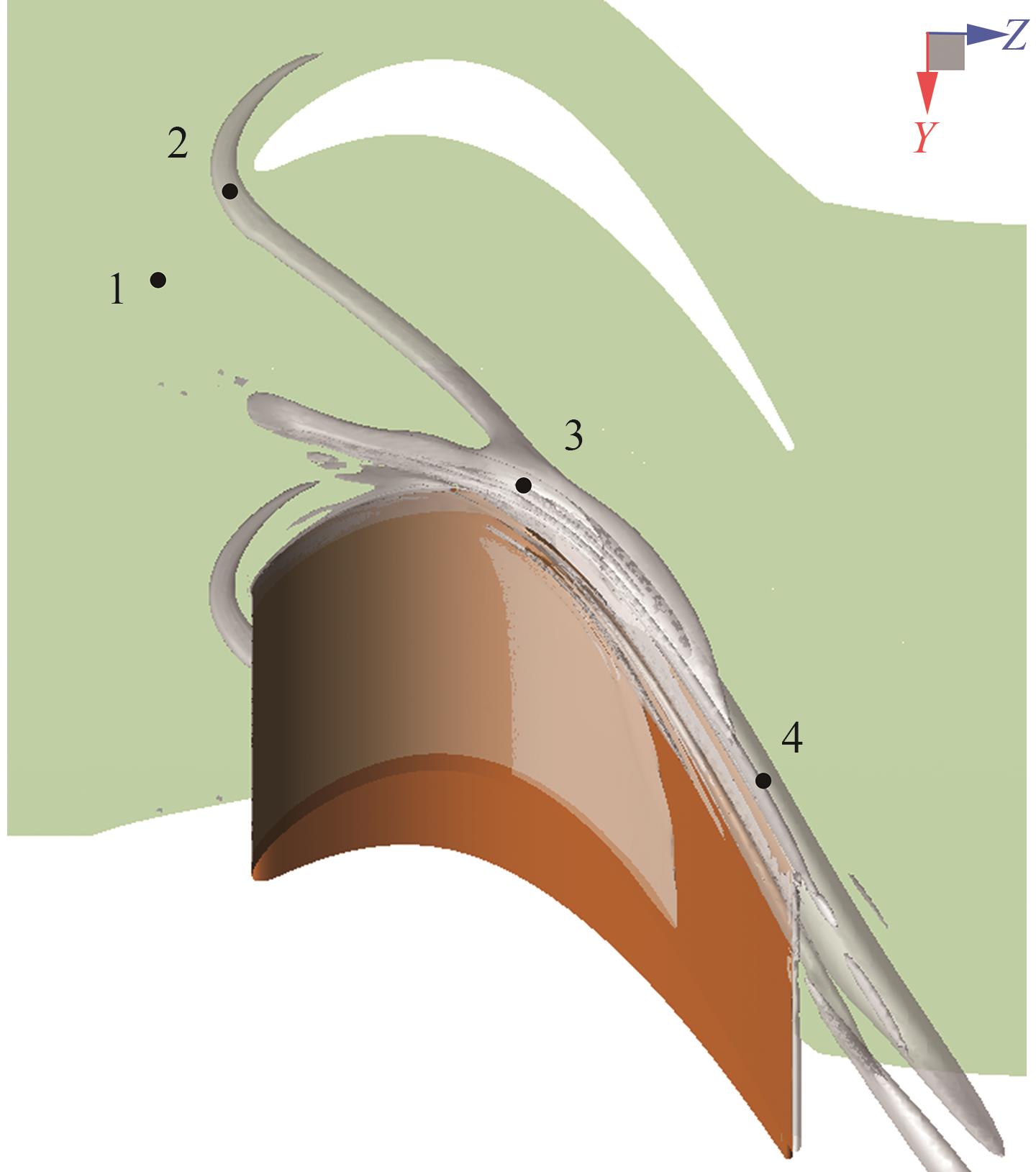
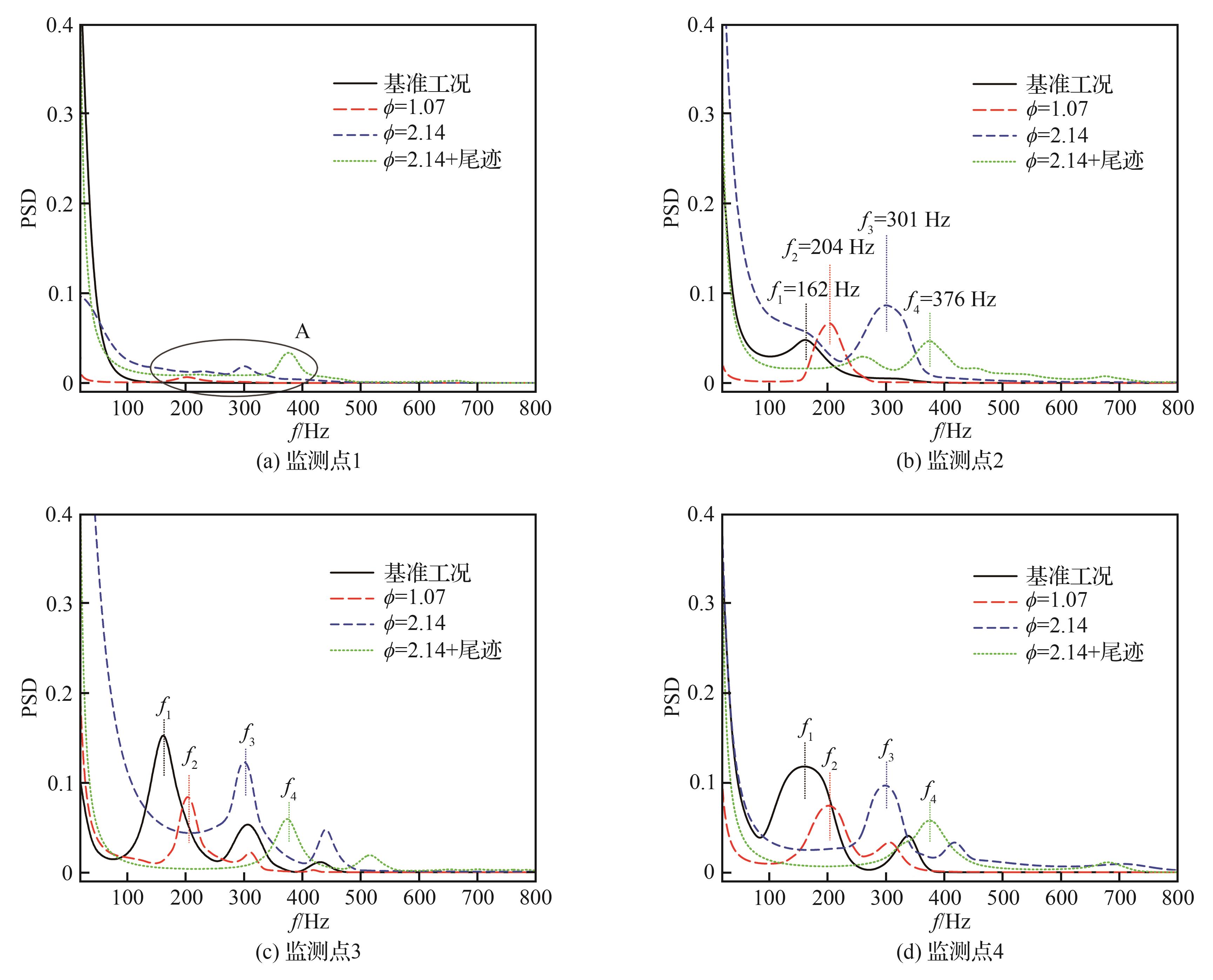
Fig.25
Distribution of dimensionless power spectral density (CFD)
| [1] | HOWELL R J, HODSON H P, SCHULTE V, et al. Boundary layer development in the BR710 and BR715 LP turbines: The implementation of high-lift and ultra-high-lift concepts[J]. Journal of Turbomachinery, 2002, 124(3): 385-392. |
| [2] | CURTIS E M, HODSON H P, BANIEGHBAL M R, et al. Development of blade profiles for low-pressure turbine applications[J]. Journal of Turbomachinery, 1997, 119(3): 531-538. |
| [3] | VOLINO R J, IBRAHIM M B. Separation control on high lift low-pressure turbine airfoils using pulsed vortex generator jets[J]. Applied Thermal Engineering, 2012, 49: 31-40. |
| [4] | ZHANG W H, ZOU Z P, QI L, et al. Effects of freestream turbulence on separated boundary layer in a low-Re high-lift LP turbine blade[J]. Computers & Fluids, 2015, 109: 1-12. |
| [5] | 罗佳奇, 傅文豪, 曾先, 等. 雷诺数对高负荷低压涡轮叶栅流动损失的不确定性影响[J]. 航空学报, 2022, 43(7): 125427. |
| LUO J Q, FU W H, ZENG X, et al. Uncertainty impact of Reynolds number on flow losses of high-lift low-pressure turbine cascade[J]. Acta Aeronautica et Astronautica Sinica, 2022, 43(7): 125427 (in Chinese). | |
| [6] | GREGORY-SMITH D G, CLEAK J G E. Secondary flow measurements in a turbine cascade with high inlet turbulence[J]. Journal of Turbomachinery, 1992, 114(1): 173-183. |
| [7] | QU X, ZHANG Y F, LU X G, et al. Effects of periodic wakes on the endwall secondary flow in high-lift low-pressure turbine cascades at low Reynolds numbers[J]. Proceedings of the Institution of Mechanical Engineers, Part G: Journal of Aerospace Engineering, 2019, 233(1): 354-368. |
| [8] | 朱志豪, 隋秀明, 浦健, 等. 多级无导叶对转涡轮尾迹/激波转转级间非定常干涉对叶片气动载荷的影响[J]. 航空学报, 2024, 45(24): 630582. |
| ZHU Z H, SUI X M, PU J, et al. Aerodynamic load of multistage vaneless counterrotating turbine under wake/shock rotor/rotor interactions[J]. Acta Aeronautica et Astronautica Sinica, 2024, 45(24): 630582 (in Chinese). | |
| [9] | CUI J H, NAGABHUSHANA RAO V, TUCKER P. Numerical investigation of contrasting flow physics in different zones of a high-lift low-pressure turbine blade[J]. Journal of Turbomachinery, 2016, 138: 011003. |
| [10] | 刘俊, 杨党国, 王显圣, 等. 湍流边界层厚度对三维空腔流动的影响[J]. 航空学报, 2016, 37(2): 475-483. |
| LIU J, YANG D G, WANG X S, et al. Effect of turbulent boundary layer thickness on a three-dimensional cavity flow[J]. Acta Aeronautica et Astronautica Sinica, 2016, 37(2): 475-483 (in Chinese). | |
| [11] | GLOERFELT X, CINNELLA P. High-fidelity investigation of vortex shedding from a highly loaded turbine blade[J]. Journal of Turbomachinery, 2025, 147(9): 091009. |
| [12] | LEGGETT J, ZHAO Y M, SANDBERG R D. High-fidelity simulation study of the unsteady flow effects on high-pressure turbine blade performance[J]. Journal of Turbomachinery, 2023, 145(1): 011002. |
| [13] | MOORE R W, RICHARDSON D L. Skewed boundary-layer flow near the end walls of a compressor cascade[J]. Journal of Fluids Engineering, 1957, 79(8): 1789-1797. |
| [14] | CARRICK H B. Secondary flows and losses in turbine cascades with inlet skew[D]. Cambridge: University of Cambridge, 1975. |
| [15] | BINDON J P. The effect of hub inlet boundary layer skewing on the endwall shear flow in an annular turbine cascade[R].New York: ASME, 1979. |
| [16] | WALSH J A, GREGORY-SMITH D G. Inlet skew and the growth of secondary losses and vorticity in a turbine cascade[J]. Journal of Turbomachinery, 1990, 112(4): 633-642. |
| [17] | WALSH J A. Flows and inlet skew in axial flow turbine cascades[D]. Durham: Durham University, 1987. |
| [18] | DEMARGNE A A J, LONGLEY J P. The aerodynamic interaction of stator shroud leakage and mainstream flows in compressors[R]. New York: ASME, 2000. |
| [19] | BÖHLE M, STARK U. A numerical investigation of the effect of end-wall boundary layer skew on the aerodynamic performance of a low aspect ratio, high turning compressor cascade[R]. New York: ASME, 2009: 555-564. |
| [20] | LI X J, CHU W L, WU Y H. Numerical investigation of inlet boundary layer skew in axial-flow compressor cascade and the corresponding non-axisymmetric end wall profiling[J]. Proceedings of the Institution of Mechanical Engineers, Part A: Journal of Power and Energy, 2014, 228(6): 638-656. |
| [21] | BLANCO D L R. Secondary flows in low-pressure turbines[D]. Cambridge: Cambridge University Engineering Department, 2004. |
| [22] | GHOSH K, GOLDSTEIN R J. Effect of inlet skew on heat/mass transfer from a simulated turbine blade[J]. Journal of Turbomachinery, 2012, 134(5): 051042. |
| [23] | HILGERT M, BOHLE M. A CFD-based investigation of boundary layer skew in the hub region of a low speed axial compressor and its influence on performance and losses[R]. New York: ASME, 2009: 2125-2130. |
| [24] | BAUM O, KOSCHICHOW D, FRÖHLICH J. Influence of the Coriolis force on the flow in a low pressure turbine cascade T106[R]. New York: ASME, 2016: V02BT38A044. |
| [25] | VENTOSA-MOLINA J, LANGE M, MAILACH R, et al. Study of relative endwall motion effects in a compressor cascade through direct numerical simulations[J]. Journal of Turbomachinery, 2021, 143(1): 011005. |
| [26] | VENTOSA-MOLINA J, KOPPE B, LANGE M, et al. Effects of rotation on the flow structure in a compressor cascade[J]. Journal of Turbomachinery, 2022, 144(8): 081006. |
| [27] | SU X R, BIAN X T, LI H, et al. Unsteady flows of a highly loaded turbine blade with flat endwall and contoured endwall[J]. Aerospace Science and Technology, 2021, 118: 106989. |
| [28] | ROBISON Z, GROSS A. Comparative numerical investigation of wake effect on low-pressure turbine endwall flow[J]. Aerospace Science and Technology, 2022, 131: 107970. |
| [29] | QU X, ZHANG Y F, LU X G, et al. Unsteady wakes-secondary flow interactions in a high-lift low-pressure turbine cascade[J]. Chinese Journal of Aeronautics, 2020, 33(3): 879-892. |
| [30] | QU X, ZHANG Y F, LU X G, et al. Unsteady effects of periodic wake passing frequency on aerodynamic performance of ultra-high-lift low pressure turbine cascades[J]. Physics of Fluids, 2019, 31(9): 094302. |
| [31] | 李会, 黄通, 苏欣荣, 等. 基于DDES模拟的叶顶泄漏流与尾迹非定常干涉机理[J]. 航空学报, 2023, 44(14): 628325. |
| LI H, HUANG T, SU X R, et al. DDES analysis of unsteady characteristics of interaction between tip leakage flow and wake[J]. Acta Aeronautica et Astronautica Sinica, 2023, 44(14): 628325 (in Chinese). | |
| [32] | 向康深, 陈伟杰, 连健欣, 等. 弯曲/倾斜静叶对涡轮单音噪声影响的数值分析[J]. 航空学报, 2024, 45(10): 129366. |
| XIANG K S, CHEN W J, LIAN J X, et al. Numerical analysis of effect of bend/lean stator on turbine tonal noise[J]. Acta Aeronautica et Astronautica Sinica, 2024, 45(10): 129366 (in Chinese). | |
| [33] | 孙爽, 张哲瑜, 左灿林, 等. 尾迹对低压涡轮端区非定常流动影响的数值研究[J]. 推进技术, 2022, 43(1): 144-151. |
| SUN S, ZHANG Z Y, ZUO C L, et al. Numerical investigation of wakes on endwall unsteady flow inside low pressure turbine[J]. Journal of Propulsion Technology, 2022, 43(1): 144-151 (in Chinese). | |
| [34] | 曹惠玲, 左灿林. 周期性尾迹对涡轮端区二次流强度影响[J]. 科学技术与工程, 2021, 21(32): 13980-13985. |
| CAO H L, ZUO C L. Influence of wakes on turbine endwall secondary flow[J]. Science Technology and Engineering, 2021, 21(32): 13980-13985 (in Chinese). | |
| [35] | JOHANSEN E S, REDINIOTIS O K, JONES G. The compressible calibration of miniature multi-hole probes[J]. Journal of Fluids Engineering, 2001, 123(1): 128-138. |
| [36] | TAKAHASHI T, TAKAHASHI T. Measurement of air flow characteristics using seven hole cone probes: AIAA-1997-600[R]. Reston: AIAA, 1997. |
| [37] | 吴吉昌, 李成勤, 朱俊强. 七孔探针及其在叶栅二次流动测量中的应用[J]. 航空动力学报, 2011, 26(8): 1879-1886. |
| WU J C, LI C Q, ZHU J Q. Seven-hole probe and its application in the secondary flow for a high-load compressor cascade[J]. Journal of Aerospace Power, 2011, 26(8): 1879-1886 (in Chinese). | |
| [38] | GROSS A, MARKS C R, SONDERGAARD R. Numerical investigation of low-pressure turbine junction flow[J]. AIAA Journal, 2017, 55(10): 3617-3621. |
| [39] | 陈大为, 朱惠人, 李华太, 等. 尾迹对涡轮动叶全表面气膜冷却效率的影响[J]. 航空学报, 2019, 40(3): 122651. |
| CHEN D W, ZHU H R, LI H T, et al. Effect of unsteady wake on full coverage film cooling effectiveness for a turbine blade[J]. Acta Aeronautica et Astronautica Sinica, 2019, 40(3): 122651 (in Chinese). | |
| [40] | QU X, LI L N, ZHANG Y J, et al. Controlling secondary flow in high-lift low-pressure turbine using boundary-layer slot suction[J]. Chinese Journal of Aeronautics, 2024, 37(3): 21-33. |
| [41] | LOPES G. Aerodynamics of a high-speed low-pressure turbine cascade with unsteady wakes and purge flow [D]. Liege: Universite de Liege, 2024. |
| [42] | SPALART P R. Detached-eddy simulation[J]. Annual Review of Fluid Mechanics, 2009, 41: 181-202. |
| [43] | QU X, WU M, ZHANG Y F, et al. Unsteady interaction between purge flow and secondary flow in high-lift low-pressure turbine[J]. Journal of Turbomachinery, 2024, 146(11): 111005. |
| [44] | ZHANG Z Q, ZHANG Y J, DONG X, et al. Flow mechanism between purge flow and mainstream in different turbine rim seal configurations[J]. Chinese Journal of Aeronautics, 2020, 33(8): 2162-2175. |
| [45] | 李伟, 张波, 周敏, 等. 尾迹扫掠下超高负荷低压涡轮叶片附面层特性[J]. 航空动力学报, 2012, 27(1): 176-182. |
| LI W, ZHANG B, ZHOU M, et al. Boundary layer behaviors on an ultra-high-lift low-pressure turbine profile under unsteady wakes[J]. Journal of Aerospace Power, 2012, 27(1): 176-182 (in Chinese). | |
| [46] | 程剑锐, 施崇广, 瞿丽霞, 等. 二维弯曲激波/湍流边界层干扰流动理论建模[J]. 航空学报, 2022, 43(9): 125993. |
| CHENG J R, SHI C G, QU L X, et al. Theoretical model of 2D curved shock wave/turbulent boundary layer interaction[J]. Acta Aeronautica et Astronautica Sinica, 2022, 43(9): 125993 (in Chinese). | |
| [47] | 陆小革, 易仕和, 何霖, 等. 高分辨率激波/边界层干扰时间演化过程分析[J]. 航空学报, 2022, 43(1): 626147. |
| LU X G, YI S H, HE L, et al. Time evolution process of high resolution shock wave/turbulent boundary layer interaction[J]. Acta Aeronautica et Astronautica Sinica, 2022, 43(1): 626147 (in Chinese). | |
| [48] | WANG H P, OLSON S J, GOLDSTEIN R J, et al. Flow visualization in a linear turbine cascade of high performance turbine blades[J]. Journal of Turbomachinery, 1997, 119(1): 1-8. |
| [49] | 黄镜玮, 付维亮, 马国骏, 等. 受轮缘密封结构影响的1.5级涡轮封严流与主流的相互作用以及轮缘密封间流动干扰[J]. 航空学报, 2021, 42(7): 124549. |
| HUANG J W, FU W L, MA G J, et al. Interaction between 1.5-stage turbine rim seal purge flow and mainstream and flow interference between rim seals affected by rim seal structure[J]. Acta Aeronautica et Astronautica Sinica, 2021, 42(7): 124549 (in Chinese). |
| [1] | Dong LI, Yining ZHANG, Wenhui LING, Guozhu LIANG, Hao MENG. Inlet flow characteristics analysis of air-breathing rotating detonation engine [J]. Acta Aeronautica et Astronautica Sinica, 2025, 46(2): 130732-130732. |
| [2] | Shaoqiang HAN, Wenping SONG, Zhonghua HAN, Jianhua XU. High-accuracy numerical-simulation of unsteady flow over high-speed coaxial rigid rotors [J]. Acta Aeronautica et Astronautica Sinica, 2024, 45(9): 529064-529064. |
| [3] | Zhihao ZHU, Xiuming SUI, Jian PU, Long HAO, Wei ZHAO, Qingjun ZHAO. Aerodynamic load of multistage vaneless counterrotating turbine under wake/shock rotor/rotor interactions [J]. Acta Aeronautica et Astronautica Sinica, 2024, 45(24): 630582-630582. |
| [4] | Yunxiang FAN, Huanan AI, Mingzhen WANG, Kai CAO, Xuejun LIU, Hongqiang LYU. Unsteady hydrodynamic load reconstruction of seaplane based on deep learning [J]. Acta Aeronautica et Astronautica Sinica, 2024, 45(20): 129882-129882. |
| [5] | Songbai WANG, Yuyang HAO, Yadong WU, Yong CHEN, Huawei YU, Lin DU. Research progress on rotating instability of aeroengine compressor [J]. Acta Aeronautica et Astronautica Sinica, 2024, 45(16): 29851-029851. |
| [6] | Cheng ZHANG, Haoyuan REN, Tailong SHI, Wendi DAI. Multidisciplinary full-time coupling methods of folding fin containing non-linear connections and their applications [J]. Acta Aeronautica et Astronautica Sinica, 2023, 44(S2): 729461-729461. |
| [7] | Fangjian WANG, Ke XIE, Jin LIU, Yuhui SONG, Han QIN, Lan CHEN. Unsteady flow and wing rock characteristics of low aspect ratio flying-wing [J]. ACTA AERONAUTICAET ASTRONAUTICA SINICA, 2023, 44(4): 126449-126449. |
| [8] | Gaiqi LI, Dongyang MA, Du LI, Shaorong LIU, Yanmei YANG. Surge test on newly developing civil turboshaft engine under take⁃off condition [J]. Acta Aeronautica et Astronautica Sinica, 2023, 44(14): 628190-628190. |
| [9] | Hongliang ZHAO, Wenqiang ZHANG, Jiahui QIU, Min ZHANG, Juan DU, Chaoqun NIE. Unsteady simulation of stall process in transonic compressor with total temperature distortion [J]. Acta Aeronautica et Astronautica Sinica, 2023, 44(14): 628319-628319. |
| [10] | Xiaodong LIU, Pengxin LIU, Chen LI, Dong SUN, Xianxu YUAN. Direct numerical simulation of high enthalpy shock wave/turbulent boundary layer interaction [J]. Acta Aeronautica et Astronautica Sinica, 2023, 44(13): 127832-127832. |
| [11] | Yue WANG, Yunpeng WANG, Chun WANG, Zonglin JIANG. Numerical study of longitudinal stage separation for parallel-staged two-stage-to-orbit vehicle [J]. ACTA AERONAUTICAET ASTRONAUTICA SINICA, 2023, 44(11): 127634-127634. |
| [12] | WU Qiang, XU Haojun, WEI Yang, PEI Binbin, XUE Yuan. Aerodynamics/flight dynamics coupling characteristics of aircraft under icing conditions [J]. ACTA AERONAUTICAET ASTRONAUTICA SINICA, 2022, 43(8): 125566-125566. |
| [13] | XU Xin, JIA He, CHEN Yaqian, RONG Wei, JIANG Wei, XUE Xiaopeng. Influence mechanism of fabric permeability of canopy on aerodynamic performance of Mars parachute [J]. ACTA AERONAUTICAET ASTRONAUTICA SINICA, 2022, 43(12): 126289-126289. |
| [14] | WANG Hongyu, YANG Yanguang, HU Weibo, CHEN Zhi, FENG Liming, ZHOU Youtian. Experimental study on unsteadiness characteristics of shock wave/turbulent boundary layer interaction controlled by high-frequency microsecond pulse discharge [J]. ACTA AERONAUTICAET ASTRONAUTICA SINICA, 2022, 43(1): 625905-625905. |
| [15] | SHEN Pengfei, LIU Pengxin, SUN Dong, YUAN Xianxu. Statistical characteristics of skin friction of shock wave/turbulent boundary layer interaction in hollow cylinder-flare configuration at Mach 6 [J]. ACTA AERONAUTICAET ASTRONAUTICA SINICA, 2022, 43(1): 626005-626005. |
| Viewed | ||||||
|
Full text |
|
|||||
|
Abstract |
|
|||||
Address: No.238, Baiyan Buiding, Beisihuan Zhonglu Road, Haidian District, Beijing, China
Postal code : 100083
E-mail:hkxb@buaa.edu.cn
Total visits: 6658907 Today visits: 1341All copyright © editorial office of Chinese Journal of Aeronautics
All copyright © editorial office of Chinese Journal of Aeronautics
Total visits: 6658907 Today visits: 1341

 CJA
CJA
