Acta Aeronautica et Astronautica Sinica ›› 2026, Vol. 47 ›› Issue (5): 132359.doi: 10.7527/S1000-6893.2025.32359
• Fluid Mechanics and Flight Mechanics •
Zhiming MA, Xin ZHANG( )
)
Received:2025-06-03
Revised:2025-06-20
Accepted:2025-06-25
Online:2025-07-04
Published:2025-07-03
Contact:
Xin ZHANG
E-mail:lookzx@mail.ustc.edu.cn
Supported by:CLC Number:
Zhiming MA, Xin ZHANG. Flow field control over a high-aspect-ratio wing using a plasma actuator at low Reynolds number[J]. Acta Aeronautica et Astronautica Sinica, 2026, 47(5): 132359.
Fig.1
Take-off process of Unmanned Aerial Vehicle (UAV)
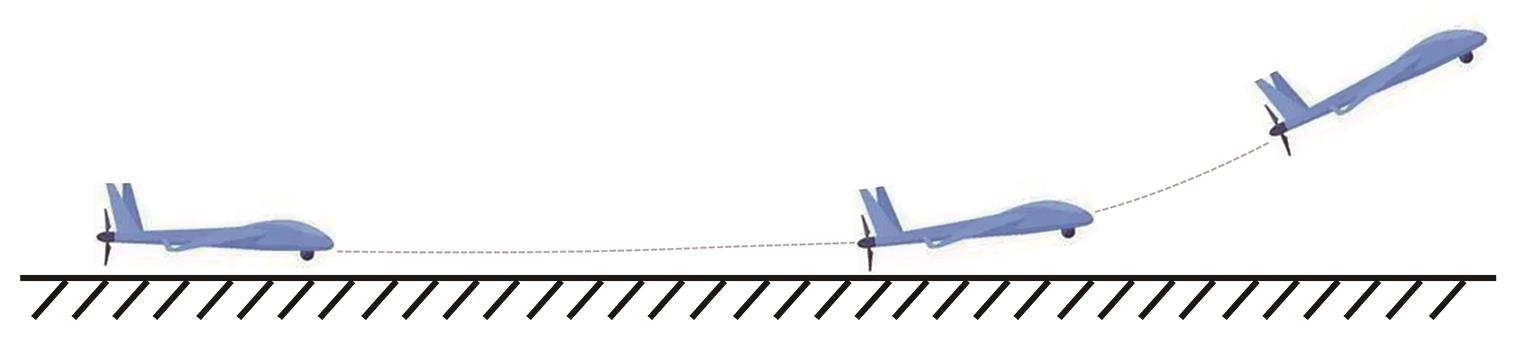
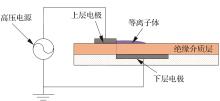
Fig.2
Schematic of a traditional asymmetrical DBD plasma actuator’s layout
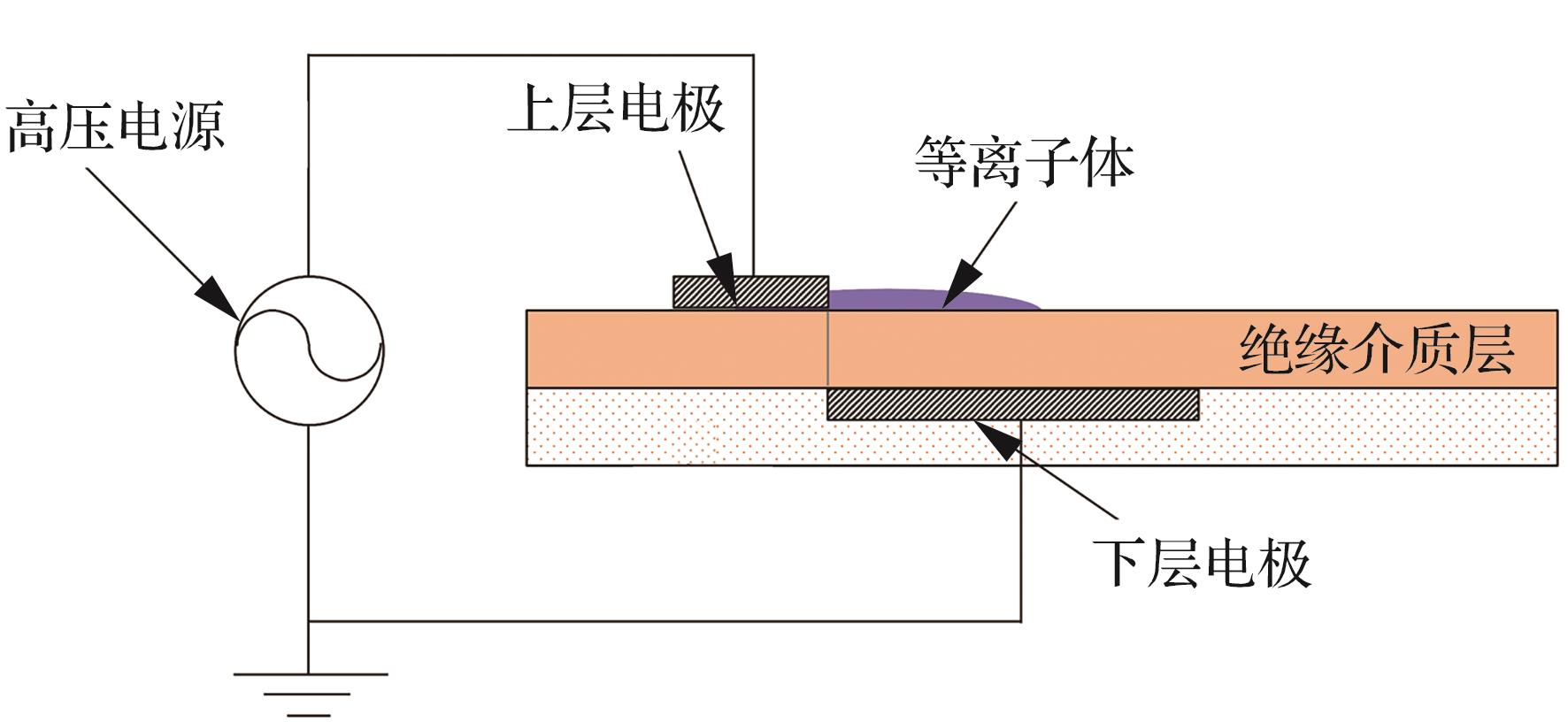
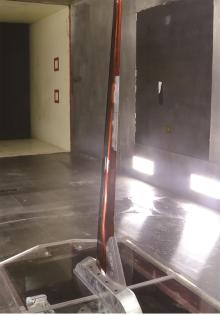
Fig.3
Wing model with high aspect ratio
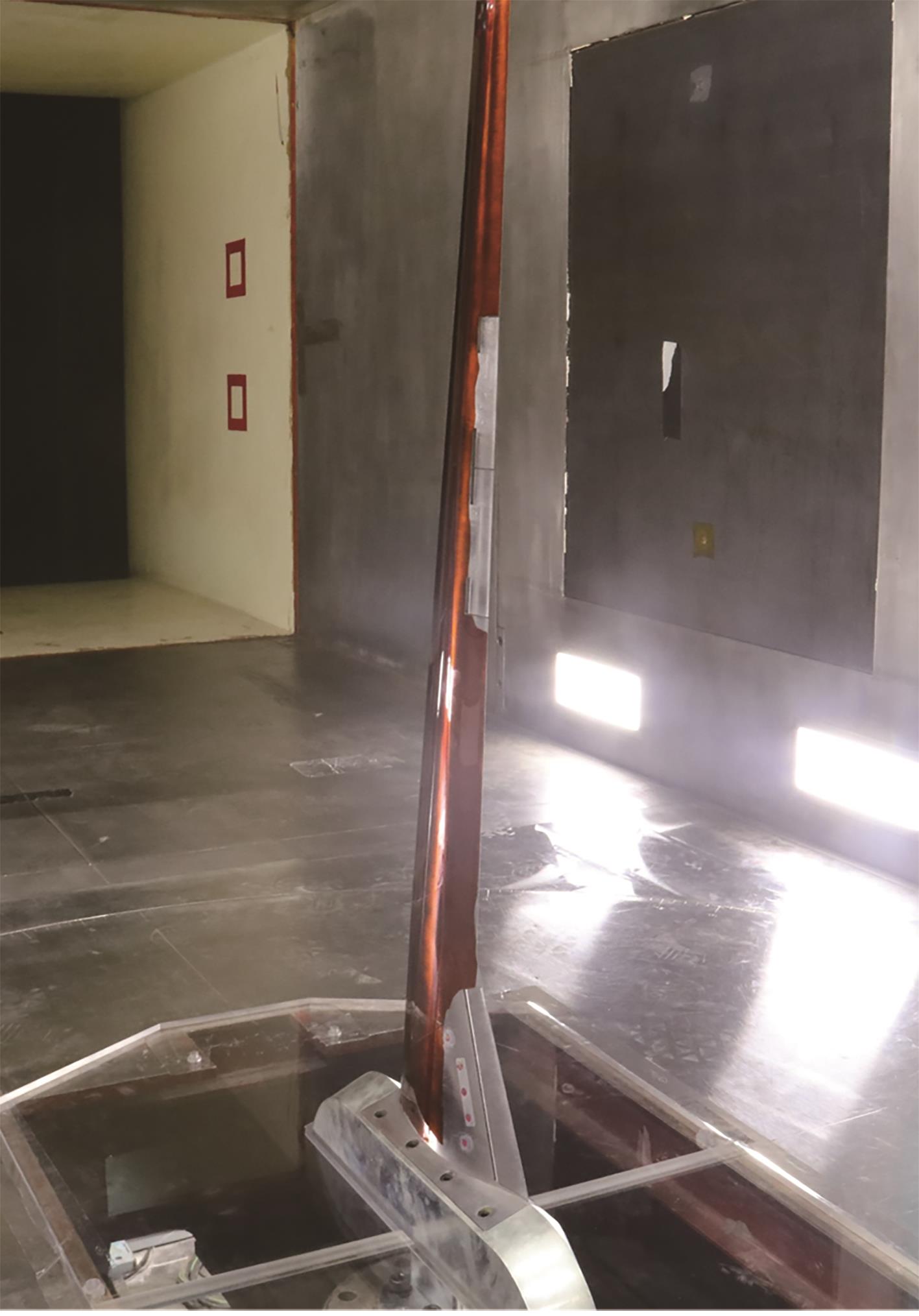
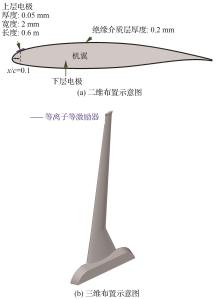
Fig.4
Schematic of arrangement of plasma actuator
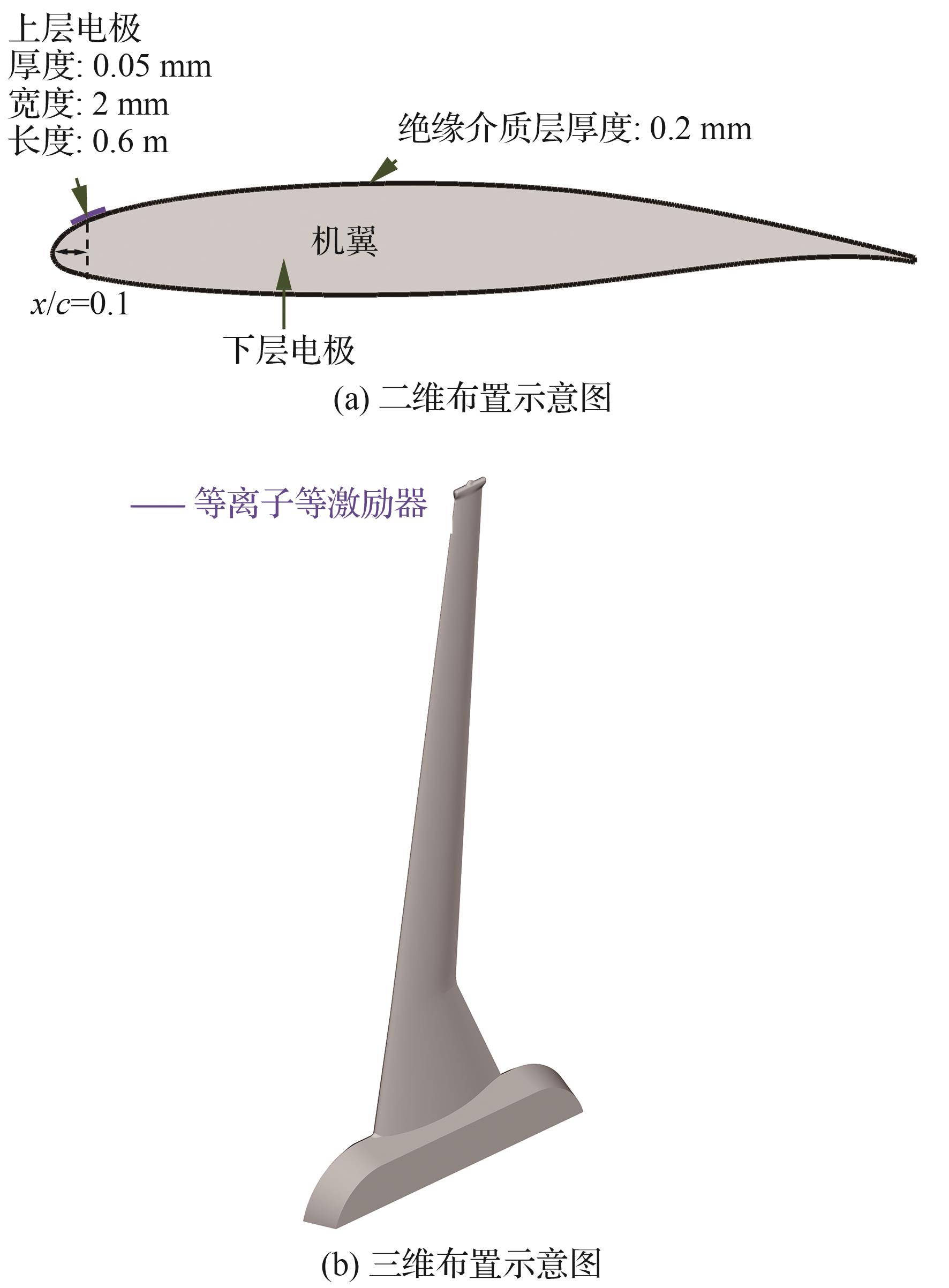

Table 1
Performance parameters of Minipuls 6 high-voltage power supply
| 参数 | 数值 |
|---|---|
| 最大峰峰值电压/kV | 60 |
| 频率范围/kHz | 5~20 |
| 最大输出功率/W | 700 |
| 占空比/% | 0~100 |
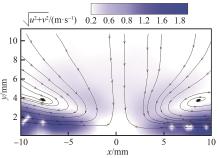
Fig.5
Flow field created by a symmetrical plasma actuator in quiescent air
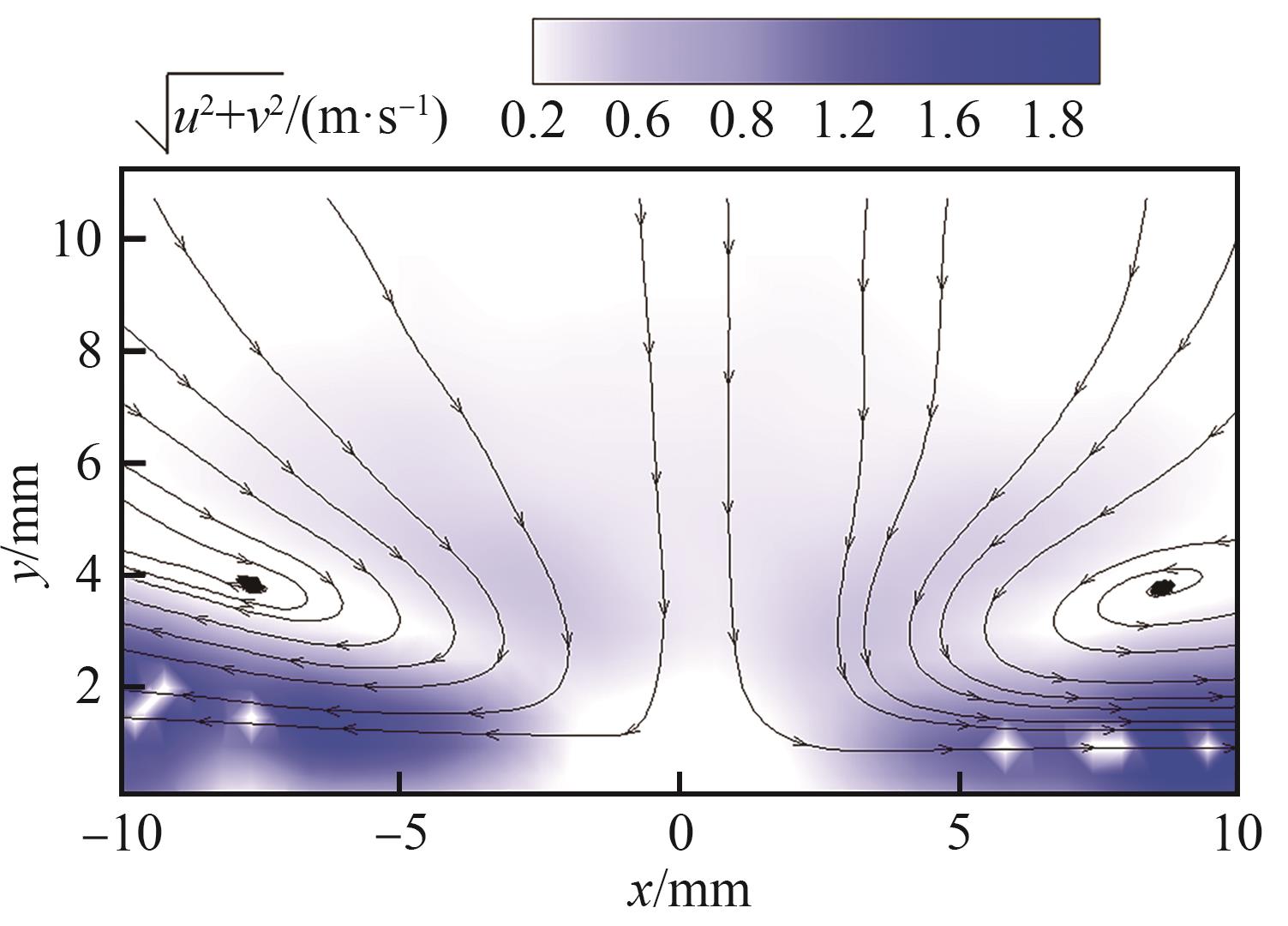
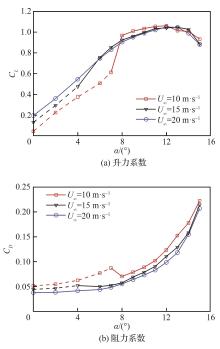
Fig.6
Variations of lift coefficient and drag coefficient with angle of attack at different inflow wind speeds
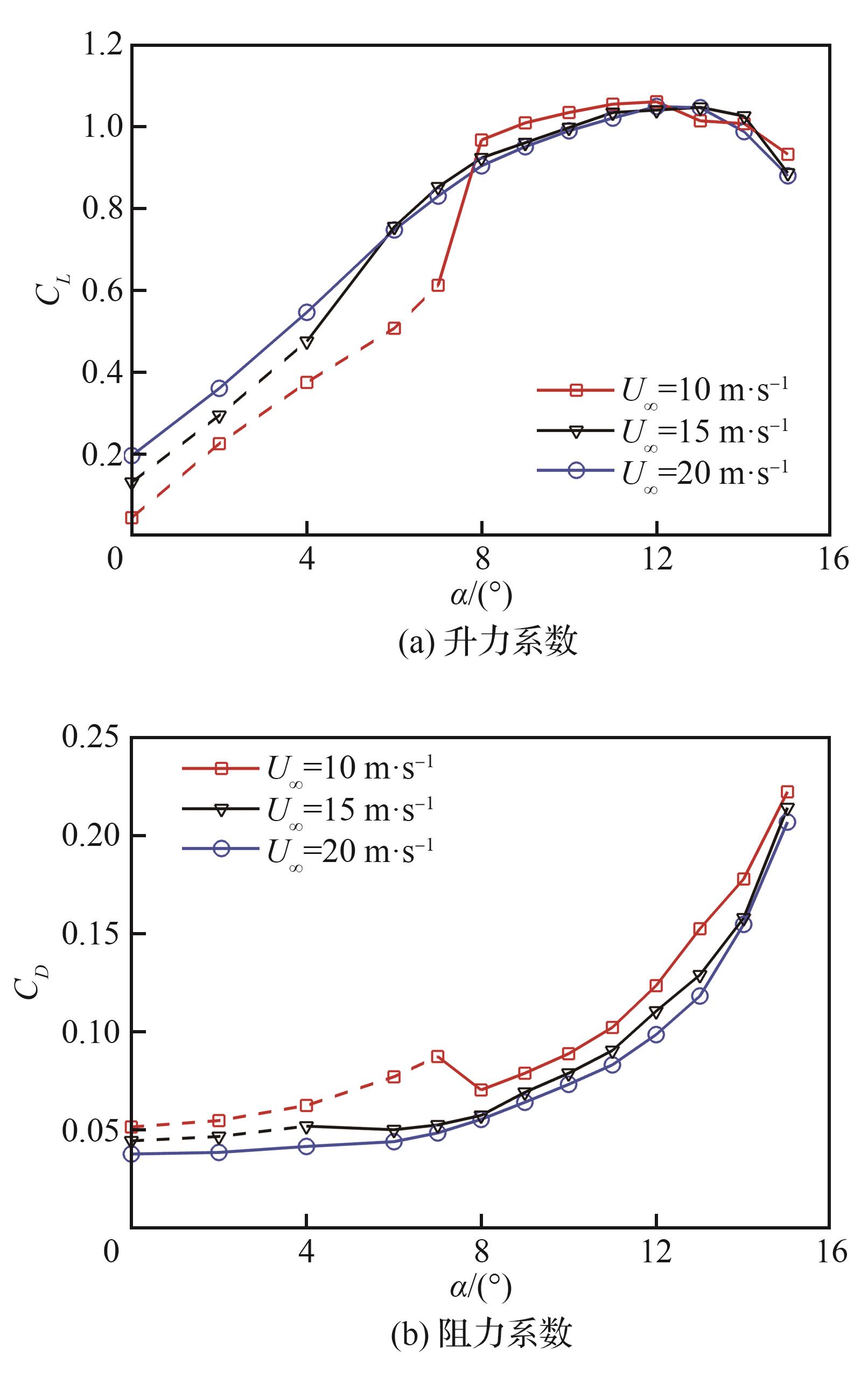
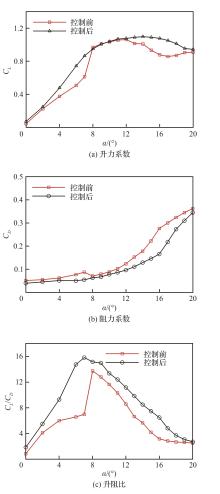
Fig.7
Variations of lift coefficient, drag coefficient, lift-to-drag ratio with angle of attack before and after plasma actuation
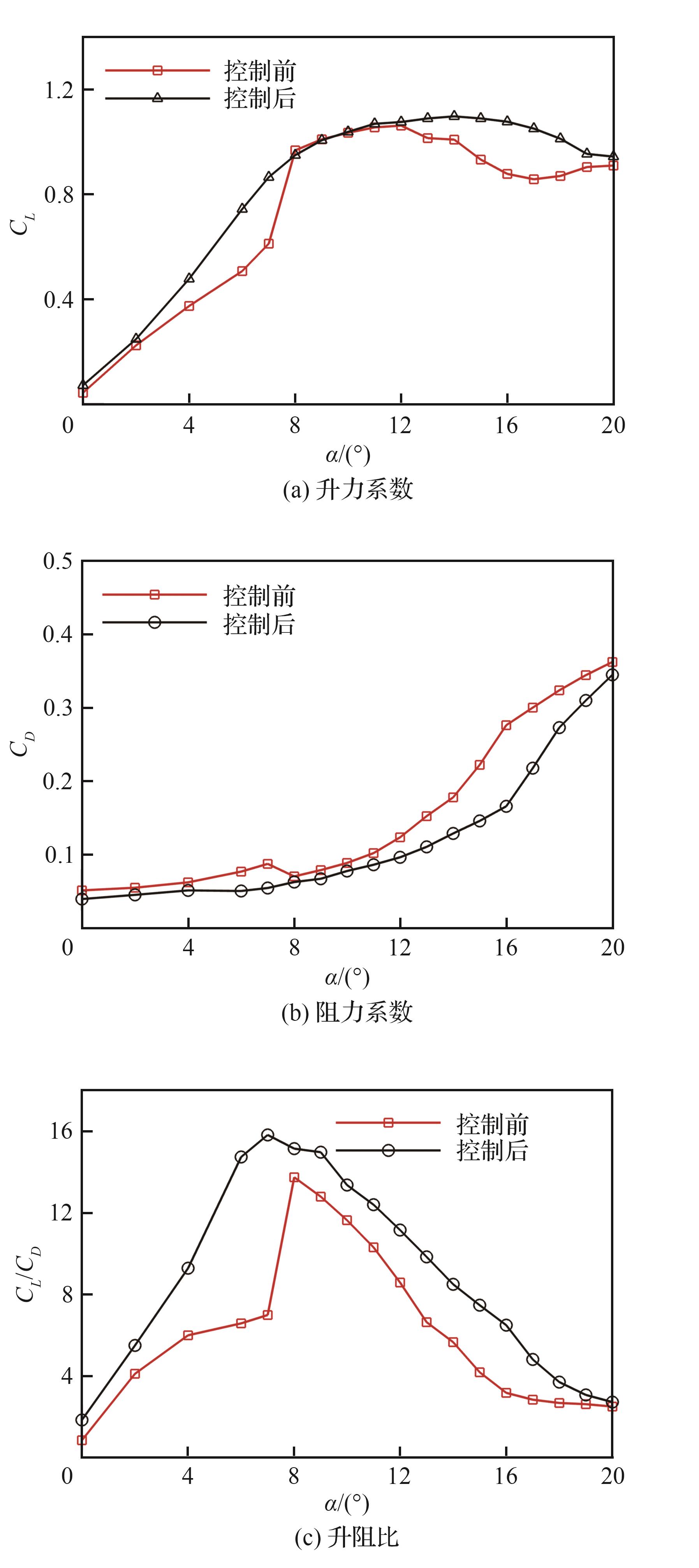
Table 2
Results of maximum lift coefficient, stall angle of attack, and maximum lift-to-drag ratio before and after plasma actuation
| 状态 | 最大升力系数 | 失速迎角/(°) | 最大升阻比 |
|---|---|---|---|
| 控制前 | 1.06 | 12 | 13.75 |
| 控制后 | 1.10 | 14 | 15.82 |
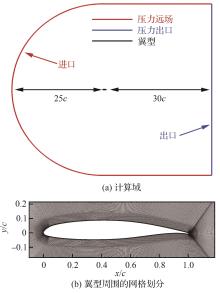
Fig.8
Computational domain and mesh
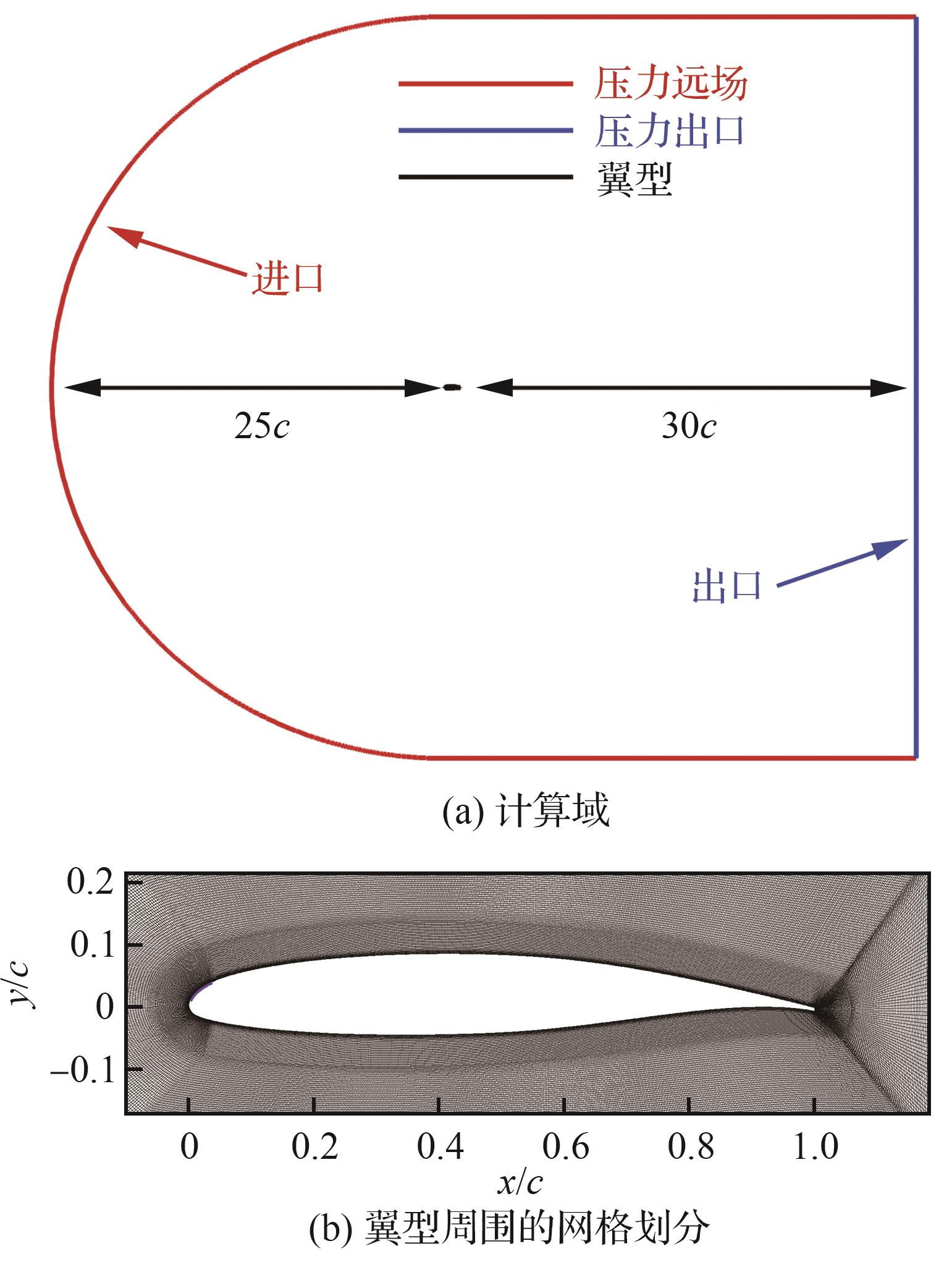
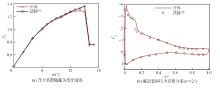
Fig.9
Lift coefficient and airfoil surface pressure coefficient distributions
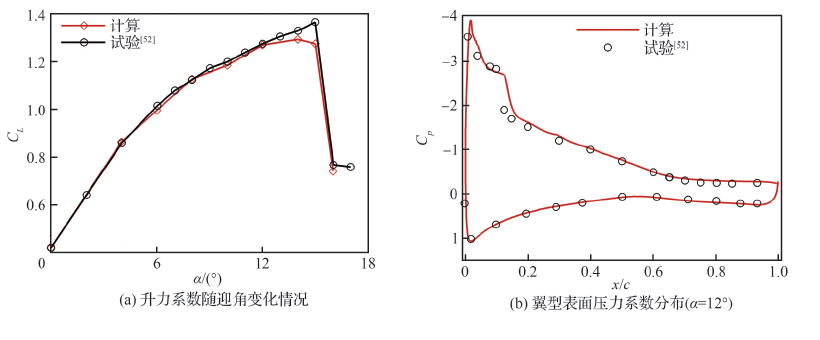
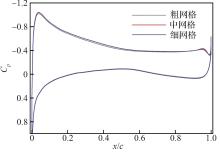
Fig.10
Validation of grid independence
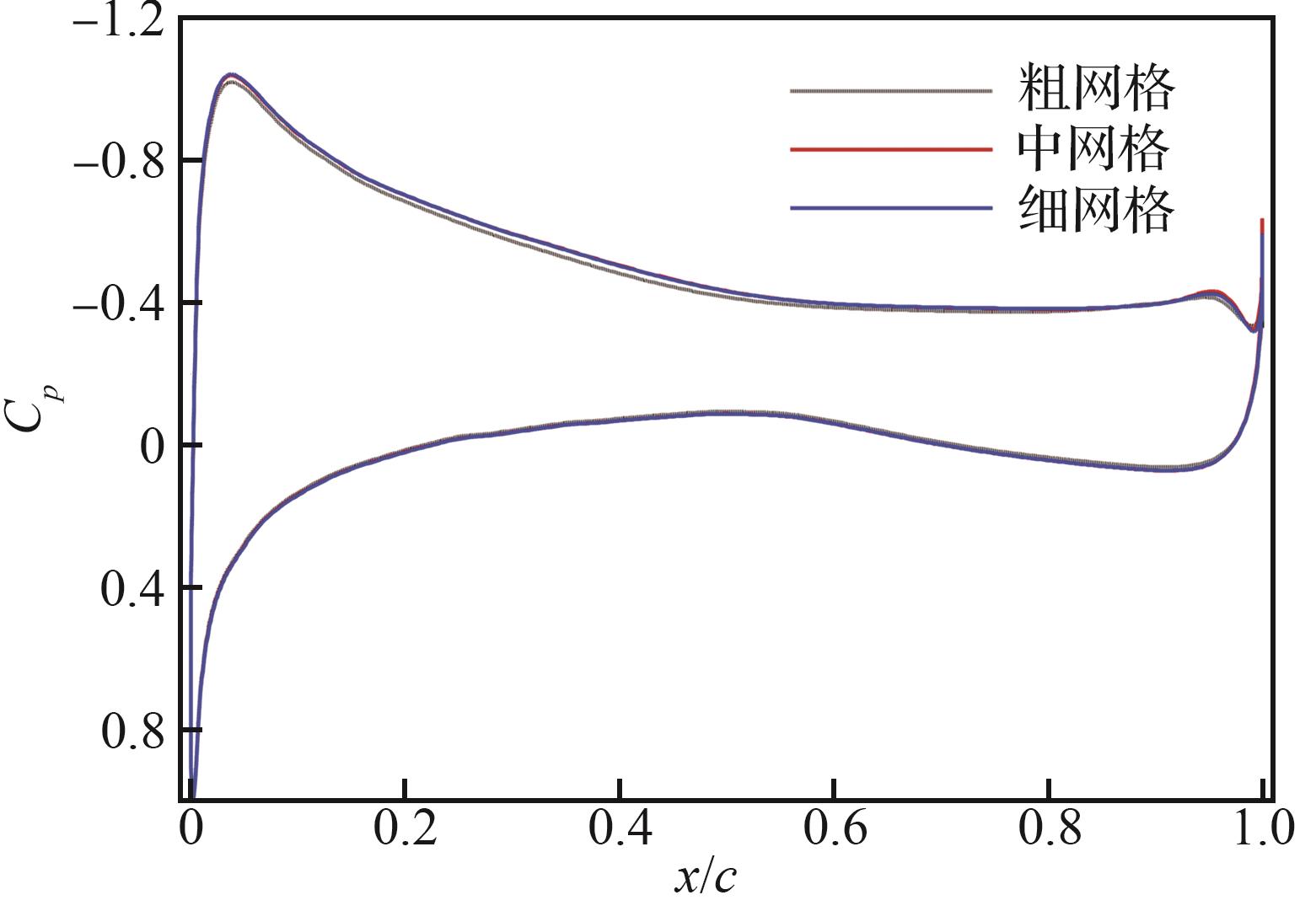
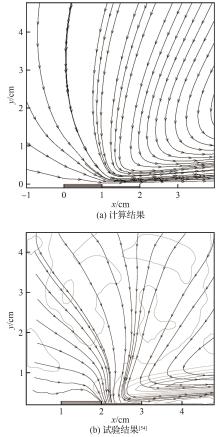
Fig.11
Validation of plasma actuator simulation model
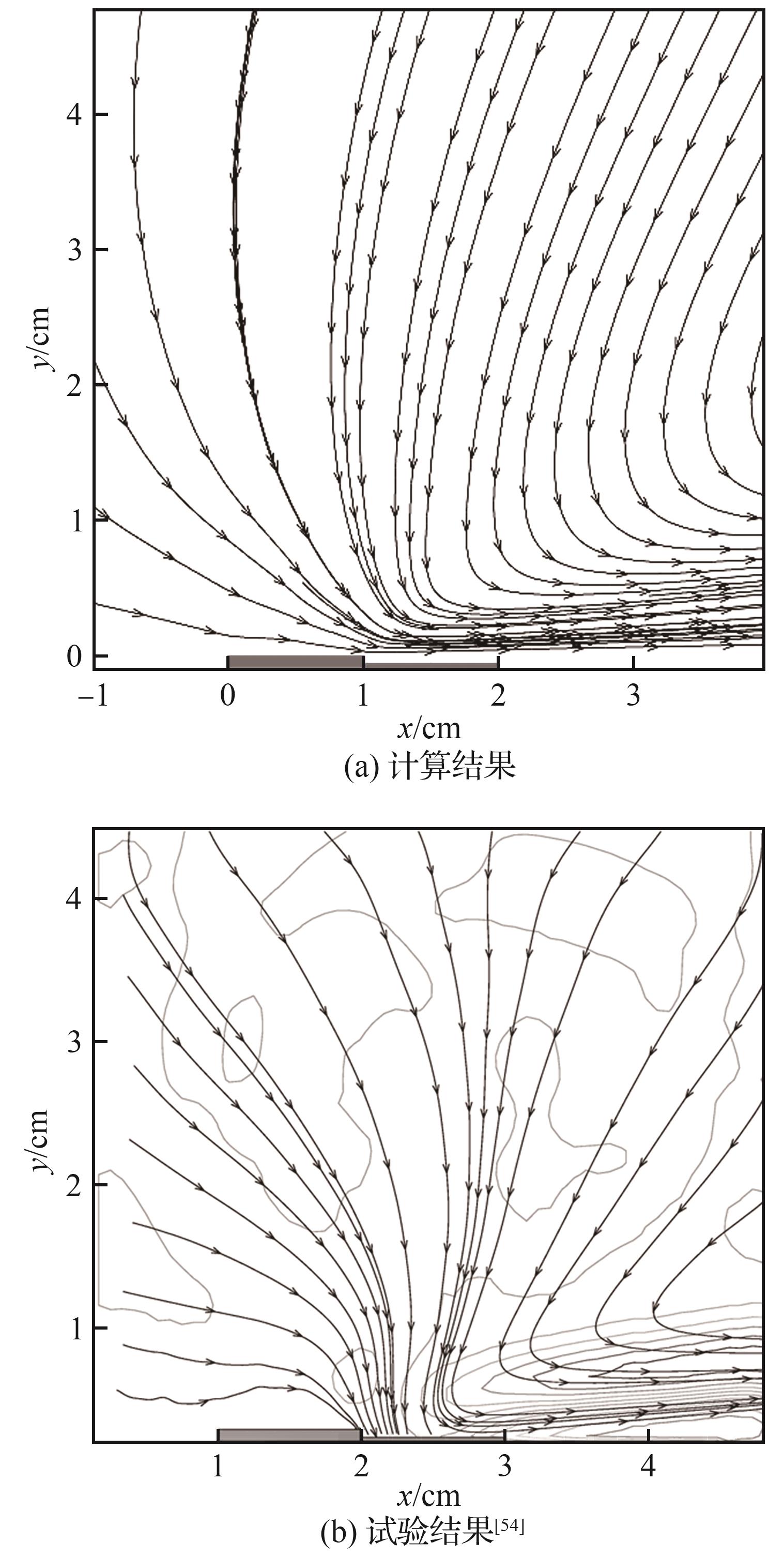
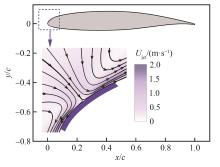
Fig.12
Time-averaged calculation results of flow field created by plasma actuator in quiescent air
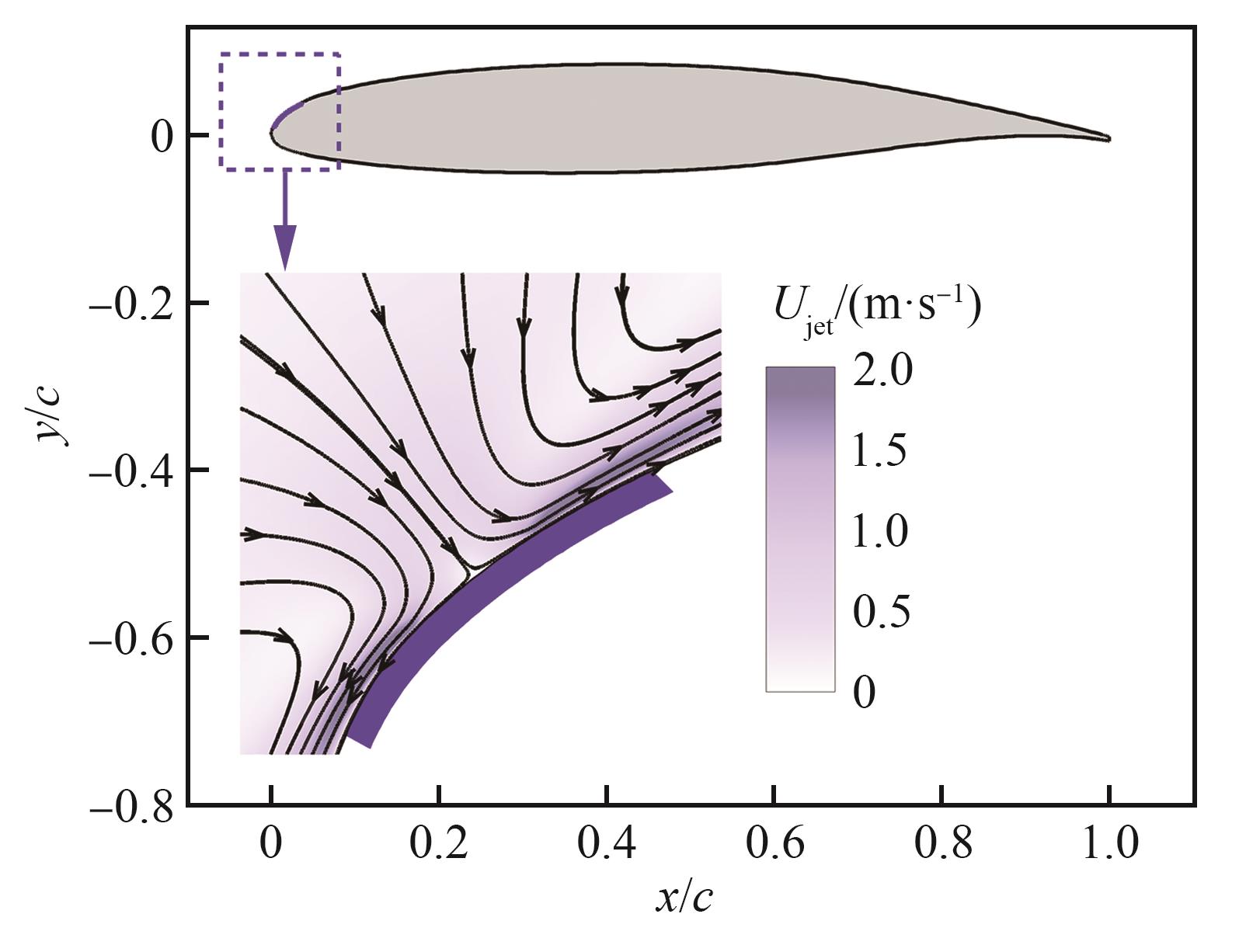
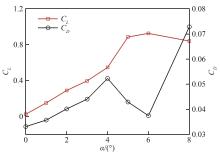
Fig.13
Variation of lift and drag coefficients of airfoil with angle of attack
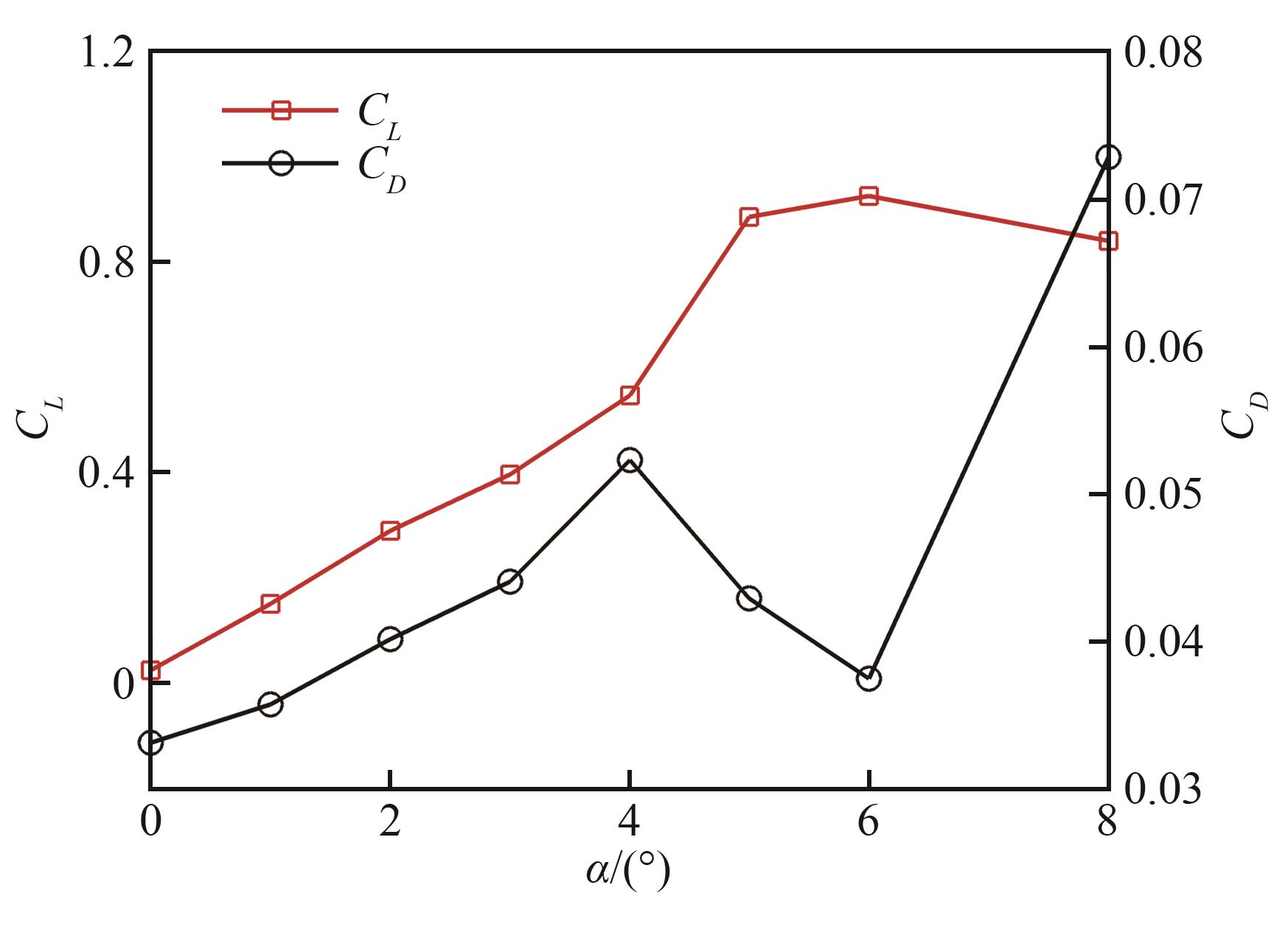
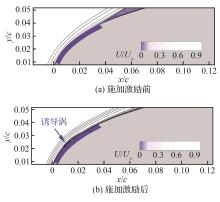
Fig.14
Time-averaged streamlines around plasma actuator before and after plasma actuation
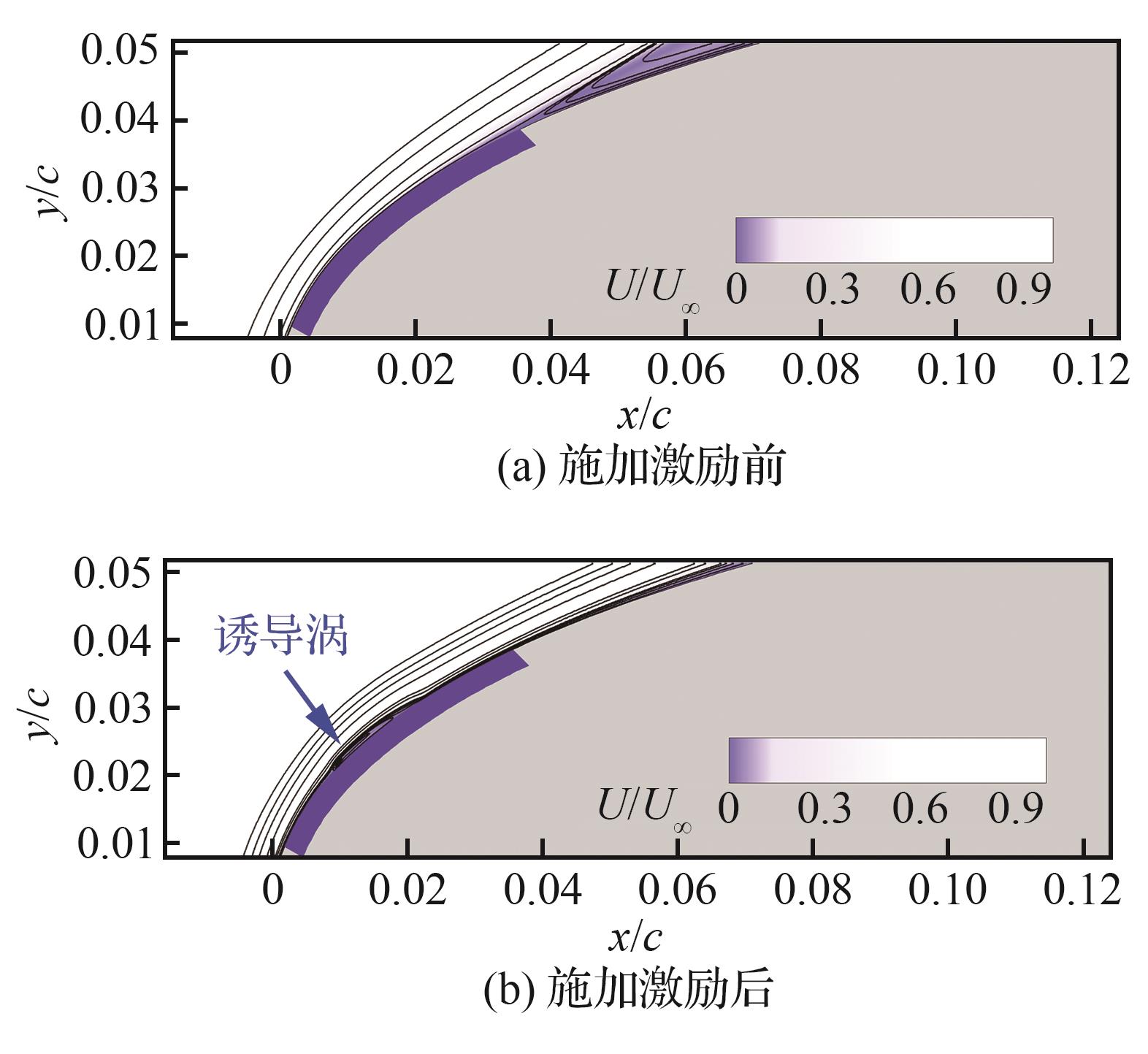
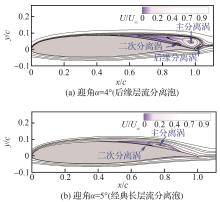
Fig.15
Time-averaged streamlines around airfoil at angles of attack of 4° and 5°
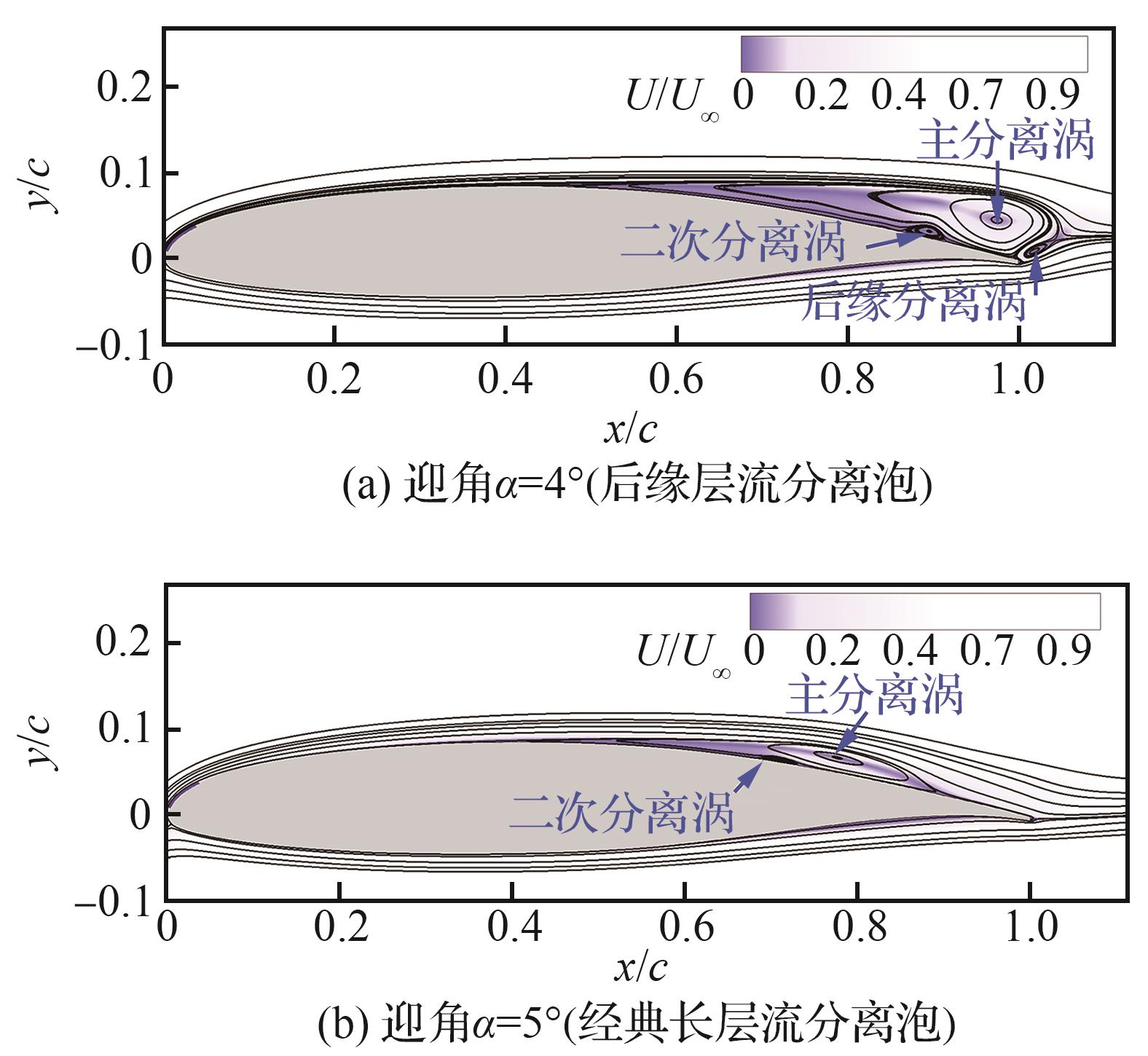
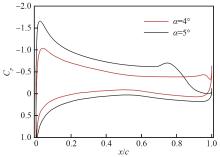
Fig.16
Distribution of time-averaged pressure coefficients on airfoil surface at angles of attack of 4° and 5°
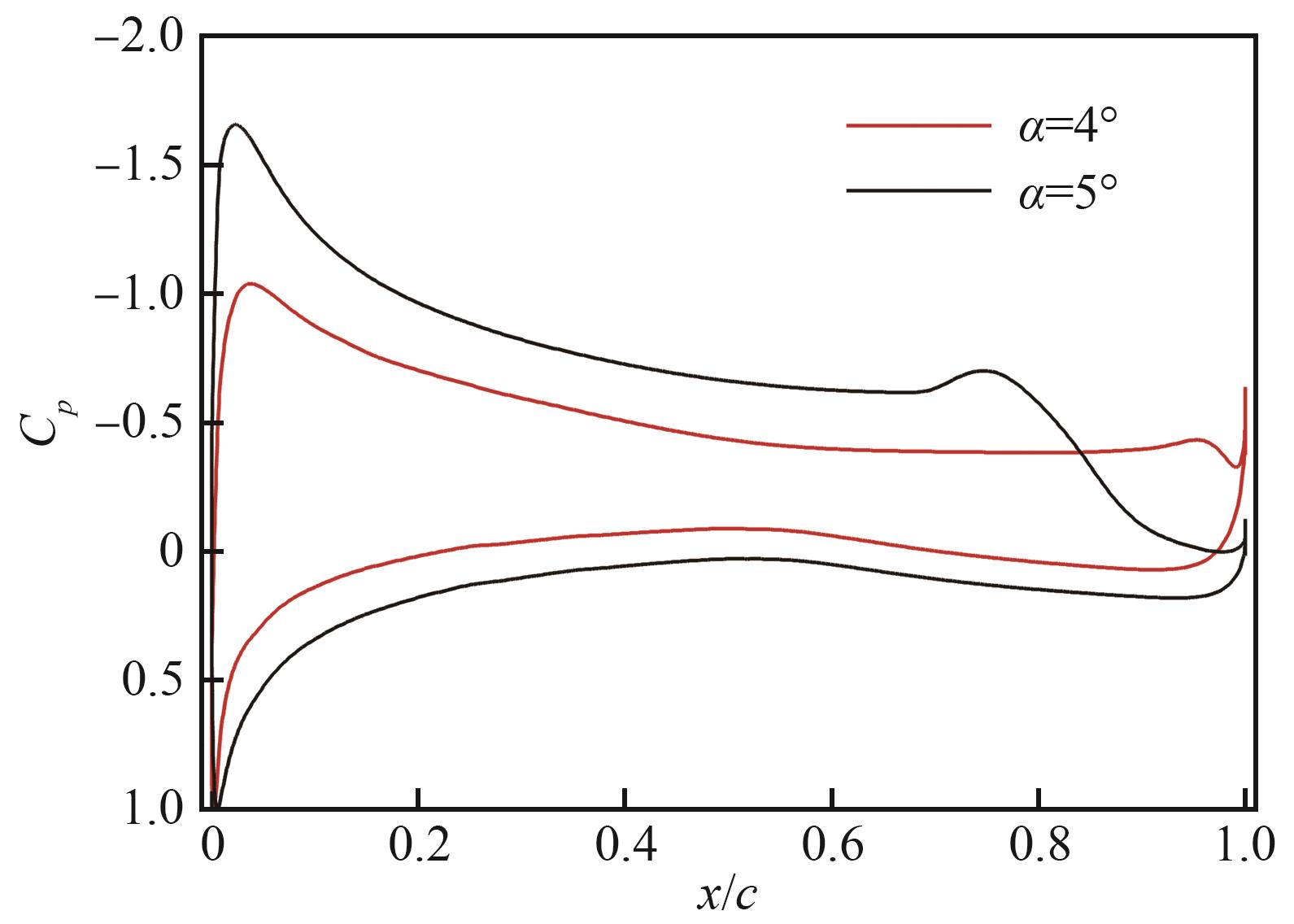
Fig.17
Variations of lift and drag coefficients with time at angle of attack of 4°
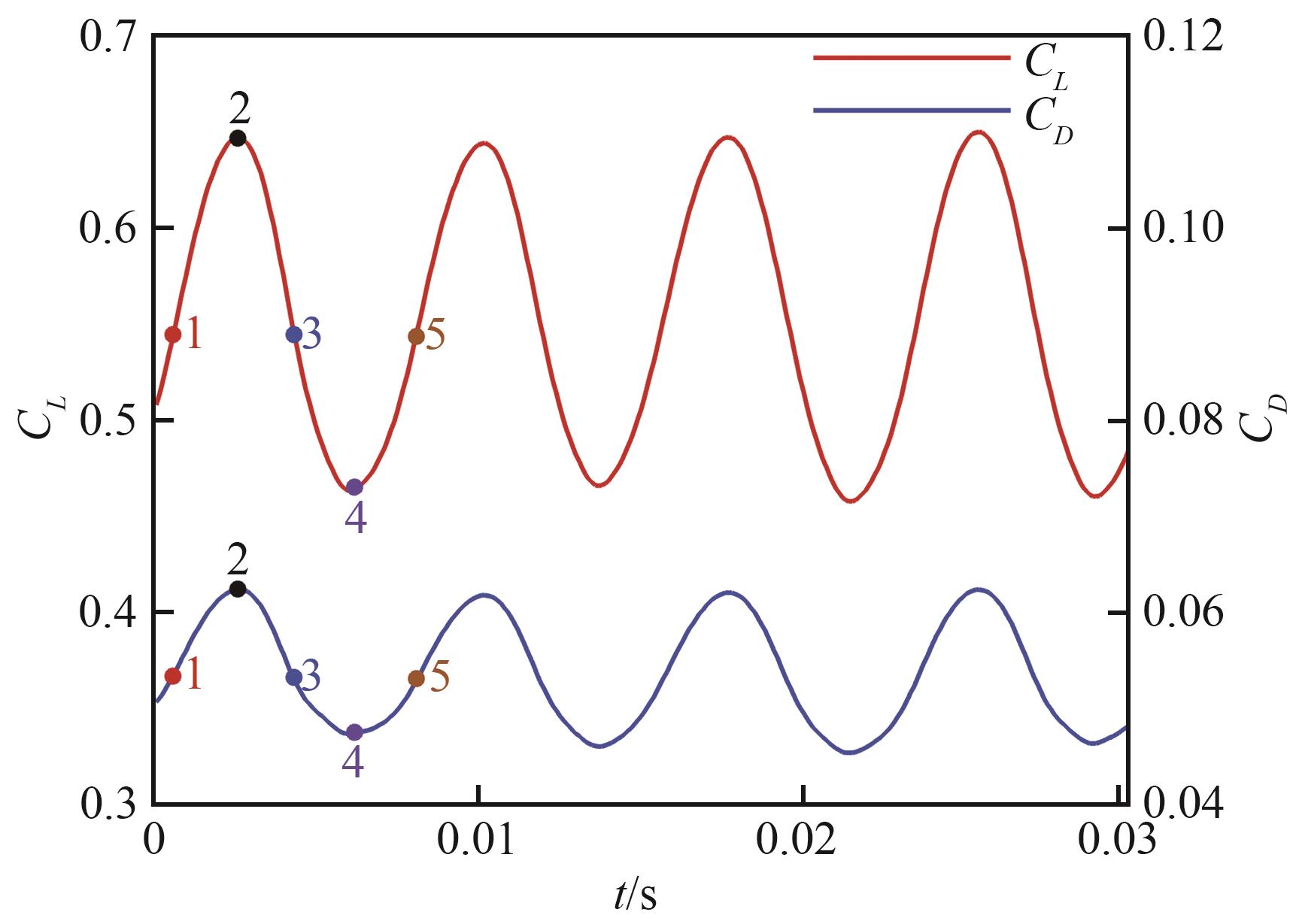
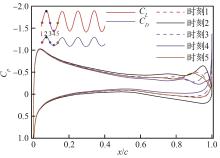
Fig.18
Transient pressure coefficients of airfoil surface at angle of attack of 4°
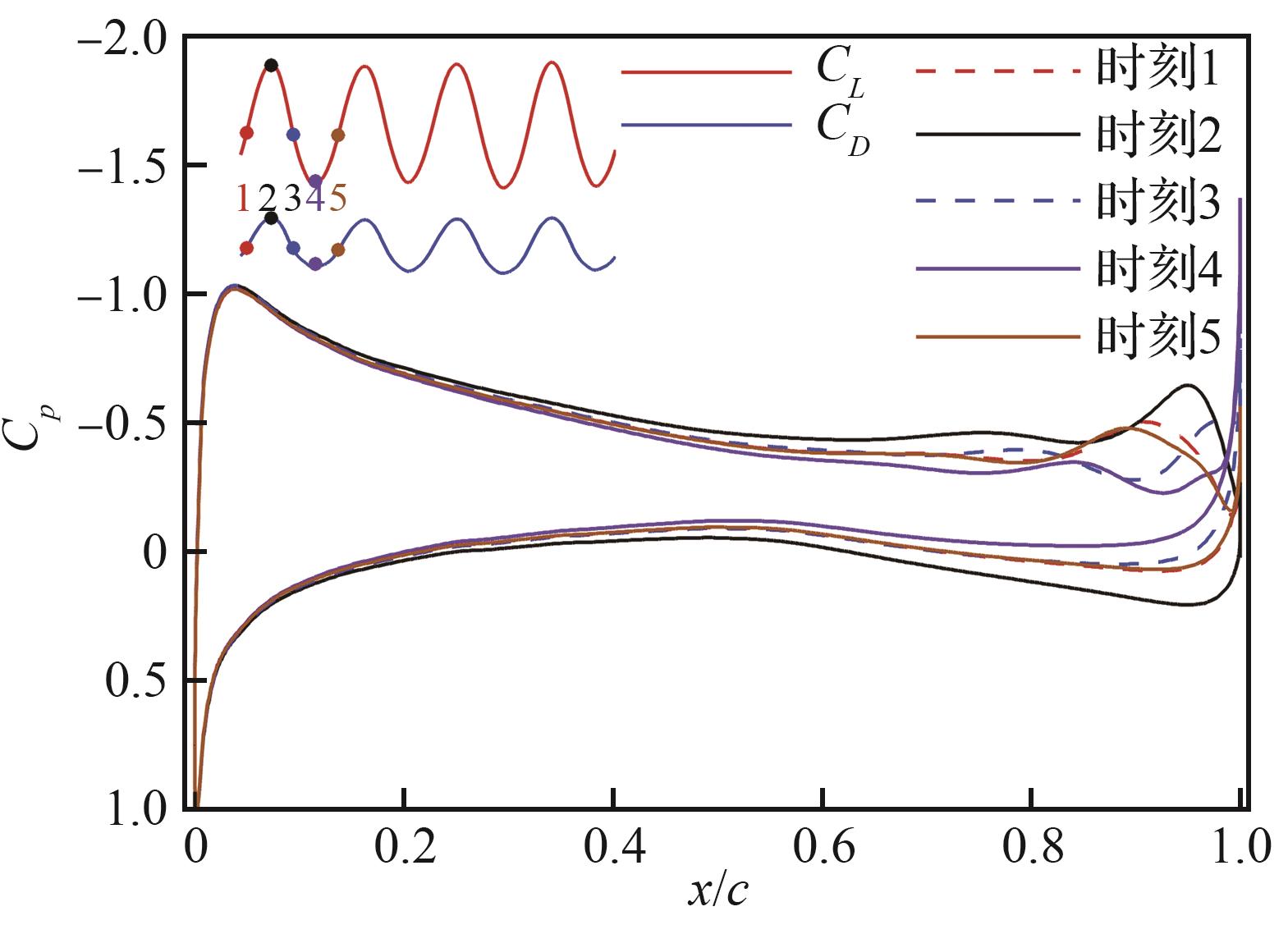
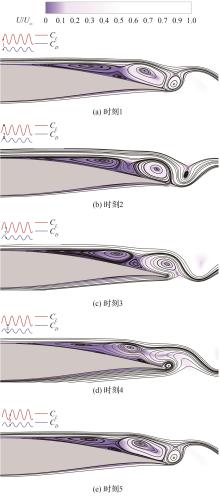
Fig.19
Transient streamlines around airfoil at angle of attack of 4° before plasma actuation
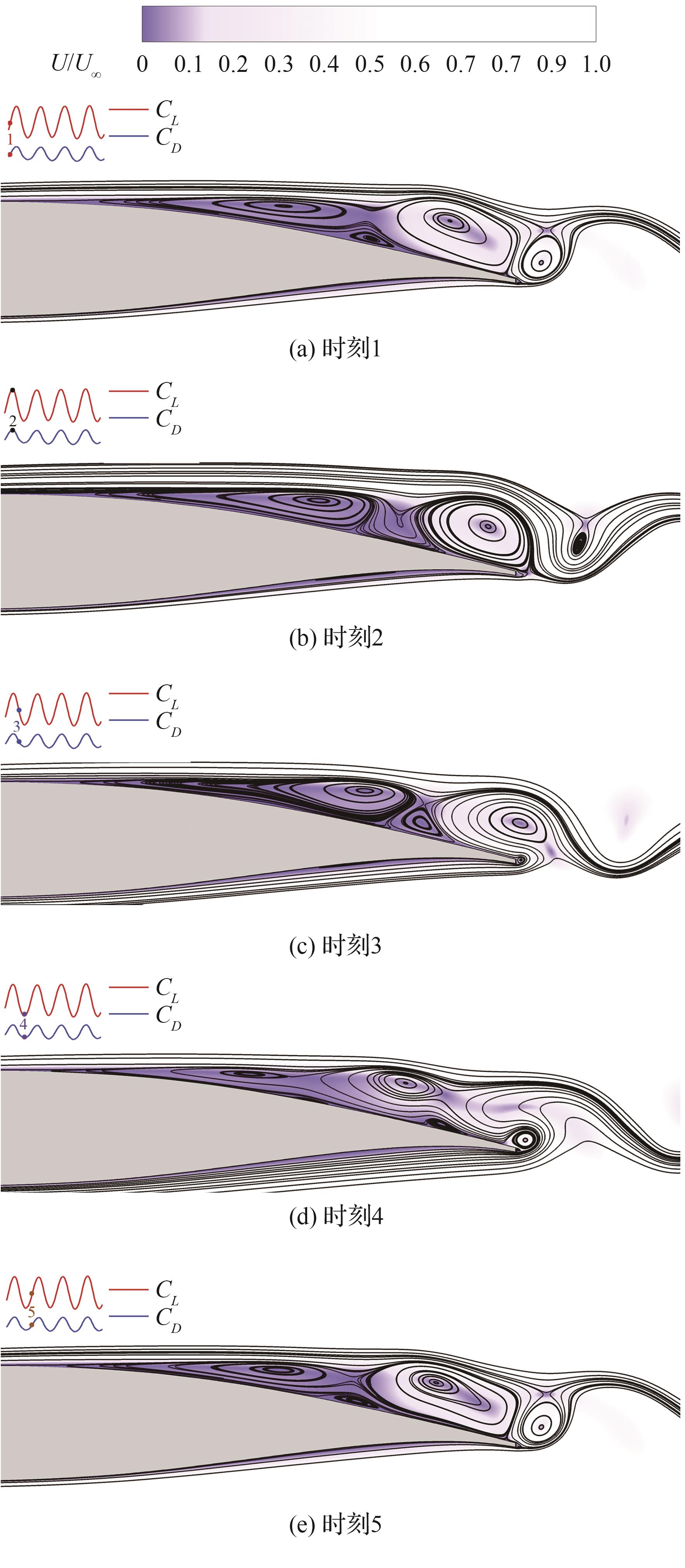
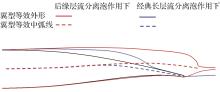
Fig.20
Comparison of equivalent shape and middle arc of airfoil under influence of two kinds of separation bubbles
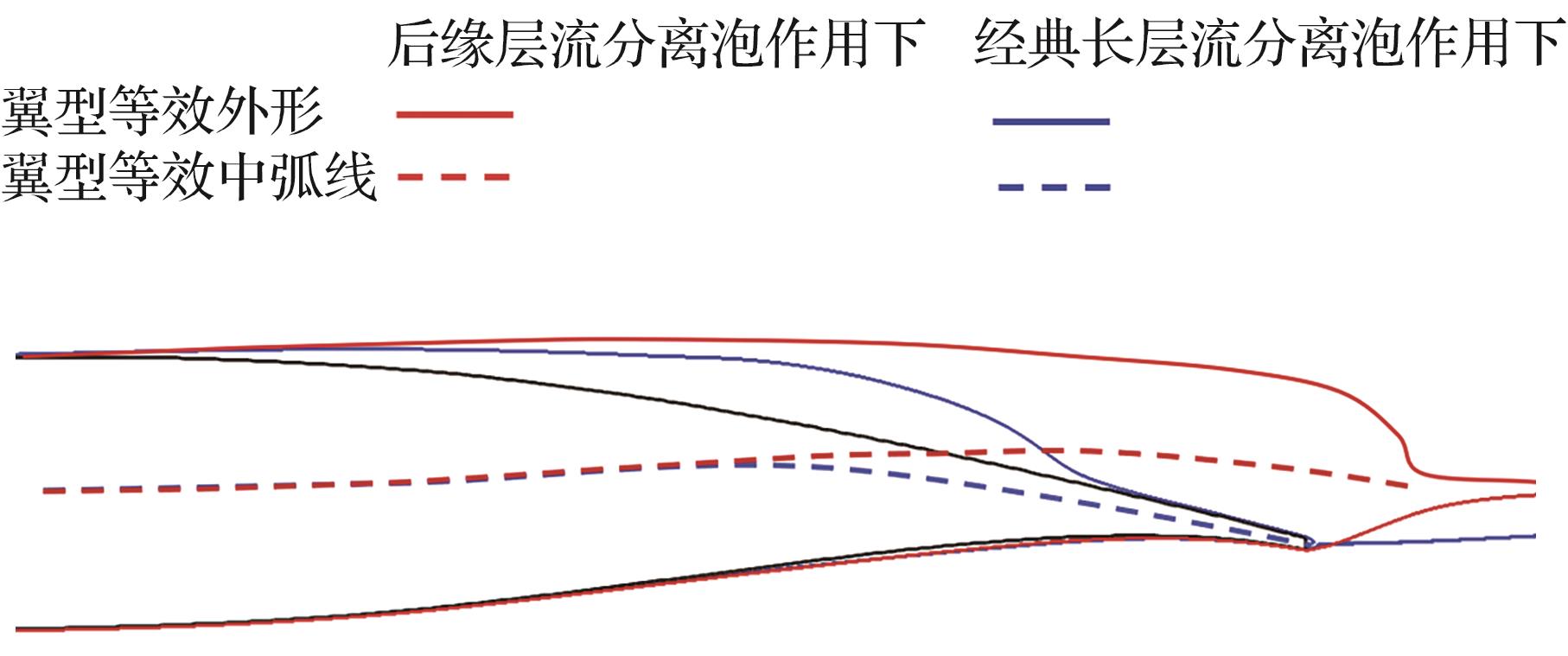

Fig.21
Comparison between GAW-2 airfoil and SD8020 airfoil[57]

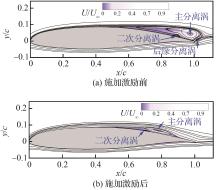
Fig.22
Time-averaged streamlines of flow field around airfoil before and after plasma actuation
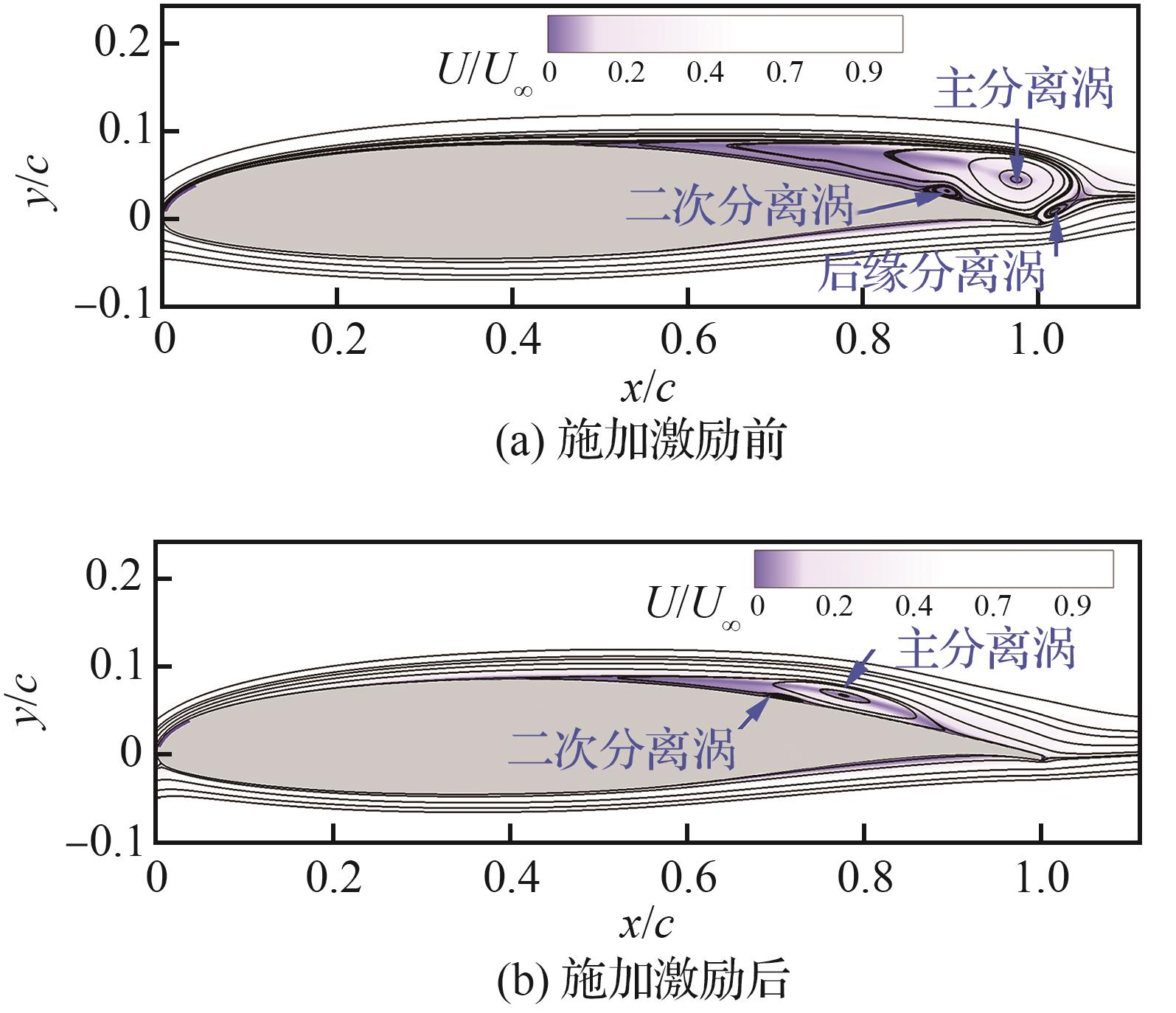
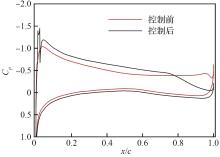
Fig.23
Distribution of time-averaged pressure coefficients on airfoil surface before and after plasma actuation
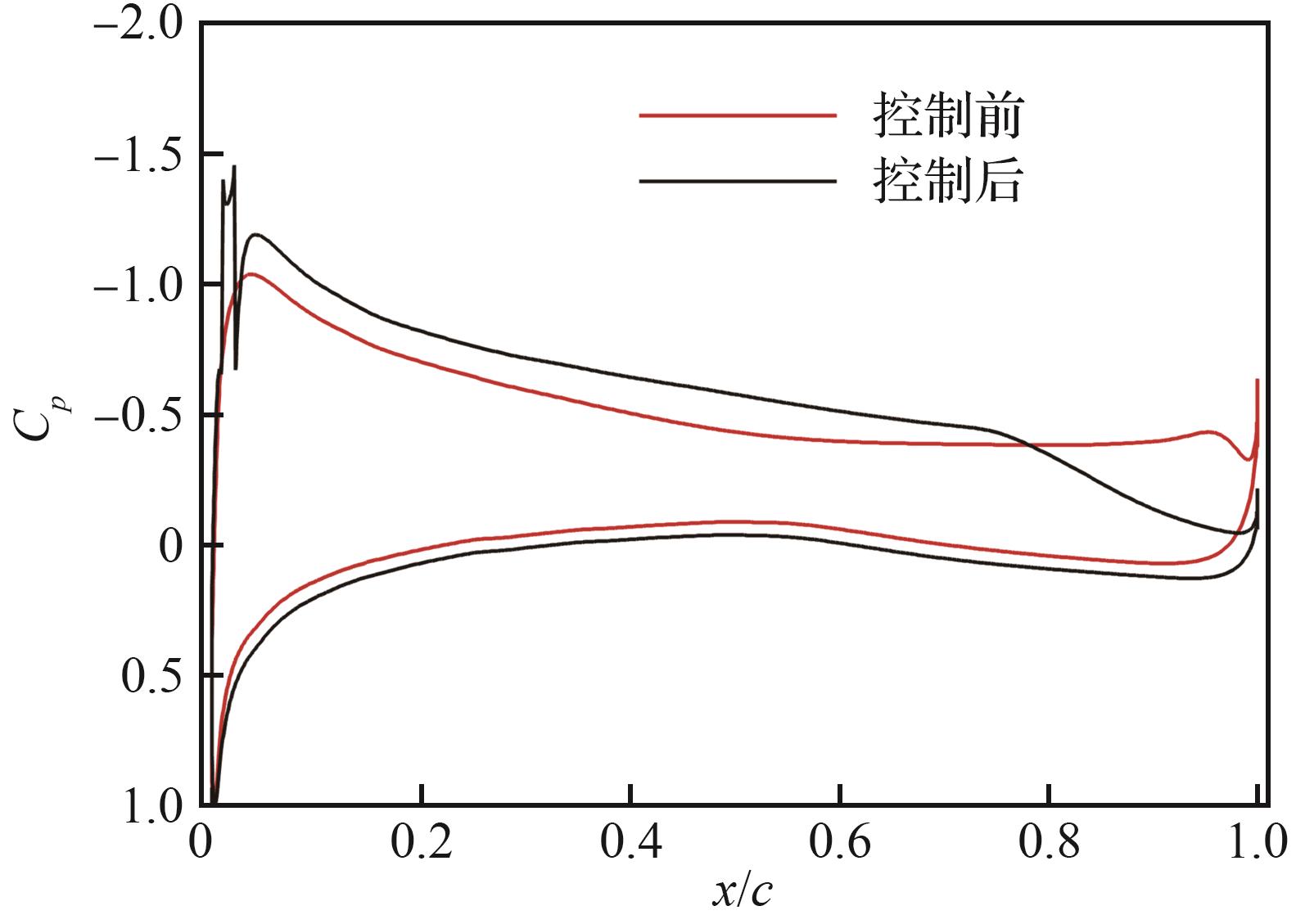
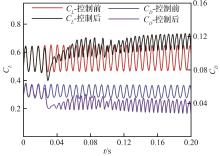
Fig.24
Variations of lift and drag coefficients of airfoil with time before and after plasma actuation
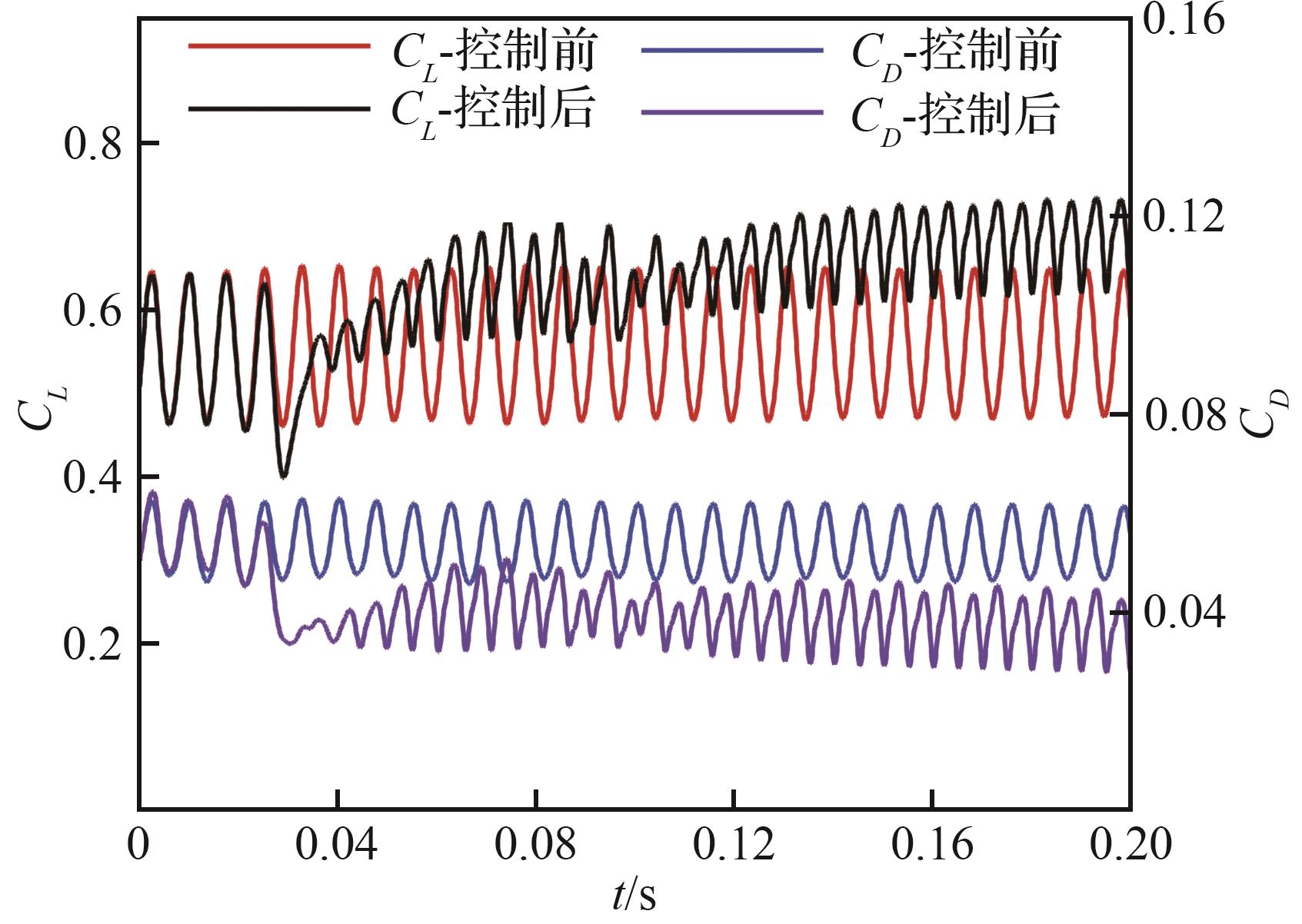
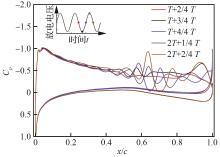
Fig.25
Distribution of transient pressure coefficients on airfoil surface after plasma actuation
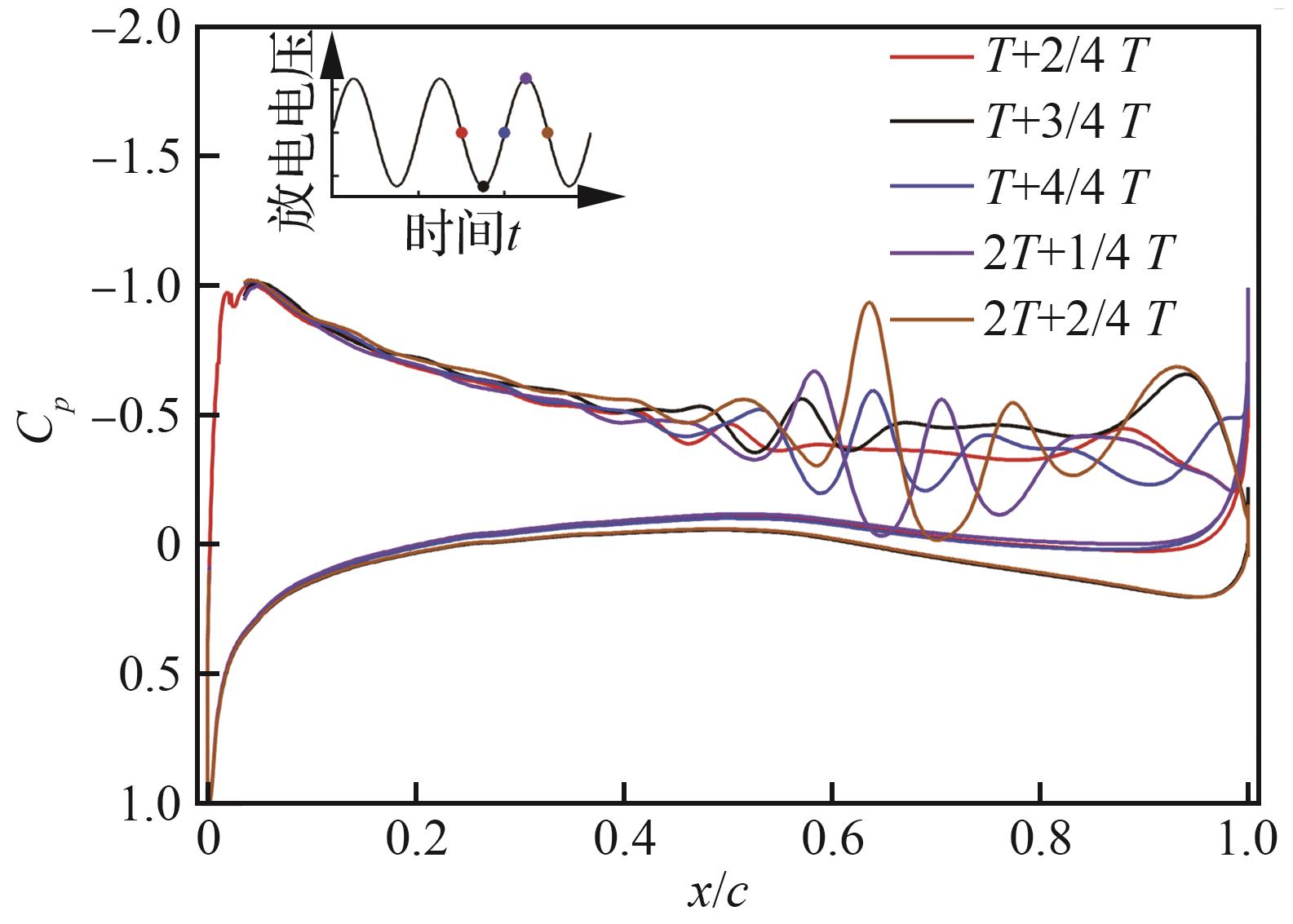
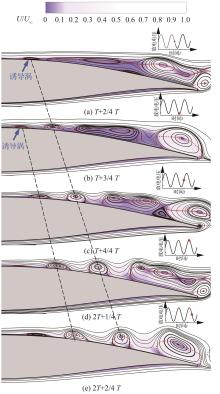
Fig.26
Transient streamlines around airfoil after plasma actuation
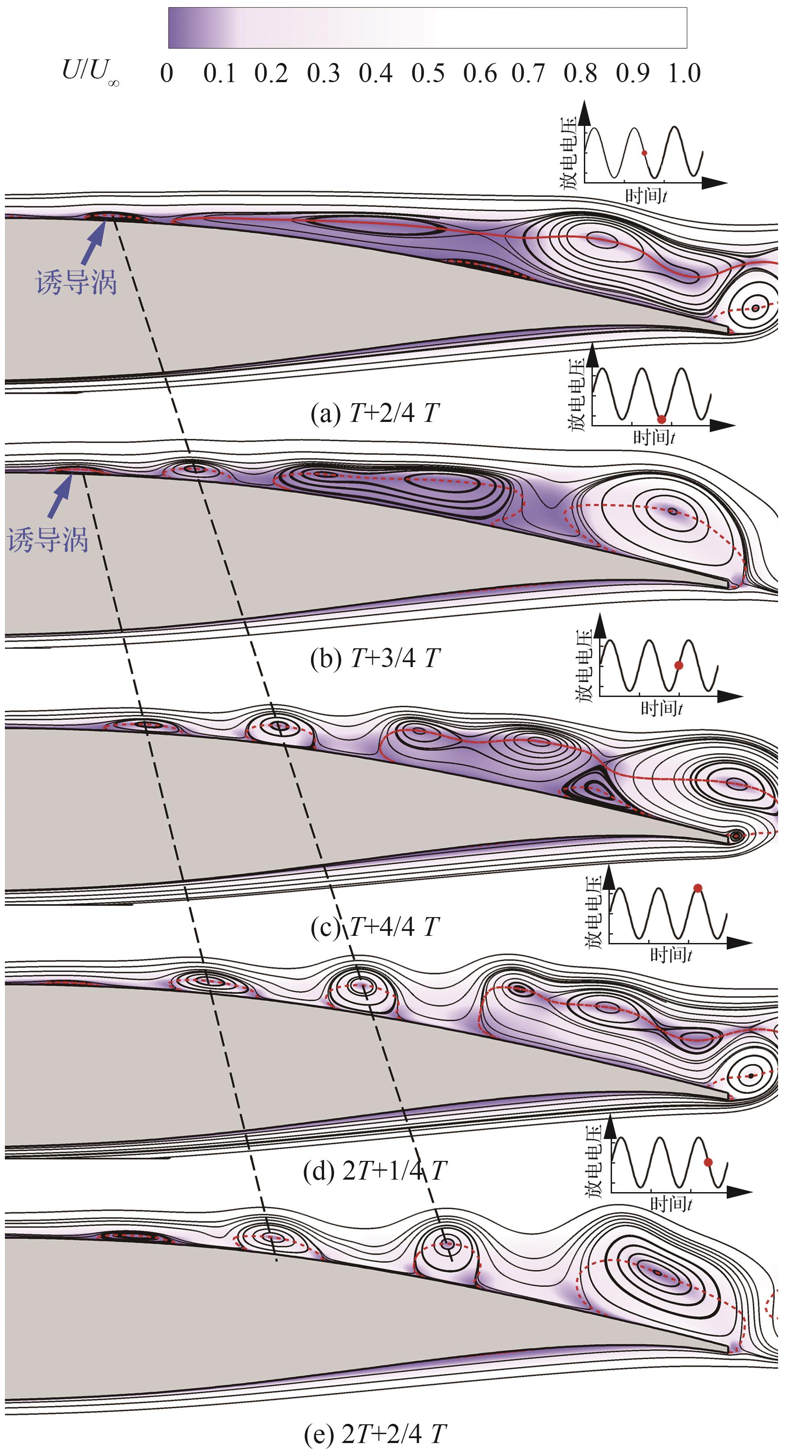
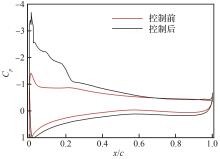
Fig.27
Distributions of time-averaged pressure coefficients on airfoil surface before and after plasma actuation
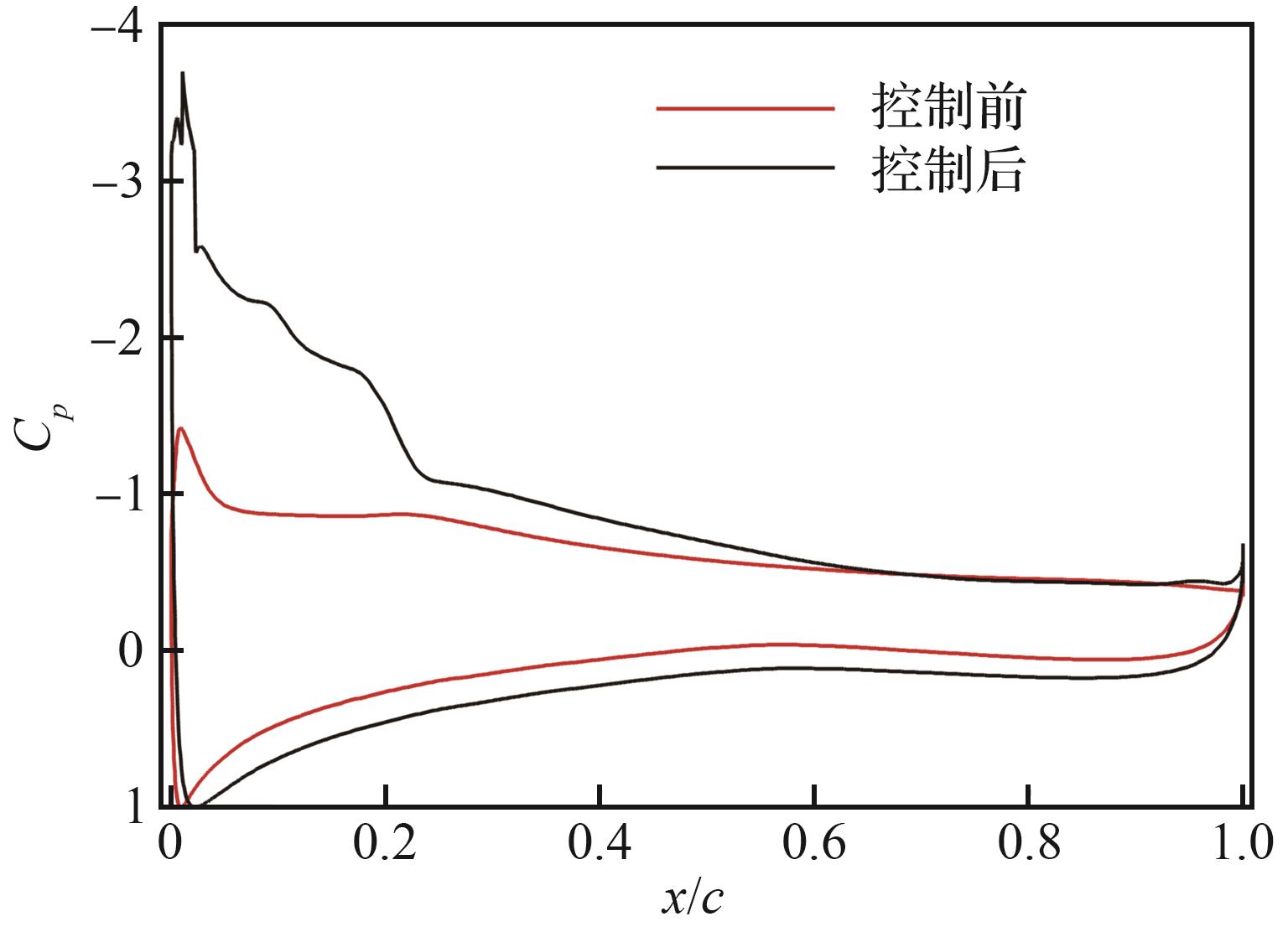
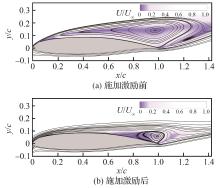
Fig.28
Time-averaged streamlines around airfoil before and after plasma actuation
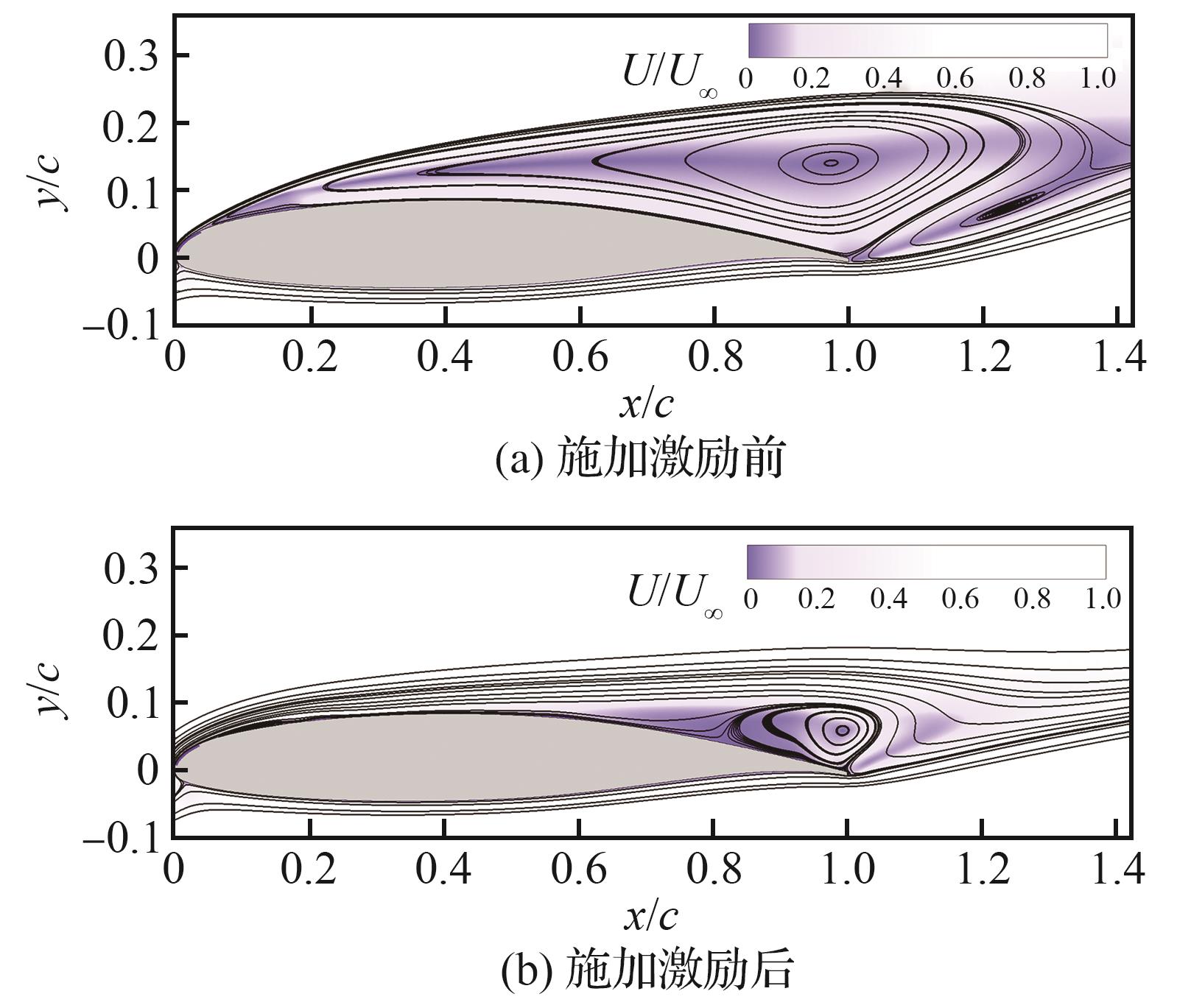
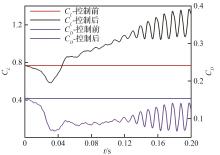
Fig.29
Variations of lift and drag coefficients of airfoil with time before and after plasma actuation
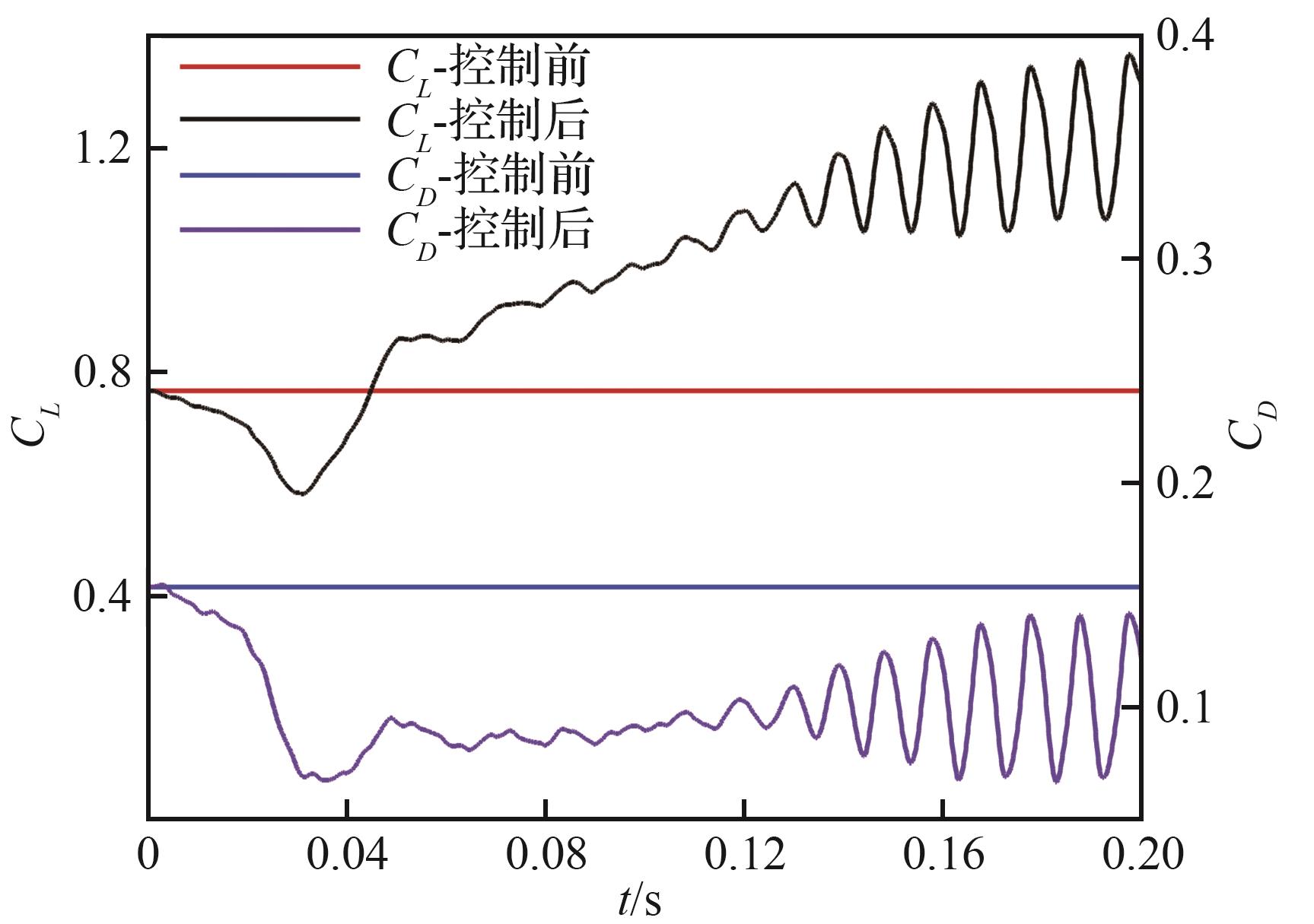
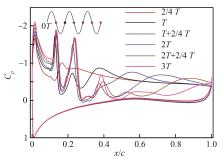
Fig.30
Transient pressure coefficient distributions on airfoil surface after plasma actuation
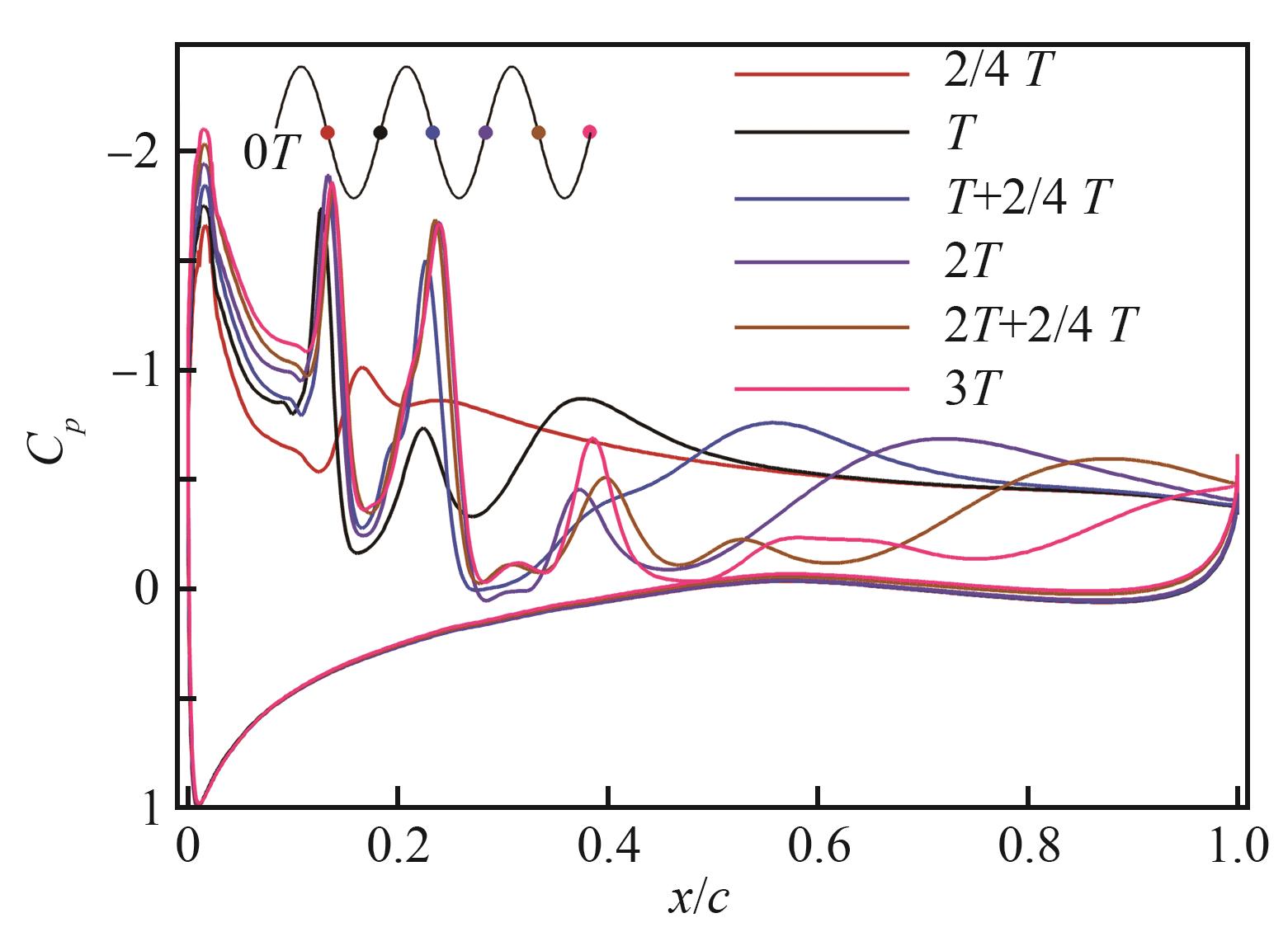
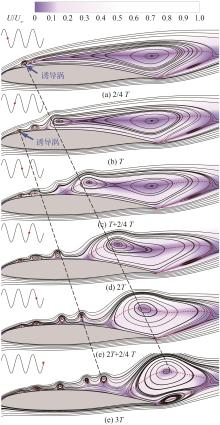
Fig.31
Transient streamlines around airfoil after plasma actuation
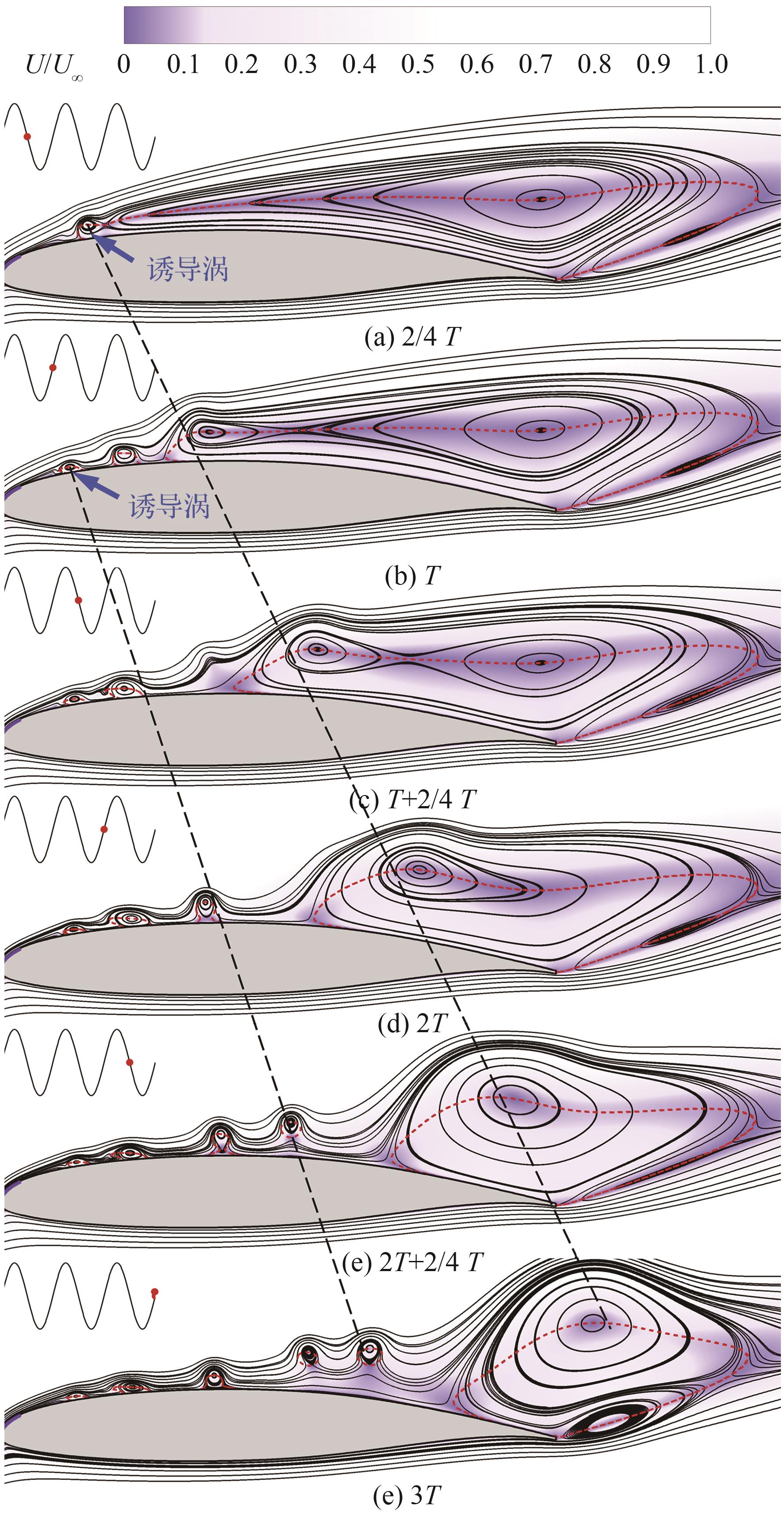
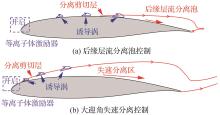
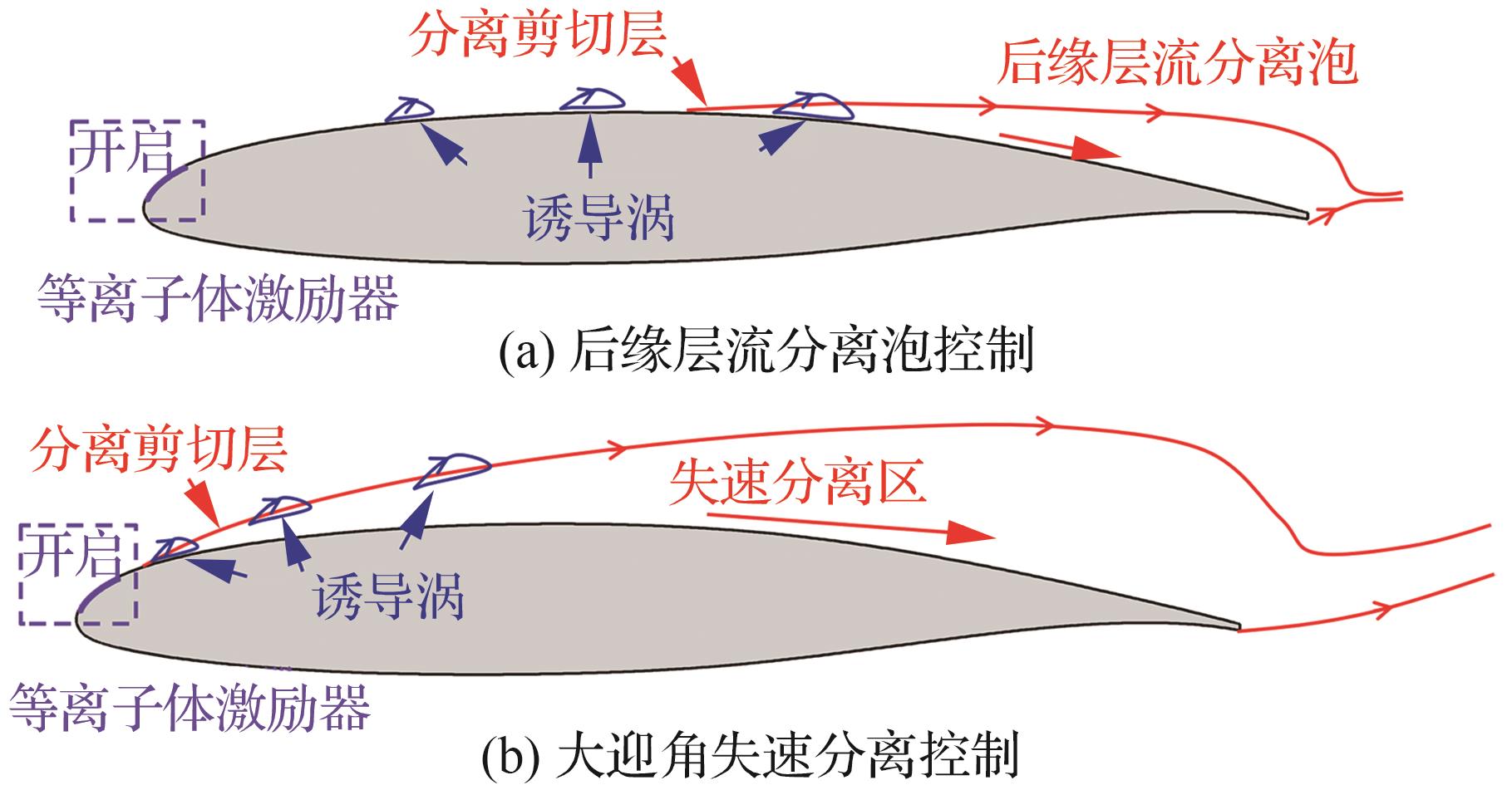
Fig.32
Schematic of mechanism of flow control around a wing using a symmetrical plasma actuator
| [1] | 安学广. 大展弦比轻质机翼的失速颤振控制[D]. 长沙: 湖南大学, 2015: 5-11. |
| AN X G. Stall flutter control of high-aspect ratio light-weight wing[D]. Changsha: Hunan University, 2015: 5-11 (in Chinese). | |
| [2] | 向锦武, 阚梓, 邵浩原, 等. 长航时无人机关键技术研究进展[J]. 哈尔滨工业大学学报, 2020, 52(6): 57-77. |
| XIANG J W, KAN Z, SHAO H Y, et al. A review of key technologies for long-endurance unmanned aerial vehicle[J]. Journal of Harbin Institute of Technology, 2020, 52(6): 57-77 (in Chinese). | |
| [3] | 段卓毅, 王伟, 耿建中, 等. 高空长航时太阳能无人机高效气动力设计新挑战[J]. 空气动力学学报, 2017, 35(2): 156-171. |
| DUAN Z Y, WANG W, GENG J Z, et al. Challenges of high efficiency aerodynamics design for HALE solar powered UAV[J]. Acta Aerodynamica Sinica, 2017, 35(2): 156-171 (in Chinese). | |
| [4] | 刘东伟. 大展弦比复合材料机翼结构优化设计[D]. 南京: 南京航空航天大学, 2019: 13-15. |
| LIU D W. Structural optimization design of composite wing with large aspect ratio[D]. Nanjing: Nanjing University of Aeronautics and Astronautics, 2019: 13-15 (in Chinese). | |
| [5] | 马东立, 张良, 杨穆清, 等. 超长航时太阳能无人机关键技术综述[J]. 航空学报, 2020, 41(3): 623418. |
| MA D L, ZHANG L, YANG M Q, et al. Review of key technologies of ultra-long-endurance solar powered unmanned aerial vehicle[J]. Acta Aeronautica et Astronautica Sinica, 2020, 41(3): 623418 (in Chinese). | |
| [6] | 白鹏, 崔尔杰, 周伟江, 等. 翼型低雷诺数层流分离泡数值研究[J]. 空气动力学学报, 2006, 24(4): 416-424. |
| BAI P, CUI E J, ZHOU W J, et al. Numerical simulation of laminar separation bubble over 2D airfoil at low Reynolds number[J]. Acta Aerodynamica Sinica, 2006, 24(4): 416-424 (in Chinese). | |
| [7] | GASTER M. The structure and behavior of laminar separation bubbles: R. & M. No. 3595[R]. London: Aeronautical Research Council, 1969, 813-854. |
| [8] | HORTON H P. Laminar separation bubbles in two and three-dimensional incompressible flow[D]. London: University of London, 1968: 5-13. |
| [9] | MUELLER T J, BATILL S M. Experimental studies of separation on a two-dimensional airfoil at low Reynolds numbers[J]. AIAA Journal, 1982, 20(4): 457-463. |
| [10] | SELIG M, GUGLIELMO J, BROERN A, et al. Experiments on airfoils at low Reynolds numbers[C]∥ 34th Aerospace Sciences Meeting and Exhibit. Reston: AIAA, 1996. |
| [11] | 左伟, 顾蕴松, 王奇特, 等. 低雷诺数下机翼气动特性研究及控制[J]. 航空学报, 2016, 37(4): 1139-1147. |
| ZUO W, GU Y S, WANG Q T, et al. Aerodynamic characteristics and flow control on a rectangular wing at low Reynolds number[J]. Acta Aeronautica et Astronautica Sinica, 2016, 37(4): 1139-1147 (in Chinese). | |
| [12] | 黄广靖, 戴玉婷, 杨超. 低雷诺数俯仰振荡翼型等离子体流动控制[J]. 力学学报, 2021, 53(1): 136-155. |
| HUANG G J, DAI Y T, YANG C. Plasma-based flow control on pitching airfoil at low Reynolds number[J]. Chinese Journal of Theoretical and Applied Mechanics, 2021, 53(1): 136-155 (in Chinese). | |
| [13] | ZHENG B R, XUE M, KE X Z, et al. Unsteady vortex structure induced by a trielectrode sliding discharge plasma actuator[J]. AIAA Journal, 2018, 57(1): 467-471. |
| [14] | 梁华, 李应红, 程邦勤, 等. 等离子体气动激励抑制翼型失速分离的仿真研究[J]. 航空动力学报, 2008, 23(5): 777-783. |
| LIANG H, LI Y H, CHENG B Q, et al. Numerical simulation on airfoil stall separation suppression by plasma aerodynamic actuation[J]. Journal of Aerospace Power, 2008, 23(5): 777-783 (in Chinese). | |
| [15] | 聂万胜, 周思引, 车学科. 纳秒脉冲放电等离子体助燃技术研究进展[J]. 高电压技术, 2017, 43(6): 1749-1758. |
| NIE W S, ZHOU S Y, CHE X K. Review of plasma assisted combustion technology by nanosecond pulsed discharge[J]. High Voltage Engineering, 2017, 43(6): 1749-1758 (in Chinese). | |
| [16] | 杜海, 史志伟, 程克明, 等. 纳秒脉冲等离子体分离流控制频率优化及涡运动过程分析[J]. 航空学报, 2016, 37(7): 2102-2111. |
| DU H, SHI Z W, CHENG K M, et al. Frequency optimization and vortex dynamic process analysis of separated flow control by nanosecond pulsed plasma discharge[J]. Acta Aeronautica et Astronautica Sinica, 2016, 37(7): 2102-2111 (in Chinese). | |
| [17] | ZHENG J G, CUI Y D, ZHAO Z J, et al. Flow separation control over a NACA 0015 airfoil using nanosecond-pulsed plasma actuator[J]. AIAA Journal, 2018, 56(6): 2220-2234. |
| [18] | NAKAI S, MISHIDA H, OSHIO Y. Investigation on performance characteristics of dielectric discharge plasma actuator using pulsed-dc waveform[J]. Journal of Fluid Science and Technology, 2018, 13(3): JFST0018. |
| [19] | YANG P Y, ZHANG X, PAN C. The spatial-temporal evolution process of flow field generated by a pulsed-DC plasma actuator in quiescent air[J]. Aerospace Science and Technology, 2021, 118: 107071. |
| [20] | 李应红, 吴云, 梁华, 等. 等离子体激励气动力学探索与展望[J]. 力学进展, 2022, 52(1): 1-32. |
| LI Y H, WU Y, LIANG H, et al. Exploration and outlook of plasma-actuated gas dynamics[J]. Advances in Mechanics, 2022, 52(1): 1-32 (in Chinese). | |
| [21] | 周岩, 罗振兵, 王林, 等. 等离子体合成射流激励器及其流动控制技术研究进展[J]. 航空学报, 2022, 43(3): 025027. |
| ZHOU Y, LUO Z B, WANG L, et al. Plasma synthetic jet actuator for flow control: Review[J]. Acta Aeronautica et Astronautica Sinica, 2022, 43(3): 025027 (in Chinese). | |
| [22] | 苏志, 宗豪华, 梁华, 等. 等离子体湍流摩擦减阻研究进展与展望[J]. 空气动力学学报, 2023, 41(9): 1-19. |
| SU Z, ZONG H H, LIANG H, et al. Progress and outlook of plasma-based turbulent skin-friction drag reduction[J]. Acta Aerodynamica Sinica, 2023, 41(9): 1-19 (in Chinese). | |
| [23] | 高世琦, 丁博, 解旭祯, 等. 等离子体激励在高速流动中的减阻机制[J]. 航空学报, 2023, 44(): 729373. |
| GAO S Q, DING B, XIE X Z, et al. Drag reduction mechanism using plasma synthetic jet in high⁃speed flow [J]. Acta Aeronautica et Astronautica Sinica, 2023, 44(S2): 729373 (in Chinese). | |
| [24] | 王浩宇, 孙志坤, 耿玺, 等. AC-DBD等离子体激励对低速平板湍流边界层的减阻试验研究[J]. 气动研究与试验, 2023(3): 48-55. |
| WANG H Y, SUN Z K, GENG X, et al. Experimental study of AC-DBD plasma actuator on the drag reduction of low-speed turbulent boundary layer[J]. Aerodynamic Research & Experiment, 2023(3): 48-55 (in Chinese). | |
| [25] | 朱家健, 罗天罡, 田轶夫, 等. 多通道滑动弧等离子体与燃料喷注协同强化超燃冲压发动机点火方法[J]. 航空学报, 2025, 46(7): 131037. |
| ZHU J J, LUO T G, TIAN Y F, et al. Enhanced ignition method with synergy of multi-channel gliding arc plasma and fuel injection in a scramjet [J]. Acta Aeronautica et Astronautica Sinica, 2025, 46(7): 131037 (in Chinese). | |
| [26] | 吴云, 张志波, 朱益飞, 等. 等离子体燃烧调控研究进展与展望[J]. 航空学报, 2025, 46(5): 73-111. |
| WU Y, ZHANG Z B, ZHU Y F, et al. Research progress and outlook of plasma combustion control[J]. Acta Aeronautica et Astronautica Sinica, 2025, 46(5): 73-111 (in Chinese). | |
| [27] | 屈美娇, 王宇, 陈一, 等. 滑动弧等离子体点火助燃头部激励对燃烧室点熄火特性的影响[J]. 航空动力学报, 2023, 38(9): 2062-2072. |
| QU M J, WANG Y, CHEN Y, et al. Effect of gliding arc plasma ignition and assisted combustion dome actuation on ignition and blowout characteristics of combustor chamber[J]. Journal of Aerospace Power, 2023, 38(9): 2062-2072 (in Chinese). | |
| [28] | 刘雪城, 梁华, 宗豪华, 等. NACA0012翼型等离子体冰形调控试验[J]. 航空学报, 2022, 43(9): 126283. |
| LIU X C, LIANG H, ZONG H H, et al. Experiment on plasma ice shape modulation based on NACA0012airfoil[J]. Acta Aeronautica et Astronautica Sinica, 2022, 43(9): 126283 (in Chinese). | |
| [29] | 景向嵘, 程盼, 罗振兵, 等. 电弧放电激励器破除冰特性及裂纹扩展规律[J]. 航空学报, 2022, 43(): 727765. |
| JING X R, CHENG P, LUO Z B, et al. Ice breaking characteristics and crack propagation law of arc discharge plasma actuator[J]. Acta Aeronautica et Astronautica Sinica, 2022, 43(S2): 727765 (in Chinese). | |
| [30] | 程盼, 景向嵘, 罗振兵, 等. 等离子体合成射流激励器阵列破除翼前缘三维冰特性[J]. 航空学报, 2024, 45(12): 129137. |
| CHENG P, JING X R, LUO Z B, et al. Characteristics of 3D ice breaking on leading edge of wing by plasma synthetic jet actuator array[J]. Acta Aeronautica et Astronautica Sinica, 2024, 45(12): 129137 (in Chinese). | |
| [31] | 罗振兵, 王浩, 赵志杰. 合成双射流理论及其赋能航空技术进展[J]. 航空学报, 2025, 46(5): 134-163. |
| LUO Z B, WANG H, ZHAO Z J. Theory of dual synthetic jets and its empowerment of advancements in aeronautical technology[J]. Acta Aeronautica et Astronautica Sinica, 2025, 46(5): 134-163 (in Chinese). | |
| [32] | 侯雁翔, 冯立好. 飞翼布局主动流动控制风洞虚拟飞行试验[J]. 航空学报, 2024, 45(24): 128-140. |
| HOU Y X, FENG L H. Wind tunnel virtual flight test of flying wing configuration with active flow control[J]. Acta Aeronautica et Astronautica Sinica, 2024, 45(24): 128-140 (in Chinese). | |
| [33] | 李广佳, 王红波, 张凯, 等. 临近空间太阳能无人机增升减阻技术综述[J]. 航空学报, 2024, 45(5): 529644. |
| LI G J, WANG H B, ZHANG K, et al. Lift enhancement and drag reduction technologies of solar powered unmanned aerial vehicles in near space: Review[J]. Acta Aeronautica et Astronautica Sinica, 2024, 45(5): 529644 (in Chinese). | |
| [34] | 王将升, 王晋军. 多段翼低雷诺数绕流涡-边界层相互干扰[J]. 航空学报, 2023, 44(12): 127652. |
| WANG J S, WANG J J. Vortex/boundary-layer interactions over multi-element airfoil at low Reynolds number[J]. Acta Aeronautica et Astronautica Sinica, 2023, 44(12): 127652 (in Chinese). | |
| [35] | KELLEY C L, BOWLES P O, COONEY J, et al. Leading-edge separation control using alternating-current and nanosecond-pulse plasma actuators[J]. AIAA Journal, 2014, 52(9): 1871-1884. |
| [36] | 张鑫, 黄勇, 王勋年, 等. 超临界机翼介质阻挡放电等离子体流动控制[J]. 航空学报, 2016, 37(6): 1733-1742. |
| ZHANG X, HUANG Y, WANG X N, et al. Flow control on a supercritical wing using dielectric barrier discharge plasma actuator[J]. Acta Aeronautica et Astronautica Sinica, 2016, 37(6): 1733-1742 (in Chinese). | |
| [37] | 李国强, 常智强, 张鑫, 等. 翼型动态失速等离子体流动控制试验[J]. 航空学报, 2018, 39(8): 122111. |
| LI G Q, CHANG Z Q, ZHANG X, et al. Experiment on flow control of airfoil dynamic stall using plasma actuator[J]. Acta Aeronautica et Astronautica Sinica, 2018, 39(8): 122111 (in Chinese). | |
| [38] | 李应红, 梁华, 马清源, 等. 脉冲等离子体气动激励抑制翼型吸力面流动分离的实验[J]. 航空学报, 2008, 29(6): 1429-1435. |
| LI Y H, LIANG H, MA Q Y, et al. Experimental investigation on airfoil suction side flow separation by pulse plasma aerodynamic actuation[J]. Acta Aeronautica et Astronautica Sinica, 2008, 29(6): 1429-1435 (in Chinese). | |
| [39] | YU J Y, YU J N, CHEN F, et al. Numerical study of tip leakage flow control in turbine cascades using the DBD plasma model improved by the parameter identification method[J]. Aerospace Science and Technology, 2019, 84: 856-864. |
| [40] | 化为卓, 李应红, 牛中国, 等. 低速三角翼纳秒脉冲等离子体激励实验[J]. 航空动力学报, 2014, 29(10): 2331-2339. |
| HUA W Z, LI Y H, NIU Z G, et al. Experiment on low-speed delta wing using nanosecond pulse plasma actuation[J]. Journal of Aerospace Power, 2014, 29(10): 2331-2339 (in Chinese). | |
| [41] | 孟宣市, 杨泽人, 陈琦, 等. 低雷诺数下层流分离的等离子体控制[J]. 航空学报, 2016, 37(7): 2112-2122. |
| MENG X S, YANG Z R, CHEN Q, et al. Laminar separation control at low Reynolds numbers using plasma actuation[J]. Acta Aeronautica et Astronautica Sinica, 2016, 37(7): 2112-2122 (in Chinese). | |
| [42] | MENG X S, HU H Y, YAN X, et al. Lift improvements using duty-cycled plasma actuation at low Reynolds numbers[J]. Aerospace Science and Technology, 2018, 72: 123-133. |
| [43] | 冯立好, 王晋军, CHOI KWINGSO. 等离子体环量控制翼型增升的实验研究[J]. 力学学报, 2013, 45(6): 815-821. |
| FENG L H, WANG J J, CHOI KWINGSO. Experimental investigation on lift increment of a plasma circulation control airfoil[J]. Chinese Journal of Theoretical and Applied Mechanics, 2013, 45(6): 815-821 (in Chinese). | |
| [44] | NONOMURA T, AONO H, SATO M, et al. Control mechanism of plasma actuator for separated flow around NACA0015 at Reynolds number 63, 000-separation bubble related mechanisms-[C]∥ 51st AIAA Aerospace Sciences Meeting Including the New Horizons Forum and Aerospace Exposition. Reston: AIAA, 2013. |
| [45] | VOROBIEV A, RENNIE R M, JUMPER E J. Lift enhancement by plasma actuators at low Reynolds numbers[J]. Journal of Aircraft, 2012, 50(1): 12-19. |
| [46] | AHOLT J, FINAISH F. Active flow control strategy of laminar separation bubbles developed over subsonic airfoils at low Reynolds numbers[C]∥ 49th AIAA Aerospace Sciences Meeting Including the New Horizons Forum and Aerospace Exposition. Reston: AIAA, 2011. |
| [47] | 喻世杰, 周兴华, 黄锐. 变弯度机翼参数化气动弹性建模与颤振特性分析[J]. 航空学报, 2023, 44(8): 227346. |
| YU S J, ZHOU X H, HUANG R. Parametric aeroelastic modeling and flutter characteristic analysis of variable camber wing[J]. Acta Aeronautica et Astronautica Sinica, 2023, 44(8): 227346 (in Chinese). | |
| [48] | 王科雷, 周洲, 甘文彪, 等. 太阳能无人机低雷诺数翼型气动特性研究[J]. 西北工业大学学报, 2014, 32(2): 163-168. |
| WANG K L, ZHOU Z, GAN W B, et al. Studying aerodynamic performances of the low-Reynolds-number airfoil of solar energy UAV[J]. Journal of Northwestern Polytechnical University, 2014, 32(2): 163-168 (in Chinese). | |
| [49] | 刘沛清, 马利川, 屈秋林, 等. 低雷诺数下翼型层流分离泡及吹吸气控制数值研究[J]. 空气动力学学报, 2013, 31(4): 518-524, 540. |
| LIU P Q, MA L C, QU Q L, et al. Numerical investigation of the laminar separation bubble control by blowing/suction on an airfoil at low Re number[J]. Acta Aerodynamica Sinica, 2013, 31(4): 518-524, 540 (in Chinese). | |
| [50] | 孔繁美, 华俊, 向锦武, 等. 高升力与失速特性缓和的翼型设计研究[J]. 北京航空航天大学学报, 2002, 28(2): 235-237. |
| KONG F M, HUA J, XIANG J W, et al. Design and research of high-lift mild-stall airfoils[J]. Journal of Beijing University of Aeronautics and Astronautics, 2002, 28(2): 235-237 (in Chinese). | |
| [51] | 韩忠华, 高正红, 宋文萍, 等. 翼型研究的历史、现状与未来发展[J]. 空气动力学学报, 2021, 39(6): 1-36. |
| HAN Z H, GAO Z H, SONG W P, et al. On airfoil research and development: History, current status, and future directions[J]. Acta Aerodynamica Sinica, 2021, 39(6): 1-36 (in Chinese). | |
| [52] | YANG Z F, IGARASHI H, MARTIN M, et al. An experimental investigation on aerodynamic hysteresis of a low-Reynolds number airfoil[C]∥ 46th AIAA Aerospace Sciences Meeting and Exhibit. Reston: AIAA, 2008. |
| [53] | 李灿民, 黄河峡, 梁钢, 等. 基于后掠唇罩的入射激波/边界层干扰流动控制方法[J]. 航空学报, 2023, 44(16): 128091. |
| LI C M, HUANG H X, LIANG G, et al. Flow control method for impinging shock/boundary-layer interaction based on swept-back cowl configuration[J]. Acta Aeronautica et Astronautica Sinica, 2023, 44(16): 128091 (in Chinese). | |
| [54] | SUZEN Y, HUANG G, JACOB J, et al. Numerical simulations of plasma based flow control applications[C]∥ 35th AIAA Fluid Dynamics Conference and Exhibit. Reston: AIAA, 2005. |
| [55] | 张鑫, 黄勇, 王万波, 等. 对称式布局介质阻挡放电等离子体激励器诱导启动涡[J]. 物理学报, 2016, 65(17): 297-306. |
| ZHANG X, HUANG Y, WANG W B, et al. Experimental investigation on the starting vortex induced by symmetrical dielectric barrier discharge plasma actuator[J]. Acta Physica Sinica, 2016, 65(17): 297-306 (in Chinese). | |
| [56] | 白鹏, 崔尔杰, 李锋, 等. 对称翼型低雷诺数小攻角升力系数非线性现象研究[J]. 力学学报, 2006, 38(1): 1-8. |
| BAI P, CUI E J, LI F, et al. Study of the nonlinear lift coefficient of the symmetrical airfoil at low Reynolds number near the 0° angle of attack[J]. Chinese Journal of Theoretical and Applied Mechanics, 2006, 38(1): 1-8 (in Chinese). | |
| [57] | 刘强, 刘强, 白鹏, 等. 不同雷诺数下翼型气动特性及层流分离现象演化[J]. 航空学报, 2017, 38(4): 120338. |
| LIU Q, LIU Q, BAI P, et al. Aerodynamic characteristics of airfoil and evolution of laminar separation at different Reynolds numbers[J]. Acta Aeronautica et Astronautica Sinica, 2017, 38(4): 120338 (in Chinese). |
| [1] | Yanfang LIU, Hongyue WANG, Yujia E, Naiming QI. A new paradigm of intelligence-driven active mass ejection drag and heat reduction research for hypersonic vehicle boundary layer [J]. Acta Aeronautica et Astronautica Sinica, 2026, 47(2): 132171-132171. |
| [2] | Chen LI, Dong SUN, Pengxin LIU, Qilong GUO, Xianxu YUAN. Direct numerical simulation of supersonic turbulent boundary layer with plasma actuation [J]. Acta Aeronautica et Astronautica Sinica, 2025, 46(S1): 732187-732187. |
| [3] | Jinglei XU, Shuai HUANG, Ruifeng PAN, Yuqi ZHANG. Research on fluidic thrust vectoring nozzle: Recent developments and future trends [J]. Acta Aeronautica et Astronautica Sinica, 2025, 46(8): 631216-631216. |
| [4] | Jiajian ZHU, Tiangang LUO, Yifu TIAN, Minggang WAN, Mingbo SUN. Enhanced ignition method with synergy of multi-channel gliding arc plasma and fuel injection in a scramjet [J]. Acta Aeronautica et Astronautica Sinica, 2025, 46(7): 131037-131037. |
| [5] | Zhenbing LUO, Hao WANG, Zhijie ZHAO. Theory of dual synthetic jets and its empowerment of advancements in aeronautical technology [J]. Acta Aeronautica et Astronautica Sinica, 2025, 46(5): 531821-531821. |
| [6] | Yun WU, Zhibo ZHANG, Yifei ZHU, Min JIA, Yinghong LI. Research progress and outlook of plasma combustion control [J]. Acta Aeronautica et Astronautica Sinica, 2025, 46(5): 531879-531879. |
| [7] | Yahang SONG, Xin ZHANG, Zhiming MA, Zhengyu ZUO. Airfoil gust alleviation using a plasma actuator in low-speed wind tunnel test [J]. Acta Aeronautica et Astronautica Sinica, 2025, 46(22): 131975-131975. |
| [8] | Xiaoping LI, Min YANG, Haoyan LIU, Longjie QIAO, Chengguang LI, Qiongjie ZHANG. Coherence time estimation algorithm and experimental verification for dynamic plasma sheath channel [J]. Acta Aeronautica et Astronautica Sinica, 2025, 46(22): 331613-331613. |
| [9] | Shilin HU, Bingzhou CHEN, Wei KANG. Lift improvement mechanism of membrane airfoil using dynamic mode decomposition [J]. Acta Aeronautica et Astronautica Sinica, 2025, 46(2): 130618-130618. |
| [10] | Shanyue GUAN, Zhengyu TIAN, Wenjia XIE, Qianyue FU, Yuhang CHU, Jiajun ZHU. Analysis of plasma chemical reactions of hypersonic reentry blunt in flight corridor [J]. Acta Aeronautica et Astronautica Sinica, 2025, 46(18): 131735-131735. |
| [11] | Hongyu WANG, Gang WANG, Tao LI, Zhenhou CHAO, Feng GAO. Transverse jet mixing based on energy deposition control via pulsed discharge [J]. Acta Aeronautica et Astronautica Sinica, 2025, 46(14): 131520-131520. |
| [12] | Xiangying GUO, Jie XU, Yongchang HUANG. Characteristic analysis of large-scale wavelength protuberances wings near critical angle [J]. Acta Aeronautica et Astronautica Sinica, 2024, 45(S1): 730557-730557. |
| [13] | Chang WANG, Long HE, Dongxia XU, Min TANG, Shuai MA, Ximing WU. Flow control drag reduction of hub on coaxial rigid rotor aircraft [J]. Acta Aeronautica et Astronautica Sinica, 2024, 45(9): 529084-529084. |
| [14] | Xiong YANG, Xiaokang LI, Dawei GUO, Mousen CHENG, Fan ZHANG, Bixuan CHE, Qingyun LEI. Research status and prospect of high⁃power wave⁃heating magnetoplasma thruster [J]. Acta Aeronautica et Astronautica Sinica, 2024, 45(7): 28761-028761. |
| [15] | Wei XIE, Zhenbing LUO, Yan ZHOU, Qiang LIU, Jianjun WU, Hao DONG. Double wedge shock interaction control using steady jet in hypersonic flow: Experimental study [J]. Acta Aeronautica et Astronautica Sinica, 2024, 45(7): 128813-128813. |
| Viewed | ||||||
|
Full text |
|
|||||
|
Abstract |
|
|||||
Address: No.238, Baiyan Buiding, Beisihuan Zhonglu Road, Haidian District, Beijing, China
Postal code : 100083
E-mail:hkxb@buaa.edu.cn
Total visits: 6658907 Today visits: 1341All copyright © editorial office of Chinese Journal of Aeronautics
All copyright © editorial office of Chinese Journal of Aeronautics
Total visits: 6658907 Today visits: 1341

 CJA
CJA
