Acta Aeronautica et Astronautica Sinica ›› 2026, Vol. 47 ›› Issue (4): 132280.doi: 10.7527/S1000-6893.2025.32280
• Fluid Mechanics and Flight Mechanics • Previous Articles
Bei LIU, Xingya DA( ), Yaowu ZHU, Yuan YI
Received:2025-05-22
Revised:2025-06-27
Accepted:2025-07-31
Online:2025-08-13
Published:2025-08-11
Contact:
Xingya DA
E-mail:daxingya@cardc.cn
Supported by:CLC Number:
Bei LIU, Xingya DA, Yaowu ZHU, Yuan YI. Longitudinal aerodynamic/propulsion coupling effects of a distributed propulsion aircraft[J]. Acta Aeronautica et Astronautica Sinica, 2026, 47(4): 132280.
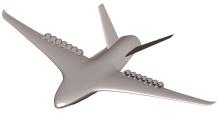
Fig.1
Distributed electric propulsion aircraft
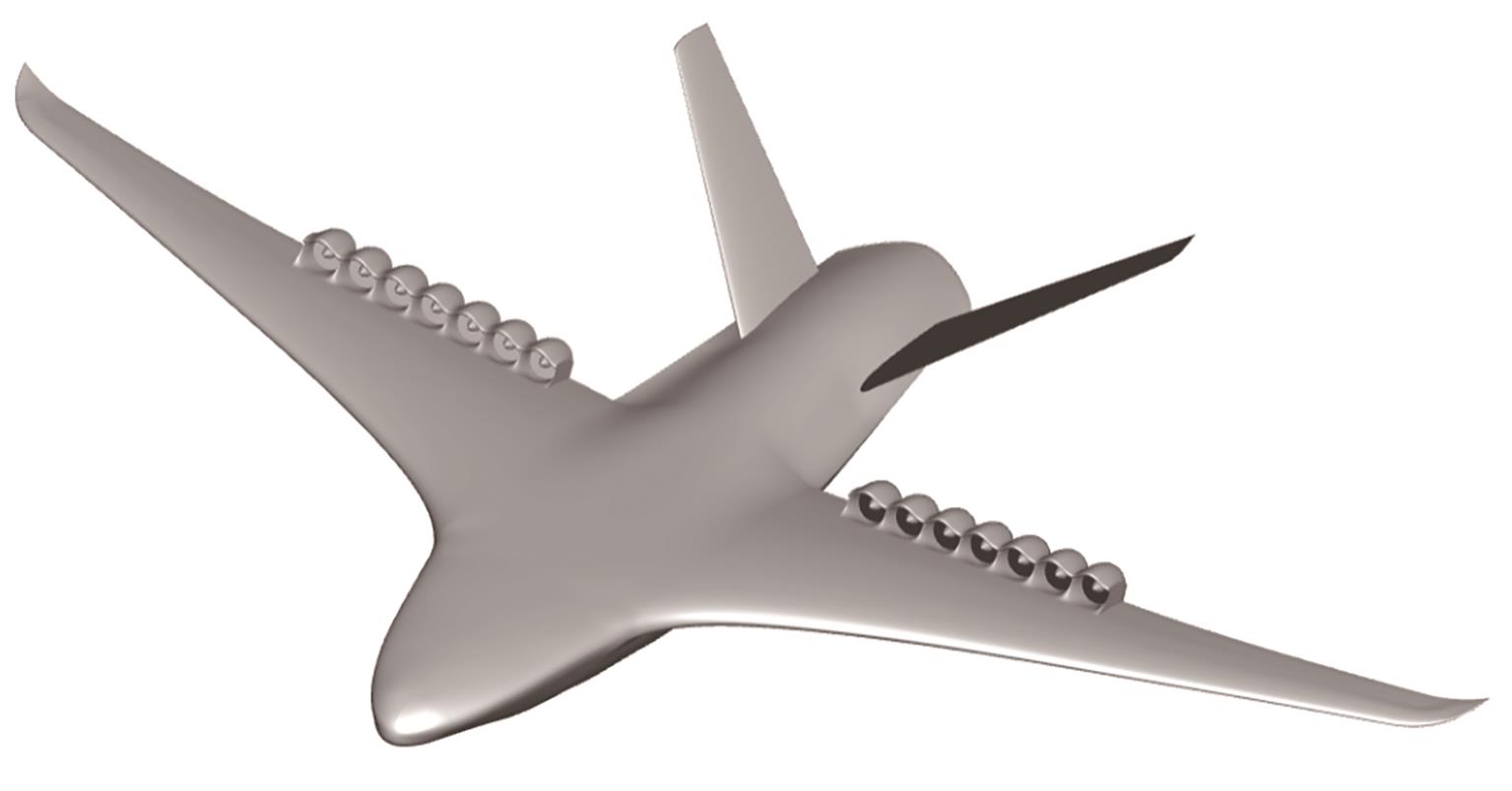

Fig.2
Experimental aircraft installation in wind tunnel
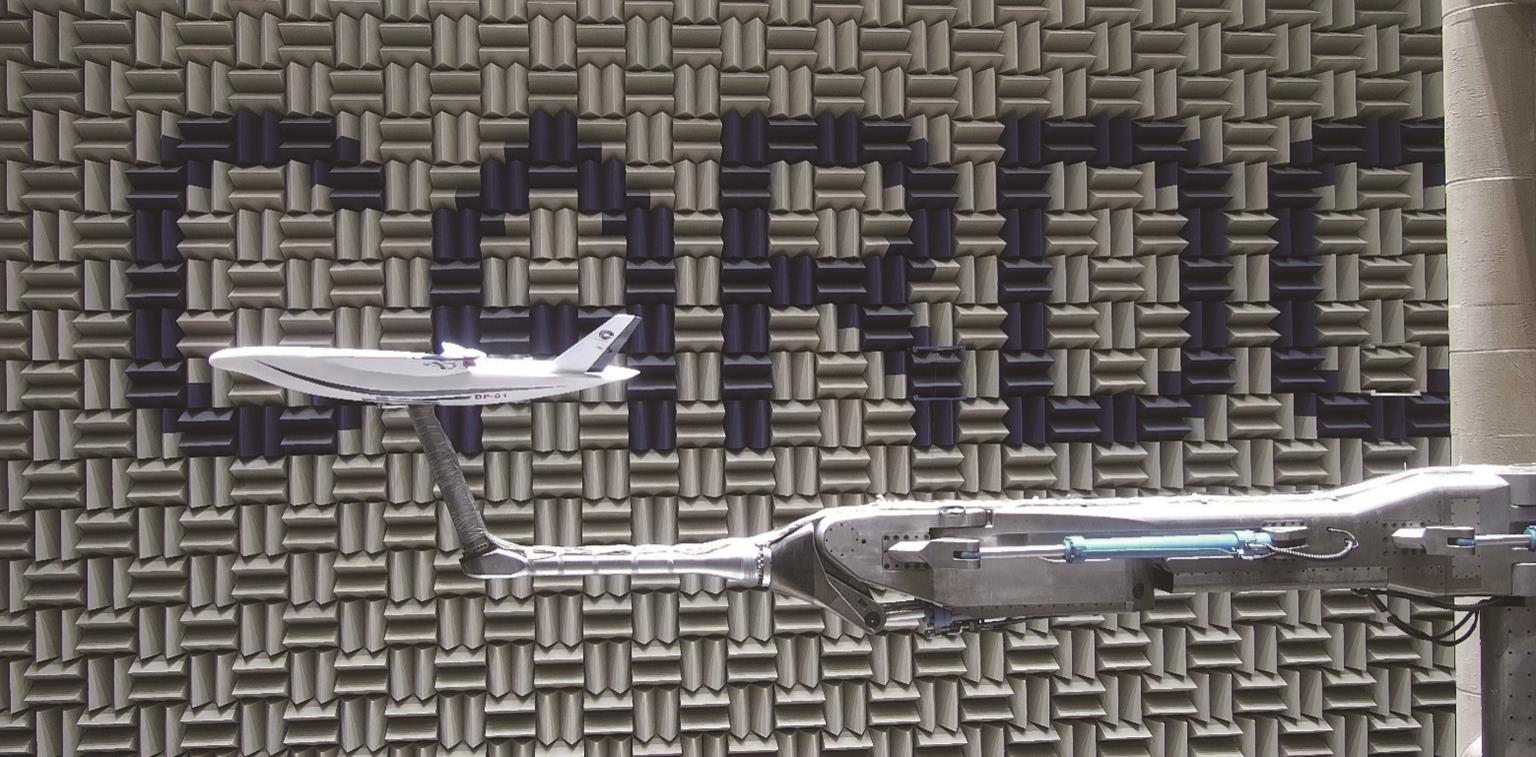
Fig.3
Ground testing site of the ducted fan
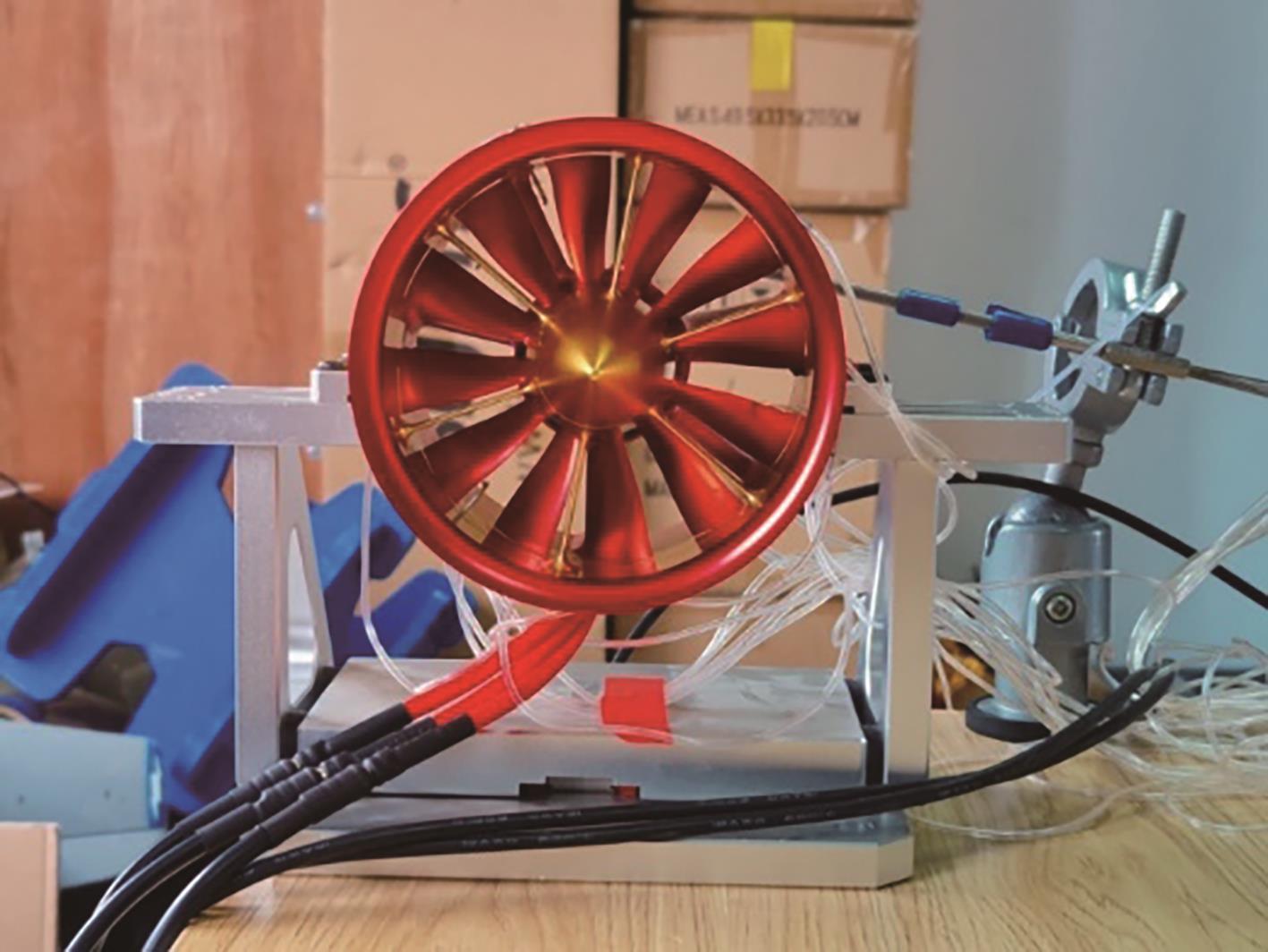

Table 1
Pressure and force measurement of ducted fan
| 入口总压/Pa | 入口静压/Pa | 出口总压/Pa | 出口静压/Pa | 功率/kW | 总推力,风扇盘推力/kg | 流量/(kg·s-1) |
|---|---|---|---|---|---|---|
| 93 652 | 92 702 | 94 631 | 93 631 | 0.42 | 1.14,0.68 | 0.42 |
| 93 673 | 91 766 | 95 601 | 93 573 | 1.06 | 2.25,1.33 | 0.53 |
| 93 656 | 91 014 | 96 342 | 93 501 | 1.62 | 3.11,1.84 | 0.70 |
| 93 662 | 90 553 | 96 827 | 93 463 | 1.97 | 3.61,2.15 | 0.77 |
| 93 665 | 89 800 | 97 601 | 93 402 | 2.68 | 4.57,2.65 | 0.84 |
| 93 658 | 88 753 | 98 569 | 93 311 | 3.55 | 5.67,3.26 | 0.89 |

Fig.4
Boundary conditions of flow inlet and outlet of ducted fans
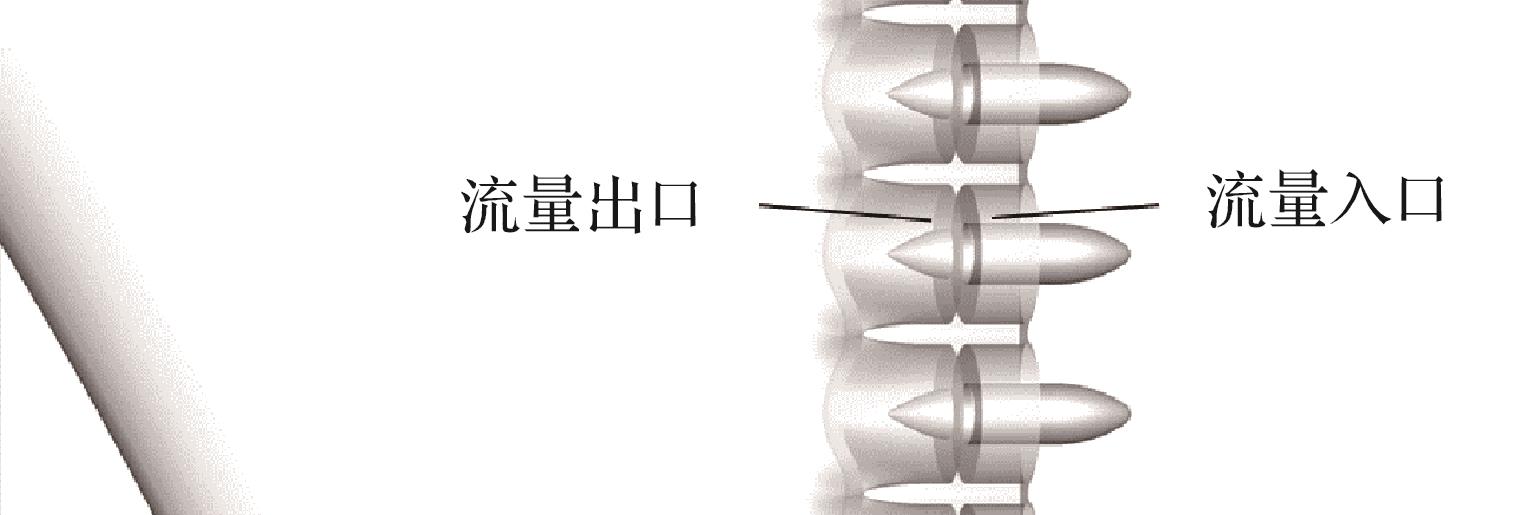
Fig.5
Surface grid of body
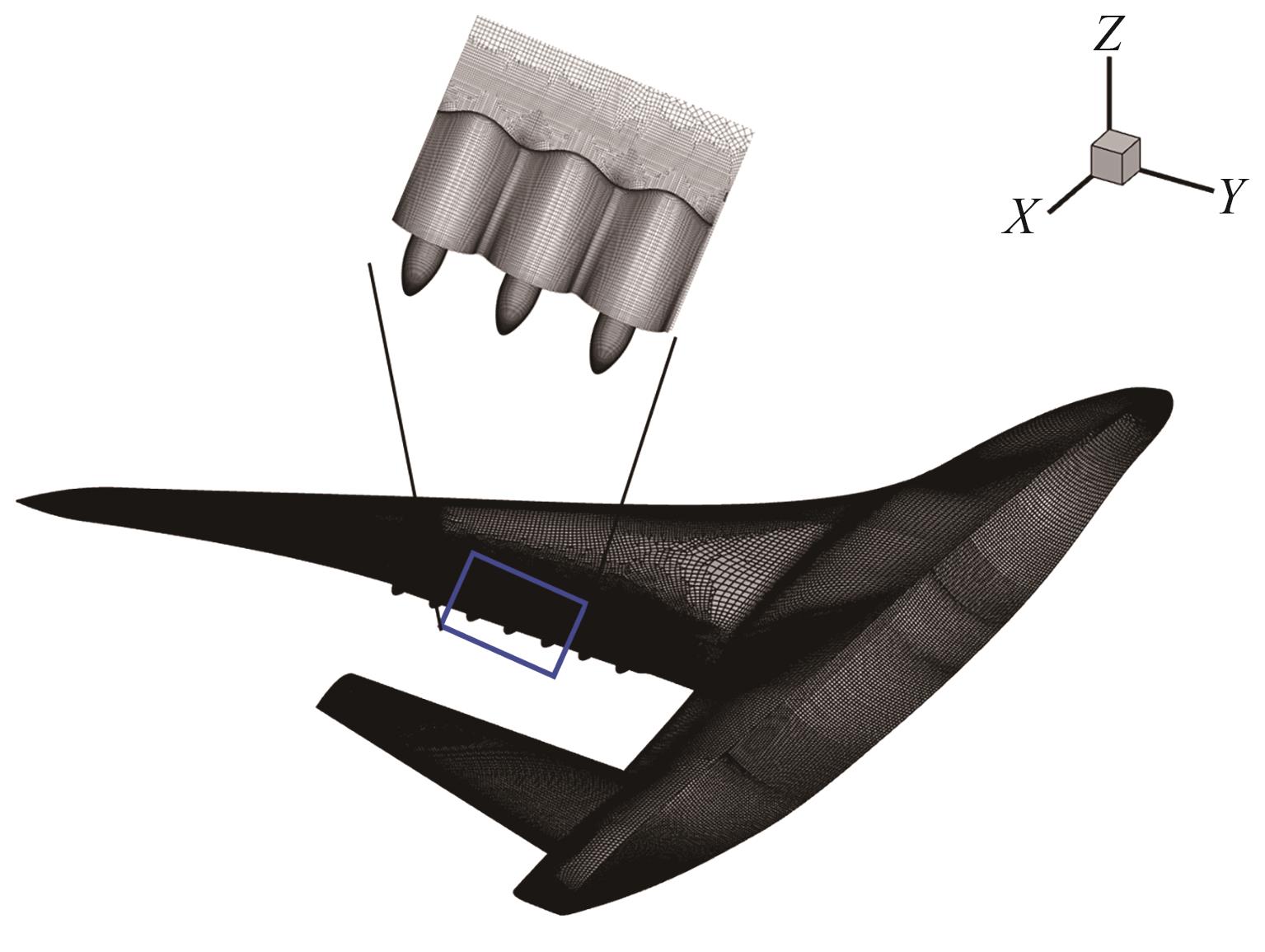
Table 2
Results of mesh independence verification
| 计算状态 | 网格量/104 | 升力系数/% | 阻力系数/% | 俯仰力矩系数/% |
|---|---|---|---|---|
| 4°迎角,3.03 kW | 1 231 | |||
| 1 920 | 1.23 | -0.58 | -0.98 | |
| 2 706 | 1.40 | -0.77 | -1.26 | |
| 计算状态 | 网格量/104 | 升力系数/% | 阻力系数/% | 俯仰力矩系数/% |
| 12°迎角,3.03 kW | 1 231 | |||
| 1 920 | 1.26 | -0.42 | -1.16 | |
| 2 706 | 1.48 | -0.68 | -1.68 |
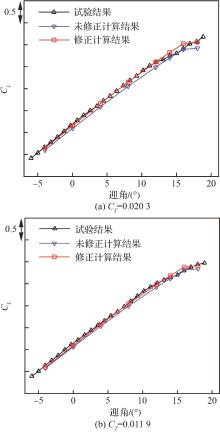
Fig.6
Comparison of lift coefficient of different fan disk thrusts between calculation and experiment under 33 m/s incoming flow condition
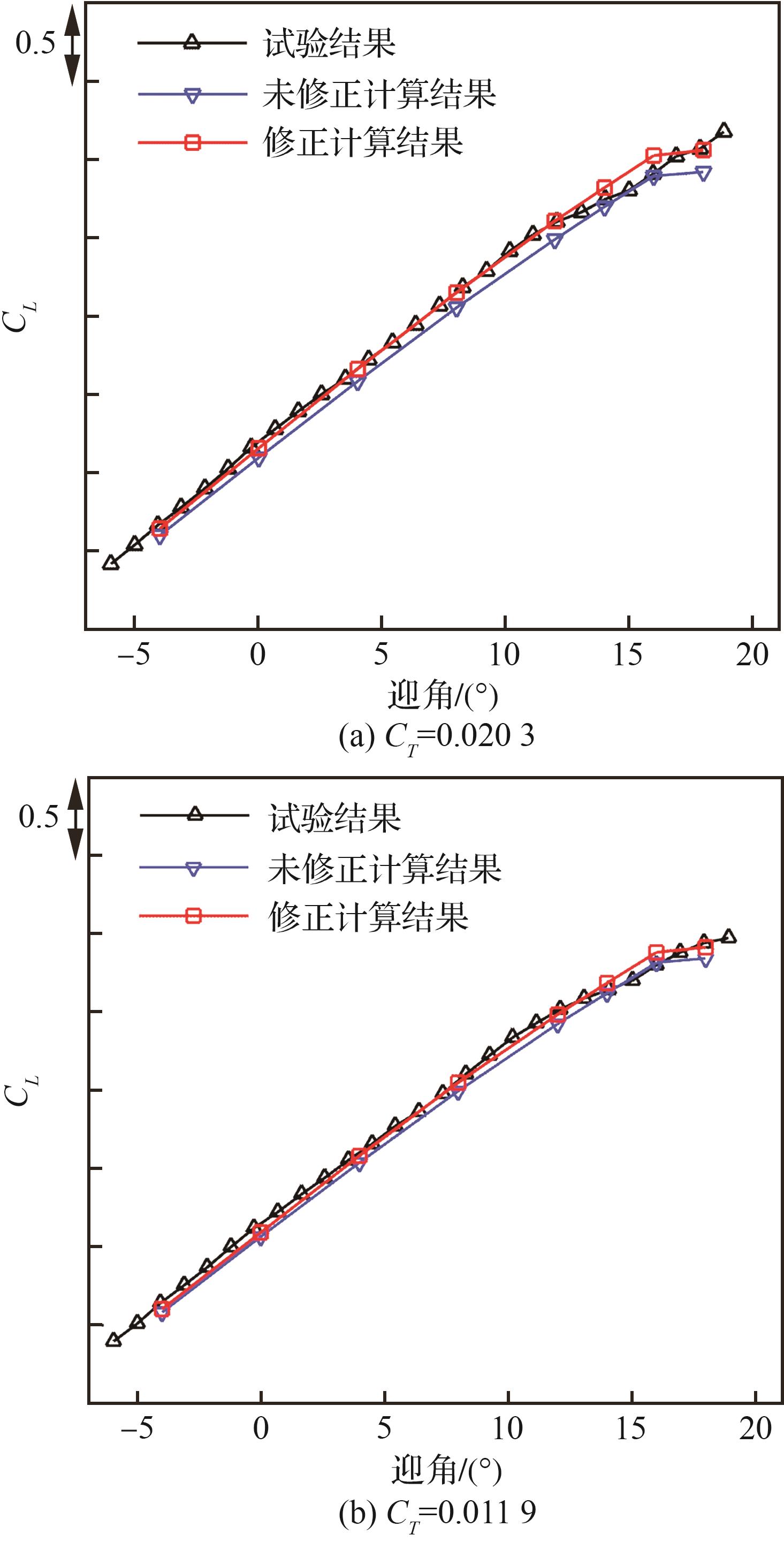
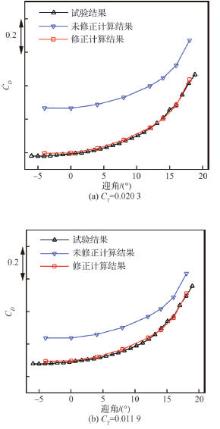
Fig.7
Comparison of drag coefficient of different fan disk thrusts between calculation and experiment under 33 m/s incoming flow condition
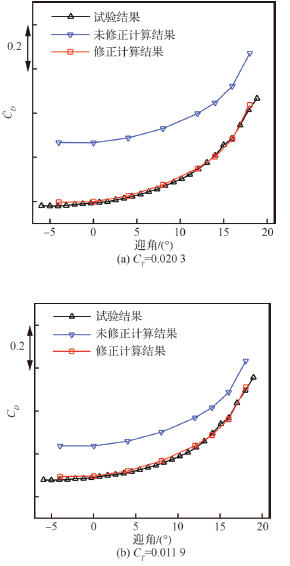
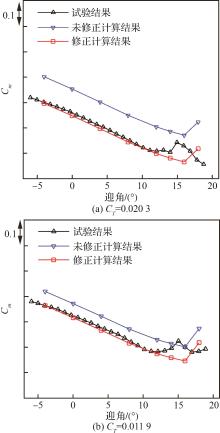
Fig.8
Comparison of pitching moment coefficient of different fan disk thrusts between calculation and experiment under 33 m/s incoming flow condition
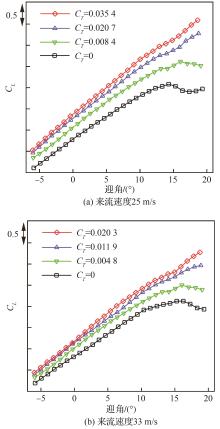
Fig.9
Lift increasing effect of ducted fans at different incoming flow speeds in wind tunnel test
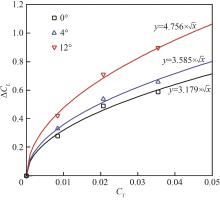
Fig.10
Relationship between fan disk thrust coefficient and lift increase under 25 m/s incoming flow condition and different angles of attack
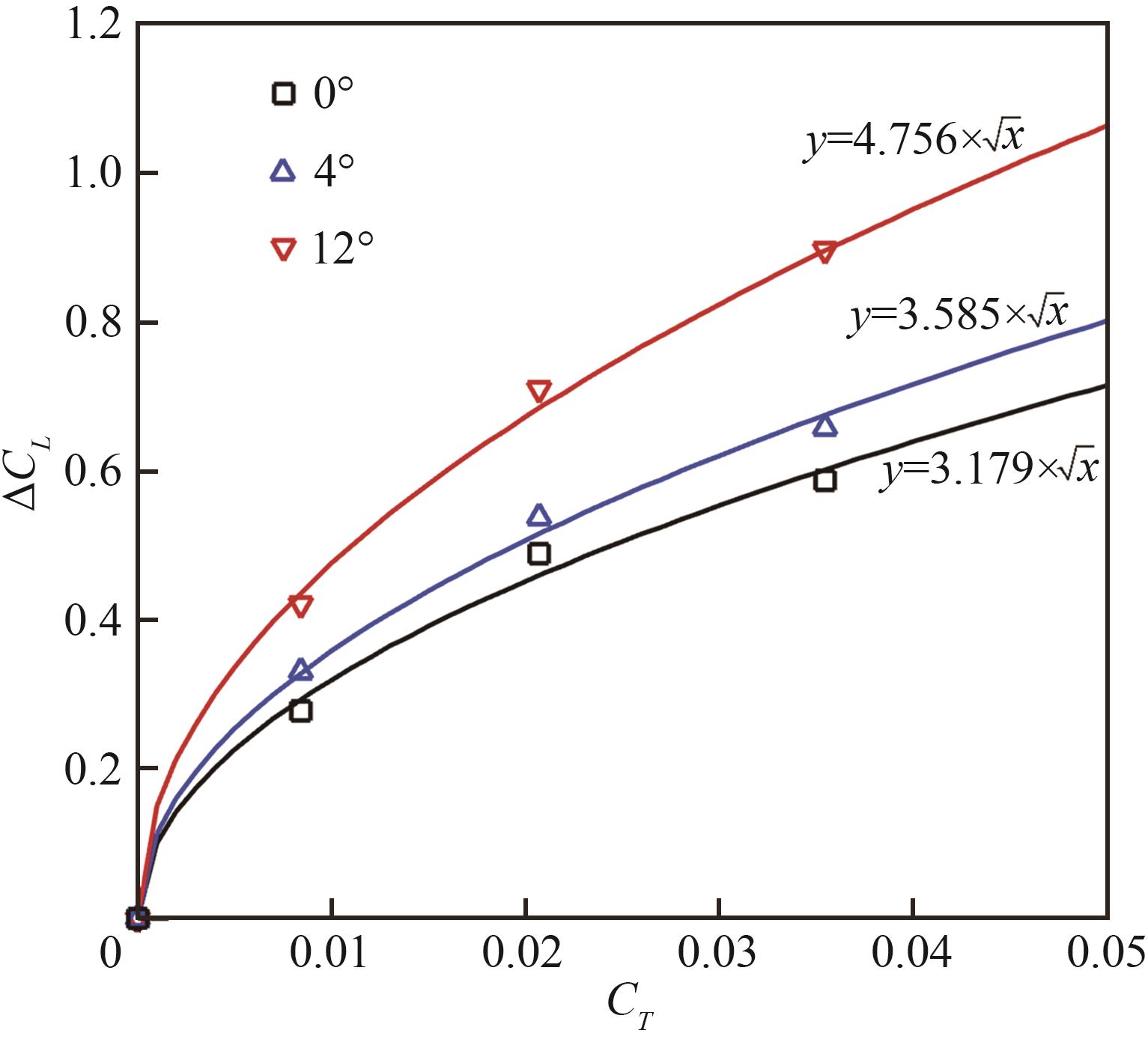
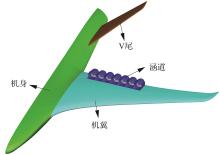
Fig.11
Schematic diagram of aircraft sub-components
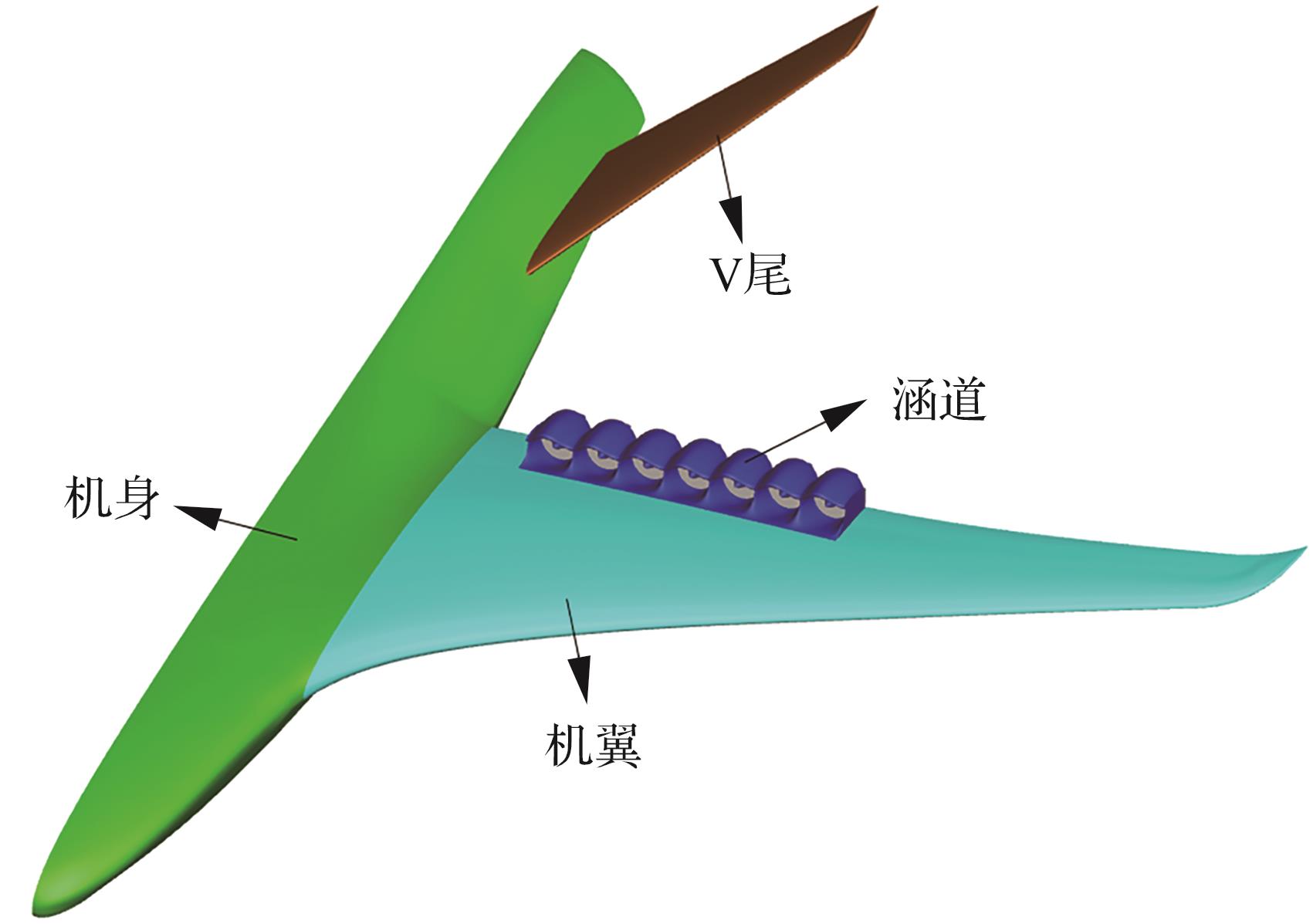
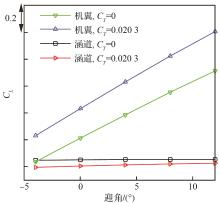
Fig.12
Lift coefficient of aircraft components
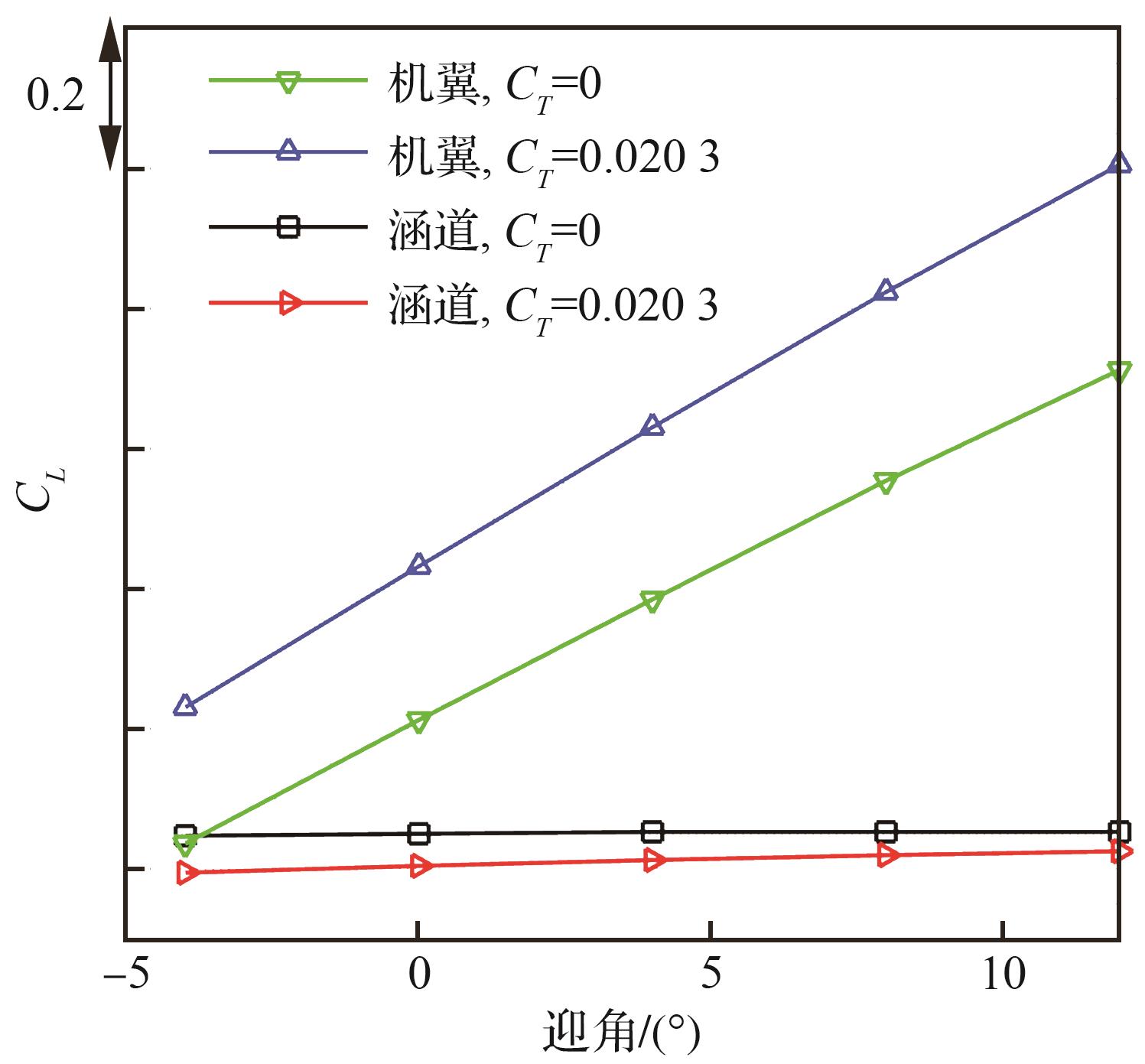
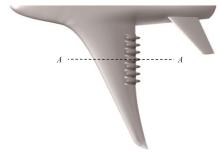
Fig.13
Position of the A-A section
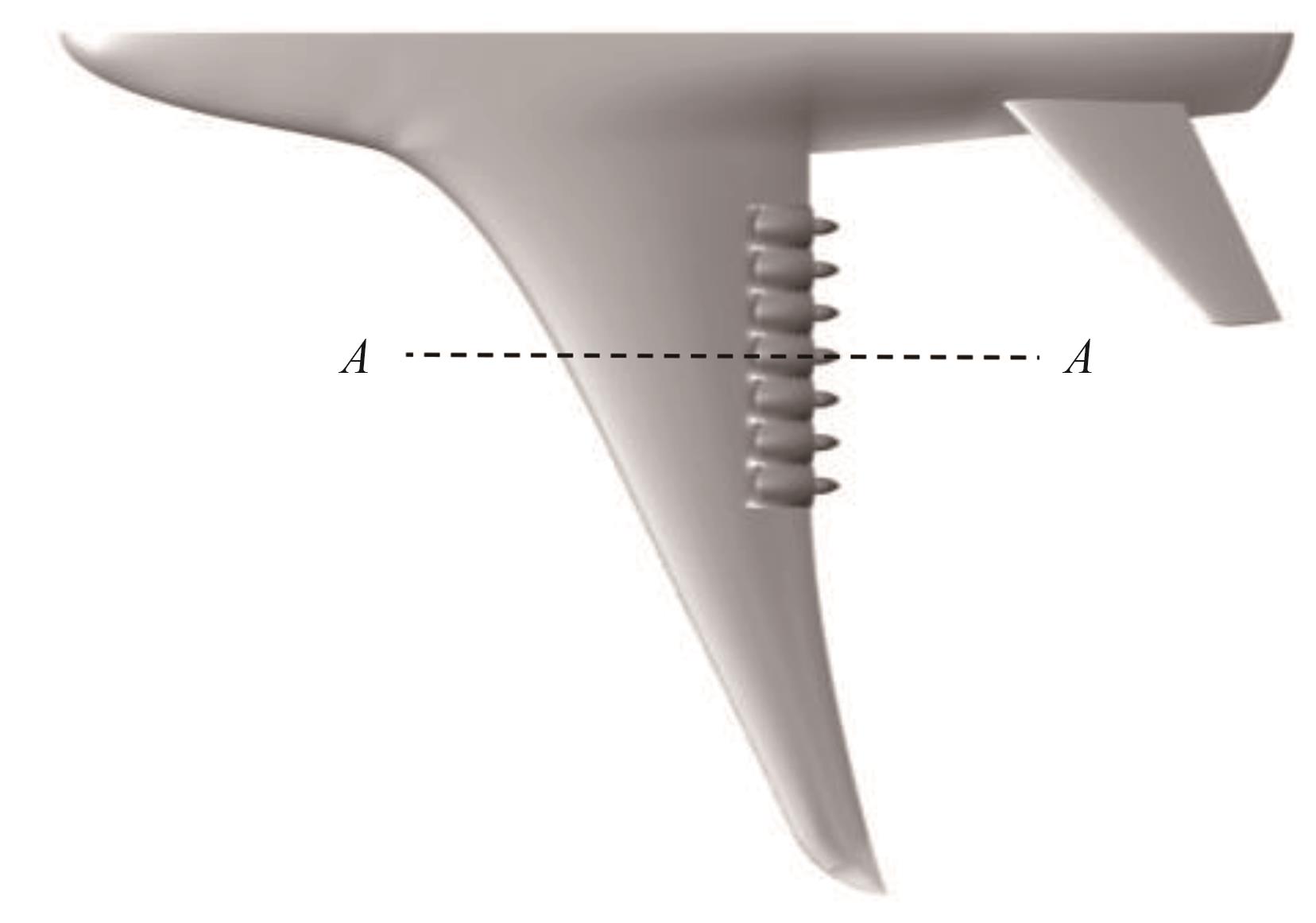
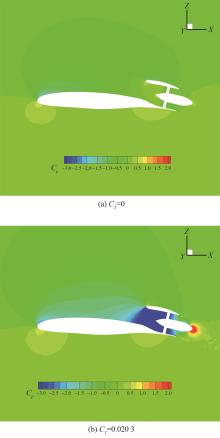
Fig.14
Pressure coefficient contours of aircraft A-A section at 4° angle of attack
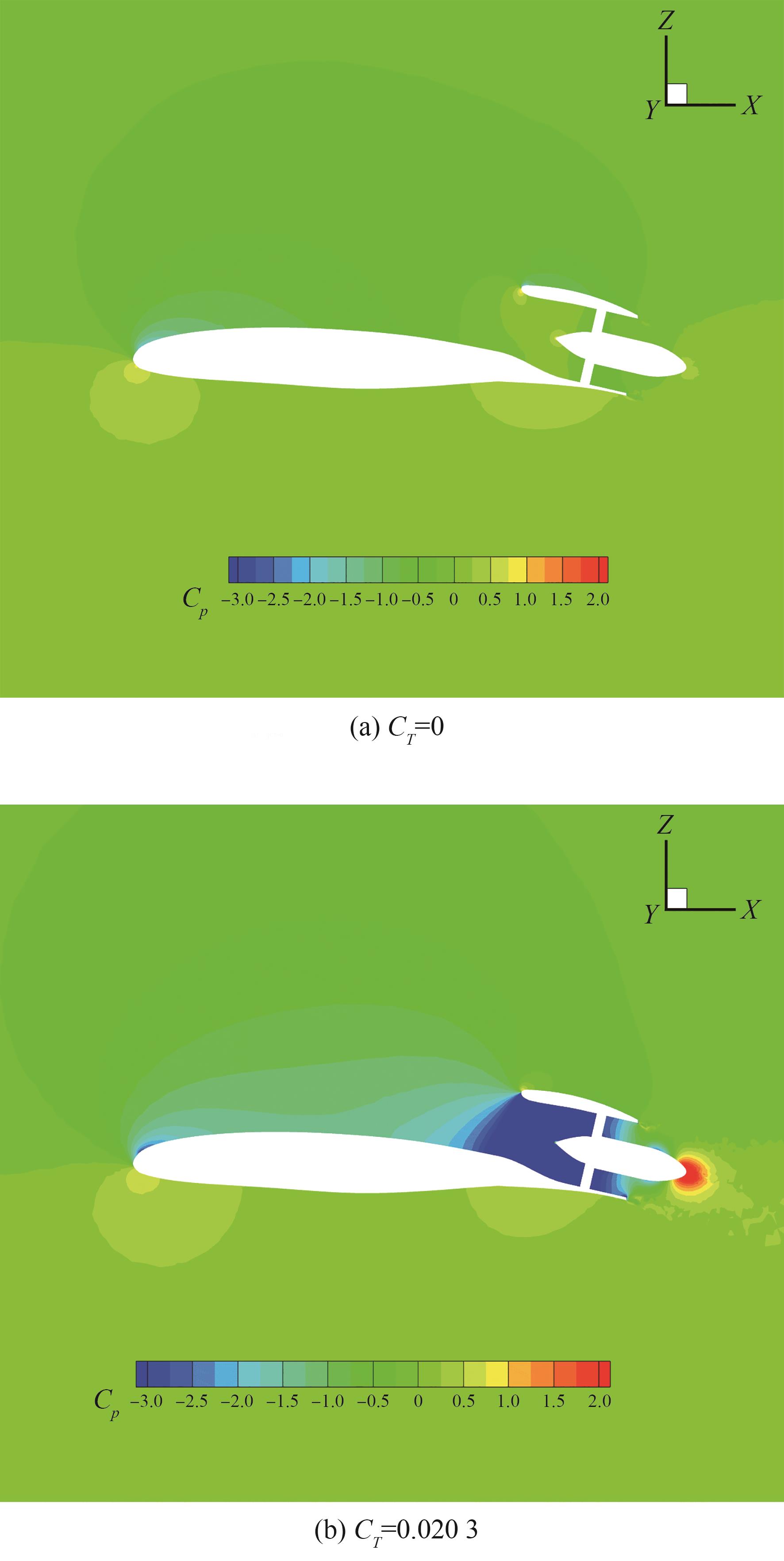
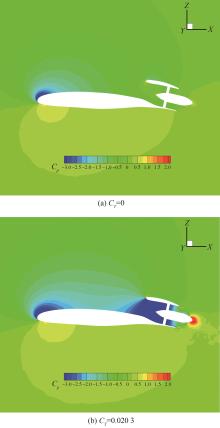
Fig.15
Pressure coefficient contours of aircraft A-A sections at 12° angle of attack
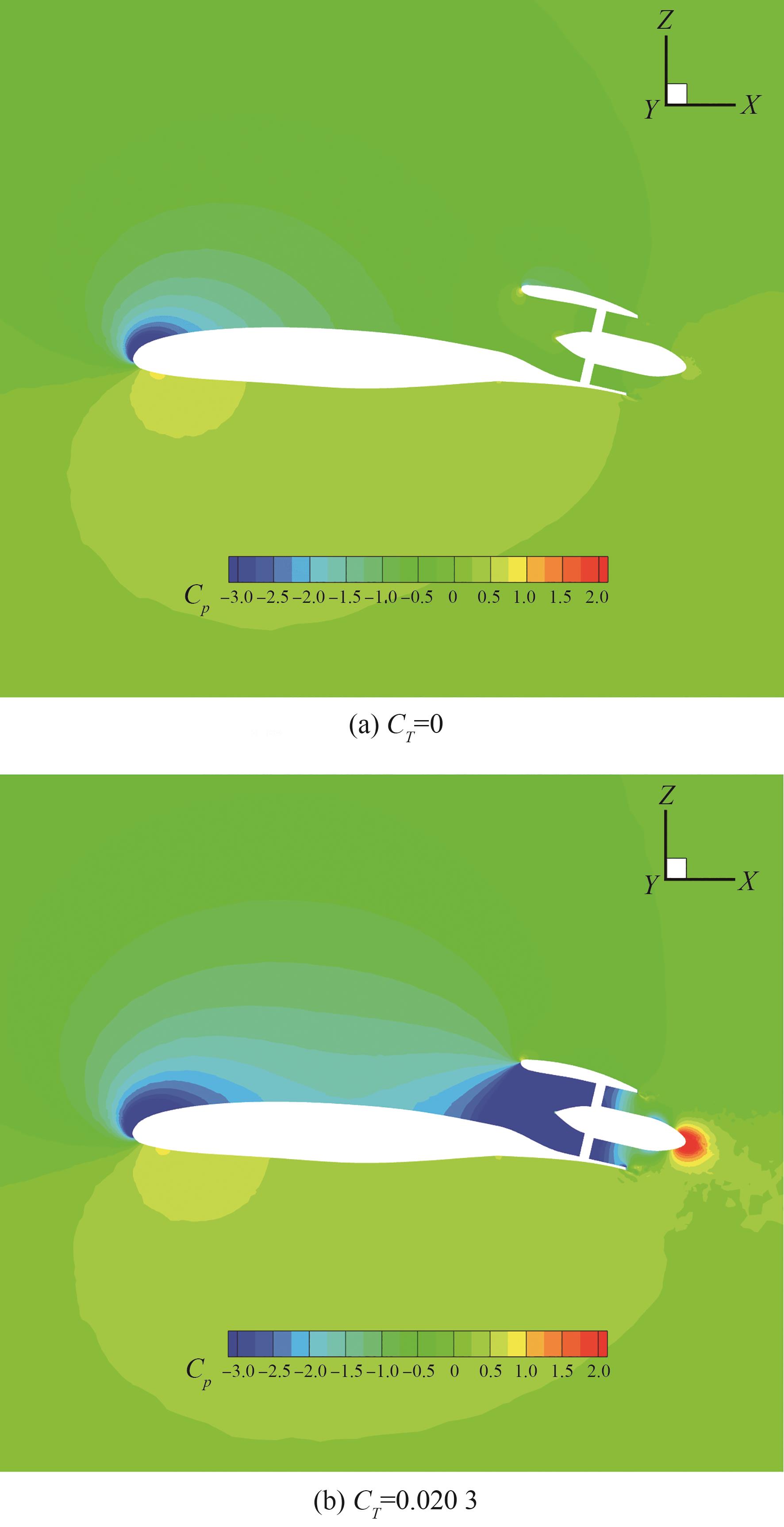
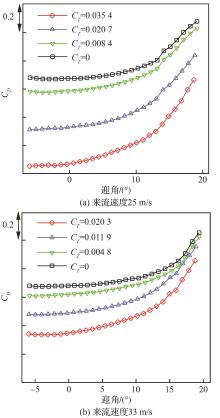
Fig.16
Drag characteristics of the aircraft at different incoming flow velocities in wind tunnel test
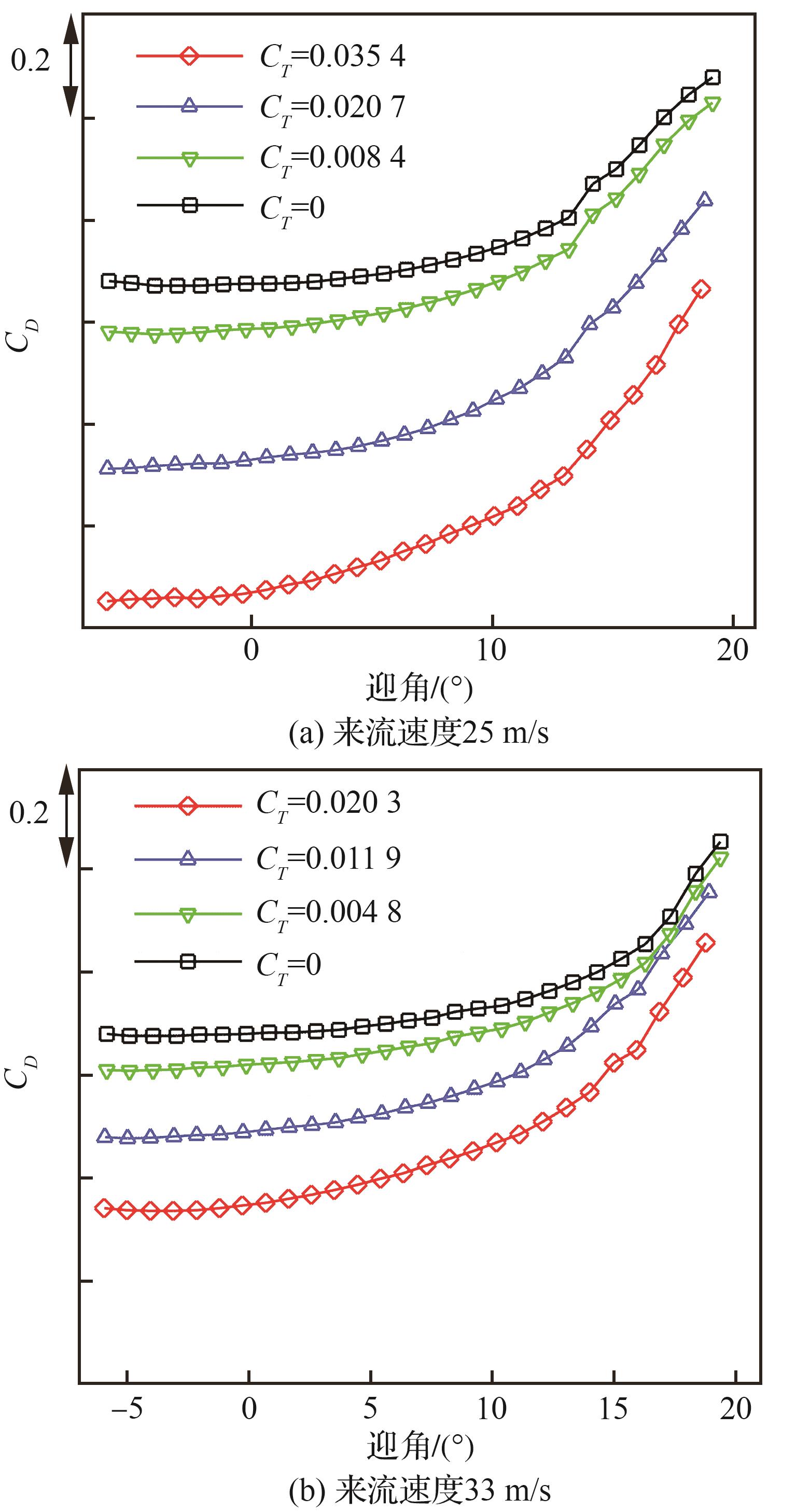
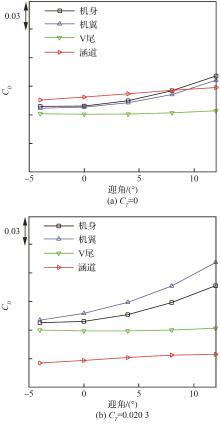
Fig.17
Drag coefficient of aircraft components
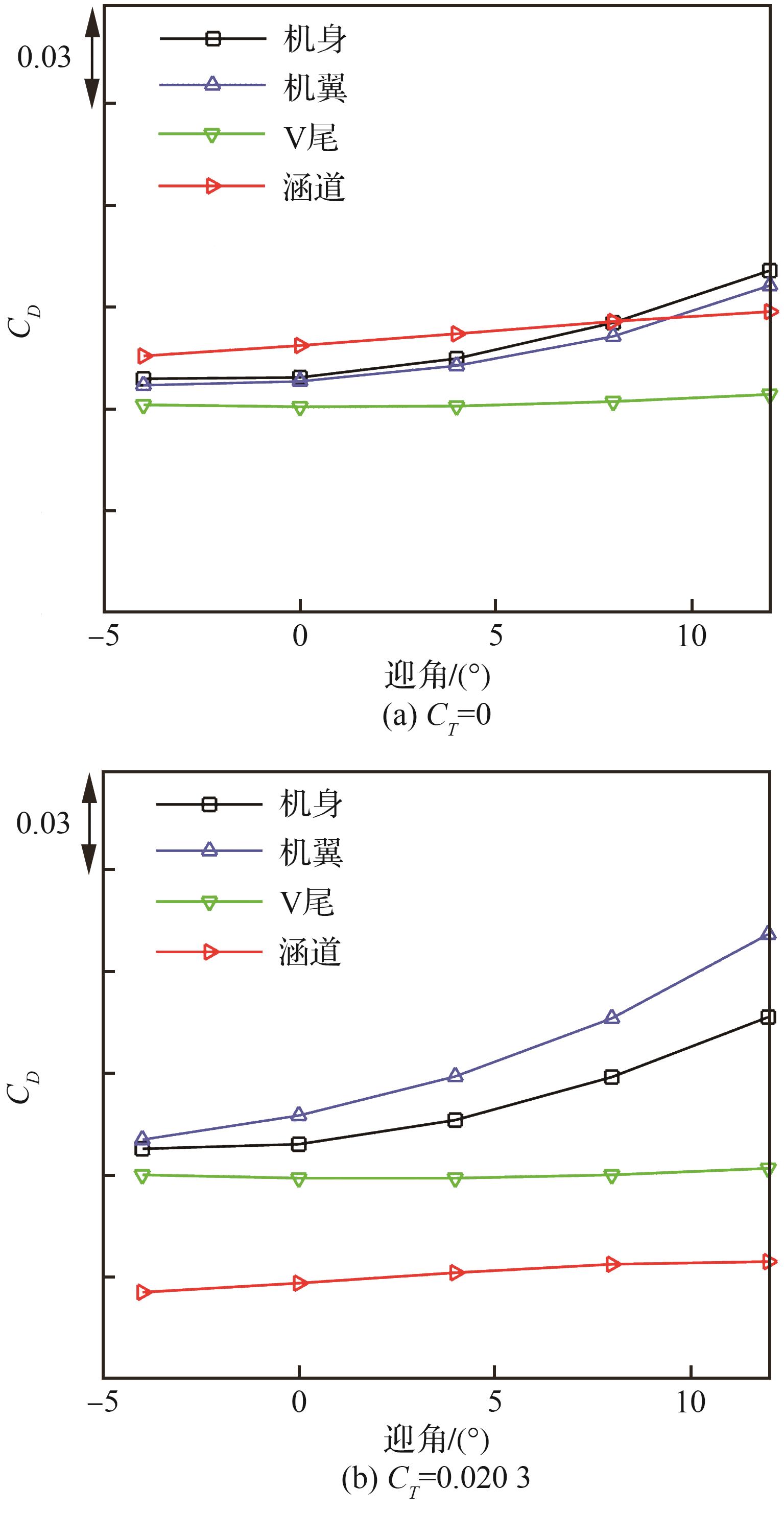
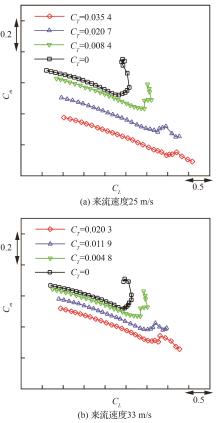
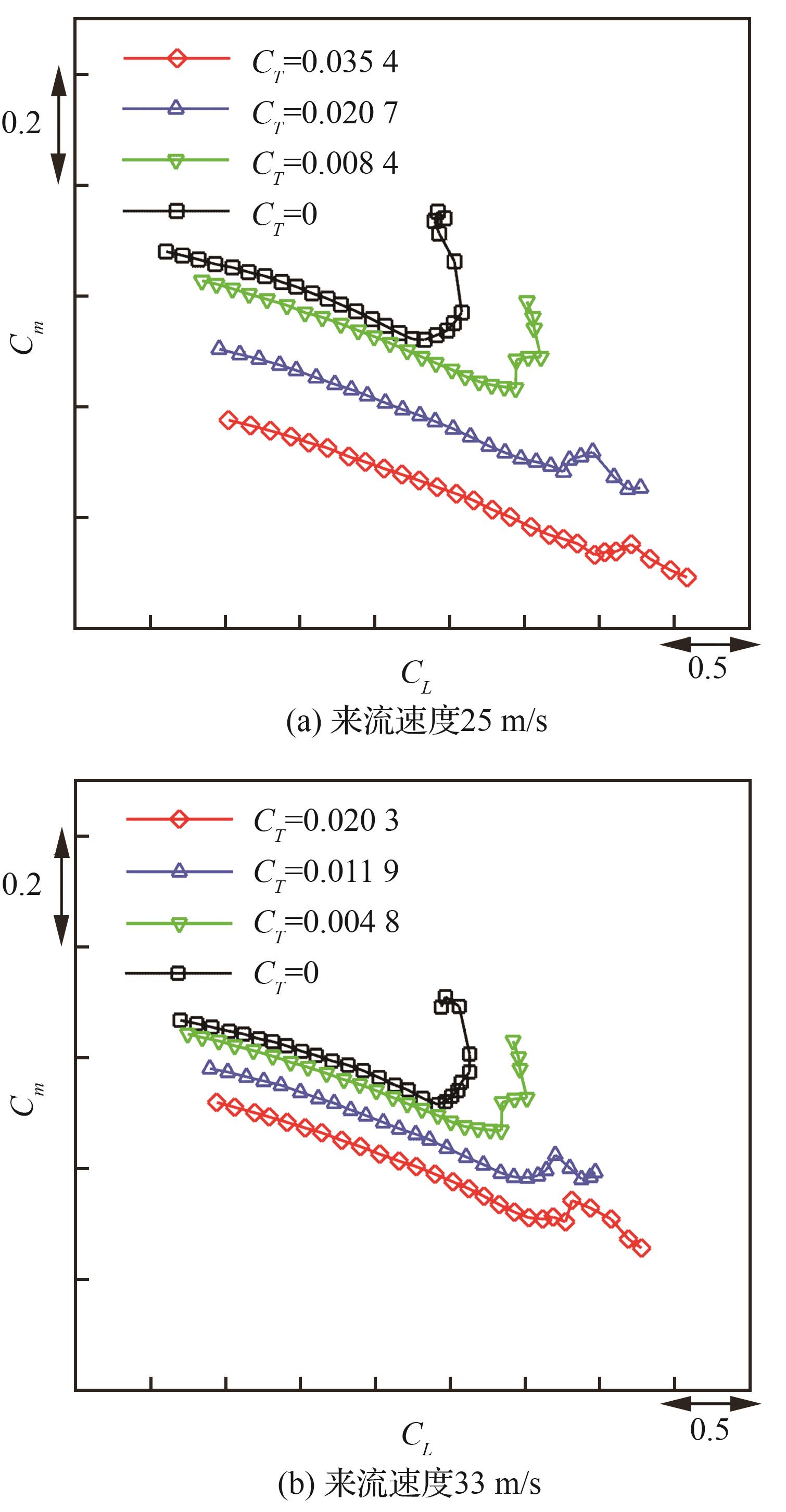
Fig.18
Longitudinal moment characteristics of aircraft at different incoming flow speeds in wind tunnel test
| [1] | KIM H, LIOU M S. Flow simulation and optimal shape design of N3-X hybrid wing body configuration using a body force method[J]. Aerospace Science and Technology, 2017, 71: 661-674. |
| [2] | 黄俊, 杨凤田. 新能源电动飞机发展与挑战[J]. 航空学报, 2016, 37(1): 57-68. |
| HUANG J, YANG F T. Development and challenges of electric aircraft with new energies[J]. Acta Aeronautica et Astronautica Sinica, 2016, 37(1): 57-68 (in Chinese). | |
| [3] | 黄俊. 分布式电推进飞机设计技术综述[J]. 航空学报, 2021, 42(3): 624037. |
| HUANG J. Survey on design technology of distributed electric propulsion aircraft[J]. Acta Aeronautica et Astronautica Sinica, 2021, 42(3): 624037 (in Chinese). | |
| [4] | 王刚, 张彬乾, 张明辉, 等. 翼身融合民机总体气动技术研究进展与展望[J]. 航空学报, 2019, 40(9): 623046. |
| WANG G, ZHANG B Q, ZHANG M H, et al. Research progress and prospect for conceptual and aerodynamic technology of blended-wing-body civil aircraft[J]. Acta Aeronautica et Astronautica Sinica, 2019, 40(9): 623046 (in Chinese). | |
| [5] | LIOU M S, KIM H, LIOU M F. Challenges and progress in aerodynamic design of hybrid wing body aircraft with embedded engines[R]. Washington, D.C.: NASA, 2016. |
| [6] | KIM H D, BROWN G V, FELDER J L. Distributed turboelectric propulsion for hybrid wing body aircraft[C]∥2008 International Powered Lift Conference. London: Royal Aeronautical Social, 2008: 1-11. |
| [7] | STOLL A M, BEVIRT J, MOORE M D, et al. Drag reduction through distributed electric propulsion: AIAA-2014-2851[R]. Reston: AIAA, 2014. |
| [8] | 邓景辉. 电动垂直起降飞行器的技术现状与发展[J]. 航空学报, 2024, 45(5): 529937. |
| DENG J H. Technical status and development of electric vertical take-off and landing aircraft[J]. Acta Aeronautica et Astronautica Sinica, 2024, 45(5): 529937 (in Chinese). | |
| [9] | DEERE K A, VIKEN J K, VIKEN S, et al. Computational analysis of a wing designed for the X-57 distributed electric propulsion aircraft: AIAA-2017-3923[R]. Reston: AIAA, 2017. |
| [10] | MOORE K R, NING A. Distributed electric propulsion effects on existing aircraft through multidisciplinary optimization: AIAA-2018-1652[R]. Reston: AIAA, 2018. |
| [11] | GOHARDANI A S, DOULGERIS G, SINGH R. Challenges of future aircraft propulsion: A review of distributed propulsion technology and its potential application for the all electric commercial aircraft[J]. Progress in Aerospace Sciences, 2011, 47(5): 369-391. |
| [12] | 尤顺, 寇鹏, 姚轩宇, 等. 分布式电推进飞机动力偏航非线性动态逆控制[J]. 航空动力学报, 2024, 39(2): 20220222. |
| YOU S, KOU P, YAO X Y, et al. Nonlinear dynamic inversion for the powered yaw control of distributed electric propulsion aircraft[J]. Journal of Aerospace Power, 2024, 39(2): 20220222 (in Chinese). | |
| [13] | WORTMANN G. Investigating the dynamic response of hybrid-electric propulsion systems for flight control application [D]. Munich: Technische Universitaet Muenchen, 2016. |
| [14] | SCHILTGEN B T, FREEMAN J. Aeropropulsive interaction and thermal system integration within the ECO-150: A turboelectric distributed propulsion airliner with conventional electric machines: AIAA-2016-4064[R]. Reston: AIAA, 2016. |
| [15] | MACHADO L M, CHAU T, DUENSING J. Toward the development of an underwing boundary layer ingesting distributed propulsion system for the SUSAN electrofan: AIAA-2024-1327[R]. Reston: AIAA, 2024. |
| [16] | CECUTTA S. Advanced air mobility testing RoundUp 2023[J]. Aerospace Testing International, 2024, 2024: 18-24. |
| [17] | 韩凯, 白俊强, 邱亚松, 等. 涵道螺旋桨设计变量的影响及其流动机理[J]. 航空学报, 2022, 43(7): 125466. |
| HAN K, BAI J Q, QIU Y S, et al. Aerodynamic performance and flow mechanism of ducted propeller with different design variables[J]. Acta Aeronautica et Astronautica Sinica, 2022, 43(7): 125466 (in Chinese). | |
| [18] | 周芳, 王掩刚, 王思维, 等. 分布式电推进系统中涵道风扇耦合效应的试验与数值研究[J]. 推进技术, 2024, 45(3): 154-164. |
| ZHOU F, WANG Y G, WANG S W, et al. Experimental and numerical study on coupling effect of ducted fan in distributed electric propulsion system[J]. Journal of Propulsion Technology, 2024, 45(3): 154-164 (in Chinese). | |
| [19] | 王科雷, 周洲, 郭佳豪, 等. 分布式动力翼前飞状态动力/气动耦合特性[J]. 航空学报, 2024, 45(2): 128643. |
| WANG K L, ZHOU Z, GUO J H, et al. Propulsive/aerodynamic coupled characteristics of distributed-propulsion-wing during forward flight[J]. Acta Aeronautica et Astronautica Sinica, 2024, 45(2): 128643 (in Chinese). | |
| [20] | MA T L, WANG X S, QIAO N X, et al. A conceptual design and optimization approach for distributed electric propulsion eVTOL aircraft based on ducted-fan wing unit[J]. Aerospace, 2022, 9(11): 690. |
| [21] | POURYOUSSEFI S G, ABDOLALI G, BAKHSHESHIZANJANI M, et al. Experimental investigation of aerodynamic characteristics of an embedded wing-electric ducted fan boundary layer ingestion setup[J]. Journal of the Brazilian Society of Mechanical Sciences and Engineering, 2023, 45(6): 301. |
| [22] | ZHU Z H, XIAO T H, ZHAI C, et al. Numerical study on lift enhancement for upper surface blowing system with powered turbofan engine: AIAA-2019-3167[R]. Reston: AIAA, 2019. |
| [23] | KERHO M F. Aero-propulsive coupling of an embedded, distributed propulsion system: AIAA-2015-3162[R]. Reston: AIAA, 2015. |
| [24] | PERRY A T, ANSELL P J, KERHO M F. Aero-propulsive and propulsor cross-coupling effects on a distributed propulsion system[J]. Journal of Aircraft, 2018, 55(6): 2414-2426. |
| [25] | 张阳, 周洲, 郭佳豪. 分布式涵道风扇喷流对后置机翼的气动性能影响[J]. 航空学报, 2021, 42(9): 224977. |
| ZHANG Y, ZHOU Z, GUO J H. Effects of distributed electric propulsion jet on aerodynamic performance of rear wing[J]. Acta Aeronautica et Astronautica Sinica, 2021, 42(9): 224977 (in Chinese). | |
| [26] | 赵清风, 周洲, 李明浩, 等. 分布式动力翼-诱导翼面推进-气动耦合模型[J]. 航空学报, 2024, 45(10): 129252. |
| ZHAO Q F, ZHOU Z, LI M H, et al. Propulsion/aerodynamic coupling modeling for distributed-propulsion-wing with induced wing configuration[J]. Acta Aeronautica et Astronautica Sinica, 2024, 45(10): 129252 (in Chinese). | |
| [27] | 李卓远, 杨旭东, 孙恺, 等. 分布式涵道风扇气动布局复杂强干扰效应及性能影响[J]. 航空学报, 2025, 46(3): 225-244. |
| LI Z Y, YANG X D, SUN K, et al. Aerodynamic configuration of distributed ducted fan with complex strong interference effect and performance influence[J]. Acta Aeronautica et Astronautica Sinica, 2025, 46(3): 225-244 (in Chinese). | |
| [28] | WICK A T, HOOKER J R, ZEUNE C H. Integrated aerodynamic benefits of distributed propulsion: AIAA-2015-1500[R]. Reston: AIAA, 2015. |
| [29] | 达兴亚, 范召林, 熊能, 等. 分布式边界层吸入推进系统的建模与分析[J]. 航空学报, 2018, 39(7): 122048. |
| DA X Y, FAN Z L, XIONG N, et al. Modeling and analysis of distributed boundary layer ingesting propulsion system[J]. Acta Aeronautica et Astronautica Sinica, 2018, 39(7): 122048 (in Chinese). | |
| [30] | OCHS S S, TILLMAN G, JOO J, et al. CFD-based analysis of boundary layer ingesting propulsion: AIAA-2015-1500[R]. Reston: AIAA, 2015. |
| [31] | MANTIČ-LUGO V, DOULGERIS G, SINGH R. Computational analysis of the effects of a boundary layer ingesting propulsion system in transonic flow[J]. Proceedings of the Institution of Mechanical Engineers, Part G: Journal of Aerospace Engineering, 2013, 227(8): 1215-1232. |
| [1] | Wei SUN, Yuni ZHANG, Ting LIU, Zheyu SHI, Yongfeng LIN. Experiment on influence mechanism of rotor flow on blade-vortex interaction noise [J]. Acta Aeronautica et Astronautica Sinica, 2026, 47(3): 132182-132182. |
| [2] | Yiyan YANG, Anxiang FU, Yuhui WANG, Zhaoyang TIAN, Lei SHI. Aerodynamic design and wind tunnel test on inward-turning inlet of high-speed rocket-augmented ramjet engine [J]. Acta Aeronautica et Astronautica Sinica, 2026, 47(3): 132202-132202. |
| [3] | Feihang NIU, Qiaozhi YIN, Xiaohui WEI, Weihua LIANG, Hong NIE. Buffering method of bio-inspired landing gear based on active compliance control [J]. Acta Aeronautica et Astronautica Sinica, 2026, 47(1): 632001-632001. |
| [4] | Yujie YUAN, Jiashuai LI, Xinyi ZHAO, Yantao WANG. eVTOL scheduling schemes for dynamic demand and variable intervals [J]. Acta Aeronautica et Astronautica Sinica, 2026, 47(1): 631907-631907. |
| [5] | Yang LIU, Yongjie SHI, Guohua XU. Wind tunnel test of rotor aerodynamic interference characteristics in complex low-altitude wind fields [J]. Acta Aeronautica et Astronautica Sinica, 2026, 47(1): 632054-632054. |
| [6] | Tielin MA, Biao JING, Chongwen JIANG, Nanxuan QIAO, Jingcheng FU, Jinwu XIANG. Configuration design and mission capability evaluation of a cross-speed-range waverider-integrated morphing wing [J]. Acta Aeronautica et Astronautica Sinica, 2026, 47(1): 632051-632051. |
| [7] | Lixiong ZHENG, Zhe CHEN, Xin WANG, Qijun ZHAO. Prediction of whirl flutter boundary for tiltrotor aircraft based on BPNN with adaptive data [J]. Acta Aeronautica et Astronautica Sinica, 2025, 46(S1): 732159-732159. |
| [8] | Xiayang ZHANG, Bin LUO, Xi CHEN, Tao YANG. Optimization design of high-efficiency and low-noise rotor layout for quad-tiltrotor aircraft [J]. Acta Aeronautica et Astronautica Sinica, 2025, 46(S1): 732183-732183. |
| [9] | Tao ZHANG, Pan LI, Zixu WANG, Zhenhua ZHU. Design of reward functions for helicopter attitude control in reinforcement learning [J]. Acta Aeronautica et Astronautica Sinica, 2025, 46(S1): 732184-732184. |
| [10] | Yongjie ZHANG, Hongchen WANG, Bo CUI, Jingpiao ZHOU. Research progress in installation environment adaptability of cryogenic liquid hydrogen tanks for hydrogen-powered aircraft [J]. Acta Aeronautica et Astronautica Sinica, 2025, 46(9): 629870-629870. |
| [11] | Yuhan JI, Fancang ZENG, Xiangyu WANG, Yuanyuan WANG. Concept design and performance analysis of hydrogen fuel cell regional aircraft [J]. Acta Aeronautica et Astronautica Sinica, 2025, 46(9): 630613-630613. |
| [12] | Zhouwei FAN, Chuihuan KONG, Ming LIU, Zhaoguang TAN. Sensitivity analysis on key parameters of hybrid hydrogen fuel cell commercial aircraft [J]. Acta Aeronautica et Astronautica Sinica, 2025, 46(9): 631066-631066. |
| [13] | Chuihuan KONG, Zhouwei FAN, Jiahua DAI, Nanbo XU, Zhaoguang TAN, Lijun PAN. Range analysis of civil aircraft using hydrogen energy and electricity [J]. Acta Aeronautica et Astronautica Sinica, 2025, 46(9): 331087-331087. |
| [14] | Kelei WANG, Zhou ZHOU, Minghao LI. Research and experimental validation of loose coupling design method for propulsion wing unit [J]. Acta Aeronautica et Astronautica Sinica, 2025, 46(9): 212-229. |
| [15] | Zuoxu WANG, Xin WANG, Shuang MENG, Lianyu ZHENG. A knowledge-user behavior-driven aircraft assembly tooling design knowledge recommendation approach [J]. Acta Aeronautica et Astronautica Sinica, 2025, 46(9): 431417-431417. |
| Viewed | ||||||
|
Full text |
|
|||||
|
Abstract |
|
|||||
Address: No.238, Baiyan Buiding, Beisihuan Zhonglu Road, Haidian District, Beijing, China
Postal code : 100083
E-mail:hkxb@buaa.edu.cn
Total visits: 6658907 Today visits: 1341All copyright © editorial office of Chinese Journal of Aeronautics
All copyright © editorial office of Chinese Journal of Aeronautics
Total visits: 6658907 Today visits: 1341

 CJA
CJA
