Acta Aeronautica et Astronautica Sinica ›› 2026, Vol. 47 ›› Issue (2): 132179.doi: 10.7527/S1000-6893.2025.32179
• Fluid Mechanics and Flight Mechanics • Previous Articles Next Articles
Haiyang TANG1, Zhefan REN2, Ningli CHEN3( ), Xian YI3, Zhiyong CHEN1
Received:2025-04-29
Revised:2025-05-26
Accepted:2025-06-19
Online:2025-06-30
Published:2025-06-27
Contact:
Ningli CHEN
E-mail:chen04@foxmail.com
Supported by:CLC Number:
Haiyang TANG, Zhefan REN, Ningli CHEN, Xian YI, Zhiyong CHEN. Optimization design of electrothermal anti-icing power distribution based on PLE network[J]. Acta Aeronautica et Astronautica Sinica, 2026, 47(2): 132179.

Fig.1
Framework of optimization design


Fig.2
Sectional division diagram of airfoil surface


Fig.3
Distribution of electric heating elements at leading edge of airfoil

Table 1
Heating element area and operating parameter range
| 加热区域 | 坐标区间/m | 参数取值范围/(kW·m-2) | 对应面积/(10-3 m2) |
|---|---|---|---|
| (-0.004 1,0.012 4) | [0,50] | 5.570 | |
| (-0.021 3,-0.004 6) | [0,50] | 7.630 | |
| (0.012 8,0.025 6) | [0,50] | 7.853 | |
| (-0.031 2,-0.021 7) | [0,50] | 7.529 | |
| (0.026 0, 0.033 7) | [0,50] | 7.574 | |
| (-0.040 1,-0.031 7) | [0,50] | 11.731 | |
| (0.034 1,0.042 0) | [0,50] | 11.182 |
Table 2
Calculation of working conditions
| 参数 | 取值 |
|---|---|
| 来流温度T0/K | 251.15 |
| 来流速度v/(m·s-1) | 89.408 |
| 水滴平均体积直径 | 20 |
| 液态水含量 | 0.31 |
| 压强p/MPa | 0.1 |

Fig.4
Proportion of modal energy and cumulative modal energy in POD


Fig.5
MTL network diagram with hard parameter sharing


Fig.6
Multi-head attention mechanism[28]


Fig. 7
Improved PLE network model

Table 3
Improved parameters of PLE network
| 网络参数 | 设置 |
|---|---|
| 专家网络类型 | 深度神经网络(DNN) |
| 独有专家网络数 | 6 |
| 共享专家网络数 | 3 |
| 专家网络隐藏层 | 4 |
| 特征提取层层数 | 2 |
Table 4
Test set samples
| 序号 | QA/(kW·m-2) | QB/(kW·m-2) | QC/(kW·m-2) | QD/(kW·m-2) | QE/(kW·m-2) | QF/(kW·m-2) | QG/(kW·m-2) |
|---|---|---|---|---|---|---|---|
| 1 | 40.435 | 34.875 | 42.395 | 47.855 | 6.785 | 38.675 | 28.525 |
| 2 | 33.235 | 48.245 | 0.895 | 45.655 | 9.375 | 34.215 | 28.675 |
| 3 | 16.275 | 3.395 | 35.805 | 22.375 | 28.675 | 17.145 | 22.395 |
| 850 | 11.795 | 19.045 | 27.545 | 42.485 | 3.785 | 30.215 | 5.395 |

Fig.8
Comparison between model prediction results and numerical computation results for Test sample 1


Fig.9
Comparison between model prediction results and numerical computation results for Test sample 2

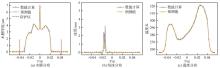
Fig.10
Comparison between model prediction results and numerical computation results for Test sample 3

Table 5
Model evaluation metrics
| 模型 | 结冰厚度误差/m | 水膜厚度误差/m | 温度误差/K | |||
|---|---|---|---|---|---|---|
| 设计1 | 0.052 6 | 0.013 9 | 0.113 9 | 0.038 1 | 1.124 0 | 0.557 1 |
| 设计2 | 0.058 5 | 0.015 4 | 0.136 6 | 0.051 3 | 1.035 4 | 0.471 9 |
| 设计3 | 0.047 5 | 0.011 3 | 0.092 2 | 0.031 7 | 0.865 5 | 0.390 1 |
| 设计4 | 0.046 3 | 0.010 8 | 0.085 9 | 0.030 3 | 0.760 2 | 0.343 3 |
| 设计5 | 0.046 2 | 0.010 6 | 0.087 4 | 0.029 4 | 0.745 1 | 0.332 7 |
| 本文框架 | 0.045 8 | 0.010 7 | 0.084 8 | 0.029 6 | 0.714 9 | 0.326 9 |

Fig.11
Convergence process of optimization for three power distribution designs

Table 6
Comparison of results from three optimizations
| 优化次序 | Ptotal/kW | |||||||
|---|---|---|---|---|---|---|---|---|
| 优化#1 | 8.172 | 13.727 | 29.111 | 27.859 | 5.364 | 13.460 | 14.570 | 0.950 0 |
| 优化#2 | 6.738 | 17.159 | 27.605 | 24.924 | 11.431 | 12.421 | 15.752 | 0.981 4 |
| 优化#3 | 18.093 | 26.149 | 13.488 | 12.359 | 15.173 | 15.675 | 18.389 | 1.003 7 |

Fig.12
Numerical computation verification of Optimization #1 solution results

| [1] | ZHANG Y, ZHANG Y, LUO G, et al. Research progress of aircraft icing hazard and ice wind tunnel test technology[EB/OL]. [2025-03-05]. . |
| [2] | LYNCH F T, KHODADOUST A. Effects of ice accretions on aircraft aerodynamics[J]. Progress in Aerospace Sciences, 2001, 37(8): 669-767. |
| [3] | APPIAH-KUBP. U.S. inflight icing accidents and incidents, 2006 to 2010[D]. Knoxville: The University of Tennessee, 2013. |
| [4] | 刘欣乐, 姜亚楠, 辛荣提, 等. 超疏水电热复合分区防冰策略[J]. 航空学报, 2025, 46(9): 155-165. |
| LIU X L, JIANG Y N, XIN R T, et al. Anti-icing stra-tegy of superhydrophobic electric thermal composite zo-ning[J]. Acta Aeronautica et Astronautica Sinica, 2025, 46(9): 155-165 (in Chinese). | |
| [5] | SILVA G, SILVARES O, ZERBINI E. Airfoil anti-ice system modeling and simulation[C]∥41st Aerospace Sciences Meeting and Exhibit. Reston: AIAA, 2003. |
| [6] | 苏媛, 徐忠达, 吴祯龙. 飞机积冰后若干飞行力学问题综述[J]. 航空动力学报, 2014, 29(8): 1878-1893. |
| SU Y, XU Z D, WU Z L. Overview of several ice accretion effects on aircraft flight dynamics[J]. Journal of Aerospace Power, 2014, 29(8): 1878-1893 (in Chinese). | |
| [7] | WU Y N, ZHANG D L, CHEN W J, et al. Optimization for electric heating power’s distribution on electro-thermal anti-icing surface[C]∥CSAA/IET International Conference on Aircraft Utility Systems. Guiyang: CSAA, 2019: 779-784. |
| [8] | ARIZMENDI GUTIÉRREZ B, DELLA NOCE A, GALLIA M, et al. Optimization of a thermal ice protection system by means of a genetic algorithm[M]∥Bioinspired optimization methods and their applications. Cham: Springer International Publishing, 2020: 189-200. |
| [9] | 刘宗辉, 卜雪琴, 林贵平, 等. 基于PHengLEI的非稳态电热除冰过程仿真[J]. 空气动力学学报, 2023, 41(2): 53-63. |
| LIU Z H, BU X Q, LIN G P, et al. Simulation of unsteady electrothermal deicing process based on PHengLEI[J]. Acta Aerodynamica Sinica, 2023, 41(2): 53-63 (in Chinese). | |
| [10] | GUO X F, YANG Q, ZHENG H R, et al. Optimization of power distribution for electrothermal anti-icing systems by differential evolution algorithm[J]. Applied Thermal Engineering, 2023, 221: 119875. |
| [11] | POURBAGIAN M, HABASHI W G. Surrogate-based optimization of electrothermal wing anti-icing systems[J]. Journal of Aircraft, 2013, 50(5): 1555-1563. |
| [12] | POURBAGIAN M, HABASHI W. Power and design optimization of electro-thermal anti-icing systems via FENSAP-ICE[C]∥The 4th AIAA Atmospheric and Space Environments Conference. Reston: AIAA, 2012. |
| [13] | NIU J, SANG W, QIU A, et al. An optimization of anti-icing chamber based on POD and Kriging[EB/OL]. [2025-04-29]. . |
| [14] | 杨倩, 郑皓冉, 程显达, 等. 基于引气控制的热气防冰优化设计方法[J]. 航空学报, 2023, 44(S2): 729285. |
| YANG Q, ZHENG H R, CHENG X D, et al. Optimization design method for hot air anti-icing system based on bleed air control[J]. Acta Aeronautica et Astronautica Sinica, 2023, 44(S2): 729285 (in Chinese). | |
| [15] | 杨倩, 郭晓峰, 李芹, 等. 基于POD和代理模型的热气防冰性能预测方法[J]. 航空学报, 2023, 44(1): 626992. |
| YANG Q, GUO X F, LI Q, et al. Hot air anti-icing performance estimation method based on POD and surrogate model[J]. Acta Aeronautica et Astronautica Sinica, 2023, 44(1): 626992 (in Chinese). | |
| [16] | 柳家齐, 陈荣钱, 楼锦华, 等. 基于深度学习的高速直升机旋翼翼型气动优化设计[J]. 航空学报, 2024, 45(9): 529828. |
| LIU J Q, CHEN R Q, LOU J H, et al. Aerodynamic shape optimization of high-speed helicopter rotor airfoil based on deep learning[J]. Acta Aeronautica et Astronautica Sinica, 2024, 45(9): 529828 (in Chinese). | |
| [17] | LIU J, KE P. Aero-engine inlet vane structure optimization for anti-icing with hot air film using neural network and genetic algorithm: 2019-01-2021[EB/OL]. [2025-02-05]. . |
| [18] | 屈经国, 彭博, 易贤, 等. 基于深度神经网络的任意翼型结冰预测方法[J]. 空气动力学学报, 2023, 41(7): 48-55. |
| QU J G, PENG B, YI X, et al. Icing prediction method for arbitrary airfoil using deep neural networks[J]. Acta Aerodynamica Sinica, 2023, 41(7): 48-55 (in Chinese). | |
| [19] | 何磊, 钱炜祺, 易贤, 等. 基于转置卷积神经网络的翼型结冰冰形图像化预测方法[J]. 国防科技大学学报, 2021, 43(3): 98-106. |
| HE L, QIAN W Q, YI X, et al. Graphical prediction method of airfoil ice shape based on transposed convolution neural networks[J]. Journal of National University of Defense Technology, 2021, 43(3): 98-106 (in Chinese). | |
| [20] | WANG X, KOU J Q, ZHANG W W. Unsteady aerodynamic prediction for iced airfoil based on multi-task lear-ning[J]. Physics of Fluids, 2022, 34(8): 087117. |
| [21] | 陈宁立, 易贤, 王强, 等. NNW-ICE软件的三维结冰模型及精度验证[J]. 航空学报, 2024, 45(12): 129188. |
| CHEN N L, YI X, WANG Q, et al. Three-dimensional model for ice accretion in NNW-ICE software and validation of its precision[J]. Acta Aeronautica et Astronautica Sinica, 2024, 45(12): 129188 (in Chinese). | |
| [22] | CHEN N L, YI X, WANG Q, et al. Numerical study on wind-driven thin water film runback on an airfoil[J]. AIAA Journal, 2023, 61(6): 2517-2525. |
| [23] | CHEN N L, YI X, WANG Q, et al. An analysis of heat transfer inside the ice layer and solid wall during ice accretion[J]. International Communications in Heat and Mass Transfer, 2022, 137: 106276. |
| [24] | ROWLEY C W. Model reduction for fluids, using ba-lanced proper orthogonal decomposition[J]. International Journal of Bifurcation and Chaos, 2005, 15(3): 997-1013. |
| [25] | BERKOOZ G, HOLMES P, LUMLEY J L. The proper orthogonal decomposition in the analysis of turbulent flows[J]. Annual Review of Fluid Mechanics, 1993, 25: 539-575. |
| [26] | 张钰, 刘建伟, 左信. 多任务学习[J]. 计算机学报, 2020, 43(7): 1340-1378. |
| ZHANG Y, LIU J W, ZUO X. Survey of multi-task learning[J]. Chinese Journal of Computers, 2020, 43(7): 1340-1378 (in Chinese). | |
| [27] | ZHANG Y, YANG Q. A survey on multi-task learning[J]. IEEE Transactions on Knowledge and Data Engineering, 2022, 34(12): 5586-5609. |
| [28] | VASWANI A, SHAZEER N, PARMAR N, et al. Attention is all you need[DB/OL]. arXiv preprint: 1706.03762, 2024. |
| [29] | MISRA I, SHRIVASTAVA A, GUPTA A, et al. Cross-stitch networks for multi-task learning[EB/OL]. [2025-02-05]. . |
| [30] | TANG H Y, LIU J N, ZHAO M, et al. Progressive layered extraction (PLE): A novel multi-task learning (MTL) model for personalized recommendations[C]∥Fourteenth ACM Conference on Recommender Systems. New York: ACM, 2020: 269-278. |
| [31] | 赵志鹏. 基于改进深度多任务学习的滚动轴承故障预测方法研究[D]. 成都: 电子科技大学, 2023. |
| ZHAO Z P. Research on rolling bearing fault prediction method based on improved deep multi-task learning[D]. Chengdu: University of Electronic Science and Techno-logy of China, 2023 (in Chinese). | |
| [32] | 张大海, 孙锴, 倪平浩. 基于耦合关系挖掘及渐进式分层提取多任务学习网络的风-光-荷短期预测[J]. 电网技术, 2023, 47(9): 3537-3547. |
| ZHANG D H, SUN K, NI P H. Wind-photovoltaic-load short-term forecast based on coupling relation mining and progressive layered extraction of multi-task lear-ning network[J]. Power System Technology, 2023, 47(9): 3537-3547 (in Chinese). | |
| [33] | MORENCY F, TEZOK F, PARASCHIVOIU I. Anti-icing system simulation using CANICE[J]. Journal of Aircraft, 1999, 36(6): 999-1006. |
| [1] | Kai CUI, Zesen WANG, Yao XIAO, Zhongwei TIAN, Guangli LI, Siyuan CHANG. A novel wide-speed-range configuration based on high-pressure capturing wing concept and its transonic aerodynamic characteristics [J]. Acta Aeronautica et Astronautica Sinica, 2026, 47(1): 632102-632102. |
| [2] | Yang ZHANG, Zhonghua HAN, Keshi ZHANG, Ke SONG, Wenping SONG. Aerodynamic design optimization of hypersonic vehicles considering lift matching [J]. Acta Aeronautica et Astronautica Sinica, 2026, 47(1): 632064-632064. |
| [3] | Tielin MA, Biao JING, Chongwen JIANG, Nanxuan QIAO, Jingcheng FU, Jinwu XIANG. Configuration design and mission capability evaluation of a cross-speed-range waverider-integrated morphing wing [J]. Acta Aeronautica et Astronautica Sinica, 2026, 47(1): 632051-632051. |
| [4] | Xiayang ZHANG, Bin LUO, Xi CHEN, Tao YANG. Optimization design of high-efficiency and low-noise rotor layout for quad-tiltrotor aircraft [J]. Acta Aeronautica et Astronautica Sinica, 2025, 46(S1): 732183-732183. |
| [5] | Pengqian YANG, Yutong CHEN, Junhui LIU, Jiehao YANG, Jiayuan SHAN, Shijun SUN. Aerodynamic and operational characteristics analysis for tandem wing cargo UAV at high angle of attack [J]. Acta Aeronautica et Astronautica Sinica, 2025, 46(9): 131056-131056. |
| [6] | Kelei WANG, Zhou ZHOU, Minghao LI. Research and experimental validation of loose coupling design method for propulsion wing unit [J]. Acta Aeronautica et Astronautica Sinica, 2025, 46(9): 212-229. |
| [7] | Feng LIU, Sen YANG, Zhenpeng WEI. Variable chord wing based on composite material elastic periodic structure and pre-stressed skin [J]. Acta Aeronautica et Astronautica Sinica, 2025, 46(7): 230966-230966. |
| [8] | Yihao XU, Pengcheng DONG, Junchao ZHENG, Chunqing TAN, Hailong TANG. Overall performance optimization method of adaptive cycle propulsion system [J]. Acta Aeronautica et Astronautica Sinica, 2025, 46(7): 130987-130987. |
| [9] | Yifan YANG, Xiao WANG. Enhanced hybrid vortex particle method for aerodynamic analysis of tiltrotor rotor/wing interactions [J]. Acta Aeronautica et Astronautica Sinica, 2025, 46(7): 131040-131040. |
| [10] | Guocheng YAN, Honglun WANG, Yanxiang WANG, Yuebin LUN, Junfan ZHU. Prescribed performance anti-swing control for wing rotation process of UAV towed aerial recovery [J]. Acta Aeronautica et Astronautica Sinica, 2025, 46(24): 331840-331840. |
| [11] | Anping ZHANG, Hao DONG. UAV swarms and their takeoff method for high-end warfare [J]. Acta Aeronautica et Astronautica Sinica, 2025, 46(22): 331034-331034. |
| [12] | Luofeng WANG, Renliang CHEN, Rui FENG. Cross-medium rigid-flexible coupled modeling and trim analysis of helicopter mine-clearing system [J]. Acta Aeronautica et Astronautica Sinica, 2025, 46(22): 231900-231900. |
| [13] | Chao YAN, Zexu ZHANG, Hutao CUI, Kai ZHANG, Jingzong LIU. Predefined-time affine formation maneuvering control for fixed-wing UAV swarm [J]. Acta Aeronautica et Astronautica Sinica, 2025, 46(22): 331824-331824. |
| [14] | Yan WANG, Liang CHEN, Yongming CAI, Lilong LUO. Optimization method for primary load-bearing structure of blended wing body aircraft using reduced-dimensional models [J]. Acta Aeronautica et Astronautica Sinica, 2025, 46(21): 532406-532406. |
| [15] | Yanjie LIU, Mingqiang LI, Xuan GUO, Yanfei SU, Bintuan WANG, Yingju XUE. Optimization design of high-load-bearing opening structures in special configuration aircraft [J]. Acta Aeronautica et Astronautica Sinica, 2025, 46(21): 532447-532447. |
| Viewed | ||||||
|
Full text |
|
|||||
|
Abstract |
|
|||||
Address: No.238, Baiyan Buiding, Beisihuan Zhonglu Road, Haidian District, Beijing, China
Postal code : 100083
E-mail:hkxb@buaa.edu.cn
Total visits: 6658907 Today visits: 1341All copyright © editorial office of Chinese Journal of Aeronautics
All copyright © editorial office of Chinese Journal of Aeronautics
Total visits: 6658907 Today visits: 1341

 CJA
CJA
