Acta Aeronautica et Astronautica Sinica ›› 2025, Vol. 46 ›› Issue (20): 531592.doi: 10.7527/S1000-6893.2025.31592
• Special Issue: Key Technologies for Supersonic Civil Aircraft • Previous Articles
Tianyu GONG, Chengjun SHAN, Lizhe YI, Yaosong LONG( ), Zhongtao CHENG
Received:2024-12-03
Revised:2025-01-08
Accepted:2025-03-24
Online:2025-04-11
Published:2025-04-10
Contact:
Yaosong LONG
E-mail:longyaosong@hust.edu.cn
Supported by:CLC Number:
Tianyu GONG, Chengjun SHAN, Lizhe YI, Yaosong LONG, Zhongtao CHENG. Impact of engine geometric parameters on sonic boom characteristics of supersonic civil aircraft[J]. Acta Aeronautica et Astronautica Sinica, 2025, 46(20): 531592.
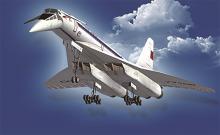
Fig.1
Supersonic civil aircraft of TU-144
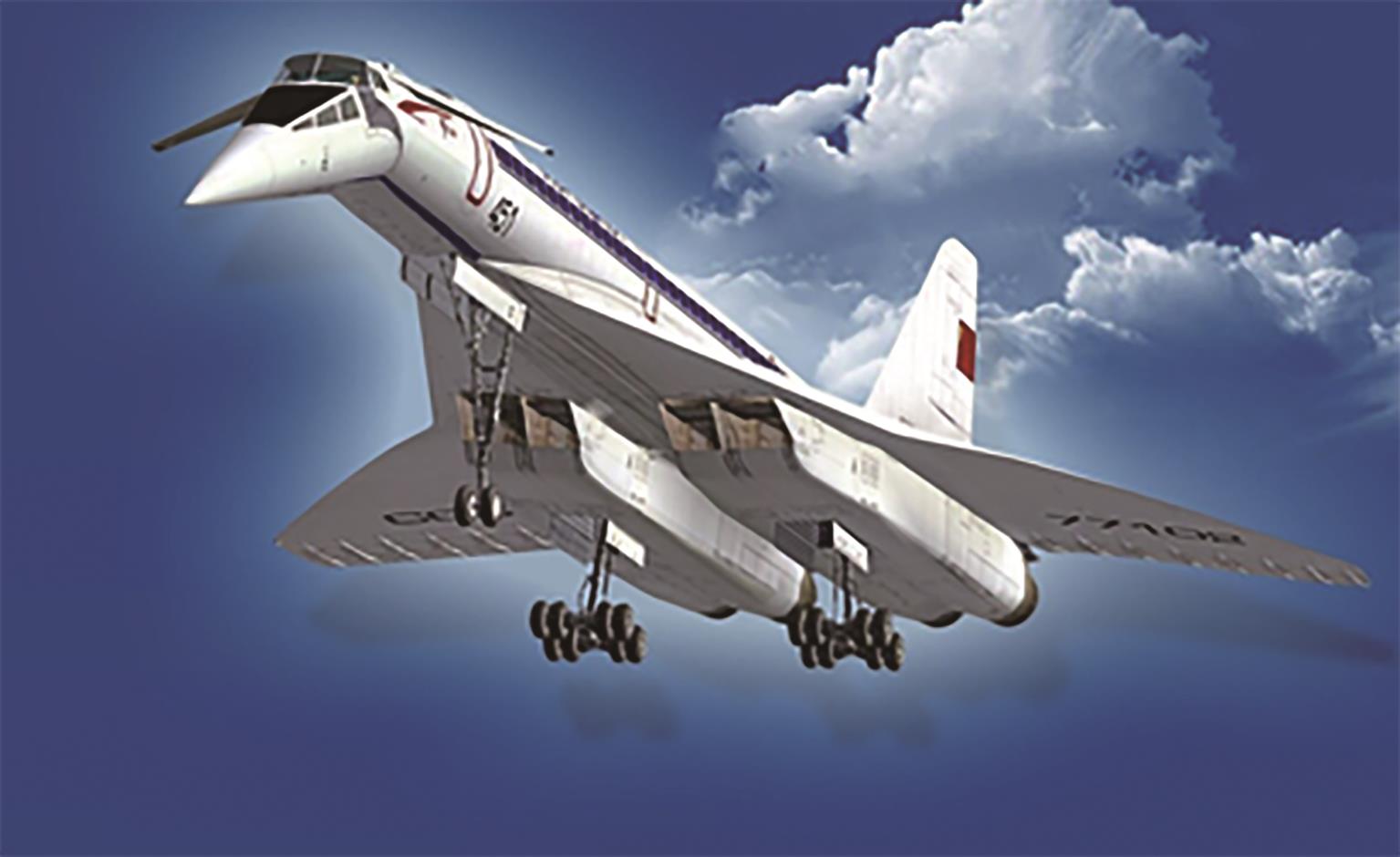
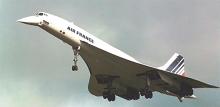
Fig.2
“Concorde” supersonic civil aircraft
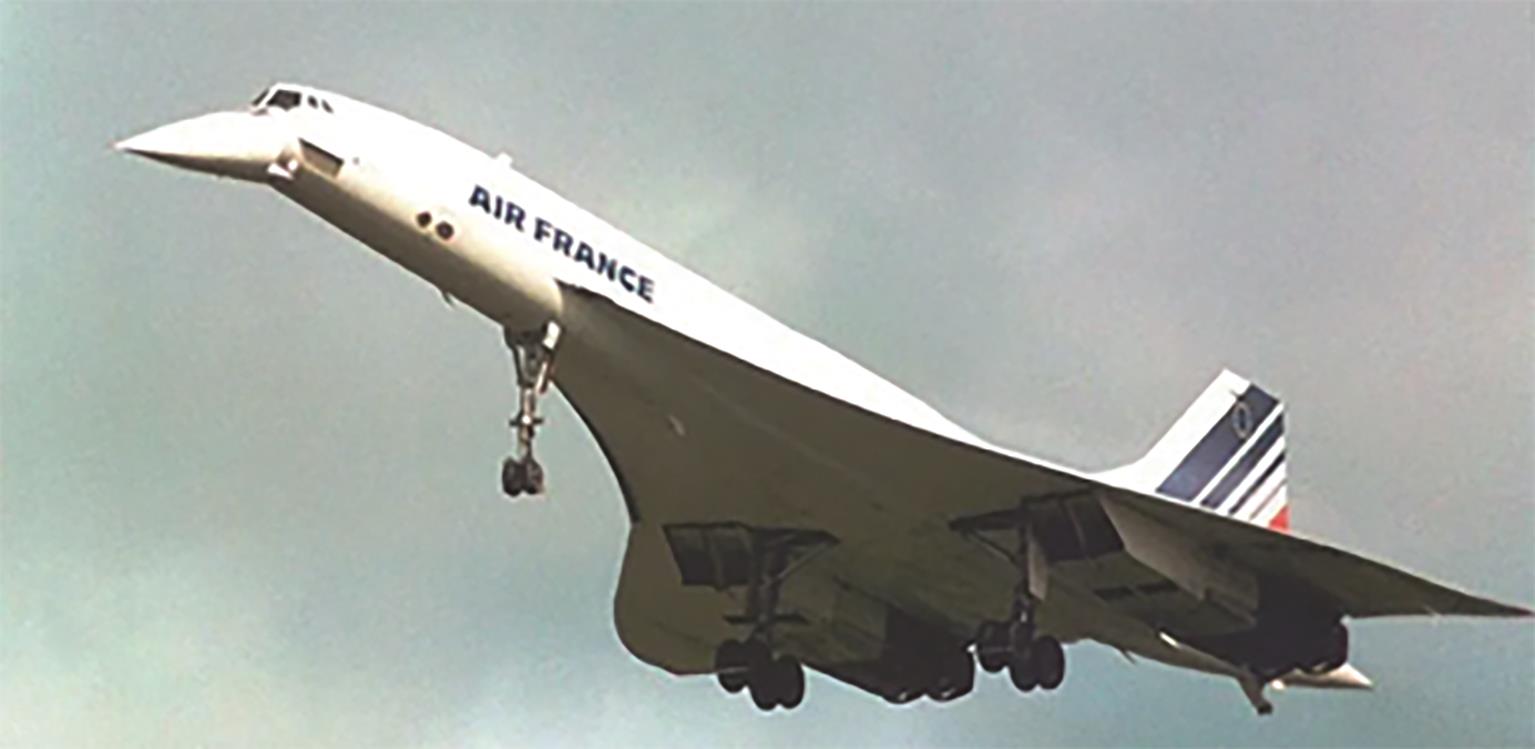
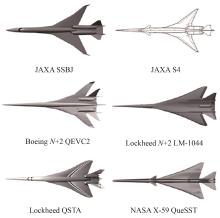
Fig.3
Aerodynamic layout of supersonic civil aircraft abroad
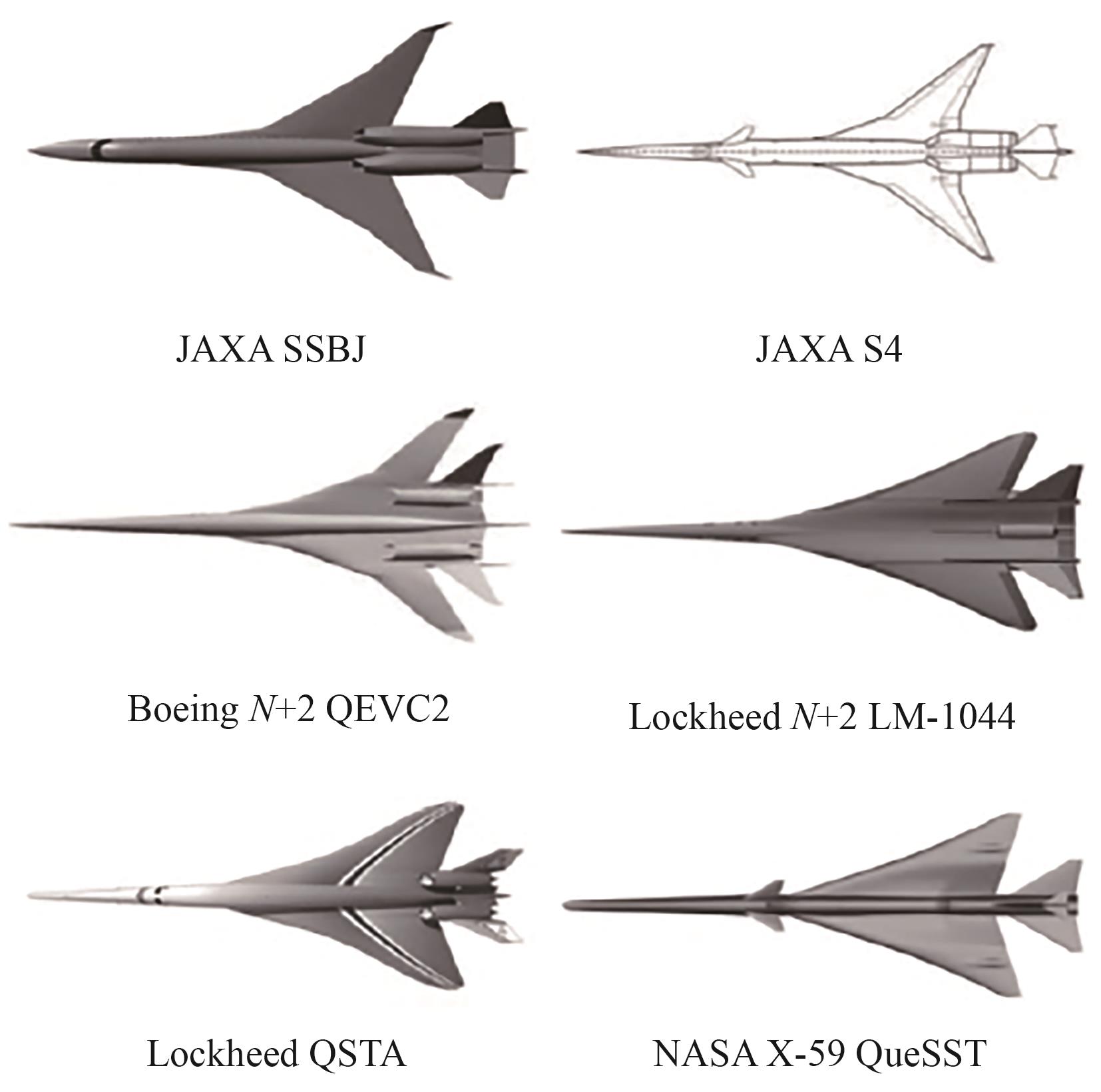
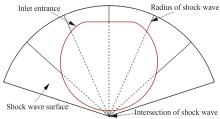
Fig.4
Design method of three-dimensional inward turning inlet
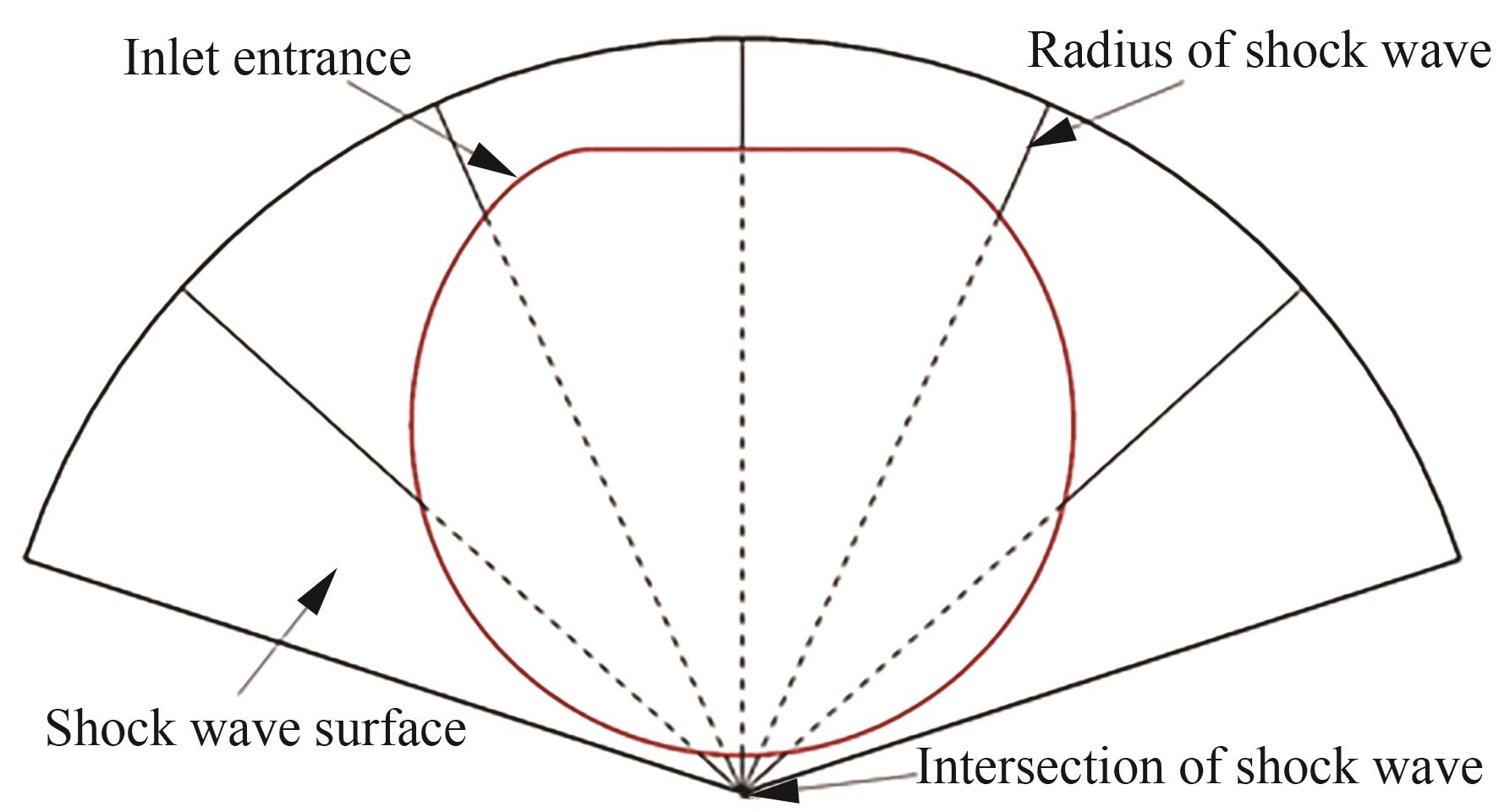
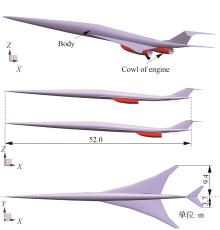
Fig.5
Integrated design of supersonic civil aircraft and engines
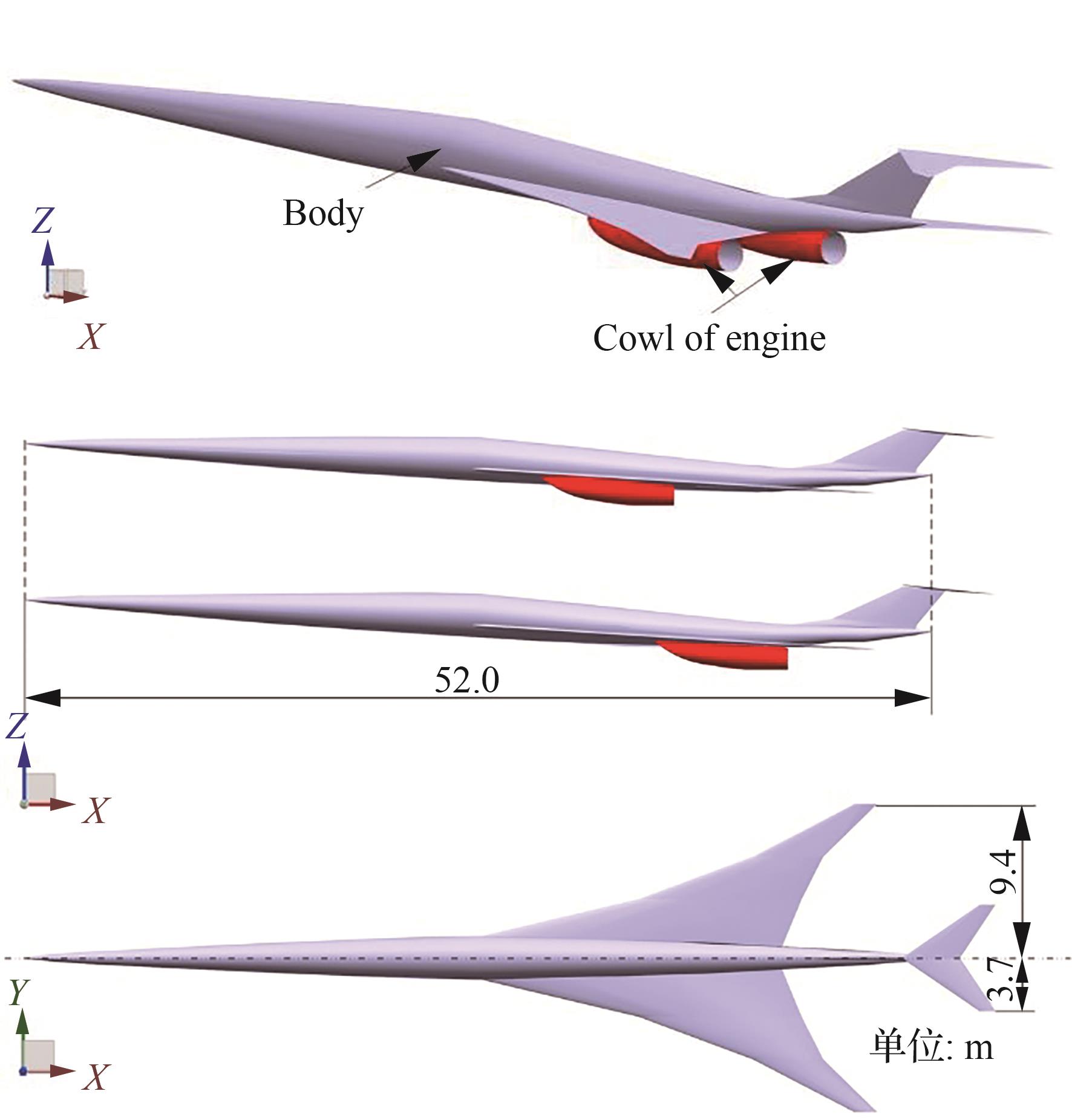
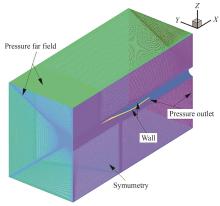
Fig.6
Structural mesh and boundary condition of three-dimensional inward turning inlet cowl
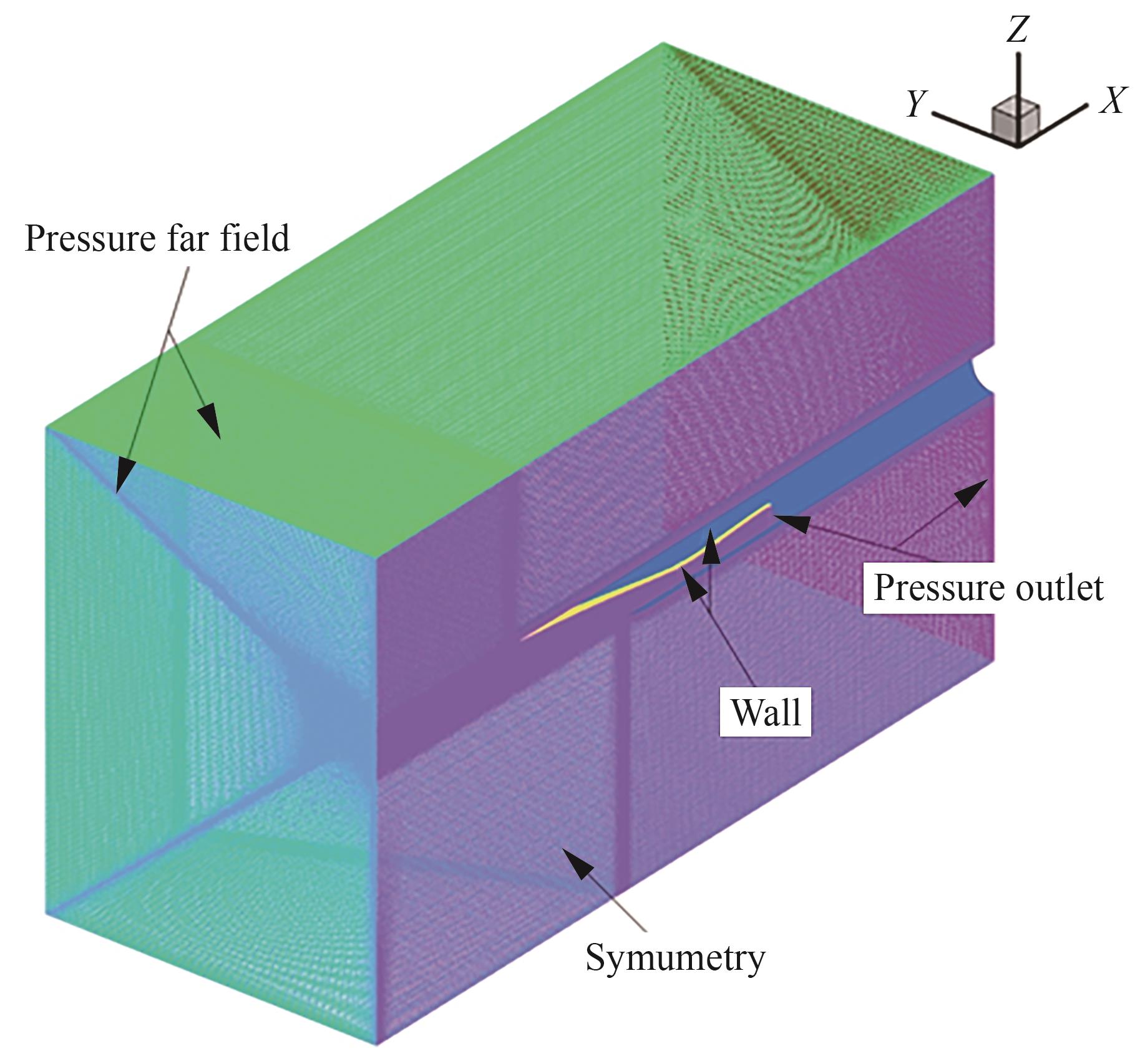
Fig.7
Trim mesh of supersonic civil aircraft
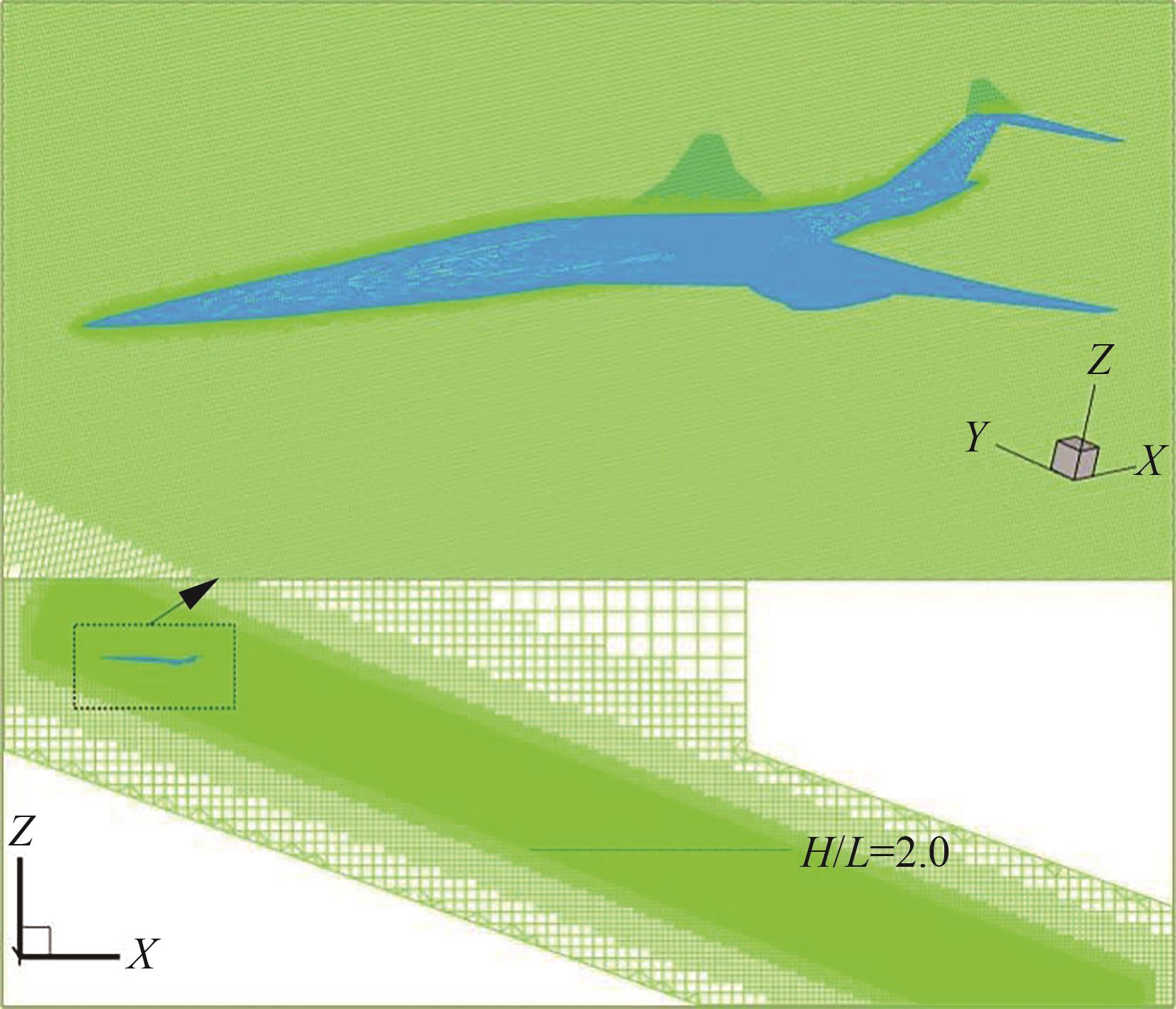
Fig.8
Monitoring surface of three-dimensional inward turning inlet
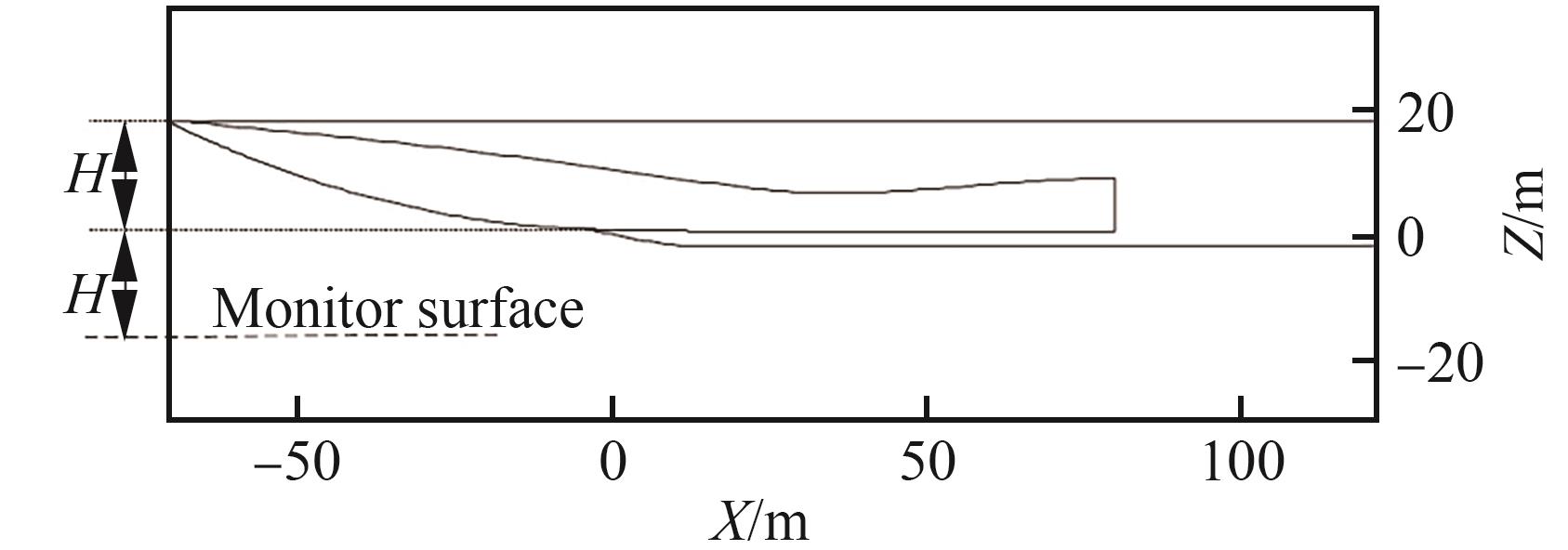
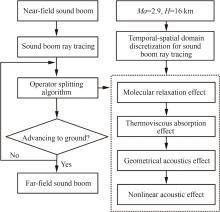
Fig.9
Process of nonlinear “BoomProp” calculation for predicting sonic boom signal
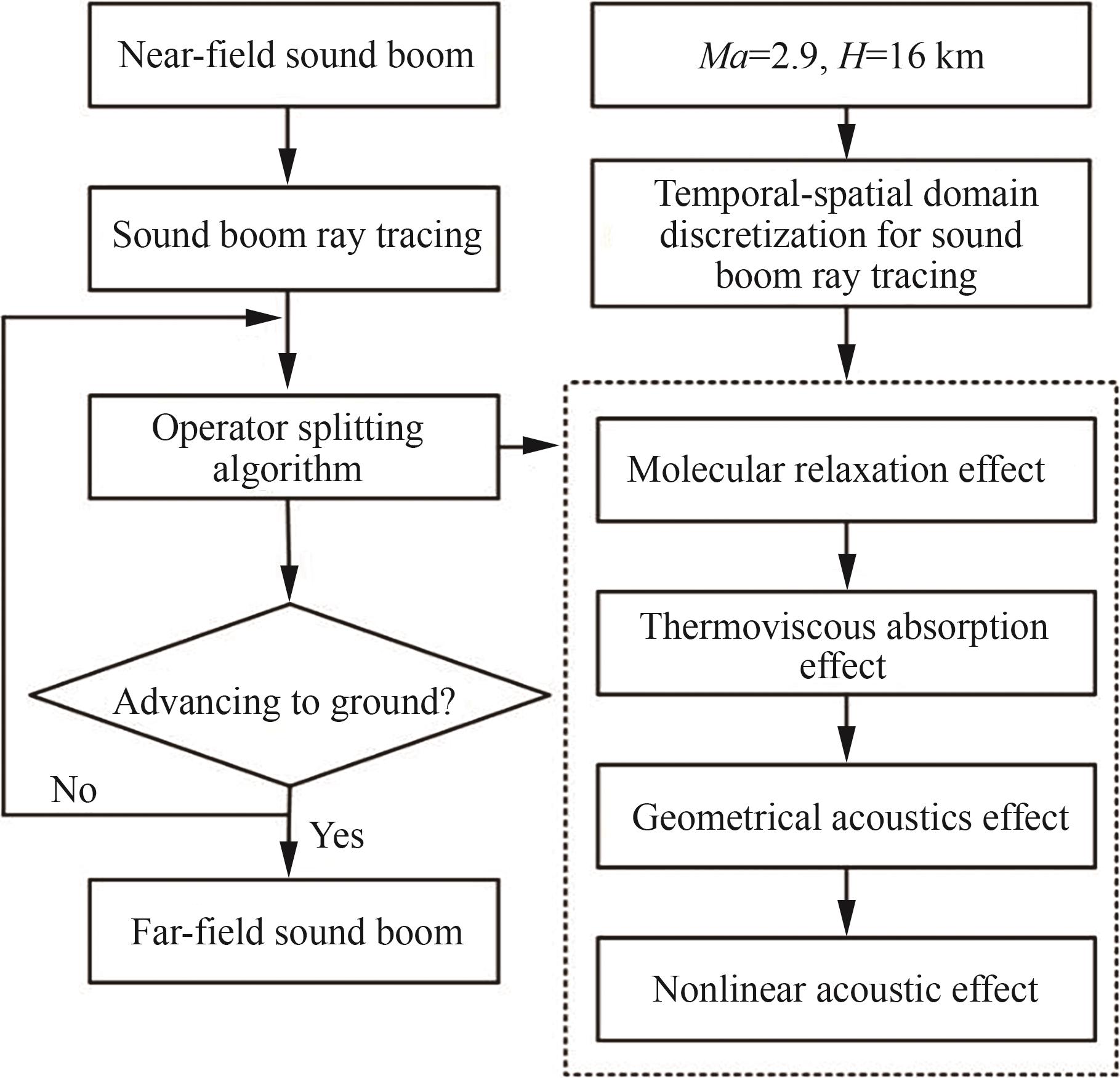
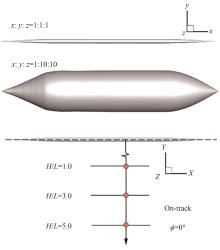
Fig.10
AXIE 3D verification model and sonic boom signal extraction location
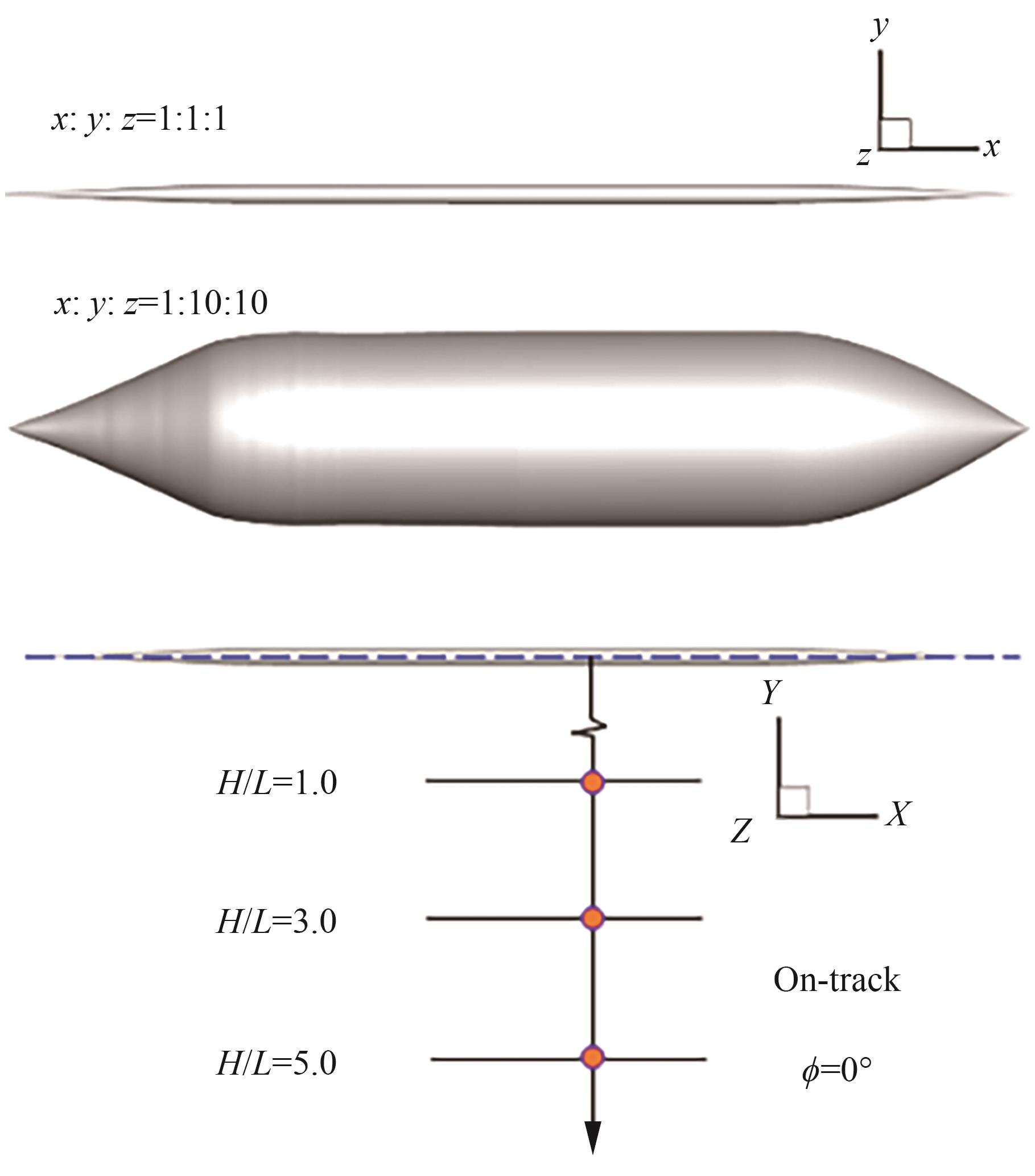
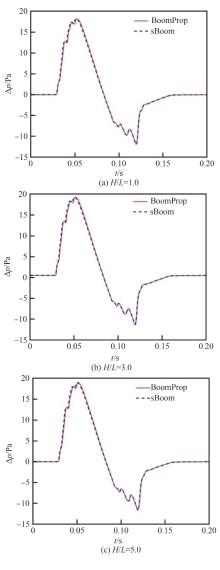
Fig.11
Comparison of AXIE far field sonic boom intensity results calculated by “BoomProp” and “sBoom” program[49]
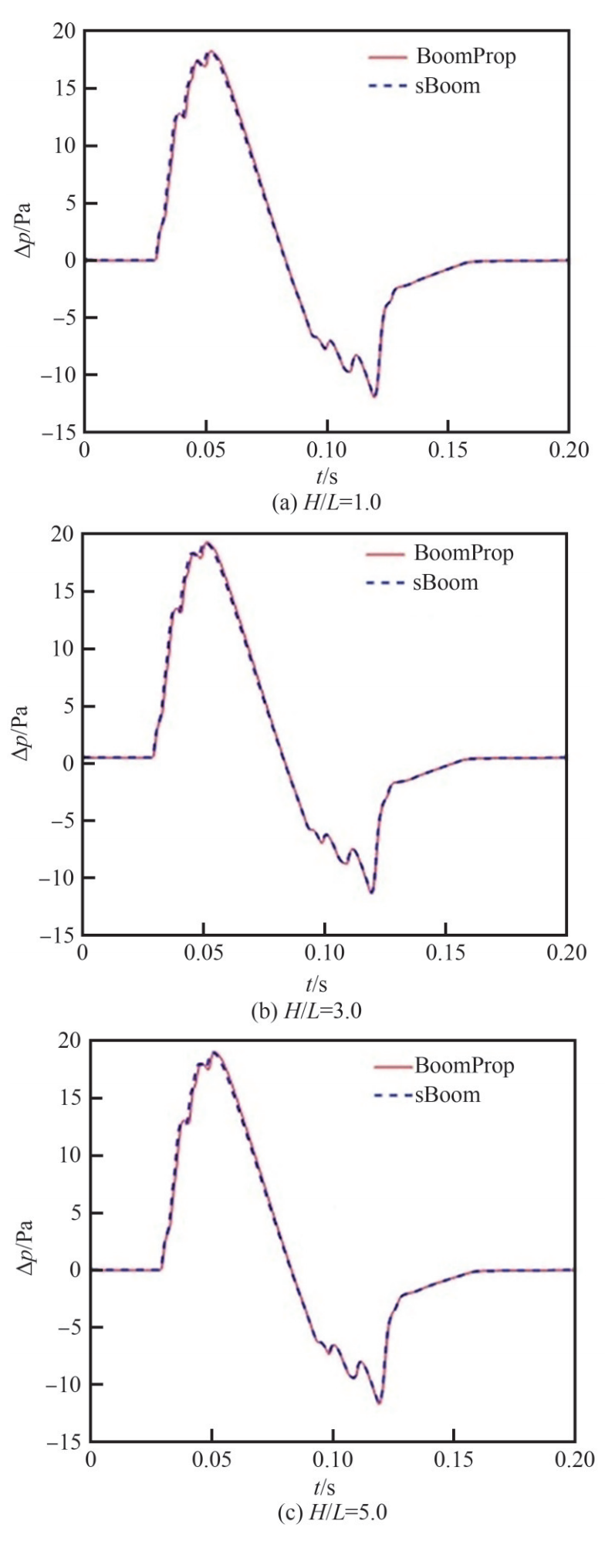
Table 1
Aerodynamic results of inlet under different mesh densities
| 网格密度 | 粗网格 (600万) | 中等网格 (800万) | 密网格 (1 000万) |
|---|---|---|---|
| Ma | 2.672 5 | 2.672 3 | 2.672 1 |
| 偏差/% | 0.01 | 0.01 | |
| π | 5.385 4 | 5.386 1 | 5.386 8 |
| 偏差/% | 0.03 | 0.03 | |
| σ | 0.845 5 | 0.845 3 | 0.845 2 |
| 偏差/% | 0.04 | 0.02 |
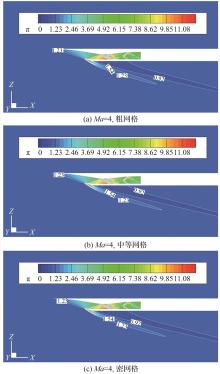
Fig.12
Contours of pressure distribution on symmetry surface of inlet
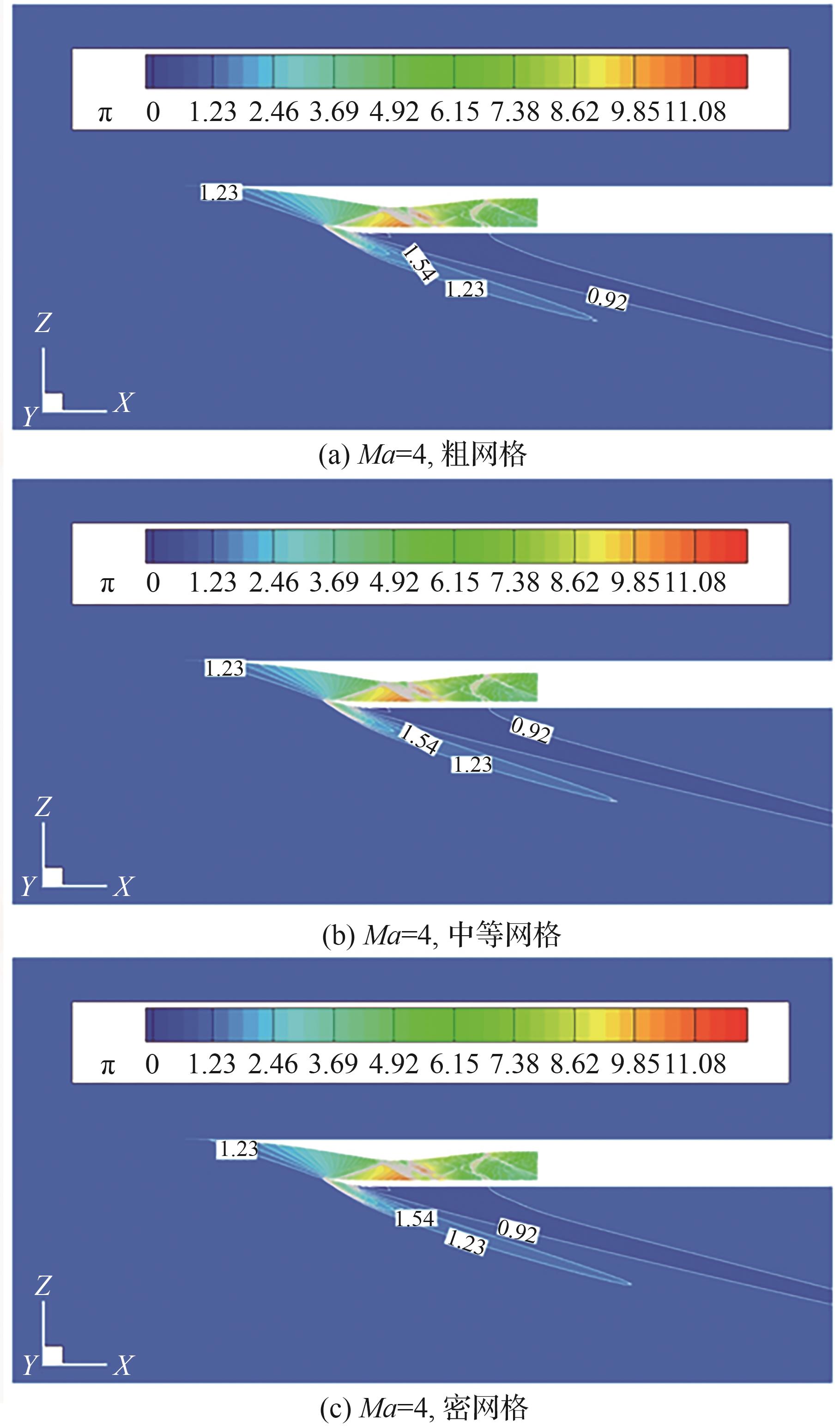
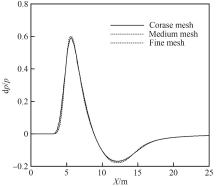
Fig.13
Verification of independence of pressure distribution in three-dimensional inward turning inlet
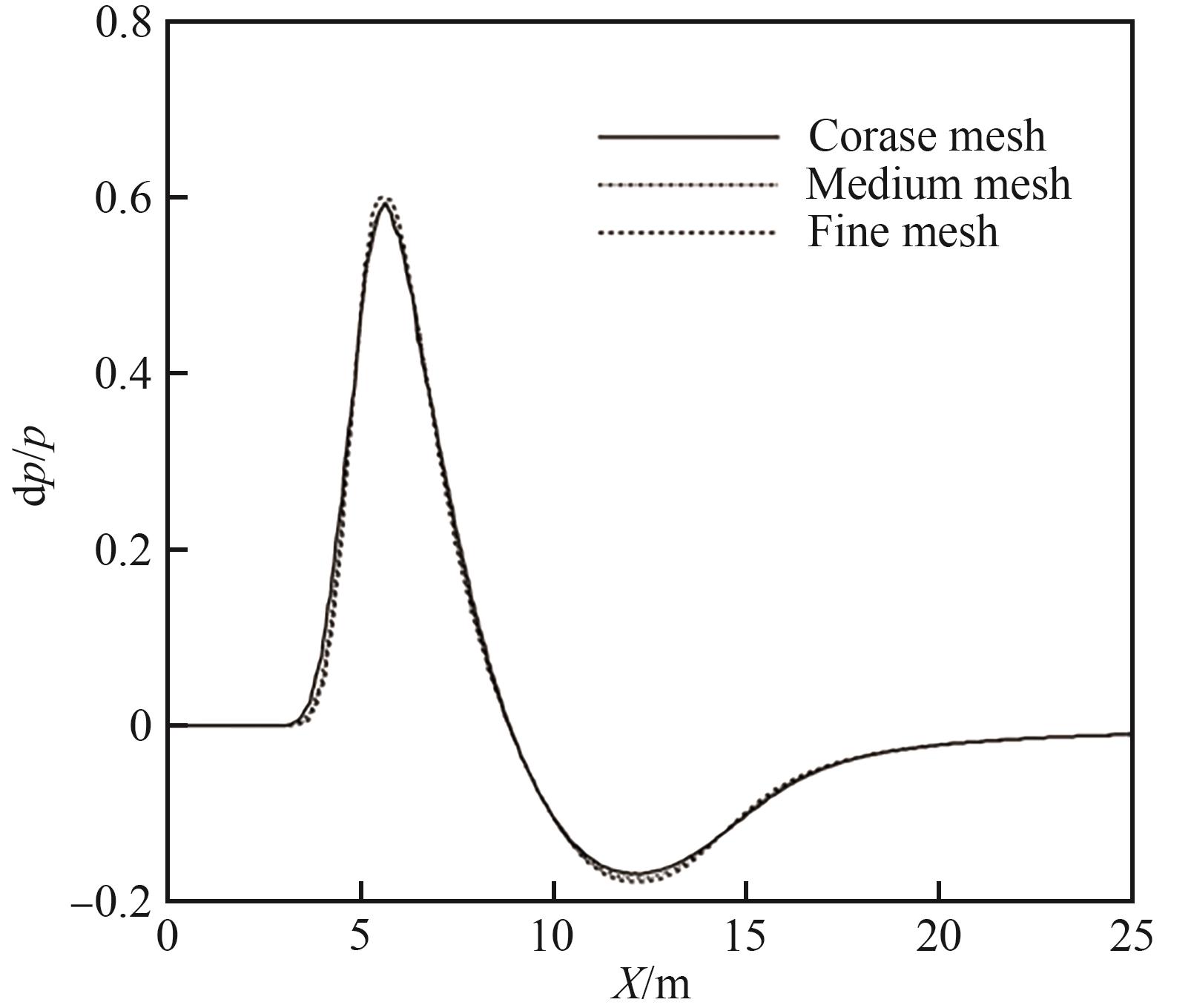
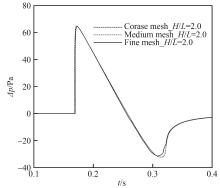
Fig.14
Verification of independence of sonic boom in integrated design of civil aircraft
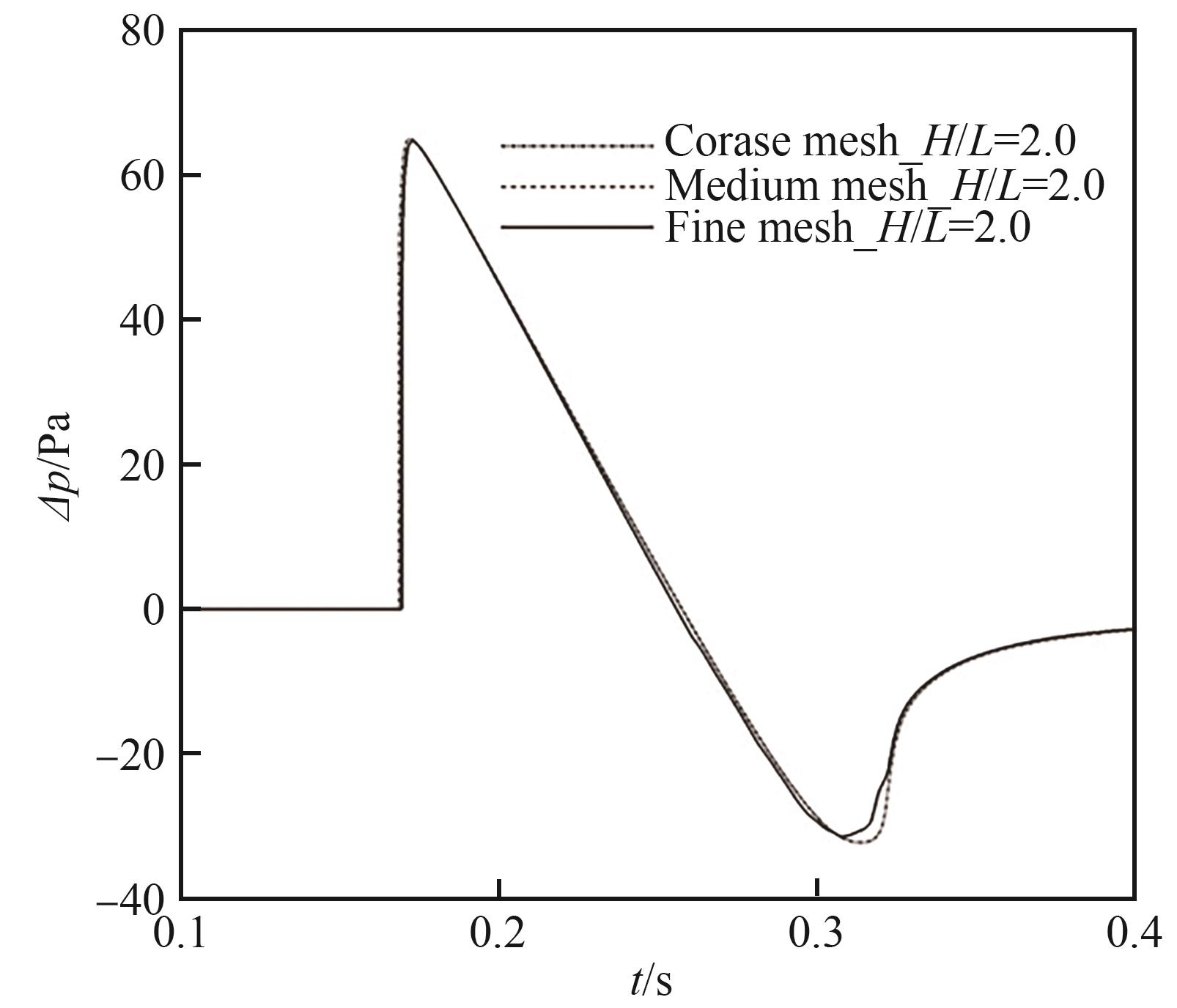
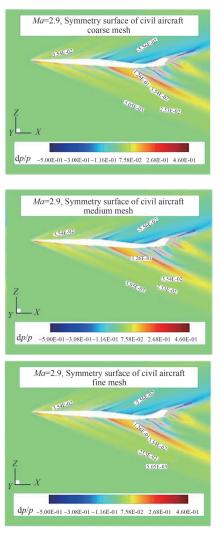
Fig.15
Pressure distribution contours on symmetry surface of integration design under different mesh densities
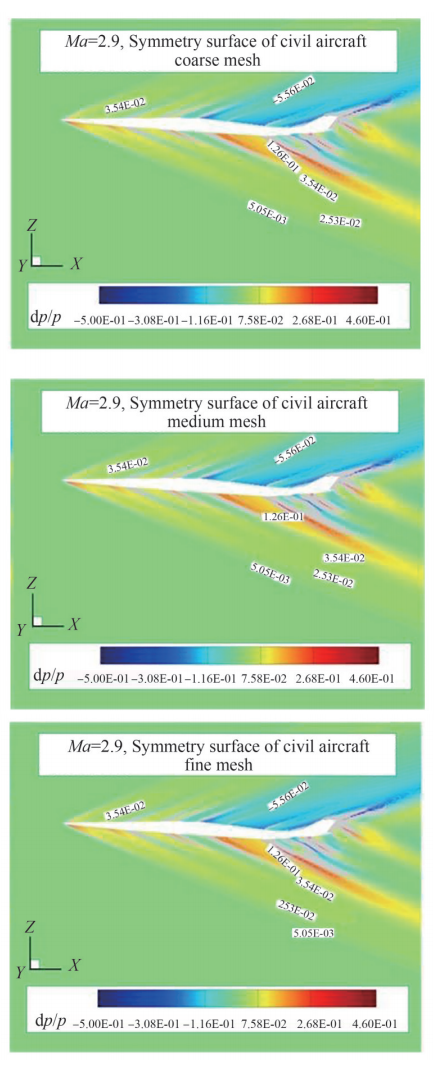
Table 2
Design conditions of different inlets
| Ma | 3 | 4 | 5 | 6 |
|---|---|---|---|---|
| H/km | 11 | 16 | 21 | 26 |
Table 3
Geometric structure of the inlet cowl
| 外罩类型 | 几何特征 |
|---|---|
| A | 以B外罩为设计基础,初始点斜率相同,沿程斜率降低 |
| AA | 以B外罩为设计基础,外罩前缘曲线两端点距离相等,沿程斜率降低 |
| B | 外罩沿程斜率不变 |
| C | 以B外罩为设计基础,初始点斜率相同,沿程斜率增大 |
| CC | 以B外罩为设计基础,外罩前缘曲线两端点距离相等,沿程斜率增大 |
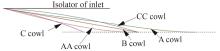
Fig.16
Design of three-dimensional inward turning inlet cowl
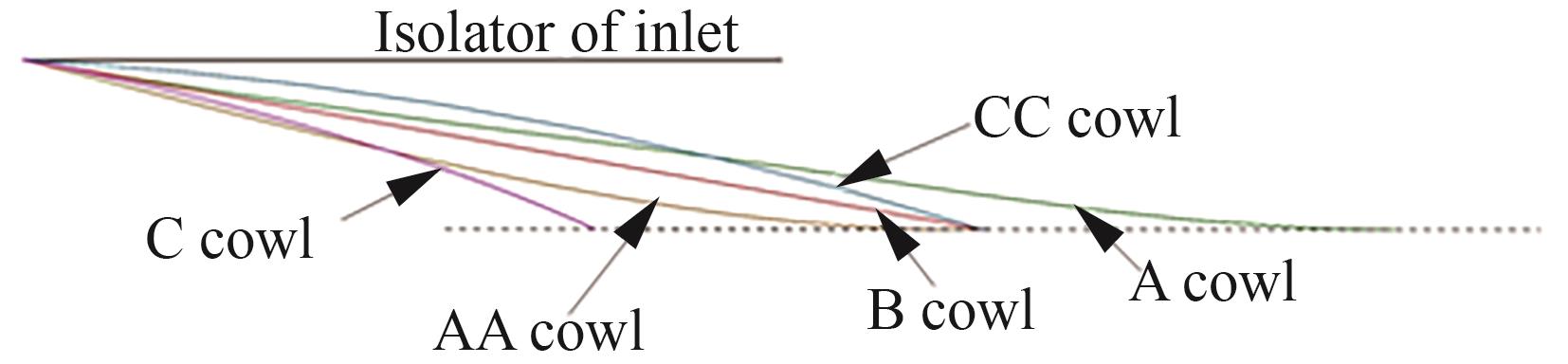
Fig.17
Contours of aerodynamic performance on the outlet of inlet with different cowls
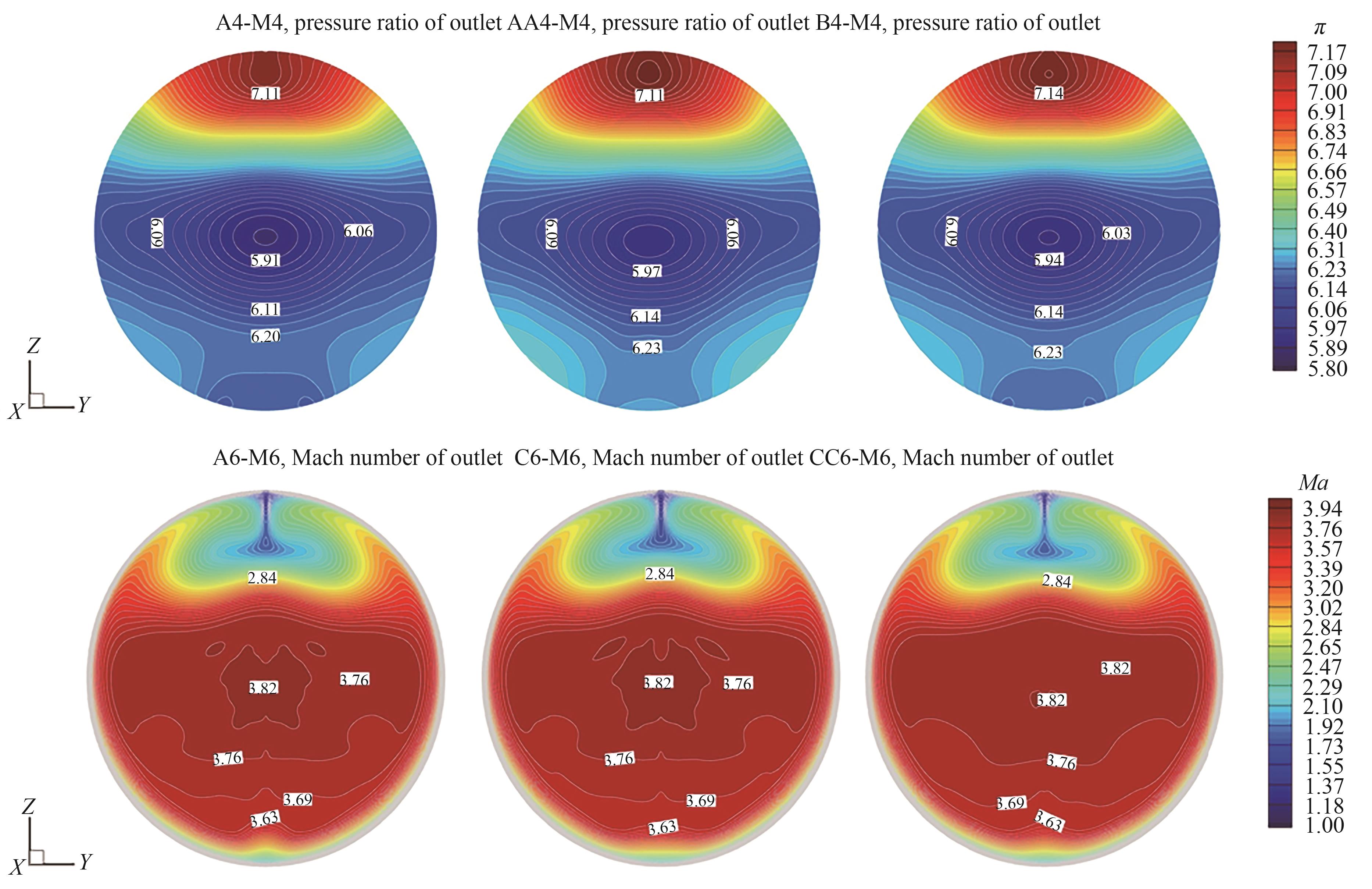
Table 4
Aerodynamic performances of outlet in different inlets
外罩 类型 | Ma=3 | Ma=4 | Ma=5 | Ma=6 | ||||||||
|---|---|---|---|---|---|---|---|---|---|---|---|---|
| Mae | σ | π | Mae | σ | π | Mae | σ | π | Mae | σ | π | |
| A | 1.76 | 0.91 | 6.05 | 2.59 | 0.86 | 6.27 | 3.06 | 0.79 | 9.45 | 3.48 | 0.69 | 12.80 |
| AA | 1.76 | 0.91 | 6.08 | 2.58 | 0.85 | 6.31 | 3.07 | 0.79 | 9.43 | 3.48 | 0.69 | 12.84 |
| B | 1.76 | 0.91 | 6.06 | 2.59 | 0.86 | 6.30 | 3.06 | 0.79 | 9.45 | 3.48 | 0.69 | 12.82 |
| C | 1.76 | 0.91 | 6.08 | 2.58 | 0.85 | 6.31 | 3.07 | 0.79 | 9.45 | 3.48 | 0.70 | 12.82 |
| CC | 1.76 | 0.91 | 6.04 | 2.59 | 0.86 | 6.26 | 3.06 | 0.79 | 9.45 | 3.48 | 0.69 | 12.81 |
Table 5
Results of pressure distribution differences in far field of different inlets
外罩 类型 | ||||
|---|---|---|---|---|
| Ma=3 | Ma=4 | Ma=5 | Ma=6 | |
| A | 0.613 | 0.613 | 0.704 | 0.908 |
| AA | 0.716 | 0.716 | 0.825 | 0.959 |
| B | 0.731 | 0.731 | 0.825 | 0.938 |
| C | 0.914 | 0.914 | 1.08 | 1.45 |
| CC | 0.820 | 0.820 | 0.917 | 1.02 |
Fig.18
Pressure distribution curves on inlet monitor surface under different conditions
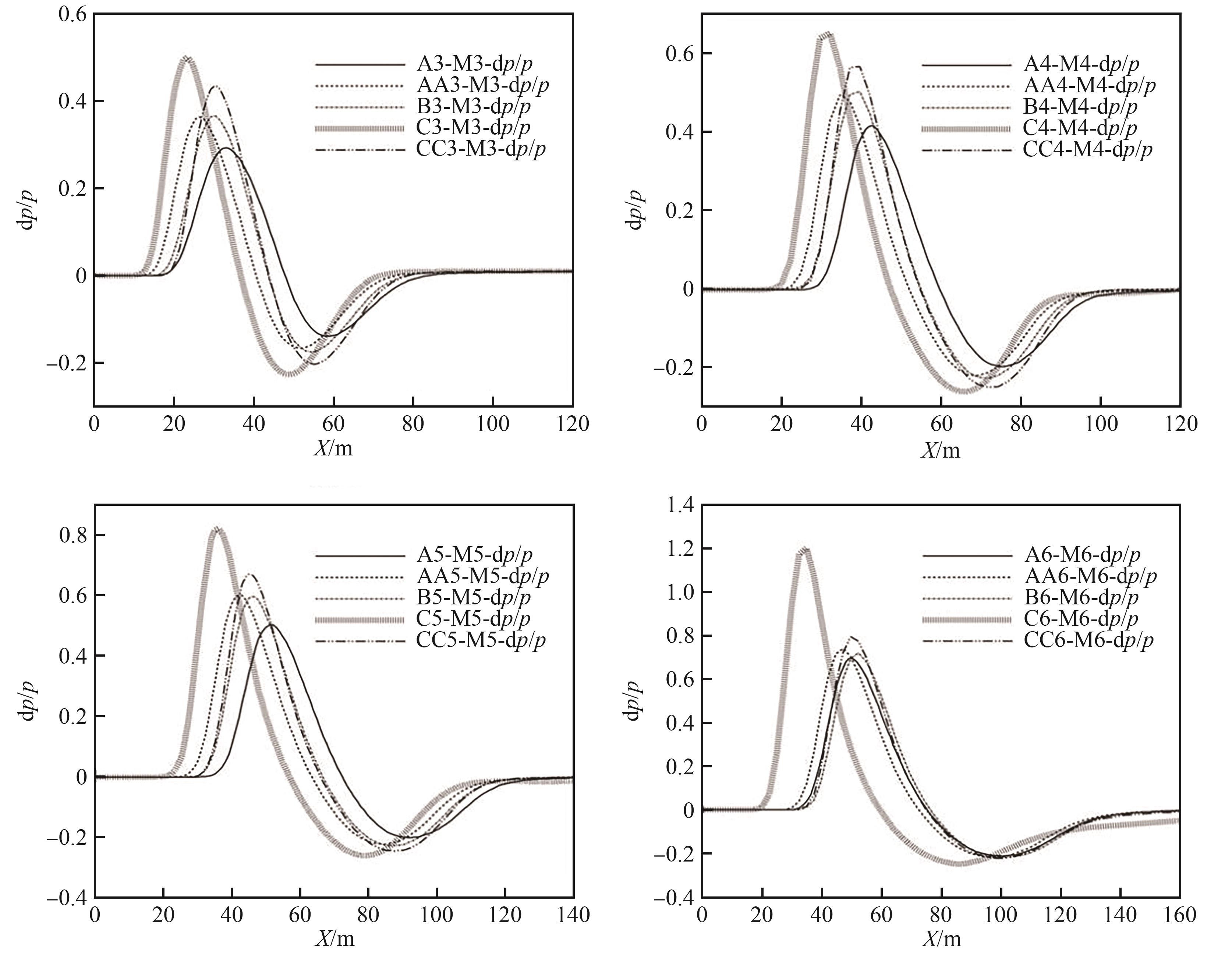
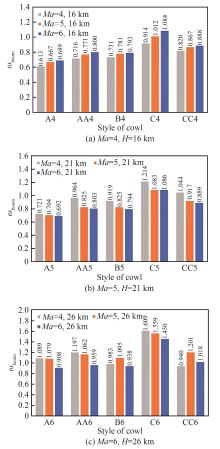
Fig.19
Bars charts of sonic boom intensity on inlet monitor surface under different conditions
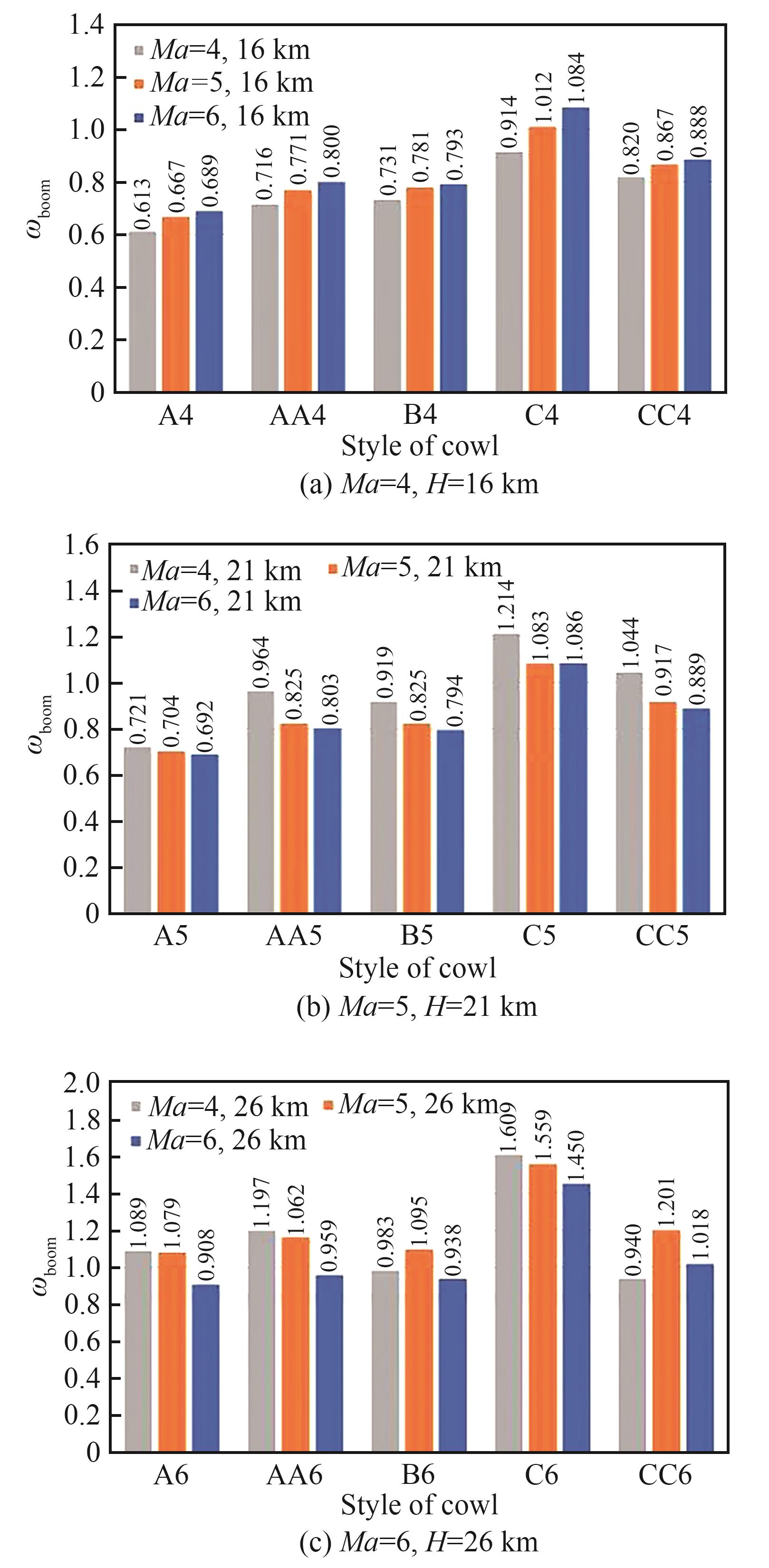
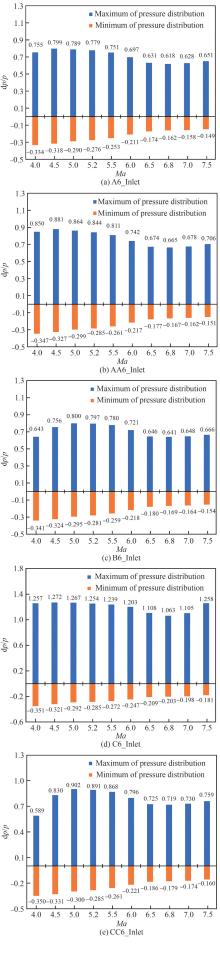
Fig.20
Bars charts of pressure distribution on the inlet monitor surface under different Mach numbers
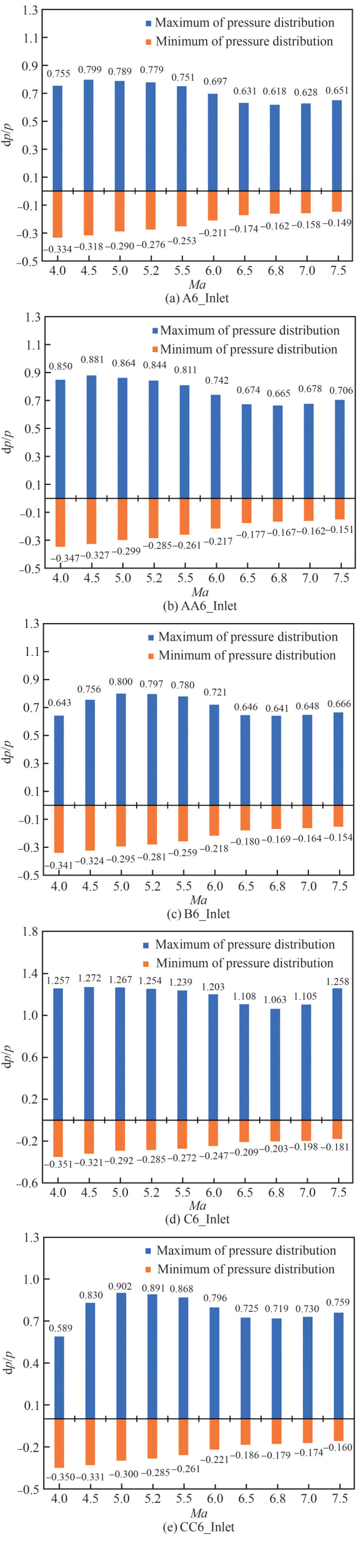
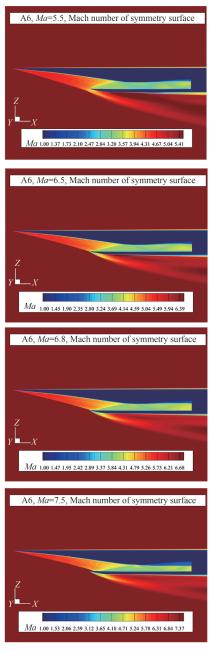
Fig.21
Mach number contours of inlet symmetry surface under different calculation conditions
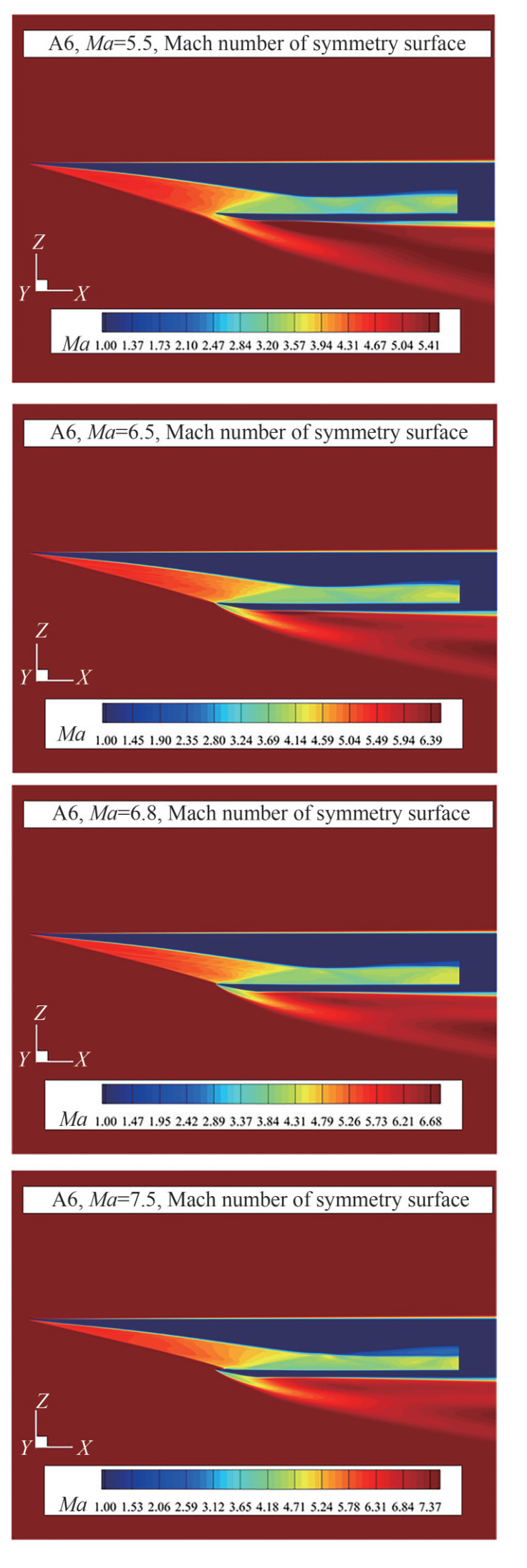
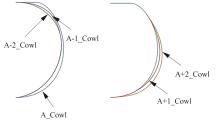
Fig.22
Design principle of curvature change of inlet cowls
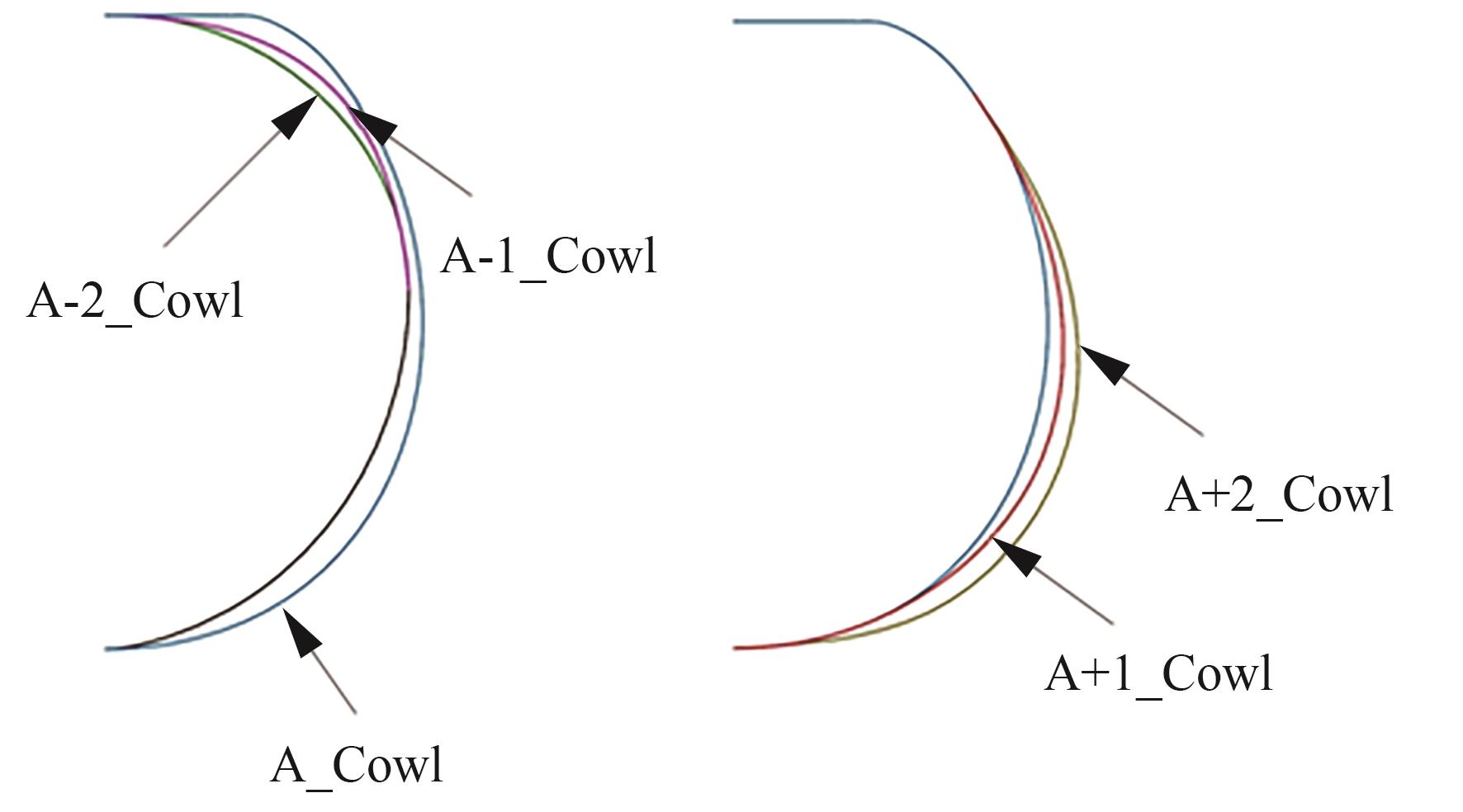
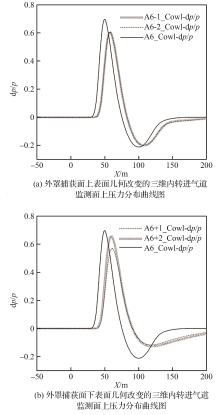
Fig.23
Pressure distribution curves on monitor surface in inlets with different cowl surfaces
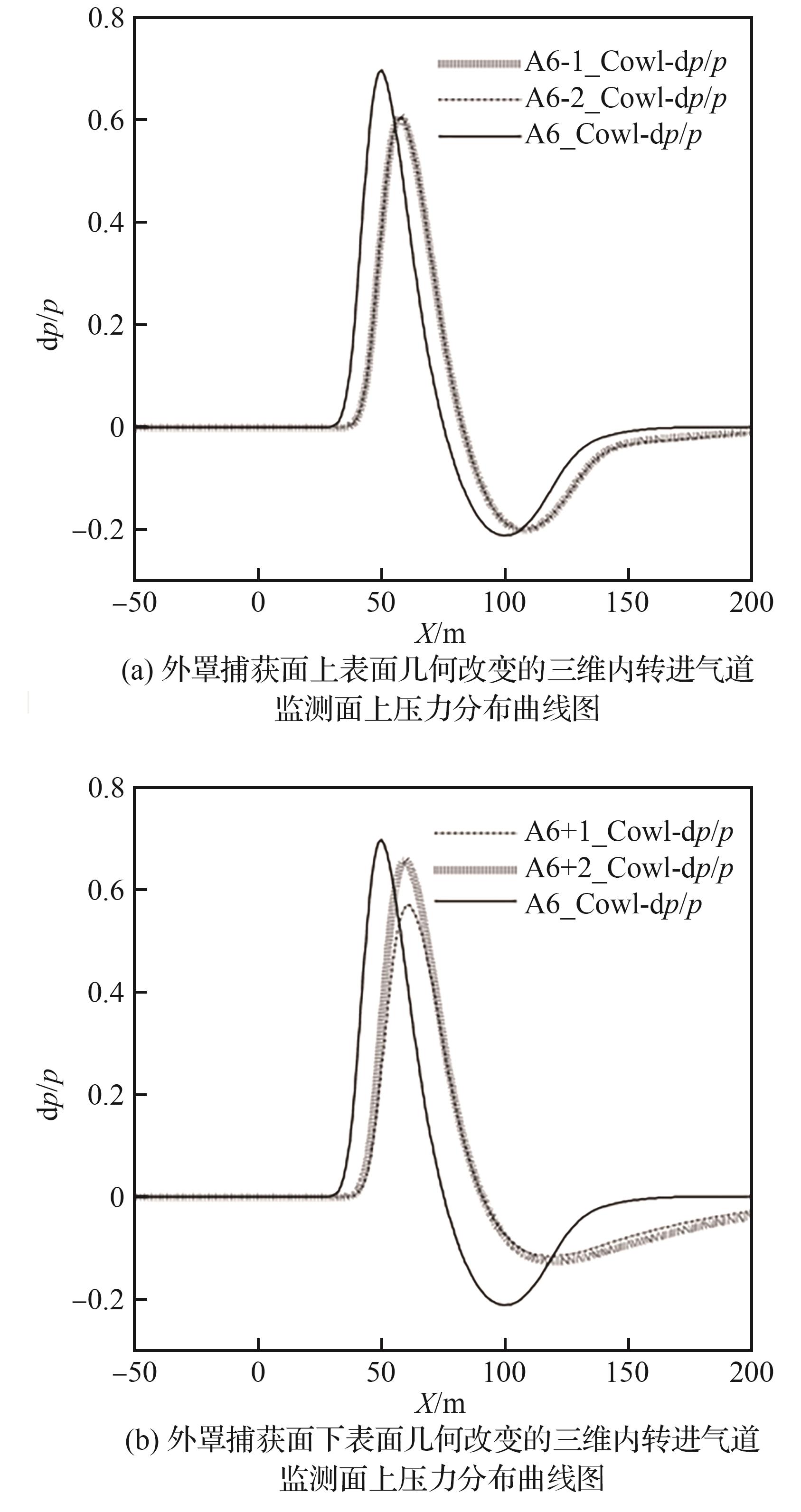
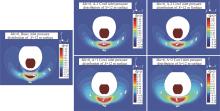
Fig.24
Pressure distribution contours at X=12 m surface in different inlets
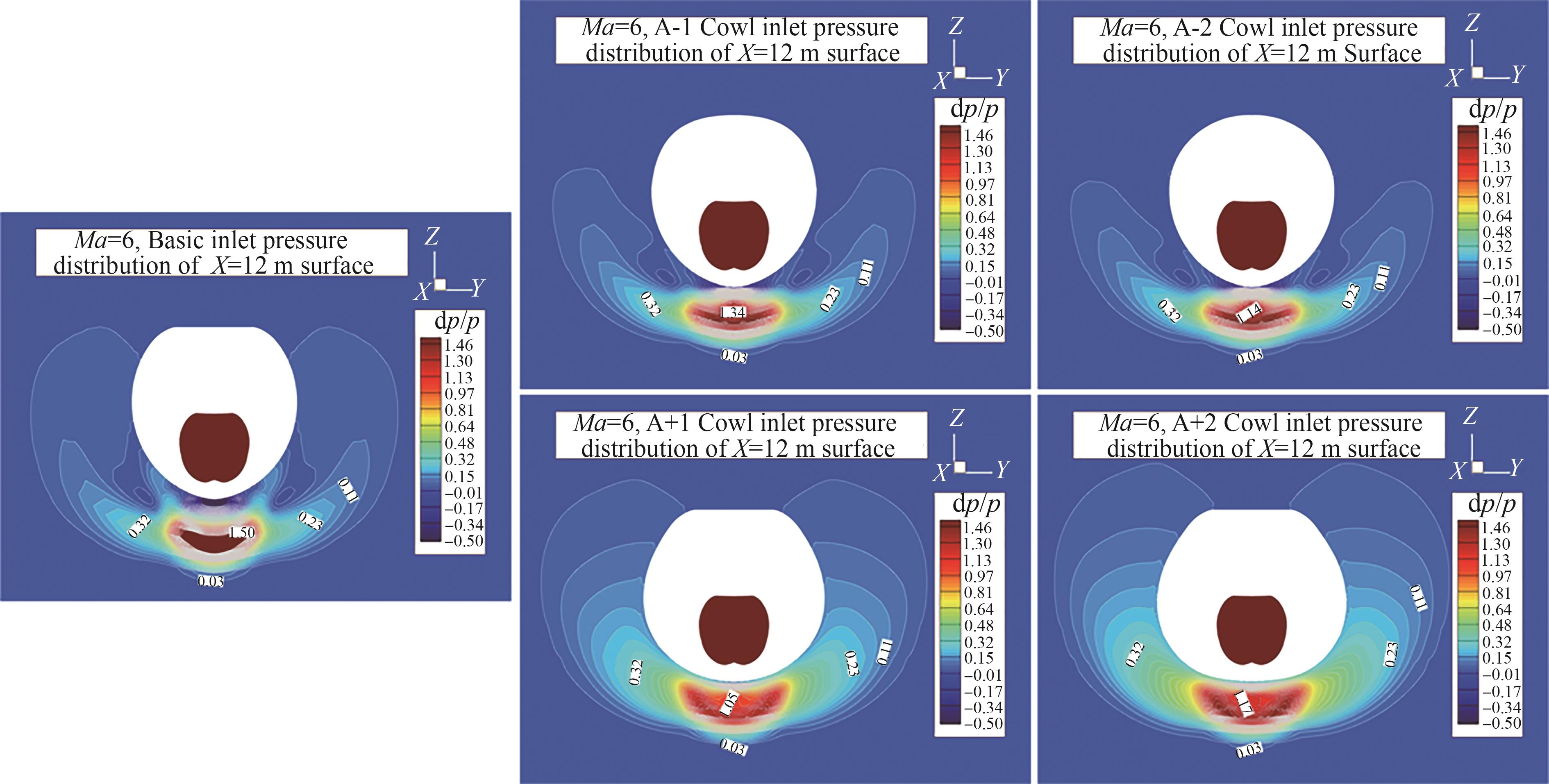
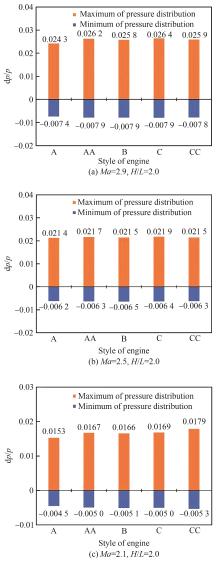
Fig.25
Bar charts of pressure distribution on monitor surfaces in different integrated designs of civil aircrafts
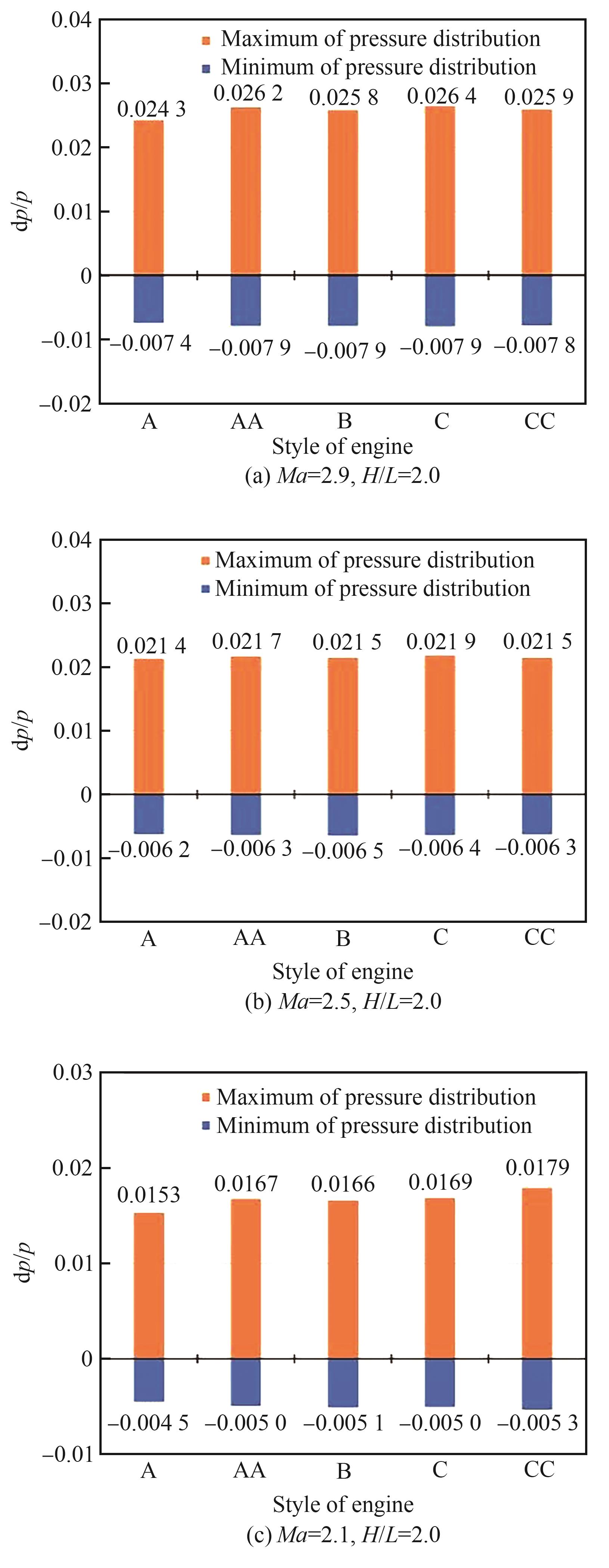
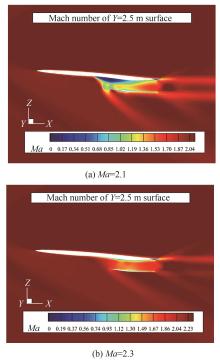
Fig.26
Mach number contours on the engine mid-section under different conditions
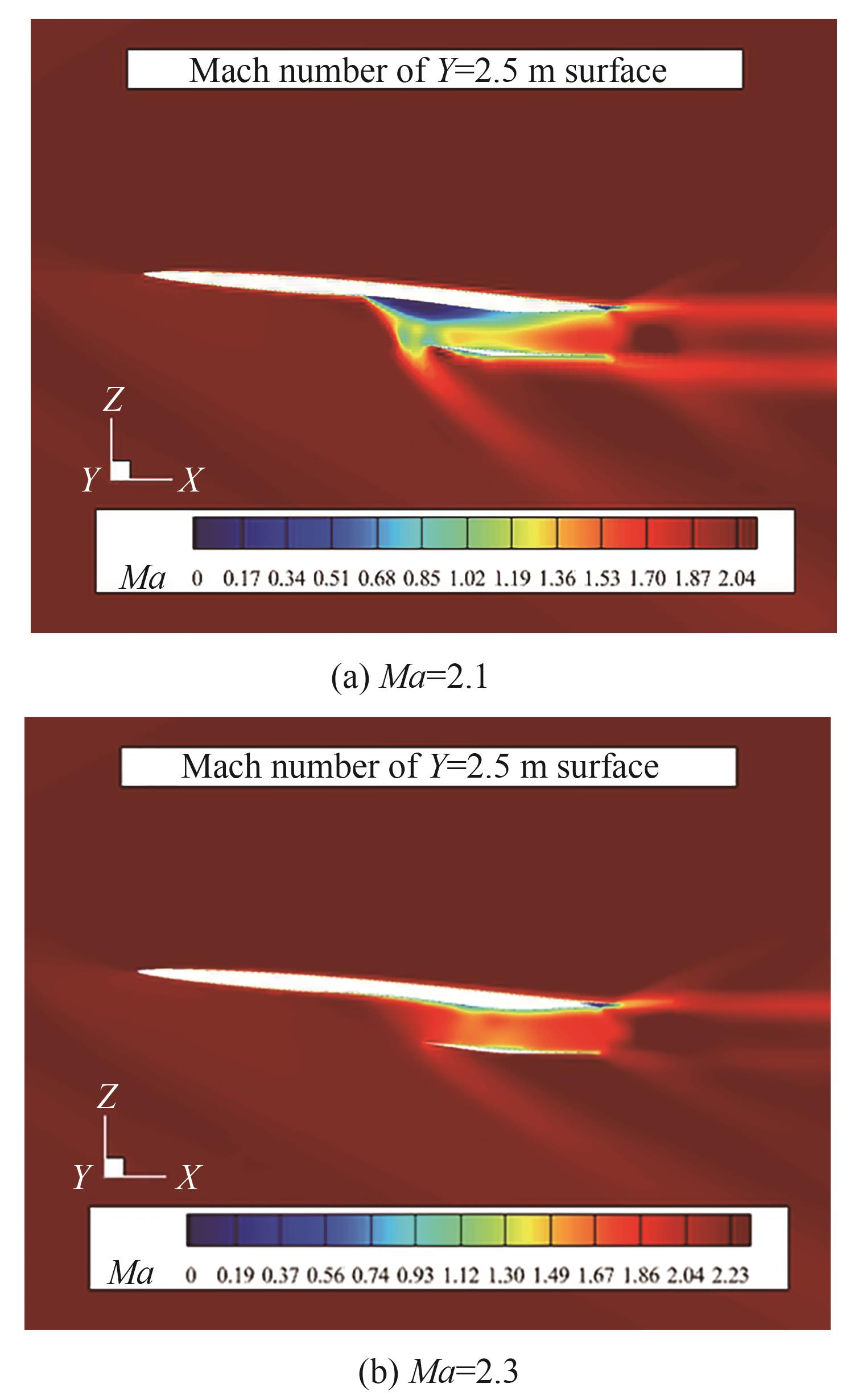
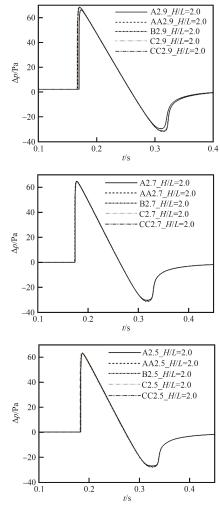
Fig.27
Sonic boom intensity curves in different integrated designs of civil aircraft
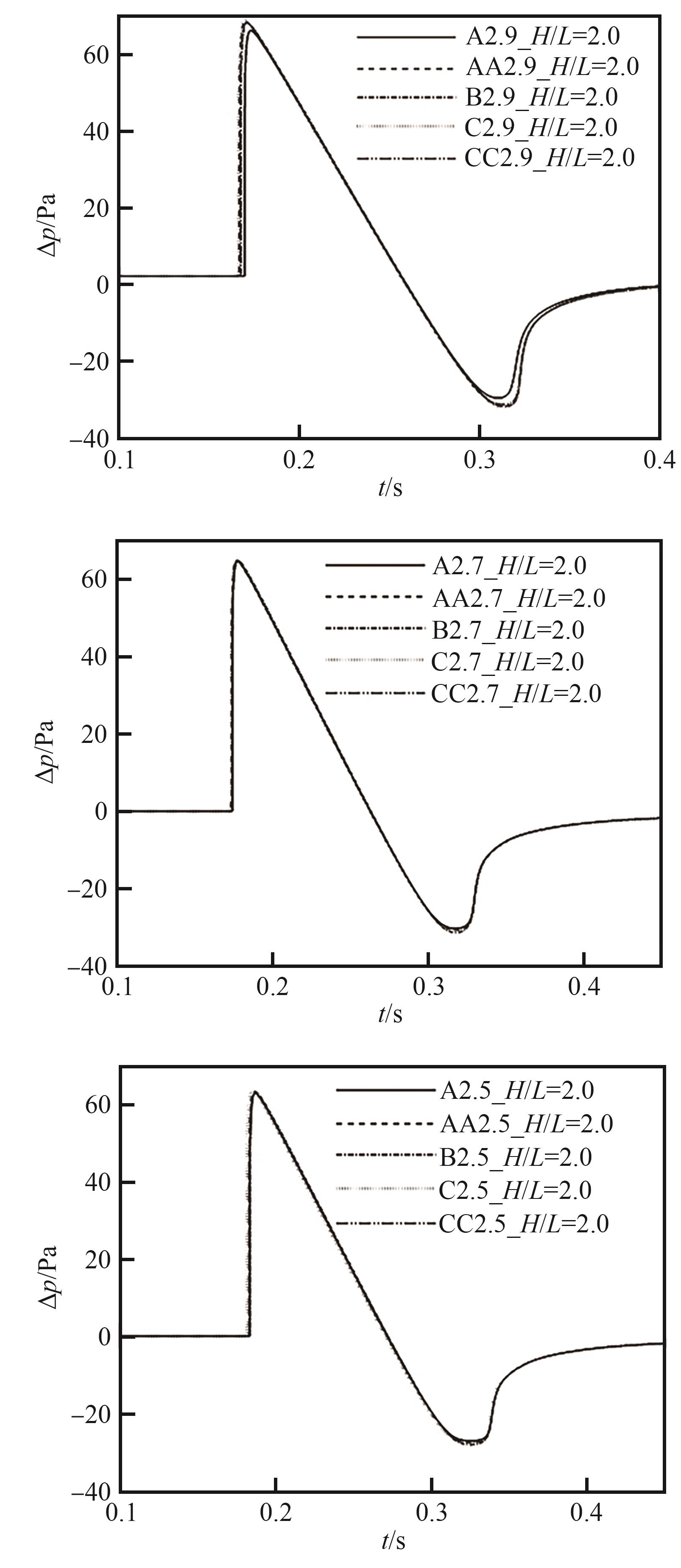
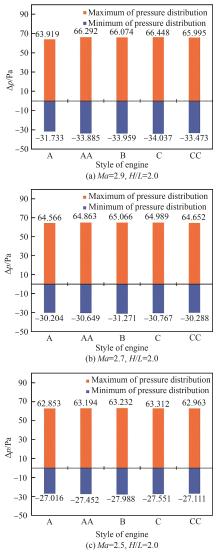
Fig.28
Bar charts of sonic boom in different integrated designs of civil aircrafts
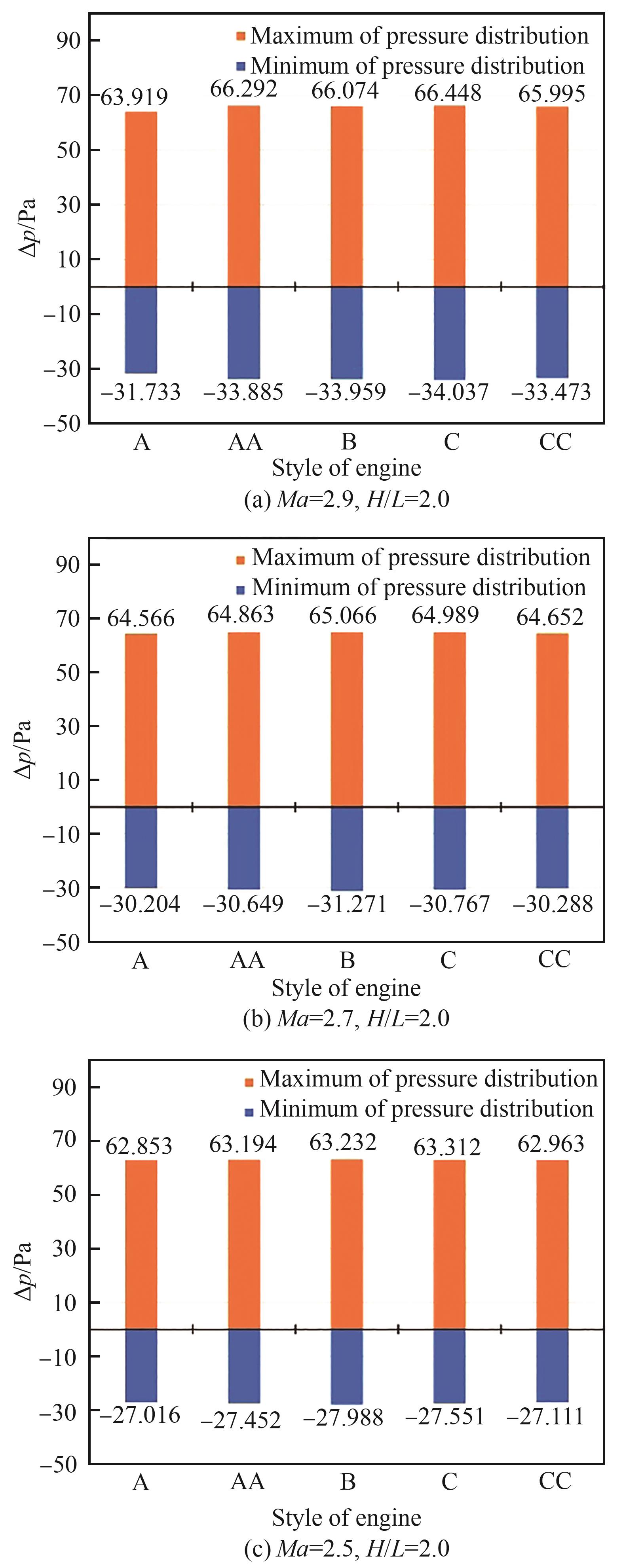
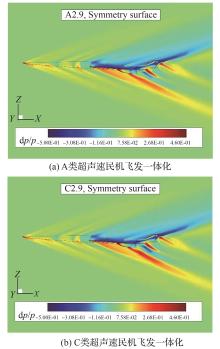
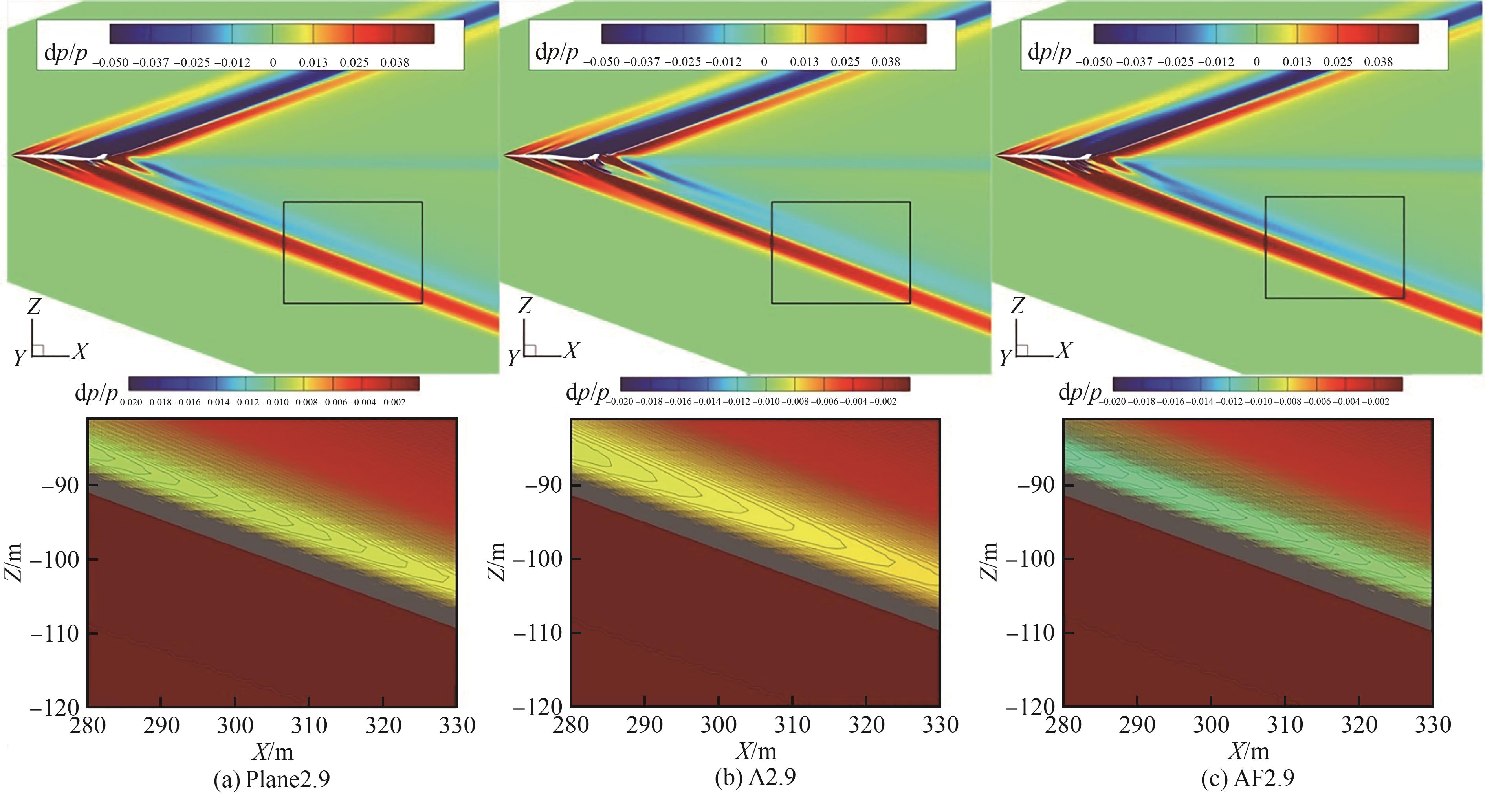
Fig.29
Pressure distribution contour on symmetry surface of integrated design
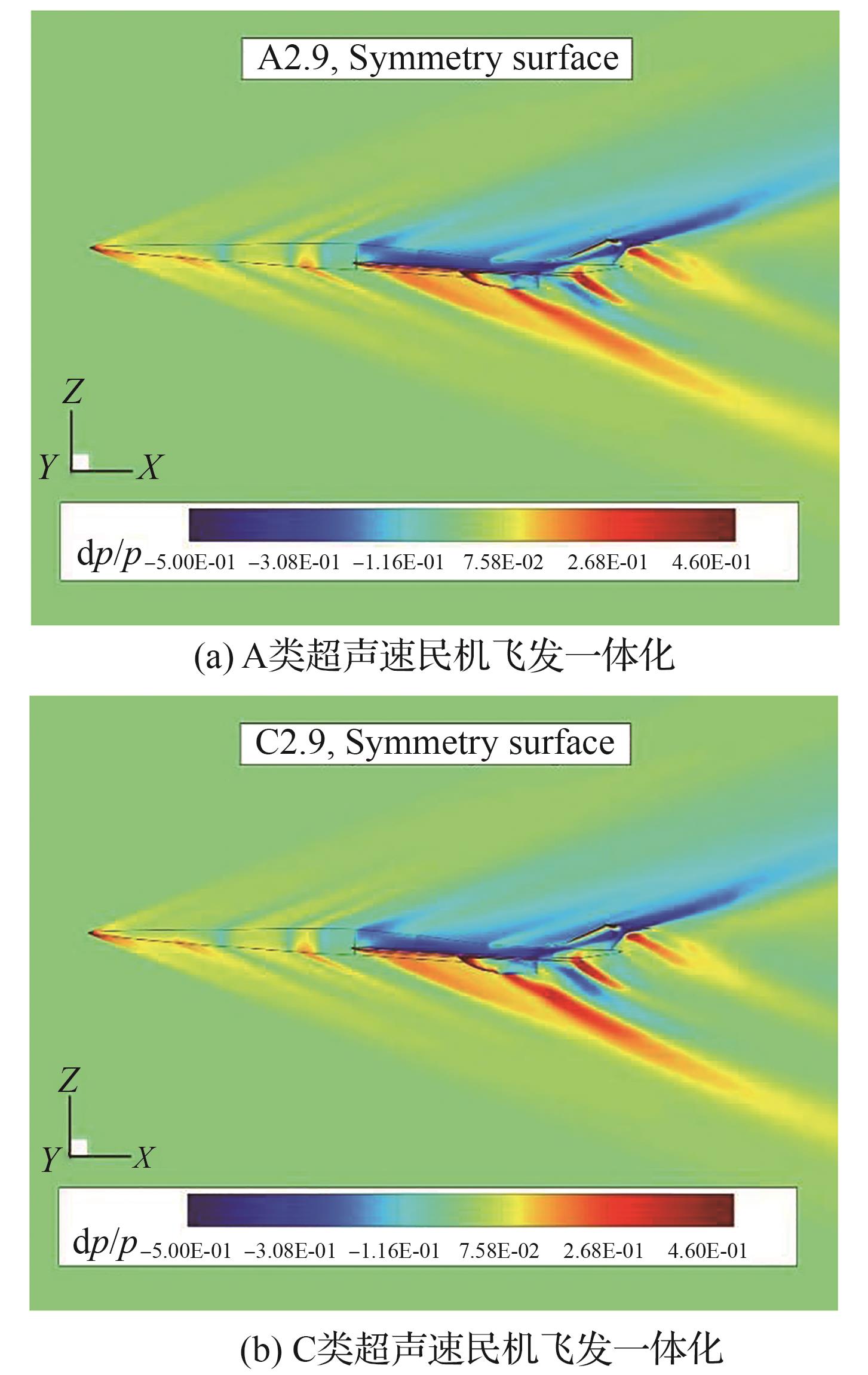
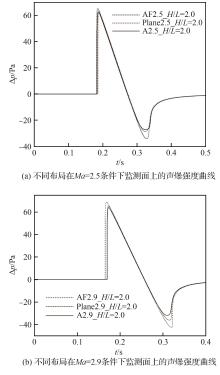
Fig.30
Sonic boom curves of integrated designs for different layouts on monitor surface at H/L=2.0
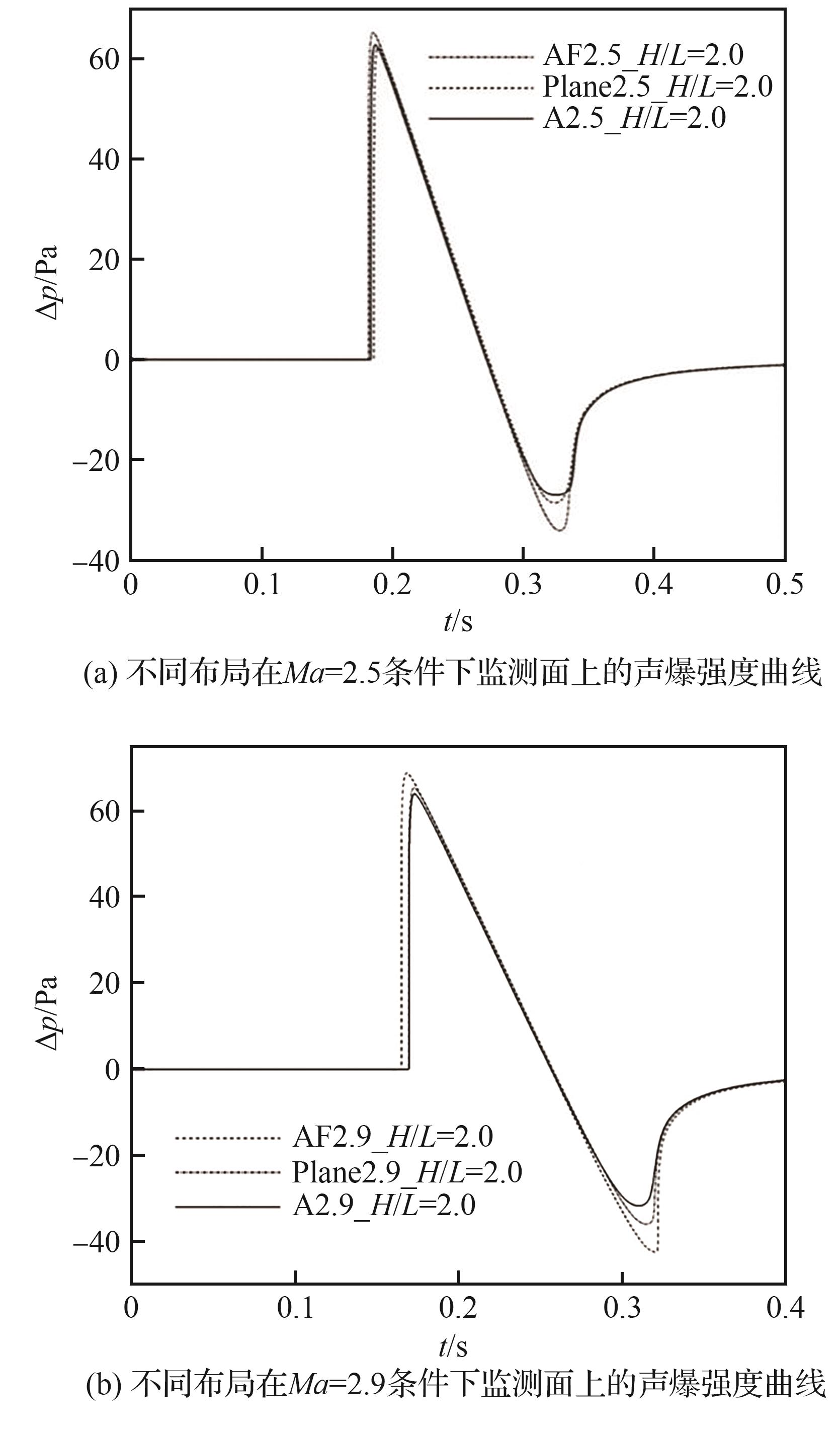
Fig.31
Pressure distribution and Mach number contours of different integrated design layouts on engine mid-section
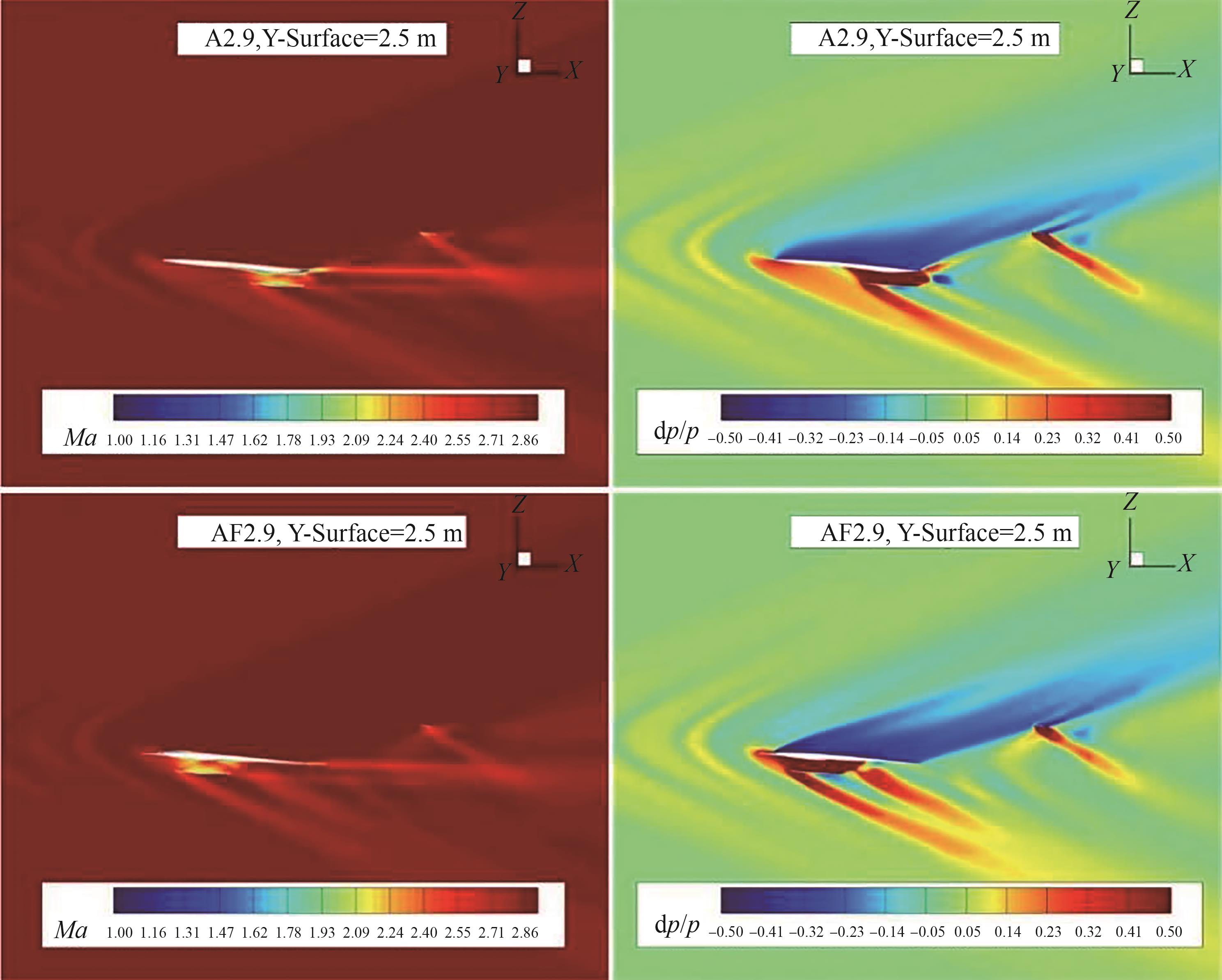
Fig.32
Pressure distribution contours of different integrated design layouts at symmetry surface
| [1] | 韩忠华, 乔建领, 丁玉临, 等. 新一代环保型超声速客机气动相关关键技术与研究进展[J]. 空气动力学学报, 2019, 37(4): 620-635. |
| HAN Z H, QIAO J L, DING Y L, et al. Key technologies for next-generation environmentally-friendly supersonic transport aircraft: a review of recent progress[J]. Acta Aerodynamica Sinica, 2019, 37(4): 620-635 (in Chinese). | |
| [2] | 钱战森, 冷岩, 高亮杰, 等. 超声速飞行器声爆预测技术研究现状与发展建议[J]. 气动研究与试验, 2023(4): 64-74. |
| QIAN Z S, LENG Y, GAO L J, et al. Current status and development proposals of sonic boom prediction technique for supersonic aircraft[J]. Aerodynamic Research & Experiment, 2023,1(4): 64-74 (in Chinese). | |
| [3] | HAN Z H, QIAO J L, ZHANG L W, et al. Recent progress of efficient low-boom design and optimization methods[J]. Progress in Aerospace Sciences, 2024, 146: 101007. |
| [4] | CHOI S, ALONSO J J, KROO I M, et al. Multifidelity design optimization of low-boom supersonic jets[J]. Journal of Aircraft, 2008, 45(1): 106-118. |
| [5] | BONAVOLONTÀ G, LAWSON C, RIAZ A. Review of sonic boom prediction and reduction methods for next generation of supersonic aircraft[J]. Aerospace, 2023, 10(11): 917. |
| [6] | JONES L B. Lower bounds for sonic Bangs in the far field[J]. Aeronautical Quarterly, 1967, 18(1): 1-21. |
| [7] | SEEBASS R. Sonic boom theory[J]. Journal of Aircraft, 1969, 6(3): 177-184. |
| [8] | GEORGE A R, SEEBASS R. Sonic boom minimization including both front and rear shocks[J]. AIAA Journal, 1971, 9(10): 2091-2093. |
| [9] | GEORGE A R. Lower bounds for sonic booms in the midfield[J]. AIAA Journal, 1969, 7(8): 1542-1545. |
| [10] | RALLABHANDI S K, MAVRIS D N. Sonic boom minimization using inverse design and probabilistic acoustic propagation[J]. Journal of Aircraft, 2006, 43(6): 1815-1828. |
| [11] | 王占学, 郝旺, 张晓博, 等. 用于超声速民机的变循环发动机研究进展[J]. 航空发动机, 2021, 47(2): 7-16. |
| WANG Z X, HAO W, ZHANG X B, et al. Research progress of variable cycle engine for supersonic civil aircraft[J]. Aeroengine, 2021, 47(2): 7-16 (in Chinese). | |
| [12] | 徐悦, 韩忠华, 尤延铖, 等. 新一代绿色超声速民机的发展现状与挑战[J]. 科学通报, 2020, 65(S1):127-133. |
| XU Y, HAN Z H, YOU Y C, et al. Progress and challenges of next generation green supersonic civil aircraft[J]. Chinese Science Bulletin, 2020, 65(S1):127-133 (in Chinese). | |
| [13] | SUN Y C, SMITH H. Review and prospect of supersonic business jet design[J]. Progress in Aerospace Sciences, 2017, 90: 12-38. |
| [14] | 马创, 舒博文, 黄江涛, 等. 面向声爆/气动力的飞行器布局设计知识挖掘[J]. 北京航空航天大学学报, 2024, 50(3): 975-984. |
| MA C, SHU B W, HUANG J T, et al. Knowledge mining of aircraft configuration design for sonic boom/aerodynamics[J]. Journal of Beijing University of Aeronautics and Astronautics, 2024, 50(3): 975-984 (in Chinese). | |
| [15] | 肖天航, 徐雅楠, 朱震浩, 等. 超声速民机发动机短舱布局对声爆的影响[J]. 北京航空航天大学学报, 2023, 49(9): 2267-2278. |
| XIAO T H, XU Y N, ZHU Z H, et al. Effect of engine nacelle layout on sonic boom of supersonic transport[J]. Journal of Beijing University of Aeronautics and Astronautics, 2023, 49(9): 2267-2278 (in Chinese). | |
| [16] | 朱自强, 兰世隆. 超声速民机和降低音爆研究[J]. 航空学报, 2015, 36(8): 2507-2528. |
| ZHU Z Q, LAN S L. Study of supersonic commercial transport and reduction of sonic boom[J]. Acta Aeronautica et Astronautica Sinica, 2015, 36(8): 2507-2528 (in Chinese). | |
| [17] | DING Y L, HAN Z H, QIAO J L, et al. Inverse design method for low-boom supersonic transport with lift constraint[J]. AIAA Journal, 2023, 61(7): 2840-2853. |
| [18] | 陈晴, 韩忠华, 杨瀚, 等. 机翼上反角对超声速民机全声爆毯声爆特性影响研究[J]. 气动研究与试验, 2024, 2(1): 50-58. |
| CHEN Q, HAN Z H, YANG H, et al. Research on the effect of wing dihedral on full-carpet sonic boom[J]. Aerodynamic Research & Experiment, 2024, 2(1): 50-58 (in Chinese). | |
| [19] | 单程军, 贡天宇, 易理哲, 等. 超声速民机高效高可信度声爆/气动多学科优化方法[J]. 航空学报, 2024, 45(24): 51-68. |
| SHAN C J, GONG T Y, YI L Z, et al. High-efficiency and high-reliability sonic boom/aerodynamic multidisciplinary optimization method for supersonic civil aircraft[J]. Acta Aeronautica et Astronautica Sinica, 2024, 45(24): 51-68 (in Chinese). | |
| [20] | YAMAZAKI W, KUSUNOSE K. Aerodynamic/sonic boom performance evaluation of innovative supersonic transport configurations[J]. Journal of Aircraft, 2016, 53(4): 942-950. |
| [21] | BAN N, YAMAZAKI W, KUSUNOSE K. Low-boom/low-drag design optimization of innovative supersonic transport configuration[J]. Journal of Aircraft, 2017, 55(3): 1071-1081. |
| [22] | FENG X Q, LI Z K, SONG B F. Research of low boom and low drag supersonic aircraft design[J]. Chinese Journal of Aeronautics, 2014, 27(3): 531-541. |
| [23] | HEATH C M, SLATER J W, RALLABHANDI S K. Inlet trade study for a low-boom aircraft demonstrator[J]. Journal of Aircraft, 2016, 54(4): 1283-1293. |
| [24] | YE L Q, YE Z Y, YE K, et al. A low-boom and low-drag design method for supersonic aircraft and its applications on airfoils[J]. Advances in Aerodynamics, 2021, 3(1): 428-454. |
| [25] | FOMIN V M, CHIRKASHENKO V F, VOLKOV V F, et al. Reduction of the sonic boom level in supersonic aircraft flight by the method of surface cooling[J]. Thermophysics and Aeromechanics, 2013, 20(6): 669-678. |
| [26] | 李军府, 陈晴, 王伟, 等. 一种先进超声速民机低声爆高效气动布局设计[J]. 航空学报, 2024, 45(6): 629613. |
| LI J F, CHEN Q, WANG W, et al. Design of low sonic boom high efficiency layout for advanced supersonic civil aircraft[J]. Acta Aeronautica et Astronautica Sinica, 2024, 45(6): 629613 (in Chinese). | |
| [27] | 王宇航, 徐悦. 史蒂文斯响度在超声速民机低声爆设计中的应用[J]. 空气动力学学报, 2019, 37(4): 683-689. |
| WANG Y H, XU Y. Application of Stevens’ loudness in low-boom design of supersonic civil aircraft[J]. Acta Aerodynamica Sinica, 2019, 37(4): 683-689 (in Chinese). | |
| [28] | 韩忠华, 许晨舟, 乔建领, 等. 基于代理模型的高效全局气动优化设计方法研究进展[J]. 航空学报, 2020, 41(5): 623344. |
| HAN Z H, XU C Z, QIAO J L, et al. Recent progress of efficient global aerodynamic shape optimization using surrogate-based approach[J]. Acta Aeronautica et Astronautica Sinica, 2020, 41(5): 623344 (in Chinese). | |
| [29] | 韩忠华, 张瑜, 许晨舟, 等. 基于代理模型的大型民机机翼气动优化设计[J]. 航空学报, 2019, 40(1): 522398. |
| HAN Z H, ZHANG Y, XU C Z, et al. Aerodynamic optimization design of large civil aircraft wings using surrogate-based model[J]. Acta Aeronautica et Astronautica Sinica, 2019, 40(1): 522398 (in Chinese). | |
| [30] | HAN Z H, CHEN J, ZHANG K S, et al. Aerodynamic shape optimization of natural-laminar-flow wing using surrogate-based approach[J]. AIAA Journal, 2018, 56(7): 2579-2593. |
| [31] | 乔建领, 韩忠华, 宋文萍. 基于代理模型的高效全局低音爆优化设计方法[J]. 航空学报, 2018, 39(5): 121736. |
| QIAO J L, HAN Z H, SONG W P. An efficient surrogate-based global optimization for low sonic boom design[J]. Acta Aeronautica et Astronautica Sinica, 2018, 39(5): 121736 (in Chinese). | |
| [32] | 韩忠华. Kriging模型及代理优化算法研究进展[J]. 航空学报, 2016, 37(11): 3197-3225. |
| HAN Z H. Kriging surrogate model and its application to design optimization: A review of recent progress[J]. Acta Aeronautica et Astronautica Sinica, 2016, 37(11): 3197-3225 (in Chinese). | |
| [33] | TOAL D J J, BRESSLOFF N W, KEANE A J. Kriging hyperparameter tuning strategies[J]. AIAA Journal, 2008, 46(5): 1240-1252. |
| [34] | 孙祥程, 韩忠华, 柳斐, 等. 高超声速飞行器宽速域翼型/机翼设计与分析[J]. 航空学报, 2018, 39(6): 121737. |
| SUN X C, HAN Z H, LIU F, et al. Design and analysis of hypersonic vehicle airfoil/wing at wide-range Mach numbers[J]. Acta Aeronautica et Astronautica Sinica, 2018, 39(6): 121737 (in Chinese). | |
| [35] | 韩少强, 宋文萍, 韩忠华, 等. 基于梯度增强型Kriging模型的气动反设计方法[J]. 航空学报, 2017, 38(7): 120817. |
| HAN S Q, SONG W P, HAN Z H, et al. Aerodynamic inverse design method based on gradient-enhanced Kriging model[J]. Acta Aeronautica et Astronautica Sinica, 2017, 38(7): 120817 (in Chinese). | |
| [36] | 刘俊, 宋文萍, 韩忠华, 等. 梯度增强的Kriging模型与Kriging模型在优化设计中的比较研究[J]. 西北工业大学学报, 2015, 33(5): 819-826. |
| LIU J, SONG W P, HAN Z H, et al. Comparative study of GEK(gradient-enhanced Kriging) and Kriging when applied to design optimization[J]. Journal of Northwestern Polytechnical University, 2015, 33(5): 819-826 (in Chinese). | |
| [37] | 丁玉临, 韩忠华, 乔建领, 等. 超声速民机总体气动布局设计关键技术研究进展[J]. 航空学报, 2023, 44(2): 626310. |
| DING Y L, HAN Z H, QIAO J L, et al. Research progress in key technologies for conceptual-aerodynamic configuration design of supersonic transport aircraft[J]. Acta Aeronautica et Astronautica Sinica, 2023, 44(2): 626310 (in Chinese). | |
| [38] | 张力文, 宋文萍, 韩忠华, 等. 声爆产生、传播和抑制机理研究进展[J]. 航空学报, 2022, 43(12): 025649. |
| ZHANG L W, SONG W P, HAN Z H, et al. Recent progress of sonic boom generation, propagation, and mitigation mechanism[J]. Acta Aeronautica et Astronautica Sinica, 2022, 43(12): 025649 (in Chinese). | |
| [39] | GONG T Y, LONG Y S, CHENG Z T, et al. Recent development of integrated design and improving methods of waverider and inlet[J]. Advances in Aerodynamics, 2024, 6(1): 5-28. |
| [40] | 田亚洲. 低音爆进气道设计方法及流动特性研究[D]. 南京: 南京航空航天大学, 2021: 73-76. |
| TIAN Y Z. Research on design method and flow characteristic of low-boom inlet[D]. Nanjing: Nanjing University of Aeronautics and Astronautics, 2021: 73-76 (in Chinese). | |
| [41] | 田亚洲, 袁化成, 张玲玲, 等. 流线追踪内转式低音爆进气道的设计方法及流动特征[J]. 推进技术, 2021, 42(8): 1798-1806. |
| TIAN Y Z, YUAN H C, ZHANG L L, et al. Designing method and flow characteristic of streamline-traced inward-turning low-boom inlet[J]. Journal of Propulsion Technology, 2021, 42(8): 1798-1806 (in Chinese). | |
| [42] | 饶彩燕. 二元低音爆超声速进气道的流动特性与流动控制研究[D]. 南京: 南京航空航天大学, 2017. |
| RAO C Y. Flow characteristics and flow control of a rectangular low-boom supersonic inlet[D]. Nanjing: Nanjing University of Aeronautics and Astronautics, 2017 (in Chinese). | |
| [43] | 饶彩燕, 谭慧俊, 张悦. 二元低音爆超声速进气道的流动特性研究[J]. 推进技术, 2017, 38(5): 975-982. |
| RAO C Y, TAN H J, ZHANG Y. Flow characteristics of a rectangular low-boom supersonic inlet[J]. Journal of Propulsion Technology, 2017, 38(5): 975-982 (in Chinese). | |
| [44] | CONNERS T, HOWE D. Supersonic inlet shaping for dramatic reductions in drag and sonic boom strength: AIAA-2006-30[R]. Reston: AIAA, 2006. |
| [45] | KOTHARI A, TARPLEY C, MCLAUGHLIN T, et al. Hypersonic vehicle design using inward turning flow fields: AIAA-1996-2552[R]. Reston: AIAA, 1996. |
| [46] | 贡天宇, 胡宋健, 李怡庆. 多面体与切割体网格对高超声速空天飞机气动力计算精度的影响研究[J]. 南昌航空大学学报(自然科学版), 2023, 37(2): 10-18. |
| GONG T Y, HU S J, LI Y Q. The investigation of polyhedral mesh and trim mesh on aerodynamic calculation accuracy of hypersonic aerospace plane[J]. Journal of Nanchang Hangkong University (Natural Sciences), 2023, 37(2): 10-18 (in Chinese). | |
| [47] | COYNE T, KONCSEK J, LOTH E, et al. Simulations of a low-boom, axisymmetric, external compression inlet: AIAA-2009-4210[R]. Reston: AIAA, 2009. |
| [48] | PARK M A, NEMEC M. Nearfield summary and statistical analysis of the second AIAA sonic boom prediction workshop[J]. Journal of Aircraft, 2018, 56(3): 851-875. |
| [49] | 单程军. 超声速民机声爆/气动多学科优化设计研究[D]. 武汉: 华中科技大学, 2024. |
| SHAN C J. A Dissertation submitted in partial fulfillment of the requirements for the master degree in engineering[D]. Wuhan: Huazhong University of Science and Technology, 2024 (in Chinese). |
| [1] | Kefeng ZHENG, Wenping SONG, Han NIE, Yulin DING, Jianling QIAO, Qing CHEN, Yiheng WANG, Ke SONG, Keshi ZHANG. Natural laminar flow wing design method for supersonic civil aircraft considering full-aircraft sonic-boom characteristics [J]. Acta Aeronautica et Astronautica Sinica, 2025, 46(20): 531214-531214. |
| [2] | Chao YANG, Yuting TAN, Wei WANG, Yan ZHAO, Xiongqing YU. Multidisciplinary optimization with low-boom design for supersonic civil aircraft conceptual design [J]. Acta Aeronautica et Astronautica Sinica, 2025, 46(20): 531457-531457. |
| [3] | Linxuan YANG, Huicai MA, Liping PANG. Design and performance simulation of environmental control system for supersonic civil aircraft [J]. Acta Aeronautica et Astronautica Sinica, 2025, 46(20): 531585-531585. |
| [4] | Jinzhao DAI, Haixin CHEN. Optimization design method of three⁃dimensional wave cancellation biplane derived by shock⁃wave morphology [J]. Acta Aeronautica et Astronautica Sinica, 2024, 45(6): 628942-628942. |
| [5] | Junfu LI, Qing CHEN, Wei WANG, Zhonghua HAN, Yuting TAN, Yulin DING, Lu XIE, Jianling QIAO, Ke SONG, Junqiang AI. Design of low sonic boom high efficiency layout for advanced supersonic civil aircraft [J]. Acta Aeronautica et Astronautica Sinica, 2024, 45(6): 629613-629613. |
| [6] | Liu LIU, Xianhong XIANG, Yufei ZHANG, Haixin CHEN, Chuang WEI, Jian ZHU, Pu YANG. A high lift-to-drag ratio unconventional blended-wing-body aerodynamic configuration with swallow tail [J]. Acta Aeronautica et Astronautica Sinica, 2024, 45(6): 629630-629630. |
| [7] | Chengjun SHAN, Tianyu GONG, Lizhe YI, Haohui YANG, Yaosong LONG. High-efficiency and high-reliability sonic boom/aerodynamic multidisciplinary optimization method for supersonic civil aircraft [J]. Acta Aeronautica et Astronautica Sinica, 2024, 45(24): 630573-630573. |
| [8] | Jianling QIAO, Zhonghua HAN, Yulin DING, Wenping SONG, Bifeng SONG. Effects of stratified atmospheric turbulence on farfield sonic boom propagation [J]. ACTA AERONAUTICAET ASTRONAUTICA SINICA, 2023, 44(2): 626350-626350. |
| [9] | Yiran GU, Jiangtao HUANG, Shusheng CHEN, Deyuan LIU, Zhenghong GAO. Sonic boom inversion technology based on inverse augmented Burgers equation [J]. ACTA AERONAUTICAET ASTRONAUTICA SINICA, 2023, 44(2): 626258-626258). |
| [10] | Di WANG, Yan LENG, Long YANG, Zhonghua HAN, Zhansen QIAN. Atmospheric turbulence effects on sonic boom propagation based on augmented Burgers equation [J]. ACTA AERONAUTICAET ASTRONAUTICA SINICA, 2023, 44(2): 626318-626318. |
| [11] | Shanjie XU, Hongqiang LYU, Zhongchen LIU, Yan LENG, Xuejun LIU. Data analysis of sonic boom test based on probability model [J]. ACTA AERONAUTICAET ASTRONAUTICA SINICA, 2023, 44(2): 626269-626269. |
| [12] | Zhongchen LIU, Zhansen QIAN, Xuefei LI, Yan LENG, Dapeng GUO. Wind tunnel test techniques for exhaust nozzle plume effects on near-field sonic boom [J]. ACTA AERONAUTICAET ASTRONAUTICA SINICA, 2023, 44(2): 626952-626952. |
| [13] | Yahui SONG, Gaoyu FAN, Lixia QU, Yuelin ZHANG, Yue XU, Shuo HAN. Progress of aircraft sonic boom flight test measurement technology: Review [J]. ACTA AERONAUTICAET ASTRONAUTICA SINICA, 2023, 44(2): 626186-626186. |
| [14] | Yafei LU, Qingyang CHEN, Peng WANG, Bo WANG, Zheng GUO. Design and experiment of a small air-launched UAV [J]. Acta Aeronautica et Astronautica Sinica, 2023, 44(15): 528642-528642. |
| [15] | ZHANG Liwen, SONG Wenping, HAN Zhonghua, QIAN Zhansen, SONG Bifeng. Recent progress of sonic boom generation, propagation, and mitigation mechanism [J]. ACTA AERONAUTICAET ASTRONAUTICA SINICA, 2022, 43(12): 25649-025649. |
| Viewed | ||||||
|
Full text |
|
|||||
|
Abstract |
|
|||||
Address: No.238, Baiyan Buiding, Beisihuan Zhonglu Road, Haidian District, Beijing, China
Postal code : 100083
E-mail:hkxb@buaa.edu.cn
Total visits: 6658907 Today visits: 1341All copyright © editorial office of Chinese Journal of Aeronautics
All copyright © editorial office of Chinese Journal of Aeronautics
Total visits: 6658907 Today visits: 1341

 CJA
CJA
