Acta Aeronautica et Astronautica Sinica ›› 2025, Vol. 46 ›› Issue (19): 532408.doi: 10.7527/S1000-6893.2025.32408
• Special Issue: Aircraft Digital Twin Technology • Previous Articles
Yifei WANG, Geyong CAO, Yang CAO, Xiaojun WANG( )
)
Received:2025-06-12
Revised:2025-06-30
Accepted:2025-07-21
Online:2025-07-28
Published:2025-07-25
Contact:
Xiaojun WANG
E-mail:xjwang@buaa.edu.cn
Supported by:CLC Number:
Yifei WANG, Geyong CAO, Yang CAO, Xiaojun WANG. Uncertainty technologies in aircraft digital strength twins[J]. Acta Aeronautica et Astronautica Sinica, 2025, 46(19): 532408.
Fig.1
Aircraft structural digital strength twin framework
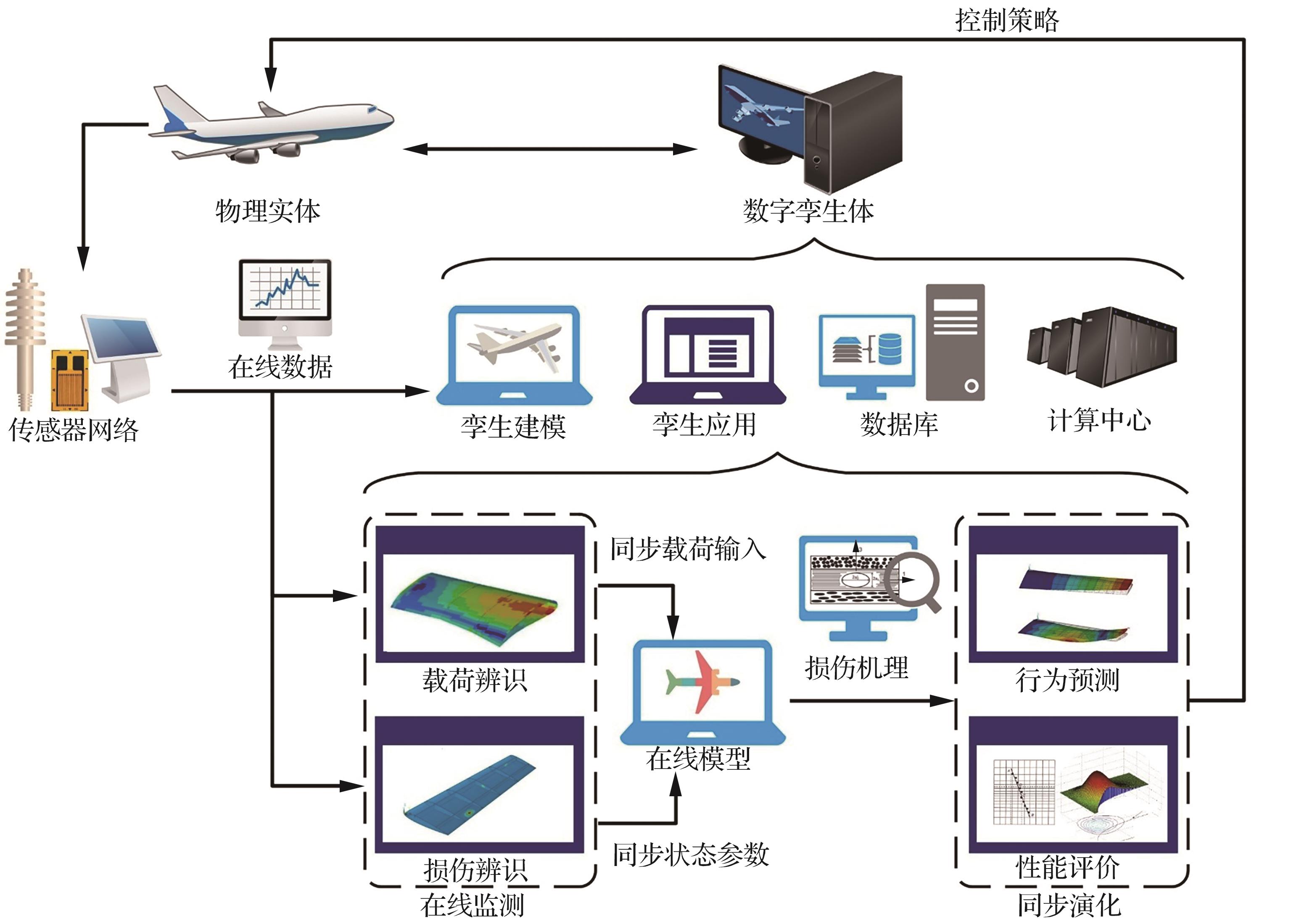
Fig.2
Hardware-software system for aircraft structure strength twin
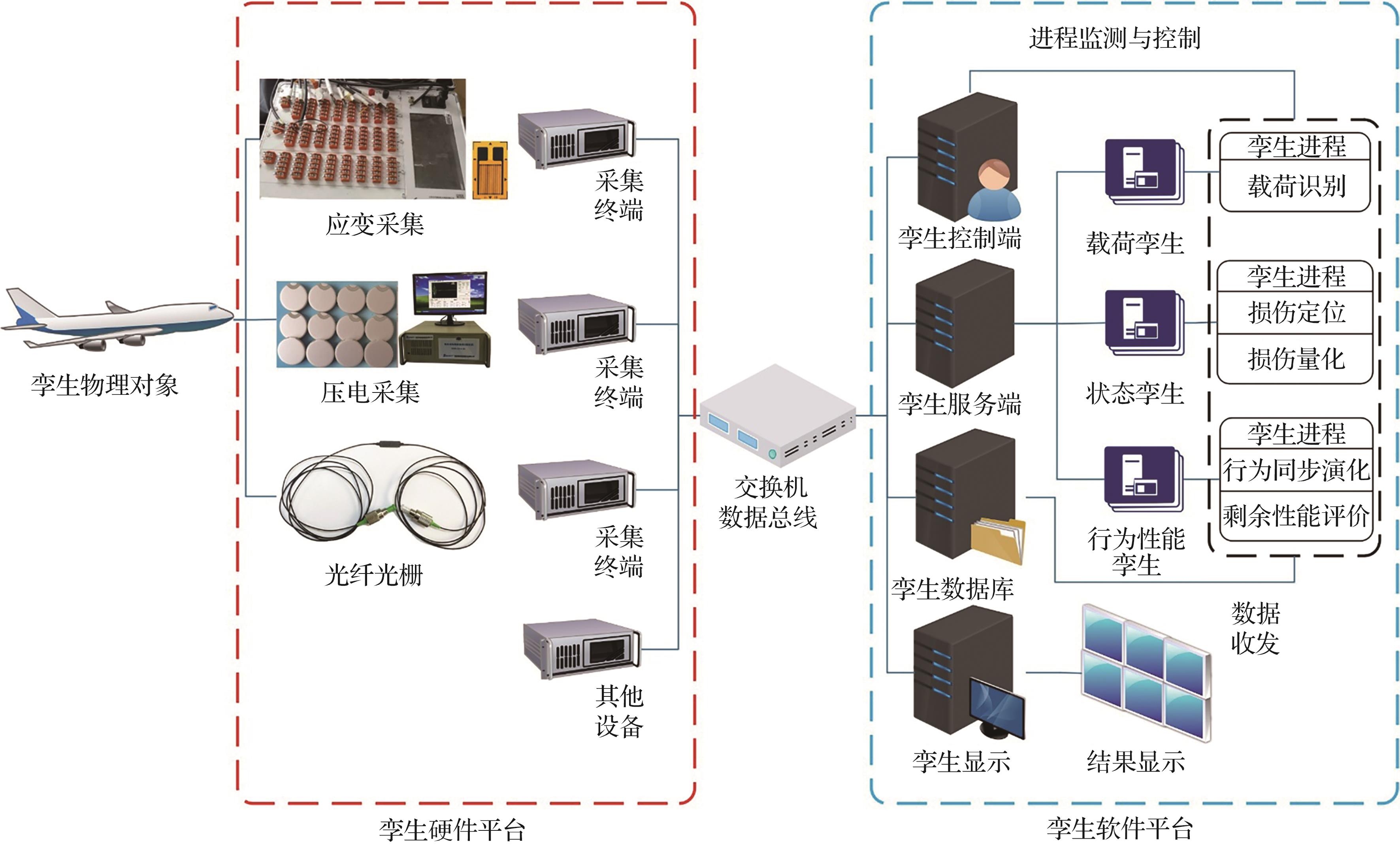
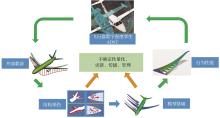
Fig.3
Uncertainty core of aircraft digital strength twin
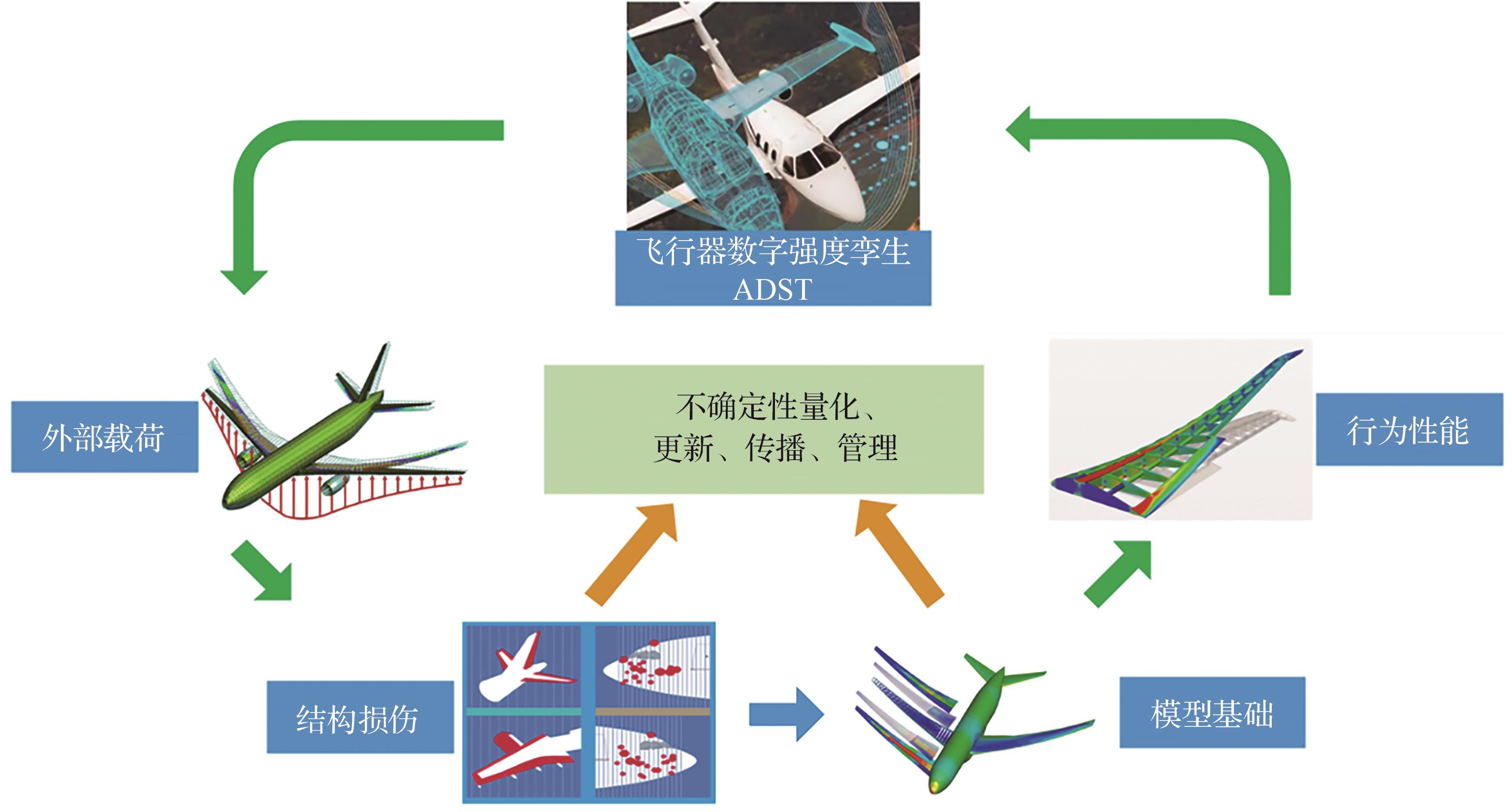
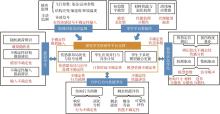
Fig.4
Uncertainty technical framework for aircraft digital strength twin
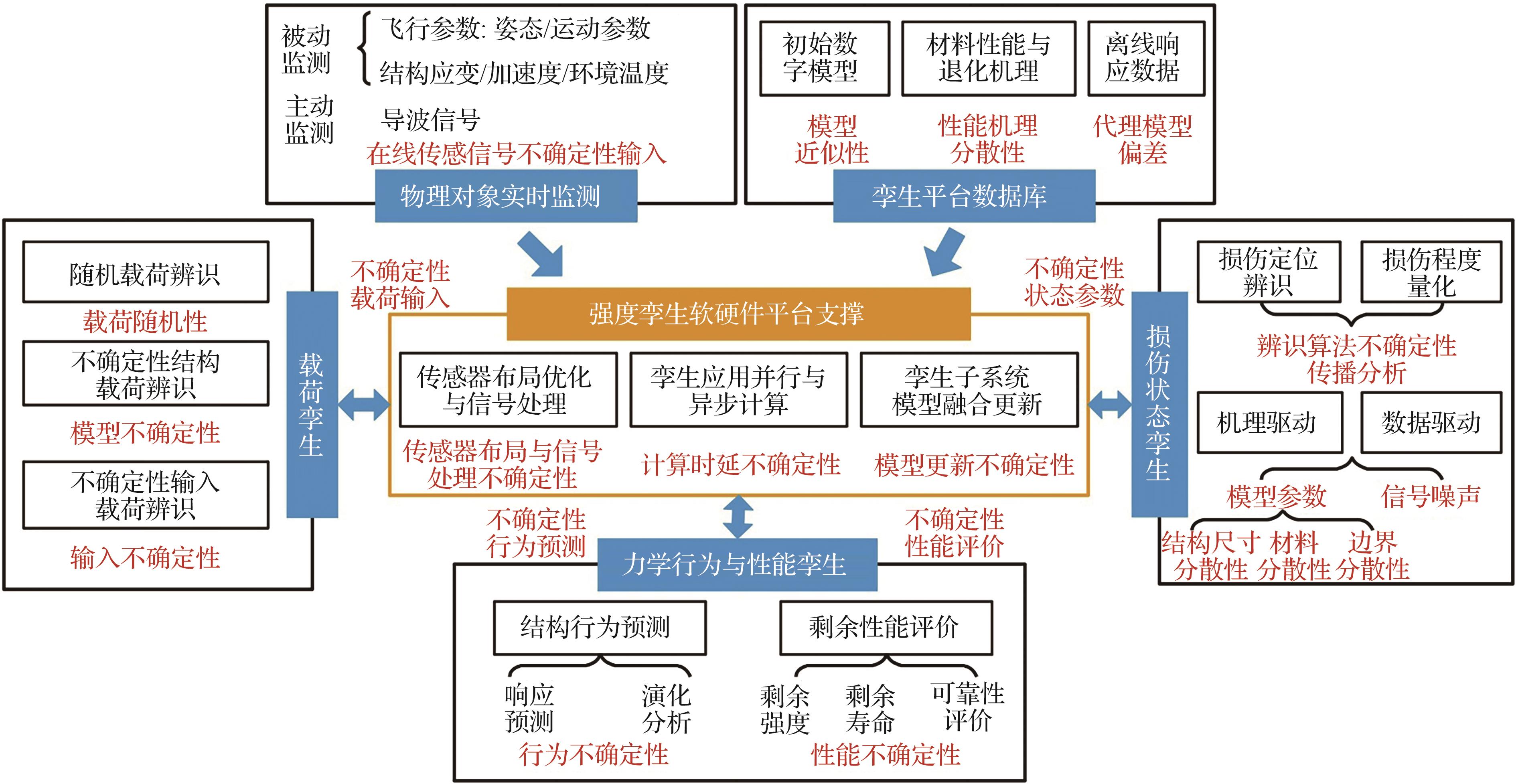
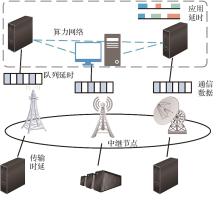
Fig.5
Synchronization latency in digital twins[47]
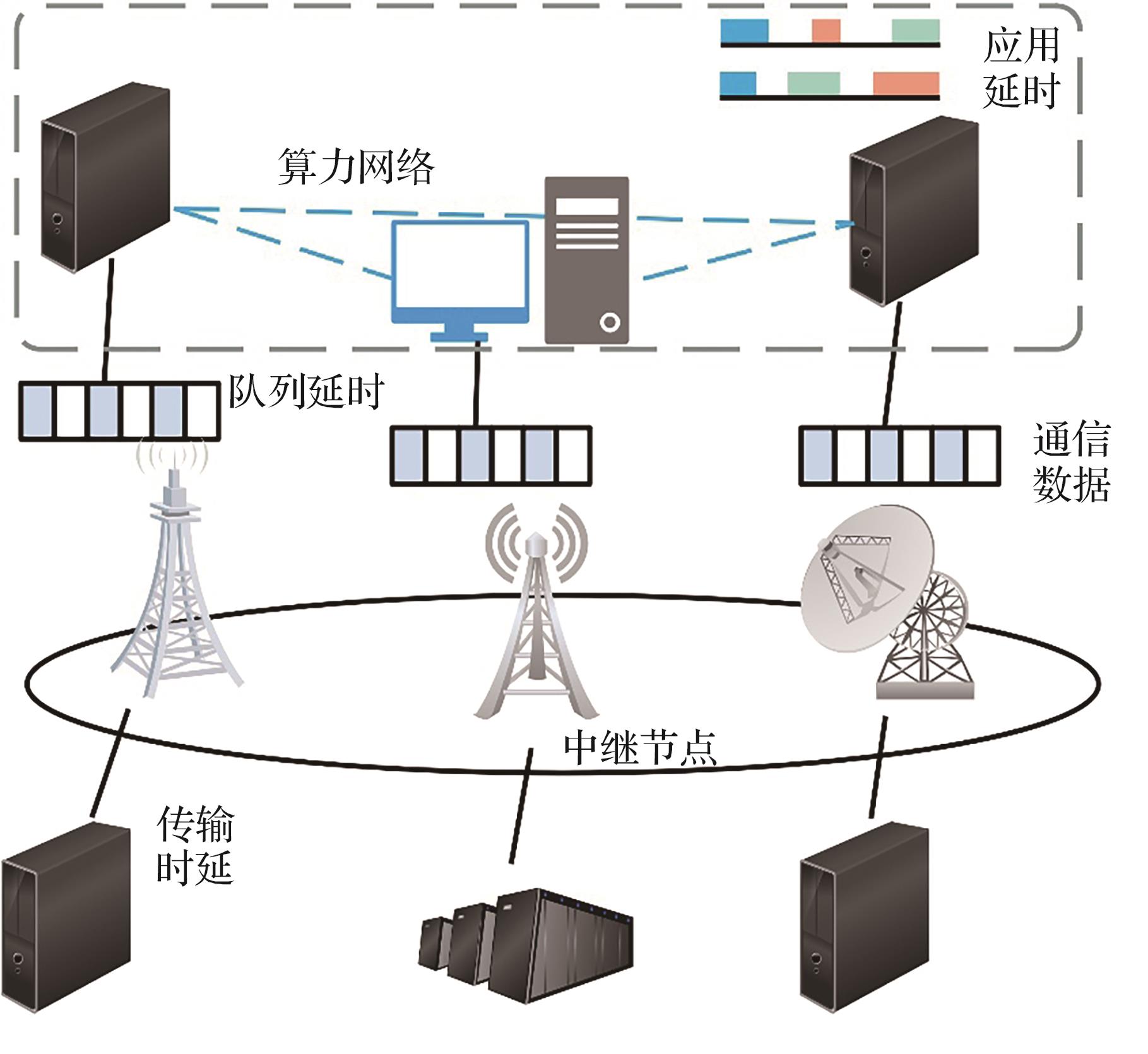
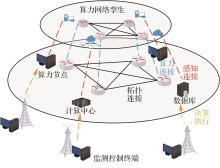
Fig.6
Digital twin based computing power scheduling[47]
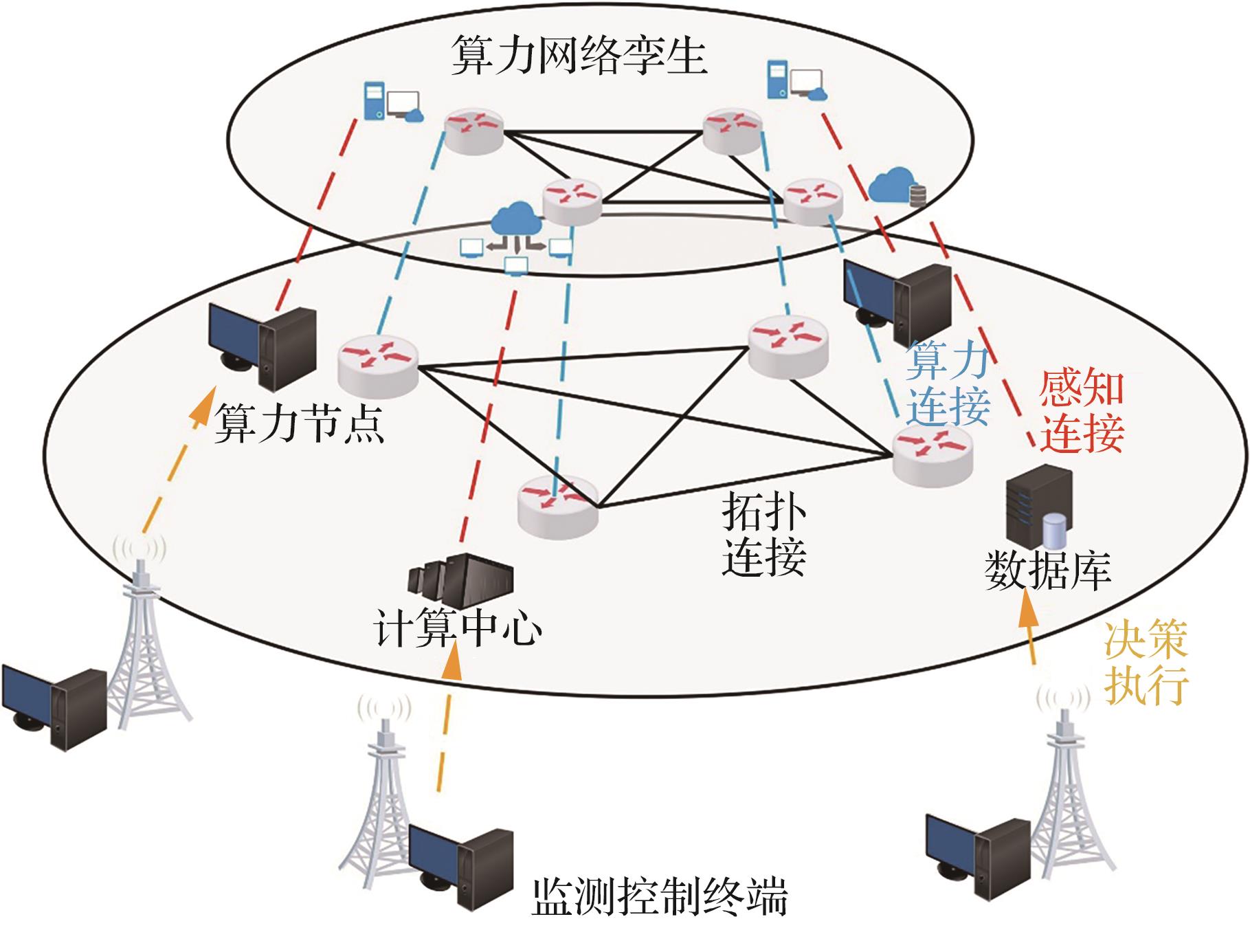
Fig.7
Integrated simulation platform for multi-source heterogeneous models of aircraft subsystem[67]
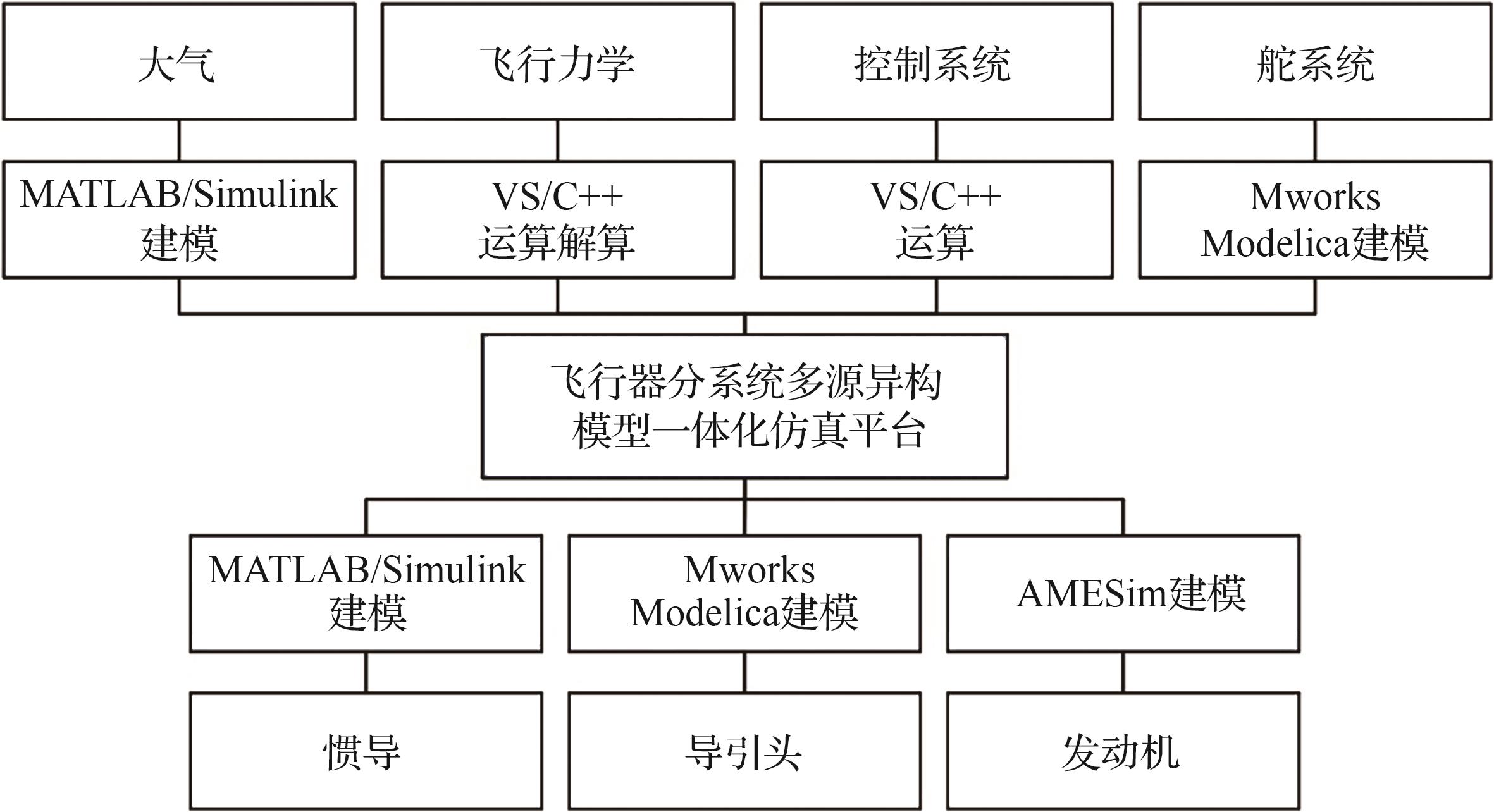
Fig.8
Multi-source heterogeneous data acquisition and fusion framework[79]
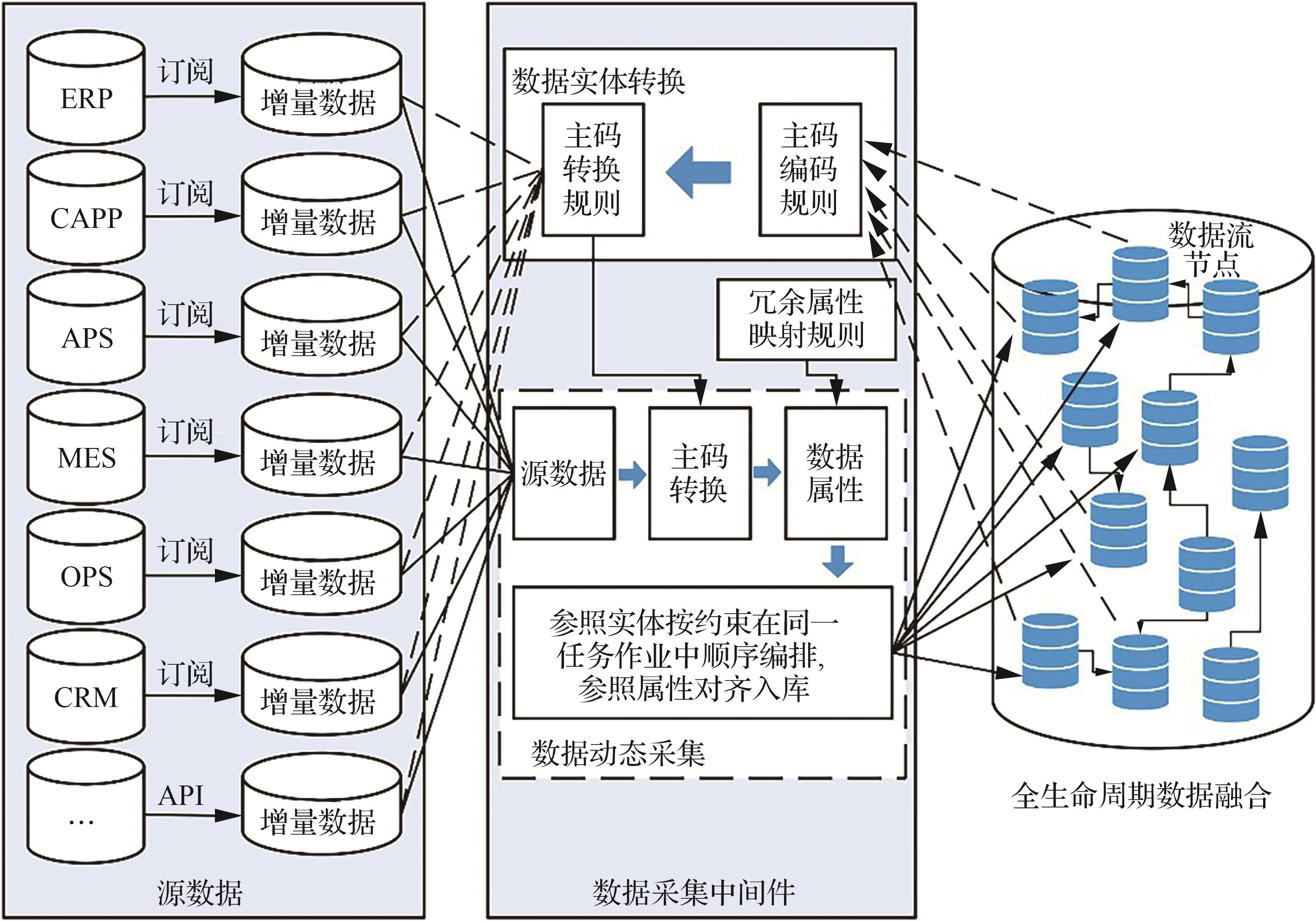
Fig.9
Characteristics of aircraft structural load digital twin technology
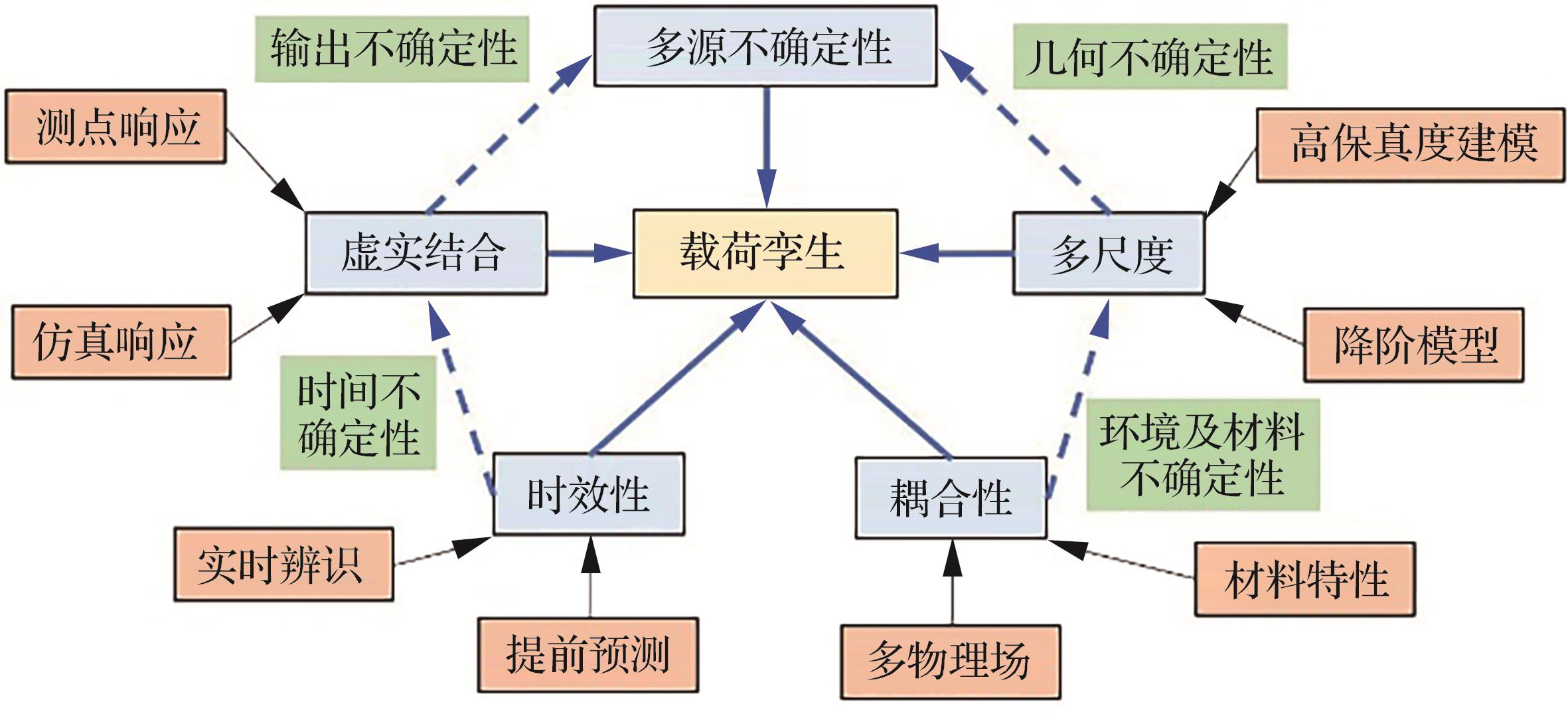
Fig.10
Evolution of load identification methods[83]
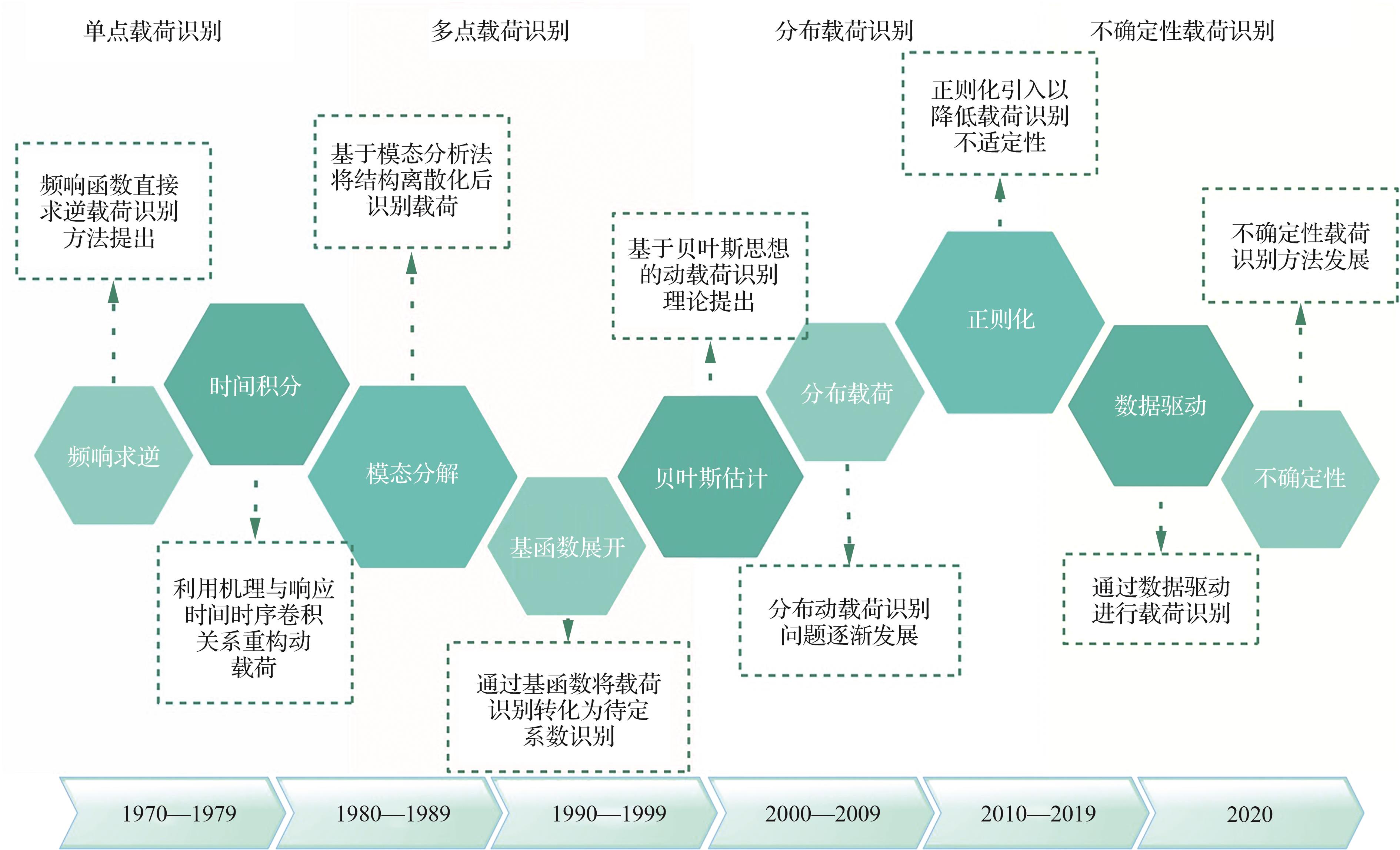
Fig.11
Load identification methods under uncertainty[70]
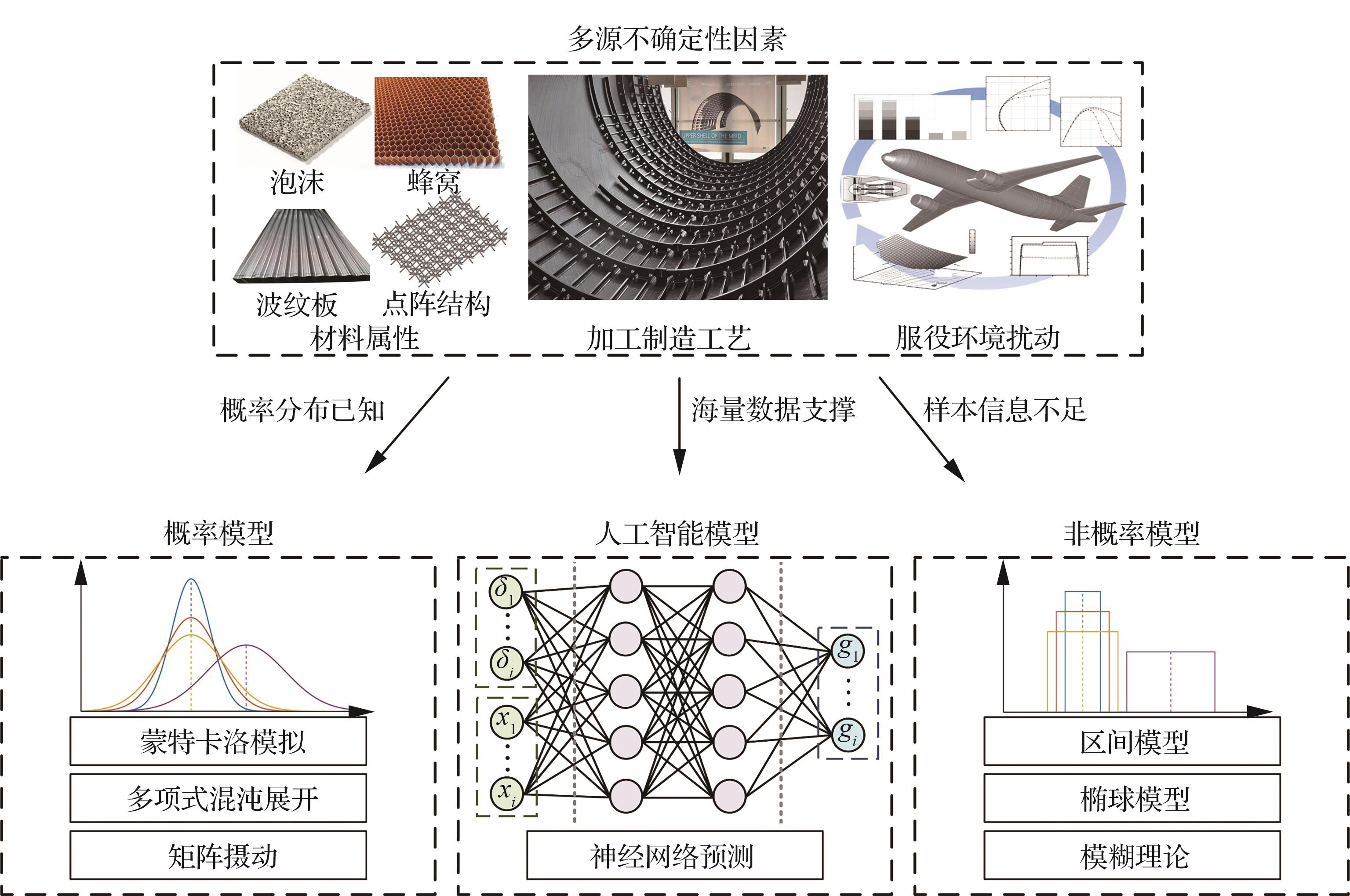
Fig.12
Probability and sensitivity based damage identification procedure[143]
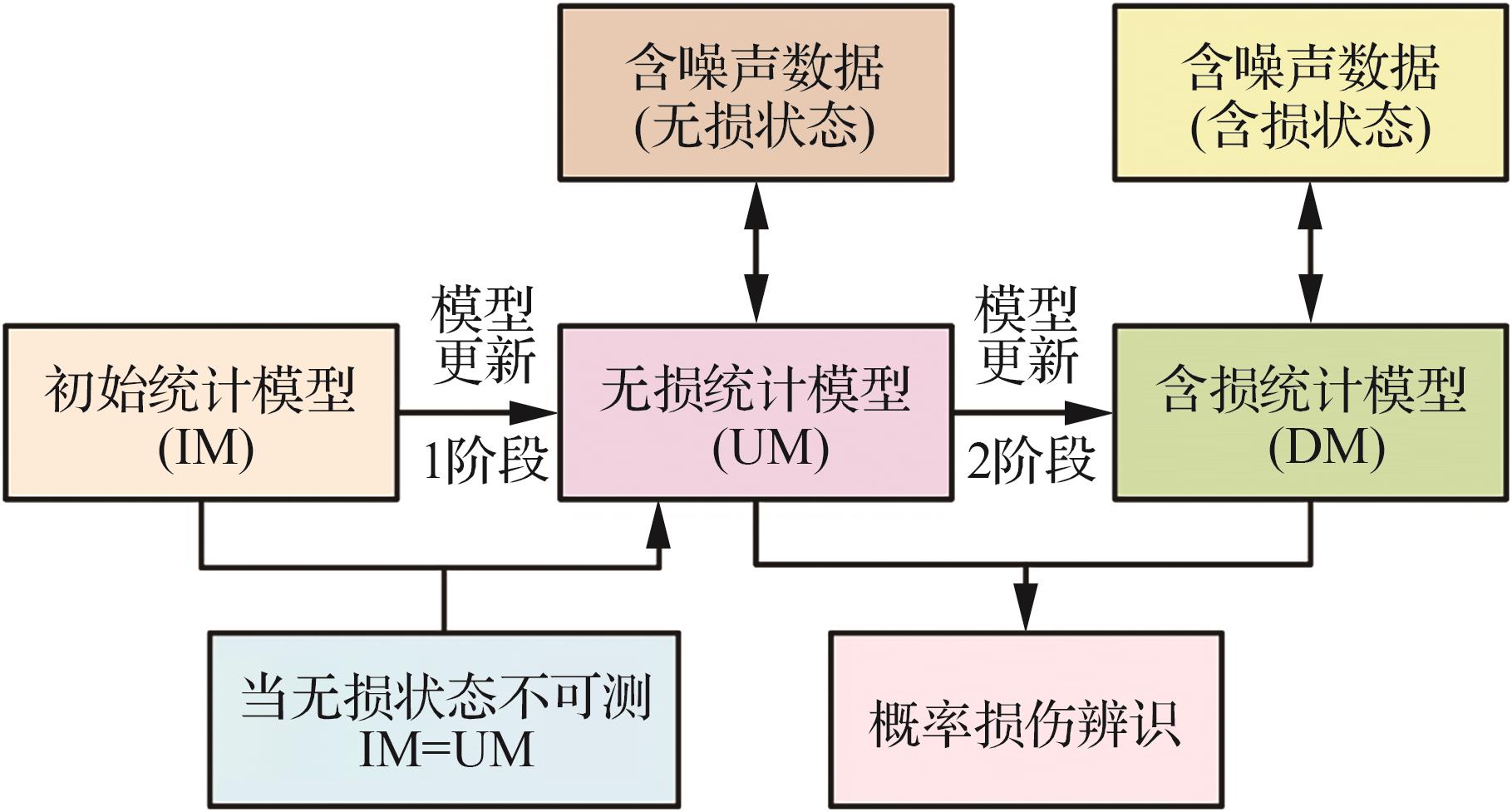
Fig.13
Bayesian Neural Network for Damage Identification[192]
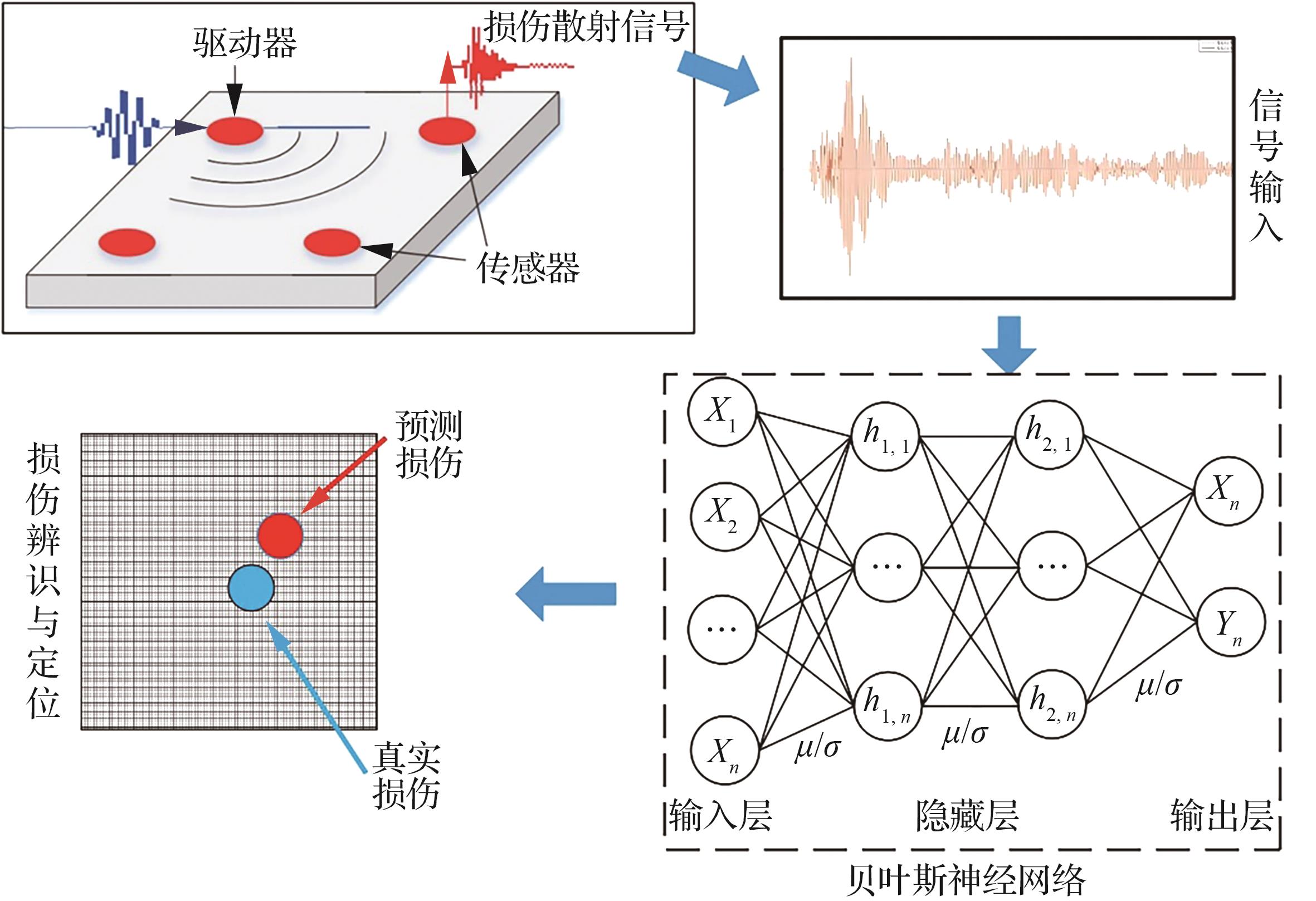
Fig.14
Development of theoretical methods for structural performance evaluation
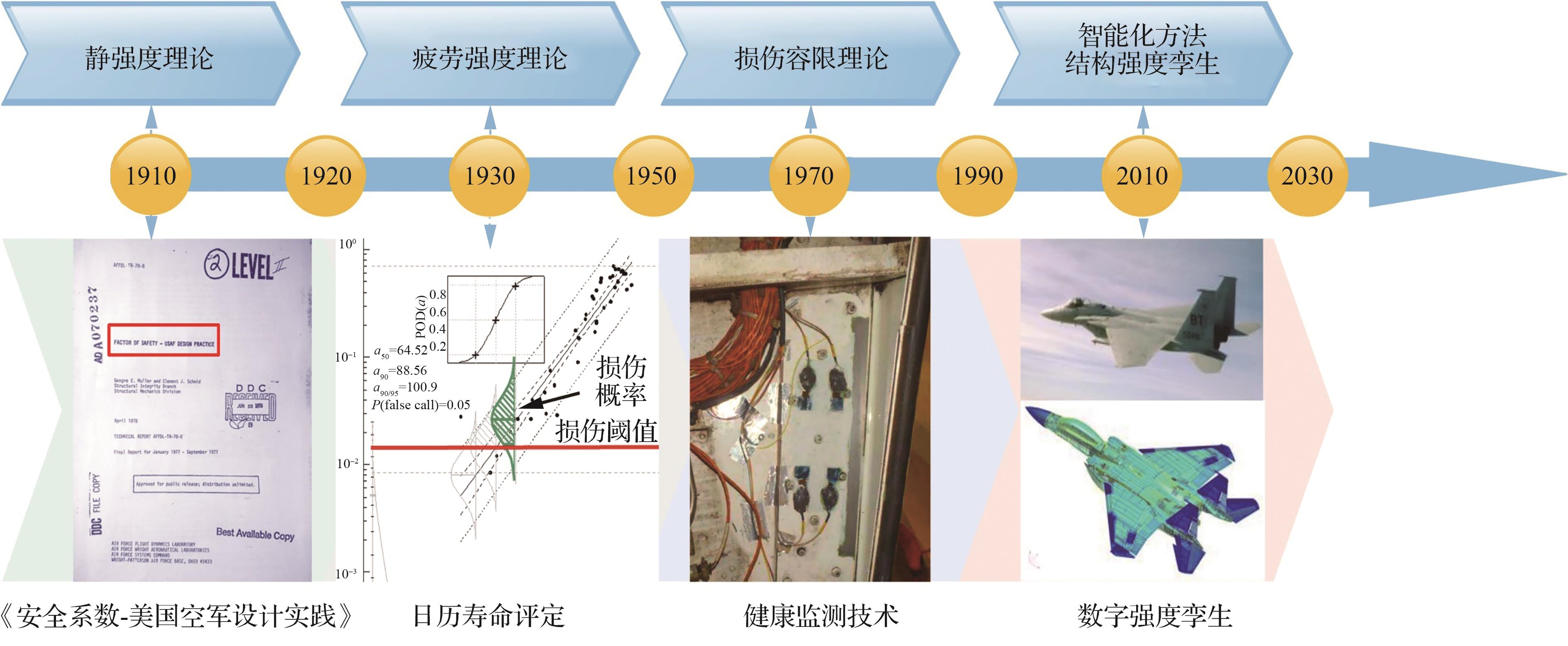
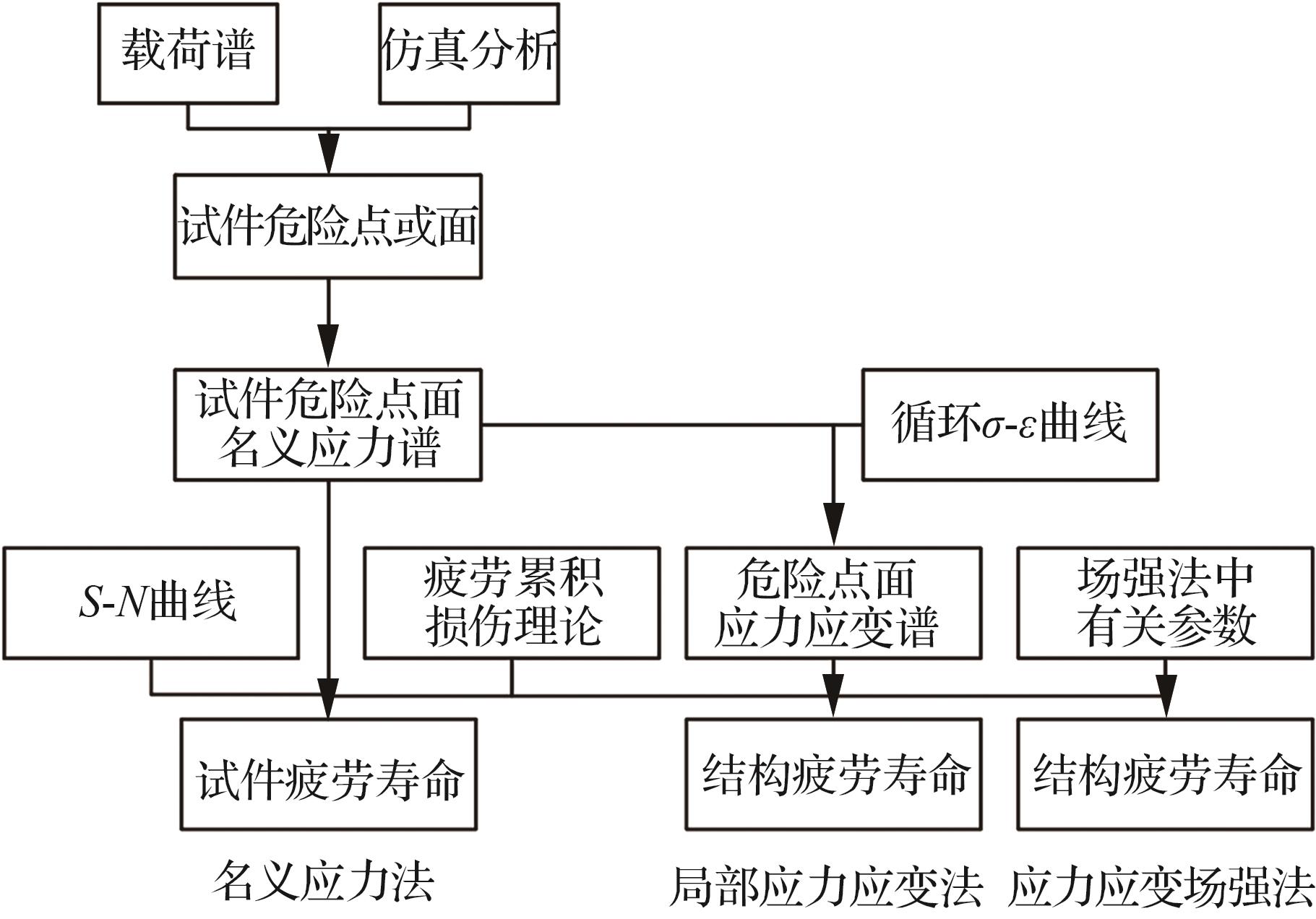
Fig.15
General procedure for structural fatigue life prediction[208-209]
| [1] | 陶飞, 刘蔚然, 张萌, 等. 数字孪生五维模型及十大领域应用[J]. 计算机集成制造系统, 2019, 25(1): 1-18. |
| TAO F, LIU W R, ZHANG M, et al. Five-dimension digital twin model and its ten applications[J]. Computer Integrated Manufacturing Systems, 2019, 25(1): 1-18 (in Chinese). | |
| [2] | 孟松鹤, 叶雨玫, 杨强, 等. 数字孪生及其在航空航天中的应用[J]. 航空学报, 2020, 41(9): 023615. |
| MENG S H, YE Y M, YANG Q, et al. Digital twin and its aerospace applications[J]. Acta Aeronautica et Astronautica Sinica, 2020, 41(9): 023615 (in Chinese). | |
| [3] | 董雷霆, 周轩, 赵福斌, 等. 飞机结构数字孪生关键建模仿真技术[J]. 航空学报, 2021, 42(3): 023981. |
| DONG L T, ZHOU X, ZHAO F B, et al. Key technologies for modeling and simulation of airframe digital twin[J]. Acta Aeronautica et Astronautica Sinica, 2021, 42(3): 023981 (in Chinese). | |
| [4] | SADRAEY M H. Aircraft design: A systems engineering approach [M]. New York: John Wiley & Sons, 2012. |
| [5] | KARPEL M. Design for active flutter suppression and gust alleviation using state-space aeroelastic modeling[J]. Journal of Aircraft, 1982, 19(3): 221-227. |
| [6] | CHOI S K, GRANDHI R, CANFIELD R A. Reliability-based structural design [M]. Berlin:Springer Science & Business Media, 2006. |
| [7] | 王晓军, 王磊, 邱志平. 结构可靠性分析与优化设计的非概率集合理论[M]. 北京: 科学出版社, 2016. |
| WANG X J, WANG L, QIU Z P. Non-probabilistic set theory for structural reliability analysis and optimal design[M]. Beijing: Science Press, 2016 (in Chinese). | |
| [8] | 刘亚威. 面向飞行器结构健康管理的数字孪生及应用研究综述[J]. 测控技术, 2022, 41(1): 1-10. |
| LIU Y W. Review on digital twin and its application research for aircraft structure health management[J]. Measurement & Control Technology, 2022, 41(1): 1-10 (in Chinese). | |
| [9] | WANG X J, SHI Q H, FAN W C, et al. Comparison of the reliability-based and safety factor methods for structural design[J]. Applied Mathematical Modelling, 2019, 72: 68-84. |
| [10] | TUEGEL E J, INGRAFFEA A R, EASON T G, et al. Reengineering aircraft structural life prediction using a digital twin[J]. International Journal of Aerospace Engineering, 2011, 2011(1): 154798. |
| [11] | 李鹏, 潘凯, 刘小川. 美国空军机体数字孪生计划的回顾与启示[J]. 航空科学技术, 2020, 31(9): 1-10. |
| LI P, PAN K, LIU X C. Retrospect and enlightenment of the AFRL airframe digital twin program[J]. Aeronautical Science & Technology, 2020, 31(9): 1-10 (in Chinese). | |
| [12] | LEE H, CHO H, PARK S. Review of the F-16 individual aircraft tracking program[J]. Journal of Aircraft, 2012, 49(5): 1398-1405. |
| [13] | LEE H, PARK S, KIM H. Estimation of aircraft structural fatigue life using the crack severity index methodology[J]. Journal of Aircraft, 2010, 47(5): 1672-1678. |
| [14] | 冯军, 赵攀, 郑晶晶, 等. 大型飞机多维度数字样机体系构建技术研究[J]. 航空计算技术, 2024, 54(6): 96-101. |
| FENG J, ZHAO P, ZHENG J J, et al. Construction technology research on multi-dimensional digital mockup system for large aircraft[J]. Aeronautical Computing Technique, 2024, 54(6): 96-101 (in Chinese). | |
| [15] | 曾嵘, 黄锐, 王彤, 等. 航空发动机健康管理数字化和标准化发展综述[J]. 燃气涡轮试验与研究, 2025, 38(2): 81-90. |
| ZENG R, HUANG R, WANG T, et al. Overview of the development of digitalization and standardization in engine health management[J]. Gas Turbine Experiment and Research, 2025, 38(2): 81-90 (in Chinese). | |
| [16] | RUDD J L. Airframe digital twin[C]∥Proceedings of the 27th Symposium of the International Committee on Aeronautical Fatigue and Structural Integrity. 2013. |
| [17] | 张延. 工业数字孪生实时数据处理[J]. 中国科技信息, 2025(6): 124-126. |
| ZHANG Y. Industrial digital twin real-time data processing[J]. China Science and Technology Information, 2025(6): 124-126 (in Chinese). | |
| [18] | KRAFT E M. The air force digital thread/digital twin-life cycle integration and use of computational and experimental knowledge[C]∥Proceedings of the 54th AIAA Aerospace Sciences Meeting. Reston: AIAA, 2016. |
| [19] | WANG X J, WANG L. Uncertainty quantification and propagation analysis of structures based on measurement data[J]. Mathematical and Computer Modelling, 2011, 54(11-12): 2725-2735. |
| [20] | LI C Z, MAHADEVAN S, LING Y, et al. Dynamic Bayesian network for aircraft wing health monitoring digital twin[J]. AIAA Journal, 2017, 55(3): 930-941. |
| [21] | ROY C J, OBERKAMPF W L. A comprehensive framework for verification, validation, and uncertainty quantification in scientific computing[J]. Computer Methods in Applied Mechanics and Engineering, 2011, 200(25-28): 2131-2144. |
| [22] | 陈帅. 基于分布式应变传感的飞行器构件健康状态监测与评估[D]. 大连: 大连理工大学, 2024. |
| CHEN S. Health monitoring and assessment of aircraft components based on distributed strain sensing[D]. Dalian: Dalian University of Technology, 2024 (in Chinese). | |
| [23] | 田阔, 孙志勇, 李增聪. 面向结构静力试验监测的高精度数字孪生方法[J]. 航空学报, 2024, 45(7): 429134. |
| TIAN K, SUN Z Y, LI Z C. High-precision digital twin method for structural static test monitoring[J]. Acta Aeronautica et Astronautica Sinica, 2024, 45(7): 429134 (in Chinese). | |
| [24] | 李巧玲. 复杂场景下数字孪生多源数据融合技术研究[D]. 西安: 西安工业大学, 2024. |
| LI Q L. Research on multisource data fusion technology for digital twins in complex environments[D]. Xi’an: Xi’an Technological University, 2024 (in Chinese). | |
| [25] | 余慧芬, 祁核, 涂小牛, 等. 高温压电振动传感器及其压电材料研究进展[J]. 物理学报, 2025, 74(2): 182-211. |
| YU H F, QI H, TU X N, et al. Research progress of high-temperature piezoelectric vibration sensors and piezoelectric materials[J]. Acta Physica Sinica, 2025, 74(2): 182-211 (in Chinese). | |
| [26] | 刁雪洋. 基于数字孪生的车体静强度数据分析系统的研究[D]. 成都: 西南交通大学, 2022. |
| DIAO X Y. Research on data analysis system of vehicle body static strength based on digital twin [D]. Chengdu: Southwest Jiaotong University, 2022 (in Chinese). | |
| [27] | YANG C, XIA Y Q. Interval Pareto front-based multi-objective robust optimization for sensor placement in structural modal identification[J]. Reliability Engineering & System Safety, 2024, 242: 109703. |
| [28] | WANG L, ZHANG H Y, WANG Y, et al. A data-driven force-thermal coupling load identification method considering multi-source uncertainties of structural characteristics and measuring noises[J]. Computer Methods in Applied Mechanics and Engineering, 2024, 425: 116937. |
| [29] | YAO Y T, HAN T, YU J, et al. Uncertainty-aware deep learning for reliable health monitoring in safety-critical energy systems[J]. Energy, 2024, 291: 130419. |
| [30] | WANG X J, YANG C, WANG L, et al. Probabilistic damage identification of structures with uncertainty based on dynamic responses[J]. Acta Mechanica Solida Sinica, 2014, 27(2): 172-180. |
| [31] | HOU L Q, ZHAO X F, HAN R C. Optimal sensor placement for stay cable damage identification of cable-stayed bridge under uncertainty[J]. International Journal of Distributed Sensor Networks, 2013, 9(12): 361594. |
| [32] | HUANG M S, ZHANG J W, LI J, et al. Damage identification of steel bridge based on data augmentation and adaptive optimization neural network[J]. Structural Health Monitoring, 2025, 24(3): 1674-1699. |
| [33] | LEW J S. Structural damage identification with performance-based uncertainty quantification and feedback control[J]. Journal of Intelligent Material Systems and Structures, 2011, 22(12): 1317-1325. |
| [34] | 王捷. 面向数字孪生的数据补全机制研究[D]. 成都: 电子科技大学, 2023. |
| WANG J. Research on data completion for digital twin [D]. Chengdu: University of Electronic Science and Technology of China, 2023 (in Chinese). | |
| [35] | GRAHAM J W. Missing data analysis: Making it work in the real world[J]. Annual Review of Psychology, 2009, 60: 549-576. |
| [36] | DEMPSTER A P, LAIRD N M, RUBIN D B. Maximum likelihood from incomplete data via the EM algorithm[J]. Journal of the Royal Statistical Society: Series B (Methodological), 1977, 39(1): 1-22. |
| [37] | HUANG J, SUN H. Grey relational analysis based k nearest neighbor missing data imputation for software quality datasets[C]∥Proceedings of the 2016 IEEE International Conference on Software Quality, Reliability and Security (QRS). Piscataway: IEEE,2016. |
| [38] | AL-JANABI S, ALKAIM A F. A nifty collaborative analysis to predicting a novel tool (DRFLLS) for missing values estimation[J]. Soft Computing, 2020, 24(1): 555-569. |
| [39] | 何佳琦. 性能数据驱动的多源不确定性量化与优化方法研究[D]. 大连: 大连理工大学, 2023. |
| HE J Q. Performance data driven quantification of multi-source uncertainties and structural optimization method [D]. Dalian: Dalian University of Technology, 2023 (in Chinese). | |
| [40] | 李松, 李一鸣, 李顺. 数字孪生辅助的工业物联网边缘计算任务卸载和资源分配策略[J]. 华南理工大学学报(自然科学版), 2025, 53(3): 88-96. |
| LI S, LI Y M, LI S. Digital twin assisted edge computing task offloading and resource allocation strategy in industrial internet of things[J]. Journal of South China University of Technology (Natural Science Edition), 2025, 53(3): 88-96 (in Chinese). | |
| [41] | GONG Y K, YAO H P, WANG J J, et al. Edge intelligence-driven joint offloading and resource allocation for future 6G industrial Internet of Things[J]. IEEE Transactions on Network Science and Engineering, 2024, 11(6): 5644-5655. |
| [42] | WANG F Y, QIN R, LI J J, et al. Parallel societies: A computing perspective of social digital twins and virtual–real interactions[J]. IEEE Transactions on Computational Social Systems, 2020, 7(1): 2-7. |
| [43] | CUI H Y, ZHANG R Q, SONG L Y, et al. Capacity analysis of bidirectional AF relay selection with imperfect channel state information[J]. IEEE Wireless Communications Letters, 2013, 2(3): 255-258. |
| [44] | JIANG L, ZHENG H, TIAN H, et al. Cooperative federated learning and model update verification in blockchain-empowered digital twin edge networks[J]. IEEE Internet of Things Journal, 2022, 9(13): 11154-11167. |
| [45] | 李松, 李顺, 王博文, 等. 数字孪生边缘网络端到端时延优化的任务卸载与资源分配方法[J]. 电子与信息学报, 2025, 47(3): 633-644. |
| LI S, LI S, WANG B W, et al. Task offloading and resource allocation method for end-to-end delay optimization in digital twin edge networks[J]. Journal of Electronics & Information Technology, 2025, 47(3): 633-644 (in Chinese). | |
| [46] | 高月红, 张吉, 严靖炜, 等. 基于微服务架构的数字孪生仿真平台设计方法[J]. 信息通信技术与政策, 2023(11): 81-90. |
| GAO Y H, ZHANG J, YAN J W, et al. Design method of digital twin simulation platform based on micro-service architecture[J]. Information and Communications Technology and Policy, 2023(11): 81-90 (in Chinese). | |
| [47] | 黄韬, 周子翔, 唐琴琴, 等. 面向自智算力网络的数字孪生: 架构与关键挑战[J]. 通信学报, 2025, 46(4): 255-271. |
| HUANG T, ZHOU Z X, TANG Q Q, et al. Digital twin for self-intelligent computing power networks: Architecture and key challenges[J]. Journal on Communications, 2025, 46(4): 255-271 (in Chinese). | |
| [48] | 贾庆民, 胡玉姣, 张华宇, 等. 确定性算力网络研究[J]. 通信学报, 2022, 43(10): 55-64. |
| JIA Q M, HU Y J, ZHANG H Y, et al. Research on deterministic computing power network[J]. Journal on Communications, 2022, 43(10): 55-64 (in Chinese). | |
| [49] | 吴双, 谢人超, 唐琴琴, 等. 面向工业生产的算力孪生网络数据处理优化方法[J]. 通信学报, 2025, 46(3): 1-12. |
| WU S, XIE R C, TANG Q Q, et al. Optimization method for data processing in digital twin-enabled computing power network for industrial production[J]. Journal on Communications, 2025, 46(3): 1-12 (in Chinese). | |
| [50] | TAN B, MATTA A. The digital twin synchronization problem: Framework, formulations, and analysis[J]. IISE Transactions, 2024, 56(6): 652-665. |
| [51] | ZHENG J K, LUAN T H, ZHANG Y, et al. Data synchronization in vehicular digital twin network: A game theoretic approach[J]. IEEE Transactions on Wireless Communications, 2023, 22(11): 7635-7647. |
| [52] | KIM C, CHEHIMI M, JUNG M, et al. Real-time task scheduling for digital twin edge network[C]∥Proceedings of the GLOBECOM 2023-2023 IEEE Global Communications Conference. Piscataway: IEEE, 2023. |
| [53] | 雒战平, 刘之行. 有限元并行计算的MPI程序设计[J]. 西安交通大学学报, 2004, 38(8): 873-876. |
| LUO Z P, LIU Z X. MPI programming for parallel computing of finite element method[J]. Journal of Xi’an Jiaotong University, 2004, 38(8): 873-876 (in Chinese). | |
| [54] | 罗红兵, 张晓霞. MPI集合通信性能可扩展性研究与分析[J]. 计算机科学与探索, 2017, 11(2): 252-261. |
| LUO H B, ZHANG X X. Analysis of scalability for MPI collective communication[J]. Journal of Frontiers of Computer Science and Technology, 2017, 11(2): 252-261 (in Chinese). | |
| [55] | 赖建新, 胡长军, 赵宇迪, 等. OpenMP任务调度开销及负载均衡分析[J]. 计算机工程, 2006, 32(18): 58-60. |
| LAI J X, HU C J, ZHAO Y D, et al. Analysis of task schedule overhead and load balance in OpenMP[J]. Computer Engineering, 2006, 32(18): 58-60 (in Chinese). | |
| [56] | 王年华, 常兴华, 赵钟, 等. 非结构CFD软件MPI+OpenMP混合并行及超大规模非定常并行计算的应用[J]. 航空学报, 2020, 41(10): 123859. |
| WANG N H, CHANG X H, ZHAO Z, et al. Implementation of hybrid MPI+OpenMP parallelization on unstructured CFD solver and its applications in massive unsteady simulations[J]. Acta Aeronautica et Astronautica Sinica, 2020, 41(10): 123859 (in Chinese). | |
| [57] | 徐顺, 王武, 张鉴, 等. 面向异构计算的高性能计算算法与软件[J]. 软件学报, 2021, 32(8): 2365-2376. |
| XU S, WANG W, ZHANG J, et al. High performance computing algorithm and software for heterogeneous computing[J]. Journal of Software, 2021, 32(8): 2365-2376 (in Chinese). | |
| [58] | 阳王东, 王昊天, 张宇峰, 等. 异构混合并行计算综述[J]. 计算机科学, 2020, 47(8): 5-16, 3. |
| YANG W D, WANG H T, ZHANG Y F, et al. Survey of heterogeneous hybrid parallel computing[J]. Computer Science, 2020, 47(8): 5-16, 3 (in Chinese). | |
| [59] | PENG F, HAO X L, CHAI F X. A GPU-accelerated two-dimensional hydrodynamic model for unstructured grids[J]. Water, 2023, 15(7): 1300. |
| [60] | XIA X L, LIANG Q H, MING X D. A full-scale fluvial flood modelling framework based on a high-performance integrated hydrodynamic modelling system (HiPIMS)[J]. Advances in Water Resources, 2019, 132: 103392. |
| [61] | 宁志强, 卫立新, 张瑞, 等. 基于多核CPU的复杂液压产品快速并行优化方法[J]. 农业机械学报, 2022, 53(4): 441-449. |
| NING Z Q, WEI L X, ZHANG R, et al. Rapid parallel optimization method of complex hydraulic product based on multi-core CPU[J]. Transactions of the Chinese Society for Agricultural Machinery, 2022, 53(4): 441-449 (in Chinese). | |
| [62] | 马树焕, 宁志强, 卫立新. 基于多核并行数字孪生的叉车稳定性预警方法及试验[J]. 中国安全科学学报, 2024, 34(8): 93-100. |
| MA S H, NING Z Q, WEI L X. Method and experiment of forklift stability warning based on Multi-Core parallel digital twin[J]. China Safety Science Journal, 2024, 34(8): 93-100 (in Chinese). | |
| [63] | 张东, 牛睿. 计算机集群化处理技术在数字孪生中的研究与应用[C]∥2025(第十三届)中国水利信息化技术交流会论文集. 2025. |
| ZHANG D, NIU R. Research and application of computer cluster processing technology in digital twins[C]∥Proceedings of the 13th China Water Resources Informatization Technology Conference. 2025 (in Chinese). | |
| [64] | 白凯玮. 基于分布式深度学习的高光谱图像目标检测算法研究[D]. 西安: 西安电子科技大学, 2022. |
| BAI K W. Research on hyperspectral image target detection algorithm based on distributed deep learning[D]. Xi’an: Xidian University, 2022 (in Chinese). | |
| [65] | 刘壮, 吴宇赫, 陈雨然, 等. 通信-感知-计算融合: 关键技术、挑战与未来趋势[J/OL]. 计算机科学与探索, 2025: 1-36. (2025-04-17). . |
| LIU Z, WU Y H, CHEN Y R, et al. Integration of communication, sensing and computing: Key technologies, challenges, and future trends[J/OL]. Journal of Frontiers of Computer Science and Technology, 2025: 1-36. (2025-04-17). (in Chinese). | |
| [66] | COSTANTINI A, DI MODICA G, AHOUANGONOU J C, et al. IoTwins: Toward implementation of distributed digital twins in industry 4.0 settings[J]. Computers, 2022, 11(5): 67. |
| [67] | 陆冠华, 郝明瑞, 胡松, 等. 基于FMI的飞行器分系统多源异构模型一体化仿真[J]. 导航定位与授时, 2018, 5(6): 99-104. |
| LU G H, HAO M R, HU S, et al. Integrated simulation of aircraft subsystem multi-source heterogeneous models based on FMI[J]. Navigation Positioning and Timing, 2018, 5(6): 99-104 (in Chinese). | |
| [68] | 张辰源, 陶飞. 数字孪生模型评价指标体系[J]. 计算机集成制造系统, 2021, 27(8): 2171-2186. |
| ZHANG C Y, TAO F. Evaluation index system for digital twin model[J]. Computer Integrated Manufacturing Systems, 2021, 27(8): 2171-2186 (in Chinese). | |
| [69] | 张澍, 田阔, 郭聪. 基于多重保真度的复杂空间缩减与优化方法[J]. 航空学报, 2024, 45(): 730583. |
| ZHANG S, TIAN K, GUO C. Complex space reduction and optimization method based on multiple fidelity[J]. Acta Aeronautica et Astronautica Sinica, 2024, 45(Sup 1): 730583 (in Chinese). | |
| [70] | WANG L, LIU Y R, XU H Y. Review: Recent developments in dynamic load identification for aerospace vehicles considering multi⁃source uncertainties[J]. Transactions of Nanjing University of Aeronautics and Astronautics, 2021, 38(2): 271-287. |
| [71] | 闫东明. 基于多源异构数据的数字孪生动态模型推演技术[D]. 长春: 长春理工大学, 2024. |
| YAN D M. Digital twin dynamic model deduction technology based on multi-source heterogeneous data[D]. Changchun: Changchun University of Science and Technology, 2024 (in Chinese). | |
| [72] | 马超, 邹子炀, 顾正柏, 等. 融合多源异构数据的飞机故障诊断方法研究进展[J]. 航空工程进展, 2025, 16(1): 139-150. |
| MA C, ZOU Z Y, GU Z B, et al. Research progress of aircraft fault diagnosis method integrating multi-source heterogeneous data[J]. Advances in Aeronautical Science and Engineering, 2025, 16(1): 139-150 (in Chinese). | |
| [73] | YILMAZ Y, AKTUKMAK M, HERO A O. Multimodal data fusion in high-dimensional heterogeneous datasets via generative models[J]. IEEE Transactions on Signal Processing, 2021, 69: 5175-5188. |
| [74] | LIU S Q, LIU S D, CAI W D, et al. Multimodal neuroimaging feature learning for multiclass diagnosis of Alzheimer’s disease[J]. IEEE Transactions on Bio-Medical Engineering, 2015, 62(4): 1132-1140. |
| [75] | ZHANG M J, WANG W. Weighted adaptive partition for heterogeneous IoT data stream[J]. IEEE Internet of Things Journal, 2021, 8(20): 15240-15248. |
| [76] | 周旭东. 基于不同多视图数据场景的典型相关分析研究和应用[D]. 南京: 南京航空航天大学, 2013. |
| ZHOU X D. Research on canonical correlation analysis based on different multi-view data scenario with applications[D]. Nanjing: Nanjing University of Aeronautics and Astronautics, 2013 (in Chinese). | |
| [77] | POLIYAPRAM V, WANG W M, NAKAMURA R. A point-wise LiDAR and image multimodal fusion network (PMNet) for aerial point cloud 3D semantic segmentation[J]. Remote Sensing, 2019, 11(24): 2961. |
| [78] | SHEN Z, SHANG X Q, LI Y Q, et al. PredNet and CompNet: Prediction and high-precision compensation of in-plane shape deformation for additive manufacturing[C]∥2019 IEEE 15th International Conference on Automation Science and Engineering (CASE). Piscataway: IEEE Press, 2019: 462-467. |
| [79] | 曾文驱, 王淑营. 复杂装备全生命周期多源异构数据融合技术研究[J]. 机械制造与自动化, 2024, 53(6): 107-112. |
| ZENG W Q, WANG S Y. Research on multi-source heterogeneous data fusion technology for whole life cycle of complex equipment[J]. Machine Building & Automation, 2024, 53(6): 107-112 (in Chinese). | |
| [80] | 陈韶昱, 郑翔, 周慧忠, 等. 数字孪生变电设备的可校准热寿命损失评估方法研究[J]. 电子器件, 2023, 46(5): 1429-1435. |
| CHEN S Y, ZHENG X, ZHOU H Z, et al. A calibratable thermal life loss assessment method for digital twin substation equipment[J]. Chinese Journal of Electron Devices, 2023, 46(5): 1429-1435 (in Chinese). | |
| [81] | WECKENMANN A, JIANG X, SOMMER K D, et al. Multisensor data fusion in dimensional metrology[J]. CIRP Annals, 2009, 58(2): 701-721. |
| [82] | 聂蓉梅, 周潇雅, 肖进, 等. 数字孪生技术综述分析与发展展望[J]. 宇航总体技术, 2022, 6(1): 1-6. |
| NIE R M, ZHOU X Y, XIAO J, et al. Analysis and perspective on digital twin technology[J]. Astronautical Systems Engineering Technology, 2022, 6(1): 1-6 (in Chinese). | |
| [83] | MENDROK K, DWORAKOWSKI Z. A review of methods for excitation force reconstruction[J]. Diagnostyka, 2019, 20(3): 11-19. |
| [84] | 姜金辉, 张方. 结构动载荷识别研究进展[J]. 振动工程学报, 2024, 37(10): 1625-1650. |
| JIANG J H, ZHANG F. Research progress on structural dynamic load identification[J]. Journal of Vibration Engineering, 2024, 37(10): 1625-1650 (in Chinese). | |
| [85] | STEVENS K K. Force identification problems an overview[C]∥Proceedings of the Proceedings of the 1987 SEM Spring Conference on Experimental Mechanics. 1987. |
| [86] | GIANSANTE N, JONES R, CALAPODAS N J. Determination of in-flight helicopter loads[J]. Journal of the American Helicopter Society, 1982, 27(3): 58-64. |
| [87] | BARTLETT F D, FLANNELLY W G. Model verification of force determination for measuring vibratory loads[J]. Journal of the American Helicopter Society, 1979, 24(2): 10-18. |
| [88] | KREITINGER T J. Force identification from structural response [D]. Albuquerque: University of New Mexico, 1989. |
| [89] | ORY H, GLASER H, HOLZDEPPE D. Quality of modal analysis and reconstruction of forcing functions based on measured output data[C]∥Proceeding of 4th IMAC. 1986. |
| [90] | ÖRY H, GLASER H, HOLZDEPPE D. Reconstruction of forcing functions based on measured structural responses[C]∥Proceedings of the International Symposium on Aeroelasticity and Structural Dynamics. 1985. |
| [91] | SANCHEZ J, BENAROYA H. Review of force reconstruction techniques[J]. Journal of Sound and Vibration, 2014, 333(14): 2999-3018. |
| [92] | HANSON R J. A numerical method for solving fredholm integral equations of the first kind using singular values[J]. SIAM Journal on Numerical Analysis, 1971, 8(3): 616-622. |
| [93] | 叶新茂. 多激励下结构振动激励载荷识别方法研究[D]. 哈尔滨: 哈尔滨工程大学, 2016. |
| YE X M. Research on inverse force identification methods of structures under multiple vibration excitation[D]. Harbin: Harbin Engineering University, 2016 (in Chinese). | |
| [94] | GILLIJNS S, DE MOOR B. Unbiased minimum-variance input and state estimation for linear discrete-time systems[J]. Automatica, 2007, 43(1): 111-116. |
| [95] | 李仲佑. 基于贝叶斯方法的动载荷识别方法研究[D]. 南京: 南京航空航天大学, 2019. |
| LI Z Y. Research on dynamic load identification method based on Bayesian method[D]. Nanjing: Nanjing University of Aeronautics and Astronautics, 2019 (in Chinese). | |
| [96] | NAETS F, CUADRADO J, DESMET W. Stable force identification in structural dynamics using Kalman filtering and dummy-measurements[J]. Mechanical Systems and Signal Processing, 2015, 50: 235-248. |
| [97] | COOPER S B, DIMAIO D. Static load estimation using artificial neural network: Application on a wing rib[J]. Advances in Engineering Software, 2018, 125: 113-125. |
| [98] | CAO X, SUGIYAMA Y, MITSUI Y. Application of artificial neural networks to load identification[J]. Computers & Structures, 1998, 69(1): 63-78. |
| [99] | LIN J H, GUO X L, ZHI H, et al. Computer simulation of structural random loading identification[J]. Computers & Structures, 2001, 79(4): 375-387. |
| [100] | 姜金辉. 分布随机动载荷识别理论与方法[D]. 南京: 南京航空航天大学, 2010. |
| JIANG J H. Reconstruction of distributed random dynamic loads[D]. Nanjing: Nanjing University of Aeronautics and Astronautics, 2010 (in Chinese). | |
| [101] | 杨智春, 贾有. 动载荷的识别方法[J]. 力学进展, 2015, 45(0): 29-54. |
| YANG Z C, JIA Y. The identification of dynamic loads[J]. Advances in Mechanics, 2015, 45(0): 29-54 (in Chinese). | |
| [102] | HE Z C, ZHANG Z M, LI E. Multi-source random excitation identification for stochastic structures based on matrix perturbation and modified regularization method[J]. Mechanical Systems and Signal Processing, 2019, 119: 266-292. |
| [103] | LECLÈRE Q, PEZERAT C, LAULAGNET B, et al. Indirect measurement of main bearing loads in an operating diesel engine[J]. Journal of Sound and Vibration, 2005, 286(1-2): 341-361. |
| [104] | PRESEZNIAK F, ZAVALA P A G, STEENACKERS G, et al. Acoustic source identification using a generalized weighted inverse beamforming technique[J]. Mechanical Systems and Signal Processing, 2012, 32: 349-358. |
| [105] | 文婧. 基于谱分解的不确定性动态载荷识别[D]. 长沙: 湖南大学, 2019. |
| WEN J. Random dynamic load identification based on spectrum decomposition[D]. Changsha: Hunan University, 2019 (in Chinese). | |
| [106] | WANG L J, LIU J W, XIE Y X, et al. A new regularization method for the dynamic load identification of stochastic structures[J]. Computers & Mathematics with Applications, 2018, 76(4): 741-759. |
| [107] | SCHOEFS F, YÁÑEZ-GODOY H, LANATA F. Polynomial chaos representation for identification of mechanical characteristics of instrumented structures[J]. Computer-Aided Civil and Infrastructure Engineering, 2011, 26(3): 173-189. |
| [108] | 孙兴盛. 随机结构动态载荷识别技术研究[D]. 长沙: 湖南大学, 2014. |
| SUN X S. Research on the techniques of dynamic load identification for stochastic structures[D]. Changsha: Hunan University, 2014 (in Chinese). | |
| [109] | WU S Q, SUN Y W, LI Y B, et al. Stochastic dynamic load identification on an uncertain structure with correlated system parameters[J]. Journal of Vibration and Acoustics, 2019, 141(4): 041013. |
| [110] | LIU J, MENG X H, XU C, et al. Forward and inverse structural uncertainty propagations under stochastic variables with arbitrary probability distributions[J]. Computer Methods in Applied Mechanics and Engineering, 2018, 342: 287-320. |
| [111] | 王晓军, 杨海峰, 邱志平, 等. 基于Green函数的动态载荷区间识别方法研究[J]. 固体力学学报, 2011, 32(1): 95-101. |
| WANG X J, YANG H F, QIU Z P, et al. Research on interval identification method for dynamic loads based on Green’s function[J]. Chinese Journal of Solid Mechanics, 2011, 32(1): 95-101 (in Chinese). | |
| [112] | ZHANG W, LIU J, CHO C, et al. A hybrid parameter identification method based on Bayesian approach and interval analysis for uncertain structures[J]. Mechanical Systems and Signal Processing, 2015, 60: 853-865. |
| [113] | LIU J, HAN X, JIANG C, et al. Dynamic load identification for uncertain structures based on interval analysis and regularization method[J]. International Journal of Computational Methods, 2011, 8(4): 667-683. |
| [114] | AHMARI S, YANG M J. Impact location and load identification through inverse analysis with bounded uncertain measurements[J]. Smart Materials and Structures, 2013, 22(8): 085024. |
| [115] | 李晓旺. 基于线性振动离散方程的管状充气膜结构时域动载荷识别[D]. 上海: 上海交通大学, 2020. |
| LI X W. Dynamic load identification for tubular inflatable membrane structure based on linear vibration discrete equation in time domain[D]. Shanghai: Shanghai Jiao Tong University, 2020 (in Chinese). | |
| [116] | 李晓旺, 黄科, 魏广威, 等. 矩阵摄动和Newmark-β逐步积分相结合的不确定性结构载荷识别[J]. 计算力学学报, 2022, 39(5): 677-683. |
| LI X W, HUANG K, WEI G W, et al. A method combining matrix perturbation and Newmark-β stepwise integration for load identification of uncertain structure[J]. Chinese Journal of Computational Mechanics, 2022, 39(5): 677-683 (in Chinese). | |
| [117] | ZHAO H T, LI X W, CHEN J A. Distributed load identification for uncertain structure based on LHS-GA and improved L-curve method[J]. International Journal of Computational Methods, 2021, 18(1): 2050022. |
| [118] | LIU Y R, WANG L, GU K X. A support vector regression (SVR)-based method for dynamic load identification using heterogeneous responses under interval uncertainties[J]. Applied Soft Computing, 2021, 110: 107599. |
| [119] | LIU Y R, WANG L, LI M, et al. A distributed dynamic load identification method based on the hierarchical-clustering-oriented radial basis function framework using acceleration signals under convex-fuzzy hybrid uncertainties[J]. Mechanical Systems and Signal Processing, 2022, 172: 108935. |
| [120] | MOTTERSHEAD J E, FRISWELL M I. Model updating in structural dynamics: A survey[J]. Journal of Sound and Vibration, 1993, 167(2): 347-375. |
| [121] | XIA Y, HAO H, BROWNJOHN J M W, et al. Damage identification of structures with uncertain frequency and mode shape data[J]. Earthquake Engineering & Structural Dynamics, 2002, 31(5): 1053-1066. |
| [122] | CAO M S, YE L, ZHOU L M, et al. Sensitivity of fundamental mode shape and static deflection for damage identification in cantilever beams[J]. Mechanical Systems and Signal Processing, 2011, 25(2): 630-643. |
| [123] | ZHENG Y B, LIU K H, WU Z J, et al. Lamb waves and electro-mechanical impedance based damage detection using a mobile PZT transducer set[J]. Ultrasonics, 2019, 92: 13-20. |
| [124] | WU Z J, QING X P, CHANG F K. Damage detection for composite laminate plates with a distributed hybrid PZT/FBG sensor network[J]. Journal of Intelligent Material Systems and Structures, 2009, 20(9): 1069-1077. |
| [125] | PRASAD S M, BALASUBRAMANIAM K, KRISHNAMURTHY C V. Structural health monitoring of composite structures using Lamb wave tomography[J]. Smart Materials and Structures, 2004, 13(5): N73-N79. |
| [126] | REN B Y, LISSENDEN C J. PVDF multielement lamb wave sensor for structural health monitoring[J]. IEEE Transactions on Ultrasonics, Ferroelectrics, and Frequency Control, 2016, 63(1): 178-185. |
| [127] | GIURGIUTIU V, BAO J J. Embedded-ultrasonics structural radar for in situ structural health monitoring of thin-wall structures[J]. Structural Health Monitoring, 2004, 3(2): 121-140. |
| [128] | PUREKAR A S, PINES D J, SUNDARARAMAN S, et al. Directional piezoelectric phased array filters for detecting damage in isotropic[J]. Smart Materials and Structures, 2004, 13(4): 838. |
| [129] | LIN X, YUAN F G. Experimental study applying a migration technique in structural health monitoring[J]. Structural Health Monitoring, 2005, 4(4): 341-353. |
| [130] | WANG C H, ROSE J T, CHANG F K. A synthetic time-reversal imaging method for structural health monitoring[J]. Smart Materials and Structures, 2004, 13(2): 415. |
| [131] | MICHAELS J E, MICHAELS T E. Guided wave signal processing and image fusion for in situ damage localization in plates[J]. Wave Motion, 2007, 44(6): 482-492. |
| [132] | ING R K, FINK M. Time-reversed Lamb waves [J]. IEEE transactions on ultrasonics, ferroelectrics, frequency control, 1998, 45(4): 1032-1043. |
| [133] | LEVINE R M, MICHAELS J E. Block-sparse reconstruction and imaging for Lamb wave structural health monitoring[J]. IEEE Transactions on Ultrasonics, Ferroelectrics, and Frequency Control, 2014, 61(6): 1006-1015. |
| [134] | LU G T, LI Y R, WANG T, et al. A multi-delay-and-sum imaging algorithm for damage detection using piezoceramic transducers[J]. Journal of Intelligent Material Systems and Structures, 2017, 28(9): 1150-1159. |
| [135] | XU C B, YANG Z B, ZHAI Z, et al. A weighted sparse reconstruction-based ultrasonic guided wave anomaly imaging method for composite laminates[J]. Composite Structures, 2019, 209: 233-241. |
| [136] | HUTHWAITE P, SIMONETTI F. High-resolution guided wave tomography[J]. Wave Motion, 2013, 50(5): 979-993. |
| [137] | HAY T R, ROYER R L, GAO H D, et al. A comparison of embedded sensor Lamb wave ultrasonic tomography approaches for[J]. Smart Materials and Structures, 2006, 15(4): 946. |
| [138] | HINTON G E, OSINDERO S, TEH Y W. A fast learning algorithm for deep belief nets[J]. Neural Computation, 2006, 18(7): 1527-1554. |
| [139] | VODRAHALLI K, BHOWMIK A K. 3D computer vision based on machine learning with deep neural networks: A review[J]. Journal of the Society for Information Display, 2017, 25(11): 676-694. |
| [140] | XUE Y D, LI Y C. A fast detection method via region-based fully convolutional neural networks for shield tunnel lining defects[J]. Computer-Aided Civil and Infrastructure Engineering, 2018, 33(8): 638-654. |
| [141] | KARYOFYLLAS G, GIAGOPOULOS D. Condition monitoring framework for damage identification in CFRP rotating shafts using model-driven machine learning techniques[J]. Engineering Failure Analysis, 2024, 158: 108052. |
| [142] | HUANG Z, YIN X F, LIU Y. Physics-guided deep neural network for structural damage identification[J]. Ocean Engineering, 2022, 260: 112073. |
| [143] | XIA Y, HAO H. Statistical damage identification of structures with frequency changes[J]. Journal of Sound and Vibration, 2003, 263(4): 853-870. |
| [144] | LI X Y, LAW S S. Damage identification of structures including system uncertainties and measurement noise[J]. AIAA Journal, 2008, 46(1): 263-276. |
| [145] | LU Z R, LAW S S. System identification including the load environment[J]. Journal of Applied Mechanics, 2004, 71(5): 739-741. |
| [146] | YANG Q W, PENG X. Sensitivity analysis using a reduced finite element model for structural damage identification[J]. Materials, 2021, 14(19): 5514. |
| [147] | COLLINS J D, HART G C, HASSELMAN T K, et al. Statistical identification of structures[J]. AIAA Journal, 1974, 12(2): 185-190. |
| [148] | HUANG Y, SHAO C S, WU B, et al. State-of-the-art review on Bayesian inference in structural system identification and damage assessment[J]. Advances in Structural Engineering, 2019, 22(6): 1329-1351. |
| [149] | HUANG Y, BECK J L, LI H. Bayesian system identification based on hierarchical sparse Bayesian learning and Gibbs sampling with application to structural damage assessment[J]. Computer Methods in Applied Mechanics and Engineering, 2017, 318: 382-411. |
| [150] | HUANG Y, BECK J L, LI H. Hierarchical sparse Bayesian learning for structural damage detection: Theory, computation and application[J]. Structural Safety, 2017, 64: 37-53. |
| [151] | HUANG Y, BECK J L. Hierarchical sparse Bayesian learning for structural health monitoring with incomplete modal data[J]. International Journal for Uncertainty Quantification, 2015, 5(2): 139-169. |
| [152] | WANG X Y, HOU R R, XIA Y, et al. Structural damage detection based on variational Bayesian inference and delayed rejection adaptive Metropolis algorithm[J]. Structural Health Monitoring, 2021, 20(4): 1518-1535. |
| [153] | WANG X Y, HOU R R, XIA Y, et al. Laplace approximation in sparse Bayesian learning for structural damage detection[J]. Mechanical Systems and Signal Processing, 2020, 140: 106701. |
| [154] | HOU R R, XIA Y, ZHOU X Q, et al. Sparse Bayesian learning for structural damage detection using expectation-maximization technique[J]. Structural Control and Health Monitoring, 2019, 26(5): e2343. |
| [155] | KATAFYGIOTIS L S, PAPADIMITRIOU C, LAM H F. A probabilistic approach to structural model updating[J]. Soil Dynamics and Earthquake Engineering, 1998, 17(7-8): 495-507. |
| [156] | WANG H H, ZHANG C H, ZHANG S H. Robust Bayesian matrix decomposition with mixture of Gaussian noise[J]. Neurocomputing, 2021, 449: 108-116. |
| [157] | LI R P, ZHENG S P, WANG F D, et al. A robust sparse Bayesian learning method for the structural damage identification by a mixture of Gaussians[J]. Mechanical Systems and Signal Processing, 2023, 200: 110483. |
| [158] | GABRIELE S, VALENTE C, BRANCALEONI F. An interval uncertainty based method for damage identification[C]∥Proceedings of the Key Engineering Materials. 2007. |
| [159] | WANG X J, YANG H F, QIU Z P. Interval analysis method for damage identification of structures[J]. AIAA Journal, 2010, 48(6): 1108-1116. |
| [160] | WANG X J, YANG H F, QIU Z P. Non-probabilistic interval identification method for structural damage[J]. Acta Mechanica Solida Sinica, 2010, 31(1): 94-100. |
| [161] | WANG X J, YANG H F, WANG L, et al. Interval analysis method for structural damage identification based on multiple load cases[J]. Journal of Applied Mechanics, 2012, 79(5): 051010. |
| [162] | 杨辰, 王晓军, 邱志平. 基于动静测试的融合灵敏度结构损伤识别方法[J]. 应用力学学报, 2013, 30(5): 669-673, 799. |
| YANG C, WANG X J, QIU Z P. Structure damage identification method based on fusion sensitivity with dynamic and static test[J]. Chinese Journal of Applied Mechanics, 2013, 30(5): 669-673, 799 (in Chinese). | |
| [163] | WANG X J, YANG C, WANG L, et al. Membership-set identification method for structural damage based on measured natural frequencies and static displacements[J]. Structural Health Monitoring, 2013, 12(1): 23-34. |
| [164] | 李万润. 基于模态信息的结构模糊损伤识别[D]. 兰州: 兰州理工大学, 2010. |
| LI W R. Based on model structure fuzzy damage identification[D]. Lanzhou: Lanzhou University of Technology, 2010 (in Chinese). | |
| [165] | REDA TAHA M M, LUCERO J. Damage identification for structural health monitoring using fuzzy pattern recognition[J]. Engineering Structures, 2005, 27(12): 1774-1783. |
| [166] | ZHENG S J, LI Z Q, WANG H T. A genetic fuzzy radial basis function neural network for structural health monitoring of composite laminated beams[J]. Expert Systems with Applications, 2011, 38(9): 11837-11842. |
| [167] | LIU H B, JIAO Y B, GONG Y F. A fuzzy logic-based damage identification method for simply-supported bridge using modal shape ratios[J]. International Journal of Computational Intelligence Systems, 2012, 5(4): 627-638. |
| [168] | LI Z, XIA S M, WANG J, et al. Damage detection of cracked beams based on wavelet transform[J]. International Journal of Impact Engineering, 2006, 32(7): 1190-1200. |
| [169] | KRAWCZUK M. Application of spectral beam finite element with a crack and iterative search technique for damage detection[J]. Finite Elements in Analysis and Design, 2002, 38(6): 537-548. |
| [170] | NG C T, VEIDT M, LAM H F. Guided wave damage characterisation in beams utilising probabilistic optimisation[J]. Engineering Structures, 2009, 31(12): 2842-2850. |
| [171] | 鲍跃全. 结构健康监测的数据压缩采样与损伤识别融合方法[D]. 哈尔滨: 哈尔滨工业大学, 2009. |
| BAO Y Q. Compressive sampling for structural health monitoring and damage detection methods based on information fusion[D]. Harbin: Harbin Institute of Technology, 2009 (in Chinese). | |
| [172] | 谷东锴. 基于基准贝叶斯原理与稀疏正则化的结构损伤识别方法[D]. 哈尔滨: 哈尔滨工业大学, 2022. |
| GU D K. Structural damage identification method based on fundamental Bayesian theory and sparse regularization[D]. Harbin: Harbin Institute of Technology, 2022 (in Chinese). | |
| [173] | 李荣鹏. 基于稀疏正则化和稀疏贝叶斯学习的有限元模型修正结构损伤识别方法研究[D]. 西安: 长安大学, 2023. |
| LI R P. Study on the finite element model updating-based structural damage identification methods based on sparse regularization and sparse Bayesian learning[D]. Xi’an: Changan University, 2023 (in Chinese). | |
| [174] | HUANG Y, BECK J L. Full Gibbs sampling procedure for Bayesian system identification incorporating sparse Bayesian learning with automatic relevance determination[J]. Computer-Aided Civil and Infrastructure Engineering, 2018, 33(9): 712-730. |
| [175] | HUANG Y, BECK J L, LI H. Multitask sparse Bayesian learning with applications in structural health monitoring[J]. Computer-Aided Civil and Infrastructure Engineering, 2019, 34(9): 732-754. |
| [176] | ZHANG G M, HARVEY D M, BRADEN D R. Signal denoising and ultrasonic flaw detection via overcomplete and sparse representations[J]. The Journal of the Acoustical Society of America, 2008, 124(5): 2963-2972. |
| [177] | WU B, HUANG Y, KRISHNASWAMY S. A Bayesian approach for sparse flaw detection from noisy signals for ultrasonic NDT[J]. NDT & E International, 2017, 85: 76-85. |
| [178] | WU B, HUANG Y, CHEN X, et al. Guided-wave signal processing by the sparse Bayesian learning approach employing Gabor pulse model[J]. Structural Health Monitoring, 2017, 16(3): 347-362. |
| [179] | WU B, LI H, HUANG Y. Sparse recovery of multiple dispersive guided-wave modes for defect localization using a Bayesian approach[J]. Structural Health Monitoring, 2019, 18(4): 1235-1252. |
| [180] | HE S, NG C T. Guided wave-based identification of multiple cracks in beams using a Bayesian approach[J]. Mechanical Systems and Signal Processing, 2017, 84: 324-345. |
| [181] | WANG H, YAJIMA A, LIANG R Y, et al. A Bayesian model framework for calibrating ultrasonic in-line inspection data and estimating actual external corrosion depth in buried pipeline utilizing a clustering technique[J]. Structural Safety, 2015, 54: 19-31. |
| [182] | CHIACHÍO J, BOCHUD N, CHIACHÍO M, et al. A multilevel Bayesian method for ultrasound-based damage identification in composite laminates[J]. Mechanical Systems and Signal Processing, 2017, 88: 462-477. |
| [183] | 张育智, 李乔. 基于区间估计的结构损伤识别方法研究[J]. 四川建筑科学研究, 2007, 33(6): 65-68. |
| ZHANG Y Z, LI Q. Study on the structural damage identification method based on interval estimation[J]. Sichuan Building Science, 2007, 33(6): 65-68 (in Chinese). | |
| [184] | VENKATASUBRAMANIAN V, CHAN K. A neural network methodology for process fault diagnosis[J]. AIChE Journal, 1989, 35(12): 1993-2002. |
| [185] | 杨杰, 李爱群, 缪长青. BP神经网络在大跨斜拉桥的斜拉索损伤识别中的应用[J]. 土木工程学报, 2006, 39(5): 72-77, 95. |
| YANG J, LI A Q, MIAO C Q. Application of BP neural network to cable damage identification for long span cable-stayed bridges[J]. China Civil Engineering Journal, 2006, 39(5): 72-77, 95 (in Chinese). | |
| [186] | BERNIERI A, D’APUZZO M, SANSONE L, et al. A neural network approach for identification and fault diagnosis on dynamic systems[C]∥1993 IEEE Instrumentation and Measurement Technology Conference. Piscataway: IEEE Press, 1993: 564-569. |
| [187] | JIANG S F, ZHANG C M, KOH C G. Structural damage detection by integrating data fusion and probabilistic neural network[J]. Advances in Structural Engineering, 2006, 9(4): 445-458. |
| [188] | WANG B S, HE Z C. Crack detection of arch dam using statistical neural network based on the reductions of natural frequencies[J]. Journal of Sound and Vibration, 2007, 302(4-5): 1037-1047. |
| [189] | KLENKE S, PAEZ T. Damage identification with probabilistic neural networks[R]. Albuquerque: Sandia National Labs, 1995. |
| [190] | 姜绍飞, 刘明, 倪一清, 等. 大跨悬索桥损伤定位的自适应概率神经网络研究[J]. 土木工程学报, 2003, 36(8): 74-78. |
| JIANG S F, LIU M, NI Y Q, et al. Research on adaptive probabilistic neural network for damage localization of a long-span suspension bridge[J]. China Civil Engineering Journal, 2003, 36(8): 74-78 (in Chinese). | |
| [191] | FAKIH M ALI, CHIACHÍO M, CHIACHÍO J, et al. A Bayesian approach for damage assessment in welded structures using Lamb-wave surrogate models and minimal sensing[J]. NDT & E International, 2022, 128: 102626. |
| [192] | LUO K, ZHU J Y, LI Z L, et al. Ultrasonic lamb wave damage detection of CFRP composites using the Bayesian neural network[J]. Journal of Nondestructive Evaluation, 2024, 43(2): 48. |
| [193] | WANG R H, LI J, LI L, et al. Structural damage identification by using physics-guided residual neural networks[J]. Engineering Structures, 2024, 318: 118703. |
| [194] | 付晨. 纤维增强复合材料层合板分层损伤机理与预测方法研究[D]. 北京: 北京交通大学, 2022. |
| FU C. Research on the damage mechanisms and the prediction method of delamination in fiber-reinforced composite laminates[D]. Beijing: Beijing Jiaotong University, 2022 (in Chinese). | |
| [195] | ZHOU S L, SONG W. Variation of modal properties induced by combined effects of temperature and boundary condition[C]∥Sensors and Smart Structures Technologies for Civil, Mechanical, and Aerospace Systems 2015. 2015: 94352L. |
| [196] | 彭兆春. 基于疲劳损伤累积理论的结构寿命预测与时变可靠性分析方法研究[D]. 成都: 电子科技大学, 2017. |
| PENG Z C. Research on methods for structural life prediction and time-dependent reliability analysis using cumulative fatigue damage theories[D]. Chengdu: University of Electronic Science and Technology of China, 2017 (in Chinese). | |
| [197] | LESER P E, HOCHHALTER J D, WARNER J E, et al. Probabilistic fatigue damage prognosis using surrogate models trained via three-dimensional finite element analysis[J]. Structural Health Monitoring, 2017, 16(3): 291-308. |
| [198] | JAHANGIRI M, HADIANFARD M ALI, NAJAFGHOLIPOUR M A, et al. A novel probabilistic structural damage detection approach considering uncertainty sources[J]. Iranian Journal of Science and Technology, Transactions of Civil Engineering, 2023, 47(5): 2605-2623. |
| [199] | XIANG Y. Probabilistic fatigue life prediction of metallic and composite materials [D]. Clemson :Clemson University, 2011. |
| [200] | CHIACHÍO M, CHIACHÍO J, RUS G, et al. Predicting fatigue damage in composites: A Bayesian framework[J]. Structural Safety, 2014, 51: 57-68. |
| [201] | 秦阳, 李英民. 基于区间分析的框架结构不确定性损伤识别方法[J]. 重庆大学学报, 2015, 38(6): 107-114. |
| QIN Y, LI Y M. Damage detection considering uncertainties based on interval analysis[J]. Journal of Chongqing University, 2015, 38(6): 107-114 (in Chinese). | |
| [202] | LIU G, MAO Z. Structural damage diagnosis with uncertainties quantified using interval analysis[J]. Structural Control and Health Monitoring, 2017, 24(10): e1989. |
| [203] | GHOLAMI P. Fuzzy fatigue life prediction of fiber-reinforced laminated composites by continuum damage mechanics[J]. Archive of Applied Mechanics, 2023, 93(5): 2081-2095. |
| [204] | SASMAL S, RAMANJANEYULU K. Condition evaluation of existing reinforced concrete bridges using fuzzy based analytic hierarchy approach[J]. Expert Systems with Applications, 2008, 35(3): 1430-1443. |
| [205] | DEANTONI J, MUÑOZ P, GOMES C, et al. Quantifying and combining uncertainty for improving the behavior of digital twin systems[J]. At-Automatisierungstechnik, 2025, 73(2): 81-99. |
| [206] | ABDOUNE F, RIFI L, FONTANILI F, et al. Handling uncertainties with and within digital twins[C]∥Proceedings of the International Workshop on Service Orientation in Holonic and Multi-Agent Manufacturing. 2022. |
| [207] | 杨建平. 证据理论及其在早期故障诊断信息融合中的应用研究[D]. 成都: 电子科技大学, 2008. |
| YANG J P. Research on evidence theory and its reliability analysis methods and applications for complex systems[D]. Chengdu: University of Electronic Science and Technology of China, 2008 (in Chinese). | |
| [208] | 王旭亮. 不确定性疲劳寿命预测方法研究[D]. 南京: 南京航空航天大学, 2009. |
| WANG X L. Research on uncertain methods for fatigue life prediction[D]. Nanjing: Nanjing University of Aeronautics and Astronautics, 2009 (in Chinese). | |
| [209] | 钟全飞. 概率疲劳寿命预测方法及可靠性分析[D]. 成都: 电子科技大学, 2013. |
| ZHONG Q F. Probability of fatigue life prediction method and reliability analysis[D]. Chengdu: University of Electronic Science and Technology of China, 2013 (in Chinese). | |
| [210] | MAHADEVAN S, MAO H Y. Probabilistic fatigue-creep life prediction of composites[J]. Journal of Reinforced Plastics and Composites, 2004, 23(4): 361-371. |
| [211] | REED H M. Stochastic and deterministic inverse problem solutions for structural damage condition assessment in a multi-physics context[D]. Ithaca: Cornell University, 2014. |
| [212] | CHIACHIO M, CHIACHIO J, SAXENA A, et al. Fatigue damage prognosis in FRP composites by combining multi-scale degradation fault modes in an uncertainty Bayesian framework[J]. Proceedings of Structural Health Monitoring, 2013, 1. |
| [213] | 李寒雷. 两种区间神经网络的研究与应用[D]. 沈阳: 东北大学, 2015. |
| LI H L. Research and application of two interval neural networks[D]. Shenyang: Northeastern University, 2015 (in Chinese). | |
| [214] | XIONG Y S, WITHERS P J. An evaluation of recurrent neural network modelling for the prediction of damage evolution during forming[J]. Journal of Materials Processing Technology, 2005, 170(3): 551-562. |
| [215] | 姜绍飞, 宋华霖, 黄晓栏, 等. 数字孪生驱动的结构智能安全评估方法[J/OL]. 土木工程学报, 2024: 1-14. (2024-07-16). . |
| JIANG S F, SONG H L, HUANG X L, et al. Digital twin driven intelligent assessment method for structural safety[J/OL]. China Civil Engineering Journal, 2024: 1-14. (2024-07-16). (in Chinese). | |
| [216] | CHAHAR R S, MUKHOPADHYAY T. Multi-fidelity machine learning based uncertainty quantification of progressive damage in composite laminates through optimal data fusion[J]. Engineering Applications of Artificial Intelligence, 2023, 125: 106647. |
| [217] | 叶雨玫. 可重复使用航天器结构演化的动态贝叶斯网络建模与状态评估[D]. 哈尔滨: 哈尔滨工业大学, 2022. |
| YE Y M. Dynamic Bayesian network modeling and assessment method of structural state evolution for reusable spacecraft[D]. Harbin: Harbin Institute of Technology, 2022 (in Chinese). |
| [1] | Zhengyu SONG. Promoting continuous innovation in space transportation systems: Control technologies and challenges [J]. Acta Aeronautica et Astronautica Sinica, 2025, 46(6): 531446-531446. |
| [2] | Shenfang YUAN, Qiuhui XU, Jian CHEN. Reliability evaluation: From non-destructive testing to structural health monitoring [J]. Acta Aeronautica et Astronautica Sinica, 2025, 46(5): 531442-531442. |
| [3] | Ruoyao XIAO, Lianyu ZHENG, Jian ZHOU, Siru ZHAO, Jieru ZHANG, Yuwu CHEN. Online optimization method for positioning accuracy in cylindrical components aligning based on digital twins [J]. Acta Aeronautica et Astronautica Sinica, 2025, 46(19): 531978-531978. |
| [4] | Chunhui ZHAO, Anmeng LIU, Yang LYU, Quan PAN. A survey of resilient self-localization for UAV [J]. Acta Aeronautica et Astronautica Sinica, 2024, 45(8): 28839-028839. |
| [5] | Hua YANG, Shusheng CHEN, Zhenghong GAO, Quanfeng JIANG, Wei ZHANG. Rotor aerodynamic data fusion based on Bayesian framework [J]. Acta Aeronautica et Astronautica Sinica, 2024, 45(8): 128960-128960. |
| [6] | Haiyue AO, Chihang YANG, Yu SHI, Hao ZHANG. Stationkeeping strategies for close formation flight on distant retrograde orbits [J]. Acta Aeronautica et Astronautica Sinica, 2024, 45(22): 330306-330306. |
| [7] | Chunhua LI, Jianzhong SUN, Jilong LU. Maintenance-oriented approach for HPT blade life digital twin modeling [J]. Acta Aeronautica et Astronautica Sinica, 2024, 45(21): 629385-629385. |
| [8] | Jiangfeng FU, Shijie ZHONG, Xianwei LIU, Pengfei WEI, Hanting HUANG. Improved PCE model with coupled double-layer parameter updating for uncertainty analysis in fuel centrifugal pump [J]. Acta Aeronautica et Astronautica Sinica, 2024, 45(21): 130126-130126. |
| [9] | Yingzhi ZHANG, Huibin SUN, Cheng YAN, Meng LIU. A digital twin model for rotor tip clearance prediction considering interval uncertainty [J]. Acta Aeronautica et Astronautica Sinica, 2024, 45(21): 629775-629775. |
| [10] | Tianyuan JI, Wuli CHU, Haoguang ZHANG, Zhengtao GUO, Dejun MENG. Effect of data-driven twist deviation on compressor performance [J]. Acta Aeronautica et Astronautica Sinica, 2024, 45(19): 629938-629938. |
| [11] | Yanhe TAO, Qintao GUO, Jin ZHOU, Jiaqian MA, Xiaofa LI. Efficient variational Bayesian model updating under observation uncertainty [J]. Acta Aeronautica et Astronautica Sinica, 2024, 45(19): 229969-229969. |
| [12] | Ming HUANG, Kaiyuan ZHANG, Zhigang LI, Jun LI. Uncertainty quantification of aerothermal performance of squealer tip with film cooling structure [J]. Acta Aeronautica et Astronautica Sinica, 2024, 45(19): 629979-629979. |
| [13] | Haowan ZHUANG, Chuanjun CAO, Yan WANG, Jinfang TENG, Mingmin ZHU, Xiaoqing QIANG. Uncertainty analysis of non-axisymmetric stagger angle based on NIPC [J]. Acta Aeronautica et Astronautica Sinica, 2024, 45(19): 630145-630145. |
| [14] | Cancan LI, Zuoli XIAO, Jiaqi LUO. Impact of pressure variations at inlet and outlet boundaries on aerodynamic performance of multi-stage axial compressor [J]. Acta Aeronautica et Astronautica Sinica, 2024, 45(19): 630168-630168. |
| [15] | Zhendong GUO, Haojie LI, Liming SONG, Hualiang ZHANG, Zhao YIN. Robust optimization method based on adaptive sparse polynomial chaos [J]. Acta Aeronautica et Astronautica Sinica, 2024, 45(19): 630273-630273. |
| Viewed | ||||||
|
Full text |
|
|||||
|
Abstract |
|
|||||
Address: No.238, Baiyan Buiding, Beisihuan Zhonglu Road, Haidian District, Beijing, China
Postal code : 100083
E-mail:hkxb@buaa.edu.cn
Total visits: 6658907 Today visits: 1341All copyright © editorial office of Chinese Journal of Aeronautics
All copyright © editorial office of Chinese Journal of Aeronautics
Total visits: 6658907 Today visits: 1341

 CJA
CJA
