Acta Aeronautica et Astronautica Sinica ›› 2025, Vol. 46 ›› Issue (14): 331452.doi: 10.7527/S1000-6893.2025.31452
• Solid Mechanics and Vehicle Conceptual Design • Previous Articles
Yufeng BAI1, Qitong ZOU1, Rui HUANG1( ), Haojie LIU1, Yuguo RAN2,3
Received:2024-10-28
Revised:2024-11-18
Accepted:2025-01-13
Online:2025-02-06
Published:2025-02-06
Contact:
Rui HUANG
E-mail:ruihwang@nuaa.edu.cn
Supported by:CLC Number:
Yufeng BAI, Qitong ZOU, Rui HUANG, Haojie LIU, Yuguo RAN. Aeroelastic control of flexible wing with flying-wing configuration and wind tunnel tests[J]. Acta Aeronautica et Astronautica Sinica, 2025, 46(14): 331452.
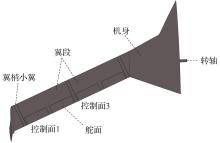
Fig.1
Geometric model of wing
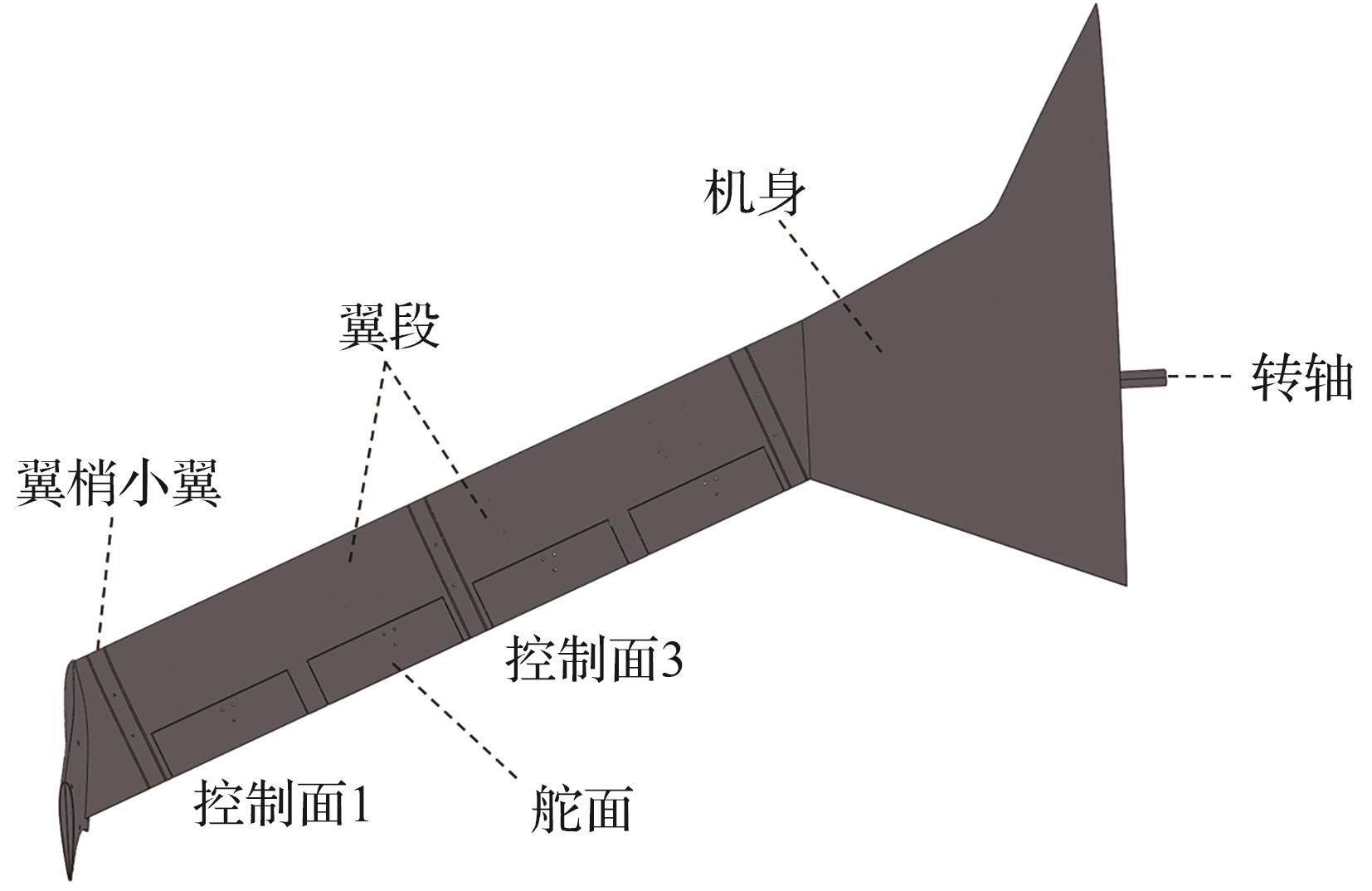
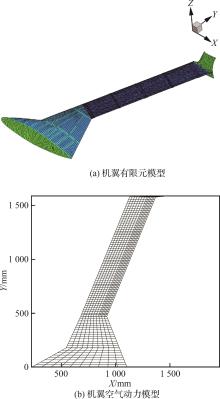
Fig.2
Finite element model and aerodynamic model of wing

Table 1
Modal parameters of elastic modes
| 模态阶数 | 频率/Hz | 模态振型 |
|---|---|---|
| 1 | 1.88 | 1阶弯曲 |
| 2 | 8.73 | 面内弯曲 |
| 3 | 12.06 | 2阶弯曲 |
| 4 | 20.75 | 1阶扭转 |
| 5 | 23.13 | 2阶扭转 |
Fig.3
Experimental device connection
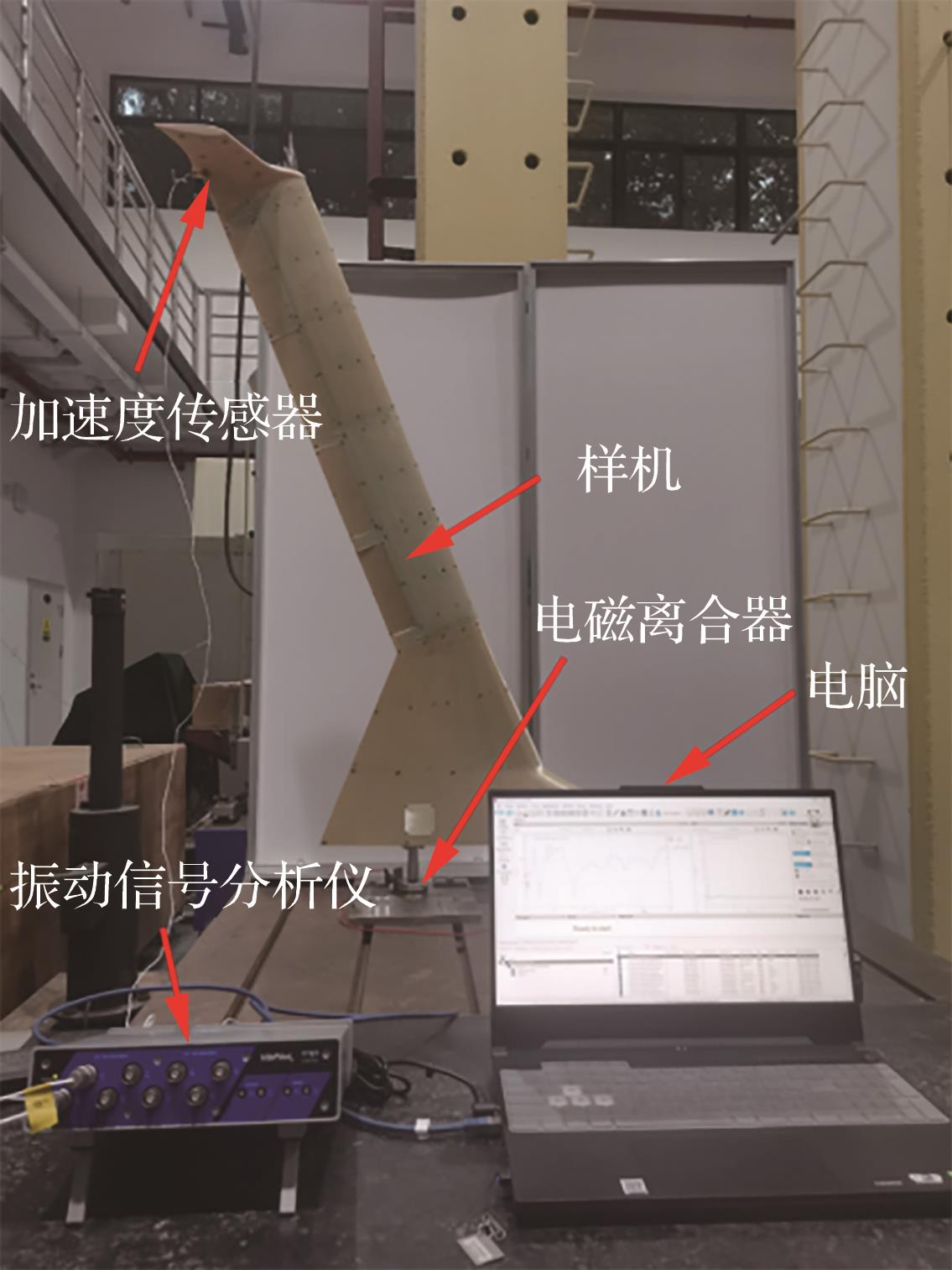
Fig.4
Location of excitation points and measurement points
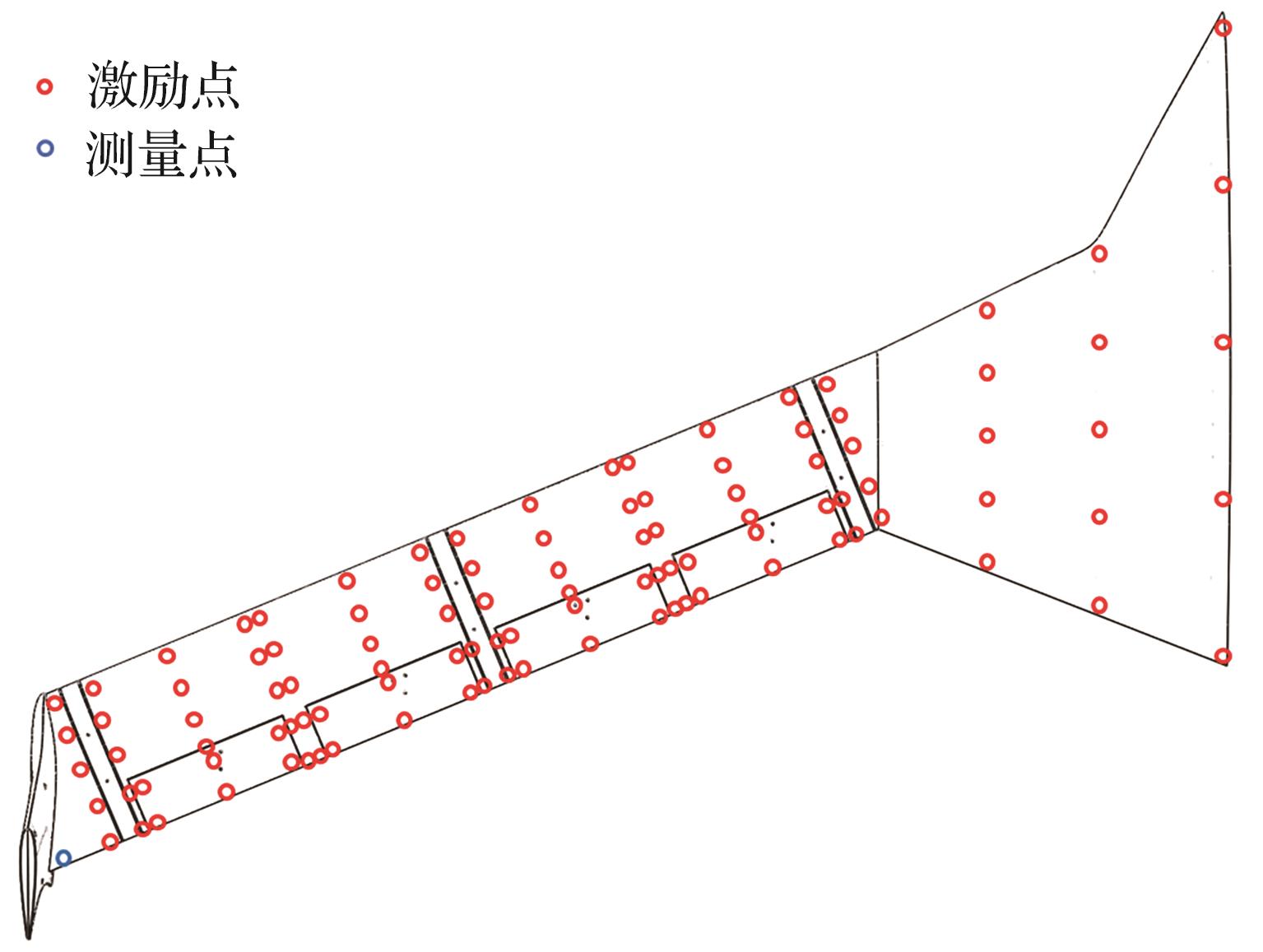
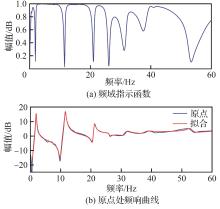
Fig.5
Frequency domain indicator function curve and frequency response function at origin point
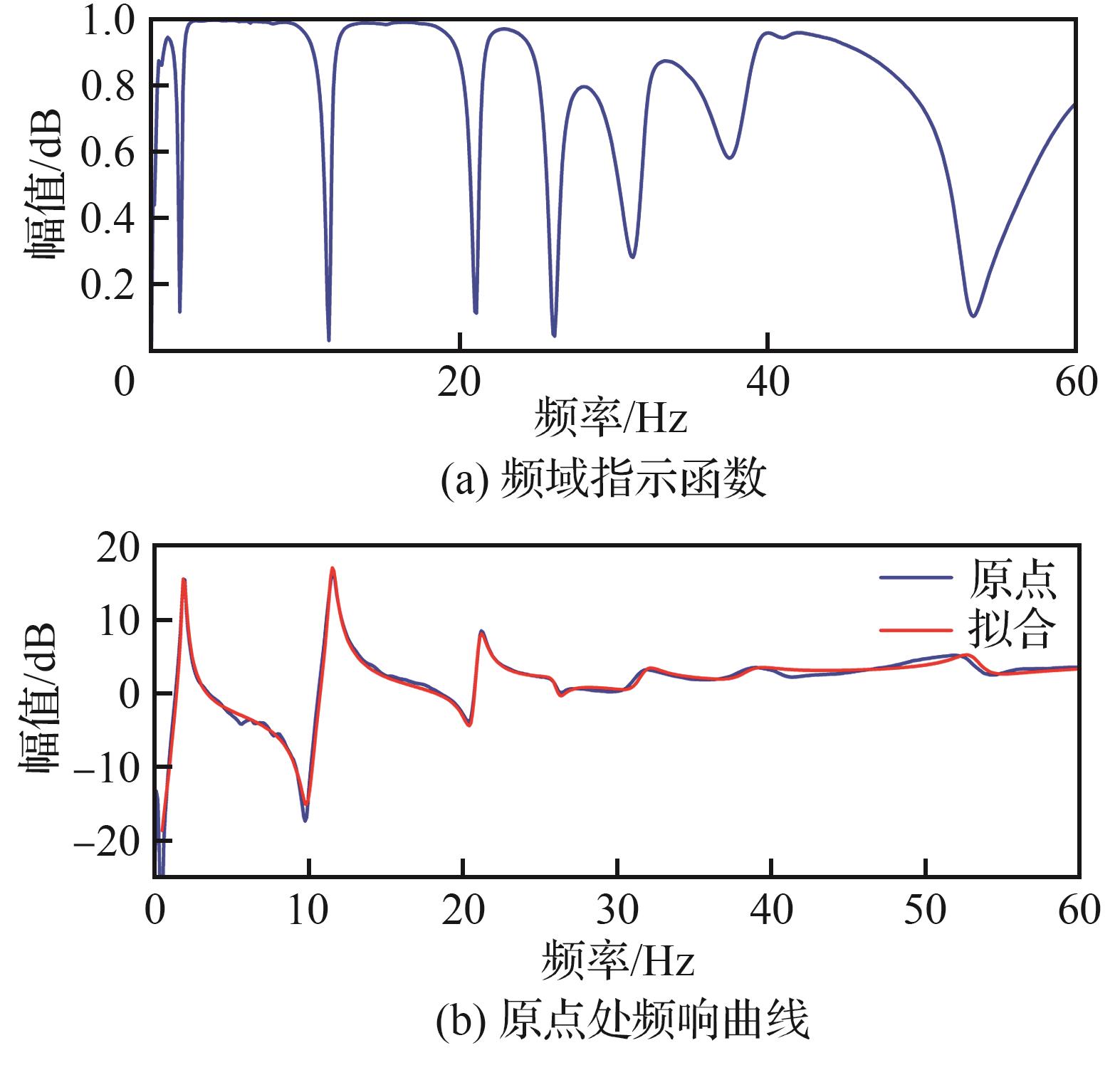
Table 2
Natural frequencies and damping ratios of each mode
| 模态阶数 | 模态振型 | 固有频率/Hz | 阻尼比/% |
|---|---|---|---|
| 1 | 1阶弯曲 | 1.88 | 2.15 |
| 2 | 2阶弯曲 | 11.52 | 1.20 |
| 3 | 1阶扭转 | 21.08 | 1.09 |
| 4 | 2阶扭转 | 26.12 | 1.39 |
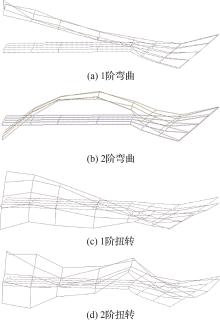
Fig.6
Mode shapes diagrams of each order (mass normalized)
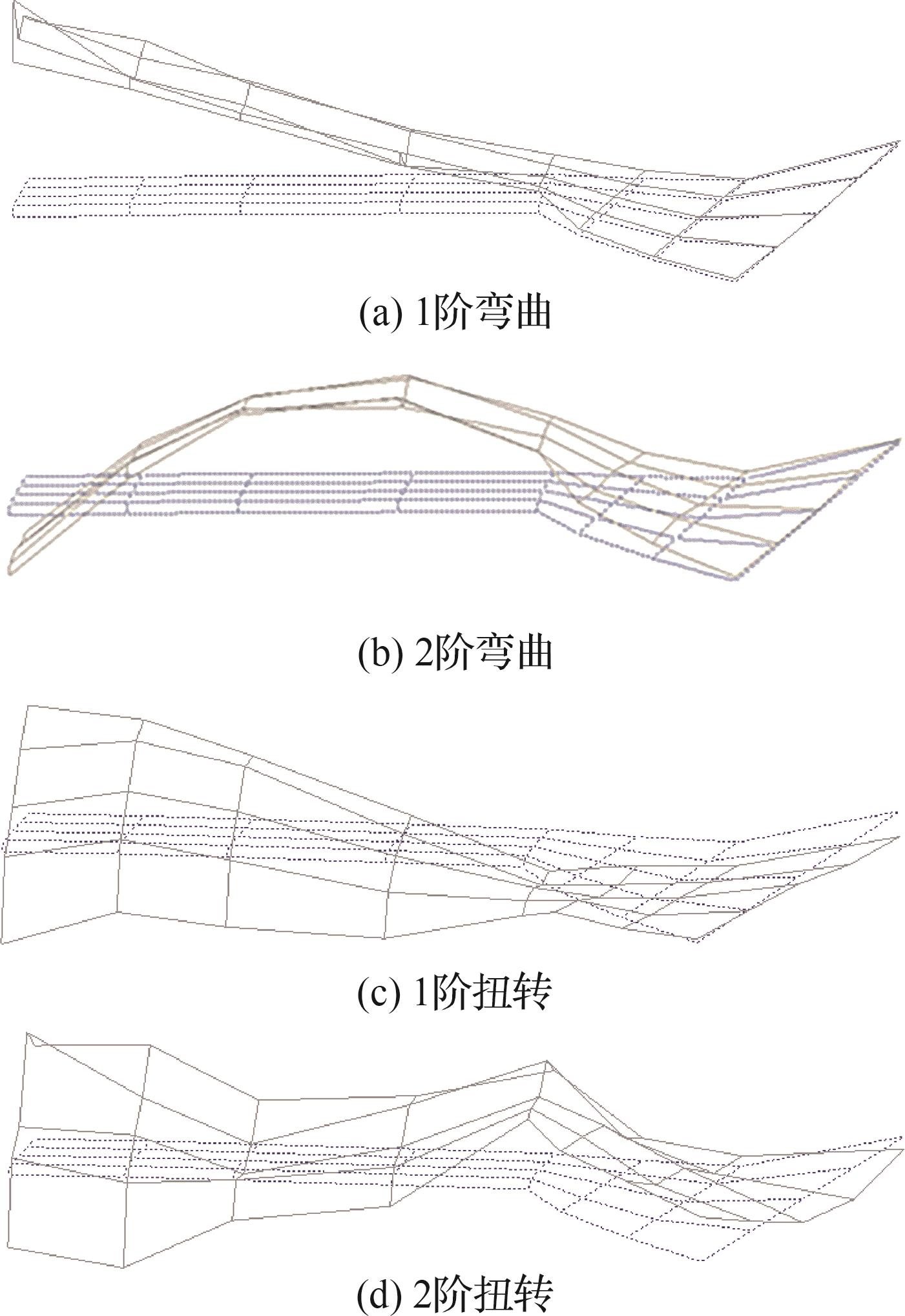
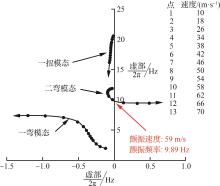
Fig.7
Root loci of open-loop system
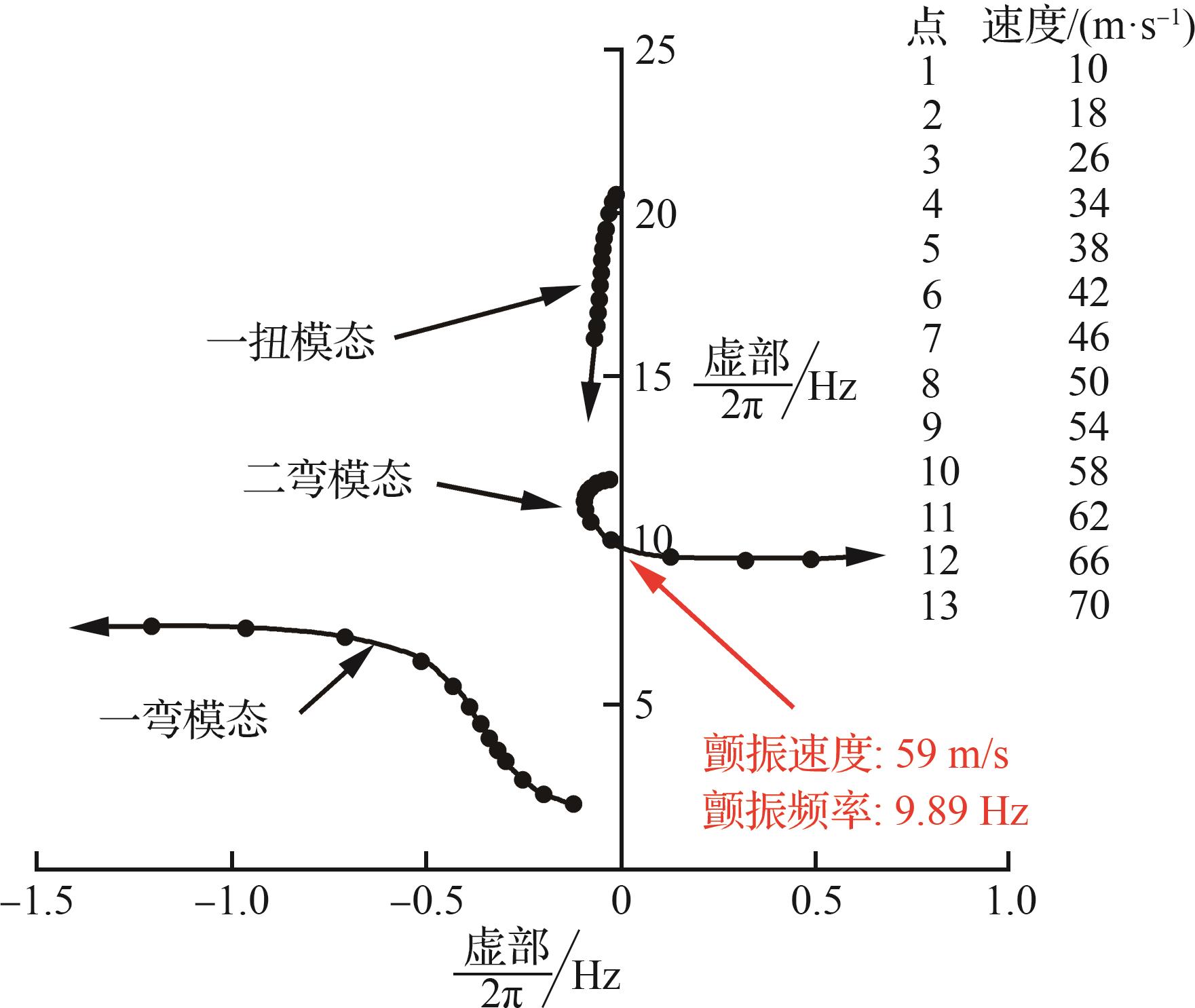
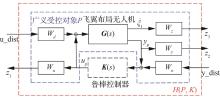
Fig.8
Generalized controlled object connection
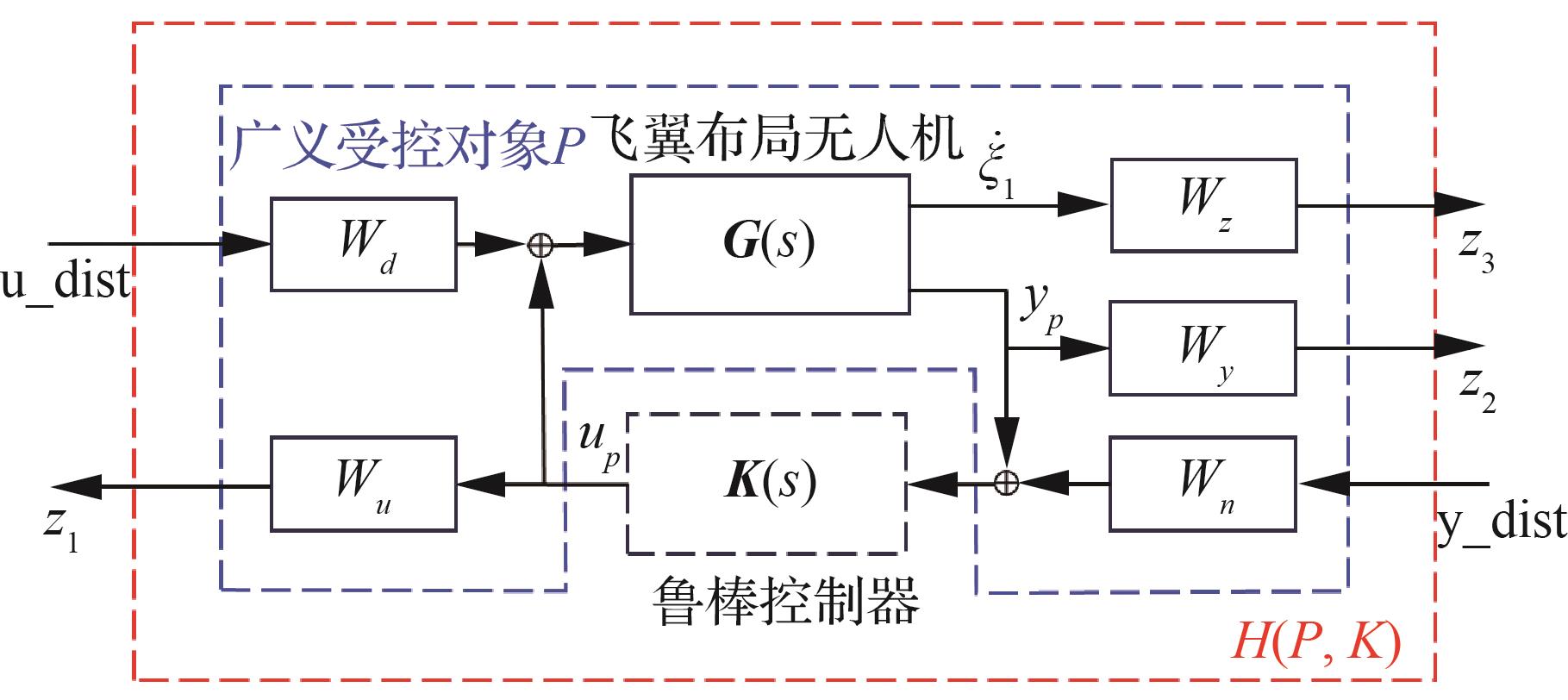
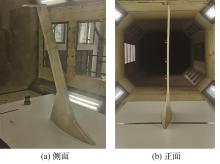
Fig.9
Model installation
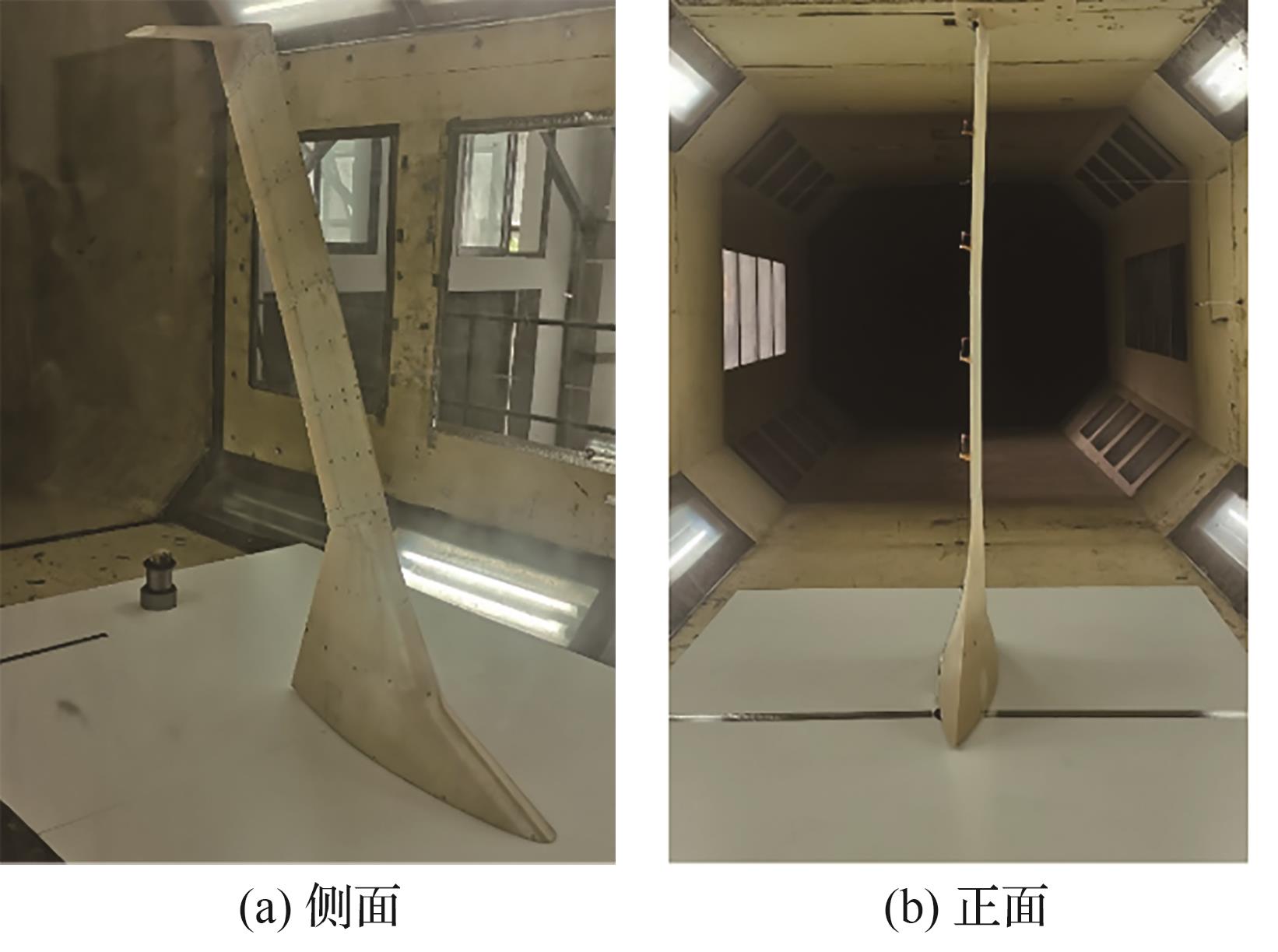

Fig.10
Hardware connection
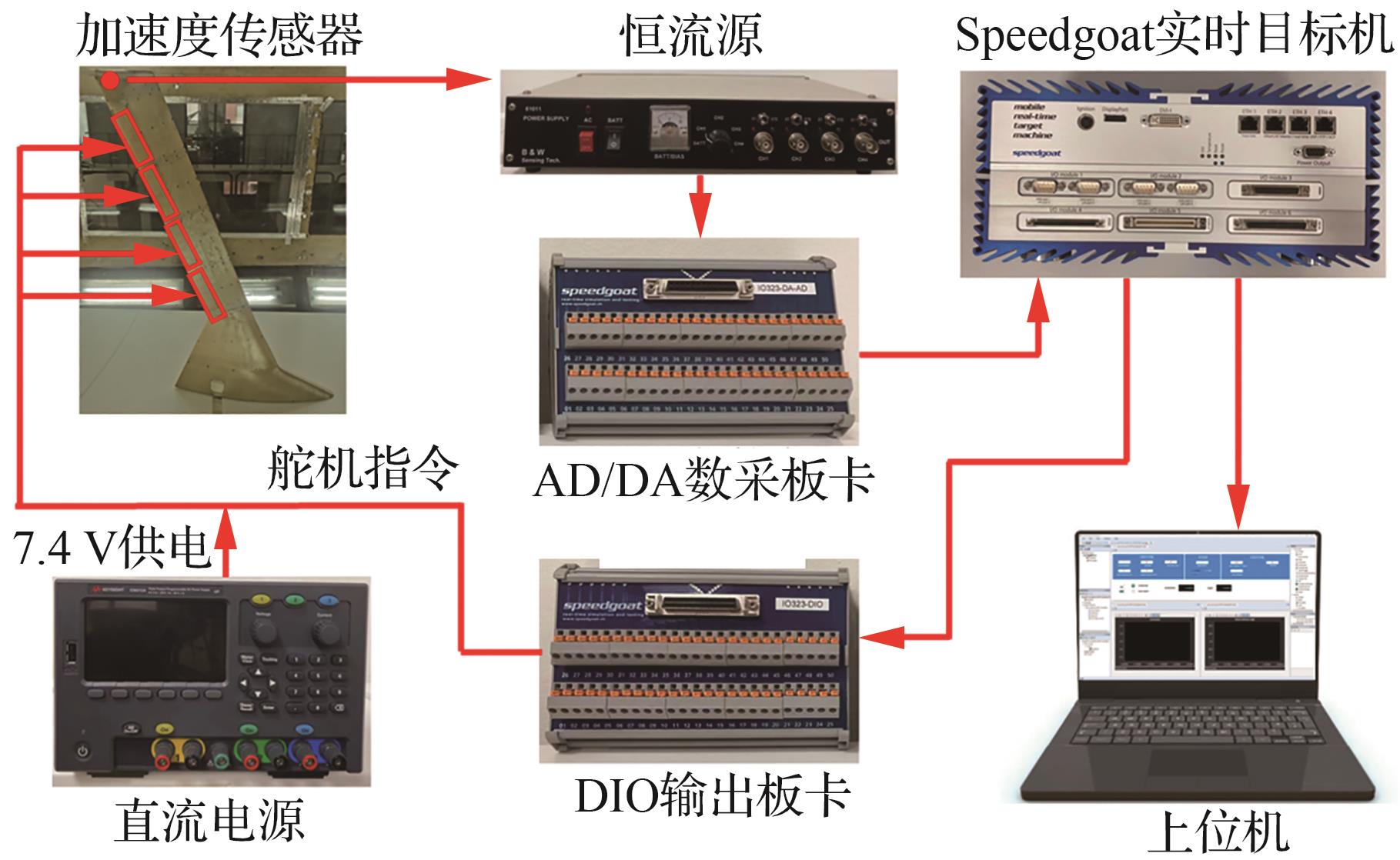
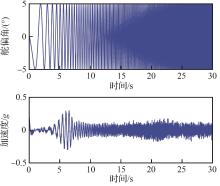
Fig.11
Time histories of input and output signals of aeroservoelastic system (wind speed is 10 m/s)
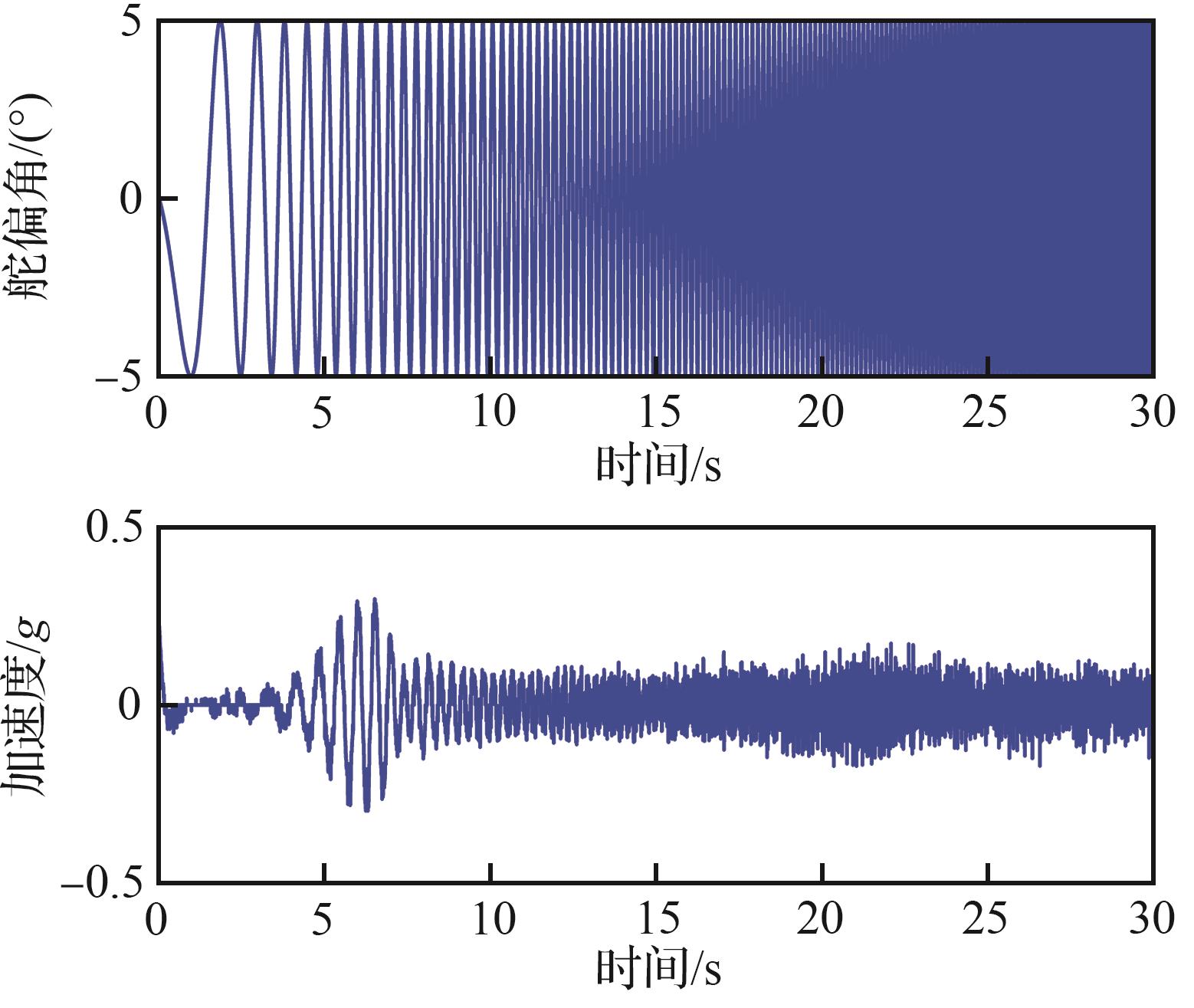
Fig.12
Comparison between frequency response of aeroservoelastic system from experimental data and numerical model (wind speed is 10 m/s)
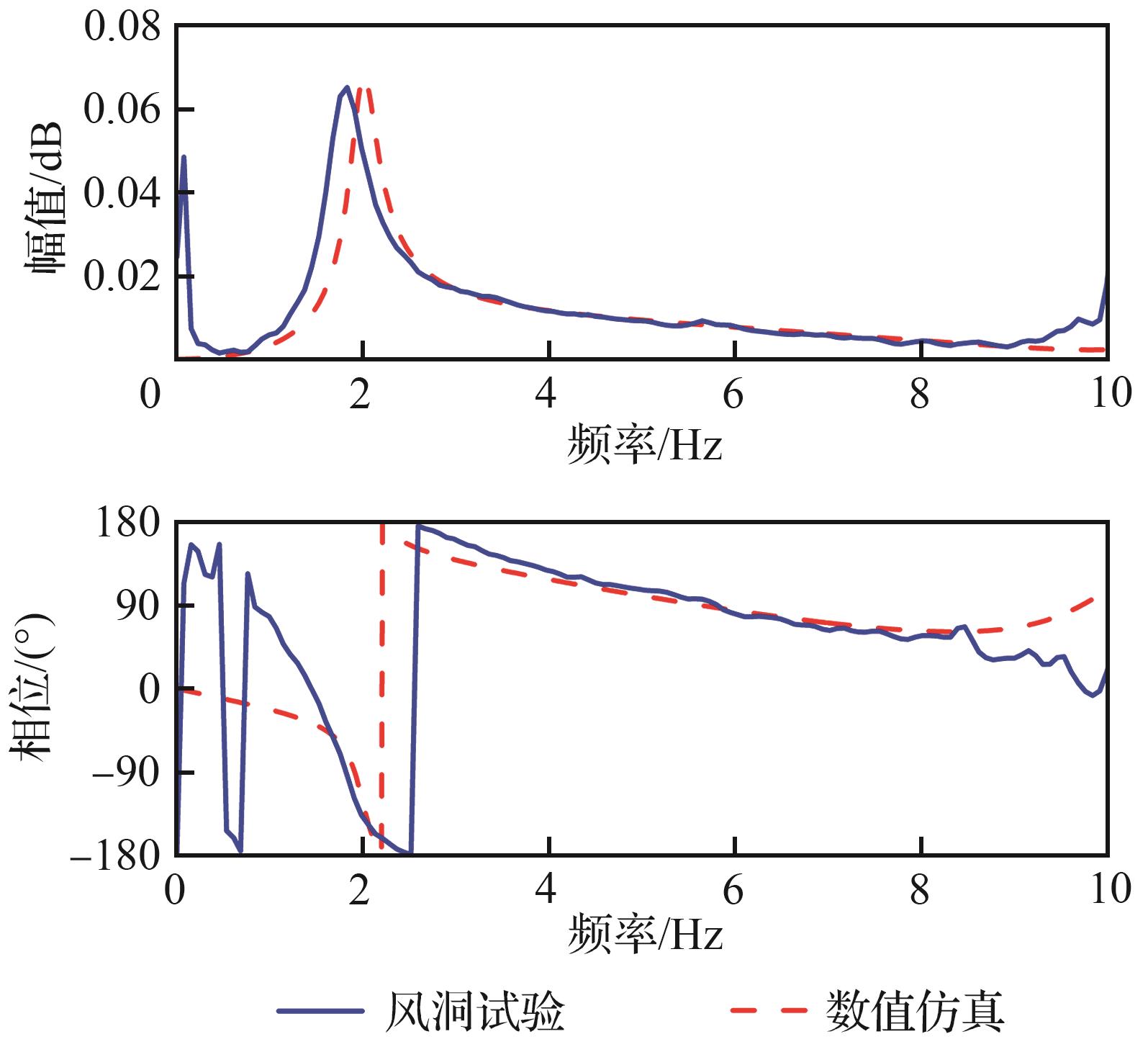
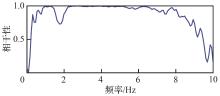
Fig.13
Coherence function (wind speed is 10 m/s)
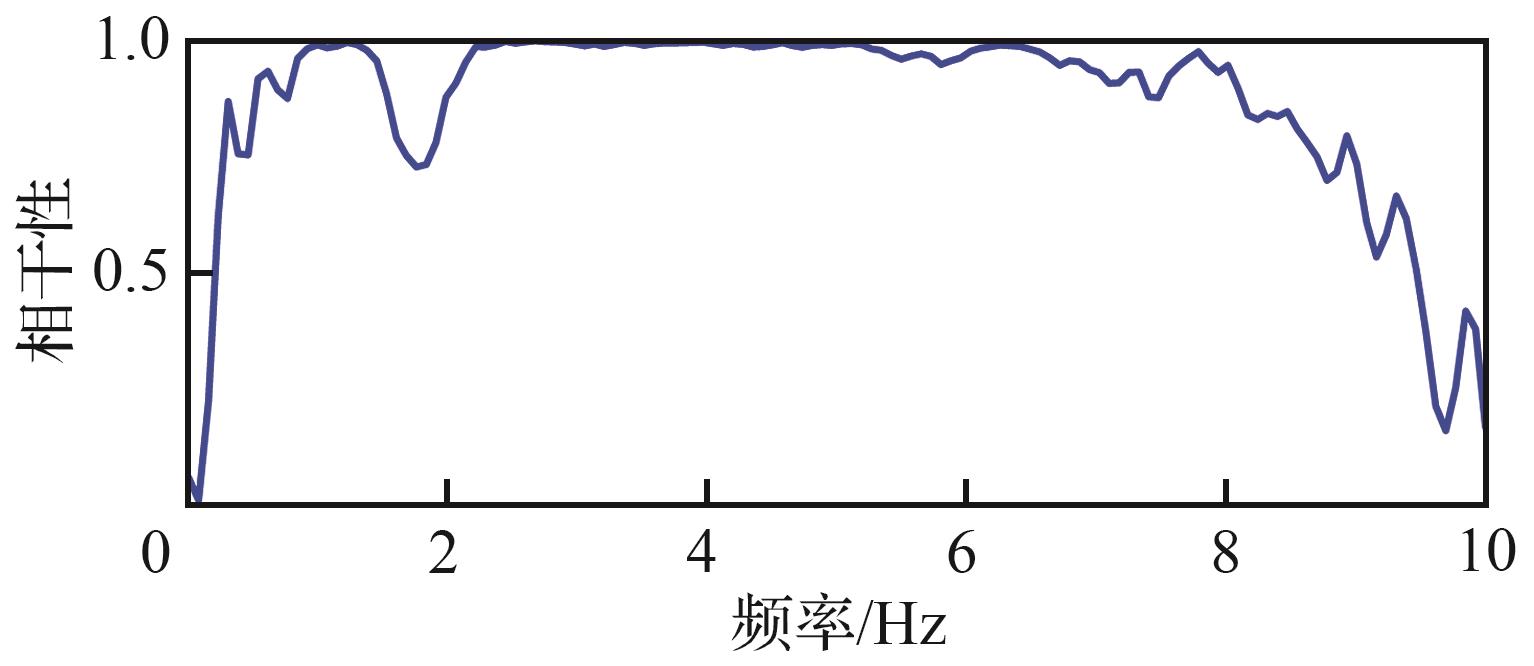
Table 3
Comparison of resonant peak positions between experimental data and numerical model
| 风速/(m·s-1) | 试验频率/Hz | 数值频率/Hz | 误差/% |
|---|---|---|---|
| 10 | 1.83 | 2.01 | 9.84 |
| 20 | 2.06 | 2.44 | 18.4 |
| 25 | 2.37 | 2.75 | 16.0 |
| 30 | 2.52 | 3.09 | 22.6 |
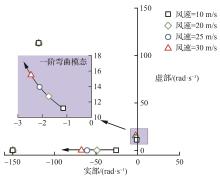
Fig.14
Root loci of open-loop system (experimental frequency response estimation)
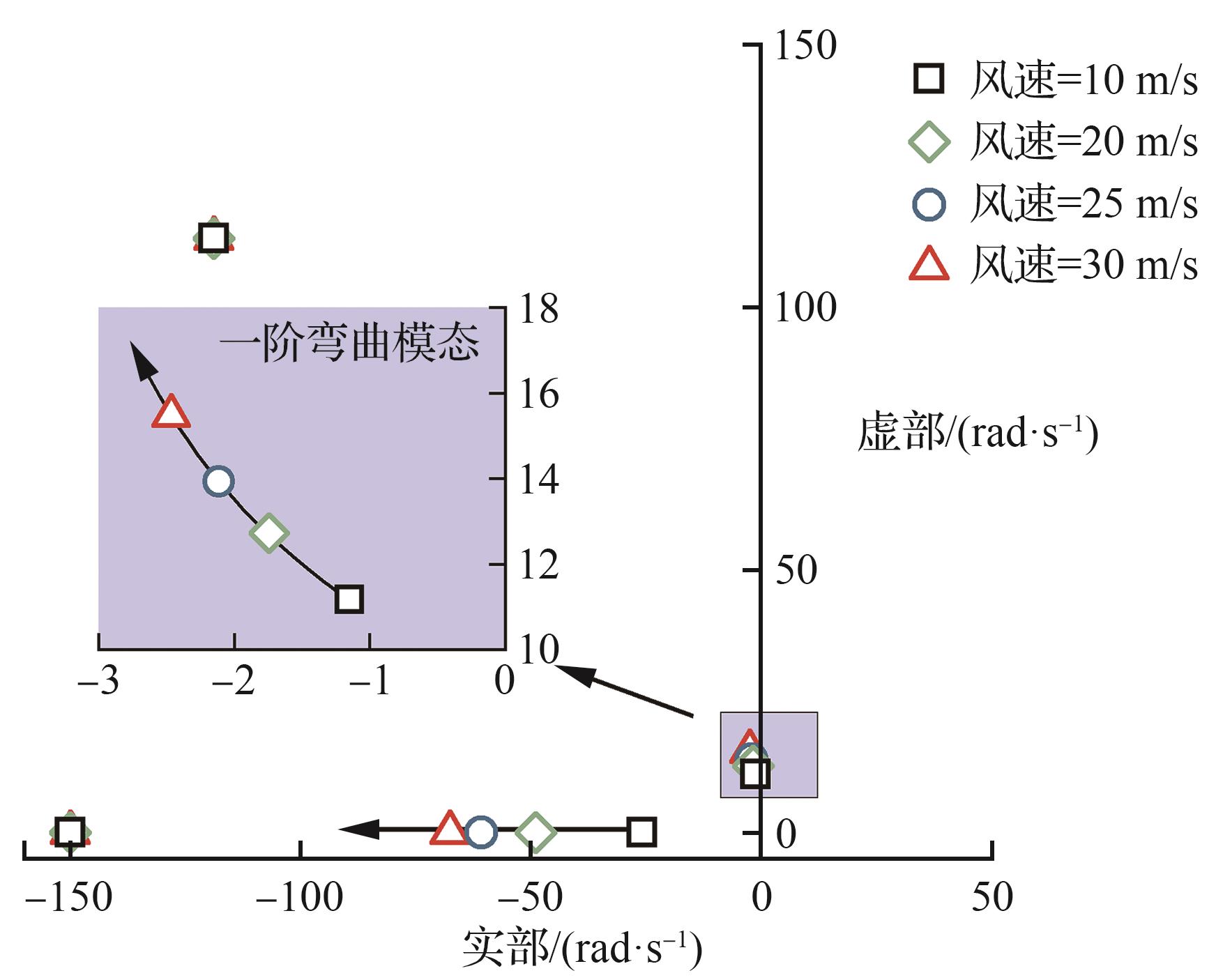
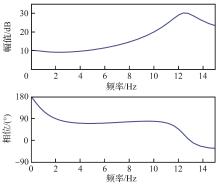
Fig.15
Frequency response plot of controller
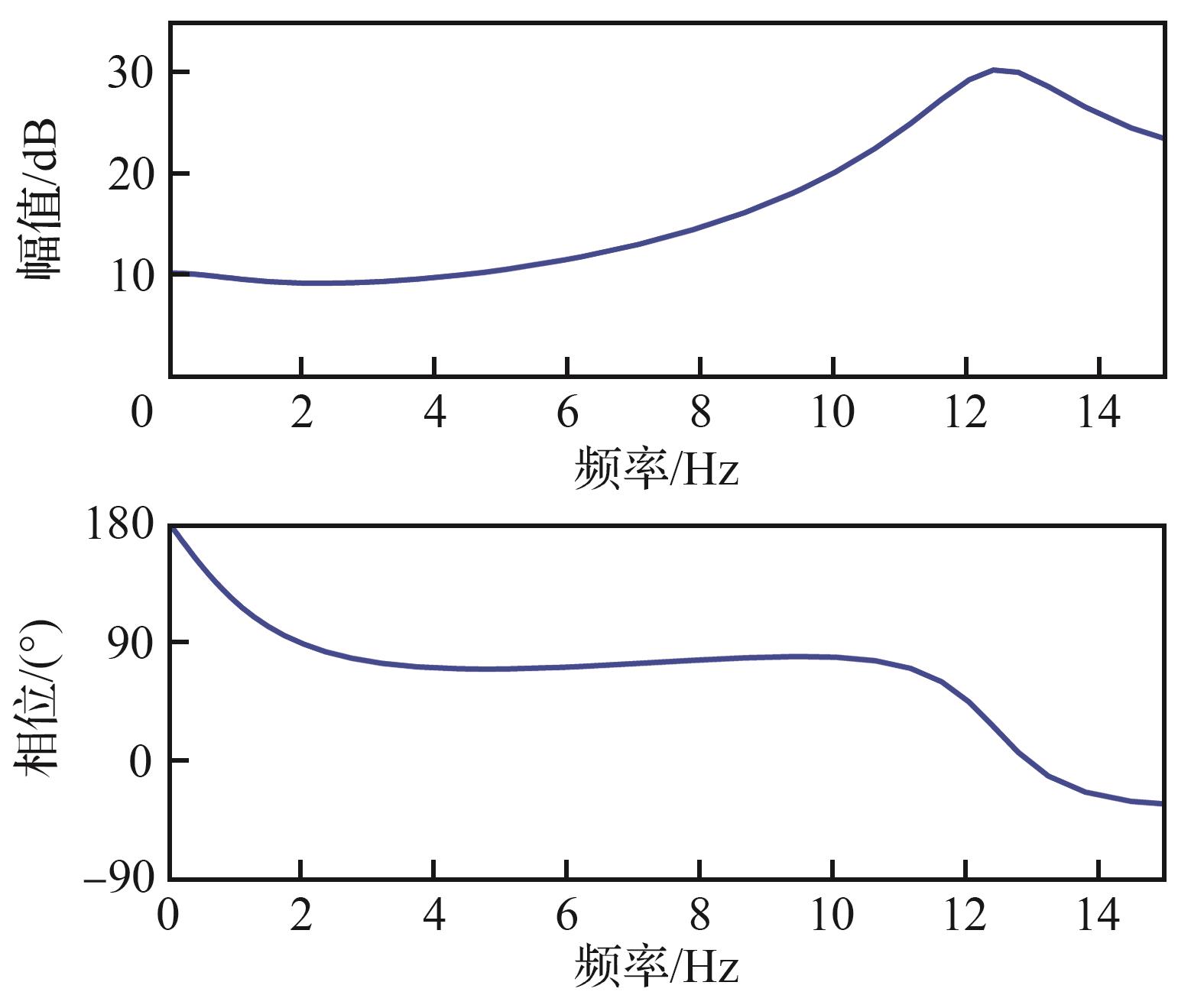
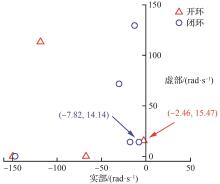
Fig.16
Comparison of characteristic roots between open-loop and closed-loop systems
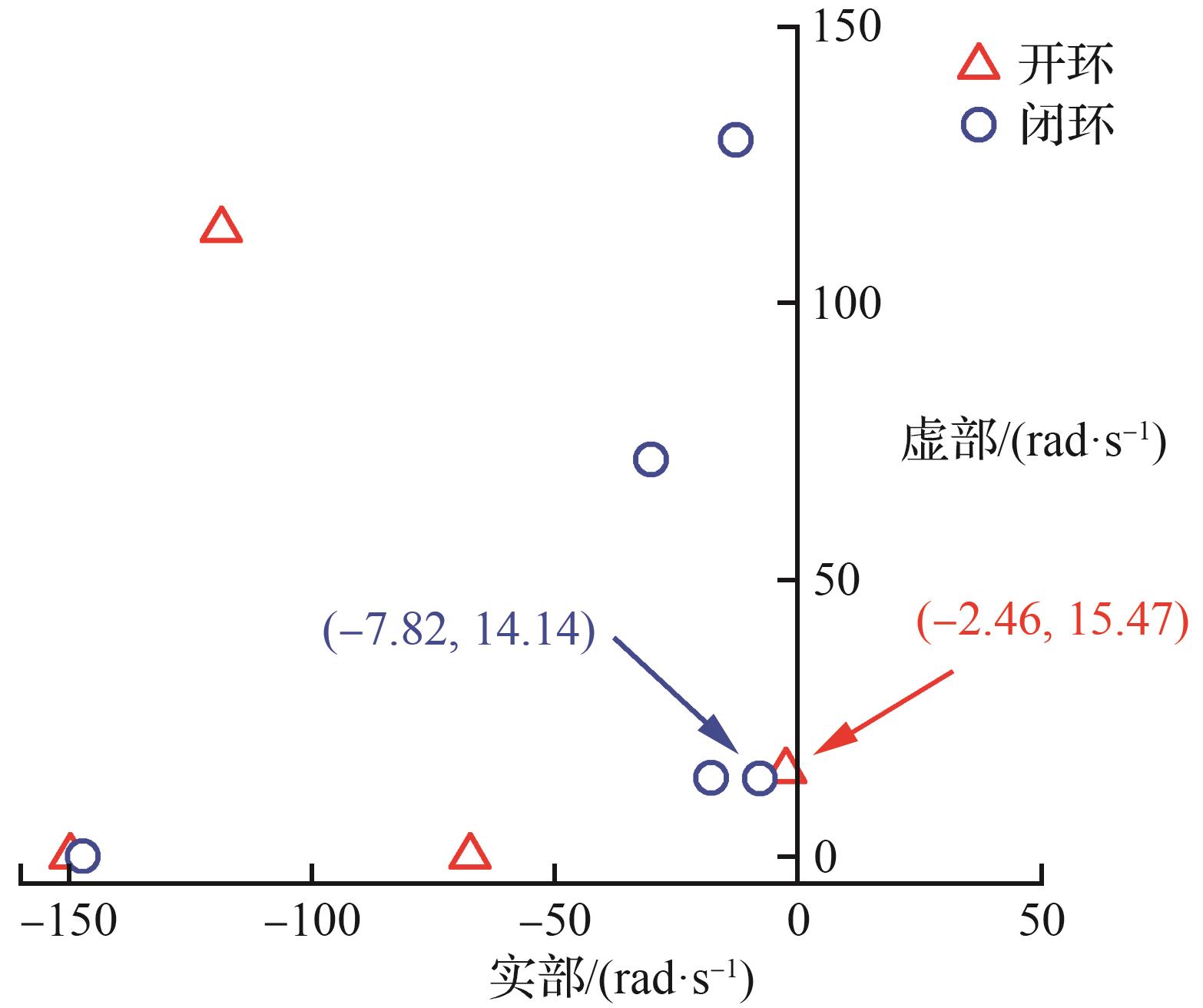
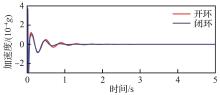
Fig.17
Acceleration response comparison between open-loop and closed-loop systems (wind speed is 30 m/s)
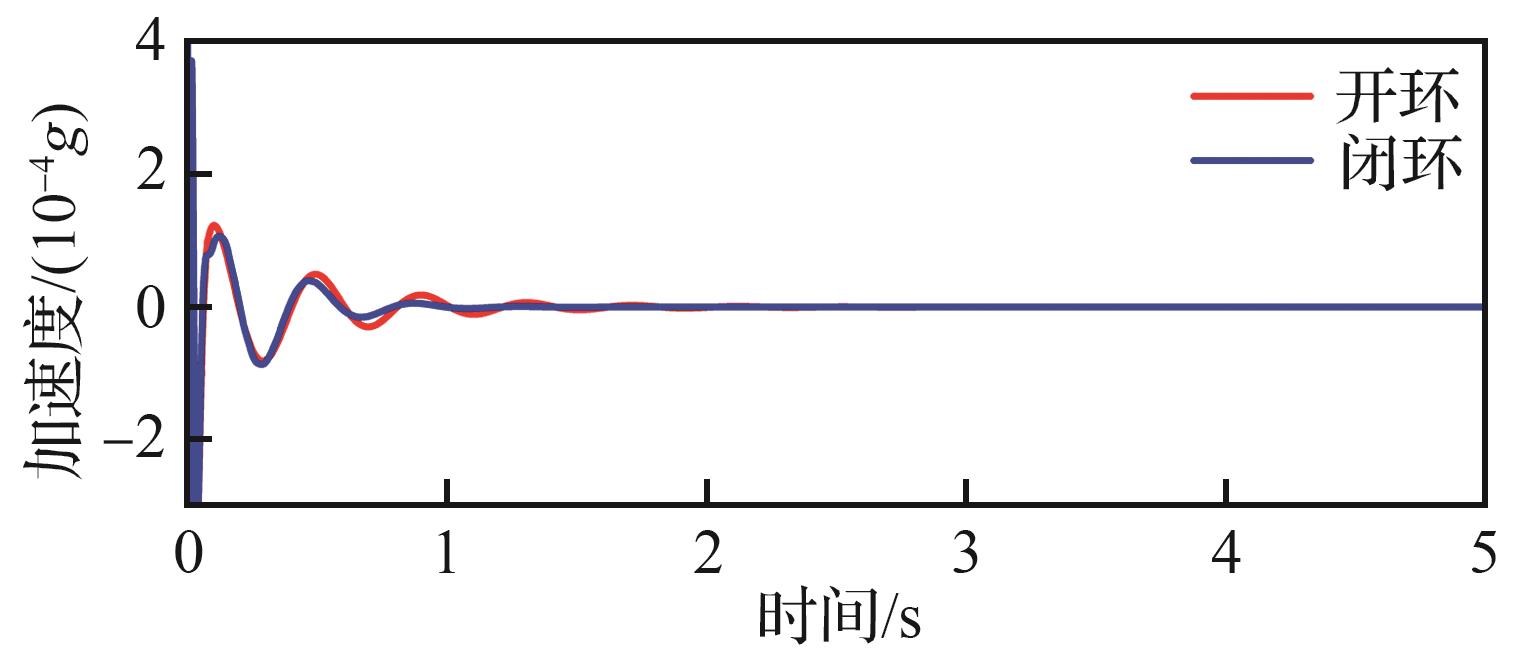
Fig.18
Command of deflection angle in closed-loop system (wind speed is 30 m/s)
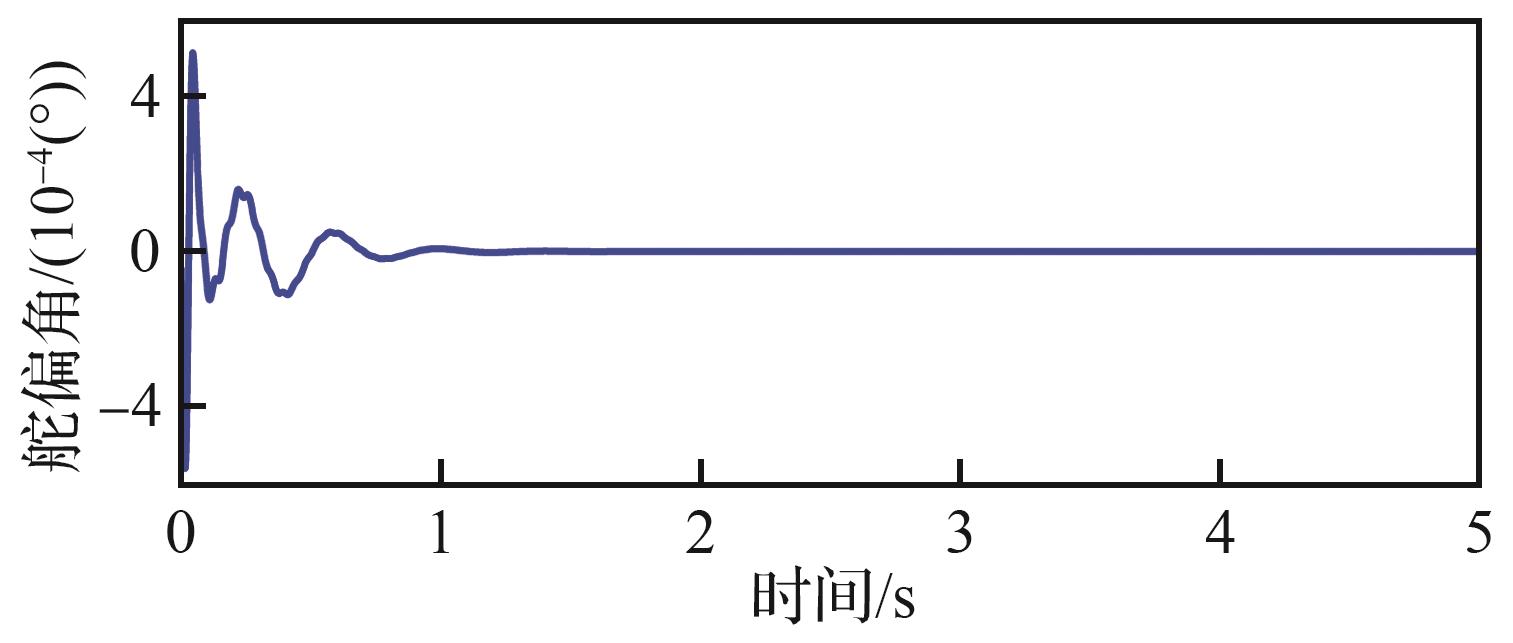
Fig.19
Sinusoidal excitation signal
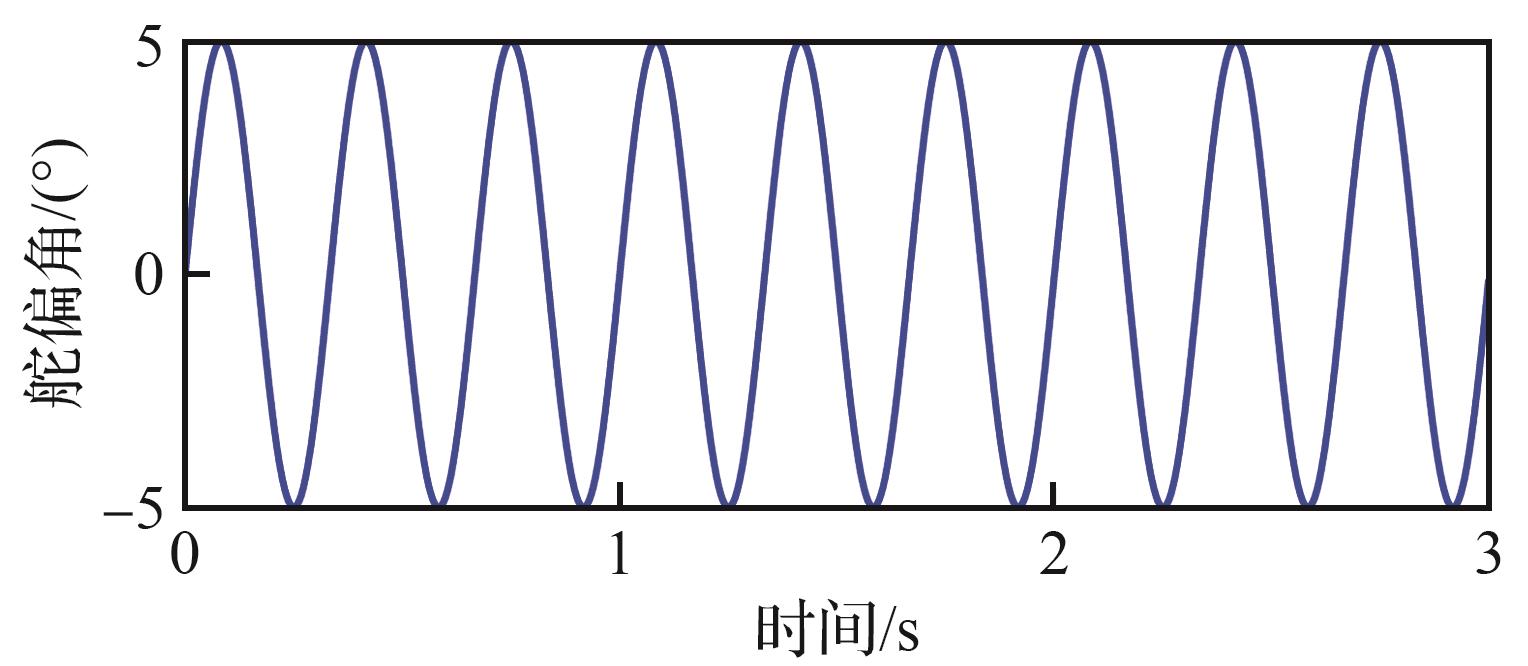
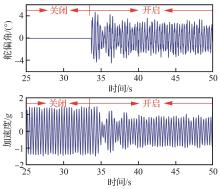
Fig.20
Input and output responses of robust controller (wind speed is 36 m/s)
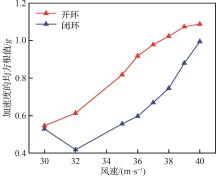
Fig.21
Comparison of root mean square values of acceleration between open-loop and closed-loop systems
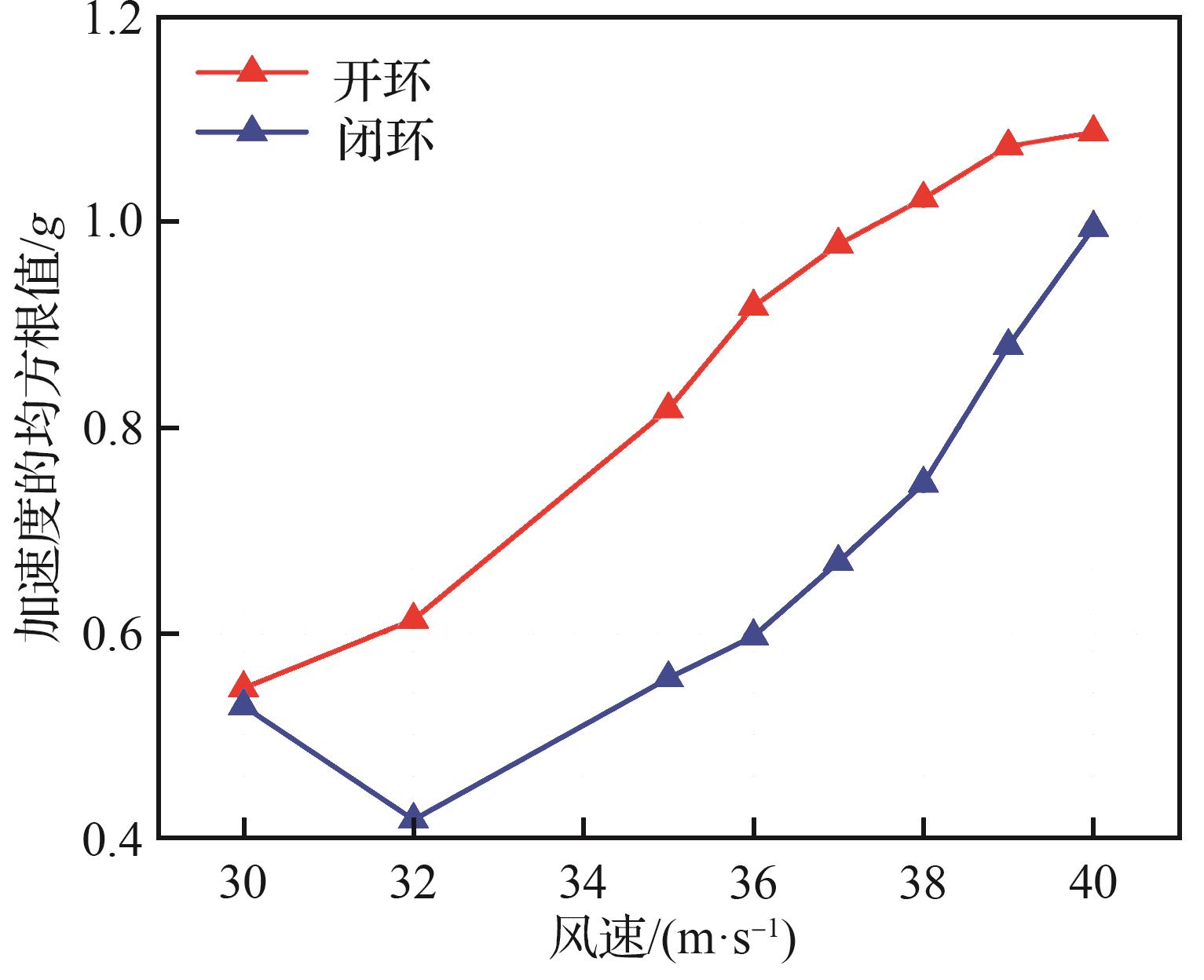
Fig.22
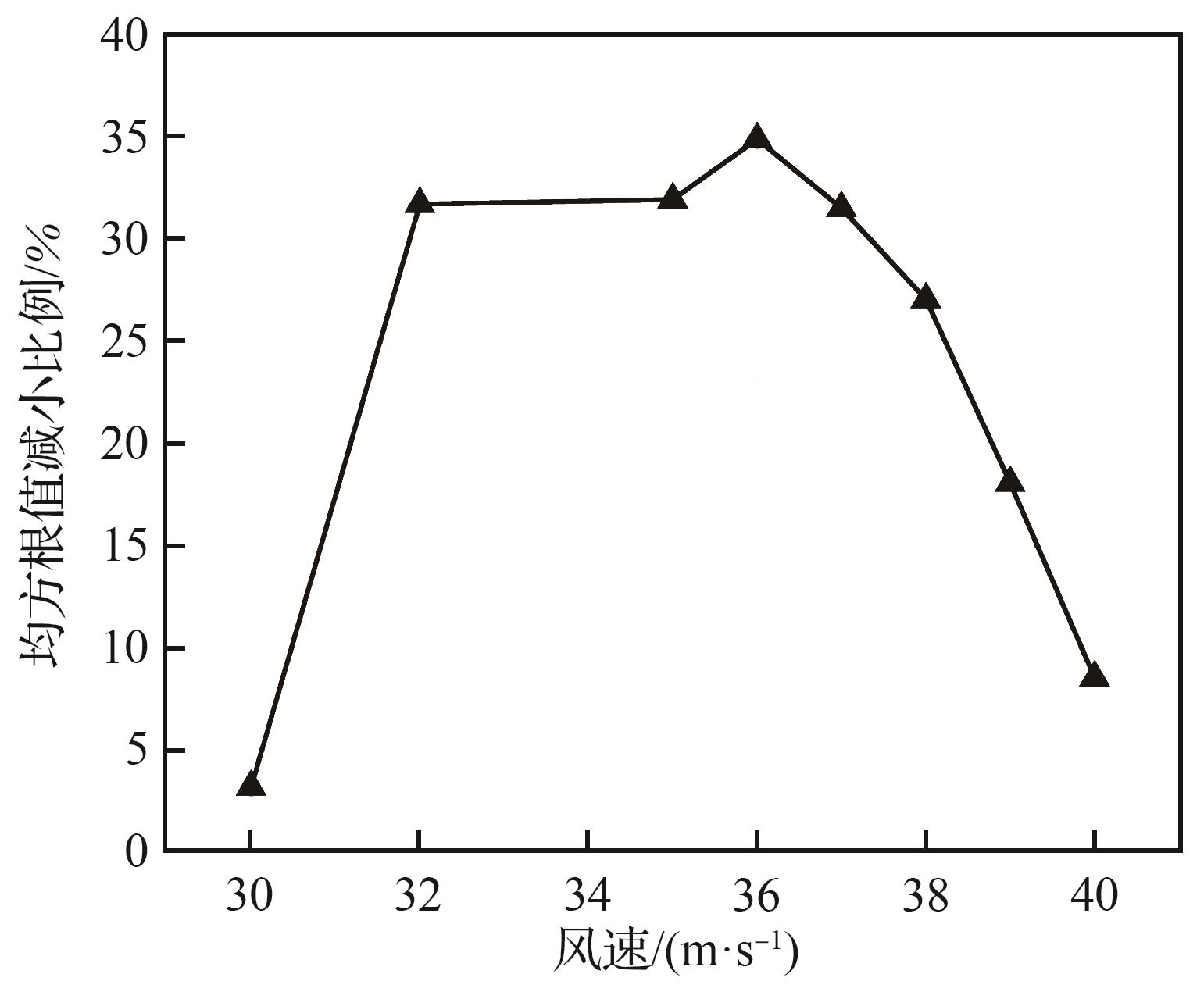
Reduced proportion of root mean square values between open-loop and closed-loop systems
| [1] | 黄锐, 胡海岩. 飞行器非线性气动伺服弹性力学[J]. 力学进展, 2021, 51(3): 428-466. |
| HUANG R, HU H Y. Nonlinear aeroservoelasticity of aircraft[J]. Advances in Mechanics, 2021, 51(3): 428-466 (in Chinese). | |
| [2] | MUKHOPADHYAY V. Flutter suppression digital control law design and testing for the AFW wind tunnel model: AIAA-1992-2095[R]. Reston: AIAA, 1992. |
| [3] | WAITMAN S, MARCOS A. H∞ control design for active flutter suppression of flexible-wing unmanned aerial vehicle demonstrator[J]. Journal of Guidance, Control, and Dynamics, 2020, 43(4): 656-672. |
| [4] | XIONG G, YANG C. Synthesis on flutter suppression control law for active aeroelastic wing: AIAA-2001-1463[R]. Reston: AIAA, 2001. |
| [5] | LIBRESCU L, MARZOCCA P, SILVA W A. Aeroelasticity of 2-D lifting surfaces with time-delayed feedback control[J]. Journal of Fluids and Structures, 2005, 20(2): 197-215. |
| [6] | ZHAO Y H. Stability of a two-dimensional airfoil with time-delayed feedback control[J]. Journal of Fluids and Structures, 2009, 25(1): 1-25. |
| [7] | ZHAO Y H. Stability of a time-delayed aeroelastic system with a control surface[J]. Aerospace Science and Technology, 2011, 15(1): 72-77. |
| [8] | HUANG R, ZHAO Y H, HU H Y. Wind-tunnel tests for active flutter control and closed-loop flutter identification[J]. AIAA Journal, 2016, 54(7): 2089-2099. |
| [9] | 褚健, 俞立, 苏宏业. 鲁棒控制理论及应用[M]. 杭州:浙江大学出版社, 2000. |
| CHU J, YU L SU H Y. Theory of robust control and application[M]. Hangzhou: Zhejiang University Press, 2000 (in Chinese). | |
| [10] | ZAMES G. Feedback and optimal sensitivity: Model reference transformations, multiplicative seminorms, and approximate inverses[J]. IEEE Transactions on Automatic Control, 1981, 26(2): 301-320. |
| [11] | 于明礼, 文浩, 胡海岩. 二维翼段颤振的H∞控制[J]. 振动工程学报, 2006, 19(3): 326-330. |
| YU M L, WEN H, HU H Y. Active flutter suppression of a two-dimensional airfoil using H∞ synthesis[J]. Journal of Vibration Engineering, 2006, 19(3): 326-330 (in Chinese). | |
| [12] | 于明礼, 文浩, 胡海岩, 等. 二维翼段颤振的μ控制[J]. 航空学报, 2007, 28(2): 340-343. |
| YU M L, WEN H, HU H Y, et al. Active flutter suppression of a two-dimensional airfoil section using μ synthesis[J]. Acta Aeronautica et Astronautica Sinica, 2007,28(2): 340-343 (in Chinese). | |
| [13] | WASZAK M R. Robust multivariable flutter suppression for benchmark active control technology wind-tunnel model[J]. Journal of Guidance, Control, and Dynamics, 2001, 24(1): 147-153. |
| [14] | MUÑOZ Á, GARCÍA-FOGEDA P. Active flutter suppression of a wing section in the subsonic, sonic and supersonic regimes by the H∞ control method[J]. Aerospace, 2024, 11(3): 198. |
| [15] | GAO M Z, CAI G P. Finite-time fault-tolerant control for flutter involving control delay[J]. Journal of the Franklin Institute, 2016, 353(9): 2009-2029. |
| [16] | 钱文敏, 赵永辉, 胡海岩. 二元机翼/外挂系统的颤振鲁棒抑制[J]. 中国科学: 物理学 力学 天文学, 2013, 43(4): 334-344. |
| QIAN W M, ZHAO Y H, HU H Y. Robust flutter suppression for a 2-dimensional wing-store system[J]. Scientia Sinica (Physica, Mechanica & Astronomica), 2013, 43(4): 334-344 (in Chinese). | |
| [17] | HASHEMI K E, PAK C G, AKELLA M R. Delta adaptive flexible motion control for the X-56A aircraft: AIAA-2015-2244[R]. Reston: AIAA, 2015. |
| [18] | LIVNE E. Aircraft active flutter suppression: State of the art and technology maturation needs[J]. Journal of Aircraft, 2018, 55(1): 410-452. |
| [19] | DANOWSKY B P, KOTIKALPUDI A, SCHMIDT D, et al. Flight testing flutter suppression on a small flexible flying-wing aircraft: AIAA-2018-3427[R]. Reston: AIAA, 2018. |
| [20] | THEIS J, PFIFER H, SEILER P J. Robust control design for active flutter suppression: AIAA-2016-1751[R]. Reston: AIAA, 2016. |
| [21] | THEIS J, PFIFER H, SEILER P J. Robust modal damping control for active flutter suppression[J]. Journal of Guidance, Control, and Dynamics, 2020, 43(6): 1056-1068. |
| [22] | ZOU Q T, MU X S, LI H K, et al. Robust active suppression for body-freedom flutter of a flying-wing unmanned aerial vehicle[J]. Journal of the Franklin Institute, 2021, 358(5): 2642-2660. |
| [23] | 胡海岩. 机械振动基础[M]. 2版. 北京:北京航空航天大学出版社, 2022. |
| HU H Y. Fundamentals of mechanical vibration[M]. 2nd ed. Beijing: Beihang University Press, 2022 (in Chinese). | |
| [24] | KARPEL M, STRUL E. Minimum-state unsteady aerodynamic approximations with flexible constraints[J]. Journal of Aircraft, 1996, 33(6): 1190-1196. |
| [25] | WU Z G, COOPER J E. Active flutter suppression combining the receptance method and flutter margin: AIAA-2016-1227[R]. Reston: AIAA, 2016. |
| [26] | TSUI C C. Robust control system design: Advanced state space techniques[M]. 3rd ed. Boca Raton: CRC Press, 2022. |
| [1] | Mingqing LU, Fei LIAO, Fukui GAO, Beibei XING, Shichong WU, Zhaolin FAN, Yumin SU, Wenhua WU. Nonlinear disturbance observer enhanced adaptive backstepping tracking control for coaxial HAUV [J]. Acta Aeronautica et Astronautica Sinica, 2024, 45(23): 330361-330361. |
| [2] | Qingrui ZHANG, Yunyun LIU, Huijie SUN, Bo ZHU. Robust cooperative tracking control for close formation of fixed⁃wing unmanned aerial vehicles [J]. Acta Aeronautica et Astronautica Sinica, 2024, 45(1): 629233-629233. |
| [3] | Kunda LIU, Xueming LIU, Bo ZHU, Qingrui ZHANG. Robust safe control for multi⁃UAV formation flight through narrow corridors [J]. Acta Aeronautica et Astronautica Sinica, 2023, 44(S2): 729768-729768. |
| [4] | Xiaoyun SUN, Shufan WU, Qiang SHEN. LMI-based output tracking robust drag-free control with model reference adaptive scheme [J]. Acta Aeronautica et Astronautica Sinica, 2023, 44(S1): 727654-727654. |
| [5] | Xinyu ZHANG, Siyu XIE, Yang TAO, Gun LI. A robust control method for close formation of aerial-refueling UAVs [J]. Acta Aeronautica et Astronautica Sinica, 2023, 44(20): 628425-628425. |
| [6] | Xiao MENG, Dan MA, Hongjun LIN, Chao CHEN. Prescribed performance control of thermoacoustic instability in aero-engine combustion chambers [J]. Acta Aeronautica et Astronautica Sinica, 2023, 44(17): 128182-128182. |
| [7] | Jun SHU, Dongguang XU, Zhirong HAN, Si LI, Xiong HUANG. Hybrid wing design of icing wind tunnel supercooled large droplet icing test [J]. ACTA AERONAUTICAET ASTRONAUTICA SINICA, 2023, 44(1): 627182-627182. |
| [8] | YANG Xiaowei, GE Yaowen, DENG Wenxiang, YAO Jianyong, ZHOU Ning. Active fault-tolerant control for hydraulic actuating cylinders of aeroengine guide vane control mechanisms [J]. ACTA AERONAUTICAET ASTRONAUTICA SINICA, 2022, 43(9): 625464-625464. |
| [9] | ZENG Kaichun, KOU Xiping, YANG Xinghua, YU Li, ZHA Jun. Optimization of active vibration damping structure for transonic wind tunnel test model [J]. ACTA AERONAUTICAET ASTRONAUTICA SINICA, 2022, 43(2): 224944-224944. |
| [10] | LI Qian, WANG Yankui, JIA Yuhong. Roll oscillations over wing-body configuration with strake wings: Experiment [J]. ACTA AERONAUTICAET ASTRONAUTICA SINICA, 2022, 43(11): 526008-526008. |
| [11] | GAO Zhongxin, WANG Xiaoguang, WU Jun, LIN Qi. Hybrid force/pose control of wire-driven parallel suspension system based on stiffness optimization [J]. ACTA AERONAUTICAET ASTRONAUTICA SINICA, 2021, 42(7): 324373-324373. |
| [12] | CHEN Yin, GU Yunsong, SUN Zhijun, HUANG Zi. Aerodynamic perception from distributed pressure and free flight test [J]. ACTA AERONAUTICAET ASTRONAUTICA SINICA, 2021, 42(3): 124138-124138. |
| [13] | LIU Deyuan, LIU Hao, Frank L LEWIS. Robust fault-tolerant formation control for tail-sitters [J]. ACTA AERONAUTICAET ASTRONAUTICA SINICA, 2021, 42(2): 324296-324296. |
| [14] | LIU Hao, WANG Wei, JIN Wei, NIU Wenchao, YANG Zhichun. Experiments of RFxLMS control for vertical tail buffeting [J]. ACTA AERONAUTICAET ASTRONAUTICA SINICA, 2021, 42(2): 224090-224090. |
| [15] | LIU Fucheng, ZHU Dongfang. Distributed coordinated control for large flexible truss antenna considering connection nonlinearity [J]. ACTA AERONAUTICAET ASTRONAUTICA SINICA, 2021, 42(11): 524890-524890. |
| Viewed | ||||||
|
Full text |
|
|||||
|
Abstract |
|
|||||
Address: No.238, Baiyan Buiding, Beisihuan Zhonglu Road, Haidian District, Beijing, China
Postal code : 100083
E-mail:hkxb@buaa.edu.cn
Total visits: 6658907 Today visits: 1341All copyright © editorial office of Chinese Journal of Aeronautics
All copyright © editorial office of Chinese Journal of Aeronautics
Total visits: 6658907 Today visits: 1341

 CJA
CJA
