Acta Aeronautica et Astronautica Sinica ›› 2025, Vol. 46 ›› Issue (13): 531802.doi: 10.7527/S1000-6893.2024.31802
• Articles • Previous Articles
Xinze XU1, Guanxin HONG2, Liang DU2( ), Gang LIU1
Received:2025-01-13
Revised:2025-02-10
Accepted:2025-03-11
Online:2025-03-24
Published:2025-03-19
Contact:
Liang DU
E-mail:duliangbhii@buaa.edu.cn
CLC Number:
Xinze XU, Guanxin HONG, Liang DU, Gang LIU. Manual approach and landing model of carrier-based aircraft in complex environments[J]. Acta Aeronautica et Astronautica Sinica, 2025, 46(13): 531802.
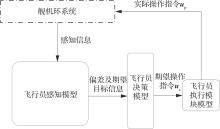
Fig.1
Perception, decision, action-based pilot model structure
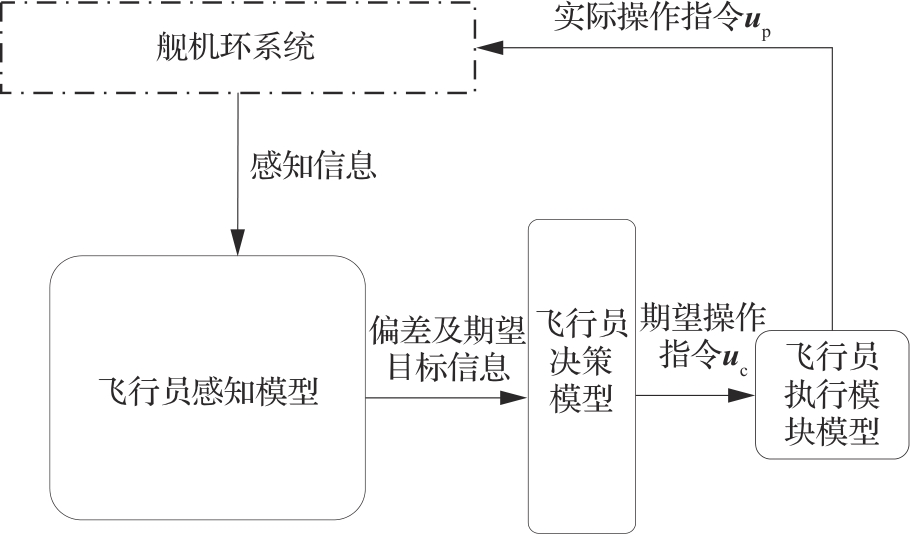

Table 1
FLOLS ball deviation, glideslope deviation, and LSO altitude command mapping
| 光球偏离 | 偏差角/(°) | LSO指令 |
|---|---|---|
| +1.75球以上 | >0.6 | 高(G) |
| 0.75球~1.75球 | 0.25~0.60 | 稍高(SG) |
| 0.25球~0.75球 | 0.085~0.250 | 点点高(DDG) |
| <+0.25球 | 0~0.085 | 位置好(OK) |
| -0.25球~0球 | -0.085~0 | 点点低(DDD) |
| -1球~-0.25球 | -0.340~-0.085 | 稍低(SD) |
| -1球以上 | <-0.340 | 低(D) |
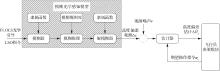
Fig.2
Pilot altitude deviation perception model
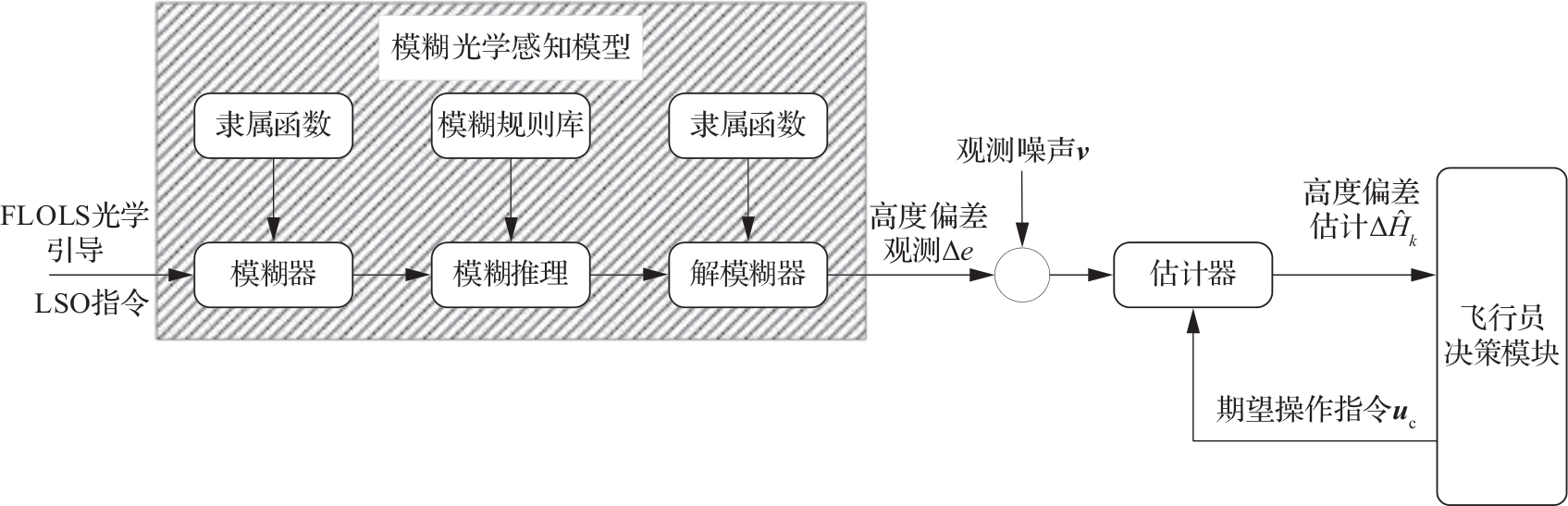
Table 2
Lateral deviation and LSO lateral command mapping relationship
| 偏差角/(°) | LSO指令 |
|---|---|
| <±0.50 | 好(OK) |
| 0.25~0.60 | 偏左/右 |
| >±1.00 | 太偏左/右 |
Fig.3
Pilot alignment deviation perception model
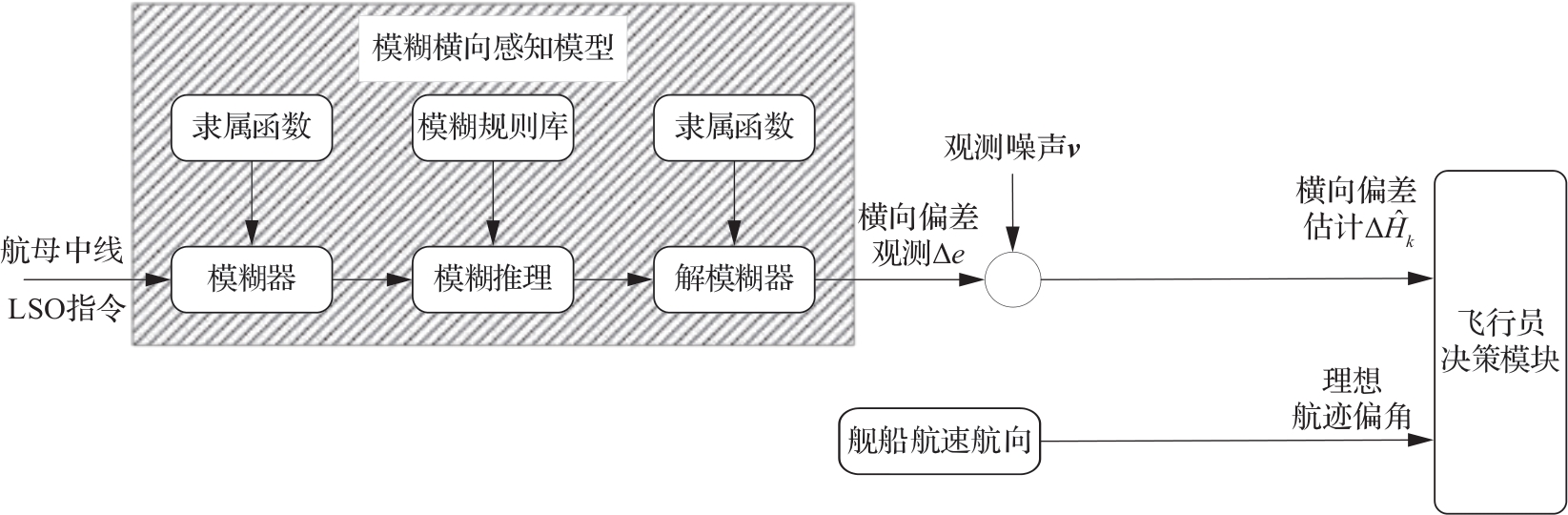
Fig.4
Pilot flight state perception pilot model
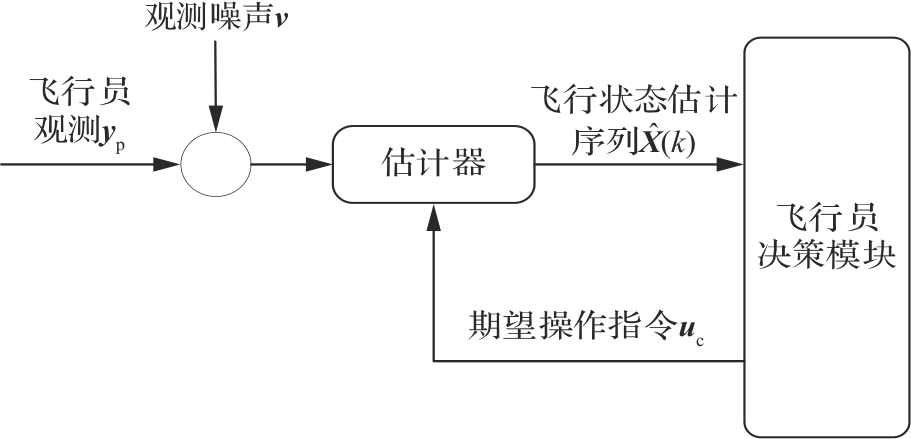
Table 3
MPC pilot model input parameters
| 参数 | 工况条件 |
|---|---|
| 离散时间ts/s | 0.2 |
| 预测时域P/s | 2 |
| 控制时域M/s | 2 |
| 噪声强度增益W | 8.8 |
| 观测权重矩阵 | Diag(1,1) |
| 控制权重矩阵 | 0.1 |
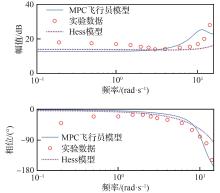
Fig.5
Frequency domain identification results for MPC pilots
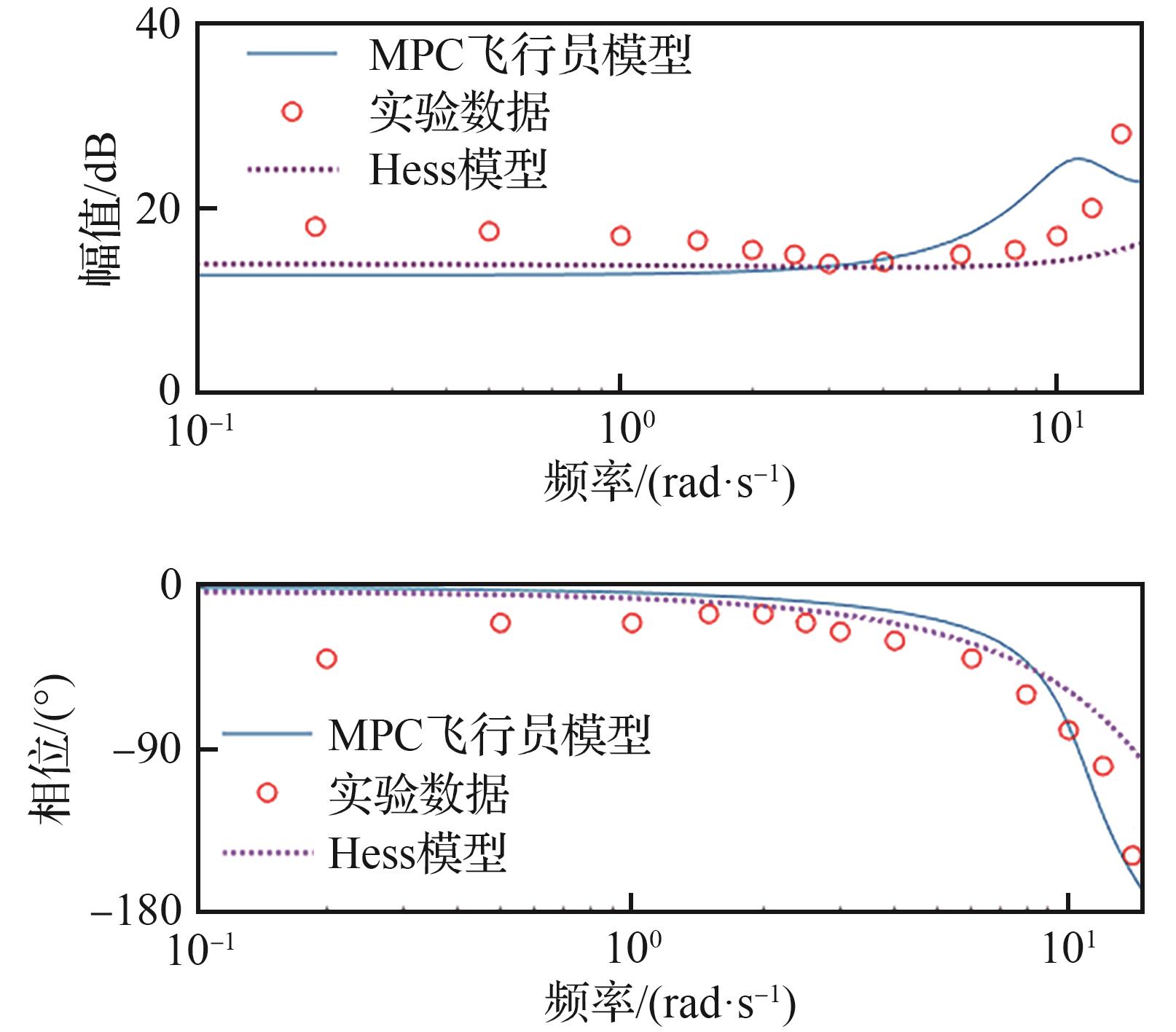
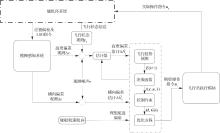
Fig.6
Overall structure of constrained predictive pilot model
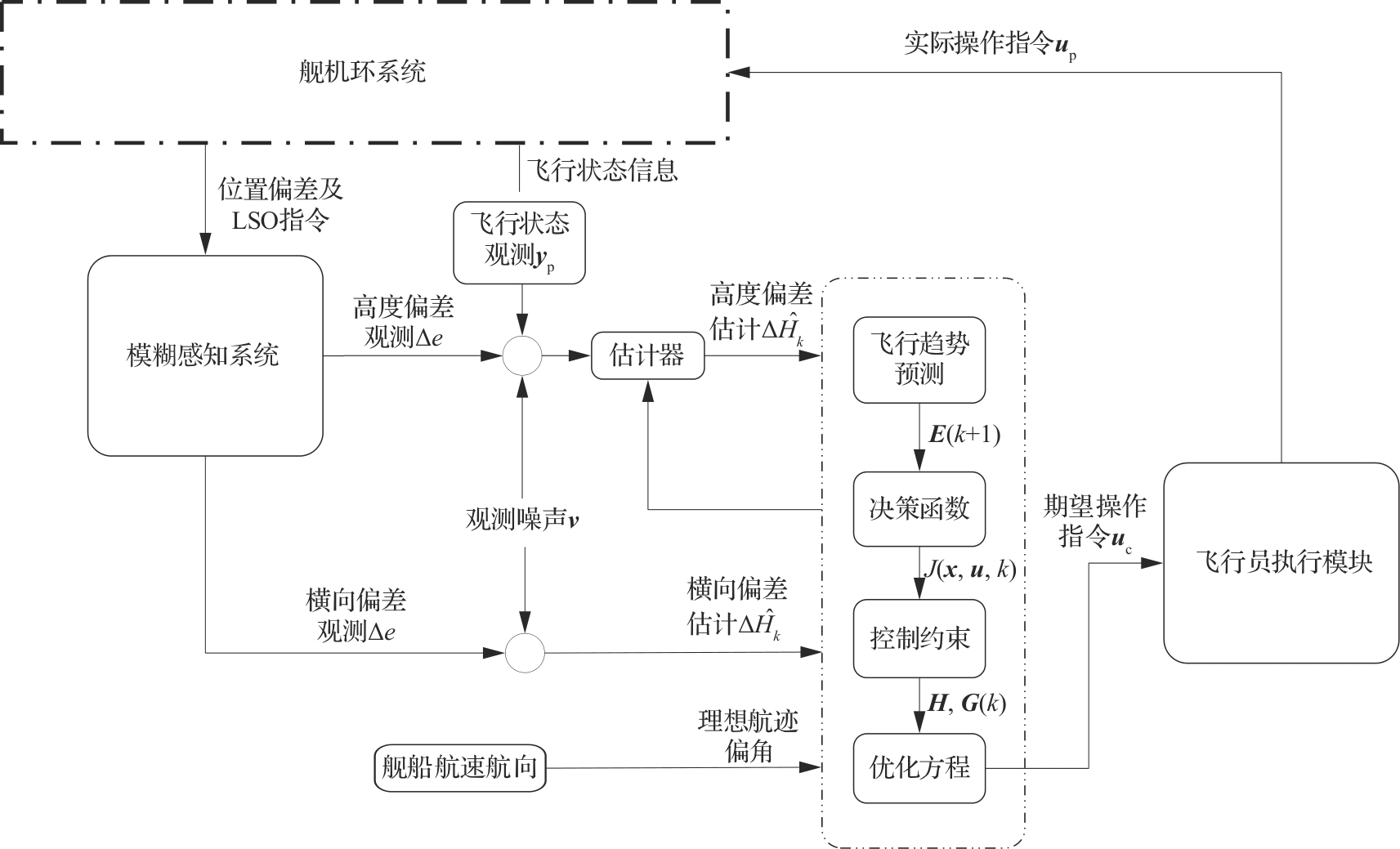
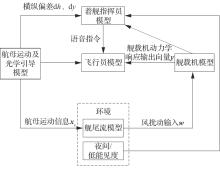
Fig.7
Overall structure of simulation system
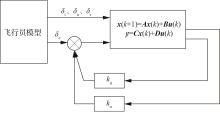
Fig.8
Block diagram of aircraft system
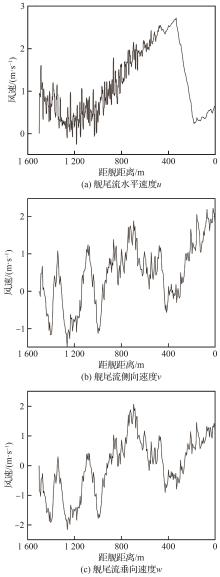
Fig.9
Horizontal, lateral and vertical component of total error disturbance in glide
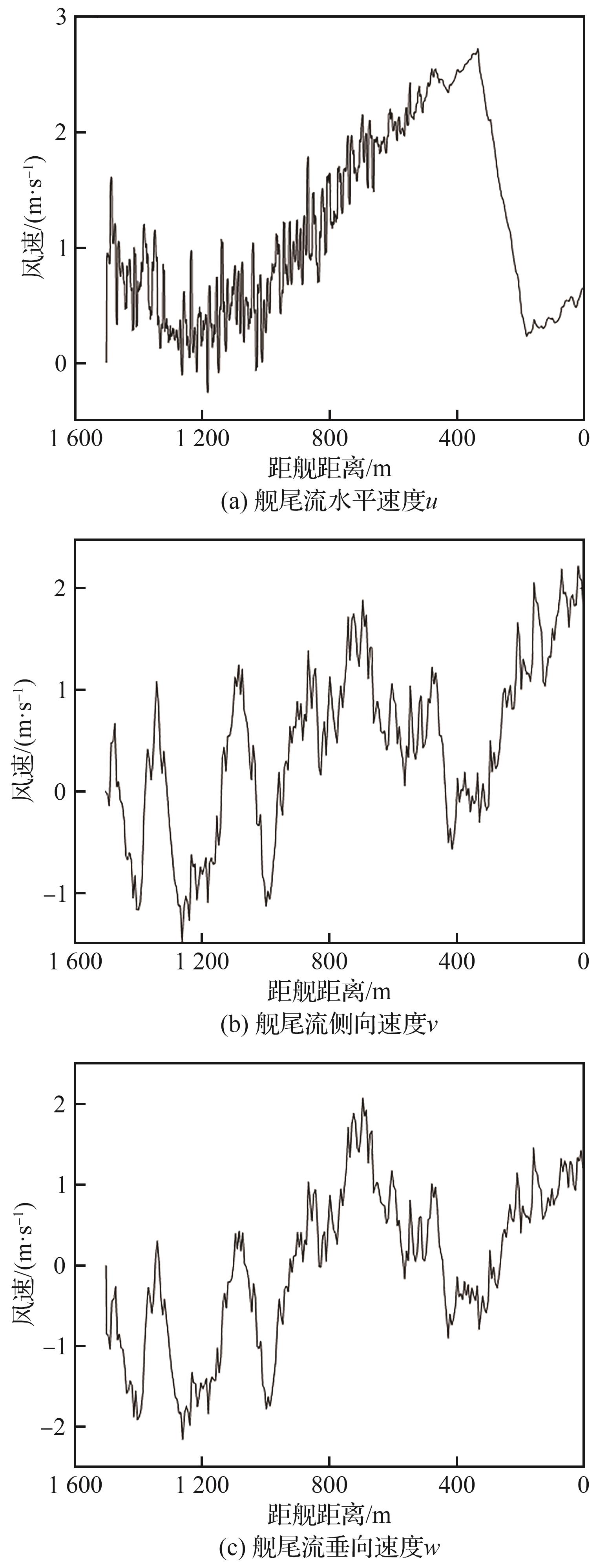
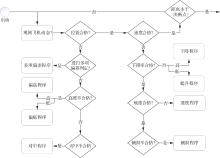
Fig.10
Overall structure of LSO model
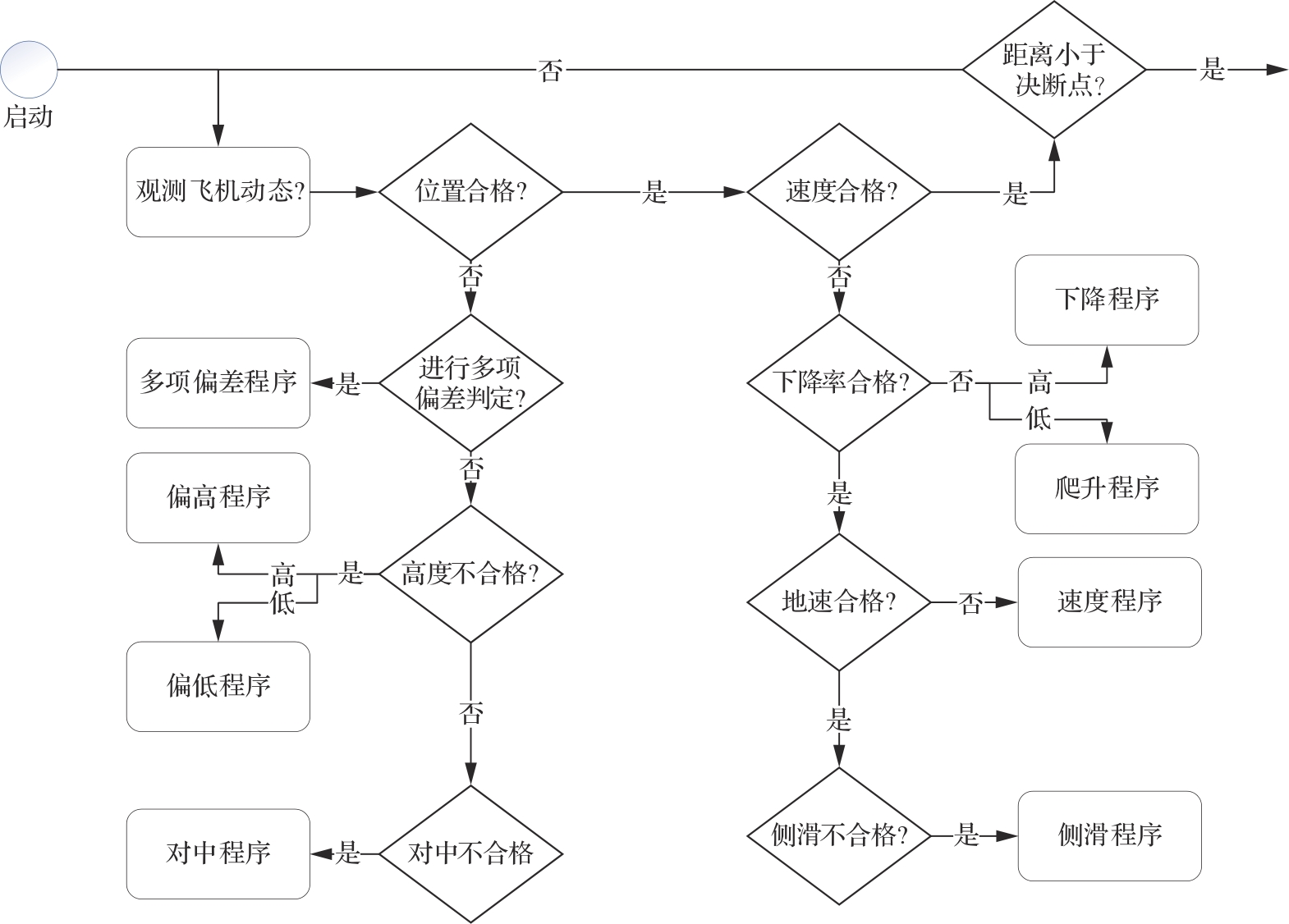
Table 4
Pilot model constrains parameters
| 控制约束 | 关注度 | |||||
|---|---|---|---|---|---|---|
| 状态权重 | 控制权重 | |||||
| 上界 | 10.5 | 25.0 | 1.0 | 90.0 | ||
| 下界 | -25 | -25 | -3 | 75 | ||
| 速率 | 5.0 | 5.0 | 0.1 | 0.1 | ||
Table 5
Night landing simulation conditions
| 工况参数 | 工况条件 |
|---|---|
| 海况等级 | 2 |
| 甲板风/(m·s-1) | 12 |
| 平均风速/(m·s-1) | 2 |
| 高度/m | 155 |
| 距理想点距离 | 2 000 |
| 飞机下滑地速/(m·s-1) | 66.69 |
| 飞机下滑角/(°) | -4 |
| 能见度情况 | 夜间 |
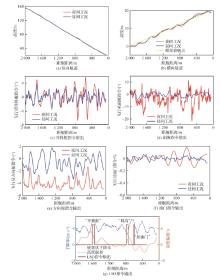
Fig.11
Comparison of day-night operating condition simulation system results
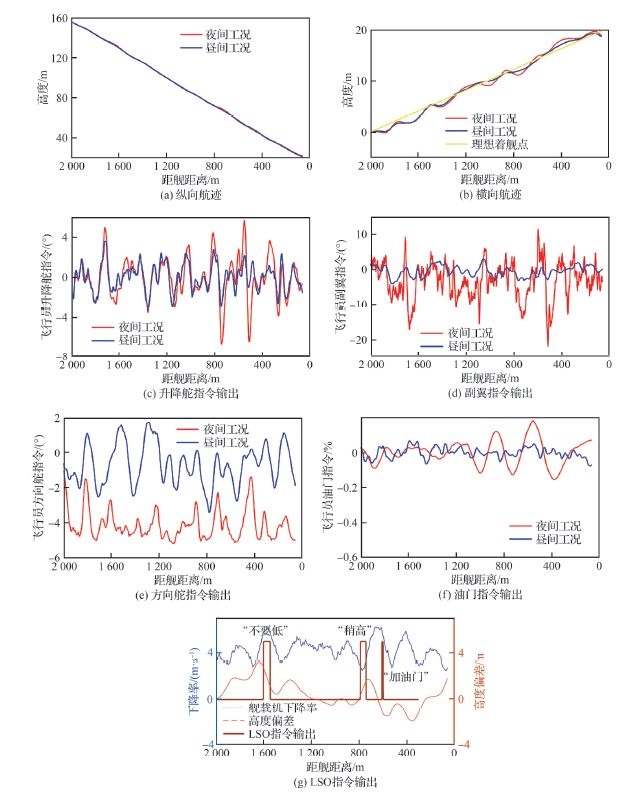
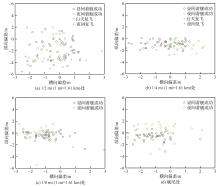
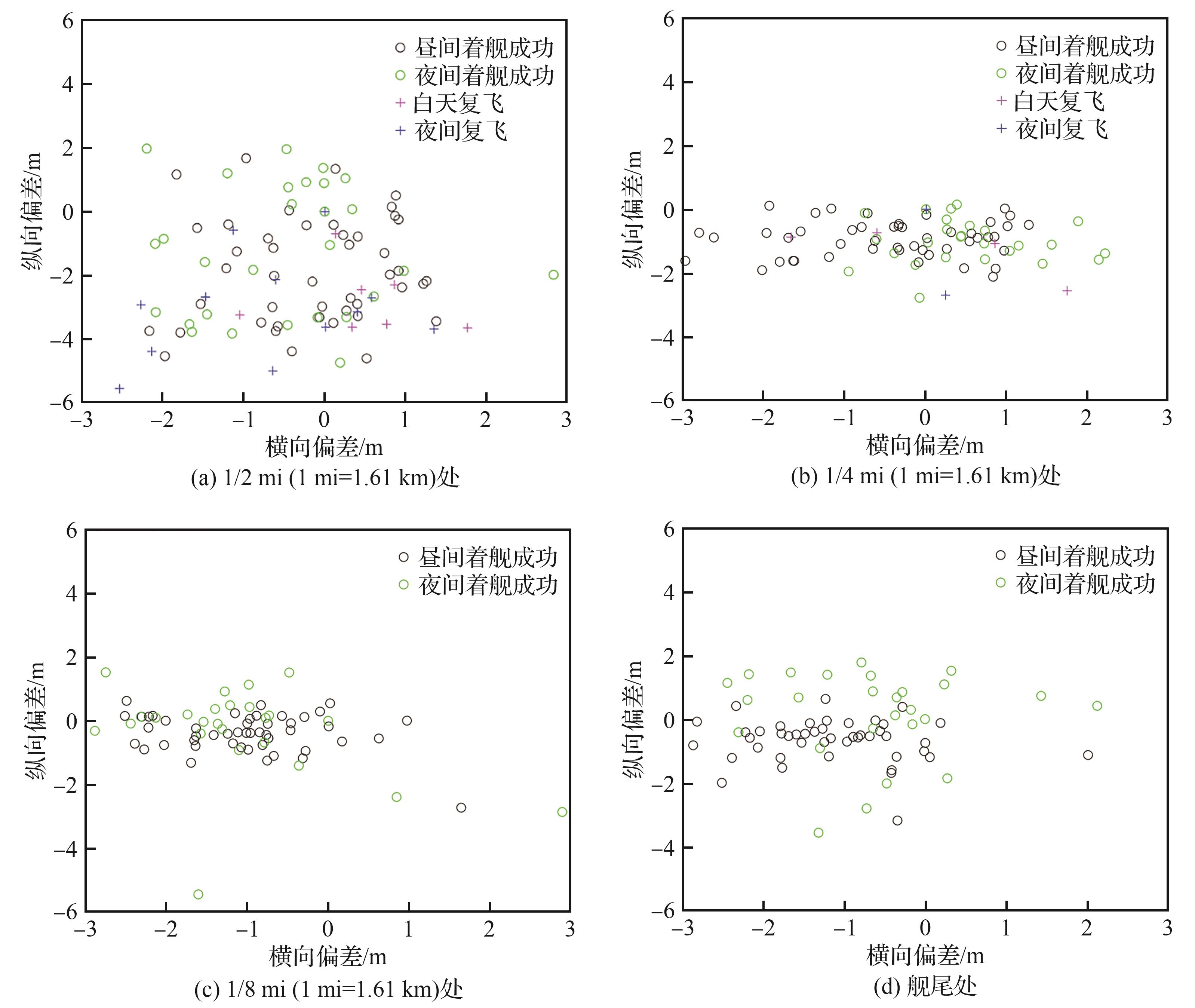
Fig.12
Comparison of error dispersion between day and night conditions
| [1] | BRICTSON C A. Measures of pilot performance: Comparative analysis of day and night carrier recoveries[D]. Los Angeles: University of Southern California, 1966:1-3. |
| [2] | XU S T, TAN W Q, EFREMOV A V, et al. Review of control models for human pilot behavior[J]. Annual Reviews in Control, 2017, 44: 274-291. |
| [3] | LONE M M, RUSENO N, COOKE A K. Towards understanding effects of non-linear flight control system elements on inexperienced pilots[J]. The Aeronautical Journal, 2012, 116(1185): 1201-1206. |
| [4] | HESS R A. Analysis of the aircraft carrier landing task, pilot+augmentation/automation[J]. IFAC-PapersOnLine, 2019, 51(34): 359-365. |
| [5] | HESS R A. Simplified approach for modelling pilot pursuit control behaviour in multi-loop flight control tasks[J]. Proceedings of the Institution of Mechanical Engineers, Part G: Journal of Aerospace Engineering, 2006, 220(2): 85-102. |
| [6] | HESS R A. Structural model of the adaptive human pilot[J]. Journal of Guidance and Control, 1980, 3(5): 416-423. |
| [7] | MCRUER D T, JEX H R. A review of quasi-linear pilot models[J]. IEEE Transactions on Human Factors in Electronics, 1967, HFE-8(3): 231-249. |
| [8] | 屈香菊, 崔海亮. 舰载机进舰任务中的驾驶员变策略控制模型[J]. 北京航空航天大学学报, 2003, 29(11): 993-997. |
| QU X J, CUI H L. Variable strategy pilot model of carrier landing approach[J]. Journal of Beijing University of Aeronautics and Astronautics, 2003, 29(11): 993-997 (in Chinese). | |
| [9] | BARON S, KLEINMAN D L, LEVISON W H. An optimal control model of human response part Ⅱ: Prediction of human performance in a complex task[J]. Automatica, 1970, 6(3): 371-383. |
| [10] | KLEINMAN D L, BARON S, LEVISON W H. An optimal control model of human response part Ⅰ: Theory and validation[J]. Automatica, 1970, 6(3): 357-369. |
| [11] | ROIG R W. A comparison between human operator and optimum linear controller RMS-error performance[J]. IRE Transactions on Human Factors in Electronics, 1962, HFE-3(1): 18-21. |
| [12] | TOWN J, MORRISON Z, KAMALAPURKAR R. Pilot performance modeling via observer-based inverse reinforcement learning[J]. IEEE Transactions on Control Systems Technology, 2024, 32(6): 2444-2451. |
| [13] | 谭文倩, 屈香菊. 人机系统与飞行品质[M]. 北京: 北京航空航天大学出版社, 2020. |
| TAN W Q, QU X J. Man-machine system and flying quality[M]. Beijing: Beijing University of Aeronautics & Astronautics Press, 2020 (in Chinese). | |
| [14] | DAVIDSON J B, SCHMIDT D K. Modified optimal control pilot model for computer-aided design and analysis:NASA-TM-4384[R]. Hampton: NASA Langley Research Center, 1992. |
| [15] | 刘嘉, 向锦武, 张颖, 等. 自适应飞机驾驶员最优控制模型研究及应用[J]. 航空学报, 2016, 37(4): 1127-1138. |
| LIU J, XIANG J W, ZHANG Y, et al. Research and application of adaptive optimal control pilot model[J]. Acta Aeronautica et Astronautica Sinica, 2016, 37(4): 1127-1138 (in Chinese). | |
| [16] | CHEN C, TAN W Q, QU X J, et al. A fuzzy human pilot model of longitudinal control for a carrier landing task[J]. IEEE Transactions on Aerospace and Electronic Systems, 2018, 54(1): 453-466. |
| [17] | WANG L P, JIANG X L, ZHANG Z, et al. Lateral automatic landing guidance law based on risk-state model predictive control[J]. ISA Transactions, 2022, 128: 611-623. |
| [18] | XU S T, WU Y. Modeling multi-loop intelligent pilot control behavior for aircraft-pilot couplings analysis[J]. Aerospace Science and Technology, 2021, 112: 106651. |
| [19] | 王立鹏. 舰载机着舰风险分析与控制策略研究[D]. 哈尔滨: 哈尔滨工程大学, 2017. |
| WANG L P. Risk analysis and control strategy of carrier-based aircraft landing[D]. Harbin: Harbin Engineering University, 2017 (in Chinese). | |
| [20] | 陈晨, 屈香菊. 光学助降系统引导下舰载机着舰人机系统建模[J]. 飞行力学, 2018, 36(4): 11-15. |
| CHEN C, QU X J. Modeling of man-aircraft system for carrier landing with FLOLS[J]. Flight Dynamics, 2018, 36(4): 11-15 (in Chinese). | |
| [21] | ZADEH L A. Fuzzy logic = computing with words[J]. IEEE Transactions on Fuzzy Systems, 4(2): 103-111. |
| [22] | HOSSEINI S M, GHAZI G, BOTEZ R M. Design of a nonlinear adaptive fuzzy logic system for cessna citation X speed control[C]∥AIAA Scitech 2024 Forum. Reston: AIAA, 2024. |
| [23] | MOALI O, MEZGHANI D, MAMI A, et al. UAV trajectory tracking using proportional-integral-derivative-type-2 fuzzy logic controller with genetic algorithm parameter tuning[J]. Sensors, 2024, 24(20): 6678. |
| [24] | MOHMAD ROUYAN N. Model simulation suitable for an aircraft at high angle of attack[D]. Cranfield; Cranfield University, 2016: 93-138. |
| [25] | 周大鹏, 曲晓雷. 基于知识引导智能鸽群优化的舰载机着舰控制[J]. 航空学报, 2024, 45(S1): 730801. |
| ZHOU D P, QU X L. Knowledge-based intelligent pigeon-inspired optimization of carrier-based aircraft landing control[J]. Acta Aeronautica et Astronautica Sinica, 2024, 45(S1): 730801 (in Chinese). | |
| [26] | MCCABE M. NATOPS landing signal officer manual: NAVAIR 00-80T-104[R]. Patuxent River, Maryland: Department of the Navy, 2001. |
| [27] | MCCAULEY M E, BORDEN G J. Computer based landing signal officer carrier aircraft recovery model:NAVTRAEQUIPCEN 77-C-0110-1[R]. Orlando: Naval Training Equipment Center, 1983. |
| [1] | Lixin WANG, Yilong NIU, Hailiang LIU, Jin WANG, Xianlong WANG, Ting YUE. Aircraft digital virtual flight simulation method and its application [J]. Acta Aeronautica et Astronautica Sinica, 2025, 46(5): 531543-531543. |
| [2] | Yu LI, Tongwen CHEN, Zhigang WANG, Chiyung WEN, Xiaoxiong LIU. Incremental control of direct lift landing based on predefined-time theory [J]. Acta Aeronautica et Astronautica Sinica, 2025, 46(13): 531163-531163. |
| [3] | Zixu WANG, Pan LI, Junbiao SHEN, Zhenhua ZHU, Renliang CHEN. Dynamic conversion corridor of tiltrotor aircraft under accelerating and decelerating conditions [J]. Acta Aeronautica et Astronautica Sinica, 2025, 46(11): 531377-531377. |
| [4] | Dapeng ZHOU, Xiaolei QU. Knowledge-based intelligent pigeon-inspired optimization of carrier-based aircraft landing control [J]. Acta Aeronautica et Astronautica Sinica, 2024, 45(S1): 730801-730801. |
| [5] | Mingrui MA, Fuzhen CHEN, Hong YAN, Fan LIU. Numerical simulation of bird strike based on multi-resolution SPH-FEM coupling method [J]. Acta Aeronautica et Astronautica Sinica, 2024, 45(21): 230116-230116. |
| [6] | Duo ZHENG, Zhichen CHU, Defu LIN, Mingjun WEI, Siyi YUE. Cooperative guidance technique considering flight safety constraints of cluster wake vortex aerodynamic coupling effects [J]. Acta Aeronautica et Astronautica Sinica, 2024, 45(18): 329906-329906. |
| [7] | Xiaoyu LIU, Liguo SUN, Wenqian TAN, Jinpeng WEI, Weijun WANG, Junkai JIAO. Modeling and evaluation of carrier aircraft pilots based on similar configuration decisions [J]. ACTA AERONAUTICAET ASTRONAUTICA SINICA, 2023, 44(4): 126329-126329. |
| [8] | Chenglei YUE, Xuechuan WANG, Xiaokui YUE, Ting SONG. A spacecraft rendezvous and docking method based on inverse reinforcement learning [J]. Acta Aeronautica et Astronautica Sinica, 2023, 44(19): 328420-328420. |
| [9] | Chao WEN, Wenhan DONG, XIE Wujie, Ming CAI, Ri LIU. Distributed cooperative area search method for UAV swarms based on revisit mechanism [J]. ACTA AERONAUTICAET ASTRONAUTICA SINICA, 2023, 44(11): 327561-327561. |
| [10] | CHAI Yuan, LUO Jianjun, WANG Mingming. Predictive game control for on-orbit transportation by multiple microsatellites with impulsive thrust [J]. ACTA AERONAUTICAET ASTRONAUTICA SINICA, 2022, 43(12): 326112-326112. |
| [11] | YAN Liming, GUO Xin, ZHAO Dongdong. Model predictive torque control of permanent magnet synchronous motor using novel analytic weighting factor assignment [J]. ACTA AERONAUTICAET ASTRONAUTICA SINICA, 2022, 43(12): 327785-327785. |
| [12] | YAN Chuliang. Development and prospect of aircraft structural life reliability assessment technology in China [J]. ACTA AERONAUTICAET ASTRONAUTICA SINICA, 2022, 43(10): 527869-527869. |
| [13] | YAN Liming, ZHAO Dongdong, JIAO Ningfei. Robust model based-predictive torque control of aviation AC induction motor [J]. ACTA AERONAUTICAET ASTRONAUTICA SINICA, 2021, 42(9): 324700-324700. |
| [14] | XU Shuting, TAN Wenqian, QU Xiangju. Design method of aircraft smart side-stick controller with force cue [J]. ACTA AERONAUTICAET ASTRONAUTICA SINICA, 2021, 42(8): 525775-525775. |
| [15] | ZHAO Dongdong, ZHAO Guosheng, XIA Lei, FANG Chun, MA Rui, HUANGFU Yigeng. Modeling and control of fuel cell cathode gas supply system for UAV [J]. ACTA AERONAUTICAET ASTRONAUTICA SINICA, 2021, 42(7): 324659-324659. |
| Viewed | ||||||
|
Full text |
|
|||||
|
Abstract |
|
|||||
Address: No.238, Baiyan Buiding, Beisihuan Zhonglu Road, Haidian District, Beijing, China
Postal code : 100083
E-mail:hkxb@buaa.edu.cn
Total visits: 6658907 Today visits: 1341All copyright © editorial office of Chinese Journal of Aeronautics
All copyright © editorial office of Chinese Journal of Aeronautics
Total visits: 6658907 Today visits: 1341

 CJA
CJA
