Acta Aeronautica et Astronautica Sinica ›› 2026, Vol. 47 ›› Issue (10): 532861.doi: 10.7527/S1000-6893.2025.32861
• Special Issue: Intelligent Processing and Analysis of Aerospace Remote Sensing Images • Previous Articles
Wenlin LIU, Xikun HU( ), Ping ZHONG
Received:2025-10-09
Revised:2025-10-24
Accepted:2025-11-25
Online:2025-12-17
Published:2025-11-28
Contact:
Xikun HU
E-mail:xikun@nudt.edu.cn
Supported by:CLC Number:
Wenlin LIU, Xikun HU, Ping ZHONG. Reinforcement learning-driven object detection method for degraded remote sensing images[J]. Acta Aeronautica et Astronautica Sinica, 2026, 47(10): 532861.
Fig.1
Pipeline of reinforcement learning-driven object detection for degraded remote sensing images
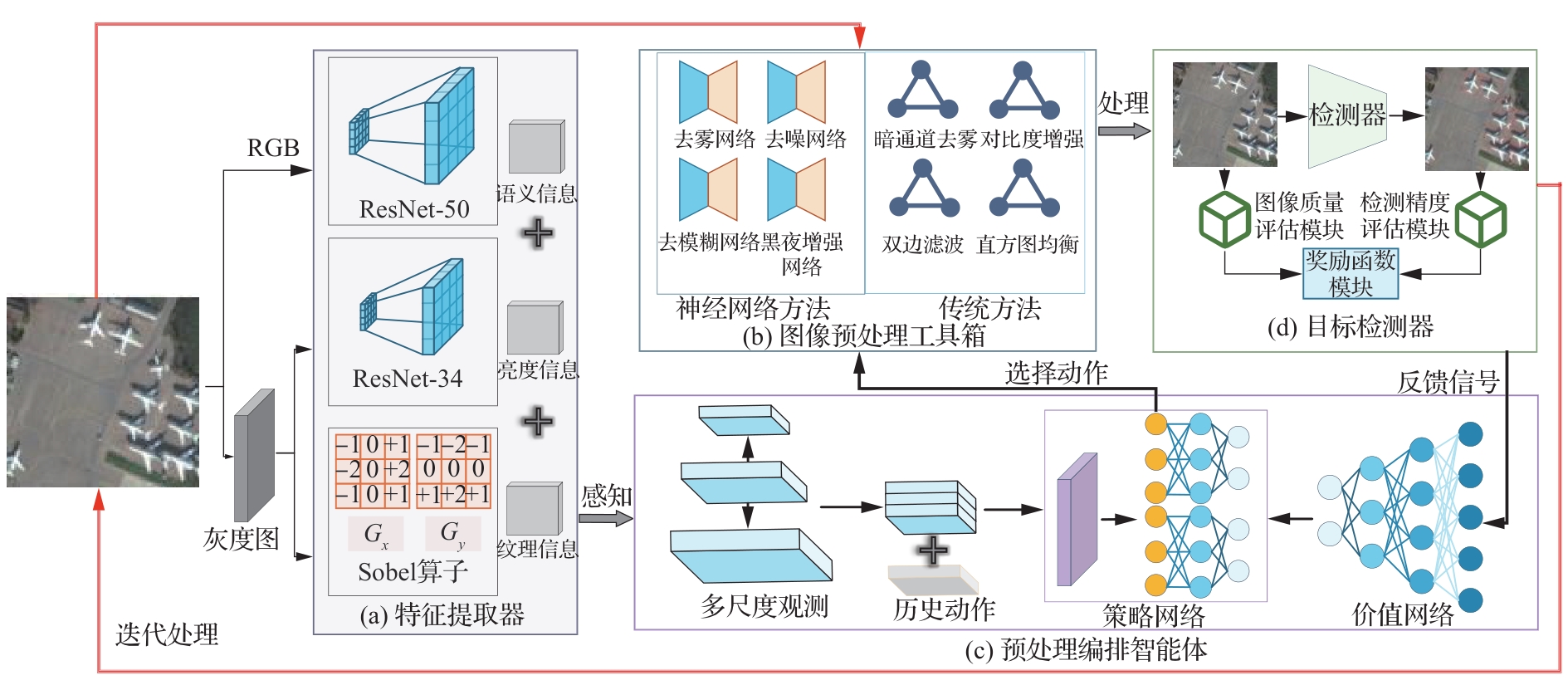

Table 1
Image preprocessing toolbox
| 退化类型 | 传统方法 | 神经网络方法 |
|---|---|---|
| 弱光 | 亮度调整 对比度调整 | 弱光增强网络 |
| 雾天 | 直方图均衡 暗通道去雾 | 去雾网络 |
| 运动模糊 | 维纳滤波 | 去运动模糊网络 |
| 失焦模糊 | 去失焦模糊网络 | |
| 毛玻璃模糊 | 去毛玻璃模糊网络 | |
| 高斯噪声 | 均值滤波 高斯滤波 | 去噪网络 |
| JPEG压缩 | JPEG压缩重构网络 | |
| ISO噪声 | 去ISO噪声网络 | |
| 其他退化 | Sobel算子 双边滤波 中值滤波 伽马值调整 拉普拉斯锐化 |
Table 2
Generation methods and parameters of degraded images
| 退化类型 | 生成方法 |
|---|---|
| 弱光 | 降低图像亮度至原亮度的30%~50%,叠加均值为0、方差0.01~0.03的高斯噪声 |
| 雾天 | 基于大气散射模型,设置雾浓度参数在0.001~0.005之间的随机值,生成均匀雾效 |
| 运动模糊 | 随机生成方向 |
| 失焦模糊 | 采用半径 |
| 毛玻璃模糊 | 对图像窗口大小 |
| 高斯噪声 | 添加均值为0、方差0.01~0.05的高斯分布噪声 |
| JPEG压缩 | 采用JPEG标准压缩算法,设置质量因子 |
| ISO噪声 | 模拟光电子统计特性,融合泊松噪声与高斯噪声 |
Fig.2
Schematic diagram of synthetic dataset
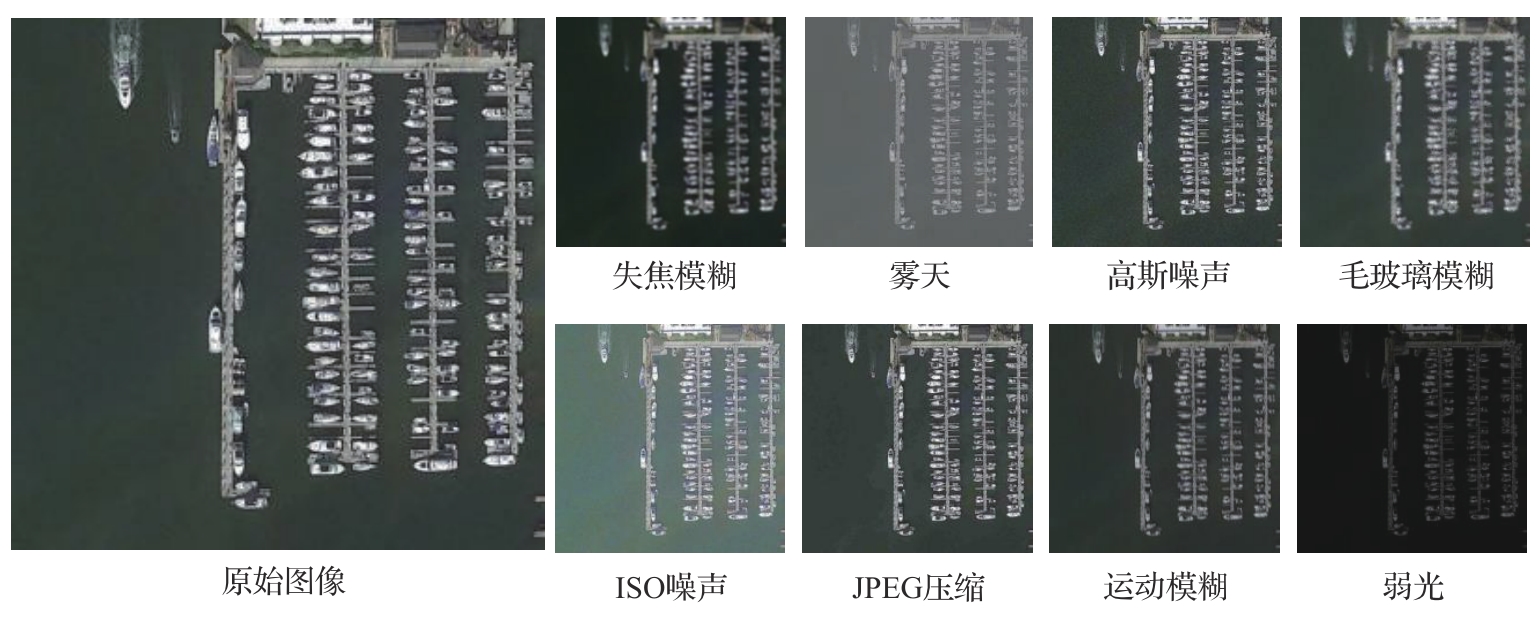
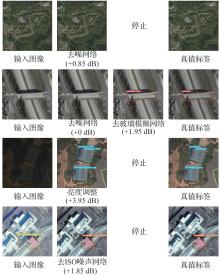
Fig.3
Schematic diagram of restoration results produced by YOLOv5-m on DIOR dataset
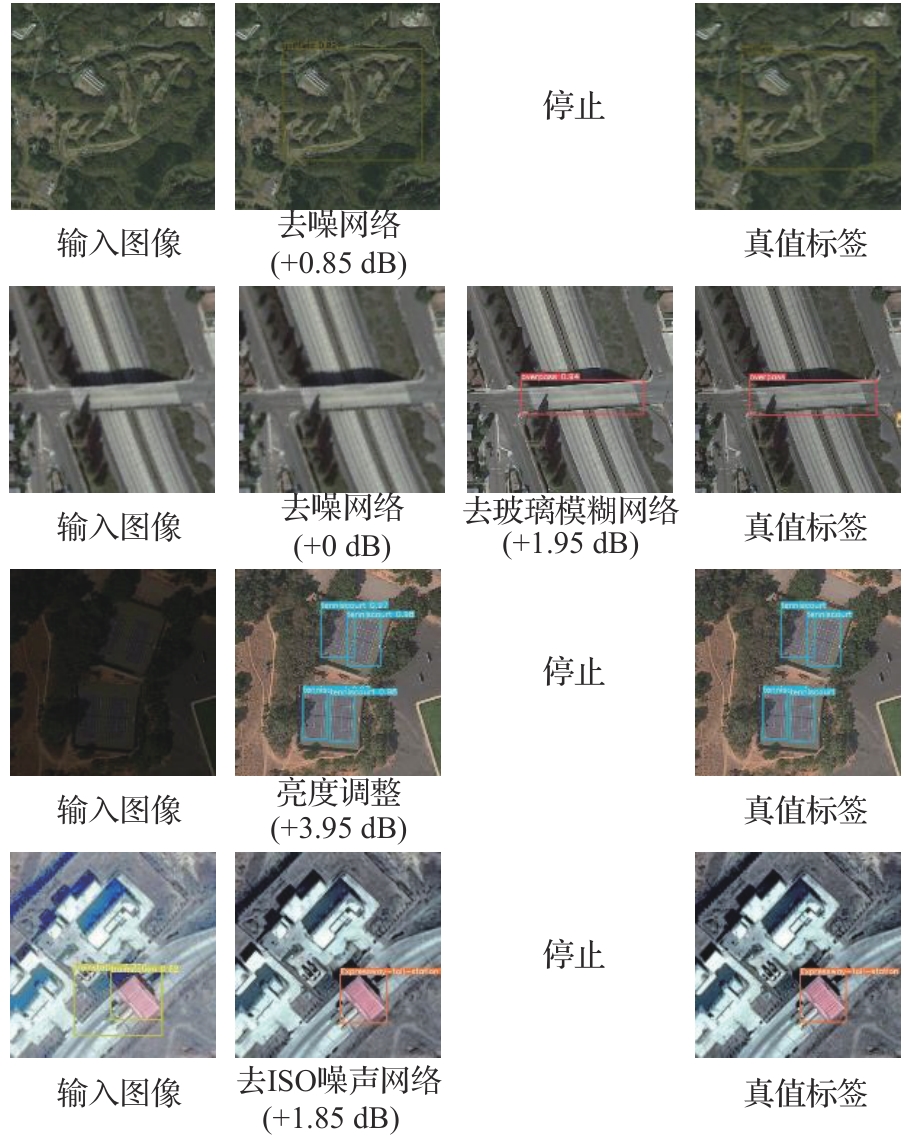
Table 3
Comparison of image restoration quality
| 实验方案 | PSNR(DIOR)/dB | PSNR(DOTA)/dB |
|---|---|---|
| 无处理(基线) | 19.63 | 19.21 |
| Restore-Detect | 27.64 | 29.91 |
| RL-adapt | 25.77 | 25.79 |
Table 4
Comparison of object detection accuracy
| 检测算法 | 方案 | mAP50/% | |
|---|---|---|---|
| DIOR | DOTA | ||
| YOLOv5-m | Raw-Raw | 81.0 | 73.2 |
| Raw-Syn | 71.2 | 65.4 | |
| Syn-Syn | 74.9 | 68.7 | |
| Restore-Detect | 75.2 | 69.1 | |
| E2E | 75.0 | 68.1 | |
| RL-adapt | 78.6 | 72.0 | |
| YOLO11m-OBB | Raw-Raw | 81.8 | 78.3 |
| Raw-Syn | 69.7 | 69.4 | |
| Syn-Syn | 78.3 | 73.8 | |
| Restore-Detect | 78.5 | 73.1 | |
| E2E | 78.0 | 72.2 | |
| RL-adapt | 80.8 | 76.6 | |
Oriented R-CNN | Raw-Raw | 71.1 | 80.1 |
| Raw-Syn | 50.9 | 71.2 | |
| Syn-Syn | 61.2 | 73.3 | |
| Restore-Detect | 63.4 | 72.9 | |
| E2E | 64.0 | 73.5 | |
| RL-adapt | 69.0 | 76.4 |
Table 5
Results on basic cross-domain scene adaptation experiments
| 迁移场景 | 方法 | mAP50/% | PSNR/dB |
|---|---|---|---|
| DIOR→DOTA | 基线 | 69.4 | 19.21 |
| 零样本 | 74.3 | 23.18 | |
| 少样本 | 75.9 | 24.51 | |
| 全样本 | 76.6 | 25.79 | |
| DOTA→DIOR | 基线 | 71.2 | 19.13 |
| 零样本 | 76.1 | 23.08 | |
| 少样本 | 77.8 | 24.44 | |
| 全样本 | 78.6 | 25.77 |
Table 6
Results of unknown degradation scene adaptation experiments
| 迁移场景设置 | 方法 | mAP50/% | PSNR/dB |
|---|---|---|---|
| 已知噪声→雨天 | 基线 | 65.9 | 19.52 |
| RL-adapt | 72.5 | 21.34 | |
| 已知噪声→条带 | 基线 | 69.3 | 20.85 |
| RL-adapt | 73.4 | 22.53 | |
已知噪声→ 雨天+条带 | 基线 | 59.7 | 18.17 |
| RL-adapt | 70.2 | 20.78 |
Table 7
Data generation methods for composite degradation scenarios
| 复合干扰类型 | 退化组合机制 |
|---|---|
| 雾天+高斯噪声 | 大气散射+传感器热噪声 |
| 运动模糊+JPEG压缩 | 卫星姿态抖动+数据传输损耗 |
| 弱光+ISO噪声 | 弱光成像+高感光度噪声 |
雾天+运动模糊+ 高斯噪声 | 大气散射+卫星姿态抖动+ 传感器噪声 |
Table 8
Experimental results in composite degradation environments
| 退化类型 | 方案 | mAP50/% | PSNR/dB |
|---|---|---|---|
| 雾天+高斯噪声 | Raw-Syn | 62.4 | 16.19 |
| Syn-Syn | 65.3 | ||
| R-D | 67.6 | 25.27 | |
| E2E | 66.9 | ||
| RL-adapt | 68.4 | 24.51 | |
| 运动模糊+JPEG压缩 | Raw-Syn | 61.1 | 15.13 |
| Syn-Syn | 64.2 | ||
| R-D | 65.4 | 25.42 | |
| E2E | 67.0 | ||
| RL-adapt | 69.0 | 24.44 | |
| 弱光+ISO噪声 | Raw-Syn | 63.9 | 16.12 |
| Syn-Syn | 65.7 | ||
| R-D | 65.4 | 23.1 | |
| E2E | 65.3 | ||
| RL-adapt | 67.9 | 20.1 | |
雾天+运动模糊+ 高斯噪声 | Raw-Syn | 60.1 | 15.91 |
| Syn-Syn | 65.2 | ||
| R-D | 65.4 | 22.9 | |
| E2E | 65.3 | ||
| RL-adapt | 67.3 | 19.8 |
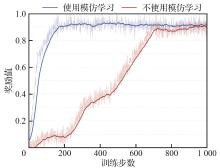
Fig.4
Reward variation during imitation learning training process
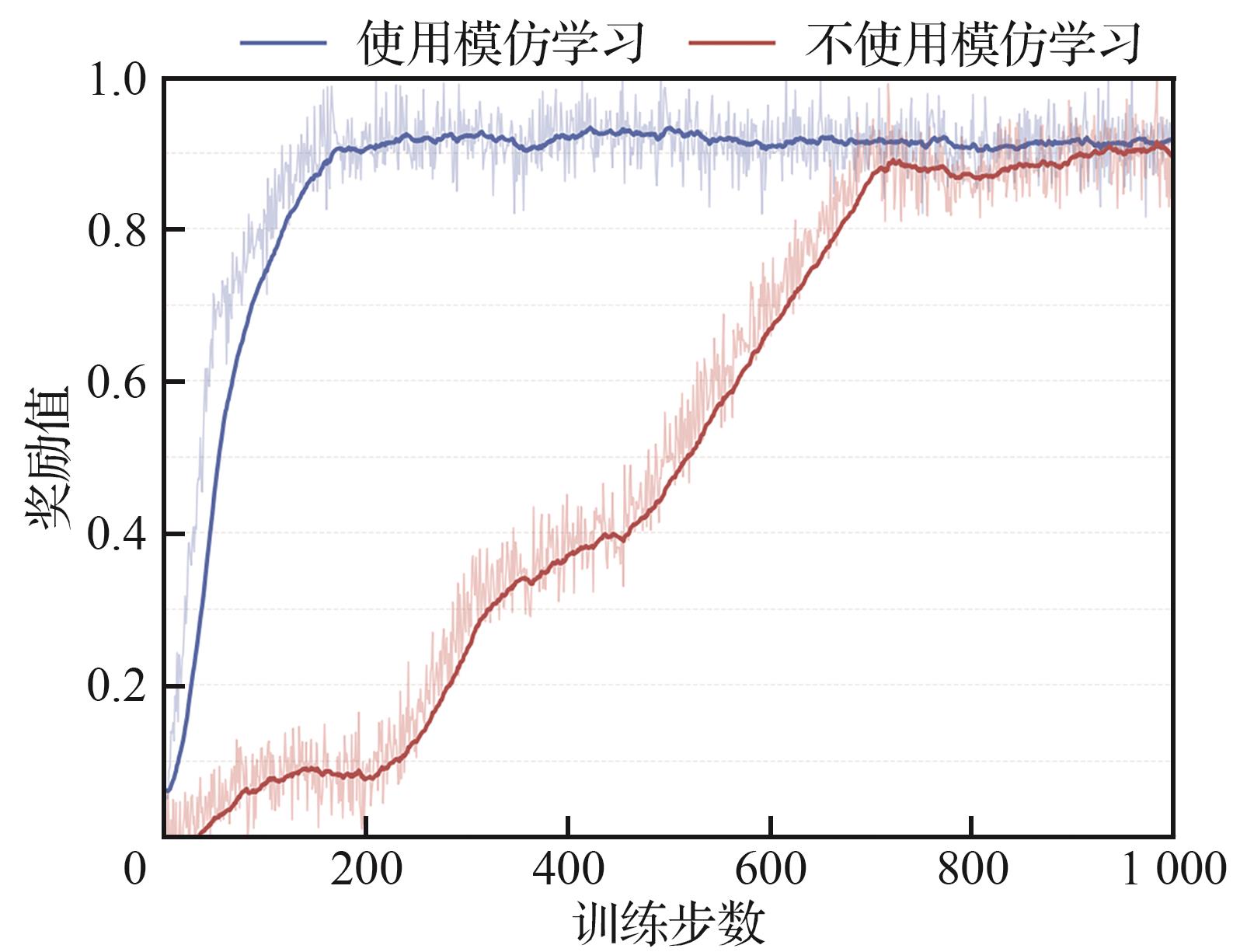
Table 9
Comparison of ablation experiment results
| 方法 | mAP50/% | |
|---|---|---|
| DIOR | DOTA | |
| RL-adapt | 78.6 | 76.6 |
| 无多模态特征 | 74.2 | 73.1 |
| 无历史编码 | 77.1 | 76.2 |
| 无模仿学习 | 74.0 | 73.4 |
| 仅mAP奖励 | 76.3 | 75.9 |
| 仅PSNR奖励 | 75.9 | 74.8 |
| 仅传统方法 | 62.3 | 63.5 |
| 仅神经网络方法 | 71.6 | 70.3 |
Table 10
Experimental results with different maximum iteration limits on DIOR
| 迭代次数上限/次 | mAP50/% | PSNR/dB | 推理时间/ms |
|---|---|---|---|
| 2 | 75.2 | 23.31 | 13.1 |
| 3 | 77.1 | 24.29 | 14.4 |
| 4 | 78.0 | 25.04 | 15.3 |
| 5 | 78.6 | 25.77 | 16.7 |
| 6 | 78.7 | 25.69 | 18.3 |
| 7 | 78.4 | 25.91 | 20.6 |
Table 11
Comparison of experimental results for termination condition sensitivity on DIOR
| 实验分组 | mAP50/% | PSNR/dB | 训练时间/h |
|---|---|---|---|
| 实验组1 | 77.2 | 24.94 | 25.2 |
| 实验组2 | 78.6 | 25.77 | 29.4 |
| 实验组3 | 78.1 | 25.17 | 35.1 |
Table 12
Experimental results of alternative termination mechanism design on DIOR
| 终止策略 | mAP50/% | PSNR/dB |
|---|---|---|
| PSNR和mAP动态混合(提出的策略) | 78.6 | 25.77 |
| 只根据PSNR | 76.3 | 25.89 |
| 只根据mAP | 77.2 | 24.32 |
Table 13
Results of replacement comparison experiments on DIOR
| 复原+检测算法 | mAP50/% | PSNR/dB |
|---|---|---|
| 原始退化数据 | 69.4 | 19.63 |
| HYPIR+YOLO11 | 75.8 | 24.33 |
| Converse_DnCNN+YOLO11 | 78.1 | 26.37 |
RL-adapt (UNet+YOLO12) | 78.5 | 25.77 |
RL-adapt (UNet+YOLO11) | 78.6 | 25.77 |
Fig.5
Visual comparison of image restoration and detection results
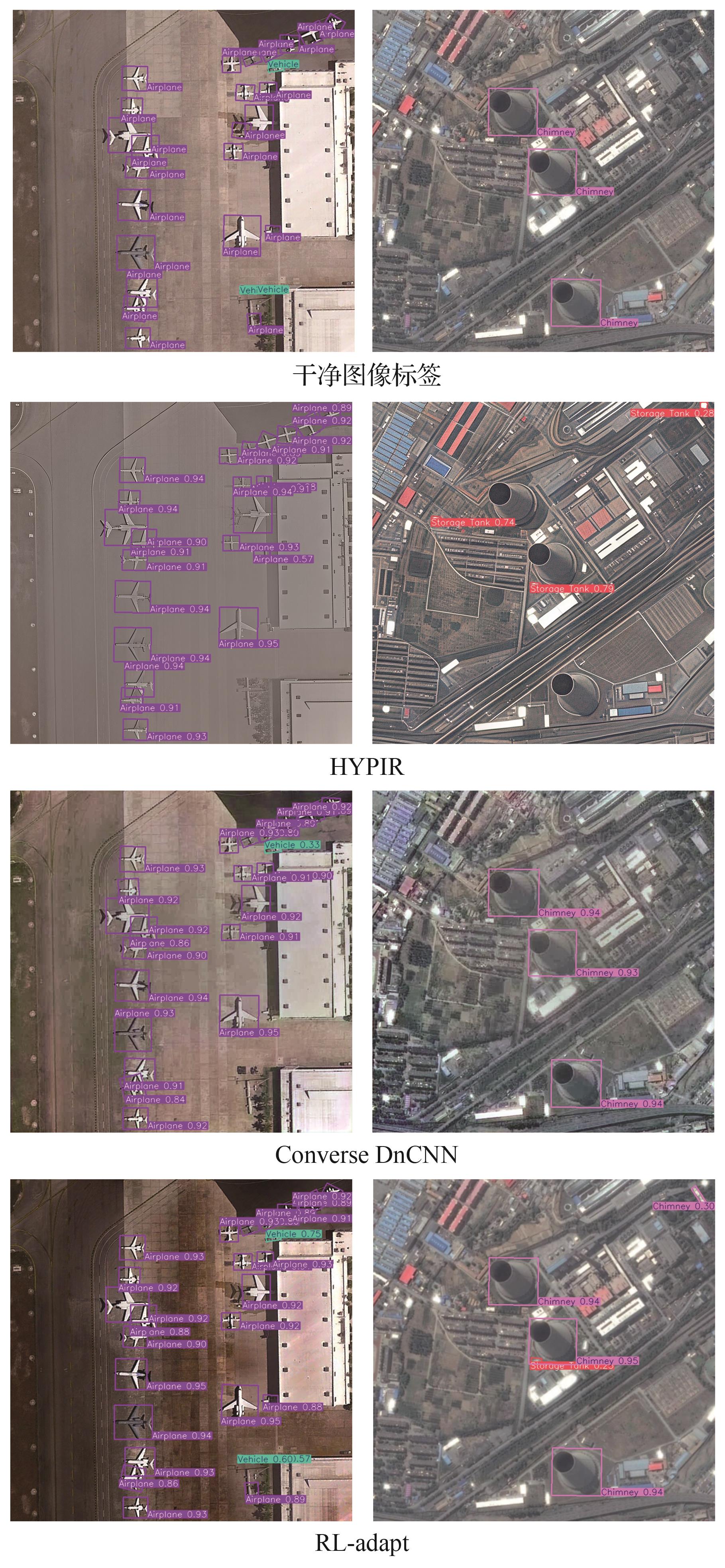
Table 14
Training and inference time comparison
| 方案 | 训练用时/h | 推理用时/ms |
|---|---|---|
| YOLO11m-OBB | 4.8 | 12 |
| UNet+YOLO11m-OBB | 10.2 | 18 |
| RL-adapt | 70.3 | 25 |
| HYPIR+YOLO11m-OBB | 1 221 |
| [1] | 臧晶, 李成华, 田野. 卫星遥感农业监测系统中实例检索算法研究[J]. 宇航学报, 2019, 40(11): 1358-1366. |
| ZANG J, LI C H, TIAN Y. Research on case retrieval algorithm in satellite remote sensing monitoring system for agriculture[J]. Journal of Astronautics, 2019, 40(11): 1358-1366 (in Chinese). | |
| [2] | 李志忠, 卫征, 付垒, 等. 我国遥感卫星技术与应用重要进展[J]. 卫星应用, 2025(4): 16-19. |
| LI Z Z, WEI Z, FU L, et al. Important progress in China’s remote sensing satellite technology and application[J]. Satellite Application, 2025(4): 16-19 (in Chinese). | |
| [3] | 王俊杰, 李清泉, 邬国锋. 红树林定量遥感研究进展[J]. 遥感学报, 2025, 29(6): 1769-1787. |
| WANG J J, LI Q Q, WU G F. Progress in quantitative remote sensing research of mangroves[J]. National Remote Sensing Bulletin, 2025, 29(6): 1769-1787 (in Chinese). | |
| [4] | 莫妮卡. 卫星遥感图像舰船目标检测系统[D]. 杭州:浙江大学,2022: 1-2. |
| MO N K. Ship detection system based on satellite remote sensing images[D]. Hangzhou: Zhejiang University, 2022: 1-2 (in Chinese). | |
| [5] | 刘瑞锦, 何章鸣. 基于YOLOv8的卫星遥感图像快速目标检测方法[J]. 空间控制技术与应用, 2023, 49(5): 89-97. |
| LIU R J, HE Z M. A fast target detection method for satellite remote sensing images based on YOLOv8[J]. Aerospace Control and Application, 2023, 49(5): 89-97 (in Chinese). | |
| [6] | 赵其昌, 吴一全, 苑玉彬. 光学遥感图像舰船目标检测与识别方法研究进展[J]. 航空学报, 2024, 45(8): 029025. |
| ZHAO Q C, WU Y Q, YUAN Y B. Progress of ship detection and recognition methods in optical remote sensing images[J]. Acta Aeronautica et Astronautica Sinica, 2024, 45(8): 029025 (in Chinese). | |
| [7] | XI Y, JIA W J, MIAO Q G, et al. CoDerainNet: Collaborative deraining network for drone-view object detection in rainy weather conditions[J]. Remote Sensing, 2023, 15(6): 1487-1508. |
| [8] | ASWINI N, UMA S V. Drone image de-noising and feature extraction[C]∥2020 IEEE International Conference for Innovation in Technology. Piscataway: IEEE Press, 2020: 1-6. |
| [9] | KIM J I, HYUN C U, HAN H, et al. Digital surface model generation for drifting Arctic sea ice with low-textured surfaces based on drone images[J]. ISPRS Journal of Photogrammetry and Remote Sensing, 2021, 172: 147-159. |
| [10] | QIAN G C, WANG Y H, GU J J, et al. Rethinking learning-based demosaicing, denoising, and super-resolution pipeline[C]∥2022 IEEE International Conference on Computational Photography. Piscataway: IEEE Press, 2022: 1-12. |
| [11] | XING W Z, EGIAZARIAN K. End-to-end learning for joint image demosaicing, denoising and super-resolution[C]∥Proceedings of the IEEE Conference on Computer Vision and Pattern Recognition. Piscataway: IEEE Press, 2021: 3507-3516. |
| [12] | SUGANUMA M, LIU X, OKATANI T. Attention-based adaptive selection of operations for image restoration in the presence of unknown combined distortions[C]∥Proceedings of the IEEE Conference on Computer Vision and Pattern Recognition. Piscataway: IEEE Press, 2019: 9039-9048. |
| [13] | KIM C, KIM T H, BAIK S. LAN: Learning to adapt noise for image denoising[C]∥Proceedings of the IEEE Conference on Computer Vision and Pattern Recognition. Piscataway: IEEE Press, 2024: 25193-25202. |
| [14] | LIU Y, LI W, GUAN J, et al. Effective cloud removal for remote sensing images by an improved mean-reverting denoising model with elucidated design space[C]∥Proceedings of the IEEE Computer Vision and Pattern Recognition Conference. Piscataway: IEEE Press, 2025: 17851-17861. |
| [15] | ZHANG J, ZHANG Q, ZHAO X, et al. Boosting denoisers with reinforcement learning for image restoration[J]. Soft Computing, 2022, 26(7): 3261-3272. |
| [16] | FURUTA R, INOUE N, YAMASAKI T. PixelRL: Fully convolutional network with reinforcement learning for image processing[J]. IEEE Transactions on Multimedia, 2020, 22(7): 1704-1719. |
| [17] | YU K, DONG C, LIN L, et al. Crafting a toolchain for image restoration by deep reinforcement learning[C]∥Proceedings of the IEEE Computer Vision and Pattern Recognition Conference. Piscataway: IEEE Press, 2018: 2443-2452. |
| [18] | SHIN U, LEE K, KWEON I S. DRL-ISP: Multi-objective camera ISP with deep reinforcement learning[C]∥2022 IEEE/RSJ International Conference on Intelligent Robots and Systems. Piscataway: IEEE Press, 2022: 7044-7051. |
| [19] | YU K, WANG X T, DONG C, et al. Path-restore: Learning network path selection for image restoration[J]. IEEE Transactions on Pattern Analysis and Machine Intelligence, 2022, 44(10): 7078-7092. |
| [20] | WEI Z Y, CHEN H H, NAN L L, et al. PathNet: Path-selective point cloud denoising[J]. IEEE Transactions on Pattern Analysis and Machine Intelligence, 2024, 46(6): 4426-4442. |
| [21] | 范天麒, 邹征夏, 史振威. 基于强化学习数据合成的典型遥感目标检测[J]. 航空学报, 2025, 46(23): 631955. |
| FAN T Q, ZOU Z X, SHI Z W. Typical remote sensing target detection with data synthesis based on reinforcement learning[J]. Acta Aeronautica et Astronautica Sinica, 2025, 46(23): 631955 (in Chinese). | |
| [22] | HE K M, ZHANG X Y, REN S Q, et al. Deep residual learning for image recognition[C]∥2016 IEEE Conference on Computer Vision and Pattern Recognition. Piscataway: IEEE Press, 2016: 770-778. |
| [23] | RONNEBERGER O, FISCHER P, BROX T. U-Net: Convolutional networks for biomedical image segmentation[C]∥International Conference on Medical Image Computing and Computer-Assisted Intervention. 2015: 234-241. |
| [24] | HAARNOJA T, ZHOU A, ABBEEL P, et al. Soft actor-critic: Off-policy maximum entropy deep reinforcement learning with a stochastic actor[C]∥Proceedings of the 35th International Conference on Machine Learning. Piscataway: IEEE Press, 2018: 1861-1870. |
| [25] | MNIH V, KAVUKCUOGLU K, SILVER D, et al. Human-level control through deep reinforcement learning[J]. Nature, 2015, 518(7540): 529-533. |
| [26] | SCHULMAN J, WOLSKI F, DHARIWAL P, et al. Proximal policy optimization algorithms[DB/OL]. arXiv preprint: 1707.06347, 2017. |
| [27] | REN S, HE K M, GIRSHICK R, et al. Faster R-CNN: Towards real-time object detection with region proposal networks[J]. IEEE Transactions on Pattern Analysis and Machine Intelligence, 2017, 39(6): 1137-1149. |
| [28] | JOCHER G, QIU J. Ultralytics YOLO11[EB/OL]. (2025-08-30) [2025-09-30]. . |
| [29] | XIE X X, CHENG G, WANG J B, et al. Oriented R-CNN for object detection[C]∥Proceedings of the IEEE International Conference on Computer Vision. Piscataway: IEEE Press, 2021: 3500-3509. |
| [30] | LI K, WAN G, CHENG G, et al. Object detection in optical remote sensing images: A survey and a new benchmark[J]. ISPRS Journal of Photogrammetry and Remote Sensing, 2020, 159: 296-307. |
| [31] | XIA G S, BAI X, DING J, et al. DOTA: A large-scale dataset for object detection in aerial images[C]∥Proceedings of the IEEE Conference on Computer Vision and Pattern Recognition. Piscataway: IEEE Press, 2018: 3974-3983. |
| [32] | LIU Z, LIN Y T, CAO Y, et al. Swin Transformer: Hierarchical vision transformer using shifted windows[C]∥ Proceedings of the IEEE International Conference on Computer Vision. Piscataway: IEEE Press, 2021: 9992-10002. |
| [33] | LIN X Q, YU F H, HU J F, et al. Harnessing diffusion-yielded score priors for image restoration[J]. ACM Transactions on Graphics, 2025, 44(6): 1-21. |
| [34] | HUANG X H, LIU S Q, ZHANG K, et al. Reverse convolution and its applications to image restoration[C]∥ Proceedings of the IEEE International Conference on Computer Vision. Piscataway: IEEE Press, 2025: 10507-10516. |
| [35] | TIAN Y, YE Q, DOERMANN D. YOLOv12: Attention-centric real-time object detectors[C]∥Advances in Neural Information Processing Systems 38 (NeurIPS 2025). 2025: 1-12. |
| [1] | Yuheng LIU, Li YANG, Qilong HUANG. Optimizing air and missile defense strategies with explainable hierarchical reinforcement learning [J]. Acta Aeronautica et Astronautica Sinica, 2026, 47(8): 332786-332786. |
| [2] | Hao ZHANG, Jianing LIU, Zhi XU, Yuanxin YANG. Trajectory prediction method of incoming missiles based on improved inverse reinforcement learning in aircraft active defense mode [J]. Acta Aeronautica et Astronautica Sinica, 2026, 47(8): 332753-332753. |
| [3] | Wei XIONG, Dong ZHANG, Shuheng YANG, Zhi REN, Wenyi LIU. Manned/unmanned aerial vehicle collaborative interpretable method for intelligent air combat [J]. Acta Aeronautica et Astronautica Sinica, 2026, 47(7): 332547-332547. |
| [4] | Yanlong HAN, An ZHANG, Wenhao BI, Qiucen FAN, Tianle HOU. Intelligent decision-making of airborne terminal infrared composite jamming based on DACTM-PPO [J]. Acta Aeronautica et Astronautica Sinica, 2026, 47(7): 332759-332759. |
| [5] | Sihua GAO, Bingyang ZHAO, Jianfu LI. UAV complete data collection trajectory planning algorithm based on time window constraints [J]. Acta Aeronautica et Astronautica Sinica, 2026, 47(6): 332451-332451. |
| [6] | Yunxiao LIAN, Ni LI, Feng XIE, Pan ZHOU, Changyin DONG. A multi-UAV cooperative air combat decision-making method based on spatial-temporal information fusion [J]. Acta Aeronautica et Astronautica Sinica, 2026, 47(6): 332633-332633. |
| [7] | Youchen HE, Xiansi TAN, Zhiguo QU, Ming HOU. Modeling and theoretical analysis of cooperative dynamics for aerospace defense systems under multi-topology configurations [J]. Acta Aeronautica et Astronautica Sinica, 2026, 47(5): 332253-332253. |
| [8] | Lei ZHANG, Can TIAN, Fangqing WEN, Qinghe ZHANG, Han LIU. Multi-objective evolution with deep deterministic strategy gradient algorithm for mobile edge networks [J]. Acta Aeronautica et Astronautica Sinica, 2026, 47(3): 631880-631880. |
| [9] | Bo SHEN, Qian MA, Zhixiang ZANG, Gang YANG, Wei JIA. Intelligent evaluation of robustness of unmanned swarms in cooperative sensing scenario [J]. Acta Aeronautica et Astronautica Sinica, 2026, 47(1): 332118-332118. |
| [10] | Zan MA, Jie BAI, Liqin YAN, Yong CHEN, Shuguang SUN. Safety assessment for airborne intelligent avoidance system based on Bayesian optimization [J]. Acta Aeronautica et Astronautica Sinica, 2026, 47(1): 331973-331973. |
| [11] | Tao ZHANG, Pan LI, Zixu WANG, Zhenhua ZHU. Design of reward functions for helicopter attitude control in reinforcement learning [J]. Acta Aeronautica et Astronautica Sinica, 2025, 46(S1): 732184-732184. |
| [12] | Kaifang WAN, Zhilin WU, Yunhui WU, Haozhi QIANG, Yibo WU, Bo LI. Cooperative location of multiple UAVs with deep reinforcement learning in GPS-denied environment [J]. Acta Aeronautica et Astronautica Sinica, 2025, 46(8): 331024-331024. |
| [13] | Lingfeng JIANG, Xinkai LI, Hai ZHANG, Hanwei LI, Hongli ZHANG. Mapless navigation of UAVs in dynamic environments based on an improved TD3 algorithm [J]. Acta Aeronautica et Astronautica Sinica, 2025, 46(8): 331035-331035. |
| [14] | Min YANG, Guanjun LIU, Ziyuan ZHOU. Control of lunar landers based on secure reinforcement learning [J]. Acta Aeronautica et Astronautica Sinica, 2025, 46(3): 630553-630553. |
| [15] | Yiquan WU, Kang TONG. Research advances on deep learning-based small object detection in UAV aerial images [J]. Acta Aeronautica et Astronautica Sinica, 2025, 46(3): 30848-030848. |
| Viewed | ||||||
|
Full text |
|
|||||
|
Abstract |
|
|||||
Address: No.238, Baiyan Buiding, Beisihuan Zhonglu Road, Haidian District, Beijing, China
Postal code : 100083
E-mail:hkxb@buaa.edu.cn
Total visits: 6658907 Today visits: 1341All copyright © editorial office of Chinese Journal of Aeronautics
All copyright © editorial office of Chinese Journal of Aeronautics
Total visits: 6658907 Today visits: 1341

 CJA
CJA
