Acta Aeronautica et Astronautica Sinica ›› 2026, Vol. 47 ›› Issue (3): 632635.doi: 10.7527/S1000-6893.2025.32635
• Target State Collaboration and Intelligent Perception • Previous Articles
Chenpeng ZHANG1, Bo AI2( ), Gongpu WANG1, Ming LIU1, Rongtao XU2
Received:2025-07-29
Revised:2025-09-11
Accepted:2025-10-20
Online:2025-11-20
Published:2025-10-30
Contact:
Bo AI
E-mail:boai@bjtu.edu.cn
Supported by:CLC Number:
Chenpeng ZHANG, Bo AI, Gongpu WANG, Ming LIU, Rongtao XU. Backscatter based localization technology: Principles, challenges and its aviation applications[J]. Acta Aeronautica et Astronautica Sinica, 2026, 47(3): 632635.

Table 1
Comparison of localization technologies
| 系统 | 优点 | 缺点 |
|---|---|---|
| 红外 | 高精度 | 易被遮挡 |
| WLAN | 易于大规模推广 | 功耗高 |
| UWB | 高精度、抗干扰 | 成本高 |
| 蓝牙 | 低成本、低功耗 | 传输距离短 |
| 反向散射 | 极低成本、极低功耗 | 易受干扰 |
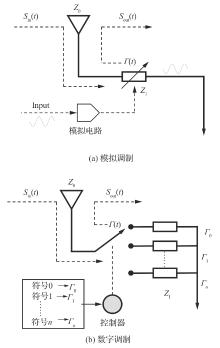
Fig.1
Backscatter analog and digital modulation circuitry
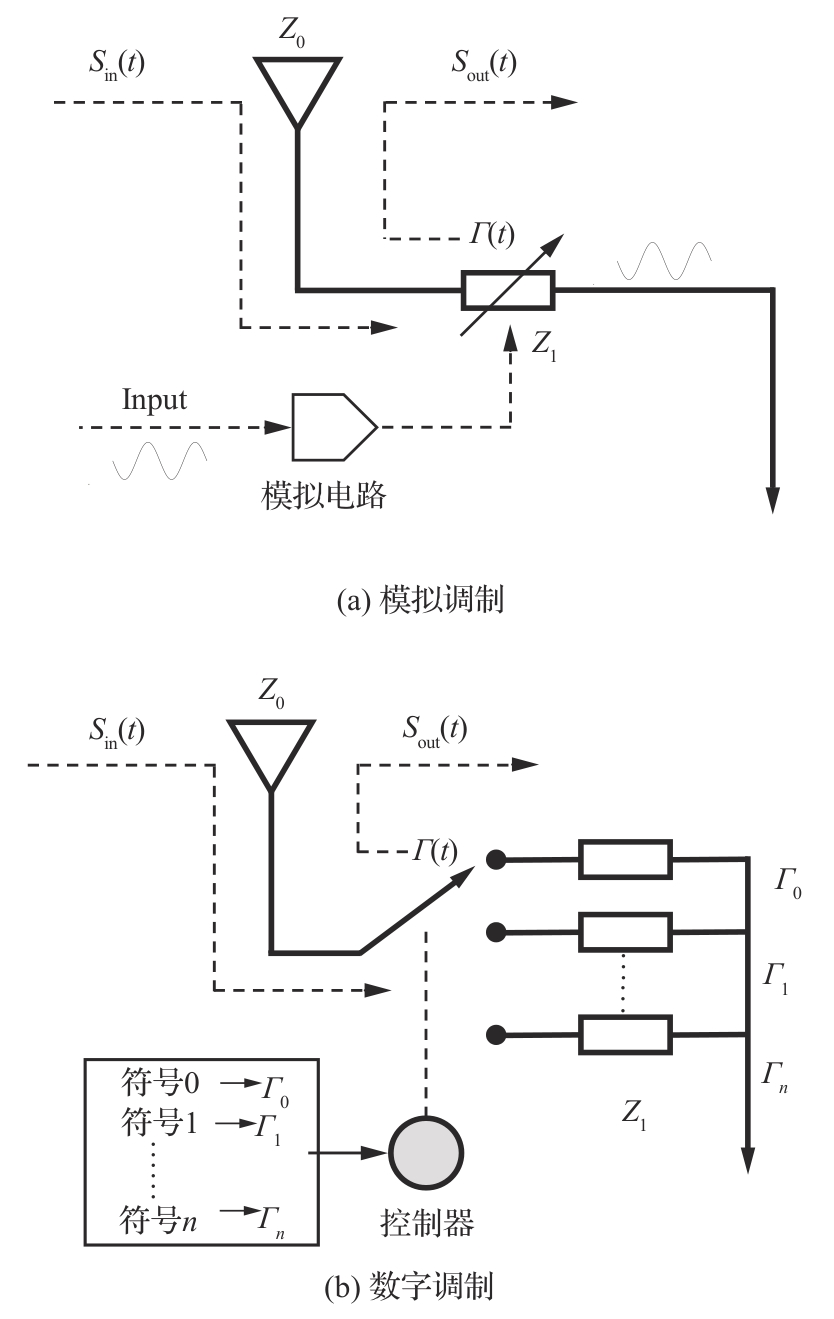
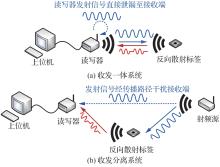
Fig.2
Two architectures for backscatter systems
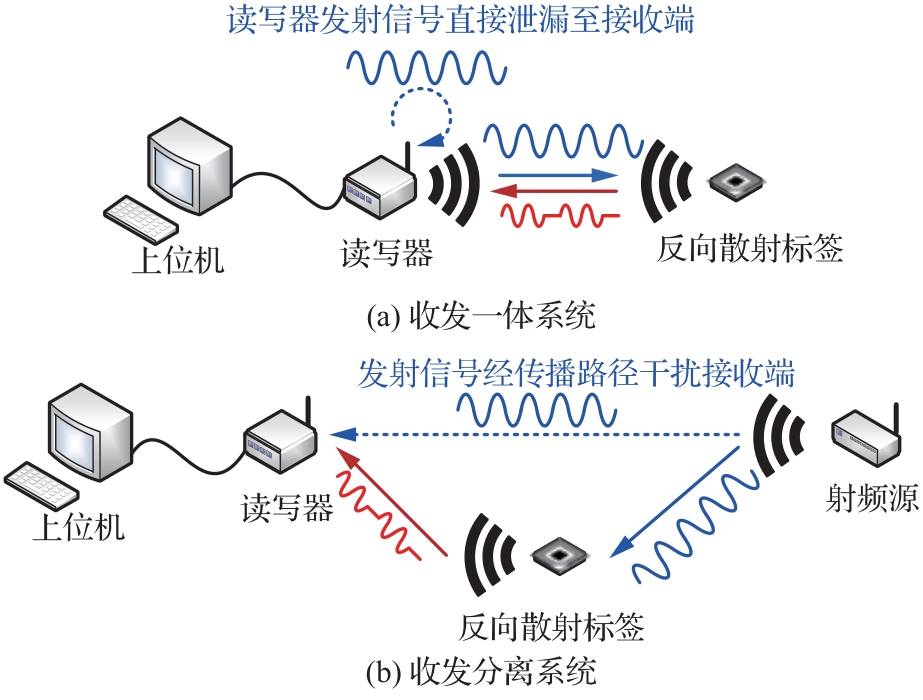
Table 2
Commonly used localization algorithms in backscatter technology
| 定位算法 | 成本 | 精度 | 复杂度 | 抗干扰能力 |
|---|---|---|---|---|
| RSSI | 低 | 低 | 低 | 差 |
| ToA/TDoA | 高 | 高 | 高 | 好 |
| AoA | 低 | 中 | 低 | 差 |
| 指纹 | 中 | 中 | 中 | 好 |
| SAR | 高 | 高 | 高 | 好 |
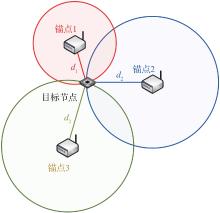
Fig.3
Geometric model of trilateration algorithm
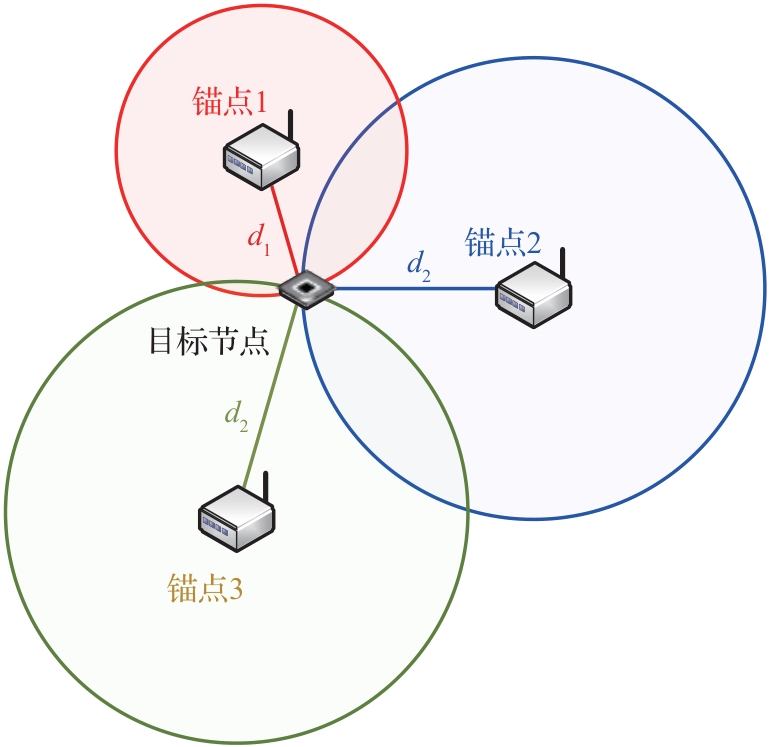
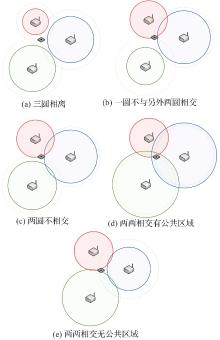
Fig.4
Practical perturbation scenarios in trilateration systems
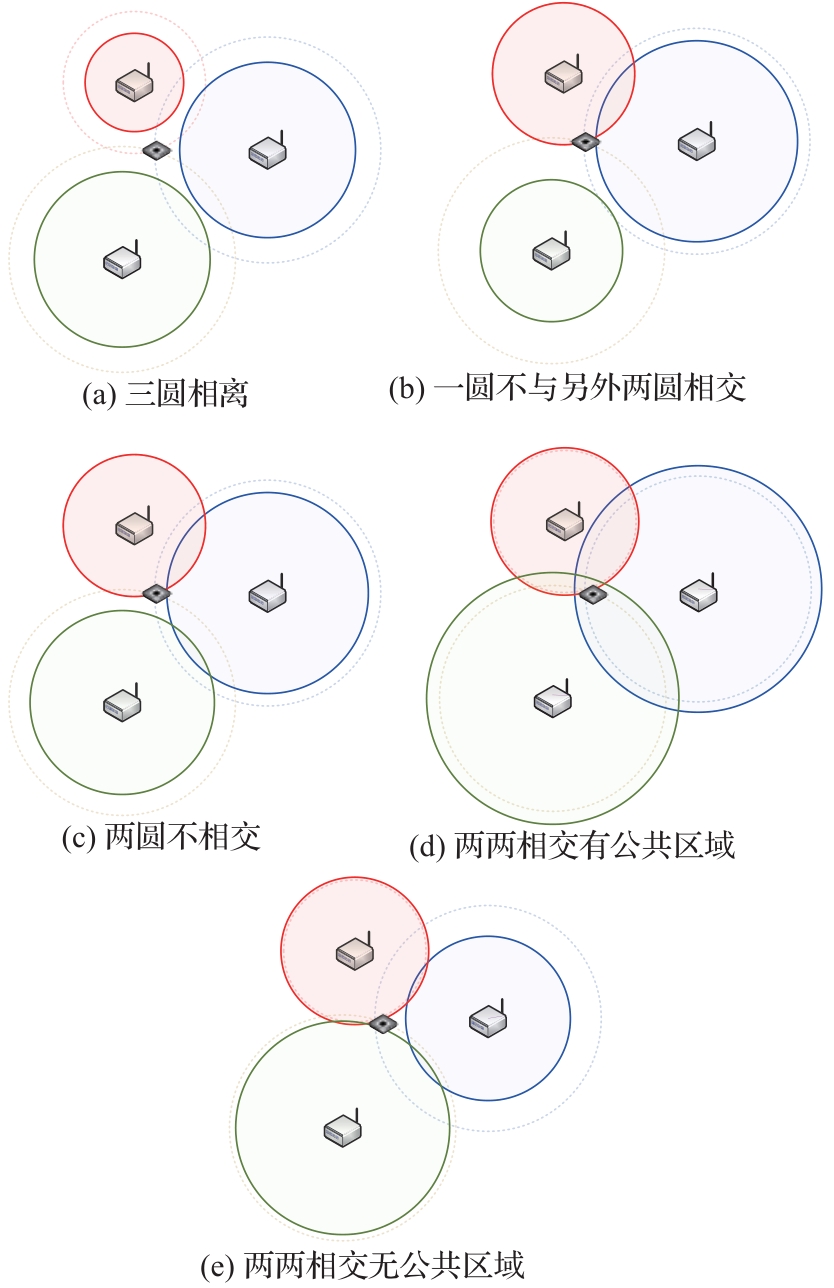
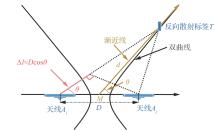
Fig.5
Geometric model of hyperbolic positioning
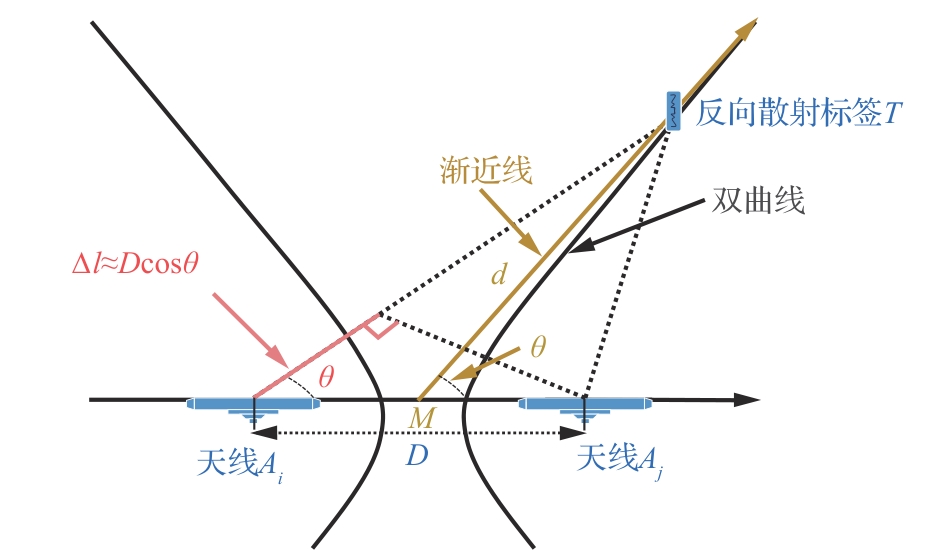
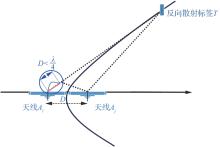
Fig.6
Unique hyperbolic solution under small aperture
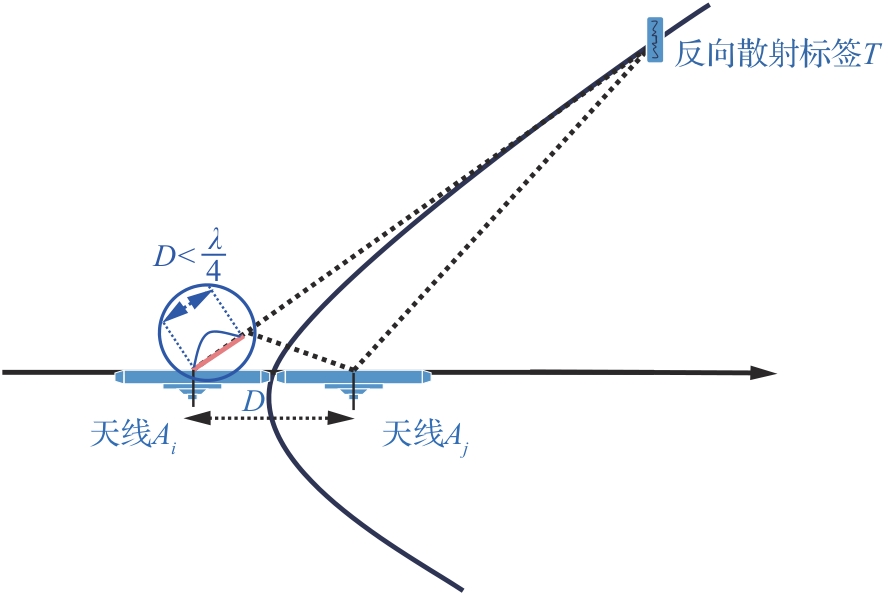
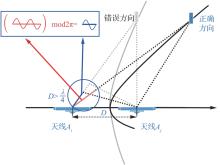
Fig.7
Phase ambiguity-induced multipath solutions with large aperture
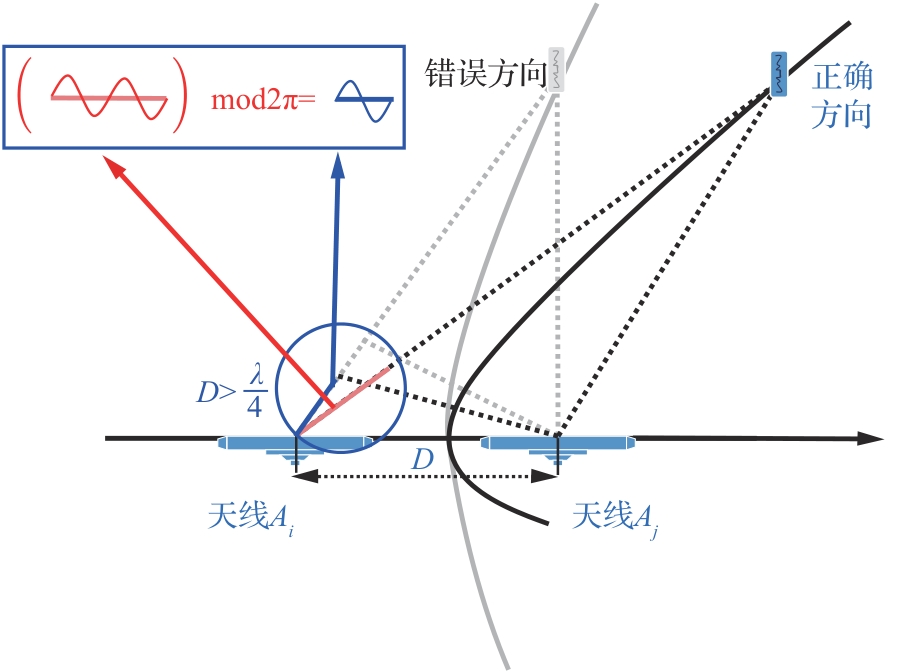
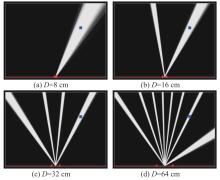
Fig.8
Impact of antenna separation on estimation accuracy and phase ambiguity
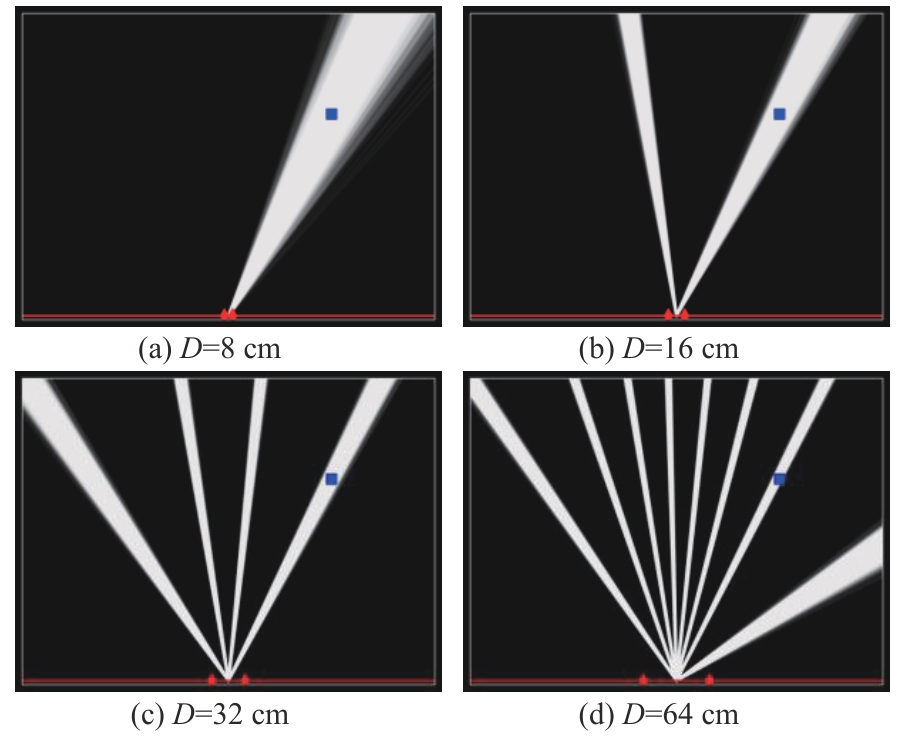
Fig.9
Fingerprint Positioning Algorithm Workflow
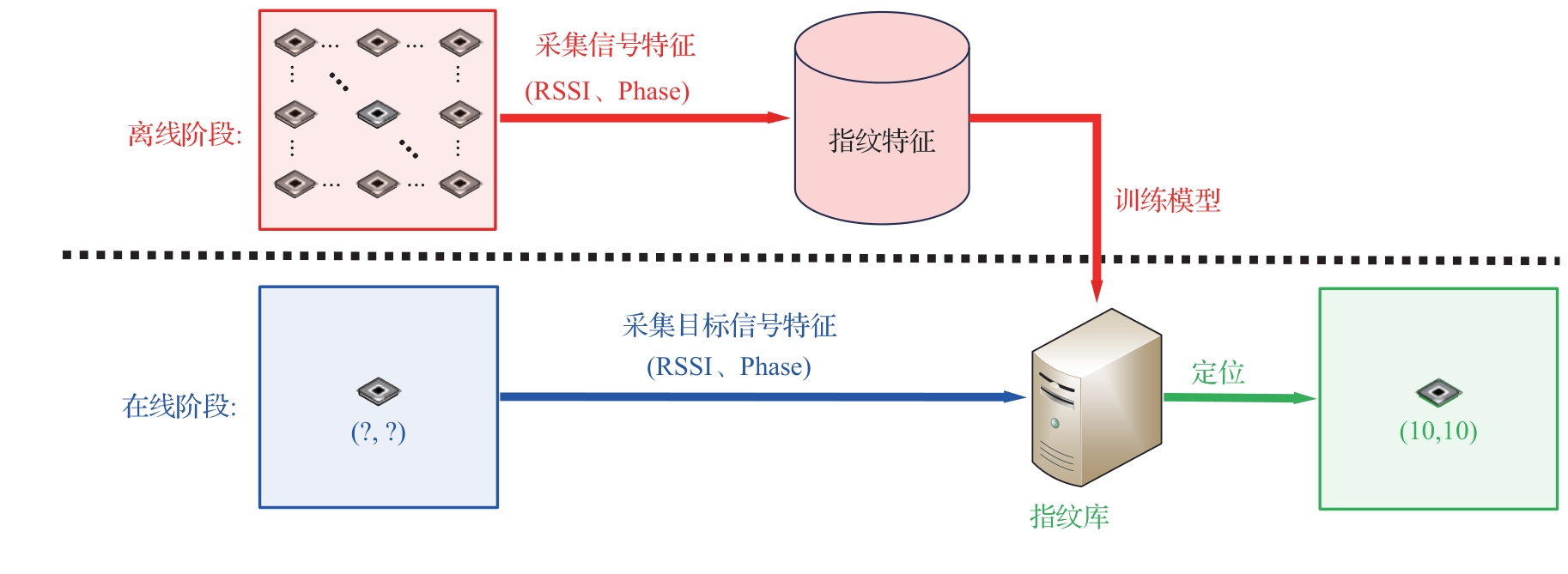
Fig.10
Schematic diagram of SAR positioning
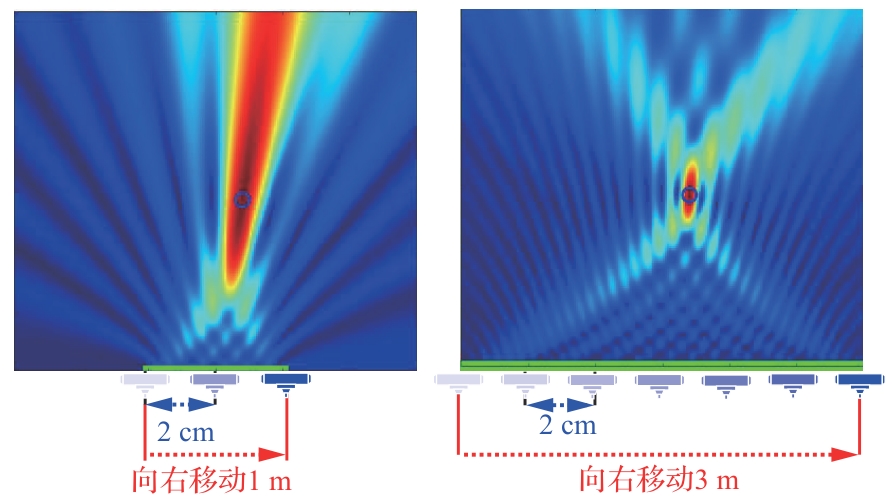
Table 3
Key technical challenges for backscatter localization technology
| 技术挑战分类 | 关键技术挑战 |
|---|---|
| 通信链路性能挑战 | 同频自干扰抑制 |
| 多径干扰抑制 | |
| 环境动态干扰自适应抑制 | |
| 多用户与资源管理挑战 | 低复杂度多址接入算法 |
| 频谱效率与波形设计优化 | |
| 能量高效采集、存储与利用 |
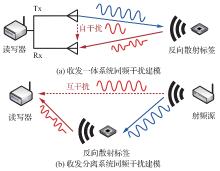
Fig.11
Co-channel interference
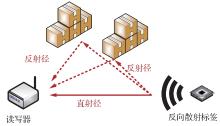
Fig.12
Multipath interference
Fig.13
Backscatter tag reflected signal spectrum
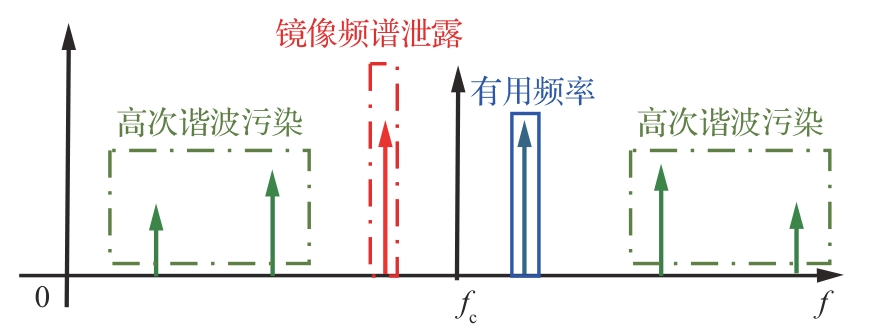

Fig.14
Potential applications of backscatter-based positioning technology
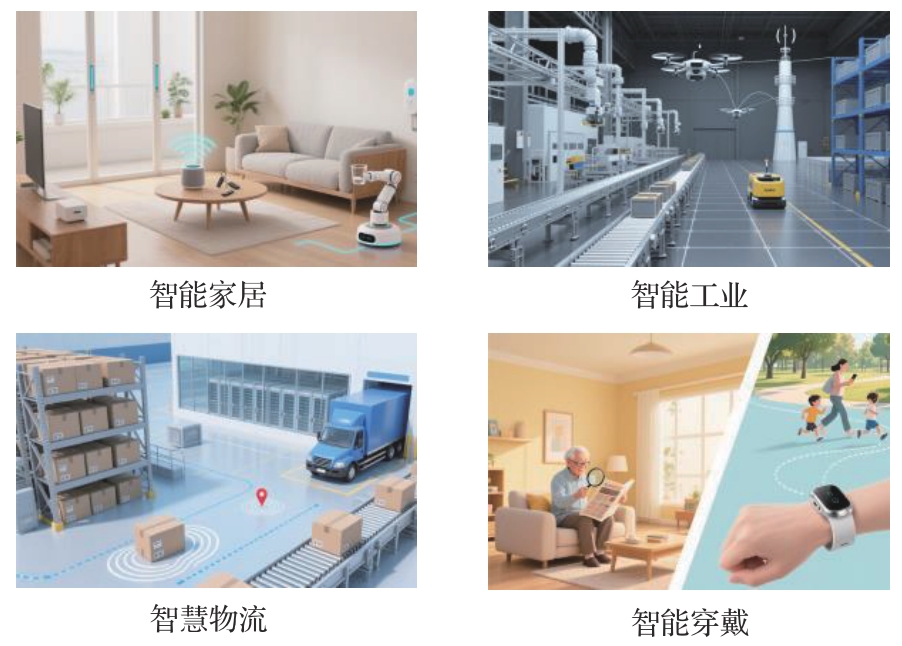
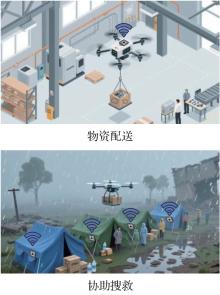
Fig.15
Backscatter Localization for UAV Applications
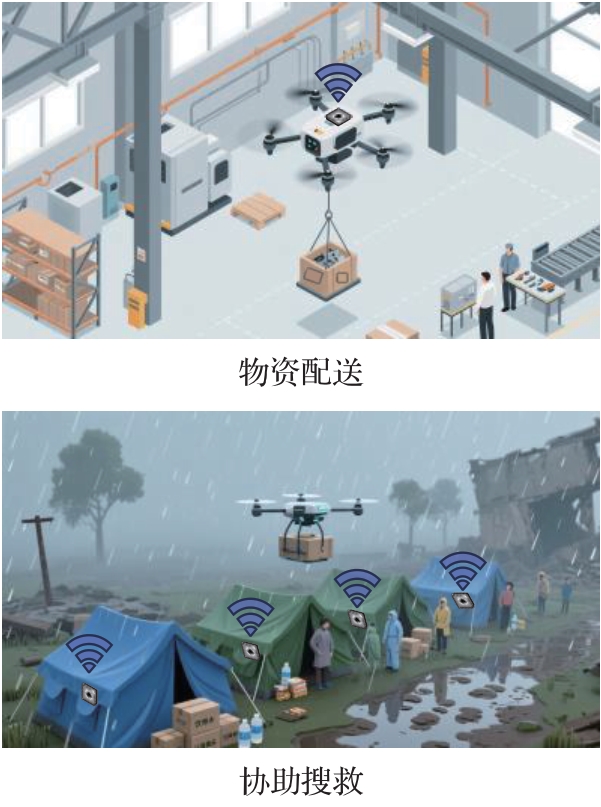
Fig.16
Backscatter-based drone localization
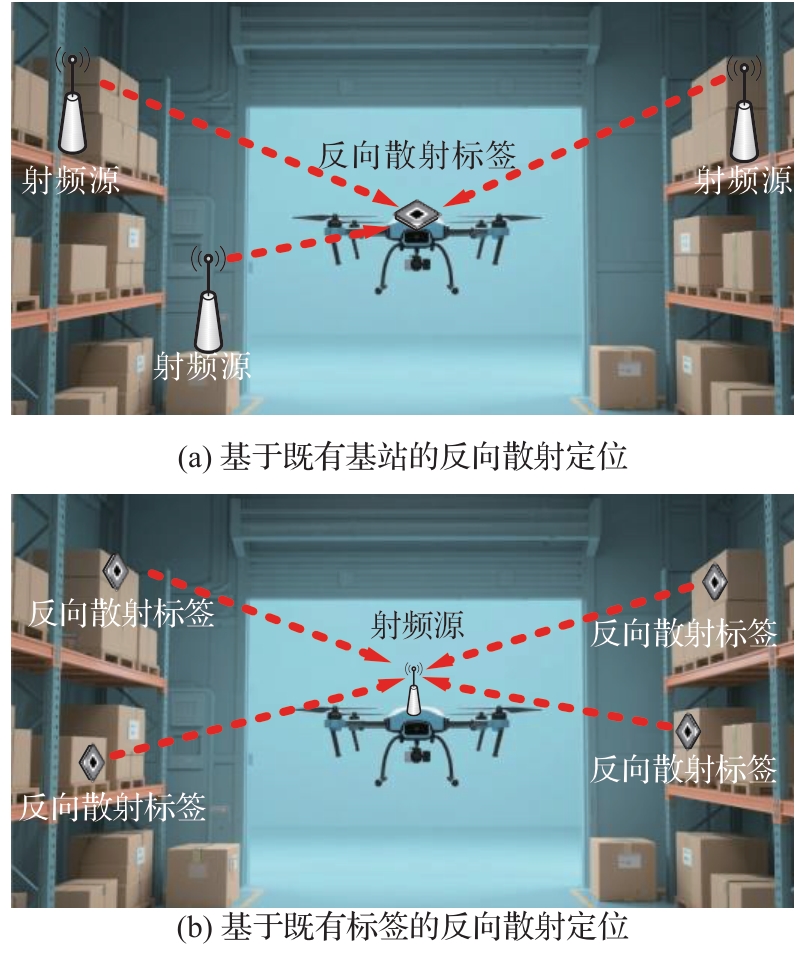

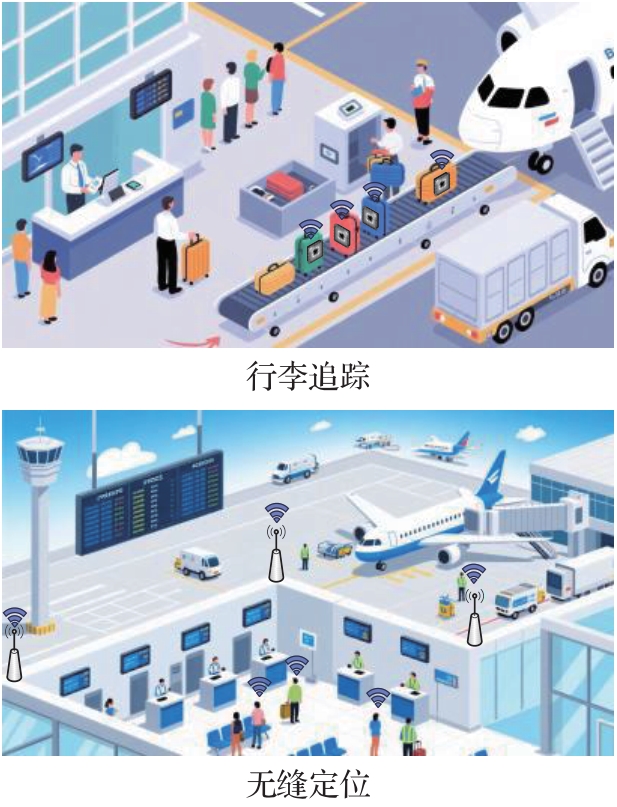
Fig.17
Backscatter localization in civil aviation airport scenarios
| [1] | LIN J L, WANG G P, XU R T, et al. Versatile-modulation and megabit-rate backscatter system: Design, implementation, and experimental results[J]. IEEE Internet of Things Journal, 2024, 11(5): 8240-8252. |
| [2] | CUI Z Q, WANG G P, LIU M, et al. Wavy signals and striped constellations for backscatter communications: Origins and solutions[J]. IEEE Transactions on Wireless Communications, 2024, 23(10): 12815-12829. |
| [3] | CUI Z Q, WANG G P, GAO J, et al. Channel estimation for backscatter communication systems under circuit sensitivity constraint[J]. IEEE Transactions on Vehicular Technology, 2024, 73(5): 7441-7446. |
| [4] | LI C L, TANGHE E, PLETS D, et al. ReLoc: Hybrid RSSI- and phase-based relative UHF-RFID tag localization with COTS devices[J]. IEEE Transactions on Instrumentation and Measurement, 2020, 69(10): 8613-8627. |
| [5] | CUI Z Q, WANG G P, XU R T, et al. Backscatter communications for green Internet of Things: Practical prototypes, open challenges, and standardization[J]. IEEE Internet of Things Magazine, 2025, 8(3): 32-39. |
| [6] | LI C Y, MO L F, ZHANG D K. Review on UHF RFID localization methods[J]. IEEE Journal of Radio Frequency Identification, 2019, 3(4): 205-215. |
| [7] | TZITZIS A, RAPTOPOULOS CHATZISTEFANOU A, YIOULTSIS T V, et al. A real-time multi-antenna SAR-based method for 3D localization of RFID tags by a moving robot[J]. IEEE Journal of Radio Frequency Identification, 2021, 5(2): 207-221. |
| [8] | KAMMEL C, KÖGEL T, GAREIS M, et al. A cost-efficient hybrid UHF RFID and odometry-based mobile robot self-localization technique with centimeter precision[J]. IEEE Journal of Radio Frequency Identification, 2022, 6: 467-480. |
| [9] | CHOWDHURY B D B, MASOUD S, SON Y J, et al. A dynamic HMM-based real-time location tracking system utilizing UHF passive RFID[J]. IEEE Journal of Radio Frequency Identification, 2021, 6: 41-53. |
| [10] | YANG B, ZHANG M. Credit-based multiple human location for passive binary pyroelectric infrared sensor tracking system: Free from region partition and classifier[J]. IEEE Sensors Journal, 2016, 17(1): 37-45. |
| [11] | WARD A, JONES A, HOPPER A. A new location technique for the active office[J]. IEEE Personal Communications, 1997, 4(5): 42-47. |
| [12] | CIURANA M, BARCELÓ F, CUGNO S. Indoor tracking in WLAN location with TOA measurements[C]∥Proceedings of the 4th ACM International Workshop on Mobility Management and Wireless Access. New York: ACM, 2006: 121-125. |
| [13] | YAMASAKI R, OGINO A, TAMAKI T, et al. TDOA location system for IEEE 802.11b WLAN[C]∥IEEE Wireless Communications and Networking Conference, 2005. Piscataway: IEEE Press, 2005: 2338-2343. |
| [14] | MAKKI A, SIDDIG A, SAAD M, et al. Indoor localization using 802.11 time differences of arrival[J]. IEEE Transactions on Instrumentation and Measurement, 2016, 65(3): 614-623. |
| [15] | MILIORIS D, TZAGKARAKIS G, PAPAKONSTANTINOU A, et al. Low-dimensional signal-strength fingerprint-based positioning in wireless LANs[J]. Ad Hoc Networks, 2014, 12: 100-114. |
| [16] | SONG X D, FAN X C, HE X J, et al. CNNLoc: Deep-learning based indoor localization with WiFi fingerprinting[C]∥2019 IEEE SmartWorld, Ubiquitous Intelligence & Computing, Advanced & Trusted Computing, Scalable Computing & Communications, Cloud & Big Data Computing, Internet of People and Smart City Innovation (SmartWorld/SCALCOM/UIC/ATC/CBDCom/IOP/SCI). Piseataway: IEEE Press, 2019: 589-595. |
| [17] | QI H Y, SONG X, ZHANG Y Q, et al. Multi-scale sensing network for WIFI indoor localization[C]∥2023 IEEE 23rd International Conference on Communication Technology (ICCT). Piscataway: IEEE Press, 2023: 1087-1092. |
| [18] | RAHIMI AZGHADI S A, MIH A N, KAWNINE A, et al. An adaptive indoor localization approach using WiFi RSSI fingerprinting with SLAM-enabled robotic platform and deep neural networks[C]∥2024 34th International Conference on Collaborative Advances in Software and COmputiNg (CASCON). Piscataway: IEEE Press, 2024: 1-10. |
| [19] | FU Q, LIU W, CHEN Y Z, et al. An attention auxiliary network-based method for WiFi fingerprint indoor localization[C]∥2024 9th International Conference on Intelligent Computing and Signal Processing (ICSP). Piscataway: IEEE Press, 2024: 554-558. |
| [20] | GEZICI S, TIAN Z, GIANNAKIS G B, et al. Localization via ultra-wideband radios: A look at positioning aspects for future sensor networks[J]. IEEE Signal Processing Magazine, 2005, 22(4): 70-84. |
| [21] | JOURDAN D B, DARDARI D, WIN M Z. Position error bound for UWB localization in dense cluttered environments[J]. IEEE Transactions on Aerospace and Electronic Systems, 2008, 44(2): 613-628. |
| [22] | SUN B Y, XIA Y F, WANG X F, et al. A reliable and efficient UWB-based indoor localization scheme[C]∥ 2023 IEEE 15th International Conference on Advanced Infocomm Technology (ICAIT). Piscataway: IEEE Press, 2023: 186-191. |
| [23] | YANG F X, HE X, MO L F, et al. UWB-based two-way localization with unknown anchor position[J]. IEEE Wireless Communications Letters, 2025, 14(8): 2331-2335. |
| [24] | LUO Z Q, LI W M, WU Y J, et al. Accurate indoor localization for bluetooth low energy backscatter[J]. IEEE Internet of Things Journal, 2025, 12(2): 1805-1816. |
| [25] | ZHU D K, YAN J. A deep learning based bluetooth indoor localization algorithm by RSSI and AOA feature fusion[C]∥2022 International Conference on Computer, Information and Telecommunication Systems (CITS). Piscataway: IEEE Press, 2022: 1-6. |
| [26] | HU S C, HE K, YANG X, et al. Bluetooth fingerprint based indoor localization using Bi-LSTM[C]∥2022 31st Wireless and Optical Communications Conference (WOCC). Piscataway: IEEE Press, 2022: 161-165. |
| [27] | DIAZ J J M, DE A MAUÉS R, SOARES R B, et al. Bluepass: An indoor Bluetooth-based localization system for mobile applications[C]∥The IEEE symposium on Computers and Communications. Piscataway: IEEE Press, 2010: 778-783. |
| [28] | FARAGHER R, HARLE R. Location fingerprinting with bluetooth low energy beacons[J]. IEEE Journal on Selected Areas in Communications, 2015, 33(11): 2418-2428. |
| [29] | LIN J L, ZHANG X N, XU R T, et al. Harmonic long-range backscatter with frequency-shifted lightweight tag[C]∥2024 IEEE 100th Vehicular Technology Conference (VTC2024-Fall). Piscataway: IEEE Press, 2024: 1-5. |
| [30] | 崔子琦, 王公仆, 魏旭昇, 等.反向散射通信的未来应用与技术挑战[J].移动通信, 2021, 45(4):29-36. |
| CUI Z Q, WANG G P, WEI X S, et al. Future applications and technical challenges of backscatter communications[J]. Mobile Communications, 2021, 45(4): 29-36 (in Chinese). | |
| [31] | BAE K, AHN N, CHAE Y, et al. OmniScatter: Extreme sensitivity mmWave backscattering using commodity FMCW radar[C]∥Proceedings of the 20th Annual International Conference on Mobile Systems, Applications and Services, 2022. |
| [32] | BAE K M, MOON H, SOHN S M, et al. Hawkeye: Hectometer-range subcentimeter localization for large-scale mmWave backscatter[C]∥Proceedings of the 21st Annual International Conference on Mobile Systems, Applications and Services. New York: ACM, 2023: 303-316. |
| [33] | LYNCH C A, ADEYEYE A O, HESTER J G D, et al. When a single chip becomes the RFID reader: An ultra-low-cost 60 GHz reader and mmID system for ultra-accurate 2D microlocalization[C]∥2021 IEEE International Conference on RFID (RFID). Piscataway: IEEE Press, 2021: 1-8. |
| [34] | SOLTANAGHAEI E, PRABHAKARA A, BALANUTA A, et al. Millimetro: mmWave retro-reflective tags for accurate, long range localization[C]∥Proceedings of the 27th Annual International Conference on Mobile Computing and Networking. New York: ACM, 2021: 69-82. |
| [35] | 喻思琪, 张小红, 郭斐, 等. 卫星导航进近技术进展[J]. 航空学报, 2019, 40(3): 022200. |
| YU S Q, ZHANG X H, GUO F, et al. Recent advances in precision approach based on GNSS[J]. Acta Aeronautica et Astronautica Sinica, 2019, 40(3): 022200 (in Chinese). | |
| [36] | 李坤, 布树辉, 李佳朋, 等. 基于单目视觉与测距信息的无人机集群定位方法[J]. 航空学报, 2025, 46(11): 531281. |
| LI K, BU S H, LI J M, et al. UAV swarm positioning method based on monocular vision and ranging information[J]. Acta Aeronautica et Astronauti-ca Sinica, 2025, 46(11): 531281 (in Chinese). | |
| [37] | 屈若锟, 王致远, 刘晔璐, 等. 面向城市空中交通的无人机视觉定位技术[J]. 航空学报, 2025, 46(11): 531168. |
| QU R K, WANG Z Y, LIU Y L, et al. UAV visual positioning technology for urban air mobility[J]. Acta Aeronautica et Astronautica Sinica, 2025, 46(11): 531168 (in Chinese). | |
| [38] | LAM M, DODDS L, EID A, et al. 6D self-localization of drones using a single millimeter-wave backscatter anchor[C]∥IEEE INFOCOM 2025 - IEEE Conference on Computer Communications. Piscataway: IEEE Press, 2025: 1-10. |
| [39] | SHIRANE A, FANG Y M, TAN H W, et al. RF-powered transceiver with an energy- and spectral-efficient IF-based quadrature backscattering transmitter[J]. IEEE Journal of Solid-State Circuits, 2015, 50(12): 2975-2987. |
| [40] | LIUBAVIN K D, ERMAKOV I V, LOSEVSKOY A Y, et al. Low-power digital part design for a LF RFID tag in a double-poly 180 nm CMOS process[C]∥2021 IEEE Conference of Russian Young Researchers in Electrical and Electronic Engineering (ElConRus). Piscataway: IEEE Press, 2021: 150-153. |
| [41] | HOU B X, WANG J L. LoBaCa: Super-resolution LoRa backscatter localization for low-cost tags[C]∥IEEE INFOCOM 2024-IEEE Conference on Computer Communications. Piscataway: IEEE Press, 2024: 1081-1090. |
| [42] | ZHANG S K, WANG W, TANG S Y, et al. Robot-assisted backscatter localization for IoT applications[J]. IEEE Transactions on Wireless Communications, 2020, 19(9): 5807-5818. |
| [43] | SADHUKHAN P, DAHAL K, DAS P K. A novel weighted fusion based efficient clustering for improved Wi-Fi fingerprint indoor positioning[J]. IEEE Transactions on Wireless Communications, 2023, 22(7): 4461-4474. |
| [44] | LAZARO A, LAZARO M, VILLARINO R. Room-level localization system based on LoRa backscatters[J]. IEEE Access, 2021, 9: 16004-16018. |
| [45] | YANG T, CABANI A, CHAFOUK H. A survey of recent indoor localization scenarios and methodologies[J]. Sensors, 2021, 21(23): 8086. |
| [46] | HIGHTOWER J, WANT R, BORRIELLO G. SpotON: An indoor 3D location sensing technology based on RF signal strength: UW CSE00-02-02[R]. Washington,D.C.: Univ evsity Washington, 2000. |
| [47] | BOUET M, DOS SANTOS A L. RFID tags: Positioning principles and localization techniques[C]∥2008 1st IFIP Wireless Days. Piscataway: IEEE Press, 2008: 1-5. |
| [48] | WEI Z, CHEN J L, TANG H, et al. RSSI-based location fingerprint method for RFID indoor positioning: A review[J]. Nondestructive Testing and Evaluation, 2024, 39(1): 3-31. |
| [49] | 何兵兵, 苏勋文, 张桐林, 等. 基于RSSI的修正补偿三边定位算法设计与仿真[J]. 农业工程, 2024, 14(7): 85-93. |
| HE B B, SU X W, ZHANG T L, et al. Design and simulation of correction compensation trilateral positioning algorithm based on RSSI[J]. Agricultural Engineering, 2024, 14(7): 85-93 (in Chinese). | |
| [50] | LIU Y J, CAI M. A trilateral centroid localization and modification algorithm for wireless sensor network[M]∥Proceedings of the 4th International Conference on Computer Engineering and Networks. Cham: Springer International Publishing, 2015: 97-105. |
| [51] | ZHANG A, YE X, HU H. Point in triangle testing based trilateration localization algorithm in wireless sensor networks[J]. KSII Transactions on Internet and Informa-tion Systems (TIIS), 2012, 6(10): 2567-2586. |
| [52] | YAN X Z, LUO Q H, WANG Y, et al. IT-QEAS: An improved trilateration localization method through quality evaluation and adaptvie optimization selection strategy[C]∥2017 Prognostics and System Health Management Conference (PHM-Harbin). Piscataway: IEEE Press, 2017: 1-6. |
| [53] | MA H S, WANG Y, WANG K S, et al. The optimization for hyperbolic positioning of UHF passive RFID tags[J]. IEEE Transactions on Automation Science and Engineering, 2017, 14(4): 1590-1600. |
| [54] | SCHMIDT R. Multiple emitter location and signal parameter estimation[J]. IEEE Transactions on Antennas and Propagation, 1986, 34(3): 276-280. |
| [55] | LIU T C, LIU Y H, YANG L, et al. BackPos: High accuracy backscatter positioning system[J]. IEEE Transactions on Mobile Computing, 2015, 15(3): 586-598. |
| [56] | XUE F F, ZHAO J M, LI D A. Precise localization of RFID tags using hyperbolic and hologram composite localization algorithm[J]. Computer Communications, 2020, 157: 451-460. |
| [57] | TRIPICCHIO P, UNETTI M, D’AVELLA S, et al. A synthetic aperture UHF RFID localization method by phase unwrapping and hyperbolic intersection[J]. IEEE Transactions on Automation Science and Engineering, 2022, 19(2): 933-945. |
| [58] | WU H B, TAO B, GONG Z Y, et al. A fast UHF RFID localization method using unwrapped phase-position model[J]. IEEE Transactions on Automation Science and Engineering, 2019, 16(4): 1698-1707. |
| [59] | CHENG C H, LIU M, XIONG K. A dual-RFID-tag based indoor localization method with multiple apertures[C]∥IEEE INFOCOM 2022-IEEE Conference on Computer Communications Workshops (INFOCOM WKSHPS). Piscataway: IEEE Press, 2022: 1-2. |
| [60] | QI Y, LUO P, XU C, et al. Target localization in industrial environment based on TOA ranging[C]∥2019 28th Wireless and Optical Communications Conference (WOCC). Piscataway: IEEE Press, 2019: 1-5. |
| [61] | YOON J, KIM J W, LEE W Y, et al. A TDoA-based localization using precise time-synchronization[C]∥2012 14th International Conference on Advanced Communication Technology (ICACT). Piscataway: IEEE Press, 2012: 1266-1271. |
| [62] | KAUNE R. Accuracy studies for TDOA and TOA localization[C]∥2012 15th International Conference on Information Fusion. Piscataway: IEEE Press, 2012: 408-415. |
| [63] | YUAN J, WANG X G, DONG L, et al. ISILON-An intelligent system for indoor localization and navigation based on RFID and ultrasonic techniques[C]∥2010 8th World Congress on Intelligent Control and Automation. Piscataway: IEEE Press, 2010: 6625-6630. |
| [64] | QIAO T Z, ZHANG Y, LIU H P. Nonlinear expectation maximization estimator for TDOA localization[J]. IEEE Wireless Communications Letters, 2014, 3(6): 637-640. |
| [65] | FANG B T. Simple solutions for hyperbolic and related position fixes[J]. IEEE Transactions on Aerospace and Electronic Systems, 1990, 26(5): 748-753. |
| [66] | OKELLO N, FLETCHER F, MUSICKI D, et al. Comparison of recursive algorithms for emitter localisation using TDOA measurements from a pair of UAVs[J]. IEEE Transactions on Aerospace and Electronic Systems, 2011, 47(3): 1723-1732. |
| [67] | CHAN Y T, HO K C. A simple and efficient estimator for hyperbolic location[J]. IEEE Transactions on Signal Processing, 1994, 42(8): 1905-1915. |
| [68] | XU J R, LI Z, ZHANG K, et al. The principle, methods and recent progress in RFID positioning techniques: A review[J]. IEEE Journal of Radio Frequency Identification, 2023, 7: 50-63. |
| [69] | ZHAO Y, SMITH J R. A battery-free RFID-based indoor acoustic localization platform[C]∥2013 IEEE International Conference on RFID (RFID). Piscataway: IEEE Press, 2013: 110-117. |
| [70] | MA Y T, PAHLAVAN K, GENG Y S. Comparative behavioral modeling of POA and TOA ranging for location-awareness using RFID[J]. International Journal of Wireless Information Networks, 2016, 23(3): 187-198. |
| [71] | ZOU Z, DENG T, ZOU Q, et al. Energy detection receiver with TOA estimation enabling positioning in passive UWB-RFID system[C]∥2010 IEEE International Conference on Ultra-Wideband. Piscataway: IEEE Press, 2010: 1-4. |
| [72] | AI Z J, LIU Y. Research on the TDOA measurement of active RFID real time location system[C]∥2010 3rd International Conference on Computer Science and Information Technology. Piscataway: IEEE Press, 2010: 410-412. |
| [73] | HE C, WU P, HAN L Y. Time of arrival estimation for backscatter UWB[J]. IEEE Signal Processing Letters, 2024, 31: 1124-1128. |
| [74] | ZHOU Y, LAW C L, GUAN Y L, et al. Localization of passive target based on UWB backscattering range measurement[C]∥2009 IEEE International Conference on Ultra-Wideband. Piscataway: IEEE Press, 2009: 145-149. |
| [75] | NI L M, LIU Y H, LAU Y C, et al. LANDMARC: Indoor location sensing using active RFID[C]∥Proceedings of the First IEEE International Conference on Pervasive Computing and Communications, 2003. (PerCom 2003). Piscataway: IEEE Press, 2003: 407-415. |
| [76] | HAN K, CHO S H. Advanced LANDMARC with adaptive k-nearest algorithm for RFID location system[C]∥2010 2nd IEEE International Conference on Network Infrastructure and Digital Content. Piscataway: IEEE Press, 2010: 595-598. |
| [77] | HU B, PENG H J, SUN Z X. LANDMARC localization algorithm based on weight optimization[J]. Chinese Journal of Electronics, 2018, 27(6): 1291-1296. |
| [78] | ZHAO Y Y, LIU Y H, NI L M. VIRE: Active RFID-based localization using virtual reference elimination[C]∥2007 International Conference on Parallel Processing (ICPP 2007). Piscataway: IEEE Press, 2007: 56. |
| [79] | BAHAALDIN N, ERÇELEBİ E. BVIRE improved algorithm for indoor localization based on RFID and a linear regression model[J]. Turkish Journal of Electrical Engineering & Computer Sciences, 2018, 26(6): 2944-2958. |
| [80] | LI W F, WU J, WANG D. A novel indoor positioning method based on key reference RFID tags[C]∥2009 IEEE Youth Conference on Information, Computing and Telecommunication. Piscataway: IEEE Press, 2009: 42-45. |
| [81] | ZHAO Y, LIU K H, MA Y T, et al. Similarity analysis-based indoor localization algorithm with backscatter information of passive UHF RFID tags[J]. IEEE Sensors Journal, 2016, 17(1): 185-193. |
| [82] | MO L F, LI C Y. Passive UHF-RFID localization based on the similarity measurement of virtual reference tags[J]. IEEE Transactions on Instrumentation and Measurement, 2018, 68(8): 2926-2933. |
| [83] | YAMANO K, TANAKA K, HIRAYAMA M, et al. Self-localization of mobile robots with RFID system by using support vector machine[C]∥2004 IEEE/RSJ International Conference on Intelligent Robots and Systems (IROS). Piscataway: IEEE Press, 2004: 3756-3761. |
| [84] | BERZ E L, TESCH D A, HESSEL F P. RFID indoor localization based on support vector regression and k-means[C]∥2015 IEEE 24th International Symposium on Industrial Electronics (ISIE). Piscataway: IEEE Press, 2015: 1418-1423. |
| [85] | PENG C, JIANG H, QU L D. Deep convolutional neural network for passive RFID tag localization via joint RSSI and PDOA fingerprint features[J]. IEEE Access, 2021, 9: 15441-15451. |
| [86] | BELHADI Z, FERGANI L. Fingerprinting methods for RFID tag indoor localization[C]∥2014 International Conference on Multimedia Computing and Systems (ICMCS). Piscataway: IEEE Press, 2014: 717-722. |
| [87] | TIAN C L, LIU H K, SHEN X, et al. A synthetic aperture scheme for integrated localization and navigation in passive IoT[J]. IEEE Transactions on Wireless Communications, 2024, 23(12): 18271-18285. |
| [88] | MOTRONI A, BANDINI G, BUFFI A, et al. Investigation of phase offset calibration for SAR-based RFID localization in harsh environments[C]∥2023 IEEE 13th International Conference on RFID Technology and Applications (RFID-TA). Piscataway: IEEE Press, 2023: 138-141. |
| [89] | MOTRONI A, BERNARDINI F, BUFFI A, et al. A UHF-RFID multi-antenna sensor fusion enables item and robot localization[J]. IEEE Journal of Radio Frequency Identification, 2022, 6: 456-466. |
| [90] | TZITZIS A, MEGALOU S, SIACHALOU S, et al. Localization of RFID tags by a moving robot, via phase unwrapping and non-linear optimization[J]. IEEE Journal of Radio Frequency Identification, 2019, 3(4): 216-226. |
| [91] | GAREIS M, PARR A, TRABERT J, et al. Stocktaking robots, automatic inventory, and 3D product maps: The smart warehouse enabled by UHF-RFID synthetic aperture localization techniques[J]. IEEE Microwave Magazine, 2021, 22(3): 57-68. |
| [92] | LIANG X X, HUANG Z Q, YANG S Q, et al. E3DinSAR: 3-D localization of RFID-tagged objects based on interference synthetic apertures[J]. IEEE Internet of Things Journal, 2020, 7(12): 11656-11666. |
| [93] | BUFFI A, MOTRONI A, NEPA P, et al. A SAR-based measurement method for passive-tag positioning with a flying UHF-RFID reader[J]. IEEE Transactions on Instrumentation and Measurement, 2019, 68(3): 845-853. |
| [94] | BERNARDINI F, MOTRONI A, BUFFI A, et al. Retail robots with UHF-RFID moving antennas enabling 3D localization[C]∥2022 IEEE 12th International Conference on RFID Technology and Applications (RFID-TA). Piscataway: IEEE Press, 2022: 1-4. |
| [95] | CECCHI G, MONTRONI A, BUFFI A, et al. The MONITOR robot with UHF-RFID rotating antennas enhancing indoor tag localization[C]∥2023 8th International Conference on Smart and Sustainable Technologies (SpliTech). Piscataway: IEEE Press, 2023: 1-6. |
| [96] | MOTRONI A, RIA A, CECCHI G, et al. Robot-based UHF-RFID joint SAR localization and tag sensing[C]∥2023 8th International Conference on Smart and Sustainable Technologies (SpliTech). Piscataway: IEEE Press, 2023: 1-4. |
| [97] | SHEN C K, XIONG H Q, WANG X, et al. A fast self-jamming cancellation architecture and algorithm for passive RFID sensor system[J]. IEEE Communications Letters, 2021, 25(6): 2009-2013. |
| [98] | MATSUURA M, ISHIKURO H. A reader system with single-step self-jamming cancellation for 0.86 mm² passive RFID tags with an on-chip antenna[C]∥2023 Asia-Pacific Microwave Conference (APMC). Piscataway: IEEE Press, 2023: 202-204. |
| [99] | ZHANG Y L, REN J J, CHEN W D. A ToA-based location algorithm reducing the NLoS error under location-aware networks[C]∥2011 7th International Conference on Wireless Communications, Networking and Mobile Computing. Piscataway: IEEE Press, 2011: 1-4. |
| [100] | EXEL R, BIGLER T. ToA ranging using subsample peak estimation and equalizer-based multipath reduction[C]∥2014 IEEE Wireless Communications and Networking Conference (WCNC). Piscataway: IEEE Press, 2014: 2964-2969. |
| [101] | WONG S F, NI X. Signal propagation model calibration under metal noise factor for indoor localization by using RFID[C]∥2014 IEEE International Conference on Industrial Engineering and Engineering Management. Piscataway: IEEE Press, 2014: 978-982. |
| [102] | YOKOI T. Indoor location estimation of electromagnetically shielded chassis utilizing RSSI fingerprint pattern matching[C]∥2023 IEEE/ION Position, Location and Navigation Symposium (PLANS). Piscataway: IEEE Press, 2023: 1066-1073. |
| [103] | ZHANG Y J, DU C Y, LUO Y, et al. Hybrid TOA/AOA indoor positioning based on sparse reconstruction and map matching[C]∥2023 IEEE 98th Vehicular Technology Conference (VTC2023-Fall). Piscataway: IEEE Press, 2023: 1-6. |
| [104] | MA X Y, CHEN S L, WANG Q L, et al. An active LF RFID positioning method against metal interference[C]∥2023 IEEE 6th Information Technology, Networking, Electronic and Automation Control Conference (ITNEC). Piscataway: IEEE Press, 2023: 1488-1494. |
| [105] | SHARP I, YU K G, GUO Y J. GDOP analysis for positioning system design[J]. IEEE Transactions on Vehicular Technology, 2009, 58(7): 3371-3382. |
| [106] | LONG Y F, XU R T, HU J C, et al. Zero correlation zone codes based multiple access for ambient backscatter communications[C]∥2024 IEEE 24th International Conference on Communication Technology (ICCT). Piscataway: IEEE Press, 2024: 1136-1140. |
| [107] | DING Y, LIHAKANGA R, CORREIA R, et al. Harmonic suppression in frequency shifted backscatter communications[J]. IEEE Open Journal of the Communications Society, 2020, 1: 990-999. |
| [108] | PARTAL H P, BELEN M A, PARTAL S Z. Design and realization of an ultra-low power sensing RF energy harvesting module with its RF and DC sub-components[J]. International Journal of RF and Microwave Computer-Aided Engineering, 2019, 29(1): e21622. |
| [109] | KOTANI K, SASAKI A, ITO T. High-efficiency differential-drive CMOS rectifier for UHF RFIDs[J]. IEEE Journal of Solid-State Circuits, 2009, 44(11): 3011-3018. |
| [1] | Lei ZHANG, Can TIAN, Fangqing WEN, Qinghe ZHANG, Han LIU. Multi-objective evolution with deep deterministic strategy gradient algorithm for mobile edge networks [J]. Acta Aeronautica et Astronautica Sinica, 2026, 47(3): 631880-631880. |
| [2] | Haoyu WANG, Zexu ZHANG, Shan WEN, Jinlong LIU, Beixiao ZHU, Weimin BAO. Task allocation algorithm for UAV swarm based on temporal coupling analysis [J]. Acta Aeronautica et Astronautica Sinica, 2026, 47(2): 332075-332075. |
| [3] | Pan ZHOU, Ni LI, Jiangtao HUANG, Qinglin YANG, Yunxiao LIAN. Autonomous decision-making in close-range game under imperfect information for unmanned aerial vehicles [J]. Acta Aeronautica et Astronautica Sinica, 2025, 46(S1): 732215-732215. |
| [4] | Rongzu LI, Li LIU, Dun YANG. Optimal design of hydrogen-powered UAV based on multi-source domain fusion surrogate model [J]. Acta Aeronautica et Astronautica Sinica, 2025, 46(9): 630979-630979. |
| [5] | Fujie WU, Bowen WANG, Jingya QI, Mingzhi CAO, Yingjun SANG, Sheng LI, Yuzhen ZHANG, Qian CHEN, Chao ZUO. A review of airborne multi-aperture panoramic image compositing [J]. Acta Aeronautica et Astronautica Sinica, 2025, 46(3): 630505-630505. |
| [6] | Yiquan WU, Kang TONG. Research advances on deep learning-based small object detection in UAV aerial images [J]. Acta Aeronautica et Astronautica Sinica, 2025, 46(3): 30848-030848. |
| [7] | Guocheng YAN, Honglun WANG, Yanxiang WANG, Yuebin LUN, Junfan ZHU. Prescribed performance anti-swing control for wing rotation process of UAV towed aerial recovery [J]. Acta Aeronautica et Astronautica Sinica, 2025, 46(24): 331840-331840. |
| [8] | Wei HUANG, Jiahao PAN, Chu HE. Wavelet time-frequency localization-based model compression for UAV object detection [J]. Acta Aeronautica et Astronautica Sinica, 2025, 46(23): 631952-631952. |
| [9] | Anping ZHANG, Hao DONG. UAV swarms and their takeoff method for high-end warfare [J]. Acta Aeronautica et Astronautica Sinica, 2025, 46(22): 331034-331034. |
| [10] | Yahang SONG, Xin ZHANG, Zhiming MA, Zhengyu ZUO. Airfoil gust alleviation using a plasma actuator in low-speed wind tunnel test [J]. Acta Aeronautica et Astronautica Sinica, 2025, 46(22): 131975-131975. |
| [11] | Yicheng SONG, Ruiyun QI, Bin JIANG. Distributed topology reconstruction of UAV formation network under communication fault [J]. Acta Aeronautica et Astronautica Sinica, 2025, 46(22): 331914-331914. |
| [12] | Jiang ZHAO, Minghao PI, Bailing TIAN, Pei CHI, Yingxun WANG. Self-organized consensus decision-making method for swarm UAV tracking multiple targets [J]. Acta Aeronautica et Astronautica Sinica, 2025, 46(16): 331635-331635. |
| [13] | Fang LIU, Chenyang LU, Yan LU, Xin WANG. Adaptive template update-based Transformer algorithm for UAV target tracking [J]. Acta Aeronautica et Astronautica Sinica, 2025, 46(16): 331687-331687. |
| [14] | Zhibing ZHANG, Ziyang ZHEN. Research progress on guidance and control of fixed-wing manned and unmanned carrier-based aircraft landing [J]. Acta Aeronautica et Astronautica Sinica, 2025, 46(13): 532336-532336. |
| [15] | Haijun ZHANG, Qingyue XIA, Xu MA, Chao REN, Yang LU. A review of unmanned aerial vehicles deployment optimization in 6G low-altitude communication scenarios [J]. Acta Aeronautica et Astronautica Sinica, 2025, 46(11): 531296-531296. |
| Viewed | ||||||
|
Full text |
|
|||||
|
Abstract |
|
|||||
Address: No.238, Baiyan Buiding, Beisihuan Zhonglu Road, Haidian District, Beijing, China
Postal code : 100083
E-mail:hkxb@buaa.edu.cn
Total visits: 6658907 Today visits: 1341All copyright © editorial office of Chinese Journal of Aeronautics
All copyright © editorial office of Chinese Journal of Aeronautics
Total visits: 6658907 Today visits: 1341

 CJA
CJA
