Acta Aeronautica et Astronautica Sinica ›› 2026, Vol. 47 ›› Issue (4): 332205.doi: 10.7527/S1000-6893.2025.32205
• Electronics and Electrical Engineering and Control • Previous Articles
Leyan LI, Rennong YANG, Anxin GUO, Qi SONG, Jialiang ZUO( )
)
Received:2025-05-07
Revised:2025-06-13
Accepted:2025-06-27
Online:2025-07-04
Published:2025-07-03
Contact:
Jialiang ZUO
E-mail:jialnzuo@163.com
Supported by:CLC Number:
Leyan LI, Rennong YANG, Anxin GUO, Qi SONG, Jialiang ZUO. Beyond-visual-range air combat threat prediction and dynamic evasion method based on all-domain fire field theory[J]. Acta Aeronautica et Astronautica Sinica, 2026, 47(4): 332205.
Fig.1
General process of beyond-visual-range air combat
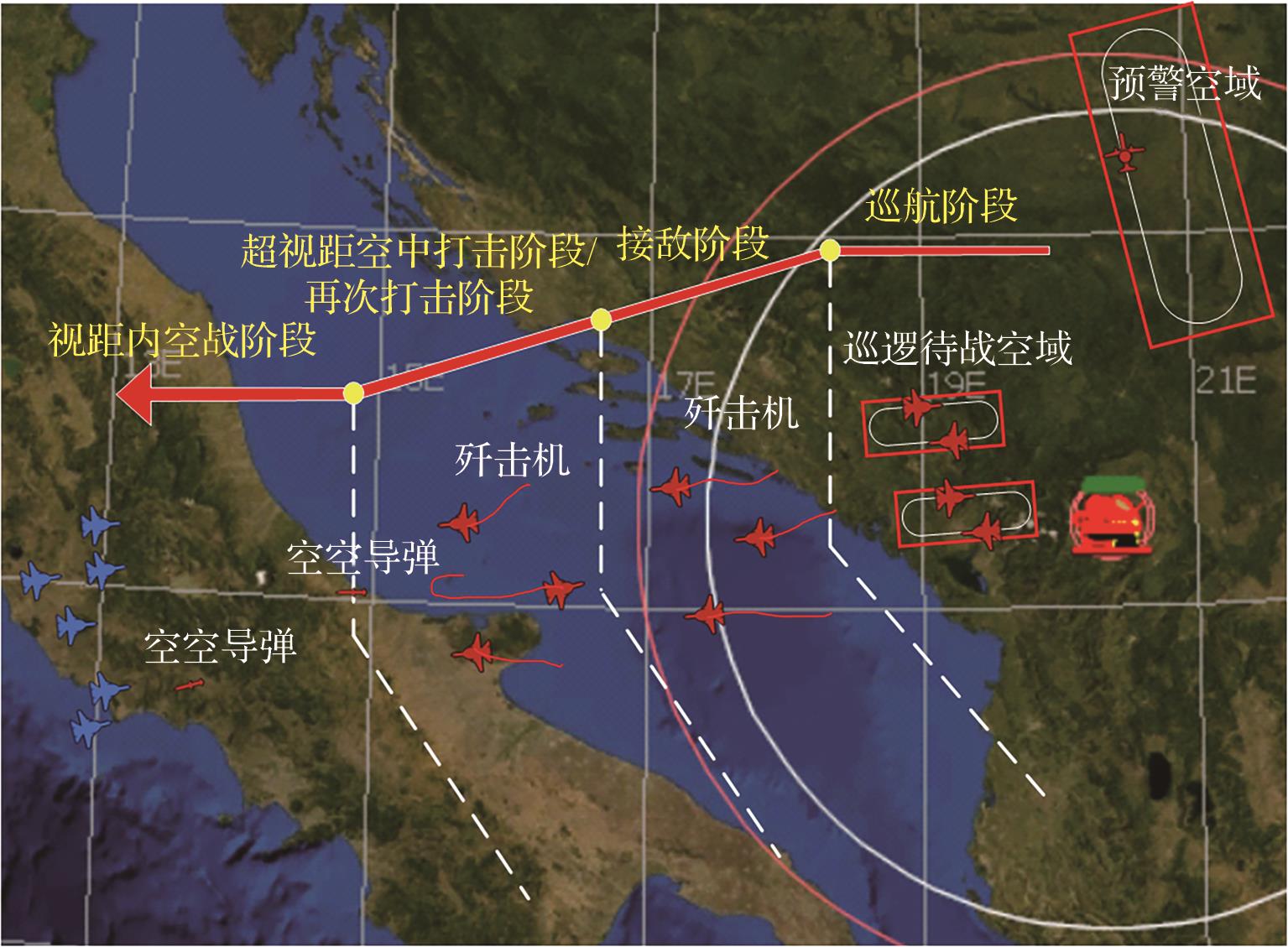
Fig.2
Comparison of all-domain fire field and air-to-air missile attack areas
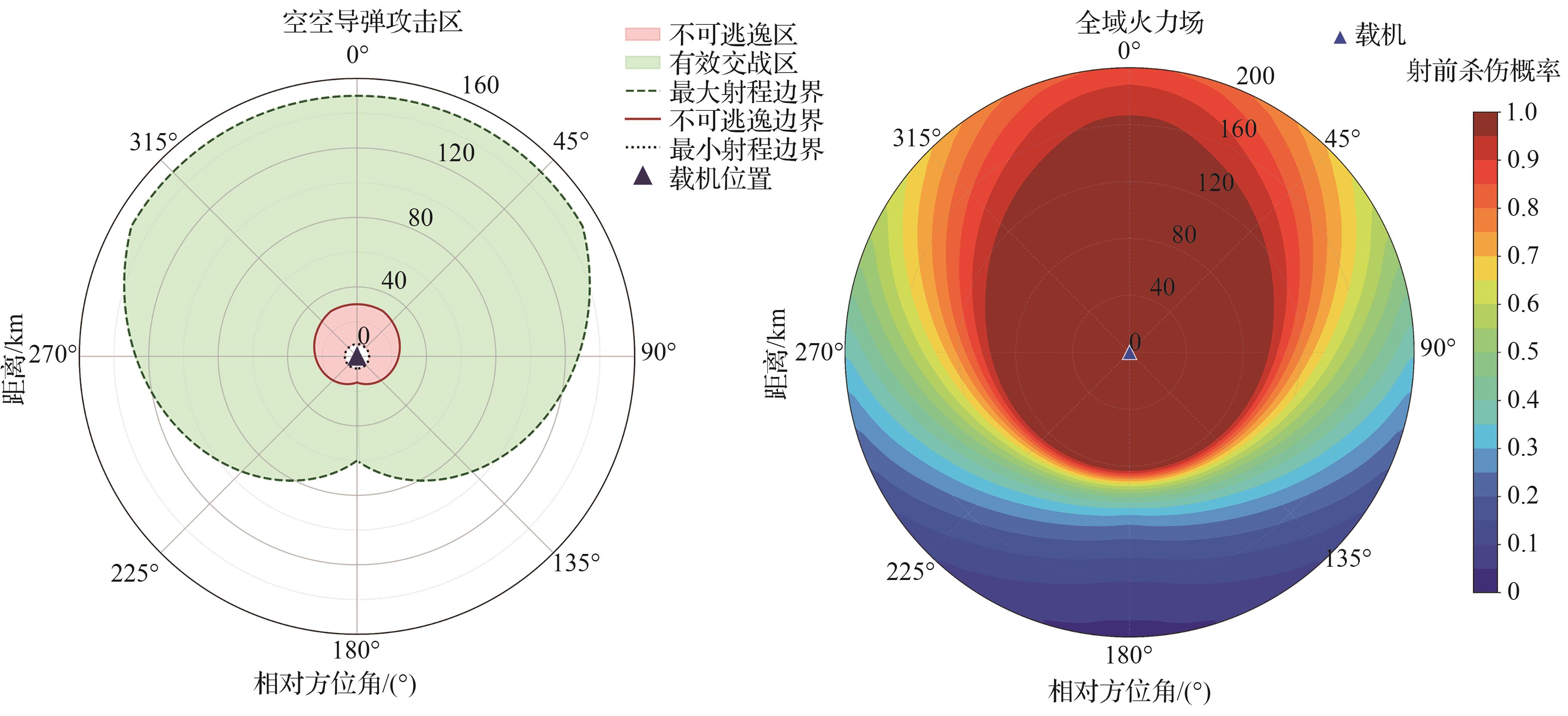
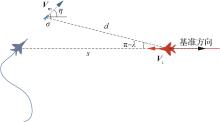
Fig.3
Attack aircraft and target movement
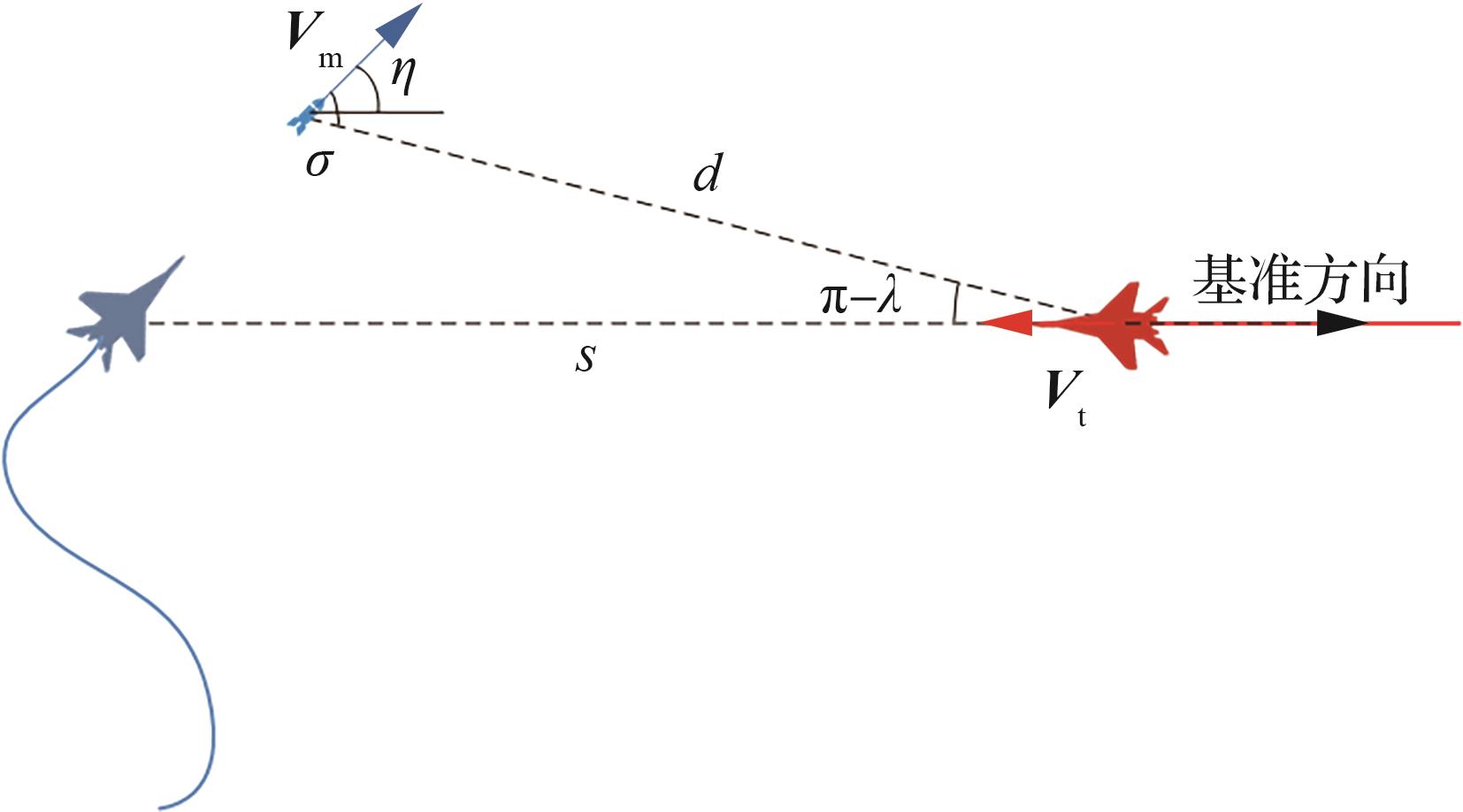
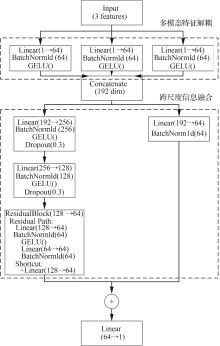
Fig.4
MRFNet model architecture
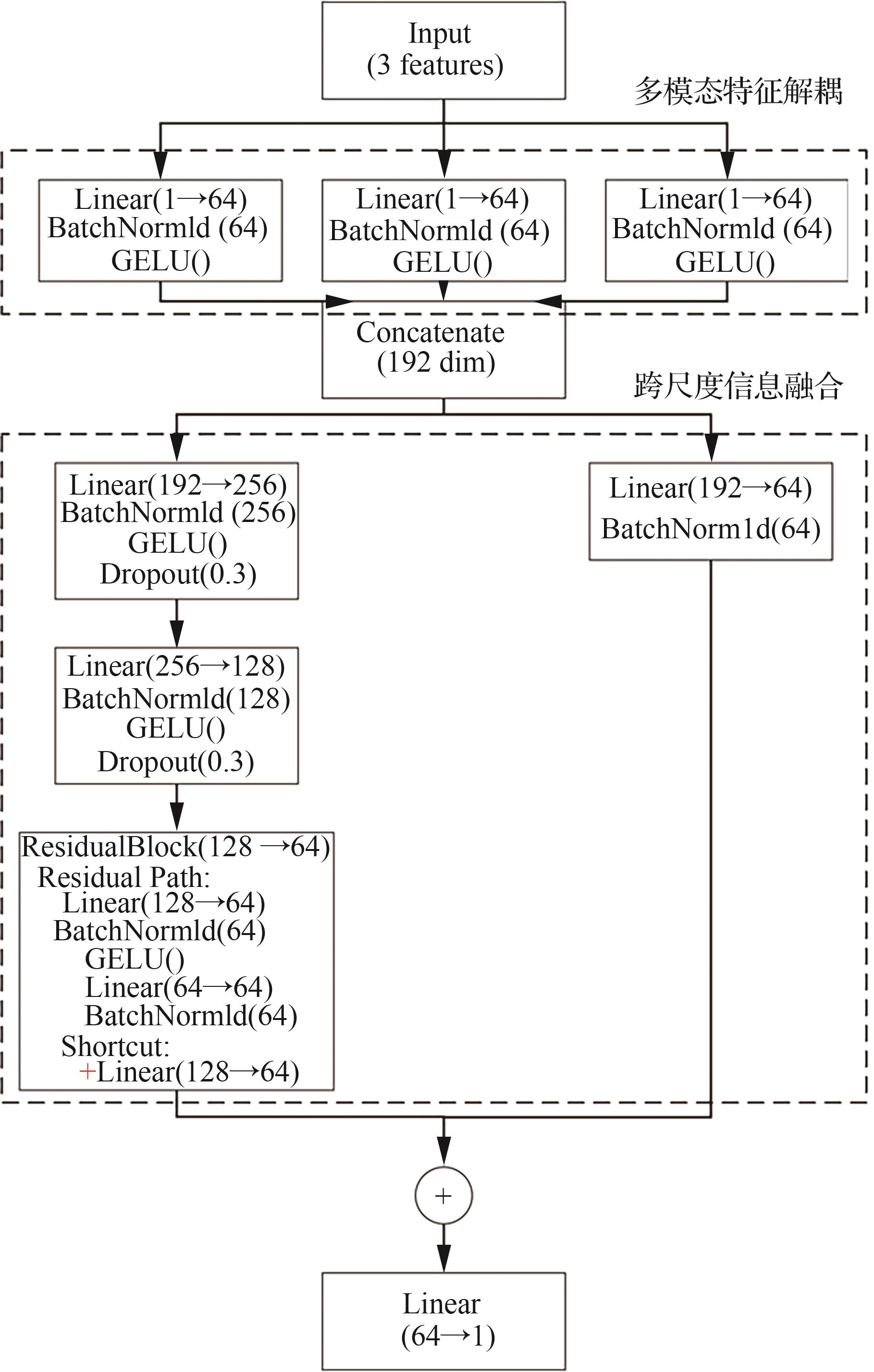

Table 1
Parameter setting of Monte Carlo simulation
| 参数 | 数值 |
|---|---|
| 高度差/km | [-2,2]/40 |
| 相对距离/km | [30,200]/200 |
| 目标机航向/rad | [0,π]/30 |
| 时间粒度/s | 0.1 |
| 单次弹道仿真次数 | 100 |
Table 2
Parameter setting of flight vehicle
| 参数 | 数值 |
|---|---|
| 飞机速度/(m·s-1) | 300 |
| 导弹速度/(m·s-1) | 500 |
| 导弹最大过载/g | 25 |
| 导弹射程/km | 200 |
| 破片杀伤半径/m | 30 |
| 导引系数 | 5.0 |
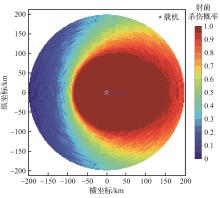
Fig.5
Two-dimensional schematic diagram of all-domain fire field of single aircraft
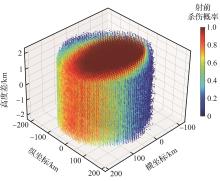
Fig.6
Three-dimensional schematic diagram of all-domain fire field of single aircraft
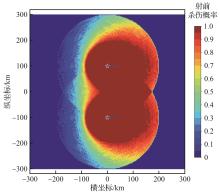
Fig.7
Two-dimensional schematic diagram of two-aircraft joint all-domain fire field
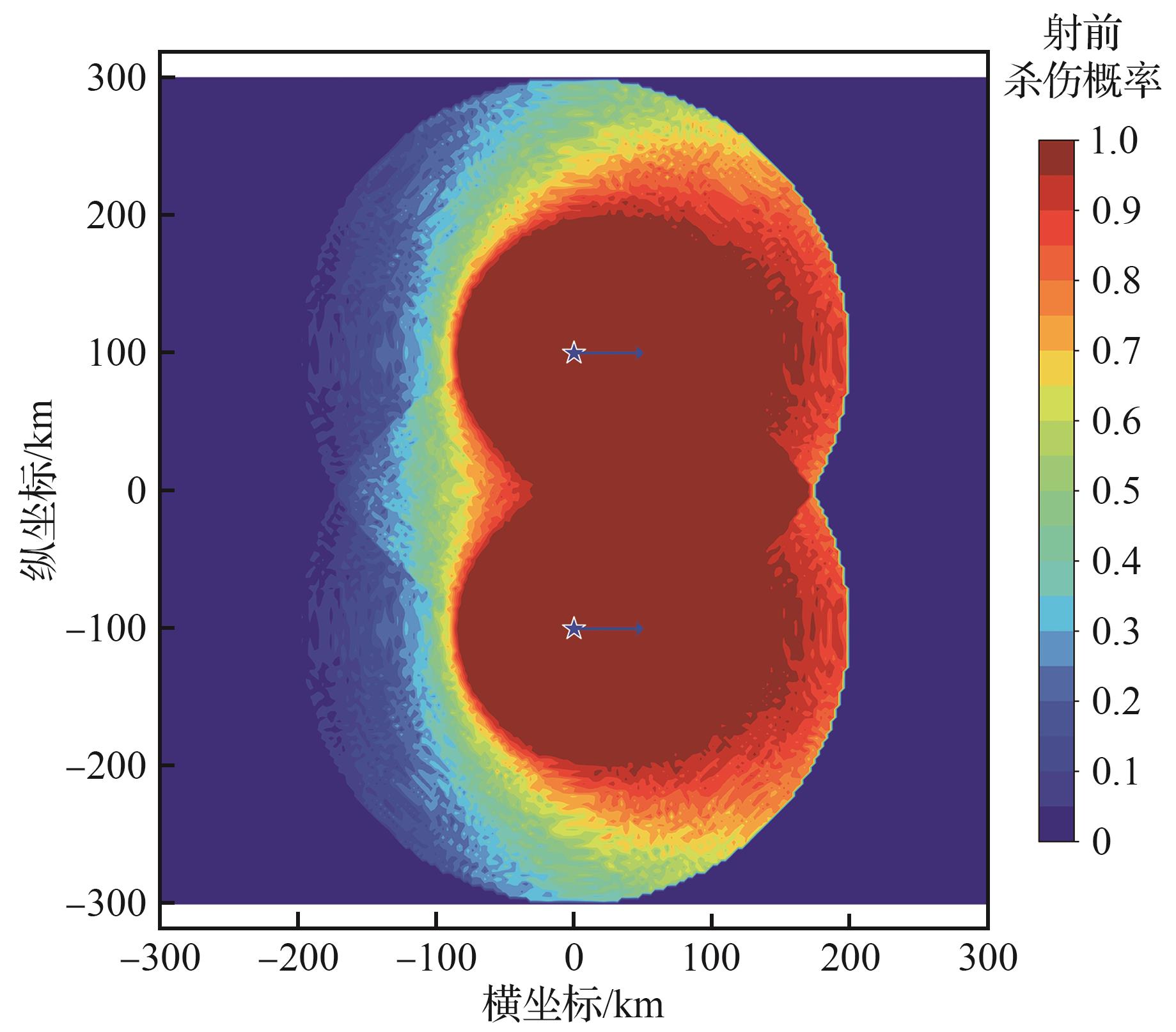
Table 3
MRFNet training setup
| 参数 | 数值 |
|---|---|
| 初始学习率 | 0.001 |
| 轮数 | 120 |
| 批大小 | 100 |
| 损失函数 | SmoothL1Loss |
| 优化器 | Adam |
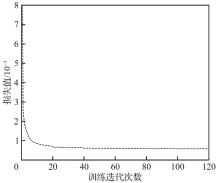
Fig.8
MRFNet training convergence curve
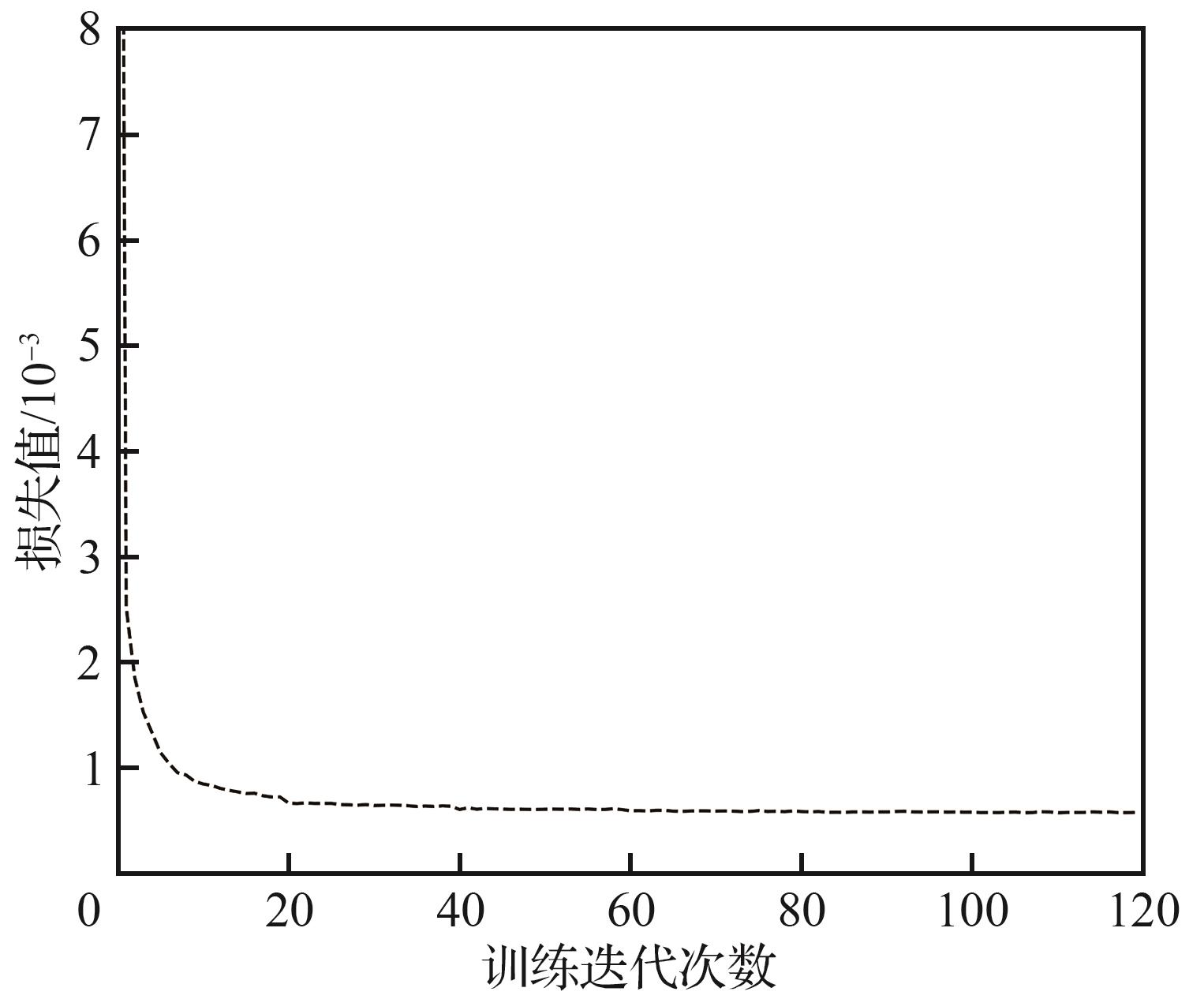
Table 4
Results of ablation experiments
| 网络 | 损失值/10-4 |
|---|---|
| w/o GELU | 7.90 |
| w/o BN | 124.00 |
| w/o Dropout | 5.74 |
| w/o shortcut | 10.90 |
| MRFNet | 5.00 |
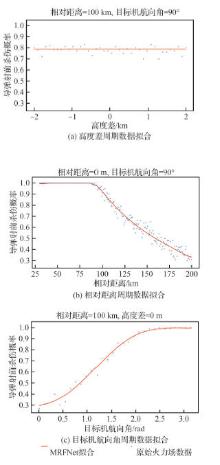
Fig.9
MRFNet fire field fitting results
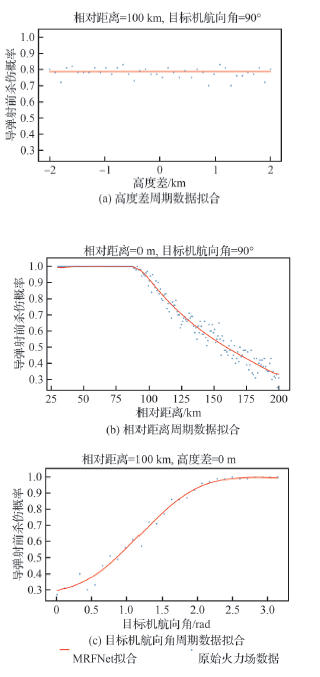
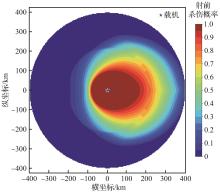
Fig.10
Two-dimensional schematic diagram of MRFNet-based all-domain fire field fitting
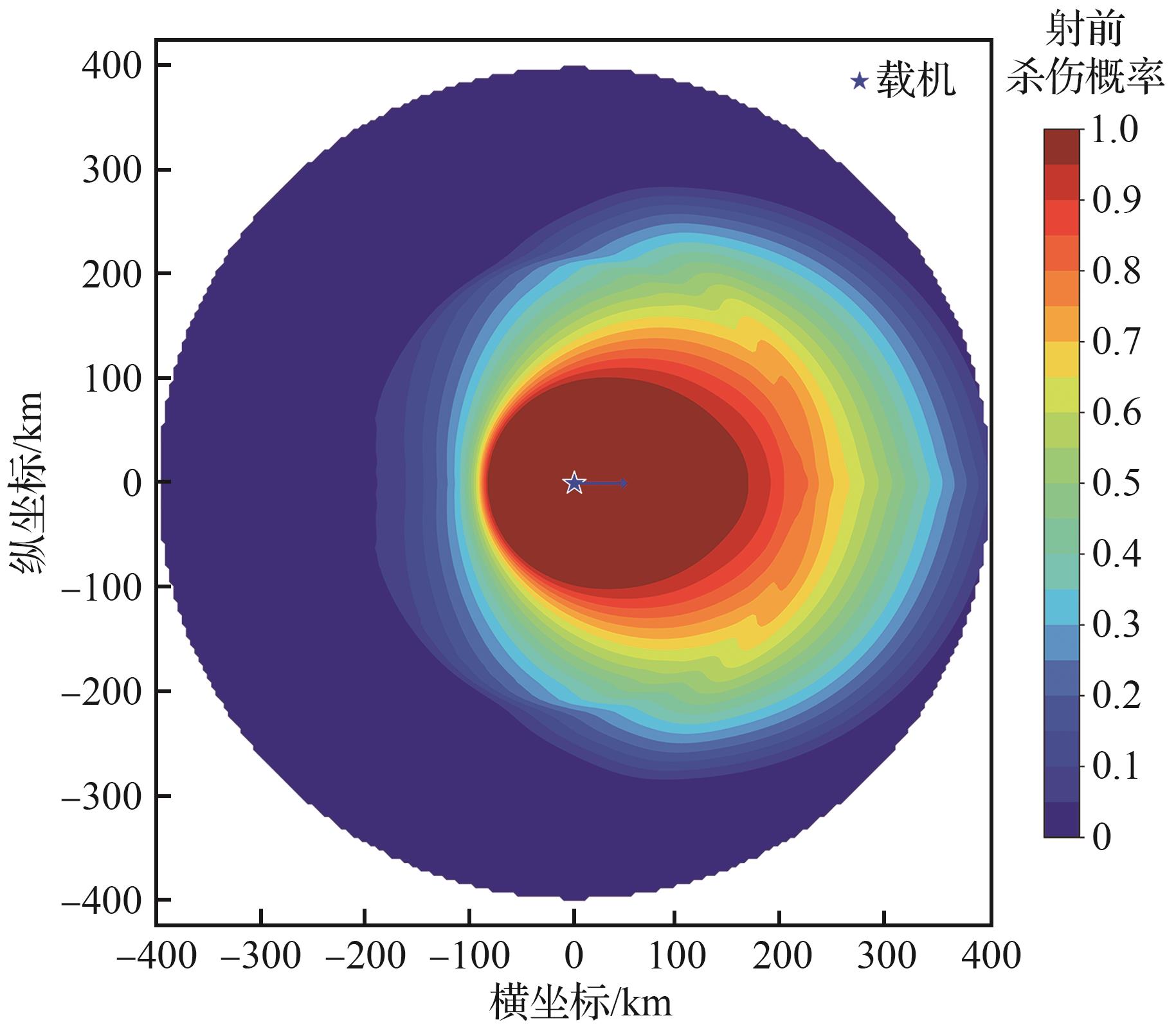
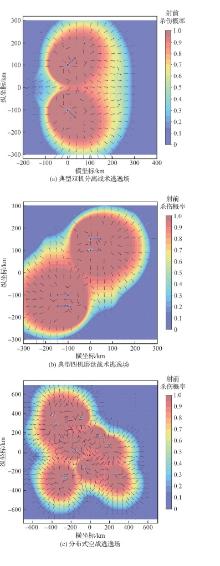
Fig.11
Escape field of typical formation tactics
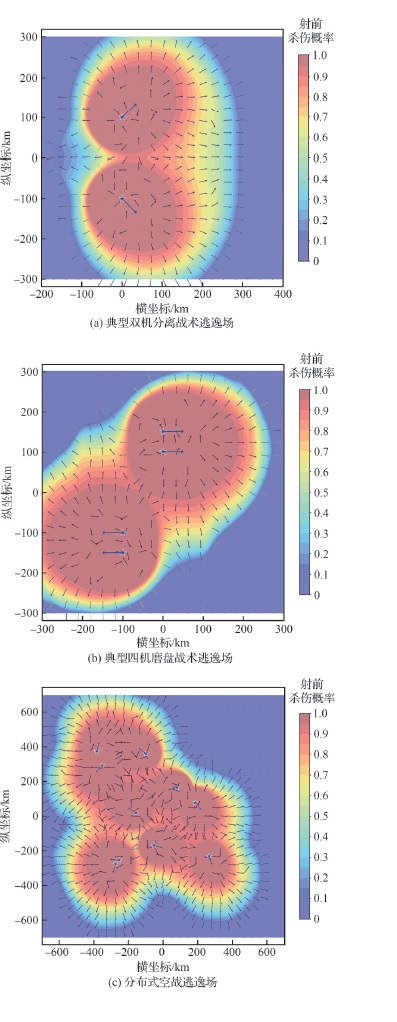
Table 5
Comparison of track prediction effect of different algorithms
| 算法 | 预测误差/10-4 |
|---|---|
| VAR 式(8) | 8.73 |
| VAR 式(9) | 51.40 |
| VAR 式(10) | 11.00 |
| Transformer | 98.90 |
| Informer | 87.20 |
| LSTM | 232.00 |
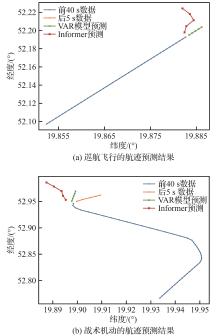
Fig.12
Typical track fitting effect
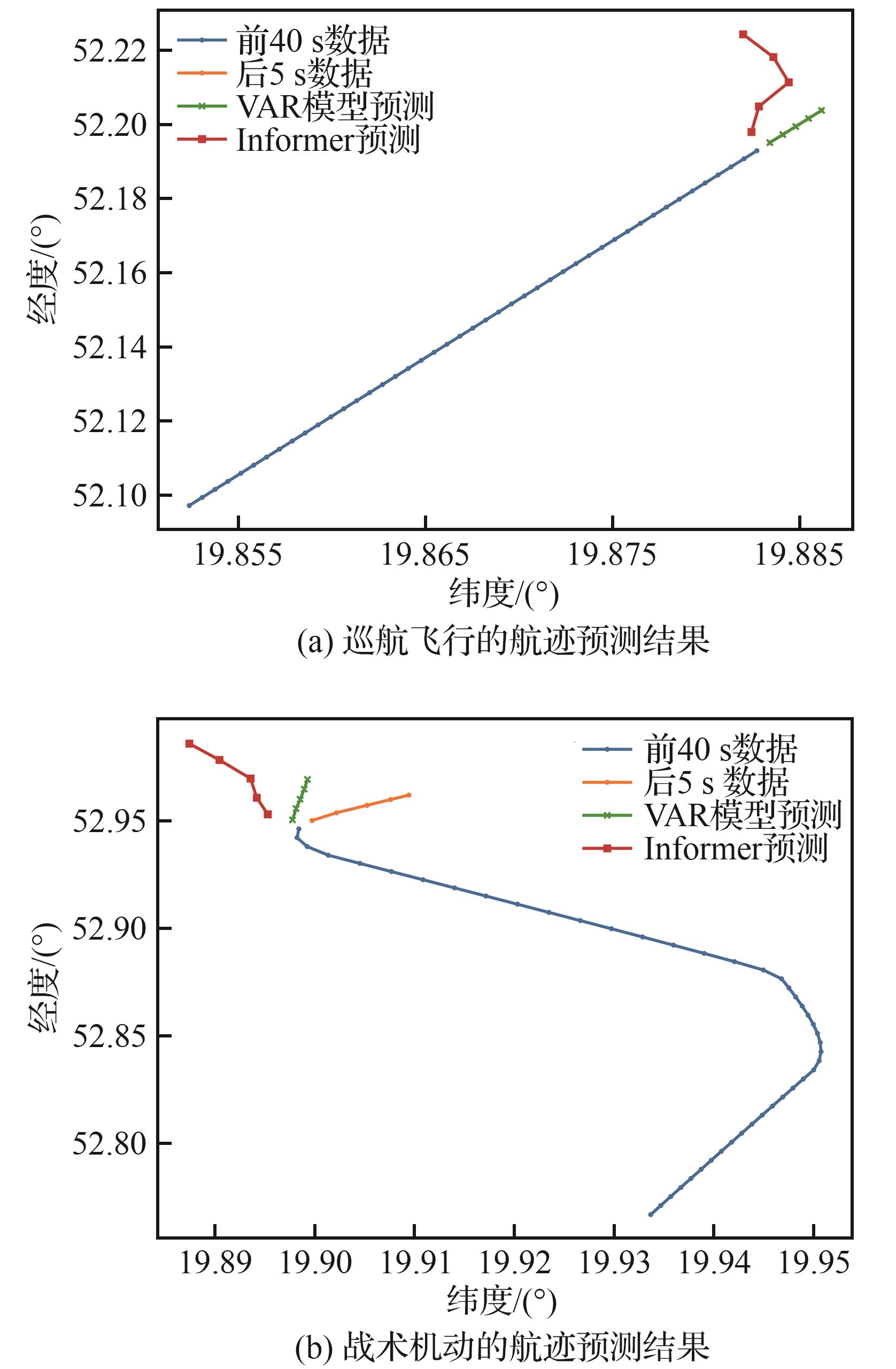
Table 6
Prediction error for different track lengths
| 历史长度/s | 预测误差 | ||
|---|---|---|---|
| 预测长度:5 s | 预测长度:15 s | 预测长度:30 s | |
| 15 | 0.013 | 0.042 | 0.085 |
| 30 | 0.004 | 0.046 | 0.128 |
| 45 | 0.001 | 0.006 | 0.057 |
| 60 | 0.005 | 0.012 | 0.047 |
Table 7
Prediction error in different noise interference
| 噪声范围/10-5 | 预测误差/10-4 |
|---|---|
| 0 | 8.73 |
| -1~1 | 10.70 |
| -10~10 | 11.90 |
| -100~100 | 25.30 |
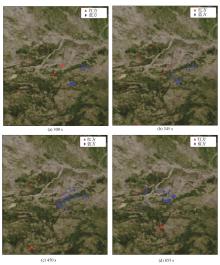
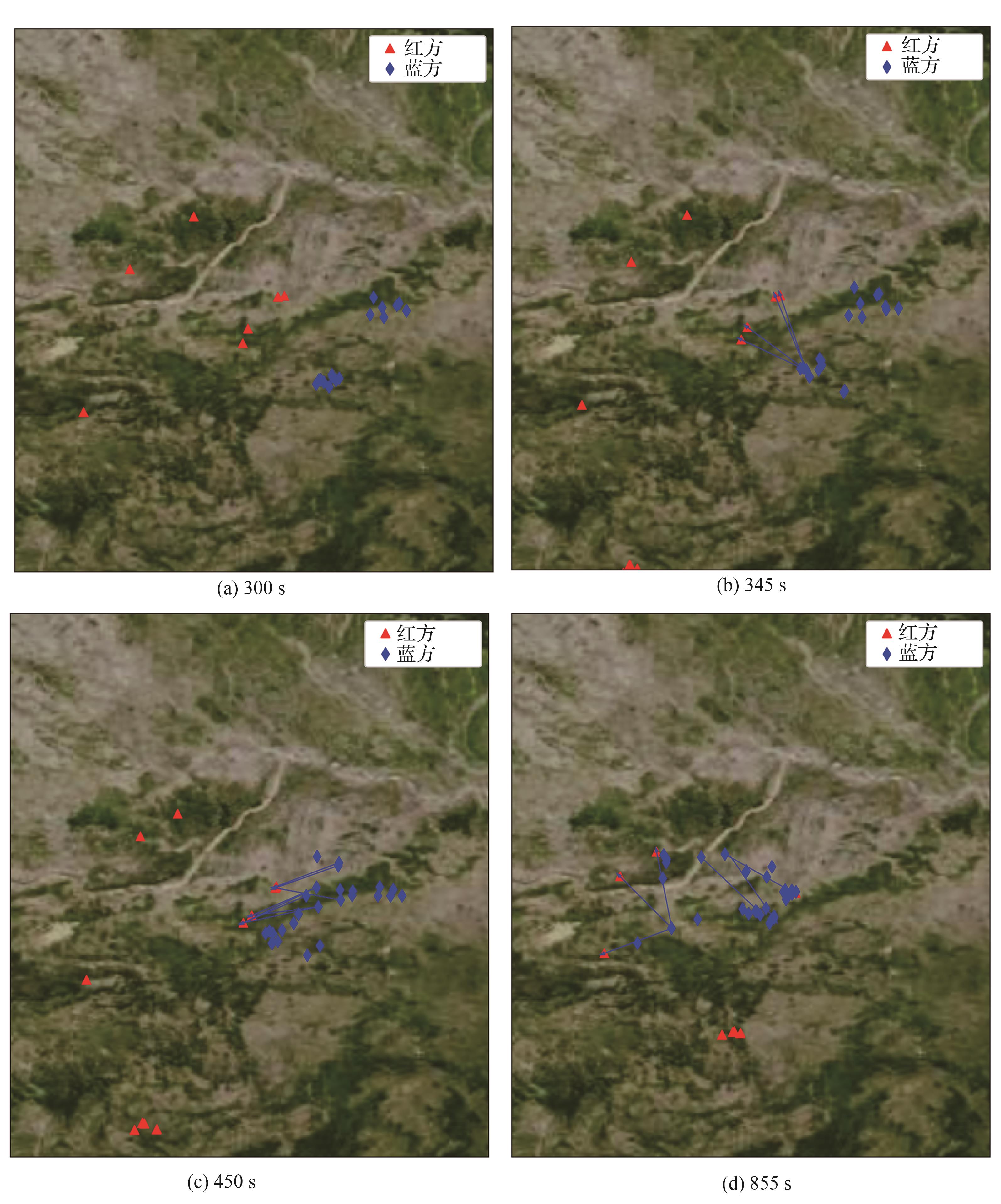
Fig.13
Application effect of threat prediction method
| [1] | 丁鹏, 宋亚飞. 代价敏感的空中目标意图识别方法[J]. 航空学报, 2023, 44(24): 328551. |
| DING P, SONG Y F. A cost-sensitive method for aerial target intention recognition[J]. Acta Aeronautica et Astronautica Sinica, 2023, 44(24): 328551 (in Chinese). | |
| [2] | RUSSELL S, ABDELZAHER T. The Internet of battlefield things: The next generation of command, control, communications and intelligence (C3I) decision-making[C]∥MILCOM 2018 - 2018 IEEE Military Communications Conference (MILCOM). Piscataway: IEEE Press, 2018: 737-742. |
| [3] | 吴傲, 杨任农, 梁晓龙, 等. 基于信息素决策的无人机集群协同搜索算法[J]. 北京航空航天大学学报, 2021, 47(4): 814-827. |
| WU A, YANG R N, LIANG X L, et al. Cooperative search algorithm based on pheromone decision for UAV swarm[J]. Journal of Beijing University of Aeronautics and Astronautics, 2021, 47(4): 814-827 (in Chinese). | |
| [4] | 何友, 刘瑜, 李耀文, 等. 多源信息融合发展及展望[J]. 航空学报, 2025, 46(6): 531672. |
| HE Y, LIU Y, LI Y W, et al. Development and prospects of multisource information fusion[J]. Acta Aeronautica et Astronautica Sinica, 2025, 46(6): 531672 (in Chinese). | |
| [5] | 侯岳奇, 梁晓龙, 何吕龙, 等. 未知环境下无人机集群协同区域搜索算法[J]. 北京航空航天大学学报, 2019, 45(2): 347-356. |
| HOU Y Q, LIANG X L, HE L L, et al. Cooperative area search algorithm for UAV swarm in unknown environment[J]. Journal of Beijing University of Aeronautics and Astronautics, 2019, 45(2): 347-356 (in Chinese). | |
| [6] | COSTA A N, COSTA P C G. Simulation-based air mission evaluation with Bayesian threat assessment for opposing forces[M]∥Disciplinary Convergence in Systems Engineering Research. Cham: Springer International Publishing, 2017: 281-295. |
| [7] | YIN Y F, ZHANG R T, SU Q R. Threat assessment of aerial targets based on improved GRA-TOPSIS method and three-way decisions[J]. Mathematical Biosciences and Engineering, 2023, 20(7): 13250-13266. |
| [8] | 王宇航, 董宝良, 公超, 等. 基于意图识别的空中群目标动态威胁评估[J]. 计算机与现代化, 2023(12): 100-104, 111. |
| WANG Y H, DONG B L, GONG C, et al. Dynamic threat assessment of air swarm targets based on intent recognition[J]. Computer and Modernization, 2023(12): 100-104, 111 (in Chinese). | |
| [9] | 和烨龙, 张鹏飞, 赵永娟, 等. 基于CRITIC和AHP组合赋权的TOPSIS法蜂群威胁评估研究[J]. 火炮发射与控制学报, 2024, 45(1): 28-35. |
| HE Y L, ZHANG P F, ZHAO Y J, et al. A TOPSIS method using CRITIC and AHP combined weighting for swarm threat assessment[J]. Journal of Gun Launch & Control, 2024, 45(1): 28-35 (in Chinese). | |
| [10] | 唐磊, 冀春雷, 韩鹏. 四代机编队超视距作战效能评估模型研究[J]. 指挥控制与仿真, 2021, 43(3): 49-52. |
| TANG L, JI C L, HAN P. Research on evaluation model of beyond-visual-range combat effectiveness of fourth-generation aircraft formation[J]. Command Control & Simulation, 2021, 43(3): 49-52 (in Chinese). | |
| [11] | 谢岚风, 陈军, 焦璐, 等. 未来空战全域火力场研究[J]. 航空学报, 2024, 45(5): 529699. |
| XIE L F, CHEN J, JIAO L, et al. All-domain fire field in future air combat[J]. Acta Aeronautica et Astronautica Sinica, 2024, 45(5): 529699 (in Chinese). | |
| [12] | 曹玥瑶, 薛涛, 何闪闪, 等. 超视距空战全域火力场计算及态势评估和辅助决策应用[J/OL]. 北京航空航天大学学报, (2024-09-09) [2025-05-07]. . |
| CAO Y Y, XUE T, HE S S, et al. Calculation of global fire field in over-the-horizon air combat and application of situation assessment and auxiliary decision-making[J/OL]. Journal of Beijing University of Aeronautics and Astronautics, (2024-09-09) [2025-05-07]. (in Chinese). | |
| [13] | 闫孟达, 杨任农, 左家亮, 等. 基于深度学习的空空导弹多类攻击区实时解算[J]. 兵工学报, 2020, 41(12): 2466-2477. |
| YAN M D, YANG R N, ZUO J L, et al. Real-time computing of air-to-air missile multiple capture zones based on deep learning[J]. Acta Armamentarii, 2020, 41(12): 2466-2477 (in Chinese). | |
| [14] | 胡东愿, 杨任农, 闫孟达, 等. 基于自编码网络的导弹攻击区实时计算方法[J]. 航空学报, 2020, 41(4): 323571. |
| HU D Y, YANG R N, YAN M D, et al. Real-time calculation of missile launch envelope based on auto-encoder network[J]. Acta Aeronautica et Astronautica Sinica, 2020, 41(4): 323571 (in Chinese). | |
| [15] | 游航航, 宋帅, 高阳阳, 等. 超视距空战中指挥引导效能的发挥[J]. 飞航导弹, 2019(11): 70-72. |
| YOU H H, SONG S, GAO Y Y, et al. Exertion of command and guidance efficiency in over-the-horizon air combat[J]. Aerospace Technology, 2019(11): 70-72 (in Chinese). | |
| [16] | 夏博远. 马赛克战中面向杀伤网的作战环推荐方法研究[D]. 长沙: 国防科技大学, 2021: 6-8. |
| XIA B Y. A study of operation loop recommendation methods for kill web in the mosaic war[D]. Changsha: National University of Defense Technology, 2021: 6-8 (in Chinese). | |
| [17] | 张健, 罗鑫悦, 黎宗孝, 等. 基于动态贝叶斯网络的无人机航迹模型研究[J]. 中国安全生产科学技术, 2023, 19(11): 188-193. |
| ZHANG J, LUO X Y, LI Z X, et al. Research on UAV track model based on dynamic Bayesian network[J]. Journal of Safety Science and Technology, 2023, 19(11): 188-193 (in Chinese). | |
| [18] | 石庆研, 岳聚财, 韩萍, 等. 基于LSTM-ARIMA模型的短期航班飞行轨迹预测[J]. 信号处理, 2019, 35(12): 2000-2009. |
| SHI Q Y, YUE J C, HAN P, et al. Short-term flight trajectory prediction based on LSTM-ARIMA model[J]. Journal of Signal Processing, 2019, 35(12): 2000-2009 (in Chinese). | |
| [19] | XUE H, CHAI T. Vessel track prediction based on fractional gradient recurrent neural network with maneuvering behavior identification[J]. Scientific Programming, 2021, 2021(1): 5526082. |
| [20] | ZHENG Y Z, LV X M, QIAN L, et al. An optimal BP neural network track prediction method based on a GA-ACO hybrid algorithm[J]. Journal of Marine Science and Engineering, 2022, 10(10): 1399. |
| [21] | VASWANI A, SHAZEER N, PARMAR N, et al. Attention is all you need[J]. arXiv preprint: 1706.03762,2017. |
| [22] | ZHOU H Y, ZHANG S H, PENG J Q, et al. Informer: Beyond efficient transformer for long sequence time-series forecasting[J]. Proceedings of the AAAI Conference on Artificial Intelligence, 2021, 35(12): 11106-11115. |
| [23] | SEPP H, JURGEN S. Long short-term memory[J]. Neural Computation, 1997, 9(8): 1735–1780. |
| [24] | LI L Y, YANG R N, LI H Y, et al. Unsupervised contrastive learning for automatic grouping of aerial swarms[J]. IEEE Transactions on Vehicular Technology, 2024, 73(5): 6249-6258. |
| [1] | Ye TAO, Jinhui TANG, Zhen YAN, Chen ZHOU, Chong WANG. A trajectory imputation method integrating representation transformation and pattern regression [J]. Acta Aeronautica et Astronautica Sinica, 2026, 47(1): 332106-332106. |
| [2] | Jianyu XU, Li ZHOU, Zhanxue WANG, Jie SHI, Hao SHI. Calculation method for hypersonic plume infrared radiation based on a fast line-by-line calculation model [J]. Acta Aeronautica et Astronautica Sinica, 2025, 46(8): 630778-630778. |
| [3] | Lingjie MENG, Hongguang LI, Xinjun LI. SAR image simulation method guided by geomorphic category information [J]. Acta Aeronautica et Astronautica Sinica, 2025, 46(7): 331003-331003. |
| [4] | Zhihao ZHAO, Zhaohua YANG, Yun WU, Yuanjin YU. Single-photon counting imaging denoising method based on deep learning in low-light environment [J]. Acta Aeronautica et Astronautica Sinica, 2025, 46(3): 630531-630531. |
| [5] | Yiquan WU, Kang TONG. Research advances on deep learning-based small object detection in UAV aerial images [J]. Acta Aeronautica et Astronautica Sinica, 2025, 46(3): 30848-030848. |
| [6] | Zijian XIANG, Zhenyu MA, Xixiang YANG. Inversion of structural performance parameters of composite materials based on deep learning [J]. Acta Aeronautica et Astronautica Sinica, 2025, 46(24): 231877-231877. |
| [7] | Tianqi FAN, Zhengxia ZOU, Zhenwei SHI. Typical remote sensing target detection with data synthesis based on reinforcement learning [J]. Acta Aeronautica et Astronautica Sinica, 2025, 46(23): 631955-631955. |
| [8] | Kui LIU, Hao SUN, Han WU, Kefeng JI, Gangyao KUANG. Dynamic brightness reconstruction for UAV visible-infrared fusion object detection [J]. Acta Aeronautica et Astronautica Sinica, 2025, 46(23): 631968-631968. |
| [9] | Bo PENG, Jikang BAI, Weiwen CHEN, Xiangtao ZHENG, Jianjun LEI, Xiaoqiang LU. Research progress for UAV search and rescue methods based on deep learning [J]. Acta Aeronautica et Astronautica Sinica, 2025, 46(23): 632761-632761. |
| [10] | Xiaowei JIANG, Yiquan WU. Research progress of UAV aerial image mosaic methods [J]. Acta Aeronautica et Astronautica Sinica, 2025, 46(17): 331799-331799. |
| [11] | Yi GU, Huilin WANG, Hehe GUO, Guohua WU, Zhiqiang ZENG. Analysis of GEO target observation coverage based on field of view mapping model [J]. Acta Aeronautica et Astronautica Sinica, 2025, 46(15): 331570-331570. |
| [12] | Lin CHEN, Xiwen GU, Zhiying CHEN, Zhuo ZHANG, Xiaoliang SUN. High-precision monocular vision pose measurement for large distance span in carrier landing guidance [J]. Acta Aeronautica et Astronautica Sinica, 2025, 46(15): 331568-331568. |
| [13] | Bin SUN, Hang YOU, Wenbo LI, Xiangrui LIU, Jiayi MA. Dual-band payload image fusion and its applications in low-altitude remote sensing [J]. Acta Aeronautica et Astronautica Sinica, 2025, 46(11): 531343-531343. |
| [14] | Fanteng MENG, Yong QIN, Jing CUI, Yunpeng WU, Zicheng ZHANG, Shaowei WEI. Unknown risk detection in external environment of railroad using UAV images [J]. Acta Aeronautica et Astronautica Sinica, 2025, 46(11): 531262-531262. |
| [15] | Weishi CHEN, Hongchuang NIU, Xin WANG, Jian WAN, Xianfeng LU, Jie ZHANG, Qingbin WANG. Review on multi-source detection technologies for birds and drones in airport clearance area [J]. Acta Aeronautica et Astronautica Sinica, 2025, 46(10): 31251-031251. |
| Viewed | ||||||
|
Full text |
|
|||||
|
Abstract |
|
|||||
Address: No.238, Baiyan Buiding, Beisihuan Zhonglu Road, Haidian District, Beijing, China
Postal code : 100083
E-mail:hkxb@buaa.edu.cn
Total visits: 6658907 Today visits: 1341All copyright © editorial office of Chinese Journal of Aeronautics
All copyright © editorial office of Chinese Journal of Aeronautics
Total visits: 6658907 Today visits: 1341

 CJA
CJA
