高怡宁1, 颉文庆1, 方淳1, 朱丹丹2, 赵冬冬2( ), 刘春强3, 朱永峰1
收稿日期:2025-08-14
修回日期:2025-08-26
接受日期:2025-11-04
出版日期:2025-11-20
发布日期:2025-11-13
通讯作者:
赵冬冬
E-mail:zhaodong@nwpu.edu.cn
基金资助:
Yining GAO1, Wenqing XIE1, Chun FANG1, Dandan ZHU2, Dongdong ZHAO2(), Chunqiang LIU3, Yongfeng ZHU1
Received:2025-08-14
Revised:2025-08-26
Accepted:2025-11-04
Online:2025-11-20
Published:2025-11-13
Contact:
Dongdong ZHAO
E-mail:zhaodong@nwpu.edu.cn
Supported by:摘要:
在氢能源长航时无人机领域,氢燃料电池动力系统相较于涡轮发动机动力系统展现出更显著的适用性。深入剖析了燃料电池长航时无人机的发展现状,分析总结了典型大型氢燃料电池无人机的特点与适用场景,对制约氢燃料电池长航时无人机发展的关键技术进行了研究,全面梳理了国内外发展现状。提出了一种以航时最大为优化目标的大型氢能源无人机设计方案,开展了总体布局设计,对比不同动力架构形式并选取氢燃料电池-锂电池混合动力系统结构,开展了动力系统方案设计、电机设计、液氢燃料存储设计及能量管理策略设计,基于有限状态机思想构建了能量管理控制策略,仿真结果显示,在典型定速巡航工况和两种变功率工况下,该策略均能在满足总体功率需求的情况下保证燃料电池始终以最佳功率输出,锂电池在负载需求功率较大时放电,在负载需求功率较小时充电,有效保障了动力系统的可靠性,为大型燃料电池-锂电池混合能源动力系统无人机设计提供参考。
中图分类号:
高怡宁, 颉文庆, 方淳, 朱丹丹, 赵冬冬, 刘春强, 朱永峰. 燃料电池无人机关键技术与混合能量架构[J]. 航空学报, 2026, 47(11): 232679.
Yining GAO, Wenqing XIE, Chun FANG, Dandan ZHU, Dongdong ZHAO, Chunqiang LIU, Yongfeng ZHU. Key technologies of fuel cell unmanned aerial vehicles and hybrid energy architecture[J]. Acta Aeronautica et Astronautica Sinica, 2026, 47(11): 232679.
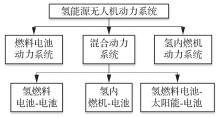
图 1
氢能无人机动力系统分类
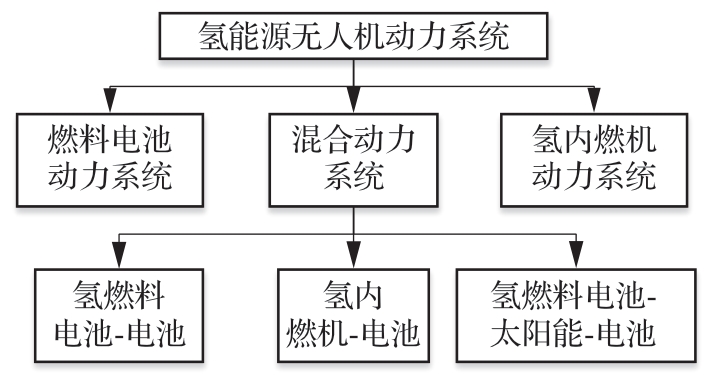
图 2
研究逻辑框架图
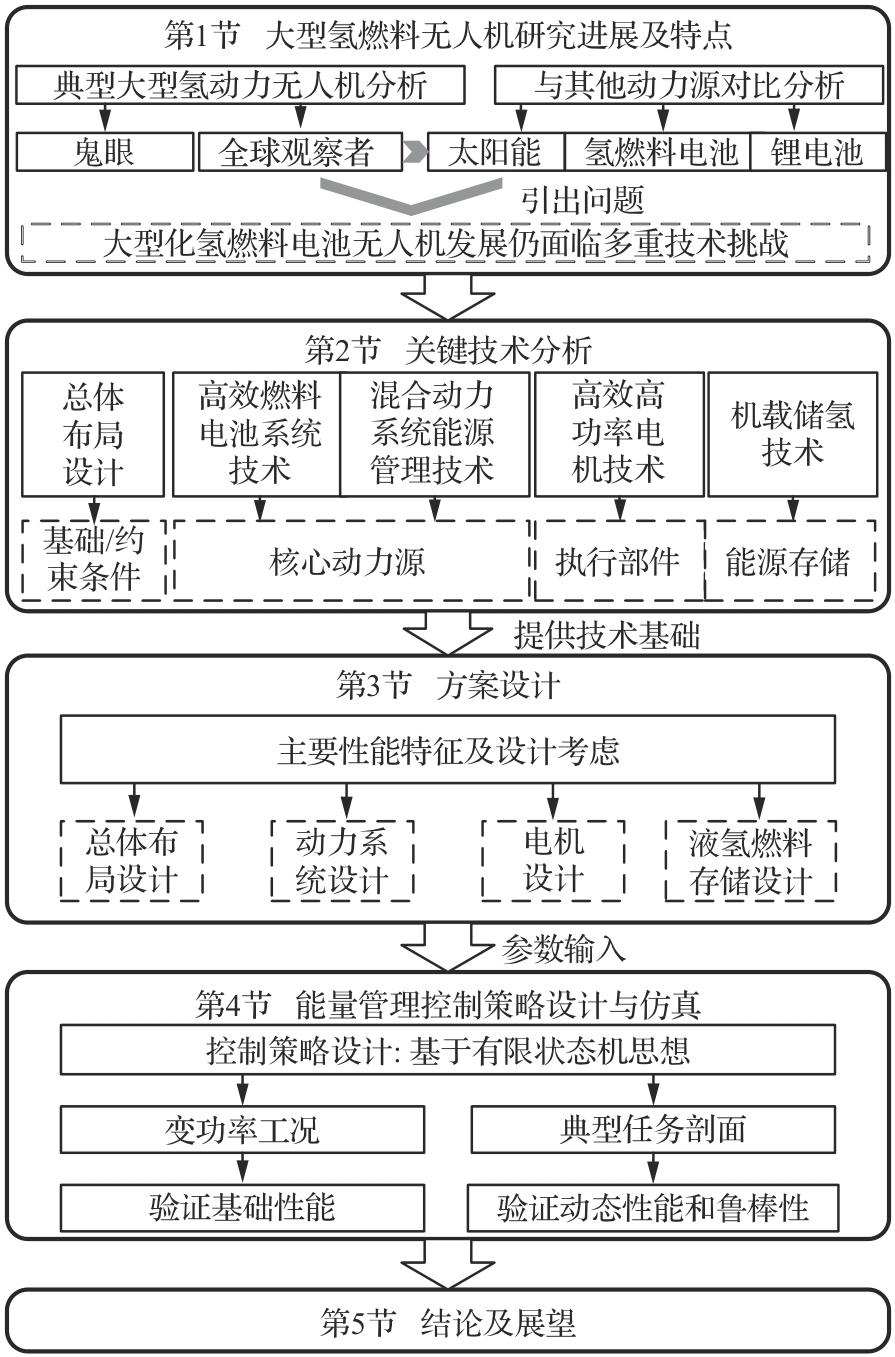
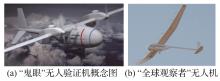
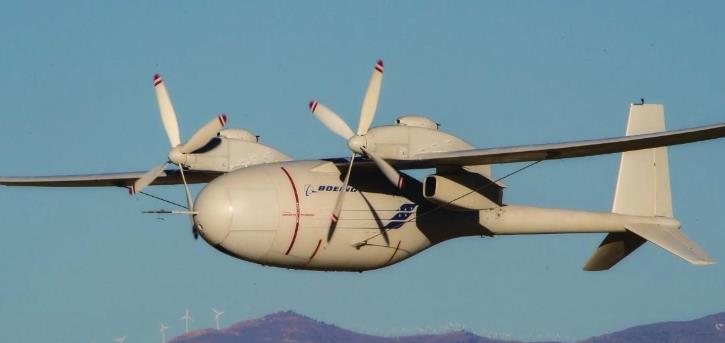
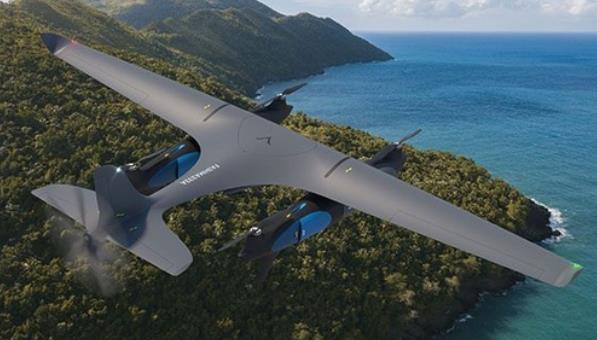
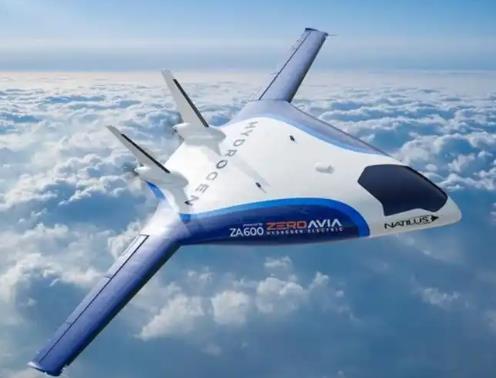
图 3
典型大型氢动力飞机
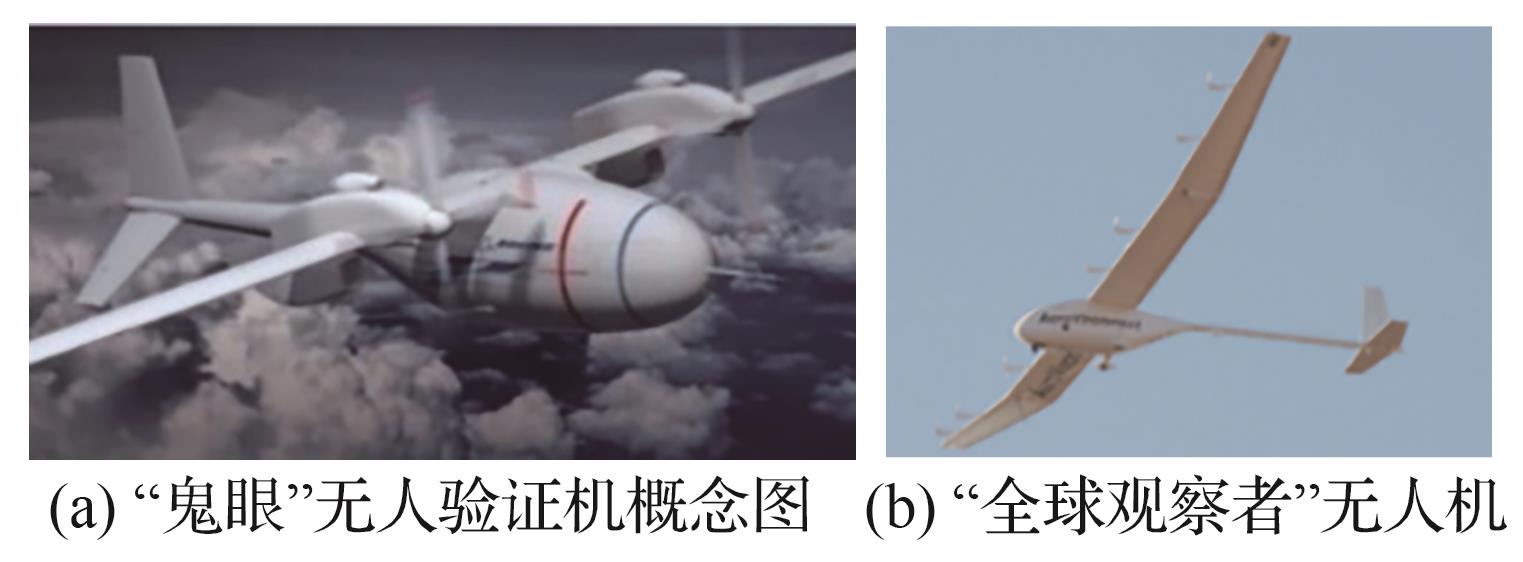
表1
典型长航氢动力无人机技术参数对比
| 机型 | 鬼眼[ | 全球观察者[ |
|---|---|---|
| 有效载荷/kg | 204 | 172 |
| 燃料 | 液氢 | 液氢 |
| 起飞质量/kg | 4 450 | 1 990 |
| 翼展/m | 45.7 | 53.34 |
| 机身长度/m | 16.2 | 21 |
| 飞行高度/m | 19 800 | 19 812 |
| 最大巡航速度/(km·h-1) | 278 | 193 |
| 航时/h | 96 | 120~168 |
| 起降方式 | 发射车滑轨 | 自动起降系统 |
| 任务系统功率/kW | 4 | 2.8 |
表2
3种新能源无人机性能对比
| 能源类型 | 太阳能 | 氢燃料电池 | 锂电池 |
|---|---|---|---|
| 飞行高度/km | 20~25[ | 0~20[ | 0~1[ |
速度/ (km·h-1) | 55.6~100[ | 80~150[ | 70~180[ |
| 航时水平 | 17 days[ | 10 h[ | 60 min [ |
表3
氢能源无人机总体布局类型
总体布 局形式 | 代表机型 | 优点 | 缺点 |
|---|---|---|---|
常规式 布局 |
鬼眼 | 技术成熟,满足多任务需求 | 储氢空间小,增加会导致气动效率降低 |
双机身 布局 |
掠夺者 | 具备垂直起降能力,储氢空间大 | 气动阻力大,结构 复杂 |
翼身融 合布局 |
Natilus Kona | 空气阻力小,气动效率高,储氢空间大 | 设计和制造难度 较大,起降要求高 |
多旋翼 布局 |
天目山一号 | 垂直起降能力好,操作灵活性强 | 航程较短,稳定性和安全性较差 |
复合翼 布局 |
FC-30 | 兼具固定翼和旋翼优点 | 结构复杂,设计制造难度大 |
表4
燃料电池特性比较[34]
| 类型 | PEMFC | AFC | PAFC | MCFC | SOFC |
|---|---|---|---|---|---|
| 催化层 | 铂 | 镍 | 铂 | 非金属 | 非金属 |
| 氧化剂 | 氧气 | 氧气 | 氧气 | 氧气 | 氧气 |
| 电解质材料 | 质子交换膜 | 碱性溶液 | 磷酸盐溶液 | 熔融碳酸盐 | 固体氧化物 |
| 导电离子 | 氢离子 | 氢氧根离子 | 氢离子 | 碳酸根离子 | 氧离子 |
| 功率/kW | 1~100 | 10~100 | 100~400 | 300~3 000 | 1~2 000 |
| 效率/% | 35~60 | 45~60 | 35~60 | 45~60 | 50~60 |
| 工作温度/℃ | 50~100 | 70~100 | 150~200 | 600~700 | 700~1 000 |
| 寿命/(103 h) | 60~80 | 10 | 80~130 | 20 | 20~90 |
| 燃料 | 纯氢 | 纯氢 | 甲醇、汽油 | 天然气 | 氢气、天然气 |
| 应用领域 | 交通、运输 | 军事、航天 | 分布式发电 | 分布式发电 | 分布式发电 |
图 4
燃料电池反应原理
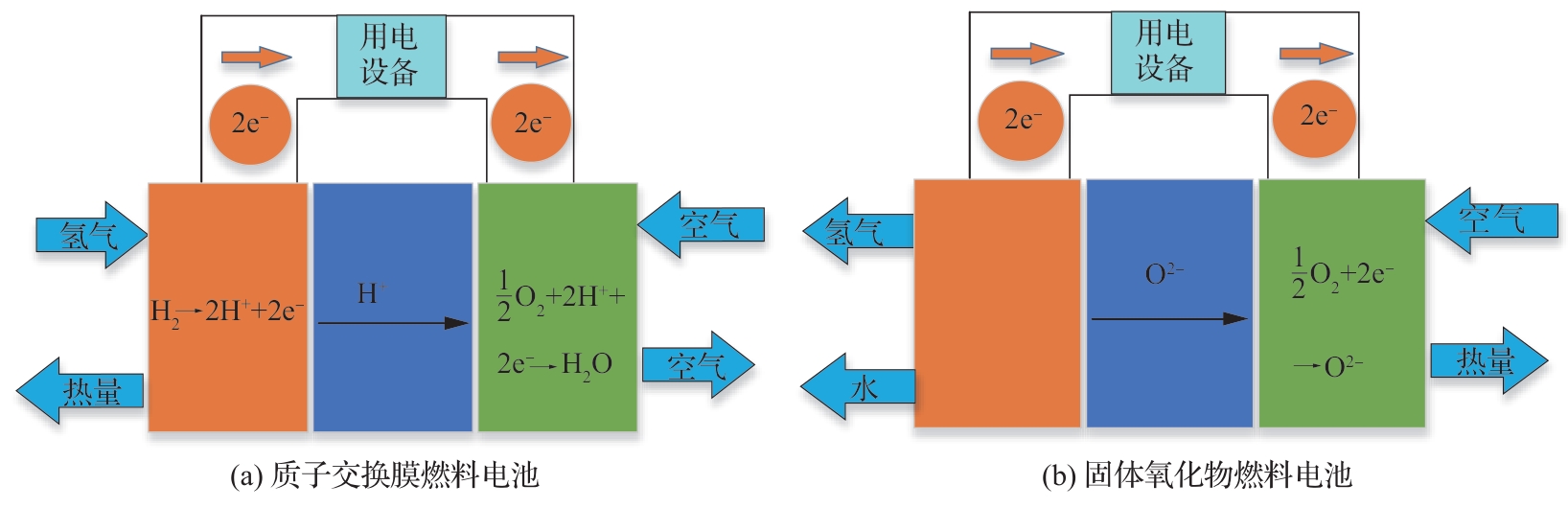
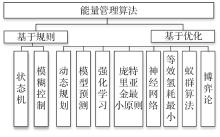
图 5
能量管理算法分类[41]
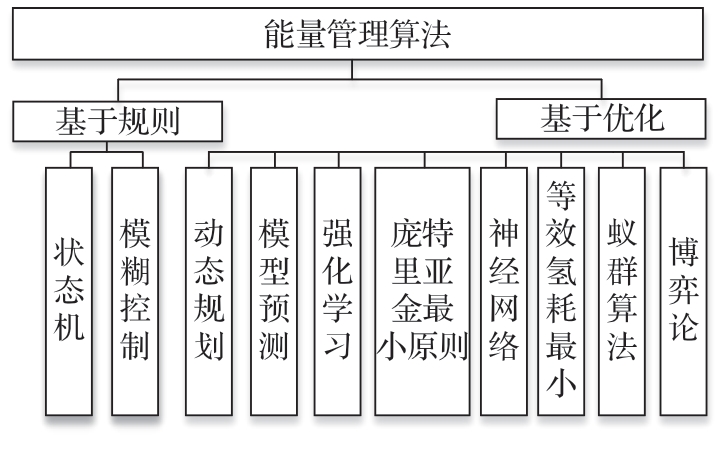
表5
常见能量策略特点与优化效果对比[41]
| 原理 | 策略 | 特点 | 实时性 | 耐久性 | 经济型 |
|---|---|---|---|---|---|
| 基于规则 | 状态机 | 控制效果受工作模式数量影响 | 一般 | 一般 | |
| 传统模糊 | 鲁棒性,效率高 | 一般 | 一般 | 一般 | |
| 优化模糊 | 通过调节隶属函数减少经验依赖 | 一般 | 好 | 一般 | |
| 基于优化 | 动态规划 | 全局最优,计算量大 | 一般 | 好 | |
| 等效氢耗最小 | 响应速度快 | 一般 | 好 | ||
| 模型预测 | 实时性好,控制性能高 | 好 | 好 | ||
| 庞特里亚金最小原则 | 近全局最优 | 一般 | 一般 | 好 |
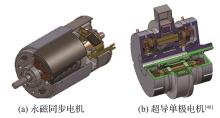
图 6
两种电机图片
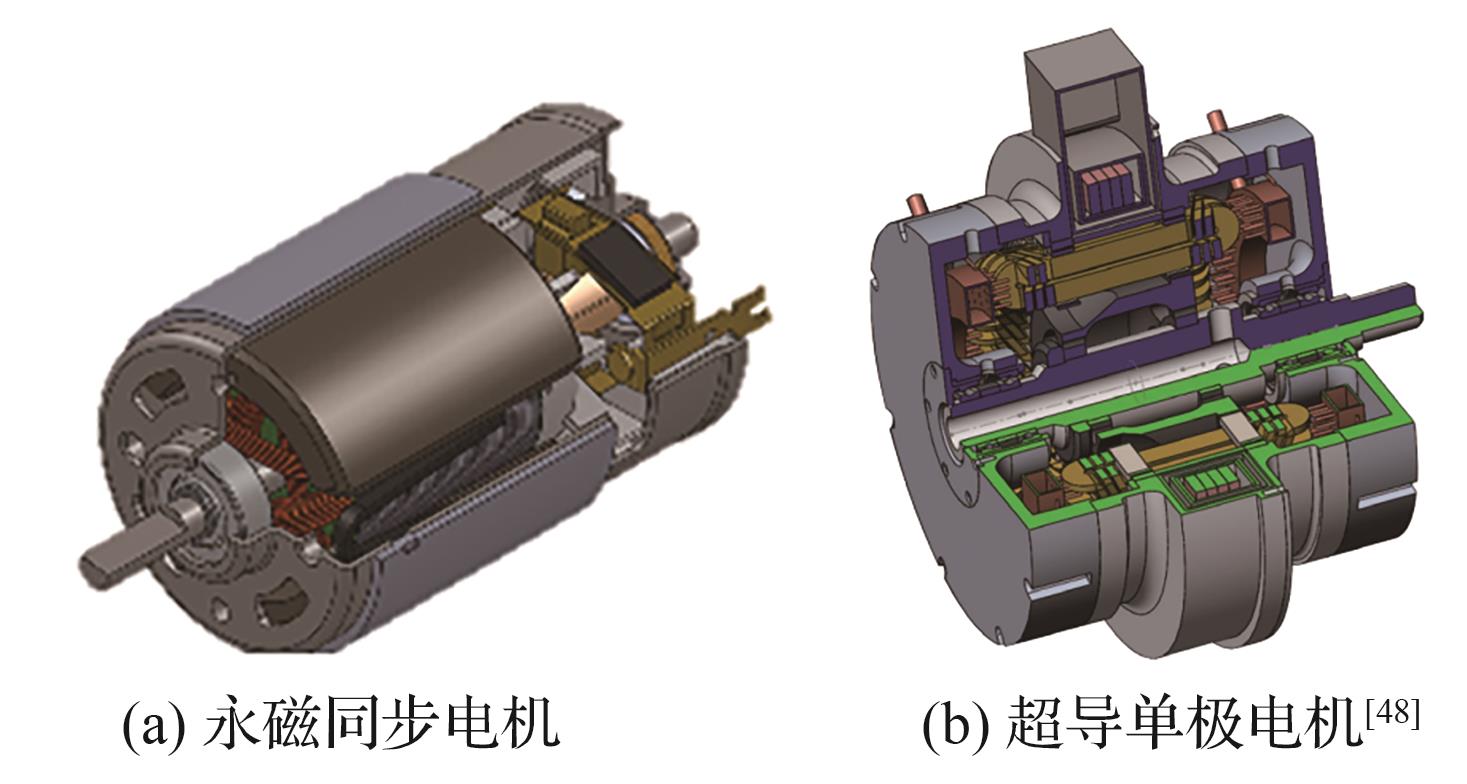
表6
两种电机基本性能参数对比
| 指标 | 永磁同步电机 | 超导电机 |
|---|---|---|
| 功率密度/(kW·kg-1) | 3~4[ | 8[ |
| 峰值效率/% | 94~96[ | 98~99.5[ |
| 冷却需求 | 无需特殊冷却 | 需要低温冷却系统[ |
| 成本/($·kW-1) | 50~100 | 500~2 000 |
表7
3种机载储氢技术对比[58]
| 储氢方式 | 高压气态 | 低温液态 | 固态 |
|---|---|---|---|
| 体积储氢密度/(kg·m-3) | 40.8 | 70.7 | 55~114 |
| 储氢温度 | 室温 | 20 K | 室温 |
| 优点 | 技术成熟、充放速率高 | 储氢密度高 | 安全性能高 |
| 缺点 | 安全性低 | 技术工艺复杂,成本高 | 储氢能力低、成本高 |
表8
高压储氢罐性能对比[6]
| 储罐类型 | 材质 | 最大内压/ MPa | GI |
|---|---|---|---|
| Ⅰ | 金属储罐 | <20 | <0.01 |
| Ⅱ | 纤维复合材料包覆的金属罐 | <30 | 0.02 |
| Ⅲ | 带金属衬垫的复合罐 | 35~70 | 0.039~0.05 |
| Ⅳ | 带有聚合物内衬的复合罐 | 70 | >0.05 |
| Ⅴ | 无内衬复合罐 | >70 | >0.075 |
图 7
陕西省首架液氢无人机样机及机载液氢储罐[68]
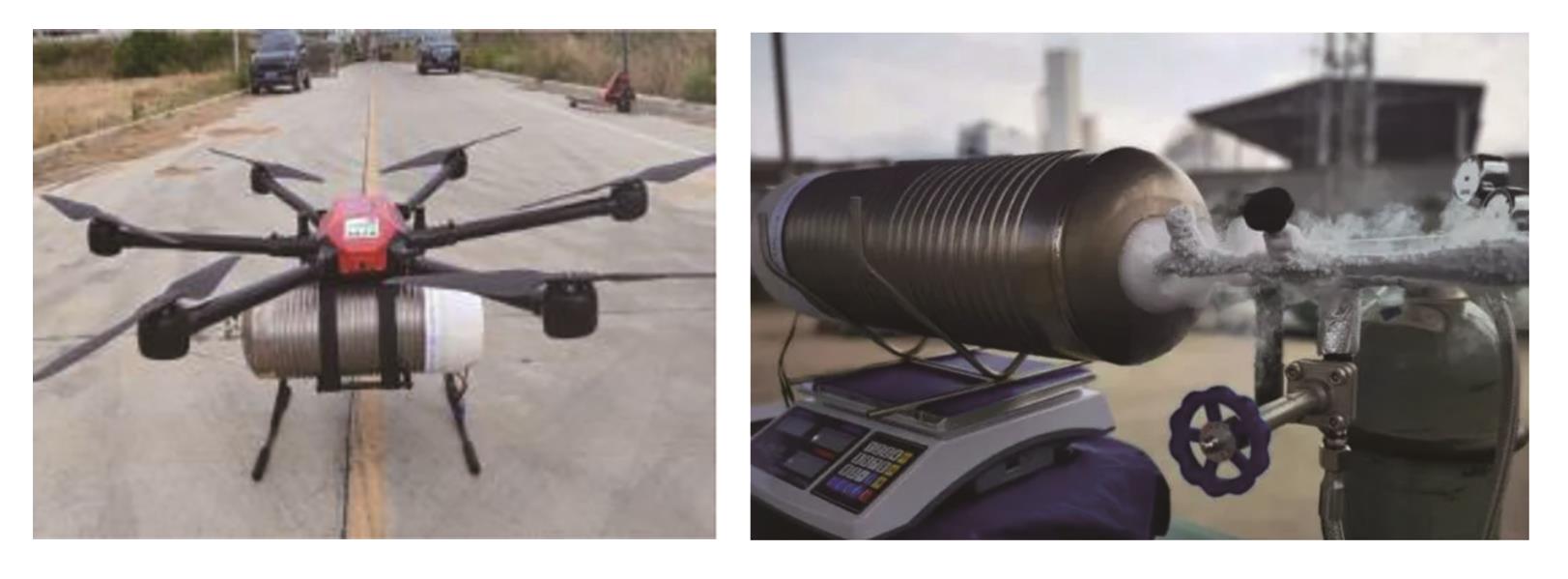
图 8
BHL-Cryotank储氢罐与CGH2概念验证骨架[70-71]
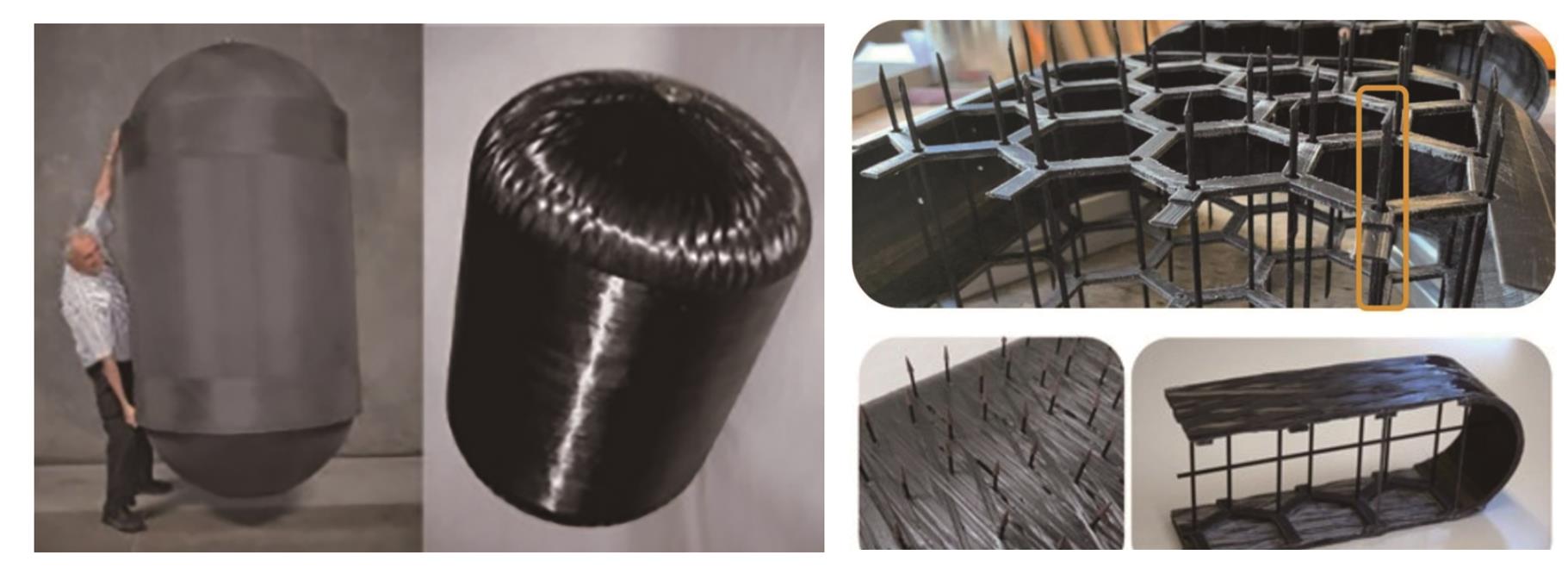
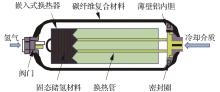
图 9
固态储氢瓶示意图[58]
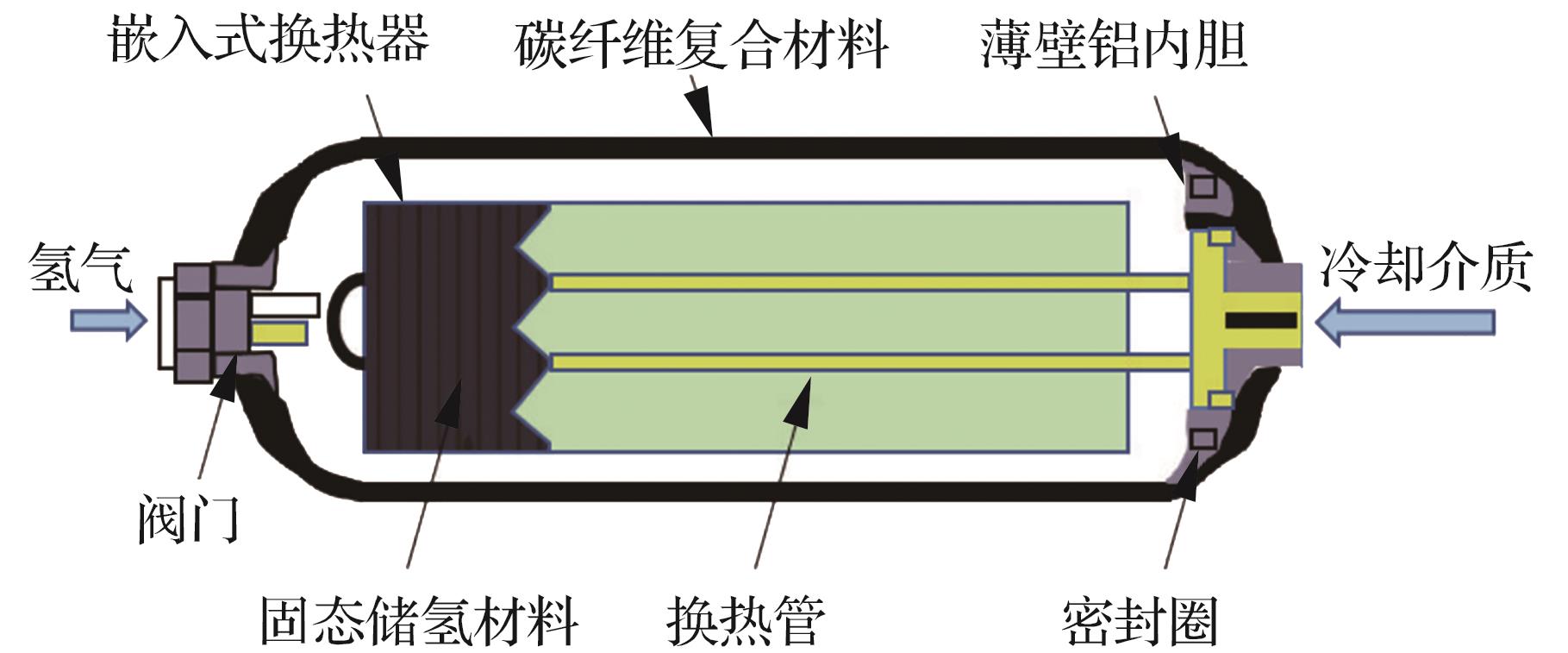
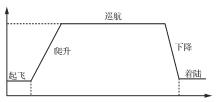
图 10
典型任务剖面
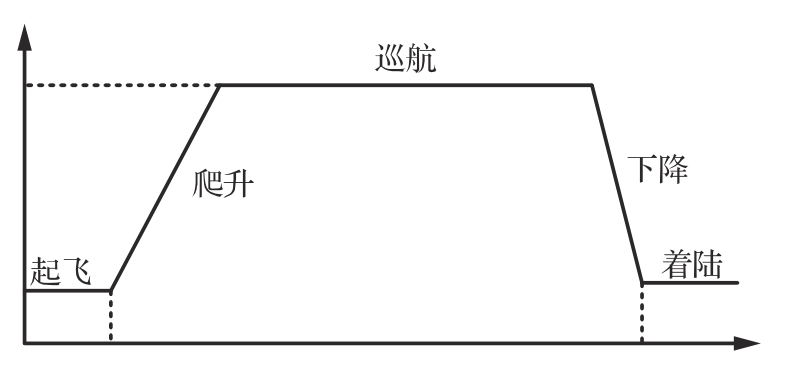
表9
不同类型动力系统架构对比
| 动力系统类型 | 动力/能源单元 | 燃料电池 功率/kW | 体积(燃料 电池)/L | 质量/kg | 总质量/kg | 响应 速度 | 优点 | 缺点 |
|---|---|---|---|---|---|---|---|---|
| 纯燃料电池 | 燃料电池 | 269 | 53.8 | 67.25 | 慢 | 质量最轻, 控制简单 | 瞬态响应差 | |
| 燃料电池-锂电池 | 燃料电池/ 锂电池/液氢 | 119 | 23.8 | 29.75/ 91/118 | 238.75 | 快 | 瞬态响应好, 可靠性高 | 结构较复杂 |
燃料电池- 锂电池-太阳能 | 燃料电池/锂电池/ 液氢/太阳能板 | 109 | 21.8 | 27.25/91/ 108/240 | 466.25 | 快 | 降低氢耗, 续航时间长 | 结构复杂, 受天气影响 |
| 燃料电池-锂电池-超级电容器 | 燃料电池/锂电池/ 液氢/超级电容器 | 119 | 23.8 | 29.75/88/ 118/54 | 289.75 | 快 | 瞬态响应最好 | 结构最复杂, 成本最高 |
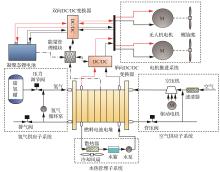
图 11
燃料电池无人机动力系统
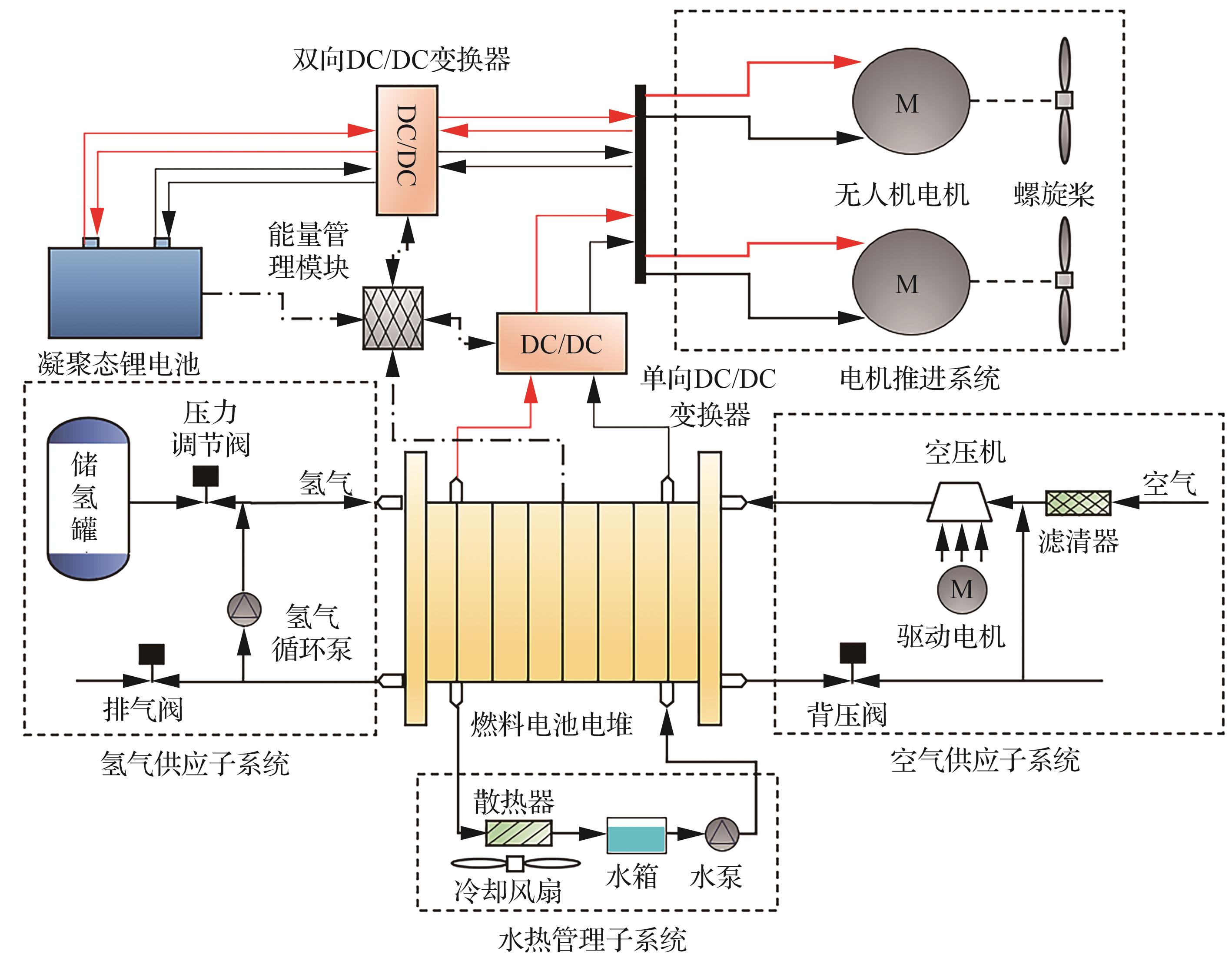
表10
燃料电池动力系统核心关键技术指标预测[79-80]
核心关键 技术 | 指标 | 2025年 | 2030年 | 2035年 |
|---|---|---|---|---|
氢燃料 电池 | 功率密度/(kW·kg-1) | 1.5 | 2 | 2.5 |
| 氢电转化效率/% | 55 | 60 | 65 | |
氢存储 系统 | 氢燃料质量比/% | 25 | 30 | 35 |
| 电机 | 系统功率密度/ (kW·kg-1) | 3 | 4 | 5 |
| 储能电池 | 能量密度/(Wh·kg-1) | 500 | 700 | 1 000 |
表11
电机额定负载点相关参数
| 参数 | 取值 |
|---|---|
| 输出转矩/(N | 69.5 |
| 输入功率/kW | 84.12 |
| 输出功率/kW | 80.05 |
| 给定转速/(r·min-1) | 11 000 |
| 效率/% | 95.17 |
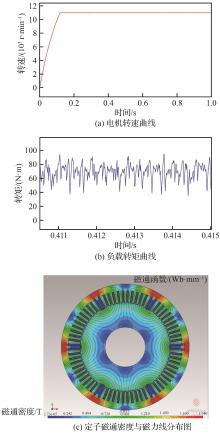
图 12
单台电机仿真结果
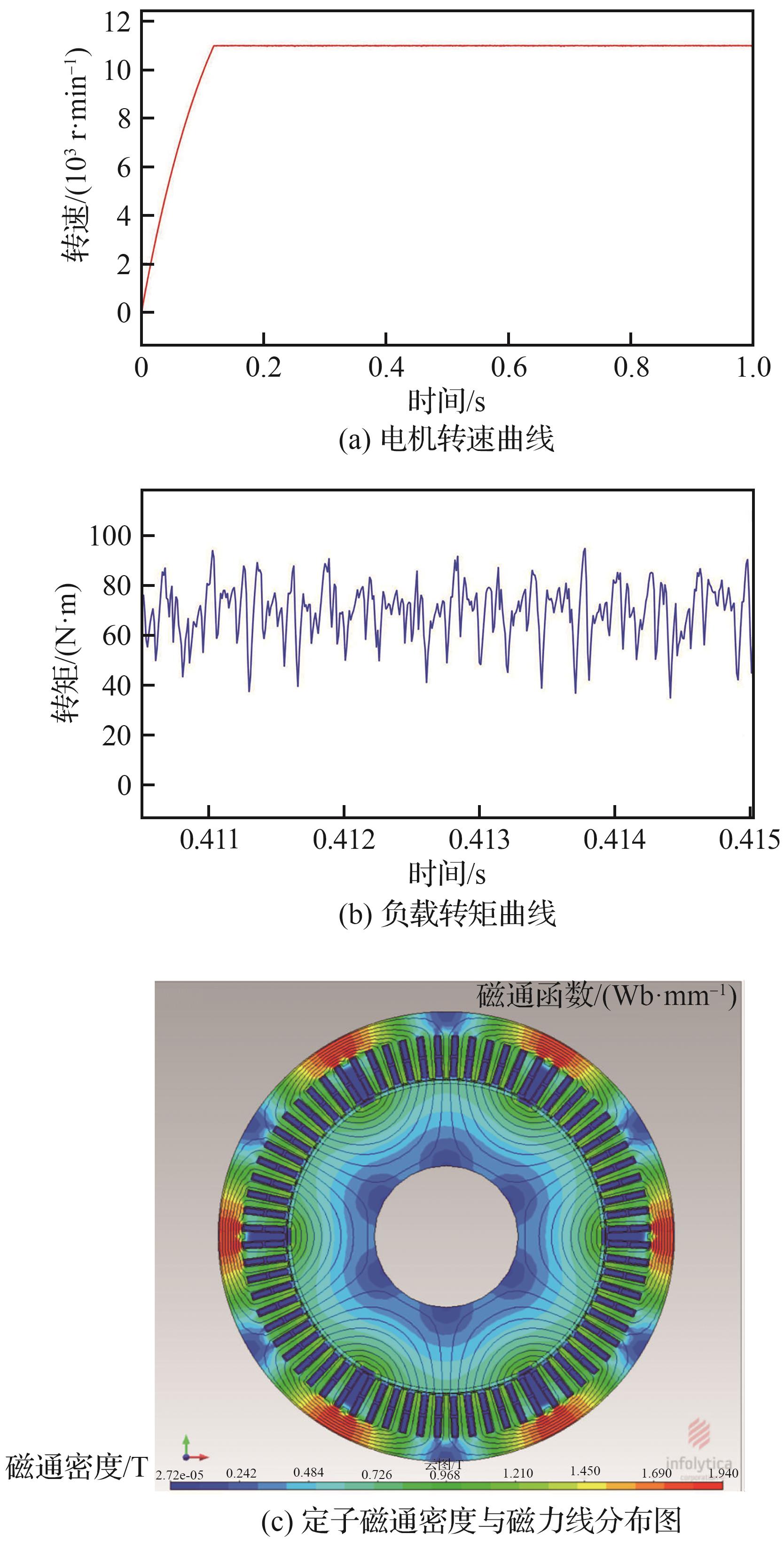
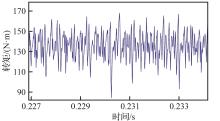
图 13
双电机负载转矩
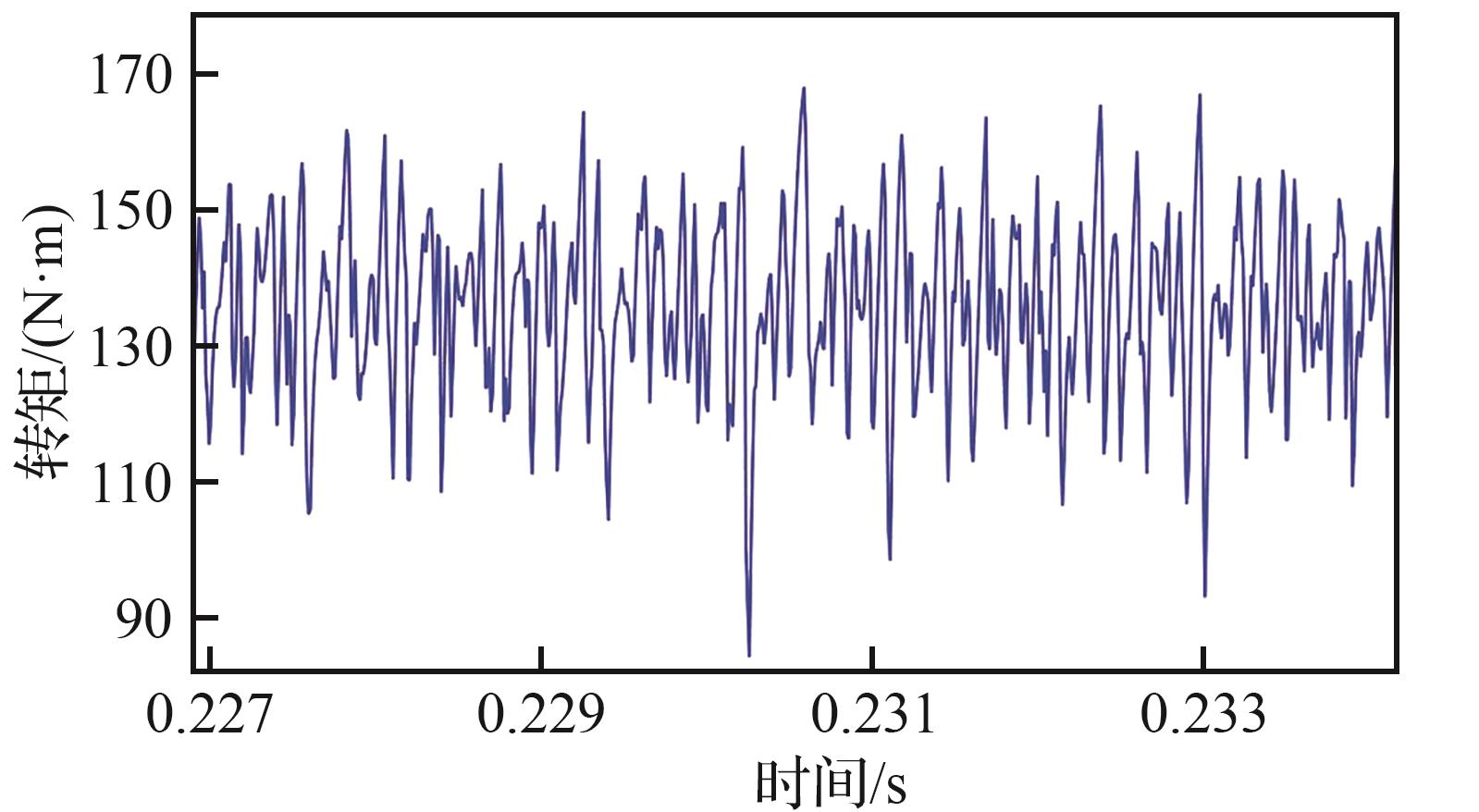
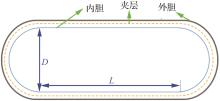
图 14
液氢储罐罐剖面图
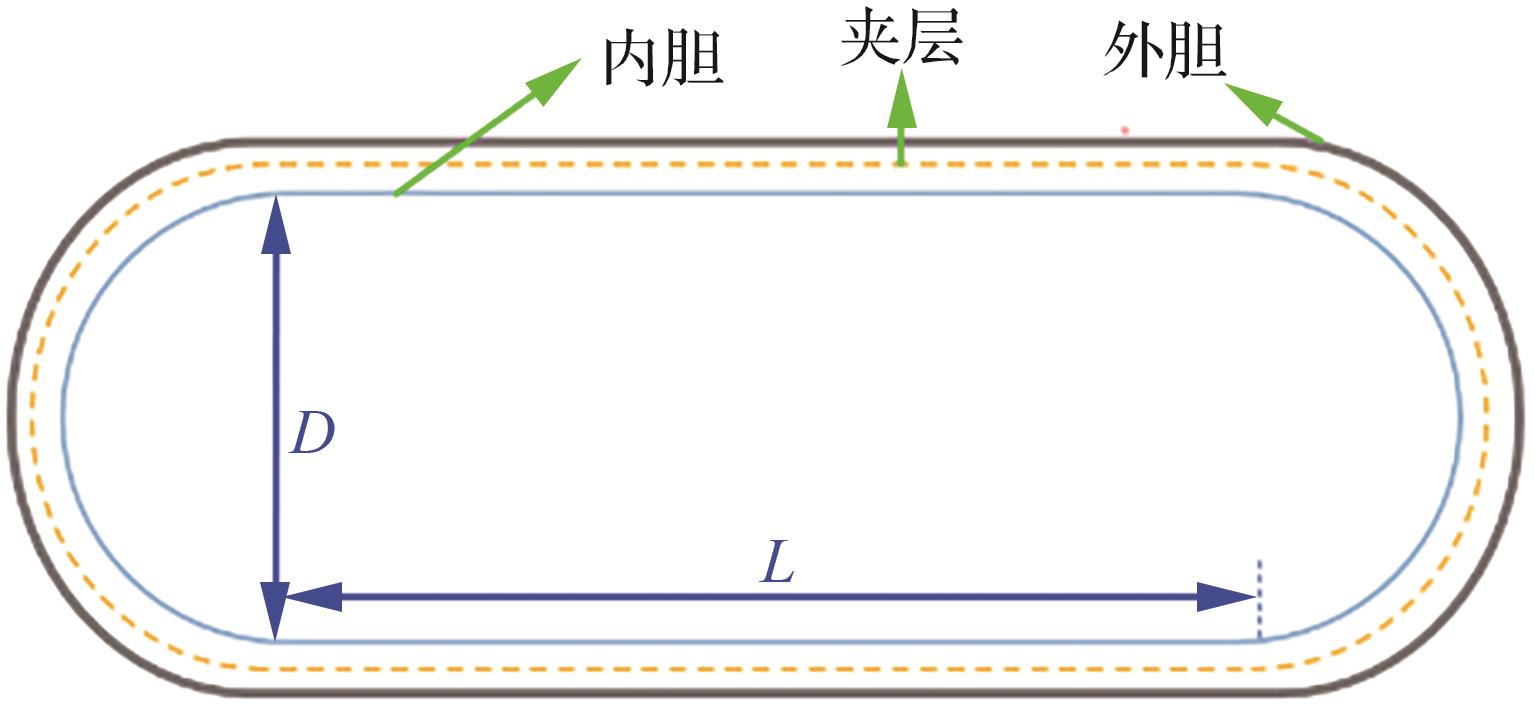
表12
液氢储罐相关设计参数
| 参数 | 数值 |
|---|---|
| 直径/m | 1.2 |
| 筒段长度/m | 3.0 |
| 额定容积/m3 | 4.26 |
| 罐体总质量/kg | 161.3 |
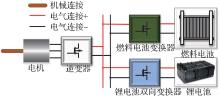
图 15
混合动力系统结构图
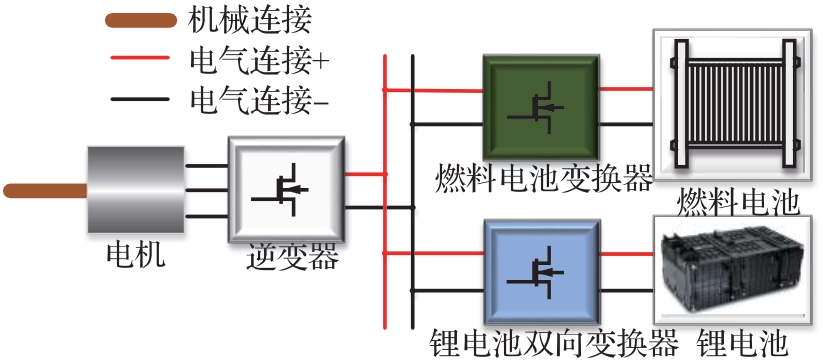
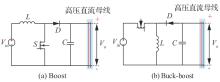
图 16
变换器拓扑结构
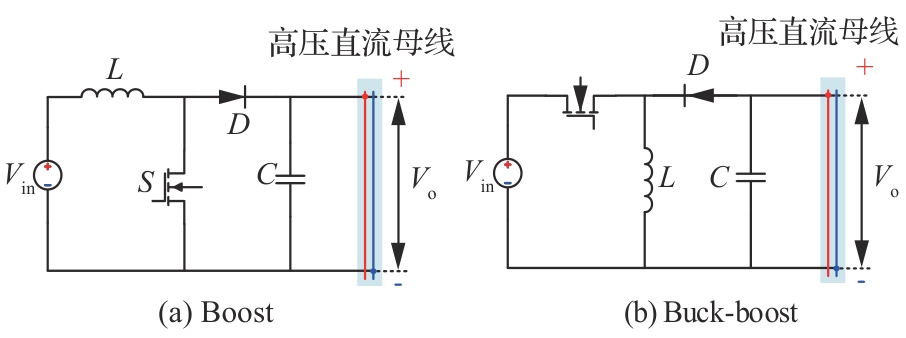
表13
能量管理策略
| SOC状态 | 状态 | ||
|---|---|---|---|
| SOC≤40% | 0 | 1 | |
| 2 | |||
| 3 | |||
| 4 | |||
| 40%<SOC≤80% | 0 | 5 | |
| 6 | |||
| 7 | |||
| 8 | |||
| 9 | |||
| 10 | |||
| SOC>80% | 0 | 11 | |
| 12 | |||
| 13 | |||
| 14 | |||
| 15 |
表14
无人机飞行工况
| 仿真时间/s | 飞行任务阶段 | 需求功率/kW | 电机输出功率/kW | 燃料电池输出功率/kW | 锂电池输出功率/kW |
|---|---|---|---|---|---|
| 0~30 | 起飞 | 161 | 150 | 71 | 90 |
| 30~100 | 爬升 | 156 | 145 | 71 | 85 |
| 100~200 | 巡航 | 71 | 66 | 71 | 0 |
表15
锂电池与燃料电池堆模型参数
| 锂电池参数 | 数值 | 燃料电池堆参数 | 数值 |
|---|---|---|---|
| 初始荷电状态/% | 100 | 额定功率/kW | 120 |
| 电池反应时间/s | 5 | 单体数量 | 315 |
| 内部电阻/Ω | 0.013 333 | 质量功率密度/ (kW·kg-1) | 4.0 |
图 17
典型工况下锂电池关键参数仿真结果
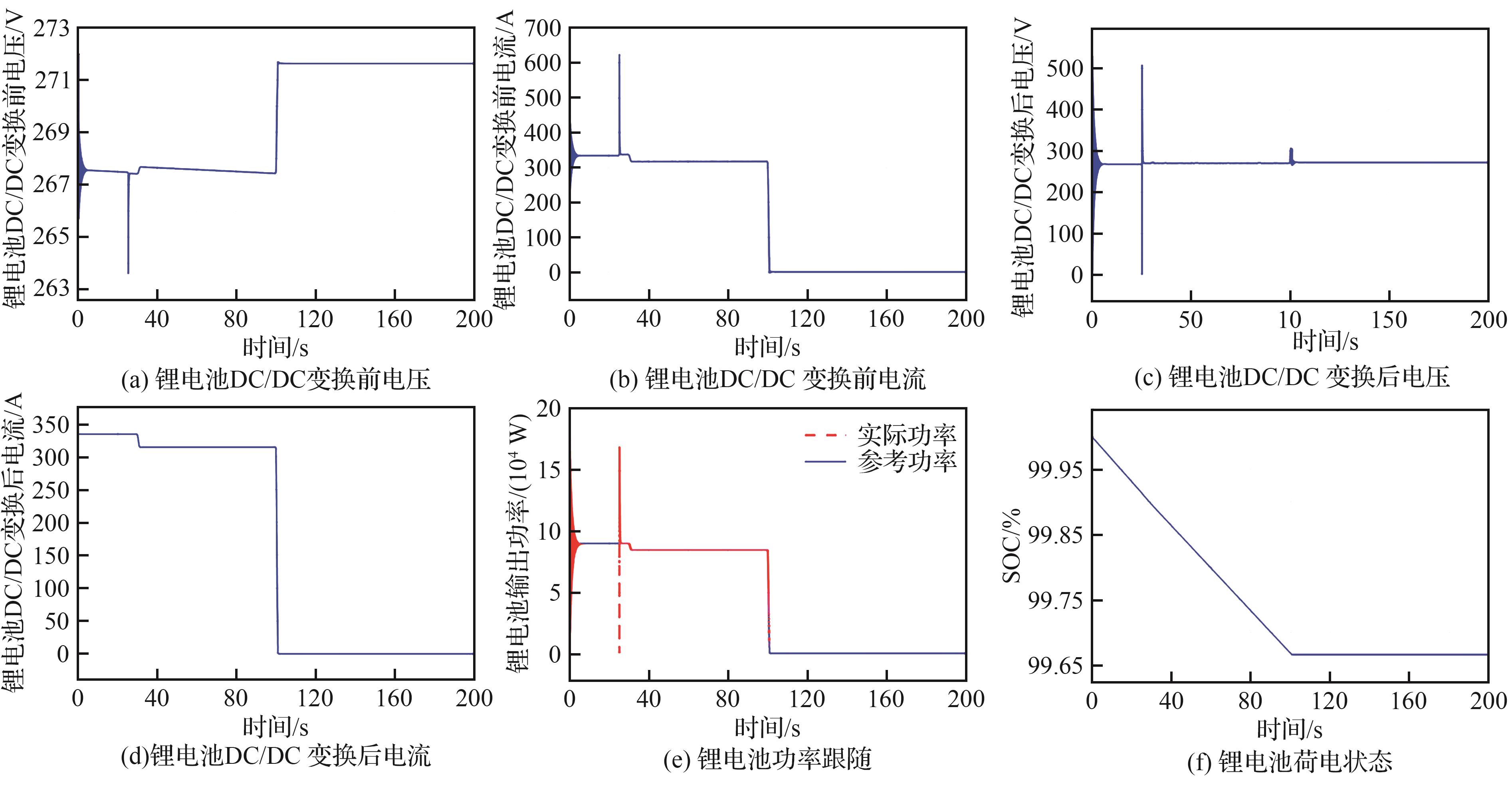
图 18
燃料电池关键参数仿真结果
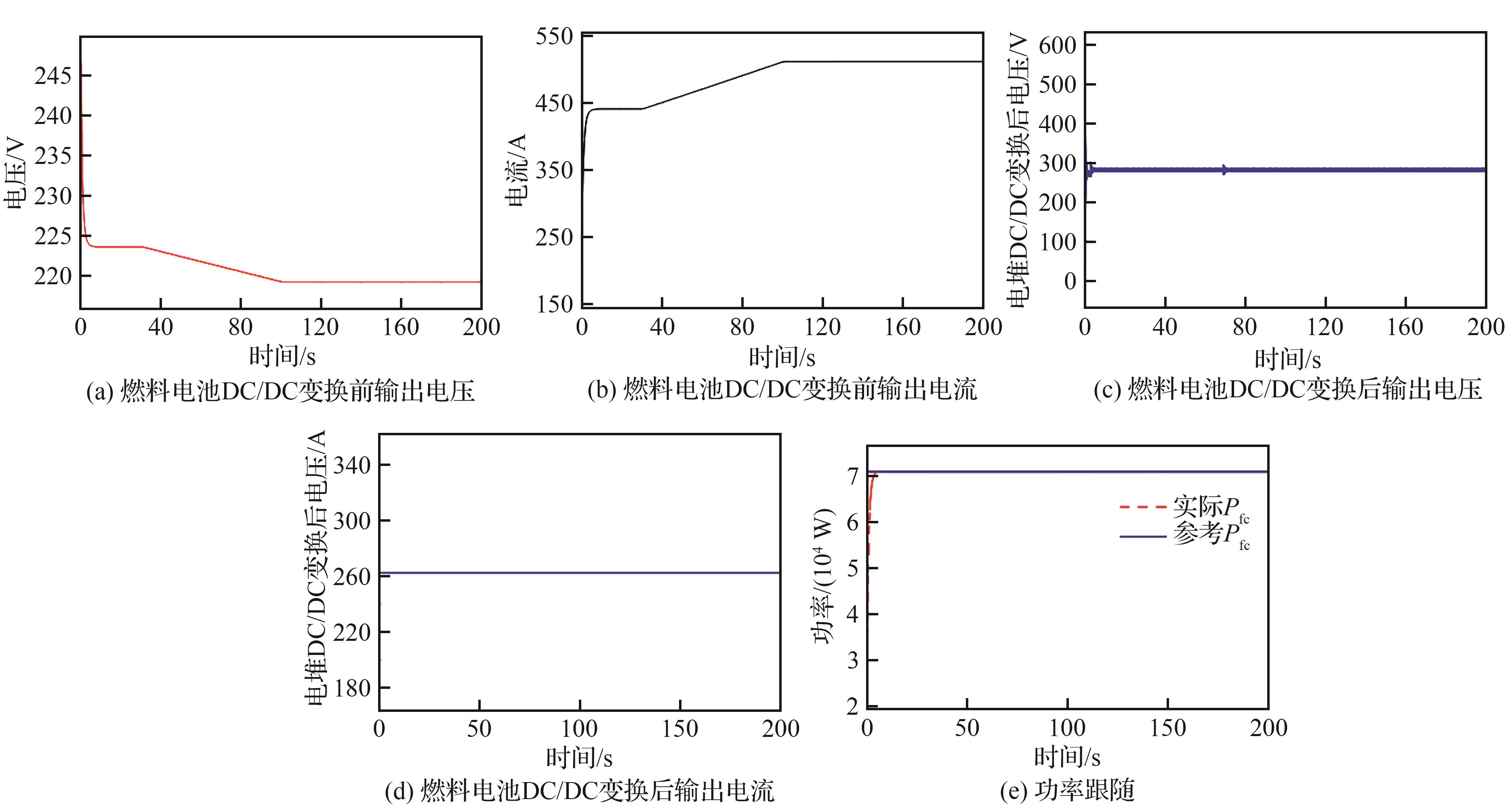
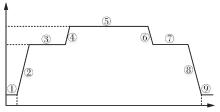
图 19
飞行工况1剖面
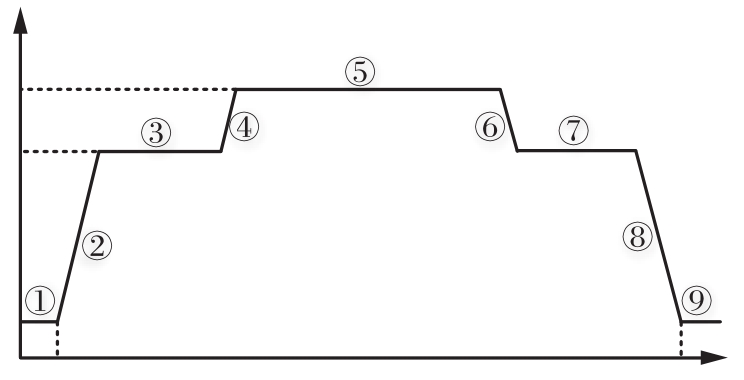
表16
飞行工况1
| 仿真时间/s | 飞行任务阶段 | 需求功率/kW | 电机输出功率/kW | 燃料电池输出功率/kW | 锂电池输出功率/kW |
|---|---|---|---|---|---|
| 0~20 | ① | 161 | 150 | 71 | 90 |
| 20~60 | ② | 156 | 145 | 71 | 85 |
| 60~80 | ③ | 71 | 56 | 71 | -10 |
| 80~120 | ④ | 156 | 145 | 71 | 85 |
| 120~150 | ⑤ | 78 | 73 | 81 | 0 |
| 150~160 | ⑥ | 65 | 60 | 81 | 0 |
| 160~200 | ⑦ | 65 | 60 | 81 | 0 |
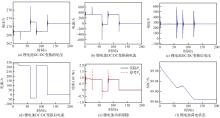
图 20
飞行工况1下锂电池关键参数仿真结果
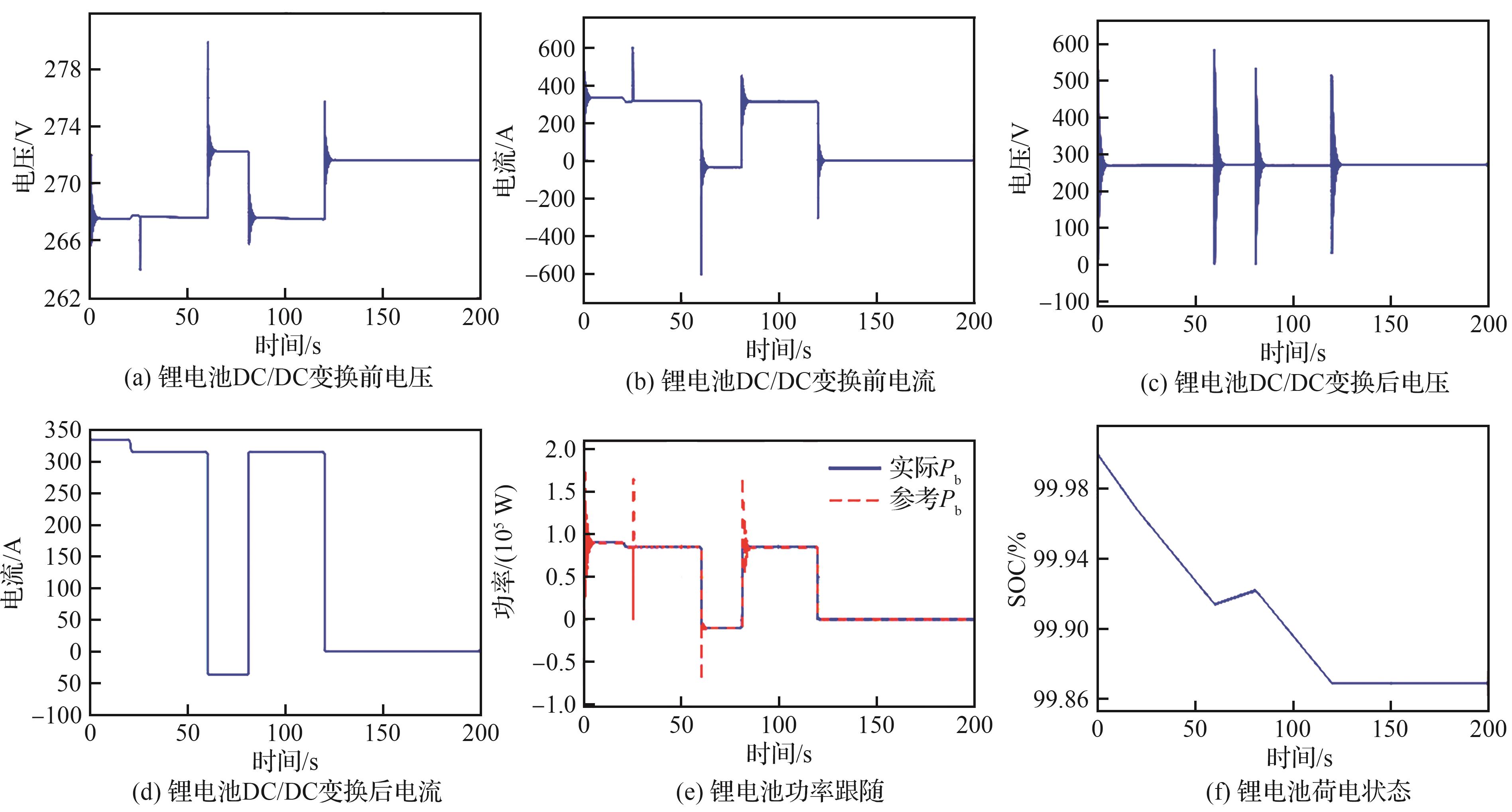
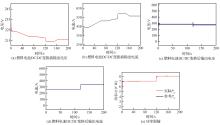
图 21
飞行工况1下燃料电池关键参数仿真结果
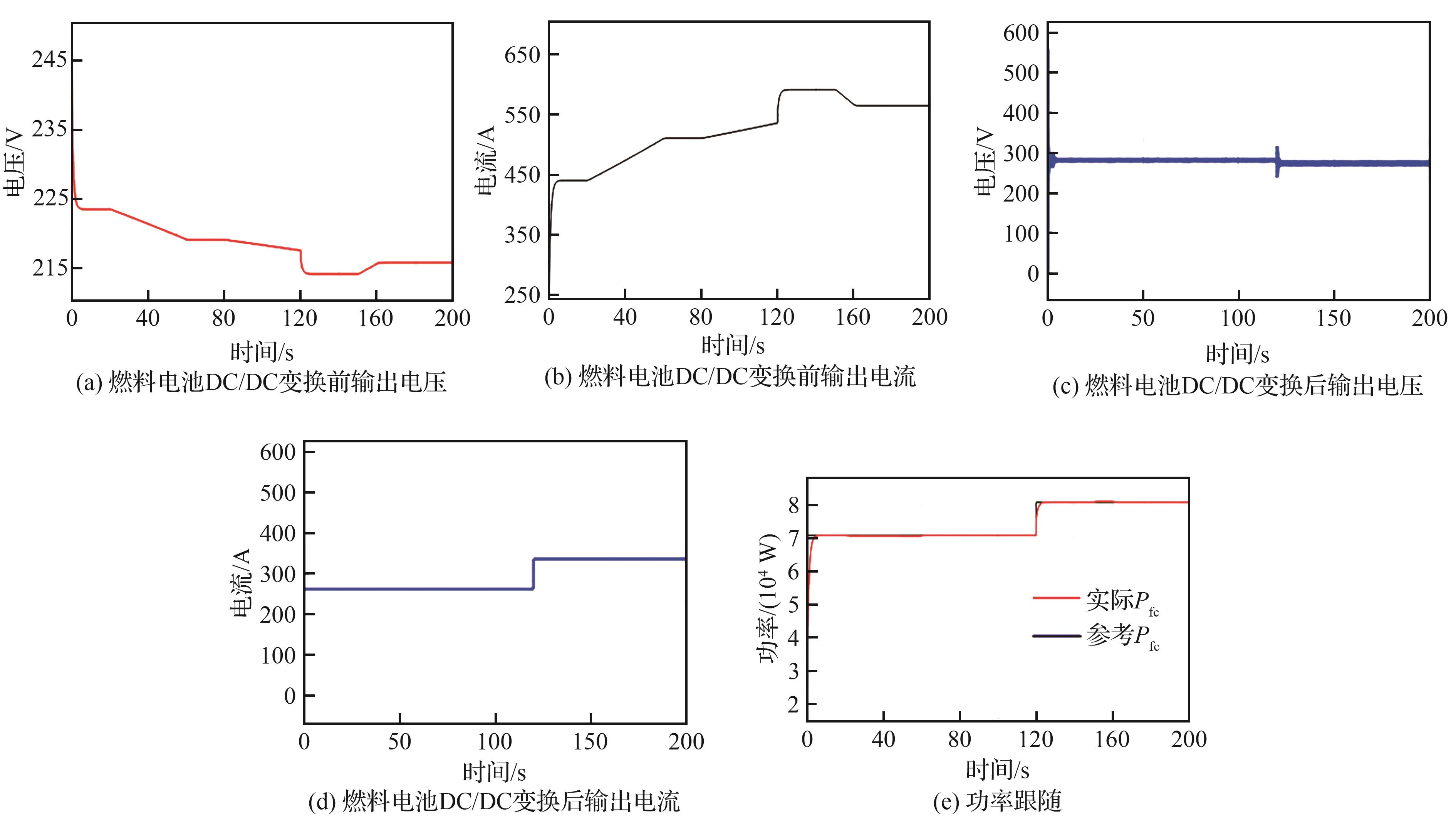
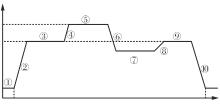
图 22
飞行工况2剖面
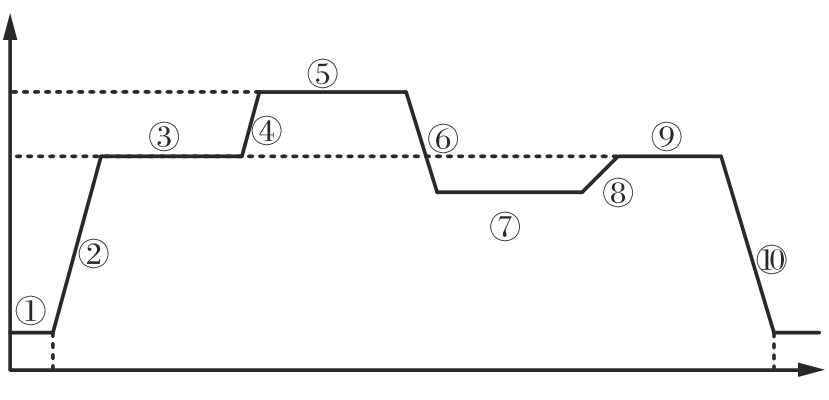
表17
飞行工况2
| 仿真时间/s | 飞行任务阶段 | 需求功率/kW | 电机输出功率/kW | 燃料电池输出功率/kW | 锂电池输出功率/kW |
|---|---|---|---|---|---|
| 0~20 | ① | 161 | 150 | 71 | 90 |
| 20~60 | ② | 156 | 145 | 71 | 85 |
| 60~90 | ③ | 71 | 56 | 71 | -10 |
| 90~110 | ④ | 156 | 143 | 71 | 83 |
| 110~150 | ⑤ | 78 | 71 | 71 | 0 |
| 150~160 | ⑥ | 78~65 | 63 | 71 | 0 |
| 160~175 | ⑦ | 65 | 63 | 78.1 | -10 |
| 175~190 | ⑧ | 154 | 143 | 78.1 | 83 |
| 190~200 | ⑨ | 58 | 54 | 78.1 | 0 |
图 23
飞行工况2下锂电池关键参数仿真结果
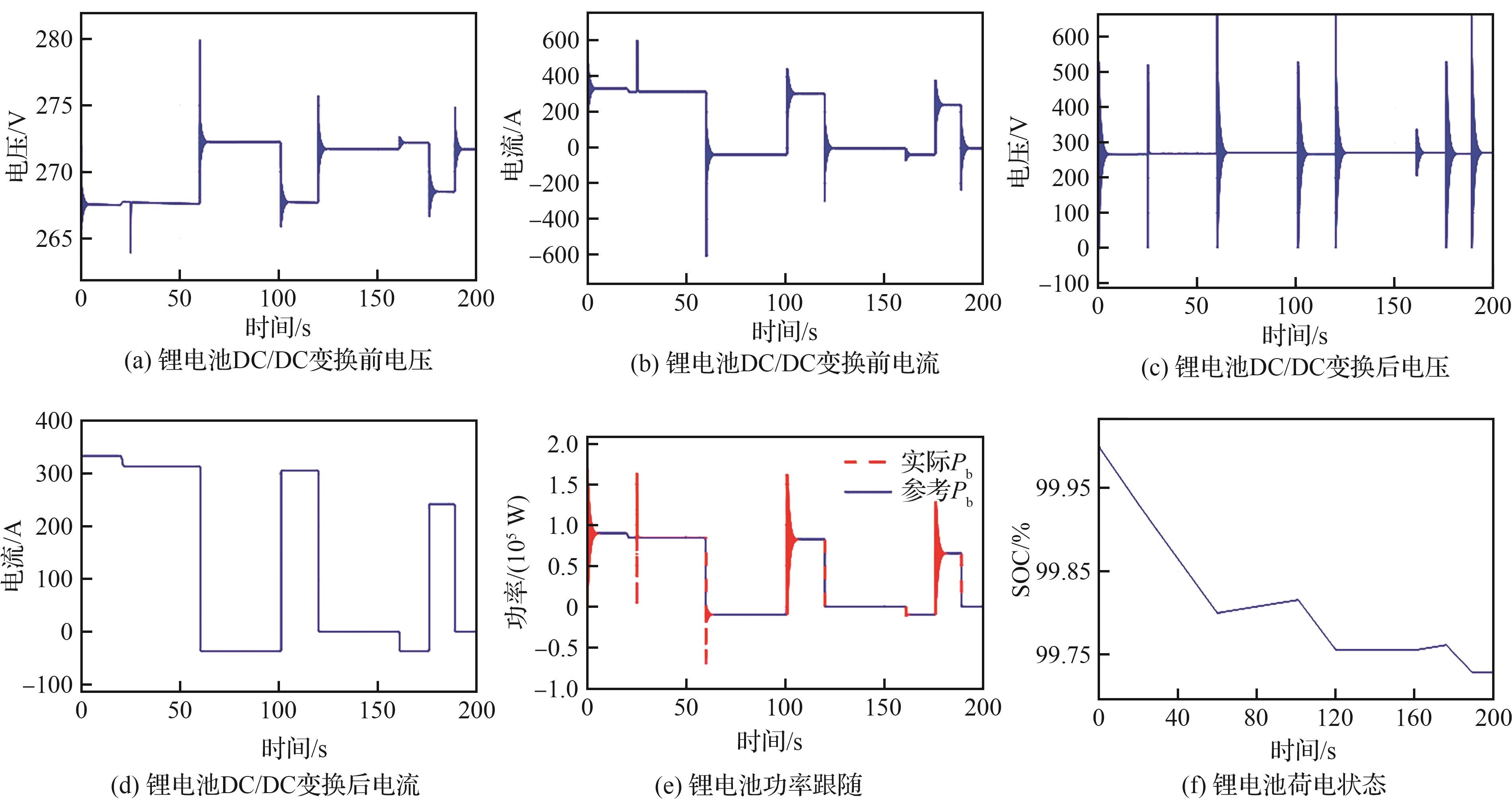
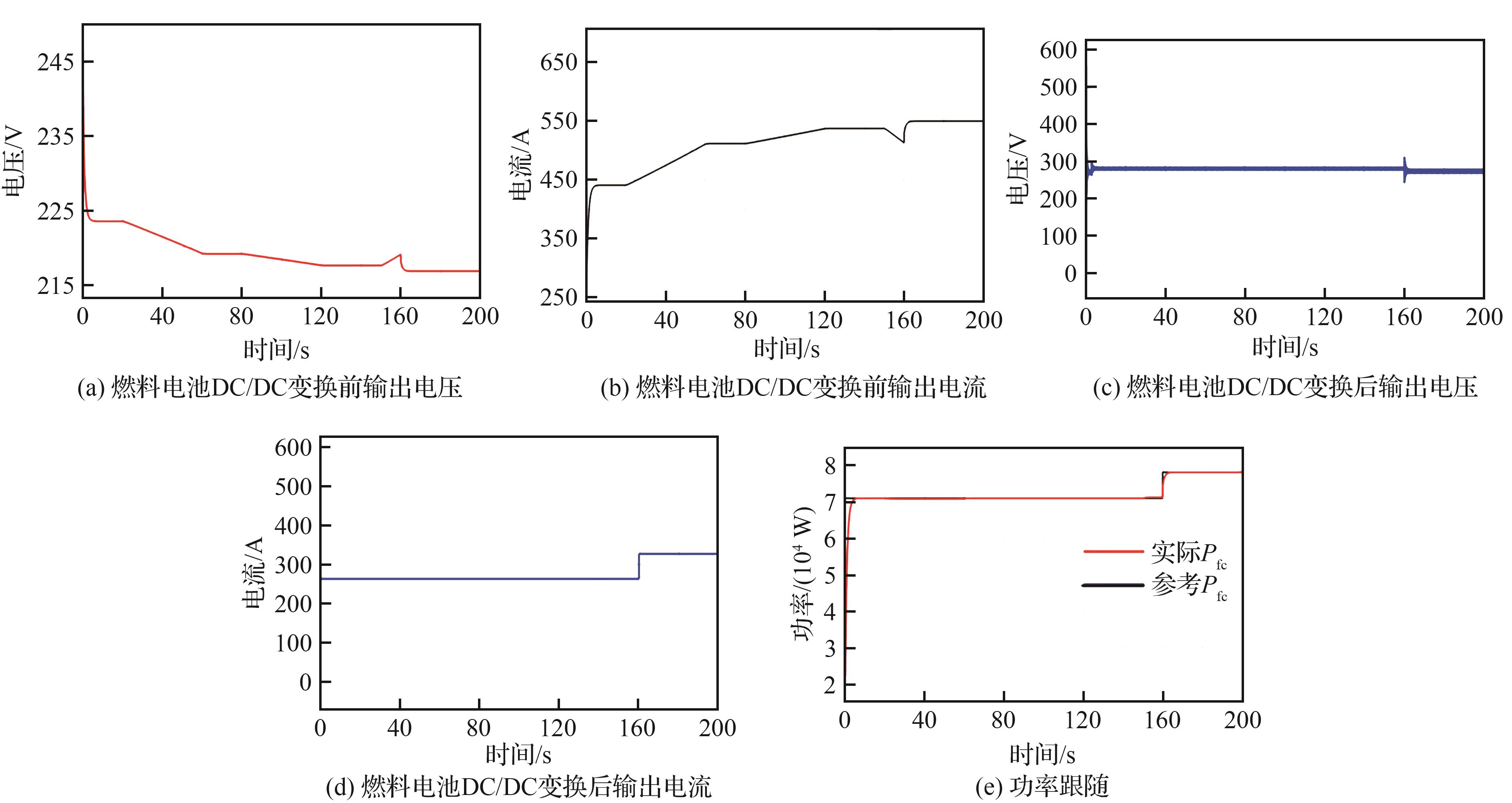
图 24
飞行工况2下燃料电池关键参数仿真结果
| [1] | 韩玉琪. 航空氢动力研发进展[J]. 大飞机, 2024(8): 15-19. |
| HAN Y Q. Development progress of hydrogen powered aviation in 2022[J]. Jetliner, 2024(8): 15-19 (in Chinese). | |
| [2] | 国家能源局. 中国氢能发展报告(2025)[M]. 北京: 人民日报出版社, 2025. |
| National Energy Administration. China hydrogen energy development report (2025)[R]. Beijing: People's Daily Press, 2025 (in Chinese). | |
| [3] | ZHANG Q, CHEN W M, LING W. Policy optimization of hydrogen energy industry considering government policy preference in China[J]. Sustainable Production and Consumption, 2022, 33: 890-902. |
| [4] | 沈海军. 向“永不着陆”进军的太阳能飞机[J]. 大飞机, 2024(2): 67-71. |
| SHEN H J. Solar-powered aircraft marching towards “never landing”[J]. Jetliner, 2024(2): 67-71 (in Chinese). | |
| [5] | 全国人民代表大会. 中华人民共和国能源法[M]. 北京: 中国法制出版社, 2024. |
| The National People’s Congress. Energy Law of the People’s Republic of China[M]. Beijing: China Legal Publishing House, 2024 (in Chinese). | |
| [6] | GOLLNOW M. Passenger aircraft towards zero emission with hydrogen and fuel cells[D]. Germany:Hamburg University of Applied Science, 2022: 23-26. |
| [7] | 向锦武, 马凯, 阚梓, 等. 氢能源无人机关键技术研究进展[J]. 航空学报, 2025, 46(5): 531603. |
| XIANG J W, MA K, KAN Z, et al. Review of key technologies for hydrogen powered unmanned aerial vehicles[J]. Acta Aeronautica et Astronautica Sinica, 2025, 46(5): 531603 (in Chinese). | |
| [8] | KARPUK S, FREUND Y, HANKE-RAUSCHENBACH R. Potential of hydrogen fuel cell aircraft for commercial applications with advanced airframe and propulsion technologies[J]. Aerospace, 2025, 12(1): 35. |
| [9] | 中国民用航空飞行学院. 中飞院氢能源无人机首飞成功! [EB/OL]. (2025-04-22) [2025-06-13]. . |
| Civil Aviation Flight University of China. The first flight of the hydrogen-powered unmanned aerial vehicle of the Civil Aviation University of China was successful! [EB/OL]. (2025-04-22) [2025-06-13]. (in Chinese). | |
| [10] | 温杰. “全球观察者”无人机完成首次氢燃料动力飞行试验[J]. 国际航空, 2011(2): 26-28. |
| WEN J. Global observer makes hydrogen-powered flight[J]. International Aviation, 2011(2): 26-28 (in Chinese). | |
| [11] | MENDEZ A, LEO T J, HERREROS M A. Current state of technology of fuel cell power systems for autonomous underwater vehicles[J]. Energies, 2014, 7(7): 4676-4693. |
| [12] | 温杰. “鬼怪眼”无人机实现首飞[J]. 兵器知识, 2012(9): 54-56. |
| WEN J. “Ghost Eye” UAV realizes its first flight[J]. Ordnance Knowledge, 2012(9): 54-56 (in Chinese). | |
| [13] | ALASWAD A, OMRAN A, SODRE J R, et al. Technical and commercial challenges of proton-exchange membrane (PEM) fuel cells[J]. Energies, 2021, 14(1): 144. |
| [14] | ZENG L H, FU J, SHENG C, et al. Energy management for proton exchange membrane fuel cell-lithium battery hybrid power systems based on real-time prediction and optimization under multimodal information[J]. Journal of Cleaner Production, 2024, 434: 140225. |
| [15] | KUCHARSKI M, MILEWSKI M, DZIEWOŃSKI B, et al. Flight capability analysis among different latitudes for solar unmanned aerial vehicles[J]. Energies, 2025, 18(6): 1331. |
| [16] | LIU X, LI K. Energy storage devices in electrified railway systems: A review[J]. Transportation Safety and Environment, 2020, 2(3): 183-201. |
| [17] | ZUBI G, DUFO-LÓPEZ R, CARVALHO M, et al. The lithium-ion battery: State of the art and future perspectives[J]. Renewable and Sustainable Energy Reviews, 2018, 89: 292-308. |
| [18] | SHEN Z N, LIU S Q, ZHU W, et al. A review on key technologies and developments of hydrogen fuel cell multi-rotor drones[J]. Energies, 2024, 17(16): 4193. |
| [19] | SORNEK K, AUGUSTYN-NADZIEJA J, ROSIKOŃ I, et al. Status and development prospects of solar-powered unmanned aerial vehicles: A literature review[J]. Energies, 2025, 18(8): 1924. |
| [20] | 高彦峰, 宋琦, 谢高峰, 等. 临近空间无人机液氢供能系统技术分析[J]. 航空工程进展, 2024, 15(2): 11-24. |
| GAO Y F, SONG Q, XIE G F, et al. Analysis of liquid hydrogen power systems for near space unmanned aerial vehicles[J]. Advances in Aeronautical Science and Engineering, 2024, 15(2): 11-24 (in Chinese). | |
| [21] | MARINO C, NUCARA A, PANZERA M F, et al. Design and construction of a UAV for high atmosphere flight powered by hydrogen fuel cell[J]. International Journal of Heat and Technology, 2023, 41(1): 259-264. |
| [22] | 王菡, 沈永强, 向纪鑫, 等. 长航时氢能源混合动力无人机构型设计与气动分析[J]. 太原理工大学学报, 2022, 53(4): 751-758. |
| WANG H, SHEN Y Q, XIANG J X, et al. Configuration design and aerodynamic analysis of long-endurance hydrogen energy hybrid powered unmanned aerial vehicle[J]. Journal of Taiyuan University of Technology, 2022, 53(4): 751-758 (in Chinese). | |
| [23] | 开源证券.氢能深度系列(一): 氢能无人机商业化初启, 氢能+低空双蓝海赛道腾飞[EB/OL]. (2025-03-27) [2025-06-13]. . |
| Open Source Securities. in-depth series on hydrogen energy (Part one): The hydrogen commercial initiation, unmanned aerial vehicle, the hydrogen plus low double blue ocean off track [EB/OL]. (2025-03-27) [2025-06-13]. (in Chinese). | |
| [24] | WANG B, HOU Z X, LIU Z W, et al. Preliminary design of a small unmanned battery powered tailsitter[J]. International Journal of Aerospace Engineering, 2016, 2016(1): 3570581. |
| [25] | 张永杰, 王鸿琛, 崔博, 等. 氢能客机低温液氢储罐装机环境适应性研究进展[J]. 航空学报, 2025, 46(9): 629870. |
| ZHANG Y J, WANG H C, CUI B, et al. Research progress in installation environment adaptability of cryogenic liquid hydrogen tanks for hydrogen-powered aircraft[J]. Acta Aeronautica et Astronautica Sinica, 2025, 46(9): 629870 (in Chinese). | |
| [26] | 蒋瑾, 钟伯文, 符松. 翼身融合布局飞机总体参数对气动性能的影响[J]. 航空学报, 2016, 37(1): 278-289. |
| JIANG J, ZHONG B W, FU S. Influence of overall configuration parameters on aerodynamic characteristics of a blended-wing-body aircraft[J]. Acta Aeronautica et Astronautica Sinica, 2016, 37(1): 278-289 (in Chinese). | |
| [27] | HOSPODÁŘ P, KLESA J, DEMOVIČ D, et al. Aerodynamic and structural aspects of a distributed propulsion system for commuter airplane[J]. Aerospace, 2022, 9(11): 712. |
| [28] | LUO S J, ENG T Z, TANG Z L, et al. Multidisciplinary optimization of aircraft aerodynamics for distributed propulsion configurations[J]. Applied Sciences, 2024, 14(17): 7781. |
| [29] | “天目山一号”全球首款百公里级氢动力长航程多旋翼无人机首飞成功[EB/OL]. (2024-08-26)[2025-06-13]. . |
| The world’s first hydrogen-powered multi-rotor UAV with a 100 range -kilometer,“Tianmushan No. 1” successfully completed its maiden flight[EB/OL]. (2024-08-26)[2025-06-13]. (in Chinese). | |
| [30] | 曹亚铂, 孙杰. 电动飞机——绿色航空“新选择”[N]. 中国国防报, 2023-06-12(2). |
| CAO Y B, SUN J.Electric aircraft——A new choice for green aviation[N]. China National Defense Daily, 2023-06-12(2) (in Chinese). | |
| [31] | 新华网. 氢动力无人机又有新发展[EB/OL]. (2025-04-27)[2025-06-16]. . |
| Xinhua News Agency. Hydrogen-powered UAVs make new progress. [EB/OL]. (2025-04-27) [2025-06-16]. (in Chinese). | |
| [32] | MILLS G L, BUCHHOLTZ B, OLSEN A. Design, fabrication and testing of a liquid hydrogen fuel tank for a long duration aircraft[J]. AIP Conference Proceedings, 2012, 1434(1): 773-780. |
| [33] | SEECKT K, SCHOLZ D. Jet versus prop, hydrogen versus kerosene for a regional freighter aircraft[C]∥German Aerospace Congress 2009. 2009. |
| [34] | 徐志红, 朱晓雯, 徐彩妮. 氢燃料电池的结构特性与氢燃料电池汽车的发展概述[J]. 时代汽车, 2023(13): 88-90. |
| XU Z H, ZHU X W, XU C N. An overview of structure characteristics of hydrogen fuel cells and hydrogen fuel cell car development[J]. Auto Time, 2023(13): 88-90 (in Chinese). | |
| [35] | WIJEWARDENA GAMALATH K L, PEIRIS B M P. Theoretical approach to the physics of fuel cells[J]. International Letters of Chemistry, Physics and Astronomy, 2012, 2: 15-27. |
| [36] | LENG Y, YANG D J, MING P W, et al. Improvement of corrosion resistance and electrical conductivity of stainless steel 316 L bipolar plate by pickling and passivation[J]. World Electric Vehicle Journal, 2021, 12(3): 101. |
| [37] | YOO B, LIM K, SALIHI H, et al. A parametric study on the performance requirements of key fuel cell components for the realization of high-power automotive fuel cells[J]. International Journal of Heat and Mass Transfer, 2022, 186: 122477. |
| [38] | 吕波, 邵志刚, 瞿丽娟, 等. PEMFC用聚丙烯/酚醛树脂/石墨复合双极板研究[J]. 电源技术, 2019, 43(9): 1488-1491. |
| LV B, SHAO Z G, QU L J, et al. Study on polypropylene/phenolic resin/natural flake graphite composite bipolar plates for PEMFC[J]. Chinese Journal of Power Sources, 2019, 43(9): 1488-1491 (in Chinese). | |
| [39] | XIA L C, NI M, XU Q D, et al. Optimization of catalyst layer thickness for achieving high performance and low cost of high temperature proton exchange membrane fuel cell[J]. Applied Energy, 2021, 294: 117012. |
| [40] | 中国产业发展促进会氢能分会. 中国氢能技术发展研究报告2024 [R]. 北京: 百人会低碳院, 2025. |
| Hydrogen Energy Branch of China Industry Development Promotion Association. Research report on the development of hydrogen energy technology in China 2024 [R]. Beijing: Low Carbon Institute of the 100-person Forum, 2025 (in Chinese). | |
| [41] | 张钰凡, 马睿, 张羽翔, 等. 航空燃料电池推进系统能量管理策略研究综述[J]. 中国电机工程学报, 2023, 43(13): 5012-5025. |
| ZHANG Y F, MA R, ZHANG Y X, et al. A review on the energy management strategy for aviation fuel cell propulsion system[J]. Proceedings of the CSEE, 2023, 43(13): 5012-5025 (in Chinese). | |
| [42] | SHANG Q M, SUN Y B, ZHOU Y, et al. Exploring the optimization of energy management strategy for hybrid ships based on the Grey Wolf optimization algorithm[C]∥2023 7th International Conference on Transportation Information and Safety (ICTIS). Piscataway: IEEE Press, 2023: 298-305. |
| [43] | 张国瑞, 李奇, 韩莹, 等. 基于运行模式和动态混合度的燃料电池混合动力 有轨电车等效氢耗最小化能量管理方法研究[J]. 中国电机工程学报, 2018, 38(23): 6905-6914. |
| ZHANG G R, LI Q, HAN Y, et al. Study on equivalent consumption minimization strategy based on operation mode and DDOH for fuel cell hybrid tramway[J]. Proceedings of the CSEE, 2018, 38(23): 6905-6914 (in Chinese). | |
| [44] | 潘磊, 王根伟, 李志强, 等. 氢能无人机等效消耗最小化策略设计[J]. 太原理工大学学报, 2024, 55(4): 670-676. |
| PAN L, WANG G W, LI Z Q, et al. Design of equivalent consumption minimization strategy for hydrogen UAV[J]. Journal of Taiyuan University of Technology, 2024, 55(4): 670-676 (in Chinese). | |
| [45] | QUAN R, LI Z X, LIU P, et al. Minimum hydrogen consumption-based energy management strategy for hybrid fuel cell unmanned aerial vehicles using direction prediction optimal foraging algorithm[J]. Fuel Cells, 2023, 23(2): 221-236. |
| [46] | 李奇, 刘鑫, 孟翔, 等. 基于近端策略优化算法的燃料电池混合动力系统综合价值损耗最小能量管理方法[J]. 中国电机工程学报, 2024, 44(12): 4788-4798. |
| LI Q, LIU X, MENG X, et al. Comprehensive value depletion minimization energy management method for fuel cell hybrid systems based on proximal policy optimization algorithm[J]. Proceedings of the CSEE, 2024, 44(12): 4788-4798 (in Chinese). | |
| [47] | LI P, HUANGFU Y G, TIAN C Y, et al. An improved energy management strategy for fuel cell hybrid vehicles based on the Pontryagin’s minimum principle[C]∥2021 IEEE Industry Applications Society Annual Meeting (IAS). Piscataway: IEEE Press, 2022: 1-6. |
| [48] | 闫炬壮, 杨文将, 白明亮, 等. 高功率密度航空推进超导电机关键技术分析[J]. 航空动力, 2024(2): 70-74. |
| YAN J Z, YANG W J, BAI M L, et al. Technical analysis of high power density aero-propulsion superconducting machines[J]. Aerospace Power, 2024(2): 70-74 (in Chinese). | |
| [49] | SOLTANI M, NUZZO S, BARATER D, et al. Investigation of the temperature effects on copper losses in hairpin windings[J]. Machines, 2022, 10(8): 715. |
| [50] | OFweek维科网. 超导电机: 新能源汽车驱动技术的颠覆性突破与未来挑战[EB/OL]. (2025-02-25)[2025-06-13]. . |
| OFweek Vicko Network. Superconducting motor disruptive breakthroughs and new energy vehicles driving technology of future challenges [EB/OL]. (2025-02-25)[2025-06-13]. (in Chinese). | |
| [51] | 张卓然, 陆嘉伟, 张伟秋, 等. 飞机电推进系统高效能电机及其驱动控制技术[J]. 中国电机工程学报, 2024, 44(16): 6610-6631. |
| ZHANG Z R, LU J W, ZHANG W Q, et al. High-performance electric machine and drive technologies for aircraft electric propulsion systems[J]. Proceedings of the CSEE, 2024, 44(16): 6610-6631 (in Chinese). | |
| [52] | WANG H, PEI X Z, YIN B Y, et al. A novel double-sided offset stator axial-flux permanent magnet motor for electric vehicles[J]. World Electric Vehicle Journal, 2022, 13(3): 52. |
| [53] | 王秋良. 高磁场超导磁体科学[M]. 北京: 科学出版社, 2008. |
| WANG Q L. High magnetic field superconducting magnet science[M]. Beijing: Science Press, 2008 (in Chinese). | |
| [54] | 陈震宇, 张胜楠. 实用化超导线带材简介[J]. 现代物理知识, 2025, 37(1): 11-19. |
| CHEN Z Y, ZHANG S N. Brief introduction of practical superconducting tape[J]. Modern Physics, 2025, 37(1): 11-19 (in Chinese). | |
| [55] | 陶杰, 周志坡, 何韩军, 等. G-M低温制冷机的研究进展[J]. 真空与低温, 2025, 31(1): 88-97. |
| TAO J, ZHOU Z P, HE H J, et al. Rencent development of G-M cryocooler[J]. Vacuum and Cryogenics, 2025, 31(1): 88-97 (in Chinese). | |
| [56] | 宋东彬, 闫炬壮, 杨文将, 等. 面向电动航空的高温超导电机技术研究发展[J]. 航空学报, 2023, 44(9): 027469. |
| SONG D B, YAN J Z, YANG W J, et al. Technology development of high temperature superconducting machine for electric aviation[J]. Acta Aeronautica et Astronautica Sinica, 2023, 44(9): 027469 (in Chinese). | |
| [57] | KOMIYA M, AIKAWA T, SASA H, et al. Design study of 10 MW REBCO fully superconducting synchronous generator for electric aircraft[J]. IEEE Transactions on Applied Superconductivity, 2019, 29(5): 5204306. |
| [58] | 廖红波, 张雪霞, 岳嘉玲, 等. 氢气储运技术发展及展望[J]. 太阳能学报, 2024, 45(11): 691-699. |
| LIAO H B, ZHANG X X, YUE J L, et al. Development and prospect of hydrogen storage and transportation technology[J]. Acta Energiae Solaris Sinica, 2024, 45(11): 691-699 (in Chinese). | |
| [59] | KIM M S, JEON H K, LEE K W, et al. Analysis of hydrogen filling of 175 liter tank for large-sized hydrogen vehicle[J]. Applied Sciences, 2022, 12(10): 4856. |
| [60] | LI J W, WENG H D, YANG Q Q, et al. Data-driven diagnosis method of high-pressure hydrogen leakage based on actual driving conditions and probabilistic neutral network[J]. International Journal of Hydrogen Energy, 2024, 71: 411-421. |
| [61] | RAMPAI M M, MTSHALI C B, SEROKA N S, et al. Hydrogen production, storage, and transportation: Recent advances[J]. RSC Advances, 2024, 14(10): 6699-6718. |
| [62] | 朱斌, 杨少柒, 郭梁, 等. 机载液氢燃料储供系统发展现状与展望[J]. 航空学报, 2025, 46(16): 231682. |
| ZHU B, YANG S Q, GUO L, et al. Development and prospects of on-borne liquid hydrogen fuel storage and supply system[J]. Acta Aeronautica et Astronautica Sinica, 2025, 46(16): 231682 (in Chinese). | |
| [63] | MILLIS M G, TORNABENE R T, JURNS J M, et al. Hydrogen fuel system design trades for high-altitude long-endurance remotely-operated aircraft: NASA/TM-2009-215521[R]. Washington, D.C.: NASA, 2009. |
| [64] | 纪宇晗, 曾凡苍, 王翔宇, 等. 氢燃料电池支线飞机概念设计与性能分析[J]. 航空学报, 2025, 46(9): 630613. |
| JI Y H, ZENG F C, WANG X Y, et al. Concept design and performance analysis of hydrogen fuel cell regional aircraft[J]. Acta Aeronautica et Astronautica Sinica, 2025, 46(9): 630613 (in Chinese). | |
| [65] | DUTCZAK J. Liquefied and chemical hydrogen storage in contemporary small drones’ fuel cell propulsion systems[J]. IOP Conference Series: Materials Science and Engineering, 2018, 421: 042015. |
| [66] | SWIDER-LYONS K, MACKRELL J A, RODGERSA, et al. Hydrogen fuel cell propulsion for long endurance small UAVs[C]∥AIAA Centennial of Naval Aviation Forum. Reston: AIAA, 2011. |
| [67] | KANG D, YUN S, KIM B K. Review of the liquid hydrogen storage tank and insulation system for the high-power locomotive[J]. Energies, 2022, 15(12): 4357. |
| [68] | 氢启未来网. 国内首个吨级液氢eVTOL试飞成功,同尘低温推动航空领域绿色革命[EB/OL]. (2025-01-13)[2025-06-13]. . |
| Qingqi Future Net. China’s first ton-class LH2 eVTOL test-flown; Tongchen Cryo drives aviation green revolution. [EB/OL]. (2025-01-13)[2025-06-13]. (in Chinese). | |
| [69] | WANG Z H, MÉRIDA W. Thermal performance of cylindrical and spherical liquid hydrogen tanks[J]. International Journal of Hydrogen Energy, 2024, 53: 667-683. |
| [70] | BLAIN L. Ultra-light liquid hydrogen tanks promise to make jet fuel obsolete[EB/OL].(2022-04-21)[2025-06-13]. . |
| [71] | GARDINER G. TU Munich develops cuboidal conformable tanks using carbon fiber composites for increased hydrogen storage[EB/OL]. (2023-02-21)[2025-06-13]. . |
| [72] | HE M, LV C, GONG L H, et al. The design and optimization of a cryogenic compressed hydrogen refueling process[J]. International Journal of Hydrogen Energy, 2021, 46(57): 29391-29399. |
| [73] | 张春伟, 齐向阳, 汪丽, 等. 一种并行预冷的液氢加注系统及其方法与流程: CN202410554802.8[P]. 2024-6-27. |
| ZHANG C W, QI X Y, WANG L, et al. A parallel pre-cooling liquid hydrogen filling system and its method and process: CN202410554802.8[P]. 2024-6-27 (in Chinese). | |
| [74] | WANG C H, GUO C Y, HAN F L. LNG tank sloshing simulation of multidegree motions based on modified 3D MPS method[J]. Mathematical Problems in Engineering, 2020, 2020(1): 4018925. |
| [75] | KIM K, KIM T, LEE K, et al. Fuel cell system with sodium borohydride as hydrogen source for unmanned aerial vehicles[J]. Journal of Power Sources, 2011, 196(21): 9069-9075. |
| [76] | JUNG E S, KIM H, KWON S, et al. Fuel cell system with sodium borohydride hydrogen generator for small unmanned aerial vehicles[J]. International Journal of Green Energy, 2018, 15(6): 385-392. |
| [77] | KWON S M, KIM M J, KANG S, et al. Development of a high-storage-density hydrogen generator using solid-state NaBH4 as a hydrogen source for unmanned aerial vehicles[J]. Applied Energy, 2019, 251: 113331. |
| [78] | GONG A, VERSTRAETE D. Fuel cell propulsion in small fixed-wing unmanned aerial vehicles: Current status and research needs[J]. International Journal of Hydrogen Energy, 2017, 42(33): 21311-21333. |
| [79] | DEMIRCI U B. Ammonia borane: An extensively studied, though not yet implemented, hydrogen carrier[J]. Energies, 2020, 13(12): 3071. |
| [80] | 中国航空工业发展研究中心. 新能源飞行器发展白皮书[R]. 北京: 中国航空工业发展研究中心, 2024. |
| China Aviation Industry Development Research Center. White paper on the development of new energy aircraft[R]. Beijing: China Aviation Industry Development Research Center, 2024 (in Chinese). | |
| [81] | ZHANG G B, WU L Z, QIN Z K, et al. A comprehensive three-dimensional model coupling channel multiphase flow and electrochemical reactions in proton exchange membrane fuel cell[J]. Advances in Applied Energy, 2021, 2: 100033. |
| [82] | World Economic Forum. Target true zero: Unlocking sustainable battery and hydrogen-powered flight [EB/OL]. (2022-07-22)[2025-06-13]. . |
| [83] | 范周伟, 孔垂欢, 刘明, 等. 氢燃料电池混合动力客机关键参数敏感性研究[J]. 航空学报, 2025, 46(9): 631066. |
| FAN Z W, KONG C H, LIU M, et al. Sensitivity analysis on key parameters of hybrid hydrogen fuel cell commercial aircraft[J]. Acta Aeronautica et Astronautica Sinica, 2025, 46(9): 631066 (in Chinese). | |
| [84] | 张鹏, 赖兴强, 沈俊荣, 等. 固态锂电池研究及产业化进展[J]. 储能科学与技术, 2021, 10(3): 896-904. |
| ZHANG P, LAI X Q, SHEN J R, et al. Research and industrialization progress of solid-state lithium battery[J]. Energy Storage Science and Technology, 2021, 10(3): 896-904 (in Chinese). | |
| [85] | 雷涛, 闵志豪, 付红杰, 等. 燃料电池无人机混合电源动态平衡能量管理策略[J]. 航空学报, 2020, 41(12): 324048. |
| LEI T, MIN Z H, FU H J, et al. Dynamic balanced energy management strategies for fuel-cell hybrid power system of unmanned air vehicle[J]. Acta Aeronautica et Astronautica Sinica, 2020, 41(12):324048 (in Chinese). |
| [1] | 郑锐平, 史静平, 李天宇, 吕永玺. 基于预设时间的固定翼无人机紧密编队控制[J]. 航空学报, 2026, 47(9): 532496-532496. |
| [2] | 敖颖, 陈浩, 李慧铭, 肖昆, 王祥科. 固定翼无人机集群仿射编队分层控制方法[J]. 航空学报, 2026, 47(9): 532494-532494. |
| [3] | 袁荣, 吴陈远, 邵书义, 陈谋. 干扰与传感器故障下固定翼无人机抗饱和控制[J]. 航空学报, 2026, 47(9): 532487-532487. |
| [4] | 王晓娟, 田广泰, 李彬, 何振清. 基于动态补偿器的四旋翼无人机全驱抗干扰控制[J]. 航空学报, 2026, 47(9): 123-135. |
| [5] | 周文禹, 王英杰, 欧阳辰昊, 郑子轩, 岳晓奎. 内外干扰下四旋翼无人机防撞方位编队控制[J]. 航空学报, 2026, 47(9): 533224-533224. |
| [6] | 陈谋, 甄子涵, 姜斌. 低空无人机智能避障决策与安全控制技术综述[J]. 航空学报, 2026, 47(9): 533388-533388. |
| [7] | 刘芳, 崔静虎, 卢晨阳, 王鑫, 浦昭辉. 基于频域特征和Transformer的无人机目标跟踪算法[J]. 航空学报, 2026, 47(8): 332791-332791. |
| [8] | 徐淑芳, 费文轩, 李恒, 高红民. 基于三阶段优化的无人机-无人车空地协同路径规划方法[J]. 航空学报, 2026, 47(7): 332649-332649. |
| [9] | 田秋扬, 王泽林, 胡天江. 历史轨迹驱动无人机自主着陆迭代学习控制[J]. 航空学报, 2026, 47(7): 332634-332634. |
| [10] | 高思华, 赵炳阳, 李建伏. 基于时间窗约束的无人机完整性数据采集路径规划算法[J]. 航空学报, 2026, 47(6): 332451-332451. |
| [11] | 王沛曌, 何明, 陈海华, 王鸿鹏. 考虑通信拓扑控制的FANET实时任务调度算法[J]. 航空学报, 2026, 47(6): 332636-332636. |
| [12] | 郭鹏, 徐田来, 郎安琪, 崔祜涛, 李子迪. 基于复杂网络模型的多无人机系统协同导航信息融合方法[J]. 航空学报, 2026, 47(5): 332428-332428. |
| [13] | 伍瀚, 孙浩, 刘奎, 计科峰, 匡纲要. 无人机视频多目标特征关联技术研究进展[J]. 航空学报, 2026, 47(4): 331967-331967. |
| [14] | 冯子成, 张文龙, 刘冬辉, 于起峰. 复杂背景下反无人机红外目标鲁棒跟踪算法[J]. 航空学报, 2026, 47(4): 332264-332264. |
| [15] | 郭玉英, 廖兰馨, 张晓强, 张友民, 王凯. 无人机复合执行器故障有限时间容错控制[J]. 航空学报, 2026, 47(4): 332659-332659. |
| 阅读次数 | ||||||
|
全文 |
|
|||||
|
摘要 |
|
|||||
版权所有 © 航空学报编辑部
版权所有 © 2011航空学报杂志社
主管单位:中国科学技术协会 主办单位:中国航空学会 北京航空航天大学

 CJA
CJA