郑可风1,2, 宋文萍1,2( ), 聂晗1,2, 丁玉临1,2, 乔建领1,2, 陈晴1,2, 王奕衡1,2, 宋科1,2, 张科施1,2
收稿日期:2024-09-18
修回日期:2024-10-08
接受日期:2025-01-07
出版日期:2025-01-10
发布日期:2025-01-10
通讯作者:
宋文萍
E-mail:wpsong@nwpu.edu.cn
基金资助:
Kefeng ZHENG1,2, Wenping SONG1,2(), Han NIE1,2, Yulin DING1,2, Jianling QIAO1,2, Qing CHEN1,2, Yiheng WANG1,2, Ke SONG1,2, Keshi ZHANG1,2
Received:2024-09-18
Revised:2024-10-08
Accepted:2025-01-07
Online:2025-01-10
Published:2025-01-10
Contact:
Wenping SONG
E-mail:wpsong@nwpu.edu.cn
Supported by:摘要:
低阻/低声爆设计是超声速民机重返蓝天并实现持续商业运营的关键技术之一。对于超声速民机来说,自然层流机翼技术的减阻潜力已得到初步验证,然而如何在全机低声爆约束下开展自然层流机翼设计仍需进一步研究。研究了对自然层流设计起决定作用的机翼压力分布特征对全机声爆特性的影响,进而提出了考虑全机声爆特性的超声速自然层流机翼设计方法。分析了机翼压力分布变化对声爆等效截面积分布、声爆波形的影响。结果表明,在经过低声爆设计的构型上,改变机翼压力分布主要导致全机轴向升力分布的变化,并破坏原构型的具有低声爆特征的激波-膨胀波系,进而使地面声爆增大。基于上述发现,发展了考虑全机声爆特性的超声速自然层流机翼设计方法,该方法包含3个主要步骤:开展低声爆设计以确定初始构型的布局形式与机身形状;开展多轮次机翼压力梯度反设计以获得自然层流减阻所需的压力分布;对机身及平尾/垂尾开展多轮次低声爆修形设计,补偿机翼压力分布改变带来的声爆特性变化,降低全机声爆强度。采用本方法在一个30 t级超声速民机方案上开展自然层流机翼设计。结果表明:方案在保持良好低声爆特性(地面声爆强度81.7 PLdB)的基础上,机翼上表面可维持33%的自然层流范围,摩擦阻力较基准减小5.2%,验证了本文方法的有效性。
中图分类号:
郑可风, 宋文萍, 聂晗, 丁玉临, 乔建领, 陈晴, 王奕衡, 宋科, 张科施. 考虑全机声爆特性的超声速自然层流机翼设计方法[J]. 航空学报, 2025, 46(20): 531214.
Kefeng ZHENG, Wenping SONG, Han NIE, Yulin DING, Jianling QIAO, Qing CHEN, Yiheng WANG, Ke SONG, Keshi ZHANG. Natural laminar flow wing design method for supersonic civil aircraft considering full-aircraft sonic-boom characteristics[J]. Acta Aeronautica et Astronautica Sinica, 2025, 46(20): 531214.
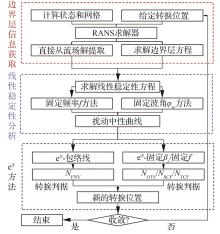
图 1
耦合转捩自动判断的RANS方程模拟方法框架[16]
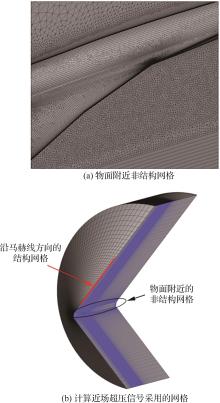
图 2
高精度近场超压信号计算采用的网格示意图
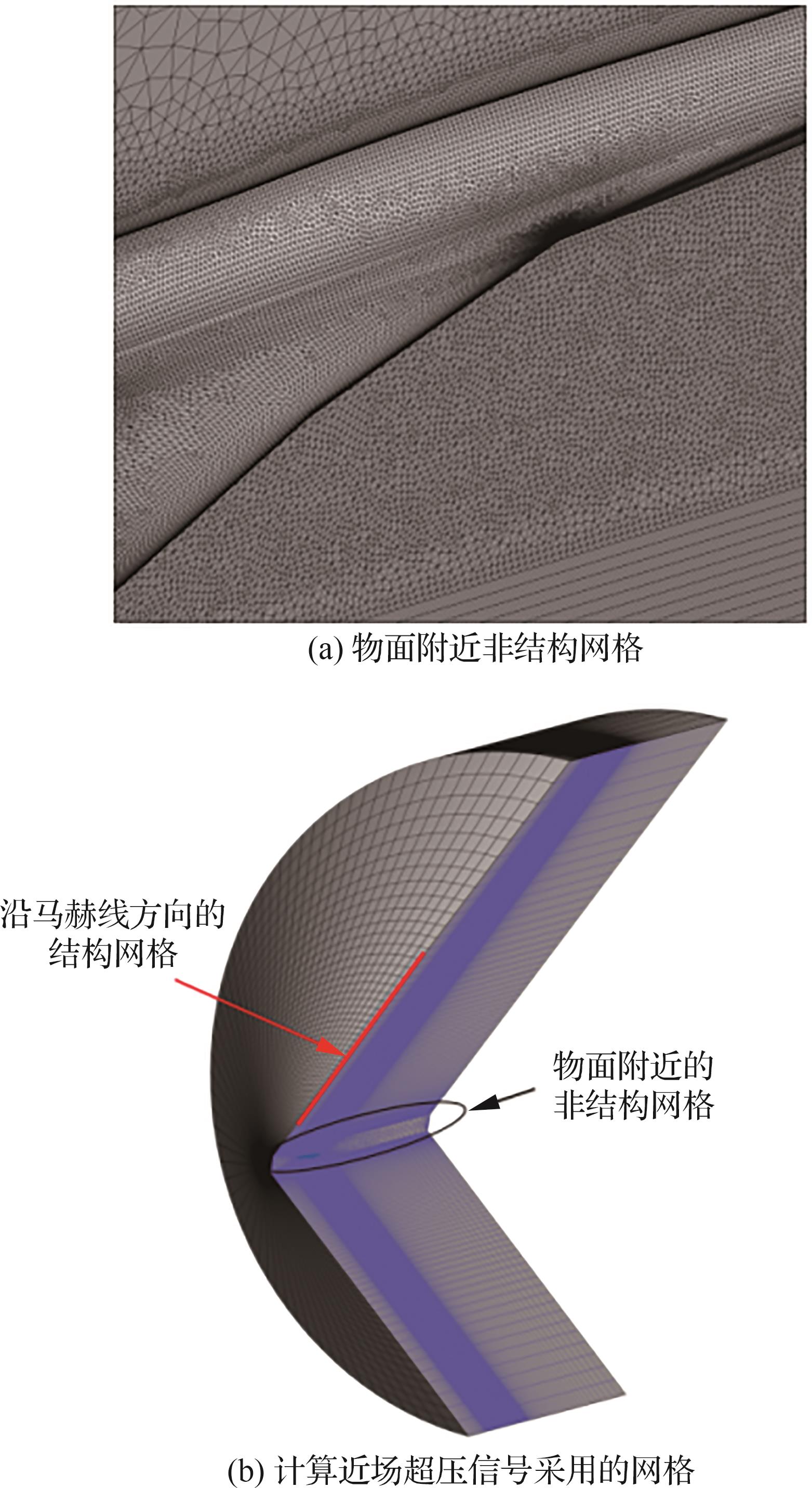
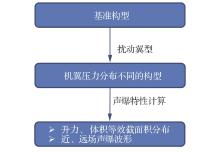
图 3
超声速民机机翼压力分布形态对全机声爆特性的影响研究框架
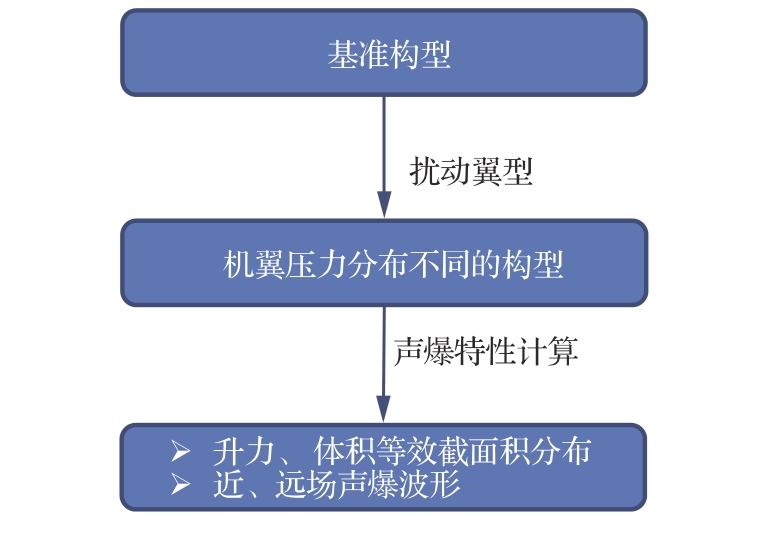
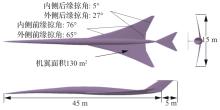
图 4
30 t级低声爆超声速民机基准构型几何外形
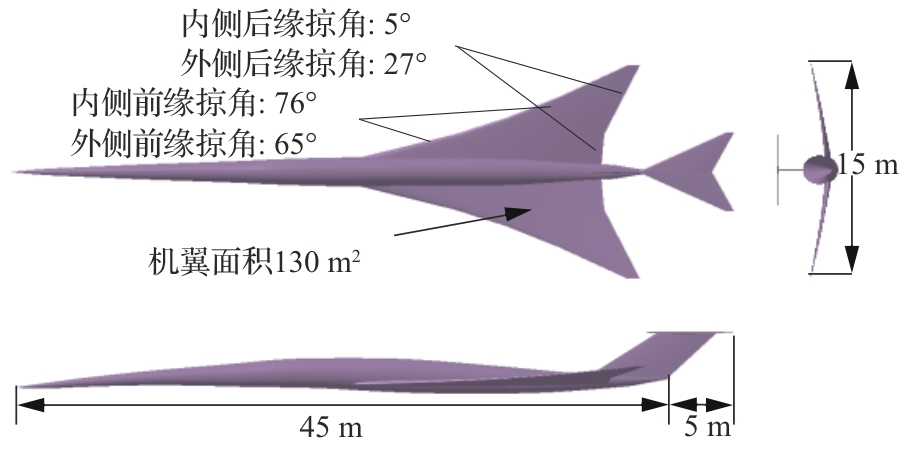
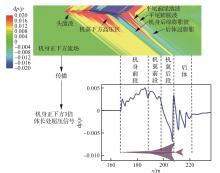
图 5
基准构型对称面处超压云图与近场超压信号
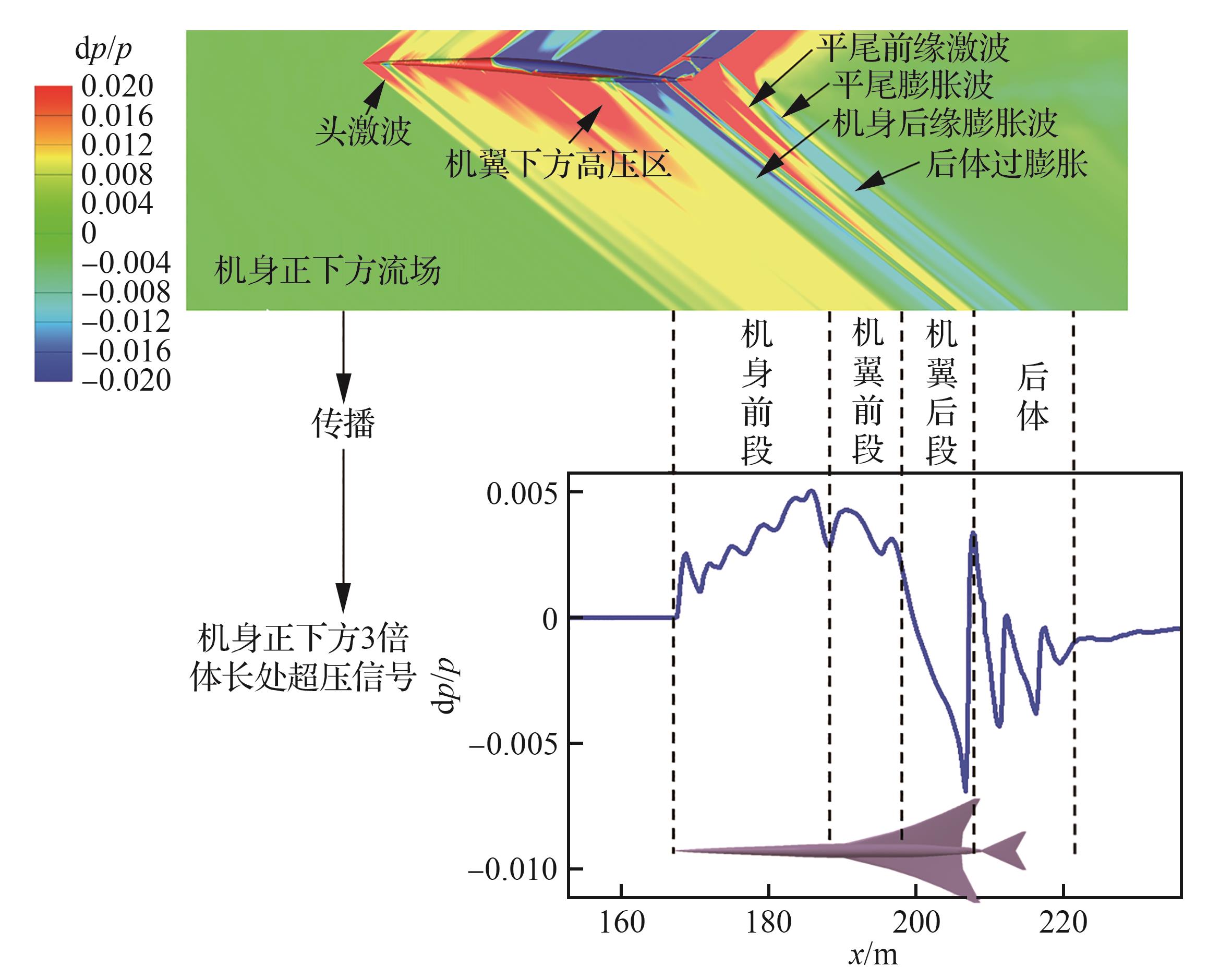
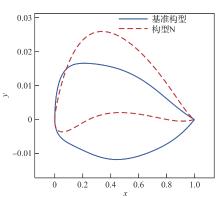
图 6
基准构型与构型N的翼型
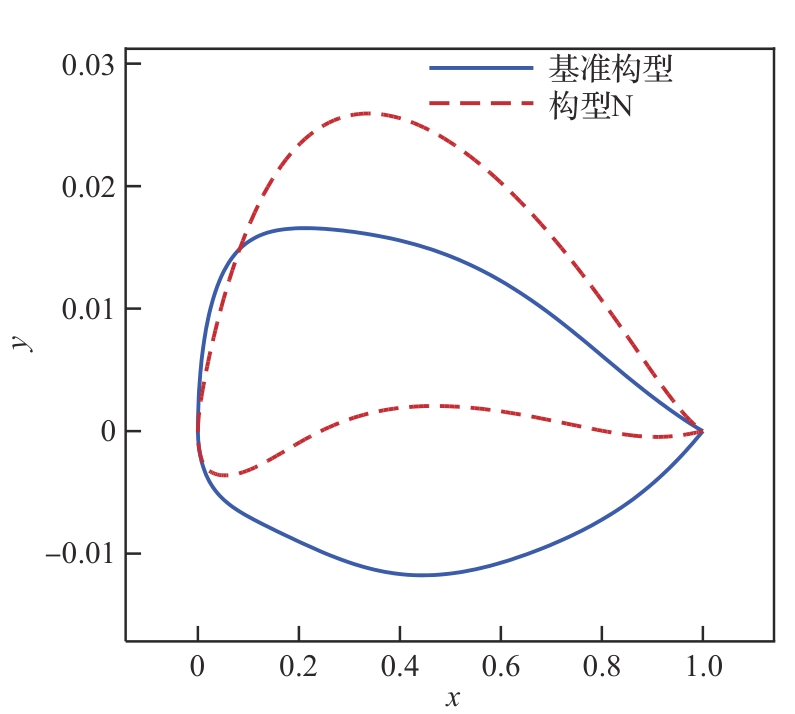
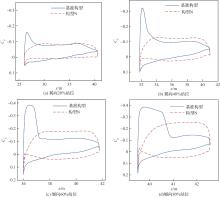
图 7
构型N与基准构型机翼不同站位处的压力分布
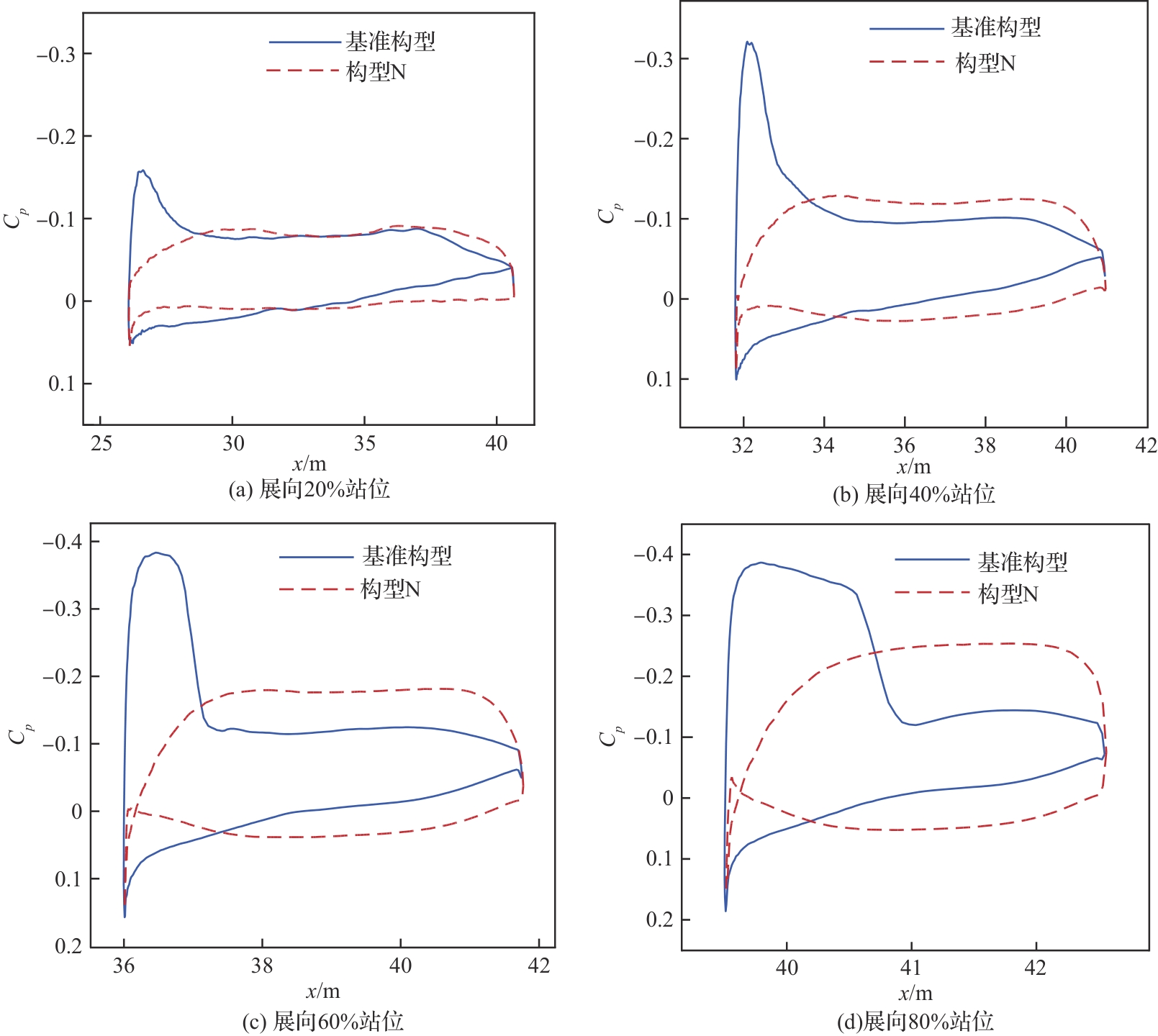
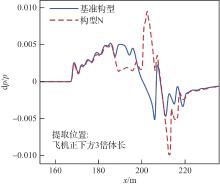
图 8
基准构型与构型N近场超压信号
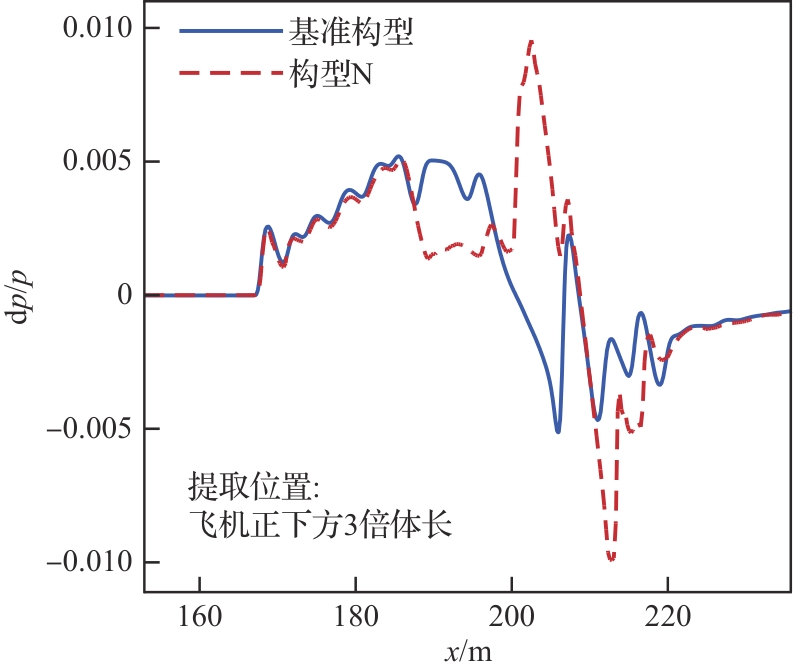
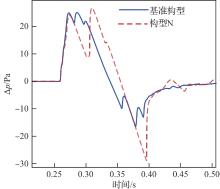
图 9
基准构型与构型N远场波形
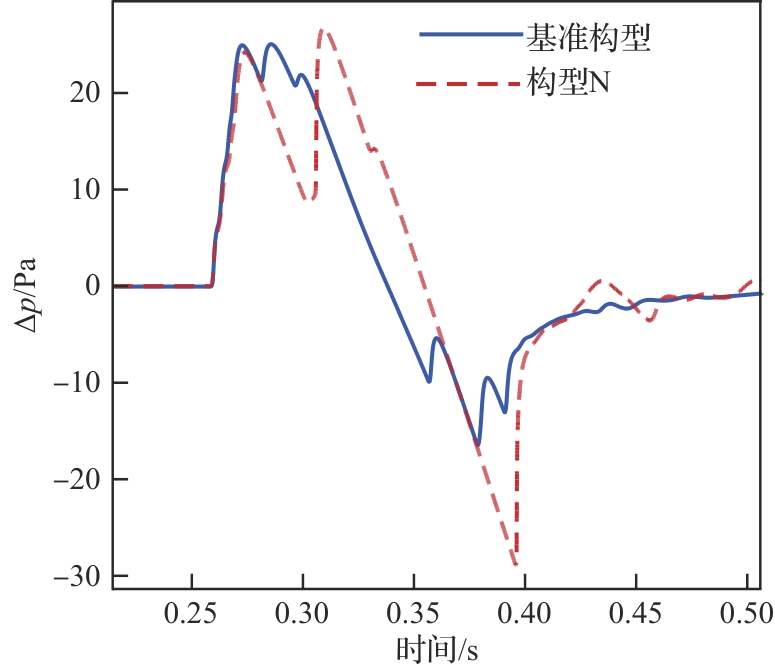
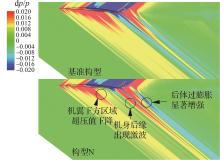
图 10
基准构型与构型N近场超压云图
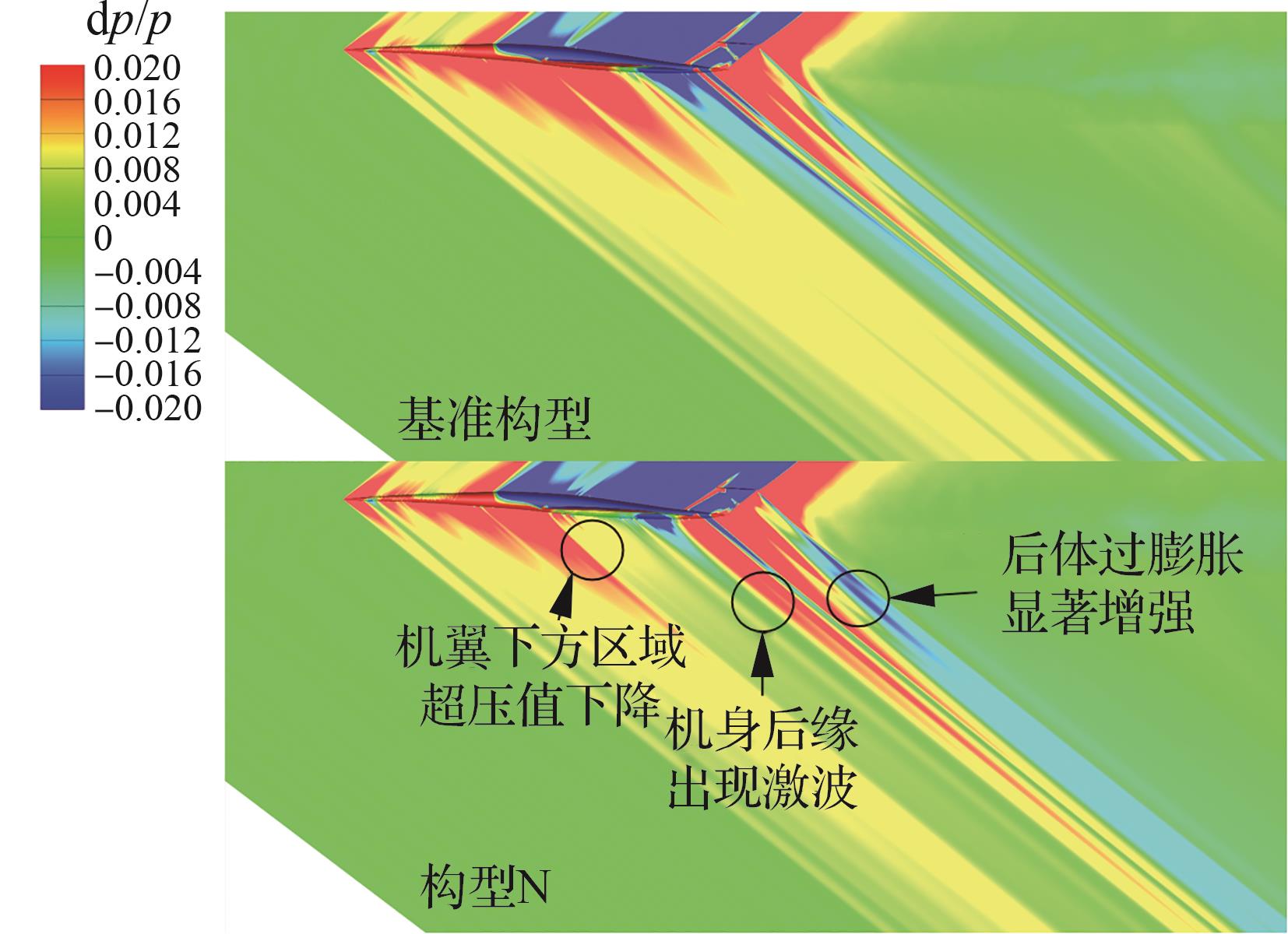
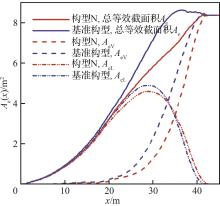
图 11
基准构型与构型N等效截面积对比
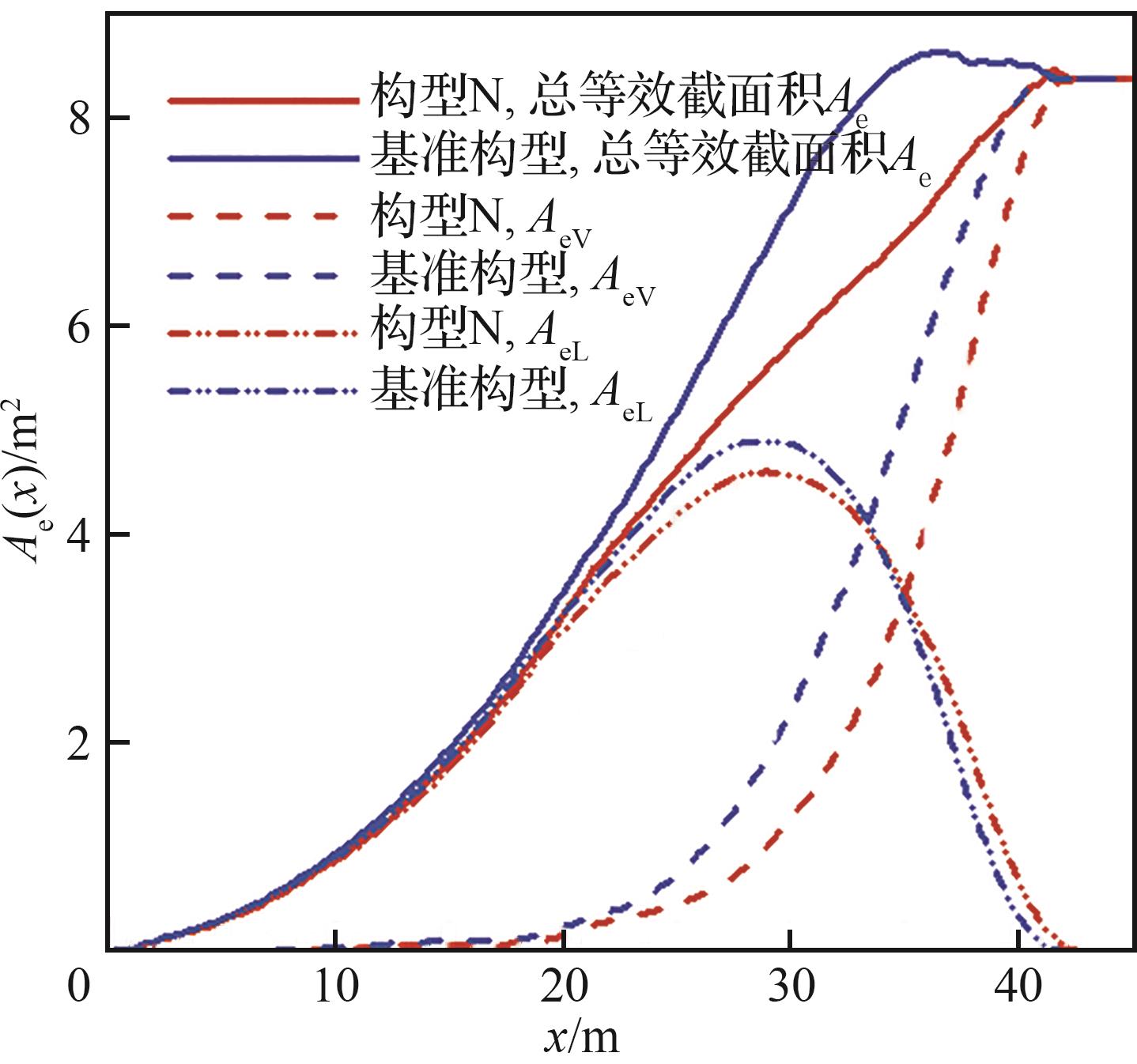
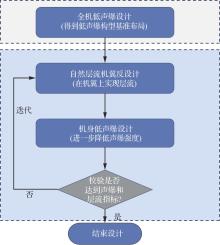
图 12
考虑声爆特性的超声速自然层流机翼设计方法
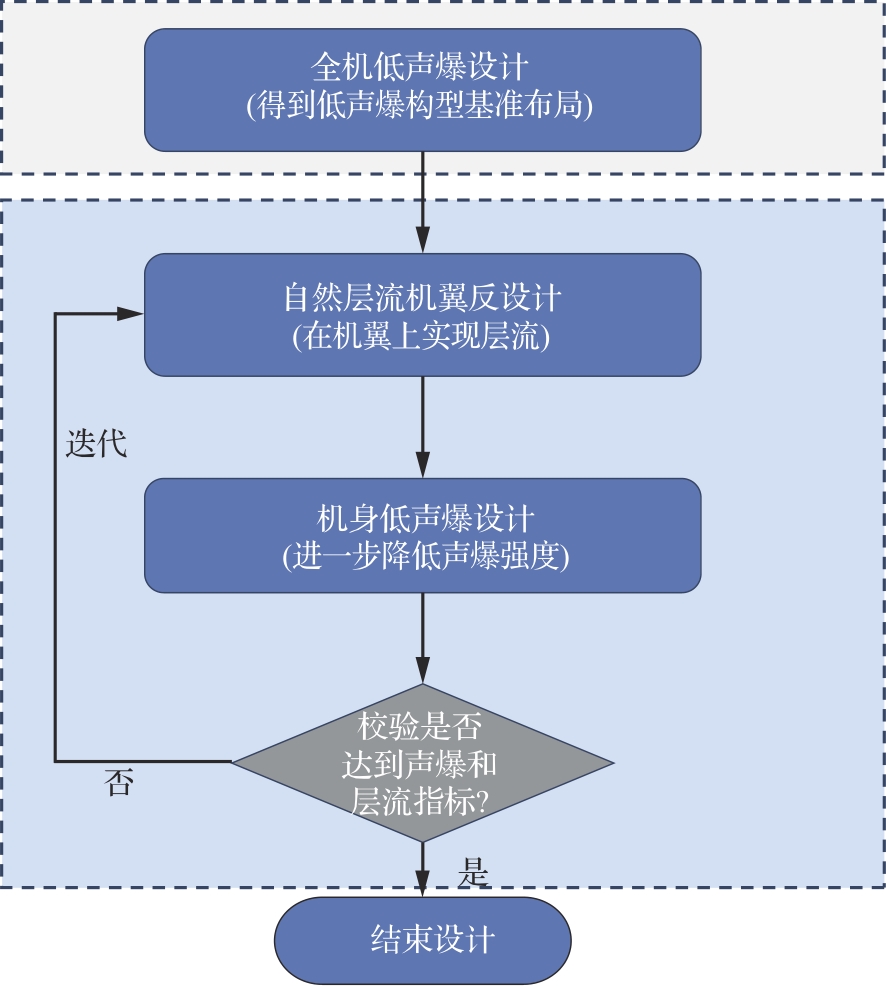
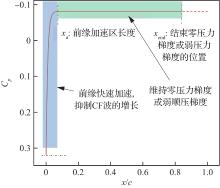
图 13
超声速自然层流机翼设计理想压力分布形态示意
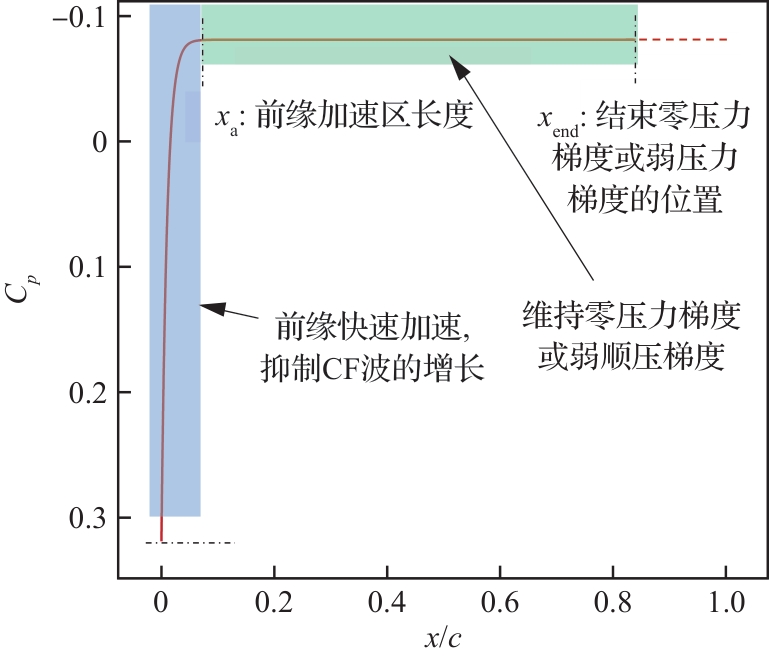
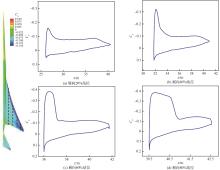
图 14
基准构型机翼展向各个站位处的压力分布、机翼表面压力云图
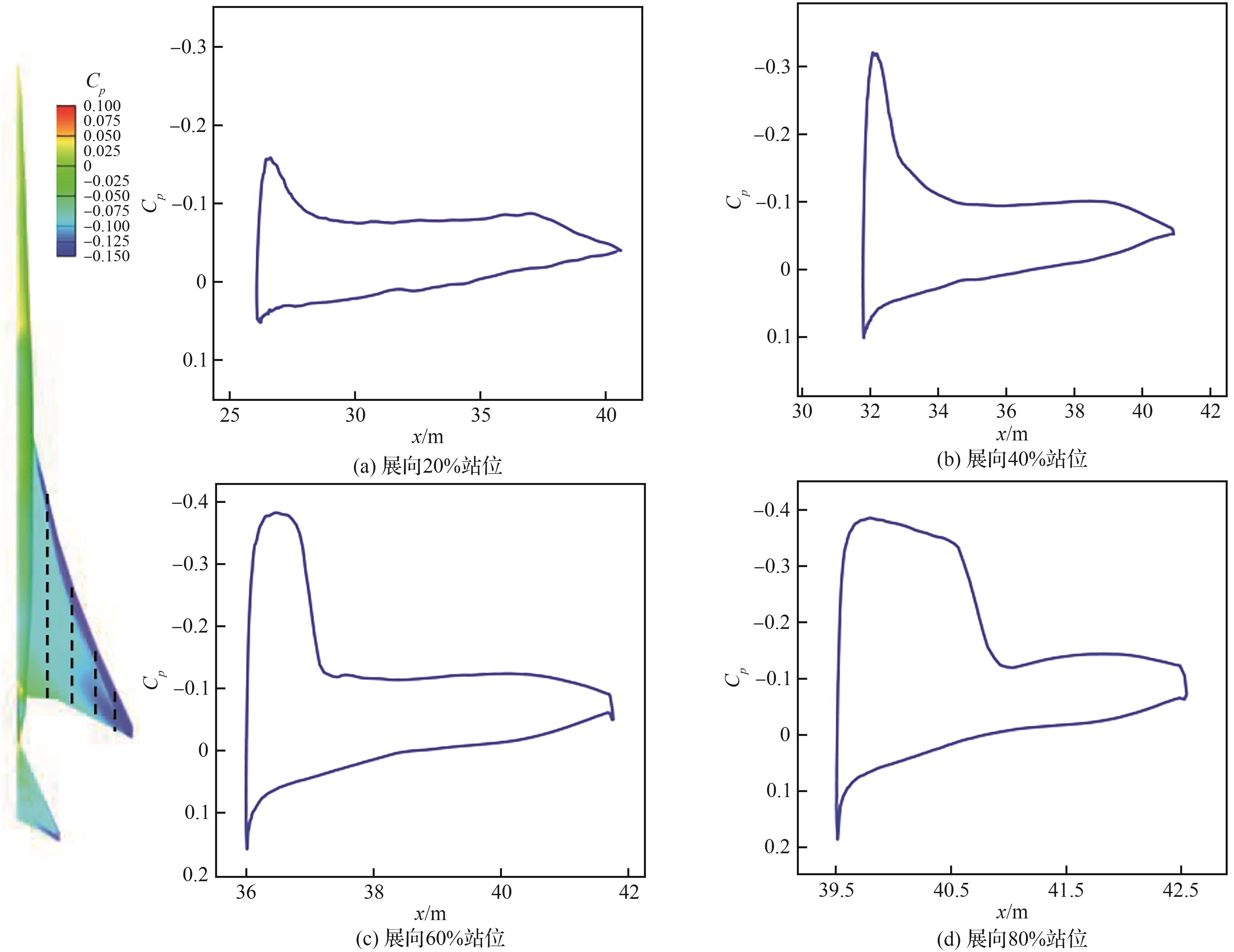
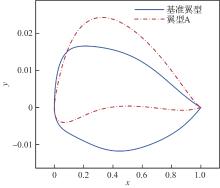
图 15
基准翼型、翼型A的几何外形
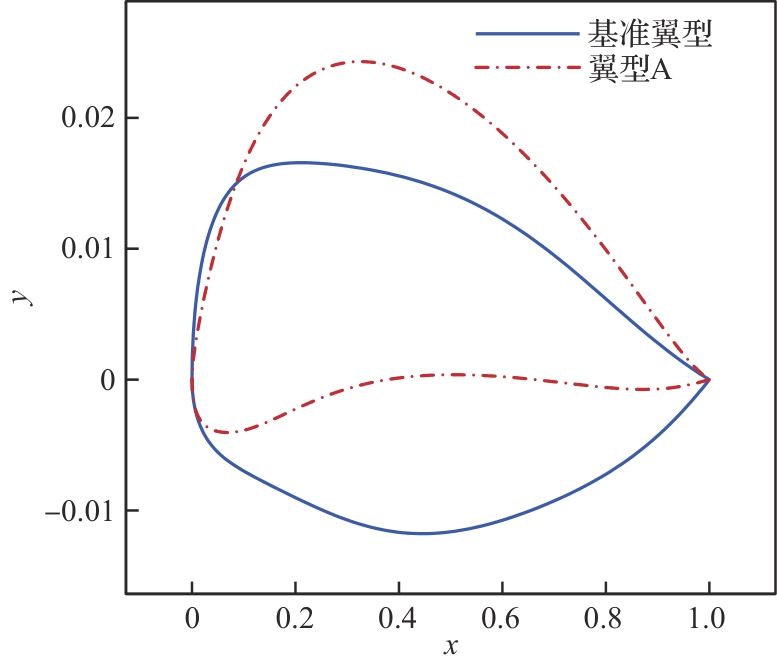
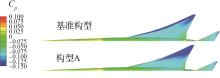
图 16
基准构型与构型A的机翼上表面压力云图
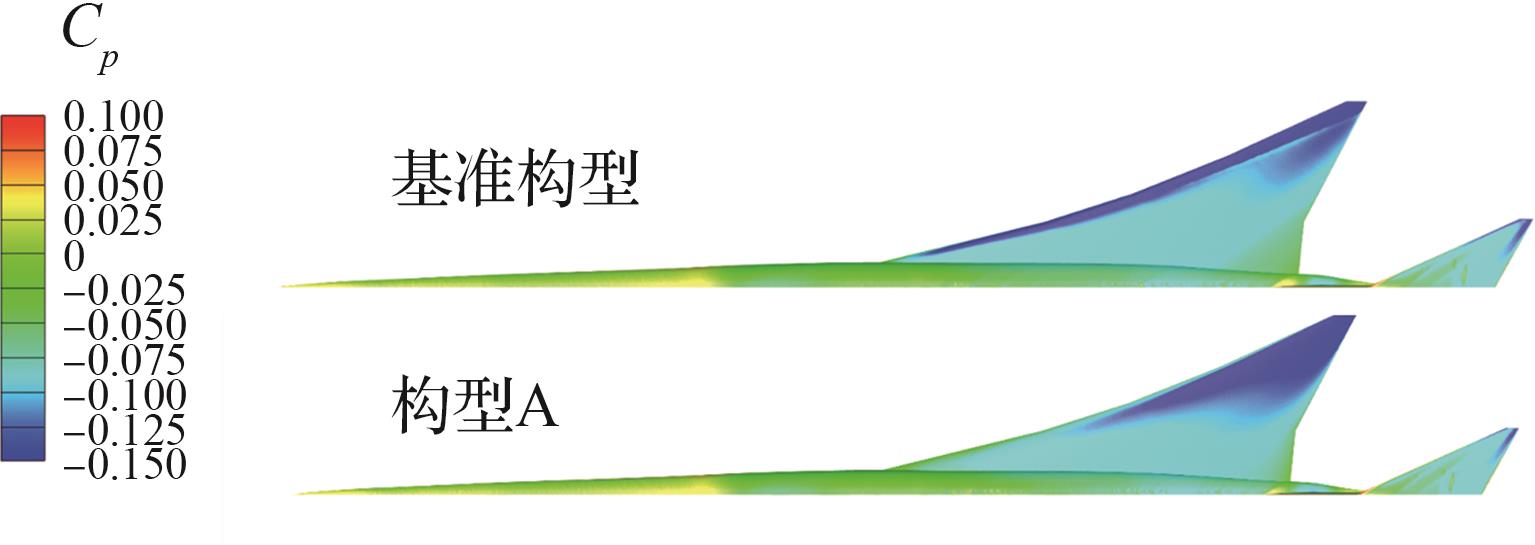
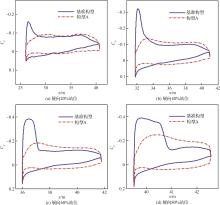
图 17
基准构型与构型A机翼展向不同站位压力分布
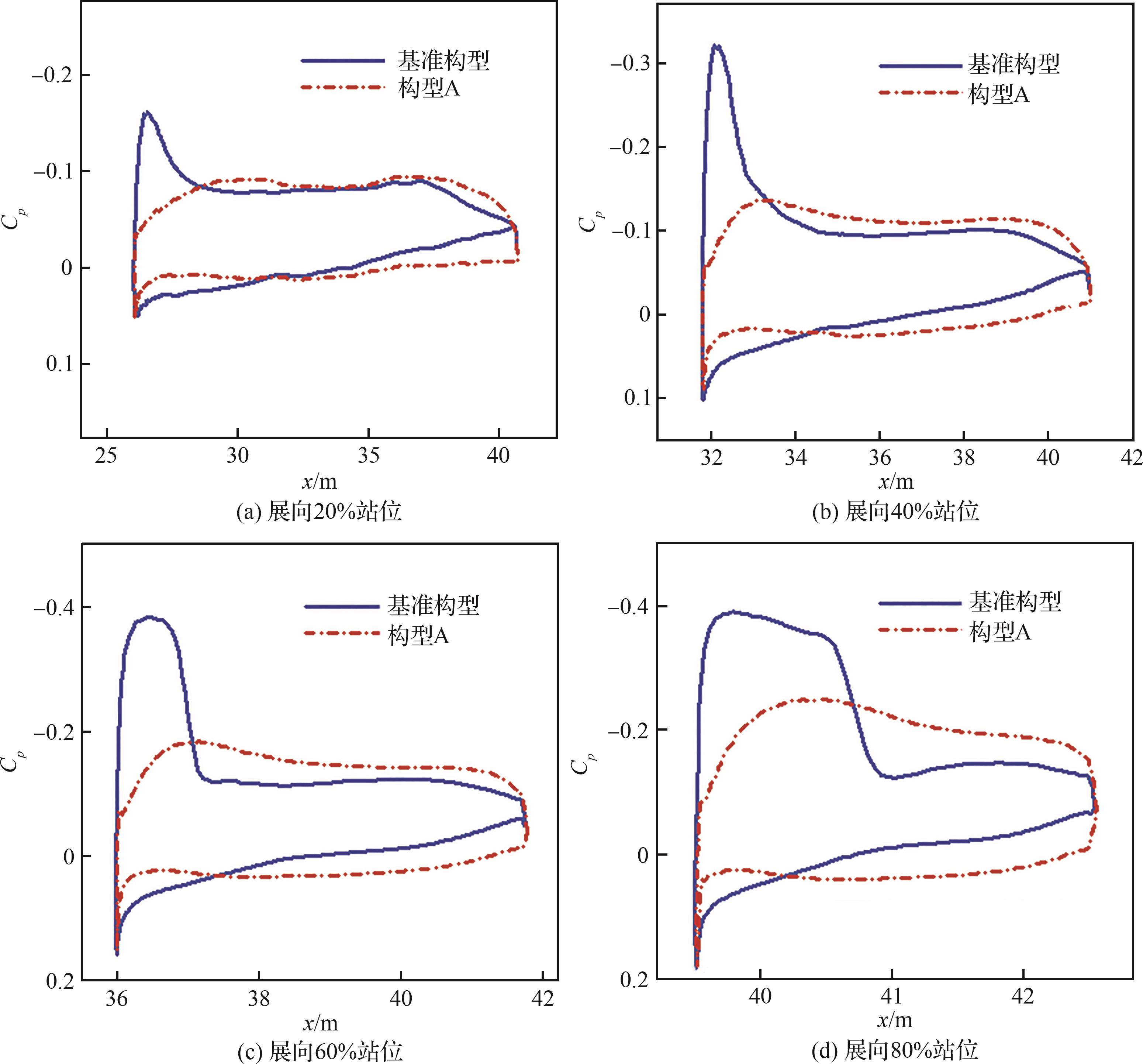
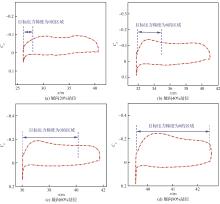
图 18
构型A机翼展向不同站位处零压力梯度设计范围
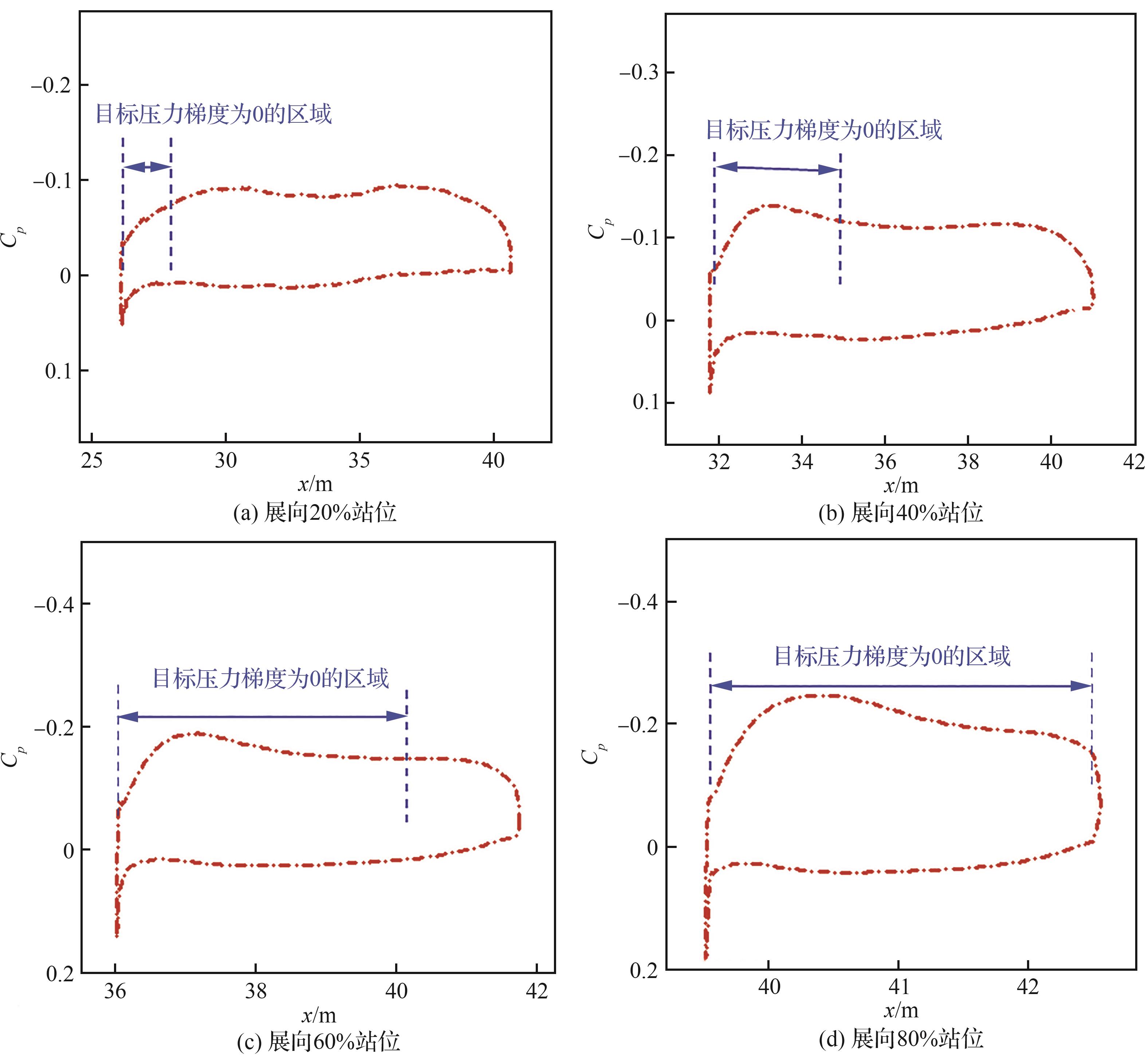
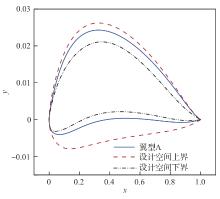
图 19
第1轮反设计中采用的设计空间上下界对应的翼型几何外形
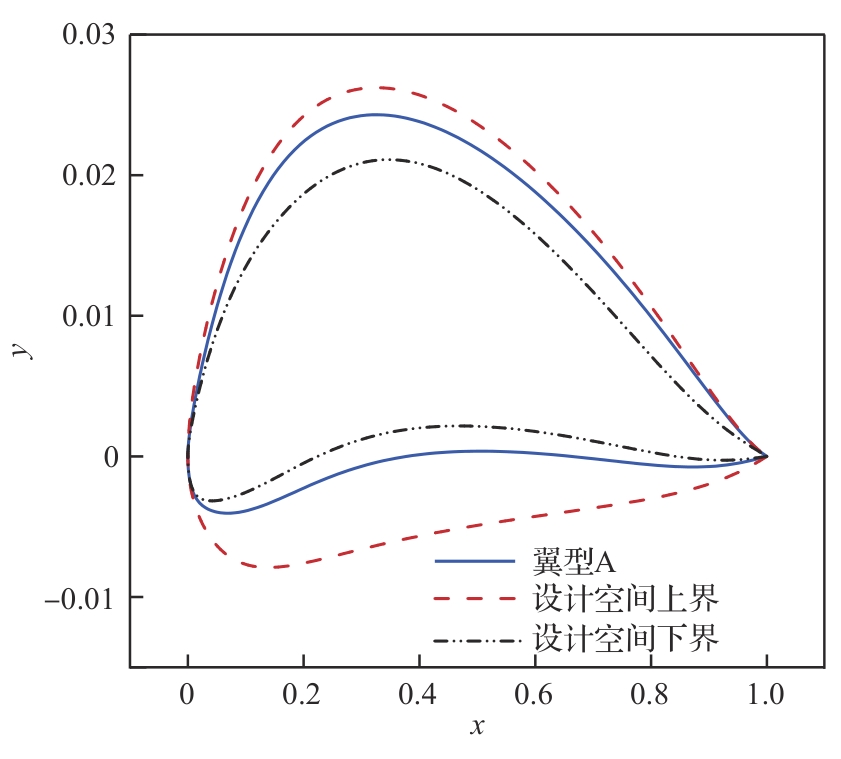
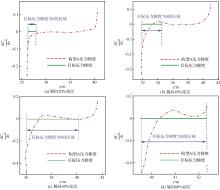
图 20
构型A机翼展向不同站位处的压力梯度分布、第1轮反设计的目标压力梯度
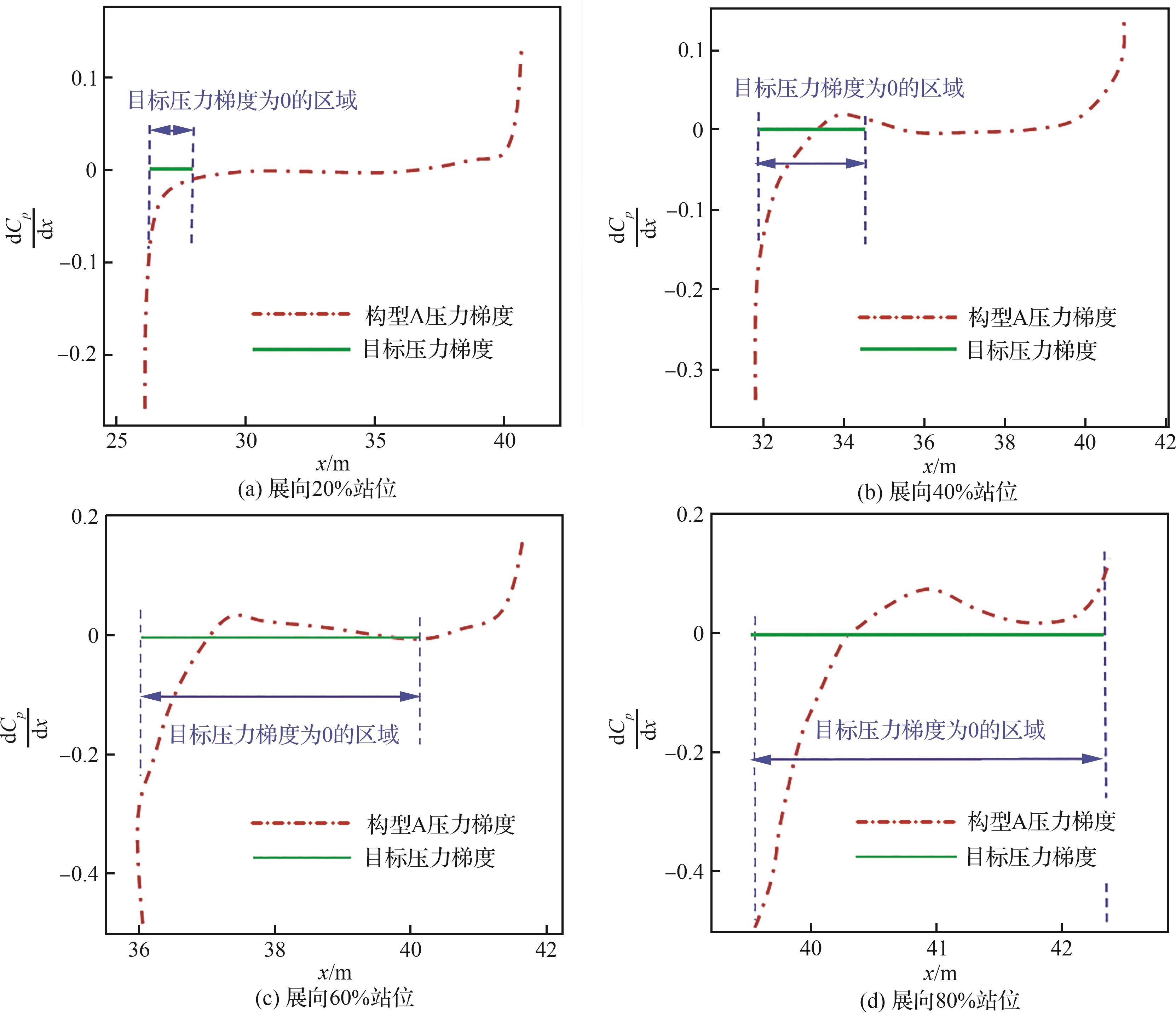
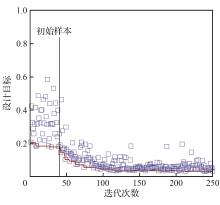
图 21
第1轮压力梯度反设计收敛曲线
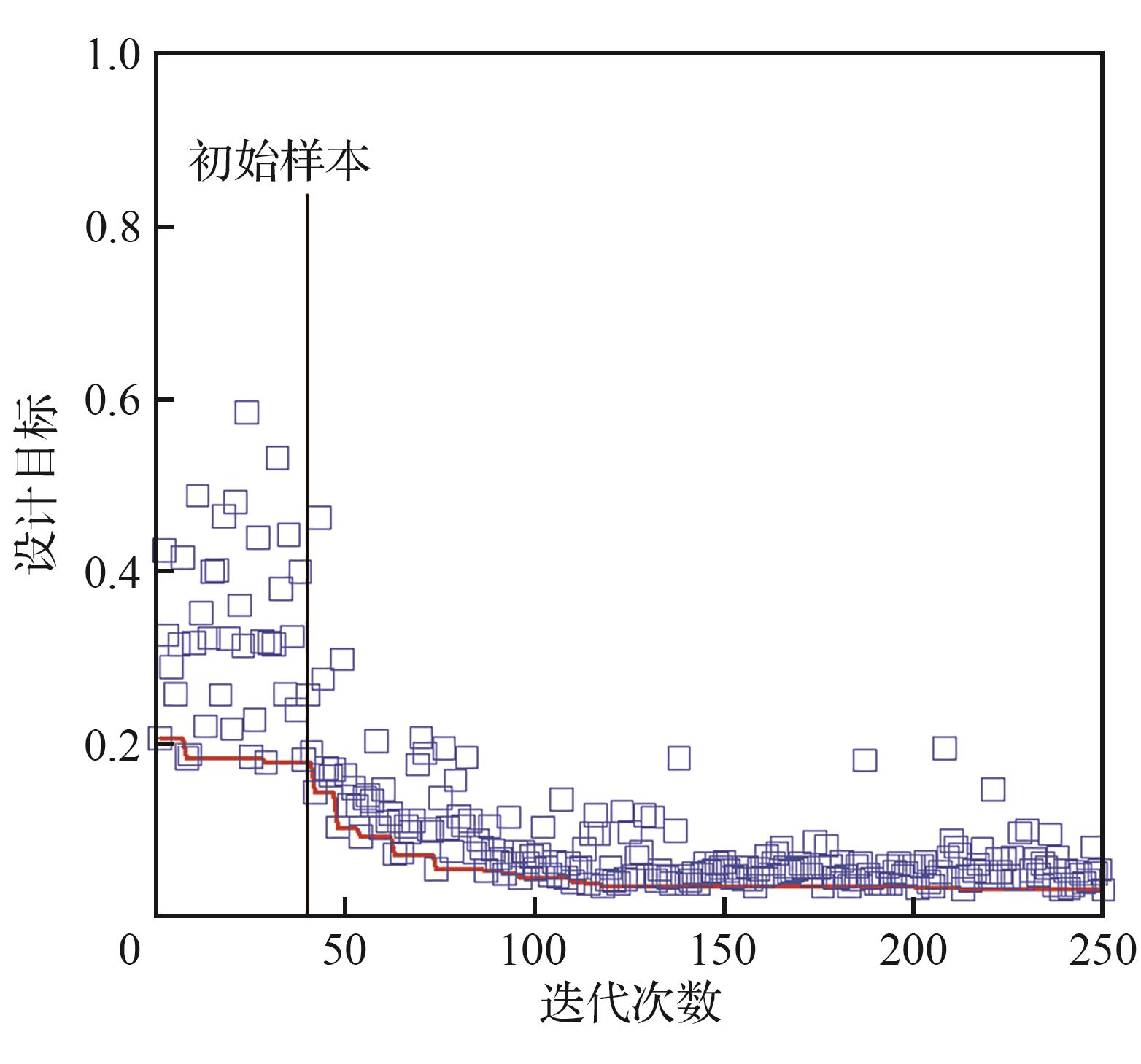
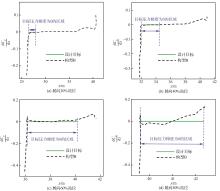
图 22
第1轮设计得到的构型B机翼展向不同站位处压力梯度分布与目标压力梯度分布
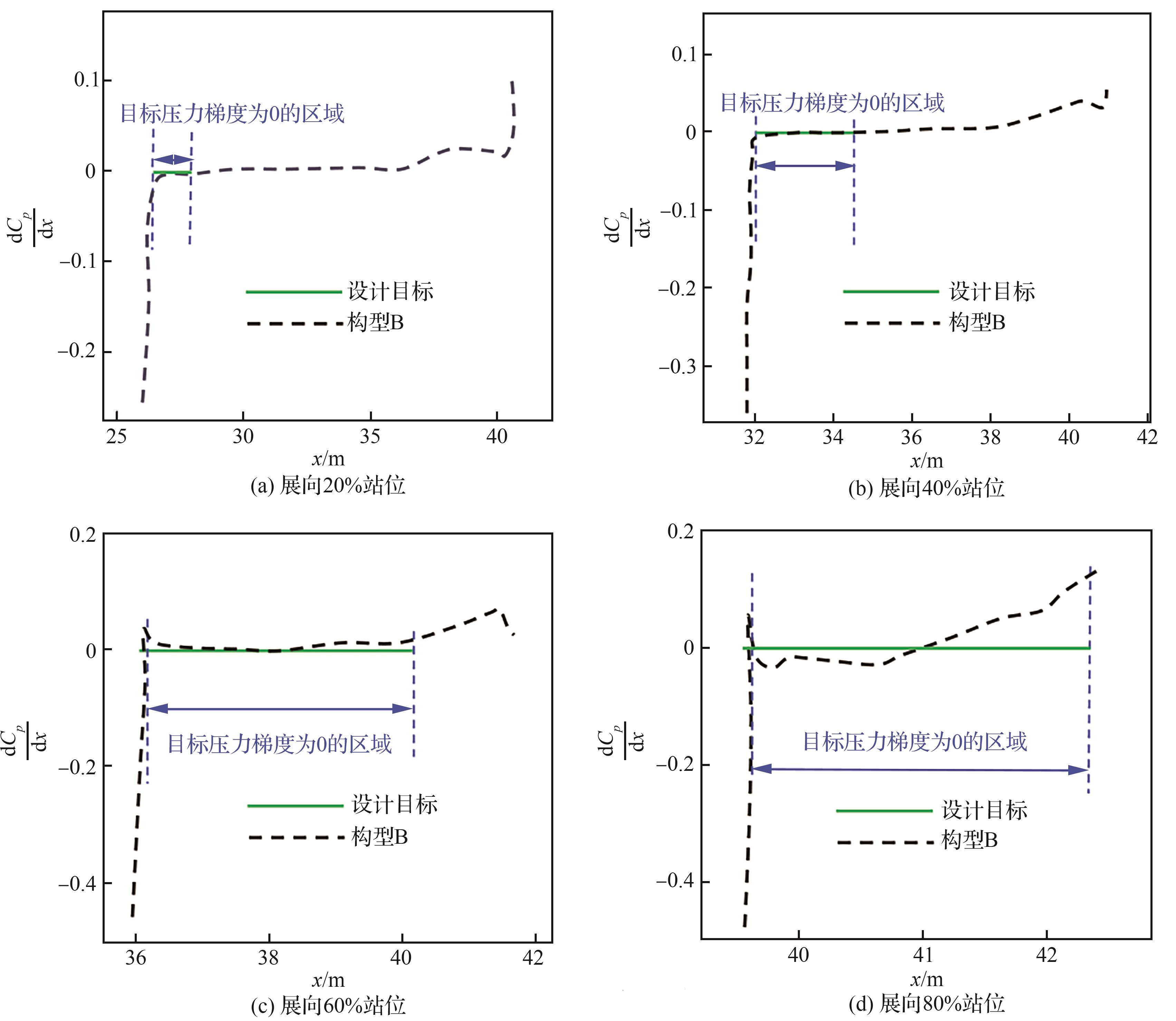
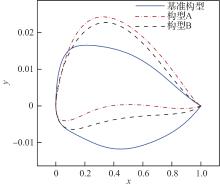
图 23
基准构型、构型A和B的几何外形
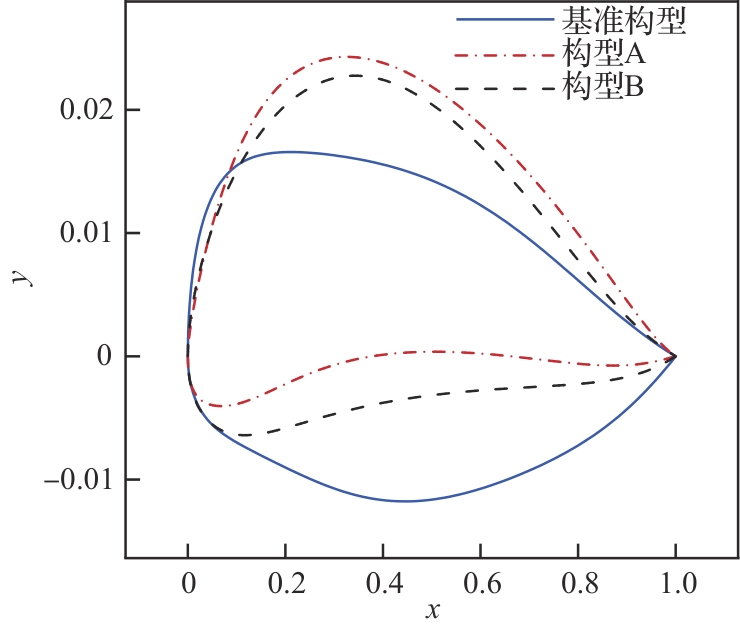
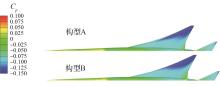
图 24
构型A、B的机翼上表面压力云图
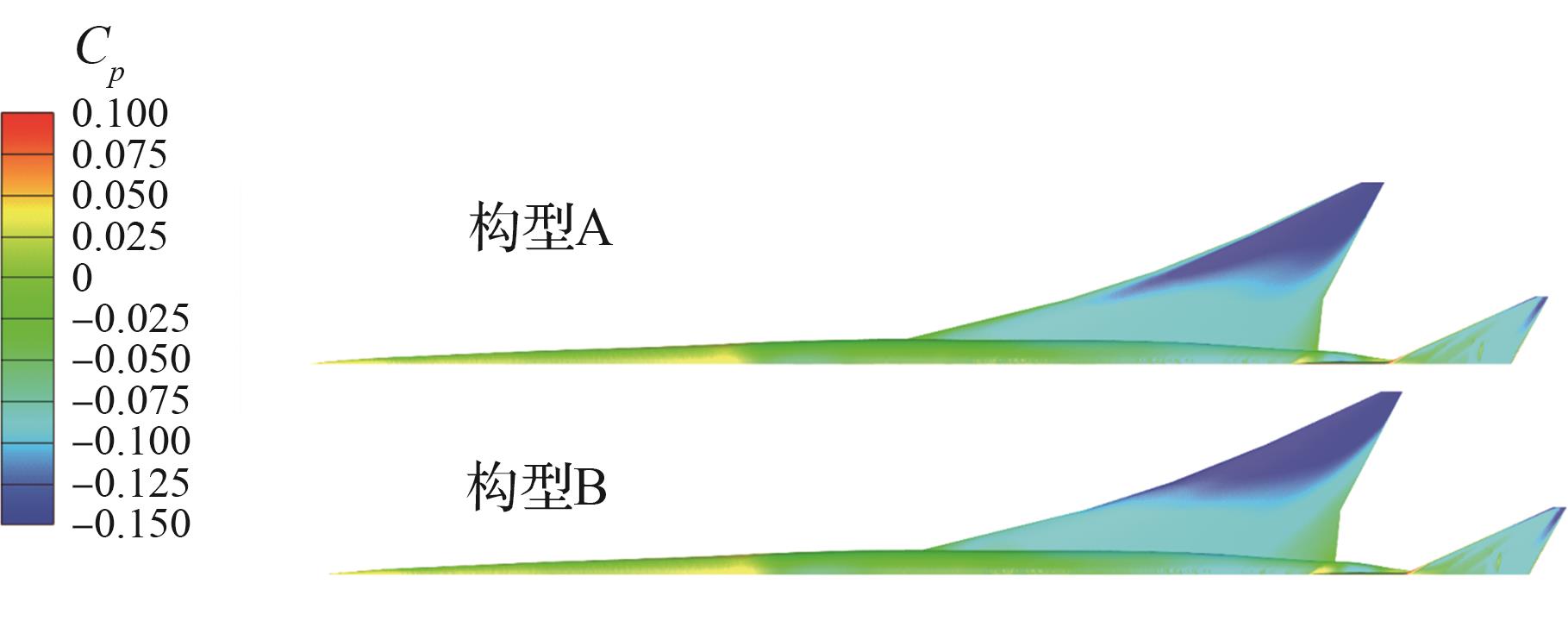
图 25
构型A、B机翼展向不同站位处的压力分布
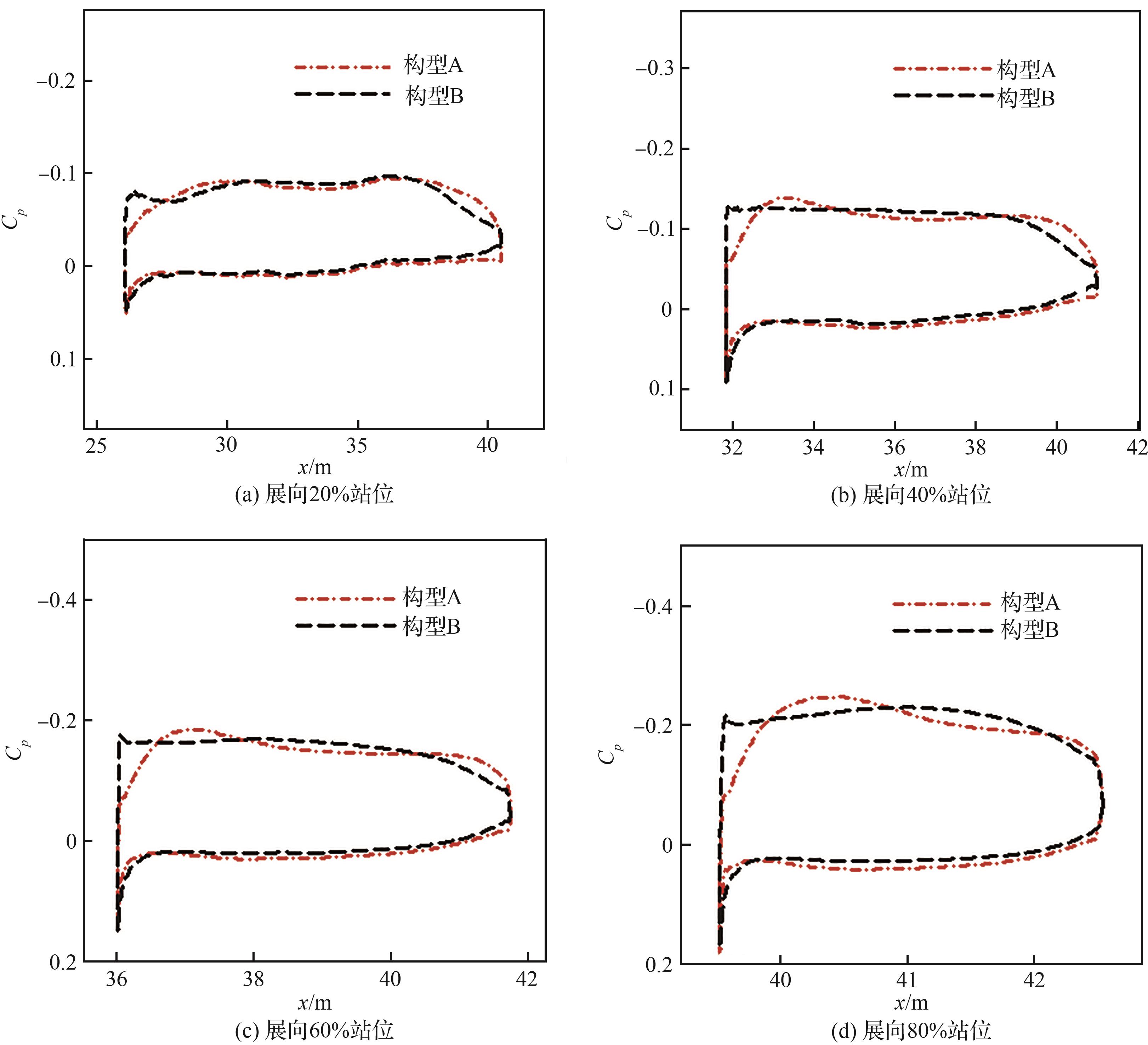
图 26
构型A、B机翼展向不同站位处的压力梯度分布
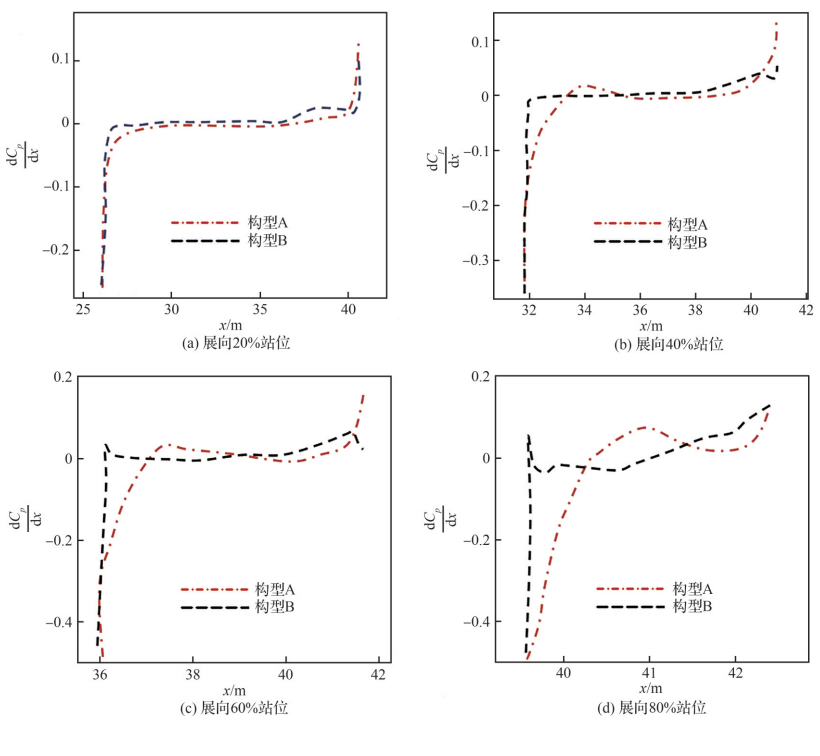
图 27
构型B、C机翼展向不同站位处的压力分布
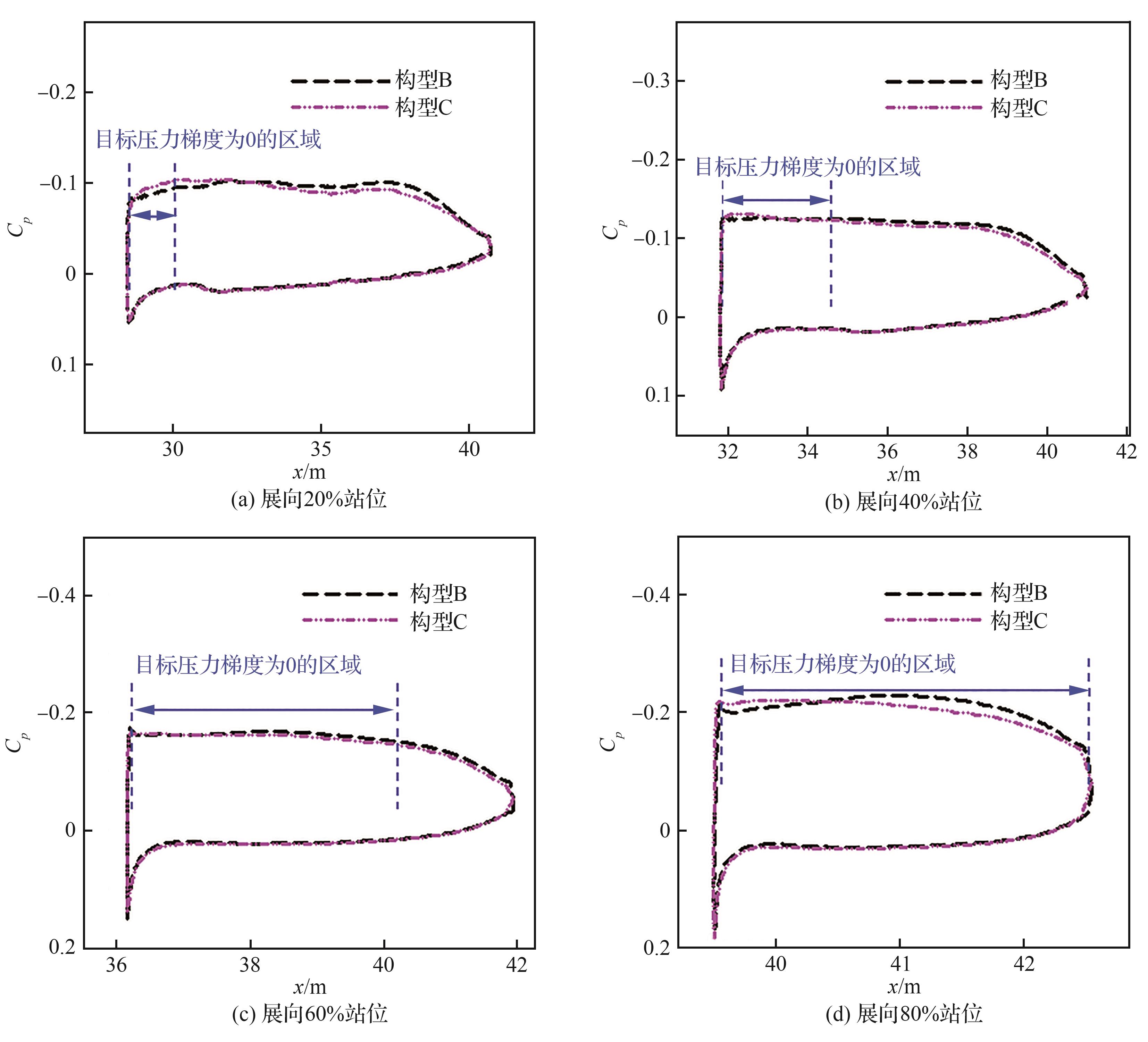
图 28
构型C机翼展向不同站位处边界层内不同频率下的扰动N因子包络线(扰动频率范围0~100 kHz)
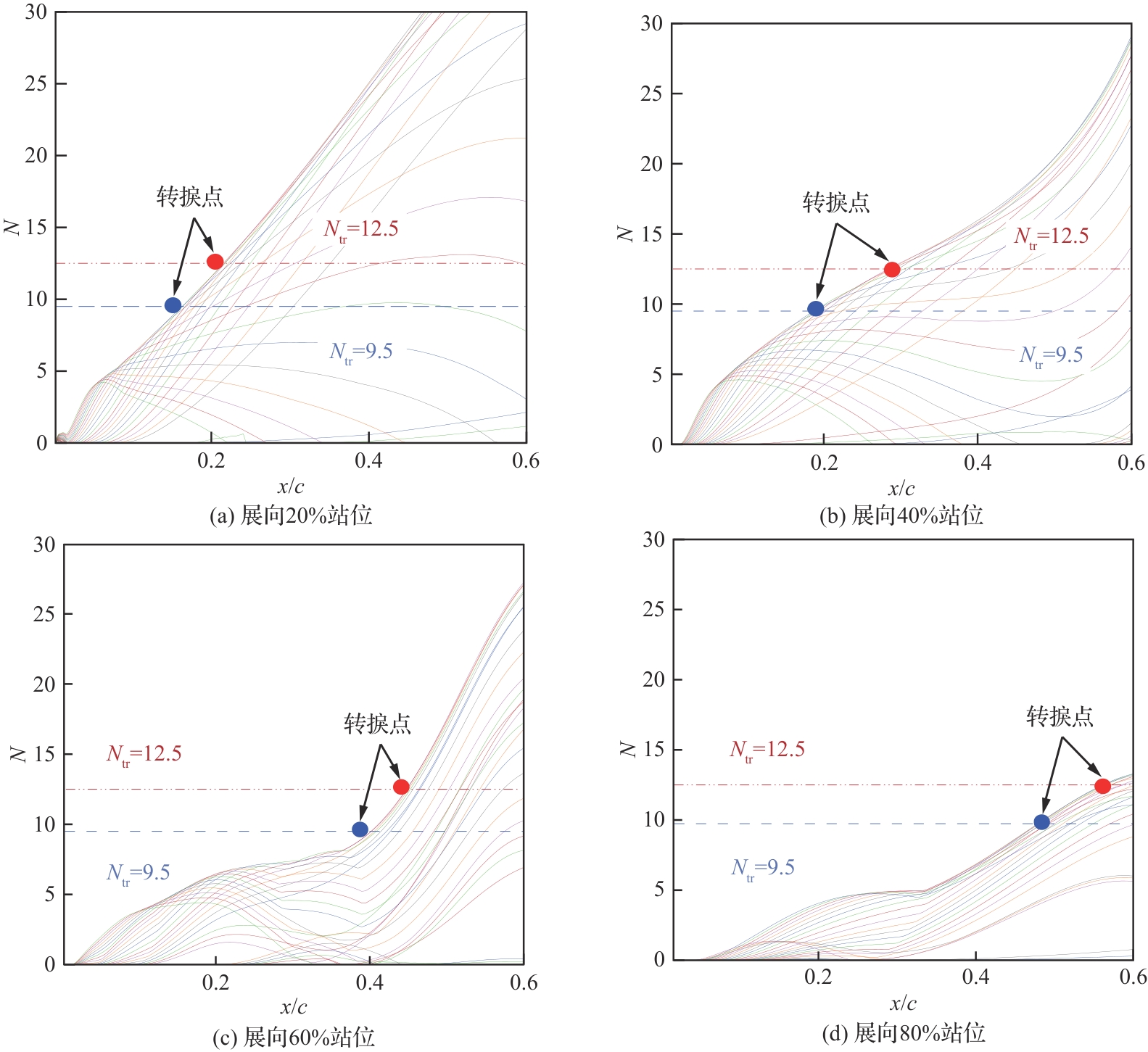
图 29
构型C机翼上表面层流范围
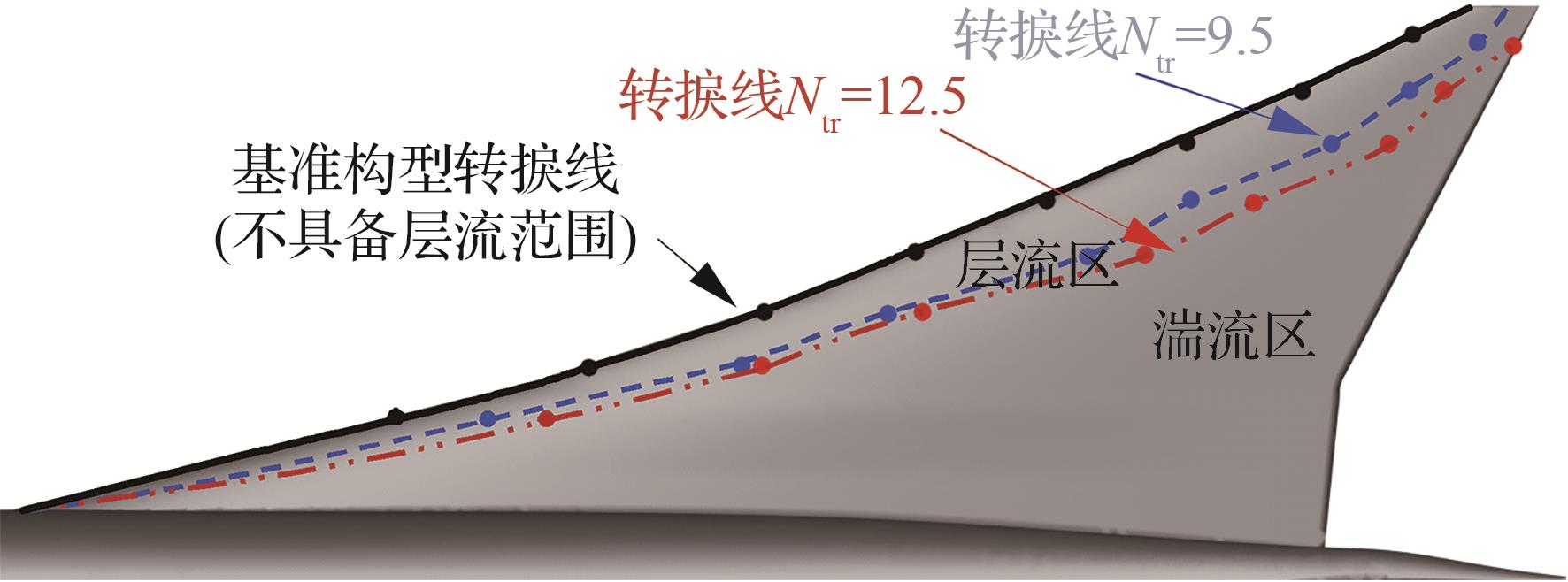
图 30
基准构型与构型A、B、C的近场超压信号(H/L=3)
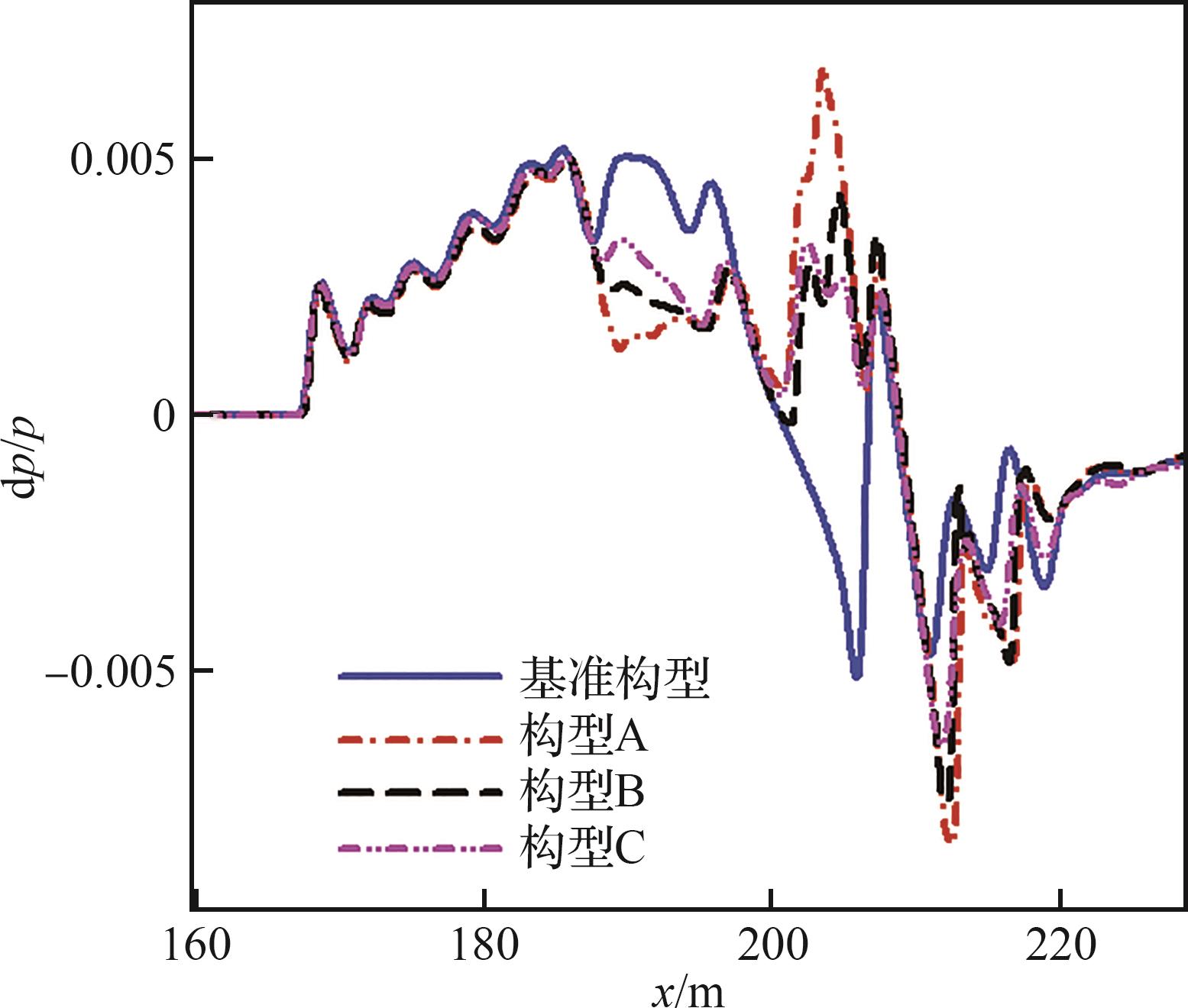
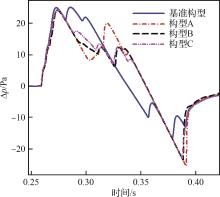
图 31
基准构型与构型A、B、C的远场波形
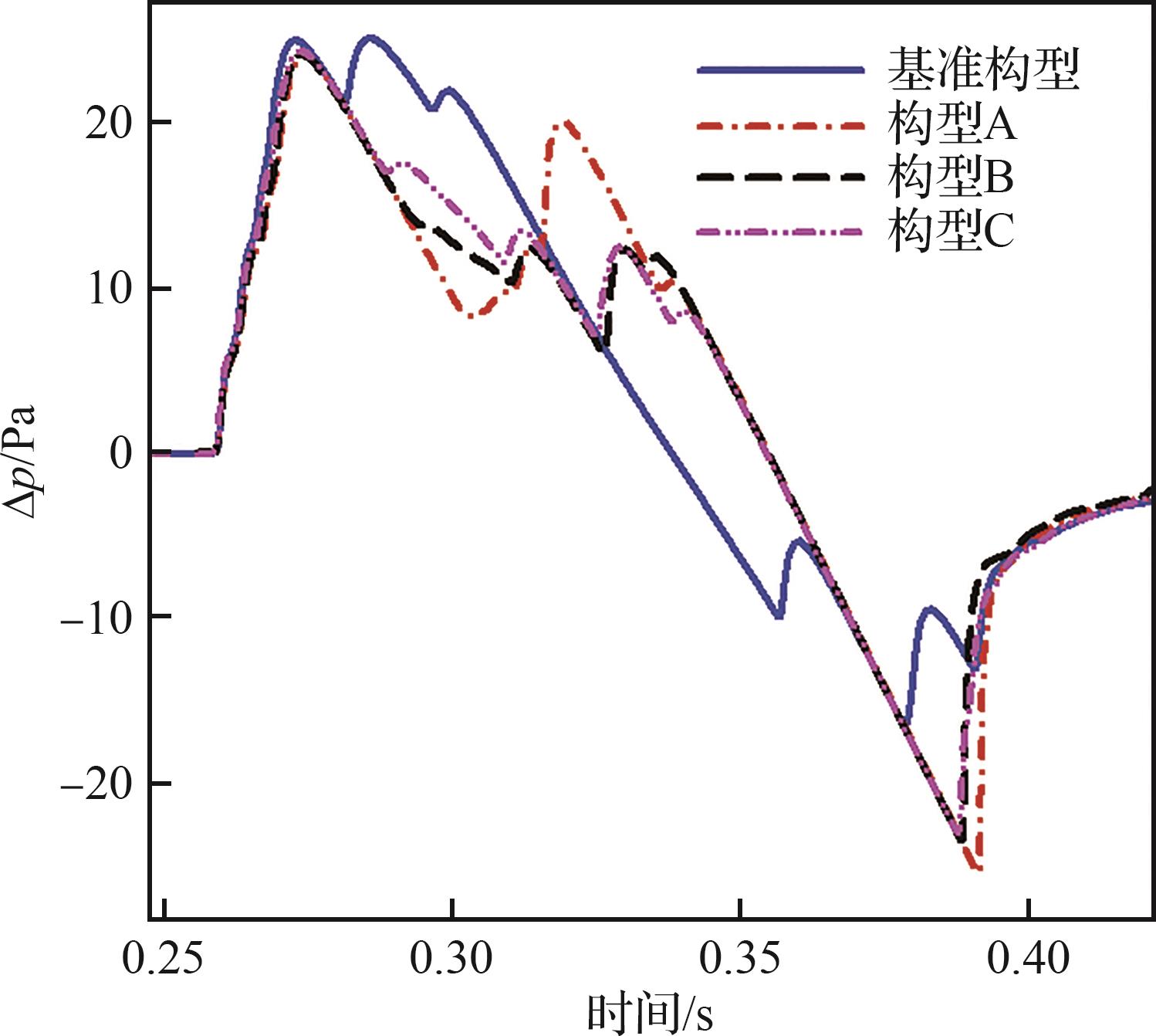
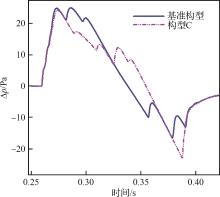
图 32
基准构型与构型C远场波形对比
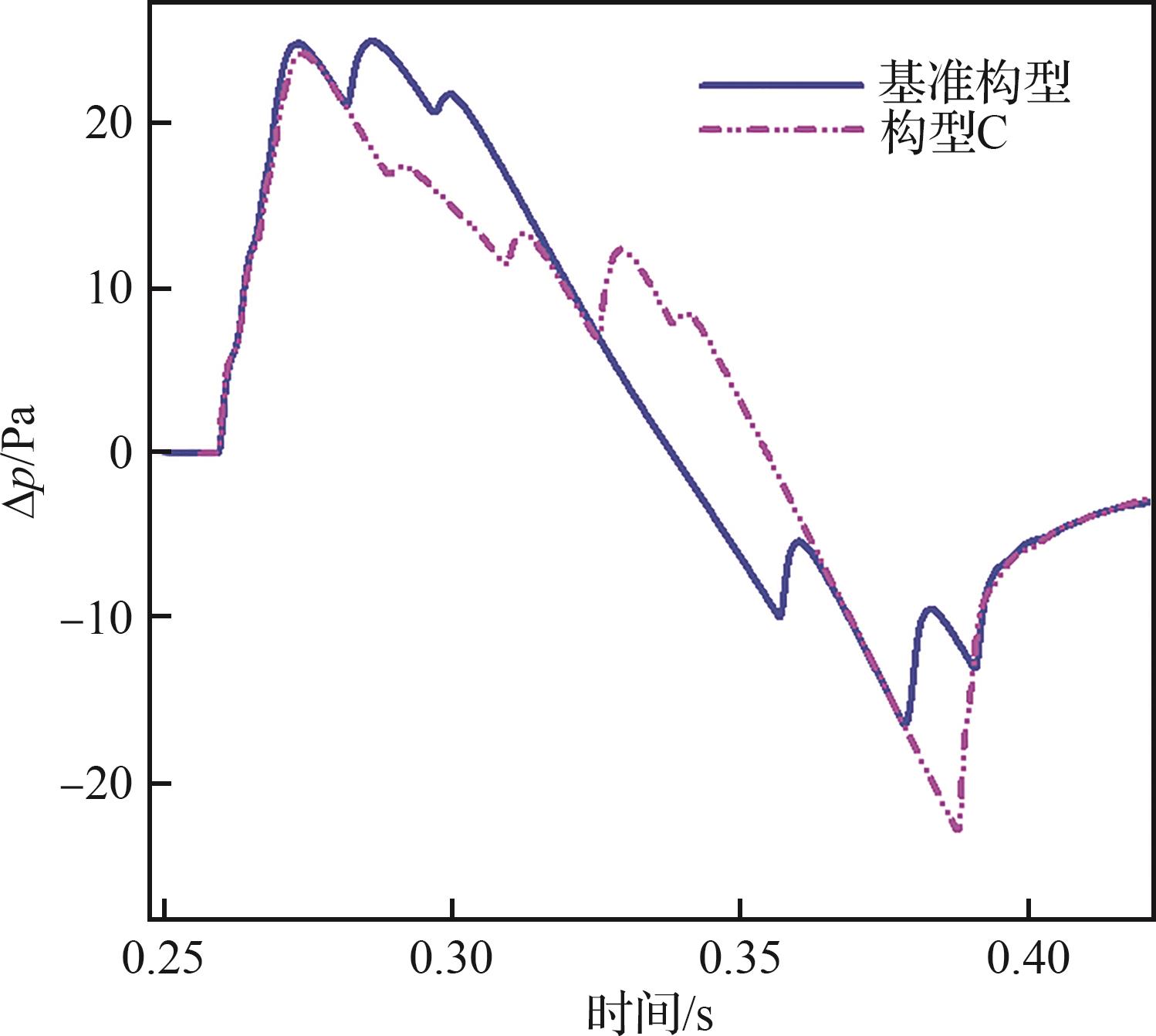
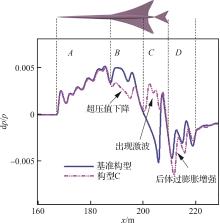
图 33
基准构型与构型C近场超压信号对比(H/L=3)
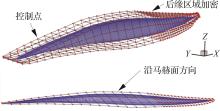
图 34
机身修形采用的FFD控制框
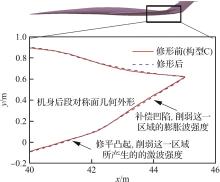
图 35
修形前后机身后段对称面处几何外形
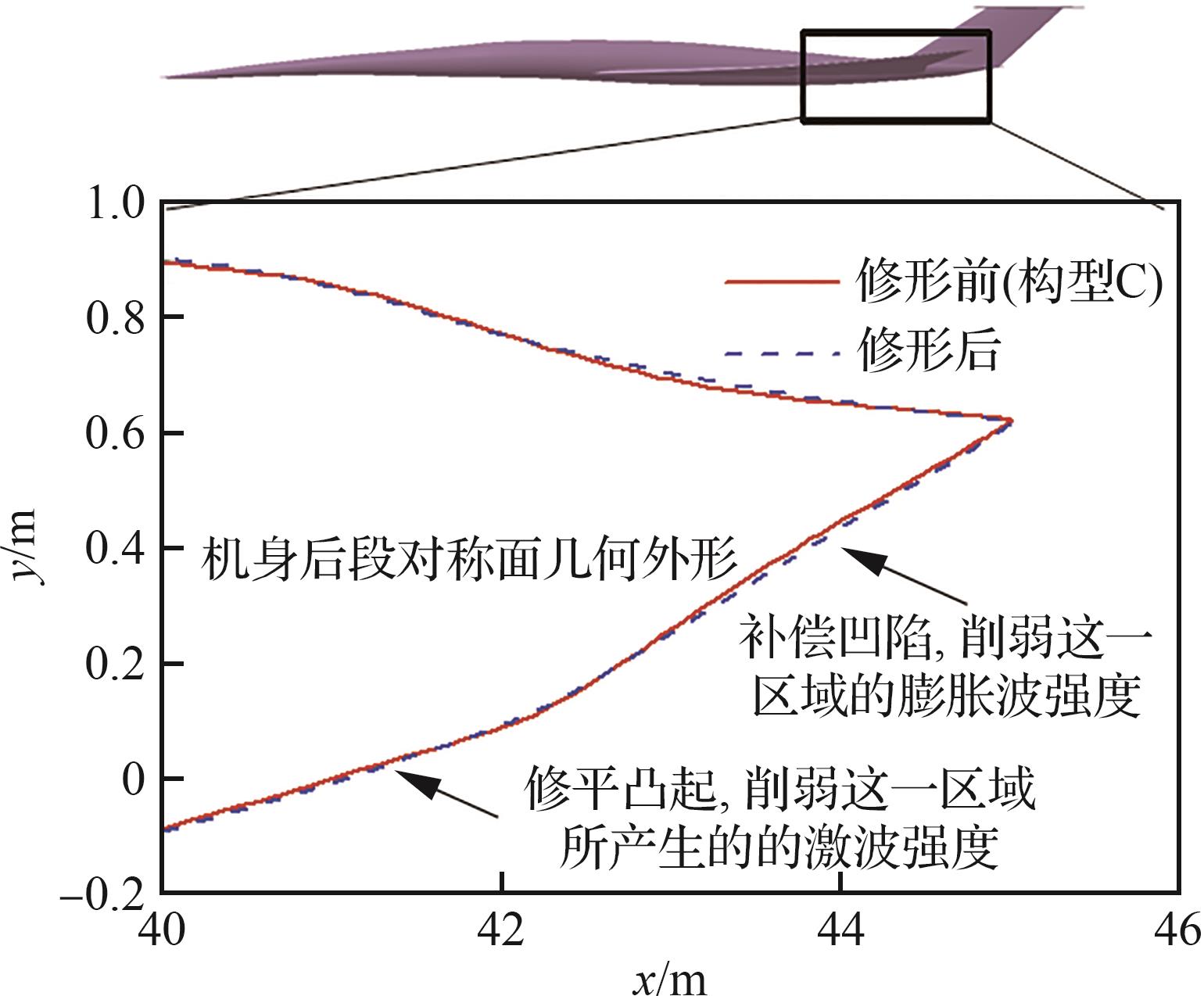
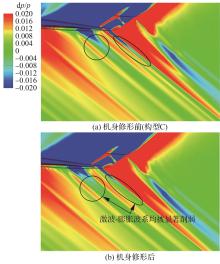
图 36
机身修形前后激波-膨胀波系对比
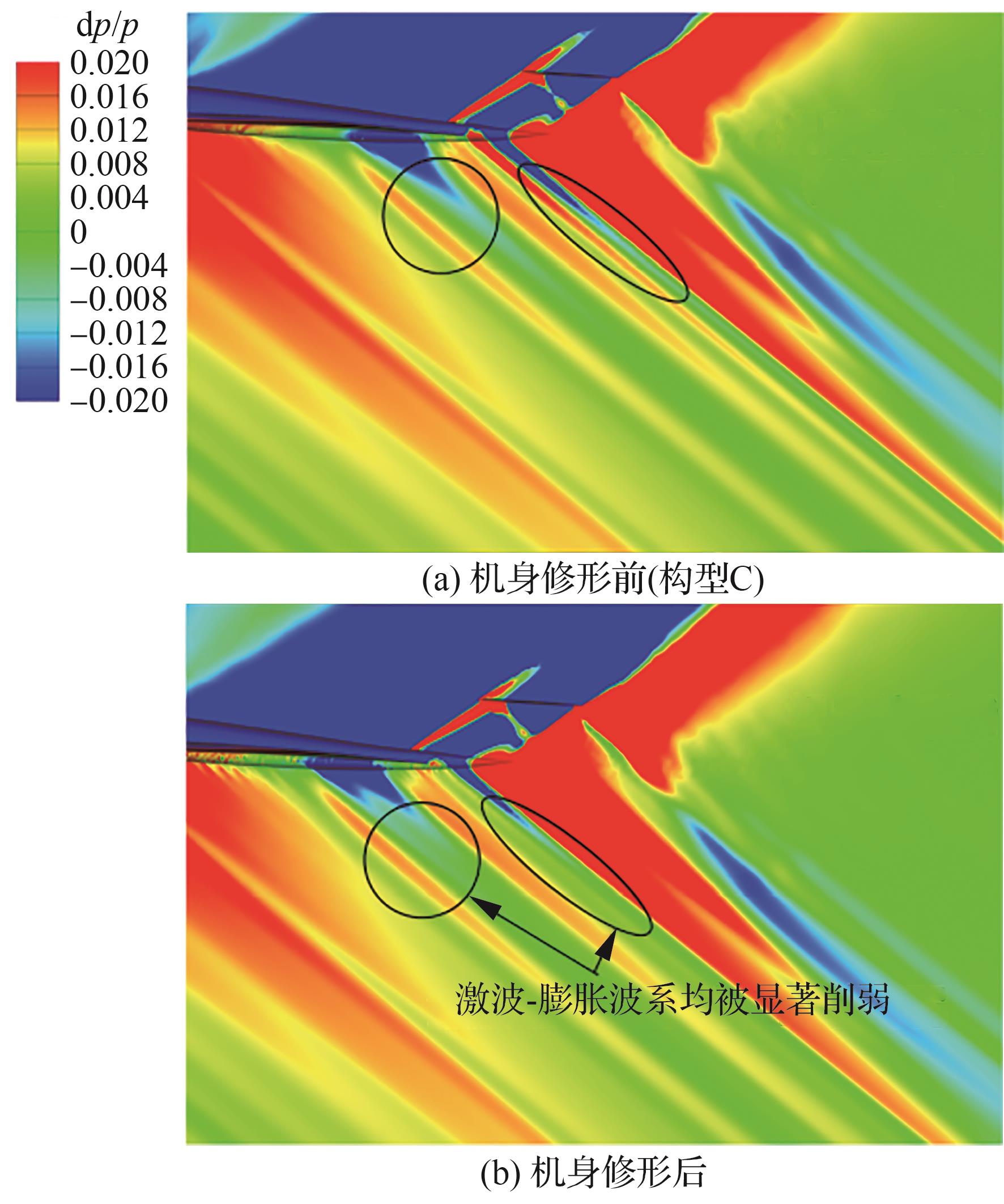
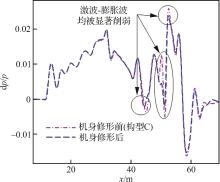
图 37
机身修形前后近场超压信号对比(H/L=0.3)
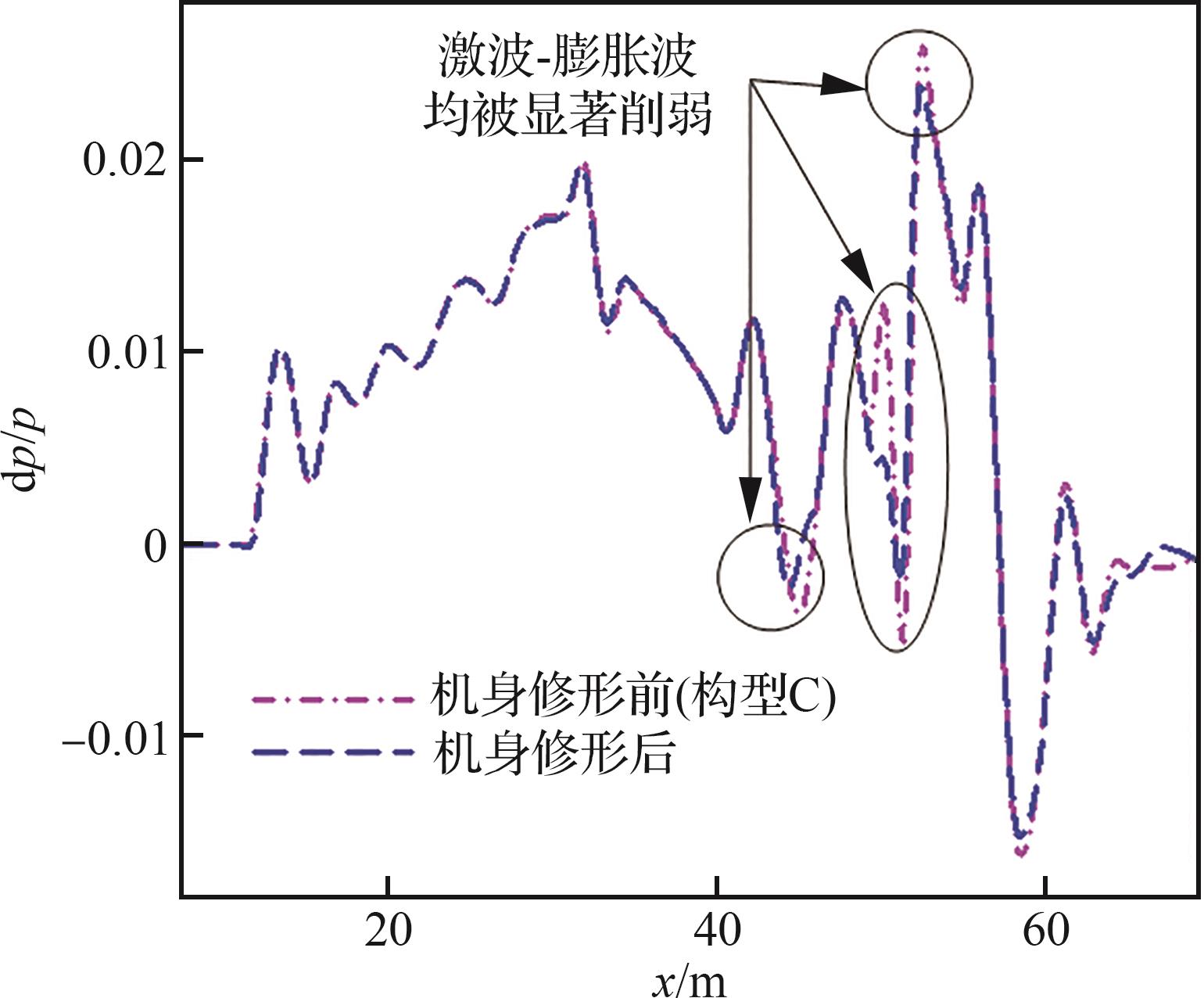
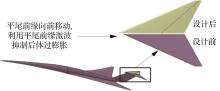
图 38
平尾设计前后几何外形对比
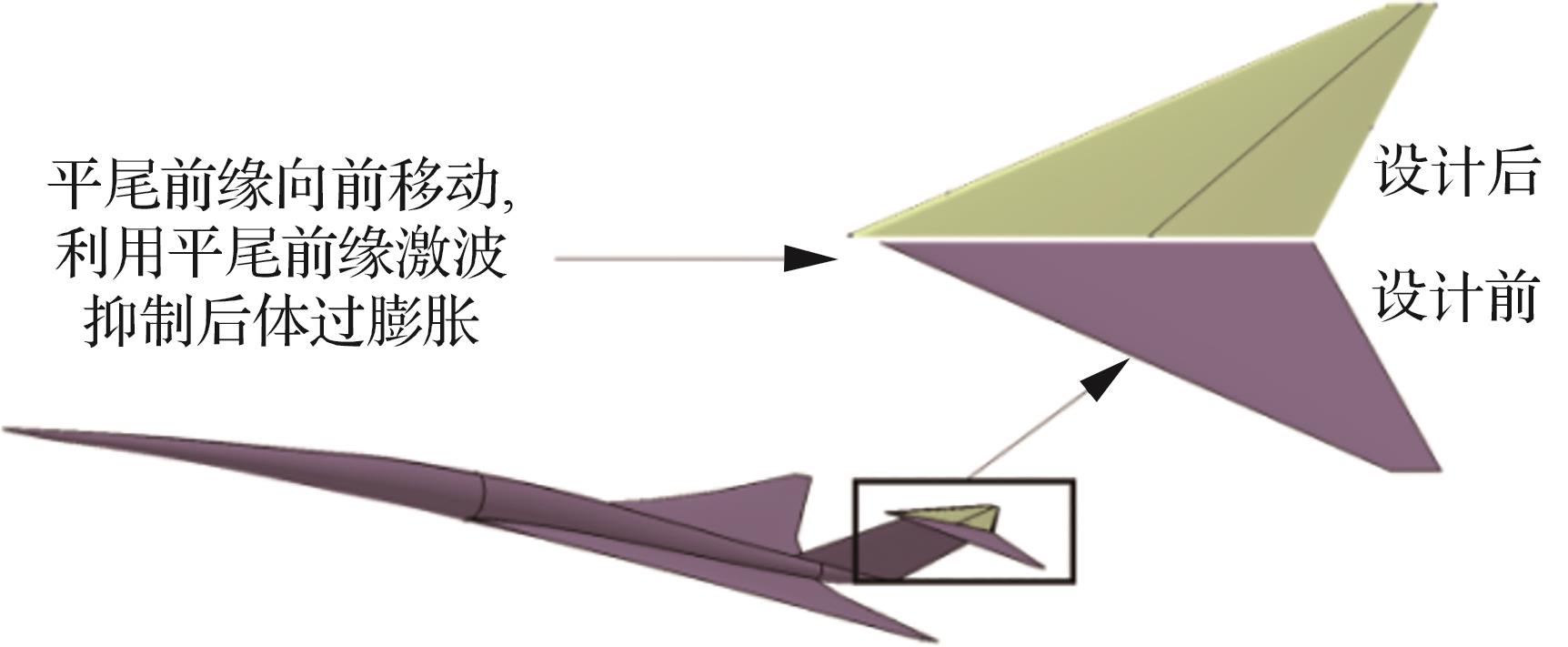
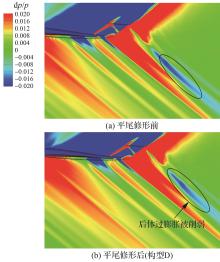
图 39
平尾修形前后激波-膨胀波系对比
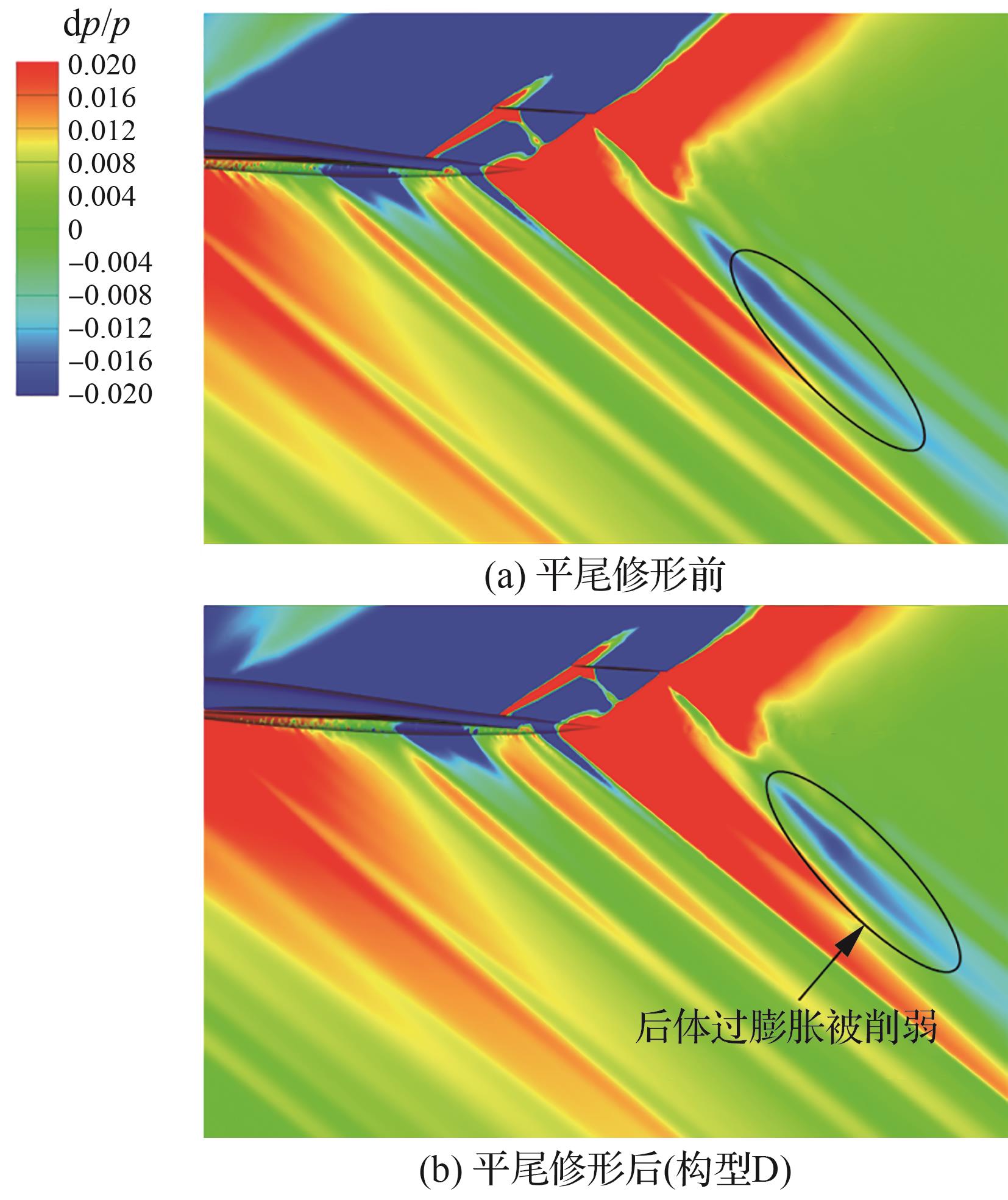
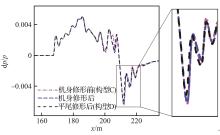
图 40
平尾修形前后近场超压信号对比(H/L=3)
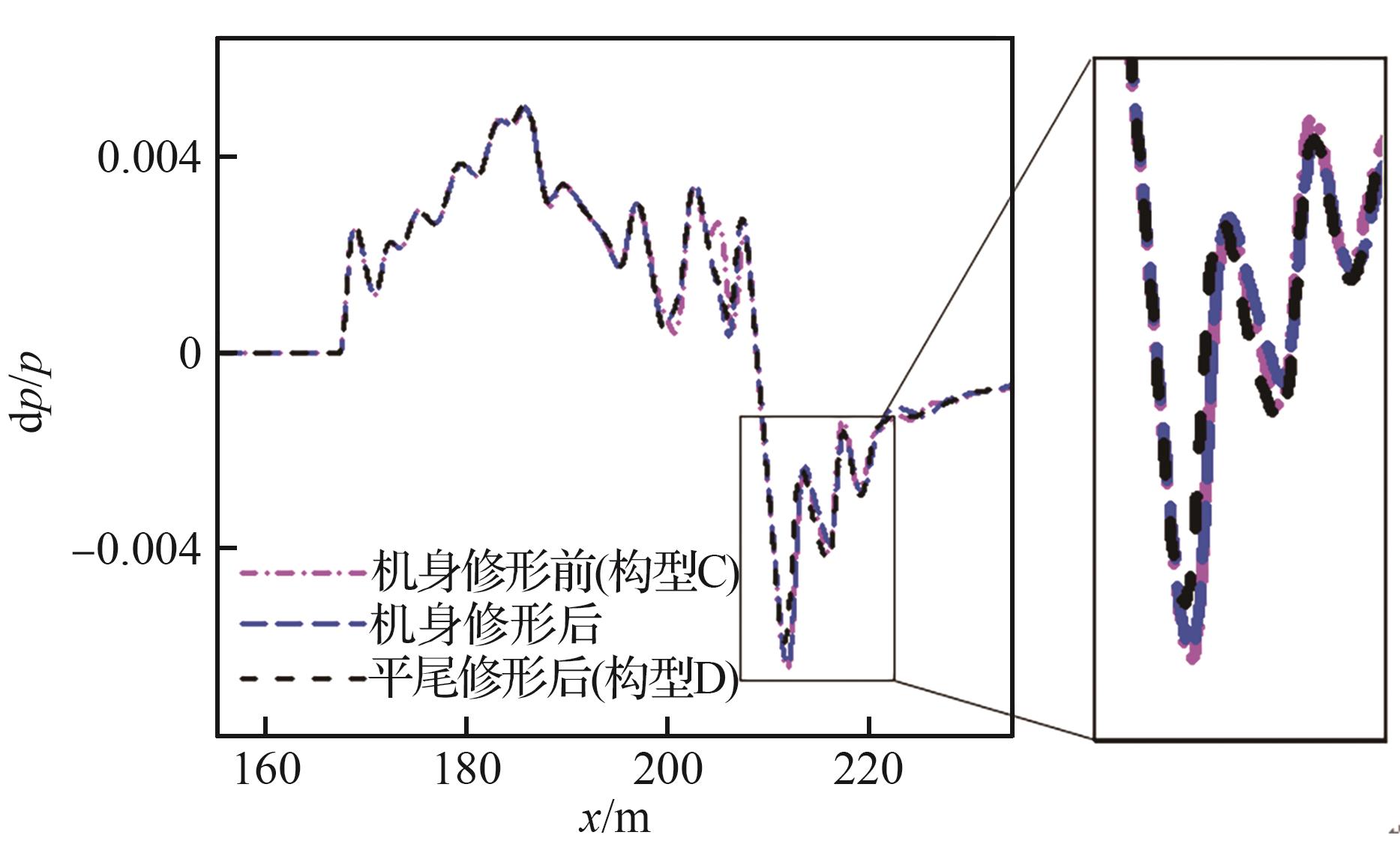
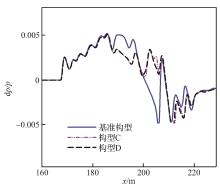
图 41
基准构型与构型C、D近场超压信号对比(H/L=3)
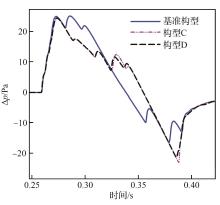
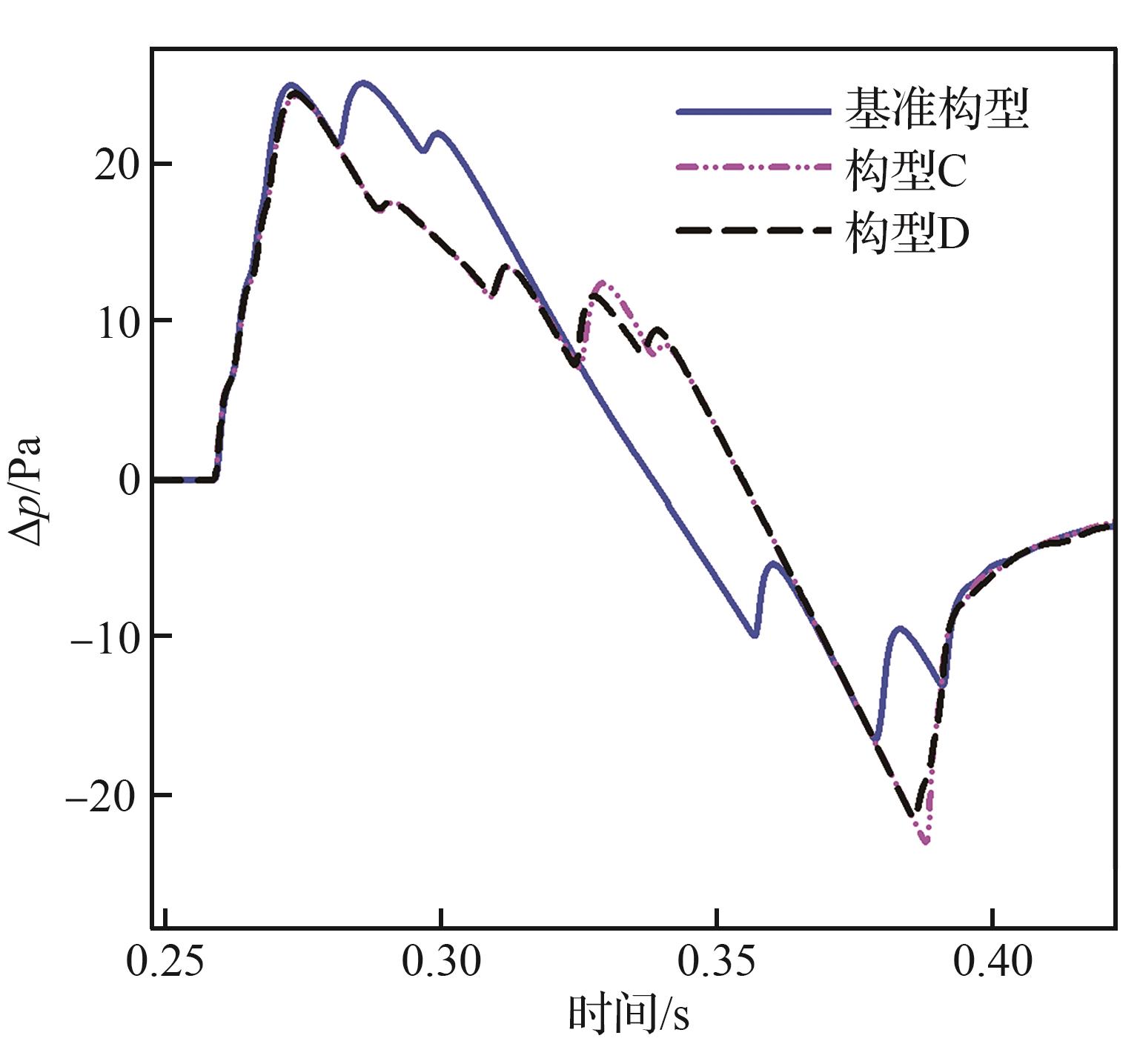
图 42
基准构型与构型C、D远场波形对比
| [1] | 韩忠华, 乔建领, 丁玉临, 等. 新一代环保型超声速客机气动相关关键技术与研究进展[J]. 空气动力学学报, 2019, 37(4): 620-635. |
| HAN Z H, QIAO J L, DING Y L, et al. Key technologies for next-generation environmentally-friendly supersonic transport aircraft: a review of recent progress[J]. Acta Aerodynamica Sinica, 2019, 37(4): 620-635 (in Chinese). | |
| [2] | 丁玉临, 韩忠华, 乔建领, 等. 超声速民机总体气动布局设计关键技术研究进展[J]. 航空学报, 2023, 44(2): 626310. |
| DING Y L, HAN Z H, QIAO J L, et al. Research progress in key technologies for conceptual-aerodynamic configuration design of supersonic transport aircraft[J]. Acta Aeronautica et Astronautica Sinica, 2023, 44(2): 626310 (in Chinese). | |
| [3] | 韩忠华, 钱战森, 乔建领. 声爆预测与低声爆设计方法[M]. 北京: 科学出版社, 2022: 7-8. |
| HAN Z H, QIAN Z S, QIAO J L. Prediction of sonic boom and design method of low sonic boom[M]. Beijing: Science Press, 2022: 7-8 (in Chinese). | |
| [4] | 张力文, 宋文萍, 韩忠华, 等. 声爆产生、传播和抑制机理研究进展[J]. 航空学报, 2022, 43(12): 025649. |
| ZHANG L W, SONG W P, HAN Z H, et al. Recent progress of sonic boom generation, propagation, and mitigation mechanism[J]. Acta Aeronautica et Astronautica Sinica, 2022, 43(12): 025649 (in Chinese). | |
| [5] | VERMEERSCH O, YOSHIDA K, UEDA Y, et al. Natural laminar flow wing for supersonic conditions: Wind tunnel experiments, flight test and stability computations[J]. Progress in Aerospace Sciences, 2015, 79: 64-91. |
| [6] | TOKUGAWA N, YOSHIDA K. Transition detection on supersonic natural laminar flow wing in the flight[C]∥24th AIAA Applied Aerodynamics Conference. Reston: AIAA, 2006. |
| [7] | TOKUGAWA N, KWAK D Y, YOSHIDA K, et al. Transition measurement of natural laminar flow wing on supersonic experimental airplane NEXST-1[J]. Journal of Aircraft, 2008, 45(5): 1495-1504. |
| [8] | YOSHIDA K. Supersonic drag reduction technology in the scaled supersonic experimental airplane project by JAXA[J]. Progress in Aerospace Sciences, 2009, 45 (4-5): 124-146. |
| [9] | UEDA Y, YOSHIDA K, MATSUSHIMA K, et al. Supersonic natural-laminar-flow wing-design concept at high-Reynolds-number conditions[J]. AIAA Journal, 2014, 52(6): 1294-1306. |
| [10] | ISHIKAWA H, UEDA Y, TOKUGAWA N. Natural laminar flow wing design for a low-boom supersonic aircraft[C]∥55th AIAA Aerospace Sciences Meeting. Reston: AIAA, 2017. |
| [11] | TRAORÉ A, LEMÉE P. Laminar design for supersonic civil transport[M]∥Aerodynamic Drag Reduction Technologies. Berlin, Heidelberg: Springer, 2001: 141-153. |
| [12] | IULIANO E, DIN I S EL, DONELLI R, et al. Natural laminar flow design of a supersonic transport jet wing body[C]∥47th AIAA Aerospace Sciences Meeting including the New Horizons Forum and Aerospace Exposition. Reston: AIAA, 2009. |
| [13] | IULIANO E, QUAGLIARELLA D, DONELLI R S, et al. Design of a supersonic natural laminar flow wing-body[J]. Journal of Aircraft, 2011, 48(4): 1147-1162. |
| [14] | LYNDE M N, CAMPBELL R L. Expanding the natural laminar flow boundary for supersonic transports[C]∥34th AIAA Applied Aerodynamics Conference. Reston: AIAA, 2016. |
| [15] | BOZEMAN M D, CAMPBELL R L, BANCHY M N. Progress towards the design of a natural laminar flow wing for a low boom concept using CDISC[C]∥AIAA SCITECH 2024 Forum. Reston: AIAA, 2024. |
| [16] | 聂晗, 宋文萍, 韩忠华, 等. 面向超声速民机层流机翼设计的转捩预测方法[J]. 航空学报, 2022, 43(11): 526342. |
| NIE H, SONG W P, HAN Z H, et al. Automatic transition prediction for natural-laminar-flow wing design of supersonic transports[J]. Acta Aeronautica et Astronautica Sinica, 2022, 43(11): 526342 (in Chinese). | |
| [17] | NIE H, SONG W P, HAN Z H, et al. Attenuation of boundary-layer instabilities for natural laminar flow design on supersonic highly swept wings[J]. Chinese Journal of Aeronautics, 2024, 37(11): 118-137. |
| [18] | 袁吉森, 孙爵, 李玲玉, 等. 超声速飞机层流布局设计与评估技术进展[J]. 航空学报, 2022, 43(11): 526316. |
| YUAN J S, SUN J, LI L Y, et al. Progress of supersonic aircraft laminar flow layout design and evaluation technologies[J]. Acta Aeronautica et Astronautica Sinica, 2022, 43(11): 526316 (in Chinese). | |
| [19] | YUAN J S, YU S H, GAO L J, et al. Measurement and identification of supersonic stationary crossflow waves based on sublimation method[J]. AIAA Journal, 2023, 61(6): 2369-2380. |
| [20] | 单程军, 贡天宇, 易理哲, 等. 超声速民机高效高可信度声爆/气动多学科优化方法[J]. 航空学报, 2024, 45(24): 630573. |
| SHAN C J, GONG T Y, YI L Z, et al. High-efficiency and high-reliability sonic boom/aerodynamic multidisciplinary optimization method for supersonic civil aircraft[J]. Acta Aeronautica et Astronautica Sinica, 2024, 45(24): 630573 (in Chinese). | |
| [21] | JONES L B. Lower bounds for sonic Bangs[J]. The Journal of the Royal Aeronautical Society, 1961, 65(606): 433-436. |
| [22] | JONES L B. Lower bounds for sonic Bangs in the far field[J]. Aeronautical Quarterly, 1967, 18(1): 1-21. |
| [23] | JONES L B. Lower bounds for the pressure jump of the bow shock of a supersonic transport[J]. Aeronautical Quarterly, 1970, 21(1): 1-17. |
| [24] | SEEBASS R, GEORGE A R. Sonic-boom minimization[J]. The Journal of the Acoustical Society of America, 1972, 51(2C): 686-694. |
| [25] | GEORGE A R. Lower bounds for sonic booms in the midfield[J]. AIAA Journal, 1969, 7(8): 1542-1545. |
| [26] | GEORGE A R, SEEBASS R. Sonic boom minimization including both front and rear shocks[J]. AIAA Journal, 1971, 9(10): 2091-2093. |
| [27] | DARDEN C M. Sonic-boom minimization with nose-bluntness relaxation: NASA-TP-1438[R]. Washington, D. C.: NASA, 1979. |
| [28] | MINELLI A, SALAH EL DIN I, CARRIER G. Inverse design approach for low-boom supersonic configurations[J]. AIAA Journal, 2014, 52(10): 2198-2212. |
| [29] | PLOTKIN K, RALLABHANDI S, LI W. Generalized formulation and extension of sonic boom minimization theory for front and aft shaping[C]∥47th AIAA Aerospace Sciences Meeting including The New Horizons Forum and Aerospace Exposition. Reston: AIAA, 2009. |
| [30] | HAAS A, KROO I. A multi-shock inverse design method for low-boom supersonic aircraft[C]∥48th AIAA Aerospace Sciences Meeting Including the New Horizons Forum and Aerospace Exposition. Reston: AIAA, 2010. |
| [31] | LI W, SHIELDS E, GEISELHART K. Mixed-fidelity approach for design of low-boom supersonic aircraft[J]. Journal of Aircraft, 2011, 48(4): 1131-1135. |
| [32] | LI W, RALLABHANDI S. Inverse design of low-boom supersonic concepts using reversed equivalent-area targets[J]. Journal of Aircraft, 2014, 51(1): 29-36. |
| [33] | DING Y L, HAN Z H, QIAO J L, et al. Inverse design method for low-boom supersonic transport with lift constraint[J]. AIAA Journal, 2023, 61(7): 2840-2853. |
| [34] | 李军府, 陈晴, 王伟, 等. 一种先进超声速民机低声爆高效气动布局设计[J]. 航空学报, 2024, 45(6): 629613. |
| LI J F, CHEN Q, WANG W, et al. Design of low sonic boom high efficiency layout for advanced supersonic civil aircraft[J]. Acta Aeronautica et Astronautica Sinica, 2024, 45(6): 629613 (in Chinese). | |
| [35] | PARK M A, CARTER M B. Low-boom demonstrator near-field summary for the third AIAA sonic boom prediction workshop[J]. Journal of Aircraft, 2021, 59(3): 563-577. |
| [36] | QIAO J L, HAN Z H, SONG W P, et al. Development of sonic boom prediction code for supersonic transports based on augmented Burgers equation[C]∥AIAA Aviation 2019 Forum. Reston: AIAA, 2019. |
| [37] | QIAO J L, HAN Z H, ZHANG L W, et al. Far-field sonic boom prediction considering atmospheric turbulence effects: An improved approach[J]. Chinese Journal of Aeronautics, 2022, 35(9): 208-225. |
| [38] | STEVENS S S. Perceived level of noise by mark Ⅶ and decibels (E)[J]. The Journal of the Acoustical Society of America, 1972, 51(2B): 575-601. |
| [39] | WHITHAM G B. The flow pattern of a supersonic projectile[J]. Communications on Pure and Applied Mathematics, 1952, 5(3): 301-348. |
| [40] | WALKDEN F. The shock pattern of a wing-body combination, far from the flight path[J]. Aeronautical Quarterly, 1958, 9(2): 164-194. |
| [41] | GEORGE A R. Reduction of sonic boom by azimuthal redistribution of overpressure[J]. AIAA Journal, 1969, 7(2): 291-298. |
| [42] | PAGE J, PLOTKIN K. An efficient method for incorporating computational fluid dynamics into sonic boom prediction[C]∥9th Applied Aerodynamics Conference. Reston: AIAA, 1991: 3275. |
| [43] | DING Y L, HAN Z H, QIAO J L, et al. Fast method and an integrated code for sonic boom prediction of supersonic commercial aircraft[C]∥32nd ICAS Congress. Bonn: ICAS, 2021: 2021-0600. |
| [44] | 聂晗. 超声速边界层转捩预测与自然层流机翼设计方法[D]. 西安: 西北工业大学, 2024. |
| NIE H. Supersonic boundary-layer flow transition prediction and natural laminar flow wing design method[D]. Xi’an: Northwestern Polytechnical University, 2024. | |
| [45] | KULFAN B M. Universal parametric geometry representation method[J]. Journal of Aircraft, 2008, 45(1): 142-158. |
| [46] | HAN Z H. Surroopt: A generic surrogate-based optimization code for aerodynamic and multidisciplinary design[C]∥30nd ICAS Congress. Bonn: ICAS, 2016: 0281. |
| [1] | 李军府, 陈晴, 王伟, 韩忠华, 谭玉婷, 丁玉临, 谢露, 乔建领, 宋科, 艾俊强. 一种先进超声速民机低声爆高效气动布局设计[J]. 航空学报, 2024, 45(6): 629613-629613. |
| [2] | 单程军, 贡天宇, 易理哲, 杨浩辉, 龙垚松. 超声速民机高效高可信度声爆/气动多学科优化方法[J]. 航空学报, 2024, 45(24): 630573-630573. |
| [3] | 乔建领, 韩忠华, 丁玉临, 宋文萍, 宋笔锋. 分层大气湍流场对远场声爆传播的影响[J]. 航空学报, 2023, 44(2): 626350-626350. |
| [4] | 丁玉临, 韩忠华, 乔建领, 聂晗, 宋文萍, 宋笔锋. 超声速民机总体气动布局设计关键技术研究进展[J]. 航空学报, 2023, 44(2): 626310-626310. |
| [5] | 王迪, 冷岩, 杨龙, 韩忠华, 钱战森. 基于广义Burgers方程的声爆传播特性大气湍流影响[J]. 航空学报, 2023, 44(2): 626318-626318. |
| [6] | 张力文, 宋文萍, 韩忠华, 钱战森, 宋笔锋. 声爆产生、传播和抑制机理研究进展[J]. 航空学报, 2022, 43(12): 25649-025649. |
| [7] | 聂晗, 宋文萍, 韩忠华, 陈坚强, 段茂昌, 万兵兵. 面向超声速民机层流机翼设计的转捩预测方法[J]. 航空学报, 2022, 43(11): 526342-526342. |
| [8] | 袁吉森, 孙爵, 李玲玉, 于晟浩, 聂晗, 高亮杰, 韩忠华, 钱战森. 超声速飞机层流布局设计与评估技术进展[J]. 航空学报, 2022, 43(11): 526316-526316. |
| [9] | 王迪, 钱战森, 冷岩. 广义Burgers方程声爆传播模型高阶格式离散[J]. 航空学报, 2022, 43(1): 124916-124916. |
| [10] | 朱自强, 兰世隆. 超声速民机和降低音爆研究[J]. 航空学报, 2015, 36(8): 2507-2528. |
| 阅读次数 | ||||||
|
全文 |
|
|||||
|
摘要 |
|
|||||
版权所有 © 航空学报编辑部
版权所有 © 2011航空学报杂志社
主管单位:中国科学技术协会 主办单位:中国航空学会 北京航空航天大学

 CJA
CJA
