Acta Aeronautica et Astronautica Sinica ›› 2026, Vol. 47 ›› Issue (17): 333094.doi: 10.7527/S1000-6893.2026.33094
• Electronics and Electrical Engineering and Control • Previous Articles
Hongguang LI1, Zewei LIU2( ), Xinjun LI1, Yingyan GU3
Received:2025-11-17
Revised:2025-12-25
Accepted:2026-02-27
Online:2026-03-17
Published:2026-03-16
Contact:
Zewei LIU
E-mail:13791340187@163.com
Supported by:CLC Number:
Hongguang LI, Zewei LIU, Xinjun LI, Yingyan GU. Advances in UAV visual positioning technology based on deep learning[J]. Acta Aeronautica et Astronautica Sinica, 2026, 47(17): 333094.
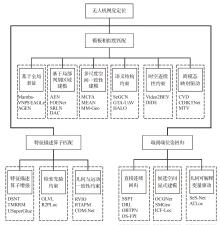
Fig.1
Classification of positioning methods
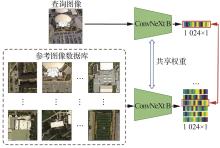
Fig.2
Schematic diagram of matching algorithm based on template similarity[3]
Fig.3
Schematic diagram of visual positioning method based on feature description operator matching
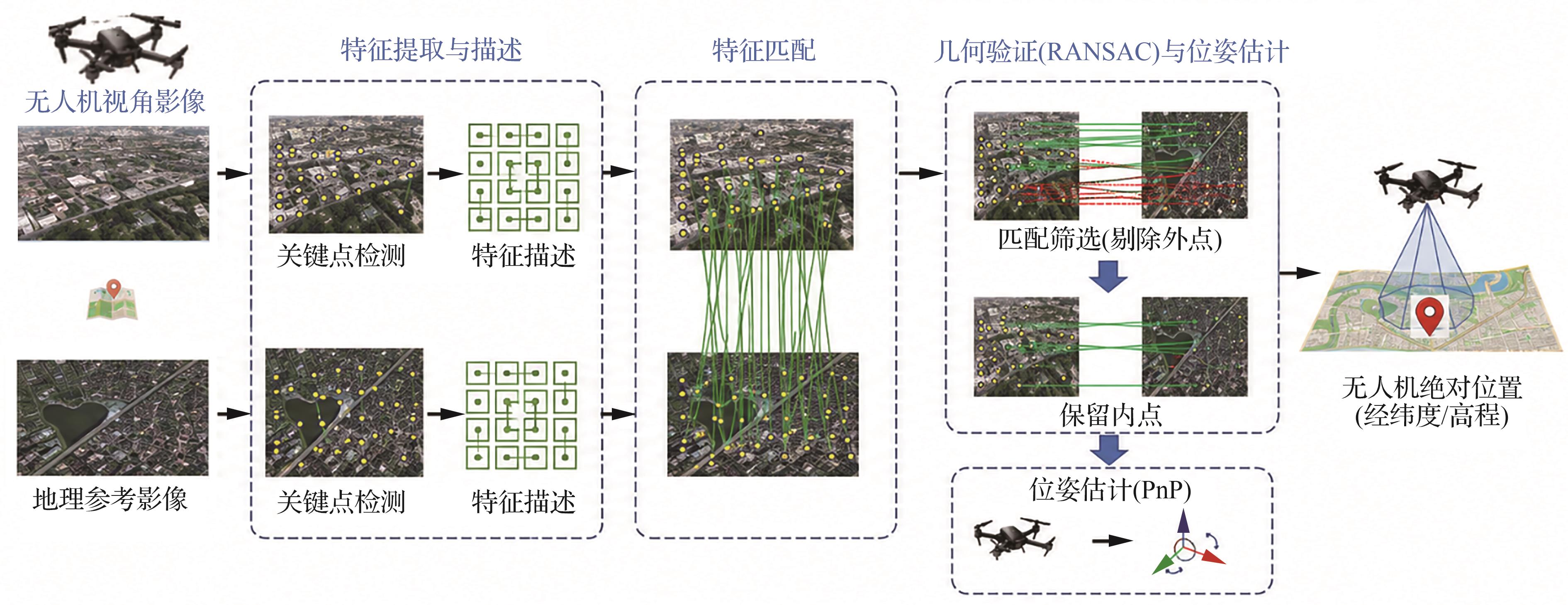
Fig.4
Comparison of end-to-end visual positioning and template similarity matching[64]
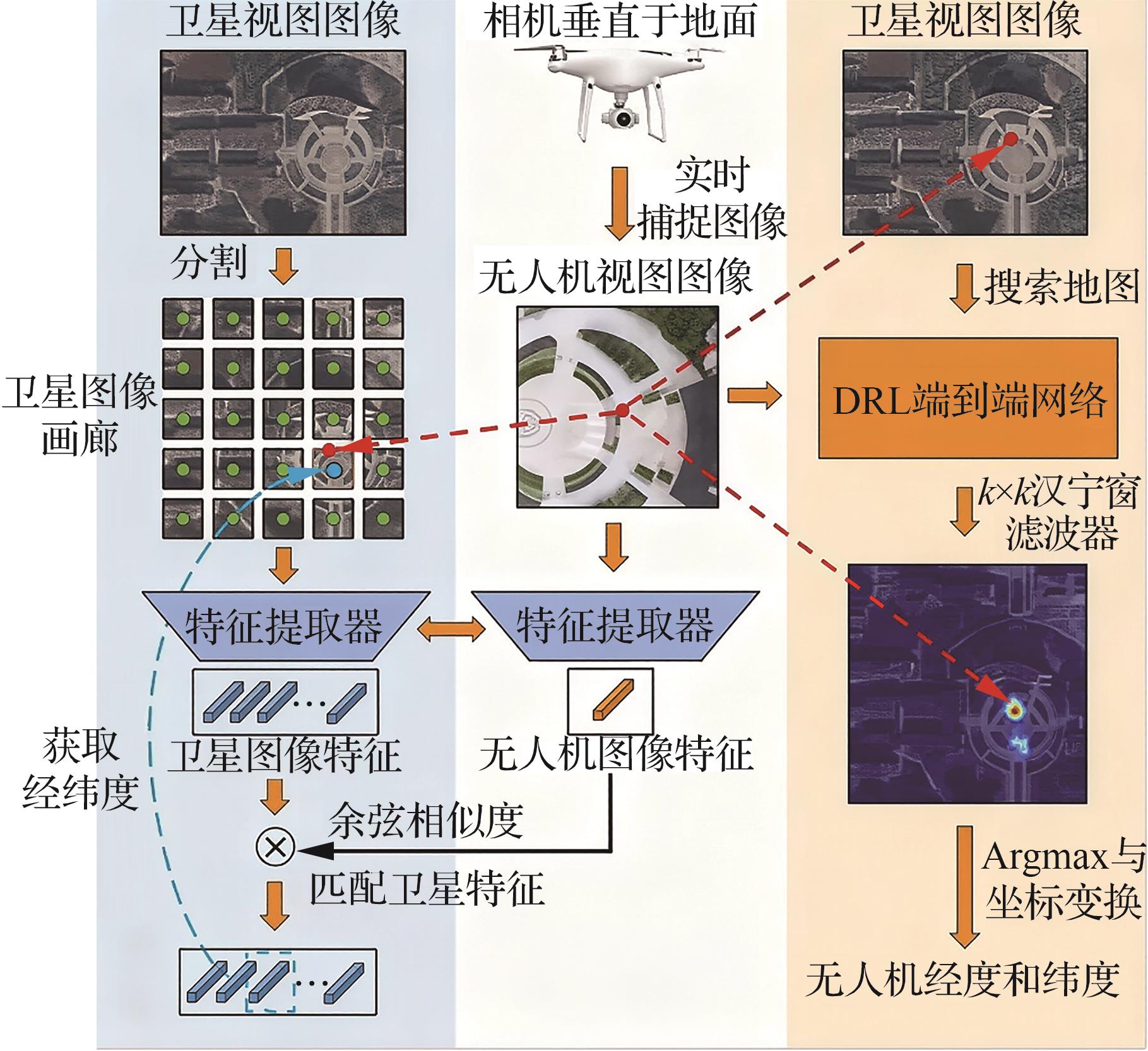
Table 1
Summary of representative methods
| 类别 | 文献 | 输入数据类型 | 网络架构 | 是否需要语义地图 | 是否有监督 | 优点 | 缺点 |
|---|---|---|---|---|---|---|---|
| 模板相似度匹配 | [ | UAV+卫星图像 | VLAD+聚类空间约束 | 否 | 否 | 保留空间连贯性 | 极端视角下鲁棒性有限 |
| [ | UAV+卫星图像 | ResNet+OSM模块 | 否 | 是 | 精细局部匹配 | 极端视角或模态缺失受限 | |
| [ | UAV+卫星图像 | 全局-局部注意力 | 否 | 是 | 缓解尺度干扰 | 缺乏明确尺度对应约束 | |
| [ | UAV+卫星图像 | 语义图卷积 | 是 | 是 | 利用语义结构 | 依赖语义分割准确性 | |
| [ | UAV+卫星图像 | 语义置信度建模 | 是 | 是 | 降低语义噪声影响 | 依赖置信估计准确性 | |
| [ | UAV视频帧+卫星图像 | Video2BEV+特征融合 | 否 | 是 | 时间一致性嵌入 | 对帧间运动估计敏感 | |
| 特征描述子匹配 | [ | UAV+卫星图像 | SuperPoint+无监督图匹配网络 | 否 | 否 | 无需人工标注匹配对 | 依赖邻域关系建模质量 |
| [ | UAV热图像+卫星影像 | 深度单应估计+热图生成网络 | 否 | 是 | 低可视度/夜间定位有效 | 对跨模态适应性依赖高 | |
| [ | UAV+卫星图像+IMU | RVIO+CNN | 否 | 是 | 多传感器融合,提高稳定性 | 对传感器精度依赖高 | |
| [ | UAV+卫星图像+IMU | SuperPoint+SuperGlue+几何一致性约束 | 否 | 是 | 复杂视角匹配稳定 | 计算开销大 | |
| [ | UAV+卫星图像+IMU | 点线特征+条件扩散模型 | 否 | 是 | 多模态融合减少视角差异,提高鲁棒性 | 对建筑特征依赖强 | |
| [ | UAV多模态图像+卫星图像 | 递归门控卷积网络 | 否 | 是 | 跨模态多尺度匹配,实时性较好 | 对特征交互要求高 | |
| 位姿回归 | [ | UAV视频帧+卫星图像 | CNN+长短期记忆网络 | 否 | 是 | 利用时序信息平滑位姿估计 | 对长序列漂移敏感 |
| [ | UAV视频帧+卫星图像 | CNN+双流特征融合 | 否 | 是 | 融合多帧上下文信息,提高精度 | 跨视角变化大时鲁棒性低 | |
| [ | UAV视频帧+卫星图像 | 长短期记忆网络+视觉特征CNN | 否 | 是 | 处理动态场景效果好 | 长序列训练成本高 | |
| [ | UAV+卫星图像+IMU | CNN-长短期记忆网络+融合IMU模块 | 否 | 是 | IMU辅助,减小累积漂移 | 依赖IMU标定精度 | |
| [ | UAV+卫星图像+深度 | CNN特征+回归模块 | 否 | 是 | 多模态融合,精度提升 | 传感器依赖高 | |
| [ | UAV+卫星图像 | 多尺度卷积+长短期记忆网络 | 否 | 是 | 跨尺度特征提升估计精度 | 对极端视角变化鲁棒性不足 | |
| [ | UAV+卫星图像 | DenseNet+回归层 | 否 | 是 | 特征利用充分,训练稳定 | 对光照变化敏感 | |
| [ | UAV+卫星图像 | 卷积+注意力模块 | 否 | 是 | 注意力增强关键区域特征 | 计算复杂度增加 | |
| [ | UAV+卫星图像+IMU | Transformer | 否 | 是 | 跨模态融合精度高,抑制漂移 | 对算力要求高 |
Table 2
Dataset comparison
| 数据集名称 | UAV数据量/张 | UAV图像来源 | 是否不同高度采集 | 采样策略 | 评估指标 |
|---|---|---|---|---|---|
| University-1652[ | 701类×71.64 | 合成UAV-View | 否 | 多源、多视角合成采样 | Recall@K,mAP |
| SUES-200[ | 120类×51 | 真实UAV图像 | 是(150~300 m) | 固定高度圆形轨迹采样 | Recall@K,mAP |
| DenseUAV[ | 2 256类×9 | 真实UAV图像 | 是(不同低空高度) | 城市低空环境密集采样 | Recall@K,SDM(Spatial Distance Metric)@K |
| UAV-VisLoc[ | 6 742 | 真实UAV图像 | 是(400~2 000 m) | 多高度、多航向角采样 | Recall@K |
| UL14[ | 9 099 | 真实UAV图像 | 是(80,90,100 m) | 高分辨率卫星多尺度配对采样 | RDS (Relative Distance Score) |
Fig.5
University-1652 dataset[84]
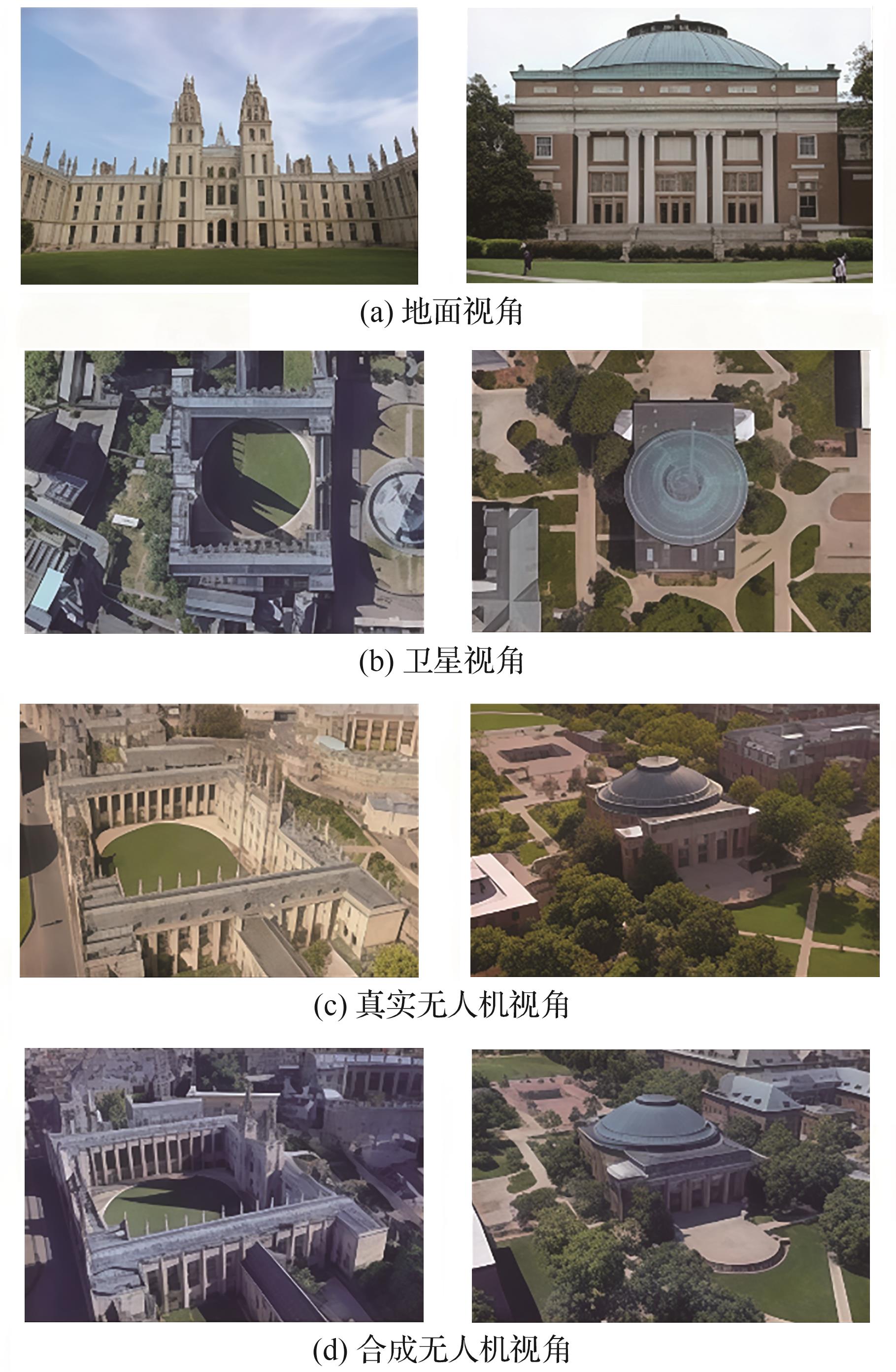
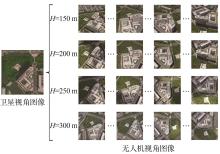
Fig.6
SUES-200 dataset[85]
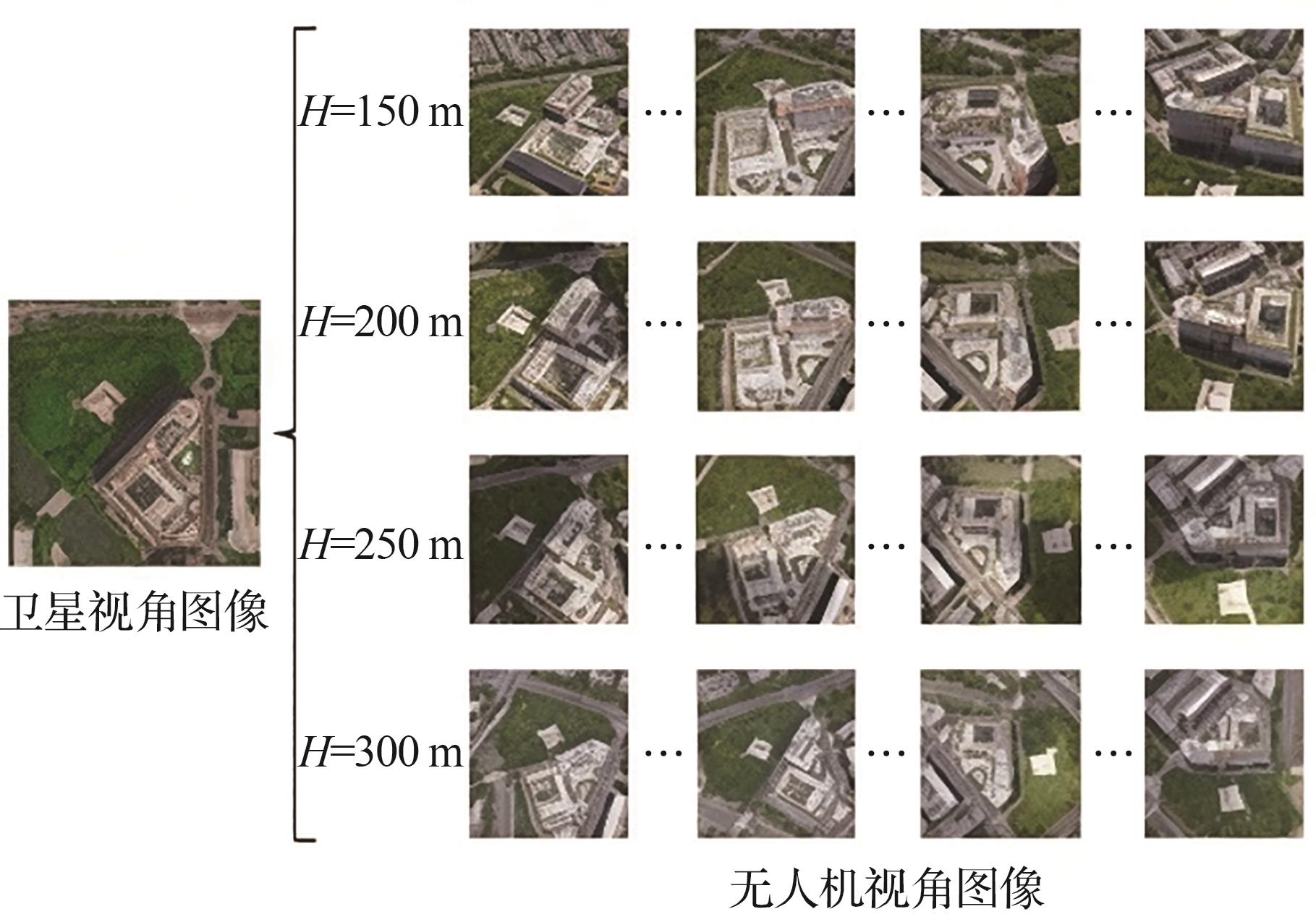
Fig.7
DenseUAV dataset[68]
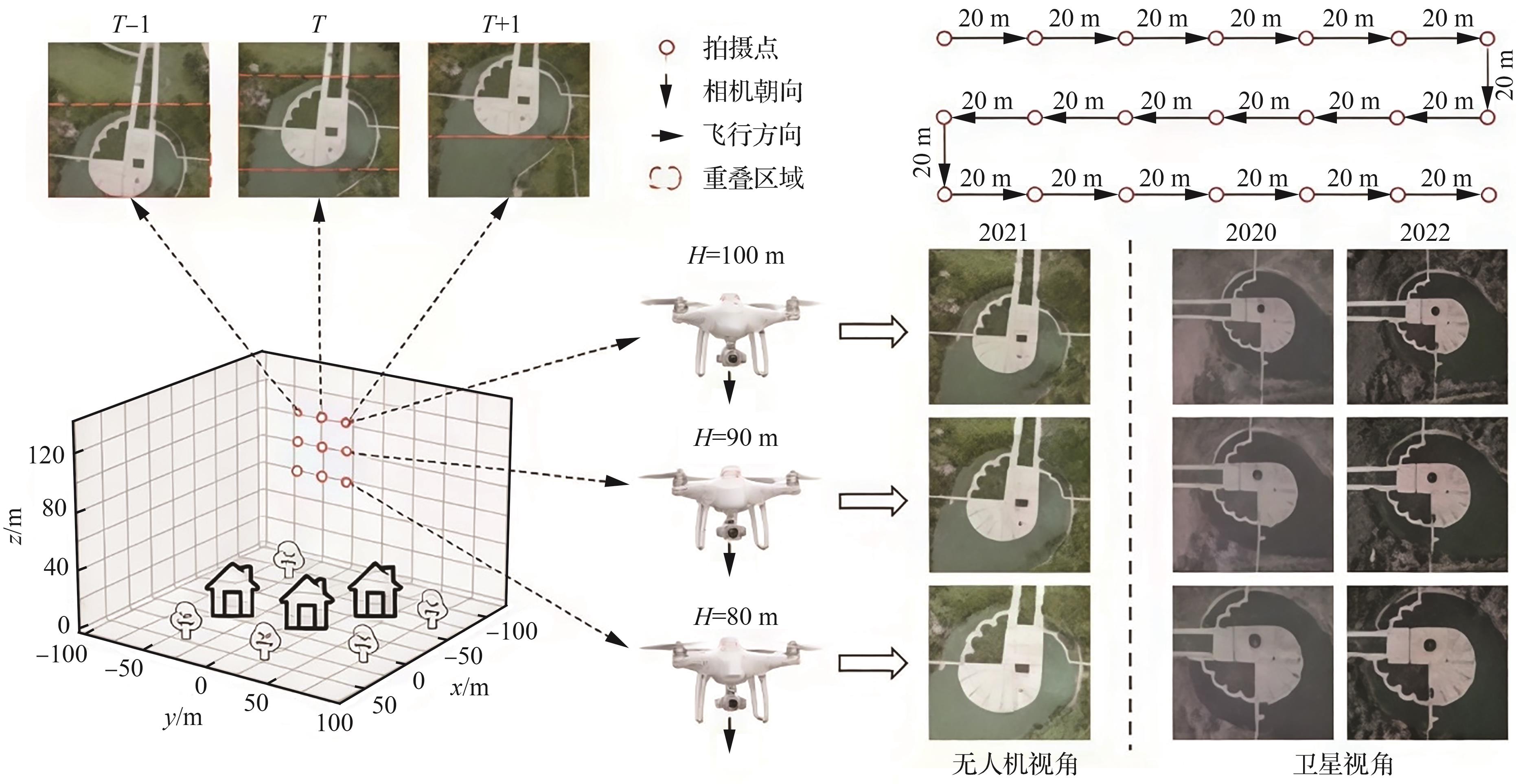
Fig.8
UL14 dataset[64]
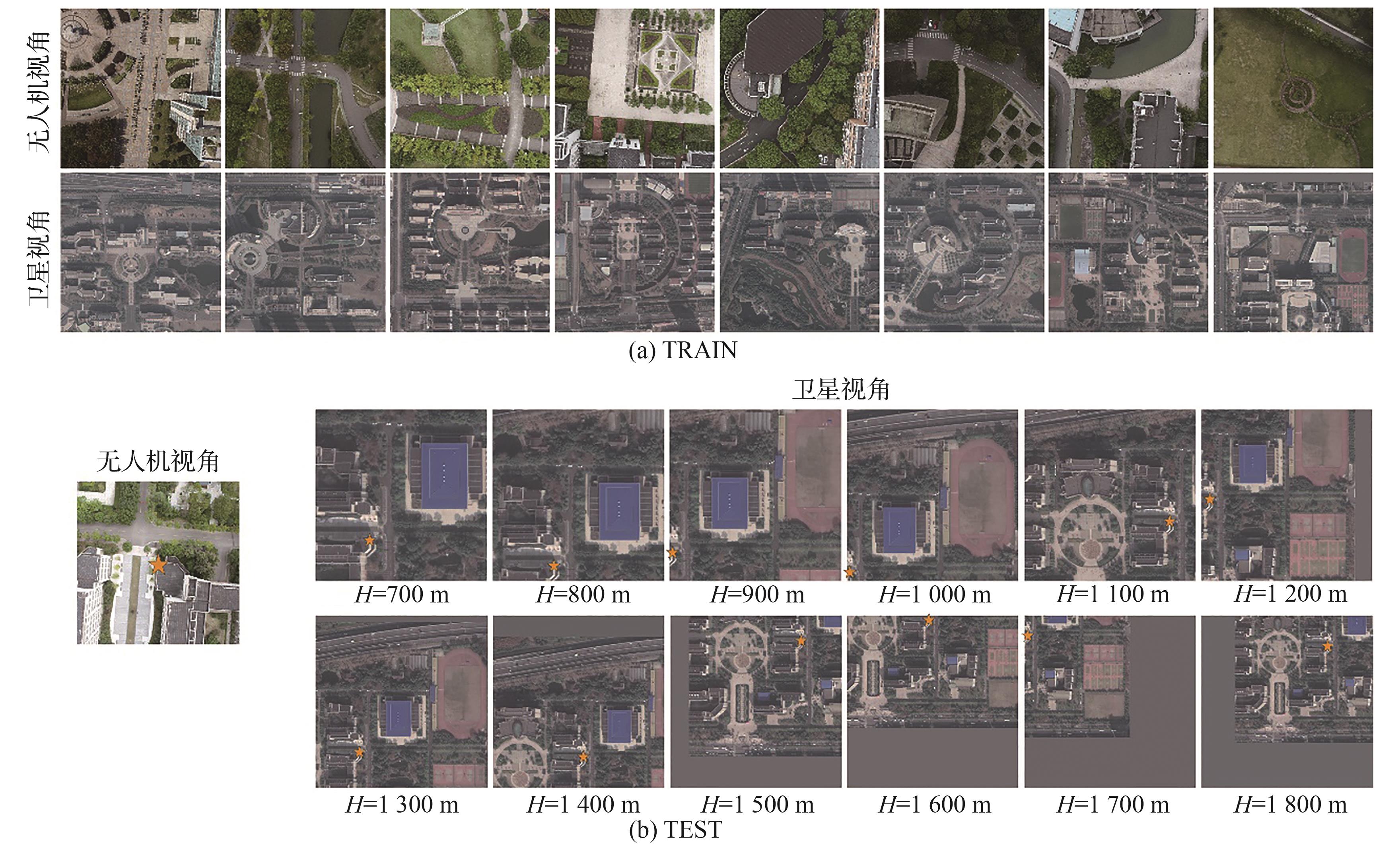
Table 3
Experimental results comparison on University-1652
| 方法 | Recall@1/% | AP/% | Params/M | FLOPs/G |
|---|---|---|---|---|
| DAC[ | 94.67 | 95.50 | 28.12 | 4.56 |
| VimGeo[ | 91.27 | 92.61 | 26.00 | 26.18 |
| EAGLe[ | 68.86 | 72.62 | ||
| AGEN[ | 95.43 | 96.18 | ||
| MSM-Transformer[ | 89.22 | 91.04 | 28.4 | 4.54 |
| AEN[ | 87.26 | 89.11 | ||
| FOENet[ | 70.22 | 74.02 | ||
| SRLN[ | 92.70 | 93.77 | 193.03 | 42.15 |
| IFSs[ | 86.06 | 88.08 | ||
| TirSA[ | 93.37 | 94.53 | ||
| QDFL[ | 95.00 | 95.83 | 108.87 | 40.12 |
| MCFA[ | 94.53 | 95.40 | 97.57 | 11.25 |
| MEAN[ | 93.55 | 94.53 | 36.50 | 8.21 |
| MM-Geo[ | 73.16 | 76.91 | ||
| SeGCN[ | 89.18 | 90.89 | ||
| WeatherPrompt[ | 77.14 | 80.20 | 838.30 | 90.63 |
| CDIKTNet[ | 95.02 | 95.79 | ||
| TMRRM[ | 75.15 | 80.02 | ||
| R2PLoc[ | 86.54 | 88.57 | 18.72 | 2.61 |
| CDM-Net[ | 95.13 | 96.04 | 26.80 | 138.18 |
| GeoFormer[ | 89.08 | 90.08 | 157 | 37.7 |
Table 4
Experimental results comparison on SUE-200
| 方法 | Recall@1/% | AP/% | Params/M | FLOPs/G |
|---|---|---|---|---|
| DAC[ | 96.80 | 97.54 | 28.12 | 4.56 |
| AGEN[ | 94.38 | 95.58 | ||
| SRLN[ | 89.90 | 91.90 | 193.03 | 42.15 |
| IFSs[ | 77.57 | 81.30 | ||
| QDFL[ | 93.97 | 95.42 | 108.87 | 40.12 |
| MCFA[ | 96.00 | 96.89 | 97.57 | 11.25 |
| SeGCN[ | 93.75 | 92.45 | ||
| CDIKTNet[ | 96.03 | 96.87 | ||
| CDM-Net[ | 93.78 | 95.16 | 26.80 | 138.18 |
Table 5
Experimental results comparison on UL14
| 方法 | RDS | Params/M | FLOPs/G |
|---|---|---|---|
| DRL[ | 0.758 | 76.6 | 22.35 |
| SSPT[ | 82.21 | 22.81 | 7.23 |
| OBTPN[ | 86.32 | ||
| OS-FPI[ | 76.25 | 28.17 | 14.28 |
| [1] | 袁媛, 孙柏, 刘赶超. 景象匹配无人机视觉定位[J]. 自动化学报, 2025(2): 287-311. |
| YUAN Y, SUN B, LIU G C. Drone-based scene matching visual geo-localization[J]. Acta Automatica Sinica, 2025(2): 287-311 (in Chinese). | |
| [2] | 谷美颖, 李航, 张家伟, 等. 基于视觉的无人机定位与导航方法研究综述[J]. 电子学报, 2025, 53(3): 651-685. |
| GU M Y, LI H, ZHANG J W, et al. A review of vision-based UAV localization and navigation methods[J]. Acta Electronica Sinica, 2025, 53(3): 651-685 (in Chinese). | |
| [3] | XIA P W, WAN Y, ZHENG Z, et al. Enhancing cross-view geo-localization with domain alignment and scene consistency[J]. IEEE Transactions on Circuits and Systems for Video Technology, 2024, 34(12): 13271-13281. |
| [4] | CHEN C, HE M F, WANG J, et al. GeoCluster: Enhancing visual place recognition in spatial domain on aerial vehicle platforms[J]. IEEE Robotics and Automation Letters, 2024, 9(3): 3013-3020. |
| [5] | CUI Z F, ZHOU P W, WANG X L, et al. A novel geo-localization method for UAV and satellite images using cross-view consistent attention[J]. Remote Sensing, 2023, 15(19): 4667. |
| [6] | HUANG L Y, WANG Z Y, XIONG Q K, et al. Mamba-VNPS: A visual navigation and positioning system with state-selection space[J]. Drones, 2024, 8(11): 663. |
| [7] | YANG K Q, ZHANG Y J, WANG L, et al. VimGeo: An efficient visual model for cross-view geo-localization[J]. Electronics, 2025, 14(19): 3906. |
| [8] | LIU C W, PENG S T, LI S S, et al. A novel EAGLe framework for robust UAV-view geo-localization[J]. IEEE Transactions on Geoscience and Remote Sensing, 2025, 63: 5629917. |
| [9] | XU M M, LV H X, ZHU H, et al. AGEN: Adaptive error control-driven cross-view geo-localization under extreme weather conditions[J]. Sensors, 2025, 25(12): 3749. |
| [10] | GAN W J, ZHOU Y, HU X F, et al. Learning robust feature representation for cross-view image geo-localization[J]. IEEE Geoscience and Remote Sensing Letters, 2025, 22: 6004405. |
| [11] | HE Q Y, XU A, ZHANG Y F, et al. A contrastive learning based multiview scene matching method for UAV view geo-localization[J]. Remote Sensing, 2024, 16(16): 3039. |
| [12] | 王东明, 王晓春. 基于多源图像特征学习的无人机视觉定位[J]. 传感器与微系统, 2025, 44(10): 39-43. |
| WANG D M, WANG X C. Vision‑based unmanned aerial vehicle localization using multi‑source image feature learning[J]. Transducer and Microsystem Technologies, 2025, 44(10): 39‑43 (in Chinese). | |
| [13] | LIU C W, LI S S, DU C, et al. Adaptive global embedding learning: A two-stage framework for UAV-view geo-localization[J]. IEEE Signal Processing Letters, 2024, 31: 1239-1243. |
| [14] | SONG Z, KANG X D, WEI X H, et al. Unified and real-time image geo-localization via fine-grained overlap estimation[J]. IEEE Transactions on Image Processing, 2024, 33: 5060-5072. |
| [15] | LV H X, ZHU H, ZHU R Z, et al. Direction-guided multiscale feature fusion network for geo-localization[J]. IEEE Transactions on Geoscience and Remote Sensing, 2024, 62: 5622813. |
| [16] | GE F W, ZHANG Y Z, LIU Y X, et al. Multibranch joint representation learning based on information fusion strategy for cross-view geo-localization[J]. IEEE Transactions on Geoscience and Remote Sensing, 2024, 62: 5909516. |
| [17] | SUN J, SUN H, LEI L, et al. TirSA: A three stage approach for UAV-satellite cross-view geo-localization based on self-supervised feature enhancement[J]. IEEE Transactions on Circuits and Systems for Video Technology, 2024, 34(9): 7882-7895. |
| [18] | PAN K Y, GUO W, LIU Y, et al. Large-scale geo-localization of remote sensing images: A three-stage framework leveraging maximal clique theory[J]. IEEE Transactions on Geoscience and Remote Sensing, 2025, 63: 3001219. |
| [19] | HU S Y, SHI Z L, JIN T, et al. Query-driven feature learning for cross-view geo-localization[J]. IEEE Transactions on Geoscience and Remote Sensing, 2025, 63: 5620815. |
| [20] | GONG N Q, LI L W, SHA J J, et al. A satellite-drone image cross-view geolocalization method based on multi-scale information and dual-channel attention mechanism[J]. Remote Sensing, 2024, 16(6): 941. |
| [21] | ZHANG W H, ZHONG Z N, CHEN H, et al. GeoViewMatch: A multi-scale feature-matching network for cross-view geo-localization using Swin-Transformer and contrastive learning[J]. Remote Sensing, 2024, 16(4): 678. |
| [22] | HOU K J, TONG Q, YAN N, et al. MCFA: Multi-scale cascade and feature adaptive alignment network for cross-view geo-localization[J]. Sensors, 2025, 25(14): 4519. |
| [23] | XU Y Z, DAI M, YANG W K. Precise GPS-denied UAV self-positioning via context-enhanced cross-view geo-localization[M]∥ Pattern Recognition and Computer Vision. Singapore: Springer Nature Singapore, 2026: 374-388. |
| [24] | CHEN Z W, YANG Z X, RONG H J. Multilevel embedding and alignment network with consistency and invariance learning for cross-view geo-localization[J]. IEEE Transactions on Geoscience and Remote Sensing, 2025, 63: 5625615. |
| [25] | AI P, ZHANG X C, CHENG S M, et al. MM-Geo: Multi-scale and multi-positive UAV-view geo-localization[C]∥ 2025 IEEE/RSJ International Conference on Intelligent Robots and Systems (IROS). Piscataway: IEEE Press, 2025: 9784-9791. |
| [26] | 屈若锟, 王致远, 刘晔璐, 等. 面向城市空中交通的无人机视觉定位技术[J]. 航空学报, 2025, 46(11): 531168. |
| QU R K, WANG Z Y, LIU Y L, et al. UAV visual positioning technology for urban air mobility[J]. Acta Aeronautica et Astronautica Sinica, 2025, 46(11): 531168 (in Chinese). | |
| [27] | LIU X Z, WANG Z Y, WU Y, et al. SeGCN: A semantic-aware graph convolutional network for UAV geo-localization[J]. IEEE Journal of Selected Topics in Applied Earth Observations and Remote Sensing, 2024, 17: 6055-6066. |
| [28] | JI Y X, HE B Y, TAN Z Y, et al. Game4Loc: A UAV geo-localization benchmark from game data[J]. Proceedings of the AAAI Conference on Artificial Intelligence, 2025, 39(4): 3913-3921. |
| [29] | ZHANG Z H, SUN Y Q, DING L, et al. HALO: Hierarchical adaptive feature learning and cross-view interaction for object-level geo-localization[J]. IEEE Transactions on Geoscience and Remote Sensing, 2025, 63: 5647415. |
| [30] | FENG M T, TIAN F H, LUO J Q, et al. Semantic ambiguity modeling and propagation for fine-grained visual cross view geo-localization[J]. Proceedings of the AAAI Conference on Artificial Intelligence, 2025, 39(3): 2978-2986. |
| [31] | ZHAO H, REN K Y, YUE T Y, et al. TransFG: A cross-view geo-localization of satellite and UAVs imagery pipeline using Transformer-based feature aggregation and gradient guidance[J]. IEEE Transactions on Geoscience and Remote Sensing, 2024, 62: 4700912. |
| [32] | WEN J H, YU H, ZHENG Z D. WeatherPrompt: Multi-modality representation learning for all-weather drone visual geo-localization[DB/OL]. arXiv preprint: 2508.09560, 2025. |
| [33] | SUN J, JIANG X Y, XU X, et al. WAGL: Extreme weather adaptive method for robust and generalizable UAV-based cross-view geo-localization[C]∥ Proceedings of the 2nd Workshop on UAVs in Multimedia: Capturing the World from a New Perspective. New York: ACM, 2024: 14-18. |
| [34] | JU H, HUANG S F, LIU S, et al. Video2BEV: Transforming drone videos to BEVs for video-based geo-localization[C]∥ 2025 IEEE/CVF International Conference on Computer Vision (ICCV). Piscataway: IEEE Press, 2025: 27073-27083. |
| [35] | HE M F, LIU J C, GU P F, et al. Leveraging map retrieval and alignment for robust UAV visual geo-localization[J]. IEEE Transactions on Instrumentation and Measurement, 2024, 73: 2523113. |
| [36] | WANG Z, SHI D X, QIU C P, et al. Sequence matching for image-based UAV-to-satellite geolocalization[J]. IEEE Transactions on Geoscience and Remote Sensing, 2024, 62: 5607815. |
| [37] | TANG Y, ZHANG J Y, GONG J H, et al. City-level aerial geo-localization based on map matching network[J]. ISPRS Journal of Photogrammetry and Remote Sensing, 2025, 229: 65-77. |
| [38] | 刘春江, 张鹏宇. 一种基于边缘特征的无人机视觉定位方法[J]. 遥测遥控, 2024, 45(6): 93-98. |
| LIU C J, ZHANG P Y. A visual localization method for unmanned aerial vehicles based on edge features[J]. Journal of Telemetry, Tracking and Command, 2024, 45(6): 93-98 (in Chinese). | |
| [39] | CHEN Z Y, LI T Y, LI D L, et al. Leveraging multi-view images to learn domain-invariant discriminative embeddings for cross-view geo-localization[J]. IEEE Transactions on Circuits and Systems for Video Technology, 2026, 36(3): 2669-2684. |
| [40] | JI Y X, HE B Y, TAN Z Y, et al. MMGeo: Multimodal compositional geo-localization for UAVs[C]∥ 2025 IEEE/CVF International Conference on Computer Vision (ICCV). Piscataway: IEEE Press, 2025: 25165-25175. |
| [41] | LI H Y, XU C, YANG W, et al. Unsupervised multiview UAV image geolocalization via iterative rendering[J]. IEEE Transactions on Geoscience and Remote Sensing, 2025, 63: 1-15. |
| [42] | LI H Y, XU C, YANG W, et al. Learning cross-view visual geo-localization without ground truth[J]. IEEE Transactions on Geoscience and Remote Sensing, 2024, 62: 5632017. |
| [43] | SONG B P, WANG C, MA X S. Localization by fine-grained map retrieval: Geo-localization of remote sensing images using vector map tiles[J]. IEEE Transactions on Geoscience and Remote Sensing, 2025, 63: 3001716. |
| [44] | LI K, WANG D, WANG X W, et al. Robust drone-view geo-localization via content-viewpoint disentanglement[DB/OL]. arXiv preprint: 2505.11822, 2025. |
| [45] | CHEN Z W, YANG Z X, RONG H J, et al. From limited labels to open domains: An efficient learning method for drone-view geo-localization[DB/OL]. arXiv preprint: 2503.07520, 2025. |
| [46] | LIU Y X, LIU Y, YAN S, et al. A multi-view thermal-visible image dataset for cross-spectral matching[J]. Remote Sensing, 2023, 15(1): 174. |
| [47] | GURGU M M, QUERALTA J P, WESTERLUND T. Vision-based GNSS-free localization for UAVs in the wild[C]∥ 2022 7th International Conference on Mechanical Engineering and Robotics Research (ICMERR). Piscataway: IEEE Press, 2022: 7-12. |
| [48] | SUI H G, LI J J, LEI J F, et al. A fast and robust heterologous image matching method for visual geo-localization of low-altitude UAVs[J]. Remote Sensing, 2022, 14(22): 5879. |
| [49] | YE Q, LUO J Q, LIN Y. A coarse-to-fine visual geo-localization method for GNSS-denied UAV with oblique-view imagery[J]. ISPRS Journal of Photogrammetry and Remote Sensing, 2024, 212: 306-322. |
| [50] | ZHOU Y T, GUO Y, LIN K P, et al. USuperGlue: An unsupervised UAV image matching network based on local self-attention[J]. Soft Computing, 2024, 28(15-16): 8889-8909. |
| [51] | 侯慧太, 蓝朝桢, 徐青. 基于卫星影像全局和局部深度学习特征检索的无人机绝对定位方法[J]. 地球信息科学学报, 2023, 25(5): 1064-1074. |
| HOU H T, LAN C Z, XU Q. UAV absolute positioning method based on global and local deep learning feature retrieval from satellite images[J]. Journal of Geo-Information Science, 2023, 25(5): 1064-1074 (in Chinese). | |
| [52] | 眭海刚, 李嘉杰, 苟国华. 基于异源影像匹配的无人机在线快速定位方法[J]. 系统工程与电子技术, 2023, 45(10): 3008-3015. |
| SUI H G, LI J J, GOU G H. Online fast localization method of UAVs based on heterologous image matching[J]. Systems Engineering and Electronics, 2023, 45(10): 3008-3015 (in Chinese). | |
| [53] | LI H, WANG J, WEI Z, et al. Jointly optimized global-local visual localization of UAVs[DB/OL]. arXiv preprint: 2310.08082, 2023. |
| [54] | 翟雨鹏, 李昊洋, 蒋长辉, 等. GNSS拒止条件下卫星遥感影像辅助无人机视觉绝对定位方法研究[J]. 战术导弹技术, 2025(5): 141-151. |
| DI Y P, LI H Y, JIANG C H, et al. Research on visual absolute localization method of UAV assisted by remote sensing image in GNSS denied environment[J]. Tactical Missile Technology, 2025(5): 141-151 (in Chinese). | |
| [55] | XIAO J H, ZHANG N, TORTEI D, et al. STHN: Deep homography estimation for UAV thermal geo-localization with satellite imagery[J]. IEEE Robotics and Automation Letters, 2024, 9(10): 8754-8761. |
| [56] | TANG B, LU R T, YANG X G, et al. R2PLoc: A region-to-point UAV visual geo-localization framework leveraging hierarchical semantic representation[J]. IEEE Transactions on Geoscience and Remote Sensing, 2025, 63: 5643818. |
| [57] | WANG X Y, ZHANG L L, FAN Z, et al. From coarse to fine: A matching and alignment framework for unsupervised cross-view geo-localization[J]. Proceedings of the AAAI Conference on Artificial Intelligence, 2025, 39(8): 8024-8032. |
| [58] | HAO Y, HE M F, LIU Y Z, et al. Range-visual-inertial odometry with coarse-to-fine image registration fusion for UAV localization[J]. Drones, 2023, 7(8): 540. |
| [59] | 尚克军, 赵亮, 张伟建, 等. 基于深度特征正射匹配的无人机视觉定位方法[J]. 中国惯性技术学报, 2024, 32(1): 52-57. |
| SHANG K J, ZHAO L, ZHANG W J, et al. Unmanned aerial vehicle visual localization method based on deep feature orthorectification matching[J]. Journal of Chinese Inertial Technology 2024, 32(1): 52-57 (in Chinese). | |
| [60] | TONG P F, YANG X R, PENG X Z, et al. RTAPM: A robust top-view absolute positioning method with visual-inertial assisted joint optimization[J]. Drones, 2025, 9(1): 37. |
| [61] | ZHOU X, YANG X R, ZHANG Y C. CDM-Net: A framework for cross-view geo-localization with multimodal data[J]. IEEE Transactions on Geoscience and Remote Sensing, 2025, 63: 4706416. |
| [62] | ZHANG X P, QIN H L, MA L, et al. Deep feature matching of different-modal images for visual geo-localization of AAVs[J]. IEEE Transactions on Aerospace and Electronic Systems, 2025, 61(2): 2784-2801. |
| [63] | XING X H, HE X F, LIU K, et al. Long-duration UAV localization across day and night by fusing dual-vision geo-registration with inertial measurements[J]. Drones, 2025, 9(5): 373. |
| [64] | DAI M, ZHENG E H, CHENG W X, et al. DRL: An efficient heterogeneous spatial feature interaction framework for UAV self-localization[J]. Pattern Recognition, 2026, 177: 113330. |
| [65] | FAN J Q, ZHENG E H, HE Y F, et al. A cross-view geo-localization algorithm using UAV image and satellite image[J]. Sensors, 2024, 24(12): 3719. |
| [66] | CHEN N X, FAN J Q, YUAN J Y, et al. OBTPN: A vision-based network for UAV geo-localization in multi-altitude environments[J]. Drones, 2025, 9(1): 33. |
| [67] | CHEN J H, ZHENG E H, DAI M, et al. OS-FPI: A coarse-to-fine one-stream network for UAV geolocalization[J]. IEEE Journal of Selected Topics in Applied Earth Observations and Remote Sensing, 2024, 17: 7852-7866. |
| [68] | DAI M, ZHENG E H, FENG Z H, et al. Vision-based UAV self-positioning in low-altitude urban environments[J]. IEEE Transactions on Image Processing, 2024, 33: 493-508. |
| [69] | JU C J, XU W P, CHEN N X, et al. An efficient pyramid Transformer network for cross-view geo-localization in complex terrains[J]. Drones, 2025, 9(5): 379. |
| [70] | WANG Z, SHI D X, QIU C P, et al. VecMapLocNet: Vision-based UAV localization using vector maps in GNSS-denied environments[J]. ISPRS Journal of Photogrammetry and Remote Sensing, 2025, 225: 362-381. |
| [71] | HUANG Z Y, ARYAL J, NAHAVANDI S, et al. Object-level cross-view geo-localization with location enhancement and multi-head cross attention[DB/OL]. arXiv preprint: 2505.17911, 2025. |
| [72] | MENG X Z, GUO W L, ZHOU K, et al. AirGeoNet: A map-guided visual geo-localization approach for aerial vehicles[J]. IEEE Transactions on Geoscience and Remote Sensing, 2024, 62: 1-14. |
| [73] | ZHANG F, REN H Y, MA F, et al. SMGeo: Cross-view object geo-localization with grid-level mixture-of-experts[DB/OL]. arXiv preprint: 2511.14093, 2025. |
| [74] | WANG Z, SHI D X, QIU C P, et al. ICF-Loc: An infrared-based coarse-to-fine approach for UAV visual geolocation under GPS-denied environments[C]∥ 2024 IEEE International Conference on Multimedia and Expo (ICME). Piscataway: IEEE Press, 2024: 1-6. |
| [75] | ZHANG Z Y, CHU J K, SONG T, et al. GeoRVLF: A robust drone-satellite visual geo-localization framework for small unmanned aerial vehicle platforms[J]. IEEE Robotics and Automation Letters, 2025, 10(7): 7380-7387. |
| [76] | ZHU J L, PENG S B, WANG L, et al. LoD-Loc v2: Aerial visual localization over low level-of-detail city models using explicit silhouette alignment[C]∥ 2025 IEEE/CVF International Conference on Computer Vision (ICCV). Piscataway: IEEE Press, 2025: 26610-26621. |
| [77] | QIU X, LIAO S Y, YANG D F, et al. High-precision visual geo-localization of UAV based on hierarchical localization[J]. Expert Systems with Applications, 2025, 267: 126064. |
| [78] | CHEN Y, JIANG J. An oblique-robust absolute visual localization method for GPS-denied UAV with satellite imagery[J]. IEEE Transactions on Geoscience and Remote Sensing, 2024, 62: 5601713. |
| [79] | YAO Y W, SUN C, WANG T, et al. UAV geo-localization dataset and method based on cross-view matching[J]. Sensors, 2024, 24(21): 6905. |
| [80] | YAN S, LIU Y, WANG L, et al. Long-term visual localization with mobile sensors[C]∥ Proceedings of the 2023 IEEE/CVF Conference on Computer Vision and Pattern Recognition (CVPR). Piscataway: IEEE Press, 2023: 17245‑17255. |
| [81] | LIU Y X, WU R W, YAN S, et al. ATLoc: Aerial thermal images localization via view synthesis[J]. IEEE Transactions on Geoscience and Remote Sensing, 2024, 62: 5001113. |
| [82] | QIU X, LIAO S Y, YANG D F, et al. Visual geo-localization and attitude estimation using satellite imagery and topographical elevation for unmanned aerial vehicles[J]. Engineering Applications of Artificial Intelligence, 2025, 153: 110759. |
| [83] | KHURSHID M, SHAHZAD M, KHATTAK H ALI, et al. Vision-based 3-D localization of UAV using deep image matching[J]. IEEE Journal of Selected Topics in Applied Earth Observations and Remote Sensing, 2024, 17: 12020-12030. |
| [84] | ZHENG Z D, WEI Y C, YANG Y. University-1652: A multi-view multi-source benchmark for drone-based geo-localization[C]∥ Proceedings of the 28th ACM International Conference on Multimedia. New York: ACM, 2020: 1395-1403. |
| [85] | ZHU R Z, YIN L, YANG M Z, et al. SUES-200: A multi-height multi-scene cross-view image benchmark across drone and satellite[J]. IEEE Transactions on Circuits and Systems for Video Technology, 2023, 33(9): 4825-4839. |
| [86] | XU W, YAO Y, CAO J, et al. UAV-VisLoc: A large-scale dataset for UAV visual localization[DB/OL]. arXiv preprint: 2405.11936, 2024. |
| [87] | LI Q G, YANG X G, FAN J W, et al. GeoFormer: An effective Transformer-based Siamese network for UAV geolocalization[J]. IEEE Journal of Selected Topics in Applied Earth Observations and Remote Sensing, 2024, 17: 9470-9491. |
| [1] | Deqiang HAN, Wei XIONG, Ziling WANG. Low-attitude economy and information fusion in era of deep multi-modality [J]. Acta Aeronautica et Astronautica Sinica, 2026, 47(S1): 732853-732853. |
| [2] | Qinbo SUN, Zhaohui DANG. Spacecraft guardian strategy design via motion-intent recognition [J]. Acta Aeronautica et Astronautica Sinica, 2026, 47(S1): 733013-733013. |
| [3] | Long GAO, Chuanxiang ZHOU, Chaohui LIU, Wei ZHANG, Youbin LYU, Xuan LI, Tianyu LI, Xiaomei ZHENG. AADD: Aerial aircraft detection dataset [J]. Acta Aeronautica et Astronautica Sinica, 2026, 47(S1): 733255-733255. |
| [4] | Rong YUAN, Chenyuan WU, Shuyi SHAO, Mou CHEN. Anti-saturation control of fixed-wing unmanned aerial vehicle under disturbance and sensor failure [J]. Acta Aeronautica et Astronautica Sinica, 2026, 47(9): 532487-532487. |
| [5] | Yuzhuo MA, Kan REN, Tao LI, Qian CHEN. Improving remote sensing image semantic segmentation based on distance loss [J]. Acta Aeronautica et Astronautica Sinica, 2026, 47(8): 332780-332780. |
| [6] | Fang LIU, Jinghu CUI, Chenyang LU, Xin WANG, Zhaohui PU. A UAV target tracking algorithm based on frequency-domain feature and transformer [J]. Acta Aeronautica et Astronautica Sinica, 2026, 47(8): 332791-332791. |
| [7] | Shufang XU, Wenxuan FEI, Heng LI, Hongmin GAO. UAV-UGV collaborative air-ground path planning method based on three-stage optimization [J]. Acta Aeronautica et Astronautica Sinica, 2026, 47(7): 332649-332649. |
| [8] | Sihua GAO, Bingyang ZHAO, Jianfu LI. UAV complete data collection trajectory planning algorithm based on time window constraints [J]. Acta Aeronautica et Astronautica Sinica, 2026, 47(6): 332451-332451. |
| [9] | Jun HUANG, Jing ZHANG, Shiqian WENG. Airborne electro-optical target recognition algorithms [J]. Acta Aeronautica et Astronautica Sinica, 2026, 47(6): 332601-332601. |
| [10] | Leyan LI, Rennong YANG, Anxin GUO, Qi SONG, Jialiang ZUO. Beyond-visual-range air combat threat prediction and dynamic evasion method based on all-domain fire field theory [J]. Acta Aeronautica et Astronautica Sinica, 2026, 47(4): 332205-332205. |
| [11] | Zicheng FENG, Wenlong ZHANG, Donghui LIU, Qifeng YU. Robust infrared target tracking algorithm for anti-UAV in complexbackgrounds [J]. Acta Aeronautica et Astronautica Sinica, 2026, 47(4): 332264-332264. |
| [12] | Yuying GUO, Lanxin LIAO, Xiaoqiang ZHANG, Youmin ZHANG, Kai WANG. Finite-time fault-tolerant control of compound actuator faults for unmanned aerial vehicles [J]. Acta Aeronautica et Astronautica Sinica, 2026, 47(4): 332659-332659. |
| [13] | Lei ZHANG, Can TIAN, Fangqing WEN, Qinghe ZHANG, Han LIU. Multi-objective evolution with deep deterministic strategy gradient algorithm for mobile edge networks [J]. Acta Aeronautica et Astronautica Sinica, 2026, 47(3): 631880-631880. |
| [14] | Rongling LANG, Cailun WEI, Ya FAN, Fei GAO. Sparse point matching-based collaborative category-agnostic object tracking method [J]. Acta Aeronautica et Astronautica Sinica, 2026, 47(3): 632425-632425. |
| [15] | Chenpeng ZHANG, Bo AI, Gongpu WANG, Ming LIU, Rongtao XU. Backscatter based localization technology: Principles, challenges and its aviation applications [J]. Acta Aeronautica et Astronautica Sinica, 2026, 47(3): 632635-632635. |
| Viewed | ||||||
|
Full text |
|
|||||
|
Abstract |
|
|||||
Address: No.238, Baiyan Buiding, Beisihuan Zhonglu Road, Haidian District, Beijing, China
Postal code : 100083
E-mail:hkxb@buaa.edu.cn
Total visits: 6658907 Today visits: 1341All copyright © editorial office of Chinese Journal of Aeronautics
All copyright © editorial office of Chinese Journal of Aeronautics
Total visits: 6658907 Today visits: 1341

 CJA

