Acta Aeronautica et Astronautica Sinica ›› 2026, Vol. 47 ›› Issue (17): 332611.doi: 10.7527/S1000-6893.2026.32611
• Electronics and Electrical Engineering and Control • Previous Articles
Zhong WANG, Jinxi LANG, Yan LI( )
Received:2025-07-23
Revised:2025-10-09
Accepted:2026-05-08
Online:2026-06-03
Published:2026-05-28
Contact:
Yan LI
E-mail:liyan@nwpu.edu.cn
Supported by:CLC Number:
Zhong WANG, Jinxi LANG, Yan LI. Survey of flight envelope protection control methods for helicopters[J]. Acta Aeronautica et Astronautica Sinica, 2026, 47(17): 332611.
Fig.1
HACT project flight control system architecture[23]
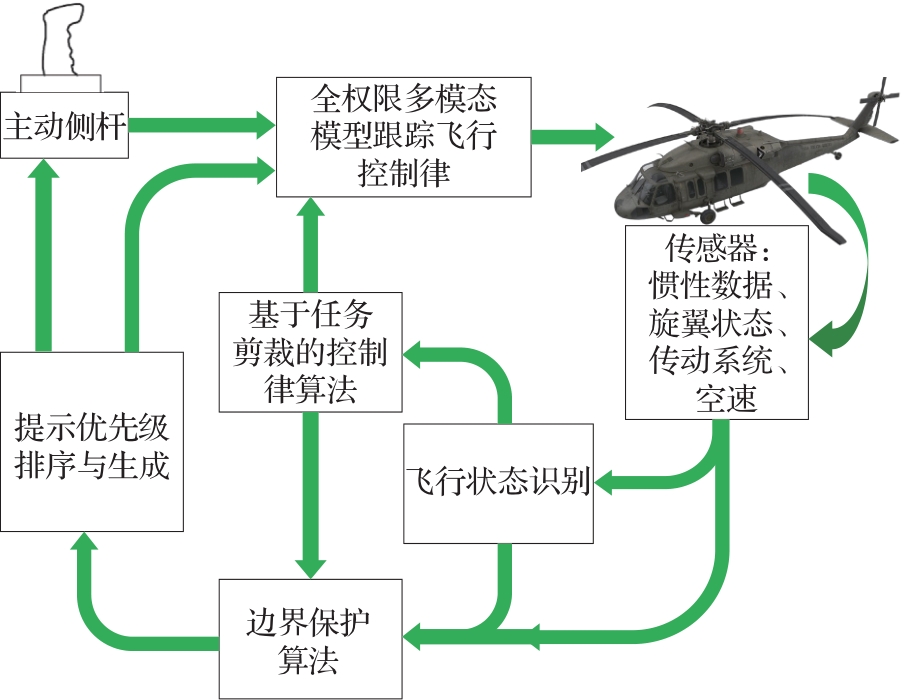
Fig.2
Schematic diagram of helicopter flight envelope
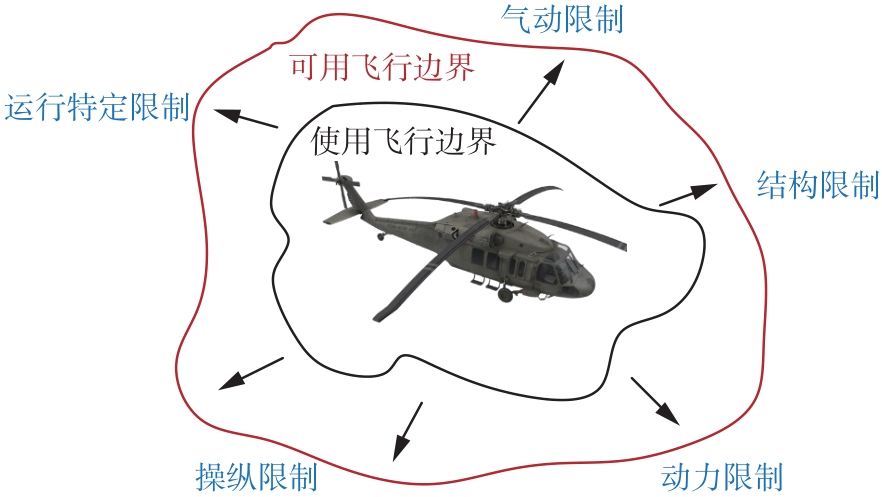
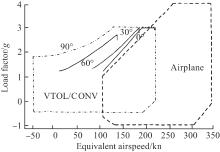
Fig.3
V-22 tiltrotor aircraft V-n diagram[38]
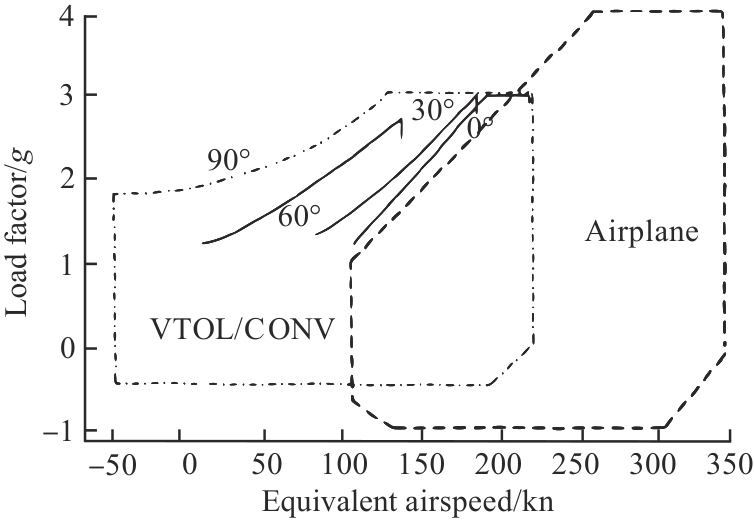
Table 1
Typical limit parameters for different types of helicopter
| 直升机类型 | 相同限制参数 | 特有或需特别关注的限制参数 |
|---|---|---|
| 单旋翼直升机 | 空速、过载[ | 尾桨功效 |
| 共轴刚性旋翼直升机 | 上下旋翼桨尖间隙 | |
| 倾转旋翼机 | 迎角、左右旋翼传动轴扭矩[ |
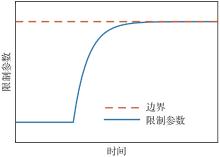
Fig.4
Steady-state response envelope
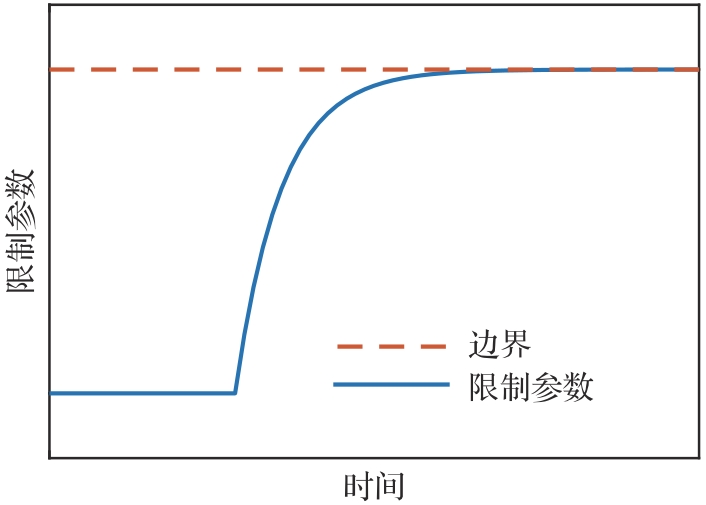
Fig.5
Transient-state response envelope
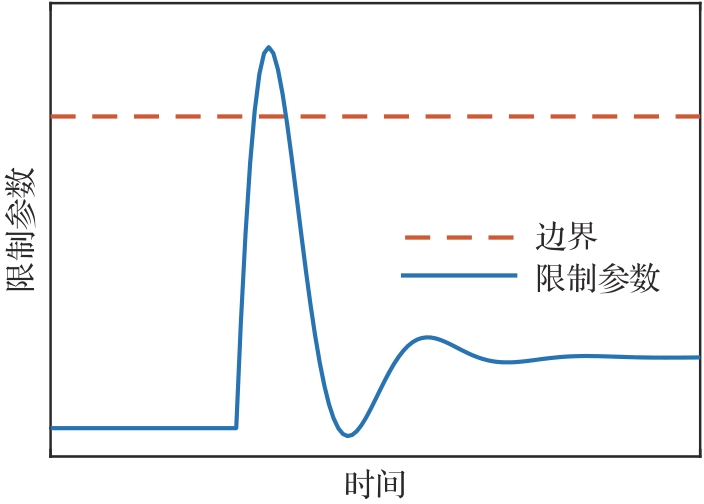
Fig.6
Integral response envelope
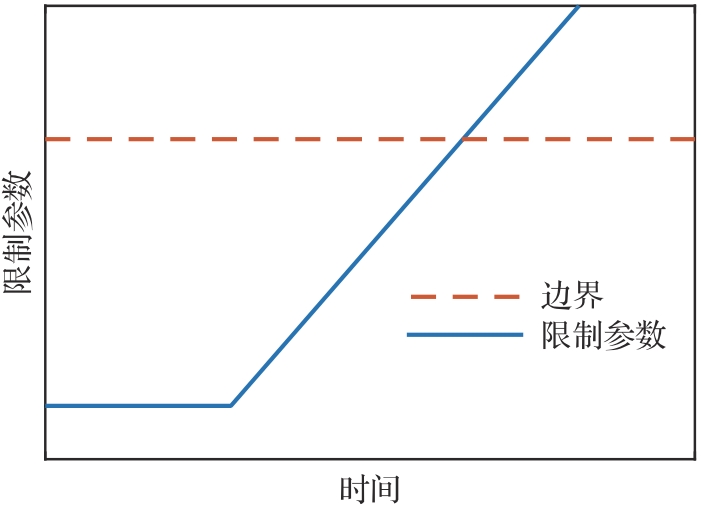
Fig.7
Mixed response envelope
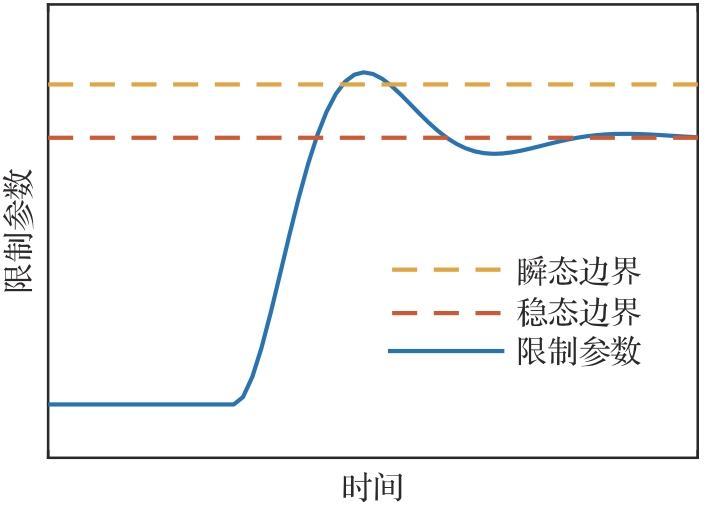
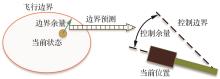
Fig.8
Mapping from envelope clearance to control clearance
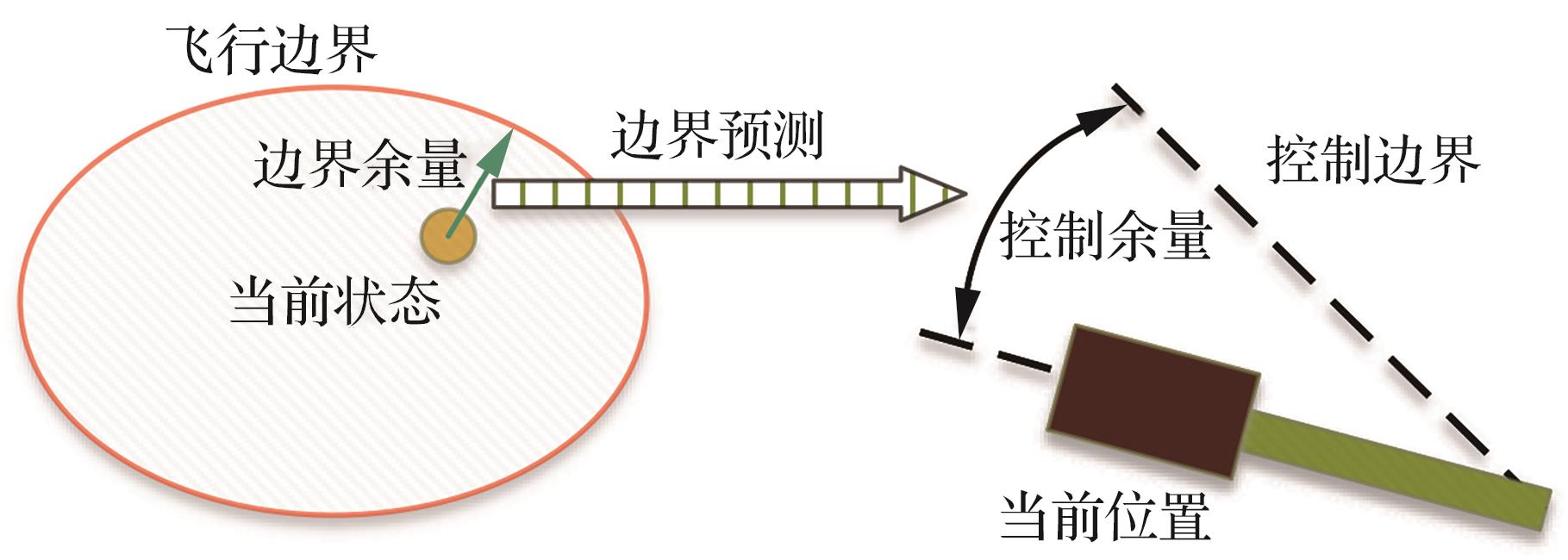
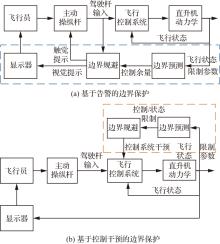
Fig.9
Schematic diagram of helicopter limit avoidance
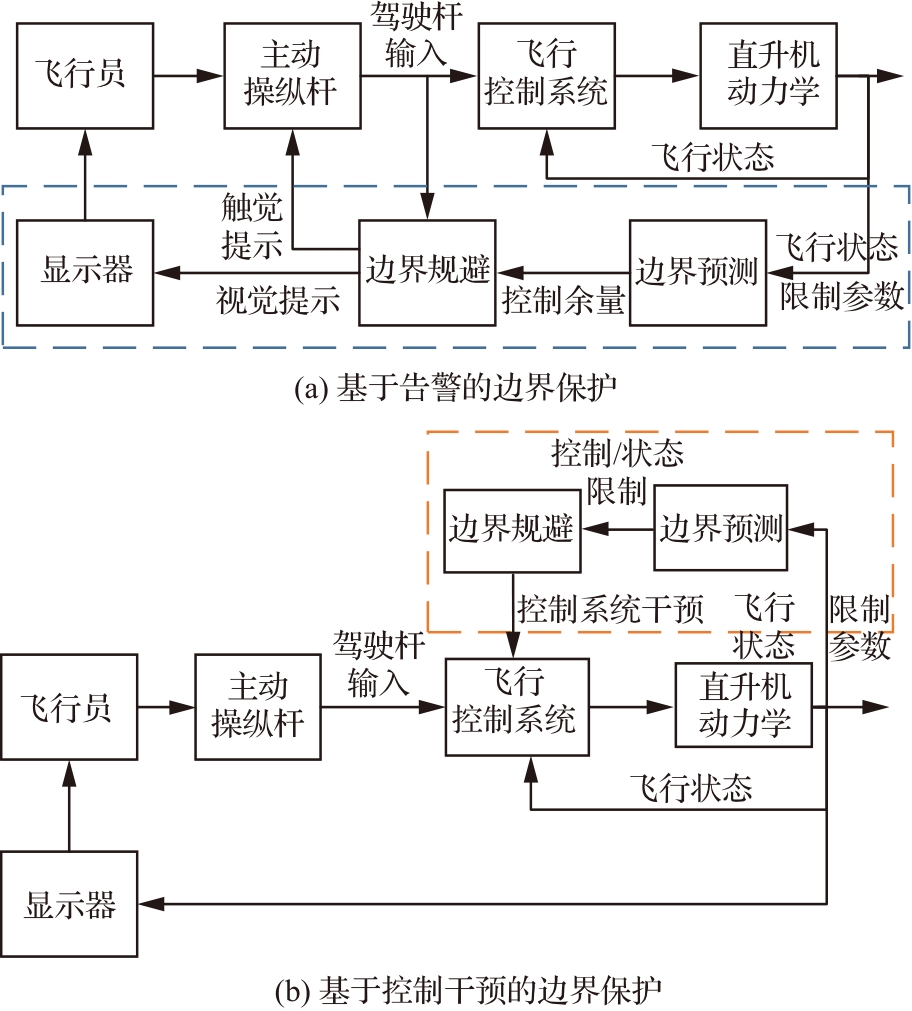
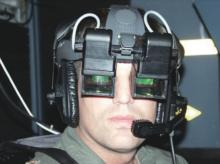
Fig.10
HMD of RAH-66 Comanche helicopter[72]
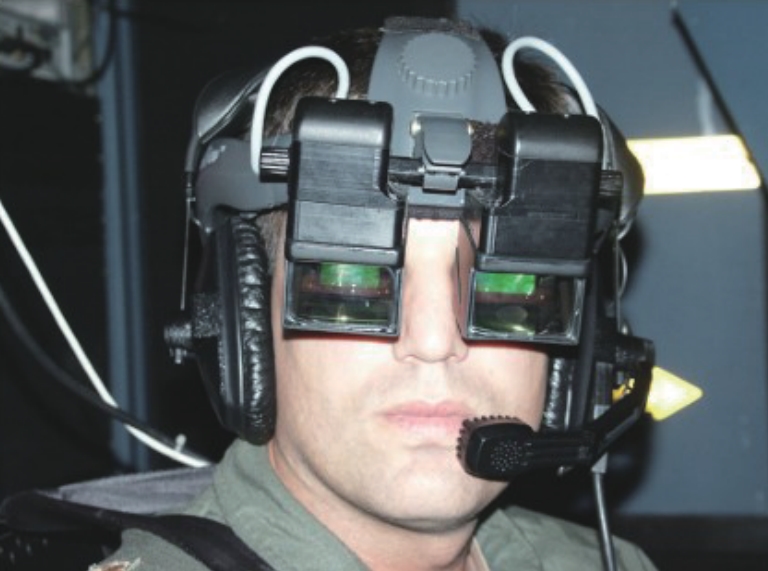
Fig.11
Limit avoidance via command limiting
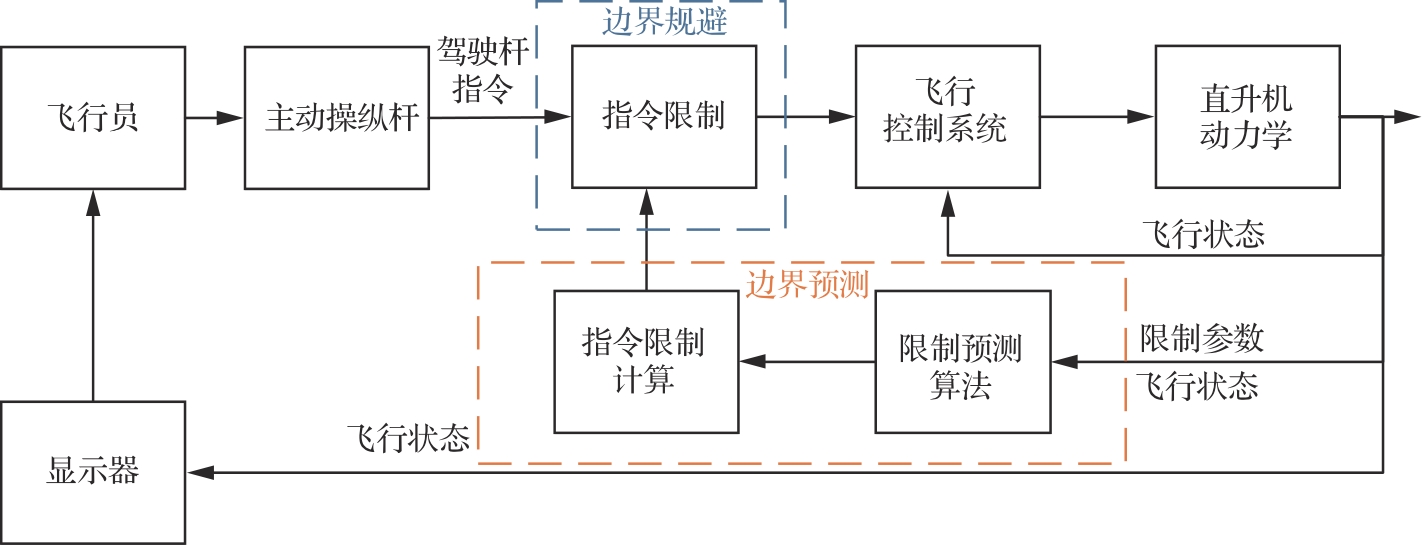
Fig.12
Limit avoidance via control limiting
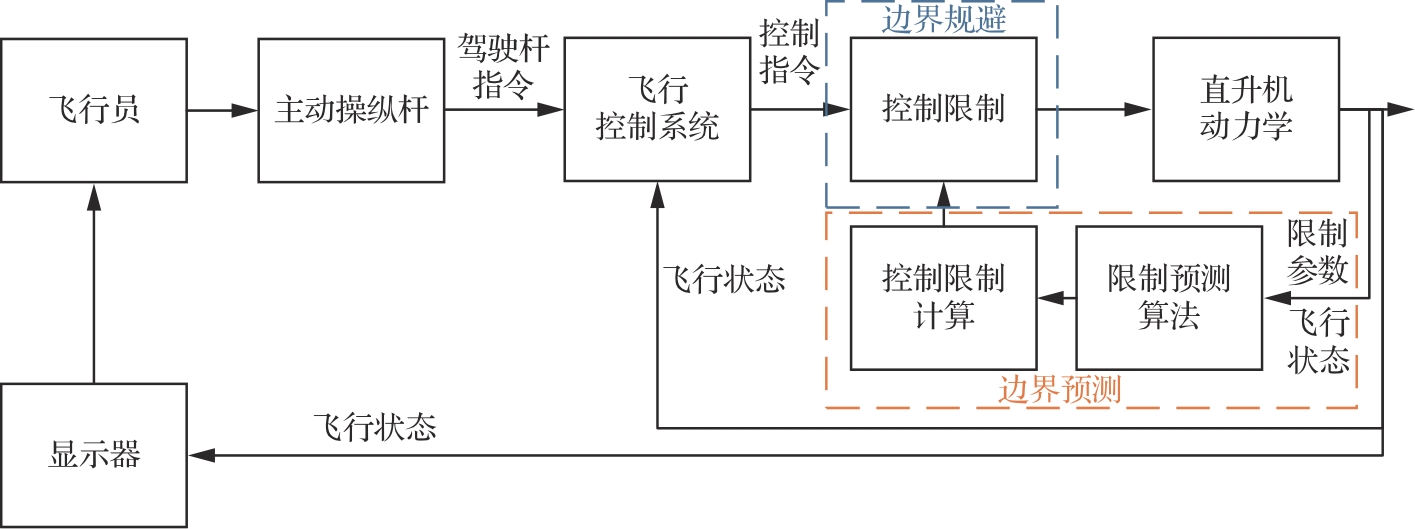
Fig.13
Limit avoidance via state limiting
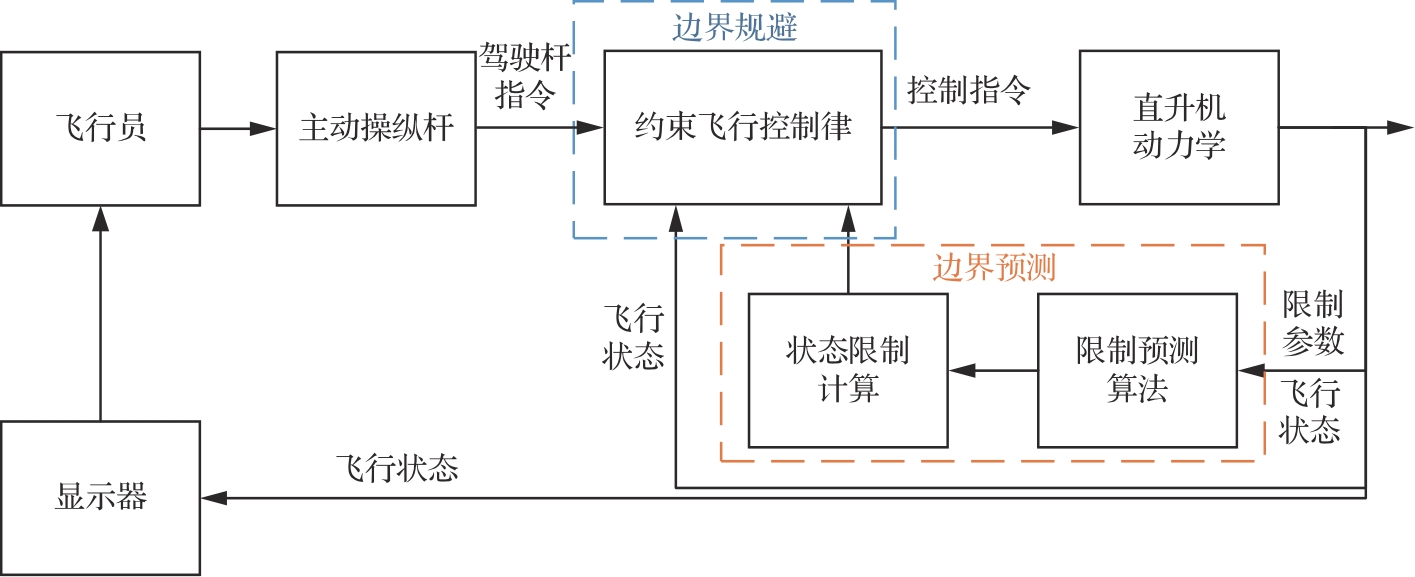
Fig.14
Limit avoidance based on protected variable feedback
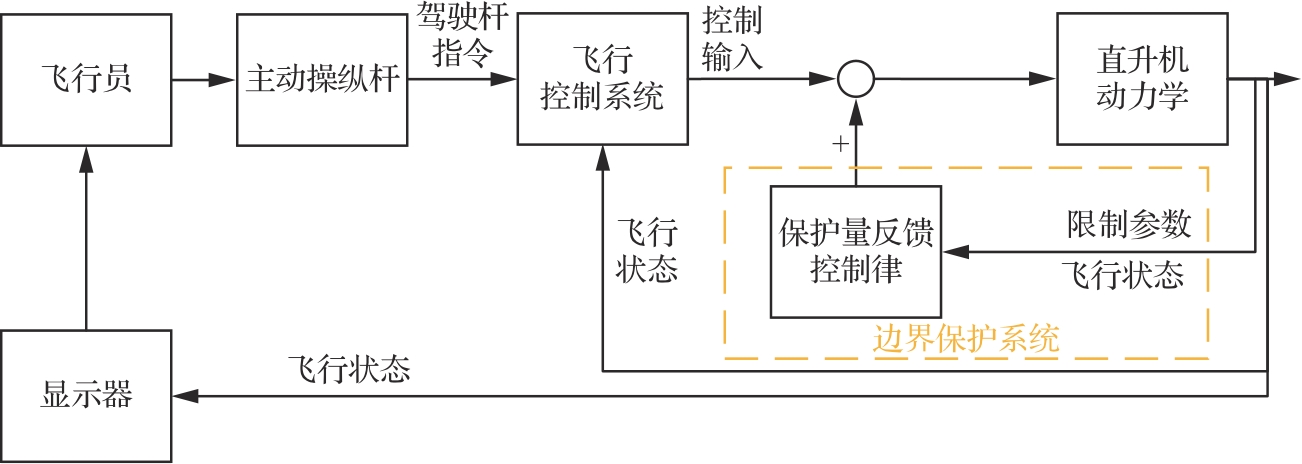
Table 2
Summary of limit prediction and avoidance methods
| 方法类别 | 方法 | 文献 | 特点、优点 | 存在的问题 |
|---|---|---|---|---|
| 边界预测 | 动态配平法 | [ | 适用于稳态响应型限制参数;预测限制参数在准稳态机动下的未来响应;采用在线自适应神经网络可适应飞行条件变化,减少对先验信息的依赖;可用于计算控制极限或指令裕度 | 仅适用于最大值在稳态时达到的限制参数;预测依赖于对“快慢状态”的划分和动态配平条件的满足;求解控制极限需要迭代计算 |
| 峰值响应法 | [ | 适用于瞬态响应峰值处达到极限的参数(如挥舞角、桨毂力矩);基于简化的线性模型解析预测峰值 | 严重依赖精确的线性模型,获取困难且适用范围窄;求解临界操纵输入通常需要迭代 | |
| 数据驱动方法 | [ | 适用于复杂非线性边界保护问题、可在线补偿模型不确定性影响、可用于限制参数预测和控制余量估计 | 依赖训练数据、泛化性和可解释性不足 | |
| 边界规避 | 座舱提示 | [ | 通过视觉、听觉、触觉等方式向飞行员告警;触觉告警直观,不易忽略,能提供修正指引,提高操纵性能和安全性;保留飞行员最终控制权 | 视觉/听觉告警可能被忽略或引起不当反应;触觉告警依赖主动驾驶杆硬件和精确的控制极限计算;告警设计的合理性影响飞行员接受度和人机交互效果,可能产生告警疲劳或诱发振荡 |
| 指令限制 | [ | 在飞行控制系统高层指令路径中限制目标姿态、角速度等指令;与底层飞行控制律相互分离,集成相对简单;对飞行控制律稳定性影响较小 | 依赖边界预测的精度;高层指令与限制参数间存在复杂非线性关系,极限映射困难;其效果严重依赖控制律的跟踪性能 | |
| 直接控制限制 | [ | 在飞行控制系统较低层级,直接限制舵面偏转或发动机指令;在某些情况下,状态极限到舵面极限的映射可能更直接 | 舵面限制易引发输入饱和问题,与高带宽控制律易产生冲突和抖振,系统稳定性需重新评估或设计抗饱和措施 | |
| 反应式边界保护 | [ | 基于有限时域预测与安全响应轨迹跟踪,可将边界保护要求直接转化为控制修正或控制余量;具有隐式预测提前量 | 依赖限制参数动态模型或在线自适应估计的准确性,以及安全响应轨迹参数设计的合理性 | |
| 状态限制 | [ | 将边界限制作为内在约束,直接集成到控制律设计(如MPC、PPC、BLF)中;能显式处理多变量约束,理论完备性强 | 控制律设计通常更为复杂,对模型的依赖性强;在线计算量可能较大(尤其对于非线性MPC),实时性是关键 | |
| 保护量反馈 | [ | 针对特定结构载荷或限制参数(保护量),设计专用反馈回路进行主动抑制(如SLA);可利用优化控制(LQR)或控制分配技术,将保护目标融入控制律或操纵面分配,协同提升性能和安全性 | 通常为针对性设计,通用性不强;效能受限于作动器能力和反馈测量精度;对关键保护量的精确、实时测量(尤其在旋翼上)是技术难点 |
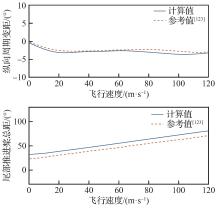
Fig.15
Trimming result of coaxial high-speed helicopter
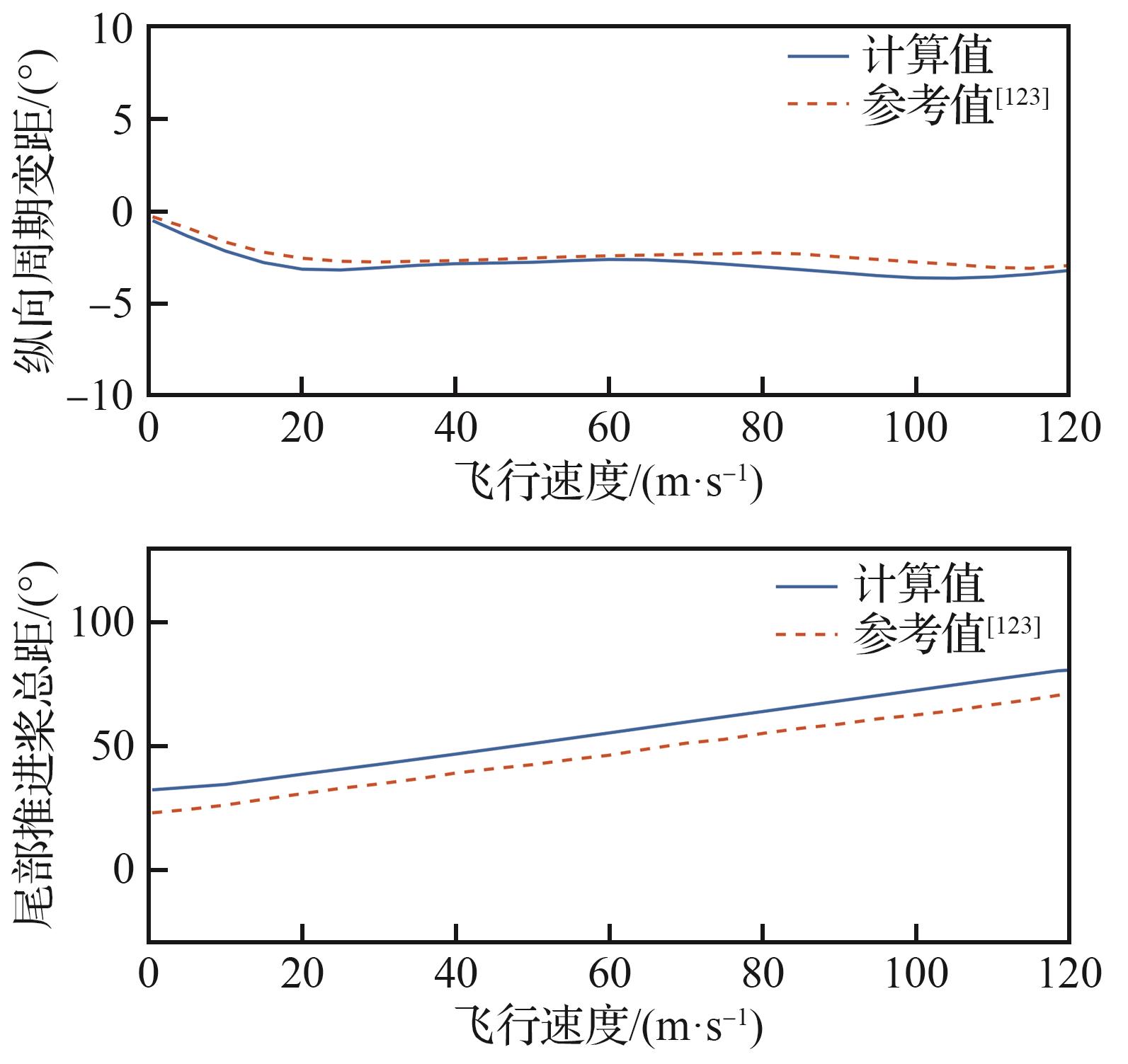
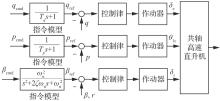
Fig.16
Flight control law structure of coaxial high-speed helicopter
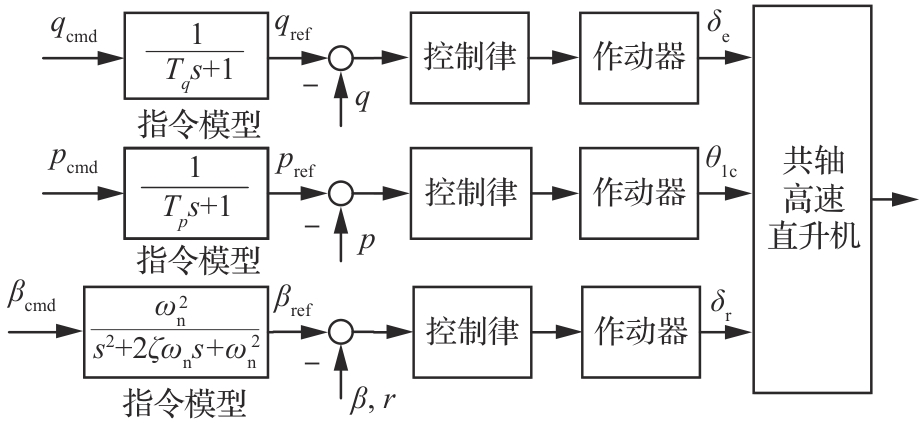
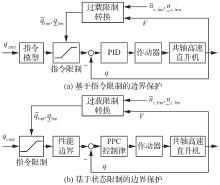
Fig.17
Schematic diagram of state constraint-based envelope protection control architecture
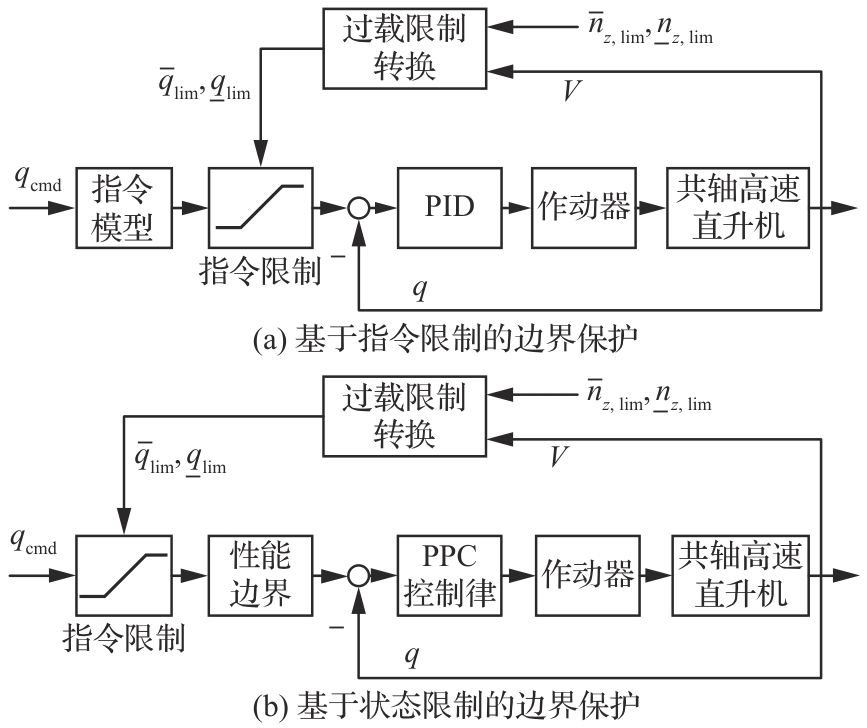
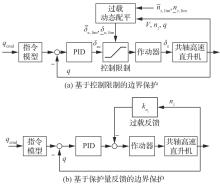
Fig.18
Schematic diagram of input constraint-based envelope protection control architecture
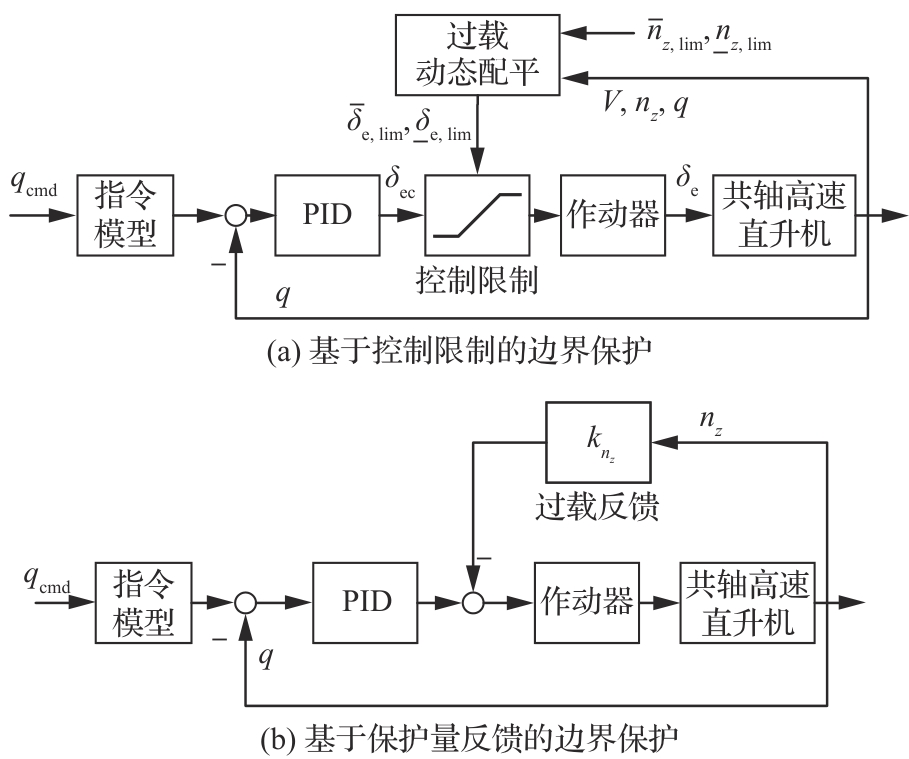
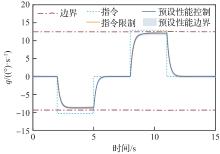
Fig.19
Pitch angular rate response under nominal conditions using state constraint-based envelope protection
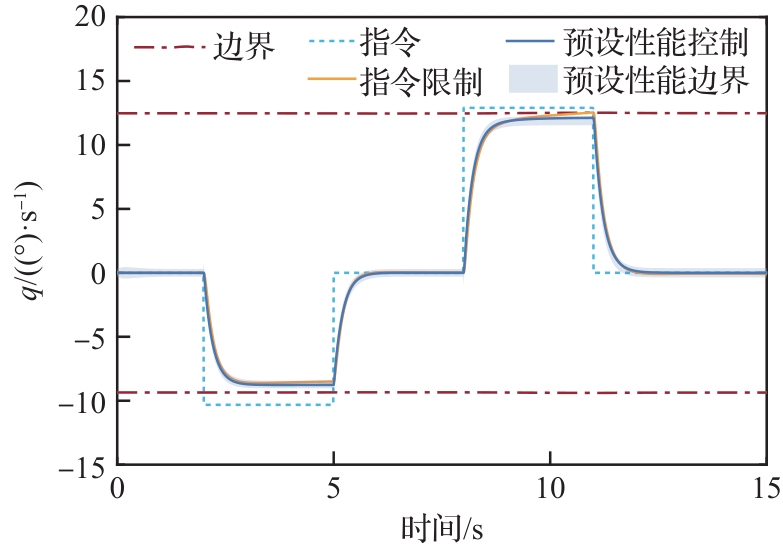
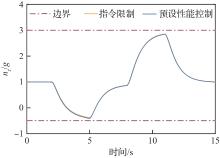
Fig.20
Normal load factor under nominal conditions using state constraint-based envelope protection
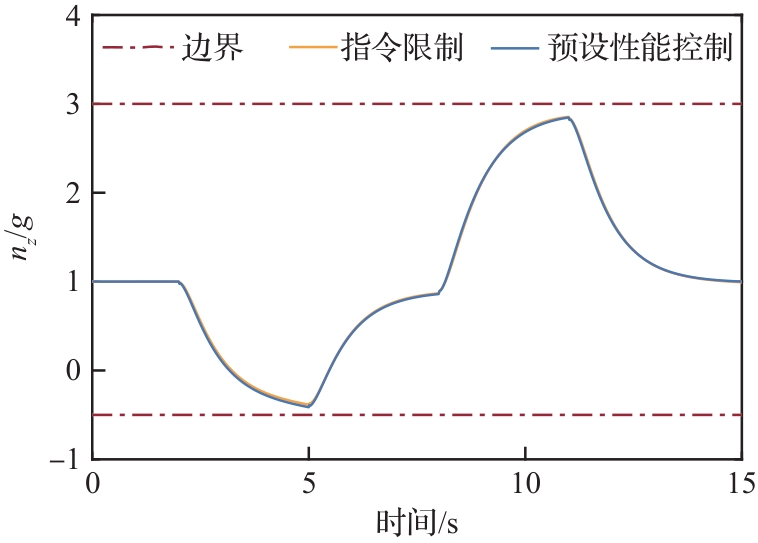
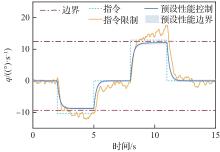
Fig.21
Pitch angular rate response under disturbed conditions using state constraint-based envelope protection
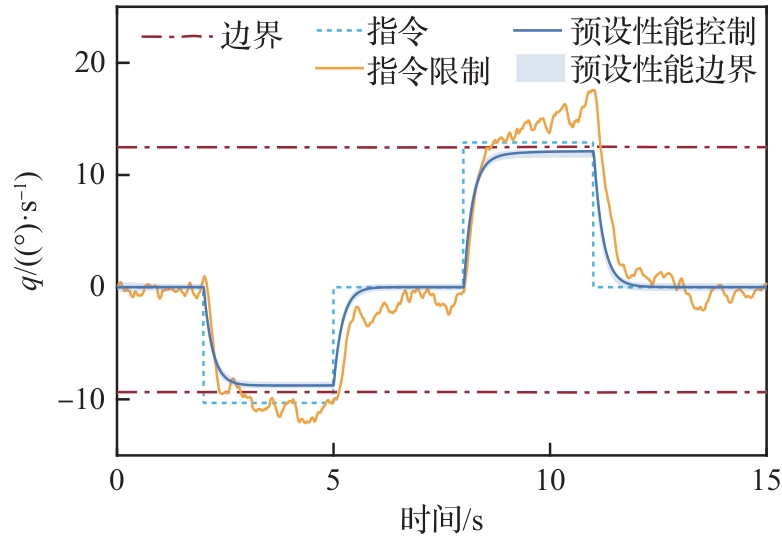
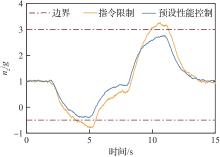
Fig.22
Normal load factor response under disturbed conditions using state constraint-based envelope protection
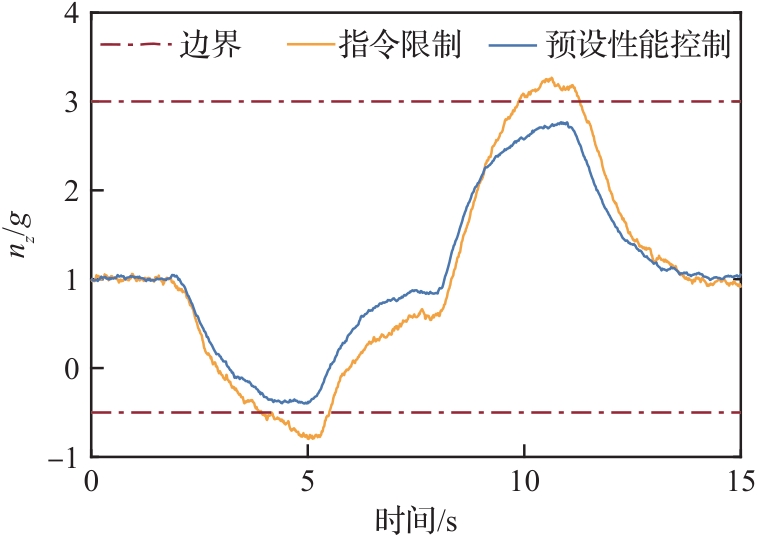
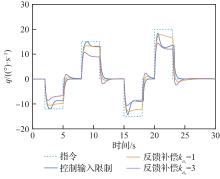
Fig.23
Pitch angular rate response under nominal conditions using control constraint-based envelope protection
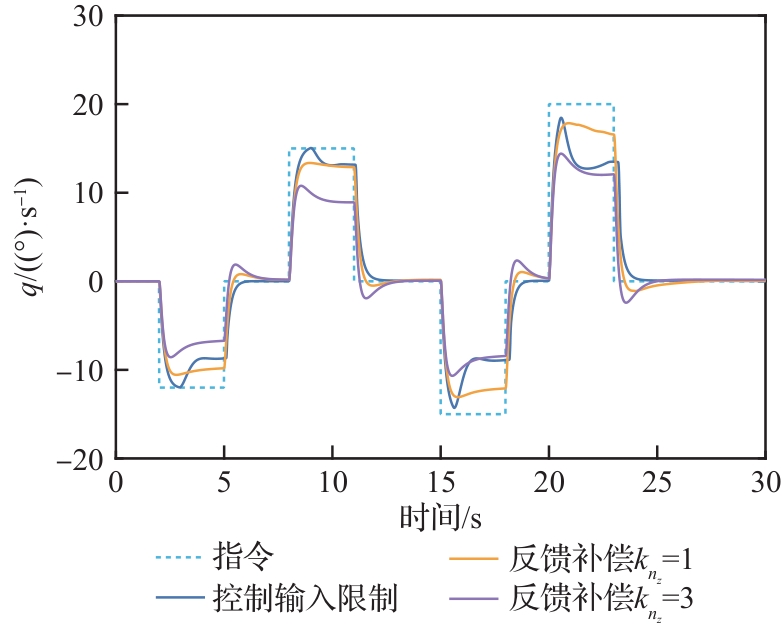
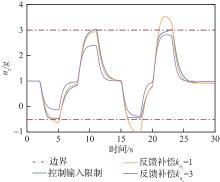
Fig.24
Normal load factor response under nominal conditions using control constraint-based envelope protection
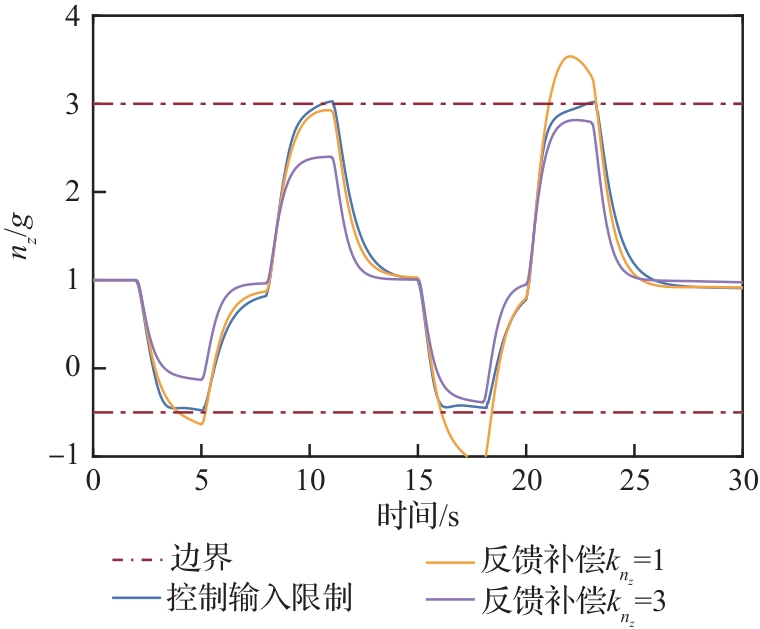
Fig.25
Pitch angular rate response under disturbed conditions using control constraint-based envelope protection
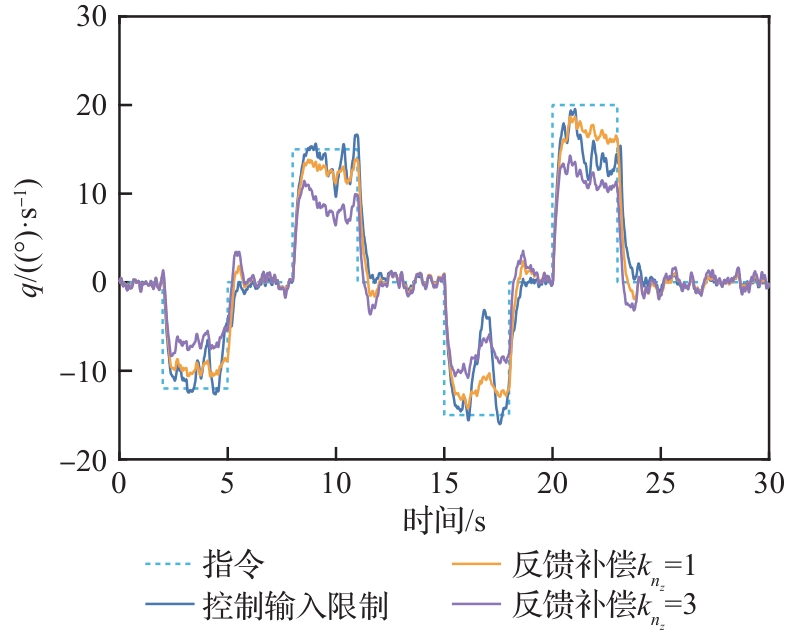
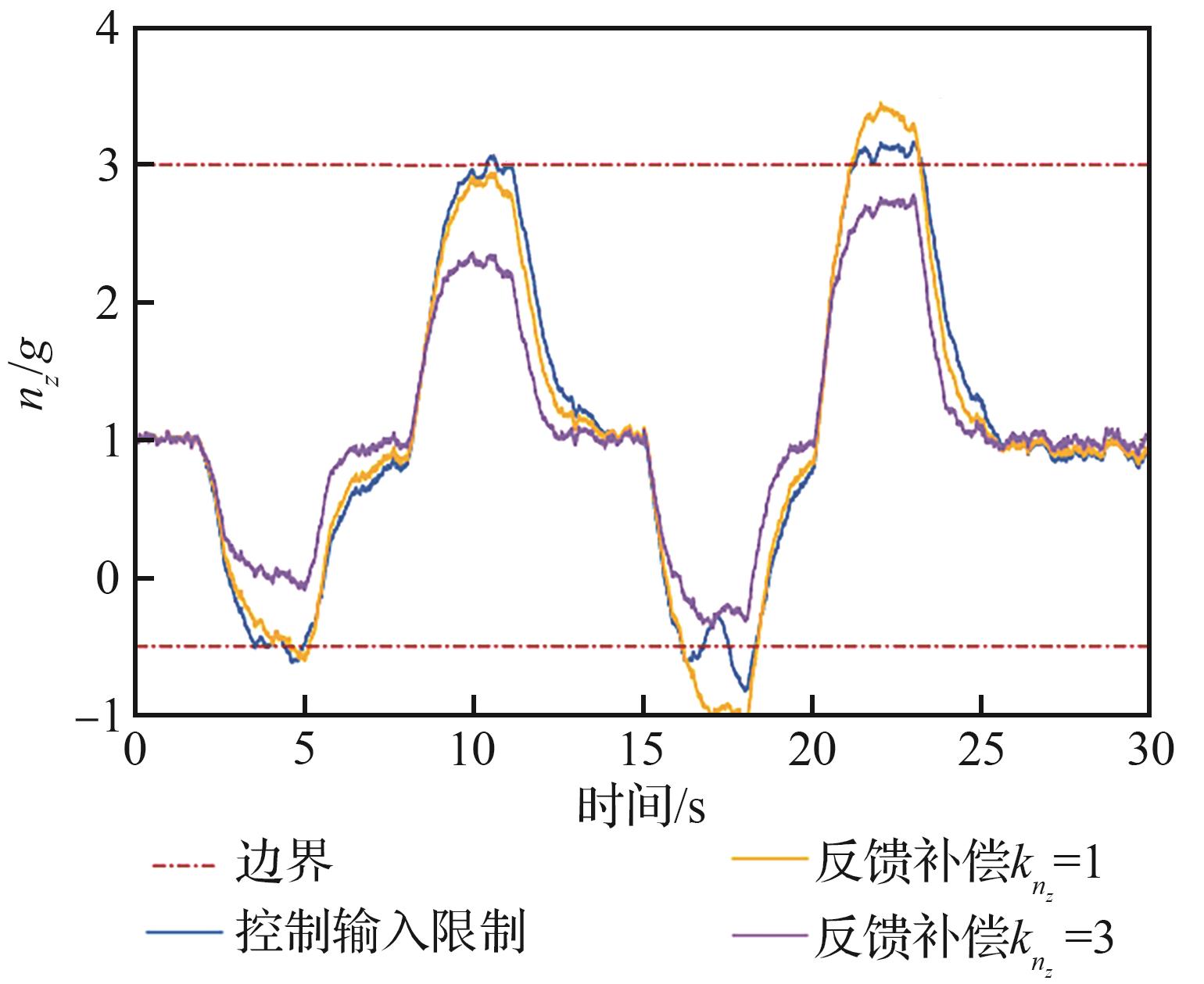
Fig.26
Normal load factor response under disturbed conditions using control constraint-based envelope protection
| [1] | 陈谋, 马浩翔, 雍可南, 等. 无人机安全飞行控制综述[J]. 机器人, 2023, 45(3): 345-366. |
| CHEN M, MA H X, YONG K N, et al. Safety flight control of UAV: A survey[J]. Robot, 2023, 45(3): 345-366 (in Chinese). | |
| [2] | MASSEY C P. Carefree handling systems for helicopters[J]. Proceedings of the Institution of Mechanical Engineers, Part G: Journal of Aerospace Engineering, 1992, 206(1): 37-46. |
| [3] | MASSEY C P, HOWITT J. Advances in helicopter carefree handling and control augmentation[C]∥ Flight Vehicle Integration Panel Symposium. 1996. |
| [4] | STICH R. Clearance of flight control laws for carefree handling of advanced fighter aircraft[M]∥ Optimization based clearance of flight control laws. Berlin: Springer, 2012: 421-442. |
| [5] | PADFIELD G D. The making of helicopter flying qualities: A requirements perspective[J]. The Aeronautical Journal, 1998, 102(1018): 409-437. |
| [6] | MÜLLHÄUSER M. Pilot’s eyes-out capability with a haptic torque protection during helicopter takeoff[J]. Journal of the American Helicopter Society, 2025, 70 (2): 022007. |
| [7] | JEBAKUMAR S K, PASHILKAR A A, SUNDARARAJAN N. Design and verification of carefree maneuvering protection for a high performance fighter aircraft[J]. Defence Science Journal, 2023, 73(3): 263-273. |
| [8] | 吴希明, 牟晓伟. 直升机关键技术及未来发展与设想[J]. 空气动力学学报, 2021, 39(3): 1-10. |
| WU X M, MU X W. A perspective of the future development of key helicopter technologies[J]. Acta Aerodynamica Sinica, 2021, 39(3): 1-10 (in Chinese). | |
| [9] | 王爽, 王开通, 曹金华, 等. 国外高速直升机的现状与发展趋势分析[J]. 航空科学技术, 2023, 34(12): 1-8. |
| WANG S, WANG K T, CAO J H, et al. Current situation and development trend analysis of high-speed helicopter[J]. Aeronautical Science & Technology, 2023, 34(12): 1-8 (in Chinese). | |
| [10] | 王梓旭, 李攀, 沈俊彪, 等. 加/减速状态下倾转旋翼飞行器动态过渡走廊[J]. 航空学报, 2025, 46(11): 531377. |
| WANG Z X, LI P, SHEN J B, et al. Dynamic conversion corridor of tiltrotor aircraft under accelerating and decelerating conditions[J]. Acta Aeronautica et Astronautica Sinica, 2025, 46(11): 531377 (in Chinese). | |
| [11] | CASSINELLI C, PECORARO M. Next generation civil tilt-rotor technology demonstrator (NGCTR-TD) tail design[C]∥ Proceedings of the 48th European Rotorcraft Forum. 2022. |
| [12] | SAETTI U. Dynamic inversion flight control laws for automatic transition of tilt-rotor/wing aircraft[J]. Journal of the American Helicopter Society, 2025, 70(3): 032005. |
| [13] | DU Z Y, WANG J Q, HAN Y P, et al. An analytical study of the centre of gravity envelope of a tilt-rotor aircraft in full flight mode[C]∥ Proceedings of 2024 Chinese Intelligent Systems Conference. Singapore: Springer, 2024: 602-609. |
| [14] | 仇钰清, 李俨, 郎金溪, 等. 高速直升机过渡模态鲁棒自适应姿态控制[J]. 航空学报, 2024, 45(9): 529927. |
| QIU Y Q, LI Y, LANG J X, et al. Robust adaptive attitude control of high-speed helicopters in transition mode[J]. Acta Aeronautica et Astronautica Sinica, 2024, 45(9): 529927 (in Chinese). | |
| [15] | WANG M S, CAO Y H. A review of coaxial compound helicopters: Aerodynamics and flight dynamics[J]. Archives of Computational Methods in Engineering, 2025, 32(7): 4001-4031. |
| [16] | QIU Y Q, LI Y, LANG J X, et al. Dynamics analysis and control of coaxial high-speed helicopter in transition flight[J]. Aerospace Science and Technology, 2023, 137: 108278. |
| [17] | QIU Y Q, LI Y, LANG J X, et al. Robust-augmentation nonlinear dynamic inversion control of over-actuated coaxial high-speed helicopter in transition mode[J]. Chinese Journal of Aeronautics, 2024, 37(8): 404-420. |
| [18] | LANG J X, LI Y, QIU Y Q, et al. Nonlinear dynamic inversion based full envelope robust flight control for coaxial compound helicopter[J]. Aerospace Science and Technology, 2024, 154: 109526. |
| [19] | 邓景辉. 高速直升机关键技术与发展[J]. 航空学报, 2024, 45(9): 529085. |
| DENG J H. Key technologies and development for high-speed helicopters[J]. Acta Aeronautica et Astronautica Sinica, 2024, 45(9): 529085 (in Chinese). | |
| [20] | 聂博文, 王亮权, 黄志银, 等. 复合式高速无人直升机飞行动力学建模与控制策略设计[J]. 航空学报, 2024, 45(9): 529848. |
| NIE B W, WANG L Q, HUANG Z Y, et al. Flight dynamics modeling and control scheme design of compound high-speed unmanned helicopters[J]. Acta Aeronautica et Astronautica Sinica, 2024, 45(9): 529848 (in Chinese). | |
| [21] | JOHNSON C K, TISCHLER M B, MITTLEIDER D, et al. Analysis, design, & optimization of the helicopter active control technology (HACT) flight control system [C]∥ American Helicopter Society 58th Annual Forum. Alexandria: American Helicopter Society, 2002: 885-899. |
| [22] | TAKAHASHI M D, FUJIZAWA B T, LUSARDI J A, et al. Comparison of autonomous flight control performance between partial- and full-authority helicopters[J]. Journal of Guidance, Control, and Dynamics, 2022, 45(5): 885-901. |
| [23] | MILLER D G, EINTHOVEN P G, MORSE C S, et al. HACT flight control system (HFCS) control law overview[C]∥ American Helicopter Society 58th Annual Forum. Alexandria: American Helicopter Society, 2002: 867-884. |
| [24] | HORN J F, CALISE A J, PRASAD J V R. Flight envelope limit detection and avoidance for rotorcraft[J]. Journal of the American Helicopter Society, 2002, 47(4): 253-262. |
| [25] | HORN J F, SAHANI N. Detection and avoidance of main rotor hub moment limits on rotorcraft[J]. Journal of Aircraft, 2004, 41(2): 372-379. |
| [26] | SAHANI N A. Envelope protection systems for piloted and unmanned rotorcraft[D]. Philadelphia: The Pennsylvania State University, 2005. |
| [27] | YAVRUCUK I, PRASAD J V R. Online dynamic trim and control limit estimation[J]. Journal of Guidance, Control, and Dynamics, 2012, 35(5): 1647-1656. |
| [28] | VAN BAELEN D, VAN PAASSEN M M, ELLERBROEK J, et al. Flying by feeling: Communicating flight envelope protection through haptic feedback[J]. International Journal of Human-Computer Interaction, 2021, 37(7): 655-665. |
| [29] | DE ROOIJ G, VAN BAELEN D, BORST C, et al. Supplementing haptic feedback in flight envelope protection through visual display indications[J]. Journal of Aerospace Information Systems, 2023, 20(6): 351-367. |
| [30] | VAN BAELEN D, VAN PAASSEN R, ELLERBROEK J, et al. Evaluating stick stiffness and position guidance for feedback on flight envelope protection[C]∥ AIAA Scitech 2021 Forum. Reston: AIAA, 2021: 1013. |
| [31] | SCHWENZER M, AY M, BERGS T, et al. Review on model predictive control: An engineering perspective[J]. The International Journal of Advanced Manufacturing Technology, 2021, 117(5): 1327-1349. |
| [32] | FANG X, JIANG J J, CHEN W H. Model predictive control with wind preview for aircraft forced landing[J]. IEEE Transactions on Aerospace and Electronic Systems, 2023, 59(4): 3995-4004. |
| [33] | CAVANINI L, IPPOLITI G, CAMACHO E F. Model predictive control for a linear parameter varying model of an UAV[J]. Journal of Intelligent & Robotic Systems, 2021, 101(3): 57. |
| [34] | BU X W. Prescribed performance control approaches, applications and challenges: A comprehensive survey[J]. Asian Journal of Control, 2023, 25(1): 241-261. |
| [35] | LANG J X, WANG Z, LI Y. Prescribed performance-based envelope protection control for coaxial compound helicopter in high-speed flight[J]. IEEE Transactions on Aerospace and Electronic Systems, 2025, 61(5): 12219-12233. |
| [36] | CRUZ-ORTIZ D, CHAIREZ I, POZNYAK A. Sliding-mode control of full-state constraint nonlinear systems: A barrier Lyapunov function approach[J]. IEEE Transactions on Systems, Man, and Cybernetics: Systems, 2022, 52(10): 6593-6606. |
| [37] | MU D D, LI L, WANG G F, et al. State constrained control strategy for unmanned surface vehicle trajectory tracking based on improved barrier Lyapunov function[J]. Ocean Engineering, 2023, 277: 114276. |
| [38] | DUNFORD P, LUNN K, MAGNUSON R, et al. The V-22 osprey: A significant flight test challenge[EB/OL]. [2025-07-23]. . |
| [39] | SAHANI N A, HORN J F, JERAM G J J, et al. Hub moment limit protection using neural network prediction[J]. Journal of the American Helicopter Society, 2006, 51(4): 331-340. |
| [40] | SAHANI N A, HORN J F. Adaptive model inversion control of a helicopter with structural load limiting[J]. Journal of Guidance, Control, and Dynamics, 2006, 29(2): 411-420. |
| [41] | SAETTI U, HORN J F. Load alleviation control design using harmonic decomposition models, rotor state feedback, and redundant control effectors[C]∥ Proceedings of 74th American Helicopter Society International Annual Forum and Technology Display 2018: The Future of Vertical Flight. Alexandria: American Helicopter Society, 2018. |
| [42] | KING D W, DABUNDO C, KISOR R L, et al. V-22 load limiting control law development[C]∥ American Helicopter Society 49th Annual Forum. Alexandria: American Helicopter Society, 1993: 211-224. |
| [43] | 陈亚萍, 喻溅鉴, 胡磊, 等. 直升机旋翼轴弯矩特征及应用[J]. 航空学报, 2021, 42(5): 524168. |
| CHEN Y P, YU J J, HU L, et al. Characteristics and application of bending moments of helicopter rotor shaft[J]. Acta Aeronautica et Astronautica Sinica, 2021, 42(5): 524168 (in Chinese). | |
| [44] | GRAZIANI A, PREDERI D, TREZZINI A A, et al. Prediction of helicopter rotor loads and fatigue damage evaluation with neural networks[J]. Aerotecnica Missili & Spazio, 2025, 104(3): 223-231. |
| [45] | BERGER T, BLANKEN C L, LUSARDI J A, et al. Coaxial-compound helicopter flight control design and high-speed handling qualities assessment[J]. Journal of the American Helicopter Society, 2022, 67(3): 032008. |
| [46] | ZHAO Y Q, YUAN Y, CHEN R L. Influence of differential longitudinal cyclic pitch on flight dynamics of coaxial compound helicopter[J]. Chinese Journal of Aeronautics, 2023, 36(9): 207-220. |
| [47] | MCKAY M E, VAYALALI P, GANDHI F, et al. Control allocation reconfiguration for actuator failure on a coaxial-pusher helicopter[J]. Journal of the American Helicopter Society, 2023, 68(3): 032004. |
| [48] | BASSET P M, CHEN C, PRASAD J V R, et al. Prediction of vortex ring state boundary of a helicopter in descending flight by simulation[J]. Journal of the American Helicopter Society, 2008, 53(2): 139-151. |
| [49] | STANISLAWSKI J. A simulation investigation of helicopter ground resonance phenomenon[J]. Aircraft Engineering and Aerospace Technology, 2019, 91(3): 484-497. |
| [50] | GÜRSOY G. Direct adaptive flight envelope protection [D]. Ankara: Middle East Technical University, 2016. |
| [51] | JOHNSON W. Model for vortex ring state influence on rotorcraft flight dynamics[C]∥ Proceedings of the 4th Decennial Specialist’s Conference on Aeromechanics. Alexandria: American Helicopter Society, 2004. |
| [52] | COLEMAN R P, FEINGOLD A M. Theory of self-excited mechanical oscillations of helicopter rotors with hinged blades: NACA-TR-1351[R]. Washington, D.C.: NACA, 1958. |
| [53] | PICKLES D J, ZAGAGLIA D, BUSSE A, et al. Vortex ring state of a shrouded rotor: An experimental survey[J]. Experiments in Fluids, 2023, 64(4): 69. |
| [54] | Federal Aviation Administration. Helicopter flying handbook, Chapter 11: Helicopter emergencies and hazards: FAA-H-8083-21B [S]. Washington, D.C.: U.S. Department of Transportation, 2019. |
| [55] | Federal Aviation Administration. Helicopter Flying Handbook: Glossary and index: FAA-H-8083-21B [S]. Washington, D.C.: U.S. Department of Transportation, 2019. |
| [56] | IGNÁCIO DA SILVA J A, BUENO D D, DE ABREU G L C M. On the controllers’ design to stabilize ground resonance helicopter[J]. Journal of Vibration and Control, 2019, 25(23/24): 2894-2909. |
| [57] | YAVRUCUK I, PRASAD J V R, UNNIKRISHNAN S. Envelope protection for autonomous unmanned aerial vehicles[J]. Journal of Guidance, Control, and Dynamics, 2009, 32(1): 248-261. |
| [58] | SHIN H H, LEE S H, KIM Y D, et al. Design of a flight envelope protection system using a dynamic trim algorithm[J]. International Journal of Aeronautical and Space Sciences, 2011, 12(3): 241-251. |
| [59] | SHIN H, KIM Y. Flight envelope protection of aircraft using adaptive neural network and online linearisation[J]. International Journal of Systems Science, 2016, 47(4): 868-885. |
| [60] | KIM J H, KIM S, LEE J, et al. Limit protection systems for safety operational envelope of submarine[J]. International Journal of Naval Architecture and Ocean Engineering, 2024, 16: 100598. |
| [61] | PARK J Y, KIM N. Design of a safety operational envelope protection system for a submarine[J]. Ocean Engineering, 2018, 148: 602-611. |
| [62] | HORN J F, CALISE A J, PRASAD J V R. Flight envelope cueing on a tilt-rotor aircraft using neural network limit prediction[J]. Journal of the American Helicopter Society, 2001, 46(1): 23-31. |
| [63] | HORN J F, CALISE A J, PRASAD J V R. Flight envelope limiting systems using neural networks[C]∥ 23rd Atmospheric Flight Mechanics Conference. Reston: AIAA, 1998: 741-751. |
| [64] | XIE R, HE H H, MENG X B, et al. Neural-network-based dynamic flight envelop protection within integrated aircraft control system[J]. Journal of Guidance, Control, and Dynamics, 2023, 46(6): 1083-1094. |
| [65] | GOLD P J, DRYFOOS J B. Design and pilot evaluation of the RAH-66 Comanche selectable control modes: NASA-CP-3220[R]. Washington, D.C.: NASA, 1993. |
| [66] | JERAM G J. Open platform for limit protection with carefree maneuver applications [D]. Atlanta: Georgia Institute of Technology, 2004. |
| [67] | FELLAH K, GUIATNI M. Tactile display design for flight envelope protection and situational awareness[J]. IEEE Transactions on Haptics, 2019, 12(1): 87-98. |
| [68] | VAN BAELEN D, ELLERBROEK J, RENÉ VAN PAASSEN M M, et al. Design of a haptic feedback system for flight envelope protection[J]. Journal of Guidance, Control, and Dynamics, 2020, 43(4): 700-714. |
| [69] | WHALLEY M S, HINDSON W S, THIERS G, et al. A comparison of active sidestick and conventional inceptors for helicopter flight envelope tactile cueing[C]∥ American Helicopter Society 56th Annual Forum. Alexandria: American Helicopter Society, 2000. |
| [70] | EINTHOVEN P G, MILLER D G, NICHOLAS J S, et al. Tactile cueing experiments with a three axis sidestick[C]∥ American Helicopter Society 57th Annual Forum. Alexandria: American Helicopter Society, 2001. |
| [71] | GREENFIELD A, KUBIK S, FAYNBERG A, et al. CH-53K control law risk reduction flight testing on the RASCAL JUH-60A in-flight simulator[C]∥ American Helicopter Society 68th Annual Forum. Alexandria: American Helicopter Society, 2012. |
| [72] | TURPIN T S, DOWELL S R, SZOBOSZLAY Z. Comanche helmet-mounted display symbology simulation: Final report: NASA/CR-2006-212834[R]. Washington, D.C.: NASA, 2006. |
| [73] | MORCOS M T, FISHMAN S M, SAETTI U, et al. Spatial audio cueing algorithms for augmented pilot perception in degraded/denied visual environments[C]∥ Proceedings of the 49th European Rotorcraft Forum. 2023. |
| [74] | MILAM L, AKINS E, WILLIAMS H, et al. Spatial audio cueing aids pilot navigation during simulated helicopter flight in degraded visual environments[C]∥ Proceedings of the Human Factors and Ergonomics Society Annual Meeting.2019: 1634-1638. |
| [75] | MORCOS M T, FISHMAN M, COCCO A, et al. Full-body haptic cueing algorithms for augmented pilot perception in degraded/denied visual environments[C]∥ Proceedings of the Vertical Flight Society 79th Annual Forum and Technology Display. Fairfax: The Vertical Flight Society, 2023. |
| [76] | 戴兴安, 陈燕云, 盛守照. 基于RBF和动态配平的高速直升机边界保护控制[J]. 电光与控制, 2019, 26(10): 38-42. |
| DAI X A, CHEN Y Y, SHENG S Z. Envelope protection control for high-speed helicopter based on RBF and dynamic trimming[J]. Electronics Optics & Control, 2019, 26(10): 38-42 (in Chinese). | |
| [77] | THAISS C, MCCOLL C C, HORN J F, et al. Rotorcraft real time damage alleviation through load limiting control[C]∥ 55th AIAA/ASME/ASCE/AHS/ASC Structures, Structural Dynamics, and Materials Conference. Reston: AIAA, 2014: 1528. |
| [78] | FALKENA W, BORST C, CHU Q P, et al. Investigation of practical flight envelope protection systems for small aircraft[J]. Journal of Guidance, Control, and Dynamics, 2011, 34(4): 976-988. |
| [79] | LIANG S, XU B, SUN S S, et al. Dynamic-command-limiting-based AOA constraint control of hypersonic flight vehicle[J]. IEEE Transactions on Aerospace and Electronic Systems, 2025, 61(1): 1163-1174. |
| [80] | SAHANI N, HORN J F. Command limiting for full-envelope guidance and control of rotorcraft[C]∥ AIAA Guidance, Navigation, and Control Conference and Exhibit. Reston: AIAA, 2005: 6348. |
| [81] | SHIN H, KIM Y, KIM E T, et al. Flight envelope protection controller using dynamic trim algorithm[C]∥ 2009 ICCAS-SICE. Piscataway: IEEE Press, 2009: 3228-3232. |
| [82] | JOHNSON E N. Limited authority adaptive flight control[D]. Atlanta: Georgia Institute of Technology, 2000. |
| [83] | UNNIKRISHNAN S. Adaptive envelope protection methods for aircraft[D]. Atlanta: Georgia Institute of Technology, 2006. |
| [84] | UNNIKRISHNAN S, PRASAD J V R. Carefree handling using reactionary envelope protection method[C]∥AIAA Guidance, Navigation, and Control Conference and Exhibit. Reston: AIAA, 2006: 6219. |
| [85] | HOLKAR K S, WAGHMARE L M. An overview of model predictive control[J]. International Journal of Control and Automation, 2010, 3(4): 47-63. |
| [86] | KOUVARITAKIS B, CANNON M. Model predictive control[M]. Cham: Springer International Publishing, 2016. |
| [87] | GRÜNE L, PANNEK J. Nonlinear model predictive control: Theory and algorithms[M]. Cham: Springer International Publishing, 2017. |
| [88] | ZHAO K, SONG Y D, MA T D, et al. Prescribed performance control of uncertain Euler-Lagrange systems subject to full-state constraints[J]. IEEE Transactions on Neural Networks and Learning Systems, 2018, 29(8): 3478-3489. |
| [89] | SHI Y, YI B W, XIE W, et al. Enhancing prescribed performance of tracking control using monotone tube boundaries[J]. Automatica, 2024, 159: 111304. |
| [90] | TEE K P, GE S S, TAY E H. Barrier Lyapunov functions for the control of output-constrained nonlinear systems[J]. Automatica, 2009, 45(4): 918-927. |
| [91] | TEE K P, GE S S. Control of nonlinear systems with partial state constraints using a barrier Lyapunov function[J]. International Journal of Control, 2011, 84(12): 2008-2023. |
| [92] | HOSSEINNAJAD A, MOHAJER N, NAHAVANDI S. Barrier Lyapunov function-based backstepping controller design for path tracking of autonomous vehicles[J]. Journal of Intelligent & Robotic Systems, 2024, 110(3): 118. |
| [93] | BOTTASSO C L, MONTINARI P. Rotorcraft flight envelope protection by model predictive control[J]. Journal of the American Helicopter Society, 2015, 60(2): 1-13. |
| [94] | BAUERSFELD L, SPANNAGL L, DUCARD G J J, et al. MPC flight control for a tilt-rotor VTOL aircraft[J]. IEEE Transactions on Aerospace and Electronic Systems, 2021, 57(4): 2395-2409. |
| [95] | MA B, CHEN M. Safety flight envelope calculation and protection control of UAV based on disturbance observer[J]. Security and Safety, 2023, 2: 2023020. |
| [96] | YAN K, CHEN M, WU Q X. Neural network-based adaptive fault tolerant tracking control for unmanned autonomous helicopters with prescribed performance[J]. Proceedings of the Institution of Mechanical Engineers, Part G: Journal of Aerospace Engineering, 2019, 233(12): 4350-4362. |
| [97] | WANG Z, LANG J X, LI Y. Envelope protection for coaxial compound helicopter with prescribed performance[J]. Journal of Guidance, Control, and Dynamics, 2025, 48(12): 2908-2918. |
| [98] | SAETTI U, HORN J F. Load alleviation flight control design using high-order dynamic models[J]. Journal of the American Helicopter Society, 2020, 65(3): 032009. |
| [99] | SAETTI U. Rotorcraft flight control design with alleviation of unsteady rotor loads[D]. Philadelphia: The Pennsylvania State University, 2019. |
| [100] | SCARAMAL M, SAETTI U, HORN J F. Load alleviation control using dynamic inversion with direct load feedback[C]∥ Proceedings of the Vertical Flight Society 77th Annual Forum and Technology Display. Fairfax: The Vertical Flight Society, 2021. |
| [101] | MANIMALA B, PADFIELD G D, WALKER D. Load alleviation for a tilt-rotor aircraft in airplane mode[J]. Journal of Aircraft, 2006, 43(1): 147-156. |
| [102] | WALKER D J, VOSKUIJL M. Active control of flight path and critical loads in tilt-rotor aircraft[C]∥ American Helicopter Society 63rd Annual Forum. Alexandria: American Helicopter Society, 2007. |
| [103] | VOSKUIJL M, PAVEL M D, VAN DER VORST J. Active control technology for tiltrotor structural load alleviation[C]∥ 30th European Rotorcraft Forum. 2004. |
| [104] | SAETTI U, HORN J F, BERGER T, et al. Handling-qualities perspective on rotorcraft load alleviation control[J]. Journal of Guidance, Control, and Dynamics, 2020, 43(10): 1792-1804. |
| [105] | 陈谋, 黄正国, 申耀华, 等. 先进飞行器复合抗干扰控制技术综述[J]. 航空学报, 2025, 46(6): 531303. |
| CHEN M, HUANG Z G, SHEN Y H, et al. Overview of composite anti-disturbance control technology of advanced vehicles[J]. Acta Aeronautica et Astronautica Sinica, 2025, 46(6): 531303 (in Chinese). | |
| [106] | LU K, TIAN H Y, ZHEN P, et al. Conversion flight control for tiltrotor aircraft via active disturbance rejection control[J]. Aerospace, 2022, 9(3): 155. |
| [107] | DU Y W, CAO W H, SHE J H. Analysis and design of active disturbance rejection control with an improved extended state observer for systems with measurement noise[J]. IEEE Transactions on Industrial Electronics, 2023, 70(1): 855-865. |
| [108] | TANG S, YANG Q H, QIAN S K, et al. Height and attitude active disturbance rejection controller design of a small-scale helicopter[J]. Science China Information Sciences, 2015, 58(3): 1-17. |
| [109] | DUAN D Y, WANG Z G, LI J B, et al. Stabilization control for unmanned helicopter-slung load system based on active disturbance rejection control and improved sliding mode control[J]. Proceedings of the Institution of Mechanical Engineers, Part G: Journal of Aerospace Engineering, 2021, 235(13): 1803-1816. |
| [110] | SHEN S Y, XU J F. Trajectory tracking active disturbance rejection control of the unmanned helicopter and its parameters tuning[J]. IEEE Access, 2021, 9: 56773-56785. |
| [111] | 邓柏海, 徐锦法. 复合式无人直升机姿态自抗扰控制[J]. 北京航空航天大学学报, 2023, 49(11): 3100-3107. |
| DENG B H, XU J F. Active disturbance rejection control of attitude of compound unmanned helicopter[J]. Journal of Beijing University of Aeronautics and Astronautics, 2023, 49(11): 3100-3107 (in Chinese). | |
| [112] | 刘明皓, 周沛沅, 许敏捷, 等. 基于自抗扰控制的共轴直升机姿态控制律设计[J]. 海军航空大学学报, 2024, 39(1): 123-130, 146. |
| LIU M H, ZHOU P Y, XU M J, et al. Design of attitude control law for coaxial helicopter based on active disturbance rejection control[J]. Journal of Naval Aviation University, 2024, 39(1): 123-130, 146 (in Chinese). | |
| [113] | MA H X, CHEN M, WU Q X. Disturbance observer-based safe tracking control for unmanned helicopters with partial state constraints and disturbances[J]. IEEE/CAA Journal of Automatica Sinica, 2023, 10(11): 2056-2069. |
| [114] | YAVRUCUK I, UNNIKRISHNAN S, PRASAD J V R. Envelope protection in autonomous unmanned aerial vehicles[C]∥ American Helicopter Society 59th Annual Forum. Alexandria: American Helicopter Society, 2003: 2000-2010. |
| [115] | KRINGS M, THIELECKE F. A predictive envelope protection system using linear, parameter-varying models[J]. CEAS Aeronautical Journal, 2015, 6(1): 95-108. |
| [116] | KRINGS M, THIELECKE F. An integrated approach to predictive flight guidance and envelope protection[C]∥ AIAA Guidance, Navigation, and Control Conference. Reston: AIAA, 2012: 4712. |
| [117] | MBALLO C E, PRASAD J V R, BERGER T. Load limiting control: A handling qualities analysis[C]∥ 47th European Rotorcraft Forum. 2021. |
| [118] | 杨庶, 杨婷, 王欣然. 具有输出边界保护的飞行器姿态控制律设计[J]. 中国科学: 信息科学, 2024, 54(10): 2470-2486. |
| YANG S, YANG T, WANG X R. Attitude control law design for a flight vehicle with output boundary protections[J]. Scientia Sinica (Informationis), 2024, 54(10): 2470-2486 (in Chinese). | |
| [119] | 杨庶. 具有边界保护性能的直升机飞-发一体化控制律[J]. 航空学报, 2023, 44(S1): 727560. |
| YANG S. Helicopter integrated flight-engine control with envelope protections[J]. Acta Aeronautica et Astronautica Sinica, 2023, 44(S1): 727560 (in Chinese). | |
| [120] | RUDDELL A J, GROTH W, MCCUTCHEON R. Advancing blade concept (ABC) technology demonstrator: USAAVRADCOM-TR-81-D-5[R]. 1981. |
| [121] | LANG J X, LI Y, QIU Y Q, et al. Development of a mathematical model of a coaxial compound helicopter for trimming and stability analysis[J]. Journal of Aerospace Engineering, 2024, 37(5): 04024053. |
| [122] | CAO Y H, WANG M S, LI G Z. Flight dynamics modeling, trim, stability, and controllability of coaxial compound helicopters[J]. Journal of Aerospace Engineering, 2021, 34(6): 04021084. |
| [123] | BERGER T. Handling qualities requirements and control design for high-speed rotorcraft [D]. Philadelphia: The Pennsylvania State University, 2019. |
| [124] | CARAWAY D J, HARRIS Q C, COTTING M C. VISTA X-62A model following algorithm overview[C]∥ AIAA SCITECH 2023 Forum. Reston: AIAA, 2023: 1746. |
| [125] | BLANKEN C L, TISCHLER M B, LUSARDI J A, et al. Proposed revisions to Aeronautical Design Standard-33E (ADS-33E-PRF) toward ADS-33F-PRF: SR-FCDD-AMV-19-01[R]. 2019. |
| [126] | KUFELD R M, BOUSMAN W G. High load conditions measured on a UH-60A in maneuvering flight[J]. Journal of the American Helicopter Society, 1998, 43(3): 202-211. |
| [127] | ABRAMOVITZ M, SCHMIDT S F, VAN DYKE R D, Jr. Investigation of the use of a stick force proportional to pitching acceleration for normal-acceleration warning: NACA-RM-A53E21[R]. Washington, D.C.: NACA, 1953. |
| [1] | Yuwei CUI, Xianfeng MENG, Sicheng ZHANG, Aijun LI. A fault-tolerant method for flight control system based on new network distributed architecture [J]. Acta Aeronautica et Astronautica Sinica, 2026, 47(9): 532525-532525. |
| [2] | Kenan YONG, Mou CHEN. Safety flight control for aggressive maneuvering of unmanned autonomous helicopters under multi-class and multi-type constraints [J]. Acta Aeronautica et Astronautica Sinica, 2026, 47(9): 532472-532472. |
| [3] | Zhaoxing LI, Lin YANG, Xia WANG, Bin XU. Finite-time deep stall recovery control for fighter aircraft using forced oscillation [J]. Acta Aeronautica et Astronautica Sinica, 2026, 47(9): 532491-532491. |
| [4] | Yuan LU, Ke ZHANG, Bin JIANG. Hierarchical fault-tolerant formation control for unmanned helicopters based on fully-actuated system approach [J]. Acta Aeronautica et Astronautica Sinica, 2026, 47(9): 532279-532279. |
| [5] | Yu JIN, Xia YANG, Lei ZHANG, Jiacheng TANG, Bo ZHU. Enhanced ERG-based control framework: Module design and experimental validation [J]. Acta Aeronautica et Astronautica Sinica, 2026, 47(9): 532465-532465. |
| [6] | Zhenyang HAO, Shang CAO, Fengting ZHANG, Lanlan HOU. Design of a hub-mounted active actuation system for helicopters [J]. Acta Aeronautica et Astronautica Sinica, 2026, 47(7): 432464-432464. |
| [7] | Guowang CHEN, Qian TANG, Liu HE. Fault diagnosis method of helicopter tail transmission systems based on graph domain generalization [J]. Acta Aeronautica et Astronautica Sinica, 2026, 47(7): 232642-232642. |
| [8] | Zhong WANG, Zhongfu REN, Junqiang BAI, Jinxi LANG, Yan LI. Integrated flight/propulsion control of coaxial high-speed helicopter based on robust explicit model following control [J]. Acta Aeronautica et Astronautica Sinica, 2026, 47(7): 632745-632745. |
| [9] | Xin HUANG, Jiahe ZOU, Shuyi XIAO, Xiaohang LI. An adaptive control strategy for defending against cyber stealthy attacks [J]. Acta Aeronautica et Astronautica Sinica, 2026, 47(4): 332290-332290. |
| [10] | Yongze ZHOU, Yuqi WANG, Ruifeng HU, Wei ZHU, Guohua WANG, Weiguo ZHANG. Numerical simulation of rotor-induced dust cloud based on CG-DEM method [J]. Acta Aeronautica et Astronautica Sinica, 2026, 47(16): 133229-133229. |
| [11] | Kangrui WEI, Xu ZHOU, Yousong XU, Chenkai CAO, Qijun ZHAO. Autonomous rotor speed restoration and stabilization after helicopter engine failure [J]. Acta Aeronautica et Astronautica Sinica, 2026, 47(16): 133109-133109. |
| [12] | Pinggen LUO, Bin LI, Huaji WANG, Xingping LI, Wenqing XIA. New waste heat recovery thermal management configurations and applications for helicopters [J]. Acta Aeronautica et Astronautica Sinica, 2026, 47(1): 632007-632007. |
| [13] | Zhen ZHANG, Jianfeng TAN, Jinglong ZHAO, Linhai CHEN, Yuze YAN, Changliang LIN. Rapid prediction method of bullet damage morphology of helicopter aluminum alloy fuselage [J]. Acta Aeronautica et Astronautica Sinica, 2026, 47(1): 232015-232015. |
| [14] | Ying WANG, Yang LI, Chaoqian CHENG, Zongxia JIAO. Thermal load analysis for aeroengine oil system with extended flight profile [J]. Acta Aeronautica et Astronautica Sinica, 2026, 47(1): 632005-632005. |
| [15] | Linbo WU, Shu MENG, Wei ZHANG, Jianfeng TAN. Parameters of rotor arrangement for sand suppression in helicopter near-earth flight [J]. Acta Aeronautica et Astronautica Sinica, 2026, 47(1): 632003-632003. |
| Viewed | ||||||
|
Full text |
|
|||||
|
Abstract |
|
|||||
Address: No.238, Baiyan Buiding, Beisihuan Zhonglu Road, Haidian District, Beijing, China
Postal code : 100083
E-mail:hkxb@buaa.edu.cn
Total visits: 6658907 Today visits: 1341All copyright © editorial office of Chinese Journal of Aeronautics
All copyright © editorial office of Chinese Journal of Aeronautics
Total visits: 6658907 Today visits: 1341

 CJA

