Acta Aeronautica et Astronautica Sinica ›› 2026, Vol. 47 ›› Issue (15): 333122.doi: 10.7527/S1000-6893.2026.33122
• Electronics and Electrical Engineering and Control • Previous Articles
Shuce WANG1, Minghua HU1, Lei YANG1( ), Zhening CHANG1, Chunzheng WANG2
Received:2025-11-21
Revised:2025-12-15
Accepted:2026-01-19
Online:2026-01-23
Published:2026-01-21
Contact:
Lei YANG
E-mail:laneyoung@nuaa.edu.cn
Supported by:CLC Number:
Shuce WANG, Minghua HU, Lei YANG, Zhening CHANG, Chunzheng WANG. Unified modeling of supply-demand situations in air traffic network based on heterogeneous Agent[J]. Acta Aeronautica et Astronautica Sinica, 2026, 47(15): 333122.
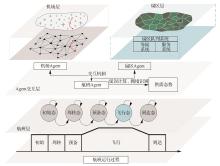
Fig.1
Multi-layer network unified dynamic framework
Table 1
Definition of flight Agent status
| 航班状态 | 特征描述 |
|---|---|
| 初始态 | 航班Agent未进入任何状态 |
| 周转态 | 航班Agent经历周转(地面保障时间内),或未到达计划起飞时间的状态,确定目标撤轮挡时刻 |
| 预备态 | 航班Agent已完成周转或超过计划起飞时间,由于本场容量限制原因未能推出,无本场容量限制时准许起飞 |
| 飞行态 | 航班Agent离开机场,正在经历扇区飞行,考虑扇区容量,产生扇区排队延误 |
| 到达态 | 航班Agent经历所有的飞行,所有目标执行完毕 |
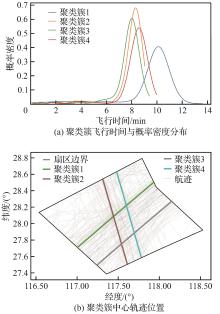
Fig.2
Schematic diagrams of sector service time calibration results (sector ZSSSAR35)
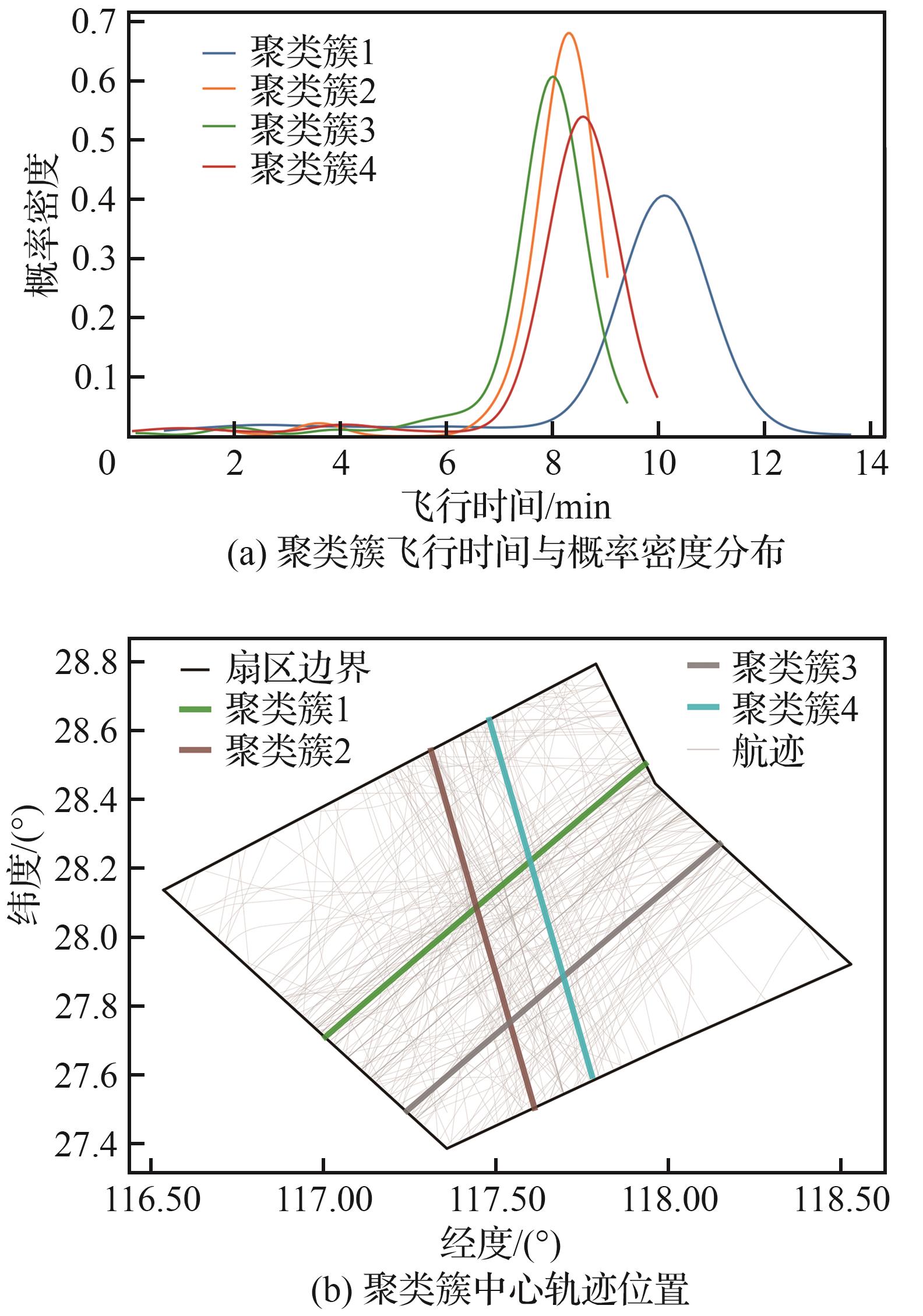
Table 2
Airport capacity reduction caused by weather conditions
| 序号 | 机场ICAO代码 | 发生时间 | 容量变化/(架次·h-1) |
|---|---|---|---|
| 1 | ZSPD | 08:00—19:00 | -5 |
| 2 | ZSPD | 21:00—06:00(+1) | -14 |
| 3 | ZSSS | 08:00—11:00 | -3 |
| 4 | ZSNJ | 08:00—12:00 | -7 |
| 5 | ZSOF | 08:00—14:00 | -4 |
Fig.3
Schematic diagrams of scenario capacity setting in scenario 1
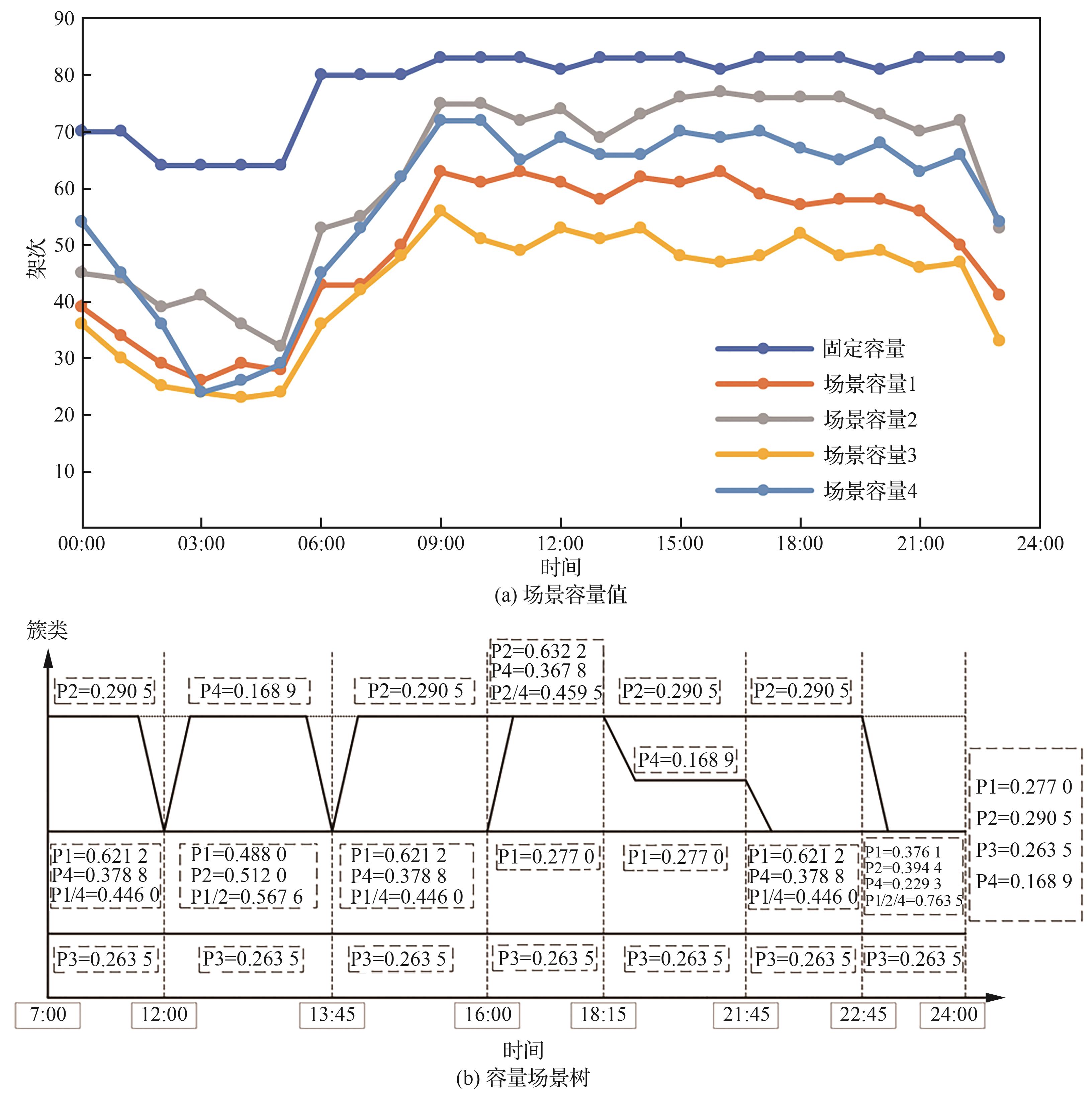
Table 3
Flight delay prediction results and calculation time in scenario 1
| 算例 | 平均延误时间/min | MAE/min | RMSE/min | 计算耗时/min |
|---|---|---|---|---|
| 实际运行 | 9.67 | |||
| AND模型 | 5.39 | 14.37 | 151.22 | 4.13 |
| 固定容量 | 8.99 | 7.13 | 50.10 | 4.34 |
| 场景容量 | 9.94 | 4.58 | 15.06 | 10.46 |
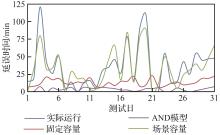
Fig.4
Delay statistics of flight CCA1 733 in the first 31 test days in scenario 1
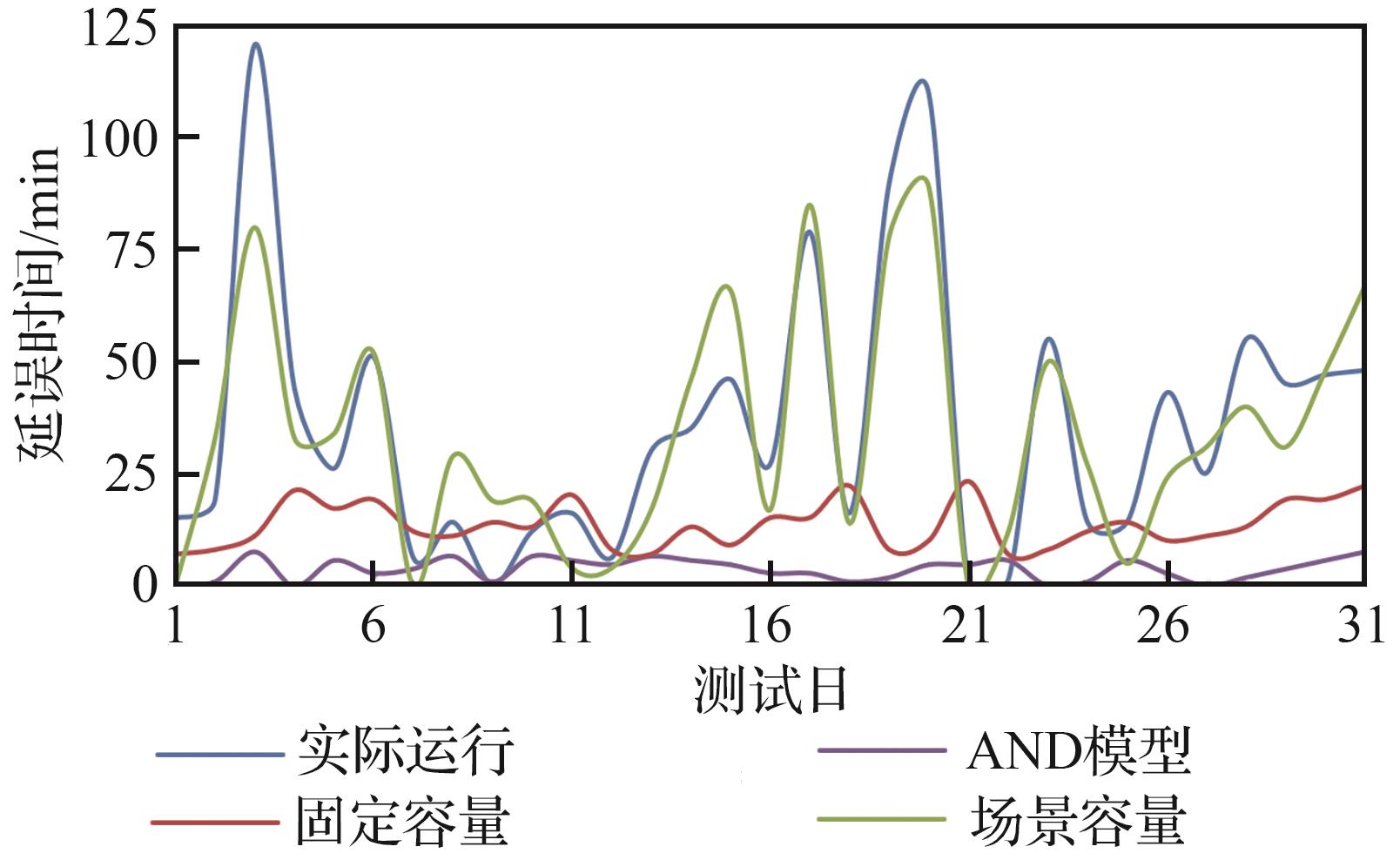
Table 4
Airport average delay results in scenario 1
| 机场ICAO代码 | 实际平均延误时间/min | AND模型平均延误时间/min | 固定容量平均延误时间/min | 场景容量平均延误时间/min |
|---|---|---|---|---|
| ZBAA | 21.07 | 13.06 | 19.48 | 22.05 |
| ZBAD | 9.52 | 6.52 | 8.03 | 9.90 |
| ZGGG | 18.24 | 12.69 | 19.18 | 18.39 |
| ZGSZ | 30.54 | 15.11 | 26.22 | 32.47 |
| ZLXY | 15.43 | 13.27 | 15.92 | 15.35 |
| ZPPP | 10.15 | 6.29 | 12.47 | 11.39 |
| ZSHC | 19.32 | 13.71 | 17.00 | 20.12 |
| ZSPD | 24.20 | 14.63 | 21.52 | 24.90 |
| ZUCK | 12.28 | 8.54 | 10.53 | 11.12 |
| ZUTF | 11.08 | 9.05 | 10.40 | 10.67 |
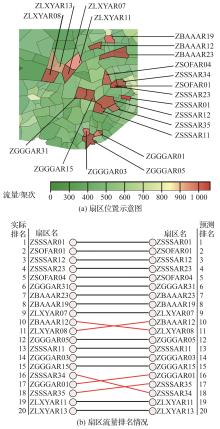
Fig.5
Top 20 busiest sectors in scenario 2
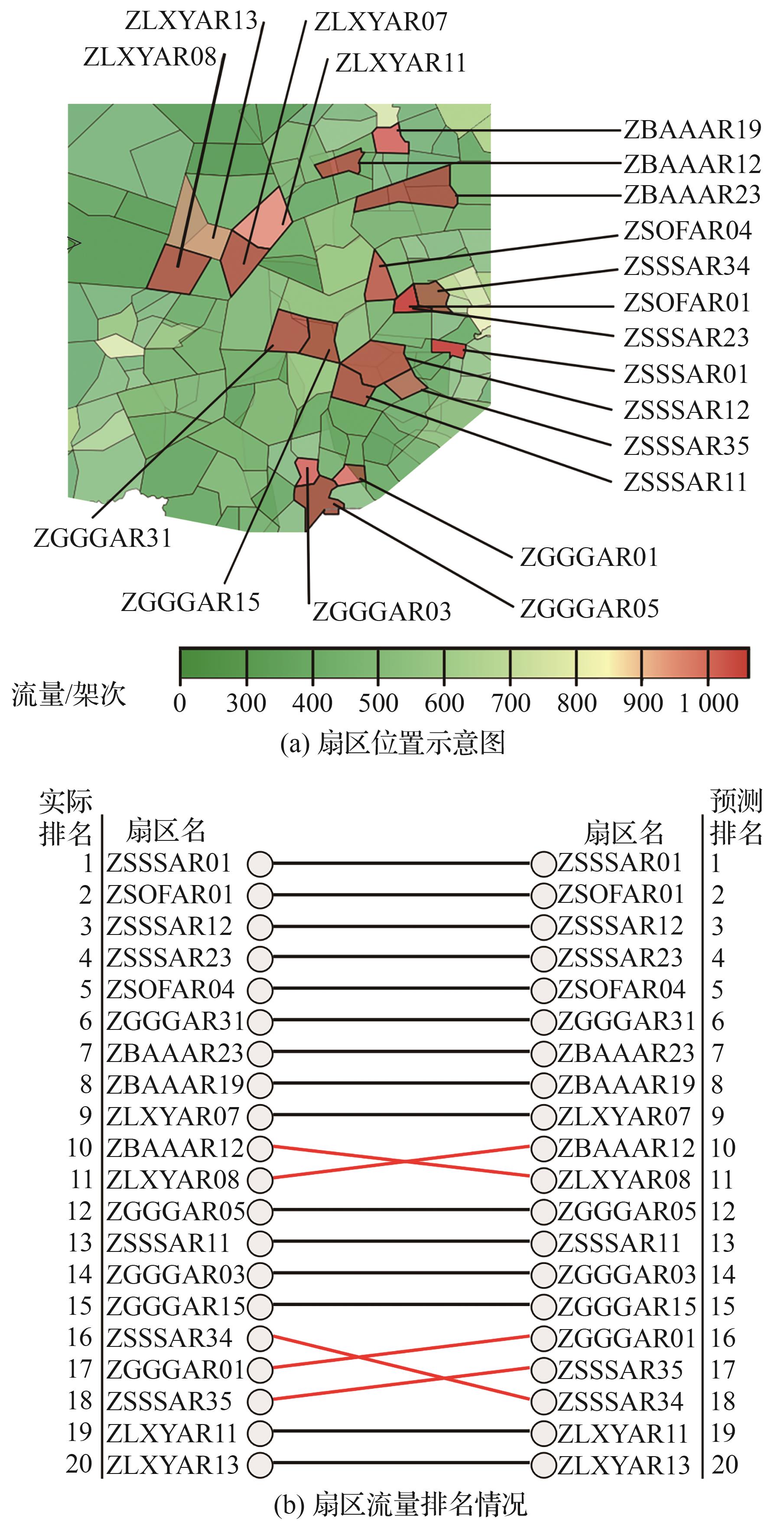
Table 5
Individual flight time, delay prediction results and calculation time in scenario 2
| 测试日 | 预测类型 | 平均飞行时间±标准差/min | 平均延误时间±标准差/min | 计算耗时/s |
|---|---|---|---|---|
| 高流量日 | 实际运行 | 135.12±70.41 | 17.30±55.47 | |
| Agent预测 | 137.14±67.91 | 16.37±54.25 | 1.89 | |
| AND预测 | 12.37±61.25 | 1.61 | ||
| 低流量日 | 实际运行 | 115.05±38.51 | 5.31±37.03 | |
| Agent预测 | 116.64±39.22 | 5.69±47.65 | 1.70 | |
| AND预测 | 3.37±64.25 | 1.61 |
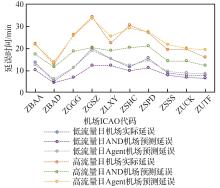
Fig.6
Airport actual delay and predicted delay in scenario 2
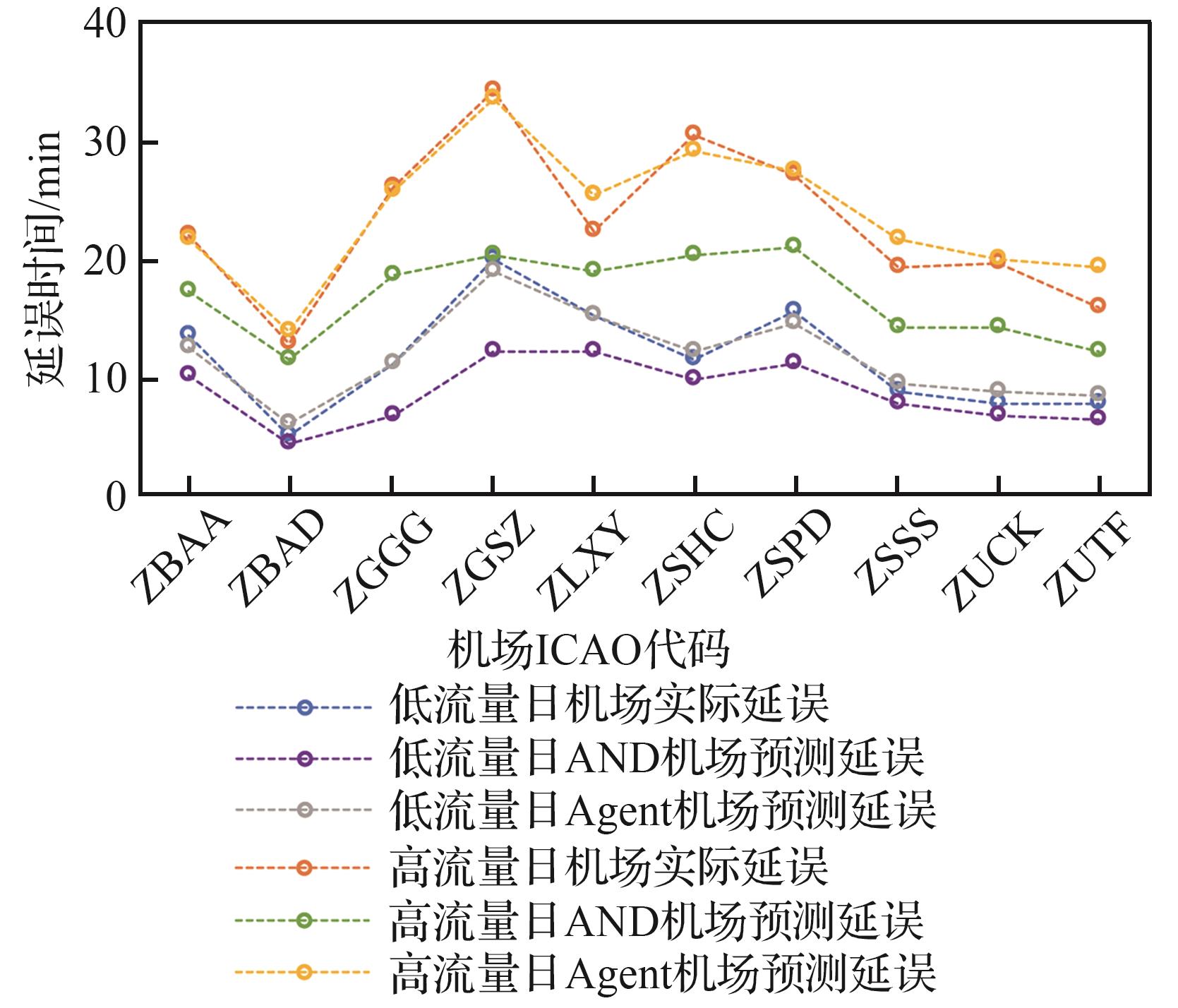
Fig.7
Flow capacity ratio of low-flow day busy sectors during main periods in scenario 2
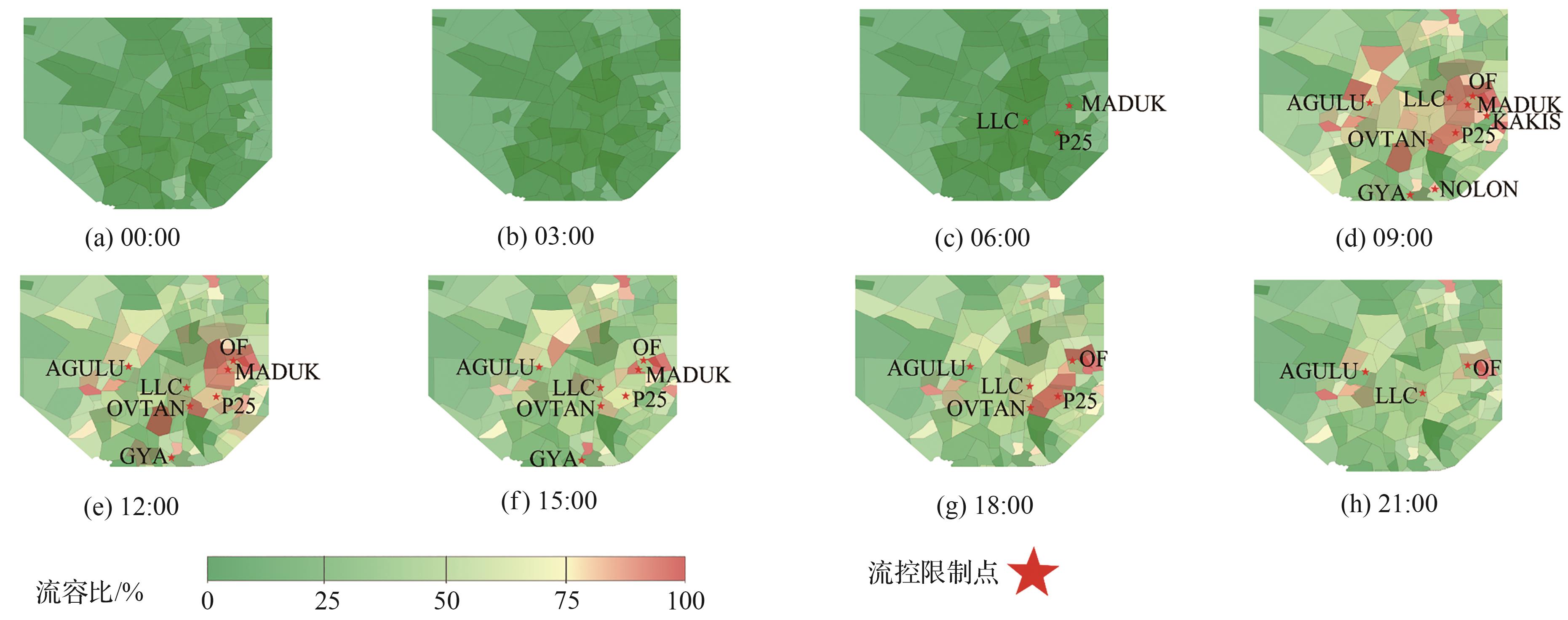
Fig.8
Flow capacity ratio of high-flow day busy sectors during main periods in scenario 2
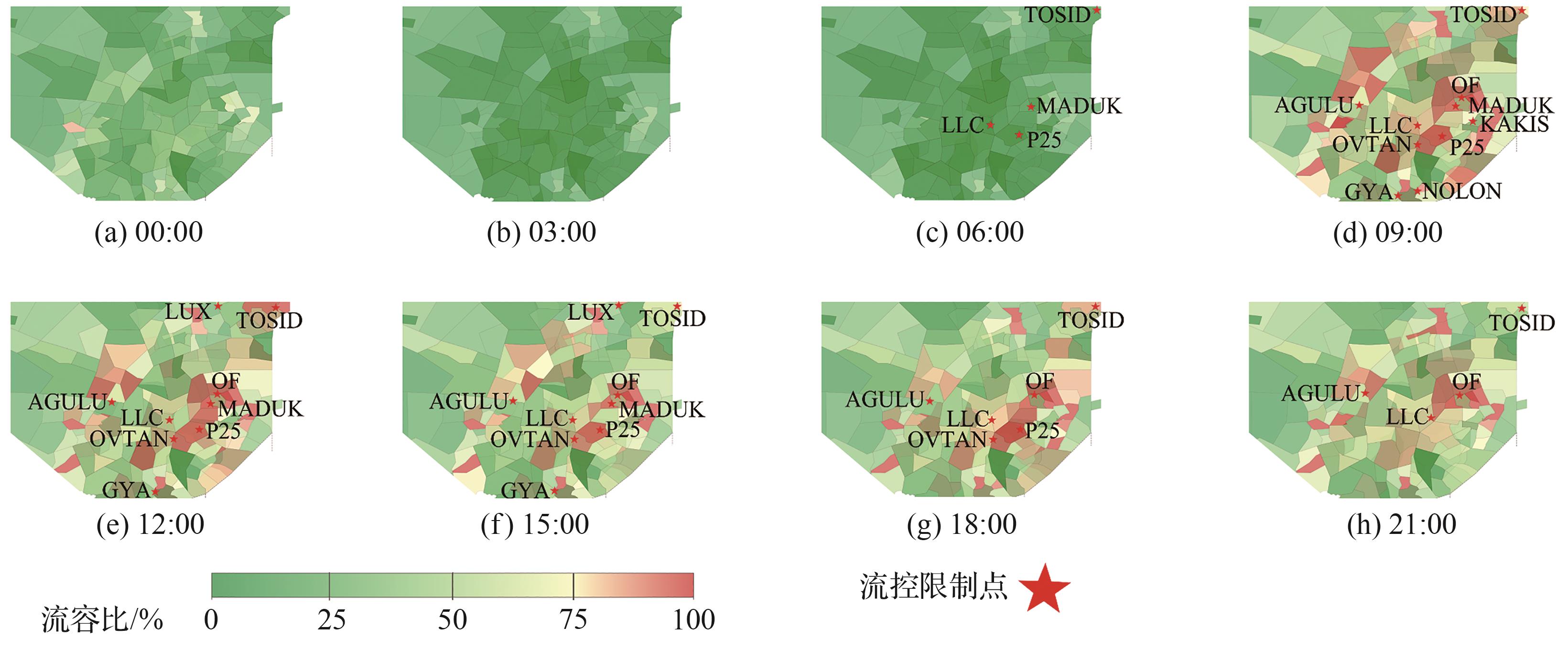
Fig.9
Flow capacity ratio of key regions (Yangtze River Delta, Beijing-Tianjin-Hebei) during main periods in scenario 2
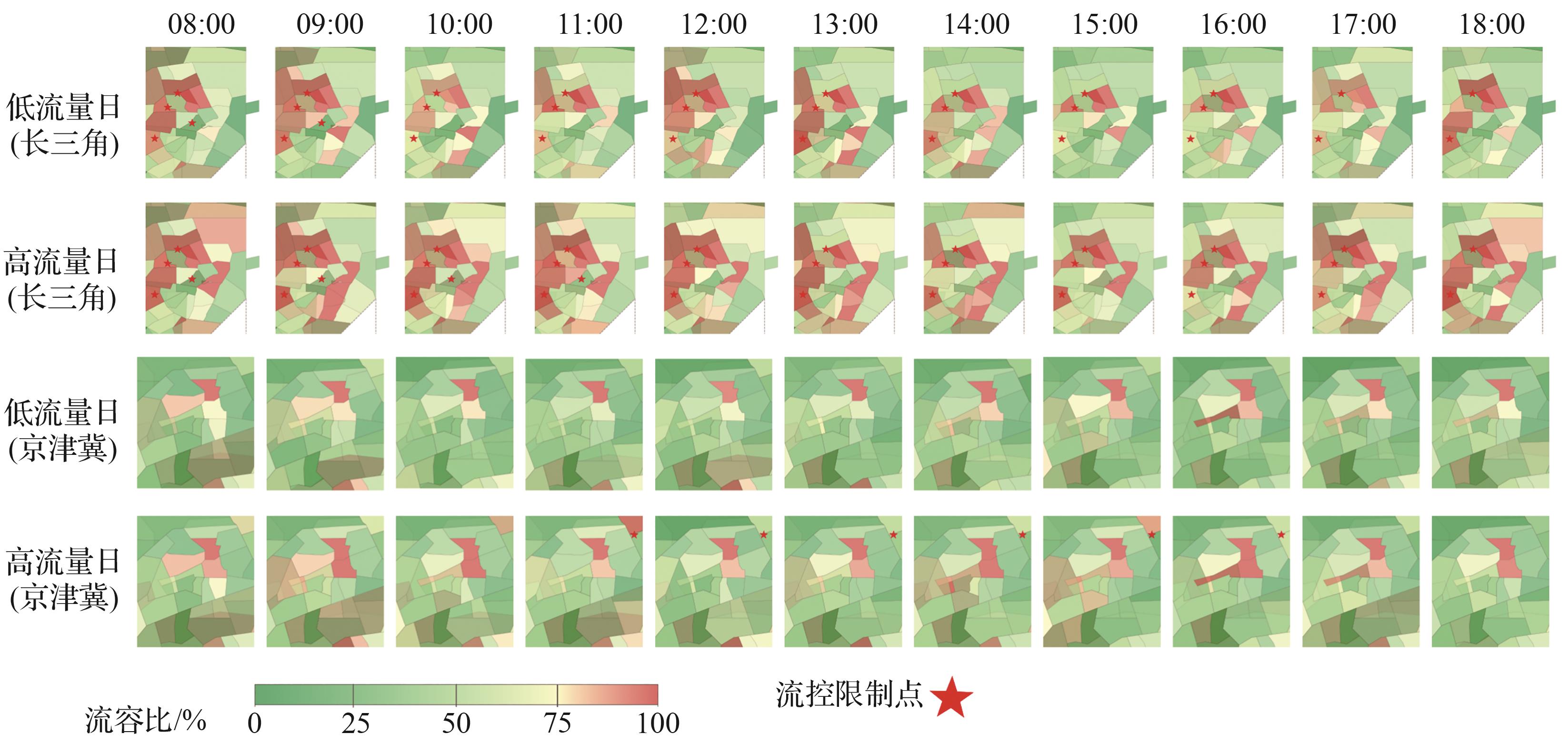
Table 6
Test results in scenario 3
| 机场 | 航班数量/架次 | 实际平均延误时间±标准差/min | 异构Agent模型预测平均延误时间±标准差/min | AND模型预测平均延误时间±标准差/min |
|---|---|---|---|---|
| ZSPD | 1 203 | 14.55±43.68 | 14.83±47.65 | 9.19±37.51 |
| ZSSS | 633 | 4.11±19.47 | 3.97±19.94 | 3.04±11.82 |
| ZSNJ | 510 | 6.08±30.07 | 6.36±29.05 | 5.11±21.65 |
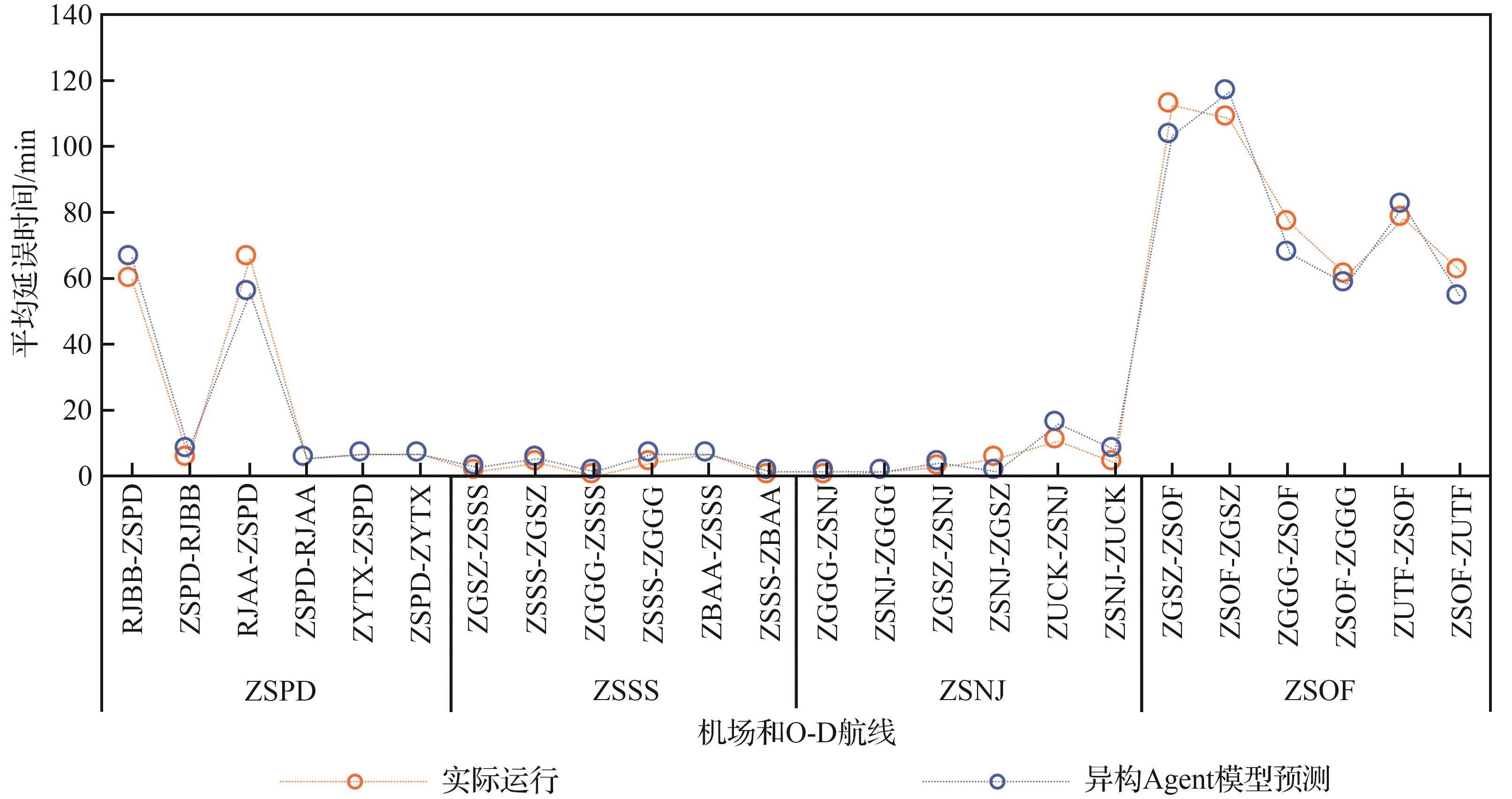
| ZSOF | 217 | 71.40±104.18 | 74.55±97.23 | 27.61±32.51 |
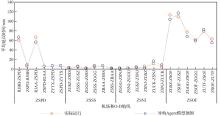
Fig.10
Comparison of main O-D routes delays in scenario 3
| [1] | 杨磊, 张洪海, 胡明华. 广义空中交通流建模综述[J]. 科学技术与工程, 2020, 20(2): 432-444. |
| YANG L, ZHANG H H, HU M H. A review of generalized air traffic flow modeling[J]. Science Technology and Engineering, 2020, 20(2): 432-444 (in Chinese). | |
| [2] | RIBEIRO N A, TAY J, NG W, et al. Delay predictive analytics for airport capacity management[J]. Transportation Research Part C: Emerging Technologies, 2025, 171: 104947. |
| [3] | HANSEN M. Micro-level analysis of airport delay externalities using deterministic queuing models: a case study[J]. Journal of Air Transport Management, 2002, 8(2): 73-87. |
| [4] | PYRGIOTIS N, MALONE K M, ODONI A. Modelling delay propagation within an airport network[J]. Transportation Research Part C: Emerging Technologies, 2013, 27: 60-75. |
| [5] | WONG J T, TSAI S C. A survival model for flight delay propagation[J]. Journal of Air Transport Management, 2012, 23: 5-11. |
| [6] | FLEURQUIN P, RAMASCO J J, EGUILUZ V M. Systemic delay propagation in the US airport network[J]. Scientific Reports, 2013, 3(1): 1159. |
| [7] | AHMADBEYGI S, COHN A, GUAN Y H, et al. Analysis of the potential for delay propagation in passenger airline networks[J]. Journal of Air Transport Management, 2008, 14(5): 221-236. |
| [8] | 李明捷, 黄欣宁, 吕晨辉, 等. 基于排队网络模型的机场航班延误预测[J]. 科学技术与工程, 2023, 23(27): 11886-11891. |
| LI M J, HUANG X N, LÜ C H, et al. Airport flight delay prediction based on queuing network model[J]. Science Technology and Engineering, 2023, 23(27): 11886-11891 (in Chinese). | |
| [9] | 王春政, 胡明华, 杨磊, 等. 基于Agent模型的机场网络延误预测[J]. 航空学报, 2021, 42(7): 324604. |
| WANG C Z, HU M H, YANG L, et al. Airport network delay prediction based on Agent model[J]. Acta Aeronautica et Astronautica Sinica, 2021, 42(7): 324604 (in Chinese). | |
| [10] | 王春政. 机场网络延误态势感知与时隙配置方法研究[D]. 南京: 南京航空航天大学, 2023: 30-42. |
| WANG C Z. Research on airport network delay situation awareness and slot allocation method[D]. Nanjing: Nanjing University of Aeronautics and Astronautics, 2023: 30-42 (in Chinese). | |
| [11] | 王春政, 胡明华, 杨磊, 等. 空中交通延误预测研究综述[J]. 系统工程与电子技术, 2022, 44(3): 863-874. |
| WANG C Z, HU M H, YANG L, et al. Review on air traffic delay prediction[J]. Systems Engineering and Electronics, 2022, 44(3): 863-874 (in Chinese). | |
| [12] | REBOLLO J J, BALAKRISHNAN H. Characterization and prediction of air traffic delays[J]. Transportation Research Part C: Emerging Technologies, 2014, 44: 231-241. |
| [13] | KHANMOHAMMADI S, TUTUN S, KUCUK Y. A new multilevel input layer artificial neural network for predicting flight delays at JFK airport[J]. Procedia Computer Science, 2016, 95: 237-244. |
| [14] | BIROLINI S, JACQUILLAT A. Day-ahead aircraft routing with data-driven primary delay predictions[J]. European Journal of Operational Research, 2023, 310(1): 379-396. |
| [15] | LIN Y, LI L S, REN P, et al. From aircraft tracking data to network delay model: A data-driven approach considering en-route congestion[J]. Transportation Research Part C: Emerging Technologies, 2021, 131: 103329. |
| [16] | TU Y F, BALL M O, JANK W S. Estimating flight departure delay distributions: A statistical approach with long-term trend and short-term pattern[J]. Journal of the American Statistical Association, 2008, 103(481): 112-125. |
| [17] | CHOUDHURY A, BASAK A. Statistical inference on traffic intensity in an M/M/1 queueing system[J]. International Journal of Management Science and Engineering Management, 2018, 13(4): 274-279. |
| [18] | 叶博嘉. 基于多Agent的空中交通协同流量管理研究[D]. 南京: 南京航空航天大学, 2013: 16-23. |
| YE B J. Research on collaborative air traffic flow management based upon multi-agent modeling and simulation[D]. Nanjing: Nanjing University of Aeronautics and Astronautics, 2013: 16-23 (in Chinese). | |
| [19] | SIEGFRIED R. Grams-general reference model for agent-based modeling and simulation[M]. Wiesbaden: Springer Fachmedien, 2014: 75-110. |
| [20] | 中国民用航空局. 航班正常管理规定: CCAR-300 [S]. 北京: 中国民用航空局, 2016. |
| Civil Aviation Administration of China. Provisions on the administration of flight regularity: CCAR-300 [S]. Beijing: Civil Aviation Administration of China, 2016 (in Chinese). | |
| [21] | WHITT W. Fluid models for multiserver queues with abandonments[J]. Operations Research, 2006, 54(1): 37-54. |
| [22] | CAMPELLO R J G B, MOULAVI D, ZIMEK A, et al. Hierarchical density estimates for data clustering, visualization, and outlier detection[J]. ACM Transactions on Knowledge Discovery from Data, 2015, 10(1): 1-51. |
| [23] | SALVADOR S, CHAN P. Toward accurate dynamic time warping in linear time and space[J]. Intelligent Data Analysis, 2007, 11(5): 561-580. |
| [24] | SENIN P. Dynamic time warping algorithm review[EB/OL]. Manoa Honolulu: Information and Computer Science Department University of Hawaii at Manoa Honolulu, 2008.(2008-12-21)[2026-03-11]. . |
| [25] | SILVERMAN B W. Density estimation for statistics and data analysis[M]. London: Chapman and Hall, 1986: 9-17. |
| [26] | Civil Aviation Administration of China. eAIP (electronic aeronautical information package) [EB/OL]. (2023-12-01)[2025-08-01]. . |
| [27] | LIU P B, HANSEN M, MUKHERJEE A. Scenario-based management of air traffic flow: developing and using capacity scenario trees[J]. Transportation Research Record, 2006, 1951(1): 113-121. |
| [28] | 中国民用航空局. 2023年民航空域发展报告[M]. 北京: 中国民用航空局, 2024: 50. |
| Civil Aviation Administration of China. 2023 civil aviation airspace development report[M]. Beijing: Civil Aviation Administration of China, 2024: 50 (in Chinese). | |
| [29] | 中国民用航空局. 民用航空空中交通流量管理暂行规定: AP-93-TM-2023-01 [S]. 北京: 中国民用航空局, 2023. |
| Civil Aviation Administration of China. Interim provisions on civil aviation air traffic flow management: AP-93-TM-2023-01 [S]. Beijing: Civil Aviation Administration of China, 2023 (in Chinese). |
| [1] | Jinlun ZHOU, Honghai ZHANG, Wenqing LI. Key technologies and deployment routes for advancing autonomous operations in civil aviation [J]. Acta Aeronautica et Astronautica Sinica, 2025, 46(22): 331998-331998. |
| [2] | Dong SUI, Zhipeng CUI. A method for determining capacity of air routes intersection based on carbon emissions [J]. Acta Aeronautica et Astronautica Sinica, 2024, 45(S1): 730699-730699. |
| [3] | Hua XIE, Site HAN, Jianan YIN, Xiaohui JI, Yichen YANG. Cooperative deduction and optimal allocation method for urban low-altitude UAV flight plan [J]. Acta Aeronautica et Astronautica Sinica, 2024, 45(19): 330018-330018. |
| [4] | Hua XIE, Fangzheng SU, Jianan YIN, Site HAN, Xinjue ZHANG. Network modeling and refined management of UAV flight conflicts in complex low altitude airspace [J]. Acta Aeronautica et Astronautica Sinica, 2023, 44(18): 328226-328226. |
| [5] | Bing WANG, Runyuan ZOU, Zhening CHANG. Aircraft takeoff mass estimation method based on improved simulated annealing algorithm [J]. Acta Aeronautica et Astronautica Sinica, 2023, 44(16): 328090-328090. |
| [6] | WANG Fei, HAN Xiangyu. Short-term prediction of air traffic flow based on fractal interpolation [J]. ACTA AERONAUTICAET ASTRONAUTICA SINICA, 2022, 43(9): 325585-325585. |
| [7] | XIE Hua, LI Zihong, YANG Lei, ZHU Yongwen, LIU Fangzi. Optimization of four-dimensional trajectory of city pair with limited capacity [J]. ACTA AERONAUTICAET ASTRONAUTICA SINICA, 2022, 43(8): 325581-325581. |
| [8] | ZHAO Yifei, WANG Mengqi. Important theories and critical scientific technology of air traffic engineering [J]. ACTA AERONAUTICAET ASTRONAUTICA SINICA, 2022, 43(12): 26537-026537. |
| [9] | WANG Chunzheng, HU Minghua, YANG Lei, ZHAO Zheng, SHAN Jing. Airport network delay prediction based on Agent model [J]. ACTA AERONAUTICAET ASTRONAUTICA SINICA, 2021, 42(7): 324604-324604. |
| [10] | ZHANG Junfeng, YOU Lubao, YANG Chunwei, HU Rong. Arrival sequencing and scheduling based on multi-objective Imperialist competitive algorithm [J]. ACTA AERONAUTICAET ASTRONAUTICA SINICA, 2021, 42(6): 324439-324439. |
| [11] | CHEN Zhijie, TANG Jinhui, WANG Chong, CHENG Jizeng, CAO Shan, SHAO Xin. Using artificial intelligence in airspace system to improve airspace hierarchical governance capability [J]. ACTA AERONAUTICAET ASTRONAUTICA SINICA, 2021, 42(4): 525018-525018. |
| [12] | YANG Lei, LI Wenbo, LIU Fangzi, CHEN Yutong, ZHAO Zheng. Multi-objective optimization of continuous descending trajectories in flexible airspace [J]. ACTA AERONAUTICAET ASTRONAUTICA SINICA, 2021, 42(2): 324157-324157. |
| [13] | CHEN Yutong, HU Minghua, YANG Lei, ZHANG Haoran, ZHAO Zheng. Autonomous trajectory planning and conflict management technology in restricted airspace [J]. ACTA AERONAUTICAET ASTRONAUTICA SINICA, 2020, 41(9): 324045-324045. |
| [14] | ZHANG Honghai, TANG Yiwen, XU Yan. Optimizing arrival traffic flow in airport terminal airspace under trajectory based operations [J]. ACTA AERONAUTICAET ASTRONAUTICA SINICA, 2020, 41(7): 323844-323844. |
| [15] | WANG Miao, XIAO Gang, WANG Guoqing. Single pilot operation mode technology [J]. ACTA AERONAUTICAET ASTRONAUTICA SINICA, 2020, 41(4): 323541-323541. |
| Viewed | ||||||
|
Full text |
|
|||||
|
Abstract |
|
|||||
Address: No.238, Baiyan Buiding, Beisihuan Zhonglu Road, Haidian District, Beijing, China
Postal code : 100083
E-mail:hkxb@buaa.edu.cn
Total visits: 6658907 Today visits: 1341All copyright © editorial office of Chinese Journal of Aeronautics
All copyright © editorial office of Chinese Journal of Aeronautics
Total visits: 6658907 Today visits: 1341

 CJA
CJA
