Acta Aeronautica et Astronautica Sinica ›› 2026, Vol. 47 ›› Issue (15): 333119.doi: 10.7527/S1000-6893.2026.33119
• Electronics and Electrical Engineering and Control • Previous Articles
Qingyang CHEN, Zhengmin JIA, Yafei LU( ), Yujie WANG, Peng WANG
Received:2025-11-20
Revised:2025-12-29
Accepted:2026-03-06
Online:2026-03-17
Published:2026-03-16
Contact:
Yafei LU
E-mail:luyafeichina@163.com
Supported by:CLC Number:
Qingyang CHEN, Zhengmin JIA, Yafei LU, Yujie WANG, Peng WANG. Attitude control under wide-envelope for flying-wing UAVs combining tracking differentiator and incremental nonlinear dynamic inversion[J]. Acta Aeronautica et Astronautica Sinica, 2026, 47(15): 333119.
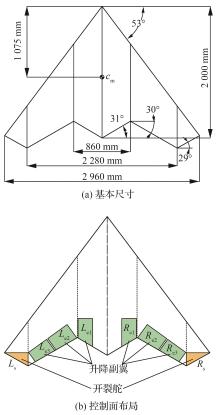
Fig.1
Basic size of flying-wing vehicle and layout of deflection surface
Table 1
UAV parameters
| 参数 | 数值 | 参数 | 数值 |
|---|---|---|---|
| 翼面积 | 2.89 | 起飞质量/ | 36.65 |
| 翼展 | 2.96 | 5.01 | |
| 平均几何弦长 | 0.98 | 3.12 | |
| 展弦比 | 3.03 | 8.13 | |
| 巡航速度/ | 0.145 | 0.03 |
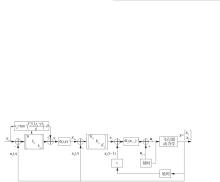
Fig.2
Attitude control diagram based on INDI method
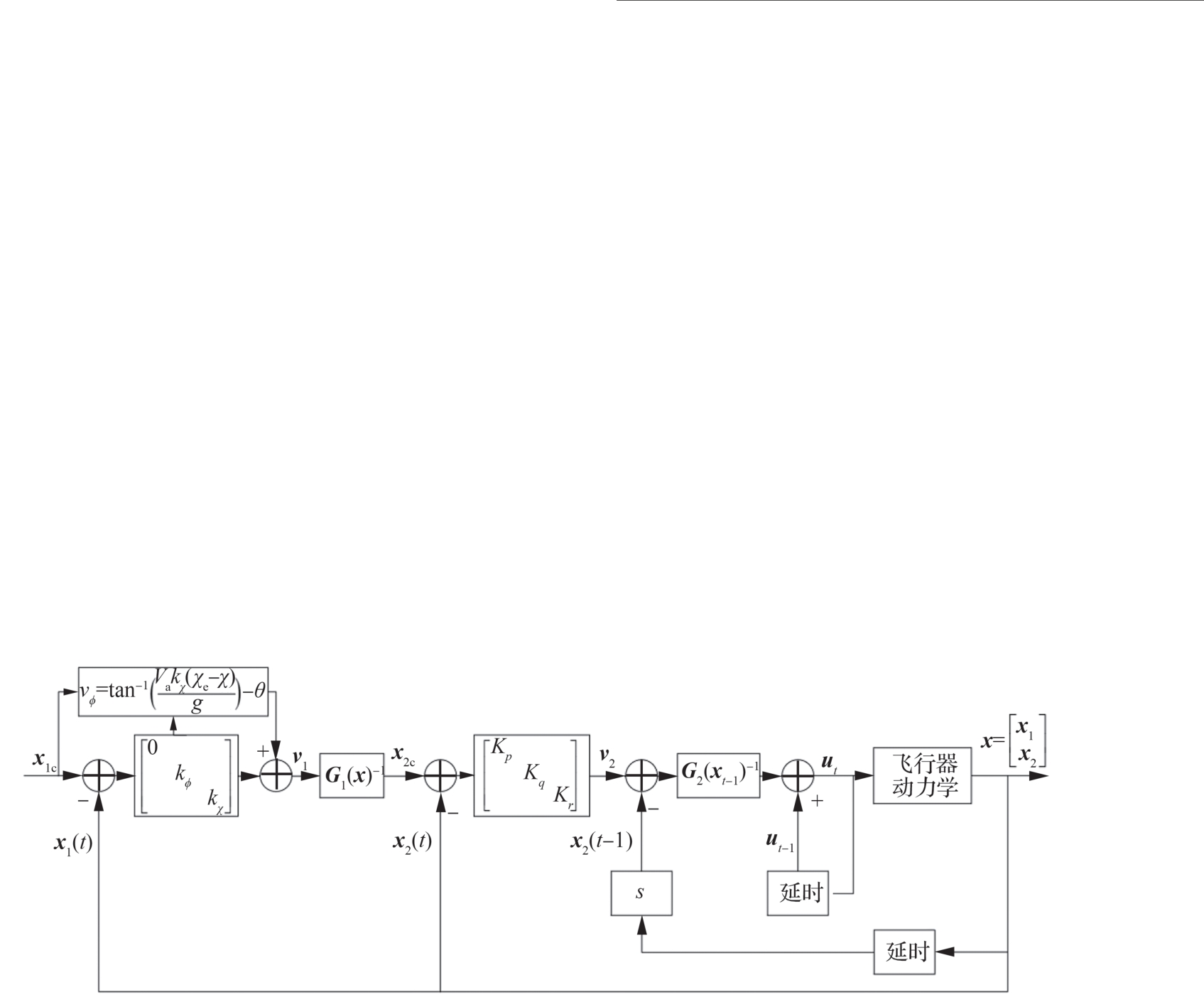
Fig.3
Diagram of simulation system
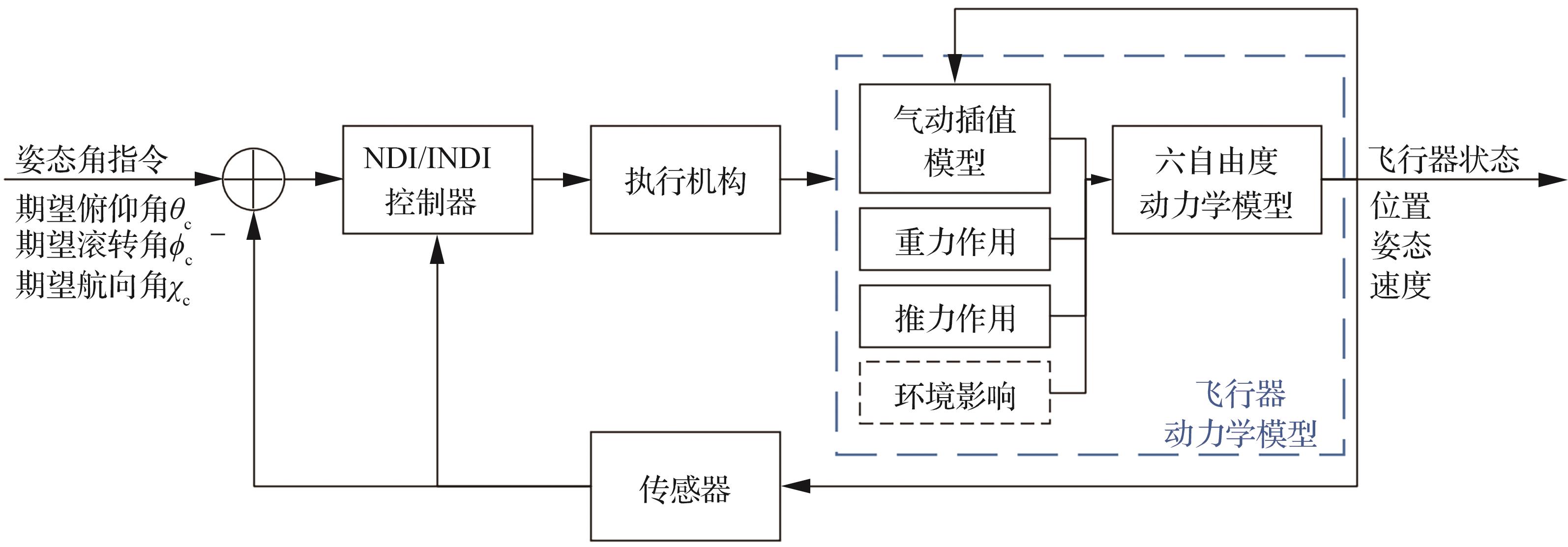
Table 2
Simulation test situations
| 测试工况 | 配平状态 | 指令 | 指令信号 |
|---|---|---|---|
| 工况1 | 方波 | ||
| 阶跃 | |||
| 工况2 | 方波 | ||
| 阶跃 | |||
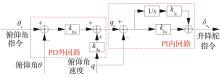
Fig.4
Diagram of longitudinal attitude control law based on PID
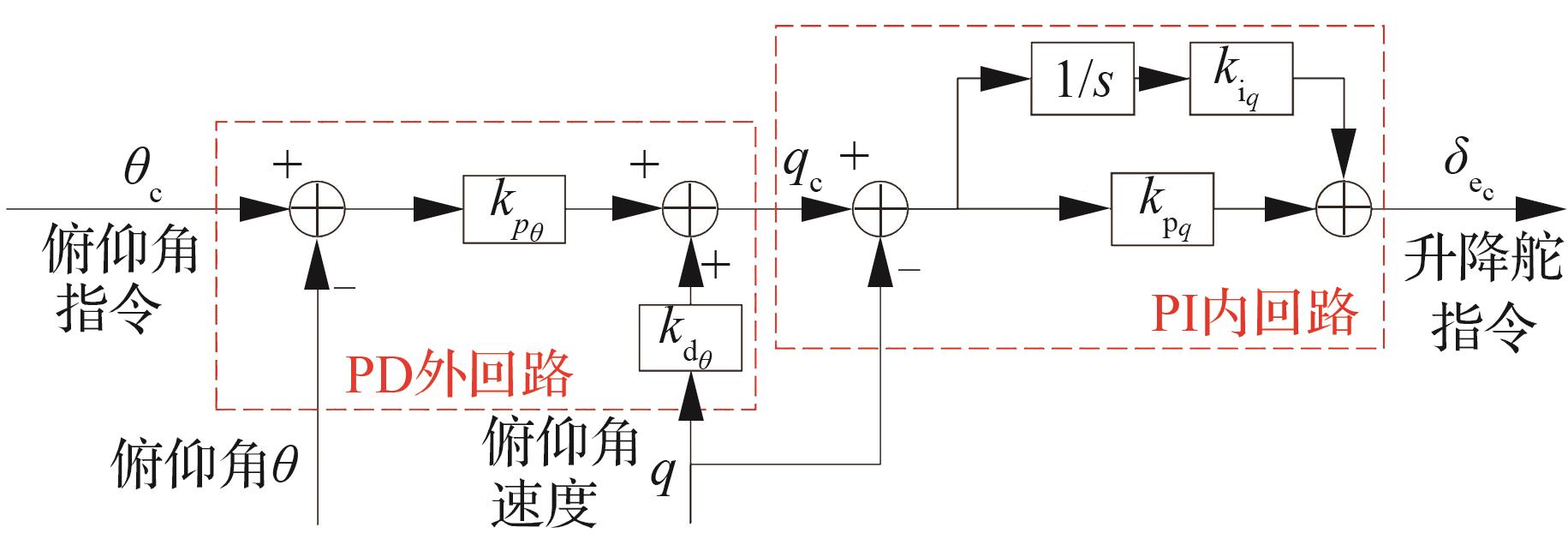
Table 3
Parameters for longitudinal attitude controller
| 回路 | 参数 | 数值 |
|---|---|---|
| 外回路 | 3.0 | |
| 0 | ||
| 0.8 | ||
| 内回路 | -5.0 | |
| -8.0 | ||
| 0 |
Fig.5
Simulation results of step signal response for longitudinal direction
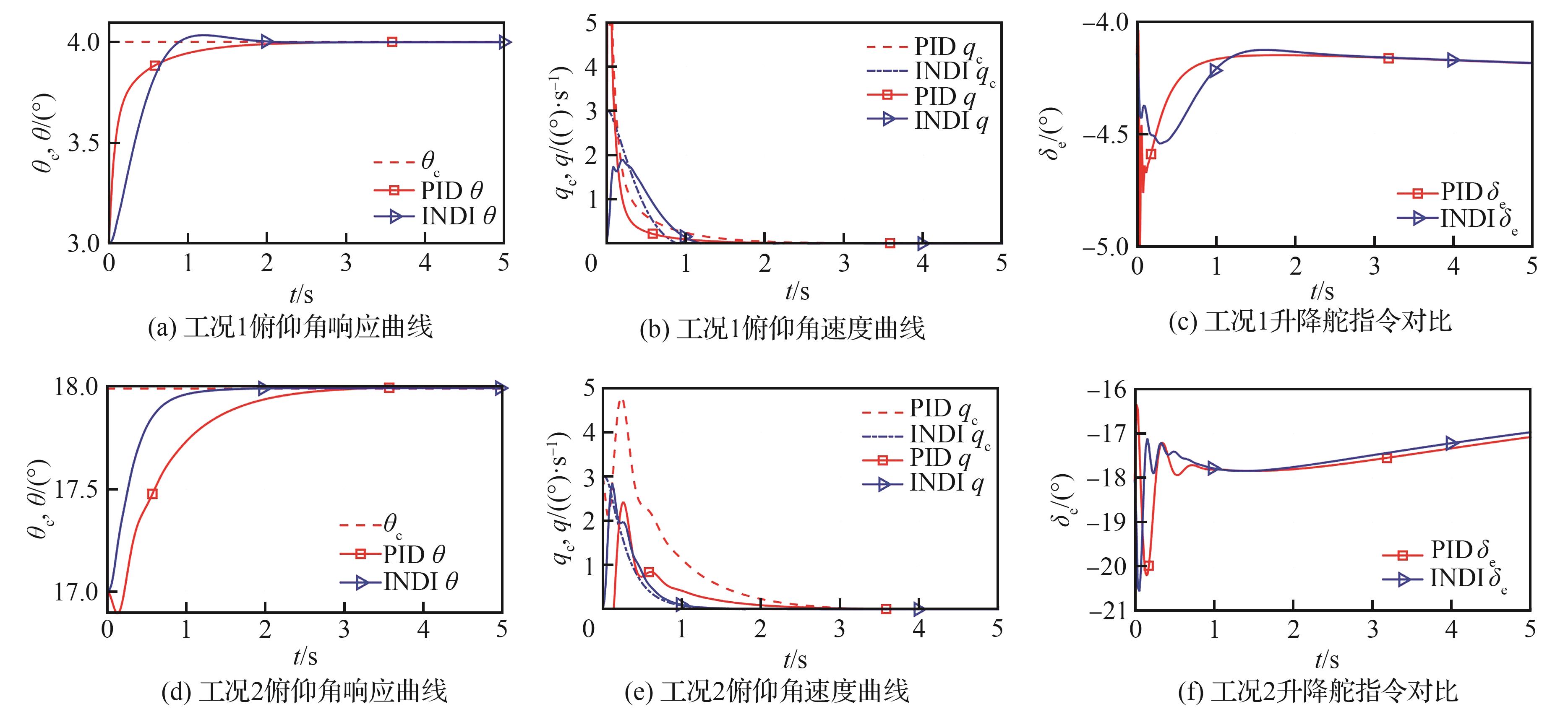
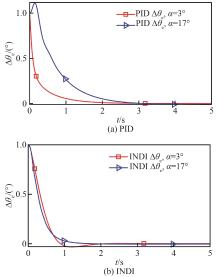
Fig.6
Comparison of control errors based on two methods under different situations (longitudinal step signal)
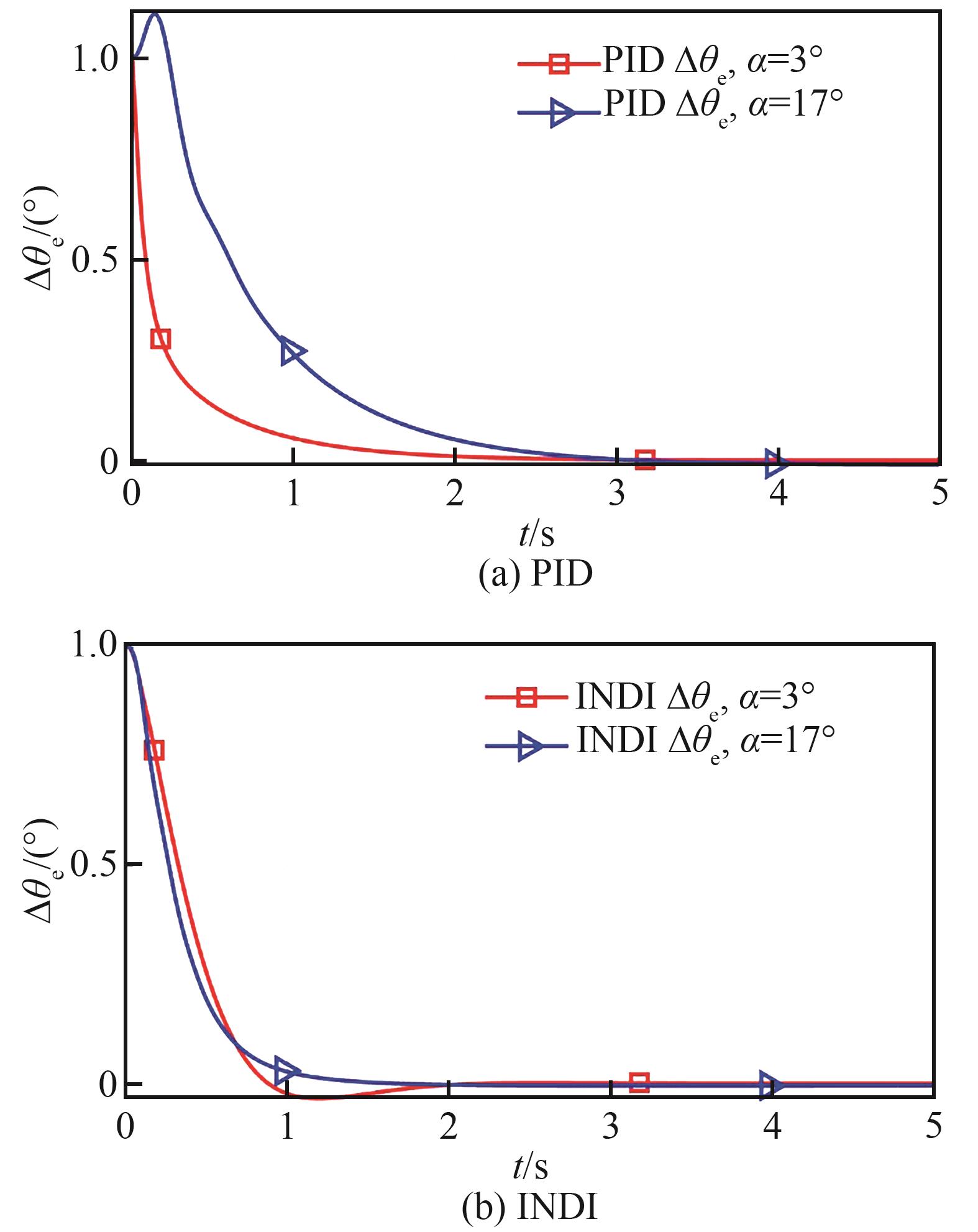
Fig.7
Simulation results of square signal response for longitudinal direction
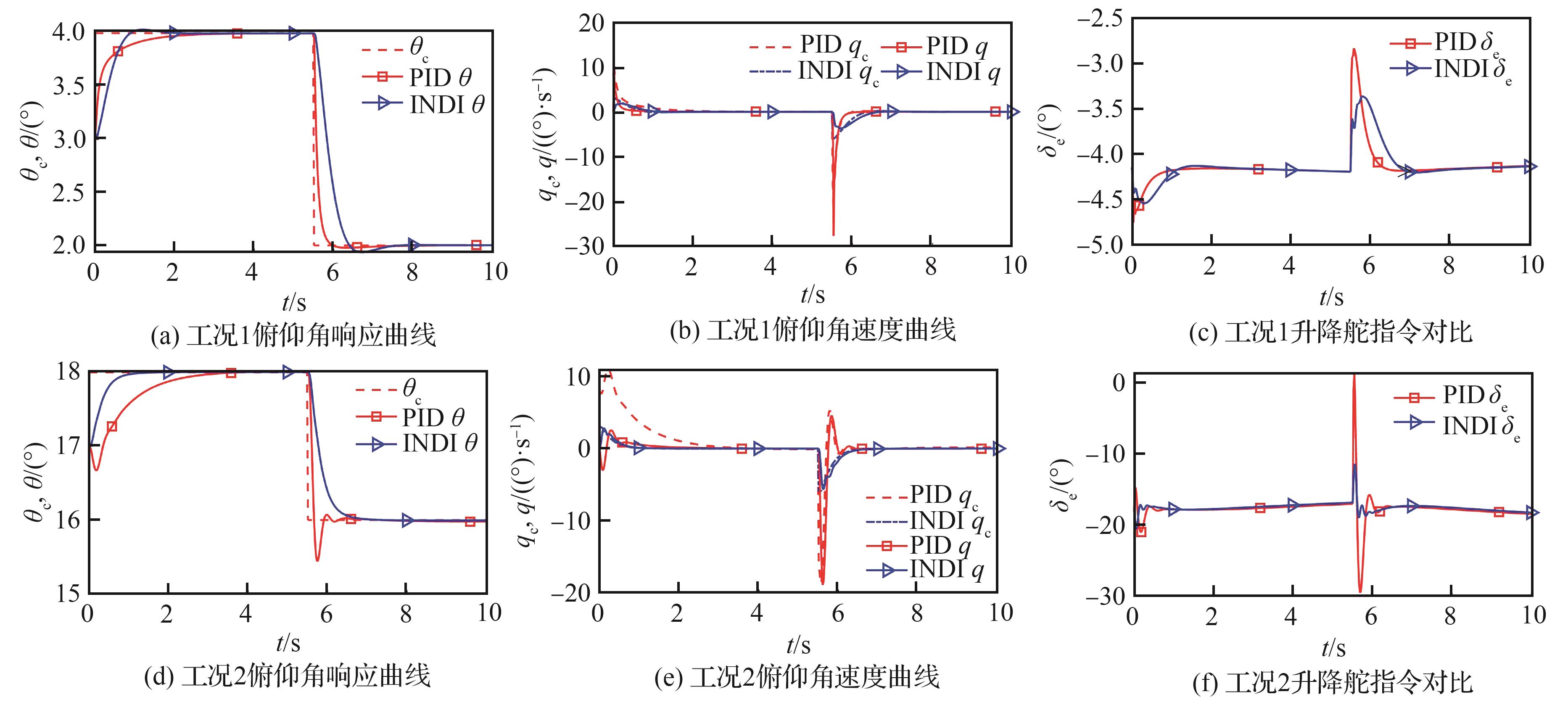
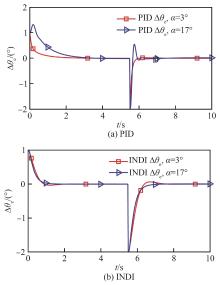
Fig.8
Comparison of control errors based on two methods under different situations (longitudinal square signal)
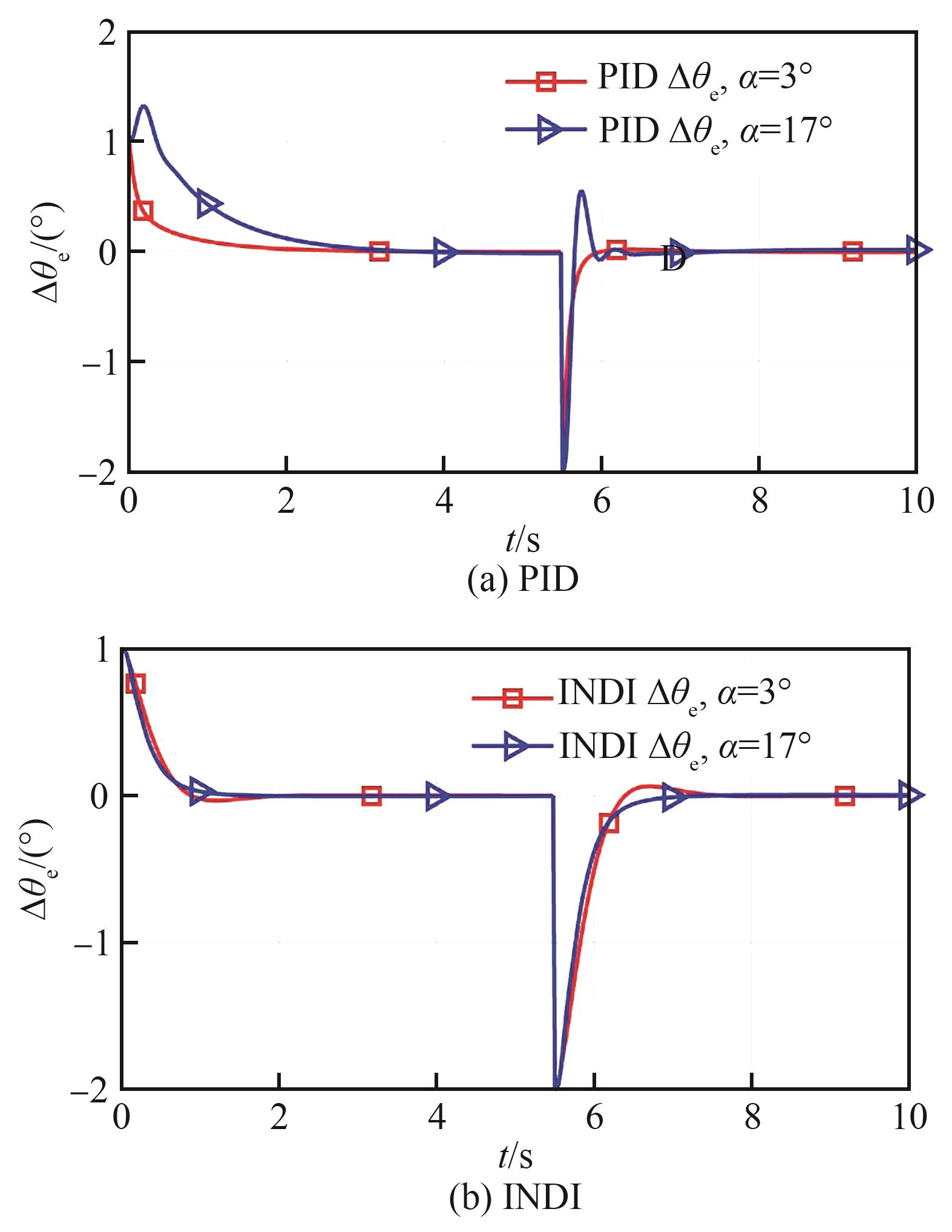
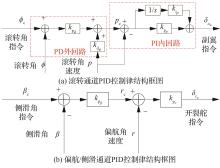
Fig.9
Diagram of lateral attitude control law based on PID
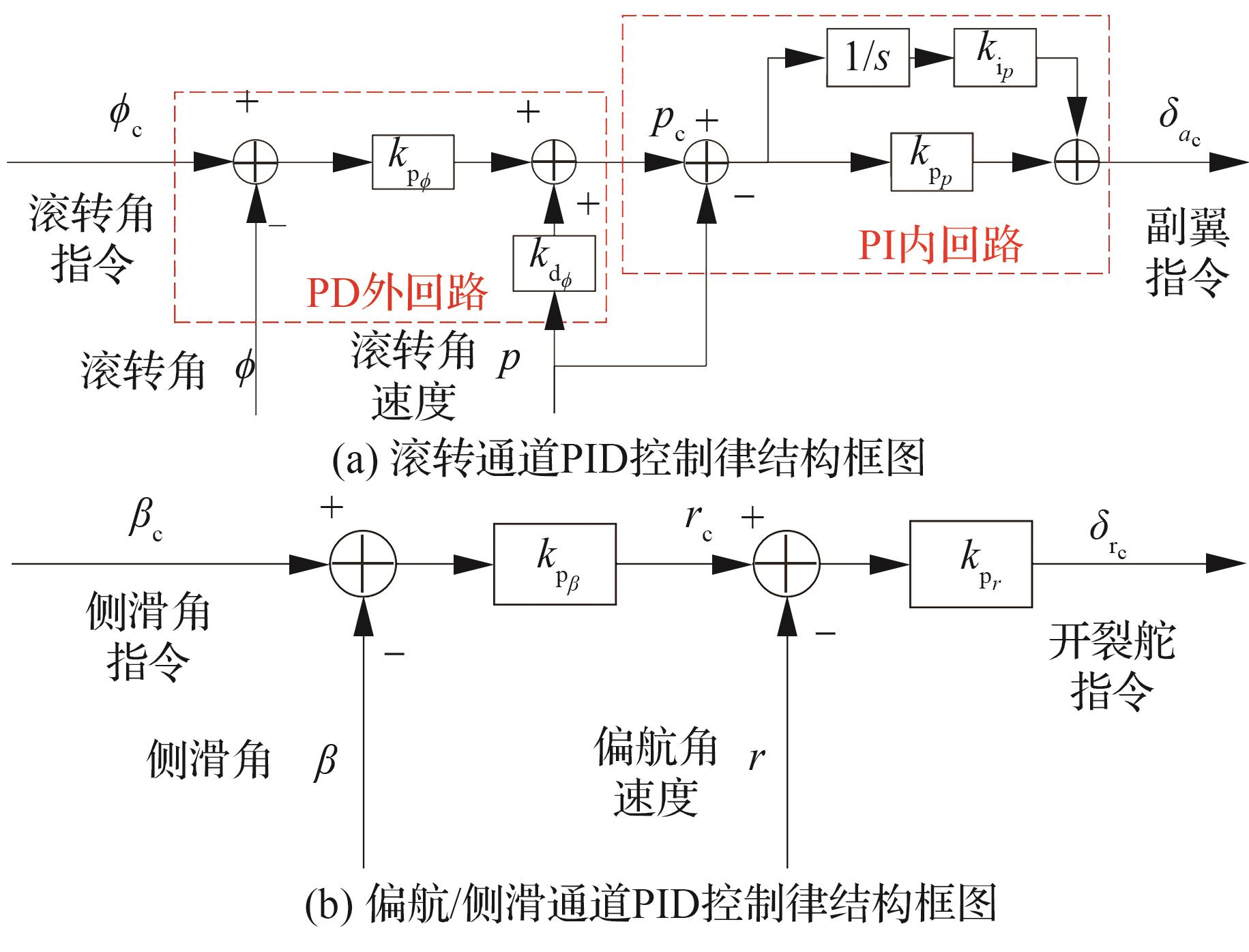
Table 4
Parameters for lateral attitude controller
| 回路 | 数值 | 内回路 |
|---|---|---|
| 外回路 | 4.0 | |
| 0 | ||
| 0.1 | ||
| 0.5 | ||
| 内回路 | 1.0 | |
| 0.2 | ||
| 0 | ||
| -0.1 |
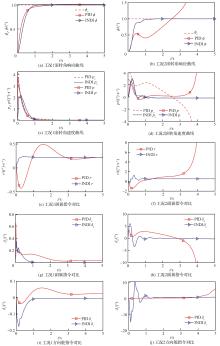
Fig.10
Simulation results of step signal response for lateral direction
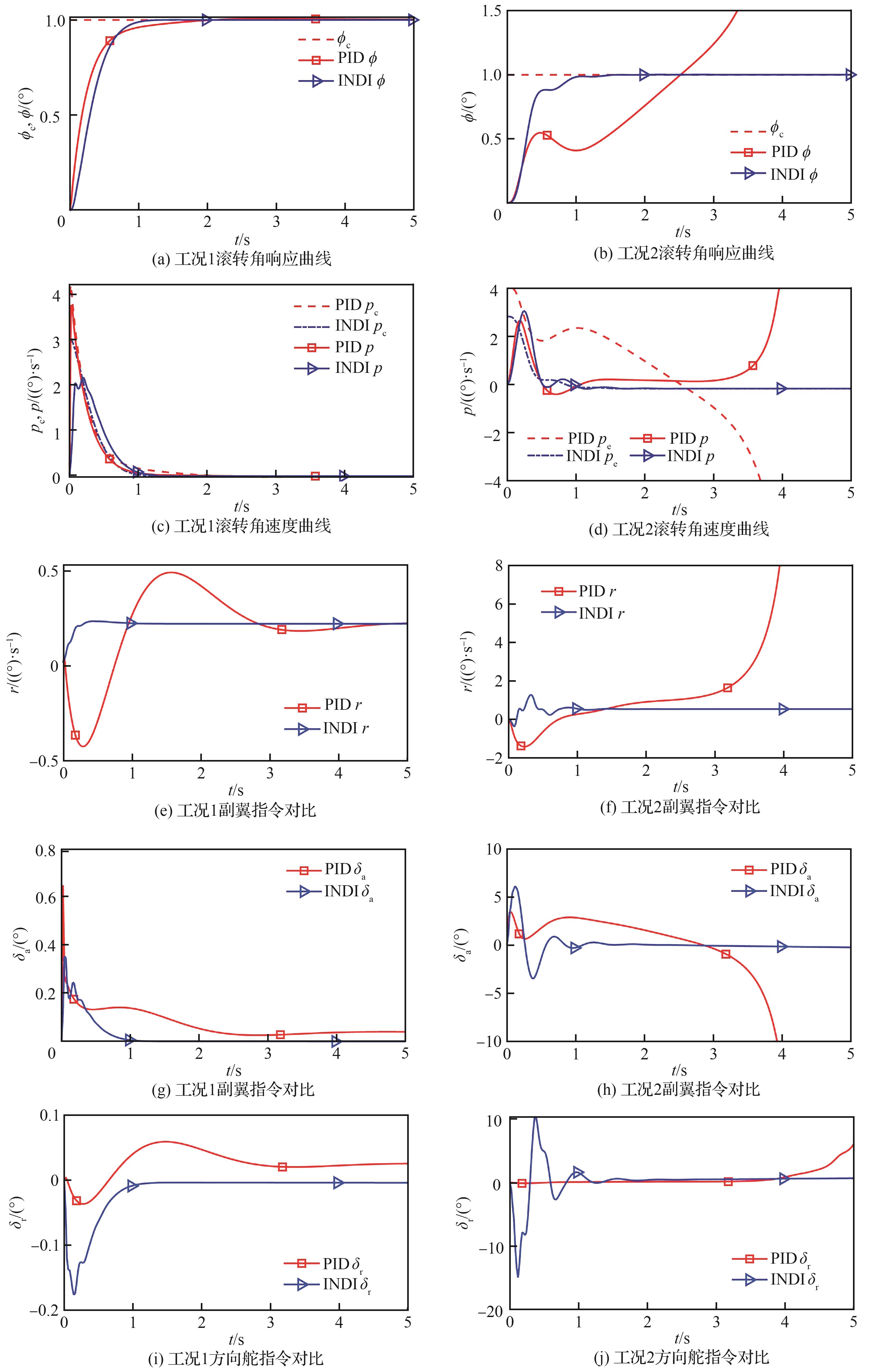
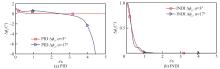
Fig.11
Comparison of roll angle control errors based on two methods under different situations
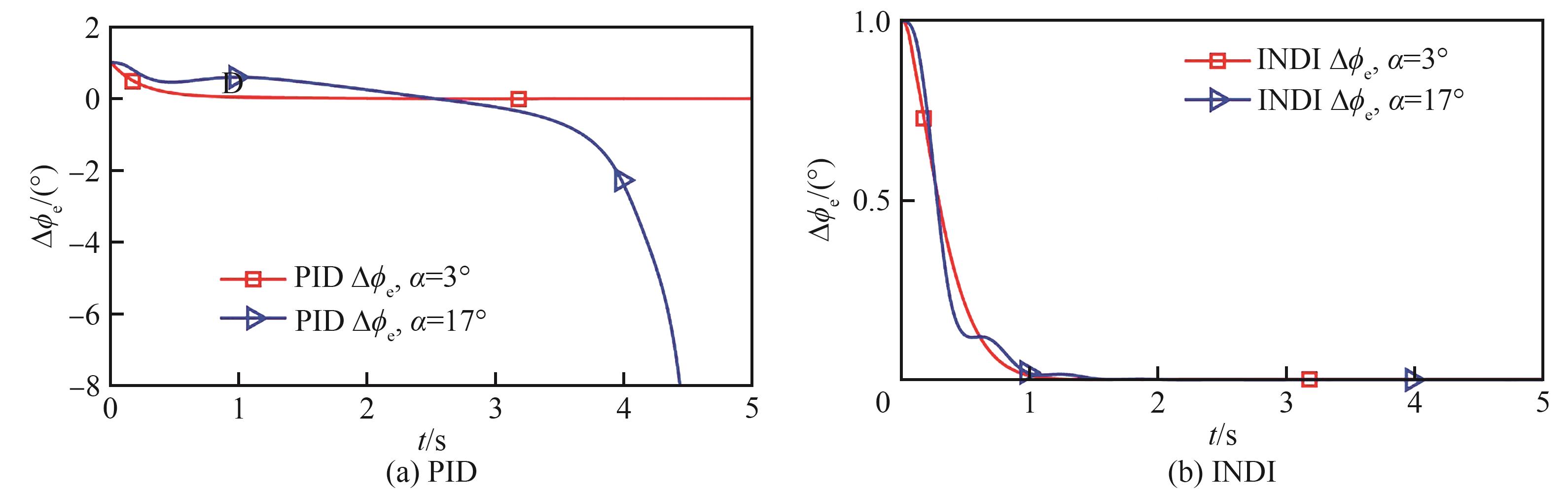
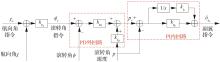
Fig.12
Diagram of the directional control law based on PID
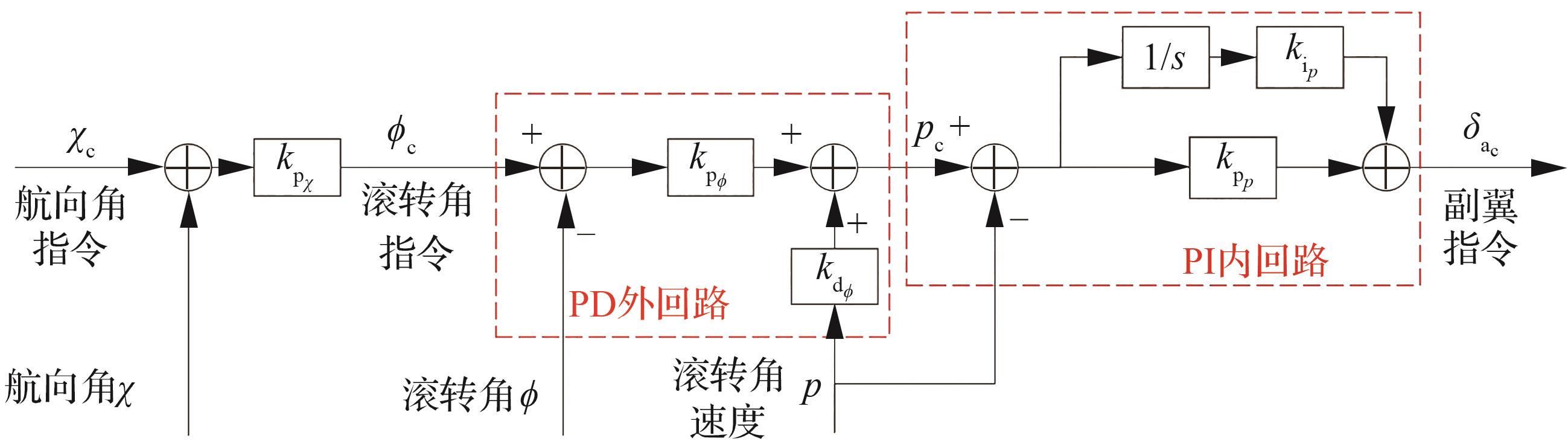
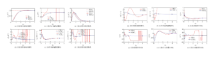
Fig.13
Simulation results of the step signal response for the heading direction
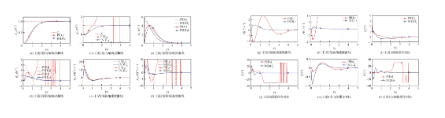
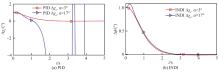
Fig.14
Comparison of track angle control errors based on two methods under different situations
Fig.15
Diagram of angular velocity control loop based on INDI method with TD optimization
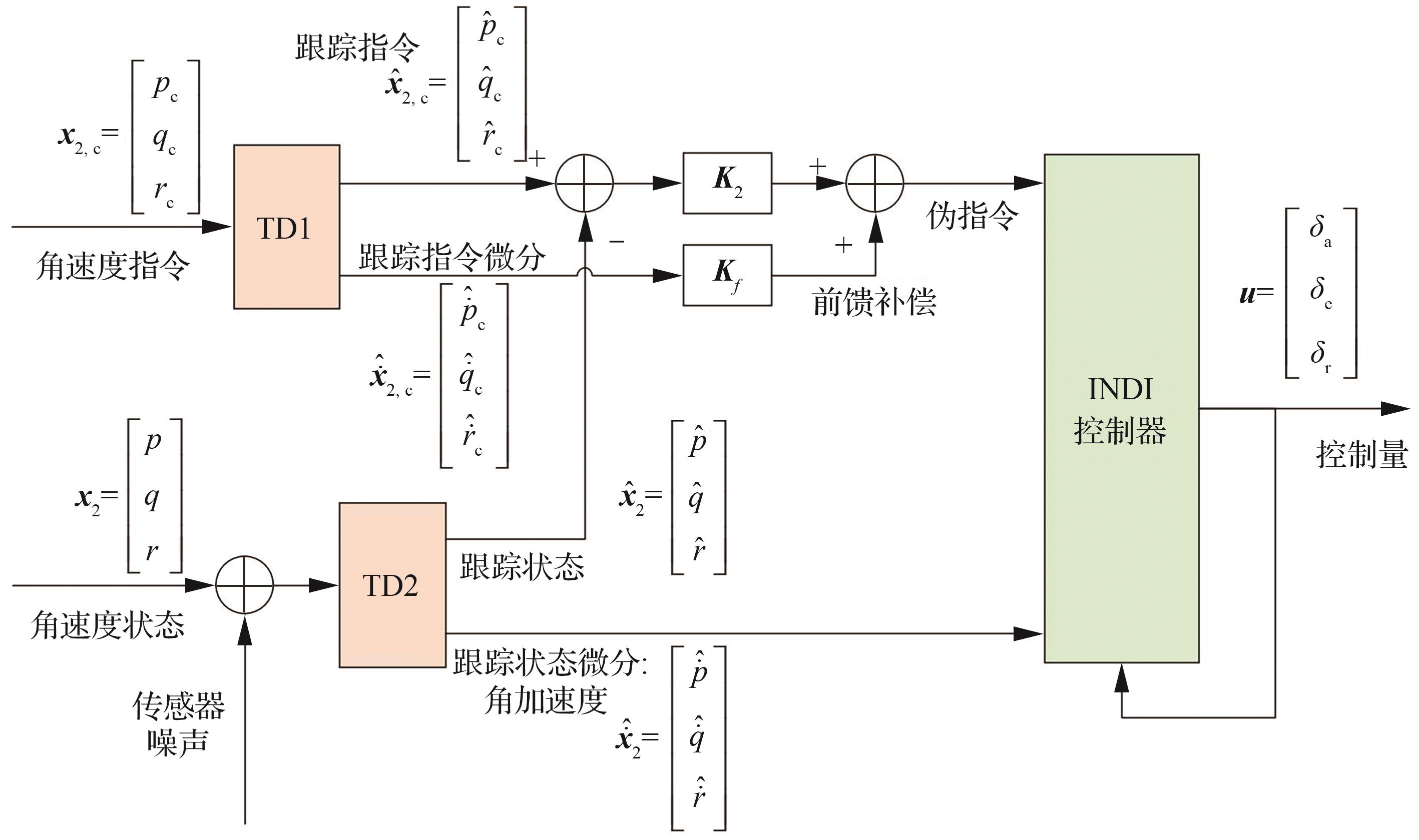
Table 5
Test situations for TD
| 测试工况 | 配平状态 | 指令 | 指令信号 |
|---|---|---|---|
| TD对比测试 | 方波,方波(噪声) |
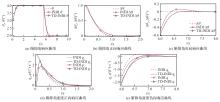
Fig.16
Comparison of pitch control results with/without TD optimization
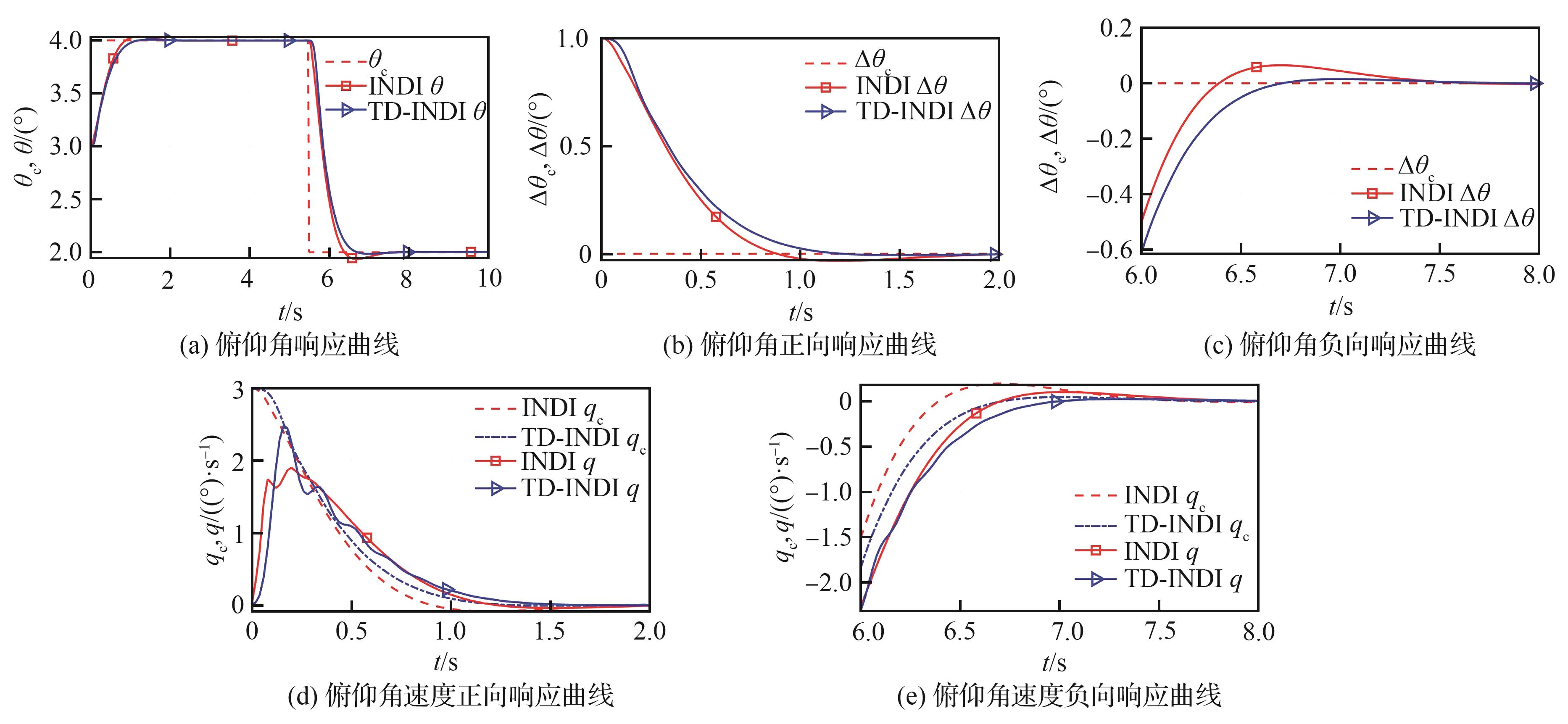
Fig.17
Inhibiting effect of TD method to noise signal
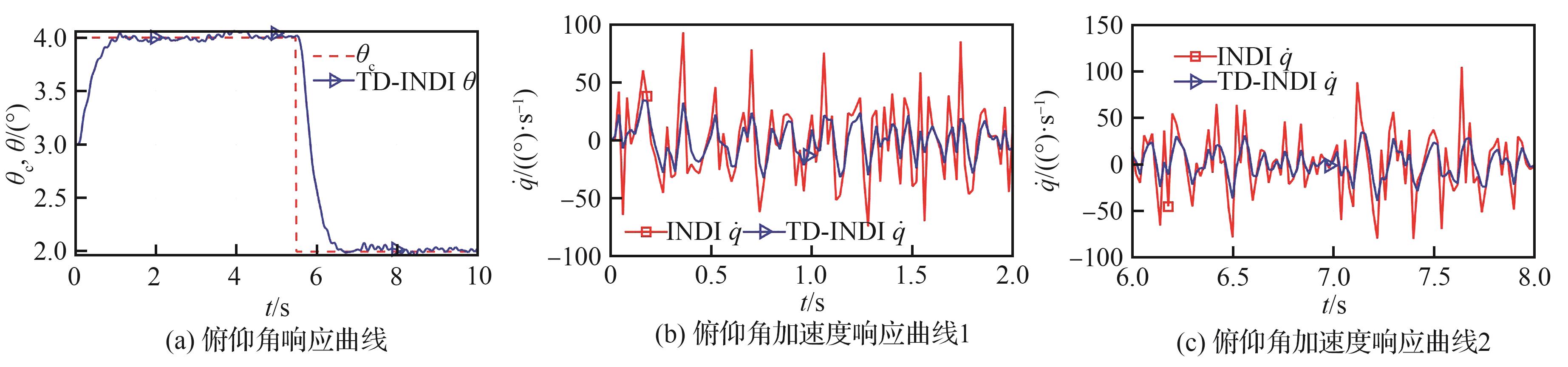
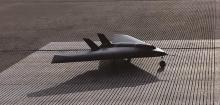
Fig.18
Flight test prototype
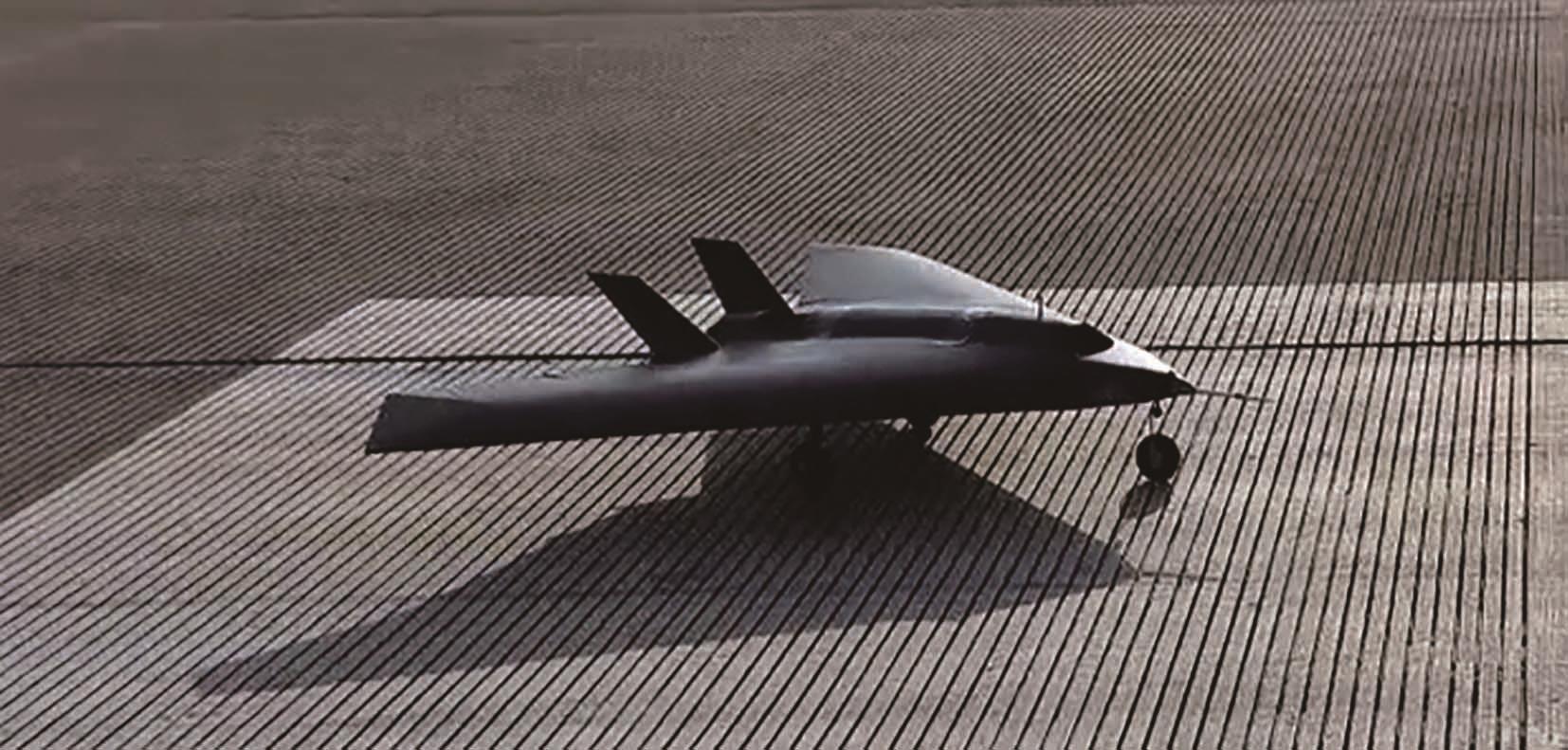
Fig.19
Flight control system
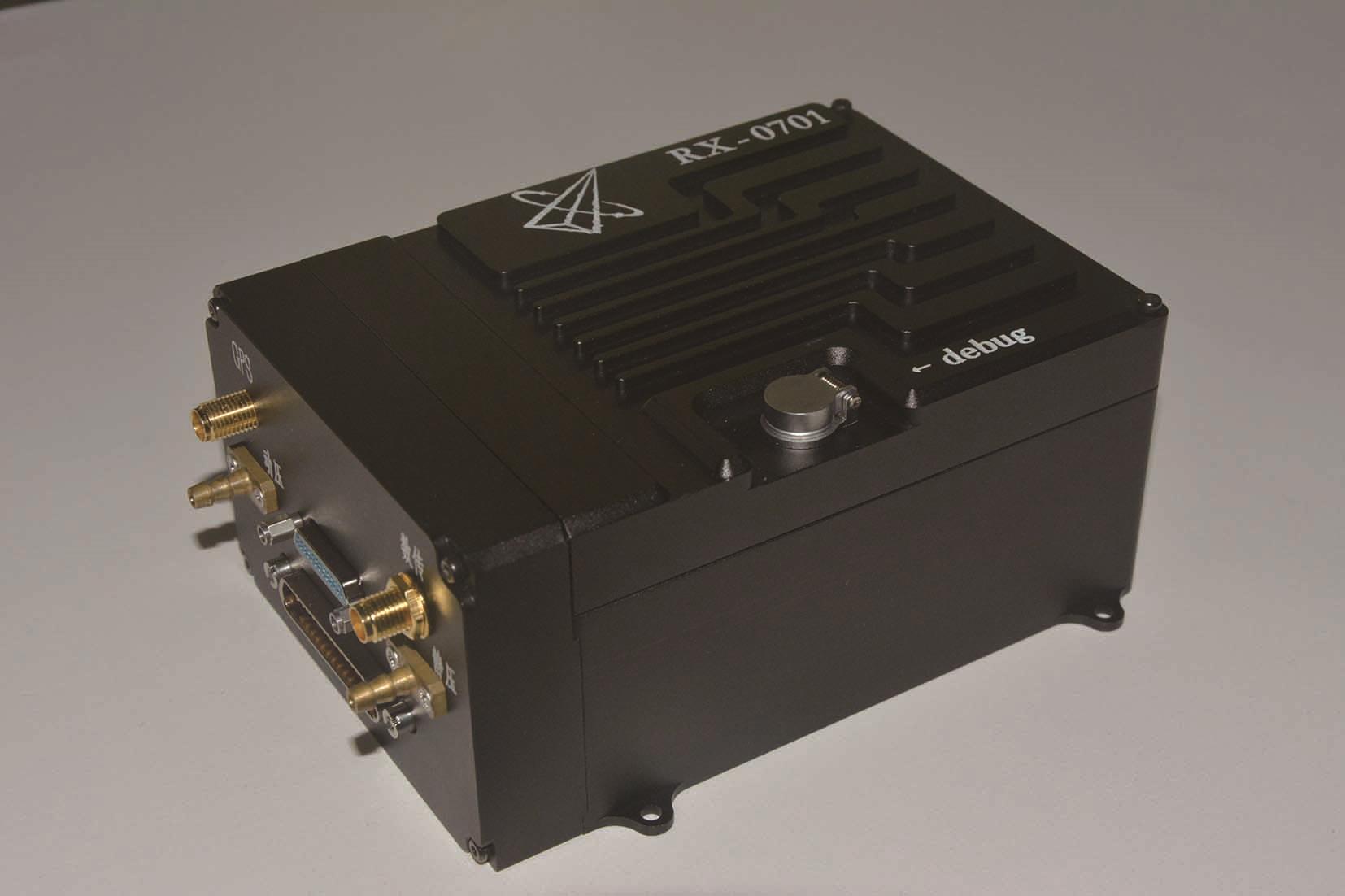
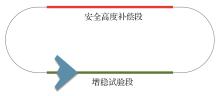
Fig.20
Demonstration of flight trajectory
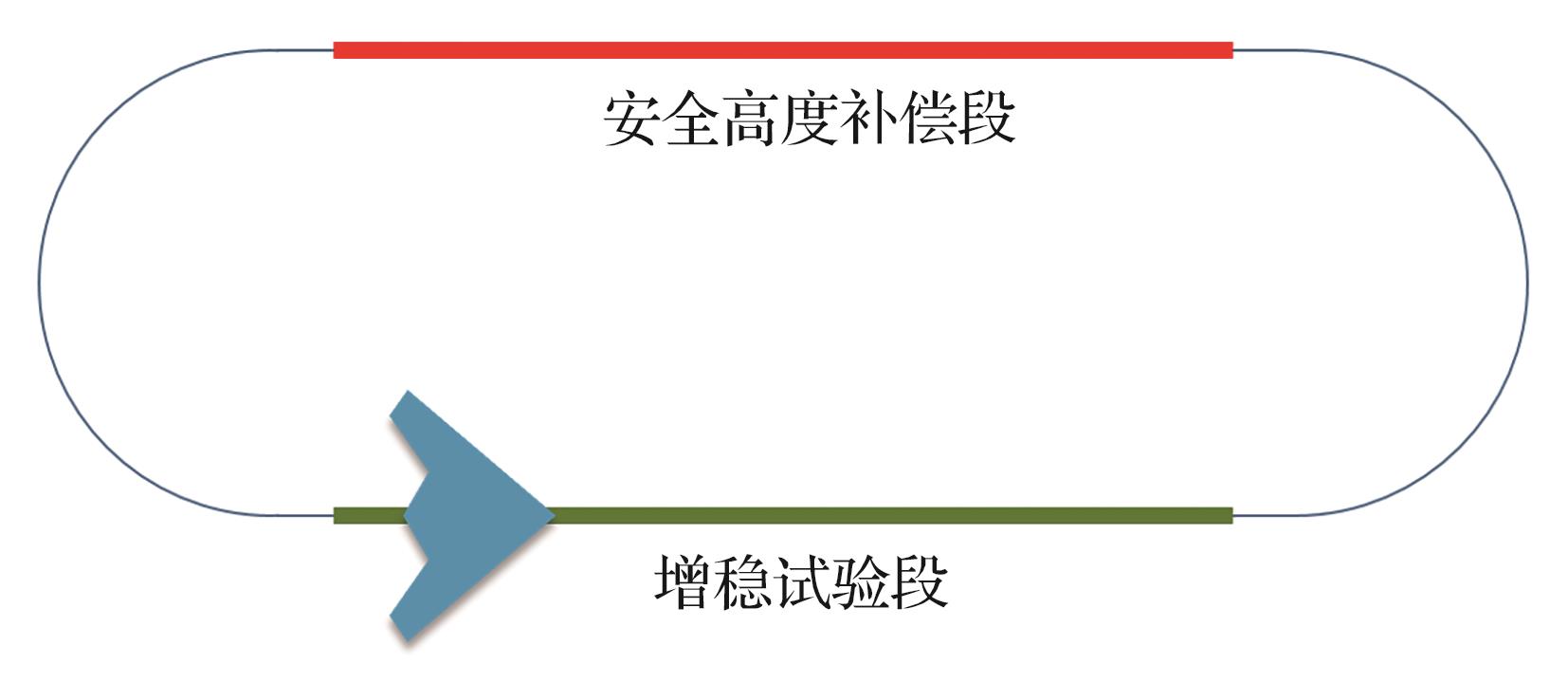
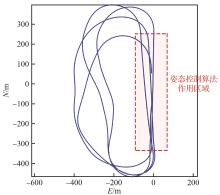
Fig.21
Actual flight trajectories during flight tests
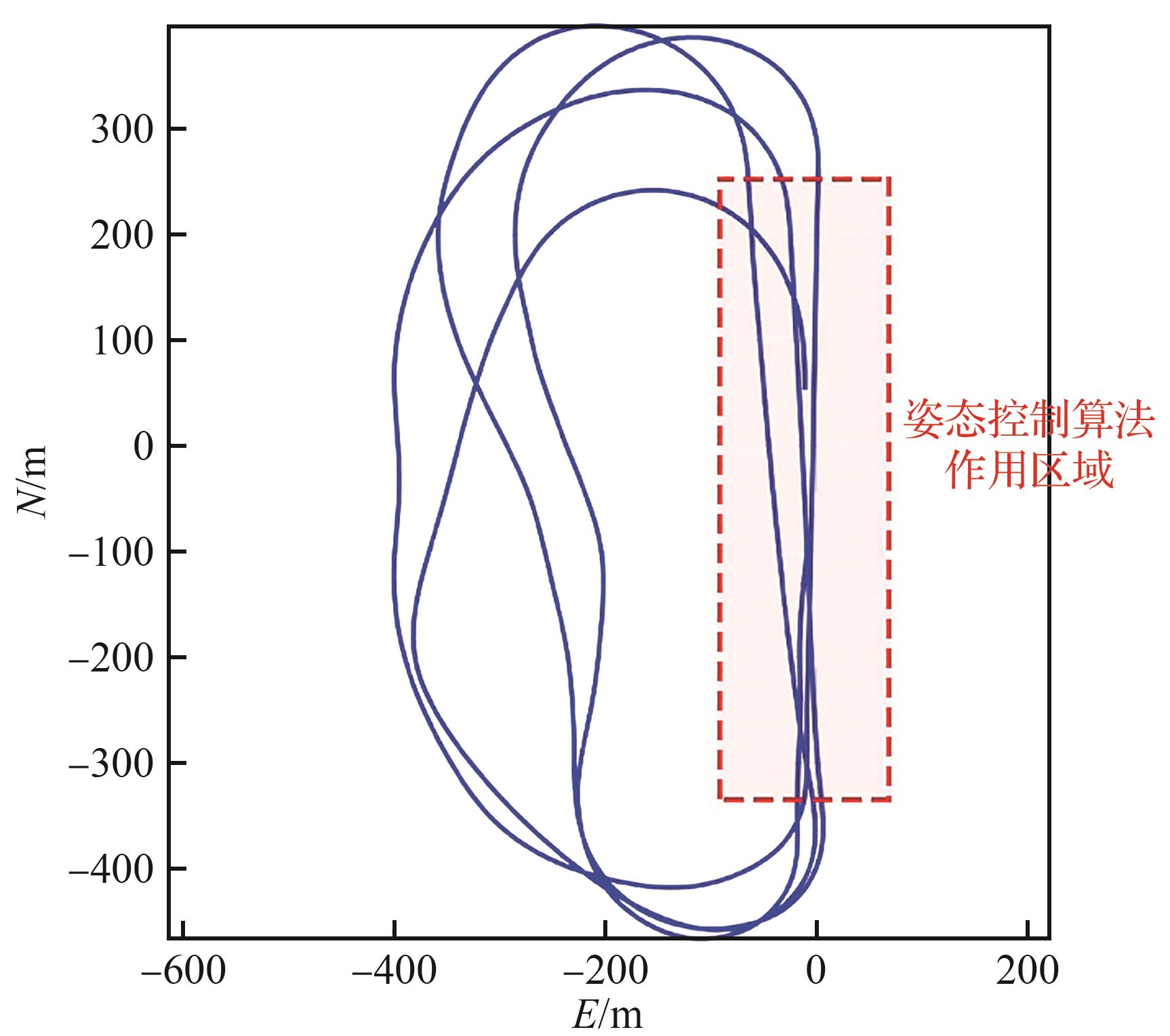
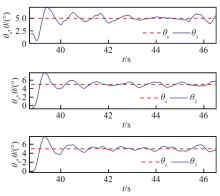
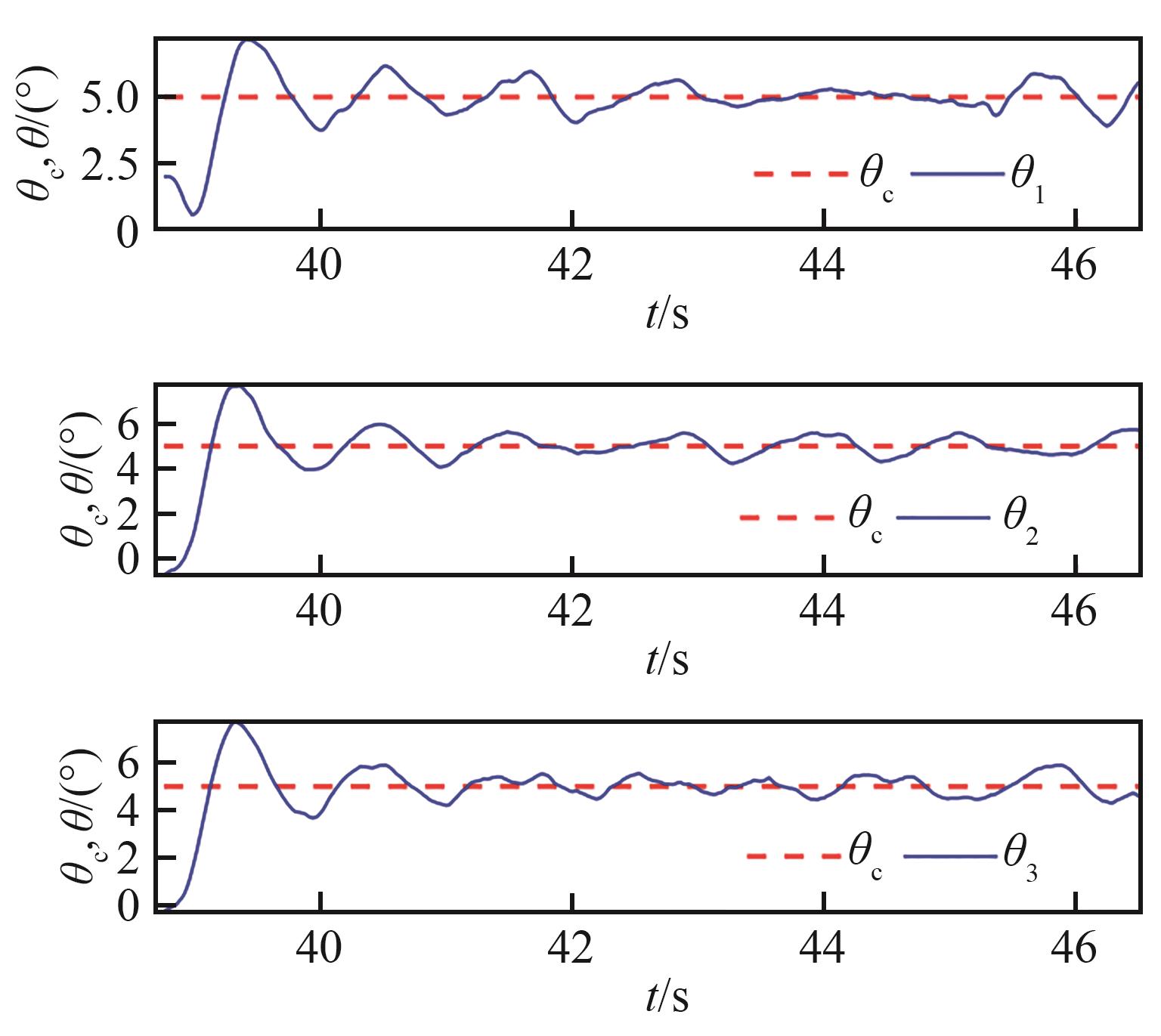
Fig.22
Pitch control results during flight tests
| [1] | 孙聪. 从空战制胜机理演变看未来战斗机发展趋势[J]. 航空学报, 2021, 42(8): 525826. |
| SUN C. Development trend of future fighter: a review of evolution of winning mechanism in air combat[J]. Acta Aeronautica et Astronautica Sinica, 2021, 42(8): 525826 (in Chinese). | |
| [2] | 陈清阳, 辛宏博, 王鹏, 等. 飞翼布局飞行器研究现状分析[J]. 国防科技大学学报, 2024, 46(3): 39-58. |
| CHEN Q Y, XIN H B, WANG P, et al. Analysis of the current research on the flying-wing aircraft[J]. Journal of National University of Defense Technology, 2024, 46(3): 39-58 (in Chinese). | |
| [3] | 谭健, 周洲, 祝小平, 等. 基于terminal滑模与控制分配的飞翼布局无人机姿态控制[J]. 西北工业大学学报, 2014, 32(4): 505-510. |
| TAN J, ZHOU Z, ZHU X P, et al. Attitude control of flying wing UAV based on terminal sliding mode and control allocation[J]. Journal of Northwestern Polytechnical University, 2014, 32(4): 505-510 (in Chinese). | |
| [4] | 顾子箫, 赵振华, 闻子侠, 等. 基于滑模观测器的飞翼无人机输出反馈控制[J]. 航空科学技术, 2023, 34(12): 75-82. |
| GU Z X, ZHAO Z H, WEN Z X, et al. Sliding mode observer based output feedback controller design of flying wing UAV[J]. Aeronautical Science and Technology, 2023, 34(12): 75-82 (in Chinese). | |
| [5] | 赵振华, 顾子箫, 薛鹏翔, 等. 飞翼无人机复合连续非奇异终端滑模姿态跟踪容错控制[J]. 控制理论与应用, 2023, 40(7): 1277-1286. |
| ZHAO Z H, GU Z X, XUE P X, et al. Composite continuous nonsingular terminal sliding mode fault tolerant attitude tracking control for flying wing UAV[J]. Control Theory&Applications, 2023, 40(7): 1277-1286 (in Chinese). | |
| [6] | 张阳. 基于超螺旋滑模的飞翼无人机控制研究[D]. 武汉: 华中科技大学, 2021. |
| ZHANG Y. Adaptive super twisting sliding mode control for flying-wing UAV[D]. Wuhan: Huazhong University of Science and Technology, 2021 (in Chinese). | |
| [7] | LI W H, ZHANG W G, SHI J P, et al. Lateral control reconfiguration of tailless flying-wing UAV based on L1 adaptive control method[C]∥2018 IEEE CSAA Guidance, Navigation and Control Conference (CGNCC). Piscataway: IEEE Press, 2020. |
| [8] | XI A, ZHAO Y. L1 Adaptive control of the flying wing UAV with unknown time-varying disturbances[C]∥2017 11th Asian Control Conference (ASCC). Piscataway: IEEE Press, 2018. |
| [9] | 禹志龙, 李颖晖, 裴彬彬, 等. 具有飞行包线限制的飞翼无人机鲁棒自适应容错姿态控制[J]. 兵工学报, 2024, 45(1): 231-240. |
| YU Z L, LI Y H, PEI B B, et al. Robust adaptive fault-tolerant attitude control of flying-wing UAVs with flight envelope constraints[J]. Acta Armamentarii, 2024, 45(1): 231-240 (in Chinese). | |
| [10] | SHUANG W F, ZHANG S J, WU X. An anti-windup fault tolerant control method for tailless flying wing aircraft[C]∥2016 IEEE Chinese Guidance, Navigation and Control Conference (CGNCC). Piscataway: IEEE Press, 2017. |
| [11] | HUANG C Y, ZHANG S J. A prescribed performance adaptive optimal control scheme for flying-wing aircraft[C]∥2020 International Conference on Unmanned Aircraft Systems (ICUAS). Piscataway: IEEE Press, 2020. |
| [12] | HOLTSOV A S, FARHADI R M, KORTUNOV V I, et al. Comparison of the UAV adaptive control with the robust control based on mu-synthesis[C]∥2016 4th IEEE International Conference on Methods and Systems of Navigation and Motion Control (MSNMC). Piscataway: IEEE Press, 2016. |
| [13] | 邹雨春, 陶呈纲, 甄子洋, 等. 基于直接力的飞翼布局舰载机精确着舰控制[J]. 航空学报, 2025, 46(13): 531422. |
| ZOU Y C, TAO C G, ZHEN Z Y, et al. Precision landing control based on direct force for flying-wing carrier-based aircraft[J]. Acta Aeronautica et Astronautica Sinica, 2025, 46(13): 531422 (in Chinese). | |
| [14] | DI FRANCESCO G, MATTEI M. Modeling and incremental nonlinear dynamic inversion control of a novel unmanned tiltrotor[J]. Journal of Aircraft, 2016, 53(1): 73-86. |
| [15] | GRONDMAN F, LOOYE G H N, KUCHAR R O, et al. Design and flight testing of incremental nonlinear dynamic inversion-based control laws for a passenger aircraft[C]∥2018 AIAA Guidance, Navigation, and Control Conference. Reston: AIAA, 2018. |
| [16] | 潘正伟, 薛雅丽, 章鸿翔. 滑模观测器和比例积分的超机动动态逆控制[J]. 电光与控制, 2015, 22(9): 25-30. |
| PAN Z W, XUE Y L, ZHANG H X. Dynamic inverse control of super-maneuverable aircraft based on sliding mode observer and PI[J]. Electronics Optics & Control, 2015, 22(9): 25-30 (in Chinese). | |
| [17] | 杨盛毅, 刘超, 唐胜景, 等. 基于动态逆和动态滑模的双通道机动飞行控制[J]. 系统仿真学报, 2018, 30(1): 156-163, 170. |
| YANG S Y, LIU C, TANG S J, et al. Dual channel maneuver flight control based on dynamic inverse and dynamic sliding mode[J]. Journal of System Simulation, 2018, 30(1): 156-163, 170 (in Chinese). | |
| [18] | 晋玉强, 史贤俊, 王学宝. 基于神经网络的BTT导弹鲁棒动态逆设计[J]. 系统工程与电子技术, 2008, 30(2): 327-330. |
| JIN Y Q, SHI X X, WANG X B. Robust dynamic inversion control for BTT missile based on neural networks[J]. Systems Engineering and Electronics, 2008, 30(2): 327-330 (in Chinese). | |
| [19] | 杨志峰, 雷虎民, 李庆良, 等. 基于RBF神经网络的导弹鲁棒动态逆控制[J]. 宇航学报, 2010, 31(10): 2295-2301. |
| YANG Z F, LEI H M, LI Q L, et al. RBF neural-network-based robust dynamic inverse control for a missile[J]. Journal of Astronautics, 2010, 31(10): 2295-2301 (in Chinese). | |
| [20] | 刘西, 南英, 谢如恒, 等. DDPG优化基于动态逆的飞行器姿态控制[J]. 计算机仿真, 2020, 37(7): 37-43. |
| LIU X, NAN Y, XIE R H, et al. DDPG optimization based on dynamic inverse of aircraft attitude control[J]. Computer Simulation, 2020, 37(7): 37-43 (in Chinese). | |
| [21] | BUGAJSKI D J, ENNS D F, ELGERSMA M R. A dynamic inversion based control law with application to the high angle-of-attack research vehicle[C]∥Proceeding of AIAA Guidance, Navigation, and Control and Co-located Conferences. Reston: AIAA, 1990. |
| [22] | BUGAJSKI D J, ENNS D F. Nonlinear control law with application to high angle-of-attack flight[J]. Journal of Guidance, Control, and Dynamics, 1992, 15(3): 761-767. |
| [23] | 陈海兵, 张曙光, 方振平. 加速度反馈的隐式动态逆鲁棒非线性控制律设计[J]. 航空学报, 2009, 30(4): 597-603. |
| CHEN H B, ZHANG S G, FANG Z P. Implicit NDI robust nonlinear control design with acceleration feedback[J]. Acta Aeronautica et Astronautica Sinica, 2009, 30(4): 597-603 (in Chinese). | |
| [24] | XIN H B, CHEN Q Y, ZHU B J, et al. Longitudinal attitude control and stability analysis for a low aspect ratio flying wing UAV at high angle of attack[J]. International Journal of Aerospace Engineering, 2024, 2024: 6336361. |
| [25] | YAO X, CHEN Q Y, ZHU B J, et al. Attitude control of flying-wing UAV based on deep deterministic policy gradient[C]∥2025 40th Youth Academic Annual Conference of Chinese Association of Automation (YAC). Piscataway: IEEE Press, 2025. |
| [26] | 葛增冉, 史志伟, 董益章, 等. 基于射流控制的飞翼布局飞行器大迎角横航向非指令运动抑制[J]. 实验流体力学, 2025, 39(5): 37-45. |
| GE Z R, SHI Z W, DONG Y Z, et al. Roll-yaw control of flying wing aircraft at a high angle of attack based on jet control[J]. Journal of Experiments in Fluid Mechanics, 2025, 39(5): 37-45 (in Chinese). | |
| [27] | ZHEN Y, HAO M R, SUN W D. Deep reinforcement learning attitude control of fixed-wing UAVs[C]∥2020 3rd International Conference on Unmanned Systems (ICUS). Piscataway: IEEE Press, 2020. |
| [28] | BØHN E, COATESD E M, REINHARDT D, et al. Data-efficient deep reinforcement learning for attitude control of fixed-wing UAVs: field experiments[J]. IEEE Transactions on Neural Networks and Learning Systems, 2024, 35(3): 3168-3180. |
| [29] | LÖCHERT P, HUBER K C, GHOREYSHI M, et al. Control device effectiveness studies of a 53°swept flying wing configuration. Experimental, computational, and modeling considerations[J]. Aerospace Science and Technology, 2019, 93: 105319. |
| [30] | BOSCHETTI P J, NEVES C A, GONZÁLEZ P J. Nonlinear aerodynamic model in dynamic ground effect at high angles of attack[J]. Journal of Aircraft, 2022, 59 (6): 1500-1513. |
| [31] | BEARD R W, MCLAIN T W. Small unmanned aircraft[M]. Princeton: Princeton University Press, 2012: 27-33. |
| [32] | STEVENS B L, LEWIS F L, JOHNSON E N. Aircraft control and simulation: Dynamics, controls design, and autonomous systems[M]. Hoboken: John Wiley & Sons, 2015: 16-44. |
| [33] | HAN J Q. From PID to active disturbance rejection control [J]. IEEE Transactions on Industrial Electronics, 2009, 56(3): 900-906. |
| [1] | Ruiping ZHENG, Jingping SHI, Tianyu LI, Yongxi LYU. Prescribed-time coordinated control for fixed-wing UAV close formation [J]. Acta Aeronautica et Astronautica Sinica, 2026, 47(9): 532496-532496. |
| [2] | Qie LIU, Junying LU, Fei XIE, Wenbo LI. Adaptive hybrid dynamic programming for fault-tolerant attitude control of underactuated spacecraft [J]. Acta Aeronautica et Astronautica Sinica, 2026, 47(9): 532531-532531. |
| [3] | Jianxin SU, Yuxin LIAO, Weiping XU, Junyue TAN, Xing GAO. Adaptive optimal control for hypersonic morphing vehicles considering performance constraints [J]. Acta Aeronautica et Astronautica Sinica, 2026, 47(4): 332387-332387. |
| [4] | Nan XIAO, Yan XIAO, Dong YE, Zhaowei SUN. Integrated control and allocation method for fully distributed robust cooperative attitude control [J]. Acta Aeronautica et Astronautica Sinica, 2026, 47(14): 332660-332660. |
| [5] | Jiong HE, Binwu REN, Siliang DU, Yousong XU, Bo WANG. Adaptive attitude control for tilt-quadrotor UAV based on ADRC-RBF [J]. Acta Aeronautica et Astronautica Sinica, 2025, 46(S1): 732189-732189. |
| [6] | Tao ZHANG, Pan LI, Zixu WANG, Zhenhua ZHU. Design of reward functions for helicopter attitude control in reinforcement learning [J]. Acta Aeronautica et Astronautica Sinica, 2025, 46(S1): 732184-732184. |
| [7] | Fang ZHANG, Weibin XIANG, Kai XIAO, Siqi XIAO, Liang XIANG, Bing WANG. Simulation and experiment of attitude control propulsion system’s dynamic characteristics [J]. Acta Aeronautica et Astronautica Sinica, 2025, 46(S1): 732329-732329. |
| [8] | Ronghai KOU, Wenbo LI, Qingqing DANG, Jinjin XIE. Fault diagnosis of spacecraft attitude control system driven by data and model [J]. Acta Aeronautica et Astronautica Sinica, 2025, 46(S1): 732259-732259. |
| [9] | Yu LI, Tongwen CHEN, Zhigang WANG, Chiyung WEN, Xiaoxiong LIU. Incremental control of direct lift landing based on predefined-time theory [J]. Acta Aeronautica et Astronautica Sinica, 2025, 46(13): 531163-531163. |
| [10] | Zibo LIU, Ran ZHANG, Wenchao XUE, Huifeng LI. Active disturbance rejection control for load relief of launch vehicles considering elastic effects [J]. Acta Aeronautica et Astronautica Sinica, 2025, 46(1): 330319-330319. |
| [11] | Xi WANG, Changqing CHEN, Xiaoping XU, Zhen HUANG. Attitude control schemes of yaw steering with front and back pointing to the sun alternately [J]. Acta Aeronautica et Astronautica Sinica, 2025, 46(1): 330673-330673. |
| [12] | Yuqing QIU, Yan LI, Jinxi LANG, Yuxian LIU, Zhong WANG. Robust adaptive attitude control of high-speed helicopters in transition mode [J]. Acta Aeronautica et Astronautica Sinica, 2024, 45(9): 529927-529927. |
| [13] | Yanxiang HOU, Lihao FENG. Wind tunnel virtual flight test of flying wing configuration with active flow control [J]. Acta Aeronautica et Astronautica Sinica, 2024, 45(24): 630636-630636. |
| [14] | Xueqin CHEN, Boyu YANG, Fan WU, Chengfei YUE, Xibin CAO. State and bias estimation of spacecraft attitude control system based on l1-TSXKF [J]. Acta Aeronautica et Astronautica Sinica, 2024, 45(16): 329678-329678. |
| [15] | Feng ZHANG, Yi SUN, Shuai SHANG, Baoe YANG. High pressure combustion experiment for hypergolic propellant unlike doublet injectors [J]. Acta Aeronautica et Astronautica Sinica, 2024, 45(11): 529507-529507. |
| Viewed | ||||||
|
Full text |
|
|||||
|
Abstract |
|
|||||
Address: No.238, Baiyan Buiding, Beisihuan Zhonglu Road, Haidian District, Beijing, China
Postal code : 100083
E-mail:hkxb@buaa.edu.cn
Total visits: 6658907 Today visits: 1341All copyright © editorial office of Chinese Journal of Aeronautics
All copyright © editorial office of Chinese Journal of Aeronautics
Total visits: 6658907 Today visits: 1341

 CJA
CJA
