Acta Aeronautica et Astronautica Sinica ›› 2026, Vol. 47 ›› Issue (4): 232327.doi: 10.7527/S1000-6893.2025.32327
• Solid Mechanics and Vehicle Conceptual Design • Previous Articles
Yixuan LI1,2( ), Yinghua CHEN3, Kaixiang LI1,2, Chunyu BAI1,2, Xiaochuan LIU1,2
Received:2025-05-30
Revised:2025-07-16
Accepted:2025-07-28
Online:2025-08-13
Published:2025-08-11
Contact:
Yixuan LI
E-mail:liyixuan0430@126.com
CLC Number:
Yixuan LI, Yinghua CHEN, Kaixiang LI, Chunyu BAI, Xiaochuan LIU. Prediction and validation of aircraft structure response to gunfire vibration based on measured shock response spectrum[J]. Acta Aeronautica et Astronautica Sinica, 2026, 47(4): 232327.

Fig.1
Schematic diagram of an aircraft equipment section


Fig.2
Measured ten-shot acceleration response on airframe


Fig.3
Universal gunfire-induced vibration spectrum in criterion


Fig.4
Universal gunfire-induced vibration spectrum after introducing various parameters

Fig.5
Time-domain spectrum after IFFT of universal gunfire-induced vibration spectrum
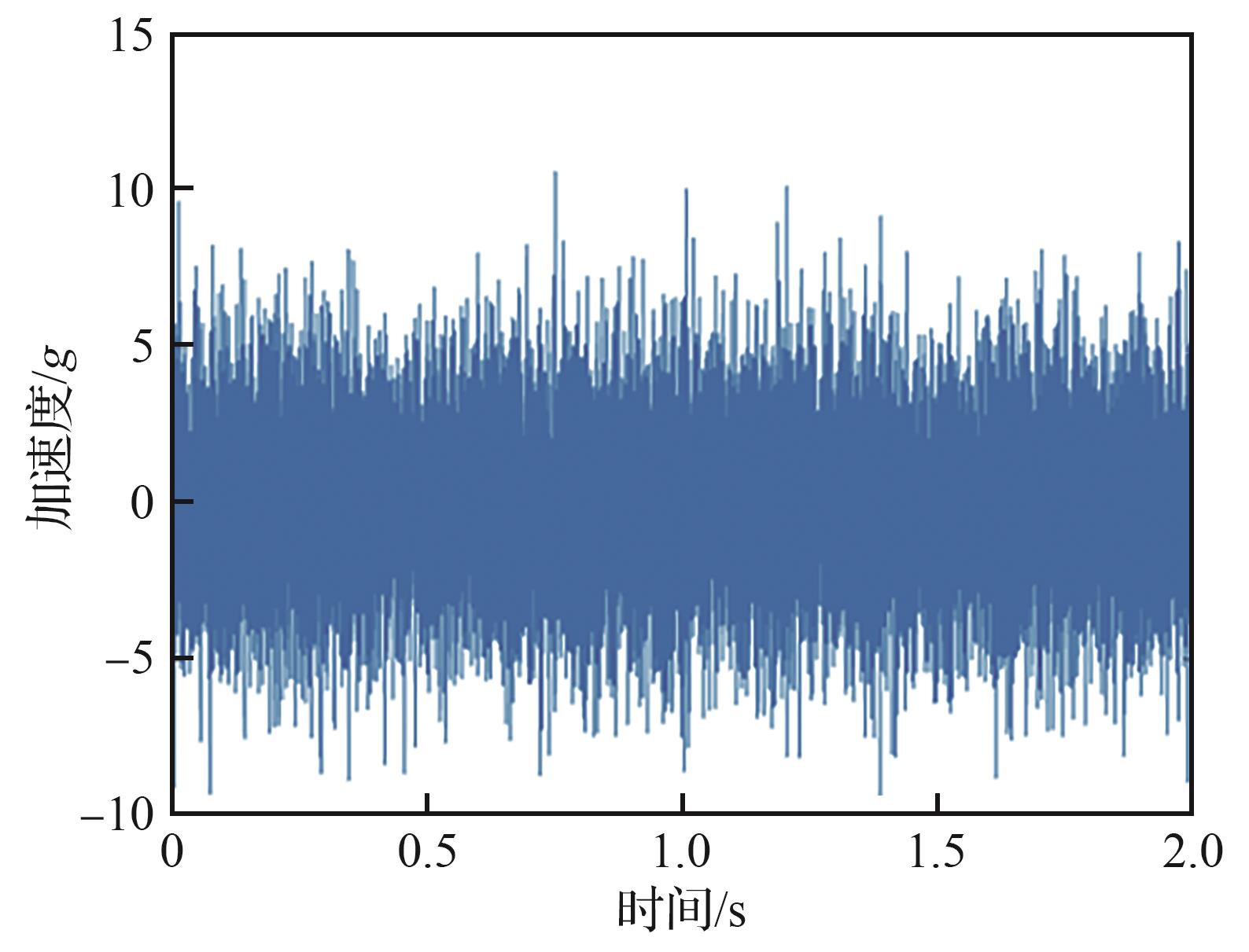
Fig.6
OPAX-based gunfire vibration response prediction model
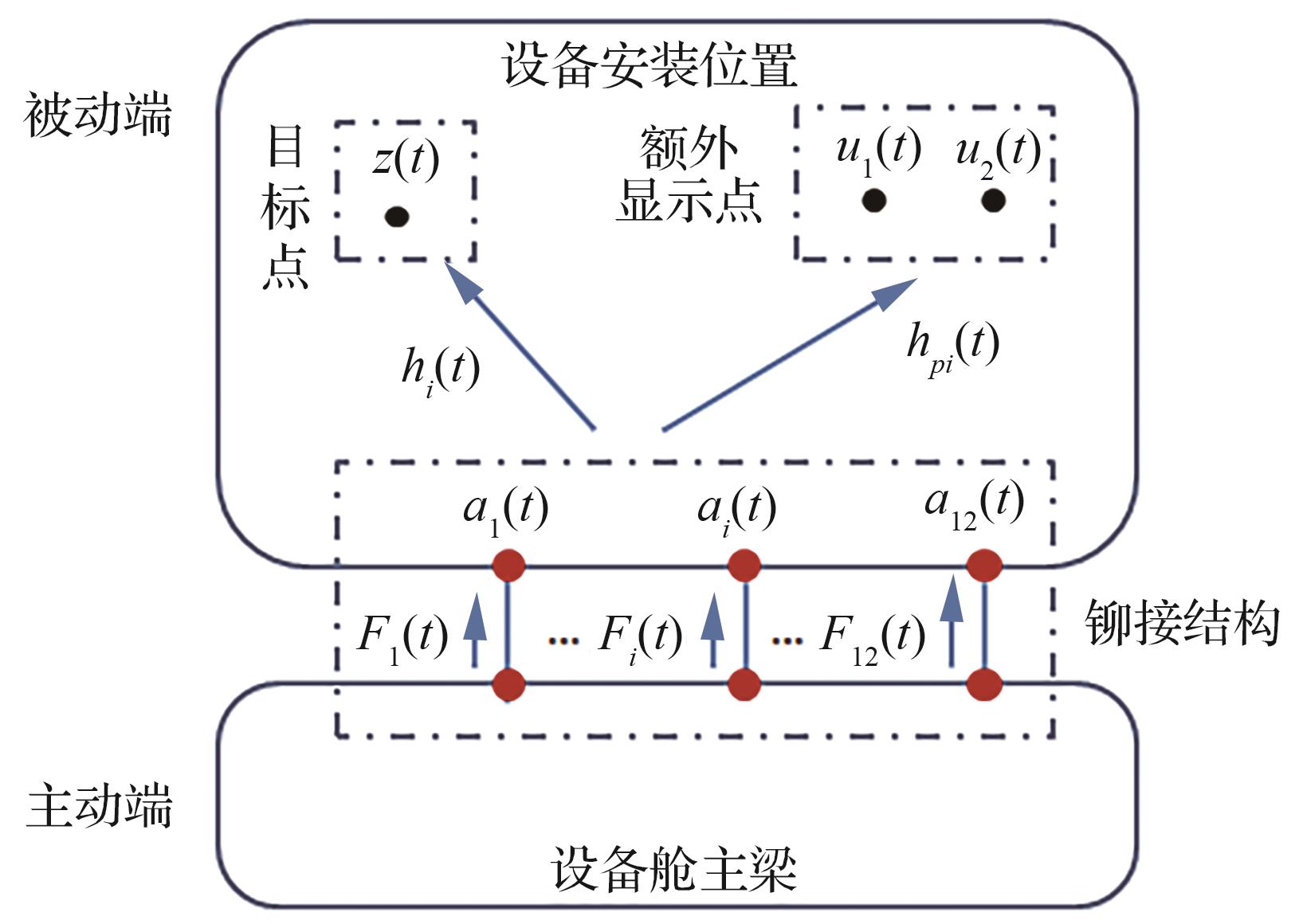

Fig.7
Schematic of predictied parameters for gunfire vibration response of equipment cabin
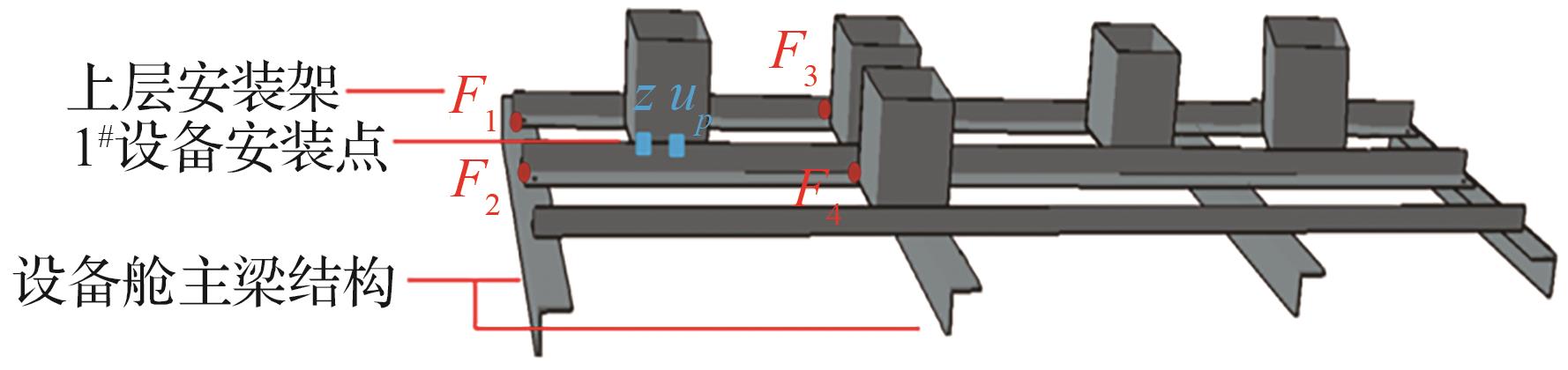

Fig.8
Comparison of measured and opax predicted responses at 1# equipment installation point
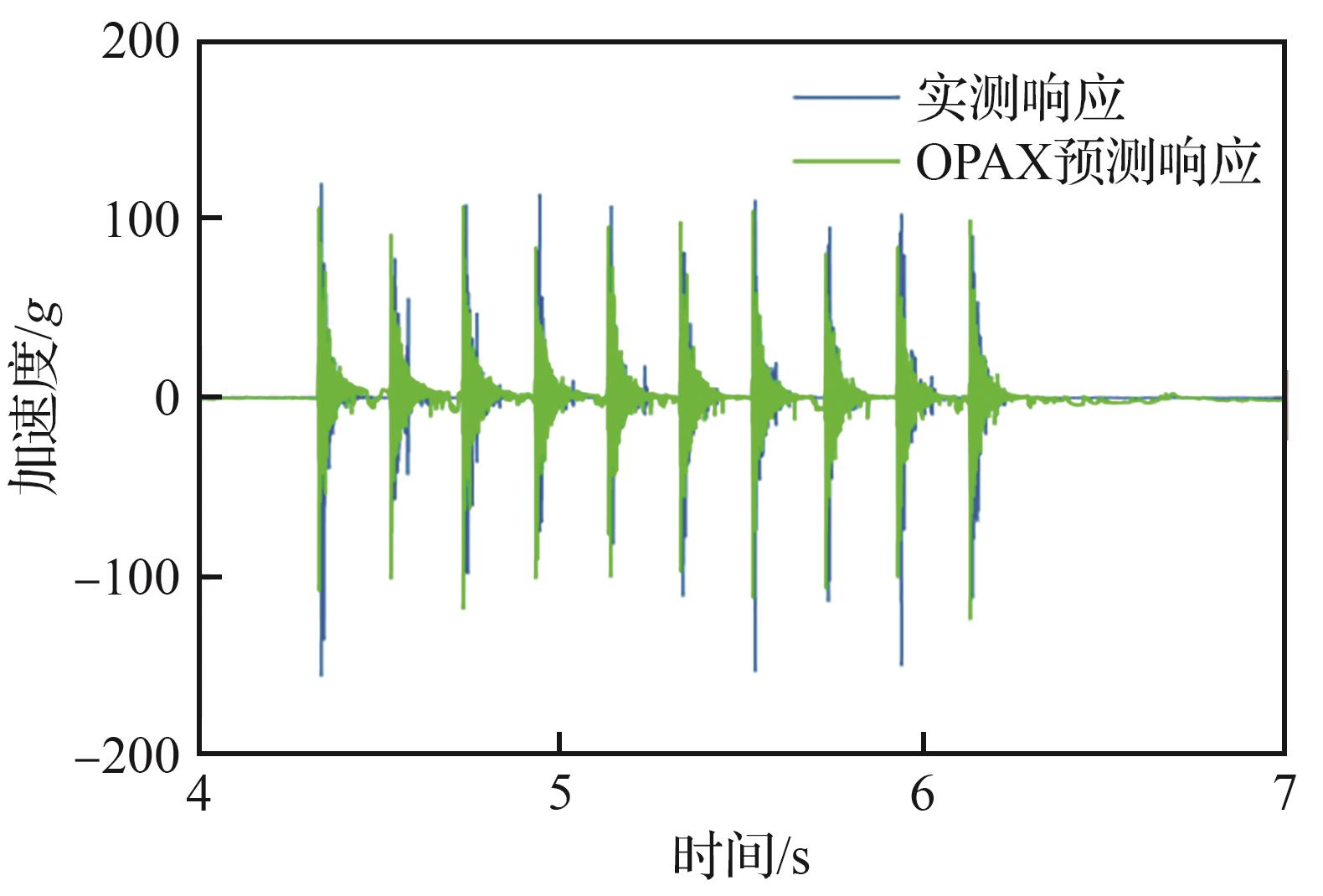

Table 1
Comparison of measured and OPAX predicted responses at 1# equipment installation point
| 指标 | 时序同步/ms | 峰值幅值/g | 均方根/g | |
|---|---|---|---|---|
| 10连发平均 | 实测值 | 104.6 | 9.94 | |
| 预测值 | 96.6 | 9.58 | ||
| 差值 | 6 | 8.0 | 0.36 | |
| 误差/% | 7.6 | 3.6 | ||
Fig.9
SRS of measured gunfire vibration data
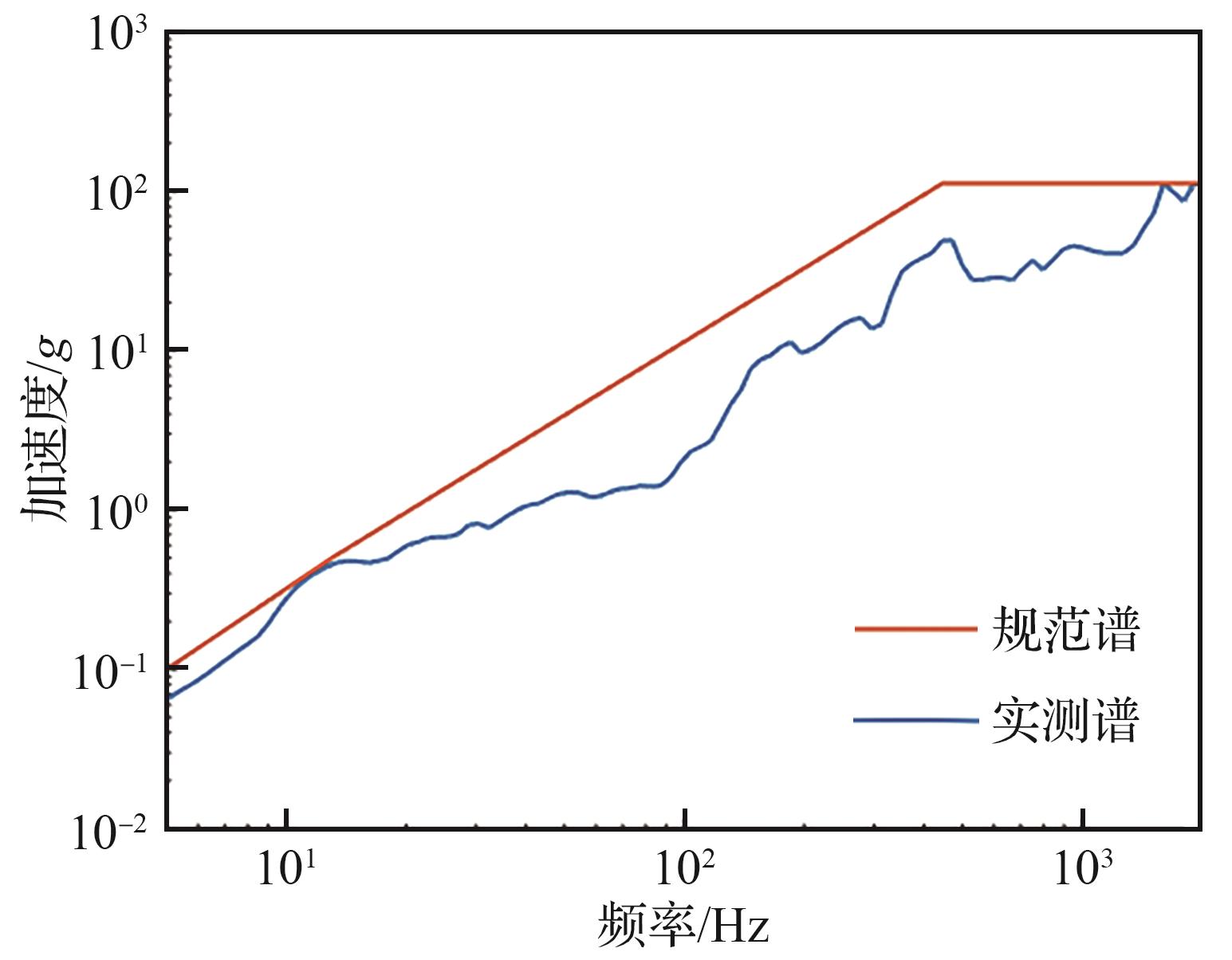
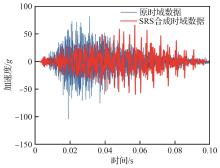
Fig.10
Comparison of time-domain synthesized from SRS and original time-domain data
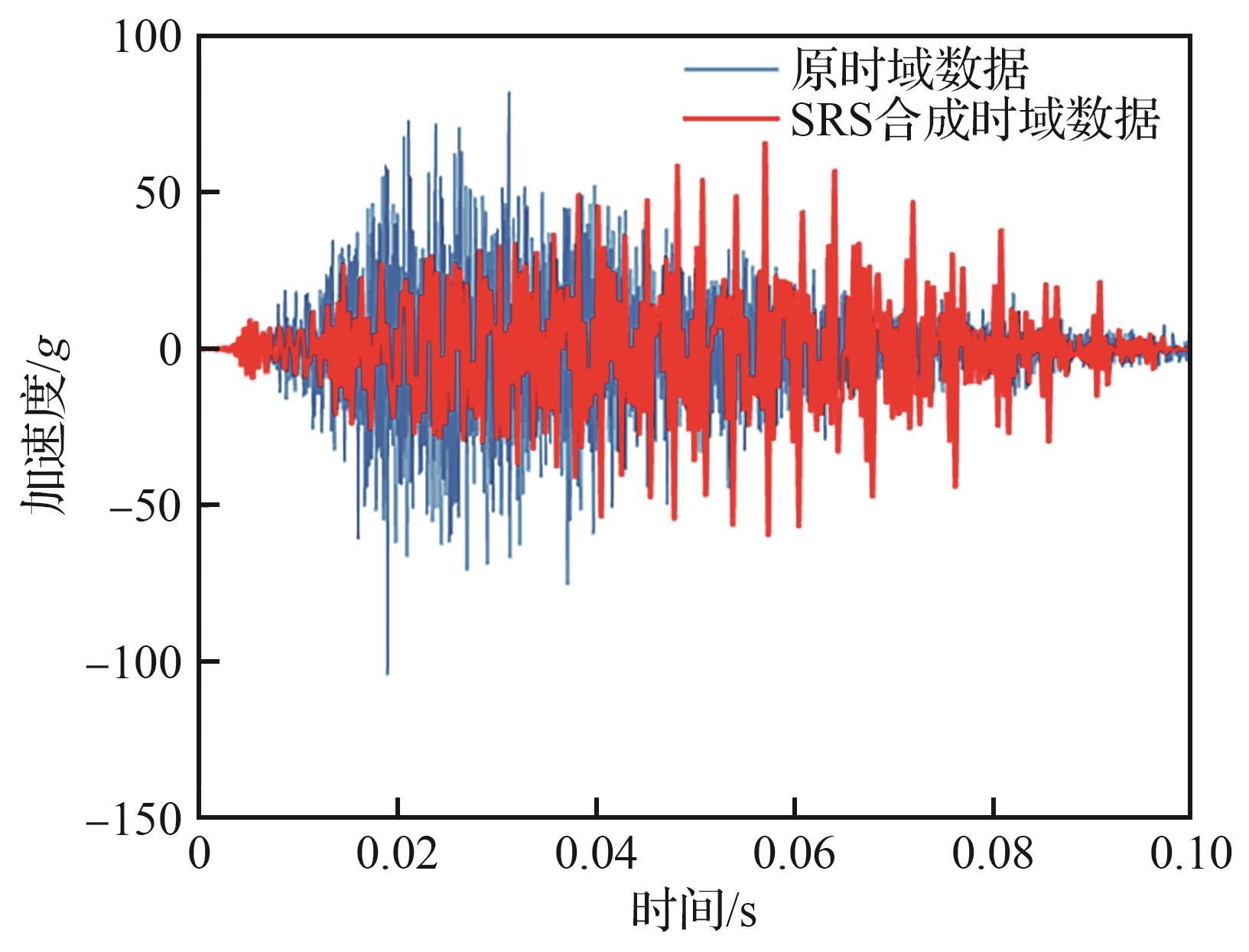

Fig.11
Typical test specimen


Fig.12
Finite element model of typical test specimen
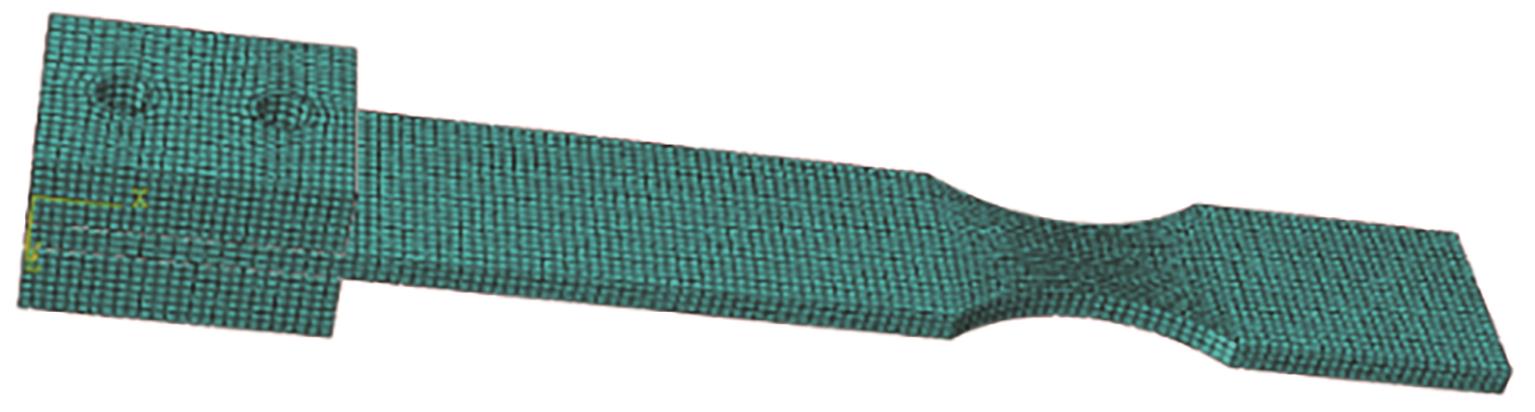

Fig.13
Strain analysis position of test specimen
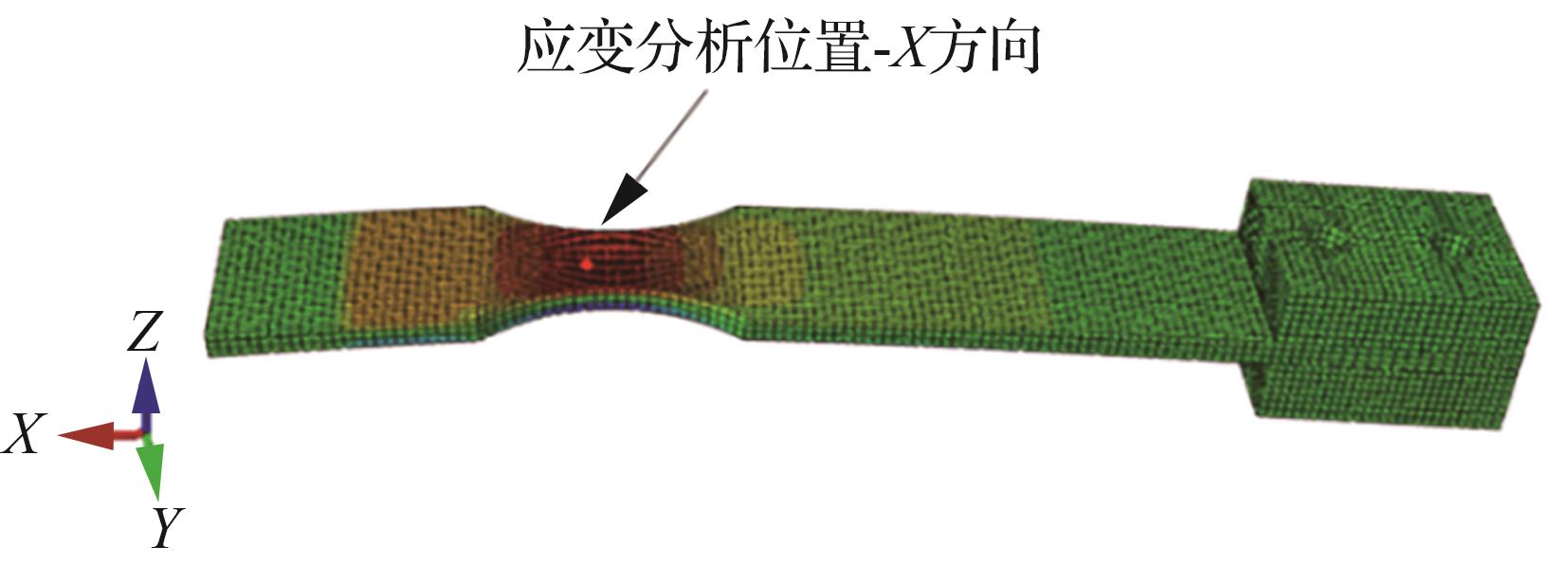
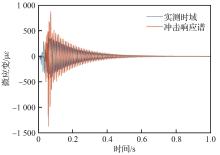
Fig.14
Comparison of strain responses between real-time domain and shock response spectrum tests in finite element environment of typical test specimen
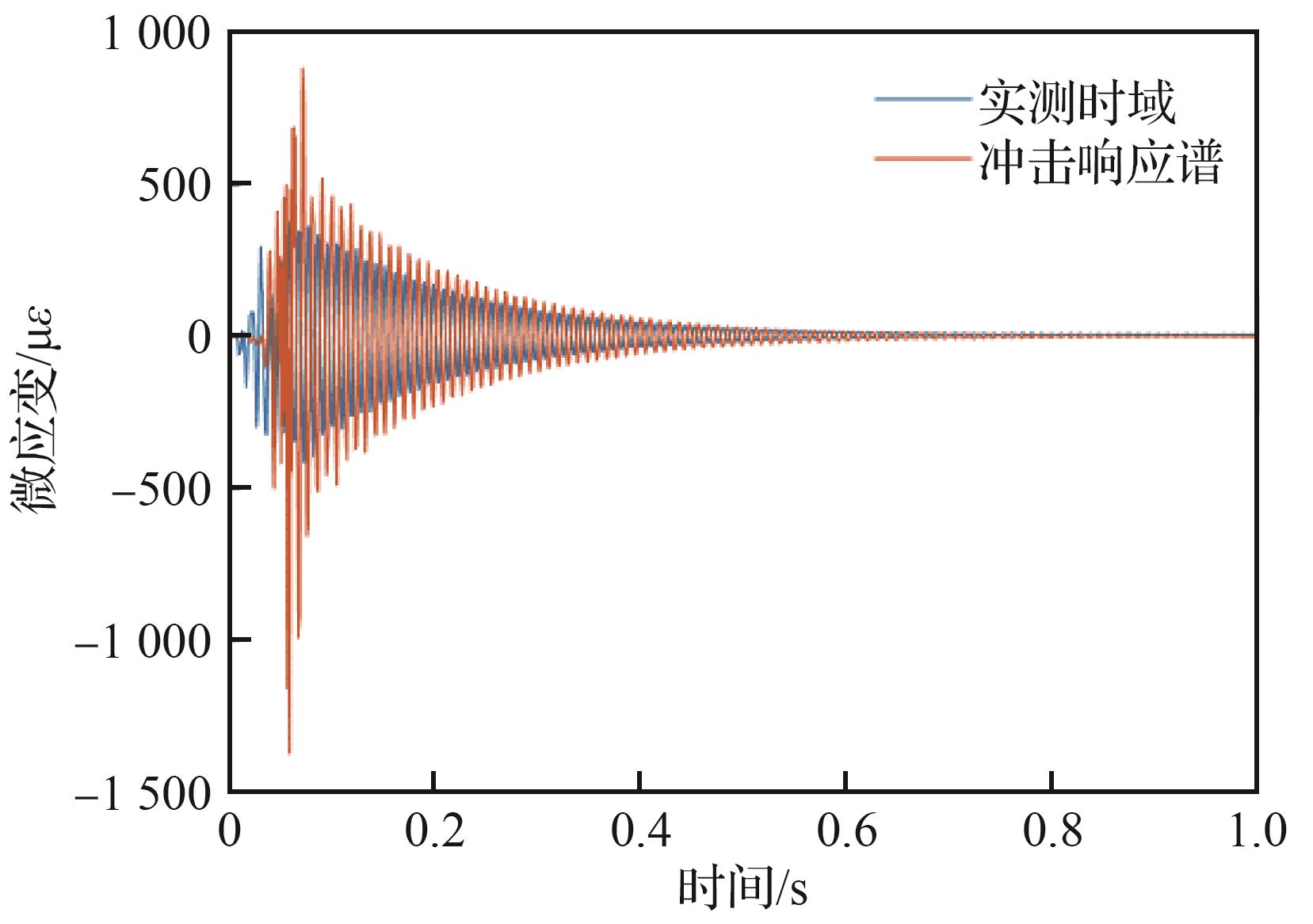

Fig.15
Laboratory installation photo of typical test specimen
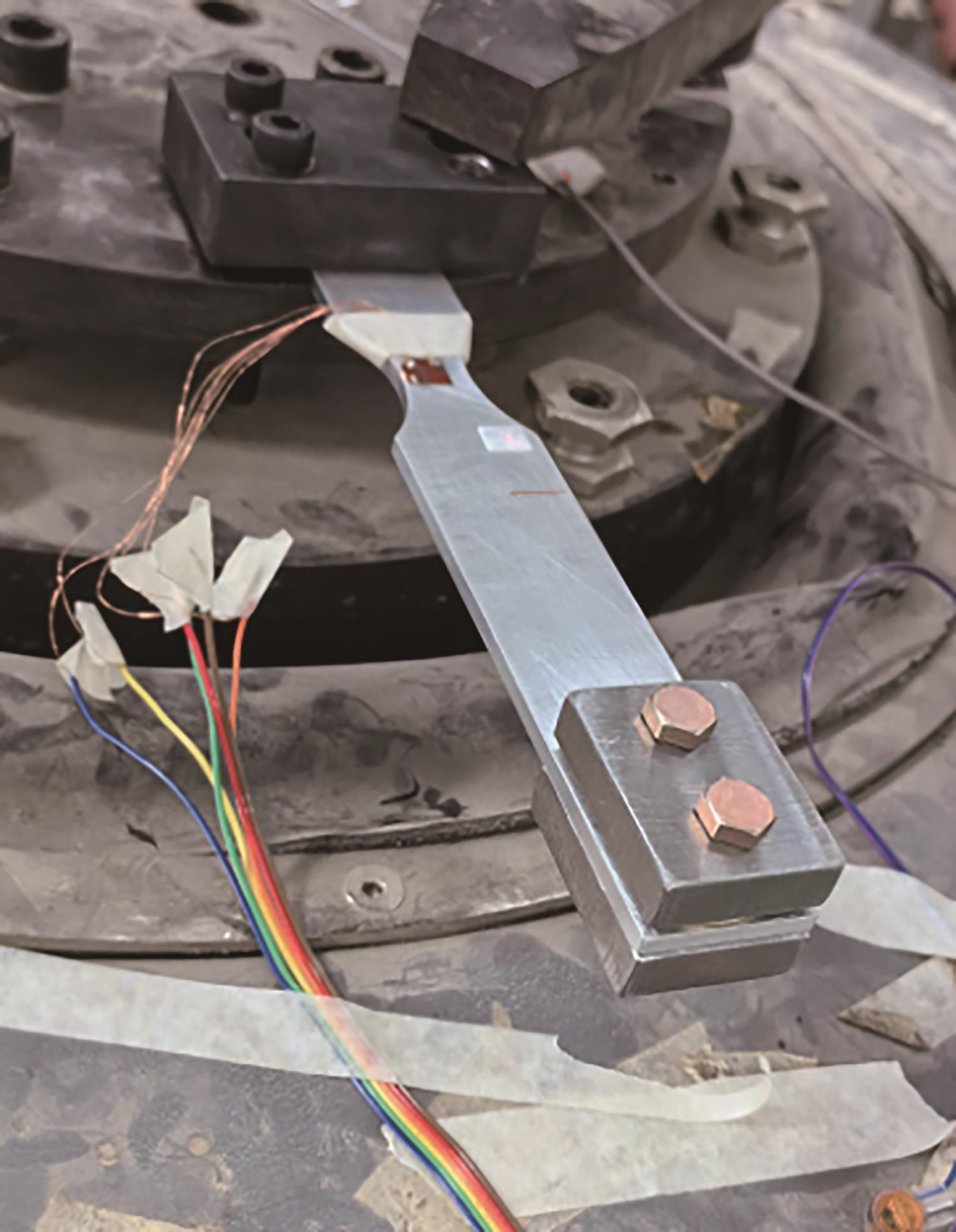

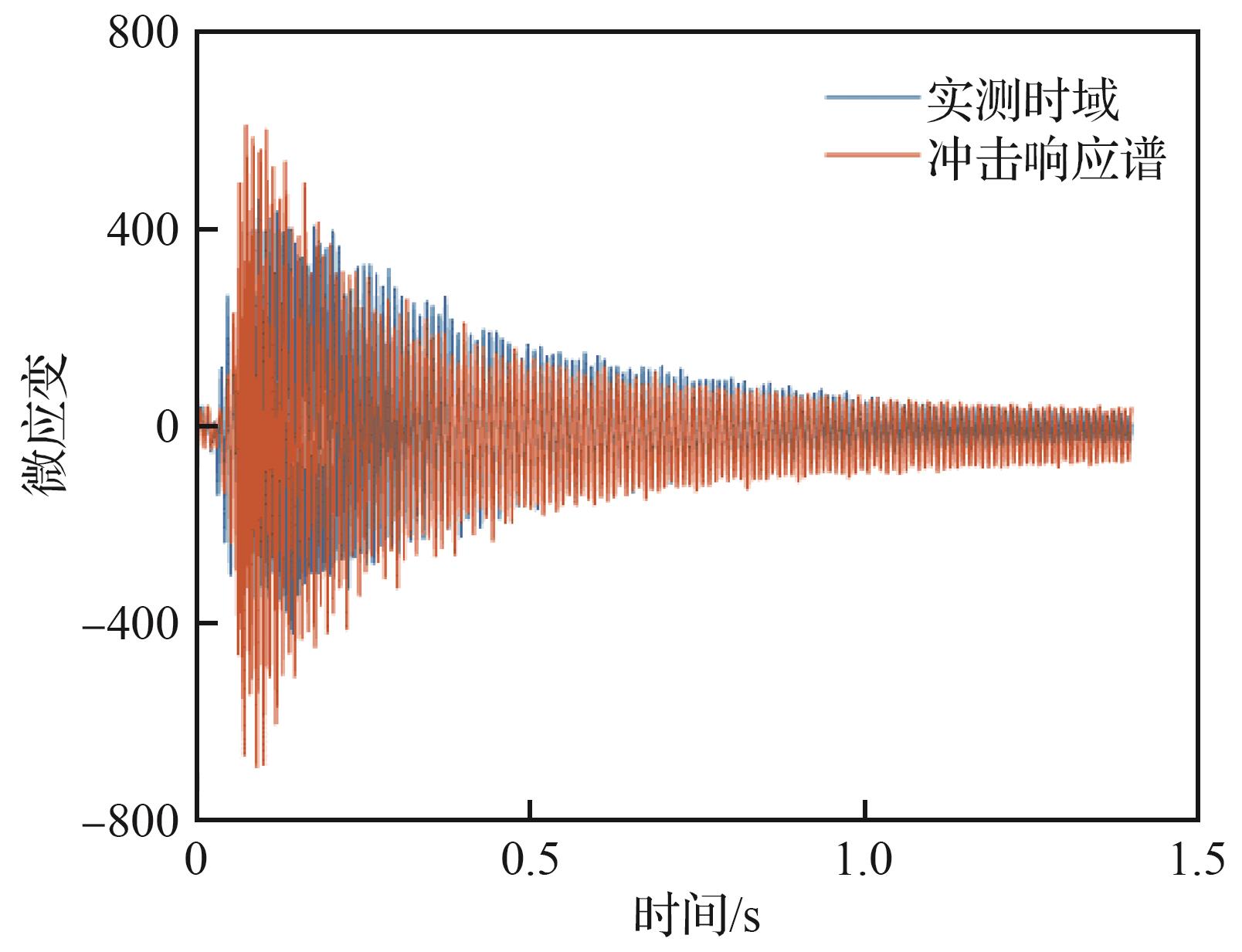
Fig.16
Comparison of strain response of typical test specimen in laboratory environment
| [1] | 刘巍. 武装直升机与航炮动力学研究[D]. 南京: 南京理工大学, 2009. |
| LIU W. Study on dynamics of armed helicopter and aerogun[D]. Nanjing: Nanjing University of Science and Technology, 2009 (in Chinese). | |
| [2] | 朱冠南. 高空环境下膛口流场研究[D]. 南京: 南京理工大学, 2014. |
| ZHU G N. Study on muzzle flow field in simulated low pressure environment[D]. Nanjing: Nanjing University of Science and Technology, 2014 (in Chinese). | |
| [3] | 薛松松. 某型航炮后坐力地面模拟测试方法研究[D]. 南京: 南京理工大学, 2015. |
| XUE S S. Research on ground simulation test method of recoil of a certain type of aircraft Gun[D]. Nanjing: Nanjing University of Science and Technology, 2015 (in Chinese). | |
| [4] | 王波. 航炮后坐力模拟测试实验方法研究[D]. 南京: 南京理工大学, 2016. |
| WANG B. The experimental method research on simulation test of aerogun recoil force[D]. Nanjing: Nanjing University of Science and Technology, 2016 (in Chinese). | |
| [5] | 中国人民解放军总装备部. 军用装备实验室环境试验方法 第20部分:炮击振动试验: [S]. 北京: 中国人民解放军总装备部, 2009. |
| General Armaments Department. Laboratory environmental test methods for military material-part 20: Gunfire vibration test: [S]. Beijing: General Armaments Department, 2009 (in Chinese). | |
| [6] | Department of Defense. Environmental engineering considerations and laboratory tests: MIL-S [S].Washington D. C.: Department of Defense, 2019. |
| [7] | SMALLWOOD D O. Characterization and simulation of gunfire with wavelets[J]. Shock and Vibration,1999, 6(2):59-72. |
| [8] | SHERF Z, HOPSTONE P, OSTROVSKI G, et al. Problems in the analysis of a shock sequence with application to gunfire analysis and simulation[J]. Journal of the IEST, 2002, 45(1): 161-177. |
| [9] | BRAKE M R. An inverse shock response spectrum[J]. Mechanical Systems and Signal Processing, 2011, 25(7): 2654-2672. |
| [10] | 李益萱, 李凯翔, 白春玉, 等. 冲击响应谱在炮击振动环境的谱编制应用研究[J]. 应用力学学报, 2024, 41(5): 1027-1033. |
| LI Y X, LI K X, BAI C Y, et al. Application of shock response spectrum formation in the gunfire environment[J]. Chinese Journal of Applied Mechanics, 2024, 41(5): 1027-1033 (in Chinese). | |
| [11] | 李益萱, 刘继军, 李凯翔, 等. 基于扩展工况传递路径分析的振动环境预计方法研究[J]. 西北工业大学学报, 2022, 40(6): 1320-1326. |
| LI Y X, LIU J J, LI K X, et al. The vibration environment prediction method based on OPAX[J]. Journal of Northwestern Polytechnical University, 2022, 40(6): 1320-1326 (in Chinese). | |
| [12] | 庞晓柯. 基于工况传递路径分析的挖掘机座椅振动研究[D]. 济南: 山东大学, 2014. |
| PANG X K. Excavator seat vibration research based on operational[D]. Jinan: Shandong University, 2014 (in Chinese). | |
| [13] | 谭祥军. 旋转机械NVH分析与TPA分析[M].北京:机械工业出版社,2020. |
| TAN X J. the NVH analysis of the rotating machinery and TPA analysis[M]. Beijing: China Machine Press (in Chinese). | |
| [14] | NOUMURA K, YOSHIDA J. Method of transfer path analysis for vehicle interior sound with no excitation experiment[C]∥FISITA 2006 World Automotive Congress. Yokohama: JSAE, 2006: 22-27. |
| [15] | KOHAVI K. A study of cross-validation and bootstrap for accuracy estimation and model selection[C]∥Proceedings of the 14th International Joint Conference on Artificial Intelligence-Volume 2. New York: ACM, 1995: 1137-1143. |
| [16] | 中国人民解放军总装备部. 军用装备实验室环境试验方法 第18部分:冲击试验: [S]. 北京: 中国人民解放军总装备部, 2009. |
| General Armaments Department. Laboratory environmental test methods for military material-part 18: Shock test: [S]. Beijing: General Armaments Department, 2009 (in Chinese). | |
| [17] | 中国人民解放军总装备部. 动力学环境数据采集和分析指南: [S]. 北京: 中国人民解放军总装备部, 2015. |
| General Armaments Department. Guidelines for dynamic environmental data acquisition and analysis: [S]. Beijing: General Armaments Department, 2015 (in Chinese). | |
| [18] | 国家质量监督检验检疫总局 中国国家标准化管理委员会. 机械振动与冲击信号处理第4部分:冲击响应谱分析: [S]. 北京: 中国标准出版社, 2018. |
| Standardization Administration of the People’s Republic of China. Mechanical vibration and shock—Signal processing: Part 4: Shock-response spectrum analysis: [S]. Beijing: Standards Press of China, 2018 (in Chinese). | |
| [19] | 中国人民解放军总装备部. 振动、冲击环境测量数据归纳方法: [S]. 北京: 中国人民解放军总装备部, 1999. |
| General Armaments Department. The inductive methods for environmental measured data of vibration and shock: [S]. Beijing: General Armaments Department, 1999 (in Chinese). | |
| [20] | 朱玉琴, 肖勇, 苏艳. 装甲平台诱发环境振动数据处理技术与应用研究[J]. 装备环境工程, 2013, 10(3): 72-76. |
| ZHU Y Q, XIAO Y, SU Y. Application research of vibration data processing technology for armed vehicle platform induced environment[J]. Equipment Environmental Engineering, 2013, 10(3): 72-76 (in Chinese). | |
| [21] | 李云红. 信号与系统[M]. 北京: 北京大学出版社, 2012. |
| LI Y H. Signals and systems[M]. Beijing: Peking University Press, 2012 (in Chinese). | |
| [22] | 陈小慧, 闫兵, 李华超. 冲击响应谱时域合成算法研究[J]. 包装工程, 2007, 28(2): 23-26. |
| CHEN X H, YAN B, LI H C. Research on the time-history waveform synthesis of shock response spectrum[J]. Packaging Engineering, 2007, 28(2): 23-26 (in Chinese). | |
| [23] | 任昌, 潘宏侠. 基于冲击信号的冲击响应谱研究[J]. 火炮发射与控制学报, 2010, 31(3): 21-24. |
| REN C, PAN H X. Study of shock response spectrum based on shocking signal[J]. Journal of Gun Launch & Control, 2010, 31(3): 21-24 (in Chinese). | |
| [24] | 段家希, 李志来, 曹乃亮, 等. 包带式解锁支座冲击环境研究[J]. 振动与冲击, 2013, 32(9): 16-20. |
| DUAN J X, LI Z L, CAO N L, et al. Shock environment of clamp-band unlocking support[J]. Journal of Vibration and Shock, 2013, 32(9): 16-20 (in Chinese). | |
| [25] | 丰志强, 阎楚良, 张书明. 飞机机载设备振动环境谱的数据处理与编制[J]. 航空学报, 2006, 27(2): 289-293. |
| FENG Z Q, YAN C L, ZHANG S M. Data processing and compilation of vibration environmental spectrumfor aircraft airborne equipment[J]. Acta Aeronautica et Astronautica Sinica, 2006, 27(2): 289-293 (in Chinese). | |
| [26] | 舒俊成, 贺尔铭, 易金翔, 等. 发动机振动载荷向客舱座椅传递特性研究[J]. 西北工业大学学报, 2020, 38(6): 1163-1170. |
| SHU J C, HE E M, YI J X, et al. Research on transfer characteristics of engine vibration load to cabin seat[J]. Journal of Northwestern Polytechnical University, 2020, 38(6): 1163-1170 (in Chinese). | |
| [27] | 贾启芬, 刘习军. 机械与结构振动[M]. 天津: 天津大学出版社, 2007: 138~140. |
| JIA Q F, LIU X J. Mechanical and structural vibration[M]. Tianjin: Tianjin University Press, 2007: 138~140 (in Chinese). | |
| [28] | 田永卫, 闫楚良, 张书明, 等. 飞机随机振动环境实测试验数据的归纳方法[J]. 振动测试与诊断, 2014, 34(6): 1129-1133, 1175. |
| TIAN Y W, YAN C L, ZHANG S M, et al. Inductive method of flight test data measured from aircraft random vibration environment[J]. Journal of Vibration, Measurement & Diagnosis, 2014, 34(6): 1129-1133, 1175 (in Chinese). | |
| [29] | 王桂华, 刘海年, 张大义, 等. 航空发动机成附件振动环境试验剖面确定方法研究[J]. 推进技术, 2013, 34(8): 1101-1107. |
| WANG G H, LIU H N, ZHANG D Y, et al. Study on formulating method for vibration environment test profiles of aero-engine accessories[J]. Journal of Propulsion Technology, 2013, 34(8): 1101-1107 (in Chinese). | |
| [30] | 穆立茂, 黄海英, 张靖, 等. 车载物资振动环境谱的数据处理与归纳[J]. 装备环境工程, 2010, 7(1): 75-77, 88. |
| MU L M, HUANG H Y, ZHANG J, et al. Data processing and induction of vibration environmental spectrum for commodity carried on truck[J]. Equipment Environmental Engineering, 2010, 7(1): 75-77, 88 (in Chinese). |
| [1] | . Experimental Study on Ice Accretion and Shedding of Transonic Fan Blades Blades on Ice Wind Tunnel Environment [J]. Acta Aeronautica et Astronautica Sinica, 0, (): 1-0. |
| [2] | . Random load identification method and verification under thermal environment based on Tikhonov regularization [J]. Acta Aeronautica et Astronautica Sinica, 0, (): 1-0. |
| [3] |
.
|
| [4] | Xiaopeng SHI, Weiliang LI, Chen XIONG, Yafeng WANG, Yonglong HE, Zhenyu FENG. Protective effect of aviation child restraint systems on 3-year-old children and influence on rear passengers: Experiment [J]. Acta Aeronautica et Astronautica Sinica, 2025, 46(1): 230631-230631. |
| [5] | Liping WANG, Fuxin WANG, Hong LIU. Research progress on simulation methods of drop diameter distribution in supercooled large drop icing conditions [J]. Acta Aeronautica et Astronautica Sinica, 2024, 45(S1): 730570-730570. |
| [6] | Jinchao MA, Yang LU, Liangquan WANG, Kuihui SONG. Active control test of tiltrotor near-field aeroacoustics based on higher harmonic control [J]. Acta Aeronautica et Astronautica Sinica, 2024, 45(9): 528602-528602. |
| [7] | Xinxin LI, Binwen WANG, Xiaoxiao ZHANG, Linhua CONG, Jingtao WU. Equivalent calculation method of irradiance distribution of spectrum simulator array [J]. Acta Aeronautica et Astronautica Sinica, 2023, 44(23): 228493-228493. |
| [8] | SUN Cong. Development status, challenges and trends of strength technology for hypersonic vehicles [J]. ACTA AERONAUTICAET ASTRONAUTICA SINICA, 2022, 43(6): 527590-527590. |
| [9] | YANG Huan, LIU Xiaochuan, BAI Chunyu, ZHANG Yu, XI Xulong. Experiment on longitudinal dynamic impact characteristics of typical aircraft seat/occupant system [J]. ACTA AERONAUTICAET ASTRONAUTICA SINICA, 2022, 43(6): 526238-526238. |
| [10] | PENG Zilong, LIU Cong, LI Yinan, LAN Hongbo. Micro electrical chemical machining for efficient fabricating large aspect ratio micro electrodes by critical gap method [J]. ACTA AERONAUTICAET ASTRONAUTICA SINICA, 2022, 43(4): 525339-525339. |
| [11] | . Crack Growth Life of LD2 Aerospace Aluminum Alloy under Corrosive Conditions [J]. ACTA AERONAUTICAET ASTRONAUTICA SINICA, 0, (): 0-0. |
| [12] | WEI Long, QIN Zhaohong, REN Fang, ZHANG Zhong, LI Min, LIU Xue. An improved acoustic deconvolution method for localizing correlated sound sources [J]. ACTA AERONAUTICAET ASTRONAUTICA SINICA, 2019, 40(11): 123100-123100. |
| [13] | ZOU Xuefeng, GUO Dingwen, PAN Kai, QU Chao, TAO Yongqiang, ZHANG Xudong. Test technique for multi-load combined strength of hypersonic vehicle structure under complex loading environment [J]. ACTA AERONAUTICAET ASTRONAUTICA SINICA, 2018, 39(12): 222326-222326. |
| [14] | ZHANG Yingzhe, NI Daming, Incheol LEE, LIN Dakai, YANG Zhigang. Test on hot jet noise of scaled engine nozzle [J]. ACTA AERONAUTICAET ASTRONAUTICA SINICA, 2018, 39(12): 122446-122446. |
| [15] | CHEN Huaihai, WANG Pengyu, SUN Jianyong. Generation of multi-input multi-output non-Gaussian driving signal based on inverse system method [J]. ACTA AERONAUTICAET ASTRONAUTICA SINICA, 2016, 37(5): 1544-1551. |
| Viewed | ||||||
|
Full text |
|
|||||
|
Abstract |
|
|||||
Address: No.238, Baiyan Buiding, Beisihuan Zhonglu Road, Haidian District, Beijing, China
Postal code : 100083
E-mail:hkxb@buaa.edu.cn
Total visits: 6658907 Today visits: 1341All copyright © editorial office of Chinese Journal of Aeronautics
All copyright © editorial office of Chinese Journal of Aeronautics
Total visits: 6658907 Today visits: 1341

 CJA
CJA
