Acta Aeronautica et Astronautica Sinica ›› 2025, Vol. 46 ›› Issue (18): 131838.doi: 10.7527/S1000-6893.2025.31838
• Fluid Mechanics and Flight Mechanics • Previous Articles Next Articles
Tianxiang GAO, Zhenbing LUO( ), Xiangrong JING, Wenjie FENG, Yan ZHOU, Pan CHENG
Received:2025-01-23
Revised:2025-02-18
Accepted:2025-04-01
Online:2025-09-25
Published:2025-04-25
Contact:
Zhenbing LUO
E-mail:luozhenbing@163.com
Supported by:CLC Number:
Tianxiang GAO, Zhenbing LUO, Xiangrong JING, Wenjie FENG, Yan ZHOU, Pan CHENG. Suppression of droplet impact freezing on superhydrophobic surfaces using dual synthetic jets[J]. Acta Aeronautica et Astronautica Sinica, 2025, 46(18): 131838.
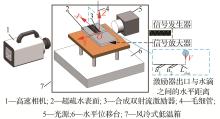
Fig.1
Schematic diagram of test setup for suppressing ice formation of impacting droplets on superhydrophobic surfaces using dual synthetic jet
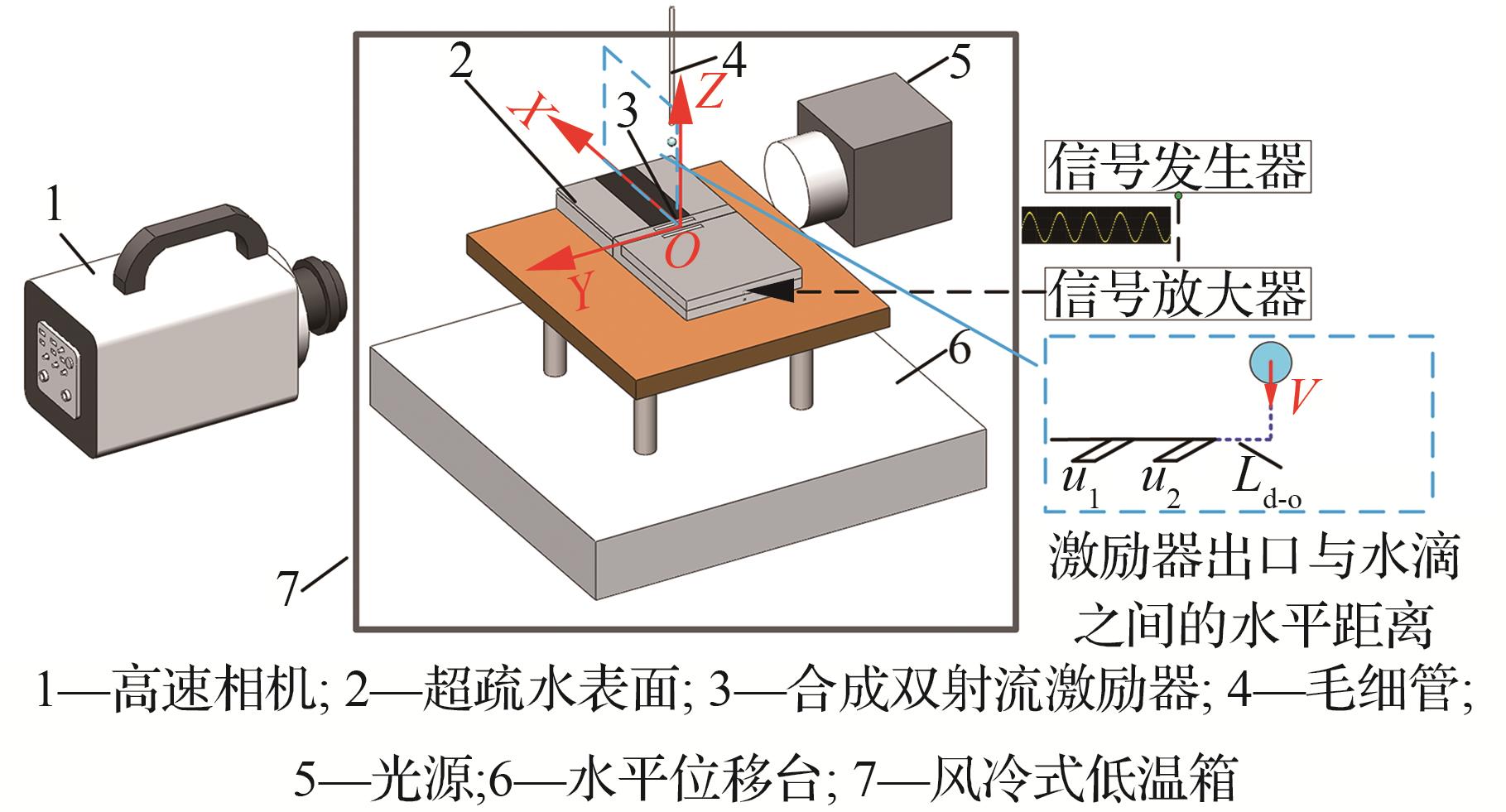
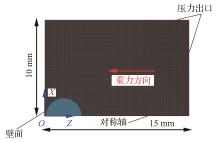
Fig.2
Computational domain for droplet impact on superhydro-phobic surface under low temperature conditions
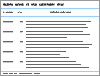
Table 1
Variation of water’s physical properties with temperature[32]
| 温度/K | 黏度/(mPa·s) | 热导率/(W·m-1·K-1) | 热容/(J·kg-1·K-1) | 表面张力/(mN·m-1) | 密度/(kg·m-3) |
|---|---|---|---|---|---|
| 243.15 | 5.65 | 0.431 | 5 132 | 79.64 | 983.800 0 |
| 253.15 | 4.33 | 0.478 | 4 894 | 78.41 | 993.600 0 |
| 263.15 | 2.66 | 0.525 | 4 580 | 76.98 | 998.100 0 |
| 273.15 | 179.00 | 0.556 | 4 220 | 75.65 | 999.800 0 |
| 283.15 | 131.00 | 0.579 | 4 195 | 74.22 | 999.702 1 |
| 293.15 | 100.00 | 0.598 | 4 184 | 72.75 | 998.522 8 |
Table 2
Variation of air’s physical properties with temperature[32]
| 温度/K | 黏度/ (µPa·s) | 热导率/ (mW·m-1·K-1) | 热容/ (J·kg-1·K-1) | 密度/ (kg·m-3) |
|---|---|---|---|---|
| 240 | 15.51 | 21.77 | 1 006 | 1.453 |
| 260 | 16.55 | 23.35 | 1 006 | 1.341 |
| 280 | 17.56 | 24.88 | 1 006 | 1.245 |
| 300 | 18.54 | 26.38 | 1 006 | 1.161 |
Table 3
Variation of ice’s physical properties with temperature[32]
| 温度/K | 热导率/(W·m-1·K-1) | 热容/(J·kg-1·K-1) | 密度/(kg·m-3) | 潜热/(J·kg-1) |
|---|---|---|---|---|
| 243.15 | 2.50 | 1 880 | 920.9 | 33 400 |
| 253.15 | 2.38 | 1 950 | 919.6 | 33 400 |
| 263.15 | 2.26 | 2 020 | 918.2 | 33 400 |
| 273.05 | 2.16 | 2 100 | 916.7 | 33 400 |
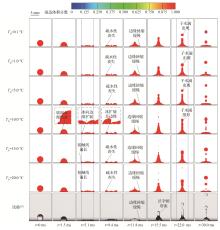
Fig.3
Simulation results of different TD without application of dual synthetic jet and their comparison with test data
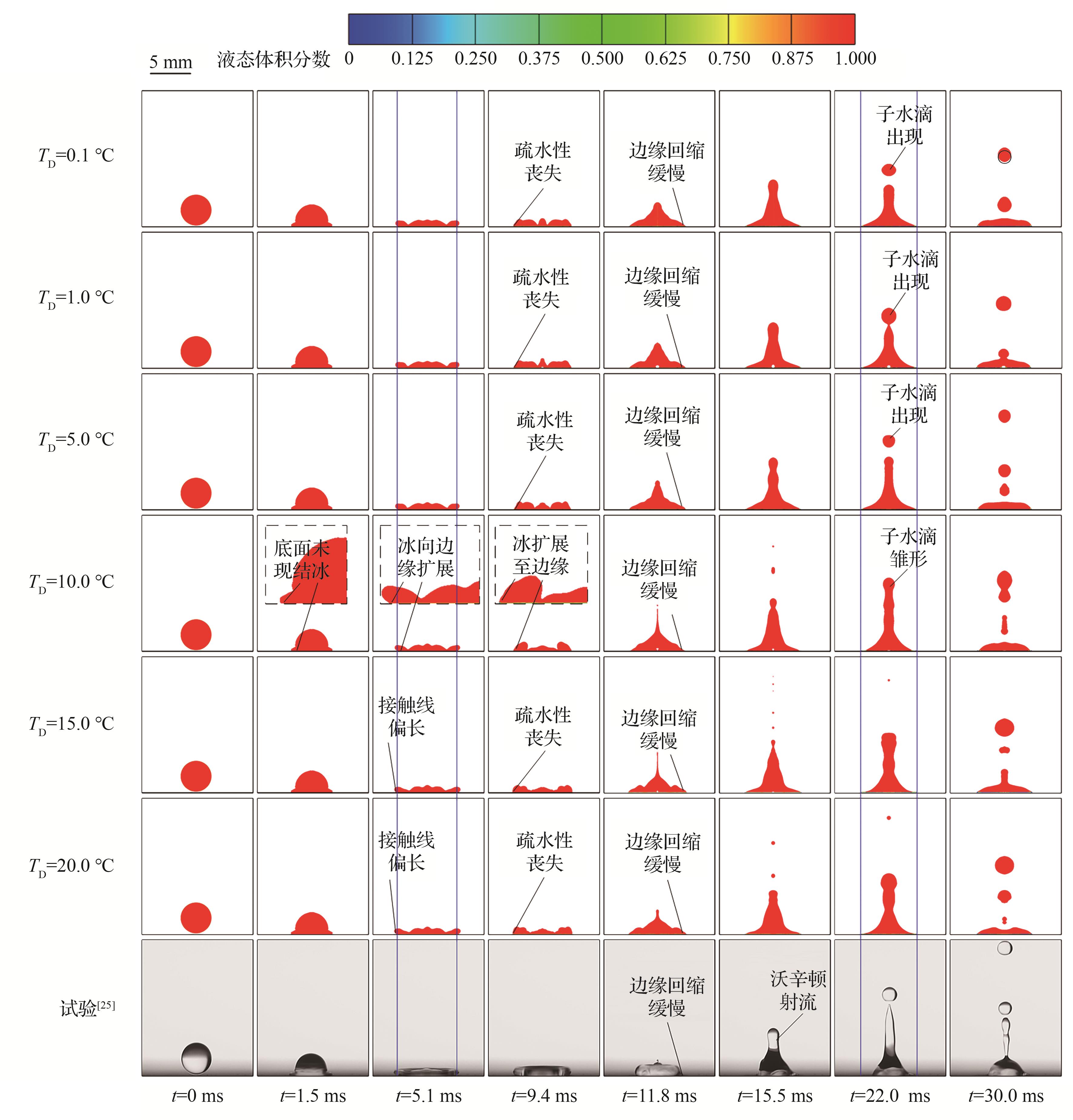
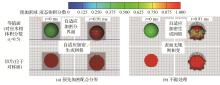
Fig.4
Comparison of simulation results with and without use of pre-encryption and partitioning method
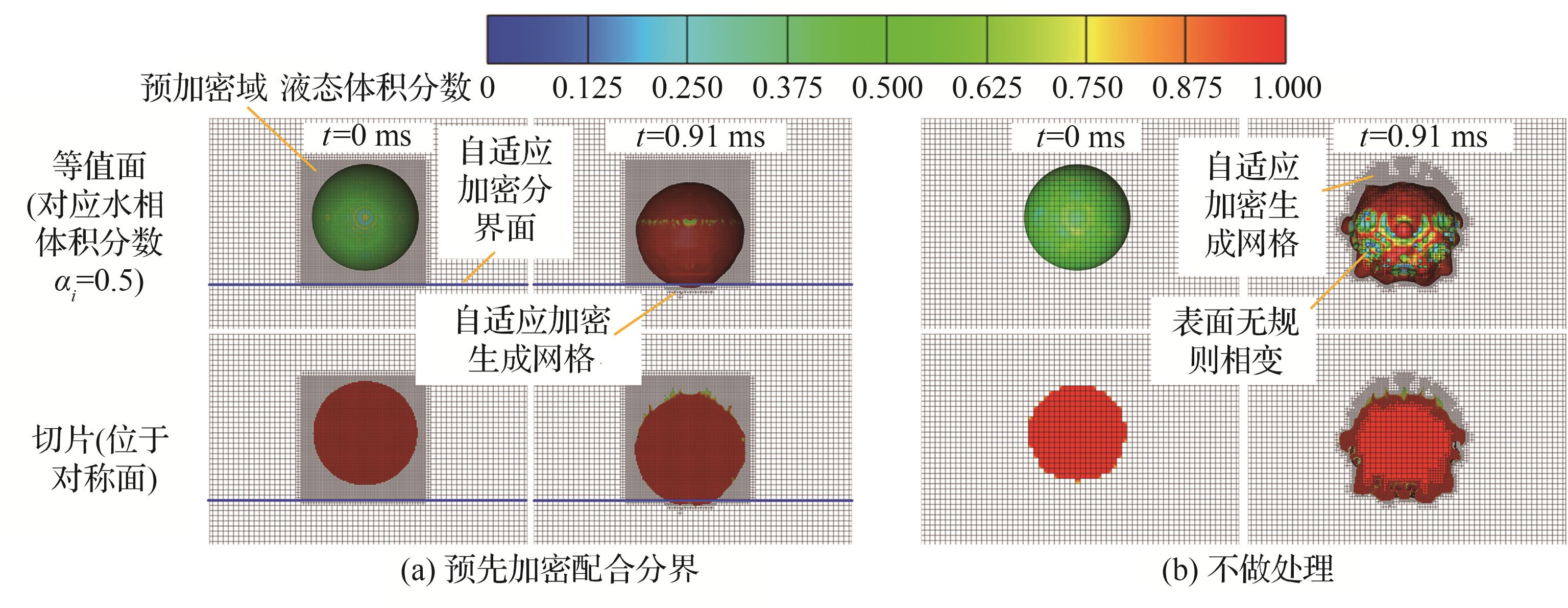
Fig.5
Test results of droplet impacting and freezing without application of dual synthetic jet (after t = 30 ms)
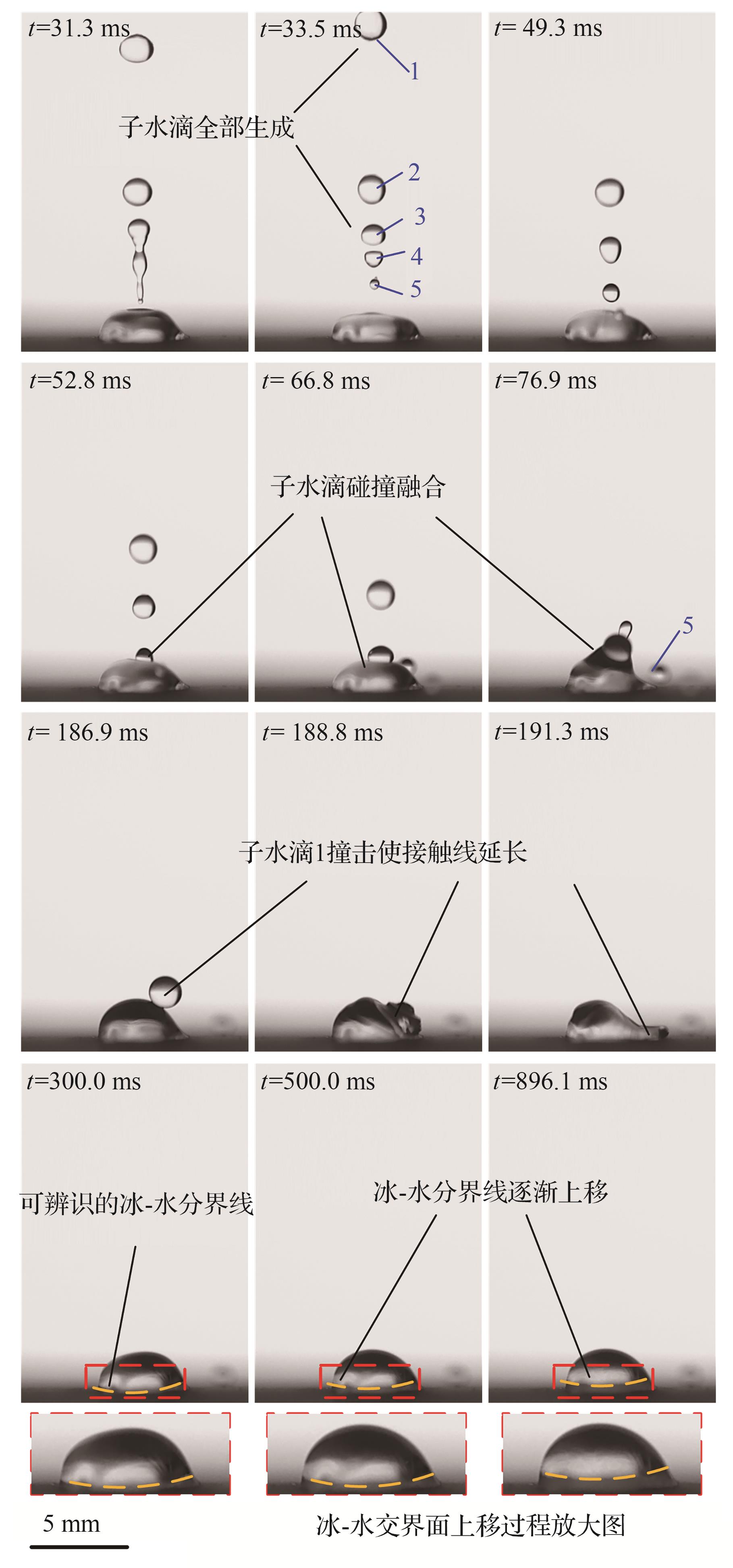
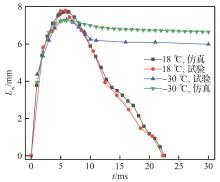
Fig.6
Variations of contact line length (Lw) during droplet impact process at 18 °C and -30 °C
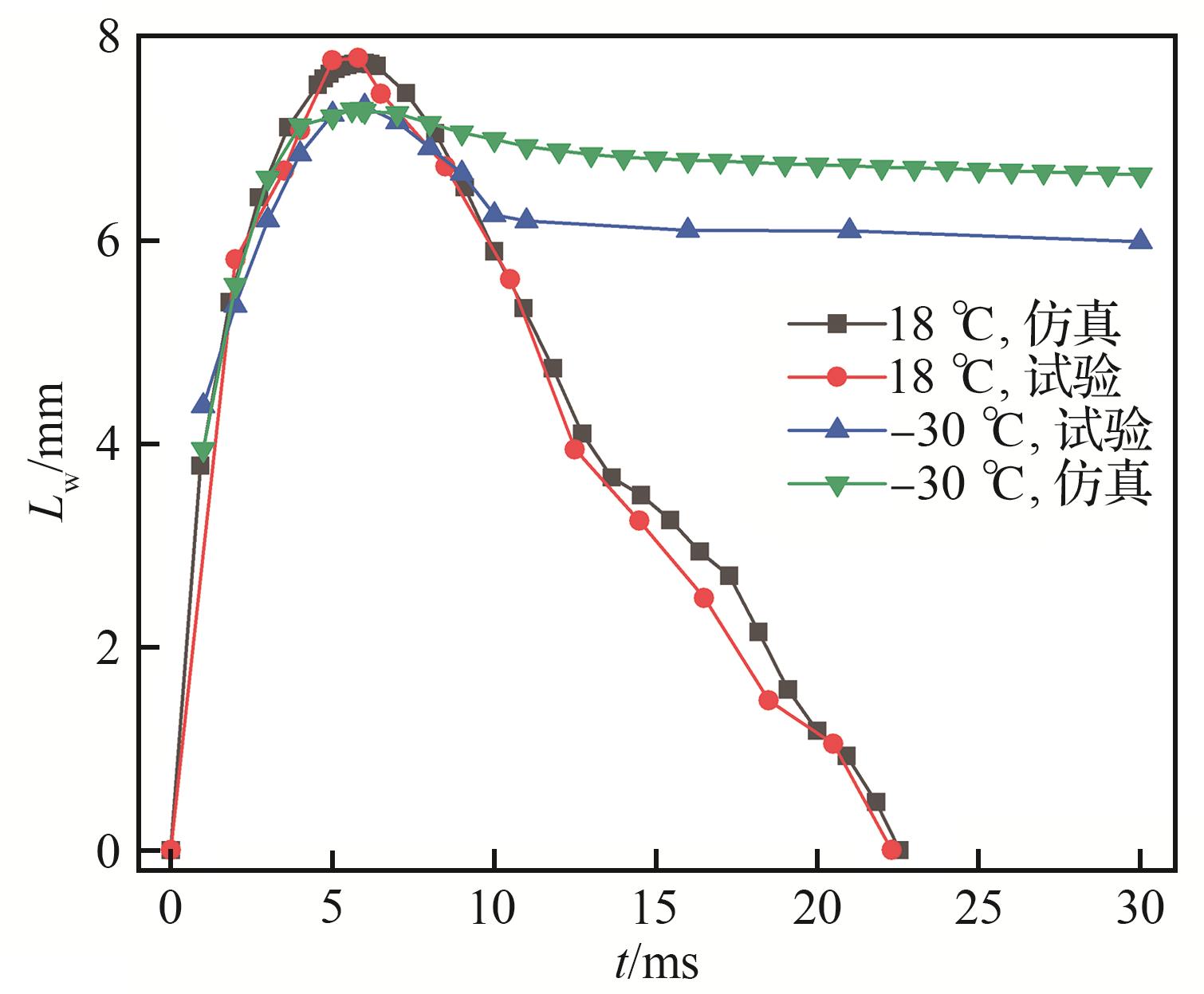
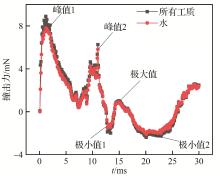
Fig.7
Comparison of contribution of different working fluids to impact force without applying dual synthetic jet at -30 °C
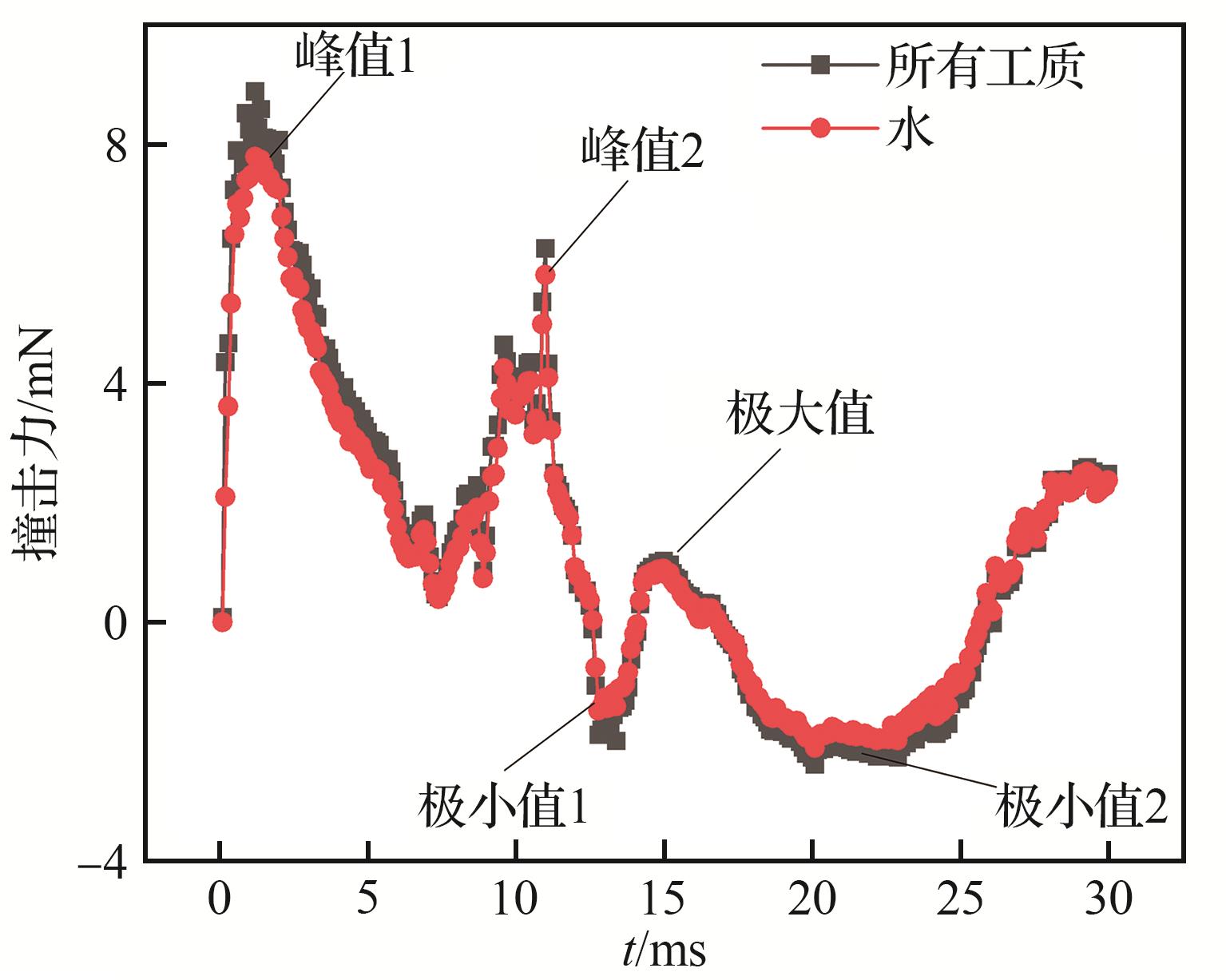
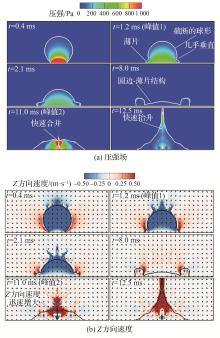
Fig.8
Analysis of causes for extreme impact forces of Peak 1 and Peak 2 at -30 °C
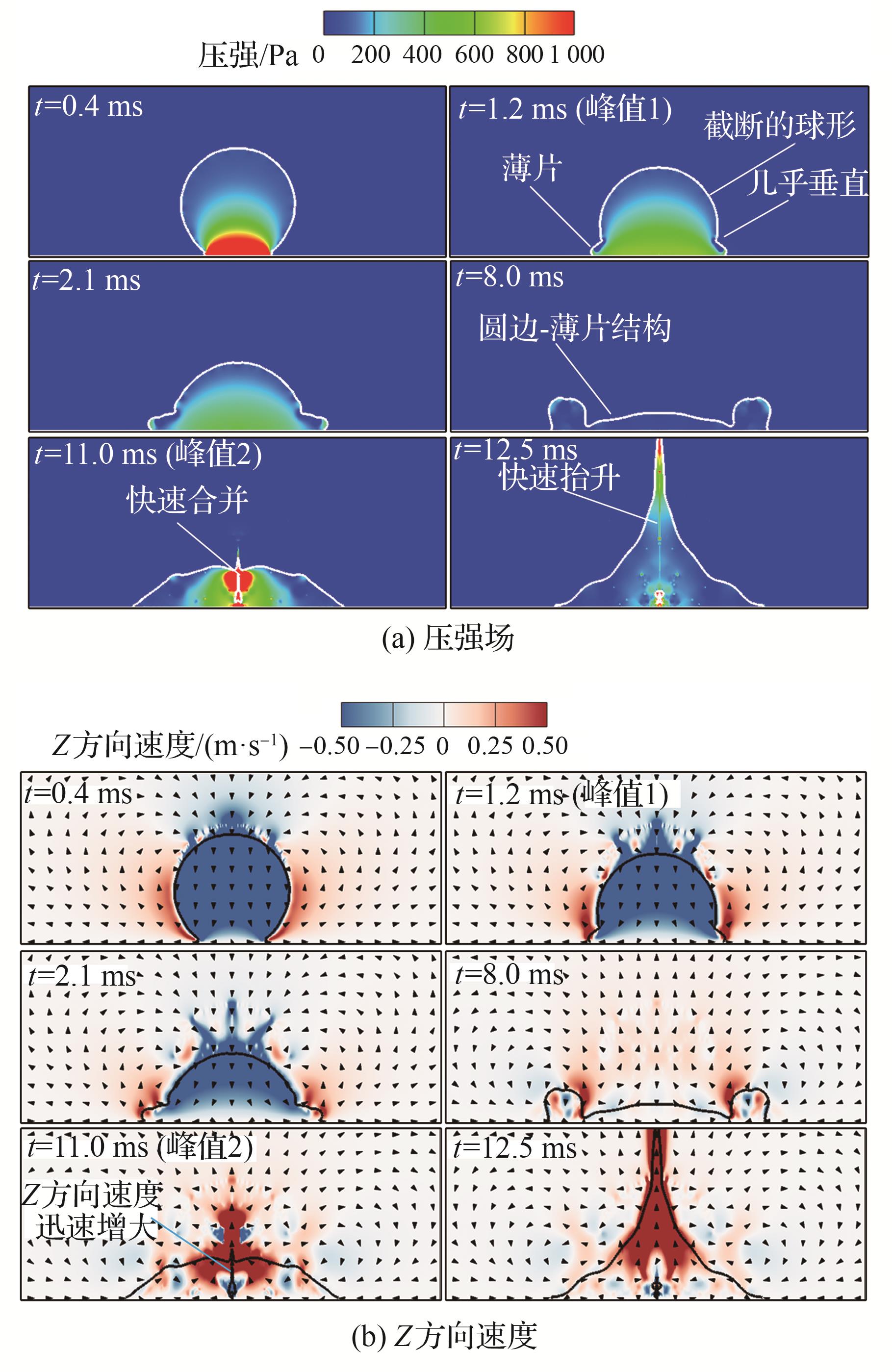
Fig.9
Analysis of causes for extreme impact forces of other extreme values at -30 °C
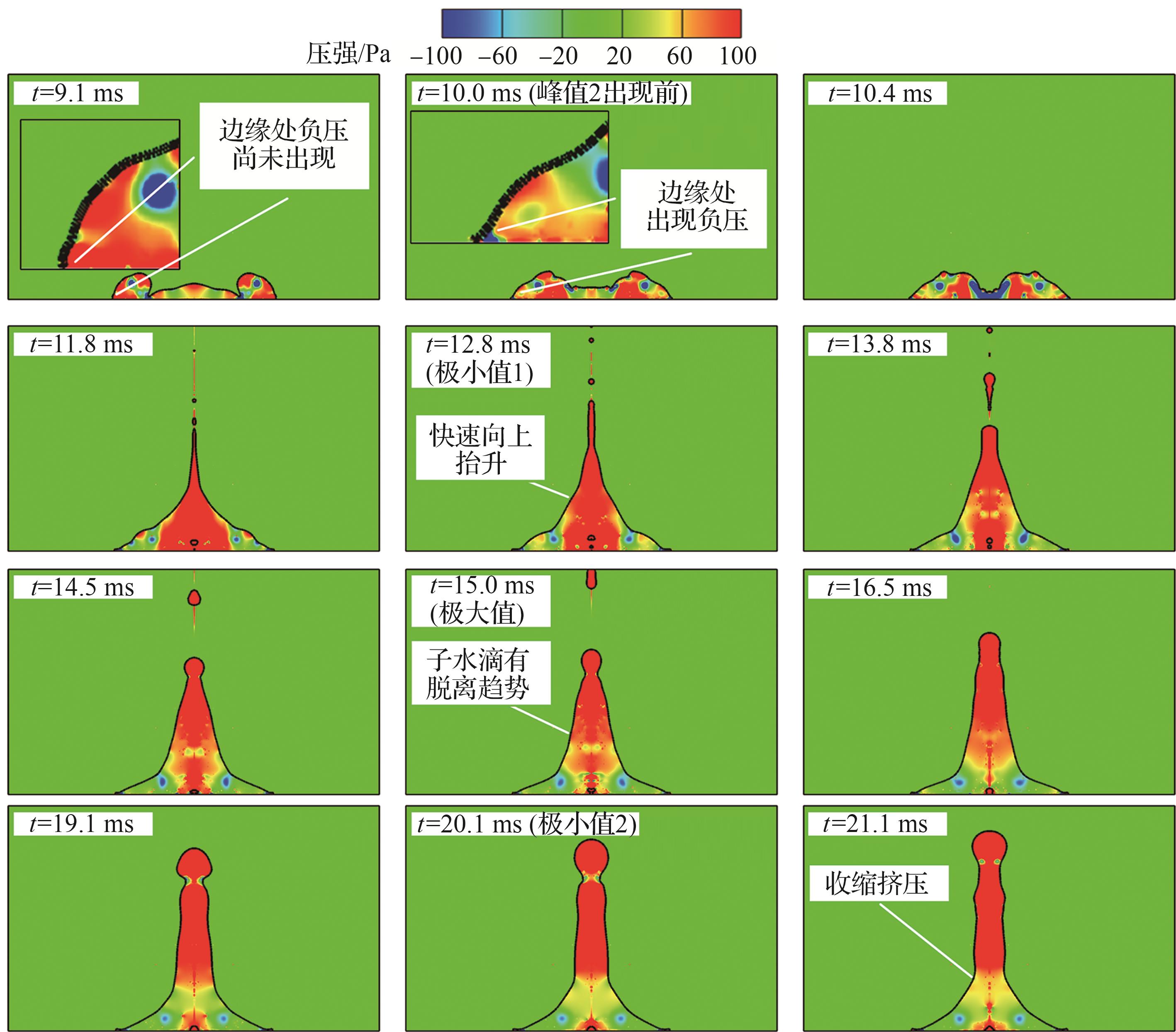
Fig.10
Test effects of suppressing droplet impact freezing on superhydrophobic surface using dual synthetic jet under different Ld-o
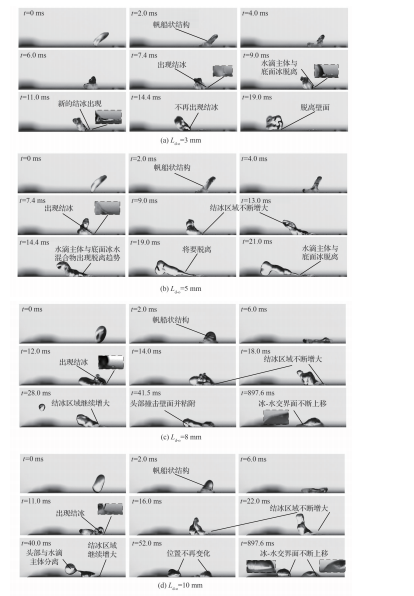
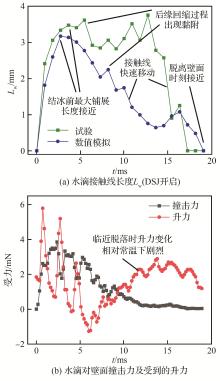
Fig.11
Variations of droplet contact line lengths, impact force on wall surface, and lift force over time
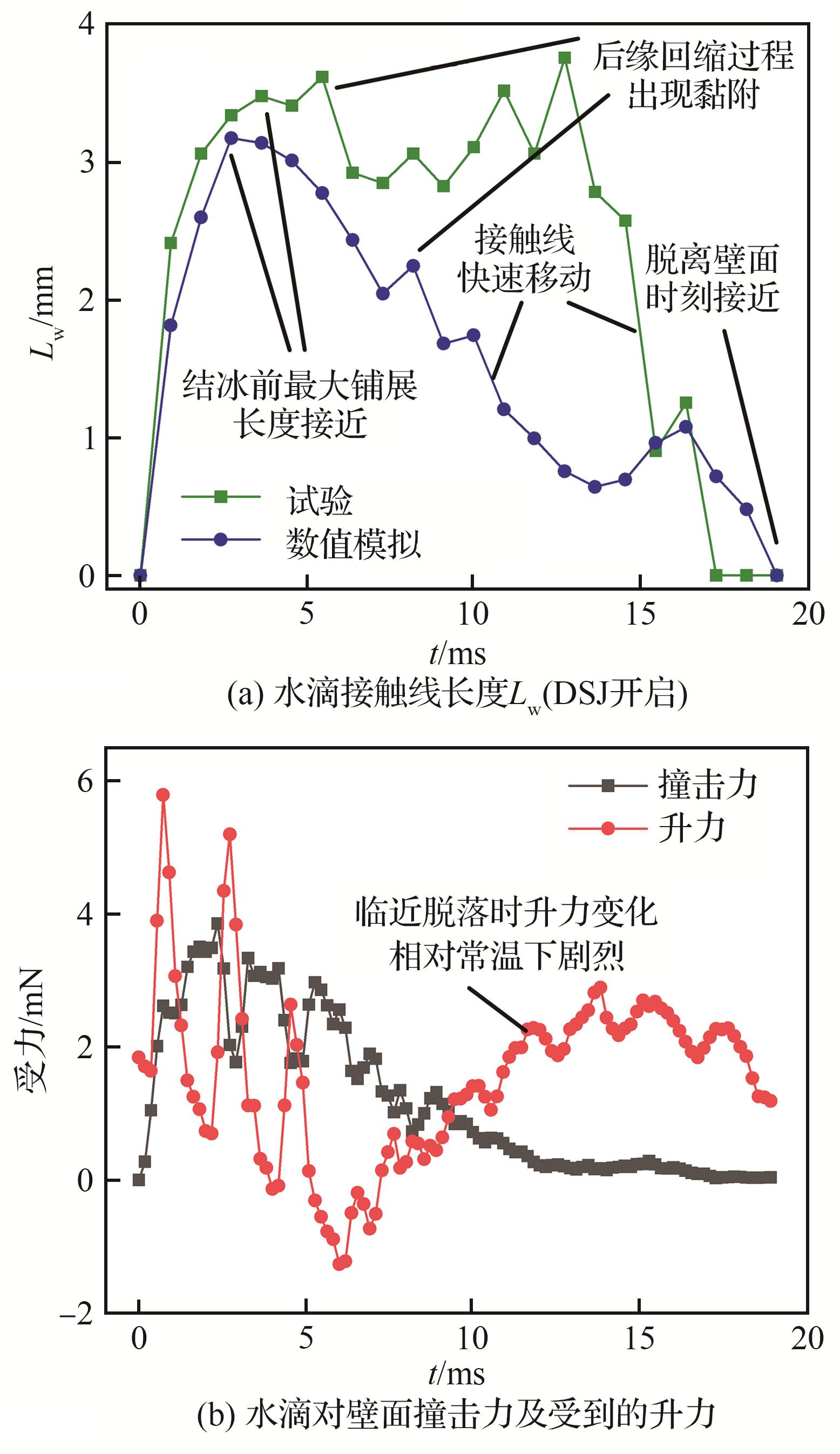
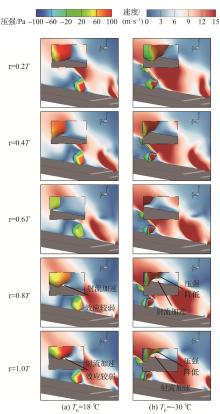
Fig.12
Comparison of peripheral pressure variations during period prior to water droplet detachment from wall surface at 18 °C and -30 °C
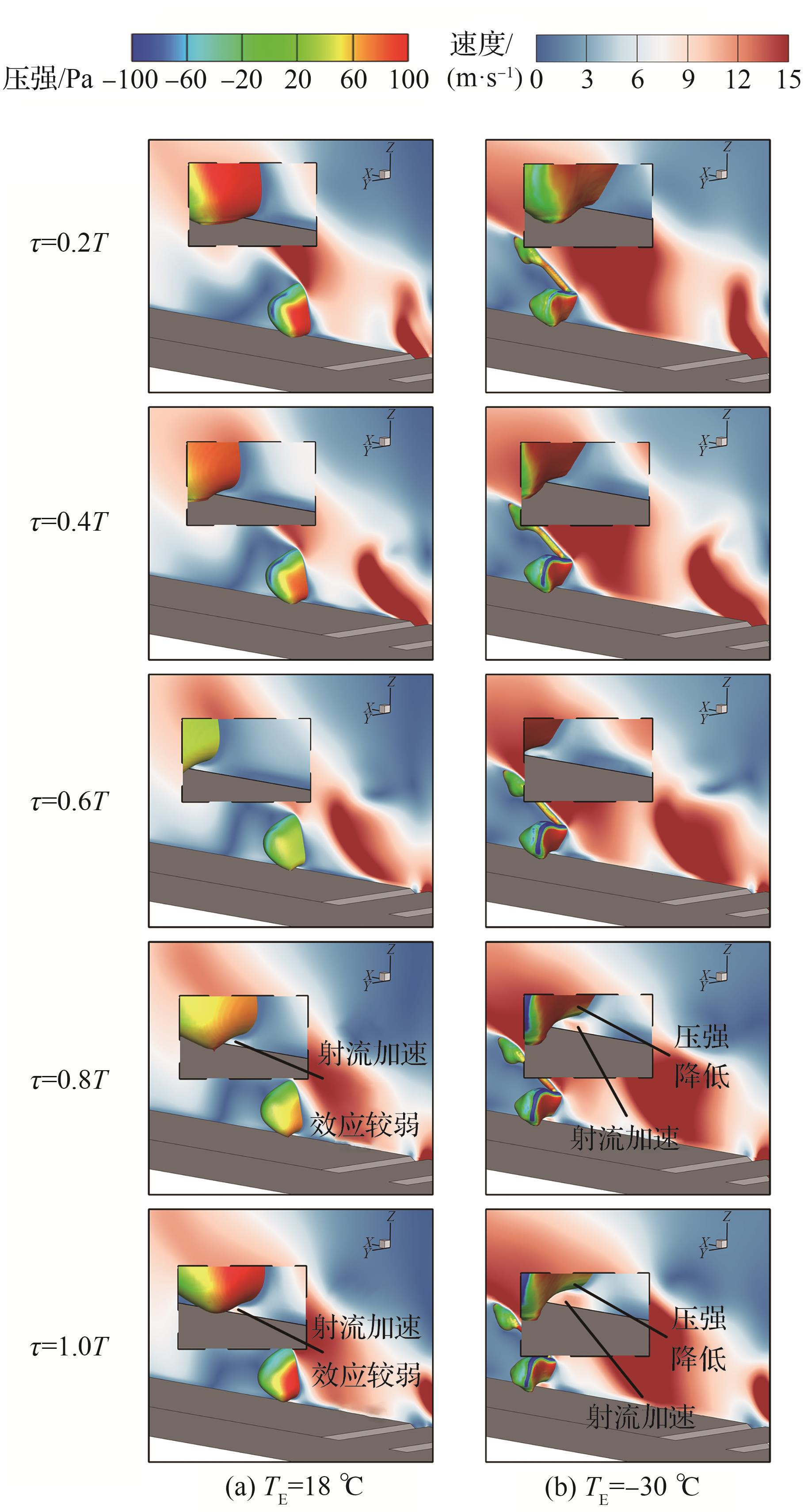
Fig.13
Variation of wall heat flux density and changes in droplet velocity and temperature during droplet impact process
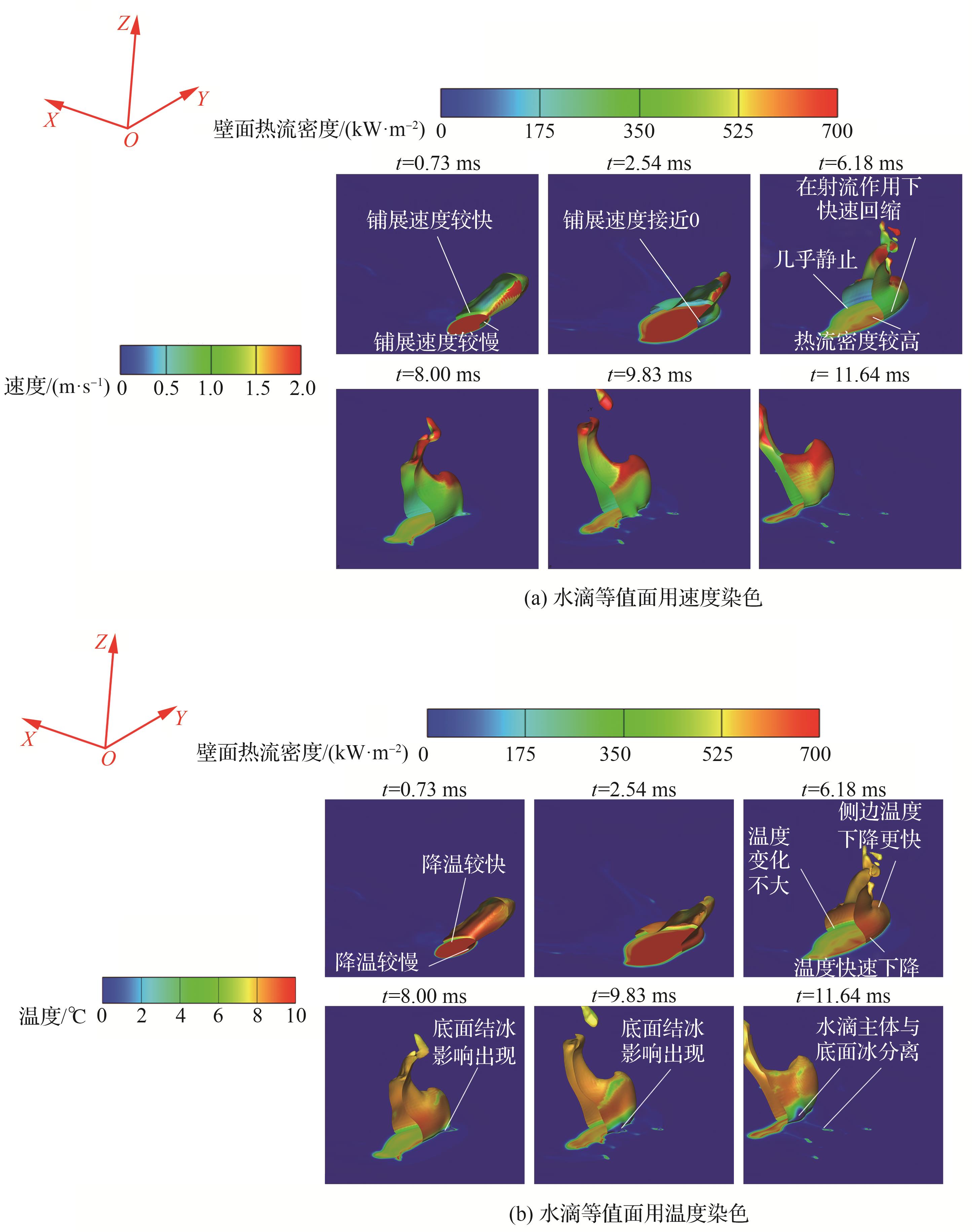
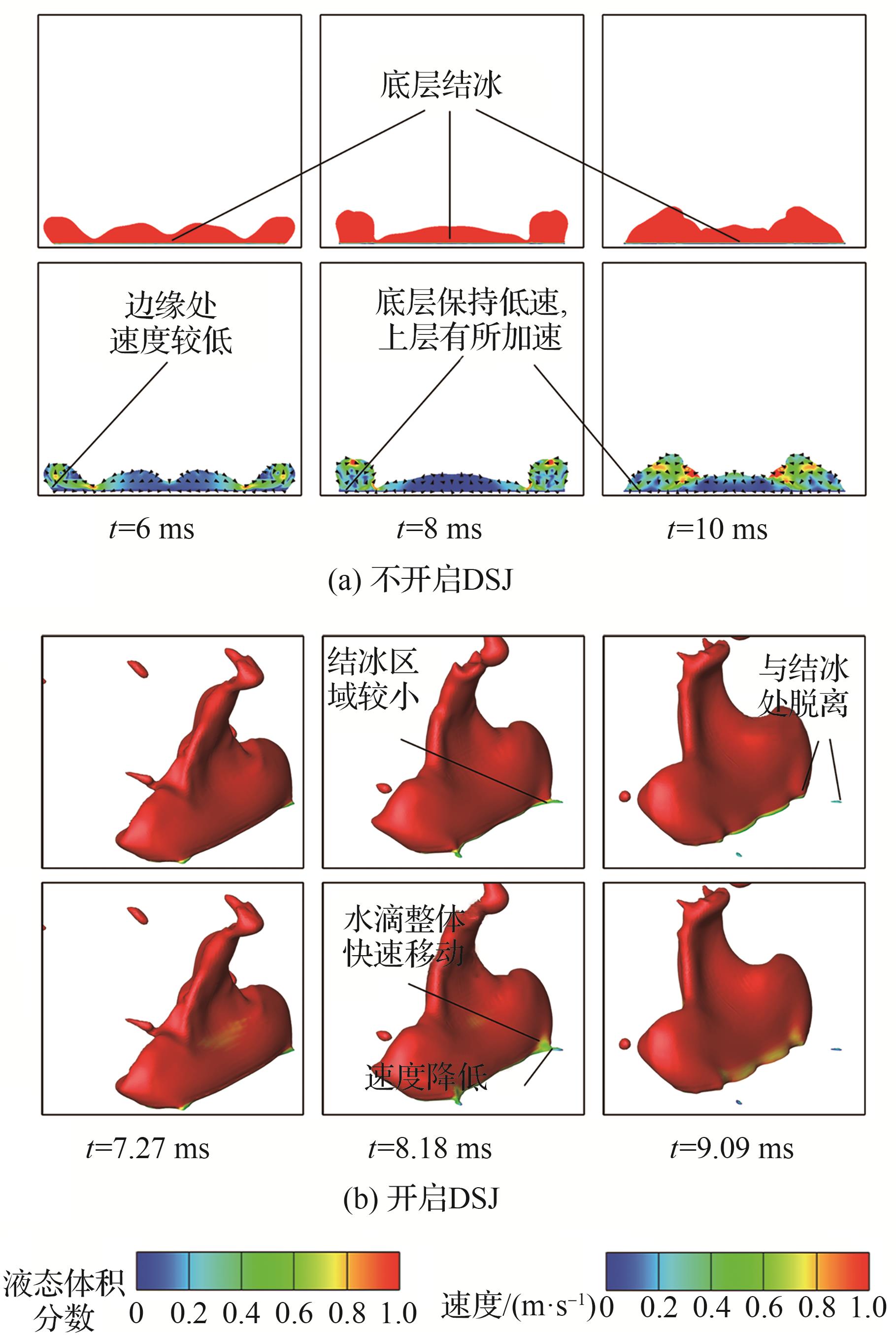
Fig.14
Comparison of impact of ice formation on edge movement speed of droplets with or without using dual synthetic jet
| [1] | HUANG W, HU B, SHAHIDEHPOUR M, et al. Preventive scheduling for reducing the impact of glaze freezing on transmission lines[J]. IEEE Transactions on Power Systems, 2022, 37(2): 1297-1310. |
| [2] | WU X L, LIAO Y J, YAO L, et al. A non-percolative rGO/XLPE composite with high electrothermal performance at high voltage and effective de/anti-freezing for transmission-lines[J]. Composites Science and Technology, 2022, 230: 109772. |
| [3] | JANJUA Z A, TURNBULL B, HIBBERD S, et al. Mixed ice accretion on aircraft wings[J]. Physics of Fluids, 2018, 30(2): 027101. |
| [4] | CHEN Z, XIONG G G, SUN Y, et al. An Internet-of-things-enabled system for road freezing detection and prediction[J]. IEEE Internet of Things Journal, 2022, 9(20): 20257-20269. |
| [5] | TANG L P, BOUBITSAS D, HUANG L M. Long-term performance of reinforced concrete under a de-freezing road environment[J]. Cement and Concrete Research, 2023, 164: 107039. |
| [6] | ZHANG L B, ZHANG H X, LIU Z J, et al. Nano-silica anti-freezing coatings for protecting wind-power turbine fan blades[J]. Journal of Colloid and Interface Science, 2023, 630: 1-10. |
| [7] | YIN X Y, ZHANG Y, WANG D A, et al. Integration of self-lubrication and near-infrared photothermogenesis for excellent anti-freezing/defreezing performance[J]. Advanced Functional Materials, 2015, 25(27): 4237-4245. |
| [8] | RAMAKRISHNA D M, VIRARAGHAVAN T. Environmental impact of chemical deicers—A review[J]. Water, Air, and Soil Pollution, 2005, 166(1): 49-63. |
| [9] | THOMAS S K, CASSONI R P, MACARTHUR C D. Aircraft anti-freezing and de-freezing techniques and modeling[J]. Journal of Aircraft, 1996, 33(5): 841-854. |
| [10] | 常士楠, 杨波, 冷梦尧, 等. 飞机热气防冰系统研究[J]. 航空动力学报, 2017, 32(5): 1025-1034. |
| CHANG S N, YANG B, LENG M Y, et al. Study on bleed air anti-freezing system of aircraft[J]. Journal of Aerospace Power, 2017, 32(5): 1025-1034 (in Chinese). | |
| [11] | 杨军, 张靖周, 郭文, 等. 超疏水表面技术在发动机防冰部件中的应用[J]. 燃气涡轮试验与研究, 2013, 26(1): 58-62. |
| YANG J, ZHANG J Z, GUO W, et al. Application of super-hydrophobic surface technique on the anti-freezing components of aero-engine[J]. Gas Turbine Experiment and Research, 2013, 26(1): 58-62 (in Chinese). | |
| [12] | 郑海坤, 常士楠, 赵媛媛. 超疏水/超润滑表面的防疏冰机理及其应用[J]. 化学进展, 2017, 29(1): 102-118. |
| ZHENG H K, CHANG S N, ZHAO Y Y. Anti-freezing & icephobic mechanism and applications of superhydrophobic/ultra slippery surface[J]. Progress in Chemistry, 2017, 29(1): 102-118 (in Chinese). | |
| [13] | BARTHLOTT W, NEINHUIS C. Purity of the sacred lotus, or escape from contamination in biological surfaces[J]. Planta, 1997, 202(1): 1-8. |
| [14] | BOINOVICH L B, EMELYANENKO A M. Anti-freezing potential of superhydrophobic coatings[J]. Mendeleev Communications, 2013, 23(1): 3-10. |
| [15] | 冷梦尧, 常士楠, 丁亮. 不同浸润性冷表面上水滴碰撞结冰的数值模拟[J]. 化工学报, 2016, 67(7): 2784-2792. |
| LENG M Y, CHANG S N, DING L. Numerical simulation of droplet impinging and freezing on cold surfaces with different wettability[J]. CIESC Journal, 2016, 67(7): 2784-2792 (in Chinese). | |
| [16] | 韦存茜, 赵镭, 王永香, 等. 仿生超浸润材料在防覆冰涂层中的应用[J]. 涂料工业, 2019, 49(4): 80-87. |
| WEI C Q, ZHAO L, WANG Y X, et al. Application of bio-inspired superwetting materials in anti-freezing coatings[J]. Paint & Coatings Industry, 2019, 49(4): 80-87 (in Chinese). | |
| [17] | LIU X, MIN J C, ZHANG X, et al. Supercooled water droplet impacting-freezing behaviors on cold superhydrophobic spheres[J]. International Journal of Multiphase Flow, 2021, 141: 103675. |
| [18] | DING B, WANG H, ZHU X, et al. Water droplet impact on superhydrophobic surfaces with various inclinations and supercooling degrees[J]. International Journal of Heat and Mass Transfer, 2019, 138: 844-851. |
| [19] | GAO S R, JIA Q H, SHI S H, et al. Experimental study on contact time of a water droplet impact under controlled surface temperature[J]. Physics of Fluids, 2024, 36(3): 037133. |
| [20] | ZHANG R, HAO P F, ZHANG X W, et al. Supercooled water droplet impact on superhydrophobic surfaces with various roughness and temperature[J]. International Journal of Heat and Mass Transfer, 2018, 122: 395-402. |
| [21] | 张攀峰, 王晋军, 冯立好. 零质量射流技术及其应用研究进展[J]. 中国科学(E辑: 技术科学), 2008, 38(3): 321-349. |
| ZHANG P F, WANG J J, FENG L H. Research progress of zero mass jet technology and its application[J]. Science in China (Series E: Technological Sciences), 2008, 38(3): 321-349 (in Chinese). | |
| [22] | 罗振兵. 合成射流/合成双射流机理及其在射流矢量控制和微泵中的应用研究[D]. 长沙: 国防科学技术大学, 2006:89-91. |
| LUO Z B. Mechanism of synthetic jet/synthetic double jet and its application in jet vector control and micropump[D]. Changsha: National University of Defense Technology, 2006: 89-91 (in Chinese). | |
| [23] | GAO T X, LUO Z B, HE W, et al. Shedding of water droplets by the dual synthetic jet[J]. Physics of Fluids, 2024, 36(2): 027110. |
| [24] | GAO T X, LUO Z B, ZHOU Y, et al. Water droplet transport on superhydrophobic surfaces induced by the dual synthetic jets[J]. Physics of Fluids, 2024, 36(9): 093312. |
| [25] | GAO T X, LUO Z B, ZHOU Y, et al. Reducing the contact time of impacting droplets on superhydrophobic surfaces using dual synthetic jets[J]. International Communications in Heat and Mass Transfer, 2024, 159: 108095. |
| [26] | MAITRA T, ANTONINI C, TIWARI M K, et al. Supercooled water drops impacting superhydrophobic textures[J]. Langmuir, 2014, 30(36): 10855-10861. |
| [27] | WANG D H, SUN Q Q, HOKKANEN M J, et al. Design of robust superhydrophobic surfaces[J]. Nature, 2020, 582(7810): 55-59. |
| [28] | 林贵平, 卜雪琴, 申晓斌, 等. 飞机结冰与防冰技术[M]. 北京: 北京航空航天大学出版社, 2016: 11. |
| LIN G P, BU X Q, SHEN X B, et al. Aircraft freezing and anti-freezing technology[M]. Beijing: Beijing University of Aeronautics & Astronautics Press, 2016: 11 (in Chinese). | |
| [29] | ZHANG X, LIU X, WU X M, et al. Impacting-freezing dynamics of a supercooled water droplet on a cold surface: Rebound and adhesion[J]. International Journal of Heat and Mass Transfer, 2020, 158: 119997. |
| [30] | GAO L Y, LIU Y, MA L Q, et al. A hybrid strategy combining minimized leading-edge electric-heating and superhydro-/ice-phobic surface coating for wind turbine freezing mitigation[J]. Renewable Energy, 2019, 140: 943-956. |
| [31] | GÖHL J, MARK A, SASIC S, et al. An immersed boundary based dynamic contact angle framework for handling complex surfaces of mixed wettabilities[J]. International Journal of Multiphase Flow, 2018, 109: 164-177. |
| [32] | HAYNES W M. CRC handbook of chemistry and physics[M]. Boca Raton: CRC Press, 2014: 1052-1067. |
| [33] | FAN Y, TAN Y, DOU Y Y, et al. Reducing the contact time of bouncing droplets on superhydrophobic surfaces: Foundations, strategies and applications[J]. Chemical Engineering Journal, 2023, 476: 146485. |
| [1] | Zhenbing LUO, Hao WANG, Zhijie ZHAO. Theory of dual synthetic jets and its empowerment of advancements in aeronautical technology [J]. Acta Aeronautica et Astronautica Sinica, 2025, 46(5): 531821-531821. |
| [2] | Tianxiang GAO, Zhenbing LUO, Yan ZHOU, Wenqiang PENG, Pan CHENG. Trajectory characteristics experiment of single micro water droplet controlled by dual synthetic jet actuator [J]. Acta Aeronautica et Astronautica Sinica, 2025, 46(4): 130833-130833. |
| [3] | Zijie ZHOU, Zhenbing LUO, Xiong DENG, Yan ZHOU, Zheng GUO, Jianyuan ZHANG, Zhijie ZHAO. Flow separation control of simple flaps based on dual synthetic jets [J]. Acta Aeronautica et Astronautica Sinica, 2025, 46(14): 131512-131512. |
| [4] | Hao WANG, Zhenbing LUO, Xiong DENG, Yan ZHOU, Jianyuan ZHANG, Zhijie ZHAO. Airfoil gust load alleviation based on dual synthetic jets [J]. Acta Aeronautica et Astronautica Sinica, 2024, 45(16): 129660-129660. |
| [5] | Wen YANG, Xinxi ZHANG, Xiangyu WANG, Chuanyang LIU, Yunbo ZHANG. Effect of liquid viscosity on droplet spreading after off⁃axis impact on rotating wall [J]. Acta Aeronautica et Astronautica Sinica, 2024, 45(16): 129847-129847. |
| [6] | Dazhi SHI, Weimin SANG, Shijie LI, Bo AN. Numerical simulation of water droplet impact characteristics on icing surfaces based on LBM [J]. Acta Aeronautica et Astronautica Sinica, 2023, 44(S2): 729192-729192. |
| [7] | Shaokai ZHU, Dinghua HU, Qiang LI. Effects of vibration on spreading characteristics of droplet impacting on surface [J]. Acta Aeronautica et Astronautica Sinica, 2023, 44(16): 127911-127911. |
| [8] | Yinxin ZHU, Wenqiang PENG, Zhenbing LUO, Ying KANG, Zhijie ZHAO, Pan CHENG, Jiefu LIU. Influence of full⁃span dual synthetic jets on high⁃turning compressor cascade [J]. ACTA AERONAUTICAET ASTRONAUTICA SINICA, 2023, 44(12): 127734-127734. |
| [9] | XU Mengjia, LIU Bosheng, BI Xiaoyang, WANG Zhenmin. Effect of laser textured dual-scale structure on microstructure and mechanical property of Al/CFRPEEK joint [J]. ACTA AERONAUTICAET ASTRONAUTICA SINICA, 2022, 43(2): 624620-624620. |
| [10] | ZHANG Lifen, GE Xin, LIU Zhenxia. Experimental study on mechanical properties of artificial hail [J]. ACTA AERONAUTICAET ASTRONAUTICA SINICA, 2021, 42(2): 224255-224255. |
| [11] | LIU Senyun, SHEN Yizhou, ZHU Chunling, TAO Jie, XIE Lei. Energy dissipation mechanism of droplets impacting superhydrophobic surfaces [J]. ACTA AERONAUTICAET ASTRONAUTICA SINICA, 2017, 38(2): 520710-520718. |
| [12] | DENG Xiong, XIA Zhixun, LUO Zhenbing, LI Yujie. Experimental investigation on the vectoring characteristic of dual synthetic jets actuator with asymmetric exits [J]. ACTA AERONAUTICAET ASTRONAUTICA SINICA, 2015, 36(2): 510-517. |
| Viewed | ||||||
|
Full text |
|
|||||
|
Abstract |
|
|||||
Address: No.238, Baiyan Buiding, Beisihuan Zhonglu Road, Haidian District, Beijing, China
Postal code : 100083
E-mail:hkxb@buaa.edu.cn
Total visits: 6658907 Today visits: 1341All copyright © editorial office of Chinese Journal of Aeronautics
All copyright © editorial office of Chinese Journal of Aeronautics
Total visits: 6658907 Today visits: 1341

 CJA
CJA
