Acta Aeronautica et Astronautica Sinica ›› 2026, Vol. 47 ›› Issue (8): 232673.doi: 10.7527/S1000-6893.2025.32673
• Solid Mechanics and Vehicle Conceptual Design • Previous Articles
Junlin ZHANG1, Tielin MA2, Jingcheng FU2( ), Zhiyao LIU3
Received:2025-08-12
Revised:2025-11-07
Accepted:2025-12-15
Online:2025-12-31
Published:2025-12-29
Contact:
Jingcheng FU
E-mail:fujingcheng@buaa.edu.cn
Supported by:CLC Number:
Junlin ZHANG, Tielin MA, Jingcheng FU, Zhiyao LIU. Structural and dynamic analysis of airborne towed detection coil array system[J]. Acta Aeronautica et Astronautica Sinica, 2026, 47(8): 232673.
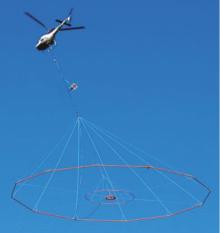
Fig.1
A typical airborne towed detection coil array system
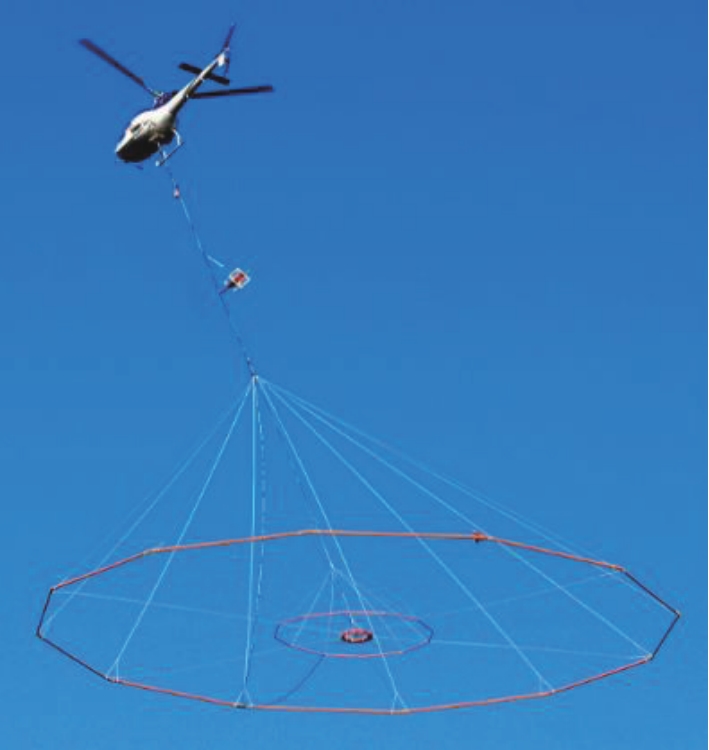
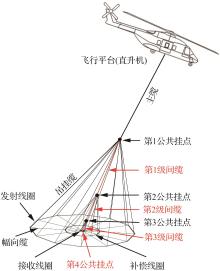
Fig.2
Schematic diagram of towed detection coil array system structure
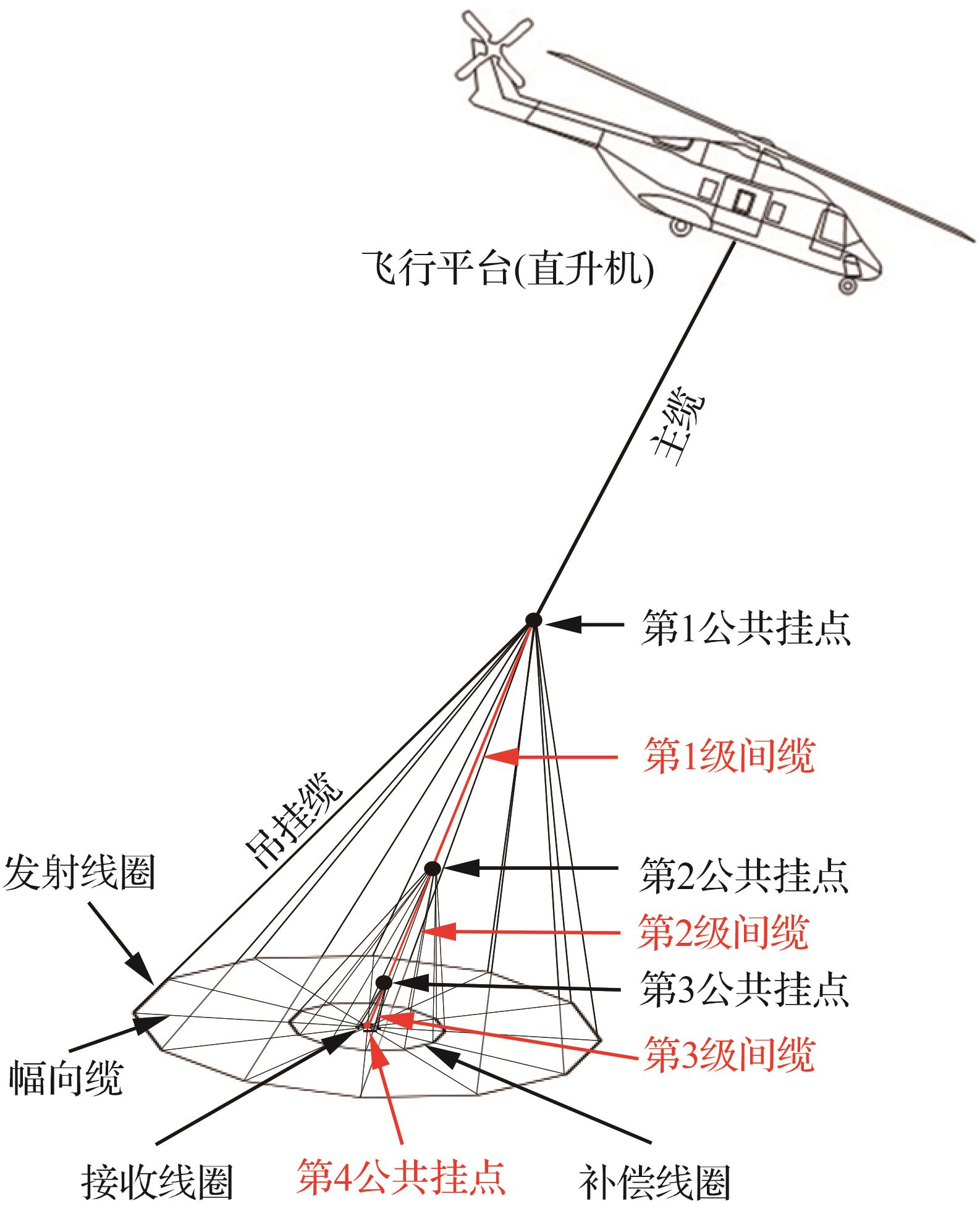
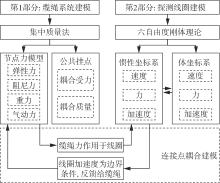
Fig.3
Schematic diagram of system dynamic modeling flowchart
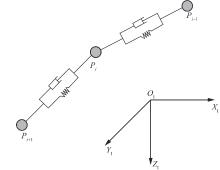
Fig.4
Schematic diagram of mass-spring-damper model
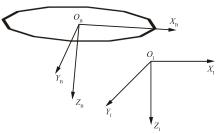
Fig.5
Coil body coordinate system and inertial coordinate system
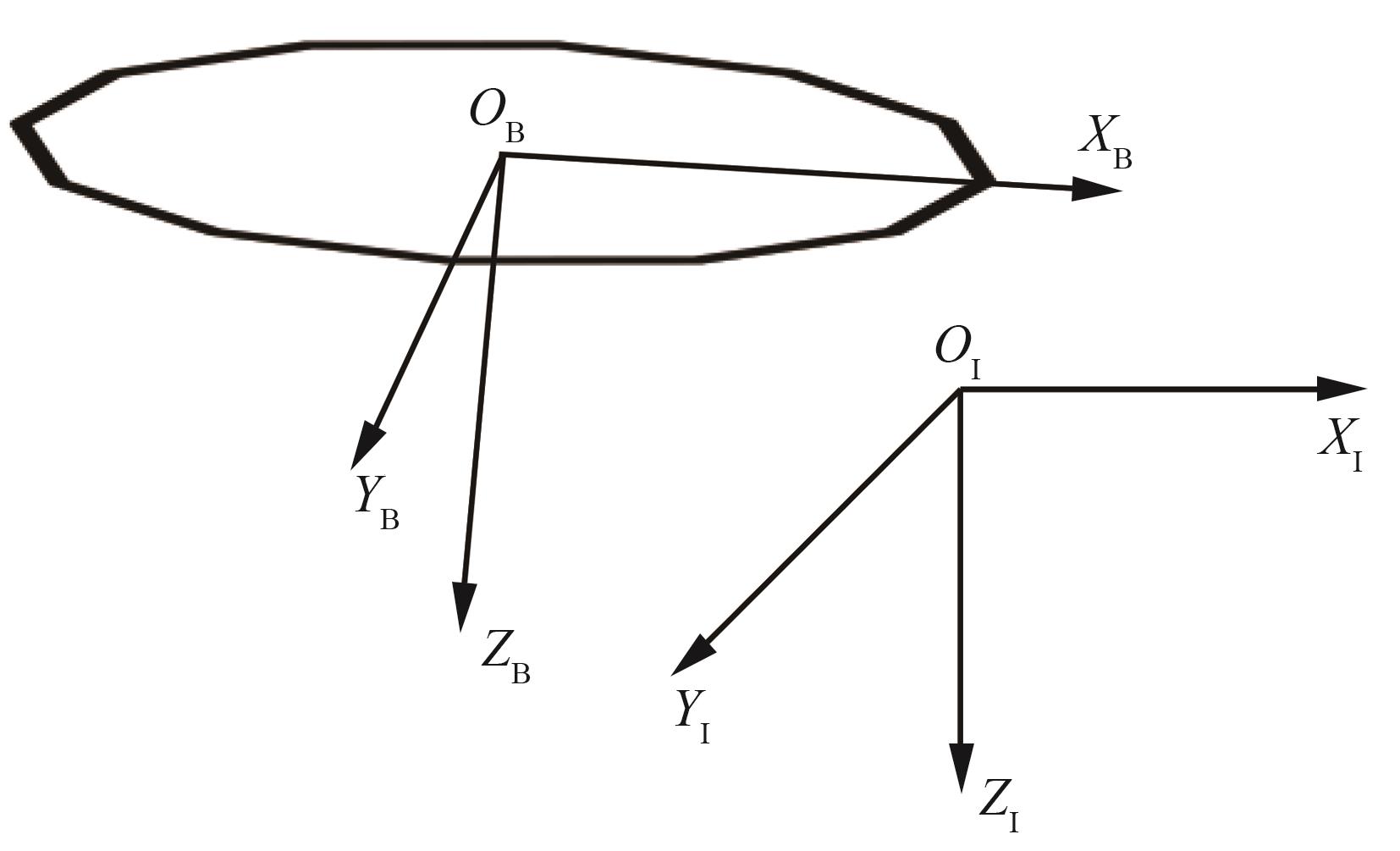
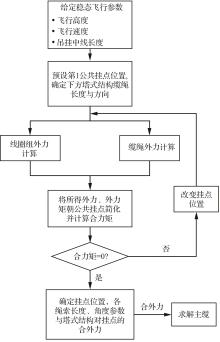
Fig.6
Process of system structural design
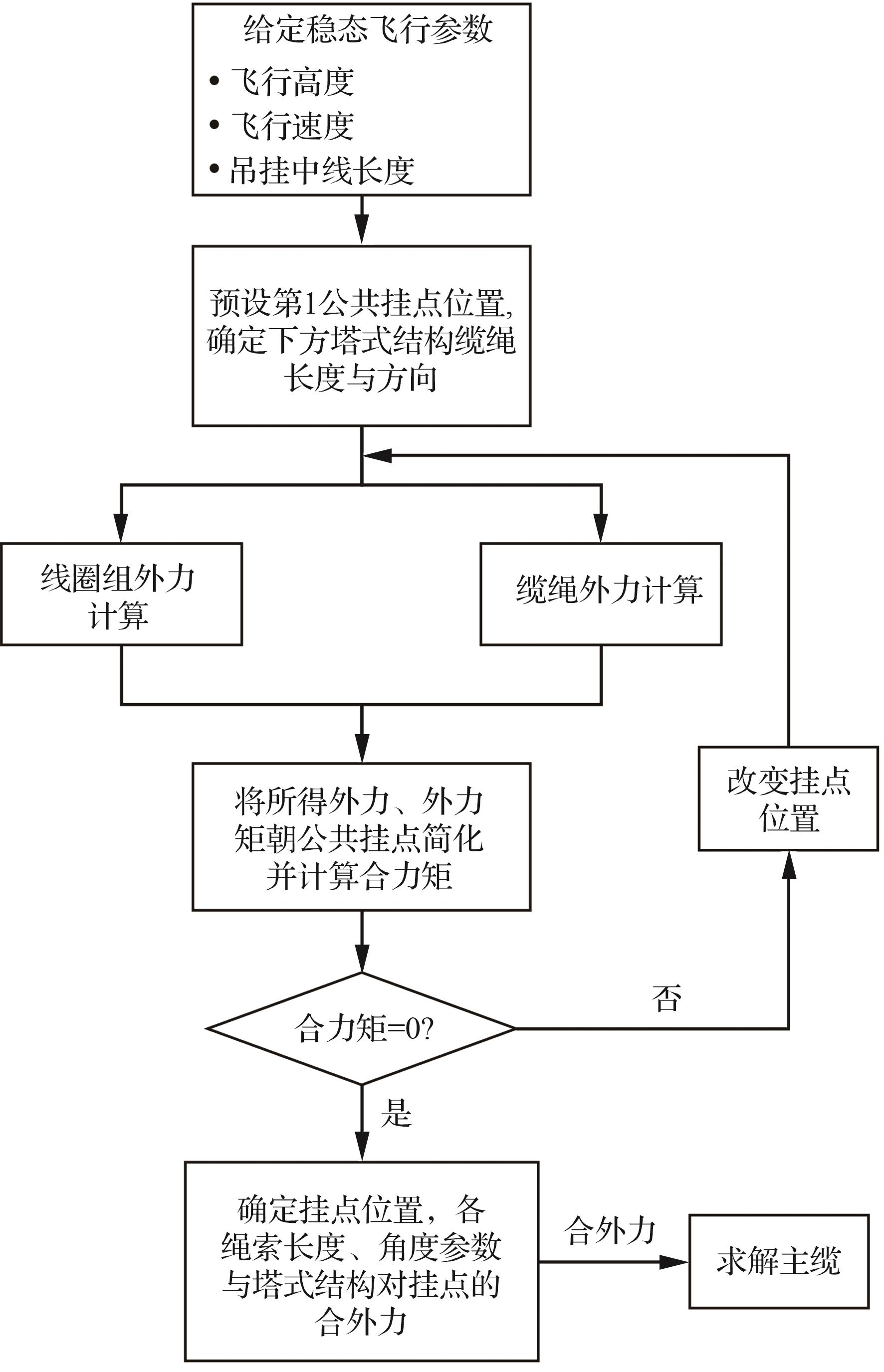
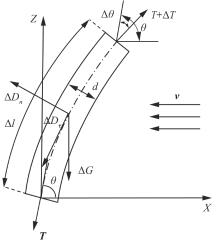
Fig.7
Force analysis of cable static modeling
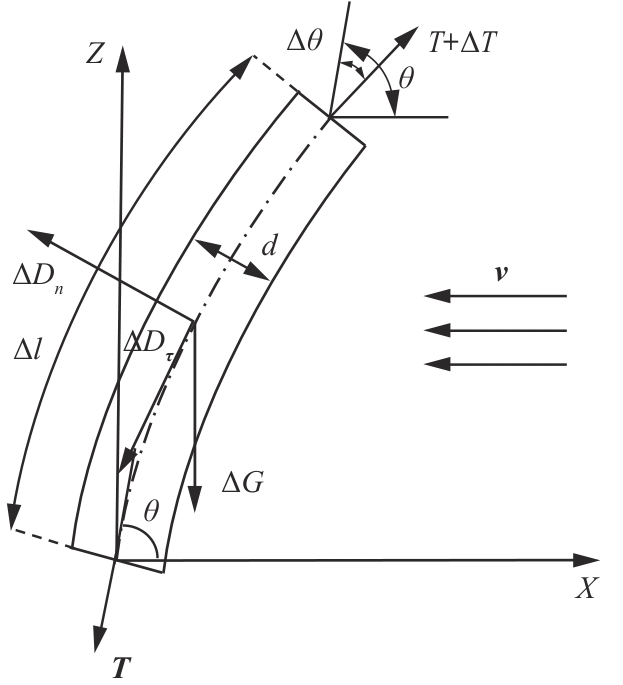
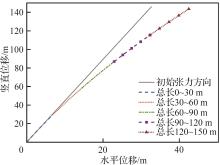
Fig.8
Comparison of flexible static model and simplified rigid-rod model of cable
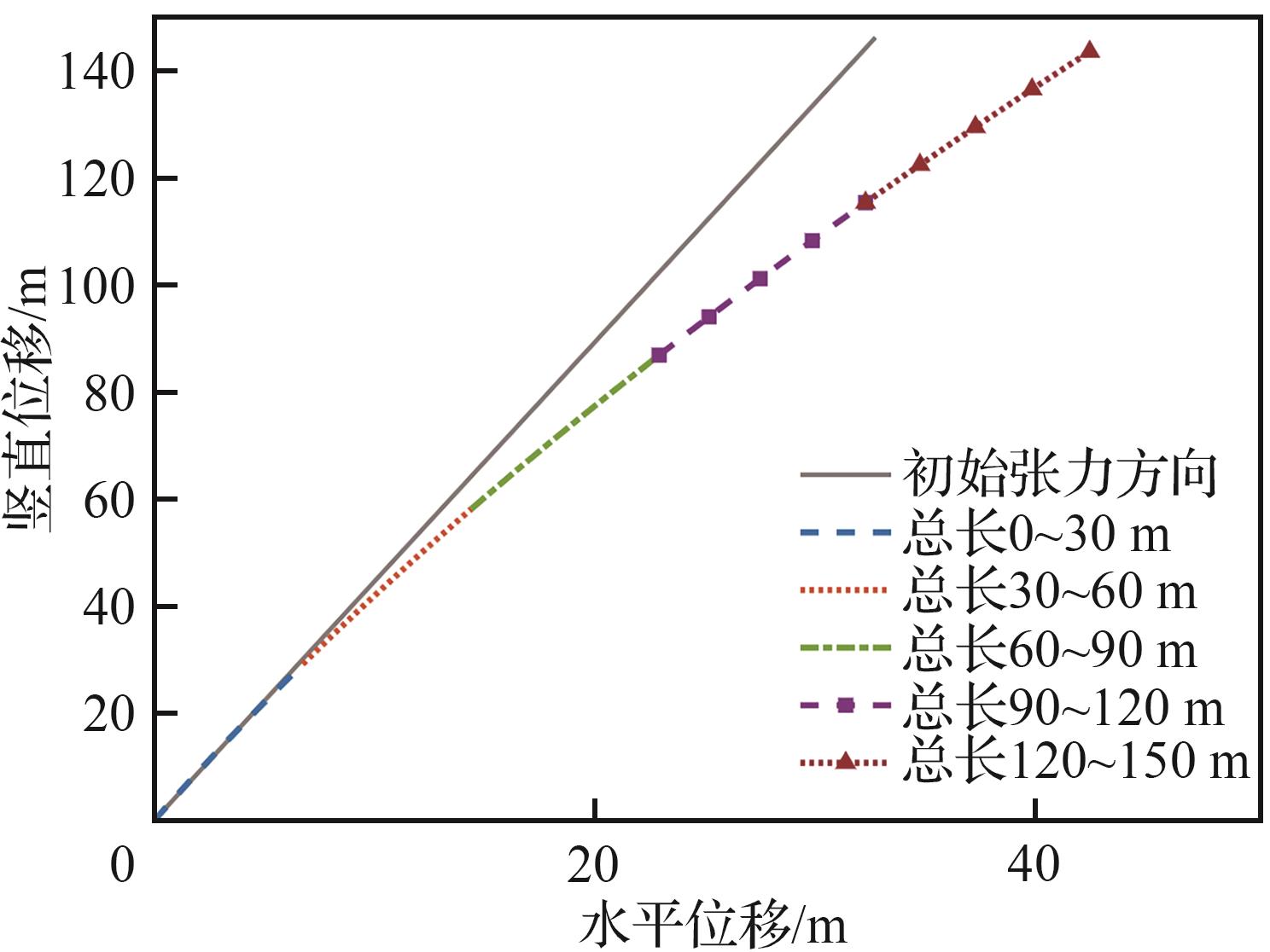
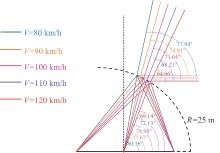
Fig.9
Comparison of system steady-state configurations at varying airspeeds (altitude: 2 km)
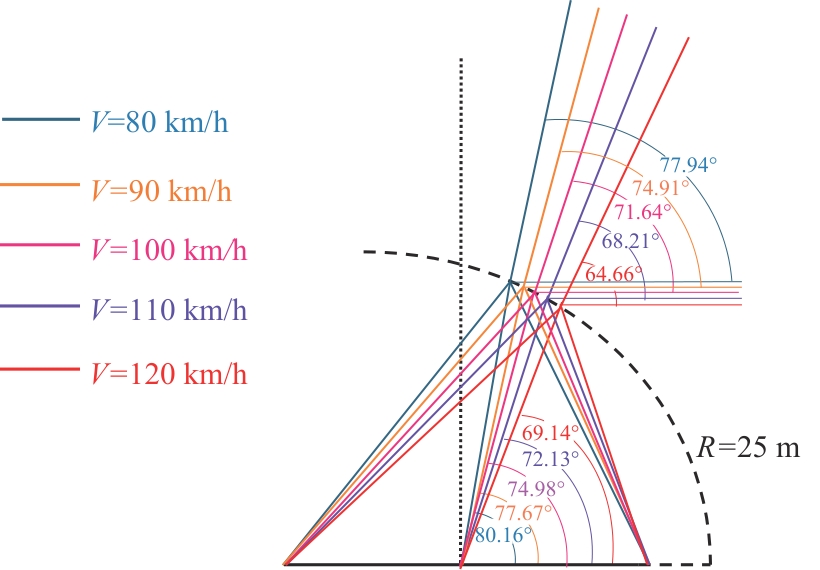
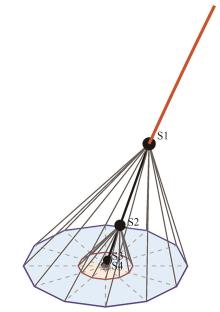
Fig.10
Three-dimensional steady-state configuration of system at 110 km/h airspeed (altitude: 2 km)
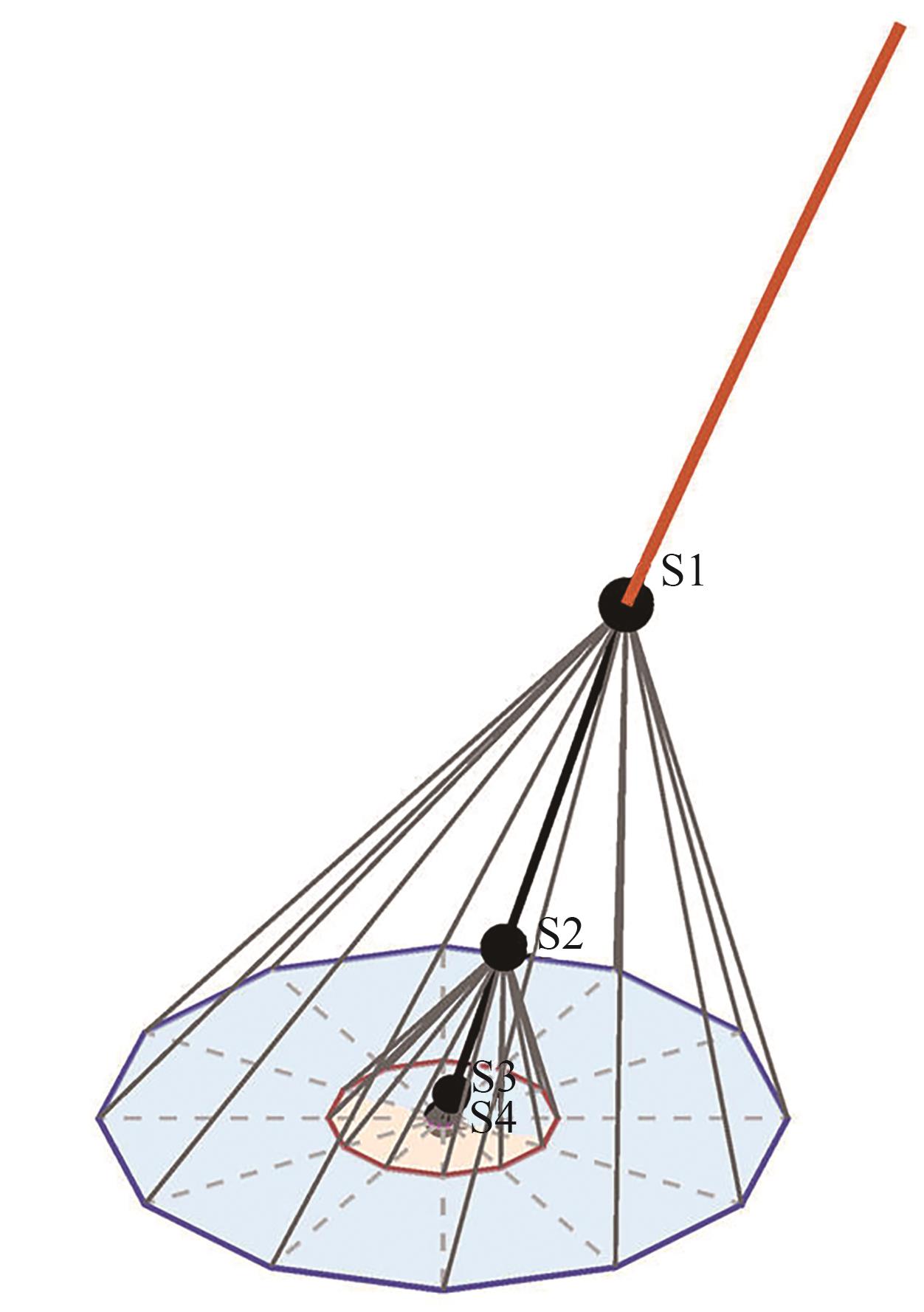
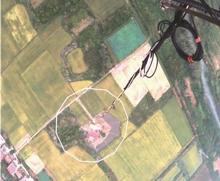
Fig.11
Flight verification of system
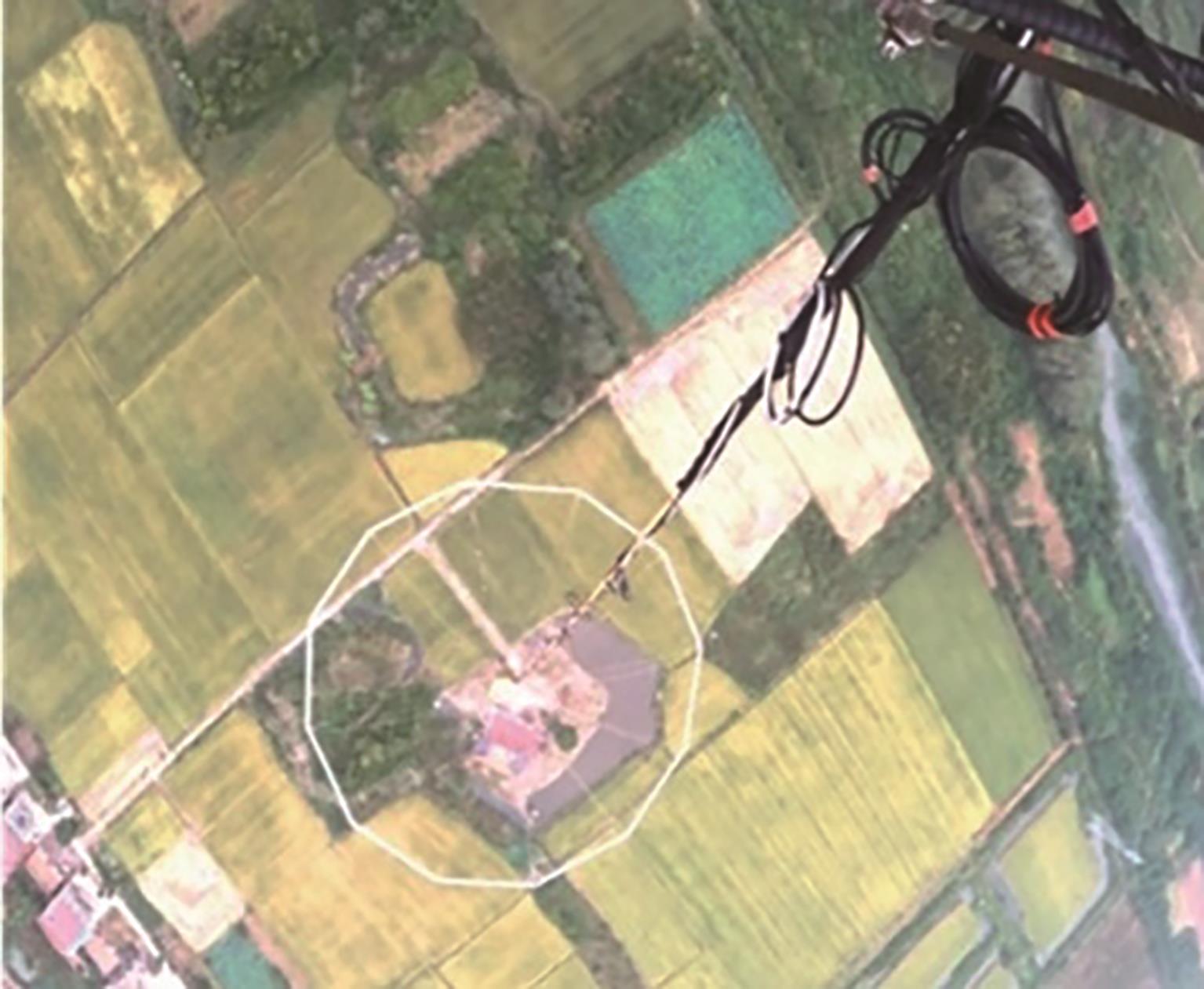
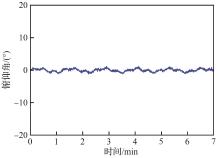
Fig.12
Measured pitch angle time-series data during steady-state flight
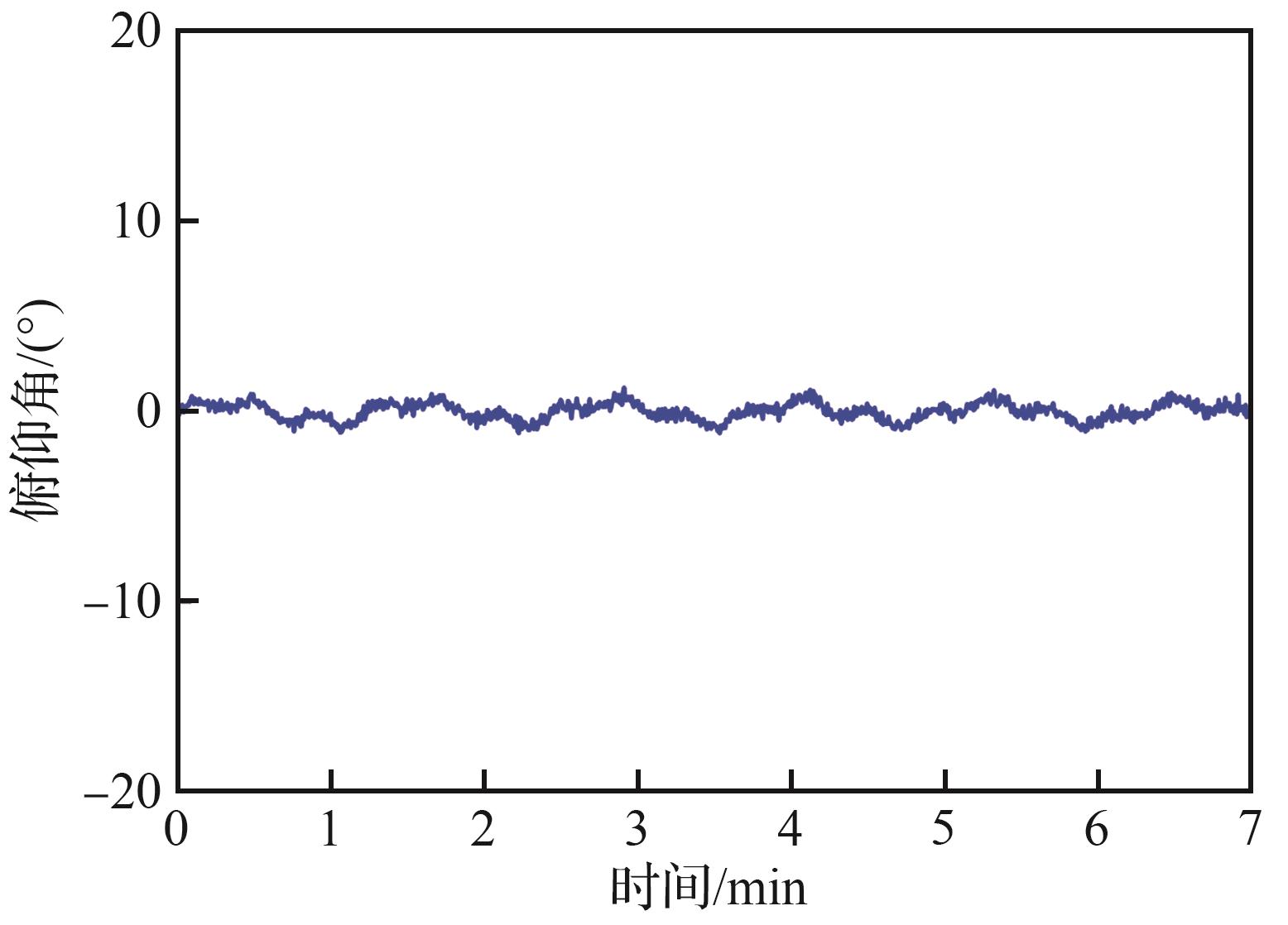

Table 1
Comparison of working lengths and back-calculated unstretched lengths for emittercoil suspension cables
| 缆绳编号 | 工作长度l/m | 反算原长l/m |
|---|---|---|
| 1 | 24.278 8 | 24.268 8 |
| 2 | 24.802 4 | 24.792 2 |
| 3 | 26.179 3 | 26.168 7 |
| 4 | 27.950 8 | 27.939 6 |
| 5 | 29.616 6 | 29.604 8 |
| 6 | 30.778 9 | 30.766 7 |
| 7 | 31.193 5 | 31.181 2 |
Table 2
Physical and geometric parameters of coils
| 参数 | 发射线圈 | 补偿线圈 | 接收线圈 |
|---|---|---|---|
| 质量m/kg | 367.8 | 100 | 25 |
| 惯量 | 28 092.91 | 848.44 | 4.55 |
| 惯量 | 28 092.91 | 848.44 | 4.55 |
| 惯量 | 54 902.60 | 1 658.12 | 8.90 |
| 参考面积S/ | 4.28 | 1.34 | 0.64 |
| 参考长度l/m | 25.00 | 8.33 | 0.60 |
Table 3
Physical and geometric parameters of cables
| 参数 | 主缆 | 级间缆 | 吊挂缆 | 幅向缆 |
|---|---|---|---|---|
| 密度ρ/(g·cm-3) | 1.667 | |||
| 弹性模量E/GPa | 100 | |||
| 阻尼系数C | 0.25 | |||
| 直径d/mm | 10 | 6 | 4 | 6 |
Table 4
Aerodynamic parameters of coils
| 参数 | 发射线圈 | 补偿线圈 | 接收线圈 |
|---|---|---|---|
| 0.259 3 | 0.253 7 | 0.160 7 | |
| 0.001 2 | 0.002 | 0.006 | |
| 6.8×10⁻⁴ | 6.7×10⁻⁴ | 8.5×10⁻⁴ | |
| 0.004 | 0.004 | 0.004 |
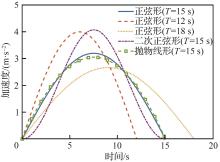
Fig.13
Comparison of acceleration profiles for five smooth acceleration strategies
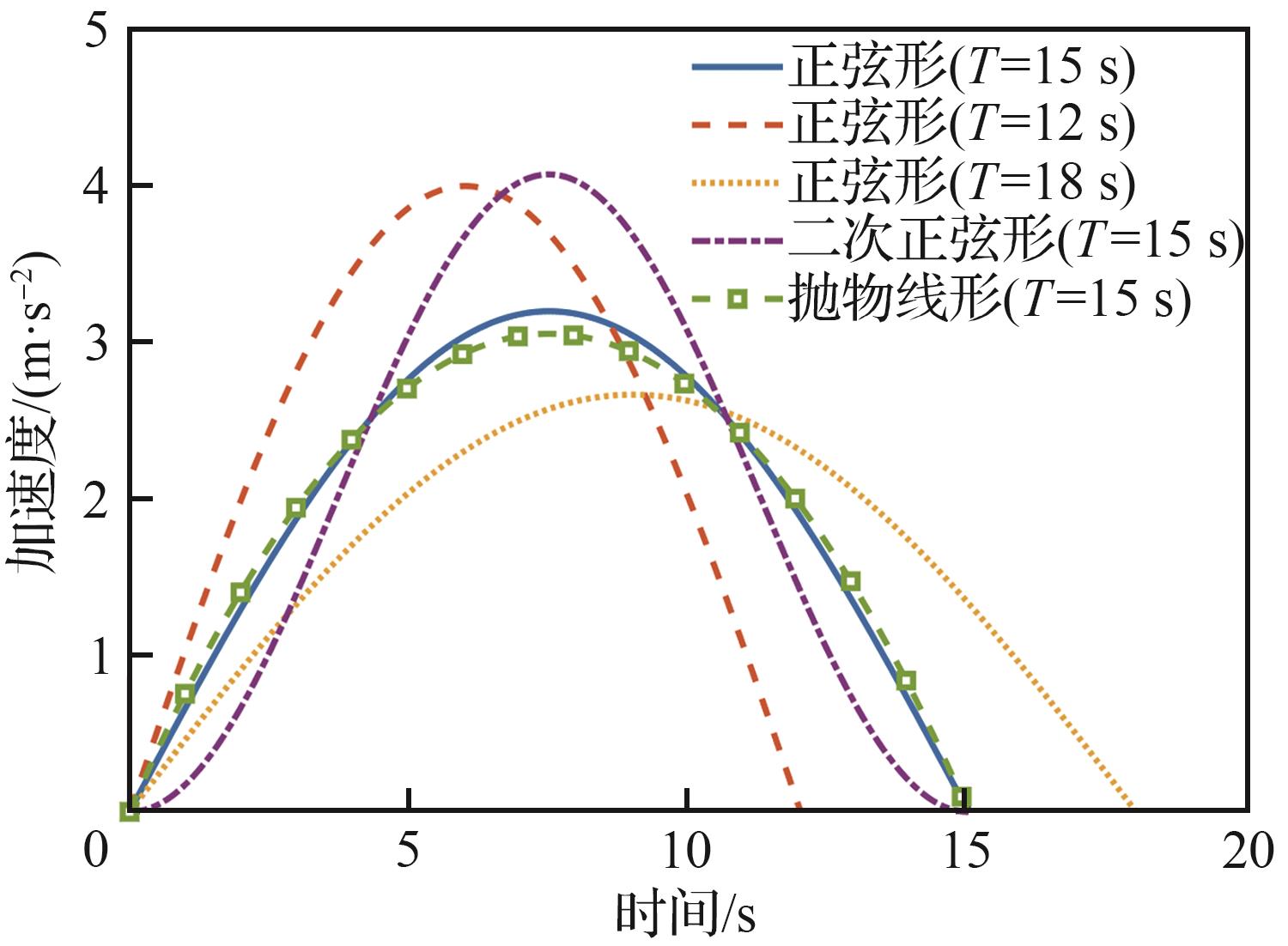
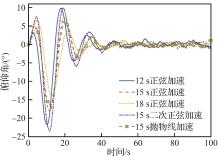
Fig.14
Effect of different acceleration strategies on emitter coil’s pitch angle
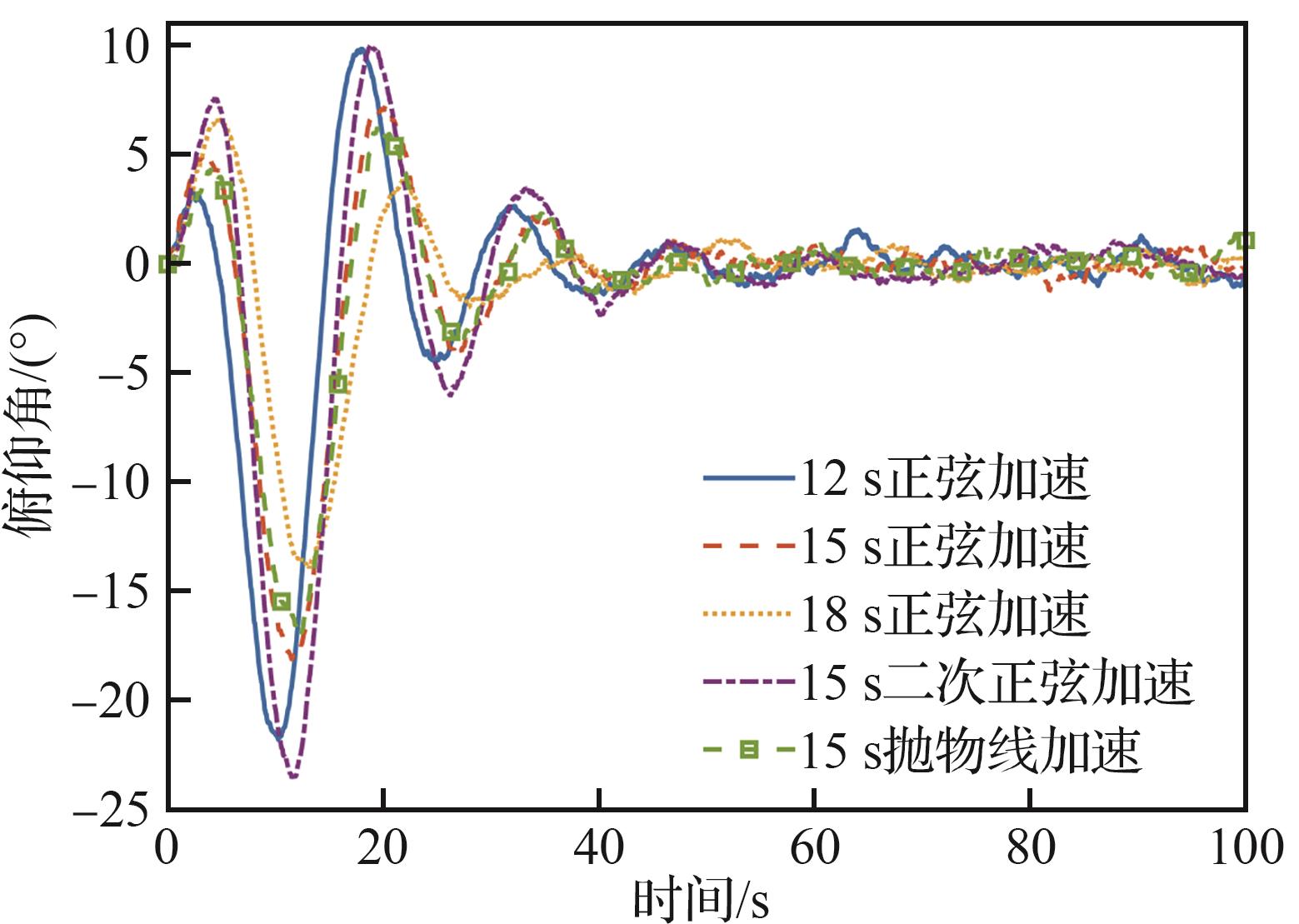
Fig.15
Effect of different acceleration strategies on tension at main cable apex
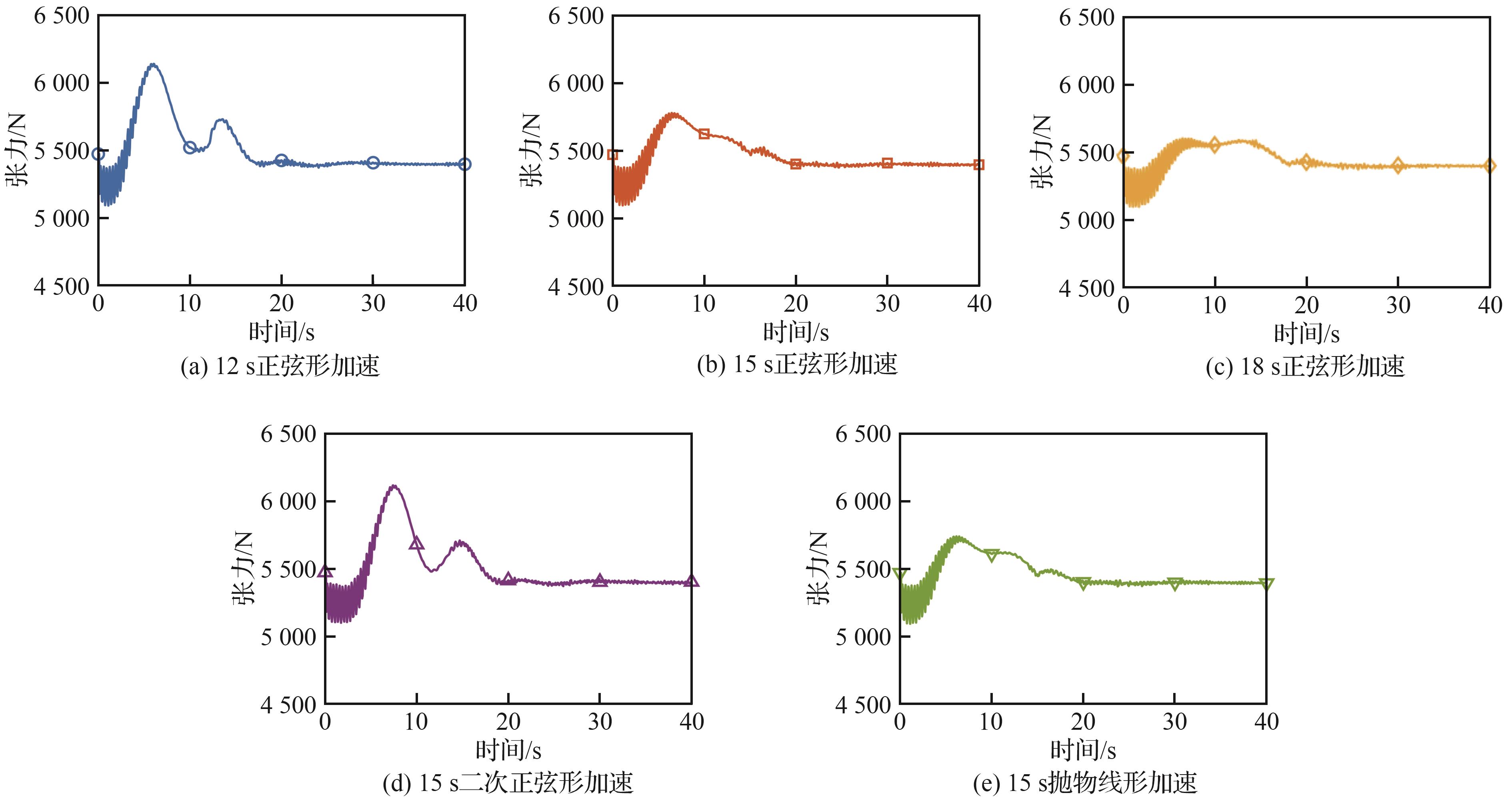
Fig.16
Effect of different acceleration strategies on total aerodynamic force of system
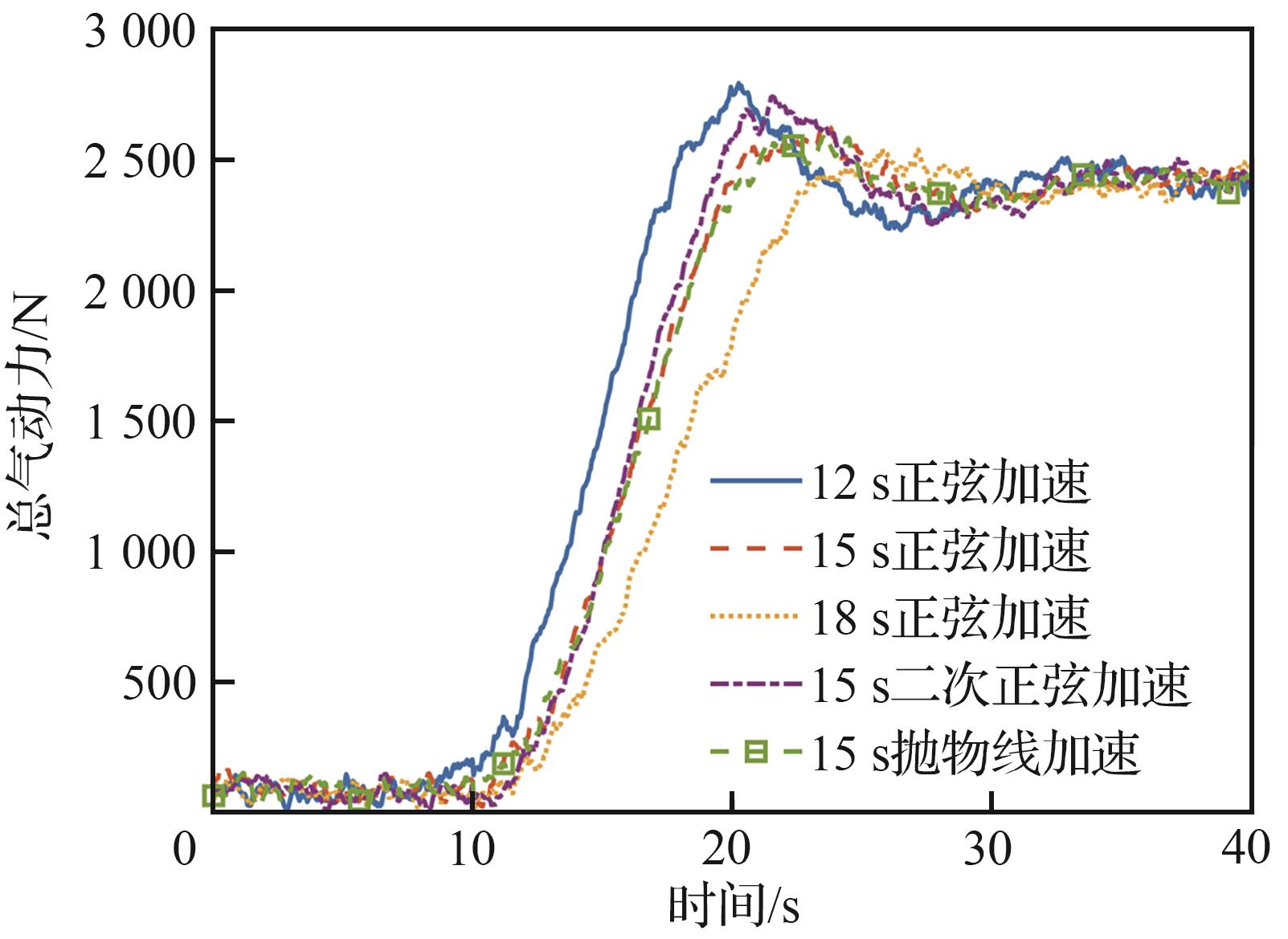
Fig.17
Effect of different membrane coverage rates on angle emitter coil’s pitch angle
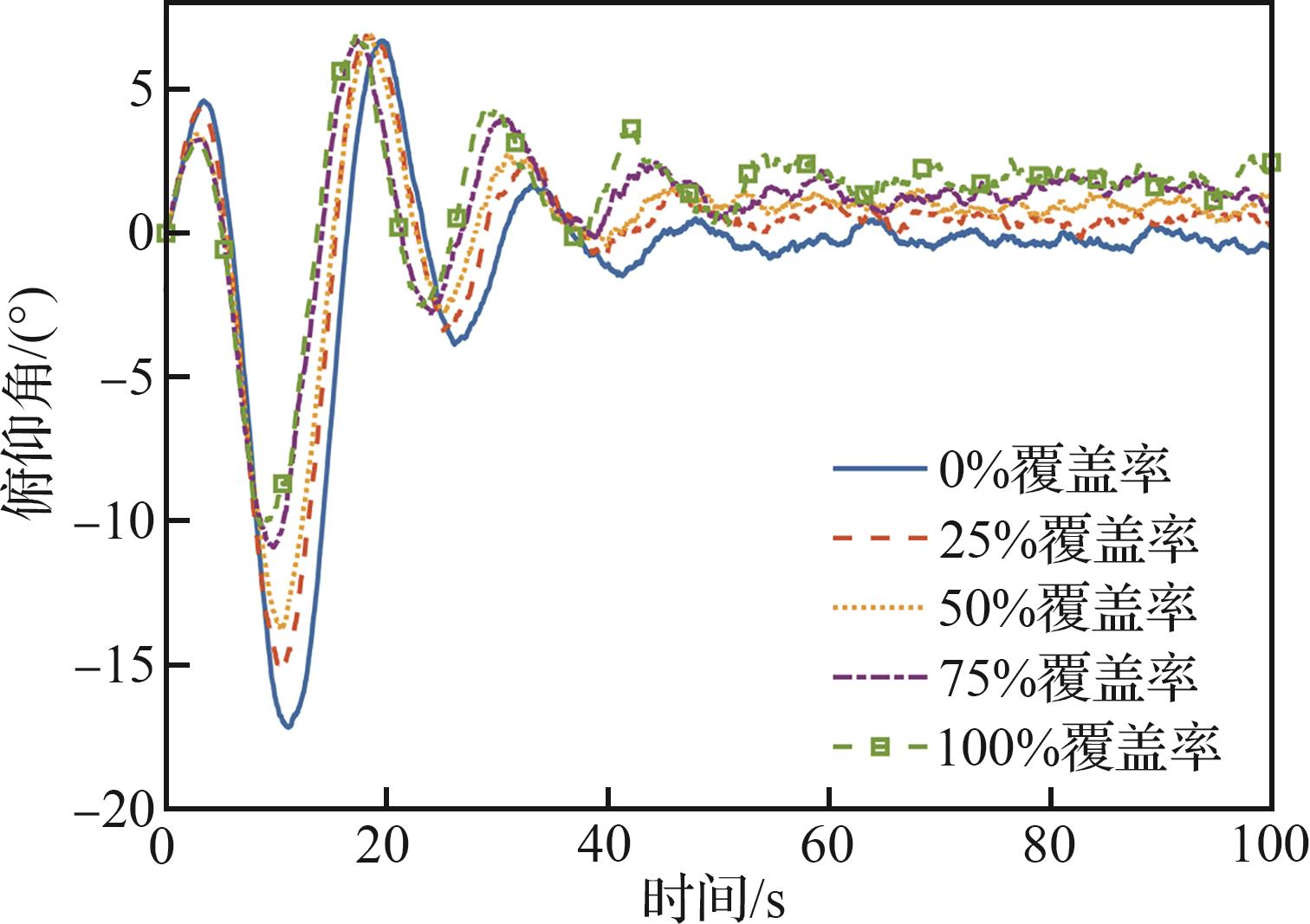
Fig.18
Effect of different membrane coverage rates on tension at main cable apex
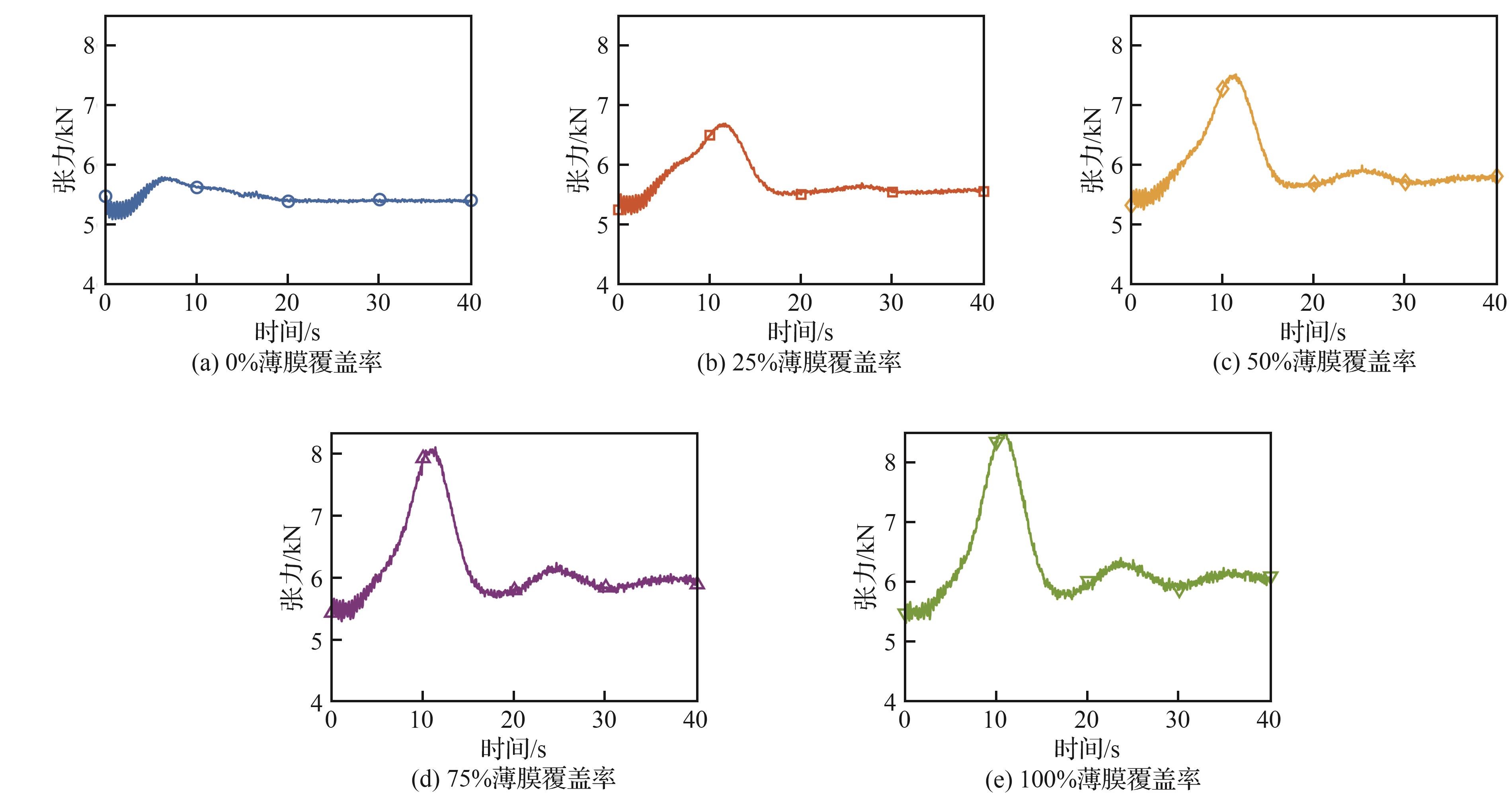
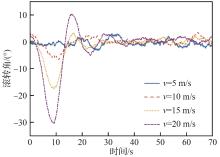
Fig.19
Effect of crosswind speed on emitter coil’s roll angle (direct crosswind)
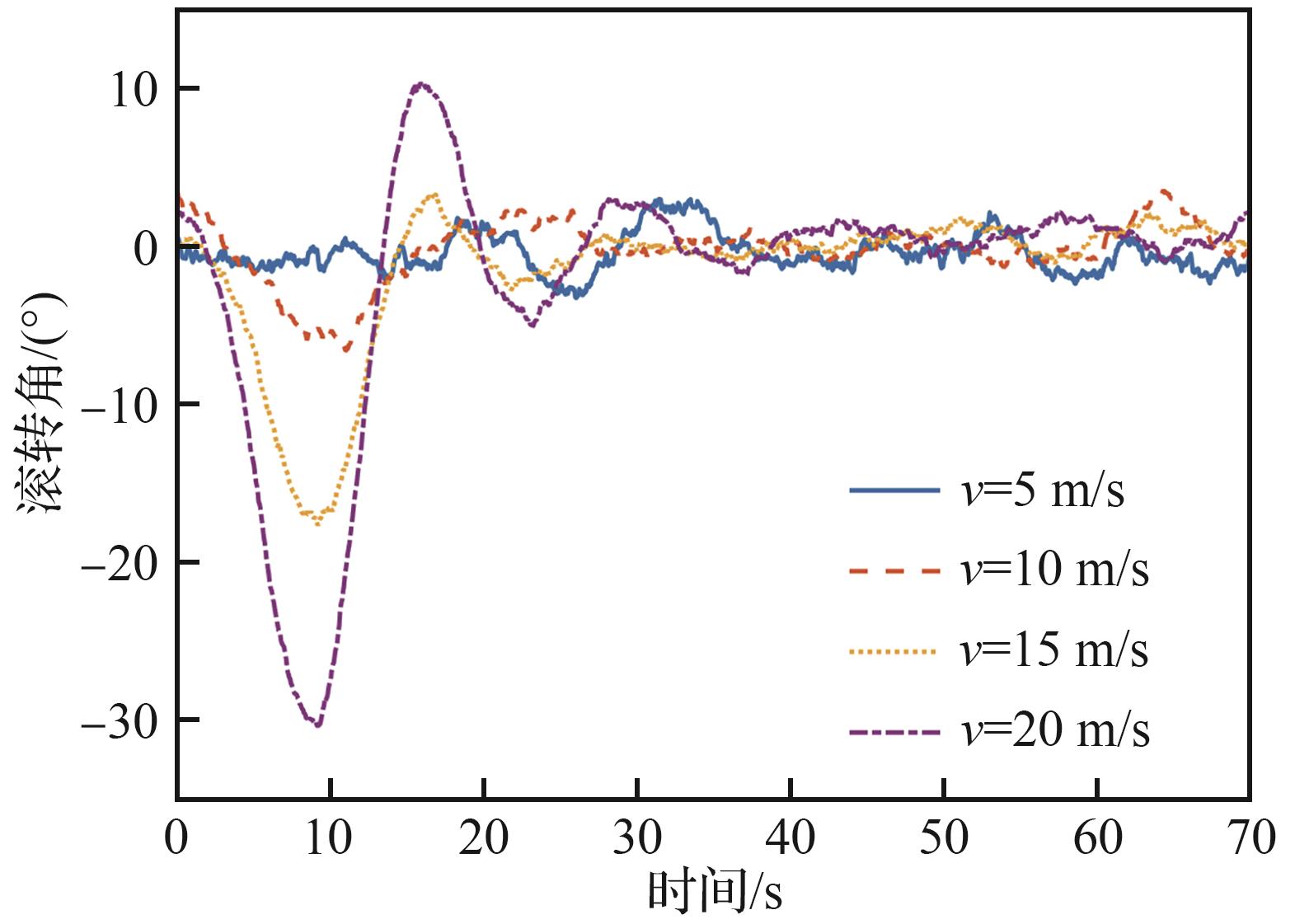
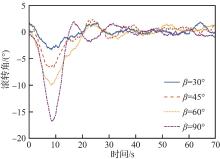
Fig.20
Effect of crosswind direction on emitter coil’s roll angle (15 m/s)
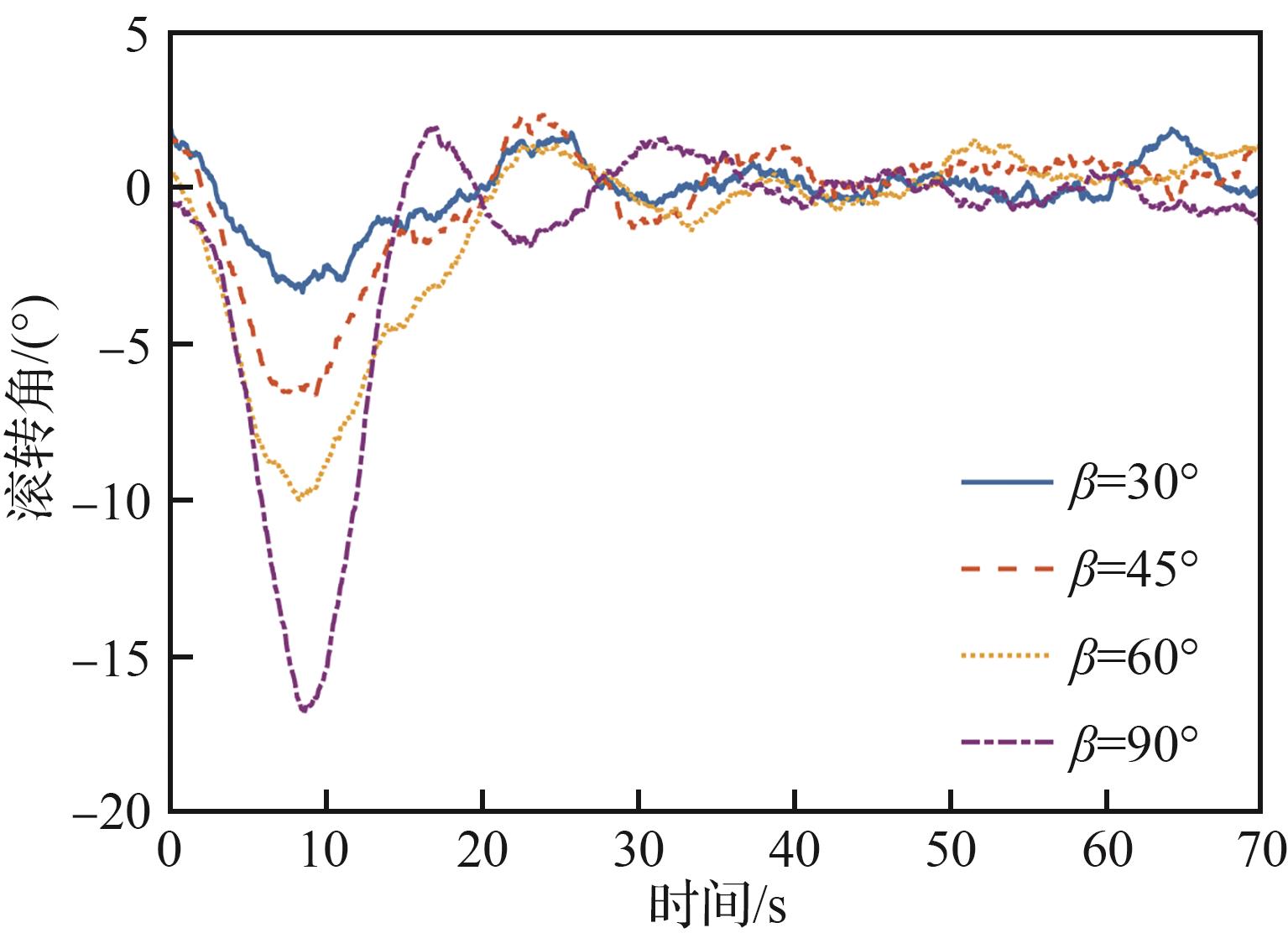
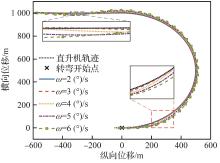
Fig.21
Effect of turning angular velocity on coil’s center of mass
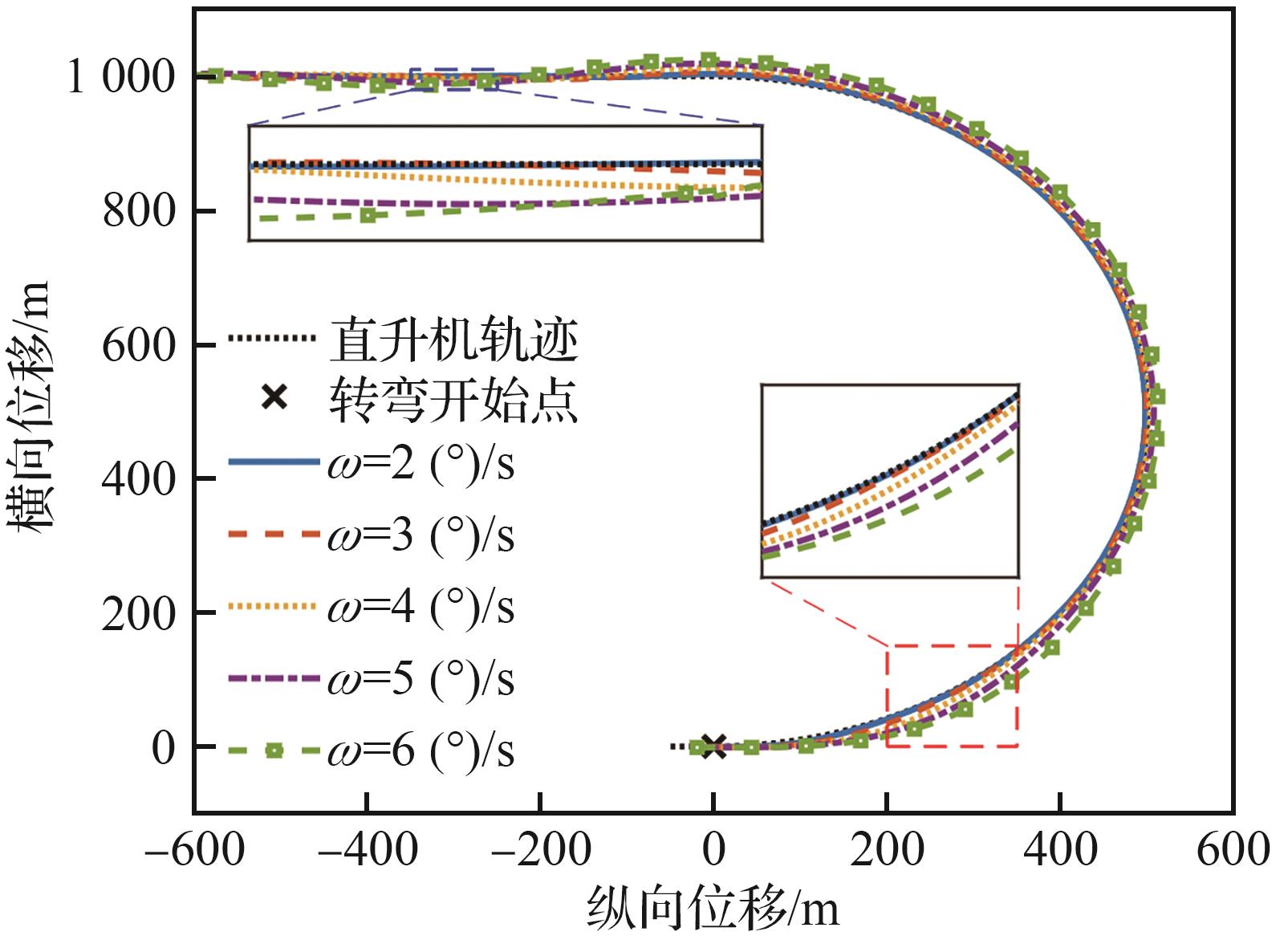
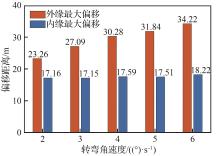
Fig.22
Effect of turning angular velocity on maximum offset distances of inner and outer envelopes
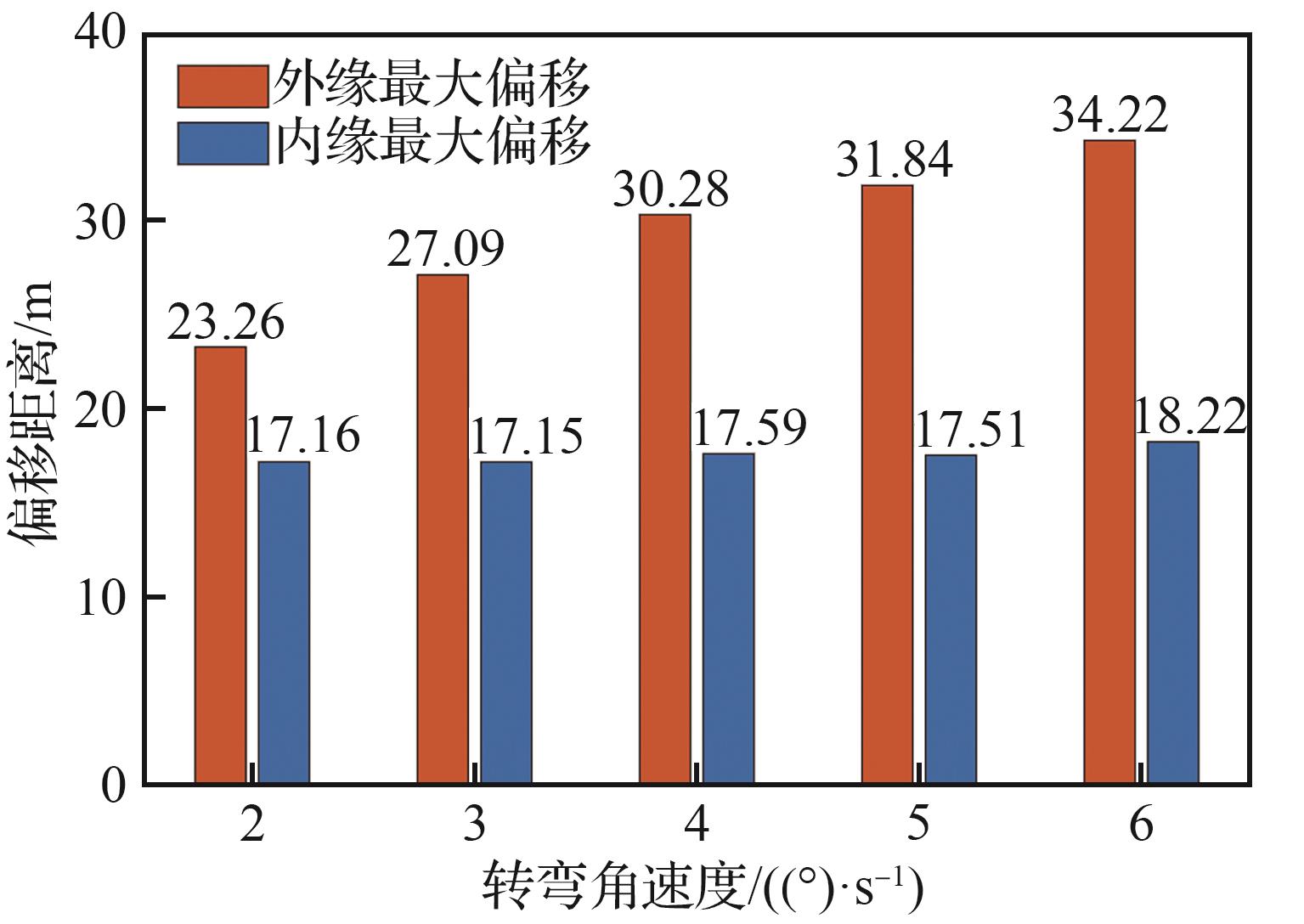
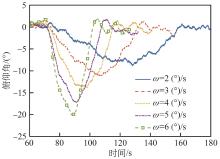
Fig.23
Effect of turning angular velocity on emitter coil’s pitch angle
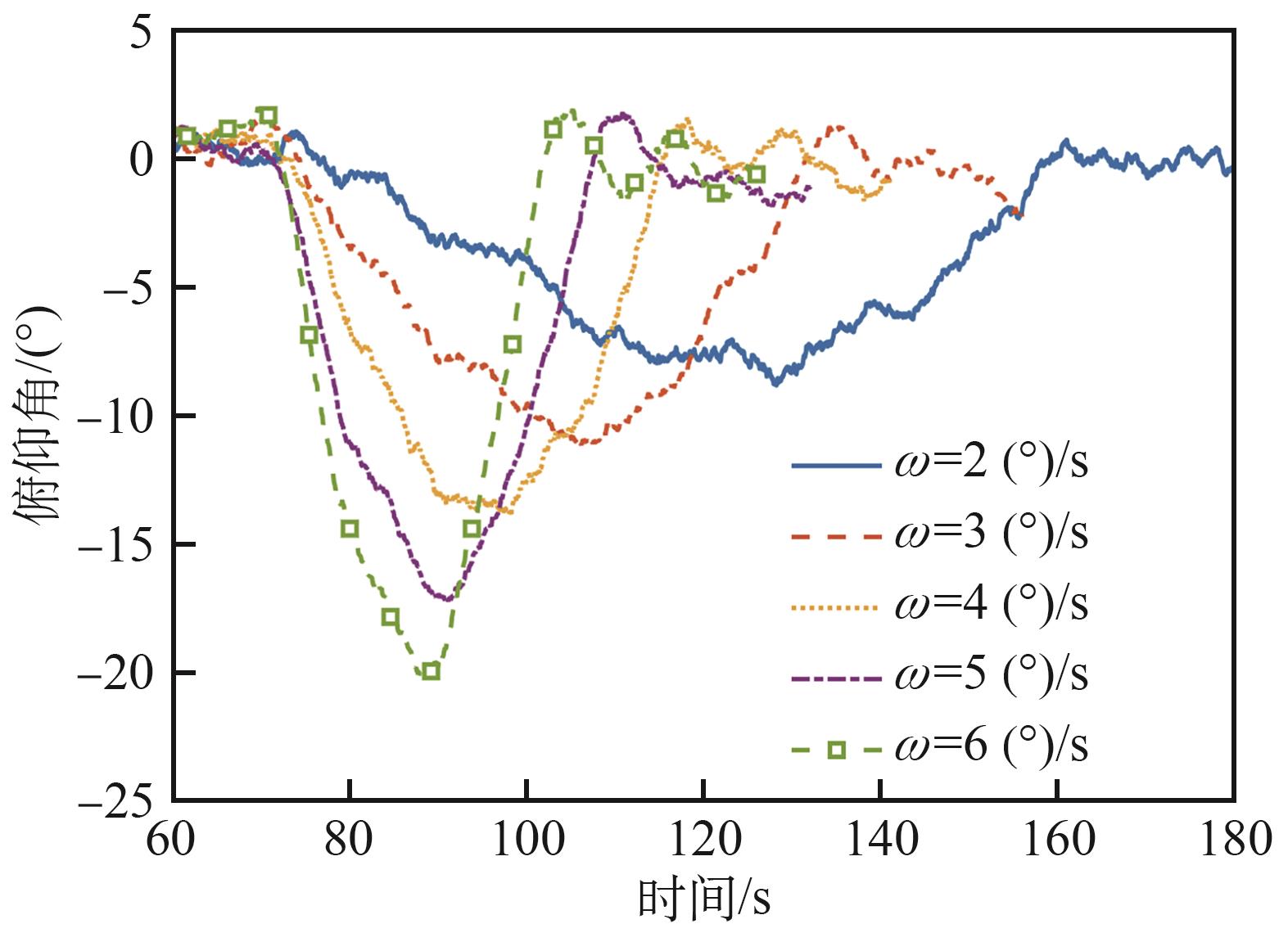
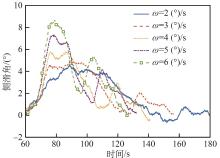
Fig.24
Effect of turning angular velocity on emitter coil’s side slip angle
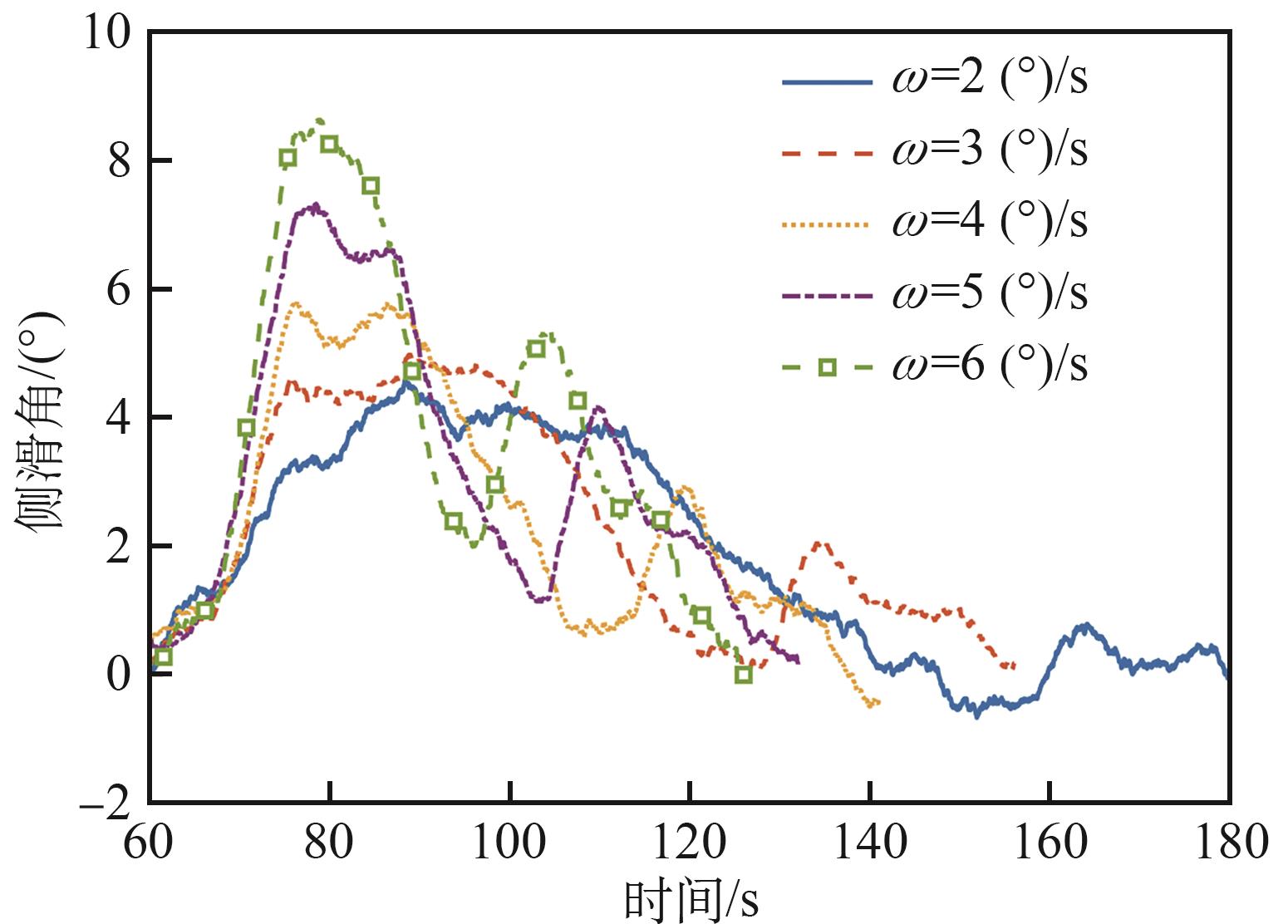
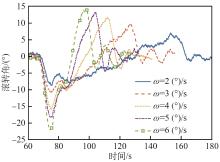
Fig.25
Effect of turning angular velocity on emitter coil’s roll angle
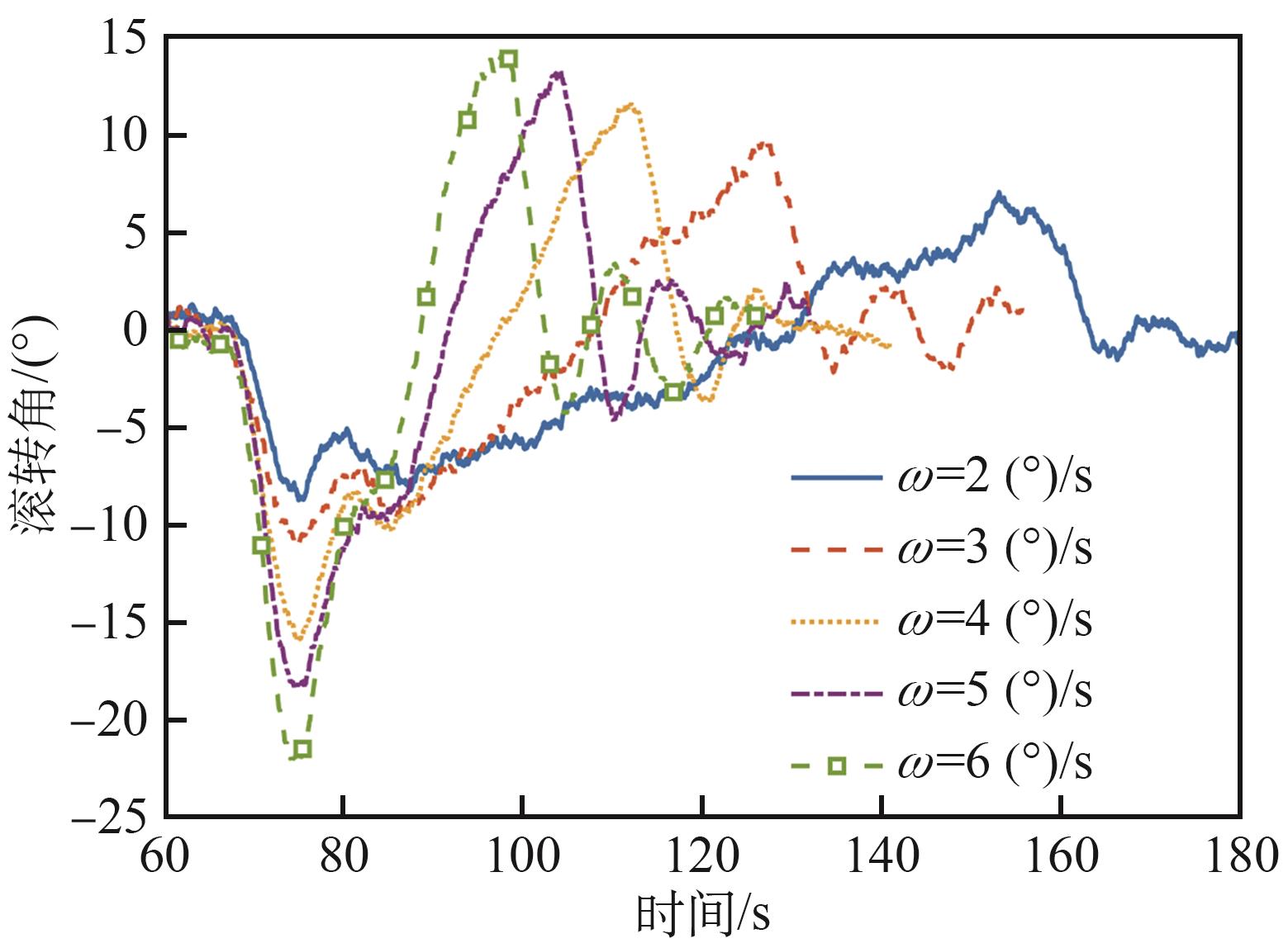
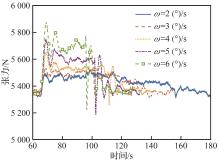
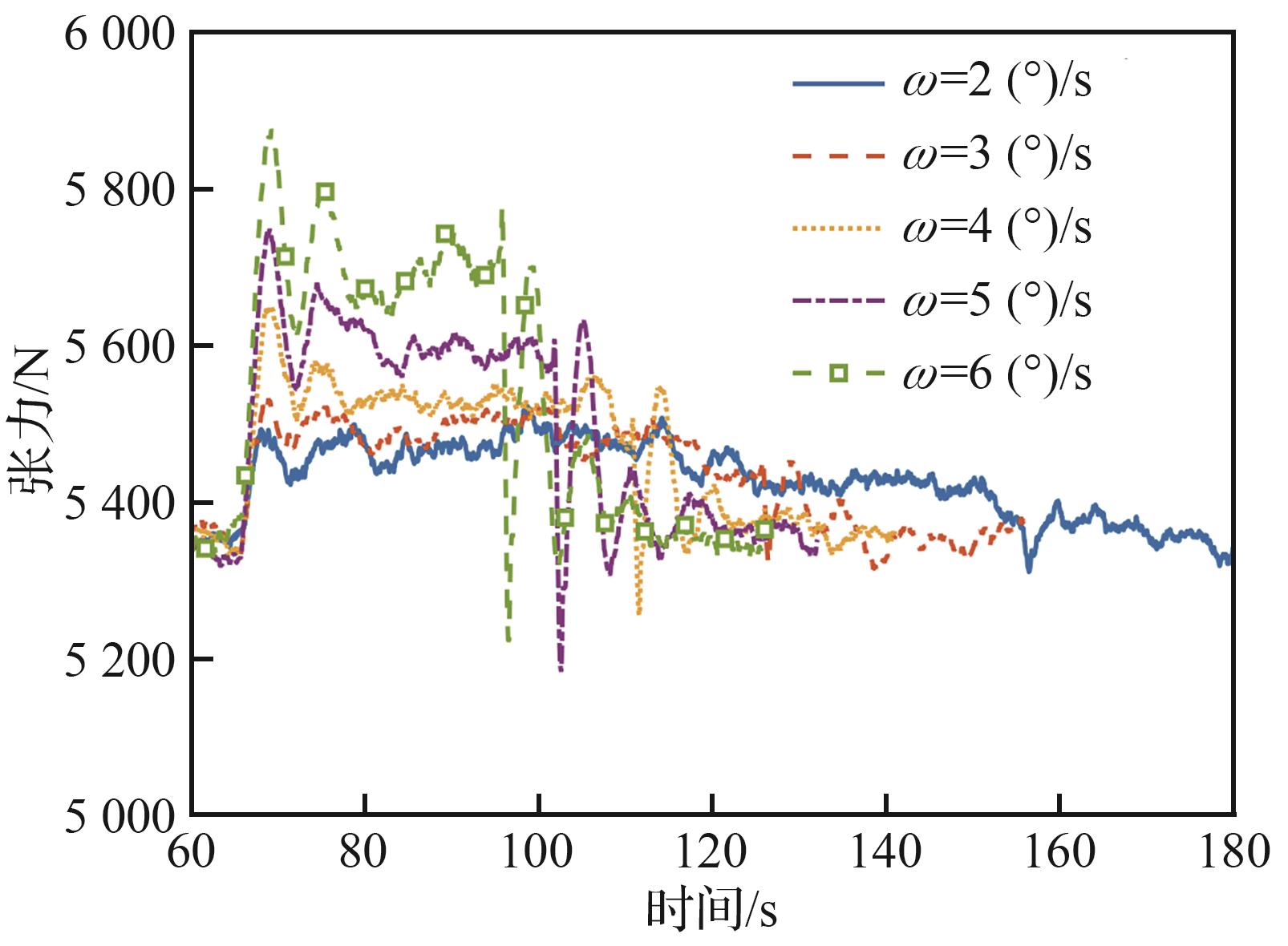
Fig.26
Effect of turning angular velocity on tension at main cable apex
| [1] | WU X, XUE G Q, HE Y M. The progress of the helicopter-borne transient electromagnetic method and technology in China[J]. IEEE Access, 2020, 8: 32757-32766. |
| [2] | 嵇艳鞠, 林君, 关珊珊, 等. 直升机航空TEM中心回线线圈姿态校正的理论研究[J]. 地球物理学报, 2010, 53(1): 171-176. |
| JI Y J, LIN J, GUAN S S, et al. Theoretical study of concentric loop coils attitude correction in helicopter-borne TEM[J]. Chinese Journal of Geophysics, 2010, 53(1): 171-176 (in Chinese). | |
| [3] | 武欣, 薛国强, 方广有. 中国直升机航空瞬变电磁探测技术进展[J]. 地球物理学进展, 2019, 34(4): 1679-1686. |
| WU X, XUE G Q, FANG G Y. Development of helicopter-borne transient electromagnetic in China[J]. Progress in Geophysics, 2019, 34(4): 1679-1686 (in Chinese). | |
| [4] | CICOLANI L S, MCCOY A H, SAHAI R, et al. Flight test identification and simulation of a UH-60 A helicopter and slung load[J]. Journal of the American Helicopter Society, 2001, 46(2): 140-160. |
| [5] | 马东立, 刘亚枫, 林鹏. 航空拖曳诱饵系统的动态特性研究[J]. 航空学报, 2014, 35(1): 161-170. |
| MA D L, LIU Y F, LIN P. Study of dynamic characteristics of aeronautic towed decoy system[J]. Acta Aeronautica et Astronautica Sinica, 2014, 35(1): 161-170 (in Chinese). | |
| [6] | MA D L, WANG S Q, YANG M Q, et al. Dynamic simulation of aerial towed decoy system based on tension recurrence algorithm[J]. Chinese Journal of Aeronautics, 2016, 29(6): 1484-1495. |
| [7] | 杜一江. 航空拖曳诱饵系统机动过程缆绳张力仿真[J]. 航空学报, 2021, 42(9): 224495. |
| DU Y J. Simulation on cable tension of aerial towed decoy system during maneuvers[J]. Acta Aeronautica et Astronautica Sinica, 2021, 42(9): 224495 (in Chinese). | |
| [8] | 王飞, 丁伟, 邓德衡, 等. 水下多缆多体拖曳系统运动建模与模拟计算[J]. 上海交通大学学报, 2020, 54(5): 441-450. |
| WANG F, DING W, DENG D H, et al. Motion modeling and numerical simulation study of underwater multi-cable multi-body towed system[J]. Journal of Shanghai Jiao Tong University, 2020, 54(5): 441-450 (in Chinese). | |
| [9] | DOROUDGAR S. Static and dynamic modeling and simulation of the umbilical cable in a tethered un-manned aerial system[D]. Burnaby: Simon Fraser University, 2016. |
| [10] | 侯森浩, 唐晓强, 孙海宁, 等. 面向航天器分离的高速索力传递特性[J]. 清华大学学报(自然科学版), 2021, 61(3): 177-182. |
| HOU S H, TANG X Q, SUN H N, et al. Transfer characteristics of high-speed cable forces for spacecraft separation[J]. Journal of Tsinghua University (Science and Technology), 2021, 61(3): 177-182 (in Chinese). | |
| [11] | ZHAO T, SCHNEIDER-JUNG F, LINN J, et al. Simulation and parameterization of nonlinear elastic behavior of cables[J]. Multibody System Dynamics, 2025, 63(4): 537-556. |
| [12] | WU J M, YANG X Y, XU S Y, et al. Numerical investigation on underwater towed system dynamics using a novel hydrodynamic model[J]. Ocean Engineering, 2022, 247: 110632. |
| [13] | QUISENBERRY J, ARENA A. Dynamic simulation of low altitude aerial tow systems[C]∥ AIAA Atmospheric Flight Mechanics Conference and Exhibit. Reston: AIAA, 2004. |
| [14] | 阎永举, 李道春, 向锦武, 等. 基于Kane方程的拖曳式诱饵释放过程动态特性分析[J]. 航空学报, 2014, 35(7): 1912-1921. |
| YAN Y J, LI D C, XIANG J W, et al. Dynamic characteristics analysis of towed decoy during release based on Kane’s equation[J]. Acta Aeronautica et Astronautica Sinica, 2014, 35(7): 1912-1921 (in Chinese). | |
| [15] | WILLIAMS P, TRIVAILO P. Dynamics of circularly towed aerial cable systems, part Ⅰ: Optimal configurations and their stability[J]. Journal of Guidance, Control, and Dynamics, 2007, 30(3): 753-765. |
| [16] | WILLIAMS P. Optimization of circularly towed cable system in crosswind[J]. Journal of Guidance, Control, and Dynamics, 2010, 33(4): 1251-1263. |
| [17] | WILLIAMS P, TRIVAILO P. Cable-supported sliding payload deployment from a circling fixed-wing aircraft[J]. Journal of Aircraft, 2006, 43(5): 1567-1570. |
| [18] | SUN L, HEDENGREN J D, BEARD R W. Optimal trajectory generation using model predictive control for aerially towed cable systems[J]. Journal of Guidance, Control, and Dynamics, 2014, 37(2): 525-539. |
| [19] | FERRIN J, NICHOLS J, MCLAIN T. Design and control of a maneuverable towed aerial vehicle[C]∥ AIAA Guidance, Navigation, and Control Conference. Reston: AIAA, 2012. |
| [20] | 苏子康, 李春涛, 余跃, 等. 绳系拖曳飞行器高抗扰轨迹跟踪控制[J]. 北京航空航天大学学报, 2021, 47(11): 2234-2248. |
| SU Z K, LI C T, YU Y, et al. High anti-disturbance trajectory tracking control for cable towed vehicle[J]. Journal of Beijing University of Aeronautics and Astronautics, 2021, 47(11): 2234-2248 (in Chinese). | |
| [21] | MA T L, WEI Z H, WANG X S, et al. Simulation of the reel-In operation of towed target system with constant-length method[C]∥ AIAA Scitech 2019 Forum. Reston: AIAA, 2019. |
| [22] | MA T L, WEI Z H, CHEN H B, et al. Simulation of the dynamic retrieval process of a towed target system under towing airplane’s wake and atmospheric turbulence[J]. Proceedings of the Institution of Mechanical Engineers, Part G: Journal of Aerospace Engineering, 2020, 234(9): 1518-1530. |
| [23] | 苏子康, 陈海通, 李春涛, 等. 非匹配包线下无人机空基回收拖曳系统协调运动规划[J]. 航空学报, 2023, 44(10): 327377. |
| SU Z K, CHEN H T, LI C T, et al. Coordinating motion planning for towed cable system in UAV aerial recovery with unmatched envelope[J]. Acta Aeronautica et Astronautica Sinica, 2023, 44(10): 327377 (in Chinese). | |
| [24] | CHEN X, HONG B, LIN Z X, et al. Lumped mass model for flexible cable: a review[J]. Journal of Physics: Conference Series, 2021, 1995(1): 012029. |
| [25] | KHAN A, WANG X Y, LI Z Y, et al. Analytical and numerical study of underwater tether cable dynamics for seabed walking robots using quasi-static approximation[J]. Journal of Marine Science and Engineering, 2023, 11(8): 1539. |
| [26] | DODIC M, KRSTIC B, RASUO B, et al. Numerical analysis of glauert inflow formula for single-rotor helicopter in steady-level flight below stall-flutter limit[J]. Aerospace, 2023, 10(3): 238. |
| [27] | HALL M. Generalized quasi-static mooring system modeling with analytic jacobians[J]. Energies, 2024, 17(13): 3155. |
| [28] | LI W X, CHEN S Y, HUANG H. System reduction-based approximate reanalysis method for statically indeterminate structures with high-rank modification[J]. Structures, 2023, 55: 1423-1436. |
| [1] | Xiangyu WANG, Xianyun CHEN, Mengqi LIU, Zhenping FENG. Influence of vibration on aerothermal characteristics of turbine blade tips under maneuvering loads [J]. Acta Aeronautica et Astronautica Sinica, 2026, 47(8): 132710-132710. |
| [2] | Jiayi LI, Haiqing SI, Hao DONG, Jingxuan QIU, Tianyu XIA. Verification and validation of deep dynamic stall numerical simulation method [J]. Acta Aeronautica et Astronautica Sinica, 2026, 47(6): 132671-132671. |
| [3] | Qixiao ZHU, Yanxin HUANG, Rui ZHU, Xiaochen HANG, Qingguo FEI. Research progress on dynamic load characteristics, measurement and identification technology of aircraft structure [J]. Acta Aeronautica et Astronautica Sinica, 2026, 47(5): 232510-232510. |
| [4] | Yongli ZHANG, Zhiqi NIU, Lei YU, Junhui MENG, Feng SUN. Advances and prospects in application of key structural technologies for intelligent ammunition [J]. Acta Aeronautica et Astronautica Sinica, 2026, 47(4): 232351-232351. |
| [5] | Wangqing ZHU, Chenkai CAO, Guoqing ZHAO, Qinghua ZHU, Haoyu HU. Aerodynamic interference of scissor tail rotor and influence of unconventional layout parameters [J]. Acta Aeronautica et Astronautica Sinica, 2025, 46(S1): 732181-732181. |
| [6] | Lingling CHEN, Yang ZHANG, Yongqiang SHI, Qingzhen YANG. Film cooling performance/nozzle performance/infrared radiation characteristics of a vector nozzle [J]. Acta Aeronautica et Astronautica Sinica, 2025, 46(8): 631139-631139. |
| [7] | Jihong ZHU, Yifei ZHANG, Yahui ZHANG, Jie HOU, Weihong ZHANG. Shape preserving design of aerospace structure: From geometric feature to energy channeling [J]. Acta Aeronautica et Astronautica Sinica, 2025, 46(6): 531833-531833. |
| [8] | Yaohui MA, Wenjie GUO, Tong GAO, Likai WANG, Liang CHANG. Design and implementation of topology optimization based on autonomous software SABRE architecture [J]. Acta Aeronautica et Astronautica Sinica, 2025, 46(21): 532423-532423. |
| [9] | Jing YAO, Shuai YANG, Mengyang WANG, Pei WANG. Modeling, performance analysis and test verification of a low-power digital valve [J]. Acta Aeronautica et Astronautica Sinica, 2025, 46(2): 430747-430747. |
| [10] | Dake TIAN, Liyong ZHANG, Yongbin WANG, Jishou FANG, Lu JIN, Rongqiang LIU. Design and analysis of hexagonal prism modular deployable membrane sunshield [J]. Acta Aeronautica et Astronautica Sinica, 2025, 46(18): 431749-431749. |
| [11] | He JIA, Wei JIANG, Wenlong BAO, Xin XU, Wei RONG, Li YU. Transonic/supersonic aerodynamic characteristics and fluid-structure interaction mechanism of flexible parachutes for planetary exploration [J]. Acta Aeronautica et Astronautica Sinica, 2025, 46(1): 630369-630369. |
| [12] | Dazhi SUN, Xi CHEN, Weicheng BAO, Wei BIAN, Qijun ZHAO. Interferences of high-speed helicopter fuselage on aerodynamic and aeroacoustic source characteristics of propeller [J]. Acta Aeronautica et Astronautica Sinica, 2024, 45(9): 529142-529142. |
| [13] | Yurou DAI, Jian LI, Xiaopeng XUE, Wei RONG. Aerodynamic characteristics of supersonic disk-gap-band parachute with different reefing ways [J]. Acta Aeronautica et Astronautica Sinica, 2024, 45(7): 128811-128811. |
| [14] | Bin LI, Zenan ZHANG, Fei JIA, Jian SUN, Yanju LIU, Jinsong LENG. Research status and development trend of morphing wingtip technology [J]. Acta Aeronautica et Astronautica Sinica, 2024, 45(19): 30042-030042. |
| [15] | Dingchong LYU, Shoujun ZHAO, Si ZENG, Jian FU, Xintong HU, Huixiang LIU, Kefei MIAO, Yongling FU. Key technologies and challenges of high⁃performance servo⁃motor⁃pumps [J]. Acta Aeronautica et Astronautica Sinica, 2024, 45(15): 630225-630225. |
| Viewed | ||||||
|
Full text |
|
|||||
|
Abstract |
|
|||||
Address: No.238, Baiyan Buiding, Beisihuan Zhonglu Road, Haidian District, Beijing, China
Postal code : 100083
E-mail:hkxb@buaa.edu.cn
Total visits: 6658907 Today visits: 1341All copyright © editorial office of Chinese Journal of Aeronautics
All copyright © editorial office of Chinese Journal of Aeronautics
Total visits: 6658907 Today visits: 1341

 CJA
CJA
