Acta Aeronautica et Astronautica Sinica ›› 2026, Vol. 47 ›› Issue (19): 233282.doi: 10.7527/S1000-6893.2026.33282
• Solid Mechanics and Vehicle Conceptual Design • Previous Articles
Yonggang CHEN1, Yike LONG1, Shuai WANG2, Taiwei LIU1, Wei FU1, Kai ZHAO3( )
Received:2025-12-24
Revised:2026-01-21
Accepted:2026-04-22
Online:2026-05-12
Published:2026-04-30
Contact:
Kai ZHAO
E-mail:767333661@qq.com
Supported by:CLC Number:
Yonggang CHEN, Yike LONG, Shuai WANG, Taiwei LIU, Wei FU, Kai ZHAO. Fault rate prediction of general aircraft components based on neighborhood feature enhanced Bayesian[J]. Acta Aeronautica et Astronautica Sinica, 2026, 47(19): 233282.
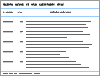
Table 1
Fault descriptions of faulty component entities not explicitly stated (partial)
| 序号 | 故障描述 | 故障部件实体 |
|---|---|---|
| 1 | 飞行反应滑油压力不显示 | 滑油压力传感器 |
| 2 | 16:26反映慢车转速偏小,600 r/min左右 | 发动机 |
| 3 | 油量指示不准出叉 | 油量表传感器 |
| 4 | 地面试车左磁抖动 | 磁电机 |
| 5 | 1号缸缸头温度指示异常 | 缸头温度传感器 |
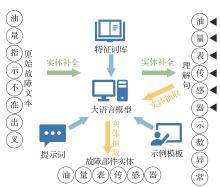
Fig.1
Adaptation schematic diagram of general large language models in aircraft maintenance field
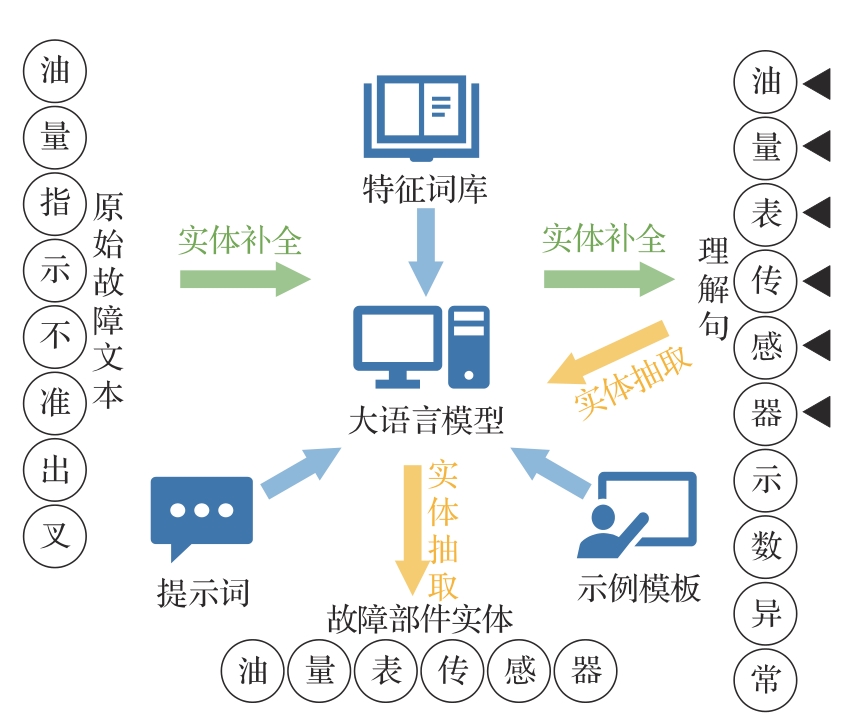
Table 2
Sample template
| 序号 | 原始文本 | 理解句示例 |
|---|---|---|
| 1 | 飞行反应滑油压力不显示 | 飞行员报告滑油压力传感器无读数显示 |
| 2 | 16:26反映慢车转速偏小,600 r/min左右 | 16:26时发动机怠速转速偏低,约为600 r/min |
| 3 | 油量指示不准出叉 | 油量表传感器示数异常 |
| 4 | 地面试车左磁抖动 | 地面试车时左磁电机工作异常导致抖动 |
| 5 | 1号缸缸头温度指示异常 | 1号缸缸头温度传感器示数异常 |
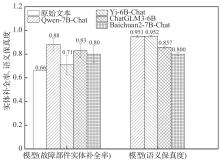
Fig.2
Comparison of generation effect of understanding sentences
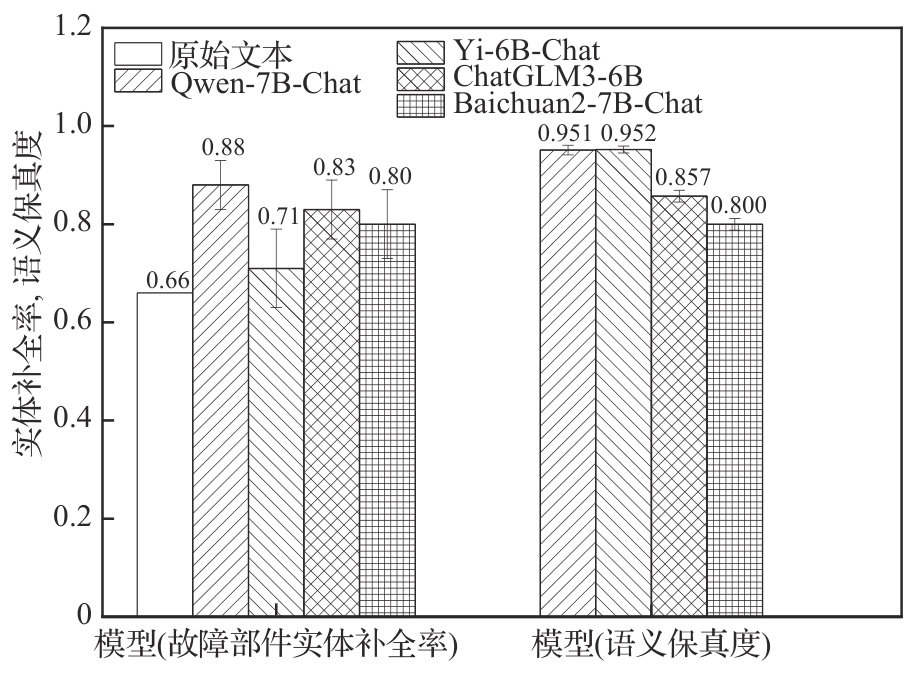
Fig.3
Structure diagram of LLM-driven entity extraction
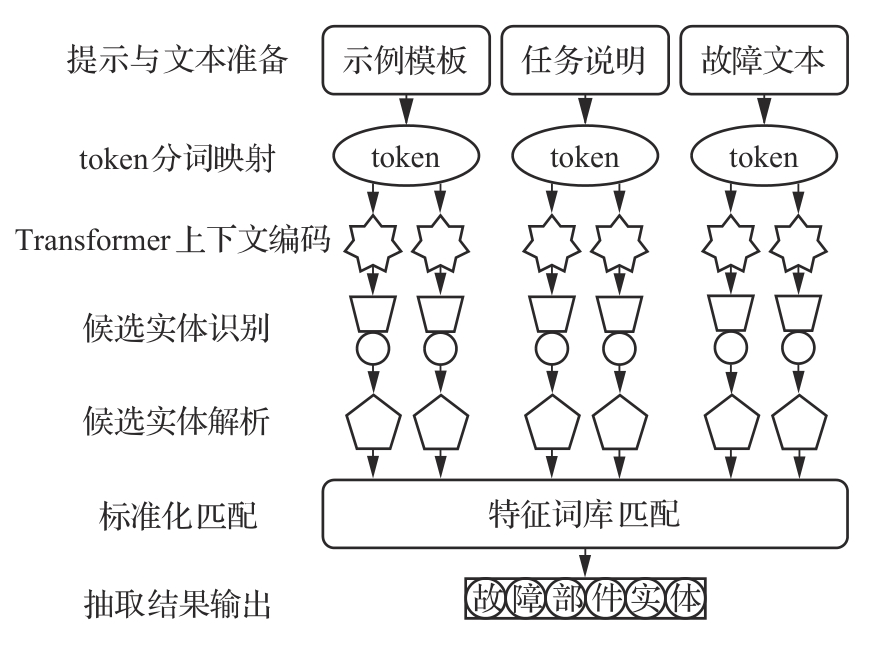
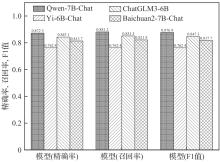
Fig.4
Comparison of entity extraction effects of four models
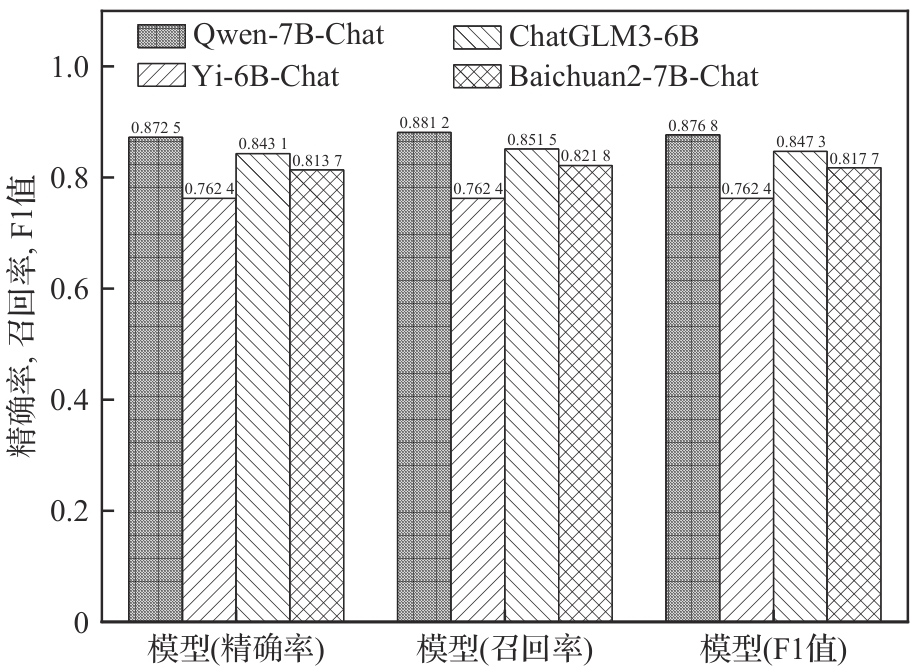
Fig.5
Comparison of entity extraction effects of five methods
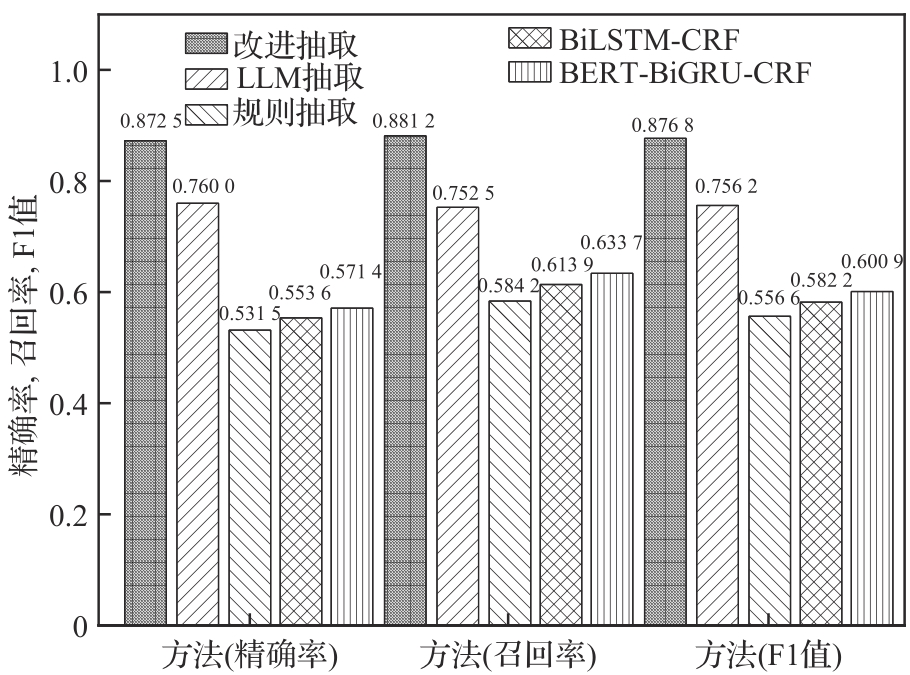
Table 3
Range and interpretation of Copula correlation coefficients
| 相关系数 | 关联强度 | 含义 |
|---|---|---|
| 极强 | 部件故障序列高度相关,统计意义上通常同时发生异常 | |
| 0.5< | 强 | 部件存在显著统计共现关系,易在同一时期出现故障 |
| 0.3< | 中等 | 部件存在一定共现趋势,但关联性相对较弱 |
| 0.1< | 弱 | 统计上偶尔会有共现,但不稳定 |
| 极弱/无 | 2个部件之间几乎没有统计共现关系 |
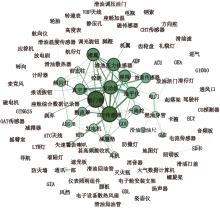
Fig.6
Fault co-occurrence network
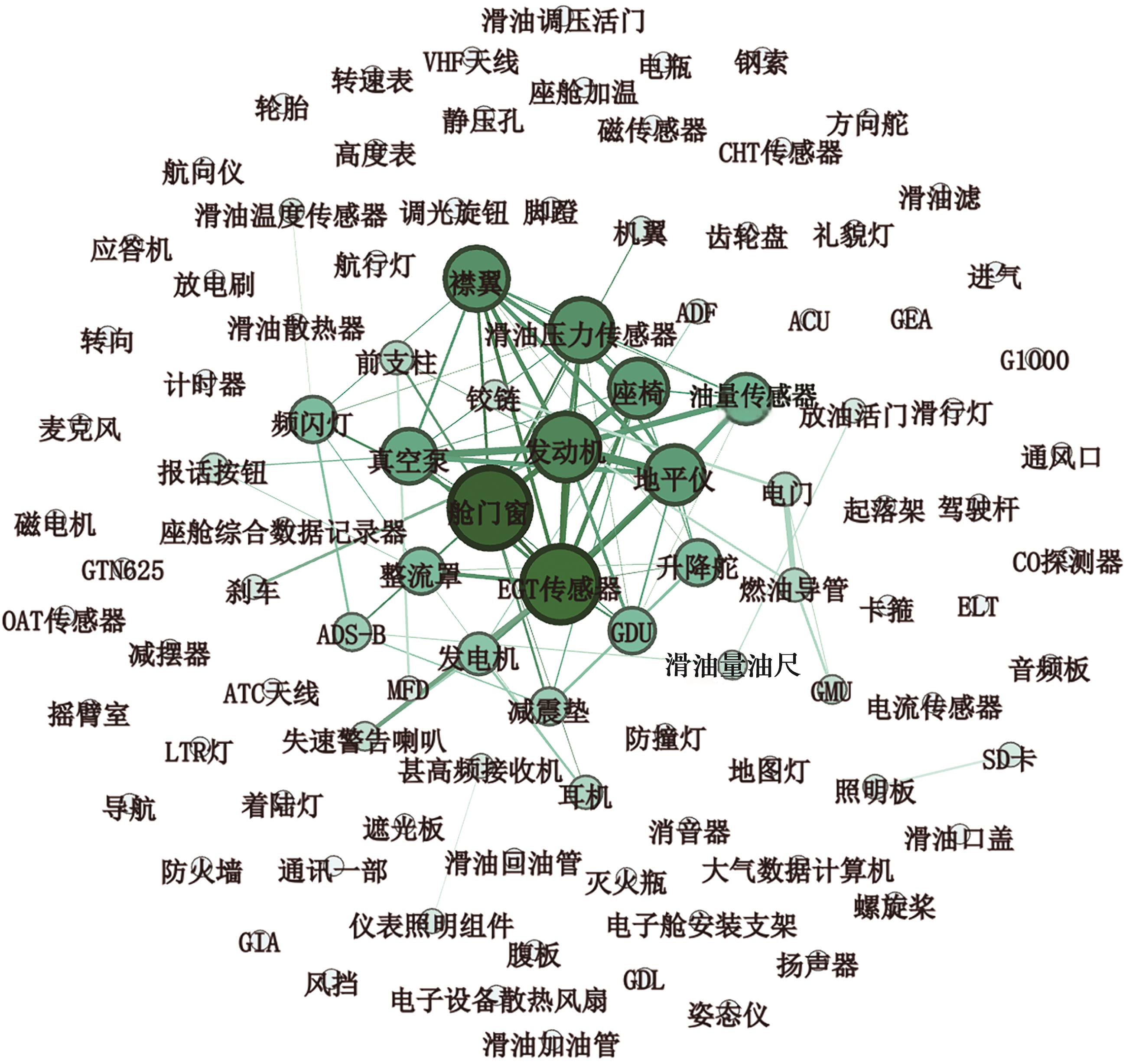
Fig.7
Connection degree of hub components (Top 10)
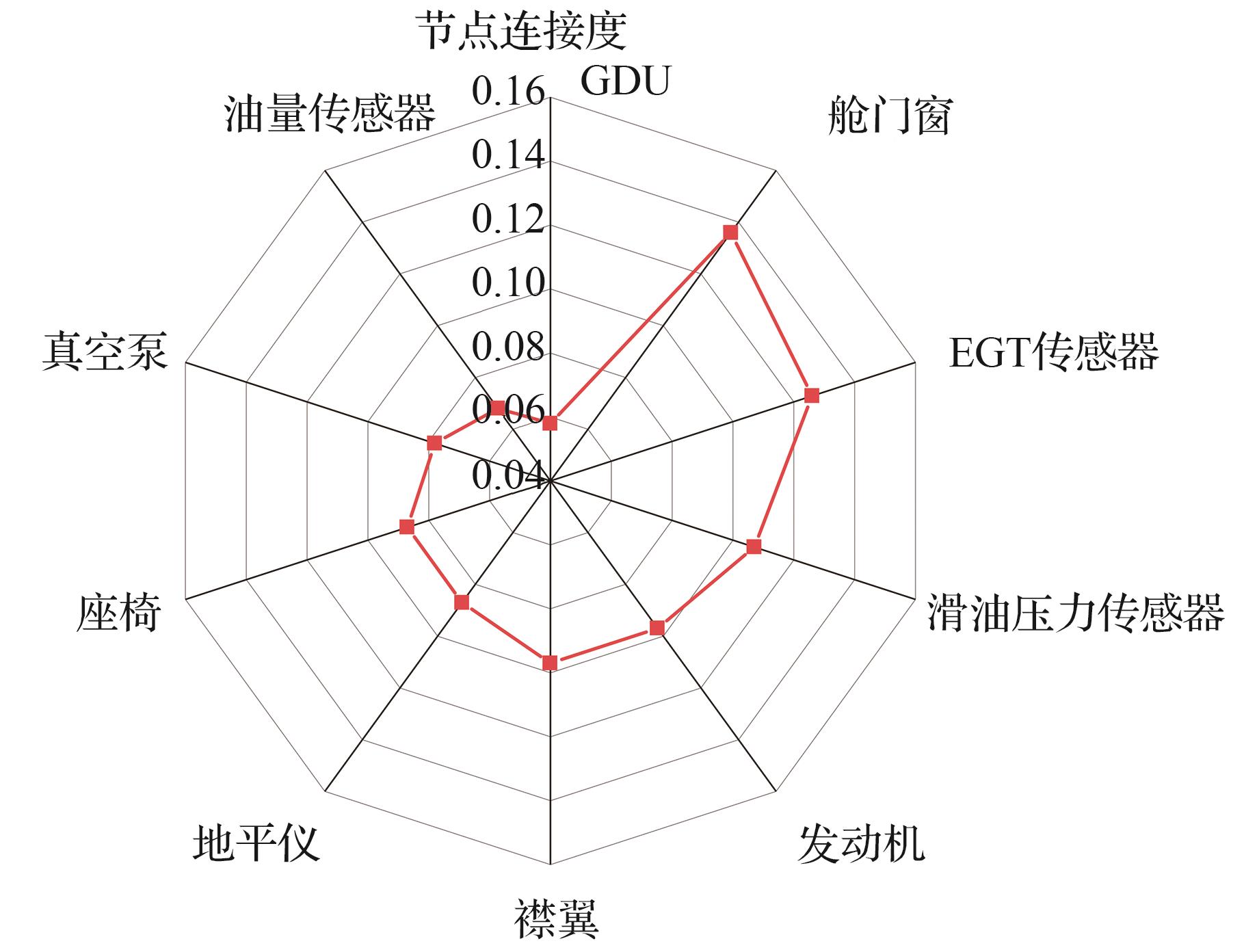
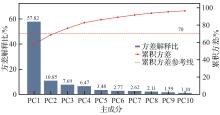
Fig.8
Variance explained ratio and cumulative variance of top 10 principal components
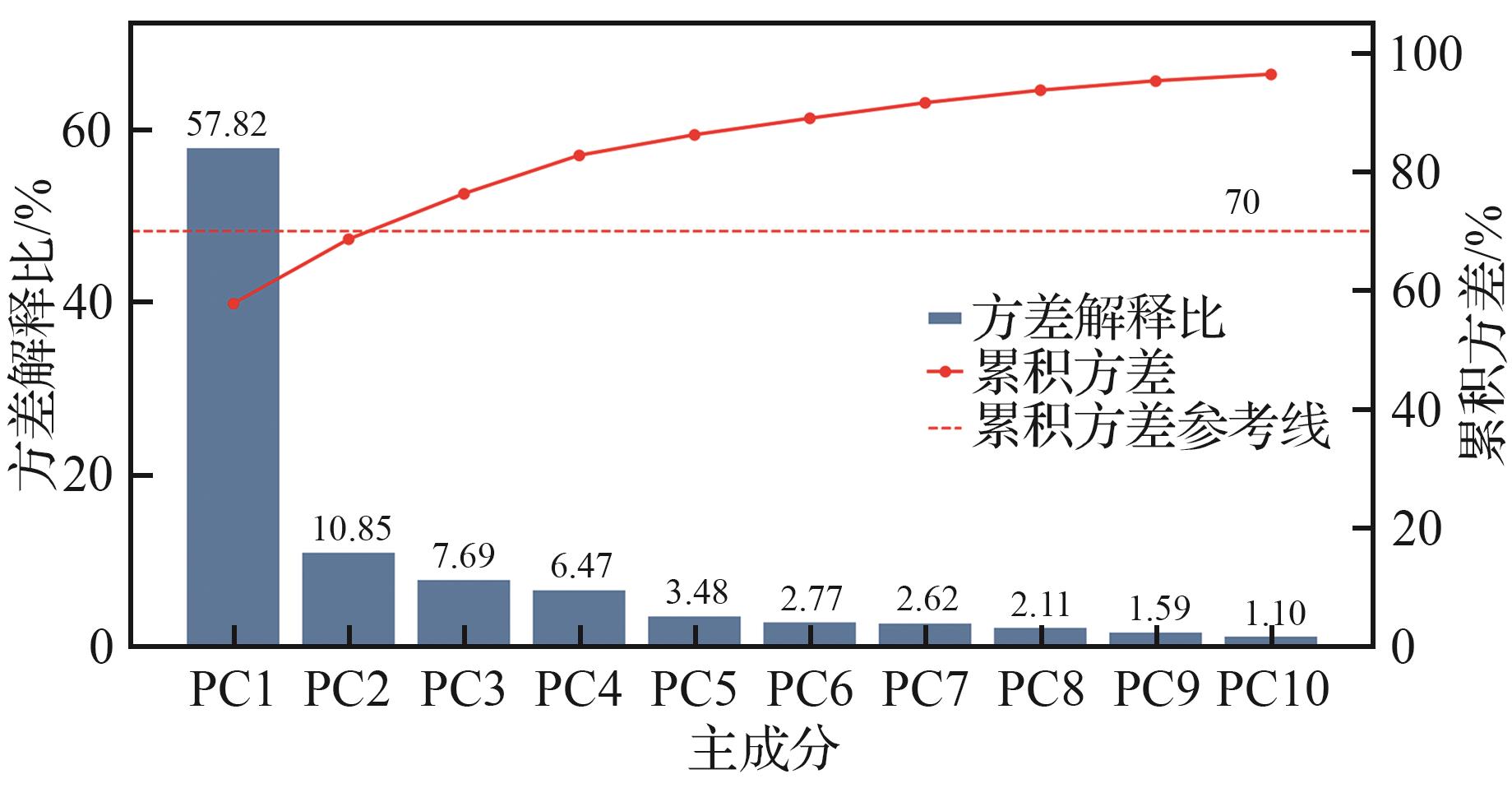
Fig.9
Comprehensive influence score
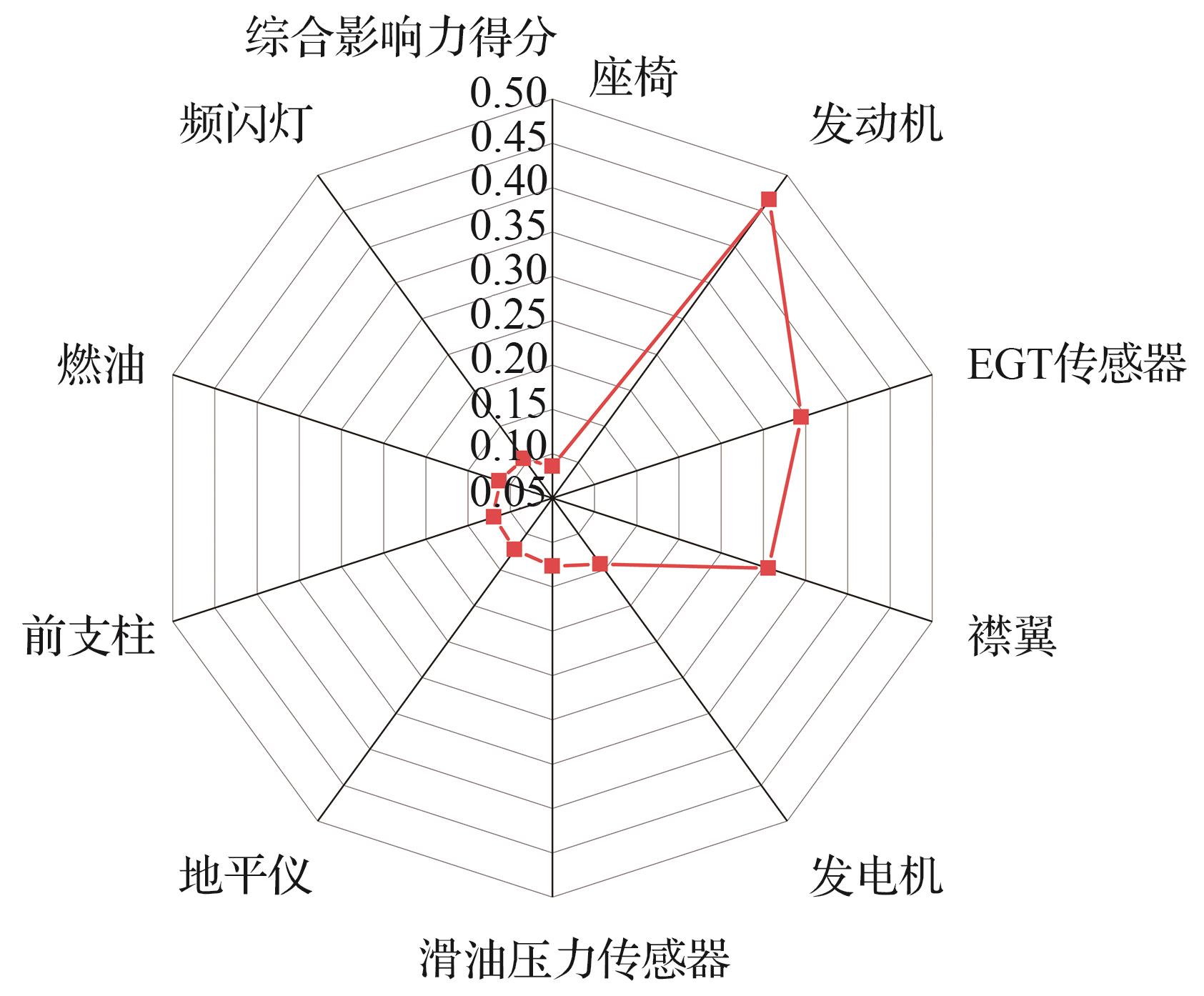
Fig.10
Neighborhood feature enhanced Bayesian time series prediction method
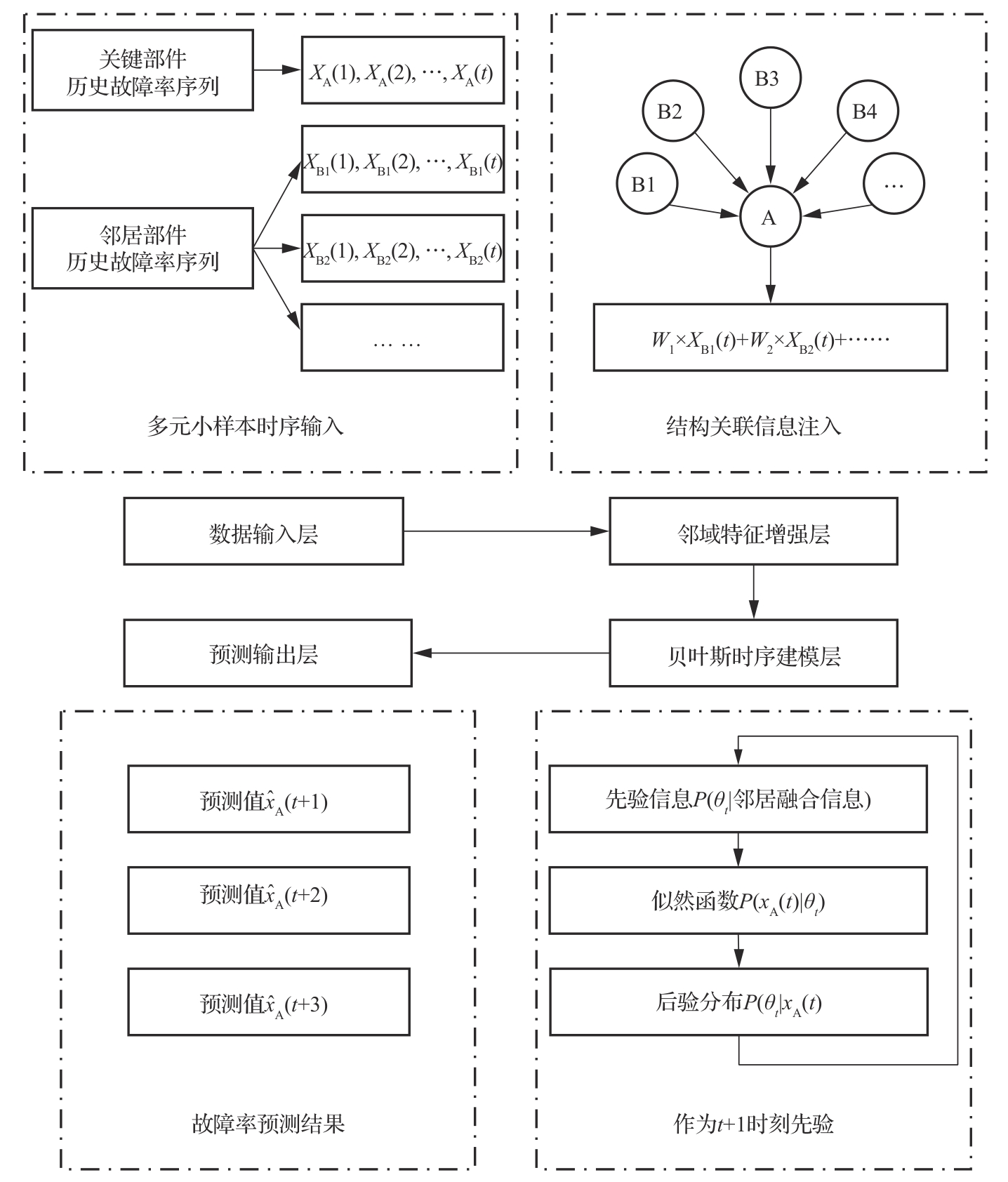
Table 4
Sequential modeling test results of EGT sensor
ADF检验 p值 | Ljung-Box检验 p值 | 平稳性判断 | 季节性判断 |
|---|---|---|---|
| 0.907 4 | 0.000 1 | 非平稳 | 显著季节性 |
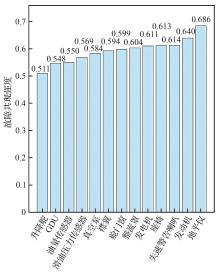
Fig.11
Neighboring component fault co-occurrence strength of EGT sensor
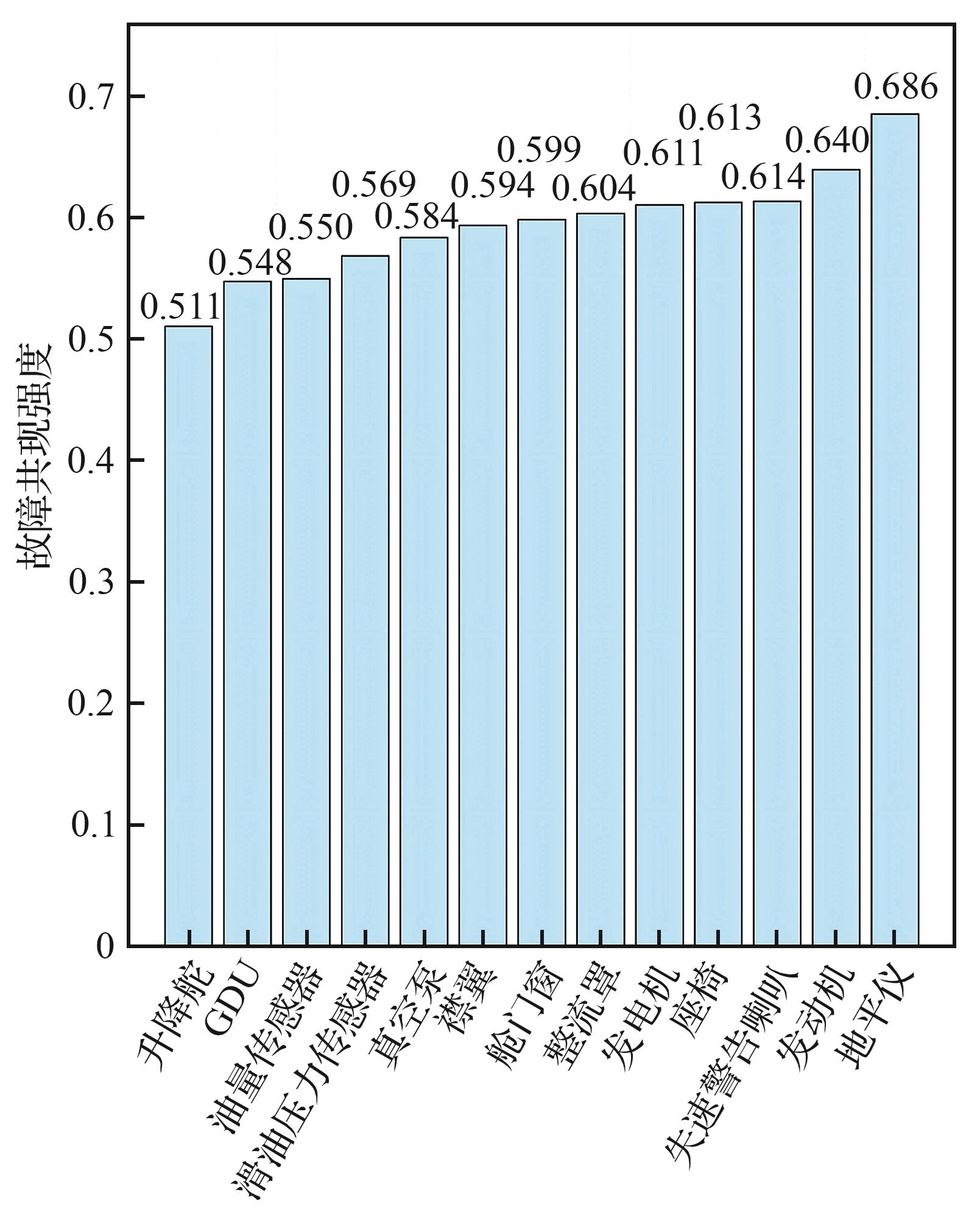
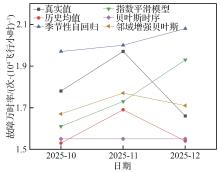
Fig.12
Fault rate time series prediction results of EGT sensor
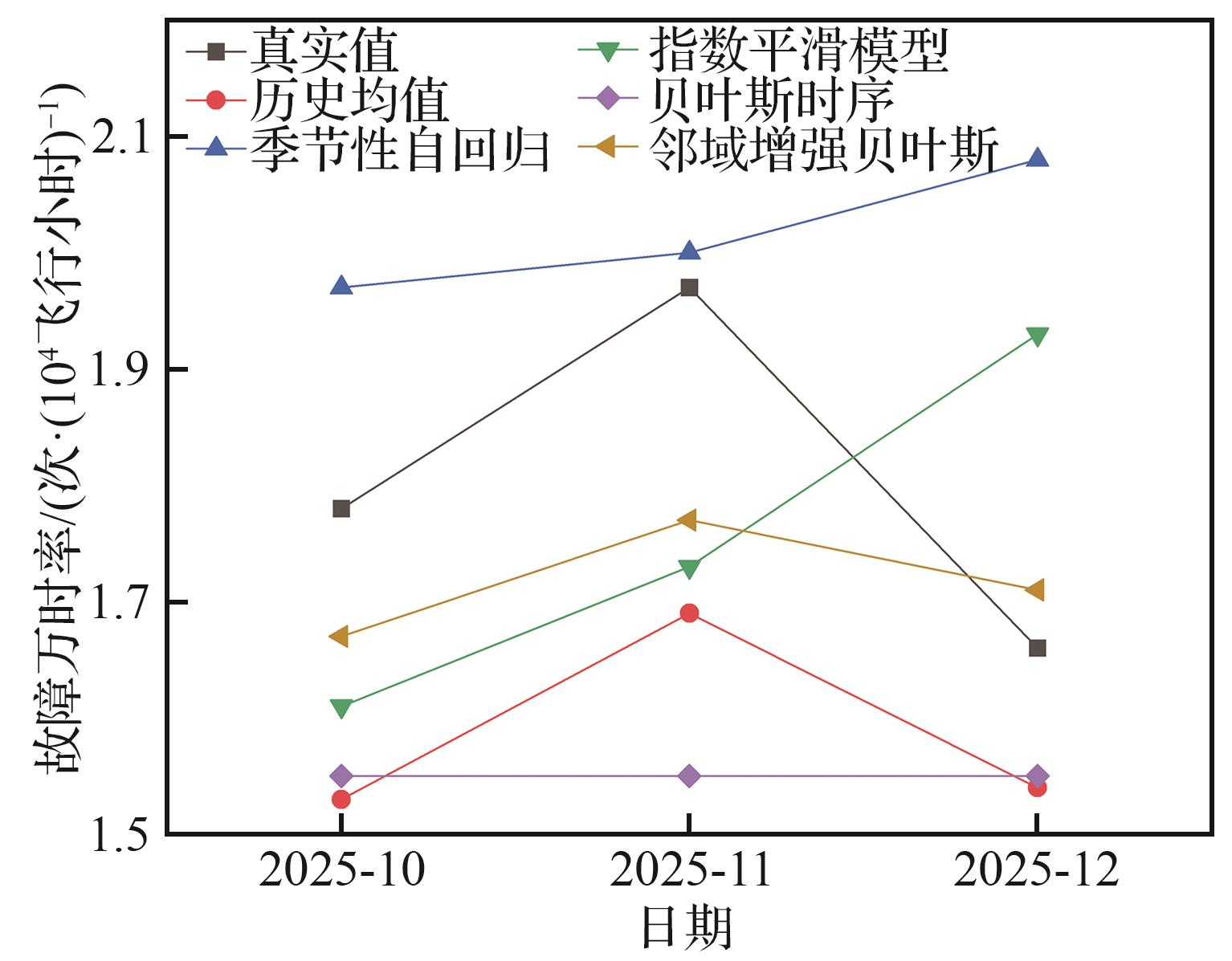
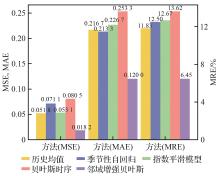
Fig.13
Comparison of prediction performance
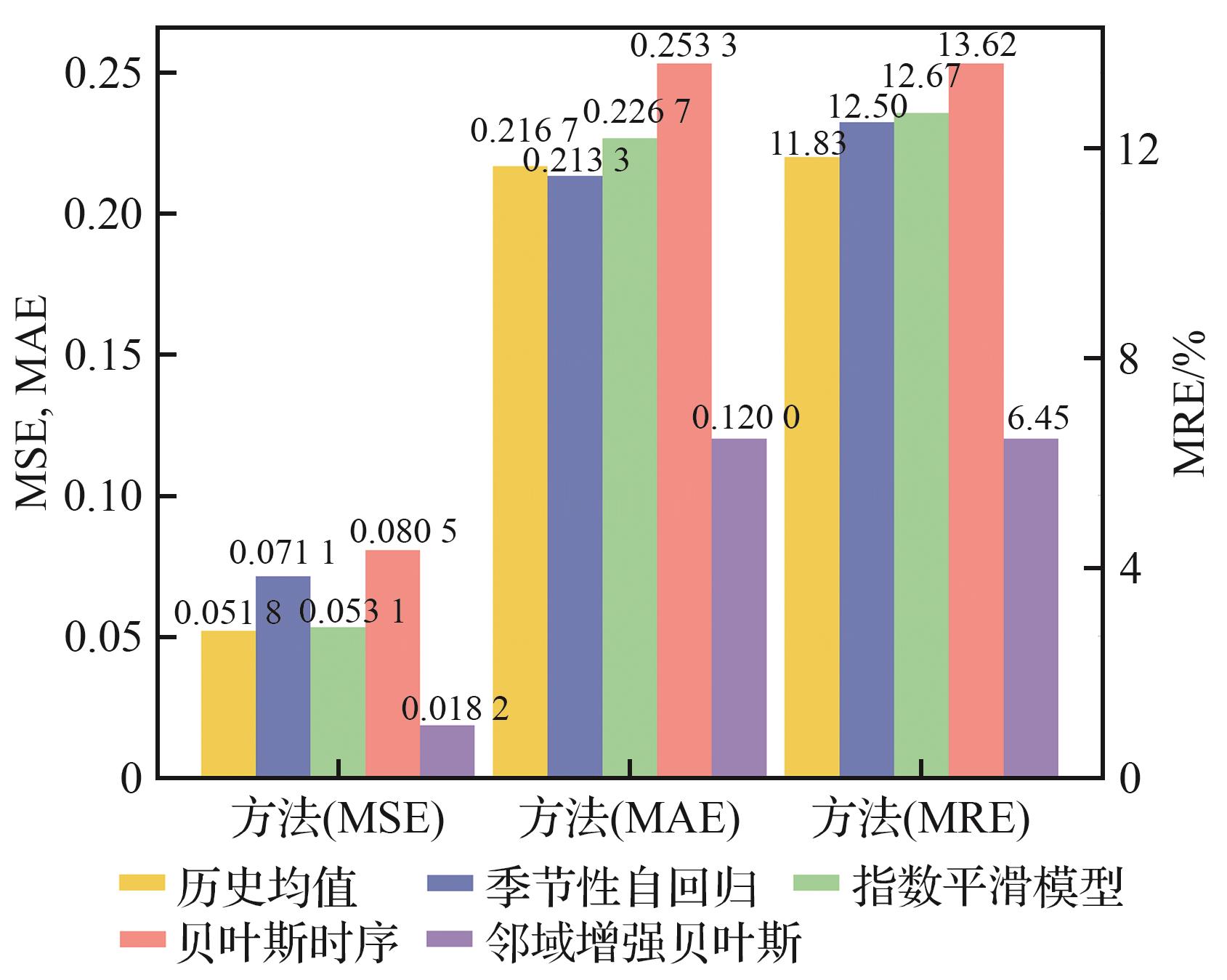
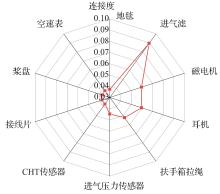
Fig.14
Connectivity of hub components of SR20 model (Top 10)
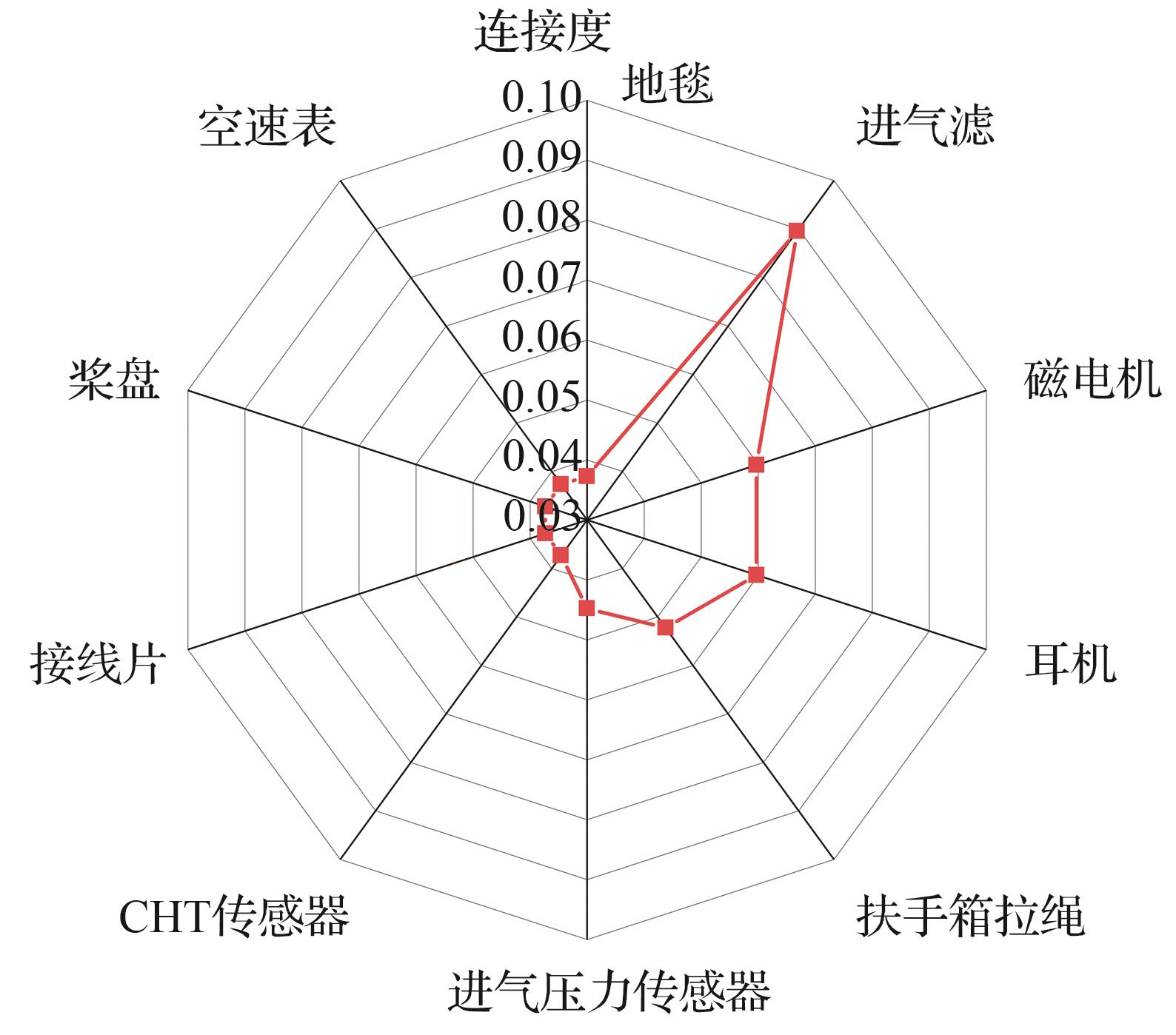
Fig.15
Overall impact score of component failures for SR20 aircraft (Top 10)
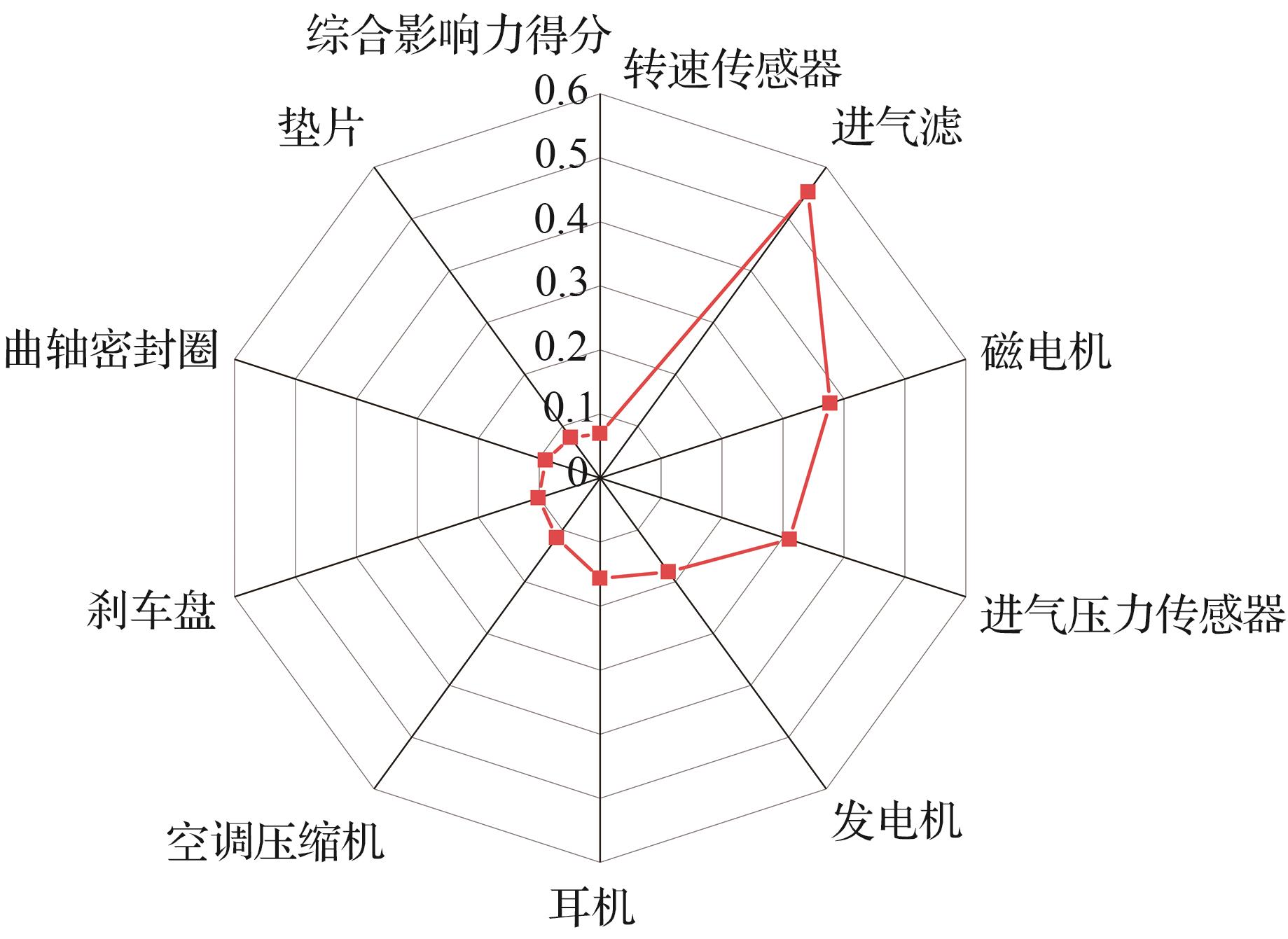
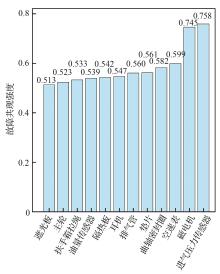
Fig.16
Neighbor component co-occurrence intensity of intake filter
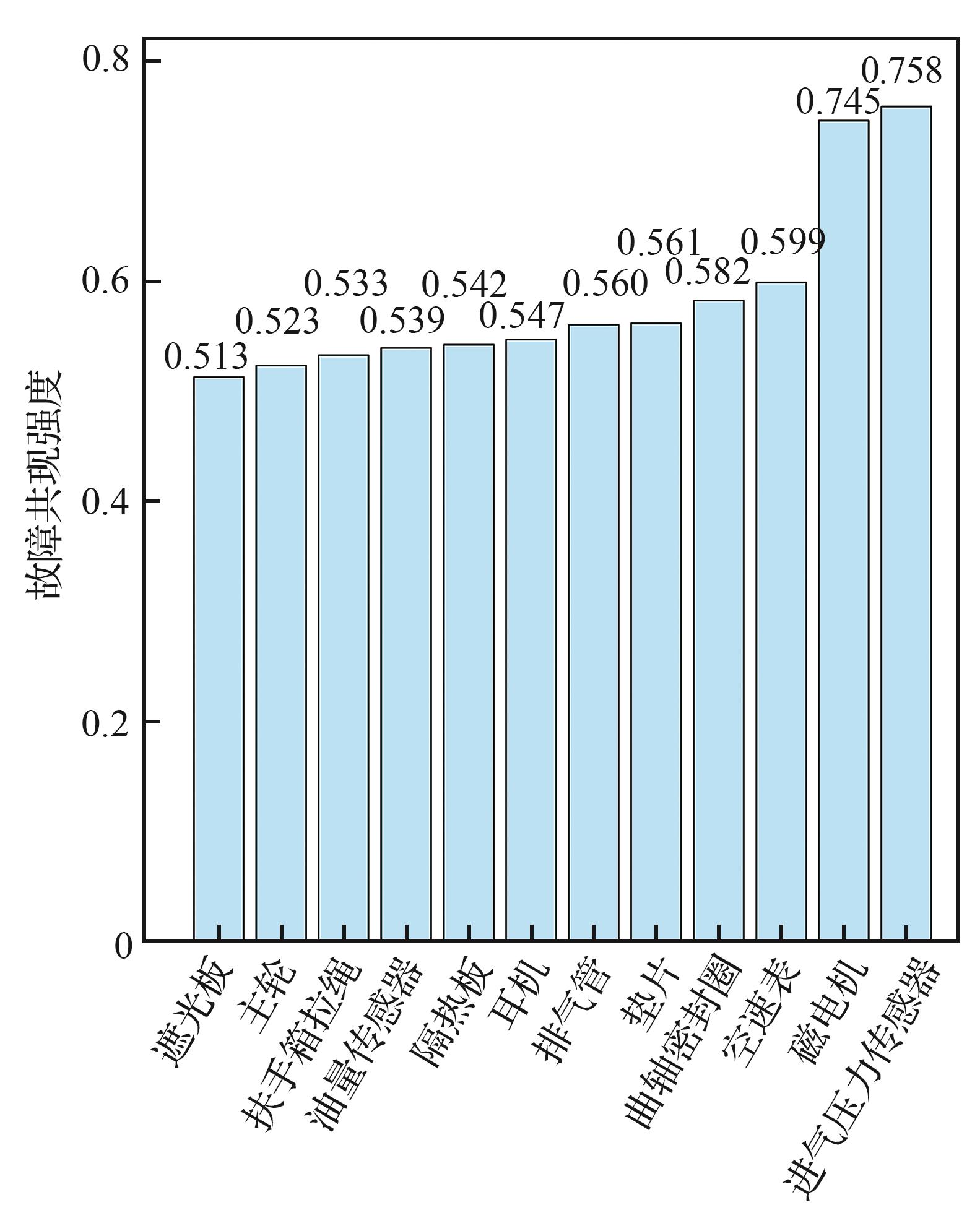
Fig.17
Failure rate per 104 flight hours time series prediction results of intake filter
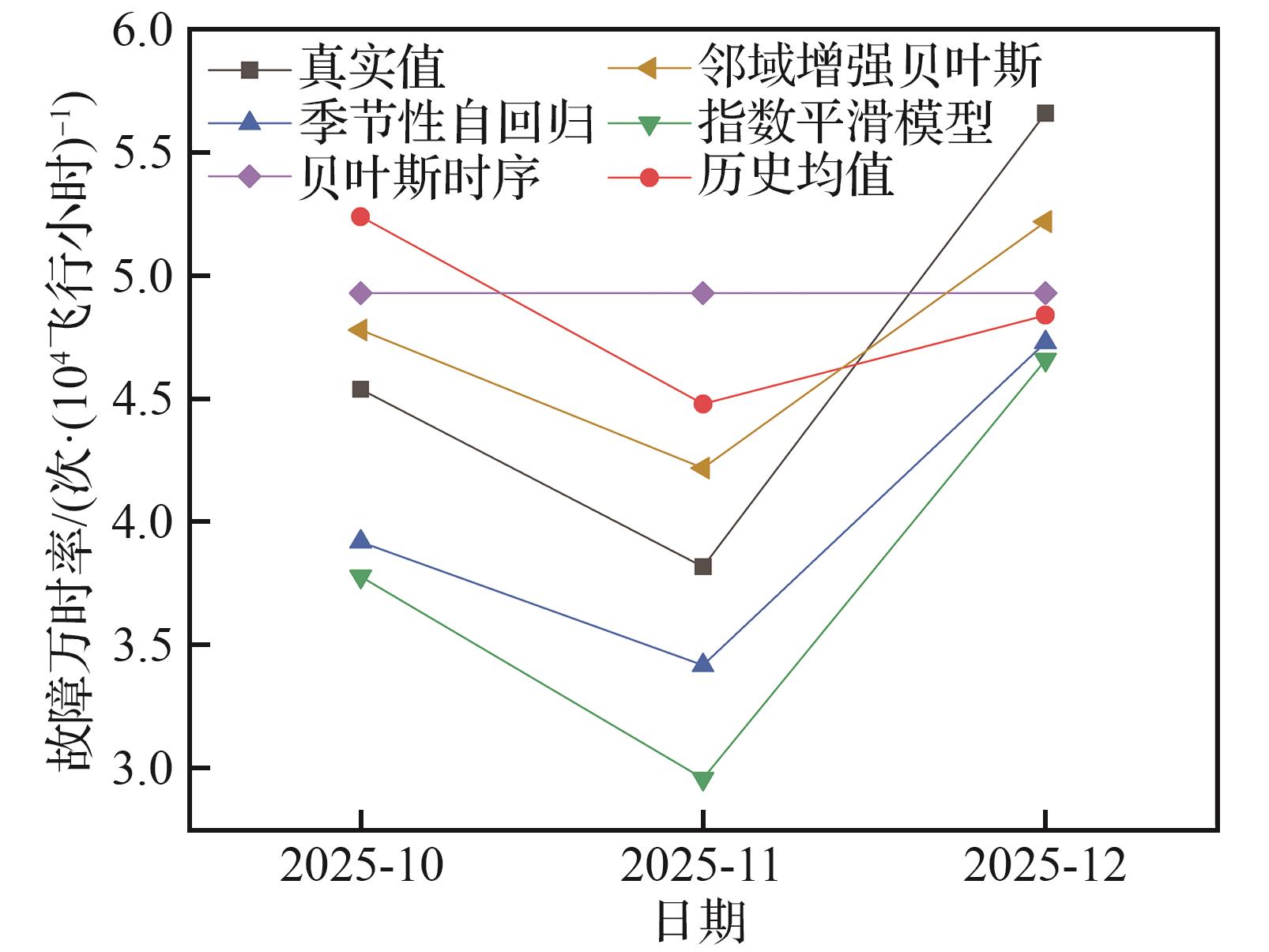
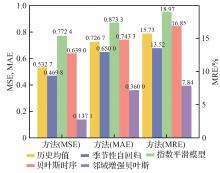
Fig.18
Performance prediction chart of intake filter
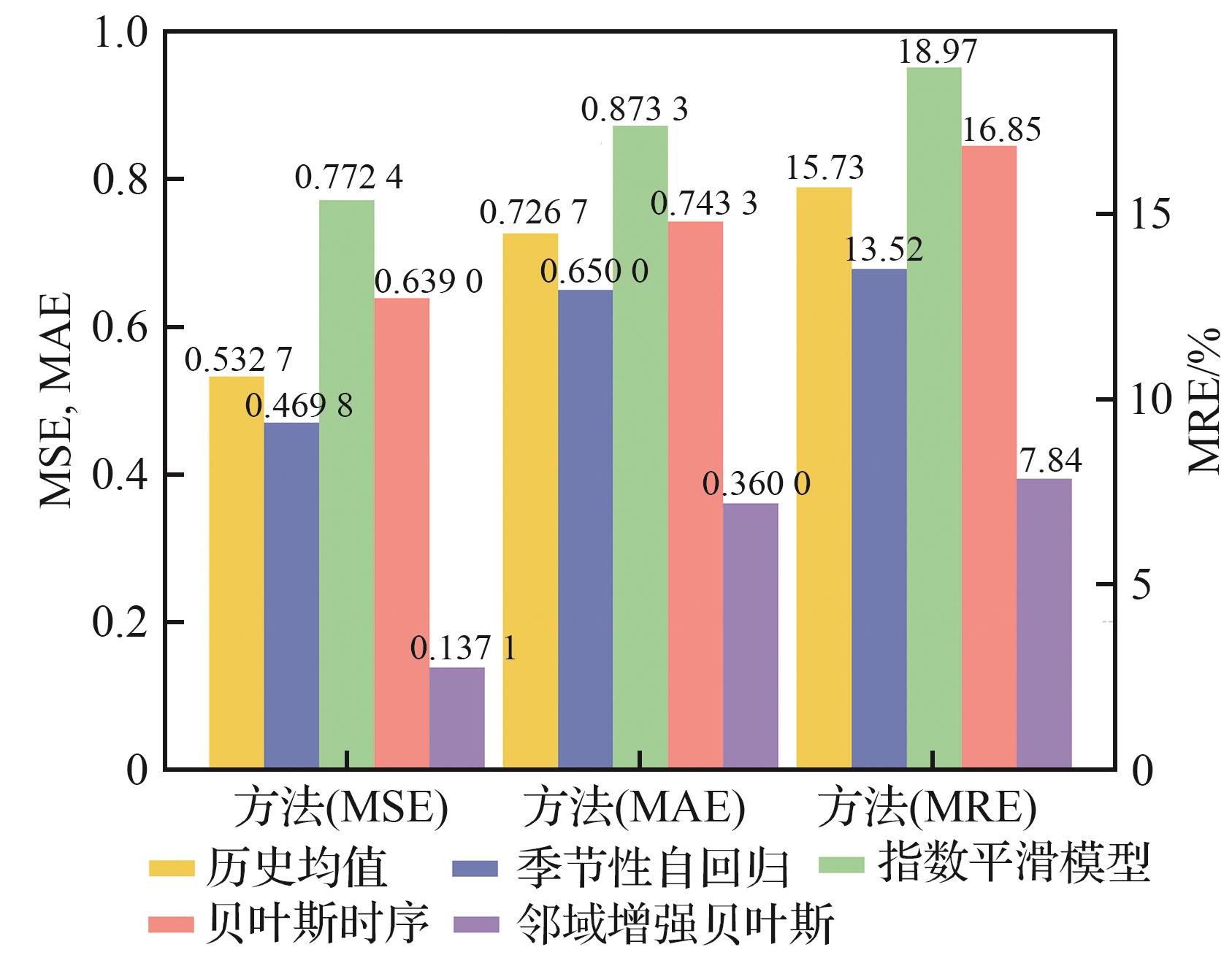
Table 5
Experimental design of rolling time window
| 序号 | 训练集长度 | 训练集范围 | 测试集范围 |
|---|---|---|---|
| 1 | 30 | 1~30 | 31~33 |
| 2 | 33 | 1~33 | 34~36 |
| ︙ | ︙ | ︙ | ︙ |
| 10 | 57 | 1~57 | 58~60 |
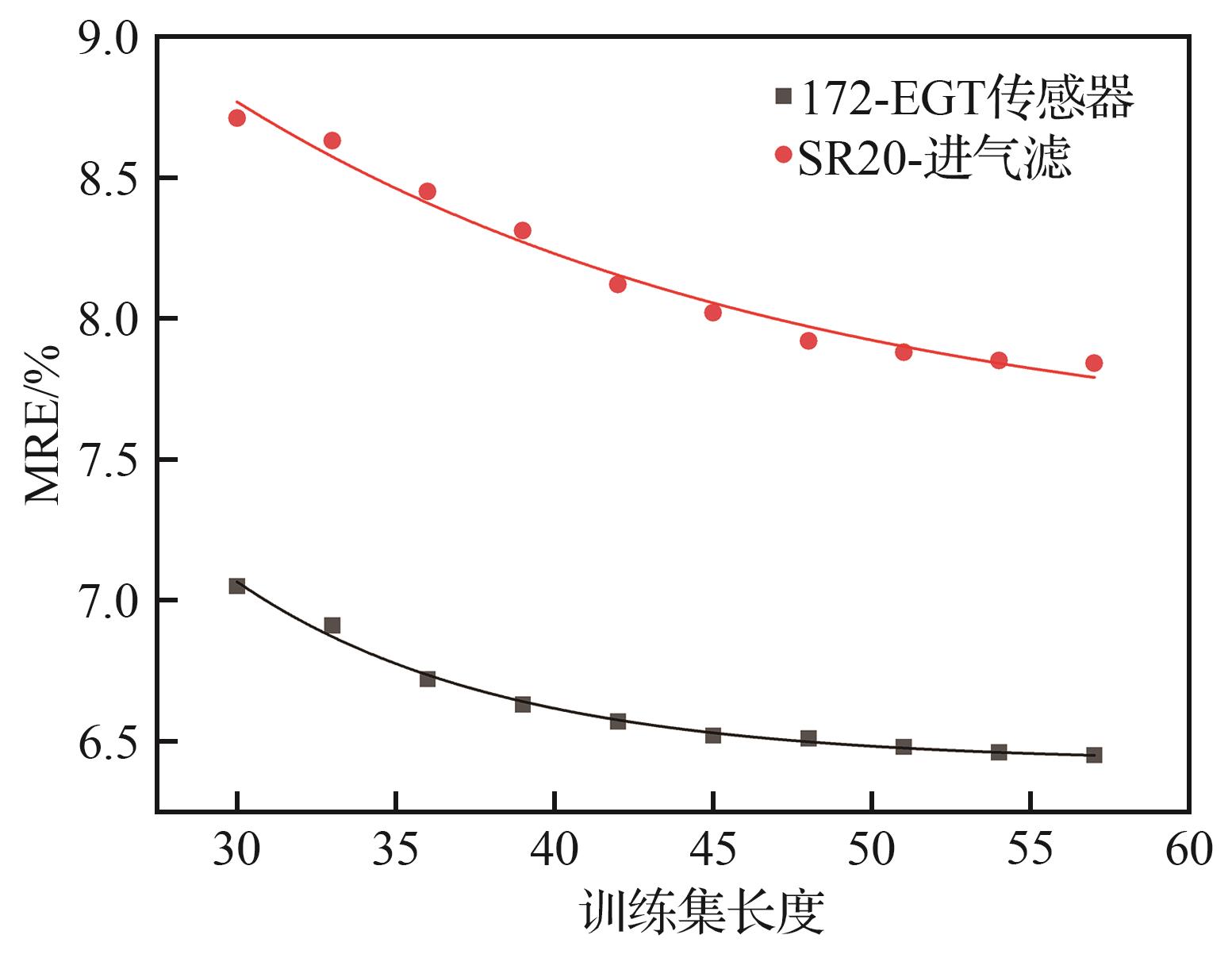
Fig.19
Prediction results of rolling time window
| [1] | 中国民用航空局. 2015年民航行业发展统计公报[R]. 北京: 中国民用航空局, 2016. |
| Civil Aviation Administration of China. Statistical bulletin of civil aviation industry development in 2015[R]. Beijing: Civil Aviation Administration of China, 2016 (in Chinese). | |
| [2] | 中国民用航空局. 2024年民航行业发展统计公报[R]. 北京: 中国民用航空局, 2025. |
| Civil Aviation Administration of China. Statistical bulletin of civil aviation industry development in 2024[R]. Beijing: Civil Aviation Administration of China, 2025 (in Chinese). | |
| [3] | 中国民用航空局. 一般运行和飞行规则: CCAR-91 [S]. 北京: 中国民用航空局, 2022. |
| Civil Aviation Administration of China. General operating and flight rules: CCAR-91 [S]. Beijing: Civil Aviation Administration of China, 2022 (in Chinese). | |
| [4] | 李生彪. 基于ARMA模型的故障率时间序列预测[J]. 自动化与仪器仪表, 2015(12): 218-219. |
| LI S B. Fault rate time series prediction based on ARMA model[J]. Automation & Instrumentation, 2015(12): 218-219 (in Chinese). | |
| [5] | YANG Y M, ZHENG H Y, ZHANG R L. Prediction and analysis of aircraft failure rate based on SARIMA model[C]∥ 2017 2nd IEEE International Conference on Computational Intelligence and Applications (ICCIA). Piscataway: IEEE Press, 2017: 567-571. |
| [6] | ALTAY A, OZKAN O, KAYAKUTLU G. Prediction of aircraft failure times using artificial neural networks and genetic algorithms[J]. Journal of Aircraft, 2014, 51(1): 47-53. |
| [7] | LI W Q, HOU N. Aircraft failure rate prediction method based on CEEMD and combined model[J]. Scientific Programming, 2022(13): 1-19. |
| [8] | 邹思汉. 基于集成学习的故障率预测方法研究[J]. 航空维修与工程, 2024, 68(): 101-103. |
| ZOU S H. Research on fault rate prediction method based on ensemble learning[J]. Aviation Maintenance and Engineering, 2024, 68(S1): 101-103 (in Chinese). | |
| [9] | 郝万亮, 边英杰, 申献芳, 等. 基于支持向量机回归的航空装备故障预测[J]. 直升机技术, 2022(4): 1-4, 9. |
| HAO W L, BIAN Y J, SHEN X F, et al. Forecast study on fault of aviation equipment based on support vector machine regression[J]. Helicopter Technique, 2022(4): 1-4, 9 (in Chinese). | |
| [10] | 薛永亮, 陈振林. 基于改进的神经网络对航空发动机故障率预测研究[J]. 计算机测量与控制, 2019, 27(5): 44-47. |
| XUE Y L, CHEN Z L. Study on prediction of aeroengine failure rate based on improved neural network[J]. Computer Measurement & Control, 2019, 27(5): 44-47 (in Chinese). | |
| [11] | 黄开远, 罗娜. 基于Attention机制改进TimeGAN的小样本时间序列预测方法[J]. 华东理工大学学报(自然科学版), 2023, 49(6): 890-899. |
| HUANG K Y, LUO N. Improved TimeGAN based on attention for time series prediction method with few shot[J]. Journal of East China University of Science and Technology (Natural Science Edition), 2023, 49(6): 890-899 (in Chinese). | |
| [12] | SCHWARTZ E, KARLINSKY L, SHTOK J, et al. Delta-encoder: An effective sample synthesis method for few-shot object recognition[EB/OL]. [2025-12-24]. arXiv preprint: 1806.04734, 2018. |
| [13] | ZHANG H Y, CISSE M, DAUPHIN Y N, et al. Mixup: Beyond empirical risk minimization[EB/OL]. [2025-12-24]. arXiv preprint: 1710.09412, 2017. |
| [14] | YOON J, JARRETT D, VAN DER SCHAAR M. Time-series generative adversarial networks[C]∥ Advances in Neural Information Processing Systems 32. Vancouver: Curran Associates Inc., 2019: 5509-5519. |
| [15] | 徐廷学, 逯程, 王虹, 等. 基于相关向量EMD和GMDH重构的故障率预测方法[J]. 振动·测试与诊断, 2018, 38(6): 1275-1285, 1300. |
| XU T X, LU C, WANG H, et al. Failure rate prediction method based on relevance vector EMD and GMDH reconstruction[J]. Journal of Vibration, Measurement & Diagnosis, 2018, 38(6): 1275-1285, 1300 (in Chinese). | |
| [16] | 王瑞奇, 逯程. 基于EMD与RVM-GM模型的故障率预测[J]. 兵器装备工程学报, 2018, 39(7): 127-130. |
| WANG R Q, LU C. Fault rate prediction based on EMD and grey model[J]. Journal of Ordnance Equipment Engineering, 2018, 39(7): 127-130 (in Chinese). | |
| [17] | 李文强, 马尧, 聂鹏, 等. 机载设备故障率预测的灰色GM(1, N)与偏最小二乘组合模型[J]. 火力与指挥控制, 2022, 47(8): 98-102. |
| LI W Q, MA Y, NIE P, et al. Grey GM(1, N) and PLS combined model for failure rate prediction of airborne equipment[J]. Fire Control & Command Control, 2022, 47(8): 98-102 (in Chinese). | |
| [18] | 谭刚. 基于混合注意力机制的水轮发电机组小样本故障诊断与状态预测研究[D]. 长沙: 湖南大学, 2023. |
| TAN G. Research on small sample fault diagnosis and condition prediction of hydro generator units based on hybrid attention mechanism[D]. Changsha: Hunan University, 2023 (in Chinese). | |
| [19] | 陈新度, 扶治森, 吴智恒, 等. 基于多头卷积和差分自注意力的小样本故障诊断方法[J]. 华南理工大学学报(自然科学版), 2023, 51(7): 21-33. |
| CHEN X D, FU Z S, WU Z H, et al. Small-sample fault diagnosis method based on multi-head convolution and differential self-attention[J]. Journal of South China University of Technology (Natural Science Edition), 2023, 51(7): 21-33 (in Chinese). | |
| [20] | 伍盛金, 高金林, 赖兴全, 等. 基于DA-WGAN-SVM的水电机组小样本故障诊断[J]. 水电能源科学, 2024, 42(11): 155-159. |
| WU S J, GAO J L, LAI X Q, et al. Small sample fault diagnosis of hydroelectric units based on DA-WGAN-SVM[J]. Water Resources and Power, 2024, 42(11): 155-159 (in Chinese). | |
| [21] | 刘曰木, 张政, 秦宁. 基于云随机配置网络的滚动轴承小样本故障诊断方法[J/OL]. 控制工程, 1-7[2026-05-08]. . |
| LIU Y M, ZHANG Z, QIN N. Small-sample fault diagnosis method for rolling bearings based on cloud random configuration network[J/OL]. Control Engineering, 1-7[2026-05-08]. (in Chinese). | |
| [22] | 段嘉珺, 吴晓欣, 何怡刚, 等. 虚实特征融合与数据-机理驱动的变压器绕组小样本故障诊断[J]. 电力自动化设备, 2024, 44(9): 212-218. |
| DUAN J J, WU X X, HE Y G, et al. Small sample fault diagnosis of transformer windings based on virtual-real feature fusion and data-mechanism driven[J]. Electric Power Automation Equipment, 2024, 44(9): 212-218 (in Chinese). | |
| [23] | 陈勇刚, 刘康妮, 王帅. 基于BiGRU-Attention改进的航空设备故障知识图谱构建[J]. 航空学报, 2024, 45(18): 229916. |
| CHEN Y G, LIU K N, WANG S. Fault knowledge graph construction for aviation equipment based on BiGRU-Attention improvement[J]. Acta Aeronautica et Astronautica Sinica, 2024, 45(18): 229916 (in Chinese). | |
| [24] | 周炫余, 李璇, 卢笑, 等. 多层次知识增强提示的中文无监督关键词抽取方法研究[J/OL]. 北京航空航天大学学报, 1-14[2026-05-08]. . |
| ZHOU X Y, LI X, LU X, et al. Research on Chinese unsupervised keyword extraction method based on multi-level knowledge-enhanced prompting[J/OL]. Journal of Beijing University of Aeronautics and Astronautics, 1-14[2026-05-08]. (in Chinese). | |
| [25] | 王昕, 魏楚元, 张蕾, 等. 提示学习框架下融合多层级特征信息的中文命名实体识别[J]. 数据采集与处理, 2024, 39(4): 1020-1032. |
| WANG X, WEI C Y, ZHANG L, et al. Chinese named entity recognition based on prompt learning and multi-level feature fusion[J]. Journal of Data Acquisition & Processing, 2024, 39(4): 1020-1032 (in Chinese). | |
| [26] | 斯日古楞, 林民, 郭振东, 等. 基于提示学习和抽取式阅读理解的古籍礼仪实体关系联合抽取方法研究[J]. 数据分析与知识发现, 2025, 9(3): 147-159. |
| SI R G L, LIN M, GUO Z D, et al. Etiquette entity-relation extraction via prompt learning and extractive reading comprehension[J]. Data Analysis and Knowledge Discovery, 2025, 9(3): 147-159 (in Chinese). | |
| [27] | CUI L Y, WU Y, LIU J, et al. Template-based named entity recognition using BART[EB/OL]. [2025-12-24]. arXiv preprint: 2106.01760, 2021. |
| [28] | LEE D H, KADAKIA A, TAN K M, et al. Good examples make a faster learner: simple demonstration-based learning for low-resource NER[EB/OL]. [2025-12-24]. arXiv preprint: 2110.08454, 2021. |
| [29] | ZHU X, LOU Y X, ZHAO J, et al. Generative non-autoregressive unsupervised keyphrase extraction with neural topic modeling[J]. Engineering Applications of Artificial Intelligence, 2023, 120: 105934. |
| [30] | 曹佳增. 小样本勘察测试数据条件下煤矿顶板岩土地层稳定性研究[D]. 徐州: 中国矿业大学, 2024. |
| CAO J Z. Study on the stability of coal mine roof geotechnical strata under the condition of small sample investigation test data[D]. Xuzhou: China University of Mining and Technology, 2024 (in Chinese). |
| [1] | Yunwen FENG, Wanyi LIU, Qianyun KE, Cheng LU, Rui WANG. Operational reliability evaluation method for civil aircraft based on mechanism-enhanced conditional generative adversarial [J]. Acta Aeronautica et Astronautica Sinica, 2026, 47(6): 232483-232483. |
| [2] | Baoguo LI, Jiulin ZENG, Xu LU. Radar-embedded communication based on orthogonal time-frequency-space modulation [J]. Acta Aeronautica et Astronautica Sinica, 2026, 47(6): 332546-332546. |
| [3] | Xinglin LI, Zhenzhou LYU, Yizhou CHEN. Meta-model-based double importance sampling method for extremely small failure probability estimation [J]. Acta Aeronautica et Astronautica Sinica, 2026, 47(3): 232316-232316. |
| [4] | Yi CHEN, Pan WANG, Guijie LI, Fukang XIN. Hybrid time-dependent reliability analysis of embedded cabin door mechanism [J]. Acta Aeronautica et Astronautica Sinica, 2026, 47(3): 232310-232310. |
| [5] | Yixin LU, Zhenzhou LYU, Hengchao LI. Efficient analysis method of reliability lifetime and its application in turbine shaft [J]. Acta Aeronautica et Astronautica Sinica, 2026, 47(2): 232111-232111. |
| [6] | Yang LIU, Ni LI, Zexi YU, Shangjie JIA. An intelligent modeling method for aircraft formation behaviors integrating LLM technology [J]. Acta Aeronautica et Astronautica Sinica, 2026, 47(15): 333092-333092. |
| [7] | Jingjing HE, Xunqi LIU, Weitao LOU, Xuefei GUAN. Finite element-based uncertainty quantification method using moment quadrature and its application in reliability analysis of rubber isolators [J]. Acta Aeronautica et Astronautica Sinica, 2026, 47(12): 233132-233132. |
| [8] | Yunwen FENG, Da TENG, Cheng LU, Rui WANG, Junyu CHEN. Integrated mechanism and generative adversarial surrogate modeling for aircraft systems reliability evaluation [J]. Acta Aeronautica et Astronautica Sinica, 2025, 46(7): 230948-230948. |
| [9] | Wanying YUN, Fengyuan LI, Bo HUANG, Siyu WANG, Yunfei JIAO, Xinyu BAI, Xueqi HUANG. Enhanced metamodel-based importance sampling method for reliability analysis [J]. Acta Aeronautica et Astronautica Sinica, 2025, 46(7): 230738-230738. |
| [10] | Shenfang YUAN, Qiuhui XU, Jian CHEN. Reliability evaluation: From non-destructive testing to structural health monitoring [J]. Acta Aeronautica et Astronautica Sinica, 2025, 46(5): 531442-531442. |
| [11] | Rui KANG, Xiaoyang LI. Reliability science experiments [J]. Acta Aeronautica et Astronautica Sinica, 2025, 46(5): 531622-531622. |
| [12] | Qiang QIN, Yongxiang MU, Yusheng XU, Zhiping QIU, Xiaojun WANG. A double-layer sequential efficient algorithm for multidisciplinary optimization of hypersonic aircraft hot structures [J]. Acta Aeronautica et Astronautica Sinica, 2025, 46(24): 232060-232060. |
| [13] | Yuqian ZHANG, Yongge LI, Xiaochuan LIU, Yong XU. Digital-twin-driven reliability domain analysis for aircraft landing gear systems [J]. Acta Aeronautica et Astronautica Sinica, 2025, 46(24): 632256-632256. |
| [14] | Yunwen FENG, Yuhang CUI, Qian HE, Xiaofeng XUE, Jun LU. Reliability evaluation of full-scale structural test based on ISMA-Stacking ensemble modeling and Bayesian fusion [J]. Acta Aeronautica et Astronautica Sinica, 2025, 46(21): 532365-532365. |
| [15] | Xi LIU, Dianyin HU, Yi WANG, Rongqiao WANG, Gaoxiang CHEN, Weihan KONG. Structural reliability design for aero-engines: Review and prospects [J]. Acta Aeronautica et Astronautica Sinica, 2025, 46(21): 532625-532625. |
| Viewed | ||||||
|
Full text |
|
|||||
|
Abstract |
|
|||||
Address: No.238, Baiyan Buiding, Beisihuan Zhonglu Road, Haidian District, Beijing, China
Postal code : 100083
E-mail:hkxb@buaa.edu.cn
Total visits: 6658907 Today visits: 1341All copyright © editorial office of Chinese Journal of Aeronautics
All copyright © editorial office of Chinese Journal of Aeronautics
Total visits: 6658907 Today visits: 1341

 CJA

