Acta Aeronautica et Astronautica Sinica ›› 2026, Vol. 47 ›› Issue (12): 132792.doi: 10.7527/S1000-6893.2025.32792
• Fluid Mechanics and Flight Mechanics • Previous Articles
Jiachen QIN1,2, Zhou ZHOU1,2( ), Rui WANG1,2, Kelei WANG1,2
Received:2025-09-17
Revised:2025-10-17
Accepted:2025-12-22
Online:2026-01-12
Published:2026-01-09
Contact:
Zhou ZHOU
E-mail:zhouzhou@nwpu.edu.cn
Supported by:CLC Number:
Jiachen QIN, Zhou ZHOU, Rui WANG, Kelei WANG. Aerodynamic/propulsive coupling model and test validation of distributed propulsion wing[J]. Acta Aeronautica et Astronautica Sinica, 2026, 47(12): 132792.
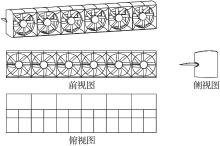
Fig.1
Geometric schematic of distributed propulsion wing
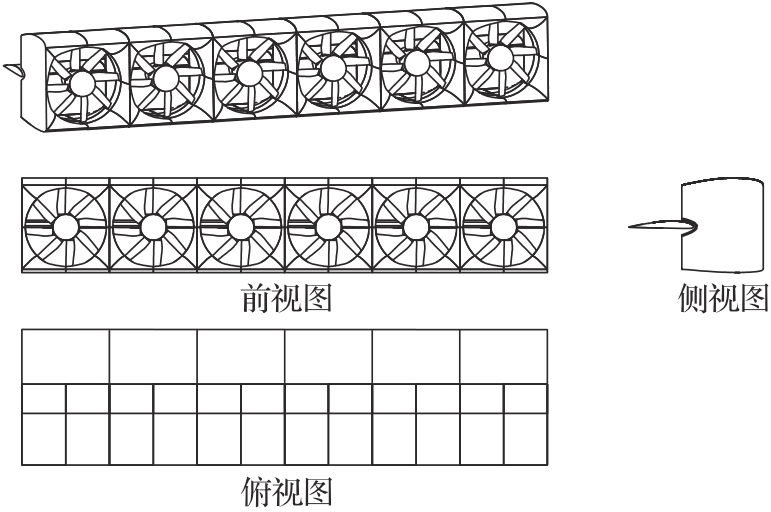
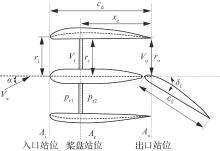
Fig.2
Parameter schematic of distributed propulsion wing system
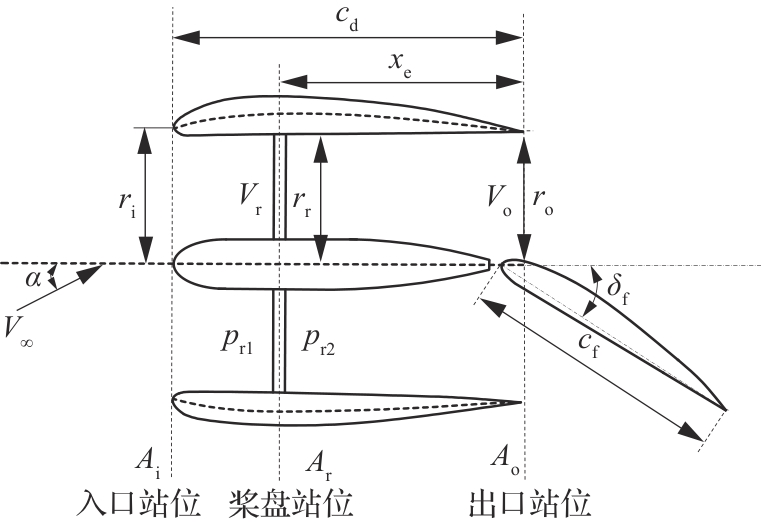
Fig.3
Structure of aerodynamic/propulsive coupling model
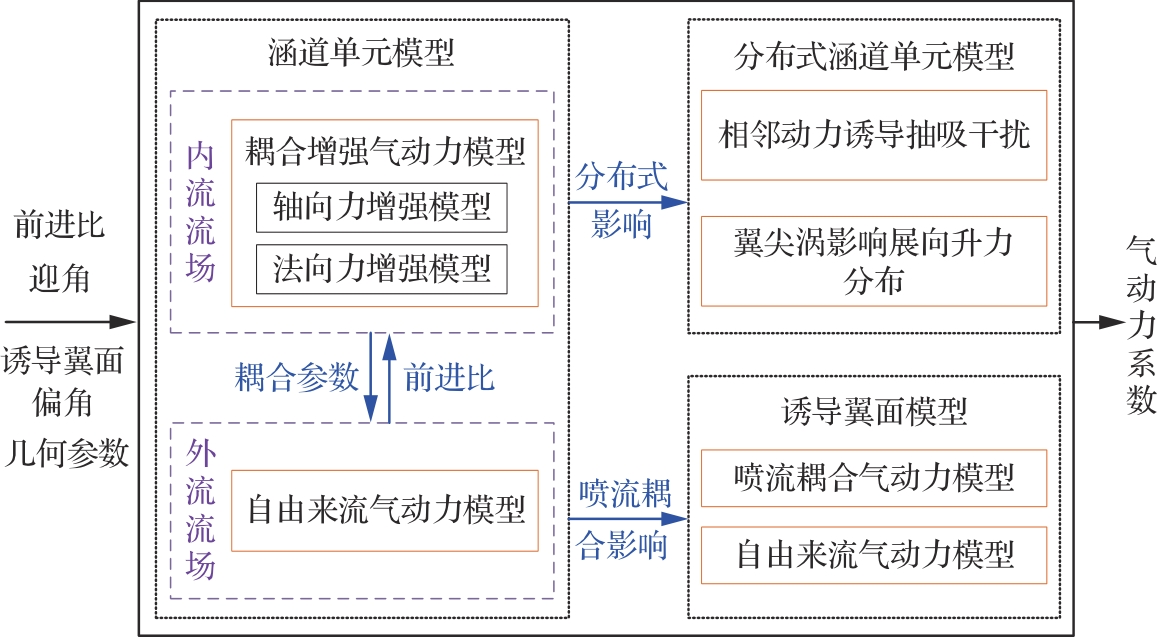
Fig.4
Schematic of model applicability envelope
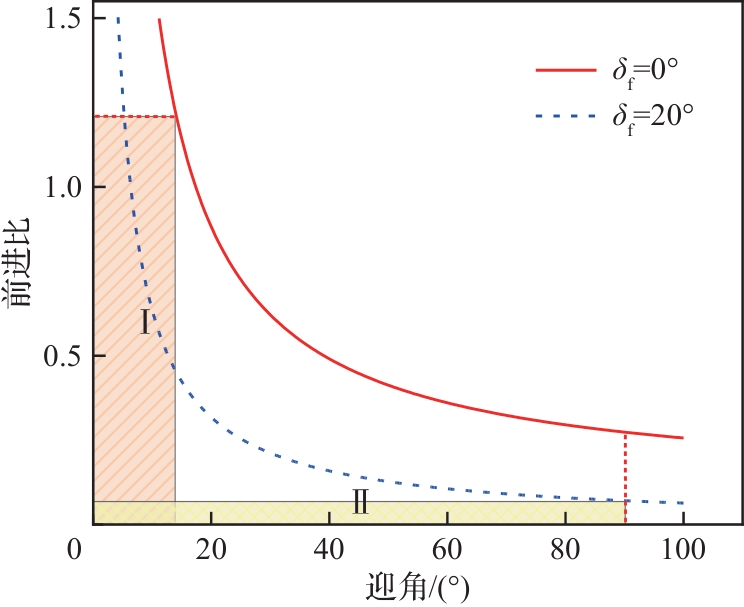
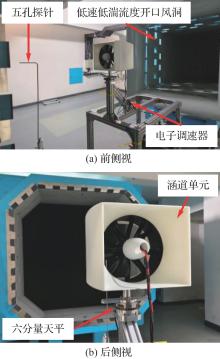
Fig.5
Photograph of ducted unit during wind tunnel test
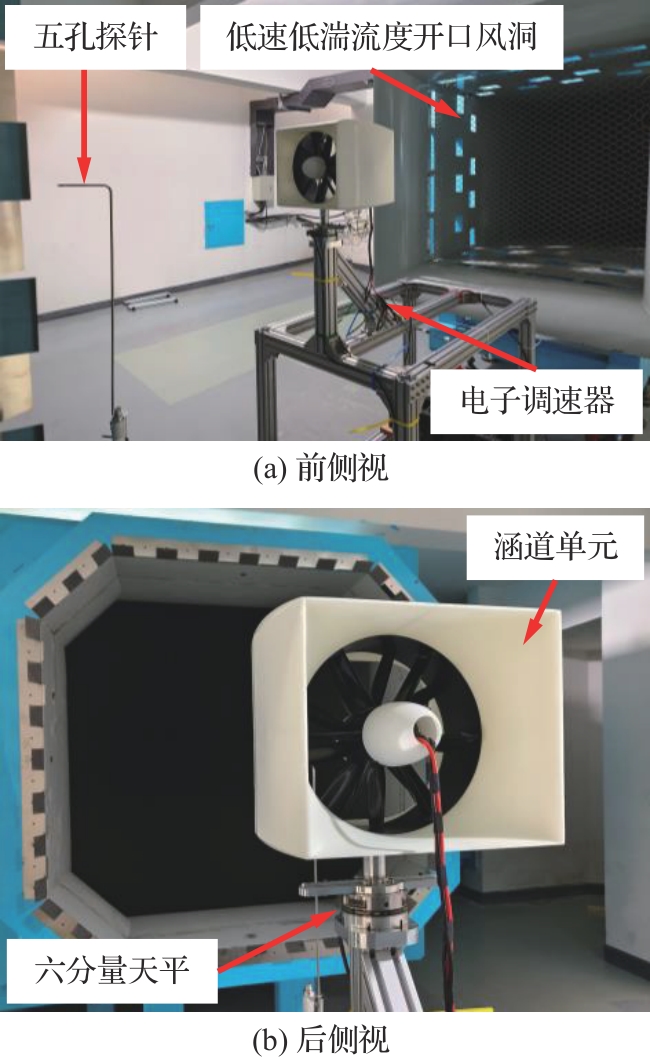
Fig.6
Test section of propulsion wing in car-top test
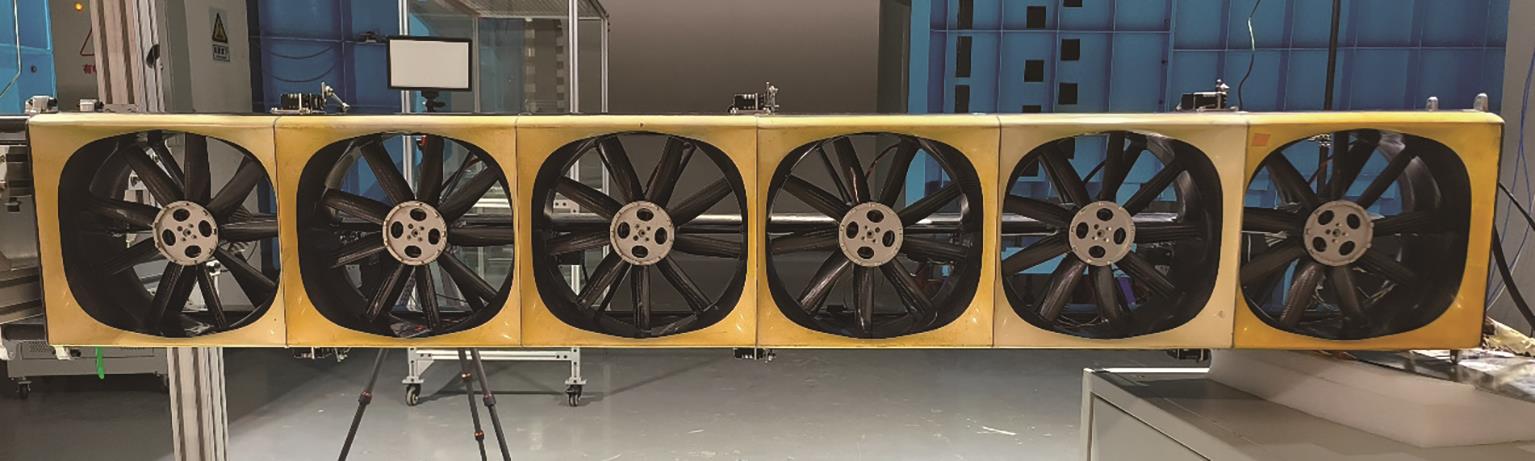
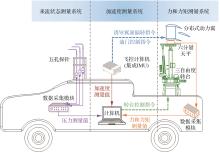
Fig.7
Schematic of system composition of car-top test platform
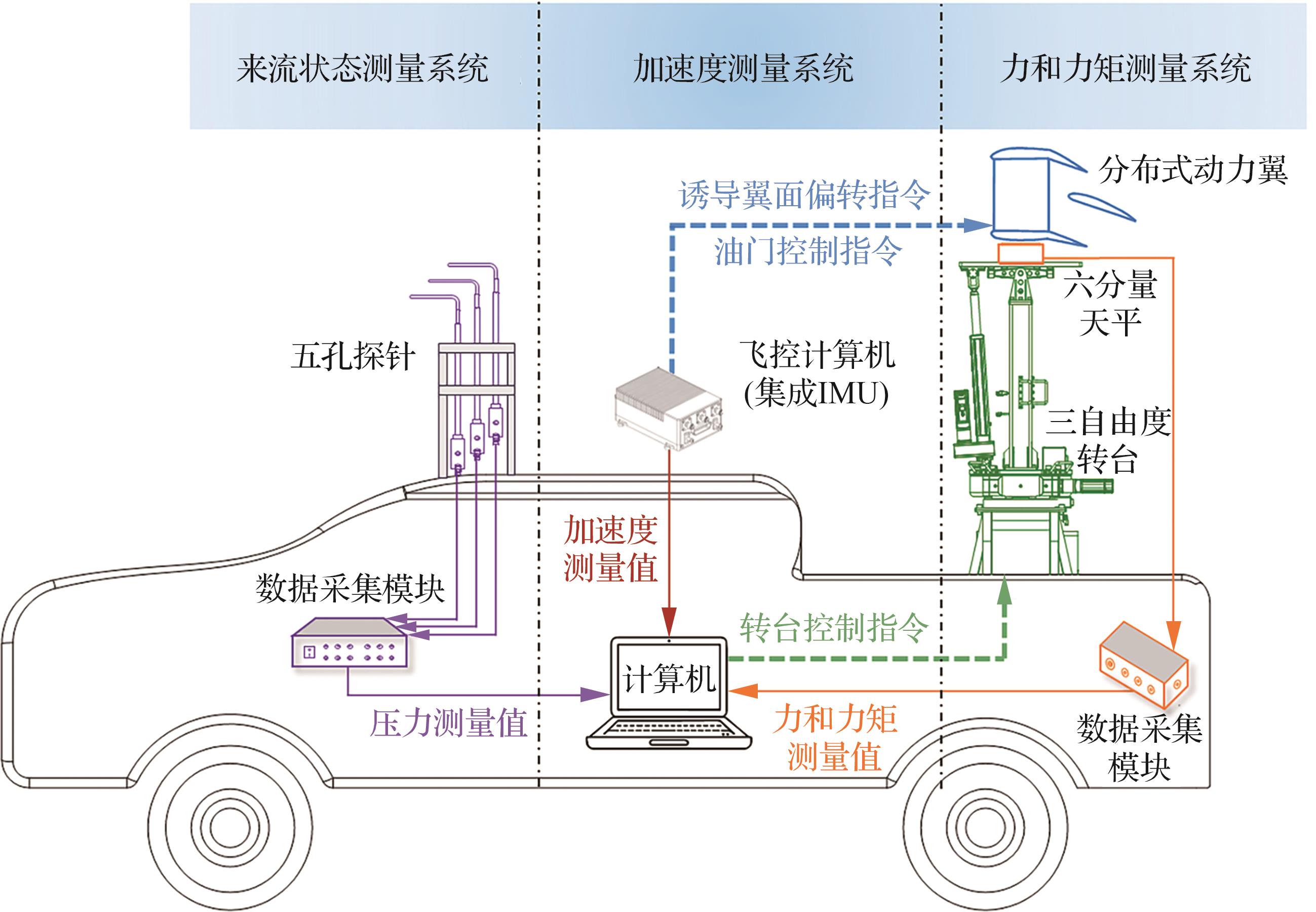
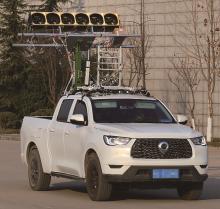
Fig.8
Photograph of car-top test
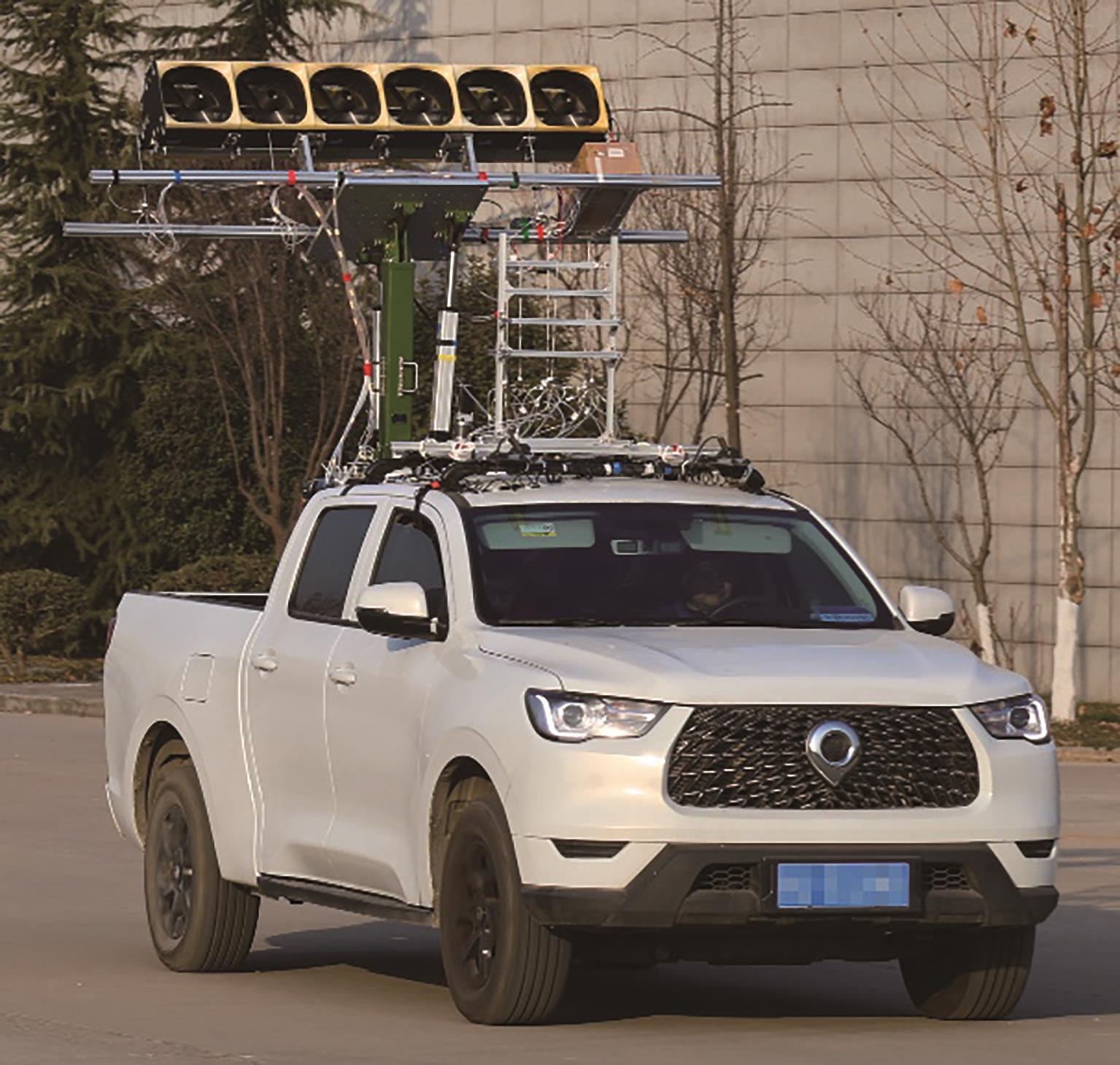
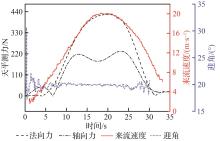
Fig.9
Results of data processing from a specific car-top test
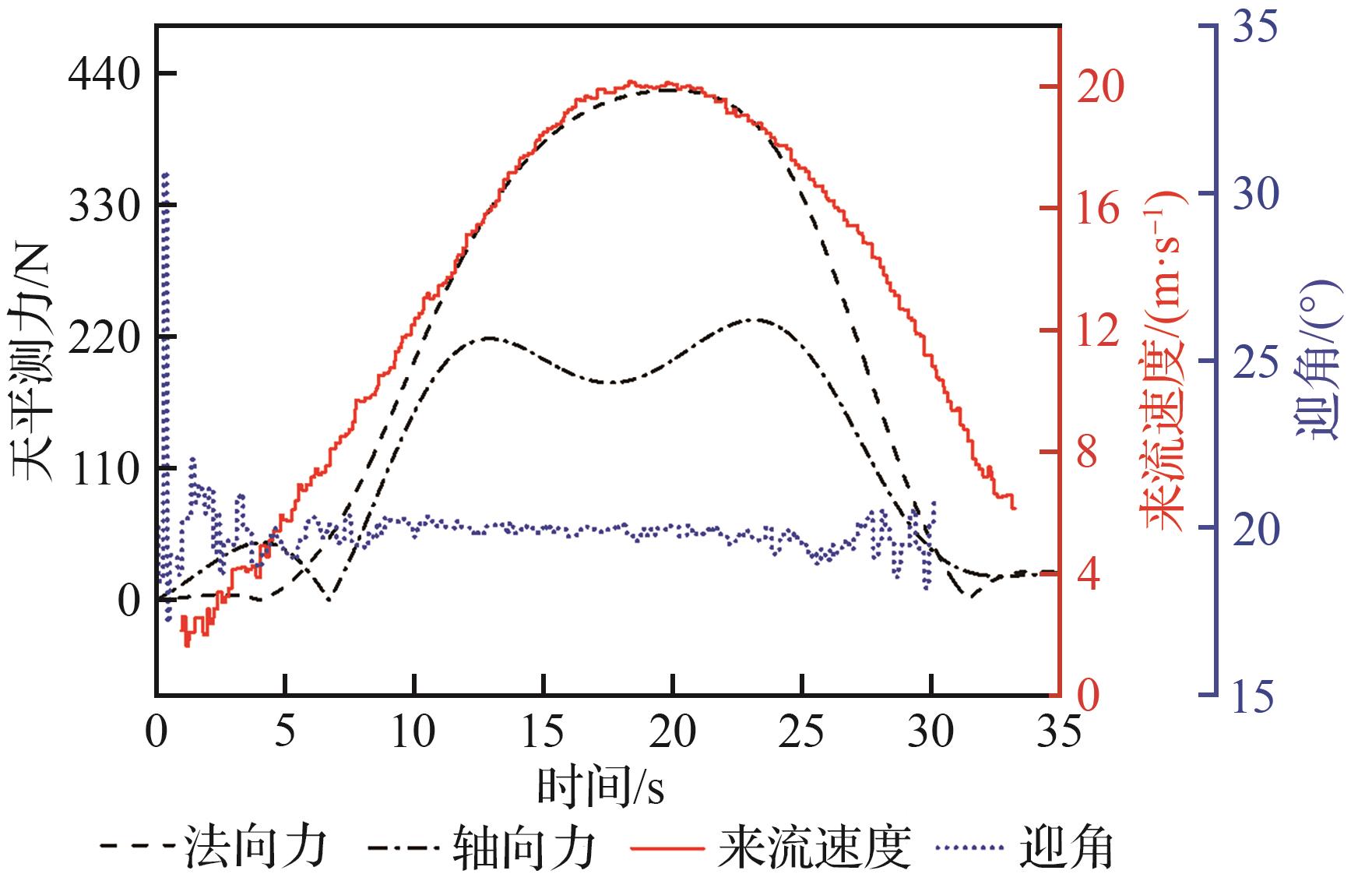
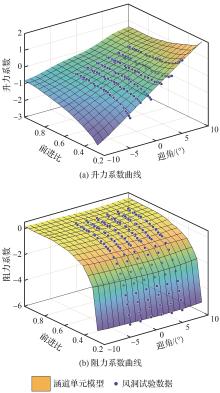
Fig.10
Lift and drag coefficient curves of ducted unit
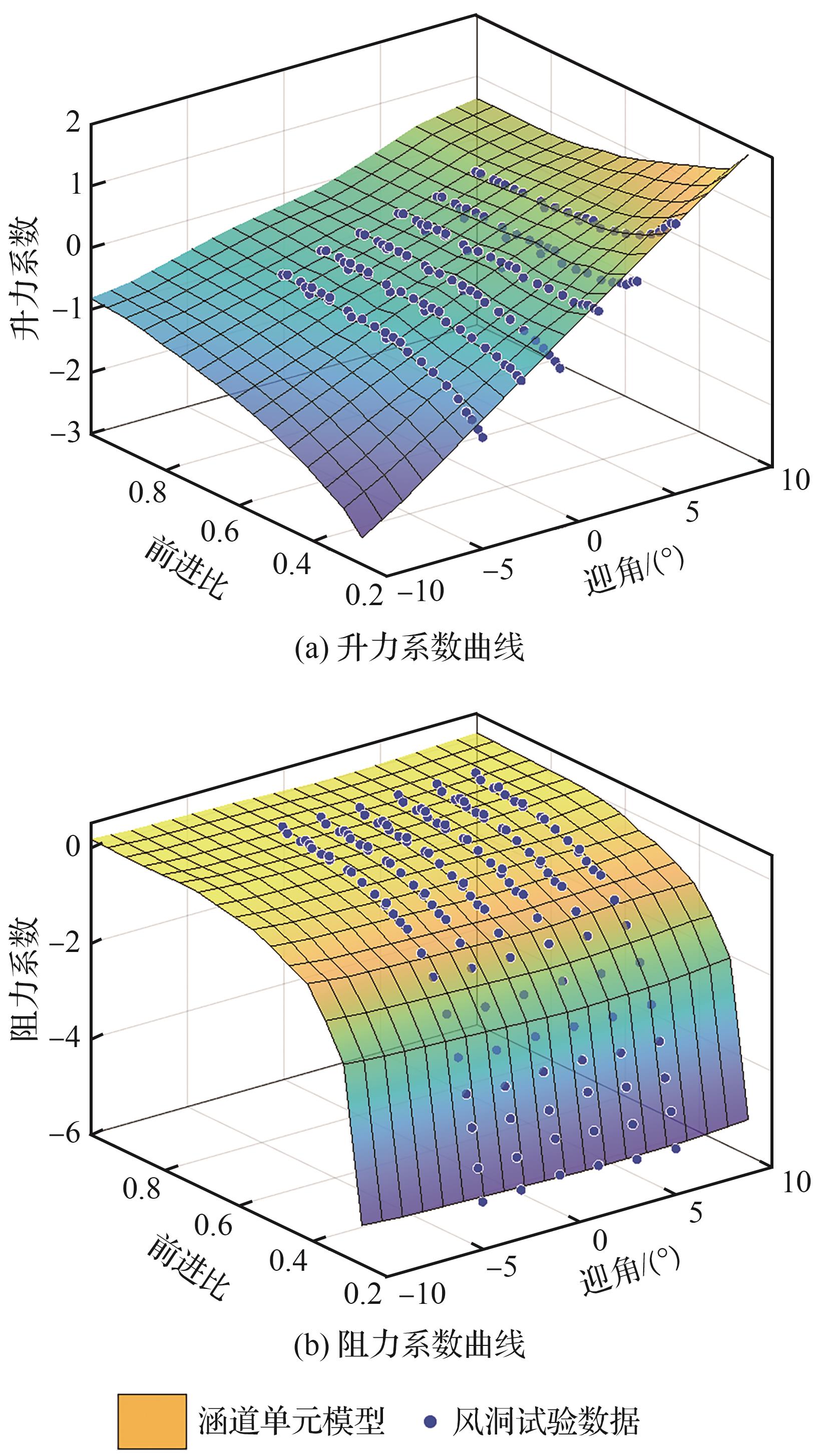

Table 1
Test states under identical advance ratios
| 前进比J | 来流速度 V∞/(m·s-1) | 油门δt | 转速n/(r·min-1) |
|---|---|---|---|
| 0.4 | 10 | 0.4 | 5 727 |
| 20 | 0.9 | 11 265 | |
| 0.5 | 10 | 0.3 | 4 672 |
| 20 | 0.7 | 9 285 | |
| 0.7 | 20 | 0.45 | 6 558 |
| 30 | 0.8 | 10 454 |
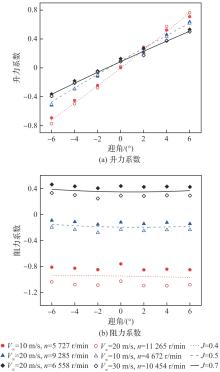
Fig.11
Comparison of ducted unit aerodynamic coefficients under identical advance ratios
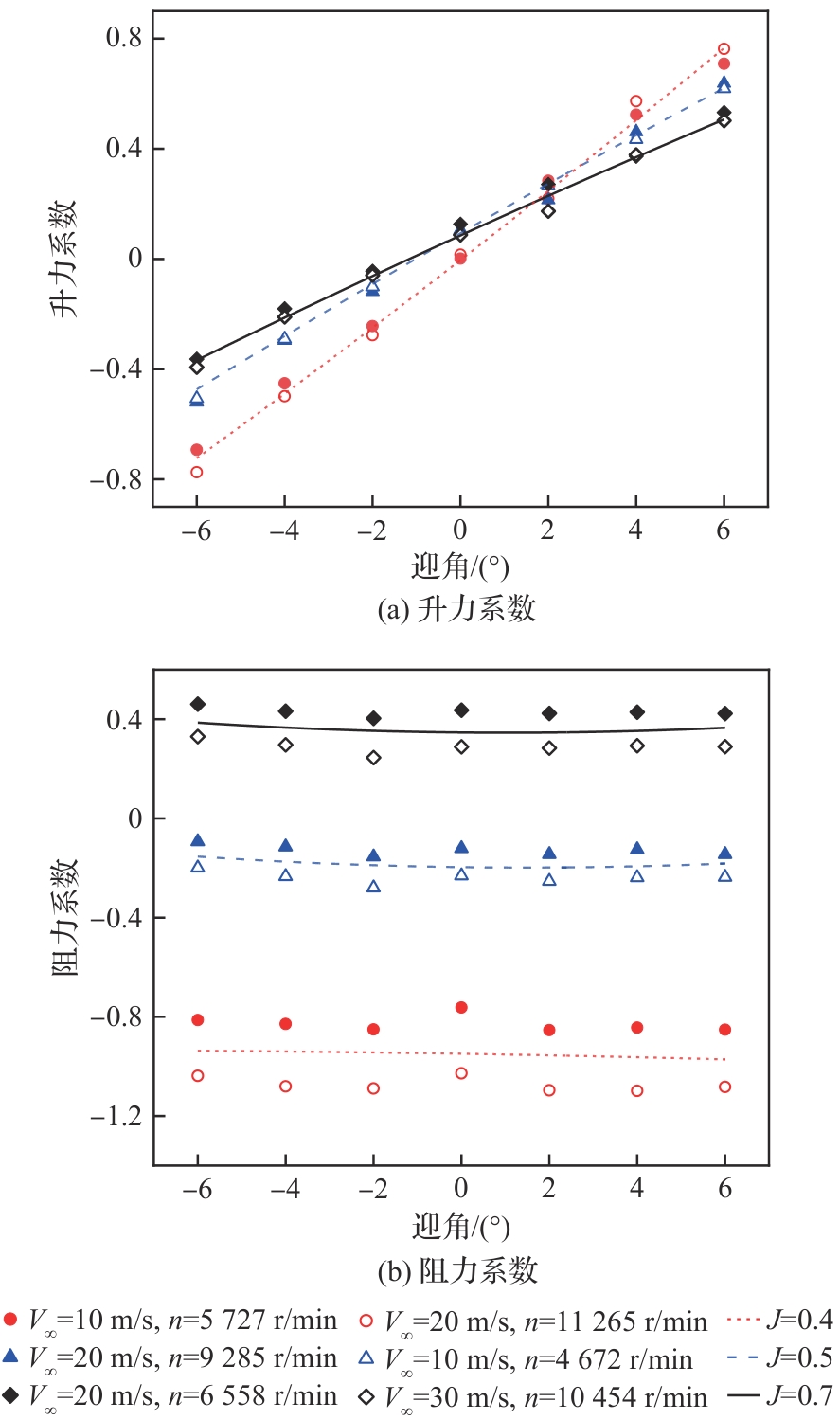
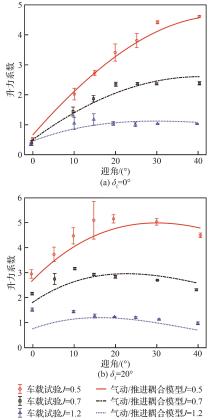
Fig.12
Comparison of lift coefficient between model predictions and car-top test
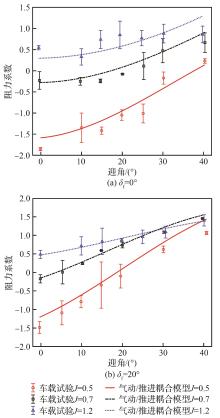
Fig.13
Comparison of drag coefficient between model predictions and car-top test
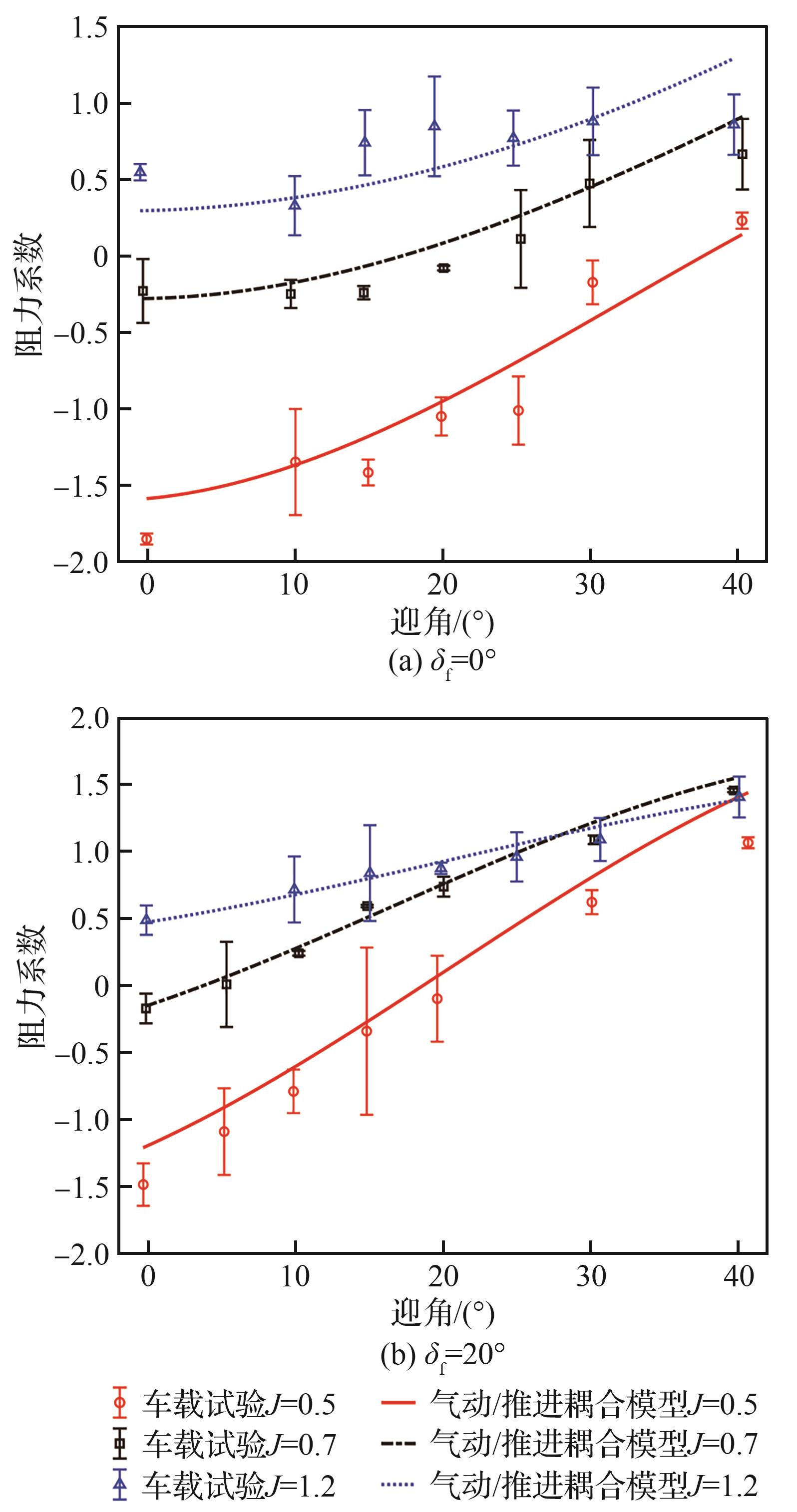
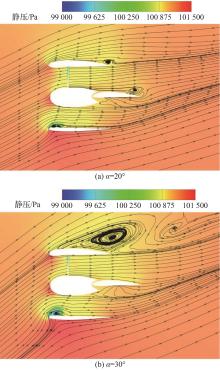
Fig.14
Static pressure and streamlines distributions on central cross-section of the innermost ducted unit of distributed propulsion wing under different angles of attack(J=0.7)
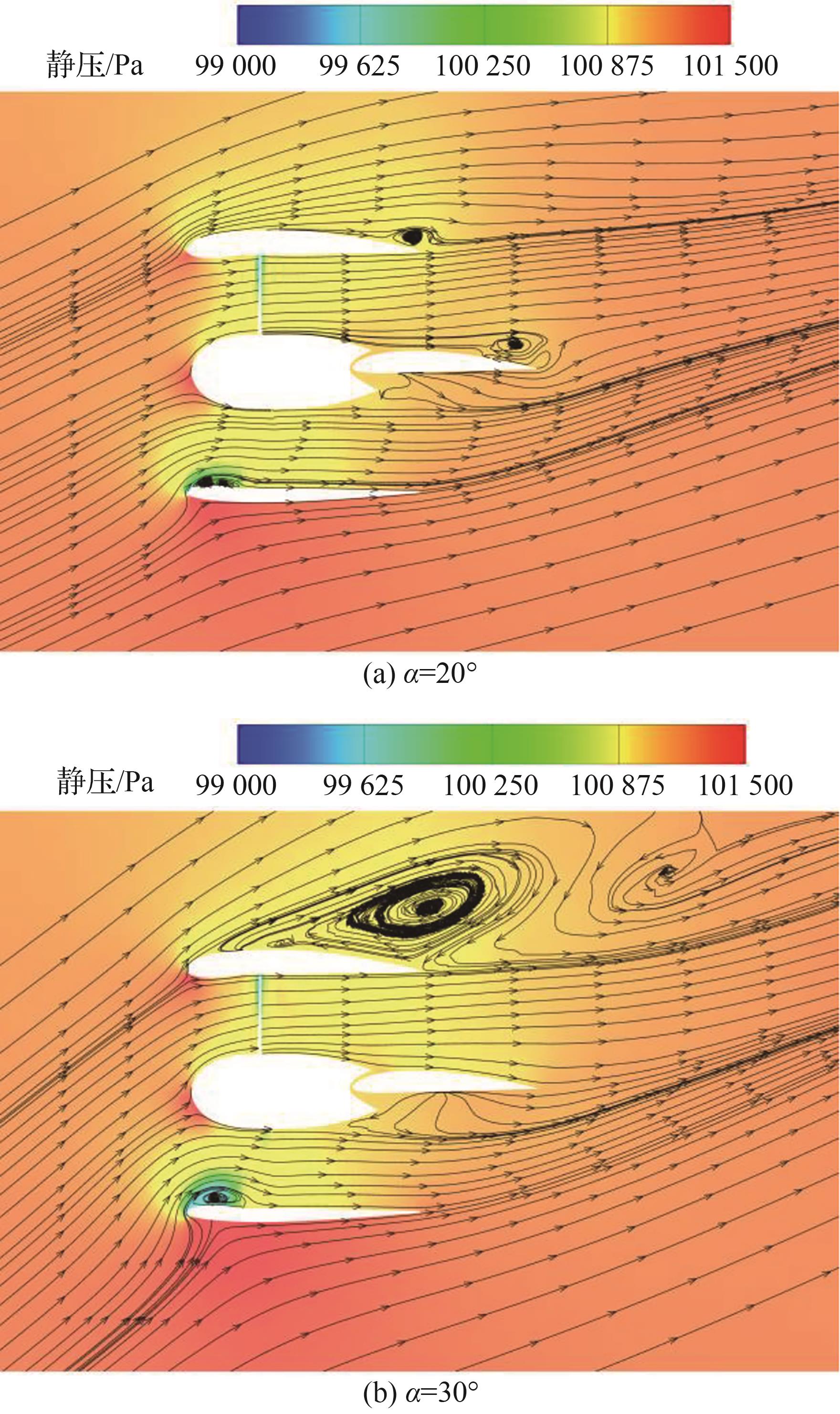
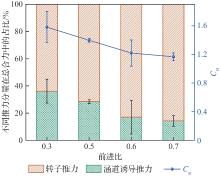
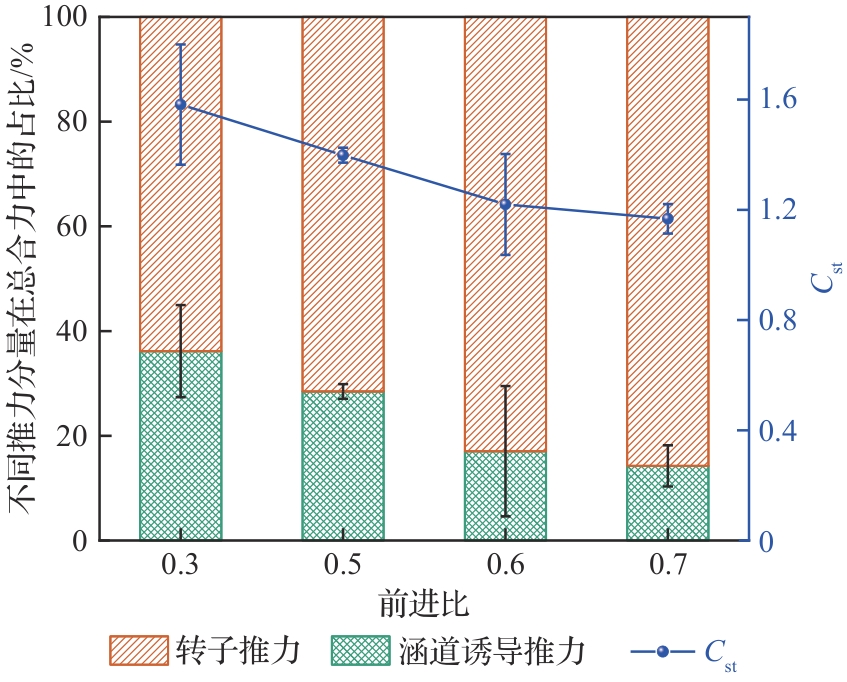
Fig.15
Variation of thrust component contributions to total force with advance ratio
| [1] | ISON D. Consumer willingness to fly on advanced air mobility (AAM) electric vertical takeoff and landing (eVTOL) aircraft[J]. Collegiate Aviation Review-International, 2024, 42(1): 29-56. |
| [2] | KHAN Y M, BALLI M E, TRAINELLI L. Generic evtol aircraft preliminary sizing method for AAM/UAM missions[C]∥48th European Rotorcraft Forum (ERF 2022). Rome: AIDAA, 2022: 1173-1180. |
| [3] | 朱炳杰, 杨希祥, 宗建安, 等. 分布式混合电推进飞行器技术[J]. 航空学报, 2022, 43(7): 025556. |
| ZHU B J, YANG X X, ZONG J A, et al. Review of distributed hybrid electric propulsion aircraft technology[J]. Acta Aeronautica et Astronautica Sinica, 2022, 43(7): 025556 (in Chinese). | |
| [4] | 王科雷, 周洲, 马悦文, 等. 垂直起降固定翼无人机技术发展及趋势分析[J]. 航空工程进展, 2022, 13(5): 1-13. |
| WANG K L, ZHOU Z, MA Y W, et al. Development and trend analysis of vertical takeoff and landing fixed wing UAV[J]. Advances in Aeronautical Science and Engineering, 2022, 13(5): 1-13 (in Chinese). | |
| [5] | 黄俊. 分布式电推进飞机设计技术综述[J]. 航空学报, 2021, 42(3): 624037. |
| HUANG J. Survey on design technology of distributed electric propulsion aircraft[J]. Acta Aeronautica et Astronautica Sinica, 2021, 42(3): 624037 (in Chinese). | |
| [6] | MIKIC G V, BEVIRT J. Multi-element lifting system with integrated propulsion and aircraft using same: US12280868B2[P]. 2025-04-22. |
| [7] | KIM H D, PERRY A T, ANSELL P J. A review of distributed electric propulsion concepts for air vehicle technology[C]∥2018 AIAA/IEEE Electric Aircraft Technologies Symposium. Piscataway: IEEE Press, 2018: 77-97. |
| [8] | LIU H R, ZHAO X Y, ZHOU F, et al. Aero-propulsion analysis of distributed ducted-fan propulsion based on lifting-line driven body-force model[J]. Chinese Journal of Aeronautics, 2025, 38(2): 103126. |
| [9] | LI X, ZHOU Z. Aerodynamic modelling of the airfoil immersed in two-dimensional jet flow[J]. Aerospace, 2022, 9(6): 291. |
| [10] | WANG K L, ZHOU Z, FAN Z Y, et al. Aerodynamic design of tractor propeller for high-performance distributed electric propulsion aircraft[J]. Chinese Journal of Aeronautics, 2021, 34(10): 20-35. |
| [11] | 孙蓬勃, 周洲, 李旭, 等. 目标气动特性下动力翼参数影响分析与优化[J]. 航空学报, 2024, 45(6): 629368. |
| SUN P B, ZHOU Z, LI X, et al. Influence analysis and optimization of distribution-propulsion-wing parameters with target aerodynamic characteristics[J]. Acta Aeronautica et Astronautica Sinica, 2024, 45(6): 629368 (in Chinese). | |
| [12] | 王科雷, 周洲, 郭佳豪, 等. 分布式动力翼前飞状态动力/气动耦合特性[J]. 航空学报, 2024, 45(2): 128643. |
| WANG K L, ZHOU Z, GUO J H, et al. Propulsive/ aerodynamic coupled characteristics of distributed-propulsion-wing during forward flight[J]. Acta Aeronautica et Astronautica Sinica, 2024, 45(2): 128643 (in Chinese). | |
| [13] | 李卓远, 杨旭东, 孙恺, 等. 分布式涵道风扇气动布局复杂强干扰效应及性能影响[J]. 航空学报, 2025, 46(3): 130805. |
| LI Z Y, YANG X D, SUN K, et al. Aerodynamic configuration of distributed ducted fan with complex strong interference effect and performance influence[J]. Acta Aeronautica et Astronautica Sinica, 2025, 46(3): 130805 (in Chinese). | |
| [14] | LI Z Y, WU J H, PEI B R, et al. Numerical investigation on aerodynamic characteristics of equivalent distributed ducted propellers[J]. Chinese Journal of Aeronautics, 2025, 38(6): 103487. |
| [15] | ZHANG X Y, ZHANG W, LI W L, et al. Experimental research on aero-propulsion coupling characteristics of a distributed electric propulsion aircraft[J]. Chinese Journal of Aeronautics, 2023, 36(2): 201-212. |
| [16] | PERRY A T, BRETL T, ANSELL P J. Aeropropulsive coupling effects on a general-aviation aircraft with distributed electric propulsion[J]. Journal of Aircraft, 2021, 58(6): 1351-1363. |
| [17] | JOIS H, HONG A S, ANSELL P J. High-lift aerodynamics of integrated distributed propulsion systems with thrust vectoring[J]. Journal of Aircraft, 2024, 61(6): 1686-1699. |
| [18] | PIEPER K, PERRY A, ANSELL P, et al. Design and development of a dynamically, scaled distributed electric propulsion aircraft testbed[C]∥2018 AIAA/IEEE Electric Aircraft Technologies Symposium (EATS). Piscataway: IEEE Press, 2018: 719-740. |
| [19] | 周芳, 王掩刚, 王思维, 等. 分布式电推进系统中涵道风扇耦合效应的试验与数值研究[J]. 推进技术, 2024, 45(3): 2208036. |
| ZHOU F, WANG Y G, WANG S W, et al. Experimental and numerical study on coupling effect of ducted fan in distributed electric propulsion system[J]. Journal of Propulsion Technology, 2024, 45(3): 2208036 (in Chinese). | |
| [20] | CAO M Z, LIU K, WANG C Q, et al. Research on the distributed propeller slipstream effect of UAV wing based on the actuator disk method[J]. Drones, 2023, 7(9): 566. |
| [21] | 张星雨, 高正红, 雷涛, 等. 分布式电推进飞机气动-推进耦合特性地面试验[J]. 航空学报, 2022, 43(8): 125389. |
| ZHANG X Y, GAO Z H, LEI T, et al. Ground test on aerodynamic-propulsion coupling characteristics of distributed electric propulsion aircraft[J]. Acta Aeronautica et Astronautica Sinica, 2022, 43(8): 125389 (in Chinese). | |
| [22] | PAPATHAKIS K V, KLOESEL K J, LIN Y H, et al. Design and development of a 200-kW turbo-electric distributed propulsion testbed[C]∥52nd AIAA/SAE/ASEE Joint Propulsion Conference. Reston: AIAA, 2016. |
| [23] | MOORE M, FEI X F, JEDAMSKI D, et al. Unlocking low-cost regional air mobility through whisper aero-propulsive coupling[C]∥AIAA Aviation 2023 Forum. Reston: AIAA, 2023. |
| [24] | 周芳, 王庆勇, 秦宇奇, 等. 叶片源项模型的研究回顾与进展[J]. 航空学报, 2025, 46(10): 031178. |
| ZHOU F, WANG Q Y, QIN Y Q, et al. Review and progress of research on blade source term model[J]. Acta Aeronautica et Astronautica Sinica, 2025, 46(10): 031178 (in Chinese). | |
| [25] | PERRY A T, BRETL T, ANSELL P J. System identification and dynamics modeling of a distributed electric propulsion aircraft[C]∥AIAA Aviation 2019 Forum. Reston: AIAA, 2019. |
| [26] | SIMMONS B M, MURPHY P C. Aero-propulsive modeling for tilt-wing, distributed propulsion aircraft using wind tunnel data[J]. Journal of Aircraft, 2022, 59(5): 1162-1178. |
| [27] | 夏济宇, 周洲, 徐德, 等. 矢量电推进系统的气动-推进耦合模型[J]. 航空学报, 2023, 44(11): 127672. |
| XIA J Y, ZHOU Z, XU D, et al. Aerodynamic/propulsion coupling model of vector electric propulsion system[J]. Acta Aeronautica et Astronautica Sinica, 2023, 44(11): 127672 (in Chinese). | |
| [28] | 赵清风, 周洲, 李明浩, 等. 分布式动力翼-诱导翼面推进-气动耦合模型[J]. 航空学报, 2024, 45(10): 129252. |
| ZHAO Q F, ZHOU Z, LI M H, et al. Propulsion/aerodynamic coupling modeling for distributed-propulsion-wing with induced wing configuration[J]. Acta Aeronautica et Astronautica Sinica, 2024, 45(10): 129252 (in Chinese). | |
| [29] | MCCORMICK B W. Aerodynamics of V/STOL flight[M]. Mineola: Dover Publications, 1999: 13-15. |
| [30] | WERLE M J. Analytical model for ring-wing propulsor thrust augmentation[J]. Journal of Aircraft, 2020, 57(5): 901-913. |
| [31] | JAKOBSSON B. Definition and measurement of jet engine thrust[J]. Journal of the Royal Aeronautical Society, 1951, 55(484): 226-243. |
| [32] | BEARD R W, MCLAIN T W. Small unmanned aircraft: Theory and practice[M]. Princeton: Princeton University Press, 2012: 47-49. |
| [33] | SIMMONS B M. System identification for propellers at high incidence angles[J]. Journal of Aircraft, 2021, 58(6): 1336-1350. |
| [1] | Xu ZHANG, Zhe WENG, Zhuolin ZHAO, Jianing CHEN, Zibin ZHAO, Yan SUN. Airfoil CFD pressure coefficient modification method based on layered interpolation [J]. Acta Aeronautica et Astronautica Sinica, 2026, 47(8): 132788-132788. |
| [2] | Yue ZHANG, Gang YANG, Huijun TAN, Hantian ZHANG, Mingchi PANG, Longzhi ZHANG, Xiahao GAO. Restart characteristics of low-speed duct during mode transition in an over-under inlet [J]. Acta Aeronautica et Astronautica Sinica, 2026, 47(6): 132842-132842. |
| [3] | Bei LIU, Xingya DA, Yaowu ZHU, Yuan YI. Longitudinal aerodynamic/propulsion coupling effects of a distributed propulsion aircraft [J]. Acta Aeronautica et Astronautica Sinica, 2026, 47(4): 132280-132280. |
| [4] | Wei SUN, Yuni ZHANG, Ting LIU, Zheyu SHI, Yongfeng LIN. Experiment on influence mechanism of rotor flow on blade-vortex interaction noise [J]. Acta Aeronautica et Astronautica Sinica, 2026, 47(3): 132182-132182. |
| [5] | Yiyan YANG, Anxiang FU, Yuhui WANG, Zhaoyang TIAN, Lei SHI. Aerodynamic design and wind tunnel test on inward-turning inlet of high-speed rocket-augmented ramjet engine [J]. Acta Aeronautica et Astronautica Sinica, 2026, 47(3): 132202-132202. |
| [6] | Fei LUO, Biao JIANG, Yining GAO, Zhiyong HU, Hailiang LIU, Junhong ZHANG, Zikang SU. Design and wind tunnel test of an advanced controller for aerial refueling docking [J]. Acta Aeronautica et Astronautica Sinica, 2026, 47(11): 332793-332793. |
| [7] | Yang LIU, Yongjie SHI, Guohua XU. Wind tunnel test of rotor aerodynamic interference characteristics in complex low-altitude wind fields [J]. Acta Aeronautica et Astronautica Sinica, 2026, 47(1): 632054-632054. |
| [8] | Kelei WANG, Zhou ZHOU, Minghao LI. Research and experimental validation of loose coupling design method for propulsion wing unit [J]. Acta Aeronautica et Astronautica Sinica, 2025, 46(9): 212-229. |
| [9] | Lixiang WEI, Jinglei XU, Kuangshi CHEN, Shuai HUANG, Jianhui GE, Guangtao SONG. Scheme design and performance study of adjustable vector nozzle for wide-range hypersonic aircraft [J]. Acta Aeronautica et Astronautica Sinica, 2025, 46(8): 631086-631086. |
| [10] | Xian YI, Jinghao REN, Qingren LAI, Yu LIU, Qiang WANG. Icing characteristics of full-scale multi-element configurations of large aircraft: Computation and experiment [J]. Acta Aeronautica et Astronautica Sinica, 2025, 46(5): 531575-531575. |
| [11] | Zhiqiang WAN, Shanshan ZHANG, Xiaozhe WANG, Liang MA, Ao XU, Zhigang WU, Chao YANG. Maneuver load analysis and alleviation technology of flexible aircraft: Review [J]. Acta Aeronautica et Astronautica Sinica, 2025, 46(3): 30279-030279. |
| [12] | Bin LIANG, Junbo ZHAO, Zengliang FU, Jiajian ZHOU, Ping ZHOU, Shiyu ZHANG, Weiqi SUN. Effect of gas mass injection on pitching characteristics of blunt cone [J]. Acta Aeronautica et Astronautica Sinica, 2025, 46(3): 130822-130822. |
| [13] | Yong LIANG, Weiguo ZHANG, Binghui CHE, Honggang YUAN, Chunhua WEI, Ningmeng YANG. Wind tunnel tests of aeroacoustic characteristic for helicopter aircraft model [J]. Acta Aeronautica et Astronautica Sinica, 2025, 46(24): 132072-132072. |
| [14] | Junqiang WU, Zhi WEI, Yang LIU, Min ZHONG, Fujun YANG, Yonggang YU. Civil aircraft standard model system and construction of aerodynamic subject database [J]. Acta Aeronautica et Astronautica Sinica, 2025, 46(24): 132030-132030. |
| [15] | Wei WANG, Junfu LI, Fengxue QIAN, Yuting TAN, Yan ZHAO, Bowen ZHAO, Qing CHEN, Ke SONG. Wind tunnel test of low sonic boom high efficiency layout for supersonic civil aircraft [J]. Acta Aeronautica et Astronautica Sinica, 2025, 46(20): 531941-531941. |
| Viewed | ||||||
|
Full text |
|
|||||
|
Abstract |
|
|||||
Address: No.238, Baiyan Buiding, Beisihuan Zhonglu Road, Haidian District, Beijing, China
Postal code : 100083
E-mail:hkxb@buaa.edu.cn
Total visits: 6658907 Today visits: 1341All copyright © editorial office of Chinese Journal of Aeronautics
All copyright © editorial office of Chinese Journal of Aeronautics
Total visits: 6658907 Today visits: 1341

 CJA
CJA
