Acta Aeronautica et Astronautica Sinica ›› 2025, Vol. 46 ›› Issue (18): 131899.doi: 10.7527/S1000-6893.2025.31899
• Fluid Mechanics and Flight Mechanics • Previous Articles Next Articles
Yicheng QIU1,2, Chaokai YUAN1,2( ), Guilai HAN1,2
Received:2025-02-26
Revised:2025-04-18
Accepted:2025-05-08
Online:2025-09-25
Published:2025-05-19
Contact:
Chaokai YUAN
E-mail:yuanck@imech.ac.cn
Supported by:CLC Number:
Yicheng QIU, Chaokai YUAN, Guilai HAN. Numerical simulation methods for aircraft exposed to lightning strikes[J]. Acta Aeronautica et Astronautica Sinica, 2025, 46(18): 131899.

Table 1
Values of constants
| 参数 | 数值 |
|---|---|
| 气体常数R/(J·K-1·kg-1) | 2.880 946×102 |
| 比解离能E0/(J·kg-1) | 2.930 557×107 |
| 一次电离比能E1/(J·kg-1) | 9.591 766×107 |
| 二次电离比能E2/(J·kg-1) | 2.0620 56×108 |
| 解离常数C0/(m3·K1.5kg-1) | 4.817 588×10-4 |
| 一次电离常数C1/(m3·K1.5kg-1) | 11 014.16 |
| 二次电离常数C2/(m3·K1.5kg-1) | 10 339.65 |
| 振动温度Tv/K | 3 150.0 |
| 标准空气密度ρ0/(kg·m-3) | 1.172 358 |
| 标准温度T0/K | 300.0 |
| 标准压强p0/Pa | 101 325 |
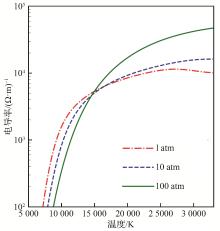
Fig.1
Electrical conductivity of air plasma at 1, 10, and 100 atm, versus temperature
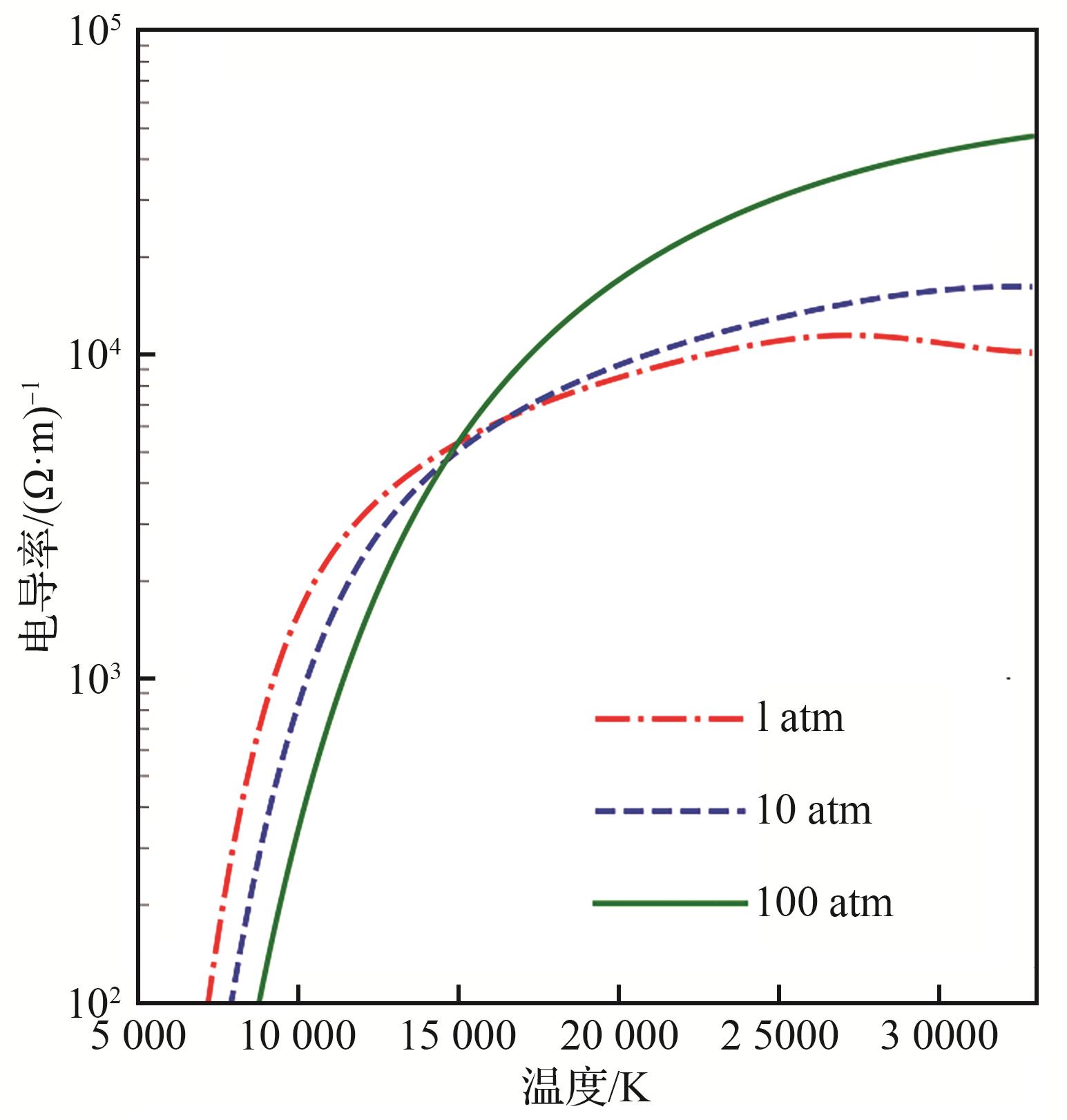
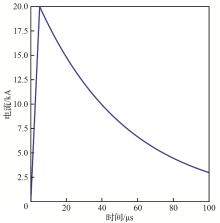
Fig.2
A normal current waveform
Table 2
Parameters of simplified experimental wavform
| 序号 | I0/kA | tm/μs | kn/μs | 对比试验 |
|---|---|---|---|---|
| 1 | 7 | 1.5 | 8 | Orville等[ |
| 2 | 20 | 5 | 50 | Plooster[ |
| 3 | 0.5 | 0.25 | 15 | Higham, Meek[ |
| 4 | 10 | 4 | 12 | Norinder, Karsten[ |
| 5 | 2 | 2 | 2 | Liao等[ |
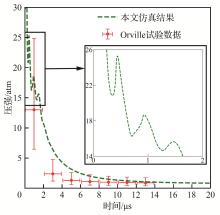
Fig.3
Channel pressure variation during lightning
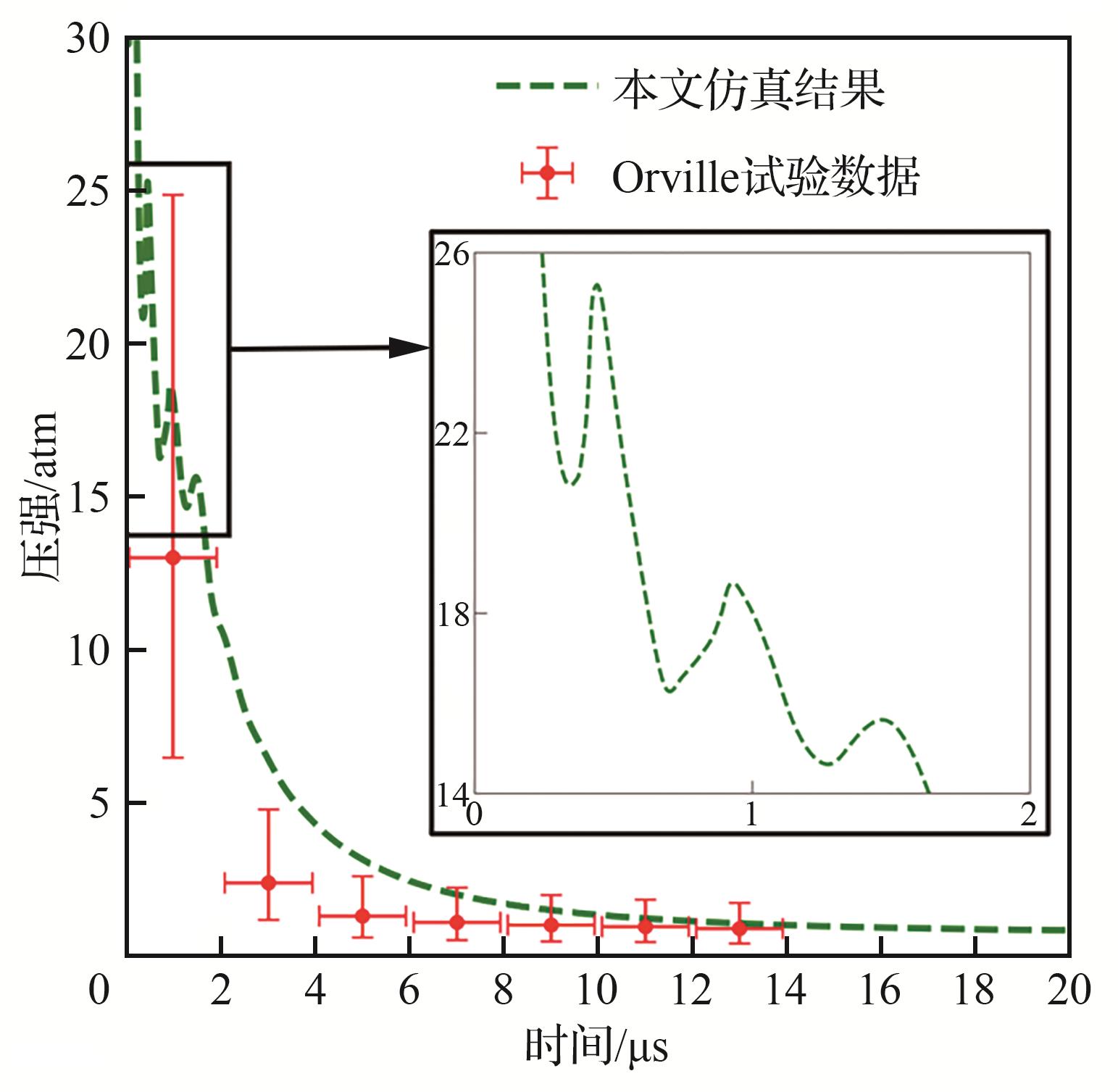
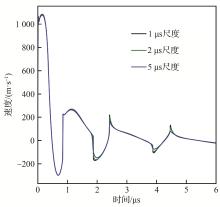
Fig.4
Grid independence verification
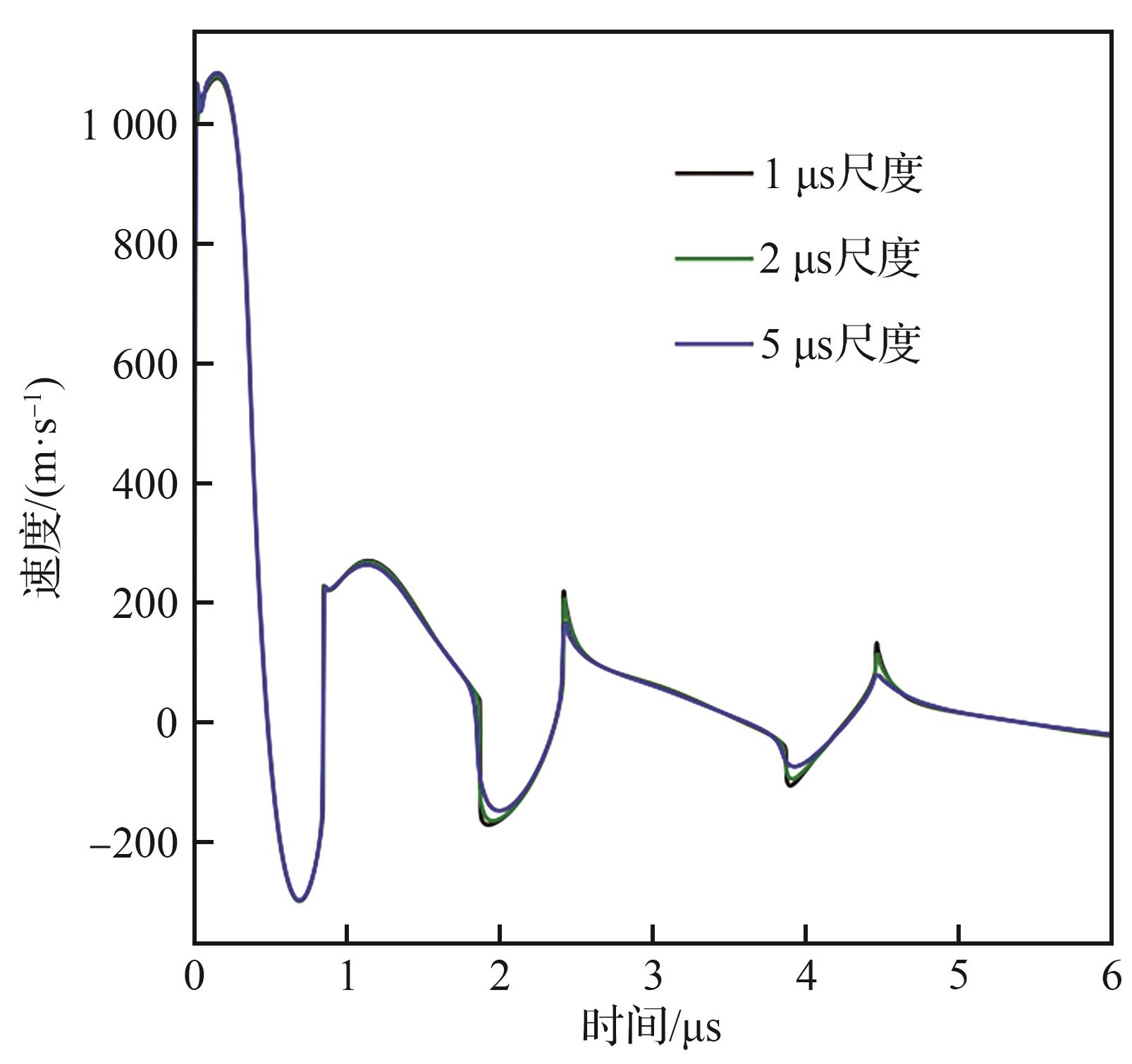
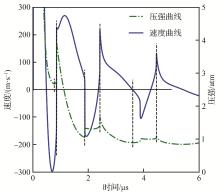
Fig.5
Velocity variation of the point in channel
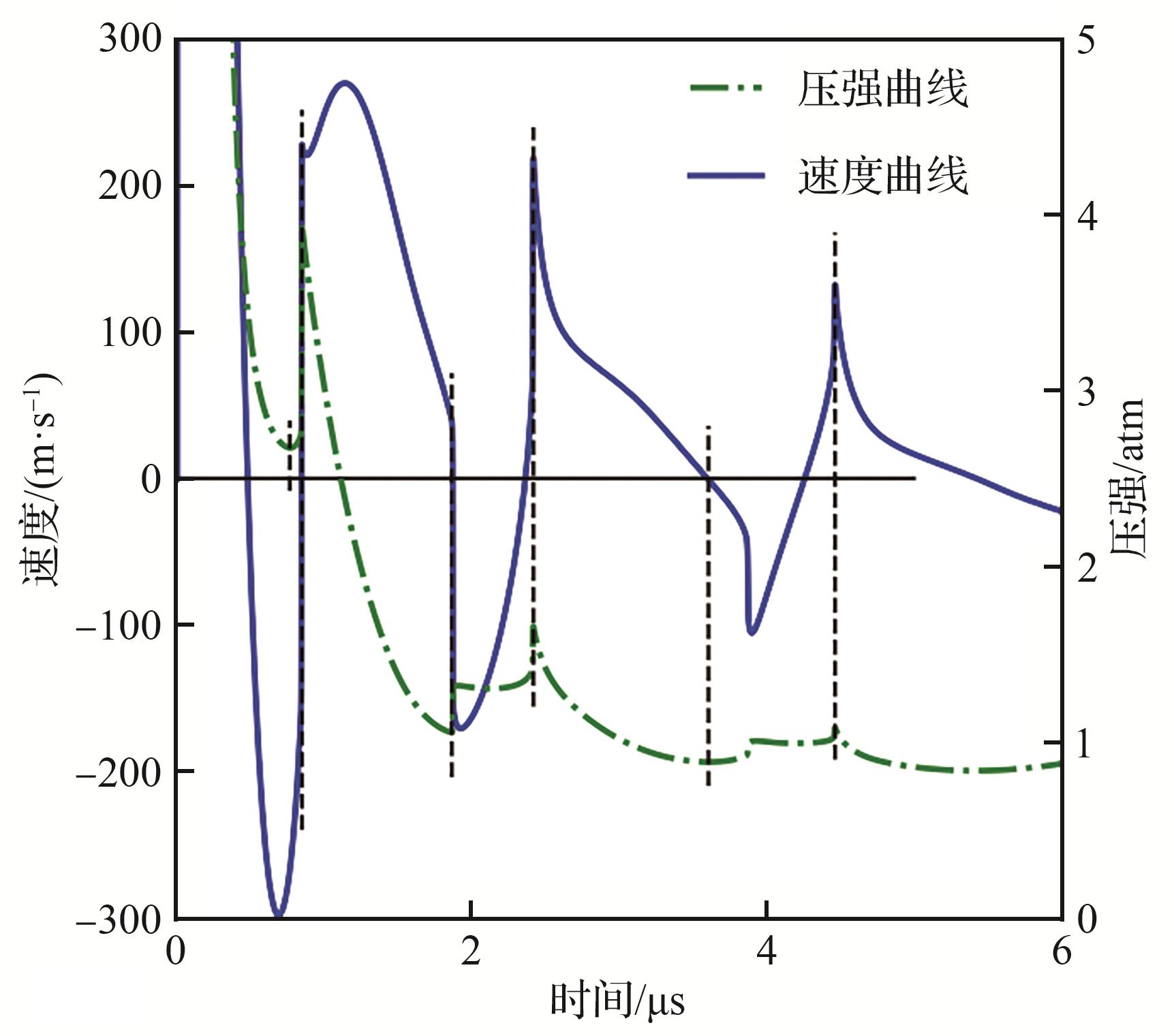
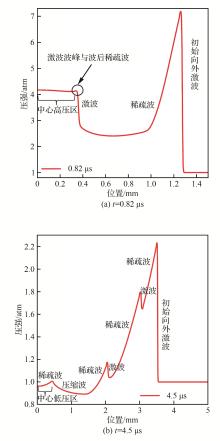
Fig.6
Pressure distribution
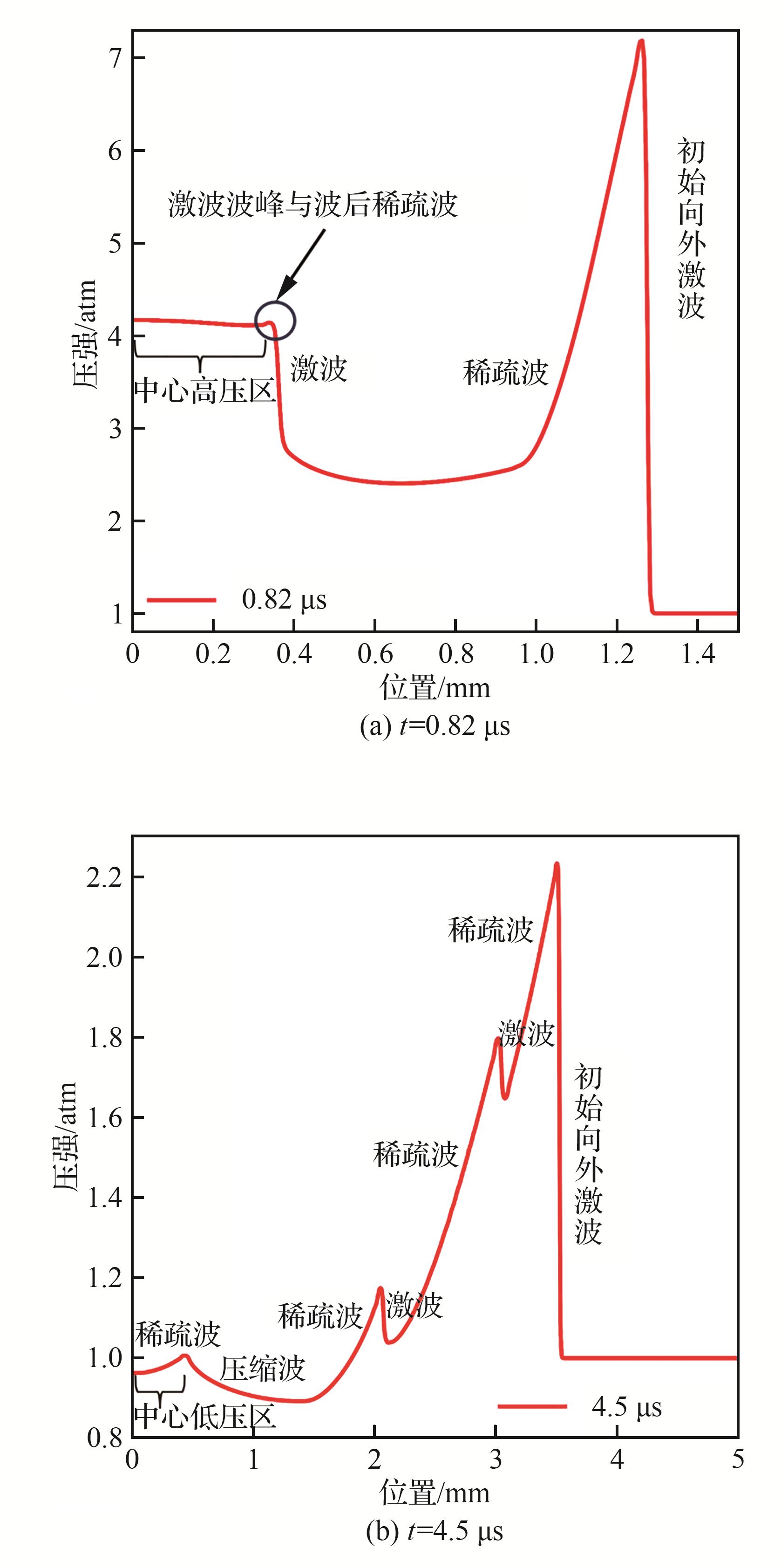
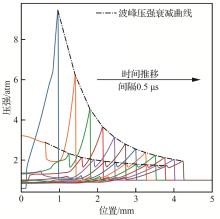
Fig.7
Pressure distribution curves at different times
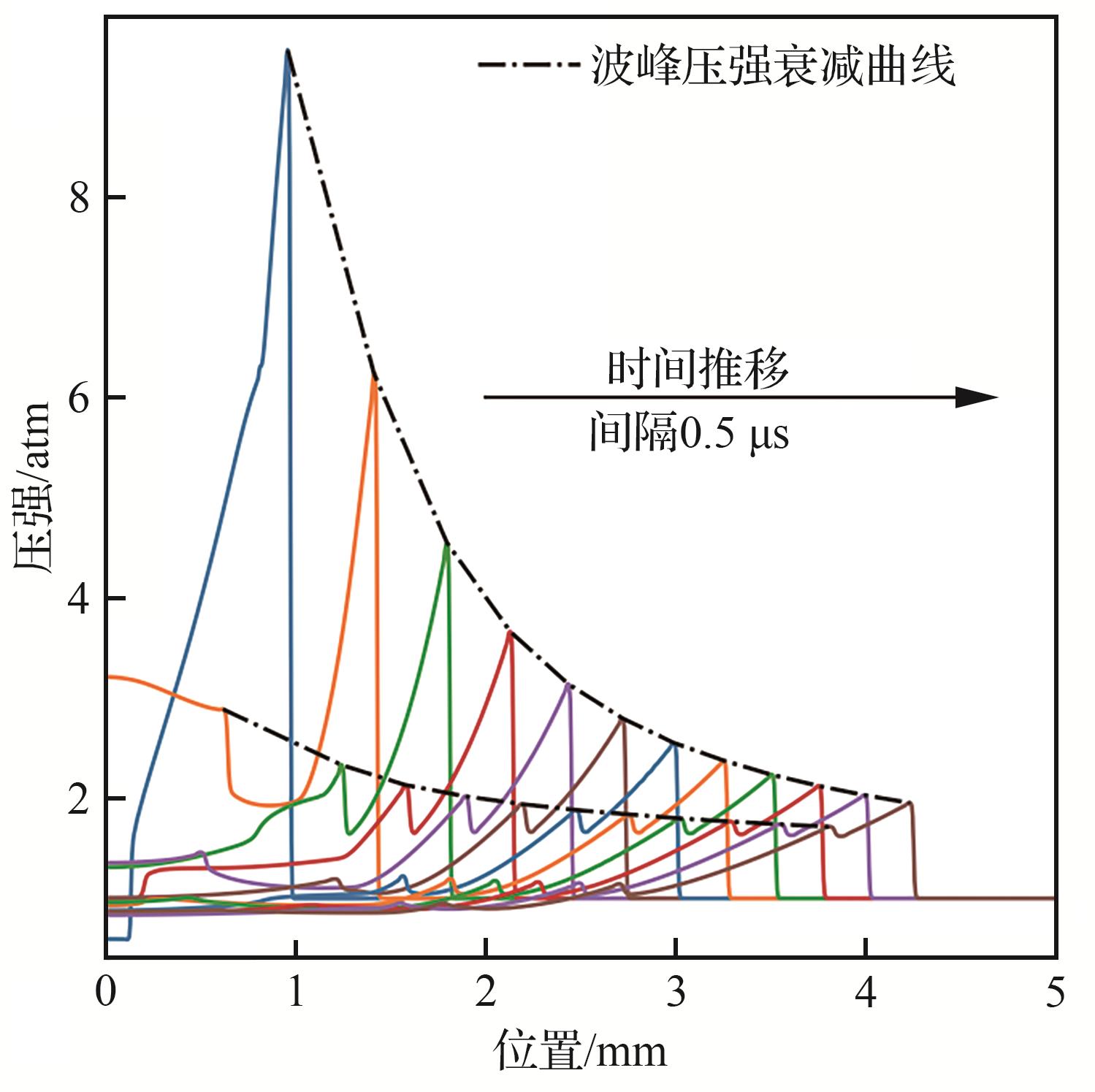
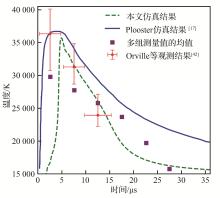
Fig.8
Channel pressure variation during lightning
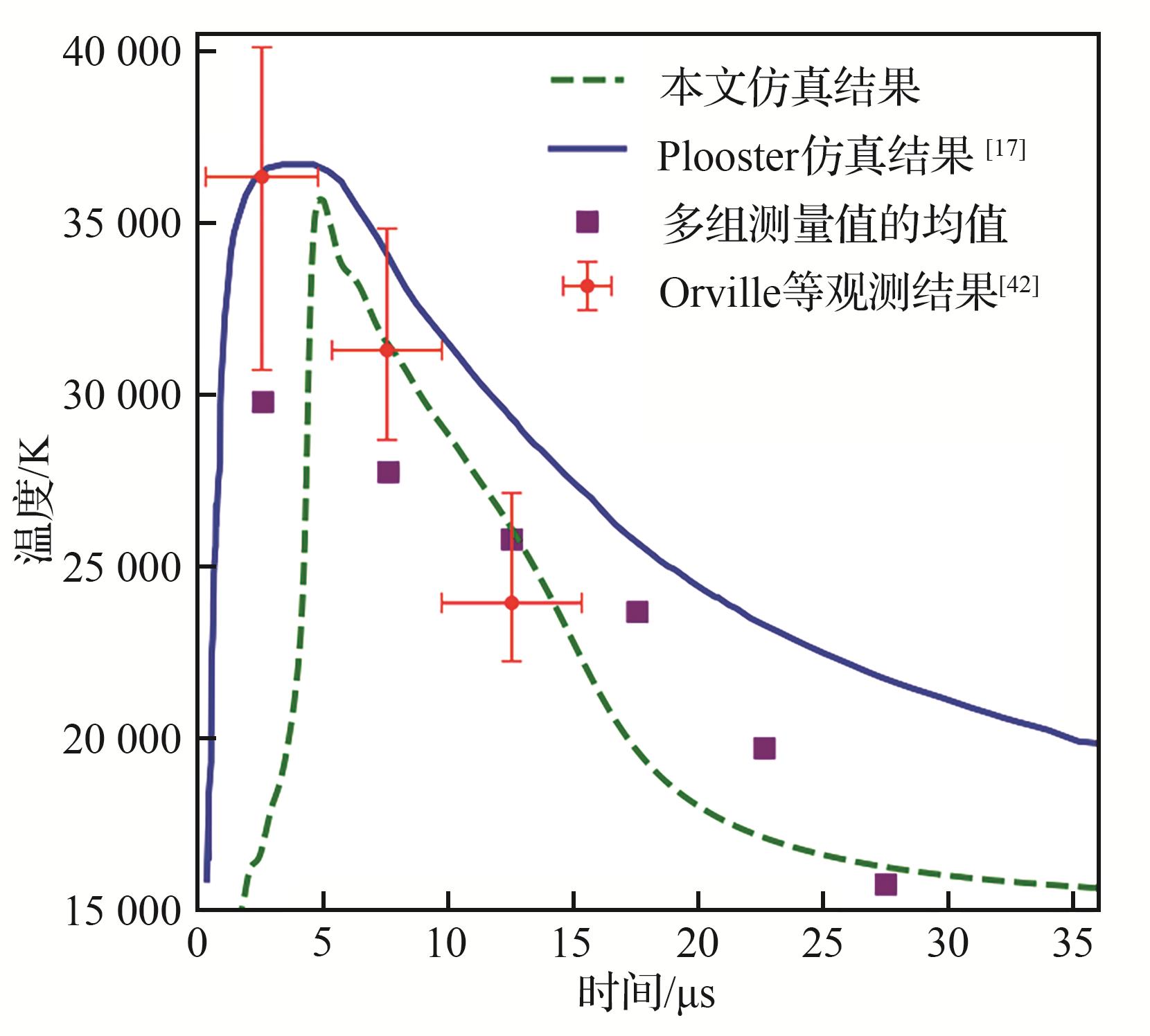
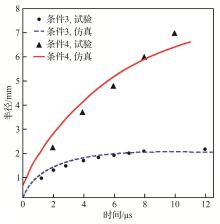
Fig.9
Variation of lightning channel radius
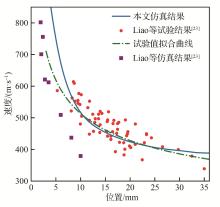
Fig.10
Shock wave attenuation process
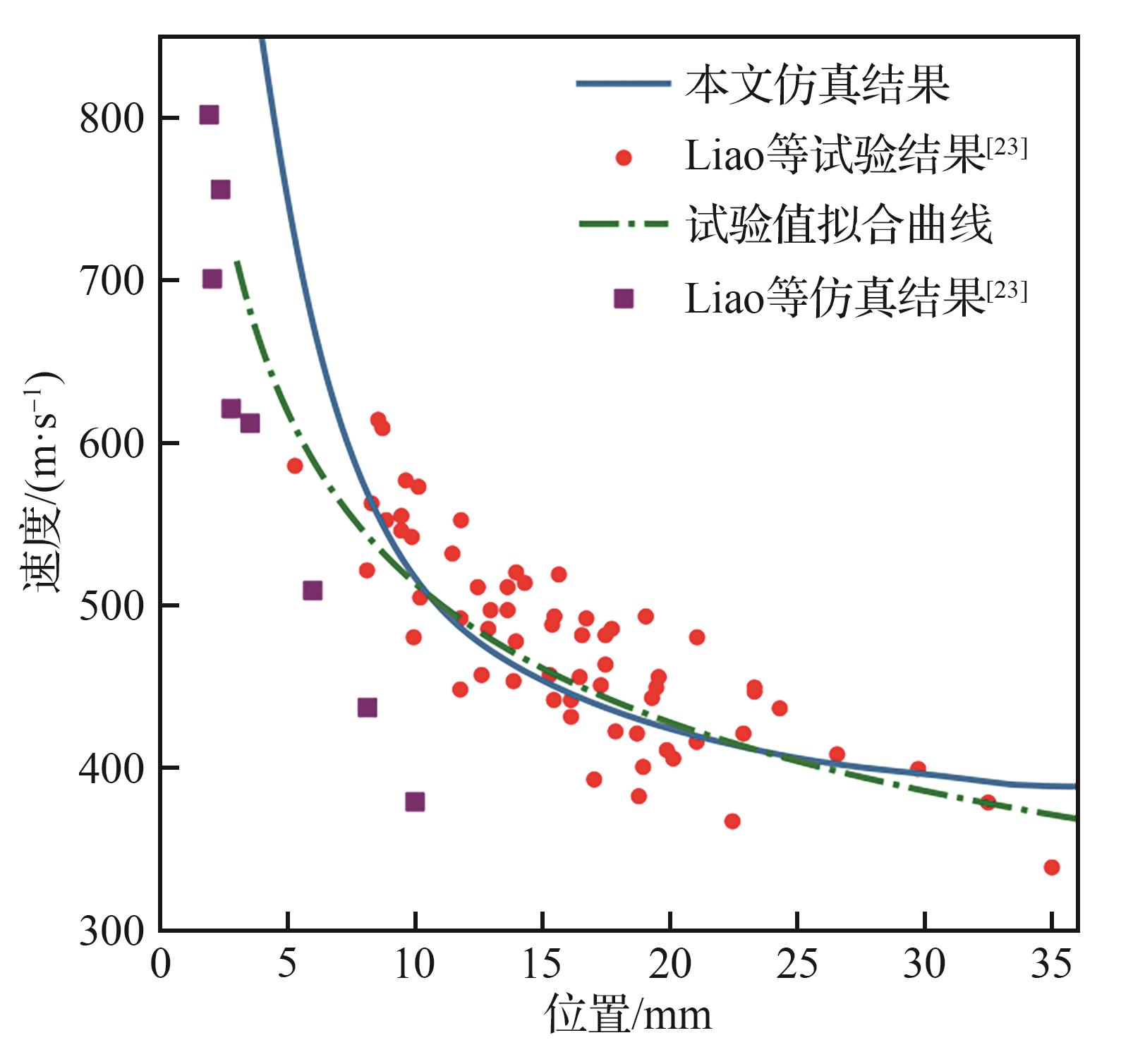
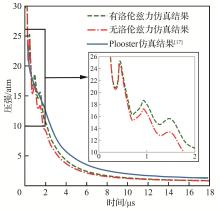
Fig.11
Comparison of channel pressure with and without Lorentz force
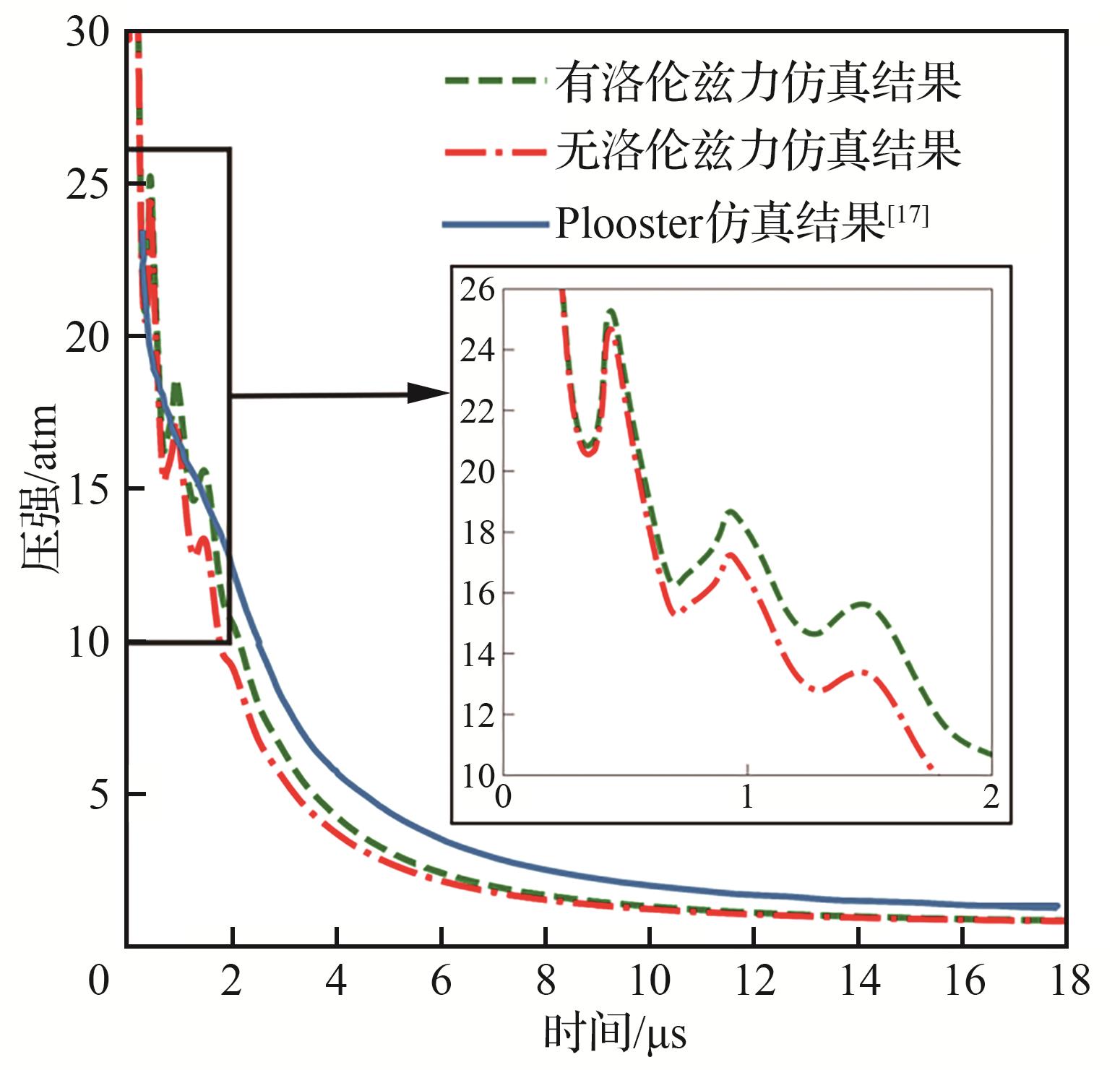
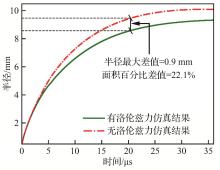
Fig.12
Comparison of channel radius with and without effect of Lorentz force
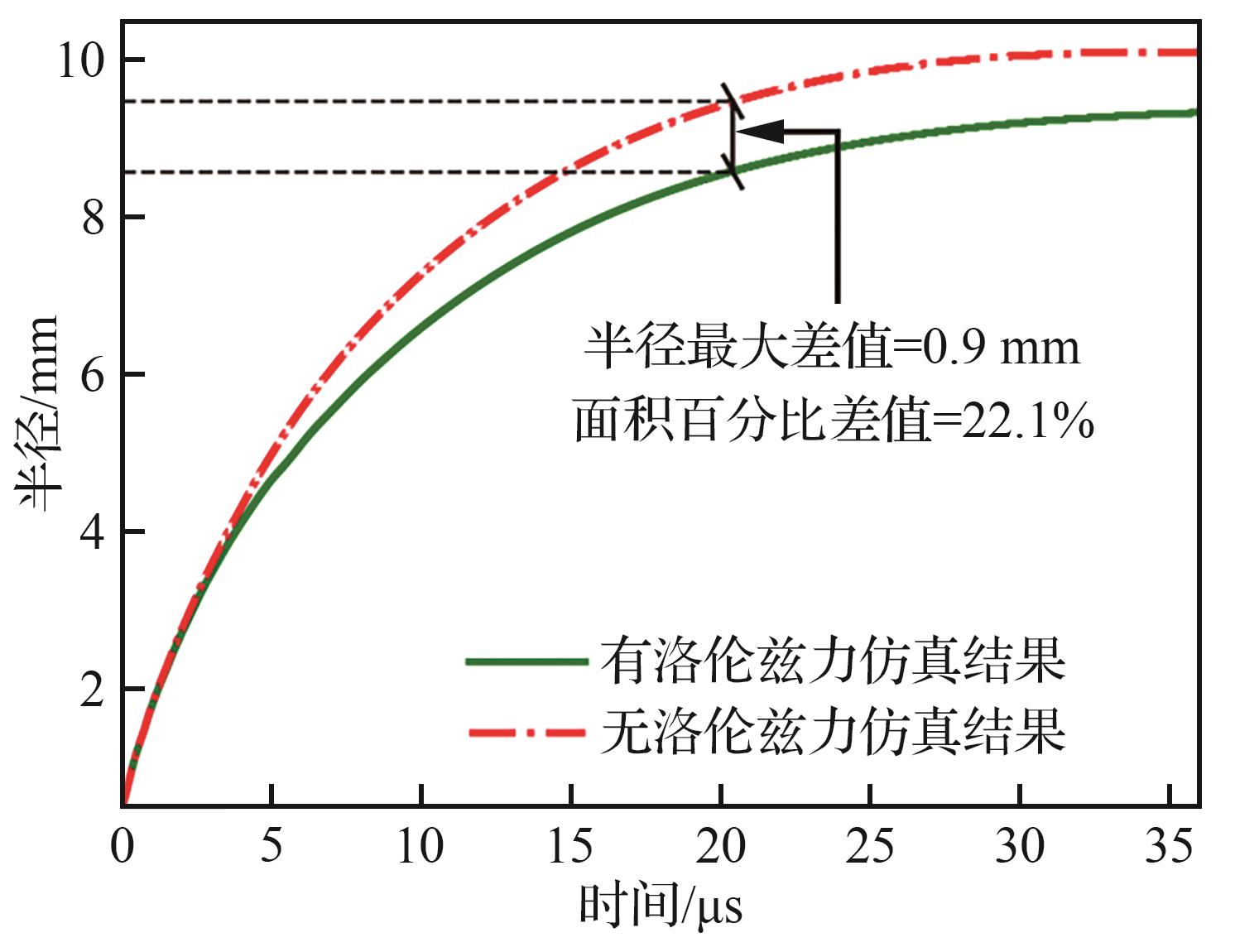
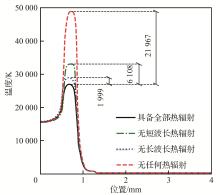
Fig.13
Temperature distribution inside and outside the channel (t=0.8 μs)
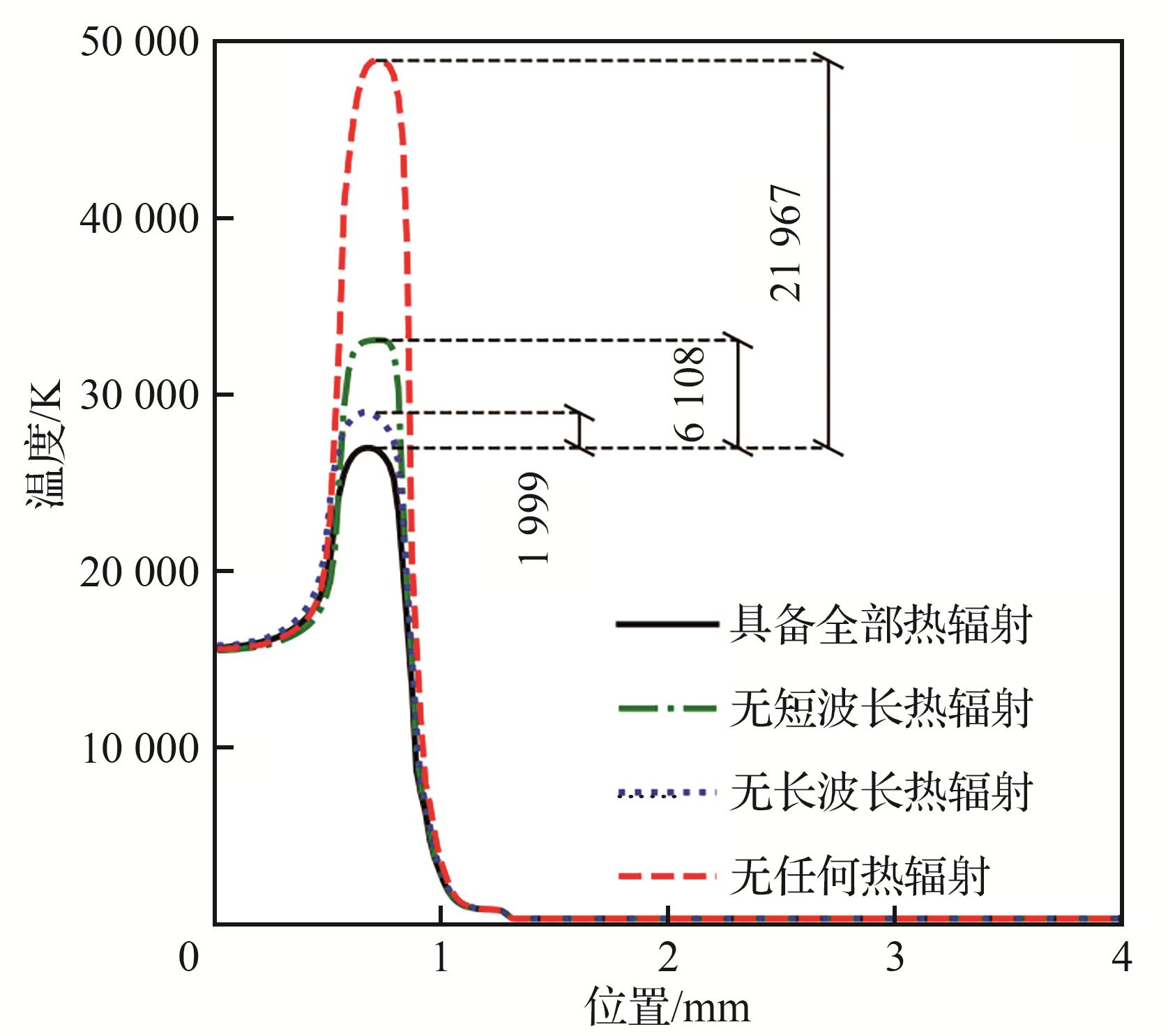
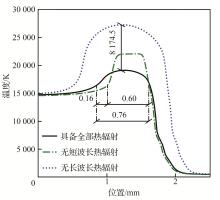
Fig.14
Temperature distribution inside and outside the channel (t=4 μs)
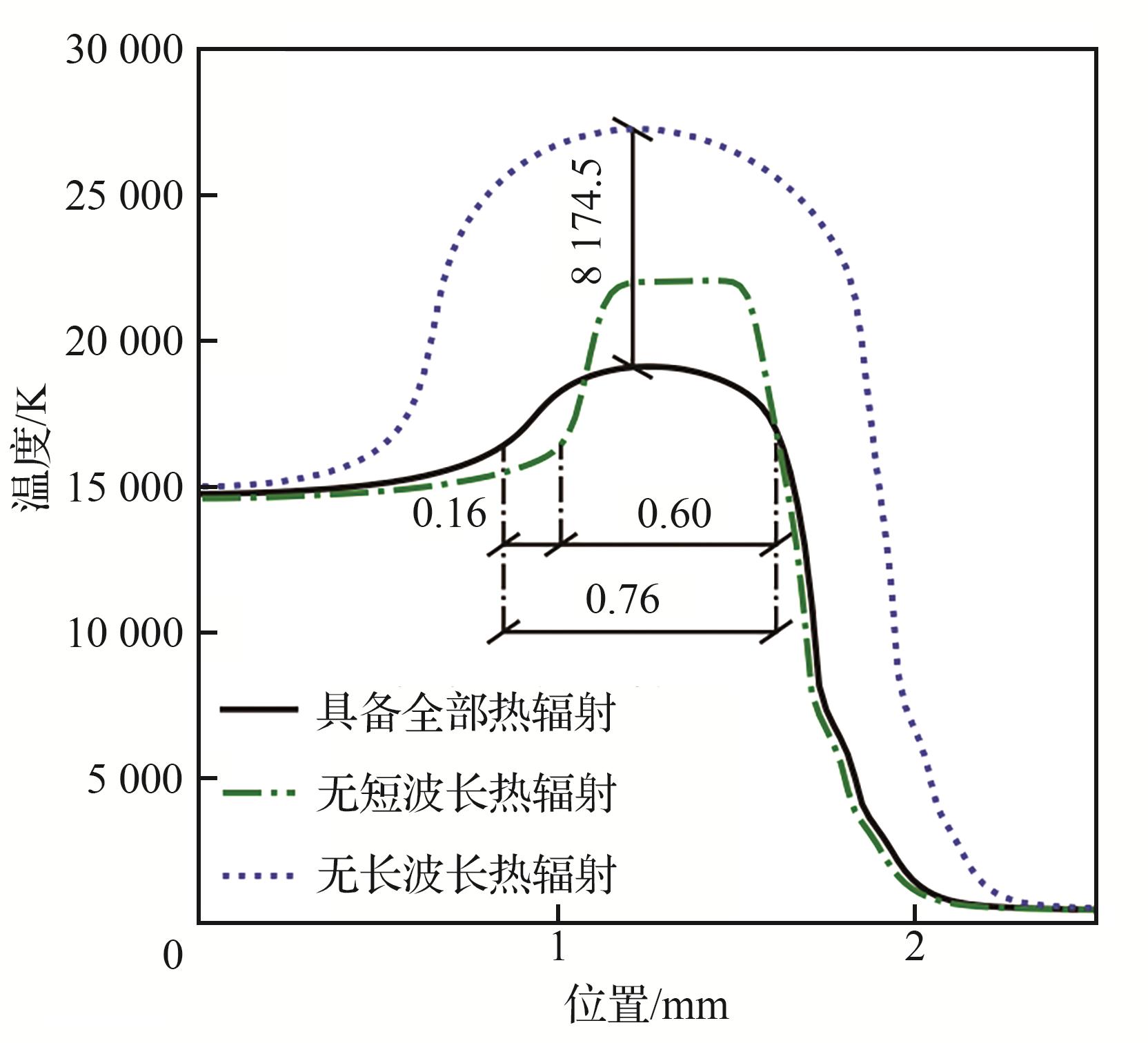
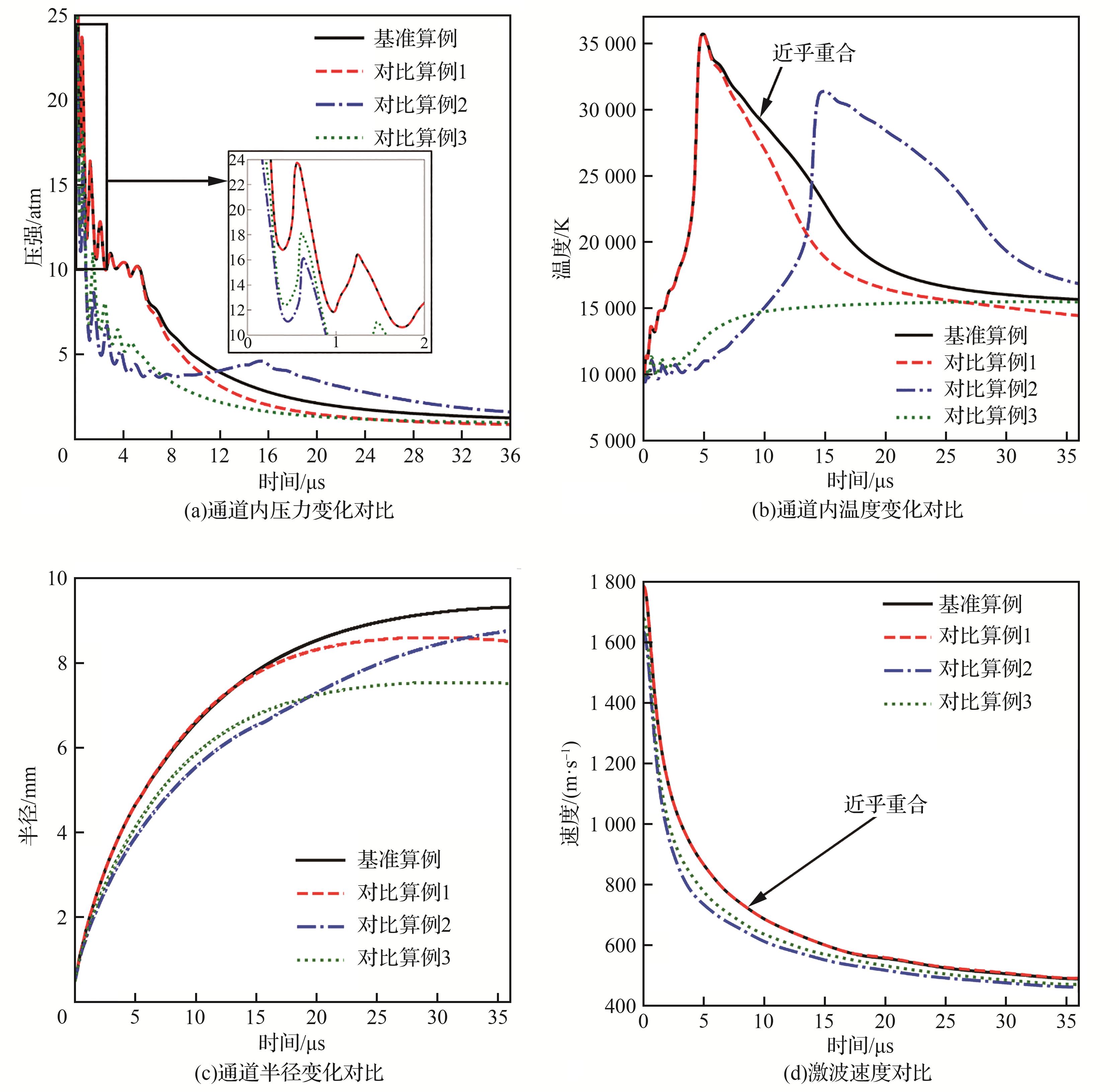
Fig.15
Comparison of changes in pressure, temperature, radius, and shock intensity(Comparison Case 1:kn=20 μs; Comparison Case 2:tm=15 μs; Comparison Case 3: Imax=10 kA)
| [1] | 段泽民. 飞机雷电防护概述[J]. 高电压技术, 2017, 43(5): 1393-1399. |
| DUAN Z M. Review of aircraft lightning protection[J]. High Voltage Engineering, 2017, 43(5): 1393-1399 (in Chinese). | |
| [2] | HEIDLER F, CVETIC J M, STANIC B V. Calculation of lightning current parameters[J]. IEEE Transactions on Power Delivery, 1999, 14(2): 399-404. |
| [3] | 周萍, 吕英华, 陈志红, 等. 航天系统雷电防护技术发展综述及展望[J]. 宇航学报, 2018, 39(8): 827-837. |
| ZHOU P, LV Y H, CHEN Z H, et al. Review and prospect of lightning protection technology for an astronautic system[J]. Journal of Astronautics, 2018, 39(8): 827-837 (in Chinese). | |
| [4] | HIRANO Y, KATSUMATA S, IWAHORI Y, et al. Artificial lightning testing on graphite/epoxy composite laminate[J]. Composites Part A: Applied Science and Manufacturing, 2010, 41(10): 1461-1470. |
| [5] | 段泽民, 司晓亮, 孙安宏. 航空器雷电防护技术[M]. 北京: 航空工业出版社, 2013. |
| DUAN Z M, SI X L, SUN A H. Aircraft lightning protection technology[M]. Beijing: Aviation Industry Press, 2013 (in Chinese). | |
| [6] | 刘贺楠, 郭俊, 伊同强, 等. 飞行器雷电直接效应与间接效应防护综述[J]. 宇航总体技术, 2019, 3(4): 56-62. |
| LIU H N, GUO J, YI T Q, et al. Protection of direct and indirect effects of lightning on aircraft[J]. Astronautical Systems Engineering Technology, 2019, 3(4): 56-62 (in Chinese). | |
| [7] | 苑朝凯, 王春, 姜宗林. 电子发汗冷却技术及其研究进展[J]. 力学学报, 2024, 56(3): 507-520. |
| YUAN C K, WANG C, JIANG Z L. Electron transpiration cooling technology and its research progress[J]. Chinese Journal of Theoretical and Applied Mechanics, 2024, 56(3): 507-520 (in Chinese). | |
| [8] | 苑朝凯, 李进平, 陈宏, 等. 高超声速溢流冷却实验研究[J]. 力学学报, 2018, 50(1): 1-8. |
| YUAN C K, LI J P, CHEN H, et al. Experimental study of hypersonic overflow cooling[J]. Chinese Journal of Theoretical and Applied Mechanics, 2018, 50(1): 1-8 (in Chinese). | |
| [9] | 苑朝凯, 李进平, 陈宏, 等. 高超声速条件下溢流液膜厚度测量方法[J]. 中国科学: 技术科学, 2018, 48(6): 629-638. |
| YUAN C K, LI J P, CHEN H, et al. Measuring method of overflow liquid film thickness in hypersonic flow[J]. Scientia Sinica (Technologica), 2018, 48(6): 629-638 (in Chinese). | |
| [10] | RAKOV V A, UMAN M A. Lightning: Physics and effects[M]. Cambridge: Cambridge University Press, 2003. |
| [11] | CHEMARTIN L, LALANDE P, MONTREUIL E, et al. Three dimensional simulation of a DC free burning arc. Application to lightning physics[J]. Atmospheric Research, 2009, 91(2-4): 371-380. |
| [12] | 李婷, 叶辉, 董琪, 等. 柔性防热层外用雷击防护涂层的制备及其性能研究[J]. 涂料工业, 2022, 52(7): 27-33. |
| LI T, YE H, DONG Q, et al. Preparation and properties of lightning protection coating on flexible thermal insulation coating[J]. Paint & Coatings Industry, 2022, 52(7): 27-33 (in Chinese). | |
| [13] | 宋树培. GJB1804《运载火箭雷电防护》简介[J]. 航天标准化, 1997(2): 9-11. |
| SONG S P. Brief introduction of GJB1804 lightning protection for launch vehicles[J]. Aerospace Standardization, 1997(2): 9-11 (in Chinese). | |
| [14] | COUNCIL N R. The earth‘s electrical environment[M]. Washington, D.C.: NASA, 1986. |
| [15] | AE-2 LIGHTNING COMMITTEE. Aircraft lightning test methods [S]. Warrendale: SAE International, 2005. |
| [16] | PLOOSTER M N. Shock waves from line sources. numerical solutions and experimental measurements[J]. The Physics of Fluids, 1970, 13(11): 2665-2675. |
| [17] | PLOOSTER M N. Numerical model of the return stroke of the lightning discharge[J]. Physics of Fluids, 1971, 14(10): 2124-2133. |
| [18] | PLOOSTER M N. Numerical simulation of spark discharges in air[J]. The Physics of Fluids, 1971, 14(10): 2111-2123. |
| [19] | AKRAM M. Two-dimensional model for spark discharge simulation in air[J]. AIAA Journal, 1996, 34(9): 1835-1842. |
| [20] | AKRAM M. The evolution of spark discharges in gases: II. Numerical solution of one-dimensional models[J]. Journal of Physics D: Applied Physics, 1996, 29(8): 2137-2147. |
| [21] | 孙景群. 闪电通道的径向扩展[J]. 大气科学, 1979, 3(1): 69-77. |
| SUN J Q. Radial expansion of lightning channels[J]. Chinese Journal of Atmospheric Sciences, 1979, 3(1): 69-77 (in Chinese). | |
| [22] | XIONG J M, LI L E, DAI H Y, et al. The development of shock wave overpressure driven by channel expansion of high current impulse discharge arc[J]. Physics of Plasmas, 2018, 25(3): 032115. |
| [23] | LIAO Y Q, MAHARDIKA N, ZHAO X G, et al. Shock wave propagation in long laboratory Sparks under negative switching impulses[J]. Journal of Physics D: Applied Physics, 2021, 54(1): 015205. |
| [24] | CAPITELLI M, COLONNA G, GORSE C, et al. Transport properties of high temperature air in local thermodynamic equilibrium[J]. The European Physical Journal D-Atomic, Molecular, Optical and Plasma Physics, 2000, 11(2): 279-289. |
| [25] | KARCH C, SCHREINER M, HONKE R, et al. Shock waves from a lightning discharge[C]∥2018 34th International Conference on Lightning Protection (ICLP). Piscataway: IEEE Press, 2018: 1-6. |
| [26] | BOCHAROV A N, MAREEV E A, POPOV N A. Numerical simulation of the main stage of a lightning[J]. Plasma Physics Reports, 2024, 50(3): 380-387. |
| [27] | LUO S C, WU L Y, CHANG Y. Mechanism analysis of magnetohydrodynamic control in hypersonic turbulent flow[J]. Acta Physica Sinica, 2022, 71(21)(in Chinese). |
| [28] | 罗凯, 汪球, 李进平, 等. 基于高温真实气体效应的双锥磁流体流动控制[J]. 航空学报, 2022, 43(S2): 79-91. |
| LUO K, WANG Q, LI J P, et al. Magnetohydrodynamic flow control of double-cone under high temperature real gas effect[J]. Acta Aeronautica et Astronautica Sinica, 2022, 43(Sup 2): 79-91. | |
| [29] | WRIGHT J K. Shock tubes[M]. London: Methuen, 1961: 131. |
| [30] | PAI S I. Radiation gas dynamics[M]. New York: Springer Verlag, 1966: 8-24. |
| [31] | OLSEN H N. Thermal and electrical properties of an argon plasma[J]. The Physics of Fluids, 1959, 2(6): 614-623. |
| [32] | SPITZER L, HÄRM R. Transport phenomena in a completely ionized gas[J]. Physical Review, 1953, 89(5): 977-981. |
| [33] | SHER E, BEN-YA’ISH J, KRAVCHIK T. On the birth of spark channels[J]. Combustion and Flame, 1992, 89(2): 186-194. |
| [34] | PLOOSTER M N. Shock waves from line sources[M]. Boulder: National Center for Atmospheric Research, 1968. |
| [35] | Мандельштан С Л, Суходрев Н К. Элементарные процессы в канале искрового разряда[J]. ЖЭТФ, 1953, 24(6): 701-7. |
| [36] | EDWARDS J R. A low-diffusion flux-splitting scheme for Navier-Stokes calculations[J]. Computers & Fluids, 1997, 26(6): 635-659. |
| [37] | WADA Y, LIOU M S. A flux splitting scheme with high-resolution and robustness for discontinuities: AIAA-1994-83[R]. Reston: AIAA, 1994. |
| [38] | GOTTLIEB S, SHU C-W. Total variation diminishing Runge-Kutta schemes[J]. Mathematics of Computation, 1998, 67(221): 73-85. |
| [39] | BRUCE C E R, GOLDE R H. The lightning discharge[J]. Journal of the Institution of Electrical Engineers-Part Ⅱ: Power Engineering, 1941, 88(6): 487-505. |
| [40] | DENNIS A S, PIERCE E T. The return stroke of the lightning flash to earth as a source of VLF atmospherics[J]. Journal of Research of the National Bureau of Standards, Section D: Radio Science, 1964, 68D(7): 777. |
| [41] | CHEMARTIN L, LALANDE P, PEYROU B, et al. Direct effects of lightning on aircraft structure: Analysis of the thermal, electrical and mechanical constraints[J]. Aerospace Lab, 2012 (5): 1-15. |
| [42] | ORVILLE R E, UMAN M A, SLETTEN A M. Temperature and electron density in long air Sparks[J]. Journal of Applied Physics, 1967, 38(2): 895-896. |
| [43] | HIGHAM J B, MEEK J M. The expansion of gaseous spark channels[J]. Proceedings of the Physical Society Section B, 1950, 63(9): 649. |
| [44] | NORINDER H, KARSTEN O. Investigation of resistance and power in experimental lightning discharges[J]. Journal of the Franklin Institute, 1952, 253(3): 225-233. |
| [45] | 滕宏辉, 姜宗林, 韩肇元. 环形激波绕射、反射和聚焦的数值模拟研究[J]. 力学学报, 2004, 36(1): 9-15. |
| TENG H H, JIANG Z L, HAN Z Y. Numerical investigation of diffraction, focusing and reflection of toroidal shock waves[J]. Chinese Journal of Theoretical and Applied Mechanics, 2004, 36(1): 9-15 (in Chinese). | |
| [46] | JONES D L, GOYER G G, PLOOSTER M N. Shock wave from a lightning discharge[J]. Journal of Geophysical Research (1896-1977), 1968, 73(10): 3121-3127. |
| [47] | 胡宗民, 姜宗林. 气体动力学[M]. 北京: 科学出版社, 2023. |
| HU Z M, JIANG Z L. Gas dynamics[M]. Beijing: Science Press, 2023 (in Chinese). | |
| [48] | ZHOU H B, ZHANG Y M, HAN R Y, et al. Signal analysis and waveform reconstruction of shock waves generated by underwater electrical wire explosions with piezoelectric pressure probes[J]. Sensors, 2016, 16(4): 573. |
| [49] | WANG Y, ZHUPANSKA O I. Lightning strike thermal damage model for glass fiber reinforced polymer matrix composites and its application to wind turbine blades[J]. Composite Structures, 2015, 132: 1182-1191. |
| [50] | 王道洪, 郄秀书, 郭昌明. 雷电与人工引雷[M]. 上海: 上海交通大学出版社, 2000. |
| WANG D H, QIE X S, GUO C M. Lightning and artificial lightning induction[M]. Shanghai: Shanghai Jiao Tong University Press, 2000 (in Chinese). | |
| [51] | WANG R Y, YUAN P, CEN J Y, et al. Influence of the observation distance on the lightning channel temperature studied by means of spectroscopic diagnosis[J]. Acta Physica Sinica, 2014, 63(9): 099203. |
| [1] | Guoliang RONG, Yifan YANG, Chuangchuang LI, Zhiyuan LI, Xueliang LI, Jiaquan ZHAO, Jie WU. Integrated design of homogeneous mixing and heating of flow based on dual-throat Ludwieg tube wind tunnel settling chamber [J]. Acta Aeronautica et Astronautica Sinica, 2025, 46(9): 130906-130906. |
| [2] | Jianyu XU, Li ZHOU, Zhanxue WANG, Jie SHI, Hao SHI. Calculation method for hypersonic plume infrared radiation based on a fast line-by-line calculation model [J]. Acta Aeronautica et Astronautica Sinica, 2025, 46(8): 630778-630778. |
| [3] | Feiteng LUO, Zhenming QU, Haitao LI, Xinke LI, Dahao YAO, Wenjuan CHEN, Yaosong LONG, Baoxi WEI, Yanjin MAN, Fujiang YANG, Qiang CHENG, Wubin KONG. Research progress and key issues of inlet pre-injection at hypersonic condition [J]. Acta Aeronautica et Astronautica Sinica, 2025, 46(8): 631189-631189. |
| [4] | Lixiang WEI, Jinglei XU, Kuangshi CHEN, Shuai HUANG, Jianhui GE, Guangtao SONG. Scheme design and performance study of adjustable vector nozzle for wide-range hypersonic aircraft [J]. Acta Aeronautica et Astronautica Sinica, 2025, 46(8): 631086-631086. |
| [5] | Xiaogang ZHENG, Zhancang HU, Zejun CAI, Chongguang SHI, Chengxiang ZHU, Yancheng YOU. Design of 3D inward-turning inlet considering cruising angle of attack [J]. Acta Aeronautica et Astronautica Sinica, 2025, 46(8): 631233-631233. |
| [6] | Xiaogang ZHENG, Chongguang SHI, Jiale ZHANG, Mi ZHANG, Wenlei ZHU, Chengxiang ZHU, Yancheng YOU. Research progress review on hypersonic three-dimensional inward-turning inlet [J]. Acta Aeronautica et Astronautica Sinica, 2025, 46(8): 631245-631245. |
| [7] | Chengpeng WANG, Chenguang HAO, Hao LI, Longsheng XUE, Yun JIAO, Siyu WU, Zhangyu MA, Ye YUAN, Weijun LI, Puchen HOU. Application of minimum entropy production principle to analysis of shock wave/boundary layer interactions [J]. Acta Aeronautica et Astronautica Sinica, 2025, 46(8): 631458-631458. |
| [8] | Zonglin JIANG, Guilai HAN, Yunpeng WANG, Yunfeng LIU, Chaokai YUAN, Changtong LUO, Chun WANG, Zongmin HU, Meikuan LIU. Theoretical bases and key technologies of JF-22 hypervelocity wind tunnel [J]. Acta Aeronautica et Astronautica Sinica, 2025, 46(5): 531130-531130. |
| [9] | Feng QU, Qing WANG, Shaowen CHENG, Kaiqiang WANG. Aerodynamic shape optimization design of airframe/propulsion integrated hypersonic aircraft with aerodynamics/trajectory/ control coupling [J]. Acta Aeronautica et Astronautica Sinica, 2025, 46(4): 130874-130874. |
| [10] | Jun CHEN, Feng QU, Junjie FU. Design method of hypersonic inward turning inlet based on genetic and gradient hybrid optimization strategy [J]. Acta Aeronautica et Astronautica Sinica, 2025, 46(3): 130808-130808. |
| [11] | Kai YANG, Mengfei ZHANG, Chongguang SHI, Yaokun YU, Xiaogang ZHENG, Chengxiang ZHU, Yancheng YOU. Method of three-dimensional curved stream-surface and its application in external waverider [J]. Acta Aeronautica et Astronautica Sinica, 2025, 46(2): 130492-130492. |
| [12] | Luoyu RAO, Tao ZHANG, Chongguang SHI, Chengxiang ZHU, Yancheng YOU. Effects of sideslip angle on shock wave interference structure of V-shaped blunt leading edge [J]. Acta Aeronautica et Astronautica Sinica, 2025, 46(2): 130681-130681. |
| [13] | Xueliang LI, Chuangchuang LI, Yahan ZHANG, Wei SU, Jie WU. Effect of distributed ablation pattern on hypersonic boundary-layer instability with a flat plate [J]. Acta Aeronautica et Astronautica Sinica, 2025, 46(2): 130464-130464. |
| [14] | Dong LI, Yining ZHANG, Wenhui LING, Guozhu LIANG, Hao MENG. Inlet flow characteristics analysis of air-breathing rotating detonation engine [J]. Acta Aeronautica et Astronautica Sinica, 2025, 46(2): 130732-130732. |
| [15] | Tao LIANG, Wanwu XU, Zhiyan LI, Saiqiang ZHANG, Gang LI, Dongdong ZHANG. Starting and operating characteristics of precooled supersonic ejector [J]. Acta Aeronautica et Astronautica Sinica, 2025, 46(2): 130701-130701. |
| Viewed | ||||||
|
Full text |
|
|||||
|
Abstract |
|
|||||
Address: No.238, Baiyan Buiding, Beisihuan Zhonglu Road, Haidian District, Beijing, China
Postal code : 100083
E-mail:hkxb@buaa.edu.cn
Total visits: 6658907 Today visits: 1341All copyright © editorial office of Chinese Journal of Aeronautics
All copyright © editorial office of Chinese Journal of Aeronautics
Total visits: 6658907 Today visits: 1341

 CJA
CJA
