Acta Aeronautica et Astronautica Sinica ›› 2025, Vol. 46 ›› Issue (16): 231600.doi: 10.7527/S1000-6893.2025.31600
• Solid Mechanics and Vehicle Conceptual Design • Previous Articles
Miaojiao PENG1,2, Jinwen HUANG1,2, Dianyin HU3, Rongqiao WANG4, Junjie YANG5, Zhigang JIA6, Qinglin CHEN1,2, Yifeng SUN1,2, Yingqiang CAI1,2( ), Kuan FAN1,2, Zhaoyi ZHU1,2, Xiaowen LI1,2
Received:2024-12-03
Revised:2024-12-13
Accepted:2025-02-10
Online:2025-02-27
Published:2025-02-25
Contact:
Yingqiang CAI
E-mail:cai202@jmu.edu.cn
Supported by:CLC Number:
Miaojiao PENG, Jinwen HUANG, Dianyin HU, Rongqiao WANG, Junjie YANG, Zhigang JIA, Qinglin CHEN, Yifeng SUN, Yingqiang CAI, Kuan FAN, Zhaoyi ZHU, Xiaowen LI. Research progress on interfacial mechanical properties, damage mechanisms, and reinforcement strategies of CFRP composites for aero-engines[J]. Acta Aeronautica et Astronautica Sinica, 2025, 46(16): 231600.
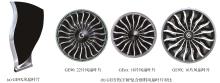
Fig.1
CFRPs fan blades[1]
Table 1
CFRPs aero-engine blades[3]
| 叶片类型 | 发动机型号 | 生产公司 | 制造工艺 | 材料 |
|---|---|---|---|---|
| 风扇叶片 | GE90 | GE | 预浸料/模压成型 | IM7/8551-7 |
| 风扇叶片 | GEnX | GE | 预浸料/模压成型 | IM7/8551-7 |
| 风扇叶片 | GE9X | GE | 预浸料/模压成型 | IM7/8551-7 |
| 风扇叶片 | LEAP-X | SNECMA | 3D编织/RTM成型 | IM7/PR520 |
| 风扇叶片 | Trent-1000 | Rolls-Royce | 预浸料丝束/自动铺丝成型 | IM7/M91 |
| 风扇叶片 | UltraFan | Rolls-Royce和GKN | 预浸料丝束/模压成型 | IM7/M91 |
| 出口导流叶片 | XWB F119 | P&W | 预浸料/模压成型 | CFRP/AFR700B |
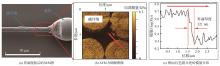
Fig.2
Thickness and modulus of fiber/matrix interface[14]
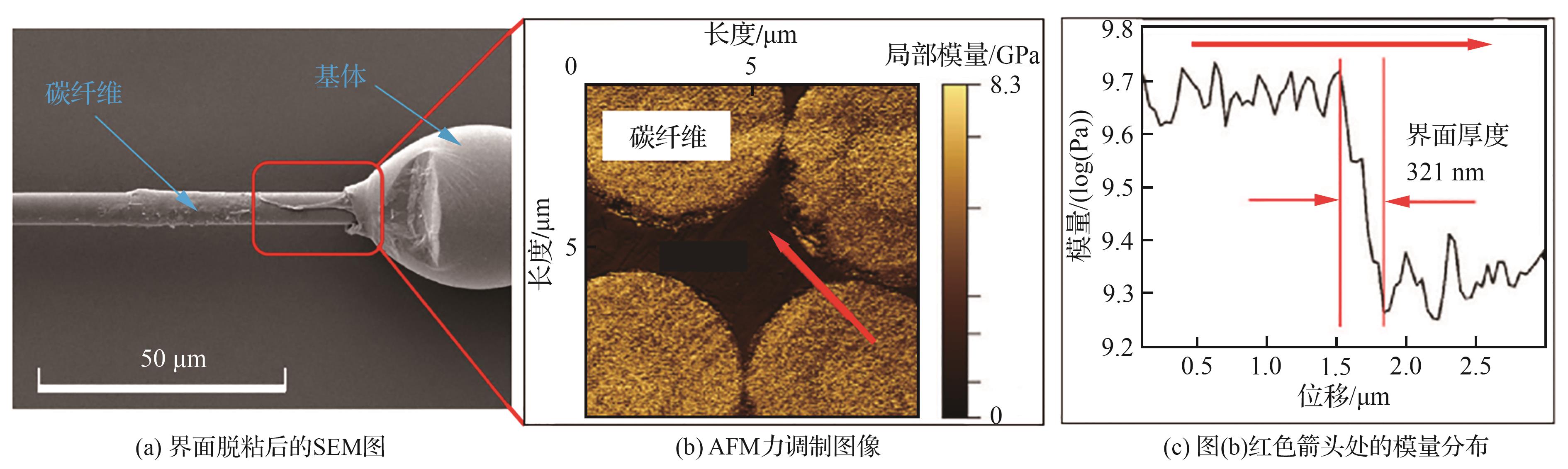
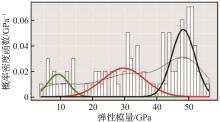
Fig.3
Elastic modulus of each component measured by nanoindentation (green: epoxy matrix, red: interface, black: carbon fiber)[33]
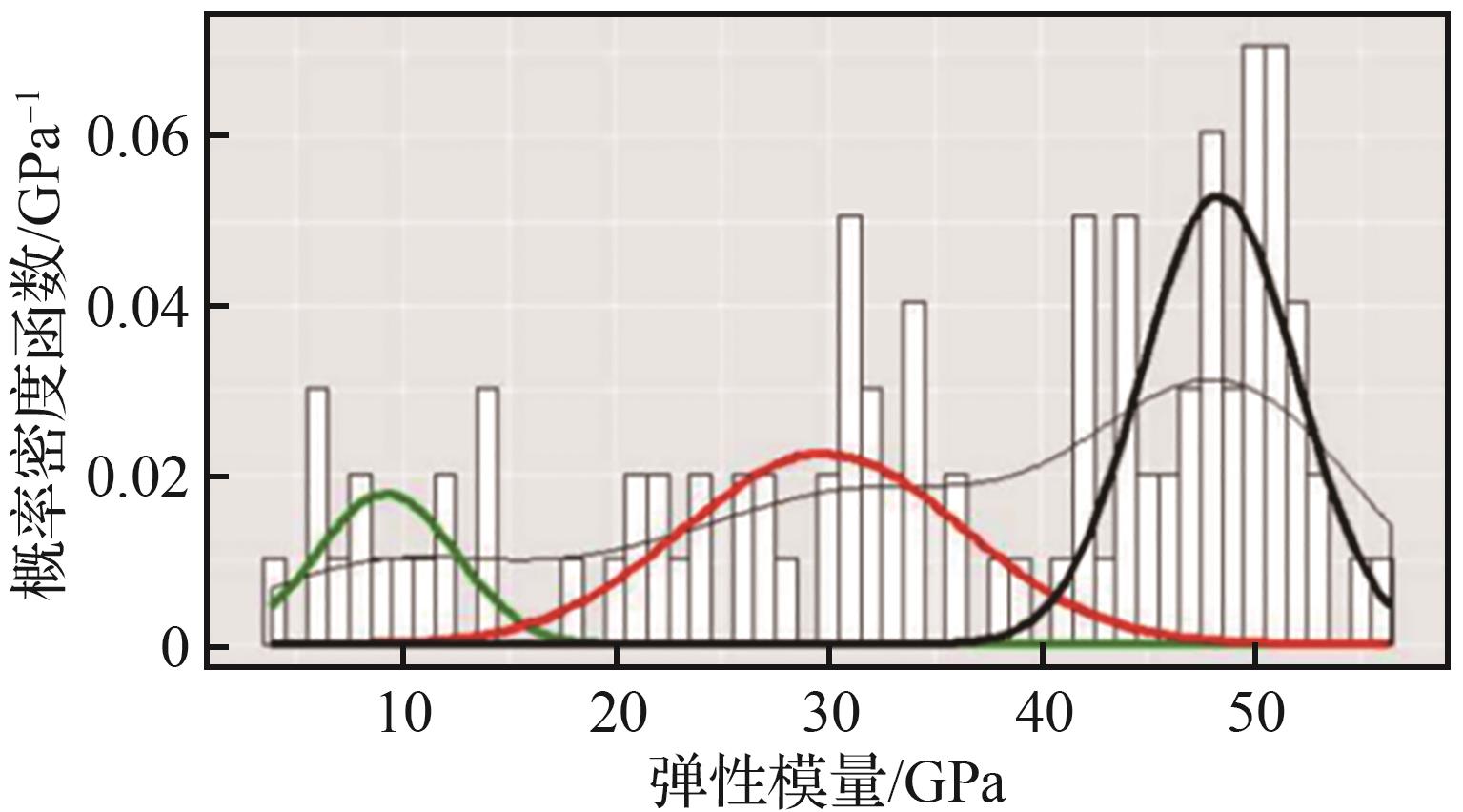
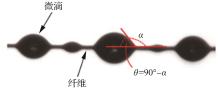
Fig.4
Microdroplet debonding test[35]
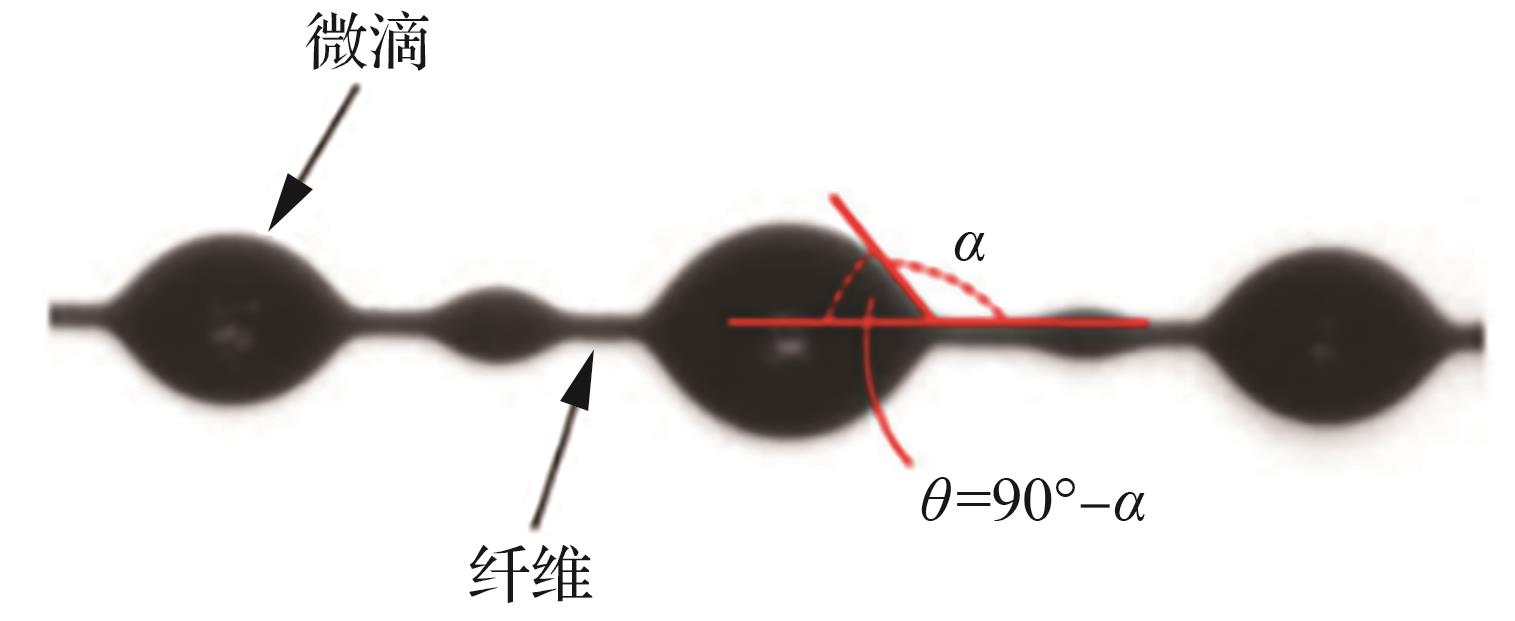
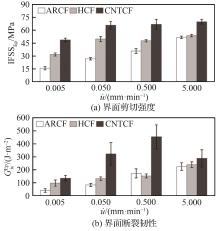
Fig.5
Variation of interface mechanical properties with loading rate[35]
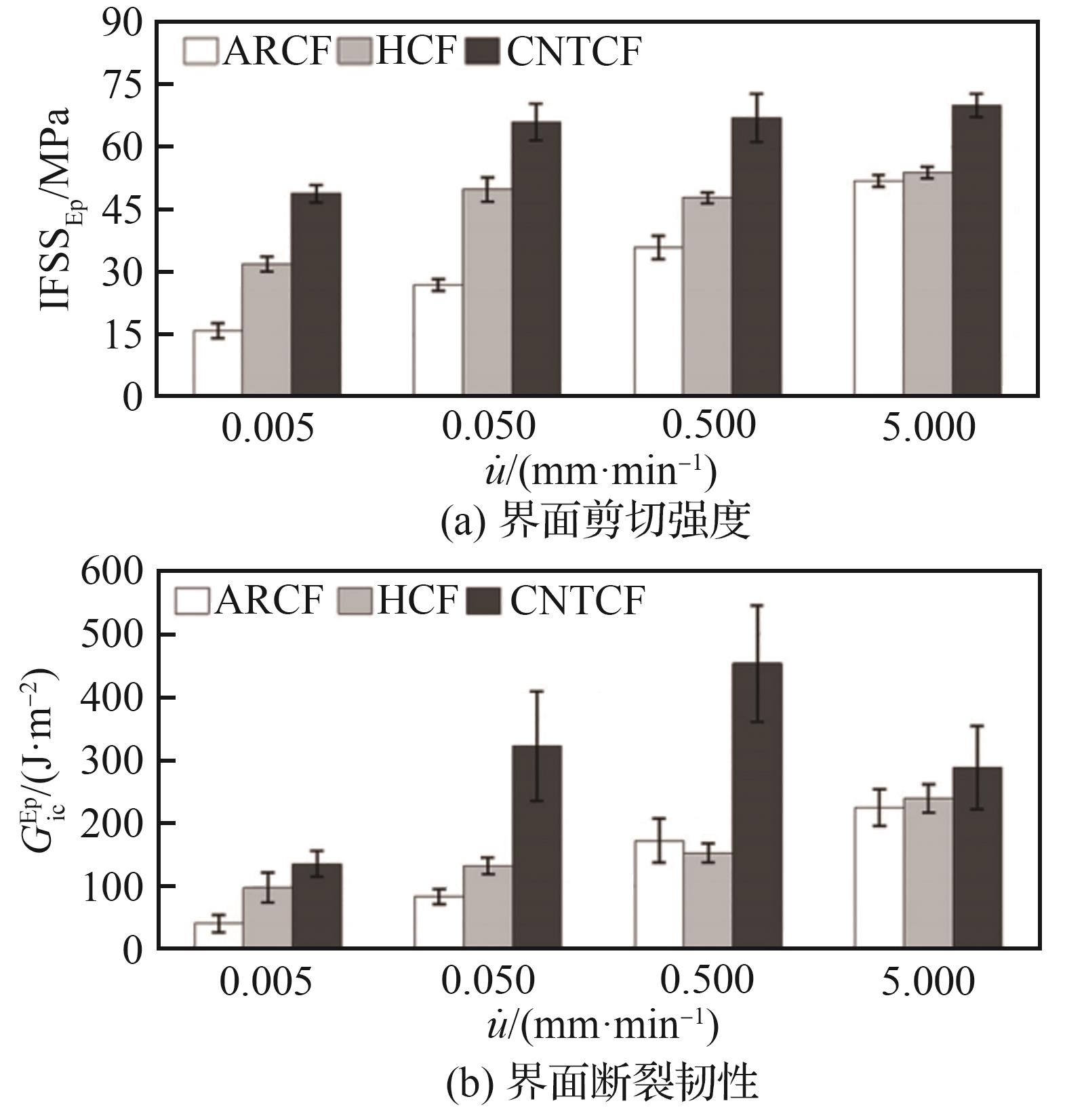
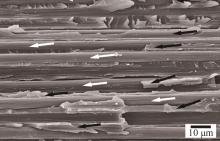
Fig.6
SEM image of fracture surface morphology of CFRP specimen (white arrows indicate carbon fibers, black arrows indicate resin)[24]
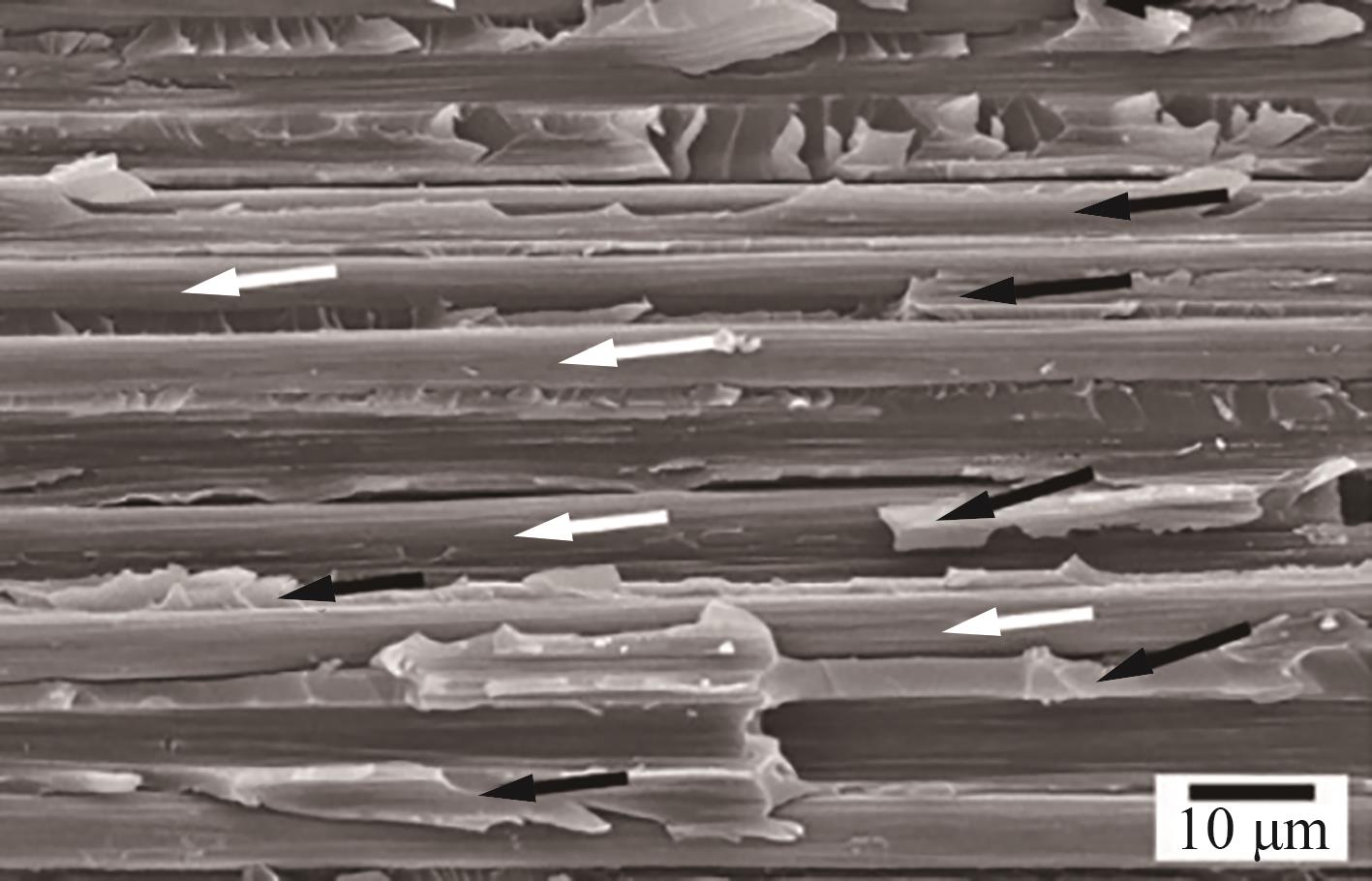
Fig.7
SEM micrograph of fiber orientation planes and EDS plot of measured carbon element distribution[24]
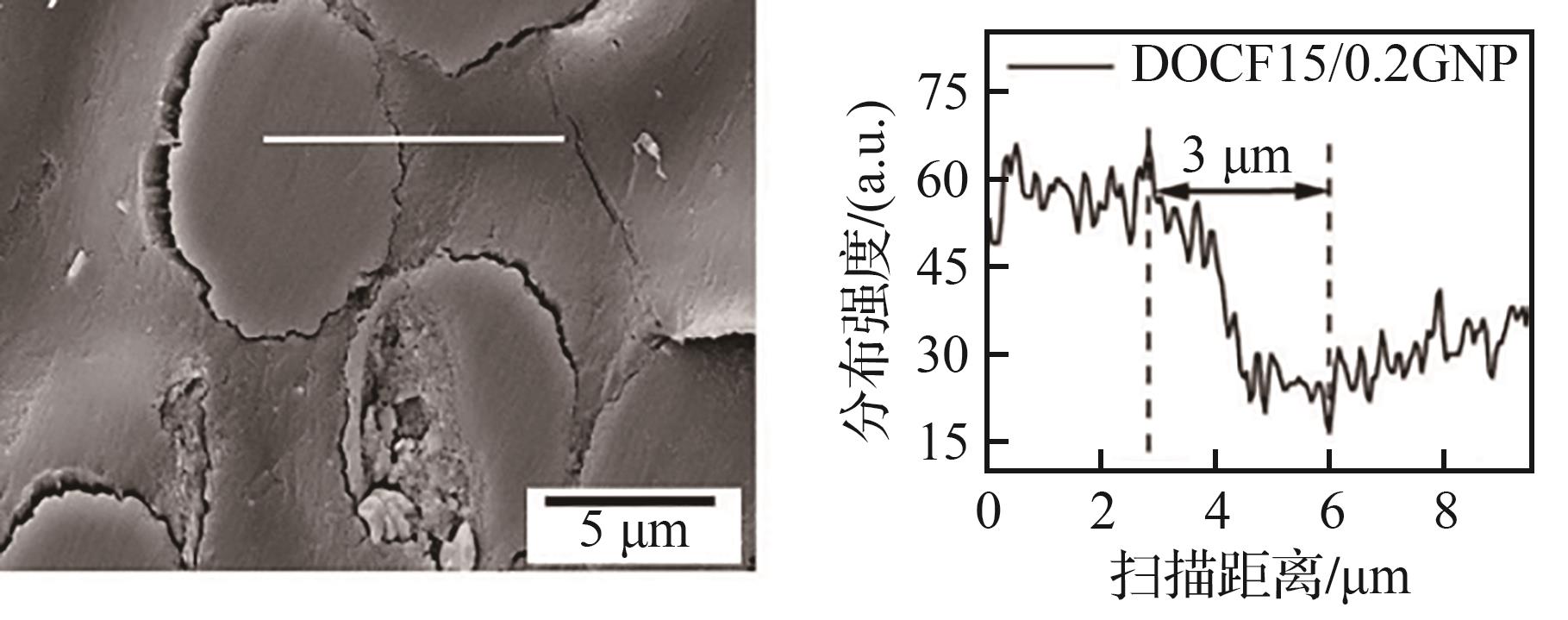
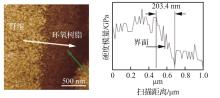
Fig.8
AFM force modulation mapping image and interface hardness modulus distribution curve[42]
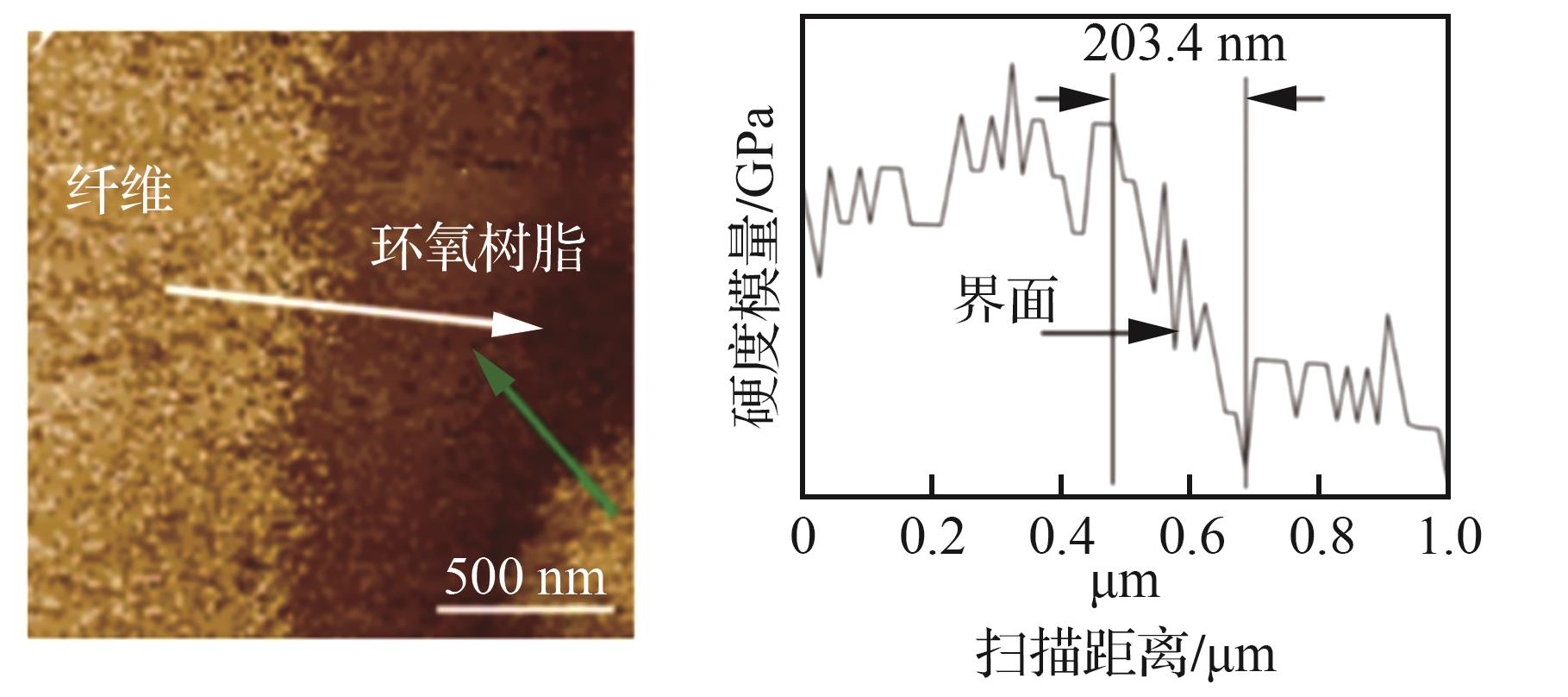
Fig.9
Variation of normalized stress along axial direction of the fiber[52]
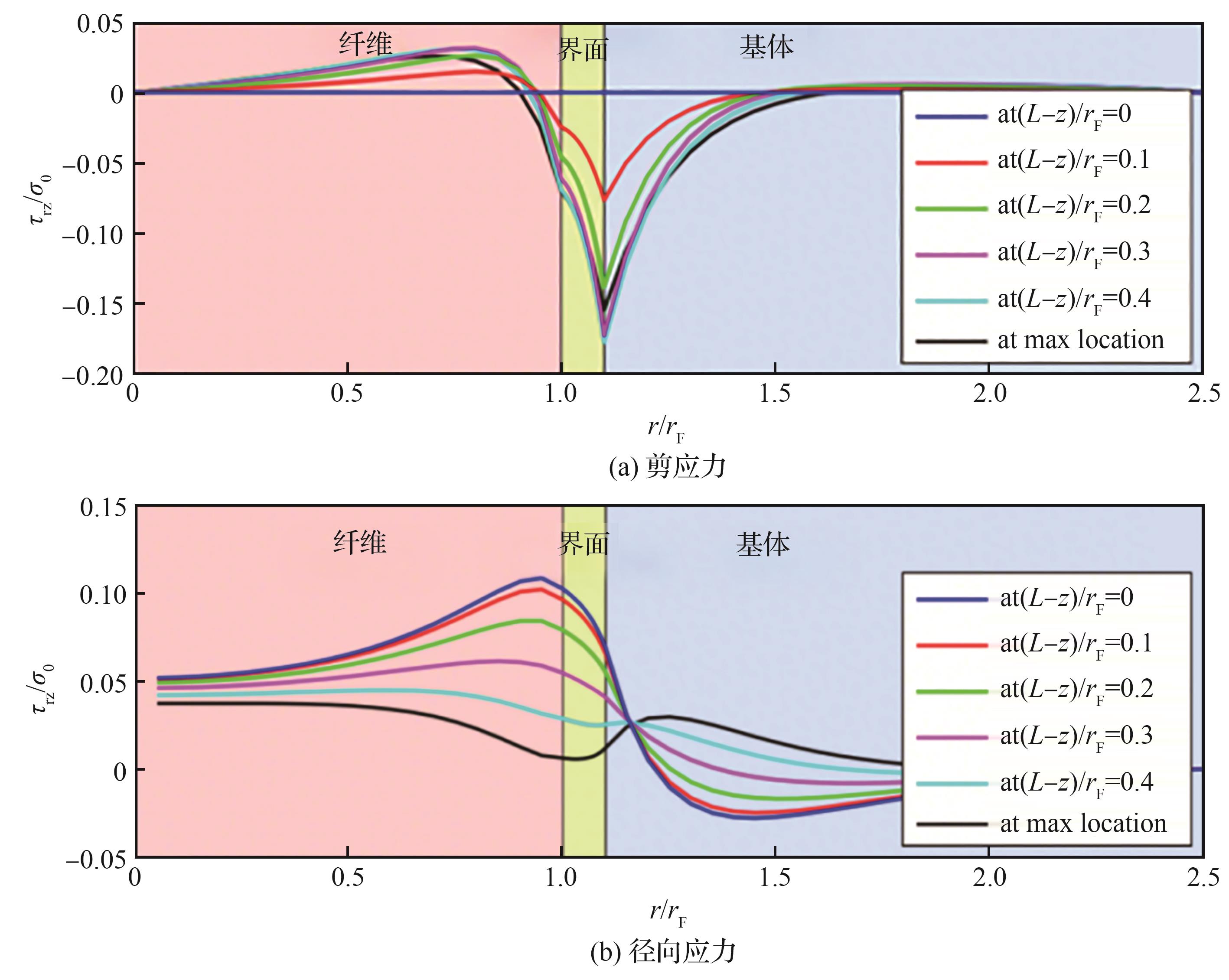
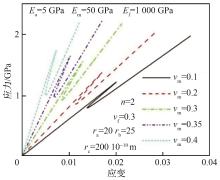
Fig.10
Stress-strain relationship[53]
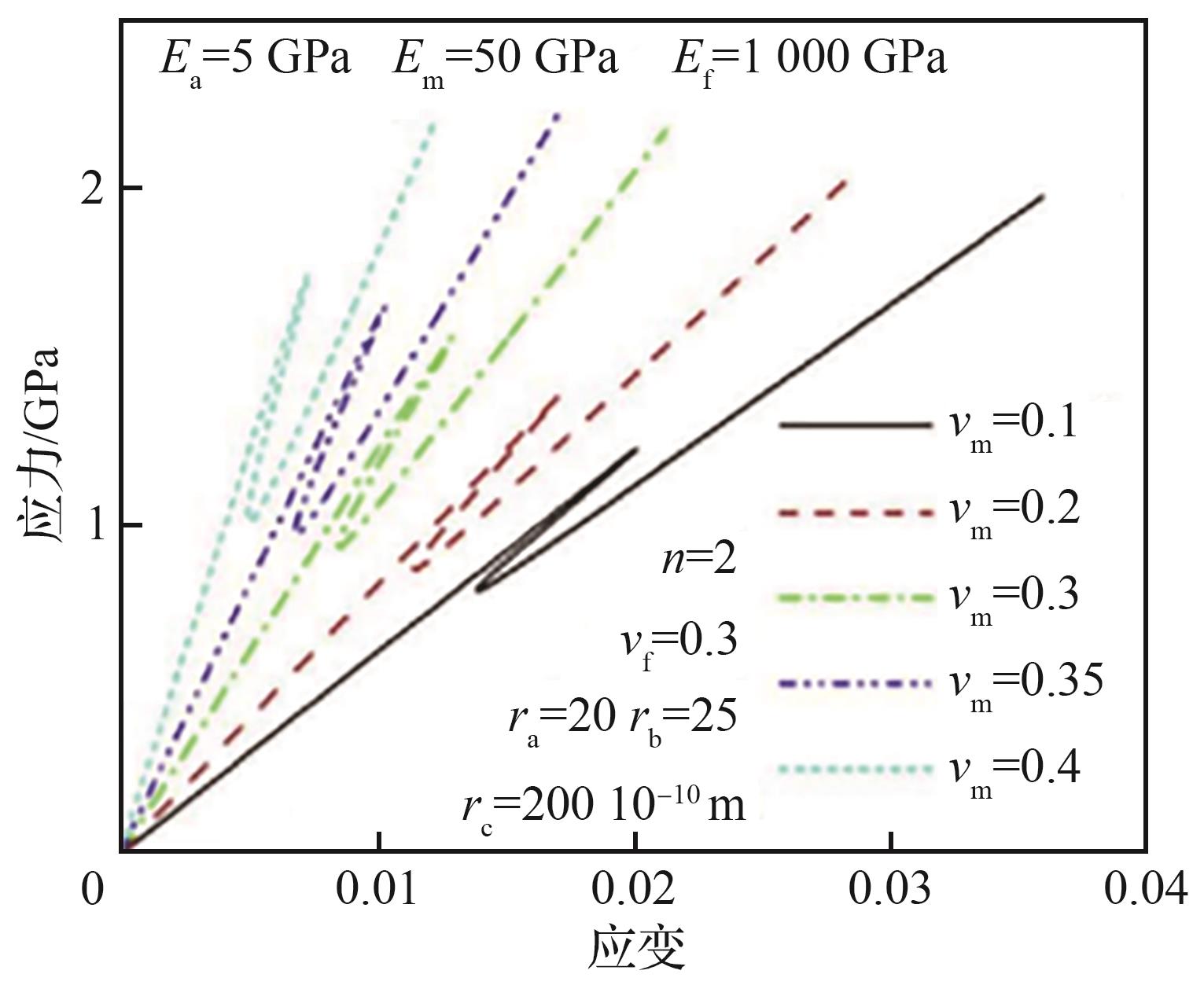
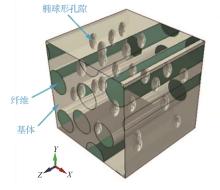
Fig.11
RVE model containing pore defects
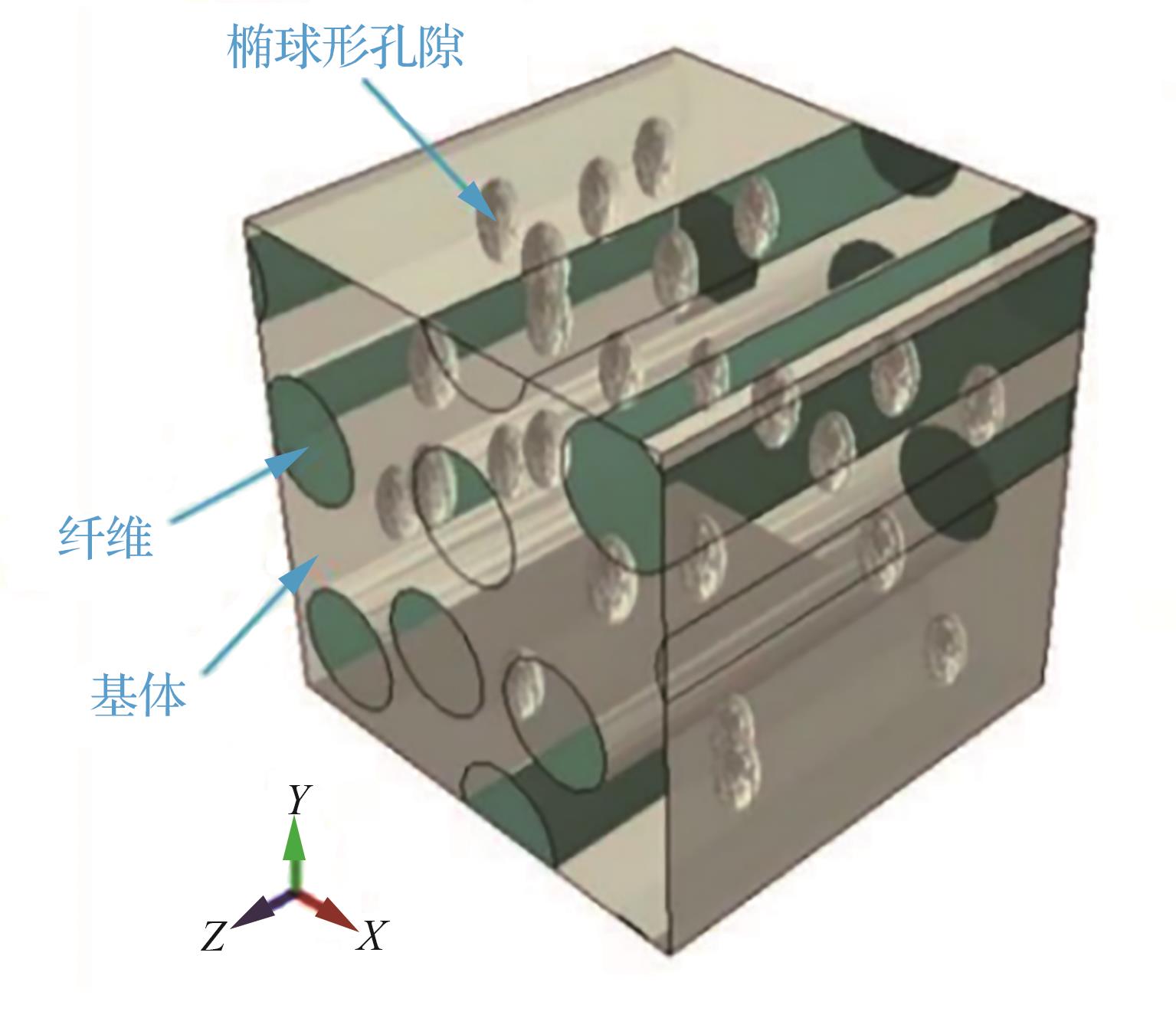
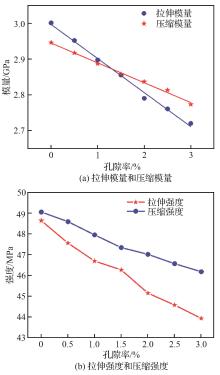
Fig.12
Modulus and strength of composites with different porosities
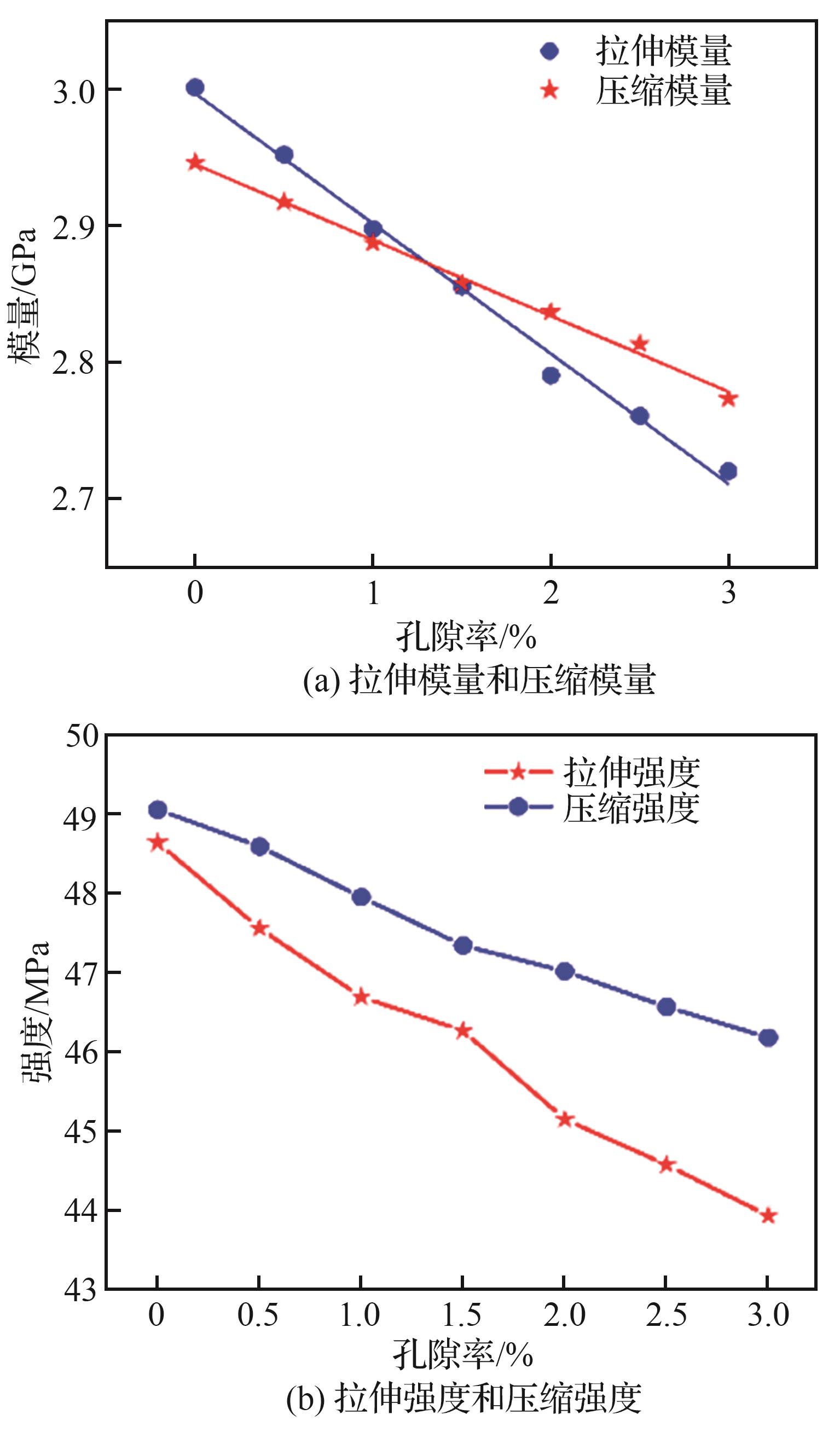
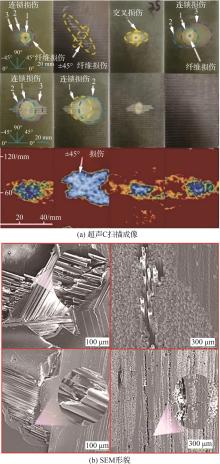
Fig.13
Macroscopic nondestructive testing and microscopic damage analysis of composites[64]
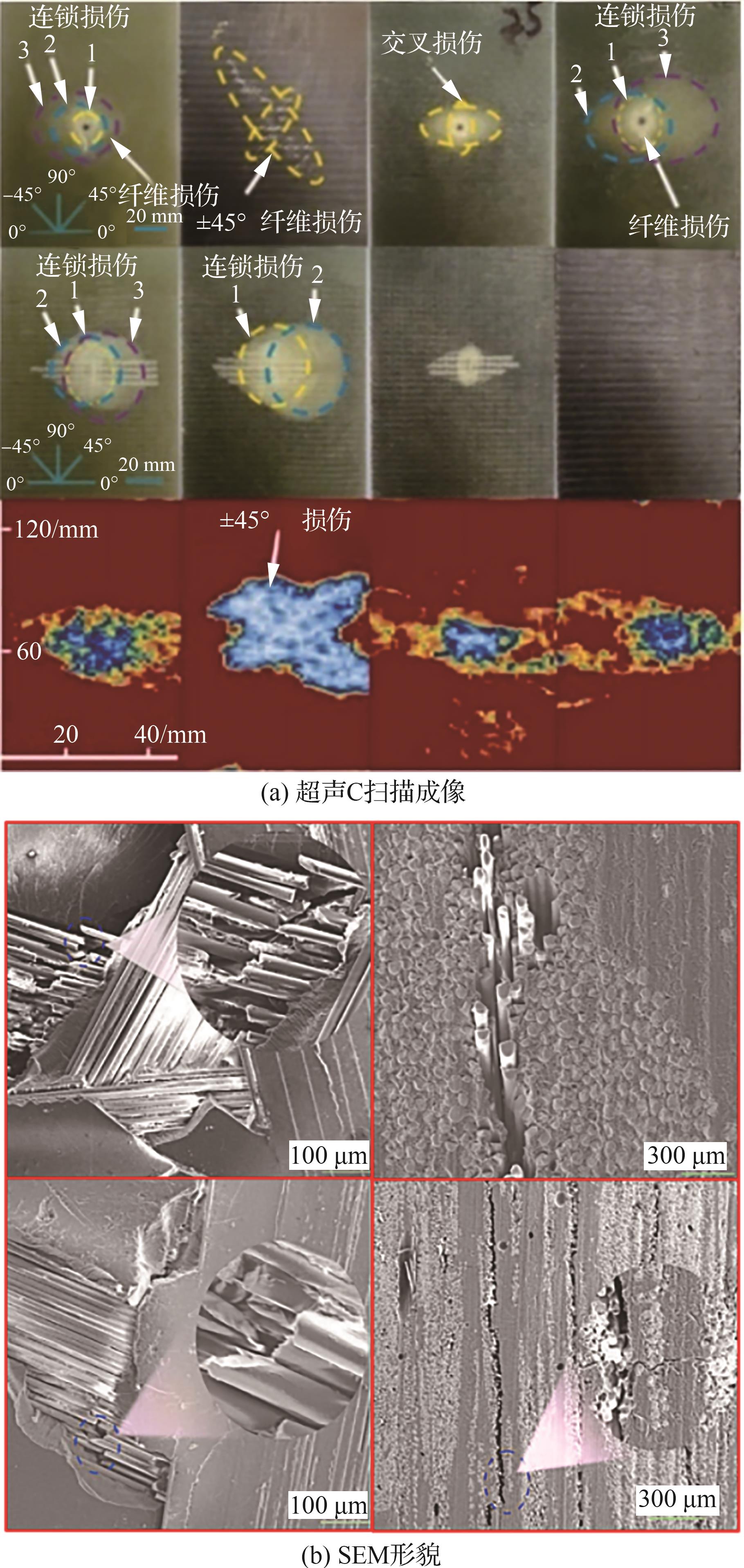
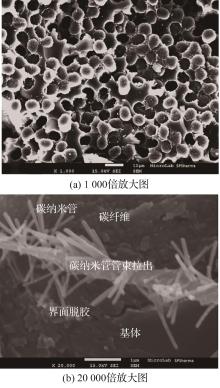
Fig.14
FESEM images of carbon fiber reinforced epoxy resin matrix composite fracture[72]
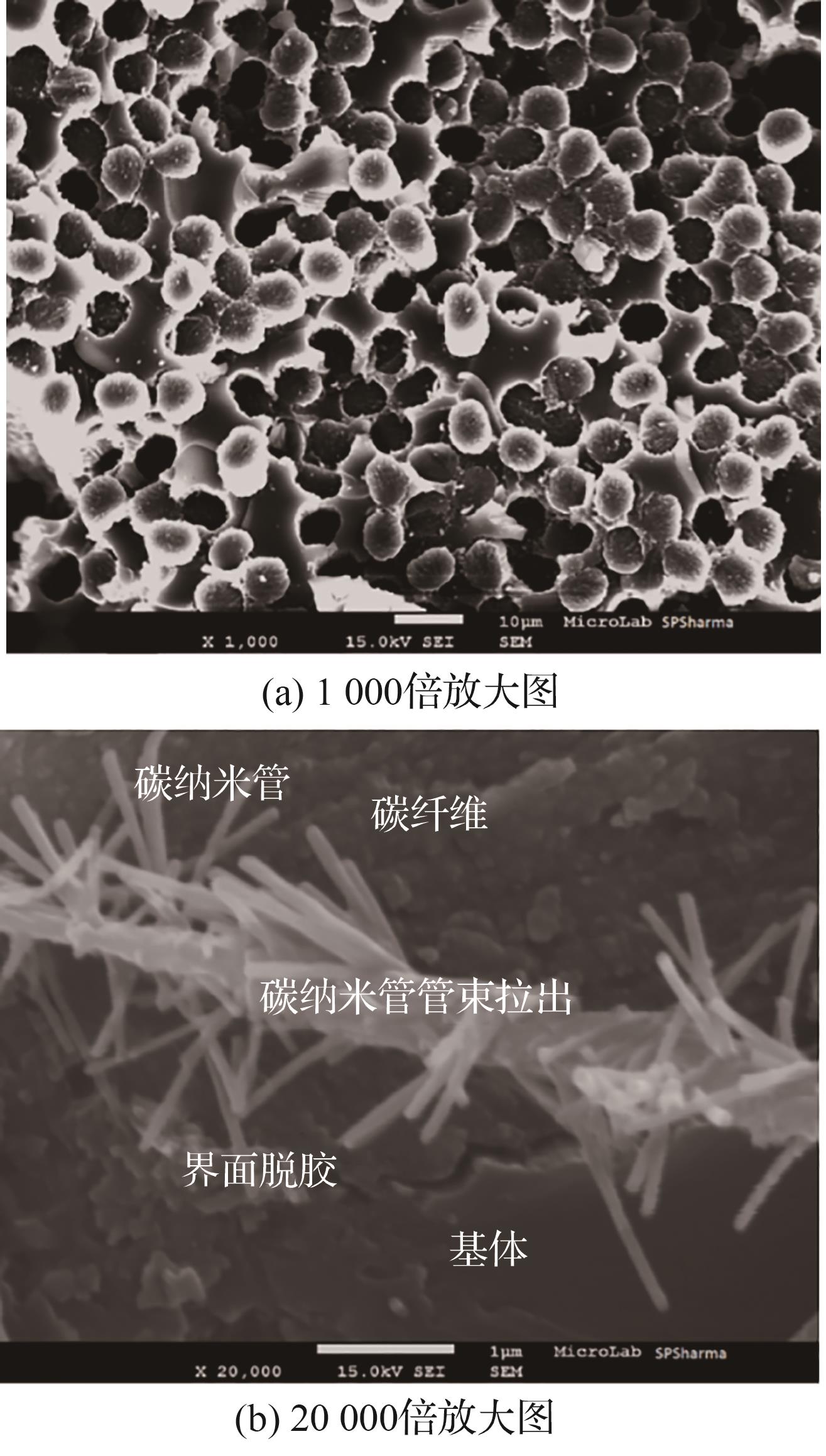
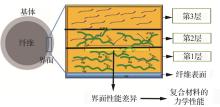
Fig.15
Correlation between interface characteristics and mechanical behavior of composites[92]
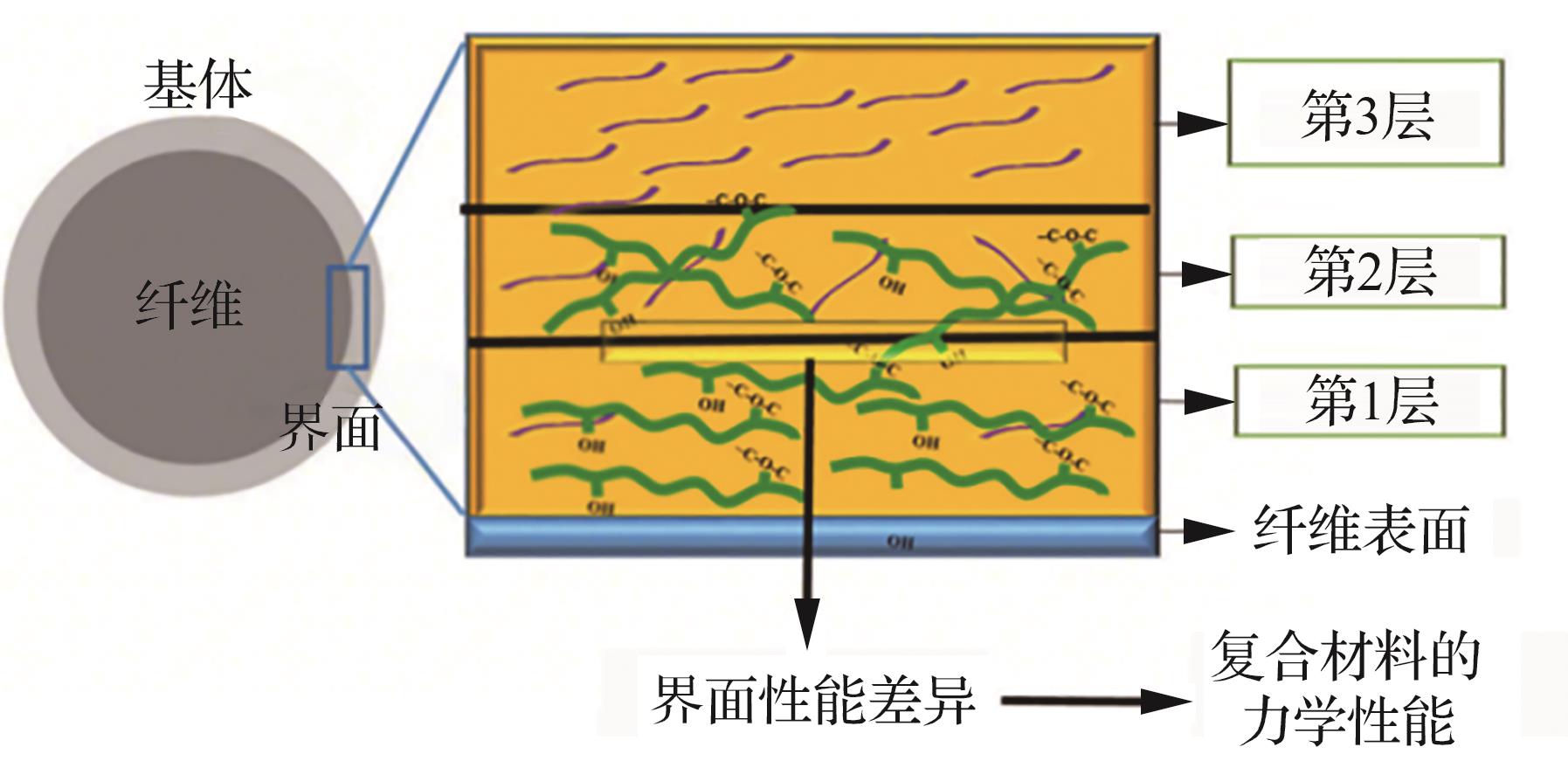
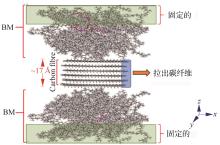
Fig.16
Schematic of pull-out simulation[94]
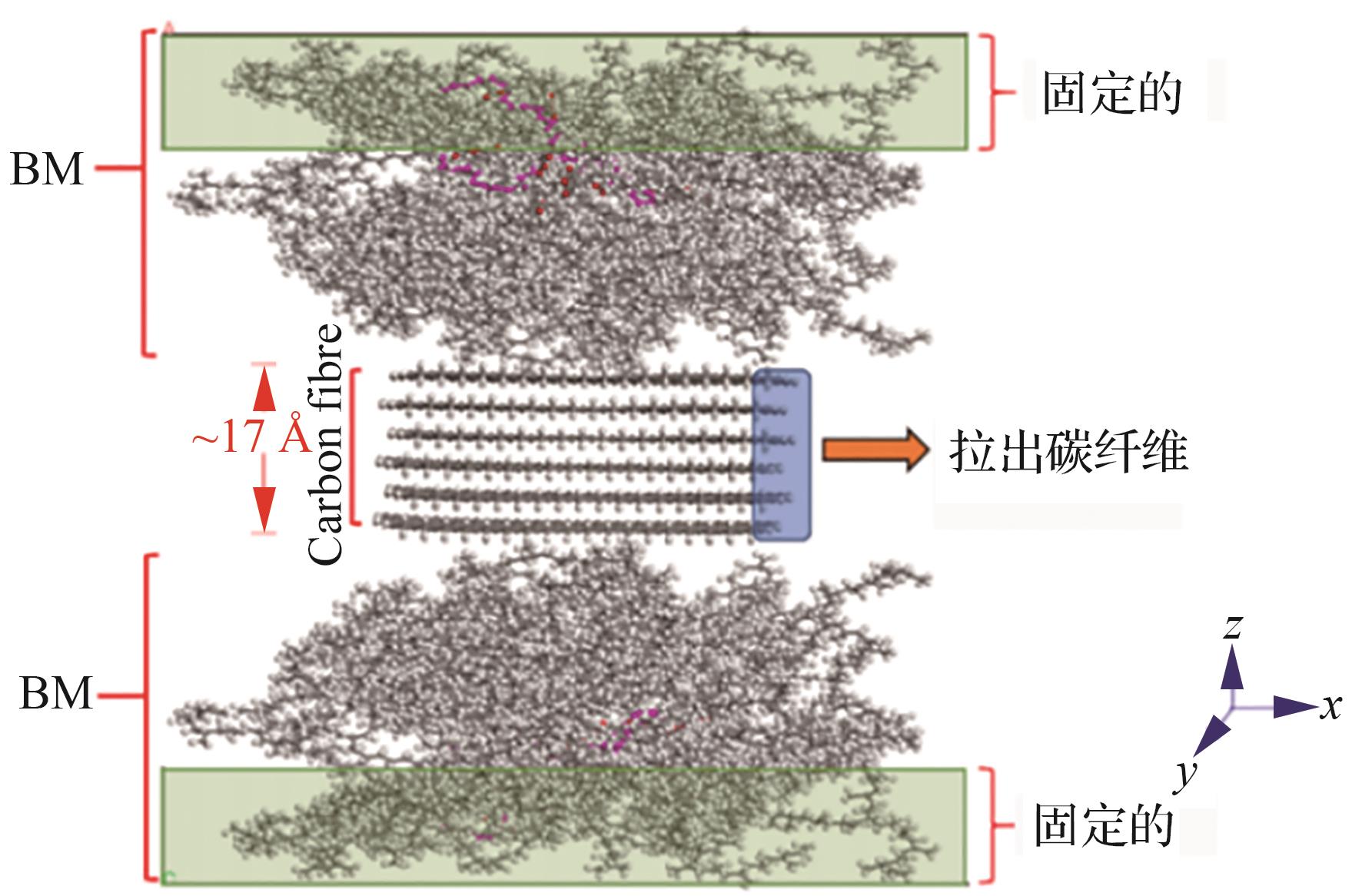
Fig.17
Schematic of MD simulation of traction-separation response in opening mode of fracture[95]
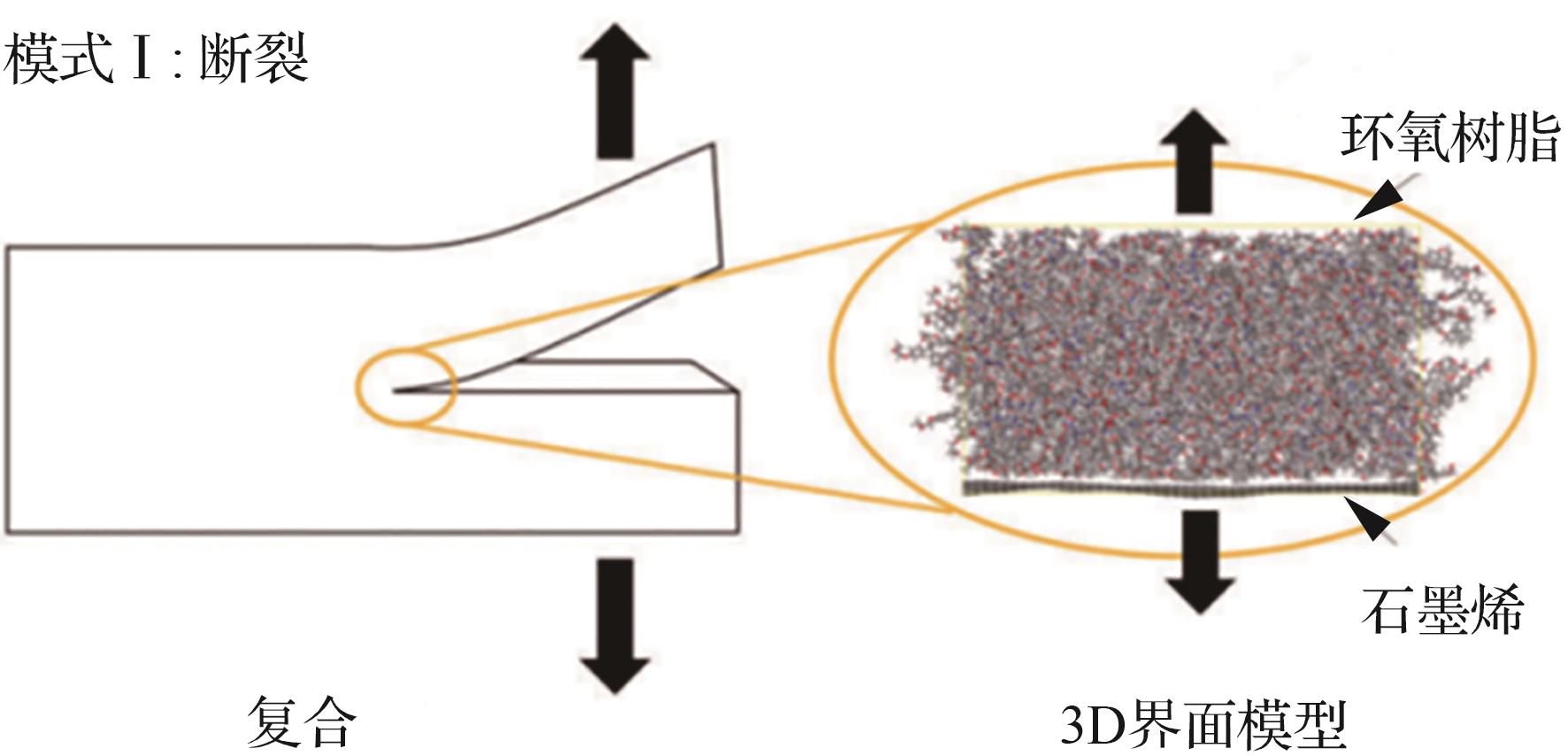
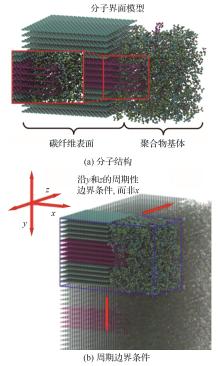
Fig.18
Interface model[99]
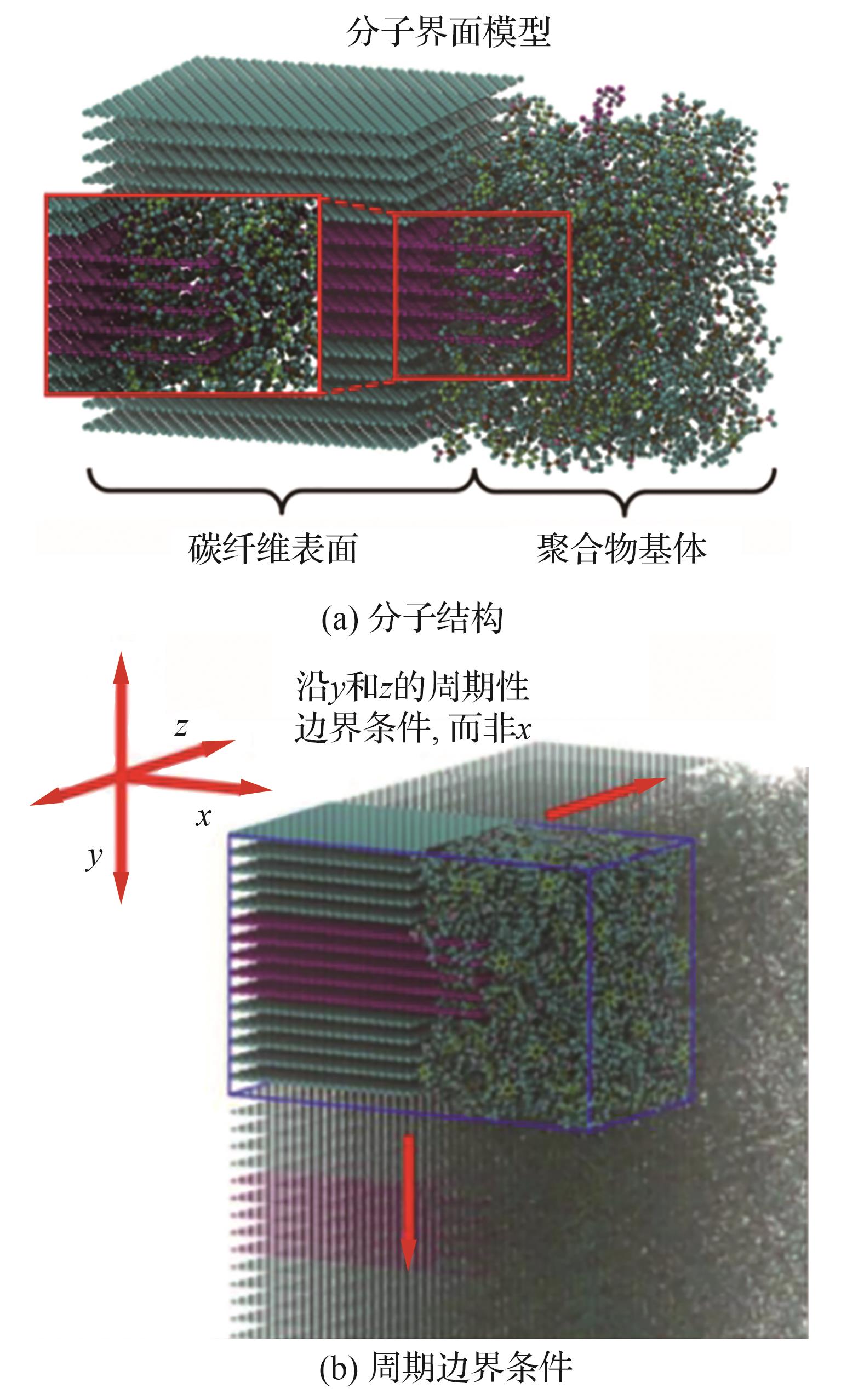
Fig.19
Schematic diagram of loading conditions for virtual tensile test[99]
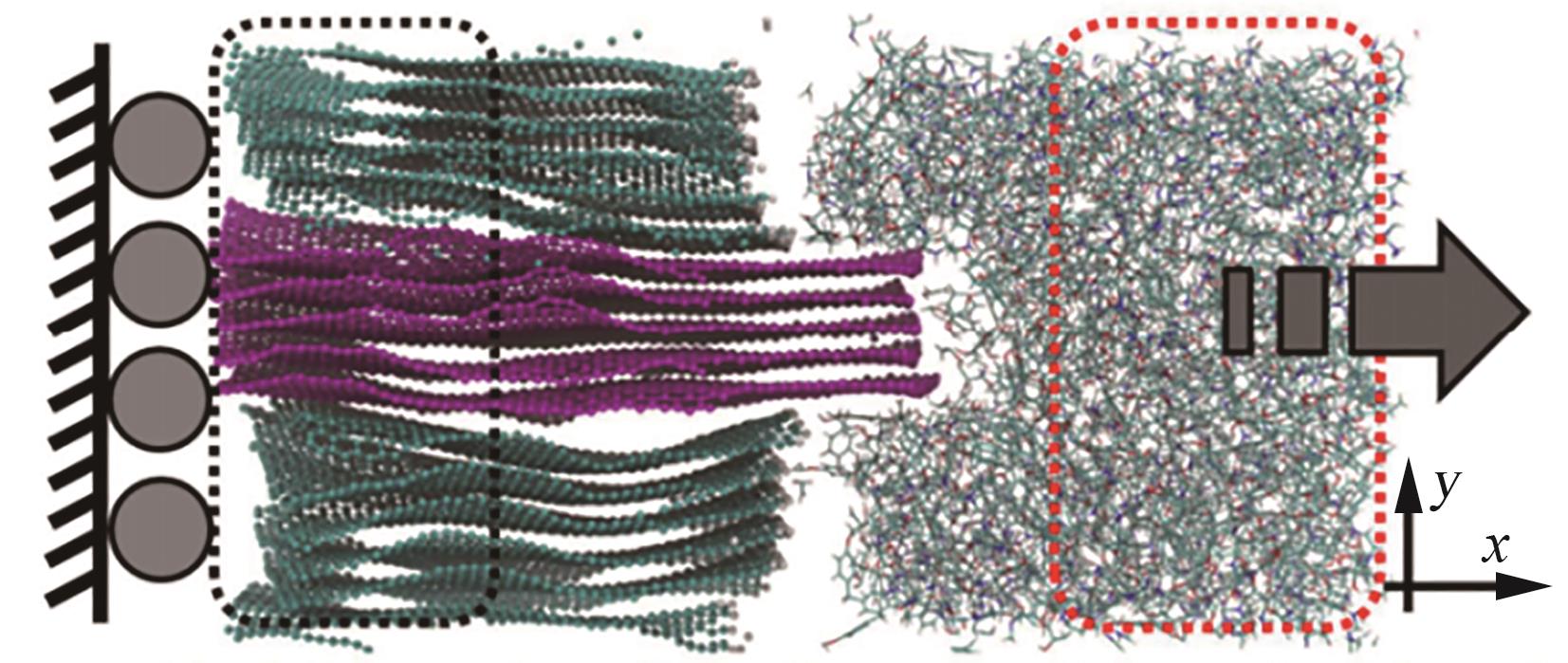
Fig.20
FEM model of unit cell for braided composites[100]
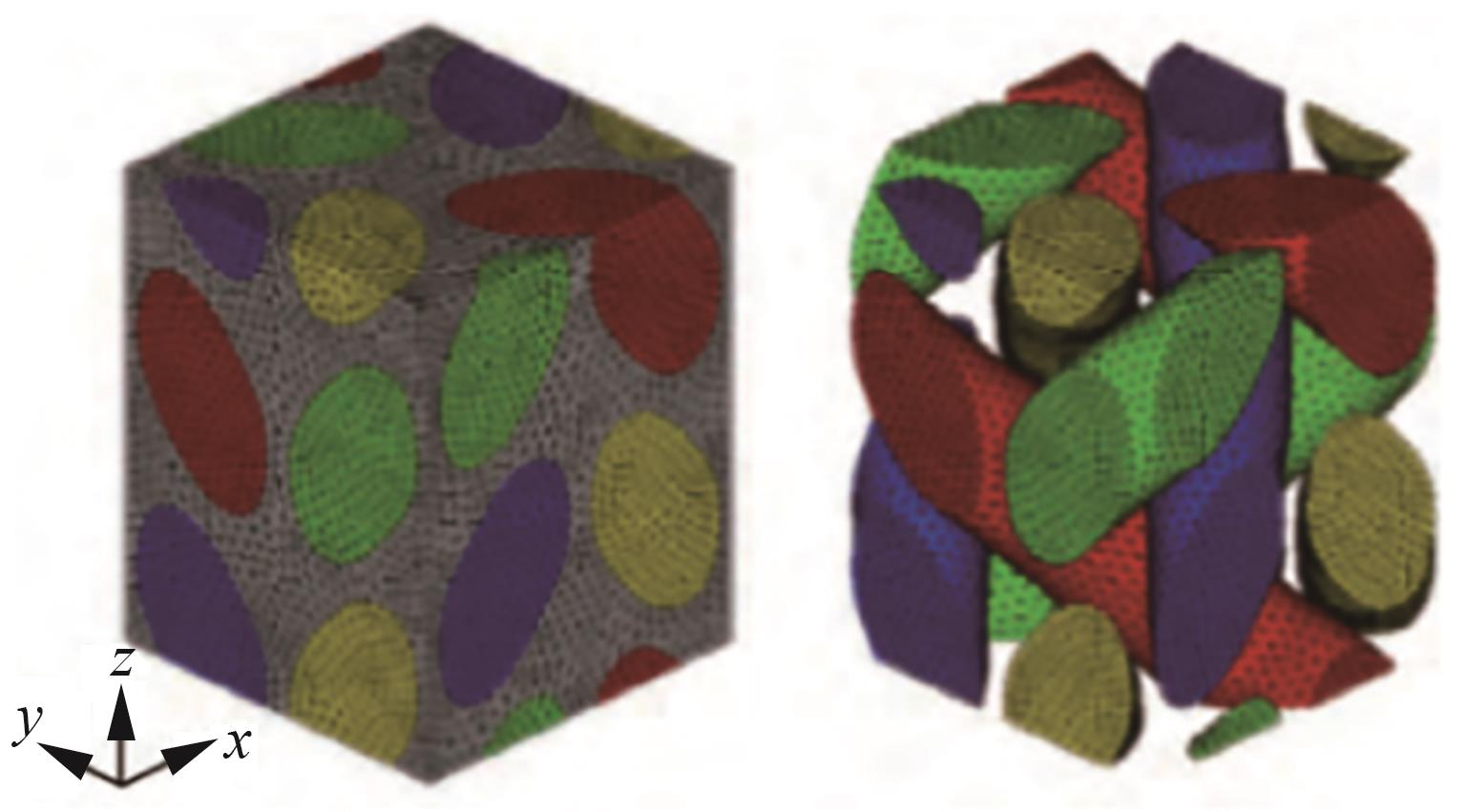
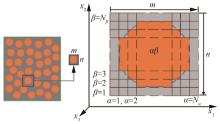
Fig.21
2D GMC model[26]
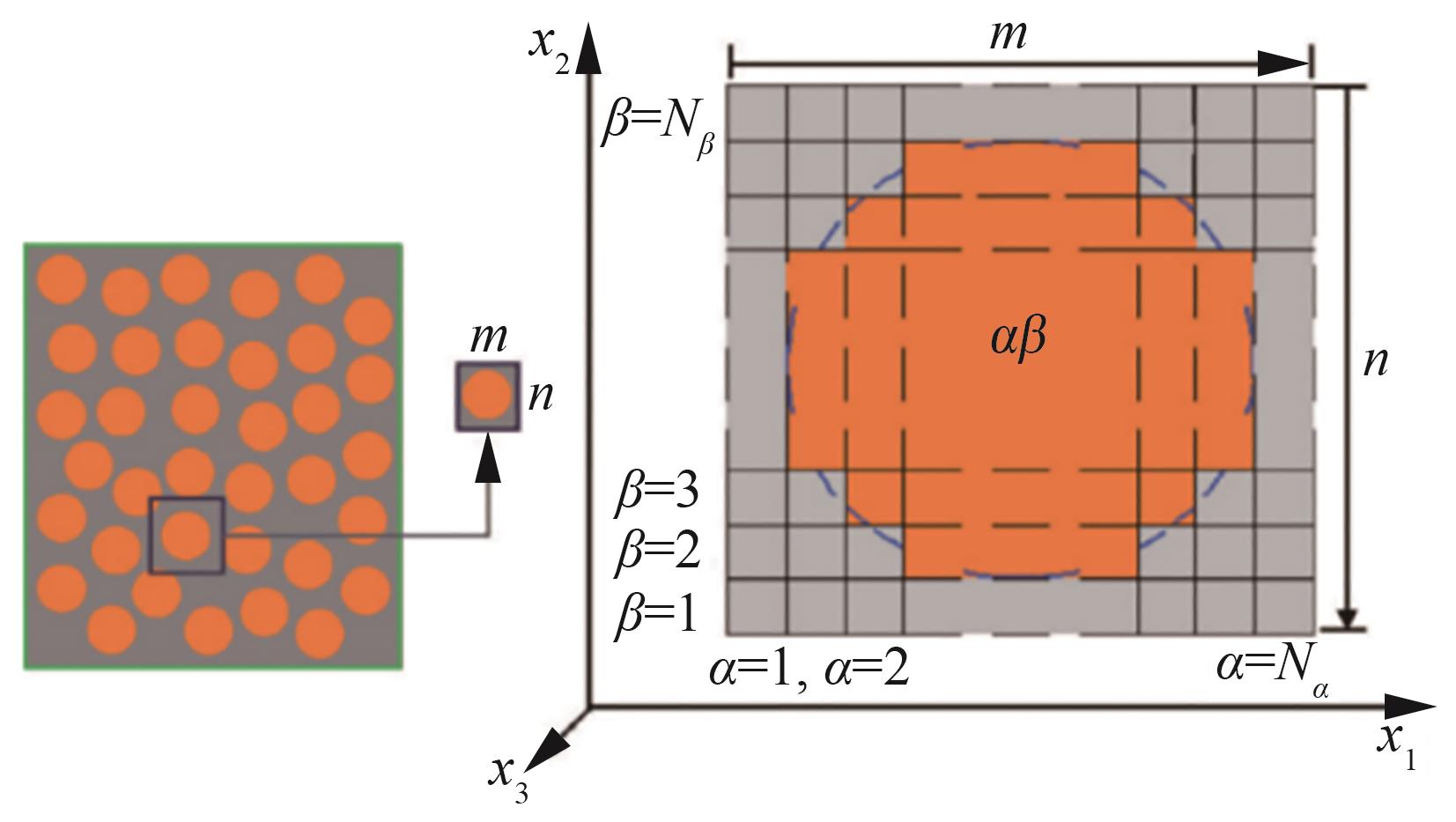
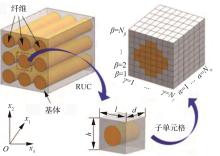
Fig.22
3D GMC model[101]
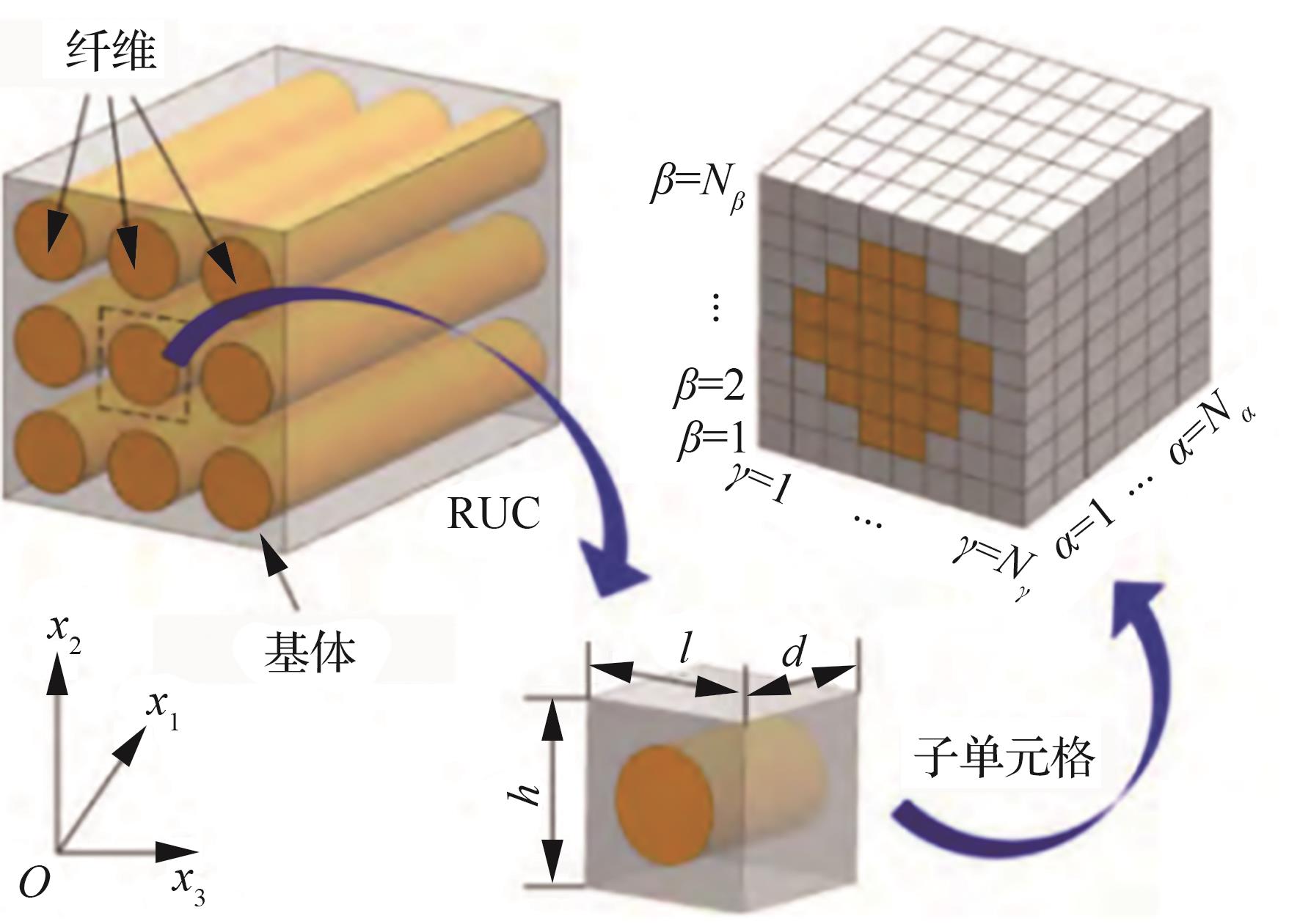
Fig.23
AFM image and modulus analysis of the interface[108]
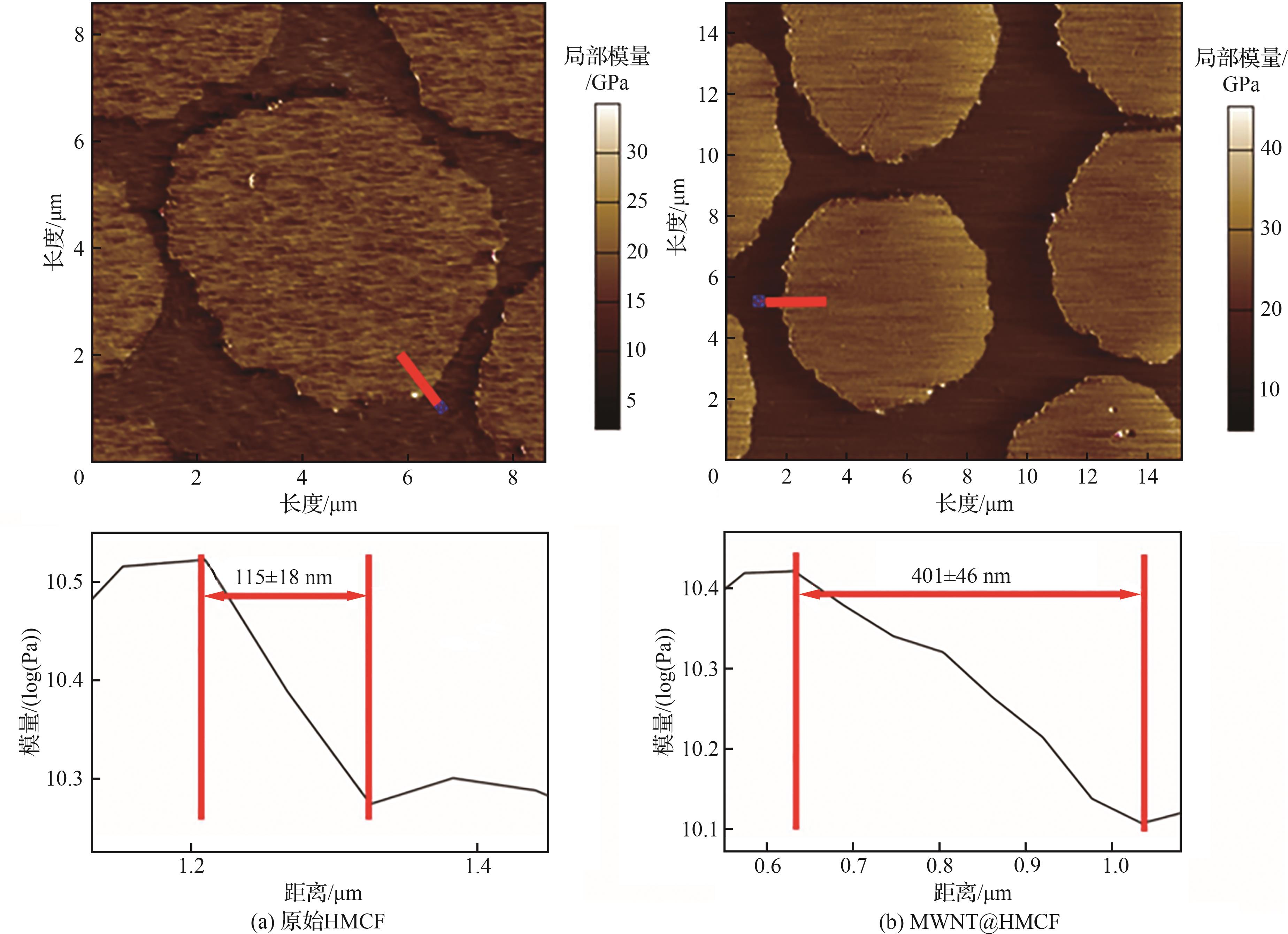
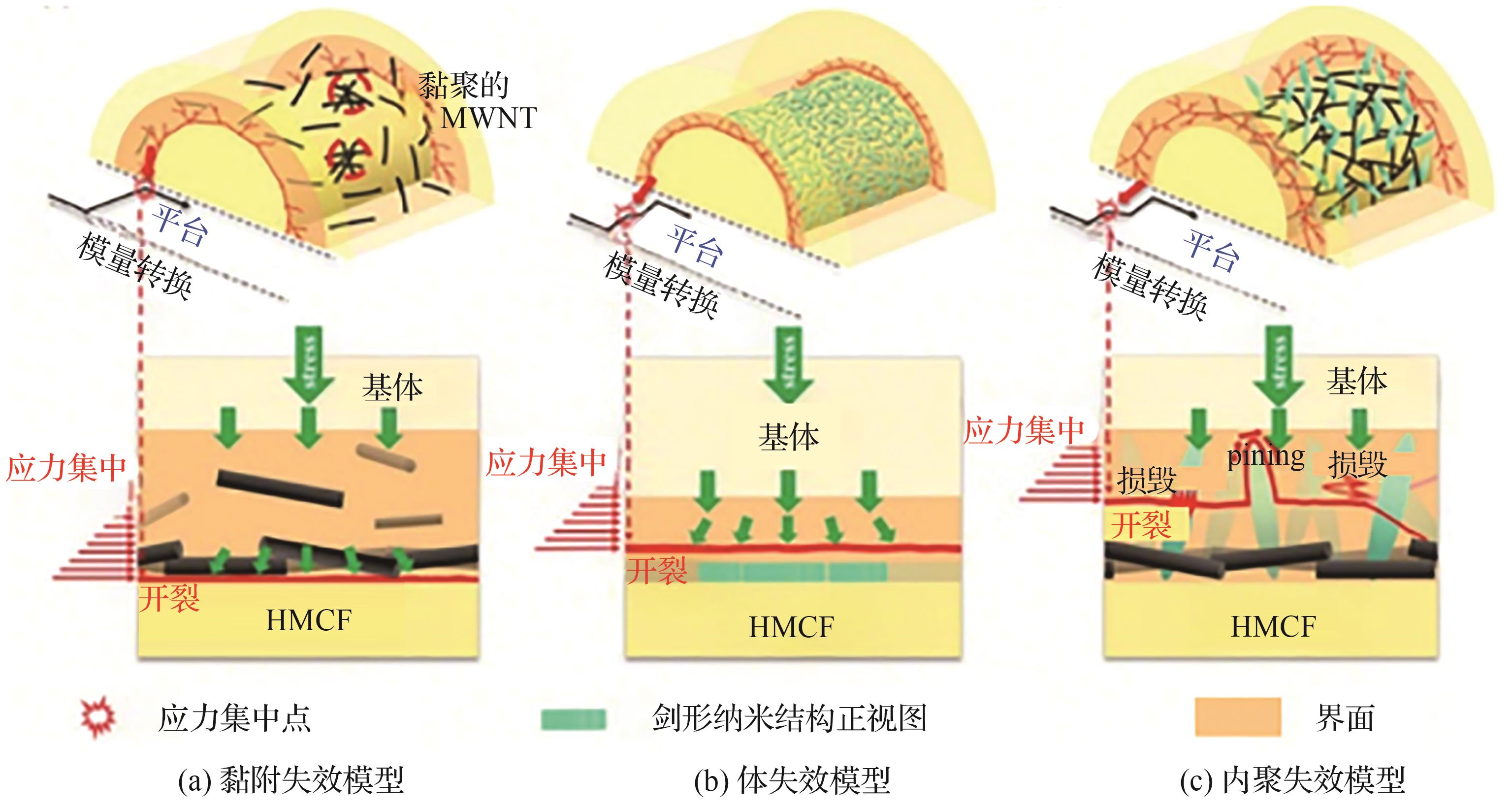
Fig.24
Schematic model of interface reinforcing mechanism[108]
| [1] | 陈光. GE9X的发展与设计特点[J]. 航空动力, 2018(3): 37-40. |
| CHEN G. Development and design features of GE9X[J]. Aerospace Power, 2018(3): 37-40 (in Chinese). | |
| [2] | 张媛媛, 陈璐璐, 苏震宇, 等. 复合材料风扇叶片成型关键技术探索研究[J]. 纤维复合材料, 2023, 40(2): 3-7. |
| ZHANG Y Y, CHEN L L, SU Z Y, et al. Research on composite fan blade manufacturing technology[J]. Fiber Composites, 2023, 40(2): 3-7 (in Chinese). | |
| [3] | 俞锐晨, 姜金华, 朱晓锦, 等. 航空发动机复合材料叶片先进制造技术研究进展[J]. 科技导报, 2023, 41(5): 27-33. |
| YU R C, JIANG J H, ZHU X J, et al. Research progress of advanced manufacturing technology for aero-engine composite blades[J]. Science & Technology Review, 2023, 41(5): 27-33 (in Chinese). | |
| [4] | 倪洪江, 李军, 邢宇, 等. 航空发动机用T800级碳纤维增强聚酰亚胺复合材料制备及性能[J]. 复合材料科学与工程, 2022(5): 46-51. |
| NI H J, LI J, XING Y, et al. Preparation and properties of T800-class carbon fiber reinforced polyimide composite for aero engine[J]. Composites Science and Engineering, 2022(5): 46-51 (in Chinese). | |
| [5] | 徐凯龙, 刘璐璐, 赵振华, 等. 循环湿热老化对T700/TDE86碳纤维复合材料层间断裂韧度的影响[J]. 航空材料学报, 2019, 39(4): 40-48. |
| XU K L, LIU L L, ZHAO Z H, et al. Effect of cyclic hygrothermal aging on interlaminar fracture toughness of T700/TDE86 carbon composite[J]. Journal of Aeronautical Materials, 2019, 39(4): 40-48 (in Chinese). | |
| [6] | 莫袁鸣, 赵振华, 罗刚, 等. 复合材料层合板冰雹冲击损伤研究[J]. 重庆理工大学学报(自然科学), 2020, 34(3): 112-121. |
| MO Y M, ZHAO Z H, LUO G, et al. Investigation on damage of composite laminates subject to hail impact[J]. Journal of Chongqing University of Technology (Natural Science), 2020, 34(3): 112-121 (in Chinese). | |
| [7] | 张月欣, 杨明君, 刘耿, 等. CFRP的钻削加工研究现状[J]. 复合材料科学与工程, 2021(12): 120-128. |
| ZHANG Y X, YANG M J, LIU G, et al. A review about drilling of CFRP[J]. Composites Science and Engineering, 2021(12): 120-128 (in Chinese). | |
| [8] | 赵竹君, 方鹏亚, 闫兰兰. 基于Lamb波的复合材料多损伤定位方法研究[J]. 郑州航空工业管理学院学报, 2024, 42(3): 30-38. |
| ZHAO Z J, FANG P Y, YAN L L. Research on multi-damage location method of composite materials based on lamb wave[J]. Journal of Zhengzhou University of Aeronautics, 2024, 42(3): 30-38 (in Chinese). | |
| [9] | 熊先炼, 王莹莹, 李湉, 等. 碳纤维增强树脂基复合材料与金属典型连接件电偶腐蚀的研究进展[J]. 材料保护, 2022, 55(7): 187-199. |
| XIONG X L, WANG Y Y, LI T, et al. Research progress of the galvanic corrosion between carbon fiber reinforced resin matrix composites and typical metal connections[J]. Materials Protection, 2022, 55(7): 187-199 (in Chinese). | |
| [10] | HUGHES J D H. The carbon fibre/epoxy interface: A review[J]. Composites Science and Technology, 1991, 41(1): 13-45. |
| [11] | 赵天, 李营, 张超, 等. 高性能航空复合材料结构的关键力学问题研究进展[J]. 航空学报, 2022, 43(6): 526851. |
| ZHAO T, LI Y, ZHANG C, et al. Fundamental mechanical problems in high-performance aerospace composite structures: State-of-art review[J]. Acta Aeronautica et Astronautica Sinica, 2022, 43(6): 526851 (in Chinese). | |
| [12] | VEDRTNAM A, SHARMA S P. Study on the performance of different nano-species used for surface modification of carbon fiber for interface strengthening[J]. Composites Part A: Applied Science and Manufacturing, 2019, 125: 105509. |
| [13] | 张红宾, 刘钧, 朱璞, 等. 基于多尺度界面相构筑的CFRP界面改性方法研究进展[J/OL]. 材料工程, 2024: 1-17. (2024-09-10). . |
| ZHANG H B, LIU J, ZHU P, et al. Research progress of CFRP interfacial modification methods based on multi-scale interfacial phase construction[J/OL]. Journal of Materials Engineering, 2024: 1-17. (2024-09-10). (in Chinese). | |
| [14] | ZHANG T, WANG Z, ZHANG G, et al. Improvement of interfacial interaction between poly(arylene sulfide sulfone) and carbon fiber via molecular chain grafting[J]. Composites Science and Technology, 2022, 224: 109463. |
| [15] | 张安琴, 王江, 张林嘉. 航空发动机先进材料发展现状和趋势研究[J]. 内燃机与配件, 2024(14): 130-136. |
| ZHANG A Q, WANG J, ZHANG L J. Research on development status and trends of advanced materials for aircraft engines[J]. Internal Combustion Engine & Parts, 2024(14): 130-136 (in Chinese). | |
| [16] | YUAN X M, ZHANG Z H, MU X Y, et al. Recent progress on interface characterization methods of carbon fiber reinforced polymer composites[J]. Chemical Engineering Journal, 2024, 499: 156220. |
| [17] | HUANG S L, FU Q N, YAN L B, et al. Characterization of interfacial properties between fibre and polymer matrix in composite materials-A critical review[J]. Journal of Materials Research and Technology, 2021, 13: 1441-1484. |
| [18] | FALLAHI H, KAYNAN O, ASADI A. Insights into the effect of fiber-matrix interphase physiochemical-mechanical properties on delamination resistance and fracture toughness of hybrid composites[J]. Composites Part A: Applied Science and Manufacturing, 2023, 166: 107390. |
| [19] | MUNEER AHMED M, DHAKAL H N, ZHANG Z Y, et al. Enhancement of impact toughness and damage behaviour of natural fibre reinforced composites and their hybrids through novel improvement techniques: A critical review[J]. Composite Structures, 2021, 259: 113496. |
| [20] | GODA I, PADAYODI E, RAOELISON R N. Enhancing fiber/matrix interface adhesion in polymer composites: Mechanical characterization methods and progress in interface modification[J]. Journal of Composite Materials, 2024, 58(29): 3077-3110. |
| [21] | HUANG S C, YE J, SU M M, et al. Efficient preparation and characterization of carbon fiber paper using phenolic resin in-pulp addition method[J]. International Journal of Hydrogen Energy, 2024, 71: 506-514. |
| [22] | YANG S, WEI Y, YIN H F, et al. Effect of fiber/matrix interfacial adhesion properties on the low-velocity impact resistance of glass fiber reinforced nylon 6 composites[J]. Polymer Composites, 2024, 45(18): 17205-17221. |
| [23] | 李乐坤, 李曙林, 常飞, 等. 碳纤维增强树脂基复合材料的热膨胀行为[J]. 机械工程材料, 2016, 40(7): 97-101. |
| LI L K, LI S L, CHANG F, et al. Thermal expansion behavior of carbon fiber reinforced resin composite[J]. Materials for Mechanical Engineering, 2016, 40(7): 97-101 (in Chinese). | |
| [24] | SRIVASTAVA A K, GUPTA V, YERRAMALLI C S, et al. Flexural strength enhancement in carbon-fiber epoxy composites through graphene nano-platelets coating on fibers[J]. Composites Part B: Engineering, 2019, 179: 107539. |
| [25] | 王俊敏, 郑志镇, 陈荣创, 等. 树脂基复合材料固化过程固化度场和温度场的均匀性优化[J]. 工程塑料应用, 2015, 43(4): 55-61. |
| WANG J M, ZHENG Z Z, CHEN R C, et al. Curing degree field and temperature field uniformity optimization during curing process of resin matrix composites[J]. Engineering Plastics Application, 2015, 43(4): 55-61 (in Chinese). | |
| [26] | 齐泽文, 胡殿印, 张龙, 等. 含孔隙三维四向编织复合材料力学性能的双尺度分析[J]. 推进技术, 2018, 39(8): 1873-1879. |
| QI Z W, HU D Y, ZHANG L, et al. Two-scale analysis for mechanical properties of 3D four-directional braided composites with pore defects[J]. Journal of Propulsion Technology, 2018, 39(8): 1873-1879 (in Chinese). | |
| [27] | GUAN W D, LUO B, HAN W, et al. Deterioration of carbon fiber/matrix interface in humid environments and influence of silicon coupling agent modification: an atomistic investigation[J]. Composite Structures, 2024, 344: 118330. |
| [28] | 李玥, 叶林, 赵晓文. 碳纤维增强环氧树脂复合材料盐雾腐蚀行为及其老化分子机制[J]. 高分子材料科学与工程, 2023, 39(5): 91-97. |
| LI Y, YE L, ZHAO X W. Salt-spray corrosion behavior and aging molecular mechanism of carbon fiber reinforced epoxy resin composites[J]. Polymer Materials Science & Engineering, 2023, 39(5): 91-97 (in Chinese). | |
| [29] | WANG B, DUAN Y G, ZHANG J J. A controllable interface performance through varying ZnO nanowires dimensions on the carbon fibers[J]. Applied Surface Science, 2016, 389: 96-102. |
| [30] | ZHANG L, GUO Z W, MA J J, et al. Cation π interactions trigger the oriented assembly of graphene oxide for designing high-performance carbon fiber composites[J]. Applied Surface Science, 2023, 633: 157599. |
| [31] | KOBAYASHI S, SUGIMOTO K I, NAKAI A, et al. Improvement in damage tolerance of CFRP laminate using the hybridization method[J]. Composite Interfaces, 2005, 12(7): 629-635. |
| [32] | GU Y Z, LI M, WANG J, et al. Characterization of the interphase in carbon fiber/polymer composites using a nanoscale dynamic mechanical imaging technique[J]. Carbon, 2010, 48(11): 3229-3235. |
| [33] | KONSTANTOPOULOS G, SEMITEKOLOS D, KOUMOULOS E P, et al. Carbon fiber reinforced composites: Study of modification effect on weathering-induced ageing nanoindentation and deep learning[J]. Nanomaterials, 2021, 11(10): 2631. |
| [34] | HU Z, FARAHIKIA M, DELFANIAN F. Fiber bias effect on characterization of carbon fiber-reinforced polymer composites by nanoindentation testing and modeling[J]. Journal of Composite Materials, 2015, 49(27): 3359-3372. |
| [35] | BEDI H S, BILLING B K, AGNIHOTRI P K. Interphase engineering in carbon fiber/epoxy composites: Rate sensitivity of interfacial shear strength and interfacial fracture toughness[J]. Polymer Composites, 2020, 41(7): 2803-2815. |
| [36] | LI X D, BHUSHAN B. A review of nanoindentation continuous stiffness measurement technique and its applications[J]. Materials Characterization, 2002, 48(1): 11-36. |
| [37] | DÍEZ-PASCUAL A M, GÓMEZ-FATOU M A, ANIA F, et al. Nanoindentation assessment of the interphase in carbon nanotube-based hierarchical composites[J]. The Journal of Physical Chemistry C, 2012, 116(45): 24193-24200. |
| [38] | TANG D, ZHAO L L, WANG H M, et al. The role of rough surface in the size-dependent behavior upon nano-indentation[J]. Mechanics of Materials, 2021, 157: 103836. |
| [39] | BELLIL S, PANTALONI D, SHAH D U, et al. Prediction of interfacial behaviour of single flax fibre bonded to various matrices by simulation of microdroplet test[J]. Composites Part C: Open Access, 2023, 11: 100351. |
| [40] | ZHANG C H, ZHANG Q, LIU Y X, et al. M40J graphite fiber surface molecular self-assembly and the performance of its epoxy composite[J]. Journal of Adhesion Science and Technology, 2017, 31(15): 1735-1745. |
| [41] | CHEN L, JIN H, XU Z W, et al. Role of a gradient interface layer in interfacial enhancement of carbon fiber/epoxy hierarchical composites[J]. Journal of Materials Science, 2015, 50(1): 112-121. |
| [42] | WU D L, YAO Z Q, SUN X Y, et al. Mussel-tailored carbon fiber/carbon nanotubes interface for elevated interfacial properties of carbon fiber/epoxy composites[J]. Chemical Engineering Journal, 2022, 429: 132449. |
| [43] | CHEN L, JIN H, XU Z W, et al. A design of gradient interphase reinforced by silanized graphene oxide and its effect on carbon fiber/epoxy interface[J]. Materials Chemistry and Physics, 2014, 145(1-2): 186-196. |
| [44] | HE M, QI P F, XU P, et al. Establishing a phthalocyanine-based crosslinking interphase enhances the interfacial performances of carbon fiber/epoxy composites at elevated temperatures[J]. Composites Science and Technology, 2019, 173: 24-32. |
| [45] | NIU Y F, YANG Y, WANG X R. Investigation of the interphase structures and properties of carbon fiber reinforced polymer composites exposed to hydrothermal treatments using peak force quantitative nanomechanics technique[J]. Polymer Composites, 2018, 39(S2): E791-E796. |
| [46] | YUAN X M, ZHANG Z H, MU X Y, et al. Recent progress on interface characterization methods of carbon fiber reinforced polymer composites[J]. Chemical Engineering Journal, 2024, 499: 156220. |
| [47] | 高尚, 黄梦诗, 杨振英, 等. 扫描电镜中X射线能谱仪的技术进展[J]. 分析科学学报, 2022, 38(1): 115-121. |
| GAO S, HUANG M S, YANG Z Y, et al. Technical progress of X-ray energy dispersive spectroscopy in scanning electron microscope[J]. Journal of Analytical Science, 2022, 38(1): 115-121 (in Chinese). | |
| [48] | 刘学锋, 张晓伟, 曾鑫, 等. 采用机器学习分割算法和扫描电镜分析页岩微观孔隙结构[J]. 中国石油大学学报(自然科学版), 2022, 46(1): 23-33. |
| LIU X F, ZHANG X W, ZENG X, et al. Pore structure characterization of shales using SEM and machine learning-based segmentation method[J]. Journal of China University of Petroleum (Edition of Natural Science), 2022, 46(1): 23-33 (in Chinese). | |
| [49] | TSAI H C, AROCHO A M, GAUSE L W. Prediction of fiber-matrix interphase properties and their influence on interface stress, displacement and fracture toughness of composite material[J]. Materials Science and Engineering: A, 1990, 126(1-2): 295-304. |
| [50] | GARDNER S D, PITTMAN C U, HACKETT R M. Polymeric composite materials incorporating an elastomeric interphase: A mathematical assessment[J]. Composites Science and Technology, 1993, 46(4): 307-318. |
| [51] | JASIUK I, KOUIDER M W. The effect of an inhomogeneous interphase on the elastic constants of transversely isotropic composites[J]. Mechanics of Materials, 1993, 15(1): 53-63. |
| [52] | UPADHYAYA P, KUMAR S. Micromechanics of stress transfer through the interphase in fiber-reinforced composites[J]. Mechanics of Materials, 2015, 89: 190-201. |
| [53] | ZHANG C, ZHAO J H, RABCZUK T. The interface strength and delamination of fiber-reinforced composites using a continuum modeling approach[J]. Composites Part B: Engineering, 2018, 137: 225-234. |
| [54] | MAHMOODI M J, VAKILIFARD M. Interfacial effects on the damping properties of general carbon nanofiber reinforced nanocomposites-A multi-stage micromechanical analysis[J]. Composite Structures, 2018, 192: 397-421. |
| [55] | 林夏泽, 温变英. 界面效应对功能复合材料热传导行为的影响[J]. 复合材料学报, 2022, 39(4): 1498-1510. |
| LIN X Z, WEN B Y. Influence of interfacial effect on heat conduction behavior of functional composites[J]. Acta Materiae Compositae Sinica, 2022, 39(4): 1498-1510 (in Chinese). | |
| [56] | LOW B Y, GARDNER S D, PITTMAN C U, et al. A micromechanical characterization of graphite-fiber/epoxy composites containing a heterogeneous interphase region[J]. Composites Science and Technology, 1994, 52(4): 589-606. |
| [57] | LOW B Y, GARDNER S D, PITTMAN C U, et al. A micromechanical characterization of residual thermal stresses in carbon fiber/epoxy composites containing a non-uniform interphase region[J]. Composites Engineering, 1995, 5(4): 375-396. |
| [58] | HAYES S A, LANE R, JONES F R. Fibre/matrix stress transfer through a discrete interphase. Part 1: Single-fibre model composites[J]. Composites Part A: Applied Science and Manufacturing, 2001, 32(3-4): 379-389. |
| [59] | DHARAN C K H, LIN C L. Longitudinal compressive strength of continuous fiber composites[J]. Journal of Composite Materials, 2007, 41(11): 1389-1405. |
| [60] | NEEDLEMAN A, BORDERS T L, BRINSON L C, et al. Effect of an interphase region on debonding of a CNT reinforced polymer composite[J]. Composites Science and Technology, 2010, 70(15): 2207-2215. |
| [61] | TAÇ V, GÜRSES E. Micromechanical modelling of carbon nanotube reinforced composite materials with a functionally graded interphase[J]. Journal of Composite Materials, 2019, 53(28-30): 4337-4348. |
| [62] | KAUSHIK D, SAIKIA M, BEDI H S, et al. Effect of fiber anisotropy and interphase on the stress jumps across the fiber/matrix interface in fuzzy fiber composites[J]. National Academy Science Letters, 2023, 46(2): 165-171. |
| [63] | ZHU Z Y, LI X W, CHEN Q L, et al. Simulations and tests of composite marine structures under low-velocity impact[J]. Polish Maritime Research, 2021, 28(1): 59-71. |
| [64] | NI K W, CHEN Q L, WEN J H, et al. Low-velocity impact and post-impact compression properties of carbon/glass hybrid yacht composite materials[J]. Ocean Engineering, 2024, 292: 116448. |
| [65] | 赵丽滨, 龚愉, 张建宇. 纤维增强复合材料层合板分层扩展行为研究进展[J]. 航空学报, 2019, 40(1): 522509. |
| ZHAO L B, GONG Y, ZHANG J Y. A survey on delamination growth behavior in fiber reinforced composite laminates[J]. Acta Aeronautica et Astronautica Sinica, 2019, 40(1): 522509 (in Chinese). | |
| [66] | SUN Z L, LUO Y X, CHEN C Y, et al. Mechanical enhancement of carbon fiber-reinforced polymers: From interfacial regulating strategies to advanced processing technologies[J]. Progress in Materials Science, 2024, 142: 101221. |
| [67] | JIN Z A, HAN Z Y, CHANG C, et al. Review of methods for enhancing interlaminar mechanical properties of fiber-reinforced thermoplastic composites: Interfacial modification, nano-filling and forming technology[J]. Composites Science and Technology, 2022, 228: 109660. |
| [68] | 高禹, 孙成博, 高博闻, 等. 典型环境因素对聚合物基复合材料力学行为影响的研究现状与进展[J]. 高分子材料科学与工程, 2018, 34(5): 177-182. |
| GAO Y, SUN C B, GAO B W, et al. Status and progress of influence of typical aerospace environments on mechanical behavior of polymer matrix composites[J]. Polymer Materials Science & Engineering, 2018, 34(5): 177-182 (in Chinese). | |
| [69] | 张叶凡, 梁耕源, 尹昌平, 等. 纤维增强树脂基复合材料界面相容性研究现状[J]. 强度与环境, 2020, 47(3): 43-50. |
| ZHANG Y F, LIANG G Y, YIN C P, et al. A review on the interfacial compatibility of fiber reinforced resin matrix composites[J]. Structure & Environment Engineering, 2020, 47(3): 43-50 (in Chinese). | |
| [70] | 秦国锋, 秦旺招, 糜沛纹, 等. 复合材料在湿-热-载荷作用下的加速老化与自然老化研究综述[J]. 交通运输工程学报, 2024, 24(5): 173-194. |
| QIN G F, QIN W Z, MI P W, et al. Review on accelerated aging and natural aging studies of composites under wet-heat-load conditions[J]. Journal of Traffic and Transportation Engineering, 2024, 24(5): 173-194 (in Chinese). | |
| [71] | ZHONG Z D, WANG F S, KONG F Q, et al. Study of fatigue damage behavior in off-axis CFRP composites using digital image correlation technology[J]. Heliyon, 2024, 10(3): e25577. |
| [72] | WANG J X, TONG L Y, KARIHALOO B L. A bridging law and its application to the analysis of toughness of carbon nanotube-reinforced composites and pull-out of fibres grafted with nanotubes[J]. Archive of Applied Mechanics, 2016, 86(1): 361-373. |
| [73] | FAN W, LI J L, ZHENG Y Y. Improved thermo-oxidative stability of three-dimensional and four-directional braided carbon fiber/epoxy hierarchical composites using graphene-reinforced gradient interface layer[J]. Polymer Testing, 2015, 44: 177-185. |
| [74] | MA L C, MENG L H, WU G S, et al. Effects of bonding types of carbon fibers with branched polyethyleneimine on the interfacial microstructure and mechanical properties of carbon fiber/epoxy resin composites[J]. Composites Science and Technology, 2015, 117: 289-297. |
| [75] | BUXTON A, BAILLIE C. A study of the influence of the environment on the measurement of interfacial properties of carbon fibre/epoxy resin composites[J]. Composites, 1994, 25(7): 604-608. |
| [76] | FINK B K, MCCULLOUGH R L. Interphase research issues[J]. Composites Part A: Applied Science and Manufacturing, 1999, 30(1): 1-2. |
| [77] | AWAJA F, ZHANG S N, TRIPATHI M, et al. Cracks, microcracks and fracture in polymer structures: Formation, detection, autonomic repair[J]. Progress in Materials Science, 2016, 83: 536-573. |
| [78] | 周熠, 黄争鸣. 考虑含界面裂纹应力集中系数的复合材料强度计算[J]. 航空工程进展, 2017, 8(2): 119-124. |
| ZHOU Y, HUANG Z M. Strength prediction of composite materials with consideration of the stress concentration factor with interfacial cracks[J]. Advances in Aeronautical Science and Engineering, 2017, 8(2): 119-124 (in Chinese). | |
| [79] | 侯子豪, 张卫刚, 徐凌超, 等. 碳纤维增强树脂基复合材料压缩失效机理研究[J]. 力学季刊, 2021, 42(3): 438-449. |
| HOU Z H, ZHANG W G, XU L C, et al. Study on compression failure mechanism of carbon fiber reinforced resin matrix composites[J]. Chinese Quarterly of Mechanics, 2021, 42(3): 438-449 (in Chinese). | |
| [80] | 岳清瑞, 杨勇新. 纤维增强复合材料加固结构耐久性研究综述[J]. 建筑结构学报, 2009, 30(6): 8-15. |
| YUE Q R, YANG Y X. Introduction to durability of concrete strengthened with fiber reinforced polymers[J]. Journal of Building Structures, 2009, 30(6): 8-15 (in Chinese). | |
| [81] | 曹银龙, 于桢琪, 冯鹏, 等. 纤维增强环氧/乙烯基树脂复合材料性能优化与劣化机制研究进展[J]. 复合材料学报, 2024, 41(3): 1179-1191. |
| CAO Y L, YU Z Q, FENG P, et al. Performance optimization and deterioration mechanism of fiber reinforced epoxy/vinyl resin composite materials: A review[J]. Acta Materiae Compositae Sinica, 2024, 41(3): 1179-1191 (in Chinese). | |
| [82] | 孟令兵, 陈普会. 层压复合材料分层扩展分析的虚拟裂纹闭合技术及其应用[J]. 复合材料学报, 2010, 27(1): 190-195. |
| MENG L B, CHEN P H. Virtual crack closure technique for delamination growth analysis of laminated composites and its application[J]. Acta Materiae Compositae Sinica, 2010, 27(1): 190-195 (in Chinese). | |
| [83] | 刘枭鹏, 李鹏南, 李树健, 等. 基于零厚度内聚力单元单向碳纤维增强树脂基复合材料微观切削机理研究[J]. 宇航材料工艺, 2019, 49(5): 22-26. |
| LIU X P, LI P N, LI S J, et al. Microscopic cutting mechanism of unidirectional carbon fiber reinforced plastics based on zero thickness cohesive element[J]. Aerospace Materials & Technology, 2019, 49(5): 22-26 (in Chinese). | |
| [84] | ZHAO L B, ZHI J, ZHANG J Y, et al. XFEM simulation of delamination in composite laminates[J]. Composites Part A: Applied Science and Manufacturing, 2016, 80: 61-71. |
| [85] | ZHAO L B, WANG Y N, ZHANG J Y, et al. XFEM-based model for simulating zigzag delamination growth in laminated composites under mode Ⅰ loading[J]. Composite Structures, 2017, 160: 1155-1162. |
| [86] | WANG B, FANG G D, LIU S, et al. Effect of heterogeneous interphase on the mechanical properties of unidirectional fiber composites studied by FFT-based method[J]. Composite Structures, 2019, 220: 642-651. |
| [87] | WAN L, ISMAIL Y, ZHU C, et al. Computational micromechanics-based prediction of the failure of unidirectional composite lamina subjected to transverse and in-plane shear stress states[J]. Journal of Composite Materials, 2020, 54(24): 3637-3654. |
| [88] | 纪怀旺, 李增亮. 基于内聚力模型的纤维复合材料细观损伤模拟[J]. 计算机仿真, 2023, 40(2): 309-313. |
| JI H W, LI Z L. Simulation of microscopic damage of fiber composite material based on cohesive zone model[J]. Computer Simulation, 2023, 40(2): 309-313 (in Chinese). | |
| [89] | EYCKENS D J, DEMIR B, RANDALL J D, et al. Using molecular entanglement as a strategy to enhance carbon fiber-epoxy composite interfaces[J]. Composites Science and Technology, 2020, 196: 108225. |
| [90] | LU K Y, WANG Z H, LI G, et al. Enhanced longitudinal compressive strength of CFRP composites through matrix stiffening via flexible/rigid epoxide grafted silica: A combined analysis of simulation and experiments[J]. Composites Part B: Engineering, 2022, 235: 109756. |
| [91] | LI W, CHAI W L, ZHANG L, et al. Atomic insight into the influences of moisture ingress on the structures and dynamics of graphene-epoxy interfaces[J]. Composites Science and Technology, 2022, 219: 109222. |
| [92] | MA Y Y, LU K, WANG J T, et al. Mechanism of the impact of the sizing agent chain length on the interfacial mechanical properties of carbon/epoxy composites[J]. Colloids and Surfaces A: Physicochemical and Engineering Aspects, 2023, 675: 131997. |
| [93] | VARSHNEY V, ROY A K, BAUR J W. Modeling the role of bulk and surface characteristics of carbon fiber on thermal conductance across the carbon-fiber/matrix interface[J]. ACS Applied Materials & Interfaces, 2015, 7(48): 26674-26683. |
| [94] | GOGOI R, SETHI S K, MANIK G. Surface functionalization and CNT coating induced improved interfacial interactions of carbon fiber with polypropylene matrix: A molecular dynamics study[J]. Applied Surface Science, 2021, 539: 148162. |
| [95] | MELRO L S, JENSEN L R. Interfacial characterization of functionalized graphene-epoxy composites[J]. Journal of Composite Materials, 2020, 54(5): 703-710. |
| [96] | LIU H, LI M, LU Z Y, et al. Multiscale simulation study on the curing reaction and the network structure in a typical epoxy system[J]. Macromolecules, 2011, 44(21): 8650-8660. |
| [97] | LI M, GU Y Z, LI Y X, et al. Competition of diffusion and crosslink on the interphase region in carbon fiber/epoxy analyzed by multiscale simulations[J]. Journal of Applied Polymer Science, 2014, 131(7): 40032. |
| [98] | SUN Q P, MENG Z X, ZHOU G W, et al. Multi-scale computational analysis of unidirectional carbon fiber reinforced polymer composites under various loading conditions[J]. Composite Structures, 2018, 196: 30-43. |
| [99] | JOHNSTON J P, KOO B, SUBRAMANIAN N, et al. Modeling the molecular structure of the carbon fiber/polymer interphase for multiscale analysis of composites[J]. Composites Part B: Engineering, 2017, 111: 27-36. |
| [100] | 王荣桥, 刘茜, 胡殿印, 等. 一种改进的三维四向编织复合材料单胞模型及宏观弹性常数预测方法[J]. 复合材料学报, 2017, 34(9): 1973-1981. |
| WANG R Q, LIU X, HU D Y, et al. Improved unit cell model and elastic constant prediction method of 3D four-directional braided composites[J]. Acta Materiae Compositae Sinica, 2017, 34(9): 1973-1981 (in Chinese). | |
| [101] | 胡殿印, 杨尧, 郭小军, 等. 一种平纹编织复合材料的三维通用单胞模型[J]. 航空动力学报, 2019, 34(3): 608-615. |
| HU D Y, YANG Y, GUO X J, et al. A 3D general method of cells model for plain weave composites[J]. Journal of Aerospace Power, 2019, 34(3): 608-615 (in Chinese). | |
| [102] | PITTO M, FIEDLER H, KIM N K, et al. Carbon fibre surface modification by plasma for enhanced polymeric composite performance: A review[J]. Composites Part A: Applied Science and Manufacturing, 2024, 180: 108087. |
| [103] | 易增博, 冯利邦, 郝相忠, 等. 表面处理对碳纤维及其复合材料性能的影响[J]. 材料研究学报, 2015, 29(1): 67-74. |
| YI Z B, FENG L B, HAO X Z, et al. Effect of surface treatment on properties of carbon fiber and reinforced composites[J]. Chinese Journal of Materials Research, 2015, 29(1): 67-74 (in Chinese). | |
| [104] | 刘佳伟, 叶豪, 刘颖隆, 等. 电化学氧化/硅烷偶联剂处理碳纤维表面增强聚氨酯基复合材料的性能研究[J]. 化工新型材料, 2024, 52(3): 113-118, 123. |
| LIU J W, YE H, LIU Y L, et al. Study on the properties of carbon fiber-reinforced polyurethane composite treated by electrochemical oxidation/silane coupling agent[J]. New Chemical Materials, 2024, 52(3): 113-118, 123 (in Chinese). | |
| [105] | WU Q, ZHAO R Y, ZHU J F, et al. Interfacial improvement of carbon fiber reinforced epoxy composites by tuning the content of curing agent in sizing agent[J]. Applied Surface Science, 2020, 504: 144384. |
| [106] | DING R N, SUN Y, LEE J, et al. Enhancing interfacial properties of carbon fiber reinforced epoxy composites by grafting MXene sheets (Ti2C)[J]. Composites Part B: Engineering, 2021, 207: 108580. |
| [107] | 姜梦敏, 王一璠, 金欣, 等. 聚吡咯共轭结构对碳纤维增强树脂基复合材料热循环稳定性能的影响[J]. 纺织学报, 2024, 45(10): 23-30. |
| JIANG M M, WANG Y F, JIN X, et al. Effect of pyrrole-conjugated structure on the thermal cycle stability of carbon fiber reinforced resin-based composites[J]. Journal of Textile Research, 2024, 45(10): 23-30 (in Chinese). | |
| [108] | LIN J W, XU P, WANG L L, et al. Multi-scale interphase construction of self-assembly naphthalenediimide/multi-wall carbon nanotube and enhanced interfacial properties of high-modulus carbon fiber composites[J]. Composites Science and Technology, 2019, 184: 107855. |
| [109] | XIA Y Y, SHEN C M, YANG H Z, et al. Study of mechanical and surface properties of multi-walled carbon nanotube grafted flax fiber and its composites[J]. Journal of Natural Fibers, 2024, 21(1): 2349742. |
| [110] | ZHENG H, SONG G J, ZHANG W J, et al. Enhancing the interfacial strength of carbon fiber/epoxy composites by introducing “rigid-flexible” structure onto carbon fiber surface via π-π interaction[J]. Surfaces and Interfaces, 2022, 30: 101899. |
| [111] | 李娜, 李晓屿, 黄玉东, 等. 基于电泳沉积法碳纤维表面改性的研究进展及应用[J]. 高分子通报, 2021(2): 29-37. |
| LI N, LI X Y, HUANG Y D, et al. Research progress and application of carbon fiber surface modification based on electrophoretic deposition[J]. Polymer Bulletin, 2021(2): 29-37 (in Chinese). | |
| [112] | 董彬, 李华, 魏汝斌, 等. 多尺度碳纳米材料/纤维增强体构筑及界面增强机制[J]. 工程塑料应用, 2020, 48(9): 150-154. |
| DONG B, LI H, WEI R B, et al. Construction of multi-scale carbon nanomaterials/fiber reinforcements and its interfacial strengthening mechanism[J]. Engineering Plastics Application, 2020, 48(9): 150-154 (in Chinese). | |
| [113] | 嵇培军, 王国勇, 赵亮, 等. 树脂基结构复合材料的研究进展[J]. 宇航材料工艺, 2015, 45(4): 1-5. |
| JI P J, WANG G Y, ZHAO L, et al. Developments of resin matrix structural composites[J]. Aerospace Materials & Technology, 2015, 45(4): 1-5 (in Chinese). | |
| [114] | SNYDER A D, PHILLIPS Z J, TURICEK J S, et al. Prolonged self-healing in structural composites thermo-reversible entanglement[J]. Nature Communications, 2022, 13: 6511. |
| [115] | 赵伟, 刘立武, 孙健, 等. 基于形状记忆聚合物复合材料航天航空可变形结构技术研究进展[J]. 宇航材料工艺, 2021, 51(4): 73-83. |
| ZHAO W, LIU L W, SUN J, et al. Progress of aerospace deformable structures based on shape memory polymer composites[J]. Aerospace Materials & Technology, 2021, 51(4): 73-83 (in Chinese). | |
| [116] | HARLE S M. Durability and long-term performance of fiber reinforced polymer (FRP) composites: A review[J]. Structures, 2024, 60: 105881. |
| [117] | 赖家美, 薛肖妹, 彭泽, 等. 经湿热环境处理的改性CFRP的吸湿与低速冲击实验研究[J/OL]. 复合材料学报, 2024: 1-20 (2024-11-11). . |
| LAI J M, XUE X M, PENG Z, et al. Experimental study on hygroscopic absorption and low-velocity impact of CFRP treated in damp and hot environment[J/OL]. Acta Materiae Compositae Sinica, 2024: 1-20 (2024-11-11). (in Chinese). |
| [1] | Baoshi YU, Yongjun LEI, Zhibin SHEN, Dapeng ZHANG. Review on analysis and control technology of curing residual stress in solid motor propellants [J]. Acta Aeronautica et Astronautica Sinica, 2025, 46(8): 31083-031083. |
| [2] | Jiaxuan HAN, Fan CHEN, Xuguang YANG, Zhenyu WANG, Xiaoming YUE. Experimental study on EDM of CFRP in aerosol medium [J]. Acta Aeronautica et Astronautica Sinica, 2025, 46(4): 430886-430886. |
| [3] | Qulong WEI, Lihong JIANG, Zheng LIU, Lin ZHU, Lianhai FAN, Guangang WANG, Mingjie ZHAO, Zhenghua GUO. Lattice structure and mechanical properties of TPMS prepared by selective laser melting [J]. Acta Aeronautica et Astronautica Sinica, 2025, 46(3): 430593-430593. |
| [4] | Riming YANG, Xiuli SHEN, Shaojing DONG. Influence of hydrogen on microstructure and mechanical properties of TC4ELI titanium alloy welded joints [J]. Acta Aeronautica et Astronautica Sinica, 2025, 46(15): 431439-431439. |
| [5] | Chen LIU, Chen HE, Wenming GAO, Xianfeng WANG, Lin JIANG, Shuo CHENG, Yong LI, Jun XIAO. Dual scale ply design of composite aircraft auxiliary fuel tank [J]. Acta Aeronautica et Astronautica Sinica, 2025, 46(1): 230541-230541. |
| [6] | Shiqi PEI, Jinhua JIANG, Nanliang CHEN, Kai WANG. Influence of space environment on mechanical properties and structure of high-performance fibres [J]. Acta Aeronautica et Astronautica Sinica, 2025, 46(1): 630997-630997. |
| [7] | Junfei TENG, Jiahao LI, Huiyan ZHOU, Dawei WU, Haitao XU, Tiesong LIN, Yongde HUANG. Effect of TLP diffusion welding process parameters on microstructure and mechanical properties of GH5188 superalloy joint [J]. Acta Aeronautica et Astronautica Sinica, 2024, 45(8): 429205-429205. |
| [8] | Zhiting GAO, Zhuang MA, Yanbo LIU. Effect of CVD-SiC array structure on ablation resistance of ZrB2/SiC coatings [J]. Acta Aeronautica et Astronautica Sinica, 2024, 45(3): 428842-428842. |
| [9] | Zhiliang HONG, Yu LI, Wenbo HE, Shuiting DING. Influence of bolt preload on slip characteristics at discontinuous rotor interfaces under thermal load [J]. Acta Aeronautica et Astronautica Sinica, 2024, 45(24): 230402-230402. |
| [10] | Qinghua WANG, Runpeng LIU, Xiaojun YAN. Measurement of strain distribution in CFRP cross-ply laminate material based on sampling Moiré method [J]. Acta Aeronautica et Astronautica Sinica, 2024, 45(24): 430384-430384. |
| [11] | Jinyue LI, Pengfei ZHANG, Yuecheng GUO, Maocheng XU, Gang ZHAO. Assembly analysis of aero-engine mating interface based on digital twin [J]. Acta Aeronautica et Astronautica Sinica, 2024, 45(21): 629800-629800. |
| [12] | Xin WANG, Haibo JI, Zhen LI, Bingyang LI, Qi ZHANG, Rui ZHANG, Xiang XU, Han MENG, Pengfei WANG, Tianjian LU. Recent advances in mechanical properties of fibre-reinforced composites with bio-inspired helicoidal lay-ups [J]. Acta Aeronautica et Astronautica Sinica, 2024, 45(19): 29987-029987. |
| [13] | Wenyu WANG, Feng LI, Feixiang REN, Xingyu WEI, Jian XIONG. Research progress on structural design methods and mechanical properties of lightweight high⁃strength composite lattice stiffened shell structure [J]. Acta Aeronautica et Astronautica Sinica, 2024, 45(17): 530001-530001. |
| [14] | Xin LIU, Wenxuan YIN, Duo CHEN, Yongbo HOU, Lu ZHANG, Zhanjun WU. Synthesis of thermoplastic epoxy resin and toughening low⁃temperature composite materials [J]. Acta Aeronautica et Astronautica Sinica, 2024, 45(16): 429623-429623. |
| [15] | Guanguan CAO, Ke XU. Optimized distortion control method of CFRP curing region temperature field driven by near⁃zero stress equivalent temperature field [J]. Acta Aeronautica et Astronautica Sinica, 2024, 45(16): 429703-429703. |
| Viewed | ||||||
|
Full text |
|
|||||
|
Abstract |
|
|||||
Address: No.238, Baiyan Buiding, Beisihuan Zhonglu Road, Haidian District, Beijing, China
Postal code : 100083
E-mail:hkxb@buaa.edu.cn
Total visits: 6658907 Today visits: 1341All copyright © editorial office of Chinese Journal of Aeronautics
All copyright © editorial office of Chinese Journal of Aeronautics
Total visits: 6658907 Today visits: 1341

 CJA
CJA
